Brian started his journey as a coach and a middle-school teacher. Today, he’s a top real estate investor in Dallas, Texas who’s been making well above $100,000 per month from inbound marketing (SEO and PPC) and the Carrot system.
Launch the highest converting website in real estate in minutes.
Brian Rockwell with Sell Your House DFW, a Carrot member for about 14 months as of the time he hopped on a call with us, has been crushing the Dallas/Fort Worth market online with his real estate investing/wholesaling business.
Here is a recent text message he sent directly to Carrot’s CEO, Trevor Mauch…
“6 wholesale deals this month if all goes through. $124k… 4 ppc, 1 organic, 1 Facebook retargeting. 1 has closed the other 5 are under contract with a buyer and the last one waiting on a buyer. Carrot system is still rockin’” – Brian Rockwell
Listen in or read his story as an investor, where his leads come from, and what his inbound marketing strategy is that has led to $100k of consistent deals per month.
In high school, a friend of Brian’s introduced him to his dad. Brian’s father owned a roofing company and a few other businesses he had founded in a grass-roots sort of way. In a word, he was an entrepreneur.
It was the first time Brian remembers being introduced to an entrepreneur of that caliber. Someone who really knew what they were doing understood how to manage money and grow a business.
Needless to say, Brian was fascinated.
And from that day forward, Brian wanted to be an entrepreneur.
As time went on, he became increasingly interested in the real estate investor niché, dreaming of the day that he’d make it big.
But, what he didn’t know at the time was that he’d have to wait 12 years until that happened.
As Brian graduated from school and joined the sect we all refer to as family life, the importance of supporting his wife and kids rose to the top of his priorities.
In an effort to do so, he became a track, football, and baseball coach and taught classes as well. In other words, he became a phenomenal generalist, something he wasn’t particularly passionate about.
I mean, of course, that he wasn’t passionate about being a generalist. The coaching and teaching he loved. He was able to inspire students and co-workers daily and encourage them to be the best version of themselves that he could possibly imagine.
Brian’s evenings, lunch breaks, and weekends, though, were filled with his dream of becoming a real estate investor and being financially free — something he wanted to do but was unsure of how to do. He would scour real estate investor resources.
Particularly, he fell in love with biggerpockets.com.
For 5 years, this was his life. He dreamt of being a real estate investor and studied what that could look like in his free time. But most of his time was taken up by teaching, coaching, and family.
Eventually, Brian’s wife got a job that was capable of supporting the family, and he was free to pursue his passion.
Listening to the 3LPD training that we offer here at Carrot, Brian learned about the importance of building credibility and personality with your website.
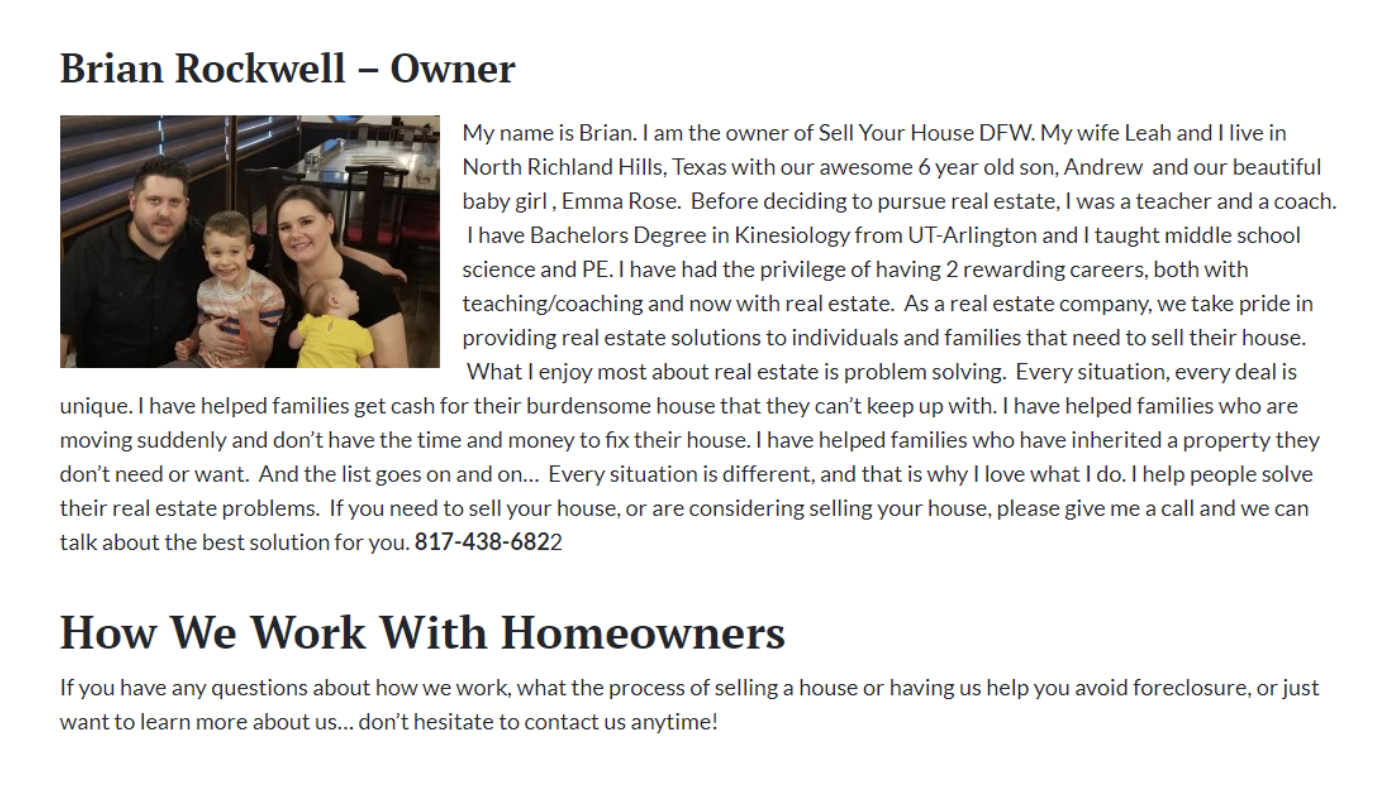
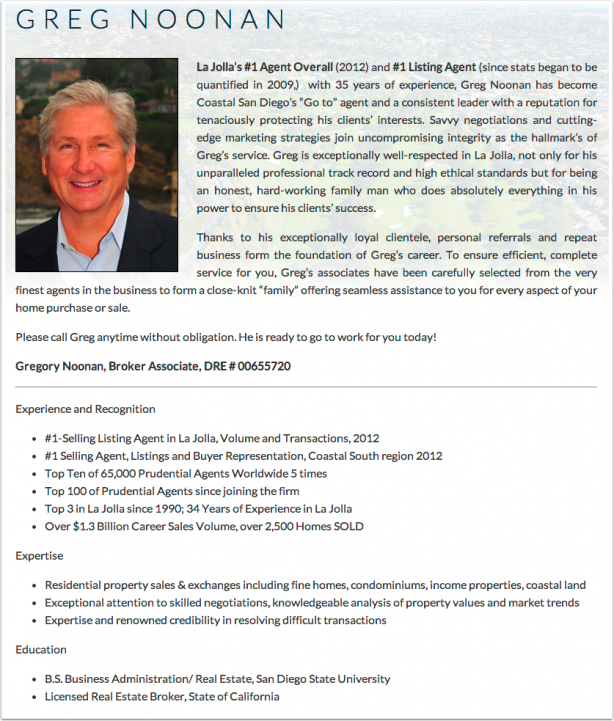
So, he took extra time to add a picture of his family on the “about” page.
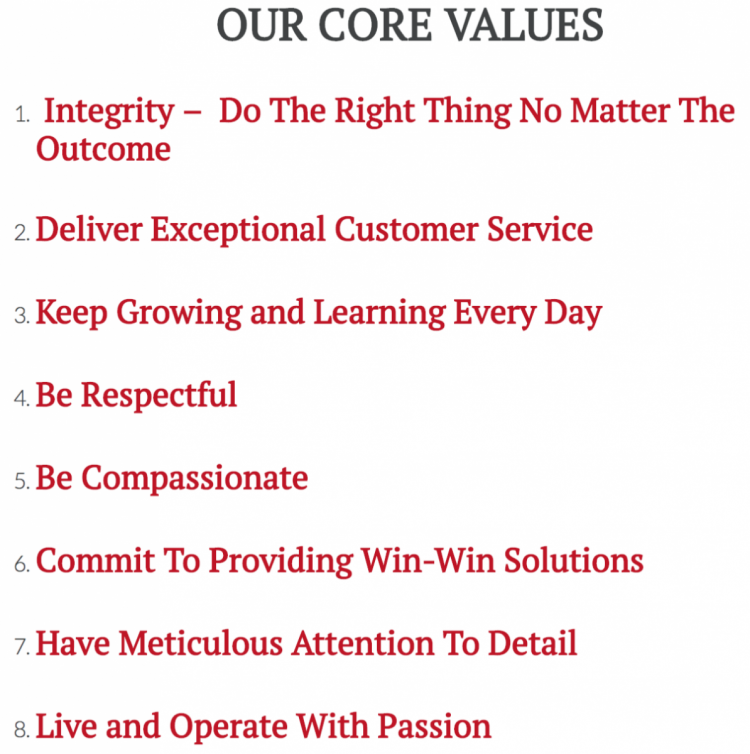
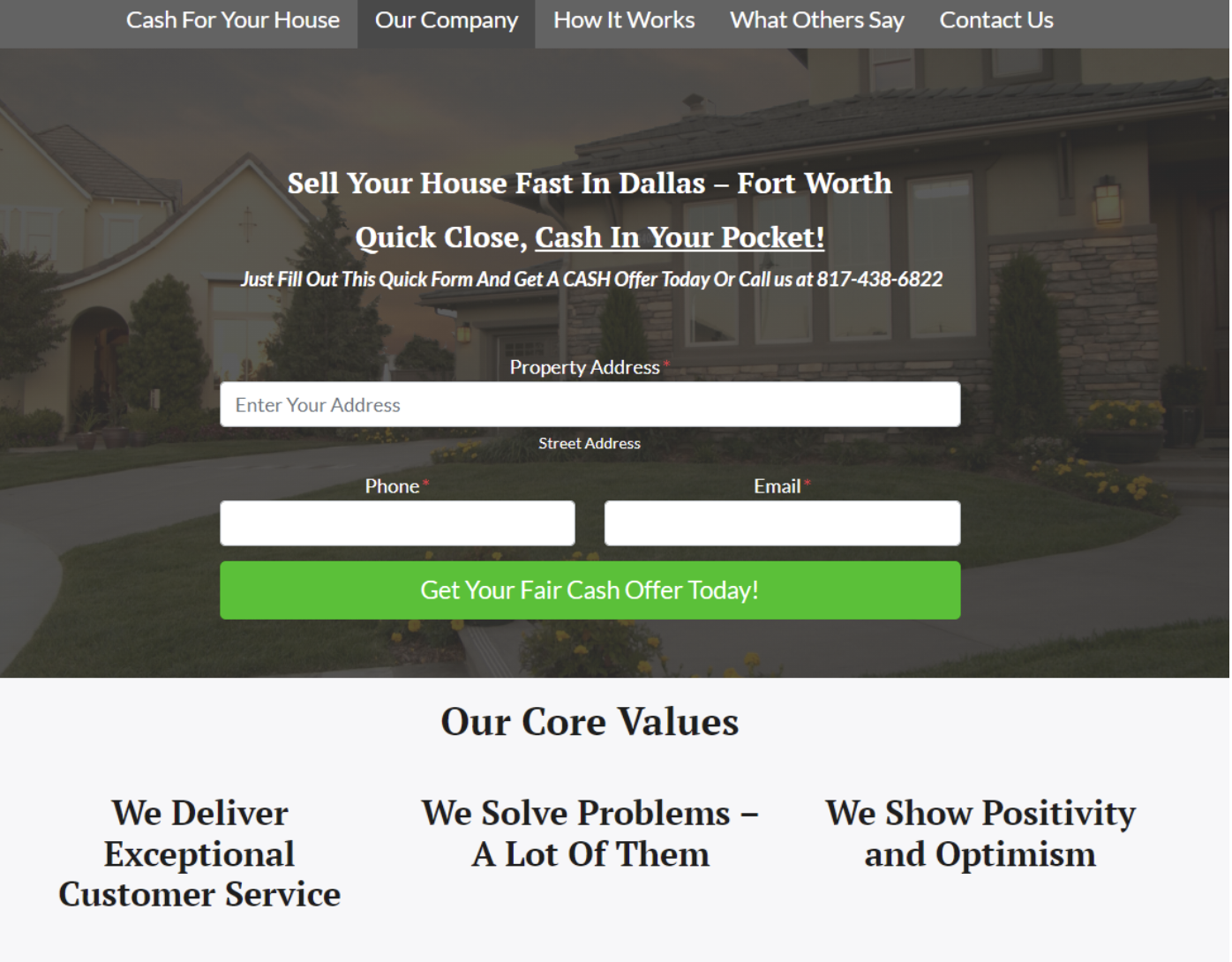
He even added a core values section to his website after researching other businesses’ core values and determining what he felt should define his business.
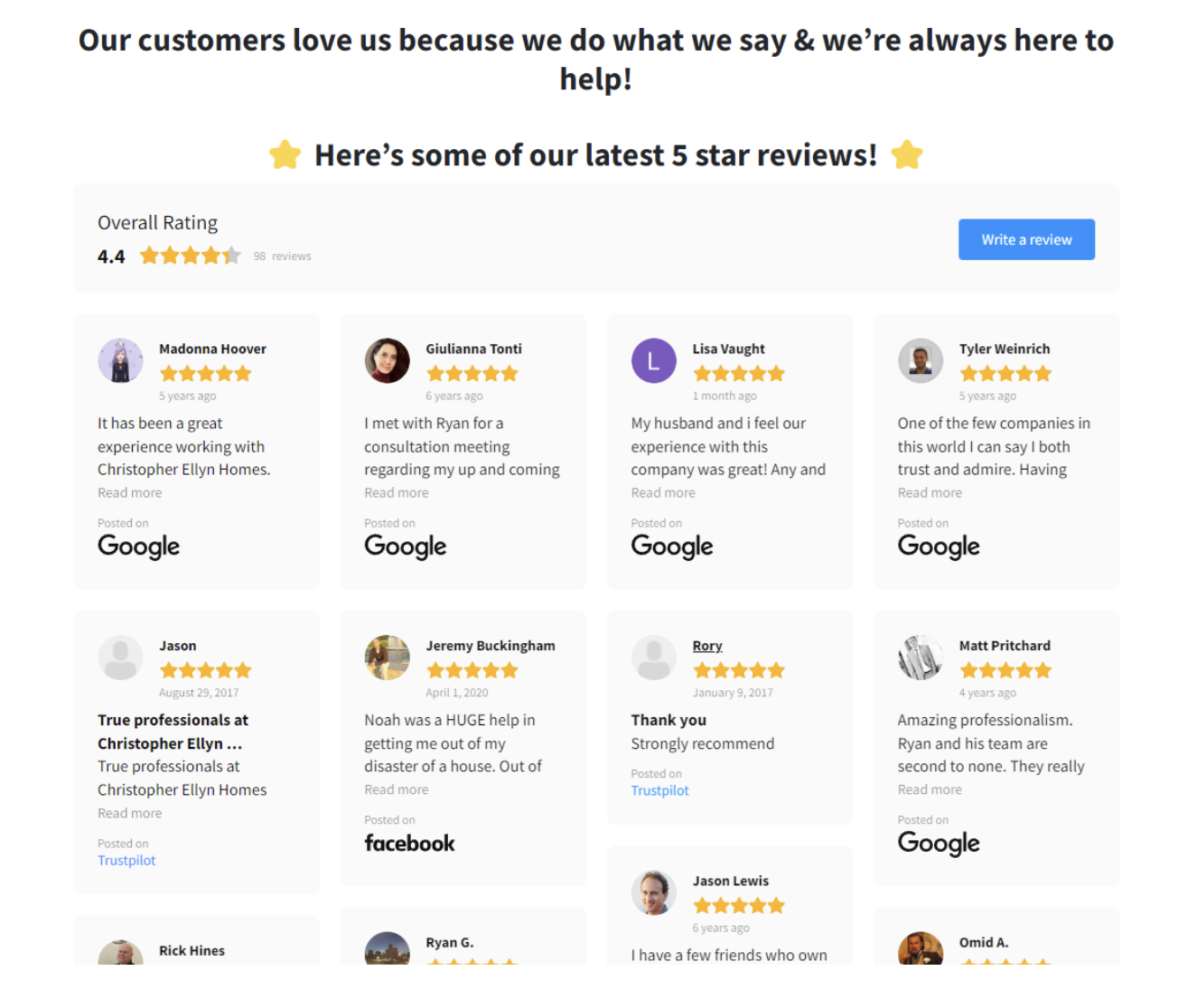
Besides these small changes to his Carrot website, he did very little. He customized some of the copy to fit his voice and added compelling testimonials.
Once his website was finished, he started marketing his new passion.
His original intention was to market his wholesaling business with traditional methods — direct mailing and what he calls “driving for dollars.” Basically, driving the streets looking for run-down houses and sending mail to those places.
He even got his first deal through traditional marketing methods, and he got a taste for success when he made $7,300.
But, as Brian mentions, “driving for dollars” wouldn’t be a sustainable marketing strategy.
As Brian grew tired of driving around every evening looking for possible clients, he knew something needed to change.
He discovered Carrot’s 3LPD training and devoted 5 hours a day for 3 weeks to the content, ingesting every soluble potential value from the modules.
Brian quickly learned that organic traffic strategies can take a long time to generate leads if you’re in a competitive market.
“I’m in Dallas, Texas,” he thought to himself, which is highly competitive.
Because of this, he turned his attention to Google Ads and learned what he knew nothing about.
His starting budget was a mere $1,200.
But after just one month of investing money into PPC, deals of value ranging between $10,000 and $20,000 started rolling in.
In his excitement, he invested more and more money into his PPC marketing.
Some might think he was too forward. But he wasn’t.
When discussing the topic, he said,
“Would you pay $3,000 to make $30,000? I don’t know about you, but I’d take that deal all day long.”
Brian’s perspective was that the more money he dumped into PPC, the more money he would make and the higher his ROI.
Brian started his journey as a coach and a middle-school teacher. Today, he’s a top real estate investor in Dallas, Texas, who’s making around $80,000 every month from his business.
He only does online lead generation — no more direct mail or “driving for dollars.”
Brian’s website is currently at the bottom of page one for his target keywords. And that’s starting to become a focus for him, but only now that he has the time and money to invest.
As he discusses his success, no one is more surprised than him as he says,
“It’s awesome because once you know the formula of how to do this, it’s just do it again and keep going and going and see how you can grow it.”
But what’s the formula?
How does someone go from a dreamer to a doer? How does a middle-school teacher become financially free through real estate investing?
Lucky for you, the answer isn’t as complicated as some people make it.
Brian boils his success down to one single solitary thing: trusting Carrot’s advice and implementing everything that they suggest.
That might sound a little sales pitchy coming from a content marketer at Carrot, but for Brian, that was exactly why he was successful.
He learned everything he could, took the recommended risks, and optimized his website with our suggestions.
The results speak for themselves.
So why not you?
Why not your business? Why not your website? Why not your family?
If Brian rose to real estate investing success from being a middle-school teacher, you can, too. Nothing makes Brian different than you except that he chose to implement everything he learned.
And oftentimes, the implementation makes the difference between someone who dreams of being an entrepreneur and someone who builds a successful business.
Brian is currently working to place his business in every city in Texas, and from there, who knows.
When you experience the kind of unexpected success that Brian enjoys, the sky’s the limit.
As a final piece of advice from the man who’s living your dream,
“Trust the system. That’s what I did. I put full trust in everything Carrot had to offer. Do your research. Be good at what you do. If you don’t have the skills, go learn new skills. Always push yourself. Always learn. At the end of the day, if you find something that you want to do, go all in 100%. Just kill it.”
Are you ready to step into the ring and take on the world of real estate with NO money down, NO experience, and NO traditional financing?! That’s right, folks—if you’ve been sitting on the sidelines, dreaming of making it big in real estate, NOW is your moment! And I’m here to show you how to dominate the game with one of the most powerful strategies in real estate: wholesaling!
Demo Carrot: How many deals are you losing to your competitor’s website?
Wholesaling is like body-slamming your way into the real estate market. You find deeply discounted properties, lock them down with a contract, and then tag in your cash buyer to close the deal—without ever owning the property yourself! You’re the ultimate middleman, connecting motivated sellers with hungry cash buyers and raking in the profits. No heavy lifting, just smart moves and fast wins.
This is the best entry point for beginners who are ready to crush it. You don’t need a mountain of cash, years of experience, or a bank begging you to borrow. What you need is hustle, heart, and a great strategy. And the best part? Wholesaling sharpens your skills in negotiating, deal analysis, marketing, and building a buyer’s list—all while keeping your risk low and your potential high.
In this step-by-step guide, I’ll break it all down for you. From finding motivated sellers to analyzing deals, securing contracts, and building a cash buyer’s list, this is your ultimate playbook to score your first wholesale deal in 2025.
Are you ready to step into the spotlight and make your real estate debut? Let’s get to work and get you on the path to your first wholesale victory! The time is now!
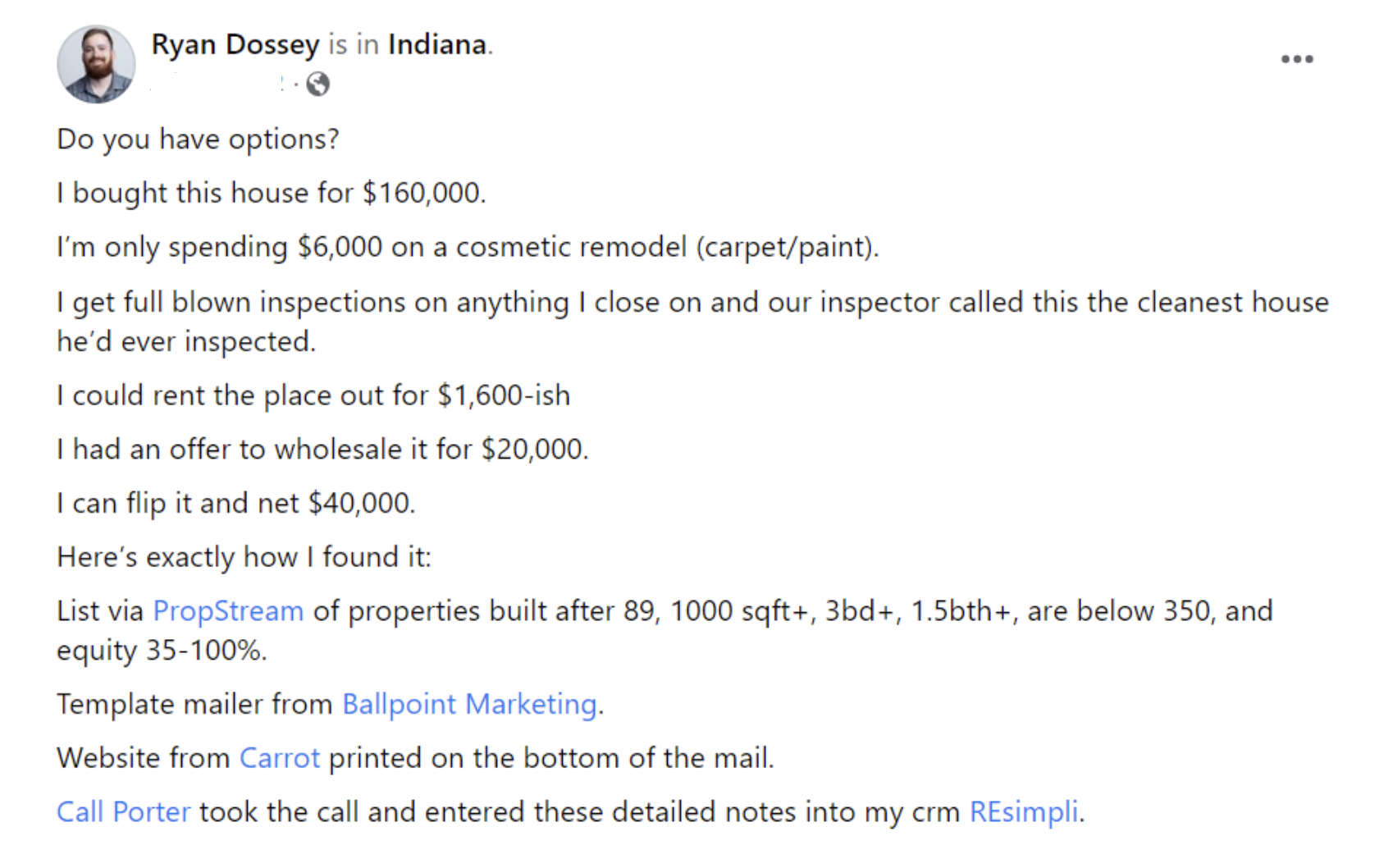
The key, of course, is finding a good deal.
Here’s an example of how Ryan Dossey — a real estate investor in Indiana — found just one of his great deals…
Wholesaling real estate is one of the simplest and most accessible strategies for getting started in real estate investing. At its core, wholesaling is about finding distressed or discounted properties, putting them under contract, and then assigning that contract to a buyer for a profit. Unlike traditional real estate investing, where you actually purchase and hold the property, in wholesaling, you’re simply acting as a middleman between motivated sellers and cash buyers. The goal is to profit from the spread between the price you negotiate with the seller and the price your buyer is willing to pay.
The key to wholesaling lies in assigning contracts for profit. When you find a property that’s deeply discounted, you sign a contract with the seller agreeing to purchase the property. Instead of closing on the property yourself, you assign that contract to a buyer—usually an investor—who pays you an assignment fee. This way, you can make money without ever taking ownership of the property or needing large amounts of cash to close the deal.
How Wholesaling Differs from Traditional Real Estate Investing
In traditional real estate investing, you typically buy a property, make improvements (if necessary), and either rent it out or sell it for a profit. This requires capital, the ability to get financing, and often a longer time commitment. With wholesaling, however, you’re not buying the property—you’re securing it with a contract and selling that contract to someone else. It’s a much faster process and typically requires far less money upfront.
Benefits of Wholesaling Real Estate
Low Capital Requirements: Since you’re not buying the property outright, you don’t need large sums of money or traditional bank loans. In many cases, all you need is an earnest money deposit, which can be as little as a few hundred dollars.
Quick Deals: Wholesale transactions typically happen in a matter of weeks, not months. Once you have the property under contract, it’s all about finding a buyer and assigning the contract, which can lead to fast payouts.
No Need for Property Ownership: You never actually own the property in a wholesale deal, which means you avoid the headaches that can come with owning real estate—like repairs, maintenance, and tenant issues.
Wholesaling is the ultimate strategy for beginners because it offers quick, low-risk entry into real estate investing. By focusing on finding motivated sellers and building a solid buyers list, you can generate profits without the complexity and capital demands of other investment strategies. Let’s move forward and dive deeper into how to execute your first wholesale deal.
Understanding the Wholesaling Process
Wholesaling real estate is all about following a repeatable process. Once you understand the flow, you can rinse and repeat, building a profitable business from scratch. Here’s a simple breakdown of the wholesaling process:
1. Finding Motivated Sellers
The first step in wholesaling is finding motivated sellers—people who need to sell quickly and are willing to accept a discounted price in exchange for speed and convenience. These sellers are often in distress, facing situations like foreclosure, divorce, inherited properties, or simply owning a property in poor condition they don’t want to fix.
To find these sellers, you can use a variety of strategies:
Driving for Dollars: Physically driving through neighborhoods to spot distressed properties.
Direct Mail Campaigns: Sending postcards or letters to absentee owners or homeowners in foreclosure.
Online Marketing: Building a Carrot website to capture inbound leads.
Cold Calling & Texting: Reaching out to potential sellers directly with targeted lists.
Finding motivated sellers is the foundation of wholesaling success. Without motivated sellers, you won’t find deals worth wholesaling.
2. Getting the Property Under Contract
Once you’ve identified a motivated seller, the next step is to negotiate a purchase price and get the property under contract. The contract is the tool that gives you control over the property, allowing you to assign that contract to another buyer.
In this step:
Negotiate the deal: Focus on solving the seller’s problem. Many motivated sellers are more concerned with speed and convenience than getting top dollar.
Use a solid contract: Make sure the contract includes key terms like the purchase price, closing date, and assignment clause, which allows you to assign the contract to another buyer.
The goal is to get the property under contract at a price low enough to leave room for your end buyer (an investor) to make a profit while still allowing you to make your fee.
3. Assigning the Contract to an End Buyer
Once you have the property under contract, the next step is finding an end buyer—usually a cash investor—who’s willing to buy the contract. This is where your cash buyer list comes in. By building strong relationships with investors, you’ll have a network of buyers ready to close quickly on properties you bring them.
To assign the contract:
Present the deal to your buyers: Share details about the property, including price, potential ARV (After Repair Value), and any necessary repairs.
Negotiate your assignment fee: The assignment fee is the amount you’ll make from the transaction. This could range from $5,000 to $20,000 or more, depending on the deal.
The buyer steps into your place on the contract, and they’ll close on the property directly with the seller.
4. Collecting Your Assignment Fee
The final step is collecting your assignment fee. Once the end buyer closes on the property, you’ll receive your fee at closing. This fee is the difference between the price you contracted with the seller and the price your buyer is willing to pay.
For example:
You get the property under contract for $100,000.
You assign the contract to a cash buyer for $110,000.
You collect a $10,000 assignment fee at closing.
That’s it—you’ve successfully wholesaled a property without needing to buy, fix, or finance anything.
Building Your Wholesaling Business Foundation
To succeed in real estate wholesaling, you need to treat it like a business from day one. Many beginners make the mistake of seeing wholesaling as a side hustle, but if you want long-term success and consistent income, you must approach it with the right mindset and structure. Let’s break down how to build a strong foundation for your wholesaling business.
Developing a Business Mindset: Treat It Like a Business from Day One
Wholesaling isn’t just a way to make quick cash—it’s a real business. From the moment you decide to wholesale, you need to think like a business owner. This means:
Setting clear goals: How many deals do you want to close in your first year? What kind of revenue do you want to generate? Having clear goals helps you stay focused and measure your success.
Being consistent: Consistent action is key in wholesaling. Whether it’s marketing, following up with leads, or networking with buyers, daily efforts compound over time.
Tracking your results: Start tracking everything from day one—leads, calls, offers made, and deals closed. This data helps you see what’s working and where you need to improve.
A solid business mindset also means understanding that you’ll face challenges but being prepared to push through them and stay committed to the process.
Setting Up an LLC for Legal Protection and Credibility
One of the first steps in building your foundation is setting up a Limited Liability Company (LLC). Wholesaling is a business; just like any other business, you want to protect yourself from legal risks. An LLC separates your personal assets from your business liabilities, which is crucial if something goes wrong in a deal.
Here’s why setting up an LLC is important:
Legal protection: If a deal goes south or you face a lawsuit, your personal assets (home, savings, etc.) are protected because the LLC is the legal entity, not you personally.
Credibility: Operating as an LLC also makes you look more professional to motivated sellers and cash buyers. It shows that you’re serious about your business, which builds trust and increases your chances of closing deals.
Tax benefits: An LLC can also offer tax advantages, such as write-offs for business expenses like marketing, travel, and software tools.
Setting up an LLC is easy and affordable, and it gives you the peace of mind and credibility you need to operate your wholesaling business confidently.
Tools and Software You Need (CRM, Marketing Platforms, etc.)
Running a successful wholesaling business requires more than just hustle—you need the right tools to stay organized, automate tasks, and scale your efforts. Here are the essential tools and software you should consider:
CRM (Customer Relationship Management): A CRM helps you manage your leads, track communication, and follow up with sellers and buyers. In wholesaling, follow-up is key, and a CRM ensures that no lead falls through the cracks. Popular CRMs for wholesalers include InvestorFuse and Podio.
Marketing Platforms: You’ll need marketing tools to generate leads and find motivated sellers. Here are a few essential platforms:
Direct Mail Services: Use platforms like Ballpoint Marketing or Yellow Letters HQ to send direct mail to targeted sellers.
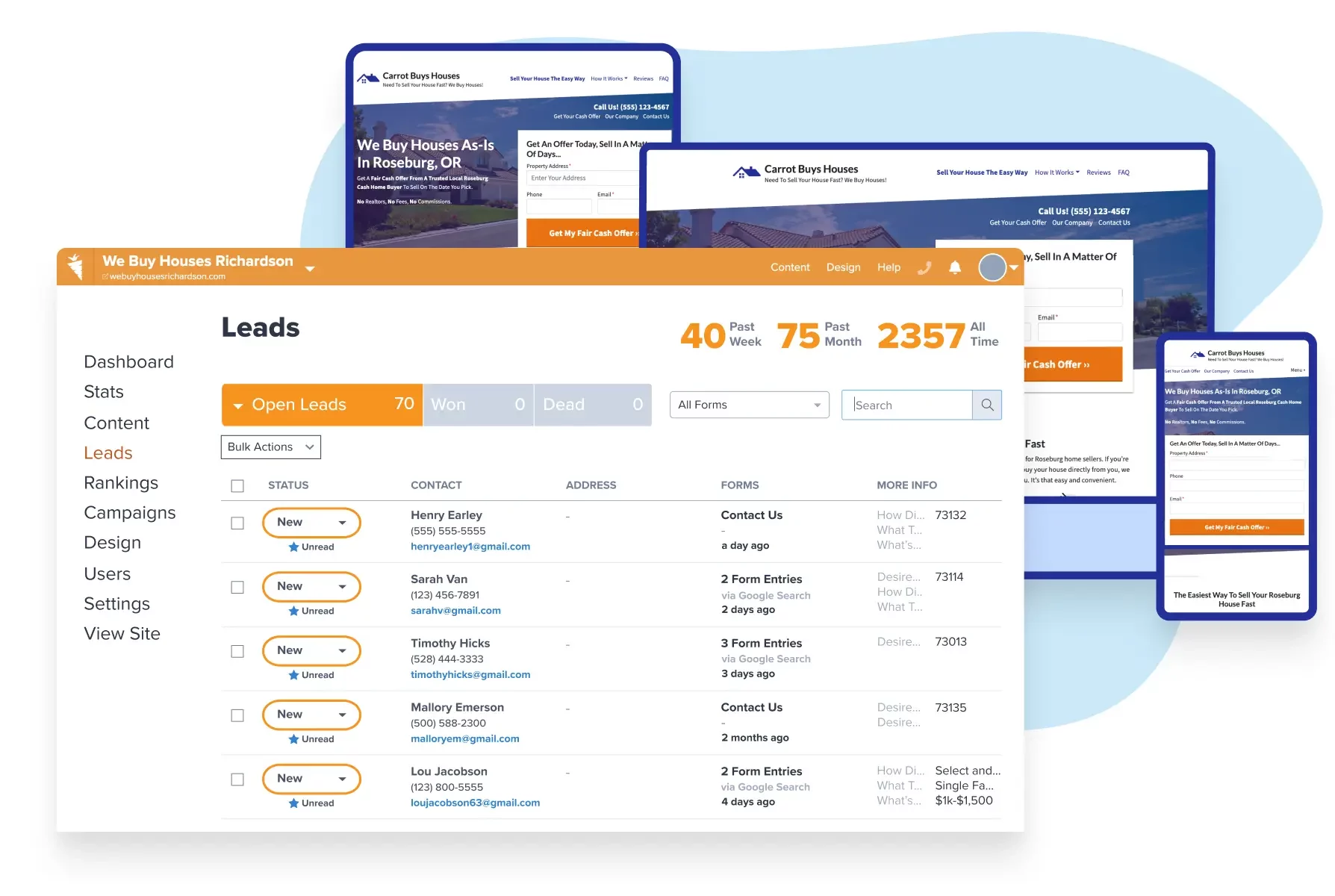
Carrot Website: A Carrot site can be one of your most powerful tools for generating inbound leads online. By optimizing your website for SEO and running paid ads, you can attract motivated sellers who are ready to take action.
SMS and Cold Calling Tools: Services like Batch Leads or Launch Control make it easy to reach out to potential sellers via text or phone calls.
Deal Analysis Tools: To evaluate deals, you’ll need tools to run comps and calculate the ARV (After Repair Value). Platforms like PropStream or Batch Leads allow you to pull property data, analyze deals, and determine the right price to offer.
Transaction Management: Once you have a property under contract, you’ll need a system to track the closing process. Platforms like Dotloop or DocuSign allow you to manage documents, contracts, and signatures online.
By investing in the right tools and setting up systems from the start, you’ll be able to operate more efficiently, scale your business, and focus on the highest-value tasks—finding deals and closing them.
In short, building your wholesaling business foundation means treating it like a real business, protecting yourself with an LLC, and using the right tools to streamline your process. This solid foundation will set you up for long-term success. Let’s move on to finding motivated sellers and getting deals under contract!
Finding Motivated Sellers
In wholesaling, finding motivated sellers is the foundation of your success. A motivated seller is someone who needs to sell quickly, usually because of financial distress, personal reasons, or because they simply don’t want to deal with the property anymore. These sellers are willing to accept a lower offer for the convenience and speed that a cash sale provides. As a wholesaler, it’s your job to find these people, offer a solution, and turn their property into a profit.
Motivated sellers are key because they create opportunity. The deeper the discount you can negotiate with a motivated seller, the larger your potential profit when you assign that contract to a buyer. Without motivated sellers, your deals won’t have enough margin for you or your investors to make money.
Here’s how you can find motivated sellers using tried-and-true strategies.
Strategies for Finding Motivated Sellers
1. Online Marketing: Using Carrot Websites to Attract Leads
Your Carrot website is a powerful tool for attracting inbound leads—people who are actively searching online to sell their homes fast. Sellers who visit your site and fill out a form are often highly motivated and ready to take action. By creating content optimized for SEO (Search Engine Optimization), you can rank your website on Google for key terms like “sell my house fast ” or “cash home buyers in .”
Here’s how to make the most of your Carrot website for lead generation:
Create hyper-local content: Write blog posts or pages targeting specific cities and neighborhoods where you’re looking for deals.
Run paid ads: Google Ads and Facebook Ads can drive immediate traffic to your site, generating leads even faster.
Optimize for conversions: Make sure your website is easy to navigate, with clear calls-to-action (CTAs) that encourage visitors to contact you for an offer.
A well-optimized Carrot website can automatically produce motivated seller leads, helping you scale your business while you sleep.
2. Direct Mail Campaigns: Targeting Absentee Owners, Pre-Foreclosures, and More
Direct mail remains one of the most reliable ways to generate leads from motivated sellers, especially when you target specific groups like:
Absentee owners: People who own properties but don’t live in them, often landlords or investors who may be tired of managing rentals.
Pre-foreclosures: Homeowners facing foreclosure are often highly motivated to sell before they lose their home.
Probate properties: People who inherit properties may want to sell quickly to avoid dealing with maintenance or taxes.
To run a successful direct mail campaign, you’ll need a targeted list of homeowners. You can get these lists through services like PropStream, ListSource, or Batch Leads. Craft a compelling postcard or letter offering a fast, hassle-free cash sale, and send it out consistently. Many wholesalers close their first deals through this strategy.
3. Driving for Dollars: Spotting Distressed Properties
Driving for Dollars is one of the most direct ways to find properties that may belong to motivated sellers. This involves physically driving through neighborhoods and looking for distressed properties that are showing signs of neglect, such as:
Overgrown lawns
Boarded-up windows
Peeling paint or damaged roofs
Notices on the door
Once you spot a potential distressed property, write down the address and do some research to find the owner. You can then reach out to them directly to see if they’re intereste
4. Cold Calling & SMS Marketing: Scripts and Tools for Outreach
Cold calling and SMS marketing are direct, proactive approaches to reaching potential sellers. With the right list and tools, you can contact homeowners and start the conversation about buying their property. This method can be especially effective when targeting lists like absentee owners or pre-foreclosures.
Here’s how to get started:
Cold Calling: Use a dialer like Batch Dialer or Mojo Dialer to quickly make calls to your targeted list. When cold calling, it’s important to have a script that introduces you, explains your interest in buying their home, and offers a solution. Keep it short and to the point:
“Hi, I’m [Your Name], a local investor, and I’m looking to buy a few more houses in your area. Would you be interested in a cash offer for your property?”
SMS Marketing: Texting is less invasive and often gets higher response rates than cold calls. Tools like Batch Leads or Lead Sherpa allow you to send bulk messages to your target list. Keep your message short and clear, like:
“Hi, this is [Your Name], I’m a local buyer interested in purchasing properties in . Would you consider selling your home for cash?”
These outreach methods are all about volume—the more people you reach out to, the more opportunities you’ll have to find motivated sellers.
By using these strategies—online marketing through Carrot, driving for dollars, direct mail, and cold calling/SMS marketing—you can consistently find motivated sellers and build a steady pipeline of deals. The key is staying consistent and persistent, even when you don’t get immediate results. Now, let’s talk about how to get the property under contract once you’ve found a motivated seller.
Analyzing and Making Offers
Once you’ve found a motivated seller, the next step is to analyze the deal and make an offer. Knowing how to correctly evaluate a property and make a competitive offer is essential for your success in wholesaling. Here, we’ll break down the key components of analyzing deals: running comps, estimating repair costs, and using the 70% Rule to determine your Maximum Allowable Offer (MAO).
How to Run Comps: Determining the Property’s After Repair Value (ARV)
The After Repair Value (ARV) is the estimated value of a property after all necessary repairs and updates are made. This is crucial because it helps you determine how much the property can sell for once it’s fixed up. The ARV guides your entire offer-making process, so getting it right is key.
Here’s how to run comps:
Use MLS data or online tools: If you don’t have access to the MLS (Multiple Listing Service), you can use tools like PropStream or Zillow to pull comps—comparable sales of similar properties in the same area.
Select recent sales: Focus on properties that have sold within the last 3-6 months to get an accurate picture of the current market.
Look for similar properties: The best comps are properties that are similar in square footage, bedroom/bathroom count, and property type. Stay within a 1-mile radius of the property you’re evaluating.
Adjust for condition: Compare the condition of your target property to the comps. If the comp is fully renovated and your property needs a lot of work, you’ll need to adjust the value downward.
Once you have your comps, average the sale prices to determine the ARV. For example, if similar properties in the area have sold for $250,000, then that’s likely your property’s ARV.
Estimating Repair Costs: Knowing What to Offer Based on Repairs
Understanding repair costs is another critical component of making the right offer. You don’t need to be a contractor, but having a rough idea of how much repairs will cost allows you to calculate your offer and leave enough margin for profit accurately.
Here’s how to estimate repair costs:
Conduct a walk-through: If possible, visit the property or ask the seller for recent photos. Look for major repairs like roof issues, HVAC systems, electrical problems, plumbing, or structural damage.
Use a repair cost guide: You can use general repair cost guidelines to estimate expenses. For example, cosmetic repairs (paint, flooring, minor kitchen updates) may cost around $10,000-$15,000, while major renovations (roof replacement, foundation repairs) could range from $20,000-$40,000 or more.
Get contractor quotes: If you’re unsure, consider having a contractor give you a rough estimate. Over time, you’ll get better at estimating repairs yourself based on experience.
The key is to avoid underestimating repair costs—this is where many wholesalers lose deals. Once you’ve determined the repair costs, subtract this from the ARV to get a clearer picture of the property’s value in its current condition.
The 70% Rule: How to Use It to Formulate a Maximum Allowable Offer (MAO)
The 70% Rule is a simple formula that helps you determine how much you should offer on a property to ensure there’s enough profit for both you and the end buyer (typically a flipper or cash investor). It’s one of the most widely used rules in wholesaling because it balances risk with profitability.
Here’s how the 70% Rule works:
Take the ARV of the property and multiply it by 70%. This accounts for the buyer’s profit margin (typically 30% of the ARV).
Subtract the estimated repair costs from this number to determine your Maximum Allowable Offer (MAO).
Here’s an example:
ARV: $250,000
70% of ARV: $250,000 × 0.7 = $175,000
Estimated repair costs: $30,000
MAO: $175,000 – $30,000 = $145,000
In this case, your MAO is $145,000. This is the maximum you should offer the seller to ensure there’s enough profit for both you and your end buyer.
Remember, your goal is to get the property under contract at a price lower than your MAO. This gives you room to assign the contract to an investor and collect an assignment fee, which is your profit.
By running comps, accurately estimating repair costs, and applying the 70% Rule, you can confidently make offers that leave enough margin for you, your buyer, and the seller to walk away happy. Let’s move on to the next step—getting that property under contract and finding a buyer!
Negotiating and Securing the Contract
Now that you’ve analyzed the deal and determined your offer, it’s time to negotiate with the seller and secure the property under contract. This is one of the most critical steps in wholesaling—if you don’t get the contract right, you risk losing the deal or even facing legal issues down the road.
Let’s walk through how to negotiate with sellers, the key clauses your contract should include, and how to explain the contract in a way that makes the seller feel confident in moving forward.
Tips for Negotiating with Sellers
Negotiation is where many new wholesalers struggle, but remember—your goal is to solve the seller’s problem, not just get the lowest price. If you approach the conversation with empathy and a solution-oriented mindset, you’re more likely to win the deal. Here are some tips to help you negotiate effectively:
Build Rapport: Sellers need to trust you before they agree to sell their property at a discounted price. Spend time understanding their situation and genuinely listen to their needs. People are more likely to do business with someone they like and trust.
Solve Their Problem: Focus on the seller’s pain points and offer a solution. For example, if they need to move quickly, emphasize how you can close fast with a cash offer. If they’re facing foreclosure, explain how you can help them avoid the damage to their credit.
Be Transparent: Let the seller know that you’re an investor and that you’ll likely be working with other buyers. Be upfront about your intentions so they feel comfortable. Transparency builds trust and can prevent misunderstandings later on.
Use the Seller’s Number First: Always ask the seller what they’re hoping to get for the property before you make an offer. This gives you a starting point and allows you to see how motivated they are. You might be surprised—they may name a price lower than you expected!
Know Your Numbers: Confidence in negotiation comes from knowing your numbers. You’ve already run comps and estimated repair costs, so stick to your Maximum Allowable Offer (MAO). If the seller’s price is too high, politely explain why and offer them a fair price based on the property’s condition and the local market.
The Importance of a Solid Contract: Key Clauses for Wholesaling
Once the seller agrees to your offer, it’s time to lock the deal in with a purchase and sale agreement. This contract is what legally gives you the right to assign the property to an end buyer and collect your assignment fee. A solid contract is essential to protecting yourself, the seller, and the buyer throughout the transaction.
Here are some key clauses your wholesaling contract should include:
Assignment Clause: This is the most important part of a wholesaling contract. It gives you the right to assign the contract to another buyer. Without this clause, you won’t be able to wholesale the deal. The clause should clearly state that you (the buyer) have the right to assign the contract to a third party.
Contingency Clause: Include a contingency clause that allows you to back out of the deal if you can’t find a buyer or if unforeseen issues arise during the inspection period. Common contingencies include financing, inspection, or approval by a business partner. This protects you from losing your earnest money if the deal doesn’t go through.
Earnest Money Deposit (EMD): The earnest money deposit shows the seller that you’re serious about buying the property. It’s typically a small percentage of the purchase price. You can often negotiate a lower EMD for wholesale deals, especially if the seller is motivated.
Closing Date: Make sure your contract specifies a reasonable closing date. If you’re wholesaling the property, the closing date should give you enough time to find a buyer. A typical closing timeline is 30-45 days, but you can negotiate this based on the seller’s needs.
Access to the Property: You’ll need access to the property for inspections and to show it to potential buyers. Make sure the contract gives you (or your buyers) the right to access the property during the closing period.
How to Get a Property Under Contract (Explaining the Contract to the Seller)
Getting a property under contract can be intimidating for beginners, but it’s simply a matter of walking the seller through the agreement and addressing any concerns. Here’s how to handle the conversation smoothly:
Explain the Agreement: Go through the contract with the seller line by line, explaining each section in plain language. Let them know that this contract protects both parties and outlines the terms of the sale. Highlight key points like the purchase price, closing date, and any contingencies.
Address Concerns: Sellers may have questions about the assignment clause or contingencies. Be ready to explain that you work with partners or investors and that the assignment clause allows you to find the right buyer quickly. Reassure them that you’re committed to closing the deal, and that contingencies are standard in real estate contracts.
Be Patient and Professional: Some sellers may need time to think or consult with someone before signing. That’s okay. Give them the time they need, and don’t pressure them into making a decision. Maintaining professionalism and patience goes a long way in building trust.
Sign and Seal the Deal: Once the seller is comfortable with the terms, have them sign the contract. Make sure you have all the necessary signatures, including both the seller’s and yours as the buyer. Provide a copy of the signed agreement to the seller and keep one for your records.
By following these steps and ensuring you have a solid contract in place, you can confidently move forward with the deal. With the property under contract, the next phase is finding your end buyer and getting ready to collect your assignment fee! Let’s talk about how to do that next.
Building a Cash Buyers List
One of the most critical aspects of wholesaling real estate is having a solid list of cash buyers ready to take the deals you secure under contract. Without cash buyers, even the best wholesale deals can fall apart. A strong buyer’s list ensures you have people ready to close quickly, so you can make your profit and move on to the next deal.
What is a Cash Buyer and Why They’re Crucial to Your Success?
A cash buyer is an investor or individual who can purchase a property outright, without needing traditional financing. This means no waiting around for mortgage approvals or bank inspections. Cash buyers are typically investors looking to fix and flip properties or add them to their rental portfolios.
Having a reliable list of cash buyers is crucial because:
Fast Closings: Cash buyers can close deals quickly, sometimes within a week, which is important when working with motivated sellers who need a fast solution.
Minimize Risk: By having buyers lined up, you reduce the risk of a deal falling through at the last minute, which can cost you both time and money.
Repeat Business: Once you build relationships with active cash buyers, you’ll find that they often buy multiple properties from you, creating a steady income stream.
Now, let’s break down how to build and maintain a cash buyers list.
How to Build a List of Cash Buyers
A solid cash buyers list doesn’t appear overnight, but with consistent effort, you can build one that supports your wholesaling business for years to come. Here are some proven methods for finding cash buyers:
1. Networking: Attending Local REIAs and Using Social Media Groups
Networking is key in the real estate world, and one of the best places to meet cash buyers is at your local Real Estate Investor Association (REIA) meetings. These groups are full of experienced investors looking for deals, and as a wholesaler, that’s exactly what you can offer them.
Here’s how to maximize networking:
Attend REIA meetings regularly: Get to know the local investors, share your deals, and exchange contact information. Focus on building relationships—buyers are more likely to work with wholesalers they know and trust.
Use social media: Join real estate investment groups on platforms like Facebook and LinkedIn. Many local investor groups exist where people post deals and connect with cash buyers. When you have a property under contract, share it in these groups to gauge interest.
Go to local meetups: Even outside of REIAs, real estate investment meetups, seminars, and conferences are great places to find buyers who are actively seeking deals.
2. Public Records: Finding Buyers from Recent Transactions
Another method for finding cash buyers is digging into public records. Whenever someone buys a property, it’s recorded in public county records, including whether it was a cash transaction.
Here’s how to find them:
Search recent transactions: Check the local county records for recent property purchases. Look for cash transactions and record the buyer’s information. These buyers are often investors who are likely looking for more properties.
Work with a title company: Many title companies have access to property transaction data and may be willing to share lists of cash buyers who have closed deals in your area recently.
3. Online Platforms: Using Carrot’s Cash Buyer Leads Feature
If you want to streamline the process of finding cash buyers, platforms like Carrot make it easy. Carrot’s websites have a built-in Cash Buyer leads feature designed specifically for real estate investors like you.
Here’s how it works:
Create a landing page: Set up a simple landing page using your Carrot website that offers potential cash buyers an opportunity to join your list. Make the page easy to navigate and include a form where buyers can submit their information.
Drive traffic to the page: Share your landing page in your local REIA groups, social media, or even in your email marketing campaigns. Once buyers sign up, you’ll start collecting valuable leads you can nurture for future deals.
This automated approach can quickly grow your buyers list, allowing you to focus more on finding deals and less on manually building your list.
Communicating Effectively with Cash Buyers
Once you’ve built your buyers list, effective communication is crucial to maintain strong relationships and ensure quick closings. Cash buyers need to trust that you’ll bring them high-quality deals, and you need to ensure they can close fast.
Here’s how to communicate with your cash buyers:
Provide detailed information: When presenting a deal to your buyers, include all relevant details—ARV, repair estimates, and your asking price. Cash buyers want to know the numbers right away so they can make an informed decision.
Be honest and transparent: If there’s something wrong with the property (e.g., major repairs needed), let your buyers know upfront. They’ll appreciate your transparency and are more likely to work with you long term.
Stay in touch: Even when you don’t have deals, stay in contact with your buyers. Send out periodic updates, check in on their investment goals, and ask if they’re looking for anything specific. Building a relationship keeps you top-of-mind when they’re ready for their next purchase.
By following these strategies, you’ll build a strong, reliable cash buyers list that will allow you to confidently secure contracts, knowing you have the buyers ready to close. With a solid buyers list in place, your wholesaling business will run much smoother, and you’ll be well-positioned for consistent success. Next, let’s dive into closing the deal and collecting your assignment fee!
Assigning the Contract
Once you’ve secured a property under contract and built a strong list of cash buyers, the next step in the wholesaling process is assigning the contract. This is the moment where you make your profit, so understanding how the assignment process works is crucial for a smooth deal.
How the Assignment Process Works: From Contract to Closing
The assignment process is what makes wholesaling unique. Instead of purchasing the property yourself, you’re essentially selling the rights to your contract to a cash buyer. Here’s a breakdown of how it works:
Get the Property Under Contract: After negotiating with the seller, you’ll sign a purchase and sale agreement that gives you the right to buy the property at an agreed price. This contract is the key to wholesaling.
Assign the Contract: Instead of closing on the property yourself, you’ll assign the contract to one of your cash buyers for a higher price. This is known as the assignment fee—your profit for finding the deal.
Use an Assignment of Contract Form: To complete the process, you’ll need an Assignment of Contract document. This form officially transfers your rights in the original purchase agreement to the cash buyer. The buyer takes over the contract and closes on the property directly with the seller.
Close the Deal: The cash buyer will close the deal with the seller, and you’ll collect your assignment fee at closing, typically through the title company handling the transaction.
The beauty of this process is that you never need to own the property or come up with the funds to close. Your role is simply to connect motivated sellers with eager cash buyers.
Assignment vs. Double Closing
In wholesaling, there are two primary methods for closing deals: assignment of contract and double closing. It’s important to understand the difference so you can choose the best approach for each deal.
Assignment of Contract: This is the most common method. You assign the original contract to a buyer, and they complete the transaction. It’s fast, simple, and involves lower costs because you don’t have to purchase the property yourself.
Double Closing: In a double closing, you actually buy the property from the seller and immediately sell it to your buyer in two back-to-back closings. This method is useful when you want to keep your assignment fee private or if the profit margin is particularly large. However, it can be more expensive since you’ll need to cover closing costs twice.
In most cases, assignment is the preferred method for beginners because it’s straightforward, and you don’t need any of your own money to complete the deal.
How to Present Deals to Buyers and Collect Your Fee
Now that you’ve secured a contract, you need to present it to your cash buyers in a way that excites them and makes them eager to close quickly. Here’s how to do it:
Package the Deal: Present the deal in a clear, professional manner. Include all the necessary details like the property address, the purchase price, ARV (After Repair Value), estimated repair costs, and your asking price (which includes your assignment fee).
Create Urgency: Good deals won’t last long, and you want your buyers to act fast. Let them know that you’re offering the deal to multiple buyers and it’s first-come, first-served. The more urgency you create, the faster you’ll get offers.
Be Transparent About Your Fee: When assigning the contract, be upfront about your assignment fee. Most experienced cash buyers expect wholesalers to make a profit, so there’s no need to hide it. Transparency builds trust and long-term relationships with your buyers.
Use a Title Company or Real Estate Attorney: A reliable title company or real estate attorney will handle the closing process and ensure everything is legal and above board. They’ll facilitate the transfer of the contract from you to your buyer, and they’ll also handle the payment of your assignment fee.
Get Paid at Closing: Once the deal is ready to close, your assignment fee will be paid out through the title company or attorney. You’ll receive your profit without ever having to come up with the funds to purchase the property.
Mastering the assignment process is the key to consistent, profitable wholesaling. It allows you to leverage opportunities, connect buyers and sellers, and make money without taking on the financial risk of buying the property yourself. Once you’ve successfully assigned your first contract, you’ll see just how scalable and repeatable this business model can be!
Common Mistakes to Avoid
When you’re just starting out in real estate wholesaling, it’s easy to make mistakes that can cost you time, money, and even deals. However, by being aware of the common pitfalls and learning how to avoid them, you can fast-track your success. Here are three of the most frequent mistakes that new wholesalers make—and how to steer clear of them.
Overpaying for Properties: How to Avoid Paying Too Much
One of the biggest mistakes beginners make is overpaying for properties. The profitability of your wholesale deal relies heavily on securing properties at a price low enough that there’s room for both you and the end buyer to profit. Here’s how to avoid overpaying:
Stick to the 70% Rule: This rule helps you determine your Maximum Allowable Offer (MAO) by calculating 70% of the After Repair Value (ARV) minus estimated repair costs. This ensures that you’re leaving enough margin for both your buyer and yourself.
Run Accurate Comps: Make sure you’re using recent, comparable sales (comps) in the area to accurately estimate the ARV. Failing to run accurate comps could cause you to misprice your offer, leading to an unprofitable deal.
Don’t Get Emotionally Attached: It’s easy to get caught up in the excitement of finding a deal, but always remember—real estate wholesaling is about the numbers. If the deal doesn’t make financial sense, walk away. It’s better to lose out on a deal than to overpay and end up stuck with a contract you can’t move.
Not Vetting Buyers: Ensuring Your Buyer Can Close
Securing a contract is only half the battle. The other half is ensuring that your buyer is actually able to close the deal. Too many new wholesalers skip the crucial step of vetting their buyers, which can result in deals falling apart at the last minute. Here’s how to ensure your buyers are solid:
Build Relationships with Proven Buyers: Rather than scrambling to find a buyer after you have a property under contract, start building relationships with reliable cash buyers before you even begin wholesaling. Attend local real estate meetups, network through social media, and tap into online platforms to grow your list.
Verify Proof of Funds: Always ask potential buyers for proof of funds before assigning them a contract. This ensures that they have the cash available to close the deal on time.
Ask for References: If you’re working with a new buyer, don’t hesitate to ask for references from title companies or other wholesalers they’ve worked with. A few quick phone calls can give you peace of mind that they’re legitimate and capable of closing.
Skipping Legal Advice: Why Having a Real Estate Attorney Matters
Skipping legal advice can be a costly mistake. While wholesaling may seem straightforward, each deal involves legal contracts, and it’s critical to have someone with the right expertise on your side.
Protect Yourself with Proper Contracts: A real estate attorney will help ensure that your contracts are legally sound and that you’re protected in case anything goes wrong. For instance, you need to ensure you have an assignability clause in your contract, which allows you to assign the contract to another buyer.
Stay Compliant with Local Laws: Real estate laws vary by state, and wholesaling laws can be complex. Some states have specific restrictions on wholesaling, and an experienced attorney can help you navigate these regulations. Failing to comply with local laws could land you in hot water, so it’s best to have an expert in your corner.
Avoid Legal Disputes: Having a real estate attorney involved in your deals ensures that everything is handled properly and that both parties understand their obligations. This reduces the risk of legal disputes that could arise from misunderstandings or poorly drafted contracts.
By avoiding these common mistakes—overpaying for properties, failing to vet buyers, and skipping legal advice—you’ll set a strong foundation for a successful and sustainable wholesaling business. The more cautious and prepared you are, the more smoothly your deals will run and the faster you’ll see results.Next, let’s discuss closing your first deal and scaling your business for long-term success!
Scaling Your Wholesaling Business
Once you’ve successfully closed a few deals, the next step is scaling your wholesaling business. To grow, you need to transition from hustling to setting up systems that generate leads and close deals on autopilot. Here’s how to take your business to the next level.
Systematizing Lead Generation: Automating Marketing and Follow-Up
At the heart of any successful wholesaling operation is a consistent stream of leads. However, manually handling every part of lead generation can quickly become overwhelming. To scale, you need to automate and streamline your marketing efforts:
Leverage Online Marketing Tools: Use platforms like Carrot to build a high-converting website that attracts leads through SEO. Optimize your site for keywords like “sell my house fast” or “cash home buyers,” so motivated sellers can find you online.
Automate Follow-Up Campaigns: Many of your leads won’t convert immediately. That’s why having a follow-up system is essential. Use CRM software to set up automated email and SMS sequences to nurture your leads. The more touchpoints you have, the better your chances of closing deals down the road.
Use Paid Advertising: As you scale, consider using paid traffic sources like Google Ads or Facebook Ads to generate more motivated seller leads. Set a budget and let your ads run continuously to keep the pipeline full while you focus on closing deals.
By automating these processes, you can spend less time prospecting and more time negotiating and closing contracts.
Building a Team: When to Hire a Virtual Assistant or Acquisitions Manager
As you scale, you’ll reach a point where it’s impossible to handle everything on your own. This is when building a team becomes critical. Two key hires you’ll want to consider early on are:
Virtual Assistant (VA): A VA can help with repetitive tasks like cold calling, list pulling, lead follow-up, and organizing your CRM. This frees you up to focus on high-value activities like negotiating contracts and closing deals. Virtual assistants are typically cost-effective and can be hired part-time as your business grows.
Acquisitions Manager: An acquisitions manager can help scale your wholesaling business by handling property negotiations and contracts. They’ll focus on getting properties under contract while you focus on running the business and expanding operations. As your deal flow increases, an acquisitions manager will be essential to handling multiple deals simultaneously.
Building a team allows you to delegate tasks, maximize productivity, and scale your operations without getting bogged down in day-to-day details.
Reinvesting Profits to Scale
If you want to grow your wholesaling business, you need to reinvest your profits strategically. Here are three key areas where reinvesting can have the biggest impact:
Marketing: Scale up your lead generation efforts by reinvesting in marketing channels that are already working. Whether it’s paid ads, direct mail campaigns, or online marketing, doubling down on what works will ensure you keep the deal flow consistent.
Technology & Tools: Invest in tools that streamline your processes, such as CRM systems, marketing automation platforms, and real estate software for finding comps and running analyses. The right tech can save you time and make your business more efficient.
Hiring & Training: Use your profits to bring on new team members and train them to run different aspects of your business. This includes virtual assistants, acquisitions managers, and even dispositions managers to help sell the deals. The more you reinvest in your team, the more your business will be able to handle a higher volume of deals.
Scaling your business takes time, but by investing your profits wisely, automating lead generation, and building a strong team, you’ll be well on your way to growing a successful and sustainable wholesaling operation.
By systematizing your lead generation, building a reliable team, and reinvesting your profits, you’ll set the foundation to scale your wholesaling business and take it to new heights. With consistent effort and smart decision-making, you can turn your initial deals into a thriving business that operates efficiently at scale! Ready to scale? Let’s talk about closing more deals consistently and making 2025 your most successful year yet!
Conclusion
Wholesaling real estate may seem overwhelming at first, but by following these key steps, you’ll be on the path to success:
Understand the process: From finding motivated sellers to securing contracts and building a cash buyer list, knowing the steps is critical.
Treat it like a business: Set up a strong foundation, use the right tools, and build a reliable team as you grow.
Stay disciplined with your numbers: Analyze deals carefully, stick to the 70% rule, and avoid overpaying for properties.
Be persistent: Wholesaling isn’t a “get rich quick” scheme—it’s a business that requires patience, persistence, and a willingness to learn from mistakes.
For beginners, remember that every successful wholesaler started right where you are now. The key is to stay persistent, keep learning, and continue taking action. Even when deals fall through or things don’t go as planned, each challenge is an opportunity to grow and get better.
To help you stay organized, streamline your lead generation, and automate your follow-up, I highly recommend using Carrot’s platform. With the right tools, you can focus on scaling your wholesaling business and closing more deals.
Ready to take your first step? Use Carrot to help you automate, attract motivated sellers, and build your buyer list. Get started today and make this the year you break into wholesaling!
Videos are often seen as a way to build brand awareness and establish a presence in the industry. However, many real estate professionals are missing out on the full potential of video marketing for real estate.
Featured Resource: Our Free Video Marketing Playbook For Investors And Agents!
This unique article will debunk the myth that real estate videos are only for branding.
We’ll show you how to use videos to generate motivated seller and buyer leads using data and creative use cases you may not have considered before. So, if you’re ready to take your real estate business to the next level, keep reading to learn how to unlock the full potential of video marketing.
With the right strategies and techniques, you can use video marketing to create targeted campaigns that drive conversions and help you stand out in a competitive market. So, let’s dive into how you can use video marketing to generate quality leads for your real estate business.
By the time you’re done reading, you’ll know how to take advantage of one of the best forms of marketing we have at our disposal.
[The Data] Benefits of Video Marketing For Real Estate
If you aren’t convinced you need to implement video marketing into your business, here’s some data to back up how quickly this sector is growing.
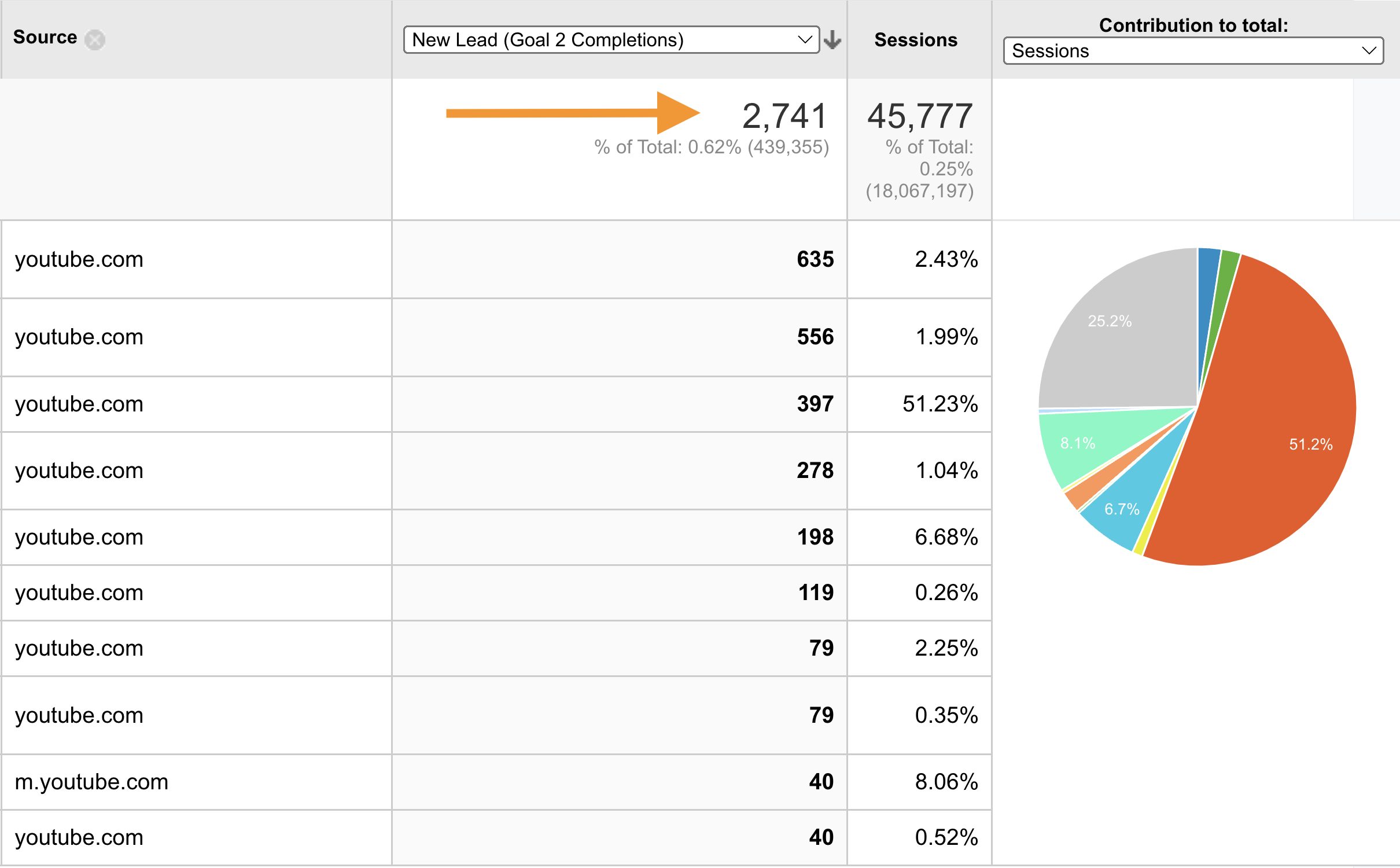
Carrot members drove 2,741 leads via YouTube.
Carrot members generated 2,741 leads through YouTube, which is evidence that YouTube can effectively serve as a channel for lead generation.
Leads from YouTube convert 2x higher than other channels.
There are a ton of different ways to generate leads online. Regarding lead quality, though, it’s hard to beat the conversion rate from leads that come through video platforms like YouTube.
Based on our internal data across more than 7,000 members, we’re seeing leads convert from video viewer to prospect at a rate of 8.43% — more than double the rate of other lead sources.
37% of investors and agents ARE using video in their marketing.
And whether or not you consider yourself a marketer right now, a recent study from the National Association of REALTORS Research Group has shown that more than 37% of investors and agents ARE using video in their marketing. With an additional 35% responding that they intend to implement it. The remaining 28% stated that they do not want to use video in the future.
73% of homeowners are likelier to list with an agent who uses video.
When it comes to selecting a realtor, homeowners and buyers take it seriously. Even if they don’t know what’s on the line by choosing the wrong one, they know this decision can be one of the biggest decisions they make in their lives.
That’s why more than 73% reported that they are likelier to list with an agent who uses video in their marketing. (Source: Realtor Magazine)
403% more inquiries are driven by video listings.
In the same study, NAR found that 403% more inquiries are being driven by video listings, especially 360-degree tours, than with photos only. Videos are not only a fantastic way to get extra attention on your properties but also a great way to keep them engaged with your business.
51% of homebuyers use YouTube in their searches.
One of the biggest reasons you should use video in your marketing is because YouTube is the primary destination for homebuyers. After Google, YouTube is the biggest, most widely used search engine available. (Source: Animoto)
70% of homebuyers want a virtual tour of the home.
With the pandemic, virtual tour requests skyrocketed. In a Digital In The Round study, 70% of buyers wanted to virtually tour the home they were considering BEFORE physically visiting the property.
On top of that, they reported that buyers in the 18-34 group spent 10x more time looking at listings and were 130% more likely to become a lead if they saw a virtual tour of the property before they had to contact you.
How To Get Started With Video Marketing
Since getting started and creating that first video can be the hardest part of implementing this strategy into your marketing, here are some quick tips to help you.
Tip #1: Keep it simple.
You don’t have to be a professional videographer or editor to make incredibly effective videos.
Keeping it simple, especially initially, will help you more than spending thousands of dollars hiring a professional or paying an editor.
All you need is an iPhone or Android with a decent camera, a good lapel or Bluetooth microphone, and a handheld gimbal if you have problems keeping your hands steady.
Initially, focus on ensuring your audio is good and the video quality is at least 1080p HD. From there, the rest of your effectiveness comes down to the content in the video.
Tip #2: Everybody starts in the same place.
One of the best things you can do, especially in the beginning, is to accept that your videos will probably be bad. You may even cringe when you look back on them a year from now.
Everybody starts at the same place, and unless you were born a video marketing savant, it’s OK to be bad at this for a bit. Keep showing up and improving, and your videos will improve, too!
The people watching your videos care more about you as a human and the property you’re showing them than they do the editing tricks you used to get their attention.
Tip #3: Stay focused on your goals.
Are you trying to become an influencer in your market or space? Or are you trying to generate buyer leads so you can sell more properties?
People often try doing both, which creates washed-down, ineffective marketing. Instead of falling victim to the ‘do it all’ marketing strategy, focus on one specific goal.
Tip #4: Be patient. It takes time.
The traction you get with your video marketing efforts won’t happen overnight, either.
But don’t let it discourage you if your first few videos don’t take off how you thought they would. As with any marketing strategy, it takes time to build that momentum up.
But once you’ve built it? It’s easier for your newer videos to gain traction because you stayed consistent and kept creating your first videos without giving up.
Tip #5: Don’t forget the humans.
Many investors and agents using video make one major mistake: they ONLY showcase the property and not themselves.
So, with that in mind, ensure you’re showing up in the video and giving them a chance to get to know, like, and trust you without taking the focus off the property.
Humans buy from humans, so give them a chance to buy from YOU.
While you’re keeping humans as the focus, make sure to include the humans around the property you’re selling — they’re buying into the lifestyle, the location, and the property’s features. Show them what they’re getting!
Tip #6: Keep your videos to the point.
On average, around 37% of your viewers will stick around to the end of the video.
So if you want to increase that rate, keeping them short and to the point will ensure the videos are engaging and that you keep people watching.
Not every property needs a 30-minute documentary. A shorter 3-5 minute video can be more effective if it targets the property’s key features.
Tip #7: Promote your videos.
Don’t sit around thinking, “if I build it, they will come.” Proactively sharing the videos you’ve created will significantly reduce your time to gain real traction in your area.
Make sure you’re devoting energy to helping get the word out. You can even partner with a digital marketing agency to complement your in-house efforts and reach your target audience more efficiently.
All it takes is the right person to see the video to be effective, so do what you can to share it where you think that person might be.
Top Video Marketing Topics For Seller Leads
When looking for people willing to sell their homes fast for cash, video is one of the best marketing strategies you can use.
To help you get started, here are some of the topics you’ll want to cover:
Seller Testimonials
When you’ve just finalized a deal with a prospect, emotions will never be higher than they are at that moment. That means it’s time to turn on the camera and capture those emotions on video. If it’s finalized during an online call, make sure you ask your prospect for their consent before turning on the recording on your enterprise call center software.
We’ve recorded a podcast focusing solely on capturing the perfect seller testimonial. You can watch/listen to it by clicking here.
And to show you how quick & straightforward these videos can be, here’s a 15-second seller testimonial we found from a Chicago-based agent and his seller.
When you get it right, these videos are some of the most effective content you’ll ever create for engaging with potential prospects, starting the relationship on the right foot, building trust, and getting them to move forward with you.
About Me Video
Sometimes, investors and agents struggle to create an “About Me” video. Whether that’s because they’re uncomfortable talking about themselves or because they can talk about themselves for way too long, we’ve noticed a trend.
Creating these around precisely what your client wants/needs to see and hear from you doesn’t have to be a struggle. We’ve compiled a 10-minute video that breaks down our process and how we create “about me” videos, introductions, and more.
You can watch it below!
Other topics to make sure you cover:
Seller testimonials and a video about who you are, are must-haves, but you’ll also want to ensure you’re giving the search engines what they want.
To help with that, here are some of the most common keywords your sellers are going to be using on Google and YouTube:
How to sell your house fast for cash [city, state]
We buy houses in [city, state]
Home buyers in [city, state]
How to stop foreclosure in [city, state]
First-time home seller in [city, state]
Real estate Investor vs. agent in [city, state] (pros & cons)
Top 5 mistakes when selling your [city, state] house
Top 5 neighborhoods in [city, state]
When creating videos around these keywords, keep your content focused on what you know they will be searching for.
Some keywords are self-explanatory, while others will let you dive deeper.
For instance, the “top 5 mistakes when selling your home in [city, state]” can be tailored to the specifics of your area and include things like neighborhoods to avoid, best school zones, worst areas for traffic, etc.
These will help your prospects visualize their life in the area and know they’re avoiding the mistakes you point out.
And don’t forget to cover the questions that you keep getting asked over and over again.
Not only will you be giving your prospects what they’re looking for, but these questions will often help you show up higher in the search results on Google and YouTube.
And you’ll save time by sending prospects the video you’ve already recorded when those questions inevitably come up.
How to Script & Outline Your Videos
When creating your videos, you can use impromptu sessions where you hop on and talk about something you know your buyers and sellers could help with.
But, for the most part, you’ll want to ensure you stick to some scripting. In our case, it’s always best to keep it as simple as possible.
Here’s a quick 3-step script you can use:
Step 1: Introduce the property yourself. People connect with people, so don’t be afraid to show your face on camera.
Step 2: Give a quick tour of the property, including 3-5 key features. For this section, focus on the property — you don’t have to be on camera.
Step 3: Record yourself making final points and giving a call to action. Make sure your face is on camera for this step, too.
Don’t let it be any more challenging than this.
Practice before you go live and, if you have to, write down what you want to cover in bullet point format and keep it in front of you. It helps to stay focused and make your videos more concise.
As you get experience and become comfortable with the process, you can develop your style and hire creative editors to make your videos flashier. Until then, though, keep it simple!
7 Creative Hacks & Tools For Video For Real Estate
You will naturally want to make even more videos as you gain momentum. That’s when it’s time to start looking at tools and efficiency hacks you can use to get more done in less time.
Here are some of the best hacks and tools you can use to save more time:
#1 – Convert Your Videos Into Blog Posts
Sitting down and creating long blog posts isn’t something anyone looks forward to.
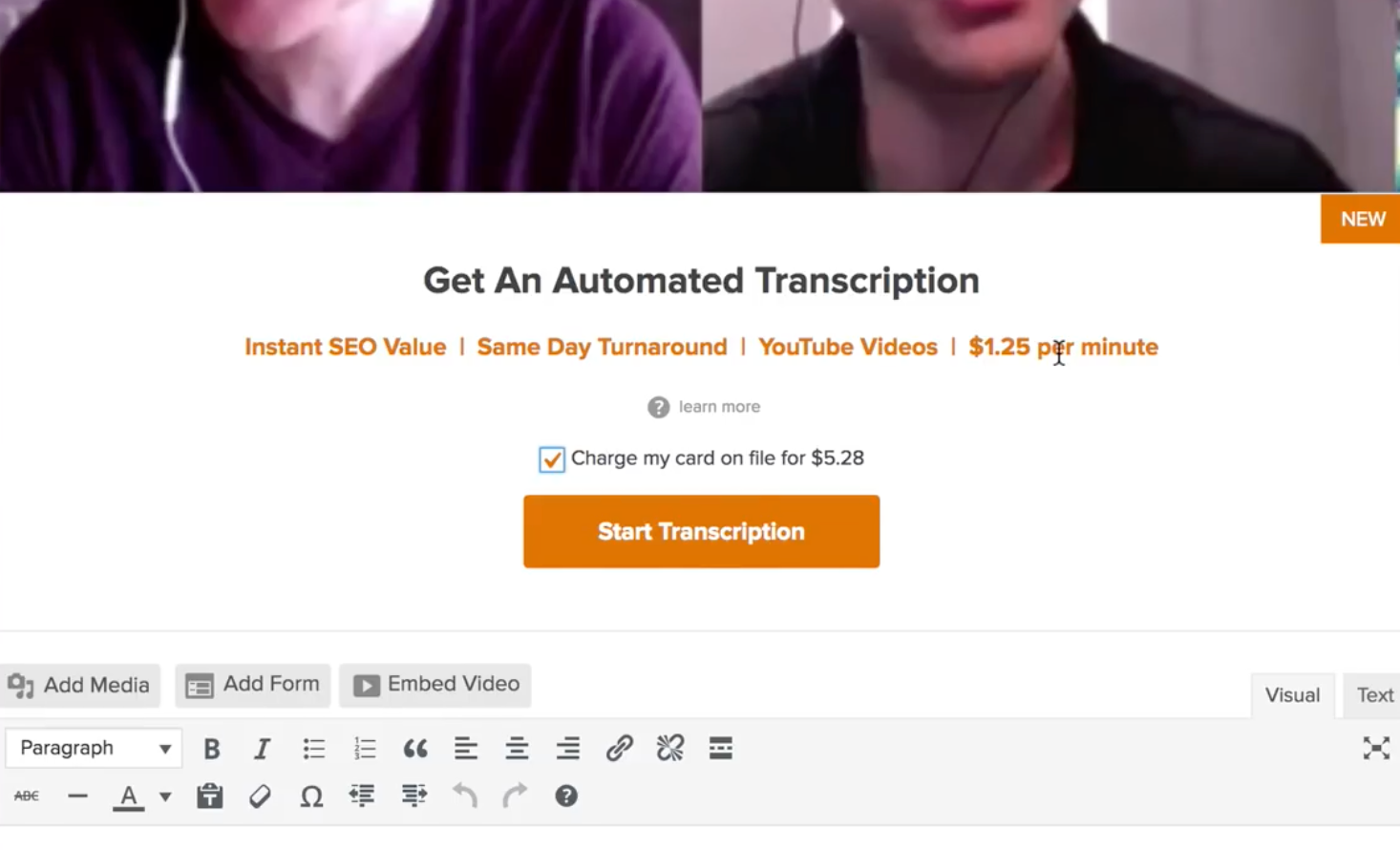
With VideoPost, you can upload your videos and instantly receive a transcription that you can review and turn into a blog post. Once approved, you can hit publish on your blog.
Here’s a link that shows you how to use VideoPost to create real estate content in less than 10 minutes.
Then, when you’re ready to start increasing your customer engagement, converting more visitors into leads and leads into deals, and optimizing for YouTube and Google SEO, watch this quick 15-minute tutorial.
#2 – Automate Engagement, Replies, And Testimonials
Personalizing your interactions with your audience can be time-consuming if you try to do it manually every time you get a question or testimonial.
With VideoAsk, you can add the human element to your funnel and convert more leads. This tool makes it super easy for you to be conversational (and authentic) in your marketing and collect testimonials once the deal is done.
Once you start using it, you will abandon the manual way forever. It’s that powerful.
#3 – Perform Advanced YouTube Keyword Research
Even though YouTube and Google SEO are based on similar algorithms, what ranks on YouTube and the keywords people use to search on the platform can differ from those used on Google.
With a tool like TubeBuddy or VIDIQ, you can see the keywords people use on YouTube and then cater your content and video titles to those keywords.
Advanced keyword research helps you find high-performing video topics faster, too.
Tools like BombBomb help take your email campaigns to the next level by making your follow-up campaigns more personal and personable.
Whether converting leads into deals, following up for birthdays and anniversaries, letting them know what to expect next, or just answering questions, BombBomb enables you to put video responses directly into your emails to make them more personal & powerful.
This results in increased responses and stronger relationships and helps keep your prospects and contacts engaged throughout the process. On top of that, recording a video and plugging it into your email is FAR faster than typing it out manually — and gives you room to add context and clarity to the conversation.
#5 – Train Your Team Faster & Easier
Loom lets you quickly record your screen or desktop and automatically upload it to their platform. Then you can share a link to the video so your team or prospects can watch without having to log in.
This saves a ton of time, helps eliminate lengthy Zoom meetings that could have been summed up in a quick five or 10-minute video, and enables you to keep the conversation moving forward.
You can access the tool for free, and it plugs into your web browser, so you don’t have to download anything. You can also use it on your phone to record Looms even if you’re on the go.
#6 – Offer 360 Degree Virtual Tours
3D virtual tours are becoming necessary to stand out while highlighting the key features your prospects want to see.
Whether you want to help them experience walking through the home before they become a lead, or you’re looking for a way to make your listings stand out, tools like Matterport make it easy.
With it, you can use your phone to record the tours, add notes and comments, create accurate measurements, and even pull 4K photos from the video. You can also upload directly to your social media profiles, Google Street View, VRBO, and Realtor.com, and embed the tours on your website.
You can do it without hiring a video editor or buying expensive cameras.
#7 – Create Before & After Flip Videos
Most investors make the mistake of only focusing on the result. This is understandable because they’ve poured so much time, love, money, and energy into the project that it only makes sense to showcase how great it turned out.
But if you want to stand out and engage your prospects deeper, show them what the project started as. Spend some time filming it before you start and what it turns into once you put all that hard work into it. When you use an animation maker, you can creatively illustrate this transformation, making your project even more captivating
Most of the time, prospects don’t notice the small details that take the most effort. If you point those details out, though, they become selling points without having to do any selling, and you’ll hear prospects talking about them when it’s time to sit down and close the deal.
Video Marketing for Real Estate Simplified
Once you understand how powerful (and profitable) using videos in your real estate business can be, creating them becomes much more enjoyable.
In the beginning, remember to keep things simple and stay focused on what your people want to see from you. Keep your videos short and concise, and ensure you share them wherever possible.
If you keep the tips and hacks from this guide in mind as you create, you’ll experience why video marketing for real estate is so effective.
We’re here to help. You don’t have to get overwhelmed, find new topics, and fumble through video content. Not only have we done a lot of the work for you in this post, but we’ll guide you along the way, step-by-step, so you can be on your way to doing what you do best — closing deals.
If you have any questions…
And as always, if you feel Carrot may be a fit for your real estate websites and want better results online, we’d love to have you in the Carrot community, and be sure to learn more about video marketing.
Check out our plans and hit us up with questions anytime!
Are you tired of using generic website templates that don’t deliver the results you want?
At Carrot, we understand the importance of a high-converting real estate website for investors, and that’s why we’re BIG nerds regarding testing. Over the past decade, we’ve put our website templates through hundreds of rigorous tests to ensure they deliver the best possible results.
We know what works and doesn’t, and we’re constantly refining our templates to help you achieve your real estate investment goals. So, if you’re ready to take your website to the next level, come and discover the power of our high-converting real estate templates – you won’t be disappointed!
Featured Training: Learn To Rank Your Real Estate Website…The Right Way
Are you tired of low conversion rates and struggling to generate leads for your business? If so, you’re in luck!
In this post, I’ll share what a good conversion rate looks like and provide three powerful techniques to optimize your website for maximum success. Don’t miss out on this opportunity to take your real estate business to the next level.
What do we mean by conversion & how much does it matter?
The percentage of website visitors who complete this desired action is known as the conversion rate, which is an important metric for measuring the success of a website in achieving its goals.
Understanding your conversion rate is crucial to know how well your real estate investor website performs. It can help you optimize your website to attract more leads, increase engagement, and ultimately, drive greater success for your real estate investment business.
The 3 Biggest Factors of a High-converting Real Estate Website
Watch this video… “Website Conversion 101”
1. Personalization
Structureand appearance
The websites that convert take advantage of their web design to pull people in and get them to explore their site. Attractive web design for high-converting websites means:
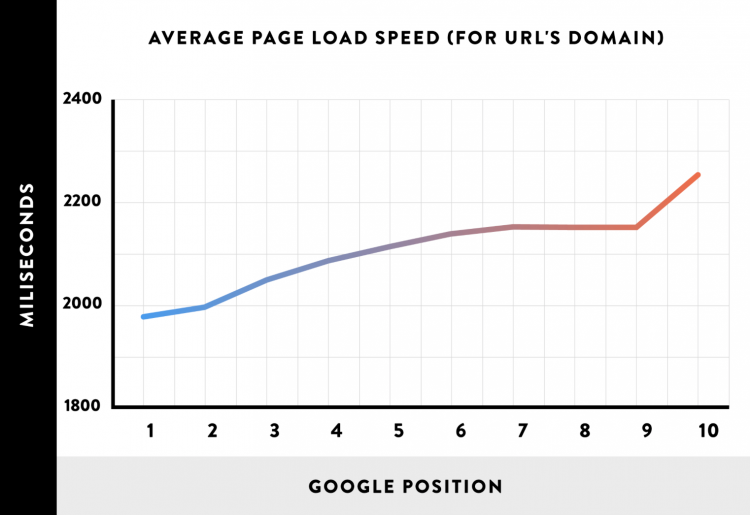
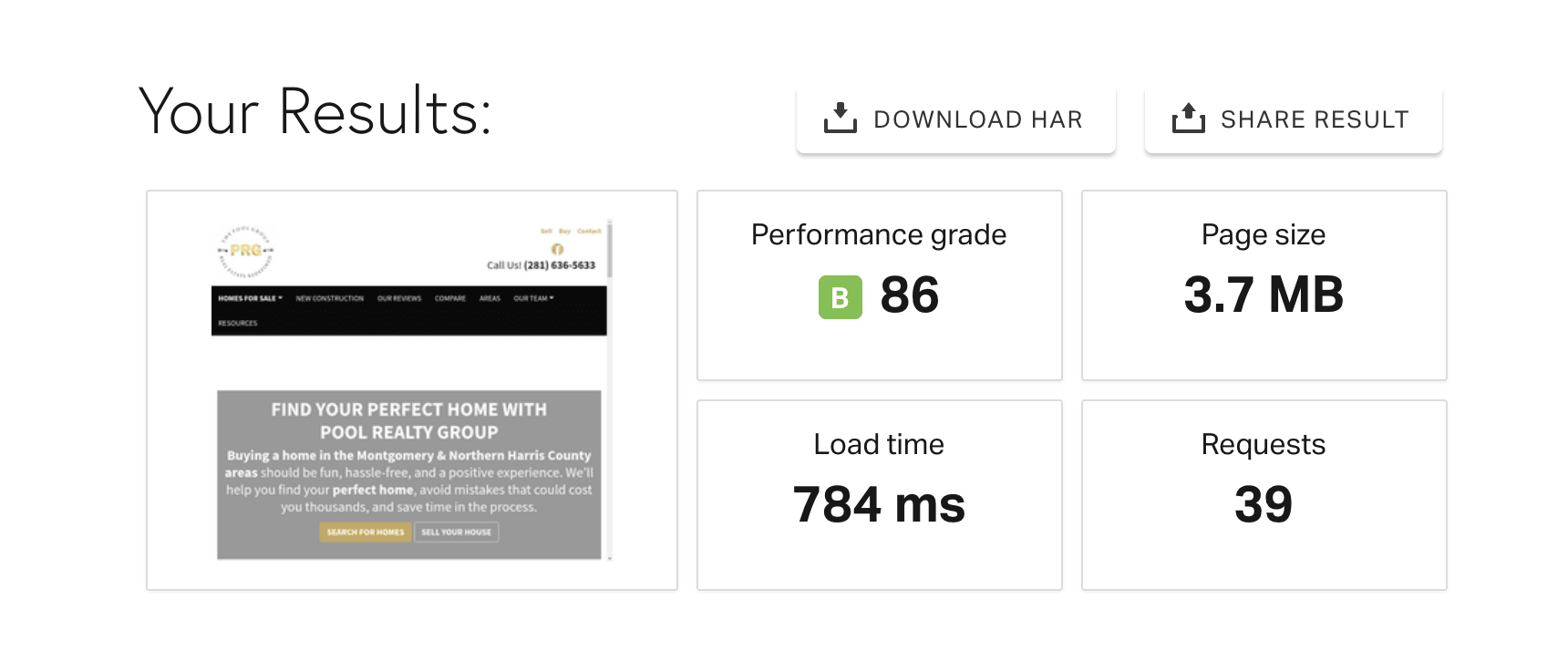
Fast page load: People want information fast, especially since over half of internet traffic is on the go with mobile, so fast page speed is essential to convert. Learn more about page speed optimization.
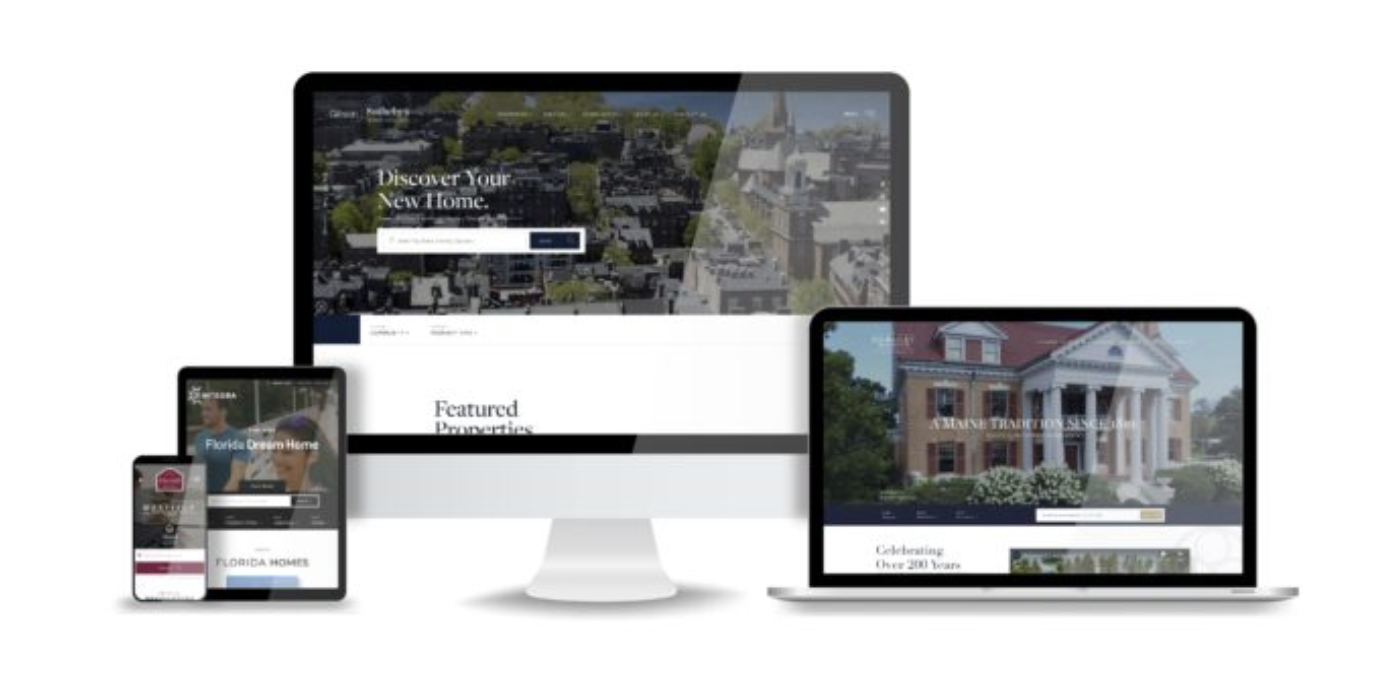
Responsive design: With so many people accessing the Internet via mobile, your site needs a responsive design that encourages Internet users to take the step to convert.
Intuitive navigation: Websites that convert make it easy for people to find the information they want.
Engaging layout: High-converting websites use layouts that make it easy for people to find information on the page. These websites use white space as rest-stops for the eyes. They also use web-safe fonts and eye-catching images, graphics, and videos. Ask yourself for every component of your website, “is this helping me generate leads?”
Logo & brand colors for a cohesive look.
Logos and brand colors are essential for website conversion rates as they help to create brand recognition and establish trust with visitors.
Logos serve as a visual representation of a brand and can help to communicate a company’s message and values instantly. The impact a good website logo can have on conversions can vary greatly depending on various factors, such as your target audience and the website’s overall design. However, it’s generally agreed that having a strong and well-designed logo can positively impact conversions in several ways.
A good logo can help to establish brand recognition and credibility, increase brand awareness, and create an emotional connection with visitors. These factors can contribute to higher levels of trust, ultimately leading to increased conversions.
Brand colors also play a key role in establishing a company’s identity and creating an emotional connection with consumers. When used consistently across all touchpoints, logos and brand colors can help to build a strong brand image, increase brand awareness and create a sense of reliability and credibility, all of which can contribute to higher conversion rates. Utilizing a logo maker, you can get the effect quite simply.
Here are a few examples of quality logos and brand colors.
Put some love into your “About” page
Over the years, we have continuously run heatmaps on our Carrot sites to learn more about how people engage with them.
We looked at where people clicked the most.
And, to our surprise, the “About” header in the menu was regularly the second-most clicked button on the homepage.
Go figure.
Real estate is a highly personal business.
So it’s not remarkably surprising that people… well, want to learn about YOU — probably even before they call you or opt-in on your website form.
This is why it’s essential to give your “About” page the attention it deserves.
How?
Well, it’s pretty straightforward.
Here are 3 quick tips with examples.
1.Share Your Core Values — What makes you tick? What are the non-negotiable qualities that you believe give a person character? Create some core values and put them on your “About” page. This will help people relate to you and get a feel for who you are.
2.Tell Your Story — You don’t have to write a book, but it’s good to talk about yourself and let people know who you are and how you got where you are today. Bonus points if you include a picture of yourself!
3. Encourage Outreach — People click on the “About” page because they’re thinking about working with you… but they want to learn a little about you first. So at the end of your “About” page, don’t forget to encourage people to contact you if they have any questions.
2. Localization
Real estate investor website localization refers to adapting a website to your target audience’s language, culture, and customs. Custom content appeals to your target audience. By localizing your website, you can improve the user experience and increase conversion rates by:
Building trust: Localizing your website can help you build trust with your target audience, showing your business is trying to understand and cater to their needs. This can lead to higher levels of customer loyalty and increased conversion rates.
Improving relevance: Localized content relevant to your target market can improve the user experience and increase conversions by demonstrating that your business understands and values their cultural differences. A motivated seller in San Francisco has different needs than a motivated seller in Boston.
Boosting SEO: Localized websites can also improve search engine optimization by targeting specific keywords and phrases relevant to your target audience. This can increase visibility, attract more qualified traffic, and increase conversion rates.
Website localization can significantly increase conversion rates by improving accessibility, building trust, relevance, and boosting local SEO.
This is a critical part of your website for increasing conversion rate… don’t ignore it.
How are you building authority & credibility on your website? In the comments below, let us know what you’ve found the most effective.
Final Thoughts
By implementing the tips and strategies outlined in this ultimate guide to website conversion, you can create a website that showcases your properties and provides a seamless user experience for your visitors.
At Carrot, we obsess about website conversion rates, so you don’t have to.
There’s a lot to it.
The good news is we’re here to help. You don’t have to get overwhelmed, spending all day testing colors, forms, and copywriting. Not only have we done a lot of the work for you in our software, but we’ll guide you along the way, step-by-step, so you can be on your way to doing what you do best — closing deals.
Want to generate more motivated seller leads and get your website up and running fast? – take the 30DC
That’s why we’ve compiled the best books for real estate agents on the market here. Bookmark this post and work your way through each. We guarantee you won’t regret it!
This first set of books are all about helping you become a better, more successful business owner. You might have been bit by the entrepreneur bug when you were young, but that instinct still needs to be nurtured if it’s going to reach its full potential.
Amazon Description: Built to Last, the defining management study of the nineties, showed how great companies triumph over time and how long-term sustained performance can be engineered into the DNA of an enterprise from the very beginning.
But what about the company that is not born with great DNA? How can good companies, mediocre companies, even bad companies achieve enduring greatness?
Review: “A well-written synopsis of 11 “great” companies and some of their similar characteristics, this is a fun, quick read that is great in terms of party trivia and information… but it’s tougher to judge if you’re looking for more of a business how-to. Partially, it has aged poorly — many of the companies selected have since had meltdowns of epic proportions (for example: Fannie Mae, Circuit City), and the “how to” part of the book feels generalized and far more subjective than the methodology/selection criteria would have you believe. Still, you’ll learn quite a few fun facts about how some of these business started and/or converted to become the giants they are today.”
About The Author: Jim Collins is a student and teacher of what makes great companies tick, and a Socratic advisor to leaders in the business and social sectors. Having invested more than a quarter century in rigorous research, he has authored or coauthored a series of books that have sold in total more than 10 million copies worldwide.
Amazon Description: START WITH WHY asks (and answers) the questions: why are some people and organizations more innovative, more influential, and more profitable than others? Why do some command greater loyalty from customers and employees alike? Even among the successful, why are so few able to repeat their success over and over?
People like Martin Luther King Jr., Steve Jobs, and the Wright Brothers had little in common, but they all started with WHY. They realized that people won’t truly buy into a product, service, movement, or idea until they understand the WHY behind it.
Review: “The book includes stories of many different companies. Some were successful, and others were not. The successful ones were led by individuals who strongly believed in something (they had a Why), which was the business’s guiding principle. The unsuccessful companies may have started out doing well, but when they lost their focus on their Why, or if the person who had that vision left the organization, the business started to falter.”
About The Author: Simon Sinek is an optimist. He teaches leaders and organizations how to inspire people. From members of Congress to foreign ambassadors, from small businesses to corporations like Microsoft and 3M, from Hollywood to the Pentagon, he has presented his ideas about the power of why.
Amazon Description: Ever feel like you can’t jump off the real estate merry-go-round of listing appointments, property showings and one transactional fire after another? Do you want to build a team that can operate without your day-to-day involvement, but don’t know where to begin? If you’re like thousands of other successful agents, you probably feel like you’re producing as much as you can as a sole operator, but moving from ‘Captain Everything’ to an ownership mentality sounds too daunting. Contained in this book is a step-by-step business plan with simple, unambiguous directions on which steps to take and in what order. Learn from Chris Watters and Bradley Pounds how they scaled their business at a breakneck pace and earned a profit of over $1 million in just three years.
Review: “This is one of the best books I’ve read to date that gives specific examples and just doesn’t live in the clouds and talk about subjects. It is well laid out, gets into the dirt, and gives a step by step guide on how to form a strong real estate team. Quite honestly the support items mentioned to download from the website are lacking but the information in the actual book is top notch! I highly recommend this book to not only the agent looking to form a team but also the other leaders of top teams as there are plenty of nuggets. I’ve listened to it via audible and use the book as a reference guide to look back at highlights made. Great work Chris, Bradley, and team!”
About The Author: Mr. Watters holds multiple advisory roles in technology and real estate investment companies. His personal goal is helping to create positive and lasting change to enhance the consumer experience. Watters is a graduate of Texas State University where he studied Business Administration in Finance.
Amazon Description: The first 365 days of working in real estate can be one of the most tumultuous times in your career – full of hard lessons, heart breaks and hard work. Just because you have a license, doesn’t mean you have a business. But if you get the important stuff right, a great future is yours for the taking. This honest, eye-opening and completely practical insider’s guide shows you how to get where you want to be – even if you’re starting from nothing.
Review: “As a new agent it answered a lot of my questions and provided me with a foundation to build on with some templates that has helped me create a plan of action and organize my daily and monthly task which resulted in being more productive. This book has given me the confidence that I too can achieve my goals with the right tools in my hands! Awesome read – Highly Recommend!”
About The Author: Shelley Zavitz is a successful real estate agent working in Portland, Oregon. With an award-winning background in commercial copywriting and brand building (including working for Virgin Radio), Shelley started relatively late in real estate. But by applying her extensive branding experience – as well as learning the ropes the hard way – she has become a dramatic success story.
Amazon Description: Gary Keller knows the beauty of a simple path to a spectacular goal! Whether you are just getting started or a veteran in the business,The Millionaire Real Estate Agent is the step-by-step handbook for seeking excellence in your profession and in your life.
Review: “This is one the most imperative books for a realtor and I’ve purchased many throughout my own real estate career. I gift them to anyone I come across that’s considering becoming a realtor or is a new agent because it helps set the groundwork for your business. Becoming an agent that produces at a high level can be intimidating but the MREA book is a roadmap to guide you to a successful real estate business. Buy it and read it many times over!”
About The Author: Gary Keller is the founder and chairman of the board of Keller Williams Realty International, the largest privately held real estate agency in the United States. It is also one of the fastest-growing agencies in the United States, with more than 30,000 agents.
Amazon Description: Gerber walks you through the steps in the life of a business—from entrepreneurial infancy through adolescent growing pains to the mature entrepreneurial perspective: the guiding light of all businesses that succeed—and shows how to apply the lessons of franchising to any business, whether or not it is a franchise. Most importantly, Gerber draws the vital, often overlooked distinction between working on your business and working in your business.
Review: “As I read through the book, Gerber pointed out things about how most small business owners are “technicians” turned business owners; the problem, we may be skilled in what we do, but now we take on multiple jobs that we do NOT know how to do. The problem continues as we immerse ourselves in the “technician” work, but never actually work ON the business, so many aspects of the business suffer (sales, marketing, finances, operations) or just plain don’t exist.”
About The Author: Michael E. Gerber is a true legend of entrepreneurship. The editors of INC magazine called him “The World’s #1 Small Business Guru.” He is Co-founder and Chairman of the Michael E. Gerber Companies—a group of highly unique enterprises dedicated to creating world-class start-ups and entrepreneurs in every industry and economy. The Gerber Companies transforms the way small business owners grow their enterprises and has evolved into an empire over its history of nearly three decades.
Amazon Description: Real estate sales can be a lucrative and flexible way to earn a great living―but it’s not as straightforward as a W-2 job. Most agents lack the necessary mentorship, guidance, and training to succeed in the competitive and independent world of real estate.
SOLD provides a much-needed look at how successful real estate agents build their business, close deals, and generate commissions. Bestselling author and expert real estate agent David Greene shares everything he wishes someone had shared with him―including the exact processes he used to become rookie of the year and top agent in his office.
Review: “I thought this was a great book to read for a new agent or a seasoned agent who is looking to get back to the basics of the business. It’s well structured and provides a clear plan for you to use as well as a realistic understanding of real estate business to get you started in the real estate industry as an agent.”
About The Author: David Greene is a former police officer and a real estate investor with more than nine years of experience. He has bought, rehabbed, and managed over 35 single-family rental properties, owns shares in three large multifamily apartment complexes, shares in note funds, and is a top-producing real estate agent on the Keller Williams East County team. A nationally recognized authority on real estate, David is the co-host of the BiggerPockets Podcast and has been featured on CNN, Forbes, and HGTV. He is the author of two bestselling books—Long-Distance Real Estate Investing and Buy, Rehab, Rent, Refinance, Repeat (BRRRR)—which have sold more than 160,000 copies. David loves basketball, Batman, being an uncle, and helping people achieve total financial independence through real estate. He currently lives in Northern California.
Amazon Description: In The Book of YES, you will find the most powerful scripts in the real estate industry today.If you’re tired of the same old sales scripts or if you’ve done away with them all together, I know how you feel because I’ve been there.I was tired of seeing the same B.S.(bad sales) approaches and I wanted something that felt more natural for me.So I started creating my own scripts, for the simple reason that I hated being told, “No.” For me nothing was worse than that feeling of rejection. I was determined to figure out the perfect thing to say in every situation, and how to say it in a way that would cause sellers and buyers to want to say “Yes!” to me every time. This book is the result of that quest.
Review: “Incredibly insightful on the psychology behind the conversations to have with not only prospects but everyone in your day to day lives. Going to live, breathe, sleep this book until it’s embedded in my DNA. I can’t thank yon enough for bringing this book to the public. Easy Read. Amazing scripts already all thought out for you to just start putting it to work. The book teaches you not only what to say, but HOW to say.”
About The Author: Kevin is known internationally for his high-powered yet practical, real-world strategies and for his ability to make skills and scripts simple and learnable for agents at every level.
Kevin’s ultimate goal for my writing and trainings, is not only to provide the highest quality training, but also to create a community of real estate professionals who are committed to a “No-BS approach” to real estate, and to getting “more YES’s and more successes in their business…AND IN THEIR LIFE.
Amazon Description: Welcome to the world of real estate sales, and the start of an exciting new career! Your destiny is now in your hands. Along with endless opportunities, flexible hours, and the freedom to chart your own path, you also have the potential to earn fabulous amounts of money. All you need for total success is preparation. Revised and expanded, Your First Year in Real Estate contains the essential knowledge you need to start off right in today’s vastly changed real estate market, avoid common first-year missteps, and get the inside edge that will take you to the top.
Review: “This book offers a solid, step-by-step plan to get a new agent off on the right footing in their new career. With so many educational demands and the lure of social media marketing, it can be easy to “take your eye off the ball”. Dirk Zeller helps keep the focus on the prize while acknowledging the place for all the bells and whistles. Highly recommended for my fellow new agents.”
About The Author: Dirk Zeller has been a Real Estate Agent, Investor, Coach and Speaker for more than 20 years. He is one of the most published Authors with over 500 articles published to his credit, along with six books; all of which have hit industry best seller lists. Three of his books are for the famous Dummies® series.
Best Books for Real Estate Agents: Vision & Mindset
Before you can build a great business, you’ve got to be able to see what that looks like in your mind’s eye — you’ve got to cast vision, forge a rock-solid mindset, and keep going when the going gets tough (and it always gets tough). These books will help you with that.
Amazon Description: Now you can quickly and effectively study and put into practice the greatest personal development program of all time. In only ten minutes a day, you can begin to implement the success principles that have made more millionaires and top influencers than any other achievement philosophy.
Fame? Fortune? Impactful service? More meaningful relationships? You can have anything that you want in life when you discover the secret contained in Napoleon Hill’s Think and Grow Rich.
Review: “Great Book – the workbook compliments it nicely and motivates you to really put effort into doing exercises Hill recommends in book. Timeless , most popular book in prosperity and tool for business minds alike. Recommended ! Do work exactly as laid out for results reading alone without action (definiteness of purpose/ specific desire or goal coupled with faith ) faith without works is dead.”
About The Author: Napoleon Hill was born in Wise County, Virginia. He began his writing career at age 13 as a “mountain reporter” for small town newspapers and went on to become America’s most beloved motivational author. His work stands as a monument to individual achievement and is the cornerstone of modern motivation. His most famous work, Think and Grow Rich, is one of the best-selling books of all time. Hill established the Foundation as a nonprofit educational institution whose mission is to perpetuate his philosophy of leadership, self-motivation, and individual achievement.
Amazon Description: In this instant New York Times bestseller, pioneering psychologist Angela Duckworth shows anyone striving to succeed—be it parents, students, educators, athletes, or business people—that the secret to outstanding achievement is not talent but a special blend of passion and persistence she calls “grit.”
Drawing on her own powerful story as the daughter of a scientist who frequently noted her lack of “genius,” Duckworth, now a celebrated researcher and professor, describes her early eye-opening stints in teaching, business consulting, and neuroscience, which led to the hypothesis that what really drives success is not “genius” but a unique combination of passion and long-term perseverance.
Review: “Empowering…Angela Duckworth compels attention with her idea that regular individuals who exercise self-control and perseverance can reach as high as those who are naturally talented—that your mindset is as important as your mind.”
About The Author: Dr Angela Duckworth is a 2013 MacArthur Fellow and an associate professor of psychology at the University of Pennsylvania. She is an expert in non-IQ competencies, including grit and self-control. A highly sought-after international speaker, her TED talk on grit has been viewed by over 10 million people.
Amazon Description: If you liked The Miracle Morning or (7L) The Seven Levels of Communication: Go from Relationships to Referrals, you’ll love The Miracle Morning for Real Estate Agents! As in (7L), we have the opportunity to tell a tale about Rick Masters and Michelle Phillips. Rather than merely telling you the strategies, concepts, and tactics to implement a morning ritual full of the best practices of high achievers, we can also show you, through Rick and Michelle’s challenges, choices, and achievements, how to make the ultimate morning ritual part of your daily routine. We’re excited for you to read and implement the strategies, using Rick and Michelle’s story as a guide. For those who go to work every day knowing your family relies on a commission – relies on you to sell something – this book is for you. We wrote this for you.
Review: “I am not a big reader, but this book has already yielded me results as a realtor. It has given me consistency and I’m always looking forward to the next steps. SAVERS is definitely a game changer.”
About The Author: HAL ELROD is the #1 Bestselling Author of what is widely considered to be one of the most life-changing books ever written, “The Miracle Morning: The Not-So-Obvious Secret Guaranteed to Transform Your Life… (Before 8AM).” After being hit head on by a drunk driver and found dead at the scene at age 20, Hal woke from a coma to the news that he would never walk again. He defied the odds and eventually ran a 52-mile ultra-marathon, is now an international Keynote Speaker, Success Coach, and host of a #1 ranked podcast on iTunes, called “Achieve Your Goals with Hal Elrod.”
Amazon Description: The widely adopted, now classic book on influence and persuasion—a major national and international bestseller with more than four million copies sold!
In this highly acclaimed New York Times bestseller, Dr. Robert B. Cialdini—the seminal expert in the field of influence and persuasion—explains the psychology of why people say yes and how to apply these principles ethically in business and everyday situations.
Review: “Robert Cialdini has done the impossible: he has improved a masterpiece. The new version of Influence is a marvelously rich and engaging account of the subtle power that people exert on each other.”
About The Author: Harvard Business Review lists Dr. Cialdini’s research in “Breakthrough Ideas for Today’s Business Agenda.” Influence has been listed on the “New York Times Business Best Seller List.” Fortune Magazine lists Influence in their “75 Smartest Business Books.” CEO Read lists Influence in their “100 Best Business Books of All Time.”
Dr. Robert Cialdini has spent his entire career researching the science of influence earning him an international reputation as an expert in the fields of persuasion, compliance, and negotiation.
Amazon Description: Brand New Third Edition! This book is for brand new Agents and experienced Agents looking to jump start their business. It’s not a book for everyone. The book is for Honest Real Estate Agents who care about their customers, work hard and want to make a difference in helping other people. One of the drawbacks of most real estate schools is they teach you only how to pass the real estate exam. They don’t teach you how to succeed as a Real Estate Agent once you get your license. This is the book for you because it will help you hit the ground running once you get your license. In the past five years thousands of new Agents have bought this book as they embark on their career in real estate.
Review: “This was the first book I read on my realtor journey. I’m so glad someone recommended it to me and I’ve shared it with many others. Great book that defines those first steps you must take. It gave me definition when I didn’t know what to do next. The book is very clear and filled with practical steps that walk you through the beginning stages of your new business. This book should be what they use at the school to get your licence. Quit making people learn stuff that has NO practical relationship to this business. No wonder why so many people fail at this.”
About The Author: A career salesperson, Mario Jannatpour is the founder of “CARE” Coaching. (Competitive Advantage Real Estate), a Realtor with RE/MAX Alliance in Colorado and the author of the top selling book “The Honest Real Estate Agent.” “CARE” Coaching focuses exclusively on maximizing revenue for their clients and building a long-term sustainable real estate business. Combining his own sales training, his interviews with many top Agents and Trainers in the real estate industry and over 30 years sales experience Mario Jannatpour has insights into the trends within the real estate industry. Mario has synthesized his findings on how to effectively build, grow and maintain a profitable business for Real Estate Agents in a way where they believe in themselves, enjoy their work, love their career and enjoy living a balanced life.
Amazon Description: Markets shift and so can you. Sometimes you’ll shift in response to a falling market and other times you’ll shift to take your business to the next level. Both can transform your business and your life. You can change your thinking, your focus, your actions, and ultimately, your results. You can get back in the game and ahead of the competition. The tactics that jump-start your business in tough times will power it forward in good times. Put your business into another gear – shift!
Review: “I am a realtor and this book should be in every agent’s book collection, especially with the shifting market we currently find ourselves in.”
About The Author: Gary Keller is the founder and chairman of the board of Keller Williams Realty International, the largest privately held real estate agency in the United States. It is also one of the fastest-growing agencies in the United States, with more than 30,000 agents.
Amazon Description: While many people talk about how great it is to start a business, very few are honest about how difficult it is to run one. Ben Horowitz analyzes the problems that confront leaders every day, sharing the insights he’s gained developing, managing, selling, buying, investing in, and supervising technology companies. A lifelong rap fanatic, he amplifies business lessons with lyrics from his favorite songs, telling it straight about everything from firing friends to poaching competitors, cultivating and sustaining a CEO mentality to knowing the right time to cash in.
Review: “Going through my own struggle to fulfill my dreams, I just picked up the book and read it. And as the author says hard things are hard, because there are no easy answers or recipes. It is an easy read, though can get boring in places, especially given it is also a management book. However, the author’s stewardship Opsware is fascinating, its ups and downs, re-inventing itself, fighting and eventually selling it.”
About The Author: Ben Horowitz is the cofounder and general partner of Andreessen Horowitz, a Silicon Valley-based venture capital firm that invests in entrepreneurs building the next generation of leading technology companies. The firm’s investments include Airbnb, GitHub, Facebook, Pinterest, and Twitter. Previously, he was cofounder and CEO of Opsware, formerly Loudcloud, which was acquired by Hewlett-Packard for $1.6 billion in 2007. Horowitz writes about his experiences and insights from his career as a computer science student, software engineer, cofounder, CEO, and investor in a blog that is read by nearly 10 million people. He has also been featured in the Wall Street Journal, the New York Times, the New Yorker, Fortune, the Economist, and Bloomberg Businessweek, among others. Horowitz lives in the San Francisco Bay Area with his wife Felicia.
Amazon Description: In The 7 Habits of Highly Effective People, author Stephen R. Covey presents a holistic, integrated, principle-centered approach for solving personal and professional problems. With penetrating insights and pointed anecdotes, Covey reveals a step-by-step pathway for living with fairness, integrity, service, and human dignity–principles that give us the security to adapt to change and the wisdom and power to take advantage of the opportunities that change creates.
Review: “There are many self-help or improvement guides out there. The simple writing and everyday examples really struck a chord with me.”
About The Author: Stephen Richards Covey was an American educator, author, businessman, and keynote speaker. His most popular book is The 7 Habits of Highly Effective People.
Best Books for Real Estate Agents: Strategy & Execution
Sales, negotiations, marketing, hiring, firing, finding clients, getting referrals — those are just a few of the things you have to do as a real estate agent. These are some of our favorite books for improving your day-to-day executions.
Amazon Description: For years now, win-win has been the paradigm for business negotiation. But today, win-win is just the seductive mantra used by the toughest negotiators to get the other side to compromise unnecessarily, early, and often. Win-win negotiations play to your emotions and take advantage of your instinct and desire to make the deal.
Start with No introduces a system of decision-based negotiation that teaches you how to understand and control these emotions. It teaches you how to ignore the siren call of the final result, which you can’t really control, and how to focus instead on the activities and behavior that you can and must control in order to successfully negotiate with the pros.
Review: “I discovered Jim Camp’s book while reading Chris Voss’ “Never Split the Difference.” Voss cited “Start with No,” so I decided to read it, too. Although I walked away with more actionable steps from Voss’ work, I enjoyed Camp’s book a lot, since it gave a good summary of many important negotiation techniques. Jim Camp, too, is a good story teller, so his book is a quick read.”
About The Author: Jim Camp has coached people through thousands of negotiations at more than 150 companies, including Motorola, Texas Instruments, Merrill Lynch, IBM, and Prudential Insurance, as well as many other smaller companies in a wide range of industries. He has lectured at graduate business schools in the United States and has been a featured speaker at Inc. magazine’s “Growing the Company” conferences. Jim founded the Camp Negotiation Institute in 2010.
Amazon Description: After a stint policing the rough streets of Kansas City, Missouri, Chris Voss joined the FBI, where his career as a hostage negotiator brought him face-to-face with a range of criminals, including bank robbers and terrorists. Reaching the pinnacle of his profession, he became the FBI’s lead international kidnapping negotiator. Never Split the Difference takes you inside the world of high-stakes negotiations and into Voss’s head, revealing the skills that helped him and his colleagues succeed where it mattered most: saving lives. In this practical guide, he shares the nine effective principles―counterintuitive tactics and strategies―you too can use to become more persuasive in both your professional and personal life.
Review: “This is a phenomenal book, written by an author who spent the majority of his 24 years career as the lead international kidnapping negotiator for the FBI and its hostage negotiation representative for the National Security Council’s Hostage Working Group. Apart from trained by the bureau, he was also trained in Scotland Yard and Harvard Law School.”
About The Author: A 24 year veteran of the FBI, Chris Voss is one of the preeminent practitioners and professors of negotiating skills in the world. He is the founder and principal of The Black Swan Group, a consulting firm that provides training and advises Fortune 500 companies through complex negotiations. Voss has taught for many business schools, including the University of Southern California’s Marshall School of Business, Georgetown University’s McDonough School of Business, Harvard University, MIT’s Sloan School of Management, and Northwestern University’s Kellogg School of Management, among others.
Amazon Description: Follow the advice of Stephan Schiffman—America’s #1 Corproate Sales Trainer—and take your career to the next level. This special anniversary edition of his perennial bestseller, Cold Calling Techniques (That Really Work!), provides you with all of the right tools for turning prospects into meetings, and meetings into big sales.
This easy-to-follow guide helps you beat today’s cold calling obstacles, such as voice mail, cell phones, and e-mail. Schiffman’s professional experience and corporate wisdom guarantee your future success. The anniversary edition of Cold Calling Techniques packs in plenty of potential leads to help you hunt down more business.
Review: “I’m new to sales and purchased this book to introduce myself to the art of cold calling. I’m currently reading just about anything I can get my hands on but I enjoy Schiffman’s material because it is simple, clear and to the point. Along with that, Schiffman has a simple approach to sales that echoes my own personal values about honesty and integrity. This book focuses heavily on how to have conversations during the calls and less on how to prepare for the call outside of having a workable script.”
About The Author: Stephan Schiffman has trained more than 500,000 salespeople at such firms as AT&T Information Systems, Chemical Bank, Manufacturer’s Hanover Trust, Motorola, and U.S. Health Care. Schiffman is president of D.E.I Management Group and the author of such bestselling books as Cold Calling Techniques (That Really Work!) and Closing Techniques (That Really Work!).
Amazon Description: You can go after the job you want—and get it!
You can take the job you have—and improve it!
You can take any situation—and make it work for you!
Dale Carnegie’s rock-solid, time-tested advice has carried countless people up the ladder of success in their business and personal lives. One of the most groundbreaking and timeless bestsellers of all time, How to Win Friends & Influence People will teach you:
-Six ways to make people like you
-Twelve ways to win people to your way of thinking
-Nine ways to change people without arousing resentment
And much more! Achieve your maximum potential—a must-read for the twenty-first century with more than 15 million copies sold!
Review: “The Dale Carnegie approach is a system of timeless principals, if applied correctly; are sure to make you the master of your social life. These principals are passed to you in the shape of short stories that depict experiences of various successful people who’ve applied them throughout their lifetimes. You’ll find mention of the likes of Abraham Lincoln, Teddy Roosevelt. And both Charles Schwab and Dickens. You cannot go wrong, reading this masterpiece.”
About The Author: Dale Carnegie (1888–1955) described himself as a “simple country boy” from Missouri but was also a pioneer of the self-improvement genre. Since the 1936 publication of his first book, How to Win Friends and Influence People, he has touched millions of readers and his classic works continue to impact lives to this day.
Amazon Description: Investing your first 5 minutes a day reading and sharpening your skills can put you on the fast track to success in your life and business. Many masters and experts have shared their wisdom through words. Learning from these experienced leaders by reading their words is how you, too, can achieve personal and professional transformation. Success is achieved by getting into action immediately and applying the principles learned. Applied knowledge leads to success.
Review: “I only keep books I reference frequently on my office shelf and this is one of them! Although written from a real estate perspective, which is not my business, it provides great success tips for sales people, integrity and prioritizing what is in important. I have picked up several great tips including what to in unusual situations to maintain my customer, taking the high road and relationship building. The format of a “thought a day” is easy reading and “stickable!” I would recommend this book to any sales person of any field, customer service personnel, and of course those in real estate. I am using several tips I received from reading this book that have added positive interactions to my business.”
About The Author: Karen Briscoe is the creator of the 5 Minute Success concepts and host of 5 Minute Success The Podcast – which has an amazing array of guests who achieve success at a high level in business and life. She regularly speaks on the national and local level on the best of 5 Minute Success and Flip Time / Love Life. She has completed the John Maxwell Team Certification Program for Coaching, Speaking, and Training.
Amazon Description: The real estate industry desperately needs new tools and ideas to stay relevant to the modern consumer. The modern consumer is more educated and has more choices than ever before. Counterintuitively, this has led to more confusion, doubt, and frustration in their real estate journey.
Therein the opportunity lies.
In Exactly What To Say for Real Estate Agents, Phil M. Jones, Chris Smith, and Jimmy Mackin provide 30 Magic Words to help with the most common, critical, and difficult conversations real estate agents have today. If you are open-minded to a better way of selling, this book is for you.
Review: “Exactly What To Say for Real Estate Agents is short, to the point, and cuts out a lot of the noise from other coaching and training. A sales professional must know how to communicate with modern consumers.”
About The Author: Phil M. Jones is a serial entrepreneur, business growth expert and the best-selling author of Exactly What To Say, Exactly How To Sell, and Exactly Where To Start. He had his first business at just 14 years of age and is the youngest recipient of the “British Excellence in Sales and Marketing” award.
Amazon Description: Discover the techniques that will make your real estate business grow exponentially. This easy to comprehend guide will teach how to navigate the roadmap of Social Media platforms like Instagram, Facebook, Reddit, Pinterest, Twitter, YouTube, Snapchat and many more. An easy to comprehend manual that will guide you from beginning to end on what has to be done to succeed in today’s digital marketing arena. Anyone in the real estate arena field including but not limited to Realtors, appraisers, investors, developers, general contractors, landscape artists, interior designers, stagers, 3D artists, architects & even engineers can take advantage of these valuable lessons. Whether you have advanced knowledge on social media or little or no knowledge in this field, rest assured, there will be something in here that will apply to your business and help you grow.
Review: “Amazing Read!!! I actually met the author years ago in Miami on a real estate assignment, and I know very well he is the real deal. He is one of the top top tier players in Luxury Real Estate in Miami with Engel and Volkers (an international real estate company), and has held that spot for many years now. This book is fantastic. I have worked full time in real estate for about 15 years, and I have good handle on social media. I thought I did anyway. This book has really opened my eyes to so many different angles of the social media space for real estate marketing!! So glad I purchased, and I highly suggest this book to anyone regardless of if you are in the RE field or not. Its must know info!!!!! This book is sure to be a best seller!!!”
About The Author: Sebastian Acosta is a highly respected real estate agent, social media marketing expert, speaker, investor and business book author in the real estate arena. He has mastered this business thanks to hard work, strong ethics and full dedication to his profession. Book author of “Make Millions with Foreclosures and Short Sales” (2008). As an agent and investor he bought and sold 300 properties since 2012. Mr. Acosta has built a network of 1 Million followers on Instagram in multiple pages. Recently bought a building in Florida for 1.1 Million in June 2016 and flipped it for 1.8 Million in Sept 2017 thanks to his digital marketing techniques. Thanks to Twitter he was instrumental in the sale of a $12.5 million mansion to a Miami Heat All Star basketball player. The author enjoys art, traveling, water sports, boating, hiking, dancing, writing & reading. He is also involved in many charitable organizations with special dedication to saving children, animals and marine life around the world.
Amazon Description: Every single day 3,076 businesses shut their doors. But what if you could create the finest, most profitable and best-run version of your business without wasting precious dollars on a thousand different strategies? When The Ultimate Sales Machine first published in 2007, legendary sales expert Chet Holmes gave us the key to do just that. All you need is to focus on twelve key areas of improvement—and practice them over and over with pigheaded discipline.
Now, a decade later, Chet’s daughter Amanda Holmes breathes new life into her father’s classic advice. With updated language to match our ever-changing times and over 50 new pages of content, The Ultimate Sales Machine will help any modern reader transform their organization into a high-performing, moneymaking force.
Review: “Reading Chet Holmes’s book can turn your business into a high-performing, massively profitable, superior money-making force in whatever field or market you compete in. . . . It’s essential reading for anyone craving business greatness and prosperity.”
About The Author: Chet Holmes worked with over sixty of the Fortune 500 companies as America’s top marketing executive, trainer, strategic consultant, and motivation expert. His client list included American Express, Wells Fargo, Morgan Stanley, Pac Bell, Estee Lauder, Thomson International, Merrill Lynch, Citibank, Xerox, among many others.
Today his legacy continues with his daughter, Amanda Holmes, leading the Chet Holmes International team as Chairman of the Board at CHI. With her new innovations, she has carried on Chet’s legacy for the last decade, doubling their clients across divisions for multiple years in a row.
Final Thoughts
It’s been said that leaders are readers.
So are great business owners, entrepreneurs, innovators… and real estate agents. Reading is the cheapest and easiest way to access information from other experts who’ve been there and done that.
Make the above your reading list… and you’ll be well on your way to the top of the pack.
After spending over a million dollars on ads over 12 months and reviewing dozens and dozens of accounts, we’d like to share our findings on which platforms are giving investors the best bang for their buck.
Demo Carrot: How many deals are you losing to your competitor’s website?
At Carrot, we’ve helped tens of thousands of real estate investors generate millions of motivated seller leads — through evergreen marketing and our holistic lead generation hub.
Brandon Bateman has done a scaled version of this but in the paid advertising realm. Specifically, he spent millions of dollars in Google and Facebook ad spend for his real estate investor clients over 2021 to generate leads and land deals.
For this guide, our team collaborated with Brandon to comprehensively compare SEO vs. Google Ads vs. Facebook Ads for real estate investors trying to find motivated sellers.
We’re going to look at the pros and cons of each channel. Then we will compare the average cost per lead, deal size, and conversion rate of each channel. And finally, we’ll give you the ultimate real estate investor marketing roadmap for creating synergy between all three marketing methods to scale your business systematically.
Let’s dive in.
Facebook Ads Pros & Cons
Facebook Ads are probably the most popular type of advertisement that real estate investors leverage. You can use Facebook Ads to either target a brand new audience or retarget people who’ve already visited your website.
The most significant upside to Facebook Ads is that they’re pretty easy to set up, allowing you to access a broad audience. The biggest downside is that Facebook advertising is a form of interruption marketing, meaning that people are on the platform for something else when your ad interrupts them. That doesn’t mean it’s ineffective… but it’s something every advertiser needs to keep in mind.
Pros:
Advertise Across Multiple Platforms
Facebook Ads allow you to target your ads to specific people on Facebook, Instagram, and Audience Network. and Messenger. So you have a very expansive reach and can show your ads wherever people prefer to hang out.
Detailed Targeting & Retargeting
Facebook Ads also offer detailed targeting options. You can target people based on their interests, demographics, behaviors, and purchasing history. And you can also retarget people who have visited your website or engaged with your Facebook page.
Resources like FB Ads Library, allow advertisers to view and analyze other ads running on the platform. This feature enables them to gain insights into successful ad campaigns within their niche, helping them refine their own strategies for even greater effectiveness. So you can laser-focus your advertising to reach only the most relevant people.
User Friendly
Facebook Ads are very user-friendly. The creation process is simple, and you can get your ads up and running quickly.
Cons:
Lack of Knowledge Means Wasted Money
The biggest downside of Facebook Ads is that many real estate investors don’t know how to use them effectively, so they end up wasting a lot of money on ads that don’t reach their target audience.
Strict Facebook Advertising Policies
Facebook also has very strict advertising policies. If you violate their policies, your account can be shut down, and you end up in “Facebook jail” for quite some time before you can rerun ads.
Some of Facebook’s advertising policies include…
No Misrepresentation
Ads must not contain false, deceptive, or misleading content, including deceptive claims, offers, or business practices.
No Discrimination
Ads must not discriminate against people based on race, ethnicity, national origin, religion, gender, age, disability, or sexual orientation.
No Controversial Content
Ads must not contain content that is inappropriate, offensive, or controversial. This includes ads for adult products or services, firearms, tobacco products, and political or religious content.
Of course, Facebook ultimately determines whether your ads are appropriate, which can be a bit problematic in its ambiguity.
Facebook Ads Are Interruption Marketing
Facebook Ads is interruption marketing. People are in the middle of doing something else when your ad pops up and interrupts them. So there’s a high chance that they will ignore it. That’s just the nature of interruption marketing.
Google Ads Pros & Cons
Google Ads is another powerful advertising platform for real estate investors. One of the best parts about Google advertising is that it’s not the same type of interruption marketing as Facebook Ads — because of the nature of the platform, people are searching for whatever your ad is promoting… so long as your keyword targeting is laser-focused.
The most difficult part about Google Ads is getting the keyword targeting where you want it — this can take hours of research and testing.
Pros
Google Ads Results Can Be Instant
When you create a Google ad, it goes live almost immediately. So you can start seeing results (or leads) very quickly. SEO takes much longer to see results.
Easy to Create Campaigns
Google Ads are also straightforward to create campaigns. The creation process is simple, and you can get your ads up and running quickly. Do keyword research, set your budget, and create a campaign.
Great Exposure in Search Results
Google Ads are also very effective at getting your business exposure on search engine results pages (SERPs). Your ad will appear as a sponsored link above the organic search results for your targeted keywords.
Google Ads Have Increased in Size
Google Ads have also been increasing in size over the past few years. So they’re taking up more real estate on the SERP… which means your ads can be more persuasive!
Testing & Optimization Options
Google Ads also offers a lot of testing and optimization options. You can test different ad copy, landing pages, bids, and other settings to see which combinations work best.
Budget Flexibility
Google Ads also offers a lot of budget flexibility. You can set your budget (big or small) to be per day, month, or click. So you can find a budget that works for you.
Cons
You Pay Per Click
One downside of Google Ads is that you pay per click. So even if someone doesn’t convert into a lead or sale, you still have to pay for that click.
Competitive Markets Have High Cost Per Click
If your market is competitive, the cost per click for your targeted keywords will be high. So you’ll need to have a larger budget to compete.
No Budget = No Leads
Another downside of Google Ads is that you need to have a budget to get leads. If you don’t have any money set aside for your marketing efforts, then you can’t use Google Ads. The same is true for Facebook Ads. When you stop the ads, traffic, and leads stop coming in.
Need To Have Laser-Focused Keyword Targeting
Google Ads also require laser-focused keyword targeting. Your ads won’t be effective if you’re not targeting the right keywords.
Steep Learning Curve
Google Ads has a bit of a steep learning curve. It takes some time to learn how to use them effectively — it can be a big investment to learn enough to run effective Google Ads.
Requires Excellent Landing Pages
Google Ads also require excellent landing pages. If your landing pages are not up to par, you will not see good results from your ads.
SEO Pros & Cons
For longevity, SEO is the most powerful marketing method available to real estate investors. Rather than depending on interruption marketing, you meet motivated sellers where they are — when they are looking for something in Google, you provide the answers. And as opposed to Google Ads, you do so organically without depending on a big marketing budget to put coal in the fire.
And once you’ve achieved high rankings for high-value keyword phrases in your market, you’ll likely stay in that position for years to come, creating a sustainable and predictable lead flow for your business.
The downside to SEO is that it takes an upfront commitment to produce content and typically requires three months to 6 months to start seeing results.
Pros
Sustainable Lead Flow
One of the biggest benefits of SEO is that it creates sustainable lead flow. Unlike methods like Google Ads, where you have to keep paying to get leads, with SEO, your leads will continue to come in as long as you rank in the search engines.
Longevity
SEO is also the most long-term marketing method available. Once you’ve achieved high rankings for your targeted keywords, you’ll likely stay in that position for years to come, creating a consistent and predictable lead flow for your business.
High-Quality Leads
SEO also generates high-quality leads. People who find you through organic search are already interested in what you have to offer — they’re farther down the sales funnel than people who come from other marketing methods.
Cons
Takes Time to Rank
One downside of SEO is that ranking in search engines takes time. It typically takes three to six months to start seeing results.
Requires Consistent Content Production
To rank in the search engines, you must consistently produce high-quality content. If you slack off on your content production, your rankings will drop.
Requires Good Website Tech Stack
To SEO effectively, you need a good website tech stack. This means your website needs to be well-coded, have a fast loading time, and be mobile-friendly.
Average Cost Per Lead By Channel
Here’s the average cost per lead for real estate investors on each channel — these stats are taken straight from Bateman’s research.
Facebook
Median Cost Per Lead: $132
Average Cost Per Lead: $103
Google
Median Cost Per Lead: $279
Average Cost Per Lead: $206
(We also pulled data from 30 different Google Ads accounts amounting to over $1.2 million in spending. Our accounts averaged a $196.25 cost per lead in 2021)
SEO
This is a bit different because you’re not directly paying to get SEO rankings. You could reasonably not pay a penny and get leads and deals through SEO. Or you might pay a little bit — like through Carrot — to help with your website tech stack, consistent content production, and search engine optimization and pay around $100 per month to end up generating 30-100 leads per month entirely through SEO, for which the average close rate is about 1 in 10 or 1 in 15.
Average Deal Size by Channel
One metric that real estate investors forget to consider is the size of the deals they’re doing through each channel. Because believe it or not, different channels generate different quality of leads and, therefore, different quality of deals.
Brandon says his clients typically do 10% to 40% bigger deals through digital marketing than physical marketing.
Facebook: Facebook leads are less motivated but more likely to be exclusive, which often means they are the biggest deal size for our clients.
Google: Google leads are more motivated, but also more competitive. In heavy competition markets, deal sizes can be lower due to the various levels of negotiations.
SEO: SEO deal sizes generally follow the same trend as PPC in terms of deal size.
This number will differ for every real estate investor. Still, SEO almost always has a higher lead conversion rate than Google Ads or Facebook Ads because it’s entirely organic — that is, people, coming looking for you… so they’re more motivated.
Google Ads typically have a higher conversion rate than Facebook Ads for the same reason — because you’re simply advertising to people who are typing specific keywords into Google.
Here are some benchmarks…
Facebook: 20-30 leads per deal.
Google: 10-15 leads per deal.
SEO: 10 leads per deal.
But remember: 99% of your leads are NOT going to turn into deals after just a single point of contact — that’s why it’s so important to have an excellent follow-up process. You can learn more about how to follow up with leads effectively here.
The Ultimate Real Estate Investors Marketing Roadmap
Here’s a quick overview of what your real estate marketing mix should look like.
First, understand that if you invest in it starting now, SEO can make growing your business 1000x easier and more sustainable. So work on your website’s SEO and optimization rate from the get-go. After six months to a year of optimization, you’ll see consistent results from your efforts. If you don’t know where to start, go here.
Second, while you’re building the SEO arm of your business, it’s important to use other advertising and marketing tactics to keep the lead-flow momentum going. This includes direct mail, Facebook advertising, Google advertising, door knocking, cold calling, and many other tactics.
Do what you must to find leads while waiting to claim your SERP rankings.
At some point, the evergreen marketing arm of your business will take over the advertising arm, and you’ll be well on your way to lead-flow freedom.
We’ve seen many real estate investors achieve true freedom in their businesses by transitioning from what we call “Hamster Wheel Marketing” — the moment you get off the wheel leads stop flowing — to “Evergreen Marketing” — it keeps growing even when you’re not actively working on it.
So there you have it: A detailed comparison of SEO vs. Google Ads vs. Facebook Ads for real estate investors. As you can see, each has its benefits and drawbacks. And each should be used at different stages in the lead generation process.
But if we had to pick the best method for real estate investors, it would be SEO. Why? Because once you rank for your target keywords, the leads will keep coming in month after month with little to no effort on your part. That’s the power of evergreen marketing.
If you’re just getting started, though, focus on generating leads through all channels — Facebook Ads, Google Ads, direct mail, door knocking, cold calling, etc. — while working on your SEO.
And if you need help getting started, we have a free guide that will teach you everything you need about real estate marketing.
Ready to learn how to write a killer real estate agent bio?
You’re lucky because we are going over the steps from start to finish.
A well-crafted and compelling agent profile can be an invaluable asset when it comes time for clients or potential buyers to research their next property investment.
Write with energy and creativity!
Why Should You Perfect Your Real Estate Agent Bio?
Anyone looking to buy or sell their house wants to know they will work with a real estate agent they can trust.
They want to know that the agent they choose has their best interest in mind, will negotiate the best price possible, understands their market, and has a healthy track record of buying and selling homes.
Without that – without trust – the prospect will never work with you.
And since 70% of buyers and 75% of sellers find their real estate agent by searching the web, it makes sense that your real estate agent bio is vital to growing your business and converting website leads into clients.
Your real estate agent bio is where website visitors go to decide if they will work with you.
Seem like a tall order?
Well, it is.
But crafting a real estate agent bio that builds trust and credibility and resonates with your target market isn’t as tricky. It’s just six steps.
Here are those steps – each with pertinent examples to illustrate my point.
5 Free Agent Bio Templates
Grab 5 free real estate agent bio templates + examples for your agent website.
How to Write a Winning Real Estate Agent Bio with Examples
Step #1: Understand your market
This might upset you…
But one of the worst things you can do with your real estate agent bio is to copy and paste one of those short personal bio samples online with your name and data plugged into the blanks.
The problem is that every market is different. Your market is different from the market that that free template you found online was created for. You need to create a bio (pic and copy) that resonates with your market, not someone else’s.
And who knows your market better than, well, you?
To get a better understanding of what I mean, read through this bio from Irene Dazzan-Palmer:
“For nearly 30 years, Irene Dazzan-Palmer has been hailed as ‘the queen of coastal real estate.’ A consistent top producer in Coldwell Banker’s Malibu Colony office and an Estates Director for Coldwell Banker Previews International, she has amassed nearly $2 billion in career sales and a history of selling some of the nation’s most significant coastal homes alongside her partner and son, Sandro Dazzan.
These achievements have helped Irene earn a prestigious membership in the Society of Excellence, Coldwell Banker’s highest honor for the top 1% real estate agents nationwide. Irene’s record listings and sales have been the subject of international attention over the last three decades and span from Forbes and the Wall Street Journal to the Los Angeles Times.
She has also been widely recognized in the media as a luxury real estate authority, appearing in national television broadcasts such as NBC’s ‘Today Show’ and prestigious publications like Los Angeles magazine.”
Irene has a niché, and she knows what it is. She isn’t afraid to exclude people uninterested in her niché. By doing so, she speaks directly to her market and resonates with thoseinterested in high-ticket coastal homes.
So how do you write an amazing bio?
Don’t be a generalist.
Find your niché and represent it with confidence in your real estate bio. Here is another example of an agent who understands her market: Leslie Woods.
“Representing Mid-Peninsula homeowners and future homeowners, Leslie is committed to listening to her clients’ needs and utilizing her keen negotiating skills to ensure a successful transaction.
Raised on the Peninsula, Leslie understands the numerous intangible benefits of living in Silicon Valley, with its unmatched weather, culture, and diversity. Leslie graduated from Cal Poly San Luis Obispo with a Bachelor of Science degree in Food Science and Nutrition and subsequently returned to the Bay Area to excel in pharmaceutical sales with Wyeth Laboratories for over ten years. She joined the Real Estate profession as her three children approached their middle school and high school years.
In the past eight years, Leslie has become an esteemed realtor, highly regarded by her clients and professionals in the field. A current Menlo Park resident, she is well-connected and actively involved in the community. Her contacts and life-long residency leverage her enthusiasm and expertise, enhancing her client dedication.
Leslie showcases her homes on her website and utilizes a team of professional service providers to assist with her clients’ buying and selling needs, including stagers, painters, designers, handymen, and inspectors. She is communicative, thorough, and detail-oriented — and she’ll be alongside you every step of the way.”
Speaking to the middle- to high-class homebuyers, Leslie puts herself in the marketing pit of “representing Mid-Peninsula.” Not a wrong move since that is the exact market she operates in.
The point is, that you want to speak directly to your market. Here’s a list of questions to get you thinking about who your market is (Hint: it’s not necessarily the same as other real estate agents in your area):
Do you serve first-time homebuyers or people who’ve bought several homes before?
Do you prefer working with buyers or sellers?
What price point do you want to target?
What market area do you want to focus on selling homes in?
Is your market primarily liberal or conservative?
How old are the people in your market, generally speaking?
Do you serve males or females or both?
You don’t necessarily have to answer all these questions about your market, but the better you understand the people you’re serving, the more your new real estate agent bio will resonate with them.
This leads us to step 2…
Step #2: Make a list of your market’s primary objections
One of the best ways to get your new real estate agent bio converting website visitors (or at least getting them to call you on the phone) is to make sure your bio addresses all the big objections they have swimming around in their heads.
What are they worried about with buying or selling a home? What concerns do they have about choosing a real estate agent? What might they be worried about when considering working with you?
The answer to those questions should be addressed in your bio.
Ease their fears and explain why you’re the perfect person to help them through their specific challenges.
(Again, you can only answer the above questions if you understand your market well)
For instance, many buyers and sellers have one objection: how well you – the real estate agent – know the area. How familiar are you with the market, and are you the best expert for their needs?
“As an Asheville native, I witnessed its great transformation – from a boarded up and desolate downtown into a bustling metropolitan city that retains its small-town feel. My intimate knowledge of this region, and my experiences of having lived here all of my life, give me enthusiasm and a desire to make my home, your home. Truly, I love Western North Carolina and I love my job!”
Another common objection from home buyers and sellers is regarding how much experience the real estate agent has or doesn’t have.
Consider how Cyndie Gawain addresses this objection in her bio:
“Cyndie Gawain is a dream catcher. She helps new friends catch their dreams of buying and selling a wonderful home. A resident of Dallas for more than 30 years, she has lived and worked in many areas in Dallas-Fort Worth.
Her business is based on more than 80 percent of referrals from satisfied clients. Most important to Gawain is providing the most excellent service to buyers and sellers in order to earn their trust, referrals, and repeat business.
Gawain has sold homes in all price ranges from starter homes and high-dollar estate properties to uptown condominiums, ranch properties, and investment properties.
Clients appreciate her flexibility, low-pressure sales, patience, ability to listen and hear what a client wants, negotiation and analytic skills, and her ability to accurately price and market a home.”
While many of the objections from different real estate markets overlap, your market’s buyers and sellers might have concerns unique to your area.
Whatever the case, list all the significant objections your market will have. Use the 80% rule. If 80% of your market has the objection, then diffuse it in your bio.
Step #3: Make a list of your market’s primary desires
So how do new real estate agents get leads?
They paint the picture that their audience is picturing.
Every home buyer and seller has an image of what they want their agent experience to be like.
They likely want it to be a smooth experience, one where the agent negotiates vigorously on their behalf and one where they walk away with more money in their pocket (or the keys to their dream home without breaking the bank).
It’s not enough to understand your market’s fears. You also need to understand your market’s deepest desires.
Answer this question: What does your market hope to get from working with a real estate agent?
What are the most important things to them?
Once you answer that question, you can make your bio resonate with your market by stroking their desires within the copy.
Consider, for instance, how Greg Noonan paints a picture for his market of what it’s like to work for him:
“#1 Top-Selling Agent of La Jolla Homes Overall -and #1 La Jolla Listing Agent* Greg Noonan gives you the best chance to succeed in this complicated market with sub-communities varying widely in value.
As Coastal San Diego’s “Go-To” agent and the consistent leader with a reputation for tenaciously protecting his clients’ interests, Greg is dedicated to serving you with savvy client-focused negotiations and state-of-the-art marketing strategies joining uncompromising integrity as the hallmarks of his service.
Greg is exceptionally well-respected in La Jolla, not only for his unparalleled professional track record and high ethical standards but for being an honest, hard-working family man who does absolutely everything in his power to ensure his clients’ success and satisfaction.
Thanks to his loyal clientele, personal referrals, and repeat business form the foundation of Greg’s career. To ensure efficient, complete service for you including cutting edge technology and genuinely caring performance, Greg’s associates have been carefully selected from the very finest agents in the business to form a close-knit “family” offering seamless assistance to you for every aspect of your home purchase or sale.
Please call Greg anytime without obligation. He is ready to go to work for you today!”
Write down everything your market wants from experience with their chosen real estate agent. Again, use the 80% rule. If 80% of your market desires it, then mention it in your bio as something you provide.
Get 5 Free Agent Bio Templates Now
Grab 5 free real estate agent bio templates + examples for your agent website.
Step #4: Use a bio photo that resonates with your market
Your bio photo says a lot about who you are and what service you provide.
Let me show you an example.
Look at this bio photo from Shane Inman…
And now look at these bio photos(s) from Landon Clements (yes, she’s a real estate agent, and this is from her “About” page, right above her bio).
The first picture communicates professionalism, expertise, and seriousness. The second is fun, inspiring, and at least a little dreamy.
Here’s the thing, though: both of these are perfectly fine.
There’s no cookie-cutter way to take a perfect real estate agent photo.
It’s all about what your market wants and expects.
For instance, if you’re serving first-time homebuyers, you probably want to use a friendly and approachable bio picture. But a more professional vibe might be better if you’re serving multi-millionaires.
Once you know your market and who you’re serving, you can take the perfect bio photo for your market. Should it be friendly? Should it be serious? Should it be professional? Should it be flippant?
That’s a question only your market can answer.
What does your market want?
Step #5: Write a bio description that resonates with your market
Now that you understand your market – from steps 1-3 – you can write a bio that resonates with that market’s desires and addresses that market’s objections.
We’ve already touched on this a few times within the article, so rather than beat a dead horse, I’ll show you a few more examples of real estate agent bios that do a wonderful job of keeping their market in mind:
“Aaron Kirman, President of the International Estates Division of Pacific Union International is one of the leading real estate agents in the USA and has repeatedly been named Top Agent in Los Angeles. With over $4.5 Billion in sales, Kirman represents the finest estates across the globe and was ranked #5 in the U.S by the Wall Street Journal. He has an extensive client base featuring those who seek the luxury lifestyle including heads of industry, celebrities, royalty, major lending institutions, and foreign investors.
As a prominent figure in the luxury real estate market, Aaron has received International acclaim for record-setting sales across Los Angeles. Aaron has crafted his career from representing the most prominent Architectural and Luxury Estate communities across the globe as well as representing the most exclusive residences owned by some of the world’s most rich and famous…”
Here is a fantastic bio addressing her market (albeit a very different market than Aaron’s); here’s part of Shemeika Fox’s bio…
“Shemeika Fox: Realtor/Owner Exceptional Service… All of the Time!
With a fresh and unique approach to real estate, Shemeika is incorporating 21st-century digital marketing strategies, used by fortune 500 companies, to enhance the real estate experience for her buyers and sellers alike. She’s a social media marketing guru, constantly showing up where buyers and sellers are, educating them with her amazing video content. “The market is forever changing and I want to make sure that I am ahead of the change, always evolving, using cutting edge techniques, and constantly being a student of my craft.”
Shemeika works with sellers, buyers, and investors and is known for her quality service and stellar reputation, ensuring great experiences for every client she represents. For sellers, Shemeika spends thousands of marketing dollars to showcase her clients’ homes properly. “I don’t just put your home on the MLS and hope that it sells…I can create the sale through my own digital marketing!” With professional photographers, stagers, videographers, virtual tours, single property websites, and intricate advertising techniques, Shemeika prides herself at getting her sellers multiple offers at top dollar, usually resulting in less time on the market than her competition. Her social media presence reaches tens of thousands of Santa Cruz County locals and beyond every single week.
As for buyers, being a CMNE (Certified Master Negotiating Expert) plays a huge role in how Shemeika Fox goes to bat for her buyers. She writes her contracts with the expectation of getting the absolute best price with the best terms. She educates her buyers, helping them through every phase of the transaction, making sure that they have the proper budget, adequate financing, understanding each aspect of the payment and loan, and how to look for the best property to suit their needs. With earning her clients’ trust and respect, Shemeika continuously builds her real estate career on referrals and repeat business. “It’s about finding a REALTOR you trust to manage and/or secure your largest asset.”
Step #6: Get feedback from people within your market
Wondering if your bio is as good as it could be?
Well, the only people who’ll have the answer to that question are your market. So get out there and ask some of them (ideally, people you trust will be honest with you) what they think.
Does it resonate with them? What objections might they still have after reading it? What would keep them from calling you after reading it? Was it inspiring enough? Did it speak to their desires and the things they would want to get from working with a real estate agent?
Don’t spend forever on this step, though. Get your bio as well as possible, set a deadline, and hit the publish button.
One thing is for sure: your bio won’t do any good sitting in a Windows Doc somewhere.
FREE Real Estate Bio Template
Hi, I’m [name], and I work with [your target audience] in [markets you serve] who [what your target audience typically wants or needs].
I’ve been a Real Estate Agent for [number] years and have helped over [number] families to date.
One of the best compliments I’ve ever received from a client was: [“amazing testimonial goes here”].
I love helping members of my community to [describe the results that you’ve helped clients get]. It’s what makes me jump out of bed each morning!
If you’re looking for a Real Estate Agent who [describes what your target audience typically seeks], then I’d love to work with you!
I’ve [list 2-3 of your most impressive credentials].
When I’m not helping people, I can be found [list 2-3 hobbies or passions such as volunteer work].
If you’d like to learn more about how we can work together, please call or text me anytime! .
It would be an honor to work with you!
Conclusion
What your real estate agent bio says, how it says it, and who it’s crafted to speak to are all very important.
This is why getting it right the first time is so important.
How do you do it?
By knowing your market and by speaking directly to them.
You can use the above steps to write a real estate agent bio that resonates with your specific market – addresses their specific objections, and speaks to their specific desires.
Once you do, your ideal market won’t have any choice but to work with you… because you’re the perfect fit. For more resources and real estate marketing materials, click on the link!
In both cases, you’re not alone: 72% of real estate agents are unsatisfied with the number of leads that their current website generates. That’s not because their real estate agent websites can’t generate leads (at Carrot, we’ve generated over one million leads for investors and agents — all online), but, more often than not, because their website isn’t optimized for it.
There’s a HUGE difference between having a website and having a website that works.
This is exactly why you’re here — to find out what works.
Take a Free Demo of Carrot Today
Real Estate Agent Websites – What’s Important?
15 Best Real Estate Agent Website Builders
You’re a real estate agent, not a web developer.
So where are you going to find great user-friendly software to build a high-converting website? Fortunately, you’ve got a lot of options.
And we’ve laid them all out for you below… starting with our very own software designed specifically to help real estate agents like yourself grow their businesses!
We’ve built literally tens of thousands of websites for real estate professionals at Carrot — not just any websites… websites that convert like clockwork and help grow our member’s businesses.
We’ve also got data to back it up. We recently conducted a survey that showed that leads that come through a Carrot site convert 7x better and are 2.5x more profitable than non-Carrot leads (learn why over here).
Our tech stack even outperformed WordPress, GoDaddy, Wix, Weebly, and Squarespace in a third-party test.
Here are some of the main features that a Standard Carrot Subscription comes with:
High-Converting Website
Carrot Lead Manager
3 Campaign Tracking Links // to help you track how well your marketing channels are doing
3 Keywords to track // to help you track how well your target search terms are performing
Basic website analytics
Visual Editor and Landing Page Builder
Chat and Email Support
The SEO Tools add-on will help you research, plan, and executive effective SEO and SEM:
Keyword Rank Tracker // track 25 keywords in your Carrot dashboard
SEO Dashboard // the most important SEO data at your fingertips to help you might the right adjustments to your strategy
On-page SEO recommendations // to help you make faster, better decisions in SEO
The Content Toolsadd-on will unleash AI and Automation to save you time when scaling your content marketing.
Automated Content Library // to help you Build Authority in your market through content
VideoPost // transcribe your videos into Authority-Building content
AI Rewrite Tool // rewrite your content to help you create content faster and stand out in your market
Niche Authority Builder // launch multiple Authority-Building blogs on a single niche per month
25 Auto-Location pages // scale your SEO lead gen by creating location pages for your surrounding markets
Pricing
Here are the website builder’s pricing options…
Standard Website Subscription: $89/mo
Add-ons range from $29 to $69 per month
Example
Here’s an example of the website builder’s templates…
When you’re choosing between different real estate website platforms, there are seven things you need to take into consideration. The best real estate agent website builders have:
Does it offer website hosting?
Is there a Content Management System (CMS)?
Does it offer IDX integration?
Is it designed to maximize lead generation?
Is it optimized for Search Engines?
Will it notify you when you get leads?
Will it integrate with your CRM?
2. Placester
Description
Placester is a website builder that’s specifically designed for real estate agents. It comes with built-in lead capture and CRM tools, as well as custom templates and design options to help you create a professional website quickly and easily.
The Pros:
Excellent lead capture and CRM tools
Lots of design customization options
No need to hire a separate web developer
The Cons:
Limited template selection
Some users find the design customization options overwhelming
Features
Here are some of the main features that this website builder offers…
Lead capture forms
CRM integration
Customizable templates
Easy to use drag and drop interface
No need to hire a separate web developer
Pricing
Here are the website builder’s pricing options…
Monthly plan – $49/month
Yearly plan – $468/year (save $132)
Example
Here’s an example of the website builder’s templates…
3. Propertybase
Description
Propertybase is a comprehensive CRM and website builder for real estate professionals. It offers everything from lead capture and management to IDX search integration and automatic website updates.
The Pros:
Comprehensive functionality
Strong customer support
Automatic website updates
The Cons:
Steep learning curve
Features
Here are some of the main features that this website builder offers…
Lead capture and management
IDX search integration
Automatic website updates
Pricing
Here are the website builder’s pricing options…
Basic: $49/month
Professional: $99/month
Enterprise: Contact for pricing
Example
Here’s an example of the website builder’s templates…
4. IDX Broker
Description
IDX Broker is a website builder specifically for real estate agents. It integrates with your MLS to give you access to property listings from all over the country (or even the world).
Pros:
Integrates with your MLS
Great customer support
Cons:
Not as many templates as some of the other builders
Features
Here are some of the main features that this website builder offers…
Agency Management: easily manage all of your listings and agents from one central location.
Lead Capture and CRM Integration: capture leads directly on your website and automatically sync them with your CRM software.
Responsive Design: make sure that your website looks great no matter what device it’s being
Pricing
Here are the website builder’s pricing options…
Free: get a basic website with limited features.
Paid Plans: start at $39/month and include more features and support.
Example
Here’s an example of the website builder’s templates…
5. InCom
Description
InCom is a website builder that’s specifically designed for real estate agents. It offers an easy-to-use platform with all the features you need to create a professional website, including lead capture forms, property listings, and more. Plus, it integrates seamlessly with InListings so you can manage your online presence and marketing efforts all in one place.
Pros:
Easy to use
Integrates with InListings
Cons:
No customer support phone line
Pricing model is subscription-based
Features
Here are some of the main features that this website builder offers…
Lead capture forms
Property listings
IDX integration
One-click listing posting
Customizable templates
Pricing
Here are the website builder’s pricing options…
Starter: $49/month
Professional: $99/month
Elite: $199/month
Example
Here’s an example of the website builder’s templates…
6. BoomTown
Description
Boomtown provides lead generation tools and a customer relationship management (CRM) system for real estate agents. It gives you the ability to generate leads through its many online marketing tools, including search engine optimization (SEO), pay-per-click (PPC) advertising, and social media.
Pros:
Lead Generation
Customer Relationship Management (CRM) system
Cons:
May be too expensive for some agents
Can be difficult to use
Features
Here are some of the main features that this website builder offers…
A customizable website builder
Lead capture forms
Listing syndication
Drip marketing campaigns
Property search tools
Pricing
Here are the website builder’s pricing options…
Starts at $59/month for the basic plan.
Example
Here’s an example of the website builder’s templates…
7. Squarespace
Description
Squarespace is a website builder that offers users a simple drag-and-drop interface. It’s an easy way to create a beautiful website without any prior experience or design knowledge.
Pros:
Squarespace offers a wide range of templates that are all optimized for mobile devices.
You can try out Squarespace for free before committing to a paid plan.
Squarespace provides 24/seven customer support.
Cons:
Some users find the interface to be confusing and difficult to use.
Features
Here are some of the main features that this website builder offers…
Websites
Ecommerce Features
Marketing Features
Analytics
Templates
Pricing
Here are the website builder’s pricing options…
Personal – $14 Per Month
Business – $23 Per Month
Commerce – $27 Per Month
Advanced – $49 Per Month
Example
Here’s an example of the website builder’s templates…
8. Duda
Description
Duda is an easy-to-use drag-and-drop website builder for real estate professionals. You don’t need any coding skills to create a beautiful website with Duda.
Just choose from one of their many templates, customize it to match your brand, and add your listings.
Duda also offers some great features specifically for real estate websites, such as IDX integration and mortgage calculators.
Pros:
Very easy to use – no coding required
Lots of templates and design options are available
IDX integration and mortgage calculator built-in
Cons:
Not as customizable as some other builders
Some users have complained about the customer service
Features
Here are some of the main features that this website builder offers…
User-friendly drag and drop editor
Mobile responsive design
Over 280 templates specifically designed for real estate websites
IDX integration
Lead capture forms
SEO tools
Pricing
Here are the website builder’s pricing options…
Free plan with limited features
$14/month billed annually for the Standard plan, which includes all the features listed above.
$24/month billed annually for the Pro plan, which includes everything in the Standard plan plus additional features like unlimited pages and bandwidth, Google Analytics integration, and more.
Example
Here’s an example of the website builder’s templates…
9. Wix
Description
Wix is one of the most popular website builders on the market. It’s easy to use and offers a wide variety of templates to choose from. Plus, it’s free to get started!
Pros:
Wide range of templates available
Very user-friendly
Free to get started
Cons:
Some templates are a bit dated
Limited customization options available
Features
Here are some of the main features that this website builder offers…
Templates
Design Freedom
SEO Tools
Mobile Optimized
App Market
Unlimited Fonts
Pricing
Here are the website builder’s pricing options…
Combo – $14 Per Month
Unlimited – $18 Per Month
Pro – $23 Per Month
VIP – $39 Per Month
Example
Here’s an example of the website builder’s templates…
10. WordPress
Description
WordPress is a popular content management system that helps you easily create and manage your website’s content. It’s user-friendly and relatively inexpensive, making it a great option for small businesses.
Pros:
User-friendly
Inexpensive
Great for small businesses
Cons:
It may require some web development knowledge to use effectively
Features
Here are some of the main features that this website builder offers…
Themes
Mobile-Friendly
Plugins
Everything You Need to Build a Website
Pricing
Here are the website builder’s pricing options…
Personal – $4 Per Month
Premium – $8 Per Month
Business – $25 Per Month
eCommerce – $45 Per Month
Example
Here’s an example of the website builder’s templates…
11. GoDaddy
Description
GoDaddy offers a website builder that is simple to use and helps you create a website quickly. It includes templates for real estate agents, as well as SEO tools to help your site rank higher in search results.
Pros:
Simple to use
Includes templates specifically for real estate agents
SEO tools included
Cons:
Not as many features as some other website builders
Features
Here are some of the main features that this website builder offers…
Email and social media marketing
One-time appointments
PayPal payments
SSL certificate to keep your site secure
24/7 customer support
Branded content creation with GoDaddy Studio
Pricing
Here are the website builder’s pricing options…
Basic – $6.99 Per Month
Standard – $10.49 Per Month
Premium – $13.99 Per Month
Commerce – $14.99 Per Month
Example
Here’s an example of the website builder’s templates…
12. Ylopo
Description
Ylopo is a website builder that’s specifically designed for real estate agents. It comes with all the features you need to create a beautiful and high-converting website.
Pros:
You don’t need any coding or design skills.
A library of beautiful real estate templates to choose from.
24/seven support from a team of experts
Cons:
Ylopo is relatively new software, so there are still some features that are in development.
Features
Here are some of the main features that this website builder offers…
Customizable templates
Lead capture and CRM integration
SEO optimization
One-click IDX integration
Pricing
Here are the website builder’s pricing options…
$75/month for the Pro plan
$150/month for the Agency plan
Example
Here’s an example of the website builder’s templates…
13. AgentFire
Description
AgentFire is a website builder specifically designed for real estate agents. It comes with built-in lead capture and CRM tools, as well as custom templates and design options to help you create a professional website quickly and easily.
Pros:
Easy to use
No design or coding skills needed
Custom templates and designs specifically for real estate agents
Cons:
Limited customization options outside of the pre-made templates
Features
Here are some of the main features that this website builder offers…
Custom templates and design options
Built-in lead capture and CRM tools
Mobile responsive
SEO optimized
Pricing
Here are the website builder’s pricing options…
The most basic plan starts at $29/month.
The top-tier plan is $49/month.
Example
Here’s an example of the website builder’s templates…
14. Union Street Media
Description
Union Street Media is a website builder created specifically for real estate agents. With this platform, you can easily create a beautiful and professional website in just a few minutes – no technical skills are required.
Pros:
User-friendly platform
Beautiful and professional templates
Integrated lead capture forms and CRM software
SEO optimized for maximum visibility
Cons:
Limited customization options
Features
Here are some of the main features that this website builder offers…
User-friendly platform
Beautiful and professional templates
Integrated lead capture forms and CRM software
SEO optimized for maximum visibility
Pricing
Here are the website builder’s pricing options…
$39/month or $348/year for the Basic plan
$59/month or $588/year for the Professional plan
Custom Enterprise pricing available
Example
Here’s an example of the website builder’s templates…
15. Luxury Presence
Description
Luxury Presence is a website builder that’s perfect for luxury real estate agents. It offers an easy-to-use drag and drop editor, as well as professionally designed templates to help you create a stunning website in minutes. Plus, it comes loaded with features like lead capture forms, photo galleries, and property search tools.
Pros:
Beautiful and professional templates
Advanced customization options
Integrated lead capture forms and CRM
Built-in photo galleries and property search tools
Cons:
Limited integrations with other software platforms
Features
Here are some of the main features that this website builder offers…
Drag and drop editor
Professionally designed templates
Lead capture forms
Photo galleries
Property search tools
Pricing
Here are the website builder’s pricing options…
$49/month for the Basic plan
$99/month for the Professional plan
$199/month for the Enterprise plan
Example
Here’s an example of the website builder’s templates…
Take a Free Demo of Carrot Today
Your Real Estate Agent Website Builder Must-Have’s:
Think of real estate website hosting like the building that people walk into to visit a store. If the building is clean, crisp, and fast, people will stick around longer. If it’s dirty, cluttered, and unattractive, then people will leave.
“Consider a situation: you are called as a guest to someone’s house. The host serves you with a cheap, rotten, and unhygienic food. What will be your reaction? You would simply not like the experience you have with your host.
You feel uneasy and there is a sense of you being insulted with the kind of food served to you. You will have a bad opinion about your host. Same is the case with website hosting.
When you start facing problems with your cheap host, you feel that your money is lost. Your efforts went in vain. You know that you have a bad experience with your so called cheap host.”
Said another way, website hosting impacts the way that people perceive your website, business, and credibility.
But it impacts more than that. In fact, choosing the right website host is critical for four reasons.
1. Support
There’s no such thing as a perfect website. You’re going to need help at one point or another. Maybe it’s because your website crashed or your DNS records are out of whack or your load speed took a sudden hit.
Whatever the case, you need people who are on your team, ready to help.
“Nobody can prevent glitches 100%, so if and when you find yourself in the middle of one, its best to have someone you can call on to get immediate resolution.”
This is why, at Carrot, we aim to have a world-class support team.
With most cheap website hosting options, you’re not going to receive that kind of attention.
Here’s just a couple of what our 6000+ members say about our support team:
“James has been extremely patient with helping me fine-tune my website – He responds to all my emails same day and answers all of my questions” – Linda
“Great support team and awesome features. We had a custom site for years and recently migrated it over to Carrot. We’re very happy with our results so far! thank you” – Omer
You need to find a company that’s going to help you when you need it, is familiar with industry patterns, and can knowledgeably discuss website changes you can make to drive more traffic and convert more visitors.
2. Speed
You need a fast website.
This is important for several reasons. First of all, most people will outright leave your website if it takes more than two to three seconds to load. End of story. Bye, bye forever, potential lead.
Second, and equally important, is where you rank in search engines.
“The first step for us was moving all of your site assets to a distributed CDN (content delivery network). This means once your website is loaded by a visitor, all the images you have uploaded to your site are served from an additional server located close to your visitor.
This is faster because we are using a system built for speedy image delivery, and we are spreading the load of serving the whole site onto multiple systems.”
But tech-speak aside, the best real estate websites for agents have hosting that keeps the website fast so people (and search engines) give the website the chance that it deserves.
Don’t just take our word. Check out this page speed study done by Fresh Chalk.
3. Scalability
I’m willing to bet that you have some ambitious dreams for your business. This year, you probably want to do more deals than last year. You probably want those deals to be bigger, and you probably want to drive more revenue, overall.
But, all of those dreams mean something to your website. Namely, if you do it right, more people will visit your website and more people will take action on your website.
As you grow, though, all of those demands can cripple unprepared hosting options.
This is why it’s important that you choose website hosting that’s going to scale with you.
Cheap options usually won’t.
When website hosting is remarkably cheap, it’s often because the company uses traditional shared-hosting. This means your website is hosted on the same server as hundreds or thousands of other websites. That, in and of itself, isn’t a bad thing. But it becomes bad when cheap hosting companies don’t carry the necessary integrations to organize and streamline the demands on your website.
“Although shared hosting is a less expensive way for businesses to create a Web presence, it is usually not sufficient for Web sites with high traffic.”
At Carrot, we use app clusters to split up and clean up the demand on our customer’s websites.
“The first step for us was moving all of your site assets to a distributed CDN (content delivery network). This means once your website is loaded by a visitor, all the images you have uploaded to your site are served from an additional server located close to your visitor.
This is faster because we are using a system built for speedy image delivery, and we are spreading the load of serving the whole site onto multiple systems.
Next, we took that same idea and applied it to the initial load of your website – spread that job of serving carrot sites out to a cluster of servers.
Finally, we implemented a system to control the size of our application cluster, so no matter how many visitors (or bots) are hitting your site at any time, we can keep up with the demand and scale up/down our number of servers accordingly.”
But, not all website hosts are so scalable. Before committing, make sure that the host is ready to grow just as fast as you are.
4. Security
There are a lot of reasons that your website needs to be secure. First off, you don’t want visitor information to get stolen because you didn’t take the necessary security precautions.
After all, nothing will kill trust faster than a visitor getting their information stolen while on your website.
Second, you don’t want your own information to get stolen.
And third, SSL certification (also known as the HTTPS in front of a URL) has some correlation with search engine rankings.
So yeah, having a secure website is crazy important — for you and your visitors. However, you probably don’t know the first thing about hacking or website security.
You’re not alone.
One report found that the primary reason a WordPress website gets hacked is because of something remarkably simple: outdated plugins.
That’s why, at Carrot, all websites automatically have SSL certification and our in-house development team is constantly fighting ferocious hackers for you.
You don’t have to do it yourself and you definitely don’t have to go to college to become a cyber attack specialist.
Whatever website hosting you choose, make sure it’s equally prepared to protect you from cybercriminals.
Your Real Estate Agent Website Builder Must-Have: A Content Management System
The last thing you want to do is get locked out of your own website.
I can’t tell you how many people I’ve talked to that had a designer create a website for them and then said, “Yeah, the website looks great… but I can’t change anything because I don’t know how to code.”
Ideally, you should build your website on a CMS (Content Management System) that is easy to use and allows you to make changes to content whenever you want.
WordPress is easily the most popular CMS — accounting for about 25% of all websites — and that’s for good reason. WordPress is one of the most user-friendly CMSs around.
It allows you to easily add content to your website, includes video and images within that content, and organize all of that content within a dashboard.
This is exactly why we chose to use WordPress as the CMS foundation for our customers. Of course, we also added some of our own flairs to make things even simpler and more efficient.
That’s not to mention how easy we make it is to add listings to your website, feature some of those listings, and optimize every single page for search engines with our built-in SEO tool.
Note: We don’t allow our members to install WordPress Plugins on their websites as a traditional WordPress website would. This is for several reasons. Most importantly, it ensures that your website will remain fast, secure, and consistent. If you do want to make additional changes to your website, then don’t hesitate to contact us — we’d love to help you however we can :-)
“Third-party plugins are required in many CMS platforms. While seemingly convenient, they can be both a pro and con at the same time. Plugins may save hours of development time and even money in the short term.
But they can also be developed by a third party who may or may not continue to support the tool consistently or at all, which could leave you in a vulnerable position.
Plugins can also be a major security problem — even well-established plugins like Yoast, a widely used Google Analytics plugin, can be exploited by hackers.
In fact, the more widely a plugin is deployed, the more attractive it may be for hackers to go after it.”
When I asked Danni — one of Carrot’s Customer Success Heroes — to comment on Carrot’s CMS, she said,
“I feel like our system is crazy simple to use. It’s also a huge perk that the content is fully customizable and fully optimized, and that customers can do their own thing with it if they want to.
Tyler Ford [a Carrot member] was telling us that he has gotten in a habit of doing a few additional tweaks to his content each week and the dude is crushing the rankings with the help of our blog content.”
Before choosing a real estate agent website builder, explore the CMS a bit. What does it look like? How does it feel to use? Is it easy to navigate or difficult? If you wanted to make some changes to a blog post, how easy would it be?
In the end, you want a CMS that allows you to make changes quickly and easily. If the CMS doesn’t allow for that, then find a different CMS.
Your Real Estate Agent Website Builder Must-Have: Allowance for IDX Integration
When people land on your website, there are only a few things that they could possibly want to do. Often, browsing through house listings is one of those things.
Of course, you don’t have time to manually add house listings to your website.
IDX automatically updates your website with house listings pulled from 3rd partly listing websites. The best part is that you don’t have to do anything to update this system once it’s set up on your website.
IDX will update automatically and it will even host the listings natively on your website.
Here’s what IDX allows you to do on a website: view and search for house listings.
You’re a real estate agent, so you probably should have house listings on your website — IDX is the easiest way to do that.
This is why we recommend choosing a website builder that at least has the option to use IDX.
At Carrot, we offer IDX integration to all of our real estate agent customers. You don’t have to use it, but many of you will want to.
In the words of our most famous Tech Support team member, Jake,
“Adding IDX to any site is a giant pain in the ass… Having someone you trust to help you submit all the paperwork and get the IDX added to the site itself is a huge burden taken off of a business owner.”
In other words, don’t just choose a website builder that allows you to use IDX, choose a website builder that helps you along the way. That’s what we do at Carrot and we think everyone else should be doing the same thing.
Your Real Estate Agent Website Builder Must-Have: A Design Proven to Convert VisitorsInto Leads
Many website builders aren’t niched specific.
WordPress and Squarespace and Wix are all great website builders, but the theme you choose isn’t necessarily designed to convert visitors. Sure, it might look pretty and navigate easily, but that doesn’t mean that traffic is going to convert once they arrive.
Here at Carrot, we are niche specific to real estate. This means that we’ve run lots of tests to determine what makes people convert on a website in the real estate industry.
You’re not going to find that kind of expertise anywhere else.
And unless you know how to manually design a website that converts, with most website builders, there’s no guarantee that your visitors are going to take the action you want them to take.
In fact, 40% of salespeople said that prospecting is the most difficult part of the sales process, 36% said closing and 22% said qualifying.
What if you had a website that helped you sell rather than hindered you?
Regardless of if you choose to work with Carrot, let me walk you through some of the ways our websites are built to turn visitors into leads. That way, if you do go off on your own, you’ll be better prepared.
When designing a website that’s built to convert, you really only need two things:
Simple usability.
Compelling credibility.
In terms of the first, consider that 38% of people will outright leave a website if the content or layout is unattractive.
And in terms of the second, consider that people said honesty and credibility are the most important factors when choosing a real estate agent.
This is exactly why we’ve baked these two elements into all of our member websites.
As you can see, our goal is to build immediate trust with people who land on our customer’s websites. We don’t want them to visit the website and think, “Hmm… is this legit?” We want them to know beyond a shadow of a doubt that they’re in the right place, on a trustworthy page.
The contact information in the upper right corner is particularly important — 44% of website visitors will leave a website if there’s no contact information or phone number.
Then, as I scroll down the page, you can see that we include easy navigation elements and an un-intrusive “Write a review” CTA that will help build credibility down the road.
Then, the customer has included a video to help make all of it seem more real, and some credibility-building facts to show industry expertise.
Then, they share their story, mission, and vision, which further personalizes their business.
And finally, they end with a testimonial, a friendly note from the realtor, and a CTA.
Those, of course, are just the homepage elements. There’s a lot more to see on G.Stiles blog and other pages, but those will have to wait for another time.
The point is this, though: Make sure your website (1) builds credibility and (2) is easy to use.
Without those two elements, your lead-generation strategy will suffer.
Try visiting your website as though you’ve just seen it for the first time and ask yourself these questions.
What draws your eye first and is that where you want the visitor’s attention?
Is your CTA noticeable?
How easy is your website to navigate?
When you land on the website, does it feel trustworthy? If not, what can you do to change that?
Your Real Estate Agent Website Builder Must-Have: Search Engine Optimization
If you want to be one of the best real estate agents in your area — which you do — then there’s no question; you must rank high in search engines.
And the first result in Google receives 33% of that traffic. On the other hand, clicks drastically decrease the further your result falls.
This means that the higher your website ranks in Google for certain keywords, the more traffic and leads you’re going to generate. Period. End of story. The winner takes all.
But how the heck do you rank on the first page instead of the 10th, 100th, or 1,000th?
Well, SEO has a lot of moving pieces; keywords, backlinks, domain authority, internal linking, second-tier links, and anchor text are just a few players. What you need is a website builder that can help you optimize each page to rank in Google.
Because when someone types in, “Real estate agent in [your city],” you want to be at the top of the page.
How can a website builder help you, though?
The sad truth is that most won’t. But, at Carrot, this is how we help our members rank.
First, we have an SEO tool for all of our members that tell them if their keyword strategy is likely to perform well in Google.
We even offer a more detailed breakdown telling you what you need to do in order to increase the likelihood of pulling a first-page result.
We also automatically integrate SSL (or HTTPS) on our customer’s websites, which increases how much Google trusts your domain.
Then, we keep our customer’s websites crazy fast and mobile-responsive to decrease bounce rates and increase time on page (thus increasing your Google ranking).
Most website builders wouldn’t even go this far, but we go one step further. We even write monthly blog posts for your website (depending on the plan you choose) that are already optimized for search engines (websites with 51 to 100 pages generate 48% more traffic than websites with 1 to 50 pages).
In other words, more blog posts equal better rankings which equals more traffic and leads.
Now I know what you’re thinking. That’s all fine and dandy, but what’s the ultimate result? Does all of that search engine optimization actually work?
Yes. Yes, it does.
As you can see below, G.Stiles Realty is the first result after Zillow and Century21.
If your real estate agent website builder doesn’t help you rank in Google, then consider going somewhere that will. Because all of that passive traffic from SEO can quickly turn into passive lead generation — which makes running a business a whole lot easier.
Your Real Estate Agent Website Builder Must-Have: Lead Notification
When I asked the team at Carrot why lead notifications is so important for real estate agents, Grady — a Customer Success Hero — said,
“With all the other agents vying to get prospects as leads, being able to instantly respond to a new lead is key for real estate agents. If the leads bounce to another site where they opt-in and get a response quicker, most likely they’ll go with that company.”
And he’s right.
American companies that contact a lead within the hour are seven times more likely to have a meaningful conversation with a decision-maker than companies that wait the full hour. In fact, lead qualification drops ten times when salespeople wait just five minutes to respond, and an additional 400% when they wait ten minutes.
Sadly, over 50% of companies don’t respond to queries within even five business days.
Naturally, that’s no recipe for success.
And it illustrates exactly why you need a website builder that offers a function for notifying you of leads when they happen.
At Carrot, we offer our customers exactly that. And it’s dead simple to set up.
This will then send you a text message when you receive a new lead. This means that within seconds (rather than minutes, hours, or even days) you can contact the lead and increase your chance of turning them into a deal.
And if our customers are really ambitious, they can even add Olark to their websites and chat with visitors live.
You need a website builder that offers similar features or integrations. You need to follow up on leads immediately, which means you need to know about leads immediately.
Your website should help you do that.
Your Real Estate Agent Website Builder Must-Have: CRM Integration
Two years ago, I bought a car from a salesperson. I still remember the experience with fondness. Not just because he did a good job during the sale, but because he calls me about every six months to chat.
Normally, I’d be annoyed and ignore the phone call altogether. But with him, I’m not.
When he calls, he only ever talks for about five minutes, he asks me relevant questions about things going on in my life and he never pitches me on anything.
At the end of the phone call, he’ll sometimes say, “And if you know of anyone looking for a car, let em’ know I’d love to help.” I tell him I will and we go our separate ways to chat again in about six months.
To be honest, he doesn’t feel like a salesperson so much as he feels like a faraway friend.
How does he pull that off?
Well, he always uses my name, he always knows what’s going on in my life (if I just had a baby or bought a new house, for example, he’s always sure to ask me about it) and he always keeps it short and friendly.
And it’s no secret that he’s more than likely using a CRM to keep track of my information.
Perhaps there’s no better illustration of how powerful and applicable CRM software can be for your business. It allows you to track prospect information (from a phone number and email to interest level and talking points) and then leverage those when communicating with your prospect.
That’s why you need a website builder that integrates with CRMs and doesn’t block you from all of that follow-up potential.
In fact, the average ROI for a CRM is nearly $9 for every $1 spent and effective organizations are 81% more likely to consistently use a CRM or some other sales-record system than their ineffective counterparts.
At Carrot, we have a simple CRM-type tool for all of our customers.
You can use it to tag certain leads as being in different parts of your funnel and track lead-specific information (email, phone number, and address, for instance).
For more serious real estate agents that need a dedicated CRM, Carrot easily integrates with Podio, Soho, and more!
Make sure the website builder you choose offers similar integrations so that you can follow up and convert leads like the friendly car salesperson that calls me every six months.
Conclusion
The vast majority of real estate agents are unsatisfied with their website’s lead generation. Either it’s not generating traffic as they want it to or it’s not converting that traffic as they want it to.
In the end, though, it’s all the same: they don’t generate leads with their website and their business potential suffers.
We don’t want that to happen to you.
At Carrot, we’re passionate about helping entrepreneurs build the businesses of their dreams. This is why — regardless of if you choose to work with us — you should consider these seven things before choosing a real estate agent website builder:
There isn’t a quick answer. But, listing feeds like IDX appeal to agents because they’re quick and easy ways to get the most out of your listings on your website.
IDX has become a standard piece, and in many cases, listing feeds have gone from a nice feature to a necessity to stay with your competition.
We all know home buyers and sellers are searching the Internet as their number one source of education. They know how to browse from website to website, and they know what they want to see from each website they visit.
They’re quick to leave if a website doesn’t offer exactly what they expect.
Is your website lost among the clutter?
Going with a “cheap” website could cost you thousands. Stand out from your competition with Carrot.
What, though, when they visit yourreal estate agent website, are they (and everyone else, for that matter) expecting?
Well, they’re probably expecting to find some information about your real estate business and you personally, testimonials promoting your service, and, perhaps most importantly, house listings.
If you neglect any of these elements, your website will likely have a higher bounce rate and lower lead volumes.
IDX stands for Internet Data Exchange. That sounds complicated. Though, it isn’t.
With IDX integration, real estate agent websites can pull house listings up natively on the real estate agent’s website.
Here’s what this looks like on one of our Carrot real estate agent websites, for example.
That’s what IDX looks like on the surface, at least. On the back-end, IDX works by automatically pulling from the MLS and collecting location-qualified listings to publish on your website.
16 of the Best Real Estate Agent Websites With IDX (With Examples)
You understand what IDX is and why it’s essential for real estate marketing.
But where can you find the best IDX tool for your website?
Here are 16 great options for adding IDX to your real estate agent website — with a summary, features, pricing, and examples.
“Ballen Real Estate Websites were built by agents, for agents real-time in the field, and without any contracts! These websites are optimized for lead generation and lead capture. With new design options, integrated tools for calls to action, and built-in optimization. Based on years of testing and measuring of what works in the real estate industry with hundreds of agents using the platform, our BREW is always evolving so you can get more leads online and best of all, you own it.”
Features
Here are some of the main features.
Complete WordPress Website
IDX Integration
Property Search
Real Estate Lead Capture
Community Showcase Pages
Buyer, Seller & Hyperlocal Blogs
Home Valuation Form
Built For SEO
CRM Available
Pricing
Starts at a one-time payment of $1,495. Plus ongoing monthly costs of at least $149 per month.
Example
Below is an example of the type of IDX website you can create with this tool.
“Each IDX Broker HOME website begins with an exclusive, premium WordPress theme. From there, our team will work with you to personalize any of our mobile-responsive, visually stunning designs, ensuring your REALTOR® website looks unique and up-to-date.
We will include your logo and favorite photos, adjust the color scheme to mirror your branding, and add featured listings to create a personalized and professional website.“
Features
Here are some of the main features.
Simply & Effective Search
Fully Customizable
Lead Metrics
Protect Your Site With SSL
IDX Plugin
Pricing
Their plans start at $50 per month and go up to $150 per month.
Example
Below is an example of the type of IDX website you can create with this tool.
“The IDX search you’ve been looking for. Fast, sleek property search with advanced lead capture technology. Keep visitors coming back with a search experience they’ll love. Display listings anywhere on your site with the search criteria you select.“
Features
Here are some of the main features that this tool offers.
Property Search & Lead Capture
Market Stats & Reports
Email Marketing
Blog Content
Real Estate CRM
Real Estate Agent App
Integrations
Custom IDX Data API
Pricing
Pricing starts at $59.95 per month and goes up to $199.95 per month.
Example
Below is an example of the type of IDX website you can create with this tool.
“Regardless of which IDX Solution you select, there will always be something that doesn’t quite work/look the way you expect it. These issues will require some code modifications. We can save you time by knowing just how to fix those issues and offer creative ways to make them even better.
We can also provide you with code we have used in the past to help speed up your development/integration time. Even if you are an experienced programmer or have one that manages your site, our knowledge and experience can save you time from experimentation/trial and error.“
Features
Here are some of the main features that this tool offers.
Advanced IDX Property Search
Map and Polygon Search
Lead Generation Forms
Lead Nurturing App
Automated Market Reports
Real Estate CRM
SMS Autoresponder
Email Marketing Automation
SEO Friendly with Indexible Listings
Pricing
Pricing for IDX solutions starts at $44.95 per month.
Example
Below is an example of the type of IDX website you can create with this tool.
“Expert lead generation, IDX websites, intelligent CRM, lead management services, and more, come in flexible packages that scale with your success. See why BoomTown is the #1 user-rated real estate CRM year after year.”
Features
Here are some of the main features this tool offers.
Success Assurance
Consumer Website
Lead Generation
Predictive CRM
Success Management
HomeSearch Now
Coaching
Pricing
Can’t find pricing on their website. Looks like you have to book a demo to learn more.
Example
We couldn’t find any examples of websites they’ve built. But they have a lot of success stories over here.
“IDX websites that convert. Real Geeks offers highly optimized, easy-to-use websites, designed to generate the highest conversion rate in the industry. Our Property IDX is updated every 15 minutes, so your Real Geeks website has the most up-to-date property data available.“
Features
Here are some of the main features that this tool offers.
Mobile Optimized
Fully Responsive
Easy-to-Use
High Return Rates
A/B Testing
Fast Load Times
High Conversion Rates
Search Engine Friendly
Custom Landing Pages
Fully Editable Pages
Built-in blog
Pricing
Can’t find pricing on their website. You need to request more information.
Example
Can’t find an example of their website. But they have a lot of success stories over here.
“Get the website you’ve always wanted! Placester is the best option for agents & brokers who want a unique website but also need speed and the flexibility to adapt as the market changes.“
Features
Here are some of the main features this tool offers.
Responsive Website
Site Editor
IDX Listing Display Tools
Simple CRM
Unlimited Posts & Pages
Online Support
Pricing
Pricing starts at $64 per month and goes up to $1,250 per month.
Example
Below is an example of the type of IDX website you can create with this tool.
“Agent Image creates the best real estate websites for REALTORS®, agents, and brokers. We have launched over 20,000 sites for top producing companies in the country and we’re proud of our long list of loyal clients. Whether you’re looking for an affordable agent website built on WordPress or looking for a custom design for your brokerage office, we’ve got you covered. Put our 20 years of experience to the test.”
Features
Here are some of the main features that this tool offers.
Hosted WordPress Site
Mobile Optimized
Fully Response Design
IDX Search Features
Listing Display Features
Property Details
Lead Generation
SEO Friendly
Pricing
They don’t have pricing on their website. You need to contact them if you want to find out more.
Example
Below is an example of the type of IDX website you can create with this tool.
“Make your site sticky with a portal-quality search for agent and brokerage websites. Modern search options that buyers and sellers love. Showcase IDX’s proprietary indexes to let you search seamlessly across multiple MLS feeds. The Fastest, easiest way to search.“
Features
Here are some of the main features that this tool offers.
IDX Search & Results
Real Estate Listing Pages
State-Of-The-Art Mapping IDX
CRM Tools
Premium CRM Integrations
Pricing
Pricing starts at $59.95 per month and goes up to $99.95 per month.
Example
Below is an example of the type of IDX website you can create with this tool.
“First impressions matter. Showcase your services. Promote your listings on your own real estate website. One that’s easy to update and optimized for search engines.
Generate qualified leads. Impress sellers, and catch buyers early in the process.
We make it easy. Agents are always telling us how easy AgentWebsite is to use. Expect fast activation and competitive features. Toll-free help is available every day, right here in the USA.“
Features
Here are some of the main features that this tool offers.
“Our mobile-optimized IDX home search website is the hub of your buyer’s home search activity. Delight your consumers with a clean and beautiful site design, as you gather 24/7 intelligence on their search behavior to hone in on exactly what each buyer wants to see.”
Features
Here are some of the main features that this tool offers.
Mission Control
IDX
Branded Website
Lead Generation
Listing Rocket
Lead Nurture
CRM
Pricing
Pricing isn’t mentioned on their website. You have to request a demo if you want to learn more.
Example
They don’t have any examples on their website. But they do have some case studies on their homepage.
“We build award-winning websites for real estate professionals. Our sites are IDX-integrated and responsive, meaning they will always be up-to-date with the latest MLS listings and will look great and perform well on any device or screen size.“
Features
Here are some of the main features this tool offers.
Search Tools
Lead Dashboard
Neighborhood Reports
Automated Home Valuation Tool
Pricing
Pricing isn’t mentioned on their website. You’ll need to request a demo if you want to learn more.
Example
Below is an example of the type of IDX website you can create with this tool.
“A brand-new home search experience for your clients. Our IDX tool provides award-winning design, cutting-edge search features, and compelling use of data and lead capture functionalities.
Our IDX home search experience provides two things: an exceptional search experience for your visitors and a high-converting lead generation platform for your business.
With multi-feed support, fully-responsive designed, spiderable and organic IDX, and lightning-fast multi-field search capabilities, our home search tools give your visitors an experience they’ll love.
Pulling from your MLS feed, our control center allows you to layer high-resolution photos, videos, and virtual tours on top of your MLS listing date to create stunning featured listing pages for your website.“
Features
Here are some of the main features that this tool offers.
Split-Screen Map
Lead Capture
Saved Searches
Multiple-MLS Feeds
Saved Listings
User Accounts
Multi-Field Searches
Pricing
Pricing isn’t mentioned on their website. You’ll have to request more information if you want to learn more.
Example
Below is an example of the type of IDX website you can create with this tool.
“We only build real estate websites. Our platform has evolved over the past decade to become the most powerful content management system for real estate websites in the market.
The Sierra search tools separate us from our competitors and you from yours. We are always improving these features and keeping ahead of the curve.“
Features
Here are some of the main features that this tool offers.
Real Estate Websites With IDX
Real Estate CRM
Real Estate Ad Management
Pricing
Pricing starts at $299.95 per month and goes up to $499.95 per month.
Example
Below is an example of the type of IDX website you can create with this tool.
“Our designs are responsive for a pleasant user experience from desktop to tablets to mobile. Each design is created with the agent in mind. Your photos, logos, and artwork will be incorporated into the design. Designs can be built with any requested modifications.“
Features
Here are some of the main features that this tool offers.
Extremely Fast Search Results
Interactive Map Search
Industry Best Lead Capture
New Listing Email Alerts
Price Change Email Alerts
All Listings Available on Search Engines
Save Searches, Save Properties
No Framing or Wraps, Totally Integrated
All Lead Activity Tracked
Pricing
Pricing starts at $79.95 per month and goes up to $149.95 per month.
Example
Below is an example of the type of IDX website you can create with this tool.
Why Do Real Estate Agents Need IDX?
ON THE OTHER HAND, without IDX website integration, visitors have to go somewhere other than your website to view house listings.
And when prospects leave your website to browse through homes, there’s naturally a lower chance of them choosing to work with you.
Ideally, you want them to stay on your website as long as possible — searching for potential homes and learning about your business.
Then, those visitors are more likely to work with you instead of the competition- thus improving your credibility!
Of course, there are no stopping prospects from regularly visiting Zillow and Realtor.com, and other massive MLS websites.
This is exactly why some online thought-leaders believe IDX is outdated — there’s no way, after all, that you can compete with the giants of MLS.
Still, at Carrot, we believe IDX is a must for serious real estate agents. And that isn’t just an opinion built on smoke and mirrors.
1. Prospects Stay Where You Want Them — On Your Website
Property listings are the foundation of your real estate business and ultimately, you want people who visit your website to work with you. With the most accurate property data and photos, your IDX can cover 99% of MLS listings.
But, of course, the story doesn’t start there. Most people, for instance, start by educating themselves on the house-buying process. Then, they might look at some listings to get an idea of what price-point they can afford.
Eventually, they’ll start seeking out an agent to work with.
There’s no better place for them to be during that entire process than on your website.
Unfortunately, you have very little time to grab and keep their attention. One study by the Nielsen Norman Group found that most internet users stay on a website for less than 59 seconds.
That’s not very long.
Why do people leave so quickly, though? Well, in the words of Cody Ray Miller over at The Daily Egg, one of the main reasons is that “Users leave your site when they don’t get what they expect.”
Imagine if you were looking to buy a house and stumbled upon a website that didn’t have listings.
What would you do? Would you stick around and see what this website has to offer?
No. You wouldn’t. You’d leave within the first few seconds of arriving.
The point is, when people visit your website, they naturally expect certain things. If you don’t give them what they expect, they’ll bounce.
What, though, do visitors to your real estate agent website expect to see?
A few things.
Visitors expect to see…
An agent bio of who you are and why you’re fantastic.
A clear CTA for how they can get in contact with you.
Social proof (testimonials, case studies, and reviews) of why they should work with you.
House listings.
Think about it. What’s the first thing you would do on this website?
First, you’d view the featured listings a bit down the page.
If you saw something you liked, then you’d probably look into it more. If you didn’t, then you’d likely go to the search bar, enter the information, and click “Search.”
Which would then bring up something like this.
Or maybe you’d first spend a bit of time learning about the realtor, only after that diving into the listings on their website.
Either way, house listings tug on the visitor’s attention and encourage them to spend more time on your website.
And that’s a good thing.
After analyzing 948,286 visitors to our Carrot member websites over a three-month period, a compelling fact revealed itself: the longer someone spends on your website, the higher chance that they’re going to convert.
The average session duration of converters was 6:39 and the average session duration of non-converters was only 1:25 — a whopping 471% difference.
Still, most people leave a website in just under a minute. Unfortunately, that doesn’t give them much time to convert.
So how does IDX integration help solve this dilemma?
With real estate listings on your website, people spend more time browsing and less time bouncing, increasing the chance that they’ll become a paying customers.
It’s not a complete solution. But it’s a simple strategy for keeping visitors right where you want them — on your website.
Plus, visitors expect to see house listings on your real estate agent website. You don’t want to disappoint them.
2. You Can Quickly Promote Remarkable Listings
Maybe you’ve already noticed, but not all IDX plugin solutions are equal.
Some real estate IDX providers allow you to “list” — if you can call it that — houses on your website… except that the listings aren’t really on your website.
Instead, with these low-level tools, the IDX integration sends people to another MLS site to view the listing — which, of course, kind of defeats the purpose of IDX in the first place.
Ideally, you want to use an IDX integration tool for your website that has the following four features.
Visitors should be able to search natively on your website for house listings in your area of operation.
Visitors should be able to view each house listing on your own domain as an individual page, rather than traveling to a 3rd party listing website.
The entire experience should be seamless. You don’t want visitors to feel like their viewing someone else’s listings, photos, and house descriptions on your website. You want them to feel as though each listing is unique to your business.
You should be able to easily choose properties to feature on your website using the IDX integration.
Carrot’s real estate agent websites with IDX include all of the above features. That way, you never fall behind the competition.
And on the fourth point, no house sells like a featured house.
Here’s an example of what this can look like when you’re able to easily choose featured properties from your IDX integration for the front page of your website.
More than likely, you’re busy enough contacting prospects, answering questions, and meeting with customers to show them houses. Frankly, you don’t always have the time to create a listing on your own.
With IDX integration, you can simply choose a website to feature and, in just a few clicks, that property is on your front page.
If nothing else, IDX saves you time.
But, of course, time is money.
Pro-tip: When choosing featured properties for the front page of your website, try featuring some of your most expensive properties. That way, people see those first and then perceive other high-priced listings as less expensive (because they see the price relative to the featured houses they saw). In sales, this is called the contrast principle.
3. Each Listing Gives You Another Opportunity To Rank Your Real Estate Website In Google
With high-quality IDX integration on your website, each house listing becomes a new page.
And each page, as you probably know, becomes another chance to rank in Google.
However, I know what you’re thinking: “There’s no way I can compete with Zillow and Realtor.com in search engines!”
But, there’s another benefit to having those SEO-ready houses on your website beyond just trying to beat Zillow and Realtor.com.
Namely, when people search Google for your real estate name and an address, you’ll show up.
Like this, for example.
Why would they ever do that, though?
Let’s imagine that there’s a certain prospect named Joe. From his friends, Joe has heard some really great things about you and he’d like to work with you in the future. But you don’t know this yet because Joe hasn’t contacted you.
One day, Joe drives by a house for sale that he really likes and he wants to see the inside of — or, at least, some pictures.
Since he knows about you and he knows about the house listing, he types in “4000 Awesome Avenue [your real estate business].”
Whose website comes up?
That’s right. Yours!
Joe clicks the result, views the house, decides he wants a tour and gives you a call.
If Joe had viewed the house on Zillow or Realtor.com — if he hadn’t arrived at your website first — then he might have seen an ad for another realtor and chosen to contact them out of convenience.
And the realtor who gets the first contact usually wins the prospect.
In other words, IDX integration allows you to attract prospects that you might not even know you had. Sure, this type of prospect might be few and far between — but each client can generate tens or hundreds of thousands of dollars for your business.
You don’t want to lose that much money because your website didn’t show up when someone typed in your name and an address into Google.
4. You Can Send More Personalized Follow-up Emails with IDX
What if you knew that person’s desired price point, number of bedrooms, and square footage for each person to visit your website?
How would that kind of immediate information change your marketing strategy?
For one, you’d probably send increasingly personal listing updates and recommendation emails to your prospects.
Which is a good idea. The click-through rate on personalized emails is 14% higher — and conversions, 10% higher — than their impersonal counterparts.
And, generally speaking, personalized emails also have six times higher transaction rates.
But that dream of knowing your website visitors by house preferences is just… well, it’s just a dream, right?
Wrong. At least, not if you use IDX.
With some IDX services on your website and Google Analytics, you can track visitors’ listings and even exactly what they search for.
In fact, one real estate website tried to capture my email like this when I searched for a property on it.
Then, you can either set up an automatic and personalized email update system to contact prospects with relevant house listings. Or you can do so manually.
Either way, you’re now contacting prospects with things they care about rather than trying to shotgun blast one (or several) listings to loads of people who may or may not be interested.
Of course, this isn’t a new strategy. Many real estate agents do this. Here’s one real estate email script, for instance.
Hi Cindy,
I noticed you recently registered for e-Alerts on my website. I’m glad you signed up as this is the quickest way to receive up-to-date information on listings in your area. Since our website is refreshed every hour on the hour you will be the first to know when a home that fits your preferences hits the market.
Over the past 7 years, I have worked in the area selling homes and helping buyers find the perfect property. Buying a home is an exciting time and I am here to help you navigate through the process. Below I have linked to one of my blog posts about preparing to buy a home and how it is different this year over the others.
Have a lovely day,
Annie Agent
IDX just makes doing this a whole lot easier and more streamlined than it would be otherwise.
Conclusion
If there’s one thing that visitors to your website are expecting to find, it’s house listings.
You’re a real estate agent, after all. People go to your website to learn about your business and view houses. That’s pretty much it.
You need to let them do both of those things as quickly as possible.
Now, you understand how IDX can help and you understand why you need a real estate agent website builder that includes IDX integration.
Namely, because, with IDX integration, prospects stay on your website longer, you can easily promote featured properties on your front page, each listing helps you rank in Google, and you can send more personalized email updates to prospects.
However, some online critics believe differently — that real estate agent websites with IDX have an unnecessary crutch.



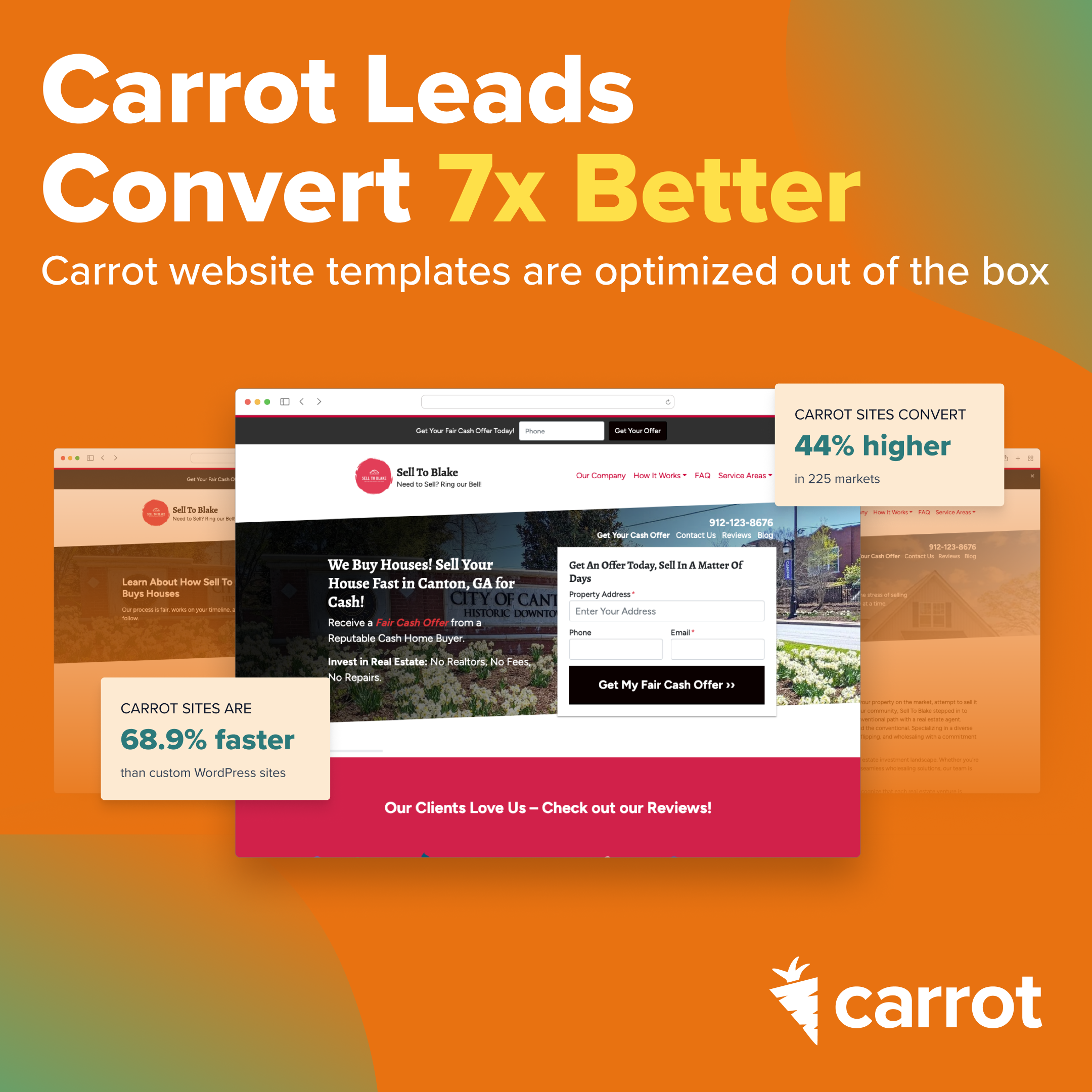
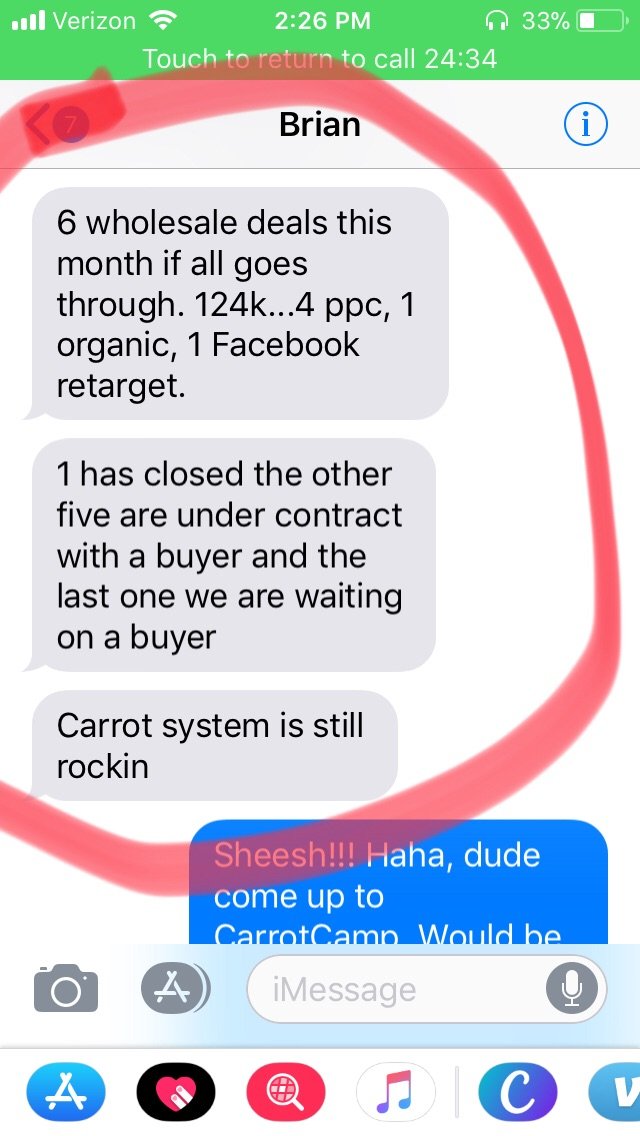
![[Case Study] From Teacher to $80k/Month Wholesaling Real Estate w/ Brian Rockwell](https://i.ytimg.com/vi/sMap9jMAUtw/hqdefault.jpg)