Category: Real Estate Marketing

  • Evergreen Marketing: How To Finally Get Off Of The Marketing Hamster Wheel and Convert Seller Leads 2-4x Higher

    Evergreen Marketing: How To Finally Get Off Of The Marketing Hamster Wheel and Convert Seller Leads 2-4x Higher

    Evergreen Marketing: How To Finally Get Off Marketing Hamster Wheel and Convert Leads 2-4x Higher
    Watch This Video on Evergreen Marketing

    If you’re a real estate investor or real estate agent, this Evergreen marketing article could change the way you think about marketing your business.
    My aim with this article is two-fold:

    1. My story and how I realized all leads and marketing aren’t created equal. The mainstream real estate world teaches us all marketing that is accidentally structured to keep us trapped in a never-ending marketing “hamster wheel”. Yes, it works to get leads and deals, but at what cost to our lifestyles and stress levels?
    2. Show you how a shift in the way you market

    It was 2011, and I was worn out.

    I was running my previous company before Carrot and was second-guessing whether this “entrepreneurial dream” of true freedom & impact was real… or whether it was just something the late-night infomercial pitch masters sold to make a buck.

    Financially, my company was doing great when you looked at the profit and loss statement at the end of the year, but I was tired of the “boom and bust” cycle my income and leads were on.

    One month, our outbound marketing would hit and bring in many leads and sales…

    … the next month, my business partner and I would take our “minimum draw” of $1,500 each.

    So, we’d hop back on the “marketing hamster wheel” and crank out some more outbound marketing, get customers coming in, and the cycle would repeat every 3-4 months.

    My business was successful in all of the normal metrics people would use to grade it, but it felt like the way I was doing it wasn’t sustainable and certainly wasn’t giving me the consistency, predictability, and momentum I craved.

    In 2012, I finally sat down and asked… “How can I get more consistency and predictability so this business can support me rather than me support it?”

    Are you tired of needing to get a gazillion unqualified leads to close a deal?

    More leads = more time and expense to sift through the tire kickers.

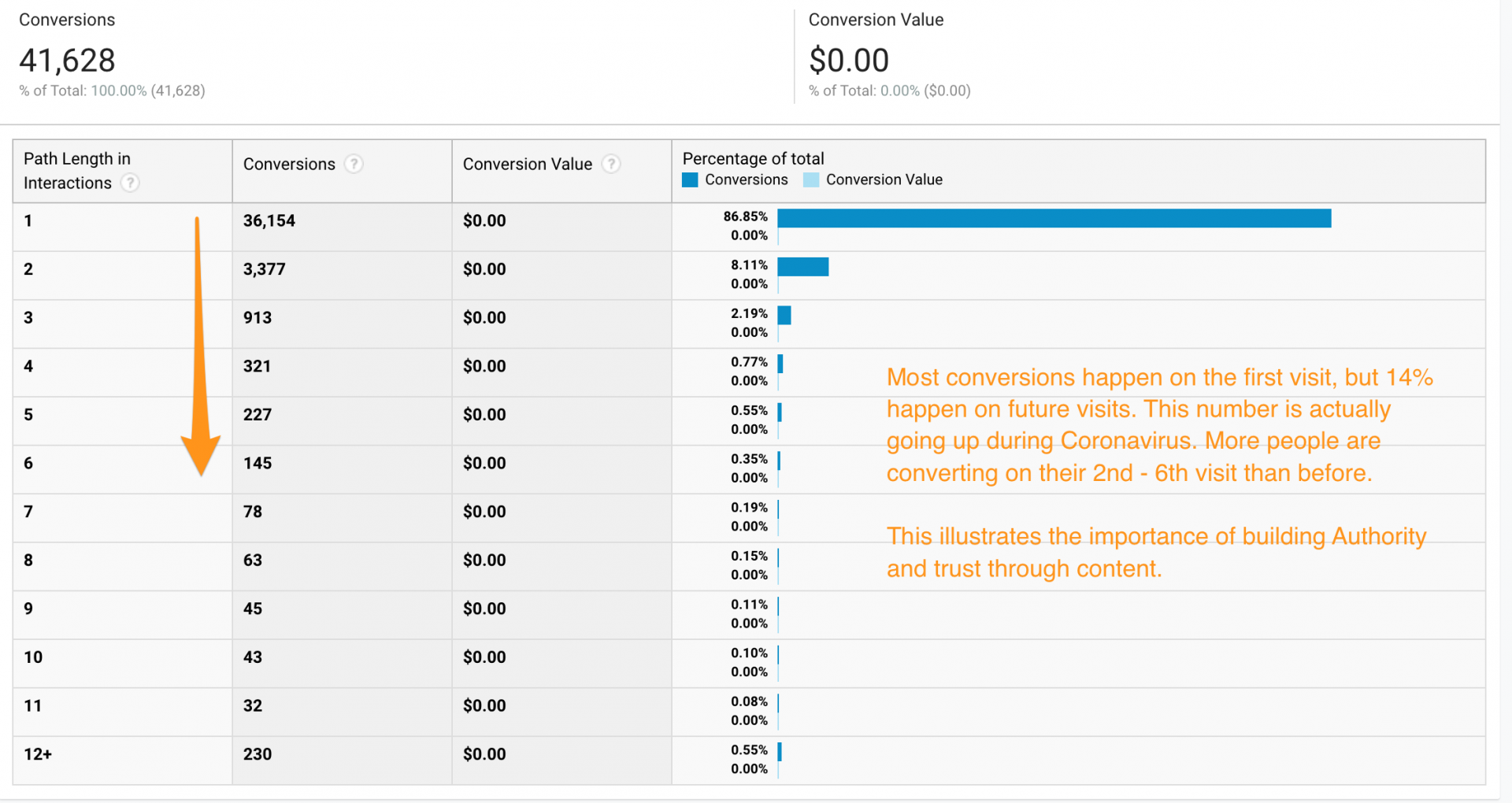
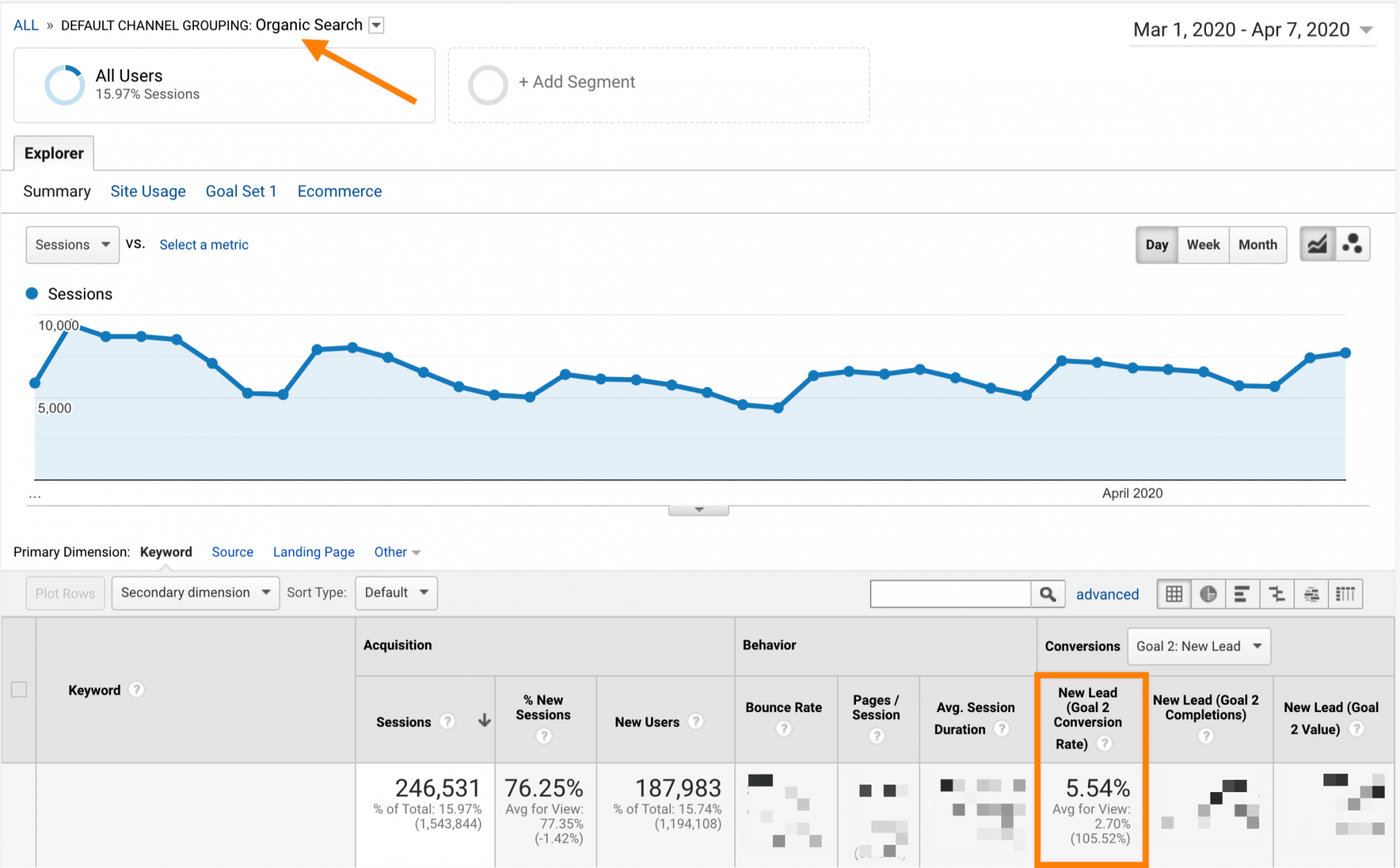
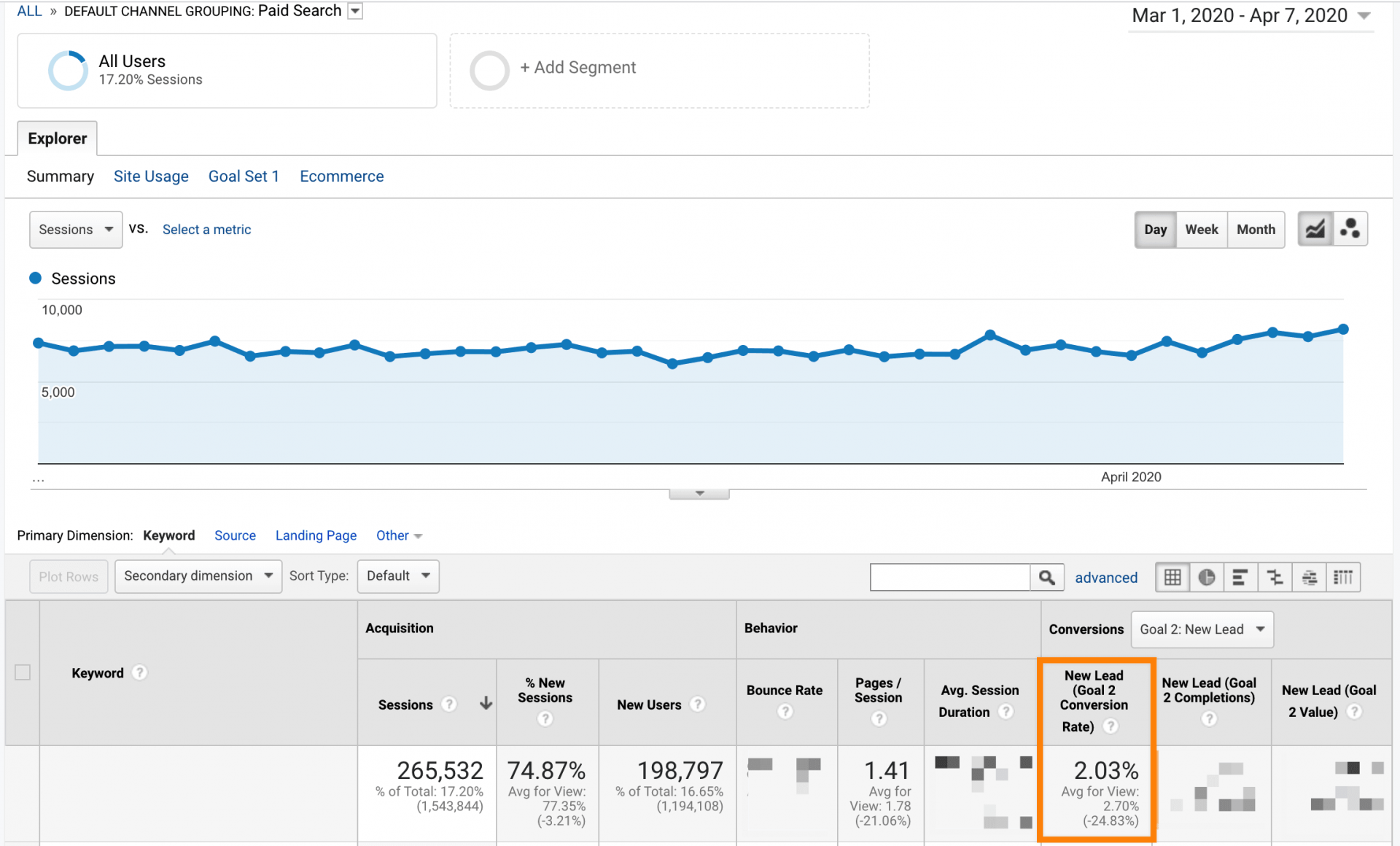
    Inbound online marketing with Evergreen content is the answer. It attracts your most qualified prospects who are motivated to solve their problem. It builds trust and credibility with them 24/7, 365 through your Carrot Lead Generation Hub.

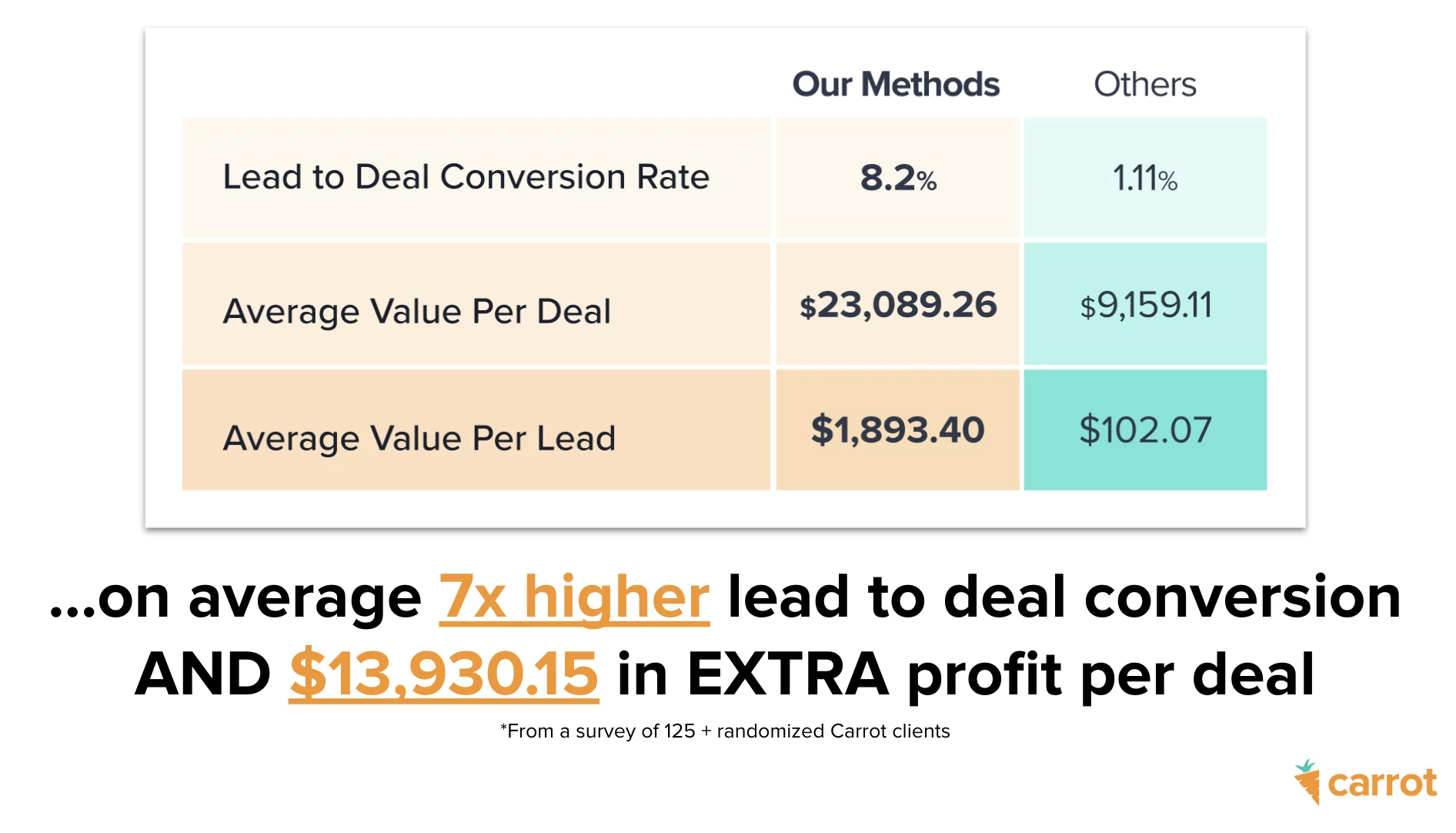
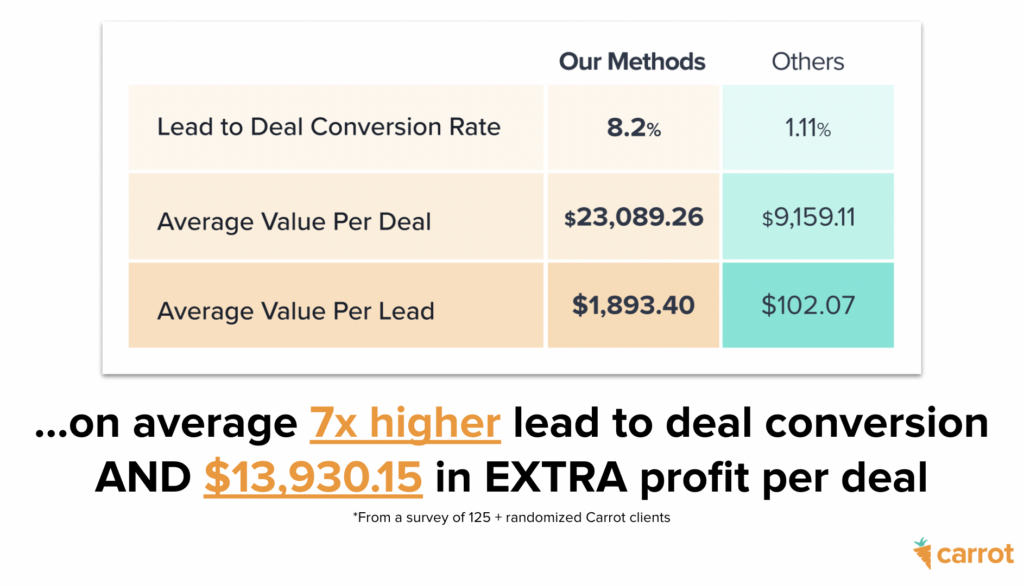
    They convert from visitor to lead between 2-4 times higher… and lead to deal closed from 2-3 times higher. Resulting in lower lead volume but more profits and less hassle.
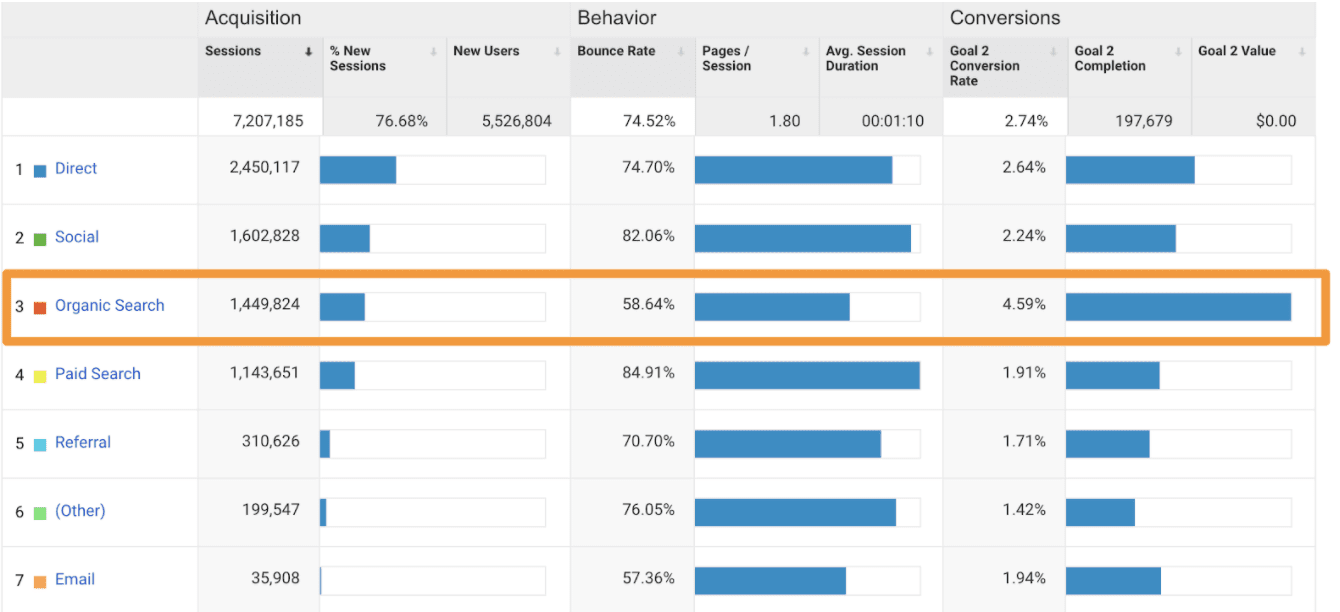
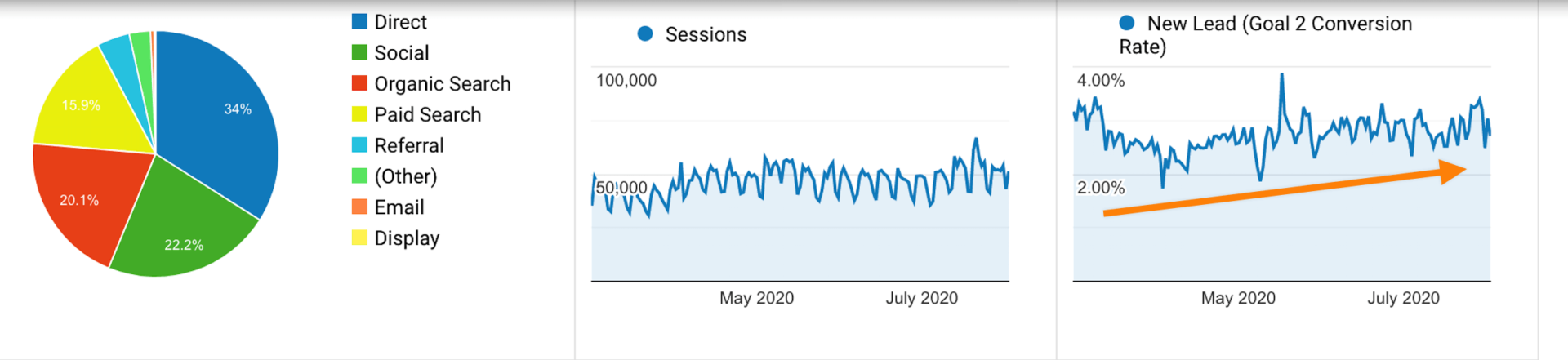
    Organic search results for Carrot members

    Timeframe: 90-day period | Source: Carrot Member Site Google Analytics

    Evergreen marketing is what we focus on the most here at Carrot. We then amplify it with paid marketing and even hamster wheel marketing.

    We’ll also discuss hamster wheel marketing in this post and the difference between it and Evergreen. To us, it’s not one or the other. It’s both. But you want to grow more and more into the Evergreen side of things because that’s where you create your consistency, freedom, and flexibility.

    You can make a greater impact with your business, but that’s where your most valuable and highest converting leads come from is from, and then we amplify it with the hamster wheel approach.

    What is Evergreen Marketing?

    Evergreen marketing is essentially creating content and getting online in a spot where it will be there forever, your website or your “lead generation hub” here with Carrot, and then amplifying that on social media.

    Where a lot of agents and investors go wrong is they take the content and they just put it on Facebook or Instagram.

    That, to us, is what’s called “hamster wheel” marketing.

    If you’re creating a piece of content and you just put it up on Facebook or Instagram, it’s going to be there for 24 to 48, maybe 72 hours before it gets pushed down, forcing you to get back on the hamster wheel and post again, and post again and post again, because the life span of that content is so short.

    The lifespan of that content is so short that you must be on the hamster wheel continually.

    If you get off the hamster wheel, stop doing those postings, stop doing direct mail, stop cold calling or doing RBMs, then your leads will eventually dwindle to a stop, and you’ve got to restart and get back on the hamster wheel.

    Now, Evergreen is another way we like to focus outside of the hamster wheel. But it does take work. Evergreen is more like picturing a stack of bricks.

    Here, you see the hamster wheel, which looks amazing because it’s easy. You can hop on it. You can take a step, and it immediately gives you feedback.

    It immediately gives you a result. But the problem mentioned earlier is you have to stay on the hamster wheel forever or plug somebody into the hamster wheel for you to keep giving you the result.

    That’s where agents or investors get burnt. Everyone tells them, “Do this method, do this method.” But two, three, four, five years later, they get burnt out because they’re still doing that hamster wheel marketing with no end or systems to make it Evergreen.

    This is where we want to help make a change.

    So, each brick in the stack represents a piece of content, a page on your website, something that will be there forever. It could be a video. It could be a location page of a neighborhood you do business in.

    It could be a blog post that you launched through our automated blog post system or that you wrote.

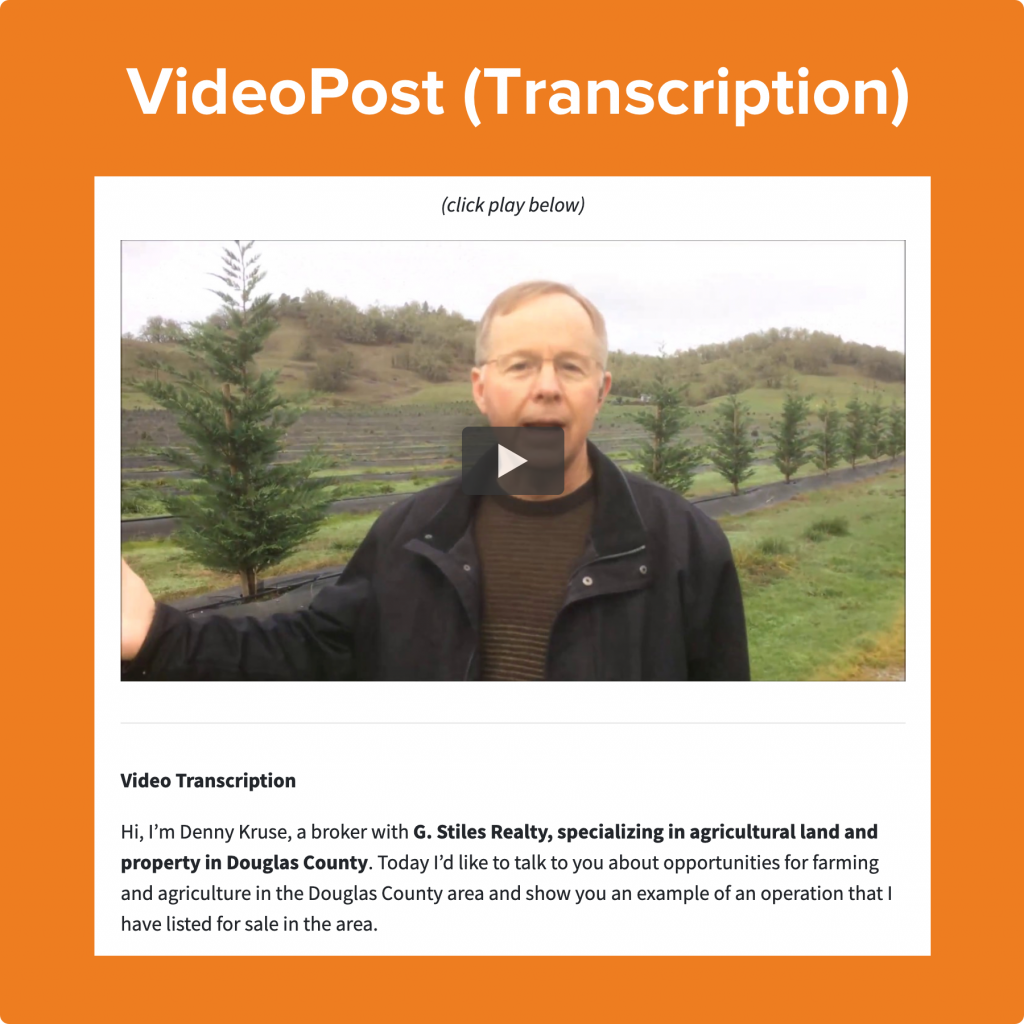
    Or, a video post on our system where you can take a short video from your cell phone, upload it to our video post feature, and automatically turn it from a video into a written article that you can then publish.

    So, get into the weekly routine. Pick up a brick and stack it, pick up a brick and stack it.

    Eventually, you’re going to have a whole row of bricks. It was dirty. It was hard work. You might even pull back and say, “I’ve done a lot of work here, and I’m not getting the result yet.”

    That one row is not a wall.

    What would happen if housebuilders stopped building a brick house in the first row? They were like, “Man, that was a lot of work. My hands are hurting. It’s not a wall yet; I’m just going to quit.”

    Well, there wouldn’t be a house.

    That’s where most people quit Evergreen marketing. They do a few actions and want instant gratification, as hamster wheel marketing gives them. But they didn’t shift their mindset to the long-term momentum-building mindset.

    So instead, get on the hamster wheel, get some leads and deals coming in, but then go back and stack bricks.

    Get into a routine of creating content. Another piece of content this week, another piece of content next week, a blog post next week, a video post, a video post, a location page, and eventually, you’ll have a brick wall that does all the work for you.

    Remember, it will be slow going in the first three, four, five, six months potentially.

    But as long as you’re consistently stacking bricks of quality content that answers real questions from your market, you’re entertaining in your way; you’re going to start to pick up that momentum.

    Hamster wheel marketing, you get a quick result, but then you get off of it, and it goes down. Then you got to go, “Shoot. I got to get more business.” You get on it, get off, get on it, get off. This creates stress.

    Evergreen marketing creates freedom.
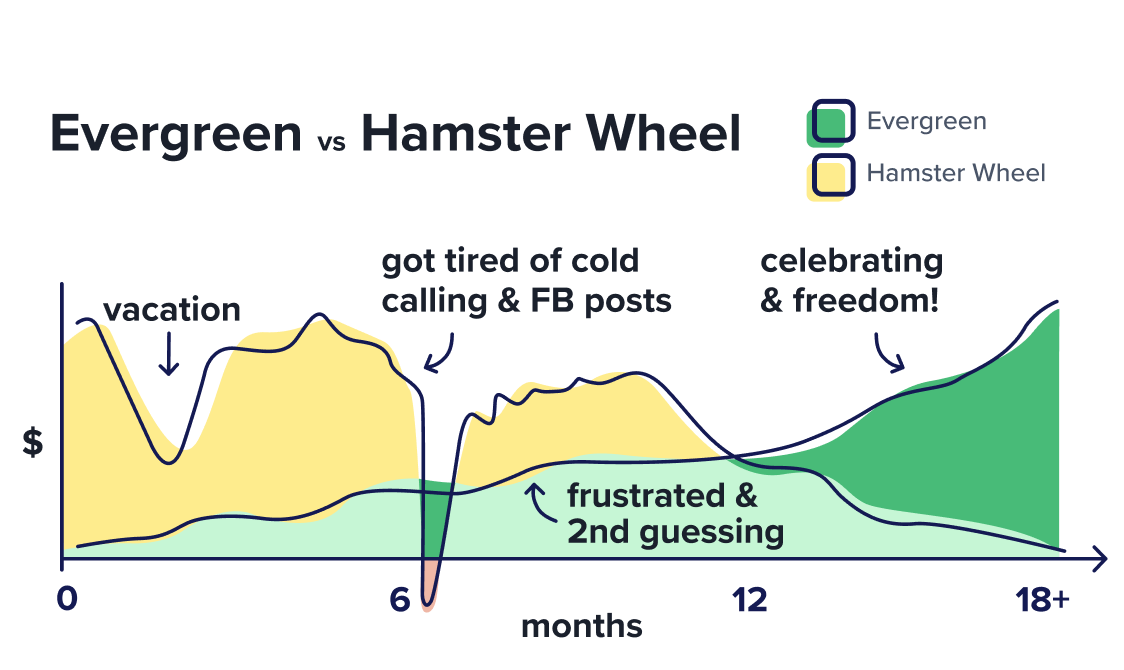
    evergreen marketing vs hamster wheel marketing

    Freedom or stress. You pick which one you want.

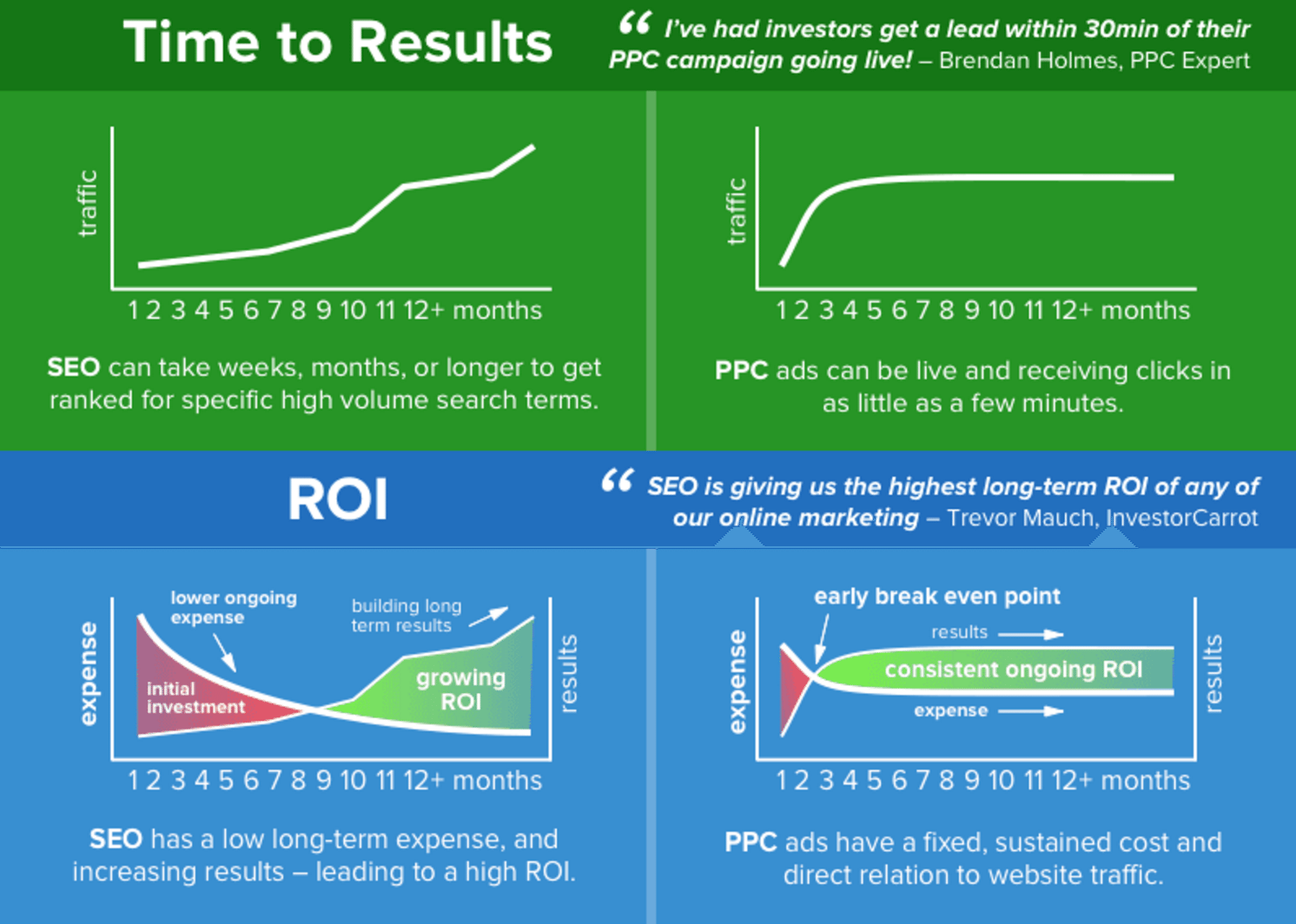
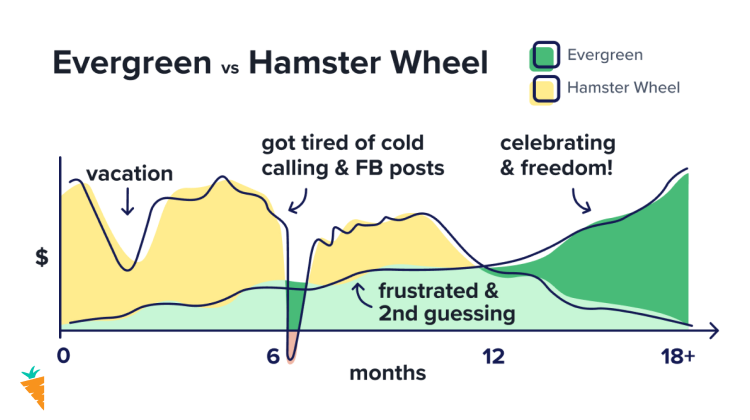
    So, how long does this take to work? This little graph will show you—essentially the time and the results that we want to have you expect.
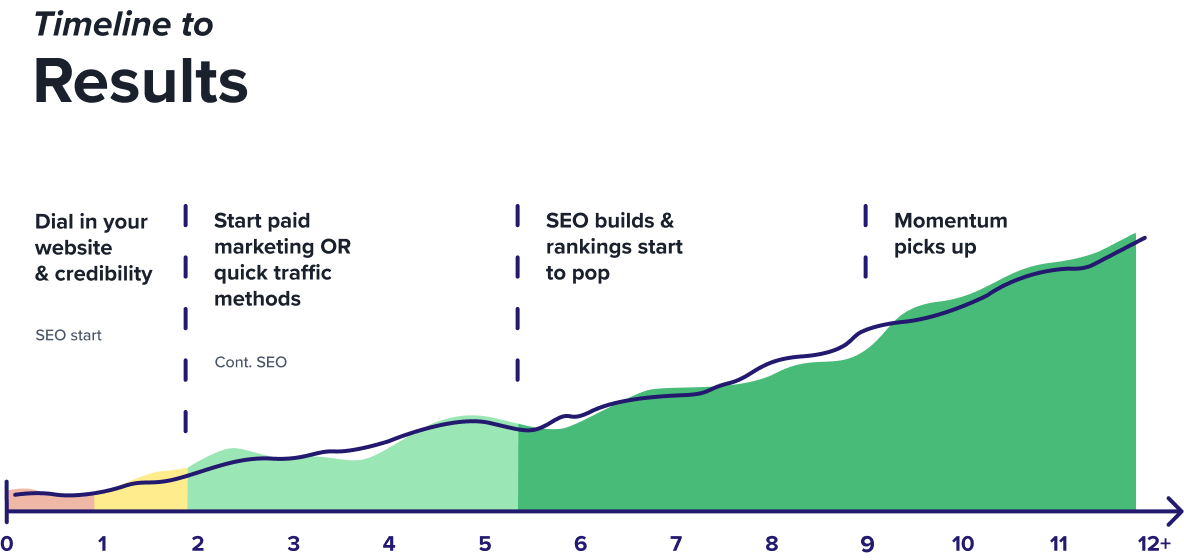
    time to Evergreen Marketing results

    Evergreen Marketing Time to Results

    The first one to two months is when you’re really going to be dialing things in. By now, you should have already had your website or lead generation hub created.

    Dialed means you have your logo on your site, changed some of the content, and got some of the location pages created. Once you’ve got that dial, then this is where you’re ready to start to bring traffic to your website. Dial it in those first couple of months, add credibility, and get your content started.

    In months two to five, two to six or so, that’s when you want to start some of that short-term marketing. Paid marketing, quick traffic methods, and things like that. And months five to 12 is when you really start to see this Evergreen content marketing pickup and get momentum.

    So, in the early months, that’s when you will be doing a lot of work on the Evergreen marketing but may not see the highest level of result that you see over on a hamster wheel.

    So, in the short term, once again, this Evergreen marketing works in tandem with short-term or quick-result marketing. In those first three months, execute things from that short-term marketing to get traffic and leads immediately.

    Hamster Wheel

    Short-term

    • Foundation
    • Quick traffic
    • Mindset
    • Amplify

    Evergreen

    Long-term

    • Traffic stacking
    • Content + SEO
    • Building + Adding Authority

    While you’re executing short-term marketing, you’re going to want to be building the foundation, executing the long-term momentum-building Evergreen marketing, which is simply creating content on your website consistently that Google likes to answer questions for people’s problems.
    Free Live Workshop

    Unlock Growth & Eliminate Burnout. Independent of Cold Calling, Direct Mail, SMS, and other ‘Draining Marketing Tactics

    Here’s What You’ll Learn:

    • How To Eliminate Burnout
    • Secret Lead Source Method
    • How to Convert 250% Higher
    • How To Unlock Consistent Growth

    A Shifting Real Estate Industry

    With the shifting real estate industry, there must be a marketing shift that has to happen in the tech disruption in general.

    We will talk about this shift, what Evergreen marketing is and what it is not, and how you can really start to like it.

    If you implement, stay consistent, and have patience, you’ll be able to get more consistent, more predictable, and high-quality leads.

    People will be reaching out to you rather than you having to contact them. No longer will you need to rely on posting on Facebook 18 times a day. Instead, let’s get you to where you publish a piece of marketing today, and it works for you in six months, in a year, in three years, in five years.

    You might say, “Yes, I want that, but what is it?”

    We’re going to walk through what that is and show a couple of examples and case studies to really connect you to how it works for buyers and how it works for sellers.

    We aim to get you to shift your marketing mindset into what will work amazingly well in the market ahead.

    The industry is shifting, and you can see with the industry shift, there are two parts to the industry. There’s the retail side of the industry, and then there’s the wholesale side.
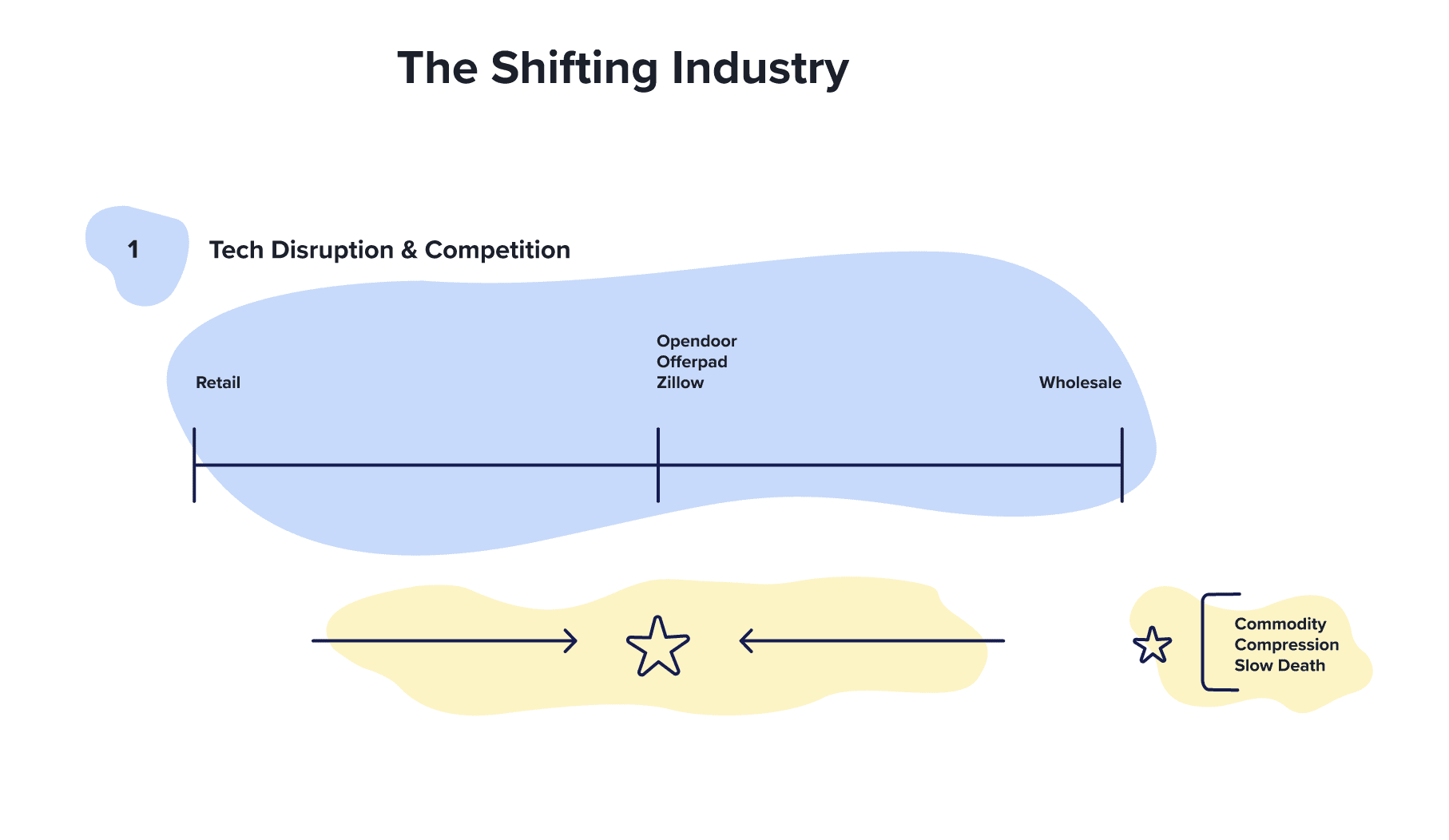
    the shifting real estate industry

    The Shifting Industry

    The retail side is working through the MLS, working with real estate agents. On the wholesale side, of course, just like any industry, the auto industry and the grocery industry all have retail and wholesale sides.

    Both of them serve a great purpose. Some people want to buy properties at a discount for investment, and they don’t want to pay retail. In contrast, some people want to sell properties at a discount in exchange for speed and convenience in solving their problems. And many real estate agents don’t tread into the other side very often. Many wonder, “Why would that seller sell at a discount when they can sell it over here for a higher price?”

    Well, oftentimes, the seller wants to sell because of many reasons. They need to move fast, or they had a bad experience selling it traditionally before, or they want cash quickly, and they need it within 30 or 60 days, and they don’t want to have to put up with showings and people going through and making offers and backing out or a variety of other reasons.

    It’s a big market over there, and it will keep growing with the iBuyers. iBuyers like Opendoor, Offerpad, and Zillow fall between retail and wholesale.

    The big tech giants are starting to say, “Hey, I think we can do a little bit of what agents do a little bit better, and I think we can do a little bit of what house buyers and professional house buyers do a little bit better. And we will bring in better branding, better marketing, huge budgets, and try to shift the overall industry towards direct selling.”

    Now, I feel that there will be more and more sellers selling directly to an end buyer through an investor or an iBuyer service like this.

    I still feel that real estate agents will be the backbone of house sales over the next several decades. But, there will be a change, and we want to ensure that agents are not becoming a commodity.

    We want to make sure that your commissions and your profits as an investor or agent are not being compressed. We want to make sure that you don’t die a slow death in your career because of this shift and get left behind in this shift.

    So the next question is this: how do you stand out in this market? How do you stand out when there are a lot of agents, when there are a lot of investors, and these iBuyers and tech giants are coming in to try to disrupt the industry?

    You stand out, not by creating fancier CRMs and fancier automation with text and email. That stuff is fantastic. That stuff amplifies what you’ve already got.

    The way that we actually stand out is by becoming an authority.

    It’s an authority on a topic, on a neighborhood, on a specific type of a seller situation, in the area-owned real estate, whatever it is, becoming an authority that people look to, to say,

    “Wow, that person knows a lot about the subject. I trust that person, and I feel less risk in taking care of better if I work with that person with this type of transaction.”

    With the authority scale, it goes from the very bottom of the tactician.

    Tacticians know:

    • How to take the steps.
    • How to do the basics of a transaction as a real estate investor or agent.
    • How to close deals, but their earning potential will be very, very low.

    The tacticians’ influence will also be very, very low on those clients in that industry.

    So to raise your income and become more stable as an agent or an investor, you need to start taking steps to become an expert.

    Experts are:

    • Well beyond just knowing how to do the tactics, shuffling the paper, knowing how to do the transaction.
    • They are experts in niches such as experts in a neighborhood or neighborhoods, in a type of a buyer, a type of a seller, certain types of transactions as an investor, or if you’re an agent, you’re an expert in commercial property, investment properties and you’ve put in the time to invest into learning the expertise in that.

    These things are going to increase your pay, and it’s also going to increase your ability to influence your market to work with you so you can serve them better.

    But, you need to move to be an authority to really win

    There are going to be a lot of tacticians in this next phase of the real estate industry that are going to get pushed out of the market. Technology is going to gobble up those people.

    Experts are great, but the difference between an expert and an authority is an expert that many people know is an expert. An expert is just someone who knows a lot of information, but no one may know who you are.

    How do you get to have people know who you are?

    The more people who know who you are and are an expert on this topic, the more people will know you. The more people will be attracted to you, the more sustained and consistent that business will be.

    The way to bridge that gap between expert and authority and increase your pay, decrease your risk in the market, and increase your ability to stay and thrive in this market change while these two segments, tacticians and experts, have a tougher time and they start to go downhill is you need become an authority.

    How to Become an Online Authority

    What is the only way to become an authority?

    The answer is CONTENT.

    What is content?

    One way to do it is with your cell phone. You can record a video and upload it on Facebook. You can also take that video and upload it to your Carrot site (if you’re a Carrot member) and turn that video into a written blog post using our Video Post feature. That’s content.

    When people see your content, and they see your expertise and personality, they see your authority on that subject, especially if they see it over and over again.

    It could be a written piece of content. It could be you in front of a chamber of commerce meeting. That is content, even though it’s in person.

    If you’re attending those networking meetings or meeting one-to-one at a coffee shop, that’s amazing, but you can only scale that so far. What happens during situations that pandemics, like America and the world, have been through in 2020?

    You can no longer show up to those big networking meetings. You can no longer go to the coffee shop and shake someone’s hand.

    But what you can do is create content so people can find you online. Online is only going to get bigger and bigger. More and more people are going to the internet to make Google searches, and that’s where we want you to be.

    We want you to be rooted in this authority or eventually branch up to the “celebrity” authority in your market.

    How do you do that?

    This is where Evergreen marketing steps in.

    Evergreen marketing is so amazing; that’s why we’ve gone all-in on Evergreen marketing; it’s what we’ve done since day one of Carrot.

    We’re not a company that started out doing X, and then we realized this opportunity, and we’re shifting our strategy. We’ve been doing Evergreen marketing since day one. It’s what the entire business has been built on since the inception of Carrot at the end of 2013.

    Millions of leads have been brought in through our system, mainly motivated sellers, but also a ton of buyers, a ton of tenants, land sellers, land buyers, mobile homes, retail listing houses, you name it.

    How Evergreen Marketing Works And Examples Of Carrot Members Who Have Been Highly Successful Using It

    1. Buyers and sellers are searching online every day to solve their problems.
    2. You create valuable content and put it on your website (lead generation hub).

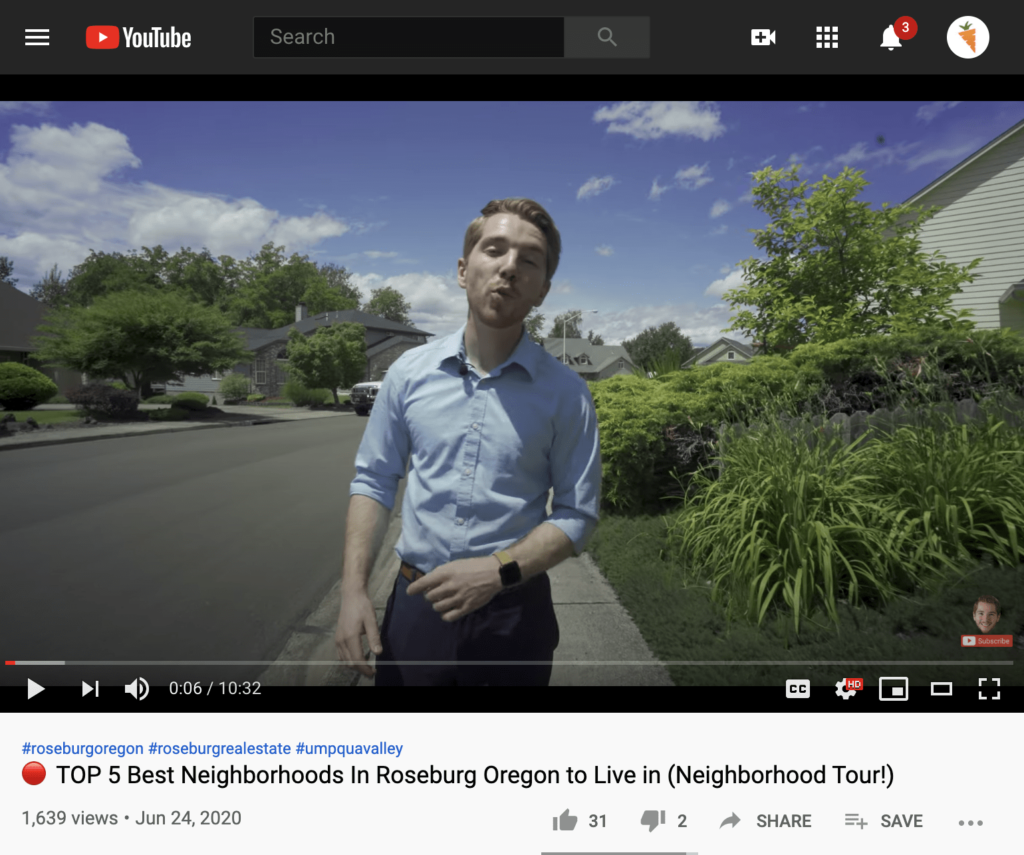
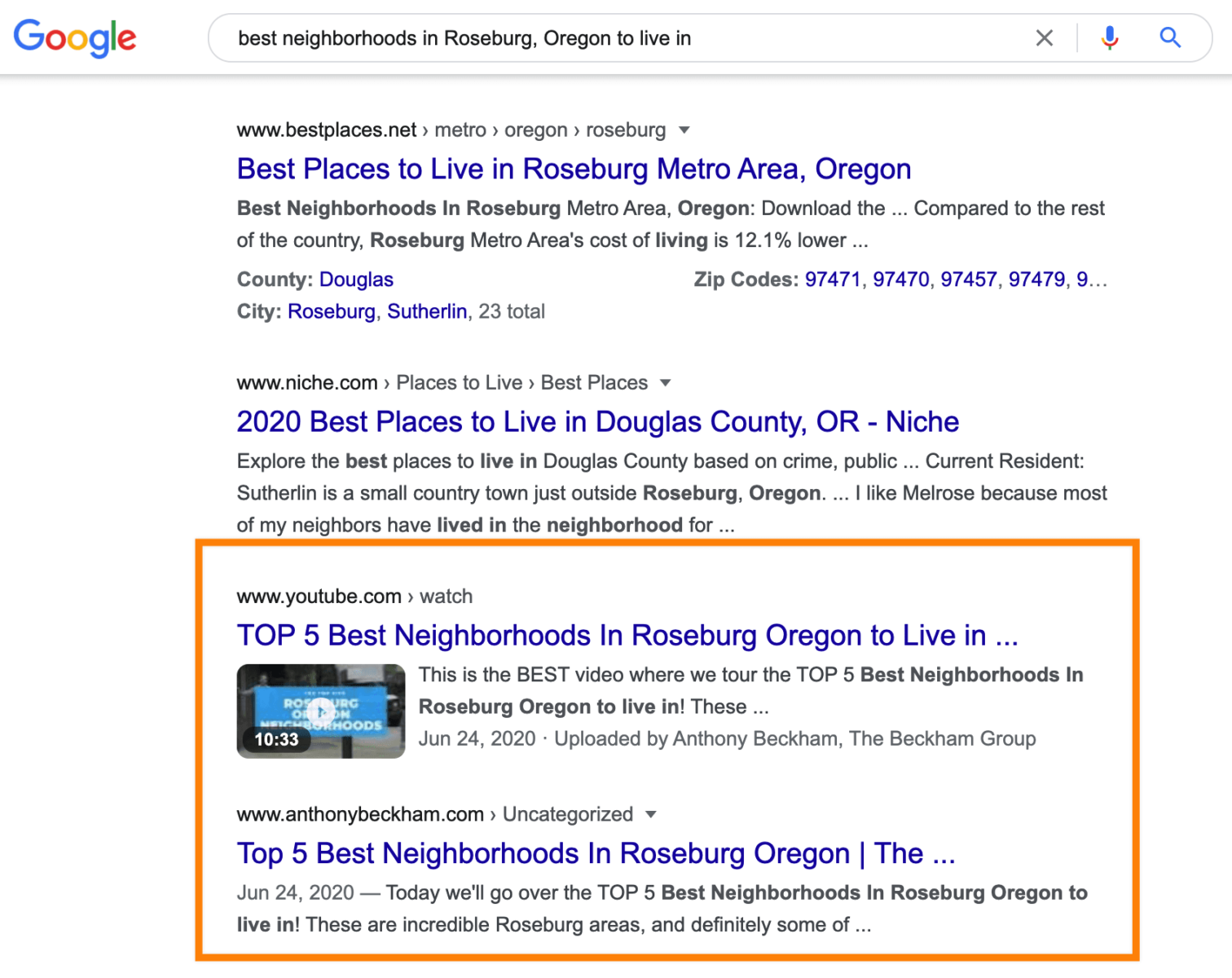
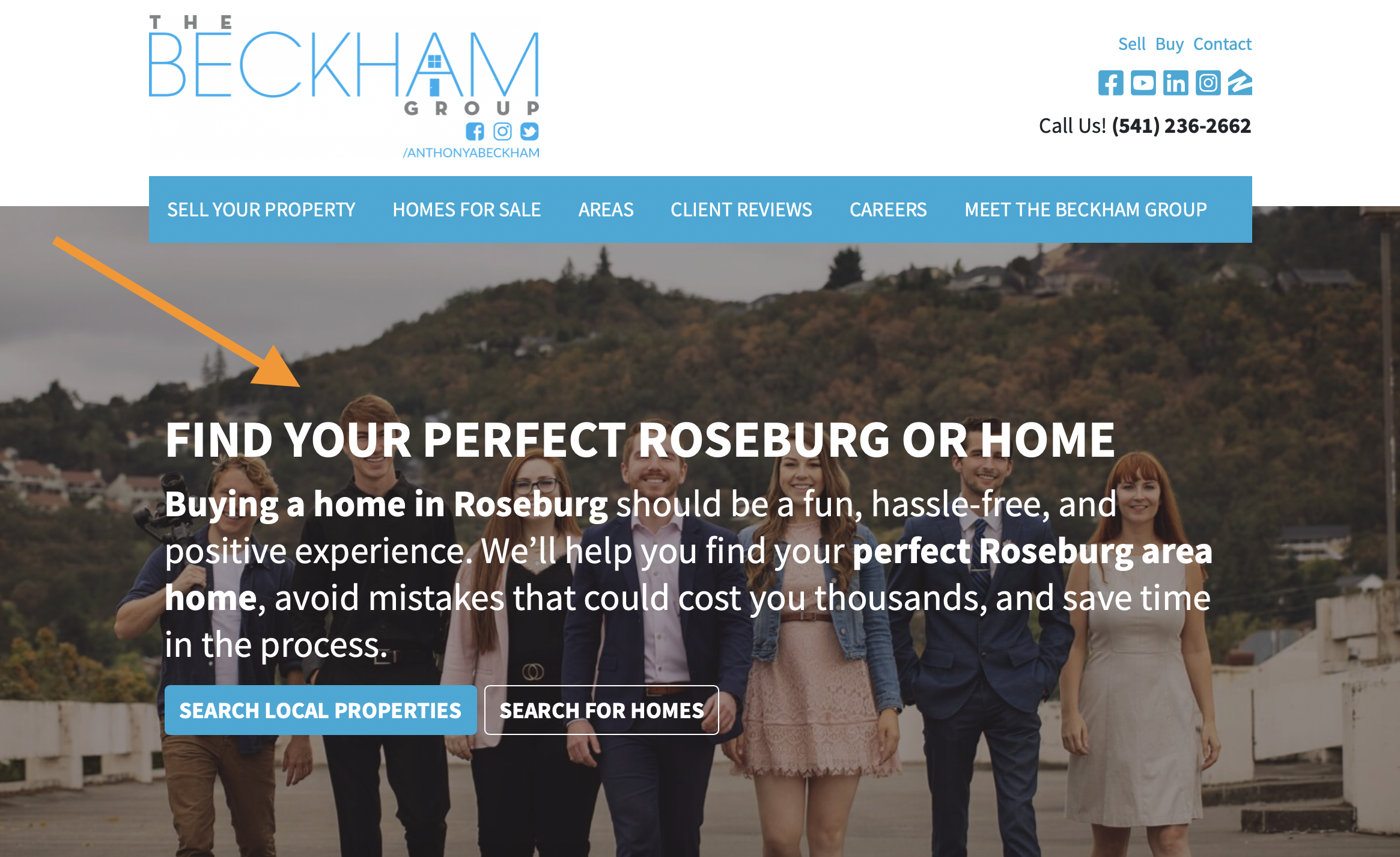
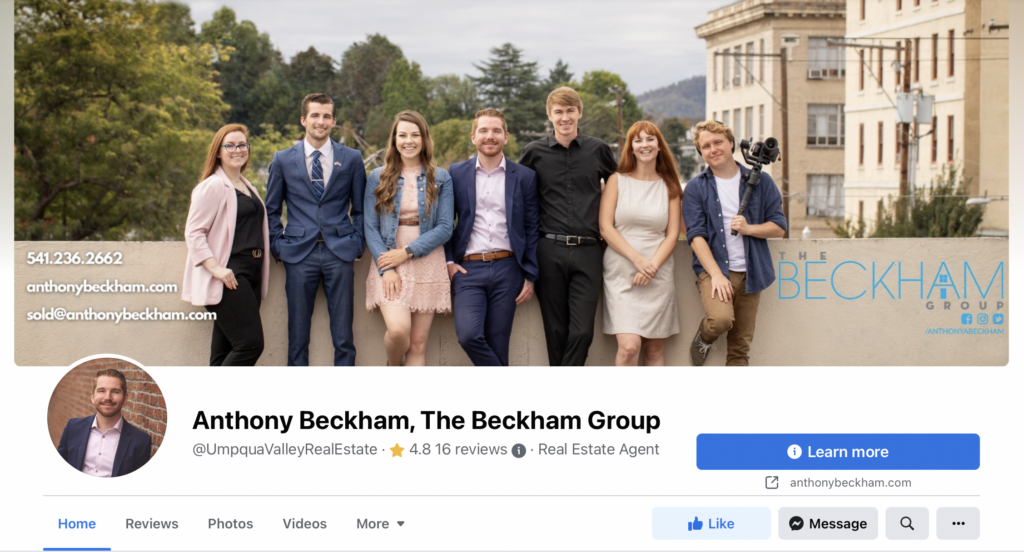
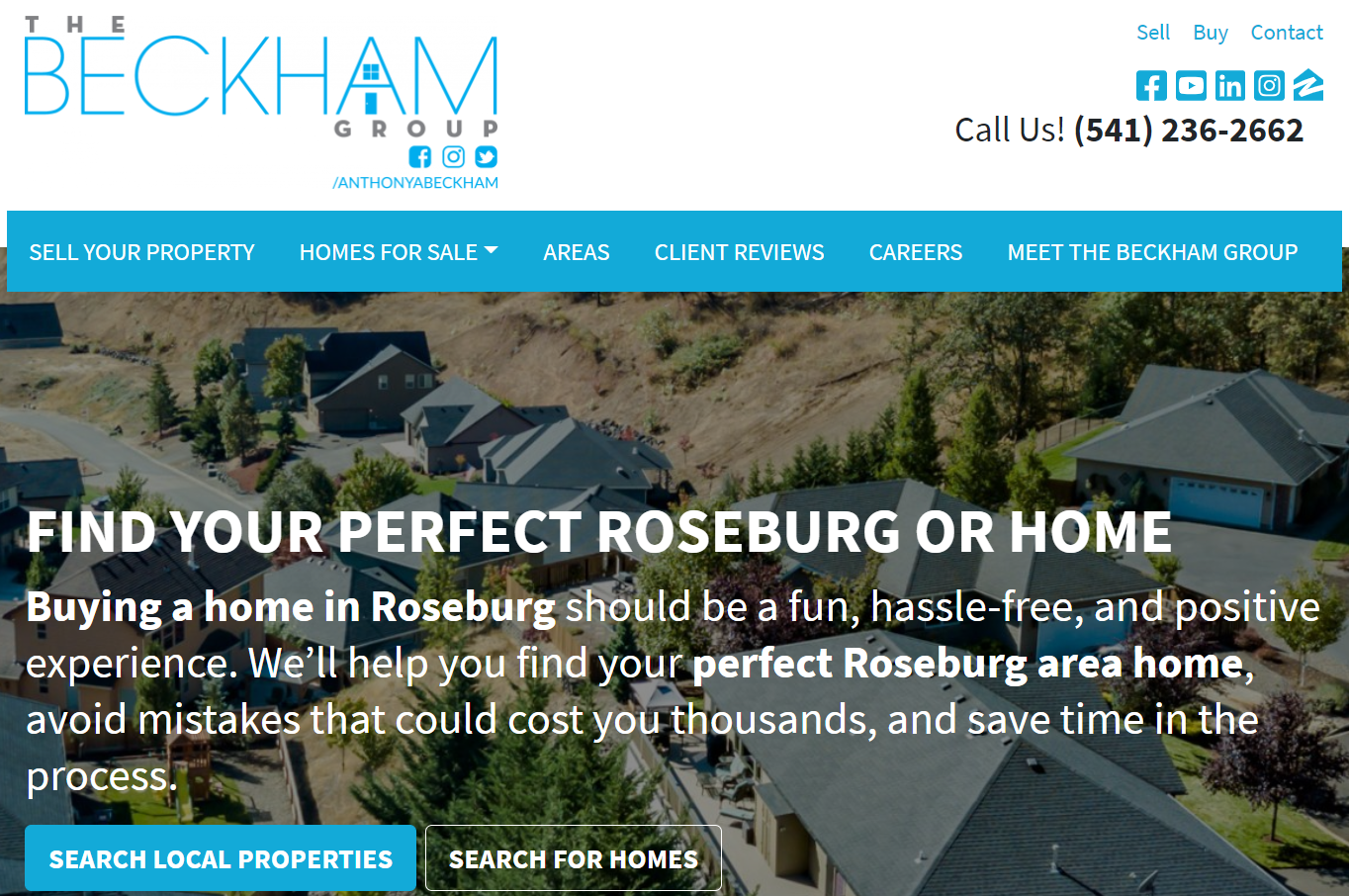
      It could be a video like we’re seeing here from Anthony Beckham. It could be a blog post. It could be a location page where you’re talking about areas and neighborhoods in which you buy or sell houses. You can see this one from Anthony; he talks about the top five neighborhoods in Roseburg, Oregon.

      He put it on YouTube and also created a video post. His video already has over 1000 views.
    3. If optimized well, your site ranks high. Searchers land on it and engage.

      Search “North Umpqua River homes for sale”.

      The number one result in Google is a Carrot site. One of their location pages they stacked a brick and created a bunch of location pages, and it’s outranking Zillow, and that produces leads every single month for them of people who are looking to buy in that luxury home area.
    4. Your content lives and works. It builds trust, credibility, and authority 24/7 for months and years.
    5. Rinse and repeat over the long term so your content is everywhere online.
    6. Amplify your content with social media, ads, and email.
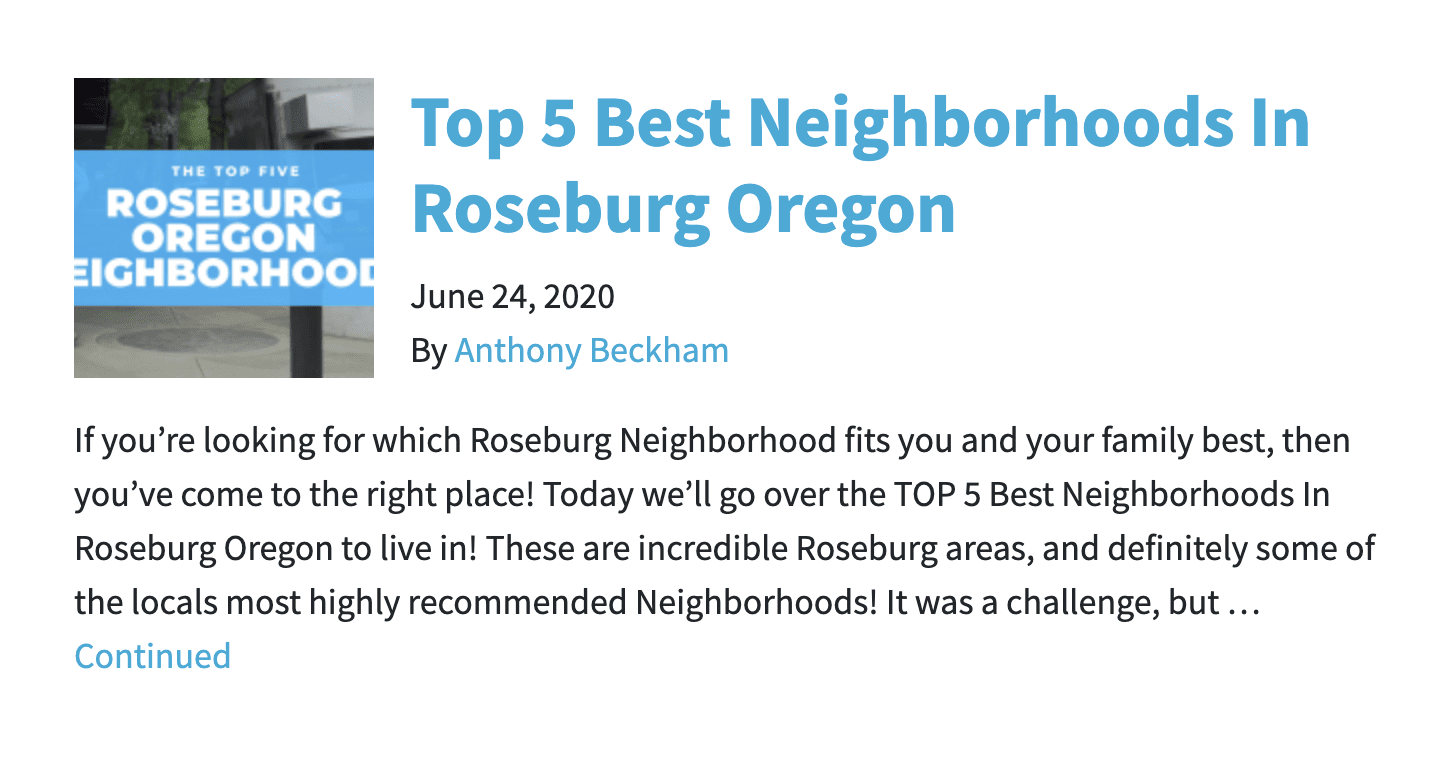
    Carrot member blog posts
    Anthony Beckham real estate youtube channel

    You’ve got to start shifting some of your patterns, start shifting some of your thoughts on what marketing is for you. Shift some of your hamster wheel efforts into Evergreen efforts, and then you start to stack more and more content pieces onto your website.

    Then, to really make it hum, those content pieces you get on your website, share them on social media, share them on Facebook.

    Just like you see here, Anthony is linking up his Carrot page with his video, and he has over 16,000 views.
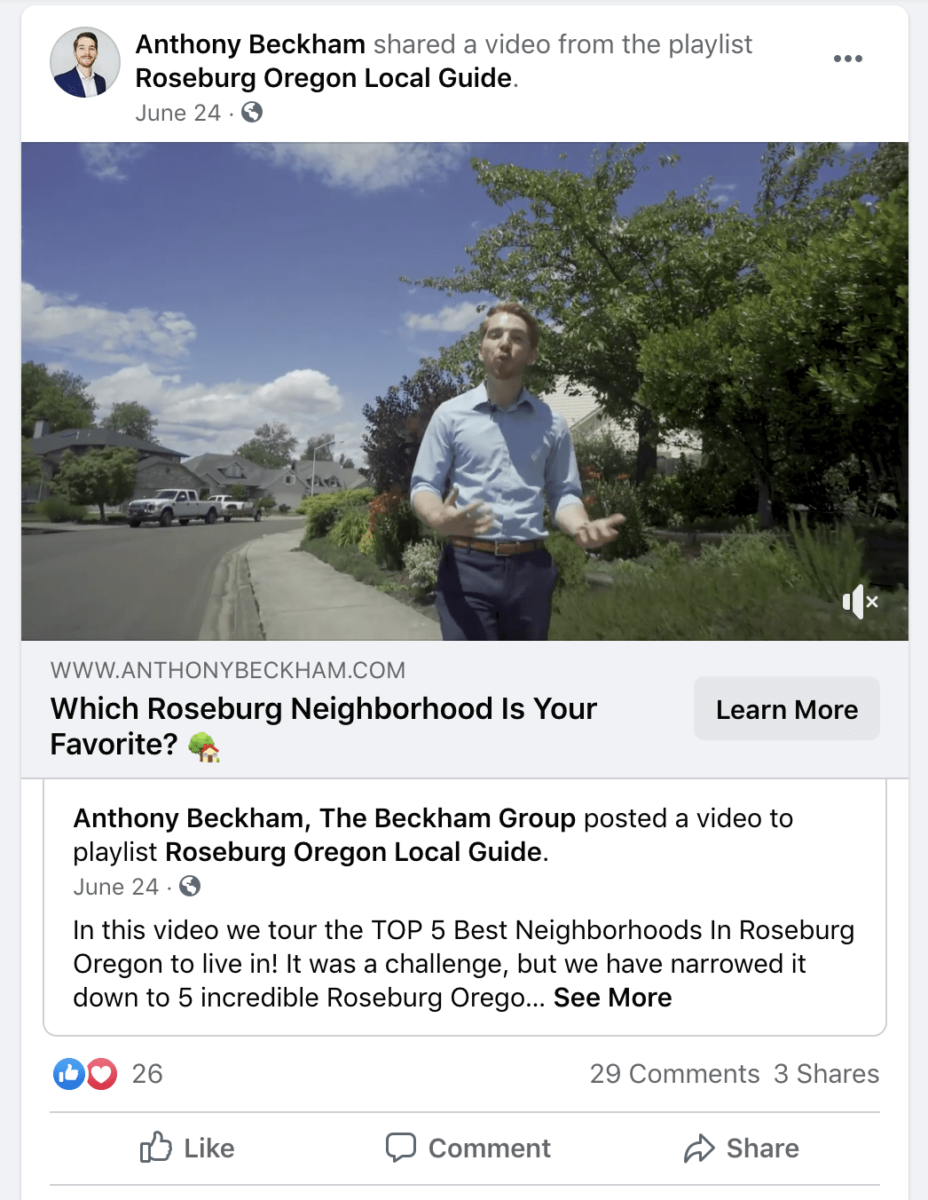
    Anthony Beckham Carrot member success

    Once again, the strategy in your first two to three months will be the most work. That’s probably where you’re going to be putting three to five hours a weekend into creating the content getting your marketing plan created in that first month or so.

    After that first six months, it will probably be more like an hour a week, and that’s your weekly marketing commitment regarding your content.

    Here’s a case study of how Brian Rockwell, an investor down in Dallas, Texas, is getting sellers through Evergreen marketing. There’s a full case study. We will link it up below on how Brian Rockwell has done that.

    Brian went from school teacher to a multi-million dollar wholesaling and house flipping business and multifamily investment company just from Evergreen marketing and amplifying it with paid marketing.

    This is a text message he sent us. Six wholesale deals this month. If all goes through, $124,000. Four came from pay-per-click.

    And then one came from organic and one came from retargeting.

    So, there is an amazing, amazing result for seller-motivated households.
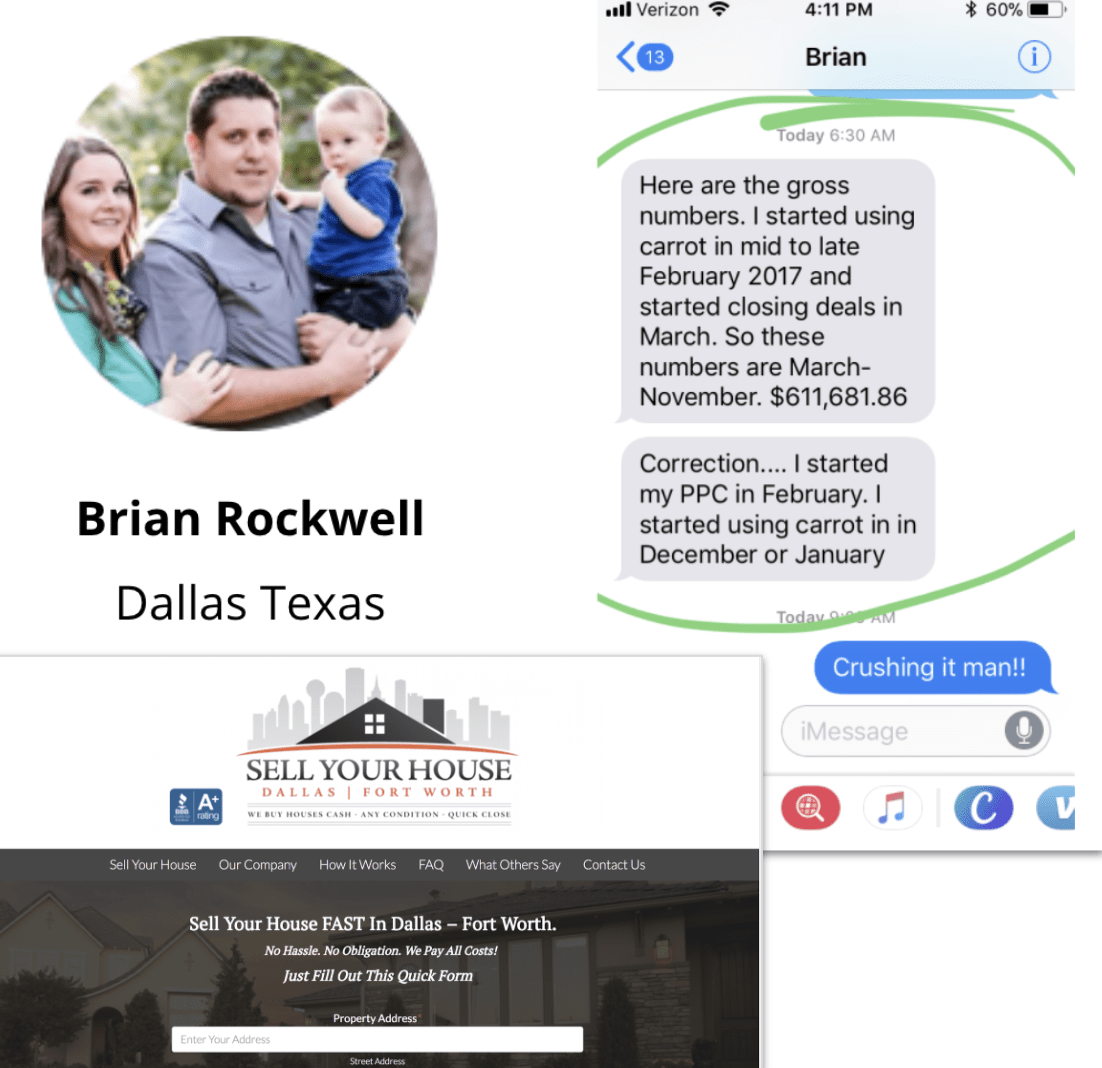
    Brian Rockwell Carrot member success

    Let’s look at a real estate agent G Team, for buyers—North Umpqua River homes for sale. Anyone who types up that phrase in Google now takes about four to five months of doing the process, putting their heads down, and doing the work, or you can hire our services team to do some of this work for you.

    They’re ranking above Zillow and Realtor.
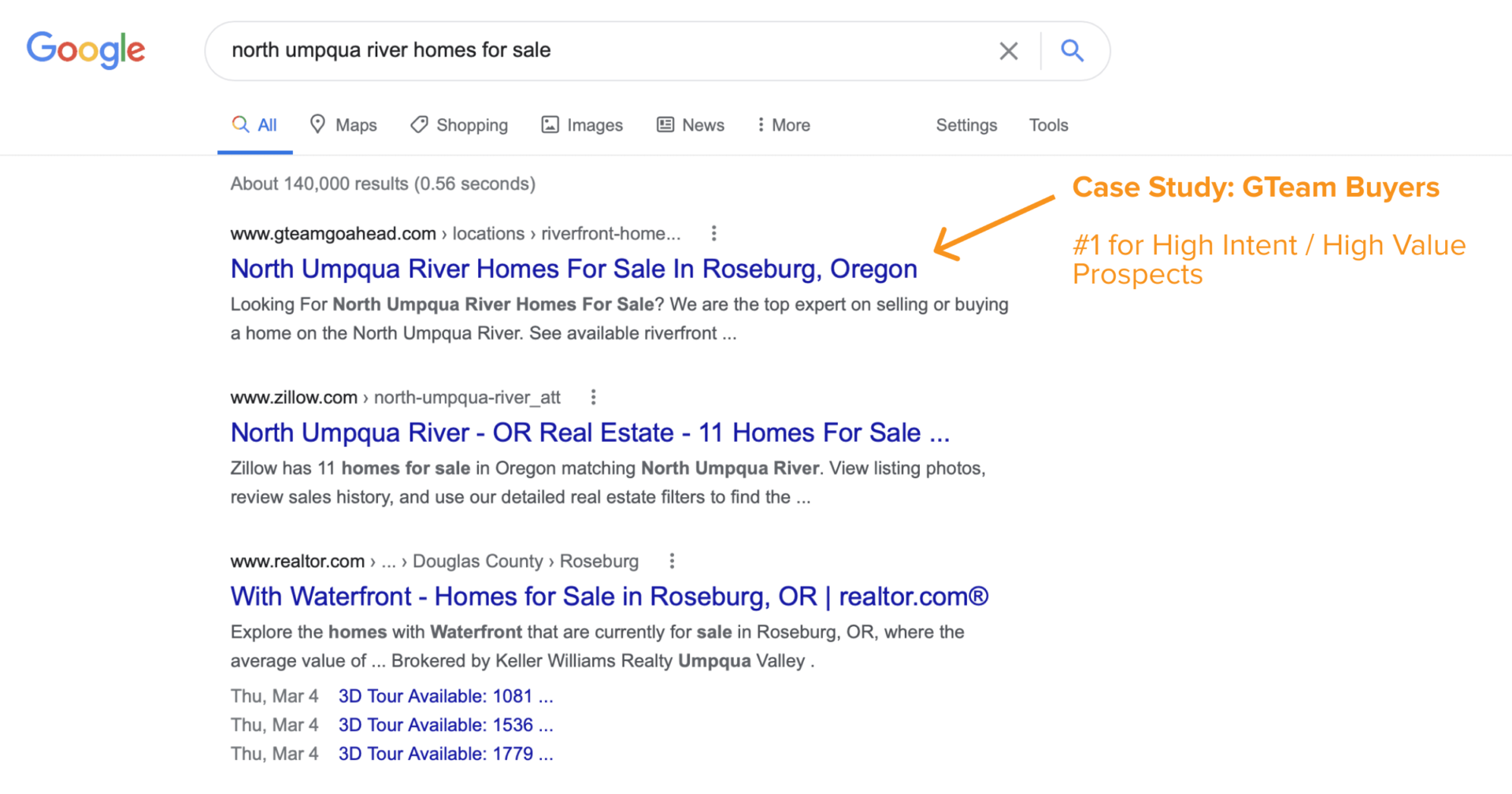
    Case Study: GTeam High Value Google Ranking

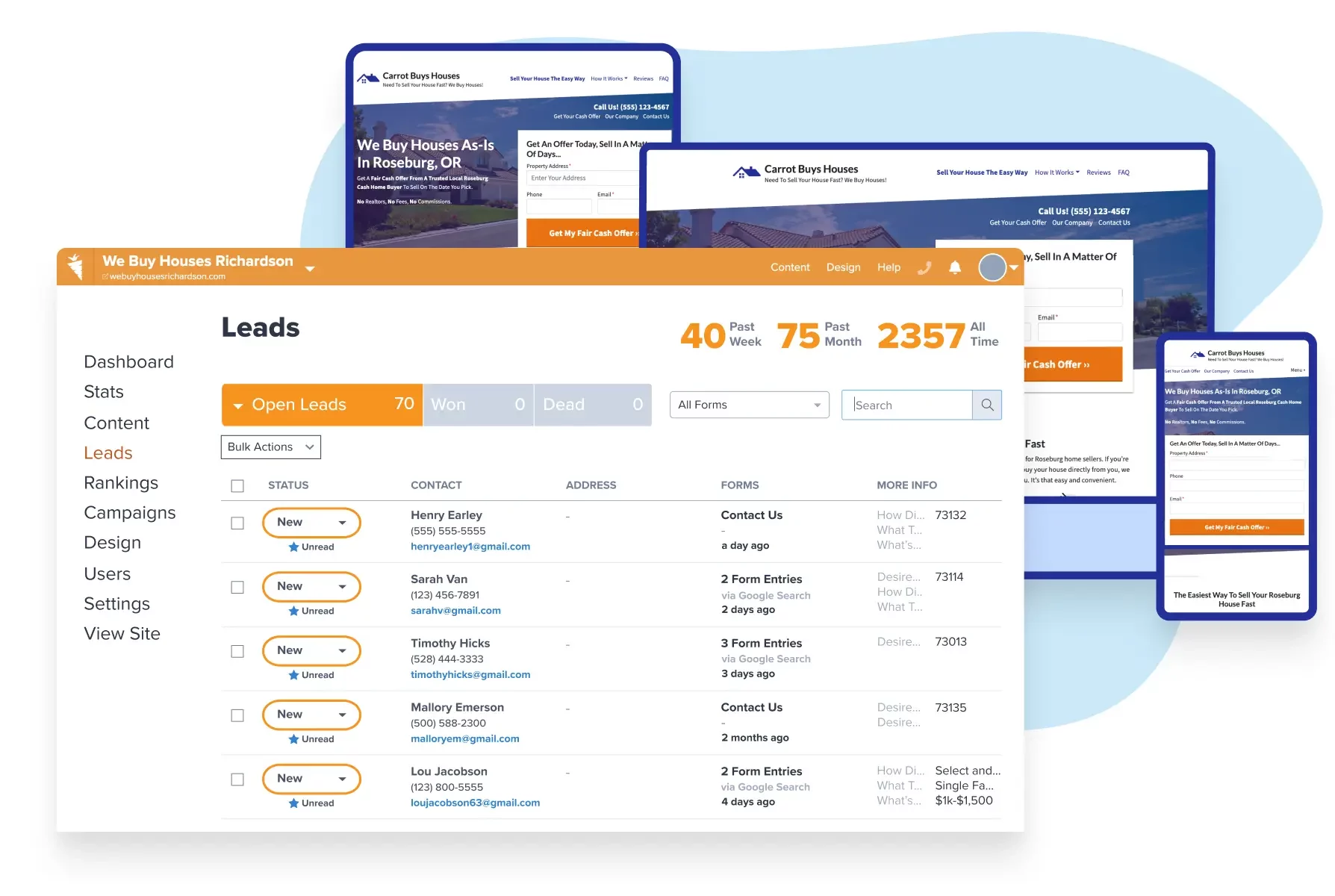
    What does that equal? It equals leads. The G Team gets leads every single day from that one page.
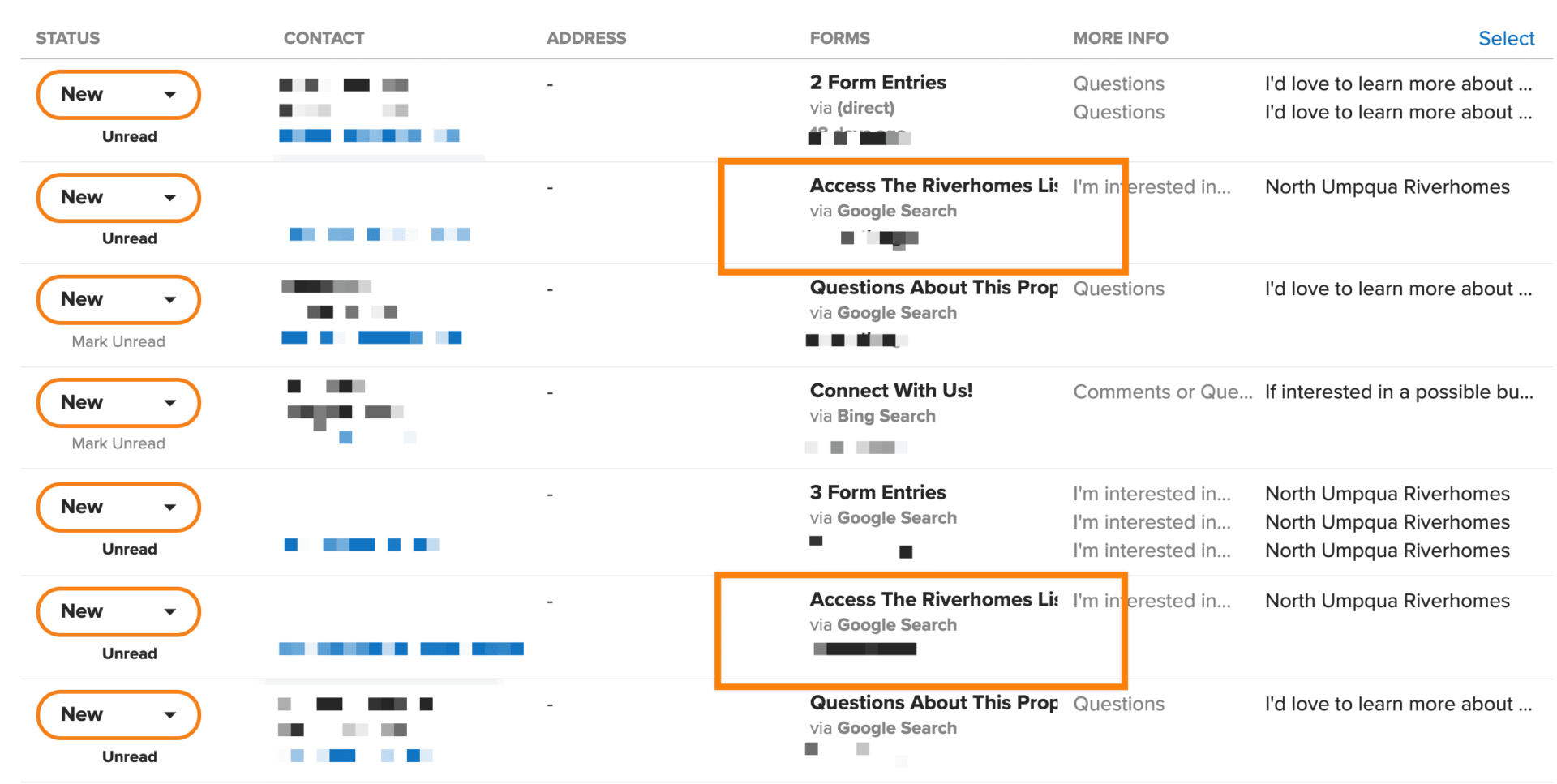
    Carrot member leads dashboard

    Now, imagine if you started to stack on more of those pages, you get three leads from this one every month, two leads from this one and 10 leads from this one every month, and three leads from this one, none from this one, but six from this and three from this, you get the idea.

    Here’s another example. So, the niche seller leads. Let’s say you’re going after sellers who are in tight niches. They have a problem. They’re searching online. I want to sell my inherited house in Detroit, or sell my house in a divorce, or sell my luxury home, or how to sell my house without a real estate agent, or how to sell my house with a real estate agent, phrases like that.

    What if you were ranked really high in Google for that phrase, just like these Carrot members are, and they’re ranked in front of those clients, what does it turn into? Well, it turns into leads.

    This one came through Steve’s Carrot website. He put Evergreen content up there. That was a blog post that he used for an automated blog system, and he used one of our plays in the playbook to modify those to give it a better chance to rank well in Google.

    And you can see this one came from Google search, and this one came in at 7:33 PM. Carrot is working while you are eating dinner, while you’re hanging out with your family, or while you’re sleeping, Carrot’s working. That is what Evergreen marketing is. We want it to give you freedom.

    Lastly, the whole thing with the strategy of Evergreen marketing is that it is a fundamental shift in the way that you do things.

    If you want to be on the hamster wheel for the next five or 10 years and grinding away in five or 10 years and having to continue to post and continue to do things and continue to work five, six, seven days a week, then keep on doing hamster wheel marketing as your only marketing method.

    We want to start to have you shift things over to Evergreen marketing, but it’s going to take work.

    It’s going to take focus. It will take effort, but in 12-24 months, you will say, “Oh my gosh, I’m so glad I made this shift in my business because now I have freedom. I have flexibility. I’ve got this machine and lead generation hub that is continually attracting the right prospects that convert the best that want to work with us.”

    And this is what your site is going to look like essentially.
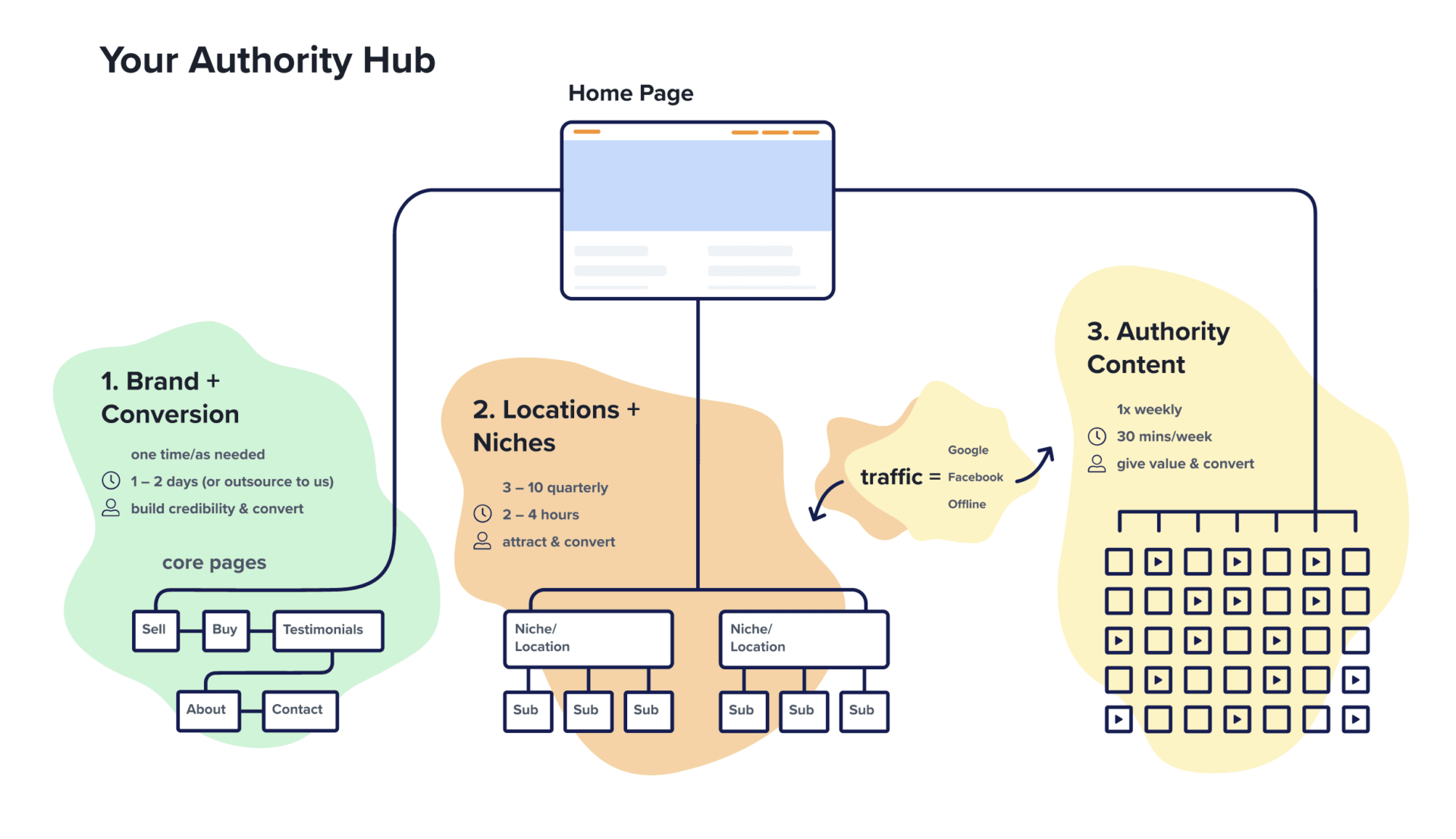
    Carrot Authority Hub

    You have got your core homepage or Lead Generation Hub. Then there are “core conversion” pages, niche/location pages, and the authority content.

    Let’s dive into those a little deeper:

    1. Core Conversion Pages: 
      1. Purpose: To convert visitors into leads and deals at a high rate
      2. What: Your home page, primary nav pages, reviews, About, FAQ, How it works, etc. 
      3. All geared to guide people through a specific set of content to answer questions, squash objections, and convert a visitor into a lead and deal.
      4. Frequency: You create these one-time but then update them as needed.
    2. Niche / Location Pages:
      1. Purpose: To attract new prospects who are searching for localized phrases. 
      2. What: Pages specific to a location and/or niche that are created to rank well in Google for those localized searchers. 
      3. Seller: It’s best to duplicate a motivated seller lead gen page and localize it for each market. This may be a home page on our motivated seller sites or a seller page on an agent site. 
      4. Buyers: Use the Locations page tool so we can populate properties. And each location is unique, so it’s harder to duplicate a page. These pages take more heavy lifting. 
      5. Frequency: Ideally, 5-10 per quarter. 
    3. Priority “Authority” Content: 
      1. Purpose: To build ongoing trust, credibility, and authority through small but hyper-focused pieces of content. 
      2. What: Automated content pack blog posts, video posts, etc. These may be market updates, video posts answering common questions, etc. 
      3. Frequency: Weekly. Ideally, 1 automated post per week and 1 VideoPost.

    Conclusion

    That’s it. That’s publishing one authority content piece in under an hour a week, every single week. Then, take your “Lead Generation Hub” and amplify it by sharing it on social media and or paid marketing.

    Over time, you’ll see these stack up in Google and start to bring you traffic.

    Eventually, you can start to get off of that hamster wheel, and you can start to stack those bricks and get that freedom you’re looking for.

    Hopefully, your mindset shifted around what to do. You understand what Evergreen marketing is now to crush it, gain that freedom, gain that flexibility, and grow momentum.

  • Advanced Real Estate Marketing Funnel: How Big Ones Do It

    Advanced Real Estate Marketing Funnel: How Big Ones Do It

    A real estate marketing funnel is the system that guides visitors through your website or to your landing page. It turns visitors into leads, helps you nurture them into legitimate prospects, and eventually turns them into clients.

    This real estate marketing funnel post covers the basics of how to set up a marketing funnel, but the post you’re currently reading is for the advanced agent or investor who already has a business that’s growing. If you’re already generating consistent leads, closing consistent deals, how do you add that lever in your marketing, and take it up the next level?

    Because that’s where it gets exciting. You start to add magnitudes of results to your business by making some simple switches in your marketing.

    And the reason I’m saying this is because in a competitive market, like the time I’m recording this video right now, your sellers, your buyers, they have lots of options.

    So, if anyone is kidding themselves to think that you are the only option for your prospect net market, it’s not true.

    Advanced Real Estate Marketing Funnel

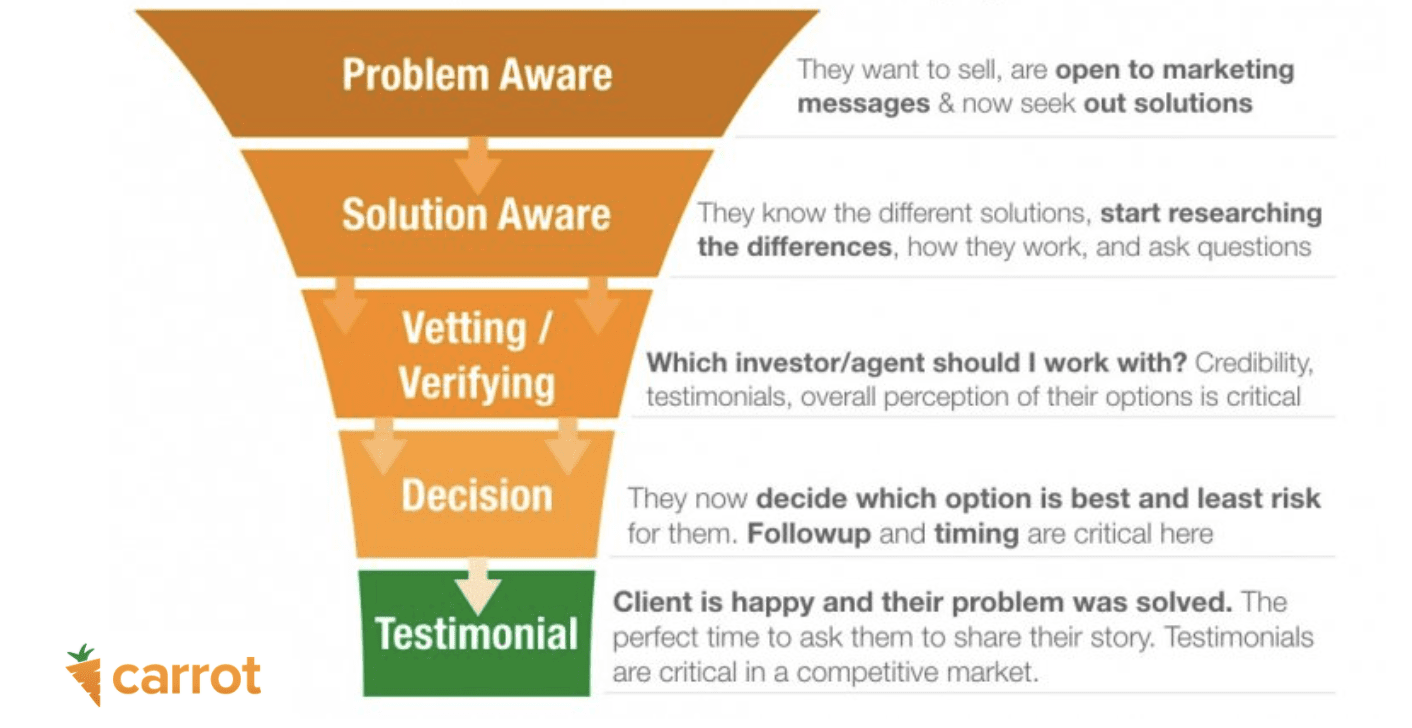
    How A House Seller Decides…

    The 5 stage process that all house sellers ponder as they sell their house. Does your marketing meet them at each stage and advance them to the next step… or does it leave them hanging?

    advanced real estate marketing funnel

    How do you make sure that you’re delivering the message that’s going to crack through all that marketing clutter out there? That delivers that message.

    It’s going to crack through that prospect so that they choose you versus the dozens of other competitors that you’re working around. How do you do that? Well, it’s by tapping into what’s already going on in your prospect’s brain.

    “Evergreen” Marketing

    One of the biggest real estate marketing resources that we oftentimes don’t use is the conversations that are going on in your prospect’s brain before they ever reach to you.

    This is “Evergreen” marketing approach helps control the conversation. The first thing I’d really encourage you to do is get to learn your prospect inside and out. Better than they know themselves.

    How do you do this?

    When you’re on the phone with your sellers or your buyers, ask them questions. “Hey, how did you get to my website? Where did you find out about me? Man, so why did you give me a call versus all those other direct mail … those postcards on there? What was it about me that stood out?”

    After you close those deals, ask them those questions and get those testimonials. But ask them the questions, not just so you get the testimonials, so you can get the data and information on how your prospects think, and I’m going to show you how to use it in your marketing.

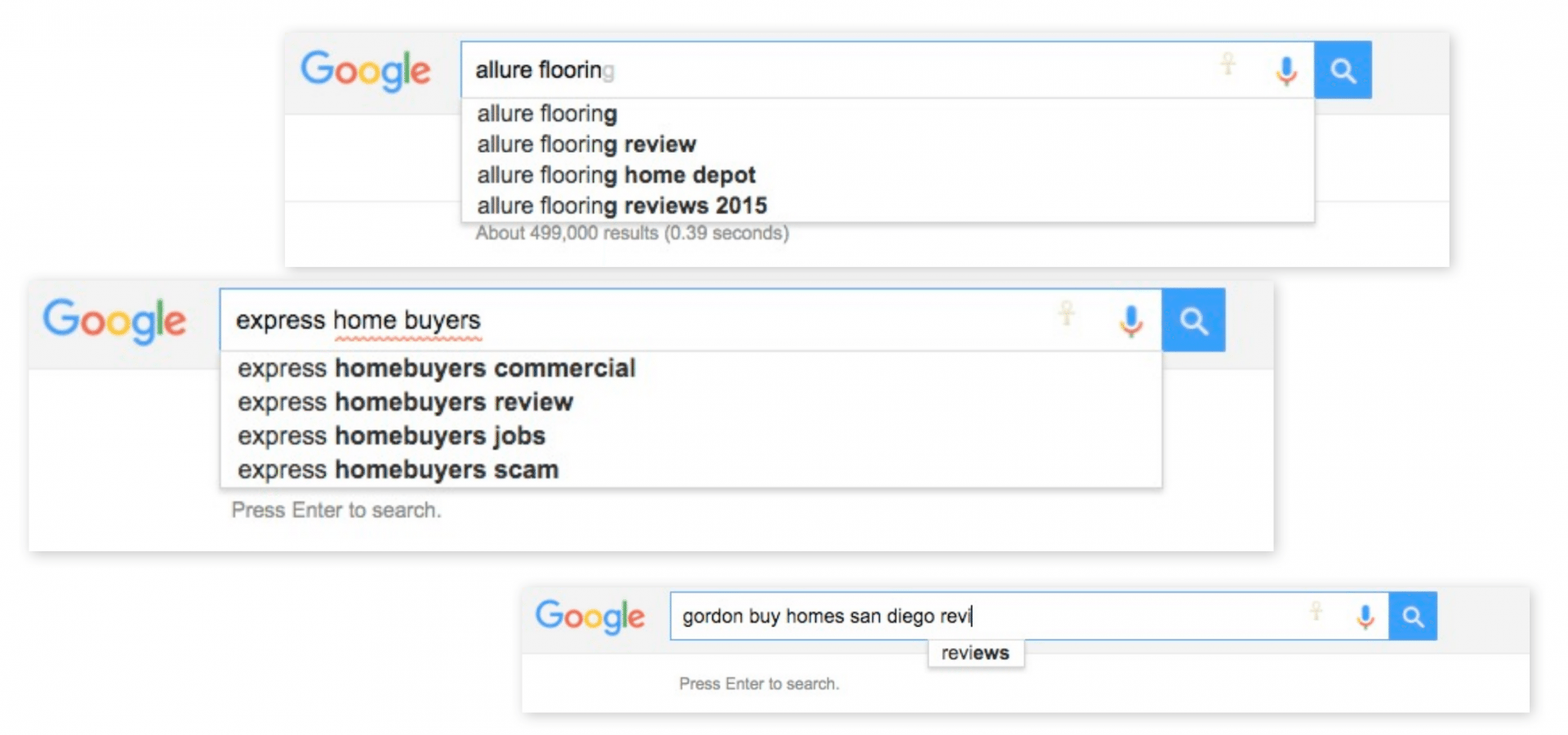
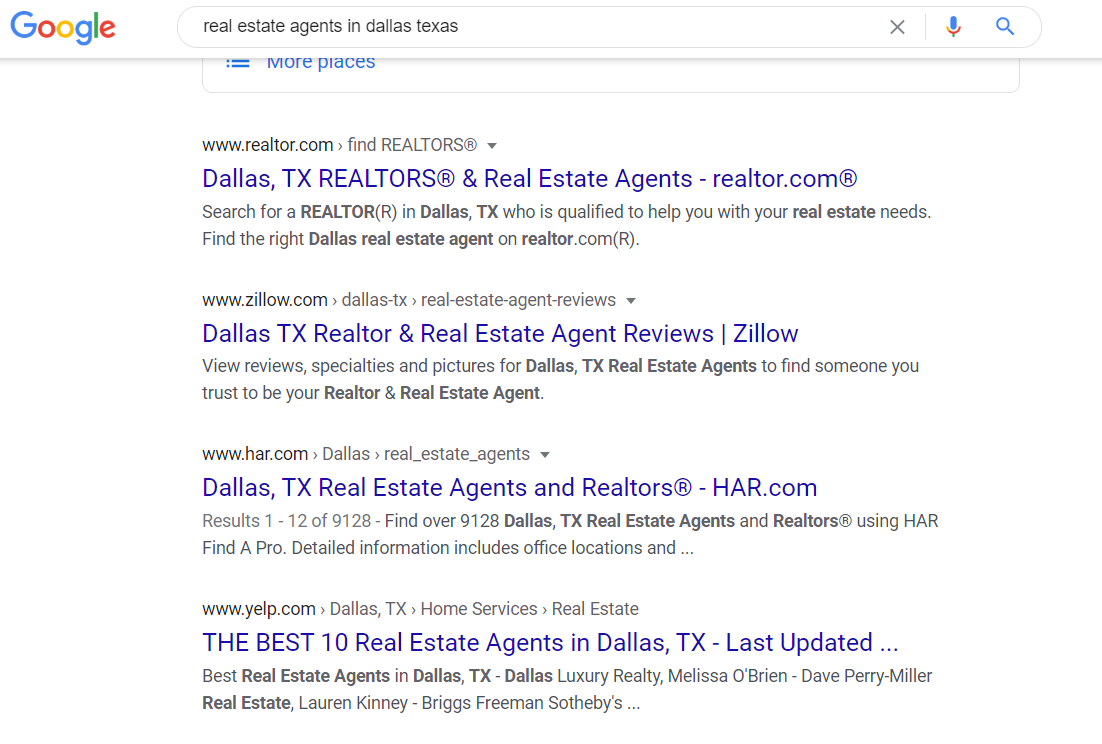
    Here Are A Few Examples Of Brands Or Companies When I Google Their Name…

    conversation marketing for brands

    Show Them You’re the Best Solution

    So, once again, you close the deal.

    “Hey, awesome. So, how did you find out about us? What was it about us versus the other agents or investors you were working with that kind of tipped you over the edge to have you work with us?”

    They’re going to say specific things, and those specific things are giving you a direct line into their brain and the way that they think. And now we can start to use those words, use those conversations, to connect with them better, to show them how you are the best solution.

    To make sure you’re crafting your marketing, so you’re the clear best solution. Not just the one that offered them the most money. If you do this right, you can offer them less money than your competition and you can still close the deals. All right. I’m going to show you how.

    Understand Your Prospect

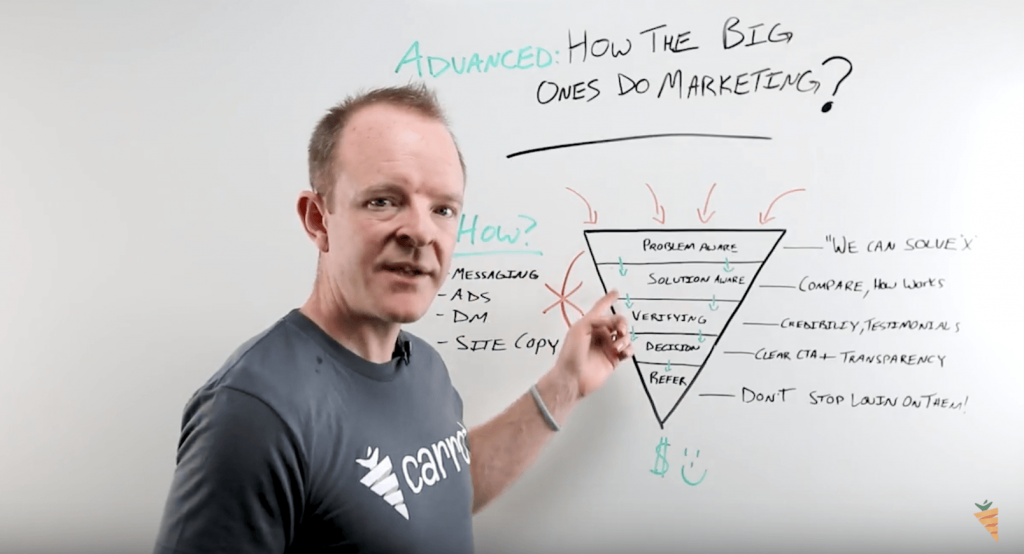
    How do the big boys do market … big boys and girls … do marketing in a big way? The first thing is, once again, you have to understand your prospect. You can’t do amazing marketing without understanding your prospects.

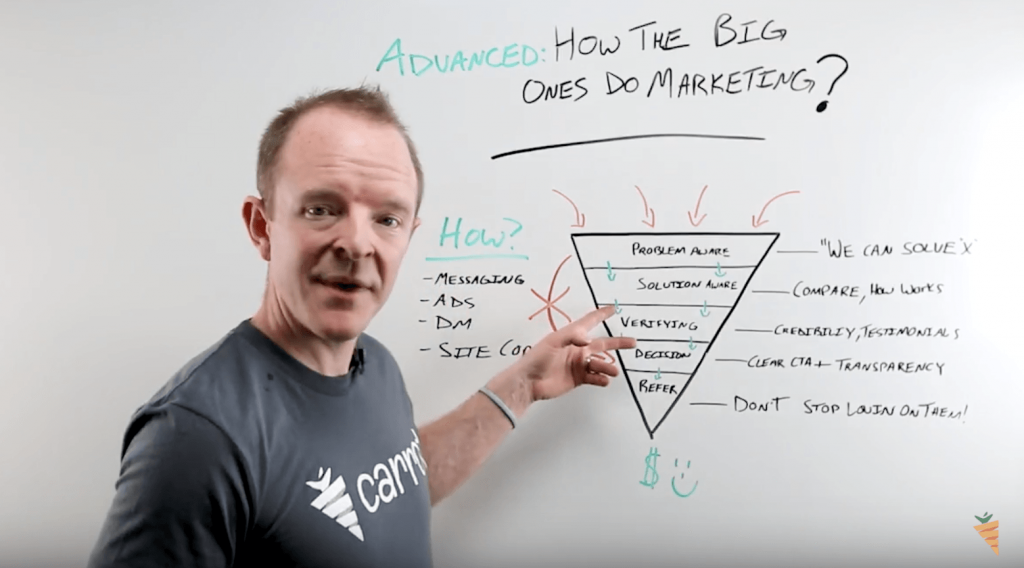
    Many real estate agents and investors do marketing only at this first level and second level. That’s it. Most investors are stuck in problem aware and solution aware, and then they say,

    “Hey, here’s how we’re going to be able to offer you a price for your house.”

    Or,

    “Here’s how you buy a property from us or rent a property from us.”

    But where the meat is, where so much leverage is right now that investors and agents aren’t focusing on is this stuff in the middle.

    It’s this stuff in the middle. It’s dragging them, pulling them, guiding them from problem aware to solution aware to verifying to making a decision and then referring out.

    And one thing that’s a big, big, big myth and a big, big, big issue with real estate … not as many agents. Agents get this. You guys get this part. But real estate investors don’t, in general. That you work the deal thinking it’s a one-off transaction. That you’re never going to work with that seller or buyer again, especially sellers.

    People are treating it this way.

    But if you do this right, your sellers are going to refer you over to other people that you can work. So, you’ve gotta do all this. This one deal can turn into two, three, four, five deals for you if you work it right.

    Your Strategy

    Here’s what we’re going to do. So, the first thing in problem aware is the very first stage that your sellers or buyers or anyone is going through before they ever even see your message. This is where they just inherited the house. This is where they’re going through that divorce. This is where they just need to sell the house.

    They’re moving.

    And whatever that situation is… their listing expired with an agent and they don’t want to relist it… they now have a problem, and they’re aware of that problem. Before that problem exists in their life, they’re not going to notice your bandit signs. They’re not going to see your direct mail pieces and think twice about them. They’re not making the searches on Google to find you.

    So, one key is knowing that they’re problem aware.

    • What are those problems they’re having?
    • How are they feeling?
    • What things are they searching?

    As soon as you know that, put those messages into your direct mail. Put those messages in your bandit signs on your websites. At this stage, they’re going to notice that bandit sign, and call you up.

    They’re going to see the direct mail and go, “Man, are these people going to be able to solve this problem.” So, that’s why the direct mail piece and your website copy and ads need to be direct to that point. “Hey, do you have this problem? Sweet, we can solve it.” That sounded like a Vanilla Ice song for a second.

    Real Estate Marketing Funnel: The Solution Aware Stage

    Real Estate Investing Marketing Funnel solution aware stage

    So, right here, then they’re solution aware. As soon as they see you’re advertising somewhere and your competitor’s advertising, now they know there are solutions out there to their problem.

    Now they know, “Okay, well, I can list this house. I don’t really know what that looks like. There are also these things called house buyers out there, or I can buy investment properties from these entities or there are places to rent-to-own.” And then they know that it exists.

    But, how do we then make sure that your solution is the one that stands out in their mind? Well, over here on your website, in your marketing, in your ads, things like that when you’re talking to them, at this point, they’re wanting to compare things. How does X’s service compare to Y’s service? How does your service compare to other real estate investors?

    That’s where you’ve gotta have your unique selling proposition. Check out our USP Whiteboard Video, and our USP CarrotCast.

    You’ve gotta have a clear, clear value on why you are different than the others, and also compare you as a real estate agent versus a for sale by owner. Or you as a real estate investor versus listing with an agent. Compare those with the content on your website and in your advertising.

    Build Credibility in Your Process

    Next, you need to build credibility in your process. Because people want the process to be transparent. They want to know going into it that they’re pretty clear how the process is going to go down and this is one of the biggest things.

    I want to challenge you guys as real estate agents and investors… for some reason, there’s something in the psyche of a real estate investor, a house flipper, and a wholesaler, that makes you believe that you cannot be completely transparent with the way you’re developing your offers.

    If that mindset stays in your brain over the long-term, you’re going to lose deals versus the investors who grasp that,

    “Hey, you know what? Our prospect really cares.”

    They really want to know how this works, and if I can add transparency to the process if I can gain trust and credibility … if I can show them exactly how I’m coming up with that offer, and not think that by doing that it’s going to put me at a disadvantage,” you’re going to win.

    How is Opendoor, a company that’s valued at over a billion dollars just in three to four years … how is Opendoor winning the game in the markets that they’re going after?

    It’s not because their marketing is that much better. It’s because they have a very clear value proposition and people know exactly how their offer is going to be calculated.

    Exactly.

    And then the process is transparent throughout the whole thing.

    Strengthening Your Position

    So, next what we need to do is if we’ve done the comparisons with content … we have ads that pop up on Facebook that say, “Selling a house to an investor versus an agent,” or an ad that says something to the effect of … Brad Chandler of Express Homebuyers, had a great ad that says, “Don’t work with those fly-by-night investors. Here’s why.”

    Then it serves up a testimonial that has a seller that talks about working with two of those fly-by-night investors that didn’t fulfill on their promise of their offer, and how Brad did. So, that’s comparing.

    That’s planting seeds of doubt in that prospect about the other people and strengthening your position.

    Real Estate Marketing Funnel: Vetting and Verifying

    Real Estate Investing Marketing Funnel Vetting and Verifying Stage

    Next, once they understand there are options out there and how they differ, now they’re going to go, “Man, so, there’s four options, or three options, or two that I really think are pretty good. Which ones should I work with?” So, they’re going to go in the vetting and verifying phase.

    They’re going to be Googling your company name. Your company name plus reviews.

    They’re going to be looking for Better Business Bureau. Not just that you have a BBB profile, but you have a positive review profile. You’ve got a dozen or two dozen reviews that are four out of five or five out of five.

    On the agent side, they’re going to be looking for credentials and work history.

    real estate agent website credibility

    This is where you start getting testimonials and video testimonials of your prospects and clients talking about the experience of working with you. Talking about your character. That you follow through and close your deals. That you fulfill the promises you make.

    That you don’t weasel out of your contracts because you can. And this part is huge, because if there are four or five options they’re looking at, and they Google you and they don’t find anything that gives them that warm and fuzzy, that they really want to work with you but they do with someone else, they’re going to win the deal.

    I have a question for you. Who has ever purchased a product or decided to not purchase a product, any product, because of one review that you saw? Just one. That happens all the time. You’re on Amazon and you’re looking at it, and there’s one review that’s like, “Ah … man. I’m not going to get it. Because if that person experienced it, there’s a chance that I might as well.”

    So, if we’re not thinking that same way in our businesses … that one review, that one testimonial, that one bit of credibility can completely tip the scales from someone working with you to someone working with someone else, then we’re kidding ourselves. So, in this phase in the competitive market, the vetting and verifying market, is big.

    How do you do that with your ads?

    using testimonials in your fb ads

    Make sure you’re putting great case studies and testimonials in your Facebook ads, in your Google ads. Make sure you’re putting great case studies and testimonials in your credibility kit when you’re meeting with your sellers or with your buyers.

    They need to know that you’re a great company to work with, and there needs to be overwhelming proof that you’re a legit person. You’re honest, trustworthy, and you will fulfill your promise. All right?

    Last right here, decision. How do you pull them to a decision? First of all, you’ve gotta have a really clear call to action. Say, “Here’s what you do next.” Present them a real offer. Follow up on that offer. Don’t assume that they’re going to contact you if that offer is good. Follow up, be courteous, but follow up.

    Timing is a big thing there.

    follow up with your motivated seller prospects

    Real Estate Marketing Funnel: Transparency

    Transparency, once again. Add as much transparency to the entire process as possible. Someone opts in on your website, don’t just kick them out a generic email and then just land on their doorstep in two doors.

    Send them an email or pick up the phone and say,

    “Drew is actually going to be at your door at four o’clock tomorrow. Drew’s been with us for two years, or five years.”

    Or,

    “It’s actually going to be me. I’m going to be pulling up in my truck that has XYZ on it, so expect that. And here’s a few things I’m going to be walking through when we get there, and then we kinda talk about what we find and we can talk about the value of the home, and kinda work out a fair offer there for you. Does that work?”

    So, then they know exactly how the process is going to work, and then you can walk them through it too. “Once we make the offer, here’s how that works. We can close within seven days, or whatever that is.”

    Be crazy transparent during this process because the more transparent you can be at their point of decision, the more that they’re going to want to work with you and it adds credibility to that vetting and verifying phase.

    Sharing the Love

    Last, don’t stop loving on them. Once again, so many real estate investors … the agents are better … but so many real estate investors are not in the relationship business when you should be. You’re in the transaction business.

    “I closed 14 deals this month.” or, “I closed two deals this month.”

    How many of those deals did you send a thank you card 30 days after you closed it? Probably none of them.

    How many of those deals did you give them a care package at the closing table? Probably very few. How many of those deals did you follow up six months later and see how they’re doing after the move or after the sale, and find out if there’s anything else you can help them with?

    Or if there are any other people that they know that you can help? Probably very few of you, because you’re thinking so short term.

    And short term is not a fun way to build a business, and it’s not a profitable way to build a business over the long term. And you’re not going to build a great business. You’re probably going to be out of business within two to three years if that’s all that you’re doing. So, make sure you’re building all this up so referrals happen, and start loving on them.

    Business is way more fun when you love on your clients and client’s love on you.

    I’ll Finish This Advanced Real Estate Marketing Funnel Post With This…

    I’m going to finish it with this. I’ve been to masterminds with the largest house flippers and wholesalers in the country. I asked them this question once … there were 50 people in the room … I said, “Raise your hands, anyone in this room who would love to have a beer, have a drink with your clients?” 2 people raised their hand out of 50 people.

    And I’m saying this because this isn’t about marketing. This is about building a business you love. About building a business you love, and you can only do that if you love your clients. And loving on your clients does all this way better.

    It’s going to make your marketing really powerful. That’s how we’ve grown so much. Thousands of members because we love on our clients.

    We’ve realized that you are human beings that have real needs, real desires, real hopes, real fears, and we’re going to help you through that stuff.

    Do the same thing for your customers.

    For more resources and real estate marketing materials, click on the link!

    Watch The Video of This Post…

    Real Estate Investor Marketing | Advanced Marketing Funnel | How Big Ones Do It
  • 75 Best Real Estate Blogs You Need to Bookmark

    75 Best Real Estate Blogs You Need to Bookmark

    75 Best Real Estate Blogs You Need to Bookmark in 2024

    There are a lot of real estate blogs out there on the internet. It’s easy to get lost. To help, we compiled this list of 75 of the best real estate blogs you should pay attention to.

    Of course, you don’t have to pay attention to all of them. Pick and choose ones that catch your eye, subscribe, and pay attention to the advice they’re sharing.

    We’ve broken this list down into 3 different categories…

    And as a little bonus, we’ve included a list of 101 topic ideas for your blog!

    So, without further ado, let’s dive right in!

    Best Real Estate Blogs For Investors

    If you’re a real estate investor — wholesaler, flipper, or buy-and-hold-er — here are the blogs we recommend keeping an eye on!

    1. Carrot Blog

    We know it’s a little tacky to recommend our blog in this list, but we do try our best to provide investors and agents with valuable and practical advice. Primarily, we focus on topics around real estate marketing — how to find deals through SEO and advertising. But one of our most shared articles was a simple list of high-volume real estate investors who regularly share their secrets on social media. Check it out below!

    Must Read Posts

    2. BiggerPockets

    When it comes to real estate investing, BiggerPockets is the place to learn what you need to know — it’s for beginners and experts. Many of our most successful members — people who own 7-figure real estate investing businesses — started their education on the BiggerPockets blog. They cover pretty much everything… if it’s an investing-related question, it’s probably on their blog.

    Must Read Posts

    3. Fundrise

    Fundrise is one of the most popular REITs around right now. And their blog offers tons of helpful information, primarily for new investors. They talk about the basics of real estate investing, the differences between REITs and rental properties, how to understand cap rates, and tons more.

    Must Read Posts

    4. Tools 4 REI

    This is a relatively new blog, but it’s great. They provide deep-dive reviews on tools and software in the real estate investing space (even Carrot!). Before you sign up for your next CRM, data manager, or driving-for-dollar software, we highly recommend you check out what they have to say about it.

    Must Read Posts

    5. FortuneBuilders

    FortuneBuilders is a website dedicated entirely to teaching people how to become successful real estate investors. Some of their most popular content discusses the importance of curb appeal, how to start and grow a real estate portfolio correctly, and profitable home-improvement projects. Both are just a few examples.

    Must Read Posts

    6. REALTY MOGUL

    REALTY MOGUL is a popular REIT that focuses on commercial real estate investing. Their blog teaches new investors how to build passive income, manage rentals, and lots more. They also share much practical advice about reviewing quarterly reports and “The Definition of Like-Kind Property in a 1031 Exchange”.

    Must Read Posts

    6. Landlordology

    Rather than just being a blog about real estate investing, Landlordology takes us one niche deeper. They teach landlords how to make the most of their property investments. Some of their most popular blog articles talk about the top 10 amenities that renters can’t resist, how to maximize rental income, and how to create a fair and reasonable lease agreement.

    Must Read Posts

    7. InvestFourMore

    Mark Ferguson is a big author in the real estate world. He’s written books about how to build a rental property empire, fix and flip your way to financial freedom, and even negotiate real estate deals (plus lots more). His blog over at InvestfourMore offers great advice for free. He has sections of his blog dedicated to BRRR, wholesaling, finding deals, house hacking, financing, tax advantages, and even advice for agents.

    Must Read Posts

    8. Real Estate Skills

    Real Estate Skills offers educational blog articles for aspiring & active real estate investors. Their blog covers various topics, such as driving for dollars, how to fix and flip, contracts, hard money lending, and much more!

    Must Read Posts

    9. REtipster

    Retipster is a website that offers, according to its homepage, “real-world guidance for real estate investors. Their blog will show you how to write killer ads for your investing business, where to post your real estate listings and lots more. This is a site worth paying attention to.

    Must Read Posts

    10. Flipping Junkie

    Danny Johnson fix-and-flipped his way to financial freedom. And on his blog, Flipping Junkie, he documents his journey and shows readers how to do the same. Some of his most popular articles discuss how to dominate a wholesaling market, 27 tips for a successful house flip, why many wholesalers aren’t appreciated, and more.

    Must Read Posts

    11. The College Investor

    The College Investor is a large blog that offers advice to college students and millennials on how to get out of debt and build passive income. Their most popular content focuses on

    Must Read Posts

    12. CleverInvestor

    CleverInvestor is a content-heavy website that helps people “crush real estate investing.” Some of their content focuses on practical investing advice. Still, a good chunk of it discusses how to muster a successful mindset — from getting rid of perfectionism to learning to be creative and becoming a better leader.

    Must Read Posts

    13. The Real Estate Guys

    Robert Helms and Russell Gray have shared real estate investing advice since 1997. Their podcast, The Real Estate Guys Radio Show, is one of the most downloaded podcasts on iTunes under the investing category. Their blog is great, too. They talk about how investors can keep afloat during disasters, the differences between Bitcoin and real estate, and lots more. Their advice is practical, real-world, and seasoned with experience.

    Must Read Posts

    14. RealWealth

    RealWealth is a large website with tons of helpful content. Their blog covers topics ranging from how to grow a real estate investing business during COVID-19 to financing options, bookkeeping, and property management. They also host webinars, live events, tours, and strategy sessions. If you’re a real estate investor — or an aspiring one — RealWealth can help.

    Must Read Posts

    15. Ryan Dossey

    Ryan Dossey is a young and successful real estate investor. He owns more than 145 properties at a valuation of $8.8 million. He’s teaching people how he did it through his blog and YouTube channel. He even has a free e-book showing how he added 150 units and $9 million worth of assets to his portfolio using the BRRRR method. Go check it out!

    Must Read Posts

    16. Just Ask Ben Why

    Ben Leybovich found massive success as a real estate investor after he and his family moved to the U.S. from Russia. He’s been featured on Grant Cardone’s podcast, BiggerPockets, and Huffington Post. His advice is honest, practical, and easy to implement.

    Must Read Posts

    17. Joe Crump

    Joe Crump has been an active real estate investor since 1986. His blog teaches people how to flip properties, build portfolios, and systematize their business. That last point is one of his strongest, and we enjoy his content, which discusses the processes and tools for automating an investing business.

    Must Read Posts

    18. Call Porter

    Call Porter is a service dedicated entirely to answering the phone for real estate investors — primarily to speak with motivated sellers. Their blog provides lots of free advice about how to grow your investing business to support your lifestyle, not just financially but also time-wise. Some of their most popular posts talk about how to build a long-distance investing business and what successful investors do differently than everyone else.

    Must Read Posts

    19. 1-2-3 Flip

    1-2-3 Flip is a site that provides real estate investors with tons of free value. More specifically, they focus on helping aspiring house flippers to start living the fix-and-flip financial dream. Their blog primarily provides real-time updates on their investing journey, with no shortage of practical lessons for the newbie investor. But they have tons of other resources on their site besides the blog. Go explore!

    Must Read Posts

    20. The Broker List

    The Broker List is a website geared toward commercial real estate investors. Their blog explains how net operating income (NOI works, different reasons for hiring a commercial real estate professional, and even content creation tips. If you operate in commercial real estate investing, this blog is where you’ll want to spend a little time.

    Must Read Posts

    21. REItips

    REItips is a site that offers exactly what it sounds like: real estate investing tips! Their content has a unique, slightly playful tone, but once you get into it, there’s a lot of meat on the bones. Some of REItips most popular articles talk about how to quickly find cash buyers and how to find money lenders to fund your next deal.

    Must Read Posts

    22. Real Estate In Your Twenties

    Brandon Turner became a successful real estate investor in his twenties, which totally changed his life. His blog aims to educate young people about how to start investing in real estate, build financial freedom, and craft an empowering mindset. He tells many stories from his own experiences, which makes his blog all the more engaging.

    Must Read Posts

    23. Mobile Home Investing

    Mobile Home Investing is exactly what it sounds like. This site helps people who want to build a business around investing in mobile homes. The advantage of this method is that it’s usually a lot cheaper than investing in full-sized homes (although you sometimes have to sell them to a cash buyer). Some of this site’s most popular articles talk about how to buy mobile homes when the land is included, how to navigate COVID-19, and even how to deal with the effect of freezing weather on your properties.

    Must Read Posts

    24. BawldGuy Investing

    BawldGuy Investing is a great site for learning about creating retirement income, notes, and cash flow. The website says: “At BawldGuy Investing, we’re not about hoarding knowledge for ourselves. We want you to be as well-informed as you want to be about the real estate investing world. Plus, we love sharing our favorite tips and best practices that we’ve gathered from decades of experience in the financial industry.” Some of their most popular articles discuss note income, debt elimination, and creating income streams for retirement.

    Must Read Posts

    25. Black Belt Investors

    This site was founded and is managed by Sensei Gilliland, a title he intentionally selected to illustrate that discipline of the mind is critical for successful real estate investing. The site’s most popular articles discuss how to profit from real estate, thrive in the new economy, and turn every lead into a deal. Those are big promises, but Sensei Gilliland’s advice is undeniably helpful.

    Must Read Posts

    Best Real Estate Blogs For Agents

    If you’re a real estate agent trying to grow your business, check the following blogs.

    1. Carrot Blog

    We know it’s a little tacky to recommend our blog in this list, but we do try our best to provide investors and agents with valuable and practical advice. Primarily, we focus on topics around real estate marketing — how to find deals through SEO and advertising. But one of our most shared articles was a simple list of high-volume real estate investors who regularly share their secrets on social media. Check it out below!

    Must Read Posts

    2. Forbes Real Estate

    Forbes covers just about every business and entrepreneurship topic under the sun. Real estate is no exception. Forbes has an entire section of its blog dedicated to reporting on critical industry news, nationwide real estate market shifts, and pertinent advice from real experts about building a business in different types of markets.

    Must Read Posts

    3. McKissock

    McKissock is a website dedicated entirely to real estate learning. They teach people how to get their real estate license, inspect homes professionally, survey land, engineer properties, and even manage banking loans and licenses. Their blog has a lot of content that offers free value for real estate agents. See some examples below!

    Must Read Posts

    4. Housing Wire

    Housing Wire is a massive online publication that provides real estate agents and investors with updates and advice on the current real estate market. They are particularly adept at providing their readers with real-time relevant news, such as how Coronavirus will affect FHA lending, why specific housing markets favor buyers, and how Bank of America now allows borrowers to pause their mortgage payments.

    Must Read Posts

    5. Inman

    Inman is one of the leading voices regarding real estate market updates, advice, and education. And for a good reason. They consistently provide valuable content for natural estate agents and investors alike. Their most popular content tends to revolve around recent shifts in the real estate market.

    Must Read Posts

    6. Redfin

    Redfin is a massive online website that offers advice to homebuyers, home sellers, and agents. They provide real-time market updates and tips on buying or selling a home for the best deal. Agents, investors, homebuyers, and sellers will find value in the Redfin blog. Check out some of their most popular articles below!

    Must Read Posts

    7. The New York Times | Real Estate

    The New York Times has an entire website section dedicated to real estate news, advice, and stories. Much of their content updates thriving or struggling markets in and out of the U.S. They also tell the stories of agents and investors who’ve found massive success in a particular area or with a particular type of transaction. It’s worth subscribing so you get notified when they publish new content.

    Must Read Posts

    8. Realest Blog

    We love the Realest Blog because it offers practical advice to real estate agents and investors about how to run their businesses, make profitable investments, negotiate, optimize home value, and more. Their advice is helpful, to the point, and clearly provided by people who know what they’re talking about.

    Must Read Posts

    9. The Close

    The Close is another gem that every real estate agent should check out. Some of their most popular articles will help you generate more leads with your open houses, give you ideas for what content to share on social media, what hashtags to use on Instagram and Twitter, and tons more. The Close’s content is wicked practical, and every article goes above and beyond to give the reader real value. You don’t want to miss this one.

    Must Read Posts

    10. Jason Fox

    Jason Fox has been serving in the real estate industry for 15 years. He’s even helped hundreds of real estate agents and investors personally with their online marketing. And he shares his expertise on his blog for free. Mostly, his blog talks about how to market your business as a real estate agent — how to name your business, how to use SEO for lead-gen, and how to create a logo, for example). If you want some help with your online marketing, this blog is a great place to browse.

    Must Read Posts

    11. Cornerstone Home Lending Blog

    Cornerstone Home Lending’s blog is an excellent resource for real estate agents. They talk about the benefits of buying rather than renting, how to win bidding wars in a hot market, and how to make the most of today’s market. Their content is always practical and concise. Check out some of their most popular articles below.

    Must Read Posts

    12. Sotheby’s International Realty

    Sotheby’s International Realty blog can undoubtedly offer some inspiration and roundabout advice for real estate agents who focus on helping clients sell and buy luxury homes. Primarily, this blog offers stories and examples of luxury homes that are currently on the market or have recently sold. It’s a great place to stay updated about what’s happening in the luxury real estate market and get ideas about how to grow your business.

    Must Read Posts

    13. Geek Estate Blog

    The Geek Estate Blog is a simple low-key website that offers a fresh perspective on the current real estate market, new and upcoming tools, and and how popular culture is impacting real estate agents and investors. They answer common questions that agents and investors face: “Should landlords include internet service as an amenity?” — and they offer advice about how to navigate different types of markets.

    Must Read Posts

    14. Realty Biz News

    Realty Biz News is a real estate news-focused website that offers consistent value to agents and investors who want to keep pace with the times. For example, they’ve recently written about how Amazon wants to work with property managers, how to pick the best lighting control system for a smart home, and why renters prefer virtual tours. Check out their most popular articles below!

    Must Read Posts

    15. Keeping Current Matters

    Keeping Current Matters is a real estate blog that discusses precisely what its title suggests: current events and how they impact the real estate market. Some of their most recent articles discuss how low inventory may impact the housing market this coming fall, for instance, and why the surging real estate market continues to climb. Check out some of their most popular articles below!

    Must Read Posts

    16. Notorious Rob

    Experienced real estate agents and veterans will find particular value in Notorious Rob’s blog. On it, Rob Hahn, the Managing Partner of 7DS Associates, shares his unique perspective on current events and how he expects they’ll impact the real estate market. He also shares advice about growing in all types of markets. And the best part is, you know, the advice comes from someone who’s done that. Check out his most popular posts below!

    Must Read Posts

    17. Commercial Property Executive

    Commercial Property Executive is a significant online media source for real estate investors and agents. They cover current events impacting the worldwide and nationwide economy, tell the stories of real estate professionals doing remarkable things, and provide advice on how agents and investors can navigate growing a business in uncertain times. Check out their most popular articles below!

    Must Read Posts

    18. The Spark

    The Spark is the name of AgentFire’s blog, where they discuss everything related to real estate marketing. That includes Instagram marketing, resources for running Facebook ads, top online real estate schools, brand positioning, and lots more. Each of their blog posts offers honest advice about a very specific topic. Check out some of their top content below!

    Must Read Posts

    19. The Real Deal

    The Real Deal is a significant and often-updated publication that discusses the current events surrounding real estate in New York. Much of their content revolves around different celebrity investments (Trump and Kushner, for instance) or drama, but — especially if you live in New York — it can be a helpful resource for keeping your fingers on the pulse of the real estate market.

    Must Read Posts

    20. Market Watch: Real Estate

    The real estate section on Market Watch is flooded with updates on the economy, big-business transactions, and wise investments. They’re discussing how buyers and sellers deal with record-low mortgage rates and how other global events impact the real estate market. This is an excellent resource for staying updated on what’s going on in the nationwide economy.

    Must Read Posts

    21. Homelight

    Homelight is a massive online website that helps buyers, sellers, agents, and investors. You can check out some of their most popular articles below. As for resources that help real estate agents, recent Homelight content lists tools for top agents offers advice on pre-qualifying sellers, and shows agents how to deal with buyer and seller objections. We believe Homelight has one of the best real estate blogs on the internet.

    Must Read Posts

    22. The World Property Journal

    The World Property Journal is a large media outlet that publishes world, residential, commercial, and vacation news. In other words, they discuss everything from how to do good real estate deals and grow a business to the current state of the U.S. economy. This is an excellent resource for staying updated on real estate in the U.S., your state, and even overseas.

    Must Read Posts

    23. RISMedia

    RISMedia is an online publication that offers a fresh perspective on tips and tricks for real estate agents, buyers, sellers, and investors. Their most recent article, for example, discusses acting advice that can help sell homes. Their content is fresh, practical, and entertaining all at the same time. Check out some of the best articles below!

    Must Read Posts

    24. Miller Samuel Inc.

    There’s a big difference between a real estate blog written by a novice and one written by a true expert and veteran. The Miller Samuel Inc. blog falls into the latter category. With content that dives into more detail about real estate than any other blog on the internet, this is a true gem and one we highly recommend subscribing to. Miller Samuel Inc. talks about the current state of the nation’s biggest markets, the agent and investor mindset, and how to build a successful real estate business. Check out some of their most popular articles below!

    Must Read Posts

    25. Eye On Housing

    Eye On Housing is arguably one of the best places for real estate agents to get nationwide real estate data. They primarily publish original data and reports about topics like the average amount of time it takes to build a single-family home, refinancing gains, the percentage of homes that are concrete framed, and tons more. While it might not be the most exciting content in the world, it can be helpful when trying to get an idea of the bigger picture. Check out some of their most popular articles below!

    Must Read Posts

    Best Real Estate Lifestyle Blogs

    Interested in learning more about the lifestyle of building a successful real estate business? Want to change your mindset? Want to build better habits? Want to be more grateful? These blogs can help!

    1. Afford Anything

    On Afford Anything, Paula Plant shares her real estate investing journey, offering her opinion and expertise on the investor mindset, the math behind the madness, and specific controversial topics (such as “Renting is Throwing Money Away… Right?). She specifically focuses on teaching people how to use real estate investing to escape the 9-5 grind that all entrepreneurs fear.

    Must Read Posts

    2. Lighter Side of Real Estate

    The Lighter Side of Real Estate is exactly what it sounds like; it’s a media outlet that’s focused chiefly on producing entertaining content for real estate professionals as well as homeowners, buyers, and sellers. But their content is pretty entertaining. If nothing else, it’s a great place to get ideas for what to post on your blog or social media profiles. Check out some of their most popular articles below!

    Must Read Posts

    3. The Penny Hoarder

    The Penny Hoarder site is dedicated to helping people make more and save more. Not only do they discuss easy and simple ways for people to improve their financial situation, but they also have quite a few articles that discuss real estate investing (since it’s one of the best ways to make money!). And the best part is that their content is super practical. We recommend subscribing to this site so you get updated when they publish new content. Check out some of their most popular articles below!

    Must Read Posts

    4. Stefan Aarnio

    Stefan Aarnio is regarded as one of the nation’s best, most successful real estate investors. And his website is dedicated to helping other investors build successful businesses. Stefan’s blog offers practical real estate investing advice and mindset-shifting content. Check out some of his most popular articles below!

    Must Read Posts

    5. Fox Realty Group

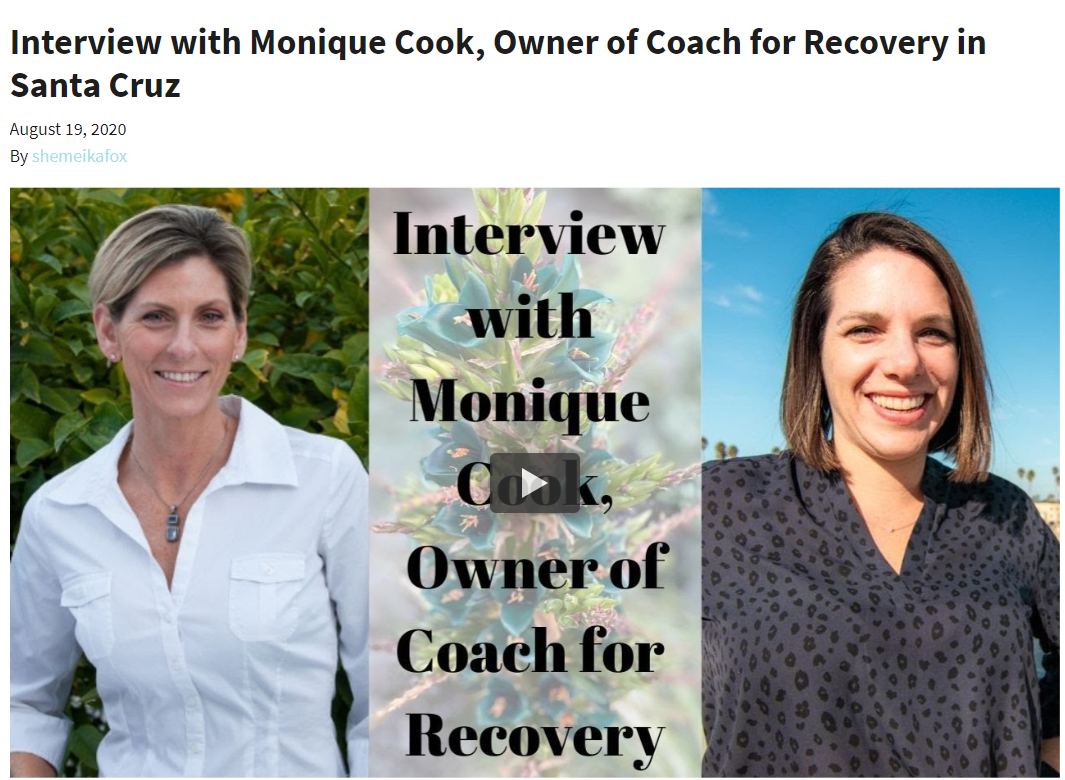
    Fox Realty is an agency that helps people buy and sell homes in Santa Cruz, California. Their blog offers real estate advice to buyers, sellers, agents, and investors. Their blog is unique in how they interview other business owners in the Santa Cruz area. Check out some of their most popular articles below!

    Must Read Posts

    6. Tom Ferry

    Tom Ferry is one of the leading voices in the real estate industry. He consistently posts blog content on topics such as… how to prepare for an economic downturn, habits of successful agents, and even lessons he learned after turning 50. His blog offers a wealth of knowledge that agents and investors should consider. Check out some of his most popular articles below!

    Must Read Posts

    7. Katie Lance

    Katie Lance is a speaker, writer, and coach who’s been in the marketing industry for over 20 years. But to narrow down, she now primarily offers her expertise to real estate agents and investors trying to improve their social media marketing game. And that’s exactly what she talks about on her blog. Check out some of her most popular articles below!

    Must Read Posts

    8. YesMasters

    Kevin Ward is the founder of YesMasters, a self-proclaimed “NO B.S. REAL ESTATE SUCCESS COACH.” His blog lives up to that promise. He offers advice on how long people should practice scripts before prospecting, what you need to succeed in real estate, how to make money in a market crash, and lots more. Check out some of his most popular articles below!

    Must Read Posts

    9. Grant Cardone

    Grant Cardone is a famous real estate investor, speaker, and coach. He teaches people how to “10x” their income and their life. He’s trying to help people live more exciting and remarkable lives. His blog is dedicated to discussing topics such as… how to stay positive in negative times, the real value of money, how to create a healthy company culture and lots more. We recommend following his blog!

    Must Read Posts

    10. Dottie Herman

    Dottie Herman is a well-respected real estate professional, leader, and coach. On her blog, she’s notorious for discussing lifestyle topics such as how kindness is contagious, why gratitude is powerful, and how to create lasting momentum. If you need some positive vibes mixed with practical real estate advice, then look at Dottie Herman’s blog. You can check out some of her most popular articles below!

    Must Read Posts

    11. Realtor Mag

    The Realtor Magazine covers real estate advice, trends, news, tips, and various related content.

    Must Read Posts

    12. Fancy Pants Homes

    Fancy Pants Homes is a large real estate blog that primarily focuses on displaying and discussing celebrity homes, providing real estate news, and offering tips for homeowners, buyers, and sellers. It has the vibe of a real estate lifestyle blog… as its most popular content revolves around frivolous topics (like the state of Edward Cullen’s house). Still, Fancy Pants Homes is undoubtedly a place where investors and agents can get inspiration, learn new things about the real estate market, and maybe even have a good laugh.

    Must Read Posts

    13. Funky Junk Interiors

    Funky Junk Interiors is a unique blog with a clear mission: teaching people how to furnish, landscape, and fix their homes using nothing but salvaged junk. And believe me… it’s incredible the things that Donna (the owner of the blog) is building with other people’s trash. If you want creative ideas for decorating or furnishing your home… or even if you just want to learn how to edge a flowerbed or build a walkway from scratch, you’ve got to check out this blog!

    Must Read Posts

    14. RentCafe

    RentCafe is a blog that helps tenants with all sorts of problems — from keeping your dog from barking to finding an apartment during the pandemic. Some of their most popular articles talk about apartment building trends, top financial centers, and how world events impact the housing market. Check out those articles below!

    Must Read Posts

    15. Curbed

    Curbed is a massive media site covering business, news, finances, food, and much more. But they also have a real estate section. They discuss astounding home renovations, investment news, international real estate updates, and more. You can see some of their most popular articles below.

    Must Read Posts

    16. AppFolio

    Unlike most blogs we’ve discussed, AppFolio creates content for property managers. They talk about insightful topics such as apartment living in 2080, what investors should expect from Gen Z, and educational content such as how AI and Covid-19 impact property management. If you’re a property manager (or you have property managers), this blog is worth keeping tabs on! Check out some of their most popular content below.

    Must Read Posts

    17. Lab Coat Agents

    Lab Coat Agents is a site “exploring the science of real estate.” But the best part is that they share that science with their readers. Primarily, they create content geared toward real estate agents. Their blog posts teach agents things such as creating a sense of urgency in the listing appointment, creating dynamic content on Instagram (for lead-gen), and getting 5-10 listings on a limited budget. Check out some of those posts for yourself below!

    Must Read Posts

    18. Inhabit

    Inhabit is a website that covers real estate news from the most lucrative markets in the country. They report news from South Florida, New York City, Scottsdale, San Diego, and more. This is a great blog if you’re operating in one of those markets. Check out some of their most popular articles below!

    Must Read Posts

    19. BombBomb

    BombBomb offers software that allows businesses (especially real estate businesses) to communicate with their leads and clients. In their own words, they are “building relationships through video to create more opportunities in email, text, and social media.” Some of the most popular articles on their blog talk about choosing video equipment for your real estate business, Facebook and Instagram real estate social media influencers, and open house ideas for growing your business. Check them out below!

    Must Read Posts

    20. C4D Crew

    The C4D Crew is a site passionate about helping people purchase homes in non-traditional ways. They specifically help people in Minessota, but much of the advice on their blog applies to real estate investors and agents in other markets. Some of their most popular articles discuss home maintenance tips, curb appeal upgrades, and how a landlord can take care of pipes and plumbing. Check them out below!

    Must Read Posts

    21. Lighter Side of Real Estate

    The Lighter Side of Real Estate blog discusses deceptively helpful topics conversationally and excitingly. Sprinkled between listicles with funny memes are practical articles about how to stage a home and install a shower. That’s what makes this blog great. All at once, it’s entertaining, fun, engaging, and genuinely helpful. check out some of their most popular articles below!

    Must Read Posts

    22. Ideal REI

    Ideal REI is a site for real estate investors that offers how-to content on the management of out-of-state rentals, raising cash for property investments, improving the value of a rental property, and more. They also offer a free 5-step system for investing in real estate. Supposedly, it’s the same system that the owner of Ideal REI used to acquire 480 units. Check out some of their most popular articles below!

    Must Read Posts

    23. BoomTown!

    BoomTown! is a site with tons of resources for real estate agents. They’ll teach you how to promote open houses on Facebook and Instagram, use Google to drive traffic to your website, and much more. Check out their blog if you’re a real estate agent trying to generate leads through social media!

    Must Read Posts

    24. REAL Trends

    Here’s how REAL Trends describes itself: “We are a privately-held publishing, consulting, and communications company based in Castle Rock, Colorado. Residential real estate leaders look to us for timely and trusted information and analysis through our monthly newsletter, news updates, conferences, and publications.”

    More specifically, the REAL Trends blog talks about how to negotiate property prices, find fixer-uppers, and create a nature-friendly home design. Their best content reports new data and interesting research about buyer and seller tendencies. Check out some of their most popular content below!

    Must Read Posts

    Conclusion

    So which blogs are you going to follow?

    There is a ton of advice about how to grow your real estate business, whether you’re an investor or a wholesaler.

    But all of that information can quickly get overwhelming.

    We recommend choosing a couple of different experts to pay attention to and follow them religiously.

    Subscribe to their email list, put their advice into action, and even consider buying their educational products.

    That way, you’re not getting mixed signals from different places.

    Well, whatever blogs you follow, one thing’s for sure: you’ll never regret learning.

    And we hope this guide has given you plenty of real estate blogs to learn from. For more resources and real estate marketing materials, click on the link!

  • 5 Signs You’re Likely To Fail As A Real Estate Investor And Entrepreneur

    5 Signs You’re Likely To Fail As A Real Estate Investor And Entrepreneur

    Let me start with a hard question: “Are you a real real estate investor or a fake?”

    Wait. Don’t answer that. The truth is… time will tell.

    Unfortunately, time — as it relates to real estate investing — is pretty harsh. Most real estate investors get chewed up and spit out before they even know what hit ‘em. Upwards of 87% according to some estimates.

    But it’s not just real estate wholesalers and flippers.

    It’s been published that 96% of businesses go out of business within the first 10 years, and over half fold up their tent by the end of the first year.

    But that number is even high for real estate wholesalers and flippers…

    … because of the low barrier of entry to get into business. It requires hardly any capital to get rolling… and you can read a book today, register a business tomorrow, and be a “flipper” or “wholesaler” by the end of the week… which is AWESOME. Still, it also makes it easy for many people who haven’t fully adopted the mindset and skill-set needed to be successful in running a business.

    So, wouldn’t it be nice if you could diagnose your real estate investor’s “realness” — your likelihood of success — before getting clobbered?

    Wouldn’t it be nice if someone told you the brutal truth about exactly why many real estate investors fail?

    Well, “nice” might not be the best word.

    After all, the brutal truth is rarely “nice.” But, profitable, career-saving, and life-changing? Absolutely!

    In my 10 years working with real estate investors, I’ve seen thousands of real estate investors come and go. And the deepest irony — the cold, hard, brutal truth — is that it all comes down to five things those who fail tend to ignore (and those who succeed master). 

    The good news is you can overcome these common killers by having your eyes wide open to them and digging into the concrete solutions and resources I’ve included throughout.

    1. You’re Following Emotion vs. Knowing Your Numbers

    Before we dive in, you NEED this tool… Carrot ROI Calculator.

    Investors who fail tend to open up their wallets based on emotional decisions vs. actually nailing their numbers and trusting the numbers.

    When emotion takes over you tend to stop investing in marketing before it has a chance to succeed… you tend to make offers based on your “gut” vs. a tried and true formula… and you tend to bounce around from one thing to another in search of that magic bullet like a pinball machine.

    One way people constantly get caught up in the emotions vs. the numbers is in how much money you invest in your business.

    How much money do you invest in a marketing strategy?

    How much money do you invest in a property?

    How much money do you invest in your education?

    As soon as emotion creeps into the equation and a mathematical formula stops being used… you’re on the fast track to losing your butt (and not knowing why).

    As a real-world example, let’s say two people are doing PPC marketing. 

    Investor #1: Likely To Fail…

    Investor #1 started with their budget rather than knowing the numbers. They have set aside $2,000 for PPC marketing for motivated house sellers. Plenty to turn a profit, right?

    They start their PPC campaign and quickly find out that the first few weeks of a PPC campaign are all about honing the campaign and tweaking it… so they end up spending $800 in the first 3 weeks. They have 7 leads to show for it, which they’re working on… but no deals yet.

    By week 4 they have their campaign honed a bit more but have spent $1250 of the $2,000 they had set aside… with a total of 10 leads.

    Bummed, they start to think, “Man, maybe PPC isn’t for me. I’ve already gone through my budget; let me stop this campaign and figure something else out”.

    With that, they stop their campaign and chalk it up as a “failure” and a loss. $2,000 in the hole and now onto “focus” on a new strategy.

    Investor #2: Likely To Succeed In A Big Way…

    Investor #2 started with the numbers… not their budget.

    This investor worked the numbers… and it looks something like this…

    PPC marketing calculation

    What do those acronyms mean…

    APD = Average Profit Per Deal

    CPC = Cost Per Click (for your PPC marketing)

    LPD = Leads per deal (how many leads on average until you close a deal)

    MIN = The minimum you’ll need to allocate for your PPC marketing to have it work well
    MAX = A number you pick that is the max you’ll invest before you close a deal


    Investor #2 knows her numbers well and can see that based on those average numbers, they shouldn’t expect any deals until, at a bare minimum, $1,200 has been invested in a well ran PPC campaign.

    But, she also knows that in the real world, things don’t always work out like we hope they do in our calculations… so she sets a “max” that she’d invest in that marketing channel to close a $15k deal (her average) before she seriously thinks about shifting focus to something else or stopping the money invested into that marketing channel.

    Investor #2 launched her PPC campaign, and it doesn’t go as well as she thought… she blew past the $1,200 mark without a deal… but she followed her numbers and kept investing, and at $2,500 in… she closed a deal that brought in $17k gross.

    Subtract out the $2,500 in PPC costs, which turned into a nice $14,500 profit. BAM!

    Now she has more firepower to invest in this marketing channel and work on improving those numbers even more.

    The moral of the story is?

    Investor #1 followed emotion and started with their “budget”… Investor #2 followed the numbers and started with knowing her numbers then set the budget that’ll lead her to success.

    Investor #1 is already onto another marketing strategy and discouraged… Investor #2 is ready to scale things up and happy as a clam.

    Here is the PERFECT example of Investor #2. Adam Mitchell could have easily let emotion hold him back…

    "I blew 40k on marketing" - Adam Mitchell, Investor

    If you haven’t seen this section of our SEO vs. PPC Infographic… it maps out how PPC and SEO work regarding timelines and expectations. Remove emotion from the equation and stick with the numbers.

    ppc marketing roi

    If you don’t know your numbers and create your marketing budget… you’ll stop investing your money too early and quit before it has a chance to work.

    I know that sounds obvious but stick with me. On the real estate front, I hear this all the time:

    “PPC doesn’t work.”
    “Facebook doesn’t work.”
    “Craigslist doesn’t work.”
    “Blogging doesn’t work.”
    “Video marketing doesn’t work.”

    However, every time I dig deeper, “doesn’t work” means, “Well, I tried it for two weeks. Dropped $500. But didn’t see any results.”

    You see the problem, right?

    While it might be cliche, the old truism is true: “It takes money to make money.” Simply “trying out” one so-called success method at a time, dipping your toes in but not investing in it — i.e., putting your money where your mouth is — is a sure way to sign your real estate investor death warrant.

    Ironically, this same fatal mistake kills even more real-estate investors when investing itself.

    It’s strange to think, but many still expect to get something out of nothing. That’s one of the reasons many folks get involved in real estate investing. As BiggerPocket’s points out, “How can I get started in Real Estate Investing if I don’t have any money?” is one of the most common questions they get asked.

    And their answer?

    You can’t.

    That’s it — it’s that simple. You cannot invest in real estate with no money down. It is impossible; in fact, it is antithetical (big word) to the definition of “investment.”

    Need a little motivational push? Consider the words of veteran wholesaler and coach, Tom Krol in Getting Your First Deal Done + Scaling Up To 5+ Deals Per Month:

    I really want to encourage everybody…that when you are having things come up against you, you’ve got to make it happen. It’s right at that moment when you’re so close. You’ve got to double down. You gotta punch the gas and not pump the brake…

    2. You’re Not Putting In The Time

    This second failure is so similar to the first that I almost left it off my list. But there are subtle differences between the two that add up fast.

    Why?

    Putting in the time doesn’t mean physically “being there” doing busy work. Putting in the time means you purposefully cut out the crap in your life between you and your goals…

    … so you have so much ample focus time that there’s no way you won’t succeed.

    Putting in the time doesn’t mean…

    • Carving out 30 mins here and there when you can fit it in
    • Hopping on the forums and endlessly reading and “learning” stuff you may need to know someday
    • Going through 3 training courses before you get off your duff and start doing the business (making offers, looking at properties, etc.)
    • Saying, “I’ll give this a try for a couple of months and if it doesn’t work, I’ll move on”

    Putting in the time means you’re getting serious with yourself and saying…

    “I know this works. Others have done it before me. I’ll work it until it works and relentlessly hack out anything that doesn’t help me reach my goals. It’s not a matter of ‘if’… but a matter of ‘when’ it’ll happen. The only variable is time, not my effort or ability to make it happen”.

    If you feel you don’t have enough time to invest in yourself and your business, you’re likely thinking too short-term and not long-term.

    You’re thinking about how you can make a quick buck and have that instant gratification vs. building something that’ll truly last, make an impact, and leave a legacy.

    If you’re not willing to bust your bottom for the next 18 months…

    … (even if 12 months of it is utterly failing at every step), you may do yourself a favor and find something else you can invest 18 months into a full bore and switch to that.

    Every day when I walk into my office here at theLoft where Carrot is based, I see this at the top of my stairs.

    never give up

    3. You’re Quitting Too Soon

    I know what you’re thinking, “How is perseverance different from time?”

    The short answer is that success regularly takes longer than we expect… it also takes a lot more blood, sweat, and tears.

    In other words, the reason real estate investors fail when it comes to perseverance is the same reason why 95% of dieters fail to lose weight and keep it off, why people always say they’re going to start exercising and then give up after a few days, and why so many people make new year’s resolutions that never see the light of day.

    Are You Closer Than You Realize?

    never-give-up

    Psychology Today blames much of this failure to persevere on our brain chemistry:

    “Neuroscientific research shows that higher levels of dopamine might separate the internal drive some people have to persevere while lower dopamine levels cause others to give up.”

    So does that mean some people are just built to take the hard knocks necessary for success, and others aren’t?

    Absolutely not.

    The brain is an amazing organ, and — thanks to what’s known as “neuroplasticity” — if you haven’t been the person who perseveres up to now, you have the power to change that.

    The key to becoming a person of perseverance are to increase dopamine levels by:

    • Achieving at least one goal or mini achievement each day, no matter how small.
    • Be methodical and create self-imposed deadlines.
    • Increasing expectation and belief through positive self-talk.
    • Be your own best cheerleader. When you achieve something, be intentional about celebrating.

    And just in case all that feels a bit too touchy-feely for you, consider the words of Ben Horowitz in The Hard Thing About Hard Things:

    Great CEOs face the pain.

    They deal with the sleepless nights, the cold sweats, and what my friend the great Alfred Chuang (legendary cofounder and CEO of BEA Systems) calls “the torture.”

    Whenever I meet a successful CEO, I ask them how they did it. Mediocre CEOs point to their brilliant strategic moves or their intuitive business sense or a variety of other self-congratulatory explanations. The great CEOs tend to be remarkably consistent in their answers.

    They all say, “I didn’t quit.”

    4. You’re “Focusing” On Too Many Opportunities

    I once got an email from a former member of ours.

    His email said…

    Carrot seems like a good product, but I have been focusing on too many marketing strategies.

    In case you missed that, the words “focus” and “too many” are opposites.

    The official definition of “focus” is…

    focus

    This member led himself to a sure and swift “business death” by “focusing on too many things.”

    As long as we’re quoting brilliant thinkers, Confucius once said…

    confucius-rabbits

    When real estate investors — or any entrepreneur for that matter — focus on doing too many things — i.e., chasing too many rabbits — they end up sucking at pretty much all of it.

    And ironically, early success is often the biggest hindrance to future focus.

    For instance, I had some big early wins when I started my business. This meant lots of people wanted to do business with me. However, most of the propositions were in areas not core to the business I had created.

    As a real estate investor, you may experience the same thing. At times, I found it hard to give a resounding “no,” but I knew that if I didn’t, I would spend a lot of time on things that were not a priority and didn’t fit into my long-term plan.

    Today, I am glad I was so hard-assed about my priorities. And that’s exactly why a laser-focused, long-term vision is a must; otherwise, you are likely to sway this way whenever something else comes along, or you get distracted.

    In addition to learning to say “no” to opportunities that don’t align with your focus, discipline is another ingredient needed. Afford Anything puts it plainly when talking about getting rich by saying, “Focus on what’s important. Ignore everything else.”

    Grab our free Real Estate Investor Business Plan to overcome this lack of focus. Inside, you’ll find everything you need to build a solid foundation to sustain your business over the long term and zero in on what truly matters.


    [Case Study] From Teacher to $80k/Month Wholesaling Real Estate in a Competitive Market


    5. You’re Just Learning Real Estate Skills, NOT Business Skills

    We’ve found that newer real estate entrepreneurs are under the impression that to be successful, they only need to understand things related to real estate.

    But any seasoned entrepreneur will tell you that to succeed, you need other business skills like communication, persuasion, team building, marketing, etc. Real estate investors who don’t have the right business skills are far more likely to fail than their counterparts who invest across the board.

    For example, you may be brilliant at what you do, but if you can’t market yourself, you’ll never make money.

    small-biz-failure-reasons

    From these statistics, you can see that most businesses fail due to a lack of business skill

    Chris Ducker says it like this:

    “Most people seem to think that being a successful internet marketer is as easy as getting a website built and getting their own domain name and they could not be farther from reality.”

    This mindset is developed from hearing how “easy it is to make money on the Internet” by scaly online entrepreneurs whose sole aim is to line their wallets with the profits of gullible opportunity seekers.

    The reality is that no real estate agent just closes sales… and no website just gets traffic. Both need to be marketed. From a real estate investor point of view, Inman reports that physical brick-and-mortar walk-ins now account for fewer leads than websites. Now, you should know that in their findings, a dismal 3% of leads were generated via walk-ins and 4% via online methods.

    But what you need to understand about this finding is that the numbers for online lead generation are so low. Although most real estate investors agree that a website is essential to their business, they don’t fully realize what an online presence entails, nor how to generate leads online.

    For the sake of clarity: if real estate investors knew how to market their website, their website would generate a lot more leads than the 4% they currently are.

    Bigger Pockets confirms this finding and adds, “Only if you create that awesome, SEO-friendly website, along with citations, profiles, and videos, and start producing awesome blog posts centered around your community will you benefit from this form [online] of marketing.”

    As an antidote, look at our 90 Day Action Plan, designed to “break down exactly what to do to get your first 100 cash buyer leads, and your first 30 seller leads.”

    So, What Path Are You Headed Down?

    I want everyone to know that it’s OK to fail.

    Failure is good. I’ve learned the most when I’ve failed… not when I’ve won.

    So failure is part of the process.

    Failure shouldn’t be a door closing but it should be a shortcut to the next door that’ll open very soon that will get you closer to the success you’re going after in your life.

    Yes, failure is OK but what isn’t OK is choosing to ignore these 5 sure business killers that will lead you to failure over and over and over again.

    So right now, take stock of yourself and where you are.

    Are you…

    1. Leading with emotion or with knowing your numbers?
    2. Putting the time in?
    3. Persevering even when you feel like you should stop?
    4. Focusing on one path or chasing multiple rabbits?
    5. Learning how to build a business or just learning tactical “deal making” skills?

    Oh, if none of those are quite describing you and the reason you’re not reaching your goals… here’s a bonus #6 that is often the most confusing and toughest one to own up to.

    Brian Buffini, Chairman and founder of Buffini & Company — America’s largest real estate training and coaching company — nails it on the head:

    “Strangely enough, the majority of people we encounter have a fear of success rather than a fear of failure.”

    I couldn’t agree more.

    Of course, there’s always a chance I missed one of the killer pitfalls you’ve seen in your career. If I did, share it in the comments below.

    Also, share with me below if any of these hit you in your gut?
    Let’s squash these and make YOUR GREATEST IMPACT this year.

  • Real Estate Copywriting: Generate More Leads By Starting With Your Audience

    Real Estate Copywriting: Generate More Leads By Starting With Your Audience

    Tips from the world’s top copywriters that’ll make your real estate copywriting stand out from the masses.

    Hordes of people left and right are now bumping shoulders among you and trying to get to the same sellers — all screaming at the top of their lungs: “I can buy your house fast for cash!!!”

    With more options for sellers and more investors on the scene, our efforts are becoming harder. So, what do we do in this populated market where our prospects are well aware of our message?

    The answer is right in your market.

    There’s a plethora of advice on how to stand out from the masses. But in this article, I look to the copywriting giants for help.

    So, the following advice is taken straight from the methods and teachings of great and famous copywriters like Gary Halbert, Dan Kennedy, Gary Bencivenga, John Caples, David Ogilvy, and Robert Collier… names that have had a huge impact on today’s marketing methods and even Carrot’s own content.

    But first…

    The problem with REI marketing

    If you Google “direct mail real estate investors,” you’ll get a host of articles and forum advice on how to get started with direct mail (DM). But who in their right mind would read through every one of those Bigger Pocket’s articles and forum topics? I did!

    When I first wandered into direct mail (before I was aware of copywriting and direct response), I implemented all the advice I gathered from the forums. I even used a famous coach’s DM method exactly as he recommended.

    The results?

    After tens of thousands of dollars spent and hundreds of calls, I got ZERO deals out of it, maybe two motivated sellers. And yes, I did follow up relentlessly and yes, I did send mail for seven months.

    But I wasn’t alone in this. I asked many investors in my area, and I quickly learned that the volume of deals required to obtain consistent results in my area is massive, and very few are successful.

    What was the problem?

    Fast forward to today, now being a young-schooled copywriter, following the masters of the past, and putting my knowledge to the test with Carrot as a professional copywriter, I realized an important thing… the advice given by coaches/gurus and forums in Biggerpockets is completely contrary to the advice of copywriting and direct mail masters; guys like Dan Kennedy, Eugene Schwartz, Bob Bly, and Robert Collier who all devoted their lives to “sales on paper” and squeezing as much money out of every marketing dollar.

    Here’s the difference I found:

    The World’s Top Copywriters say:

    1. Create a laser-focused list and keep narrowing down that list.
    2. Research and study that market relentlessly. Get in their minds. Find out what makes them tick, their fears, desires, etc… Find out what their main problem is.
    3. Create a copy that focuses on them and their problem, agitates their problem, and then provides your solution.

    Real Estate investors say:

    1. Get a list of absentee owners with equity.
    2. Send a simple letter saying, “Hi, my name is… and I want to buy your house at….”

    Here’s the good thing about direct mail in real estate investing: you can generate $20,000 with one deal. So, a .02% response doesn’t really matter if you have the budget for massive volume while still generating a decent ROI.

    Here’s the bad thing about DM in real estate investing: A .02% response can get you broke fast in a crowded market where the customer is well aware of your service.

    If you’re advertising in a crowded market and you’re doing what everyone else is doing… then your prospects are getting the same message from multiple people.

    At this point… your success is determined SOLELY by luck.

    Let’s do better.

    Let’s rise above the masses by learning from the pros who devote their entire lives to what we’re talking about.

    Here are 5 things you can do to improve your marketing message by just looking at your audience.

    Table of Content

    Compelling Real Estate Copywriting:

    Real Estate Copywriting Tip #1: Audience Comes First

    “Tell me about my crabgrass, not your weed killer.”

    Features VS. Benefits

    Your prospects need the utmost attention from you. So, stop talking about what you have and start talking about THEM and their problems.

    Every time your message says something along the lines of “I want to buy your house,” all it says to your prospect is “me, me, me, me!”

    This message only has what’s called a “feature” in your product. And listing a feature right off the bat doesn’t grab attention.

    Now don’t get me wrong, this can work and has worked in a market where your service is brand new and not really heard of. But things are heating up and there are tons of new investors and more options to sellers.

    Instead of talking about your features, re-write them in a different way that places the sellers in the middle: This is called a “benefit.”

    Here are some examples of Features vs. Benefits taken from Bob Bly’s “The Online Copywriter’s Handbook,” selling an alarm clock:

    Features

    1. a) Large illuminated digital display
    2. b) Snooze alarm switch
    3. c) Digital alarm

    Benefits

    1. a) Time is easy to see at a glance­—even at night.
    2. b) Tired? Just hit a button for 10 more minutes of sleep.
    3. c) Alarm wakes you at precisely the right time

    See how Bob changed a simple, boring alarm clock feature into a customer focused benefit? This can be done with any product or service. Take for example the features we use as house buyers, rewritten as a benefit:

    Features

    1. a) All-cash offer
    2. b) Fast close
    3. c) No hassle

    Benefits

    1. a) No more hoping and wondering if you have a sale — A guaranteed sale with one offer.
    2. b) In 5 days you can wave goodbye to your troublesome house and stressful situation.
    3. c) You’ll literally never have to leave your couch until you sell your house.

    Here’s an excerpt from one of my blog articles listing benefits of selling to a buyer…

    You can have your home sold in 1 week to a buyer today.

    • Get the assurance your house is sold and never risk the mobile sitting for months just losing money.
    • Never deal with headache buyers who are just flakey and disappoint you
    • Never deal with the agent calling you saying, “only one person showed up to the open house today and they weren’t interested”.
    • Never deal with the realization, months after, that you listed the house for $10,000 more than it should’ve (it’s happened to me and it’s not a good feeling).
    • Pay nothing out of pocket
    • Never deal with picky buyers (they don’t like the paint color, or the floor, or they wanted a new a/c, etc.)
    • Sell your property as-is (bugs in all, investors usually take it)”

    Focus on the problems

    Other than listing benefits in the message, you should also be agitating the central problem of your prospects.

    For example:

    1. If you sell a plumbing service, talk about what mold can do when it builds up due to a leaky water pipe.
    2. Or, if you sell a roofing service talk about what a complete roof replacement costs if you wait until the planks get rotted out.
    3. And, if you sell a house-buying-service, talk about how a foreclosed home due to tax delinquency can mean 7 years of ruined credit, losing all your equity in the property, and the embarrassment of losing a house.

    The key to all this is to add emotion.

    Features like “Cash-offer” and “Fast close” don’t trigger any emotion. But benefits that solve a problem and storytelling of emotional real-estate problems can pack an emotional punch.

    The famous negotiator, Jim Camp, once said, “you’re always safe when you’re in the customer’s world.” Meaning? Always go back to the market. Find out what they want, who they are, what they like, what they need, and what they desire and you’ll be better off than most.

    As the marketing giant Dan Kennedy has said in the “Ultimate Sales Letter,” “The goal is understanding. To persuade someone, to motivate someone, to sell someone, you really need to understand that person.”

    If you get this part right, it doesn’t matter how bad the rest is, you’ll do fine.

    But how do we find out what our market wants?

    Here’s an excerpt from one of my blog articles listing problems that communicate emotions…

    But if…

    you have another mortgage to pay 

    have no money to pay that rent space

    having medical issue and need to move ASAP

    risking eviction

    risking foreclosure

    need to move out of area for another job you just got

    need to pay debt that keeps piling up

    need to move in a week for whatever reason…

    Than, that offer that’s less that what you expected is much better than paying all that money out of pocket AND suffering through all the pain of staying in the house.”

    Real Estate Copywriting Tip #2: Research, Research, Research

    “If I have 4 hours to chop a tree, I’ll spend 3 hours sharpening my ax!”

    Top copywriters spend hours researching, profiling, and diagnosing their audience. To them, this part is THE most important part of marketing. Exploring and getting in the minds of your sellers is a must.

    But how do you do this?

    The best way is to talk to motivated sellers. If possible, talk to your previous sellers. Or go door-to-door knocking and spend time face-to-face with them. In other words, spend time with the market.

    A good tip given by Ben Settle (you can listen to the Carrot Cast with him here): Spend some time on forums and articles and read comments directly from some people right in your market.

    Copywriters like Ben Settle also take time to find out who their audience is in terms of political affiliation, age, gender, race, TV show interests, hobbies, etc.

    The bottom line is that you must find out what they truly desire, what they fear, and what they really want. A “cash offer” is not what they really want. What they may truly want is security, or they may truly fear a complete loss of equity or ruined credit from foreclosure, or they may want convenience and not to deal with anything else or to move forward with life away from their stress—in other words, get into the mind of the seller.

    The Hidden Benefit

    Ted Nicholas (sold over $200 million worth of “how-to” books using direct-response ads in magazines, letters, and newspapers) discusses the importance of emphasizing what he calls the “hidden benefit.” It’s not the obvious benefit, nor is it the first benefit you think of, but the most profound benefit to your prospects.

    Let me illustrate this by telling a story from Dan Kennedy’s book, “The Ultimate Sales Letter.

    He describes how he had to come up with a marketing campaign for a presentation called “How to recruit more insurance agents under you.” He spent a lot of time amid these insurance agents.

    One day, he was listening in on a conversation between two agents and noted that they had A LOT of interest in golf. Most of the time, they were talking about golf, not recruiting… thus a marketing message was born.

    His new message to the insurance agents? “Puts Recruiting on Auto-Pilot, So That You Can Go Play Golf!”

    That’s genius! What these insurance agents really wanted was NOT just to recruit. It’s to have more time to golf. Recruiting wasn’t their true desire. He asked, “Why do they want to recruit? What do they really want?” It’s to be able to make money while doing what they love: golf.

    Getting to what your prospect really wants is key.

    But that’s easier said than done if you don’t know who your prospects are, where they’re at, and what they TRULY want.

    I know what some of you might be thinking: “Well, that’s hard to do because I only advertise to a large list of homeowners with different interests.”

    Well then, my answer to that is…

    Real Estate Copywriting Tip #3: Narrow Down Your List

    “The only advantage I want is a starving crowd.”

    This is my final piece of advice from marketing expert Gary Halbert.

    We know that we must center the ad on the customer and do some research beforehand. But before you do your research, you must have an audience… a very targeted audience.

    Gary Halbert had once said in his book “The Boron Letters,” “I only want a starving crowd.”

    A list of absentee owners is not a starving crowd. What does a BIG list of homeowners with equity have in common? Nothing… except that they have equity.

    Are they “starving to sell their house at a discount for cash and a fast, as-is sale”? Who knows if there are any motivated sellers on that list? It’s a dice game.

    Combining multiple lists creates a better list that narrows in on problems rather than equity.

    An example would be absentee owners who have inherited a house and have had eviction or credit problems. A probate list containing an out-of-state heir/executor and the property going through probate was owned for at least 20 years.

    Now, I understand these are probably difficult lists to obtain, but the main idea I’m illustrating is that almost every single person on that list has a serious problem with money, a tiresome house, or doesn’t want to deal with unwanted property. If you need a simpler approach, just take an eviction, divorce, or tax delinquency list.

    Does it seem like it’s a little too much?

    Well, Gary Halbert, in the same book, gave away his method for determining a list. In doing so, he cut it down 10 times! That’s right, he used 10 different layers (criteria) to narrow it down to a hotlist.

    A list like that is much easier to research. Now, you can speak directly about their pain points.

    Plus, this produces a MUCH cheaper marketing budget.

    We’ve only touched on the audience in this article. And there’s much more to creating compelling copy.

    Real Estate Copywriting Tip #4: Unleash the Power of AI, But Don’t Get Lazy

    Listen, I get it. You’re a busy investor, juggling a million things. Writing compelling copy can feel like another mountain to climb. But fear not! AI-powered copywriting tools are here to be your secret weapon. Imagine having a 24/7 virtual assistant who can:

    • Craft Initial Drafts in a Flash: Are you stuck staring at a blank page? AI tools can churn out initial drafts based on your targeted seller’s unique selling proposition or property details (square footage, bedrooms, amenities). This gives you a solid foundation to build upon, saving you precious time.
    • Keyword Magic Trick: The right keywords are like gold in the online real estate world. AI can analyze market trends and suggest keywords potential sellers and buyers use in their searches. This ensures your copy gets discovered by the right audience, not lost in a sea of generic descriptions.
    • SEO Optimization Made Easy: Crafting SEO-friendly copy can feel like deciphering an ancient language. AI tools can analyze your content and recommend tweaks to boost your search engine ranking.
    • Grammar Police on Patrol: Typos and grammatical errors can scream “amateur.” AI acts as your virtual editor, providing real-time feedback on grammar, clarity, and sentence structure.

    AI: Your Partner, Not a Replacement

    Now, let’s be clear: AI is a powerful tool, but it’s not here to replace your savvy as an investor. While AI excels at data analysis and technical stuff, it lacks the human touch.

    Storytelling Sells!

    AI can’t spin a captivating yarn that tugs at the heartstrings of motivated sellers or paints a picture of a dream home (or a high-ROI rental property!). That’s where you, the savvy investor, come in. Use AI-generated drafts as a springboard, but infuse them with your unique voice and storytelling skills. Highlight the emotional connection your audience will have with you.

    The Winning Formula: Human + Machine

    The key to success is leveraging the strengths of both AI and human expertise. Use AI tools to streamline tasks, research keywords, and get a jumpstart on your drafts. Then, unleash your inner wordsmith to craft copy that showcases your skills, offers, and solutions.

    Remember, you’re an investor, and every detail counts. Make your copy work as hard as you do!

    Real Estate Copywriting Tip #5: Expanding Your Copywriting Arsenal

    Crafting compelling copy is just the first step in effective marketing. Here’s how you can leverage your copywriting skills to attract the right sellers and buyers and maximize your return on investment (ROI):

    Targeted Website Content:

    Your website is your digital storefront for attracting qualified leads. Compelling copywriting is key to converting visitors into offers:

    • Headline Hero: Craft clear, concise headlines that grab attention and instantly communicate the property’s potential.
    • Data-Driven Decisions: Include data and market analysis to showcase your market knowledge and support your offers.
    • Compelling Case Studies: Feature past success stories with before-and-after testimonials and showcase renovation examples to demonstrate how you’re uplifting the community.
    • Clear Calls to Action (CTAs): Make it easy for interested leads to connect with you. Include CTAs like “Get an Offer Today” or “Download our Free Guide: The Pros and Cons Of Selling A House To A Professional House Buyer.”

    Social Media: Engaging with Potential Leads

    Social media platforms are powerful tools to connect with motivated leads:

    • Captions that Convert: Write compelling captions highlighting your unique selling points (USPs) and using relevant hashtags to reach your target audience.
    • Targeted Ads: Craft engaging ad copy with clear CTAs to drive traffic to your website or landing page with detailed information.
    • Behind-the-scenes Content: Share behind-the-scenes glimpses of renovation projects or neighborhood highlights to build excitement and showcase your expertise.

    Building Trust with Consistent Branding:

    Maintaining a consistent brand voice and style across all your marketing materials establishes you as a professional and trustworthy investor:

    • Define Your Investor Persona: Are you a quick-flip specialist, a buy-and-hold investor, or something in between? Tailor your brand voice to resonate with your ideal buyer.
    • Develop a Style Guide: Create a style guide that outlines your preferred voice, tone, and formatting to ensure consistency across all your written content.

    Tailoring Your Copy for Different Property Types:

    Adjust your copywriting approach to highlight the specific benefits of each property type:

    • High-Demand Rentals: Focus on strong rental income potential, low vacancy rates, and desirable amenities for tenants.
    • Fixer-Uppers: Emphasize the property’s potential for value-added renovations and highlight the cost-saving benefits.
    • Commercial Properties: Showcase the property’s location, traffic patterns, and potential for increased business activity.

    By mastering these copywriting strategies, you can effectively market your investment properties, attract qualified buyers, and achieve your real estate investment goals.

    Every good advertiser starts with their audience

    I know that I’ve mentioned direct mail quite a bit. However, all this info applies directly to any marketing channel, such as Facebook, TV, Bandit signs, and PPC.

    Simply put…

    1. Narrow down your list to hit specific pain points.
    2. Research that list to learn more about your audience, hidden benefits, and pain points (including interests, hobbies, TV shows, age, gender, political affiliation, desires, etc.).
    3. Focus on the prospect and their pain points in the message.
    4. Use AI-powered copywriting tools as your secret weapon.
    5. Expand your copywriting arsenal

    Applying these tips doesn’t matter if you’re in a crowded market or not.

    Imagine your prospect who is tired of her rental and having money issues, and she’s holding two letters in her hand:

    One says, “I will buy your house…” a message she gets every week. The other (yours) speaks of the problems of evictions, the cost, and how difficult it is to sell a house with tenants and then introduces a solution.

    It’s obvious which one grabs more attention.

    However, this is nothing new. This has been tried and made true by hundreds of copywriters who help 8-figure businesses increase their revenue.

    If you implement these, you can put yourself ahead of the game by increasing your ROI (and your success). While others spend $10,000 a month for seven months on a huge equity list, saying, “I want to buy your house…”

  • Real Estate Branding [5 Smart Ideas + Examples]

    Real Estate Branding [5 Smart Ideas + Examples]

    What makes your business different from any other real estate agent in your city? 

    How you answer this question and communicate what makes you unique is incredibly important. Real estate branding is vital for attracting and retaining clients.

    Your real estate branding aims to clearly and consistently communicate the experience and services you provide- visually, textually, and in person. 

    Without good real estate branding, you risk being just another agent, lost among hundreds of other agents trying to market their real estate business.

    Today, we’re highlighting a collection of the best real estate branding ideas. Check out these examples, see what these brands are doing right, and consider how your branding holds up to the competition. Ask yourself, is my business a brand?

    And remember, buyers and sellers are much more likely to choose a brand they connect with over a generic alternative.

    How Are You Branding Your Real Estate Business?

    At first, maybe that seems like a simple question. You choose some colors and some fonts, pay someone to design a logo or use a logo generator, and then build your website.

    Voila!

    But it’s not that simple…

    Every color, font, and logo communicates something about your brand. If you don’t choose those elements carefully, you might send messages you don’t want to send.

    And this guide will show you how to brand your real estate business effectively, whether you’re an investor or an agent.

    Before we dive into the five steps, though, let’s talk about why branding is vital for your real estate business.

    Why is Real Estate Branding Vital For Your Business?

    To understand why branding is important for your real estate business, you first have to understand what a brand is.

    So what is a brand?

    We like the way that Wikipedia defines it…

    “A brand is a name, term, design, symbol or any other feature that identifies one seller’s good or service as distinct from those of other sellers.”

    In other words, it’s an identity.

    Business owners create brands because it helps consumers quickly and easily identify their goods and services. It also helps its target market build a relationship with its business and identify with its mission and vision.

    Think about it — if Nike had a different logo and color palette with each of their marketing campaigns, it’d be challenging to know what advertisements and products were actually from Nike.

    This ad by Nike shows the advertising element of Headline. The ...

    Brands encourage consumers to personify businesses and attribute their human qualities and beliefs.

    For example: what feelings and thoughts come to mind when you think of these businesses?

    • Nike
    • John Deere
    • Home Depot
    • Amazon
    • Google

    Those are just names of big businesses.

    But each one creates a feeling (positive or negative, depending on the person).

    Maybe you like Amazon, Google, and Nike. That’s probably because you’re their target market, and they’ve created a brand that mimics your internal beliefs. If you don’t like those companies, then you’re probably not their target market.

    Or maybe you respect John Deere and Home Depot.

    The point is you like what you like because of the branding you’ve seen.

    It’s not an accident — it’s intentionally engineered into the company’s marketing resources and advertising campaigns to make consumers feel a certain way.

    That is the power of a brand.

    Consider some of these statistics

    • 86% of consumers say authenticity is important when deciding what brands they like and support.
    • 81% of surveyed consumers said that they need to be able to trust the brand to buy from them.
    • Using a signature color can increase brand recognition by 80%.
    • It takes about 50 milliseconds (0.05 seconds) for people to form an opinion about your website.
    • A consistent brand presentation has been seen to increase revenue by 33%.
    • 66% of consumers think transparency is one of the most attractive qualities in a brand.
    • Two-thirds (64%) of consumers worldwide said they would buy from a brand or boycott it solely because of its position on a social or political issue.
    • 73% of consumers cite customer experience as an essential factor in purchasing decisions.
    • 77% buy from brands that share the same values as they do.
    • 79% of people say that user-generated content highly impacts their purchasing decisions.

    Now let’s answer the all-important question.

    Why is it important to brand your real estate business?

    Because it builds trust, it builds authority, and it helps lead generation.

    Real Estate Branding Questions You Need To Answer Before Starting

    Evaluating your personal life and business while considering your real estate branding is essential.

    Ask yourself some questions while creating the real estate business that fits you.

    Here are some examples.

    What Are Your Goals?

    • How do you want your workday to be structured?
    • Where do you want to be in 5 years?
    • Do you want to be part of a real estate team or own your real estate business?
    • Do your personal goals fit your business goals?

    Who Are You Helping To Reach Those Goals?

    • What is the mission of your real estate business?
    • What are people saying after they do business with you?
    • How have you impacted your community?

    How Are You Helping Your Clients?

    • How can you make the buying or selling process easier?
    • What do your clients care about? How can you help to give them achieve that?
    • Are there ways to help save them time? Money?

    Now that you’ve answered some questions, it’s time to walk through the five steps to branding your real estate business.

    Step 1. Create Your Core Values, Mission, and Unique Selling Proposition

    Before you design a logo or choose colors and fonts, you must clearly understand your core values, mission, and USP.

    Remember: a brand isn’t just a random jumble of visual elements. It’s meant to express the identity of your business in a way that attracts your target market.

    So list out the following information.

    • Mission — This is the primary reason that your business exists. Ideally, this reason should be something that resonates with your target market. Maybe it’s to make the world a little bit better by passing 5% of your profits to charity. Or maybe it’s to bring honesty and transparency back to the real estate world.
    • Core Values — These are things your business cares about more than anything. For example, maybe you want to provide exceptional service with positivity and optimism. Or maybe you want to use some of your revenue to help support a specific charity. Here’s an example from Townsend Realty Group
    Real Estate Branding - Core Values
    • Unique Selling Proposition — This is why people will choose to work with you instead of another company. This is what makes you unique. Maybe you can close faster than competitors. Maybe you’re more personable. Maybe you sell houses at a specific price point. Check out the selling proposition from the The Beckham Group below…
    Beckham Group real estate use

    Once you know these three things for your business, you can start creating a brand to reflect those ideas and beliefs.

    First is choosing your brand colors and fonts.

    Step 2. Choose Your Brand Colors & Fonts

    Choosing your brand colors and fonts might seem like a tall order.

    Technically, there are 10 million different colors and about 300,000 different fonts.

    So… how do you make a choice?

    Well, here are a few tips…

    • Choose Colors Carefully — The most prominent colors in real estate logos are blue, red, black, green, and orange. The brain associates these colors in different ways. Blue brings a feeling of stability and reliability. Red sends the strongest emotions. Love, passions, and power. Green is calming and settles minds with ease. Orange communicates a feeling of excitement, enthusiasm, and warmth.
    • Stick To The Same Color Tones If one or more of your colors are light, keep all of them on the lighter side. If you design dark shades, create the rest of your pattern or image in the same style. This makes for an aesthetically pleasing image. It will remind your clients of your real estate business when they see it.
    • Use These Tools — You can use Coolors to generate free color palettes for your brand. And check out this guide to choose a font that fits your business, or use Quicktools to copy and paste fonts for easy font selection.

    Step 3. Design Your Real Estate Branding Elements

    Now that you’ve chosen brand colors and fonts that reflect your vision for your business, it’s time to design your actual branding elements.

    These are the graphics that you’ll use to identify your brand.

    That includes logos, images, and other graphics you think you’ll need.

    Many businesses choose to create different versions of their logos for different platforms.

    At Carrot, for example, we have a logo that includes the word “Carrot” and a version that just includes the graphic.

    (You can see all of our branding guidelines over here… check it out for inspiration)

    Your logo is probably the most crucial part of your real estate branding elements.

    It should go at the top of your website, in your emails, mailers, and everywhere else you market your services.

    And to be honest, a logo is probably all you need to get started in terms of graphical elements.

    You can always create other graphics down the road.

    Oh — and make sure your logo uses brand colors and fonts.

    But how do you create your logo and other branding elements?

    Well, you have two options.

    You can do it yourself using a tool like Canva.

    Or you can hire someone else to design your logo on UpWork or run a contest on 99designs where multiple graphic artists create logo mockups, and you choose your favorite.

    When you download your logo, ensure you can get several different file types, including PNG, SVG, and PDF.

    If you need logo ideas, here are some questions to get you thinking…

    • What’s a visual metaphor for how your business is making a positive impact?
    • How can you express your mission and vision in a logo?
    • How can you express your unique selling proposition in a logo?
    • What simple but attractive logo will work for now.

    The key here is at least partly not to overthink it.

    A logo is used to identify your brand, and while creating the right logo is important… just having a logo is more important.

    And you can always change your logo down the road if needed.

    For inspiration, here are a few of our favorite logos from our members…

    Shemeika Fox

    The G Team

    Kelly Kingston Homes

    Step 4. Brand All Of Your Content & Profiles

    Now, it’s time to brand all of your online assets.

    The first thing to focus on, of course, is your website.

    Branding your website is super easy if you’re a Carrot member. You can quickly and easily upload your logo and update the colors and fonts on your site.

    If you’re already a Carrot member, then click here to view our full branding guide.

    (Not a Carrot member? Click here to check out our plans!)

    The next step is to add this logo to your social media profiles. You’ll want to use your logo as your primary profile picture on your business pages.

    Here’s another example…

    Beckham Group Facebook Branding
    real estate branding on Instagram

    And here’s what it should look like on YouTube…

    real estate branding on YouTube

    Notice how the Fox Realty Group creates a consistent feel across all of their online platforms?

    That’s the ultimate goal.

    You want people to be able to quickly recognize your business, no matter where they see it.

    Ideally, this should also apply to your physical marketing campaigns—mailers, business cards, T-shirts, bandit signs, etc.

    Fox Realty Group also puts its logo straight into some of its content.

    For example, on their Instagram page, their logo is sitting in their “Just Sold” bubbles.

    real estate branding on social media

    You might even consider putting your logo at the top or bottom of your email marketing campaigns so that recipients can quickly identify your business.

    As a rule, there’s rarely a bad time to use your logo.

    The more people see it, the more they’ll relate it to your brand, which is exactly what you want.

    Think of some of your favorite companies… when is their logo not on their marketing materials?

    Yeah… pretty much never.

    Step 5. Create an On-Brand Sales Funnel

    What good is real estate branding or marketing materials if they don’t generate leads?

    Remember: the ultimate goal of all of this is to grow your business.

    And one of the most important parts of growing a successful real estate business is lead generation.

    You need to generate high-quality leads consistently every single month.

    Specifically, leads that turn into revenue for your business.

    So how do you do that?

    Well, running advertisements and sending mailers consistently is the first step. This will generate attention and drive your target market to your website.

    But the next question is whether your website does a good job of converting that traffic into leads or not…

    Because if it doesn’t, then your advertising budget will be wasted.

    Be sure to choose a high-converting real estate website template, customize it as you like, drive traffic, and collect leads.

    With Carrot, it’s really that simple!

    Conclusion

    You’re now ready to create a brand for your real estate business.

    But remember that the brand you choose now doesn’t need to be the one you have later.

    This is just your starting point. As your business evolves, your brand will likely evolve as well.

    And that’s okay.

    My friend once said that if you get to the point where you have to rebrand your business, you’re probably in a stronger position anyway!

    Use this guide as your starting place, get some deals or closings, and stay flexible.

    We’re excited to see where your business takes you. :)

  • How To Get Real Estate Clients [14 Effective Strategies]

    How To Get Real Estate Clients [14 Effective Strategies]

    How To Get Real Estate Clients [14 Strategies]

    So, how to get real estate clients? If you’re asking this question, you’ve come to the right place.

    At Carrot, we work with thousands of agents and investors — pros and newbies — who are working to grow their businesses.

    And here’s the good news: there is a clear path to growing your business.

    In fact, doing so is really just a matter of following some tried-and-proven methods…

    …things that other agents have done with great success.

    And from our experience, the below 14 strategies are effective… pretty much every single time.

    Here they are!

    How To Get Real Estate Clients | 14 Tried-and-true Strategies

    1. Get a High Converting Website

    Your website is the most important part of your online marketing efforts.

    And without a website that actually converts traffic into leads, you’re probably going to struggle.

    To be fair, many real estate agents focus on offline marketing tactics… and they do well for themselves.

    In fact, we’re going to discuss some of the most effective offline marketing strategies in this article.

    But here’s the thing: online marketing is still the best way to find clients and grow your business in today’s world.

    Just consider some of this cold hard data…

    The Real Estate Digital Marketing: A Complete Guide

    But before you start driving traffic to your website, you need to optimize your website to actually convert that traffic.

    That way, the phone is ringing and you’re collecting clients left and right.

    Well, that’s what we specialize in at Carrot.

    We’ve created (and tested) real estate agent website templates that convert like crazy. Here’s a little preview of what they look like…

    real estate agent websites

    There are a few things we do that most websites don’t.

    And these differences are critical.

    First, we put your phone number in the upper right corner, so that visitors are encouraged to pick up the phone and call.

    Second, we shamlessly prompt people to give you their contact information whenever they click on the “Search Properties” button…

    high converting real estate website forms

    That way, even if they don’t call you, you can follow up with them.

    We even provide text message notifications so that you get immediately notified when your website receives a new lead.

    That’s just a quick overview of why Carrot websites convert better than any other websites in the industry.

    (We have a ton of other included features to help your business grow!)

    If you want to try us out risk-free for 30 days, go here to start building your high-converting website!

    2. Optimize Your Website For Search Engines

    Search engine optimization — commonly known as SEO — is one of the best ways to collect leads and find clients over the long term.

    You probably won’t find clients overnight using this strategy.

    But after weeks, months, and years, SEO is one common factor of real estate businesses that stand the test of time.

    Why?

    To explain what we mean, you first have to understand how SEO works…

    92% of all home buyers use the internet at some point in their home search. And the websites that they find help to determine the house that they buy and, more importantly, the realtor that they work with.

    This is also true of home sellers when they type things like “realtors in my city” into Google when looking for a real estate agent to work with.

    real estate agent website SEO

    The goal of SEO is to get these people — your target market — to find your website.

    Because if they find your website, then they might call you and they might become a client.

    In fact, most of our members claim that SEO leads are far higher quality than leads they get from paid advertisements.

    The best part is that once you’re ranking on page one for a high-value keyword phrase, you’ll start generating leads on autopilot, without any additional marketing.

    And websites that make it to page one usually stay there for quite a while.

    Which is why SEO is such a great long-term marketing strategy.

    So… how do you optimize your website to rank in Google?

    You can check out our full guide over here.

    But the basics are…

    1. Research and find high-value keyword phrases.
    2. Create content to rank for those phrases.
    3. Track your results.

    Our Carrot sites are built to help you tackle this process.

    We provide all of our AgentCarrot members with monthly optimized content for their blog, tools for tracking rankings, and more.

    Click the link to learn more.

    3. Real Estate Facebook Ads

    Facebook ads are great because you can turn them on to generate leads and find clients whenever you want… but turn them off when you already have plenty of work coming in.

    Our most successful members use SEO for their longterm lead generation, but paid advertisements and mailers (which we’ll talk about next) for faster results.

    Especially if you’re just getting started, Facebook ads are a great way to find clients.

    Even simple advertisements of your listings, like the below example, can do really well…

    Real Estate Facebook Advertising

    4. Send Mailers

    Direct mail is one of the most powerful client-finding tools for real estate agents.

    It feels more personal than email, you can send a lot of it at once, and if you do it correctly, it’ll almost always get the phone ringing.

    But naturally, you don’t want to waste money.

    And direct mail can certainly be a little expensive.

    So how can you ensure that your mailers are going to get responses before you send them?

    Here’s some advice…

    Know Who You’re Targeting — What are the demographics of your mailing list? Are you sending to homeowner who might be interested in selling? Or are you sending to renters who might be interested in buying? Your mailers should speak directly to the people you’re targeting.

    how to format direct mail for real estate

    Make It Personal — When people choose a real estate agent, it’s primarily an emotional decision. That is, they have to like the person that they’re going to work with. And making your mailers a little more personal with photos can go a long way toward helping them make a favorable decision.

    how for format mail for real estate

    Be Friendly — Most people will choose to work with you because they like you and they trust you. And creating direct mail that feels friendly is a great way to build credibility and increase your response rate. This can be as simple as sending “Merry Christmas!” mailers during the holidays.

    friendly real estate direct mail

    Send Enough Mailers — Direct mail is mostly a numbers game. So long as your mail is friendly and appealing to your recipients, getting a response is simply a matter of sending enough mail. According to most stats, the average response rate for real estate direct mail is between 2% and 4%. So you should be sending several hundred mailers at a time.

    Learn more about how to send effective real estate direct mail.

    5. Social Media Marketing for Real Estate Agents

    There’s no question: social media is a very powerful marketing platform for darn-near every industry… your real estate business is no exception.

    How quickly you find new clients through social media will largely depend on how much of a following you already have and how much people in the community trust you.

    So if you’re new to social media, don’t expect overnight success.

    Building trust on Facebook, Instagram, and other platforms isn’t something that should be sporadic — it works best if you create a content schedule and then stick to it… posting at least a few times per weepk.

    The Farr Group — a husband-and-wife owned real estate company — is great at using Instagram to build brand awareness and even generate leads.

    social media marketing for real estate

    And when we spoke with Aaron and Krista Farr, one interesting things that they mentioned was how engagement on social media only means so much when it comes to actual lead generation.

    They said they’ve met a lot of people who knew them from social media or who even became clients because of their Instagram profile, but who never actually commented on or “liked” their content.

    In other words, your content is probably reaching more people than you think.

    Don’t take your engagement metrics at face value.

    Be consistent, follow the process, and you might be surprised at how social media helps you to grow a thriving business.

    Check out our full interview with Aaron and Krista over here!

    6. Find FSBO Sellers On Craigslist

    It might not be the first method you choose for finding new clients, but looking through for-sale-by-owner listings on Craigslist — especially ones that have been around for a while — can be a helpful strategy.

    Just go to Craigslist and click on “real estate for sale”.

    craigslist for real estate leads

    Then, you can filter the listings as for sale by owner…

    for sale by owner listings on craigslist

    Browse through the listings and look for indications that the seller is having trouble closing on the home — a long time has passed since it was originally listed, for example, or the sellers sound desperate in their description.

    These might not make the best clients in the world… and some people will probably get mad at you for calling them and offering your services.

    But you might just stumble across someone who’s glad you called.

    And it’s the victories you have to fight for that are often the sweetest, anyways.

    So why not give it a shot? You’ve got nothing to lose!

    7. Network, Network, Network

    When it comes to finding your first clients, building trust in your community, and growing your business organically, there’s nothing quite as powerful as networking.

    And we’re talking about networking with other business owners, local politicians, and anyone else with sway in the community.

    The fact is, everyone needs a home to live in… so there’s really no one who you shouldn’t network with.

    Everyone probably knows someone who wants to buy or sell a home in the near future and so networking is always a benefit to your business.

    Real estate is one of those industries where just getting to know people can grow your business.

    And the more people you get to know — more importantly, the more people who get to know you — the more clients you’re going to get through friendly referrals.

    So go to business meetups, attend community celebrations, and join in on charitable events.

    Meetup.com is a great place to find local groups of people with different interests.

    With enough time, you’ll become an icon of the community and people will start to automatically think of you when they think of buying or selling a home.

    And that’s exactly what you want.

    8. Door Knocking

    It’s not the prettiest or flashiest (or even the most time effective) way to find clients for your real estate business, but door knocking can certainly help!

    Here’s something to keep in mind: when you’re just getting started as a real estate agent, you’ll have to work harder to find clients.

    You’re just starting to build trust and become an icon in the community… but that takes time.

    And a simple stroll through the neighborhood where you knock on a few doors and introduce yourself can go a long way toward building meaningful relationships.

    It can even help you generate leads and referrals.

    You might be surprised at how willing people are to help when you ask nicely.

    This is something you can even do on your daily walk around the neighborhood — just commit to knocking on 5 new doors every day and see what happens!

    Two FREE Real Estate Scripts for Door Knocking

    Script 1

    Hey!

    Sorry to bother you. My name is [name] and I just had a quick question. Do you know of anyone who is thinking of selling their home in the area?

    I’m new to the area and I’m just trying to get my real estate business off the ground, so I’m looking for some folks who need help selling their home or buying their next home.


    [Wait for response]

    That sounds great. I really appreciate the help… just thought I’d knock on a few doors as I’m going for my evening stroll.

    Here’s my business card, by the way.

    Feel free to contact me at any time if you or someone you know wants help with a real estate transaction.

    Have a great day!

    Script 2

    Hey there,

    My name is [name] and I’m a new real estate agent in the area. Are you or someone you know trying to buy or sell a home?

    I’m just trying to get my real estate business off the ground.

    [Wait for response]

    Great! I appreciate your help.

    Here’s my business card — feel free to contact me anytime to chat about all things real estate.

    Have a great day!

    9. Brochures & Posters

    How many people visit your local coffee shop every single day?

    What about your local bakery or your local gym?

    In many communities (especially smaller ones), local businesses want to support other local businesses.

    And one great way to leverage that fact is by getting to know local business owners and asking them if you can put up a poster in their window or lay some free brochures on their counter.

    Many of them will be more than happy to help.

    As for what your poster or brochure should look like, just think of it as a compelling piece of direct mail — people you’ve never met before are going to see it and, in an instant, they’re going to decide whether to call you or not.

    So put your best foot forward.

    Here’s a great example…

    Real Estate Agent Poster Template - PSD | Publisher | Illustrator ...

    10. Get Some Local Press

    You might not know it, but your local newspapers, magazines, and other media outlets are constantly looking for interesting stories to tell.

    How about they tell a story about your new business?

    Just give the editors a call and tell them about what you have going on — if you have a particularly interesting angle, then be sure to mention that as well.

    Alternatively, you could pitch a letter-to-the-editor article that updates people on the local real estate market, further establishing your expertise.

    Here’s a general idea of what you might say (via email or phone call)…

    Hey there!

    My name is Mike and I just started my real estate business in the area.

    This is a big undertaking for me but I’m very excited about it.

    If you’re up for it, I’d love to talk with you about what it takes to start a new business in the community and how amazing our city really is — maybe we could even include some other local businesses owners in the project?

    Maybe I’m wrong… but it seems like we could create a great article on that topic!

    Let me know if this catches your interest :)

    Mike

    You might be suprised at how people respond!

    Shemeika Fox, one of our awesome members, actually flips the script. Instead of seeking out press, she creates the press. She interviews local business owners, publishes their stories on her website and asks them to share it on social media.

    This generates additional traffic to her website and builds her local authority — not a bad idea!

    getting local press for real estate agents

    11. YouTube for Real Estate Agents

    In terms of marketing, real estate is highly visual.

    People want to see the homes that you’re trying to sell, they want to get to know you as a person, and they want to learn about how you can help them.

    YouTube is a wonderful platform for accomplishing those goals.

    You can easily upload house-showing videos…

    557 Marksbury Road Pickering Open House Video Tour

    And you can upload educational videos…

    5 Tips To Sell A House Fast For Top Dollar  | Roseburg Oregon Real Estate

    Posting content like this will help you build credibility and generate leads for your business.

    But how do you get people to see your content once it’s live?

    The first step is to share your video on all of your social channels and email it out to your subscribers — take advantage of the audience you already have.

    Then you might also consider trying to get your video ranking in YouTube for a high-value keyword phrase.

    And if you’re a Carrot member, then you can transcribe your video with a single click using our VideoPost feature, turning it into a long-form blog post that can also rank in Google.

    VideoPost Real Estate Blog Content

    12. Drip Marketing

    Whenever you collect leads, you should put those people on an email list.

    This allows you to contact those leads all at once in a semi-personal manner. Over time, your email list will become one of your most valuable assets.

    Because the more that you provide those people with free value, the more that they’re going to trust you and the more likely it is that they’ll reach out to when they’re trying to buy or sell a home.

    For your email marketing, you can use a tool like Mailchimp or Active Campaign.

    But what should you email your leads?

    Well, the first thing you’ll want to do is set-up an automatic 5- to 7-email drip sequence that sends to everyone after they subscribe.

    This sequence should build your credibility and work to drive them toward taking the action you want them to take.

    How to Create Drip Email Campaigns — 9 Examples Included | by Mór ...

    But it doesn’t need to be super complicated.

    Here’s an idea for topics you can focus on with each email…

    • Day 1 – Get To Know Eachother — Tell the new lead about yourself and ask them to do the same by replying to your email and telling them a little bit about why they joined your email list.
    • Day 2 – Testimonial/Case Study — Talk about a past experience where you helped a buyer or seller to accomplish their goals. Use this to build credibility.
    • Day 3 – Why Are You a Realtor? — Tell people why you decided to become a realtor in the first place. This gives them an idea of who you are and what makes you tick, which helps them to build a meaningful relationship with you.
    • Day 4 – Free Value — Provide some sort of free value for the lead. Teach them something new or point them toward a blog post that you recently wrote or a video that you recently recorded.
    • Day 5 – Ask — Tell them you’re going to start emailing them just once a week, but that if they ever want to sell their home or buy a new home, you’re ready to roll.

    Setting this drip sequence up will do a lot for making the most of the leads that you’re already generating.

    Plus, once it’s set up, you don’t need to think about it again for a while because it’ll run on autopilot.

    13. Open Houses

    If you’re looking for homebuyers, then running open houses is certainly a great way to find leads.

    Just make sure to announce your upcoming open house to as many people in the community as possible.

    The more people who know about it, the better turnout you’re going to have.

    But here’s the other opportunity that many real estate agents don’t think about… all of the people who come to your open house are also probably thinking of selling their home. This is a great chance to not just get to know people in the community and generate buyer leads, but also to find some sellers you can work with.

    Don’t be pushy, of course.

    But do collect contact information, hand out business cards, and gently converse with anyone who attends.

    14. Get Real Estate Referrals

    Especially when you’re starting out, referrals are one of the quickest and easiest ways to find clients.

    If you’re still trying to find your very first client, then reach out to friends and family and ask them for referrals.

    If you have a few happy clients under your belt, reach out and ask them for referrals.

    You will probably be surprised at how many people are willing to help you out.

    Just take a look at the stats…

    Real Estate Agents: Ready To Find Your First Clients?

    You now have everything you need to find your first clients… and to find clients well into the future.

    These strategies are simple, straight-forward, and relatively easy to execute. But they are also very effective.

    It might take time for you to build momentum and grow your business to where you want it, but stay the course, trust the process, and keep going.

    The real estate agents who win are the ones who keep going even when the going gets tough.

    The above 14 strategies work for other agents and they’ll work for you, too.

    Let us know how it goes!

  • [Updated Data – August 2020] How Has Lead Generation Changed During COVID-19 for Real Estate? – Exclusive Data and Action Plan

    [Updated Data – August 2020] How Has Lead Generation Changed During COVID-19 for Real Estate? – Exclusive Data and Action Plan

    How Has Lead Generation Changed During COVID-19 for Real Estate?

    The COVID-19 crisis is impacting all of us in some way, shape, or form. So what I wanted to dive into is what data we have in our system with over 10,000 real estate investor and agent websites.

    What data are we seeing right now and how the lead flow has been impacted by COVID-19 for real estate buyers and sellers?

    [Updated August 6] New Data Pointing to Conversion Rate Increases

    New Research

    There has been a clear shift towards new lead generation, and how our members are acquiring those in the past two months during the COVID-19 pandemic.

    According to our Google Analytics data, when comparing April and May to June and July, there has been a conversion rate increase of 10.92%.

    Paid Search has seen the largest shift, jumping 39.48% over the past two months. Compared to what we reported in April, it seems paid traffic has begun to normalize.

    Sessions are coming down as more people are feeling confident in the house selling process.

    Here are the numbers for the eight common channels:

    • Organic search: 3.21% increase
    • Direct: 7.84% increase
    • Social: 10% increase
    • Paid Search: 39.48% increase
    • Referral: 21.23% increase
    • Email: 36.72% decrease
    • Other: 0.26% increase
    • Display: 21.43% decrease

    In May, our data was showing sessions steadily increasing:

    We also saw conversion rates have begin to increase since a dip in mid-April:

    Here’s what one Carrot member said recently…


    Some of the main changes we’re seeing are:
    • Overall traffic from all sources has continued to increase week over week… meaning there is more demand right now for buyers and sellers needing solutions to their problems than before.
    • Conversion rates stayed low for a few weeks but are now on the uptick as the overall sentiment in the US is improving and people are starting to get out more.
    • Predictions: I predict once the stay at home orders lift we’ll see conversions go up above where they were for a short period then settle into normal zones.
    • Double down on why it’s important to NOT stop your marketing even if lead costs are higher from lower conversion rates… because the people are still searching… so you need to be getting content in front of them NOW while they’re researching and followup w/ them through retargeting so you’re in front of them when they’re ready. This should create a surge in demand once stay at home orders lift… but only those who stayed in front of the market will capture that demand.

    Additional COVID-19 Articles:


    I pulled up our own Google Analytics account, which is a master account for all of our member websites that are generating the top rankings in Google for motivated house sellers.

    So we have crazy, crazy cool data from every major market in the country.

    The first thing to notice is a report from March 1st through the time that I’m diving into this data, which is April 7th.

    Number one, we’ve reported this data in the past, Monday’s tend to be the hottest time when your sellers and buyers are hitting the internet to search.

    Now this includes Google searches. It does include some direct search, where people are typing your URL directly, but mostly Google search and Google pay per click. When people have that pain point the most, is your Monday or Tuesday.

    Monday and Tuesday have the highest demand for searches.

    Now here’s one thing that we saw as soon as the stay-at-home order took place in most of the cities around the country in early to mid-March.

    Image Explained:

    From March 1st – April 7th. On the right, sessions are “visits to our member’s sites” from sellers and buyers. Notice only about a 10% dip for a couple of weeks then it’s climbed back to normal numbers by April 1st.

    On the left, is the conversion rate on that traffic. While the traffic remained essentially the same… buyers and sellers are STILL searching for solutions. Some of them aren’t submitting their contact info because they’re unsure how to buy or sell during the Coronavirus stay at home orders.

    This EQUALS a huge opportunity.

    While you may be seeing your conversion rate dip on your marketing, the SEARCH volume is still there. You need to create content (VideoPost, our automated content, retargeting ads, around how you can help them during COVID still, etc.) and get it in front of them on your site, update your hero section to link to one of our COVID-19 automated articles (Content Pro and Advanced Marketer) and place retargeting content on FB specific to how you can still help them during COVID.


    You can see traffic to our client’s websites, agents and investors, has not really gone down much. There was a slight blip by about 5 to 10% in traffic volume with house sellers and house buyers.

    Now you can see it started to climb back up. So right here at the start of March before the shutdown started to happen, on a normal Monday it’d be just sub-50,000, between 45,000 and 50,000 people hitting our client’s website each day. And then you can see right there, somewhere between that week, week and a half, we started to see that drop-off.

    organic search volume rising after stay at home orders it

    Image Explained:

    This is organic traffic (traffic from google searches) from March 1st – April 7th. You’ll notice that initial “shock” of COVID dipped organic by 10% or so the 2 weeks after it hit.

    But, the past 2 weeks of organic traffic is increasing week over week again for motivated sellers and buyers (including land). We see this getting stronger as more sellers have more motivation the longer it goes on.


    Now towards the end of the month and even into the first part of April, we started to see traffic go back up a little bit. We think that that’s probably because that initial fear, that initial, “Hey, let’s wait and see what’s going on,” started to fade off and we came into that new normal.

    Here’s the thing that’s really, really important. That data shows that the traffic really has not gone down in a measurable way from your sellers and buyers.

    Now, if I map back to the start of March, the conversion rate of one of our homepages which are geared for lead generation, those range usually between 5 and 25%.

    So when we’re looking at gross conversion rate, that’s all traffic, all sources, any page that they landed on, even non-conversion pages, what percentage of them became a lead?

    Covid 19 conversion rate in March

    And this is a really respectable percentage, between 2 and 4% of all traffic comes to a lead on the Carrot system.

    If you’re driving to a landing page, there might be a 20 to 30% conversion. If you’re driving to a rent-to-own page, it might be between a 30 and 40% conversion rate.

    But here’s what’s interesting.

    Right when the stay-at-home order started to hit around the middle of March, in California and Oregon and Washington and a bunch of other states, conversion dropped off by about 20 to 30%.

    lead volume dip march during stay at home orders

    So what does that mean? If the conversion rate of a website for buyers, sellers, for agents and investors, dropped off by about 20 to 30%, while the traffic of the demand from buyers and sellers didn’t really change much, what does that mean?

    Well, one thing that we’re hearing a lot of, or a good number of even experienced agents and investors say, is you might see your lead cost go up a little bit, possibly.

    Some people are seeing their lead costs down right now because competitors have pulled out of the marketing spaces. You might see your conversion rate of PPC, of SEO, of direct mail, of cold calling, of any of those, you might see that actually go down right now even though the demand is still there.

    What Should You Do Right Now?

    Here’s what I want to give you guidance on. The demand is still here, but many sellers and buyers aren’t sure what to do right now in the midst of the Coronavirus. Do they reach out to you and try to elicit your services?

    Many of them might be nervous about…

    “Well shoot, I don’t want to have someone come to my house right now. Maybe I’ll wait until this is all over.”

    Or, “How can I still sell my house if this person can’t come in?”

    Or, “Where am I going to move if we’re in a stay-at-home order in my state of California?” as examples.

    Direct Action Items

    Here are some direct action items for you right now.

    #1. The demand is still there y’all for buyers and sellers, that’s not going away.

    Actually, even more so you’re starting to see it pick up here and get back to pre-Coronavirus numbers because people are in that new normal. They’re at home on these cell phones and they still have the problem or they have the desire that they’re searching out.

    Image Explained:

    Paid search-demand through Google Ads hasn’t changed much at all. It dipped less than 3% after the stay at home order… but now is growing to more google ads clicks than before Coronavirus.

    The opportunity here… in many markets we’re seeing paid ad costs dip as less savvy investors or agents pull back their marketing budgets (the worst thing you can do).


    Now, many motivated house sellers actually have even more of a desire and even more of an acute problem because their financial situation might be worse now.

    As an investor or as an agent, you can really step up and help them right now and show them that they can still be helped during this pandemic.

    #2. What can you do if you are seeing a softening conversion rate right now?

    Having a lower conversion is natural right now because of the “wait and see” attitude from some buyers and sellers.

    So what can you do?

    Right now you should be creating more content!

    We talk about that a lot, but you need to be creating content and local authority right now as people are still doing their searches. As soon as the Coronavirus is over and we’re back to life as semi-normal, demand is going to pop back and they’re going to be reaching out to the person or the people that they want to have help them.

    So right now, they’re doing the research. They’re digging in and saying, “Who do I want to work with?” As soon as it’s all over they’re going to be moving fast as a buyer or a seller to solve that problem.

    The way that you become the one that they’re working with is by putting out content, put out VideoPosts on your Carrot website to where it’s a short YouTube video.

    You can do it with your cell phone, talking about how they can still sell their home during the Coronavirus. Do a walkthrough in the house through Facebook, or through FaceTime or Zoom or whatever it is.

    You can still protect their safety and their health. Or if they’re a buyer, how can you start to work with them now to ensure that when they’re ready to buy or maybe they are ready to buy right now, that you can pull the trigger on it?

    If they’re a seller, they might be thinking…

    “Well, you know what, I kind of want to wait to sell.”

    What happens if they wait until everything is back to normal and then reach out to you?

    Then they’re going to be behind the eight-ball by two, four, six weeks, and there’s going to be buyers that are hungry and ready to go at that point and they might miss some of that high demand window to get the most out of their property.

    Talk with them with your content and videos. Put the content on your Carrot site using our VideoPosts feature. Put them on Facebook as retargeting sequences so they can shift they’re thinking into…

    “I’m going to start preparing right now and I can still get this taken care of during the Coronavirus pandemic, and I can work with these investors or these agents even right now and we don’t have to meet in person.”

    🔥 Diving Into More Data 🔥

    Let’s dive into a couple of other cool pieces of information.

    Social Media Traffic Data

    Let’s hop over to social media. Social media is actually even picked up a little bit. There are a lot more people on your Facebook as well as other social platforms.

    Social Media Growth During COVID

    That’s where you need to be putting those videos about how you can help them during this crisis, or how you can still help them buy or sell. That content needs to be going on social media right now. We’re seeing traffic picking up on social media over the past month.


    Direct Traffic Data

    Let’s take a look at direct traffic. Now a hunk of this is actually organic search that Google lumps in, and a hunk of it is somebody actually typing in your URL. You can see the same thing. The demand for that has not really gone down at all.

    Direct Search Traffic durning COVID

    Paid Traffic Data

    Looking at paid search, that demand hasn’t really changed, either. It’s actually gone up. On Monday, April 6th, there were 7,730 sessions to our websites through Google paid traffic. A month later we’re actually seeing more traffic.

    Paid Search Traffic During COVID-19

    So while there’s a lot of agents and investors pulling back their marketing right now, what’s happening is we’re in this interesting window where oftentimes your paid traffic through Google and through Facebook is a little bit cheaper because there’s less competition.

    Some are even stopping their marketing. You should not. You should be leaning into your marketing because we’re starting to see that data come back.


    Time Lag Data

    There is a situation called “time lag”.

    Image Explained:

    How many visits it takes someone to turn into a lead. Why is this important, those people who are not sure about how to sell/buy during Coronavirus who are searching but not acting, they need content and YOU to be the trusted Authority.

    Create a COVID-19 update on your home page that links to our new COVID-19 articles (content pro and adv marketer upsell. Link direct to those packs in the article) and also create video posts right now, one per week on how people can sell or buy right now.


    41,628 opt-in conversion leads, not including the 40,000-plus phone call leads that came in through the same time period.

    Look how long it took some of those people to become a lead. The vast majority, become a lead on the first day.

    But then, some of them, it takes weeks if not months to become a lead for you. So this is where putting in really good retargeting campaigns is very, very important, especially right now while some people are waiting it out.

    Length of the path for visitors to actually interact and engage with you

    How many times does it take them visiting your website, especially right now during this time period, to become a lead?

    Right now that time period is lengthening versus our normal because some of those sellers and buyers are unsure how they can best be served during this Coronavirus time.

    You need to be creating content and local authority to help them come back through this time. Think about content topics such as…

    • Where they’re going to move
    • How they can get people into their house right now
    • How they can still stay safe and healthy during this process

    From the last image above, 86% of people on the very first interaction become a lead on your website, agents and investors.

    But then it takes some people over 12.

    So one half of 1%, it takes over 12 interactions. But the sweet spot is six or under.

    The vast majority of people take between one to six interactions on your website to become a lead, and that’s actually lengthening right now.

    Organic Conversion Data

    The one single most consistent, predictable, and highest converting lead source, is organic. It’s putting content online and getting high rankings in Google, which we specialize in. It converts the highest.

    organic conversion rate during covid

    On average, no matter what page they land on, there’s a 5.54% conversion rate percentage and very, very low bounce rate on Google organic search.

    Whereas, social has the lowest conversion rate. It’s lower by almost two thirds. But it still converts well. That’s because people are seeking a solution to their problem in Google organic. Social, you’re kind of interrupting them with content but it still works. Keep that in front of them.

    Paid Conversion Data

    Let’s look at paid traffic. Paid traffic on average is about a 2% conversion rate. That’s still great. You can still make an amazing, amazing ROI with that.

    Paid traffic during COVID 19

    Create evergreen content

    I want to come back to evergreen marketing because that’s what is going to be around in a year, two, three, four years from now.

    How do you do less marketing that performs better?

    How do you do marketing that is consistent, predictable, and momentum-building?

    That’s with evergreen marketing.

    Publishing content online that builds authority, that attracts people when they’re seeking out solutions to their problems, and then once they land on your website, it’s not just the normal broker-provided website or a custom website that looks pretty but doesn’t convert well, or a Wix site that performs terribly.

    It might look pretty but it doesn’t convert well. You need to be delivering amazing authority-building content, which we do with our content marketing tools where we have COVID-19 automated articles now.

    If you’re on the Content Pro plan or Advanced Marketer, we have COVID-19 articles written for you to publish on your website. You can go right now into your system and schedule to tell people how you can help them. Share those on social media.

    Use VideoPosts right now. Create a video every single week. I’m creating a podcast every week about COVID-19 and how you can wade your way through that. Do the same thing with your buyers and sellers.

    We’re here with you. We want to see you start to thrive and crush it in this market. We’re starting to see the traffic grow. We’re starting to see conversions start to go back up.

    The way you wade through this market is creating more and more content, becoming the authority. So when things get back to normal, you’re going to see a pop in demand when all your other competition’s waiting it out.

    Lastly, check out our Authority Building Webinar to learn more ways to stand out in this market, build authority, and build momentum.

  • 7 Biggest Wholesaling Real Estate Challenges (& How To Overcome Them)

    7 Biggest Wholesaling Real Estate Challenges (& How To Overcome Them)

    For years, wholesaling real estate has been peddled as an easy, low-cost entrance to real estate investing.

    In some cases, course-sellers have even described it as a mindless and straightforward way for anyone to get rich quickly.

    And while the wholesaling business model is full of opportunity and riches, it’s not as easy as some people would like us to believe.

    There are, after all, challenges.

    In fact, at Carrot, we’ve built a good portion of our business around helping people understand the pros and cons of wholesaling real estate and how to overcome the challenges.

    Once you know how to overcome the challenges, it is a remarkable business model that can support you and your family well into the future.

    Here are 7 of the biggest wholesaling real estate challenges and how to overcome them

    1. Saturated Markets

    Because of all the successful real estate investors creating courses and selling their knowledge about wholesaling online, many markets are becoming saturated with competition.

    In fact, before 2004, there wasn’t much online talk about wholesaling real estate.

    Google Trends shows how popularity has risen (and is rising) for the term “real estate wholesaling.”

    google trends real estate wholesaling 2024

    The good news is that most of that competition is made up of wanna-be entrepreneurs who will be here today and gone tomorrow.

    Only some of that competition is going to stick around.

    Still, in most markets, there’s no shortage of wholesalers vying for the deals you’re trying to secure.

    How can you compete in such a saturated environment?

    How can you cut through the clutter?

    Here are a few ideas…

    • Unique Marketing — The fact is, most of your competitors are marketing in very similar ways. They’re not just sending direct mail but very similar mailers. They’re not just running Facebook Ads but similar Facebook Ads. Ask yourself this question: how can you market in a unique way that helps your business stand out from others? Finding a less-served niche, driving for dollars, and cold calling are three ways that you might differentiate yourself and find off-market deals that your competition has overlooked.
    • Search Engine Optimization — When someone looks for your service in Google by typing something like “Sell my house fast in [MARKET CITY],” who do they find? If they find your website, you’ll collect more leads than your competitors on autopilot. At Carrot, we specialize in helping you rank for high-value keyword phrases in your market. Learn more here.

    2. Low-Quality Leads

    High-quality leads will be worth the wait if you’ve put aside the necessary budget to secure deals and are consistent with your advertisements.

    Still, stumbling through swaths of low-quality leads to get to those high-quality leads is a common problem for wholesalers.

    It costs time, money, and energy.

    The goal, of course, is to generate fewer low-quality and more high-quality leads.

    How do you do that?

    You can’t avoid all the tire-kickers, but here are a few strategies for closing more deals with fewer leads…

    • Follow-Up — 90% of the time, deals close during the follow-up process… not during the first phone call. That’s why following up with each lead at least 5-10 times is essential. That might seem like a lot of extra work if the leads are low-quality… but you might be surprised at how many leads become high-quality after adequate follow-up. Go here to learn how Carrot can help you manage your leads.
    • Build Your List — Rather than targeting general probate or out-of-state owner lists (i.e., the same lists your competitors are targeting), try building your list by driving for dollars. This will increase the quality of your leads and give you access to an untapped market.

    3. Inconsistent Deal Generation

    Where are all my deals?!

    We just finished talking about the obstacle of low-quality leads… but what about inconsistent deal generation?

    After all, your business can’t survive if this month is excellent and the next is terrible. You need leads coming in every single day, week, and month of the year to close some deals.

    And it’s not just leads for lead’s sake.

    Consistent wholesaling lead generation equals consistently closed deals and predictable monthly revenue for your business… which is critical.

    So, how can you generate deals consistently?

    Here are some ideas…

    • Understand Your Max Cost-Per-Deal — Do you know how much it costs to close one deal? Once you know how much you should spend to acquire a single deal, you’ll be more confident in running ads and sending direct mail every single month. Just keep an eye on your ROI.
    • Search Engine Optimization — SEO is perhaps the most effective strategy for consistent lead generation. If you stop sending direct mail or running Facebook ads, the leads stop coming in… but not with SEO. So long as your website ranks and people search, you will get phone calls from high-quality leads. Go here to learn how Carrot can help you rank in search engines.
    • Consistent Marketing — Don’t send your direct mail all at once. Also, don’t dump your month’s budget into a single quick-fire ad campaign. Instead, spread your budget and marketing campaigns out over more extended periods to ensure that you always have fresh leads coming in.

    4. Market Brand Awareness

    If people aren’t aware that your business exists, they won’t come to you when they want to sell their home… plain and simple.

    People must know and like your brand if you want to succeed, especially in a competitive market.

    Okay, that makes sense.

    But how do you increase brand awareness in your market?

    How do you become the person people go to when they need to sell their home fast?

    Here are some ideas…

    • Brand Your Clothes — It might seem silly, but putting your brand logo on a t-shirt or hat can go a little way toward increasing brand awareness in your community, especially if you wear that clothing to public events or sell it to people who also love your business. The more people who see your business icons, the more people who will think of your business when the time comes to sell.
    • Spend Time In The Community — It’s hard to overstate the importance of spending time in your community. As the icon for your business, the more people who know you, the more word-of-mouth and referrals you will generate. Get out there, be someone who people expect to show up, and you might be surprised at how much that helps to grow your business’ market authority.
    • Content Marketing — Social media and your blog are great places to improve your company’s brand awareness. And the best part is that you can do it all from the comfort of your office. If you’re a Carrot member with the Content Tools add-on, we make it easy; you don’t have to worry about creating your blog content. We’ll give you blog posts ready to rank in Google and built to attract targeted leads every month. Find out more over here.

    5. Fast Lead Response

    How quickly do you respond to leads when they come in?

    It turns out that quick follow-up is extremely important. Who knew?

    Research shows that the longer you wait to respond to a new lead, the less likely you are to contact them.

    You’re 100X more likely to close a web-based lead if you return their call within 5 minutes.
    MOST INVESTORS FAIL AT THIS!

    Responding quickly to your leads is so important that one of our most successful members, RJ Bates, has instituted what he calls the 5-second rule in his office. Someone has to answer the phone within 5 seconds, or there’s a penalty.

    So, how are you going to respond to leads quickly?

    There are two parts to this.

    First, you must know that a new lead has come in immediately. With a phone call, that’s easy — answer the phone. But what about leads that come through your website? You need to know within seconds when a new lead opts in so you can contact them ASAP.

    And second, you need to be able to contact them quickly.

    Carrot makes this dead simple. With a few clicks, you can set up text message notifications so that you receive a text whenever a new lead opts in on your website.

    This automated text even includes the lead’s contact information and their answers to critical opt-in questions. That way, you can call them immediately and try to make them an offer.

    Learn more about our text notifications over here.

    6. Ineffective Advertisements

    Not all advertisements are created equal.

    Some ads will bring you lots of leads and deals at minimal cost, but others will fall flat.

    To run a sustainable business, you need to find a strategy for running effective ads consistently, day in and day out.

    Here are a few ways to consistently create high-quality and high-converting ads.

    • Create New Ads — Many people spend a lot of time trying to create the perfect ad the first time around. But the reality is that every ad you create will resonate with some people and fall flat with others. So, the real trick is to become prolific at creating ads. Create new ads, and you’ll quickly learn what works and what doesn’t.
    • Change Your Targeting — The targeting you use is, in some ways, even more important than the ad itself. Because if you’re running ads to people who aren’t interested in your service, you’re still not going to generate leads. So, play around with your targeting to see what works best.
    • Our 3 Lead-Per-Day Training — Our 3 Lead-Per-Day Training is one of our member’s favorite training we’ve created. In it, we show you how to use Facebook, Google, Craigslist, and SEO to generate three leads daily. Check it out over here.
    • Peak At Your Competitors — You might not know this, but Facebook now allows you to look at any page’s Facebook ads… past and present. Just click on Page Transparency and go to the ad library to see what your most successful competitors are doing. Maybe you’ll learn a thing or two.

    7. Market Competition

    We already talked about the challenges of operating in a saturated market.

    But the reality is that you’re not just competing with other real estate investors. You’re competing with real estate agents as well.

    And this might be an excellent opportunity to apply an old saying: “If you can’t beat ’em, join ’em.”

    Why not create a mutually beneficial relationship with other investors and agents in your market? You can refer leads to each other when it makes sense, and both build your business.

    This won’t always be possible, of course — you’ll have to compete with some businesses whether you like it or not, but why not team up with those you can?

    It will make building your own business that much easier.

    Conclusion

    Wholesaling real estate is an excellent business model.

    It might not be precisely what some popular gurus and coaches would have us believe it is, but it is an effective method for building a sustainable business in the long run.

    Remember to focus on what you can control.

    Setting a “2 deals a month” goal might be setting yourself up for failure…

    Set goals based on controllable actions:

    • Number of calls per month
    • Number of letters sent out
    • Amount of marketing dollars spent
    • Number of buyers added to buyer’s list

    You can’t fully control being #1 on Google, but you can control the keywords you research, video VideoPosts, and SEO pages you create.

    Wholesaling real estate is also relatively low-cost to get started and low-risk, but it still comes with challenges — namely, the 7 mentioned above.

    You now know how to overcome those challenges — so stop making excuses and start building your business!

    Did we miss anything? What challenges are you facing? Let us know in the comments!