
Category: Real Estate Agent Marketing

  • How to Convert Your Social Media Followers Into Red Hot Leads with Jason Pantana

    How to Convert Your Social Media Followers Into Red Hot Leads with Jason Pantana

    12 Tweaks to Convert Your Social Media Followers Into Hot Leads w/ Jason Pantana of Tom Ferry

    In this post, we’re going to be diving into a different topic than we usually cover here at Carrot. We usually cover Google organic, Google paid ads, Facebook paid ads, and our clients generate a little over 60,000 organic leads every single month.

    Most of those motivated sellers. So we’re going to be tackling from the other side of it, especially since we work with a lot of real estate agents now as well.

    Our topic today is how can real estate agents actually use social media better? We dive in with Jason Pantana, coach, trainer, and speaker for Tom Ferry International.

    Listen to the podcast

    Video Transcript

    Trevor:

    When we started to pull back and ask ourselves, “Well, shoot, who knows social media better than anyone that we know or have seen?” There’s only one name that popped up for me. I’m like, “We’ve got to get Jason Pantana on.”

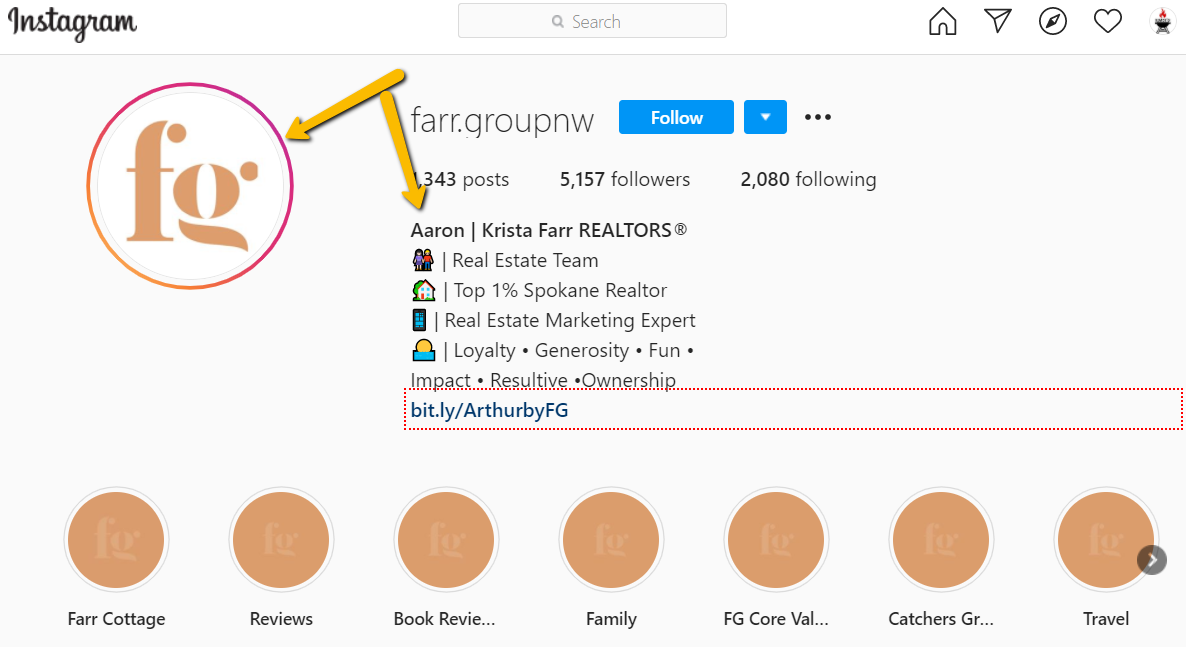
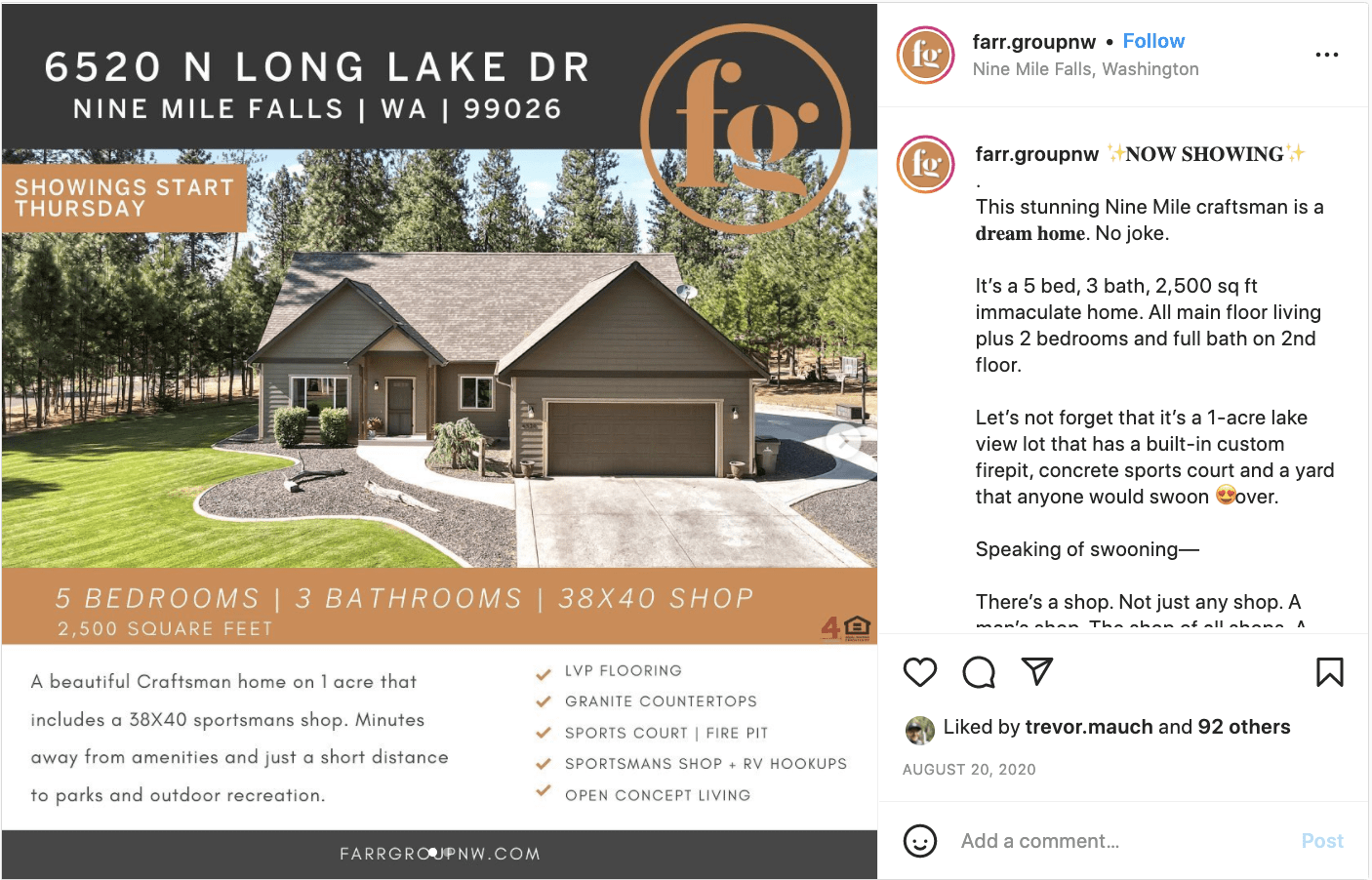
    Jason works with a mutual members of ours, the Farr Group, who we’ll talk about the Farr Group in this post.

    It’s been really cool seeing Aaron and Krista from two years ago even when I first had gotten contact with them. It was within their first year, they weren’t really that big on social.
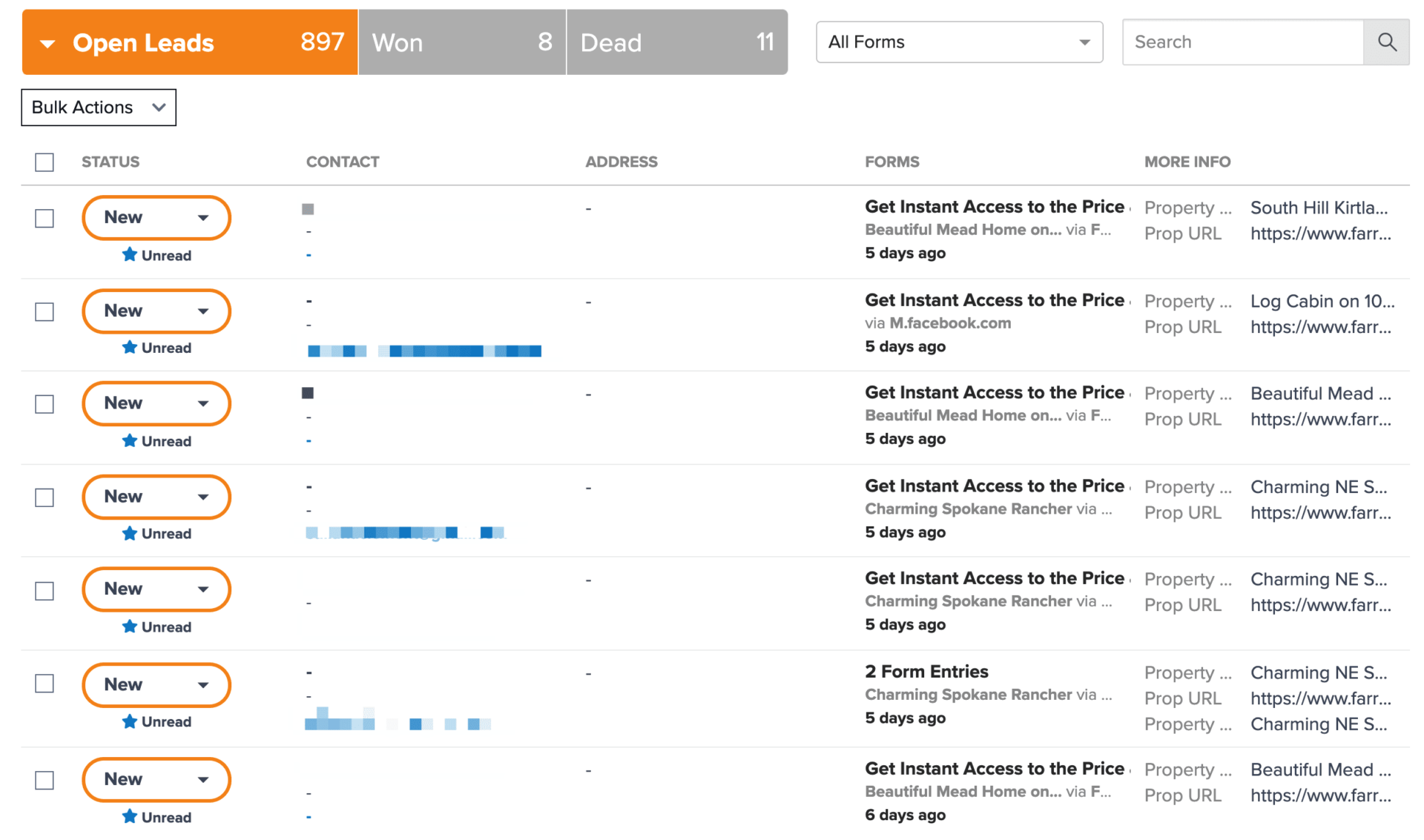
    Farr group leads
    Farr Group Leads Dashboard with 100s of Leads from Social

    Now seeing them become one of the top 10 agents in their whole area in less than three years pretty much using social media and referrals.

    And now they’re stacking on the Google organic, it’s amazing stuff.

    But I’m going to officially introduce our guest today. Jason Pantana, he’s with the Tom Ferry group, but here’s one of the big things y’all. Tom Ferry has a lot of amazing coaches.

    Jason is the guy that I’ve seen referred to over and over again as their social media and online marketing guy. It’s like when they need someone to go in and really talk in a deep way about the online marketing side of it for retail real estate, that’s where Jason comes in.

    I’m going to toss over to you, man. For those of you who are maybe in the investor side of our business and aren’t familiar with Tom Ferry International or with you specifically, or if they’re on the agent side and they don’t really know, they’re not familiar with you, who are you, what do you do daily and how did you get into the game of educating agents on growing their social media followings and turn them into elites?

    Jason Pantana:

    I’ll keep this brief. One, I’m super delighted to get to be here with you. This is going to be a fun conversation I expect. Thank you for inviting me. Again, my name is Jason Pantana, I’m a business coach and marketing trainer for Tom Ferry International.

    We provide coaching services predominantly in residential real estate, but just real estate profession as a whole. I’ve got thousands of clients all over the world. I personally coach every day of the week, so I have about 40 clients I coach personally. That’s typically my mornings. I just finished up my morning of coaching, and then I’m here with you guys right now.

    In terms of day to day, I spend every morning just in the trenches with agents and I tend to focus my coaching specifically around marketing, all things marketing. I love hearing that you guys talk about Google organic SEO and paid traffic.

    I talk about those things too. I spend an extra bit of time, I would argue, on the social media side of content, which is why we’re here today and we’re going to have a blast.

    But really the thing I’m focused on, I think you’ll get a pretty quick glimpse of it. If you go check me out on Instagram, for instance, I just post content that I believe is going to help you as an agent in your business. Most of my content is focused on helping you build your sales business.

    I’ll be candid about that. As you said, I work with Aaron and Krista Farr. I think you and I started working with them around similar times. It’s been about three years for me, like right when they first started.

    One of my first orders of business was getting Krista licensed so she could come into the mix and start being social media amazing, which is what she is.

    I love helping agents grow their businesses, by all means digital, but in particular that a lot of success with social, specifically, Instagram has been sort of a wheelhouse for a lot of my clientele.

    Just generating bottom of the funnel, inbound, organic leads, which is what I will get into today. I hope that’s enough about me. Let’s talk about marketing.

    Unlock Your Instagram Marketing Knowledge

    Learn everything that Real Estate Agents need to know to get started with Instagram marketing.

    Trevor:

    If you are coming in from the Carrot world where we talked about what we call Evergreen marketing.

    Evergreen marketing is how do you get off of what we call the marketing hamster wheel long-term and take a lot of that content from your social media and make it evergreen through Google and YouTube so people can find it for a long time.

    What we’re going to do is we’re going to talk about how do you come up with great content topics on here with Jason.

    We’re going to talk about how to get better reach with your social. Because we use social here at Carrot, even though evergreen is always our foundation, to build that momentum over the long-term with Google.

    We use social media big time to build the audience, which then fuels the Evergreen and vice versa.

    We’re going to talk about the content topics. We’re going to talk about mistakes agents and likely investors probably make the same mistakes in social. We’re going to talk about big opportunities on the different platforms because Jason is really tuned into all of those.

    Where should a real estate agent start with social media?

    Jason, let’s dive in first. Starting at the top, we’re going to teach specifically for agents right now, but investors take this and apply this over on the investor side.

    Where should an agent start with social? Should they start on Facebook, Instagram? Where should they start where they’re going to get the biggest bang for their time?

    Jason Pantana:

    All right, so where should an agent start when they’re going to get involved on social?

    I would say that the obvious place to start is where you’ve already got your account set up. There was a reason that led you to sign up for Facebook. There was a reason that you got on Instagram.

    Whatever it is, I think there’s a component of just go where the crops are already growing.

    But the other component I would say is where do you want to dominate? If you want to dominate on TikTok, go dominate on TikTok. Go make your heart sing. If you want to own Instagram, that’s a great spot too.

    I will tell you, candidly, I’m a huge fan of Facebook and Instagram. I have clients who do both, so we typically will get into content within those.

    I’m a cross-channel distributor of content, so my idea is, getting content mileage. I am not one of those people who thinks you should create content specifically for LinkedIn, specifically for TikTok, specifically for YouTube.

    I think you have to take your content, build it in a lab and then optimize it for delivery across those different channels.

    But I want to say from the starting point your content should be representative of your brand, your objectives in terms of what you want out of social and can go everywhere.

    In terms of a platform to get started, I would personally pick Instagram. I teach my clients on Instagram the everywhere strategy.

    The reason I choose Instagram is twofold.

    One, it’s pretty democratic in the sense that it has a wide array of different types of posts. I can do photo posts, I can do carousels, I can do short-form vertical videos called reels. I can do long-form videos called IGTV. It has DMs, it has comments and shares and stories.

    It’s got the whole types of content I might create. I like to use it as sort of my starting point and then distribute from Instagram to everywhere. I also like it because it sounds better to say Instagram to everywhere, then Facebook to everywhere. But if you want to go to Facebook first, be my guest. That’s going to work for you as well.

    But I would also encourage agents to actually shift their mindset from saying, “I have to pick a platform,” and instead say, “You know what, let’s create a space where I’m optimized across all the channels I want to be on.”

    Right now we don’t know where the consumer is. It could be anywhere and everywhere, and in fact, I would love for them to see me on multiple channels because that’s going to create a frequency illusion where they think they see more of me and I have more top of mind awareness.

    My advice to you would be is focus, not on the platform so much as what’s the content you’re going to produce.

    What are you committed to?

    What makes you excited in terms of content to make?

    Then just get your accounts set up and lay out the distribution path from Instagram to everywhere.

    Post it natively to Facebook, to LinkedIn, to YouTube, you name it.

    Trevor:

    That’s perfect because, all too often, we’ll hear someone say, “Hey, this is the path.” But, like you’re saying, everyone is a little bit different.

    Someone might really resonate with Facebook and how it’s used and vice versa. You’d mentioned the content side. That’s where I’m sure you see it every day, especially, with your new coaching students but we see it all the time too, is people go, “Shoot, what do I create content on?”

    We’ve got a model here at Carrot that’s mainly aimed around the organic side of things. But what would you suggest for an agent or an investor in this case too, what should their first pieces of content be? What should that cadence look like? Is it mostly personal stuff, mostly business stuff, is it a mix?

    Jason Pantana:

    Okay, so let’s talk about the personal versus professional dichotomy first, which a lot of people have cited Gary Vaynerchuk’s Jab, Jab, Right Hook concept, which was a brilliant concept. But it was pre some algorithmic changes that occurred a couple of years ago.

    What I’ve noticed is when people are still operating on the, “Okay, I’m going to do three personal posts and one professional post.” Like clockwork, it’s nothing but crickets when it comes time for the professional post.

    So at the end of the day, every post is judged by the algorithm. It’s not so much about like, “Well, I got so many hearts and likes on this kindergarten graduation picture, but nobody cares about my new listing or whatever it is.”

    That doesn’t work anymore, so instead what I about with people is you got to blend the story of your business and your life.

    They got to be blended together.

    Some of my best clients who are really like they’re cleaning up on social media, I’m thinking of Glenda Baker, for instance. She’s in Atlanta, Georgia. She’s probably close to a million followers on TikTok now. Her TikTok growth has been insane. She’s got about 50,000 on Instagram, growing like crazy.

    She’s getting DMs and PMs and all kinds of pings for people who want to list their properties, buy their properties, agents making referrals.

    All kinds of that inbound lead generation happening, and all she talks about is real estate. In fact, that’s the thing that I noticed most about her is I see her personality emanating through what she does for a living.
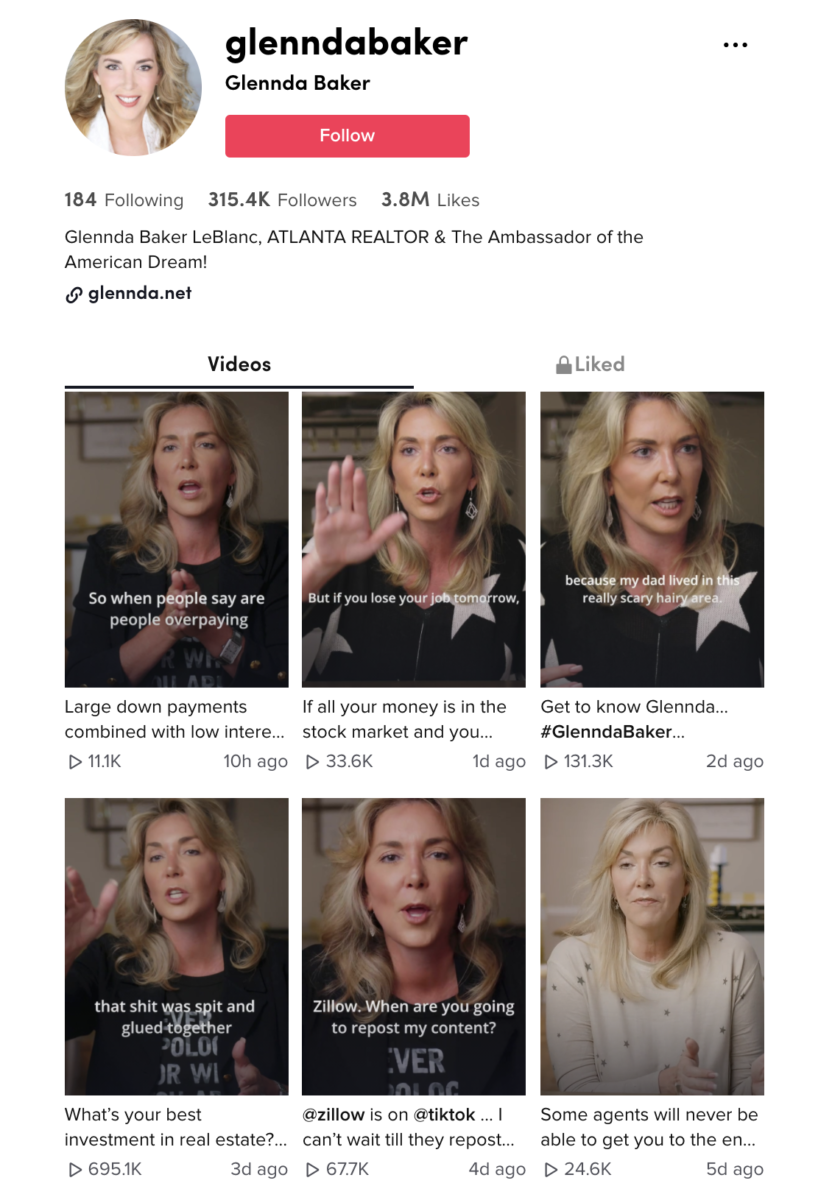
    Glenda Baker tiktok

    There’s no distinction, so my thoughts are, at the end of the day, your brand is your voice, your mind, your heart, your face. You’re the one that’s for sale, so I think you’ve got to put you on camera, you’ve got to be in the feed, so your audience gets a sense of your personality.

    Now, I’m not saying everything has to be about trying to sell a listing or whatever, but I’m also not saying that you can never do that. I come across a lot of social media experts who are constantly trying to tell agents to not post about real estate.

    I look at that and I’m like, but when I see the agents who are actually making money off of social, it’s the opposite of your advice. Like look at the Farrs’, for instance, I know we’re cleaning up on social media.
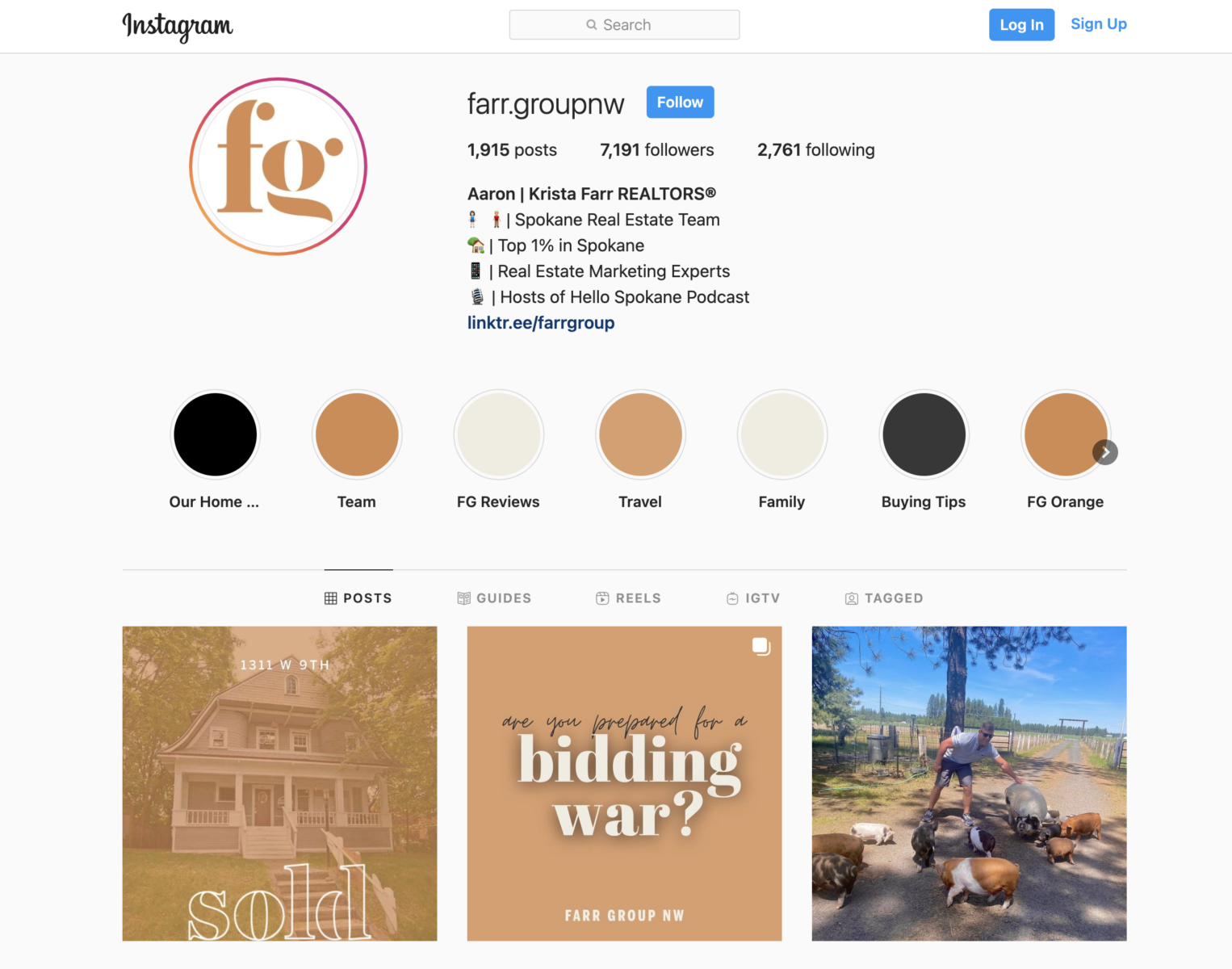
    They post about their lives, but they’re never more than an arms reach away from their business, ever. There’s no shame in social proof.

    Unlock Your Instagram Marketing Knowledge

    Learn everything that Real Estate Agents need to know to get started with Instagram marketing.

    What type of social media content should I create?

    Trevor:

    So let’s dive into that content topic side of it.

    I think that’s really helpful what you’d said in a big way because a lot of people are taught 60/40, 60% business, 40% personal, and the personal are just personal. It’s the dog I got this week, which is fine. Versus, like you’re saying, melding it together. One really good example that I’ve seen in the investor world, so for all you investors you say social media is just for agents, which it’s not.

    We have an amazing client, they came up to our event we called Carrot Camp last year, and they’re an investor. They go back there and they’re filming restaurant reviews. He calls it lunch with Lance, but it’s always him, the home buying guys. He’s going out there, he’s bringing some of his buyers and sellers that they work with.

    It’s like on HGTV, everyone loves the shows that show people what people are doing for a profession. Watching people fish, watching people flip houses, watching people be real estate agents.

    So it’s mostly business with some personal stuff mixed in.

    Jason Pantana:

    I would also just chime in on that, I love the idea of touring local restaurants, getting to know local business owners. But I would say there’s a lot of agents who they figured out they’re going to create the diners drive-ins and dives food network show because in their head I suspect a lot of them are like, “This isn’t salesy, this isn’t real estate focus. This is community focused.”

    I don’t want to be that guy or that girl who’s costly about real estate. But I always ask my clients the question, “What does your mom watch more of, food network or HGTV, or is it a tie?”

    The answer is usually it’s probably a tie or something like that. But my point is don’t overlook the fact that touring houses, talking about houses, people are obsessed.

    SNL did a sketch recently on Zillow because people love to look at houses. There should be no shortage of ideas for content when you sell houses for a living, or when you flip houses or a wholesaler, whatever you do on the investor side of it.

    Where do I find great content ideas for social posts?

    Trevor:

    Let’s say it’s an average week for an agent. What are some types of things that they should start to turn that brain on to be aware of to document a great content?

    Jason Pantana:

    I teach going back to the Instagram to everything strategy. The first thing I do is I establish a minimum cadence in terms of how much content, what’s the frequency minimum standards per week.

    It’s one IGTV a week and you press the share to feed button. When you’re uploading to IGTV, there’s always the option to share to your main feed. Absolutely a must. If it’s only distributed through the IGTV feed, which you may not have known this, IGTV is its own app.

    If you don’t click the share to feed preview button, you’re pretty much invisible. So it’s one of those a week and one reel a week as a minimum.

    I’m almost ready to adjust my own strategy. I was looking at my Instagram insights, which you should do from time to time and I was breaking down, “Okay, what types of posts of mine reach the biggest audience of followers versus non followers?”

    So they actually have charts and graphs in the insights tab assuming that you have either an Instagram business or creator profile.

    They show you unbelievable analytics, including, your average IGTV gets this much reach with your followers, and this much reach with non-followers. Reels was off the charts doing about 80% non-followers.

    We’re finding because reels is the new prized feature that Instagram is touting and wanting everybody to adopt.

    I’m getting right now crazy reach, and I’m generating a lot of followers because they’re finding my content through the reels feed because they did build the reels feed straight into the mobile app. That should give you a kind of optics on what they’re trying to do at Instagram.

    I would say, recapping, here’s a sample posting schedule:

    • One IGTV a week,
    • One reel a week,
    • And, at least, three supporting posts a week.

    They could be photos, they could be carousels. They have three supporting posts and then never don’t have a story. That’s actually my cadence. It’s one IGTV, one reel, three supporting posts, never don’t have a story.

    Let’s dive into the content “what.” I typically teach to think of content like a restaurant menu. You go to a restaurant and they hand you the menu, this is their way of saying, “Order something off of the menu.

    We don’t make things that aren’t on the menu. We make things on the menu. We have appetizers, we have entrees, we have desserts. Pick from the menu.”

    I think a lot of agents, wake up and, they look at the look hamster wheel of social media. I’ll admit, it is totally a hamster wheel. I think you’re smart to listen to this man and try to convert that into some evergreen content. Evergreen content isgoing to help make it more worth the while, which is part of what I teach too.

    But back to this hamster wheel. I think a lot of agents look at the 365-day calendar and they think, “Oh, what am I going to post today? What am I going to post tomorrow?” As if you’re having to reinvent the process every stinking day and that’s daunting. I think the hamster wheel feeling is more of a feeling that’s psychological than it is strategic.

    What I teach is the menu, it’s got three parts to the menu.

    • Section one, we call it shows and series,
    • Section two we call it deal data,
    • Section three we call it the vault.

    Section one, shows and series are basically your video shows. This is your IGTV, your reels. I would create weekly video shows. It could be a pro tip series, it could be a market update series, it could be a quick answer series where people ask you questions and you do 30-second Instagram reel answers that stuff.

    It could be home tours, it could be interviews with local businesses like you talked about. You should have your shows and series lined up episodically week-by-week.

    Again, my minimum standards for my clients is one IGTV a week, one reel a week, which basically means we’re talking about two shows a week for all intents and purposes.

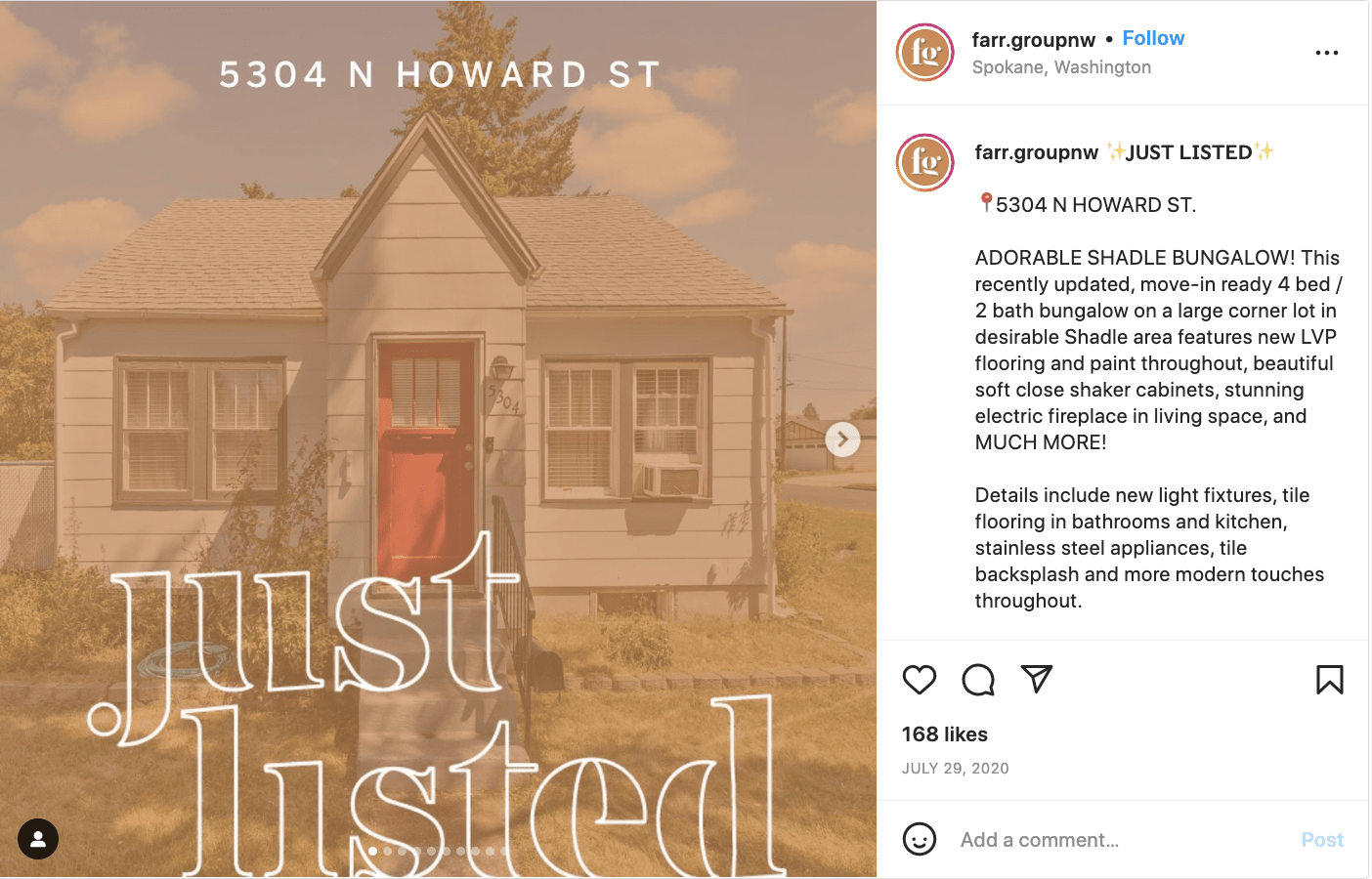
    Section two is deal data. It’s just listed, just sold, listing video, under contract, offer accepted, open house. It’s those types of things.

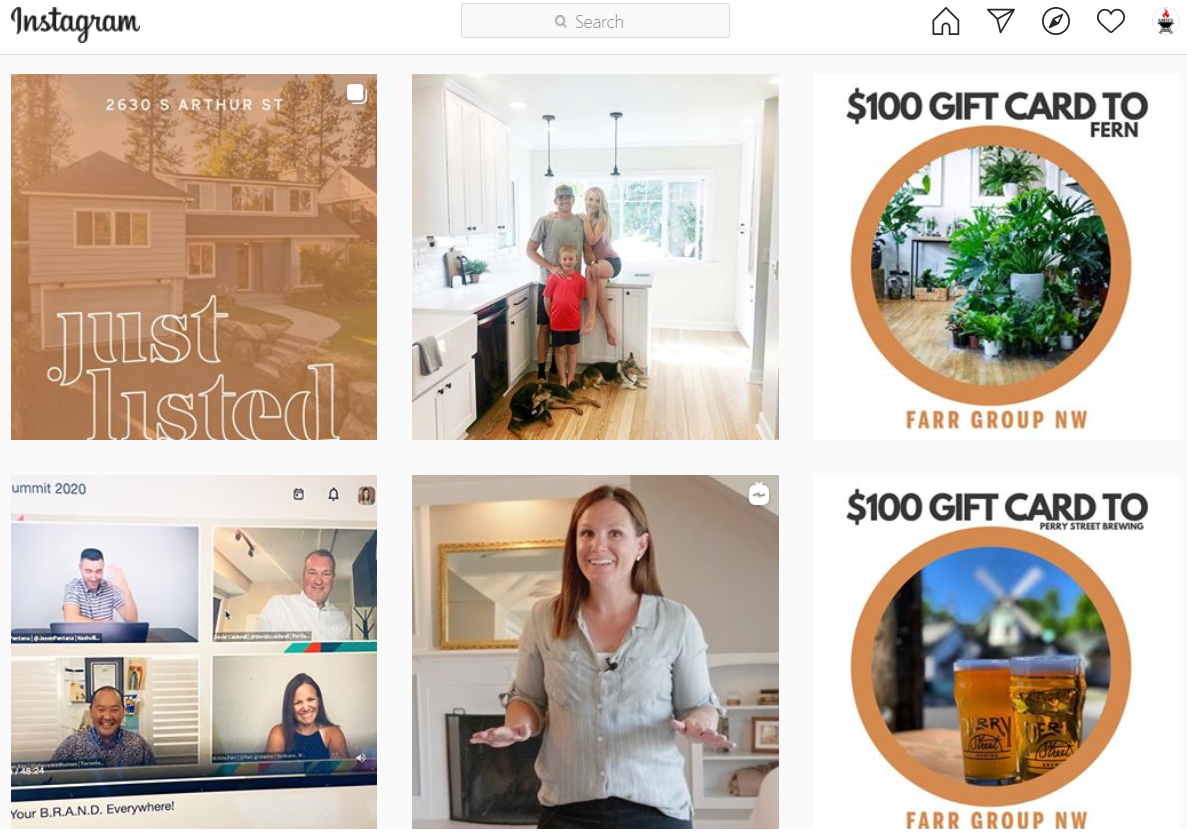
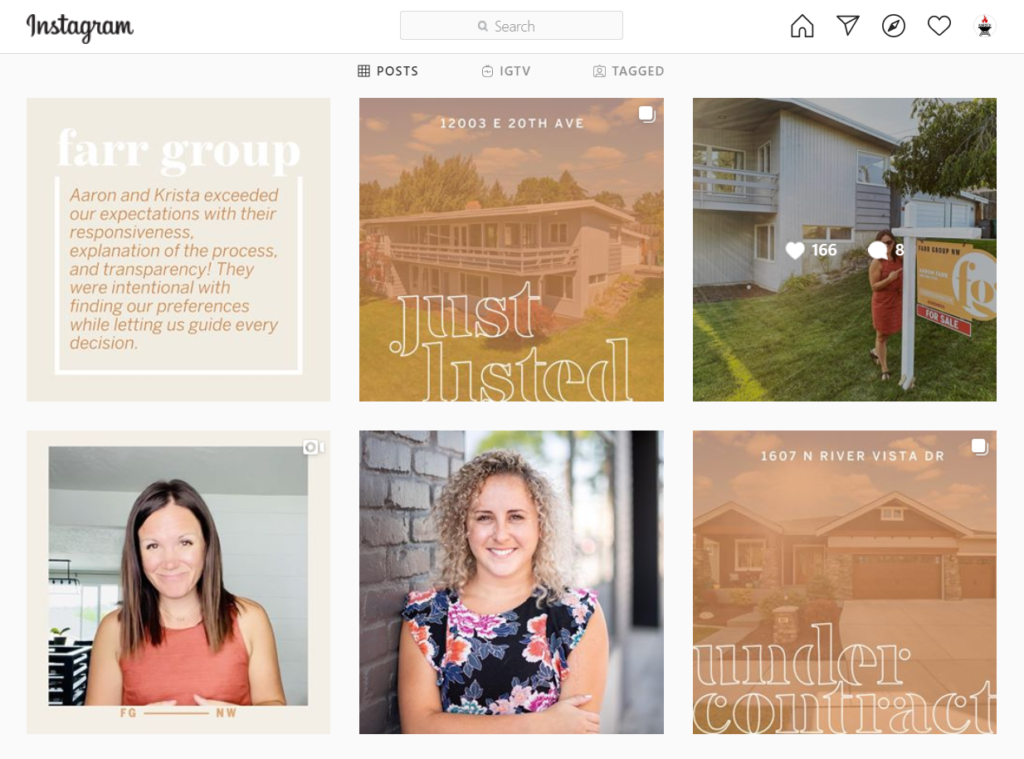
    The whole idea of deal data is it should be templated out. Let’s use the Farrs’, for example. They use Canva. If you go to their Canva, they have templates for what a just listed post looks like, what it just sold post looks like, and they literally just sub out the address and change the photo.

    Rinse, repeat.

    That’s what needs to happen to streamline some of the production of content with this deal data. I talked about three supporting posts per week, here we go. It’s in your deal data.

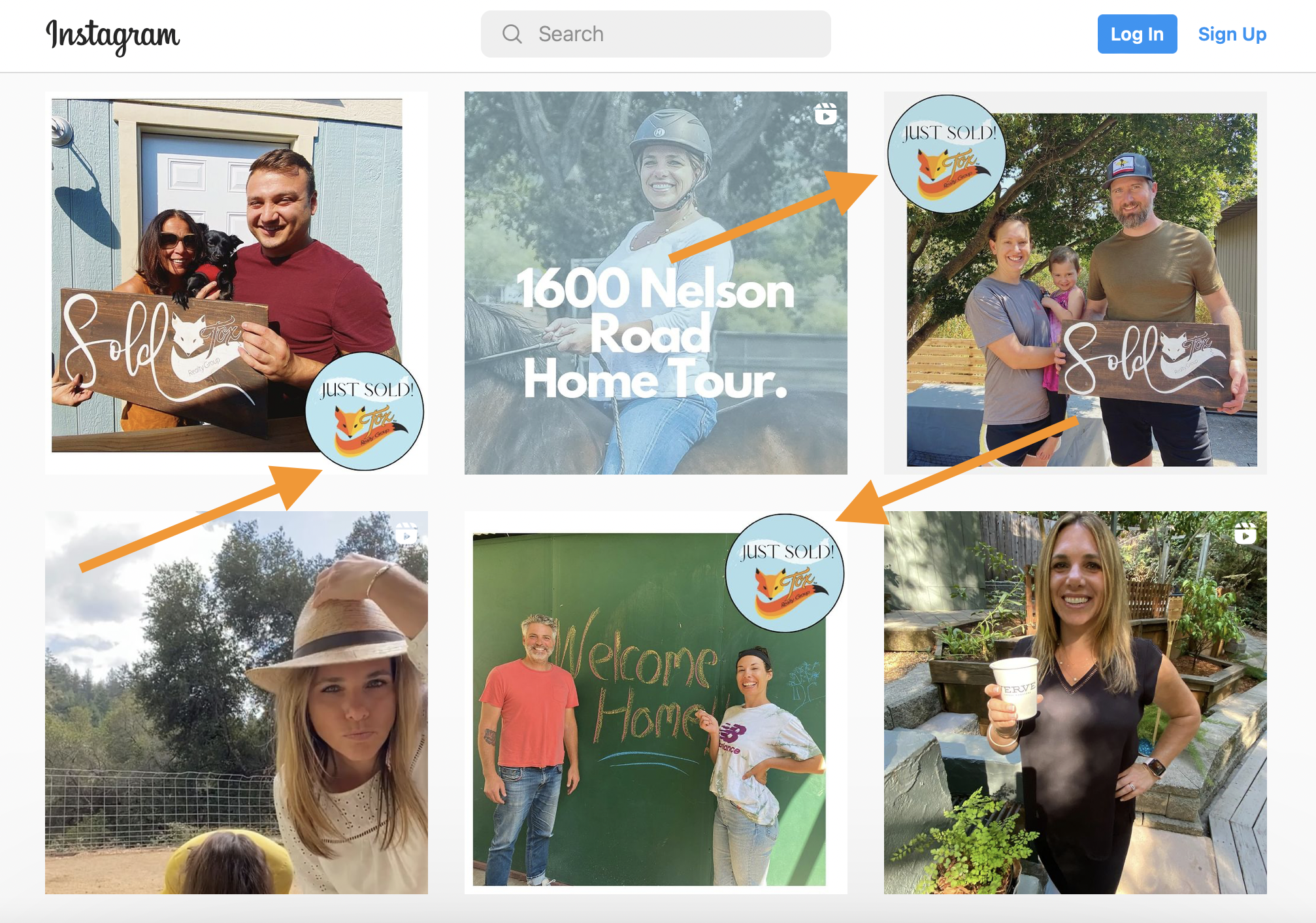
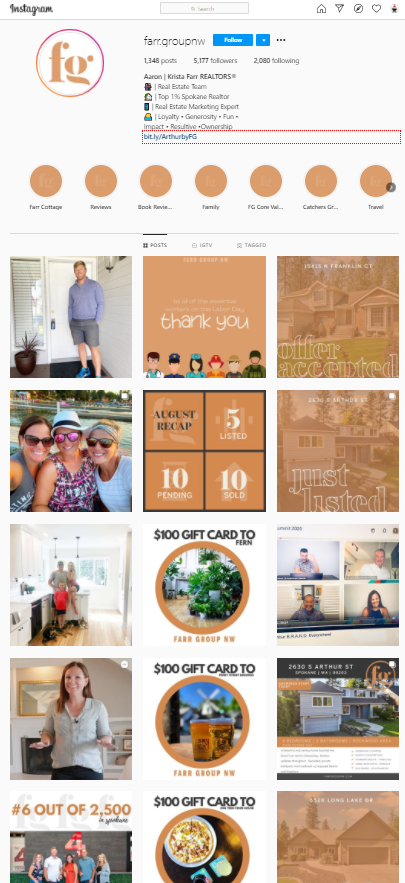
    This stuff’s critical. I also think like if you look at the Farr’s feed on Instagram, just Instagram, for instance, I’m going to see the matchy-matchy nature of, “Oh, there’s another sold, another sold, another sold, another sold” because they match up with each other.

    So because of that, it really creates this feeling of, “Wow, the Farrs are really selling a lot of houses,” and they are, they are selling a lot of houses but there’s also a perception component too. How do you take that into effect?

    Lastly, section three is the vault. The vault is basically just things you do every now and again. You may not do them always, but I’d like you to have a word bank or a vault that you can pull from, from time to time.

    Like testimonials, what does a testimonial look like when you post one? Do you do stock shots or behind the scenes shots?

    Stock shots have been a popular one for a lot of my clients lately. Basically, what we’re doing is when they have a new listing, they pay their photographer a little extra to basically do some headshots at the property lifestyle photos at the top view while they’re getting the shots for it.

    They just pepper those photos out from time to time with some the melodramatic caption that’s maybe related, maybe not related.

    Unlock Your Instagram Marketing Knowledge

    Learn everything that Real Estate Agents need to know to get started with Instagram marketing.

    Trevor:

    That tip right there is awesome because if you guys are already doing listing photos, or if you’re an investor going there and doing photos of properties, like Jason said, why not just have that camera person just turn the camera on you for a few shots. You’ve got the concept right there.

    Jason Pantana:

    Show up in the last 15 minutes, they’ll film you. Like I have a client in Little Rock, Arkansas, Ray Ellen, he does this.

    He’s got probably 90 days of content already lined up.

    He’s at the point now where he has to be aware of seasons. That’s how far ahead he’s getting with doing this, and so he has this spreadsheet where he writes out captions and they just play the matching game.

    I’ll use this caption for this post, this one for this one, and they don’t always relate. It’s very personal blogger style where it’s a photo of you and then whatever you’re thinking about. I mean, invariably, those photos and those posts do really well. That’s a no brainer to me.

    Recapping, you’ve got the shows and series, the deal data, and the the vault.

    Trevor:

    I want you guys to write those down. The reason this is important is because just like Jason said, oftentimes when we’re going to go with step into doing something, when we don’t have a menu, when our options are limitless, your brain explodes. You go, “Oh, shoot, what do I do?”

    We start to actually get paralyzed when we have too many options. If you go into a grocery store and there are 75 types of ketchup, and there have been actual studies done like psychological studies.

    Jason Pantana:

    Yeah, it was Barry Schwartz did this in The Paradox of Choice. Great book.

    Trevor:

    If you have three choices, you’re going to be able to pick, and so I love it. By the end of this week, what I want you guys to do is write down those three things.

    Then begin to carve out an hour maybe, half an hour and start to dream, “What type of deal data can I start sharing next week? What show or series can we do?”

    Jason Pantana:

    I’ve been encouraging my clients I love in the field videos. I love house tours, I love restaurant interviews, I love business interviews, neighborhood tours, but there are bottleneck in terms of getting them done.

    If you’ve got to go in the field and plan logistics and coordinate, coordinate, coordinate, the clients of mine who are really killing it with video are the best.

    They typically film one time a month and do everything in bulk, they get like a paper background like this set up, they’ve got a camera, typically, a videographer.

    Some of them rent the runway to get multiple outfits picked out, and they show up ready to film for a half or full day and they knock out 20, 30 videos in a day and they’re done for the month. Move on to the next month.

    That content gets packaged and released and dripped out throughout the month. That’s the way to play it.

    Trevor:

    The thing about doing that too is it takes you out of that daily hamster wheel thinking because then it is strategic. It takes you from tactical on the day-to-day going, “Oh shoot, I need to find something to document today.” Which you can do in the stories.

    That’s where bring out those stories, document that stuff. But then everything else are used strategically to chunk it up.

    Guys, listen to Jason because he’s teaching you the path here, but then he’s also teaching you the way to make it so it doesn’t own your life. Where you own the strategy, the strategy doesn’t own you.

    Jason Pantana:

    The best agent video creators are filming once a month to create. That should be your objective, film once a month.

    How much time should you invest in social media?

    Trevor:

    How much time would you suggest setting aside for social? The people that are crushing it, like the Farr Group, like that other guy you mentioned, the people who are crushing it, how much time are they investing into social per month? Then the people who are doing so-so, what’s your best guess in how much time that they’re investing into it?

    Jason Pantana:

    Let’s use Glenda Baker as an example. She’s in Atlanta, Georgia. She’s the one who’s got like a million followers on TikTok.

    She films one day a month. She comes ready to the studio. She’s got her hair and makeup, her clothes, her scripts, what she’s going to talk about. She comes in ready to roll and film. Cameras on, lights, camera action.

    She’ll get 35 videos in 11 hours, so she films an 11 hour day once a month, but she knocks out 35 videos. Taya DiCarlo in Manhattan Beach, California, client of mine too.

    She does the same thing, she films for a half a day and she’s knocking out about 20 videos.
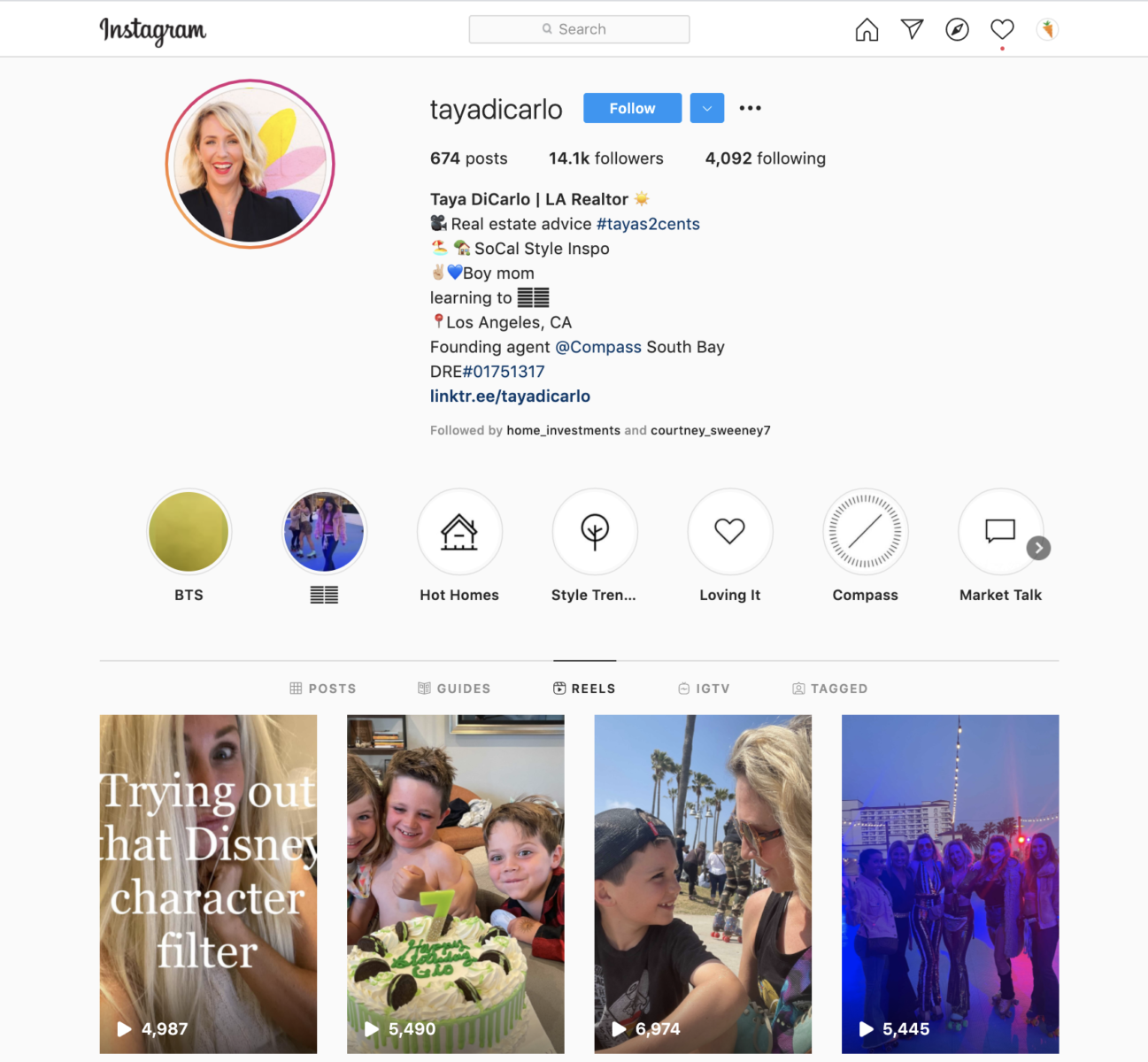
    In terms of time, if you already have the big content created in advance, there’s a releasing feeling. Now, the idea of running and gunning, is to your point, you’re going to be subject to and controlled by social, which is not a good state.

    Trevor:

    One thing we talk about a lot here at Carrot, is our state admission at Carrot has helped to build a businesses of freedom and impact. We really want people to be free from their businesses.

    That’s where the Evergreen comes in, so that they can make the impact they want to make.

    What Jason’s mentioning here, let’s say you guys wanted to go on a two week vacation or a month long vacation or whatever it is, which is normally unheard of for most real estate agents right now.

    If you could have that content batched, you can still record like the Farr Group. They still took pictures and did stories from their vacation, but they were still cranking through the deal data. They weren’t posting the deal data, so that stuff was batched.

    Jason Pantana:

    Yeah, they now have a marketing coordinator who works for them, so she’s taken on some of the load. But that’s recent.

    A lot of the stuff is just scheduled and ready to roll. I think you’ve got to… don’t be a slave to your social media, that’s the goal.

    Control it, not it to control you. That’s a matter of we need a plan, experts say, I don’t even know who said this, but I’ve heard it said before that for every minute you spend planning how to use your time, you’ll save seven minutes on the implementation.

    I think that’s true in a lot of walks in life, especially, in social media. If you just say, “Okay, Jason said I’m going to do one IGTV, one reel, three supporting posts. Never don’t have a story. That’s my minimum cadence.”

    That’s the output of content.

    Now I’ve got to fill, “What are those pieces of content?” Well, I’ve got my shows and series, my deal data, the vault, fill in your little menu.

    Then come up with, “Well, how am I going to film it?” I would say if you can figure out how to film once a month, if you can try to figure out through Canva or graphic designers or whomever you need to streamline the other posts, get these things as turnkey as possible.

    So that really when you’re on social, you’re just posting stories and you’re engaging with other people’s content. That should be more or less what you’re doing on social.

    Team or contractors? How to build a team to record videos

    Trevor:

    I love it. One thing that people might be thinking is like, “Oh shoot, so Jason mentioned his videographers posting for him. That other girl, she records videos once a month and probably someone posts it for him.”

    But also you mentioned right there, and a lot of people probably saw it slipped by them was the Farr Group didn’t have anybody for the first year and a half, at least.

    Jason Pantana:

    Well, I didn’t have anybody until a month ago, so it’s me too.

    Trevor:

    There we go. If someone is going to have a team member and is it a full-time role? Is it just a contractor? What type of investment may people be able to get someone who can run the posting of the stuff and maybe the videos for?

    Jason Pantana:

    I’m going to take this two different ways. It depends on the channel you want to go after. If we’re talking about like Instagram and Facebook, that’s a little bit simpler. YouTube is a little bit more sophisticated. YouTube is more of your evergreen content, so YouTube is more of a search engine, less of a social network.

    So because of that, there are some nuances to the distribution on YouTube that will make or break what you’re doing there. Sliding that off to the side, I typically have my clients usually look for an hourly part-time, either a marketing coordinator or a marketing admin, whichever title you like better.

    This is somebody who’s paid somewhere between $15 and $20 an hour, generally speaking, and they’re basically following orders and instructions.

    The mistake a lot of agents make is they say, “I want to hire a social media director for $35,000 a year.” I’m like, “Do you realize director titles typically are six figures. Senior executive level people in companies.”

    • A, they’re not going to work for that money,
    • B, if you hire a social media director and they go to Glassdoor and they plug in what they’re supposed to get paid, they’re going to assume you’re ripping them off.

    But I think the biggest difference is strategy comes from the top down. If you’re going to hire somebody who’s administratively going to take action, they’re taking action on what you tell them to do.

    I think like that’s what the Farrs’ did really well. Krista manages their marketing coordinator. She says, “Do this, do this, do this, do this,” and it gets done. I don’t think there’s any way around that.

    Trevor:

    So, if you are looking to buy back that time, get more freedom so you can make more impact, it maybe won’t start that way. You got to hustle and get the work done that first year, first 18 months to get momentum going.

    But cast that vision for buying back your time, and that’s always something I want to have our community look at is whenever we start a strategy, just really dig in and make it happen.

    Even search engine optimization takes work. Either you’ve got to do the work a few hours a week or hire it out, but your vision should always be to buy back the time over the long term.

    Jason Pantana:

    I think we can work backward too. Facebook and Instagram burn cheap gas, not the premium stuff. You need more. I’m not saying make bad content, but I am saying making more content, there is an element and I’m being somewhat cynical here, but quantity almost matters more in some cases.

    I’ve had clients buy basically chess clocks, or they set little timers where you’re going to say, “I’m going to give myself 15 minutes to do this, 30 minutes to build this post”, whatever it is.

    You time yourself so that you can basically predict, “Well, if I want to do one IGTV, one reel, three supporting posts, never done of a story, and I’m going to block an hour to record this video or 30 minutes for that.”

    You can literally map out how much time it takes and then say, “Can I do that for a year?” Then once I’m established, then I’m going to bring somebody on to keep rowing for me while I move up to the next level, so to speak.

    Trevor:

    Let’s talk about make the transition from we’re building the audiences, we’re getting content out there, we’re resonating, to now we’re building authority because that’s really what we’re after here.

    Getting in front of people, building that authority. What are you guys finding right now, Jason, that’s working great to turn those people watching you from afar into leads, into people that you work with?

    Jason Pantana:

    A couple of things I would say, one, is social media has two elements.

    It’s like a two-sided coin, it’s got the side of content and the side of the conversation, so you got to do both. I think one of the mistakes I see is agents who are only doing the conversation side, which does work better on Facebook than on Instagram.

    They’re DM-ing, they’re commenting, they’re engaging, they’re not creating content. They’re not being a knowledge broker. That’s a gap.

    Or the flip side of it, and this is the more common is they’ve figured out how to make content or they buy the content works, but they’re just not really there. They seem unapproachable.

    I think like, again, let’s use the Farrs as an example, they’re putting out a cornucopia of content. They really are, but they’re also DM-ing and messaging and engaging, and they’re active in groups on Facebook and so forth and they make themselves approachable.

    I would say that there’s an element of content and conversations that really has to be a part of it. I also think this is where, like going back to the early thing, is it professional or is it personal content? It needs to be the right hybrid.

    We teach that there are five themes of content that you need to be able to address. It’s not even parts. You can decide how much of this or how much of that.

    But there are five ingredients or five themes your content should speak to.

    We talk about real me, or if you’re a team, the real us. We talk about agent behind the scenes, these two can be married sometimes. We talk about social proof, so like just listed, just sold, under contract, offer accepted, new listing, blah, blah, blah. We talk about knowledge broker, which is big for me, and then hyper-local. Where do you do business? Are your boots on the ground?

    If you have those five themes present in your mix of content, the net effect is people will come to you. I think that’s the thing I’ve noticed most about the clients I coach, and I have a good number of clients who get a lot of business off of Instagram. People are direct messaging them, they’re commenting.

    In other words, they’re creating content that invites that conversation, and then it just starts going. Even me, like if you ask me, why am I creating social media content, I’m going to tell you because I really like to contribute and things like that, just like you do. But I’m also going to tell you because I’m generating organic leads for Tom Ferry every day of the week.

    I was going to do a 100 webinar challenge for myself.

    So I started taking a selfie of me every time I was doing a webinar, which I need to get back to doing. But I was like this is going to make social proof. This is going to make people like Trevor say, “I should get him on my podcast. I should get him to speak for me.”

    Then, bam, it works. It’s that, it’s real me, hyper-Local, knowledge broker, social proof agent behind the scenes. If those things work together in some kind of a shape, you’re going to attract people to want to work with you.

    Trevor:

    One thing I want to pull out right now, I just came to the realization so you were mentioning the posts that I engaged in. Let’s relate this over to an agent or an investor now.

    The reason I engaged in that, is number one, I’d seen Jason for probably a year because the Farr Group, one of his clients, posted about him or tagged him to it, so I started following him.

    Then I see him post, before all your content’s amazing, but I’m not an agent. I’m like, “Okay, it’s great. I’m going to learn from it. But I’m not an agent.”

    That one post struck out to me because I’m like, “Oh, I can help him here. Also, this might be an opportunity for us to connect and I can help my audience.” I’m like, “Let me take all this stuff that he’s been teaching.

    As we’ve been growing a bigger and bigger user base on the agent side, let me take his knowledge and plug it over here to help serve people.” If you hadn’t have done that “Hey, here’s my journey I’m on. Here’s the challenge I’m on” post it might have a different outcome. Instead, I thought” I’m going to dive in, serve him, serve my community and be able to meet an amazing dude.”

    Don’t be afraid to do that.

    How do I get more comments and DMs?

    Jason Pantana:

    But I would tell you if your content is not sparking comments and DMs, you need to adjust it because that’s where the money gets made is in the inbox.

    Trevor:

    How can people do that? Let’s get tactical a little bit, what are some of the ways that people can do that to spark themselves?

    Jason Pantana:

    Well, you can ask yourselves why? Let’s go easiest, the simplest explanation or the easiest way to do it is reciprocity.

    Start commenting on their stuff, start messaging them, and you’re going to actually reverse prioritize yourself where they’ll probably do it one just because it’s human nature to reciprocate.

    But also because when they reply to your DM, when they reply to your comment, that’s actually a signal to Facebook and Instagram that they want to see your content too. You’re prioritizing yourself in the feed. I would say out of the gate, you need to be engaging with their content to invite them into yours.

    They’ll return the favor.

    The other thing is ask yourself a rhetorical question, “But, hey, when I post this, what response am I expecting to get from it? What is somebody likely to comment, or they’re going to scroll past? Will this get them to when I stop and like it, when I stop and comment, when I say it, what I share it?” And so forth.

    I know that’s a surface long answer, but it’s the truth. The other thing, a lot of agents are just trying to phone it in like, “Oh, I just got to get it out there.” Yeah, you do, but what’s the point of doing that if it doesn’t actually get out there?

    Because we know the way these algorithms work is they don’t serve dud content in the feeds. I would argue in the first 10 minutes to an hour, Facebook and Instagram have decided that they’re investing in your post or not. If you can’t get conversations, so like we’ll talk about this, but you should optimize your content.

    Like for Instagram, out of the gate, I would do a couple of things. I would tag a location when you post, when you can. With Reels you can’t really do that.

    But when you can, I would tag a location. I would use hashtag strategically. They give you up to 30, and we don’t copy and paste hashtags. They don’t like that. We vary our hashtags. We don’t spam with hashtags, we’re careful that our hashtags aren’t actually what we think are innocent, but aren’t innocent hashtags.

    Because if those hashtags are blocked, you’re screwed. I tend to like hashtags that are between 100 to 500,000 other posts using them.

    That’s a sweet spot where I stand a chance to populate in the explore feed. I don’t care if the hashtags are in a caption or comment, but you got to use hashtags.

    I would also tag people when it’s relevant. I’ve done this two different ways. Sometimes if I have a post and I want to just give it a quick blitz into the feed, I’ll tag four or five other people like the Farrs’ because there’s a good chance they’re going to comment on it quickly because they get notified.

    Now, don’t overdo this one, but every now and again, it’s enough to spark like get a little flame lit on your posts.

    Then sometimes I actually private message it over to people, and that can help do it too.

    Trevor:

    I’m going to riff on that a little bit. Here’s a couple of thoughts that popped up on what Jason had said. Let’s say I’m a real estate agent, I’ve got a house on the river that is being listed. Maybe it’s not even my listing, maybe it’s someone else’s.

    And I have four people in my database I know are looking for a house in the river. Take that picture. I’m not an attorney, I don’t know what’s going on with your guys’ local MLS, and so check this.

    But you take that picture of the property, maybe the carousel or whatever it’s called, tag those four people, “Hey, this amazing property is just beautiful.” Is something something that you would do, or educate people to do, or is that something that would not be a good one?

    Jason Pantana:

    As far as, again, I will echo you in terms of, “Hey, make sure you understand what your real estate commission and your MLS will and won’t let you do.” But if you’re onsite at a property, even if it’s showing somebody else’s listing. Your clients don’t want it, or maybe it’s a broker preview, but you’re like I have three buyers who would love this.

    You can private message it to them.

    I don’t see any issue with private messaging it to them. In fact, I have a lot of my clients who are really pulling back from text messaging and they’re using more DMs because the by-product of that is actually I’m signaling Facebook and Instagram to prioritize my content organically based upon these exchanges happening in the DMs just using it as a substitute.

    But as far as like taking photos of other people’s properties, obviously, follow the rules.

    Trevor:

    Here’s one more that I’ve seen work. It was a while back when I first saw it working, and I don’t know if it’s the same now, but this one your real estate agents would post something like, “Hey, just did a search of the MLS.

    There’s 85 properties that you could buy for less than $800 a month. $800 a month. Hey, everyone down below, post your rent, and if you want the list that I came up with for properties you can buy from us at $800 a month.”

    Jason Pantana:

    Yep, so we’ve done those. We have the DM us your rent. That’s what we used to do. We haven’t done it in a while, so I call them calibrated stories. Basically, it’s a calibrated question, “Do you want this? Yes or no?” Based upon that, I can message them.

    Another one was are you thinking about selling your home or planning to sell your home this year or next? Yes or no. Sometimes people say yes, and if they say yes, you DM them. You start talking to them, have a conversation.

    I like the idea of what’s your current rent, and I’ll tell you what you could get this property for? What you could afford in terms of a purchase price? That’s one that would probably work really well right now except it’s super competitive. I would want to be careful around clear co-operation and MLS stuff, but you could theoretically. Don’t do this if this is against the rules.

    You could theoretically ask the calibrated question like imagine a story poll where it’s a yes or no, or an ask me anything that can input a question. Are you searching for a home and can’t find one? Would you be interested in somebody who is looking for off-market properties for you? Yes or no?

    Because that would solve, like that’s a pain point that a lot of consumers are feeling right now. Our terminology is off-market matchmaker, the terminology. You got to be very careful that you don’t violate the clear cooperation or MLS rules and stuff. Just be very careful around that.

    But, to me, it’s like I have a script that some of my clients are using, this is a little bit off topic though. They get a lead from Zillow or something like that, and the person wants to go see 123 Main Street is already under contract.

    The script is…

    “Hey, can I be blunt for just a quick second with you?” They’re say, “Sure, would you please be? and you come back with “Listen, you know the market’s super hot right now, candidly, anything you’re looking at on these portals, for all intents and purposes, is just the floor model. It’s not the one you’re going to buy.

    The one you’re going to buy is not on the market yet, which is why you need an agent like me who’s willing to circle prospect, door knock, and go find properties that meet the specifications of what you’re looking for. Would you be interested in that? Yes or no?”

    Unlock Your Instagram Marketing Knowledge

    Learn everything that Real Estate Agents need to know to get started with Instagram marketing.

    Pairing investors and agents together

    Trevor:

    That’s gold right there. So all you real estate agents who are struggling with listings, that right there is an amazing mindset shift, but also it’s a great positioning. It’s an amazing positioning shift because so many people are struggling with, “Oh my gosh, I’m making 20 offers for these houses.” If you can shift towards more of the off-market, then that’s a whole other call that would be really fun to dig in with you on.

    That’s what we focus on here. Carrot has been all off-market stuff, so as we’re trying to work more and more with agents and investors together, it’s like, “All right, how do we take the retail seller leads that come in for our investors and teach them to work them into their strategy by pairing up with agents.

    Most of the investors are taking those and throwing them away because they’re like, “Oh, they’re tire kickers.” Or they’re not realistic with their values.

    We see this an opportunity to take those and pair up with agents.

    Become an off-market matchmaker. Go look in Jason’s contents on Instagram because he teaches that, and I’m sure in your guy’s YouTube channel you guys have videos in that.

    Jason Pantana:

    One of the posts on my Instagram will link you to my website. There’s actually an email you can send your entire database. Here is a videos designed to generate seller leads via Facebook:

    Trevor:

    I’ve got one question from an investor, so this will be an interesting one from Heritage Home Buyers. What about an investor wanting content for sellers and buyers, both? Do you mix it, segregate best practices?

    I’ll add a little bit of color on the investor side. Since on the investor side, most of the time, the buyers and sellers aren’t the same person. It’s like it’s a highly motivated person, they’re not also looking to buy investment properties. I’ll show you guys what you guys can do on the outside.

    Jason Pantana:

    I assume then, just asking a question, I assume the challenge is you’re trying to find folks who want to sell their properties so that you can then resell them to a buyer and it’s a different value proposition.

    Trevor:

    Yeah.

    Jason Pantana:

    The seller wants to sell because they probably need to, or want to make it easy and painless. And the buyer is probably going to pay, they’re probably going to flip the property, which means they’re going to pay a little bit more. So you don’t want to turn people away. You don’t want your buyer content to make people not want to list and sell their home with you.

    One thing I would say out of the gate is most of my clients, we just talk about the market. Because when you talk about the market, it will naturally lead you to share, “Well, here are the pros and cons for buyers and sellers. Here are the pros and cons for buyers versus sellers.”

    The market is the market. I’m just the messenger of the marketplace. So I would then focus my content for sellers saying, “Look, selling your home right now is an amazing opportunity.”

    Trevor:

    What you had said before was really, really important because you were saying talk about the market, and that’s something I think investors in general have that disadvantage versus agents.

    Because agents are so tuned into knowing what’s going on in the market. Investors know micro markets here or there.

    Jason Pantana:

    A couple of campaigns were running. So I have some clients who do this one, we call it the search, stay, sell campaign.

    What that campaign is, is, “Hey, would you love to cash out in this unbelievable seller’s market but you’re not ready to move yet? Maybe not for a year or longer? Would you be interested in selling your property to me, and I’ll lease it back to you at a very good rate for as long as you want?”

    I’ve had folks like that’s a pretty decent angle to get in and find some folks who maybe they’re about to retire or they want to move to Florida or something like that, and they’re interested in cashing out and what they think might be the height of the market, but they’re not ready to go yet.

    I’d be talking to those folks and saying, “Can I provide you with a solution?” I know EasyKnock already has a program called sell and stay, so we called ours sell, stay, search because that gives you the ability to stay while you search.

    It’s the same idea. I think that’s a powerful campaign to talk about, but also I’m waiting for someone to do this video. I’ve had this video in my mind for awhile, asking the question, how much were you paid to live in your house this year?

    That’s the pattern into our question, “how much are you paid to live in your house this year?” People are like, “Well, what do you mean?” I was thinking about this actually came from a call with the Farrs’. We are talking about when should you be reaching out to your past clients or past buyers to see if they’ve had any thoughts of selling?

    The debate was well if they’ve only been there for a year or two, it’s too soon. There was somebody who worked for the Farrs’ on their team who had bought with them within the last year. I was like, “Well, hey, how about you? Have you had any thoughts of selling?” She’s like, “Every day.”

    I was like, “When did you buy the house?” She goes, “Nine months ago.” I’m going to make these numbers up. Okay, I’m going to make them up. I go, “What did you pay for it?” She’s like, “$250.” Then I asked Aaron, I’m like, “What do you think it’s worth today nine months later?” He said, “About $350.” So call it $100 grand in nine months.

    Really, the truth is the number was $90,000 in nine months.

    It was at that point it actually worked out too. I was like, “So, literally, you’ve made $10,000 in equity every month you’ve been living in that property.” I think there’s content around the idea, but also this one’s for your investors who want to pick up some listings.

    I have this other vision of a video where there’s a table that’s empty and you walk in with a duffel bag and you unzip the bag on the table and you dump out a ton of different poker chips. Just poker chips all over the table, and you hold up the poker chips to the camera and you say, “The thing about poker chips is they’re worth nothing until you cash them out.”

    If you’re thinking about the equity in your property is it’s worth only whenever the market sets it’s worth when you sell and cash out. Is this the time to cash out?

    I just think helping people see like, “Okay, I have a choice to make. The market is what it is, is this the right time for me in talking about the market?”

    Trevor:

    I like it, and that’s a huge shift for everyone to make. There’s always something going on and that’s interesting in the market.

    Talk about it from your authority point, from your advantage, or from your vantage point. The biggest thing, like Jason talked about before going back to Heritage Home Buyers is I don’t think you really have to split up your content between the wholesale buyers and sellers. You come from, “Hey, here’s our mission, our vision for our company. Here’s the impact we want to make locally. Let’s document how we’re in business together.”

    People will see that you buy houses. People will see that you flip houses. Then at the end of the day, one big mindset shift that investors need to get over, and the successful ones do is the sellers who sell to you know that they’re selling at a discount.

    You’re not pulling the wool over the eyes, nor should you. That’s not the game. The game is speed and convenience, and just like when we go down to a car lot, we go buy a new car retail, and then they ask you the very next question they ask us, “Hey, do you have a car to trade in?”

    We know that we could sell that car for more on Craigslist, but we choose not to because of speed and convenience.

    If that’s the mindset gap that you’ve got on Heritage Home Buyers that you think, “Shoot, I don’t want them to see the other content.” They should see it so they can see your business model and see that you’re a true, honest, ethical business that goes out there and service people, and just talk about the market, which is great.

    Is there anything that we haven’t touched on that you’re passionate about talking about? Whether it’s related to real estate or not, but is there a topic that’s really helping agents we didn’t touch on?

    Jason Pantana:

    I’m scanning my list here. Yeah, so get reels going. Again, it’s a great way to grow your following.
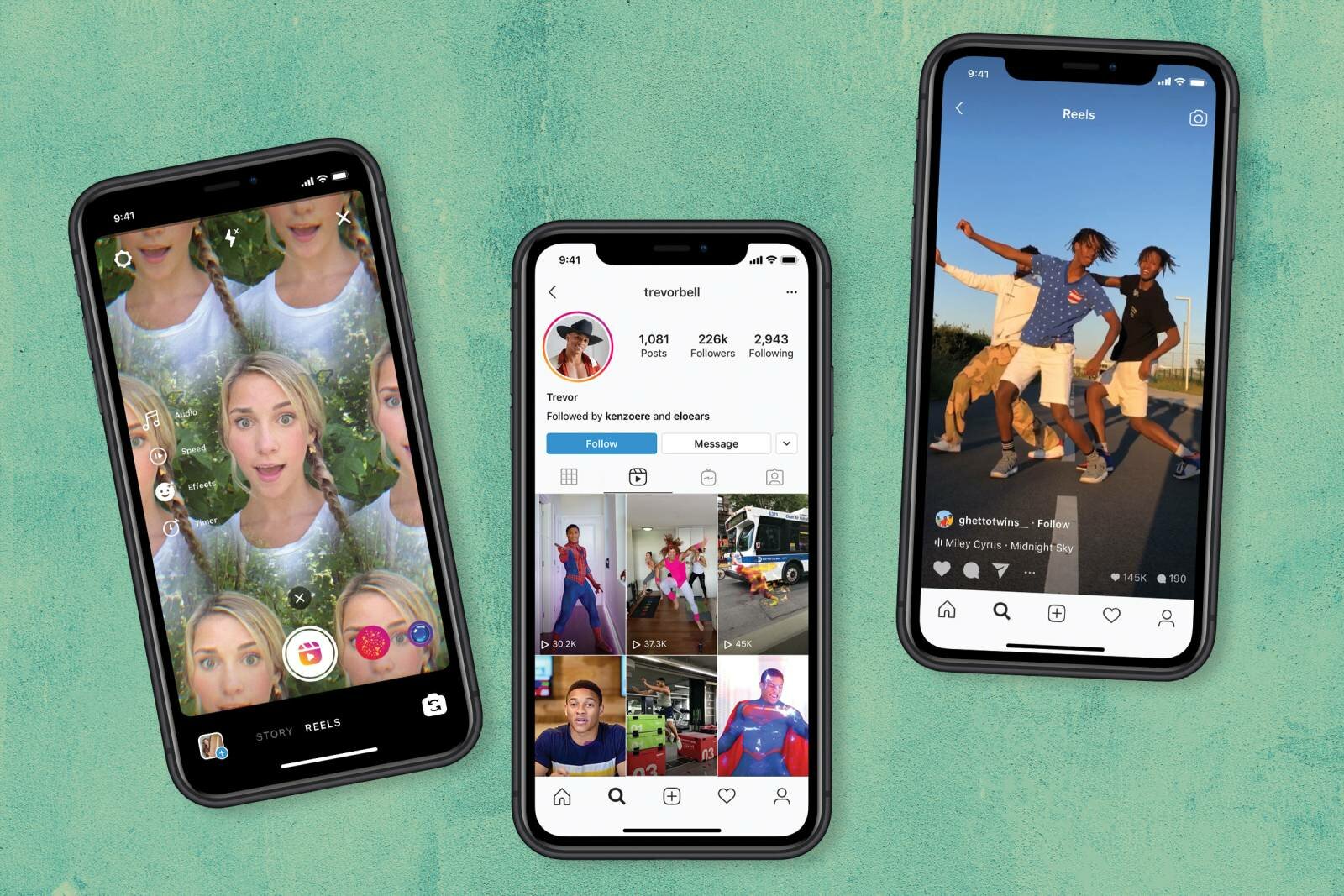
    You need more content. I made a note to increase your content by an order of magnitude. Like I said before, Facebook and Instagram burn cheap gas, which means you need to start filming and creating content in batches.

    That’s going to be critical. Dig into hashtags and location tagging. Start or continue story sharing reciprocity, you share their stories, they’ll share yours. That’s just an idea of reciprocity in terms of networking on social. It is a social network, comment, share their stuff and they’ll do the same for you. Lastly running Instagram promos and then boosting your Facebook posts.

    Don’t be afraid to put some money behind your best content, so use the promote button on Instagram, use the boost button on Facebook.

    Use the old, “This is Dennis Yu’s Dollar a Day method.” Which basically says everything you post on Facebook, just spend a dollar for seven days and see how it does basically with a low spend, and should I promote that content further?

    That way what’s happening is you’re paying Facebook and Instagram to show your content to a wider audience. This means if the content is good and if their algorithm is working effectively, they’ll choose to follow you.

    I have a client who she’s got like 18,000 followers. How did she do that? She promoted every post for five bucks or something.

    Buy your followers, but you’re buying them in the best way possible.

    Contribute to key Facebook groups. Go live on Instagram with influencers because when they go live with you, it notifies their followers, and then you get floor time with their followers.

    If there’s an agent that’s got a good following, go live with them. Use your email list. You should be promoting your content through your emails. You should be paying attention to the analytics and insights on Facebook and Instagram in terms of when to post content.

    You’ll get all the content there. In your stories, use the clickable stuff, the yes-no polls, the AMAs, the slider scales.

    Anything interactive, use that tag your location. That’s going to help your stories go to a farther, wider audience. Stop phoning in your captions, get serious about your captions. They need to invite a conversation.

    Your video thumbnails need to look good and pretty. That needs to be standardized. I would encourage if you want to get serious about content, hire a graphic designer to say, “Build me the templates that I can just rinse and repeat.”

    That’s what the Farrs meant, build me the templates, put them in Canva and I’ll rinse and repeat all the live long days. Then the rest is there some other odds and ends, but I just think it’s a matter of, A, your content is the most important thing.

    So don’t be stuck on the idea of I have to create content for every platform.

    I’m going to create my content and I’m going to distribute it across my platforms. But if I choose to be active on a platform, then I must be active. I get less out of LinkedIn because I don’t work LinkedIn. I get more out of Instagram because I work at the most. That’s just the way the cookie crumbles.

    Trevor:

    One thing on that too, if that is going to be your active social channel and you’re not active on there, what happens when your prospects see it and they go, “Shoot, that person must not really be doing a lot of things or whatever it is.”

    Jason Pantana:

    Yeah.

    Trevor:

    Dude, we’re right up against the hour, and I appreciate you spending time with us. Like I said, the energy that you put out into the market, absolutely love it. One of my favorite core values here at Carrot is “Be a Beacon of Positivity & Possibility.”

    You embody that, Tom embodies that, so I appreciate you guys doing what you do in the real estate space. Not just teaching tactics and strategy, which is very important, but the mindset behind it, the energy behind what agents do is not just listing and selling properties, it’s actually serving people.

    You guys really serve the community well, man. So I appreciate you spending the time with us.

    Jason Pantana:

    Thank you for having me. It’s been a blast. I look forward to connecting with everybody else online, and we should do a follow-up part two on this at some point about the market matchmaker stuff.

    Trevor:

    That’d be killer. Now, I’m going to wrap with this right here. That’s a great segue is we have a lot of investors and agents, and we’ve got about 8,000 customers here at Carrot, about 7,500 or investors, about 600 or so are agents. We’re building the agent side of it, and here’s the thing, y’all.

    The reason I say that is this, is I really believe we’ve been saying it for three years and now it’s accelerating. The retail side and the wholesale side are scrunching together, and you’ve got the iBuyers in the middle that have pulled it a little bit faster.

    The better that you guys and girls, whether you’re an agent or an investor, can serve your sellers and your buyers, the better you can serve them. With not just building the authorities the way that we get in front of them and we build the trust, the way we build the credibility is crazy important.

    But the way that we serve them is going to be really, really important moving forward. Are we truly serving them with the options that sellers, all the options that sellers have so we can compete against the iBuyer, so we can compete against the other agents that actually are making offers.

    Then on the other side of it, y’all, is on the evergreen side, take everything that Jason said here and implement it, deploy it to build the authority, to build connections, to pull in people.

    Because this is where you get the relationship. You don’t build a relationship from a Google or from a blog post on your website. You build authority there, you could build relationship. The relationship is right inside of this phone. It’s on your Instagram, it’s on your Facebook.

    So mix the two worlds, y’all, mix your social and building authority through that. Take that content as we teach, put it onto a Google, put it onto YouTube to build evergreen, and it’s going to be an amazing, amazing match right there.

    I appreciate you coming on here. Let’s connect for sure after this. Guys and girls, we’re going to post up his Instagram handle again. But just go follow him, Jason Pantana.

    Go follow Tom Ferry as well. Whether you’re an investor or an agent, you guys should follow them.

    Unlock Your Instagram Marketing Knowledge

    Learn everything that Real Estate Agents need to know to get started with Instagram marketing.

  • Real Estate Video Marketing: The Ultimate Guide For Agents

    Real Estate Video Marketing: The Ultimate Guide For Agents

    real estate video marketing guide

    Video has completely taken over the internet. According to MechDope, there are 3.25 billion hours of video watched on YouTube each month.

    Video content is the most engaging and easily consumable form of content and can be very beneficial for building your credibility and brand within your market when used correctly. 

    In a world with smartphones, Facebook Live, GIF-, Vine-, and Boomerang-creation tools, the territory belongs to anyone who will claim it.

    And that includes real estate agents.

    As Hubspot reports, โ€œ90% of users say that product videos are helpful in the decision process.โ€

    And real estate is all about helping people make BIG decisions.

    As part of your agent content strategy, we’re going to cover 12 real estate video marketing ideas that you can easily replicate, no matter where you stand in your real estate journey.

    The examples we provide are far from mediocre, but don’t let their quality of them discourage you.

    You simply need to have videos that are high-quality for the stage you are currently at.

    The worst thing you can do is allow perfectionism to get in the way of producing content. Rather than use the examples as a standard by which to measure yourself, use them as a guide for inspiration, allowing technique, idea, and cadence to inform your own videos.


    The Real Estate Agentโ€™s Video Marketing Playbook

    Attract your most motivated prospects in under 20 minutes a week, no gear or tech expertise is required.

    Includes Free Scripts & 52 Ideas


    What is Real Estate Video Marketing?

    In real estate, video marketing is the process of creating video content for the purpose of building brand awareness, generating leads, getting listings, and helping homebuyers.

    Video is currently the most popular form of content on the internet — and by executing a consistent video content marketing plan, real estate agents can rise head and shoulders above their competitors.

    How to Create a Real Estate Video Marketing Plan

    Soon we’ll give you 12 ideas for creating video content (with examples).

    But before we get into that, let’s talk about how you can create and execute a video marketing plan that works.

    Follow these five steps and you’ll be on your way to building more authority in you market.

    Step 1. Choose Your Platform

    There are a lot of different video content platforms.

    YouTube is the most popular, but video content runs rampant on TikTok, Facebook, and Instagram.

    And while you might publish your videos to all of those platforms, it’s still best to focus on just one.

    Which platform will be your main platform?

    It doesn’t matter which one you choose. But once you make a decision, you’ll want to optimize your content for that platform. If you’re doing TikTok videos, make them short and sweet. If you’re doing YouTube videos, create longer-form content that is still valuable but also entertaining.

    Step 2. Create Your Calendar

    Creating videos can be time-consuming. And if you’re not careful, it can quickly become overwhelming.

    That’s why it’s important to have a content calendar. This will help you batch your content creation so that you’re not trying to film, edit, and publish a video daily.

    Your calendar doesn’t have to be fancy. A simple Google Calendar will work just fine.

    Make sure you stick to the calendar you create. But if you miss a day, don’t try to make up for it by filming two videos the next day. This will only lead to burnout.

    Set aside days for creating lots of content and then schedule that content to publish periodically throughout the following weeks.

    Step 3. Document Your Journey

    Later we’re going to give you 12 ideas for video content.

    But here’s the best way to create content: simply document what you do on a daily basis.

    Did someone just sell their house? Pull out your phone and shoot a quick video to talk about it.

    Do you have a new listing? Drive by and shoot a quick video tour.

    Attend an interesting real estate event? Shoot some B-roll and get interviews with the attendees.

    The key here is to be consistent. If you can document your journey and share it with your audience on a regular basis, you’ll quickly become the go-to expert in your market.

    Step 4. Track Engagement

    Once you start publishing your videos, it’s important to track the engagement and leads they generate.

    There are a number of different ways to do this.

    If you’re using YouTube, make sure you have Google Analytics installed so you can track the traffic your videos generate.

    If you’re using TikTok, track the number of views and likes your videos get.

    If you’re using Facebook, track the reach and engagement of your videos.

    The key here is to track your progress so you can see what’s working and what’s not. This will help you adjust your strategy as you go.

    Step 5. Repurpose Your Video Content

    One of the best things about video content is that it can be repurposed into other types of content.

    For example, you can take a video you filmed of a listing and turn it into a blog post.

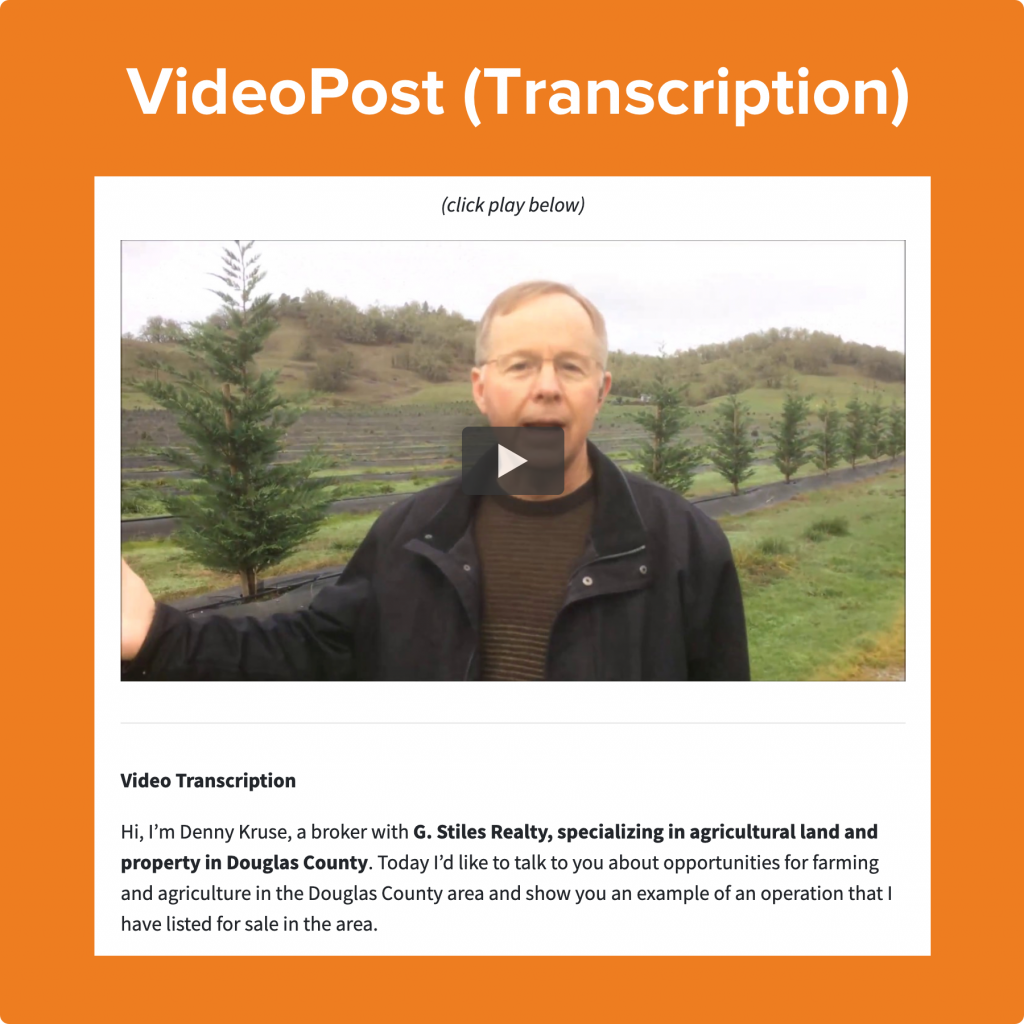
    (In fact, we have a super cool tool called VideoPost here at Carrot that will help you do that!)

    Or you could take an interview you did with someone in your market and turn it into a podcast episode.

    The key here is to get creative. There are endless possibilities for repurposing your video content. So don’t be afraid to experiment.

    Best Real Estate Video Marketing Gear

    If you’re just getting started, don’t overthink it.

    Use your smartphone to record video and upload it.

    But if you decide that you want to take your video content to the next level, here’s the gear we recommend getting.

    Microphone — Blue Yeti USB Microphone

    This microphone is affordable, easy to use, and great for beginners. It has omnidirectional sound settings so you can adjust from which direction the microphone picks up audio. Just plug it into your computer and get started!

    Here are some more details from Amazon:

    • Custom three-capsule array: This professional USB mic produces clear, powerful, broadcast-quality sound for YouTube videos, Twitch game streaming, podcasting, Zoom meetings, music recording and more
    • Blue VOICE software: Elevate your streamings and recordings with clear broadcast vocal sound and entertain your audience with enhanced effects, advanced modulation and HD audio samples
    • Four pickup patterns: Flexible cardioid, omni, bidirectional, and stereo pickup patterns allow you to record in ways that would normally require multiple mics, for vocals, instruments and podcasts
    • Onboard audio controls: Headphone volume, pattern selection, instant mute, and mic gain put you in charge of every level of the audio recording and streaming process
    • Positionable design: Pivot the mic in relation to the sound source to optimize your sound quality thanks to the adjustable desktop stand and track your voice in real time with no-latency monitoring
    • Plug ‘n Play: Set up the computer microphone in seconds with the included desktop stand or connect directly to a mic stand or boom arm and instantly start recording and streaming on Mac or PC
    Blue Yeti USB Microphone

    Camera — Canon PowerShot Digital Camera

    This camera is easy to use and great for shooting YouTube or other video content. Here are some details from Amazon:

    • The advanced video capabilities of the PowerShot G7 X Mark II camera can capture moments in the quality they deserve
    • Features a large 1.0 inch, 20.1 Megapixel CMOS sensor that helps capture high quality images and videos with a wide dynamic range. Autofocus system features tile autofocus and manual focus. Operating temperature is 0 to 40 degrees Celsius. Note charging time varies considerably depending on the remaining battery power
    • An aperture value of f/1.8 at the wide angle and f/2.8 when fully zoomed to a factor of 4.2x (24-100 millimeter), this lens equipped to capture a variety of situations with precision
    • High resolution, 3.0 inches LCD monitor that tilts up 180 degrees and down 45 degrees is ideal for self portraits and capturing pictures at high and low angles with ease
    • Built in WiFi for on the go convenience and the ability to easily post your images to select social networking and media sites
    • With the ability to shoot continuously at up to 8 fps, it can help you capture incredible images with nearly no time wasted
    • ADJUSTABLE, PACKABLE HOOD | Attached, adjustable hood can be rolled into collar when not in use
     Canon PowerShot Digital Camera

    Lighting — 10” Ring Light with 50” Extendable Tripod Stand

    Lighting makes a big difference in video quality. And this ring light will take your video quality to the next level.

    Here are some more details from Amazon:

    • Sensyne selfie ring light features a high sensitivity touch panel design that has a longer life than traditional mechanical buttons. It provides full control to easily adjust the 3 color modes (cool white, warm yellow and daylight) and 10 brightness levels to meet your different needs. Perfect for Photographers, YouTubers, Vloggers, TikTokers, etc.
    • The USB-powered control helps protect your safety while improving the ring lightโ€™s brightness. The phone holder is spring-loaded and extends up to 5.3″ wide, it is compatible with almost ALL smartphones with or without a case.
    • Extending from 15.7 inches to 50 inches, our tripod can be adjusted to any height within seconds as needed, short enough to stand on tabletop, tall enough to fit your height. This compact circle light set comes handy when you do makeup, artworks, beauty & fashion live streaming, video calls and more.
    • The pocket-sized Bluetooth remote allows you to take selfies or group photos easily from a distance up to 30 feet. Compatible with most Apple/Android smart phones like iPhone 8/7/6 Series, Samsung Galaxy Series, etc. No app download necessary.
    • We will provide you with a high quality after-sales, 12 months After-sale service. Please contact us anytime if any question.
    10'' Ring Light with 50'' Extendable Tripod Stand

    Video Editing Software — Shotcut

    Shotcut is free and easy-to-use video editing software that works on all different types of operating software.

    Shotcut video editing

    12 Real Estate Video Marketing Ideas

    What should your videos be about? Here are 12 ideas (with examples)!

    Real Estate Video Marketing Idea #1: Home Buyer Advice Videos

    The house buying process is not a simple one. At least, not for the inexperienced home buyer.

    While most homebuyers have some idea of what they want in a house, they don’t know the potential dangers they face, the kind of things that improve a house’s value, or the sort of timeline they should expect when purchasing a home. But… they would like to know those things.

    Short, informal videos offering advice to the homebuyer are not only helpful, but establish your brand as the expert to answer your prospect’s questions and, eventually, sell their house.

    Here’s an example of some on-the-job content from Andrew Lamb Real Estate Experts.


    Real Estate Video Marketing Idea #2: Home Seller Advice Videos

    House sellers want to know the best way to present their house in online photos. Of course, that’s only one example of what house sellers want or need to know before moving forward.

    Luckily, you have all (or most of) the answers.

    By providing valuable advice and information to homeowners, you can build rapport and nab more listings.

    In Beth Day’s video below, for instance, she uses her knowledge of what sells and what doesn’t to build a successful relationship with her potential clients.


    Real Estate Video Marketing Idea #3: Real Estate Whiteboard Videos

    The whiteboard video is for the coach, the person who enjoys illustrating ideas with a dry-erase marker in hand. At Carrot, whiteboard videos are one of our closest companions. Trevor Mauch, our CEO, puts these together, teaching on topics that range from optimizing your marketing budget to website design.

    The idea is the same as the previous one: you teach buyers or sellers something while illustrating it on a whiteboard.

    As an example to inspire your own, though, this is one of our favorites: Anatomy of a High Converting Real Estate Homepage.

    Anatomy of a High Converting Real Estate Homepage

    Real Estate Video Marketing Idea #4: Client Testimonial Videos

    Most of you are probably utilizing real estate testimonials on your website, but video testimonials pack an even stronger punch. Like any well-placed and reliable endorsement, the video version offers social proof โ€” that sense of “this worked for someone else, so it will work for me too” โ€” to combat the prospect’s doubts.

    Basically, a video testimonial is a shorter and less thorough version of a case study. But they’re just as powerful.

    From real estate agent, Beverly Barnett, this video testimonial offers a relatable, authentic, and reassuring foundation upon which new clients can stand. Yours should do the same.

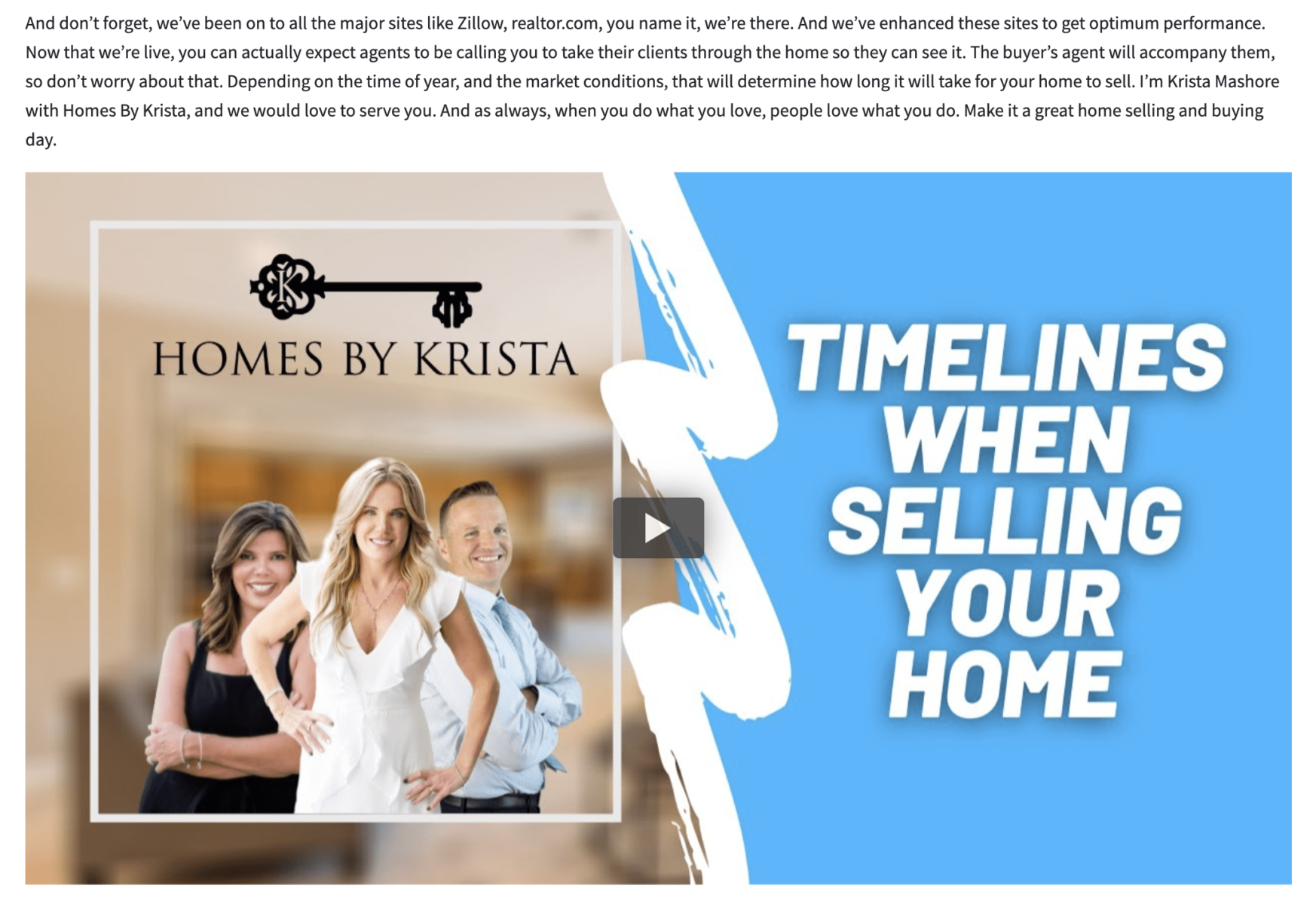
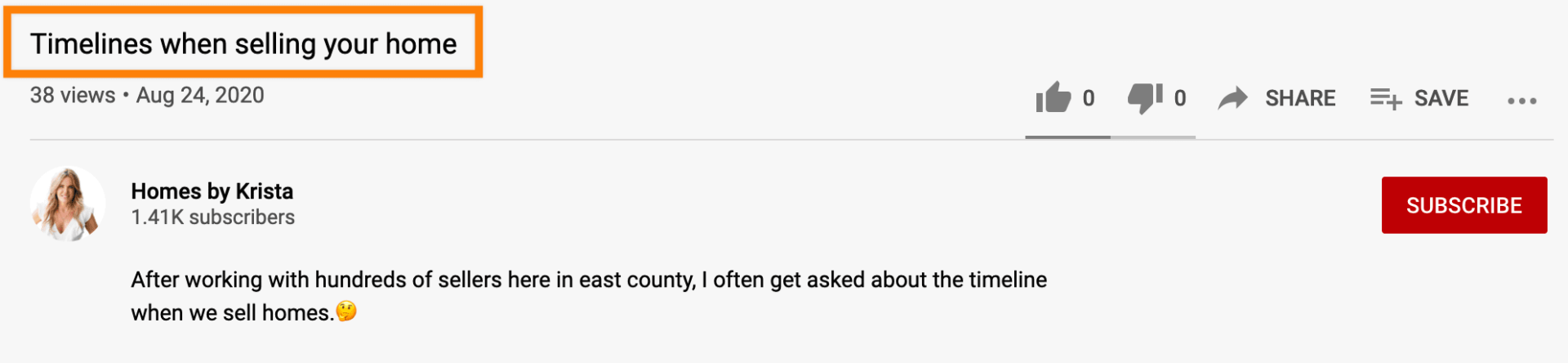
    Here’s another testimonial example from Home By Krista.

    Todd Gives Us a 5 Star Review

    Real Estate Video Marketing Idea #5: Case Study Videos

    Everyone loves a good story.

    Not only are they powerful, but they’re also educational (and when they’re both, it’s lead generation gold). From the moment humans discovered fire, stories have inspired, evoked emotion, and driven decisions.

    As a real estate agent, case studies are just that: stories of clients who have fallen in love with your passion for helping, your drive for excellent service, and the solution that you offer. A case study is simply an overflow of the customer’s excitement about who you are and what you do. Much like a fire, it’s a spark to start more fires.

    Here’s an excellent example from REDX Real Estate Prospecting Solutions.


    Real Estate Video Marketing Idea #6: Neighborhood Videos

    From best parks to the top places to eat, what we’ve deemed Neighborhood Videos puts your city knowledge on the treadmill. As you well know, selling your city is just as important, if not more, than selling a house. If people don’t love your city, they won’t buy a house in your city.

    Neighborhood videos are your way of helping prospects fall in love with wherever it is you buy and sell houses.

    In StellarRealty NW’s video, Kaira West talks about bike paths, food pods, and taverns. Let this neighborhood overview video guide your own.


    Real Estate Video Marketing Idea #7: Community Videos

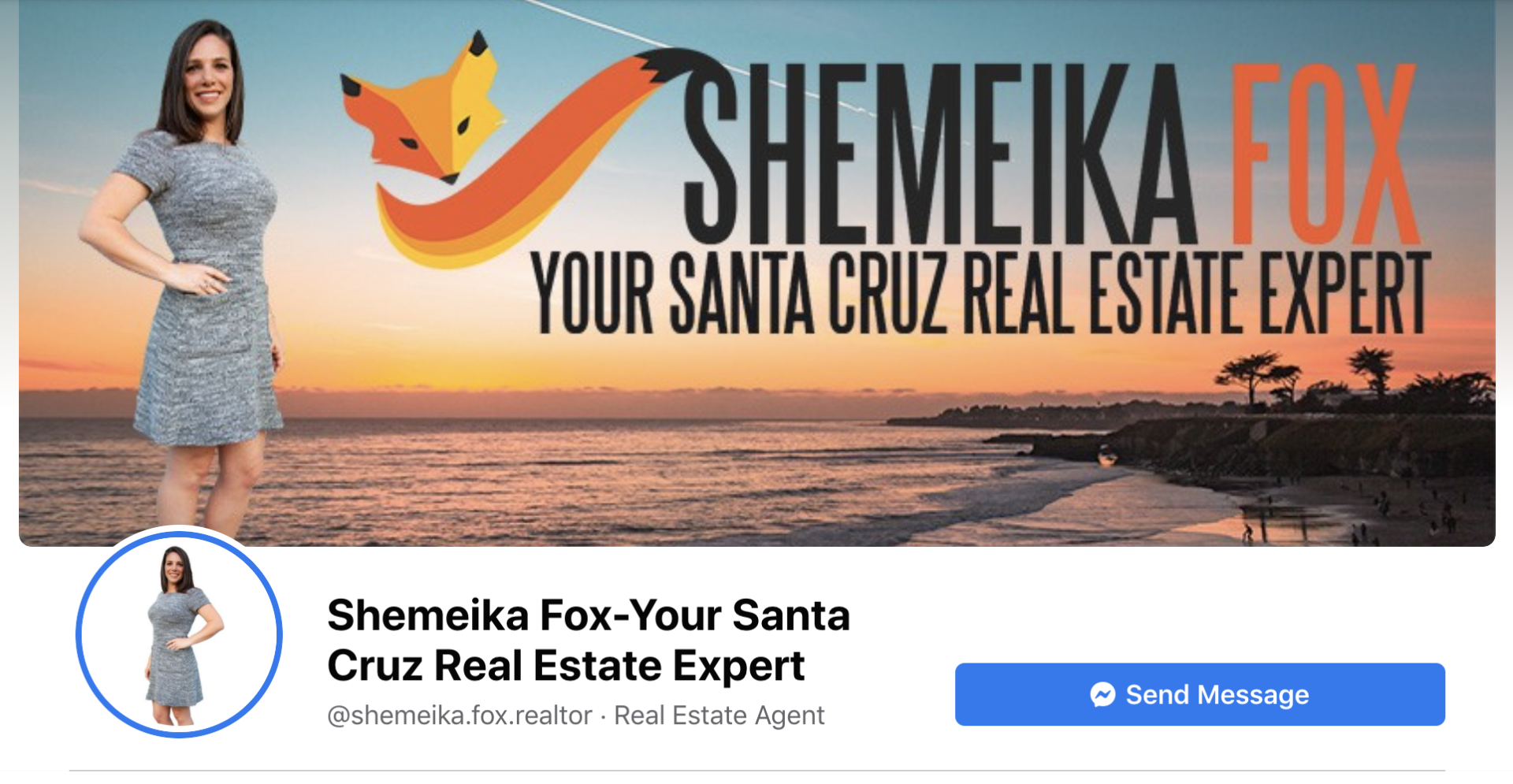
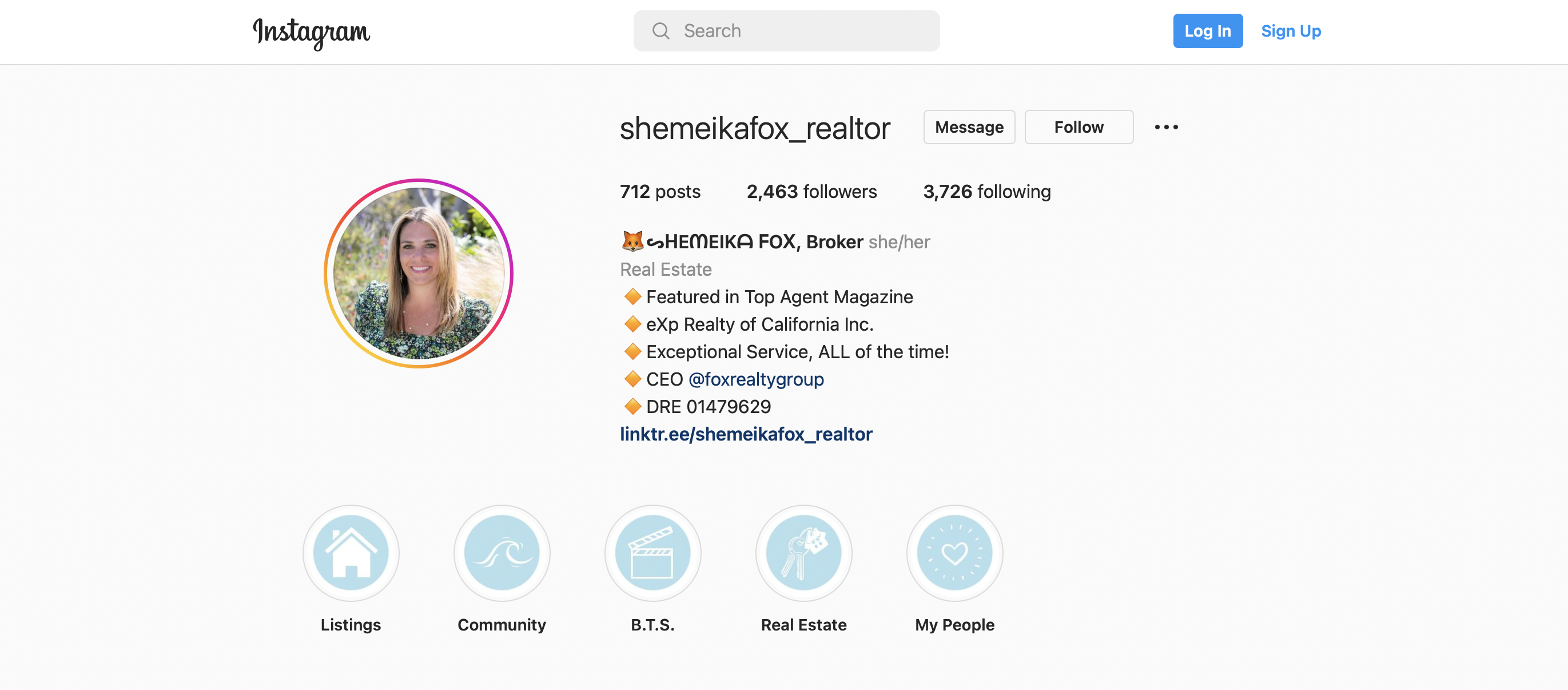
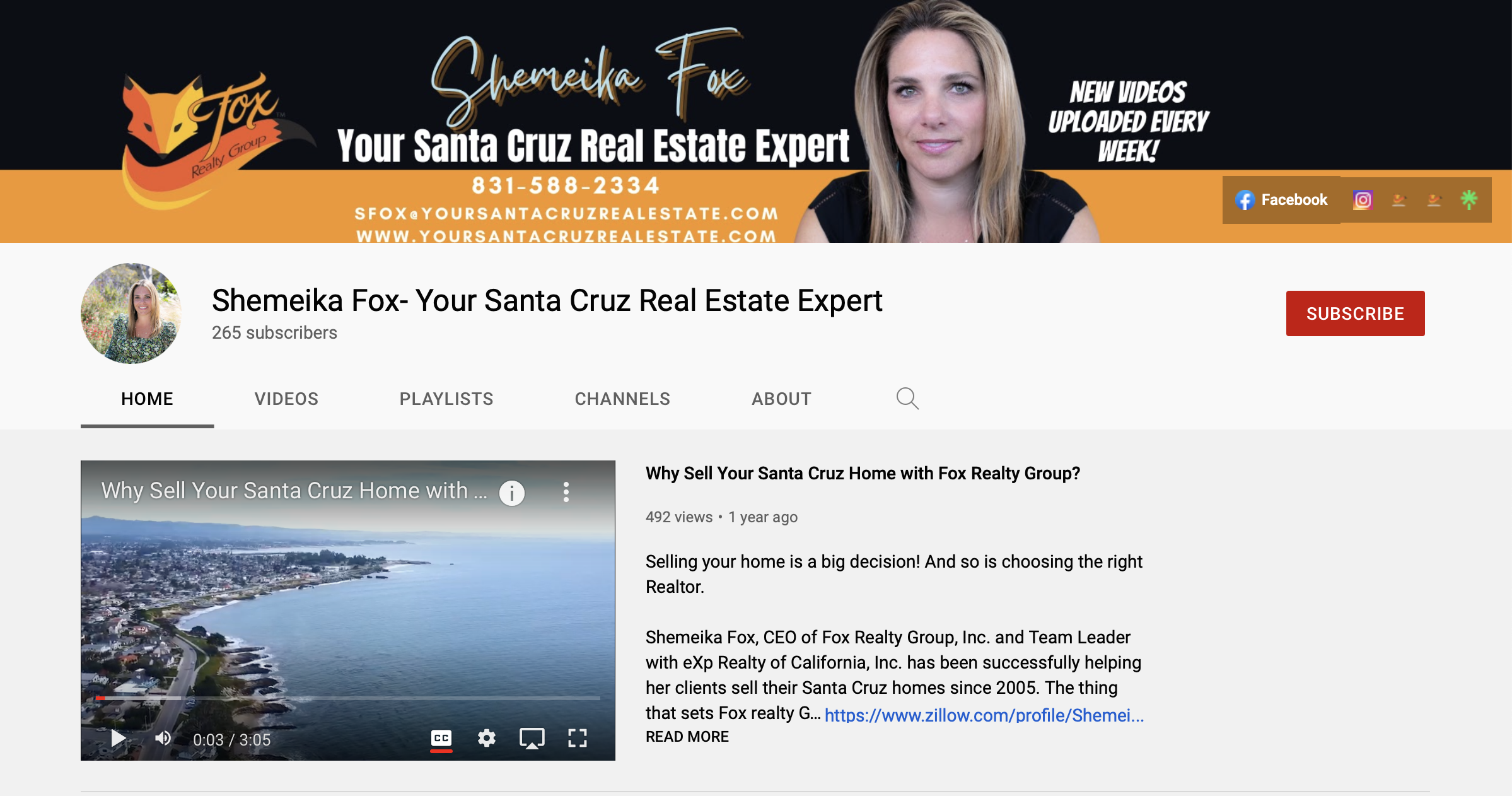
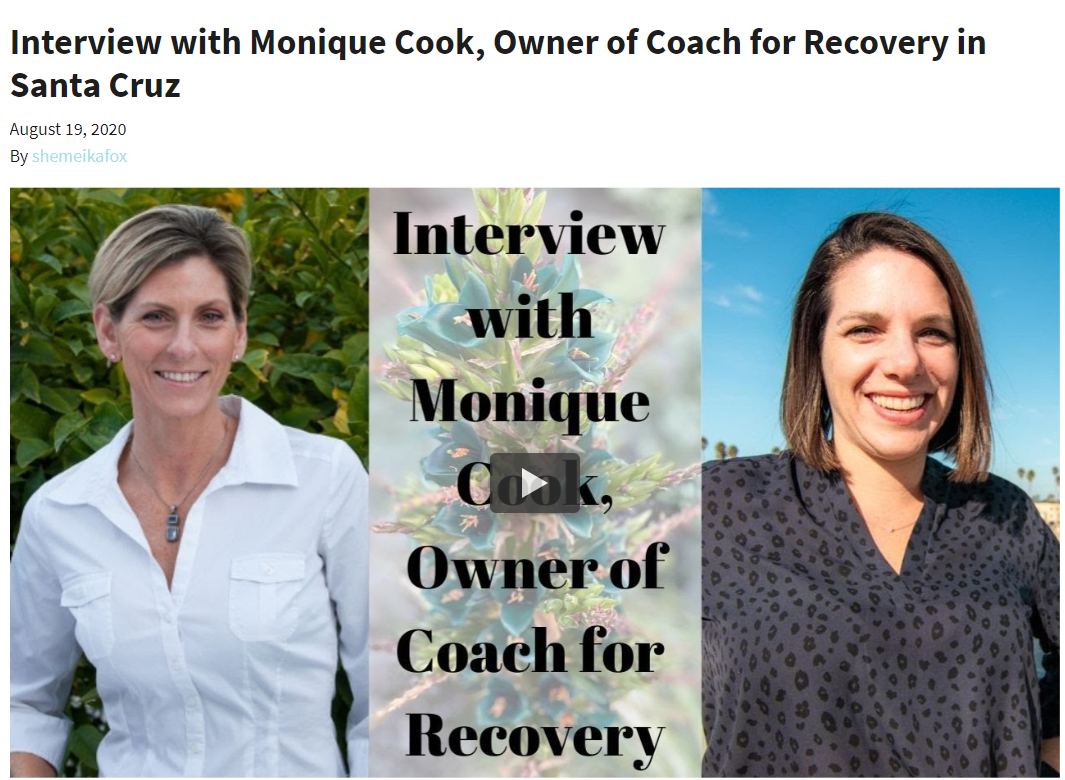
    Shemeika Fox of Fox Realty Group in Santa Cruz California does an amazing job with calling out her community by interviewing other local business owners. Use these videos to establish yourself as a friendly, interested, and involved real estate agent. Here’s one of Shemeika’s interviews with Sandy Novembre; Owner of Monarch Pilates in Santa Cruz.

    Interview with Sandy; Owner of Monarch Pilates in Santa Cruz

    One of the beautiful parts about video content is that it builds relationships.

    And while all types of content can be used as a friendly get-together, year-end review videos, in particular, are an opportunity to have some fun, be transparent about the local market’s health, and put your brand’s stamp on the coming year’s sales.

    In this example, notice how RISE Realty in Utah uses its video to strengthen their brand’s voice as a friendly and knowledgeable realtor.


    Related Content: How to Beat Zillow in Google Rankings Using Video [Case Study]


    Real Estate Video Marketing Idea #8: Market Update Videos

    When buying or selling a home, your clients want to follow the current local real estate market, but they don’t want to put in the work.

    Do your clients a favor, roll up your sleeves, and produce video updates of the housing market. Keep your presentation concise and easy-to-understand. Upload this content to your website monthly (or whenever you feature a new update) and keep an archive on your YouTube channel.

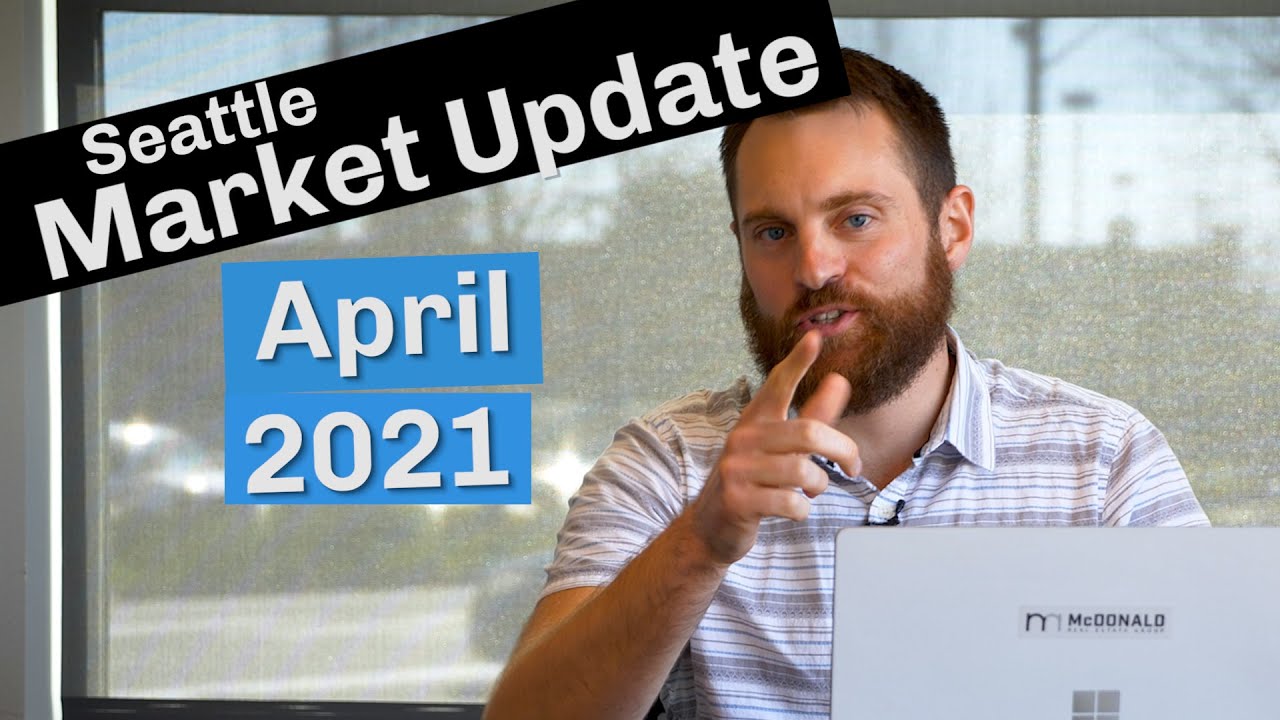
    As an example, we love the personability and knowledge that McDonald Residential presents in the video below.

    Seattle Real Estate Market Update | April 2021

    Real Estate Video Marketing Idea #9: Tips and Tricks Videos

    Tips and tricks videos can not only educate your audience but also boost your credibility within your market. Give your audience nuggets of wisdom each week or month and they’ll surely tune in for more.

    Tips & Tricks: Negotiation

    Real Estate Video Marketing Idea #10: Listing Videos

    You’re a real estate agent. No reason to hide it.

    Into your content, sprinkle an appropriate dose of house listing videos, beautifully displaying what you currently have for sale.

    This example from Pienovi Properties is of high quality. But don’t let that intimidate you. It’s okay to work with what you have.

    Invest in some basic editing apps, such as Filmora or iMovie. And check out Paradym visual tour. With these tools, you’ll be able to start creating your own house listing videos.

    Remember, just do the best you can.


    Real Estate Video Marketing Idea #11: โ€œAbout Meโ€ Videos

    Especially for smaller real estate businesses, this video should replace the Company Brand Promotional Video as the front and center introductory clip to your business.

    The most important thing to remember when recording your “about me” tape is that you’re not trying to sell anything… other than you. You’re not selling houses or an easy process or low rates. You’re selling a relationship. And that’s it.

    People want to know who they’re working with โ€” the real person behind the curtain of business talk. This video is your way to show them.

    As inspiration, consider this professional, yet casual video made by Koki Adasi.


    Related Content: 43 Real Estate Lead Generation Ideas That Will Change The Way You Do Business


    Real Estate Video Marketing Idea #12: Promotional Agency Videos

    If you have peanut butter, you need jelly. And if you have a real estate business, you need a promotional video.

    On YouTube, this is your front and center introduction video. It’s the one that teaches prospects about what you do, who you are, and how you do it.

    The example we provide is a little formal, but don’t be afraid to de-formalize your promotional clip. Formality has its benefits, for sure, but so does casual speak. Depending on the brand image you want to create, your video could fall either way. Overall, make sure that you are consistent with the voice you’re using and the message that the tone is sending.

    Here’s the promotional video from NAN & Co. Properties where they articulate what they can offer and why anyone watching should choose them.

    Your Videos Don’t Have to Be Perfect

    With all these real estate video marketing examples, there are ways they could be improved. And with some of the above examples, there are LOTS of ways the video could be improved.

    But we can’t forget one important thing.

    Within that imperfection and lack of polish is something more sacred than any Steven Spielberg or Woody Allen blockbuster could ever produce.

    Authenticity.

    The wonderful thing about video in real estate marketing is that it offers a medium to cultivate relationships. It shows more of you than any other type of content. More of the genuine you.

    Videos allow people who are sitting at home a look into your life, your work, and, most importantly, you. The true, authentic, unedited you.

    Because, when all’s said and done, that’s really what you’re selling: the best version of yourself that you can possibly muster.

  • EP 250: Use These Simple Content Marketing Hacks To Stand Out From Your Competition w/ Nate Kennedy

    EP 250: Use These Simple Content Marketing Hacks To Stand Out From Your Competition w/ Nate Kennedy

    Use These Simple Content Marketing Hacks To Stand Out From Your Competition w/ Nate Kennedy

    Focus on the data, not the drama!

    Nate Kennedy

    One of the things I have seen investors and agents struggle with the most is finding ways to stand out and differentiate themselves from the competition. Many people are under the impression that they just need to go out there and get leads when in reality, it takes much more than that. 

    If you want to stand out in your market, youโ€™ll need to tap into the psyche of your customers, find out how you can help them, and build value from that foundation. You have to learn how to truly understand your customerโ€™s pain and lead them to the solution.

    When you are able to convey the message that you are the one who is uniquely qualified to help them, marketing becomes easy!

    Learn how Nate utilizes 3 content marketing pillars to help businesses stand out and how you can implement these same concepts into your own business!

    Read the Full Show Notes Below…


    Use These Simple Content Marketing Hacks To Stand Out From Your Competition w/ Nate Kennedy

    Nate calls himself the builder of Funnels, Master of Ads, King of Conversions, and The Doctor of Marketing, all with good reason. Since starting his business, heโ€™s helped people to generate hundreds of thousands of leads, maybe even millions!

    Iโ€™ve known Nate for over 10 years now and have seen first-hand the results he has been able to deliver his clients. Nateโ€™s involvement industry encompasses more than just marketing.

    He has owned a mortgage company, wholesaled properties, worked on rehabs, and even built houses himself. When he discovered online marketing in 2007, he went all in and hasnโ€™t looked back since. Today he works with many top leaders and trainers in the real estate space, as well as local agents and buyers. 

    Over the last few years, Nate and his team have focused heavily on real estate investors. With so many people saying the same things and offering the same services, how do you stand out from the rest?

    You can say you pay cash and close quickly, but that doesnโ€™t make your business any different from all the other homebuyers in the area. The investors who are really seeing success are the ones building authority and credibility. When someone has a problem an authoritative business is the first one thought of.

    To achieve this, Nate utilizes three pillars when working with his clients. He helps them to understand their clientโ€™s pain, deliver a message that stands out, and capitalize on the valuable content they are creating. 

    Pillar 1 – Creating An Online Presence

    Many people think they can just put up a page and the leads will begin to roll in, however, it takes much more than that to be successful with your online marketing. As the leader of your business, itโ€™s important that you understand the psychology of your marketing so you can move people from their pain to a solution.

    Our online presence will need to be different from your competition, letting your customers and clients know exactly how you are uniquely able to help them solve their problems.

    Getting Great Testimonials

    One of the first things Nate asks his clients to do is to provide testimonials from happy clients. It is one thing when you go out and try to sell your services, it is quite another when you have a 3rd party doing it for you.

    If possible, get video testimonials that you can utilize in all sorts of ways on your site. When setting up online ads, you can have them point right to your testimonials page so potential clients can immediately see how others feel about you and your business. 

    Pillar 2 – Developing A Content Plan

    Together with his clients, Nate will develop a strategic marketing plan, making a list of the content they would like to create. The content plan should always focus on caring, helping potential clients understand that your goal is to help them with their problems and needs. With so many people in the real estate space, itโ€™s important to show that you are really solving problems and not just another company. 

    Video Content

    As Iโ€™ve said repeatedly, content and credibility are key to help investors and agents stand out from the pack. One of the best ways to do this is through video content.

    Video helps to quickly get your message out and will help people to feel like they actually know you. Your video content can then be transcribed and used on a blog and social media. A few examples of great video content include: 

    • Interview with prominent real estate figures, community leaders, or related professionals in your area
    • Video testimonials that shed light on exactly what the problem was and how you were able to solve it
    • If you go to a property, take your phone out and take a quick 3-minute video showing people what you are looking for in a house

    The beauty of video content is that you can get your message out there quickly and easily. All you need is a phone. 

    Pillar 3 – Amplifying The Valuable Content You Create

    The great thing about testimonials and video content is that it gets all eyes onto your website. A video shot for Facebook can be added to a Youtube playlist. If can go up on your website and be turned into a blog using our quick and easy transcription service.

    Segmenting Your Audience

    A prominent tool for Nate and his team is Facebook Marketing. With Facebook ads, you are able to strategically target, and retarget potential customers to convey the message you want to get across.

    For example, you can run a video ad for one week, then run a second ad only to the people who watched 25% of ad #1 in the past seven days. You can tweak this in all sorts of ways, segmenting by interest, major life events, and previous interest in your product. 

    Becoming A Celebrity

    Using Facebook ads and other marketing channels, you can effectively become a celebrity in your industry and market. When you are able to get the right content to the right people on Facebook, then hitting them again on Youtube, and again with Google Ads, your face and business will pop up where ever they go online.

    When you are consistently adding fresh content, you will keep people interested and prove to any skeptics that you are in fact real.ย 

    Finding The Who To Do The How

    Marketing isnโ€™t for everyone. People donโ€™t always get excited by data and analytics. The good news is that you donโ€™t have to do it all yourself.ย  As Nate puts itโ€ฆ find the who to do the how.

    If you donโ€™t want to do the work yourself, find someone who does and is good at it. As an entrepreneur, you must understand how it all works and what needs to be done, but that doesnโ€™t mean you have to do it all on your own.ย 

    Follow Our Guest:

    Mentioned In This Episode:

    We want to hear your thoughts on the podcast! Drop them in the comments section below or hit us up on Facebook or Instagram

  • SEO For Real Estate Agents [30+ Highly Effective Tips]

    SEO For Real Estate Agents [30+ Highly Effective Tips]

    What is SEO for Real Estate Agents?

    SEO for real estate agents is the process of increasing website rankings by improving on and off-page factors such as content, keywords, page speed, URLs, and backlinks.

    Choosing a good domain name

    Does a domain name matter for SEO? Well, yes and no.

    A better question might be how you want to brand your agent website?

    You can either brand your website with a name or a location. The location will restrict your ability to market outside of your initial target market. For some investors that is not a problem.

    We published more information about branding considerations here.

    As for having a keyword rich domain name we also have some thoughts.

    The short answer is, not all real estate agents will have the opportunity to grab a keyword-rich URL so don’t worry too much about it.

    Carrot Personally Branded Real Estate Agent Site

    Pick the keywords that you want to use for organic rankings

    Keywords are one of the most important aspects of SEO. A keyword is what word you are placing the most importance on for Google to know what the page is generally about.

    If you have never done keyword research, not to worry, itโ€™s really easy.

    You can start by using Googleโ€™s Keyword Planner Tool.

    Orโ€ฆ

    If you want to know which keywords we have identified as the best keywords to target on your website, grab our SEO Bible.

    Write engaging content that connects with your visitors

    Googleโ€™s algorithm analyzes how engaging your content is.

    It tracks this a few ways,

    1. How long a visitor stays on your page
    2. How many pages they view
    3. How fast your website can load pages

    In order to engage your readers, try to answer a question you know they will have. If you’re not sure where to start, you can by typing in phrases using Google. Then use the keywords that you find have good search volume and also answer important questions. Such as, how to buy my first house.

    Also, mix your content up between written words, video, and visuals when it makes sense.

    seo for real estate agents engaging content

    Keep your title tag under 60 characters

    Years ago Google search results would limit title tag length based on the number of characters.

    Now they do it a bit different. They use pixels (the current limit is 512 pixels).

    No one should count pixels, we recommend you just count characters. And weโ€™ve found that staying under 60 characters will keep you under the pixel limit most of the time.

    We have a handy tool built into Carrot websites that help you create your page or blog postโ€™s title tag

    Place your keyword in the first 100 words

    Itโ€™s still important and common practice to include your keyword within the first 100 words.

    Having it near the top will allow visitors to connect with the topic that they have searched for. They’ll know that they are in the correct place.

    For example, this Carrot member out-ranks Zillow for long-tail keyword “North Umpqua River Homes” and you can see it with the very top of the content.

    Use shorter URLs

    Short URLs can help a searcher understand what the page is about before clicking on it.

    It can also make it easier for them to remember if they ever need to return.

    A study performed by Backlinko.com analyzed 1 million Google search results and the study revealed that shorter URLs performed better in Google than long URLs.

    Although long-tail keyword URLโ€™s most likely won’t have a significant negative impact on your SEO, from a searcher’s point of view, easily remembered URLs are the way to go.

    Use images

    An image can do a lot for your real estate website. It can add amazing location images to look at, break up your text, and give the search engines a better idea of whatโ€™s on the page.

    Keeping your readers engaged with your content helps Google know that the content is worthwhile and to keep it ranking high for search terms.

    Google pays attention to user experience signals. So, anything you can do to keep visitors on your page is a big win.

    Here is an example of using images to break up text within a blog post.

    Must haves: Privacy policy and terms page

    Having a privacy policy and terms page most likely won’t give your real estate website a huge boost in the search ranking but don’t forget about these pages.

    First, you have the opportunity to include your company name which helps, especially since it will be linked on every page of your website’s footer.

    Another reason to have these pages is that it helps Google and Bing visitors see that you are a legitimate business. You have the opportunity to create content about what you do and who you are.

    Carrot websites include these pages in the footer by default.

    Donโ€™t over-optimize anchor text

    It’s recommended to put your keyword in your anchor tag, the text in your links, some of the time. But not all of the time.

    It’s been a while but during Google’s Penguin update websites started being penalized for over optimizing anchor text with keywords.

    Create link text that helps your visitors understand what they are clicking. You don’t need to worry about stuffing keywords to help rankings. Make your content flow with real terms.

    New to link building? Try writing a simple resource page

    A resources page can be a simple, quick, and easy way to get a bunch of links on a page that are really helpful to a website visitor.

    Find a few resources that a website visitor might look for. Include them on the page and then email the person who you link to and ask them to check out the resource you included them on.

    Hereโ€™s an example of a “best real estate blogs” resource post we recently did on our blog.

    Or, learn how to useย HARO to build backlinks consistently, month after month!

    Find keywords with โ€œsearches related toโ€ฆโ€

    Google will give you some suggestions on what other keywords are related to your search.

    Just use Google search to find some keywords you think leads are typing in and at the bottom of the search results you will see what Google is relating that search to.

    Spy on competitorsโ€™ keywords with SEMRush

    SEMRush is a great keyword research tool that offers a lot of features to help your real estate website’s SEO.

    Maybe, what it’s best at is helping you find what keywords your competition are ranking for.

    Simply add a keyword or competitor domain and see what comes up. You’ll find the keywords in their title tag and meta description. Then you can try and optimize those for yourself.

    Make sure your website is mobile-friendly

    Carrot members get a lot of traffic from mobile devices.

    You should always make sure your website is mobile-friendly. Not sure how to do that? Use our free tool here.

    Make sure your real estate agent website server is fast

    Why do you want your website to load fast?

    Google wants to send users to pages with quick load times because no one wants to wait to find answers.

    Hosting is important and you get what you pay for. If you have some who built your website, ask them to look at your websiteโ€™s speeds.

    Carrot sites are built and hosted on highly secure and fast servers. And, we are constantly improving the website speed for our members.

    page speed for good seo

    Use video post transcriptions

    Using a video post transcription for your videos is a great idea to make your website more accessible for all visitors, especially those who use screen readers, and, having text to create more SEO opportunities.

    Google canโ€™t crawl a video. Adding a transcript gives Google the information it needs to decide what the video is about.

    You can see an example of a video post one of our members did…

    Embed videos into blog posts

    If the video is a YouTube video, these embeds will boost views (and therefore rankings).

    Either way, embedded videos can significantly improve your bounce rate and dwell time numbers.

    Hereโ€™s an example of an embedded video:

    Include your keyword within your videoโ€™s filename, title and description

    Google needs help in figuring out what your video is about.

    Include your target keyword (at least once) in your videoโ€™s filename, title, and description. That way youโ€™ll be helping Google and YouTube understand your videoโ€™s topic.

    Use keywords within your YouTube playlist

    Why put in the effort?

    Well your playlist can actually help rank in YouTubeโ€™s search results.

    Second, again, it’s helping Google and YouTube know which videos and playlists to suggest.

    Keyword-rich URLs

    Google still pays attention to the keywords that appear in your URL. A URL provide a strong indicator of what your page is all about.

    Use keywords in subheadings and make content easy to read

    Visitors will spend more time on your site when content easy to read.

    Avoid a lot of paragraphs bunched together. Space your walls of text into skimmable content with bullets and subheadings:

    Use brackets in your title tags

    Brackets have been shown to boost CTR. Why? Brackets call attention to your idea and allow your content to stand out from the clutter.

    Use your keyword in your meta description

    You want to optimize your meta description to attach clicks. Write a very clear and compelling for why someone should click on your content.

    Also be sure to include you keywords within your meta description.

    Use keywords in H1 and H2 tags

    It’s recommended that you use your exact keyword in the pageโ€™s H1 and H2 tags. But you don’t want to over-optimize or over-use your keyword, so replace the exact keyword with a synonym instead as you create more H2 tags.

    So if your target keyword was โ€œGarden Valley Homes for Saleโ€ you could use a term like โ€œHomes For Sale In Garden Valleyโ€ in an H2 tag.

    Make social sharing buttons easy to find

    If a visitor wants to share your content, donโ€™t make it hard for them to do it. Each one of your posts and pages should have a social sharing button easily visible.

    And, donโ€™t forget to see how it looks on mobile devices.

    Social shares equals in-demand content.

    Optimize your homepage for both your brand and conversions

    Your homepage carries the most authority.

    But they can also be hard to rank. Homepages that are light on content or in highly competitive areas may have more difficulty. That’s one reason Carrot homepages oave have more content. We believe in evergreen content.

    As a real estate agent, you should focus on both branding and conversions because a lot of your internal pages link to the home page and there is a good chance if someone comes to your site from a blog post or location page they will also check out your homepage.

    Publish long-form content

    Content studies have found a correlation between long-form content and higher search rankings. But, that doesnโ€™t mean that simply writing longer content will push you to the top of page one. But publishing 1000+ word content helps increase your odds.

    content-total-word-count

    Use internal linking

    Internal linking is a good way to tell Google what other pages on your website are useful and related to the topic.

    Hereโ€™s how it could work. Link from a ranked page to pages you want to rank.

    Itโ€™s pretty simple and it works.

    Here is an example from one of our Carrot members location pages linking to other content on their website.

    Write content that completely covers a topic

    Again, Backlinkoโ€™s research shows search engine ranking factors found that highly informative content significantly outperformed shallow, low-level content.

    content-topic-authority

    Write image alt text

    Google canโ€™t see whatโ€™s in an image so you need to tell them. Use image metadata, like the image filename and alt text to communicate what the image is.

    Itโ€™s a good idea to use a keyword in with the image when it makes sense but avoid simply stuffing keywords.

    Create a checklist or glossery of terms post

    Creating a checklist or terms blog post can take some time, but it can be worth the effort to provide useful information to your visitors.

    Basically, create a checklist of an important topic or simply a list of industry-related terms that visitors might not know. Think about all the questions a potential lead might have and start crafting your list.

    For example, a checklist homeowners can use to sell their house.

    Create an XML and HTML Sitemap

    Sitemaps help Google find (and index) real estate websiteโ€™s pages.

    Make sure to create an XML and HTML sitemap of your site and submit them to Google via the Google Search Console.

    If you are a Carrot member the sitemap is already created for you. Read our site map tutorial.

  • How to Generate Real Estate Buyer Leads for $2 By Advertising Your Listing On Facebook

    How to Generate Real Estate Buyer Leads for $2 By Advertising Your Listing On Facebook

    Finding Real Estate Seller & Buyer Leads By Advertising Your Listing On Facebook

    Video Transcript

    Hey, this is JT with Silver Street Marketing, and, we will be going over how to generate real estate buyer leads and seller leads from advertising your listing on Facebook. We’re going to be going through how to do that, the conversion-based strategy, and to just give you an overview.

    For today’s example, we’re going to use Carrot to set up the landing page, as well as setting up a Facebook campaign and creating the actual ad.

    Always remember there is nothing wrong with exploring your options, but the most important thing is to be consistent. The reason why I say this is because there are so many ways to advertise your listing online.

    You’re going to hear all these different strategies, and this one, in particular, is one that I’ve used to manage for my clients and I’ve seen amazing results out of.

    Just only a few days of marketing a listing at $5 a day for one of my clients and we came in with 24 leads at $2 apiece. All for one listing that they had obtained. This is what I’m going to be teaching you guys today because I think there is a lot of value in getting actual emails, phone numbers, and names of people who are looking at buying a new home.

    Now, a lot of those will have an existing home, especially depending on the price range of home that you’re advertising that they need to sell. Being focused on providing value is going to help us as we try to convert these leads.

    There’s going to be other ways to do this, obviously, but this is the way that I’ve seen success, and it’s a lead-based strategy so we can actually get some phone numbers, and emails, and names that we could be contacting and setting up follow-up processes for so that we can have people coming through our pipeline.

    Create a Strategy to Generate Real Estate Buyer Leads and Seller Leads

    The first thing that we need to talk about is creating our strategy. First off, to lay down the kind of base layer so we know in what way that we’re moving, is first, we always need to be focused on bringing value.

    In this case, the value that we’re bringing is information on this property.

    We’re thinking about all the things that somebody who’s looking at buying a new home or interested in selling their house and getting another one in the market because the rates are low, or for whatever reason that they’re going through at that moment.

    We need to be able to bring value to that situation, and that doesn’t only apply to our ad. This applies to every little piece of follow-up, any engagement with this person, whether it’s through our digital marketing, through our physical talking, or any other piece of follow-up that we send them, we need to bring value.

    By doing that, you’re going to be able to really become the agent that works with this person.

    Number two, there must be a clear path to conversion. We need to make sure we have a website or a lead form in place that’s very simple and easy, is a very straightforward way to collect and disperse information so that we have everything set up correctly and we make sure that we are providing that value that we’ve been talking about that we’re going to be using in our ad.

    Then lastly, success is always in the follow-up. Do not give up on these leads because they don’t respond to your first email or your first phone call.

    Most deals are not closed until between the ninth and the 12th interaction. Keep that in mind, success is always in the follow-up.

    Laying Out How to Move the Lead Through the Process

    All right. This is really where we’re going to lay out how we’re going to move this lead.

    First, we need to get access. We need to say, “Let’s get access to the property,” so we’re going to use that as our hook.

    We’re going to say, “Hey, do you want access to a specific property that’s for sale?” We’ll go into this script a little bit later, but that’s going to be our first piece. That’s going to be kind of our hook that gets somebody interested.

    Next, we need to have a clear path, and that path is going to be driving them to the landing page. Now, we’re going to be using a Carrot landing page. I’ll be showing you how to create that Carrot landing page and how to use that as a conversion tool.

    Lastly, our goal is going to be filling out the lead form. That’s kind of our path for this lead and what we’ll be doing.

    How to Create Your Landing Page to Generate Real Estate Buyer Leads and Seller Leads

    Now, that we have everything kind of a base layer set up, let’s jump in and actually build out the Carrot page.

    Now, I like this first image squeeze page.

    This is the one that I usually go with. Now, I’ve tested other ones as well, but this one is a really good one to be advertising your listing. Now, we’re going to give it a quick title.

    We’re going to do a Listing Landing Page or Listing LP. Next, be sure to select an opt-in form. Now, if you haven’t created an opt-in form specifically for this landing page, then we’re going to show you how to do that.

    Usually, the easiest way for me to go through this is I just pull up one, and then I hit Edit Form, and then we go in, and we are going to go to Forms, and then we’re going to pick the one that we want to duplicate.

    Usually, what I like to do is I like to use this, “What do you have to lose? Get started now.” It’s usually the one that fits the best for this landing page, so we’re going to go ahead.

    We duplicated it, and we’re going to go ahead and edit it, and we’re going to put, “Get Instant Access To This Property,” and we’re going to hit Update, and we’re going to be asking for the name, the phone number, and the email address.

    All right. That’s perfect. Now, we’re going to go into the Form settings. You can put a little note here like, you could always if you’re going to send them more properties in the future, you can put, “We will send more properties similar to the property you’re interested in in the future,” or whatever you’d like. That’s up to you on this form, but we’re going to go ahead and we’re going to change the button to Get Instant Access.

    Okay. We’re going to update that. Now, we’re going to go back to the landing page and we’re going to refresh that real quick, so that way, we can use that form that we just selected, so, “Get Instant Access To This Property,” and we’re going to come down here and we’re going to make sure that we choose the image that we want on here.

    Now, I personally have found that the background image that usually works best for me is actually changing the size of the image, so when I upload it, I like to upload an image that has like a website template size, which is like 1,300 by 1,200 pixels. That usually works best.

    You can do that inside of Canva. If you go to canva.com, you can actually create that yourself, and it works really well. Once you have that uploaded, you’re going to go ahead and click Select. I always like to make sure to preview it beforehand. You can always publish it and change it later, but just make sure it looks nice and be able to use that.

    There are some things you want to make sure that we take note of. Before we publish, I’m going to hide the header. You can leave the header if you want. I personally don’t like it, so I am going to take that away. That way, it just seems a little bit more seamless. It just is a little bit more strictly a landing page.

    You can see we’ve got an easy, little landing page here, “Get Instant Access To This Property.” This is going to be the image of the home that we are going to be sending the listing or the traffic from, so just make sure that this is the listing picture.

    Again, you can change those dimensions in canva.com. Then, just switch it over to the website, and then download it back onto your computer, and it will look nice and it won’t be all pixelated, and it just will be a little bit more seamless. That’s what I like to do here.

    Now that we have the Carrot page ready, we just need to get the thank you page ready.

    This is the landing page.

    We’re going to come back to Carrot, and we are going to duplicate one of our thank you pages. I usually like to use either one of like our Contact Us or something similar just because it’s very simple and already has a structure set to it that we can edit, and then add all those pictures to it real fast.

    I am going to go ahead in here, and I’m going to say, “Thank You Listing LP,” and I’m going to put, “Thank You For Connecting With Us!” I’m going to start filling out the information of the listing.

    We’re going to do, “Thank You For Connecting With Us!,” and I’m going to put the address of the listing, so ABC Silver Street Listing, and for the price, $500,000, and then we’re going to put some info on the property.

    We could do a little paragraph here, and we could do 2,500 square feet, three bed, three bath, et cetera.

    This will be up to you to fill out, and then we make sure to had our pictures. We’re going to go ahead and do gallery, and then you go ahead and upload those pictures here, and so this is going to be kind of our instant access page.

    Then, I like to have this contact info here, but I also like to switch the bottom form to “Find more info about this property.” or “Contact us to learn more about this property,” Whatever you’d like, but I always like to have a form down here just in case if somebody has questions about the property that they want to see it, or they want to reach out to us about it. That way, they can do it from this Carrot page.

    I prefer to change this form to the thank you page for the actual listing.

    How to Create Your Listing Facebook Campaign to Generate Real Estate Buyer Leads and Seller Leads

    Now that we have a Carrot landing page ready to go and we want to go in and start advertising that page to get people to start clicking through.

    Starting with the Facebook ads manager. This is where all the fun really begins. To create this campaign, we’ll be using a conversions campaign.

    You just have to, this little, button, and then you’ll hit Conversions, and then we’ll start making this together.

    Now, I already have my structure set up, but I’m going to walk you through it still the same.

    First thing’s first, is we have to name the campaign. I did leads from listing, and then we have to turn on the special ad category and turn on housing. If you don’t do this, your ad account will be shut down, so make sure you do it.

    Then, you’ll make sure that you’re selected on conversions, and that is it for this page.

    What conversions mean is we are driving traffic in the hopes of converting a lead on our landing page. The page that we created is what we’rere basically telling Facebook, “Hey, when we sent traffic here, we expect the person to fill out these forms and click this button.”

    Now, in order to be able to have this optimized with Facebook, you do need to have your Facebook Pixel installed, so you need to make sure that you have your normal pixel installed on the entirety of your website and your lead pixel or whatever you’re using to optimize the event, needs to be on your thank you page, so whatever thank you page you’re doing, you need to make sure that your tracking code is installed there.

    Now let’s dive into the ad set. Now, I’ve just named this Listing Landing Page, and we have to select our conversion events. Whatever event you’re optimizing for, I prefer to optimize for lead, so I’m going to go ahead and select Lead, and then I am going to come down here. I’m going to select my budget.

    For this particular โ€ฆ What we did for this past client is I used about $5 a day. I would suggest and arrange between five to $10 a day is a decent budget you can be used for this.

    If you expect your listing to go faster, I would say put more money towards it because then, you’ll generate more leads more quickly, and then that way, you have some leads to go off of.

    Maybe you can dual represent, or you’re going to have leads that you’re going to be able to get back to that are interested in the property before it’s under contract to help bump up that price. Next, we’re going to select Manual Placements, and deselect these bottom two.

    We don’t want them in the rewarded videos or the in-stream videos, so we’re going to take away the in-stream, and under the Apps and Sites, the rewarded and the in-stream videos.

    Now into the ad, which is the fun part. Make sure you select your page, and I suggest getting a photo of the listing and putting it here. We’re just going to use a single image, and it’s going to automatically โ€ฆ If you place it, I would suggest using a square image for this because the square image will automatically adjust the formatting for all of the formats on Facebook, so if you have a square image like a 500 by 500 or 600 by 600, that will work best here.

    We’re going to come down to the copy. Now, if you want this copy for free, feel free to use the same structure.

    You can also just comment on the bottom, your email, and we would love to send you a little booklet of sample copy that you can use in your ads to generate motivated seller leads or buyer leads, as well as advertising listings, and kind of the template that we used to do that. Here, I like to use a couple of emojis in the beginning just to kind of capture some attention, and then I use a hashtag, and then I kind of put in just the info of the property.

    Right below that first immediate description, I put view price and photos of this property now, and I put a Bitly link. I use a direct link that goes โ€ฆ You can use it, either use the direct link for your website, or you can create it into a Bitly link with some custom URL parameters if you want to track where those leads are coming from, but I go ahead and I put that in a copy so people can click immediately to go straight to that listing. I do a little bit more of the description of the listing.

    Usually, I take that as my description I’m using on the MLS, and then lastly, I do another direct link there, “View Price & Photos of This Property Now.” If you remember, this was kind of our like main value and hook proposition, be able to get them on the path to going to our website for the goal to fill out the lead form.

    I’ve used a headline, “Get Price & Photos Of This Home For Sale Instantly,” and we’ve got a website, and then we’ve put in our URL. Also, make sure our Facebook Pixel is selected, and use the Learn More button.

    You can see multiple variations of this ad, so you can see them in different placements just by clicking and checking out the different placements, so you’ll be free to be able to see what it’s going to look like in different parts of Facebook.

    Now, click Publish, and your ads will start going live, and they will be driving to that landing page. Make sure you’ve got everything, your lead form, your landing page, your thank you page, all put together with the information of the listing on your thank you page, and you will be good to go.

    Now, I know that’s a lot of information. There are other ways to be able to do this, but I have found that this has driven a lot of leads for my clients. If you are interested in learning more, you can always go to our YouTube channel.

    You can always reach out to us, silverstreetmarketing.com. We do have account build-outs, where we create the account for you, or we have accounts where we will actually manage it for you and be in there every single day to make sure to bring you more leads, more deals, and more value.

  • EP 228: Top 1% Agent Reveals Her Simple Strategy For Closing 12+ Homes Per Month w/ Krista Mashore

    EP 228: Top 1% Agent Reveals Her Simple Strategy For Closing 12+ Homes Per Month w/ Krista Mashore

    Top 1% Agent Reveals Her Simple Strategy For Closing 12+ Homes Per Month w/ Krista Mashore
    Krista Mashore Coaching

    โ€œIโ€™m just doing the things other agents arenโ€™t doing in order to stand outโ€
    Krista Mashore


    We love Krista Mashore because she practices what she preaches (and what we preach!)

    In this episode, she lays out her tried and true 6-month strategy that her coaching students are implementing to go from 1 deal a month to 5, 10, and 15+ deals per month!

    Thereโ€™s no BS, no hype, just real stories, and real results.

    We’ll cover:

    • What types of videos you should be creating as a real estate agent
    • How often you should be posting to social media
    • How to use your videos as Facebook ads
    • Why you don’t need a video person or fancy equipment when starting out
    • Who you should hire as you grow your business.

    Listen in and learn how to start building consistent, predictable lead flow so you can finally gain back the freedom youโ€™ve been working so hard for.


    EP 164: Top 1% Agent Reveals Her Simple Strategy For Closing 12+ Homes Per Month w/ Krista Mashore

    [podcast-subscribe]

    Follow our Guest:

    Krista Mashore’s coaching: https://kristamashore.com/

    Krista on Facebook: https://www.facebook.com/kristamashore

    Krista’s fabulous, high converting Agent Carrot website: https://www.kristahomes.com/

    Krista’s 1st appearance on the CarrotCast: https://carrot.com/blog/realtor-marketing-strategy/

    Krista on Instagram: https://www.instagram.com/_homesbykrista/?hl=en


    We want to hear your thoughts on the podcast! Drop them in the comments section below or hit us up on Facebookย or Instagram

  • Real Estate Branding [5 Smart Ideas + Examples]

    Real Estate Branding [5 Smart Ideas + Examples]

    What makes your business different from any other real estate agent in your city? 

    How you answer this question and communicate what makes you unique is incredibly important. Real estate branding is vital for attracting and retaining clients.

    Your real estate branding aims to clearly and consistently communicate the experience and services you provide- visually, textually, and in person. 

    Without good real estate branding, you risk being just another agent, lost among hundreds of other agents trying to market their real estate business.

    Today, weโ€™re highlighting a collection of the best real estate branding ideas. Check out these examples, see what these brands are doing right, and consider how your branding holds up to the competition. Ask yourself, is my business a brand?

    And remember, buyers and sellers are much more likely to choose a brand they connect with over a generic alternative.

    How Are You Branding Your Real Estate Business?

    At first, maybe that seems like a simple question. You choose some colors and some fonts, pay someone to design a logo or use a logo generator, and then build your website.

    Voila!

    But it’s not that simple…

    Every color, font, and logo communicates something about your brand. If you don’t choose those elements carefully, you might send messages you don’t want to send.

    And this guide will show you how to brand your real estate business effectively, whether you’re an investor or an agent.

    Before we dive into the five steps, though, let’s talk about why branding is vital for your real estate business.

    Why is Real Estate Branding Vital For Your Business?

    To understand why branding is important for your real estate business, you first have to understand what a brand is.

    So what is a brand?

    We like the way that Wikipedia defines it…

    “A brand is a name, term, design, symbol or any other feature that identifies one seller’s good or service as distinct from those of other sellers.”

    In other words, it’s an identity.

    Business owners create brands because it helps consumers quickly and easily identify their goods and services. It also helps its target market build a relationship with its business and identify with its mission and vision.

    Think about it — if Nike had a different logo and color palette with each of their marketing campaigns, it’d be challenging to know what advertisements and products were actually from Nike.

    This ad by Nike shows the advertising element of Headline. The ...

    Brands encourage consumers to personify businesses and attribute their human qualities and beliefs.

    For example: what feelings and thoughts come to mind when you think of these businesses?

    • Nike
    • John Deere
    • Home Depot
    • Amazon
    • Google

    Those are just names of big businesses.

    But each one creates a feeling (positive or negative, depending on the person).

    Maybe you like Amazon, Google, and Nike. That’s probably because you’re their target market, and they’ve created a brand that mimics your internal beliefs. If you don’t like those companies, then you’re probably not their target market.

    Or maybe you respect John Deere and Home Depot.

    The point is you like what you like because of the branding you’ve seen.

    It’s not an accident — it’s intentionally engineered into the company’s marketing resources and advertising campaigns to make consumers feel a certain way.

    That is the power of a brand.

    Consider some of these statistics

    • 86% of consumers say authenticity is important when deciding what brands they like and support.
    • 81% of surveyed consumers said that they need to be able to trust the brand to buy from them.
    • Using a signature color can increase brand recognition by 80%.
    • It takes about 50 milliseconds (0.05 seconds) for people to form an opinion about your website.
    • A consistent brand presentation has been seen to increase revenue by 33%.
    • 66% of consumers think transparency is one of the most attractive qualities in a brand.
    • Two-thirds (64%) of consumers worldwide said they would buy from a brand or boycott it solely because of its position on a social or political issue.
    • 73% of consumers cite customer experience as an essential factor in purchasing decisions.
    • 77% buy from brands that share the same values as they do.
    • 79% of people say that user-generated content highly impacts their purchasing decisions.

    Now let’s answer the all-important question.

    Why is it important to brand your real estate business?

    Because it builds trust, it builds authority, and it helps lead generation.

    Real Estate Branding Questions You Need To Answer Before Starting

    Evaluating your personal life and business while considering your real estate branding is essential.

    Ask yourself some questions while creating the real estate business that fits you.

    Here are some examples.

    What Are Your Goals?

    • How do you want your workday to be structured?
    • Where do you want to be in 5 years?
    • Do you want to be part of a real estate team or own your real estate business?
    • Do your personal goals fit your business goals?

    Who Are You Helping To Reach Those Goals?

    • What is the mission of your real estate business?
    • What are people saying after they do business with you?
    • How have you impacted your community?

    How Are You Helping Your Clients?

    • How can you make the buying or selling process easier?
    • What do your clients care about? How can you help to give them achieve that?
    • Are there ways to help save them time? Money?

    Now that you’ve answered some questions, it’s time to walk through the five steps to branding your real estate business.

    Step 1. Create Your Core Values, Mission, and Unique Selling Proposition

    Before you design a logo or choose colors and fonts, you must clearly understand your core values, mission, and USP.

    Remember: a brand isn’t just a random jumble of visual elements. It’s meant to express the identity of your business in a way that attracts your target market.

    So list out the following information.

    • Mission — This is the primary reason that your business exists. Ideally, this reason should be something that resonates with your target market. Maybe it’s to make the world a little bit better by passing 5% of your profits to charity. Or maybe it’s to bring honesty and transparency back to the real estate world.
    • Core Values — These are things your business cares about more than anything. For example, maybe you want to provide exceptional service with positivity and optimism. Or maybe you want to use some of your revenue to help support a specific charity. Here’s an example from Townsend Realty Group
    Real Estate Branding - Core Values
    • Unique Selling Proposition — This is why people will choose to work with you instead of another company. This is what makes you unique. Maybe you can close faster than competitors. Maybe you’re more personable. Maybe you sell houses at a specific price point. Check out the selling proposition from the The Beckham Group below…
    Beckham Group real estate use

    Once you know these three things for your business, you can start creating a brand to reflect those ideas and beliefs.

    First is choosing your brand colors and fonts.

    Step 2. Choose Your Brand Colors & Fonts

    Choosing your brand colors and fonts might seem like a tall order.

    Technically, there are 10 million different colors and about 300,000 different fonts.

    So… how do you make a choice?

    Well, here are a few tips…

    • Choose Colors Carefully — The most prominent colors in real estate logos are blue, red, black, green, and orange. The brain associates these colors in different ways. Blue brings a feeling of stability and reliability. Red sends the strongest emotions. Love, passions, and power. Green is calming and settles minds with ease. Orange communicates a feeling of excitement, enthusiasm, and warmth.
    • Stick To The Same Color Tones If one or more of your colors are light, keep all of them on the lighter side. If you design dark shades, create the rest of your pattern or image in the same style. This makes for an aesthetically pleasing image. It will remind your clients of your real estate business when they see it.
    • Use These Tools — You can use Coolors to generate free color palettes for your brand. And check out this guide to choose a font that fits your business, or use Quicktools to copy and paste fonts for easy font selection.

    Step 3. Design Your Real Estate Branding Elements

    Now that you’ve chosen brand colors and fonts that reflect your vision for your business, it’s time to design your actual branding elements.

    These are the graphics that you’ll use to identify your brand.

    That includes logos, images, and other graphics you think you’ll need.

    Many businesses choose to create different versions of their logos for different platforms.

    At Carrot, for example, we have a logo that includes the word “Carrot” and a version that just includes the graphic.

    (You can see all of our branding guidelines over here… check it out for inspiration)

    Your logo is probably the most crucial part of your real estate branding elements.

    It should go at the top of your website, in your emails, mailers, and everywhere else you market your services.

    And to be honest, a logo is probably all you need to get started in terms of graphical elements.

    You can always create other graphics down the road.

    Oh — and make sure your logo uses brand colors and fonts.

    But how do you create your logo and other branding elements?

    Well, you have two options.

    You can do it yourself using a tool like Canva.

    Or you can hire someone else to design your logo on UpWork or run a contest on 99designs where multiple graphic artists create logo mockups, and you choose your favorite.

    When you download your logo, ensure you can get several different file types, including PNG, SVG, and PDF.

    If you need logo ideas, here are some questions to get you thinking…

    • What’s a visual metaphor for how your business is making a positive impact?
    • How can you express your mission and vision in a logo?
    • How can you express your unique selling proposition in a logo?
    • What simple but attractive logo will work for now.

    The key here is at least partly not to overthink it.

    A logo is used to identify your brand, and while creating the right logo is important… just having a logo is more important.

    And you can always change your logo down the road if needed.

    For inspiration, here are a few of our favorite logos from our members…

    Shemeika Fox

    The G Team

    Kelly Kingston Homes

    Step 4. Brand All Of Your Content & Profiles

    Now, it’s time to brand all of your online assets.

    The first thing to focus on, of course, is your website.

    Branding your website is super easy if you’re a Carrot member. You can quickly and easily upload your logo and update the colors and fonts on your site.

    If you’re already a Carrot member, then click here to view our full branding guide.

    (Not a Carrot member? Click here to check out our plans!)

    The next step is to add this logo to your social media profiles. You’ll want to use your logo as your primary profile picture on your business pages.

    Here’s another example…

    Beckham Group Facebook Branding
    real estate branding on Instagram

    And here’s what it should look like on YouTube…

    real estate branding on YouTube

    Notice how the Fox Realty Group creates a consistent feel across all of their online platforms?

    That’s the ultimate goal.

    You want people to be able to quickly recognize your business, no matter where they see it.

    Ideally, this should also apply to your physical marketing campaignsโ€”mailers, business cards, T-shirts, bandit signs, etc.

    Fox Realty Group also puts its logo straight into some of its content.

    For example, on their Instagram page, their logo is sitting in their “Just Sold” bubbles.

    real estate branding on social media

    You might even consider putting your logo at the top or bottom of your email marketing campaigns so that recipients can quickly identify your business.

    As a rule, there’s rarely a bad time to use your logo.

    The more people see it, the more they’ll relate it to your brand, which is exactly what you want.

    Think of some of your favorite companies… when is their logo not on their marketing materials?

    Yeah… pretty much never.

    Step 5. Create an On-Brand Sales Funnel

    What good is real estate branding or marketing materials if they don’t generate leads?

    Remember: the ultimate goal of all of this is to grow your business.

    And one of the most important parts of growing a successful real estate business is lead generation.

    You need to generate high-quality leads consistently every single month.

    Specifically, leads that turn into revenue for your business.

    So how do you do that?

    Well, running advertisements and sending mailers consistently is the first step. This will generate attention and drive your target market to your website.

    But the next question is whether your website does a good job of converting that traffic into leads or not…

    Because if it doesn’t, then your advertising budget will be wasted.

    Be sure to choose a high-converting real estate website template, customize it as you like, drive traffic, and collect leads.

    With Carrot, it’s really that simple!

    Conclusion

    You’re now ready to create a brand for your real estate business.

    But remember that the brand you choose now doesn’t need to be the one you have later.

    This is just your starting point. As your business evolves, your brand will likely evolve as well.

    And that’s okay.

    My friend once said that if you get to the point where you have to rebrand your business, you’re probably in a stronger position anyway!

    Use this guide as your starting place, get some deals or closings, and stay flexible.

    We’re excited to see where your business takes you. :)

  • Instagram for Real Estate Agents [Step-By-Step Guide]

    Instagram for Real Estate Agents [Step-By-Step Guide]

    Instagram for real estate agents is a proven content marketing platform. It has one billion active monthly users!

    The platform, which is owned by Facebook, has become a mainstream social media giant with a focus on visual content — from fashion and food to scenery and even real estate.

    So it’s understandable if, as a real estate agent, you’re considering joining the fray.

    Our Agent members have success on Instagram.

    Most don’t run any ads on the platform but they regularly post content. And not only has that content garnered them thousands of followers… but they also regularly generate leads through Instagram.

    Pretty cool, huh?

    But if you’re a total beginner and know next to nothing about Instagram, don’t worry.

    We’re going to teach you everything a real estate agent needs to know about creating and optimizing their Instagram account.

    So let’s get started.

    Unlock Your Instagram Marketing Knowledge

    Learn everything that Real Estate Agents need to know to get started with Instagram marketing.

    Do Real Estate Agents Need Instagram?

    Do Real Estate Agents Need an Instagram Account?

    This is probably your first question.

    Do you need an Instagram account?

    The simple answer is no; you don’t.

    There are many different ways to generate leads for your business — you can send direct mail, run Facebook ads, work on your real estate website’s SEO, and network with other local professionals.

    Instagram is not a necessary part of your marketing strategy.

    Having said that, Instagram can effectively build brand awareness and generate leads. Just because it’s not necessary doesn’t mean you should ignore it.

    Especially if you enjoy engaging with people on social media… then Instagram is certainly a good idea for your business.

    I mean, most of us spend several hours scrolling through social media daily, anyway.

    Why not use that time to create content and grow your real estate Instagram business page?

    Instagram Stats

    Instagram Stats For Real Estate

    Okay — so I’ve claimed that Instagram can help you grow your real estate business, and I’ve even provided you with an example (The Farr Group) of real estate agents doing just that.

    But here’s some more statistical evidence…

    • 90% of Instagram users follow at least one business.
    • Only 14% of realtors are on Instagram, but 83% of all homebuyers reported wanting to see more pictures of properties online.
    • One-third of the most viewed Instagram stories are from businesses.
    • Instagram’s potential advertising reach is 850 million users.

    In other words… not only is Instagram a great marketing platform for businesses… it’s great for real estate agents.

    More specifically, it’s ideal for posting pictures of homes you’ve listed for sale, and it’s great for sharing your buying and selling expertise with your audience.

    If you’re still not convinced, that’s okay.

    The only real way to figure out if Instagram can help you grow your real estate business is to try it and see what happens.

    So let’s talk about that.

    How to Create Your Instagram for Real Estate Account

    The first step is to create an Instagram real estate account for your business.

    As with most social media platforms, this is pretty easy.

    Just go here and enter your information to sign up (you can just log in with Facebook if that’s easier).

    How to Create Your Real Estate Focussed Instagram Account

    It’s worth noting, however, that Instagram is far easier to use on mobile devices than on laptops or desktops.

    You’ll want to get the app on your phone. That’s where you’ll share content, engage with comments, and even update your account.

    Here’s a link to the iPhone Instagram app.

    Also, you’ll want to transform your Instagram account into a business account.

    Here are instructions on how to do that straight from Facebook itself

    1. “Go to your profile and tap the menu icon on the top right corner.
    2. Tap Settings.
    3. Tap Account.
    4. Tap Switch to Business Account.
    5. We recommend that you connect your business account to a Facebook page associated with your business. This will make it easier to use all of the features available for businesses. Only one Facebook Page can be connected to your Instagram account.
    6. Add details, like your business category and contact information.
    7. Tap Done.”

    There are a few advantages to switching from a personal to a business account.

    With a business account, you can access analytics about your followers and their engagement with your content.

    You also gain the ability to promote your Instagram posts as advertisements and add links to your Instagram stories.

    Additionally, when I asked Krista Farr whether real estate agents should have a personal or business account on Instagram, she said, “Only have a business account.”

    She explained that this provides you with more flexibility, and people who love your content won’t have the choice between following your account or your business account — in which case they would almost always opt to follow your account.

    Instead, your audience is forced to follow your business account, which… is good for business.

    Once you’ve created your account, you’ll need to add a profile picture and a bio (which should include a link to your website).

    Instagram real estate profile

    This doesn’t need to be super fancy — prioritize clarity over cleverness.

    Your profile picture can be your company’s logo, and your bio should describe what you do and where you do it.

    If you can create a little bit of credibility here, then do it!

    (In The Farr Group’s bio, it mentions that they’re in the top 1% of Spokane realtors, for example)

    Add your website link — you can shorten it over here — and viola!

    You’re up and running.

    Unlock Your Instagram Marketing Knowledge

    Learn everything that Real Estate Agents need to know to get started with Instagram marketing.
    Turning Instagram Into a Real Estate Lead Generation Machine

    Having an Instagram account is one thing.

    And if that were the end goal, this would be a short article.

    But it’s not.

    The real goal of marketing your business on Instagram is to build authority and generate leads.

    So how do you make that happen?

    The obvious way is to create great content, create it consistently, and grow your Instagram following.

    And we’re going to talk about all of that here shortly.

    But that is not the starting place.

    Because let me ask you this.

    What happens when someone loves your content on Instagram so much that they want to learn more about your business and maybe even hire you as a real estate agent?

    (That’s the goal, after all)

    Where do they go?

    What do they do?

    Most importantly, how easy is it for them to become a lead?

    The easier it is, the more leads you’re going to generate.

    Take The Farr Group as an example. When you click on the link in their Instagram account, it takes you to their current, most desirable house listing.

    instagram real estate listings

    Why?

    Because that’s precisely where they want you!

    People who are motivated enough to click on that link in their profile want to help them dream about what it’d be like to purchase a new home with them.

    And what better way to do that than by sending them to your most popular house listing?

    Even more brilliantly, the “Call Us” CTA sits right at the top of the page, and the Property Search section on the right allows people to browse listings easily.

    No wonder The Farr Group generates so many leads through Instagram!

    The best part is that all of those features are baked right into our websites, which are built to convert visitors into leads right out of the box.

    You can get your high-converting realtor website risk-free for 30 days by clicking here!

    One thing’s for sure…

    Even if your Instagram account is driving traffic to your website… that won’t do any good if your website isn’t set up to generate leads.

    So this is your starting point.

    Now we can talk about the specifics of growing your Instagram following.

    How Often Should Real Estate Agents Post On Instagram?

    How Often To Post On Social Media: 2020 Success Guide

    This is one of the first questions people ask when they’re starting to market on a new social media platform.

    How often do you need to create content on Instagram to be effective?

    The honest answer to that question is the same as for every site: the more content you create, the better.

    It’s very hard (if not impossible) to create too much content.

    The algorithms on social media platforms that decide which content to show users is built to not overwhelm your audience with your content… so there’s almost no chance of annoying your followers.

    But if you create too little content, there’s a very real risk of your followers not seeing the content you create.

    So the rule of thumb: more is better.

    Still, I know you don’t want to spend all your free time creating content for Instagram. So what’s the minimum amount of content you should post to be effective?

    Well, major brands post an average of 1.5 times daily on Instagram.

    So one to three times per day is a good goal.

    If you can do more, do more.

    If that sounds like too much, start smaller and build.

    Now, you’re probably wondering what the heck you should actually post about… that’s what we’re talking about next.

    10 Real Estate Instagram Content Ideas

    Not sure what to share on your Instagram account?

    Or maybe you’ve run out of ideas?

    Here are 10 content ideas for real estate agents to share on Instagram.

    Enjoy!

    1. House Listings

    instagram house listings

    When creating content on Instagram, this is probably your lowest-hanging fruit.

    Sharing your new house listings with your followers is quick and easy… and it’s probably one of the best ways actually to generate leads.

    2. Expert Advice

    You know more about real estate than the vast majority of your followers.

    So why not share some of your expertise with them?

    They’ll appreciate it, and it’ll help establish you as an expert in your field (and thus the person to go to when someone needs to buy or sell a home!).

    P.S. Don’t be afraid to make your expert advice fun and personable like the example above.

    3. “Sold!” Updates

    Maybe it sounds counterintuitive — why would you want to tell people about a home that’s already sold?

    Isn’t the goal, after all, to promote homes that haven’t sold yet?

    Well, yes…

    And as we talked about in the first point, you should do that.

    But you also should share about when you’ve sold a house — don’t pass up the opportunity to prove to people that you’re an effective real estate agent that knows how to sell people’s homes for top-dollar.

    That goes a long way toward building trust and authority for your business in the eyes of your followers.

    4. Event Announcements

    Announcing and promoting local events is another great content idea for real estate agents.

    You can promote local meetups, upcoming events in your city, or even your open houses.

    There’s always something going on, which means there’s always something to talk about… and something to post about.

    And you’ll get bonus points if you’re going actually to attend the event that you’re promoting… that way, your followers can meet you in person!

    5. Creative Pictures

    There are no two ways about it — Instagram users love creative pictures.

    Sometimes, this will mean posting stylish photos of a home you’ve listed or sharing photos of your recent family vacation.

    If it’s a unique and cool photo, your audience will love it.

    6. Behind-The-Scenes Content

    People don’t just want to see the external results your business is producing; they also want to see how you do it.

    Sharing behind-the-scenes content — posts of you and your team working on buying and selling homes — is a great way to show your audience how hardworking you are for your clients.

    It’s also a great way to humanize you and make you more approachable, which helps get the phone ringing.

    7. Local Business Promotions

    As a realtor, you’re deeply connected to the inner workings of local markets. It’s appropriate — even expected — then for you to show support for other local businesses.

    Aaron and Krista give away $100 gift cards to their favorite local restaurants.

    That way, they’re helping local businesses and their audience simultaneously.

    8. Testimonials/Case Studies

    When you use your customer testimonials on Instagram, they can provide a social proof boost and give your visitors and followers a solid reason to trust your real estate business.

    9. Real Life Stuff

    Your Instagram audience doesn’t just want to see things about your work… they want to get to know you as a person.

    Fortunately, that’s also good for business — most people choose a real estate agent based on who they feel connected with.

    So post some pictures of your recent vacation, or when you were in engaging in a hobby like hiking or golf, or after you just came out of the movie theater.

    It’s not immediately obvious, but if you share your life with your audience, they’ll be more likely to work with you in the future… because they feel connected to you.

    10. Market Data

    You’re an expert at real estate.

    Most people aren’t.

    So why not share some of your knowledge of the current market with your audience and break it down so they can understand?

    At the very least, it’ll build your authority. And at best, good market conditions might convince people to sell their homes with you!

    Unlock Your Instagram Marketing Knowledge

    Learn everything that Real Estate Agents need to know to get started with Instagram marketing.
    Do Real Estate Agents Need To Pay For Ads On Instagram?

    This is a really important question.

    Only posting organic content to a business on Facebook is a surefire way to never grow your following. That’s because Facebook’s algorithm makes it mind-blowingly difficult to reach your audience (even those following you) unless you pay for it.
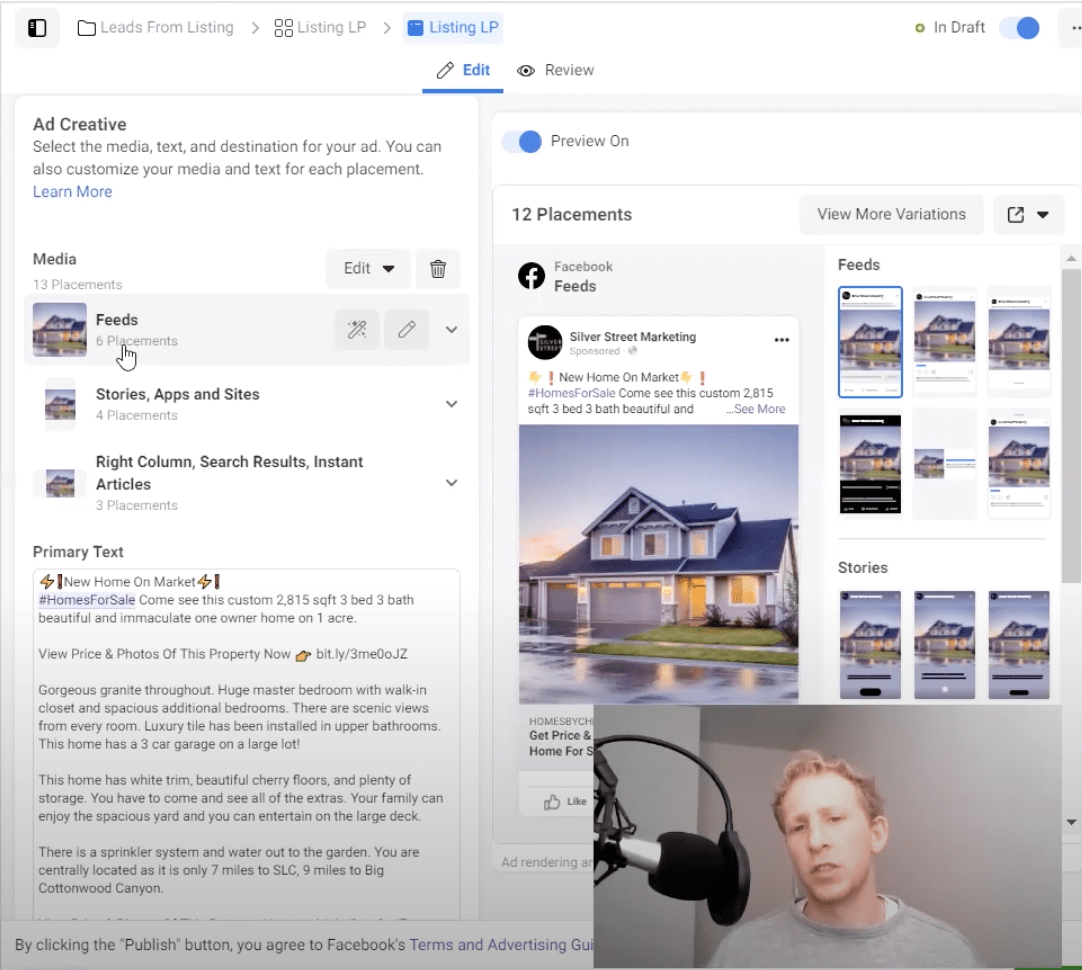
    Is the same true for Instagram?

    Nope.

    Even though Facebook and Instagram are owned by the same people, their algorithms are vastly different.

    Where it’s difficult to reach your audience on Facebook, it’s seamless on Instagram.

    One study found that brands “see a median engagement rate of 0.09% per Facebook post, in comparison to a 1.60% median engagement rate per post on Instagram.”

    Post and engagement counts for Facebook, Instagram, and Twitter

    Instagram is much kinder to businesses than Facebook is.

    So do you need to pay for Instagram ads?

    Well, the answer is no. Even Aaron and Krista, who get hundreds of likes and comments on their content, don’t run any ads.

    But they swear that Instagram is generating tons of leads for their business — that’s why they keep doing it.

    There’s certainly nothing wrong with running ads on Instagram.

    It might be worth at least a test or two.

    You create and manage your Instagram ads right inside of Facebook’s ad manager. Here’s a guide on how to do it.

    4 Best Practices For Creating Real Estate Agent Content On Instagram

    To get as much engagement as possible from the content you post on Instagram, here are some simple best practices to keep in mind.

    1. Instagram Hashtags for Real Estate

    Real estate hashtags are the not-so-secret sauce to growing your Instagram following.

    Users can (and do) search hashtags that they’re interested in. Instagram then shows them the content with that hashtag.

    So hashtags serve two purposes.

    First, they organize your content so that Instagram knows when and where to show your posts. Second, and more importantly, they catch the eyes of people looking for that specific hashtag.

    You’ll notice that Shemeika Fox put quite a few relevant hashtags at the bottom of every Instagram post.

    This makes content more searchable.

    The max amount of hashtags that you can put on a post is 30 (and 10 for Instagram stories), and we recommend using all of those slots.

    However, you shouldn’t copy and paste the same hashtags into your post every time, as that signals to Instagram that you’re being a bit spammy.

    This can be a little tedious, but the results are worth it. If you need help, here’s an Instagram hashtag generator that could help.

    2. Be Consistent

    How often should you post on Instagram? | Rashidawan

    As with all social media platforms, consistency is critical on Instagram.

    If you post a lot of content in one week but none for the next month, your audience will quickly forget about you.

    So you’ve not only got to be consistent, but you’ve got to be consistent for the long-term.

    The longer that you’re consistent about posting content, the bigger following you’re going to build — in some ways, it is that simple.

    Create a schedule that has you posting at least a few times a week (ideally once per day) and then stick to it for years rather than weeks or months.

    3. Create Visual Consistency

    Instagram is a highly visual platform. That is, people do a lot more looking than reading.

    And one of the keys to growing on Instagram is to become quickly recognizable. Without people even looking at your profile picture, they should be able to identify your content because of the style, the colors, and other elements.

    If you browse around top Instagram accounts, you’ll notice that all of their posts have similar styles — it’s almost like they’re all using the same filter.

    That’s intentional.

    Doing so helps create a sense of consistency for your audiences so they know what to expect.

    And people like when they feel like they know what to expect from you — they like it even more when you fulfill those expectations day-in and day-out.

    So use the same logos, the same colors, the same fonts, and the same filters on your posts.

    4. Focus On Your Specific Market

    As a realtor, it’s not all that important to generate leads from all over the U.S. Really; you just want to attract people in your market.

    That gives you an advantage- an angle that nationwide Instagram pages can’t play off of.

    By posting about things specific to your market, local businesses, state parks, and even the weather, you can appeal to people differently and more meaningfully.

    Plus, people want to hire someone who’s an expert in the area, anyways… so why not show them that you are?

    Are You Ready To Generate Real Estate Agent Leads On Instagram?

    Hopefully, by now, you feel that you can approach Instagram with confidence.

    It’s a relatively simple platform to get the hang of but a difficult one to master. And this beginner guide has given you everything you need to get started, grow your following, and even turn those followers into leads for your real estate business.

    But enough from us.

    What has your experience with Instagram been?

    Are you using it to grow your real estate business?

    Or do you have additional questions about how to make that happen?

    Let us know in the comments!

  • How To Get Real Estate Clients [14 Effective Strategies]

    How To Get Real Estate Clients [14 Effective Strategies]

    How To Get Real Estate Clients [14 Strategies]

    So, how to get real estate clients? If you’re asking this question, you’ve come to the right place.

    At Carrot, we work with thousands of agents and investors — pros and newbies — who are working to grow their businesses.

    And here’s the good news: there is a clear path to growing your business.

    In fact, doing so is really just a matter of following some tried-and-proven methods…

    …things that other agents have done with great success.

    And from our experience, the below 14 strategies are effective… pretty much every single time.

    Here they are!

    How To Get Real Estate Clients | 14 Tried-and-true Strategies

    1. Get a High Converting Website

    Your website is the most important part of your online marketing efforts.

    And without a website that actually converts traffic into leads, you’re probably going to struggle.

    To be fair, many real estate agents focus on offline marketing tactics… and they do well for themselves.

    In fact, we’re going to discuss some of the most effective offline marketing strategies in this article.

    But here’s the thing: online marketing is still the best way to find clients and grow your business in today’s world.

    Just consider some of this cold hard data…

    The Real Estate Digital Marketing: A Complete Guide

    But before you start driving traffic to your website, you need to optimize your website to actually convert that traffic.

    That way, the phone is ringing and you’re collecting clients left and right.

    Well, that’s what we specialize in at Carrot.

    We’ve created (and tested) real estate agent website templates that convert like crazy. Here’s a little preview of what they look like…

    real estate agent websites

    There are a few things we do that most websites don’t.

    And these differences are critical.

    First, we put your phone number in the upper right corner, so that visitors are encouraged to pick up the phone and call.

    Second, we shamlessly prompt people to give you their contact information whenever they click on the “Search Properties” button…

    high converting real estate website forms

    That way, even if they don’t call you, you can follow up with them.

    We even provide text message notifications so that you get immediately notified when your website receives a new lead.

    That’s just a quick overview of why Carrot websites convert better than any other websites in the industry.

    (We have a ton of other included features to help your business grow!)

    If you want to try us out risk-free for 30 days, go here to start building your high-converting website!

    2. Optimize Your Website For Search Engines

    Search engine optimization — commonly known as SEO — is one of the best ways to collect leads and find clients over the long term.

    You probably won’t find clients overnight using this strategy.

    But after weeks, months, and years, SEO is one common factor of real estate businesses that stand the test of time.

    Why?

    To explain what we mean, you first have to understand how SEO works…

    92% of all home buyers use the internet at some point in their home search. And the websites that they find help to determine the house that they buy and, more importantly, the realtor that they work with.

    This is also true of home sellers when they type things like “realtors in my city” into Google when looking for a real estate agent to work with.

    real estate agent website SEO

    The goal of SEO is to get these people — your target market — to find your website.

    Because if they find your website, then they might call you and they might become a client.

    In fact, most of our members claim that SEO leads are far higher quality than leads they get from paid advertisements.

    The best part is that once you’re ranking on page one for a high-value keyword phrase, you’ll start generating leads on autopilot, without any additional marketing.

    And websites that make it to page one usually stay there for quite a while.

    Which is why SEO is such a great long-term marketing strategy.

    So… how do you optimize your website to rank in Google?

    You can check out our full guide over here.

    But the basics are…

    1. Research and find high-value keyword phrases.
    2. Create content to rank for those phrases.
    3. Track your results.

    Our Carrot sites are built to help you tackle this process.

    We provide all of our AgentCarrot members with monthly optimized content for their blog, tools for tracking rankings, and more.

    Click the link to learn more.

    3. Real Estate Facebook Ads

    Facebook ads are great because you can turn them on to generate leads and find clients whenever you want… but turn them off when you already have plenty of work coming in.

    Our most successful members use SEO for their longterm lead generation, but paid advertisements and mailers (which we’ll talk about next) for faster results.

    Especially if you’re just getting started, Facebook ads are a great way to find clients.

    Even simple advertisements of your listings, like the below example, can do really well…

    Real Estate Facebook Advertising

    4. Send Mailers

    Direct mail is one of the most powerful client-finding tools for real estate agents.

    It feels more personal than email, you can send a lot of it at once, and if you do it correctly, it’ll almost always get the phone ringing.

    But naturally, you don’t want to waste money.

    And direct mail can certainly be a little expensive.

    So how can you ensure that your mailers are going to get responses before you send them?

    Here’s some advice…

    Know Who You’re Targeting — What are the demographics of your mailing list? Are you sending to homeowner who might be interested in selling? Or are you sending to renters who might be interested in buying? Your mailers should speak directly to the people you’re targeting.

    how to format direct mail for real estate

    Make It Personal — When people choose a real estate agent, it’s primarily an emotional decision. That is, they have to like the person that they’re going to work with. And making your mailers a little more personal with photos can go a long way toward helping them make a favorable decision.

    how for format mail for real estate

    Be Friendly — Most people will choose to work with you because they like you and they trust you. And creating direct mail that feels friendly is a great way to build credibility and increase your response rate. This can be as simple as sending “Merry Christmas!” mailers during the holidays.

    friendly real estate direct mail

    Send Enough Mailers — Direct mail is mostly a numbers game. So long as your mail is friendly and appealing to your recipients, getting a response is simply a matter of sending enough mail. According to most stats, the average response rate for real estate direct mail is between 2% and 4%. So you should be sending several hundred mailers at a time.

    Learn more about how to send effective real estate direct mail.

    5. Social Media Marketing for Real Estate Agents

    There’s no question: social media is a very powerful marketing platform for darn-near every industry… your real estate business is no exception.

    How quickly you find new clients through social media will largely depend on how much of a following you already have and how much people in the community trust you.

    So if you’re new to social media, don’t expect overnight success.

    Building trust on Facebook, Instagram, and other platforms isn’t something that should be sporadic — it works best if you create a content schedule and then stick to it… posting at least a few times per weepk.

    The Farr Group — a husband-and-wife owned real estate company — is great at using Instagram to build brand awareness and even generate leads.

    social media marketing for real estate

    And when we spoke with Aaron and Krista Farr, one interesting things that they mentioned was how engagement on social media only means so much when it comes to actual lead generation.

    They said they’ve met a lot of people who knew them from social media or who even became clients because of their Instagram profile, but who never actually commented on or “liked” their content.

    In other words, your content is probably reaching more people than you think.

    Don’t take your engagement metrics at face value.

    Be consistent, follow the process, and you might be surprised at how social media helps you to grow a thriving business.

    Check out our full interview with Aaron and Krista over here!

    6. Find FSBO Sellers On Craigslist

    It might not be the first method you choose for finding new clients, but looking through for-sale-by-owner listings on Craigslist — especially ones that have been around for a while — can be a helpful strategy.

    Just go to Craigslist and click on “real estate for sale”.

    craigslist for real estate leads

    Then, you can filter the listings as for sale by owner…

    for sale by owner listings on craigslist

    Browse through the listings and look for indications that the seller is having trouble closing on the home — a long time has passed since it was originally listed, for example, or the sellers sound desperate in their description.

    These might not make the best clients in the world… and some people will probably get mad at you for calling them and offering your services.

    But you might just stumble across someone who’s glad you called.

    And it’s the victories you have to fight for that are often the sweetest, anyways.

    So why not give it a shot? You’ve got nothing to lose!

    7. Network, Network, Network

    When it comes to finding your first clients, building trust in your community, and growing your business organically, there’s nothing quite as powerful as networking.

    And we’re talking about networking with other business owners, local politicians, and anyone else with sway in the community.

    The fact is, everyone needs a home to live in… so there’s really no one who you shouldn’t network with.

    Everyone probably knows someone who wants to buy or sell a home in the near future and so networking is always a benefit to your business.

    Real estate is one of those industries where just getting to know people can grow your business.

    And the more people you get to know — more importantly, the more people who get to know you — the more clients you’re going to get through friendly referrals.

    So go to business meetups, attend community celebrations, and join in on charitable events.

    Meetup.com is a great place to find local groups of people with different interests.

    With enough time, you’ll become an icon of the community and people will start to automatically think of you when they think of buying or selling a home.

    And that’s exactly what you want.

    8. Door Knocking

    It’s not the prettiest or flashiest (or even the most time effective) way to find clients for your real estate business, but door knocking can certainly help!

    Here’s something to keep in mind: when you’re just getting started as a real estate agent, you’ll have to work harder to find clients.

    You’re just starting to build trust and become an icon in the community… but that takes time.

    And a simple stroll through the neighborhood where you knock on a few doors and introduce yourself can go a long way toward building meaningful relationships.

    It can even help you generate leads and referrals.

    You might be surprised at how willing people are to help when you ask nicely.

    This is something you can even do on your daily walk around the neighborhood — just commit to knocking on 5 new doors every day and see what happens!

    Two FREE Real Estate Scripts for Door Knocking

    Script 1

    Hey!

    Sorry to bother you. My name is [name] and I just had a quick question. Do you know of anyone who is thinking of selling their home in the area?

    I’m new to the area and I’m just trying to get my real estate business off the ground, so I’m looking for some folks who need help selling their home or buying their next home.


    [Wait for response]

    That sounds great. I really appreciate the help… just thought I’d knock on a few doors as I’m going for my evening stroll.

    Here’s my business card, by the way.

    Feel free to contact me at any time if you or someone you know wants help with a real estate transaction.

    Have a great day!

    Script 2

    Hey there,

    My name is [name] and I’m a new real estate agent in the area. Are you or someone you know trying to buy or sell a home?

    I’m just trying to get my real estate business off the ground.

    [Wait for response]

    Great! I appreciate your help.

    Here’s my business card — feel free to contact me anytime to chat about all things real estate.

    Have a great day!

    9. Brochures & Posters

    How many people visit your local coffee shop every single day?

    What about your local bakery or your local gym?

    In many communities (especially smaller ones), local businesses want to support other local businesses.

    And one great way to leverage that fact is by getting to know local business owners and asking them if you can put up a poster in their window or lay some free brochures on their counter.

    Many of them will be more than happy to help.

    As for what your poster or brochure should look like, just think of it as a compelling piece of direct mail — people you’ve never met before are going to see it and, in an instant, they’re going to decide whether to call you or not.

    So put your best foot forward.

    Here’s a great example…

    Real Estate Agent Poster Template - PSD | Publisher | Illustrator ...

    10. Get Some Local Press

    You might not know it, but your local newspapers, magazines, and other media outlets are constantly looking for interesting stories to tell.

    How about they tell a story about your new business?

    Just give the editors a call and tell them about what you have going on — if you have a particularly interesting angle, then be sure to mention that as well.

    Alternatively, you could pitch a letter-to-the-editor article that updates people on the local real estate market, further establishing your expertise.

    Here’s a general idea of what you might say (via email or phone call)…

    Hey there!

    My name is Mike and I just started my real estate business in the area.

    This is a big undertaking for me but I’m very excited about it.

    If you’re up for it, I’d love to talk with you about what it takes to start a new business in the community and how amazing our city really is — maybe we could even include some other local businesses owners in the project?

    Maybe I’m wrong… but it seems like we could create a great article on that topic!

    Let me know if this catches your interest :)

    Mike

    You might be suprised at how people respond!

    Shemeika Fox, one of our awesome members, actually flips the script. Instead of seeking out press, she creates the press. She interviews local business owners, publishes their stories on her website and asks them to share it on social media.

    This generates additional traffic to her website and builds her local authority — not a bad idea!

    getting local press for real estate agents

    11. YouTube for Real Estate Agents

    In terms of marketing, real estate is highly visual.

    People want to see the homes that you’re trying to sell, they want to get to know you as a person, and they want to learn about how you can help them.

    YouTube is a wonderful platform for accomplishing those goals.

    You can easily upload house-showing videos…

    557 Marksbury Road Pickering Open House Video Tour

    And you can upload educational videos…

    5 Tips To Sell A House Fast For Top Dollar  | Roseburg Oregon Real Estate

    Posting content like this will help you build credibility and generate leads for your business.

    But how do you get people to see your content once it’s live?

    The first step is to share your video on all of your social channels and email it out to your subscribers — take advantage of the audience you already have.

    Then you might also consider trying to get your video ranking in YouTube for a high-value keyword phrase.

    And if you’re a Carrot member, then you can transcribe your video with a single click using our VideoPost feature, turning it into a long-form blog post that can also rank in Google.

    VideoPost Real Estate Blog Content

    12. Drip Marketing

    Whenever you collect leads, you should put those people on an email list.

    This allows you to contact those leads all at once in a semi-personal manner. Over time, your email list will become one of your most valuable assets.

    Because the more that you provide those people with free value, the more that they’re going to trust you and the more likely it is that they’ll reach out to when they’re trying to buy or sell a home.

    For your email marketing, you can use a tool like Mailchimp or Active Campaign.

    But what should you email your leads?

    Well, the first thing you’ll want to do is set-up an automatic 5- to 7-email drip sequence that sends to everyone after they subscribe.

    This sequence should build your credibility and work to drive them toward taking the action you want them to take.

    How to Create Drip Email Campaigns โ€” 9 Examples Included | by Mรณr ...

    But it doesn’t need to be super complicated.

    Here’s an idea for topics you can focus on with each email…

    • Day 1 – Get To Know Eachother — Tell the new lead about yourself and ask them to do the same by replying to your email and telling them a little bit about why they joined your email list.
    • Day 2 – Testimonial/Case Study — Talk about a past experience where you helped a buyer or seller to accomplish their goals. Use this to build credibility.
    • Day 3 – Why Are You a Realtor? — Tell people why you decided to become a realtor in the first place. This gives them an idea of who you are and what makes you tick, which helps them to build a meaningful relationship with you.
    • Day 4 – Free Value — Provide some sort of free value for the lead. Teach them something new or point them toward a blog post that you recently wrote or a video that you recently recorded.
    • Day 5 – Ask — Tell them you’re going to start emailing them just once a week, but that if they ever want to sell their home or buy a new home, you’re ready to roll.

    Setting this drip sequence up will do a lot for making the most of the leads that you’re already generating.

    Plus, once it’s set up, you don’t need to think about it again for a while because it’ll run on autopilot.

    13. Open Houses

    If you’re looking for homebuyers, then running open houses is certainly a great way to find leads.

    Just make sure to announce your upcoming open house to as many people in the community as possible.

    The more people who know about it, the better turnout you’re going to have.

    But here’s the other opportunity that many real estate agents don’t think about… all of the people who come to your open house are also probably thinking of selling their home. This is a great chance to not just get to know people in the community and generate buyer leads, but also to find some sellers you can work with.

    Don’t be pushy, of course.

    But do collect contact information, hand out business cards, and gently converse with anyone who attends.

    14. Get Real Estate Referrals

    Especially when you’re starting out, referrals are one of the quickest and easiest ways to find clients.

    If you’re still trying to find your very first client, then reach out to friends and family and ask them for referrals.

    If you have a few happy clients under your belt, reach out and ask them for referrals.

    You will probably be surprised at how many people are willing to help you out.

    Just take a look at the stats…

    Real Estate Agents: Ready To Find Your First Clients?

    You now have everything you need to find your first clients… and to find clients well into the future.

    These strategies are simple, straight-forward, and relatively easy to execute. But they are also very effective.

    It might take time for you to build momentum and grow your business to where you want it, but stay the course, trust the process, and keep going.

    The real estate agents who win are the ones who keep going even when the going gets tough.

    The above 14 strategies work for other agents and they’ll work for you, too.

    Let us know how it goes!