

What if I told you that, by adding one element to your real estate website, you could increase your conversion rate by 10%?
You wouldn’t have to increase traffic and you wouldn’t have to do more marketing. You’d just have to add one dead-simple thing to your homepage.
And boom. 10%.
Would you do it?
If you’re like most real estate agents (72%), you’re already dissatisfied with the number of leads that your website generates. So I’m going to safely assume that the majority of you would welcome a 10% increase in your website’s conversion rate.
Sure. 10% isn’t huge. But it’s something. And in an industry where one deal can equal tens of thousands of dollars, 10% often separates the wheat from the chaff.
Where, though, am I getting 10% from?
Well, it’s an estimate. This little trick probably won’t double your revenue or change your business completely, but it’s a simple way to increase your conversion rate in very little time.
And who knows? For you, it might make all the difference.
Interested?
Here’s what it is.
The Best Real Estate Websites For Lead Generation Have This In Common: The “Call Us!” CTA
That’s right. That “Call Us!” CTA in the upper right corner of the page drives leads and converts visitors.
If you don’t have it on your website, then there’s a good chance that you’re missing out on about 10% of your potential lead generation.
But you don’t have to take my word for it.
As they say, “the proof is in the pudding.” So let’s talk about the pudding.
Proof that the “Call Us!” CTA Works on the Best Real Estate Websites for Lead Generation
44% of website visitors will leave a company’s website if there’s no contact information or phone number. Dead. Buried. Gone.
And you and I both know that the moment they leave your website is the same moment they go to the competition’s website. When that happens, your part in their story is over. In fact, 73% of buyers say that they would use their real estate agent again in the future — they’d even recommend the agent to a friend.
Once someone’s gone, they’re gone — and so too are their recommendations.
Naturally, you can’t afford to lose website visitors (and their friends) to the competition for such a silly reason. If having this “Call Us!” CTA really makes a difference, then you damn-well better include it on your website — especially when you consider that it’s only going to take about five minutes for you to add.
But in case you don’t trust the stats I’ve already presented, maybe you’ll take better to our own (Carrot’s) data from nearly 4,000 websites across tons of different real estate niches (wholesalers, rental owners, house flippers, and agents).
First of all, we found that 91% of people who become leads on these real estate websites convert on the same exact day of their first visit to the website.
This means that high-value people who visit your website want a solution right now. 91% of the time, ideal prospects aren’t on your website to browse around and come back tomorrow.
They’re on your website because they want a solution… and they want it right now.
In fact, prospects are so ready to take action that the vast majority of our customer’s leads come from the home page.
Which means that they visit the website and become a lead before even clicking anywhere else. They take action.
But what does that have to do with the “Call Us!” CTA?
Well, put yourself in the prospect’s shoes. If you visit someone’s website looking for a solution to your problem or wanting to get in touch with a realtor, the last thing you want to do is dig around their website looking for contact information.
And the very last thing you want is to come across an email or a form like this.
No. You want to call someone right now and schedule a time to talk further.
Additionally, we found that the average time-on-page for the “Contact Us” page across these real estate websites was a whopping one minute and twenty-nine seconds.
Which is pretty damn significant for a page that usually has nothing more than a phone number, email, and/or contact form.
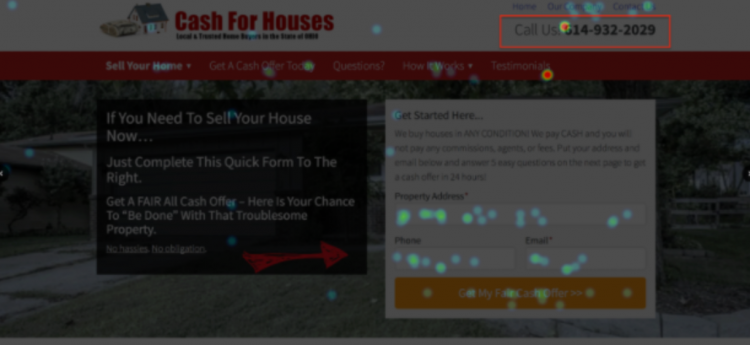
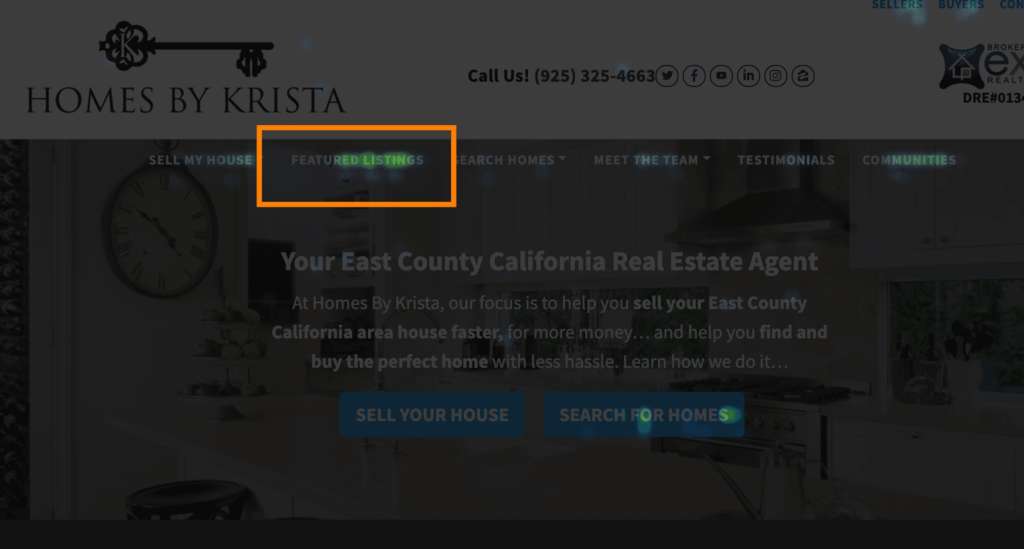
Or consider, from this heatmap of one of our customer’s websites, how much attention the “Call Us!” CTA receives.
Plus, since 52% of home buyers use an iPhone during their home search, a lot of prospects literally have their calling device right in front of them when viewing your website.
“On many websites, the contact information is buried at least five links deep, because the company doesn’t really want to hear from you. And when you find it, it’s a form or an e-mail address.
We take the exact opposite approach.
We put our phone number (it’s 800-927-7671, in case you’d like to call) at the top of every single page of our website because we actually want to talk to our customers. And we staff our call center 24/7.”
And while you might not be the owner of a company that sells shoes online, the point is the same — business people that make it easy for prospects to contact them are far more likely to turn visitors into leads and leads into deals than those that make it difficult. Statistically, 50% of buyers work with the company that responds first.
This means you want to make it as easy as possible for prospects to contact you; the “Call Us!” CTA does exactly that.
How, though, should the rest of your website support this CTA? It’s to that question that we turn next.
How the Best Real Estate Websites for Lead Generation Set Up The Supporting Elements
In the end, your website should be phenomenal at only two things.
When someone first arrives at your website, they will want to know if they can trust you or not. They’ve never met you in person and so your website is the only thing they have to reference.
If it doesn’t convince them that you’re trustworthy, they’ll leave. If it does, they’ll contact you.
End of story.
In the digital real estate world, it’s really that simple.
For that reason, the majority of your website should be dedicated to building credibility with your visitors. You want them to know that they can trust you and you want them to know that as quickly as possible.
How, though, do you get someone to trust you when your website is the only thing between their decision and your business?
Well, there’s a nearly endless amount of elements that go into building trust with your website — “Website credibility judgments are 75% based on overall aesthetics” — but here are four of the more important ones.
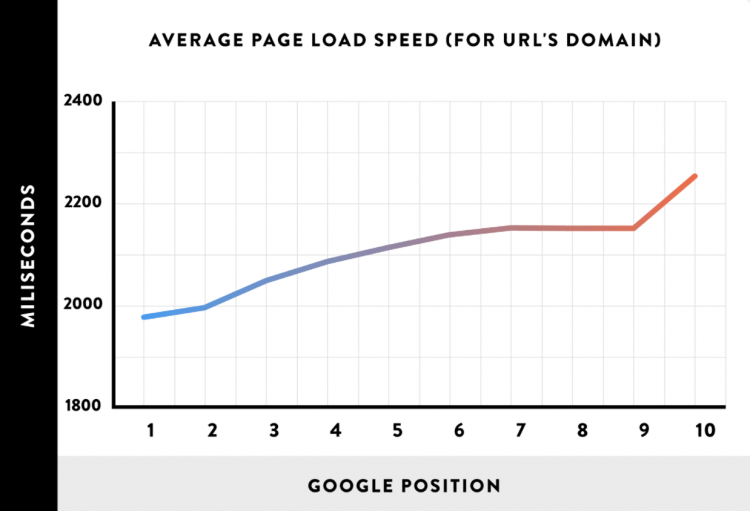
Does your website load fast? If people have to wait too long, they’ll leave and go somewhere else.
What is the first thing that people notice when they land on your website? Does that element build trust for your business? If it doesn’t, then consider making this element something that does.
How clean is your real estate website design? If your website is cluttered with random information and difficult-to-decipher CTAs, then people won’t trust you and they definitely won’t stick around.
Is your website easy to navigate? Don’t overcomplicate things. Keep your navigation bar intuitive and your CTAs clear. You want people to know what’s going to happen when they click something on your website and you want them to easily navigate where they want to go. Avoid vague and unhelpful navigational terms on your website.
At Carrot, we’re relentless about doing all four of these things for our customers so that they don’t have to worry about it.
If you want to do it yourself, though — or you’re just curious — then check out how we guide website visitors from trusting the real estate expert to taking action.
Here’s how we do it on our real estate investor websites.
Since the best thing that your website visitors can do is contact you, the rest of the website should work to get them to a point where they’re ready to call you or email you.
The only hesitancy that committed prospects have about contacting you is that they don’t know who you are, they don’t know if they can trust you, and they don’t know if you can help them.
Other than the “Call Us!” CTA, every element on your website should work to convince them they can trust you and you can help them.
Then, and only then, will they dial your phone number.
Conclusion
The “Call Us!” CTA probably won’t be the most interesting part of your website’s design. It won’t be the prettiest or the most compelling. But that doesn’t mean it’s unimportant.
In fact, that little “Call Us!” addition to your website can make an estimated 10% difference in your conversion rate. Now, you know why it’s important and how to support it on your website.
Because in an industry where every sale is worth tens of thousands of dollars, 10% can make a big difference.
And in the case of the “Call Us!” CTA, about five minutes equals +10%.
What do you think is the most important element on a real estate website for generating leads and converting visitors?
A great real estate agent website design can help you form a good impression on prospective clients. It can also help you nurture your leads and get more deals.
Studies show that 90% of homebuyers use the internet during their journey to buy a home. Therefore, it is essential to provide a good user experience and help your website visitors easy access and navigate your website.
Currently, there are 1,576,668 NAR members, so we all know there are millions of agents packed into the clutter.
As The Balance points out, “20% of agents do 80% of the business.”
Of course, that isn’t surprising. When someone uses an agent once, they aren’t very likely to change. 70% of house sellers, for instance, said that they’d use the same real estate agent again in the future.
This means real estate agents that get the business first keep the business.
But how do you ensure you get to the client before the competition?
Two words: the Internet.
Why Do You Need a Real Estate Agent Website?
It’s easy to think that you don’t need a website. You might have been in business for years and have had some success.
But that doesn’t mean you should limit your marketing strategies to offline exclusively.
In particular, every real estate agent needs a website for some reasons.
Online marketing will save you time and money during the lead-generation process.
SEO leads (Search Engine Optimization) tend to be higher quality because they’re inbound leads – when your prospects come looking for you rather than looking for them.
Online and offline marketing strategies work best together. Our highest-performing members at Carrot use both in harmony rather than one in exclusion.
Build your authority and credibility. Your market has dozens of other agents, so you must stand out from the clutter. Having a high-performance, personally optimized website can get you there.
So, you know that you need a website for your real estate agent business, but you might be new to online marketing with a website.
There are so many options and low-end platforms that you’re not exactly sure what you need for your real estate agent website.
So let’s dive in!
Real Estate Agent Website Design
As mentioned above, 90% of homebuyers use the internet during their buying journey.
And that makes sense. MLS browsing options, virtual tours, and housing photography make the web the perfect place to browse for homes and even choose which agent to work with.
The best real estate agent websites build authority, load fast, are SEO optimized, and communicate with visitors. Those are just a few things you must consider when designing your website or using a real estate agent website template.
But before diving into the nitty-gritty, let’s review a few real estate agent websites: non-Carrot and Carrot.
First, Sheerin Feizi.
Besides being a beautiful website, a few noteworthy things about Sheerin Feizi make it stand out.
The “Quick Search” option is most noteworthy at the top of the page.
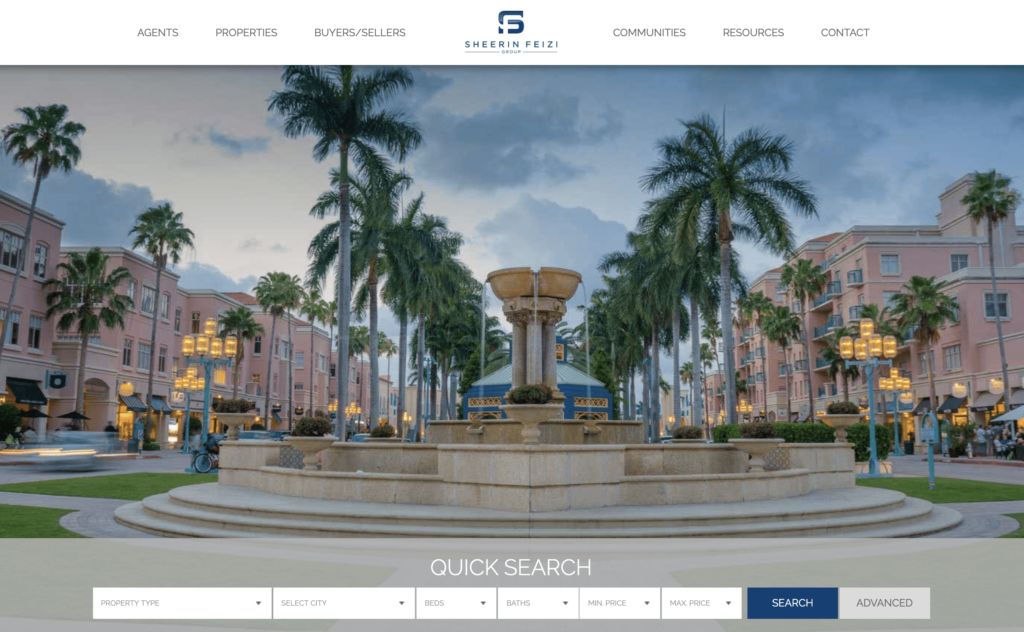
When people visit your real estate agent website, they only want to do one of two things.
Browse listings.
Get to know you as an agent to determine whether they want to work with you.
Ideally, you want to let them do both of those things easily. And in the case of Sheerin Feizi, the “Quick Search” bar allows visitors to dive right into browsing through listings.
So too, does Sheerin Feizi’s “Featured Properties” section closer to the bottom of the page.

Scroll down a little bit further, and, as you’ll notice, Sheerin Feizi then aims to support the visitor’s second potential goal: to learn about the real estate agent.

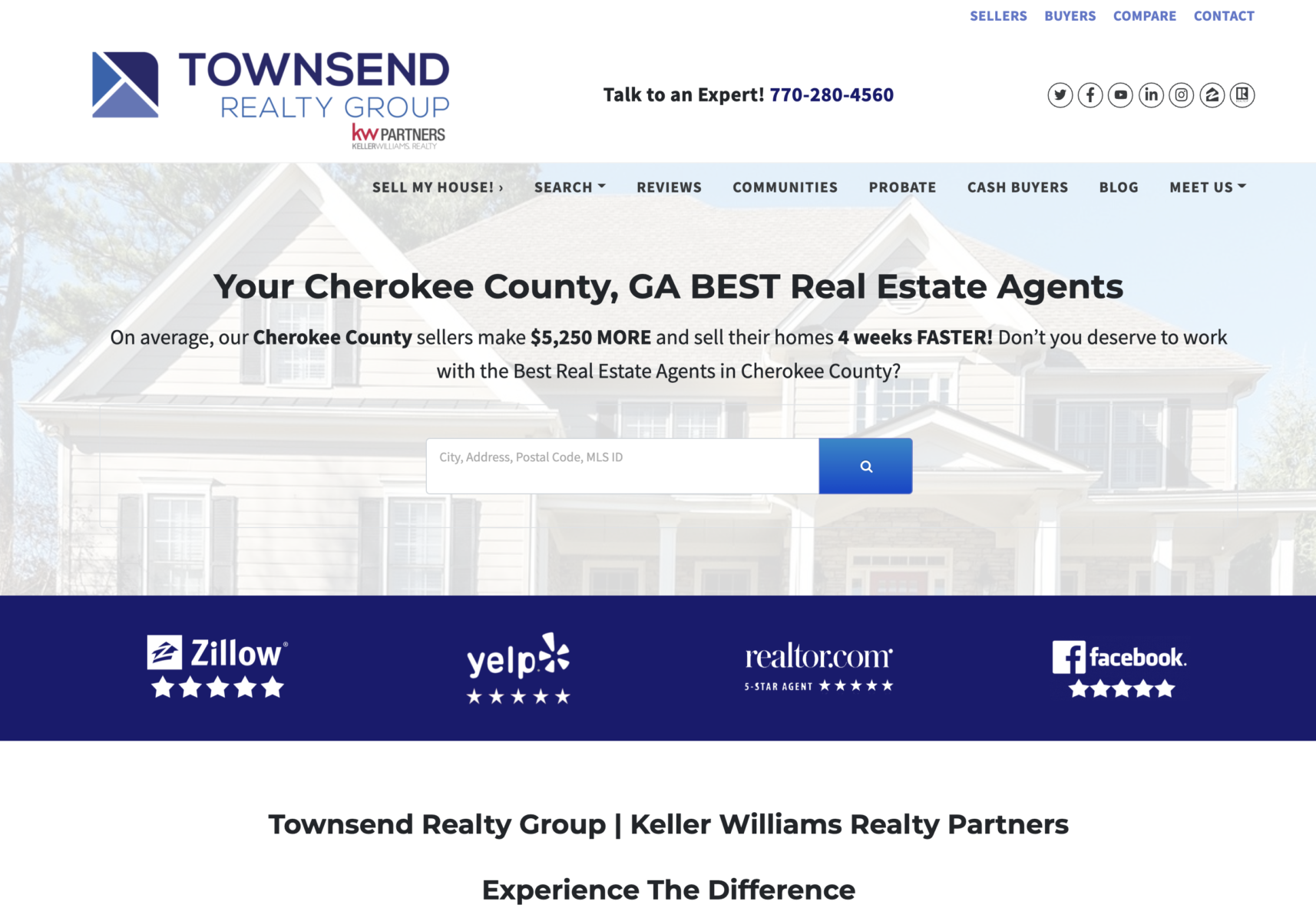
Take Townsend Realty Group as another example of a real estate agent website that caters to visitors who want to learn about the agent or browse through listings.
You’ll notice a “Meet Us” button below for visitors seeking to sell or buy a house.
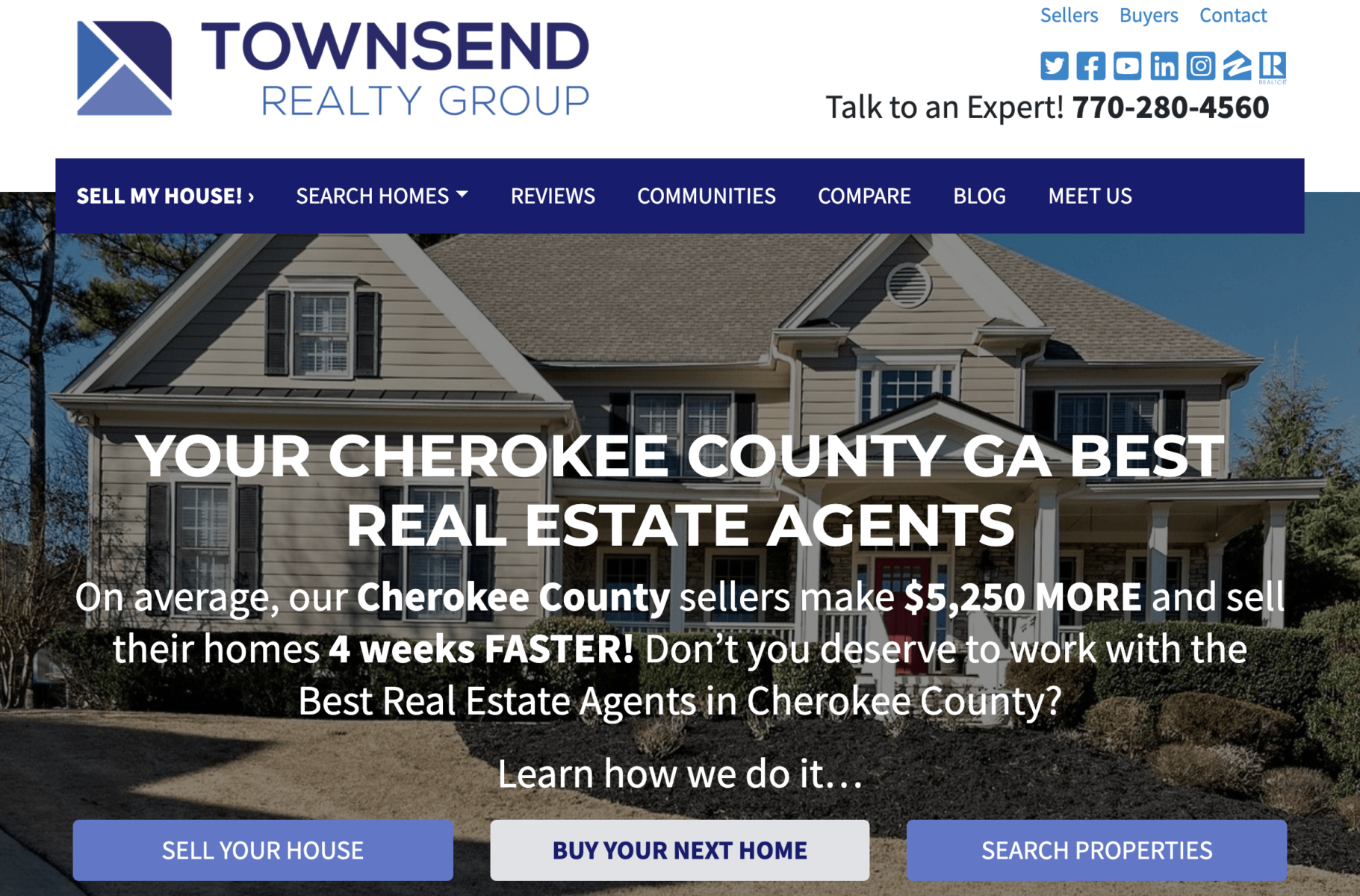
Townsend Realty Group encourages listing browsers, house sellers, and agent vetters to go straight where they want.
The best thing your website can do to help visitors is… well, get out of the way.
People who visit your website usually know what they want to do. And the faster you let them do that, the better.
Like Sheerin Feizi from the previous example, Townsend also builds credibility and authority with their “Meet Us” page.
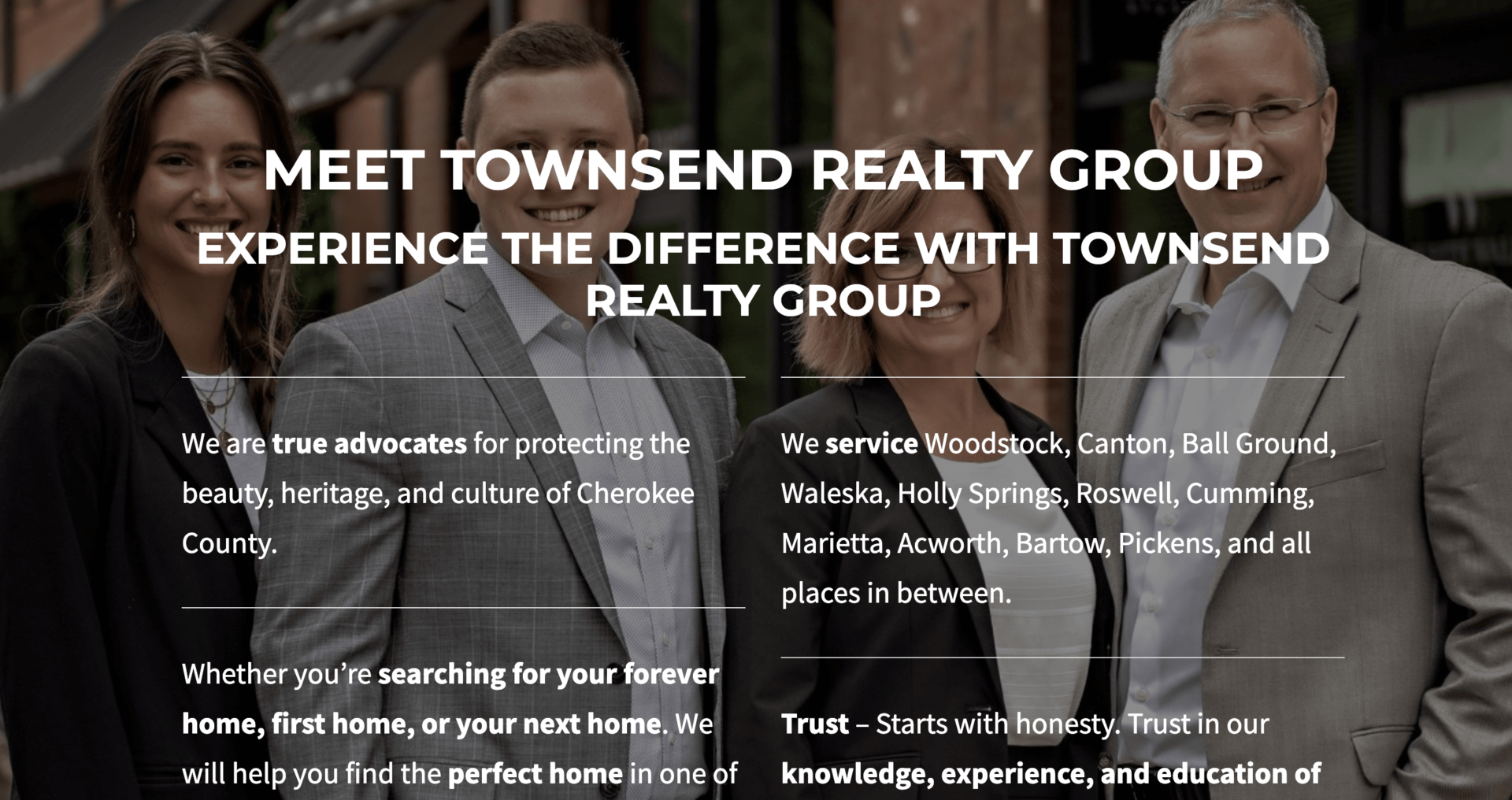
Again, the website is accomplishing just a couple of simple goals.
When people want to browse listings, let them.
When people want to learn why they should work with you, guide them.
Mostly from conversion tests we’ve run here at Carrot, but partly as inspiration from the best in the business, we create real estate agent websites that accomplish those simple goals.
The benefit is that you don’t have to pay thousands of dollars to design a website and don’t have to try to create one yourself.
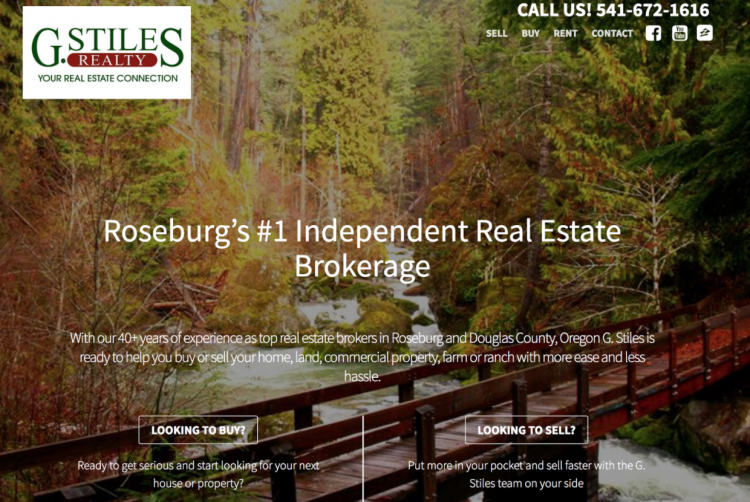
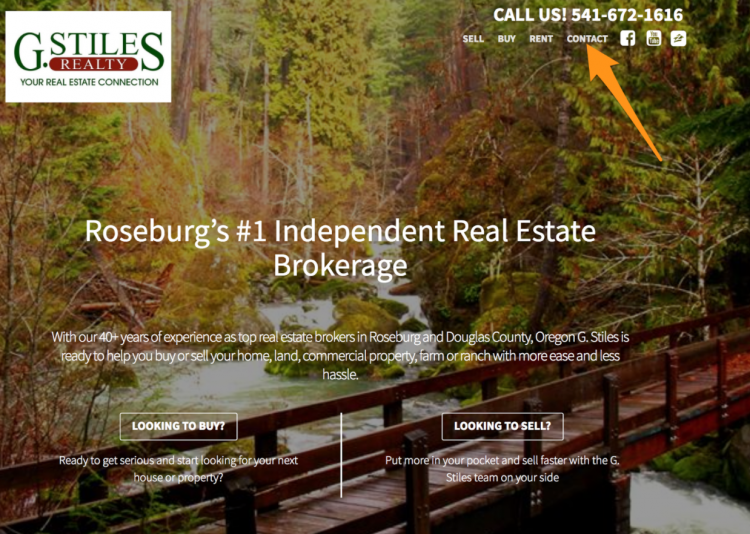
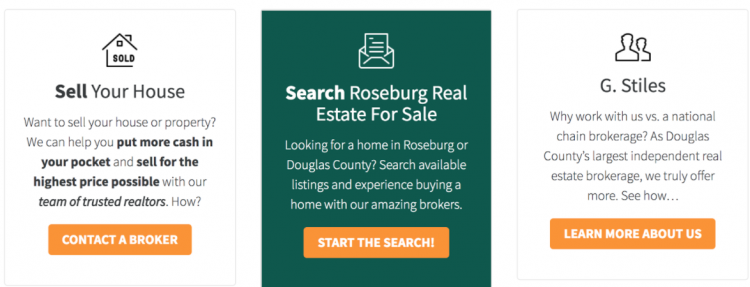
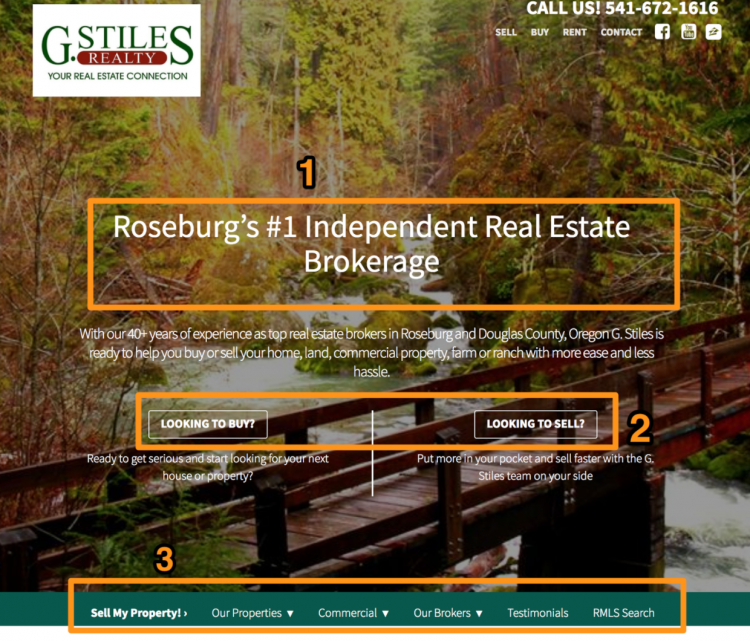
As you can see from the above image, this website follows a similar pattern to those we looked at earlier.
First, it builds rapport with visitors by saying, “Roseburg’s #1 Independent Real Estate Brokerage.”
Then, it allows people to easily choose whether to buy, sell, or learn more about G.Stiles.
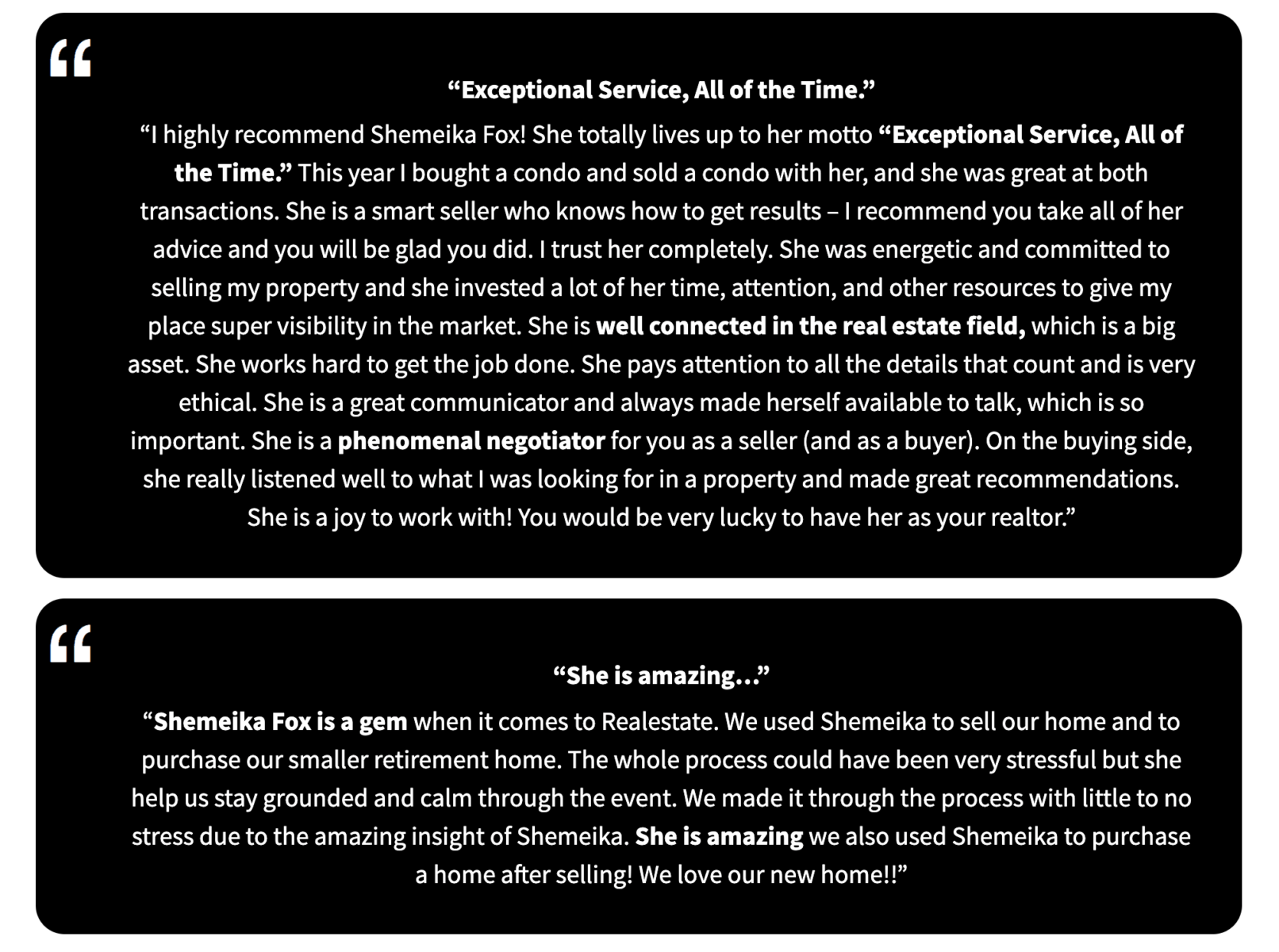
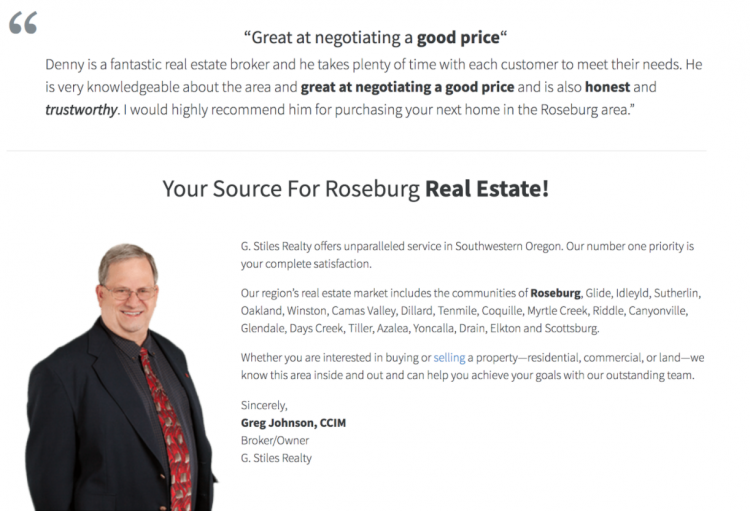
Finally, the page finishes with trust-building testimonials as proof that the visitor should work with G.Stiles and a bio that exudes professionalism and friendliness — two sought-after attributes of any real estate agent.
The point?
Your website needs to allow people to do two simple things:
Search listings.
Decide whether they trust you.
You can, of course, create your website.
Or… we can do it for you. The choice is yours, but we’d love to work with you if you think it fits.
7 Real Estate Agent Website Design Elements You Need To Dominate The Competition
Now, we’ll discuss seven things you can do — Carrot member or not — to help your website perform as you want.
1. Build Credibility The Moment Someone Lands On Your Website
Buying a house is one of the biggest decisions that people make in their life. People want to work with someone they can trust.
A study by Trulia revealed that people consider honesty and credibility among the most important factors when choosing a real estate agent to work with.
Here are three ways to immediately prove to visitors that you are trustworthy.
Video Content
Authentic Photos
Compelling Testimonials
Video Content
Nothing builds credibility quite like video.
Not only does it prove that there’s a real person behind the website, but it also is a remarkable way to engage new audiences.
Publish a video on your homepage that talks a bit about who you are and why people can trust you. Of course, don’t say, “This is why you should trust me.”
Instead, build rapport with your audience by talking about some of your accomplishments, why you love helping people, and how you got into the real estate industry in the first place.
What is your end goal? Make them feel good about choosing to work with you.
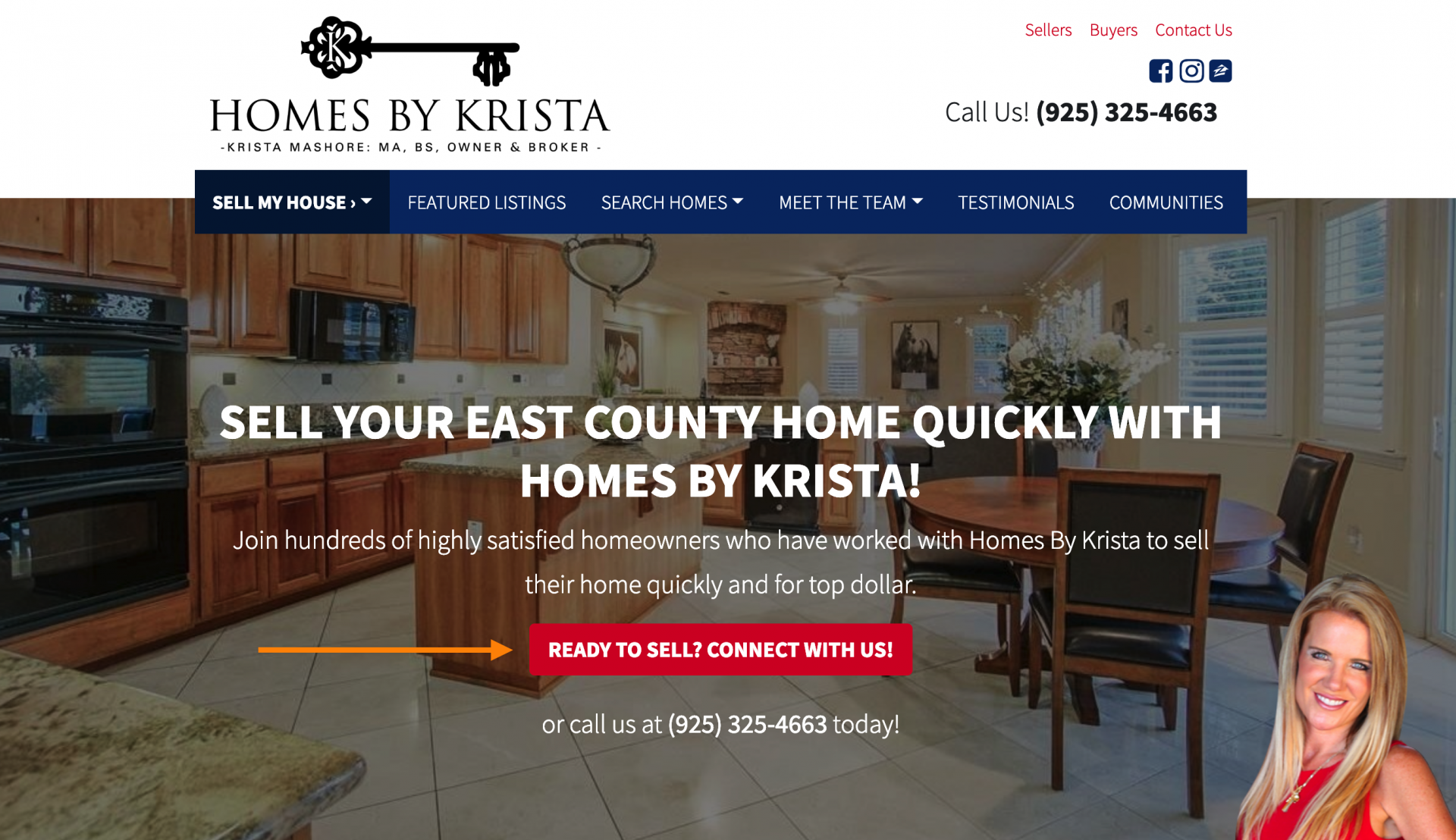
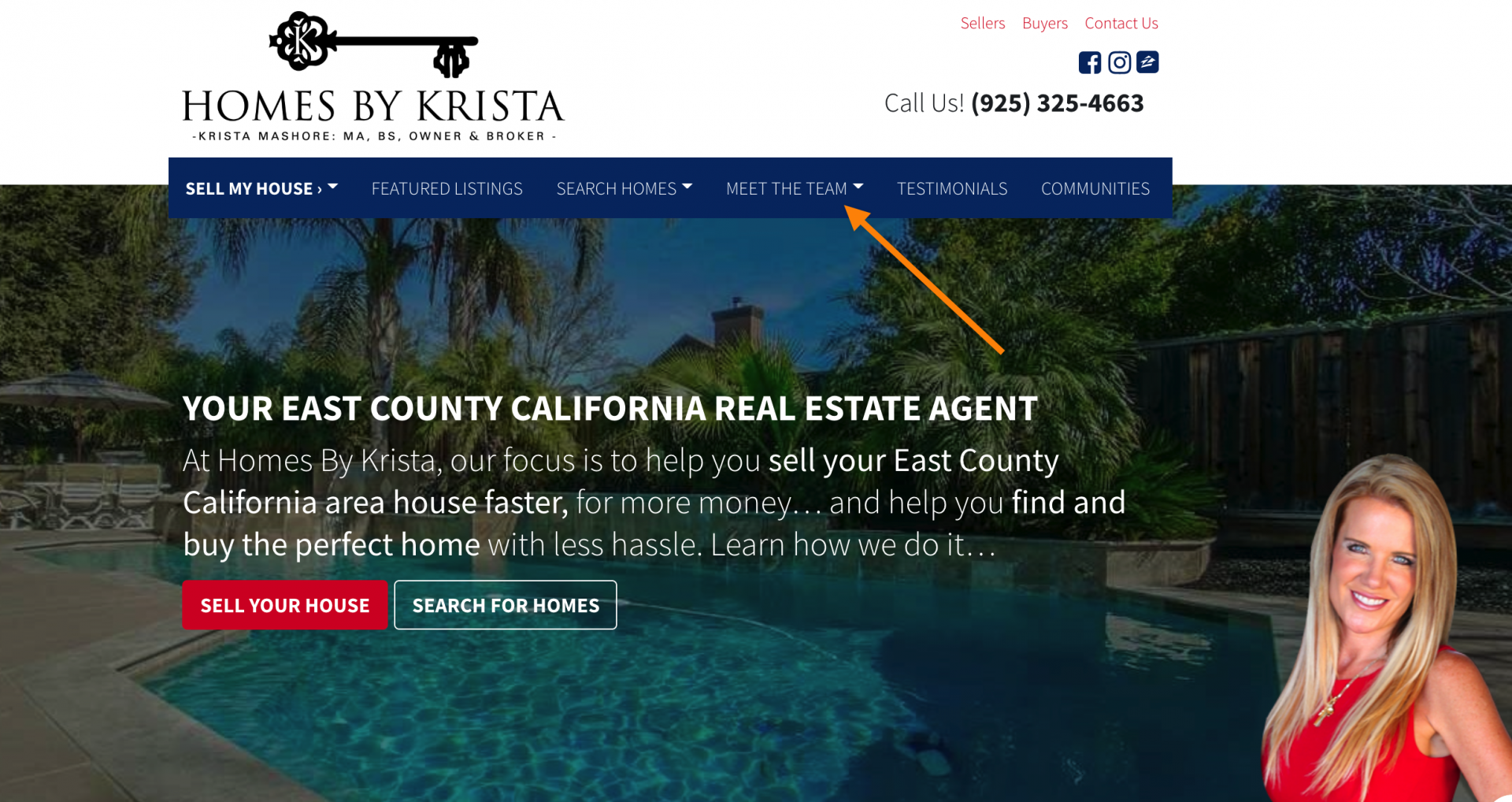
Homes By Krista — a real estate group in Brentwood, California — does this on their website.
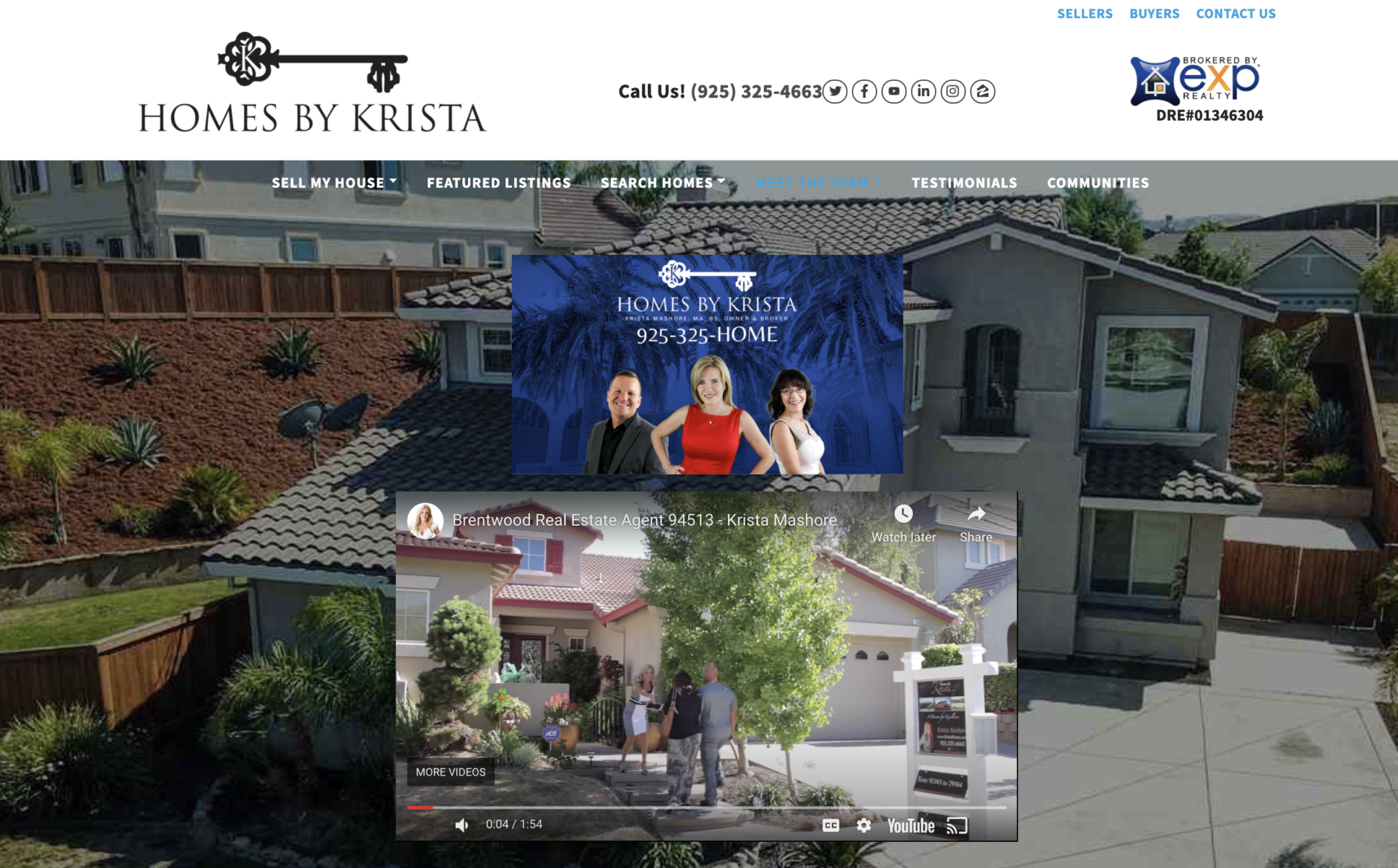
Here’s the actual video so that you can watch it for yourself.
Try to keep it under five minutes — people have terrible attention spans — and, ideally, make it as short as possible without losing quality.
You want to convince people you’re their area’s best real estate agent. But you want to do that as quickly as possible.
Authentic Photos
People don’t just love videos. They also love photos.
And, generally speaking, the more authentic the photos, the better.
What do I mean by authentic?
Well, authenticity comes in many different forms. You might, for example, publish a photo of yourself in the middle of the job. Or you might take a picture of a real customer signing real papers.
Those photos don’t just communicate that you know what you’re doing (which builds trust), but they communicate that you’re a hard worker and people like you.
Here’s an example of this from G.Stiles.
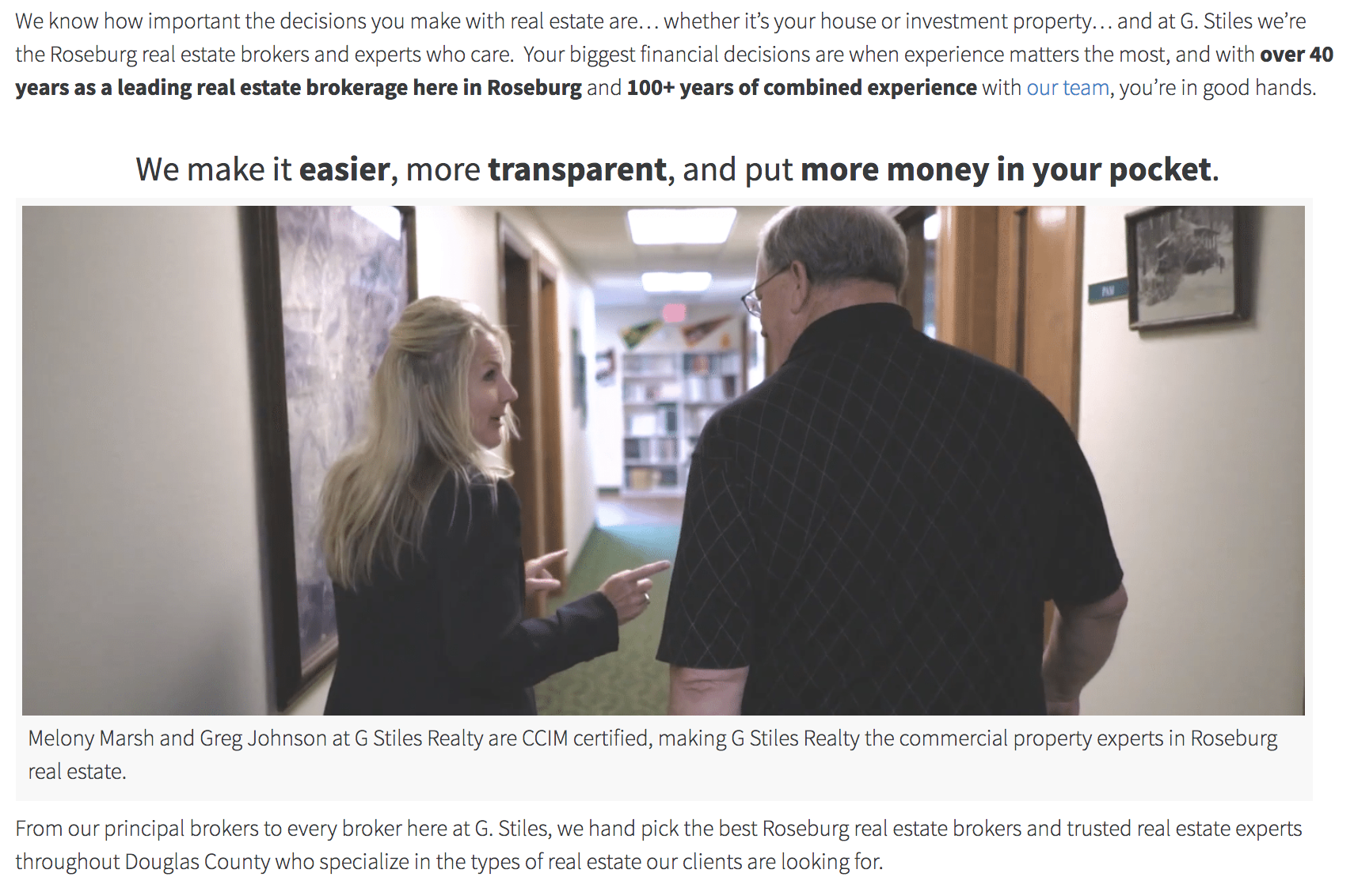
And another example. Here, G.Stiles puts their team mission over a personable photo of the people in the group.

Remember this: when taking photos, authenticity beats fakery every single time.
Of course, there’s a balance. You don’t want to freak people out with a photo of you just getting out of bed. But you do want to come across as friendly and professional. Above all, though, you want to come across as a human.
For that reason, avoid stock photos at all costs.
Compelling Testimonials
Before people work with you, they want to know that others have worked with you and been remarkably satisfied with your service.
That gives prospects the confidence they need to give you a call or opt-in to your online form.
Testimonials are the best way to give them that confidence.
As well as how Homes By Krista does it with a video testimonial…
If you’re looking for a real estate agent, you can trust to help you make one of the biggest decisions of your life; those testimonials work wonders for building credibility.
In effect, they say, “All these people love me. You will too.”
How, though, do you get great testimonials?
Well, here are six questions to ask your testimonials:
What obstacle would have prevented you from buying/selling your home?
What did you find as a result of working with you?
What specific feature did you like most about your service?
What are the three other benefits of the buying/selling process?
Would you recommend my real estate services to others? If so, why?
Is there anything you’d like to add?
Asking those questions will help you land remarkable testimonials.
However, consider including more than just the testimonial on your website.
You won’t always be able to find each of these elements, but when you can, add them.
A picture of the person who gave the testimonial — Check Facebook or other social media platforms. Maybe even check your email if you conversed with the person in your inbox.
First and last name, whenever possible — Don’t do things like “Lucas J.” or “Samantha G.” if you can avoid it. And definitely, don’t just use first names.
The person’s profession — Add a quick one-line bio about who they are and what they do. Maybe even hyperlink this to their website to add another layer of realism.
For example, we have most of these elements on our website testimonials.
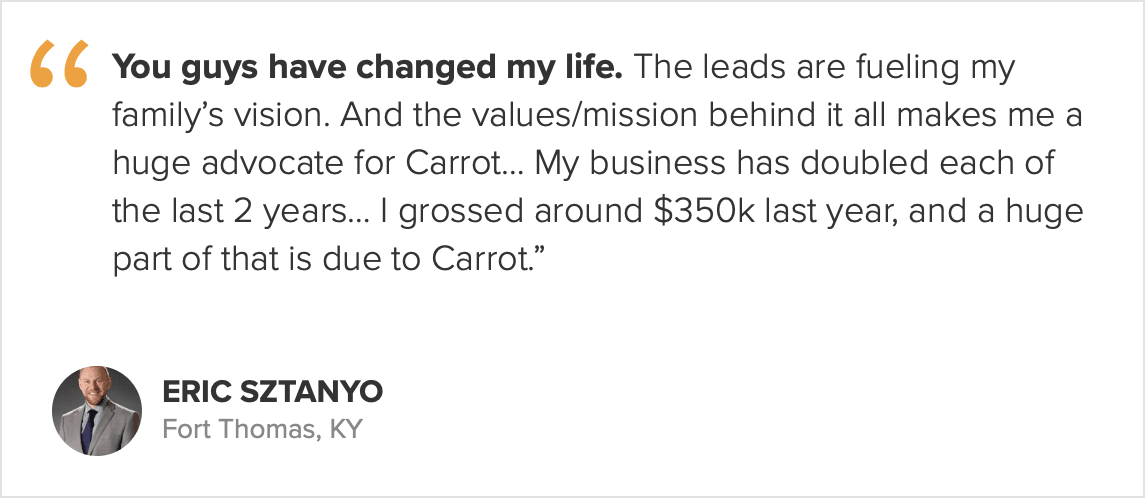
Now, you might be thinking to yourself,
People should just trust my testimonials without all of that extra effort.
Unfortunately, though, people are wary of trusting anything online. As you already know, there are a lot of liars in the digital space, and they ruin the game for the rest of us.
You must add extra elements (Image, bio, first and last name) to your testimonial to show people you are trustworthy.
2. Increase The Speed Of Your Website
You want to design a website that destroys the competition.
In terms of page speed, that means a couple of things.
First off, if your website is too slow, it’s easier (and faster) for visitors to exit your URL and go somewhere else.
You don’t want people to do that.
But there’s another problem with slow load speeds. It not only surges your website’s bounce rate but also hurts your Google rankings.
If you want to design your website, do these things to increase your load speed.
Optimize images.
Clean up code.
Use fewer plugins on your site.
Reduce the number of redirects you’re using.
Minimize HTTP requests.
Reduce server response time.
3. Use Real Estate Agent Website Builder With IDX
Once, prospective homebuyers had to jump around to different listings to browse through houses.
Or, they had to find a cohesive MLS website that delivered all the listings simultaneously.
However, Internet Data Exchange (IDX) is changing how homebuyers browse through listings.
Instead of jumping from website to website, visitors can view listings natively on your website with IDX. This further means that they don’t have to leave your URL to browse through houses.
The best part is that you don’t have to do anything to update these listings. With IDX, they update automatically.
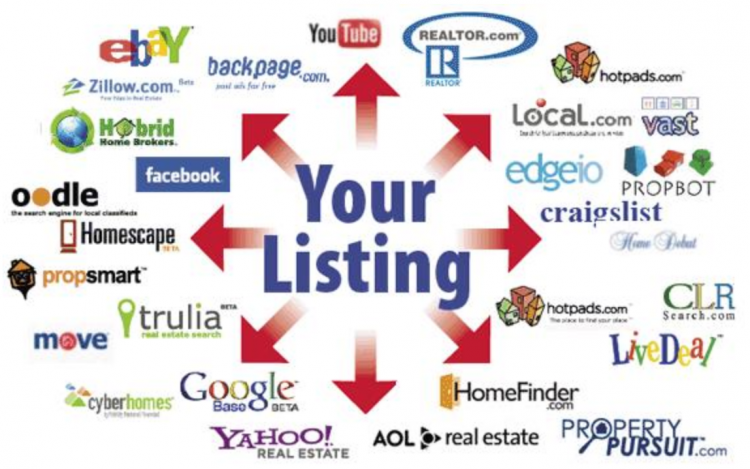
Of course, IDX integration is more of a maintenance strategy — since other real estate agent websites have it, you should too. Still, most people search for listings on Zillow or Realtor.com.
It encourages people to browse around your website’s listing options instead of going elsewhere to do so.
It gives you a way to encourage email list opt-ins. With IDX, you can offer email updates about recent listings relevant to their preferences.
It also allows you to choose properties to feature on your website easily. With a pool of automatically uploaded properties, you’re just a few clicks away from featuring ones you think will sell.
With IDX, you won’t only stay in line with the competition; you’ll get ahead by featuring remarkable properties, growing your email list, and encouraging people to browse your website instead of bouncing.
4. Leverage A Design That’s Built To Convert
When people land on your real estate website, you don’t just want them to browse, and you don’t just want them to trust you.
Here are two things you can do to build that website.
Mobile Optimization
The Buying Process
Mobile Optimization For Real Estate Agent Websites
The average American owns 3.6 internet-connected devices. And 36% of Americans have a desktop, tablet, or smartphone.
This means that people don’t just browse your website on their laptops; they do it on their phones.
Why is this important?
Because if your website doesn’t adapt to the device people use to browse, they will have difficulty navigating your website, get frustrated, and leave.

Over 60% of Carrot’s leads are monthly from mobile devices.
This is why we’re so intentional about making our member’s websites mobile-friendly.
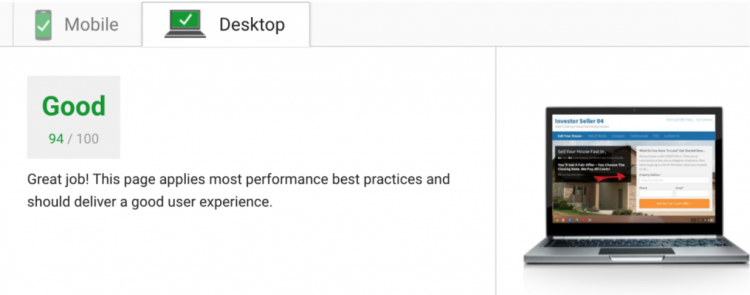
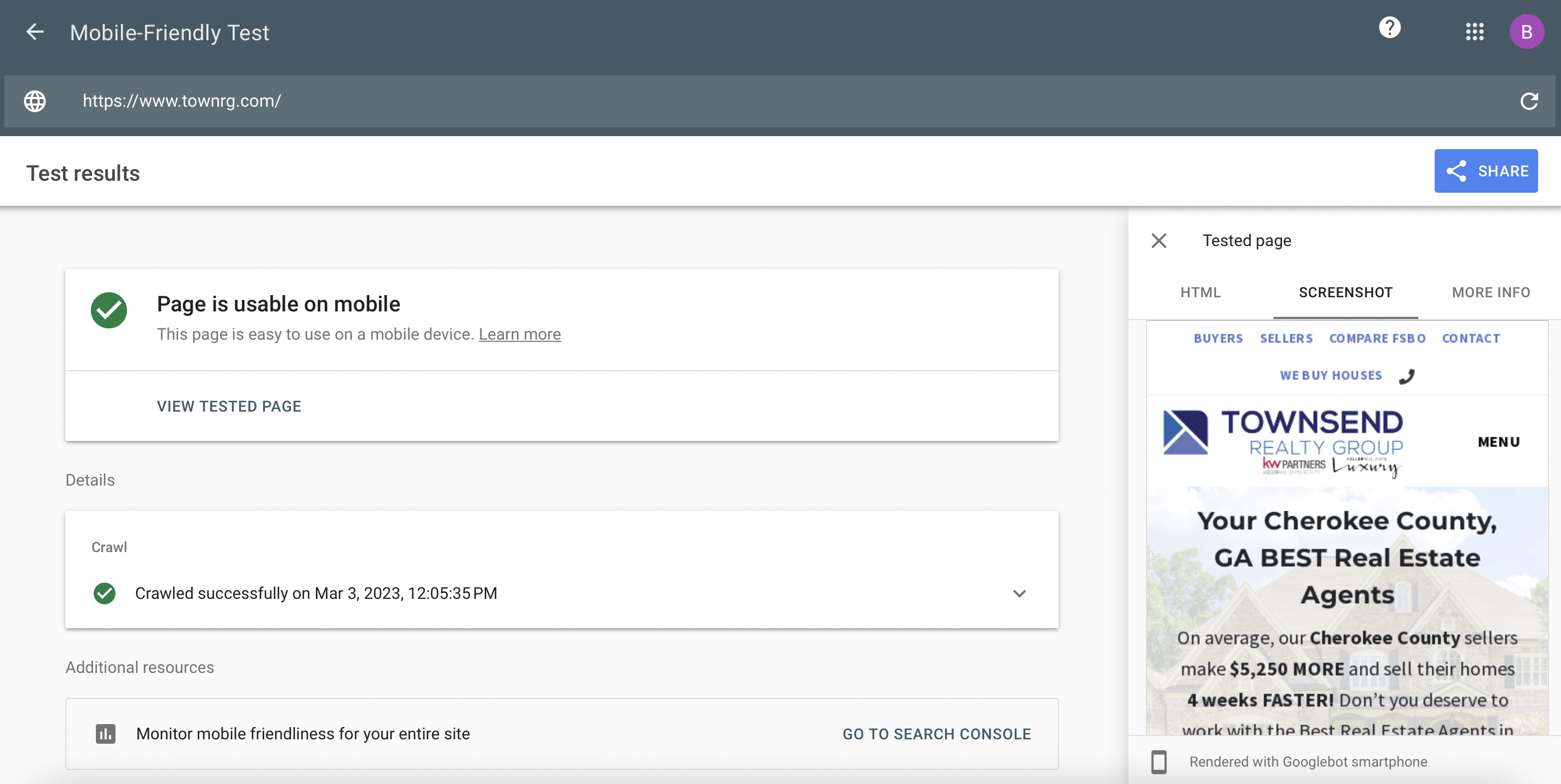
Just paste your website and click “Test URL” and you’ll see the results and mobile screenshot on the right.
If your website isn’t mobile responsive, it needs to be.
The Buying Process
When someone visits your website, where do they look first?
It’s an important question to ask and a difficult question to answer. Where people look can impact how many leads you generate and how many of those leads you convert.
Of course, everyone will look in slightly different places. But, by and large, we here at Carrot have found a system to the madness.
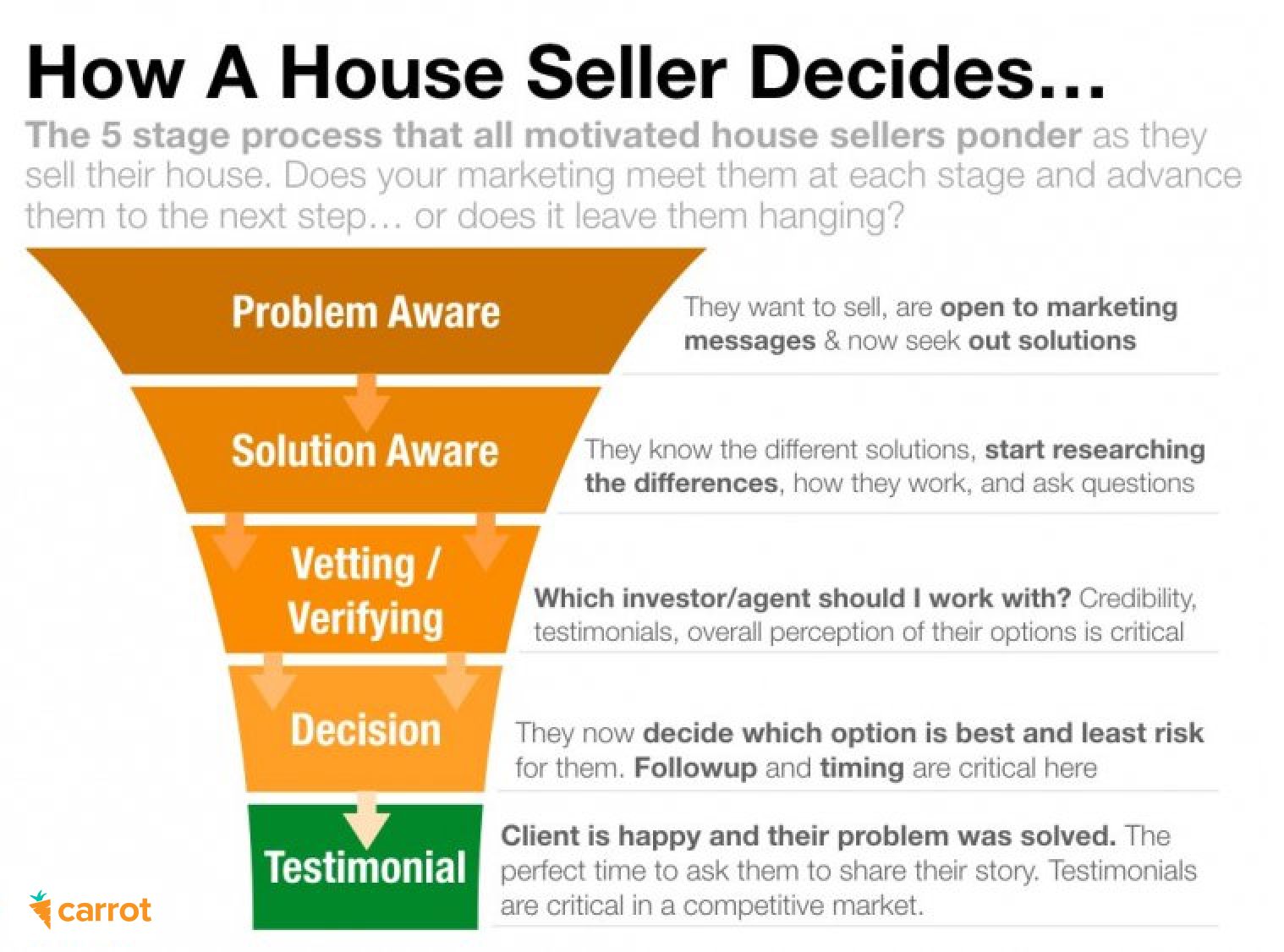
In fact, for our real estate investor websites, we found that people go through these stages.
Problem aware
Solution aware
Vetting/verifying
Decision
Testimonial
And when people visit investor websites, they either want to sell their house as fast as possible or learn about the investor before working with them.
Which is exactly in line with how we’ve designed our real estate agent websites.
As you can see in the screenshot below, we help the eye travel from the most important CTA — “Homes For Sale” — to easy ways to learn more about the agent and what they offer — “New Construction,” “Our Reviews,” “Compare,” “Areas,” “Our Team,” and “Resources.”
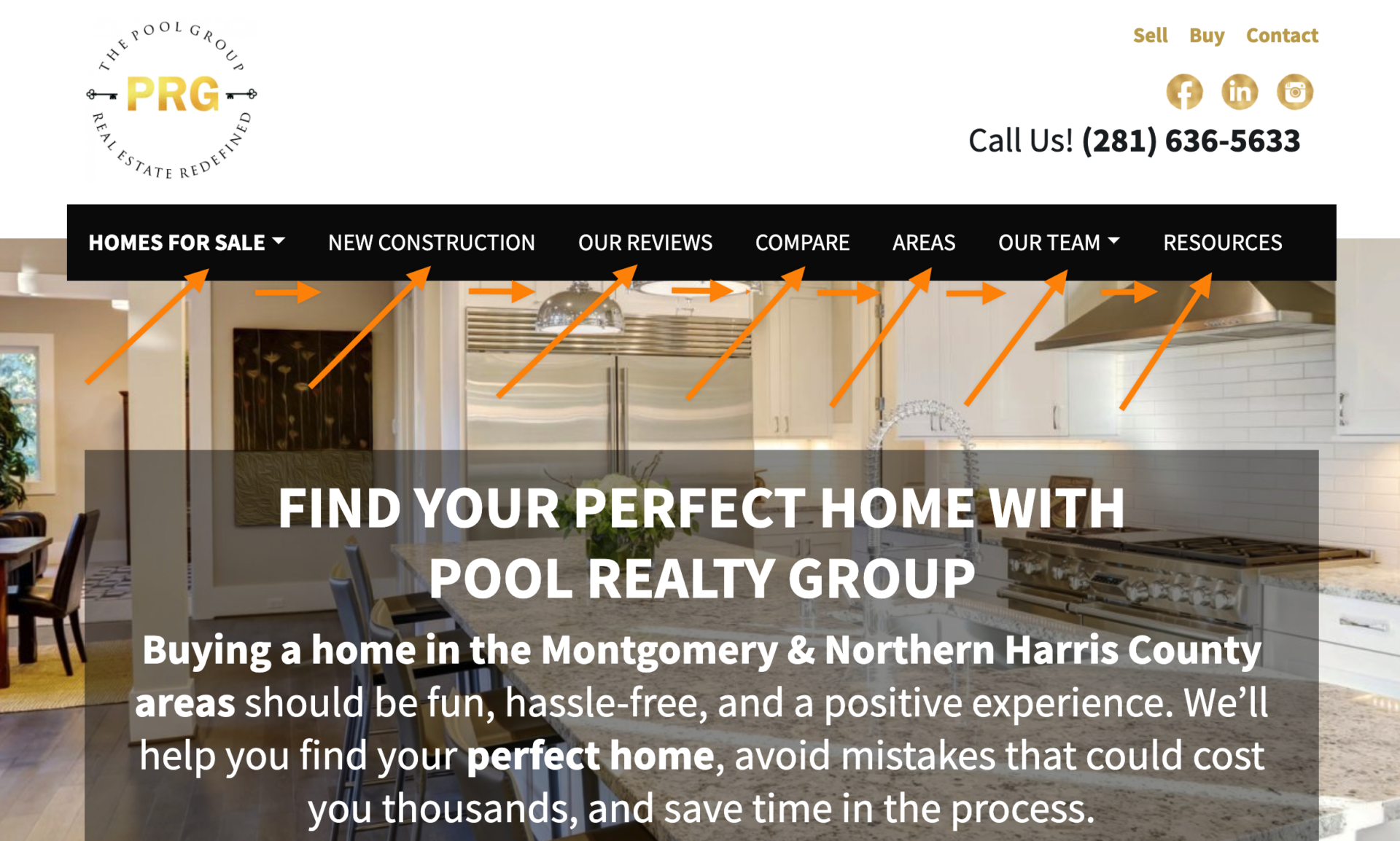
And that system isn’t just hot air and mirrors. Instead, it’s based on vigorous conversion and heatmap testing at Carrot.
For instance, here’s proof that the “Meet the Team” section is important.
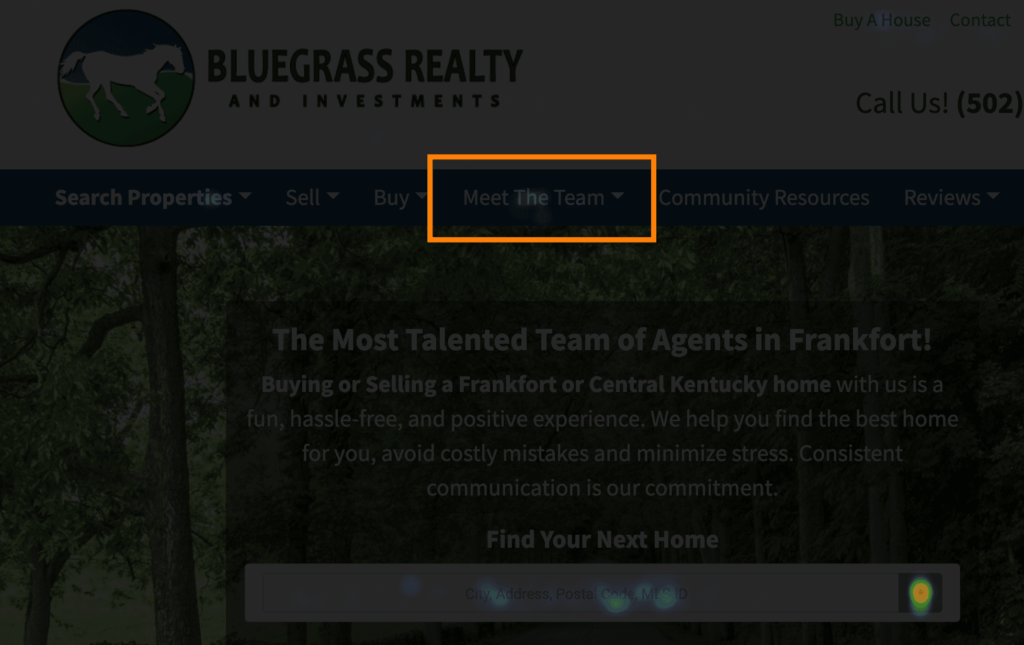
And similar proof about the “Featured Listings” tab.
Then, we cater to the immediate needs of the visitor.
And finally, we allow people to navigate where they want to go easily.
You’re welcome to use the same system on your website.
Remember, since it’s your website, it’s your job to guide the visitor. Think about it like having a guest over to your house. You wouldn’t invite someone into your house without telling them where to hang their jacket, take a seat, or get a drink of water.
Your website should follow similar rules.
When someone visits, show them where to go to do what they want. Then, more people will convert, and fewer people will bounce.
5. Consider Using This Real Estate Agent Website Template
Knowing where to start when designing your real estate agent website can be a real pain.
Often, having a tried-and-true template to work from isn’t just easier but more cost-effective. Therefore, I will walk you through how our templates at Carrot flow.
You are, of course, welcome to design your website that follows a similar flow. Otherwise, we’d love to work with you.
When someone first lands on your website, they should see a quick explanation about what you do and why you’re awesome. At the top of every real estate agent Carrot website, we encourage putting words to those two things.
Then, we give you a place for featured properties so that people who want to look at houses easily can.
From there, the rest of the homepage should work to build credibility around your real estate business. This is why our Carrot members use testimonials…
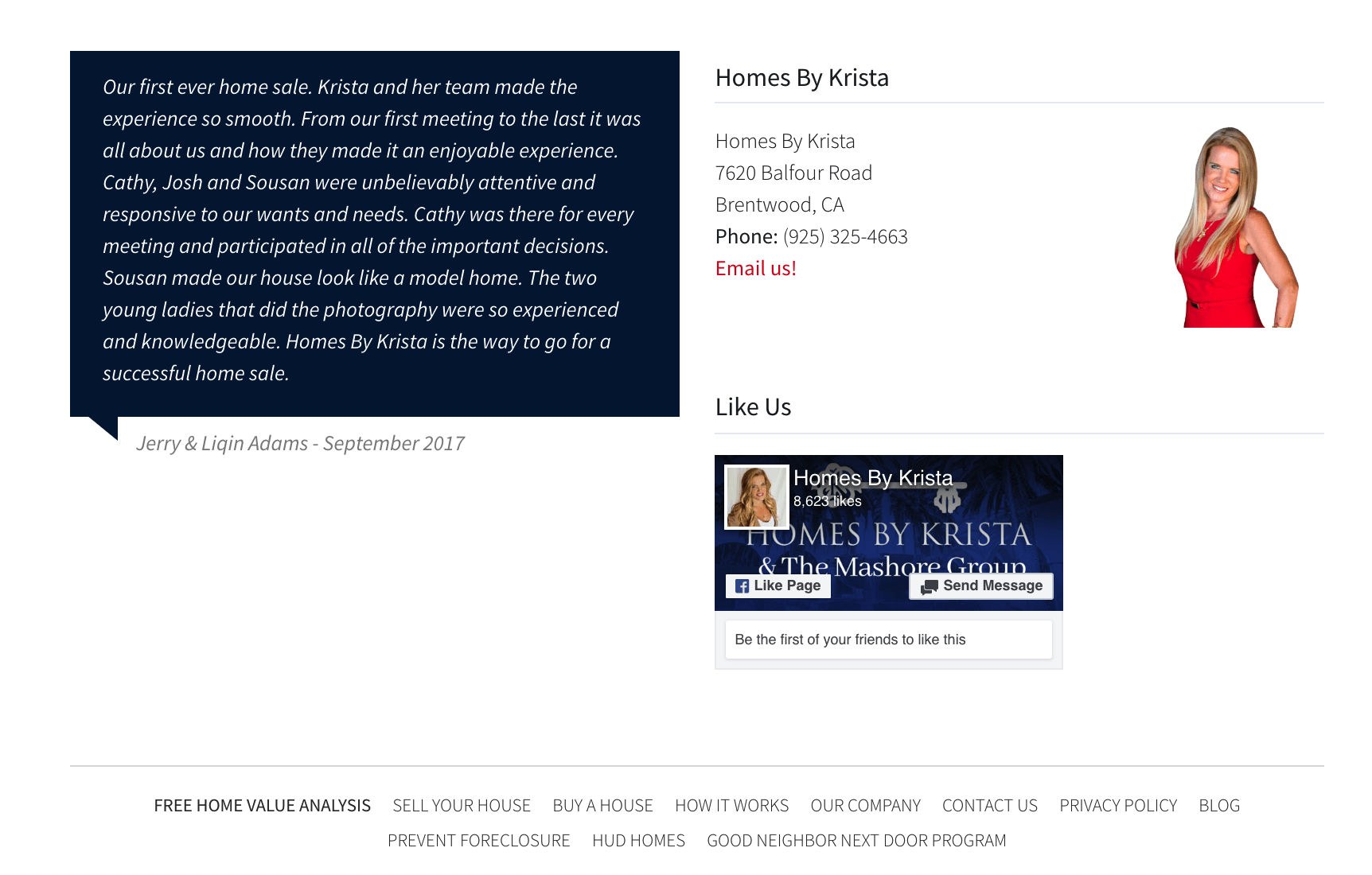
And descriptions like this…
Put more, your homepage should flow similarly to this:
Briefly tell people what you do and why you’re awesome.
Give them a simple method for taking action.
Explain in more detail why you’re awesome (testimonials).
Finish with a CTA.
6. Streamline The Real Estate Lead Generation Process
Yes. Your website needs to convert.
But your website’s management system should allow you to streamline the lead generation and follow-up process easily. Here are two ways that you can make that happen.
Use Notifications
The back end of your website needs a system to send notifications when you generate a lead.
After all, the faster you follow up with prospects, the better.
Consider that salespeople who contact a prospect within one hour of generating the lead are seven times more likely to have a meaningful conversation with the prospect.
Sadly, only 37% of companies respond within an hour. This is probably why 8% of salespeople land 80% of the deals.
Don’t be in that 63%.
With notifications, you can follow up within the hour and give yourself the best chances of turning a lead into a deal.
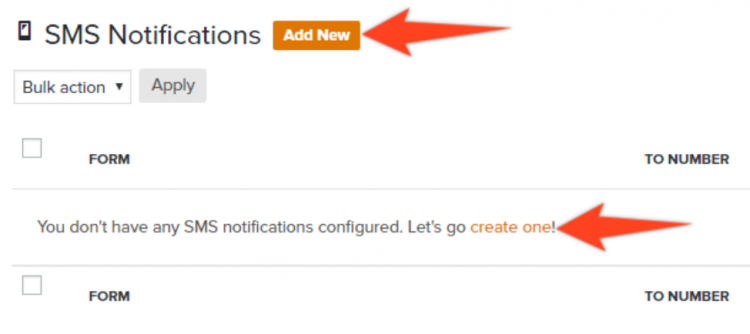
If you’re a Carrot member, you can go to your website dashboard, click “Forms” and then “SMS Notifications.”
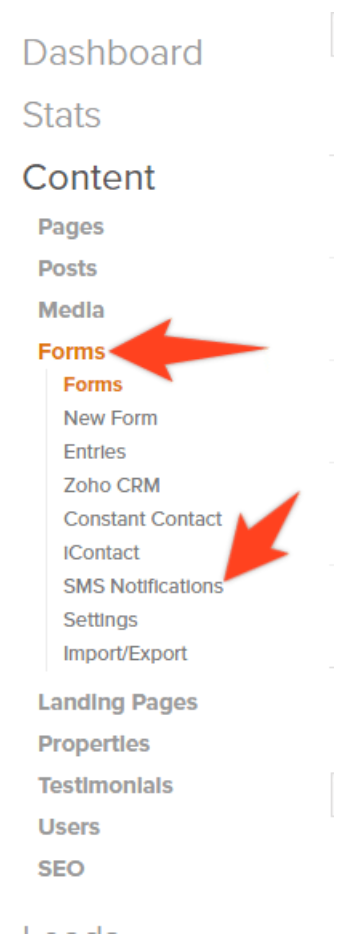
Then click “Add New.”
Finally, select a form, enter your phone number, and choose which information you want the notification system to send you when you receive a new lead.
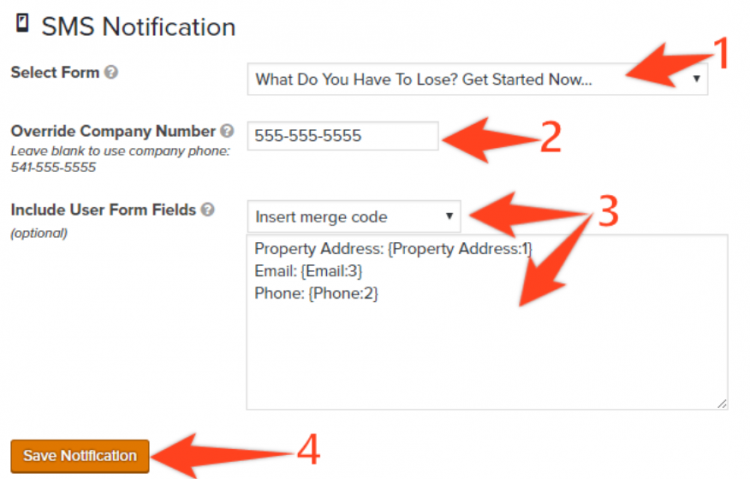
You don’t have to check your website for leads constantly. Instead, the software will notify you when you generate a lead, and you can contact them immediately.
Which means you have a better chance of landing the deal.
Create Genuinely Helpful Content
In the real estate world today, many people are putting out a lot of content.
But you don’t want to be another blind content machine. Instead, you want to create content that helps people make meaningful decisions.
Why?
Because creating genuinely helpful content builds rapport with the people who visit your website. If you help them, they’ll probably want to work with you when the time is right.
Remember, you’re trying to show your audience you know your stuff. But you don’t want to say so outright. You want to build a relationship with your audience and prove they can trust you by creating content that centers around their concerns.
Consider content like this, for instance.
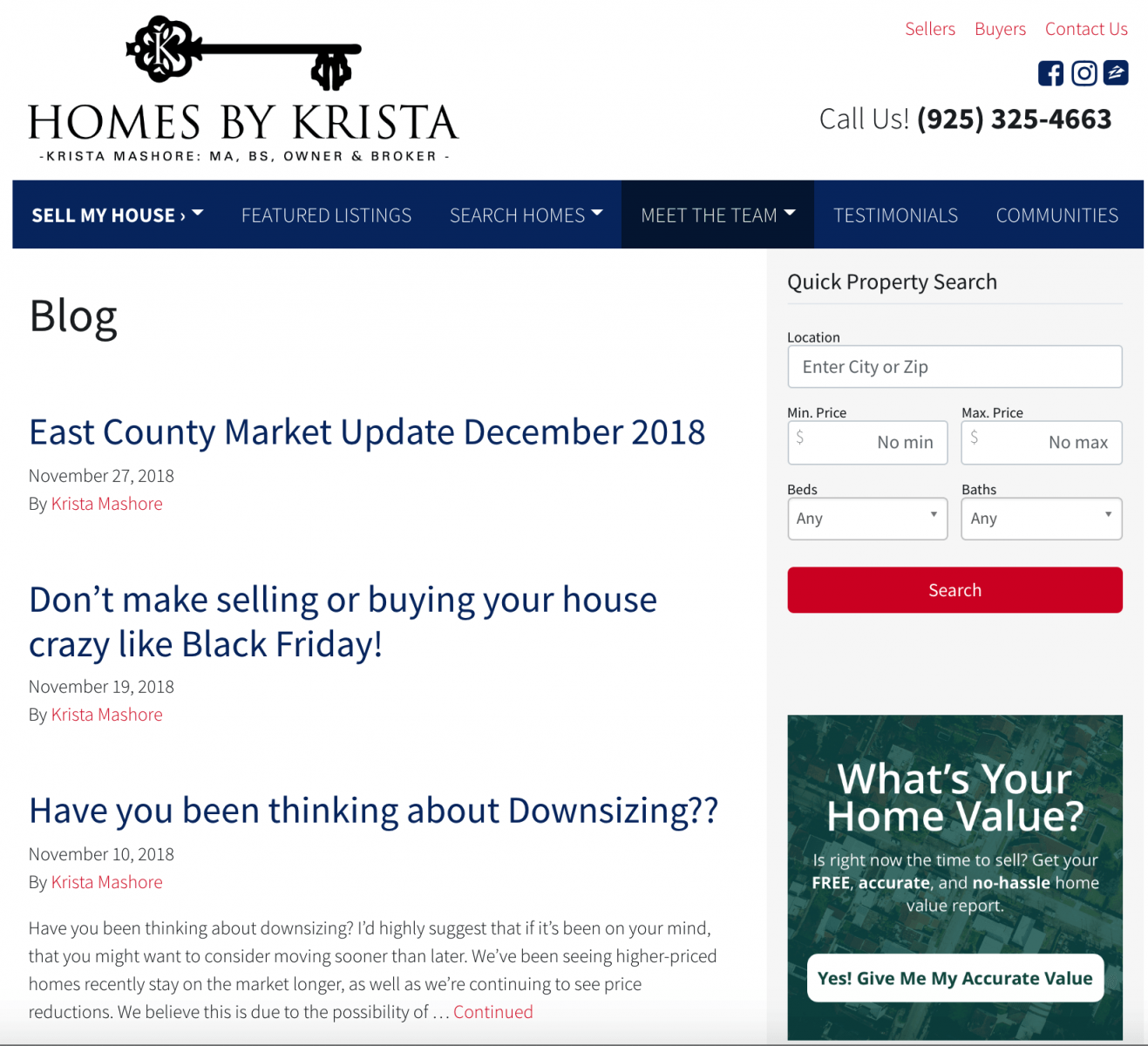
It might sound counterintuitive, but the more you help your audience (genuinely), the more they’ll trust you and the more willing they will work with you in the future.
Your content needs to build a trusting relationship between yourself and your prospects. With that, you’ll generate more leads than you would otherwise.
7. Design A Real Estate Landing Page For Each Location
Here’s what you don’t want to happen. You don’t want people to navigate your website and leave because they don’t think you manage deals in a specific location… when you do.
Therefore, your website needs multiple landing pages to dominate the competition if you work in multiple locations.
Usually, when people search for real estate agents, they search based on their location, such as buying a house in Acworth, Georgia.
And if you want to rank on that page, you need a dedicated landing page for each city you operate in.
One location page might look like this:
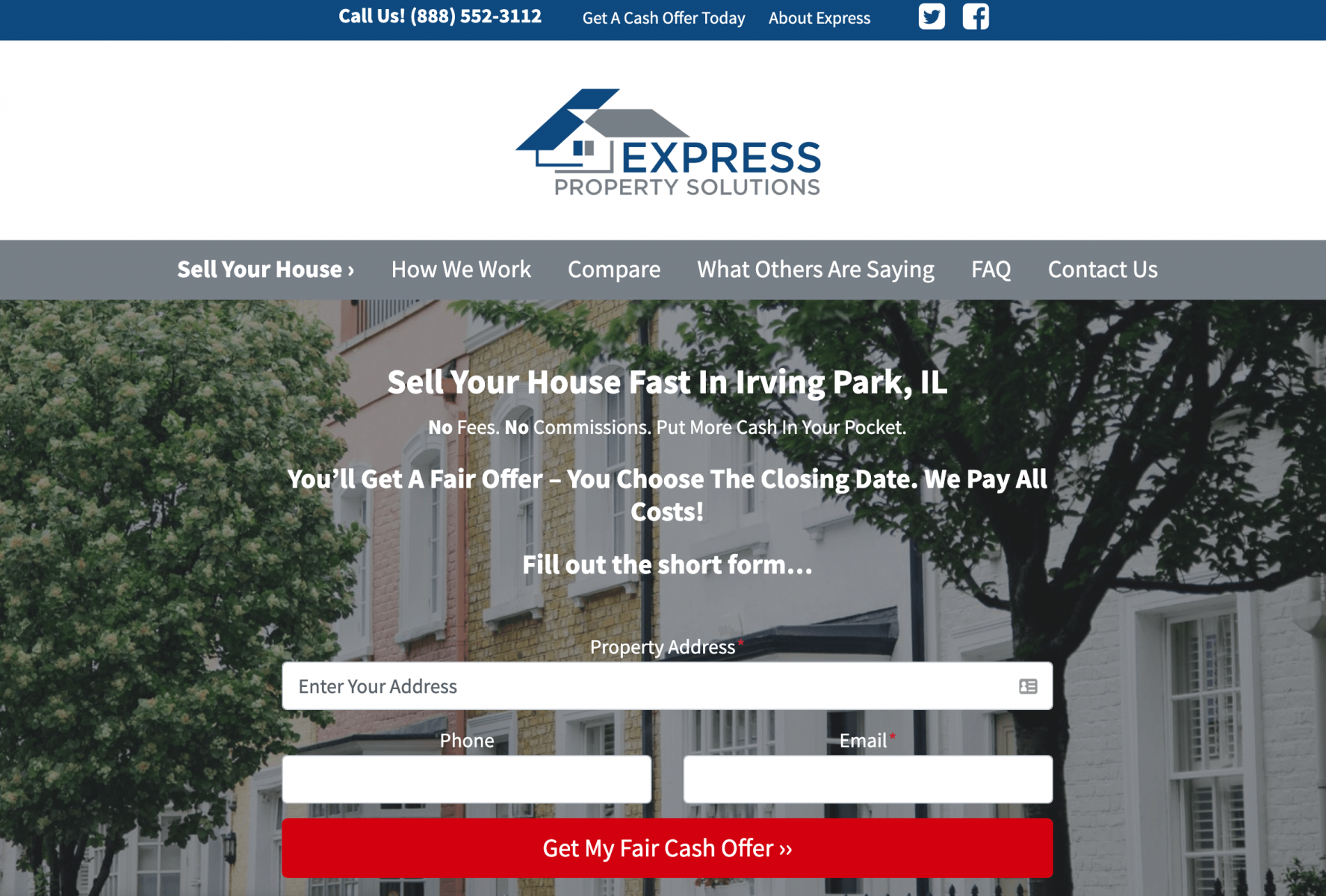
This will help your SEO results — making your real estate website rank for high-commitment searches. But it will also ensure that when someone searches and finds your website, they won’t leave because they’re confused about where you help buy and sell houses.
At Carrot, we offer our customers an easy location landing page feature.
We allow our customers to quickly create multiple landing pages that look identical, except for the location they advertise.
This ensures that you never miss out on a lead for such a silly reason as not marketing the correct location to each prospect.
Conclusion
In reality, 20% of real estate agents do 80% of the business.
This also means that 80% of real estate agents do just 20% of the business.
You want to land in the former category. But to do that, you will need a website that drives leads, converts visitors, outranks the competition, loads quickly with IDX integration and has location-based landing pages.
At Carrot, we help thousands of investors and agents generate leads and build their businesses monthly.
And we love it.
If you want to focus on building your business and leave website design up to us, consider working with us.
If you want to design your website, the same rules apply. Use this as your guide to creating a website that ranks in Google, drives passive traffic, and generates leads.
The best real estate websites for agents offer the ability to build lead-generating consistency, financial predictability, & growth-hacking momentum for your real estate business.
We’ve seen countless Agents use websites to boost their branding and credibility, increase website traffic, and capture qualified leads.
You might be looking for a real estate website provider, or could be a current Carrot member who’s exploring ways to use the platform, I reviewed some of the best real estate agent websites, some powered by Carrot, and found 10 noteworthy trends that can increase your online lead generation.
And keeping up with those massive changes can be difficult. In today’s real estate world, you don’t just need a website, you need one of the best websites.
Since all of your competition is online, just being online isn’t enough.
You need to stand apart from the hundreds of thousands of results that Google generates with any given search and you need to have a website that pulls leads and converts visitors.
Of course, that’s easier said than done.
Here they are…
10 Things The Best Real Estate Agent Websites Have in Common
The reason is simple. If people don’t have to leave your website to view listings, they will spend more time on your domain. This means that when they find a house they love, they’ll contact you instead of the competition (because they’re on your website already).
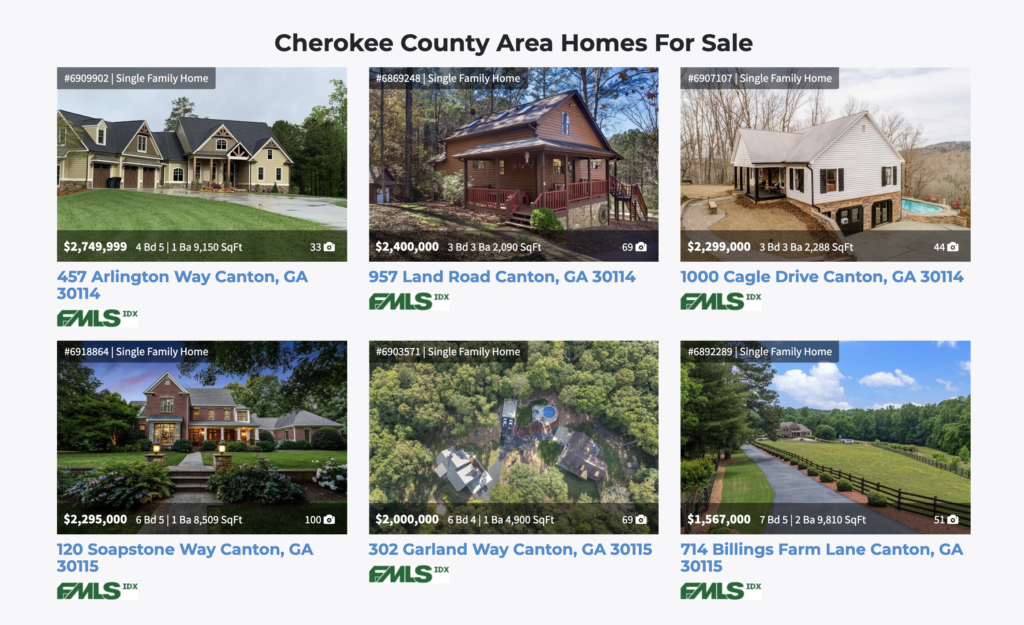
This is what IDX looks like in action on one of our Carrot members’ websites.
Simple and informative. Townsend Realty Group uses a real estate website designed by the Carrot team. Their website showcases the company’s well-designed logo, along with several engaging property images from the company’s catalog of listings via IDX.
With IDX, visitors can search for houses natively on your website rather than having to leave and go to Zillow or Realtor.com.
And the more time people spend on your website, getting to know you and your business, the better they’ll remember you when they’re reading to buy a house.
However, no matter how good the IDX on your real estate website, people still go to third-party listing websites at some point.
Zillow, for example, has 160 million monthly users. 50% of visitors to Zillow are planning to buy or sell a home. And there are even two million real estate professionals listed on Zillow.
You can’t compete with that.
Still, though, IDX is worth having because some people will stay on your website to browse listings.
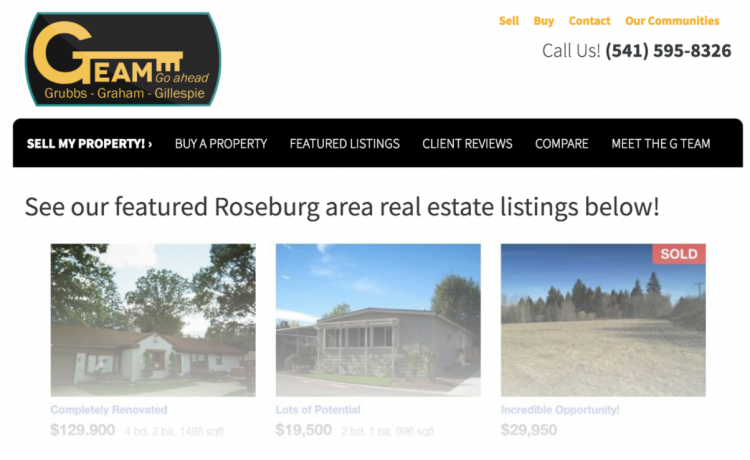
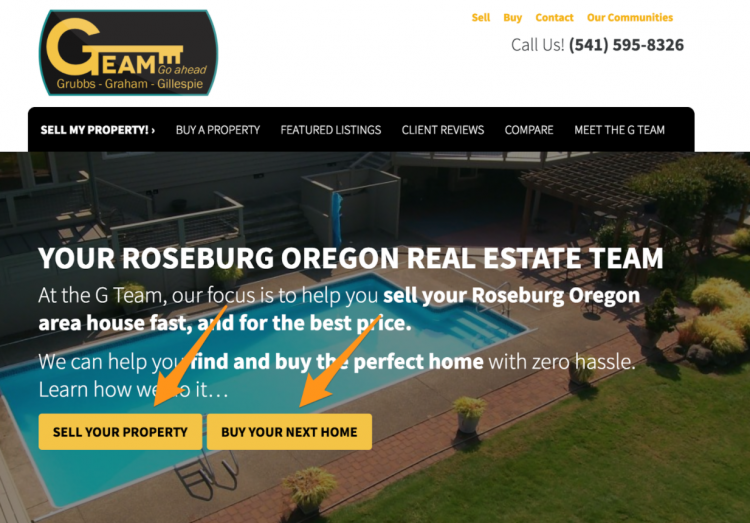
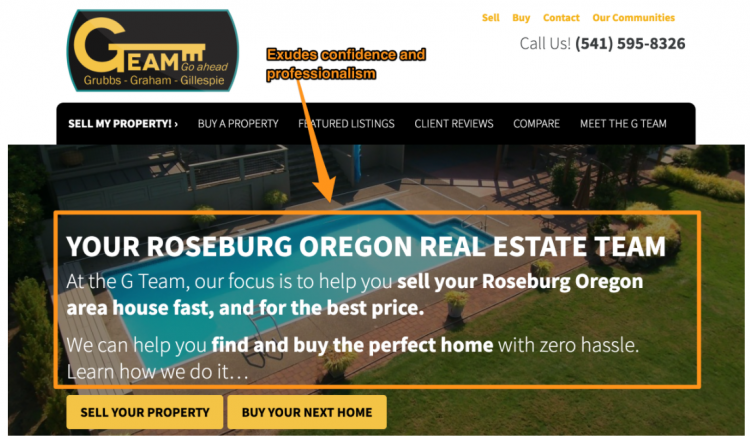
The G Team are active agents in Roseburg, Oregon. They offer innovative solutions to address their audiences. Rather than only having bulk listings and content for their properties, the G Team has created specific pages for their niche audiences.
Here is an example of how they target North Umpqua River Homes with a specific page as well as specific content.
The G Team offers another reason that you should consider using IDX.
Namely, because it allows you to easily choose featured properties for your front page.
With IDX, you don’t just give visitors the ability to search your website for homes, you create a simple system for featuring homes that you think will sell quickly and with a high profit margin.
All you have to do is go to the pool of IDX-generated listings and select the ones you want to feature.
And as you probably know, no home sells better than a featured home.
2. High-quality Pictures And Videos
As I looked through some of the top real estate agent websites on the Internet, I couldn’t help but notice that each had stunning visuals.
As it turns out, real estate website design and professional photography are a match made in heaven.
If you want people to buy a house, then you have to make it look good.
And one of the best ways to do that is by using remarkable videos and photos for your house listings.
In fact, according to one study, listings with professional photographs saw 139% more clicks and sold for anywhere from $1,000 to $100,000 more than expected.
Really, that’s no surprise.
When a house looks beautiful, people want to buy it. Homebuyers spend 60% of their time looking at listing photos and homes with high-quality photos receive a 47% larger asking price per square foot than homes without high-quality photos.
Even if you pay a photographer $500 or $1,000 to take photos of the house, that investment is well worth it.
3. Compelling House Descriptions
Above all, you’re a salesperson.
Your job is to sell houses to people who want to buy a home in your area. And you want them to buy from you whether your relationship started offline… or online.
For that reason, the top real estate agent websites have remarkable, emotionally charged, enthralling descriptions of properties.
They don’t just put something like, “Hey. Here’s a house for sale. It’s nice. Buy it.”
Instead, they use powerful language and compelling… well, sales copy.
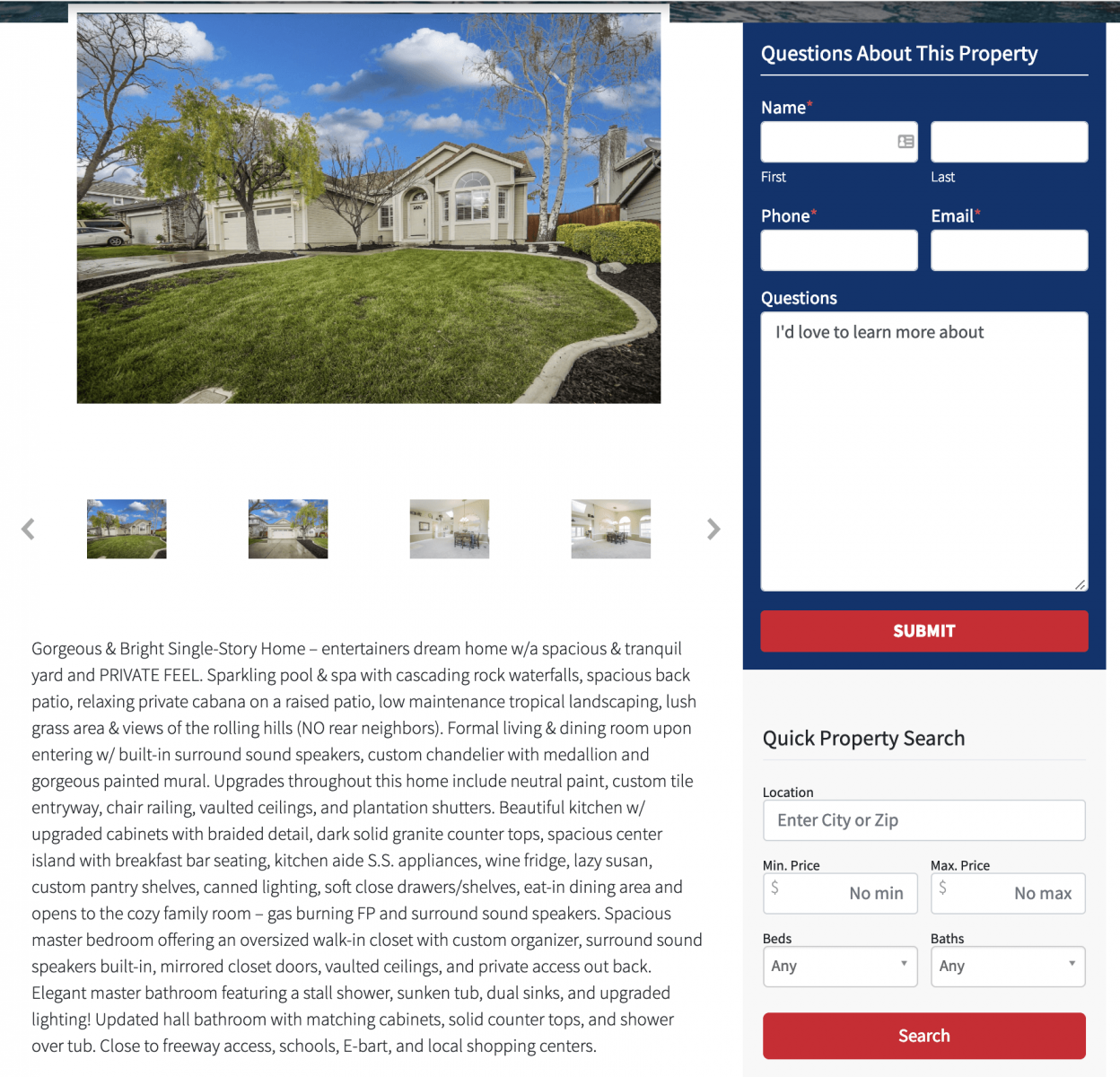
For the first example, I’ll use one of Carrot’s Concierge real estate website service websites, Krista Mashore and her team have built an authoritative website for home buyers and sellers in and around Brentwood, California. Her website is full of useful local content, including an informational blog and community pages for each of the areas in her market.
Krista uses a very detailed description of her properties…
See how the description evokes an emotional response with words and phrases like “PRIVATE FEEL,” “low maintenance tropical landscaping,” and “NO rear neighbors”?
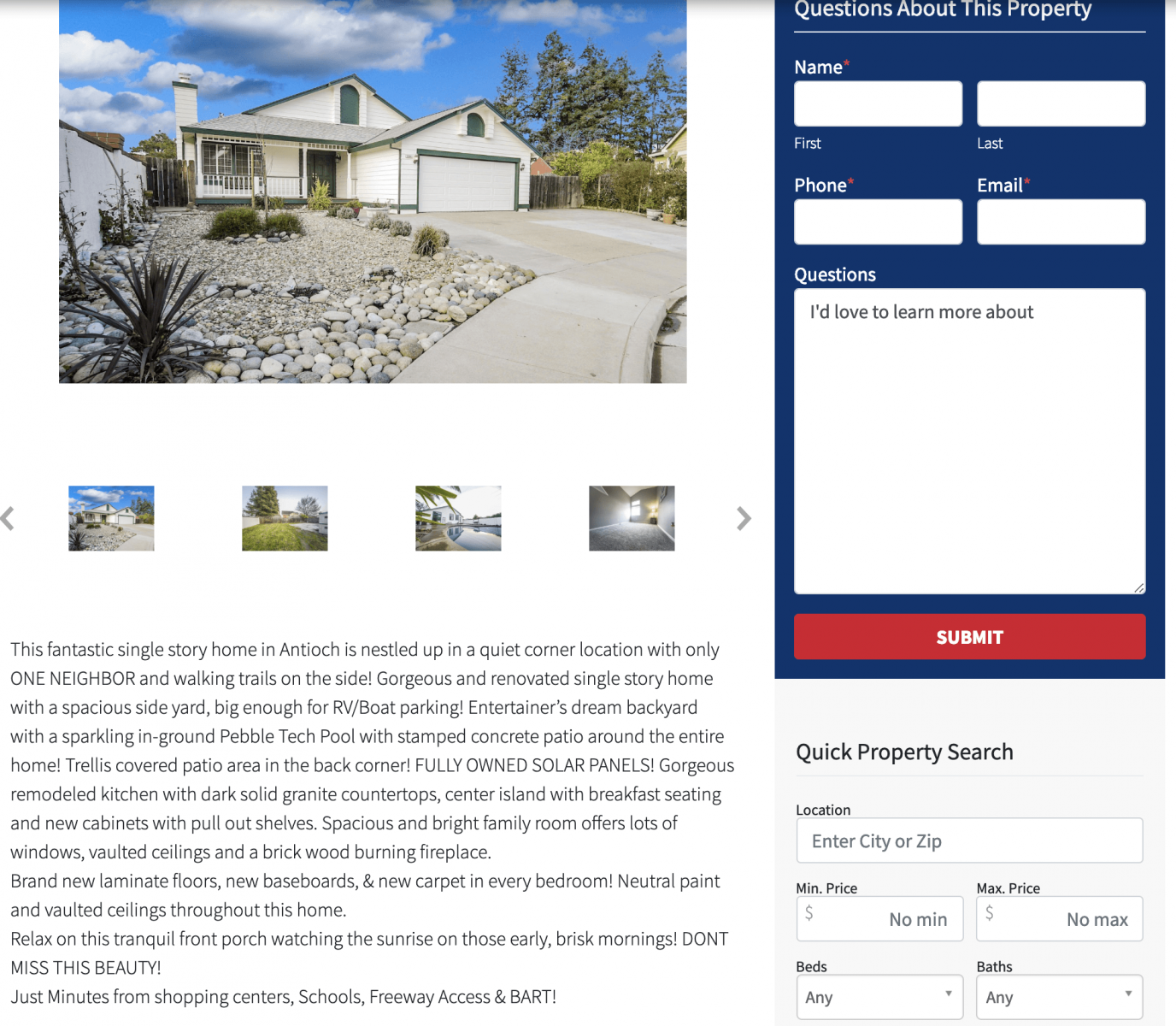
You want to do the same thing with your descriptions. Here’s another example from the same website.
This illustrates an important point. When writing the description for a home on your website, your primary goal isn’t to give all the specs or drown people in detail.
You want to flatter them. You want them to feel as though they’ve found the best house on the market and they would be silly to pass it up.
“When writing your listing description it is important to mention the qualities of the property that stands out over and above the competition. For example, if all the competing homes have a two car garage and yours has a three car, this is something you would want to emphasize.”
In other words, point out the good and don’t mention the bad — at least, not yet.
There will come a time when you have to mention problems with the house, but that time is not right now. First, you want people to fall in love with the property. Then, and only then, will they forgive its flaws.
Finally, if you really want to make your product description shine, consider this study by Zillow.
In the research, Zillow observed over 24,000 homes sold and found that these 15 words were within the descriptions of homes that sold for more than expected.
On the left is the word analyzed and on the right is the average percentage increase of what the home sold for (relative to what realtors expected it to sell for).
Luxurious — +8.2%
Captivating — +6.5%
Impeccable — +5.9%
Stainless — +5%
Basketball — +4.5%
Landscaped — +4.2%
Granite — +1% – 4%
Pergola — +4%
Remodel — + about 2%
Beautiful — +2.3%
Gentle — +2.3%
Spotless — +2%
Tile — +2%
Upgraded — +1.8%
Updated — +0.8%
When appropriate, consider tossing some of these words into your descriptions to give them a better conversion rate and a wider profit margin.
4. Easy-to-access Contact Information
It might seem like an overly simplistic element to your real estate agent website, but the trend is undeniable:
The best real estate websites for agents make it easy to contact the broker.
This element on your website is so crucial that I couldn’t avoid mentioning it.
All of the best real estate agents are doing it. Let’s take a look at the next Agent Carrot website before looking deeper into their contact call-to-action.
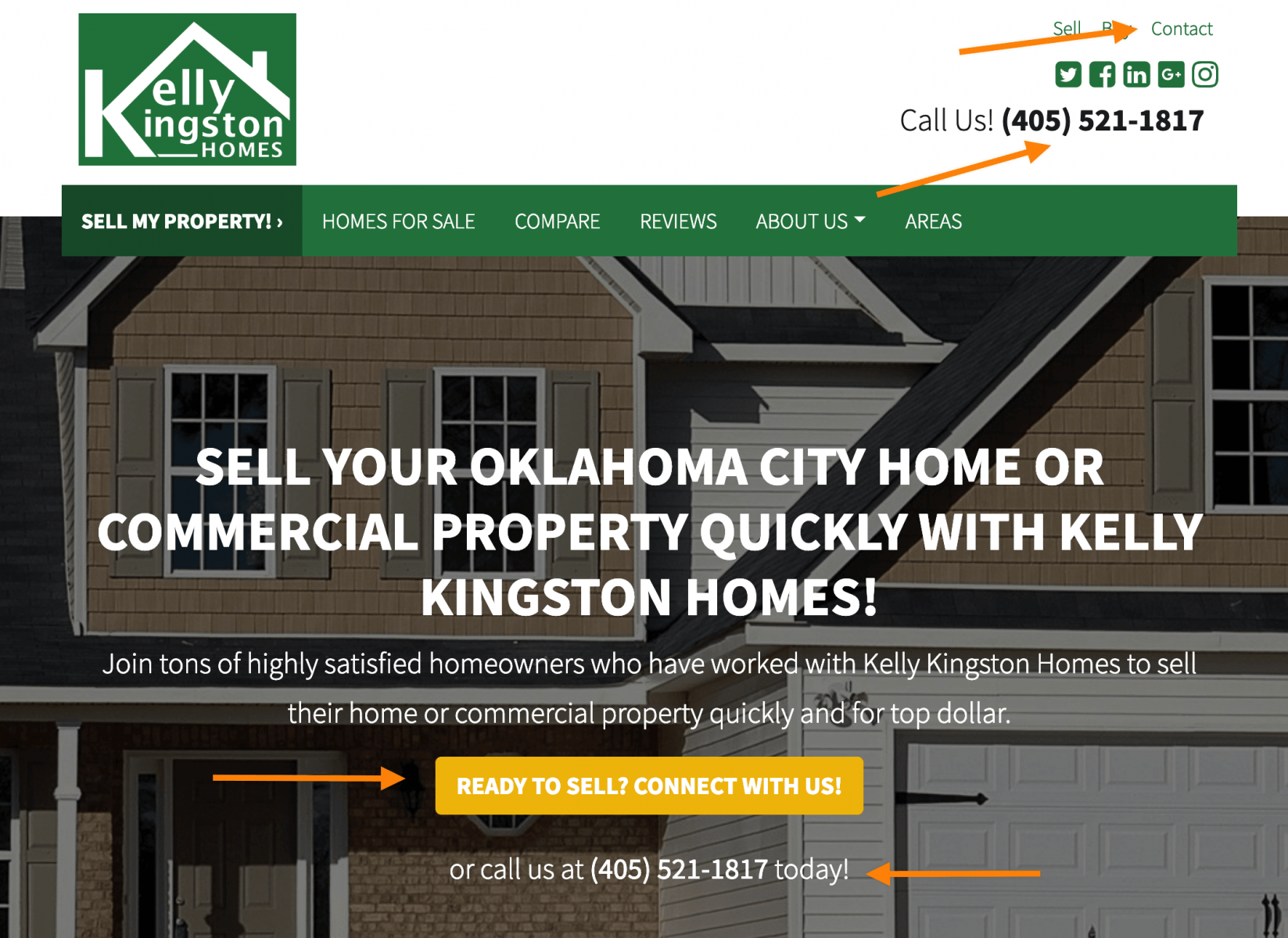
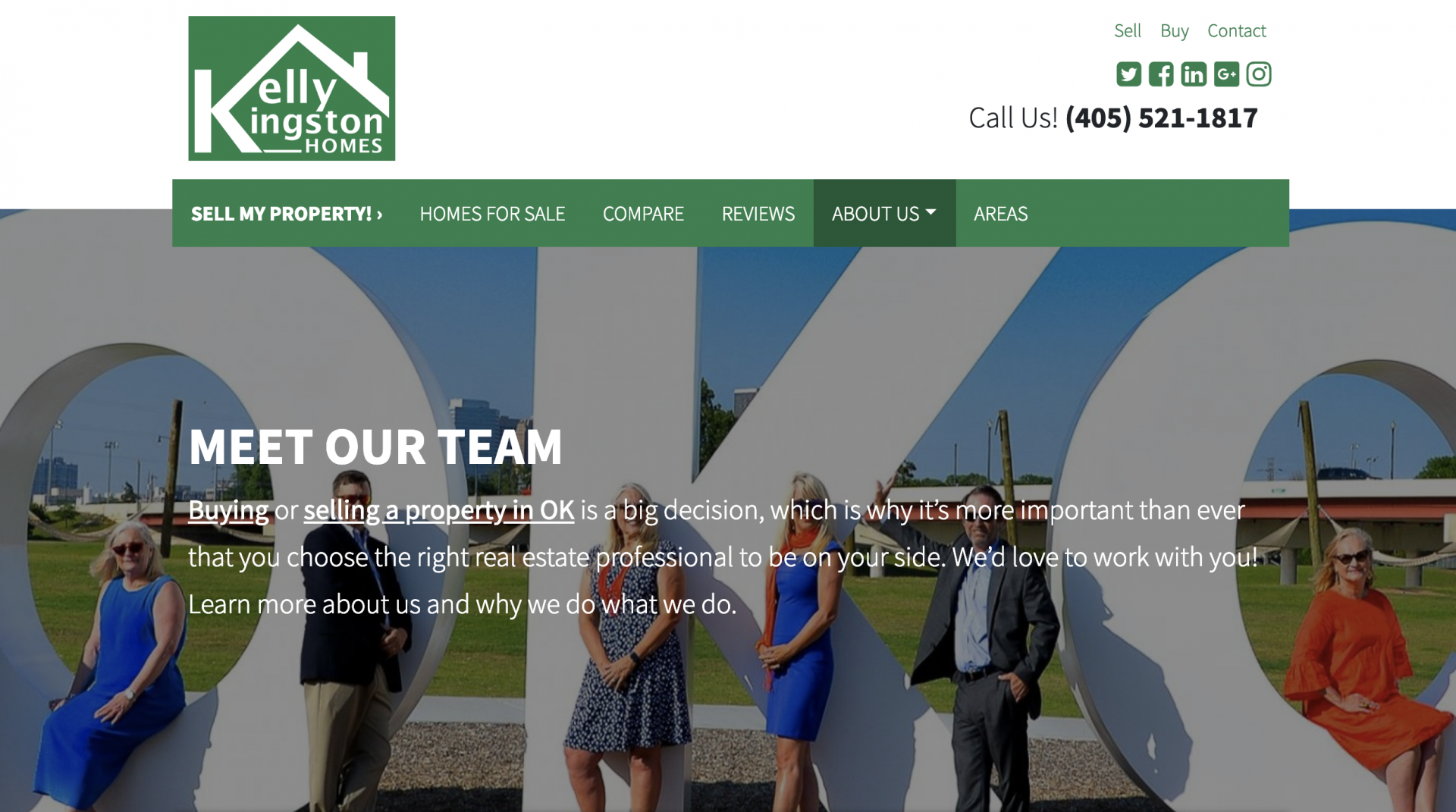
For the Kelly Kingston team, impact begins with their company logo: the K built into the roofline and chimney silhouette send a strong message about what they specialize in. Their area pages within the website’s main navigation menu expand on their theme by drilling down listings in their target areas of Oklahoma City, Midwest City, Bethany, Yukon, and Edmond.
Kelly Kingston Homes makes it easy for visitors to find different options to contact them from the homepage…
How about that 61% of internet users won’t return to a website if they had trouble accessing it on their phone — and that 40% of those frustrated visitors go to a competitor’s website instead?
If you didn’t, now you do.
Clearly, mobile browsing isn’t a thing of the future, it’s a thing of right now.
This means that your website absolutely must be mobile-flexible.
The best real estate agent website templates on the internet aren’t mobile-responsive because they’re ahead of the times; they’re mobile-responsive because they’re in line with the times.
In other words, mobile-responsive is now par for the course.
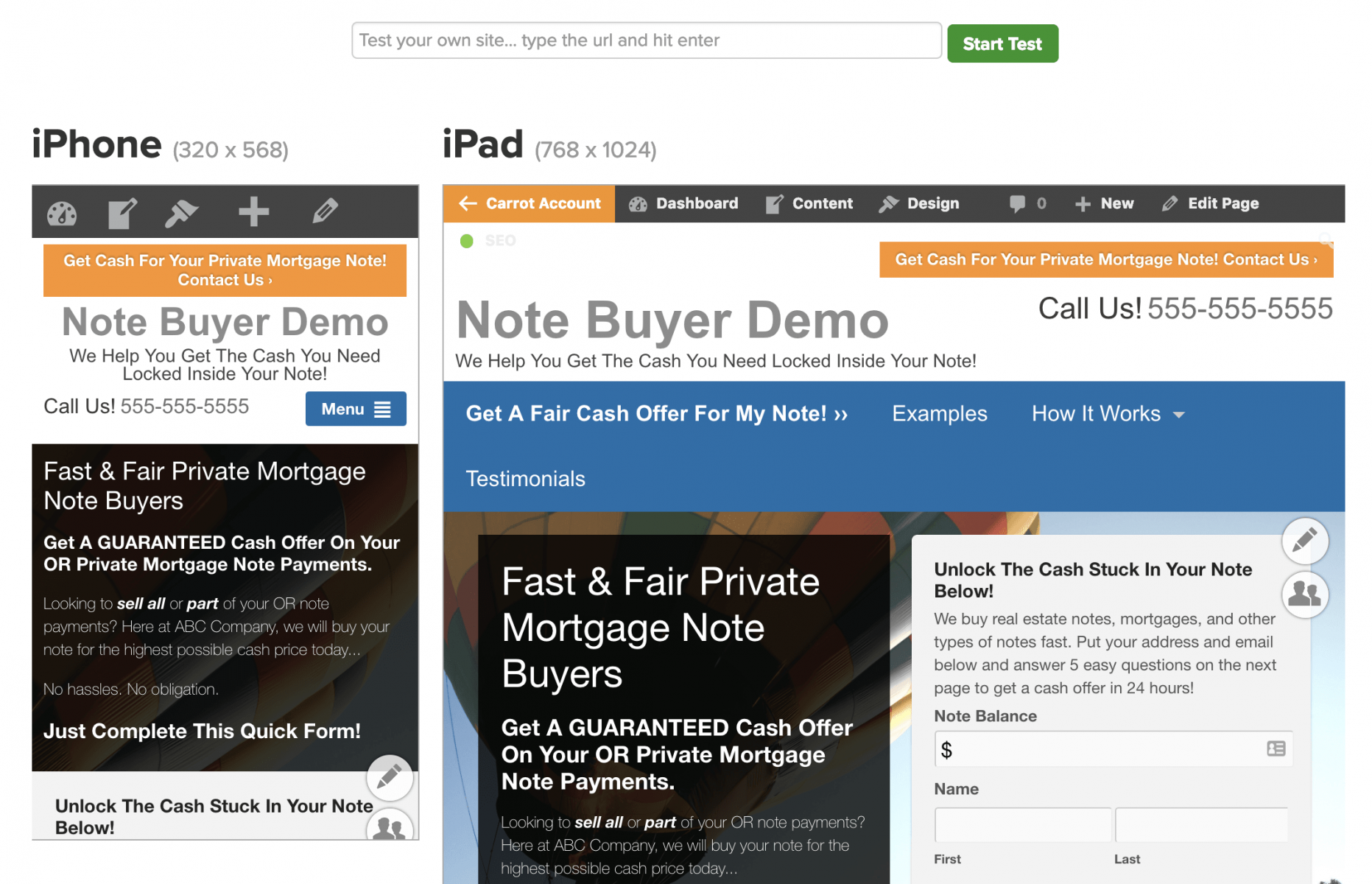
If you’re not sure whether your own website is mobile responsive or not, you can use Carrot’s mobile responsive tool to find out.
Just type in the URL of your website and click “Start Test.”
On the left side, you’ll see what your website looks like on an iPhone, and on the right side, you’ll see what your website looks like on an iPad.
If it doesn’t adapt to each device, you desperately need a new website.
All of Carrot’s real estate agent and investor websites are automatically mobile-responsive.
This is important for several reasons.
It helps your rankings in Google (because Google hates ranking un-mobile-friendly websites), makes visitors more comfortable with browsing your page on their smartphone, and even increases your conversion rate — conversion rates on mobile are 64% higher than on desktop.
If your website isn’t mobile-responsive, then you need to fix it as soon as possible.
6. Have Clear CTAs
Imagine this.
Someone visits your website and browses through a few house listings. They find one they love and they want to visit the house in person because they’re considering buying it.
But there’s a problem.
They can’t figure out where to go on your website to make that happen.
It might seem like a silly and unlikely situation — but rest assured, it happens.
When real estate agents design a website with unclear navigation, people leave before they even spend thirty seconds trying to figure out where to go next.
In fact, the average human attention span has been compared to that of a goldfish.
For that reason, the best real estate agent websites guide the visitor with clear and easy-to-find CTAs.
Buttons like this…
And this…
But, you’re probably wondering, what makes those buttons so clickable?
Two things.
Copy clarity
Visual clarity
First, let’s consider copy clarity.
What do I mean by “copy clarity”?
I mean having button text that is clear — button text that answers the question, “What happens when I click this?”
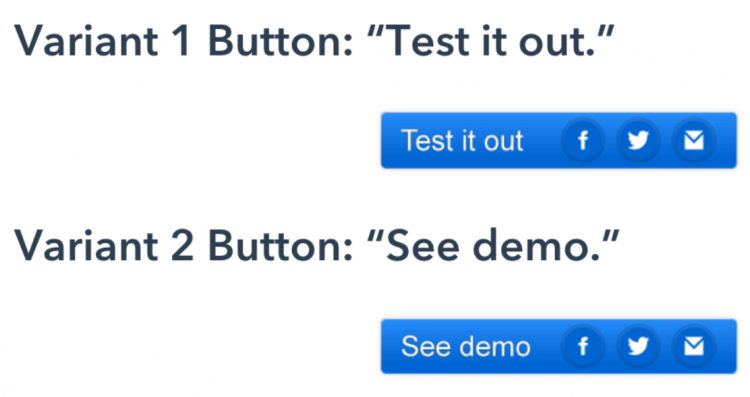
When HubSpot tested the button copy on one of their own CTAs, for instance, they found that “See demo” outperformed “Test it out” by a whopping 82% (from 2.47% conversion rate to 4.49%).
Why?
Because no one knows what “Test it out” means — so fewer people are going to click it. “See demo,” on the other hand, is clear. I know what’s going to happen when I click that button and thus I’m more willing to click it.
In other words, clarity converts.
And not just in terms of button copy, also in terms of button color (or visual clarity).
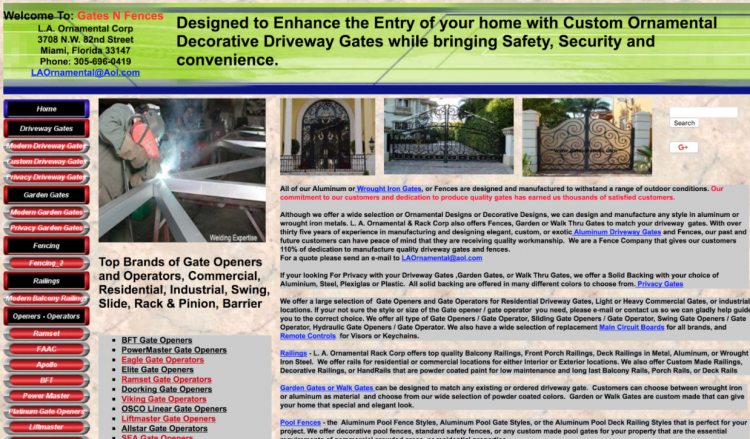
Consider, as a bad example, if you were trying to buy something from this website. Where would you click?
Yeah… I’m not sure either.
Nothing immediately stands out that I should click and there are so many different things going on that I have no idea where to start.
The point is, the best websites for real estate agents make it blatantly clear what they want visitors to do.
And button color is a great way to add visual CTA clarity to your website.
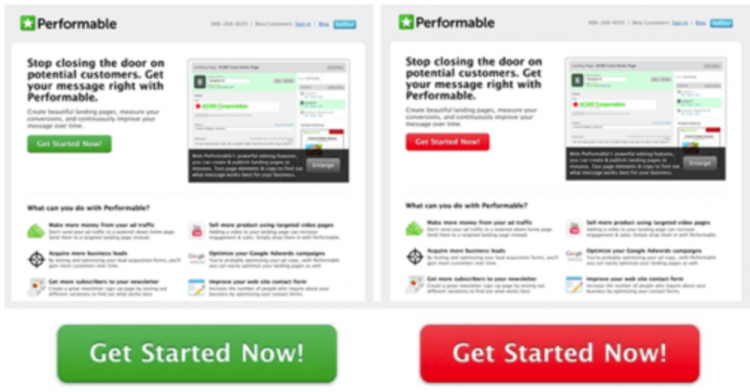
HubSpot did another study where they analyzed the color of a CTA. In this study, the red button converted visitors 21% more than the green button.
Why?
Well, take a moment to look at the green button example. How much other green stuff is on the page?
As you can see, there’s enough green on the page for the button color to blend in. Sure, you can still see where you’re supposed to click. But it doesn’t immediately pop out.
Now consider the example with the red button.
Clearly, the red button immediately demands your attention.
But not because red is better than green. In this case, the red button draws your attention better because there’s very little other red content on the page. This means that you immediately notice the big red button.
The green button, on the other hand, blends in and is less visually outstanding.
The best real estate websites for agents have clear CTAs that stand out visually. That’s a trend you should consider mimicking.
7. Write The Perfect “About” Page
It seems like a no-brainer. Still, some real estate agents forget to include an “About” page on their website.
However, as you might’ve guessed, the best in the business don’t.
Here’s one example from Kelly Kingston Homes…
And another example from Krista Mashore…
That similarity among the best real estate websites for agents is no accident.
Here’s a heatmap test we ran on an agent website, which shows just how many people are clicking the “Meet The Team” tab.
And on our website, people aren’t making one of the biggest buying decisions of their life: purchasing a home.
On your website, they are. Imagine how much more important the “About” page is when visitors are trying to make a decision of that magnitude.
Much bigger.
People want to know who they are working with — and when they’re buying a house, they really want to know.
In fact, our own research revealed that the “About” tab is the third most-clicked page on real estate websites, regardless of the type of realtor.
This means that you should take a little extra time to think through your “About” page and make sure it’s a shining illustration of your company values and industry expertise.
One Carrot client — The G Team — puts their company vision, for instance, at the very top of their “About” page.
Above all else, The G Team wants to build trust with the people who visit their website.
You want to do the same.
And since people are visiting your “About” page regularly, it’s a great place to do that.
8. Search Engine Optimization (SEO)
The best real estate agent websites are the ones that show up first in Google under a relevant search.
In fact, you could argue that Google results are the biggest indicator of a great real estate agent website.
If it ranks in Google under relevant keywords, then more people click it, visit it, and, more than likely, buy from it.
Just consider that 44% of home buyers purchase a home that they found online or that 93% of all online experiences start with a search engine.
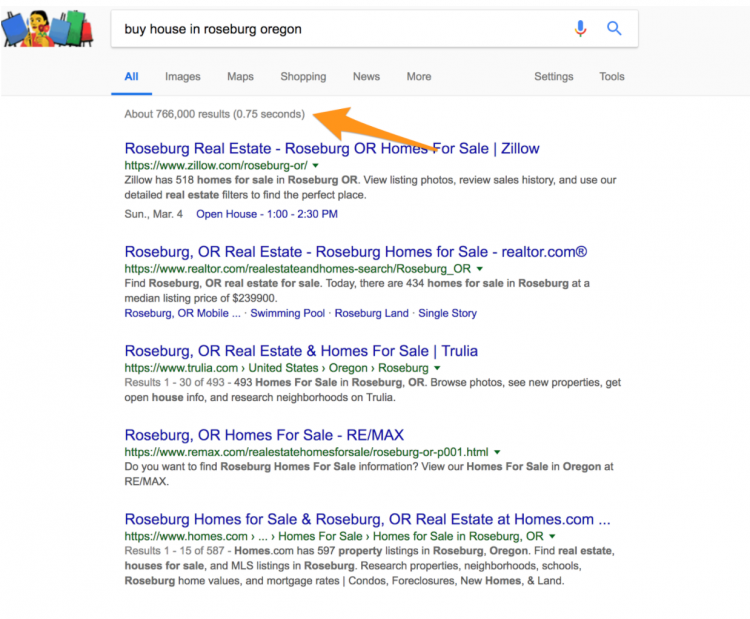
However, Google offers a lot of competition, even for the little town of Roseburg, Oregon — 766,000 results, to be exact.
With all that online competition, it’s probably no surprise to find out that 72% of real estate agents are unsatisfied with how many leads their website generates.
If you’re in that category of discouraged real estate agents, it’s alright. At Carrot, we understand.
We help tons of our client’s websites rank in Google. In fact, it’s part of every single package we offer. If you want a website that generates passive traffic consistently and pulls in leads, give us a call — we’d love to help you out.
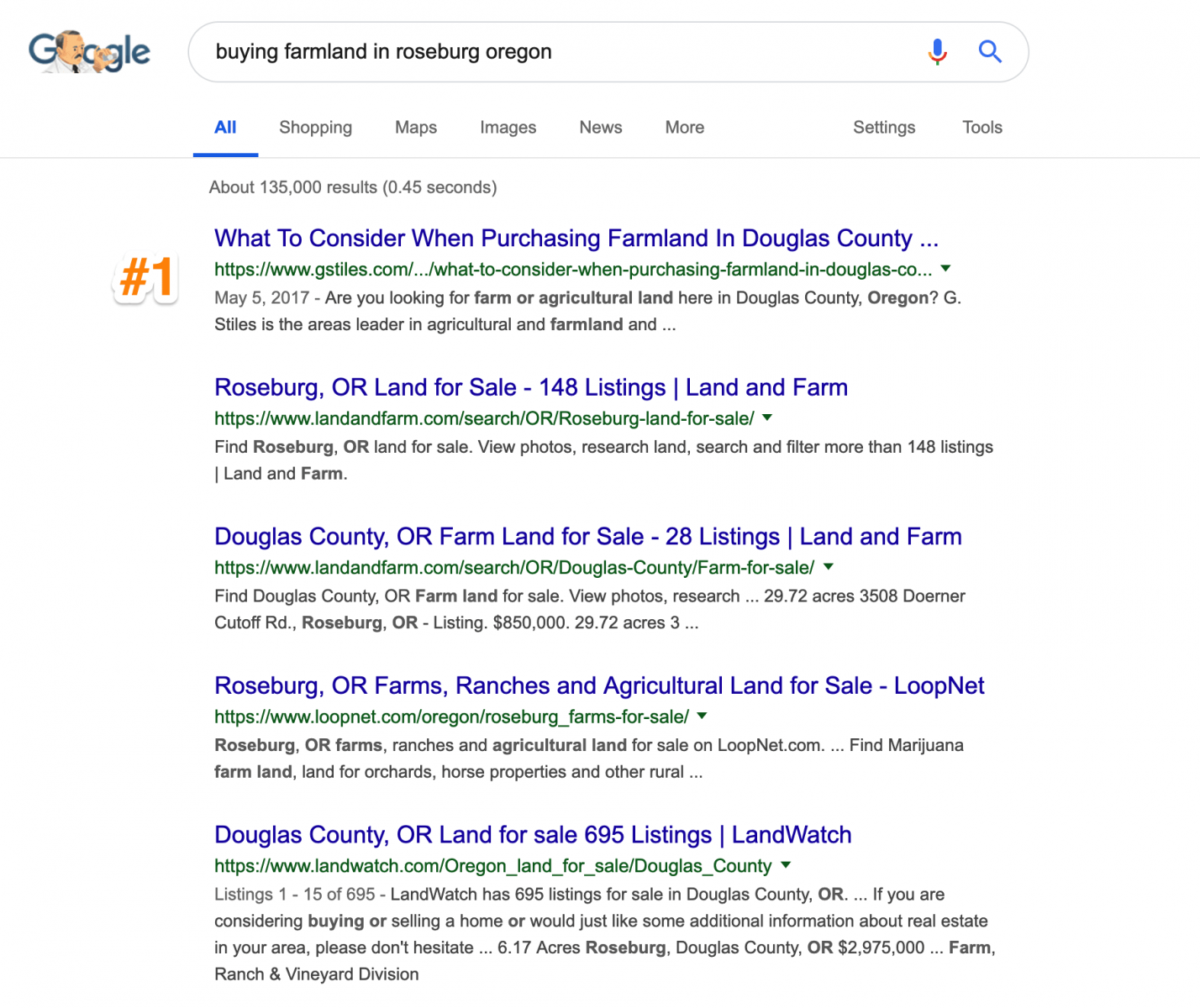
And if you’re unsure about whether you should work with us, consider that if you type “buying farmland in Roseburg Oregon” into Google, the top-ranking result is — you guessed it! — a Carrot customer website.
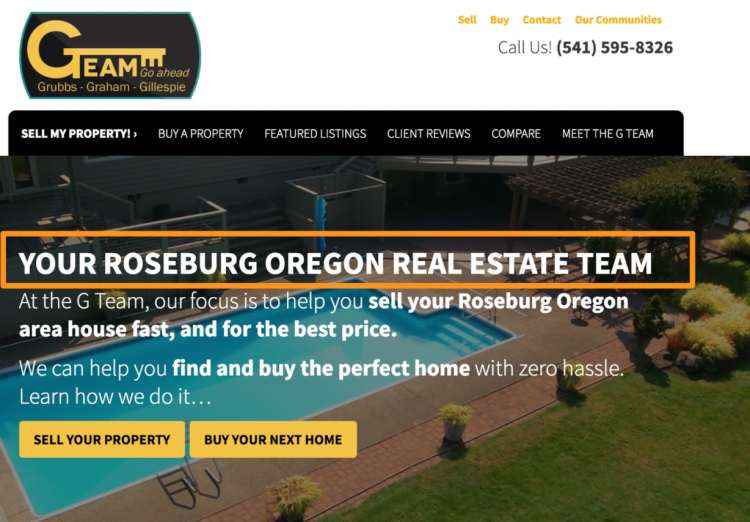
There are tons of different pieces to SEO, but one of the ways that we help our clients rank in Google is by encouraging them to put their target keywords front and center on their website.
Like this, for example.
Why is this so important?
Because Google uses the title of each page on your website to determine what the page is about. If you put the topic at the… well, top, then Google will have an easier time knowing where to rank your website.
When prospects land on your website, there’s one thing that you need to do above all else: build trust.
If the person lands on your website and doesn’t trust you or, worse, thinks you’re a spammer, there’s no way they’re going to work with you.
In fact, the most important factor when choosing a real estate agent is honesty and credibility.
And one of the best ways to build trust with your audience is by proving to them that you know what you’re talking about.
How can you prove you know what you’re talking about?
By starting a blog and posting consistently.
If you do, you’re in good company.
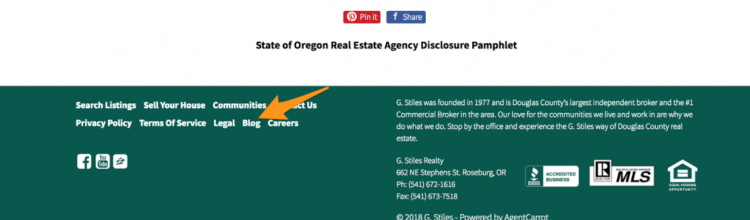
Here’s G.Stiles…
And Krista Mashore…
The point is, a blog on your website can work wonders to build trust and credibility. It’s an easy addition to your website that can make a massive difference. You can also consider creating real estate infographics rather than blog posts or videos if you’d prefer.
What, though, if you don’t know what your content should discuss?
No problem. Simply ask yourself this: What are the most common questions that your prospects and customers ask you?
10. Glowing Testimonials, Case Studies, And Reviews
The final thing that the best real estate websites for agents have in common is glowing testimonials, case studies, and reviews.
Remember, your number one goal is to build trust with the people who visit your website.
In many cases, that alone will determine whether people work with you or not: do they trust you?
And perhaps there’s no better way to build immediate trust than with testimonials, case studies, and reviews.
In fact, 88% of people trust online reviews just as much as personal recommendations from friends.
This is why the best in the business regularly use these elements.
Here’s one from Ellen Pool…
And Krista Mashore…
And The G Team…
Just how important are these reviews and customer-based ravings?
Well, one study found that brands that inspire highly emotional experiences — for which case studies are remarkable — see three times more word-of-mouth than their feeling-less counterparts.
People trust reviews and testimonials inspire customers to share your business with their friends.
Copyblogger recommends asking these questions of happy customers to collect remarkable testimonials:
What was the obstacle that would have prevented you from buying this product?
What did you find as a result of buying this product?
What specific feature did you like most about this product?
What are three other benefits of this product?
Would you recommend this product? If so, why?
Is there anything you’d like to add?
Conclusion
Today, it’s not enough to have a website. You need to have one of the best real estate agent websites in the digital world — or, at least, in your local area.
If you don’t have a great website, then you won’t rank in Google, people won’t trust you, and you will probably lose leads.
On the other hand, if you use a website with IDX integration, high-quality visuals, compelling listing descriptions, mobile-responsive design, clear CTAs, a thorough “About” page, SEO, a trust-building blog, and glowing testimonials, then you’ll not just drive deals through your website, you’ll be among the best in the business.
How’s the old adage go? “If you want to be the best, copy the best.”
Every year, the real estate market changes. And sometimes, it changes faster than you thought it was going to. 20 years ago, agents and investors didn’t have real estate websites — they relied on the talk of the town and coffee-shop conversations to generate business.
Of course, that is still partly true today, but with a twist: If you’re not online … then you’re behind the curve and you’re likely losing a steady amount of potential business.
Not because you suck at your job, but because people can’t find you where they’re looking: online.
That, though, is just one example of how the real estate industry is changing. That doesn’t mention constantly fluctuating inventory and interest rates or technological advancements (like drones and 3D house walkthroughs).
Clearly, you have a lot to keep track of.
To help, though, here are five real estate market predictions that we here at Carrot and some of the top real estate investors working with us are expecting to see.
1. Inventory Will Increase Slightly
Over the past few years, the U.S. has consistently broken the record for lowest inventory.
For instance, Forbes reports that, in 2010, inventory sat just under one million, at 967,604. The most recent count puts that number at 653,347.
As you already know, that low inventory means you need to be careful with your investments. It drives the cost of homes upward with bidding wars and the number of opportunities downward.
Fortunately, there’s good news on the horizon.
Samantha Sharf, Forbes columnist, continues…
“The general consensus is that inventory will pick up slightly. The biggest reason for this modest optimism is that the current situation is unsustainable. Prices cannot rise faster than wages forever. Plus, life events will eventually force reluctant sellers off the sidelines.”
And she’s not alone in her prediction. Danielle Hale, the chief economist for Realtor.com, says,
“The majority of the year should be challenging for most buyers, but we do expect growth in inventory starting in the fall… We expect the relief to start in the upper tiers, and it will make its way down to the lower tiers.”
The beginning of the year likely won’t see much change, but, by the end of the year, here’s to hoping that inventory starts on an upward slope — even if it’s slight.
[cta offer=”seoagents” color=”red”]
2. Renting Will Become A More Popular Option
With the cost of housing surging in certain areas, we’ll likely see an increase in the portion of people who choose to rent instead of buy.
“In the nation’s top 50 markets, half of the housing stock is now considered overvalued, based on market fundamentals, like income and employment.”
When the price of housing moves upward, more people, generally speaking, look to renting options rather than buying options.
This, of course, depends on your location and requires that you understand the place where you invest. Overall, though, expect renters to flood the market.
Jason Bible, real estate investor in Houston, says that he’s going to try and get his hands on as many rentals as he can this year.
“We buy over 100 houses a year and this year I will buy as many rentals as I can get my hands on. In fact, I am going to buy some of them at 100% retail with a 20% down loan.”
In fact, technological advancements are a big part of what makes keeping up with real estate trends difficult.
Don’t expect those innovations to slow down.
Alex, one of the marketing leads here at Carrot, recently bought a home and he signed practically every document on DocuSign rather than in-person.
Additionally, millennials — one of the first tech-savvy generations — are buying more and more houses each year. By 2025, they are expected to form twenty million new households.
Still, though, about two-thirds of millennials haven’t reached the average home buying age of 32.
So we can expect the millennial home-buying trend to continue through the next few years.
And as you might have guessed, millennials aren’t just comfortable with technology; they prefer it.
This means that we’re going to the rapid adoption of apps and online tool like virtual tours, digital contract signing, and even decentralized house visits.
4. Interest Rates Will Increase By About .25% or .5%
The more that interest rates increase, the fewer people we’ll see buying homes — which would further incentive people to rent instead.
Unfortunately, interest rates are still going to rise this year. However, they probably won’t rise too significantly.
That’s not because they aren’t primed to, however. But, as real estate broker, Richard Haynes, predicts,
“Mortgage rates will rise by 0.25%, and possibly by 0.50% if things get crazy… If rates go higher than that, the Fed will step in and reinvest more principle and buy up mortgages to lower rates and get them under control.”
More than likely, an interest rate increase of .25% or .5% won’t make a remarkable impact on the number of buyers. Of course, that percentage has the potential to cruise higher.
Daniil Kleyman, a real estate developer from Richmond, VA, and owner of RehabValuator, says, “Rates are going up for sure, and probably significantly.”
No one can know exactly what’s going to happen. But rates are going to rise and the federal government will probably step in to balance those rates out once they climb too high.
5. Investors And Agents Will See Greater Competition
Overall, agents and investors have seen remarkable success during the last few years.
The economy has continued on an upward slope and unemployment has steadily decreased, which has encouraged people to spend more on housing.
In the south especially, sales are booming and expected to grow 6% rather than 2.5% — the national average.
Because of that lucrativeness, though, agents and investors will probably see a massive burst of new entrepreneurs entering the space and trying to claim their slice of the pie.
“This will be the year that we see many enter the market for the first time as an investor following the wave of hype of the nationwide real estate cycle.”
That cluttered trend means that you’ll see more competition.
Fortunately, that competition probably won’t be nearly as experienced as you are — that is if you’ve been an investor or agent for quite some time.
Which further means you shouldn’t have much trouble competing.
Still, according to our own data that we pulled from our thousands of Carrot customer spread across the U.S., lead generation is up — meaning the market is hot — but conversion rates are slightly down.
Take sellers, for instance. In past years, the number of online sessions to their websites increased by a whopping 85%. Similarly, they generated 65% more leads.
Their average conversion rate, however, went down by about 10%.
Why?
Well, even though there are lots of opportunities in the real estate industry, there are an increasing amount of people who want a piece of that opportunity.
Which means your prospects have more options than they did last year. And with more people flooding in to claim their slice of the revenue, conversion rates are softening a bit.
It’s also worth mentioning that agents will experience competition from another source. Namely, from technological advancements that threaten to either change or outright destroy their profession.
Online tools like Zillow, Matterport, and Dotloop are working toward doing what Uber did to taxis or Airbnb did to hotels.
They are moving the service of agents online, which has two noteworthy benefits for the consumer.
“Unfortunately, [agents] are on a downtrend. Zillow is finally gonna start taking a small market. But this is again the beginning of the end of Agents. They still have five to seven more good years. Also, flat fee companies are gonna eat a lot of market share.”
It’s unlikely that real estate agents will completely disappear over the next decade, but it’s equally ignorant to assume that nothing will happen to the profession.
Over the coming years, agents might fall into a more advisory role for high-end homes. Or they might become the much-needed experts for first-time homebuyers.
Whatever the case, agents face competition from technology and investors face competition from ambitious entrepreneurs.
What All Of This Means For Agents And Investors
Okay. Now you know what to expect. But what does all of that mean for your real estate business?
How should you be prepared to adapt this year and in the years to come?
Well, the good news is that the majority of real estate leaders expect this year and next to be phenomenal. So, despite any discouragement, you might feel toward upcoming trends, the overall picture is promising — for agents and investors alike.
What is important to recognize, however, is that, as the real estate market becomes increasingly crowded, you need to stand out from that clutter.
If your website doesn’t convert or build credibility like it should, or if it doesn’t load fast enough to rank in Google, or demand attention, then you’ll have little chance of success in 2020 and beyond.
At Carrot, we help beginner and top-level investors and agents drive traffic, pull leads, and land deals.
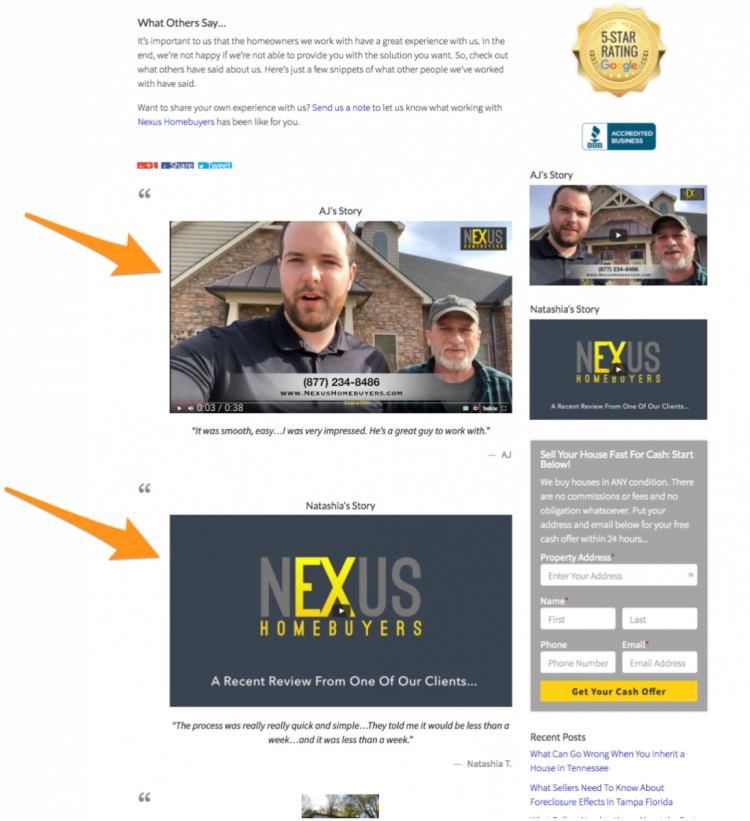
We encourage our customers to use video testimonials like this one from Nexus Homebuyers…
And as you can see, below, Nexus Homebuyers doesn’t stop with one.
Remember, this is the first thing that people see when visiting your page. Use it to build credibility and trust as fast as you can.
More than likely, the person landing on your website has a few other tabs open as well — browsing through their options.
You need to stand out as the best and most friendly.
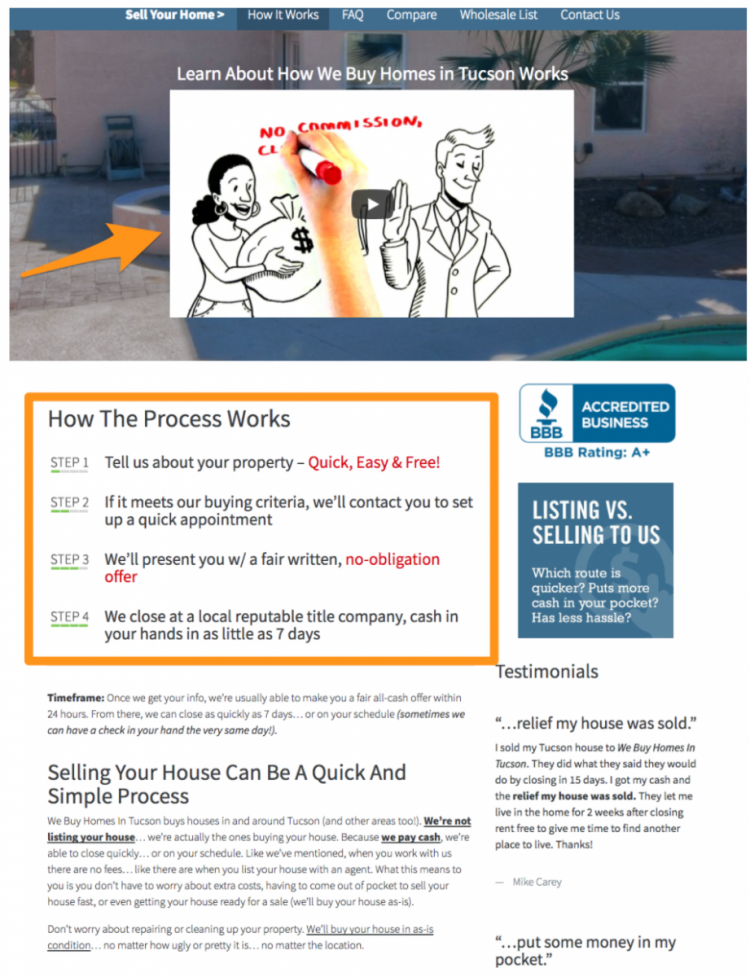
For investors and agents, alike, having a “How it works” page can help to eliminate your prospect’s fears and make them more comfortable with giving you a call.
If you want to learn more about how Carrot can help you stand apart from the rest of the crowd, you can go here and read all about it (we’d love to work with you :-) ).
“This means that we need to: (1) make sure we have enough cash on the sideline to capitalize on the market when it does change, (2) do less — or no — long-term projects so that we don’t get caught in the market shift, and (3) wholesale more and close on less, so that we are taking on less risk.”
For the changing market, that’s advice worth taking to heart.
Also, a side-note worth discussing is the current lucrativeness of the real estate coaching industry.
Since so many new agents and investors are entering the real estate scene, those newbies need people to teach them.
If you’re an experienced investor or agent, then you might want to consider leveraging this trend and starting your own online course. This could generate another source of income to supplement your real estate work while not taking a ton of extra time.
Said another way, if you want to get into the real estate coaching world, now’s a perfect time.
Every investor and agent will adapt to the changing real estate environment differently. How you do it is, naturally, your own choice.
Above all else, though,
Build immediate credibility on your website.
Adapt to unexpected shifts in the market.
Avoid long-term projects.
Leverage technology rather than avoiding it.
Real Estate Market Predictions for 2020 and Beyond
Each year brings new developments to the real estate world.
Some of those, you anticipate. Others, you don’t.
But one thing’s for sure. The real estate world will change. And if you’re not ready to adapt to it, then your business will suffer.
If, on the other hand, you build credibility on your website to stand above the cluttered market, consider leveraging rental properties, and utilize technology that can increase your business’ success (like drones and 3D tours), 2020 will be a great year.
Best of luck this year and, please, let us know how it goes and if there’s anything we can do to help you.
And what do you think? Are there any trends we missed? Or do you think any of our predictions are wrong?
Let us know your opinion in the comment section of this article.
Have you ever wondered if you’re on the right path? If your passion for building a sustainable business with passive income that creates financial freedom for you and your family is actually possible?
After all, maybe the wildly successful people are just the lucky ones. The ones who have that special temperament or were raised by that unique family.
Maybe you’re just not cut out for the success you dream of one-day achieving.
Or maybe, Tom Cafarella is right.
Tom Cafarella is the #1 home buyer in Boston, where they fix and flip over 100 homes every year (see how many Leads Carrot has generated), they have 150 team members, and he has a yearly marketing budget of $1 million.
Now, I know what you’re thinking.
“How will I benefit from Tom’s story? He’s just one of the lucky ones.”
Well, actually, he isn’t.
We wanted to note that Tom was the #1 Home Buyer in Boston before Carrot. He owns a very successful real estate brokerage company in the Boston area and has been highly successful with direct mail, radio, and billboards. Also prior to Carrot, he had online marketing experience with different customized websites. But, it wasn’t until he joined and implemented the Carrot system, that his online lead volume doubled.
Hearing his story and learning what he did to get where he is might inspire you.
Let’s break down his journey into real estate investor lead generation and the Carrot system
In all started when Tom was born. He wasn’t born into a wealthy family where he inherited massive amounts of money and loads of entrepreneurial wisdom.
Quite the opposite.
Tom struggled financially and couldn’t seem to get ahead of the incoming bills. Growing up, Tom learned the consequences of being poor and he committed to himself that he would never live a life where money was an issue.
So what did he do?
He poured all of his heart into education, believing that through good grades and a marketable skill set, he would make plenty of money and never struggle with finances again.
After majoring in pre-med in college and getting straight A’s throughout practically his whole school experience — which he hated, by the way — Tom decided to double major in accounting.
At the time, accounting jobs were everywhere and Tom saw it as a way to secure his financial corner of this world. He would get a safe job that could support his family and he would work every day for 8 hours.
That is until he started working. Shortly after finishing school, he received a job at an accounting firm. He arrived the first day for work, took a seat at his desk, and immediately hated his job.
“It was worse than jail,” Tom described.
His entrepreneurial spirit wouldn’t allow him to work a desk job where he had very little say in his schedule, the company’s progress, or anything else business-related.
He needed a way out. But how? How could he get out of this hole he had dug himself into?
Tom didn’t know.
So he bought lots of books that discuss success and happiness and studied the process for pursuing true financial freedom.
He became fascinated with real estate agents, wholesaling, and investing.
As he invested an increasing amount of time into his newfound real estate passion, relations at his accounting job got rickety and he was eventually fired for being so often side-tracked.
Tom was 25 years old when he got fired and he felt like a total failure. He didn’t immediately tell his family because of the ensuing embarrassment he was expecting.
Eventually, though, Tom realized that getting fired wasn’t the worst thing that happened to him. In fact, it’s exactly what would free him.
Since Tom was still living with his parents and had very little risk involved, he decided to pursue his dream of building a remarkable real estate business in Boston.
To start, he was a real estate agent.
But, after a while, he was given the opportunity to do a wholesale deal. One that he made a whopping $115,000 off of.
Although he admits that that deal was unusual, he got excited none-the-less and decided to start investing all of his time into building a wholesaling business.
At the time, though, he didn’t know how to replicate the deal he had done. How do you bring in more leads consistently? How do you convert these leads? How do you find qualified leads?
These were all questions that needed answers.
So Tom worked 100-hour work weeks for a while to build his real estate investing business.
Getting Through 100 Hour Work Week [Source: Nathan Peck, Director of Marketing at DollarHobbyz]
Real Estate Investor Lead Generation with Tom, Facebook, and the Carrot System
As he learned and become more adept in the real estate industry, his business became increasingly successful.
He tested everything with his marketing tactics — from SEO and PPC to Facebook Ads for real estate and bandit signs. Some things worked. Others didn’t.
Find out the exact system Tom uses for his Facebook marketing Read it here.
But he wondered how is website was performing and if it could be better. He kept hearing talk of us here at Carrot and decided to give us a try.
Immediately, his lead conversion more than doubled.
He originally thought that his current website was fine, but after using Carrot, he learned the value of using a website that’s built for conversion upon years and years of thousands of a/b tests for real estate investors.
Nothing can replace that, and at $100 per month, Tom claims having a Carrot website is a no-brainer.
“If people don’t have a Carrot website, I won’t help them, because that’s where they need to start.” Tom said.
Tom swears that marketing is the most influential part of his business and attributes his success to savvy marketing tactics. And right now, Facebook Ads for real estate is the most powerful marketing strategy that his business uses.
Already a Carrot Member? Watch Our Advanced Coaching Call: How Tom Cafarella Pulls In 100+ Seller Leads Per Week (mostly with Facebook) Watch it here.
Real estate Facebook ads are incredibly targeted and Tom emphasizes the fact that other real estate investors should spend the bulk of their time thinking about their relevance score.
A high relevance score on Facebook will lower your cost per lead and make your business more successful because of it.
The Why and How of Getting Leads from Facebook Ads for Real Estate [Infographic] Learn more here.
Already a Carrot Member? Check Out Carrot’s Facebook Leads Masterclass
Just make sure that you’re sending all of those leads to a qualified website (Carrot is what Tom recommends), otherwise, all of those leads are going to waste and your cost per conversion starts to climb through the roof.
Whatever you do and regardless of your budget, Tom says you must market and you must consistently market.
Pay attention to current leads and don’t let old leads die. Find a way to keep in touch with the people who’ve been leads for a long time because chances are, they’ll eventually be ready to buy. You just have to give them the necessary time and build a trustworthy relationship.
Additionally, Tom believes in using marketing tactics that very few people in the area are using to help yourself stand out. Tom loves cold calling for this reason — it stands out from everyone else’s marketing efforts.
Tom is 35 years old now and he’s living the dream he’s always wanted.
He’s financially free and his business is thriving.
Throughout Tom’s story resonates one particularly important point: hard work will take you where you want to go.
When asked what makes the difference between someone is successful and someone who isn’t, Tom said,
“Just one thing: hard work.”
On Tom’s wall behind his desk, there’s a quote that reads, “Ultimately the business that can spend the most to acquire a customer wins.” And he’s right. But all of this takes time. None of it happens quickly and you have to invest an inordinate amount of time to get where you want to go.
For those who do, they have very few regrets. Are you willing to put in the time and effort?
As Tom says …
“You can get rich, but you have to build the business.”
If you are willing, connect with us here at Carrot and we’ll make it happen for you. After all, real estate investor lead generationwith some experts at your back is a whole lot easier than doing it alone.
Hit us up in the comments and we’ll connect with you personally.
Already a Carrot Member? Check Out Carrot’s Facebook Leads Masterclass
All told, Facebook has generated over 15,000 new leads since January of this year alone. And that’s leads. Not traffic, not visitors, not followers, not fans … real leads.
Imagine the difference a few hundred new leads could have made in your business over the last year. Image what they could do for you in 2018.
Simply put … that kind of lead-generating faucet is absolutely transformative.
To illustrate how our clients do it, we collaborated with infographic making company, Venngage, to create this visual explanation.
Real Estate Facebook Ads: The Why and How of Getting Leads [Infographic]
At a little place called off-page SEO. But what is off-page SEO for real estate investors and how can you use it to get a higher website ranking — meaning more traffic, leads, and conversions?
Keep reading.
What Is Off-Page SEO for Real Estate Investors?
Off-page SEO, defined loosely, is anything you do to improve your rankings that’s not on your website. Some of the most popular off-page SEO tactics include backlinks, citations, and relational marketing.
Backlinks are when another website links to your website, which tells Google that you can be trusted.
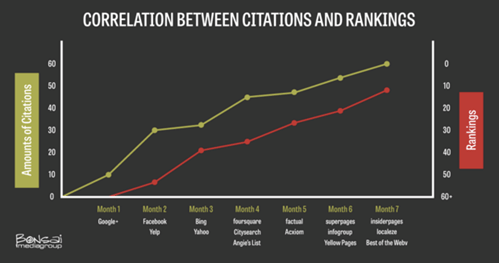
Citations are consistency between your business name, phone number, and address across multiple databases. This tells Google that your business is up-to-date and relevant.
Relational marketing is staying active on critical platforms for your industry to increase the number of people who are familiar with your brand. Every time someone goes to your website and browses, it tells Google that someone trusts you and it helps your rankings.
But how, exactly, do you implement these real estate off-page SEO techniques to reap the rankings of a pro?
Know what keywords you’re targeting and how you’re currently ranking for those keywords before you try to improve.
Without a metric to measure against, you won’t know what improvement looks like.
If you’re not a Carrot member, simply open an incognito browser window (to disregard your personal cookies) and search for the keywords that you’re aiming for. Depending on how diligent you’ve been in optimizing your rankings, you might have to click through a few pages. But don’t get discouraged. That’s why you’re here, right?
If you’re a Carrot member, you have access to our keyword tracker. Just go into your Carrot dashboard and click on rankings on the side. Then add a keyword you’d like to track — we’ll do all the heavy lifting, updating weekly to let you know whether you’re going up or down through the rankings.
Note: To find out more about our keyword ranking tracker, check out this in-depth post.
Superpages is an example of a yellow-pages-type website that uses citations regularly. Social media business accounts, like your Facebook business page, are also citations.
Your name, phone number, and address need to be the same on each website. This tells Google that your business is active, updated, and relevant. Generally, the more matching citations you have, the better you’ll rank.
You can do it yourself (for an in-depth guide on exactly how to do it yourself, click here).
Or Carrot can build the citations for you. Click here to find out more about our citation building service.
3. Get Backlinks
Backlinks are when another website links to your website. When they do, this tells Google that the other website trusts you — which is good for your rankings.
If you’re in a competitive space, backlinks often make the difference between a result-one ranking and a page-one ranking. But getting backlinks takes work.
What kind of work?
There’s a few different techniques you can use but the first thing you should do regardless of your technique is make a spreadsheet of the blogs, podcasts, and websites you’d like to collaborate with.
Include their name, contact info, niché, number of followers, and any other information that’s relevant. Use this as your database for people you’d like to get a backlink from and then use the below techniques to actually do so.
Remember that the person you’re pitching has an audience of their own. The topic and angle you propose should be a perfect fit for their audience. When you email them, emphasize the benefit they’ll get by having you as a guest.
Pitch them on the idea with an email that’s something like this:
Hello, [Name]!
I absolutely loved your recent [type of content] about [subject of content]. In particular, I loved the part where you discussed [something specific you liked].
That’s really relevant to where I’m currently at in my own business ventures. So first off, thank you.
Second, I was wondering if you’d like to collaborate.
I’m a real estate investor in [your city] with [tell something compelling about yourself — i.e. X amount of followers. X amount of deals. X amount of revenue]. And I think a topic about [pitch your topic] would be super beneficial to your audience.
I’d love to make this happen for you.
What do you think?
Let me know if this is a fit for you and we can talk more :-)
Mike
Once they agree to your topic, if it’s a podcast, just ask them if they’ll include a link to your website in the description of the podcast. If you’re writing a blog post for them, you can include a link to your website in the author bio or in the post itself. Just make sure you respect their website rules.
Technique #2 — Create An Amazing Piece Of Content
The other way to acquire backlinks is to create a high-level piece of content on your own website and then ask other relevant websites to share and link to it.
Consider creating either an infographic or a blog post.
For an infographic, you can create your own at Canva or Venngage and check out our post here to get topical ideas for your infographic. Or you can hire someone at Fiverr or 99designs to do it for you.
For a blog post, check out our idea bank here and our piece about creating great real estate content here. Then, email websites that you think might be willing to share and link to your content. Say something like this:
Hello, [Name]!
I absolutely loved your recent [type of content] about [subject of content]. In particular, I loved the part where you discussed [something specific you liked].
That’s really relevant to where I’m currently at in my own business ventures. So first off, thank you.
Second, I just created a [blog post or infographic] on [topic]. You can check it out here [link]. I think this piece would be super relevant to your audience and I was wondering if you’d be willing to share it on your blog. If you’d like, I can write up an introduction for you as well.
Let me know what you think!
Mike
Technique #3 — Monitor Mentions
You might not know this.
But you can monitor mentions of your brand name across the web. In other words, whenever people are talking about you online, you’ll be able to see it and engage with it (unless it’s in a private messenger).
How? You can subscribe to a service like TalkWalker or Mention. These places will monitor a huge portion of the internet and notify you whenever your brand name is mentioned. You’ll then be free to go engage in the conversation at your own pace.
Doing this will not only help you interact with the people who are talking about your brand, it will help you find people who are referencing you on their blog as well. If you notice that someone referenced you on their blog but didn’t link to your website, track down their contact information and ask them to throw in a link.
Something like this:
Hello, [Name]!
I’m honored that you included me in your piece about [content piece]. Seriously amazing article and I’m stoked that I made the cut! :-)
Would you be willing to add this link to your blog post so people can find my stuff from your piece: [link].
I would seriously appreciate it.
Thanks again for including me!
Mike
Most people will be more than willing to add your link to their website when you ask.
A Final Note On Backlinks
Be aware of the difference between “do-follow” links and “no-follow” links.
Some websites use “no-follow” links. This means that the link to your website will still work for anyone who clicks on it, but the link is formatted to intentionally tell Google not to count the backlink toward your domain authority.
Some websites use this because linking to low-domain authority websites can actually hurt the ranking of their own website.
To find out, ask the website coordinator that is going to link to you if they use “no-follow” links or “do-follow” links. “Do-follow” links are the best.
Note: No-follow links aren’t useless. For one, they still get your website in front of a new audience. And there’s even some recent data that Google is listening less and less to no-follow links. It seems that no-follow links can still improve your rankings — just perhaps not to the same degree that do-follow links would.
4. Use 1 Hour a Week to Build Relationships
This one doesn’t directly impact your SEO, but it does get people to know you’re a real estate investor in the area.
A good rule of thumb is to designate at least one hour every week to doing nothing but engaging with people. That engagement can be online or offline, but for local SEO, it’s probably best that it be with people in your community.
This could be as simple as going to a coffee shop for an hour every week and talking with the people there so that you can build valuable relationships (bring business cards). Or you could join your city’s chamber of commerce and spend time with them every week.
Side-Note: For 4 years, I was in full-time ministry. My life was literally a series of going to coffee shops and spending time with people. I can’t fully articulate the power and depth of that time. You’ll be amazed at what you learn about people and how many friends you make in the community.
If you decide to spend that hour online, try to find out where local people spend their digital time. Is there a Facebook group that is active in your town where you could socialize? Or you could use the hour to scroll through your social media feed and comment on other people’s posts.
Whatever you decide, remember that this hour isn’t for selling anything, it’s simply to build lasting relationships in your community that will likely pay you off later.
Be Patient
When off-page SEO is up to bat, you need to be patient.
It takes time for Google to analyze your website and figure out who is linking to you and what kind of ranking they should assign you. It takes time for you to build the authority required for Google to rank you well. And it takes time to generate enough quality content that Google recognizes you as an expert in your field.
Be patient and keep grinding away with these 4 steps:
Google My Business’ new update is changing the business results we see in Google.
We’re all used to these undescriptive results that offer little more than a star-rating, location, and a business name.
But Google’s new feature allows small businesses to create “posts,” which are a combination of a picture, a title, a description, and a CTA that have a chance of showing up in Google results and Google Maps.
This is an example of what the new feature looks like as a result.
When you search for a local business, it’s likely that a result showing a rating, hours of operation, directions, and a phone number is at the forefront. This is because in January of 2016, Google released a similar feature under the title, “candidate cards” and then slowly started allowing small businesses to use the feature.
But now, it’s available to everyone, it’s called “Posts” in Google My Business, and it’s completely free for small businesses.
But What Are Google My Business Posts?
It’s basically a simple way to showcase your business more than previous installations of Google My Business (especially because so few people are currently using it). You can input your business name, your hours of operation, and — here’s the unique part — any sort of deals, upcoming events, newly-released products, or sign-up CTA’s.
“When customers find your business on Google, they can see offers, news, and events from your business posts that show on Google Search and Maps. You can use posts to tell customers about:
Events such as a jazz brunch or an in-store session
Offers/specials such as sales and discounts
Product updates such as new merchandise
Announcements such as ‘Open late this Saturday’ or ‘Special guests this week!’”
Once you’ve filled out the information appropriately, your post will have a chance to rank in Google search and Google Maps. Here’s what the new “posts” feature looks like on desktop…
And on mobile…
It’s easy to use, free to benefit from, and might just give you the edge you need against the market’s competition.
But how do you use it?
It’s wildly simple.
Here’s How To Use It
You probably have already created a business account with Google. But in case you haven’t, simply go to Google My Business and get started, filling out the appropriate information.
Once you have an account set up, login into Google My Business.
Click on “Posts” on the left side of your screen.
And then create your post.
As a real estate investor, you can use Google My Business “Posts” section to target the “sell my house fast in [location]” keywords. Once you do, your result has a chance of appearing in Google or Google Maps.
Four Pieces Of Advice:
1. Include an image
The more visual your post, the more likely it is to perform well. It’s no secret that humans are naturally visual creatures. Google allows you to include a high-resolution image marketing your business. Don’t miss the opportunity.
2. Find Your Lead Magnet
Where will you send people? Do you want them to go straight from searching to selling their house with you? Do you want them to schedule a phone call, get a free consultation, or sign up for your email list?
Choose a single attractive selling point and discuss only that in your post.
3. Mind The Details
You only have 58 characters for the title so you need to keep it relatively short. Similarly, you have 1,500 characters to include in the details of your post but Google suggests only using between 150 and 300 of those characters for your description section.
4. Use A Clear Call-To-Action
After you’ve determined what your lead magnet is, choose a fitting call to action. Something like “Sign Up,” “Call Now,” or “Learn More.”
A Few Words Of Caution
Note what Google has to say in regards to “What Not To Do.”
1. “Don’t use commercial slang:
‘BOGO: 50% off men’s sneakers.’
2. Don’t use excessive exclamation marks or all caps:
‘Crazy SALE today!!!’
3. Don’t include more than one theme or offer in one communication:
‘Half price coffee and tea from 3-6 PM on Fridays, and buy 6, get one free donut on weekdays.’
4. Don’t craft a deal with too many exclusions:
‘10% off new seasonal sandwiches. Not valid on lunch specials.’”
Is Google My Business’ “Posts” Worth Your Time?
Absolutely. It takes very little time to set up your post, and the return potential is high. I recommend doing this as soon as possible because the longer that this tool is around, the more people who will start using it.
You have a short window of opportunity where you can use Google My Business to rise above the competition.
When it comes to online real estate marketing, your website’s visibility on search engines like Google can make or break your lead generation efforts. But visibility alone isn’t enough—you need to convince users to actually click on your listing in the search results. This is where your SEO title and meta description come into play.
These two elements are your first—and sometimes only—opportunity to make a strong impression. In just a few words, they have to convey the value you offer, speak directly to the needs of potential sellers or buyers, and drive them to take action. For real estate investors, who often rely on capturing the attention of motivated sellers, mastering this art can lead to a consistent stream of high-quality leads.
Why Meta Tags Matter in Real Estate
Meta descriptions and SEO titles are not just placeholders for keywords. They act as the “ad copy” for your search engine results. Well-written tags can directly influence Click-Through Rate (CTR), which is the percentage of users who click on your result when it appears on the search engine results page (SERP).
How Meta Tags Influence Click-Through Rates (CTR)
First Impression: Your SEO title and meta description are often the first things a potential lead sees. They set the tone for the user’s decision-making process. A compelling title can grab attention, while a clear, concise meta description can reassure users that your page has what they’re looking for.
Keyword Relevance: Search engines like Google bold the keywords in your title and description that match the user’s search query. This increases visibility and signals relevance, making it more likely that users will click on your listing over a competitor’s.
Trust and Transparency: A well-crafted meta description lets the user know what to expect when they click through. If they’re searching for “sell my house fast in ,” and your description promises a simple process with no fees, they’re more likely to feel confident that they’ve found a solution to their problem.
For real estate investors, your leads often come from sellers in distress or urgency, whether it’s due to foreclosure, repairs, or financial issues. The more targeted and reassuring your title and description are, the higher your chances of converting that curiosity into a lead.
What You’ll Learn
In this blog, we’ll break down the steps to craft high-converting SEO titles and meta descriptions that:
Use relevant keywords without overstuffing.
Appeal directly to the pain points and needs of motivated sellers and buyers.
Include clear calls to action that drive clicks and leads.
Reflect the local nature of your real estate business to attract the right audience.
By following these tactics, you’ll be able to create optimized meta tags that not only improve your search rankings but also increase CTR, leading to a steady stream of motivated leads ready to sell or invest in real estate. Let’s dive in!
Understanding SEO Titles and Meta Descriptions
What is an SEO Title?
An SEO title is the clickable headline of your webpage that appears on search engine results pages (SERPs). It serves two major purposes:
Telling search engines what your page is about.
Enticing users to click on your listing.
SEO titles are a crucial ranking factor because they give search engines important clues about the content of your page. However, they also play a pivotal role in determining your Click-Through Rate (CTR). A well-crafted title that aligns with a user’s search intent can convince them to choose your result over others, regardless of where it ranks.
For example, a user searching for “sell my house fast in ” is more likely to click a title that addresses their exact need, such as:
“Sell Your House Fast in | No Fees, No Hassles”
This title speaks directly to their problem and offers a solution upfront.
Connection Between SEO Titles, Rankings, and CTR
SEO titles influence rankings by incorporating target keywords that search engines use to understand your page’s relevance to a search query. While rankings are important, a high ranking without a compelling title won’t generate clicks. In the real estate investing space, where competition is fierce, your title must capture the urgency and pain points of motivated sellers to stand out.
For instance, a title like:
“We Buy Houses in Fast | Get a Cash Offer Today”
not only ranks well for keyword searches like “we buy houses,” but also appeals to homeowners who need to sell quickly.
How SEO Titles Are Shown on SERPs (Example)
Let’s look at an example of a real estate-related search:
Search Query: “Sell my house fast in Dallas”
SEO Title Example: Sell Your House Fast in Dallas | No Repairs, No Fees, Cash Offers
This title uses important keywords—”Sell Your House Fast in Dallas”—while also offering solutions like “No Repairs, No Fees,” which address common seller concerns.
What is a Meta Description?
A meta description is the short snippet of text that appears under your SEO title on the SERP. While meta descriptions are not a direct ranking factor, they are incredibly important for influencing user behavior. A well-crafted meta description reassures potential leads that your page provides the solution they’re searching for, even if your ranking is lower on the page.
Meta descriptions should focus on being informative, clear, and action-driven. They can directly affect CTR, turning impressions into clicks.
Importance of a Well-Crafted Meta Description
Even if your ranking isn’t in the top spot, a compelling meta description can help you compete with higher-ranked pages. This is particularly important in real estate, where motivated sellers often choose the most convenient and promising option from the search results.
For example, consider these two meta descriptions for the same query:
Good Meta Description:
Need to sell your house fast in ? At we make cash offers and close in as little as 7 days.
This description is clear, concise, and offers a solution directly relevant to motivated sellers.
Bad Meta Description: We buy houses. Contact us today for a free consultation about your property.
The second description lacks specificity and urgency and doesn’t differentiate the service.
How Search Engines Display Your SEO Title and Meta Description
Search engines display the SEO title and meta description as the first impression a user sees. If you optimize these two elements correctly, you increase the likelihood of driving clicks.
Here’s how they look on a SERP:
SEO Title Example: Sell Your House Fast in | No Fees, Cash Offers in 24 Hours
Meta Description Example: Need to sell your home quickly? We offer no-obligation cash offers in and can close in as little as 7 days. Contact us for a quick sale.
Word Limits for SEO Titles and Meta Descriptions
SEO Titles: Should be kept between 50-60 characters. Any longer, and search engines may cut off part of your title.
Meta Descriptions: Aim for 150-160 characters. This ensures your message is displayed in full without being truncated.
For real estate investors, keeping within these limits helps convey your message clearly and completely, increasing your chances of capturing clicks from motivated sellers.
By understanding how SEO titles and meta descriptions work together, you can better optimize your real estate website to attract more motivated leads and convert them into deals. Next, we’ll dive into how to actually craft these elements to maximize your online presence.
Section 2: Crafting a High-Converting SEO Title
An SEO title serves as the first point of contact between your website and a potential motivated seller. To maximize your click-through rate (CTR), you must create a title that not only includes relevant keywords but also speaks directly to your target audience’s needs and pain points. Here’s how to do it step-by-step.
Step 1: Keyword Research
Identify the Most Relevant Real Estate Keywords for Your Title
The first step to crafting a high-converting SEO title is conducting thorough keyword research. You need to find out exactly what your potential leads are typing into search engines when they’re looking to sell their homes. The goal is to identify keywords that not only align with your services but also attract motivated sellers in your target market.
How to find the best keywords:
Google Keyword Planner: A free tool that shows search volumes and keyword competition. Use this to discover terms such as “Sell my house fast in ” or “Cash home buyers in [market city].”
Carrot’s Keyword Explorer Tool: This tool helps you find real estate-specific keywords based on what’s already driving traffic for other Carrot users. It’s especially useful for uncovering long-tail keywords like “sell my inherited house fast in [market city].”
Real estate-specific keyword examples:
Sell My House Fast in Dallas
Cash Home Buyers in Austin
Avoid Foreclosure in Minneapolis
The focus should be on finding keywords that both match search intent and address urgent needs, like selling a house quickly or getting a cash offer.
Step 2: Writing the SEO Title
Use of Primary and Secondary Keywords Without Keyword Stuffing
Once you’ve identified your primary keyword (e.g., Sell My House Fast in Dallas), you want to seamlessly incorporate it into your SEO title. However, avoid keyword stuffing—which is the practice of cramming too many keywords into one title. Search engines penalize titles that look unnatural, and they can turn off potential leads.
Example of keyword-stuffed title (what not to do): Sell My House Fast Dallas | Cash Buyers in Dallas | Sell My Home Quickly in Dallas
Instead, focus on integrating primary and secondary keywords into a readable, actionable title. Secondary keywords could be variations like “cash buyers” or “no fees.”
Example of a well-crafted title: Sell My House Fast in Dallas | Cash Buyers, No Fees, Close in 7 Days
Here, the primary keyword (Sell My House Fast in Dallas) is paired with additional value points—”cash buyers,” “no fees,” and “close in 7 days.” This not only incorporates a secondary keyword, but it also speaks directly to the concerns of motivated sellers.
Incorporate Emotional Triggers and Urgency
For real estate investors, the SEO title should inspire urgency and action. Motivated sellers often want a quick solution to their problem—whether that’s foreclosure, a looming divorce, or an inherited property they need to offload.
To drive clicks, add emotional triggers like:
Speed: “Fast,” “Quick”
Financial relief: “Cash Offer,” “No Fees”
Simplicity: “Hassle-Free,” “No Repairs Needed”
Example: We Buy Houses Fast in Dallas – Get a Cash Offer Today!
This title combines urgency (“Fast”) and simplicity (“Cash Offer Today”), pushing the lead to click through and learn more.
Balance Between Keyword Optimization and Readability
Remember, your SEO title should always prioritize readability. Titles that are too keyword-focused can look spammy and untrustworthy to users. Strike a balance between placing your keywords naturally and writing a title that reads well and addresses the user’s intent.
Step 3: Use Unique Selling Points (USPs)
Why Highlighting a Competitive Advantage Increases CTR
Unique Selling Points (USPs) set your business apart from the competition and give potential sellers a reason to choose you. In the real estate investing space, motivated sellers care about speed, convenience, and costs. Make sure your SEO title highlights your most compelling advantages.
Some common real estate-specific USPs include:
No Fees: Many motivated sellers are dealing with financial difficulties, so the idea of avoiding costly agent fees is very appealing.
Quick Closings: Sellers who are facing foreclosure or other urgent situations need reassurance that you can buy their home quickly.
No Repairs Needed: Many sellers don’t want to spend time or money fixing up their home, so offering a hassle-free sale can make a big difference.
Real estate-specific examples of USPs:
Sell Your Home Fast in Dallas – No Repairs, No Fees, Close in 7 Days
We Buy Houses in Austin – Cash Offers in 24 Hours, Close Quickly
Avoid Foreclosure in Minneapolis – Get a Cash Offer, No Commissions
Emphasize USPs Alongside Keywords
Including USPs in your SEO title can dramatically improve your CTR because they address the most pressing concerns of motivated sellers. In the example below, note how the USP (“No Fees, No Repairs”) is paired with the primary keyword (“Sell Your Home Fast”).
Example: Sell Your Home Fast in Dallas – No Fees, No Repairs, Cash Offers in 24 Hours
This title not only optimizes for search engines by including the primary keyword but also drives clicks by showcasing the unique benefits you offer.
By following these steps to craft a high-converting SEO title, you’ll optimize your page for search engines and increase your chances of attracting motivated leads. Next, we’ll move on to creating equally powerful meta descriptions that reinforce your SEO title and further compel users to click.
Section 3: Writing a Compelling Meta Description
Your meta description is the second point of contact after the SEO title that convinces a user to click on your website link. It acts as a brief, yet powerful sales pitch, summarizing why the user should choose your site. Crafting an effective meta description involves understanding user intent, including a clear call-to-action (CTA), and addressing the pain points of motivated sellers. Here’s how you can write one that converts.
Step 1: Understand User Intent
The key to writing a high-performing meta description is understanding the user’s intent—what they want when they type their search query. In real estate, users generally fall into three categories: sellers, buyers, or investors. Knowing which audience you’re targeting will change how you craft the meta description.
Example: A seller searching for “Sell my house fast in ” is motivated by speed and convenience, while an investor searching for “Best real estate investments in ” wants profit potential and market insights.
Your meta description should match that intent. For instance:
Seller-focused: “Get a cash offer for your house today. We buy houses in with no repairs or fees!”
Buyer-focused: “Find your dream home in . Browse homes for sale, schedule a viewing today!”
Investor-focused: “Discover top real estate investment opportunities in . Maximize your ROI with expert guidance.”
Tactical Tip: Before writing the meta description, consider the user’s goal and the specific action they are looking to take. This will guide your messaging to better align with their intent, which increases the likelihood of a click.
Step 2: Include a Clear Call-to-Action (CTA)
Real estate is all about action, and adding a strong call-to-action (CTA) in your meta description is essential for increasing click-through rates. The CTA prompts the user to take the next step, whether it’s getting a cash offer, scheduling a consultation, or browsing available properties. Without a clear CTA, you risk losing the user’s attention even if your description grabs their interest.
Examples of strong real estate CTAs:
“Request a Free Cash Offer”
“Call Now for a Free Consultation”
“Get a Cash Offer in 24 Hours”
CTAs work best when they’re placed near the end of your meta description. This way, users first see the benefit or solution you’re offering and are then prompted to take action.
Example of CTA placement within the character limit (150-160 characters): “Need to sell fast? We buy houses in with no fees or repairs. Get your cash offer within 24 hours—Call Now!”
This meta description tells the user:
Their pain point (speed of sale) will be solved.
There are no additional fees or repair costs.
The next step is clearly outlined with the CTA “Call Now.”
Step 3: Address Pain Points and Solutions
One of the most effective ways to increase clicks is by addressing the user’s pain points directly in your meta description. Sellers looking for quick solutions to issues like foreclosure, unwanted repairs, or relocation are motivated by how quickly you can solve their problems. When your meta description speaks to these concerns and offers a solution, users are more likely to click through to your site.
Common real estate seller pain points:
Foreclosure: Financial distress may force sellers to seek quick solutions to avoid foreclosure.
Repairs: Sellers may not have the time, money, or energy to fix up a house before selling.
Relocation: Moving quickly due to a job or personal situation often requires a fast home sale.
Example of addressing a pain point:“Need to sell fast? Avoid foreclosure and get a cash offer within 24 hours. No repairs needed—sell your house as-is!”
This meta description tackles multiple concerns:
The user is reassured they can avoid foreclosure.
They don’t need to worry about repairs.
They are offered a quick solution—cash in 24 hours.
By solving the problem in the meta description, you’re positioning yourself as the go-to solution for sellers in distress.
By following these three steps—understanding user intent, including a clear CTA, and addressing pain points—you’ll write meta descriptions that not only capture attention but also drive conversions. The ultimate goal is to get motivated sellers, buyers, or investors to click through to your site, bringing them one step closer to becoming a lead.
Section 4: A/B Testing and Analyzing Results
Once you’ve written your SEO titles and meta descriptions, it’s crucial to track their performance and make adjustments for improvement. A/B testing and performance analysis will help you discover what resonates with your target audience and leads to more clicks and conversions. In this section, we’ll walk you through monitoring your click-through rate (CTR), running A/B tests, and optimizing your meta tags based on real data.
Step 1: Monitor CTR in Google Search Console
The first step in optimizing your SEO titles and meta descriptions is to monitor your click-through rate (CTR). CTR shows how often people click your link after seeing it on a search engine results page (SERP). Monitoring this data gives you insights into how effective your titles and descriptions are at attracting clicks.
How to Track CTR:
Log into your Carrot Dashboard. Carrot members can integrate Google Search Console directly with their dashboard, making it easy to track performance.
Access the “Search Performance” Report. In Google Search Console, navigate to the “Search Performance” section. Here, you’ll find valuable data on how your website is performing, including impressions, clicks, and CTR for specific pages. You can monitor this directly from your Carrot dashboard.
CTR Benchmarks for Real Estate Websites: The CTR for real estate websites can vary, but a healthy target CTR is between 2-5%. If your CTR is lower, it may be time to revisit your SEO titles and meta descriptions to make them more engaging.
Step 2: A/B Testing Different Titles and Descriptions
A/B testing, also known as split testing, allows you to compare two variations of your SEO titles or meta descriptions to see which performs better. For real estate websites, this is a powerful strategy to fine-tune your messaging and increase your CTR and conversions.
How to Run A/B Tests:
Choose the Elements to Test. Start by selecting one variable at a time—either the SEO title or the meta description. This helps you clearly see which element is driving any changes in performance. For example, you might test adding urgency to your title:
Version A: “We Buy Houses Fast in – No Repairs Needed”
Version B: “Sell Your House for Cash in – Quick Closing!”
Use Tools for A/B Testing. Tools like Google Optimize or plugins like Yoast SEO Premium allow you to easily set up A/B tests for meta descriptions and SEO titles. These tools track how each version performs over time, so you can confidently pick the best option.
Set a Testing Timeline. Run each test for a sufficient amount of time, usually a minimum of 2 weeks or until you have a statistically significant amount of data. The longer the test runs, the more reliable your results will be.
Step 3: Optimize for Performance
After collecting data from your A/B tests, it’s time to analyze and optimize your SEO titles and meta descriptions to boost performance. Small tweaks can make a big difference, especially when you incorporate elements that address user pain points or highlight unique selling propositions.
Key Optimization Tips:
Review CTR Data. If one variation outperforms the other, consider what made it more effective. For example, did adding urgency or highlighting “cash offers” result in more clicks? Continue to revise based on what you learn.
Tweak Based on User Behavior. If you notice that certain keywords or phrases perform well, apply them to similar pages. For example, if you test “Sell Your Home As-Is” and it increases CTR, roll out this phrase to other listings targeting motivated sellers.
Take Action: Implement these A/B testing strategies to refine your SEO titles and meta descriptions. Track your CTR regularly through Google Search Console and always be ready to optimize based on performance. With the right testing and analysis, you can turn small changes into big results!
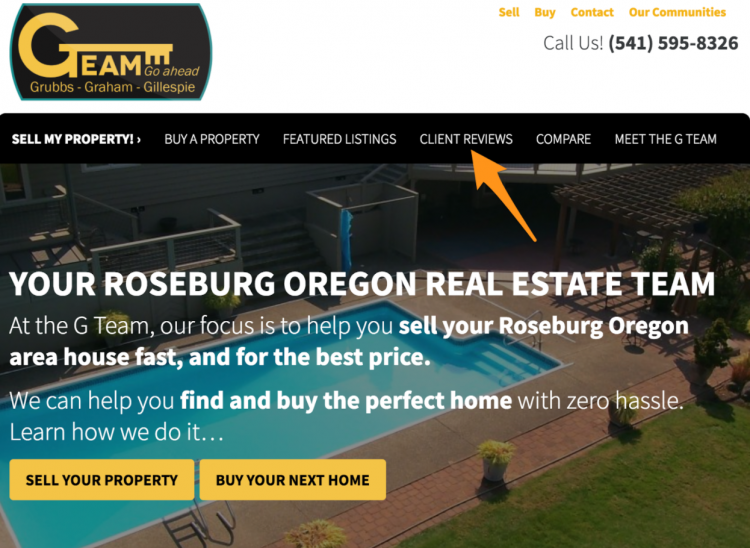
Section 5: Common Pitfalls to Avoid
While crafting SEO titles and meta descriptions can significantly improve your website’s performance, there are several common mistakes you need to avoid. Missteps like keyword stuffing, vague messaging, and neglecting local SEO can undermine your efforts, leading to poor CTR and fewer conversions. Here’s how to steer clear of these pitfalls.
Keyword Stuffing in Titles and Descriptions
Many real estate investors mistakenly believe that cramming as many keywords as possible into their SEO titles and meta descriptions will improve their rankings. However, keyword stuffing can hurt both your rankings and user experience.
Why Overusing Keywords is Harmful:
Hinders Readability. Keyword-stuffed titles and descriptions sound unnatural and may confuse or frustrate users. Remember, your meta description is often the first impression a potential lead has of your business. If it feels robotic or clunky, they are less likely to click.
Hurts SEO. Search engines like Google have become much better at recognizing and penalizing keyword stuffing. Your title or description could be flagged as spammy, which could cause your rankings to drop.
Example of Keyword Stuffing (Avoid This):
“Cash Home Buyers | Sell My House Fast in | No Realtor Fees | Cash Home Buyers in | We Buy Houses Fast in ” This example overloads the title with repetitive keywords, sacrificing clarity and professionalism.
How to Fix It:
Focus on one or two primary keywords and ensure the title flows naturally: “Sell Your House Fast for Cash in – No Repairs, No Fees!” This is clear, concise, and targets relevant keywords without sacrificing readability.
Vague or Misleading Titles/Descriptions
Another common mistake is crafting titles or descriptions that are either too vague or misleading. Setting clear, realistic expectations is crucial for building trust with motivated sellers and buyers.
Why Vague or Misleading Copy Hurts Conversions:
Decreases Trust. If a potential lead clicks on your link expecting one thing but finds something different on the page, they will likely bounce (leave the page immediately). This not only results in a lost lead but can negatively impact your SEO through higher bounce rates.
Undermines Your Authority. Real estate is a trust-driven business. Your SEO titles and meta descriptions need to reflect your services honestly and accurately, otherwise, you risk losing credibility with your audience.
Example of a Misleading Title (Avoid This):
“Sell Your House for Cash Fast – Guaranteed Offer in 24 Hours!” While this may sound appealing, guaranteeing an offer within 24 hours is not always feasible or honest for most real estate investors.
How to Fix It:
Be truthful about what you can offer: “Sell Your Home Fast for Cash – Get an Offer in 24-48 Hours!” This sets a more realistic expectation, building trust without overselling.
Ignoring Local SEO Best Practices
In real estate, local SEO is paramount. Ignoring the use of location-specific keywords in your titles and descriptions can cause you to miss out on highly targeted traffic. Motivated sellers and buyers are searching for local solutions, and your meta tags need to reflect that.
Why Location-Based Keywords Matter:
More Targeted Leads. Sellers are typically looking to offload properties in a specific location. By including location-based keywords, you ensure that your website appears for relevant searches like “sell my house fast in ” or “cash home buyers in .”
Higher CTR and Conversion Rates. Users are much more likely to click on listings that match their location. By adding local keywords, you increase the relevance of your site to the searcher, which improves both CTR and conversion rates.
Example of Ignoring Local SEO (Avoid This):
“We Buy Houses Fast – Get a Cash Offer Today” While this headline might generate some interest, it lacks a local focus, making it harder for people in your target market to find you.
How to Fix It:
Always include your city or region in the title: “We Buy Houses in – Fast Cash Offers with No Repairs!” This version includes the city name, immediately signaling to the searcher that you operate in their area.
Take Action: To improve your click-through rates and attract more motivated leads, avoid these common mistakes. Use keywords naturally, set clear expectations, and always focus on local SEO. By fine-tuning these details, you’ll see more qualified traffic and ultimately more conversions!

Conclusion
Optimizing your SEO titles and meta descriptions is one of the most effective ways to increase your click-through rates and generate motivated leads. By following the tactical steps outlined in this guide, you can craft compelling titles and descriptions that attract more clicks and convert more users into leads.
For further guidance on real estate SEO, consider signing up for Carrot’s SEO tools or schedule a demo with our team to see how we can help you optimize your website for success.