

Category: Featured Case Study

  • $125,000/Month in Deals with Inbound Marketing and the Carrot System – Brian Rockwell Success Story

    $125,000/Month in Deals with Inbound Marketing and the Carrot System – Brian Rockwell Success Story

    Brian started his journey as a coach and a middle-school teacher. Today, he’s a top real estate investor in Dallas, Texas who’s been making well above $100,000 per month from inbound marketing (SEO and PPC) and the Carrot system.

    brian rockwell texas case study

    Brian Rockwell with Sell Your House DFW, a Carrot member for about 14 months as of the time he hopped on a call with us, has been crushing the Dallas/Fort Worth market online with his real estate investing/wholesaling business.

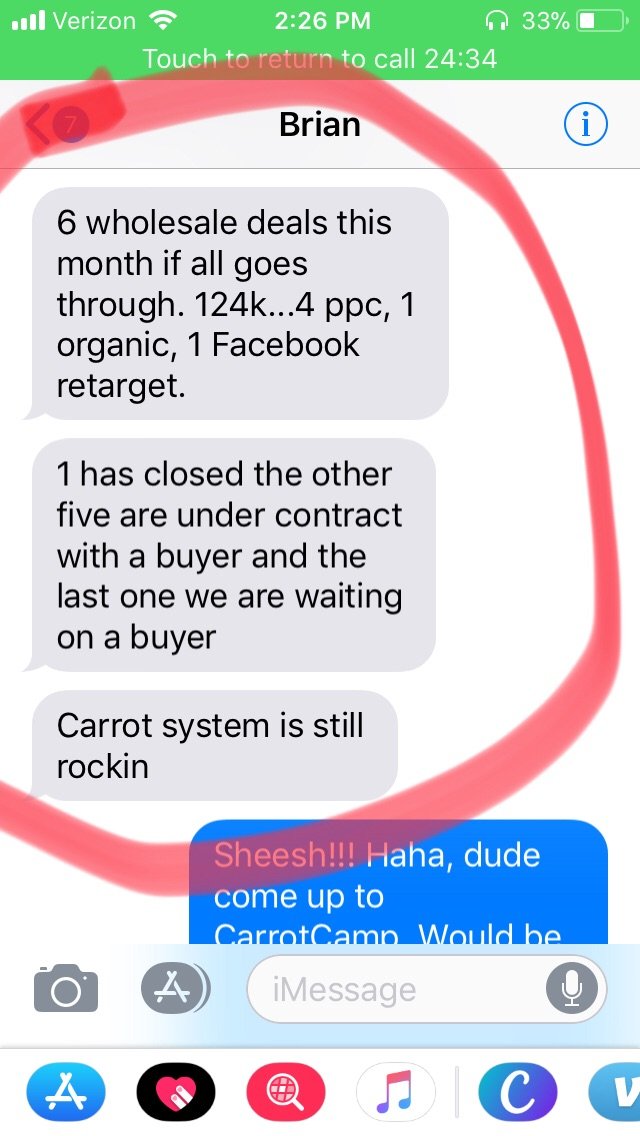
    Here is a recent text message he sent directly to Carrot’s CEO, Trevor Mauch…

    “6 wholesale deals this month if all goes through. $124k… 4 ppc, 1 organic, 1 Facebook retargeting. 1 has closed the other 5 are under contract with a buyer and the last one waiting on a buyer. Carrot system is still rockin’” – Brian Rockwell


    Listen in or read his story as an investor, where his leads come from, and what his inbound marketing strategy is that has led to $100k of consistent deals per month.

    [Case Study] From Teacher to $80k/Month Wholesaling Real Estate  w/ Brian Rockwell


    In high school, a friend of Brian’s introduced him to his dad. Brian’s father owned a roofing company and a few other businesses he had founded in a grass-roots sort of way. In a word, he was an entrepreneur.

    It was the first time Brian remembers being introduced to an entrepreneur of that caliber. Someone who really knew what they were doing understood how to manage money and grow a business.

    Needless to say, Brian was fascinated.

    And from that day forward, Brian wanted to be an entrepreneur.

    As time went on, he became increasingly interested in the real estate investor niché, dreaming of the day that he’d make it big.

    But, what he didn’t know at the time was that he’d have to wait 12 years until that happened.


    As Brian graduated from school and joined the sect we all refer to as family life, the importance of supporting his wife and kids rose to the top of his priorities.

    In an effort to do so, he became a track, football, and baseball coach and taught classes as well. In other words, he became a phenomenal generalist, something he wasn’t particularly passionate about.

    I mean, of course, that he wasn’t passionate about being a generalist. The coaching and teaching he loved. He was able to inspire students and co-workers daily and encourage them to be the best version of themselves that he could possibly imagine.

    Brian’s evenings, lunch breaks, and weekends, though, were filled with his dream of becoming a real estate investor and being financially free — something he wanted to do but was unsure of how to do. He would scour real estate investor resources.

    Particularly, he fell in love with biggerpockets.com.

    For 5 years, this was his life. He dreamt of being a real estate investor and studied what that could look like in his free time. But most of his time was taken up by teaching, coaching, and family.


    Eventually, Brian’s wife got a job that was capable of supporting the family, and he was free to pursue his passion.

    Through a Bigger Pockets forum discussion, he found out about Carrot and went to work creating his website.

    Listening to the 3LPD training that we offer here at Carrot, Brian learned about the importance of building credibility and personality with your website.

    So, he took extra time to add a picture of his family on the “about” page.

    Brian Rockwell Real Estate Investor

    He even added a core values section to his website after researching other businesses’ core values and determining what he felt should define his business.
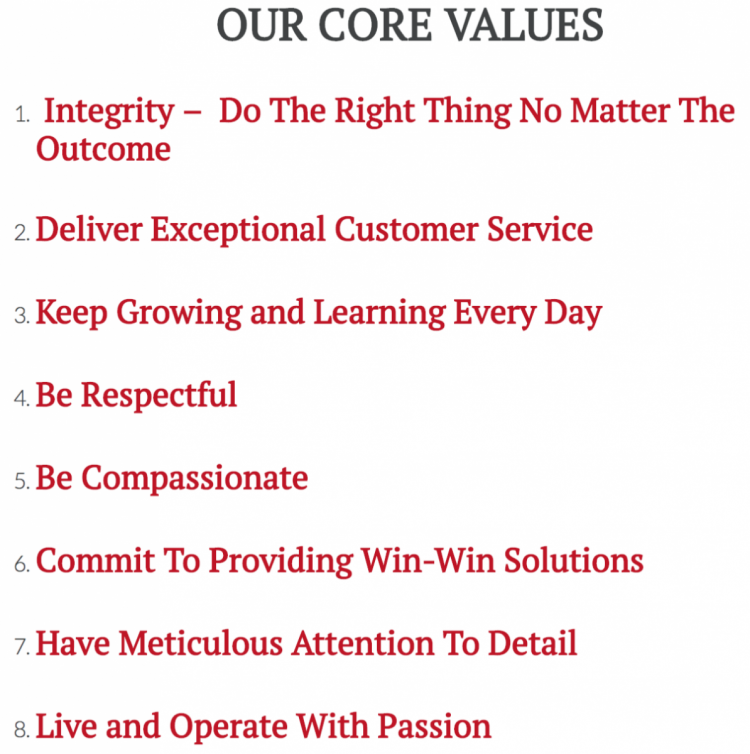
    sellyourhousedfw.com core values

    Besides these small changes to his Carrot website, he did very little. He customized some of the copy to fit his voice and added compelling testimonials.

    Once his website was finished, he started marketing his new passion.

    His original intention was to market his wholesaling business with traditional methods — direct mailing and what he calls “driving for dollars.” Basically, driving the streets looking for run-down houses and sending mail to those places.

    He even got his first deal through traditional marketing methods, and he got a taste for success when he made $7,300.

    But, as Brian mentions, “driving for dollars” wouldn’t be a sustainable marketing strategy.


    As Brian grew tired of driving around every evening looking for possible clients, he knew something needed to change.

    He discovered Carrot’s 3LPD training and devoted 5 hours a day for 3 weeks to the content, ingesting every soluble potential value from the modules.

    Brian quickly learned that organic traffic strategies can take a long time to generate leads if you’re in a competitive market.

    “I’m in Dallas, Texas,” he thought to himself, which is highly competitive.

    Because of this, he turned his attention to Google Ads and learned what he knew nothing about.


    His starting budget was a mere $1,200.

    But after just one month of investing money into PPC, deals of value ranging between $10,000 and $20,000 started rolling in.

    In his excitement, he invested more and more money into his PPC marketing.

    Some might think he was too forward. But he wasn’t.

    When discussing the topic, he said,

    “Would you pay $3,000 to make $30,000? I don’t know about you, but I’d take that deal all day long.”

    Brian’s perspective was that the more money he dumped into PPC, the more money he would make and the higher his ROI.


    Brian started his journey as a coach and a middle-school teacher. Today, he’s a top real estate investor in Dallas, Texas, who’s making around $80,000 every month from his business.

    He only does online lead generation — no more direct mail or “driving for dollars.”

    Brian’s website is currently at the bottom of page one for his target keywords. And that’s starting to become a focus for him, but only now that he has the time and money to invest.

    As he discusses his success, no one is more surprised than him as he says,

    “It’s awesome because once you know the formula of how to do this, it’s just do it again and keep going and going and see how you can grow it.”

    But what’s the formula?

    How does someone go from a dreamer to a doer? How does a middle-school teacher become financially free through real estate investing?

    Lucky for you, the answer isn’t as complicated as some people make it.

    Brian boils his success down to one single solitary thing: trusting Carrot’s advice and implementing everything that they suggest.

    That might sound a little sales pitchy coming from a content marketer at Carrot, but for Brian, that was exactly why he was successful.

    He learned everything he could, took the recommended risks, and optimized his website with our suggestions.

    The results speak for themselves.


    So why not you?

    Why not your business? Why not your website? Why not your family?

    If Brian rose to real estate investing success from being a middle-school teacher, you can, too. Nothing makes Brian different than you except that he chose to implement everything he learned.

    And oftentimes, the implementation makes the difference between someone who dreams of being an entrepreneur and someone who builds a successful business.

    Brian is currently working to place his business in every city in Texas, and from there, who knows.

    When you experience the kind of unexpected success that Brian enjoys, the sky’s the limit.

    As a final piece of advice from the man who’s living your dream,

    “Trust the system. That’s what I did. I put full trust in everything Carrot had to offer. Do your research. Be good at what you do. If you don’t have the skills, go learn new skills. Always push yourself. Always learn. At the end of the day, if you find something that you want to do, go all in 100%. Just kill it.


  • Carrot Success Story: How To Drive 7 Figures Through Your Carrot Site With Ryan Dossey

    Carrot Success Story: How To Drive 7 Figures Through Your Carrot Site With Ryan Dossey

    “If you had to give a ballpark guess, how much money would you say your Carrot site is worth to your business?” I asked.

    I reached out to Ryan Dossey for an interview because first, he’s been a Carrot member since like 2014 (long enough that he can’t remember exactly when he signed up) and more importantly, because he’s a wildly successful entrepreneur and real estate investor.

    He has been mentioned and/or quoted in Forbes, Time, Money, Entrepreneur, and Yahoo Finance.

    In the last 18 months, his business, Christopher Ellyn Homes (which does a little of everything — wholesaling, flipping, and buy-and-hold) acquired $8.8 million in rentals.

    In terms of cash flow, his real estate investing business typically generates somewhere in the high five-figure range every month (they’ve hit 7 figures a few times).

    He’s also the founder of Call Porter and Ballpoint Marketing.

    “Oh man. It’s hard to place a number on that. But I’d say that our Carrot site is easily worth 7 figures to our business,”

    Ryan responded…

    “I mean, we’ve done 7 figures in assignments through that site. If it wasn’t for my Carrot site, I wouldn’t have the same credibility I have today in my market.”

    Talk about some awesome feedback!

    He also offered some tips for real estate investors who are looking to grow their businesses and cut through the clutter.

    5 Ways Ryan Dossey Generates Consistent 7 Figures

    #1: You Gotta Get a Carrot Site

    Back in 2012, Ryan was just getting into real estate investing. And the first site he created for his business was hosted on Lead Propeller — one of our competitors that many of you are probably aware of.

    But eventually, Ryan got fed-up with painfully low conversion rates and moved to Carrot.

    More specifically, his Lead Propeller site was suffering to the tune of a 1% or 2% conversion rate. His Carrot site now receives about an 11% conversion rate.

    He gets far more leads. And because of that, he’s able to build a sustainable business with predictable lead-flow and income.

    Even when sending direct mail, Ryan says,

    “It’s my website that build credibility when people are trying to learn about my business. If I didn’t have a trustworthy site that loads fast and looks like a million bucks and converts well, then my business wouldn’t be as profitable as it is today — plain and simple.”

    Which begs the question: is your site doing all of those things? If it isn’t, then you might consider getting yourself a Carrot site. Our sites load even faster than Google and we’re constantly optimizing tech stack, SEO, and design. To quote Ryan once more,

    “My favorite thing about Carrot is that they’re constantly optimizing so you don’t have to.”

    #2: Customize Your Carrot Site

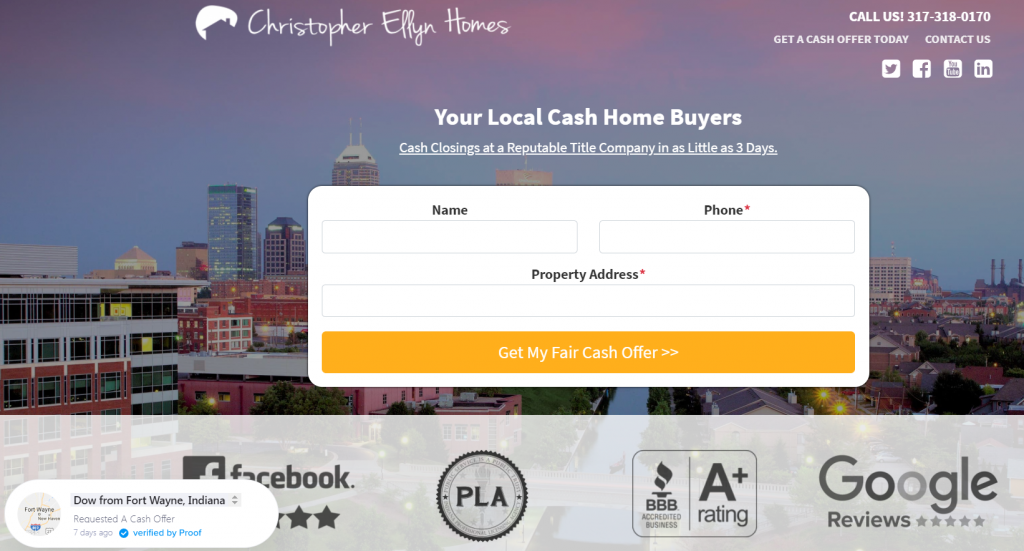
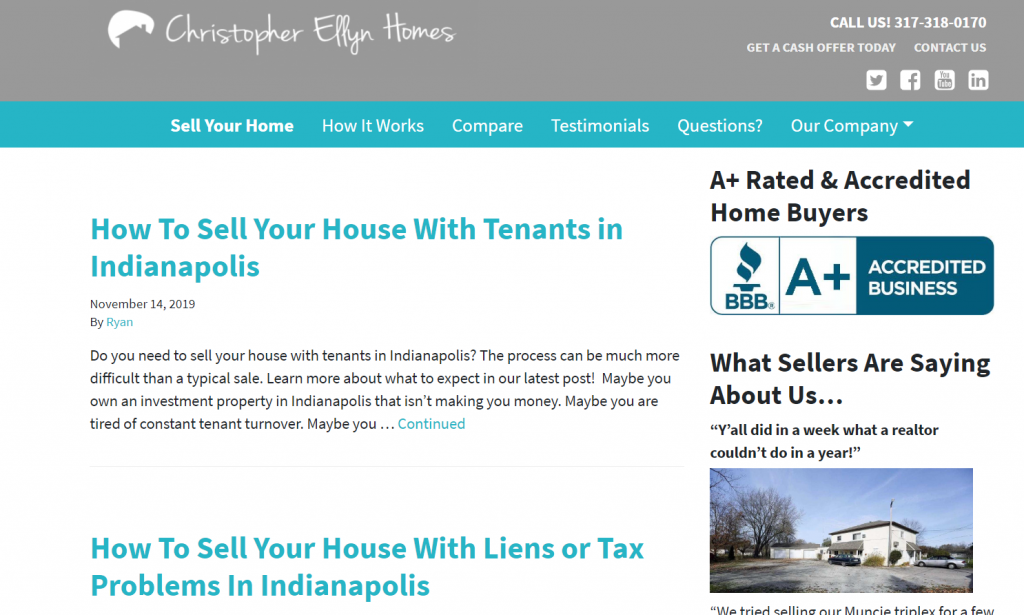
    Christopher Ellyn Homes - Carrot Site

    Having been a Carrot member for 4 or 5 years, I thought Ryan would be the perfect guy to give advice to new Carrot members about how to get the most of their membership.

    So I asked him,

    “What would you tell new Carrot members to do with their site to get the most bang for their buck?”

    His response was simple:

    “Customize it. You have to make it your own. You have to create a brand image for your business.”

    Specifically referring to his own Carrot site, he said,

    “We customized the hero image on the homepage, we rewrote and customized the entire ‘Our Company’ page, and we replaced all of the stock images with real images of our city or the people who work in our business.”

    And he recommends that all Carrot members do the same thing.

    “Carrot provides a great foundation, but you have to customize your site if you really want to stand out from the competition.”

    Ryan and his team even went so far as to create separate landing pages for different markets where they operate (something we highly recommend doing — you can learn more about optimizing your city pages).

    Originally, Ryan did all of these customizations himself to save on money. But recently, he decided to sign up for Carrot’s Concierge service, where we make all of these site changes for you, specific to your industry and business.

    Of our Concierge service, Ryan commented,

    “We noticed some pretty solid changes. Actually, our bounce rate went down and our sessions duration went up after going through Carrot’s Concierge service.”

    I asked him for specifics and he said that his bounce rate went from 70% before the Concierge service to 65% and his average session duration went from 2:18 to 3:18.

    Pretty cool, huh?

    Related Content: Here are 13 Changes You Can Make to Differentiate Your Carrot site in Under 10 Minutes

    #3: Publish Regular Blog SEO Content

    Value of real estate investor blog posts

    At Carrot, we talk a lot about the power of maintaining a blog on your real estate site. It helps make your site appear more active to visitors and it gives your website more opportunities to rank in Google (which means more chances to generate free traffic and leads).

    And we’re so adamant about the importance of having a blog on your site that our Content Pro and Advanced Marketer plans include monthly content.

    That’s right — every month we’ll send you content for your blog so you don’t have to spend hours writing and researching your own content. The Content Pro plan includes 12 articles every month and the Advanced Marketer plan includes the same 12 plus 12 more exclusive articles.

    From our experience, more content equals more leads.

    And when I asked Ryan what his favorite thing about Carrot is, he said,

    “I love the blog content that Carrot provides.”

    When I asked him why he loves it, he said,

    “Well, first, because it fills out our site and makes us appear more active. But also because those articles are actually generating leads for our business every month.”

    And while we recommend customizing about 25% of the articles that we give our members to avoid duplicate content, Ryan and his team just post those articles on their website without any changes.

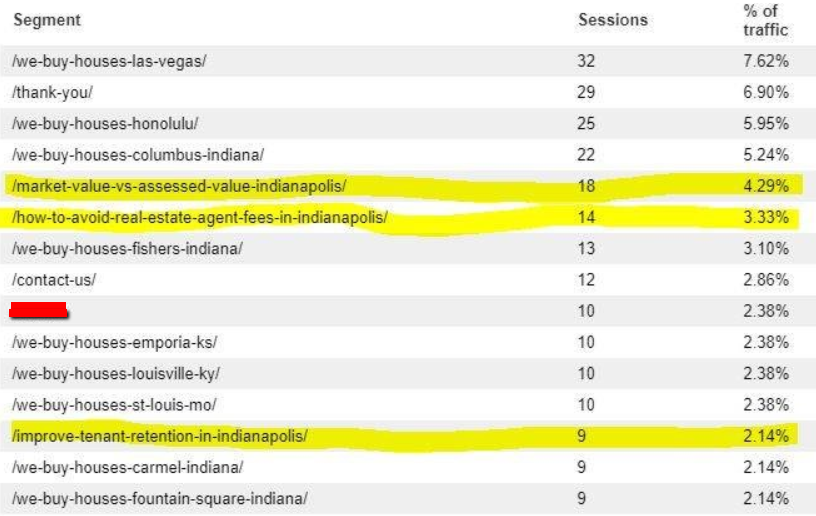
    And still, those articles are generating about 10% of all of their website’s traffic every single month purely through SEO.

    real estate website traffic every month through SEO
    We highlighted the URLs which are blog articles on Ryan’s site.

    Sure — you could publish your own blog content. But you have enough other work to do — you don’t need to add consistent content marketing to your plate.

    Why not let us write the blog articles for you?

    Plus, if you really want to create some of your own content on top of what we provide you with, then we’ve made it dead-simple and lightning-fast through a little tool we call VideoPost.

    Related Content: On-Page SEO for Real Estate: 16 Steps to Optimize Your Websites

    #4: Target Competitor’s Keywords

    bidding on competitor keywords

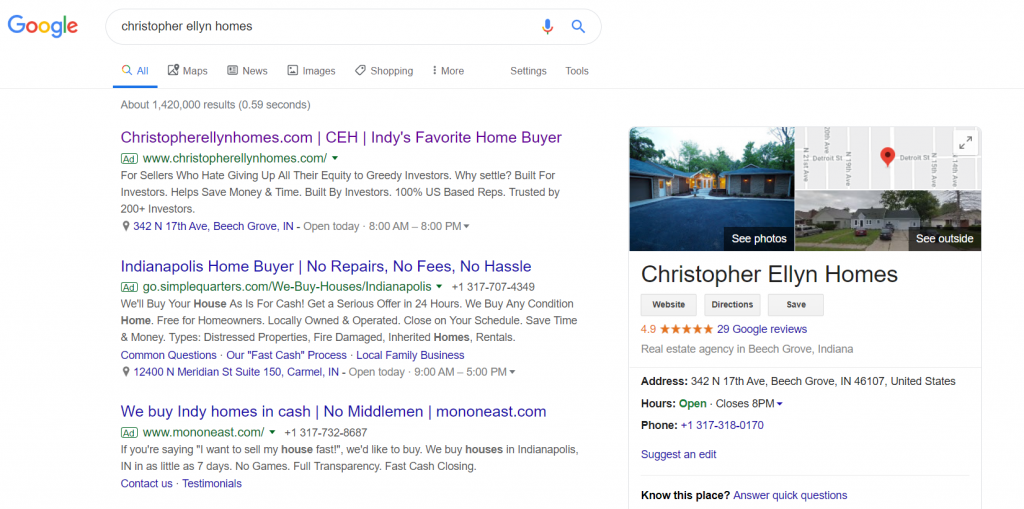
    One day, Ryan was doing some SEO research for his real estate website. He typed “Christopher Ellyn Homes” — the name of his company — into Google to make sure that they were ranking first for branded search terms…

    …but wait — what’s this?

    Looking at the Google Ads, he noticed that some of his competitors were spending money to target his branded keyword phrases.

    After doing some research on the ad strategy, he decided to do something similar. Now he targets some of his biggest market competitor’s branded keywords with his own Google ads.

    What’s more? He’s even generating a few leads every month with this strategy! And the even cooler part he mentioned is that the cost-per-lead with this strategy is dirt cheap — specifically, $15.

    So why not give it a try yourself? It’s worth a shot, especially if your competitors are already trying to steal your own leads. ;-)

    Related Content: Learn How To Find High-Intent Real Estate Keywords and Dominate Your Market’s SEO Rankings

    #5: He Doesn’t Use Yellow Letters & Postcards – Instead, Goes Color

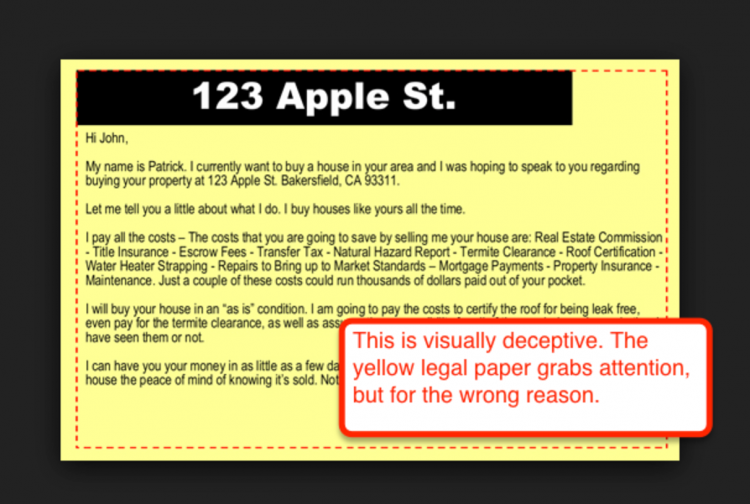
    real estate direct mail yellow letter
    (Image Source)

    Yellow letters are extremely common among real estate investors.

    And the reason is simple: they get opened. After all, if you received a yellow letter in your mailbox, you’re going to open it simply to see if it’s as important as it claims to be.

    There are a few problems with sending yellow letters, though. First, it’s very competitive — so if you do it, too, you’re just joining in with that clutter. As Earl Nightingale once said…

    “Look at what the majority of people are doing, and do the exact opposite, and you’ll probably never go wrong for as long as you live.”

    Second, a yellow letter can be portrayed as dishonest. The implication of a yellow letter is that it’s some sort of legal warning. But, of course, that isn’t true. So when someone opens up your letter, there’s a serious chance of frustration because they feel deceived.

    Ryan Dossey makes a strong case against yellow letters and postcards, saying, “They are just the same old thing. If you want to get a higher response rate, you have to do something different. You have to stand out.”

    Instead, Ryan uses full-color, custom branded pieces. And he says that he gets a higher response rate from his direct mail than anyone else in his market. “It’s a huge advantage,” he says.

    So consider ditching the yellow letters and postcards and trying something else — something that none of your competitors are doing.

    Conclusion

    At Carrot, we take our member’s success very seriously. If our members succeed at building businesses that provide them with financial and personal freedom, then we count that as a win.

    In fact, our mission at Carrot is to “Add humanity back to business and give people more time in life for the things that matter.”

    If you feel like you’re on the hamster wheel with your business, constantly grinding away but never see real promising results, never building tangible momentum that can carry your business forward for years to come, then we might be the solution you’re looking for.

    We’ve generated millions of leads for thousands of real estate professionals around the country, and we’d love to do the same for you. Give us a risk-free try over here and let’s build the business of your dreams together. :-)

  • Real Estate Investor Success Story: 7 Dead-Simple, Secret Strategies That Lead To MS Home Buyer’s First $100k Month

    Real Estate Investor Success Story: 7 Dead-Simple, Secret Strategies That Lead To MS Home Buyer’s First $100k Month

    Real Estate Investor Success StoryWe recently had the opportunity to interview Adam Johnson and Brent Moreno on the CarrotCast, two partnered-up investors who finished their first $100k month back in March.

    On the episode, Trevor asks them about how they got to their first $100k month — exactly what marketing strategies they used and what mindset philosophies made all the difference.

    If you’d prefer to watch or listen, you can go here to view the full interview.

    Or below, I’ve compiled 7 of the duo’s dead-simple, secret strategies that they shared on the Carrot real estate investor success story. Want to learn how they got to their first $100k month and how you can, too?

    Read on.

    Dead-Simple, Secret Strategy #1: Making Uber Do Your Driving-For-Dollars

    Brent Moreno is likely one of the most innovative online marketers around.

    While he and his partner often use tried-and-true marketing methods (PPC, Facebook Ads, Direct Mail), Moreno isn’t afraid to think outside of the box in order to get a leg up on the competition.

    The way he used Uber drivers to find deals is the perfect example of this.

    Before his real estate investing days, Moreno was a part-time Uber driver. He’d drop his wife off at work and go drive for a few hours to make a little extra money. During that time, he started an Uber Facebook group. When he finally took the leap into real estate investing and gave up on Uber driving, he had an “aha!” moment…

    Uber drivers literally just drive around town all day… If I could get just a few of them to send me property addresses for vacant or distressed homes, they could do my driving-for-dollars for me.

    So he reached out to his Uber-driving pals in his Facebook group and asked them to do him a favor. One of them took him up on it and passed him 35 seller leads, 2 of which he was able to close on.

    That’s just the kind of marketing ingenuity that separates top investors from the rest. Feel free to steal his strategy and try this in your own market. Who knows? Could be a game-changer.

    Dead-Simple, Secret Strategy #2: Building Your Inner Circle

    In real estate, perhaps nothing is more powerful than long-term, meaningful relationships in your market of operation.

    And that is a truth which Adam Johnson doesn’t take lightly:

    I love to make people smile. I really do.

    In fact, he’s built so many meaningful relationships in his community that when he walked into the local courthouse (a place he regularly visits, giving chocolates, kind notes, or snow cones to the workers whenever he leaves) to check the title on a foreclosure, something amazing happened.

    He overheard one of the workers talking on the phone as they said something like this:

    I’m sorry Ma’am, I just don’t have the authority to offer discounts or lower your payments. There’s nothing I can do.

    After a moment, the worker noticed Johnson in the room, said

    Uhh. Hold on, hold on. Let me get someone else on the phone

    and gave Johnson the county phone to try and help this woman solve her tax problems.

    That random situation turned into a closed deal for Johnson.

    What’s more?

    Johnson literally has his own set of keys to every courthouse in the county because of the relationships he’s built. Don’t underestimate the power of consistent kindness to build meaningful relationships in your community — you never know where your next deal will come from.

    Moreno even goes so far as to claim that 50% of their success can be directly attributed to the relationships and rapport that they’ve built in their market.

    Dead-Simple, Secret Strategy #3: Using A High-Converting Website

    Home Buyers Lead Generation Stats
    90 Day MS Home Buyers Lead Generation Stats

    I won’t splice words here.

    Johnson and Moreno are Carrot members, and they love their Carrot website.

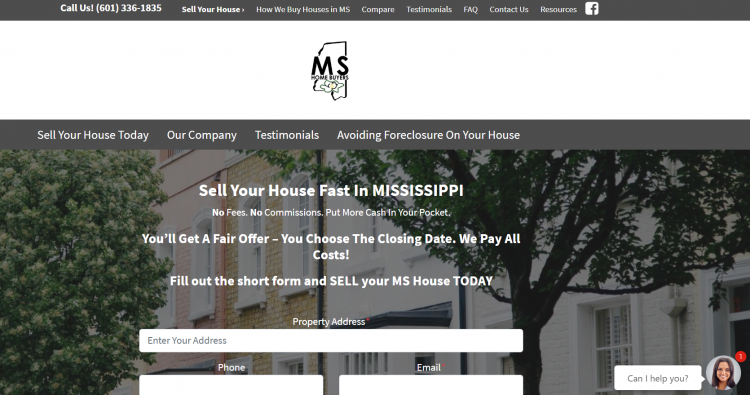
    ms home buyers real estate investor success story

    Making $100k per month, these are two people who could definitely afford their own custom website. But when Trevor asked them why they haven’t ditched Carrot and built their own website, this is what they said.

    Brent Moreno & Adam Johnson - I'm in the RE Buying Business

    Johnson explains their reasoning best:

    “Because I’m in the real estate business, I’m not in the website-building business.”

    And their Carrot site has been converting website visitors into leads since day one. Why change it if it’s working?

    Plus, Johnson, self-proclaimed at being tech-incompetent (he didn’t even have WiFi at his house until 2017) can use the site just fine. It’s easy to use and it converts like a charm. What’s not to like?

    If you’re on the fence about trying Carrot out for your own business, you can sign up with us risk-free for 30 days. Go here to find out more.

    Dead-Simple, Secret Strategy #4: Steal These Facebook Ads

    To be honest, I was kind of surprised that Johnson and Moreno were willing to give away their Facebook Ad copy for free. Now, with Facebook’s new ad library, anyone can view any page’s past and current ad campaigns (this is GREAT for studying your competition), but Moreno actually encourages other investors to steal his ad copy and try it in their own market: “Take it and try it out for yourself. It’s working for us.”

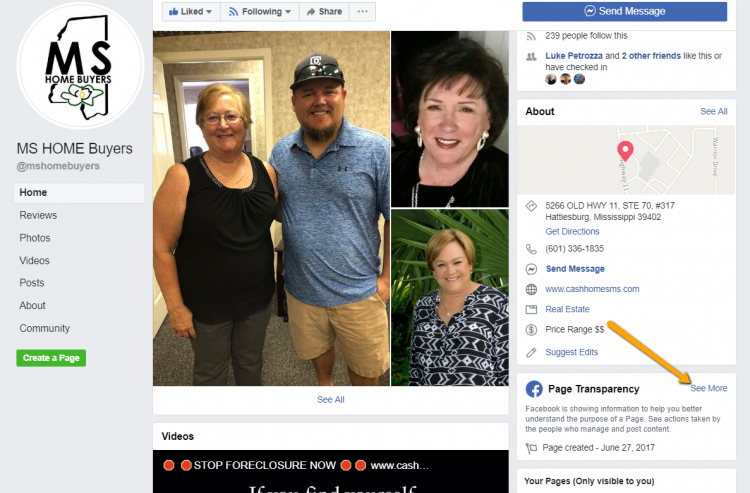
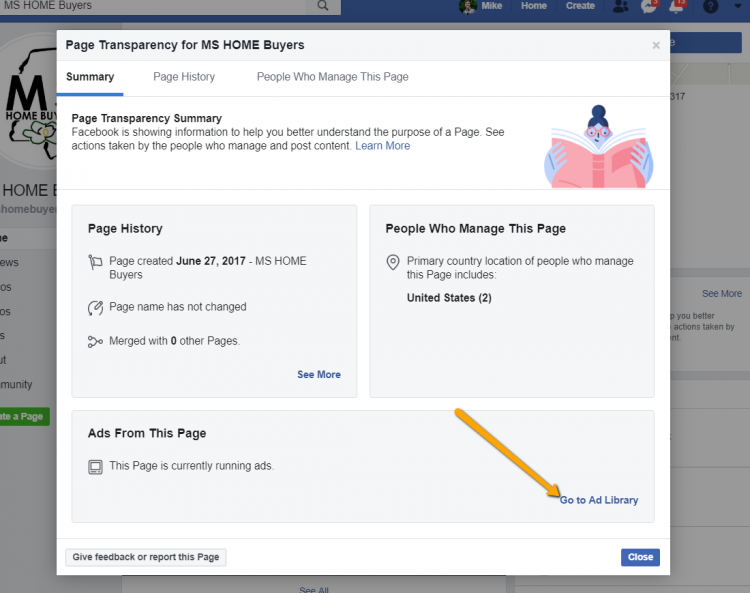
    So, in the spirit of mutually agreed upon theft (:D), here’s how you can go on Facebook and look at MS HOME Buyer’s Facebook Ads.

    Go to MS HOME Buyers Facebook page and click on “See More” next to “Page Transparency” on the right side.

    MS Home Buyers real estate FB page

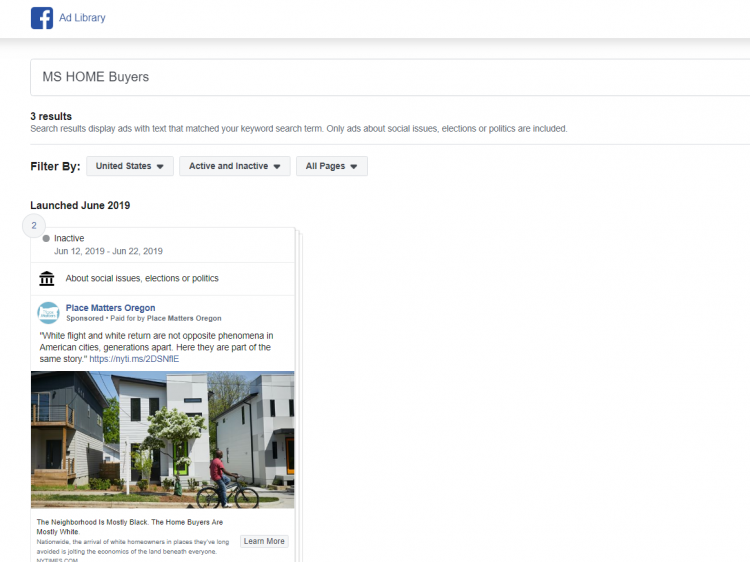
    Click on “Go to Ad Library”.

    how to find facebook ad examples

    And voila! You can now look through the ads that these guys are running and they’ve given you explicit permission to copy them, so have fun!

    Facebook ad examples for real estate

    Oh! And if you’re needing to do competitor research or want to figure out what other investors in your market are doing with their Facebook Ads, use the above strategy — knowledge is power, after all.

    Dead-Simple, Secret Strategy #5: Don’t Give Yourself An Option To Not Finish The Job

    When listening to this interview, one of my favorite things that Johnson said was…

    Not to overplay the stereotype — being from Mississippi — but the truth is that when you grow up on a farm or in a rural area… you just gotta get the job done. There’s been plenty of times where we had to fix a fence and we didn’t have any extra fence and we just had to figure it out with what we had… I think that’s where people go wrong: they let not doing it be an option. The truth of it is, if you put yourself in a position where you don’t have a choice, then it’s a different mindset — it’s not ‘we don’t have this or we don’t have that,’ it’s just… you gotta make it work.

    I think that quote speaks for itself. When you don’t give yourself an option to quit or to not finish the job, you get it done with what you have; that’s all there is to it. And more often than not, just working hard with what you have at your disposal will grow your business, regardless of the resources available to you.

    Dead-Simple, Secret Strategy #6: Keep Your Business Simple, But Do The Simple Things Better Than Anyone Else

    The philosophy behind Johnson and Moreno’s business is to “Keep it simple, but work extremely hard on those simple things.”

    Many real estate investors (many entrepreneurs, for that matter) get caught up in the details of their business. They create over-complicated internal processes that unintentionally slow their businesses down. Or they use 10 different marketing strategies all at the same time, optimizing none of them.

    But the best way to grow a business is usually to let your internal processes and marketing strategies grow with your business. Always keep it as simple as possible to build a business that’s agile, and optimize the heck out of those simple internal processes, sales tactics, and marketing strategies.

    You can do 100 different things with mediocrity… or you can do a couple of things expertly well. For Johnson and Moreno, working really hard on the simple things has proven far more lucrative than trying to tackle everything at once.

    Dead-Simple, Secret Strategy #7: Don’t Underestimate The Impact Of Hard Work And Compounding Results

    The grind. The hustle. The day-in and day-out hard work of an entrepreneur.

    Over time, it can get exhausting and discouraging. You start to wonder if all this hard work will pay you back in the end. Well, Johnson firmly believes that it will:

    Don’t underestimate the legwork and then giving your efforts time to compound.

    Before you can build momentum for your business, don’t forget that you must first push the boulder up the hill — only then can it start rolling down the other side.

    And don’t quit before you reach the top of the hill; that’s where building a business gets fun.

    Conclusion

    We hope that this information has helped!

    Clearly, Johnson and Moreno are crushing it with their business. I imagine they’re well over $100k per month now that we’re half-way through the year. And we’d love to see you get to that same place.

    Maybe $100k per month seems so out of reach right now as to be ridiculous.

    Or maybe you’re right on the cusp of breaking through that threshold.

    Whatever the case, in addition to using the above tips, we’re willing to give you a risk-free trial period with our service which has generated over a million leads for real estate investors and agents.

    Find out more here.

    And happy investing!

  • Real Estate Investor Success Story: Steve Londeau Shares His 6 Biggest REI Marketing Secrets

    Real Estate Investor Success Story: Steve Londeau Shares His 6 Biggest REI Marketing Secrets

    Steve real estate investor success story

    Steve Londeau has been a Carrot member since the beginning of 2015.

    Before he joined, he had a custom WordPress website that he had sunk lots of time and money into, with a “hideous” opt-in form — as he describes it — and an unsatisfying conversion rate.

    For two years, from 2013 to 2015, that website generated four leads for his business, all of which fell through and didn’t close…

    (not a typo)

    Frustrated with that slow-moving lead-gen, he switched to Carrot and saw an “immediate difference.”

    “I had four ‘deals’ that I got from my website pre-Carrot and none of em’ even closed. Since then… I instantly noticed a change when we went from my WordPress site to the Carrot content — it was like night and day, I started getting leads right away. And we started converting them, cause they were quality leads… and now we consistently close 6-figures just from our website every single year.”

    Now, business is booming. Steve does between 40 and 60 deals per year at $13,000 – $14,000 profit, paying about $2,000 for each deal. And his methods aren’t complicated: he combines direct mail, retargeting Facebook ad campaigns, Google Ads, and his high-converting Carrot site into a super-smart, dead-simple marketing strategy that every real estate investor should steal. And he’s getting into something called “wholetailing” which I hadn’t even heard of before listening to his full interview with Trevor.

    What are his secrets?

    Let’s break it down.

    Steve’s Top 6 REI Marketing Secrets

    Secret #1: A high-converting Carrot website

    First and foremost, Steve gives a lot of credit to his Carrot site. As someone who built a custom WordPress website and experienced sub-par performance and a staggeringly low conversion rate (just 4 leads in two years), his Carrot site was a breath of fresh air.

    Here’s what his Carrot website looks like.

    He didn’t sign up for Carrot right out of the gate, though. In fact, it took him 2 years, knowing about Carrot the entire time, to finally bite the bullet. And he’s glad he did.

    But what took him so long to make the leap?

    Well, his two concerns were the same that many people have when they’re thinking about signing up with us…

    1. Carrot is more expensive than a WordPress website and he didn’t want to add another overhead cost to his already-long list of monthly subs for his business.
    2. Carrot is built on different templates and he didn’t want his website to look like his competitor’s websites.

    Eventually, after he signed up and saw the results that his Carrot website was pulling…

    Carrot real estate investor website seo traffic

    …he realized that:

    (A) Carrot was paying for itself 10 times over, consistently converting high-quality leads and driving high-quality traffic — now he pays for our Advanced Marketer plan ($150 per month) to get the Aspen template, which further differentiates his site from competitors.

    (B) no one has ever said that his website looks like another competitor’s website in his market, so he’s not worried about it ;-)

    And as Steve is fond of saying, “If it ain’t broke, don’t fix it.”

    Secret #2: SEO for Real Estate

    When Steve signed up for Carrot, he put in a lot of leg work over the first year to build his rankings and drive passive traffic to his website. He did so by posting Carrot content (provided with our Content Pro and Advanced Marketer packages) and by targeting market-specific keyword phrases on his homepage.

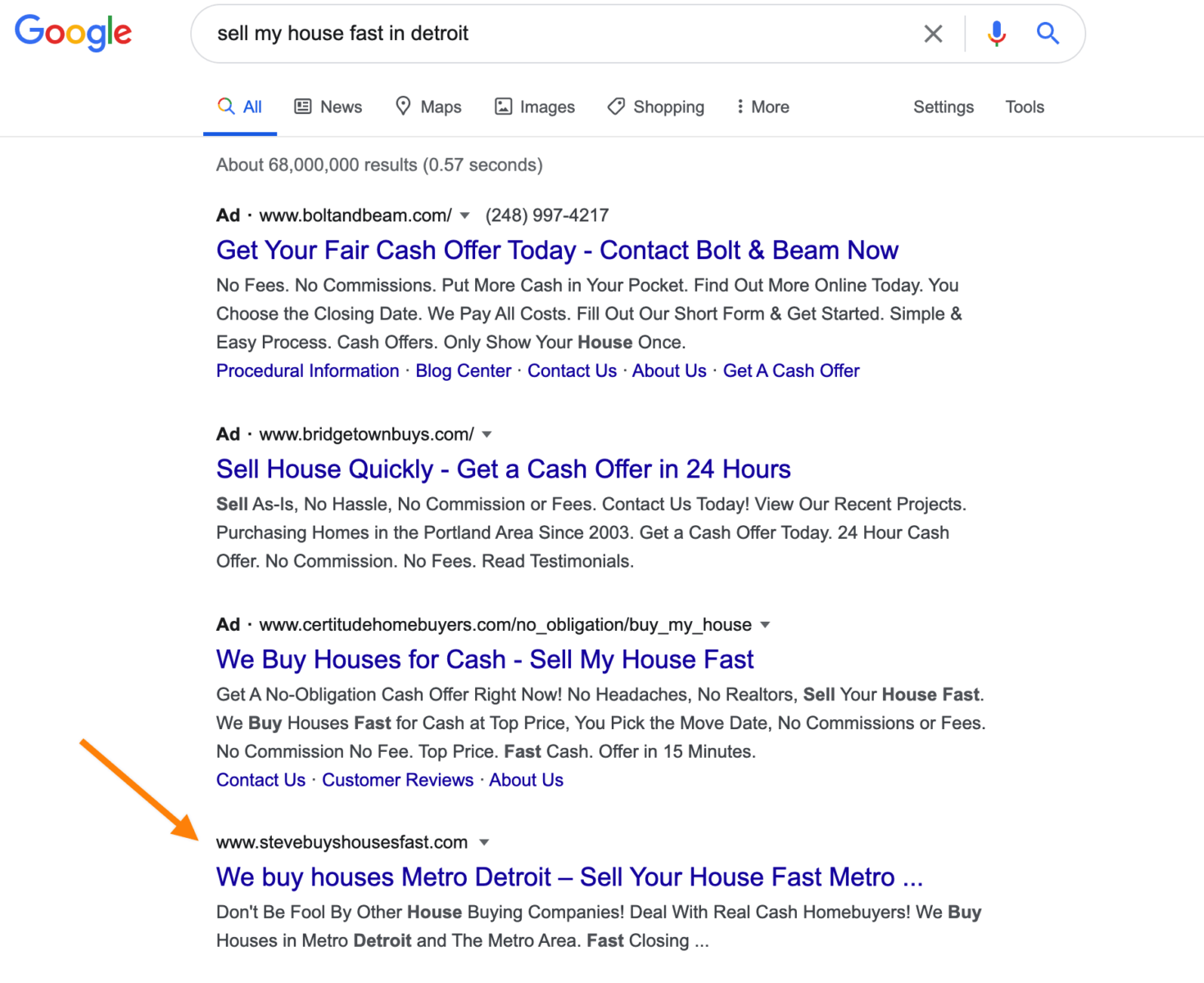
    After a few months, his website ranking soared to position #1 for some high-volume keyword phrases (such as “sell my house fast in Detroit”).

    This traffic spike in September a few years ago was probably associated with that boost in SEO rankings.

    real estate investor website seo ranking chart

    But like a weight-lifter who gets a 6-pack abs and then gives himself permission to stop working out because he’s already made it, Steve admits that he stopped working on SEO, thinking he’d just get to keep his #1 position and that they’ve now lost some of their rankings because of that.

    And while SEO still drives some traffic for his website, it doesn’t drive as much as it could.

    Note: Remember, SEO for real estate is a long-term game. While snagging position #1 and driving passive traffic to your website is amazing, it only lasts as long as you keep working to maintain your rankings by publishing new content, building backlinks, and targeting market-specific keywords.

    But his website still ranks for “sell my house fast in metro Detroit.”
    Carrot real estate investor website rankings

    Secret #3: Consistent blog content

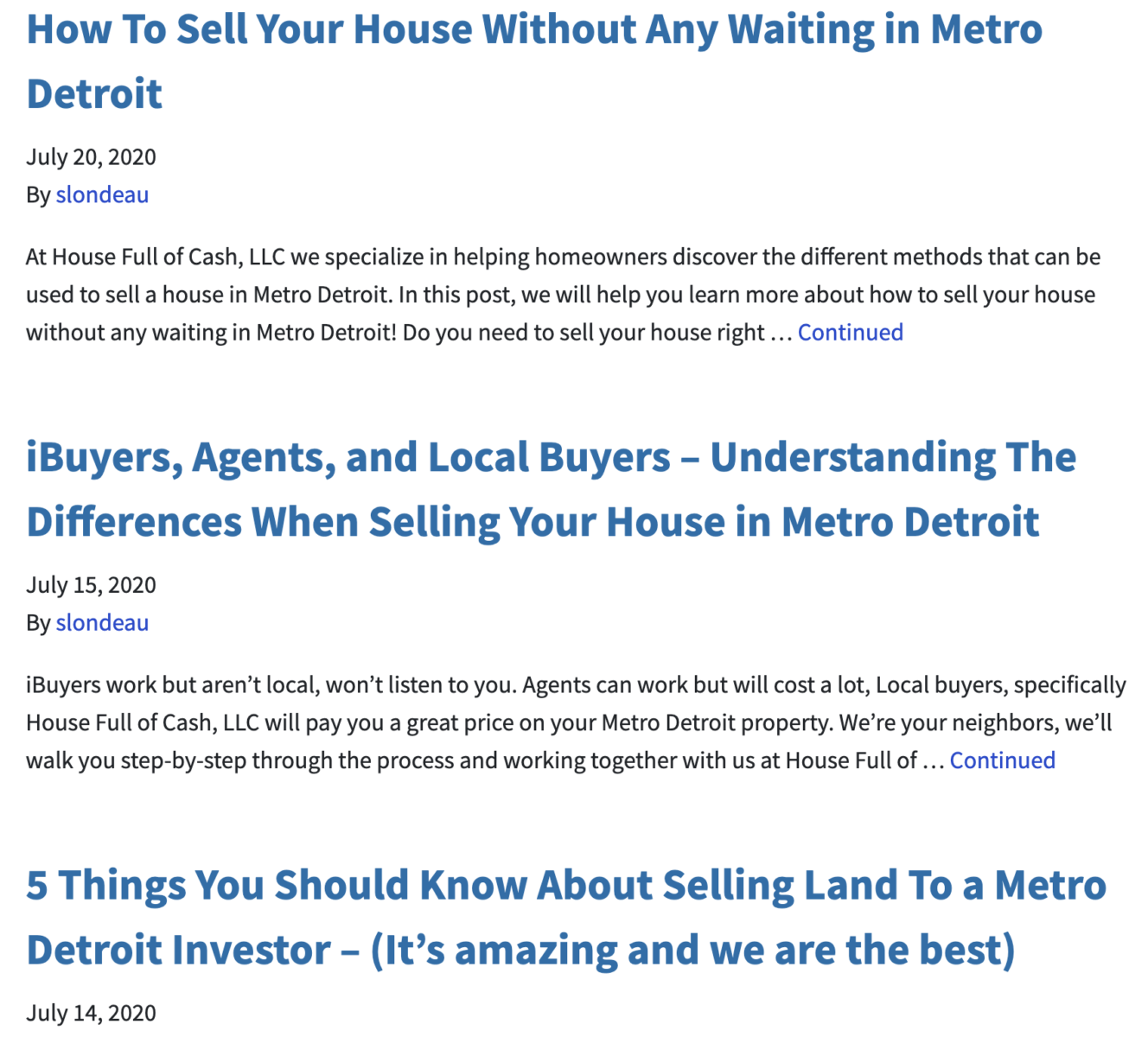
    Blog content on Steve’s website has been another driver of organic traffic — meaning, a motivated seller types something into Google (like “how to sell a distressed property”), one of his blog posts show up in results, and the person clicks on it.

    And that doesn’t just help brand awareness in his market, some of that traffic even turns into deals.

    The best part, though, is that Steve, doesn’t write any of that content himself (even though it’s under his name), he just uses the SEO-ready content that comes with his Carrot Advanced Marketer plan (24 blog posts per month).

    Check it out.

    real estate investor blog posts

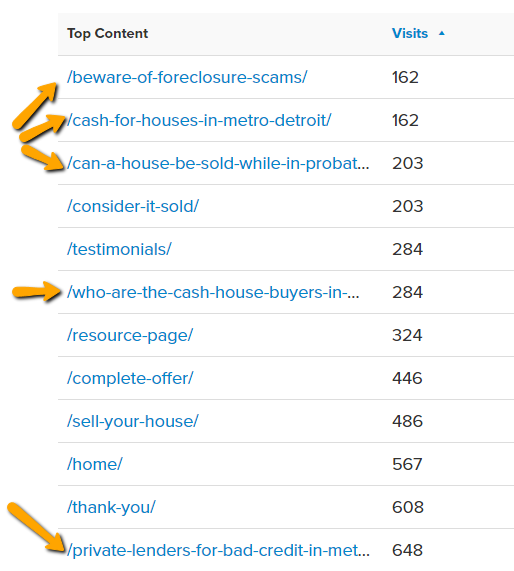
    And as you can see, his blog URLs are pulling their weight for traffic and lead generation.

    real estate investor blog content traffic

    Plus, that consistent content publishing practice (almost one blog post per day on the Advanced Marketer plan) gives you an excuse to interact with your social media followers by sharing the content, informs Google that your website is active and trustworthy, and gives you an opportunity to rank in search engines for high-volume keyword phrases.

    Which is why, at Carrot, we take content so darn seriously. :-)

    Secret #4: Wholetailing

    I hadn’t even heard of this before listening to Trevor’s interview with Steve, but it’s a fascinating concept and one that I think you’ll be interested in learning about (if you haven’t already).

    Basically, wholetailing is a combination of wholesaling and retailing. You purchase a house that takes little to no rehab work and instead of selling it to another real estate investor, you just list it on the MLS. The advantage being, you can often sell the property for more than you could when wholesaling to your buyers list.

    This means, of course, that you’d need to buy a property which is in almost MLS-worthy condition… and that’s the key: finding a property which takes little to no work to prepare for retail buyers, and then selling it at a discounted price on the MLS.

    And from my research, this strategy seems to be getting more and more popular as sellers dominate the market.

    One final tip that Steve has on finding buyers for properties you’re trying to wholetail: call agents who have recently sold properties in the same area and ask if they have any buyers who are still looking for a place. Then offer your property as somewhere those buyers might be interested in checking out.

    Secret #5: Postcards and Facebook ad retargeting

    This is one of my favorite strategies that Steve shared to generate leads and close deals.

    First, he sends postcards. On each postcard, he includes his phone number and website URL. If someone calls him, great — he’ll try to close the deal over the phone. But he’s found that many people aren’t ready to call him the first time that he sends them a mailer. They first want to know if he’s legit. Which is why he includes his website URL on each postcard.

    If they visit his website after receiving his postcard (which many of them do, to figure out who he is and if he’s trustworthy), they immediately get tagged with his Facebook advertising pixel. That, then, allows him to retarget those website visitors on Facebook with his ad campaigns, helping him make the most of every person that visits his website, and collect leads even when people don’t opt-in to his website form.

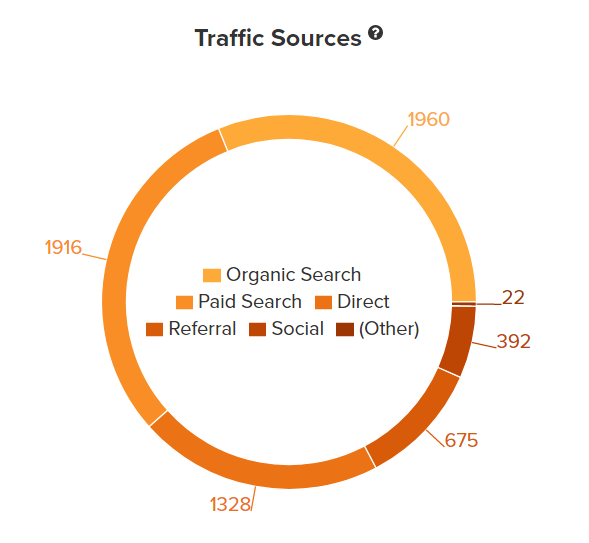
    carrot website traffic sources
    As you can see, “Direct” is the third biggest traffic driver to Steve’s website. That’s probably because people go straight to his site after receiving his direct mail.

    Secret #6: Video testimonials

    Testimonials are super powerful for converting a website visitor into leads. Here are some stats to prove it.

    1. “90% of respondents who recalled reading online reviews claimed that positive online reviews influenced buying decisions
    2. 85% of consumers said they read up to 10 reviews before feeling they can trust a business.
    3. Shoppers who view video are 1.81X more likely to purchase than non-viewers.”

    And video testimonials might be the best way to take advantage of those stats since videos are a consumer’s favorite type of content to engage with from a brand.

    (Check out our VideoPost tool for turning videos into blog posts!)

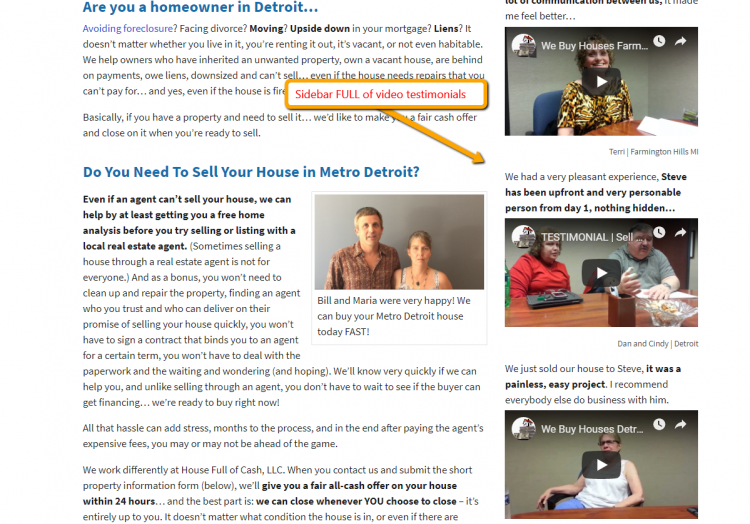
    For that reason, Steve puts lots of video testimonials on his website.

    It’s a small thing that can help convert more of the people who visit your website. After all, website visitors want to know that they can trust you, and nothing is quite as convincing as a ton of people vouching for you on recorded video.

    Some final inspiration…

    I hope this case study helps you build a bigger business, generate more consistent leads, and live the life that you’re working toward. Even if just in a small way. And I hope you learned something new!

    And if you want to walk in Steve’s shoes, consider getting yourself a Carrot website. We have the highest-converting websites on the market for real estate investors and agents and we’d love to help you just like we’ve helped Steve.

  • RJ Bates Case Study – $2 Million Story and Real Estate Marketing Strategy

    RJ Bates Case Study – $2 Million Story and Real Estate Marketing Strategy

    Football season just ended.

    A ripe 18-year old, RJ Bates woke up to his mom saying, “Football season is over. It’s time for you to go find a job. And I don’t want you to come home until you have one.”

    RJ shot out of bed and went searching. His first place?

    Pizza Hut.

    After begging the manager for a job, he was hired as a delivery person. And making about $100 a day with tips, he felt like the king of the world. He progressed to store manager, eventually buying his own restaurant at 23 years old.

    Then, in 2012, RJ’s niece got diagnosed with Leukemia and his dad passed away – a month before his baby was going to be born.

    That’s when everything changed.

    Watch RJ’s Bates CarrotCast

    RJ’s Unusual Real Estate Marketing Strategy

    Some people are wholesalers…

    Some people are rehabbers…

    Some people are rental owners…

    RJ is whatever his clients need him to be.

    With every lead, he asks the question…

    “How can we make money from this lead?”

    And that might sound like a selfish question to ask, but it’s actually one of the most selfless questions to ask. Because then, RJ doesn’t turn down clients because they need a specific service – he is willing to help them with almost anything they need. Whether that be rehabbing, wholesaling, holding a rental, or even roofing.

    If someone needs help and they have money to pay, then RJ takes advantage of the opportunity.

    Not, though, because it’s all about the deals for him, but because he’s running a business and his goal is to make money. According to him, there’s a massive difference.

    “Aren’t we in business to make money, not complete deals? You could bust out a thousand deals and make no money.”

    All of RJ’s goals are based on profitability… not on the number of deals. And the reason is simple: focusing on the number of deals can quickly turn into a vanity metric. Profitability, on the other hand, always leads to more money and a more successful business.

    Plus, by trying to increase the profitability of each deal rather than just doing lots of deals, you can actually make more money with less work.

    You could, for instance, make $20,000 by doing 3 deals, or you could make that in a single deal by optimizing your sales process and increasing your per-deal profitability.

    Less work. More money.

    How RJ Decides Which Markets to Expand into…

    RJ doesn’t just randomly pick markets to take his business into. The primary factor he uses to determine which market to move into next is if he can build a strategic partnership with someone else there.

    Some wholesalers and rehabbers prefer to build a completely remote business and outsource local tasks to someone in the area, but RJ prefers to have a partner with boots on the ground.

    He looks for other businesses that he can team up with and build something even better than what either person currently has. On his own, he believes he can create something good. With others, he believes he can create something great.

    Once he expands into a new market, he sets realistic expectations for that area. Each place has different cost-per-lead and cost-per-deal. And different marketing strategies work better (or worse) in different markets.

    Today, RJ is in lots of different markets, has a goal of $2 million in profit by the end of the year, and is consistently looking for new partnerships that can help expand his portfolio.

    RJ’s Marketing Strategy

    RJ starts with an ambitious goal. In his own words…

    “I don’t do well if I set small achievable goals. That to me does not excite me. I need to have the large goal because, in my mind, I can see what I need to do to achieve the large goal.”

    His current goal?

    To make $100,000 per month in passive income. If that’s not ambitious, then I don’t know what is. But it’s exactly that kind of goal that keeps RJ motivated.

    In fact, he even said that he’s less likely to complete small goals because they don’t get him fired up – making him more likely to quit when the road gets treacherous.

    Once he sets an ambitious goal, it’s time to start marketing his services.

    Here are his primary marketing strategies…

    1. Direct mail – Even though this is a physical marketing strategy, RJ believes that it ties in directly with digital marketing. When someone receives a mailer, the first thing they do is try to find the website of the business that sent it. If that website isn’t optimized for conversion, then you’ve just paid money to lose leads.
    2. Facebook ads
    3. Instagram Ads
    4. Google Ads

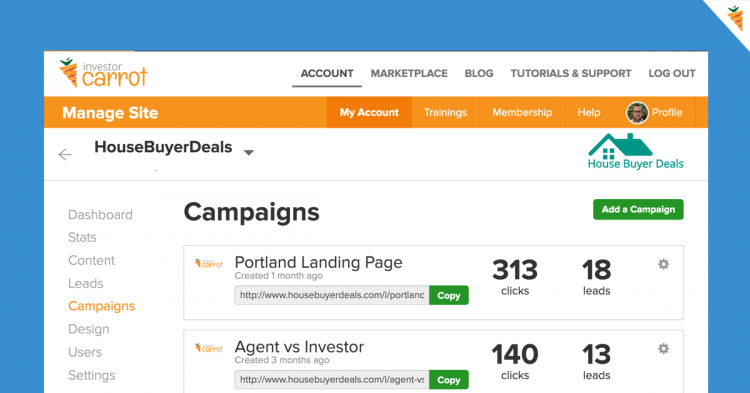
    With all of the digital advertising methods, he uses Carrot’s campaign tracking link system to make sure his ads are performing as he needs them to.

    If they aren’t, he pauses the ad and figures out why it isn’t generating leads. Then he fixes it and tries again. His average cost-per-deal (which varies massively depending on the market) is $3,000 to $4,000. But he has massive profit margins that can support high-cost deals like that.

    Image Credit: Speak2Leads.com

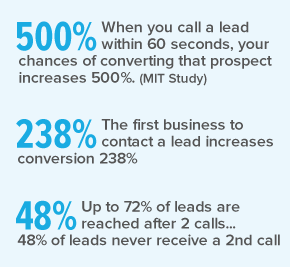
    Also noteworthy is RJ’s five-minute policy, where he shouts “Five minutes!” in the office whenever a lead comes through. That means the team has just five minutes to contact the lead.

    RJ believes that this policy is a big reason for their success…

    Because when people opt-in, they’re probably also opting-in on the competition’s website – or they will soon – and the sooner he follows-up with leads, the better chance that he’ll make the sale.

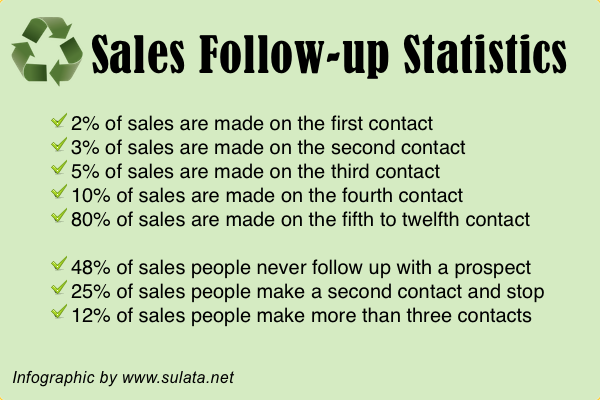
    RJ has also found that most sales happen not on the first or second contact, but on the 4th or 5th.

    The more that you contact people, the more that they think about you and – somewhat surprisingly – the more likely that they will eventually buy from you.

    Stay top-of-mind and they’ll buy from you once they’re ready.

    Which is why RJ says that “with marketing, there’s no secret sauce. It’s all about consistency.”

    Consistently getting in front of your target market…

    Consistently reminding people that you exist…

    And consistently working to stay top-of-mind for people who are on the fence about your service.

    Over time, that consistency pays off.

    (Image Source)

    What’s your Real Estate Marketing Strategy?

    How are you building your business?

    Are you setting ambitious goals or small goals?

    Are you sticking to one market or moving into many markets?

    Do you have a website optimized for conversion to make the most of all your marketing dollars – online and offline?

    This is RJ’s story. What’s yours?

    Become a Carrot Member Today and Receive your High-converting Website

  • Tyler Almost Quit Real Estate After 20 Years – That is, Until He Made These 8 Changes

    Tyler Almost Quit Real Estate After 20 Years – That is, Until He Made These 8 Changes

    Tyler was nervous about making the switch. But he was also burnt out from doing things the way he’d always done them.

    After 20 Years Tyler Was Going To Give Up Real Estate Until He Made These 3 Changes w/ Tyler Ford

    Far from being a rookie, Tyler Ford, a 20-year real estate investor, and agent, speaks with simultaneous confidence and humility reserved for those who’ve been in the business long enough to be intimately familiar with their strengths and weaknesses.

    And as someone once said, “With knowledge comes power.”

    Another way of saying that might be…

    With knowledge of reality comes the ability to change. 

    Or, better yet…

    With realistic knowledge of your current situation comes the ability to change your current situation.

    And if there’s one thing that Tyler Ford was ready to change, it was his current situation.

    At the beginning of 2017, after two decades of rehabbing, listing, selling, and buying real estate, Tyler Ford was ready to quit. When he left for vacation, pre-paying his trusted friend to rehab a home he’d bought, only to return and discover an un-fixed house and a missing associate, his spirits plummeted.

    If he couldn’t trust the person he’d always trusted, who could he possibly turn to?

    Maybe it’s time to try something else. 

    Maybe it’s time to get a 9-5 job. 

    Maybe I wasn’t cut out for this kind of work.

    These were the thoughts shoving their tentacles into Tyler’s mind. And they almost suffocated him completely – he was *this close* to quitting.

    But, in the end, he didn’t.

    And here’s why.

    Why Tyler Didn’t Quit and Why You Shouldn’t Either

    Tyler got his real estate license in college. Almost immediately, though, he plunged head-first into rehabbing homes.

    After finding success in flipping homes for over 15 years, Tyler continued to buy, fix up, and sell homes for a profit. But something happened. His 9-year-old website, which had past SEO authority, started falling due to competitors entering his market. The nightmarish stress of owning a fixer-upper and counting on a healthy market for when the home sells ate his soul every night as he lay in bed. And his love for real estate – and especially rehabbing – died.

    All at once, like a missile impact, Tyler Ford was finished.

    But then he wasn’t.

    Because he discovered wholesaling.

    He discovered Carrot. 

    He discovered the genius behind SEO and conversion optimization.

    All at once, everything changed for Tyler Ford.

    At the beginning of 2017, he was $20,000 in the hole. At the beginning of this year, he netted $90,000 on just two deals.

    How Tyler Ford Reinvigorated his Business and Made $90,000 on Just 2 Deals

    In his words, this is Tyler’s end goal: freedom.

    Wait. Actually, that deserves some visual emphasis:

    FREEDOM

    Isn’t that what you want?

    Isn’t that why you got into real estate investing in the first place? Because you wanted to travel whenever and wherever you want? Because you don’t want to worry about the price of the ticket when you go out to eat with the family? Because you don’t want to concern yourself financially with unexpected but necessary medical bills?

    Said more simply, because you want to do what you want when you want, where you want, and how you want.

    If that’s you, then you’d love to meet Tyler Ford.

    He’s not trying to build a massive business with hundreds of employees, and he’s not trying to build some billion-dollar corporation. He’s trying to build a business that passively supports himself and his wife

    That is his end goal.

    Here’s how he’s doing it.

    1. He ditched his 9-year-old website

    In his own words, “I was so nervous.” He already claimed the #1 ranking for his target keyword phrase, but there was a bigger problem: his website wasn’t converting the organic traffic that his website was generating passively. And what good is website traffic if you’re not converting it? Yeah – no good.

    2. He read this blog post

    That blog post changed his life. Read it to change yours.

    3. He signed up for Carrot

    *Shameless plug incoming* At Carrot, we’ve generated millions of leads for real estate investors and agents. Naturally, Tyler wanted a piece of that action. He didn’t know quite how massive that piece of the pie would be. When we asked him what he would recommend for other investors like yourself considering getting a Carrot website, he said very simply, “Do it. And put in the work.”

    4. He spent 2 months isolated

    Tyler locked himself in a room for 2 months. Okay – not literally. But he did put his head down and worked longer days for 2 months in order to brand his website, customize it, and get everything ready for some serious lead generation and search engine optimization.

    5. He localized all the blog content that Carrot provided

    He localized it rather than simply publishing all of the blog content that his Carrot plan provided for him. As an investor in Arizona, he removed pictures of houses in the mountains and replaced them with pictures of houses in valleys. He also localized advice, wording, and other elements so that anyone landing on his website immediately knew they were in the right place.

    6. He set realistic expectations

    Tyler knew he’d give up if he didn’t start with realistic expectations. That includes his SEO rankings, the amount of work he’d have to put in, and the number of deals he’d be doing.

    7. He was patient

    Tyler was right when he said, “The problem most people have is that they get frustrated early and quit.” Suppose there’s one reason that entrepreneurs fail to fulfill their ambitious dreams. In that case, it’s because they keep giving up too early, always starting at the beginning and never building the momentum that a healthy, living business requires.

    And last but not least…

    8. He kept his mission at the forefront of his mind

    What is the “Why?” behind your business? Why do you want to make more money? Why do you want to build a real estate business? You don’t have to be a saint with your answer, but you do have to be honest. Maybe it’s because you want to travel more, give to charity, or own a Lamborghini. The trick is to choose a “Why?” that keeps you motivated when things get difficult. So, choose something that gets you pumped. Tyler’s “Why”? Freedom.

    20 Years of Real Estate Investing in a Nutshell

    Before Carrot…

    • Tyler Ford was stressed.
    • Tyler Ford was ready to quit.
    • Tyler Ford couldn’t sleep at night.
    • Tyler Ford had lost his passion for real estate.
    • Tyler Ford was working more and experiencing less financial and personal freedom.

    After Carrot…

    • Tyler Ford just netted $90,000 on two deals generated with his Carrot website.
    • Tyler Ford has a clear path to his goals. (15 wholesale deals in his first year with Carrot with at least a $12,000 profit per deal).
    • Tyler Ford still has position #1 with his website, but his website converts significantly better than his old website.
    • Tyler Ford is finally working himself out of a job and heading toward his dream of living off of passive income.
    • Tyler Ford is buying 1 in 25 leads in a highly competitive market.
    • Tyler Ford is only spending a couple of hundred dollars per deal.

    Want to know how long the shortest membership at Carrot lasted?

    2 minutes.

    That’s right. 2 minutes.

    Why? Because, as the person claimed in our cancellation form, “I was looking around the website, and it looked too hard.”

    Within 6 months of changing to Carrot, Tyler’s website ranked and pulled in leads. Within 30 days, he made his first wholesale deal through Carrot.

    Still, it took patience and realistic expectations.

    Always remember this:

    Other people have started successful real estate businesses, and you can too. It’s not a question of IF you’ll succeed, but WHEN. Keep working at it, and you will succeed – it’s simply a matter of time. 

    Don’t be like the 2-minuter quitter. Determine your game plan, commit to it, and move forward relentlessly, holding nothing back.

    Then, nothing will be able to stop you from succeeding.

    This is what Tyler Ford did. And now, he’s having the best year of his real estate career.

    Download Tyler’s Free SEO Strategy for Real Estate e-Book!

    I know. You might be nervous about switching it up. You might be nervous about changing your strategy, getting a different website, or marketing yourself in a way you never have before. But, at Carrot, we specialize in helping people like you.

    If you’re already a member, we hope that knowing how Tyler Ford is crushing his market will help you crush your own.

    If you’re not a member, become one – we promise it’ll be the best thing you ever did for your business.

    Become a Carrot member today

    Remember, if Tyler is doing it, you can too. The only question is, are you willing?

  • From Broke to #1 Home Buyer in Boston: How Carrot Has Helped Tom Cafarella Generate 100+ Deals Per Year

    From Broke to #1 Home Buyer in Boston: How Carrot Has Helped Tom Cafarella Generate 100+ Deals Per Year

    real estate investor lead generation Carrot systemHave you ever wondered if you’re on the right path? If your passion for building a sustainable business with passive income that creates financial freedom for you and your family is actually possible?

    After all, maybe the wildly successful people are just the lucky ones. The ones who have that special temperament or were raised by that unique family.

    Maybe you’re just not cut out for the success you dream of one-day achieving.

    Or maybe, Tom Cafarella is right.

    Tom Cafarella is the #1 home buyer in Boston, where they fix and flip over 100 homes every year (see how many Leads Carrot has generated), they have 150 team members, and he has a yearly marketing budget of $1 million.

    Now, I know what you’re thinking.

    “How will I benefit from Tom’s story? He’s just one of the lucky ones.”

    Well, actually, he isn’t.

    We wanted to note that Tom was the #1 Home Buyer in Boston before Carrot. He owns a very successful real estate brokerage company in the Boston area and has been highly successful with direct mail, radio, and billboards. Also prior to Carrot, he had online marketing experience with different customized websites. But, it wasn’t until he joined and implemented the Carrot system, that his online lead volume doubled.

    Hearing his story and learning what he did to get where he is might inspire you.

    Let’s break down his journey into real estate investor lead generation and the Carrot system

    Boston’s #1 Home Buyer Breaks Down His Journey and Real Estate Marketing Strategy

    In all started when Tom was born. He wasn’t born into a wealthy family where he inherited massive amounts of money and loads of entrepreneurial wisdom.

    Quite the opposite.

    Tom struggled financially and couldn’t seem to get ahead of the incoming bills. Growing up, Tom learned the consequences of being poor and he committed to himself that he would never live a life where money was an issue.

    So what did he do?

    He poured all of his heart into education, believing that through good grades and a marketable skill set, he would make plenty of money and never struggle with finances again.


    After majoring in pre-med in college and getting straight A’s throughout practically his whole school experience — which he hated, by the way — Tom decided to double major in accounting.

    At the time, accounting jobs were everywhere and Tom saw it as a way to secure his financial corner of this world. He would get a safe job that could support his family and he would work every day for 8 hours.

    That is until he started working. Shortly after finishing school, he received a job at an accounting firm. He arrived the first day for work, took a seat at his desk, and immediately hated his job.

    “It was worse than jail,” Tom described.

    His entrepreneurial spirit wouldn’t allow him to work a desk job where he had very little say in his schedule, the company’s progress, or anything else business-related.

    He needed a way out. But how? How could he get out of this hole he had dug himself into?

    Tom didn’t know.

    So he bought lots of books that discuss success and happiness and studied the process for pursuing true financial freedom.


    As he did, he started to learn more and more about real estate as an entrepreneurial industry.

    He became fascinated with real estate agents, wholesaling, and investing.

    As he invested an increasing amount of time into his newfound real estate passion, relations at his accounting job got rickety and he was eventually fired for being so often side-tracked.

    Tom was 25 years old when he got fired and he felt like a total failure. He didn’t immediately tell his family because of the ensuing embarrassment he was expecting.

    Eventually, though, Tom realized that getting fired wasn’t the worst thing that happened to him. In fact, it’s exactly what would free him.


    Since Tom was still living with his parents and had very little risk involved, he decided to pursue his dream of building a remarkable real estate business in Boston.

    To start, he was a real estate agent.

    But, after a while, he was given the opportunity to do a wholesale deal. One that he made a whopping $115,000 off of.

    Although he admits that that deal was unusual, he got excited none-the-less and decided to start investing all of his time into building a wholesaling business.


    At the time, though, he didn’t know how to replicate the deal he had done. How do you bring in more leads consistently? How do you convert these leads? How do you find qualified leads?

    These were all questions that needed answers.

    So Tom worked 100-hour work weeks for a while to build his real estate investing business.

    100 Hour Work Week
    Getting Through 100 Hour Work Week [Source: Nathan Peck, Director of Marketing at DollarHobbyz]

    Real Estate Investor Lead Generation with Tom, Facebook, and the Carrot System

    As he learned and become more adept in the real estate industry, his business became increasingly successful.

    He tested everything with his marketing tactics — from SEO and PPC to Facebook Ads for real estate and bandit signs. Some things worked. Others didn’t.

    Find out the exact system Tom uses for his Facebook marketing Read it here.

    But he wondered how is website was performing and if it could be better. He kept hearing talk of us here at Carrot and decided to give us a try.

    Immediately, his lead conversion more than doubled.

    He originally thought that his current website was fine, but after using Carrot, he learned the value of using a website that’s built for conversion upon years and years of thousands of a/b tests for real estate investors.

    Nothing can replace that, and at $100 per month, Tom claims having a Carrot website is a no-brainer.

    “If people don’t have a Carrot website, I won’t help them, because that’s where they need to start.” Tom said.

    Tom swears that marketing is the most influential part of his business and attributes his success to savvy marketing tactics. And right now, Facebook Ads for real estate is the most powerful marketing strategy that his business uses.

    Already a Carrot Member? Watch Our Advanced Coaching Call: How Tom Cafarella Pulls In 100+ Seller Leads Per Week (mostly with Facebook) Watch it here.

    Real estate Facebook ads are incredibly targeted and Tom emphasizes the fact that other real estate investors should spend the bulk of their time thinking about their relevance score.

    A high relevance score on Facebook will lower your cost per lead and make your business more successful because of it.

    The Why and How of Getting Leads from Facebook Ads for Real Estate [Infographic] Learn more here.


    Already a Carrot Member?
    Check Out Carrot’s Facebook Leads Masterclass

    Learn how to drive leads to your site and build an audience with Facebook marketing.


    Just make sure that you’re sending all of those leads to a qualified website (Carrot is what Tom recommends), otherwise, all of those leads are going to waste and your cost per conversion starts to climb through the roof.

    See What Tom Says About Why He Switched To Carrot & Saw His Leads Double

    Whatever you do and regardless of your budget, Tom says you must market and you must consistently market.

    Pay attention to current leads and don’t let old leads die. Find a way to keep in touch with the people who’ve been leads for a long time because chances are, they’ll eventually be ready to buy. You just have to give them the necessary time and build a trustworthy relationship.

    Your goal as a real estate investor should always be to keep increasing your marketing budget and your ROI.

    Pay more to make more.

    Additionally, Tom believes in using marketing tactics that very few people in the area are using to help yourself stand out. Tom loves cold calling for this reason — it stands out from everyone else’s marketing efforts.


    Tom is 35 years old now and he’s living the dream he’s always wanted.

    He’s financially free and his business is thriving.

    Throughout Tom’s story resonates one particularly important point: hard work will take you where you want to go.

    When asked what makes the difference between someone is successful and someone who isn’t, Tom said,

    “Just one thing: hard work.”

    On Tom’s wall behind his desk, there’s a quote that reads, “Ultimately the business that can spend the most to acquire a customer wins.” And he’s right. But all of this takes time. None of it happens quickly and you have to invest an inordinate amount of time to get where you want to go.

    For those who do, they have very few regrets. Are you willing to put in the time and effort?

    As Tom says …

    “You can get rich, but you have to build the business.”

    If you are willing, connect with us here at Carrot and we’ll make it happen for you. After all, real estate investor lead generation with some experts at your back is a whole lot easier than doing it alone.

    Hit us up in the comments and we’ll connect with you personally.


    Already a Carrot Member?
    Check Out Carrot’s Facebook Leads Masterclass

    Learn how to drive leads to your site and build an audience with Facebook marketing.

  • EP 79: [Case Study] How Luke Harris Flipped 50+ Pieces Of Bare Land This Year

    EP 79: [Case Study] How Luke Harris Flipped 50+ Pieces Of Bare Land This Year

    How to Invest in Land: How Luke Flipped 50+ Pieces Of Bare Land This Year [Case Study]

    Listen to the CarrotCast Podcast and Subscribe Below!

    When I was with Lead Propeller I was only getting one new buyers list lead every week or so. I don’t know maybe a couple of weeks. And then, literally, with it this didn’t have anything to do with posting more properties, when I switched to the Carrot site, it was like 3-5 every day Luke Harris

    Luke Harris gets the award to be the only Carrot customer to actually signup at Carrot HQ in Roseburg Oregon.

    On this episode of the CarrotCast, Luke explains why he was a little reluctant to start up with Carrot. His previous website was generating 1-2 leads per week. Now with his Carrot site, he is generating 3-5 leads per day.

    He’s now flipped over 50 land deals.

    Luke dives in to discuss why he left his previous website and the importance of taking advantage of performance and strategy to acquire consistent leads.

    We’re going to focus in on performance so you’re not leaving hundreds of thousands of dollars on the table and closing up your leaky buckets.

    Listen to other episodes at carrotcast.com and be sure to give us a rating and subscribe to iTunes.


    Listen to the CarrotCast Podcast


    [podcast-subscribe]


    You’ll gain some incredibly valuable land investing tips for someone who has flipped over 45 land deals in 2017 on this episode of the CarrotCast.

    1:20 – How Luke first connected with Trevor and Carrot. He was the first client to actually join at Carrot HQ.
    2:55 – Luke’s story and what his Land business strategy looks like.
    3:50 – What Luke’s mindset was when he decided to dive into land investing.
    5:30 – Where his consistent land investing deals are coming from right now. 45+ deals in 2017 to be exact.
    7:05 – How Luke got his first deal done. Finding good locations and what unique way he’s been able to sell unbuildable land.
    10:35 – How he generates his lists to find sellers to send offers to.
    13:25 – His strategy around targeting specific locations. Does he prefer cities or outer rural areas?
    14:15 – Why land in outer areas is good and why real estate agents probably aren’t’ interested in those types of properties.
    15:30 – Sending an offer through the mail. What his land investing formula is for making an offer and the strategy for whom he sends to.
    17:10 – How many responses does he get from his direct mail strategy? Running some cost per lead numbers.
    20:30 – How does he get the property after closing?
    21:40 – Once he has the property, how does he sell it? Where Carrot plays a role to drive traffic. He went from getting 1-2 leads per week to 3-5 leads per day after making the switch to Carrot.
    24:40 – How the results he’s gotten from Carrot has changed his business.
    26:05 – How Luke got over the skepticism of joining another website service where one, in the past he hadn’t gotten great results, and two cost more money.
    27:55 – How does he build his buyers list?
    30:10 – Walking through one of his deals. What happens if someone doesn’t pay?
    32:10 – What are his long-term goals for his land investing business?
    34:30 – Parting words: What would he tell someone who is on the fence about joining Carrot.


    [podcast-subscribe]

  • EP 43: A Real Estate SEO Master Breaks Down How He Closes 2-3 Real Estate Deals a Month From SEO in a Competitive Market w/ Dave Brown

    EP 43: A Real Estate SEO Master Breaks Down How He Closes 2-3 Real Estate Deals a Month From SEO in a Competitive Market w/ Dave Brown

    SEO Master Breaks Down How He Closes 2-3 Real Estate Deals A Month From SEO in A Competitive Market

    Listen to the CarrotCast Podcast and Subscribe Below!

    I knew from my background that once I did the work, it would keep returning a benefit to me over and over again. Today, I’m reaping the rewards.
    David Brown


    “You can’t do any deals with SEO”.

    We hear that quite often from people who don’t want to put in the work and focus.

    But for those who use a solid proven system and implement a plan with consistency… they see results.

    Dave Brown fuels almost his whole 30-40 deal per year business with his approach to Real Estate SEO and in this podcast, he breaks down exactly how he started, what he did on SEO in the first days, what he does today, some tips… and his story as a real estate investor.

    If you’re curious about pulling in deals with search engine optimization listen to Dave Brown’s story and how he does it.

    Listen to our other episodes at CarrotCast.com.


    Listen to the Podcast

    [podcast-subscribe]


    In This CarrotCast Episode, We Cover…

    2:20 – Find out what David has learned over his 2 decades in the real estate industry.
    5:00 – How to build a business around your lifestyle and why David gave up his real estate agent license and never wants to get it back.
    7:50 – Creating a business around leverage. The context of what David’s business structure and the organization looks like and why.
    16:00 – David’s mindset around growth – doing more with less.
    18:15 – What business systems he uses… CRM, Phone Tracking, Online Marketing.
    20:05 – Unpacking his Real Estate SEO strategies — Why his website content has been so effective in cutting through the clutter. Keys:

    1. Making basic customizations
    2. Two months of creating location-specific page content
    3. Building credibility
    4. Link building

    23:30 – David’s secret sauce he dashes on his location-specific pages — Taking it to another level!
    28:10 – Why creating pages that target specific keywords have helped him command his market in search results rankings.
    31:25 – How to increase your website traffic, in theory. We focus on some SEO math.
    34:25 – SEO tactics you can employ to your website.
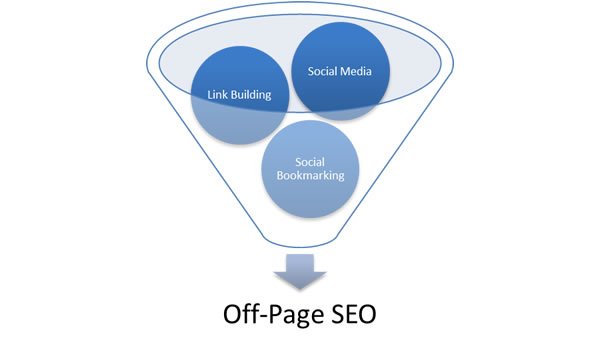
    35:50 – David shares his off-page SEO strategy.


    39:00 – Sharing heartwarming stories in a much needed time… Check out David’s other passion… americansnippets.com. A website and podcast about American stories that need to be shared.
    41:10 – Top rules for your website… customized, clean, and credible.

    Also… be sure to check out our Case Study with David… Getting More Motivated House Seller Leads Online – David Brown Case Study