Listen to the CarrotCast Podcast and Subscribe Below!
Long story short, I had my main guy that had worked with for ten years, did all of my rehabs, totally trusted him. I was getting ready to go out of town and he was going to be finished with this job before I got back and I prepaid him and also loaded up a Home Depot card. I can home and no work was done and he was nowhere to be found. Tyler Ford
I’m crazy excited about this CarrotCast guest. Let me introduce you to Tyler Ford because his story is exactly why we do what do here at Carrot.
People ask us why we do what we do. It’s not for the lead generation side of things.
That’s what we do.
That’s how we help our clients crush it and grow predictable, consistent, profitable businesses. They finally have freedom, flexibility, finances, and can make an impact. That’s why we do it. That’s what we do.
Why we do it is exactly Tyler’s story. He’s gonna walk through how he was … he’s been in real estate for 20 years, and he was about to give up his entire business January of 2017, and he made one change that he’s gonna be talking about on the episode of the CarrotCast that made the years to his real estate career he’s ever had, the happiest he’s ever been in his business, and he’s also growing.
It’s still just him and his wife flipping but he’s growing his agent business and he’s insanely happy. He’s gaining momentum, and every one of us wants momentum.
As entrepreneurs, momentum is so, so important. When you don’t have it, you can feel it. You’re down, you’re out, you’re getting stressed, you’re tired. You just don’t feel like you’re doing the right things. When you have it, nothing can go wrong and that’s where Tyler is right now.
So, if you guys wanna know how he unlocked that momentum, and how he went from almost giving up his 20-year real estate business January of 2017 to now, completely shifted, happy, most profitable as ever, he’s gonna tell you.
But first, he mentions a couple episodes of the CarrotCast in here that changed his life, and some of these things were some of those pivotal points for him that changed his mindset, that got him thinking in a different way.
So, key into those podcast episodes.
One of them is my Five Non-Negotiables episode. We’ve actually done this one twice, go back in the archives in iTunes or on CarrotCast.com. Find the one about my five non-negotiables.
That one changed my life and Tyler mentioned it changed his life as well.
There are a couple of other resources there, too. I want you to go to carrot.com/Tyler and you’re gonna be able to go to this episode if you’re listening to it on iTunes or watching it on YouTube, and you’re gonna be able to download Tyler’s SEO strategy for real estate investors that he developed in conjunction with our formula during 2017 that helped him get that momentum.
So, this is basically a process of formula that you can follow if you’re in a spot in your business to where you’re not having as much fun as you wanna have or it’s not as profitable as you wanna have it.
Without further ado, let’s welcome in Tyler Ford.
Also, go to the CarrotCast on iTunes and give us a rating and review. And, be sure to let us know how we’re doing. We appreciated your feedback!
Listen to the CarrotCast Podcast
[podcast-subscribe]
[cta offer=”recontent” color=”red”]
You might even be thinking about giving up, or you don’t have the momentum. The SEO strategy for real estate investors Tyler walks through is exactly how you can get it!
1:30 – Find out what Tyler’s current business structure looks like and why his eliminated rehabs. 2:50 – This is the best business start of a year. How that has unfolded and how Carrot has been able to help. 7:45 – Why Tyler gets excited about wholesaling and what strategy has worked for him. 9:50 – Diving into his online presence before Carrot. 12:40 – What his online profile looks like now. Optimizing with Carrot made a huge, positive, impact on his lead generation. 15:20 – Touching on numbers. 80% of his SEO leads are high quality and motivated. What his lead to close ratio is and his revenue goals for 2018. 18:00 – Breaking down his SEO strategy for real estate investors. Find out how he’s dominating his competitive market.
21:00 – How to build long-term, online lead generation momentum. 23:40 – Grab some SEO tips. How to capture new SEO rankings. 28:50 – What you need to know to rank SEO faster when launching a second website in a new market. 30:25 – Agent vs. Investor. Which hat Tyler prefers to wear and why. 33:50 – Massive Mental Note: The importance of being transparent when being both a real estate agent as well as an investor. 36:40 – What is next for Tyler Ford? Where he wants to take his real estate business. Moving towards income-producing assets. 38:00 – What is Tyler absorbing right now to better his life. Books and podcasts. 41:00 –Making the switch to Carrot. What Tyler has to say about the positive transition he has made. His advice he would give someone who is considering Carrot for their online lead generation.
We recently had the opportunity to interview Adam Johnson and Brent Moreno on the CarrotCast, two partnered-up investors who finished their first $100k month back in March.
On the episode, Trevor asks them about how they got to their first $100k month — exactly what marketing strategies they used and what mindset philosophies made all the difference.
If you’d prefer to watch or listen, you can go here to view the full interview.
Or below, I’ve compiled 7 of the duo’s dead-simple, secret strategies that they shared on the Carrot real estate investor success story. Want to learn how they got to their first $100k month and how you can, too?
Read on.
Dead-Simple, Secret Strategy #1: Making Uber Do Your Driving-For-Dollars
Brent Moreno is likely one of the most innovative online marketers around.
While he and his partner often use tried-and-true marketing methods (PPC, Facebook Ads, Direct Mail), Moreno isn’t afraid to think outside of the box in order to get a leg up on the competition.
The way he used Uber drivers to find deals is the perfect example of this.
Before his real estate investing days, Moreno was a part-time Uber driver. He’d drop his wife off at work and go drive for a few hours to make a little extra money. During that time, he started an Uber Facebook group. When he finally took the leap into real estate investing and gave up on Uber driving, he had an “aha!” moment…
Uber drivers literally just drive around town all day… If I could get just a few of them to send me property addresses for vacant or distressed homes, they could do my driving-for-dollars for me.
So he reached out to his Uber-driving pals in his Facebook group and asked them to do him a favor. One of them took him up on it and passed him 35 seller leads, 2 of which he was able to close on.
That’s just the kind of marketing ingenuity that separates top investors from the rest. Feel free to steal his strategy and try this in your own market. Who knows? Could be a game-changer.
Dead-Simple, Secret Strategy #2: Building Your Inner Circle
In real estate, perhaps nothing is more powerful than long-term, meaningful relationships in your market of operation.
And that is a truth which Adam Johnson doesn’t take lightly:
I love to make people smile. I really do.
In fact, he’s built so many meaningful relationships in his community that when he walked into the local courthouse (a place he regularly visits, giving chocolates, kind notes, or snow cones to the workers whenever he leaves) to check the title on a foreclosure, something amazing happened.
He overheard one of the workers talking on the phone as they said something like this:
I’m sorry Ma’am, I just don’t have the authority to offer discounts or lower your payments. There’s nothing I can do.
After a moment, the worker noticed Johnson in the room, said
Uhh. Hold on, hold on. Let me get someone else on the phone
and gave Johnson the county phone to try and help this woman solve her tax problems.
That random situation turned into a closed deal for Johnson.
What’s more?
Johnson literally has his own set of keys to every courthouse in the county because of the relationships he’s built. Don’t underestimate the power of consistent kindness to build meaningful relationships in your community — you never know where your next deal will come from.
Moreno even goes so far as to claim that 50% of their success can be directly attributed to the relationships and rapport that they’ve built in their market.
Dead-Simple, Secret Strategy #3: Using A High-Converting Website
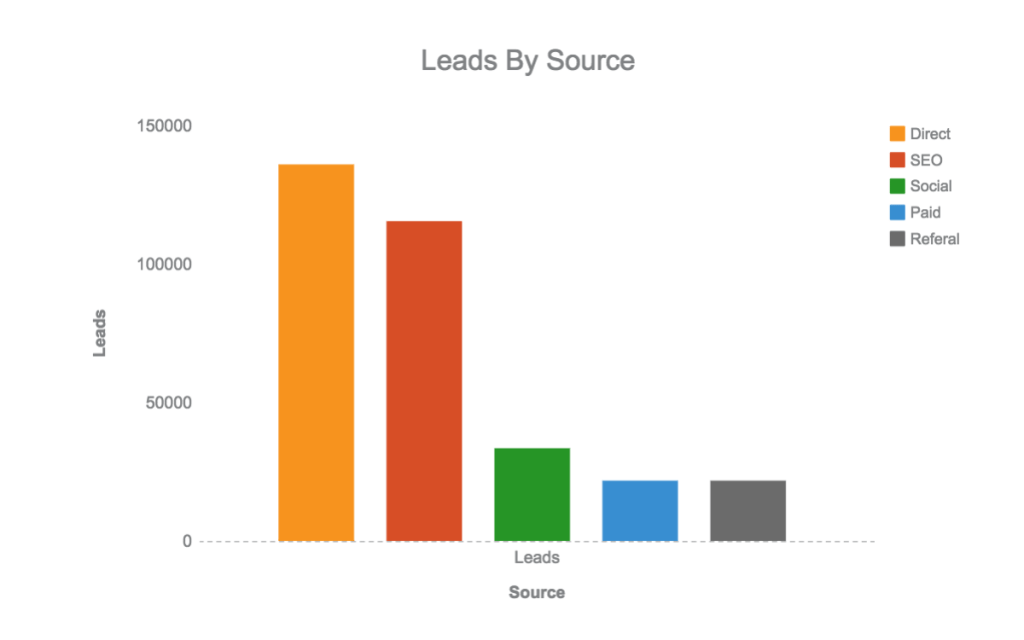
90 Day MS Home Buyers Lead Generation Stats
I won’t splice words here.
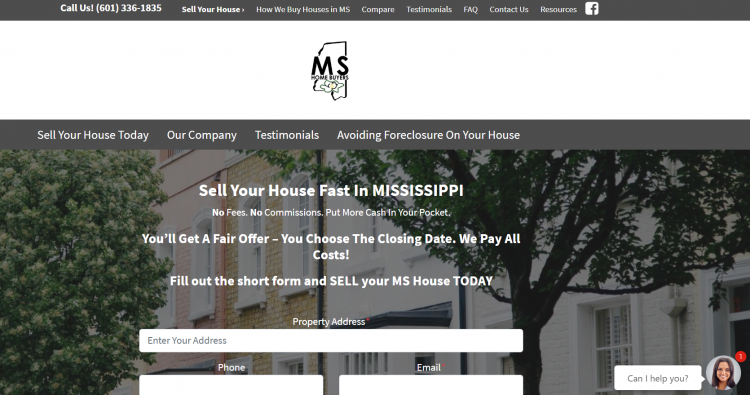
Johnson and Moreno are Carrot members, and they love their Carrot website.
Making $100k per month, these are two people who could definitely afford their own custom website. But when Trevor asked them why they haven’t ditched Carrot and built their own website, this is what they said.
Johnson explains their reasoning best:
“Because I’m in the real estate business, I’m not in the website-building business.”
And their Carrot site has been converting website visitors into leads since day one. Why change it if it’s working?
Plus, Johnson, self-proclaimed at being tech-incompetent (he didn’t even have WiFi at his house until 2017) can use the site just fine. It’s easy to use and it converts like a charm. What’s not to like?
If you’re on the fence about trying Carrot out for your own business, you can sign up with us risk-free for 30 days. Go here to find out more.
Dead-Simple, Secret Strategy #4: Steal These Facebook Ads
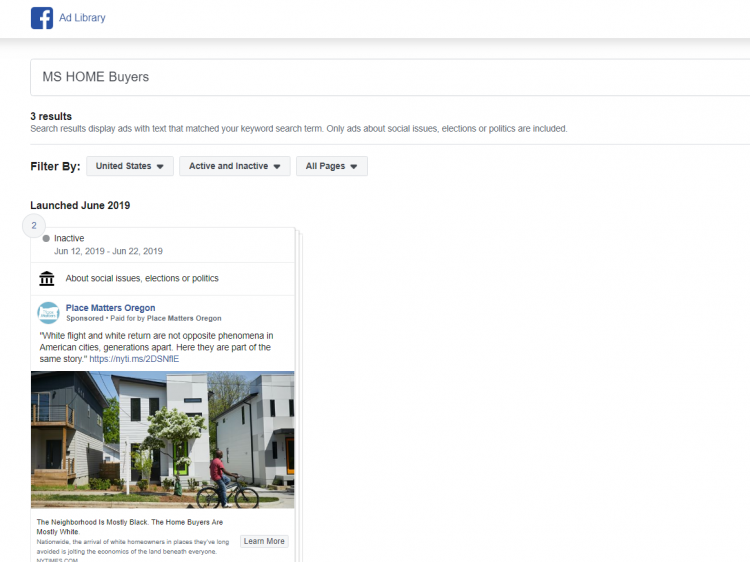
To be honest, I was kind of surprised that Johnson and Moreno were willing to give away their Facebook Ad copy for free. Now, with Facebook’s new ad library, anyone can view any page’s past and current ad campaigns (this is GREAT for studying your competition), but Moreno actually encourages other investors to steal his ad copy and try it in their own market: “Take it and try it out for yourself. It’s working for us.”
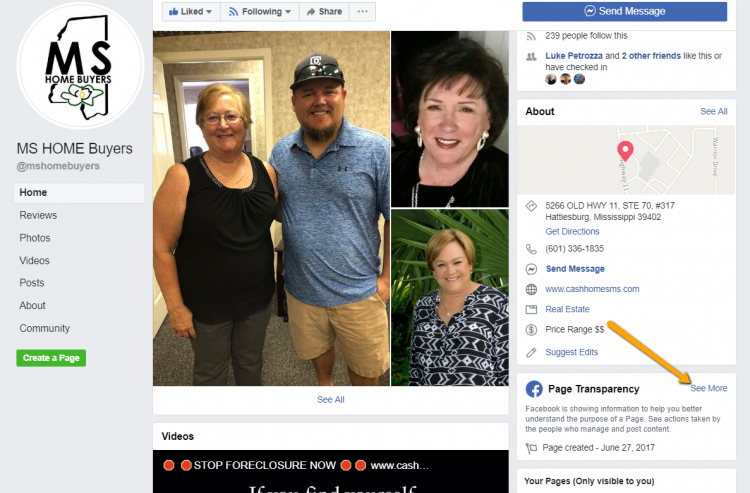
So, in the spirit of mutually agreed upon theft (:D), here’s how you can go on Facebook and look at MS HOME Buyer’s Facebook Ads.
Go to MS HOME Buyers Facebook page and click on “See More” next to “Page Transparency” on the right side.
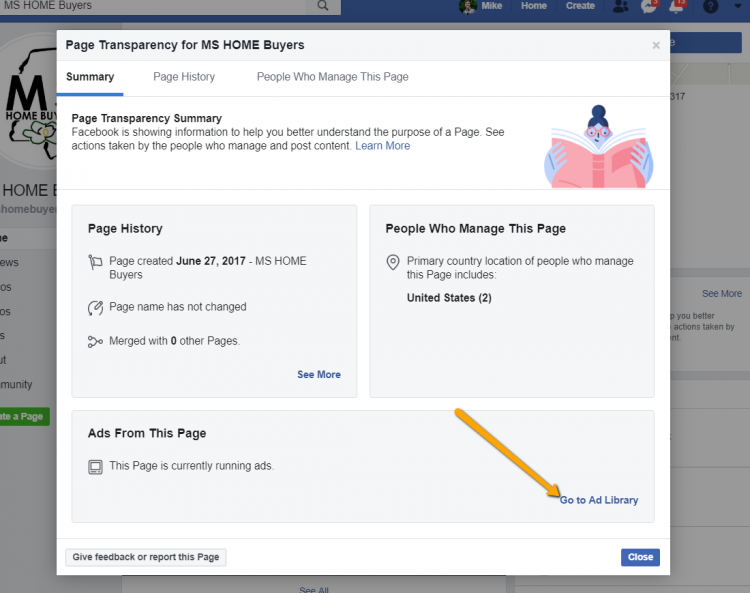
Click on “Go to Ad Library”.
And voila! You can now look through the ads that these guys are running and they’ve given you explicit permission to copy them, so have fun!
Oh! And if you’re needing to do competitor research or want to figure out what other investors in your market are doing with their Facebook Ads, use the above strategy — knowledge is power, after all.
Dead-Simple, Secret Strategy #5: Don’t Give Yourself An Option To Not Finish The Job
When listening to this interview, one of my favorite things that Johnson said was…
Not to overplay the stereotype — being from Mississippi — but the truth is that when you grow up on a farm or in a rural area… you just gotta get the job done. There’s been plenty of times where we had to fix a fence and we didn’t have any extra fence and we just had to figure it out with what we had… I think that’s where people go wrong: they let not doing it be an option. The truth of it is, if you put yourself in a position where you don’t have a choice, then it’s a different mindset — it’s not ‘we don’t have this or we don’t have that,’ it’s just… you gotta make it work.
I think that quote speaks for itself. When you don’t give yourself an option to quit or to not finish the job, you get it done with what you have; that’s all there is to it. And more often than not, just working hard with what you have at your disposal will grow your business, regardless of the resources available to you.
Dead-Simple, Secret Strategy #6: Keep Your Business Simple, But Do The Simple Things Better Than Anyone Else
The philosophy behind Johnson and Moreno’s business is to “Keep it simple, but work extremely hard on those simple things.”
Many real estate investors (many entrepreneurs, for that matter) get caught up in the details of their business. They create over-complicated internal processes that unintentionally slow their businesses down. Or they use 10 different marketing strategies all at the same time, optimizing none of them.
But the best way to grow a business is usually to let your internal processes and marketing strategies grow with your business. Always keep it as simple as possible to build a business that’s agile, and optimize the heck out of those simple internal processes, sales tactics, and marketing strategies.
You can do 100 different things with mediocrity… or you can do a couple of things expertly well. For Johnson and Moreno, working really hard on the simple things has proven far more lucrative than trying to tackle everything at once.
Dead-Simple, Secret Strategy #7: Don’t Underestimate The Impact Of Hard Work And Compounding Results
The grind. The hustle. The day-in and day-out hard work of an entrepreneur.
Over time, it can get exhausting and discouraging. You start to wonder if all this hard work will pay you back in the end. Well, Johnson firmly believes that it will:
Don’t underestimate the legwork and then giving your efforts time to compound.
Before you can build momentum for your business, don’t forget that you must first push the boulder up the hill — only then can it start rolling down the other side.
And don’t quit before you reach the top of the hill; that’s where building a business gets fun.
Conclusion
We hope that this information has helped!
Clearly, Johnson and Moreno are crushing it with their business. I imagine they’re well over $100k per month now that we’re half-way through the year. And we’d love to see you get to that same place.
Maybe $100k per month seems so out of reach right now as to be ridiculous.
Or maybe you’re right on the cusp of breaking through that threshold.
Whatever the case, in addition to using the above tips, we’re willing to give you a risk-free trial period with our service which has generated over a million leads for real estate investors and agents.
Steve Londeau has been a Carrot member since the beginning of 2015.
Before he joined, he had a custom WordPress website that he had sunk lots of time and money into, with a “hideous” opt-in form — as he describes it — and an unsatisfying conversion rate.
For two years, from 2013 to 2015, that website generated four leads for his business, all of which fell through and didn’t close…
(not a typo)
Frustrated with that slow-moving lead-gen, he switched to Carrot and saw an “immediate difference.”
“I had four ‘deals’ that I got from my website pre-Carrot and none of em’ even closed. Since then… I instantly noticed a change when we went from my WordPress site to the Carrot content — it was like night and day, I started getting leads right away. And we started converting them, cause they were quality leads… and now we consistently close 6-figures just from our website every single year.”
Now, business is booming. Steve does between 40 and 60 deals per year at $13,000 – $14,000 profit, paying about $2,000 for each deal. And his methods aren’t complicated: he combines direct mail, retargeting Facebook ad campaigns, Google Ads, and his high-converting Carrot site into a super-smart, dead-simple marketing strategy that every real estate investor should steal. And he’s getting into something called “wholetailing” which I hadn’t even heard of before listening to his full interview with Trevor.
What are his secrets?
Let’s break it down.
Steve’s Top 6 REI Marketing Secrets
Secret #1: A high-converting Carrot website
First and foremost, Steve gives a lot of credit to his Carrot site. As someone who built a custom WordPress website and experienced sub-par performance and a staggeringly low conversion rate (just 4 leads in two years), his Carrot site was a breath of fresh air.
Here’s what his Carrot website looks like.
He didn’t sign up for Carrot right out of the gate, though. In fact, it took him 2 years, knowing about Carrot the entire time, to finally bite the bullet. And he’s glad he did.
But what took him so long to make the leap?
Well, his two concerns were the same that many people have when they’re thinking about signing up with us…
Carrot is more expensive than a WordPress website and he didn’t want to add another overhead cost to his already-long list of monthly subs for his business.
Carrot is built on different templates and he didn’t want his website to look like his competitor’s websites.
Eventually, after he signed up and saw the results that his Carrot website was pulling…
…he realized that:
(A) Carrot was paying for itself 10 times over, consistently converting high-quality leads and driving high-quality traffic — now he pays for our Advanced Marketer plan ($150 per month) to get the Aspen template, which further differentiates his site from competitors.
(B) no one has ever said that his website looks like another competitor’s website in his market, so he’s not worried about it ;-)
And as Steve is fond of saying, “If it ain’t broke, don’t fix it.”
Secret #2: SEO for Real Estate
When Steve signed up for Carrot, he put in a lot of leg work over the first year to build his rankings and drive passive traffic to his website. He did so by posting Carrot content (provided with our Content Pro and Advanced Marketer packages) and by targeting market-specific keyword phrases on his homepage.
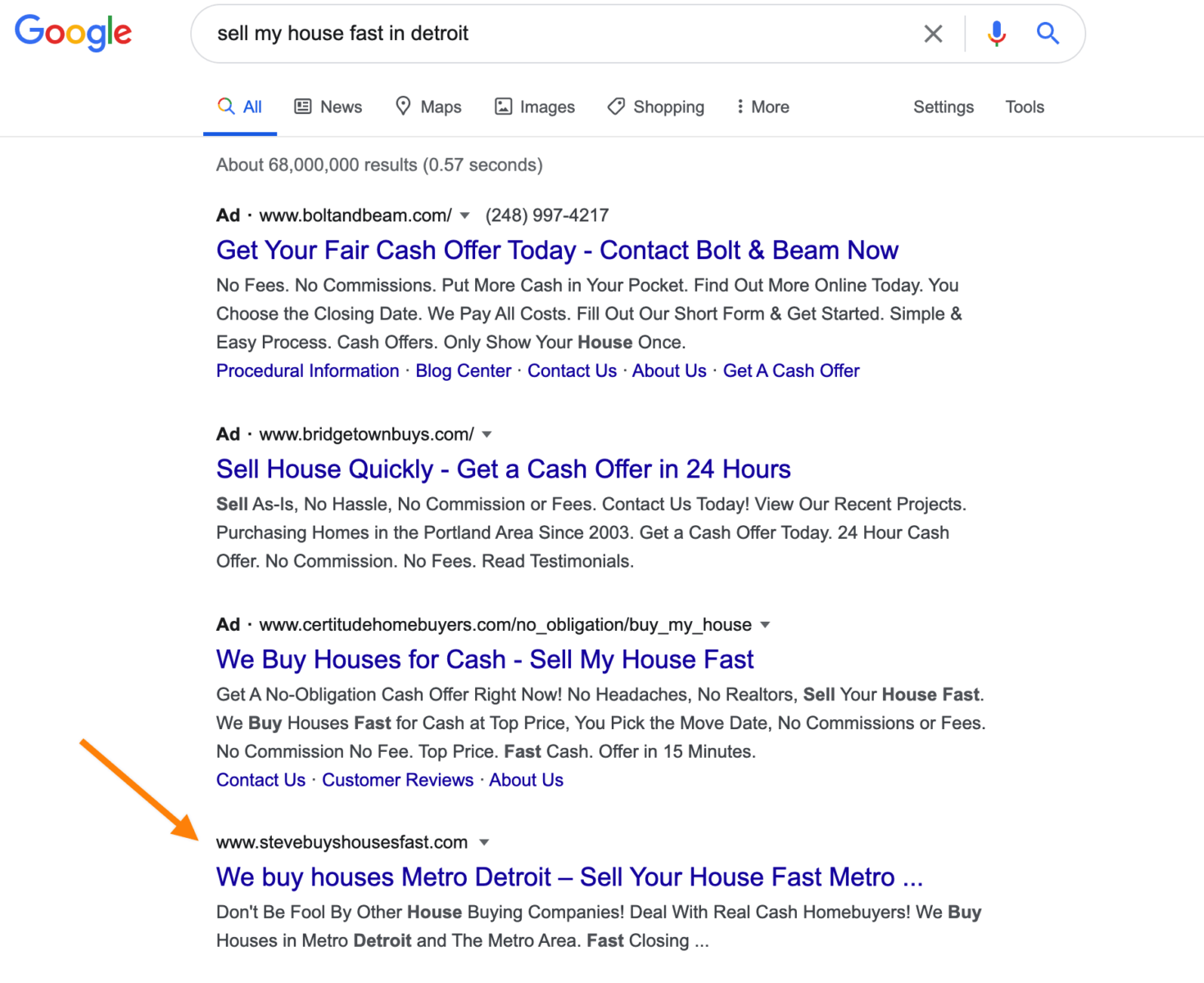
After a few months, his website ranking soared to position #1 for some high-volume keyword phrases (such as “sell my house fast in Detroit”).
This traffic spike in September a few years ago was probably associated with that boost in SEO rankings.
But like a weight-lifter who gets a 6-pack abs and then gives himself permission to stop working out because he’s already made it, Steve admits that he stopped working on SEO, thinking he’d just get to keep his #1 position and that they’ve now lost some of their rankings because of that.
And while SEO still drives some traffic for his website, it doesn’t drive as much as it could.
Note: Remember, SEO for real estate is a long-term game. While snagging position #1 and driving passive traffic to your website is amazing, it only lasts as long as you keep working to maintain your rankings by publishing new content, building backlinks, and targeting market-specific keywords.
But his website still ranks for “sell my house fast in metro Detroit.”
Secret #3: Consistent blog content
Blog content on Steve’s website has been another driver of organic traffic — meaning, a motivated seller types something into Google (like “how to sell a distressed property”), one of his blog posts show up in results, and the person clicks on it.
And that doesn’t just help brand awareness in his market, some of that traffic even turns into deals.
The best part, though, is that Steve, doesn’t write any of that content himself (even though it’s under his name), he just uses the SEO-ready content that comes with his Carrot Advanced Marketer plan (24 blog posts per month).
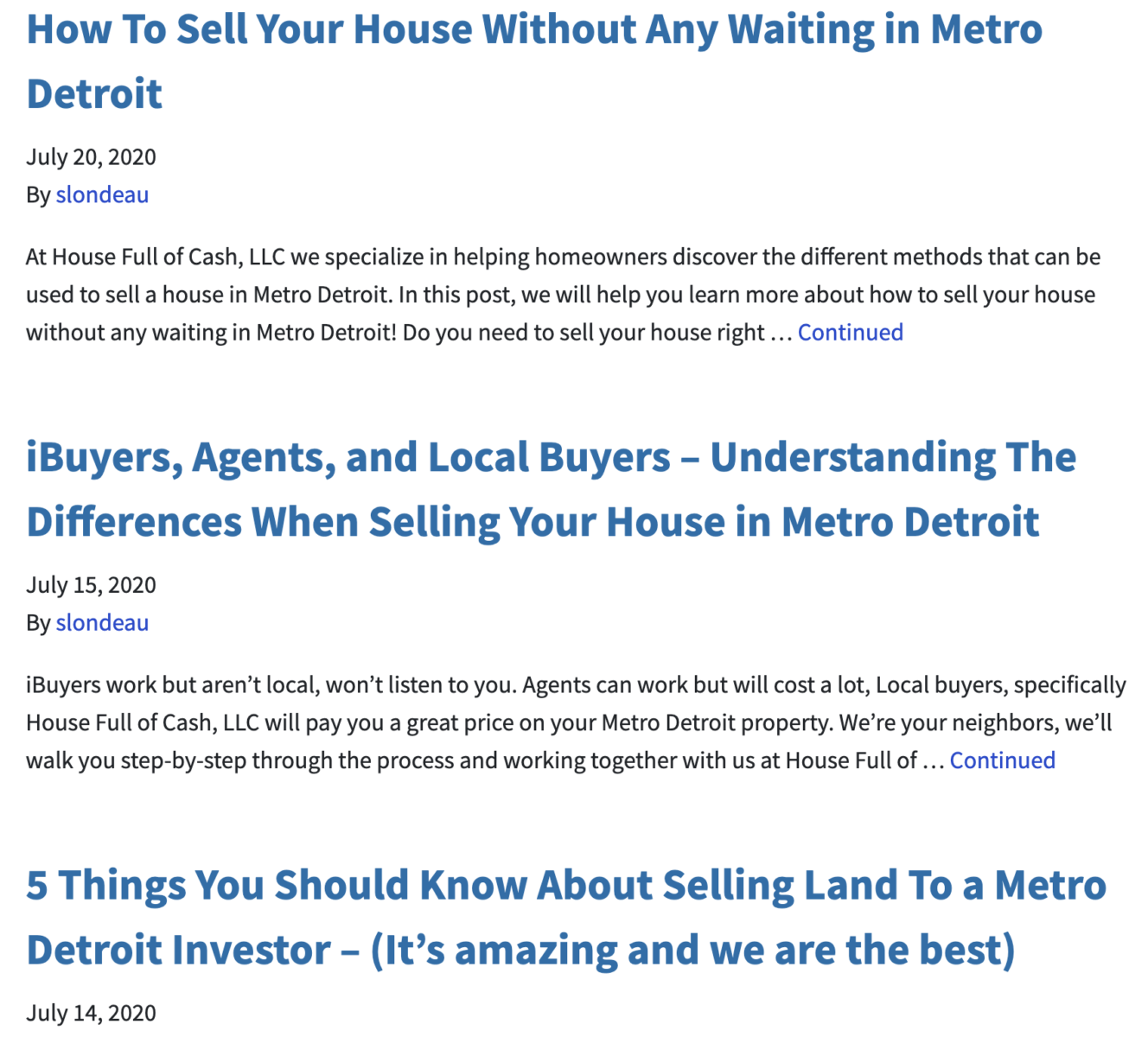
Check it out.
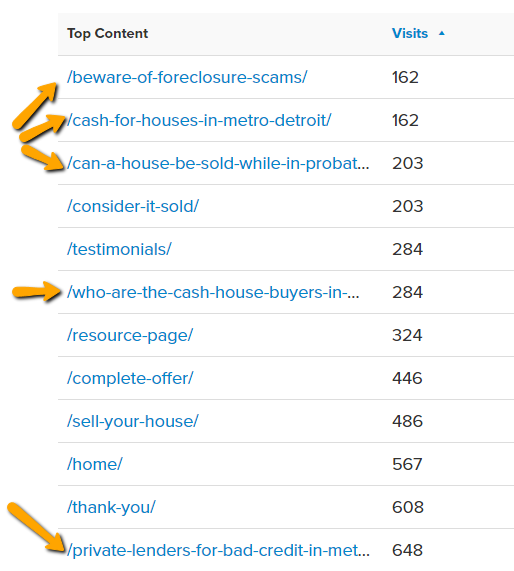
And as you can see, his blog URLs are pulling their weight for traffic and lead generation.
Plus, that consistent content publishing practice (almost one blog post per day on the Advanced Marketer plan) gives you an excuse to interact with your social media followers by sharing the content, informs Google that your website is active and trustworthy, and gives you an opportunity to rank in search engines for high-volume keyword phrases.
Which is why, at Carrot, we take content so darn seriously. :-)
Secret #4: Wholetailing
I hadn’t even heard of this before listening to Trevor’s interview with Steve, but it’s a fascinating concept and one that I think you’ll be interested in learning about (if you haven’t already).
Basically, wholetailing is a combination of wholesaling and retailing. You purchase a house that takes little to no rehab work and instead of selling it to another real estate investor, you just list it on the MLS. The advantage being, you can often sell the property for more than you could when wholesaling to your buyers list.
This means, of course, that you’d need to buy a property which is in almost MLS-worthy condition… and that’s the key: finding a property which takes little to no work to prepare for retail buyers, and then selling it at a discounted price on the MLS.
And from my research, this strategy seems to be getting more and more popular as sellers dominate the market.
One final tip that Steve has on finding buyers for properties you’re trying to wholetail: call agents who have recently sold properties in the same area and ask if they have any buyers who are still looking for a place. Then offer your property as somewhere those buyers might be interested in checking out.
Secret #5: Postcards and Facebook ad retargeting
This is one of my favorite strategies that Steve shared to generate leads and close deals.
First, he sends postcards. On each postcard, he includes his phone number and website URL. If someone calls him, great — he’ll try to close the deal over the phone. But he’s found that many people aren’t ready to call him the first time that he sends them a mailer. They first want to know if he’s legit. Which is why he includes his website URL on each postcard.
If they visit his website after receiving his postcard (which many of them do, to figure out who he is and if he’s trustworthy), they immediately get tagged with his Facebook advertising pixel. That, then, allows him to retarget those website visitors on Facebook with his ad campaigns, helping him make the most of every person that visits his website, and collect leads even when people don’t opt-in to his website form.
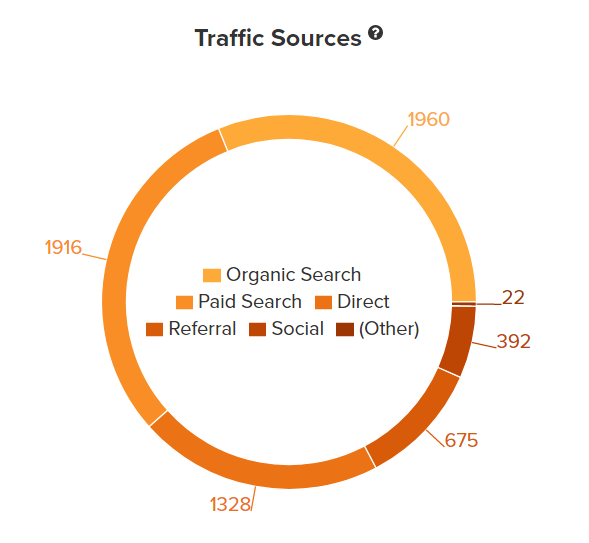
As you can see, “Direct” is the third biggest traffic driver to Steve’s website. That’s probably because people go straight to his site after receiving his direct mail.
Secret #6: Video testimonials
Testimonials are super powerful for converting a website visitor into leads. Here are some stats to prove it.
“90% of respondents who recalled reading online reviews claimed that positive online reviews influenced buying decisions
85% of consumers said they read up to 10 reviews before feeling they can trust a business.
Shoppers who view video are 1.81X more likely to purchase than non-viewers.”
(Check out our VideoPost tool for turning videos into blog posts!)
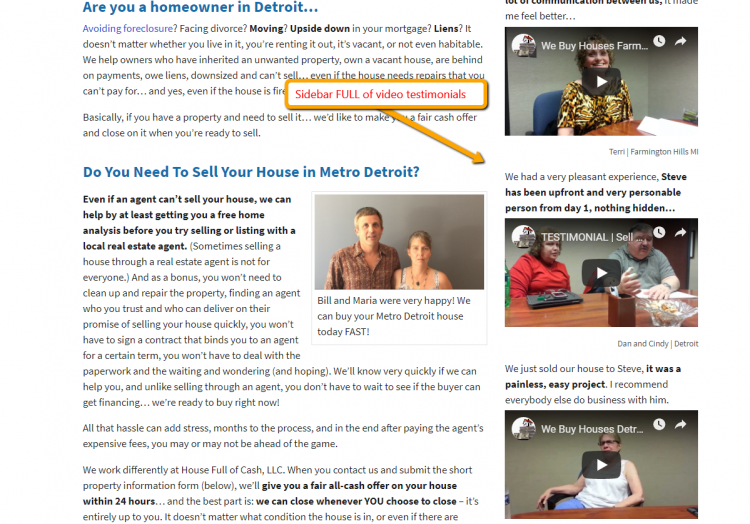
For that reason, Steve puts lots of video testimonials on his website.
It’s a small thing that can help convert more of the people who visit your website. After all, website visitors want to know that they can trust you, and nothing is quite as convincing as a ton of people vouching for you on recorded video.
Some final inspiration…
I hope this case study helps you build a bigger business, generate more consistent leads, and live the life that you’re working toward. Even if just in a small way. And I hope you learned something new!
And if you want to walk in Steve’s shoes, consider getting yourself a Carrot website. We have the highest-converting websites on the market for real estate investors and agents and we’d love to help you just like we’ve helped Steve.
“I’m not getting any leads through my Carrot website. I’m just going to cancel it.”
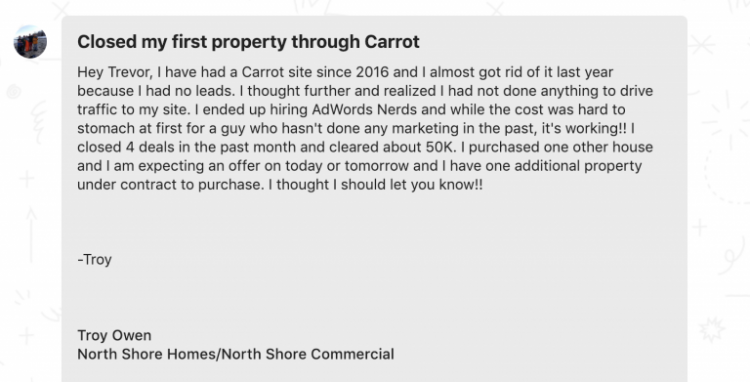
That’s what Troy told himself one day as he drove to work. He almost did it, too. Thankfully, he gave it another shot.
And he couldn’t be happier…
Watch Troy’s Case Study
Meet Troy
Troy is a real estate investor out of Milwaukee. He’s no rookie – with over ten years of experience and plenty of closed deals, it’s clear that he knows his stuff.
Troy had a good thing going. He was spending his time buying and selling income properties to other investors and making a healthy profit.
One day, Troy decided to take things to the next level. He found out about Carrot and got his hands on one of our high-converting websites — powerful, lightweight sites that are made to dominate Google rankings and convert visitors into leads.
They’re made just for real estate investors like Troy, so once he set up his own site, he was hoping to get a lot of new leads…
But leads started drying up…
Some time passed, and he didn’t do much with the site beyond a bit of customization. He wasn’t actively trying to drive traffic to it with PPC or SEO, so it really just sat there.
That wasn’t a big deal until the market started shifting and Troy found that leads were getting harder and harder to come by. The other lead sources he used had all but dried up, and his Carrot website didn’t seem to be doing much for him.
“Sources that were giving me enough leads and deals these last years just weren’t enough to keep me busy. A lot of those have dried up… I had to find something else.”
That’s when he decided he could save some money every month If he got rid of his Carrot site. After all, what good is a high-converting website if no one ever sees it? It doesn’t matter how optimized it is if it’s just sitting there collecting dust. So he started researching how to cancel his Carrot subscription.
But then he thought, Quitting is the easy way out… maybe one more shot.
And he decided that he wasn’t ready to quit just yet. He realized that he hadn’t been doing as much as he could to drive traffic to the website, so he wanted to give it another go.
“I knew if I took the DIY route it wouldn’t have gotten done the way it needs to get done… so, I hired out and the leads that came in were more than enough to pay for it. So, it’s totally worth it — and it happened faster than I expected.”
How Troy made it work…
The second time around, Troy took it a lot more seriously. He found some great AdWords marketers and hired them to help him with PPC. It was a hard cost to stomach, especially while his leads were buckling, but once the PPC started bringing in traffic, he realized how powerful his website was.
“It was a bigger upfront cost, but it only takes one deal to pay for it, so it would be crazy not to give it a try.”
Steady leads have been flowing in ever since.
For Troy, the high cost of marketing and PPC quickly paid for itself. All it takes is closing one solid lead in a month. Troy closed four. He brought in $50,000.
Better yet, he started working on SEO, and now that more organic traffic is flowing in, his PPC is cheaper than it used to be, and he’s pulling in even more leads.
“Early on, the cost per lead was hitting $3,000…but now that I’m starting to get SEO leads that’s helping quite a bit.”
This gave him the freedom to focus on improving other aspects of how he does deals.
He experimented with different follow-up methods to see which worked best, and now that he adopted a more aggressive follow-up method, his leads per deal ratio is up from 10:1 to 5:1. He’s always experimenting with direct mail.
Troy realized that paying for his Carrot website and the AdWords marketers that he hired wasn’t a necessary evil – it was a sound investment. If he left his website without trying to make it work, he wouldn’t have saved money. He would have lost it…
“I knew the cost would be significantly higher in the first few months, but it didn’t take all that long. Now more deals are coming in, I’ve had some bigger deals come through, and that cost per lead is dropping down.”
Troy paid for services that ramped up his business. If he left Carrot and decided that the AdWords marketers were too expensive, he would have lost $50,000 in opportunity costs. That’s a type of cost that people don’t usually factor in, but it’s essential if you want to be a successful real estate investor.
Troy says it best:
“Commit to finding a way to drive traffic to your website. Whether it’s you or you hire out, you have to do it. The site converts, it’s proven…but you have to get traffic to your website before you experience any kind of return.”
An underperforming website or a lack of marketing can cost you. On the other hand, putting down money for services that can boost your income in the long term is a solid investment.
If you’re using Carrot and PPC marketers like Troy did then you can rest assured that you’ll get a lot more eyes on your website while maintaining a high ROI.
These services can pay for themselves many times over. Here at Carrot, giving our clients a good return on their investment is one of our biggest goals.
A ripe 18-year old, RJ Bates woke up to his mom saying, “Football season is over. It’s time for you to go find a job. And I don’t want you to come home until you have one.”
RJ shot out of bed and went searching. His first place?
Pizza Hut.
After begging the manager for a job, he was hired as a delivery person. And making about $100 a day with tips, he felt like the king of the world. He progressed to store manager, eventually buying his own restaurant at 23 years old.
Then, in 2012, RJ’s niece got diagnosed with Leukemia and his dad passed away – a month before his baby was going to be born.
And that might sound like a selfish question to ask, but it’s actually one of the most selfless questions to ask. Because then, RJ doesn’t turn down clients because they need a specific service – he is willing to help them with almost anything they need. Whether that be rehabbing, wholesaling, holding a rental, or even roofing.
If someone needs help and they have money to pay, then RJ takes advantage of the opportunity.
Not, though, because it’s all about the deals for him, but because he’s running a business and his goal is to make money. According to him, there’s a massive difference.
“Aren’t we in business to make money, not complete deals? You could bust out a thousand deals and make no money.”
All of RJ’s goals are based on profitability… not on the number of deals. And the reason is simple: focusing on the number of deals can quickly turn into a vanity metric. Profitability, on the other hand, always leads to more money and a more successful business.
Plus, by trying to increase the profitability of each deal rather than just doing lots of deals, you can actually make more money with less work.
You could, for instance, make $20,000 by doing 3 deals, or you could make that in a single deal by optimizing your sales process and increasing your per-deal profitability.
Less work. More money.
How RJ Decides Which Markets to Expand into…
RJ doesn’t just randomly pick markets to take his business into. The primary factor he uses to determine which market to move into next is if he can build a strategic partnership with someone else there.
Some wholesalers and rehabbers prefer to build a completely remote business and outsource local tasks to someone in the area, but RJ prefers to have a partner with boots on the ground.
He looks for other businesses that he can team up with and build something even better than what either person currently has. On his own, he believes he can create something good. With others, he believes he can create something great.
Once he expands into a new market, he sets realistic expectations for that area. Each place has different cost-per-lead and cost-per-deal. And different marketing strategies work better (or worse) in different markets.
Today, RJ is in lots of different markets, has a goal of $2 million in profit by the end of the year, and is consistently looking for new partnerships that can help expand his portfolio.
RJ’s Marketing Strategy
RJ starts with an ambitious goal. In his own words…
“I don’t do well if I set small achievable goals. That to me does not excite me. I need to have the large goal because, in my mind, I can see what I need to do to achieve the large goal.”
His current goal?
To make $100,000 per month in passive income. If that’s not ambitious, then I don’t know what is. But it’s exactly that kind of goal that keeps RJ motivated.
In fact, he even said that he’s less likely to complete small goals because they don’t get him fired up – making him more likely to quit when the road gets treacherous.
Once he sets an ambitious goal, it’s time to start marketing his services.
Here are his primary marketing strategies…
Direct mail – Even though this is a physical marketing strategy, RJ believes that it ties in directly with digital marketing. When someone receives a mailer, the first thing they do is try to find the website of the business that sent it. If that website isn’t optimized for conversion, then you’ve just paid money to lose leads.
If they aren’t, he pauses the ad and figures out why it isn’t generating leads. Then he fixes it and tries again. His average cost-per-deal (which varies massively depending on the market) is $3,000 to $4,000. But he has massive profit margins that can support high-cost deals like that.
Image Credit: Speak2Leads.com
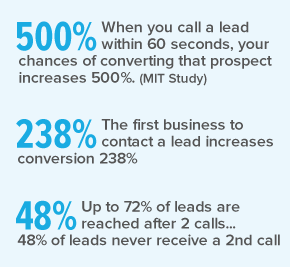
Also noteworthy is RJ’s five-minute policy, where he shouts “Five minutes!” in the office whenever a lead comes through. That means the team has just five minutes to contact the lead.
RJ believes that this policy is a big reason for their success…
Because when people opt-in, they’re probably also opting-in on the competition’s website – or they will soon – and the sooner he follows-up with leads, the better chance that he’ll make the sale.
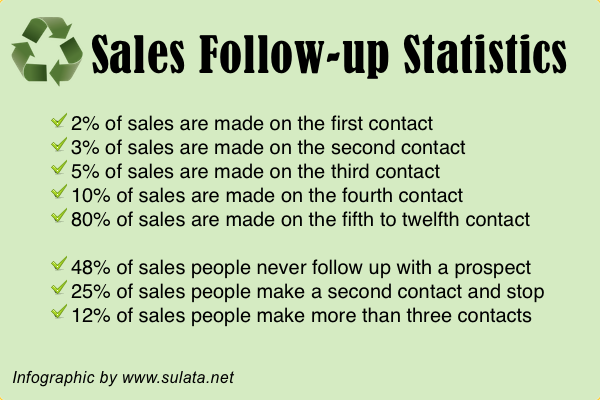
RJ has also found that most sales happen not on the first or second contact, but on the 4th or 5th.
The more that you contact people, the more that they think about you and – somewhat surprisingly – the more likely that they will eventually buy from you.
Stay top-of-mind and they’ll buy from you once they’re ready.
Which is why RJ says that “with marketing, there’s no secret sauce. It’s all about consistency.”
Consistently getting in front of your target market…
Consistently reminding people that you exist…
And consistently working to stay top-of-mind for people who are on the fence about your service.
Far from being a rookie, Tyler Ford, a 20-year real estate investor, and agent, speaks with simultaneous confidence and humility reserved for those who’ve been in the business long enough to be intimately familiar with their strengths and weaknesses.
And as someone once said, “With knowledge comes power.”
Another way of saying that might be…
With knowledge of reality comes the ability to change.
Or, better yet…
With realistic knowledge of your current situation comes the ability to change your current situation.
And if there’s one thing that Tyler Ford was ready to change, it was his current situation.
At the beginning of 2017, after two decades of rehabbing, listing, selling, and buying real estate, Tyler Ford was ready to quit. When he left for vacation, pre-paying his trusted friend to rehab a home he’d bought, only to return and discover an un-fixed house and a missing associate, his spirits plummeted.
If he couldn’t trust the person he’d always trusted, who could he possibly turn to?
Maybe it’s time to try something else.
Maybe it’s time to get a 9-5 job.
Maybe I wasn’t cut out for this kind of work.
These were the thoughts shoving their tentacles into Tyler’s mind. And they almost suffocated him completely – he was *this close* to quitting.
But, in the end, he didn’t.
And here’s why.
Why Tyler Didn’t Quit and Why You Shouldn’t Either
Tyler got his real estate license in college. Almost immediately, though, he plunged head-first into rehabbing homes.
After finding success in flipping homes for over 15 years, Tyler continued to buy, fix up, and sell homes for a profit. But something happened. His 9-year-old website, which had past SEO authority, started falling due to competitors entering his market. The nightmarish stress of owning a fixer-upper and counting on a healthy market for when the home sells ate his soul every night as he lay in bed. And his love for real estate – and especially rehabbing – died.
All at once, like a missile impact, Tyler Ford was finished.
But then he wasn’t.
Because he discovered wholesaling.
He discovered Carrot.
He discovered the genius behind SEO and conversion optimization.
All at once, everything changed for Tyler Ford.
At the beginning of 2017, he was $20,000 in the hole. At the beginning of this year, he netted $90,000 on just two deals.
How Tyler Ford Reinvigorated his Business and Made $90,000 on Just 2 Deals
In his words, this is Tyler’s end goal: freedom.
Wait. Actually, that deserves some visual emphasis:
FREEDOM
Isn’t that what you want?
Isn’t that why you got into real estate investing in the first place? Because you wanted to travel whenever and wherever you want? Because you don’t want to worry about the price of the ticket when you go out to eat with the family? Because you don’t want to concern yourself financially with unexpected but necessary medical bills?
Said more simply, because you want to do what you want when you want, where you want, and how you want.
If that’s you, then you’d love to meet Tyler Ford.
He’s not trying to build a massive business with hundreds of employees, and he’s not trying to build some billion-dollar corporation. He’s trying to build a business that passively supports himself and his wife.
That is his end goal.
Here’s how he’s doing it.
1. He ditched his 9-year-old website
In his own words, “I was so nervous.” He already claimed the #1 ranking for his target keyword phrase, but there was a bigger problem: his website wasn’t converting the organic traffic that his website was generating passively. And what good is website traffic if you’re not converting it? Yeah – no good.
*Shameless plug incoming* At Carrot, we’ve generated millions of leads for real estate investors and agents. Naturally, Tyler wanted a piece of that action. He didn’t know quite how massive that piece of the pie would be. When we asked him what he would recommend for other investors like yourself considering getting a Carrot website, he said very simply, “Do it. And put in the work.”
4. He spent 2 months isolated
Tyler locked himself in a room for 2 months. Okay – not literally. But he did put his head down and worked longer days for 2 months in order to brand his website, customize it, and get everything ready for some serious lead generation and search engine optimization.
5. He localized all the blog content that Carrot provided
He localized it rather than simply publishing all of the blog content that his Carrot plan provided for him. As an investor in Arizona, he removed pictures of houses in the mountains and replaced them with pictures of houses in valleys. He also localized advice, wording, and other elements so that anyone landing on his website immediately knew they were in the right place.
6. He set realistic expectations
Tyler knew he’d give up if he didn’t start with realistic expectations. That includes his SEO rankings, the amount of work he’d have to put in, and the number of deals he’d be doing.
7. He was patient
Tyler was right when he said, “The problem most people have is that they get frustrated early and quit.” Suppose there’s one reason that entrepreneurs fail to fulfill their ambitious dreams. In that case, it’s because they keep giving up too early, always starting at the beginning and never building the momentum that a healthy, living business requires.
And last but not least…
8. He kept his mission at the forefront of his mind
What is the “Why?” behind your business? Why do you want to make more money? Why do you want to build a real estate business? You don’t have to be a saint with your answer, but you do have to be honest. Maybe it’s because you want to travel more, give to charity, or own a Lamborghini. The trick is to choose a “Why?” that keeps you motivated when things get difficult. So, choose something that gets you pumped. Tyler’s “Why”? Freedom.
20 Years of Real Estate Investing in a Nutshell
Before Carrot…
Tyler Ford was stressed.
Tyler Ford was ready to quit.
Tyler Ford couldn’t sleep at night.
Tyler Ford had lost his passion for real estate.
Tyler Ford was working more and experiencing less financial and personal freedom.
After Carrot…
Tyler Ford just netted $90,000 on two deals generated with his Carrot website.
Tyler Ford has a clear path to his goals. (15 wholesale deals in his first year with Carrot with at least a $12,000 profit per deal).
Tyler Ford still has position #1 with his website, but his website converts significantly better than his old website.
Tyler Ford is finally working himself out of a job and heading toward his dream of living off of passive income.
Tyler Ford is buying 1 in 25 leads in a highly competitive market.
Tyler Ford is only spending a couple of hundred dollars per deal.
Want to know how long the shortest membership at Carrot lasted?
2 minutes.
That’s right. 2 minutes.
Why? Because, as the person claimed in our cancellation form, “I was looking around the website, and it looked too hard.”
Within 6 months of changing to Carrot, Tyler’s website ranked and pulled in leads. Within 30 days, he made his first wholesale deal through Carrot.
Still, it took patience and realistic expectations.
Always remember this:
Other people have started successful real estate businesses, and you can too. It’s not a question of IF you’ll succeed, but WHEN. Keep working at it, and you will succeed – it’s simply a matter of time.
Don’t be like the 2-minuter quitter. Determine your game plan, commit to it, and move forward relentlessly, holding nothing back.
Then, nothing will be able to stop you from succeeding.
This is what Tyler Ford did. And now, he’s having the best year of his real estate career.
I know. You might be nervous about switching it up. You might be nervous about changing your strategy, getting a different website, or marketing yourself in a way you never have before. But, at Carrot, we specialize in helping people like you.
If you’re already a member, we hope that knowing how Tyler Ford is crushing his market will help you crush your own.
If you’re not a member, become one – we promise it’ll be the best thing you ever did for your business.
Most real estate investors have a “love-hate” relationship with Craigslist.
We hear it all the time:
“Craigslist doesn’t work for the real estate industry anymore.” “Ever since they killed the ability to post HTML-enhanced ads… my leads have dried up.” “Sure it’s great for ‘for sale by owner,’ but it’s impossible to scale.” “All I ever get is spam.”
And I get it – when something isn’t working, it’s discouraging. It’s frustrating. Above all, it makes you want to quit and find a better place to invest your money.
Before you give up, though, consider the kinds of results Cyndy Dumire – a real estate investor and Craigslist ad-writing pro – gets on a regular basis. Every week, Cyndy generates around 80 buyer leads, 30 seller leads, and 10 foreclosure leads. Even more impressive, in the last six months, she’s closed no less than 30 deals from leads that all originated from Craigslist ads alone.
Effective Craigslist Ads With Cyndy Dumire
The reasons most investors give up on Craigslist is twofold.
Their ads don’t attract attention because they’re not offering their target audience a solution to a real and pressing problem (i.e., a market-driven need or desire).
Their ads don’t inspire trust.
We’ve ran hundreds of tests on our real estate websites and if there’s one thing we’ve learned, it’s that building trust with the people who arrive on your website impacts ROI and lead generation more than any other element.
And that’s not just true on your website – it’s true on Craigslist.
Of course, if you’re going to use Craigslist and actually get results like Cyndy, then you’re going to need to know more than, “Build credibility!”
And that’s exactly where this post comes in.
Today, I’m going to pull back the curtain and walk through 8 tips to find all the motivated sellers and buyers on Craigslist you want.
Craigslist Motivated Seller Tip #1: Know your ideal customer
To paraphrase the great Warren Buffett: never sell heavy-metal music lovers tickets to a jazz show.
If you’re trying to market to buyers or sellers, you’ve gotta start thinking like them.
Why do they want to sell their house? How stressful is their situation? How can you help them?
When determining your ideal customer as a real estate investor, there’re two questions you must answer:
What kind of buyer or seller they are?
What influences them in a personal capacity?
Answering the first question is pretty easy. But don’t be misled by its simplicity. One of the first mistakes most Craigslist ad marketers make is casting their net too wide. Unfortunately, targeting too broad of an audience – like “local home buyers” or “local home sellers” – won’t work.
Craigslist is too crowded for bland targets. Instead, you have to get specific about the kind of buyer or seller you’re focusing on and the needs that drive them.
For instance, your perfect customer might be…
An out-of-state investor who needs to know cash flow numbers.
A house flipper who needs a clear assessment of how much work is required to turn the property around.
A rent-to-own tenant buyer who needs to know that you’ll work with them on their unique financing situation.
In other words, be as detailed as possible when it comes to defining the kind of customer you’re aiming at.
Answering the second question – your customer’s influences – takes a bit more work.
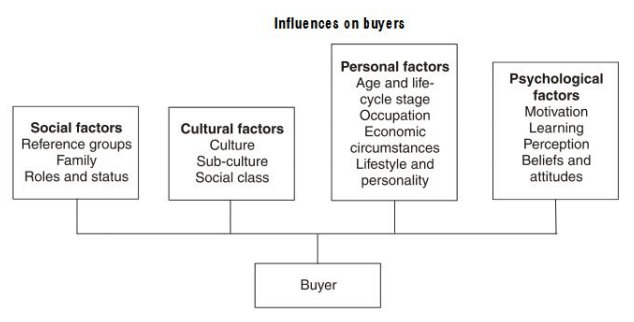
To help, here’s a quick breakdown of the four major factors that influence home buyers specifically:
Understanding your perfect customer’s influences does not demand addressing each and every element noted above. But you also can’t create the best real estate listing without knowing what is going to sway your customer.
Again, this is all the more true on Craigslist. There are so many ads already vying for their attention, and that is why you need to make yours stand out.
How do you make your listing stand out?
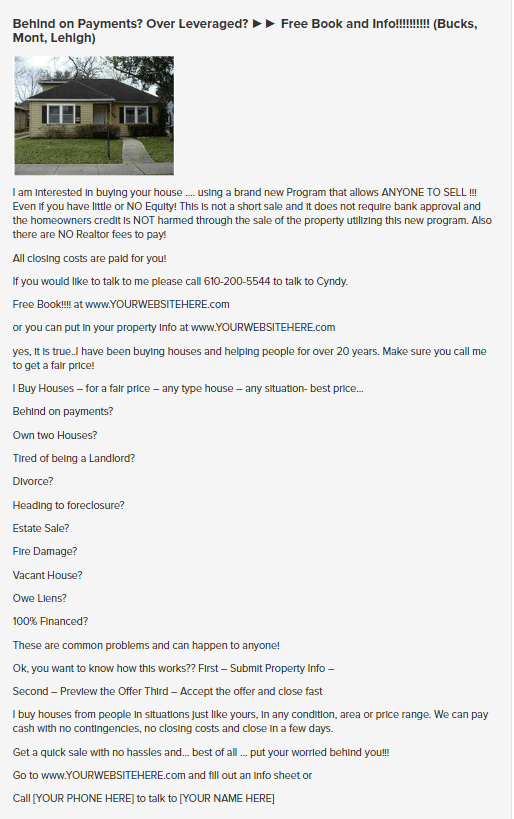
Consider the following template as a starting point from our Posts 2 Profits Craigslist Marketing Course.
[cta offer=”craigslist”]
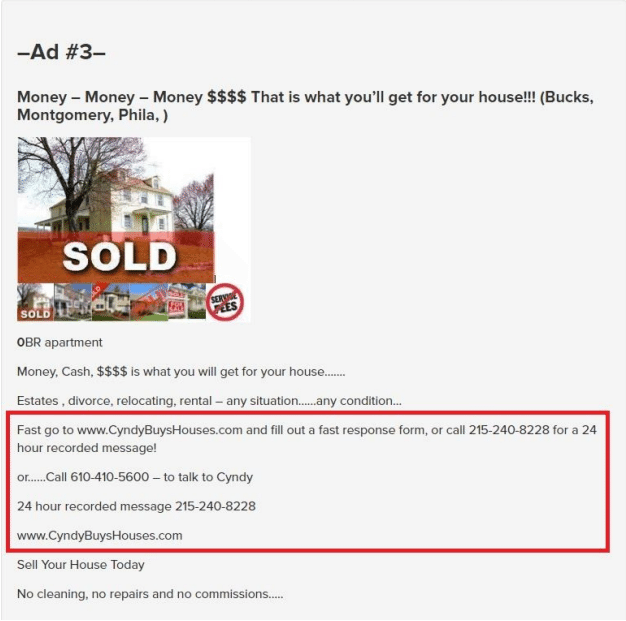
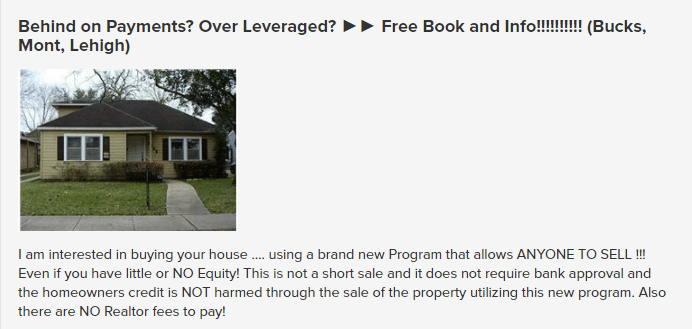
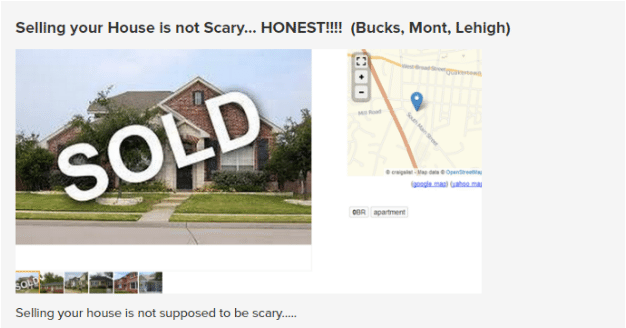
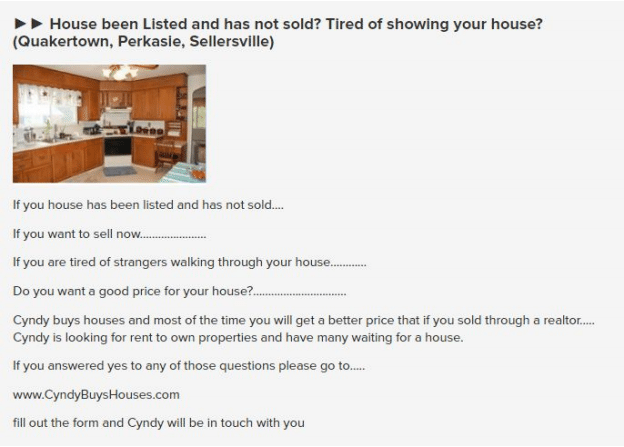
Notice how this ad communicates directly to the agent’s ideal customer and – especially through the power of questions – draws them in toward a preliminary solution. The “Free Book” offer – rather than an overt invitation to call them – is based directly on their ideal customer’s legitimate need.
Of course, in a sense, all businesses are about people. But real estate is especially personal because the commodity it deals in is emotionally charged.
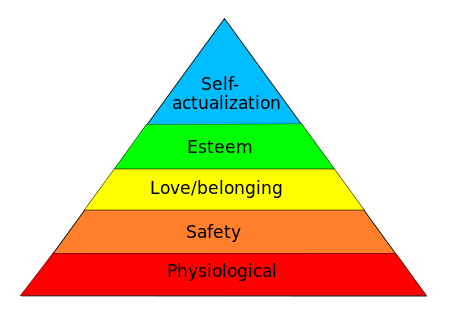
After all, according to Maslow’s Hierarchy of Needs, safety is one of the most primal human needs and comes in second only to our need for food and water (i.e., “Physiological” needs).
Our homes give us safety. And – just like Maslow’s very next need identifies – they make us feel like we have a place to be “loved” and “belong.”
Even more powerful is the realization that our homes are where our memories are created. Not to be cliche, but home really is where the heart is.
So, listing a home or a property is a big deal. And trust is at a premium.
People need to trust you with what is quite honestly their biggest asset.
Keep your target audience – their needs, not yours; their dreams, not yours – at the forefront of your mind when you compile listings.
Craft personal, trustworthy ads with these tips:
Use your name in the ad, not just your company’s.
Write the way you talk and read your ad out loud to make sure it’s conversational.
Press on the pain of the person whose problem you’re trying to solve, then offer your holistic solution.
Don’t be afraid to let your personality and passion shine through.
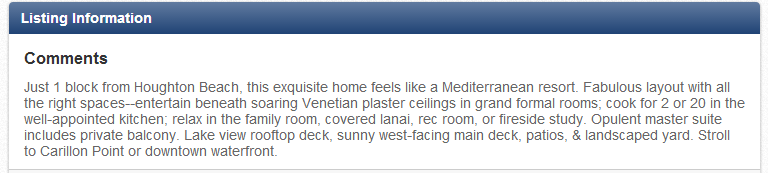
Above all, tell a story. Paint a picture of how living in the home would feel using sensory language.
A well-written home description paints a vivid story.
Craigslist Motivated Seller Tip #3: Include a Call to Action
The entire point of any online marketing campaign – including listings on Craigslist – is to get the people who see it, to do something.
Normally, this means getting them to contact you via text, email, or phone. It could also mean getting them to visit your agency’s website.
Simply put: your Call to Action needs to get your reader to actually take action.
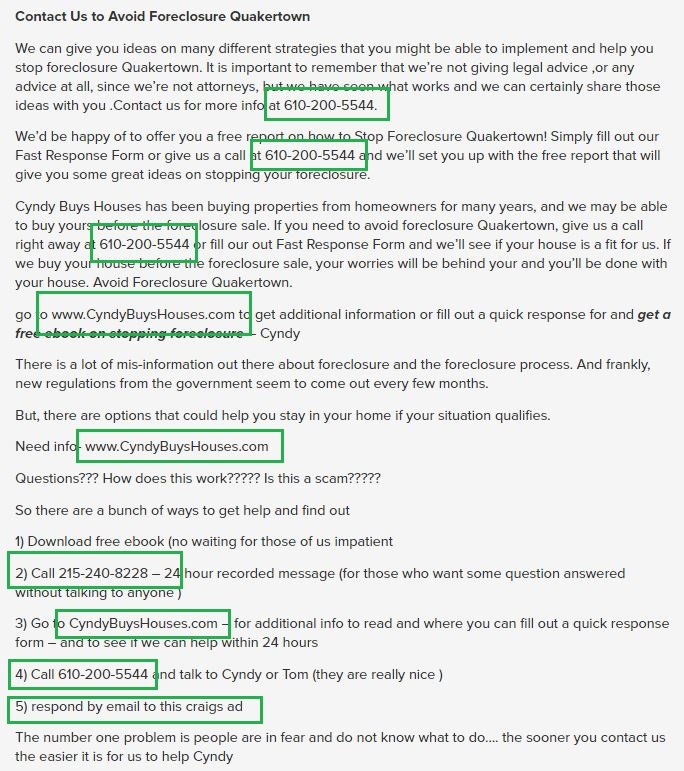
That’s why, in your listing, it’s essential to add a clear and enticing CTA, and to give your reader options. For example, the following CTA invites the reader to choose the next step that’s most comfortable for them and repeats the CTA no less than five times.
Action also means you need to always include a direct email link so they can respond immediately to the ad if they’re interested. Oh, and don’t be afraid to call attention to that by inviting them to email you.
Craigslist Motivated Seller Tip #4: Watch your words
We all know how essential good imagery is to real estate. In fact, we’re going to cover imagery and graphics in the very next point.
However, many investors fail because they underestimate the power of words. As Hamza Yusuf put it, “Don’t ever diminish the power of words. Words move hearts and hearts move limbs.”
On Craigslist, watching your words comes down to two elements:
Your keywords
Your headlines
The right keywords matter because it’s your keywords that will determine whether or not the right people find your ad. This is true both through Craigslist’s own search engine as well as outside search engines like Google.
“Profitable keywords imply an action. San Diego real estate implies nothing. It is just a thing. San Diego real estate for sale implies an action. People want something that is for sale, presumably so they can buy it.”
In addition, Geek Estate also adds a second keyword characteristic: laser focus.
In contrast to something like “Rancho Santa Fe homes for sale,” use “individual neighborhoods within Rancho Santa Fe”: e.g., “Fairbanks Ranch homes for sale, The Bridges homes for sale, or Rancho Santa Fe Covenant homes for sale.”
Why? Because “people that type keywords like these into the search engines know exactly what they are looking for.”
Lastly, as vital as keywords are, do not “stuff” your real estate listing with keywords for the sake of keywords. This creates an inhuman feel to your ads and violates our previous tip: “Get Personal.”
The second element to watch is your ad’s headline.
The title of your Craigslist ad is where the real attention-grabbing oomph resides, and you need to spend some time developing and testing titles that captivate. Whatever you do, don’t follow the crowd… unless of course, the ad has been proven to work, like the ones we provide in our Posts 2 Profits Craigslist Marketing Course.
The ad I already called attention to in tip one is an excellent example of a headline that stands out:
Craigslist Motivated Seller Tip #5: Be relevant with your graphics
There’s no doubt about it: not adding images to your ads is a Craigslist killer. However, the mere presence of images doesn’t automatically translate into success.
The right graphics dramatically increase the number of people who will take action and get in touch with you. So too … the wrong graphics dramatically reduce that number.
As a golden rule, be sure to use images that are eye-catching, relevant … and high quality. That’s true across the board. But how do you decide what images and graphics to include?
Go back to your ideal customer. The image you choose should be based on the type of buyer or seller you’re looking for:
Turnkey investors want to see images that show off how nice the house is, that it’s been well kept and that it’s in a neighborhood that’ll attract the type of tenant they want. That last characteristic means you should always include both pictures of the property itself as well as its surrounding area.
Cash buyers or flippers want to see a house that needs TLC in comparison to other houses in the neighborhood. With these types, you’d be smart to show the flaws of the property, exactly what kind of work will be required, but end by displaying its underlying high-points and long-term value.
If your ideal customer is a homeowner or retail buyer — if they will be living in the property themselves — then staged images that show off the house as a home are essential. Just be careful what you include in those staged photos:
If your ideal customer is an investor, then glamorous, well-staged pictures of the property itself won’t be nearly as compelling as adding numbers to those pictures. In this case, you could try using a multi-property image for investors interested in purchasing multiple properties.
Craigslist Motivated Seller Tip #6: Post often and from different “angles”
Alongside the previous pitfalls we’ve covered, I’d be willing to argue that the number one real-estate-ad-killer on Craigslist isn’t the words, the images, or even the calls to action.
It’s recency.
The way that Craigslist works is the most recent postings land at the top of the page and the past ones get pushed down. Some people search Craigslist based on the search box (so make sure to include keywords that your best clients are likely to search in your listings), but most people just scroll down the listings a few scrolls to see “what’s new”.
So with that said, to get in front of your prospects the most… make sure you have ads online and active at the times of the day that your prospects are likely looking at Craigslist.
We’ve even seen with today’s Craigslist algorithm some of the most successful accounts post between 3-15 times per day.
Here’s how…
Day 1-3: Launch a Craigslist account and start posting just 3 times per day. Once in the morning, around lunch, and evening – around 7 or 8 pm. These tend to be the times of the day people will look at Craigslist. Think about when you look at your email, Facebook, or Craigslist… it tends to be during that “slack time” during your day. Posting your ads just before these “slack times” helps put your ads near the top of the feed when your best prospects hop on to browse.
On those ads, don’t post the same ad every time. You’ll want to tackle it from different angles. If you’re looking for motivated house sellers or cash buyers, what are different reasons a house seller could want to sell? Create an ad for each. What motivations could cash buyers have? Create an ad for each.
This way you’re keeping things interesting and hitting on multiple hooks. One might grab someone better than another.
Day 4-8: Add in another ad to your mix. Now posting 2 ads 3 times per day (for a total of 6 ads that day). Again, don’t post the same ad every time and mix up your hooks. Also, mix up where you’re posting your ads – don’t put them all in the same spot.
What we’re doing here is “seasoning” the account in a natural way so you’re not launching a new account and posting 20 ads the first day. That’s a great way to get your account banned and you’ll have to start over.
Day 9-20: Keep renewing your ads every 48 hours as Craigslist lets you and bump up your ad posting frequency so you’re posting 3 ads 3 times per day (for 9 ads total per day).
Same thing, keep your ads interesting, high value, and hitting on different hooks – things that your top prospects are thinking about, worrying about, or need help with.
Day 21-20: I’d cap it at about 12 ads per day on that one account. I’ve seen some accounts get ghosted or banned at even that amount if the ads aren’t high value and really helping people. So in this phase, add on a 4th ad 3 times per day… capping it at that 12 ads per day for that Craigslist account.
Just a note: if you post more than 15 ads a day, you’ll get “Craigslist slapped” and your ads will stop showing up.
The lifespan of Craigslist ads can vary depending on the number of competing posts in different geographic locations. In large metropolitan cities, ads may only be visible for 5 days, while in smaller towns they may show up for 50 days.
Why all this focus on recency and renewing? Because generating real estate leads on Craigslist is an attention game, so the more you’re at the top of the Craigslist listing when your best prospects are searching… the more likely your ads will get seen and the prospects will come your way.
If you want to cross that gray line on the Craigslist Terms of Service to ramp it up… we’ve seen it be crazy effective having a few Craigslist accounts. Yes, this is against the Craigslist TOS so it’s your choice and you risk getting your accounts banned. However, if you’re marketing different websites with different phone numbers (i.e. – a cash buyer site and a motivated house seller site) the chances of it being seen as a duplicate account are very small.
It all boils down to value. If you’re adding value to the Craigslist ecosystem vs. just spamming it… then you’re good.
Craigslist Motivated Seller Tip #7: Create a system
By now, you might feel a bit overwhelmed. Keeping track of all those ads can be hard work.
Unfortunately, Craigslist doesn’t provide any analytics or tracking data, so it’s up to you to track each of your ads and monitor your calls as a part of your overall real estate marketing plan so you can see what’s working.
At a minimum, keep a spreadsheet of your Craigslist ads and a method to monitor them.
Not only does creating a system of tracking give you concrete proof of what’s working and what’s not, but getting organized with a system gives you more time to do other more important things.
We recommend you send traffic to a specific URL on your site.
This has a couple advantages.
You can track them using Google Analytics
You can retarget users that you know have come from Craigslist
Here are a few tips to consider when creating a special page for Craigslist traffic.
Name the URL something short and descriptive. An example http://yourdomainname.com/sell-fast-cl
Realize that this site might rank in search so you will need to look at that traffic in your Analytics account
You should have content on that page that specifically address the type of lead and ad copy that they are coming from.
If they clicked on the ad and are coming to your site, you know what questions they have, make sure the answer is easily found.
Track which pages are converting the most traffic and make changes as necessary.
At the end of the day, any data is better than no data.
So, create a page, or have your developer help you. Then just send traffic to that specific page.
I mentioned in the introduction to this post that trust is at a premium on Craigslist. In fact, trust is absolutely crucial to all your real estate marketing efforts.
I’ve touched on this theme a number of times already. But in case you missed it, trust is so vital that it deserves its very own tip.
It’s like the old joke: “It’s all about sincerity. Once you can fake that … you’ve got it made.”
In all seriousness, however, the last question you should ask yourself before you hit “Post” is, “Does this ad build trust?”
A lot of factors go into trust, so let’s just look at the two most prominent.
(1) Be Attractive
It may sound shallow, but persuasion expert Robert Cialdini’s very first step in the famous know “trust chain” is to be “attractive.”
This doesn’t mean you should feature glamor shots of yourself in your Craigslist ads.
But it does mean the images you use must be high quality. It also means providing plenty of attractive “white space” in yours ads. Short sentences and short paragraphs don’t just look good, they’re easy to scan.
Being attractive also means covering your bases when it comes to grammar and proofreading. Nothing kills trust more than an agent who can’t spell correctly.
“Make your address and phone number visible at all times. Include it in the footer (a must), but depending on your site also in the header (especially if your business depends on incoming calls) and on the sidebar, in the microcopy.”
“Make it very easy to contact you.”
How does this apply to Craigslist? Easy. Simply including your contact information once isn’t enough. Take a look at another of our proven templates and see if you can count how many contact opportunities there are:
All told, I counted nine. Even if it feels redundant … your ads should do the same.
Real estate works on Craigslist… you just have to know how to work it.
We’ve covered a lot of ground.
Eight tips on how to find all the motivated sellers and buyers on Craigslist you want:
Know your ideal customer
Get personal
Include a Call to Action
Watch your words
Be relevant with your graphics
Re-post real estate listings … often
Create a system
Build trust
Good luck out there, and let us know if we missed your own favorite tip in the comments.
Have you ever wondered if you’re on the right path? If your passion for building a sustainable business with passive income that creates financial freedom for you and your family is actually possible?
After all, maybe the wildly successful people are just the lucky ones. The ones who have that special temperament or were raised by that unique family.
Maybe you’re just not cut out for the success you dream of one-day achieving.
Or maybe, Tom Cafarella is right.
Tom Cafarella is the #1 home buyer in Boston, where they fix and flip over 100 homes every year (see how many Leads Carrot has generated), they have 150 team members, and he has a yearly marketing budget of $1 million.
Now, I know what you’re thinking.
“How will I benefit from Tom’s story? He’s just one of the lucky ones.”
Well, actually, he isn’t.
We wanted to note that Tom was the #1 Home Buyer in Boston before Carrot. He owns a very successful real estate brokerage company in the Boston area and has been highly successful with direct mail, radio, and billboards. Also prior to Carrot, he had online marketing experience with different customized websites. But, it wasn’t until he joined and implemented the Carrot system, that his online lead volume doubled.
Hearing his story and learning what he did to get where he is might inspire you.
Let’s break down his journey into real estate investor lead generation and the Carrot system
In all started when Tom was born. He wasn’t born into a wealthy family where he inherited massive amounts of money and loads of entrepreneurial wisdom.
Quite the opposite.
Tom struggled financially and couldn’t seem to get ahead of the incoming bills. Growing up, Tom learned the consequences of being poor and he committed to himself that he would never live a life where money was an issue.
So what did he do?
He poured all of his heart into education, believing that through good grades and a marketable skill set, he would make plenty of money and never struggle with finances again.
After majoring in pre-med in college and getting straight A’s throughout practically his whole school experience — which he hated, by the way — Tom decided to double major in accounting.
At the time, accounting jobs were everywhere and Tom saw it as a way to secure his financial corner of this world. He would get a safe job that could support his family and he would work every day for 8 hours.
That is until he started working. Shortly after finishing school, he received a job at an accounting firm. He arrived the first day for work, took a seat at his desk, and immediately hated his job.
“It was worse than jail,” Tom described.
His entrepreneurial spirit wouldn’t allow him to work a desk job where he had very little say in his schedule, the company’s progress, or anything else business-related.
He needed a way out. But how? How could he get out of this hole he had dug himself into?
Tom didn’t know.
So he bought lots of books that discuss success and happiness and studied the process for pursuing true financial freedom.
He became fascinated with real estate agents, wholesaling, and investing.
As he invested an increasing amount of time into his newfound real estate passion, relations at his accounting job got rickety and he was eventually fired for being so often side-tracked.
Tom was 25 years old when he got fired and he felt like a total failure. He didn’t immediately tell his family because of the ensuing embarrassment he was expecting.
Eventually, though, Tom realized that getting fired wasn’t the worst thing that happened to him. In fact, it’s exactly what would free him.
Since Tom was still living with his parents and had very little risk involved, he decided to pursue his dream of building a remarkable real estate business in Boston.
To start, he was a real estate agent.
But, after a while, he was given the opportunity to do a wholesale deal. One that he made a whopping $115,000 off of.
Although he admits that that deal was unusual, he got excited none-the-less and decided to start investing all of his time into building a wholesaling business.
At the time, though, he didn’t know how to replicate the deal he had done. How do you bring in more leads consistently? How do you convert these leads? How do you find qualified leads?
These were all questions that needed answers.
So Tom worked 100-hour work weeks for a while to build his real estate investing business.
Getting Through 100 Hour Work Week [Source: Nathan Peck, Director of Marketing at DollarHobbyz]
Real Estate Investor Lead Generation with Tom, Facebook, and the Carrot System
As he learned and become more adept in the real estate industry, his business became increasingly successful.
He tested everything with his marketing tactics — from SEO and PPC to Facebook Ads for real estate and bandit signs. Some things worked. Others didn’t.
Find out the exact system Tom uses for his Facebook marketing Read it here.
But he wondered how is website was performing and if it could be better. He kept hearing talk of us here at Carrot and decided to give us a try.
Immediately, his lead conversion more than doubled.
He originally thought that his current website was fine, but after using Carrot, he learned the value of using a website that’s built for conversion upon years and years of thousands of a/b tests for real estate investors.
Nothing can replace that, and at $100 per month, Tom claims having a Carrot website is a no-brainer.
“If people don’t have a Carrot website, I won’t help them, because that’s where they need to start.” Tom said.
Tom swears that marketing is the most influential part of his business and attributes his success to savvy marketing tactics. And right now, Facebook Ads for real estate is the most powerful marketing strategy that his business uses.
Already a Carrot Member? Watch Our Advanced Coaching Call: How Tom Cafarella Pulls In 100+ Seller Leads Per Week (mostly with Facebook) Watch it here.
Real estate Facebook ads are incredibly targeted and Tom emphasizes the fact that other real estate investors should spend the bulk of their time thinking about their relevance score.
A high relevance score on Facebook will lower your cost per lead and make your business more successful because of it.
The Why and How of Getting Leads from Facebook Ads for Real Estate [Infographic] Learn more here.
Already a Carrot Member? Check Out Carrot’s Facebook Leads Masterclass
Just make sure that you’re sending all of those leads to a qualified website (Carrot is what Tom recommends), otherwise, all of those leads are going to waste and your cost per conversion starts to climb through the roof.
Whatever you do and regardless of your budget, Tom says you must market and you must consistently market.
Pay attention to current leads and don’t let old leads die. Find a way to keep in touch with the people who’ve been leads for a long time because chances are, they’ll eventually be ready to buy. You just have to give them the necessary time and build a trustworthy relationship.
Additionally, Tom believes in using marketing tactics that very few people in the area are using to help yourself stand out. Tom loves cold calling for this reason — it stands out from everyone else’s marketing efforts.
Tom is 35 years old now and he’s living the dream he’s always wanted.
He’s financially free and his business is thriving.
Throughout Tom’s story resonates one particularly important point: hard work will take you where you want to go.
When asked what makes the difference between someone is successful and someone who isn’t, Tom said,
“Just one thing: hard work.”
On Tom’s wall behind his desk, there’s a quote that reads, “Ultimately the business that can spend the most to acquire a customer wins.” And he’s right. But all of this takes time. None of it happens quickly and you have to invest an inordinate amount of time to get where you want to go.
For those who do, they have very few regrets. Are you willing to put in the time and effort?
As Tom says …
“You can get rich, but you have to build the business.”
If you are willing, connect with us here at Carrot and we’ll make it happen for you. After all, real estate investor lead generationwith some experts at your back is a whole lot easier than doing it alone.
Hit us up in the comments and we’ll connect with you personally.
Already a Carrot Member? Check Out Carrot’s Facebook Leads Masterclass
Listen to the CarrotCast Podcast and Subscribe Below!
When I was with Lead Propeller I was only getting one new buyers list lead every week or so. I don’t know maybe a couple of weeks. And then, literally, with it this didn’t have anything to do with posting more properties, when I switched to the Carrot site, it was like 3-5 every day . Luke Harris
Luke Harris gets the award to be the only Carrot customer to actually signup at Carrot HQ in Roseburg Oregon.
On this episode of the CarrotCast, Luke explains why he was a little reluctant to start up with Carrot. His previous website was generating 1-2 leads per week. Now with his Carrot site, he is generating 3-5 leads per day.
He’s now flipped over 50 land deals.
Luke dives in to discuss why he left his previous website and the importance of taking advantage of performance and strategy to acquire consistent leads.
We’re going to focus in on performance so you’re not leaving hundreds of thousands of dollars on the table and closing up your leaky buckets.
You’ll gain some incredibly valuable land investing tips for someone who has flipped over 45 land deals in 2017 on this episode of the CarrotCast.
1:20 – How Luke first connected with Trevor and Carrot. He was the first client to actually join at Carrot HQ. 2:55 – Luke’s story and what his Land business strategy looks like. 3:50 – What Luke’s mindset was when he decided to dive into land investing. 5:30 – Where his consistent land investing deals are coming from right now. 45+ deals in 2017 to be exact. 7:05 – How Luke got his first deal done. Finding good locations and what unique way he’s been able to sell unbuildable land. 10:35 – How he generates his lists to find sellers to send offers to. 13:25 – His strategy around targeting specific locations. Does he prefer cities or outer rural areas? 14:15 – Why land in outer areas is good and why real estate agents probably aren’t’ interested in those types of properties. 15:30 – Sending an offer through the mail. What his land investing formula is for making an offer and the strategy for whom he sends to. 17:10 – How many responses does he get from his direct mail strategy? Running some cost per lead numbers. 20:30 – How does he get the property after closing? 21:40 – Once he has the property, how does he sell it? Where Carrot plays a role to drive traffic. He went from getting 1-2 leads per week to 3-5 leads per day after making the switch to Carrot. 24:40 – How the results he’s gotten from Carrot has changed his business. 26:05 – How Luke got over the skepticism of joining another website service where one, in the past he hadn’t gotten great results, and two cost more money. 27:55 – How does he build his buyers list? 30:10 – Walking through one of his deals. What happens if someone doesn’t pay? 32:10 – What are his long-term goals for his land investing business? 34:30 – Parting words: What would he tell someone who is on the fence about joining Carrot.

![EP 166: [GREATEST HITS] After 20 Years Tyler Was Going To Give Up Real Estate Until He Made These 3 Changes w/ Tyler Ford](https://image-cdn.carrot.com/uploads/Featured-24.jpg)

























 Have you ever wondered if you’re on the right path? If your passion for building a sustainable business with passive income that creates financial freedom for you and your family is actually possible?


![EP 79: [Case Study] How Luke Harris Flipped 50+ Pieces Of Bare Land This Year](https://image-cdn.carrot.com/uploads/Featured-20.jpg)
![How to Invest in Land: How Luke Flipped 50+ Pieces Of Bare Land This Year [Case Study]](https://i.ytimg.com/vi/h7IXn9lRcSs/hqdefault.jpg)