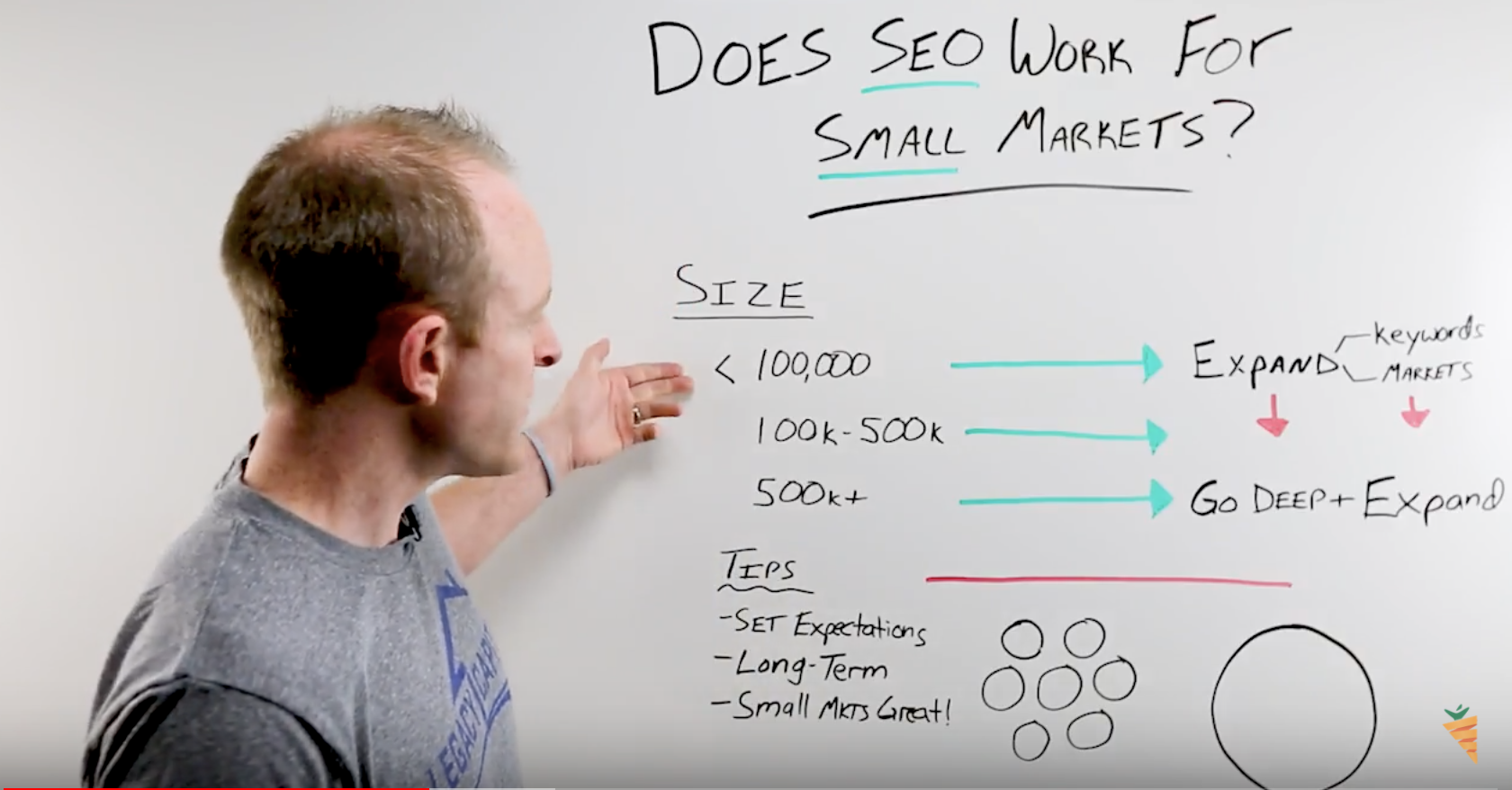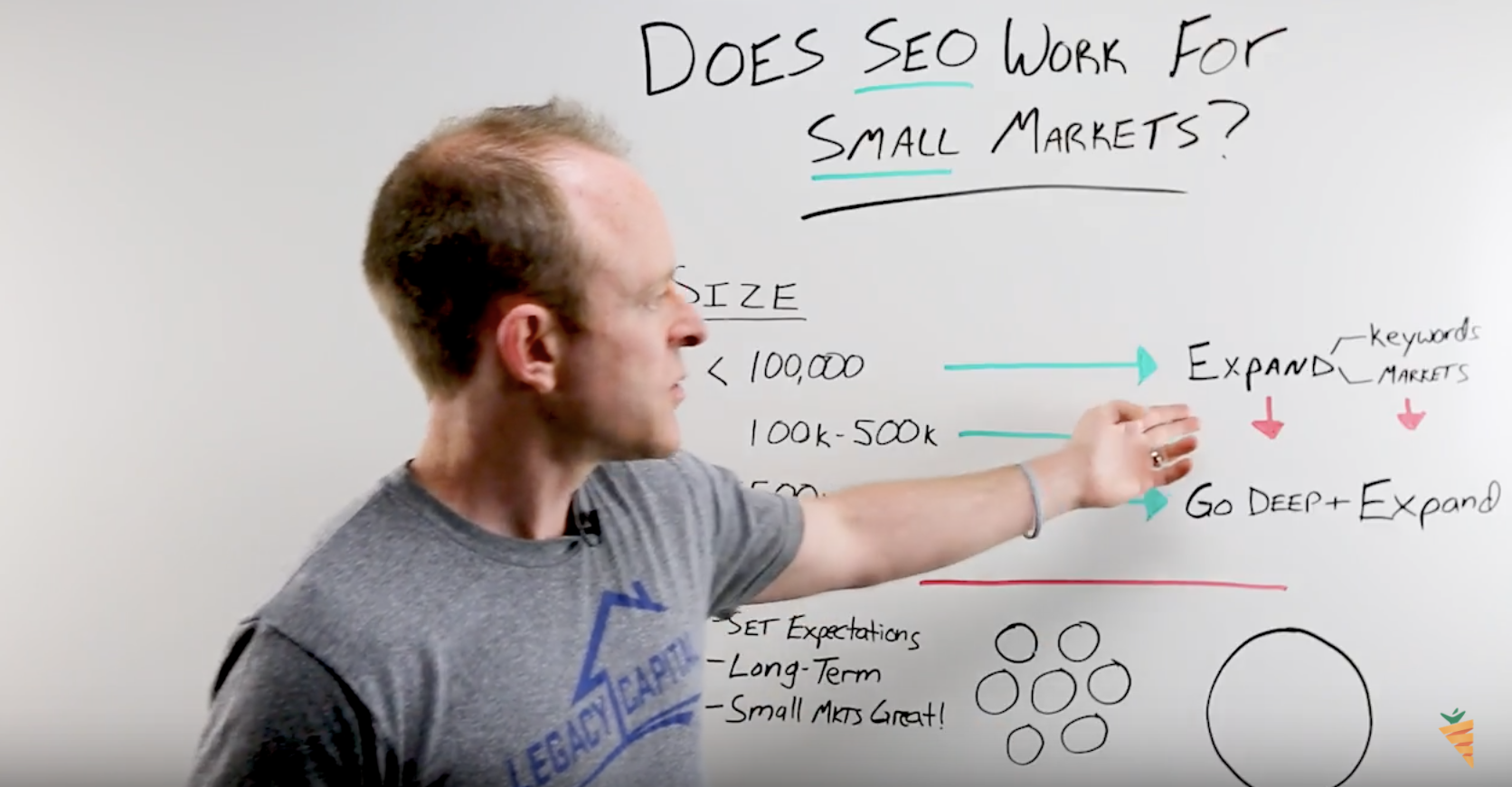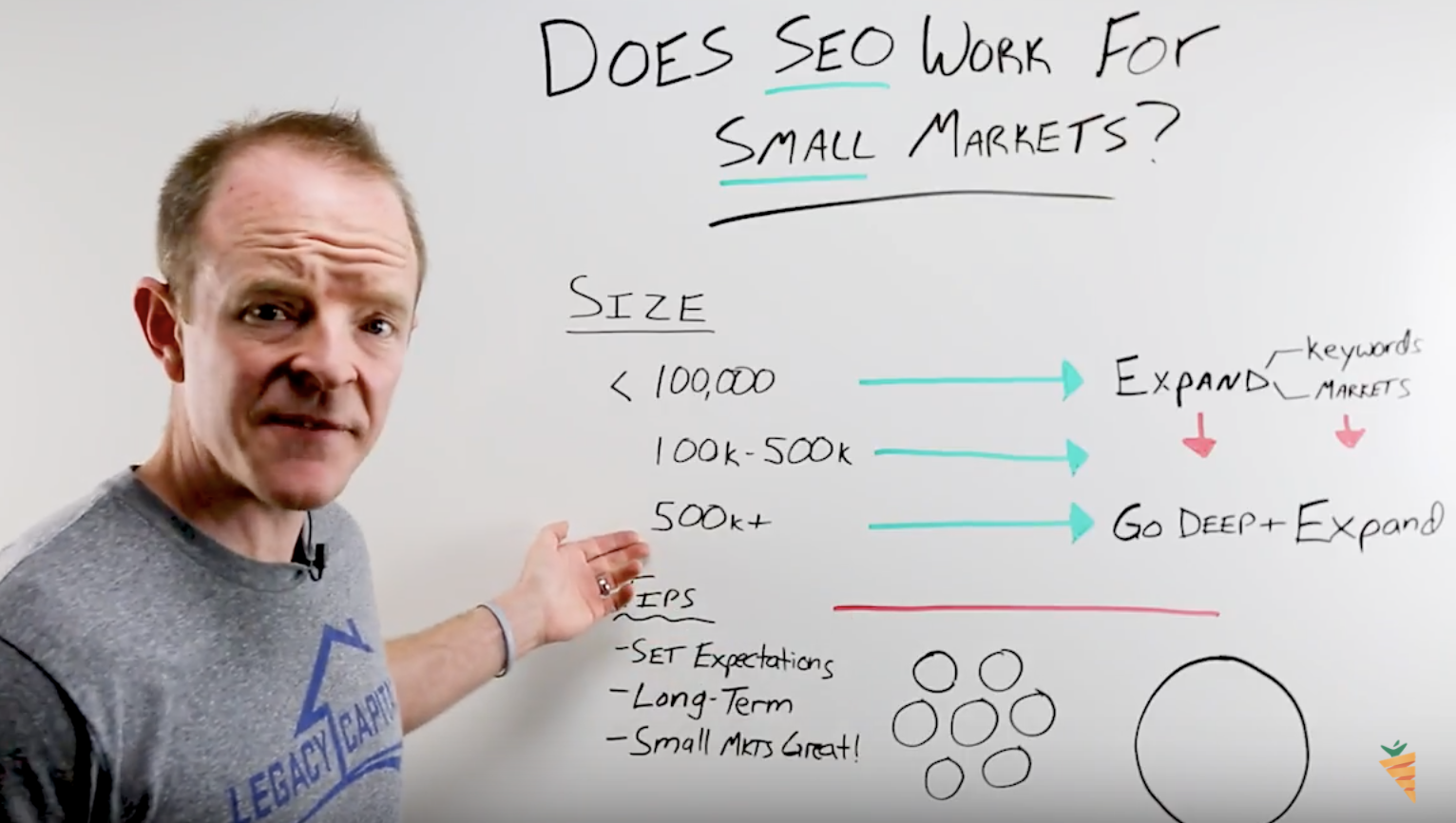


Did you launch your website within the last 6 weeks and your website isn’t showing up anywhere on the first few pages of Google yet? Are you not quite sure how Google really works? Then this post is for you.
We get this question all of the time… “I have had my website up and I can’t find it in Google yet”… in this video we’ll walk through how search engine’s like Google work, how search engines find websites, and how they rank your website in the search results.
Understanding how search engines like Google work is essential for real estate professionals who want their websites to rank higher in search results and generate consistent leads through organic traffic.
Key Takeaways
Google finds websites by “crawling” through links on the internet, which is why getting links to your site from other sources is critical for being discovered and indexed.
Being indexed by Google (appearing in their database) is just the first step; ranking high for specific keywords requires ongoing optimization and quality content relevant to those search terms.
SEO isn’t a quick marketing solution like PPC, but it offers superior long-term ROI if you’re willing to invest the time in building quality backlinks, creating relevant content, and following best practices.
By understanding the basics of how search engines crawl, index, and rank websites, real estate professionals can develop effective strategies to climb the search rankings over time, generating increasingly valuable organic leads for their business.
Did You Launch Your Site Within The Last 6 Weeks and It’s Not Showing Up In Google?
If so, this video below is for you. The video is from Module 1 of 6 in our premium 3 Lead Per Day Training where we’re diving into the basics of SEO for those new to SEO. So we decided to yank this video from the course (just $99 for 40+ amazing training videos on PPC, SEO, and YouTube marketing) so it can be a resource for anyone.
Basically, go through the steps I show in the video to check and see if your website is being indexed by Google first… if it is, then your work to climb the SEO rankings has begun! If it isn’t, follow the steps in the video to let Google know your website exists by doing a quick Google + posting that tells people about your new site and links to it and find some other ways to get a link to your new website online so Google can find the link and spider your website.
Give it a few days or a week and do the test above, again, on your real estate website and if it still isn’t showing up on the first few pages of Google for your company name and location, then it may not be indexed yet. But odds are, unless you have some penalties on your domain name from building spammy backlinks, you just need to give it a bit more time.
Not Ranked On The First Few Pages Of Google For Your Ideal Keywords?
Now, being indexed in Google (i.e. – Google has your site saved in their database) and ranking high for the specific keywords you want to go after are two completely different things. If you show up using the test above but not for the keywords you’re looking to rank for… now it’s time to “optimize” your website for the specific keywords you want to rank for.
You can use some of the FREE resources we’ve already created to help you get your website ranked higher in Google. Or, if you’re an Carrot member you can dive into the advanced 3LPD training program ($99 and only available for Carrot members) and it’ll walk you through step by step how to increase your ranking and beat out your competition.
Some free SEO resources for real estate investors and agents to get you started on your climb to the top of the rankings:
Those will get you rolling and always feel free to hit us with questions over here on the blog! Or if you’re a Carrot member, reach out to us on our next weekly Carrot Mastermind call.
If you plan on getting your website ranked high in Google to ramp up your leads over time with SEO you should also really understand the basics of how search engines like Google work.
That way as you’re working through the steps, you better understand it.
How Search Engines Work
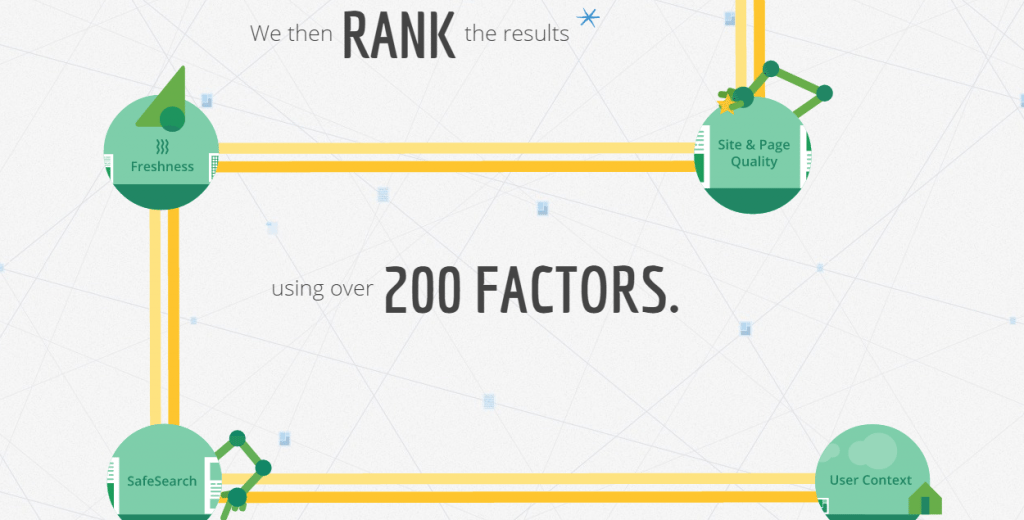
So, if you’re wanting to dig in and learn a bit more about how Google navigates sites by crawling the web… this section is going to be perfect for you. Overall, ranking results are calculated using over 200 factors which sounds intimidating… but if you understand how Google works and how to play by its rules… it makes ranking your real estate investing website in Google a heck of a lot easier and more fun.
Carrot helps you focus on a few factors that have the most power to help you rank where sellers, buyers, tenants, private lenders, etc. are searching online. This short video is one of the “Module 1” videos in our 3 Lead Per Day training. So if you’re newer to SEO and ranking websites in Google, this will be a great bit of foundational knowledge to soak up. If you’re experienced in SEO… then go ahead and skip this video.
A Brief “How Google Works” Run Through…
The text below is from the video above, so if you learn better by reading, dive into the content below to learn how Google works. If you already watched the video, great! You can skip this section and get to work on your real estate website and get it climbing in the SEO rankings.
So how do search engines actually work? In this module, it is going to walk you through the basics of how search engines work…from the time you put in the search in there to what they are doing in the background to determine how to rank them.
So, first of all just to reiterate the basics here, if you’re newer to SEO what we are talking about here is the things in the Google search or Yahoo or Bing search that show up in the main section of the search results. At the top of the section that’s ads, you can see the ads are indicated with those little orange ad tags. And on the right side, those are ads as well.
So how does Google determine what shows up in that main section which is called the organic search results section?
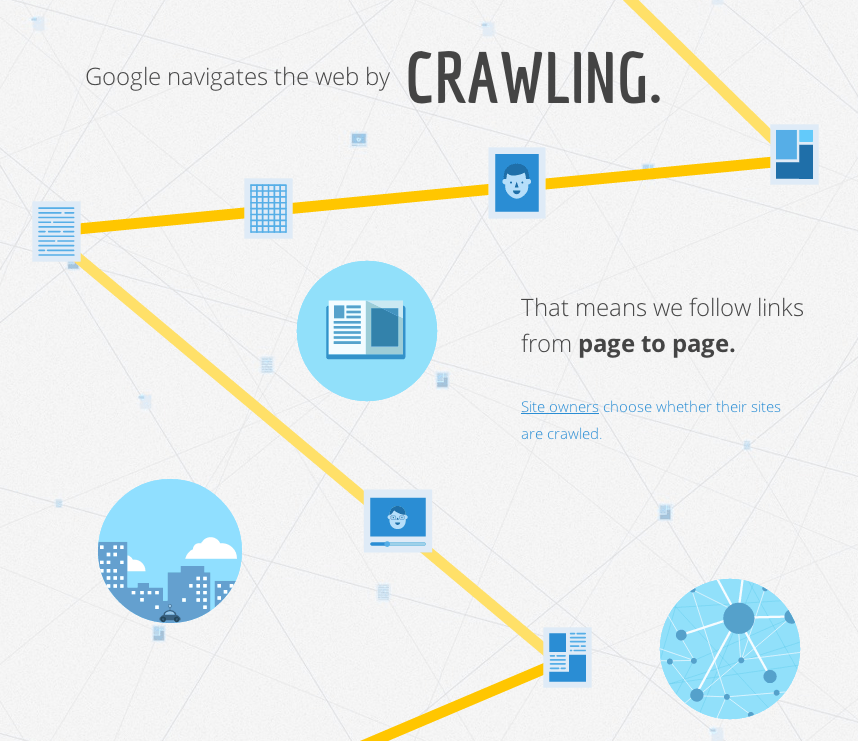
First of all, let’s understand search. Here’s a graph that we pulled directly from Google. Kinda talks about how Google goes out there and crawls different websites. So, Google navigates the web by crawling from website to website. That means that they follow links from page to page.
So, if you have a website up there and you have a link on one page that leads to another, Google’s robots are crawling through all of those links trying to visit every page they can possibly make it to on the web. And, they have these big huge massive servers that are continually, around the clock, crawling the web. And, the cool thing, is the website, owners can choose whether your website is crawled or not. If your website is not crawled, if we do not allow Google to see your website, then it doesn’t show up in the search results.
Of course, by default Carrot members websites are not set to be hidden from Google. They are set to be crawled and we make it to where it makes it easier to be crawled by Google. Which is a good thing.
So one way that Google finds your website and the pages on your website is by going through links on other web pages that link to your site.
As an example, if you made a post on your Google + account that links to a page on your site, Google will find that and go through that link and land on your site… and magically now Google knows about that page and it’s in their index. Pretty cool, eh?
And then Google begins sorting the pages along the way by the page content and hundreds of other factors.
As Google spiders the web, they’re saving all of this data. They know what this page is about, what links that point to the page, and what it feels is the authority and relevance of that page to what you just searched.
This is why so SEOs spend so much time building, earning and winning backlinks. If you want to get started on this, check out our guide on how to use HARO to get backlinks.
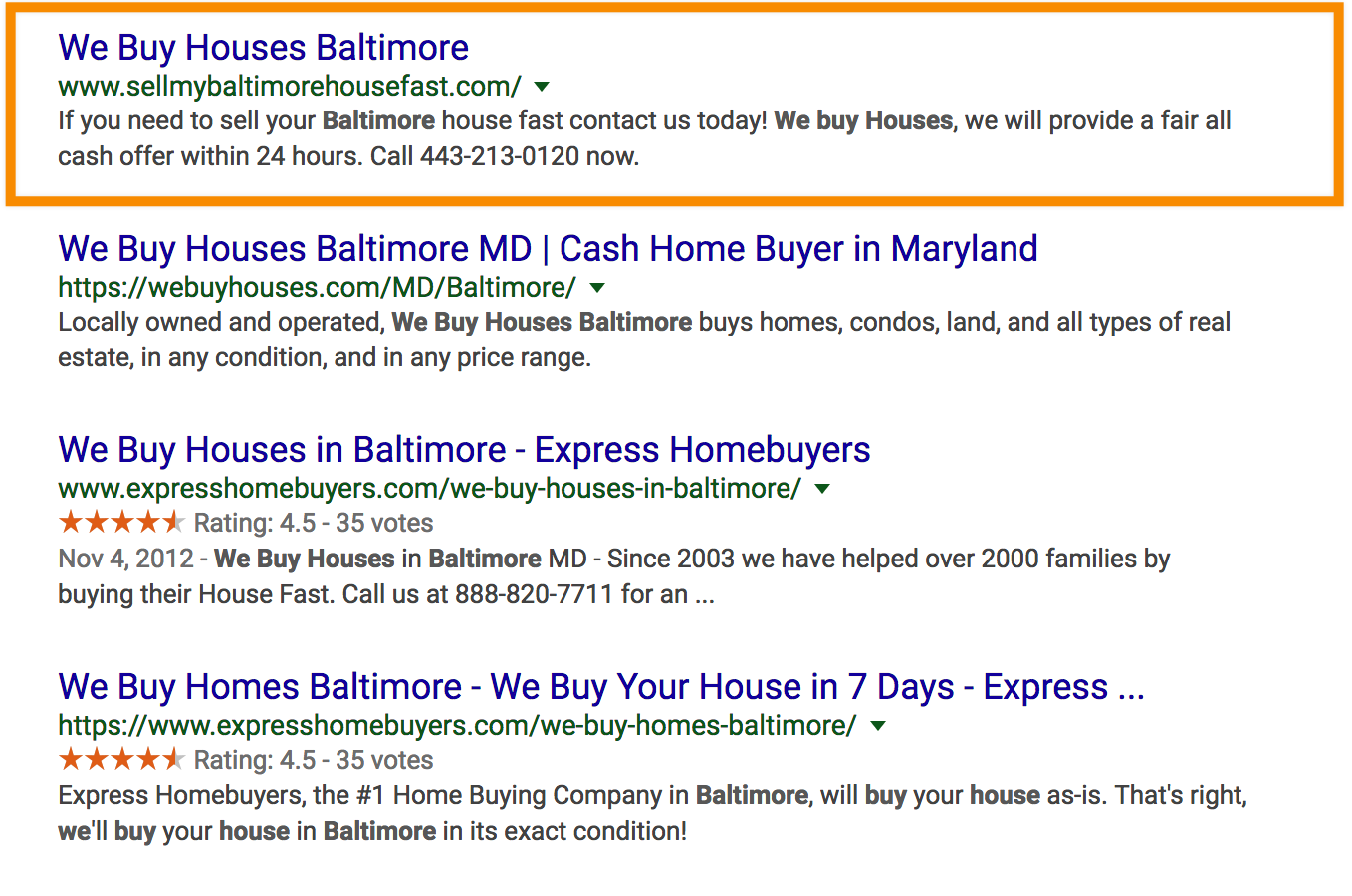
Then they rank those results so someone goes online and they type in a phrase, it could be… “sell my house fast in Baltimore” or it could even be “local plumbers”. Google then determines that based on all of the web pages that they’ve crawled and saved in their database according to 200+ factors where your web page should fall in the rankings.
How Relevant is Your Website?
And they’re really looking at relevance. They’re looking at how relevant is your web page or your website to that exact search that person just made.
And, the way that they determine the relevance, is the website quality of the content, or how relevant it is to that search phrase. We also want to make sure we have those keywords that we’re going after in the content. We also want to make that our website has fresh and unique content so Google sees it as relevant.
Basically, the Google bots are continually scouring the internet and “spidering” through links on pages to find other pages and other websites, then it determines what the page is about, it’s authority, and where it should fall in the rankings compared to the millions of other websites all in a matter of nanoseconds.
Pretty amazing stuff.
With that said, don’t let any of that scare you. It’s very easy to get on page 2 in Google just by following basic things we teach here on this blog.
Then to climb onto page 1 and the top of page 1… you’ll want to focus on building some quality backlinks, having robust solid content on your website that is relevant to the keyword phrases you want to rank for… and you need time. SEO isn’t a fast marketing solution like PPC.
Need More Online Leads For Your Wholesaling / House Flipping Business?
Generate More Real Estate Investing Leads and Cut Through The Marketing Clutter In Your Market. Download our FREE Marketing Toolkit: Get Access To This Content Marketing Toolkit + Training For Real Estate Investors HERE!
And take a Demo of Carrot today to leverage the same system 1000’s of other investors use to generate his online leads and deals each and every month.
Listen to the CarrotCast Podcast and Subscribe Below!
There are lots of agents that love working with first-time home buyers. And, there are tons of agents that never want to work with first-time home buyers. You can go out and create that experience. You can go out and be intentional about attracting those people. Those perfect, right clients. Josh Schoenly
In this episode of The CarrotCast, I have a special guest for you, Josh Schoenly. I have known Josh for years in different businesses that he’s owned. First of all, he’s one of the best dudes around. He’s ethical, honest, and knows what he’s doing. He’s a big, big, big sharer.
But I wanted to bring him on because Facebook marketing became a topic, of course, over the past year that keeps on coming up more and more from our clients.
On this episode, Josh walks through every single step of how to dial in your Facebook ads for real estate. From targeting to your ads and your landing pages. If you want to learn more about Josh or more from him, then go check out his website, clientalchemist.com. I’m excited to welcome Josh to the podcast and you guys to his world because he’s an amazing dude. I think you’re just going to love him.
Also, we did a great podcast with Kylie Newbold, which I feel is the number Podcast episode on Facebook ads for real estate investors specifically. Go check out that episode here.
Enjoy and check out more CarrotCast episodes at carrotcast.com.
Listen to the CarrotCast Podcast
[podcast-subscribe]
Listen to this CarrotCast episode and start to embrace marketing for your business.
2:30 – Introduction to Josh Schoenly. 6:30 – Does that always need to be a grind phase when building up a business or can it be built with flexibility and leverage? 9:25 –What marketing resources Josh has used during his marketing journey? 12:50 – One of the best ways to understand marketing is to take notes of what catches your eye. Start creating your own marketing swipe file. 15:00 – Josh’s 4 step philosophy to Facebook ads for Real Estate Agents.
Identify
Attract
Connect
Converse
23:00 – Putting your clients first. The importance of building relationships rather than chasing dollars. 26:15 – Facebook marketing for long-term growth. Quick wins but also creating a foundation.
Breaking down the 4 steps to Facebook ads for Real Estate:
30:30 – #1 Identify – How to identify your Facebook audience and niche. 37:15 – How Facebook “interests” targeting work. 38:30 – #2 Attract – What types of ads are working for Agents, and how much are they spending.
Do you need help calculating your marketing budget?
45:25 – #3 Connect – What is your marketing objective, and where to send that traffic? 49:15 – #4 Converse – How to nurture leads and create an ongoing follow-up system. 53:30 – Telling simple stories within your marketing can go a long way for success.
Are you operating in a really competitive market like a Houston or a Dallas or just a large market where there’s a lot of competition? Well, a lot of our clients are and every single week we do coaching calls on every Tuesday at 11 o’clock Pacific time for our care customers who are in content pro membership or above.
And one of the main questions we get on a really consistent basis is, “Man, I’m in a crazy, competitive market. There’s a lot of other investors, investing there, and there’s a lot of other care clients there. Can I crack through it and how do I do it?
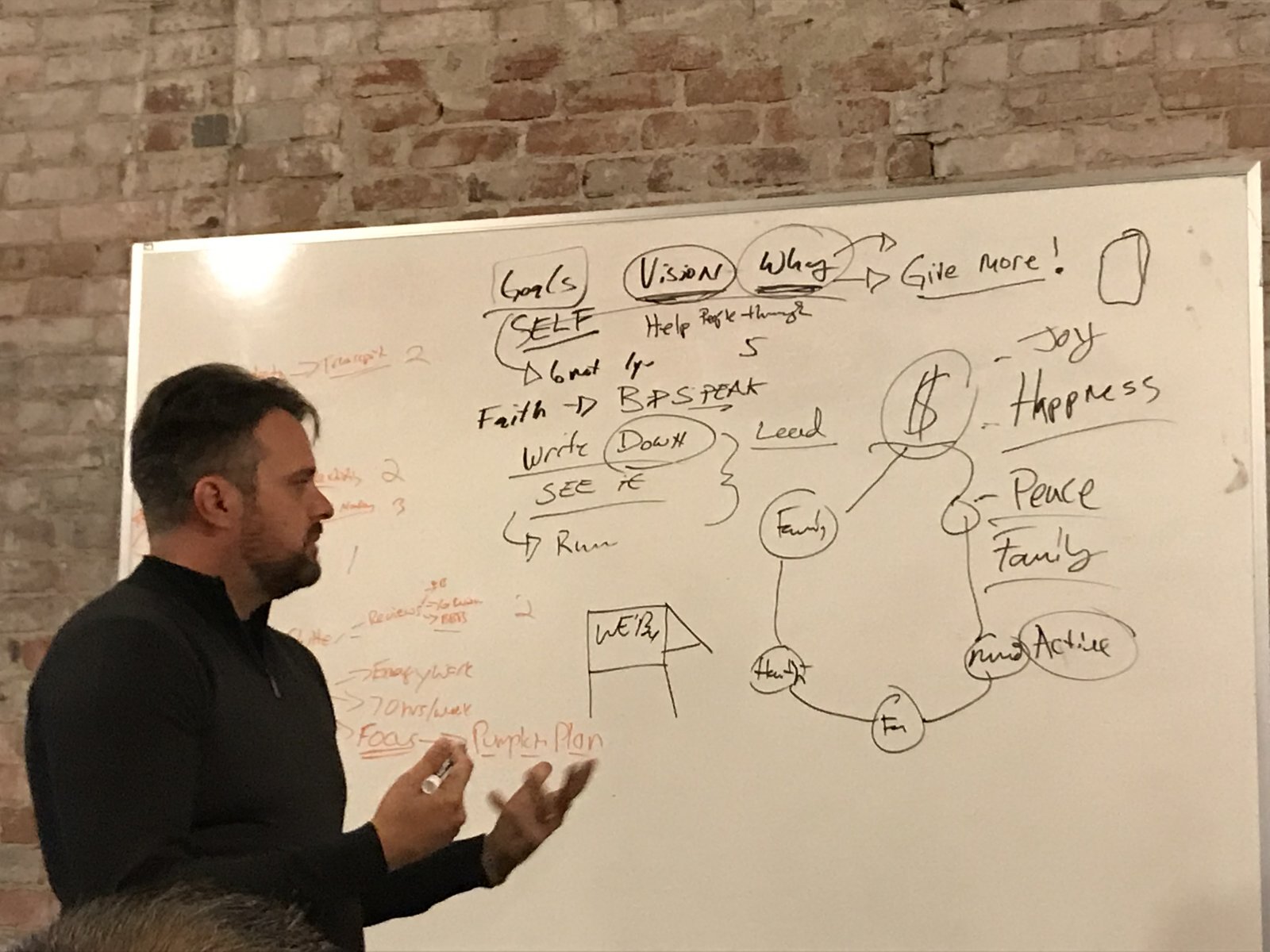
The first answer is, “100% yes, you can.” That sounds like a political stump that I just did there, yes you can, yes you can do it, we have clients every single day who are going out there implementing the plan we lay out on these whiteboard strategy sketches, on our coaching calls in our training’s and in, through support and they follow these methods I’m going to show you to get that result. So I want you to know that it can be done, but you gotta follow this to a T and don’t come complaining to me if it doesn’t work if you don’t do these.
Online Real Estate Marketing in Competitive Markets
OK, so here we go. So if you’re in a competitive market I’m gonna be kind of walking you through, how do you get in that search result for search engine optimization but also just in search in general, to get those consistent stream of leads coming in to fuel your business because when you’re in a large market like that you really can go deep in that market like we’ve talked about in other whiteboard strategy sketches you can go deep, and you can focus just in that market for the first year and get 30-40-50-60 leads a month if you really hit it hard, okay? And that can fuel your entire business 2-4-5-6-10 deals a month if you do it right.
OK? So we want to get you here first of all, and we want to get you there through paid and through SEO in the competitive market. It’s going to be really hard to get really consistent, and a lot of momentum with just SEO okay? PPC is great, but you can stack on SEO to really add momentum over that year and this is kind of what we want to do.
We’ve done a whiteboard Strategy Sketch on this exact topic before go check out youtube, go to YouTube.com and then go look up InvestorCarrot, find our channel, the first thing you need to do is subscribe to our channel the second thing you need to do is go search our channel for a video I think it’s called the 90-day marketing plan or something like that where we layout in a lot more detail what you should do in the first 90 days in any market to have leads coming in and to set yourself in a really, really solid foundation, okay? But we’re gonna give an abbreviated version of that today.
So you’ve got here, and you’ve got twelve months out there and if you’re in a large market the first thing you need to do is we need to know that it’s going to take time, and we need to have a lot of patience, okay? Because with SEO, search engine optimization large market, it’s probably going to take you between 7, 8, 9, 10, 12 plus months to really get that momentum to get that ranking that’s going to get those leads to start trickling in and then start coming in more.
I was talking to one of our clients yesterday, Martin, out of Phoenix, Arizona and he’s flipping a lot of houses, okay? Ten plus houses a month and when we were talking, you know a year ago he joined Carrot a little over a year ago he was in a very competitive market, he wanted to get some more organic traffic coming in, he was turning on PPC as well, but we’re like, you know what? I think that there’s going to be a great chance for you to crack into this market from a website that had never ranked in the top three pages of the main seller search phrases to what it is today getting really consistent leads, and he’s in top one-two-three rankings in google for the most competitive search phrases in Phoenix, how did he do that? The first thing, like I said, locked, and then it’s gonna take time, and he knew it, and he knew that he was going to have to be patient okay?
Choosing Your Top Keywords
The second thing, is we need to go out there and choose the top keywords, so what are those top keywords that are likely going to give us 70% or more of that traffic? For house sellers it’s likely your cash for homes, sell my house fast, insert city, we buy houses, insert city, there are a few others, just go to carrot.com/seo-bible, and you can check it out, we have a full report there that goes through all of the top motivated house seller keyword phrases for SEO, and you can check it out. If you’re doing pay per click go to carrot.com/ppc-keywords and oncarrot.com/seo-bible, and you can find both those reports where we give you all of the keywords based on our research, so we solved that one for you.
Alright but the first thing that we always like to do in a market, in a really competitive market is we’ve got to get leads coming in right now okay? If we don’t have leads coming in right now and it’s gonna take us 6, 7, 8, 9, 10, 12 months to start to get the real traffic to get traction and get deals in that market it becomes really, really discouraging, you know none of us want to be discouraged on our journey to grow our business or start our business so get pay per click going right away, okay?
PPC Marketing
In that first month to two months and it you don’t know how to do PPC we have a lot of resources on our blog you can check it out at oncarrot.com forward slash blog, or we have guides and resources and checklists on how to do it and we also talk about it all the time in our coaching calls if you are a carrot customer, and our three lead per day training okay also during that same time period during the first month to three months, in a competitive market the biggest thing we need to focus on is, how do you stand out from your competitors, how is it that your clients are going to chose you versus the 7, 8, 9, 10, 12 25, 30 other investors that are also vying for their business?
The people that sent them that direct-mail piece, the people that have the bandit signs up in their neighborhood the people that are in the same rankings, the same paid search results that you’re competing for. Even if you get there, even if you get right here, and you don’t take care of the credibility piece then you’re not gonna win the game, the other people are going to win the game okay? So focus on that as a core strategy, what is your credibility score?
Building Credibility
We have a CarrotCast episode, which is our weekly podcast, just go to CarrotCast.com, and you can go directly to the CarrotCast to find our episode on credibility score. You can even go to Google and Google Investor Carrot credibility score or CarrotCast credibility score, you’re going to find that episode where we walk you through everything you need to do to ramp up your credibility whether you’re an experienced investor or brand new and set yourself apart. Also, we did a CarrotCast episode on USP, unique selling proposition, which in a competitive market that is a requirement, you’ve gotta have a unique selling proposition why people should choose to work with you versus someone else. Tackle those in the first three months.
Get your PPC up and going, get leads coming in in the first several weeks get your first deal in the first month or two, and then during that time you’re setting up your SEO foundation the first one, two, three, four, five, six, seven months in a competitive market you’re likely going to get no leads so prepare for that mentally, okay?
Consistency Wins the Game
But after you start implementing that plan consistently over those months you’re gonna see a bump, and you’re gonna see another bump, and you’re gonna see another bump and around that 10 to 12,10 to 14 month time period if you’re implementing SEO well you’re gonna start to see those results coming possibly even quicker, okay? We have some clients in our concierge traffic service, which is a high-end service that we do internally for clients that are closing a lot of deals that are in really competitive markets that we were able to crack through the top five in the first five to six months and now we’re working on getting through that top three, but they’re already getting SEO leads in the first five to six months, that doesn’t always happen, but it can happen okay?
So, make sure you’ve got that locked down in your mindset now if we’re going to go through on the SEO side of things in a competitive market here’s what we need to do, we need to go after the top keywords that are going to give you 70% of the traffic, go to those resources I mentioned before to find those keywords on PPC and SEO, okay then what we’re going to do next is expand locations immediately in that first one to three months at location-specific landing pages, We’ve done other whiteboard videos on this topic, and we teach in detail in our training if you’re a carrot customer in our blog we have a lot of free resources as well.
So launch about ten location-specific landing pages and what those are, if you’re in Dallas, but there’s Ft. Worth and there’s a lot of other cities around Dallas that are suburbs or surrounding cities that you would also buy house in, launch pages on your Carrot site or another site that are specific to that location for your primary keywords, okay? For your primary keywords. And get at least ten of those up because those are going to be easier to rank for thank that primary large market of Dallas or Portland that big market and those rankings are going to happen faster so as you’re working on your SEO those are going to climb faster, your primary markets gonna climb a little bit slower, and they’re gonna rise together.
Build Citations
Next, do your citations, okay? Go to our blog, carrot.com/blog we talk about citations. If you’re a Carrot customer we can do your citations for you in our marketplace so check out our marketplace but this sets the foundation for credibility for your website in that local market right here, optimize for your company name plus the word reviews ‘cuz if you’re doing pay per click, or you’re getting traffic, or you’re doing direct mail we need to make sure that you rank well for your company name when people are trying to research you to see if you’re legit, and you never want to lose any deals because someone googles that and then don’t find any good things about you okay?
So optimize your about page for company, company plus your reviews then go get a Better Business Bureau Profile pay that three – four-hundred bucks, whatever it is, and then drive your clients over there to do reviews and optimize it as well for this and that going to help you close more deals.
Social Signals
Next are social signals. Get five, ten, fifteen people to google plus your homepage and Facebook like it over the first two months, backlinks if you’re going to do your own SEO just grab for three to five backlinks a month it’s not a big deal, and we teach how to do this in blog posts, we teach how to do this in our coaching calls, and our three lead per day training, if you’re a member, has it very, very detailed okay?
If you’re not a client we don’t sell that to the open public yet but we will if you’re watching this video after I publish this video just go to carrot.com/3lpd, don’t do it right now because nothing exists but if you’re doing this for several months, go to carrot.com/3lpd, you can check it out.
PPC to Guide SEO
Last, use PPC, use your pay per click data to guide you on your SEO that’s one of the biggest mistakes people make in competitive markets, is they use their pay per click and their SEO in silos, what we always like to do is launch your PPC campaigns, find out the ones that are converting into leads and turning into deals the most and then go after those keywords in your SEO so use PPC to guide you.
I’m gonna wrap this up, fast follow-up is huge in that market, if you’re in a competitive market you need to be calling your leads back within minutes or answer them live. We’ve talked to many clients that as soon as they switch to answering their calls live from pay per click and SEO they started closing more deals okay? It’s a big deal.
Answer them live and if you’re a Carrot customer turn on your text message notifications where you get a text message notification within seconds of a lead coming in, you’ll have a phone number there you can tap the phone number, call them up fast follow-up’s gonna help you cut through in that market. And then last, have an abundance mindset okay? One thing we always love to do is, there’s enough for everyone. There’s enough to go around for everyone; leads, deals, success, abundance, share that with people in your market, don’t try to hold all of your secrets in, the more you share, honestly the more comes back to you. So have that abundance mindset.
Real Estate Marketing in Competitive Markets
Alright, you’re in the competitive market, use that as a blessing, it’s a great thing for you, don’t say, “oh my gosh I’m in this crazy competitive market it’s going to be hard.” It will be work, but there are amazing, amazing things for you on the other side of it. When you have the patience and time locked in your brain you have the plan and you’re working with the right team. Alright? Go after it, tackle it, check out our other episodes of Carrotcast go to carrotcast.com and our other carrot whiteboard strategies sketches on our youtube channel just subscribe right here, here wherever the heck it is. Subscribe to our channel and you get updates as soon as they come out.
Learn more on the Carrot YouTube channel and start growing your business by leveraging the web as a real estate professional!
It sounds crazy at first, but when you consider that Apple reported the average iPhone user unlocks their phone over 80 times a day, maybe it’s not that surprising. We love our mobile devices, and we definitely love Facebook.
So we spend a lot of time on Facebook, but does that matter for Real Estate? Can all those hours spent on Facebook really translate into leads and deals?
I’ve spent countless hours working with investors from all across the country and have assembled five of the most common misconceptions about Facebook marketing for Real Estate Investors.
Here’s what they are and why they’re misguided.
Objection #1: “Facebook Marketing for Real Estate Investors Is Too Expensive.”
Imagine you found a vending machine, and every time you put 100 dollars in that vending machine, it gave you $500 back. How many times would you put in $100? Forever, right? You’d do it forever (or hire someone to do it for you) because you know there is a positive return.
What if the vending machine started charging $300 in return for $500? Would you still keep feeding it money? Probably. If the price kept increasing, at some point, you might stop — at the very latest, you’d stop at $500 because now you are breaking even.
Marketing is your vending machine. The deals produced from marketing are the output, just like the example above.
Do you know, for your business, the maximum you can pay per lead and still remain profitable? If you don’t, figure that out today! Investor Carrot has a fantastic calculator you can use.
“Expensive” is a relative term. You need to know your business in order to set appropriate expectations. If your ideal cost per lead is $200 and it takes 10 leads to close a deal, you might have to spend $2,000+ on marketing to get a deal. Too many people start a campaign and give up too early because they did not know their numbers and fail to clearly define success metrics.
Truth: Expense is relative to return. Know your numbers so you can make smart decisions based on data.
Objection #2: “I Didn’t See Leads Right Away. I Guess It Doesn’t Work.”
In a perfect world, every marketing channel would provide immediate results. That’s the dream, but unfortunately, not the reality. Most campaigns take a time to build momentum. This is certainly true for Facebook. Several factors contribute to success such as budget, market size, existing traffic on your site (retargeting), market timing, and quality of ad content.
Your first month will be your slowest month. If you have a few extra marketing dollars and want to give Facebook a try, make sure you really assess how committed you are. It’s possible, those few extra dollars are better spent on an existing channel such as PPC or direct mail. I suggest a commitment of at least 90 days – even better is 4 – 6 months – to fully realize the benefits of Facebook.
Truth: Be committed. You need at least 90 days to build good momentum.
Objection #3: “I Am Going To Clog My Friends’ Newsfeed With Ads.”
Some people want to clearly differentiate their personal and professional social media lives.
I’ve seen several incredibly successful investors openly sharing on their personal page, but if you fall into the “let’s keep it separate” category, there is good news – with Facebook Business Pages and powerful targeting options, you can run successful ad campaigns while keeping your personal feed clear for cat memes and cute pics of your friends’ kids.
Truth: Your personal and business Facebook presence can be as connected or separate as you want.
Objection #4: “I Need A Bunch Of Likes On My Facebook Page.”
At one point, this was true.
Several years ago, Facebook provided powerful organic (non-paid) reach to the fans of your Business Page. When The Color Run had over 4 million Facebook fans, we could post and get tens, even hundreds of thousands of people engaging on the post. It was thrilling to refresh the page and see the comment count jump exponentially. Then, almost overnight, Facebook announced they were changing their algorithm.
The era of pay to play on Facebook began. The same type of post at The Color Run now created only a couple hundred engagements. We had spent thousands of dollars (and hours) creatively building our fan base, and now we could barely even reach a fraction of our potential. It was a hard pill to swallow, but in the digital world, the only constant is change.
We adapted, and continued to see incredible success from our Facebook campaigns.
Long story short, even if you had a bunch of likes on your page, you would still have to pay to reach them.
Truth: Facebook Page Fans are now just one of many audiences you can target. Do not let building a fan base stop you from getting started.
Objection #5: “It’s hard to find motivated sellers on Facebook.”
Okay, this one is sometimes true. It can be hard. But here’s the good news — it’s hard for your competitors too, which means they likely aren’t doing it. That equates to untapped opportunity.
Of course, not everyone on Facebook is a motivated seller, but it’s very likely that the motivated sellers in your area are on Facebook. You might be thinking, “yeah, but my typical deal is with someone in an older demographic.” They’re on Facebook too. In fact, 33% of all Facebook users are over the age of 45, and 17% are older than 55. That’s almost 1 in 5 people over the age of 55. And these people are clicking on ads. In some of my recent client campaigns, on average, 57% of leads came from people 55 and older.
Truth: Using strategic targeting, such as custom and lookalike audiences, you can carefully target your ideal demographic.
The Worst Myth Of All: “Facebook Isn’t Worth My Time.”.
Finding motivated sellers on Facebook is a highly specific targeting challenge to be sure, but it’s that very fact that makes Facebook such an exciting avenue for your REI business.
If it were incredibly simple, everyone would be doing it. Because it takes some finesse, Facebook remains a largely untapped resource to the most dedicated investors.
Listen to the CarrotCast Podcast and Subscribe Below!
It’s awesome because once you know the formula of how to do this, its just do it again and keep going and going and see how you can grow it.Brian Rockwell
I always get excited when I get to do these types of CarrotCasts when I bring on a client of ours who has a great, great story. And the client that I’m bringing on in this episode is Brian Rockwell. This CarrotCast is pretty compelling and hopefully, it’s going to speak to everyone about patience and swift and focused execution when you decide to make things happen.
He didn’t use the excuses of, “There’s way too much competition.” He didn’t use the excuses of, “I already see Carrot sites everywhere.” He didn’t use any excuses of “I’ve never done a deal.” He went out there, executed according to what we laid out, our plan for him. He executed it. He carved out time to study. He carved out time to implement, he carved out a budget, and he did $80,000 in wholesale fees in March.
You’re also going to be able to learn how he’s executed like mad as a newer investor, not having all the advantages that you do with experience and credibility and how he went after and executed with one marketing plan, on one way of getting clients now with building up momentum over the long term with another way of getting clients, and how he’s turning those into profits.
He eliminated emotion from his wholesaling real estate decisions by setting a solid marketing budget that is 100% based off of data and math. Magically that turned into amazing results for him.
You’re going to love his story, how he went from junior high teacher and baseball coach, and a 12-year journey on starting being a real estate investor from thinking about it to taking the action on it.
So listen to this episode of the CarrotCast and check out the other episodes at carrotcast.com.
Listen to the Podcast
[podcast-subscribe]
Listen in and hear how Brian took action and within three months he’s doing $80,000 a month in revenue from online marketing…
1:35 – Who is Brian Rockwell? 3:00 – What originally got Brian locked into real estate and his 12-year journey. 7:20 – Closing the first deal and what his business strategy looks like right now. 12:25 – Breaking down the online marketing mindset. 14:45 – Dissecting Brian’s formula for wholesaling real estate success. 18:05 – Why his About page on his Carrot site has been effective in building credibility.
Rockwell Homes LLC Our Company Page
20:55 – The importance of integrity and customer service — building a set of strong core values.
Rockwell Homes LLC Core Values
23:55 – Why it’s so darn important to utilize testimonials to build credibility. 27:00 – Going from an SEO mindset to PPC in one of the most competitive markets in the country. How long it took Brian to start closing PPC deals. 30:30 – Brian’s PPC budget and the formula he uses to expand upon that budget. 36:05 – How he found Carrot and why he decided to commit to the Carrot system. 38:25 – What is Brian’s “Why” and some of his big goals. 41:25 – “Having a greater impact on the world” – Entrepreneurship done right. 44:35 – Why sellers have chosen to work with him and how his website has factored. 45:45 – What hesitations he had with Carrot before joining. 48:30 – Brian’s final advice for someone searching for wholesaling real estate success – “Trust the Carrot System.”
What if you could read the mind of the motivated seller? Meaning, what if you could send the right message to the right person at the right time?
Unfortunately, the internet provides a threat to match its opportunity. While powerful, the internet’s power can easily be strangled by its formidable size. Quickly, it becomes a source of crowded destruction instead of open possibility.
The real estate market is increasingly competitive because it’s increasingly cluttered, making the dream of reading the house seller’s mind, at the least, difficult, and at the worst, debilitating.
But here at Carrot, we hate letting dreams die.
Every year, our clients pull in over 400,000 online leads, giving us a very special position to speak to what’s happening in the real estate market.
Even though the market is more crowded than ever before, by accepting this density and optimizing your customer experience for the motivated seller, that crowded room becomes a pleasant dinner party. And you’re the host.
So, how do you cater and attract a motivated house seller?
Well, you need to know what the motivated seller thinks, wants, and does. Lucky for you, we crunched some numbers, ran some tests, and stepped into their mind… using a significant and varying sample size, specific to all seller websites we host.
And we want to share what we learned.
So, before we finish wiping off brain matter, here’s how the motivated seller makes the decision on who they’re going to work with when selling their house… based on our years of research and understanding the “decision lifecyle” of the average motivated house seller.
Let’s Get Inside The Mind Of A Motivated House Seller On Their Path To Choosing A Company That Can Solve Their House Problem
Step 1: Problem Aware
The house seller knows they have a problem… but aren’t sure how to best solve it. This is where you come in…
At this stage the motivated house seller is thinking…
“I need to get this house sold, like soon.”
This is the birth of the motivated seller.
Maybe they received a job in a new state, a family has fallen sick, foreclosure, inherited a house, going through a divorce, or just simply have a house that needs lots of repairs that they don’t want to deal with. Regardless of the reason, life circumstances spiked their curiosity in the selling process and they start exploring the possibility.
First and foremost, the seller wants to know how much they can likely sell their house for. They’ll likely visit Zillow, update their house information, and then check out their Zestimate.
But, while Zillow offers convenience, John Wake’s guess work, on Real Estate Decoded, estimates that Zestimate’s typical error is plus or minus 14,000 dollars.
And whether the motivated seller has run their own tests or not, their trust for this system is limited. It offers a curiosity-sating foundation, but not a real-time solution.
Which is good. Because you are the real-time solution they are looking for.
That takes us to the seller’s second dig: they contact someone who can answer their questions in greater depth.
Likely, this is someone the motivated seller’s acquainted with, whether it be a friend, a Facebook ad, or a Twitter feed. Whatever the case, they are looking to make phone calls and get answers.
It’s your job to (1) get them to call you, and (2) provide those answers.
Here’s how.
1. Get In Front Of Them Where They Search… Google
House sellers will hit Google to search things like “how to sell my house fast” or “selling a house in divorce in dallas” to find basic info about their options.
If you’re ranked high in Google with SEO or PPC and you deliver great content on your site that clearly shows them that you have a service that can solve their problem… you’ve just met them exactly where they are in the decision cycle.
2. Direct Mail
At this point, your prospect is also now receptive to marketing messages that look like they’ll solve their problem.
You dig through the mail. After tossing the credit card offers and ripping up the bills you’ll just pay online later, you come across a handwritten letter. Whoa! That’s unusual, you think. You quickly check your mental calendar to see if today is your birthday. Maybe your aunt has sent a card with $5 inside. Nope. What’s going on?
Maybe the letter is from the local movie theater, maybe it’s from a church, or maybe it’s from a local real estate investor.
Maybe it’s from you.
The point is that everyone gets a lot of mail, but if you make your letter stand out from the rest, people will feel that much more a part of your tribe.
Direct mail isn’t dead. In fact, since it is slower than nearly every other medium of communication, that snail-like pace has romanticized its effect. Like candlelight and bathtubs, the receiver feels like they’ve been transported back to better, more personal, times, and because of that, it has an intimate feel… if it’s done right.
12-point Direct Mail Checklist for Real Estate Investors and Agents
A checklist to ensure consistently remarkable mailers that generate leads, grow your business revenue and make your campaigns more sustainable.
3. Social Media Presence
Don’t break the bank for Facebook advertisements. But do maintain a social media presence — post on your account regularly — as a preemptive strike to the motivated seller’s subconscious.
When trying to decide who to contact with all of their questions, the seller thinks, “Hey, I remember seeing real estate investor, Joe the Pro’s [this is you], posts on Facebook. He seems like he knows what he’s doing. I’ll contact him!”
In fact, second, only to Direct traffic, Social Media wins when it comes to acquiring new sessions on your website.
Some ads that just let them know your service exists will be perfect for this phase. Like…
or…
Play with the endgame in mind. The more people who notice you on Social Media, the more people who’ll contact you when they decide to sell their house — which we all will at some point.
Marketing Tips For This Phase:
Do more broad marketing as targeted as possible
Focus on just letting them know you have a service that can solve their biggest needs (speed, convenience, no fees, no agents, etc.)
Bonus: Have your ads drag them to the next phase (Solution Aware and Vetting / Verifying) w/ testimonials in your ads
Step 2: Solution Aware
They know their basic options, agents vs. investors… they just need to research more to see what’s best for them.
At this phase the house seller is likely thinking…
Ok, cool… it looks like there’s options… but how are agents different vs. investors and which is best for me?
At this point, the motivated seller Google’s phrases such as, “Sell my house fast [insert their location],” “Agent vs. Investor,” or “Professional home buyers.” They’ve decided to sell their house, now they’re deciding the best way to go about it.
It’s critical that you get noticed.
Why?
Because our data shows that motivated sellers aren’t wasting any time. They make a decision on who to work with faster than you can paint a bedroom: 0-days fast.
You need to be prepared for this. When the motivated seller decides who to work with, if you’re not able to answer their questions, someone else is, and they’ll choose that someone else.
Here’s how to raise your hand first.
The One Mindset Difference Between Top-performing Real Estate Investors and Everyone Else
Learn the dead-simple difference between those who build thriving businesses and those who never fulfill their dreams or goals.
4. Content Structure That Pulls The Prospect To The Next Phase Effortlessly
Most websites and marketing don’t think through the order that their prospect thinks when making a decision. They don’t take into account what info the house seller needs to have before the next piece of info will be useful to them.
Take a look at this Carrot site as an example… from a client who has been a part of over 3,000 transactions.
This Content Flows The Way Sellers Make Decisions: Does Yours?
Notice the order of the navigation on the site. First we meet the seller at “problem aware” (hey, we can buy your house!), then educates them on the solution, then builds credibility and guides to the call to action. Bam.
Does your marketing skip phases and leave your prospect hanging with questions?
Or does your site only focus on making sure they know you can buy a house but not on pulling them through the next phases proactively?
5. Blogging
The sheer amount of blogs on the internet is debilitating. It seems like everyone and their pet blogs.
But, as you know, since everyone else is doing it, it’s hard to get noticed if you’re not.
The good news, though, is that even with the massive amount of online content, the motivated seller isn’t threatened. They still view blogs and spend an average duration of 1:05 looking.
Due to the increased visibility it creates, your blog is a great way to answer the motivated seller’s questions as they type them into Google, increasing traffic, forcing you to learn your stuff, and building relationships with the people who want to help you make money.
If you want to take up blogging — which you should — check out our post on how to do that, with actionable examples.
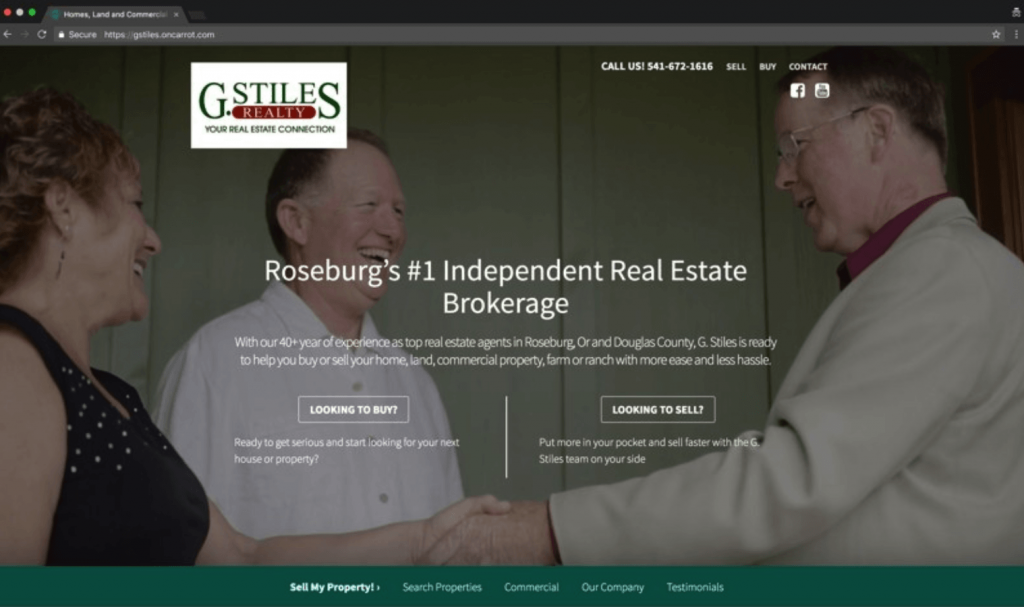
When the motivated seller searches, “Sell my house quick in Roseburg, Oregon,” you’ll be at the top. Because other real estate investors aren’t including “Roseburg, Oregon” in their content.
Unless, of course, they also work in Roseburg…
But it’s a whole lot easier to compete with a few local real estate investors than it is the whole nation. Since you’re not selling or buying properties in every state, don’t create content that competes nationwide. Create content that competes locally and you’ll be more visible to the people who matter.
7. Ads That Compare + Educate On The Options + Process
In this phase, you can’t keep on sending people ads and direct mail that just tells them that you can buy their house. They already know. So here’s where you need to retarget your prospects w/ ads that educate and compare… while at the same time adding credibility to pull them to the next phase.
Like…
… and one of our own (one of the highest performing ads we have, it drives to a blog post of ours)
Marketing Tips For This Phase:
Start to retarget your prospects on Facebook with a mix of ads that educate and compare. Comparing your USP to theirs is critical
Build your website and your marketing so it flows the way your prospects decide
Bonus: Again, if you can have a testimonial do the heavy work for you, educating your prospect for you… it automatically pulls the prospect past the next phase… building credibility for you in the process
Step 3: Vetting and Verifying
The seller recognizes their problem, they know the basics of the options… but who should they work with?
In this phase the seller knows they have a problem that they want to be solved fast, they basically know the options and how they work… but now their main question is…
Which company should I work with? Which is the most credible?

They’re asking if they want to work with you. Your job is to convince them that they do.
How?
The homepage is where the motivated seller often lands, and not just lands, but commits… or at least turns into a lead.
If they’re not ready to become a lead… they then explore the website to find answers to their questions or verify suspicions.
What Pages Do Most Most Leads Come From? [our data]
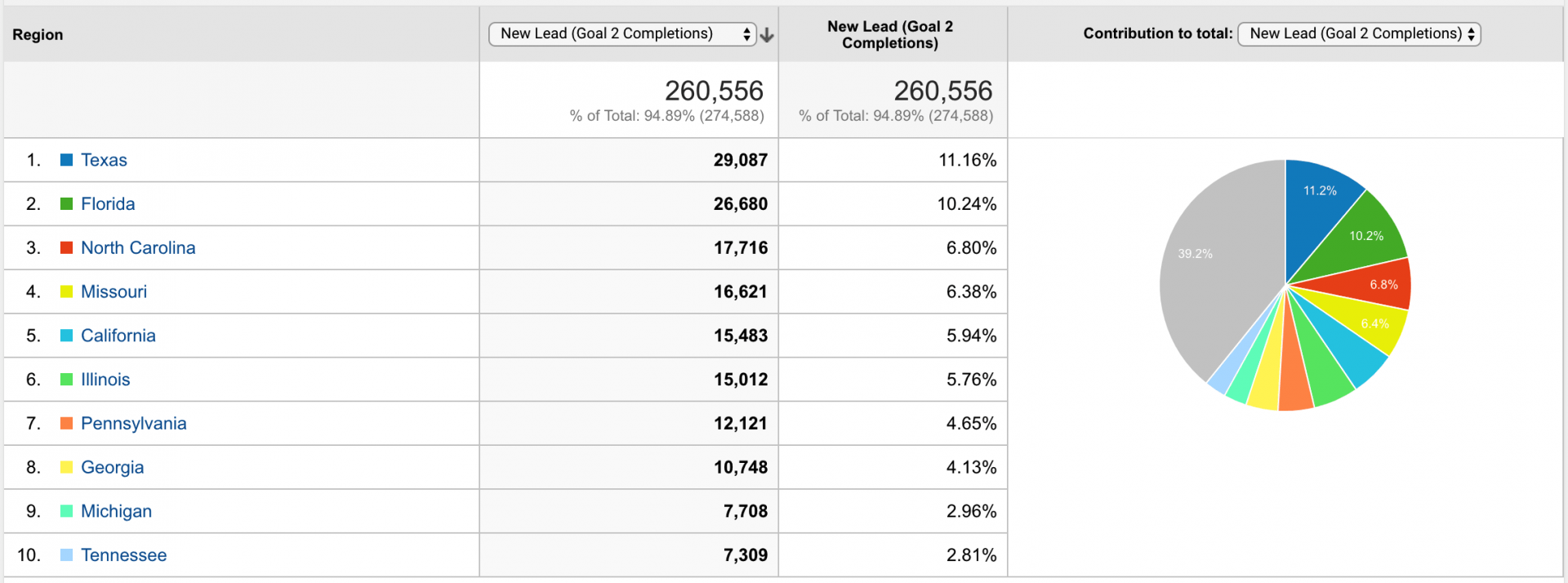
Notice that of the 16,000 seller leads in this data set over a period of time for Carrot clients, 5,000 of those leads weren’t ready to opt in on the home page. They searched for more info instead…
Since the homepage is playing such a significant role in determining your leads and, thus, your conversions, here’s a few things to think about when trying to attract motivated sellers.
Don’t just cater for those ready to opt in right now, include robust content that builds your expertise, credibility, and makes it easy for them to contact you
But how can you best build credibility and get an edge on your competition since your prospect already knows that you both can provide essentially the same service?

Let’s start here…
8. Easy Contact Options + Great About Page
The ease with which you create this page is not equal to the breadth of its importance.
Overall of the seller websites we host, the “contact us” page sports compelling numbers.
For an even faster transition from homepage to lead, provide the option to bypass the “Contact Us” page with a “Call Us: XXX-XXX-XXXX” CTA.
Notice The Interaction With The Easy Opt-In Form And Phone Number
As you can tell, a Christmas tree would have trouble competing with that red-hot dot. Consider putting your phone number on the homepage to reduce the number of clicks needed to go from viewer to lead. Fewer clicks mean more conversions.
During this beginning phase, the seller has a lot of questions. Your “Contact Us” page, or “Call Us” corner, gives them the opportunity to get in touch with you and inquire. You’ll be positioned like a pro and, more importantly, make a valuable connection.
Also, as the seller does their research… they’ll hit your about page.
A Heat Map Of A Carrot Clients Site: Our Company Is Hot
This is very common… actually we see this on almost every test we’ve ran over the past 4 years… and that’s a lot of tests. The Our Company page is where your prospects go to see who you are.
A Heat Map Of Our Site (previous version) Shows The Same
Yep, we use data for our own business just like we do to help you get better results in your business as a Carrot client :-)
Get faces on your About Page like Carrot clients CR Homes of Maryland.
Show them ads that build your credibility… seller testimonials are great for this.
On this website, our heatmap shows that testimonials are playing a critical role.
Notice the red spot over the “testimonials” link. Time and time again we see heavy engagement on testimonials on sites across our system.
Like…
Notice how this investor filmed a video of their client and put up a well formatted testimonial on their site. Turn this into a Facebook ad and you’re golden.
And make sure to use credibility badges where you can to add that 3rd party validation to your credibility profile.
And last, make sure to control your brand conversation online when people are verifying and vetting your brand through Google searches. Like…
Your Sellers Are Actively Searching For Reviews + Your Reputation… What Do They See?

Hopefully you’re controlling the conversation around your brand so your sellers don’t bail at the last moment in this phase. Control it like this…
Notice How Their BBB Profile, Facebook, And Carrot Site Control The Brand Convo
The biggest missing factor in your ads, your direct mail, and your online marketing strategy is credibility. Credibility trumps any marketing tactic out there.
If you’re offering the same service as the next guy, it’s going to come down to credibility and your offer. That’s it.
10. Clarity
Stumbling upon a cluttered website is an immediate no-go for the motivated seller. Where clarity communicates professionalism and ease of use, clutter communicates a lack thereof.
But what is clutter?
Clutter might translate into the too-much-stuff-on-one-page category, but not necessarily. Consider the apparent “clutter” of a top online store, Amazon.
What Is Clutter? It’s Not Clutter If It Get’s You What You Need…
Amazon is the world’s most optimized ecommerce website. It’s also one of the most “cluttered” according to people. Clutter is only cluttered if it doesn’t help the prospect find what they want.
As you can tell, there’s a lot going on. And this goings-on could easily be classified as clutter.
And yet, they’re winning.
Don’t think of clutter as having too much on a single web page, think of clutter as having too much that distracts from your CTA. Amazon wants you to get lost in the shopping experience, and thus it shows you a plethora of items you may or may not be interested in, much like browsing at the mall.
But you’re not trying to sell products ranging from laundry detergent to Harry Potter collectibles.
Your product is an easy and fast process for the house seller.
To sell that, you don’t want a lot of action items.
As a bad example, consider this website… for whom the brand name has been blocked out.
This website is a disaster. Most importantly, It has painfully positioned CTA’s…
With this many Call’s To Action, you can be sure that none deliver. This is clutter. Clutter means that when someone visits your website, they’re not sure what you offer, or where you want them to click.
In contrast, clean and clear as a windexed window, check out this example.
Full Of The RIGHT Information But Not Devoid Of The Info
Your Prospect Needs To Advance To The Next Phase
This homepage immediately communicates what it offers, whether or not I — the motivated seller — am in the right place, and what I should do if I am (fill out the information).
A website this clean will perform better simply because it communicates better. Get harsh on your own website and, if needed, ask for an opinion from a friend — a friend who’ll be honest.
Because having a mobile-friendly website is as important for visitors as having toilet paper for house-guests. It’s just expected.
Marketing Tips For This Phase:
After someone opts into your site, retarget them on Facebook with testimonial ads
Build a physical credibility packet and mail that to your prospects overnight, email it to them, and take it to your in-person meetings
Add at least 5-10 great testimonials formatted correctly to your site
Build reviews on 3rd party sites like the BBB, your Facebook page, and Google local.
Step 4: Making The Decision
Here, they’re ready to decide. Are you making it easy?
At this phase the motivated house seller is likely thinking…
Ok, lets get them to give me an offer… then I’ll pick the best fit.
Are you making it easy and are you reinforcing their decision to work with you EVEN AFTER THEY CALL YOU OR OPT IN?
The motivated seller has taken the first step, but still, they could abandon.
However, it is too early for you to give up.
There are two primary tools in your arsenal to make them comfortable, and they both focus on transparency: honesty about what you offer, what the seller should expect, how a price is decided, and who you are.
The two tools are (1) the How It Works page and (2) the About Us page.
12. A “How It Works” Page
The “how it works” page is clicked wildly, so don’t hesitate to make this a priority.
See This Part Of A Recent Heat Map On A Carrot Site
The “How It Works” page is very active… your sellers in the “Solution Aware” and “Verifying” phases are really looking for clarity on your process. How you make your offers, what the process looks like, etc.
But, be careful that you don’t over explain. The seller has questions, but they aren’t in regard to the nitty gritty of your job. Their questions are in regard to how you will benefit them and what they need to do to make it happen.
It can be hard to anticipate all of these questions, so here’s a list of the ones you must answer.
How long until you contact me?
What happens when you contact me?
How is a price decided?
After we agree on a price, when do I get my money?
They make it easy to understand, quick to read, and, most importantly, only answer the questions that the motivated seller is asking.
13. A Strong Hero Section
Like every great story, someone needs to save the day… or rather, something. And that something should be your product.
Your hero should sit at the top of the homepage and quickly tell the visitor that (1) they’re in the right place and (2) you’re here to solve their problems.
As you can tell on the below heatmap, the hero is viewed as often as the bat-signal is flicked.
Don’t get creative at the cost of clarity. Your hero should be similar to the above. Something regarding selling fast, since you’re marketing to the motivated seller, and location, because the motivated seller is searching for someone in their area.
Once the seller is convinced that you’re the hero they’re looking for, it’s time to swoop in and actually save the day.
14. A Clear CTA (Call To Action)
Everyone loves this part of the story. This is where the motivated seller takes the first leap, which is usually providing you with contact information.
This is your first CTA, and arguably, the most important.
If the motivated seller doesn’t give you permission to contact them, they aren’t serious about working with you.
Since your business goes nowhere without this first step, it’s important to make it simple, directly after the hero, and, ultimately, the focus of your homepage.
Consider how your eyes flow first to the hero of this snapshot, and then seamlessly to the CTA.
Also, consider this example, differing in setup, but equally effective in conversion.
Whatever the hero to CTA transition on your website, make sure it’s obvious and smooth. Since the motivated seller is in a hurry, your homepage should be too.
Heck, even put clear calls to action in your Facebooks ads at this phase, like…
15. Follow Up, Follow Up, Follow Up
Often times they’re just not ready to make a decision yet.
So make sure you’re putting your leads into an email, text, and possibly direct mail followup system.
We see clients pulling deals out 6+ months later after the lead initially came in.
The One Mindset Difference Between Top-performing Real Estate Investors and Everyone Else
Learn the dead-simple difference between those who build thriving businesses and those who never fulfill their dreams or goals.
Schedule The “8 Word Email” To Go Out In 6 Months
Don’t over complicate your follow up with a big pitch. Just ask them if they still need to sell. Your only goal is to engage them in a conversation.
Marketing Tips For This Phase:
Create a simple email sequence that goes out 6+ months. At month 4-6 hit them w/ the “8-word email”
Have Facebook ads that ask… “Still need to sell your house?”… then drive them to a testimonial on your site
Make it easy for people to get in touch with you… phone, text, opt-in online
Step 5: Turn Clients Into Testimonials Then Repeat The Above
At this point, you’ve got a client and closed deal! But the work doesn’t stop…
Right here your client is happy with the service, and this is the best time for you to ask for a testimonial or referral.
Adjust Your Marketing + Messaging To Pull Clients Through The Decision Lifecycle
Whew! That was a lot.
But this is the difference between the A Players in real estate marketing and the B or C players.
Most investors make all of their marketing focus on just one or two of the phases… and leave it open for their competitors to better connect with the prospect when the prospect needs it most.
This is just the tip of the iceberg.
So… go out and find where you can better cater your marketing toward the phase of the decision lifecyle your motivated house sellers are in.
Here’s a recap…
And what to do about it…
SEO and PPC for problem aware people looking for solutions
Canvas direct mail to those likely to be problem aware
Engage on social (broad ads)
Structure content to pull people to the next phase
Blog (show your expertise)
Local content
Ads that compare + educate
Great about page and clear contact info
Build your credibility
Clearly, relay the message of how you can help them
Focus on mobile
Great How It Works page
Strong hero section on your website
Clear call to action
Follow Up, Follow Up, Follow Up
Don’t hesitate. Don’t procrastinate.
Go crush it like the mind-reading real estate guru you are.
Listen to the CarrotCast Podcast and Subscribe Below!
When you’re confident with whatever it is, you expect the result. You’re not hoping for it – you expect it. So you can say “hey, here’s what we’re going to do and you can just lead.” I think when you’re starting out, your confidence is more like you’re not sure what to do, and I think that is picked up on. Gary Horton
While most of the real estate market is flooding into flipping houses or wholesaling houses… savvy investors are looking at the gaps in the market where there is an outsized opportunity vs. competition level.
When Carrot client Gary Horton hit a wall wholesaling real estate in San Diego he tested out flipping vacant land… and hasn’t looked back since.
Now Gary buys and sells land all over the West Coast, from his house (or office), does 8-9 flips per month, and barely has any competition.
In this episode, Gary lays out his entire business model from start to finish. His marketing, how he targets sellers, how he sells his properties, his margins, how he does online marketing to drive consistent land deals… EVERYTHING.
Dive in and listen to Gary’s story and get inspired to go down the path less traveled.
3:20 – Gary’s backstory — Who he is and working a career that he didn’t love. 6:00 – Building confidence and credibility to leave his job and close his first deal. 9:30 – Why he decided to pivot from the truly motivated house seller market to flipping vacant land. 12:45 – Knowing your strengths and weaknesses can save you a lot of pain and time. Walking through the Kolbe Index test. 15:50 – The nuts and bolts of land flipping. 20:30 – Cracking the land flipping code — making the move and dealing with the responsibility that came with it. 23:15 – Gary’s land-buying business model: Buying Baltic Avenue instead of Park Place.
27:55 – What types of situations are the sellers going through to sell their land so cheap? And the strategy behind his direct mail campaigns. 32:05 – The leads from his Carrot website have been very good. Find out how that has helped him open the door for more investment opportunities. 34:35 – How searchers are finding his website: SEO and AdWords on a $1 per day budget. 38:25 – Find out his online stats, such as how he’s been able to profit over $40,000 and only spend $322 on AdWords.
42:50 – Building up a seller financing land business that is consistent, predictable, and low-risk. 45:20 – His rule of thumb of pulling a list and what to look for when finding a sweet land buying niche. 48:50 – Diving in deeper into what one of those land buying niche opportunities looks like: From dream communities to land buyers paradise. 52:05 – Land SELLERS: How to market your land listings. 1:01:30 – What are some of Gary’s goals he’s pushing? 1:10:30 – Why he chose Carrot and what it meant to his business.
According to the U.S. Small Business Association, only 56% of small businesses with 50 or fewer employees have a marketing plan. Almost half of smaller businesses are missing out on leads and sales.
Here are four other reasons why a marketing plan is essential for your real estate agent or investor business.
It forces you to think about where you’re going with your real estate business. Creating a common goal to drive towards.
It ensures that you’re aligned with your company values.
It serves as a foundation for your marketing activities. If you build a house, you start with a solid foundation. Same thing with your marketing plan.
Possibly the most important – it gives you a process. Without a process, you won’t have the direction you need and will likely either be going off course or starting to feel confused about your marketing efforts. The process can also act as a measure of your failures and successes.
Sample Real Estate Marketing Plan
At its basic level, a real estate marketing plan answers a series of questions that helps you define your ideal targets and craft your business’s most compelling offers into a cohesive story. It uses good distribution channels to reach your ideal targets.
Here are the questions you need to ask when making a good real estate marketing plan:
What are your goals?
What impact do you want to have on your communities?
Is your market saturated with similar offers, or is it ripe with opportunity?
How tough is your competition?
Who is your ideal target?
What are your Strengths, Weaknesses, Opportunities, and Threats?
What are your compelling offers?
How will you reach your target audience?
What is your marketing budget?
What keywords are the best opportunities in your market?
First things first: you need to set your goals and objectives.
Clearly, state what you want to accomplish for yourself in your real estate business. If you’re an investor, it could be buying 50 properties this year. As a real estate agent, you might consider closing 100 listings.
Or, in both situations, you could want to get your brand or name out more for recognition. It could be that 50 percent of your target market knows who you are. Set goals that you can quantify to record and track your accomplishments.
Develop a 10,000-foot vision for your business, such as…
Become the top producer in your area
Retire in 10 years
Control particular niches of buyers and sellers
Then quantify that vision with measurable goals. Measurable goals might include:
Obtaining 50 listings in the next year
Close 10 deals in your target market area in 12 months
Earn referrals from 50 percent of your past customers
Purchase 10 single-family rental properties in the next 48 months
What Impact Do You Want to Have in Your Communities?
You want your real estate business to be sustainable and build a good relationship with your community. How you approach and treat your clients has a tremendous impact on how your business is viewed within your market.
Your clients directly affect your business reputation, lead, and deal volume. But it’s not just your direct clients. Anyone that you interact with can be considered an indirect client. Residents, Facebook friends, your website host, employees, contractors, partners, and suppliers.
You must constantly assess your behaviors and their impact on your local community and the broader audience.
Then you can assess and find your niche within. What events to attend and who to build relationships with. Your community approach will also help you create your immediate and long-term business needs.
Is Your Market Saturated with Similar Offers?
You want to build strong relationships with your customer base. As you’re maintaining a high value and positive service for your customers, they’re more likely to spread the word among their peers.
If you’re in a competitive market and find it hard to make your marketing stand about your competition, then be sure to make your service and client experience stand out.
Marketing Strategies for Real Estate: How Tough is Your Competition?
First, you need to identify your competitors. Take into account your potential or future competitors too.
There are a couple of methods you can use to do this.
1. Look at them from a customer’s point of view
If you can look at your competitors from a customer’s point of view, you’ll be able to spot some of their larger strengths and weaknesses.
It’s a fun yet challenging activity to think like a customer. Why would a customer want to use them as a real estate service? Is it because they can offer more and faster payment turnaround time, or do they have top-tier customer service? These could all be strengths for your competition.
Become your ideal client and put yourself in their shoes. Wonder why you would be more likely to deal with them instead of using your company to accomplish their real estate needs.
2. Look at them from their point of view
Next, take a look at their point of view. This can help you understand their strategy, culture, and attitude toward the market. Take a look at what assets they bring to the field and how you would use them if they were yours. Take a look at what you interpret as their weaknesses.
How could you commit to making those weaknesses into your strengths?
Ask and answer these questions before your analysis:
Before you dive into your real estate marketing competitor analysis, be sure you’re asking the right questions. Here are some common questions to get you started:
Who are your competitors?
What types of services are they using?
How much market share do they have?
What have been some of their past strategies?
Are they using the same strategy?
Are they aggressive with their real estate marketing?
How competitive are they in the market?
What are their strengths and weaknesses?
Are they a threat to you? If so, how big of an impact can they have?
Does their marketing strategy affect yours or how you do business?
Who is Your Ideal Target Audience?
Create a simple paragraph profiling your ideal real estate target audience. Create a customer avatar regarding these demographics: sex, age, family, earnings, lifestyle, and geographic location.
Ask yourself questions about your customers, such as:
Are they followers or leaders?
Are they timid or aggressive?
Are they introverts or extroverts?
How often are they likely to move?
Are they traditional and bear more of a connection to the community?
No matter your real estate market, you’ll need to define them in this section narrowly. It is an important step that will guide you as you plan your media and public relations campaigns.
What are your Strengths, Weaknesses, Opportunities, and Threats?
Performing a SWOT Analysis is a crucial step when creating your real estate marketing strategy.
The term “SWOT Analysis” sounds like a daunting task. But, it can be simple.
It’s broken down into two categories:
Your internal issues: Strengths and weaknesses
Your external issues: Opportunities and threats
This analysis will allow you to see what factors will help you achieve your objectives due to your strengths and opportunities.
It will also highlight what obstacles you must hurdle before achieving your real estate goals due to your weaknesses and/or threats.
Overall, the SWOT analysis assesses your real estate company’s strengths, weaknesses, market opportunities, and potential threats to give you insight into the possible issues that can impact your success.
The number 1 goal of a SWOT analysis aims to determine and assign all important factors that could positively or negatively impact the success of one of the categories, giving you an in-depth view of your real estate business.
Four Categories Of SWOT:
Strengths:
What are the advantages of your real estate business?
What can you do better than your competition?
What exclusive resources can you use that others can’t?
How does your market see your strengths?
What factors into you closing the deal?
What is your company’s Unique Selling Proposition?
When considering your strengths, look at your internal employees and external customers/market.
Weaknesses:
What might you be able to improve on?
What locations and markets should you avoid?
What potential clients within your market might see as your weaknesses?
What factors cause you to lose the deal?
Again, account for your internal and external clients. Do your clients see weaknesses that you haven’t seen? What are your competitors doing better than you right now?
Weaknesses can be a gut check. But stick with it and be as realistic as you can.
Opportunities:
What positive opportunities are available to you?
Are there trends that you need to know?
Some of the positive opportunities you can take advantage of are:
Changes in real estate technology. For example, recording a video testimonial and uploading it to Facebook as soon as you record it.
Changes within the real estate field. Are more real estate agents becoming investors or vice versa?
Changes in the economic status and population profile within your market.
Are there any local events you can help organize or lead within the real estate niche?
Take a look at your strengths and weaknesses as you approach your opportunities. They can provide invaluable information on what you can work harder to improve upon.
Threats:
What obstacles do you need to hurdle in your market?
What are your competitors doing?
Are there any technical issues that are threatening your market position?
Do you have cash-flow problems that you need to address?
Do you have any weaknesses that are threatening your business?
Once you have chosen your real estate business values within the four SWOT categories, you can develop a more strategic plan.
For example, once you’ve identified your weaknesses and potential threats, you can create a plan to eliminate or at the least minimize them while continuing to improve upon strategies that will make you a more robust business.
To create your compelling offers, ask yourself the following questions:
Who do you sell or buy real estate to or from? Be highly specific.
What are the problems that you help them solve?
How do you solve their problems?
Why are you better at solving their problems?
Now create your compelling pitch like this:
How [insert who your ideal client is] can [insert verb] [insert the problem] through [insert solution].
How Will You Reach Your Target Audience?
Getting your audience to engage with your content is essential for connecting with your target market online. The online real estate market is increasingly growing and vying for client attention.
But, even the investor or agent with a small budget can succeed with the right strategies.
Start by narrowing it to a highly targeted audience.
If you offer buyer and seller services, your target currently includes more people in your local market.
For example, focus on only one section of zip codes within your market city. Then expand your area as your finances and business grow.
So, choose a specific area of your market and focus efforts there. Then expand.
A second option will be to focus on the seller or buyer market if you’re a real estate investor. There are specific factors to consider, but marketing towards the seller’s market is most likely the one to go after.
Your marketing costs within major cities will likely be expensive, so media such as Google Ads might be too high unless you can target slightly out of the city.
If you don’t have the budget, take advantage of pricing within the suburban markets.
The other thing you need to do is get your website organized to target your audience. If that requires creating city-specific pages, then you need to do that.
Also, get one of the most overlooked pages, your “About” or company page optimized. Be sure it includes your city or area, how you conduct your business, and your process. Spell out your strengths and why they should choose you over the competition.
What is Your Marketing Budget?
Having a solid marketing budget is integral to being realistic and will help you improve your revenue over time.
You can overspend on marketing costs if you don’t know your budget. Therefore causing an unwanted and bad experience.
Here are a few steps to help you organize your budget and determine where to spend your marketing dollars strategically.
Your first step needs to be organizing your current financial positions. You MUST be specific. If you’re too loose and choose to estimate, it creates an unrealistic budget.
This starts with getting in order your revenue information. You’ll need to know how much revenue your real estate business makes every month. Even though your income varies throughout the year, you must have a number based on reliable revenue (the minimum amount of money you make each month.)
You’ll also need to minus business expenses. Rent, materials, the cost of VA’s, etc.
Any business expense must be subtracted from your revenue before nailing down your marketing budget. Setting a realistic budget is one that focuses on income that exceeds expenses.
After you find your available disposable income, you’ll need to determine what that money will be. Although marketing is a major area to focus on, don’t forget to set aside a budget for unexpected circumstances and growth.
Separate your money based on your goals. You will invest more money in online marketing if your primary goal is attracting leads.
But, if your goal is to hire more VA’s or full-time assistants, you’ll want to put more income into your company’s growth and set aside less for marketing until you’ve been able to close more deals.
2. Determine where you want to allocate your funds
Once you have calculated what is available to spend on marketing, your next step is organizing and prioritizing your money.
There are three main elements to how you spend your marketing dollars:
Budget size
Your past experiences
Reaching the optimum target audience
Start by organizing how to spend the budget based on the amount. If you have a small, more limited marketing budget, you should probably consider Craigslist ads, Facebook ads, local citations, social media posting, and email advertising to attract new clients.
A heavier marketing budget would provide the opportunity to include direct mail, bandit signs, and Google Ads to attract an expanded range of clients.
Apart from any budget limits, don’t forget to consider and implement what strategies have worked for you in the past. You might have noticed postcards helped bring in more clients during a specific time.
Then do that same strategy again, even if you still have more budget for more expensive marketing methods.
Also, don’t overlook the marketing channels that will help you target and reach your optimum audience. For example, Facebook advertising is an effective channel for targeting motivated sellers, but you still need to create the right audiences to filter out potential buyer leads.
Facebook Ads Audience for Real Estate
Create and document very detailed customer avatars. Then, think about which media they’re more likely to consume. That is the spot where you need to be advertising.
If you’re considering testing a new marketing channel, allocate some funds for that test. Start with a small budget since you don’t know how effective the new channel will be.
For example, if you enter the Google Ads marketing channel, start with a small campaign with highly targeted keywords and a budget.
Only allocate more budget after you gain enough data to determine if it’s working for you. If it works, pull more funds into the new marketing channel.
What Real Estate Keywords Are the Best in Your Market?
How do you use real estate keywords? If you are only using them to optimize your website for search rankings, you could be missing out on other ways to gain visibility within your target market.
Get into the mindset to use your keywords in your online and offline marketing.
Here are some platforms where you can utilize your real estate keywords more:
Real estate website optimization (homepage, landing pages)
Real estate social media profile optimization (Twitter, Instagram, Facebook)
Offline marketing (postcards, bandits signs, direct mail)
Using real estate keywords should not be limited to your digital marketing efforts.
Find different ways to plug them into your offline practices as well.
For example, are you sending out flyers or postcards that take advantage of some keywords?
Are you placing bandit signs around your target market with specific messages and a phone number in case they’re sitting in a parking lot and want to write your number down to contact you later?
If you’re using this kind of marketing and not some keywords, it’s time to readjust your strategy.
Keywords hold a lot of power in online marketing but can be effective offline too. Just be careful that you’re not infringing on trademarks. If you question a keyword phrase, check it out first.
This plan assumes that you’ve got a website that has been proven to convert leads.
If you’re trying to scrape together a bunch of tips to save a few bucks on building your website, you’re doing it wrong. It will cost you much more than the monthly membership price to build what we’ve built.
There are a few things you should do first to get that website up and running, and these only take a few minutes:
Get your testimonials on the site because social proof and credibility are essential to conversions.
Make sure the copy on the site reflects your business and is in line with local laws (for example, if you or your team have a real estate license, you’ll need to change the copy to make sure you’re correctly disclosing your license… but you should make that into a benefit since a license gives you more options for sellers than someone operating without one).
Okay, so that last one might be complicated if you’re new to the business… but you need to be making sure you’re aware of the laws around you since being ignorant isn’t an excuse if you’re trying to get out of a five-figure fine for operating without a license (in some states)…
This reminds me that I need to mention we’re not attorneys or financial advisors; all of this stuff is just general advice. You need specific, professional advice on your real estate investment business…
Having a competent lawyer ensures you’re not offering something illegal without knowing it is a good idea.
There are a couple of ways to use these questions…just cut and paste them into a document and start answering them if you’re ready.
Want our help in making your real estate marketing plan?
So you’re getting ready to launch your online marketing campaign, but you’re probably thinking “Man, what type of website am I going to build?”
At Carrot, we have general credibility websites and we have targeted websites. Where the targeted websites are specific to a certain type of lead. It could be a motivated house seller. It could be a cash buyer. It could be a retail buyer. There could be a note seller or buyer. You get the idea. Those are very, very targeted towards a certain type of lead.
We get a lot of our clients asking us, “Why can’t I focus it all into one general credibility site?”
Or, “Is a general credibility site going to work well or perform as well as a targeted site specific for, as an example, motivated house sellers?”
Well, this video and post are going to walk you through the data and what the actual results are and what you should do depending on the type of lead you’re looking for.
So, first of all, we’ve got the general credibility site. A general credibility website is mainly focused on, just that, building general credibility for your company.
So, it could be trying to get people there to show them who you are. What types of things you’re doing. What types of things you’re doing in real estate. And it could be multiple things.
Saym, we’ve got this real estate fund and we’re flipping houses, so we buy houses. But we also sell houses and oh, by the way, did you also know that we do rent a home?” So it’s kind of “here’s who we are as a company”, and build that credibility.
You could be looking for private lenders on that website. You could be building a cash buyer list on there and selling properties. That works really well on a main company credibility website.
But it’s a lot of general stuff. It’s not really focused in on any one particular message. And it’s a split message.
Your home page might say, “Hey, we are a real estate investment solutions firm. We buy, sell and rent houses.” But you’re going to be talking about all of that stuff if you’re on the homepage.
So there’s no one focused message if you’re doing direct marketing toward that.
If you’re driving a house seller there, they’re then going to get distracted by other messages. They’re going to get distracted by the message about investments. They’re going to get distracted by the message about looking for cash buyers and private lenders.
If you’re doing direct marketing and paying money to drive people there, you don’t want to distract the message.
But the general credibility website serves a very specific purpose.
If you’re networking at your local chamber of commerce or rotary, you’re probably going to hand them the business card that drives them here. This website is then going to drive people toward your other specific target websites if you’re doing multiple things in your business.
So you might have a link that says, “Sell your house.” And it’s gonna drive to your house seller specific website, ideally. That’s what the data shows works the best.
General Credibility Website
Real Estate Website Design: Targeted Credibility Sites
On the other side, you have the targeted website. So, when we suggest that you focus on using a targeted website, it’s any time you’re actually going to be actively driving people to that website to convert as a lead.
These websites are set up for conversion.
The general credibility websites are not particularly set up for conversion. They’re going to be great on mobile and there will be landing pages on there that are set up for conversions.
But the overall path is not set up to convert at a high, high rate. It’s set up to build credibility for you.
These targeted websites are set up to convert at a high rate for one particular type of lead.
You can see the eye directors on our Carrot websites, the big buttons. The very, very focused message. If you land on a motivated house seller website with Carrot, or if you’re building one, it should be very focused on that motivated house seller. Not on cash buyers, and then rent-to-own tenants and private lenders.
Your entire website should be focusing on how you can help that seller. And that’s what will perform the best for you. It doesn’t distract them away from your messaging.
Motivated Seller Targeted Website
The website is specifically set up to convert one type of lead ideally.
So, if a motivated house seller website speaks to the seller, it’s going to convert them.
If you want to list properties for sale, then you set up another website for that to speak toward that. “Hey, we have discount properties. Join our list or see our properties here.”
Or, you can fit that into the main company site too. You can kind of pull double duty with the main company and cash buyer if you want to.
Buyers Lead Website
Pay-Per-Click Traffic
Lastly, your targeted websites are where you’re going to send all of your paid traffic.
Please do not send paid traffic to the main company website. It’s unfocused. It’s untargeted. It’s building good credibility. But then it has all these rabbit holes that your prospects can dive around and they might go down the wrong rabbit hole and not become a lead of yours.
So, they’re focused on conversion, specifically set up to focus on one type of lead. A very focused message on one type of prospect and how you can help them.
They’re sites that are optimal for paid marketing. If you’re driving paid marketing to a main company credibility website, unless you vastly adjusted it, you’re probably wasting some money.
Ending The Debate Of Credibility Sites Vs. Targeted Sites
So that’s what we would do. That kind of hopefully ends the debate, credibility site versus a targeted website and what you use in certain circumstances. Ideally, if you’ve got your main credibility website and you’re looking to generate any leads online, you’ve also got at least one targeted website for your actual marketing activities.
Join us on our other episodes of the Carrot strategy sketch because we have a lot of other topics to dive into and most are under 10 minutes. They’re going to help you get light years ahead of your competition and shave off months, if not years, on your learning curve.
Also, be sure to check out the CarrotCast, which is our weekly podcast. Subscribe to our YouTube channel so you can see all of our videos before anyone else can. So, check us out and be sure to hit us up with comments and questions.