
Category: Real Estate Agent Websites

  • Dominate Your Local Market: Guide to Content Marketing for Real Estate

    Dominate Your Local Market: Guide to Content Marketing for Real Estate

    Feeling overwhelmed by online competition from Zillow, Realtor, Redfin, and Trulia? You’re not alone. But fret no more!

    This guide will equip you with powerful content marketing strategies to cut through the clutter and establish yourself as your local market’s go-to real estate expert.
    Content Pillars: Establishing Your Brand Identity

    1. Define Your Mission and Values:

    This goes beyond simply stating, “I want to help people buy and sell homes.” Here’s how to dig deeper:

    • Identify Your “Why”: What drives you in real estate? Is it the satisfaction of helping families achieve their dream of homeownership? Or the challenge of navigating a complex market for successful sales? Understanding your core motivation will resonate with clients who share similar values.
    • Benefits Over Buzzwords: Avoid generic terms like “excellent customer service.” Instead, define what that means in your practice. Do you offer personalized market reports? Extensive buyer education workshops? Highlight the unique benefits you provide.
    • Target Audience Connection: How do your values align with your ideal client? Are you passionate about sustainability? Focus on green building initiatives and energy-efficient homes. Do you prioritize community involvement? Showcase your participation in local events and organizations.

    2. Showcase Your Expertise: Leverage Video Content Strategically

    While video is a powerful tool, creating generic content won’t make you stand out. Here’s how to elevate your video strategy:

    • High-Quality Production: Invest in good lighting, audio equipment, and basic editing software. Aim for polished videos that project professionalism.
    • Series Approach: Create a series of videos around specific themes. This could be “First-Time Homebuyer Tips” or “Selling Your Home in a Competitive Market.” Consistency builds anticipation and encourages viewers to subscribe.
    • Go Beyond Talking Heads: Don’t just stand in front of a camera talking. Incorporate visuals! Take viewers on virtual tours, showcase local amenities, or interview industry experts.
    • Optimize for Search: Include relevant keywords in your video titles, descriptions, and tags to improve search engine ranking on YouTube and other platforms.

      Download this free guide: The Real Estate Video Marketing Playbook

    3. Social Media Engagement: Building a Community

    Social media isn’t just about posting videos and hoping for the best. Here’s how to create a thriving online community:

    • Post Consistently: Maintain a regular posting schedule across your chosen platforms (Facebook, Instagram, etc.).
    • Interactive Content: Don’t just broadcast information. Ask questions, run polls, and host live Q&A sessions.
    • Respond to Comments and Messages: Actively engage with your audience and respond promptly to comments, questions, and messages. This builds trust and establishes you as an approachable resource.
    • Collaborations: Partner with local businesses or influencers to cross-promote content and reach a wider audience.

    Remember: Building a robust brand identity takes time and consistent effort. You’ll attract clients who resonate with your values and expertise by implementing these strategies and tailoring them to your unique personality and niche.

    Content Marketing Niche: Dominating a Defined Market Segment

    1. Identifying Your Niche: Laser Focus for Maximum Impact

    Going beyond the basics of location or property type, here’s how to truly identify a niche that allows you to become a hyper-local expert:

    • Market Research and Data Analysis: Delve deeper than surface trends. Utilize local market reports, demographic data, and social media listening tools to identify underserved segments or emerging niche markets.
    • Competitor Landscape: Analyze your competitors’ content and marketing strategies. Are there gaps you can exploit? Can you offer a more specialized service or cater to a specific buyer persona they’re neglecting?
    • Personal Interests and Expertise: Don’t underestimate the power of passion. Do you have a deep knowledge of historic homes or a love for waterfront properties? Leverage your personal interests to carve a niche where you can genuinely connect with clients.

    2. Building Niche Authority: Content that Converts

    Once you’ve identified your niche, it’s time to craft content that positions you as the go-to authority:

    • Content Tailored to Buyer Personas: Develop in-depth buyer personas for your niche audience. What are their pain points? Aspirations? Tailor your content to address their specific needs and challenges throughout the buying or selling journey.
    • Hyper-Local Expertise: Showcase your intimate knowledge of the niche market’s location. Create community guides, highlight hidden gems, and partner with local businesses to offer exclusive benefits to your audience.
    • Data-Driven Insights: Don’t just rely on anecdotal evidence. Back up your claims with local market data, trends, and statistics relevant to your niche.
    • Case Studies and Testimonials: Showcase your success stories! Feature satisfied clients from your niche market and share their experiences.

    3. Content Diversification: Reaching Your Audience Where They Are

    The key is to go beyond generic blog posts. Here’s how to diversify your content and cater to different learning styles within your niche:

    • Visual Storytelling: Utilize infographics, explainer videos, and virtual tours to break down complex information in an engaging way.
    • Interactive Content: Host webinars or workshops specifically targeting your niche’s challenges.
    • Downloadable Resources: Create niche-specific guides, checklists, and market reports that your audience can download in exchange for their contact information.
    • Social Media Advocacy: Partner with niche-relevant social media influencers to promote your content and reach a wider audience within your target market.

    By following these steps, you’ll transform from a general real estate agent to a trusted advisor who deeply understands the nuances of your chosen niche. This targeted approach will attract more qualified leads and convert them into loyal clients who appreciate your specialized expertise.

    Location-Based Content: Hyper-Local Strategies for Maximum Visibility

    1. Expanding Your Reach: Targeting Beyond Your City Limits

    While establishing yourself in your core city is crucial, don’t miss out on surrounding areas with potential clients. Here’s how to expand your location-based content strategy:

    • Identify Growth Corridors: Research areas experiencing population booms or development projects. These areas likely have a high influx of potential buyers.
    • Target Micro-Locations: Consider creating content focused on specific neighborhoods or communities within your city. This allows you to cater to unique demographics and local market nuances.
    • Seasonal Content: Highlight the seasonal appeal of different locations. For instance, promote lakefront properties during summer or cozy cabins near ski resorts in winter.

    2. Local SEO Mastery: Attract Organic Traffic

    Landing pages aren’t enough. Here’s how to optimize them for local search and attract organic traffic:

    • Keyword Research: Conduct in-depth keyword research specific to each targeted location and niche. Utilize long-tail keywords that potential buyers in those areas might use (e.g., “best schools near downtown [town name]”).
    • On-Page Optimization: Optimize your landing pages with relevant keywords throughout the title tags, meta descriptions, headers, and body content.
    • Location Schema Markup: Implement schema markup to clearly signal to search engines the location focus of your landing pages.
    • Local Listings Management: Ensure your business information is consistent and accurate across all major online directories (Google My Business, Yelp, Bing Places, etc.).

    3. Content that Captures Local Flair: Showcasing the Unique Vibe

    Go beyond generic property descriptions. Here’s how to create location-based content that resonates with potential buyers:

    • Community Video Tours: Create engaging video tours that showcase houses and surrounding neighborhoods. Highlight local shops, restaurants, parks, and amenities.
    • Partner with Local Businesses: Collaborate with local businesses relevant to your target audience. Offer exclusive discounts or host joint events to generate excitement and reach a wider local network.
    • Hyper-Local Blog Posts: Create blog posts that explore each location’s unique lifestyle benefits. Highlight hidden gems, local events, and community initiatives.
    • Social Media Advocacy: Partner with local social media influencers who showcase the best aspects of your targeted locations.

    Remember: Location-based content is all about storytelling. By weaving together the unique features of each property with the surrounding community, you’ll paint a picture that compels potential buyers to see themselves living in that specific location. This increases your visibility and attracts clients who are a perfect fit for the neighborhoods you represent.

    Content Cadence: Building Momentum with a Strategic Schedule

    1. Content Calendar Mastery: Planning for Success

    Creating high-quality content consistently is key. Here’s how to develop a strategic content calendar that keeps you on track:

    • Mapping Your Content Pillars: Break down your weekly and monthly content pillars into specific, actionable tasks. For example, a “Weekly Q&A Video” pillar might involve brainstorming questions, scheduling filming, and outlining editing steps.
    • Batch Content Creation: Schedule dedicated “content creation days” to film multiple videos, write several blog posts, or capture a series of photos. This batching approach maximizes efficiency and avoids daily distractions.
    • Content Repurposing: Don’t reinvent the wheel! Repurpose existing content across different platforms. Turn a blog post into an infographic, create social media snippets from a video, or expand on an Instagram caption for a longer blog article.
    • Content Management Tools: Use project management tools like Trello or Asana to manage your content calendar, assign deadlines, and collaborate with team members (if applicable).

    2. Weekly Content Pillars: Building Trust and Staying Relevant

    Here’s how to strategically plan your weekly content to nurture leads and establish yourself as a local expert:

    • “Market Minute” Videos: Start your week with a concise video update on local real estate trends, mortgage rates, or upcoming events. This positions you as a knowledgeable resource.
    • “Buyer/Seller Tip Tuesday”: Offer actionable tips for buyers or sellers on specific challenges they face. This establishes you as a trusted guide throughout the real estate journey.
    • “Local Spotlight Friday”: End the week by showcasing a unique neighborhood, local business, or upcoming community event. This builds a connection to the local area and highlights your hyper-local expertise.

    3. Monthly Content Pillars: Deep Dives and Establishing Authority

    Monthly content allows for a deeper dive into specific topics. Here’s how to strategically plan your monthly content to attract high-quality leads:

    • “Market Trends Report”: Create a data-driven report analyzing your market niche or targeted location. Highlight key trends, challenges, and opportunities for buyers and sellers.
    • “Live Q&A Sessions”: Host a live Q&A session on a relevant topic, such as “First-Time Homebuying in [Your City]” or “Selling Your Home in a Competitive Market.” This allows real-time interaction and establishes you as an approachable expert.
    • “Client Success Stories”: Feature a client testimonial video or blog post showcasing a successful buying or selling experience. This builds trust and social proof for potential clients.

    Remember: Consistency is key! Adhering to a well-defined content calendar will create a steady stream of valuable content that keeps you top-of-mind with your audience, establishes your expertise, and ultimately drives qualified leads. Don’t be afraid to experiment with different content formats and track your results to refine your strategy over time.

    Weekly Content Pillars (On-the-Job Content): Engagement Strategies for Consistent Value

    1. Answer Common Questions: Become the Go-To Resource

    Don’t settle for generic Q&A videos. Here’s how to elevate your content and establish yourself as the ultimate resource for your niche:

    • Identify Knowledge Gaps: Actively seek out questions your target audience has. Utilize social media polls, client consultations, and online forums to identify common pain points and knowledge gaps.
    • Targeted Response Videos: Create concise, informative videos specifically addressing these questions. Aim for a conversational tone, but ensure your answer is well-researched and provides actionable insights.
    • Series Approach: Group related questions into themed series. For example, a “First-Time Homebuyer Q&A” series could cover topics like pre-approval, down payment options, and the inspection process.
    • Call to Action: End your videos with a clear call to action. Encourage viewers to subscribe for more content, download a helpful resource, or contact you for a personalized consultation.

    2. Showcase Interesting Properties: Virtual Tours with Storytelling

    Go beyond static property photos. Here’s how to create captivating video tours that generate leads:

    • Highlight Unique Features: Don’t just showcase every room. Focus on the property’s most distinctive features that resonate with your target audience. For a luxury condo, highlight the breathtaking city views. For a family home, emphasize the spacious backyard and play area.
    • Emotional Connection: Use storytelling techniques to create an emotional connection with viewers. Imagine a young family exploring the potential of their future home or a retiree picturing themselves enjoying their sunset years on a waterfront property.
    • Targeted Social Media Promotion: Promote your property tour videos on platforms frequented by your target demographic. For instance, showcase family-friendly homes on Facebook groups that are relevant to parents in your area.
    • Consider Live Tours: Experiment with hosting live video tours, allowing viewers to ask questions and explore the property virtually in real-time.

    3. Offer Valuable Insights: Become a Local Market Authority

    Don’t just list properties; analyze the market. Here’s how to provide valuable insights that position you as a trusted advisor:

    • Data-Driven Content: Support your insights with local market data, trends, and statistics. Use tools like local MLS reports, demographic data analysis, and economic forecasts relevant to your niche.
    • Hyper-Local Focus: Don’t just talk generalities. Tailor your insights to the specific nuances of your target location. Discuss upcoming developments in a specific neighborhood or analyze the impact of school district ratings on property values.
    • Informative Blog Posts: Expand on your video insights with in-depth blog posts. Include relevant visuals like charts and graphs to break down complex information for easy understanding. Understanding the different types of graphs can help you choose the best way to present your data, making your content more engaging and easier for your audience to digest.
    • Partner with Local Experts: Collaborate with local mortgage brokers, attorneys, or home inspectors to create informative co-branded content that offers your audience a comprehensive view of the real estate process.

    Implementing these tactics and training tips will transform your weekly content creation from basic tasks to strategic engagement opportunities. Remember, consistency is key! Regularly providing valuable content positions you as a trusted advisor, attracts high-quality leads and ultimately converts viewers into engaged clients.

    Monthly Content Pillars (Reports): In-Depth Analysis and Community Engagement

    1. Market Updates: Go Beyond the Headlines – Data-Driven Insights for Informed Decisions

    Monthly market updates offer valuable opportunities to showcase your expertise and establish yourself as a trusted advisor. However, simply regurgitating national headlines won’t cut it. Here’s how to create in-depth, data-driven market updates that resonate with your target audience:

    • Local Market Focus: While national trends hold some weight, prioritize analyzing your specific niche market and targeted location. Utilize local MLS data to discuss average selling prices, days on the market, and inventory levels.
    • Comparative Analysis: Don’t just present isolated numbers. Compare current data with previous months or years to highlight trends and potential buying/selling opportunities.
    • Explain the “Why”: Don’t just report the data; explain the reasons behind the trends. Discuss factors like local economic conditions, interest rate fluctuations, or upcoming development projects that might impact the market.
    • Targeted Actionable Tips: Conclude your reports with actionable tips tailored to buyers or sellers in the current market climate. For buyers in a competitive market, offer strategies for crafting strong offers. For sellers, discuss strategies for maximizing their property’s value.

    2. Community Events: Building Relationships Beyond Transactions

    While promoting properties is essential, fostering a connection with the local community is crucial for long-term success. Here’s how to leverage community events in your monthly content strategy:

    • Identify Relevant Events: Don’t just list every local event. Focus on events that resonate with your target audience. For a niche focused on young families, highlight family-friendly activities, educational workshops, or park openings.
    • Curated Event Calendar: Create a curated monthly event calendar on your website or social media platforms. Include brief descriptions and website links and encourage audience participation.
    • Partner with Event Organizers: Collaborate with local event organizers for cross-promotion. Offer to create a video spotlight on the event or provide a discount to your audience in exchange for promoting your real estate services to their attendees.
    • Volunteer and Network: Don’t just promote events; actively participate! Volunteer your time at relevant events, network with attendees, and establish yourself as a genuine part of the community.

    Bonus Tip: Consider incorporating interactive elements into your monthly reports. Utilize polls and surveys to gauge audience sentiment on current market conditions or preferred property features. This audience engagement increases interaction and provides valuable insights to refine your future content strategy.

    By implementing these in-depth tactics and training, you’ll transform your monthly content pillars from generic reports to valuable resources that establish you as a local market authority and a true community partner. Remember, consistency and audience engagement are key! Regularly providing insightful updates and fostering community connections positions you for long-term success in your local market.

    Conclusion: Building a Content Marketing Powerhouse for Local Real Estate Domination

    By implementing these comprehensive content marketing strategies, you’ll transform yourself from a local agent to a hyper-local market authority. Here’s how consistent content creation will propel you toward success:

    • Trust and Authority: Regularly providing valuable content positions you as a trusted advisor, not just a salesperson. Clients will be drawn to your expertise and insights, fostering long-term relationships.
    • Lead Generation: Targeted content attracts qualified leads who are actively searching for your niche or location. Educational content positions you as a solution provider, converting viewers into engaged clients.
    • Brand Recognition: Consistent content creation across multiple platforms increases your online visibility and brand recognition within your local market. Potential clients will see you everywhere they look, solidifying your presence.

    Remember: Consistency is key! Aim for a minimum of 2-3 hours per week dedicated to content creation. Here’s a quick recap to jumpstart your content marketing journey:

    • Planning and Strategy: Before diving in, define your brand identity, identify your niche market, and establish a content calendar to ensure consistent output.
    • Content Creation Powerhouse: Leverage video as a primary format, but don’t neglect blog posts, infographics, downloadable resources, and social media engagement.
    • Data-Driven Approach: Back up your insights with local market data, trends, and statistics to provide valuable, actionable information to your audience.
    • Hyper-Local Focus: Become the go-to expert for your niche and targeted location. Highlight local amenities and community events and showcase your in-depth knowledge of the area.
    • Multi-Platform Distribution: Maximize your reach by uploading content to YouTube, Facebook, Instagram, and your website. Use location tags and relevant hashtags to target your content to reach the right audience.

    Bonus Tip: Content Repurposing Magic

    Don’t reinvent the wheel! Repurpose your content across different platforms to maximize its reach:

    • Turn blog posts into video scripts or social media captions.
    • Extract data and soundbites from videos to create infographics or social media snippets.
    • Expand on social media posts to create in-depth blog articles.

    You’ll establish yourself as a local market leader by consistently creating high-quality content that resonates with your target audience. Remember, this is a marathon, not a sprint. Be patient, track your results, adapt your strategy as needed, and most importantly, have fun with the content creation process!

    This journey will solidify your brand, generate leads, and allow you to connect with your community on a deeper level, fostering trust and long-term success in your local real estate market.


  • This Real Estate Agent Doubled Her Closings + Increased Website Traffic By 227%

    This Real Estate Agent Doubled Her Closings + Increased Website Traffic By 227%

    Fox Realty Group, Increases Closings by 100%

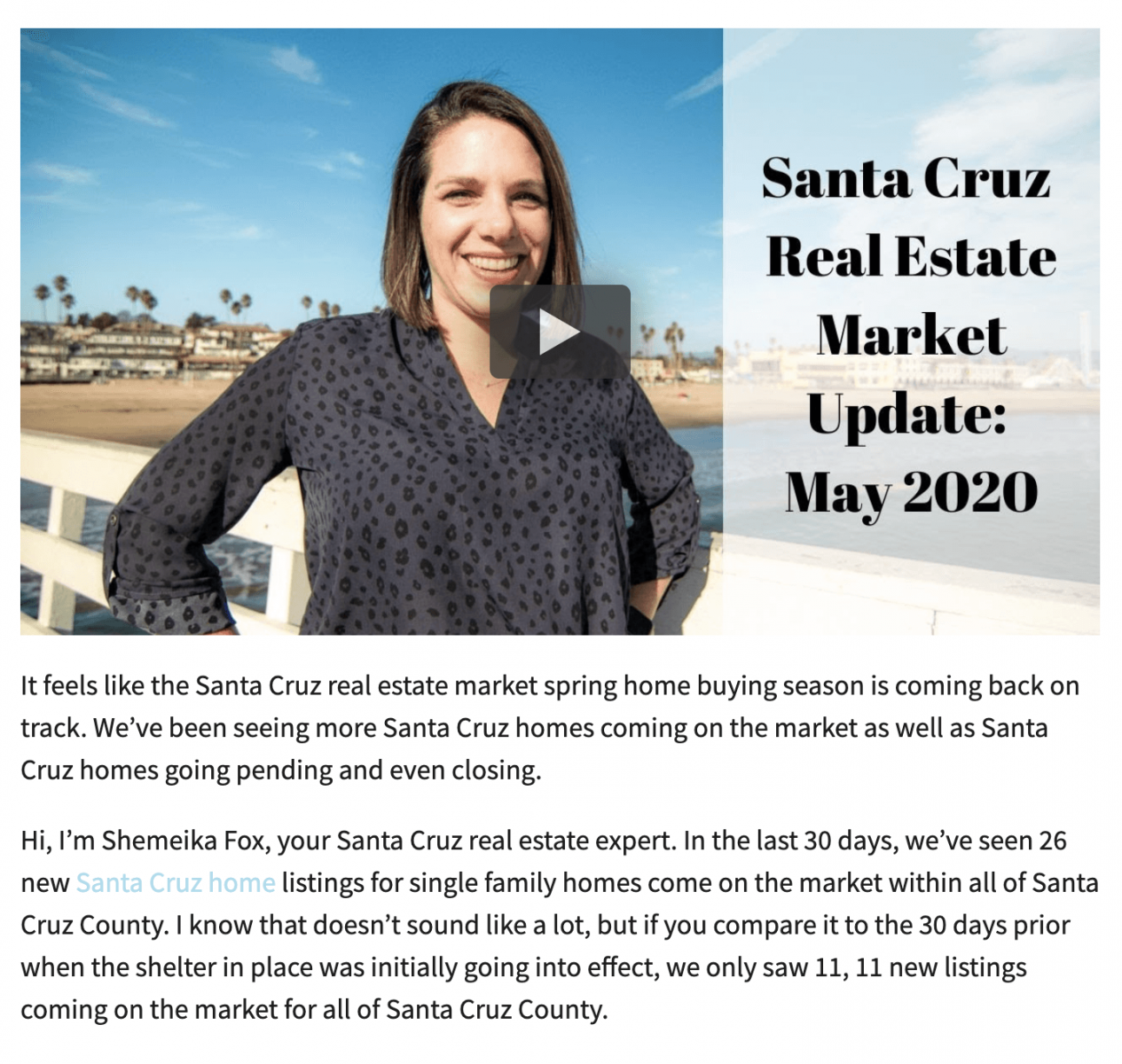
    Shemeika Fox is a real estate agent in Santa Cruz. She’s marketing her business in ways that most real estate agents never even consider, and because of that, she’s cutting through the clutter in her competitive market. Since implementing Carrot and an Inbound methodology, Shemeika’s web page views increased by 227% and their closings have increased 2x.

    Recently, she joined us on the CarrotCast to discuss her journey through our 30 Day Challenge, which has helped her take her market authority even further. She is quickly ramping herself up to be the leading real estate expert in all of Santa Cruz!


    In 2019, Shemeika Fox doubled her number of closings. But it wasn’t by sheer luck… it was by clear-cut strategy and intentional action.

    She’s marketing her business in ways that most real estate agents never even consider, and because of that, she’s cutting through the clutter in her competitive market.
    Just before that success, though, Shemeika was tired and frustrated — she was on the hamster wheel of business, sweating for every single lead.

    She knew something needed to change.

    And that’s when she made these five key shifts in her thinking and her marketing.

    1. Mindset Shift: From Hunting To Farming

    Entrepreneurs are great at getting up early and working late.

    There’s a ceasless motivation that drives entrepreneurs, and while that’s an important quality for success, it’s also not sustainable.

    Ask any ex-entrepreneur why they got a day-job and they’ll probably tell you that they worked too hard and too long for too little payback.

    That’s because most entrepreneurs hunt for their closings.

    They pay for advertisements, ask for referrals, send direct mail, follow-up, and cold call. But here’s the thing: the moment that you stop doing those things… the leads stop flowing. Which means that the only way to generate more leads or to keep generating leads at all it to keep working harder and longer… to keep hunting.

    But what about a farmer?

    A farmer is different than a hunter. They plant seeds, nurture those seeds, and then reap the benefits of their careful attention.

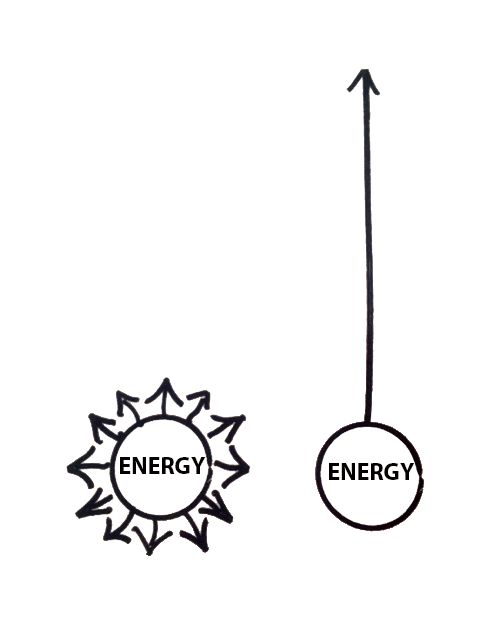
    less-work
    All of the lines on the left are equal to the length of the line on the right, but more progress is made when focus is put in just one mission-critical direction.

    Sure, it takes more time to see the results, but the harvest is much more plentiful and, in terms of ROI, it requires much less work per closing.

    Farming strategies include SEO, buliding brand awareness, and content marketing… all strategies that most real estate agents neglect.

    Now we’re not saying that you should stop running ads or sending direct mail, but you should be farming and hunting for your leads.

    Hunt for leads when your business needs them immediately, and farm when you can allow a bit more time for results.

    This was an important mindset shift for Shemieka to make and it’s important for all entrepreneurs.

    Harder work is not the only way to generate more leads or grow a bigger business. Like the cliche goes, work smarter, not harder.

    For Shemieka, that means consistently running ads and sending direct mail, but also spending plenty of time building her online brand image, posting content to social media, and growing her SEO presence.

    2. Simple, Effective Lead-Generation Website

    Building an effective website is one of the most difficult parts about building a real estate business.

    You need one because everyone else has one… but how do you get that website to actually be useful and generate leads?

    And in order to get the functionalities and features you need to get your website generating leads on autopilot, how do you build that without spending thousands of dollars on a custom design?

    For Shemeika (and for more than 7,000 real estate pros around the nation), Carrot was the answer.

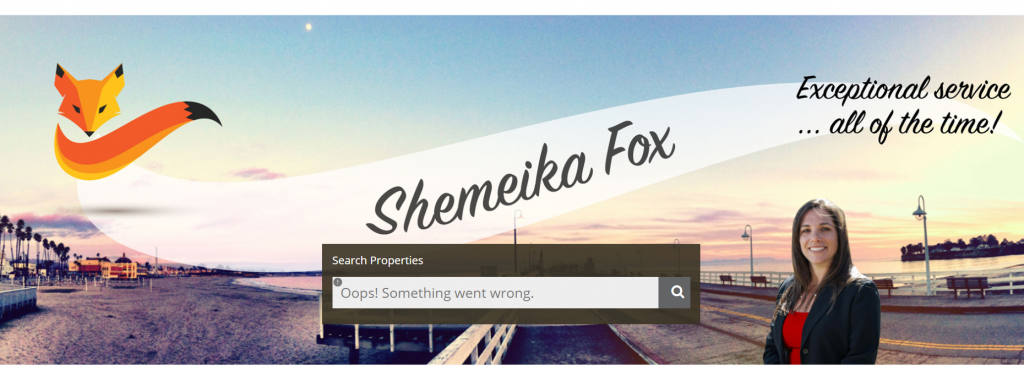
    Before signing up with Carrot, this was Shemeika’s website.

    It might look pretty, but the problem is that it wasn’t generating leads for Shmeika’s business, no matter how much traffic she drove to the site.

    That’s why she signed up with Carrot.

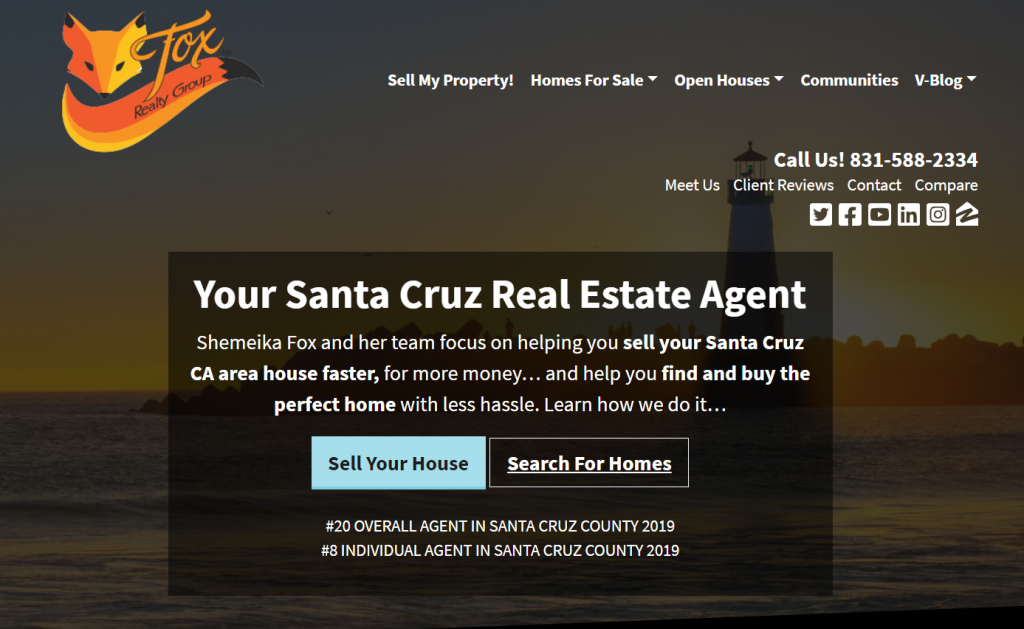
    Here’s her new website.

    And guess what?

    People don’t just visit that site… they opt-in, they contact her, and those leads turn into closings.

    In fact, her website brings in so many leads that, in 2019, she doubled her number of closings.

    Why?

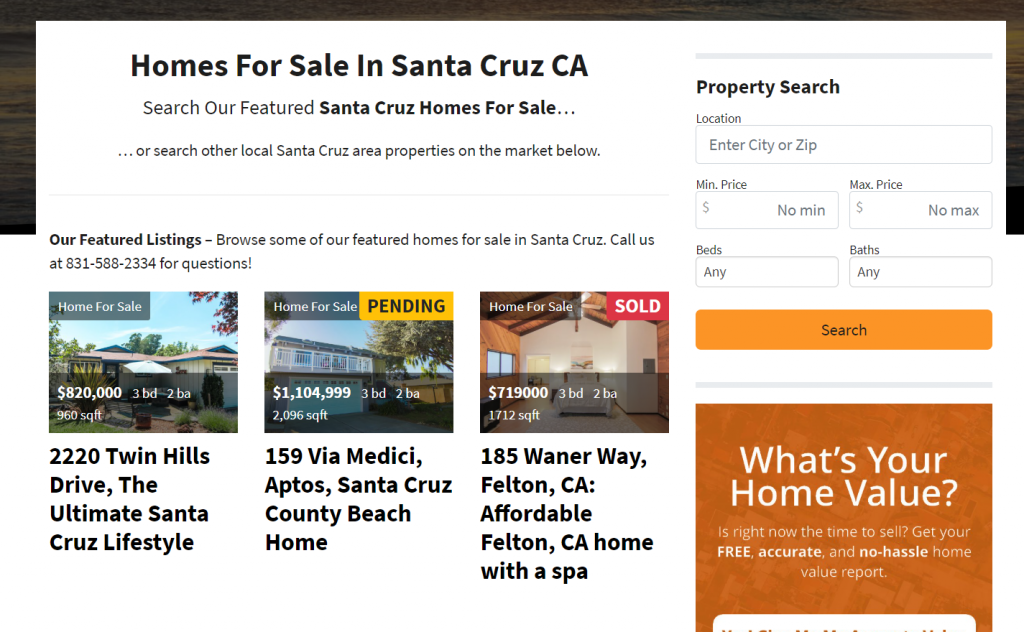
    Well, the genius of our Carrot methodology is in giving your website traffic exactly what they want. First, people tell you whether they want to buy a home or sell their home.

    If they want to buy, then they can immediately start browsing through your listings — if they find something they like, they just have to dial the number in the upper right corner of your Carrot site!

    If they want to sell their home, then they’ll be taken to this page which is designed to get them in contact with you as soon as possible.

    And the conversion rate on Carrot sites is higher than any other website builder in the industry, which means more leads, more often.

    This was a fundamental shift for Shameika. In her own words,

    “Carrot has impacted my business so positively! I love the property websites, landing pages, the SEO rankings, blog and over all design of the site. I also love the landing pages that i use to drive traffic from ads that I run. And my favorite is to watch the increase on Google rankings with the more relevant content we produce. Really great web host!”

    3. Focus On Blog & SEO

    One thing we’ve found that separates top-performing real estate agents from everyone else is a focus on search engine optimization.

    And that makes sense.

    Because if you rank on page one for a search phrase that is getting attention every single month, then you’re going to get a lot more website traffic and lot more leads than your competitors.

    And by focussing on SEO, you won’t just get more leads, you’ll also get higher quality leads.

    Our members have found SEO leads to be about three times higher quality than leads from paid advertisements, which means it takes about three times less leads to actually close.

    The reason for that is simple.

    With paid advertisements, you’re interrupting people who may or may not be intersted in your service.

    But with SEO, interested people come searching for you.

    So the question becomes, how can you build your SEO rankings?

    Well, we’ve designed Carrot to help you do just that… and here are some of the features we offer that you’ll definitely want to take advantage of…

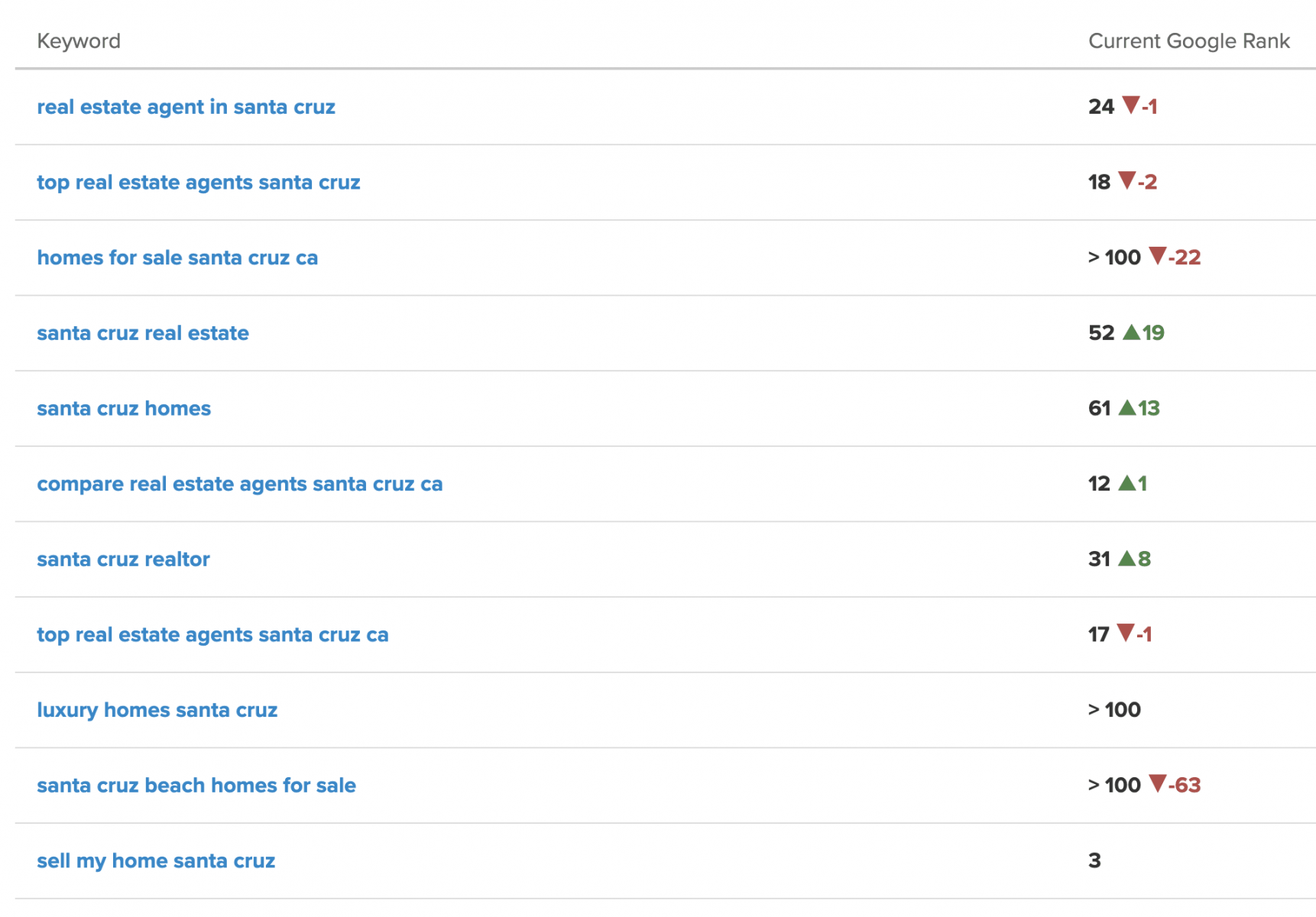
    Ranking Tracker — Our ranking tracker will keep an eye on how your website is performing for certain keywords in Google. Just enter the keywords that you’re trying to rank for and our ranking tracker will do the rest, giving your regular updates on your website’s SEO performance.

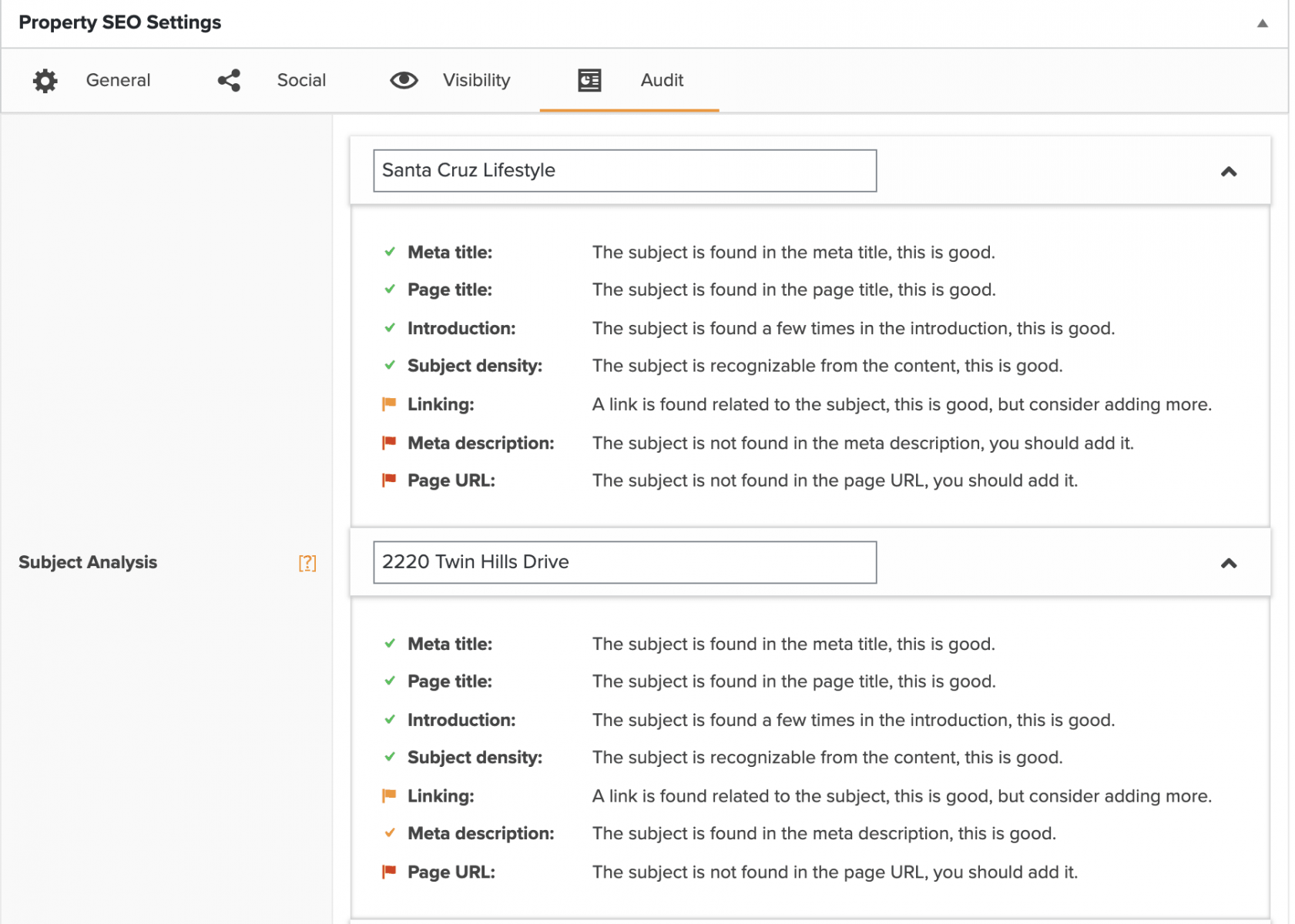
    SEO Tool — Whenever you’re designing a page of your website with Carrot, just scroll to the bottom to find our SEO Tool, which will automatically scan your page for search engine optimizations and give you a checklist of what you still need to do. Once the light is green, that means you’re good to go!

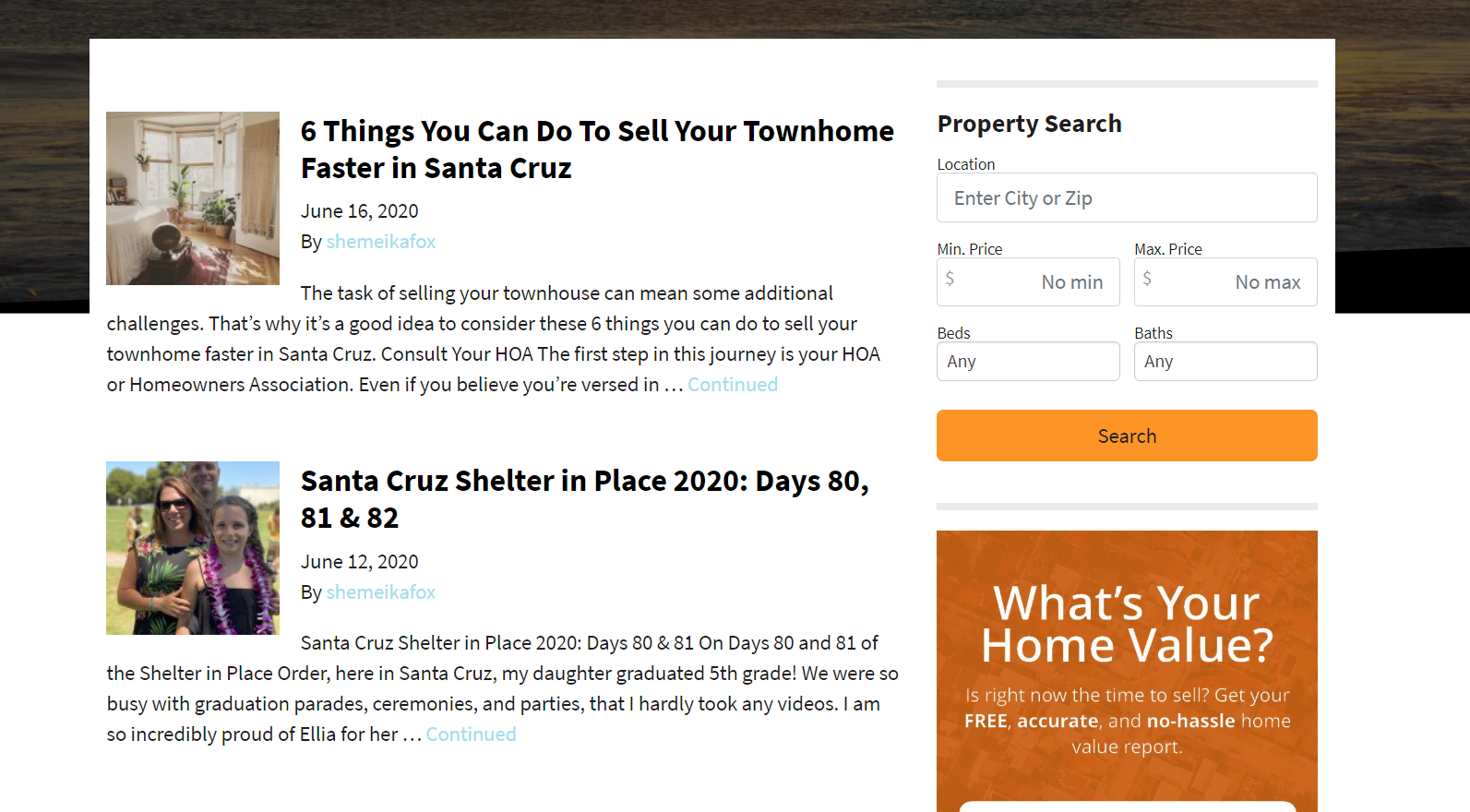
    Monthly Blog Posts — If you sign up for a Content Pro or Advanced Marketer membership, then we’ll also provide you with blog content for your website every month that is customized for your market and written to rank for a specific high-value keyword in Google. Just publish the content every month and you’ll give your website a better chance of ranking!

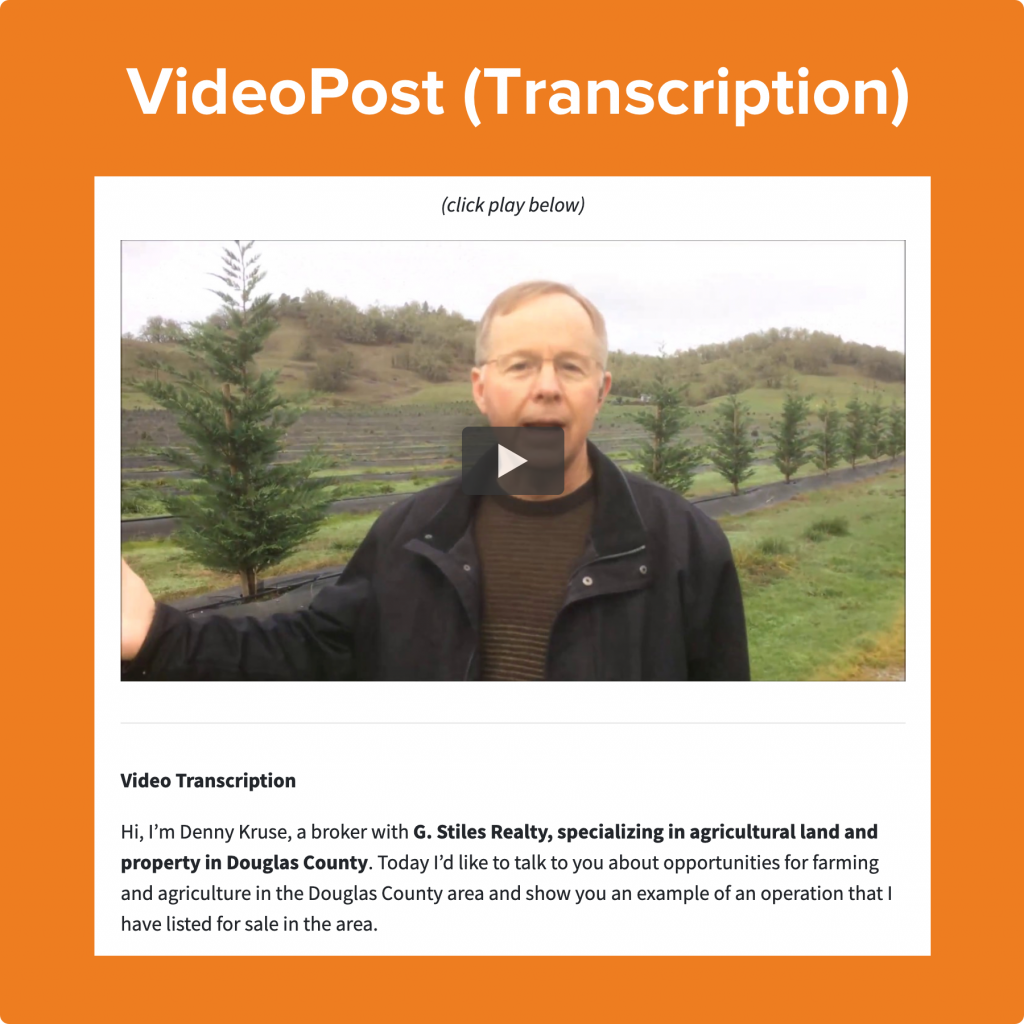
    VideoPost — One of Shemeika’s favorite things about her Carrot site is the ability to use a feature that we call VideoPost. This tool allows you to upload and trascribe any video into a long-form blog post for your website that can help you rank in Google. But instead of writing the article, you just upload your video and we’ll do the rest. This is a great way to quickly and easily create SEO content for your website.

    4. Advertisements & Landing Pages

    When we asked Shameika what her favorite thing about Carrot was, she mentioned that she loves being able to quickly and easily create landing pages that she can then drive paid traffic to.

    With Carrot, you can create a new landing page with just a few clicks.

    You can then customize that page however you want.

    You can turn it into a sales page with an opt-in form, testimonials, and even a credibility bar… or you can turn it into a long-form blog post.

    The choice is yours.

    But one of the best ways to make use of this feature is to create a new landing page for each specific market that you’re advertising to… and then to drive that traffic to that page.

    You might, for example, create a page for people who want to buy river-front homes, or a page for people who want to sell a home for over $500,000, or people who just want to learn more about you as a real estate agent.

    Remember, the riches are in the niches.

    And with a Carrot site, you can easily create a sales page for each niche that you operate in.

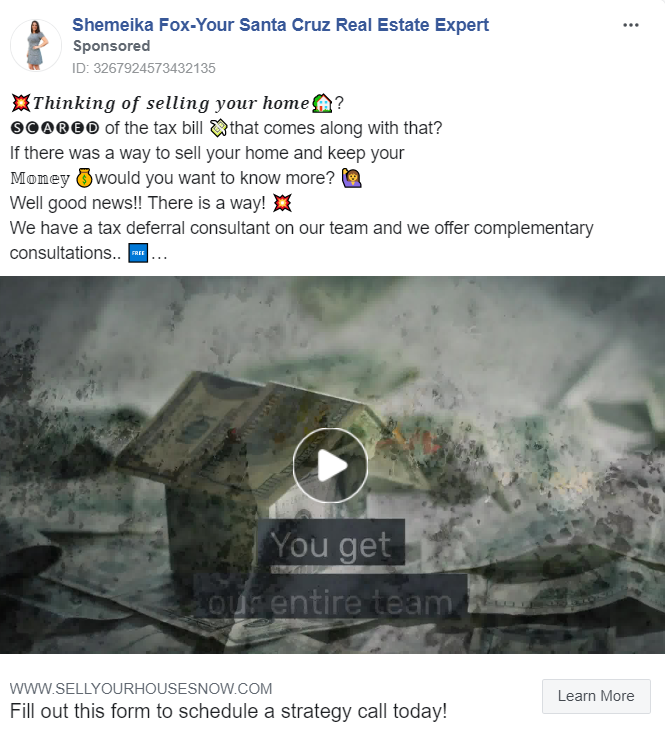
    Here’s a Facebook ad that Shameika is currently running…

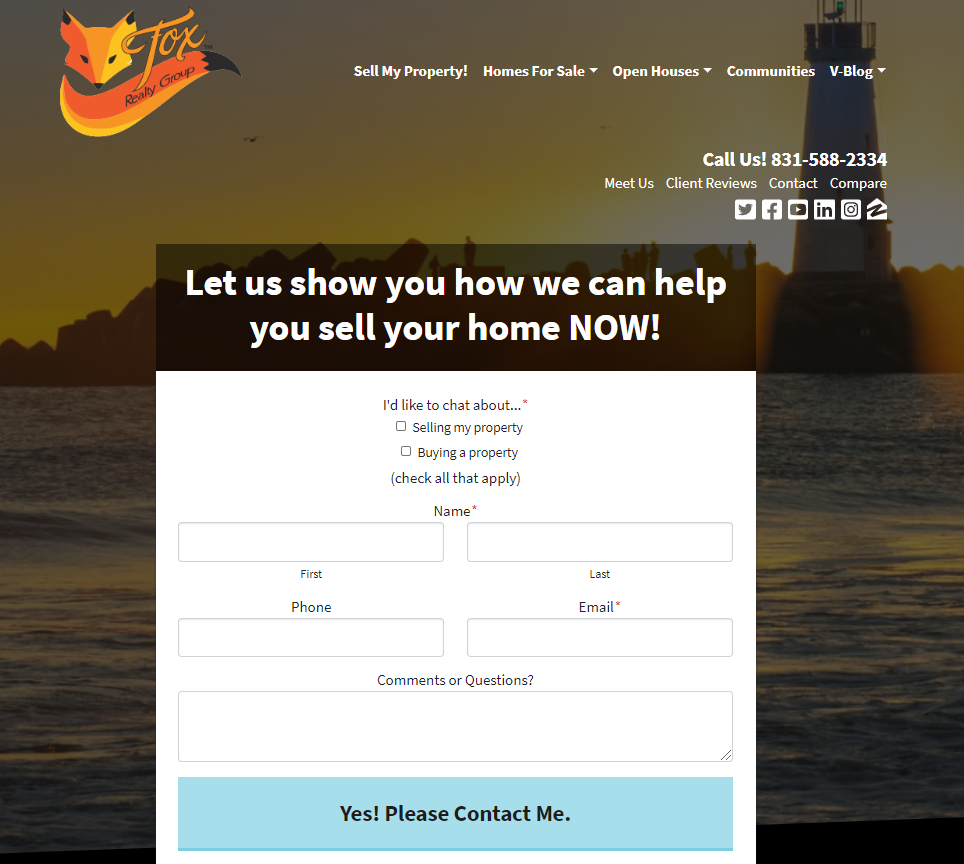
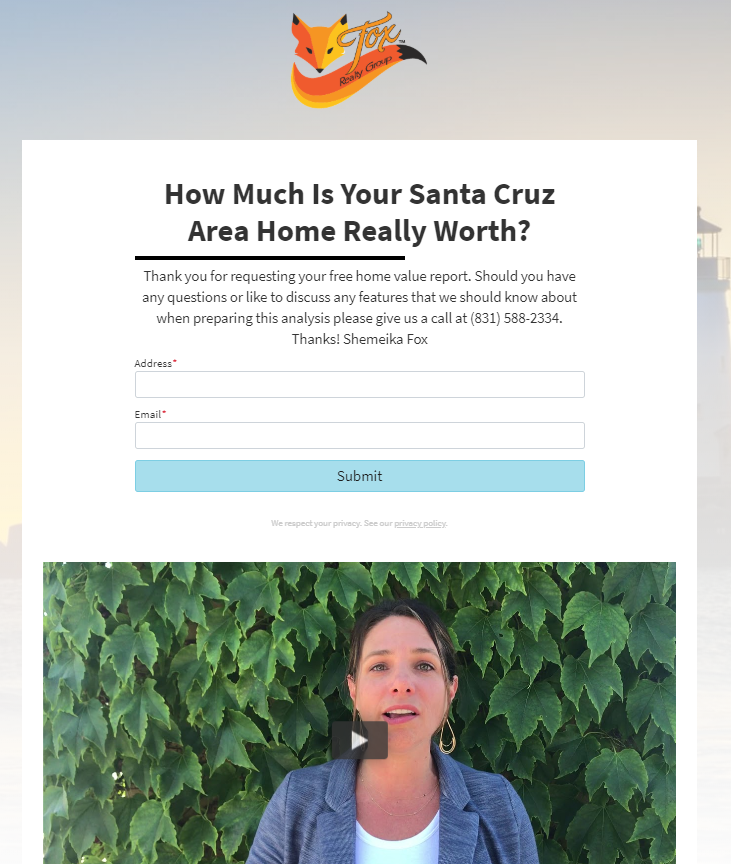
    And here is the page that advertisement will take you to if you click.

    See how the advertisement seamlessly flows into the landing page?

    That’s how it should always be.

    It should feel like one cohesive experience rather than two separate experiences.

    And by leveraging the versatility of Facebook’s targeting and Carrot’s landing page builder, you can create a seamless experience for buyers and sellers in any niche or market.

    Here’s one more example…

    And here’s the landing page…

    Shameika skillfully attracts her target market with Facebook ads and then gives them what they want most on the landing page.

    In return, she gets their contact information and can then add them to her email list.

    Or maybe she’ll be able to start working with them right away. Whatever happens, this is a great strategy for generating leads.

    Create more landing pages for more niches and markets… and use advertisements to drive targeted traffic.

    5. The 30-Day Challenge

    What if you could take a system that’s proven to generate high-quality leads — a system that has made hundreds of investors and agents around the nation millions of dollars — and implement it right into your business in just 30-60 minutes per day over a 30-day period?

    Sounds too good to be true, yeah?

    Well, that’s the exact system that Shameika went through… and it helped to unlock her business’ full potential.

    We call it our 30-Day Authority Building Challenge [CLICK HERE TO JOIN].

    In it, we walk you through how to brand your real estate business, how to drive traffic, and — most importantly — how to get high-quality leads (and even how to obliterate your best month’s lead-gen record)

    At Carrot, we’ve helped countless real estate pros beat their most aggressive market competitors, generate more than one million leads, and build businesses that support themselves and their families.

    Over the last few years, we’ve learned a lot about what real estate marketing tactics work… and what doesn’t.

    And we thought to ourselves…

    “What if we created a tried-and-true, fool-proof lead-gen system for agents and investors — a system that would help our members become the go-to experts in their market, drive leads passively to their website, and build the business of their entrepreneurial dreams?”

    This challenge is helping people even more than we could have imagined…

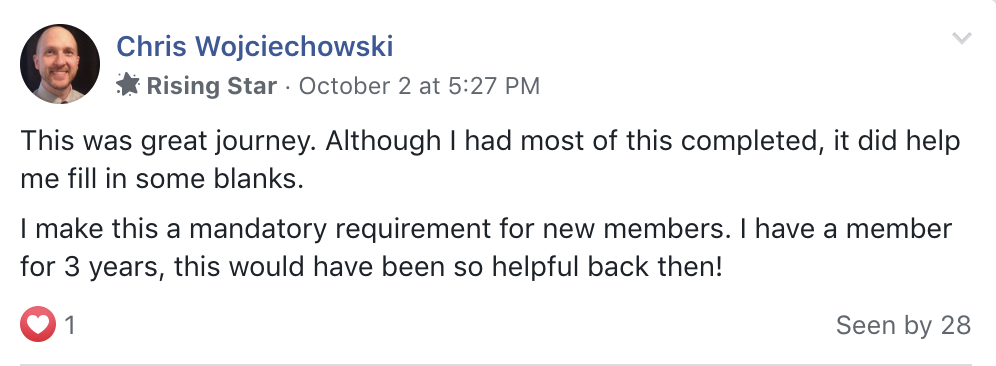
    One of our long-standing members, Chris Wojciechowski, said he wishes we would have created this challenge 3 years ago!

    Carrot 30 day challenge success

    So…

    Are you ready to create a marketing system for your real estate business that generates leads like clockwork, that makes your business more predictable and sustainable?

    Moreover, are you ready to spend just 30-60 minutes per day over the next month to make it happen?

    Great!

    Conclusion

    What are your goals for 2020?

    Do you want to generate more leads, do more closings, and grow your revenue?

    Do you maybe even want to double the number of closings you do this year?

    Well, we can no longer count on one hand the number of Carrot members who have taken their businesses to the next level.

    There are many stories just like Shameika’s of agents and investors who have used online marketing, SEO, Carrot, and advertising to beat their competition and build the business of their entrepreneurial dreams.

    It is possible for you as well.

    You just need the right tools.

  • 12 Proven Lead Generation Ideas For Real Estate Agents

    12 Proven Lead Generation Ideas For Real Estate Agents

    It’s hard building a thriving and successful real estate agent business.

    But, of course, there are some things that will make it a little easier.

    You’ve got tons of competition (other real estate agents) to deal with. You have to make good hires as your business expands, utilize the right tools, and budget your finances effectively.

    You’ve also got to consistently generates leads and make transactions.

    That’s the real crux of the issue, isn’t it?

    Because if you’re not consistently making transactions, then your business isn’t going to grow. If you are, on the other hand, then everything else will sort of fall into place.

    So we put together this article to give you some additional ideas for generating leads for your business, in good times and bad.

    Here are the 12 best lead generation ideas for real estate agents in a rapidly evolving industry to give you the tools to keep the buyers and sellers coming in:

    1. Change to a High-Converting Website
    2. Get Rankings For Long-Tail Keywords
    3. Use Incentivized Opt-In Forms
    4. Ask For Referrals
    5. Master Content Marketing
    6. Use Direct Mail
    7. Sponsor Housewarming Parties
    8. Brand Your Clothing
    9. Partner With Other Experts
    10. Attend Networking Events
    11. Run Paid Ads Consistently
    12. Advertise At Local Businesses

    1. Change to a High-Converting Website

    Here’s the hard truth about most website builders: they are great for… well, building a website… but they aren’t great for getting conversions necessarily.

    Most website builders (like WordPress and Wix, for instance) provide you with a suite of tools to create any kind of website that you like, but they don’t provide you with guidance as to what will actually work best in your industry.

    Because when someone visits your website, they are considering working with you. And it’s your job to build trust and get their contact information as quickly as possible.

    At Carrot, we’ve run hundreds of split tests to determine what type of website converts the most visitors. And the best part is, all of our AgentCarrot Members get a high-converting website out of the box — just customize the copy, images, and logos however you like and you’ve got yourself an online lead generation machine for real estate agents.

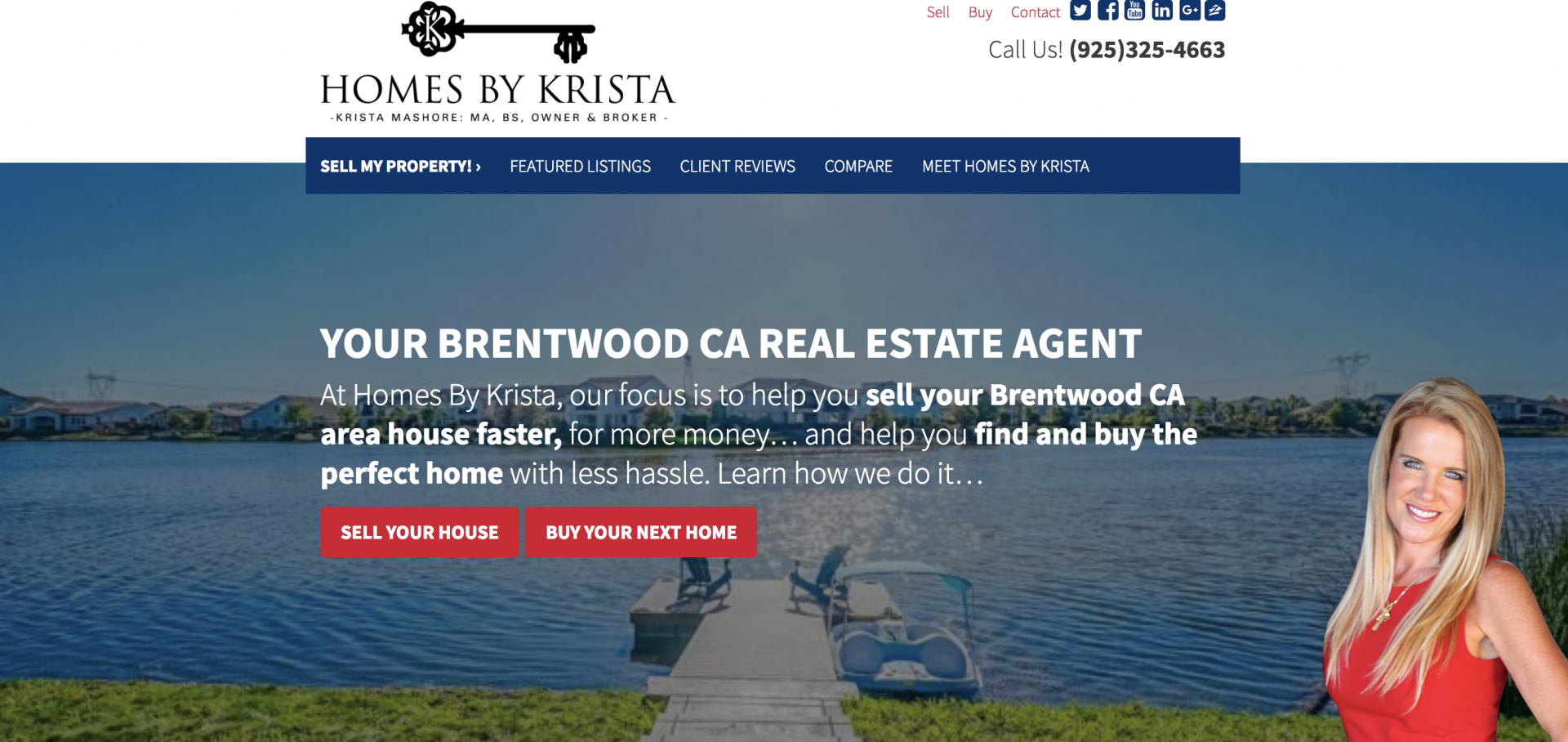
    Krista Mashore AgentCarrot Website

    2. Get Rankings For Long-Tail Keywords

    At Carrot, we spend a lot of time discussing SEO and Google rankings… that’s because we know the power of Google rankings first hand for our business and we’ve seen the impact on our member’s businesses.

    If you rank on page 1 for high-value keyword phrases in your market, then most of your business’ lead gen will take care of itself.

    Sure — you’ll still want to run paid ads and network within your community, but ranking in Google will give you an undeniable step up on the competition.

    Here’s what we’re talking about…

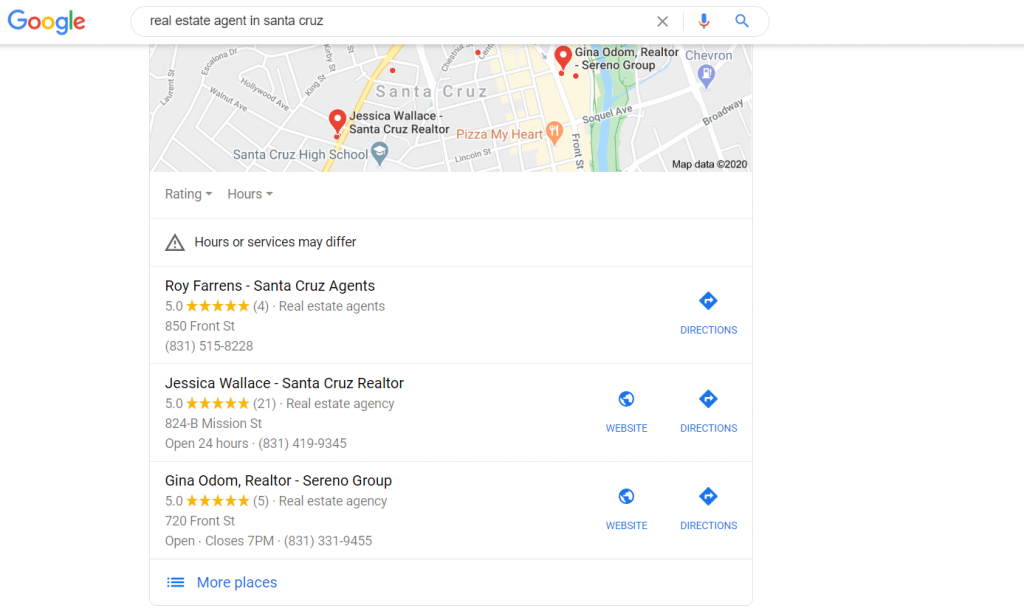
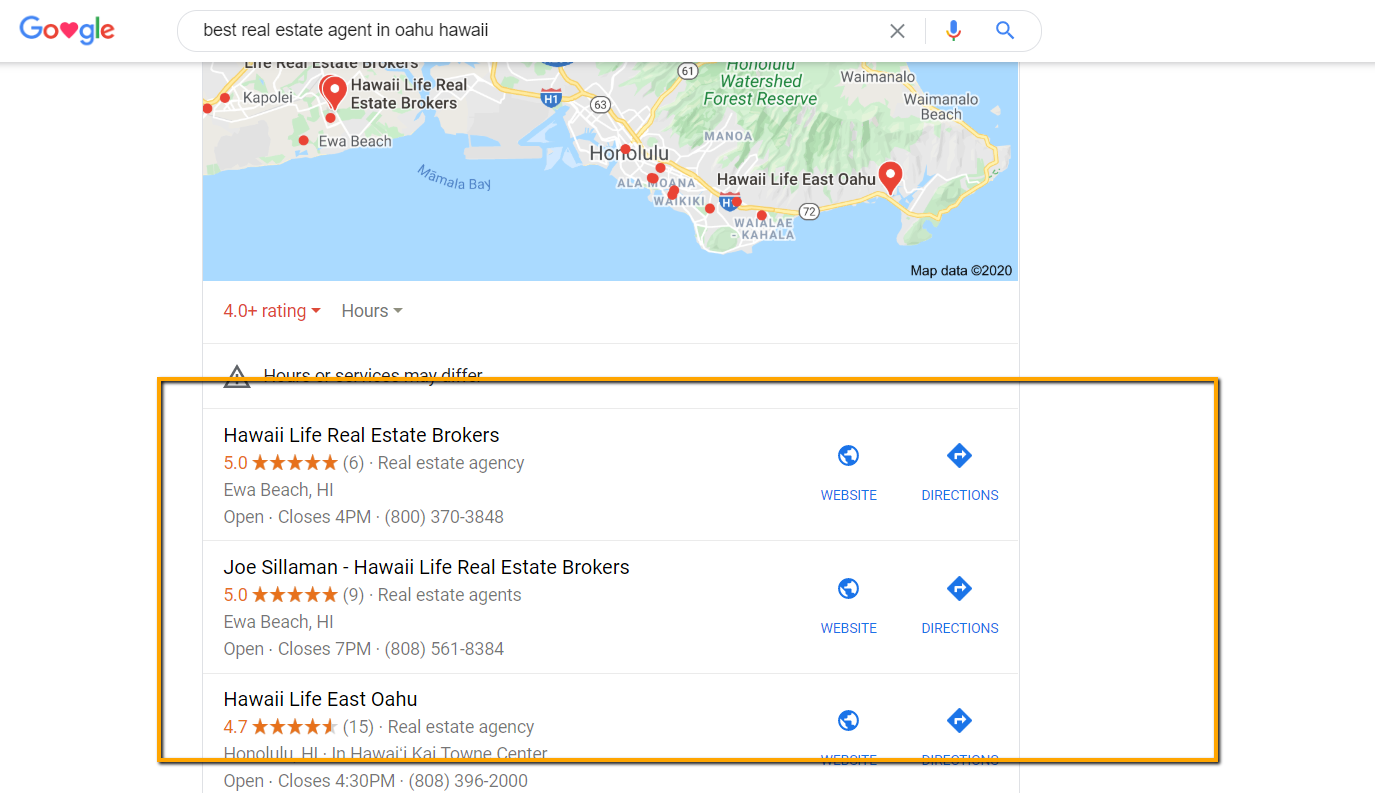
    When someone searches for a pertinent phrase specific to your market — “Best real estate agent in [MARKETY CITY]” or “[MARKET CITY] real estate agent”, for example — if you’re on the first page, then you have a fair chance of that person visiting your website and becoming a lead.

    The higher up you are on the first page, the better your chances.

    But how do you get your website to the top of the rankings?

    First, you have to choose a keyword phrase with the right intent and with not too much competition.

    Here are a few examples of great starter keywords for most markets…

    • Best real estate agents in [MARKETY CITY]
    • Real estate agent in [MARKET CITY]
    • Buy a home in [MARKETY CITY]
    • Sell my home in [MARKETY CITY]

    If you want to get ranking even faster, then you might target longer-tail keyword phrases based on your niche or preferred market…

    • Sell my riverside home in [MARKET CITY]
    • Get best price on my home in [MARKETY CITY]
    • Want to downsize in [MARKETY CITY]

    The list could go on… but you get the idea.

    The next step is to create a page on your website that’s dedicated specifically to the keyword phrase that you’ve chosen.

    This means that the exact phrase you chose should be in the title, meta description, and URL of your page — this will give you a better chance of ranking.

    Then watch what your rankings do (you can use our Keyword Ranking Tracker if you’re a Carrot member) and adapt your strategy as needed.

    If you aren’t ranking as you expected, then look at what other page-1 results are doing and try to mimic their strategy (without stealing). If you get to the first page seamlessly, then move onto other keywords and keep the momentum going!

    Do this with enough keywords and, over time, your website will start pulling in traffic and leads… passively.

    3. Use Incentivized Opt-In Forms

    One of the most common mistakes that real estate agents make when designing their website is that they don’t have an incentivized opt-in form at the front and center of their primary pages (homepage, about page, listing pages, etc).

    If you’re going to collect leads through your website, then you need an incentivized opt-in form.

    What is an incentivized opt-in form?

    Well first, it’s a form that’s easy for your target market to fill out. Usually, it just requires name and contact information (the fewer fields you require, the higher your conversion rate will be, usually).

    The second piece is just as important, though: this form is incentivized, which means that when someone fills it out, you give them exactly what they want.

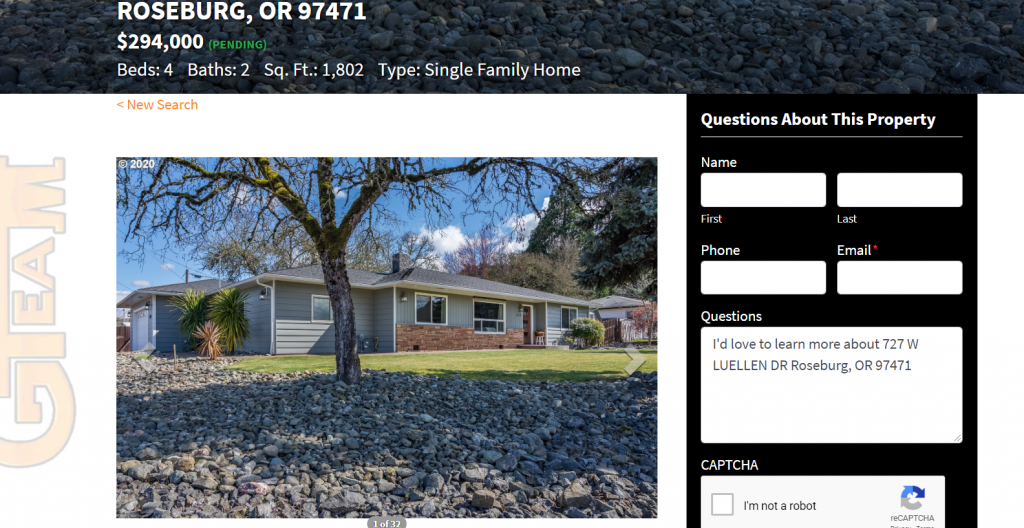
    The G Team, for example, a real estate company in Roseburg Oregon, has an incentivized opt-in form on all of their property listing pages.

    You could also put an opt-in form on your homepage that requires visitors to give you their email address before viewing your listings.

    There are a lot of different options here, but the important thing is to make sure that your website is set up to collect leads.

    Oh — and all Carrot websites come with an incentivized opt-in form baked right in. ;)

    4. Ask For Referrals

    Creating a consistent referral process with your past clients can be a great way to generate more leads and grow your business.

    You might be surprised by how many people are willing to offer referrals once you’ve helped them and built a relationship with them.

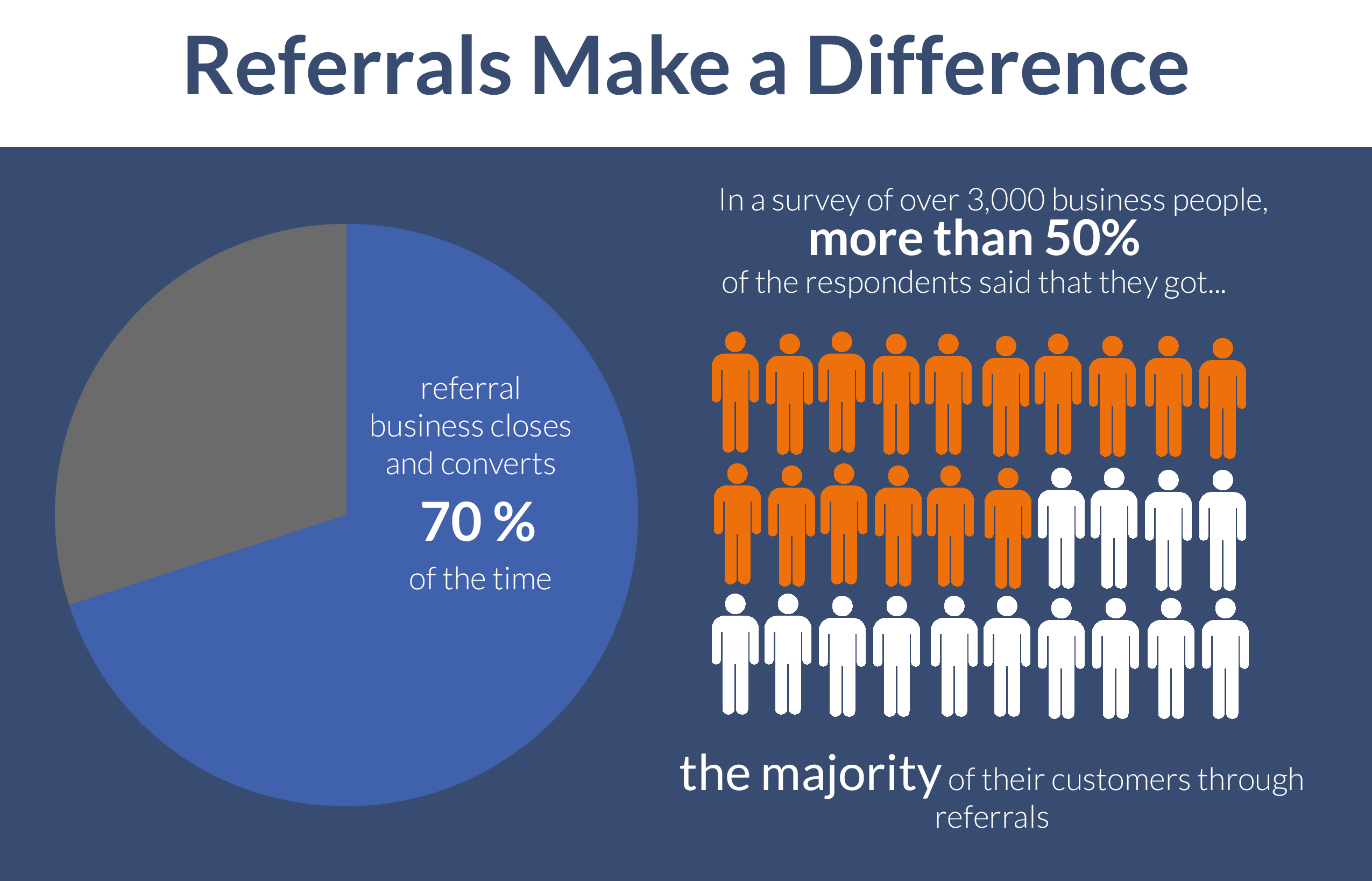
    And the best part is, leads that are referred to you have a super high close-rate of 70%.

    How important are sales referrals?

    So why not call some of your past clients, catch up, and ask them if they know anyone who might require your services?

    Most people won’t mind you asking and many people will probably give you a referral if they know of someone who’s trying to buy or sell their home.

    Worth a shot!

    5. Master Content Marketing

    Content marketing is an extremely powerful tool for real estate agents. Unfortunately, though, not many real estate agents consistently use content in their marketing strategy.

    But that’s good news for you… if your competitors aren’t content marketing, then that’s a gap you might be able to fill!

    Okay… but what is content marketing?

    Well, it’s basically just creating content (video, podcast, social media posts, blog posts, etc) that attract your target market… usually by providing free value.

    Let me give you an example.

    At Carrot, we offer monthly blog content packages as a part of our Content Pro and Advanced Marketer member plans.

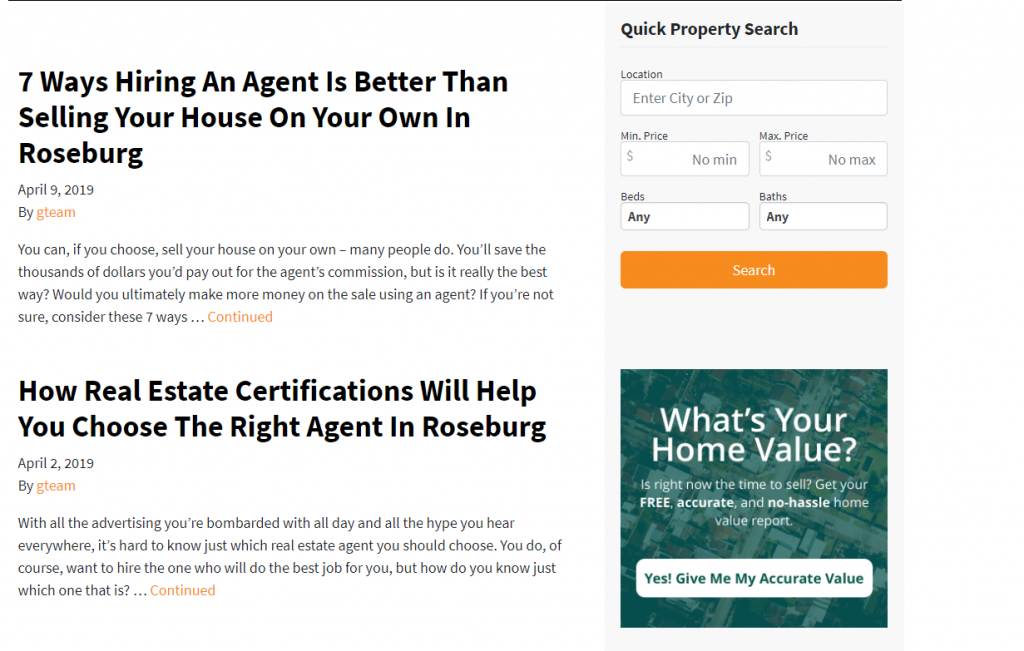
    And this is what one of member’s blogs looks like just from the content they’ve received through their Carrot plan.

    The coolest part, though, is that those blog posts can generate leads for your business!

    You can share them on social media to attract attention and they can even rank in Google for certain phrases and pull traffic passively.

    The other option is to create your own blog content. And while that can be time-consuming, at Carrot, we’ve also created a simple solution for that.

    With VideoPost, you can transcribe a video you’ve recorded into a long-form blog post with the click of a button!

    VideoPost Real Estate Blog Content

    Here is a PERFECT example of the power of content marketing + VideoPosts.

    “In this post, we’ll walk through real case studies that show you how to beat Zillow, Trulia, and Realtor.com in Google in your local market and scoop up traffic and leads for FREE away from the tech giants.”

    —>>> How To Beat Zillow in Google With Your Real Estate Agent Website – Case Study + Guide

    However you decide to do it, creating and marketing content is a great way to grow your business and generate leads over the long-term.

    6. Use Direct Mail

    Even though we talk a lot about digital marketing at Carrot, we can’t forget the ol’ tried-and-true direct mail marketing.

    This is a great way to generate leads consistently for your business.

    In fact, many of our members use digital marketing tactics and direct mail to grow their businesses.

    The question is: when should you send direct mail and how often?

    Most experts recommend sending direct mail consistently every single month so that you can keep lead-flow momentum.

    But if you’re going to send direct mail every month… what exactly are you going to put on those mailers?

    Here are some ideas.

    You could do something as simple as this…

    You can also send out mailers about an upcoming open house…

    You could send “Just Listed!” announcements…

    You could mail out to people who are currently renting a home…

    Or you could send flyers that provide people with a look into your market’s current housing conditions.

    Broker Judy Weiniger on Creating a Dynamite Mailer

    Clearly, you have a lot of options when it comes to your direct mail campaigns. And what you send will depend largely on how creative you’re willing to get.

    At the very least, we would recommend sending holiday postcards.

    But a really successful direct mail strategy will depend on consistently sending mailers to connect with your community and generate leads.

    One overlooked way to impress your clients, build brand awareness, and even generate leads is to sponsor a housewarming party for your clients who just purchased a new home.

    Obviously you don’t want to make it too much about you, but just hosting the party will speak volumes about you and your business to the people who attend.

    Plus, you can meet lots of new people in the community that you’ve never met before and maybe even get a referral or two out of it.

    Just ask the new homeowners to invite anyone they like and tell them that you’ll be handling the refreshments.

    At the very least, you’re going to surprise and delight your existing clients!

    8. Brand Your Clothing

    It might seem silly, but branding your clothing can be a great way to build awareness for your business and get people asking questions.

    Heck, we even do this at Carrot with the dolls that we create for our members!

    Why?

    Well, partly because it’s fun. ;)

    But also because we know that when someone asks one of our members why they have a Carrot doll, that’s going to launch into a discussion about the service that we offer.

    You can use the same tactic by either branding your own clothing with your business name and logo and/or giving a free t-shirt or hat to people who’ve worked with you in the past.

    There are lots of different websites that allow you to create custom clothing. Printful is one of the most well-known.

    9. Partner With Other Experts

    Let’s think for a minute.

    Who else probably talks with a lot of people who are wanting to buy or sell their home?

    Appraisers? Local handymen? Coffee shop workers? Real estate investors?

    Anyone else you can think of?

    If you could build a relationship with those people and create a two-way lead-gen street (you give them referrals and they give you referrals), that can be a really beneficial thing for your business.

    So make a list of everyone you can think of who is already speaking with your target market, give ’em a call, and tell ’em what you have in mind.

    You might be surprised by how many people are willing to help you out.

    10. Attend Networking Events

    Most communities have recurring meetups or networking events for entrepreneurs and small business owners.

    These can be a great place to build relationships with other entrepreneurs in your community and create mutually beneficial partnerships.

    (If there isn’t one in your community, then you might consider starting one!)

    Meeting the right person to aid you with your next phase of business can really help to unlock its potential.

    You never know who you’re going to meet, what opportunities will be placed on your lap, or what you’ll learn all because you attended a certain meet-up.

    Plus, marketers and salespeople who spend time on social selling (building important relationships) tend to be more successful than their counterparts.

    11. Run Paid Ads Consistently

    At Carrot, we talk a lot about organic marketing strategies like SEO and content marketing.

    And those are super important for growing your business over the long-term!

    But that doesn’t mean you should ignore the power of paid advertising.

    In fact, most of our members consistently use paid ads to generate leads for their businesses and they build up organic strategies over time to decrease overhead.

    The best part about paid ads is that they generate leads right now… not later.

    But the question is… how much money should you spend on your paid advertisements and how can you make sure that you’re going to collect a healthy ROI?

    Well, we created this totally free ROI calculator so that you can enter your know-able metrics and determine your budget.

    We originally created this calculator for investors but it works just as well for agents.

    For example, if you typically profit $5,000 per transaction, close one transaction for every 5 leads, average $4 per click, and have a website conversion rate of 6%… then you should be willing to pay a minimum of $333 to get one deal and a maximum of $433.

    This part of marketing is mostly science. Just update your ads regularly, make sure you’re targeting the right audiences, set your budget, and keep to the process.

    The more consistent you are with running paid ads, the faster and more predictably your business will grow.

    We’ve talked a lot about collaborating with other business owners in your community.

    And that’s because, for real estate agents, that’s a really powerful strategy.

    But if you want to skip the relationship-building and networking piece, you might just consider asking some local businesses if you can advertise with them.

    You could pay for a spot on the local radio. You could put up flyers at local coffee shops. You could provide free mints at restaurants with a sign that says “Courtesy of [BUSINESS NAME].”

    Your imagination and creativity is the limit.

    The more people who see your face in the community, the more leads you’re going to naturally generate.

    Ready To Get More Leads & Close Your Next Listing?
    Join the Agent 30-Day Challenge

    Agent 30 Day Challenge Success

    This 30-day challenge is designed to dramatically improve your site by focusing on one highly significant task per day so you can achieve success in just minutes a day!

    Conclusion

    The question is, how are you going to consistently generate leads as a real estate agent?

    Because if you can consistently generate leads, then you can consistently do transactions and build a predictably profitable business.

    And above are 12 different answers to that question.

    We hope this article helps you build the business of your dreams!

  • 5 Steps to Create a Real Estate Lead Nurturing Sequence

    5 Steps to Create a Real Estate Lead Nurturing Sequence

    Real estate lead nurturing is one of the most important things you can focus on. No matter the size of your real estate business, this proven strategy will help increase your sales.

    Any sales 101 course will tell you to follow up often, consistently, and without hesitation. But still…

    …you hesitate.

    After all, you don’t have time to send hundreds of emails or make hundreds of phone calls every day. Sure, it would be good for your business, your conversion rate, and your revenue generation… but it’s just not realistic.

    You’re plenty busy doing house showings, managing open houses, meeting with buyers and sellers, and clarifying contractual agreements.

    The last thing you need is another tedious task to add to your high-piled plate.

    Fortunately, you can reap the benefits of following up without actually following up.

    Let me explain.

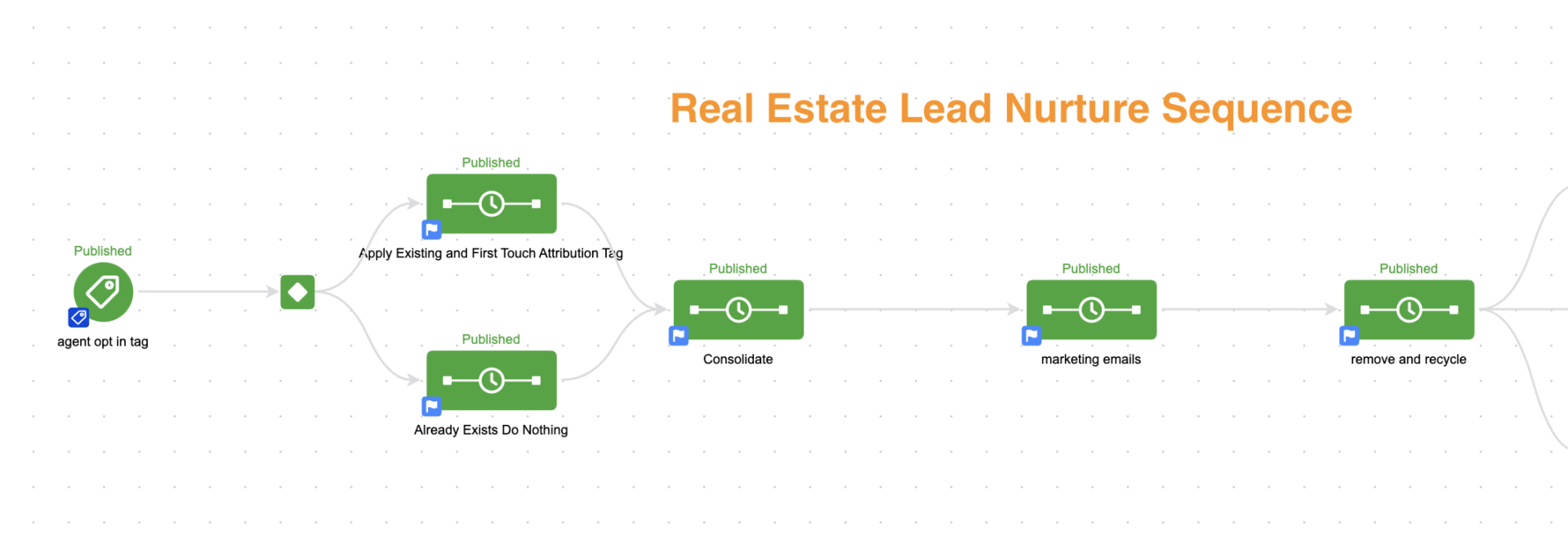
    Real Estate Lead Nurturing: What is an Automated Sequence?

    Real Estate Lead Nurturing email sequence

    A real estate lead nurturing sequence sometimes called a “drip sequence”, is a series of emails which send over a period of time to new subscribers on your email list. The goal is to stay in touch with your new leads and build an ongoing relationship with them where they learn to trust your expertise and advice.

    Typically, the longer that you stay in touch with your leads, the more free value you provide, and the more that they trust you, the better chance that they’re going to work with you sometime down the road (maybe not today, but one year from now? Two years from now?

    Across the board, nurture sequences are wicked powerful. Here are some stats to get your mind whirring.

    • Lead nurturing emails get at least 4 times the response rate of mass email broadcasts.
    • The open rate for drip sequences is 80% higher than for single campaigns.
    • The click-through rate for drip sequences is 3 times higher than for single broadcasts.

    You will, of course, need an ESP, Email Service Provider, like Mailchimp, for example, to collect email subscribers and schedule your nurture sequence. But many ESPs have a free version or are relatively inexpensive depending on the number of subscribers you have.

    In our opinion, with the potential conversion power of a nurture sequence, paying for an ESP is definitely worth your money.

    Mailchimp is one of our personal favorites.

    Note: You can also create a text message nurture sequence instead of or in addition to your email sequence. Consider a tool like SimpleTexting to create an automated text-message nurture sequence.

    How To Create a High-Converting Nurture Sequence

    You now know why a nurture sequence is so great for your business — it follows up with your leads automatically — but how do you build a high-converting sequence… even if you’re not all that great of a sales copywriter?

    Here are the 5 steps.

    Step #1: Consider Segmenting Your List

    Having one nurture sequence is far better than having no nurture sequence. But having multiple nurture sequences that deliver situation-specific or interest-based content to each of your leads is even more effective.

    For that reason, you might consider segmenting your email list based on different situations…

    • First-time homebuyers
    • Home sellers
    • Big-budget buyers

    Those are just a few examples. The segmentations you choose should be dependent on the answer to two simple questions.

    First, what kind of buyers or sellers need to be nurtured differently? For example, buyers with a $10mm budget will probably need to be nurtured very differently than low-budget first-time home buyers.

    And second, can you easily collect that information with a secondary sign-up form? You can’t, for example, segment your email list based on whether people are dog-lovers or not because that data would be difficult to collect on your website.

    But you could probably ask questions about budget, whether this is the person’s first home or not, and even what kind of home specifically, the lead is looking for (river-side, suburbs, apartment, etc).

    So long as the groupings you’ve decided on, need to be treated differently and the corresponding data is easy to collect, you can create segmentations.

    If you’re a Carrot member, you can easily connect your website’s opt-in form and data collection to your ESP. Then, you just need to specify which website form answers will be placed in which segmentation.

    Step #2: Decide On Your Sending Cadence

    How long are you going to send emails? And how often are you going to send emails?

    The answer to those questions depends, to start, on your preference and what you think is the best for your business and, in the long run, what you find works best. The more emails you send and the longer you use a drip sequence, the more you’re going to learn what works well and what falls flat.

    But! We do have some recommendations to get you off the ground. ;-)

    We recommend sending one email every day for the first three days, then one email every week for the remainder of the first and second month, then one email every other week for the third month to the end of the sixth month. Once the sequence ends, you’ll stay in touch via your monthly newsletter (see Step #5).

    All in all, that’s 15 emails for each sequence you create (assuming that you have multiple segmentations). If that’s too much work, then just start with 7 or 8 emails and slowly build up.

    Remember, having some sort of nurture sequence is better than having no nurture sequence at all.

    Note: If you’re creating multiple nurture sequences for different segmentations, remember that there will probably be some overlap between the sequences. That is, you probably don’t have to write a brand new sequence for each segmentation — keep what still fits for the specific segmentation and adjust the rest.

    Step #3: Set Expectations

    The first email in each of your drip sequences should do two things. It should welcome the lead to your email list and set realistic expectations for what they can expect you to send them.

    Something simple like this will do the trick…

    “Hey again! Since you’re looking to buy your first house, I wanted to add you to my email list for first time home buyers! I’ll be sending you updates every so often on the market for first time home buyers. Get in touch with me if you have any questions!”

    Just let them know that you’re going to be sending them some emails and providing them with some free value. This will ensure they’re not caught off guard when you start emailing them and it will build some anticipation, encouraging them to actually look at your future emails.

    Step #4: Decide What To Say In Your Emails

    You’re probably thinking… But what am I going to say in all of these emails?

    That’s a great question.

    There are 3 types of emails that you should add to your nurture sequence.

    1. The Value-Add — The free value email should make up the bulk of your nurture sequence. Teach buyers how to negotiate a better price, teach sellers how to sell faster and for more money, and teach buyers and sellers about what they should look for in a real estate agent. The more value you provide, the more people will perceive you as an expert, and the higher the chance they’ll work with you down the road.
    2. The Story-Teller — People love a good story. If you can’t think of any practical advice to offer, then tell a funny, inspiring, or meaningful story about your experience as a real estate agent. This is a great way to build long-lasting relationships with your leads and make yourself seem more approachable.
    3. The 9-Word Email — Every 90 days, we recommend sending a 9-word email that says something to the effect of “Are you still looking to buy your first home?”, adapted, of course, for whichever segmentation you’re sending to. Here’s an article describing the amazing impact of the 9-word email.

    At the end of each email in your sequence, put a “P.S.” that says something like, “Are you still interested in buying your dream home? Give me a call!”

    Oh, and one more thing. If you hate writing and prefer making videos, great! Send videos to your list instead of written content — it might even perform better.

    Step #5: Maintain a Monthly Newsletter

    And lastly, maintain a monthly newsletter where you send out market updates and general advice to your entire list — the people who are currently in a nurture sequence and the ones who aren’t.

    This will allow you to stay in monthly contact with people who have finished your nurture sequence.

    Which is good — you never know where your next referral is going to come from.

    Conclusion

    You need to follow up with your leads to fulfill your business’ potential…

    …but you’re busy enough as it is.

    Fortunately, you can build a nurture sequence using the steps outlined above to close more transactions, forge stronger community relationships, and establish your market expertise… all without lifting a finger (once your nurture sequence is finished).

    So get to it. And hit us in the comments if you have any questions.

    Looking for more tools and tips on nurturing your leads? Here are some additional resources:

  • Case Study: Google Ads Traffic To Carrot Website Reveals The Most-Clicked Page On Your Site

    Case Study: Google Ads Traffic To Carrot Website Reveals The Most-Clicked Page On Your Site

    If you’re like most real estate investors, you’re already running paid advertising campaigns to your website (Carrot or otherwise).

    You’re running Google Ads or Facebooks ads or both…

    And every day, you wake up and check results. How many clicks are you getting? How many of those clicks turn into leads on your website? How many of those leads turn into deals? And do the results you’re getting justify the money you’re spending?

    Those questions are enough to give any marketer a migraine…

    But they are important questions to ask.

    You’re spending hard-earned money on paid advertising; you need to know if that’s money well-spent or not. If it is, great! If it isn’t, you’d best make some adjustments (advertise somewhere else, tweak the ad you’re running, or change where you’re sending traffic — Carrot converts out-of-the-box).

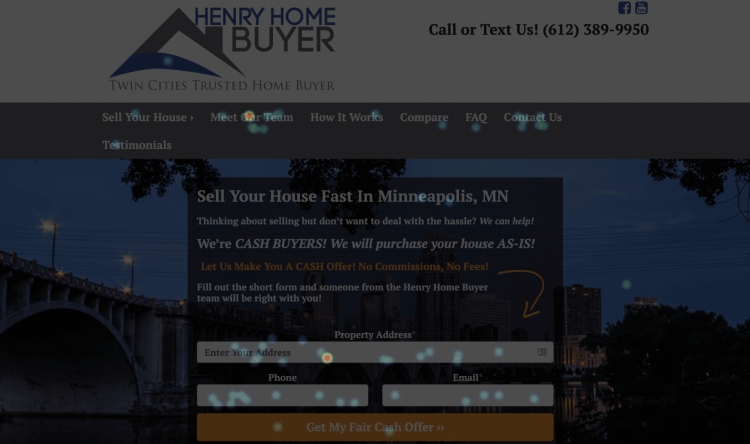
    To help you, we helped one of our members with their Google Ads campaign. We monitored their conversion rate and we even ran a nifty heatmap on their homepage which only tracked Google Ads traffic.

    Here’s what we found.

    The Case Study: Google Ads Traffic To Carrot Website Reveals The Most-Clicked Page On Your Site

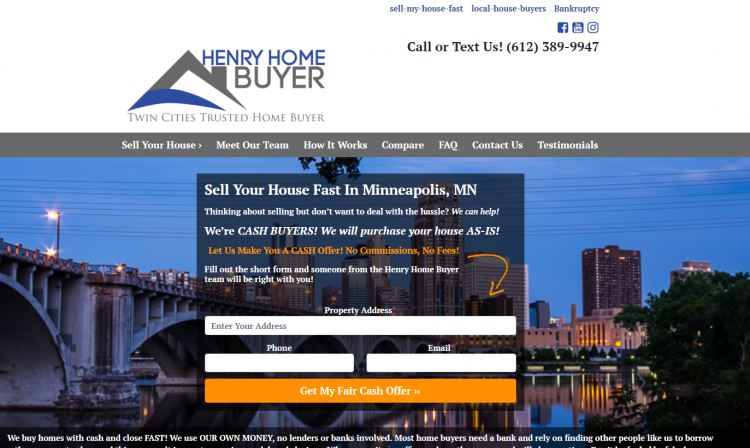
    The website/company that we ran Google Ads campaigns for is called Henry Home Buyers, a real estate investing company which operates out of Minneapolis, Minnesota.

    Here’s what their website looks like.

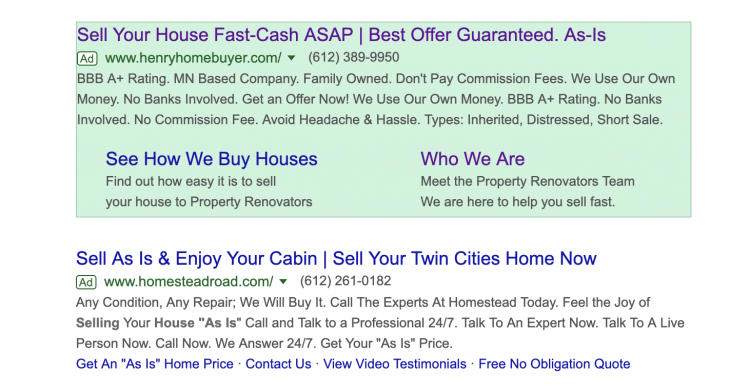
    From April 15th to May 15th, we drove traffic to their website via the below Google Ad campaigns. During that time, we tracked their PPC metrics, their website conversion rate, and even put a heatmap on their homepage.

    Here is an example of an which ran from April 15th to May 15th.

    google ads traffic ad example

    For the month, that Google Ad campaign received 127 clicks, which took visitors to there homepage.

    The conversion rate was an above-average, super healthy 16.54%, meaning that 21 of the 127 people who clicked also opted-in on Henry Home Buyers website to become a lead.

    real estate investor adwords stats

    Considering that most real estate investors need 20 or 25 leads to generate one deal, this one Google Ads campaign could have theoretically amounted to $10,000 or $20,000 (depending on the width of their wholesale fee) — we weren’t able to actually track how many of those leads turned into deals, so this is conjecture. But you get the point.

    A good Google Ads campaign can pay you back ten-fold.

    Perhaps most revealing, though, is the heatmap we ran on their homepage during the test. Take a look.

    Google Ads Traffic most clicked on page
    Heatmap showing the most clicked on page… the “Our Company” or in this case “Meet Our Team” page.

    It doesn’t take an eagle-eyed human to spot that there’s two places lit up like a Christmas tree on the above heatmap — two places that people clicked more than anywhere else.

    1. Their high-converting Carrot opt-in form.
    2. And their “Meet Our Team” page (AKA, the “About” page)

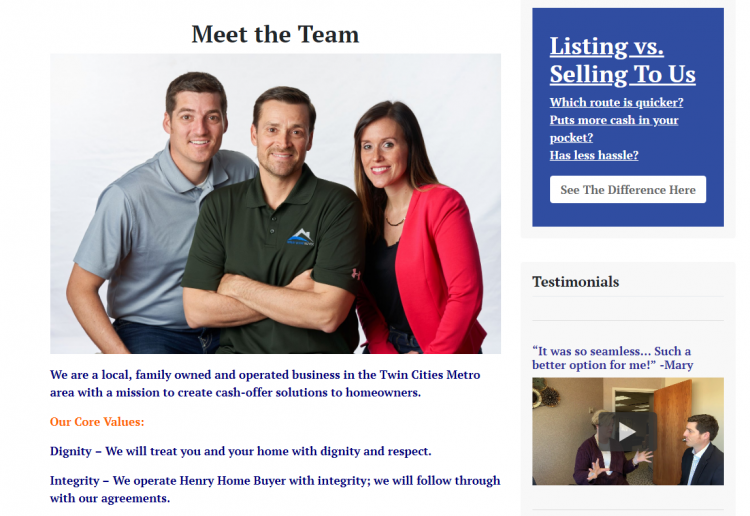
    Well, it’s a darn good thing they have such an awesome “About” page with a high-quality team photo, their company’s core values, and even a CTA at the bottom encouraging visitors to give em’ a call.

    real estate investor website about page

    (Image Source)

    Which leads us into the main takeaway from this test. And it really can’t be overstated…

    The Most-Clicked Page On Your Website… Do NOT Neglect Your “About” Page…

    We’ve said it a million times and we’ll say it again…

    Real estate transactions aren’t just expensive financially, they’re expensive emotionally and mentally. Because real estate transactions are so taxing, the average consumer must completely trust the person that they choose to work with. They must believe you can solve their problem or help fulfill their dream, and that you can do so expertly.

    They also want to know that you have their best interest in mind — you might just be building your business to make money and achieve entrepreneurial freedom, but they don’t want to know that.

    They want to hear about how you can help them, why they should trust you, and how easy the process is going to be.

    They want to know that you understand their situation completely.

    They want to know that you’ve helped other people just like them.

    And they want to know that you can help them, too.

    This isn’t just true on Henry Home Buyer’s website…

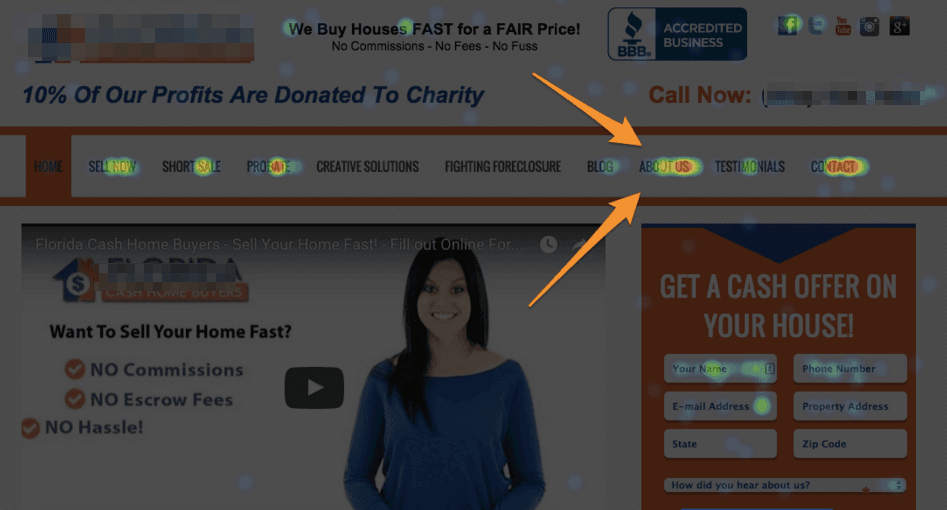
    It’s true on this real estate website…

    our company page hotspot on heatmap

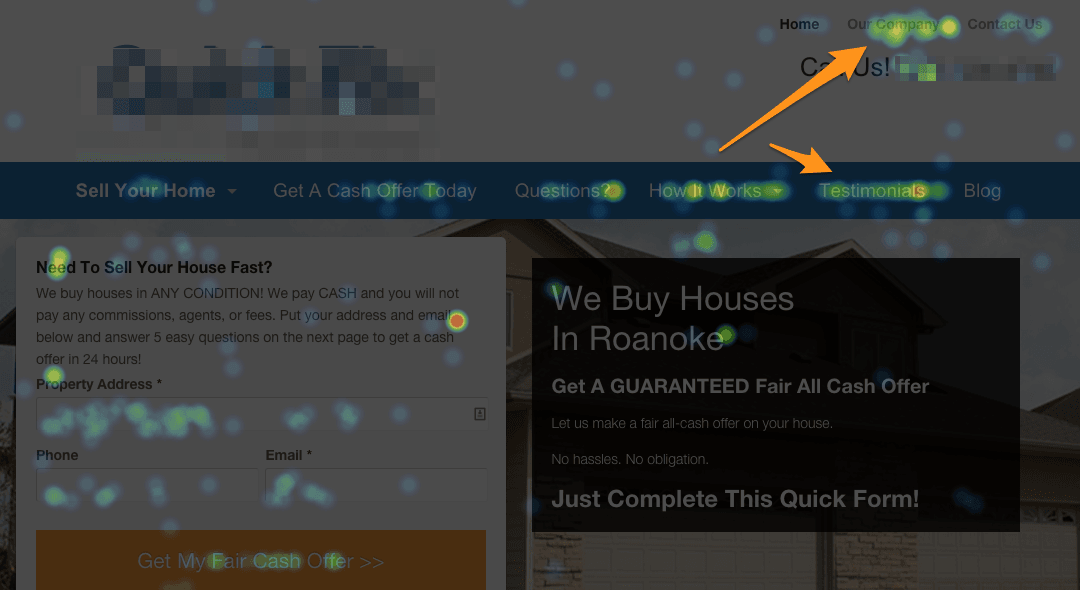
    And this one…

    writing an effective about page for conversion boost

    And even our OWN website!

    how to write a good about page for your real estate website

    In fact, our Carrot research found that the “About” page is almost always the 2nd most-visited page on real estate websites (right after the homepage). This means that most people who visit your website browse your homepage for a few moments and then go directly to your “About” page.

    The best thing you can do, then, is treating your “About” page as a natural part of your visitor’s experience. You know they’re going to click there quite fast; what can you do to make sure your “About” page serves them well? How are you going to convince them to work with you even though they’ve never met you before?

    Here are a few ideas.

    • Include your core values & mission statement — Remember how I mentioned that your prospect only cares about themselves and how you can help them? This is where you get to list the values of the company and the mission that drives your company. That’s immensely powerful for building trust with your website visitors. For inspiration, check out Carrot’s mission statement and core values.
    • Use smile-y photos — If you’re looking for motivated sellers, then your prospect probably isn’t in a very good place; more than likely, they’re going through a stressful and difficult life situation. For that reason (and to increase your likeability) give a big authentic smile in your “About” page photos.
    • Add a few testimonials — Nothing helps build trust with website visitors quite like a testimonial. People don’t want to be the first one to work with you, they want to know that you’ve already helped other people just like them. Assure them that you have by adding one or two testimonials (video testimonials are the best, but written will do the trick) to your “About” page.
    • Include a CTA — Since many people will click right to your “About” page after visiting your homepage, you should craft your “About” page like it’s the most important sales page on your entire website. Put your phone number on it and include a CTA with an opt-in form at the bottom.

    Where are you sending your paid traffic?

    That’s an important question.

    Where are you sending paid traffic?

    Because where you send paid traffic determines (at least partly) how valuable that traffic is going to be for your business. If you send traffic to a low-converting WordPress website (not all WordPress websites are low-converting, but many of them are), then you’re going to lose money fast. If, on the other hand, you send paid traffic to a high-converting site (like Carrot), you’ll make a hefty profit, you’ll gain new confidence in your paid ad campaigns, and you’ll probably even dump more money into running those ads.

    (If you can make $2 for every $1 you spend, why not do that all day long?)

    But how do you make sure that you’re sending your audience to a high-converting website?

    What even qualifies as a high-conversion rate?

    Well, cross-industry, a high conversion rate is around 2% or 3%…

    (Image Source)

    And while we know that’s the average for many websites in the world today, at Carrot, we say bubkus…

    We are committed to higher conversion rates, to more opt-ins, to more closed deals for our members.

    Which is why, for Carrot members, an average conversion rate is around 10%…

    motivated house seller website conversion rate

    An excellent conversion rate is around 15%…

    using video to increase conversion rate on real estate websites

    And an incredible conversion rate is 20% or higher.

    real estate investing website conversion

    To be honest, if you’re not getting at least a 5% conversion rate with your website, then it might be time to rethink where you’re sending your paid traffic. Maybe you could try to re-work and optimize your landing page… maybe you need better targeting with your paid ads… or maybe you need a Carrot website ( ;-) shameless pitch).

    Whatever the case, do not settle for a low conversion rate. Work until you’re pulling as many leads as you need to run a healthy business that provides you with the predictable income and financial stability that you need.

    Conclusion

    The pressure is on.

    When you’re running paid ads, you’re watching the ROI of your campaigns like a hawk…

    You’re wondering if the amount of money you’re spending is going to pay you back like you hope it will (try using our calculator over here to set a realistic paid advertising budget).

    Unfortunately, I can’t give you the answer :(

    But I can (and did!) show you what other real estate investors are doing, what kind of results they’re getting, and what you should expect for your website conversion rate.

    I hope it helps you build a business that you’re proud of.

  • The 6 Rules of High-converting Real Estate Landing Pages

    The 6 Rules of High-converting Real Estate Landing Pages

    Real Estate Landing Pages Optimization

    Your real estate landing pages could be costing you $10,000, $20,000, $50,000. That’s only one lost deal.

    Relative to other popular 21st century industries (e-commerce, info product selling, affiliate marketing, etc) real estate is unforgiving. In many of those other industries, one lost deal might amount to $10 or $1,000 lost. But in real estate, players tackle each other on the pavement…

    Without knee pads…

    Or helmets…

    Or teeth guards…

    You get the point – one lost deal hurts. And it hurts bad.

    But, that also means that one gained deal has an equally massive impact. And the fewer deals you lose to savvy market competitors, the more deals you gain.

    In other words, you can turn that lost-deal dilemma into massive cash flow by transforming your real estate landing pages from an underperforming duds into a visitor-converting machine.

    This is exactly why I’m going to show you how to optimize your real estate landing pages for conversion.

    Follow these rules in your own market.

    But first, a quick note about why your website isn’t converting as you want it to (the answer is simpler than you think).

    What are Real Estate Landing Pages?

    A real estate landing page is a standalone page, created specifically for a marketing campaign. It’s where a buyer, seller, or partner “lands” after they click on a link in ads, emails, or possibly organic SEO rankings.

    The anatomy of a real estate landing page is pretty simple.  You might be thinking:

    • Is there a specific design that always works the best?
    • How can we tell if a landing page is really working well?
    • What do I use to build my own real estate lead pages?

    First, no, there isn’t a specific design that always works the best.  What works really well for your real estate business and your market may not work as well as another design (or message) on another real estate website.  But, there are elements that usually work well.

    1. A clear and concise headline at the top of the page
    2. A short description of what they’re about to get in exchange for their email address
    3. A few bullet points listing out benefits of what they’ll get when they “opt-in”
    4. An opt-in (a box where people can put their information in and submit it to you)

    Really, those are the only elements that are extremely important and pretty much are needed on any landing page. Yes, you can use pictures and videos. Definitely test the video versus just the text with no video because you might find the one with just the text converts works better.

    Are Your Real Estate Landing Pages Missing the Mark?

    Someone arrives on your website…

    Let’s imagine that they’re your ideal client.

    They need the service you offer, they’re motivated, and they’re just looking for the right person to work with. After all, selling or buying a home is a big decision and they don’t want to make a mistake.

    So they’re browsing around your website.

    One of two things will happen in the end.

    1. They’ll leave your website and find someone else to work with.
    2. They’ll work with you.

    Those are the only two options.

    Assuming that this person needs your service, they’re going to work with someone.

    Only one question remains to be answered, then…

    Will that someone be you?

    Or will it be your competitor?

    How will that person make a decision?

    Well, someone who needs your service – a motivated buyer or seller – is going to ask only a single question:

    Why should I work with you?

    That is the same question that builds empires…

    And topples monopolies…

    For instance, as Forbes reports

    “45% [of consumers] said they have found something in an online search that made them decide not to do business with the person.”

    If your business never gains trust, it’ll never get off the ground. If your business gains trust and then loses it, it’ll die a swift death.

    But if your business gains trust and keeps it, the competition won’t stand a chance.

    Not only will word-of-mouth springboard your business into next-level revenue, but online case studies and testimonials will create the same buzzing effect online – where growth potential is multiplied many times over.

    So why aren’t people working with you?

    If you’re getting website traffic (whether paid or through SEO) and those visitors rarely convert, then this is going to hurt…

    People don’t trust you.

    Sure – there’s a small chance that you’re attracting the wrong audience – that you’re not attracting your target market. If that’s the case, then check out our article about real estate marketing and how you can drive the right traffic.

    More than likely, though, you’re having a different problem.

    Namely, website visitors don’t trust you. They spend time browsing around your website and decide internally, “I’m not convinced.”

    The good news, though, is you’re not doomed to repeat that trust-killing mistake over and over again.

    There are tried-and-proven ways to build more trust, faster on any landing page.

    6 ways, to be exact…

    The 6 Rules of High-converting Real Estate Landing Pages

    Rule Number 1 – Write an “I Have to Read More” Headline

    Copyblogger reports,

    “On average, 8 out of 10 people will read headline copy, but only 2 out of 10 will read the rest.”

    If you’re going to convince someone to work with you, then you have got to start with a compelling headline. It’s the first thing website visitors read and it might be the last thing they read (especially if it sucks).

    But, what constitutes a “good” headline?

    Well, of course, a headline that makes people read more – that makes them feel like they have to read more.

    To do that, your headline needs two elements.

    1. Ambitious problem-solving offer.
    2. Believable enough that your offer doesn’t sound too good to be true.

    Strike those qualifying chords and visitors will keep reading.

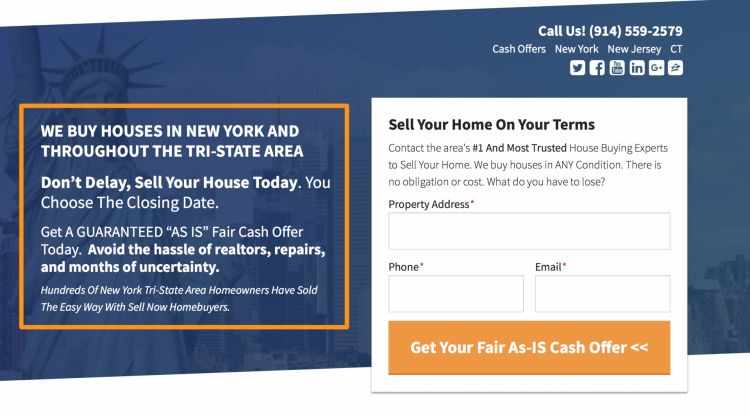
    Consider, as an example, this headline on Dave Brown’s website a top-performing Carrot member. Learn more about Dave’s Carrot success… “Getting More Motivated House Seller Leads Online – David Brown Case Study

    carrot real estate website form

    Phrases like “You choose the closing date” and “Get a guaranteed ‘AS IS’ fair cash offer today” keep the headline ambitious and problem-solving enough to maintain the visitor’s interest, while phrases like “We buy houses in New York and throughout the Tri-state area” and “Hundreds of New York Tri-state area homeowners have sold the easy way with Sell Now Homebuyers” keeps it believable enough that the person will continue reading (or opt-in immediately).

    It keeps interest and avoids the too-good-to-be-true curse of many other landing pages.

    We do the same thing on our website.

    Ambitious problem-solving: “Stop losing leads” and “Our real estate investor websites drive more qualified leads than any other platform.”

    Believability: “Our members generated 60,088 real estate leads last month”

    Don’t breeze by your headline without thinking much about it.

    This is the most important part of your entire landing page. So make sure you include these two critical elements: ambitious problem-solving and believability.

    Rule Number 2 – An Iconic Local Video or Image

    Put yourself in the shoes of your target market for a moment.

    Imagine that you type into Google, “Sell my house fast in Western Oregon.”

    You click the first result and browse through the landing page. But something odd catches your eye…

    There are pictures of palm trees…

    And you know – being from Oregon – that there aren’t many palm trees here.

    Is this person even from Oregon? you think to yourself.

    Trust. Dead.

    Well, the same thing can happen on your website, even if it’s not as big a mistake as putting palm tree pictures on an Oregon-based real estate website.

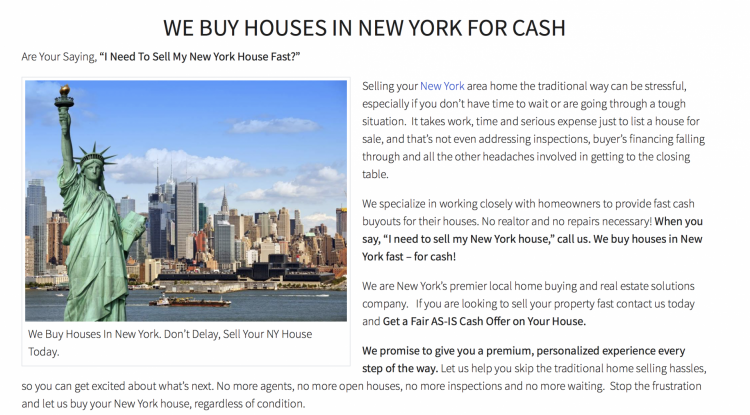
    Something as simple as pictures that are irrelevant or unfamiliar to your target market can kill trust. This is why, for every city, you operate in, set up a new landing page with market-specific sales copy, images, and videos.

    This is exactly what Dave Brown does on his website…

    real estate investor website body content

    Or, here’s and real estate listing example. They use an image of the actual property as the background…

    Even if you don’t live in the area, you operate in it.

    And when people arrive on your website, they want to know that you’re familiar with the local market and capable of helping them in their specific situation.

    City-specific images, videos, and landing page copy build far more trust than their vague or outright irrelevant counterparts.

    Rule Number 3 – Sales Copy that Won’t Let the Reader Stop Reading

    Your headline isn’t the only line that should make your visitor keep reading.

    All of your sales copy should be like a slippery slope that people feel they have to keep sliding down. Each line leads to the next like meal cuisine at an Italian restaurant.

    You just keep wanting more.

    Here’s what this looks like on Home Downsizing Solution’s (another Carrot member) website:

    Each phrase leaves the reader with a question… which naturally guides them into the following sentence… which then does the same thing. So on and so forth.

    Before the reader knows it, they’ve read all of your sales copy and they’re convinced to work with you.

    If you’re writing the words on your landing page and you start to get bored, so will your reader.

    Change it up – use a surprising word or phrase, use a funny metaphor, or ask a compelling question.

    Whatever you do, don’t let the website visitor lose interest.

    Rule Number 4 – Big-promise Bullet Points

    Everyone loves bullet points. In fact, a website’s visitors’ eyes tend to spring right to these helpful nuggets the moment they’re on screen.

    (Image Source)

    Why?

    Because, traditionally, bullet points tell us exactly what we’re going to get and that’s really what we all want to know when we’re going to open our wallets for something…

    Okay okay… but what am I going to get?

    Well, your target market is wondering the same thing.

    This is why bullet points like this are so darn effective…

    And this…

    These easy-to-add (but crazy effective) black dots and blue checkmarks build massive credibility and make ambitious promises.

    Remember, people, visit your website because they need a problem solved. And a bulleted list is one of the best ways to tell them how you’re going to solve their problem and why they should work with you.

    Rule Number 5 – Proof of Concept

    With a bulleted list, a compelling headline, and some unstoppable sales copy, you’ve made some big promises. Promises that – so thinks your target market – won’t be easy to keep.

    Which is where proof of concept comes in.

    You need to prove to your website visitors that the way you work, the promises you make, and the business you’ve created are all worthy of trust.

    How do you do that?

    Well, the best way is by using a past customer testimonial (video is best, but writing will do).

    Consider, as an example, Dave Brown’s case study video… (WATCH)

    Cash Home Buyers in New York - Sell Now Homebuyers Review

    Skip this step at your own risk.

    The truth is… you can make all the ambitious promises in the world, but if you don’t back up those claims with cold, hard facts, people won’t believe you.

    People are bombarded by more than 4,000 ads per day, which puts your target market’s trust for marketers at an all-time low. Everyone is making big promises and few people are keeping those promises.

    Put another way, proof of concept is likely the most vital part of every single landing page you’ll ever create (in conjunction with a great headline).

    Don’t skip this step.

    Rule Number 6 – Include a Clear and Low-risk CTA

    According to Protocol 80, Inc, 90% of people who read your headline also read your CTA (call-to-action)…

    Because here’s the thing: after people know what you’re offering, they want to know what to do.

    How do they take action? If they want what you have, how do they dive right in?

    And a low, or no, risk CTA is exactly what they’re looking for. They don’t want to spend hundreds of dollars. They want to get started without pulling out their wallets and probably without even giving you a call…

    Baby steps…

    That’s why, at Carrot, we recommend a CTA that is something like this…

    Real Estate Landing Pages Hero Section

    When someone fills this out, our system will send a lead notification via SMS text message straight to your phone. Then you can call the person and close the deal.

    But you won’t be able to close much of anything if people land on your website, learn to trust you, and don’t opt-in because there isn’t a clear and risk-free CTA.

    You can gain people’s trust all day long…

    But that trust isn’t gonna make you any money until you ask those committed prospects to take action in your favor.

    Conclusion

    One, two, three lost deals…

    It all hurts in the same way that gambling away $50,000 hurts…

    Except you’re not gambling – you’re running a business.

    And fortunately, running a business is far more predictable than visiting the casino. At least, it should be.

    Remember, selling is science. And all you have to do to give your website a selling boost is add these 6 trust-building elements to each landing page, whether you’re a Carrot member or not…

    But if you’re not…

    We can get you moving in the right direction by giving you a high-converting website right now…

  • Content Marketing for Real Estate Agents | Picking Your Marketing Niche [Agent Whiteboard Series]

    Content Marketing for Real Estate Agents | Picking Your Marketing Niche [Agent Whiteboard Series]

    Content Marketing for Real Estate Agents | How to Pick Your Marketing Niche

    Video Transcription

    Trevor here again, coming at you with another video to help you break down your content marketing strategy as a real estate agent.

    Now, one of the best ways that you can really crack through the clutter is to niche down. And we’ve done the same thing here at Carrot as well with our software company.

    It’s in universal principle that whenever you’re able to narrow down the focus of who you serve, and you can narrow down your messaging, it’s going to resonate more and more and more with the person you’re looking after. On the flip side of it, the more generic your message, the harder it is to have someone kind of raise their hand and go, yeah, that’s me, I resonate with that.

    So we’re going to help you niche down in this video. So, earlier in a separate video, I laid out our entire content marketing framework with this pyramid, so go check out that video. It’s probably linked up somewhere.

    This video is specifically on the niche part of it.

    Content Marketing for Real Estate Agents: What Are Niches?

    So what are niches?

    I was talking with a real estate agent the other day, a brand new agent and, not really a brand new one, but she’d done several transactions. I said, “Hey, what are your niches?” And she said, “Well, I don’t really have any,” and then we sort of walked through the process of how to discover a niche.

    On the flip side, I talked to another real estate agent, a brand new one, hadn’t done a transaction yet in California in a really competitive market and I said the same thing. I said, “Who is it that you can really serve and who is it that you can niche down in your messaging to really serve?” He said, “Man, I don’t know.” I said, “Well, who would you want to focus on?”

    He said, “Anyone who wants to buy a house in x city in Carmel, California.” I said, “That’s amazing, but that’s not a niche. That’s something that every single one of the agents in your market is also going after that.”

    So I asked him a couple of questions, and they’re all based around who are the people that you can serve, what locations might they live in, and are there certain situations that you can better help serve people than others.

    On the people side of it, in this example with that gentlemen, I said, “Okay, what is it that you like, How old are you, what’s your life look like?” And he said, “I have two kids, in mid-thirties.” And he started to talk about things he really loves to do. He loves cars and all kinds of cool things like that. I said, “Cool.”

    So one thing that you could really do a niche down on, is helping families in Carmel, California, find the home of their dreams to fit their family and their lifestyle. So that’s the same thing that you probably would have been doing before you niche down anyway, but now we’re at least niching down some of our messaging.

    So write that one down. Helping families in Carmel, California, helping young families in Carmel, California, find the homes to fit their lifestyle. That’s a niche because then every time you’re communicating, or you’re doing a video, you’re doing it from that framework.“Hey, this is Mark here in Carmel. I’m actually at a soccer match with my kids…” whatever it is. So then you’re talking about things that other people in that market might be talking about.

    Locations

    Locations. One of the agents here locally in Roseburg, Oregon, the G-team, the number one or at least top, one of the top Century 21 teams, the whole northwest. They’re amazing in a few things. They are really, really good at river homes of this one particular river called the North Umpqua River here in town.

    They’re really good at high-end kind of lifestyle homes, really nice homes that maybe aren’t on the river, but they’ve got a great view and they’re also good to income properties.

    So when I was talking through with Ricky, about what their niches would be, he never thought about it before, but he listed those three things off because I’m not really sure if I should put the income property thing down like rental properties because it’s kind of unrelated. I said it’s actually not. It’s actually the same prospect because if I’m looking for a luxury home on the North Umpqua River or a lifestyle home up on a mountain with a great view, I probably have some sort of discretionary income that I want to invest in rental properties.

    Therefore I’d want to also work with you to buy those rental properties. So there, he’s serving the same person just in different situations.

    Write down the different types of people that you would want to work with and the way that I like to do that is, who is the “most fun to work with?” Which transactions do you make the most money that really helps you reach the goals that you’re looking for?

    Scenarios and Situations

    Start to write down those scenarios and those situations, and you’ll start to hone in who you want to work with the most.

    If you’re a brand new real estate agent, a lot of real estate agents kind of tend to go for a first time home buyer because that first time home buyer’s kind of like you, you’re new and it’s all new to you, but I would also challenge you. I would challenge you to focus on something else.

    If you’ve been a nurse and you’re leaving the nursing profession to come over and be a real estate agent. Awesome. That’s a niche right there waiting, waiting for you to grab is, helping medical professionals find amazing homes that them and their families can live and thrive in, in your area.

    Then you can start to use that messaging. You start to put up videos and updates to the medical community. You can start to find homes that are perfect for that. You can start to find medical practices that are recruiting medical professionals and talk to them and help show them around.

    Find Niches

    So find niches, hone your message down, start to record videos of those niches, and then start. Just like we teach here, you’re going to record seven to 10 videos as your base initial content in that niche, showing you as the expert. Those videos will go on Facebook, YouTube, and your website. Then, you’re going to really build that amazing stockpile of content that’s going to resonate with your market.
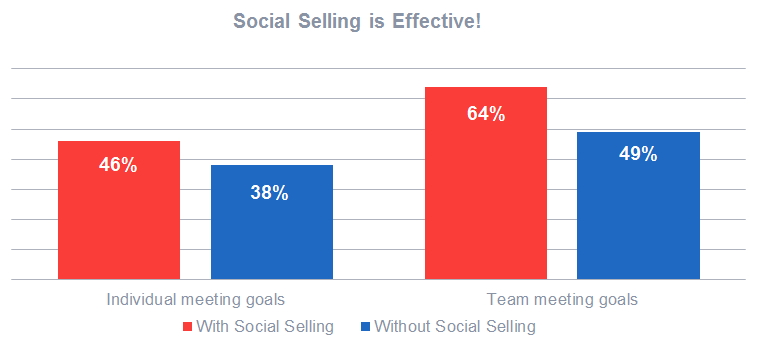
    On a weekly basis or whenever you’re out there, find opportunities to take out your cell phone and record some quick content. Three to five minutes in that niche, in those locations, showing your expertise.

    Share the information out there and go deep on your niche.

    Let us know if you have any questions in the comments section below or hit us up on Facebook.

    What to Learn More about Content Marketing for Real Estate Agents?

    Watch these other videos in this four-part “Content Marketing for Real Estate Agents” series.

    5 Steps for Real Estate Agents to Cut Through Online Clutter and Dominate the Market

    Content Marketing for Real Estate Agents | How to Pick Your Niche Locations

    Content Marketing for Real Estate Agents: Crafting a Niche Report

    Or… Check out the Carrot Real Estate Training Playlist.


  • Content Marketing for Real Estate Agents | How to Pick Your Niche Locations [Agent Whiteboard Series]

    Content Marketing for Real Estate Agents | How to Pick Your Niche Locations [Agent Whiteboard Series]

    Content Marketing for Real Estate Agents | Picking Niche Locations

    Video Transcription

    Hey, Trevor here with Carrot again, coming at you with video number three in this series, to walk you through how to go through our content marketing pyramid so you can finally crack through that clutter and really gain a competitive advantage in your market.
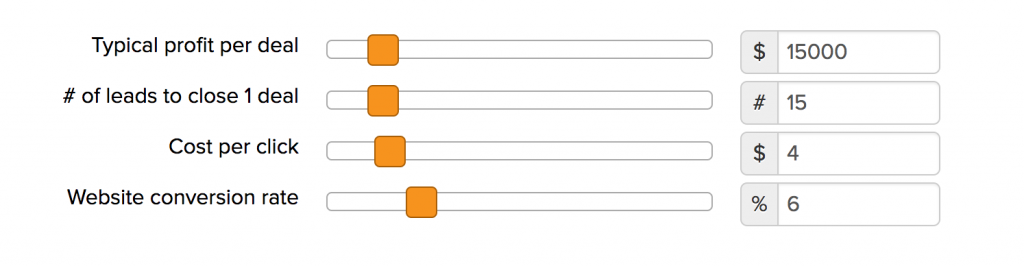
    We’re going to be talking about locations now. So by this time you’ve already discovered what your core values are. Why are you in business? You’ve written those down. You’ve done a simple video about why you’re in business and why you love to work with buyers and sellers. That’s going to help people resonate.

    Next.

    You’ve also picked between one and three niches. Things that you can really drill down on where you can tailor your message and your videos and your content, the way that you speak to people.
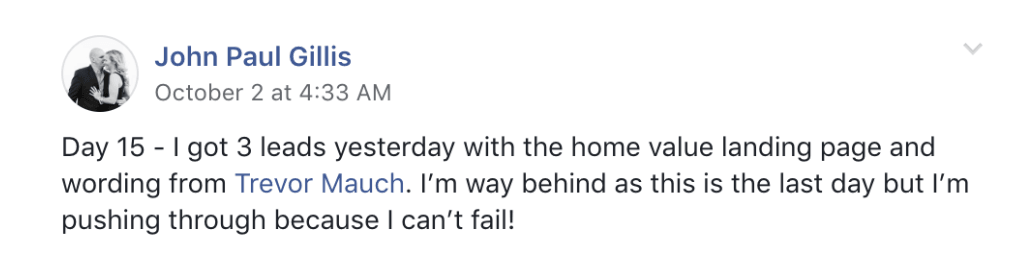
    First, you can tailor your audience to that message, because now you’re going to resonate with those people that are in those niches. It’s going to help you target your marketing down the same way we’ve grown here at Carrot.

    That’s because we have a solution that’s universal. We could sell our solution to plumbers, and to real estate agents, and real estate investors and financial planners. The solution solves all of it. But when we can niche our product and niche marketing down, we can better serve you and better make sure our content resonates with you so you notice it.

    Real Estate Niche Location

    The next step is locations. A lot of people think locations are just cities, towns, things like that. But what I would like to challenge you on is that locations are any particular spot or type of property that you can really focus a certain message on.

    Here are some examples. It could be towns. It could be a here in Roseburg, Oregon. Roseburg could be a location. You create a page for that, that has the Roseburg properties for sale on there from your IDX listings from Carrot.

    Then Sutherland, and then Winston and Reedsport and all those are different towns around Roseburg. We would definitely want all of those towns that have a page on the website with a title that’s something like a Homes for Sale In (insert city). Then probably a video.

    I’m really going out there with something that my competition can’t, they can’t put a video of me on their website. So put a video of yourself on your website explaining that location. Then put your IDX property listings after maybe a few paragraphs of content.

    Now other types of locations can be neighborhoods. So if you’re in a bigger city or even small town like Roseburg, there are certain neighborhoods that people really, really want to buy and sell houses in. Hucrest is one, even in the town of 30,000 people. If you go to Google and start to type up homes for sale in Roseburg, you’re also going to see other suggested searches after that for neighborhoods in there, which is kinda cool.

    Hucrest is a neighborhood, Melrose is a neighborhood that is pretty sought after in here. If people are searching for them, I want to create a locations page that ranks well in Google for those. I also want to create that video and get it up into YouTube and get on Facebook too. So I could turn those into ads if I want it to.

    There are other types of things that are property types. So if you’re a specialist, if one of your niches is river homes in a particular river or a country club or whatever it is, and that’s one of your niches, then you should create a locations page for that niche.

    Here’s an example, G Team, they’re a Century 21 brokerage here in Roseburg. They’ve done amazingly well, and they focus in on a few niches. On North Umpqua River homes, on lifestyle properties with great views, and income properties. They all happen to be about the same type of Avatar. The same type of person who probably has some income, looking to get an amazing house and also looking to grow their income with rental properties. So you can also create a page for property types like river homes.

    So here on Carrot we launched a page. It’s homes for sale on the North Umpqua, Roseburg, Oregon.

    location niche real estate agent website page

    Image Source: G Team Real Estate

    Then we create a video talking about homes for sale in North Umpqua River, and how they can help you. How they actually own a home in the river, and her parents own a home on the river, and they’ve sold tons of homes on the river. All in a short little video. You can do the same thing.

    Then below the video, we’ve actually put up a custom search through the IDX that only shows river homes for sale in that area. We’ve drawn a little boundary around there and it’s river homes for sale, so now they can drive people to a page that’s specifically for North Umpqua River homes for sale in the Roseburg area. They can drive traffic from Facebook, or from YouTube or when they’re talking with someone locally, they can say, “Hey, go to Xyz.com, forward slash river, and you can see all the updated properties.”

    Attracting New Prospects Via Niched Down Content

    When you’re going through and doing this, leverage our tutorials here at Carrot to walk you through how to do those page, or we do have services that can do it for you. If you’re not a Carrot customer, no big deal. It’s just going to be a little bit harder for you to set them up yourself to get them ranked well and Google on a different platform. But you can still launch locations pages for all these locations you do business in and don’t forget creating neighborhood ones or niche down property types if those are within your niche.

    Those are going to help you get better rankings in Google, attract new prospects, get people on your retargeting list for Facebook and it’s going to give you more content you can continually drive people back to in your content. Here’s one idea for you.

    Let’s say you’ve got your niches down and you’ve got your locations down and you’re taking out your cell phone and doing a piece of content on a river home today. Take it out and give your three to five-minute talk about a tip or something like that about river homes and then you can give a call to action to drive to this page for them or landing page.

    You could say, “Hey, just go to Xyz.com forward slash river to get an updated list of all of the North Umpqua River property homes for sale in this area, and you’re gonna be the first one to get notified of them. Go check it out. Xyz Dot com, forward slash river.”

    You can say that inside of your videos. It’s going to continually drive leads, build you up as the expert for that type of property, and you’re going to cut through that clutter and really, really grow your business. You’re not going to be stuck with whatever Zillow is going to be giving you. You’re not even going to care if there are a million other agents in the market because you’re the only one claiming the space for that niche.

    Watch Other Videos in the Agent Niche Series:

    Watch the next three videos in this four-part “Content Marketing for Real Estate Agents” series.

    5 Steps for Real Estate Agents to Cut Through Online Clutter and Dominate the Market

    Content Marketing for Real Estate Agents: Pinpoint Your Marketing Niche

    Content Marketing for Real Estate Agents: Crafting a Niche Report

    Or… Check out the Carrot Real Estate Training Playlist.

  • Content Marketing for Real Estate Agents | Crafting a Niche Report [Agent Whiteboard Series]

    Content Marketing for Real Estate Agents | Crafting a Niche Report [Agent Whiteboard Series]

    Content Marketing for Real Estate Agents | Creating a Niche Report to Build Credibility

    Video Transcription

    Excellent, so by now you’ve picked your niches, you’ve nailed your core values and your mission, you know which locations you’re helping serve your buyers and your sellers. Now here’s the fun part, we’ve already created those initial videos, now we get to go out there and do our business and document some of the things that we’re doing.

    One reason that reality shows on TLC and HDTV, have really blown up over the past decade is that people are interested in what people do for work, and your business is no different. People are really interested in what you do for business. People love to see homes, people love to explore their area and they would love to follow you doing that.

    I’m going to give you a few tips on what you can do on the weekly to daily basis, just with your cell phone to continually stay in front of your prospects, in front of your community to add value and build a relationship and build a connection, build trust, build honesty with them, just through regular content, showing them what you’re already doing in business.

    Creating Weekly and Monthly Content Pillars

    There are a couple of different things I want you to do. I want you to write down on a piece of paper right now, weekly and then monthly and I want you to create these weekly and monthly content pillars. This isn’t hard, this is literally less than 30 minutes a week is all it’s going to take you and less than 30 minutes a month for the monthly. So this isn’t hard, this is a couple of hours a month is all.

    Every single person watching this has a couple of hours a month and if you don’t, you’re going to have a lot more time in two years to do whatever you want to do because you’re probably going to be out of business. I don’t want you to be out of business, so we’re going to help you guys stay in business.

    Weekly Content

    So, on the weekly basis, that weekly cadence is what I call on the job content. That’s the stuff where you’re answering questions that people commonly have about that type of property or that area. You’re addressing objections that you see come up quite a bit, you might be showing some interesting stuff because people like to see fun interesting stuff when they’re scrolling down Facebook or looking on Instagram, or YouTube.

    You need to show some action. People want to see interesting things that are moving and I’m not just talking about you moving around the camera, I’m talking about one time you’re in the car doing it, another time you’re out there at a property with the client, another time you’re sitting in your office. So move locations because it’s interesting and people are going to start to really look forward to your videos and look forward to your content coming out.

    On the weekly basis, once again, it’s on the job stuff. Again, I’m out at a river home and I keep on using this example because it’s such a good one, but what are the questions or objections that pop up with someone who’s looking to buy a home on the river? It’s probably not going to be a cheap house, so there’s a big financial stake there.

    So you have to look at, “Well shoot, I know river homes so well,” the water situation’s always something that trips people up. Most people who’ve never bought a river home never know what to do. So I’m going to do a few videos on what you need to do with water and water rights and how do I get my drinking water and are you going to use a filtration system or is there a well? All those are critical things, if you’re the one doing that content, I’m going to work with you because you’re the expert and I don’t want to lose a ton of money buying a river home with Aunt Betty who just became a real estate agent last week.

    There could be an amazing home on the river that’s got this killer pool, or it has this way cool retaining wall or something like that. Take out the camera and say, “Hey this is Mark, I’m out at a river home on the North Umpqua River. I just want to show you this pool, it’s an amazing pool, look at the view that it has. Look at all the possibilities you could have with a home on the river.”

    What that’s doing, is building desire for that type of property that they’re already wanting, but they’re building desire for and you’re the person that’s helping them build that. Or there’s action, once again. You can be taking them on a little tour of different homes on the river and put all those little things out in little three, five, 10 minutes probably max, videos.

    Monthly Content

    Then on the monthly side of things, stand in front of a camera, or take out your phone, or whatever you want to do, and do some sort of a report because reports are something that builds expertise.

    The other content types are fun, they build expertise as well, but the report is something they can look forward to the same content piece each month. Every single month, I get an email from this company that’s a real estate investment company and it shows the market snapshot and the market report and what’s happening right now. I open that one every single month because I want to know what’s going on.

    I want to get ahead of the curve, I want to get ahead of what’s happening and your buyers and sellers are no different. If there’s a seller out there who are looking to sell, they want to know, “Should I be selling right now? Is it too late to sell? Is it too soon to sell? Is it a good time to sell?” Whatever it is, your monthly report should be addressing that.

    If I’m a buyer, I want to know is right now the time to buy? “Should I be buying a property, should I wait to get a better deal? Are there good deals coming up? It’s the right time to buy? Are financing programs drying up? Could new ones be added?” This is where you can really do that with your monthly reports.

    What is a Real Estate Niche Report

    What is a monthly report? It should be an under 10-minute video ideally. The reason I’m saying a video is because anyone can do a written report. Anyone can just send an email that says, “Here’s a bunch of market stats.” All the other real estate agents in your market are already doing that.

    You don’t win the market by doing what everyone else is doing. You win the market by being you and going out there and building brand, building trust, and building credibility. Showing them you’re the expert.

    You could send out an with a bunch of words, but I would send out a video, put it on your Carrot website as a video post, so you take your YouTube video, you put in that URL, our system goes out and yanks out all the words, makes up blog posts for you, so now you can send people to that from Facebook and from YouTube to the actual full official monthly report with your video, with the written words below it and a call to action to connect with you.

    Some other things you can do:

    • Get market stats.
    • Ups and downs of the market.
    • Is it the right time to sell?
    • Is it the right time to buy?
    • What’s happening with loan programs?
    • What events are coming up in the community?

    So if part of your niches are based on families or certain segments of the community, let’s say you’re focused on retirees. In my monthly report, I’m going to go through the report with the frame, with the lens of how a retiree would be looking at the real estate market and what they would care about and then at the end I’m going to say,

    “Hey, here’s some really cool events happening this next month in Roseburg. Here are these six things, these cool concerts and acts. If you want to check out more events, just go to our website forward slack events. There’s a whole list of events for retirees and for groups of people who love wine and who love wine country, just like me.”

    So now I’m not only delivering information, but I’m also delivering things to do and they’re going to love you for that.

    Go figure out your weekly cadence and your monthly report. This is a total of a couple of hours a month. All you have to do is put in a couple of hours a month, that’s less than one full day a year. One full day a year to stay in front of your prospects, to build trust, to build honesty, to build credibility.

    People are going to notice you in town. They’re going to say,

    “Hey, you’re the guy, you’re the gal that keeps on putting out that great stuff. Thank you for doing that.”

    They’re going to tell other people about you and your business is going to grow and get momentum in the next six, 12, 18 months. So go execute the full plan, don’t get lazy. Execute the full plan and then be diligent with it. You’re going to see some really good momentum happening after that.

    Last Tip

    Make sure every video you do, you upload to YouTube, you upload to Facebook and then you upload it to video posts on your Carrot website to turn that into written words, so now you not only have Facebook, YouTube, you’re also going to have Google, Google organic results as another thing to help you get more traffic, build more credibility and to build your business.

    Watch Other Videos in the Agent Niche Series:

    Watch the next three videos in this four-part “Content Marketing for Real Estate Agents” series.

    5 Steps for Real Estate Agents to Cut Through Online Clutter and Dominate the Market

    Content Marketing for Real Estate Agents: Pinpoint Your Marketing Niche

    Content Marketing for Real Estate Agents | How to Pick Your Niche Locations

    Or… Check out the Carrot Real Estate Training Playlist.