Search results for: “credibility”

  • From Clicks to Closings: Mastering SEO Keywords for Real Estate Investors

    From Clicks to Closings: Mastering SEO Keywords for Real Estate Investors

    Every month, our Carrot members generate tens of thousands of leads. Digging into our data, we find one really cool stat: well over a million of all those leads come from one source: search engine optimization.
    SEO For Real Estate Investors | How to Boost Ranking with Local SEO

    Are you a real estate investor who feels like you’re hitting a wall with your online visibility? Despite your best efforts, do your search engine rankings not reflect the quality of your investments?

    You’re not alone.

    Many real estate investors face the challenge of optimizing their online presence effectively to attract potential buyers, sellers, and partners.

    Importance of SEO

    In today’s digital age, where nearly 90% of homebuyers start their search online, mastering Search Engine Optimization (SEO) is not just advantageous—it’s imperative. SEO empowers real estate investors to enhance their online visibility, attract targeted traffic, and ultimately, convert more leads into profitable transactions. By strategically optimizing your website and content for search engines, you can ensure that your investment opportunities reach the right audience at the right time.

    In this blog post, we’ll delve into the critical topic of SEO keywords for real estate investors. We’ll explore common pitfalls that may be sabotaging your search rankings and provide actionable strategies to help you choose the most effective keywords for your niche. Here’s what you can expect to learn:

    1. Understanding SEO and Its Impact on Real Estate Investment: We’ll start by defining SEO and explaining why it’s particularly crucial for real estate investors looking to stand out in a competitive market.
    2. Common SEO Mistakes Real Estate Investors Make: Discover the common pitfalls that could be hindering your SEO efforts, such as keyword stuffing and neglecting local SEO.
    3. Choosing the Right Keywords for Real Estate: Learn how to conduct effective keyword research using powerful tools and techniques to identify the best keywords for your investment properties.
    4. Optimizing Content with Keywords: Explore best practices for integrating keywords naturally into your content to improve search engine rankings and user engagement.
    5. Monitoring and Adjusting Your Keyword Strategy: Understand the importance of ongoing SEO monitoring and how to adapt your keyword strategy based on performance data and market trends.

    By the end of this post, you’ll have the knowledge and tools to elevate your SEO strategy and ensure that your real estate investments get the online visibility they deserve. Let’s dive in and transform your search engine rankings for the better.

    Understanding SEO and Its Impact on Real Estate Investment

    In today’s digital age, SEO is vital for real estate investors seeking to establish a robust online presence. Let’s explore what SEO involves, its critical role in the competitive real estate market, and the primary goals it helps achieve.

    Definition of SEO

    SEO refers to the practice of optimizing your website and online content to improve its visibility in search engine results pages (SERPs). This optimization involves various strategies and tactics aimed at enhancing organic (non-paid) traffic to your site. By aligning your content with the algorithms that search engines use to rank websites, SEO helps ensure that your real estate investments are discoverable by potential buyers, sellers, and partners searching online.

    Relevance to Real Estate

    In the fiercely competitive real estate market, where buyers and sellers increasingly rely on the internet to research properties and find agents, SEO is more crucial than ever. Effective SEO strategies can differentiate your real estate listings from competitors’, elevate your brand’s visibility, and attract a steady stream of qualified leads. Whether you’re promoting residential properties, commercial spaces, or investment opportunities, a strong SEO presence can significantly enhance your chances of connecting with the right audience at the right time.

    SEO Goals

    The primary objectives of SEO for real estate investors encompass several key outcomes:

    • Visibility: Enhancing your website’s visibility in search results ensures that potential clients and investors can find your listings and services easily when conducting relevant searches.
    • Lead Generation: By attracting organic traffic through optimized content, SEO helps generate qualified leads interested in buying, selling, or investing in real estate. This targeted traffic increases the likelihood of conversions and transactions.
    • Brand Authority: Consistent SEO efforts not only improve your search rankings but also establish your brand as a trusted authority in the real estate market. Higher rankings convey credibility and reliability to potential clients, fostering trust and loyalty over time.

    In essence, mastering SEO empowers real estate investors to capitalize on market opportunities and achieve sustainable growth in an increasingly competitive industry. As we delve deeper into this topic, we’ll uncover actionable strategies to optimize your SEO efforts and maximize your investment potential online.

    Common SEO Mistakes Real Estate Investors Make

    Effective SEO for real estate investors requires more than just keywords—it demands strategic planning and adherence to best practices. Here are some common pitfalls to avoid:

    1. Keyword Stuffing

    Definition: Keyword stuffing refers to the practice of excessively using keywords, often unnaturally, within content in an attempt to manipulate search engine rankings.

    Why it Harms Rankings: Search engines like Google prioritize user experience and penalize websites that engage in keyword stuffing. Overusing keywords can make your content appear spammy and detract from its readability and value. This can result in lower rankings or even being flagged as spam, ultimately diminishing your site’s credibility and authority.

    2. Irrelevant Keywords

    Issue: Targeting irrelevant or overly broad keywords that do not align with your real estate niche or target audience.

    Impact: While broad keywords may attract high traffic volumes, they often attract visitors who are not interested in real estate investment specifically. This can lead to high bounce rates and low engagement metrics, signaling to search engines that your content may not be relevant to users’ queries. Focusing on niche-specific keywords ensures that you attract qualified traffic more likely to convert into leads or clients.

    3. Ignoring Local SEO

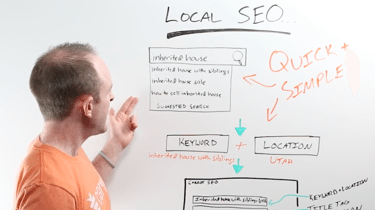
    Importance: Local SEO is crucial for real estate investors because property transactions are inherently local. Optimizing for local search terms (e.g., “real estate investments in “) helps you connect with potential buyers or sellers in your target geographic area.

    Common Oversights: Neglecting to optimize Google My Business profiles, not including location-specific keywords in content, or failing to obtain local backlinks are common mistakes. These oversights can hinder your visibility in local search results, impacting your ability to attract local clients and investors.

    4. Poor Content Quality

    Issue: Publishing low-quality or thin content that lacks substance or fails to provide value to readers.

    Impact: Search engines prioritize high-quality content that meets users’ needs and expectations. Thin content, stuffed with keywords lacking in depth or relevance, is unlikely to rank well. Investing in comprehensive, informative content that addresses common questions, provides valuable insights, or showcases your expertise can significantly boost your SEO efforts and user engagement.

    5. Neglecting Mobile Optimization

    Impact: With a growing number of users accessing the internet via mobile devices, mobile optimization is no longer optional—it’s essential for SEO success.

    Why it Matters: Websites that are not mobile-friendly experience higher bounce rates and lower engagement metrics from mobile users. This negatively impacts your site’s overall performance in search rankings, as search engines prioritize sites that offer a seamless mobile experience. Implementing responsive design, optimizing page speed, and ensuring mobile-friendly navigation are critical steps to improve your site’s mobile usability and SEO performance.

    By understanding and avoiding these common SEO mistakes, real estate investors can enhance their online visibility, attract targeted traffic, and ultimately achieve greater success in their digital marketing endeavors.

    Choosing the Right Keywords for Real Estate

    Selecting the right keywords is fundamental to successful SEO for real estate investors. Here’s a comprehensive guide on how to choose and utilize keywords effectively to enhance your online presence:

    1. Keyword Research Tools

    Keyword research forms the foundation of any successful SEO strategy. Tools like Google Keyword Planner, Ahrefs, and SEMrush provide invaluable insights into search volume, competition level, and related keywords. These tools allow real estate investors to identify high-potential keywords that align with their investment offerings and target audience. By leveraging data-driven insights, you can optimize your content to attract qualified traffic interested in real estate opportunities.

    Download our Free SEO Keywords for Real Estate Investors.

    2. Long-Tail Keywords

    Importance: Long-tail keywords consist of longer, more specific phrases that often have lower search volumes but higher conversion rates. For example, instead of targeting “real estate investment,” consider phrases like “affordable real estate investments in [Your City]” or “best commercial properties for sale in [Your Area].” These keywords cater to potential investors who are closer to making a decision, enhancing your chances of conversion.

    Benefits: Using long-tail keywords helps you compete more effectively in search engine results, as they are less competitive than broad keywords. They also attract highly targeted traffic that is more likely to convert, thereby maximizing the return on your SEO efforts.

    3. Local Keywords

    Focus: Real estate transactions are inherently local. Incorporating location-specific keywords (e.g., “luxury homes in [Your City],” “investment properties in [Your Neighborhood]”) is essential for attracting local buyers, sellers, and investors.

    Targeted Traffic: Local keywords help you reach a geographically targeted audience interested in real estate opportunities in specific locations. This enhances your relevance in local search results and improves your chances of connecting with qualified leads who are actively seeking properties in your area.

    4. Competitor Analysis

    Strategy: Analyzing competitors’ keyword strategies provides valuable insights into what works in your niche and identifies opportunities for improvement.

    Tools and Methods: Use tools like SEMrush or Ahrefs to analyze competitors’ top-performing keywords, organic search traffic, and backlink profiles. Pay attention to the keywords they are ranking for and their content strategies. Identify gaps where you can differentiate yourself or opportunities to capitalize on similar keywords with better content or targeting.

    5. User Intent

    Understanding: User intent refers to the reason behind a user’s search query. To effectively optimize for user intent, consider the intent behind keywords you target. Are users looking for property listings, investment advice, market trends, or real estate services?

    Incorporation: Tailor your keyword selection and content strategy to align with user intent. For instance, if users are searching for “real estate investment tips,” create content that provides valuable insights and practical advice on investment strategies. By meeting user intent, you increase the likelihood of satisfying user queries and improving engagement metrics, which are crucial for SEO success.

    By integrating these strategies into your keyword research process, you can enhance your SEO efforts, increase your online visibility, and attract targeted traffic interested in real estate investments. Remember, optimizing for the right keywords is not a one-time task but an ongoing effort to stay relevant and competitive.

    Optimizing Content with Keywords

    Optimizing your content with strategic use of keywords is crucial for improving search engine rankings and attracting relevant traffic. Here’s how real estate investors can effectively integrate keywords into their content:

    Content Creation Tips

    Creating valuable content that resonates with your target audience is the cornerstone of successful SEO. Consider the following tips:

    • Address Audience Needs: Understand what information potential investors are seeking. Tailor your content to provide insights, market trends, investment strategies, or property listings that align with their interests.
    • Quality Over Quantity: Focus on creating high-quality, informative content that adds value. Avoid thin content that lacks substance or fails to address user queries comprehensively.
    • Engage with Visuals: Incorporate engaging visuals such as property photos, infographics, or videos to enhance user experience and encourage longer on-page dwell times.

    Keyword Placement Best Practices

    Effective keyword placement helps search engines understand the relevance of your content to user queries. Here are some best practices:

    • Titles and Headers: Include primary keywords naturally in your page titles (H1 tags) and headers (H2, H3 tags) to indicate the main topic of your content.
    • Meta Descriptions: Write compelling meta descriptions that include relevant keywords. Meta descriptions serve as summaries in search engine results, influencing click-through rates.
    • Body Text: Integrate keywords naturally throughout your content, ensuring they flow smoothly and enhance readability. Avoid overusing keywords, as this can negatively impact user experience and SEO.

    Internal Linking Strategies

    Internal linking is a powerful SEO technique that helps distribute link equity across your website and guide users through relevant content. Consider these strategies:

    • Anchor Text: Use descriptive anchor text that includes relevant keywords when linking to other pages within your site. This helps search engines understand the context of the linked page.
    • Hierarchy: Establish a hierarchical structure with your internal links to prioritize important pages and guide users through a logical navigation path.
    • Relevance: Link to related content that provides additional value or context to the topic at hand. This not only enhances user experience but also encourages deeper engagement with your site.

    Importance of Regular Updates

    Regularly updating your content is vital for maintaining relevance and improving search engine rankings. Here’s why:

    • Freshness: Search engines prioritize fresh and up-to-date content. Regular updates signal to search engines that your site is active and relevant, potentially boosting your rankings.
    • Accuracy: Update outdated information, property listings, or market trends to ensure accuracy and reliability for your audience.
    • SEO Impact: Updating content gives you an opportunity to incorporate new keywords, optimize for current search trends, and improve overall SEO performance over time.

    By implementing these strategies, real estate investors can optimize their content effectively with targeted keywords, enhance user experience, and strengthen their SEO efforts. Remember, ongoing monitoring and refinement of your keyword strategy and content are essential to stay competitive.

    Monitoring and Adjusting Your Keyword Strategy

    Effectively monitoring and adjusting your keyword strategy is essential for maintaining and improving your SEO performance as a real estate investor. Here’s how you can stay ahead:

    SEO Analytics Tools

    Utilizing reliable SEO analytics tools is critical for tracking the performance of your keyword strategy. Here are key tools to consider:

    • Google Analytics: Provides detailed insights into website traffic, user behavior, and conversion metrics. Monitor organic search traffic, bounce rates, and keyword performance to gauge the effectiveness of your SEO efforts.
    • Google Search Console: Offers valuable data on how your site appears in Google search results. Monitor keyword rankings, click-through rates (CTRs), and identify opportunities to improve your search presence.
    • Carrot’s SEO Tools, SEMrush, or Ahrefs: These tools offer comprehensive keyword analysis, backlink profiles, and competitor insights. Monitor keyword rankings, analyze traffic trends, and identify new keyword opportunities for optimization.

    Regular Audits

    Conducting regular SEO audits helps identify and rectify issues that may impact your search engine rankings. Key aspects to focus on include:

    • Technical SEO: Audit for issues such as broken links, site speed, mobile-friendliness, and crawl errors that can affect user experience and search engine indexing.
    • Content Quality: Assess the quality and relevance of your content. Update outdated information, improve readability, and ensure it aligns with current SEO best practices.
    • Keyword Performance: Review keyword rankings, CTRs, and traffic trends. Identify underperforming keywords and opportunities to optimize existing content or target new keywords.

    Staying Updated

    SEO evolves constantly, with search engines updating algorithms and trends shifting in user behavior. Stay informed by:

    • Following Industry Experts: Keep up with leading SEO blogs, webinars, and industry publications to stay informed about the latest trends and algorithm updates.
    • Google Updates: Monitor announcements from Google regarding algorithm changes and updates that may impact your SEO strategy.
    • Continuous Learning: Invest time in ongoing learning and skills development to adapt to new SEO techniques and best practices.

    Adapting Strategies

    Based on performance data and insights gathered from audits and analytics tools, adapt your keyword strategy by:

    • Optimizing Underperforming Keywords: Revise content or metadata for keywords that are not ranking well. Experiment with variations or long-tail keywords to improve visibility.
    • Expanding Keyword Portfolio: Identify new keyword opportunities through competitor analysis or keyword research tools. Develop content targeting emerging trends or specific niche topics.
    • Refining Content Strategy: Adjust your content strategy based on audience feedback and performance metrics. Focus on creating content that resonates with your target audience and addresses their needs effectively.

    Real estate investors can continuously monitor, audit, and adapt your keyword strategy to maintain a competitive edge in search engine rankings, attract qualified traffic, and achieve sustainable growth in the digital marketplace. Remember, SEO is a dynamic process that requires ongoing attention and refinement to maximize results and ROI.

    Conclusion

    In navigating the complex world of SEO for real estate investors, mastering the art of keyword selection and optimization is paramount. Let’s recap the key insights we’ve explored in this blog post:

    • Understanding SEO: We began by defining SEO and highlighting its critical role in enhancing online visibility and attracting targeted traffic for real estate investments.
    • Common SEO Mistakes: We discussed pitfalls such as keyword stuffing, targeting irrelevant keywords, neglecting local SEO, poor content quality, and ignoring mobile optimization—factors that can hinder your SEO success.
    • Choosing the Right Keywords: We explored strategies for effective keyword research, including using tools like Google Keyword Planner, Ahrefs, and SEMrush, emphasizing the importance of long-tail and local keywords, competitor analysis, and understanding user intent.
    • Optimizing Content: We provided tips on creating valuable content that integrates keywords naturally, best practices for keyword placement, leveraging internal linking, and the importance of regular content updates.
    • Monitoring and Adjusting Strategy: Finally, we discussed the importance of using SEO analytics tools, conducting regular audits, staying updated with SEO trends, and adapting your keyword strategy based on performance data.

    Actionable Tips

    Here are some actionable tips you can implement immediately to enhance your SEO strategy as a real estate investor:

    1. Conduct a Comprehensive SEO Audit: Use tools like Google Search Console and SEMrush/Ahrefs to identify technical issues, keyword performance, and content opportunities.
    2. Optimize for Local SEO: Include location-specific keywords in your content, meta descriptions, and Google My Business profile to attract local clients and investors.
    3. Create High-Quality Content: Focus on producing informative, engaging content that addresses common questions and provides valuable insights into real estate investment opportunities.
    4. Monitor Keyword Performance: Regularly monitor keyword rankings and adjust your content strategy based on performance metrics to improve visibility and engagement.

    Call to Action

    Ready to elevate your real estate investments through effective SEO strategies? Whether you’re looking to optimize your website, refine your keyword strategy, or enhance your online presence, professional SEO services can make a significant difference.

    Join our Carrot Community for more guidance and further resources on maximizing your SEO efforts, and post your own questions.

    Remember, mastering SEO requires dedication, continuous learning, and adaptation to stay ahead in the real estate market. Start implementing these strategies today to position yourself for long-term success. Happy optimizing!
  • 4 Reasons Why You’re Not Getting Real Estate Leads Online And How To Fix It

    4 Reasons Why You’re Not Getting Real Estate Leads Online And How To Fix It

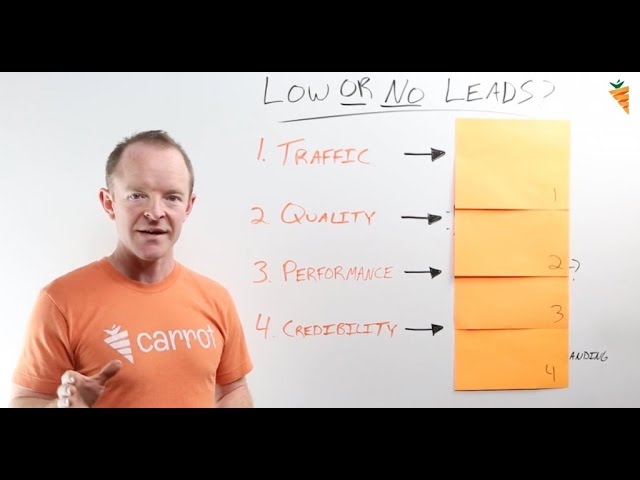
    This has to STOP… Obviously, you want more traffic and leads, right? We’ve all struggled to increase website traffic, and every lead guru has a big bag of tricks they’re eager for you to try. But… it’s a heck of a lot simpler than that.

    All you need to do is fix these 4 common reasons that are often neglected by real estate website owners either because they don’t understand their importance or because they are not sure how to approach them.

    4 Reasons Why You're Not Getting Real Estate Leads Online and How To Fix It

    Hey guys and girls, Trevor here coming at you with another whiteboard strategy sketch and these are getting really, really fun.

    I don’t know how many we have done so far but we have a lot more in store for you guys and keep the questions coming because the way that we come up with these things right here is from questions directly from you guys. Send them to us at support@oncarrot.com, through the comments section below or go to oncarrot.com and check us out.

    On this particular video, we’re going to address one of the most common “problem” questions that we get…

    “Why am I not getting the real estate leads online that I want or I’m NOT getting any leads?”

    Because in order for you guys to get value out of leveraging the web with your marketing, you got to be getting leads in some way whether it’s phone calls, whether it is people submitting forms, whatever it is. Leads have to be had, otherwise, you are not getting the value out of it.

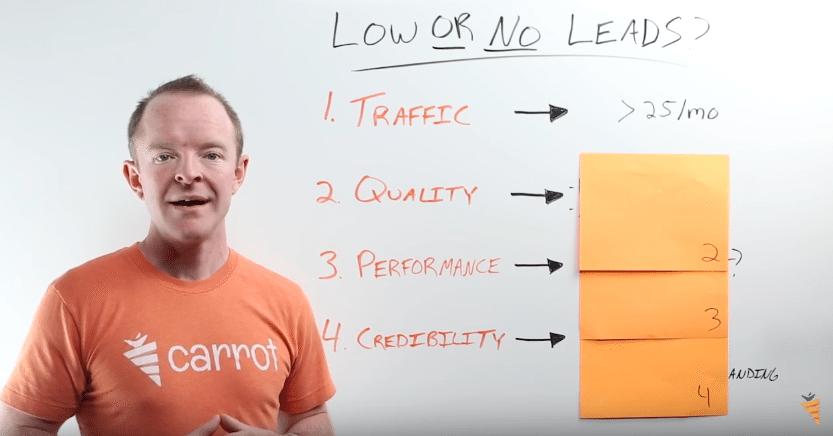
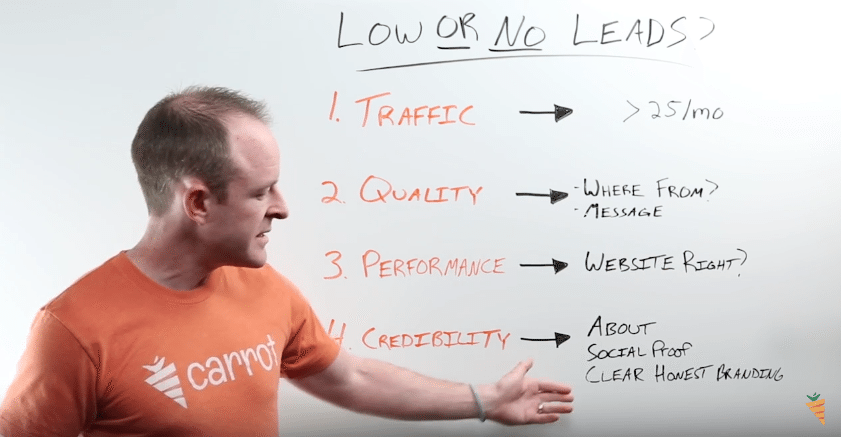
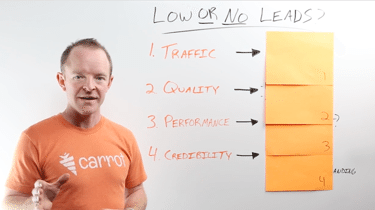
    We boiled it down to just four reasons that you are not getting the number of leads you want. As you are going through this particular strategy sketch, make sure that you are identifying which one or ones of these you need to tap on next.

    Okay?

    If you are not getting leads you want, you need to be doing one of these things better or more.

    Why Your Not Getting Real Estate Leads Online Reason #1: Traffic

    little-or-no-leads-traffic

    The first thing you want to look at is your traffic. That’s the most obvious thing, right? Because you can’t get a lead if you are not getting people to land on your website.

    How do we get more people to land on your website?

    The first thing we’d like to see is that you are getting at least 25 visitors to your website per month and we are saying at a minimum because on average let’s say it’s a motivated house seller website… you might be converting three, five, six, seven, eight percent,10% if you are doing really well, into a lead.

    If you are converting at 10%, which is a really high conversion rate in this type of market, you are only going to be getting about two to two and a half leads per month. Now that is not a lot of leads so that is your issue.

    If you are getting less than 25 people to your website a month, then that’s probably the first thing you need to focus on.

    If you are getting 50, 60, 70, people to your website a month and you are still not getting very many leads, let’s say it’s converting at less than 1%, we are going to move on to the next thing.

    Why Your Not Getting Real Estate Leads Online Reason #2: Quality of Traffic

    little-or-no-leads-quality

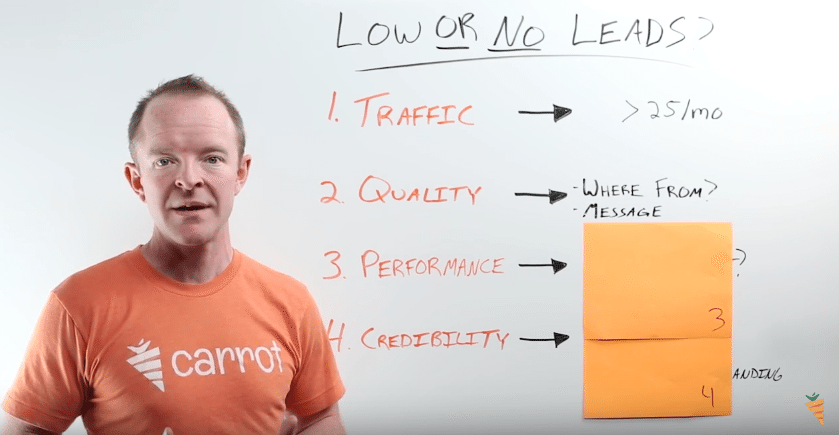
    The next thing is the quality of your traffic. First off, if you have traffic coming in and you are getting 20, 30, 40, 50, 60, 100 people to your website a month but you are still not getting very many leads, you are getting less than 5% or less than 3% of them becoming a lead, it could be a quality issue.

    You need to ask yourself some questions. It could be, where are these people coming from? Are they coming from good marketing channels? What is the message that you are delivering to them to get them to your website?

    Often times we’ll see people using Google pay-per-click or Facebook ads or something and they are getting a lot of traffic from Facebook for motivated house sellers but the problem is, those people are not very targeted. So you don’t want to be driving motivated house sellers from a random Facebook campaign to websites and expect to really have a conversion rate.

    The quality of those visitors is going to be lower. The quality of the Craigslist visitors will be probably a little bit lower, the quality of an SEO lead is going to be way higher. If you are not getting very many leads but you have a lot of traffic, see where your traffic is coming from. Is it coming from a high-quality source where they are very targeted and you can help them specifically? What message do they see before they land on your website?

    Did your ads say, “Sell your house.”? Then your website now says, “Sell your houses quickly, we buy houses.”. They are just looking for a real estate agent and you are offering a completely different service. Look and see what your ads and your message says.

    If you got the traffic nailed, the quality is perfect and that’s nailed, and you got a lot of traffic coming in and you are still not getting the leads you are looking for, what do we look at next? We look at performance next.

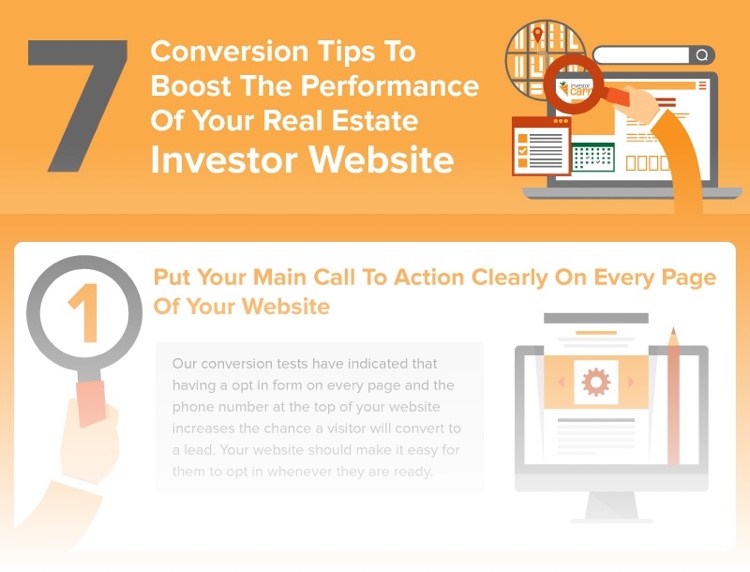
    Use Carrot’s Conversion Checklist

    7_conversion_tips_infographic_investorcarrot-featured-img

    Click Here To View Full Infographic

    If you would like for your website to convert more leads, then this webinar replay might be for you. It is a long call but packed full of valuable information. Give the webinar a view and then download our 16-point real estate investor conversion checklist.

    Download the Conversion Checklist ›

    Why Your Not Getting Real Estate Leads Reason #3: Website Performance

    little-or-no-leads-website-performance

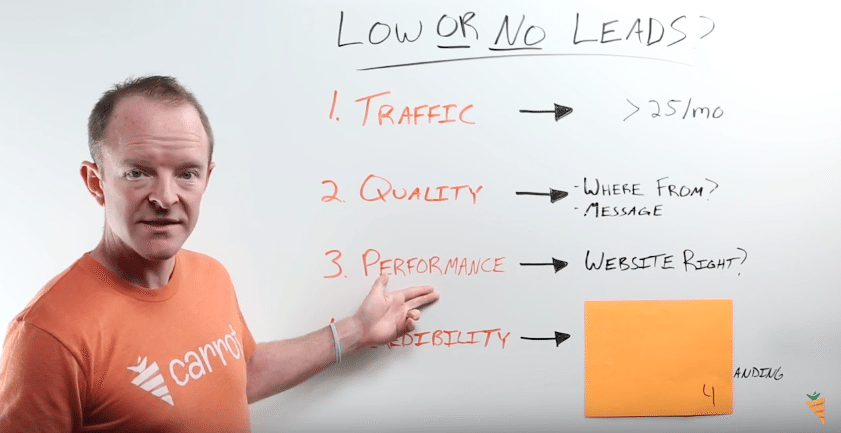
    We talk a lot about performance here at InvestorCarrot where performance is one of the things we specialize in.

    It’s helping your websites perform at a higher level which means convert more of your visitors, more of your quality traffic into a lead. The performance side is your website. Have you gone through some tutorials on this website? Have you gone through our other whiteboard strategy sketches to see how you need to structure your forms? Have you gone through some of our mastermind calls, things like that? Make sure your website is built to be high performing.

    If you are a Carrot member already, you got this one nailed. You don’t have to do anything there unless you jerked up the design that we have given you. Make sure you are sticking with the design, then just personalize it with your own content, tweaks, you personalize it with your branding and credibility.

    If you are not a Carrot member, make sure you are really focusing on the design of your website so it’s performing at a high level and like I said we have a lot of resources you can check out. Go to oncarrot.com/resources and we have an entire video and an entire checklist on how to create a high performing website.

    If you’ve got your high performing website set up, you got quality traffic coming into it, and you’re still not getting enough leads, what we want to do is look into credibility.

    Why Your Not Getting Real Estate Leads Online Reason #4: Credibility

    little-or-no-leads-credibility

    You can have the best website in the world that is set up with all the cool things to get someone to convert into a lead, but maybe you haven’t built credibility on the website. Maybe people aren’t believing that you can truly help them.

    Maybe you’re not really building that connection with them enough to where they are like, “Man, these people seem like real people and I want to work with them.” You need to nail the credibility.

    What do you do to really build great credibility for any business?

    It could be business selling microphones or a business selling whatever it is. You need to be building credibility and you do it the same way. You have a really good about page.

    We found in our data, the number three most visited page, sometimes the number two most popular page across all of our thousands of InvestorCarrot members websites including our own sales websites is always the about page because people are looking to prove or disprove the preconceptions in their mind on why they should or should not work with you.

    If they go to your about page and it’s basic, it’s generic, it doesn’t have anything about you, they aren’t building that connection with you. They are probably going to bounce out of there and possibly go and look at your competitors. The ones that they connect with more, are going to be the ones they choose to work with.

    Make sure your about page has a little bit about you. Kind of tells about why you want to help people, your mission, and list maybe some of your team members in there. Don’t be afraid to put your face on the website because your face is going to have to go in front of your client eventually.

    Number two is social proof.

    Do you have things on your website that show that other people have worked with you before them that you helped that have been in similar situations?

    It could be a testimonial, it could be videos, it could be case studies on deals you have worked with, it could be people who you’ve sold properties to who have gotten great returns now and they had a better experience working with you. It could also be the Better Business Bureau badge.

    Things like that help to build social proof, reviews on your Facebook channel, things like that. You just want to show other people have worked with you in the past or attest to your character, that you are the type of person that they would want to work with.

    The last thing is clear and honest branding.

    We found so many websites that nail the about page, nail the social proof, they got the traffic coming in but their logo up top looks like it’s been made in Microsoft Paint in 1998. It’s pixelated. The words are hard to see, and the very first things we often times look at on a website is the upper left of that website which happens to be where logos often times are or at least the top of the website.

    So make sure you have very clear honest branding.

    I didn’t say you have to have a fancy logo, that’s a completely different thing. Some of the best websites that we have found that generate the most leads, had the simplest logos out there. They didn’t spend a bunch of money on them.

    Reasons You’re Not Getting Real Estate Leads Online

    If you nail these four things; nail your traffic, the traffic is high quality coming from great sources with a very clear and defined message that matches your website, the website is set up for performance and not just a couple of things but set up everywhere on every single page to perform at a high level, follow what we do and model it.

    Don’t copy what we do, but follow and model what we do or if you are a Carrot member that’s already been done for you.

    On the credibility side, have a great about page. Look at our about page and see how much you connect with us. We have our core values that we tell about our start-up story, we tell about our team, and you get a chance to connect with us at a better level. It becomes real people then, and it’s easier to work with people than work with a kind of an ominous company.

    Get your social proof nailed, get clear on honest branding and if you still don’t have a stream of leads coming in from there, I would highly suggest then you go back up to number one and ramp up your traffic using other methods.

    Go out there and get your leads flowing upwards, get your leads flowing in and make them consistent and predictable so your business can grow.

    That is why we are all doing this so we can have a consistent, predictable business that really fuels our lifestyle and helps a lot of people.

    Check out the whiteboard videos on our YouTube channel. If you aren’t on our YouTube channel, subscribe where the subscribe button is.

    If you are not on our YouTube channel, but you are on our website, subscribe to our blog or check out the webinar that we have going and you can probably find someone inside or on the website somewhere and see how we can help you grow your leads and leverage the web better.

  • EP 17: He’s Bought 2,000+ Houses. How?  Brad Chandler with Express Homebuyers Unveils His Journey

    EP 17: He’s Bought 2,000+ Houses. How? Brad Chandler with Express Homebuyers Unveils His Journey

    2016-10-04-carrotcast_brad_main

    Our bread and butter was TV and has been for years. My father did TV advertising back in the early 80’s as an Attorney. In a way, he sort of pioneered it in the legal field. His two partners said “hey, I don’t want to do business with you if you’re going to TV advertise” and he said “see you later” and went and found two new partners. – Brad Chandler

    Why You Need A Killer Mindset In Your Real Estate Marketing And How Brad Has Thousands Of Reasons To Show For It

    Subscribe and rate us on iTunes

    Brad Chandler is the CEO of Express Homebuyers, one of the largest home buyers in the entire country. In this episode, we dive into what makes someone who has grown from a one-man show to now buying over 2,100 homes, tick.

    What key mindset shifts did Brad have to make early on? And what does Brad say is the most important part of his real estate marketing arsenal?

    Enjoy :-)


    Past CarrotCast episodes


    Listen to the Podcast

    Subscribe To The CarrotCast On iTunes

    In this CarrotCast conversation Trevor and Brad tackle: 

    • What makes high-achievers tick.
    • Differences in mindset between those who quit and those who find a way to figure it out.
    • Tips to stand out from your competition.
    • How to create an effective lead follow-up system.
    • How to create a business that serves you.

    Watch the Video Version

    He’s Bought 2,000+ Houses. How?  Brad Chandler with Express Home Buyers Unveils His Journey

    2:00 – The structure and focus of Express Homebuyers. From blow pops to 2,000 deals.
    5:35 – The three buckets of Express Homebuyers – Fix and Flip, Condo Development, and Rental Portfolio.
    7:00 – What it took to start Express Homebuyers and spending seven hard working months to close the first deal.
    8:50 – The difference in MINDSET between the people who struggle, but keep going and the people who quit.
    11:10 – The driving force behind Brad’s positive MINDSET.
    13:45 – Transactional vs. Wealth building wholesaling.
    15:20 – Brad’s real estate marketing plan – Heavy on TV advertising.
    20:10 – Standing out from the real estate competition, the value of being in front of your brand to build credibility, and the importance of your website’s “About” page.
    28:50 – Creating a business that serves you. Not you serving a business.
    35:25 – How to build an incredible follow-up system.
    40:10 – Implementing the 9 Word Email.
    42:20 – Outpacing the competition online. New Facebook targeting option.
    46:45 – Focusing on the “one thing” to strive to be better at.

    [podcast-subscribe]

  • 5 CarrotCast Episodes To Nail The Mindset Game

    5 CarrotCast Episodes To Nail The Mindset Game

    2016-10-07-carrotcast-roundup-main

    Believe it or not, I didn’t want to do podcasts. I thought I wouldn’t have enough time. In fact, I didn’t think anyone would listen and it would be a total failure. Well, podcast listening grew 23% between 2015 and 2016 so it was time to climb aboard. And, I’m glad I did.

    I’m super excited about how the CarrotCast has started out and where it’s going in the future. We’ve already had some amazing guests on the show who have intrigued our audience with some amazing conversations.

    Not only have we been able to dive into some phenomenal real estate content, but also, building positive mindsets, effective copywriting skills, hiring and delegating processes, invaluable marketing ideas, and so much more.

    Our goal is to have guests on who fit certain criteria. We look for people who strive to provide value, not just success.  They need to meet our Carrot core value standards.

    CarrotCast Episodes For Nailing The Mindset

    Instead of throwing the first 18 CarrotCast episodes at you, we thought we’d segment certain shows based on topics.

    Here is a five-episode mix that will build energy, passion, and motivation into your daily mindset. Enjoy :-)

    [podcast-subscribe]


    Tom Krol – Getting Your First Deal Done + A Tip To Double Your Assignment Fees

    • Why we started the CarrotCast and why it’s going to go far beyond just talking about real estate or lead generation.
    • Tom Krol and his story of how he left a job he hated to build his wholesaling and coaching company.
    • What his passions are and the unique way he celebrates success. Not just in his career, but also in life.
    • Going all in when creating a real estate marketing plan.
    • How to get to revenue as fast as possible as a new wholesaler.
    • How to double your assignment fees as an advanced wholesaler
    • Where Tom is finding is absolute BEST cash property buyers.

    Daniel DiGiacomo – Text Message Marketing + Mindset of Managing Your Business

    • The types of deals that drive his business.
    • Why he started his real estate company and some goals moving forward.
    • The effectiveness of text message marketing and what you need to be aware of.
    • What type of mindset you must have when hiring and delegating employees.

    Brian Evans – How To Talk To A Motivated House Seller + Getting Your First Deal Closed

    • The crazy journey into real estate investing.
    • How hard it can be to be an entrepreneur and how to fight through it.
    • Mindset shifts for new investors and why they are so important.
    • How to find motivated house sellers.
    • The exact words you should say to house sellers to close more deals
    • How new investors can build credibility.

    Mike Michalowicz – Working Too Much And Profiting Too Little?

    • How to handle success. And how not to (from experience).
    • How to focus on what is best for you.
    • Achieve sustainable growth by getting more out of your business.
    • How to be innovative when you practically have nothing.
    • What to look for when entering a new market.

    Martin Boonzaayer – How A Former Olympian Stands Out In A Sea Of Competition in A Competitive Market

    • How he leverages his Carrot website with direct mail.
    • How to stand out from your competition.
    • Why professionalism mindset is so important.
    • How to hire VA’s.
  • 7 Factors Of A Great Domain Name For Real Estate Investing Websites

    7 Factors Of A Great Domain Name For Real Estate Investing Websites

    domain name for real estate investing

    When it comes to real estate investing, you must understand the power of leverage: Using a small amount of work to achieve a large payoff. Whether you get leverage from other people’s money (OPM), mortgages, virtual assistants, or automation, you know that leverage is a key part of the investing biz.

    Leverage is just as important when it comes to domain names for real estate investing. Your website’s domain name may seem like a small thing but it plays a huge role in your website:

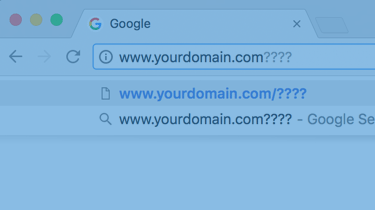
    • At its most basic function, a domain name are the words that people enter into their browser’s address bar to your website.
    • Your domain name is also a marketing tool – it’s a memorable word or phrase (functioning a lot like a sub-brand, slogan, or tagline) that you share with people so they’ll visit your site when they’re in front of their computer.
    • Your domain name is also a search engine optimization (SEO) tool. Search engines use the domain name as part of the algorithm that helps their automated systems understand what your website is about so they can index it properly… which allows your audience to find it when they search.
    • Your domain name is a sales tool, presenting the benefits of your solution to other people’s real estate problems. (Not all websites do this but many websites use this strategy. If your site’s domain name says something like “ColumbusOhioTurnkeyProfits” then you’re using your domain name as a sales tool).


    7 Factors Of A Great Domain Name For Real Estate Investing: Checklist

    As you think about what your website’s domain name should be, review this checklist of key factors in a great domain name and try to incorporate as many of these as you can.

    And one more thing to be aware of: These are general guidelines and recommendations. You may find that you have a domain name that “breaks” some of these rules but still works for you. We’re not suggesting you change your domain name if it works.

    These guidelines are meant to help you find a great domain name if you don’t have one yet.

    1. What does your audience want?

    Consider what your audience is looking for. Be specific. For example, motivated sellers aren’t automatically looking to SELL their property. They’re looking to solve a financial headache, or they’re tired landlords who are sick of dealing with tenants, or they’ve inherited a property that they can’t afford to keep.

    There’s a similar situation on the buyer side, too: Rent-to-own tenants are looking for an affordable property without a credit check; cash buyers who are also investors might be looking for turnkey properties.

    Action: Figure out what your audience wants and state those goals in a few words.

    2. What are they searching for?

    You’ve already thought about what your audience wants to achieve, but it’s important to know that what they want to achieve isn’t the same thing as what they search for. That’s because people are focused on their pain, and, they’re not thinking with your investor mindset. For example…

    • It’s less likely that someone will search for “sell my property” and rather “sell my house”. Or on the buyer side, if your buyers are investors looking for turnkey properties then their ideal outcome would be passive income that they earn while laying on the beach, but they’ll probably search for “turnkey real estate” or “cash flow investing”.
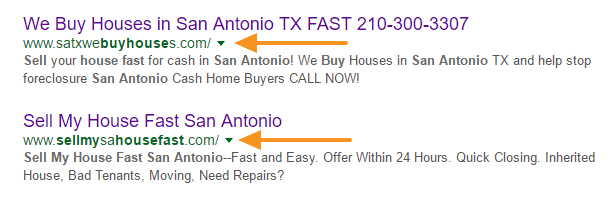
    • It’s also more likely that searchers will use the word “my” (“Sell My House”) rather than “a” (“Sell A House”) or “your” (“Sell Your House”). In fact, the search term “sell my house” has nearly 6 times more search volume than “sell your house”… obviously, because the searcher is thinking about their (“my”) house.
    website Domain Name for real estate investing Examples

    Action: Put yourself in your audience’s shoes and think about how they would search Google for information about their situation.

    3. Value, Benefits, and USP

    There is a reason that sellers and buyers come to you for help. You offer them some kind of beneficial value. There’s something unique about your real estate solution that makes you the preferred choice for that seller or buyer. The hard part is for you to figure out what it is.

    But once you know, you can incorporate that into your domain name as well. Do you provide really fast service? Are your offers all in cash? Can you close in two days? Do you do business in a different language? There are many reasons why someone would want to do business with you and your domain name is a place to highlight some of those reasons. FastCashRealEstateOffers.com or FreedomTurnkeyInvestments.com are a couple of examples.

    Action: Think about the reasons that people do deals with you instead of your competition. What unique benefits do you offer that no one else offers?

    4. Brand

    Your brand is another factor of your domain name. If you do business under a specific operating name, that name is part of your brand and you may want to include it in your domain name. An example might be a business called Sunrise Investments. That could work as a domain name. However, your brand is more than just your operating name – it’s the whole experience that someone has when they work with you to sell or buy a property. If you’re a veteran who does deals, your domain name might be something like “veteran buys houses”, which could also work as a domain name.

    Action: Think about your brand – both the name of your business as well as the experience people have when they work with you. List those components and see how they factor in.

    5. Location Specific (HIGHLY RECOMMENDED)

    Your location should be incorporated into your domain name for real estate investing. You may end up searching really well for a search term like “we buy houses” but that won’t help you if you buy houses in Oakland, New Jersey and you’re getting searchers from Australia looking for houses in that country. So choose a domain name that ideally highlights the area you do business.

    Most searchers will localize their search by city and state (Phoenix Arizona or they’ll often shorten it to Phoenix AZ). If you do business in a larger area than just one city, consider including only the state. (In most cases, searchers won’t search for the county they live in – usually just city or state (however, there are exceptions to this rule-of-thumb).

    real estate investing website domain name

    Action: List the areas you do business and try to narrow down the list to a few larger urban centers where you do deals.

    6. Clarity and simplicity

    After you’ve considered all of the factors so far, it’s good to do one final check for clarity and simplicity. It’s easy to allow your domain name to grow and grow and grow as you try to squeeze everything in. Accept the fact that you won’t likely get EVERYTHING squeezed into your domain name and just come up with a few ideas that you like. The fewer words, the better; however, you can probably expect to have at least four or five words (SellMyMemphisHome or TurnkeyInvestmentsColumbusOhio).

    • Aim for four or five words; avoid more than seven words.
    • If possible, avoid short forms (use Phoenix instead of PHX and Columbus instead of CBUS), although it’s okay to use the two-letter postal abbreviation for your state (OH for Ohio, etc.). In highly competitive markets, it might not be possible to use Phoenix. As a last resort, turn to PHX.
    • Remember that people will be typing these into your browser so try to keep them together as one single group rather than separated out by dashes (use TurnkeyInvestmentsColumbusOhio.com instead of turnkey-investments-columbus-ohio.com).

    Action: Review your potential domain names and have other trusted people review them as well. You should also have at least one person review your domain names who is NOT a real estate investor (to give you an “outsider’s” perspective).

    7. Choose a dot-com over other options

    Domain names end in dot-something (like .com or .org). These are called “top-level domains” or “TLDs”. When given the choice between .com, .net, or .anything-else, choose .com. Although search engines don’t necessarily prefer one TLD over the other in terms of ranking, .com seems to be perceived by most American searchers as the most credible and legitimate TLD. The importance of building credibility stands in a study by searchmetrics.com. It found out that almost 75% of backlinks go back to .com domains.

    And if someone remembers part of your domain name but not the TLD, they’ll type in .com by default. These attitudes are changing, especially as new TLDs are appearing, but .com is still preferred. If your ideal .com is unavailable, it’s probably better to seriously consider a different .com domain name instead of settling on the .net or .org TLD.

    domain names for real estate websites

    Action: Gather together the ideas you’ve come up with so far and start searching to see if those domain names are in use.

    Summary

    Your domain name for real estate investing is just as much a part of your business as your business name, your slogan, and your logo. It’s something you should think carefully about because, as we’ve mentioned earlier, your domain name does a lot of work for you as a marketing and sales tool. If you need to refresh,

    If you need to refresh, then CLICK HERE to jump back up to the meat of this post: a step-by-step checklist of HOW to optimize your domain name for real estate.

    7 factors to build a great domain name that will help grow your business for years to come.

  • 6 Disadvantages of Social Media Automation For Real Estate And How To Fix It

    6 Disadvantages of Social Media Automation For Real Estate And How To Fix It

    2016.09.4-socialautomation-main

    I’ve got a pet peeve I need to get off my chest. Too many real estate investors and agents are killing their credibility by automating their social media posting. It could be you.  This is where utilizing automated posting tools such as Buffer, Hootsuite, and Tweetdeck for social media can come in handy… maybe you’re even using them.

    But are you using them the right way? Do you think that “any post on Facebook is a good post on Facebook?”

    Well, if you’re doing it wrong… you could be killing your credibility rather than making a better connection with people better.

    Before we dive into the dangers of social automation, you might be wondering why you even need to implement an active internet presence. Well… As of 2015, a full 92% of all home buyers — across every geographic region and age range — use the internet during their search. You must be actively marketing your website to reach your full potential.

    Why You Need Social Media Marketing

    • Increase website traffic and search rankings. For example, if every person who follows Carrot on Twitter Retweets this post, it increases the likelihood it will rank higher in Google’s search results page for variations of “social media for real estate.”
    • Raise brand awareness. Make it easier for your customers to find you.
    • Create a positive brand identity, therefore building credibility. By connecting with your customers on social media, you are more likely to increase customer retention and brand loyalty.
    • Build conversations. Also known as Conversation Marketing.
    • Increase opportunities to capture leads.

    6 Reasons Automating Your Social Media Posts Could Be Killing Your Credibility

    With every positive comes a negative, or at least a small risk of something going wrong.

    1. Robotic Automation

    It’s the classic story of Man Vs. Machine. Is bigger, faster, strong… better? Social media automation is easy. But, it’s also easy to come off sounding like a machine. While the posts may come from you, they can easily lack a personal touch that increases engagement and building relationships. If you tweet in real-time, you can show emotion, write genuine thoughts and show your brands charisma. You can lose that when you become robotic.

    automated social posts

    Image Source: Spokal

    2. Giving Yourself Away

    It can be obvious who is really at the posting controls. You could be giving yourself away by using social media automation. Third-party applications, while worth it for several reasons, tell your followers you used them to post your content. Facebook and Twitter posts show where the post was from. Such as “posted via Hootsuite”. The same can go for Buffer. This could irritate your audience because posts read as articles that are being “advertised” and not as invaluable pieces of your content.

    3. Scheduling Features Aren’t Your Best Buddy

    A mistake that is still common is posting too much. You don’t need to post content with the sole purpose of pumping it out as much as possible. Again, this is annoying and creates a negative image of your business and makes your business less genuine. We’ve seen investors who post every hour on the hour – and it’s very obvious there’s not a true person sitting behind that keyboard. Different social platforms require different schedule strategies. It might be required to test the number of times and days in order to find what the best times to post for you are.

    Here’s an example of a posting schedule:

    • Twitter: Post 2-4 times weekdays from 9am-7pm
    • Pinterest: Post 1-2 times daily. Choose days from 2pm – 4pm and 8pm – 11pm
    • Google+: Post 1-2 times weekdays 9am-3pm
    • Facebook: Post 1-4 times weekdays 9am – 12pm. And, 2pm – 5pm
    • Blog: Once or twice per week. Post Tuesday and/or Thursday at 11 am

    4. Spam

    No, not the food. The 25 tweets sent out last hour. Automation adds to the temptation to either tweet too often or bombards them with the same message. It does not take much to be considered a culprit of spamming. If caught, social media platforms can temporarily suspend your account.

    5. Using The Wrong Hashtags

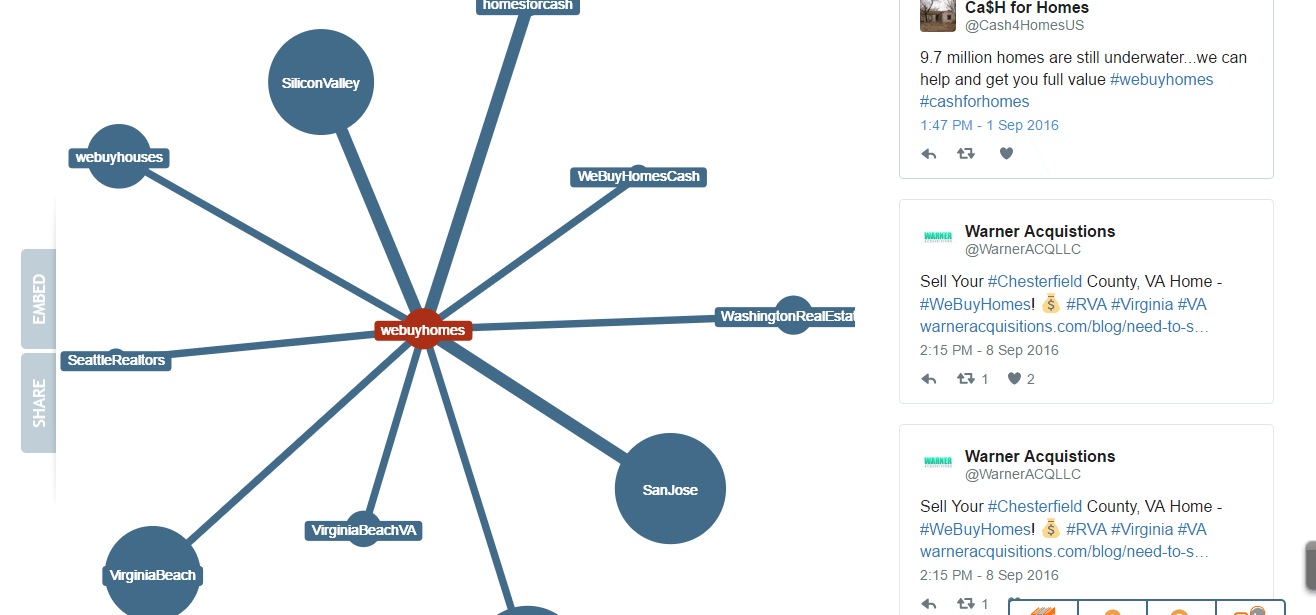
    Also, be aware of using automated hashtags. There are times hashtags are not what you thought they were. If you’re unsure of a hashtag, do a simple search using sources such as hashtagify.me.

    hashtag webuyhomes

    6. Carelessness

    You’re not done just because you published a bunch of content to Twitter and Facebook. Don’t forget to check and reply to questions and comments. You want that interaction. You must be prepared and interested in making real connections with your audience. That’s the fun part!

    respond to FB comments

    How To Properly Use Social Media Automation

    Of course, when done correctly and used judiciously, automated posting tools for social media can still be great time savers. Use these best practice automation tips to be present and successful on Twitter and Facebook.

    First… You must

    • Plan. Building a social media marketing plan is essential. Research your niche keywords and brainstorm content that will pull in your target audience. You could be writing towards motivated sellers, rent-to-own buyers, investment property seekers… whoever you’re targeting, make sure you have the right keywords.
    • Write amazing content. Make sure your content is offering valuable information to your target audience. Content isn’t always written. In addition to written content, create videos for YouTube showcase properties or create a Slideshare illustrating your buying process.
    • Establish a consistent brand image. Each social platform has its own identity and voice. Facebook is different than Instagram and Twitter. It can be easy to have your branding message become messy and inconsistent. If you feel like it’s getting out of control, take a step back, revisit your businesses core message, and get back on track being consistent.

    Then… You can

    • Use social media automation to fill your social media content calendar. Never be short of releasing high-quality content. You can release new content or repurpose some of your old, quality, content.
    • Use automation tools to find out the best time to post. Review your analytics. Test different days and times to find what times work best for your market.
    • Add personal touches to automated posts. Again, build your brand identity and credibility. Don’t be a mystery to your customers. Automate some casual posts so your audience feels like they know you and can feel connected to you and your brand.
    • Use automation to schedule your posts before you take an extended break. If you’re going to be away, schedule your social messages in advance. This will help you maintain a consistent social presence.

    Autoposting might be the only way you can achieve the ultimate goal of social media. Which, is connecting and communicating with your clients in a way build relationships and retention.

    Also be sure to read through Twitter and Facebook’s rules and best practices:

    Twitter Automating Tweets Rules and Best Practices
    Facebook Posting Tips and Best Practices

  • Ep 7: From $200 Million In Amish Fireplaces To Flipping Properties w/ Ryan Berry

    Ep 7: From $200 Million In Amish Fireplaces To Flipping Properties w/ Ryan Berry

    2016.08.3-CarrotCast_Ryan_Berry-main

    “I was in a position of not being able to fail. I had to succeed. I just had to.” Ryan Berry owner of Global Real Estate Solutions

    How Do You Make Your Marketing Stand Out In A Crowded Marketplace? Listen Below…

    Subscribe and rate us on iTunes

    How many times have you heard someone say they are tired of working the same job? I bet it’s a lot. But…how many of those actually push themselves to a different life?

    That’s what this week’s CarrotCast guest, Ryan Berry, did.

    He was a successful CPA turned marketer, generating millions of dollars in revenue selling Amish fireplaces. Sounds fantastic! But…it wasn’t making him happy.

    So, 3 years ago he decided to control his own destiny. He gave two weeks notice and dove into real estate investing and flipping properties head first.

    Right now Ryan’s real estate investing business is…on fire!

    Find out why Ryan has been so successful and how he uses his past marketing knowledge in the real estate industry.

    Enjoy :-)

    Listen to the Podcast

    Subscribe To The CarrotCast On iTunes

    We had a chance to sit down with Ryan and have a CarrotCast conversation about…

    • Leaving a very good, high paying career and building his real estate company.
    • Shifting his marketing mindset from Amish fireplaces to real estate wholesaling.
    • Following your passions and driving towards dreams.
    • What other real estate marketing options he uses besides yellow letters.

    Watch the Video Version

    From $200 Million In Amish Fireplaces To Flipping Properties w/ Ryan Berry

    Start – Leaving a very successful career and taking the leap to a happier more fulfilling life.
    11:12 – What his overall strategy is, mistakes he has made, and getting off the active income path and moving into more of a passive income.
    15:47 – Taking the same marketing mindset he used while generating millions of dollars in revenue from Amish fireplaces and shifting it into real estate.
    24:15 – The marketing mix that is working for Ryan right now. He has 37 leads under contract!
    35:46 – How Ryan ties his Carrot website into his plan to dominate his local market.
    40:52 – Building credibility and having another way for his leads to respond.
    42:56 – Getting out of your own way. Everyone deserves to have the life of your dreams. Just go for it.

    [podcast-subscribe]

  • Ep 6: How To Talk To A Motivated House Seller + Getting Your First Deal Closed w/ Brian Evans

    Ep 6: How To Talk To A Motivated House Seller + Getting Your First Deal Closed w/ Brian Evans

    2016.08.02-CarrotCast-Brian-Evans-main

    You know the mindset stuff is everything. Most people don’t have the skin or the mindset to pursue their dreams that they think they’re after. You’ve got to accept at some point you gotta jump” – Brian Evans

    How Do You Build Massive Credibility With House Sellers? Find Out In This Episode…

    Subscribe and rate us on iTunes

    In this CarrotCast episode, (have you Subscribed yet on iTunes??? If not, do it and rate us, we’ll love you forever!) … Trevor is joined by Brian Evans, real estate investor, and owner of The First Deal. The First Deal focuses on helping new investors close their first deal or their first 100 deals.

    Brian’s real estate journey started from a spot where not many other real estate investors find themselves, working on Wall Street in the Trump building.

    One day he came home to find a book from his Father waiting for him. There was a post-it note on it that read “Son, read this, take notes, let’s talk. Dad”. That book changed his life, his way of thinking, and drove him into the excitement of real estate.

    From there, he practically forced two real estate investing brothers to hire him as an apprentice. WITHOUT PAY. He learned the industry and closed his first deal with them in 2004 for $42,000. He hasn’t looked back since.

    Listen to the Podcast


    Subscribe To The CarrotCast On iTunes

    Check out this conversation with Brian about…

    • His crazy journey into real estate investing.
    • How hard it can be to be an entrepreneur.
    • Mindset shifts for new investors and why they are so important.
    • Tips to find motivated house sellers.
    • The exact words you should say to house sellers to close more deals
    • How new investors can build credibility.

    And …so much more! Enjoy :-)

    Or, Watch the Video Version

    How To Talk To A Motivated House Seller + Getting Your First Deal Closed w/ Brian Evans

    Start – 9:00 – Brian’s path to real estate investing. From working in the Trump Tower on Wall Street to now running his very successful business.
    9:30 – Why he chose to basically work for “free” to learn the real estate industry.
    10:45 – Being an entrepreneur is hard. Follow your gut.
    15:12 – The difference between the people who succeed vs. the ones who don’t.
    18:20 – The #1 hardest thing for new investors to do.
    19:46 – How to build credibility if you are a new investor.
    23:40 – Building relationships with realtors to generate a referral pipeline.
    24:08 – For a new investor, how many sellers do you need to talk to before getting your first deal closed?
    30:35 – Why Brian teaches building confidence in order to hurdle any obstacle.
    34:55 – What he does when something goes wacky in the middle of a transaction. And, a couple of good and bad stories.
    46:25 – What legacy Brian wants to leave and how his business fuels that.

    I’ve got my butterfly wings, now it’s time to fly.

    [podcast-subscribe]

  • High-Converting Real Estate Investor Homepage in 2024: A Lead Generation Powerhouse

    High-Converting Real Estate Investor Homepage in 2024: A Lead Generation Powerhouse

    Are you frustrated by website visitors who browse and never contact you? You’re not alone. Turning lookers into motivated sellers requires a website that works as hard as you do.

    This guide isn’t your typical SEO or CRO jargon fest. We’re revisiting one of our most popular blog posts and injecting it with fresh strategies. We’ll cover data-driven tactics you can use right now to turn your website into a lead generation machine for motivated sellers.

    The CRO-Optimized Homepage Blueprint

    Let’s break down the essential elements of a high-converting real estate investor homepage:

    Anatomy of a High Converting Real Estate Homepage

    Hero Section: A Benefit-Driven Powerhouse for Maximum Conversions

    The hero section is your website’s prime real estate, acting as the first impression that grabs visitors and compels them to take action. Here’s a deeper dive into each element, incorporating data-backed reasoning and specific examples:

    1. Headline: Craft a Compelling Hook That Speaks Their Language

    • Data-driven Reason: Studies by Copyblogger show that strong headlines can increase conversion rates by up to 10%.
    • The Secret Sauce: Focus on benefits, not features. Instead of saying, “We Buy Houses,” a better option is “Sell Your House Fast: Hassle-Free Cash Offer Today.” Speak directly to their pain points (selling a house quickly, avoiding a lengthy process) and highlight the solution you provide (fast cash offer).
    • Specificity is Key: Get even more specific by targeting a particular niche of motivated sellers. For example, “Need to Sell Your Inherited Property Quickly? We Can Help!”

    2. Visual Appeal: Images that Matter

    • The Power of Local: High-quality, local imagery builds trust and establishes a connection with potential leads. Use photos reflecting your service area or showcasing successful deals you’ve closed.
    • Data on Visuals: According to our data, including relevant images in your content can increase views by an average of 82%.
    • Beyond Stock Photos: While professional stock photos can work, consider using genuine images of yourself or your team. This humanizes your brand and fosters trust.

    3. Eye-Catching CTA: The Call to Conversion

    • Color Psychology: Utilize contrasting colors for your CTA button. Studies suggest that red, blue, orange, and green are particularly effective in driving clicks.
    • Action-Oriented Text: Ditch generic CTAs like “Submit.” Instead, use clear, action-oriented text like “Get Your Free Cash Offer” or “Schedule a No-Obligation Consultation.”
    • Button Size Matters: Don’t make them miss it! Make your CTA button prominent and large enough for easy tapping on mobile devices.

    4. Mobile-First Design: Prioritize the Dominant Viewport

    • The Mobile Majority: Our Carrot data proves over 60% of all web traffic now comes from mobile devices.
    • Seamless Shrinking: Ensure your hero section shrinks and adapts seamlessly for mobile viewing. Text should be easy to read, and buttons should be large enough for easy tapping.
    • Phone Number Visibility: Prioritize phone number visibility in the hero section. Ideally, it should be clickable for one-tap dialing on mobile devices. This removes friction and allows motivated sellers to connect with you instantly.

    Bonus Tip: A/B Testing is Your Friend

    Don’t settle for assumptions! Utilize A/B testing tools to compare different versions of your hero section elements (headline variations, CTA button colors, etc.). This data-driven approach helps you identify what resonates best with your target audience and maximizes conversions.

    Content that Educates and Converts: Building Trust and Inspiring Action

    The content beneath your hero section serves a crucial role in nurturing leads and guiding them toward conversion. Here’s how to craft compelling content that educates, builds trust, and ultimately converts visitors into motivated seller leads:

    1. Problem-Solution Focus: Speak to Their Needs, Not Just Your Services

    • Understand Your Audience: Conduct thorough market research and identify the specific challenges faced by motivated sellers in your area. Are they facing financial hardship, a looming relocation, or a complicated inheritance?
    • Data on Empathy: According to research, ads that use human emotion are 31% more effective than ads that use traditional tactics, which are only 16% effective.
    • Speak Their Language: Don’t just list your services. Address their pain points directly and use language they understand. For example, instead of saying, “We Offer Fast Cash Closings,” explain how a fast cash closing benefits them: “Get Cash in Your Hand Quickly and Avoid Months of Uncertainty.”

    2. Benefit-Oriented Text: Highlight the Value You Deliver

    • Focus on Outcomes: People are primarily motivated by the benefits they’ll receive. Go beyond simply explaining what you do; showcase how it solves their problems and improves their lives.
    • Data on Benefits Focus: Studies by MarketingSherpa indicate that benefit-oriented content can generate up to 5x more leads than features-focused content.
    • Examples: Instead of saying, “We Buy Houses As-Is,” emphasize the benefits: “Avoid Expensive Repairs: We Buy Your House in Any Condition!” Another example: “Skip the Stressful Listing Process: Sell Your House Quickly and Easily with Our Cash Offer.”

    3. Social Proof: Leverage the Power of Testimonials and Case Studies

    • Building Trust: Positive testimonials and case studies act as social proof, demonstrating the value you deliver to past clients. This builds trust with potential leads who are still considering their options.
    • Data on Social Proof: According to Nielsen, 92% of consumers trust recommendations from strangers more than advertising.
    • Showcase Success Stories: Feature success stories with quotes from satisfied clients. Briefly explain their situation, the challenges they faced, and how your services provided the solution.
    • Data-Driven Results: When possible, quantify the benefits you delivered. Include details like how quickly a house was sold or the amount of money saved by avoiding repairs.

    Remember:

    • Keep it Concise: People are busy, so keep your content concise and easy to read. Bullet points, subheadings, and visuals can improve readability.
    • Maintain a Conversational Tone: Write in a friendly and approachable manner, fostering a connection with your audience.
    • Call to Action: Throughout your content, strategically include CTAs that encourage visitors to take the next step, like contacting you for a free consultation or downloading a valuable guide.

    Strategic Navigation & Essential Pages: Guiding Visitors and Building Trust

    A well-structured website with straightforward navigation allows visitors to find the information they need quickly and efficiently. Here’s how to create a user-friendly experience that fosters trust and guides them toward conversion:

    1. Clear Navigation: A Roadmap for Your Website

    • User Experience (UX) Focus: A clear and intuitive navigation bar is crucial for a positive user experience. Visitors shouldn’t have to hunt for the information they need.
    • Data on Navigation: According to Crazy Egg, 40% of visitors will leave a website if they can’t find the information they’re looking for within the first few seconds.
    • Essential Links: Include a clear navigation bar at the top of every page with easy access to key pages like:
      • Home: This should always be the first link, allowing visitors to return to the hero section quickly.
      • About Us: Build trust and connect with visitors by showcasing your expertise and experience.
      • Services: Clearly explain the services you offer and how they benefit motivated sellers.
      • FAQs: Address common questions and concerns potential leads might have.
      • Contact: Provide multiple ways for visitors to get in touch with you, including phone number, email address, and a contact form.
    • Mega Menus (Optional): For websites with extensive information, consider well-organized mega menus that categorize sub-pages for easy navigation.

    2. Compelling “About Us” Page: Unveiling the Human Touch

    • Building Trust: A well-crafted “About Us” page humanizes your brand and builds trust with potential leads. It allows visitors to connect with you personally and understand your expertise.
    • Data on About Us Pages: Our studies show that “About Us” pages are among the top 5 most visited pages on most websites, indicating strong user interest.
    • Content Elements: Include the following elements on your “About Us” page:
      • Your Story: Share the story behind your business, your motivations for helping motivated sellers, and what sets you apart.
      • Team Bios: Showcase your team member’s expertise and experience. Include photos and brief bios highlighting their qualifications.
      • Testimonials: Integrate positive testimonials from satisfied clients to build trust and social proof.
      • Awards & Recognition: If you’ve received any industry awards or recognition, highlight them on your “About Us” page to demonstrate credibility.

    Bonus Tip: Consider incorporating video content on your “About Us” page. This allows visitors to connect with you on a more personal level and see your passion for helping motivated sellers.

    SEO Optimization for Search Visibility: Attract Qualified Leads Organically

    In today’s competitive online landscape, search engine optimization (SEO) is crucial for driving organic traffic to your real estate investor website. By strategically incorporating relevant keywords, you can ensure your website shows up in search results when motivated sellers in your area are looking for solutions.

    1. Keyword Research: Uncovering the Language of Your Audience

    • Understanding Search Intent: Conduct thorough keyword research to identify the specific search terms motivated sellers in your location are using. Tools like Google Keyword Planner, Carrot’s Keyword Explorer Tool, and SEMrush can be helpful for this.
    • Data on Keyword Research: According to a Backlinko study, websites with strong SEO strategies can generate over 1000% more organic traffic than those without.
    • Target Long-Tail Keywords: Don’t just focus on broad keywords with high competition. Target long-tail keywords that are more specific and have lower competition. For example, instead of targeting “sell my house,” target “sell my inherited house fast in [your city].”
    • Location Matters: Integrate local SEO keywords throughout your website copy to improve local search ranking. For example, include your city and state in your page titles, meta descriptions, and headers.

    2. On-Page Optimization: Weaving Keywords with Care

    • Strategic Keyword Placement: Once you’ve identified your target keywords, integrate them naturally throughout your website copy. This includes:
      • Page Titles: Every page should have a unique and keyword-rich page title that accurately reflects the content.
      • Meta Descriptions: Meta descriptions are short summaries displayed in search results. Optimize them with relevant keywords to entice users to click on your website.
      • Headers: Use H1, H2, and H3 headers throughout your content, incorporating your target keywords in a natural and informative way.
      • Body Copy: While keyword density is important, prioritize natural language and avoid keyword stuffing. Focus on creating valuable and informative content for your audience.

    Bonus Tip: Go beyond traditional keyword research. Explore “People Also Ask” (PAA) or Frequently Asked Questions (FAQ) sections and answer box content on relevant search terms. This allows you to target specific questions motivated sellers might have and position your website as a trusted resource.

    By implementing these SEO best practices, you’ll increase your website’s visibility for relevant search queries. This translates to attracting more qualified leads who are actively searching for solutions you can provide. Remember, SEO is an ongoing process. Regularly monitor your website’s performance, analyze keyword rankings, and adjust your strategy as needed.

    Conclusion: Cultivating a Conversion Powerhouse

    By implementing the data-driven CRO best practices and SEO strategies outlined above, you can transform your real estate investor website from a passive online presence into a powerful lead generation machine. Remember, a successful website is a living entity that requires ongoing optimization and nurturing. Here’s how to ensure your website continues to thrive:

    1. Embrace A/B Testing for Continuous Improvement

    • The Power of Iteration: Don’t settle for assumptions! Utilize A/B testing tools to compare different versions of your website elements. This could include testing variations of your hero section headline, CTA button color, or “About Us” page layout.
    • Data-Driven Decisions: Track key metrics like conversion rates, bounce rates, and time on page. Analyze A/B test results to identify what resonates best with your target audience and make data-driven decisions for future website improvements.

    2. Content Marketing: A Magnet for Motivated Sellers

    • Become a Trusted Resource: Don’t just focus on selling; establish yourself as a trusted resource in your community.
    • Data on Content Marketing: According to the Content Marketing Institute, content marketing generates over 3 times the leads compared to traditional advertising and costs 62% less.
    • Content Ideas:
      • Create informative blog posts that address common challenges faced by motivated sellers in your area.
      • Develop downloadable guides or e-books offering valuable insights on the real estate selling process.
      • Consider video content, hosting webinars, or creating infographics to diversify your content offerings.

    3. Leverage the Power of Online Reviews

    • Building Trust and Credibility: Positive online reviews from satisfied clients act as social proof and build trust with potential leads.
    • Data on Reviews: According to BrightLocal, 84% of consumers trust online reviews as much as personal recommendations.
    • Encourage Reviews: Make it easy for satisfied clients to leave positive reviews on platforms like Google My Business, Yelp, and Facebook.
    • Respond to All Reviews: Take the time to respond to all reviews, both positive and negative. Thank satisfied clients for their feedback and address any concerns raised in negative reviews promptly and professionally.

    Incorporating these ongoing strategies will cultivate a website that not only attracts motivated sellers but also fosters trust, establishes you as a valuable resource, and ultimately converts visitors into leads.

    Remember, a successful website is a journey, not a destination. By consistently applying these strategies and staying informed about the latest trends, you can ensure your real estate investor website remains a powerful Evergreen lead-generation machine for years to come.