By now you’re probably tired of hearing me — and every other marketer — talk about the impact of AI search on website rankings, traffic, and overall performance. (Sorry, we’re not going to stop anytime soon … this is a massive shift in the online marketing world!)
But the truth is, it is a major shift in how people find local businesses and decide who to work with — be that what shoes to buy, who to sell their house to for cash, or which HVAC company to trust.
The number of people turning to AI search for local business recommendations jumped 650% in the past year, according to BrightLocal’s Local Consumer Review Survey 2026. According to their report, this year nearly 50% of consumers use AI to find local businesses.
For the past several months, the marketing world has been in a tizzy about “zero click searches,” or people finding answers to their questions via an AI search engine or Google’s AI Overviews without ever clicking to a business’s website. This, understandably, has impacted organic traffic numbers and made it harder to figure out what is working.
The good news is, we’re starting to get some concrete insight into how AI results impact businesses as AI search engines begin making it easier to track results. In May 2026, ChapGPT started linking brand names to homepage URLs about five times more often than it previously did — from about 4.5% of the time to roughly 20-24% of the time — according to Profound. (Before, ChatGPT would mention a brand name, but not link to its site.) This resulted in known referral traffic from ChatGPT to brand sites jumping to about 60-65%, roughly double what it was before the update.
Google is also starting to shed light on how much traffic its AI Overviews and AI Mode generate. In early June, Google started adding Generative AI results to the Search Results and Discover sections of Search Console “to help you understand your site’s visibility within generative AI features on Search.” This new feature is slowly rolling out, and there’s no word on when it will be more broadly available (trust me, I check our Search Console daily to see if we have it yet). But it’s a promising step in the AI visibility direction.
So, what do we know about AI search’s impact on traffic and leads?
That’s exactly the question CarrotLabs set out to answer recently.
Our expert CarrotLab technicians looked at the top 10 Carrot sites generating AI referral traffic to understand AI’s impact on conversion rates and find commonalities others can replicate for AI success. Here’s what we found …
Key Takeaways
- Traffic from AI search has a much higher conversion rate than other traffic — around 30% for sites with the most AI referral traffic, according to our study. This indicates that AI users either trust AI’s recommendations or have done more research before engaging with a business (possibly by asking AI more or deeper questions).
- Most websites getting the most traceable AI referral traffic had 150+ high quality pages or posts. Focusing on adding high-value, high-quality content to your website could help you appear more often in AI search engines.
- ChatGPT and Claude AI pass on the most referral traffic, followed by Google Gemini and Microsoft Copilot. This may mean they’re also the most commonly used.
Table of Contents
- AI Leads Convert Better
- How to Show Up in AI Searches
- Which AI Generates the Most Leads (& what do they look for)

AI Leads Convert Better
Overall conversion rates for most websites sit around 2% to 6%, depending on who you ask (with most stats erring on the side of 2-3%). But we’re already seeing better results from AI search, despite limited and challenging reporting.
Neil Patel (a major influencer in the digital marketing world) recently reported that “AI referral traffic sits at 0.58% of total site visits. But it’s closing 5.09% of sales.” That’s a very strong conversion rate for a small traffic source.
But the potential is much greater.
CarrotLabs looked at the 10 Carrot-hosted websites that are receiving the most AI referral traffic and found that this AI traffic converts into leads at around 31%! This impressive conversion percentage suggests that visitors from AI platforms tend to be high-intent. Again, likely because of the depth of research they’re doing with AI rather than typing a short search phrase into a traditional search engine. AI is giving them answers and context, not just links they need to explore themselves.
The interesting thing is, nearly half of these websites also perform well in traditional SEO search rankings.
| Site | Organic Rank | AI Rank |
| floridacashhomebuyers.com | #6 | #10 |
| compasslandusa.com | #7 | #7 |
| funstayflorida.com | #8 | #1 |
| doubleclose.com | #9 | #8 |
This tells us that solid SEO translates, in part, to good AI visibility.
But what else is making the difference? CarrotLabs looked into that too!
How to Show Up in AI Searches
For our CarrotLabs analysis of the top 10 sites with the most AI referrals, we found one major commonality: Content volume.
Most of the sites in our top 10 have substantial page libraries — often ranging from 150 to 500 published pages. The hypothesis is that more pages equal more surface area to get picked up and cited by AI models. And the pattern holds strongly at scale. The top 100 AI-referred sites average 185 published pages versus 78 pages for a typical Carrot site — more than 2.4 times the content volume. The content-to-volume signal is real and consistent. Whether the content causes the AI traffic or the better AI results are the product of a more committed site owner is hard to say from this data alone — but it’s a compelling pattern.
While we don’t know if this is causation or correlation, we do know that you can’t just throw up junk content and hope to rank well or show up in AI. Google has long valued quality content, and AI is no different.
AI search tools tend to cite pages that answer specific informational questions well. Add FAQs to each of your major pages and create dedicated pages for larger or more common questions. To make sure pages are high quality and add value, include as many local facts, specifics about your company, and data as you can. If you use an AI tool to help you write, don’t just copy and paste the results onto a page. Read through the copy and see where you can add insights, tidbits, and helpful information that you know your web visitors will find interesting. It’s not about tricking the algorithm. It’s about whether your pages contain knowledge that a visitor would trust and find useful.
Here are some things AI engines particularly like to see in your content:
- Cite external sources with a link – If you share data, link the source. AI models want to know that the information is real and traceable, not made up. If it’s data about your company, be clear that it’s your information or research by citing it as such.
- Precise data, not generalities – Whenever possible, use real numbers, not vague terms like “prices vary.” When you’re looking for a price or a timeline, you don’t want a vague non-answer, and neither do people using AI search engines. If you want to show up in results, give AI something to actually show. You can use averages or ranges, just make sure you note that in your copy. “Our plumbing services range from $250 to $600 per visit.”
- Include the data year – What does AI love more than data? Recent, up-to-date data. When sharing stats, include what year they’re from. If you’re publishing a blog or page that’s a snapshot in time, like “Average Florida Land Prices by County,” add the year to the blog title and URL.
- FAQs – People have questions about your business or service. Answer them in FAQ sections on relevant pages. Specialty topical pages give you a chance to answer even more FAQs as you can include common questions about the topic, not just your company. Use the language searches would to match their intent. (Is someone more likely to search their “condensor” not working or their “AC” not working?)
The bonus is that all these factors also help with your traditional SEO! Based on our analysis of the top sites getting AI referral traffic, we recommend working your way towards 150+ quality pages/blog posts. This gives you a better chance of capturing more AI referrals than thinner sites.
Tip: Remember, the goal is to attract MOTIVATED leads, not just web traffic. So keep your content focused on things your business actually does or services you provide. It’s tempting to write a blog about a hot topic, but if it doesn’t tie back to the services you’re actually selling, you’ll end up generating a lot of traffic that never leads to results. Keep your content helpful but focused. Don’t rush to hit the 150+ page number. Producing helpful, quality content over time will have a better impact than publishing a lot of pages just to hit a number.
Before you spend time building a lot of content on your site, make sure your overall business entity is set up correctly for AI search. Want to know exactly how to do that? Our free 3-day AI Search Visibility Challenge walks you through the process and gives you resources to make meaningful changes (and see results quickly!).
Which AI Generates the Most Leads (& what do they look for)
Since AI search is so new, one dominant player hasn’t emerged. Those who are eager to adopt AI search have found their favorite engines. And even those who haven’t specifically sought out AI engines have still encountered AI results when searching on Google (AI Overviews) or Bing (Copilot). Still, we’re seeing some solutions pull ahead, most notably ChatGPT, Claude AI, and Google Gemini, according to June 2026 data from FirstPageSage.
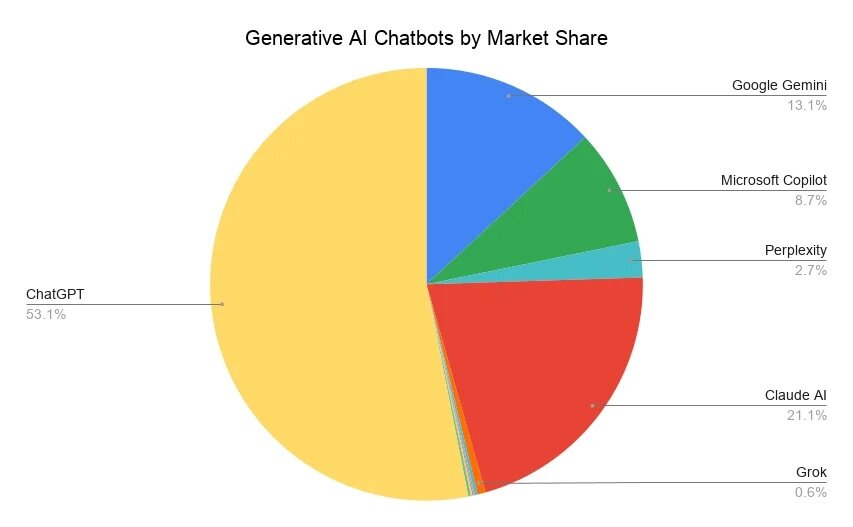
With that in mind, let’s look at what ChatGPT and Claude AI (the two major winners right now) favor for their search results.
Like with FirstPageSage’s findings, the majority of traceable AI traffic to Carrot sites comes from ChatGPT. It seems to favor sites that answer specific, actionable questions. For real estate investors, that’s things like information on financing alternatives (rent-to-own, owner finance), regulatory compliance (Airbnb laws by city), market data (land prices by county), and professional services (transactional funding, double close). Sites with these content types are getting consistent, high-intent referrals that likely convert well.
Claude also recommends pages that answer a specific question, but it seems to stay away from pages that are purely designed for lead capture. For instance, Claude doesn’t tend to cite generic “we buy houses in ” lead pages, even when they rank well organically. (Don’t get rid of those pages! Just be sure to add additional content to your site that AI engines look for.)
The implication is pretty direct: if you want AI referral traffic, you need content that answers a real question someone would type into an AI engine. The websites getting cited aren’t doing anything exotic — they’ve just published specific, factual content about processes and data that AI engines can use in an answer.
Keeping Up with AI Search
AI search is only in its infancy, and we’re sure to see things change. CarrotLabs tests different hypotheses and digs into data to see what’s working for our thousands of members so we can help them succeed faster. That mission now includes monitoring AI’s impact on website traffic, business discovery, and lead generation.
Stay tuned for more insights from CarrotLabs!