Once you figure it out and repeat the process just a few times a year, real estate becomes a very lucrative and profitable business, with very little overhead.
– Carter Crowley
How Credibility and the Right Partnership Led to 38 Transactions in 2020 w/ Carter Crowley
The importance of the agent and investor relationship is something we’ve been talking about for a while now here at Carrot. We’ve often said that in the future, agents will need to invest, and investors should be licensed in order to better serve their leads.
Well, the future is now.
Now, more than ever, people are looking for ways to sell their homes. With the rise of iBuyers, people are looking to other sources when they are thinking about putting their home on the market. The agent or investor who is able to offer multiple solutions, is going to be able to complete more actions and help more people.
Here’s how Carter Crawley is doing it.
Read the Full Show Notes Below…
Carter Crawley is a Carrot client who is mastering the agent-hybrid model. His business has a healthy mix of deals, and his volume is double that of other investors or agents who try to fit everyone in the same box.
His versatility and ability to offer more than one solution have allowed him to serve more people.
Building That Credibility
Carter Crawley is generating a lot of leads from his Carrot site. His marketing is working amazingly well because he isn’t afraid to put himself out there and let people know what they are all about.
They are currently using Google Ads, Facebook, and a little bit of YouTube for retargeting purposes. They are also running cold calling campaigns and setting up mailers. However, video surrounds the brand.
Their website is laid out very well, with videos explaining exactly who they are and what they do. The website conveys trust and lets them know that Carter and his team can solve their problem.
With his videos, Carter is building rapport and credibility with his clients before he ever meets them.
The Power of 3
There is something about the number 3 that leads to higher conversions. Giving your customers 3 options will often lead to more sales. One option leaves your client with the ability only to answer yes or no. Having two options can make one seem expensive, while the other seeming cheap.
But having 3 options really makes people think. The highest price offering has all of the bells and whistles. The lowest-priced offering is just bare-bones service. While the middle option is the best value and the best service. Everybody wins.
As a hybrid investor agent, Carter can offer several options to his client. He can list the property. He can buy it outright for a lower price. Or he can present it to his network of buyers, allowing his client to sell fast while still receiving competitive offers. Again… everybody wins.
Don’t Be Afraid of Having a Partner
For Carter and his business today, his perfect partner is his dad. They can balance each other out and pick up where the other leaves off. Dad handles the contracts, service providers, and business management, while Carter goes on appointments, handles the financing, and gets the deals locked down.
That said, your partner doesn’t need to be your family member. It needs to be someone you trust who is just as motivated as you are to close deals and help others. Many people avoid finding a partner because they are worried about giving away half of their profits.
When you work with the right partner, your volume will go up, they will handle the aspects of the business that you don’t like, and your volume will go up exponentially.
You will be able to spend your time on the things that give you energy, which will lead to better service, happier clients, and more closed deals.
Loving What You Do
For anyone watching or listening to this podcast, it is evident that Carter is passionate about his work. You can see how every aspect of real estate excites him, especially when he is able to find solutions that truly help people.
Carter and his team aren’t just after the money, they are a true helping hand for people when they need it most.
In markets with little competition, the product and the offering are often the most important factors a prospect uses to decide what company to work with.
But in a cluttered market, with lots of competition, like today’s real estate world… credibility has grown to trump “product” as the main deciding factor to make or break your next deal.
So, what are the top 5% of real estate investors and agents doing to build more credibility in the market and make their competition irrelevant?
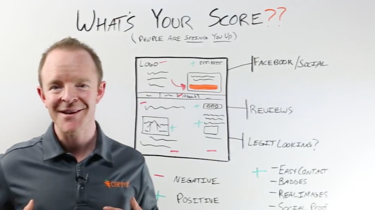
Trevor Mauch, CEO of Carrot, dives into specific examples and lays out his Credibility Score theory to help you determine what you should fix ASAP to build your credibility even more.
Listen to the Podcast
[podcast-subscribe]
Podcast Timestamps & Highlights
6:10 – What the consumer’s path to find a credible company online looks like. 10:00 – Recognizing competitors’ opportunity to move in and cloud the consumer decision process is essential. 12:00 – Example of an effective self-mailer used to build credibility.
15:15 – Marketing stages breakdown for real estate. What the most important pieces are. 17:45 – Look at your past and present marketing numbers and build credibility after the first contact from a lead. 18:50 – What it takes to build credibility into your real estate website. 22:00 – We’re in the age of trust and credibility. Everyone is online. What are you doing to cut through the clutter? 26:30 – Build a process within your business that adds credibility. 29:15 – Taking a look at Opendoor and Express Home Buyers. Two examples of companies with a good credibility strategy. 32:20 –Diving into Carrot’scredibility strategy. 33:45 –Stanford’s Web Credibility Research Center – 10 credibility score items people view on a website. 37:20 – What is the #2 most visited page on your website? 39:30 – Does your real estate website look good on mobile? And what you need to fix if it doesn’t. Use our mobile check tool. 42:40 – What does credibility mean? And how to do it so you connect with your lead more effectively. 44:00 – Using the credibility score formula and how to build credibility through social media and testimonials. 53:00 – Stacking upon the credibility score – Being picky on your website credibility. 55:00 – Using some how-to’s to beef up the overall impression of your real estate website. And the importance of controlling the conversation around your brand. 1:02:15 – Build things unique to your offerings to stand out from the online competition. Such as badges and logos. 1:04:30 – Creating the connection with credibility and working hard to go the extra mile to show you’re an expert in your market.
Not when it comes to optimizing your websites for conversion. ;-)
Constantly, we’re on the look-out for new ways to improve your (our member’s) website conversion rate. But we don’t just want to increase your conversion rate, we want to make it dead simple for you to make those conversion rate improvements.
In other words, we want to help you convert more visitors in less time.
The Carrot Credibility Bar
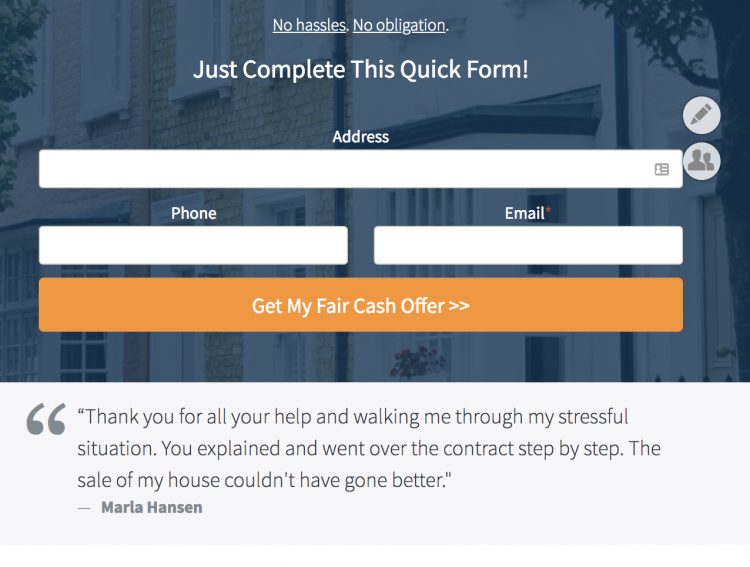
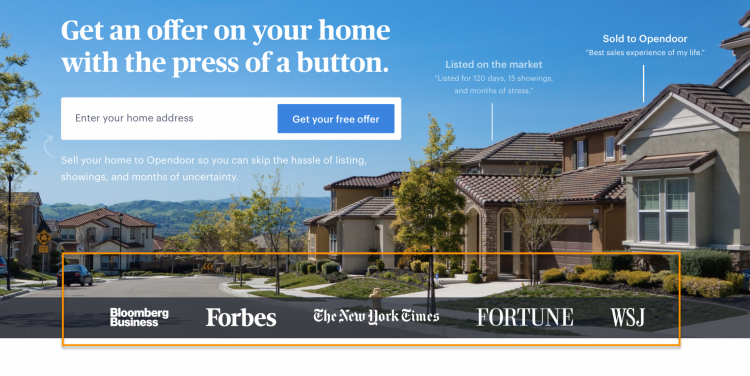
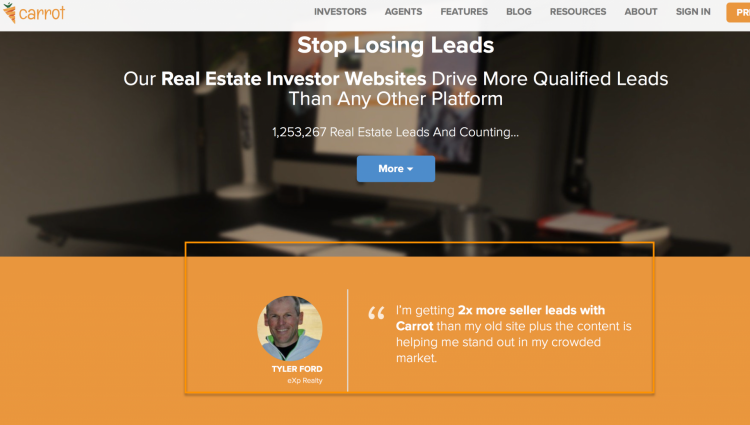
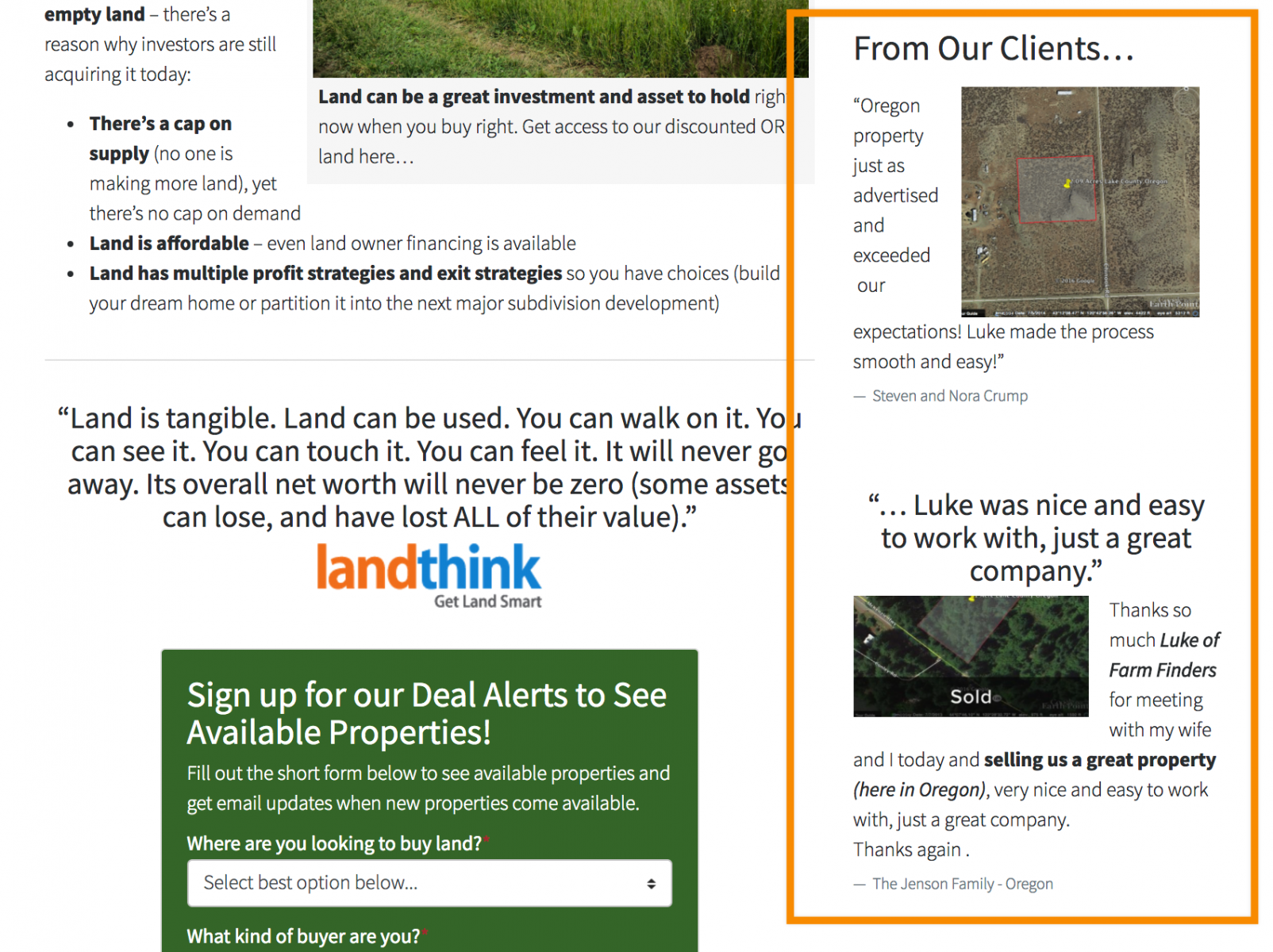
Here’s a look at what this credibility bar might end up looking like on your website. This is a version with a testimonial.
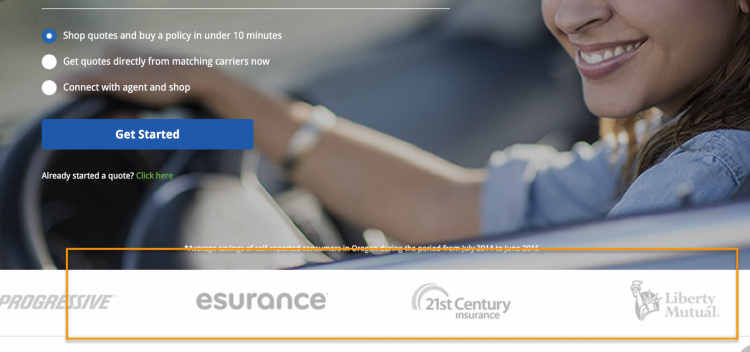
And here’s a version with logos.
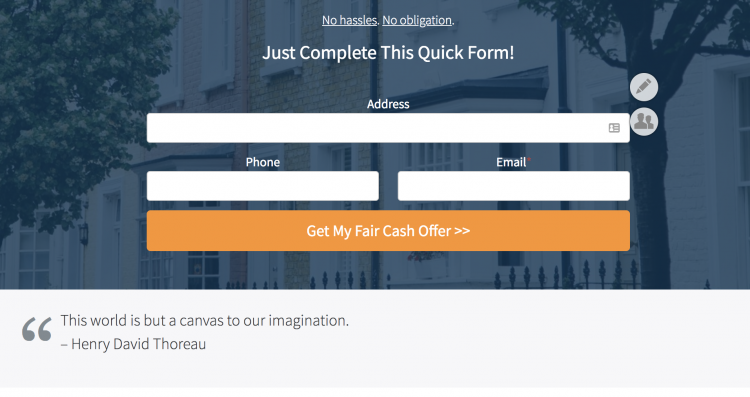
If that ain’t enough for you, then we even have a custom version where you can add your own text and images to your heart’s desire – like we did with this block quote…
Or video…
Pretty awesome, right?
But this new feature isn’t just remarkable because the dev team here at Carrot did an amazing job designing it and making it easy for our members to use.
No. The feature is amazing for another, more important, reason.
It’s going to help you build more credibility on your website, instantly. But you don’t have to take my word for it.
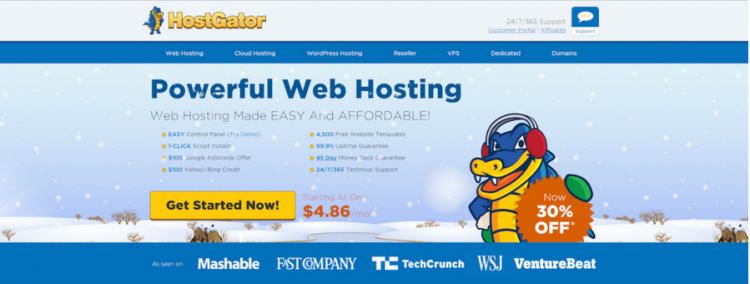
ConversionXL ran an in-depth test to determine which type of social proof on a credibility bar is the most effective. They used testimonials with and without photos, logos, social sharing buttons, and a whole slew of other types of social proof.
Here’s one example.
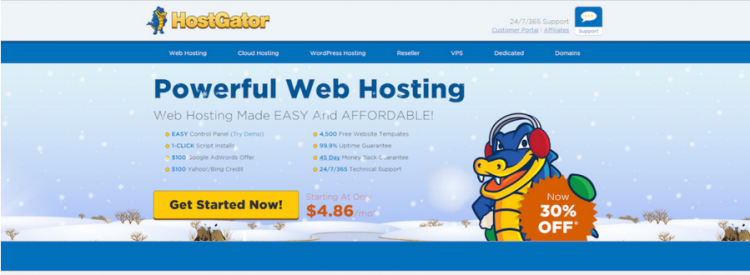
Then, they had a control version that ran without any credibility bar.
In the end, one thing was for sure: every single variation of the page with some type of social proof performed better than the control.
And the reason is simple: when people arrive on your website for the first time, they have no reason to trust you. You have to show them that you’re trustworthy. Of course, you want to do that as quickly as possible to avoid them bouncing from your website.
This is why a front-and-center, top-of-the-page, no-scrolling-required credibility bar is so damn effective at building that necessary trust.
People see it the moment they arrive on your website and it confirms for the visitor that they can, indeed, trust you.
Just consider massive organizations like Opendoor, insurance.com, or ourselves ( :D ) that count on a credibility bar for building trust with visitors.
So, you’re probably wondering by now, What should I put on MY website’s credibility bar?
For that, there are a few different options.
Consider…
Displaying a compelling testimonial from a happy customer.
Displaying a series of logos from publications your business has been mentioned in.
Displaying a series of logos from other companies you’ve worked with.
Displaying awards your business has won.
The way you to choose to use this feature will depend on how you want to build credibility with website visitors and the kind of credibility builders you have access to.
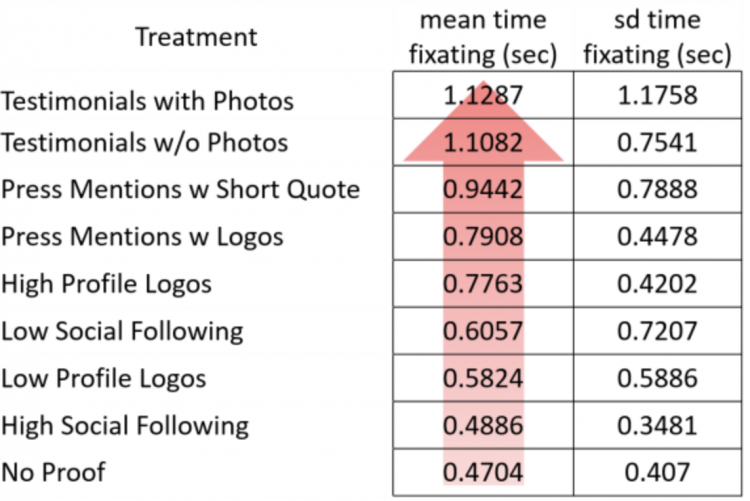
But, to help you make an informed decision, here are the types of social proof that ConversionXL found (from the study I mentioned earlier) had the highest recall rate among participants, and thus (this part is conjecture) the highest impact.
As it turns out, testimonials were the most effective at generating website visitor recall.
Whatever type of social proof you choose, every single Carrot member should be able to make use of this feature – whether it’s through a testimonial or a series of company logos. This feature worked with our real estate agent websites as well!
Plus, a credibility bar can help you stand out from other websites online (i.e. the competition), giving you the extra edge you need in your market.
If you still don’t want to use the credibility bar, though, no worries. This feature is completely optional, so you can just leave your website as it is now if you’d rather.
In competitive real estate markets, your online credibility score—the subconscious evaluation prospects make when visiting your website—can dramatically impact your deal flow and determine whether potential clients choose to work with you.
Key Takeaways
Visual elements like clean logos, authentic local images, and properly formatted testimonials with real photos and names significantly impact your website’s credibility.
Your “About” page is typically the third most visited page on real estate websites because prospects are evaluating whether you’re the right company to solve their problem.
Every element on your website either adds to or detracts from your credibility score, including social media links that should only be included if they enhance rather than harm your professional image.
Audit your website and marketing materials to eliminate negative credibility points and strengthen positive ones—from logo clarity to content authenticity—to stand out in a crowded marketplace and earn the trust of potential clients.
But, it amplifies when you have a competitive market. When you’re in a market with a lot of competition but lack online credibility, you have lower deal flow.
When a buyer or seller has multiple choices, they often look at the agent’s or investor’s credibility.
To help you learn how to build online credibility for real estate, we’ve devised the “credibility score.”
Whenever you go to a store, whether online or in person, you go to the grocery store. You’re walking in the grocery store, and subconsciously, there are all kinds of things that you’re doing to size up that grocery store.
Is the floor clean? Are the vegetables arranged in a way that makes sense? Are they rotten, or are they good? Are the people who work there wearing good clothes, clean clothes, or something that’s a uniform that looks like they’re put together? Are they friendly? Is the signage in the grocery store in a make sense way?
All these little things stack up to create this score subconsciously in your mind. You’re probably not going to work with that grocery store because one of those things is wrong.
You’ll probably not choose not to work with the grocery just because the signage isn’t exactly clear and clean. But, when you stack up all those together, and there are these negative credibility marks, what happens is, you leave the store and you go somewhere else, and you’re not sure why sometimes.
You can’t place your finger on why you chose not to work with that company but another one, but this credibility score is subconsciously stacking up in your mind.
We’re going to walk through as an agent or an investor. How do you size your business and find your credibility score?
The first thing you need to look at is to realize people are subconsciously sizing you up, whether you think about it or not. If you’re doing what everyone else is doing, you’re probably not giving yourself many positive credibility marks.
What we’re going to be doing is looking at the website. There are a lot of different things that people are doing when they’re trying to size up your website and size up your credibility score subconsciously.
How to Build Online Credibility for Real Estate
Having Clean Logos Is Important
The first thing they will be looking at is your logo area, your logo area. Is your logo clean, or is it fuzzy? Is it pixelated? Does your logo match the colors and the branding on your website?
I know that’s a little thing, but it’s one of those things that people can go, “Well, there’s something off. I can’t place what it is, but there’s something off,” so make sure you have a very clear, clean, simple logo design that delivers the benefit or delivers the good, warm, fuzzy feeling.
Make sure that the colors on your website match up. That’s a positive credibility mark. Here are a couple of good examples.
Credibility Badges
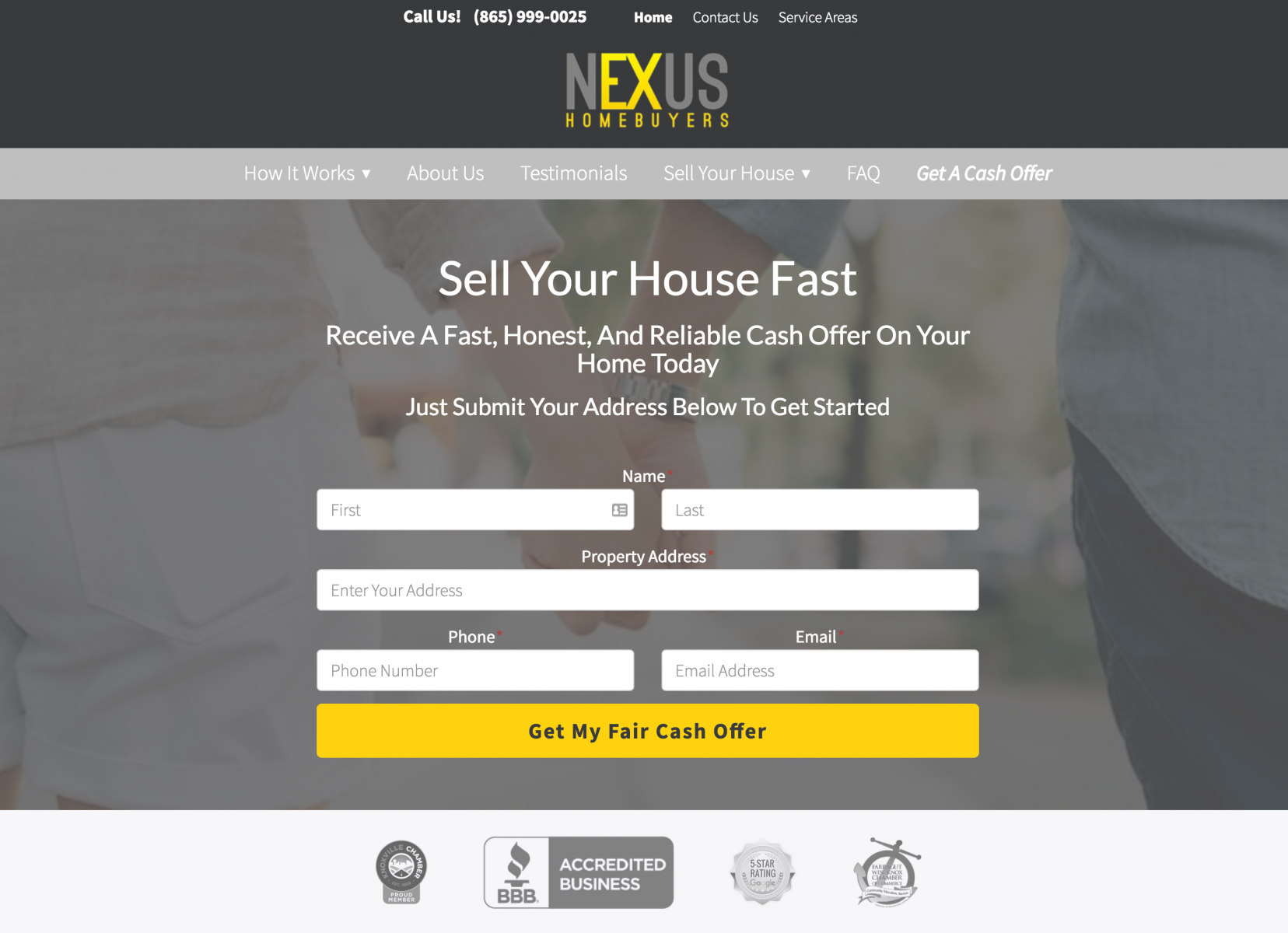
Are you using specific badges to show that third-party processes and third-party entities vet you? For example, the Better Business Bureau.
Credibility Badges on a Carrot website
Maybe you’re a member of the local Chamber of Commerce. Or, a designation with some entity such as a CCIM in your profession is a respected designation. Those badges help in a big way. Those are all positive credibility marks.
Demo Carrot: How many deals are you losing to your competitor’s website?
Let’s say you have social proof on your site, so you have testimonials formatted correctly. Just because you have testimonials doesn’t mean that’s a positive credibility mark.
We have other content on how to format a testimonial correctly. If you format a testimonial incorrectly, it could be a negative credibility mark because if you just put a testimonial up there that has the person’s words.
Let’s say you just used their initials, TK, with no picture or other context around that testimonial. People think it’s not real, so it could detract from the credibility.
When you’re building out your testimonials, have pictures of the person or photographs of the property. Put as much of the person’s information on there. Tom, whatever, and then their location. Trevor Mauch, location Roseburg, something like that. It adds more credibility to it.
Use Real “Local” Images
Other things, the content, the pictures, all of these things stack up. Are your photographs localized?
Do you have authentic images on your website? Or are the photos stock images? In the studies, we’ve done and other studies we’ve corroborated with, stock photos don’t lend toward credibility, especially if they’re too stocky.
There are stock photos that look amazing and stock photos that look clearly like stock photos.
People look at a website and go, “I can’t connect with this website. It looks like a stock photo. Maybe I’ve seen the same photo on another website.” If you’re a Carrot member, swap all the images with local, real ones for your market.
Get rid of any stock photos of people you’ve not worked with and put pictures of people you’ve worked with. Make sure that the images look like houses that are in the area. If you’re in Phoenix, your photographs should look way different than someone up in the Northeast part of the US.
What are you doing to build a storyline and connection with your prospects?
They’re going to your about page because they’ve already probably discovered that you have a solution. You have a solution that can solve their problem. They’re already past that. They don’t need to know whether you can solve their problem.
They need to know whether you are the company they want to choose to solve their problem, so they’re going to your about page.
If you’re using social media, such as adding your Facebook link, make sure they give you positive credibility, not adverse.
If your Facebook page isn’t built out, has minimal engagement, and stock photos, that’s negative credibility. So get it off.
Don’t put that link on your website. Don’t put the link in your marketing. If you’re going to use social, use it to build your credibility. Never use it as negative or neutral credibility. It’s going to hurt you.
Optimizing Your Website For A High Credibility Score
Audit your on and offline marketing. What’s your credibility score look like?
Go through each thing subconsciously and then start to put a plus or a minus on it and add those up.
One by one, eliminate every single one of those negative credibility points.
Is it easy to read on mobile, or is it not?
Is your logo pixelated?
Does your branding match up?
Does your content make sense?
Does it look localized?
Do you have real images?
Do you have real badges?
Does your social media actually help you?
Make sure you pay attention to this. Go check out your website right now. Let us know what you found in the comment section and what you’ve found to be your biggest credibility driver.
Know you know how to build online credibility for real estate. Implement this, and let us know how it works!
So you’re getting ready to launch your online marketing campaign, but you’re probably thinking “Man, what type of website am I going to build?”
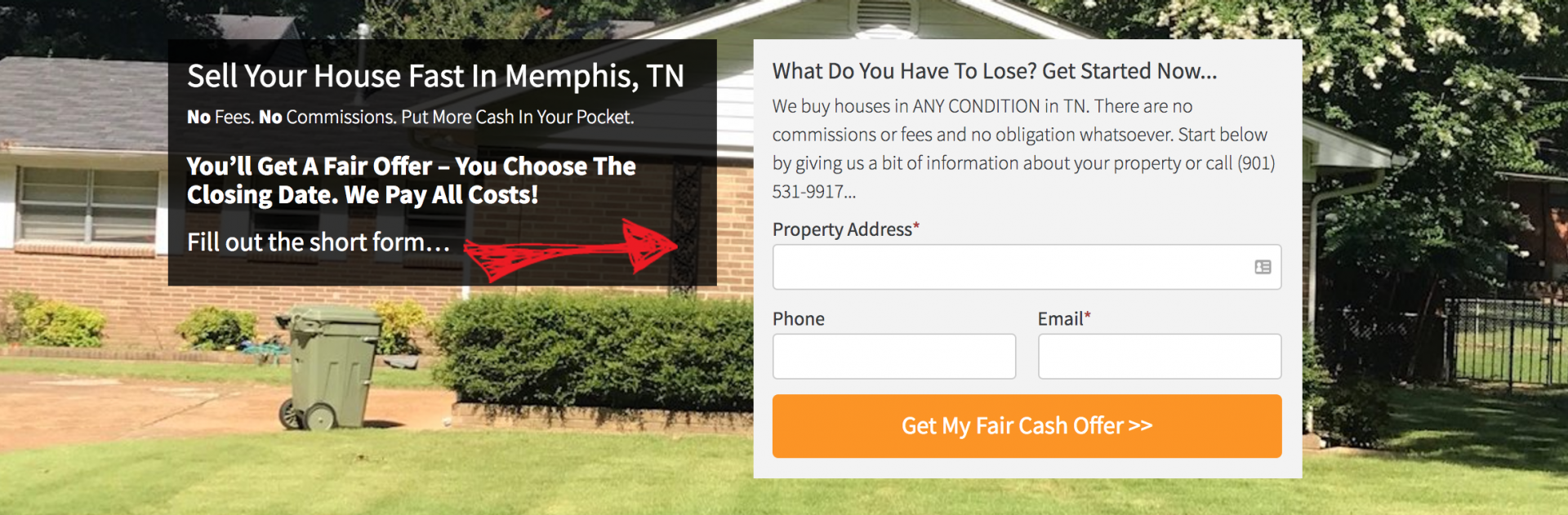
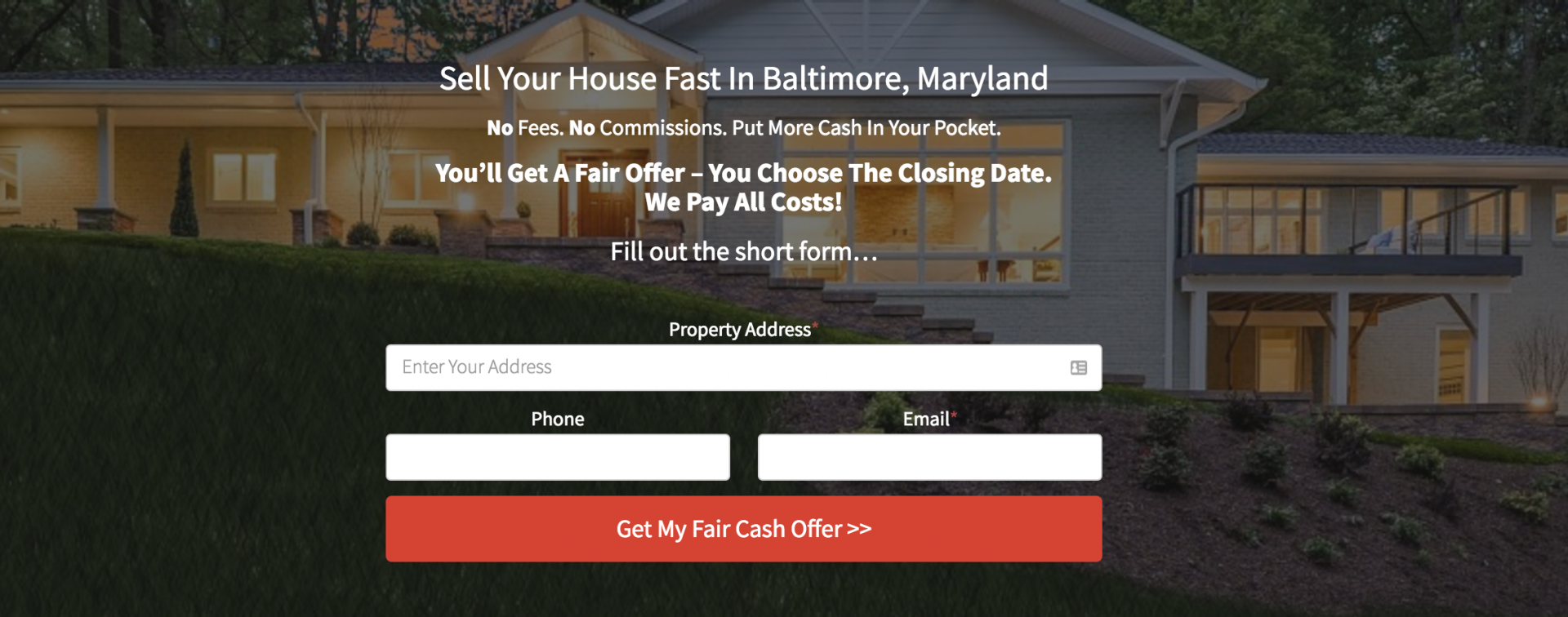
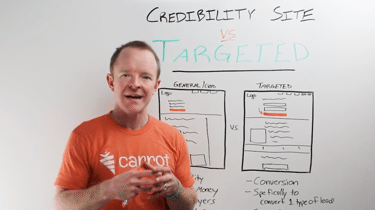
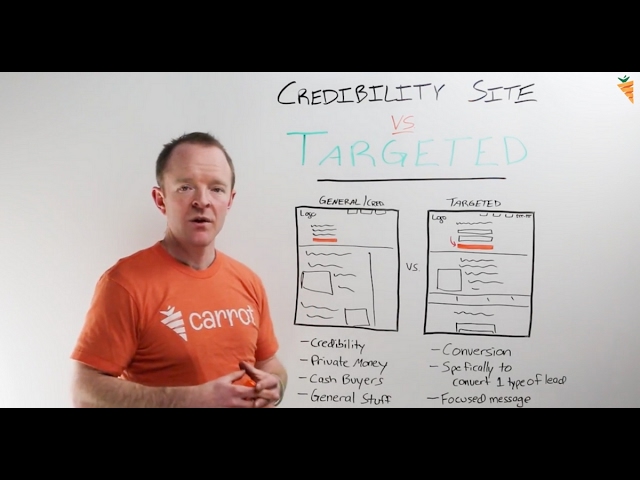
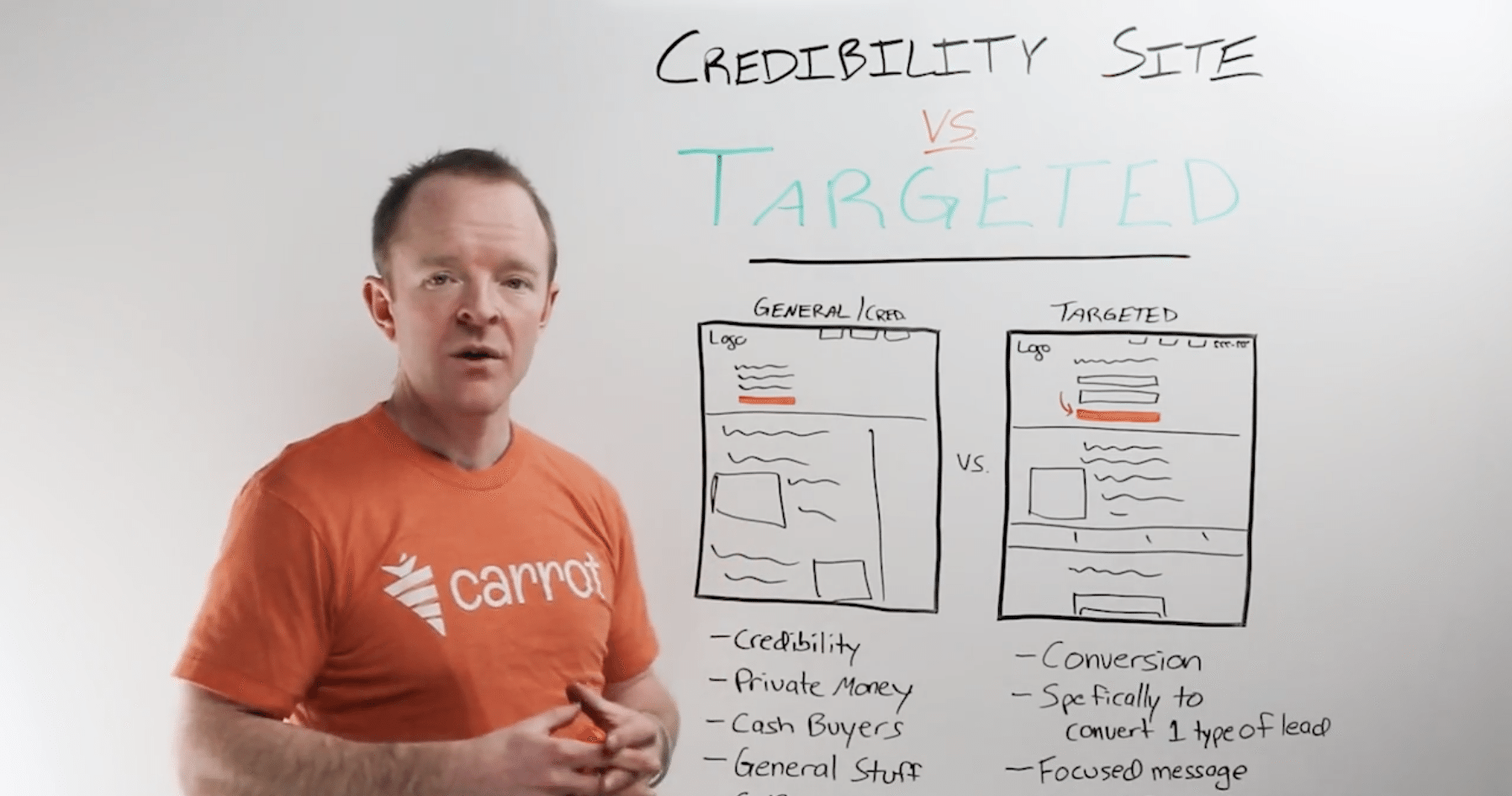
At Carrot, we have general credibility websites and we have targeted websites. Where the targeted websites are specific to a certain type of lead. It could be a motivated house seller. It could be a cash buyer. It could be a retail buyer. There could be a note seller or buyer. You get the idea. Those are very, very targeted towards a certain type of lead.
We get a lot of our clients asking us, “Why can’t I focus it all into one general credibility site?”
Or, “Is a general credibility site going to work well or perform as well as a targeted site specific for, as an example, motivated house sellers?”
Well, this video and post are going to walk you through the data and what the actual results are and what you should do depending on the type of lead you’re looking for.
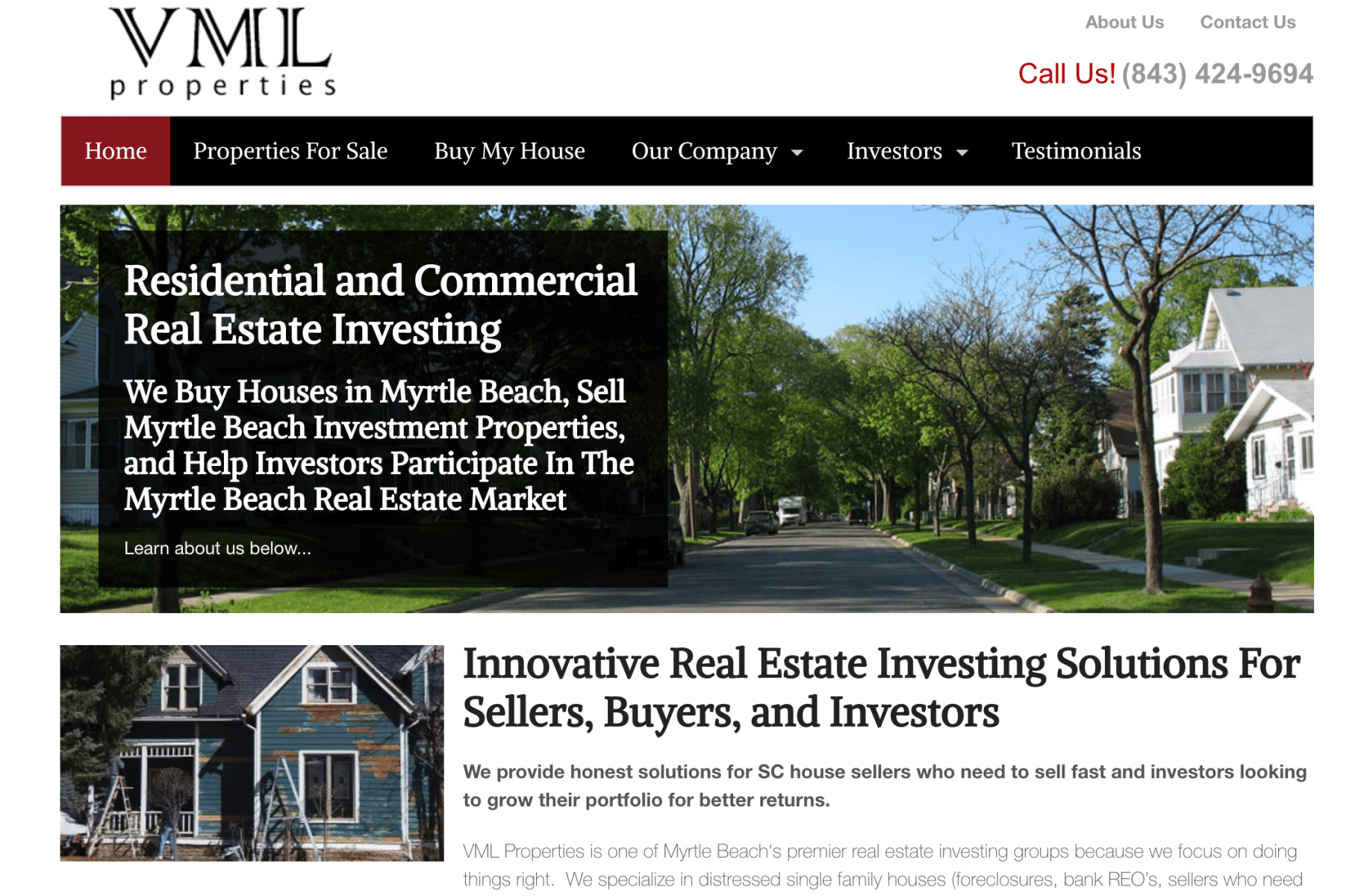
So, first of all, we’ve got the general credibility site. A general credibility website is mainly focused on, just that, building general credibility for your company.
So, it could be trying to get people there to show them who you are. What types of things you’re doing. What types of things you’re doing in real estate. And it could be multiple things.
Saym, we’ve got this real estate fund and we’re flipping houses, so we buy houses. But we also sell houses and oh, by the way, did you also know that we do rent a home?” So it’s kind of “here’s who we are as a company”, and build that credibility.
You could be looking for private lenders on that website. You could be building a cash buyer list on there and selling properties. That works really well on a main company credibility website.
But it’s a lot of general stuff. It’s not really focused in on any one particular message. And it’s a split message.
Your home page might say, “Hey, we are a real estate investment solutions firm. We buy, sell and rent houses.” But you’re going to be talking about all of that stuff if you’re on the homepage.
So there’s no one focused message if you’re doing direct marketing toward that.
If you’re driving a house seller there, they’re then going to get distracted by other messages. They’re going to get distracted by the message about investments. They’re going to get distracted by the message about looking for cash buyers and private lenders.
If you’re doing direct marketing and paying money to drive people there, you don’t want to distract the message.
But the general credibility website serves a very specific purpose.
If you’re networking at your local chamber of commerce or rotary, you’re probably going to hand them the business card that drives them here. This website is then going to drive people toward your other specific target websites if you’re doing multiple things in your business.
So you might have a link that says, “Sell your house.” And it’s gonna drive to your house seller specific website, ideally. That’s what the data shows works the best.
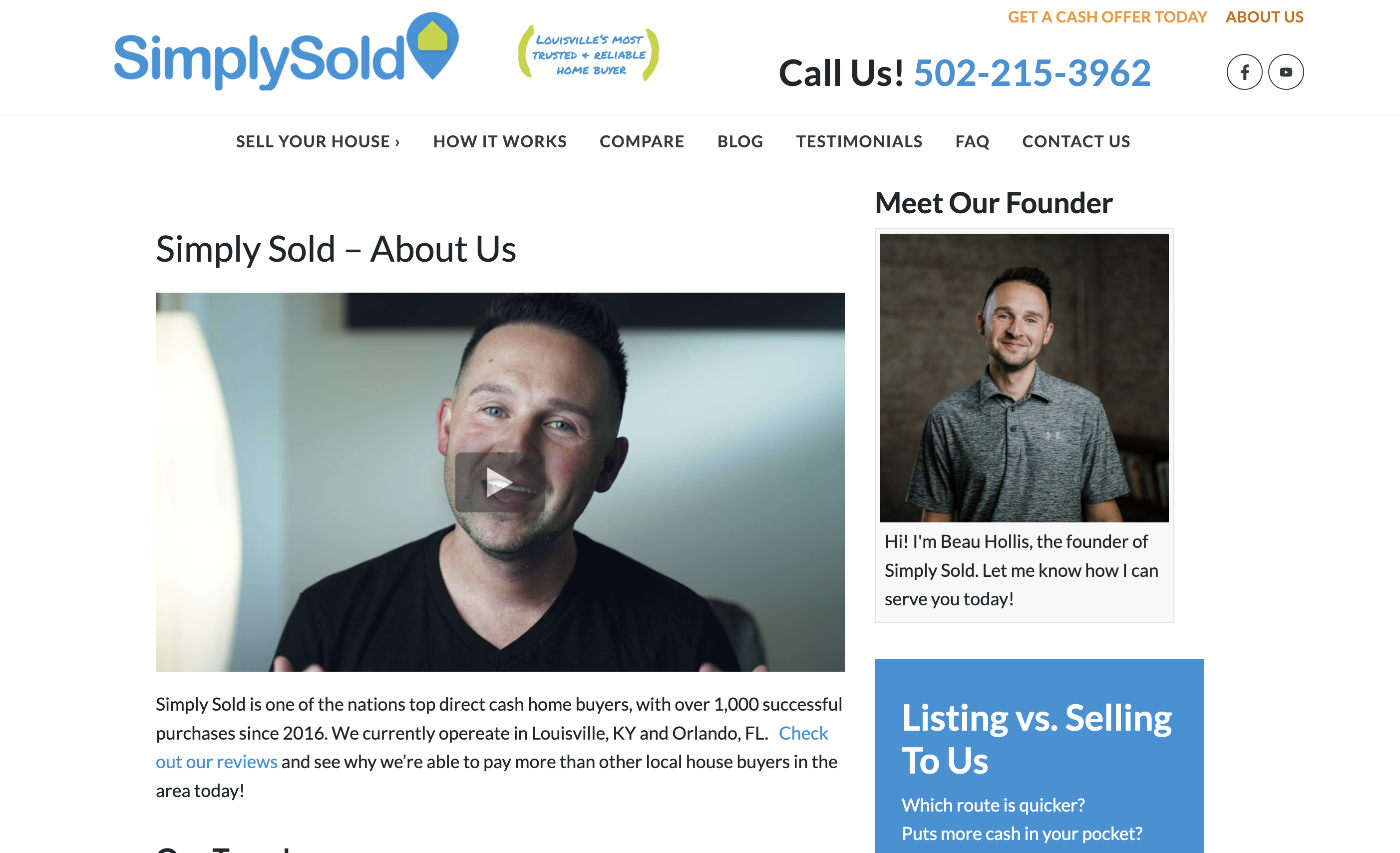
General Credibility Website
Real Estate Website Design: Targeted Credibility Sites
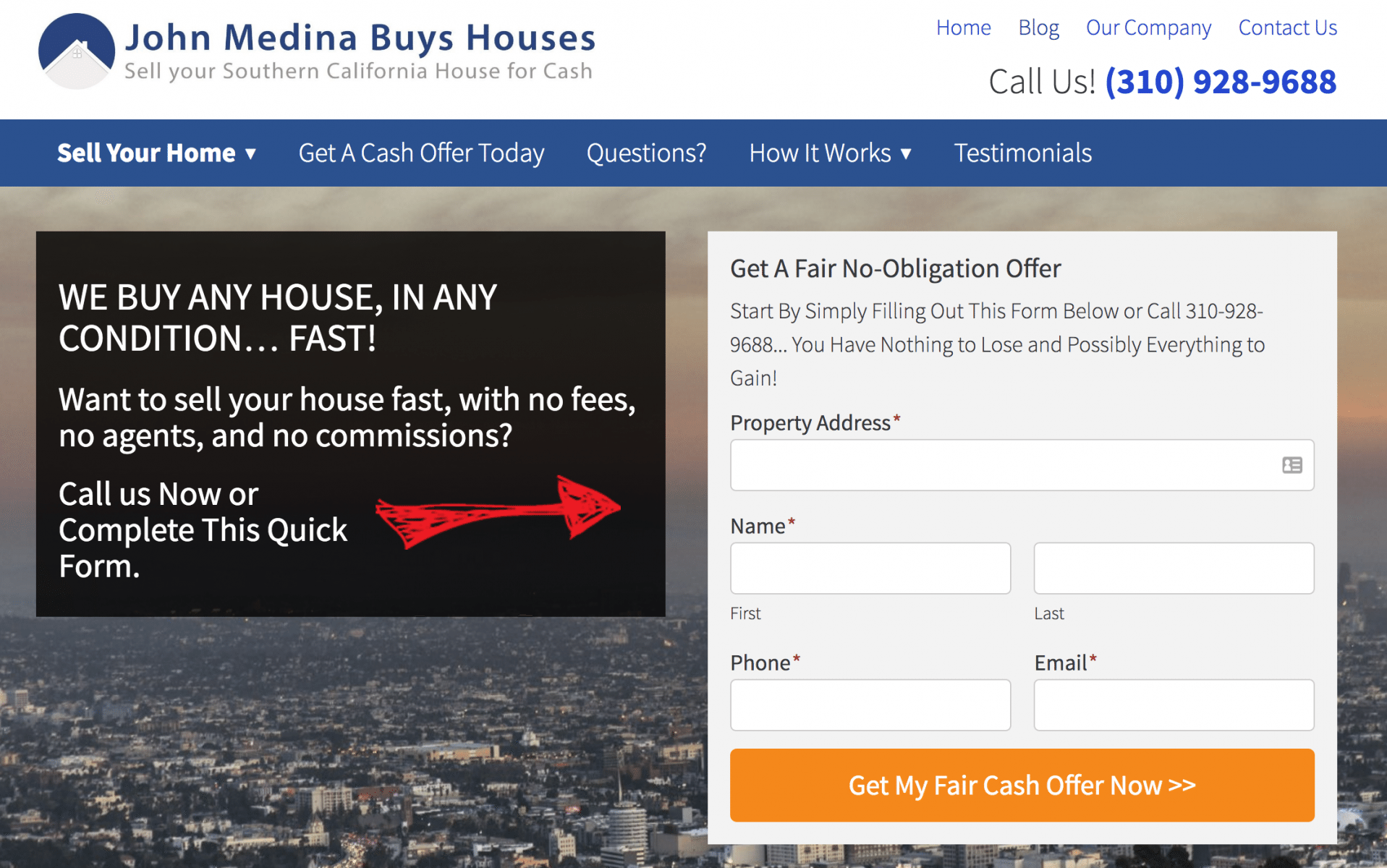
On the other side, you have the targeted website. So, when we suggest that you focus on using a targeted website, it’s any time you’re actually going to be actively driving people to that website to convert as a lead.
These websites are set up for conversion.
The general credibility websites are not particularly set up for conversion. They’re going to be great on mobile and there will be landing pages on there that are set up for conversions.
But the overall path is not set up to convert at a high, high rate. It’s set up to build credibility for you.
These targeted websites are set up to convert at a high rate for one particular type of lead.
You can see the eye directors on our Carrot websites, the big buttons. The very, very focused message. If you land on a motivated house seller website with Carrot, or if you’re building one, it should be very focused on that motivated house seller. Not on cash buyers, and then rent-to-own tenants and private lenders.
Your entire website should be focusing on how you can help that seller. And that’s what will perform the best for you. It doesn’t distract them away from your messaging.
Motivated Seller Targeted Website
The website is specifically set up to convert one type of lead ideally.
So, if a motivated house seller website speaks to the seller, it’s going to convert them.
If you want to list properties for sale, then you set up another website for that to speak toward that. “Hey, we have discount properties. Join our list or see our properties here.”
Or, you can fit that into the main company site too. You can kind of pull double duty with the main company and cash buyer if you want to.
Buyers Lead Website
Pay-Per-Click Traffic
Lastly, your targeted websites are where you’re going to send all of your paid traffic.
Please do not send paid traffic to the main company website. It’s unfocused. It’s untargeted. It’s building good credibility. But then it has all these rabbit holes that your prospects can dive around and they might go down the wrong rabbit hole and not become a lead of yours.
So, they’re focused on conversion, specifically set up to focus on one type of lead. A very focused message on one type of prospect and how you can help them.
They’re sites that are optimal for paid marketing. If you’re driving paid marketing to a main company credibility website, unless you vastly adjusted it, you’re probably wasting some money.
Ending The Debate Of Credibility Sites Vs. Targeted Sites
So that’s what we would do. That kind of hopefully ends the debate, credibility site versus a targeted website and what you use in certain circumstances. Ideally, if you’ve got your main credibility website and you’re looking to generate any leads online, you’ve also got at least one targeted website for your actual marketing activities.
Join us on our other episodes of the Carrot strategy sketch because we have a lot of other topics to dive into and most are under 10 minutes. They’re going to help you get light years ahead of your competition and shave off months, if not years, on your learning curve.
Also, be sure to check out the CarrotCast, which is our weekly podcast. Subscribe to our YouTube channel so you can see all of our videos before anyone else can. So, check us out and be sure to hit us up with comments and questions.
In a field with low entry barriers and many unethical operators, a credibility-focused real estate investing website is essential for standing out and convincing motivated sellers, cash buyers, and private lenders to choose your company over competitors.
Key Takeaways
Show real people behind your company through photos, names, and bios, as hiding personal information damages credibility and reduces conversion rates.
Highlight your expertise and make it easy for prospects to contact you through the “big three” contact methods: phone number, email, and mailing address.
Borrow credibility from respected sources by showcasing testimonials from established companies, logos of organizations you’ve worked with, and featuring any media mentions.
Implementing at least seven of the nine credibility-building website elements will put you ahead of 90% of your competition and significantly increase prospect trust, leading to more closed deals and business growth.
So, how do you boost your real estate investing website credibility?
Real estate investing is one of those professions where the entry barriers for new investors are so low… there are lots of unethical investment companies out there giving real estate investors a bad name.
So, how do you stand out above the crowd… and make it so that when a motivated seller, cash buyer, or private lender finds your website… they feel compelled to work with you?
First…
Importance Of Building Credibility (and how to do it with your website)
It goes without saying… that today consumers have more options than ever. If you’re a motivated seller going into foreclosure… or a private lender doing your research… one of the first things you’ll look at after you hear of a company is THEIR WEBSITE to see if they are real.
Our society is an internet society now. Just look at the phone book and newspapers… those businesses are in decline… while internet news sources and directories are on the rise. People go to the internet to research companies they’re getting ready to work with.
So, what will a private lender prospect or motivated seller see when they search for you online? Will they even visit a website? If not, people immediately think, “They don’t have a site… are they a real company?”.
If you have a website that doesn’t have the 9 elements below... that could be even worse. Is your website harming your credibility (if I had to guess, I’d say probably 60%+ are).
If people don’t feel comfortable that they want to work with you within the first 2 minutes of being on your website… odds are you’ll lose that business.
So, here are 9 ways to boost your real estate investing website credibility.
See How Carrot Works How many deals are you losing to your competitor’s website?
9 Ways to Boost Your Real Estate Investing Website Credibility
Stanford University did a study called the “Web Credibility Research” project. Stanford compiled 10 elements that your website should address that can either make or break your credibility as an investor… we’ve consolidated them into 9 elements that, without them… your credibility (and profits) are likely suffering. See how many of these your real estate investing company website is doing well:
Show that you’re real people behind your company – Most investors we work with to help them build their online presence for their real estate business are hesitant to put too much personal information on their site. They don’t want their name, picture, bio… anything… on the site. If this is you too… it’s hurting your credibility and results. Ask yourself this… do you like it when you’re on a website, and you can see the actual faces of the people behind the company? Yes, we all do. It increases conversions and leads.
Show that honest and trustworthy people stand behind your site – A lot like #1, your website visitors land on your website with their scam detector running in full force. They want to know that they can trust you to help them solve their problem (save them from foreclosure or get better returns, etc.). How do you do that? A short bio on your site, again… a picture of you and your team (we teach our members ways to build credibility even if you haven’t done deals or don’t have a team), testimonials are a biggie, etc.
Highlight the expertise your company has – Over half of the investors, we work with feel that they don’t have enough “experience” in real estate to put on their site. But, once we dig… they usually have a lot more experience that makes them qualified to provide great solutions to buyers, sellers, and investors than they think. Anything that you feel helps you in your real estate business qualifies. One gal had never done a real estate deal herself… but she was an executive assistant to a mega investor in New York for years, was a certified Draftsman, and had managed rehabs for another investor for a couple of years… that’s an experience that should be on your website. Or, heck… even if you’re just getting started… leverage the knowledge you’ve gained in your education or your mentors’ experience for now. Bottom line… if you don’t feel you have enough experience related to being able to help your clients reach their goals… then you should rethink your decision to be an investor (or go out and get that experience).
Make it easy for people to contact you – Simple. Obvious. But overlooked. Have the “BIG THREE.” Phone number, email, and mailing address on your site. It gives people a feeling that you’re not a fly-by-night operation… and easy to get in touch with if they have a question or problem. You can get a free phone number from Google Voice, and a professional mailing address from your local mailbox store if you don’t have one.
Design your site so it looks professional and clean – Who likes to land on a website that looks like a 12-year-old made it in 1998? Find a nice clean design with lots of whitespace on the site… with crisp, clean graphics. It doesn’t have to be fancy… or flashy. In fact, flashy isn’t a good thing.
Make your site easy to use and useful – Easy to use = not too many links on your site. Give people a few options… don’t confuse them. Useful = providing great content on your website that helps your visitor solve their problem. Your motivated seller site targeted at assisting people in stopping foreclosure could have a FAQ on the foreclosure process, free guides on helping them to stop foreclosure, information on how your company works with homeowners, etc. Give them great information… it builds massive trust.
Update your website content often – Have you ever gone to a website and seen somewhere on the site where it said the last blog post was done ten months ago? Or when you read the site, and it references old, outdated information? This is a credibility killer. Update your site regularly. We teach our Carrot members our process for creating great blog posts, optimizing those posts for Google rankings, and making it so easy that you never have to think about what to write about next. It’s simple when you have the right process and system for your content. But, aim for a new blog post every week if you can… once a month minimum (not only does this help for credibility, but it also helps your search rankings and leads!)
Avoid typos and errors – Enough said.
Borrow credibility from other sources – A great way to build credibility on your site is to borrow it from other credible sources. Have you been on a website and said “As Seen On TV” or “As Seen On Google”… or a site that has a quote from a famous and respected person? That’s all “borrowed credibility.” If you work with a real estate agent from, let’s say… Century 21… get a testimonial from them and ask permission to put the Century 21 logo on the site as a “company we’ve worked with.” Can you imagine the credibility that’ll give you in a website visitor’s eyes when they see the symbols of companies they know and respect on your site?
So, how many of those 9 credibility builders for your real estate investing website are you doing on your website?
If you’re doing 5 or more… you’re ahead of the curve.
7 or more… you’re doing better than 90% of your competitors.
All 9? You’re crushing it and should be teaching this lesson alongside us :-)
Action Plan To Boost Your Real Estate Investing Website Credibility
Real estate investor websites can be a huge tool in building credibility, or they can harm your credibility. If you currently have a website, pick 3 of the 9 elements above and implement them on your website this week. If you don’t have a website, make a commitment to get online this week, but keep credibility in mind as you do so.
Of course, we’d love for you to work with Carrot (and we have many of these 9 elements already designed into our website templates), but if you’re still on the fence, here are what we consider the 10 Best Real Estate Website Builders.
30 Daysmoney-back guarantee on primary web subscriptions
WANT MORE HANDS-ON HELP?
Make Carrot
even more your own.
Carrot’s AI website builder gives you a strong personalized
starting point. If you want our team to take your setup or
customization further, we can help.
LIGHT SETUP & CUSTOMIZATION
Quickstart 3.0
Get hands-on help taking your new Carrot site from a strong
starting point to launch-ready.
Replace stock images with your own photos
Implement Schema for advanced SEO
CRM integration
Call Tracking setup
Domain connection support
Add Quickstart 3.0 after your site onboarding process or
anytime through Carrot support.
DEEP PERSONALIZATION
CarrotPro
Work with the Carrot team to make your high-performing site
feel truly unique to your company and brand.
The comparison below shows plan features only.
Your Monthly or Annual selection above controls billing.
Feature
Free
Essential
Scale
Team
Users
1 User
3 Users
5 Users
10 Users
Integrations
Zapier
Zapier + Integration Specialist
Zapier + Integration Specialist
Zapier + Integration Specialist
Support
Online Help Center
Personal Support
Priority Support
Priority Support
Setup Guidance
—
One-on-One Onboarding
One-on-One Onboarding
One-on-One Onboarding
Notifications
Email Only
Text + Email
Text + Email
Text + Email
Texting
✓
✓
✓
✓
Emailing
✓
✓
✓
✓
Custom Labels
—
✓
✓
✓
View Filtering
—
✓
✓
✓
Campaign Autoresponders
Automated responses to new leads
—
—
✓
✓
Inbound Call Popups
—
—
✓
✓
Outreach Sequences
Drip campaigns
3 Sequences
8 Sequences
15 Sequences
Unlimited
Property Data
5 reports/mo
50 reports/mo
100 reports/mo
200 reports/mo
Contracts
—
5 e-signature sends/mo
20 e-signature sends/mo
50 e-signature sends/mo
Groups
—
—
✓
✓
Reporting
Basic Reports
Enhanced Reports
Enhanced Reports, Mini Dashboard & My Scorecard
Enhanced KPIs, Mini Dashboard, My Scorecard & Employee Scorecard
Employee Scorecards
—
—
—
✓
Guest Access
—
✓
✓
✓
Resurfacing
—
—
✓
✓
Workflows
—
—
✓
✓
Saved Views
—
—
✓
✓
Transaction Management
—
—
✓
✓
External Sending
—
—
—
✓
Restricted Users
—
—
—
✓
Weighted Round Robin
—
—
—
✓
AI Tools
CarrotCRM includes a limited monthly trial of the
AI Autonomous Lead Manager, AI Lead Scoring, and
AI Opportunity Summaries. Customers who need more usage
can add the Carrot AI Suite for $99/month.
OPTIONAL AI SUITE
Work faster and smarter
with AI.
The complete Carrot AI Suite is a $99/month add-on that
expands your available AI usage across optimization,
lead management, scoring, summaries, and call insights.
You do not need to choose it today. Add the AI Suite from
your Carrot account after purchasing your base subscription.
OPTIONAL ADD-ON
$99/month
✓ AI Page Optimizations & Full Site Audits
✓ Autonomous Lead Manager
✓ AI Lead Scoring
✓ AI Lead & Opportunity Summaries
✓ AI Call Insights
✓ AI Usage Tracker
REAL CARROT MEMBERS
Built around
real results.
★★★★★
“I was nervous, but to my surprise, my new Carrot site started
to immediately generate motivated seller leads… I closed my
1st Carrot deal within 45 days of launching the new site.”
★★★★★
“Right now, with Carrot, it’s safe to say we’re averaging
about 4 deals a month and our average deal is about $25,000.”
★★★★★
“If I could go back, I’d tell myself to take this leap sooner.
Carrot didn’t just change my business; it changed my life.”
“I started leveraging Carrot websites and not only was I able
to claim the number one ranking but I get leads consistently.
Carrot has become one of the biggest assets of my business.”
“Carrot has become the foundation to my business.
If you want to rank and you want to convert leads from
motivated sellers then you need Carrot.”
FROM A CARROTCRM CUSTOMER
Built for people who
actually work leads.
★★★★★
“I’ve used multiple CRMs in my time as an investor and I have to
say… not only is the platform awesome, but they have all the
functions necessary to operate a high-volume investment company.
The team is always super responsive and helpful.”
WEBSITE PRICING QUESTIONS
Questions before you
launch?
Carrot’s AI website builder asks questions about your business,
or can use information from your existing website, to create
a personalized starting point. Pick your design and colors,
connect your domain, and continue customizing copy, images,
and sections with the AI tools and drag-and-drop editor.
Carrot websites are built with SEO best practices and include
an AI-generated SEO strategy, SEO-optimized location pages,
search-performance tracking, and built-in SEO tools.
If you want Carrot to actively manage SEO for you,
Done-For-You SEO services are also available.
Individual accounts can add additional sites for $39/month each.
Agency accounts can add client sites for $29/month each.
Carrot is used by real estate businesses and local service
companies including wholesalers, land businesses, mobile-home
investors, HVAC companies, roofers, plumbers, contractors,
and many other locally focused businesses.
Carrot is built around performance and ease of use.
Years of real website performance data have gone into its
conversion-focused layouts, SEO systems, AI website builder,
analytics, and optimization tools.
Yes. Carrot website plans include fast, secure managed hosting,
including the technical infrastructure, updates, backups,
and security needed to keep the site running.
Carrot does not sell domains. Purchase your domain through
your preferred domain provider and connect it to your Carrot site.
No required setup fee. Most members use Carrot’s automated
website setup process. Quickstart and CarrotPro are available
separately if you want more hands-on help.
Yes. You can point your existing domain to a new Carrot site
and move your branding and credibility assets over.
If your existing site already ranks well, talk with the team
about migration before making major changes so existing SEO
performance can be considered.
Cancellation can be requested from your Carrot account.
Carrot’s 30-day money-back guarantee applies to the primary
subscription according to the current terms.
Content you created yourself can be reused elsewhere.
Carrot Content Library material and Carrot page templates
cannot be reused outside Carrot.
Phone support is available through the Premium Support add-on.
You can add or remove Premium Support as your needs change.
Yes. A Carrot Product Specialist can help you understand
which plan or service fits your business.
No. CarrotCRM Free is free for as long as you need it.
Upgrade when you need more users, capacity, automation,
reporting, or team functionality.
CarrotCRM can be used with or without a Carrot website.
Carrot website subscriptions include CarrotCRM Free.
Leads from another website can be connected through Zapier.
Online lead sources can be connected through Zapier,
and qualified offline lead lists can be uploaded into CarrotCRM.
No. CarrotCRM has no required setup fee.
Essential, Scale, and Team include setup support and
one-on-one onboarding.
CarrotCRM is designed around a step-by-step lead follow-up
process instead of requiring you to configure a huge system
before you can start working leads. It keeps the core process
clear while remaining customizable for your business.
Yes. Start with CarrotCRM Free or book a personal walkthrough
with a Product Specialist.
Growing a Multi-Company Business: Using Carrot to Replace Cold Calling & Direct Mail with Qualified Leads
Josue Velney went from a first-time homebuyer to building a multi-company real estate and construction business. He had some early success with cold calling and direct mail, but things really took off when he discovered Carrot and the power of SEO and online leads. As he expanded his business, Carrot grew with him, providing the online marketing tools and training he needs to confidently scale.
4 companies
covering real estate & construction services
$1 Million+
annual revenue
$200,000 project
from one Carrot lead
Snapshot:
Industry: Real Estate, Development, Construction, Demolition, Junk Removal
Location: Somerville, MA
Carrot Member Since: 2018
Carrot has grown from simply being a website platform into an important part of our overall business-development and lead-generation strategy.
Josue Velney wanted somewhere to park his truck on the busy streets of Somerville, Massachusettes. That seemingly simple challenge led him to owning a multi-faceted real estate business that spans realty, construction, development, demolition, and junk removal. Together, his businesses generate more than $1 million annually.
“One of my friends said ‘Whoever has the gold makes the rules.’ If you buy your own house you don’t have to worry about parking,” Josue explained. “So that’s what caused me to go through the journey of becoming a first time home buyer. And through that process, I went to so many first time homebuyer classes and looked at so many properties I became very proficient at it, and now I had a skill that I didn’t have a use for.”
Being a former Marine and fire lieutenant, Josue was used to being resourceful and putting his skills to work. So he sold that truck and began investing in real estate in Western Massachusetts before moving his portfolio closer to home in the greater Boston area.
Focusing on the Future of Marketing
When he launched his company in 2012, Josue relied on direct mail, driving for dollars, and cold calling. But it wasn’t something he enjoyed and didn’t produce the results he wanted to see.
“I did not like calling people who were wondering how I got their number, why I was contacting them, or getting upset because they did not want to be called,” he explained. “I wanted a marketing strategy that could attract people who were already looking for the services or solutions we provided.”
At the time, Josue’s marketing was supplemented by a website from a full service marketing agency. But that site never produced any “meaningful leads” or deals. He talked to others in the industry and learned it didn’t need to be that way. That a website designed to attract high-quality leads could be its own marketing channel, not just an online brochure.
“Originally, my goal was simply to have an online presence. At the time, I did not fully understand that a website could consistently generate leads and become an important part of growing a business. Once I learned that a properly built and optimized website could actually become a lead-generation tool, I became much more interested in Carrot.”
Josue learned about Carrot from another developer who listed it among his favorite real estate investing tools. At the time, that investor was spending $100,000 a month on marketing, according to Josue. The fact that he had such a large budget and was endorsing an affordable solution like Carrot got Josue interested.
“The thing that got me sold on Carrot is the fact that this guy had literally over $100,000 for marketing budget. He had unlimited funds. And he was like ‘This Carrot thing, it works.’ If you tell me that something works, I’m going to spend my money on it,” he said. “Carrot had a reputation for generating leads, and it was affordable. My thinking was simple: If I closed just one deal from the website, it could potentially pay for Carrot for years to come.”
Josue also liked that Carrot wasn’t just a website provider, it builds in progressive marketing strategies that help real estate investors and home service providers keep up with modern search trends. Right now that trend is AI search visibility. When Josue joined Carrot in 2018, the major trend was SEO. That focus on intentional, proactive marketing resonated with Josue.
“They always say about Wayne Gretski, he scored a lot of goals because he didn’t go to where the puck was, he went to where he thought the puck was going to be. And that’s what I really felt with SEO,” Josue explained about his decision to move to a Carrot SEO-optimized website. “I was like, ‘This is the future. Postcards are what our grandparents did.’ I was thinking, eventually everyone is going to be online, so if we can figure this out then we’re going to build a company for the future. In addition, if we continue to send postcards, people are like ‘I don’t know this guy, I don’t trust him.’ They’re going to go online and Google you and find you, so then it gives you more credibility. It was a sense of ‘OK, I think this is the future.’”
Carrot also offers regular training courses through live webinars and on-demand training that help business owners better understand marketing best practices. This education paired with a powerful platform gave Josue the confidence he needed to grow his business and try different marketing tactics.
“Carrot made digital marketing much easier for someone like me who did not originally know much about websites or SEO. Through the training, webinars, and resources, I learned how to build an online presence and compete for top positions in search results. That education has been just as valuable as the websites themselves.”
“I really do believe that having an online presence is not going away.”
Sites built for local lead generation.
Get found online when and where customers are searching. Turn attention into action.
Moving to a Carrot website fixed Josue’s online leads problem.
“Today, we receive leads in our inbox every day,” he reported. “Carrot has become a consistent source of inbound opportunities across our businesses.”
But the big change came when he tackled a rehab that went so terribly that he ended up having to take a contractor to court. That experience made him realize there’s opportunity to expand into home services with the integrity and quality underpinning his realty business.
“I realized I could make money buying real estate, but lose it very quickly if I didn’t have the right team to manage the construction project. So I got my construction license.”
When the time came to turn construction into its own Velney-branded business, the choice for launching a new website was clear.
“When I started my construction company, I was like ‘I’m not going to a different [website provider.]’ I had already done the Carrot trainings. I was like ‘I can build this on Carrot.’”
Josue launched one of the first home services websites on Carrot — an industry Carrot now natively supports.
He now has sites for Velney Realty, Velney Construction, Velney Development, and Velney Task Force 1 (his demolition and junk removal company). In a three month period, those sites generated a combined 1756 visitors, 95 high-quality leads, and had an average conversion rate of 4.48%.
And some of those leads have turned into extremely high-paying contracts.
“My demolition company, in month three or four we got a lead to do a small demolition. A $5,000 demolition project turned into a $10,000 demolition project, turned into them saying why don’t you just take the whole project, which ended up being a $200,000 project. And that was all from an SEO lead from Carrot.”
“That is what makes Carrot so valuable to me. You never know what one inbound lead can become. A relatively small lead can develop into a much larger opportunity, a long-term client, or even business in another division of our company.”
Part of what makes Josue’s leads such high quality is the time he puts into his websites and how he uses them. He details his processes on the sites and refers people to that content to ensure they’re a good fit to work with his companies.
“If somebody reaches out to my construction company, I literally follow up and say ‘This is our process’ and link back to our website, because now it’s educating them,” he explained. “What I’ve found is that by using SEO and your website correctly, you can actually prequalify a lot of clients so you’re not getting tire kickers. You create this very nice funnel of qualified leads.”
His SEO-focused approach to his websites also lets him capture new leads with niche needs. He was once approached to help a commercial space under a stop work order get their project back on track. That situation made him realize that there are likely others dealing with this same issue and no idea how to fix it. So he decided to capture those leads with his site.
“I said, ‘Well, if this person has this problem, how many other people have this problem?’ So I wrote a blog about it. I have had over four closed leads from that one blog. That’s so much value when you think with that mindset.”
Carrot: More Than Just a Website
By now — eight years after joining Carrot — Josue is fully bought into SEO and the Carrot local lead generation platform. For him, the results speak for themselves.
When asked what he’d do without Carrot, Josue responded:
“I’d be broke. Honestly, I don’t even know. I guess I would be using a different marketing stream. But for me, SEO is like gold. Carrot has grown from simply being a website platform into an important part of our overall business-development and lead-generation strategy.”
Working with the Carrot team has helped him take his businesses to the next level and gives him a solid understanding of marketing that helps him get ahead of the competition — without getting another degree or professional license.
“Trevor and the Carrot team still do webinars and are always educating you on ‘this is how you do it.’ You could probably learn everything Trevor does on YouTube, but Carrot just streamlines everything because you do a lot of it for us. I believe joining Carrot is a no-brainer. My return on investment has been through the roof—no pun intended!”
But it’s about more than just SEO or even the Carrot platform.
“You learn so much from Trevor and the Carrot team, but you learn so much more from everyone else in the Carrot community,” he said. “Carrot isn’t only about SEO and websites, you really learn a lot about real estate and everyone else in the Carrot community becomes part of your ecosystem. I wouldn’t be where I am without Carrot and the relationships I’ve formed because of Carrot.”
Whether you’re brand new to online marketing or looking to expand a successful business, Carrot is the most trusted online lead gen website provider.
Carrot websites have an unbeatable track record of high search performance, AI search visibility, and of top conversion rates. And with CarrotPro, you can make your site stand out even more!
[Carrot is] a complete marketing and training program. For the first time…ever…we can see how all the pieces fit together in a cohesive marketing strategy. The results have been an increase in exposure, online leads, and the ability to measure ROI! The training, support, coaching, and customer service has been amazing.
Tom Townsend
Townsend Realty Group
What does CarrotPro do?
CarrotPro doesn’t just set up your site for you, it makes it truly personalized to your company.
Going beyond the AI website builder and personalized copy, CarrotPro adds specialty page sections, connects important integrations, and more to make your site stand out and set you up for success.
Personalized Branding
We’ll refine the colors, fonts, buttons, shapes, and overall aesthetic of your site to match your preferred look and feel.
Updated Messaging
We go through the content of your site to make sure it fully matches your company voice and goals and highlights your unique value.
Site Credibility
We build out your About page — an incredibly important page — with your company and personal bios to build credibility.
Enhanced SEO
We review and add to your target keywords, customize image alt text, and button up other key elements for SEO and brand identity.
Specialized Design
We add non-standard layouts, additional sections, and shaped dividers to really make your site stand out.
Integrations Connected
We’ll take care of connecting everything for you so you get the full benefits of Carrot. We’ll connect your domain, social profiles, analytics & more.
Examples of CarrotPro Websites
Here’s what’s possible when strategic design, performance, and content come together with CarrotPro.
Before
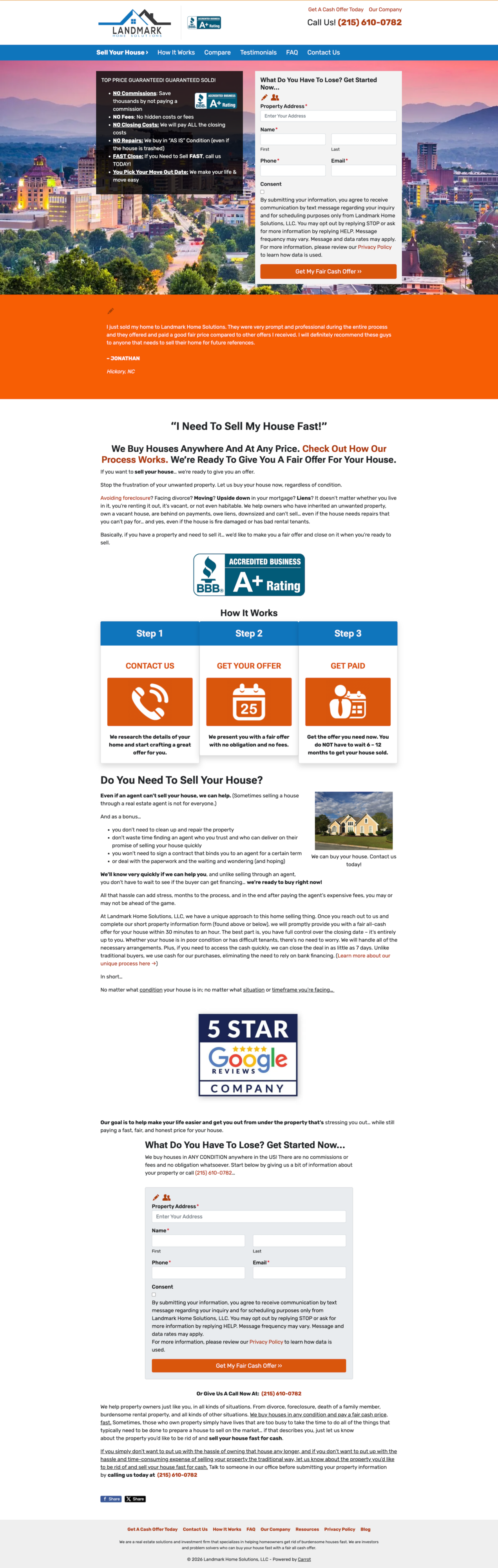
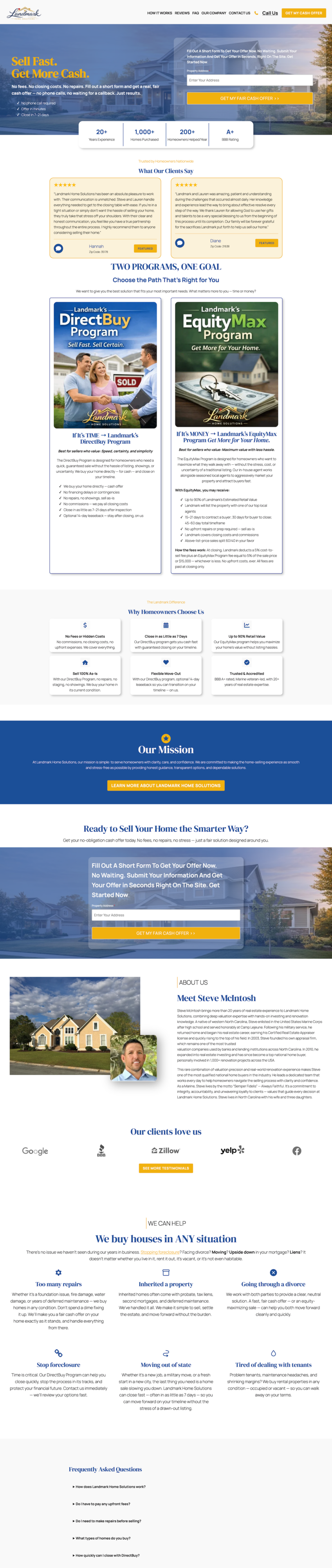
CarrotPro Customer: Landmark Home Solutions
A modern design refresh that supports PPC traffic.
CarrotPro Service: Design Refresh
Steve McIntosh launched his first Carrot site for his company Landmark Home Solutions in 2022. But a few years later, he was ready for a design refresh and a way to spotlight new offerings.
Steve invests heavily in PPC, so creating a website that supports paid traffic and provides a better experience for potential leads was a major priority.
His CarrotPro redesign delivered a significant improvement in Core Web Vitals (like site speed and accessibility) alongside the visual upgrade — proof that a modern look doesn’t have to come at the expense of performance.
After
Before
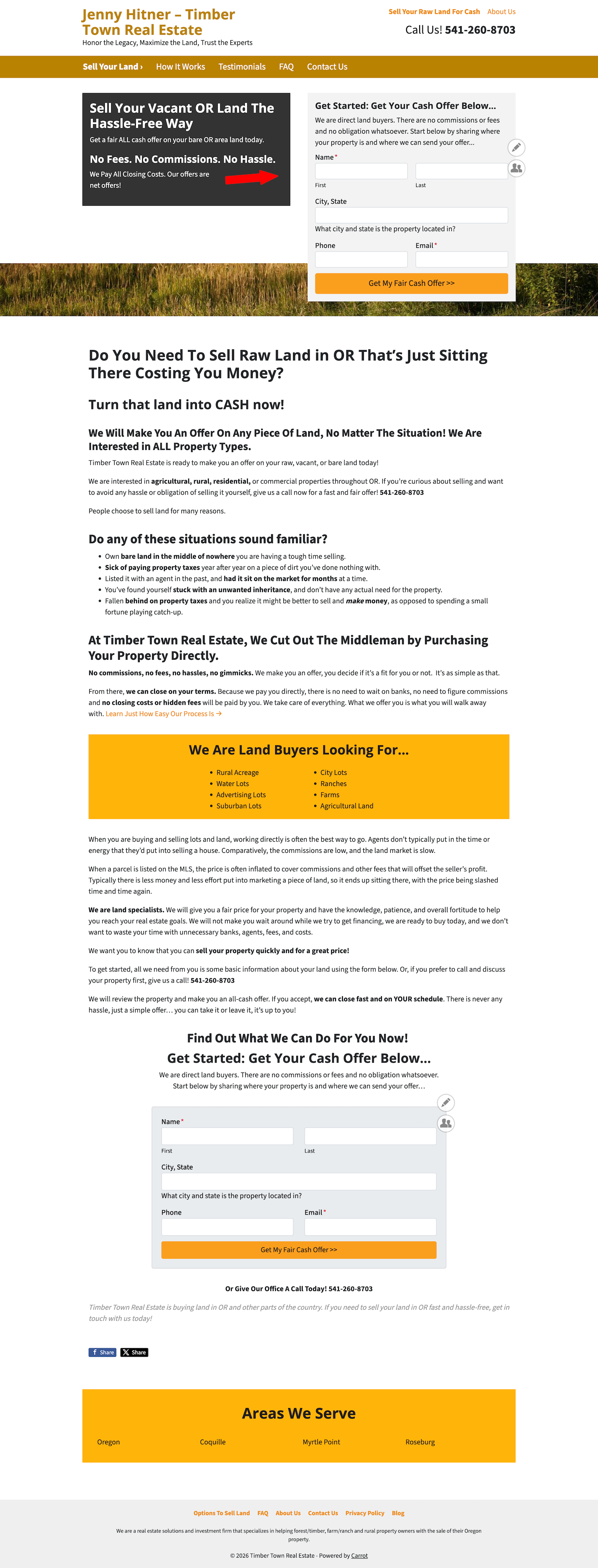
CarrotPro Customer: Timber Town Real Estate
A targeted website that attracts niche sellers.
CarrotPro Service: Full Site Build
Jenny Hitner is a broker in Southwest Oregon, but she had a dream to serve a type of real estate that doesn’t fit neatly into the traditional residential model. So she founded Timber Town Real Estate to address a highly specific niche: land, timber, and rural farmland.
To do so, she needed a website that would attract these niche sellers. She turned to CarrotPro to create purpose-driven landing pages and a content strategy that showcases her deep expertise. More than just a strategy, her site is backed by strong design and Core Web Vitals performance.
The result is a site that immediately signals specialized authority — something a generic template could never achieve.
CarrotPro can help even the most specialized niches stand out and generate leads.
After
Before
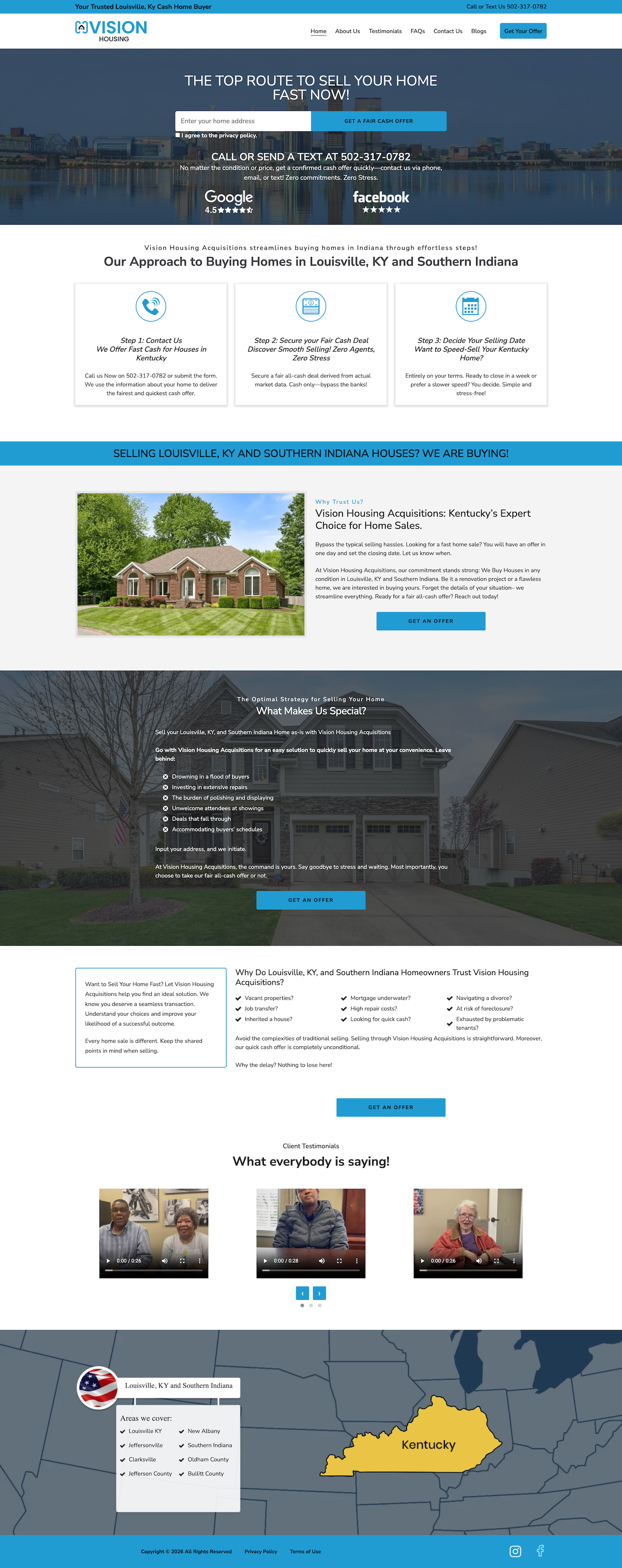
CarrotPro Customer: Vision Housing Acquisitions
A site a local, family-owned business is proud of.
CarrotPro Service: Full Site Build
Vision Housing Acquisitions in Louisville, KY came to Carrot frustrated with their underperforming, difficult-to-manage WordPress site. A trusted, family-owned business, they wanted their online presence to match the caliber of their business.
Their new site on Carrot is a clean, modern, easy-to-navigate website built from the ground up. It’s tailored to the Louisville market and highlights their local roots, professionalism, friendly team, and happy customers.
This site delivers stronger SEO rankings and excellent Core Web Vitals scores, backed by a design that immediately reads as credible and established.
After
Before
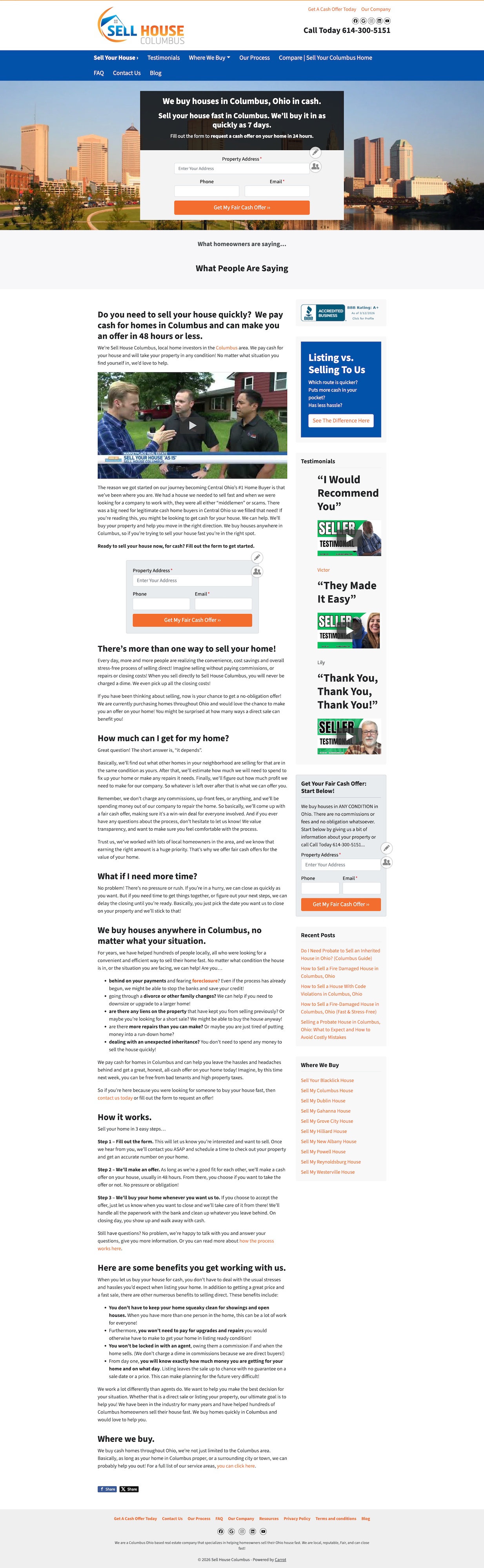
CarrotPro Customer: Sell House Columbus
A site update to generate AI leads.
CarrotPro Service: Design Refresh
Dave Payerchin of Sell House Columbus has been a Carrot member for 9 years and felt it was time to refresh his site and make sure it’s optimized for AI search.
His old site scored 95 and above for performance, but his SEO score was only 69. After working with the CarrotPro team to completely redesign his site, he’s pulling in near-perfect scores across the board.
Even more impressively, he locked in a deal from an AI search result almost immediately after his new site went live!
After
CarrotPro Services
What CarrotPro Helps With
New Site Launches
Launching a brand new site or moving to Carrot, but don’t have the time to make everything absolutely perfect? Our professional team is here to help!
Carrot Website Refresh
Is it time to give your Carrot site a design and performance refresh. Tell our team your goals and they’ll put everything in place to improve your looks and performance.
Updating Your Carrot Site
Want the AI-generated marketing, SEO, content, and location strategies produced by the latest version of Carrot? We’ll help move your site to the new platform and give it a fresh design.
Qualifications
Who’s a good fit for CarrotPro?
CarrotPro works best for established businesses that have an established brand and customer testimonials our team can use to truly personalize your site.
CarrotPro works best if you have …
Done at least 3 deals/projects in the past 12 months
A business logo
At least 3 client testimonials you can share (video or written)
Photos to use on your site (your team, local images, past projects)
A willingness to commit time or budget to marketing once your site is live
Don’t qualify for CarrotPro but still want help?
Quickstart 3.0
Quickstart 3.0 is a Carrot site setup service that offers light design help, enhanced SEO, and helps you get everything connected. It’s a great service for folks who want a faster turnaround or don’t want a full site design service.
If you already have a Carrot website and just want a facelift, check out our Design Refresh offering. Your site gets a fresh, modern look without a complete CarrotPro-level rebuild or content updates.
CarrotPro has helped business owners across industries launch sites they love …
My average profit per deal on Carrot leads is close to $40,000 dollars… Prior to using Carrot I had no online presences and no experience building websites and I had no real world tech experience. Carrot made it really easy for me, it was just plug and play. The combination of organic and paid traffic exploded my site with leads. If I could describe Carrot in one word it would be “consistency.” Carrot has given me the ability to count on my deal flow.
I had a PPC vendor who built a super techy site that they swore would outconvert my Carrot site — it didn’t. I paid $5000 to have a custom site designed that was really pretty, but I got less leads. My expensive, pretty site was converting at 1-2% on SEO when my Carrot site was converting at like 8.5% on SEO.”
Ryan Dossey
RyanDossey.com
Unlike custom sites requiring endless trial and error, Carrot is built specifically for real estate investors.
The CarrotPro Concierge Website Setup service is $3,300.
How long does a CarrotPro setup take?
CarrotPro site setups typically take 30 days.
What if I want to make changes to the design?
You’ll review a mockup of your site before building begins to ensure you’re happy with the direction.
How is this different than what I can do myself?
You can absolutely make all these design updates and connect your integrations yourself. CarrotPro is for folks who don’t have the time to work deeply on their website or want to work with website pros for their knowledge, expertise, and recommendations.