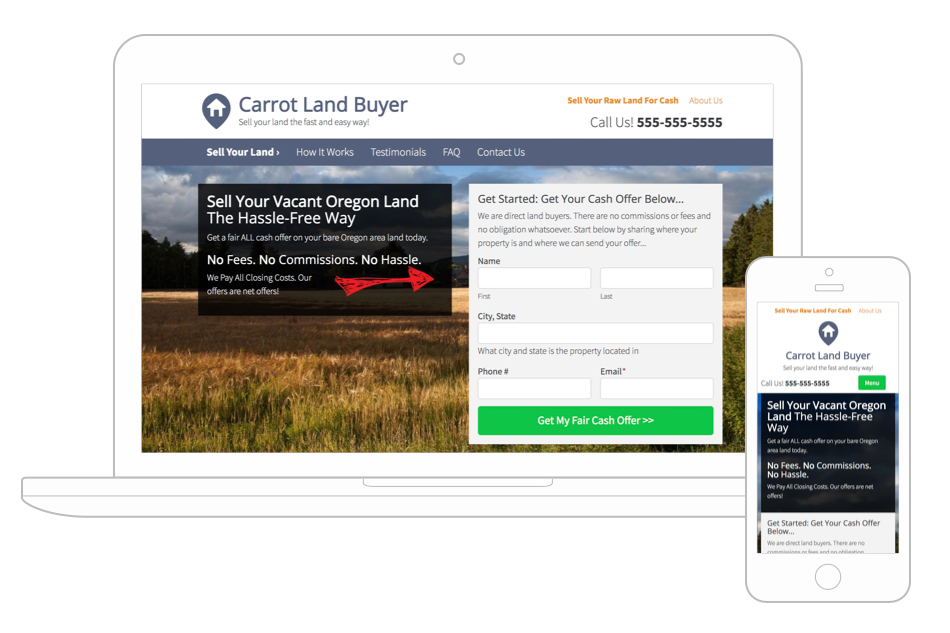


We’ve been getting some awesome questions from the Carrot community lately so we’re going to be answering some of them here on the blog in detailed posts to help you get an edge on your competition with your real estate investing website.
The other day, one of our members from Indianapolis (one of the top turn-key rental property sellers in Indianapolis) asked…
“Hey Jake, good morning, in general, are there less real estate investor leads in holiday months then in the summer months?” Francisco
(NOTE: This customer is in our Content Pro plan and saw their first leads in their market within the first 2 weeks after launching their sites and implementing a few critical steps.)
We’ve monitored this trend over the years while also monitoring search levels on many of the top motivated sellers, cash buyers, private lenders, and tenant search phrases out there.
Now… each type of searcher came up with slightly different seasonal search patterns…. so in this post, we’ll run through some of what we found so you can better prepare for fewer November and December lead volumes when leveraging SEO and traditional Google PPC specifically for motivated property seller leads and cash buyers.
So… Are There Less Real Estate Investor Leads In Holiday Months Than Summer Months?
When Are Motivated Property Sellers Searching Google?
First, let us look at the highest searched highly motivated real estate seller search phrase, “we buy houses”.
Average Monthly Searches Of The Motivated Seller Search Phrase “we buy houses”
Average “we buy houses” Searches In Google Per Month: Notice the big ramp-up of searches in the summer and spring months. What’s this mean?
That’s really interesting… but that doesn’t tell the whole story. So we took the average of the top 25 motivated seller keyword phrases to see overall… is there a seasonality for motivated sellers hopping online and searching for someone to buy their house.
The graph below shows the average of the top 25 search phrases in the United States for highly motivated sellers on Google across the past 24 months.
Average Monthly Searches Of The Top 25 Motivated Real Estate Seller Search Phrases
Average Monthly Searches In The Past 24 Months: Highly motivated sellers searches on Google trend up in the warm months and down in the colder months… with December being the lowest each year.
We see a similar ramp up in the warm months… and the number of motivated sellers searching Google with the common highly motivated search phrases dips in the winter months.
On average… the summer months are getting nearly 30% more searches from motivated sellers than November and December.
Now, we did cross-check this to make sure it wasn’t a “cold winter climate” vs. “mild winter climate” thing… and overall we still saw very very similar trends. So, for now, we’ve ruled out the climate being the major contributing factor to the seasonality of the motivated seller searches.
Why Do Fewer Motivated Property Sellers Search Google In November And December?
There are lots of reasons that could be causing this… but here are a few of my guesses…
It’s COLD! (in lots of places) so they want to hang out
It’s the holidays and people don’t have the time to deal with something else or don’t want to disrupt the holidays
Generally, there are fewer properties on the market in general so many house sellers feel that “selling in the spring” is what you’re supposed to do to sell a house fast (even though some data shows houses that sell in the winter sell for higher prices and sell quicker)
When Are Cash Buyers Of Real Estate Searching Google?
Overall a cash buyer is in a different mindset than a highly motivated seller. Usually, a person who’s looking to buy investment property tends to look for properties when they are thinking about their financial future.
There is a bit of seasonality to cash property buyer searches as well. Fewer searches for the top 20 cash property buyer searches on Google in November and December than most of the other months during the year… but one key thing to take note of, if you’re selling investment properties or just looking to grow your cash buyers list in a bit way… is the single most searched month in the whole year is January.
Average Monthly Searches Of The Top 20 Investment Property / Cash Buyer Search Phrases
January Is The Single Most Searched Month For Cash Buyers: This chart from Google search data shows January beating out all other months during the year for investment property buyers looking online for properties. What are you doing to get ready to build your cash buyers list in a big way in January?
That’s pretty darn cool (and useful) eh?
Find Seasonal Opportunities
It shouldn’t be surprising that the real estate industry has seasonal patterns. To validate this… according to Realtor.com, homes are most popular in the summer months when people have their minds set on moving because it’s a peak season for inventory and sales.
But, the winter months should not be discounted. For example, wintertime can provide a unique opportunity for investors because they know people want their houses sold fast!
Winter Pro: Serious Sellers
Winter is known to be the most profitable season for buyers. When it’s cold outside and snowing, there are many more “serious” sellers who want their home sold quickly so they can get on with life in warmer weather; conversely, this means that you’ll find some motivated sellers right when you need them.
Winter Con: Low Lead Volumes
Winter weather can be a major factor in the real estate cycle. Cold weather, including elements of rain and snow, can make it more difficult to find sellers. This can have an impact on the buying and selling process, as the limited potential sellers may have an overappreciated value of a home in cold months.
What This All Means
What this means to me is that people are looking at their financial goals at the start of the year and saying… “Man, I need to get my butt in gear and pick up some more investment properties to hit my goals this year”… so they dive in right after the holidays and start looking for properties.
There may also be tax reasons that people are waiting until January to kick up their investment property search… either way… the data shows it’s the case… so now it’s time to act on it.
So, if you know the single most popular month for investment property searches online is January each year… what are you doing to build your own cash buyer list for your real estate investing business?
What Can You Do To Prepare Your Real Estate Investing Business For Seasonal Search Trends?
Really, what this data shows is that there are seasonalities to the real estate investor leads you can expect from SEO for real estate investing and even PayPerClick marketing.
So keep these things in mind as you’re generating leads for your real estate investing business through your website…
Winter months for both investment property buyers and motivated house sellers bring in lower volumes than the summer months (but not drastically lower… at the least… maybe 30% lower on motivated seller leads)
Now is the perfect time to start your Evergreen marketing campaigns if you haven’t already so your real estate investing websites rank higher in Google for keywords that matter when the spring and summer come around
If possible, try not to rely strictly on SEO or PPC for your only lead generation if you’re not in a larger market in the winter months if possible… so your marketing plan is well rounded and you’re getting leads coming in from places other than just the internet in slower lead months.
Get a cash buyer/investment property buyer campaign rolling asap so you can take advantage of the highest searched month of the year for people looking for investment properties. How? Start your Craigslist marketing… go to your REI club in January and start getting your buyers’ list built there… kick on some Google PPC campaigns if you have a bit of a budget to invest… Facebook ad campaigns are doing REALLY well to generate investment property buyers and tenant buyers… basically… get focused and leverage the January cash buyer traffic!!!
If you’re a Carrot member, you know how well the Cash Buyer websites on our system are converting… so put it to use.
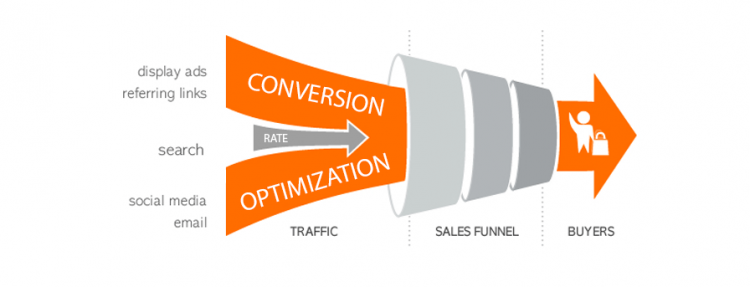
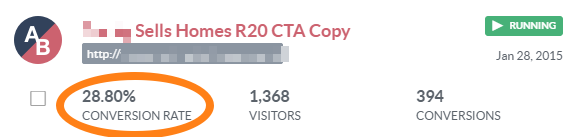
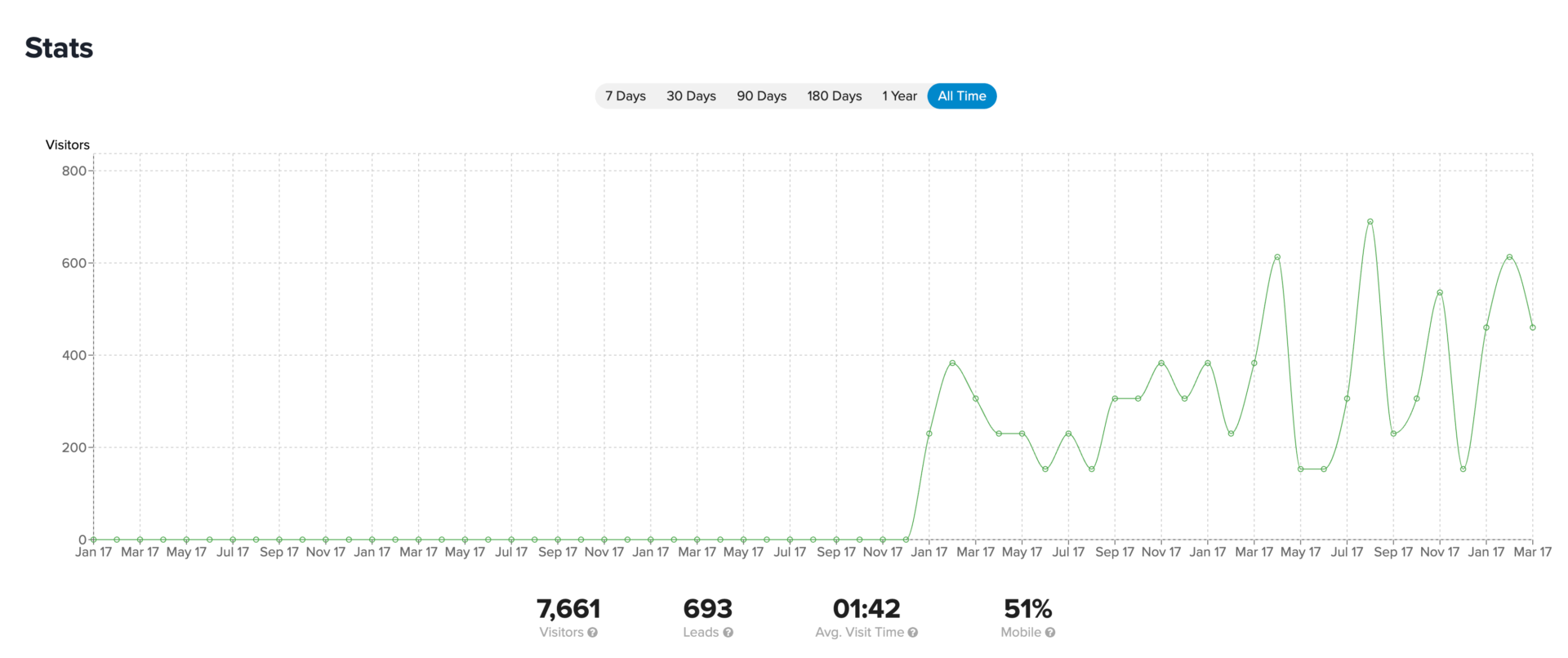
Also, on the motivated seller side of things… having a real estate investing website with a high conversion rate(how many people land on your website and become a lead) is as important as ever in months with lower search volumes like December… so if your current website isn’t converting like it should… take a look at Carrot to see if it’s a fit for you.
We’re the only company in the industry as focused on results and increasing conversions on our platform each and every month as much as we are… so you can just focus on growing your business… not fiddling with building websites and trying to learn conversion rate optimization in your “spare” time.
Hit me with comments or questions below! And leverage these seasonalities in the Google searches to your advantage!!!!
When it comes to real estate investor PPC for motivated sellers campaigns, there tends to be a lot of emphasis on the quality and content of landing pages to increase conversions.
Ready To Get More Leads & Close Your Next Deal? Take Your Business To The Next Level
Your landing page is crucial, but to motivate sellers to visit it, you must first persuade them to click on your ad.
The best landing page will do little good if a seller doesn’t see it.
So, how do you make your Google PPC ads stand out from the rest of the clutter on a Google search result page?
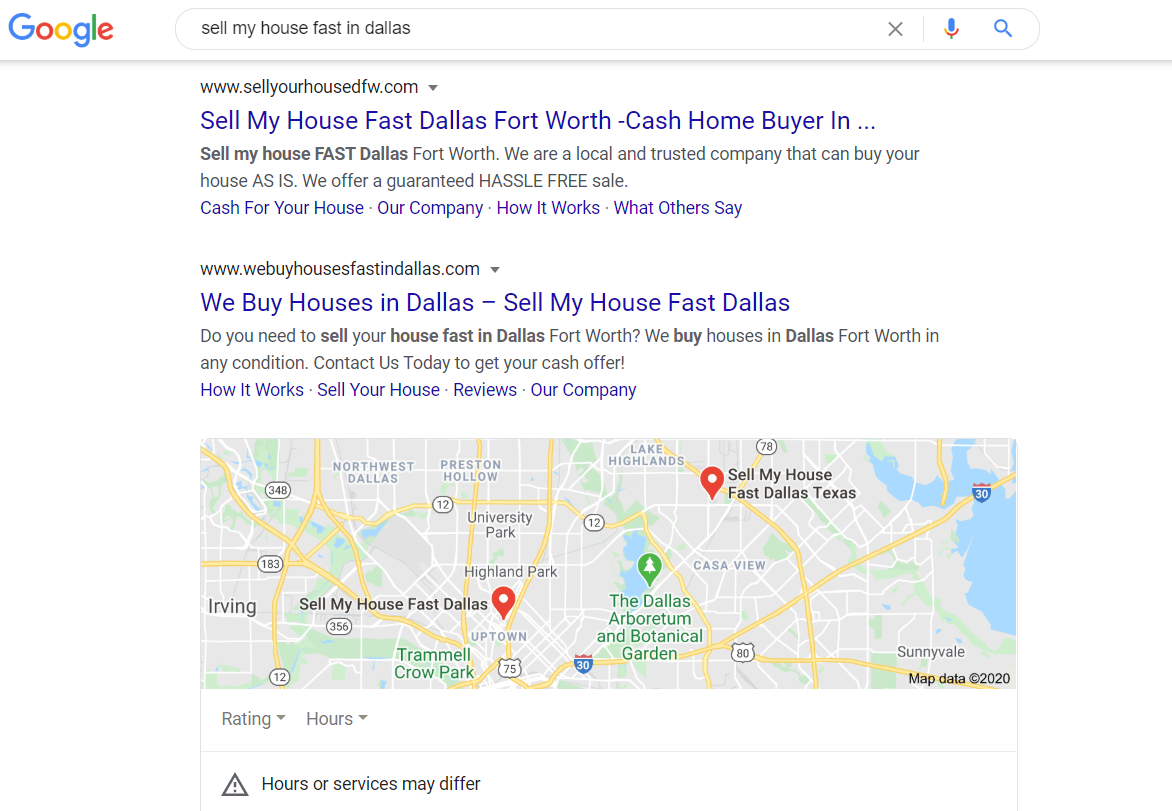
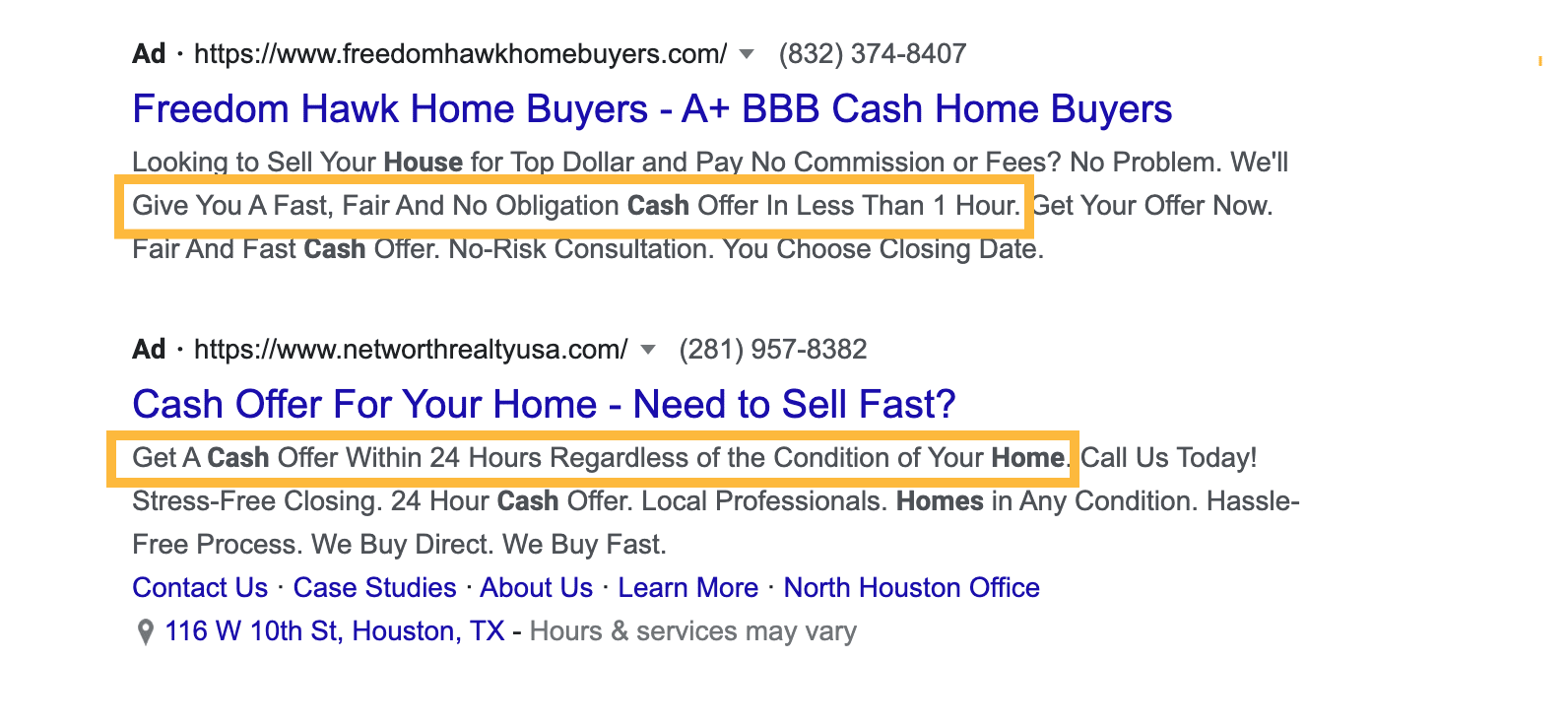
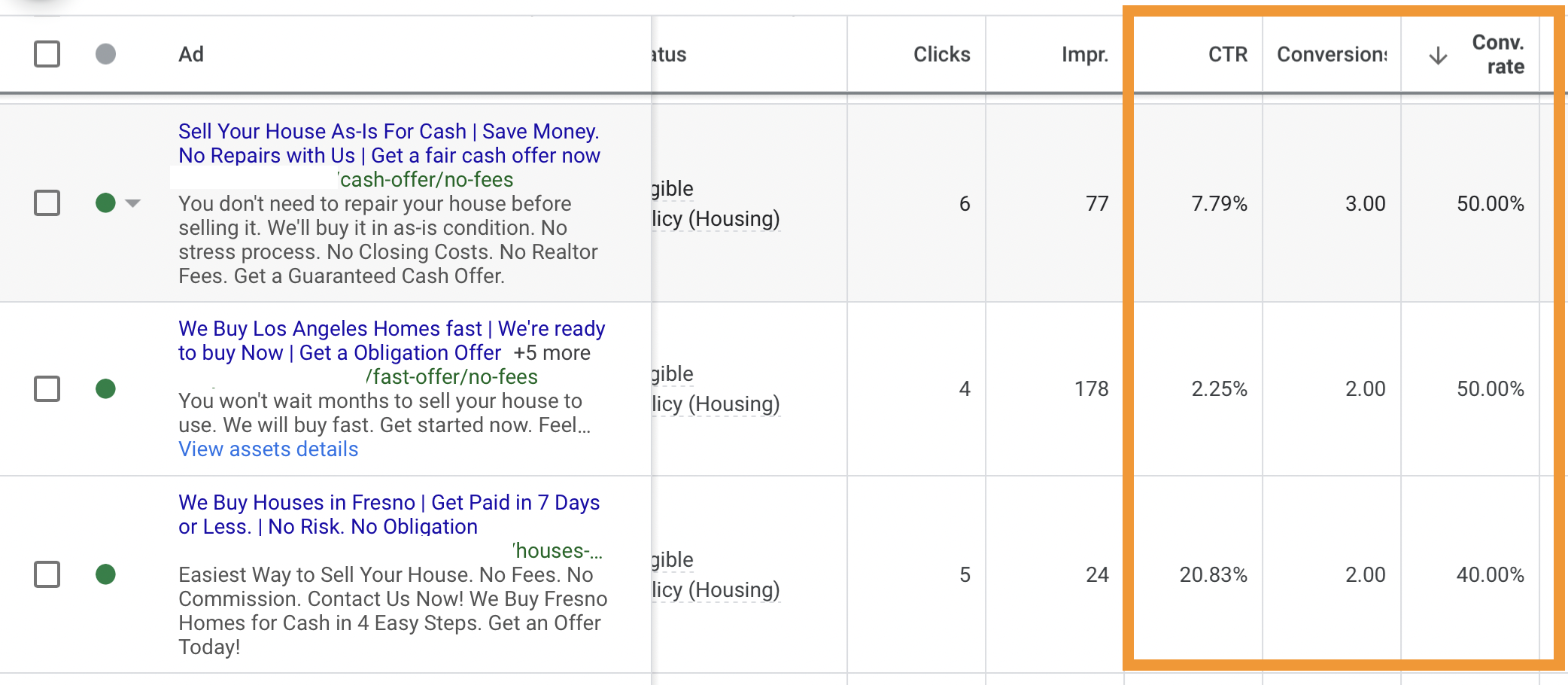
Based on the analysis of over 50 Google Ads accounts, we identified the top 10 commonalities with the highest click-through and conversion rates. Here’s a real example of a high click-through (17.39%) converting motivated seller ad (37.50%)…
After their Google search, that little ad has two to three seconds to grab the house seller’s attention.
You get a small headline and a very short amount of copy to convince the seller your site is worth visiting… and that you can solve their problem.
The better your ads perform, the more clicks you’ll get.
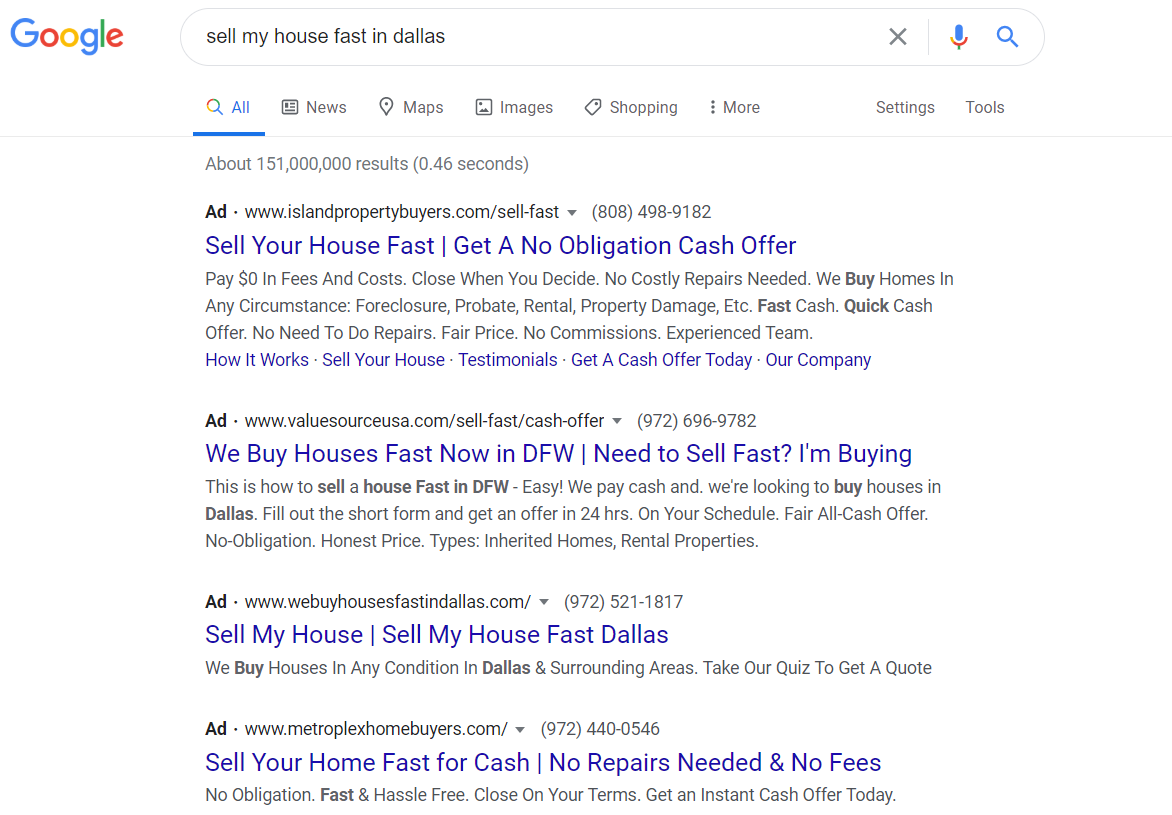
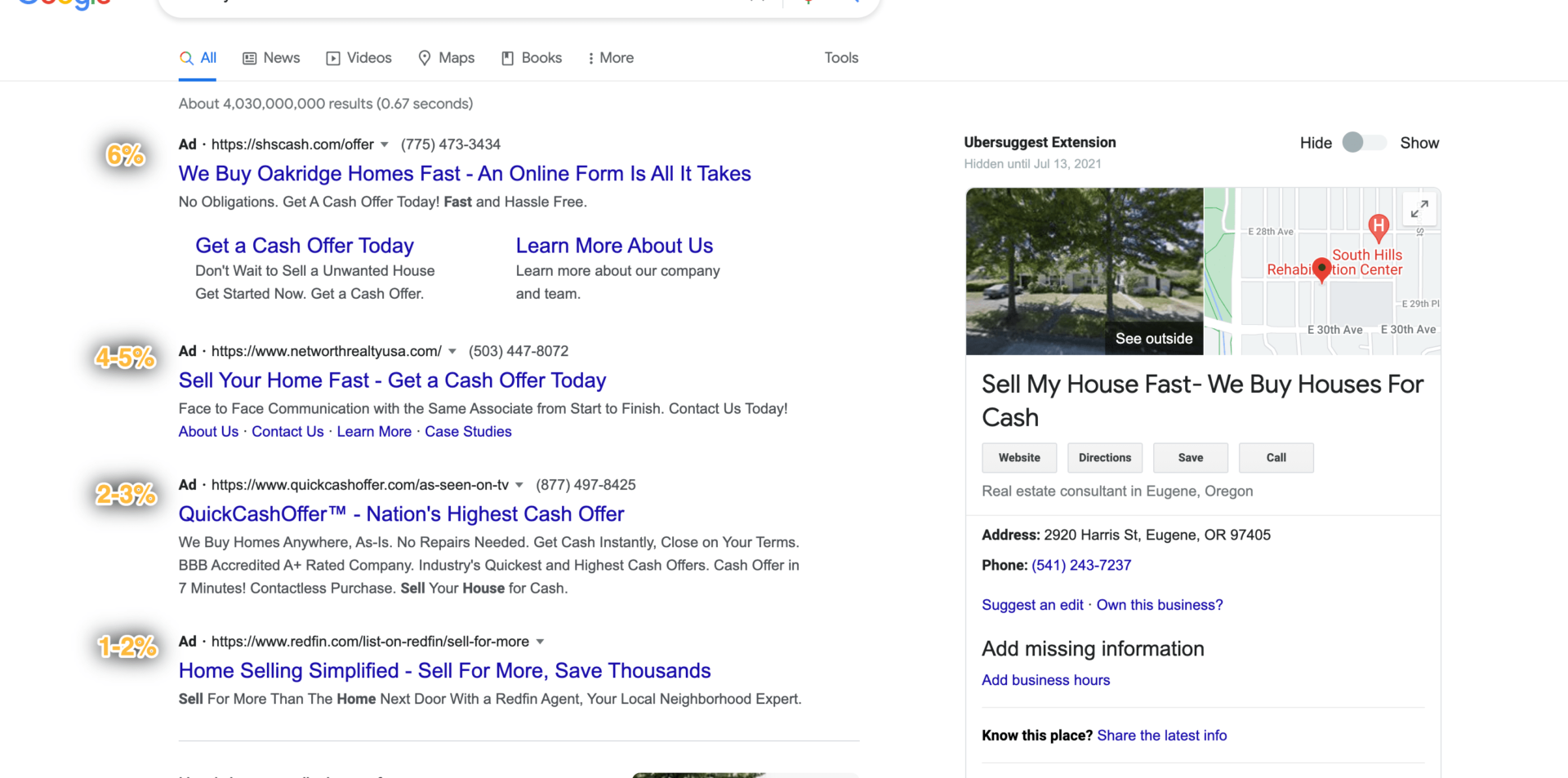
The Top 3 Google PPC Ads Get 2-6% click-through rates. Whereas ads 4 and below average 1-2% On A Google Search Result Page
10 Techniques for Creating High Converting Motivated Sellers PPC Ads
As quickly as possible, you need first to grab their eye; second, show them that you can likely help them, and relay a sense of credibility through the ad to make them feel great about clicking the ad to learn more.
Since you only have a few lines and seconds to relay all that, your ad headline and copy need to trigger an instant response.
Give motivated sellers a reason to click. Here are some practical and ethical triggers I use when creating PPC Ads for Real Estate Investors.
These triggers have helped to yield an average 5% click-through rate and an 18.2% visitor-to-lead conversion rate across Carrot PPC accounts that I manage.
People naturally interact with questions. Often that sense of curiosity piques our interest, and it creates an “open loop” in our minds to want to find the answer to that question. When asking a question in your ad headline, you’re triggering this curiosity and making your ad appeal to them personally. Here are a couple of ad headline examples where I used a question:
Other examples of questions you can pose are…
“Did your listing expire?”
“Need to sell quickly?”
“Is Your House In ?”
You get the idea.
Get creative.
2. If Possible, Use Humor:
Sometimes, this is a little harder in the real estate market. People like to laugh. If your ad headline makes them chuckle, they associate your ad with positive emotion. This creates a more receptive message.
A way to do that may be…
“Is Your House A Total Beater?” Sell As-Is. We’ll Pay For Repairs Get A Fair Cash Offer Today www.YOURURLHERE.com
3. Add Credibility
Call out a BBB rating or how long you’ve been in business. Increased credibility equals increased persuasiveness of the ad overall and strengthens your brand’s quality. This can lead to a higher click-through rate.
4. Go Regional:
Depending on your campaign’s demographics, using regional triggers in your ads, such as city or state names, often pays off. Sellers will automatically relate to the area and build more trust seeing a loc ad. Couple that with a local-looking domain name or URL, and that’s even better!
5. Use Power Words:
Several keywords are known as power words. These words are proven to attract attention and sales. They include words like highest, free, fast, super, fair, now, must save, expert, local, limited, and so on. Create a sense of urgency.
Some ways to use some of those powerful words in your ads include…
“Sell Your Boise House Fast”
“Get Your Fair Fast Cash Offer Today”
“Save time and money. Receive an offer today”
“If You Must Sell Now, We Can Help”
And so on.
Again, get creative and test things out.
6. Mention Guarantees:
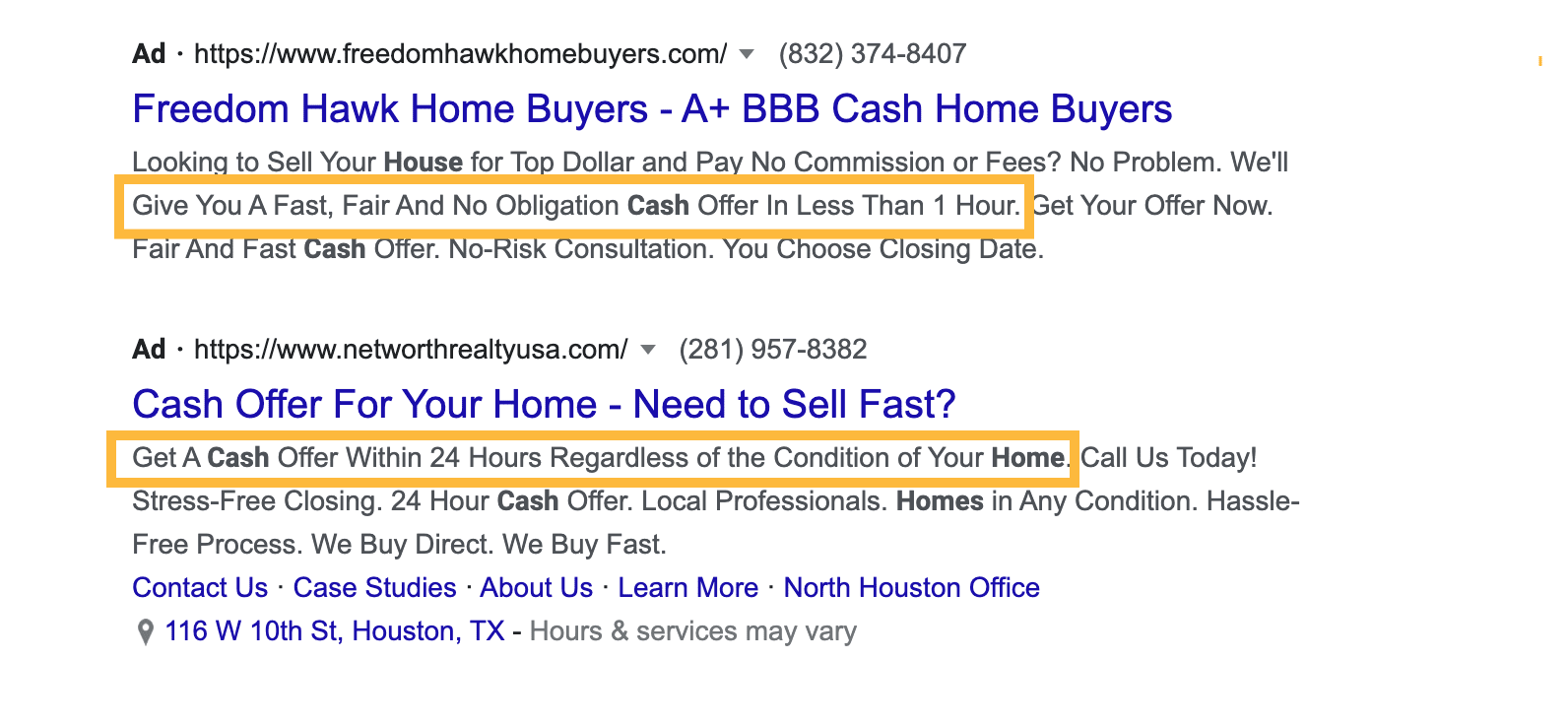
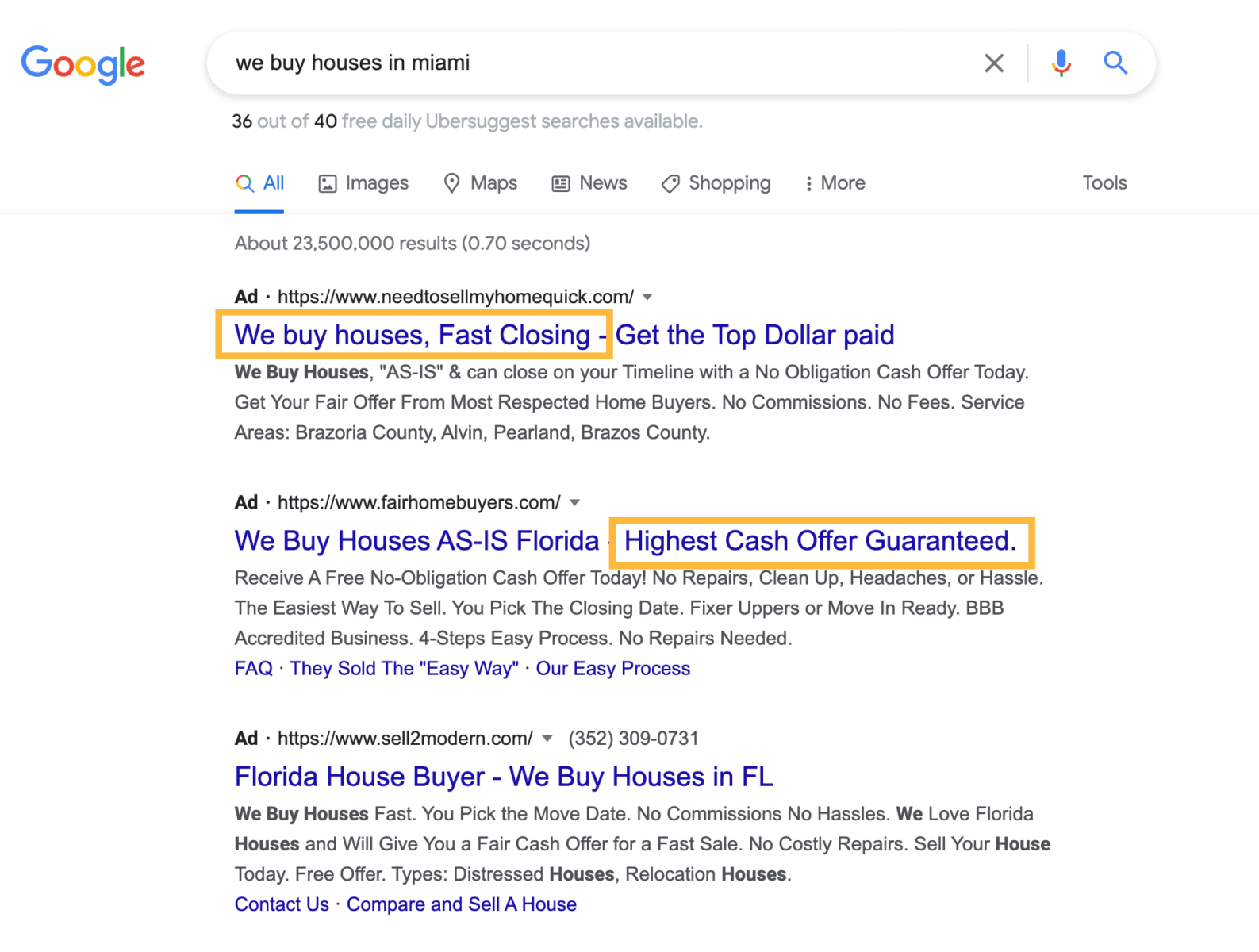
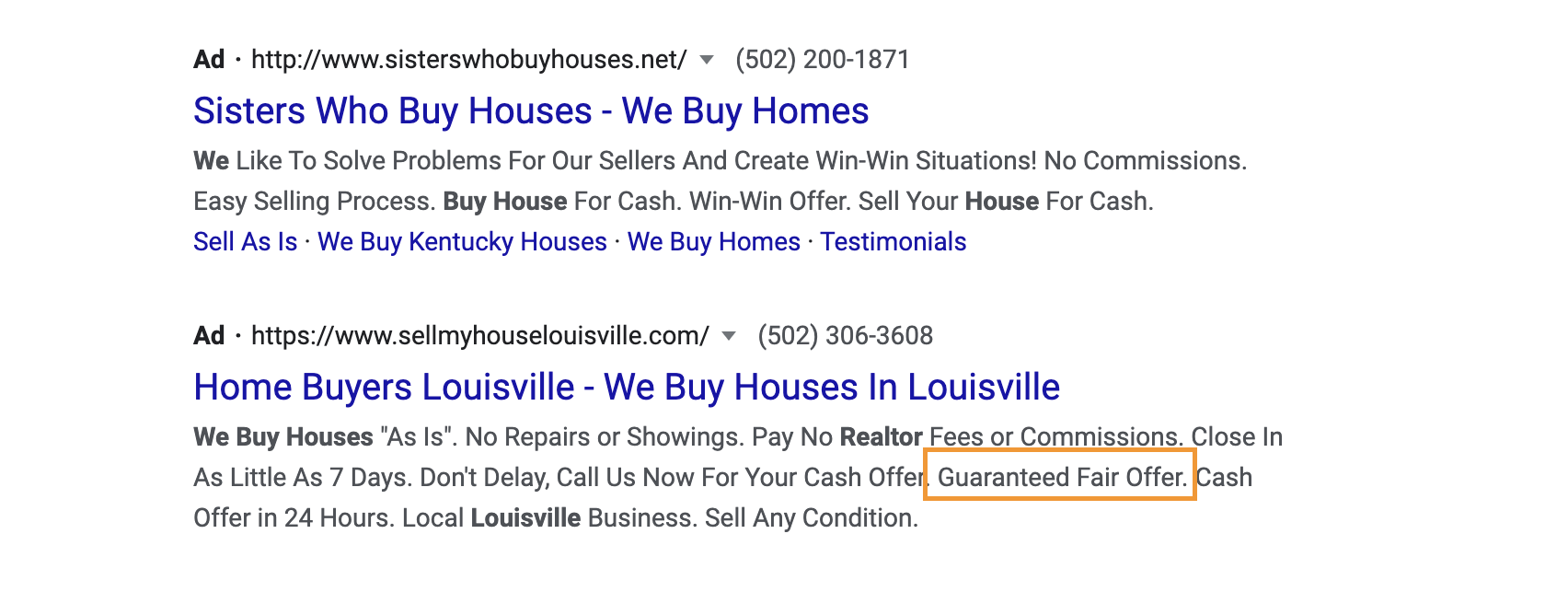
Guarantees are mentioned in an ad, such as a guaranteed cash offer or a guaranteed offer in 24 hours.
Here’s a quick disclaimer, but never guarantee anything you can’t 100% confidently fulfill.
Don’t guarantee the “highest offer” in the market unless you’re ready to do that.
Don’t guarantee to “close in 7 days” if you can’t do it.
Capiche?
7. Use Personalization:
Similar to ads asking a question, ads that specifically address the audience are much more likely to gain attention. Such as the title Facing Foreclosure?
Here are some other examples…
In Divorce? Sell Your House Fast Avoid costly broker fees. Sell In 7 Days Or Less. Receive a fast – fair cash offer today
Inherited A Boise House? Cash It Out Trade that house for cash today. Receive a fast-fair cash offer
Are You A Tired Landlord? We’re buying local rental houses Get a fair-fast cash offer today
Get creative.
Now… with that said, if you’re going to personalize your ads, you need to make sure you’re also putting these ads in front of very targeted searches. You won’t want to serve up a “tired landlord” ad to someone searching “sell my house fast” or “we buy houses.”
But you may want to test it out to someone searching “tax consequences of selling rental property” or “selling a rental property“… and targeting it to the locations you would buy.
8. Use Benefits + Story:
Searchers are good at recognizing advertising and blocking it out. So your ads can become more effective if they have a storyline and appear less like an ad.
Also, ensure your ads sell the benefit the homeowner will get by working with you. Too many people just mention the service… “we buy houses, “… “local home buyer,” etc. But the benefit they’ll experience is what they’re after.
A fast sale.
Cash in their hands quickly.
Avoid agent fees.
Avoid stress.
You get the idea.
Some examples…
David Sold His Boise House Fast He avoided agent fees and stress. See how you can to today!
Sell Your House Fast-Cash Need to Sell Fast? Close in 7-Days. We buy houses nationwide, No Cost!
Sell Your Boise House Easily Fair Price – No Fees – No Hassle Any Location – Any Condition
Look at the benefits mentioned in those ads that the seller can get working with us.
avoiding stress
avoiding agents fees
no cost
sell quickly (who doesn’t want that!?)
no hassles
fair
I can sell my house fast and be done w/ it
Focus on the seller’s benefits, and you’ll be golden.
9. Use Emotion and Senses:
As well as personalization, your ads can appeal to the five senses of the seller: sight, sound, smell, taste, and touch. Here’s an example where they can feel the money in their hands.
10. Use A Strong And Clear Call To Action:
It is proven that ads achieve the highest click-through rates if they use a call to action. For example, “sell now,” “offer in 24 hours,” or “close in 7 days”… lay out the benefit they’ll get and how they’ll get that benefit with the call to action.
Additional PPC for Motivated Sellers Ad Copy Advice to Attract Sellers Online
Attract Motivated Sellers with Powerful Ad Headlines The ad headline is likely the utmost important element of your entire ad. It needs to grasp the reader’s attention so they will read the rest of the ad.
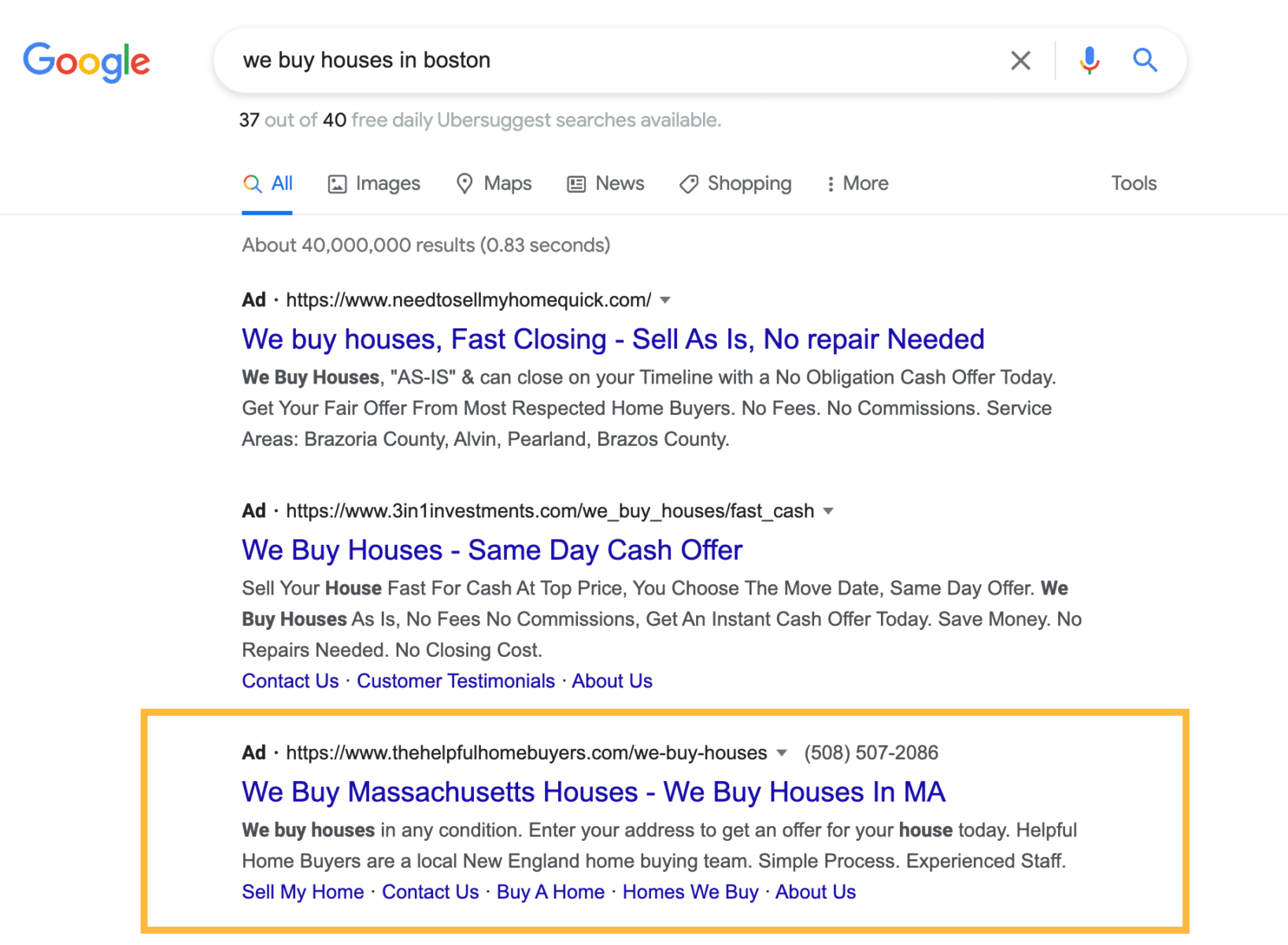
Include Intent Keywords To create higher converting headlines, include your keyword in your headline. Keywords have been proven to achieve a higher click-through rate. If a motivated seller sees the keyword they have searched for; your ad is more likely to seem relevant to them and encourage them to read on and click.
Effective PPC Ad Text to Attract Motivated Sellers Once the reader has been drawn in with a solid headline, the rest of the ad needs to persuade them to click on the link that takes them to your landing page, ad text needs to be as relevant as possible. Try to use your target keywords in your ad text and your headline.
Fill In-Display URLs With Keywords While your ad headline and text need to do the core job of convincing the seller to click, your display URL should support your message by logically representing your site. For example, if your ad link takes sellers to a page residing on www.webuy.com/get-a-cash-offer, the display URL should read webuy.com/get-cash-offer.
Use Ad Extensions
As we’ve mentioned in other PPC marketing posts on our blog, test using the ad extensions. We’ve found they can, in some cases, boost your click-through rate a lot… just make sure you have conversion tracking in place, so you know whether those extra clicks are turning into solid leads.
Conclusion
Getting motivated seller leads that convert through PPC or SEO is critical to your survival and growth as an investor.
In the end, conversions are about relevancy – does what you offer to match what they’re interested in, and do you clearly and quickly show them how you can solve their specific problem?
Sometimes it takes various A/B tests to determine what works for your market. Once you find it, keep doing it.
Try these PPC marketing ad ideas out, and let us know the results! One thing you’ll find is that testing new ad copy continually is one of the best ways constantly to improve your PPC marketing results.
Get to work… and let us know what you see works well for you with your PPC ads below in the comments section!
Sustaining success with real estate investor PPC can be frustratingly complex, and without being able to prove results, you can kiss your ad budget goodbye.
Before giving up hope, know that your PPC ads can ALWAYS improve.
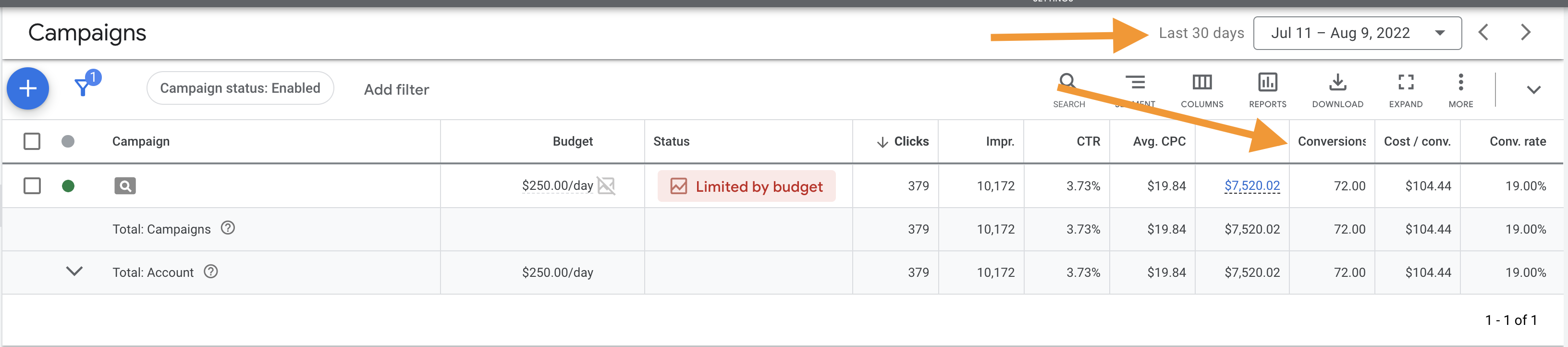
Our members generated 62.64% MORE Paid Search leads in Q2 2022 over Q2 2021, and 26.12% MORE Paid Search leads over Q1.
Whether getting the highest ROAS you’ve gotten in months or stuck on a plateau, there are always ways to improve.
A little secret… improvements don’t need to be Herculean efforts.
You can get better results and do less.
We’re giving away the essential real estate investor PPC optimization strategies our PPC experts use to manage multiple members and increase lead volumes.
Here’s more proof…
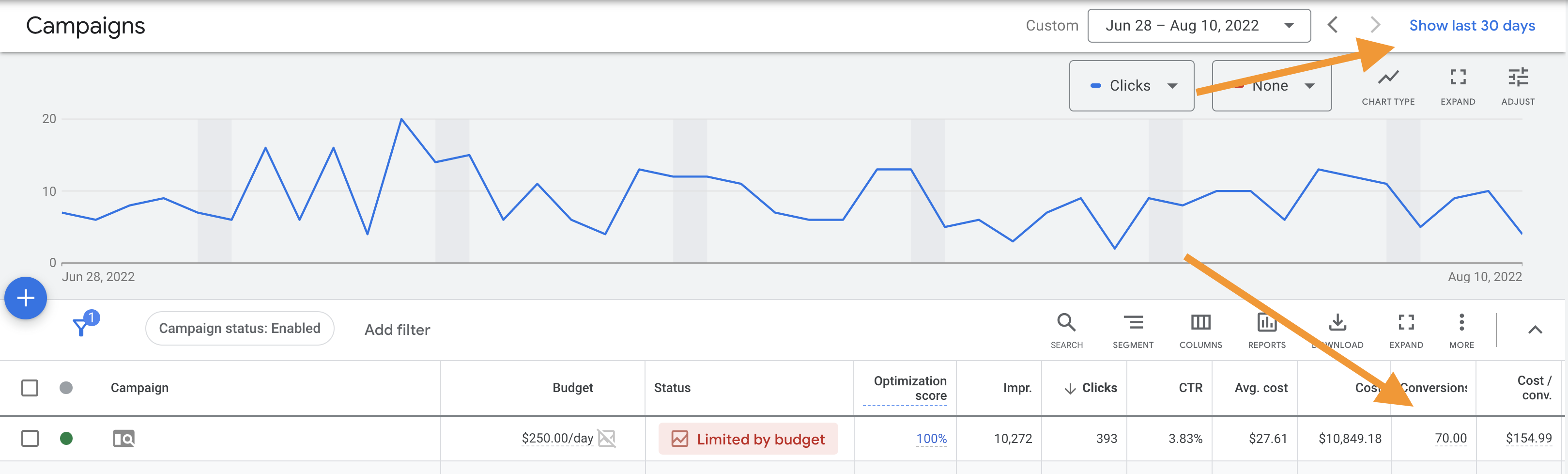
70 Google Ads leads in 30 days!
43 Google Ads leads in 30 days.
And… 72 Google Ads leads in 30 days!
I could keep going and going.
We work smarter, not harder. We’ll also tell you when these optimizations should happen so you know exactlyhow to optimize your real estate investor PPC campaigns and how often.
Your account is about to be the healthiest and strongest it’s ever been.
What is Real Estate Investor PPC Optimization?
Simply, Google PPC optimization real estate investors look at your account data and make changes to ensure optimal performance.
The digital marketing environment changes quickly. The settings and tests that upheld optimal performance last month (or even last week) might be working against optimal performance now.
Here’s an example. One of your keywords may have performed well for the first month, but when you look at your data from the second month, you see that it’s now driving up your cost-per-lead (CPL).
As part of your optimization regimen, you pause that keyword so your account will focus more on other keywords with lower CPLs.
Your optimization time is also when you become more informed about the secondary effects that your current settings, keywords, etc., have on your account.
Here’s another example. You have a keyword that’s doing amazingly well in lead volume and CPL, but when you dig into the search terms that your keyword is pulling in, you realize that they’re not relevant to motivated sellers. Suddenly all those unqualified leads that came in last week make more sense.
Routine optimization is the best way to ensure you’re pushing your performance in the right direction.
The Benefits Of Real Estate Investor PPC Marketing – Why Should You Do It?
PPC marketing is one of the first things we do when entering a new market to generate motivated seller, rent-to-own tenant-buyer, or cash buyer leads.
Instant Traffic: With real estate investor PPC marketing, you can have traffic and, hopefully, leads quickly, usually within 72 hours of launching a well-structured PPC campaign.
Easy To Target A Specific Prospect: One of the best ways to know that you’re targeting the right person is by getting your website in front of the people actively looking for solutions to their problems on Google. “sell my house fast in Atlanta” as an example. That person, of course, needs to sell fast… that’s a targeted prospect.
You Only Pay When Someone Clicks Your Ad: With direct mail, you fork out the money upfront to pay the printing fees and postage with no guarantee that your target prospect will even engage or read your direct mail piece. With PPC marketing, you only pay when someone clicks your ad and goes to your website.
Get Traffic Coming In While You Build Out Your SEO: SEO can take a while to rank well on Google for competitive phrases. So while you’re building up your SEO… you can get traffic and leads today with PPC.
Easy To Measure: If you set your account and campaigns up correctly, it’s pretty darn easy to measure what’s working and not.
We know that PPC marketing can be effective for real estate investors… but you may be asking… “How hard can it be to optimize it? And why do I have to optimize stuff after I get my campaign setup?”.
Well… if you’re not tweaking and refining your Google PPC campaigns to cut out the keywords that aren’t turning into leads and continually optimizing to increase your return on investment… you may as well light your money on fire because a non-optimized PPC campaign is doing just that.
So let us dive in and optimize that PPC marketing campaign.
20 Steps To Optimize Your Real Estate Investor PPC Campaigns
What tasks can you do to optimize your campaigns? What should you look for?
Knowing what to look at, when to look at it, and how to interpret and form solutions around what you’re seeing can be one of the most challenging things to learn for new Google PPC users.
I’ll be honest. It can even be challenging for experienced users at times.
There are so many elements to look at in Google Ads. Metrics, bids, bid adjustments, settings, search terms… the list goes on and on.
Let’s narrow down that list and focus on optimizations that maximize your time spent on the account. You don’t want to be wasting hours and hours looking for optimizations to make on just anything, so invest your time optimizing things that will make more of a difference in the account. You can use an employee scheduling apps to help you understand where you spend more time and optimize your work.
Ultimately the most valuable optimizations tend to be those that push the account for more results that are valuable to you, like leads. We’ve got 20 of those that can help.
1. Select Your Advertising Platform:
Of course, before starting real estate investor PPC marketing, you must decide what platforms you’ll use. We always suggest starting with Google Ads because over 90%+ of all real estate investing leads we pull in through PPC are through Google Ads. The rest is through Yahoo and Microsoft (Bing) PPC. So, dive in and start with Google Ads! Then add on Bing and Yahoo Search Marketing as you go.
With that said, it might also be beneficial to consider non-traditional platforms for your real estate PPC strategy. According to Stewart Dunlop, Founder of PPC.io, “LinkedIn is emerging as a key player among ad platforms for B2B marketers. Its prowess in providing authoritative business knowledge is resonating more than others like Twitter, and in the last few years, this has led to significant improvements in the performance of LinkedIn ads.” As such, while you begin with Google Ads, Bing, and Yahoo, you may eventually want to explore opportunities LinkedIn advertising offers.
2. Define Your Goal:
The most prominent mistake investors make when they start their PPC marketing campaigns is… they just start. They launch a campaign but don’t define clear goals for what they’re trying to achieve. “Get more leads” isn’t a goal. Make your PPC marketing goals clear and straightforward. “To generate motivated seller leads at under $260 per lead”. That’ll give you a good goal to shoot for so you know whether your campaign is even successful.
A good goal to start with is defining the cost per lead you’re aiming for and the return on investment you want to get over the long term.
For most investors, a cost per lead of under $200 is solid.
The further below that, the better. And as for return on investment… maybe a good start is to close your first deal from your PPC seller leads within the first 3-4 months… then ramp it up from there.
You just have to remember that most PPC marketing campaigns don’t start profitable. It’s the optimization process that makes your PPC campaign profitable as you go… and that can take 1-3 months to hone down a campaign… and ongoing work from there to keep that consistent. As long as you can make it through the initial optimization phase (the first 1-3 months), your PPC marketing should be profitable for you over the long run.
3. Research Your Target Audience:
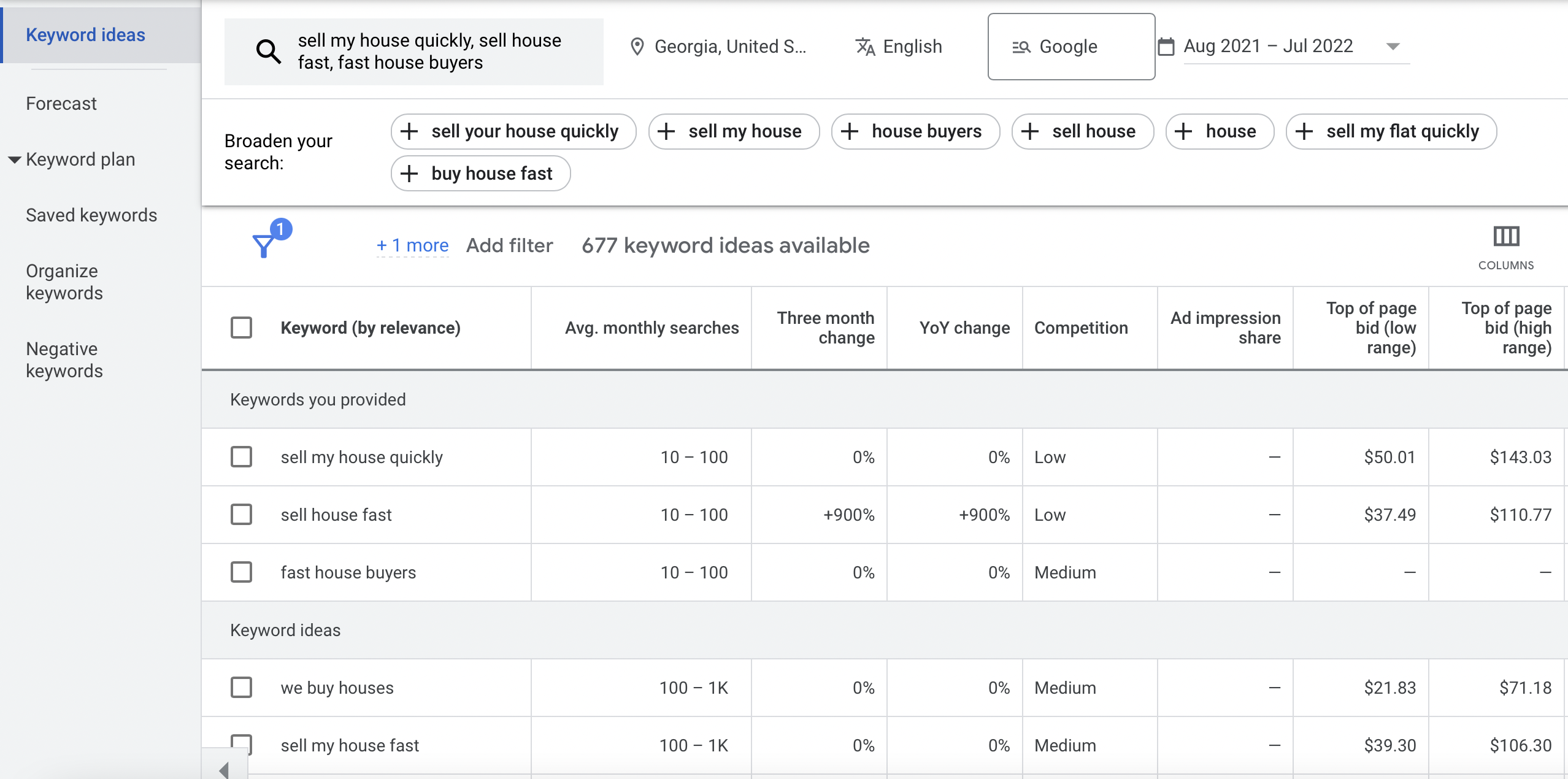
Use the Google Keyword Planner to help you discover what your target audience is typing into Google. It’s crazy the insights you can get in there for how your prospects think and search for solutions to their problem. Then serve up ads in front of the keywords that you can help them the most.
Before you launch ads, know who your target audience is.
What problems or needs do they have? What are they searching for on Google? What solution are they looking for? What words do they use in their searches? Take all of this info and use it to help build out your keyword lists, ads, and landing pages.
4. Do Proper Keyword Research:
Doing your Keyword Research is one of the essential parts of your PPC campaign.
Use tools like Google Suggest, the Google Keyword Planner, Term Explorer, etc.
A big mistake that we see real estate investors make with their PPC keyword research is they aren’t looking at the searcher’s intent close enough.
For example, a seller types in the search phrase “House buyers in Dallas“.
Many people would look at that and assume that the person is looking for a company to buy their house. One of those “house buyer” companies. But… what if they’re searching for retail house buyers in the Dallas area?
If you’re a wholesaler or flipper with an ad up for that keyword and the house seller clicks on your ad… they may quickly realize that you can’t help them. Those types of keywords with mixed intent can cost you a lot of money.
So pay attention to your data and ensure your keywords’ intent focuses as much as possible at the start on the exact people you can help.
This will help you avoid wasting money.
5. Use Negative Keyword Lists:
A “negative keyword” is a word that you can tell Google or Microsoft to look for… that if it shows up in a search… to prevent your ad from showing up to that person.
For example, let’s say you’re a wholesaler or house flipper and you need to buy at a discount. So you may want to add a negative keyword for something like “full retail” there to prevent any searches that have “full retail” or “full price” in them from showing your ad.
Why? Because this type of person likely isn’t going to sell at a discount. So if someone types in “sell my house in Dallas at full price, ” your ad wouldn’t appear.
This can keep you from paying for clicks on your ads where the prospects wouldn’t be your ideal client.
A big mistake most people who are new to Google Ads is that they throw all their keywords into one ad group in their PPC account.
Heck, I did when I launched my first PPC marketing campaign.
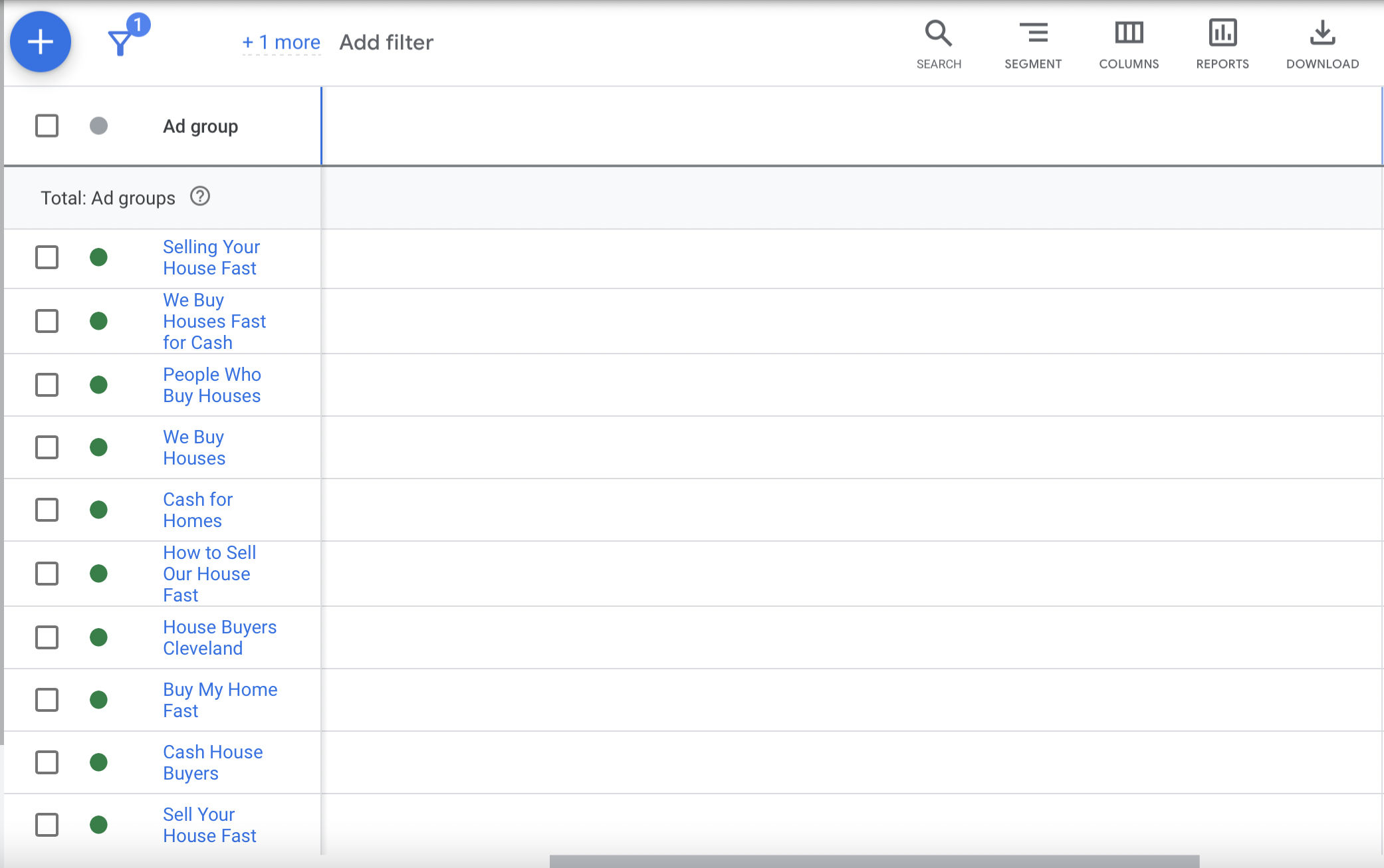
But an effective way to optimize your ad spend and drive down your cost per lead (also to better target your ads to specific targets) is to create separate ad groups based on a common theme.
Here are a couple of examples:
Notice We Have Ad Groups Setup For Different Types Of Keyword In This Campaign
Then within each ad group is a slew of keyword variations, ads, etc.
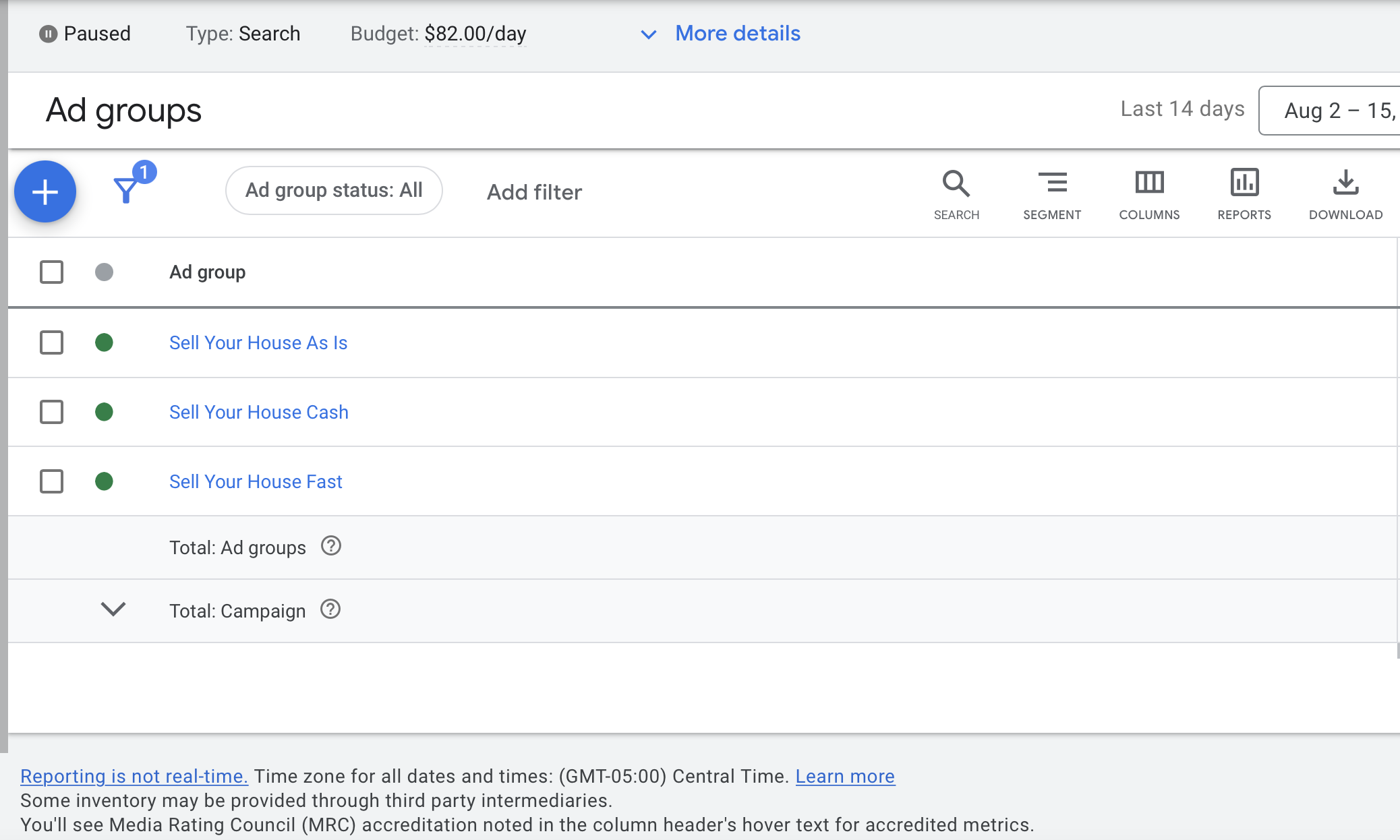
As another example, you can use broader ad groups with more keywords within each group…
Years ago, this approach didn’t work as well as it is now, given the shift to responsive ads. Responsive ads allow users to include keywords in different headlines within one ad, therefore, having a positive impact on Quality Scores.
7. Write Killer Ad Copy:
Lots of people say that phonebook advertising is dead. It will be extinct someday, but people have been saying that phonebook advertising doesn’t work for years and years. (even back when people used phonebooks ;-).
The reason is that local company after the local company would say… “Hey, I need a phonebook ad.”
Then they’d look through the phone book and see what their competitor’s ads looked like… they’d mock up an ad similar to theirs (because that must be working, right?) and put it up there. Then they’d complain because they weren’t getting any calls from it.
But here’s the key, it wasn’t the phonebook that didn’t work… it was that their ad sucked.
It didn’t stand out from its competitors.
It didn’t give any compelling reason why they should talk with them vs. their competitors.
Real estate investor PPC campaigns are the same.
You can’t just look at what your competitors in your market are doing with their PPC ads and copy them. Why? Because you’ll risk being like all those companies over the years that fell prey to the “copy what my top competitors are doing” mindset that made everyone’s ads look the same.
Make your ads sell the benefit they’ll get by clicking that link vs. how cool you are.
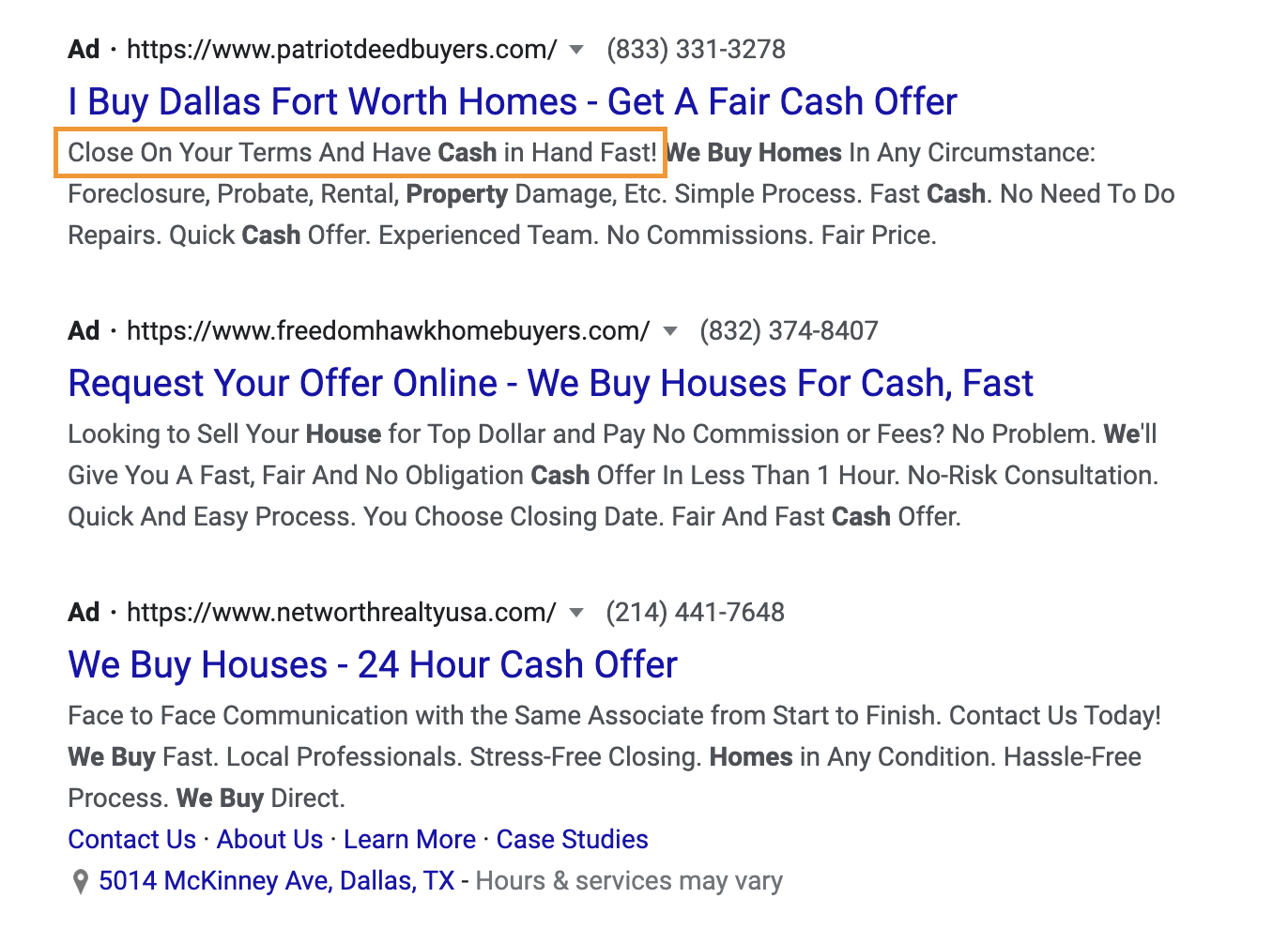
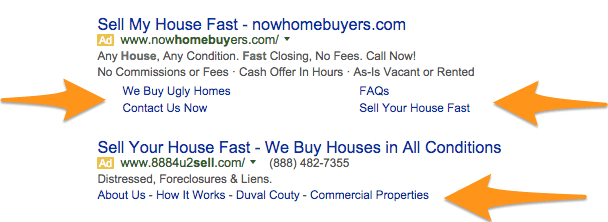
Which ad below stands out? The “we buy houses” one focuses 100% on their company… not on how they can help the client. The client wants to know how you can help them know how cool you are. But look at the one on the top… I can quickly see how they can help me. Fast closing. No fees. Any condition.
8. Have Clear Call To Action:
Let me ask you a question.
What’s the best way to make a sale?
Well… what I’ve found… the best way to make a sale is to ask for the sale. That’s it.
Too many people try to dance around the subject and forget to clearly and confidently give their prospects a call to action that gets them closer to making a sale.
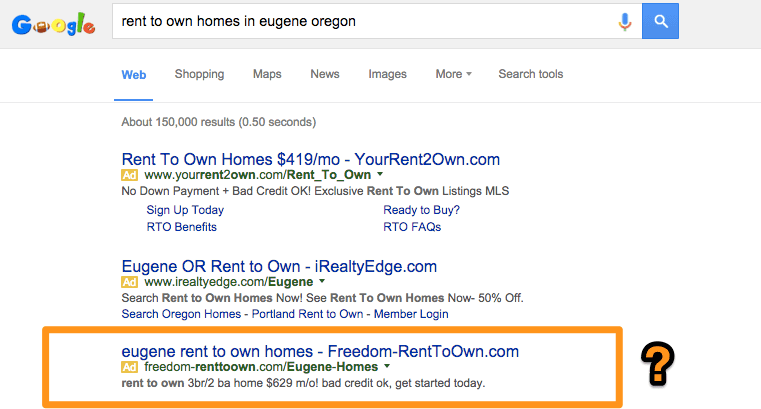
Take these ads below as an example.
Which one lays out how they can help me and gives me the most precise call to action of the 3?
Sure, not the 3rd one (the one outlined in Orange). That ad is too darn easy to just look past.
But the first one does a great job. It is clear (even has a specific price point), lays out the benefits, and says they have an exclusive rent-to-own listing. Cool… I’ll check that one out!
Tip: Their call to action could be more assertive by changing their “Sign Up Today” link to something like… “See Available RTO Homes” as our testing has shown works on our websites.
9. Create Effective Landing Pages:
The excellent high-quality motivated sellers or buyers from your PPC campaign won’t do you a lick of good without a landing page (or website) that performs well. You can see our conversion rate test blog posts we put out all the time where we show our members’ websites pulling in sometimes 20%+ more leads just with tweaks we make to their websites.
So don’t waste your traffic sending it to a low-performing website. Start doing conversion tests today (or have us take that off your hands by joining Carrot on our Content Pro plan :-).
10. Use Geo-Targeting:
Geo-targeting your PPC marketing campaigns is a no-brainer for real estate investors, mainly because real estate is such a geographically specific thing. If a person is looking for “rent to own homes in Ottowa Canada“… odds are they’re in Ottowa or are at least looking for properties in Ottowa.
But not everyone uses the location in the actual search phrase. Some people may type “rent to own homes,”… and Geo-Targeting is precisely how you get in front of those in the areas you want to target.
This will help increase your ads’ click-through rate (CTR), increase the conversion rate on your landing page (if you send them to a city-specific landing page), and help you cut down on wasted ad costs.
11. Utilize the Search Terms Report:
What is the Search Terms Report?
The search terms report will show the search queries that people are typing into Google to trigger your Google search ads. You can see the full terms people type in and the targeted keywords matching each search term. In addition, you can see statistics for each term over a certain period.
How to Use the Search Terms Report
You want to use the Google Ads Search Terms Report to find the top search queries when your ads show. The data you can find will be beneficial, and it is a report that advertisers should view weekly. Here are three best practices below when using the search terms report.
Add Negative Keywords
If you find terms that are not converting or unrelated to motivated sellers, you can exclude them altogether. You can click on the box next to the search term and click the ‘Add as negative keyword’ link at the top.
You can add the negative keyword to the Ad Group level or Campaign level or add it directly to your Negative Keyword List.
Find New Keywords to Target
The Search Terms Report contains some of the highest value data after you run your campaign. If you have an ongoing campaign, you can look at the report weekly and use it to drive more conversions at a lower cost. When you target keywords, seeing the search queries that people type before seeing your ads can be beneficial.
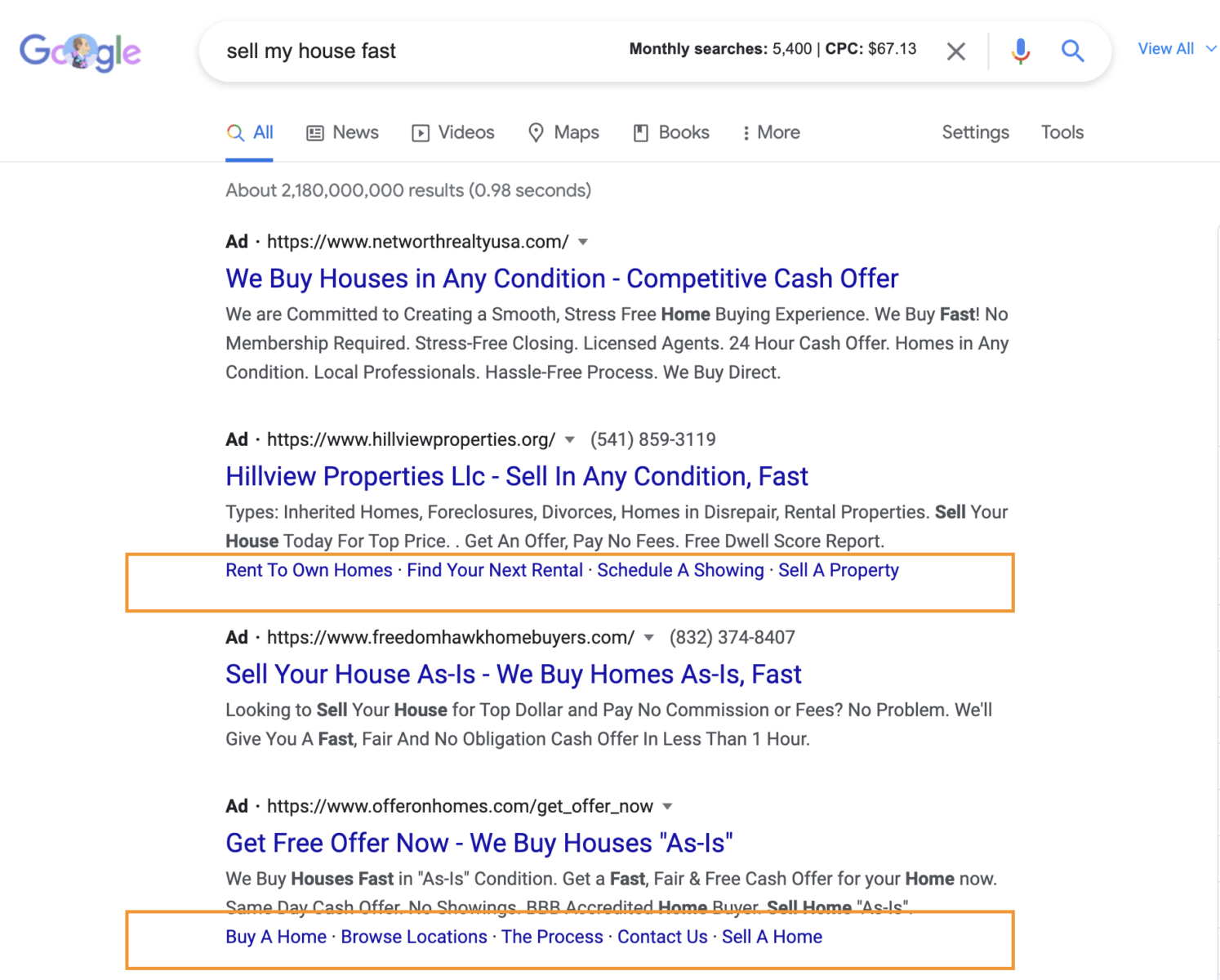
Google has this free thing they call “Ad Extensions.” This lets you add little links below your main ad to other spots on your website, like your “Fair Cash Offer” page or “How It Works” page as an example.
Bit’s of content your prospect would value that will help them make their decision. These do help increase the number of clicks you’ll get… just make sure you’re sending them to pages on your website that are set up to convert them into a lead.
Use the Google Ads Ad Extensions to grab more space on the page to get me to click the ad. Sold! I’m clicking that link!
13. Evaluate Quality Score:
Google Ads has this thing they call the “Quality Score“. There are all kinds of quality scores that Google looks at.
From an account-wide Quality Score that Google uses behind the scenes… to Quality Score for your landing pages, ads, and so on.
The quality score on your end is the easiest to control on your landing pages, ads, and campaigns.
Your landing page,s Google looks for “relevant and original content, transparency, and navigability.”
In other words… look like an honest company with real people behind it who care… and make your website easy for people to get the information they need.
Include things like a Terms of Service, Privacy Policy (all Carrot sites have by default), and content that matches your ad’s promise. Always try to improve your Quality Score… as we’ve found that the Quality Score is directly tied to improving your click costs in many cases.
14. Remove Ads With Low CTR:
One of the ways that Google adjusts which ad will show up wherein the ad positions on a Google search is the CTR… or click-through rate.
Ad Rank = CPC bid × Quality Score.
If the ad in position #2 is getting a CTR of 7% and bidding $2 per click… and the #1 position ad is getting a 4% CTR and bidding $2.50… Google may show the ad bidding only $2 per click in the #1 position because of its higher engagement with the searcher, as indicated by the CTR (click-through rate). Google makes more money this way because more people are clicking on the ad, the user wins because the ad is more compelling, and you win because you’re paying a lower cost for the same clicks because of well-performing ads.
If you have ads or landing pages with a low-quality score, Google may prevent them from even showing in the results. That’s how vital optimizing for quality score is.
So make sure to go through your account consistently, remove your ads that aren’t performing well, and launch new ads to improve your CTR every month. This will help you continually improve your click cost and hopefully result in more leads at a lower cost.
Most leads at a lower cost is a good thing :-)
15. Review the PPC Recommendations:
“Ad Recommendations” is a tool Google Ads provides to you. This score measures how well your account follows best practices for setup in Google’s eyes.
The hope is that by giving you a set of recommendations based on your account’s performance, you’ll be able to make changes to your account that will improve your campaign performance.
Recommendations may not always be the best direction for your Google Ads campaign.
Here are the common recommendations for a motivated seller campaign:
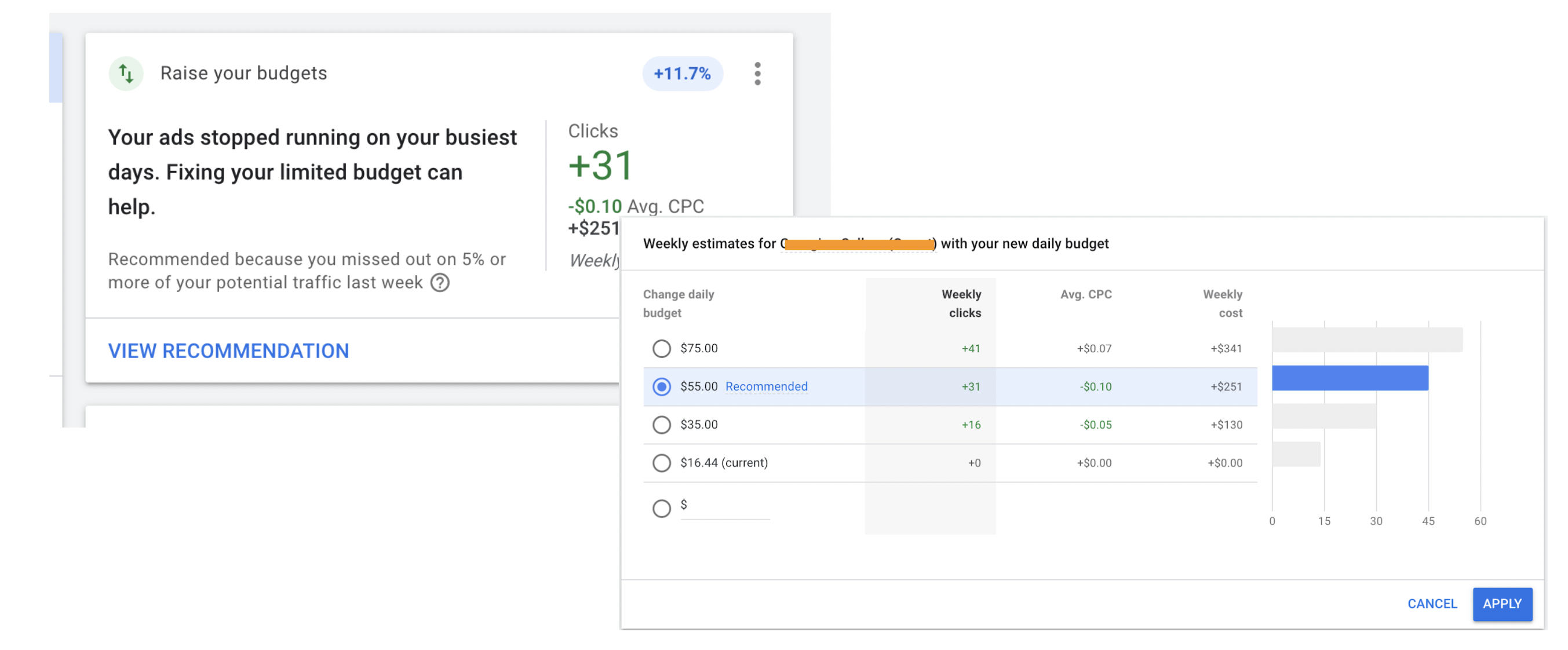
Budget
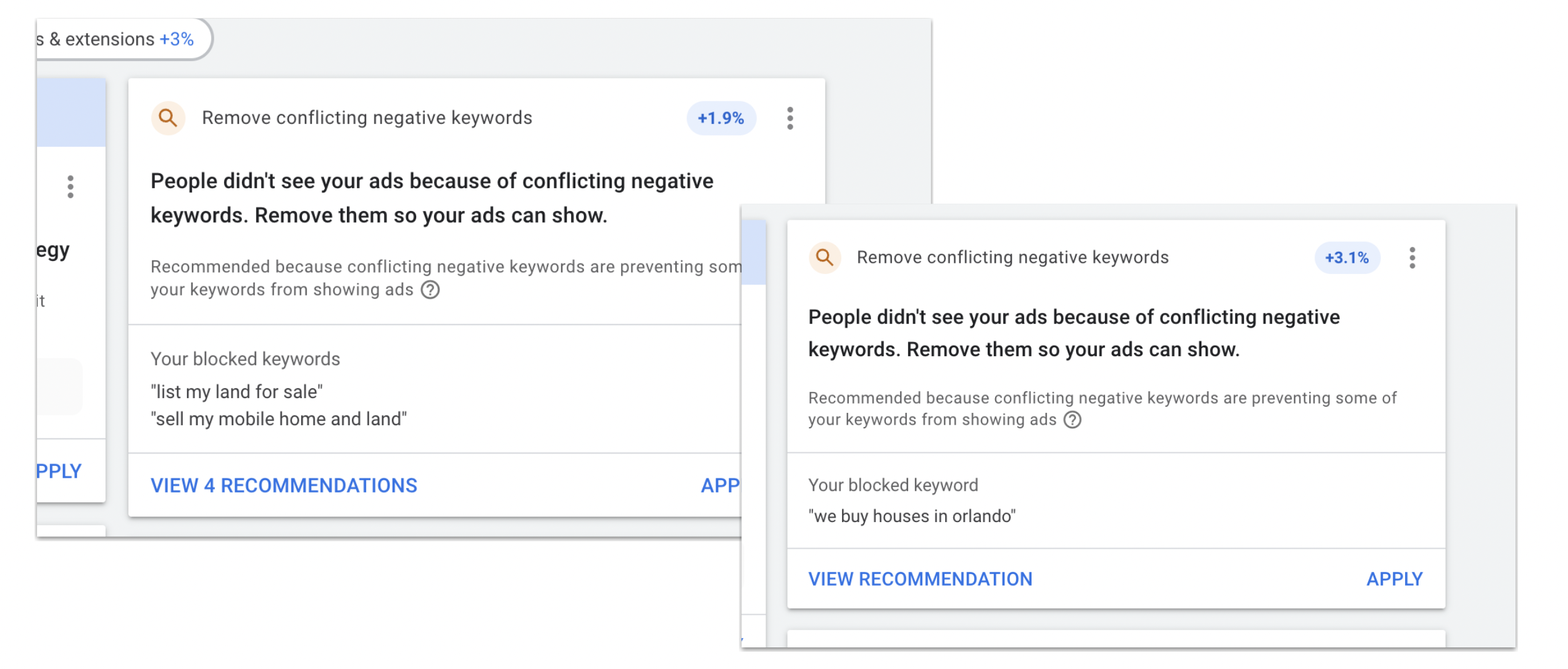
Remove Conflicting Negative Keywords
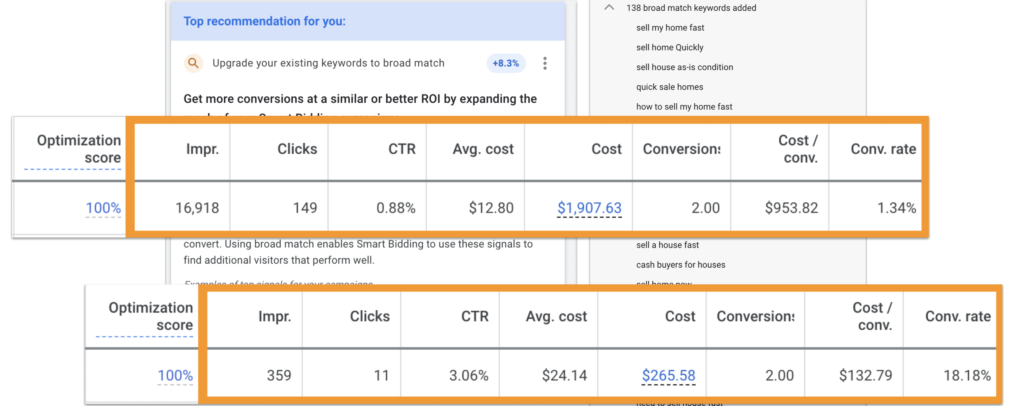
Add Broad Match Keywords
16. Focus on the “Right” Metrics:
Focusing on the right metrics is essential for a healthy real estate investor PPC account.
Impressions are important for brand recognition and can help you understand which terms motivated sellers are searching.
Yes, the more clicks, the more opportunities you have to convert visitors into real leads. These metrics are important but do they help you make decisions that can influence your results?
Many investors focus on these metrics when they should focus on other, more important ones.
10,000 impressions won’t add a dime to your bottom line if nobody clicks on your ads.
5,000 clicks don’t put more money into your pocket than 500 clicks if nobody is converting.
It’s the conversions that matter more than the clicks or the impressions. Conversions are what puts more money in your pocket, not the other stuff.
How to Fix It?
While you should be paying attention to all of your metrics, resist the temptation to focus on vanity metrics alone. If your conversions aren’t increasing, you won’t be making any more money.
17. Increase Bids For Top Performing Keywords:
This tip is assuming you’re using the “manual” bidding option.
Once you’ve had a chance, ensure your Quality Score is solid. You’ve paused non-performing keywords… find the ads and keywords that are performing well (performance should be decided upon ONLY by the conversion of quality leads on your website or phone calls from those visitors… NOT by clicks), and increase the bids on the keywords that are performing well.
Some people may be thinking… “Well, what should I bump my max daily budget up to and my click bid?”
As much as you can pay to still bring the results you want.
One of the quickest ways to increase your lead flow on a campaign that is already pulling some leads is to increase your daily ad spend. Then if you’ve maxed out the number of clicks you can get on that daily ad spend with that bid price… bump those bids up and test to see if the results still hold firm with a higher per click bid price.
This is why it’s important to never “set it and forget it” with your Google Ads campaigns while in the optimization phase.
18. Identify Non-Performing Keywords and Pause Them:
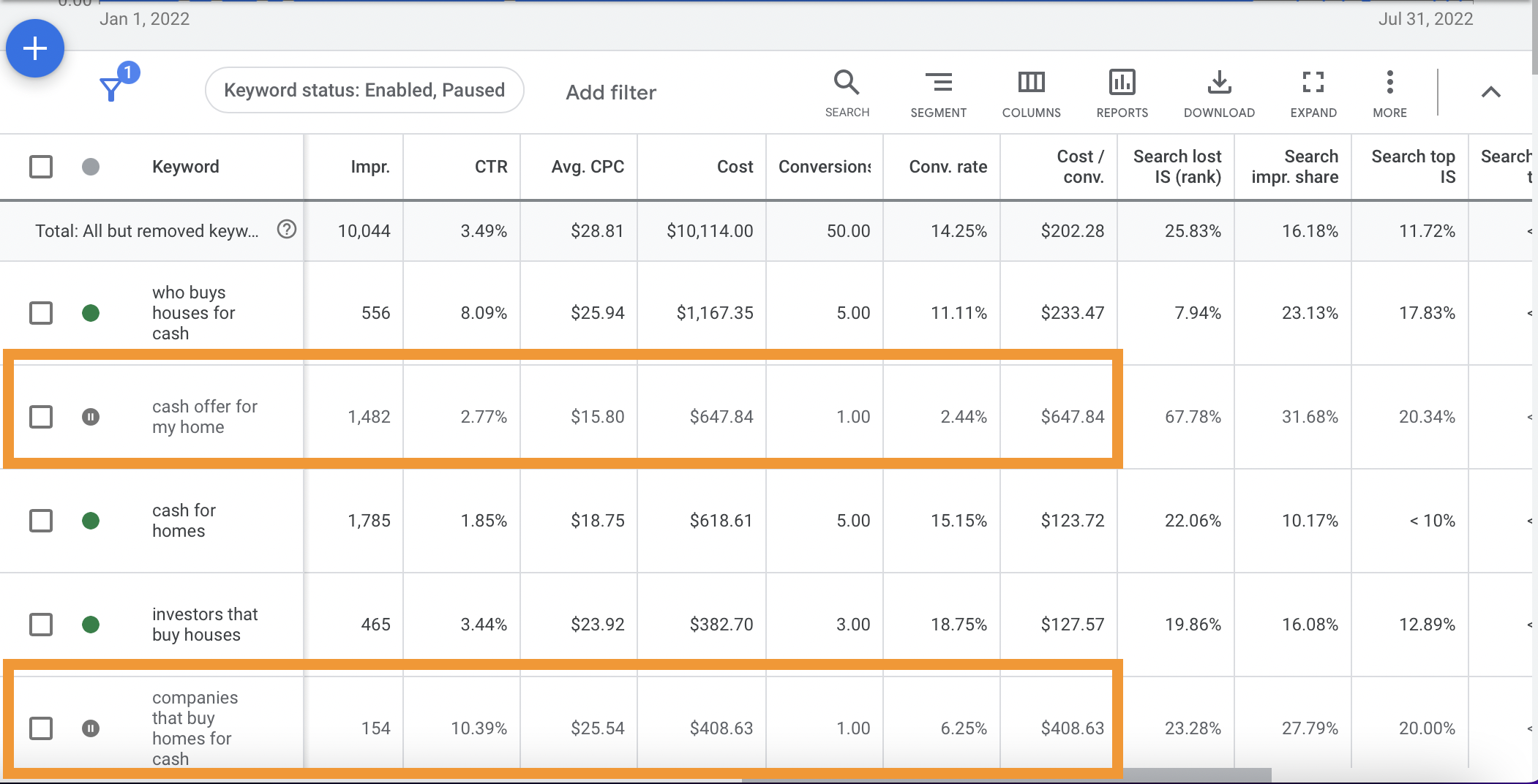
Then work through the campaign, find the keywords that aren’t performing well, and pause them.
Since real estate is such a high-profit margin product…1 closed deal can flip an entire real estate investor PPC campaign around to be from in the hole $3,500 to a $10k profit. So don’t quit too early or count specific keywords out too early.
But if you keep seeing a bunch of money being dumped into a keyword and it’s not converting into leads as it should… put a pause to those once you’re confident they’re not going to be good keywords for your campaign to focus on.
This is the #1 way that most do it yourself that we see doing their real estate investor PPC marketing can save a lot of money and headache… and sometimes cut their ad cost in half… is simply by pausing keywords that just aren’t performing.
19. Optimize Your Bid Management Strategies:
Your bidding strategy is determined at the campaign level. There‘s one manual option and four automated options.
Manual CPC
Manual bidding is an excellent place to start with real estate investor PPC bidding. You set your bids manually at the keyword level, and that number never changes unless you choose to update it manually.
Manual CPC gives you the most control but doesn’t take advantage of Google‘s machine learning.
Automated bidding strategies
Automated bidding lets Google do the heavy lifting. It tends to work best with campaigns that have been active for a while and have enough data.
Maximize clicks: With this strategy, Google automatically sets your bids to maximize the number of clicks you get on your ads. You can set a maximum CPC for bids to ensure that Google doesn‘t overspend. Although, if you don‘t enter a bid limit, Google will try to get you as many clicks as possible without going over your daily budget. I recommend setting a limit. If you don‘t, Google will spend your entire daily budget whenever possible, even if the clicks are too expensive.
Maximize conversions: Similar to maximizing clicks, but for maximizing conversions. You can set a target CPA (cost per acquisition or lead) to help guide its bidding. For this bidding strategy, you must have conversion tracking set up correctly. If you don‘t, you can still select Maximize Conversions, but Google won‘t have any information to make good decisions. In a worst-case scenario, you can severely overbid for traffic Google thinks is converting and burn through your budget.
Maximize conversion value: This bidding strategy is a bit more complex than maximize conversions and requires more setup. In addition to tracking conversions, you‘ll have to assign a value to each type of conversion. If one conversion type makes you an average of $5000 and another makes you $20,000, Google will prioritize the higher-earning type when possible. Typically this option isn’t the best for the best real estate investor PPC but is suited for e-commerce stores.
Target impression share: Target impression share maximizes your real estate investor PPC ads’ chances of appearing on the search page. You can select a percentage impression share you want to target and choose where you want to appear on the search page. This could be the top of the page, anywhere on the page, or the absolute top of the page. Setting a maximum CPC keeps Google from overspending. This strategy is best for campaigns focused on brand awareness. You want your ads to be shown as much as possible, even if you don‘t get a high CTR or conversion rate.
20. Make Sure Conversion Tracking Is Set Up:
Easily 8 out of 10 real estate investors and agents I talk to doing their own PPC go silent when we’re on the phone, and I ask them if they have conversion tracking on the campaign.
Conversion tracking is a simple thing you enable on your Ads campaigns by getting a little piece of code from your Ads account (here’s how) and putting it on your “conversion page.” Your conversion page is the page your visitors will see after they opt into your form.
For example, on Carrot, we have our streamlined “2 Step Lead Qualification Process“… so we make it easy for our users to put the conversion code on those “Step 2″ pages. It takes about 15 seconds in Carrot.
Even with our built-in LeadSource Tracking feature (where our system will tell you if your leads came from Google SEO, Google PPC, Facebook, etc… so you know what marketing is working), you can’t tell which keywords and specific ads inside your real estate PPC account produced those leads without setting up conversion tracking in your account.
Why Conversion Tracking Is So Important. You Can See What’s Converting Leads
Many investors say, “I’m getting leads, so it must work.”
But what if you knew exactly which keywords and ads were the ones pulling the leads and which ones were the ones just costing you money? You could drastically reduce your cost per lead just by turning off the keywords, costing you money but converting no leads.
Ready To Get To Work And Drive Those Leads With Real Estate Investor PPC!?
Real estate investor PPC marketing can be one of the most effective and fast ways to get your website in front of motivated sellers, cash buyers, tenants, rent-to-own tenants… and anyone else you want to reach.
But, it can take work, time, and experience to crush it with Google PPC marketing.
As the great Google Ads expert Perry Marshall once said…
“Make sure you know what you’re doing before you begin, or you’ll lose your ass. “
The real estate investors and agents you see consistently well with PPC marketing aren’t just throwing ads up there and hoping for the best. They’re not just throwing ads up and checking them here and there.
They follow these steps above (or as many of them as possible) to hone their PPC marketing campaigns to drive the most high-quality leads at the lowest cost per lead possible.
To put this all into perspective for you… the average wholesale deal right now nets $10,000 in assignment fees, and the average flip profit currently nets $70,697, according to RealtyTrac… so if you’re going to give this a “try” with a few hundred bucks or even $1,000, save your money and don’t start.
Be ready to spend some time learning the PPC platform…
… spending some good time in there optimizing things for the first several months, and be ready to invest at least $3000 as a minimum before you decide if PPC marketing worked for you or not.
On a recent Carrot Coaching Call (we have weekly live calls w/ our Content Pro members), a member who is doing very well with PPC for motivated sellers using our website system said he didn’t close a deal until he’d already spent $4,500 in ads. Then he closed a deal that netted him $18,000. So if he had quit after a month or two under his belt and $4,000 in ads spent… he would have missed out on that $18,000 profit deal.
So dive in, get to optimizing, and let us know how things go!
One of the things I have seen investors and agents struggle with the most is finding ways to stand out and differentiate themselves from the competition. Many people are under the impression that they just need to go out there and get leads when in reality, it takes much more than that.
If you want to stand out in your market, you’ll need to tap into the psyche of your customers, find out how you can help them, and build value from that foundation. You have to learn how to truly understand your customer’s pain and lead them to the solution.
When you are able to convey the message that you are the one who is uniquely qualified to help them, marketing becomes easy!
Learn how Nate utilizes 3 content marketing pillars to help businesses stand out and how you can implement these same concepts into your own business!
Read the Full Show Notes Below…
Use These Simple Content Marketing Hacks To Stand Out From Your Competition w/ Nate Kennedy
Nate calls himself the builder of Funnels, Master of Ads, King of Conversions, and The Doctor of Marketing, all with good reason. Since starting his business, he’s helped people to generate hundreds of thousands of leads, maybe even millions!
I’ve known Nate for over 10 years now and have seen first-hand the results he has been able to deliver his clients. Nate’s involvement industry encompasses more than just marketing.
He has owned a mortgage company, wholesaled properties, worked on rehabs, and even built houses himself. When he discovered online marketing in 2007, he went all in and hasn’t looked back since. Today he works with many top leaders and trainers in the real estate space, as well as local agents and buyers.
Over the last few years, Nate and his team have focused heavily on real estate investors. With so many people saying the same things and offering the same services, how do you stand out from the rest?
You can say you pay cash and close quickly, but that doesn’t make your business any different from all the other homebuyers in the area. The investors who are really seeing success are the ones building authority and credibility. When someone has a problem an authoritative business is the first one thought of.
To achieve this, Nate utilizes three pillars when working with his clients. He helps them to understand their client’s pain, deliver a message that stands out, and capitalize on the valuable content they are creating.
Pillar 1 – Creating An Online Presence
Many people think they can just put up a page and the leads will begin to roll in, however, it takes much more than that to be successful with your online marketing. As the leader of your business, it’s important that you understand the psychology of your marketing so you can move people from their pain to a solution.
Our online presence will need to be different from your competition, letting your customers and clients know exactly how you are uniquely able to help them solve their problems.
Getting Great Testimonials
One of the first things Nate asks his clients to do is to provide testimonials from happy clients. It is one thing when you go out and try to sell your services, it is quite another when you have a 3rd party doing it for you.
If possible, get video testimonials that you can utilize in all sorts of ways on your site. When setting up online ads, you can have them point right to your testimonials page so potential clients can immediately see how others feel about you and your business.
Pillar 2 – Developing A Content Plan
Together with his clients, Nate will develop a strategic marketing plan, making a list of the content they would like to create. The content plan should always focus on caring, helping potential clients understand that your goal is to help them with their problems and needs. With so many people in the real estate space, it’s important to show that you are really solving problems and not just another company.
Video Content
As I’ve said repeatedly, content and credibility are key to help investors and agents stand out from the pack. One of the best ways to do this is through video content.
Video helps to quickly get your message out and will help people to feel like they actually know you. Your video content can then be transcribed and used on a blog and social media. A few examples of great video content include:
Interview with prominent real estate figures, community leaders, or related professionals in your area
Video testimonials that shed light on exactly what the problem was and how you were able to solve it
If you go to a property, take your phone out and take a quick 3-minute video showing people what you are looking for in a house
The beauty of video content is that you can get your message out there quickly and easily. All you need is a phone.
Pillar 3 – Amplifying The Valuable Content You Create
The great thing about testimonials and video content is that it gets all eyes onto your website. A video shot for Facebook can be added to a Youtube playlist. If can go up on your website and be turned into a blog using our quick and easy transcription service.
Segmenting Your Audience
A prominent tool for Nate and his team is Facebook Marketing. With Facebook ads, you are able to strategically target, and retarget potential customers to convey the message you want to get across.
For example, you can run a video ad for one week, then run a second ad only to the people who watched 25% of ad #1 in the past seven days. You can tweak this in all sorts of ways, segmenting by interest, major life events, and previous interest in your product.
Becoming A Celebrity
Using Facebook ads and other marketing channels, you can effectively become a celebrity in your industry and market. When you are able to get the right content to the right people on Facebook, then hitting them again on Youtube, and again with Google Ads, your face and business will pop up where ever they go online.
When you are consistently adding fresh content, you will keep people interested and prove to any skeptics that you are in fact real.
Finding The Who To Do The How
Marketing isn’t for everyone. People don’t always get excited by data and analytics. The good news is that you don’t have to do it all yourself. As Nate puts it… find the who to do the how.
If you don’t want to do the work yourself, find someone who does and is good at it. As an entrepreneur, you must understand how it all works and what needs to be done, but that doesn’t mean you have to do it all on your own.
What if you lost one lead this year because your website wasn’t optimized for conversion?
No biggie, right?
Well, no biggie so long as that lead wasn’t going to turn into a deal… if it was, then that’s $10,000, $20,000, or even $30,000 straight down the drain.
And, as my real estate agent says, “It only takes one – the right one.”
Sadly, for most unoptimized websites, the truth is much more depressing than a single lost lead per year. A website that loses one lead from your target market, after all, is going to lose all similar leads.
This is why preparing your real estate website to convert its visitors is absolutely vital… before you drive traffic to it (paid and organic). How, though, do you know if your website is or isn’t optimized for conversion?
Well, at Carrot, we’ve generated millions of real estate leads for our thousands of members, and these are four tell-tale signs that your website is losing you money.
4 Signs that your website isn’t generating the online real estate leads as it should
1. Your Website Isn’t Mobile-friendly
For our thousands of Carrot members, 64% of all leads come through a mobile device. Not through a desktop or laptop, but through a thumb-clicking phone.
And that’s happening all over the online world, not just at Carrot. 52% of all global online traffic is generated from smartphones, according to Shane Barker.
This means, if you’re going to convert over half of your website visitors, you can’t create a bad mobile experience. Google is taking this so seriously that they recently rolled out mobile-first indexing – which basically means that they prioritize the performance of the mobile version of your website over the desktop version. And they’re not the only ones who take mobile website performance seriously…
So do your website visitors.
In fact, 61% of buyers form more positive opinions about brands that offer a remarkable mobile experience, according to Crazyegg.
That’s why, at Carrot, every single one of our website designs is crafted to convert visitors regardless of the device they’re using to browse.
Here are some signs that your website isn’t mobile friendly…
You can scroll side-to-side and the screen doesn’t adjust to the size of the device.
The words become so small they’re unreadable on a mobile device.
The buttons are difficult to click with a normal-sized thumb on mobile.
If any of those are true of your website, then you’re definitely losing mobile phone leads – and switching to a mobile-friendly real estate website design like Carrot could outright double your lead generation.
2. You’re Not Making It Easy For Visitors To Give You Their Information
At the top, there’s a title, then there’s a menu and heading. And there’s maybe some sort of vague CTA – in this case, the “Learn More” button.
As you scroll down, you’ll see pictures of the real estate agent (or investor), maybe some testimonials, some notes about their services, and then finally a decent CTA.
This is at the very bottom of their website.
Now, that probably doesn’t seem like a big deal…
Do people really care all that much if they have to scroll to find your CTA?
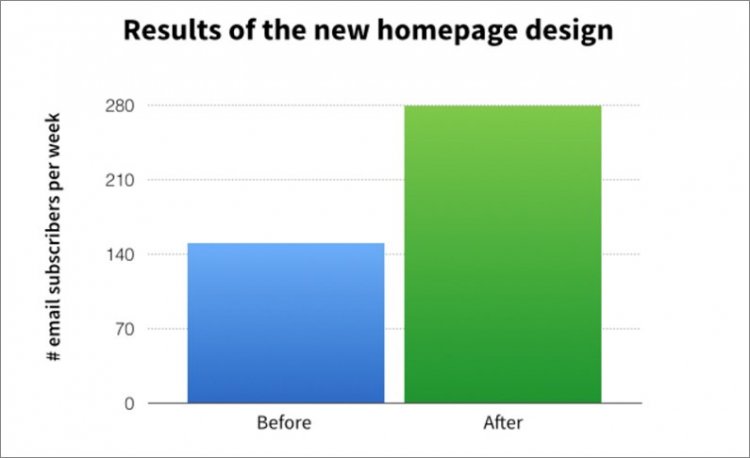
To answer that question, let’s look at a quick study done by Bryan Harris – an email list building guru. He took his “right-side up” homepage and flipped it so that the CTA was front-and-center when someone arrived on his website.
Immediately, he saw a 35% increase in his number of subscribers.
Remember, people who’re looking to buy or sell their home are looking for a solution to their problem. The faster you solve that with a relevant CTA, the more likely they are to opt-in.
But you might be wondering what an upside-down homepage actually looks like.
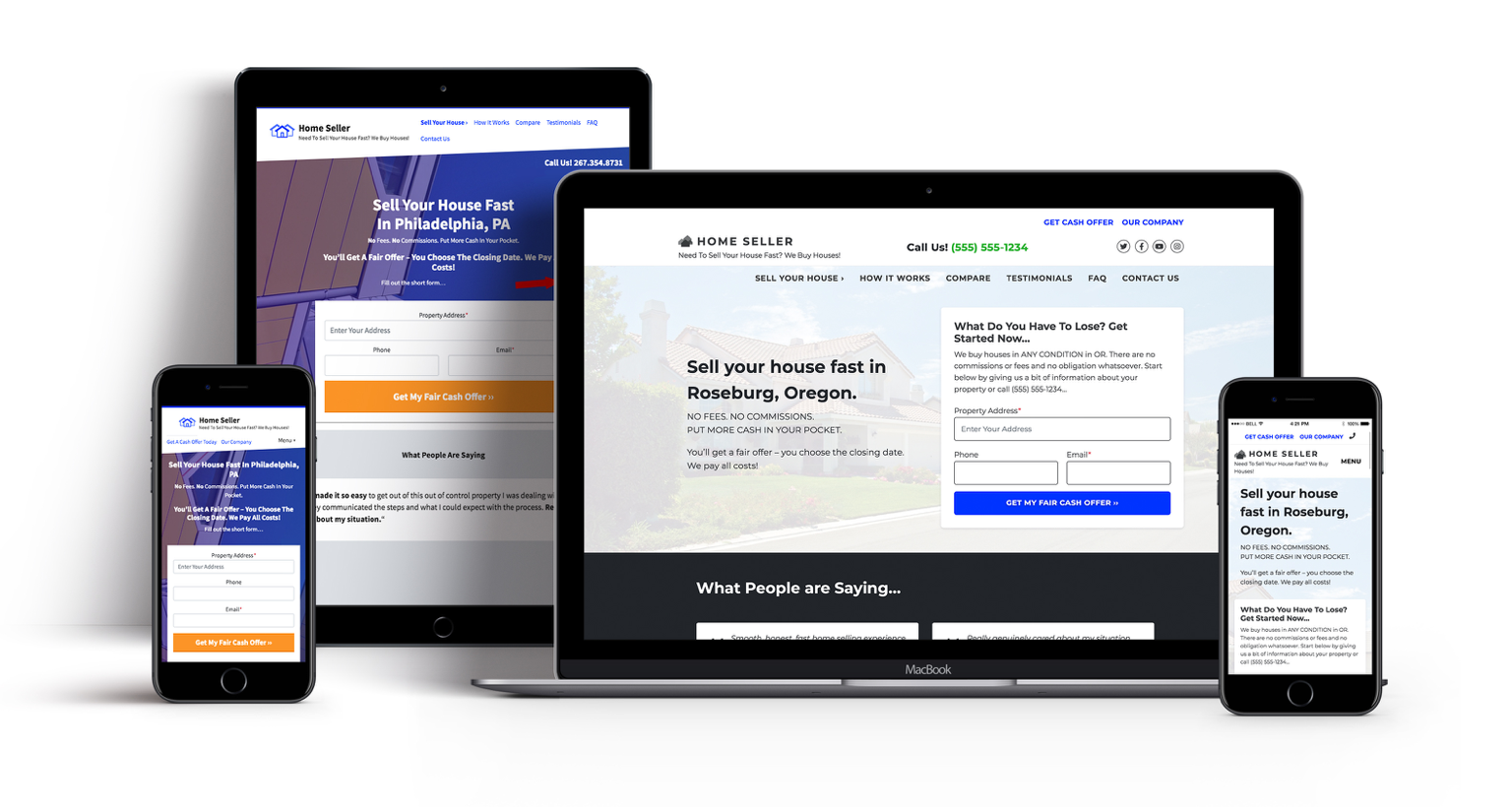
At Carrot, we exclusively use the high-converting upside-down homepage model – putting the contact form and phone number right at the top of your website (on mobile and desktop) to guarantee that visitors to your website aren’t lost because they have to scroll more than they’d like.
Here’s a quick testimonial from a Carrot member, Adam Mitchell, who spent $1000s on the wrong marketing and an under-performing website. He now does multiple deals per month in a competitive market.
3. The Sales Copy Isn’t Scientific
What do I mean when I say that your homepage copy should be scientific?
I mean that there should be a clear and obvious reason that each phrase and word is in its place. And if you’re wondering whether you wrote your homepage scientifically or not – with the psychology of your visitor’s in mind – then you definitely didn’t.
Because scientific sales copy has to be intentional from the very beginning.
Here’s a typical example of sales copy that misses the scientific mark.
A lot of people try to make their sales copy creative and cute…
But that isn’t what you need. What you need is sales copy that appeals to people’s problems and then promises a remarkable solution.
And the headline is the most important element, with 80% of people only reading the headline and 20% reading the rest. In other words, you need to strike the right chords in the right order, quickly.
You need to be scientific.
Here are a few examples of psychological rules in sales copy.
The word “because” with a reason after increases conversion by 60% to 94% – it doesn’t even matter what the reason is, it just matters that you have a reason for what you’re selling, how much it costs, and why you’re the one selling it.
Similarly, social proof – such as testimonials and credibility bars – can significantly increase the conversion rate of your website. For one website, social proof increased the conversion rate by 20%.
But, those are just a few examples.
For your formulaic sales copy pattern, follow these three steps, in this order:
Empathetic description of pain – First and foremost, your prospect needs to know that you know exactly what they’re going through. After all, how could you possibly help them if you don’t understand their current position?
Agitate that pain – Then, the prospects needs to be reminded of how terrible of a situation they are really in. Your goal is to empathetically remind them of how difficult their predicament is so that they’re ready to get out of it.
Promise a solution that’ll take that pain away – Finally, in swoops Super Man. Your solution. Guarantee them with all the tools you have in your arsenal that your service (whether agent or investor) is going to remove their pain, then tell them how it’s going to do that.
Consider our very own sales copy as an example of this. It’s only a few sentences, but it hits every note.
4. Your Website Has Slow Load Times
The slower your website loads, the more people who won’t stick around to see what you have to offer.
Higher bounce rate. Fewer conversions.
Period.
As Neil Patel explains on his blog, for instance, 53% of people will leave a mobile site if it takes more than three seconds to load. And 47% of online users expect a website to load in just two seconds or less.
As the nail strikes the coffin, a one-second delay in page response time often results in a 7% reduction in conversions.
If you have a slow website, how many thousands of dollars might you be losing for each second? Here’s some quick math.
Imagine that you get 2,000 visits to your website every month at a 10% conversion rate. That’s 200 conversions. Then imagine that you close 1 in 20 of those. That’s 10 deals per month.
Now let’s assume that you make $10,000 per deal.
At a 7% reduction in conversion rate for every one-second loss of load speed, just a two-second delay would lose you upwards of $10,000 or more every single month.
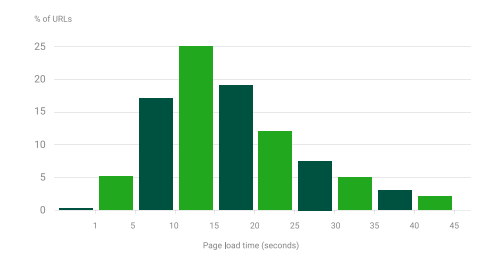
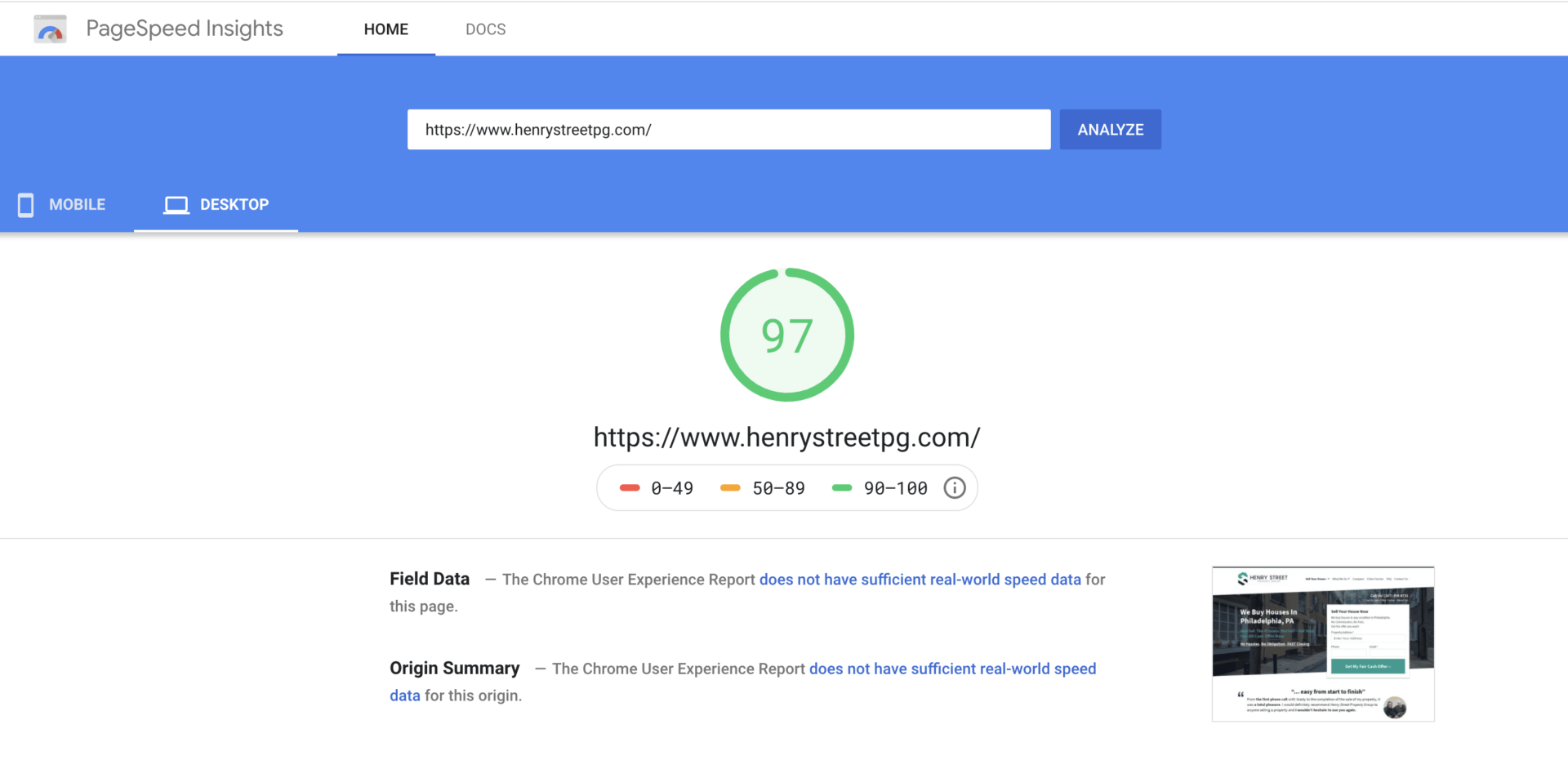
This is why, at Carrot, we don’t mess around with slow load speeds. In this tech-stack study of 150,000 websites, Carrot outperformed Wix, Squarespace, and WordPress. In fact, Carrot was second to Google’s own website.
Conclusion
Maybe in the 90’s, just having a website was enough. Just having a place where people could go online and learn about your business would do the lead-generation trick. But now we’re down the road…
And we know what converts visitors… and what doesn’t.
Still, many websites haven’t caught up with the times and optimized their websites for conversion. This is unfortunate, considering the significant impact that conversion optimization can have on business success.
So, a quick recap.
Avoid these four real estate website pitfalls that can kill your lead generation…
It’s not mobile-friendly.
The homepage isn’t easy asking for their information.
Let me start with a hard question: “Are you a realreal estate investor or a fake?”
Wait. Don’t answer that. The truth is… time will tell.
Unfortunately, time — as it relates to real estate investing — is pretty harsh. Most real estate investors get chewed up and spit out before they even know what hit ‘em. Upwards of 87% according to some estimates.
But it’s not just real estate wholesalers and flippers.
It’s been published that 96% of businesses go out of business within the first 10 years, and over half fold up their tent by the end of the first year.
But that number is even high for real estate wholesalers and flippers…
… because of the low barrier of entry to get into business. It requires hardly any capital to get rolling… and you can read a book today, register a business tomorrow, and be a “flipper” or “wholesaler” by the end of the week… which is AWESOME. Still, it also makes it easy for many people who haven’t fully adopted the mindset and skill-set needed to be successful in running a business.
So, wouldn’t it be nice if you could diagnose your real estate investor’s “realness” — your likelihood of success — before getting clobbered?
Wouldn’t it be nice if someone told you the brutal truth about exactly why many real estate investors fail?
Well, “nice” might not be the best word.
After all, the brutal truth is rarely “nice.” But, profitable, career-saving, and life-changing? Absolutely!
In my 10 years working with real estate investors, I’ve seen thousands of real estate investors come and go. And the deepest irony — the cold, hard, brutal truth — is that it all comes down to five things those who fail tend to ignore (and those who succeed master).
The good news is you can overcome these common killers by having your eyes wide open to them and digging into the concrete solutions and resources I’ve included throughout.
1. You’re Following Emotion vs. Knowing Your Numbers
Investors who fail tend to open up their wallets based on emotional decisions vs. actually nailing their numbers and trusting the numbers.
When emotion takes over you tend to stop investing in marketing before it has a chance to succeed… you tend to make offers based on your “gut” vs. a tried and true formula… and you tend to bounce around from one thing to another in search of that magic bullet like a pinball machine.
One way people constantly get caught up in the emotions vs. the numbers is in how much money you invest in your business.
How much money do you invest in a marketing strategy?
How much money do you invest in a property?
How much money do you invest in your education?
As soon as emotion creeps into the equation and a mathematical formula stops being used… you’re on the fast track to losing your butt (and not knowing why).
As a real-world example, let’s say two people are doing PPC marketing.
Investor #1: Likely To Fail…
Investor #1 started with their budget rather than knowing the numbers. They have set aside $2,000 for PPC marketing for motivated house sellers. Plenty to turn a profit, right?
They start their PPC campaign and quickly find out that the first few weeks of a PPC campaign are all about honing the campaign and tweaking it… so they end up spending $800 in the first 3 weeks. They have 7 leads to show for it, which they’re working on… but no deals yet.
By week 4 they have their campaign honed a bit more but have spent $1250 of the $2,000 they had set aside… with a total of 10 leads.
Bummed, they start to think, “Man, maybe PPC isn’t for me. I’ve already gone through my budget; let me stop this campaign and figure something else out”.
With that, they stop their campaign and chalk it up as a “failure” and a loss. $2,000 in the hole and now onto “focus” on a new strategy.
Investor #2: Likely To Succeed In A Big Way…
Investor #2 started with the numbers… not their budget.
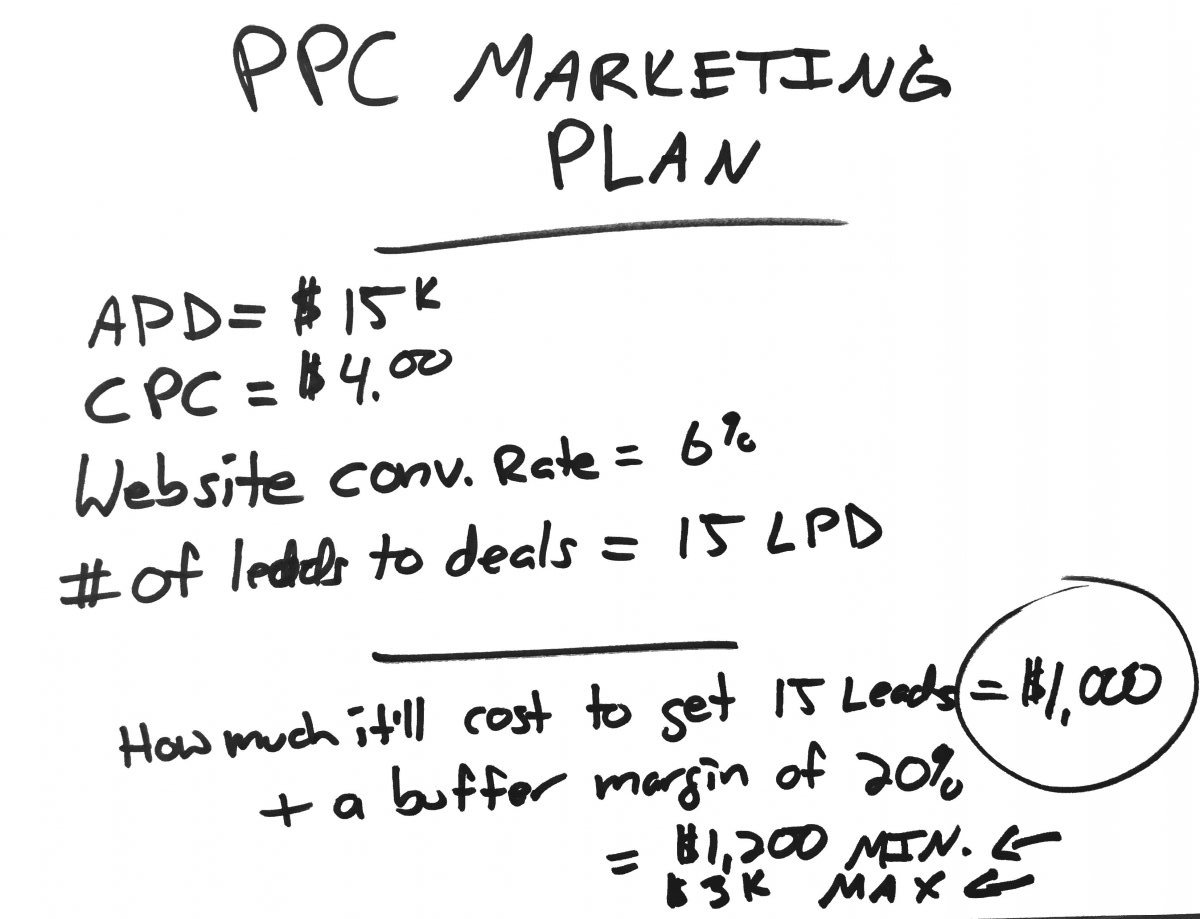
This investor worked the numbers… and it looks something like this…
What do those acronyms mean…
APD = Average Profit Per Deal
CPC = Cost Per Click (for your PPC marketing)
LPD = Leads per deal (how many leads on average until you close a deal)
MIN = The minimum you’ll need to allocate for your PPC marketing to have it work well MAX = A number you pick that is the max you’ll invest before you close a deal
Investor #2 knows her numbers well and can see that based on those average numbers, they shouldn’t expect any deals until, at a bare minimum, $1,200 has been invested in a well ran PPC campaign.
But, she also knows that in the real world, things don’t always work out like we hope they do in our calculations… so she sets a “max” that she’d invest in that marketing channel to close a $15k deal (her average) before she seriously thinks about shifting focus to something else or stopping the money invested into that marketing channel.
Investor #2 launched her PPC campaign, and it doesn’t go as well as she thought… she blew past the $1,200 mark without a deal… but she followed her numbers and kept investing, and at $2,500 in… she closed a deal that brought in $17k gross.
Subtract out the $2,500 in PPC costs, which turned into a nice $14,500 profit. BAM!
Now she has more firepower to invest in this marketing channel and work on improving those numbers even more.
The moral of the story is?
Investor #1 followed emotion and started with their “budget”… Investor #2 followed the numbers and started with knowing her numbers then set the budget that’ll lead her to success.
Investor #1 is already onto another marketing strategy and discouraged… Investor #2 is ready to scale things up and happy as a clam.
Here is the PERFECT example of Investor #2. Adam Mitchell could have easily let emotion hold him back…
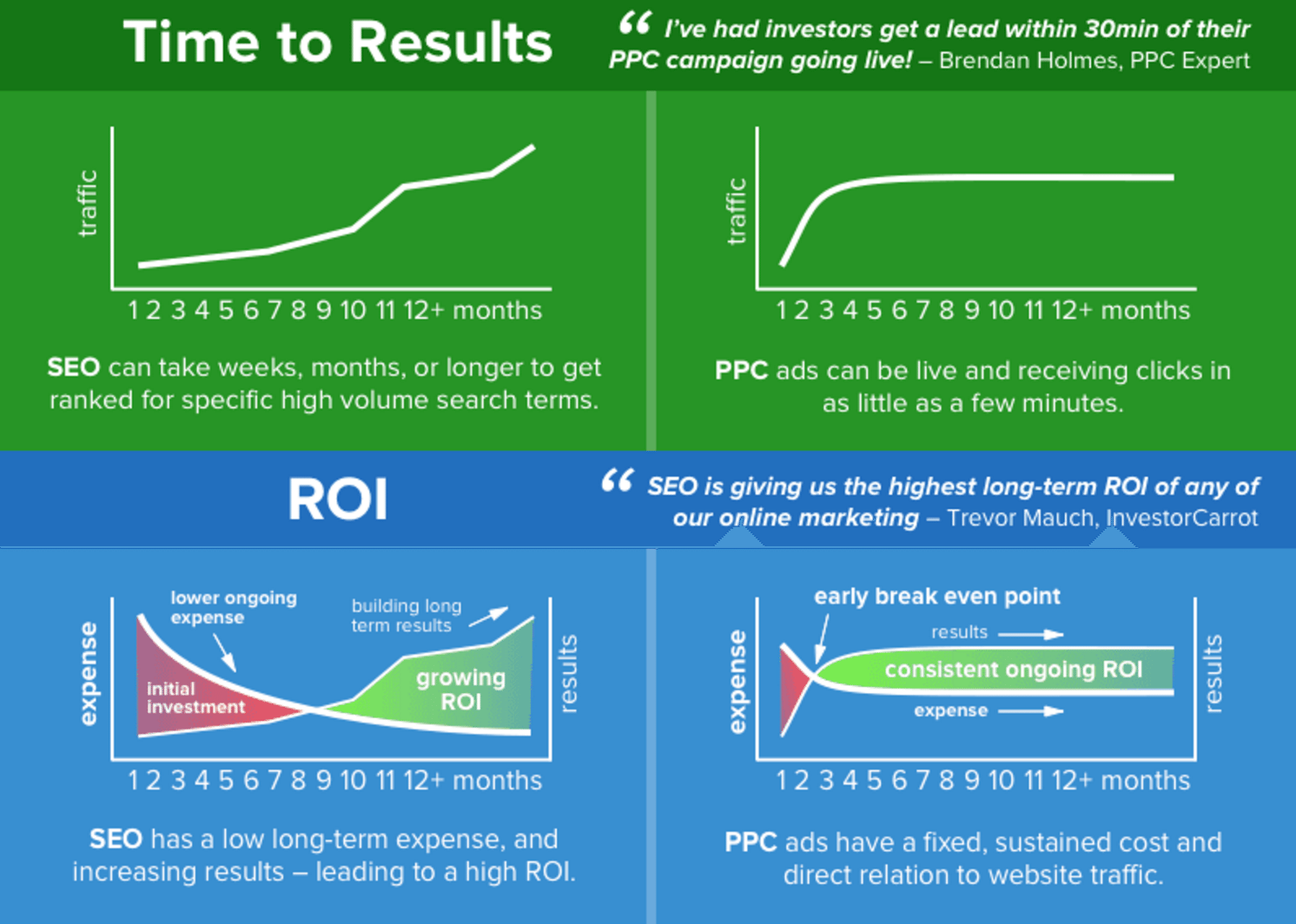
If you haven’t seen this section of our SEO vs. PPC Infographic… it maps out how PPC and SEO work regarding timelines and expectations. Remove emotion from the equation and stick with the numbers.
If you don’t know your numbers and create your marketing budget… you’ll stop investing your money too early and quit before it has a chance to work.
I know that sounds obvious but stick with me. On the real estate front, I hear this all the time:
However, every time I dig deeper, “doesn’t work” means, “Well, I tried it for two weeks. Dropped $500. But didn’t see any results.”
You see the problem, right?
While it might be cliche, the old truism is true: “It takes money to make money.” Simply “trying out” one so-called success method at a time, dipping your toes in but not investing in it — i.e., putting your money where your mouth is — is a sure way to sign your real estate investor death warrant.
Ironically, this same fatal mistake kills even more real-estate investors when investing itself.
It’s strange to think, but many still expect to get something out of nothing. That’s one of the reasons many folks get involved in real estate investing. As BiggerPocket’s points out, “How can I get started in Real Estate Investing if I don’t have any money?” is one of the most common questions they get asked.
And their answer?
You can’t.
That’s it — it’s that simple. You cannot invest in real estate with no money down. It is impossible; in fact, it is antithetical (big word) to the definition of “investment.”
I really want to encourage everybody…that when you are having things come up against you, you’ve got to make it happen. It’s right at that moment when you’re so close. You’ve got to double down. You gotta punch the gas and not pump the brake…
2. You’re Not Putting In The Time
This second failure is so similar to the first that I almost left it off my list. But there are subtle differences between the two that add up fast.
Why?
Putting in the time doesn’t mean physically “being there” doing busy work. Putting in the time means you purposefully cut out the crap in your life between you and your goals…
… so you have so much ample focus time that there’s no way you won’t succeed.
Putting in the time doesn’t mean…
Carving out 30 mins here and there when you can fit it in
Hopping on the forums and endlessly reading and “learning” stuff you may need to know someday
Going through 3 training courses before you get off your duff and start doing the business (making offers, looking at properties, etc.)
Saying, “I’ll give this a try for a couple of months and if it doesn’t work, I’ll move on”
Putting in the time means you’re getting serious with yourself and saying…
“I know this works. Others have done it before me. I’ll work it until it works and relentlessly hack out anything that doesn’t help me reach my goals. It’s not a matter of ‘if’… but a matter of ‘when’ it’ll happen. The only variable is time, not my effort or ability to make it happen”.
If you feel you don’t have enough time to invest in yourself and your business, you’re likely thinking too short-term and not long-term.
You’re thinking about how you can make a quick buck and have that instant gratification vs. building something that’ll truly last, make an impact, and leave a legacy.
If you’re not willing to bust your bottom for the next 18 months…
… (even if 12 months of it is utterly failing at every step), you may do yourself a favor and find something else you can invest 18 months into a full bore and switch to that.
Every day when I walk into my office here at theLoft where Carrot is based, I see this at the top of my stairs.
3. You’re Quitting Too Soon
I know what you’re thinking, “How is perseverance different from time?”
The short answer is that success regularly takes longer than we expect… it also takes a lot more blood, sweat, and tears.
In other words, the reason real estate investors fail when it comes to perseverance is the same reason why 95% of dieters fail to lose weight and keep it off, why people always say they’re going to start exercising and then give up after a few days, and why so many people make new year’s resolutions that never see the light of day.
Are You Closer Than You Realize?
Psychology Today blames much of this failure to persevere on our brain chemistry:
“Neuroscientific research shows that higher levels of dopamine might separate the internal drive some people have to persevere while lower dopamine levels cause others to give up.”
So does that mean some people are just built to take the hard knocks necessary for success, and others aren’t?
Absolutely not.
The brain is an amazing organ, and — thanks to what’s known as “neuroplasticity” — if you haven’t been the person who perseveres up to now, you have the power to change that.
The key to becoming a person of perseverance are to increase dopamine levels by:
Achieving at least one goal or mini achievement each day, no matter how small.
Be your own best cheerleader. When you achieve something, be intentional about celebrating.
And just in case all that feels a bit too touchy-feely for you, consider the words of Ben Horowitz in The Hard Thing About Hard Things:
Great CEOs face the pain.
They deal with the sleepless nights, the cold sweats, and what my friend the great Alfred Chuang (legendary cofounder and CEO of BEA Systems) calls “the torture.”
Whenever I meet a successful CEO, I ask them how they did it. Mediocre CEOs point to their brilliant strategic moves or their intuitive business sense or a variety of other self-congratulatory explanations. The great CEOs tend to be remarkably consistent in their answers.
They all say, “I didn’t quit.”
4. You’re “Focusing” On Too Many Opportunities
I once got an email from a former member of ours.
His email said…
Carrot seems like a good product, but I have been focusing on too many marketing strategies.
In case you missed that, the words “focus” and “too many” are opposites.
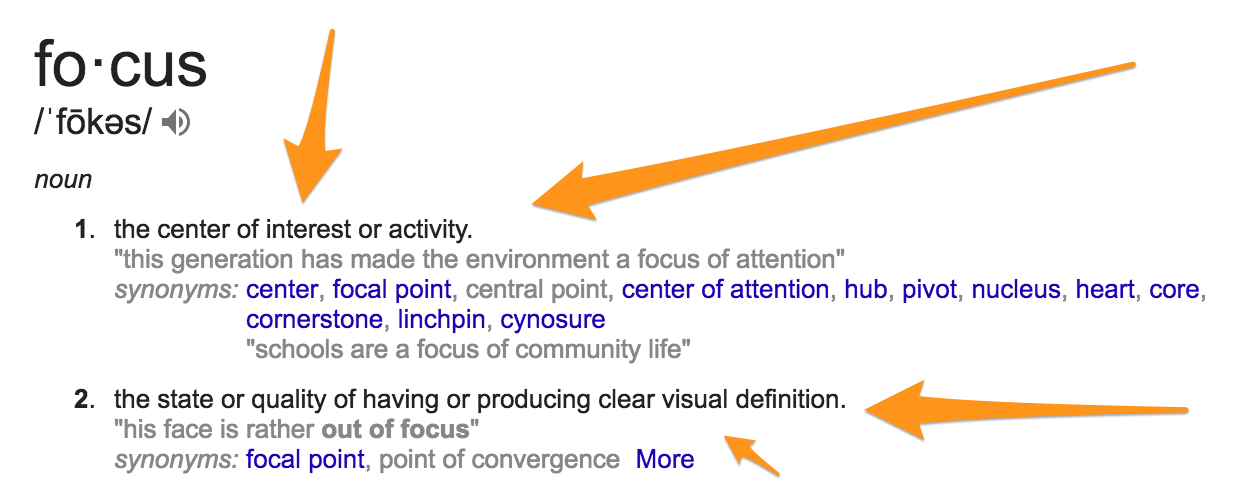
The official definition of “focus” is…
This member led himself to a sure and swift “business death” by “focusing on too many things.”
As long as we’re quoting brilliant thinkers, Confucius once said…
When real estate investors — or any entrepreneur for that matter — focus on doing too many things — i.e., chasing too many rabbits — they end up sucking at pretty much all of it.
And ironically, early success is often the biggest hindrance to future focus.
For instance, I had some big early wins when I started my business. This meant lots of people wanted to do business with me. However, most of the propositions were in areas not core to the business I had created.
As a real estate investor, you may experience the same thing. At times, I found it hard to give a resounding “no,” but I knew that if I didn’t, I would spend a lot of time on things that were not a priority and didn’t fit into my long-term plan.
Today, I am glad I was so hard-assed about my priorities. And that’s exactly why a laser-focused, long-term vision is a must; otherwise, you are likely to sway this way whenever something else comes along, or you get distracted.
In addition to learning to say “no” to opportunities that don’t align with your focus, discipline is another ingredient needed. Afford Anything puts it plainly when talking about getting rich by saying, “Focus on what’s important. Ignore everything else.”
Grab our free Real Estate Investor Business Plan to overcome this lack of focus. Inside, you’ll find everything you need to build a solid foundation to sustain your business over the long term and zero in on what truly matters.
5. You’re Just Learning Real Estate Skills, NOT Business Skills
We’ve found that newer real estate entrepreneurs are under the impression that to be successful, they only need to understand things related to real estate.
But any seasoned entrepreneur will tell you that to succeed, you need other business skills like communication, persuasion, team building, marketing, etc. Real estate investors who don’t have the right business skills are far more likely to fail than their counterparts who invest across the board.
For example, you may be brilliant at what you do, but if you can’t market yourself, you’ll never make money.
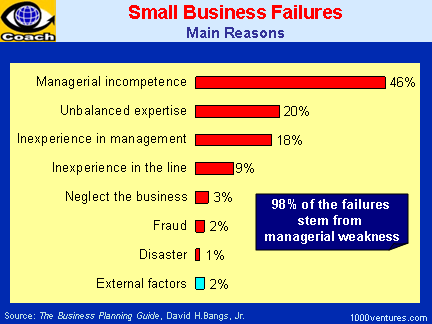
From these statistics, you can see that most businesses fail due to a lack of business skill
Chris Ducker says it like this:
“Most people seem to think that being a successful internet marketer is as easy as getting a website built and getting their own domain name and they could not be farther from reality.”
This mindset is developed from hearing how “easy it is to make money on the Internet” by scaly online entrepreneurs whose sole aim is to line their wallets with the profits of gullible opportunity seekers.
The reality is that no real estate agent just closes sales… and no website just gets traffic. Both need to be marketed. From a real estate investor point of view, Inman reports that physical brick-and-mortar walk-ins now account for fewer leads than websites. Now, you should know that in their findings, a dismal 3% of leads were generated via walk-ins and 4% via online methods.
But what you need to understand about this finding is that the numbers for online lead generation are so low. Although most real estate investors agree that a website is essential to their business, they don’t fully realize what an online presence entails, nor how to generate leads online.
For the sake of clarity: if real estate investors knew how to market their website, their website would generate a lot more leads than the 4% they currently are.
Bigger Pockets confirms this finding and adds, “Only if you create that awesome, SEO-friendly website, along with citations, profiles, and videos, and start producing awesome blog posts centered around your community will you benefit from this form [online] of marketing.”
As an antidote, look at our 90 Day Action Plan, designed to “break down exactly what to do to get your first 100 cash buyer leads, and your first 30 seller leads.”
So, What Path Are You Headed Down?
I want everyone to know that it’s OK to fail.
Failure is good. I’ve learned the most when I’ve failed… not when I’ve won.
So failure is part of the process.
Failure shouldn’t be a door closing but it should be a shortcut to the next door that’ll open very soon that will get you closer to the success you’re going after in your life.
Yes, failure is OK but what isn’t OK is choosing to ignore these 5 sure business killers that will lead you to failure over and over and over again.
So right now, take stock of yourself and where you are.
Are you…
Leading with emotion or with knowing your numbers?
Putting the time in?
Persevering even when you feel like you should stop?
Focusing on one path or chasing multiple rabbits?
Learning how to build a business or just learning tactical “deal making” skills?
Oh, if none of those are quite describing you and the reason you’re not reaching your goals… here’s a bonus #6 that is often the most confusing and toughest one to own up to.
Brian Buffini, Chairman and founder of Buffini & Company — America’s largest real estate training and coaching company — nails it on the head:
“Strangely enough, the majority of people we encounter have a fear of success rather than a fear of failure.”
I couldn’t agree more.
Of course, there’s always a chance I missed one of the killer pitfalls you’ve seen in your career. If I did, share it in the comments below.
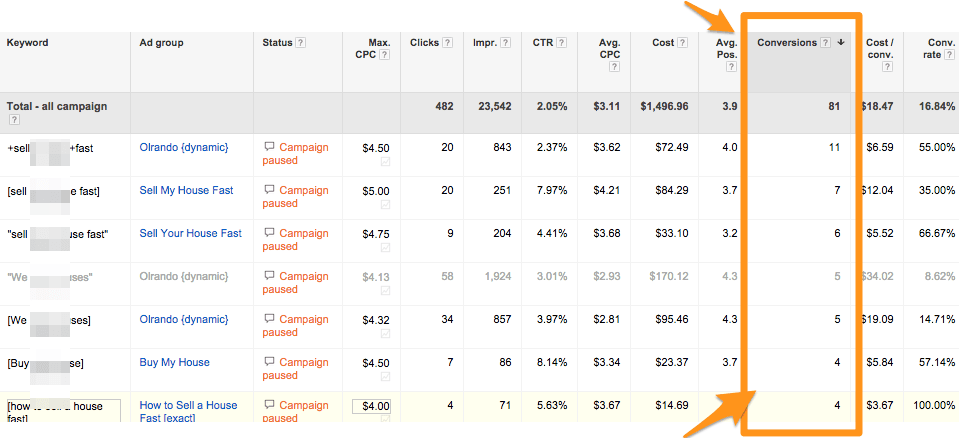
Also, share with me below if any of these hit you in your gut? Let’s squash these and make YOUR GREATEST IMPACT this year.
Have you felt like this recently? Are you unsure if you should stop your Google Paid traffic right now?
You’re not alone, but stay positive. We’re in this together!
We’ve been answering these questions since March by providing data and challenging our members to shift their mindsets.
This has led us to create this blog post. We want to show you what we’re seeing, why you need to change, and how to make those adjustments to WIN in Google Ads during COVID-19 and other events that can cause accounts to go haywire.
What Our Google Ads Data is Showing During COVID-19
Numbers were compared from January 15-February 29 and March 1-April 15.
Sessions from Google Ads have increased by 4.01%.
Sessions are defined as…
“A session is a group of user interactions with your website that takes place within a given time frame. For example, a single session can contain multiple page views, events, social interactions, and eCommerce transactions.”
Leads havedecreased by 13.55%.
Across all members accounts, cost-per-click has increased by 39.3%, and to be expected, the cost per lead has increased by 19.4%.
What does this mean? In “normal times” a conversion issue could mean you’re lacking credibility on your website. Or, not enough website personalization and customization.
During COVID, it’s most likely due to searchers whose comfort level with the current situation is low. This presents a major opportunity to communicate with your audience in a different, more impactful way.
So…
Why Are Leads Down By 13.55%?
Our best-educated hypothesis… there is a lack of communication between your visitors and your website messaging.
Visitors need to know, during this time, that they still have options to sell their house right now. If they’re landing on a page that still has the typical message without educating them about what they can do, they’ll likely bounce for now.
Communication is as important as ever. You need to tell them what they can do during this time where people are uncertain. For example, communicate that they can:
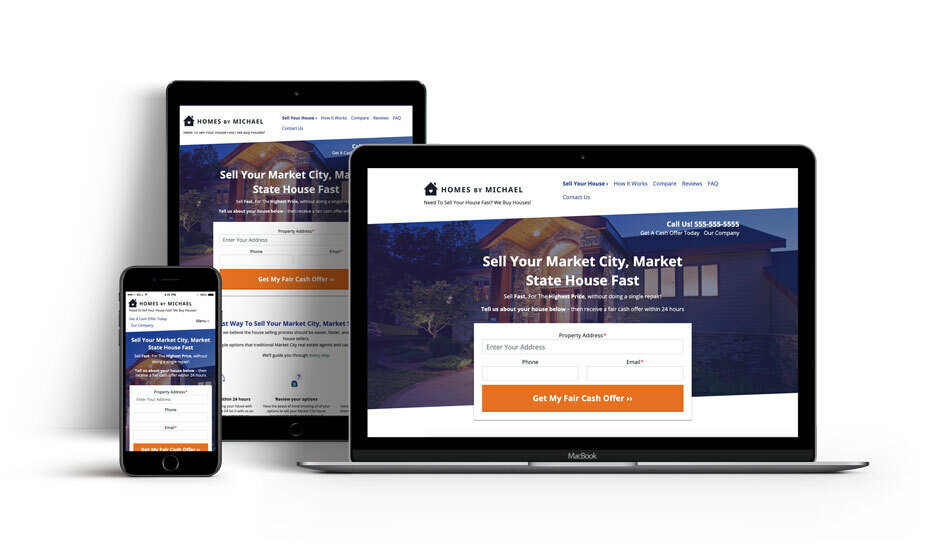
Send photos of their house
Join a video call
Join a Facebook Live for a walk-through
Hop on a phone call
Get the selling process started without ever meeting in person
More on this below…
What Can You Do Right Now to Increase Leads by 33, 100, or Even 225%?!
The members (not all, but MOST) who have made the necessary steps to communicate to their audiences are seeing an increase in lead volume during the COVID-19 pandemic.
We wanted to give you some general tips to help make your Google Ads accounts more effective until this time in history is over.

3 Simple Things You Can Do Today to Increase the Effectiveness of Your Google Ads Accounts
Tip #1: Communicate and Build Relationships With Your Audience
During “normal” times, Google Ads best practices dictate that you dig deep into as much data as you can find so you can be all but certain your next campaign will succeed.

But, we’re in unknown territory holding a lot of uncertainty. No one knows for sure what to totally expect from their accounts right now.
The ones who will have the most success will be those who take their best, common-sensed, educated move and immediately put their campaigns into action.
Think of it this way.
If you don’t try and decide to wait it out, you’ll fall further behind your competitors.
If you make educated moves but fall short, you’ll at the very least have an idea of how to adjust your approach going forward.
You don’t have a lot of time to collect a bunch of performance data… we can help with that.
Your goal should be to find a way to communicate with your audience.
Or, adding more content to your website from blog posts. Carrot Content Pro members have access to blog posts such as…
Or, switch it up a bit and shoot a quick video, such as this Carrot member did…
Now, take your video a step further and create a VideoPost to add to your blog. Simply upload a video and receive a transcription for your content for a blog post in minutes.
This goes for your Google ads and any other paid advertising you create throughout the current pandemic.
Google Ad’s character limitations don’t allow much room to convey a deeply sensitive and empathetic message, but you can utilize space to communicate that you’re still buying as well as other key points.
We’ve seen ads use copy such as:
We’re Still Buying
We Can Rest Your Mind
No Strangers to Your Home
No-Direct Contact Required
You Can Still Sell Your House
A Phone Call Is All It Takes
We Can Buy Via Video, Phone, and Email
You want to create ads that showcase the options they have and the value your service can give them during these circumstances your audience is currently in.
If you can get to the heart of how your services can bring peace and closure to your customers’ lives, during this crisis and other times, you’ll stand a much better chance of surviving and thriving in the future.
Tip #3: Trim Wasted Ad Spend
During “normal” times, it can be easy to keep average-performing ad groups or keywords live as long as they’re bringing in some leads.
But right now a shift to pause those ad groups or keywords and add to negative keyword lists might be a smart approach.
Of course, you can then revive these ad groups and keywords once we’re out of this pandemic.
If you need to cut your budget, a simple strategy would be to pause ad groups and/or keywords that haven’t produced a lead in the past month or two. Or, those ad groups and/or keywords that have converted one or two times in the past month or two.
These might be low-hanging fruit keywords. Choose to pause those for now and hang onto the ad groups and keywords that make the most impact.
Negative keywords will prevent your ads from showing up for future searches that seem to be related to your service but have nothing to do with it.
We’ve seen terms that seem really good but aren’t converting into leads. Such as…
“sell my house in 55+”
So, that term is becoming an exact match negative term for now.
We’ve also seen an influx of game-related terms, possibly due to more kids being without things to do. Terms such as…
“how to sell your house in Rocitizens Boblox”
These are search terms that can’t be predicted.
Even during times like these, the old saying “you gotta spend money to make money” holds true for paid traffic. Merely pausing your campaigns altogether just isn’t the way to go.
But, there are just smarter ways of figuring out the most efficient way to keep your campaigns live.
You should always be looking for the most cost-effective approach to Google ads, but right now, it’s okay to tighten the spending up without feeling like you’re missing out on leads.
Wrapping up
The Google Ads industry changed entirely in the last month. Much of what we considered certainties only a few short weeks ago still remain today, but there are things you need to view a little differently for now.
Adapting during these uncertain times will help you to continue to grow.
It’s likely that you have already come under pressure to reduce spend or, at the very extreme, you’ve paused your account. These are sensible reactions given the circumstances, but are they the only options?
The answers to these questions depend a lot on each individual’s situation, but in this post, we hope to educate you on how to make these positive decisions and how to best adapt Google Ads during these challenging times.
Do you find, finding sellers hard? You’re not alone. With most real estate investing business models, finding motivated sellers can be difficult.
You have to send direct mail that stands out, run attractive PPC campaigns, and rank in Google for terms like “sell my house fast for cash in [market].”
In fact, here’s an article we wrote which is dedicated to helping you find motivated sellers.
But with land investing, the entire thing gets flipped on its head. Finding land sellers is usually pretty easy. For about every 250 mailers, you can expect to find a motivated seller. Finding land buyer leads can be the hardest part.
And of the land buyer leads you do get, a lot of them are tire-kickers who think owning a piece of property would be cool, but just end up wasting your time.
In the end, you might find about one motivated buyer per 25 or 30 leads (give or take some depending on your market).
If you could increase the number of leads you get, you would also increase the number of motivated buyers you find and deals you close.
And in the land business, that’s one of the biggest factors which determines your business growth. Are you finding motivated buyers consistently?
We’re starting off with the most important tip in this article.
Because look — if you generate more traffic to your land buyer website, but none of that traffic opts-in and gives you their info, then they might not have visited your website at all.
(If a tree falls in the forest and no one is there to hear it, did it make a noise?)
And make no mistake, optimizing your website’s conversion rate can make a massive difference. Consider this math.
Imagine it takes you 25 leads to close one deal.
Further, imagine that you’re currently getting 500 website visits per month with a conversion rate of 5% (which means that you’re generating 25 leads and thus closing one deal per month).
If you increase that conversion rate from just 5% to 10%, you’d generate 50 leads and close 2 deals per month with the same amount of website traffic.
We’ve run tons of conversion rate tests on our member’s websites to determine what converts the best and we’re absolutely relentless about ensuring that our member’s sites continue to convert like their businesses need them to.
2. Create Consistent Content to Find Land Buyer Leads
Consistent content marketing is probably one of the most powerful things you can do for your land investing business. With it, you can:
Create more social media visibility
Drive more traffic to your website
Build rapport with that traffic
It’s also probably one of the most under-valued lead-generation strategies.
Which is good!
It means if you do create consistent content on your website, you’ll quickly and easily stand head-and-shoulders above your competitors that aren’t creating any content.
But… what kind of content should you create? What should you talk about? When should you create it?
Great questions!
Carrot members can create awesome long-form blog content in under 10-minutes using our VideoPost feature. This allows you to record a video from your smartphone, upload it to your Carrot site, and we’ll create a transcript of the video and make it into a blog post for you!
Yep — super easy and crazy effective.
In fact, one of the VideoPosts we created for our own website (yes — we drink our own poison ;-)) is ranking #1 in Google!
As for when you should create it… I’d recommend publishing at least one new piece of content on your website every week (but the more, the merrier!).
Also, Carrot members who are subscribe to the Content Tools add-on receive blog posts every month that they can upload to their website with just a few clicks. And we come up with all the relevant topics so you don’t have to.
Carrot’s land buyer blog post examples
If you don’t want to worry about creating your own content (it can be a bit time-consumer, to be sure), then try Carrot risk-free for one month!
3. Rank in Google For Relevant Land Buying Search Terms
Perhaps the best, cheapest, most effective way to generate more leads for your land investing website is to get your website ranking for relevant search terms in Google.
That way, when someone searches for “Buy land now in [market city]” or “Buy cheap land in [market city]”, they’ll click to your website and become a lead!
Now I know what you’re thinking: how are you going to beat big websites like Zillow, Redfin, and Realtor.com in the search rankings?
Well, it’s not an easy task. But you do have a unique advantage — namely, that you’re running a local business and those websites aren’t. This means that you can use Google My Business to get different rankings!
Use title with the keyword prominently featured, within the 70-character count. You can use a tool such as Moz’s title tag preview tool if you have questions.
Use keyword-rich H2 tags and include your keyword in the body copy.
Add the keyword to the meta description. Meta descriptions are capped at 155 characters so try to add the keyword to the beginning.
Include keyword sentences (3-5 words) in the alt image text.
Offer a mix of internal and external links throughout the blog post.
4. Advertise On Land Listing Sites
Remember when we were looking at SEO (Search Engine Optimization) earlier, how the top websites were big names like LandWatch, Zillow, Redfin, and LandAndFarm?
Landandfarm.com listings
Well, you can also advertise your properties and/or company on these websites — although many of them charge a pretty penny and they lock you into a contract for a year.
I’d recommend checking with someone else who uses these sites to advertise their land and asking about what kind of results they’re getting.
Again, before you pay for these types of ads, you’ll want to ensure that you have a high-converting website and compelling sales copy for each of your properties — our Concierge service at Carrot can help you write effective, custom sales copy for your website. Learn more about it here.
5. Optimize Your Land Property Pages
Once you have a high-converting homepage, a lot of the hard work is done. More people will give you their contact information and then it’s simply a matter of reaching out to them, following consistently, and using your salesmanship skills to turn them into a deal.
But in addition to optimizing your homepage for conversion, you should also take a close look at your property pages — that is, the pages on your website that advertise specific land you have for sale.
Location pages to widen your reach and increase SEO rankings
From our research at Carrot, we put together an article that discusses the 6 critical elements of any effective real estate landing page. Check it out over here.
Then make sure that each of your property pages has those elements.
6. Run PPC Campaigns
Running PPC campaigns to your website can be a great way to generate more leads to your website with just a little extra cash.
However, make sure that your website is converting like you want it to convert before you spend too much money on paid advertising — otherwise, you’ll end up throwing money down the drain.
We have an in-depth article over here that discusses how to create effective PPC campaigns (and it’s written by our own in-house PPC expert!)
Check it out and let us know if you have any questions — we’re here to help!
7. Create a Free Lead Magnet for Land Buyer Leads
On most land investing websites, having gated property pages (that is, people have to enter their contact information in order to look at your properties) is enough to generate leads consistently.
But to differentiate yourself from the competition, some of you might consider using a lead magnet instead. A lead magnet is a free digital resource you give to people in exchange for their email address and phone number. In addition, implementing an SPF record checker in your email marketing strategy can help maintain the deliverability and security of the messages you send, ensuring they reach the intended recipients’ inboxes.
You could create a checklist about how to find the perfect piece of land or how to do due diligence on properties, for example, or you could write a small ebook about how to find the perfect land for building on.
For example, WGLands created a “Land Investing Coaching” lead magnet
Sometimes, giving away a free resource to new website traffic can pull in leads you wouldn’t have captured otherwise.
If you’re at a loss for what to do, then this idea might at least be worth a try!
Test it and see what happens (consider putting the free lead magnet on your sidebar and leaving your main opt-in form at the top so you can generate both types of leads).
Conclusion – Get More Land Buyer Leads Now
You want to generate more leads to your land investing website.
For good reason!
The more traffic you drive to your land buyer website, the more lead you generate, the more deals you’ll do every single month.
And with more monthly deals comes more entrepreneurial freedom and more time for the things that matter most in life. You can use the above 7 ideas to generate more leads for your land investing business. Hit us with questions in the comments if you have any! :-)
Join the Nation’s Top Real Estate Professionals & Launch Your Land Website Today!
Quick & effective real estate websites to help you generate leads online.
Serious investors need to know how to find cash buyers. Why? Let’s say you hustled and got a house under contract. You ran the numbers and figured you could profit $10,000 or more on this one property! You’re excited, nervous, and ready to finish the deal.
But what now?
After all, having a house under contract isn’t enough. You also need someone on the other side willing to pay you cash for that property. And you can’t just have one buyer — you need a whole list of people willing to buy the properties you put under contract if you’re to turn your side hustle into a successful, growing business.
(One buyer probably won’t want to buy all of your properties)
And while finding cash buyers is typically easier than finding motivated sellers, it still takes some work.
To help, here are some tips you can use to find buyers, build a trusting, long-term relationship with them, and get them to purchase your deals in no time.
What is a Cash Buyer?
A cash buyer is an individual or entity (such as an LLC formed by a group of real estate investors) with the money to purchase a home outright without financing.
An actual cash home buyer will check these boxes:
Have proof of funds
A track record of successfully purchasing and flipping properties
Authentic positive reviews and testimonials
Willingness and ability to provide seller and professional references
A cash buyer offer will most likely land between low and high offers in the multiple offer situation. Experienced investors typically have similar pricing calculations.
Offers may not be the highest because investors know how vital an agreement is and don’t want to make false promises or fail to deliver.
Many sellers are looking to sell to a cash home buyer because they need to sell quickly and easily.
Because remember, the cash buyers you’re looking for are probably already looking for properties to buy, and Craigslist is one place that they’re going to look. If they see your ad, they’ll likely reach out to you and you can add them to your buyer’s list.
It’s a free and easy way to grow your buyer’s list. What’s not to like?
2. Utilizing Facebook Groups
Facebook can a great place for finding local cash buyers. There are many local real estate Facebook groups that you can tap into.
Here’s an example of a local group.
Active groups are always posting their deals. Simply post within the group… “who’s dealing in [market city] area?”
Then wait to see who you can start building relationships with.
3. Call Real Estate Agents
Real estate agents usually have their fingers on the pulse of their market. They know how the housing market is doing, they are typically friendly, and they know tons of different people with different real estate interests — from first-time homebuyers to million-dollar cash buyers.
And that’s exactly why they’re such a great resource for you when you’re learning how to find cash buyers.
Make a list of 10 real estate agents in your area, call them, introduce yourself and what you’re doing, and ask them if they know anyone who might be interested in purchasing your properties.
You might be surprised at just how many names you get (heck! Some real estate agents are also investors looking for good deals, so you might even get some buyers that way).
4. Go To Property Auctions
Property auctions give real estate investors an opportunity to buy properties cheaply. But that might not be the only reason you want to attend these events — you can also use property auctions to meet cash buyers in your area.
After all, the only people who will go to the auction in the first place are people with enough cash to actually purchase a discounted property (i.e. the exact people who are perfect for your buyer’s list).
You can find the place and time of property auctions on your local government website and in the newspaper. When you attend, bring some business cards, mingle with the crowd, and allow relationships to form naturally.
When someone inevitably asks, “What do you do?” that’s the perfect segue into explaining your business and offering to add them to your buyer’s list.
5. Find The Rental Companies
One great way to find cash buyers with deep pockets in your market is to look for the big buy-and-hold companies, the companies with lots of rentals in your area.
Most of these companies are constantly looking to expand their rental portfolio and continue growing. More than likely, they would be open to you sending them deals.
The best way to find these companies is to search online for rentals, see who owns them, and look for the common denominator companies.
You can also take a drive and look for signs advertising rentals and then call those companies to see if they’d be interested in being added to your list.
6. Use SEO to Optimize Your Cash Buyers Website
At Carrot, we talk a lot about using SEO to find motivated sellers. By targeting phrases like “Sell my house fast for cash”, you can passively drive traffic to your website and convert those leads into deals.
Well, you can do the exact same thing with your buyer’s list.
You can build a landing page, optimize it for the keyword phrase you’re targeting — in this case, something like “buy investment properties in [market city]” would do the trick — and start collecting buyer leads.
You can get a Carrot site if you want to get your page ranking even faster — we optimize the tech stack for you :-)
7. Get a List Of Absentee Owners With Multiple Properties
Absentee owners are owners of properties who aren’t living in the property that they own. Sometimes this is because they aren’t doing anything with the property, waiting to sell, or because it’s a piece of junk.
But sometimes, people are absentee owners because they are landlords. And landlords are often looking to expand their rental portfolio as well. They just need access to cheap properties… which you can give them.
Usually, you can get a list of absentee owners from your local title company. Focus your attention on the absentee owners with multiple properties — those are the ambitious cash-buying real estate investors you’re looking for. The ones that, if you contact them, won’t have any problem with you adding them to your email list. If you’re just now learning how to find cash buyers, this is a great place to start!
8. Search On Google
It might seem like an obvious course of action to search on Google “How to find cash buyers.” So do it! Most cash buyers want to be found by motivated sellers, which you can use to your advantage.
By searching in Google for “Sell my house now for cash in [market city]”, you can find the cash buyers with the biggest online presence in your market — some of those results will be wholesalers like yourself, but some of them won’t.
Contact the companies and investors you find online and tell them what you’re doing. Then ask if they’d like to be added to your email list. If they’re trying to expand their investment portfolio, they have no reason to say “no.”
Note: It can be enticing to click on a Google Ad. BUT… costing the investor money per click. Don’t reach out to investors through ads. Not a good way to build a relationship.
Conclusion
If your business succeeds, you must have a list of high-quality cash buyers. You need access to people who trust you and are willing to buy your properties.
And you can use the above 8 ways to learn how to find cash buyers and create your list. We hope this helps you build a successful wholesaling business.