Search results for: “ppc”

  • Real Estate Investor PPC Report

    Real Estate Investor PPC Report

    Real Estate Investor PPC Report

    • This field is for validation purposes and should be left unchanged.

    Everything You Need to See Which Keywords Produce Deals

    Carrot helps generate tens of thousands of leads every month for real estate professionals. Here, you’ll learn the results from our biggest study of over 3 million PPC search terms and 5,500 house seller leads that lead us to the most profitable list of 600+ keywords for motivated house sellers. You’ll get the full list, the advanced guide on how to consistently convert more profitable motivated house sellers with PPC, and a full walkthrough of the study showing you how to improve your PPC ROI and reduce costs.

    3 Critical Steps To Effective PPC Marketing For Real Estate Guide

    What’s Inside?

     600+ highest profit motivated seller keywords

    How to improve PPC ROI and reduce costs

     Why Keywords + Traffic x Conversion
    Higher Profits

     Advanced guide to consistently convert

    The exact high-value keywords that lead to deals

     Why real estate PPC leads convert to deals
    higher than average

    Who is this report for?

    • Eliminate waste in your PPC account
    • Home in on the keywords and ad groups that will return the most profits

    Get your free guide

    Download the PPC Report

    • This field is for validation purposes and should be left unchanged.

    I wish I would have done it a long time ago. My conversion as compared to before is unbelievable.

    Steve Londeau

    All other marketing channels are just tactics; Carrot is the big chunk in the middle that was just missing.

    Tom Townsend

  • EP 438: Google Ads/PPC for Real Estate Investors – What You Need to Know w/ Brendan Holmes

    EP 438: Google Ads/PPC for Real Estate Investors – What You Need to Know w/ Brendan Holmes


    Want to generate highly motivated seller leads without breaking the bank? When done right, Google Ads (pay-per-click) can be the perfect supplement to a solid marketing strategy, helping you generate leads fast while building long-term lead gen efforts like SEO.

    Brendan, our in-house Google Ads expert, is here to share:

    • The most common mistakes investors make with PPC
    • ROI, budget & lead expectations
    • How to keep your ads relevant & effective

    and more! Enjoy!

    Let us know what you think of the episode – brady@carrot.com

    Get more content about paid ads at Carrot.com/ads


    Episode Transcript (This is an automated transcript by robot carrots – please mind the typos 😉)

    00:00:00:00 – 00:00:23:06

    Brendan Holmes

    Google ads is how I always related it to two baseball playing baseball through my youth. And our coach always said it’s it’s the little things that can win the game. Yeah. And in Google ads, it’s kind of the same thing. You make these little adjustments and then you can get leads from and those little adjustments for someone just self-managing their campaigns, that that can go a long ways.

    00:00:23:06 – 00:00:33:04

    Brendan Holmes

    It’s not necessarily the home runs and Google ads rarely. It’s something major that you did to a campaign that’s going to drive more leads.

    00:00:37:27 – 00:00:55:13

    Brady Winder

    Hey, friends, you’re listening to the CarrotCast podcast, where we help investors and agents build businesses of freedom and impact by dialing in your marketing, your online marketing. I’m your host, Brady Winder. And today I have with me my friend, my coworker, PC expert, Mr. Brendan. Holmes What’s up? Brendan? How you doing, man?

    00:00:55:13 – 00:00:57:05

    Brendan Holmes

    Hey. Hey. Guess how you doing?

    00:00:57:16 – 00:01:16:15

    Brady Winder

    Brendan has year. Let me. Brendan has been accurate since the beginning, you know, with Trevor when this thing started and he he knows carrot customers. He knows carrot members in and out. He knows real estate marketing in and out. And he’s been running PPC campaigns for. And how many members do you think over the years? Ran campaigns for?

    00:01:17:29 – 00:01:36:29

    Brendan Holmes

    Hundreds. Yeah, hundreds. It’s kind of funny that I mean, before I recall, you mentioned Kylie as on a call with Kylie talking about Cam paid marketing last week and I got out my binder and this is, this is how I learned that that’s that that was Google ads in 2013.

    00:01:37:21 – 00:01:38:11

    Brady Winder

    Yes.

    00:01:38:11 – 00:01:49:19

    Brendan Holmes

    And I read almost every every one of those pages to learn about. And now now probably 90% of the ads probably obsolete. And then the other 10% we we kind of still use.

    00:01:50:08 – 00:02:01:08

    Brady Winder

    Yeah, that’s awesome. So yeah, you’ve been running PPC, Google, PPC, Google Ads for members for years, since before it was called Google Ads when it was just pay per click goods.

    00:02:01:13 – 00:02:04:07

    Brendan Holmes

    Yeah. Yeah. Is that was that’s average. Yeah.

    00:02:05:00 – 00:02:26:22

    Brady Winder

    Yeah. Google AdWords it wasn’t even that long ago. So everybody listening and watching, it’s paid ads month at carat. So before you do anything else or I guess after the podcast, go to Care.com slash ads ads and we’ve got a bunch of resources on Facebook ads, on Google ads, YouTube ads, any sort of paid marketing that you want to run to supplement.

    00:02:26:22 – 00:02:48:06

    Brady Winder

    You’re also, you know, if you’ve listened this podcast for any length of time, you know, the SEO, we practice what we preach. It’s the best way to generate leads consistently, predictably, and, and the most motivated seller leads. And so we always teach people, you know, build up your SEO over the long term. If you’re just getting started, it can take 3 to 6 months to start to see some SEO efforts pay off.

    00:02:48:15 – 00:03:13:01

    Brady Winder

    And so pay per click is a paper click. Facebook ads are a great way to, you know, work into your overall marketing strategy. We’ll talk about where that fits in. But this episode is going to be all about like you know, best tips for PPC, getting started, some of the most common mistakes people make, what it looks like to run campaigns yourself versus, you know, hiring out to someone, which will give you options for that as well.

    00:03:14:02 – 00:03:29:20

    Brady Winder

    Budget expectations like what to expect is it varies so much by market and people have no idea, you know, times if they’re getting ripped off or if they’re getting, you know, leads at a good price. And so we’re going to do our best to cover all those things and not, you know, give you too much of a firehose.

    00:03:29:20 – 00:03:49:16

    Brady Winder

    But yeah, we’re going to dive into Google ads and anything else you always want to learn on, on paid marketing character, on slash ads, and also to get our free PPC resource we’ll talk about later in the call that’s going to be on that page as well. So yeah. Brendan Let’s kick it off, man. You’ve been doing PPC campaigns for years.

    00:03:49:16 – 00:04:04:13

    Brady Winder

    Let’s first talk about like, you know, if someone wants to a real estate investor wants to get started in PPC, what’s the best time? Do they need to be in business for a few years? What are the things that they need before they even consider doing this?

    00:04:04:29 – 00:04:40:18

    Brendan Holmes

    Yeah, consideration number one is a website, so not necessarily do they have to be in business for years. They need to optimize their websites for for conversion. So the optimization side of that is a little bit different than optimization can be a word or term that’s used for more of the SEO side. But for a conversion ad that needs to be dialed in before you’re thinking about any paid traffic, you know, you want to send it to a site that has some credibility now, making sure that looks good on mobile, that’s optimized for the mobile side.

    00:04:41:03 – 00:05:08:21

    Brendan Holmes

    Probably 75% of your leads could come from mobile. So that is one one piece that I think is people get ahead of themselves is that I want to start paid traffic. But when I either audit accounts through our carrot support or, you know, someone’s reaching out to me, potentially looking at Google ads, newer investor, older investor, it doesn’t that piece doesn’t really matter.

    00:05:08:21 – 00:05:31:12

    Brendan Holmes

    It’s they they get ahead themselves and they don’t think about the website first and how it converts and how that and yeah besides the on page making sure their their lead notifications are integrated. So kind of taking a step back and making sure all that is in place before now starting that a Google ads campaign or Facebook or paying or whatever, any kind of paid source.

    00:05:31:12 – 00:05:31:21

    Brendan Holmes

    Yeah.

    00:05:32:03 – 00:05:41:20

    Brady Winder

    And just to just to be clear and reiterate, this is a must have right now. I should have like you’re not going to like you’re just going to be wasting money if your website’s not converting.

    00:05:42:09 – 00:06:10:23

    Brendan Holmes

    Yes, it’s a must have I if I’m going to manage a member or if there’s like we audit through the year, we’ll probably audit 20 accounts through our carrier support. So my just reaching out and looking to for me to review, I’ll see a lot of websites they just purchased, Maybe they’ve been a care member for a month or two months and they, they still have the canned website.

    00:06:10:27 – 00:06:37:24

    Brendan Holmes

    Everything is still the same. They have an ad, A and testimonials. They’re about pages came the can content. They still have the stucco house with you in the background. So there’s no personality to it. There’s no nothing to connect, there’s no testimonials. And you know, over the years that testimonials spot is sometimes a little tricky because there is a new investor that maybe they don’t have testimonials to add to their website yet.

    00:06:38:05 – 00:06:52:06

    Brendan Holmes

    So it’s it could be looking outside their industry. If they are just starting out, they probably are in a different industry, have a different career. Maybe they can bring some of that personality onto their website if they don’t have that true, you know, seller testimonial.

    00:06:52:27 – 00:07:16:11

    Brady Winder

    Hmm. Okay. Yeah, that makes sense. And if if, if anyone listening, watching this doesn’t have any testimonials, go to care.com slash convert. We just did a whole episode all about how to get testimonials. You know what they should look like, what you should say, or go to YouTube type and carrot testimonials. One question I had, I might be jumping the gun here, but I feel like it’s relevant for what you’re talking about.

    00:07:16:11 – 00:07:33:06

    Brady Winder

    Like making sure your website is set up. You have to have these things in place before you even start running Google ads and putting money into it. But I want to ask how many, depending on the market or the search phrase, about how many other pay per click ads are you competing with? I feel like it’s more and more now.

    00:07:33:06 – 00:07:48:01

    Brady Winder

    I used to be like, Oh, there’s an ad on Google years ago now. It’s like, Holy crap, is it? Five ads are going to scroll past, meaning like, are there five other investors you’re competing with? And if they all have their site dialed in and you don’t And yes, clicking down everyone.

    00:07:49:00 – 00:08:33:00

    Brendan Holmes

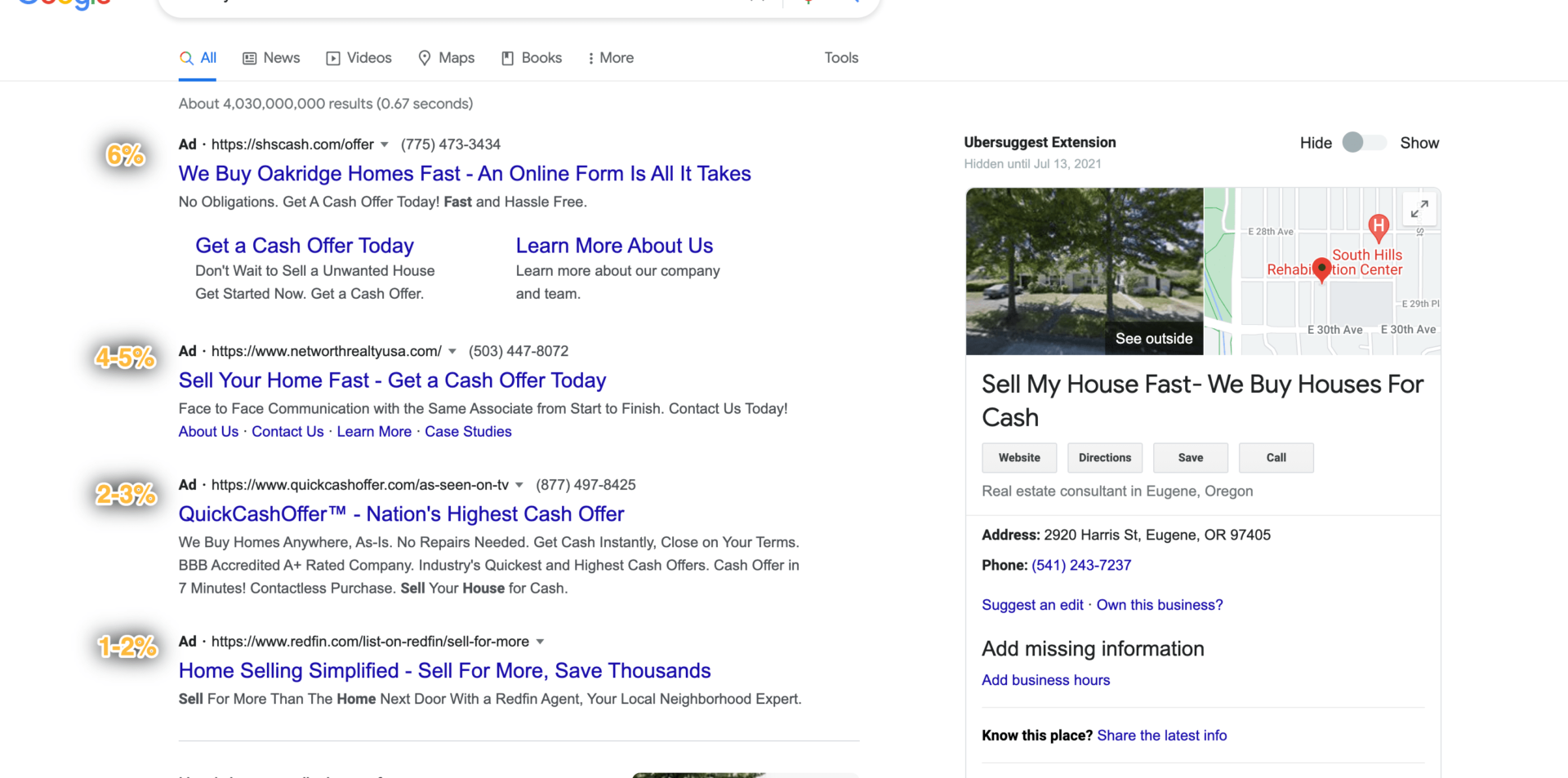
    Depends on market. But I think in a smaller market you might only be competing against one or two other investors for the top four ad spots in a metro market, if you’re statewide or national, you’re you’re competing. Yeah, probably all four of those are other investors. And that could be yeah, somebody who is. Yeah, just an investor I can remember or it can be the national investor that I buy or it they, they drive traffic they’ve kind of pulled out a little bit now like offer pad opendoor those types they were running paid traffic to kind of pull back some over.

    00:08:33:00 – 00:08:35:00

    Brady Winder

    They probably drove up costs temporarily.

    00:08:36:03 – 00:08:36:20

    Brayden Reber

    Yeah.

    00:08:37:19 – 00:09:11:17

    Brendan Holmes

    And it could for sure. It definitely could. I’ve seen if you’re in a specific market and it’s a metro type of market, that could impact that for sure. There’s there’s many other reasons costs could fluctuate. But yeah, I saw definitely in some metro markets that had national buyers definitely turning control in the cost in that back cost could have been more like the top number one and number two ad position where that they were really worried about number three and fourth, they wanted to be at the top.

    00:09:11:17 – 00:09:14:04

    Brendan Holmes

    So they were they were willing to pay for those spots.

    00:09:14:23 – 00:09:36:14

    Brady Winder

    Yeah. Okay. That makes sense. So let’s talk about that. Let’s talk about expectations. ROI, how much are you going to be paying per lead when you’re going into a market? What’s this look like? Let’s say let’s compare. Roseburg is pretty small. Roseburg is like 30,000 people. How big is Klamath Falls? Smaller than Roseburg.

    00:09:36:14 – 00:09:38:23

    Brendan Holmes

    Yeah, it’s. It’s right about the same size.

    00:09:38:29 – 00:09:52:27

    Brady Winder

    Not the same size. I don’t know. Okay, let’s compare, like, Eugene, Oregon. I don’t know, 500,000 people. I don’t even know. Smaller market to say like Dallas. You know what our expectations as people go to.

    00:09:54:09 – 00:10:23:03

    Brendan Holmes

    Number one is like that smaller market the expectation of let me back up real quick is you talked about the expectations are away and what what the most important metric is, is that your your cost per deal metric and that’s then aligning with you have to know where your leads are coming from. If you don’t have conversion tracking or you don’t have good CRM that really had better could harm a member.

    00:10:23:14 – 00:10:50:07

    Brendan Holmes

    Yeah, I’ve had members in the past had no idea where their leads were coming from and then I would have to look into their care dashboard and say, okay, this one was a Google ads, this one was organic, this one came direct. And so knowing number one, knowing where your leads are coming from and then to being able to track those that specific lead to, if that turned out to a deal, the the motivated seller terms have pretty much stayed consistent.

    00:10:50:07 – 00:11:14:20

    Brendan Holmes

    It’s the searcher that has changed so that retail searches are are shifting into more of the the motivated seller type of search, somebody that is not necessarily in a hurry, but maybe their house has been listed for two years. And like I use Klamath Falls as an example, we have a very nice golf course with, you know, some million dollar homes out there.

    00:11:15:07 – 00:11:36:27

    Brendan Holmes

    Californians, that they’re they’re not necessarily in a hurry to sell their house. They’re not you know, that they have plenty of means to keep kids in their pay or they’re no hurry, but they’re starting a certain search for that term to sell their house fast. They’re there. They just want to know how to sell their house fast. But that’s not the true motivated seller.

    00:11:36:27 – 00:12:07:24

    Brendan Holmes

    So those are easy to weed out in your leads. It’s more paying attention and focused on those one leads that you know, if it’s a batch of five leads that come in in the past month, pay attention to those and track those through the deal. And yeah, that deal could take three or four months. But keeping track of that specific Yeah lead that is a whatever source page traffic lead and making sure that your ROI over six months a year not in paid whatever paid source you’re using but in Google ads in this case.

    00:12:07:24 – 00:12:46:19

    Brendan Holmes

    Yeah. Making sure that your ROI is is you know outpacing how much you’re spending on it. So that’s number one. And number two, kind of using the example of these these types of markets like Eugene compared to Dallas, the expectation, how many leads are possible in those areas? And so I’ve had members in the past who have come into like a Eugene market and they they’ve heard from the grapevine that 20 leads is possible in my area and sometimes I wonder, or I’ve known that competitors have kind of said that like they they think that yeah my competitors getting 20 leads.

    00:12:46:19 – 00:12:56:24

    Brendan Holmes

    Well yeah they might be telling you they’re getting 20 leads. So then you kind of feel like me and maybe you don’t even need to go into it. Or maybe your expectations are a little bit too high.

    00:12:56:24 – 00:13:14:16

    Brady Winder

    And do they know? Because based on what you’re tired about and you know, a lot of members we’ve talked with over the years, not everybody has, I would almost argue, enjoyed a lot of people don’t really know their lead sources and have their KPIs dialed. And to be able to say, I’m getting exactly this money from PPC, this money from Facebook, they just know they’re getting leads in their closing deals.

    00:13:14:25 – 00:13:15:07

    Brady Winder

    You know.

    00:13:15:09 – 00:13:25:18

    Brendan Holmes

    We’re not exactly yeah, in that competitor might be the same case. Like they just we’re getting 20 leads. We don’t know where they’re coming from, but we’re getting 20 leads. And so.

    00:13:25:24 – 00:13:26:10

    Brayden Reber

    In those.

    00:13:26:11 – 00:13:52:27

    Brendan Holmes

    The smaller markets that are probably under like a in Google calls it reach, So it’s not necessarily population. It’s based off of how many devices they can actually, you know, potentially show ads to. So usually that reach is much higher than your population and but a reach under 500,000, I’d say you’re potentially going to either really need great leads because you’re only going to be able to drive this many leads per month.

    00:13:53:00 – 00:14:19:27

    Brendan Holmes

    And hopefully those are quality and you could do something with them. And then I always kind of try to build in. Well, the Google ads gave me a great source for you, but you might need other channels, you might need other paid channels, you might need offline channel, so you might need something else to build, build in. And I think that’s sometimes where they in a market like that, they, they fail because their expectations aren’t set correctly.

    00:14:20:05 – 00:14:43:05

    Brendan Holmes

    Yeah. Yeah. Or they, they don’t, they don’t have the marketing budget to be in Google ads and maybe some direct mail and maybe some cold calling or whatever. They’re, they’re putting all of their chips into one thing in that specific lower traffic, you know, area and it doesn’t call them. Yeah, yeah. Okay.

    00:14:43:14 – 00:15:09:23

    Brady Winder

    So we know. Okay so we know we’ve established at this point, you know, if you’re let’s say if you get your website up and running, it’s converting, it’s dialed in and you started working on your SEO, you know, PPC, Google ads is the first thing you want to do to supplement those to get leads. Now, while you work on the long term, one question I have is, you know that we we see all the time people do their marketing.

    00:15:09:23 – 00:15:27:16

    Brady Winder

    You know, Trevor coined the phrase mouth over emotion in your marketing. And so people get emotional and they start you. You’re probably in this day in and day out with, you know, your clients is people see the dollar signs and they see the money going out the door and they’re like, Oh crap, not getting leads. And they get scared and then they pull back.

    00:15:27:16 – 00:15:41:14

    Brady Winder

    And so my question is, how long does somebody need to commit commit? This is a keyword to doing Google ads before you know that they hit pause or reevaluate. Is this three months, six months, a year? You know?

    00:15:42:18 – 00:15:42:29

    Brayden Reber

    Yeah.

    00:15:42:29 – 00:16:18:24

    Brendan Holmes

    I think I if if someone’s asking me to manage their account, I usually say at least three months and that in if not more like if you are getting leads within that three months which you should be anyways, then it’s evaluating those types of leads and it could market and season will also factor into that. So if I start a campaign at the end of November, that’s not the same as starting a campaign at the beginning of May, the market could be totally different.

    00:16:19:14 – 00:16:40:01

    Brendan Holmes

    So that seasonality side of it, yeah, it will factor in. So that’s why I usually say three months. Yeah. And give them the had it, you might need longer if you’re getting leads and we know some of these leads have quality or have been quality but you just haven’t been able to close one. We need to reevaluate after three months for sure.

    00:16:40:10 – 00:16:58:23

    Brendan Holmes

    But then you know cash there is promise here in some markets. So after three months, you just know either that budget isn’t matching, maybe they don’t have enough budget to potentially be in that area and then it could be looking at their locations and what we could potentially do with that. But that, yeah, there’s some other factors in there for sure.

    00:16:58:23 – 00:17:30:27

    Brendan Holmes

    But overall, three months, six months depending kind of what markets they are in Now, timing. Timing is big. It’s I think that’s another expectation that isn’t on a lot of their minds when they’re starting is when am I starting this and what’s my market looking like right now? And it’s hard to I know it’s hard. That’s that’s terribly hard night for investor who is spending thousands of dollars a month on unpaid traffic.

    00:17:30:27 – 00:17:53:08

    Brendan Holmes

    Yeah that’s it’s hard right But like you said it’s their emotion side that you try to hire and eliminate as much as possible and have that clear picture. But again there are times that it is just cut and dry after three months if we don’t make these changes to the account yet, honestly, go, go. Try something else. Go, go.

    00:17:53:08 – 00:17:55:02

    Brendan Holmes

    Put your money in a different channel.

    00:17:55:24 – 00:18:09:12

    Brady Winder

    Interesting. Oh, well, I’m glad you brought up seasonality. Does it do you see the same seasonality as or leads overall like as organic leads, awards, you know, slump in the winter and that comes back up the springtime?

    00:18:09:12 – 00:18:35:13

    Brendan Holmes

    Yeah, I, I do. And but it’s really it’s kind of it’s not across the board it’s very dependent on market too. I have it I mean typically it’s it starts in November kind of like Thanksgiving time this last year in 2020 to kind of a slow down in the paid traffic. We’d started around more around Halloween and then it had kind continued.

    00:18:35:13 – 00:18:46:20

    Brendan Holmes

    But then there were some markets that in December that were like Midwest, snowy, very cold markets that thrived in December. They they crushed their lead volumes.

    00:18:46:20 – 00:18:48:06

    Brady Winder

    They’re not phase two. I went there.

    00:18:48:15 – 00:18:50:08

    Brayden Reber

    Yeah yes yeah where.

    00:18:50:17 – 00:19:10:07

    Brendan Holmes

    The I it and I would anticipate a slowdown is that’s pretty much what always happens and those every year I’ve you know since I’ve been managing campaigns that I’ll get questions what happened what happened to our Google ads campaign. What what do we do wrong. What’s going on? And if we can go back and see the Google ads campaigns.

    00:19:10:15 – 00:19:38:13

    Brendan Holmes

    Yeah. Besides the moves that we always make that like the daily, the weekly, the monthly, if if there were no major shifts in the Google ads campaign, what what other kind of factors or there could be a market, it could be competitors, maybe it could be if you made a website changes. I found that too that members didn’t communicate that they had changed the website and I, I, I checked the websites, but I’m not in there.

    00:19:38:27 – 00:20:00:02

    Brendan Holmes

    They had, you know, every other week looking at their websites and especially if they’ve made changes on their within their previous section that now we have the lead gen banner which I think is amazing, especially in Mobile. Oh yeah. But before that we’d have members putting videos in their their hero section and without checking it on their phone.

    00:20:00:15 – 00:20:18:06

    Brendan Holmes

    Yeah, the video would be pushing their form down and potentially they’re losing out on leads on mobile. So those are those kind of outside the Google ads realm. We can tell Google ads is we didn’t make any changes to really mess up the account. Right. What else could be happening?

    00:20:18:24 – 00:20:39:02

    Brady Winder

    Yeah, it matters a whole lot. We were talking about that a second about that with Brian Driscoll and Chad Keller. And on one of the previous podcasts about conversion and and just the importance of that form placement like having it, we call it above the fold, but near the top of your website so that you know especially if someone’s clicking on a Google ad, they’re usually not going to make it even halfway down the page.

    00:20:39:02 – 00:20:52:10

    Brady Winder

    They’re going to see whatever is at the top, fill out the form, read the information and bounce, and maybe even go to the next ad like they’re finding, you know, they’re looking for exactly what they need. They’re not going to spend the time to usually to browse the whole page. Am I often saying that there’s that.

    00:20:52:17 – 00:21:03:27

    Brendan Holmes

    That’s absolutely right. Yep. Yep. Maybe. Maybe not so much on desktop. Desktop is still important. I still love that. The image and banner on desktop. On mobile. Yeah. So very important.

    00:21:04:16 – 00:21:24:25

    Brady Winder

    Yeah. And it’s funny because we you know it’s it’s crazy because everybody like you mean normal people would look well we visit everything or most sites on mobile everybody’s on their phones but then you build websites on the computer people are you build websites on a desktop and we forget like the main thing. Oh my gosh, Mobile. It has to look good.

    00:21:24:25 – 00:21:45:22

    Brady Winder

    Yeah. Which that’s one of the things it makes easy is making it look good and perform on mobile. So you don’t have to worry about that as much. But let’s talk about I want to talk about the difference between managing ads. If I were to start a PPC campaign, Google ads campaign, and manage it myself versus outsourcing to someone like yourself, what what’s the biggest difference?

    00:21:45:22 – 00:22:07:10

    Brady Winder

    And I guess what I’m asking is like, what is what is the thing you see people mess up or do wrong? Or like, Oh, I should just pass it off to someone else soon or should outsource sooner. And I’m not like, we don’t care. It doesn’t people listening, we’re not greatly benefiting from like we’re not making our bread and butter from getting a few more PPC clients or to have people work with our vendors.

    00:22:07:10 – 00:22:23:11

    Brady Winder

    That’s not our agenda. Our agenda is to help you save your time and money so you can close more deals and have more freedom. I mean that like in full sincerity. And so I have no genuine access. But like when people come to you and they’re like, Oh my gosh, Brendan I did the PPC campaign waste of money, like, Help me, What are they?

    00:22:23:12 – 00:22:25:12

    Brady Winder

    What are they doing wrong now?

    00:22:25:23 – 00:22:50:08

    Brendan Holmes

    And it’s kind of to add to that real quick is that, you know, Google ads isn’t it’s kind of excite, but it’s not what I love. I don’t really love Google ads. I love when people are successful with it. And I trust in in educating the members who who are either managing themselves or using myself or anyone else when they’re successful, that that piece is still, you know, the way I do this.

    00:22:50:08 – 00:23:17:15

    Brendan Holmes

    And yeah, so I love auditing the accounts that come through our carrier support. And most of those accounts are they they’ve had Google. So number one mistake is having Google create your your motivated seller campaign. So I’ll speak to motivated seller campaign specifically. So you when you start up a Google ads campaign, Google pretty much forces you now to create what they call a smart campaign.

    00:23:17:25 – 00:23:45:12

    Brendan Holmes

    And the smart campaign is it’s industry based. So it’s real estate industry based, not real estate investor, not looking for motivated sellers. Now, some of the keywords that are within there are motivated seller keywords, but the other batch of them are just real estate keywords. Yeah. So that’s number one. Number two, you lose control of some of the management within those smart campaigns.

    00:23:46:15 – 00:24:13:01

    Brendan Holmes

    So it’s it’s trusting that when you signed up with Google and they might have had a call with one of the Google ad strategists before and they’re walking them through the stages, they’re building trust with Google then or Goofy and the sales Google salesman, he’s building trust with the member. So they kind of have this misconception in their mind that this is how I should be creating a campaign.

    00:24:13:18 – 00:24:19:02

    Brendan Holmes

    And so that’s number one. Not don’t don’t put that trust in Google to build your campaign for you.

    00:24:19:15 – 00:24:20:13

    Brady Winder

    It’s interesting.

    00:24:20:21 – 00:24:21:07

    Brendan Holmes

    Yeah.

    00:24:21:07 – 00:24:41:24

    Brady Winder

    And I think but I want to interrupt you just real quick. The thing that pops out to me about that is that, you know, whether it’s Google or not, trusting somebody that’s not industry specific, that doesn’t have industry experience is seems like the key. Google doesn’t know real estate investors, wholesalers in and out.

    00:24:42:21 – 00:25:27:08

    Brendan Holmes

    Yeah, yeah, yeah. And there are you know I’ve come across over the years some good PPC management companies that aren’t real estate investor specific and yeah, there’s that learning curve though and yeah we’ve anyone that has managed our industry specific ads, we all went through that learning curve and it took that learning curve for Trevor and I was probably 2014 when we had a member in Orlando willing to pay for his ads and we tossed thousands of keywords at Google and this is pretty much what we still use today for our or Quickstart or in the Evergreen webinar we give our Google Ads campaign.

    00:25:27:22 – 00:25:57:24

    Brendan Holmes

    That’s those that’s still pretty much that campaign that we learned from. Yeah, there’s been iterations from it, but that’s kind of where it came from. So no. Yeah. Number one, don’t trust so much in Google. Number two probably would be that again, going back to that expectation of what’s possible and not not learning what or how to self-manage that campaign.

    00:25:57:24 – 00:26:19:14

    Brendan Holmes

    So if you’re managing your campaign, there’s Google ads, there’s you know, night through cares support. If you add that type of means to reach out to somebody who has been managing ads and give you some tips or look over, you know, audit campaigns. So not educating yourself on what the keyword structures are, what that really means, what do broad match keywords mean?

    00:26:19:21 – 00:26:50:21

    Brendan Holmes

    What does that mean? But what kind of traffic am I going to be sending or phrase are exact or targeting options? Yeah, there’s limitations on our industry, on the housing industry that Google kind of sets, kind of limits. Our are what we what we can target. We can we can no longer target zip codes. And a lot of members used to like to target by zip code that was about two years ago that they they removed that.

    00:26:50:21 – 00:27:06:05

    Brendan Holmes

    So that’s probably number two is this educating yourself and if you’re using a specific campaign and maybe number three would be starting to with too too much too much going on two, too big of a campaign.

    00:27:06:18 – 00:27:09:07

    Brady Winder

    So meaning like how many keywords.

    00:27:09:19 – 00:27:33:29

    Brendan Holmes

    Gourmet keywords. Yes, that’s probably a bigger factor to many keywords, maybe using the wrong targeting. You know, there’s a couple different ways you could target your locations. Maybe have a too wide and you’re getting leads from other states or other countries or clicks from those. But the keywords probably is the number one that you’re looking at, the match types and then how many.

    00:27:33:29 – 00:28:03:29

    Brendan Holmes

    So I usually say if you’re doing a manager on a campaign and you haven’t received one like ours. Viviana has been given a campaign start with like 2025 keywords and just get your can get your bearings on what, what that means. And then there’s reports to go look at and in the time to kind of spend, once you have a campaign running and then suspending a little time, maybe getting it going, you’re spending a little time every day and then maybe that goes into every other day.

    00:28:03:29 – 00:28:26:26

    Brendan Holmes

    But that’s it’s definitely being involved in the campaign. Yet. Bailey In the first few weeks, maybe a month and then when you get you see, okay, this is how I need to manage my my campaign. This is these are the key words that are working and aren’t working. And that’s probably number one, don’t use Google to build that number to educate yourself.

    00:28:26:26 – 00:28:31:01

    Brendan Holmes

    And then number three, don’t don’t start so broad. Don’t start with hundreds of keywords.

    00:28:32:05 – 00:28:32:18

    Brady Winder

    Yeah.

    00:28:33:05 – 00:28:54:28

    Brendan Holmes

    One that we’d had in the past that our members used to get a spreadsheet from Sean Terry. So this is good dating back to probably six years ago. And this campaign that you’d get was an amazing campaign for someone who knew how to manage Google ads, but the members who didn’t. So there were thousands of keywords in this in this campaign.

    00:28:54:28 – 00:29:11:20

    Brendan Holmes

    Gosh, yeah. And if you didn’t know what you’re doing, I remember auditing you. It’s through to support a campaign that I think they had wasted about $8,000 and just not knowing what they were doing and using this campaign structure. Yeah.

    00:29:11:28 – 00:29:13:00

    Brady Winder

    So it’s so much it’s a matter.

    00:29:13:00 – 00:29:13:09

    Brendan Holmes

    Of just.

    00:29:13:28 – 00:29:15:29

    Brayden Reber

    Like, yeah, yeah, yeah.

    00:29:16:00 – 00:29:18:22

    Brendan Holmes

    If then that then it gets crazy. Yeah.

    00:29:18:22 – 00:29:38:12

    Brady Winder

    I remember trying Facebook ads myself for the first time and I think this was after working at Care for a couple of years as a go. I’ve got my head wrapped around it and you know, back then, little did I know it was like having your head wrapped around even the the copy and the hooks and the messaging and even the creative and the imagery is, in a lot of cases, not enough.

    00:29:38:12 – 00:29:52:20

    Brady Winder

    If you are going to, you know, target poorly and budget poorly and go after too many keywords or too many areas and it’s like it was not a it was not a fruitful experience. So I’ll just say that. So what you’re saying cannot be any more important.

    00:29:53:04 – 00:29:58:03

    Brendan Holmes

    And those are the ones I usually come in and just say, Google ads isn’t working for me.

    00:29:58:03 – 00:30:02:18

    Brady Winder

    Yeah. And it’s like, well, Google, it’s not. The Google ads is working and you need someone to manage it. Well.

    00:30:03:04 – 00:30:05:13

    Brayden Reber

    Yeah, and that’s anyone.

    00:30:05:24 – 00:30:32:02

    Brendan Holmes

    Managing a campaign that that’s what we do. And we know the ins and outs and some will have different strategies like I have a different strategy when I’m managing a campaign, then I would if, if someone used our our Quickstart campaign and our Quickstart campaign, just because I have many members that I can link into and use all their data if.

    00:30:32:12 – 00:30:57:16

    Brendan Holmes

    Yeah. So I use a different strategy, not necessarily. That’s I guess to me it’s yes, it is better, but you can still have success just having your own campaign and managing it correctly. So that could be advantage of someone managing campaign or accounts that they just might have some different data sources. And but the drawback to is then you’re paying a management fee.

    00:30:57:23 – 00:31:19:29

    Brendan Holmes

    But what I think some look at is if if someone is managing a campaign and they can be saving you money by kind of doing it the right way or, or speeding up the process to do it the right way, then might make the member who lost $8,000 if he would have had somebody managing their campaign for however much, he would have saved money.

    00:31:20:08 – 00:31:46:21

    Brendan Holmes

    And so, yeah, there is a cost for the management too, but yeah, it’s I still love seeing members manage their own campaigns if they if they’re willing to to take the time to learn. And and it’s simply like we have a call tomorrow with a Google ads Quickstart just go over like I’m going to train him how to use his his you know, the dashboard.

    00:31:47:20 – 00:32:20:12

    Brendan Holmes

    I always tell them, just get that app on your phone. And for these guys managing their their campaigns, it’s just tick tick 20 minutes through your day and just look on your phone and you could make these simple changes and that’s all the quickstart or a member, you know, that’s all they really need to do. You know, it’s they’re not managing beyond, you know, into the kind of more advanced strategies they’re managing and a strategy that is still effective and can be simple.

    00:32:20:17 – 00:32:44:17

    Brendan Holmes

    And that’s kind of Google ads is how I always related to to to baseball, you know, playing baseball through my youth. And and our coach always said it’s it’s the little things that can win the game. Yeah. And in Google ads, it’s kind of the same thing. You you make these little adjustments and then you can get leads from and those little adjustments for someone just self-managing their campaigns, that that can go a long ways.

    00:32:44:17 – 00:32:55:01

    Brendan Holmes

    It’s not necessarily the home runs and Google ads that you know you rarely it’s something major that you did to a campaign that’s going to drive more leads.

    00:32:55:02 – 00:32:58:07

    Brady Winder

    Yeah, it’s not one keyword. It’s not one line of copy or something.

    00:32:58:09 – 00:33:22:19

    Brendan Holmes

    Yeah, yeah, yeah. It could be adding in like the trend of the last year and a half or so or members instead of targeting, you’re targeting a specific area, maybe a metro area or just a Eugene area or something. They go statewide where they go multistate. Yeah. So that that could have a big impact. Obviously, you’re getting more leads and your password leads a lot different.

    00:33:22:19 – 00:33:43:27

    Brendan Holmes

    Yeah. You’re not looking at 20 leads in a metro area now you’re looking at 100 leads statewide. So that that’s a game changer. But they also have to have the the infrastructure, the business infrastructure to manage those leads and understand the different markets. And so that’s presents its own challenges.

    00:33:43:27 – 00:34:03:01

    Brady Winder

    But okay, I’ve got a couple other things I want to cover here. One technical one real quick. What what KPIs are you looking at for a PPC campaign? I feel like this is important for member too, even if they’re not running them themselves so that they can ask the person they’re outsourcing to say, Hey, what are you looking at?

    00:34:03:01 – 00:34:06:02

    Brady Winder

    What does success look like so that they know they’re working with somebody legit?

    00:34:07:04 – 00:34:30:19

    Brendan Holmes

    Yeah, within the Google ads dashboard and what we can see cost per lead, number one. And that’s the most important KPI because we can’t see cost per deal in the Google ads dashboard, but that’s the number one cost for lead. And then then it trickles down. And these are still very important metrics, but depending on what kind of bid strategies they’re using the ad, it doesn’t it doesn’t hold as much weight.

    00:34:31:04 – 00:35:06:28

    Brendan Holmes

    But let’s say if a member’s just starting out, I still recommend starting out with manual cost per click instead of using one of the. And that is also to prove out some keywords, get them familiar with what the keyword cost should be, and then maybe changing over to advanced bit bidding, but looking at our cost per click pin and then your click through rates and making sure your click through rate will determine then how you know, potentially ad position, potentially ad copy, those two are going to probably factor into your click through rates, your bids are going to factor in, you collect your rate.

    00:35:06:29 – 00:35:29:05

    Brendan Holmes

    So those after your cost per lead, look at your cost per click, look at your click through rate. And then yeah, just by those, you can have a pretty good idea. You could be looking at impression share and that’s getting pretty deep and you’re getting pretty advanced when you’re looking at your impression share and you’re potentially you’re you’re in pressure lost it.

    00:35:29:07 – 00:35:48:00

    Brendan Holmes

    You can lose impressions here about your budget but those those get more advanced So just keeping it high level, if I’m just managing my own campaign, I just started out I want to know customer lead, I don’t know, cost per click, I know my click through rate and then I am adjusting my bids from the the manual know manual bidding process.

    00:35:48:21 – 00:36:03:09

    Brady Winder

    Okay, that’s helpful. Simple enough. What are you what are you doing to stay relevant and keep the ads fresh or is there a need, I guess like how often do you end up, you know, hey, let’s go change up some of the ad copy? Yeah. What are you doing?

    00:36:03:18 – 00:36:26:17

    Brendan Holmes

    Yeah, I’ll always a need because Google is what they’ve shifted into what they call responsive ads. So response of ads you have, you could put in 12 headlines if you want and Google is going to now change those headlines. Yeah, maybe not everywhere but they they’re going to frequently change those headlines. So then they look different. And then you have four descriptions so you can.

    00:36:26:17 – 00:36:35:14

    Brady Winder

    Similar to Facebook where it’s where it’s you know, you put in 12 and it’s going to decide the best one and stick with it or is it constantly continue testing.

    00:36:35:24 – 00:37:06:09

    Brendan Holmes

    Yeah yeah. It will stick with winners. Yeah. And depending on sorry that’s the drawback to too is that like on our current Google ads we had a yeah, we’re using responsive ads. And what Google doesn’t show you is potentially what combinations were the winners. There isn’t a dashboard yet to show you what was working. So for our ads, for our current ads, we have now just to do ads and we’re always just testing against those two.

    00:37:06:23 – 00:37:26:01

    Brendan Holmes

    And we only had three headlines because you have to have three headlines. So our ad Mad one will have three headlines and two descriptions. AD two has three headlines and two descriptions and you can pin headlines. So we want that headline number one. We always want to show that first headline. Number two, we always want to show that second.

    00:37:26:02 – 00:37:47:00

    Brendan Holmes

    And then so you you have to kind of get a little bit innovative to look at the data a little bit better at or efficiently to make those changes. So response of ads that maybe you don’t have to change them as often as what you had to in the past because of the big limitations with the extended ad copy.

    00:37:47:28 – 00:38:06:16

    Brendan Holmes

    But still important to change your ads and continue to look at ads and the click through rate within ads. Conversions are always yeah, leads are always the most important metric, but you’re also looking at that click through rate and then potentially looking at how much at that cost that the ad cost is too, but yet always, always looking at your ads.

    00:38:06:28 – 00:38:20:27

    Brady Winder

    Making sure would it be like if your click rate drops and you know, like your ads are doing well for a few months and then your click rate sort of taper off, maybe it’s looking at what are other investors doing? Are we all seeing the same thing? And maybe that’s why it dropped off.

    00:38:21:08 – 00:38:51:16

    Brendan Holmes

    Yeah, that could be absolutely other factors. Budget is a factor, competition factor. I mean, there’s other factors besides just what your ad copy says, but yes. Yeah, it could be. I took a screenshot years ago of another investor page traffic management company and they had well, maybe they didn’t, but there’s three ads. So it was when Google shifted to four ads at the top.

    00:38:51:25 – 00:39:14:21

    Brendan Holmes

    So number one and two and number four were all the same ad copy and I knew this this company. So I could have I could see who was running ads. But yeah, yeah. You don’t really want that, you know. But the other side of this is this response of ads is making sure your ads look and flow correctly.

    00:39:14:21 – 00:39:43:03

    Brendan Holmes

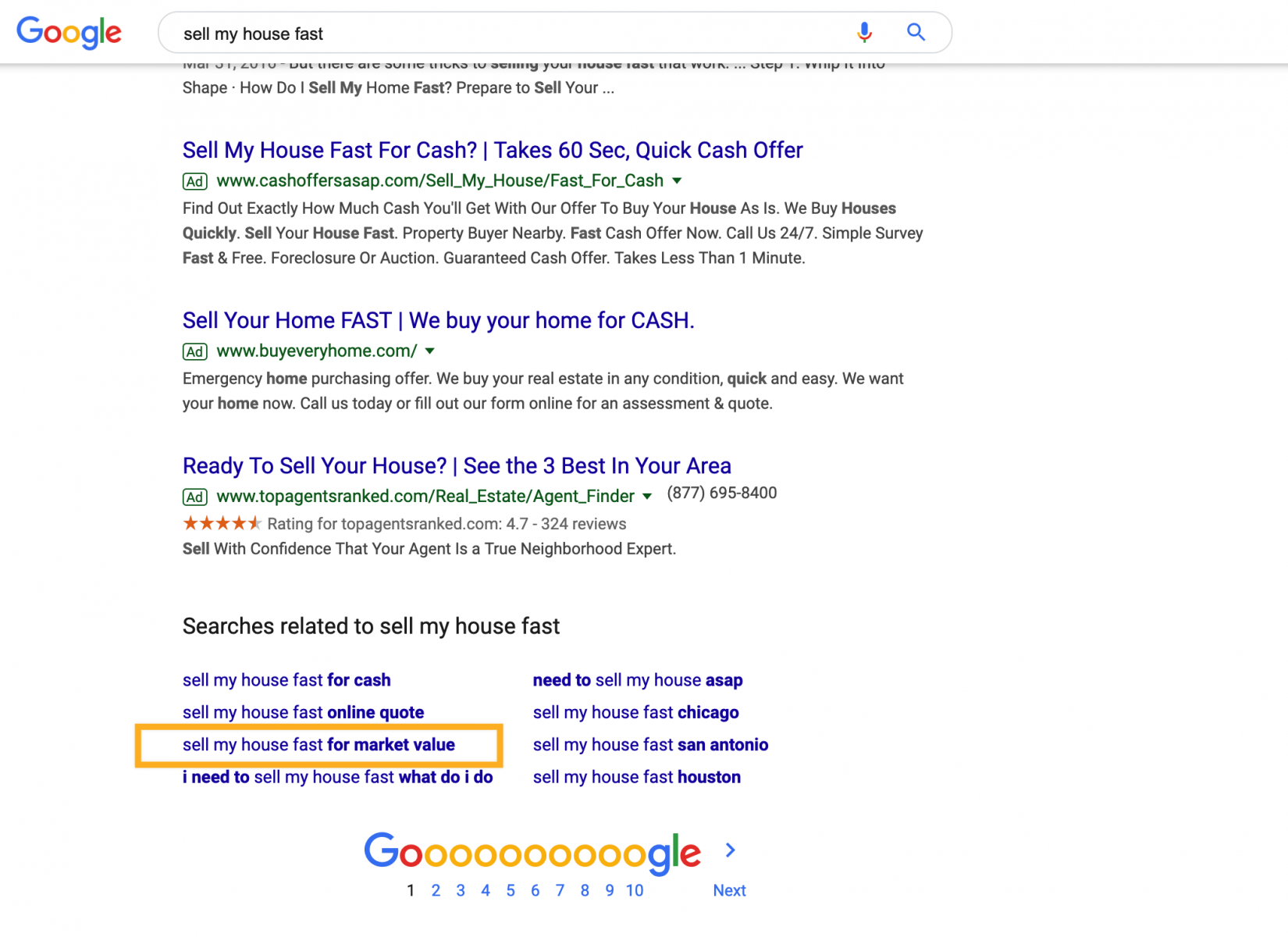
    If you have sell my house fast in a headline and then somewhere else down that line of headlines you have some house fast in Chicago. Well, Google could show those two headlines within the same ad so it starts kind of you can it kind of looks funky if you now off or. Yeah. So trying to make those headlines sound different look different than just having kind of the canned, you know, Copy that.

    00:39:43:03 – 00:39:45:24

    Brendan Holmes

    You just were accustomed to it before. Yeah.

    00:39:46:04 – 00:40:05:26

    Brady Winder

    Right. Okay. Yeah, that makes sense. Yeah, it’s good. I’m glad you mentioned that. You know, sometimes it’s not the ad copy because, like, as marketers, we think like, oh, it’s not performing. Let’s, you know, it’s got to be the copy. It’s going to be the creative, you know, it could be budget, could be competition, could be market factors, could be other things, you know, besides just what’s in the ad itself.

    00:40:06:28 – 00:40:27:23

    Brendan Holmes

    Yeah. AD and trying to make ads unique. I, I still struggle with members giving me unique ad copy, something that makes you stand out. Yeah. We used to be able to use how fast you could make it an offer that was kind of like the kind of battle of ads, how fast people can make an offer. I know.

    00:40:28:26 – 00:40:37:04

    Brendan Holmes

    Express homebuyers who say we can make an offer in 7 minutes. America members reaching out and saying, Can I put that in my ad cut? Yeah, Yeah, you can.

    00:40:37:04 – 00:40:39:23

    Brayden Reber

    And if that if you can really.

    00:40:39:23 – 00:40:40:13

    Brendan Holmes

    Legitimately.

    00:40:40:13 – 00:40:41:03

    Brady Winder

    Make a 60.

    00:40:41:12 – 00:40:41:24

    Brayden Reber

    Minutes.

    00:40:41:24 – 00:41:04:02

    Brendan Holmes

    Yeah yeah that’s a good was like this play on how fast we can make an offer I remember some ad said 30 minutes we can make 30 minutes 7 minutes to an hour. 24 hours, 48 hours. Yeah, it was. But if that’s unique to you. Yeah. Okay, test it. Test it in your ad cup and see if it goes but something interesting rather than the canned content.

    00:41:04:26 – 00:41:12:16

    Brady Winder

    Yeah. 7 minutes. I’m almost skeptical on, like 7 minutes. I think that’s the 31 below it. I’m like, these guys sound little midget. Maybe they’re thinking.

    00:41:13:05 – 00:41:20:03

    Brendan Holmes

    They just might. Yeah, that 30 minute one actually worked. It did Well I click through rates went Yeah spiked. Yeah.

    00:41:21:07 – 00:41:44:21

    Brady Winder

    Interesting. Yeah. So that’s a good point You know for the ad copy, think about what you know, what makes your business unique and set apart maybe your hybrid, maybe an investor. And that’s something you can, you know market maybe you can close fast. What’s your unique selling proposition, as we call it? That’s a good point. Any other protests, anything to keep ads interesting?

    00:41:44:21 – 00:41:50:06

    Brady Winder

    Anything you want to mention as far as targeting do’s and don’ts that we feel like people should know what they’re doing.

    00:41:50:06 – 00:41:55:17

    Brendan Holmes

    PPC landing page testing has come up in conversation that fast that I’m.

    00:41:55:17 – 00:42:00:22

    Brady Winder

    Still glad you said that because I was going to ask and I forgot. So yes, let’s dive into it. Yeah.

    00:42:01:00 – 00:42:32:00

    Brendan Holmes

    So that’s more like that advanced move they can go calls and experiments, but you can a test and Google ads putting together ad hoc, abusing your home homepage and then you create another landing page at simplified and you can test that you have a 5050 split and see what performs better for myself I yeah I have yet I know there’s there’s chatter or conversations that you know landing pages or squeeze pages as we used to call them.

    00:42:32:29 – 00:43:03:18

    Brendan Holmes

    Where are more effective than driving traffic to a home page that has a nav bar and some copy to it. And I think the reasoning behind that might be that it’s distracting if you have too much information on your site. But I there are times that maybe I’ve found that to be true. But overall, like if I look at it, yeah, home pages, as long as they have credibility, they’re set for per conversion rate optimization.

    00:43:03:18 – 00:43:11:28

    Brendan Holmes

    I, I still, the home page has always been one of my favorites as long as it has the checks. Those boxes looks good on mobile.

    00:43:12:11 – 00:43:15:20

    Brady Winder

    The quality in ones are still converting. Yes.

    00:43:16:11 – 00:43:33:23

    Brendan Holmes

    Yeah, yeah, yeah. And so I know that’s been a hot topic but that’s like it advanced piece is that creating a squeeze page and routing traffic against your home page and see which one now wins out. So that’s one. Anything to add, Did you want to add anything to that?

    00:43:33:23 – 00:43:53:26

    Brady Winder

    I don’t think so. You know, it’s it’s hard to make a generalization and say, you know, this one works better because there’s so many there are so many factors in general. You do want to give more focus when you already paid traffic because they’re there for a specific reason. But at the same time, you know, if it’s if it’s the right content on the page, then it’s not necessarily a distraction.

    00:43:54:06 – 00:44:15:09

    Brady Winder

    I think that that thought, that methodology, that concept comes from, you know, if you send them to a really cluttered page where you have like sidebar ads that are advertising a lot of the things, or if you have like a blog feed where it’s like, Hey, check out these seven articles. Yeah, that’s super distracting. And I think when people think of the website, they think of all all this stuff going on and check out these products.

    00:44:15:22 – 00:44:41:14

    Brady Winder

    But if we’re talking about a homepage to attract motivated seller leads, that’s different than your average website page. They’re not necessarily distractions. They’re things that are going to help a convert. And so that’s just my my thought as to why the Carrot home page is still converting over all these years. Well, for running page traffic to my only other thought is where, you know, you and I, we’re working on content right now.

    00:44:41:21 – 00:45:08:00

    Brady Winder

    We’re some tasks behind the scenes. So keep it really general because I’m not sure what the content will come out like, but we are working on some tests to look at really slimmed down landing pages versus home pages. And yeah, we’ll see what comes of that. And, you know, follow along guys, go to character on such ads and, you know, check out our blog to see maybe we’ll put up some examples of like what a a really well converting page looks like for sending PPC ads to versus one that’s not dialed in.

    00:45:08:00 – 00:45:29:29

    Brady Winder

    Whether that’s landing page versus home page or whether that’s, you know, good home page versus bad homepage, because like we’re talking all in theory now, you can have a really crappy landing page, squeeze page. It’s not going to convert. Same thing with a home page. And so, you know, there’s not a need to overcomplicate it and go go out and get another piece of software and start building landing pages.

    00:45:29:29 – 00:45:35:28

    Brady Winder

    You could do that with a carrot and have a converter. You know, we’re doing it right now. So that’s what I thought on that.

    00:45:36:28 – 00:46:12:27

    Brendan Holmes

    Yeah, Yeah, exactly. I I’ve, we’ve tested hundreds of other landing pages over the years and still I, I default to home page as long as it looks good and there have been times that I’ve I’ve created another by another home page basically because they kind of had that messed with their copy or their format more specific and made it just kind of I, I know Trevor Trevor likes to say like ugly websites, but these are really like bad, ugly websites.

    00:46:12:27 – 00:46:15:12

    Brayden Reber

    They’re just they were.

    00:46:15:26 – 00:46:27:28

    Brendan Holmes

    They were good. So you had created a different like home page for them. But yeah, and then that’s just it’s not impacting SEO. They’re there no index, no followed and we just use them for Google ads but.

    00:46:28:27 – 00:46:29:05

    Brayden Reber

    Yeah.

    00:46:30:10 – 00:46:34:09

    Brendan Holmes

    Other Yeah I guess it not necessarily advanced it but.

    00:46:34:18 – 00:46:35:10

    Brayden Reber

    Google.

    00:46:35:25 – 00:47:08:14

    Brendan Holmes

    If you’re managing your own campaign, Google is going to give you recommendations daily though, and it’s also educating yourself on what those recommendations mean. You click yes or to accept them or reply them is some of them can really harm campaigns without understanding the danger. And on occasions one of them specifically pops up lately that I am and becoming a believer in more than I ever have been and are broad match keywords.

    00:47:08:14 – 00:47:42:00

    Brendan Holmes

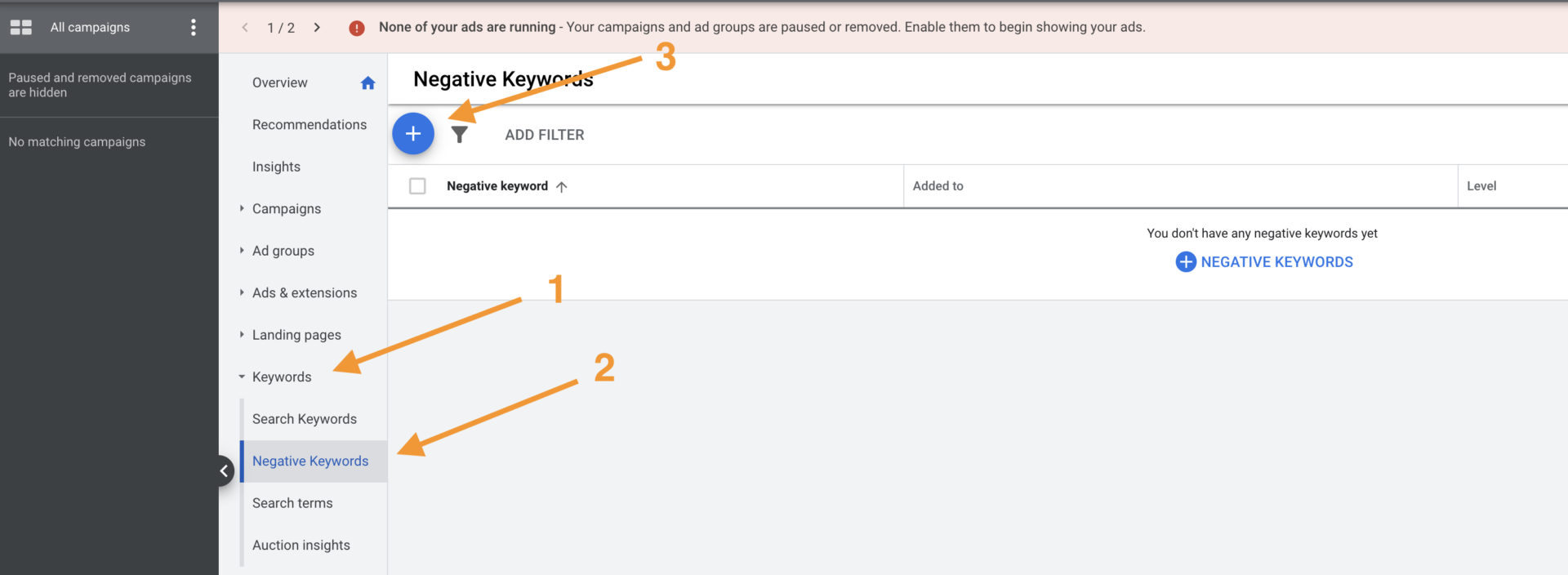
    And I was always totally against broad match keywords. I had seen too many, you know, bad campaigns with broad match and because of Google’s API algorithm that the algorithm, the pieces that they’re learning from this has gotten him in more advanced or more efficient, more optimized for for motivated seller. And the the combination of these broad match plus good negative keywords can really get lower cost per click and then expand the keyword bubble.

    00:47:42:10 – 00:48:07:08

    Brendan Holmes

    You might be missing some keywords. They just know people are searching for. So using broad match. But Google lately though, you know, in the past probably six months in campaigns, they’ll say shift to all broad match. So you click a button and it will make all of your keywords, your same keyword base, but all keywords are turned into to broad match.

    00:48:07:27 – 00:48:36:13

    Brendan Holmes

    And that’s where you really have to be careful of, especially if you’re in a metro mercury or statewide campaign. Your campaign could go crazy. You’re just getting clicks that really don’t make sense and right. But yeah, testing your way into maybe some of those broad match keywords like take a pick five of them, add the man, see what kind of search terms are coming off of them if they’re good or bad, and then adjusting, not just making all 50 or 100 keywords, they have broad match just automatically.

    00:48:37:01 – 00:48:53:18

    Brendan Holmes

    Yeah. So it’s those recommendations, understanding what they mean and how they could impact your, your, your account. And that’s, that’s not necessarily advanced. It’s just like kind of anyone managing their campaigns needs to understand that.

    00:48:54:11 – 00:49:01:12

    Brady Winder

    Yeah it goes back to what you were talking about earlier like don’t don’t always put the trust in Google just because they’re you know just because that’s the platform, you know.

    00:49:01:13 – 00:49:01:22

    Brendan Holmes

    Yeah.

    00:49:01:28 – 00:49:03:14

    Brady Winder

    They don’t know what’s best.

    00:49:03:14 – 00:49:35:26

    Brendan Holmes

    Yeah they are getting better though I think some of these recommendations are getting that they make more of a positive impact than a negative impact on their accounts. So yeah, but still understanding what they mean and especially like I said, I’ve seen it happen in metro markets where some of you just make all 100 keywords, broad match and all of a sudden they’re getting crazy search terms and in their budgets, you know, wiped out and they just they doubt they’re doing good might their means were good they they just didn’t.

    00:49:36:18 – 00:50:13:24

    Brendan Holmes

    Yeah. Make the right choice Yeah yeah yeah. And then there I mean there’s there’s advanced bid strategies you can use, there’s advanced targeting, you know location targeting you could use there’s a lot of advanced to it. But yeah, for someone who is just starting out kind of just don’t, don’t get caught up in what are saying or promising and that is one really common issue that I hear is that I I’ve heard this competitor I just went to this mastermind and this guy’s getting 20 leads from Google ads.

    00:50:13:24 – 00:50:35:22

    Brendan Holmes

    How do I get that? And well, there’s there’s a lot that goes into that. It could be. How long has this campaign been on? Did he say I mean, like his campaign could have been on for a year or two and it’s really dialed in and he might have the best website that it converts where if you’re just starting out, yeah, maybe they strive for that.

    00:50:35:22 – 00:50:57:27

    Brendan Holmes

    But you had Google ads is still it’s still a it’s still a process and it’s still a you have to optimize it. You have to continuously optimize it to get to two points that and yeah, so I have that kind of, that idea of people that once I turn on my campaign, I should be getting leads, right?

    00:50:58:23 – 00:51:01:17

    Brayden Reber

    Yeah, you might. I mean there’s, there’s campaigns.

    00:51:01:17 – 00:51:20:21

    Brendan Holmes

    I definitely could get leads in the first few days and I had a member one down who who got a lead within 10 minutes that turned out to be a deal. But for the next three months, he did not get a deal. He had nothing. And he decided to pause. And that was years ago. But it was that that was one that stuck out.

    00:51:20:21 – 00:51:44:24

    Brendan Holmes

    Yeah, you can turn it on. You can get leads right away or you might not. I mean, the likelihood that you’re your first months kind of that ramp up stage month to year, diving more into the data. And then month three, you have this great data set that you can work from. And if if you’re seeing good search terms and you know, caches, this these people look like they should be converting, then it’s okay, go look at your website.

    00:51:45:09 – 00:52:28:13

    Brendan Holmes

    Go see what other kind of changes you can make. Make a my change maker, make a form change, you know, test something within maybe it’s going from, you know, three form fields to two two. We’re adding in the lead gen banner. Yeah. So it’s once you have good data knowing then if that if that data is really looking promising in something that should be turning into deals, you know, then it’s that next stage of testing and landing you’re not by any pieces is, isn’t like squeeze pages, but other pages other or other other headlines within that the the websites I do have more testimonials to use I mean right.

    00:52:28:29 – 00:52:32:03

    Brady Winder

    Trying to get those leads to convert at a higher rate. Yeah.

    00:52:32:09 – 00:52:32:21

    Brendan Holmes

    Yeah.

    00:52:33:10 – 00:52:54:06

    Brady Winder

    Well I like that man. I appreciate you sharing that. That’s a good wrap to it. In summary, So educate yourselves whether you’re doing PPC yourself or you’re outsourcing, educate yourself on it so you know what you’re looking at. And yeah, I think that’s one of the one of the best things we covered during the podcast. Man, it’s been fun having you on the podcast.

    00:52:54:06 – 00:53:14:19

    Brady Winder

    One thing I forgot to mention, the beginning is kind of funny. You were running this the podcast before. You know, I’ve, you know, I’ve only been here four or five years and you were running there and I had to, you know, how are we doing shown us how do we hurry this whole production thing? And yeah, you’ve been running this show since before I was even around.

    00:53:14:19 – 00:53:15:28

    Brendan Holmes

    Yeah. It’s been a.

    00:53:16:01 – 00:53:17:01

    Brady Winder

    And a team and.

    00:53:17:03 – 00:53:33:08

    Brendan Holmes

    How amazing it’s been one, especially since you taken over. I just, I, I did some show notes. Yeah, I put on the blog, but now you’ve taken over and really made it into a nice production. A great production? Yeah.

    00:53:33:08 – 00:53:36:20

    Brady Winder

    I’m grateful to be interviewed now. Yeah. Yeah, it’s legit.

    00:53:37:02 – 00:53:38:12

    Brayden Reber

    It’s legit. Yeah.

    00:53:38:24 – 00:53:59:19

    Brady Winder

    Or any of our longtime listeners, you’ll appreciate that. You know, Brendan, the OG producer, is coming on the show, so, yeah, it’s been fun, man. Anyone, if you have any questions on pay per click, if it went over your head, if you have any questions at all, email me, birdie at Care.com, We’ll get you over to Brendan or the right person to get your questions answered.

    00:53:59:19 – 00:54:13:01

    Brady Winder

    Go to character com slash ads, Get our resources. We do our best to give you all of the education you would possibly ever need even to the point of overwhelm so that you just are equipped and we’re here to help. So we want you to know that please reach out if you need help, because it can get overwhelming fast.

    00:54:14:04 – 00:54:48:13

    Brady Winder

    That’s it. If you like this episode, share with a friend. Please give us a review on Apple Podcasts. I don’t ask for them often, but good Apple Podcasts give us a five star review if we earned it and tell a friend about the podcast, help us share the work. But until then, we will see you next week.

  • How To Build a High-Converting PPC Landing Page For Real Estate PPC Campaigns (7 Elements With The BIGGEST Impact)

    How To Build a High-Converting PPC Landing Page For Real Estate PPC Campaigns (7 Elements With The BIGGEST Impact)

    You’re spending a hard-earned marketing budget on your PPC campaigns…

    Every penny counts. More importantly, every click counts.

    The worst thing that can happen is a lot of people click on your PPC ad (costing you money), but none of those people become a lead or turn into cold, hard cash for your business. That would make your PPC campaign a waste of time and money.

    This is why where you send people (i.e., the landing page) when they click on your ad is so critical.

    If you send prospects (even motivated sellers) to a low-converting landing page, you might still get some leads, but you won’t get as many as you could (how hard is it to hit the back button and click on your competitor’s website instead?).

    Sadly, one lost deal could be between $10,000 and $50,000 down the drain, depending on your business model…

    And that’s not money you’re willing to lose.

    At Carrot, we’ve generated millions of online leads for real estate investors and agents. During that time, we’ve learned a thing or two about building a high-converting landing page.

    Let’s talk.

    What is a landing page for real estate PPC?

    A landing page is just marketing terminology for the page you send people to in a marketing campaign.

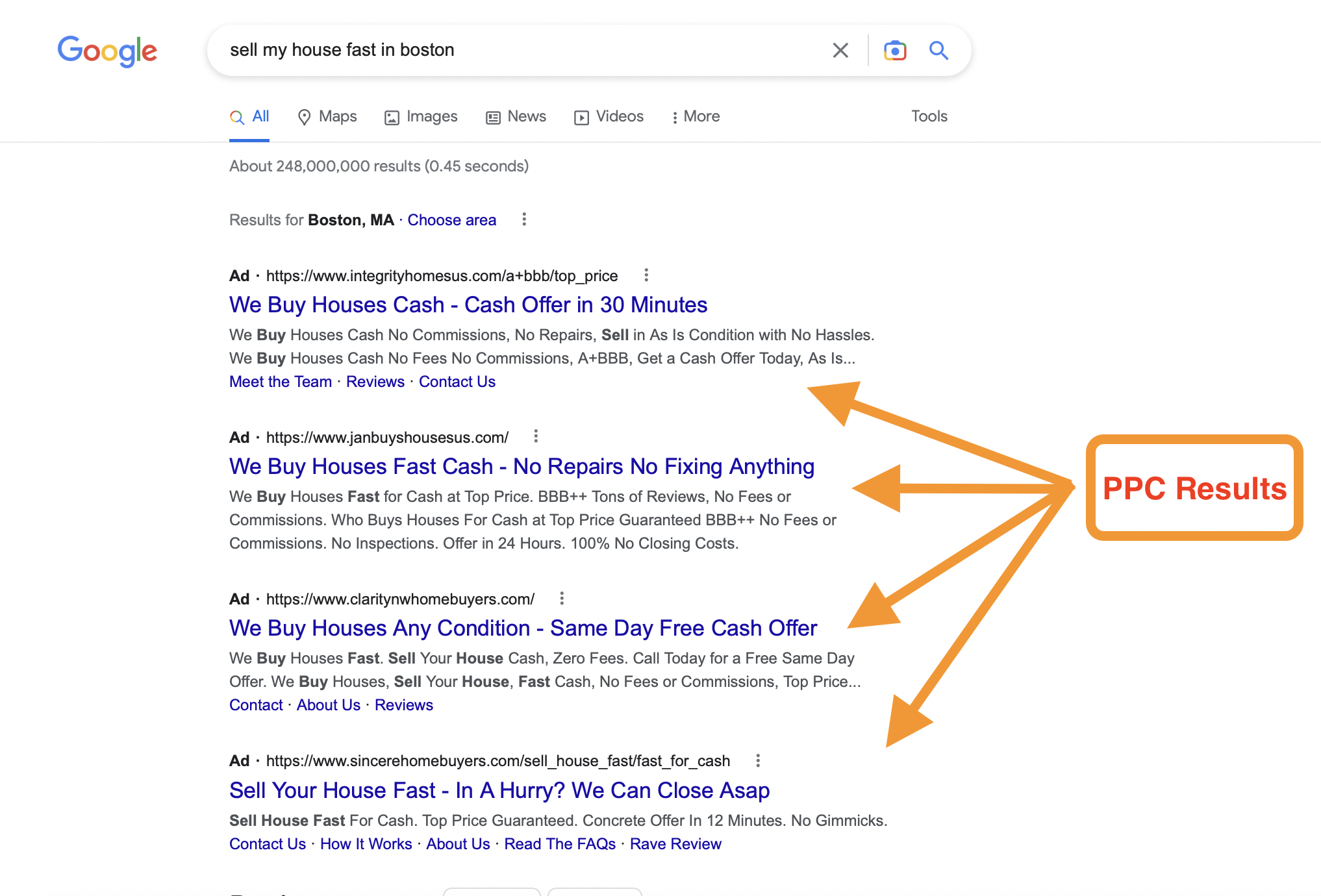
    In the case of Google Ads, it’s the page people go to when they click on your ad. For example, if I click on this result…

    Google Ads search results for sell my house in boston

    The reason that optimizing your landing page is so essential is because it helps determine the effectiveness of your ad campaign. If the page people go to after clicking on your ad is irrelevant, unpersuasive, or even takes too long to load, they won’t stick around and will not become a lead.

    Here’s a table summarizing the key differences of full webpages vs PPC landing pages:

    FeatureWebpagePPC Landing Page
    PurposeInformational, brand awarenessLead generation, conversion-focused
    Target AudienceBroader audience interested in real estateHighly targeted audience, e.g., motivated sellers
    ContentDiverse content: bio, services, blog postsFocused on a single offer or call to action (CTA)
    NavigationExtensive navigation to other website pagesLimited or no navigation to avoid distractions
    Call to Action (CTA)May have various CTAsStrong, clear CTA to capture leads

    Now that you know what a landing page is and why it’s important, let’s talk about 7 elements of every landing page that impact conversion.

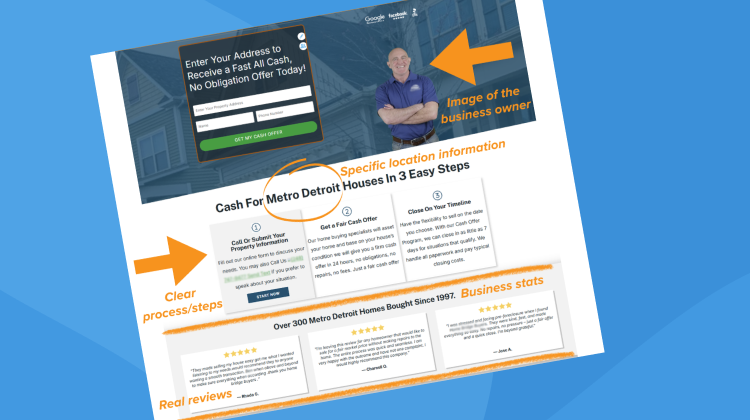
    7 Elements You MUST Have for High-Converting PPC Landing Pages to Maximize Lead Generation

    Element #1: Simple Opt-In Form

    Every real estate website (agent or investor) at Carrot needs a high-quality, easy-to-fill-out opt-in form.

    And we don’t just believe that for no reason: it’s science. We’ve run hundreds of A/B tests on our member’s websites to determine whether opt-in forms perform better than a “Call Now” CTA (they do) and what types of forms perform the best.

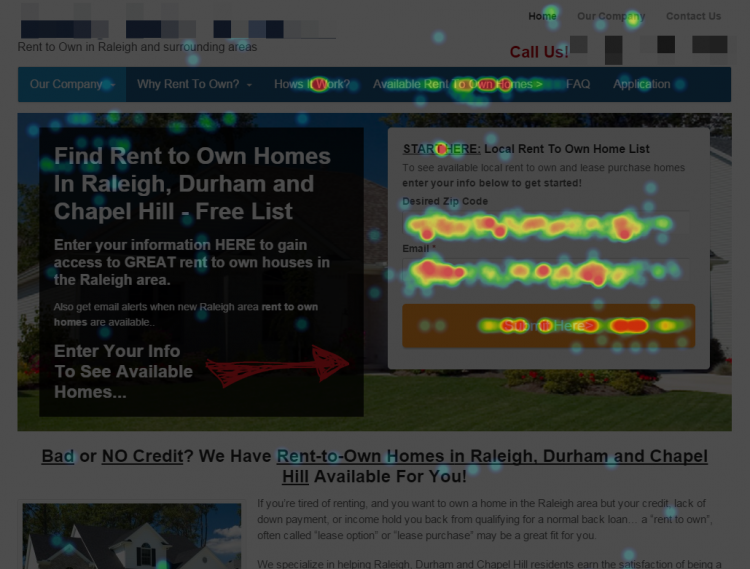
    From one test we ran, we found that our member’s sites had almost a 30% conversion rate!

    Here’s the heatmap from the test…

    Rent To Own Homes In NC Heatmap

    And here’s the data…

    rent-to-own-house-website-test1

    If you want a high-converting landing page right out of the box, our Carrot sites already have all the elements mentioned in this article baked right in. Or, if you want to build one yourself (no biggie!), here’s what you’ll want for your opt-in form…

    • Keep it simple and only have 3-4 fields for people to enter their information.
    • Set up text message notifications for when a lead opts in so you can follow up fast (Carrot does this automatically!)
    • Ensure that the form you use is above the fold — meaning when people land on your website, it’s the first thing they see.
    • Have a big, clear button that’s a different color than everything else on your website.

    High-Converting Element #2: Clear & Actionable Content

    When it comes to capturing motivated sellers, clarity and action are key. Your landing page copy should be clear, concise, and laser-focused on the benefits you offer.

    Why is clear content important for seller-focused landing pages?

    • Motivated sellers are in a time-sensitive situation. They need to understand your value proposition quickly and easily. Dense text blocks or overly technical jargon will only deter them.
    • Focus on Benefits, Not Features. Don’t just list your services; explain how you solve seller pain points. Highlight the benefits of selling to you, like a fast cash offer, a hassle-free process, or the ability to avoid costly repairs.
    • Action-Oriented Language: Motivate sellers to take the next step. Use strong verbs and clear calls to action throughout your landing page copy.

    Best Practices for Persuasive Landing Page Content:

    • Keep it Short & Sweet: Stick to short paragraphs and bullet points for easy readability on any device.
    • Local Market Data: Showcase your knowledge of the area. Highlight relevant local market data, like average sales times or cash buyer trends, to demonstrate your expertise and ability to deliver a quick and smooth sale.
    • Focus on Seller Benefits: Use clear language to explain how you address their specific needs and challenges. For example, “We understand the stress of inherited property – get a fair cash offer and avoid costly repairs.”
    • Testimonials & Social Proof: Integrate positive testimonials from satisfied sellers to build trust and credibility.

    Remember: Your landing page copy should be a conversation starter, not a novel. Focus on clear communication, highlight the advantages of working with you, and guide sellers towards taking action (e.g., requesting a cash offer).

    High-Converting Element #3: Compelling Headline

    Your headline is like the golden sign outside your investor open house. It needs to grab attention, pique interest, and clearly communicate the value you offer. Real estate investors are busy, so a strong headline is crucial for making them stop scrolling and engage with your landing page.

    Here are some key ingredients for crafting compelling headlines for real estate PPC landing pages:

    • Clarity: Keep it clear and concise. Investors should instantly understand what your offer is.
    • Relevance: Ensure the headline aligns with your target audience and the specific investor segment you’re targeting (e.g., flippers vs. buy-and-hold investors).
    • Benefit-Driven: Focus on the benefits your offer provides. What problem do you solve for investors? How can you help them achieve their goals?
    • Location-Specific (for Real Estate): Highlight your local expertise and cater to the specific market you serve. This personalizes the message and resonates with investors familiar with the area.

    Example:

    Let’s say you specialize in helping investors buy rental properties in a specific city. Here’s an example headline that incorporates these elements:

    • “Tired of Making Repairs? Get a Fair Cash Offer Today (Sell Your Rental Property Fast!)”

    This headline is clear, relevant to buy-and-hold investors facing repair hassles, emphasizes the benefit of a quick cash offer, and targets investors specifically in your city.

    High-Converting Element #4: Equally Compelling CTA

    Your call to action (CTA) is the moment of truth on your real estate PPC landing page. It’s where you convert curious visitors into qualified leads by prompting them to take a specific action.

    A strong CTA is essential for maximizing your lead generation efforts. Here’s what makes an effective CTA for real estate investors:

    • Clear Action Verbs: Tell investors exactly what you want them to do. Use strong verbs like “Download,” “Schedule,” or “Get Started.”
    • Prominent Placement: Make your CTA button stand out visually. Use contrasting colors and place it above the fold (visible without scrolling).
    • Relevant to Investor Goals: Your CTA should align with the value proposition you’ve presented and address the investor’s specific goals. Don’t ask them to “Learn More” if they’re ready to “Schedule a Consultation.”

    Examples:

    Consider these CTA examples tailored to different investor goals:

    • “Download Your How to Stop Foreclosure Guide” (Clear action verb, relevant to distressed property investors facing foreclosure)
    • “Schedule a Free Consultation to Find Your Perfect Investment Property” (Prominent placement, addresses buy-and-hold investor goals)
    • “Get a Fair Cash Offer Today!” (Strong verb, urgent tone for investors seeking a quick sale)

    Remember: A/B testing different CTAs can help you determine which ones resonate best with your target audience.

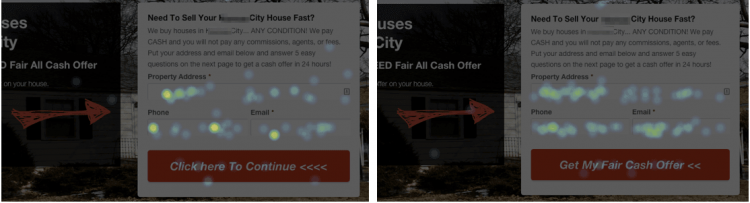
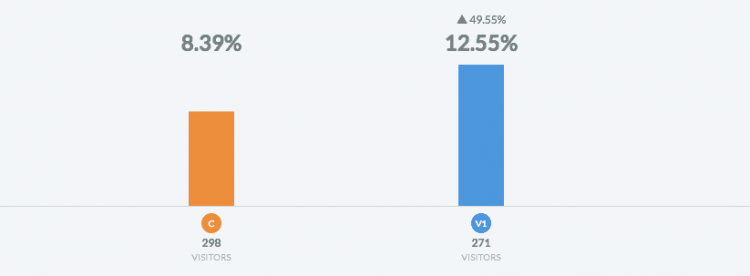
    From one test we ran at Carrot, we found that “Get My Fair Cash Offer” converted 49.55% better than “Click here to continue.”

    split test motivated house seller website

    Here are the exact percentages…

    house seller website test

    Giving people what they already want isn’t just less work for you; it converts better, too.

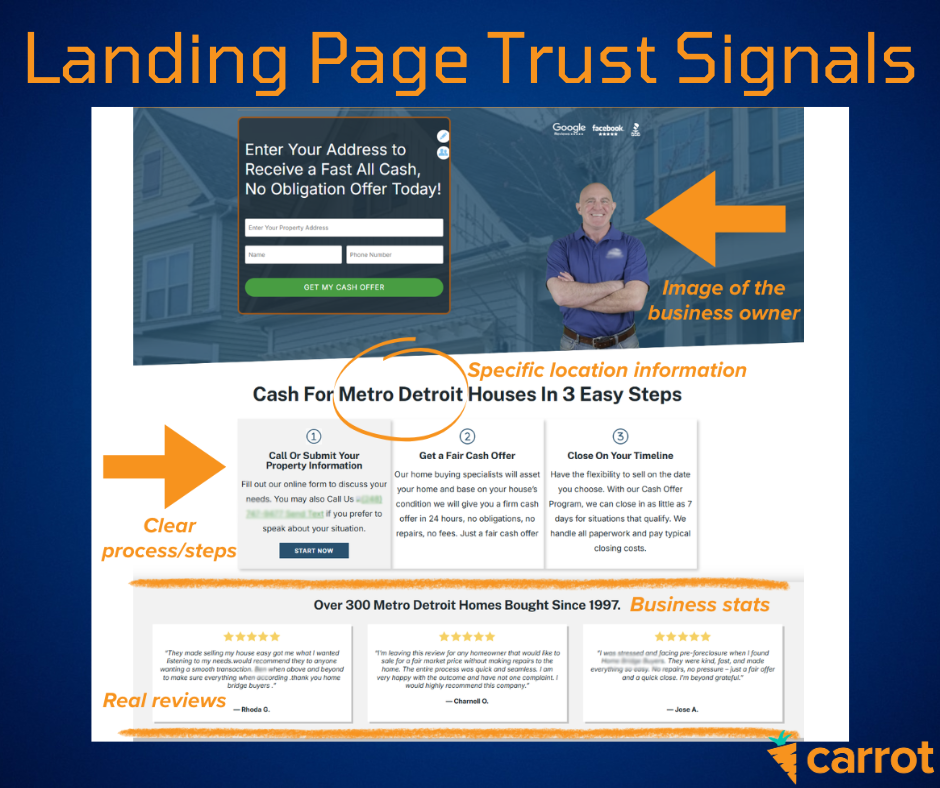
    High-Converting Element #5: Trust Signals & Social Proof

    Securing motivated sellers hinges on establishing trust. This is where trust signals and social proof come into play.

    • Trust Signals: These are visual cues that demonstrate your legitimacy and expertise as a real estate professional. They act as a digital handshake, assuring house sellers you’re a reliable and trustworthy partner to help them achieve their goals.
    • Social Proof: This leverages the power of “herd mentality.” By showcasing positive experiences from past clients (especially sellers in your local market), you demonstrate the effectiveness of your approach and encourage others to take action.

    Why are these important for real estate investor landing pages targeting sellers?

    House sellers are entrusting you with a significant financial decision – selling their property quickly and efficiently. By incorporating trust signals and social proof, you significantly increase the likelihood of converting website visitors into qualified leads.

    Examples of Trust Signals:

    • Security Badges: Display logos indicating secure transactions and data protection.
    • Professional Licenses & Affiliations: Showcase your real estate licenses and relevant professional memberships.
    • Awards & Recognition: Highlight any industry awards or recognitions you’ve received.

    Social Proof in Action for Real Estate Investors:

    • Seller Testimonials: Feature quotes and success stories from satisfied sellers, particularly those in your local market.
    • Case Studies: Showcase real-world examples of how you’ve helped sellers achieve their goals (e.g., “Sold John’s house in X days above asking price”).
    • Logos of Trusted Partners: Display logos of reputable companies you work with, like title companies or closing attorneys.

    Remember: Social proof should be authentic and verifiable. Encourage seller reviews on trusted platforms like Google My Business or industry-specific sites.

    By strategically integrating trust signals and social proof on your real estate investor landing pages, you build trust with potential sellers and establish yourself as a proven resource to help them achieve a smooth and successful sale.

    High-Converting Element #6: Image That Paints Desire

    Real estate is a visual business, and the same applies to your landing pages targeting motivated sellers. High-quality visuals are crucial for capturing attention, conveying information effectively, and ultimately, convincing sellers to choose you over other options.

    Why are visuals important for seller-focused landing pages?

    • Attention Grabbing: Compelling visuals instantly capture attention and make your landing page stand out. In a sea of competing offers, strong visuals are the first impression that can convince sellers you’re the right buyer for their property.
    • Emotional Connection: The right visuals can evoke emotions and build trust with your audience. Use high-quality photos of beautiful homes you’ve helped sell or inspiring visuals of happy sellers receiving a fast cash offer. This creates an emotional connection and positions you as a solution to their situation.
    • Transparency & Trust: High-quality visuals demonstrate professionalism and transparency. Showcase problem-free solutions: for example, pictures of smooth walkthroughs or happy sellers signing paperwork. This builds trust and reassures sellers you’re a reliable partner in their sale.

    Examples of Effective Visuals for Motivated Sellers:

    • High-Resolution Property Photos: Showcase attractive, professional photos of the types of properties you buy (e.g., single-family homes in need of repairs, inherited properties).
    • “Before & After” Photos: If you specialize in renovations, highlight your expertise with “before & after” photos showcasing the transformation potential of properties.
    • Fast Closing Videos: Short testimonial videos featuring sellers who received a quick cash offer can be incredibly powerful. These visuals demonstrate your ability to deliver a smooth and efficient sale process.
    • Data & Charts: Use data visualizations (e.g., charts showing average closing times) to communicate your commitment to a fast and hassle-free experience for sellers.

    Remember: Don’t underestimate the power of visuals. Invest in high-quality photos or consider using high-resolution stock imagery that resonates with motivated sellers and showcases the types of properties you typically buy.

    High-Converting Element #7: Quick Load Speed

    In today’s mobile-driven world, ensuring your real estate investor PPC landing page is mobile-friendly is no longer optional – it’s essential. Here’s why:

    • Mobile Dominates Real Estate Searches: A significant portion of motivated sellers initiate their search for solutions (like cash buyers) from their smartphones. If your landing page isn’t optimized for mobile viewing, you’re missing out on a huge pool of potential leads.
    • Seamless User Experience: Mobile users expect a smooth and intuitive experience. A mobile-friendly landing page ensures clear navigation, easy-to-read text, and properly sized buttons for seamless interaction on any device. Frustrated sellers on clunky mobile pages are more likely to bounce and seek alternative solutions.
    • Faster Lead Generation: A responsive landing page loads quickly and functions flawlessly on mobile devices. This translates to faster form submissions and quicker lead capture when motivated sellers are ready to take action.
    page speed loading time

    (Image Source)

    Benefits for Real Estate Investors:

    By prioritizing mobile-friendliness, you unlock several advantages in the competitive real estate market:

    • Increased Lead Generation: Capture leads from a wider audience of sellers who are searching and making decisions on their phones.
    • Improved Conversion Rates: A user-friendly mobile experience keeps sellers engaged and more likely to convert on your call to action (e.g., requesting a cash offer).
    • Enhanced Brand Image: A mobile-optimized landing page demonstrates professionalism and a commitment to providing a convenient experience for sellers, potentially positioning you as the go-to buyer for their needs.

    Remember: Don’t just assume your landing page is mobile-friendly. Use Google’s Mobile-Friendly Test tool or other resources to check responsiveness and ensure a smooth experience for sellers on any device.

    At Carrot, we’ve optimized all our member’s websites to be fast. Here are the results of one being run through a speed test.

    Carrot member pages speed results

    This helps with SEO rankings, and, more importantly, helps with the conversion rate. When your website loads quickly, people stay longer and are more willing to work with you than if they have a clunky and difficult experience.

    It’s not the most important element in the world, but it does make a difference…

    And how much would it cost you if a motivated seller, could-be-a-deal, left your website because it moved too slowly? $10,000? $50,000?

    Yeah… it’s not worth it.

    Bonus Section: Common Real Estate PPC Landing Page Mistakes to Avoid for Sellers

    While crafting compelling landing pages to capture motivated sellers, here are some common mistakes to steer clear of:

    • Generic Landing Pages: Don’t use a one-size-fits-all approach. Tailor your landing page specifically to the needs of motivated sellers (e.g., facing foreclosure, inheriting a property) rather than a broad real estate audience.
    • Weak Value Proposition: A vague or unclear value proposition won’t resonate with time-sensitive sellers. Clearly state how you solve their problems and the benefits of working with you (e.g., “Sell your house fast for cash and avoid costly repairs”).
    • Confusing Navigation: A cluttered landing page with complex navigation will frustrate sellers. Keep it simple and focus on a single call to action (e.g., “Get a Cash Offer Now”).
    • Lack of Trust Signals: Sellers are entrusting you with a significant financial decision. Omit trust signals like security badges, professional licenses, or testimonials, and you risk losing credibility.
    • Excessively Lengthy Forms: Don’t overwhelm sellers with lengthy forms. Request only essential information needed to get started (e.g., property address, contact details).
    • Unrealistic Promises: Avoid making exaggerated claims about closing timelines or cash offer amounts. Focus on transparency and realistic expectations to build trust with sellers.
    • Not Tracking & Testing: Don’t set your landing page and forget it. Regularly track key metrics (e.g., conversion rates, bounce rates) and A/B test different elements (e.g., headlines, CTAs) to optimize your landing page performance for maximum lead generation.

    By avoiding these common pitfalls and focusing on the best practices outlined above, you can create high-converting real estate investor PPC landing pages that effectively capture motivated sellers and propel your investment business forward.pen_sparktunesharemore_vert

    How Do You Get Results?

    PPC takes work but is essential for real estate professionals seeking more qualified leads. Real estate businesses can ensure high conversion rates by optimizing their landing page for conversion. This is especially important when targeting hyper-competitive markets such as Dallas, Miami, or Denver, where it’s even more critical for a business to have all conversion principles in place.

    Doing so can increase lead generation by up to 2-3x or more compared to businesses without conversion optimization. With the right approach and strategy, you can use PPC to increase lead generation and build brand loyalty among your target markets.

    If you’re already a member, here are some resources to help you learn more about PPC:

    Other free PPC resources:

  • Effective PPC Strategies For Real Estate Investors

    Effective PPC Strategies For Real Estate Investors

    Effective PPC Strategies For Real Estate Investors

    • We’re committed to your privacy. Carrot uses the information you provide to us to contact you about our relevant content, products, and services. You may unsubscribe from these communications at any time. For more information, check out our Privacy Policy.
    • This field is for validation purposes and should be left unchanged.

  • Guide to Negative Keywords for Real Estate PPC Plus Free Negative Keyword List for Motivated Sellers

    Guide to Negative Keywords for Real Estate PPC Plus Free Negative Keyword List for Motivated Sellers

    No one likes to waste money! Negative keywords are one of the most underutilized tools PPC advertisers have at their fingertips. They can help you save a budget for the best quality searches when used correctly.

    We want you to hit the ground running with your campaign quality, so we’ve added 100 negative keywords you can include in your PPC accounts. It will keep your keep ads from showing for words such as “gta” and “paint,” which are sure to accompany some keywords you’re bidding on.

    ⬇️ Grab a FREE Negative Keyword List for Motivated Sellers ⬇️

    Let’s say you’re an investor who’s creating your first Google Ads campaign. You’d like to show up on searches to sell a house. Although, it can be a mistake to advertise for a broad term. Here’s what can happen:

    Advertiser bids on “sell home” and a searcher comes along and types in “sell home furniture,” looking at the many options to sell their home furniture.

    Your ad featuring an option to sell their home fast for cash shows.

    The searcher accidentally clicks your ad, driving up your bill, without any intention of selling you their house.

    This is a fairly common example. As you’ll discover, from video games to furniture to spiritual statues, lots of search terms represent something that has nothing to do with selling a house fast.

    What Are Negative Keywords for Real Estate & How Do They Appear In Google Ads?

    Negative keywords give you an opportunity to block search terms that you don’t want your ad to be shown for. Let’s take a look at the common types of negative keywords that can be added:

    • no notation at all indicates a broad match
    • [brackets] represent a keyword in exact match
    • “quotations” represent a keyword in phrase match

    You can add these negative keywords at the campaign level & ad group level. Campaign level negatives mean those will not appear within an ad group for any keyword. Ad group level means you can set a particular negative keyword for a singular ad group. For the real estate industry, it’s best practice to add negative keywords at the campaign level.

    Let’s take a look at how negative keywords are often used.

    More of the traditional use of negative keywords works well for the real estate industry.

    For example, if you’re looking to capture leads where people are searching looking to sell their house fast without an agent; then you’ll want to block searches for “sell a house with an agent” and “find an agent to sell my house” by adding “agent” to your negative keyword list.

    *Tip*  You should use Google’s search terms report to find new negative keywords. But, do beware that if you add keywords using this method, Google defaults them as an exact match.

    How to Build a Strong Negative Keyword List

    First, if you have a Google or Bing rep, they should be able to help you build lists of negative keywords they use for similar accounts. But you’ll need to ensure these Google or Bing created lists aren’t taking away from your important search phrases.

    Remember, reps know their products but probably don’t know the industry.

    The same might be true if you’re having someone manage your account.

    Next, as with planning any keyword list, you can explore Google Ads Keyword Planner and/or use the Google Suggestion method to see related terms and understand what you might want to weed out.

    You’ll need to have a Google Ads account to use their tool. For Google Suggestions, search and look at the suggestions below the organic rankings. Here’s an example,

    Another tool that we use for keyword suggestions is Ubersuggest. This tool is similar to the Google Ads tool, but you don’t need to be logged into your AdWords account to use it. It’s a good tool because it lets you type in a keyword phrase and then groups variations on that keyword into organized segments, like this:

    Sell house

    finding negative keywords for real estate with ubersuggest

    As you can see, I’ve highlighted in orange some potential negative keywords for a business looking for motivated sellers.

    Without using this tool, you might have known that “sell house tax” is a popular search. Now you can turn “tax” into a negative keyword to block any searches with the term “tax” within it.

    Lastly, you should also use Google’s “related search” to id new negative keywords. This very effective method allows you to see what related search terms Google sees as popular. Then, you can remove the unrelated Here’s how it would look when performing a search for “sell my house fast”:

    find negative keywords using google suggest

    As you can see, you can add “market value” to your negative keyword list.

    Using Negative Keywords With Microsoft (Bing) Ads

    Bing Ads is a platform that we shouldn’t forget. We’ve researched to back up the effect that Bing can be a viable option for generating leads via PPC. So, negative keyword best practices should be included there too.

    One difference between Microsoft (Bing) Ads and Google Ads is that you can only add phrase and exact match types for negative keywords.

    If you’re importing a Google Ads account into Bing, just be aware that your broad match terms will be converted into phrase match.

    As with Google Ads, you can add campaign and ad group level negative keywords. If you need further help, use Bing’s instructions on setting up negative keywords.

    How to Add Negative Keywords

    Add individual negative keywords to ad groups or campaigns

    Step 1: Select Keywords and Targeting > Keywords, Negative.

    Step 2: Click add negative keywords and select Ad group negative or Campaign negative keywords.

    adding negative keywords to google ads

    Step 3: If prompted, select the destination for the new negative keyword and click OK.

    Step 4: Enter the negative keyword in the edit panel.

    Add multiple negative keywords

    It isn’t possible to add campaign and ad group negative keywords at the same time with the Make multiple changes tool. Choose to add either negative keywords or campaign negative keywords.

    1. Select Keywords and Targeting > Keywords, Negative.
    2. Click Make multiple changes.
    3. Select My data includes columns for campaigns and/or ad groups or Use selected destinations.
      – If you select Use selected destinations, select Add as campaign-level negative keywords or Add as ad group-level negative keywords.
    4. Type or paste your negative keywords in the grid.
    5. Click Process.
    6. The Make multiple changes tool will display the number of changes made. Click Finish and review changes.
    7. Review your pending changes. To add the pending changes to your account, click Keep. To undo your changes, click Reject.

    Conclusion

    Bidding on the highest-converting keywords in your market is only part of the battle. A solid set of negative keywords you’re continuously expanding upon helps tally victories. Google does a pretty good job filing through millions of ads to serve the right one to the right searcher at the right time. But there is still plenty of room for mistakes, so keep up on your negative keywords!

    If you don’t like wasting your hard-earned money, negative keywords are one of the best ways to ensure you spend money on the right searches.

    Starter Negative Keywords for Real Estate List – 100 Words to Get You Started

  • 10 Proven Techniques to Create High-Converting PPC Ads for Motivated Sellers

    10 Proven Techniques to Create High-Converting PPC Ads for Motivated Sellers

    creating google ppc ads for motivated house sellers

    When it comes to real estate investor PPC for motivated sellers campaigns, there tends to be a lot of emphasis on the quality and content of landing pages to increase conversions.

    Your landing page is crucial, but to motivate sellers to visit it, you must first persuade them to click on your ad.

    The best landing page will do little good if a seller doesn’t see it. 

    So, how do you make your Google PPC ads stand out from the rest of the clutter on a Google search result page? 

    Based on the analysis of over 50 Google Ads accounts, we identified the top 10 commonalities with the highest click-through and conversion rates. Here’s a real example of a high click-through (17.39%) converting motivated seller ad (37.50%)

    high click-through, high converting motivated seller ad

    After their Google search, that little ad has two to three seconds to grab the house seller’s attention.

    You get a small headline and a very short amount of copy to convince the seller your site is worth visiting… and that you can solve their problem.

    The better your ads perform, the more clicks you’ll get.

    The Top 3 Google PPC Ads Get 2-6% click-through rates. Whereas ads 4 and below average 1-2% On A Google Search Result Page

    google ads ad position click through rate

    10 Techniques for Creating High Converting Motivated Sellers PPC Ads

    You want to make your ads leap off the page and pull the viewer in. (Like this Carrot member did in his ads)

    As quickly as possible, you need first to grab their eye; second, show them that you can likely help them, and relay a sense of credibility through the ad to make them feel great about clicking the ad to learn more.

    Since you only have a few lines and seconds to relay all that, your ad headline and copy need to trigger an instant response.

    Give motivated sellers a reason to click.  Here are some practical and ethical triggers I use when creating PPC Ads for Real Estate Investors.

    These triggers have helped to yield an average 5% click-through rate and an 18.2% visitor-to-lead conversion rate across Carrot PPC accounts that I manage.

    Use this article and our “20 Steps to Optimize Your Google PPC Campaigns” and “How to Tell If My Real Estate PPC Campaign Is Working – Setting Up Conversion Tracking” posts to hone your campaigns.

    1. Ask a Question:

    People naturally interact with questions. Often that sense of curiosity piques our interest, and it creates an “open loop” in our minds to want to find the answer to that question. When asking a question in your ad headline, you’re triggering this curiosity and making your ad appeal to them personally. Here are a couple of ad headline examples where I used a question:

    Other examples of questions you can pose are…

    • “Did your listing expire?”
    • “Need to sell quickly?”
    • “Is Your House In ?”

    You get the idea.

    Get creative.

    2. If Possible, Use Humor:

    Sometimes, this is a little harder in the real estate market. People like to laugh. If your ad headline makes them chuckle, they associate your ad with positive emotion. This creates a more receptive message.

    A way to do that may be…

    “Is Your House A Total Beater?”
    Sell As-Is. We’ll Pay For Repairs
    Get A Fair Cash Offer Today
    www.YOURURLHERE.com

    3. Add Credibility

    Call out a BBB rating or how long you’ve been in business. Increased credibility equals increased persuasiveness of the ad overall and strengthens your brand’s quality. This can lead to a higher click-through rate.

    Add Credibility to your google ads

    4. Go Regional:

    Depending on your campaign’s demographics, using regional triggers in your ads, such as city or state names, often pays off. Sellers will automatically relate to the area and build more trust seeing a loc ad. Couple that with a local-looking domain name or URL, and that’s even better! 

    localize your google ads

    5. Use Power Words:

    Several keywords are known as power words. These words are proven to attract attention and sales. They include words like highest, free, fast, super, fair, now, must save, expert, local, limited, and so on.  Create a sense of urgency.

    use power words in google ads

    Some ways to use some of those powerful words in your ads include…

    • “Sell Your Boise House Fast”
    • “Get Your Fair Fast Cash Offer Today”
    • “Save time and money. Receive an offer today”
    • “If You Must Sell Now, We Can Help”

    And so on.

    Again, get creative and test things out.

    6. Mention Guarantees:

    Guarantees are mentioned in an ad, such as a guaranteed cash offer or a guaranteed offer in 24 hours.

    Here’s a quick disclaimer, but never guarantee anything you can’t 100% confidently fulfill.

    Don’t guarantee the “highest offer” in the market unless you’re ready to do that.

    Don’t guarantee to “close in 7 days” if you can’t do it.

    Capiche?

    7. Use Personalization:

    Similar to ads asking a question, ads that specifically address the audience are much more likely to gain attention.  Such as the title Facing Foreclosure?

    Here are some other examples…

    In Divorce? Sell Your House Fast
    Avoid costly broker fees. Sell In 7 Days Or Less.
    Receive a fast – fair cash offer today

    Inherited A Boise House? Cash It Out
    Trade that house for cash today.
    Receive a fast-fair cash offer

    Are You A Tired Landlord? 
    We’re buying local rental houses
    Get a fair-fast cash offer today

    Get creative.

    Now… with that said, if you’re going to personalize your ads, you need to make sure you’re also putting these ads in front of very targeted searches. You won’t want to serve up a “tired landlord” ad to someone searching “sell my house fast” or “we buy houses.”

    But you may want to test it out to someone searching “tax consequences of selling rental property” or “selling a rental property“… and targeting it to the locations you would buy.

    8. Use Benefits + Story:

    Searchers are good at recognizing advertising and blocking it out. So your ads can become more effective if they have a storyline and appear less like an ad.

    Also, ensure your ads sell the benefit the homeowner will get by working with you. Too many people just mention the service… “we buy houses, “… “local home buyer,” etc. But the benefit they’ll experience is what they’re after.

    • A fast sale.
    • Cash in their hands quickly.
    • Avoid agent fees.
    • Avoid stress.

    You get the idea.

    Some examples…

    David Sold His Boise House Fast
    He avoided agent fees and stress.
    See how you can to today!

    Sell Your House Fast-Cash
    Need to Sell Fast? Close in 7-Days. We
    buy houses nationwide, No Cost!

    Sell Your Boise House Easily
    Fair Price – No Fees – No Hassle
    Any Location – Any Condition

    Look at the benefits mentioned in those ads that the seller can get working with us.

    • avoiding stress
    • avoiding agents fees
    • no cost
    • sell quickly (who doesn’t want that!?)
    • no hassles
    • fair
    • I can sell my house fast and be done w/ it

    Focus on the seller’s benefits, and you’ll be golden. 

    9. Use Emotion and Senses:

    As well as personalization, your ads can appeal to the five senses of the seller: sight, sound, smell, taste, and touch.  Here’s an example where they can feel the money in their hands.

    google ads Use Emotion and Senses

    10. Use A Strong And Clear Call To Action:

    It is proven that ads achieve the highest click-through rates if they use a call to action. For example, “sell now,” “offer in 24 hours,” or “close in 7 days”… lay out the benefit they’ll get and how they’ll get that benefit with the call to action.

    Strong And Clear Call To Action in google ads

    Additional PPC for Motivated Sellers Ad Copy Advice to Attract Sellers Online

    Attract Motivated Sellers with Powerful Ad Headlines
    The ad headline is likely the utmost important element of your entire ad. It needs to grasp the reader’s attention so they will read the rest of the ad.

    Include Intent Keywords 
    To create higher converting headlines, include your keyword in your headline. Keywords have been proven to achieve a higher click-through rate. If a motivated seller sees the keyword they have searched for; your ad is more likely to seem relevant to them and encourage them to read on and click.

    Effective PPC Ad Text to Attract Motivated Sellers
    Once the reader has been drawn in with a solid headline, the rest of the ad needs to persuade them to click on the link that takes them to your landing page, ad text needs to be as relevant as possible. Try to use your target keywords in your ad text and your headline.

    Fill In-Display URLs With Keywords
    While your ad headline and text need to do the core job of convincing the seller to click, your display URL should support your message by logically representing your site.
    For example, if your ad link takes sellers to a page residing on www.webuy.com/get-a-cash-offer, the display URL should read webuy.com/get-cash-offer.

    Use Ad Extensions

    As we’ve mentioned in other PPC marketing posts on our blog, test using the ad extensions. We’ve found they can, in some cases, boost your click-through rate a lot… just make sure you have conversion tracking in place, so you know whether those extra clicks are turning into solid leads.

    Conclusion

    Getting motivated seller leads that convert through PPC or SEO is critical to your survival and growth as an investor.  

    In the end, conversions are about relevancy – does what you offer to match what they’re interested in, and do you clearly and quickly show them how you can solve their specific problem?

    Sometimes it takes various A/B tests to determine what works for your market. Once you find it, keep doing it.

    Try these PPC marketing ad ideas out, and let us know the results! One thing you’ll find is that testing new ad copy continually is one of the best ways constantly to improve your PPC marketing results.

    Get to work… and let us know what you see works well for you with your PPC ads below in the comments section! 

  • 20 Steps To Optimize Your Real Estate Investor PPC Account

    20 Steps To Optimize Your Real Estate Investor PPC Account

    If you’re not prepared, real estate investor PPC can eat your budget faster than Joey Chestnut eats hot dogs on the Fourth of July.

    You could have the best copy, the perfect landing page, and pinpoint targeting but still be stuck on the hamster wheel.

    Sustaining success with real estate investor PPC can be frustratingly complex, and without being able to prove results, you can kiss your ad budget goodbye.

    Before giving up hope, know that your PPC ads can ALWAYS improve.

    Our members generated 62.64% MORE Paid Search leads in Q2 2022 over Q2 2021, and 26.12% MORE Paid Search leads over Q1.

    Whether getting the highest ROAS you’ve gotten in months or stuck on a plateau, there are always ways to improve.

    A little secret… improvements don’t need to be Herculean efforts. 

    You can get better results and do less.

    We’re giving away the essential real estate investor PPC optimization strategies our PPC experts use to manage multiple members and increase lead volumes.

    Here’s more proof…

    70 Google Ads leads in 30 days!

    43 Google Ads leads in 30 days.

    And… 72 Google Ads leads in 30 days!

    I could keep going and going.

    We work smarter, not harder. We’ll also tell you when these optimizations should happen so you know exactly how to optimize your real estate investor PPC campaigns and how often.

    Your account is about to be the healthiest and strongest it’s ever been.

    What is Real Estate Investor PPC Optimization?

    Simply, Google PPC optimization real estate investors look at your account data and make changes to ensure optimal performance. 

    The digital marketing environment changes quickly. The settings and tests that upheld optimal performance last month (or even last week) might be working against optimal performance now.

    Here’s an example. One of your keywords may have performed well for the first month, but when you look at your data from the second month, you see that it’s now driving up your cost-per-lead (CPL).

    As part of your optimization regimen, you pause that keyword so your account will focus more on other keywords with lower CPLs.

    Your optimization time is also when you become more informed about the secondary effects that your current settings, keywords, etc., have on your account.

    Here’s another example. You have a keyword that’s doing amazingly well in lead volume and CPL, but when you dig into the search terms that your keyword is pulling in, you realize that they’re not relevant to motivated sellers. Suddenly all those unqualified leads that came in last week make more sense.

    Routine optimization is the best way to ensure you’re pushing your performance in the right direction.

    The Benefits Of Real Estate Investor PPC Marketing – Why Should You Do It?

    PPC marketing is one of the first things we do when entering a new market to generate motivated seller, rent-to-own tenant-buyer, or cash buyer leads.

    How to Optimize Your PPC Campaigns by Carrot

    Why?

    Because like the graphic above shows… 

    • Instant Traffic: With real estate investor PPC marketing, you can have traffic and, hopefully, leads quickly, usually within 72 hours of launching a well-structured PPC campaign.
    • Easy To Target A Specific Prospect: One of the best ways to know that you’re targeting the right person is by getting your website in front of the people actively looking for solutions to their problems on Google. “sell my house fast in Atlanta” as an example. That person, of course, needs to sell fast… that’s a targeted prospect.
    • You Only Pay When Someone Clicks Your Ad: With direct mail, you fork out the money upfront to pay the printing fees and postage with no guarantee that your target prospect will even engage or read your direct mail piece. With PPC marketing, you only pay when someone clicks your ad and goes to your website.
    • Get Traffic Coming In While You Build Out Your SEO: SEO can take a while to rank well on Google for competitive phrases. So while you’re building up your SEO… you can get traffic and leads today with PPC.
    • Easy To Measure: If you set your account and campaigns up correctly, it’s pretty darn easy to measure what’s working and not.

    We know that PPC marketing can be effective for real estate investors… but you may be asking… “How hard can it be to optimize it? And why do I have to optimize stuff after I get my campaign setup?”.

    Well… if you’re not tweaking and refining your Google PPC campaigns to cut out the keywords that aren’t turning into leads and continually optimizing to increase your return on investment… you may as well light your money on fire because a non-optimized PPC campaign is doing just that.

    So let us dive in and optimize that PPC marketing campaign.

    20 Steps To Optimize Your Real Estate Investor PPC Campaigns

    What tasks can you do to optimize your campaigns? What should you look for?

    Knowing what to look at, when to look at it, and how to interpret and form solutions around what you’re seeing can be one of the most challenging things to learn for new Google PPC users.

    I’ll be honest. It can even be challenging for experienced users at times.

    There are so many elements to look at in Google Ads. Metrics, bids, bid adjustments, settings, search terms… the list goes on and on.

    Let’s narrow down that list and focus on optimizations that maximize your time spent on the account. You don’t want to be wasting hours and hours looking for optimizations to make on just anything, so invest your time optimizing things that will make more of a difference in the account. You can use an employee scheduling apps to help you understand where you spend more time and optimize your work.

    Ultimately the most valuable optimizations tend to be those that push the account for more results that are valuable to you, like leads. We’ve got 20 of those that can help.

    1. Select Your Advertising Platform:

    Of course, before starting real estate investor PPC marketing, you must decide what platforms you’ll use. We always suggest starting with Google Ads because over 90%+ of all real estate investing leads we pull in through PPC are through Google Ads. The rest is through Yahoo and Microsoft (Bing) PPC. So, dive in and start with Google Ads! Then add on Bing and Yahoo Search Marketing as you go.

    With that said, it might also be beneficial to consider non-traditional platforms for your real estate PPC strategy. According to Stewart Dunlop, Founder of PPC.io, “LinkedIn is emerging as a key player among ad platforms for B2B marketers. Its prowess in providing authoritative business knowledge is resonating more than others like Twitter, and in the last few years, this has led to significant improvements in the performance of LinkedIn ads.” As such, while you begin with Google Ads, Bing, and Yahoo, you may eventually want to explore opportunities LinkedIn advertising offers.

    2. Define Your Goal:

    The most prominent mistake investors make when they start their PPC marketing campaigns is… they just start.  They launch a campaign but don’t define clear goals for what they’re trying to achieve. “Get more leads” isn’t a goal. Make your PPC marketing goals clear and straightforward. “To generate motivated seller leads at under $260 per lead”. That’ll give you a good goal to shoot for so you know whether your campaign is even successful.

    A good goal to start with is defining the cost per lead you’re aiming for and the return on investment you want to get over the long term.

    For most investors, a cost per lead of under $200 is solid.

    The further below that, the better. And as for return on investment… maybe a good start is to close your first deal from your PPC seller leads within the first 3-4 months… then ramp it up from there.

    You just have to remember that most PPC marketing campaigns don’t start profitable. It’s the optimization process that makes your PPC campaign profitable as you go… and that can take 1-3 months to hone down a campaign… and ongoing work from there to keep that consistent. As long as you can make it through the initial optimization phase (the first 1-3 months), your PPC marketing should be profitable for you over the long run.

    3. Research Your Target Audience:

    google ads keyword planner for motivated sellers
    Use the Google Keyword Planner to help you discover what your target audience is typing into Google. It’s crazy the insights you can get in there for how your prospects think and search for solutions to their problem. Then serve up ads in front of the keywords that you can help them the most.

    Before you launch ads, know who your target audience is.

    What problems or needs do they have? What are they searching for on Google? What solution are they looking for? What words do they use in their searches? Take all of this info and use it to help build out your keyword lists, ads, and landing pages.

    4. Do Proper Keyword Research:

    Doing your Keyword Research is one of the essential parts of your PPC campaign.

    Use tools like Google Suggest, the Google Keyword Planner, Term Explorer, etc.

    A big mistake that we see real estate investors make with their PPC keyword research is they aren’t looking at the searcher’s intent close enough.

    For example, a seller types in the search phrase “House buyers in Dallas“.

    Many people would look at that and assume that the person is looking for a company to buy their house. One of those “house buyer” companies. But… what if they’re searching for retail house buyers in the Dallas area?

    If you’re a wholesaler or flipper with an ad up for that keyword and the house seller clicks on your ad… they may quickly realize that you can’t help them.  Those types of keywords with mixed intent can cost you a lot of money.

    So pay attention to your data and ensure your keywords’ intent focuses as much as possible at the start on the exact people you can help.

    This will help you avoid wasting money.

    5. Use Negative Keyword Lists:

    A “negative keyword” is a word that you can tell Google or Microsoft to look for… that if it shows up in a search… to prevent your ad from showing up to that person.

    For example, let’s say you’re a wholesaler or house flipper and you need to buy at a discount. So you may want to add a negative keyword for something like “full retail” there to prevent any searches that have “full retail” or “full price” in them from showing your ad.

    Why? Because this type of person likely isn’t going to sell at a discount. So if someone types in “sell my house in Dallas at full price, ” your ad wouldn’t appear.

    This can keep you from paying for clicks on your ads where the prospects wouldn’t be your ideal client.

    Get your free negative keyword list here.

    6. Do Keyword Group Segmentation:

    A big mistake most people who are new to Google Ads is that they throw all their keywords into one ad group in their PPC account.

    Heck, I did when I launched my first PPC marketing campaign.

    But an effective way to optimize your ad spend and drive down your cost per lead (also to better target your ads to specific targets) is to create separate ad groups based on a common theme.

    Here are a couple of examples:

    Notice We Have Ad Groups Setup For Different Types Of Keyword In This Campaign

    Then within each ad group is a slew of keyword variations, ads, etc.

    google ads ad group structure

    As another example, you can use broader ad groups with more keywords within each group…

    Google Ads motivated seller ad group structure example

    Years ago, this approach didn’t work as well as it is now, given the shift to responsive ads. Responsive ads allow users to include keywords in different headlines within one ad, therefore, having a positive impact on Quality Scores.

    7. Write Killer Ad Copy:

    Lots of people say that phonebook advertising is dead.  It will be extinct someday, but people have been saying that phonebook advertising doesn’t work for years and years. (even back when people used phonebooks ;-).

    The reason is that local company after the local company would say… “Hey, I need a phonebook ad.”

    Then they’d look through the phone book and see what their competitor’s ads looked like… they’d mock up an ad similar to theirs (because that must be working, right?) and put it up there. Then they’d complain because they weren’t getting any calls from it.

    But here’s the key, it wasn’t the phonebook that didn’t work… it was that their ad sucked.

    It didn’t stand out from its competitors.

    It didn’t give any compelling reason why they should talk with them vs. their competitors.

    Real estate investor PPC campaigns are the same.

    You can’t just look at what your competitors in your market are doing with their PPC ads and copy them. Why? Because you’ll risk being like all those companies over the years that fell prey to the “copy what my top competitors are doing” mindset that made everyone’s ads look the same.

    Write ad copy that grabs your prospect’s attentionThese examples have high click-through rates as well as high conversion rates.

    real estate investor ppc ad copy

    Ads that stand out from the rest.

    Make your ads sell the benefit they’ll get by clicking that link vs. how cool you are.

    Which ad below stands out? The “we buy houses” one focuses 100% on their company… not on how they can help the client. The client wants to know how you can help them know how cool you are. But look at the one on the top… I can quickly see how they can help me. Fast closing. No fees. Any condition.

    8. Have Clear Call To Action:

    Let me ask you a question.

    What’s the best way to make a sale?

    Well… what I’ve found… the best way to make a sale is to ask for the sale. That’s it.

    Too many people try to dance around the subject and forget to clearly and confidently give their prospects a call to action that gets them closer to making a sale.

    Take these ads below as an example. 

    Which one lays out how they can help me and gives me the most precise call to action of the 3?

    Sure, not the 3rd one (the one outlined in Orange). That ad is too darn easy to just look past.

    But the first one does a great job. It is clear (even has a specific price point), lays out the benefits, and says they have an exclusive rent-to-own listing. Cool… I’ll check that one out!

    Tip: Their call to action could be more assertive by changing their “Sign Up Today” link to something like… “See Available RTO Homes” as our testing has shown works on our websites.

    ppc marketing ad copy call to action example real estate

    9. Create Effective Landing Pages:

    The excellent high-quality motivated sellers or buyers from your PPC campaign won’t do you a lick of good without a landing page (or website) that performs well. You can see our conversion rate test blog posts we put out all the time where we show our members’ websites pulling in sometimes 20%+ more leads just with tweaks we make to their websites.

    So don’t waste your traffic sending it to a low-performing website. Start doing conversion tests today (or have us take that off your hands by joining Carrot on our Content Pro plan :-).

    10. Use Geo-Targeting:

    Geo-targeting your PPC marketing campaigns is a no-brainer for real estate investors, mainly because real estate is such a geographically specific thing. If a person is looking for “rent to own homes in Ottowa Canada“… odds are they’re in Ottowa or are at least looking for properties in Ottowa.

    But not everyone uses the location in the actual search phrase. Some people may type “rent to own homes,”… and Geo-Targeting is precisely how you get in front of those in the areas you want to target.

    This will help increase your ads’ click-through rate (CTR), increase the conversion rate on your landing page (if you send them to a city-specific landing page), and help you cut down on wasted ad costs.

    11. Utilize the Search Terms Report:

    What is the Search Terms Report?

    The search terms report will show the search queries that people are typing into Google to trigger your Google search ads. You can see the full terms people type in and the targeted keywords matching each search term. In addition, you can see statistics for each term over a certain period.

    How to Use the Search Terms Report

    You want to use the Google Ads Search Terms Report to find the top search queries when your ads show. The data you can find will be beneficial, and it is a report that advertisers should view weekly. Here are three best practices below when using the search terms report.

    Add Negative Keywords

    If you find terms that are not converting or unrelated to motivated sellers, you can exclude them altogether. You can click on the box next to the search term and click the ‘Add as negative keyword’ link at the top.

    You can add the negative keyword to the Ad Group level or Campaign level or add it directly to your Negative Keyword List.

    Find New Keywords to Target

    The Search Terms Report contains some of the highest value data after you run your campaign. If you have an ongoing campaign, you can look at the report weekly and use it to drive more conversions at a lower cost. When you target keywords, seeing the search queries that people type before seeing your ads can be beneficial.

    12. Use Ad Extensions:

    Use the Google Ads Ad Extensions to grab more space on the page (they’re FREE).

    using ad extensions for google ppc real estate

    Google has this free thing they call “Ad Extensions.” This lets you add little links below your main ad to other spots on your website, like your “Fair Cash Offer” page or “How It Works” page as an example.

    Bit’s of content your prospect would value that will help them make their decision. These do help increase the number of clicks you’ll get… just make sure you’re sending them to pages on your website that are set up to convert them into a lead.

    Use the Google Ads Ad Extensions to grab more space on the page to get me to click the ad. Sold! I’m clicking that link!

    google ads extensions

    13. Evaluate Quality Score:

    Google Ads has this thing they call the “Quality Score“.  There are all kinds of quality scores that Google looks at.

    From an account-wide Quality Score that Google uses behind the scenes… to Quality Score for your landing pages, ads, and so on.

    The quality score on your end is the easiest to control on your landing pages, ads, and campaigns.

    Your landing page,s Google looks for “relevant and original content, transparency, and navigability.”

    In other words… look like an honest company with real people behind it who care… and make your website easy for people to get the information they need.

    Include things like a Terms of Service, Privacy Policy (all Carrot sites have by default), and content that matches your ad’s promise. Always try to improve your Quality Score… as we’ve found that the Quality Score is directly tied to improving your click costs in many cases.

    14. Remove Ads With Low CTR:

    One of the ways that Google adjusts which ad will show up wherein the ad positions on a Google search is the CTR… or click-through rate.

    Ad Rank = CPC bid × Quality Score.

    If the ad in position #2 is getting a CTR of 7% and bidding $2 per click… and the #1 position ad is getting a 4% CTR and bidding $2.50… Google may show the ad bidding only $2 per click in the #1 position because of its higher engagement with the searcher, as indicated by the CTR (click-through rate).  Google makes more money this way because more people are clicking on the ad, the user wins because the ad is more compelling, and you win because you’re paying a lower cost for the same clicks because of well-performing ads.

    If you have ads or landing pages with a low-quality score, Google may prevent them from even showing in the results. That’s how vital optimizing for quality score is.

    So make sure to go through your account consistently, remove your ads that aren’t performing well, and launch new ads to improve your CTR every month. This will help you continually improve your click cost and hopefully result in more leads at a lower cost.

    Most leads at a lower cost is a good thing :-)

    15. Review the PPC Recommendations:

    “Ad Recommendations” is a tool Google Ads provides to you. This score measures how well your account follows best practices for setup in Google’s eyes.

    The hope is that by giving you a set of recommendations based on your account’s performance, you’ll be able to make changes to your account that will improve your campaign performance.

    Recommendations may not always be the best direction for your Google Ads campaign.

    Here are the common recommendations for a motivated seller campaign:

    Budget

    Remove Conflicting Negative Keywords

    Add Broad Match Keywords

    16. Focus on the “Right” Metrics:

    Focusing on the right metrics is essential for a healthy real estate investor PPC account.

    Impressions are important for brand recognition and can help you understand which terms motivated sellers are searching.

    Yes, the more clicks, the more opportunities you have to convert visitors into real leads.
    These metrics are important but do they help you make decisions that can influence your results?

    Many investors focus on these metrics when they should focus on other, more important ones.

    10,000 impressions won’t add a dime to your bottom line if nobody clicks on your ads.

    5,000 clicks don’t put more money into your pocket than 500 clicks if nobody is converting.

    It’s the conversions that matter more than the clicks or the impressions. Conversions are what puts more money in your pocket, not the other stuff.

    How to Fix It?

    While you should be paying attention to all of your metrics, resist the temptation to focus on vanity metrics alone. If your conversions aren’t increasing, you won’t be making any more money.

    17. Increase Bids For Top Performing Keywords:

    This tip is assuming you’re using the “manual” bidding option.

    Once you’ve had a chance, ensure your Quality Score is solid. You’ve paused non-performing keywords… find the ads and keywords that are performing well (performance should be decided upon ONLY by the conversion of quality leads on your website or phone calls from those visitors… NOT by clicks), and increase the bids on the keywords that are performing well.

    Some people may be thinking… “Well, what should I bump my max daily budget up to and my click bid?”

    As much as you can pay to still bring the results you want.

    One of the quickest ways to increase your lead flow on a campaign that is already pulling some leads is to increase your daily ad spend. Then if you’ve maxed out the number of clicks you can get on that daily ad spend with that bid price… bump those bids up and test to see if the results still hold firm with a higher per click bid price.

    This is why it’s important to never “set it and forget it” with your Google Ads campaigns while in the optimization phase.

    18. Identify Non-Performing Keywords and Pause Them:

    Then work through the campaign, find the keywords that aren’t performing well, and pause them.

    Since real estate is such a high-profit margin product… 1 closed deal can flip an entire real estate investor PPC campaign around to be from in the hole $3,500 to a $10k profit. So don’t quit too early or count specific keywords out too early.

    But if you keep seeing a bunch of money being dumped into a keyword and it’s not converting into leads as it should… put a pause to those once you’re confident they’re not going to be good keywords for your campaign to focus on.

    This is the #1 way that most do it yourself that we see doing their real estate investor PPC marketing can save a lot of money and headache… and sometimes cut their ad cost in half… is simply by pausing keywords that just aren’t performing.

    19. Optimize Your Bid Management Strategies:

    Your bidding strategy is determined at the campaign level. There‘s one manual option and four automated options.

    Manual CPC

    Manual bidding is an excellent place to start with real estate investor PPC bidding. You set your bids manually at the keyword level, and that number never changes unless you choose to update it manually.

    Manual CPC gives you the most control but doesn’t take advantage of Google‘s machine learning.

    Automated bidding strategies

    Automated bidding lets Google do the heavy lifting. It tends to work best with campaigns that have been active for a while and have enough data.

    Google has four automated bidding strategies.

    1. Maximize clicks: With this strategy, Google automatically sets your bids to maximize the number of clicks you get on your ads. You can set a maximum CPC for bids to ensure that Google doesn‘t overspend. Although, if you don‘t enter a bid limit, Google will try to get you as many clicks as possible without going over your daily budget. I recommend setting a limit. If you don‘t, Google will spend your entire daily budget whenever possible, even if the clicks are too expensive.
    2. Maximize conversions: Similar to maximizing clicks, but for maximizing conversions. You can set a target CPA (cost per acquisition or lead) to help guide its bidding. For this bidding strategy, you must have conversion tracking set up correctly. If you don‘t, you can still select Maximize Conversions, but Google won‘t have any information to make good decisions. In a worst-case scenario, you can severely overbid for traffic Google thinks is converting and burn through your budget.
    3. Maximize conversion value: This bidding strategy is a bit more complex than maximize conversions and requires more setup. In addition to tracking conversions, you‘ll have to assign a value to each type of conversion. If one conversion type makes you an average of $5000 and another makes you $20,000, Google will prioritize the higher-earning type when possible. Typically this option isn’t the best for the best real estate investor PPC but is suited for e-commerce stores.
    4. Target impression share: Target impression share maximizes your real estate investor PPC ads’ chances of appearing on the search page. You can select a percentage impression share you want to target and choose where you want to appear on the search page. This could be the top of the page, anywhere on the page, or the absolute top of the page. Setting a maximum CPC keeps Google from overspending. This strategy is best for campaigns focused on brand awareness. You want your ads to be shown as much as possible, even if you don‘t get a high CTR or conversion rate.

    20. Make Sure Conversion Tracking Is Set Up:

    Easily 8 out of 10 real estate investors and agents I talk to doing their own PPC go silent when we’re on the phone, and I ask them if they have conversion tracking on the campaign.

    Conversion tracking is a simple thing you enable on your Ads campaigns by getting a little piece of code from your Ads account (here’s how) and putting it on your “conversion page.” Your conversion page is the page your visitors will see after they opt into your form.

    For example, on Carrot, we have our streamlined “2 Step Lead Qualification Process“… so we make it easy for our users to put the conversion code on those “Step 2″ pages. It takes about 15 seconds in Carrot.

    Even with our built-in LeadSource Tracking feature (where our system will tell you if your leads came from Google SEO, Google PPC, Facebook, etc… so you know what marketing is working), you can’t tell which keywords and specific ads inside your real estate PPC account produced those leads without setting up conversion tracking in your account.

    Why Conversion Tracking Is So Important. You Can See What’s Converting Leads

    google adwords conversion tracking

    Many investors say, “I’m getting leads, so it must work.” 

    But what if you knew exactly which keywords and ads were the ones pulling the leads and which ones were the ones just costing you money? You could drastically reduce your cost per lead just by turning off the keywords, costing you money but converting no leads.

    Ready To Get To Work And Drive Those Leads With Real Estate Investor PPC!?

    Real estate investor PPC marketing can be one of the most effective and fast ways to get your website in front of motivated sellers, cash buyers, tenants, rent-to-own tenants… and anyone else you want to reach.

    But, it can take work, time, and experience to crush it with Google PPC marketing.

    As the great Google Ads expert Perry Marshall once said…

    perry-marshall-200

    “Make sure you know what you’re doing before you begin, or you’ll lose your ass. “

    The real estate investors and agents you see consistently well with PPC marketing aren’t just throwing ads up there and hoping for the best. They’re not just throwing ads up and checking them here and there.

    They follow these steps above (or as many of them as possible) to hone their PPC marketing campaigns to drive the most high-quality leads at the lowest cost per lead possible.

    To put this all into perspective for you… the average wholesale deal right now nets $10,000 in assignment fees, and the average flip profit currently nets $70,697, according to RealtyTrac… so if you’re going to give this a “try” with a few hundred bucks or even $1,000, save your money and don’t start.

    Be ready to spend some time learning the PPC platform…

    … spending some good time in there optimizing things for the first several months, and be ready to invest at least $3000 as a minimum before you decide if PPC marketing worked for you or not.

    On a recent Carrot Coaching Call (we have weekly live calls w/ our Content Pro members), a member who is doing very well with PPC for motivated sellers using our website system said he didn’t close a deal until he’d already spent $4,500 in ads. Then he closed a deal that netted him $18,000. So if he had quit after a month or two under his belt and $4,000 in ads spent… he would have missed out on that $18,000 profit deal.

    So dive in, get to optimizing, and let us know how things go!

  • I Spent $800 on The Wrong Keywords! How to Perform Keyword Research for Real Estate PPC to Find the Highest Value Keywords

    I Spent $800 on The Wrong Keywords! How to Perform Keyword Research for Real Estate PPC to Find the Highest Value Keywords

    Keyword Research For Real Estate PPC_ How to Find the Highest Converting Keywords

    “I spent $800 last month on the wrong keyword. What the he** did I do wrong?!”

    Those are the exact words from a Carrot member who chose to allow Google Ads to find motivated seller keywords for him. Google added “real estate” industry keywords that led to a month of worth of wasted spend. 

    The goal of this post is to help you stop wasting time and money on the wrong keyword research for your real estate PPC campaigns.

    Just the term itself, “keyword research”, sounds complicated, confusing, and exhausting.

    Who wants to scour the internet looking for keywords to target? And why is it so important, anyway? Even if you are going to target specific keywords in Google or Bing with your paid ads, can’t you just trust your instincts to know which keywords are the best?

    After all, you know your market better than anyone.

    Well, take it from someone who’s done loads of keyword research over the past years for terms related to the real estate industry: your instincts aren’t always right.

    Fortunately, keyword research doesn’t have to a painful and grueling process — it can be simple, quick, informative, and even fun. I’m going to show you how to do keyword research for your paid advertising campaigns in this post.

    You’ll be able to move quicker and save money by only using the keywords that matter. Let’s dive in, here are the steps to find the right keywords for your real estate PPC campaigns.

    What Is Keyword Research For Real Estate PPC?

    First, PPC, or “pay-per-click” is when you pay when someone clicks on your ads. Typically, you want to be on the top or first page of Google or Bing results for your target keyword phrases.

    When your prospects search for a phrase such as “sell my house fast” in Google, you want your ads to be shown at the top of the first page. Otherwise, searchers probably aren’t going to see your ads. People rarely click ads on the bottom of the search results page.

    google search results for sell my house fast

    Keyword research for PPC, then, is researching, finding, and targeting the most profitable keywords for your business.

    You can use Google and Bing Ads to start generating leads while you’re investing in SEO and Evergreen content.

    Why Is Keyword Research For Real Estate Important?

    It’s not unusual to waste loads of time and money on the wrong PPC campaign. With the Carrot member in the opening paragraph. They allowed Google to create their motivated seller keywords. They didn’t realize it until burning through $800 without a lead.

    Anyone who’s used Bing or Google Ads for more than a month knows all too well how quickly budgets can be spent.

    The truth is, your PPC campaign is only going to be as good as the research you do beforehand.

    • Which keywords are people searching for?
    • What’s the competition like for those keywords you’re going to target?
    • Which keywords do you not want to target? Turn those into negative keywords!
    • What’s the intent of the people typing the chosen keyword into Google — are they just browsing or are they ready to commit?

    All of those questions, and more, need to be answered before you pull out your wallet and launch a campaign.

    Don’t be a perfectionist. But also don’t jump on your horse before you’ve prepared the saddle. Of course, doing keyword research is easier said than done. Which is why I put together this article to walk you through the process step by step.

    Here we go… Five steps to conducting PPC keyword research.

    Step #1: Brainstorm Keyword Ideas

    The first step is to sit down with pen or pencil, paper, and brainstorm ideas. You probably already have some sense for what your target market types into Google.

    Here are a few ideas for investors:

    • Sell my house fast in [market city]
    • Buy land in [market city]
    • Evict tenants in [market city]
    • Deal with foreclosure in [market city]

    And here are a few ideas for agents:

    • Best real estate agent in [market city]
    • Real estate agents in [market city]
    • Sell my house for top dollar in [market city]
    • Sell my house real estate agent [market city]

    Those terms are all related to what you do and where you’re located — those will likely be really valuable for your PPC campaign targeting. But what about the name of your business? When people search for your brand name, it might be a good idea to put some budget toward ranking for that in Google Ads, especially if you’re not yet ranking for your brand name organically.

    You might also consider targeting competitor branded terms, although that will usually cost you a lot more per click than targeting less competitive phrases (only do this if you have the budget for it).

    Bidding on longtail keyword phrases (such as “I want to sell my house quickly in [market city]”) can be a worthwhile strategy for leveraging low competition phrases with the right intent. Similarly, targeting commonly misspelled words relevant to your market and service can sometimes be profitable.

    Right now, the goal is simply to make a list of all the ideas that you have. Write them down or put them on a spreadsheet. You can even use this tool to come up with more ideas by merging different market-specific words together.

    I’ll use a land buyer website as an example. Here’s what a list of potential keywords might look like:

    • Buy land in Douglas County
    • Buy cheap land in Douglas County
    • Buy discounted land in Douglas County
    • Buy buildable land in Douglas County
    • Best land in Douglas County
    • How to buy land in Douglas County
    • How to build a house on land in Douglas County
    • Can I build a house on my own land in Douglas County
    • How to drill a well in Douglas County
    • How to do a perc test in Douglas County

    Step #2: Refine Your Ideas With a Keyword Research Tool

    More than likely, not all of the keywords that you wrote down will be a good idea for your PPC campaign. Some keywords are better suited to an SEO campaign than to a PPC campaign.

    Here are the criteria you should use to determine whether or not a keyword phrase is ideal for PPC:

    1. Is the keyword phrase high conversion intent? — When people search for that phrase, what do they want? Are they ready to take action? Or are they just doing preliminary research?

      Your PPC budget is best spent on keyword phrases where people are ready to take action. “Sell my house fast for cash” is high conversion intent. But “How to fix up my distressed property” isn’t; that’s probably better suited to SEO targeting.
    2. Does the keyword phrase have decent search volume and low competition? — The sweet spot for a keyword phrase is to have a decently high search volume (at least over 100 searches per month, say, depending on the size of your market) and to not be remarkably competitive.

      Ideally, you want to find a few keyword phrases with low competition and decent search volume, but in most major markets competition can be strong.
    3. Does the keyword phrase have a cost-per-click price that’s within your budget? — The bigger your budget, the more competitive keyword phrases you can target. So you’ll have to adjust your campaign based upon how much money you can spend. Make sure that the phrases you choose do fit within your budget by looking at the average cost-per-click of the phrase.

    If you say “no” to any of those questions, then remove the keyword phrase from your list for now.

    You can use the Google Ads Keyword Planner tool to do your keyword research and answer these questions for yourself. If you want to take it one step further and do competitive research, you can use a tool like Spyfu.

    Here’s what a list looks like after it’s refined.

    • Buy land in Douglas County
    • Buy cheap land in Douglas County
    • Buy discounted land in Douglas County (Search volume too low)
    • Buy buildable land in Douglas County (Search volume too low)
    • Best land in Douglas County (Targeting the wrong market — I sell cheap land)
    • How to buy land in Douglas County
    • How to build a house on land in Douglas County (This would be better for SEO since it’s low conversion intent)
    • Can I build a house on my own land in Douglas County (Better for an SEO campaign)
    • How to drill a well in Douglas County (Better for an SEO campaign)
    • How to do a perc test in Douglas County (Better for an SEO campaign)

    Step #3: Organize Your Keywords

    The next step in your PPC keyword research journey is to organize your chosen keywords on a spreadsheet or somewhere that you can group them, track their results, and easily reference that data.

    Here’s what a spreadsheet might look like:

    Keyword Research For Real Estate Template

    You can group your keywords by branded, market-specific, competitor phrases, and general. Then, at the very least, you’ll want to track cost-per-click, search volume, and intent for all of those keywords.

    I know it might seem silly, but don’t skip this step. I like the way that Wordstream explains the importance of organizing your keywords:

    The tighter and more focused your ad groups are, the easier it will be to:

    • Measure the performance of each keyword
    • Prune or expand your lists if necessary
    • Create highly specific and relevant ads

    This last point is especially crucial. Small, tightly organized ad groups have multiplying beneficial effects on your account. Well-organized campaigns have more relevance, and higher relevance leads to higher Quality Scores, which (as we’ve told you many times) simultaneously increase your ad rankings and reduce what you pay for each click and each conversion. Healthy PPC accounts always have healthy Quality Scores, and strong keyword organization can go a long way toward improving your scores.

    Step #4: Choose Your Negative Keywords

    When you choose which phrases to target with your PPC campaign, let’s say “sell my house fast in [market city]”, Google Ads aren’t going to only show your ad to people who type exactly that into Google, it’ll show your ad when there’s a similar search as well, something like “sell my house fast with an agent in [market city]” for instance.

    If you’re searching for motivated sellers, the problem becomes, you don’t care about people (probably) who want to sell with a real estate agent, you’re looking for people with distressed properties who need to sell fast.

    That’s where negative keywords for real estate come in.

    When you choose which keywords to target, you should also make a list of similar but irrelevant keywords not to target (these are called “negative keywords” in Google Ads).

    Here are some examples.

    PPC Negative Keywords

    The intent on those negative keywords is a little off and it’s a better use of my time and PPC budget to target keywords with the right intent (the ones that might actually convert when they click on my website).

    Same goes for you.

    Check out our free negative keyword list and more tips on doing negative keyword research and excluding money-wasting keyword phrases from your PPC campaigns.

    Step #5: Test, Test, And Test Again

    Even after you hit “launch,” the research doesn’t stop.

    In fact, that’s where the real testing beings. All of this keyword research work, this was just the pre-research to give your PPC campaign the best chance of success. It’s not until you run a campaign and watch the results roll in (or not roll in) that you can measure how profitable certain keywords are for your business.

    If you’re a Carrot member, you can even use our UTM tracking links to determine the effectiveness of your PPC campaigns.

    Carrot Campaign Tracking Links

    Conclusion

    Keyword research for real estate is one of the most important pieces of your PPC strategy for search ads. Take your time and get it right.

    Don’t stop testing. Don’t stop iterating. And don’t stop learning. The people who win — the ones who make the biggest ROI from their paid ad spend — are the ones who learn from every campaign they launch and refine the next campaign before it launches.

    What do you think? How do you conduct your keyword research? Which keyword research tools and strategies do you use? Share your thoughts, knowledge, and questions with us in the comments below!

  • We Analyzed 50+ Google Ads Accounts: Here Are The Best PPC Keywords for  Motivated Seller Leads [DATA]

    We Analyzed 50+ Google Ads Accounts: Here Are The Best PPC Keywords for Motivated Seller Leads [DATA]

    When you spend money on Google Ads, you want those ads to consistently drive motivated sellers to your website. But what are the best PPC keywords for motivated seller leads?

    Well, that’s what we’re going to show you. We just compiled five years’ worth of Google Ads keyword data — 29,000 keywords and 217,416 clicks from over 50 Google Ads accounts.

    Of course, there are a lot of different PPC keywords for motivated seller leads, so as a part of our criteria for this report, we are only sharing keywords that:

    • Had at least an 8.15% conversion rate
    • And a cost per lead of $250 or less

    Before we proceed, a few important points to consider provide a better understanding of these keywords.

    • All campaigns utilized the Google Ads Search Network with manual bidding.
    • Although these keywords have shown performance across more than 50 different markets in the United States and Canada, it’s essential to note that results may vary. It’s advisable to include various other keywords and match types in your Google Ads account, as they can also generate motivated seller leads.
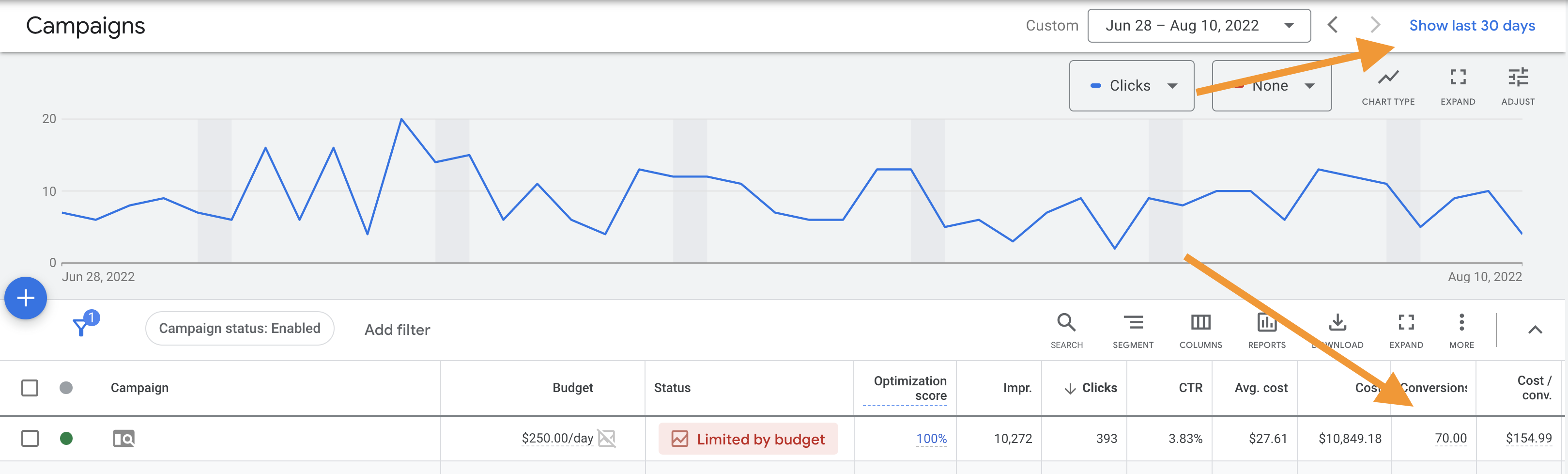
    • Additionally, it’s crucial to account for market fluctuations. What may have been a successful keyword last year might yield different results this year.
    • For accurate measurement, we relied on conversion tracking implemented on all sites. To our knowledge, all Carrot sites had reliable conversion tracking. If you’re uncertain about the accuracy of your conversion tracking, we recommend reading our conversion tracking blog post to learn how to ensure its correctness.

    Let’s dive into the 20 best PPC keywords for motivated seller leads based on their conversion rates and cost per lead.

    Top 20 PPC Keywords for Motivated Seller Leads

    What Are the Best PPC Keywords for Motivated Seller Leads?

    If mastering keyword bidding were easy, many of us here at Carrot would be out of a job.

    There are three challenging aspects to consider regarding keywords: volume, cost, and quality. Naturally, you want your keywords to generate high search volume, which means more ad exposure and opportunities to capture leads.

    However, with high search volume also comes many people who have no interest in your service. Attracting clicks from individuals who will never convert is far from ideal, especially when you’re paying for each click. Search advertisers must be cautious with broad keywords and make the most of long-tail keywords.
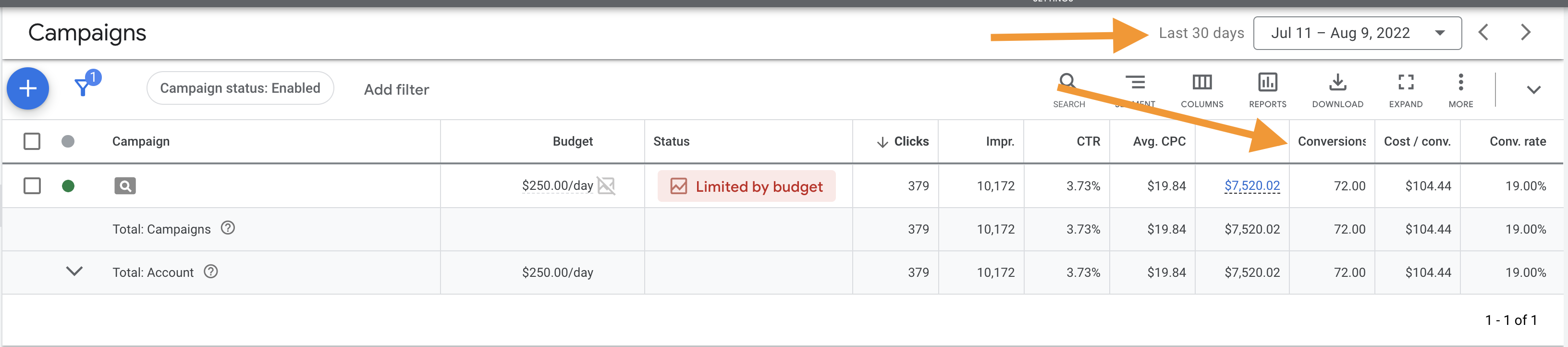
    While it’s true that broad match keywords often have a lower cost-per-click, most Google Ads members want to invest their money in what works.
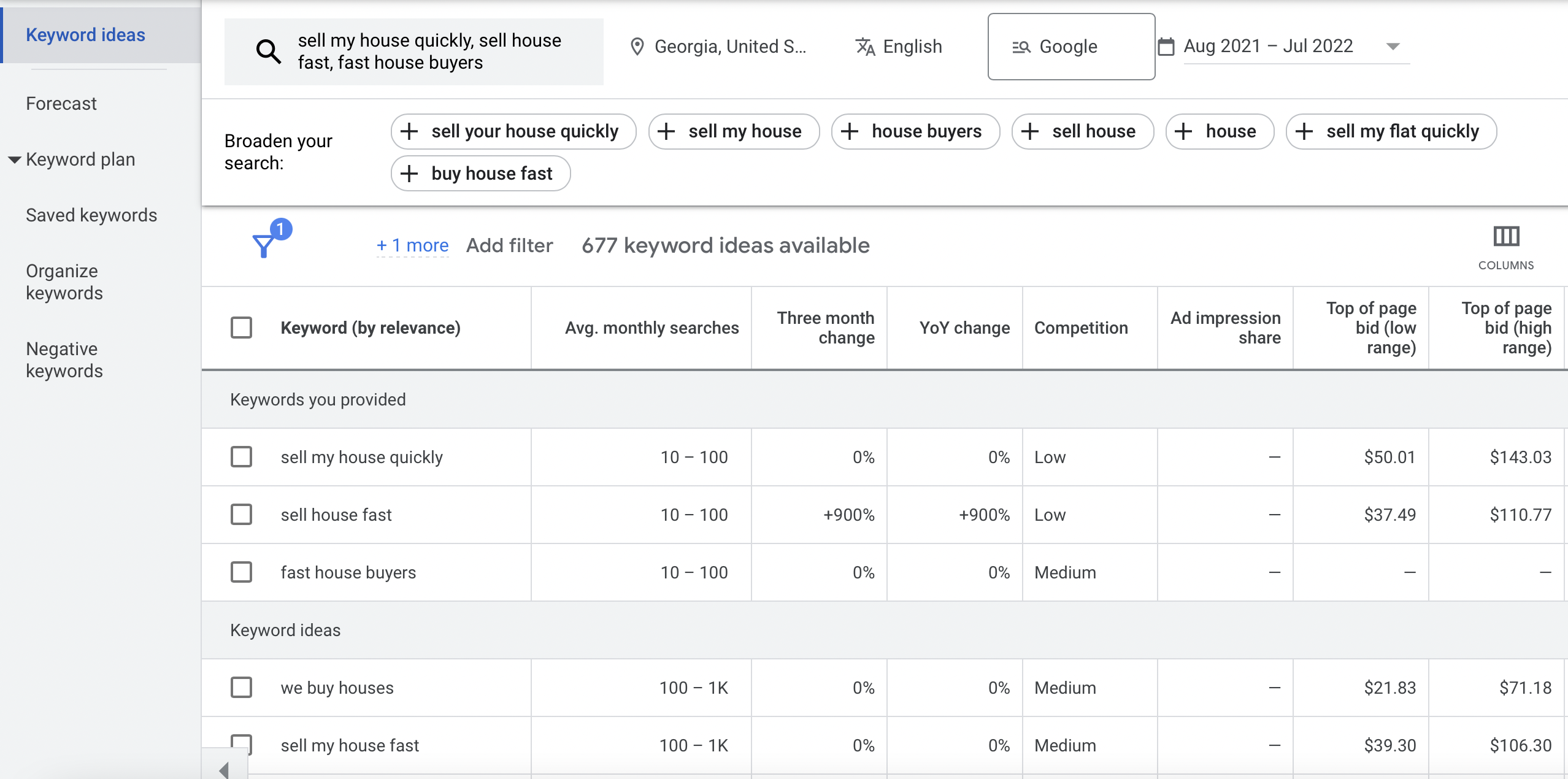
    That’s where long-tail keywords come into play. These keywords target a smaller but highly relevant audience along the intent scale. Bidding on these keywords is crucial for advertisers who want to minimize wasted ad spend.
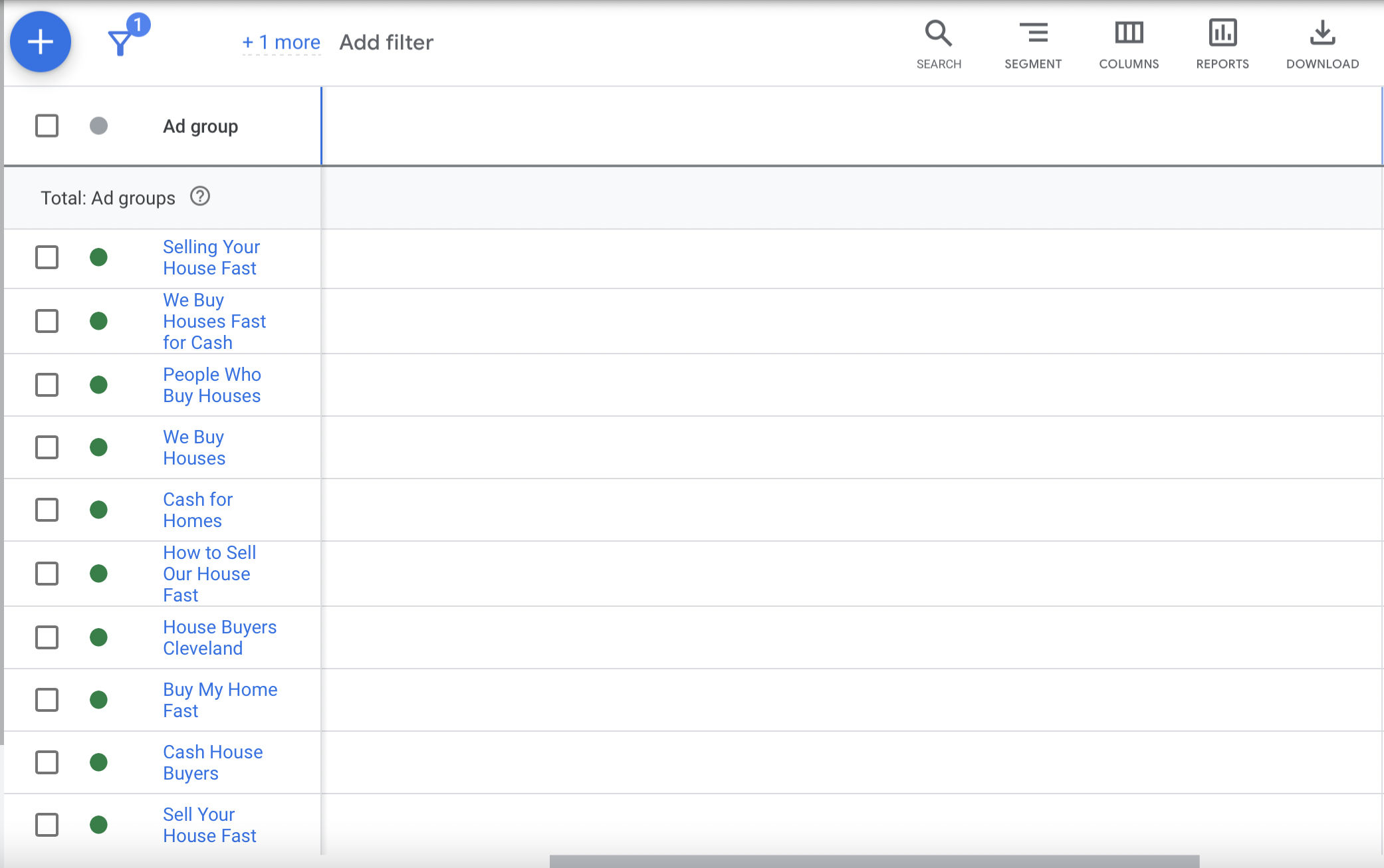
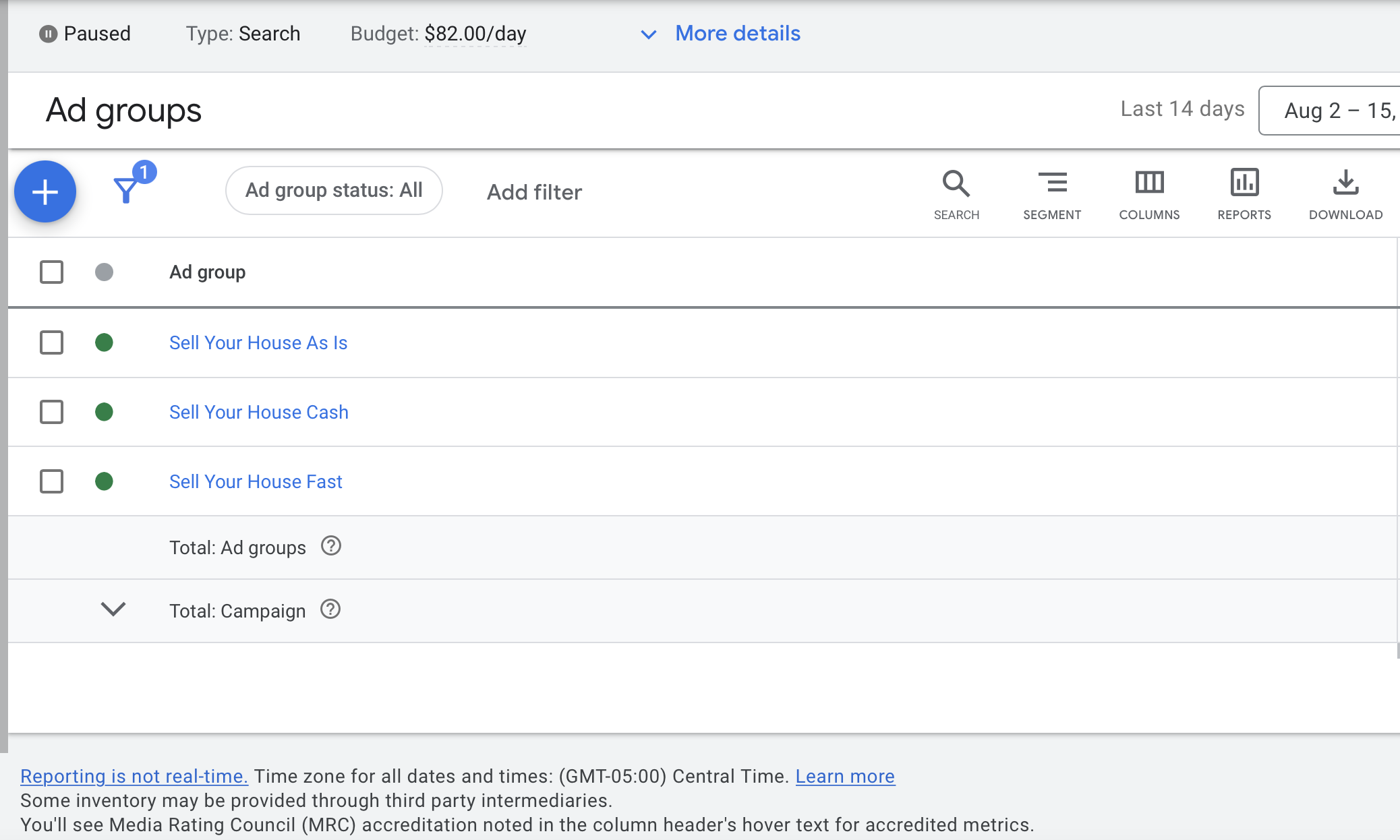
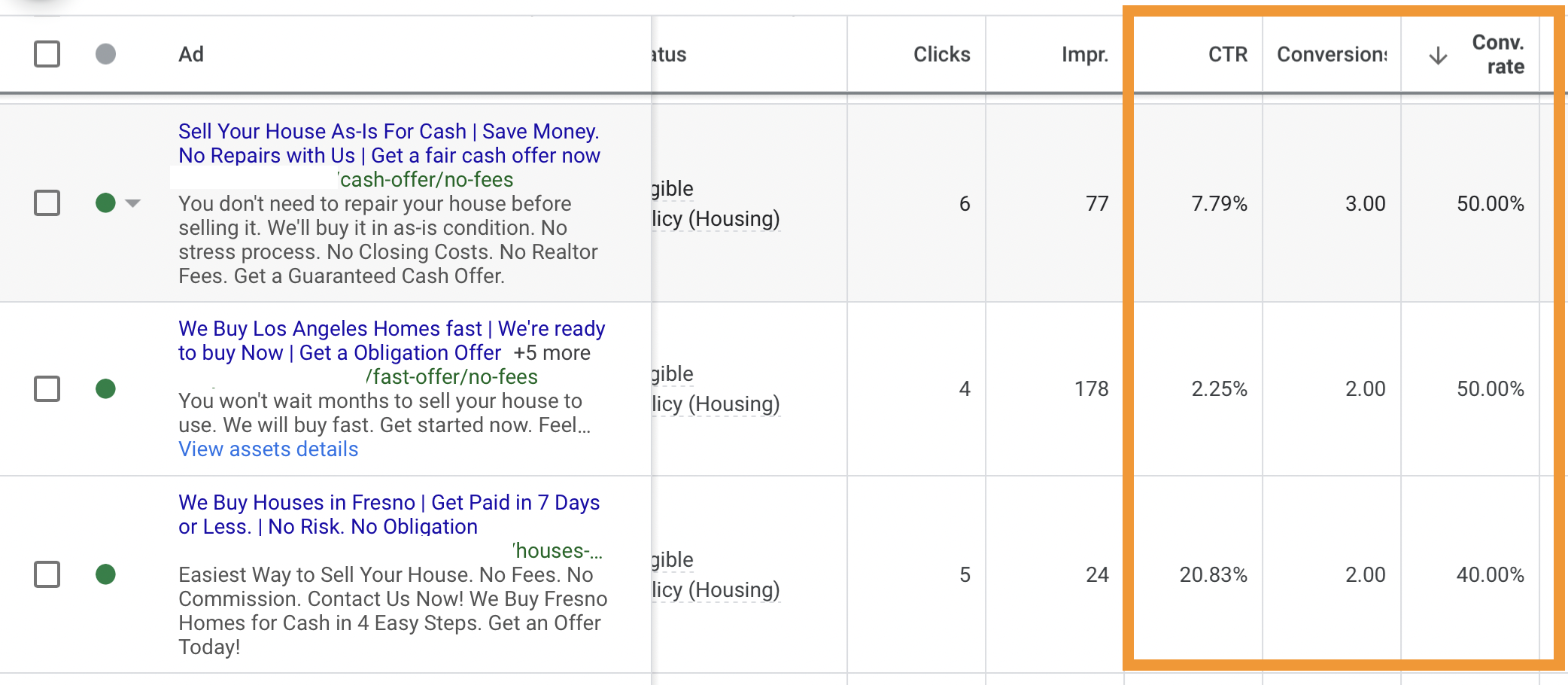
    Don’t underestimate the power of negative keywords. They are truly fantastic! Negative keywords allow you to exclude searchers who have demonstrated no interest in your company, preventing their clicks from draining your budget.
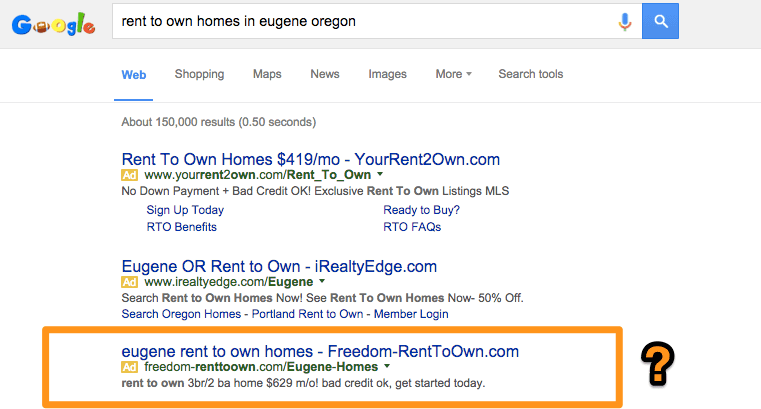
    For example, if you’re seeking motivated sellers and have no interest in retail properties, showing your ads doesn’t make sense when someone searches for “what’s my house worth.” By adding this term as a negative keyword, you’ll immediately notice the difference it makes.

    In summary, finding the best PPC keywords for motivated seller leads requires a strategic approach that balances volume, cost, and quality. Utilizing long-tail keywords and leveraging negative keywords will help you attract a more relevant audience and maximize the return on your advertising investment.
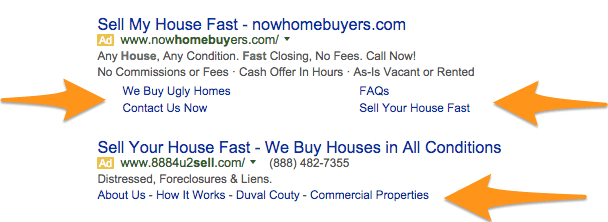
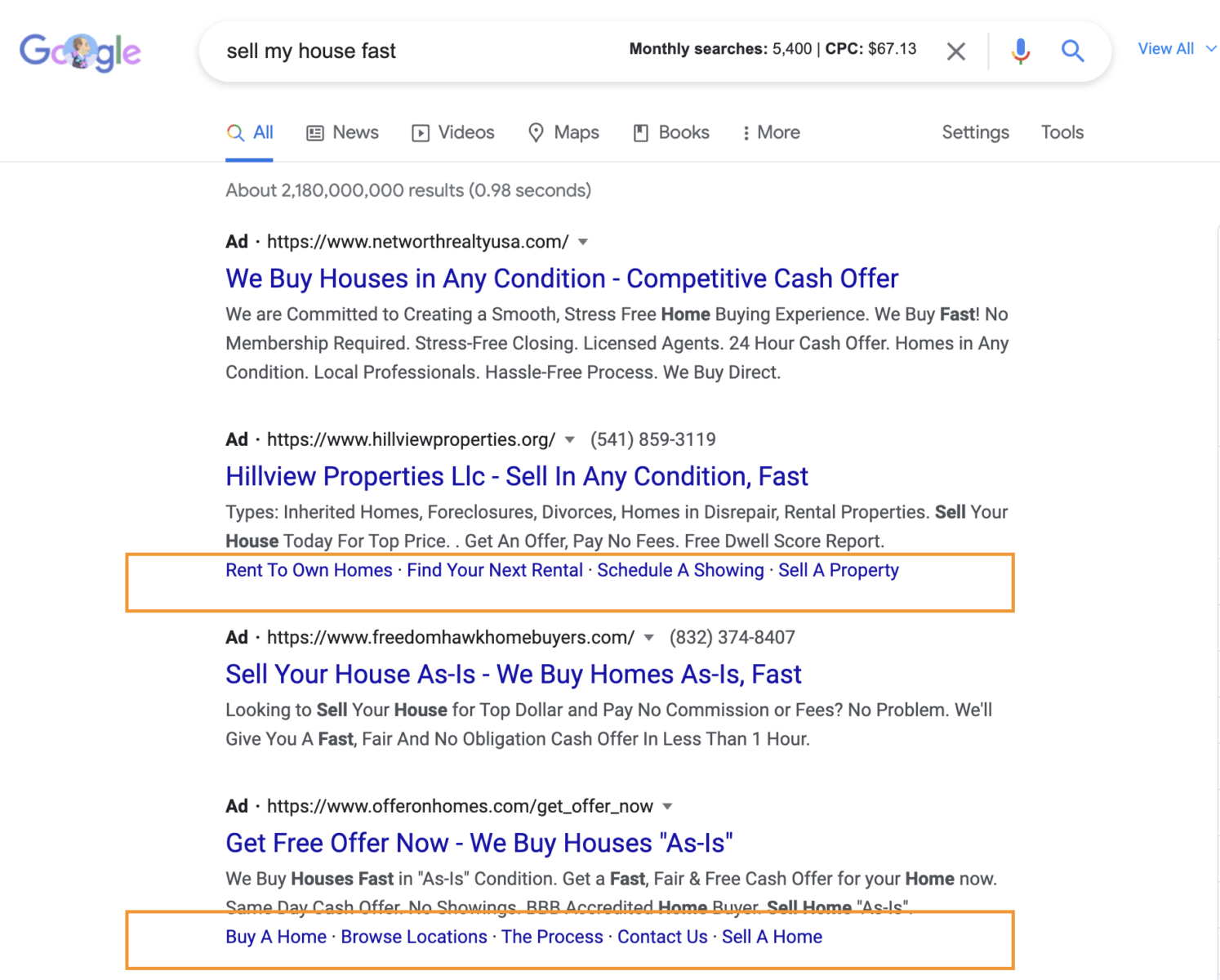
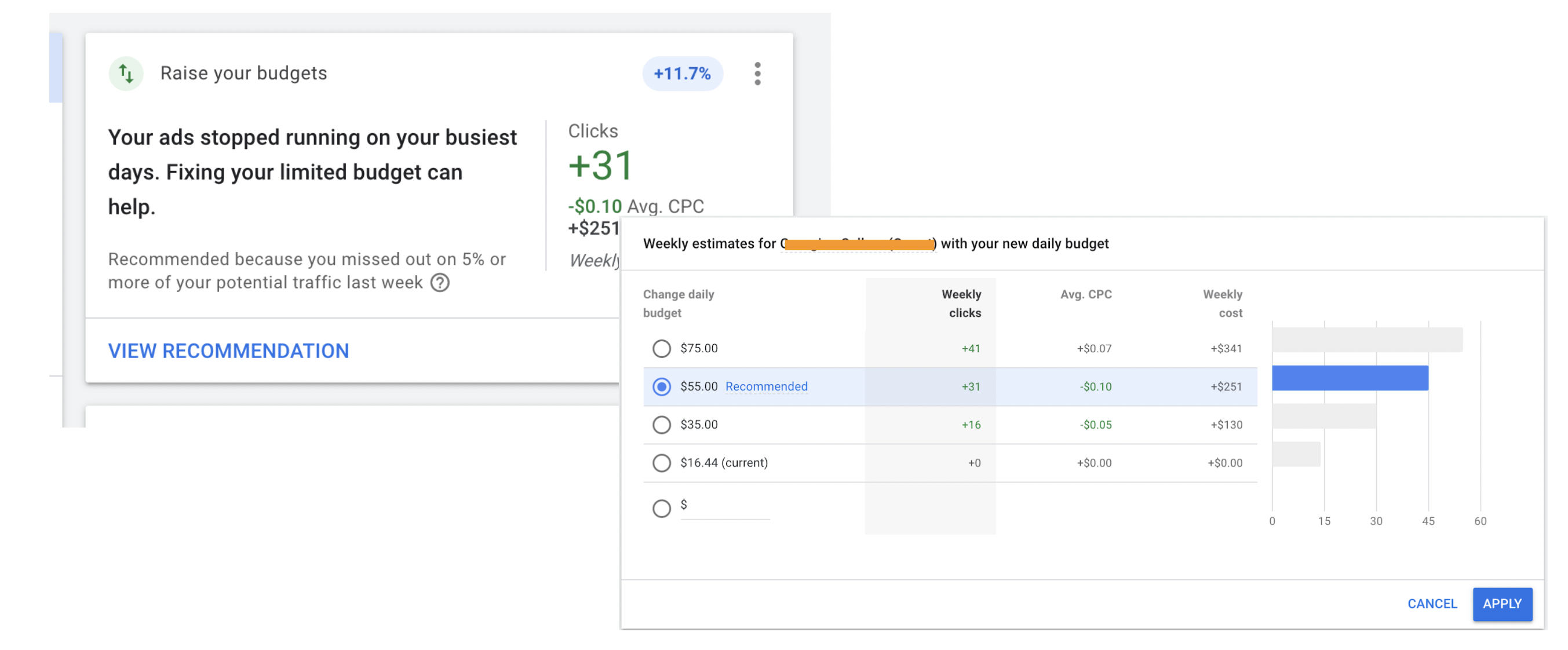
    Top 20 PPC Keywords for Motivated Seller Leads

    1. “sell my house” – phrase match
    2. [we buy ugly houses] – exact match
    3. “sell my house” – phrase match
    4. “we buy houses” – phrase match
    5. how to sell the house fast – broad match
    6. need to sell house quickly – broad match
    7. [we buy houses] – exact match
    8. [sell my house] – exact match
    9. sell house for cash – broad match
    10. “sell my home” – phrase match
    11. “sell your house for cash” – phrase match
    12. “sell your house” – phrase match
    13. “home investors” – phrase match
    14. “sell house online” – phrase match
    15. “ugly houses” – phrase match
    16. “we buy homes: – phrase match
    17. “sell my home for cash” – phrase match
    18. “sell my house ” – phrase match
    19. “we buy ugly houses” – phrase match
    20. “companies that buy houses” – phrase match

    How To Find More PPC Keywords for Motivated Seller Leads

    Want to find your keywords? We recommend at least trying some of the keywords within this post, but if you’re deadset on doing your research, you can use Google’s Keyword Planner and Google Ads Search Terms Reports.

    Is Google Ads Worth It for Real Estate Investors?

    Google Ads can still be very worthwhile for real estate investors. It offers numerous benefits, such as targeting and reaching motivated leads, a pricing model based on performance, and easy tracking of return on investment (ROI). However, some disadvantages can be overcome with specific strategies.

    If budget concerns you, you can avoid direct competition with larger competitors by focusing on more specific, long-tail, or localized keywords. This approach can help lower the cost of bidding on highly competitive keywords related to motivated sellers.

    While these keywords may not have the same level of demand as others in your market, they can still effectively drive higher-converting traffic to your website.

    Robert manages his campaign. He’s successful because he uses the right keywords within his account. He doesn’t need 1000s of keywords but sticks with a small batch of the most effective.

    Google Ads Testimonial

    “In 2017 we wanted to shift our real estate business from a standard brokerage model to an investments model that flips homes. We didn’t know quite where to start. After some research, we found Carrot and got our websites up and running.

    We needed to start bringing in leads and had Brendan set up our Google PPC. Our business skyrocketed inside of just a few months.

    Google PPC has provided us with consistently high-quality leads. Inside of just 2 years, we doubled our business revenue. We couldn’t have done it without the Carrot team and especially Brendan setting up our Google ads. Thank You!”

    – Robert Grand

    How to Increase Google Ads Conversion Rate

    First, let’s clarify what a conversion rate is. The conversion rate for specific PPC Keywords for motivated seller leads refers to the number of people who click on an ad using that keyword and successfully convert, divided by the total number of people who clicked through.

    Calculating the conversion rate is relatively simple. You need to divide the number of conversions within a given time frame by the total number of visitors to your site and then multiply that by 100%.

    Conversion rate = (conversions / total visitors) * 100%

    For example, if your motivated seller site had 292 visitors and 21 conversions last month, your conversion rate would be 7.19%.

    To increase Google Ads conversion rates for real estate investors targeting motivated sellers, here are five key strategies:

    1. Refine your keyword selection: Choose relevant and specific keywords that align with the intent of motivated sellers. Utilize long-tail keywords to target a more qualified audience and minimize wasted ad spend. Additionally, consider negative keywords to exclude irrelevant searches and improve targeting.
    2. Optimize landing pages: Create high-converting landing pages that align with the messaging and expectations set by your ads. Ensure your landing pages provide value, address the needs of motivated sellers, and make it easy for them to take action. Use compelling copy, engaging visuals, and clear call-to-action buttons to encourage conversions.
    3. Test ad copy variations: Experiment with different ad copy variations to identify what resonates best with your target audience: test headlines, descriptions, and calls-to-action to find the most effective combination. A/B testing can help determine the optimal ad copy that generates higher conversion rates.
    4. Implement ad extensions: Take advantage of ad extensions to provide additional information and enhance the visibility of your ads. Sitelink extensions, call extensions, and structured snippets can improve the user experience, increase ad relevance, and drive more qualified clicks. Utilize these extensions strategically to highlight unique selling points and encourage conversions.
    5. Leverage retargeting: Implement retargeting campaigns to reach users who have previously interacted with your ads or website. By staying top-of-mind and re-engaging potential sellers, you can increase conversion rates. Tailor your retargeting messages to address specific pain points or offer incentives to encourage motivated sellers to take the desired action.

    Remember continuously monitor and analyze your campaign’s performance, make data-driven adjustments, and optimize your Google Ads strategy to maximize conversion rates over time. Data transformation is a critical step in this process, as it allows you to import insights from your campaign’s performance metrics, helping you refine your Google Ads strategy and ultimately achieve higher conversion rates over time.

    Check out these 13 ways to stand out from the competition and increase conversion rates.

    Once you get Google Ads and your website dialed in, you can achieve a steady flow of quality leads…

    consistent Google Ads motivated seller leads

    Note About Conversion Rate

    It’s important to remember that while Google Ads will drive traffic to your website, that doesn’t guarantee conversion or a consistent lead flow. You’ll also need to ensure that your website or landing page (wherever you send people after they click on your ad) is set up to convert. Carrot websites are built with the highest conversion rates in the industry, and you can try us risk-free for 30 days.

    Cracking the Google Ads Auction: Unveiling the Process

    It helps to understand how Google Ads determines which ads should show during an auction, which takes place every time someone searches on Google or visits a site that shows ads.

    The Google Ads auction process can be summarized in the following steps:

    1. Advertiser Bids: Advertisers participating in the auction set bids for specific keywords or placements. They indicate the maximum amount they are willing to pay for a click on their ad.
    2. Quality Score Evaluation: Google evaluates the quality of the ads and landing pages associated with the keywords. Factors considered include ad relevance, expected click-through rate, landing page experience, and ad formats.
    3. Ad Rank Calculation: Ad Rank is determined by multiplying the maximum bid by the Quality Score. Ad Rank determines the position of an ad on the search results page or other ad placements.
    4. Ad Placement: When a user enters a search query or visits a webpage that triggers an ad, Google looks at the Ad Rank of all eligible ads. The ad with the highest Ad Rank typically gets the top position, and subsequent ads are placed in descending order.
    5. Ad Display and Cost: If an ad is clicked, the advertiser is charged based on the cost-per-click (CPC) bid. The actual CPC paid by the advertiser may be lower than the maximum bid and is influenced by factors such as competition and the ad’s Quality Score.

    It’s important to note that the auction process occurs in real-time for each search query or ad placement, ensuring that the most relevant and valuable ads are displayed to users while maximizing the advertiser’s ROI.

    You can learn more about how bidding on keywords can help you create a cost-effective campaign.

    Google Ads Testimonial

    “Hey Trevor, Just wanted to let you know what a great program you have set up for me. My web page went live the first week of July this Year. I received 5 leads after the 2nd week with a Little PPC campaign on Google.

    I spoke and met with 3 Motivated Homeowners that week. I put 2 Homes under contract that week. I sold both homes to a local investor at $30k profit on each home. I also will resell the renovated home at 3% of the sell price of about $700k each.

    Thank You for a great program In just over a Month I put under contract 2 Homes with over $100k profit. Can’t wait to see what the next few months brings.

    Thank You Again”

    – Roy Franklin

    Conclusion

    Many real estate investors are skeptical about using Google Ads due to concerns about cost. There are indeed risks involved, and the monetary investment can be substantial. Some markets may require monthly budgets ranging from $5,000 to $10,000, and the average cost per click on Google Ads is around $10 to $20.

    Now, I’m not suggesting that you need to have such a high budget. However, I recommend investing a minimum of $1,000 per month (for smaller markets) to $3,000 per month and giving it at least 2-3 months to see tangible results.

    It’s important to acknowledge that a certain level of risk is involved, as with any advertising campaign. But if your campaign is successful, the potential rewards are significant.

    If you’re worried about not having the expertise to use Google Ads effectively, don’t be. You don’t have to be an expert yourself. Let us assist you with our Google Ads QuickStart service.

    With this service, you’ll receive:

    • Assistance from Google Ads Certified Professionals who will set up your account
    • Lead tracking to keep you informed about the number of leads generated for your business
    • Keyword research with match types
    • Conversion tracking
    • Installation of retargeting tags
    • Mobile-optimized ads
    • Geo-targeting
    • Ad extensions such as Sitelinks, Callouts, Calls, and Structured Snippets
    • Lists of negative keywords to refine your targeting
    • Initial optimization of keyword bids

    Discover more about this service and how it can benefit your business today!