
Category: Real Estate Investing Lead Generation

  • Why More Leads Won’t Fix Your Acquisitions, But Better Leads Will (And How to Find Them) 

    Why More Leads Won’t Fix Your Acquisitions, But Better Leads Will (And How to Find Them) 

    If you’ve been closing real estate deals for a while, you’ve probably noticed a pattern: some sellers show up ready to move forward, while others take months of follow-up and still fizzle out. The difference usually isn’t what you say or how good the deal is. It’s often where the lead came from.

    After working with 6,000+ investors, we’ve seen exactly how top closers separate the noise from the opportunities. They know that the best leads are the ones that make you the most money in the shortest amount of time, with the least amount of energy.

    In this post, we’ll break down which lead sources consistently deliver motivated sellers, how to spot the ones worth prioritizing, and how to tighten up your process so you’re spending less time chasing and more time closing.

    Because in this business, more leads won’t fix your pipeline. Better ones will.

    Table of Contents

    1. The Best and Worst Lead Sources for Motivated Sellers
    2. What Actually Makes a Seller “Motivated”?
    3. How to Track and Prioritize the Leads That Actually Close
    4. How to 10x Your ROI Without Adding Any New Marketing
    5. Wrapping It Up

    Summary: The best real estate leads aren’t just plentiful—they’re motivated. This post breaks down why inbound leads outperform outbound, how to identify true seller motivation, and how tools like Carrot CRM help prioritize leads that actually close. Learn how website optimization and AI lead scoring can dramatically improve your ROI without increasing your marketing spend.

    7 Key Takeaways

    1. Not all leads are equal. The biggest difference in how fast and profitably a deal closes often comes down to the source of the lead, not just how well you pitch.

    2. Outbound = low intent, high effort. Cold calling, texting, or blasting postcards can bring in leads, but most aren’t ready to sell. They require heavy follow-up, burn energy, and usually take months to close.

    3. Inbound = high intent, faster closings. Sellers who search for you (SEO/PPC) or directly fill out a form are already motivated. Investors report these leads close in fewer touches, with less chasing, and on much shorter timelines.

    4. Seller behavior signals motivation.

    Direct call = high urgency

    Website form = strong intent (often after months of consideration)

    Cold call response = curiosity, but more often low urgency

    5. Motivation shifts over time. A seller who sounded “hot” at first may stall when it’s time to act, while a lukewarm one may heat up later. That’s why prioritization has to be ongoing, not a one-time judgment.

    6. Data beats guesswork. Relying on memory, scattered notes, or assumptions (“they called three times, so they must be motivated”) causes missed deals. Tracking lead scores, sources, and engagement data paints the real picture.

    7. Your website is the hub that multiplies ROI. Every channel—direct mail, ads, radio, or referrals—eventually drives people to Google you. If your site is slow, generic, or confusing, you leak deals. Fast, trustworthy, conversion-optimized sites (with testimonials, strong About page, and clear CTAs) turn intent into action.

    The Best and Worst Lead Sources for Motivated Sellers

    If you talk to ten different marketing folks or investors, you’ll hear ten different ‘best’ ways to get deals. 

    Everyone has “the best way”

    The cold-calling coaches say you just need to “dial more numbers.” Direct mail coaches promise your next campaign will work if you just tweak the headline. Ad agencies tell you that if results are flat, it’s your targeting. Each channel has its champions. And when the channel doesn’t deliver, the message is that you did it wrong. And conveniently, the fix is to buy their course or their list.

    So let’s look at the fundamentals of how people actually behave when they’re ready to sell. It’ll help you decide for yourself where you want to spend your time and energy. 

    Outbound leads: High effort, low intent

    Most homeowners don’t want to be interrupted. They’re not hoping for a cold call in the middle of dinner. They’re not excited about seeing your ad when they’re just scrolling on social media, hoping to get away from the real world.  That kind of outbound marketing (where you reach out to people first — whether they asked for it or not) can bring you leads, but the intent is usually low. 

    Sellers aren’t necessarily ready or motivated — they just happened to pick up the phone or glance at a postcard. That’s why outbound leads usually take more follow-up, more conversations, and more time to close.

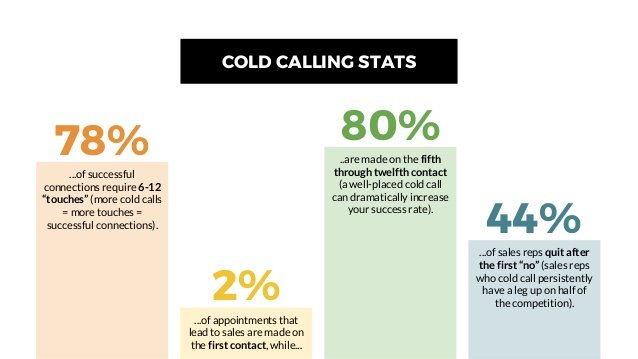
    Outbound channels like cold calling or TV may take 40–50 leads to close a single deal.
    But with inbound marketing, the math changes. 

    Inbound leads: Sellers who find you

    Let’s compare outbound leads with someone who takes action on their own. 

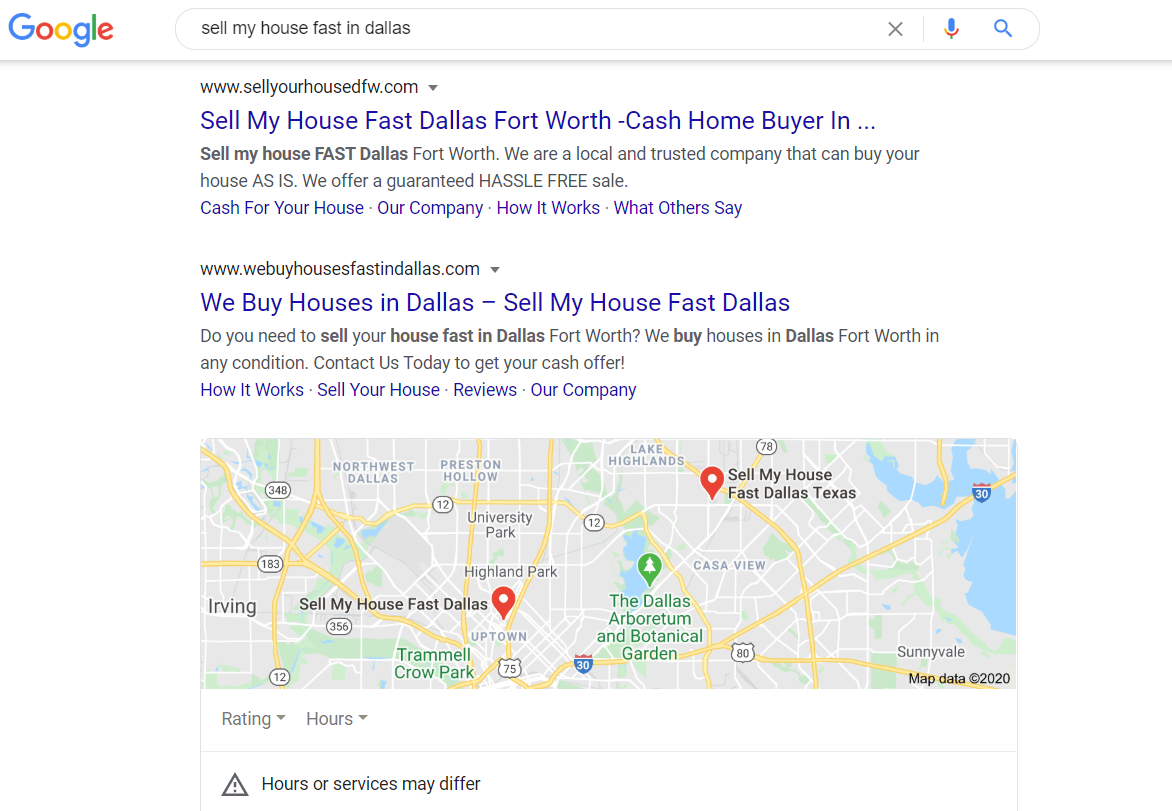
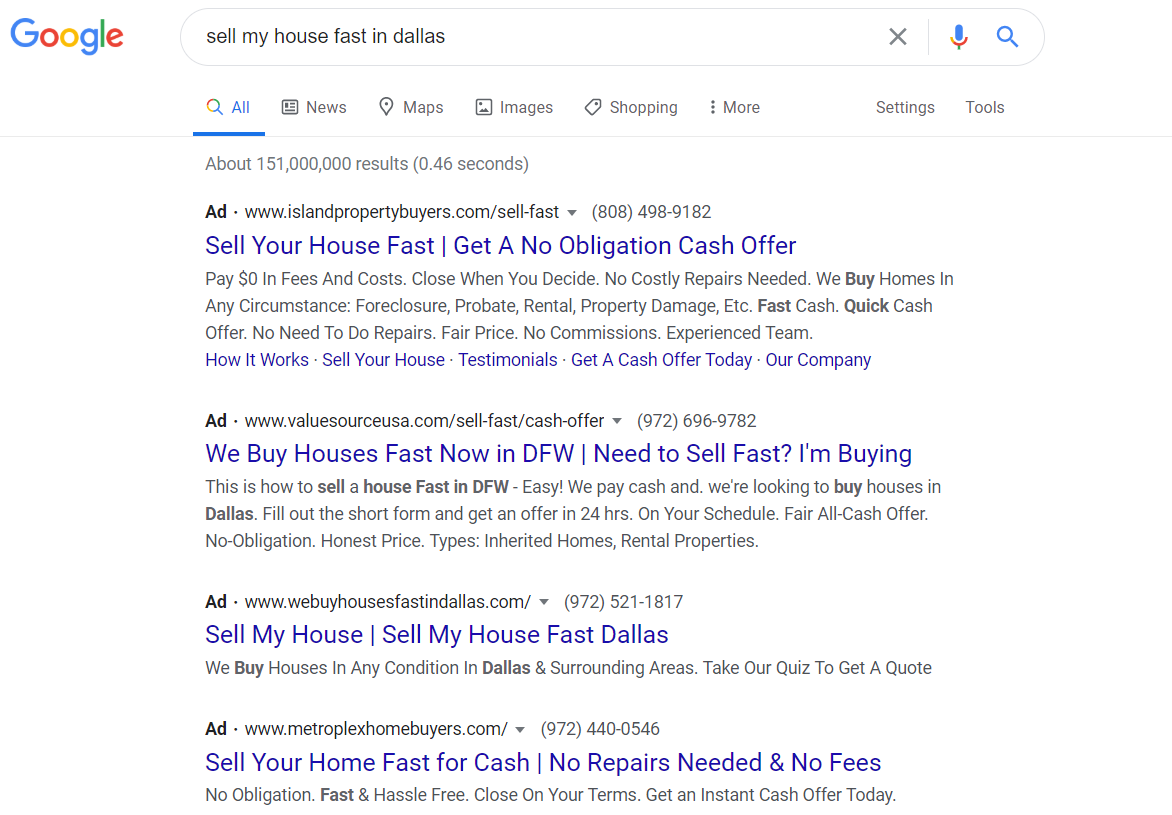
    They typed “sell my house fast in Dallas” into Google and landed on your website. Or they saved your website after getting a postcard and finally filled out the form when the timing was right. Or they were learning about who the real estate investors in their area were and came across your Google Maps profile. These are inbound leads — the ones who find you. They’re actively looking to sell. 

    The difference shows up in the numbers. Keith Sant shared that when he relied on cold calling, it took 35+ leads to get one deal, and closings stretched out six months or more. “I was burnt out. I was talking to people who weren’t ready to sell, and I felt like I was spinning my wheels,” he said.

    After shifting to inbound SEO leads, he closes one in ~15, often in under 90 days.

    Here’s what that looks like side by side:

    Outbound (Cold Calling)Inbound (SEO + Website)
    Leads per Deal1 in 351 in 15
    Time to Close6–12 months< 90 days
    Seller MindsetOften annoyed or unmotivatedAlready motivated and grateful
    Energy CostHigh — constant chasing and rejectionLow — fewer touches, warmer conversations

    As Keith put it: “I’m not cold-calling or pestering people anymore. Now, when people reach out to me, they’re truly ready to sell.”

    Other investors echo the same. 

    Mike Wall from EZ Sell Homebuyers compared inbound website leads to referrals:

    “There may be a thousand visitors to my site and only one converts, but that one person is hyper motivated. Could you imagine having to cold call a thousand people to get the same result? That’s life-changing because it’s really hard to put a price on your time. Even if you don’t get a ton of traffic, the traffic you do get is hyper motivated.

    Related: Top 5 Ways to Find Off-Market Properties (That Other Investors Miss)

    What Actually Makes a Seller “Motivated”?

    When most people think of a “motivated seller,” they picture a tough life event: foreclosure, probate, divorce, or job transfer. Those factors can create urgency, but they don’t automatically make someone ready to sign a deal with you. 

    What often matters more is how the seller shows up. Their behavior — and where they came from — is the first real signal of motivation.

    If they call you directly. 

    That’s the clearest sign of urgency. People don’t usually pick up the phone unless they’ve already decided to act. A direct call tells you they’re not just exploring; they want help now. These are the leads most likely to turn into a deal quickly.

    If they fill out a form on your website. 

    That’s also a strong sign, because filling out a form requires effort. It means they’ve weighed options, landed on your site, and taken the step to share their details. In many cases, they’ve been thinking about it for months. Maybe they kept your postcard or saw your sign long ago, but when the timing was right, they Googled you and finally hit “submit.” 

    Carrot member Brad Woodall has shared stories where that exact pattern turned into a closed deal. That moment when they seek you out is the clearest sign of motivation.

    If they respond to your cold call or text. 

    That’s weaker motivation. They might just be curious about what their house is worth or willing to chat because you caught them at the right time. But curiosity doesn’t equal urgency, and those leads often fizzle out or take heavy follow-up to convert.

    This is why investors who rely on inbound sources — sellers who find you — consistently see faster closes and stronger profits. The intent is built in.

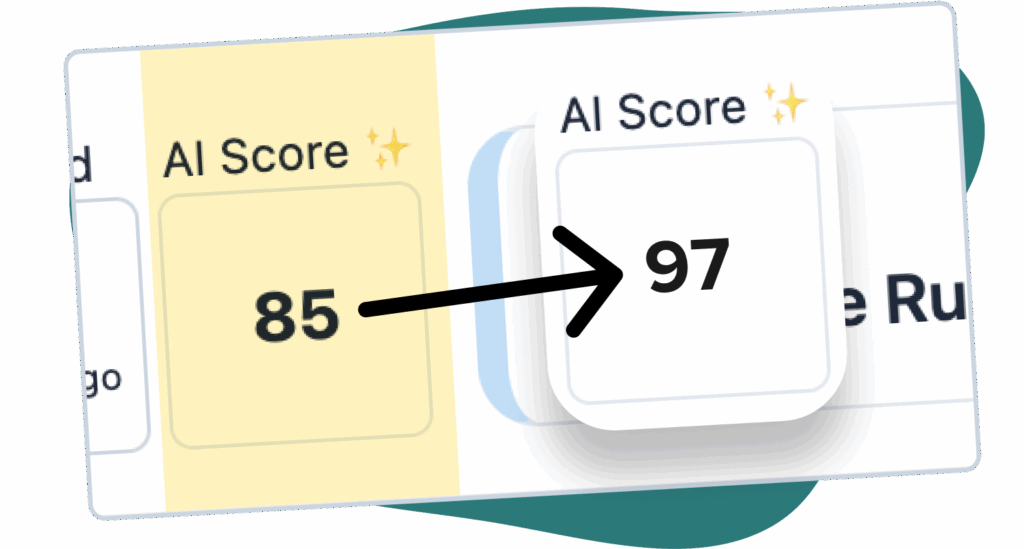
    The challenge is that in the middle of working dozens or hundreds of leads, it’s not always obvious which ones are “truly” motivated. That’s where Carrot CRM’s AI Lead Scoring comes in. 

    Carrot CRM’s AI lead scoring 

    Instead of relying on gut feeling, the system automatically scores every lead based on the criteria you set — including source, engagement level, property details, and more. 

    You can customize the scoring criteria to match what matters most in your business. Whether that’s the lead source, how quickly they respond, how many times they’ve engaged with you, or other factors that signal true motivation.

    As Kyler Peters from Want to Sell Now put it:

    “We have hundreds of leads coming in every single week. Thanks to Carrot CRM, I can see the hottest leads we have. I wouldn’t have identified some of these leads without AI lead scoring.”

    Check out this video to learn about AI Lead Scoring: 

    Focus on the most important leads: AI Lead Scoring & AI Opportunity Summaries
    How to Track and Prioritize the Leads That Actually Close

    You might say that you can track your leads in a spreadsheet or an all-in-one CRM. But the problem you’ll then face is that your scores will be static once you enter them.

    But that’s not the case in real life. 

    Motivation isn’t static. A seller who sounds enthusiastic on your first call might stall out when it’s actually time to sign. Someone who barely seemed interested at first might circle back weeks later, ready to move quickly.

    That’s why you can’t treat every lead the same, every day. If you try to keep track in your head, on paper, or even in a static spreadsheet, you’ll miss the bigger picture:

    • A seller who keeps calling might look “motivated,” but are they asking serious questions — or just kicking the tires?
    • Another who goes quiet might look “cold,” but did they just open your last email twice and spend time on your site?
    • A lead source might look productive because it brings in lots of names, but does it actually lead to contracts?

    Manually piecing all of this together is frustrating and often misleading. Investors burn time chasing the wrong people while the real opportunities slip through the cracks.

    The most successful closers rely on real-time data to guide their next move. Instead of running on gut feeling, they let the numbers show them:

    • Which sellers are moving closer to a decision
    • Which leads are cooling off
    • Which campaigns and sources are actually worth reinvesting in

    That’s where Carrot CRM comes in. It’s built to take the guesswork out of lead prioritization:

    • Track calls from your website and get AI-powered transcripts, summaries, and call ratings.
    • Auto-assigned lead scores show you at a glance who’s most likely to close.
    • Dynamic scoring updates automatically as new conversations or details come in, so you’re never working off stale assumptions.
    • Campaign insights let you see which sources actually produce closed deals (not just leads).
    • Visual pipeline tracking shows where every opportunity stands.
    • Grouping by source makes it simple to see how SEO leads perform versus PPC, direct mail, or cold outreach.
    • Filtering and follow-up tools keep hot leads front and center so nothing slips through the cracks.

    Related: Why Call Tracking is the Most Profitable Real Estate Tool You’re Not Using

    How to 10x Your ROI Without Adding Any New Marketing

    The common way of thinking goes like this: if 1 out of 100 website visitors becomes a lead, then to get more leads, you need more traffic.

    Want three new leads a day? Just drive 300 people instead of 100. 

    That mindset keeps investors chasing more campaigns, more lists, and more ads.

    But there’s another way, and it’s often more powerful. 

    Improving your website

    Instead of only trying to increase traffic, focus on improving how well your website converts the traffic you already have. Conversion is within your control. Algorithms, list quality, and ad costs aren’t. By simply raising the percentage of visitors who actually turn into leads, you can multiply results without spending more on marketing.

    Last month, the average conversion rate across all Carrot member websites combined was 4.5%—nearly double the industry average of 2.5%. How many high-profit deals are you willing to lose to a low-converting website?

    Related: 8 Factors of the 5 Highest-Converting Carrot Websites: ANALYZED w/ Katie Stapko

    Moreover, before anyone makes a decision to contact you, they usually look you up online. A postcard might catch their attention, but the site is where they decide if you’re credible. A radio ad might spark curiosity, but the site is where they can actually reach out. Even when you cold call, many sellers will still Google you afterward before they consider working with you.
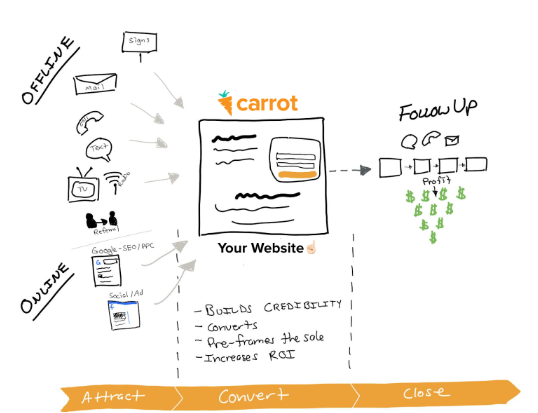
    So you have to think of your website as the one place where all your marketing connects. Every channel — direct mail, PPC, cold calling, radio, even word of mouth — should ultimately point people back to your site. That’s the hub. Like this…
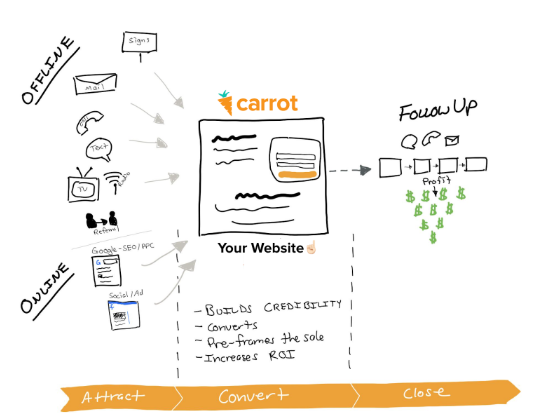
    When a seller lands on your site, they’re already showing intent. They searched, clicked, or followed up from one of your campaigns. That makes this moment critical. This is why the website has to carry more weight than just being “a place to be online.” It’s the decision point. 

    And if that experience goes wrong, the opportunity is lost.

    Where sellers most often drop off

    ❌ Slow load times: If a page takes more than a few seconds, people hit the back button. They’ll never even see your brand.

    ❌ Generic design: If your site looks like every other “we buy houses” template, sellers assume you’re like everyone else and there’s no special reason to be interested in you. That makes it harder to build trust.

    ❌ Confusing layout: If the phone number or form is buried, or navigation is unclear, sellers won’t hunt around. They’ll leave and find someone easier to contact.

    But you don’t need a fancy redesign to fix this. Simple improvements go a long way toward building confidence and capturing high-intent leads. This is why we make it easy to customize a Carrot website (here are a few ways), and even offer a white-glove “concierge” design & setup service if you want to outsource!

    Related: 4 Reasons Your Real Estate Website Isn’t Getting You Leads (And How to Fix Them)

    What strengthens trust instead

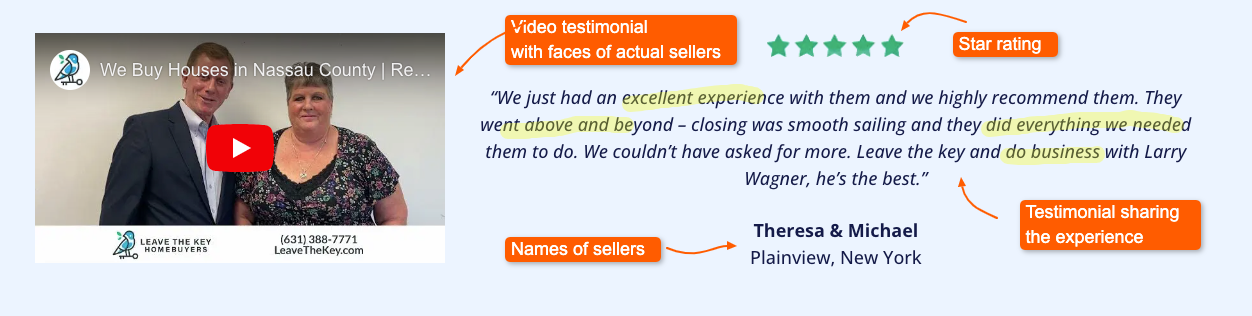
    ✅ Customer quotes and testimonials: Nothing is more persuasive than proof from real sellers who chose you and had a good outcome.

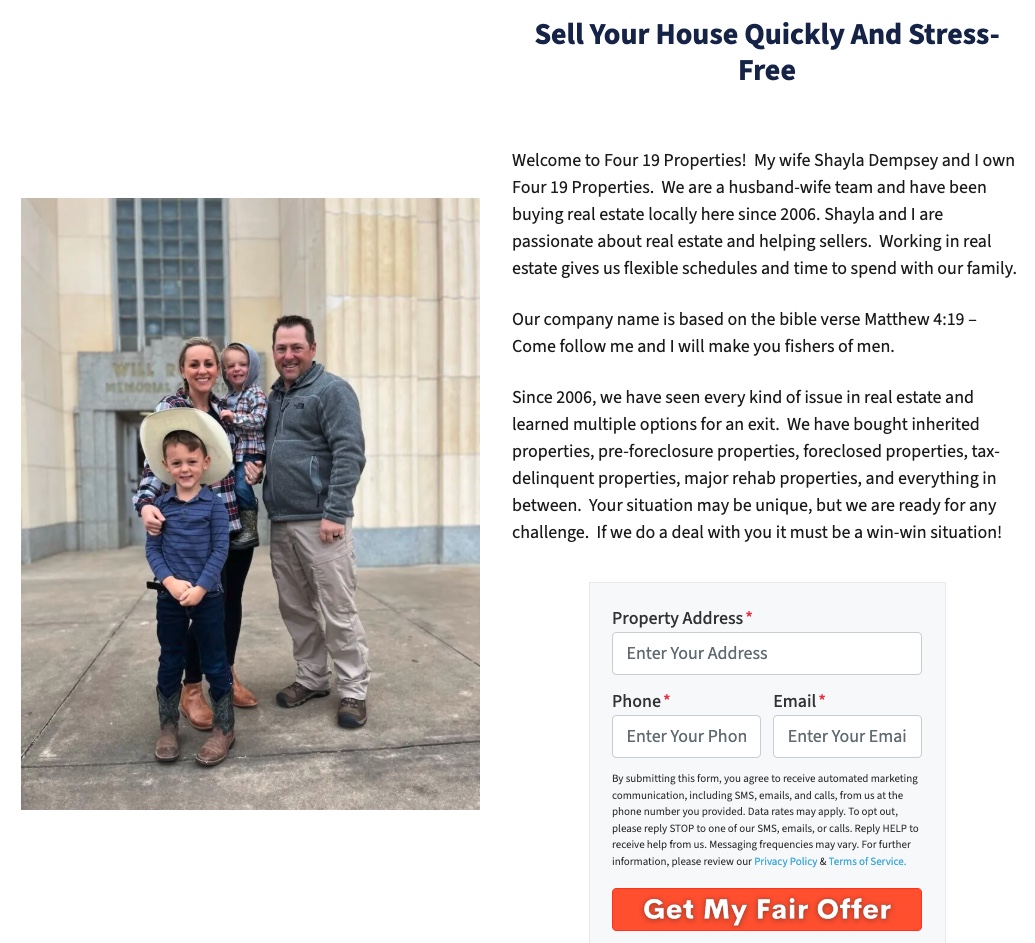
    ✅ A strong About Us page: Homeowners want to know who they’re dealing with. Sharing your story and team photos shows you’re real, not just another faceless company.

    ✅ Clear calls to action: Make your phone number, form, or chat box front and center. The easier you make it to reach out, the more people will.

    ✅ Fast performance: Speed alone communicates professionalism. A site that loads instantly feels more trustworthy than one that lags.

    Wrapping It Up

    If you want to close more of the right deals without piling on extra work, the path is clear. You need to focus on better leads, not more leads. 

    But knowing these truths is only half the battle. Pairing them with the right system is what turns ideas into results. That’s where Carrot CRM comes in. It helps you & your team know which leads to focus on by putting these principles into action:

    • Lead Scoring: See motivation at a glance, with scores that update as new info comes in.
    • Campaign Insights: Identify which sources are producing the most profitable deals.
    • Visual Pipeline: Keep hot opportunities front and center without digging through notes.
    • Smart Filters: Group and sort leads by source, score, or status in seconds.

    Instead of juggling spreadsheets or guessing who’s serious, you get a clear picture of where to focus your energy — and more deals close as a result.

    Want to see what this looks like in practice? Book a Carrot CRM demo with our team. We’d love to help!

    Frequently Asked Questions

    1. What makes some seller leads better than others?

    Answer: Not all leads have the same level of motivation. The best leads usually come from inbound sources—like SEO or PPC—where sellers are actively searching for solutions. These leads close faster, require less follow-up, and are often more profitable than outbound leads generated from cold calls or mass mailers.

    2. How do I identify a truly motivated seller?

    Answer: A motivated seller typically takes proactive steps—such as calling you directly, filling out a form on your website, or reaching out after researching your company. These actions show urgency and intent, making them more likely to close quickly compared to someone who only responds passively to cold outreach.

    3. Are outbound leads like cold calling still worth it?

    Answer: Outbound leads can work, but they usually take much longer to convert and require more energy. For example, cold calling might take 30–35 leads to close one deal, while inbound SEO leads often close in 1 out of 15. Outbound is high effort, low intent, while inbound is low effort, high intent.

    4. What’s the fastest way to improve my real estate lead quality?

    Answer: Instead of chasing more leads, focus on optimizing your website and lead tracking. A high-converting, trustworthy website captures more motivated sellers. Pairing that with tools like Carrot CRM’s AI Lead Scoring helps you instantly identify which leads are worth prioritizing.

    5. How can Carrot CRM AI Lead Scoring help me close more deals?

    Answer: Carrot CRM AI Lead Scoring automatically ranks leads based on motivation signals like response speed, engagement, and lead source. It updates in real time, unlike spreadsheets or guesswork, so you can instantly see which sellers are serious and ready to close.

    6. Can I increase my ROI without adding new marketing campaigns?

    Answer: Yes! By improving conversion rates on your website and tightening up your lead prioritization, you can 10x your ROI without spending extra on ads or lists. Even small improvements—like faster load speeds, better testimonials, and clear calls to action—can dramatically increase the number of inbound leads who actually close.

    7. Why is inbound marketing (like SEO) more effective than outbound?

    Answer: Inbound marketing attracts sellers who are already looking to sell. They searched, clicked, and contacted you on their own. Outbound efforts, on the other hand, interrupt people who may not be ready. That’s why inbound leads are typically more motivated, close faster, and take less work.

    8. What role does my website play in lead conversion?

    Answer: Your website is the hub where all marketing channels point. Even if a seller hears about you through cold calling or direct mail, they’ll likely check your site before contacting you. If your site is slow, generic, or confusing, (or not even showing up in Google) motivated sellers may leave before reaching out. A strong, professional site builds trust and turns curious visitors into actual leads.

    9. How often should I re-prioritize my leads?

    Answer: Motivation changes over time. Top closers don’t treat every lead the same—they constantly adjust based on new signals. With tools like Carrot CRM, lead scores update automatically as sellers respond or timelines shift, ensuring you always know which leads are worth your focus.

  • 15 Negotiation Lessons From Steve Trang’s Live Seller-Call Roast (Carrot Summit ’25)

    15 Negotiation Lessons From Steve Trang’s Live Seller-Call Roast (Carrot Summit ’25)

    At our recent Carrot Summit, we tried something we’ve never done before: live coaching on real seller calls.

    Two rookie investors brought their recorded calls, and Steve Trang — one of the most respected sales trainers in real estate — broke them down, play-by-play.

    • Call #1: Nick of We Buy 502 (Louisville, KY) — SEO lead from his Carrot site, divorce situation, multiple offers in play.
    • Call #2: Sergio of Michigan Houses for Cash (Detroit, MI) — Facebook ad lead, owner-occupied, full remodel, “thinking about moving up north.”

    We played each call, paused at the coachable moments, and let Steve dish out his decades of sales experience. No fluff, just practical feedback on what to say and the psychology behind it.

    Below are 15 field-tested takeaways — each with a real quote from the call (what not to say) and Steve’s coaching.

    Want to see the entire session? Watch the full YouTube Video below:

    Rookie Seller Calls Get ROASTED by Master Negotiator Steve Trang from @DisruptorsPodcast

    1) Open Like They Expected Your Call — Not Like a Telemarketer

    Timestamp: ~3:40–4:33

    Investor said:Hi, is this Lindsay?

    Steve’s coaching:

    “That telegraphs you don’t know them and triggers sales resistance. Call like they asked you to: ‘Hey Lindsay, this is Steve — you just filled out the web form.’

    Why it works: They did request contact. An assumptive, confident open positions you as the solution, not a cold caller.

    Say this instead:Hey Lindsay, this is Nick with WeBuy502 — you just filled out our form about Marian Dr. Got a minute?


    2) Set Expectations Early, Before You Talk Price

    Timestamp: ~5:32–6:35

    Investor said: Jumped straight into property details without a frame.

    Steve’s coaching:

    “Set the frame as early as possible. Get agreement that the call ends in a yes or no. If you wait until after price, it feels harsh.”

    Why it works: Pre-suasion. You lower guardrails and keep control of the call path.

    Say this instead:Here’s the plan: I’ll ask a few questions, we’ll see if we’re a fit, and by the end it’ll be a yes or a no — fair?


    3) Ask One Question, Then Listen in Silence

    Timestamp: ~7:41–8:12

    Investor said:What about the HVAC? Is it blowing cold air right now?

    Steve’s coaching:

    “You asked two questions. Ask one open question and embrace the silence. That’s where the information comes out.”

    Why it works: Stacked questions invite short answers. One open question + pause invites detail (and motivation).

    Say this instead:Tell me about the HVAC.(then stop talking)


    4) Don’t Explain How You Work Early On — Sellers Care About Outcomes

    Timestamp: ~11:43–13:44

    Investor said:We can typically buy in a couple weeks… here’s how we…

    Steve’s coaching:

    “No one cares about the how if the outcome is ‘I get money when I need it.’ Over-explaining inserts objections.”

    Why it works: The logical brain justifies; the emotional brain decides. Keep them in the outcome.

    Say this instead:If we agree on numbers, we can have you funded on your timeline.


    5) Use Open-Ended Money Questions — Not Yes/No

    Timestamp: ~14:11–15:30

    Investor said:Do you have a mortgage on the property?

    Steve’s coaching:

    “Yes/no questions keep their guard up and invite half-truths. Ask, ‘How much do you still owe on the mortgage?’

    Why it works: Open questions get specifics you’ll use to structure terms and reframe later.

    Say this instead:I’m curious — how much do you still owe on the mortgage?


    6) Ditch Jargon (Equity, Escrow, Due Diligence)

    Timestamp: ~15:56–17:21

    Investor said:You’ve got a little bit of equity…

    Steve’s coaching:

    “Every confusing word raises their guard. Talk like you’re explaining it to a third-grader.”

    Why it works: Clarity = safety. Safety = decisions.

    Say this instead:After the mortgage gets paid off, you two would split the leftover cash.


    7) Sell With Third-Party Stories — And Offer Cash In Your Hands, Not a “Cash Offer”

    Timestamp: ~17:28–19:55

    Investor said:We can make a cash offer… we also do delayed possession.

    Steve’s coaching:

    “Say ‘we can put cash in your hands’ (visual), and pitch features as a story: ‘Some owners we’ve helped stayed 2–3 weeks after closing — would that help you?’

    Why it works: Features feel generic. Stories let sellers see themselves in the solution.

    Say this instead:In similar situations, we’ve put cash in the seller’s hands first, then let them stay a couple weeks to find the next place. Would that make life easier for you?


    8) Negotiate “Walk-Away Cash”, Not House Values

    Timestamp: Worth vs. walk-away ~20:37–22:10; offer framing ~27:06–29:26

    Investor said:

    • What do you think the house is worth?
    • In an ideal world, I’d be around 116…(followed by justification)

    Steve’s coaching:

    “If you price against ‘what it’s worth,’ you’re now fighting Zillow/Realtor opinions. Ask what they need to walk away with. And don’t plant your flag. Float it: ‘What if I could do 116 — what would happen next?’

    Why it works: You reframe around their outcome (survival, fresh start) and keep room to trade terms.

    Say this instead:

    • When you two split the proceeds, how much do you need in hand to move on comfortably?
    • What if I could get you roughly 116 — what would the next step look like?

    Call #2 Takeaways


    9) Skip the Filler “How Are You Doing?”

    Timestamp: ~36:10–36:58

    Investor said:Hi, how are you?

    Steve’s coaching:

    “Unless you genuinely care, ‘How are you?’ is just filler. Sellers hear it every time from salespeople. It comes across as disingenuous.”

    Why it works: Predictable scripts = sales resistance. Authentic or nothing.

    Say this instead:Hey Sylvia, I probably caught you at a bad time — is now still okay to talk?


    10) Assume It’s a Bad Time — Don’t Ask for Permission to Talk

    Timestamp: ~38:03–39:18

    Investor said:Is this a good time to talk?

    Steve’s coaching:

    “Flip it. Assume it’s a bad time: ‘I hope I didn’t catch you at a bad time.’ The natural reaction is ‘No, this is fine.’ Now you have permission to continue.”

    Why it works: Negative assumptions lead to positive, clarifying responses. You control the frame.

    Say this instead:I probably caught you at a bad time, didn’t I?


    11) Capture & Reuse Seller’s Trust Cues

    Timestamp: ~40:00–41:25

    Investor said:You guys had a good rating on Google.

    Steve’s coaching:

    “Write that down. Bring it back later when they hesitate: ‘You told me you trusted us because of our ratings — does that still feel true?’

    Why it works: Sellers give you ammo — don’t let it slip. Trust cues are anchors you can loop back to.

    Say this instead (later in call):Earlier you mentioned you picked us because of our Google rating — is that still important to you?


    12) Dig Into the Real “Why” — Not Surface-Level Answers

    Timestamp: ~44:00–45:55

    Investor said:I’ve been in this house 17 years. I just kind of want something new.

    Steve’s coaching:

    “That’s surface. Dig deeper: ‘How long have you been thinking about moving? What stopped you before? Why now?’ Without the deeper ‘why,’ you’ll only negotiate on price.”

    Why it works: Price-only negotiations crush margins. Motivation gives you leverage.

    Say this instead:You’ve wanted to move for a while — what’s really driving it now?


    13) Avoid Inserting New Objections Yourself

    Timestamp: ~1:01:06–1:04:07

    Investor said:Sometimes we let another investor buy the house… would that be an issue?

    Steve’s coaching:

    “Don’t raise wholesaler concerns yourself. Instead, ask: ‘When you hear wholesaler, what worries you most?’ Then solve that exact concern.”

    Why it works: Explaining “we’re different” doesn’t land. Asking first lets you hit the right target.

    Say this instead:You’re more informed than most sellers — when you hear wholesaler, what concerns you most?


    14) Customize Timing Instead of Defaulting to 30 Days

    Timestamp: ~1:05:02–1:06:02

    Investor said:Closings typically happen in 21–24 days, but I write 30 just in case.

    Steve’s coaching:

    “Bounce it back: ‘When do you want the money by?’ Then set your contract to their date. Don’t guess — ask.”

    Why it works: Timing is part of your leverage. Hit their exact target and you become the obvious choice.

    Say this instead:When would you like to have funds in hand? If I can guarantee that date, would that work?


    15) Shorten the Gap Between Emotion and Close

    Timestamp: ~57:00–59:09

    Investor said:I’ll call you back in 30 minutes with an offer.

    Steve’s coaching:

    “If they’re emotional now, negotiate now. Every hour you delay, motivation fades. If you must split it into two calls, lock in commitment: ‘If I call back at 2:30, are you 100% good to answer?’

    Why it works: Emotions drive decisions. Contracts should follow emotion, not logic.

    Say this instead:If I can make the numbers work, are you comfortable moving forward on this call?


    Steal-This Mini Script from Steve:

    “Hey Lindsay, this is [Name] with — you just filled out our form about . Here’s the plan: I’ll ask a few questions, we’ll see if we’re a fit, and by the end it’ll be a yes or a no — fair?
    Tell me about your timeline — what’s driving it? … (silence)
    Got it. When you two split the proceeds, how much do you need in hand to move on comfortably?
    Some owners we’ve helped stayed a couple weeks after closing while cash was already in their hands — would that help you?
    If I could get you roughly [$ Price] and guarantee funds by [date], what would the next step look like?”


    That’s a wrap! I hope you found that useful.

    If you like Steve’s style, check out his training at https://objectionproofselling.com/.

    If you have questions about Carrot, or want to know how we can help you generate more leads and close more deals, just reach out to us! We’d love to help.

    See you at the next Carrot Summit!

  • 4 Reasons Your Real Estate Website Isn’t Getting You Leads (And How to Fix Them)

    4 Reasons Your Real Estate Website Isn’t Getting You Leads (And How to Fix Them)

    Every day, motivated sellers in your area search online for someone to buy their house. They visit websites, compare options, and choose who to call. But they’re not always calling you.

    It comes down to three critical factors: 

    • Sellers don’t know your website exists
    • If they find your website, you haven’t convinced them you’re trustworthy
    • They want to contact you, but technical issues make it too clunky

    These three factors break down into 4 specific, fixable problems that most real estate investors face. Let’s see what they are and exactly how to fix each issue.

    KEY TAKEAWAYS

    • Most sellers start with a Google search—your site needs to rank locally for “sell my house fast [your city]” to be in the running.
    • Visitors won’t convert if your site is confusing or overwhelming. Simplify your forms and make your CTAs pop.
    • Trust is built through third-party validation—use testimonials, real photos, Google reviews, and recognizable affiliations.
    • A clunky user experience or poor mobile usability and site reliability can quietly wreck your lead flow. Test your site often and prioritize page speed.

    Table of Contents

    1. Your Website Isn’t Showing Up in Google
    2. Your Website Isn’t Built to Convert Visitors
    3. Your Website Doesn’t Build Trust
    4. Your Website Has Technical Issues
    5. What You Should Do Next
    Carrot icon
    Lead generation, at its best
    Attract, convert & close more motivated leads
    Try Carrot Today

    1. Your Website isn’t Set Up to be Found on Top in Search Results

    When someone in your area needs to sell their house fast, what do they do? They don’t flip through the Yellow Pages or look on social media platforms for a buyer. 

    They grab their phone and Google something like “sell my house fast Chicago” or “sell my house for cash.” If your website doesn’t show up in those search results, you won’t get this lead. 

    You can test this yourself — search for the terms you’d want to rank for in your area and see where your website appears. The further down you are, the fewer leads you’re getting. 

    Some of the common reasons why you’re not ranking on top in Google searches (aka not SEO-friendly) are: 

    • Your website doesn’t use the words people actually search for – you say “real estate solutions” but sellers search “sell my house fast”
    • You’re not creating helpful content that answers seller questions like “how to sell a house quickly” or “what do cash buyers look for”
    • Your site doesn’t clearly mention your city or the specific neighborhoods you serve

    For example, this website says they’ll buy your house in America without mentioning any specific city or region.

    No one likely searches “sell my house America” unless they’re living overseas and want to sell a U.S. property. 

    Even then, they’d probably search for their specific state or city, like “sell my house fast in New York” or “sell house quickly in Miami.”

    How to Fix Your Website’s SEO Issues

    Update your website content to include these keywords naturally. Your homepage should clearly state “We buy houses for cash in [your city]” instead of vague phrases like “comprehensive real estate solutions.” 

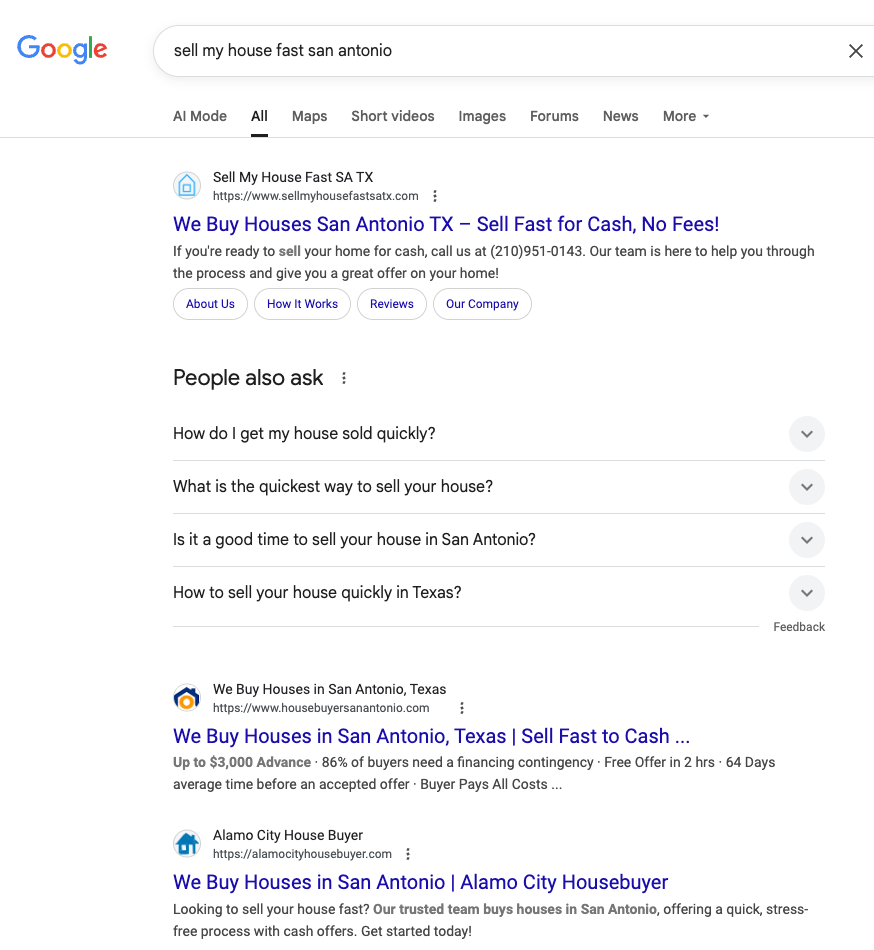
    For example, let’s look at the top result we get when we search for ‘sell my house fast san antonio’ 

    It’s this one… 

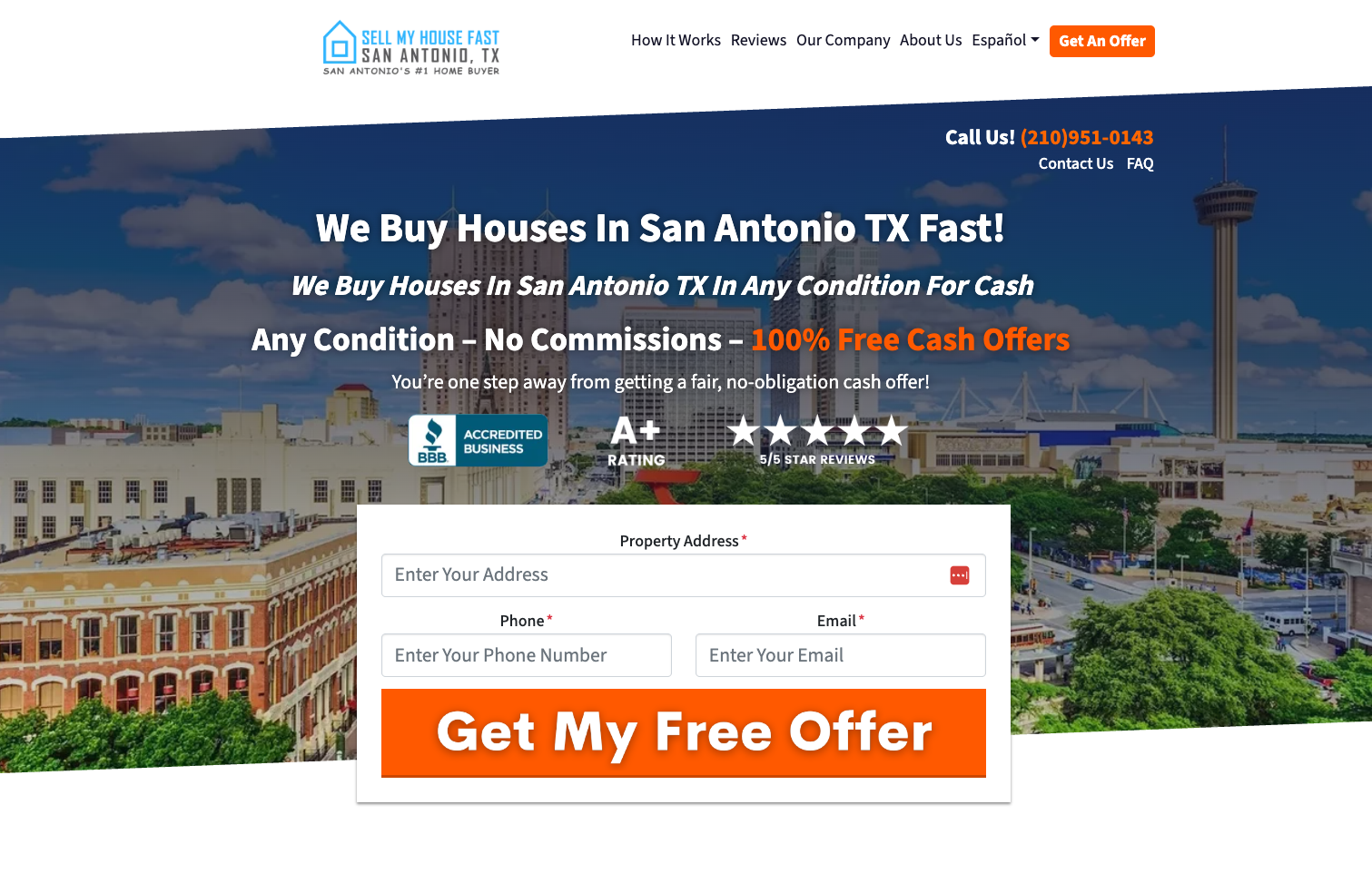
    Their website’s homepage clearly states “We Buy Houses In San Antonio, TX” right in the main headline and “SELL YOUR HOUSE FAST SAN ANTONIO” and similar terms throughout the page. They’re using the exact words & questions people search for, not fancy business language.
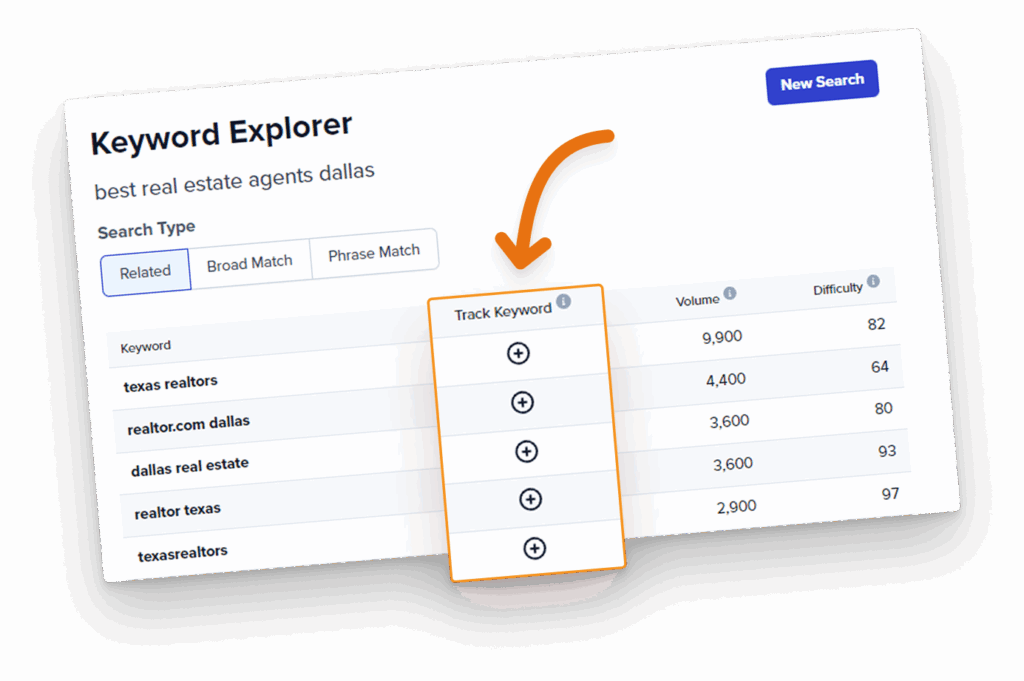
    To find the right keywords you can use Carrot’s Keyword Explorer. It shows you the exact phrases people type into Google when they need to sell fast, plus how competitive each keyword is in your market.

    Even if you use the right keywords, technical issues on your website can still impact your SEO. Things like slow page loading, broken links, or pages that don’t work properly on mobile phones will signal to Google not to prioritize your website. 

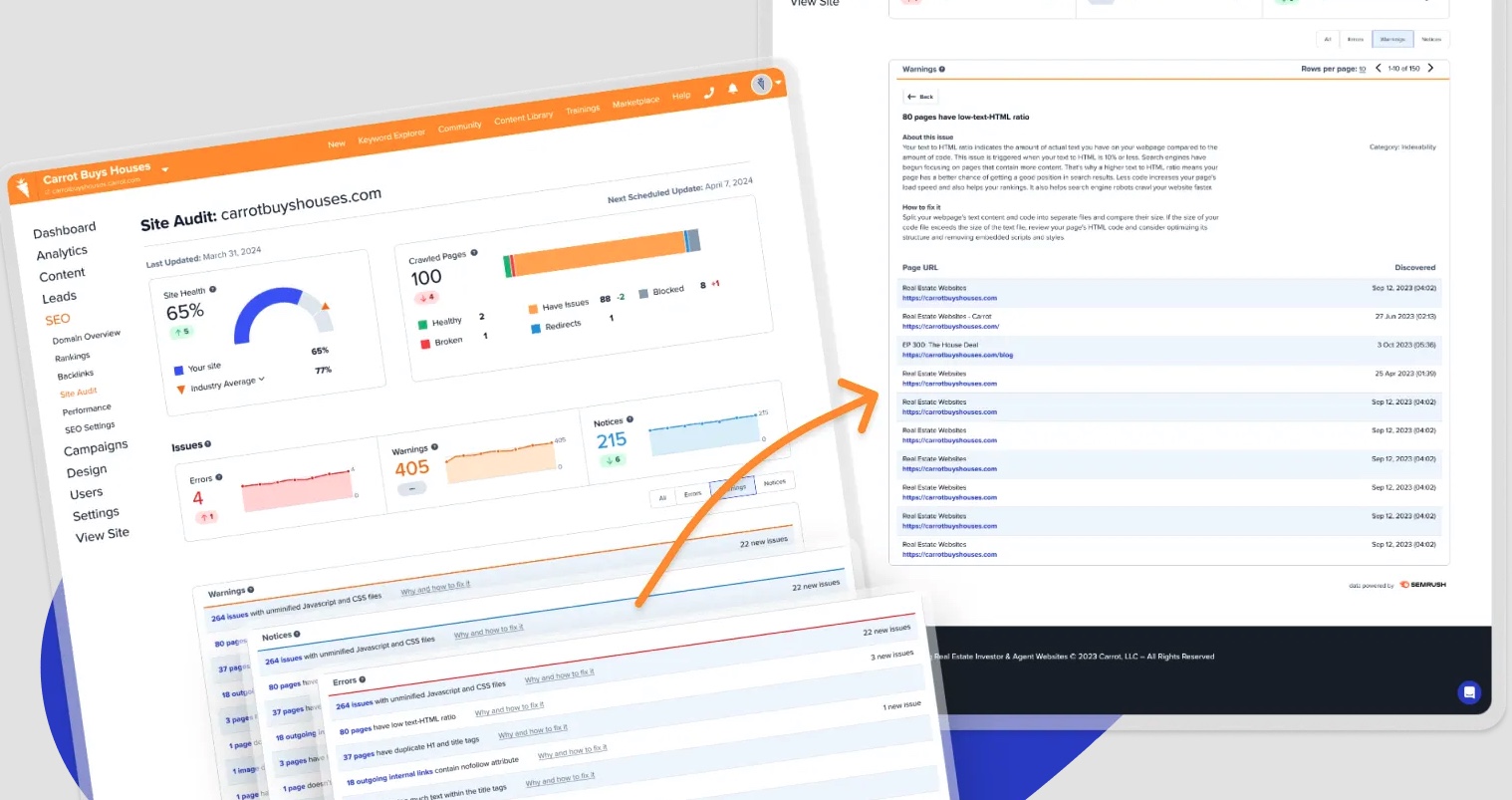
    That’s where Carrot’s SEO Site Audit tool can help. 

    It scans your entire website and identifies technical problems that could be dragging down your search rankings.

    SEO isn’t a one-time fix. Regularly publish helpful content, monitor your keyword rankings, and keep optimizing based on what’s working in your market.

    2. Your Website isn’t Designed for Conversion

    You might have hundreds of people visiting your website each month, but if they’re leaving without contacting you, you have a conversion problem.

    Conversion is getting visitors to take the action you want – whether that’s filling out a contact form, calling your phone number, or requesting a cash offer.

    Here are some of the biggest conversion killers sabotaging your website:

    (Keep reading, but if you want to dive deep into site conversion, check out this podcast.)

    7 Site Conversion Killers & 2 Credibility Boosters

    Your forms are asking for too much information 

    When visitors see a long form, they get overwhelmed and abandon it. Research by Hubspot analyzing over 40,000 landing pages reveals that 3-field forms convert at 25%, while 10-field forms drop to just 13%. 

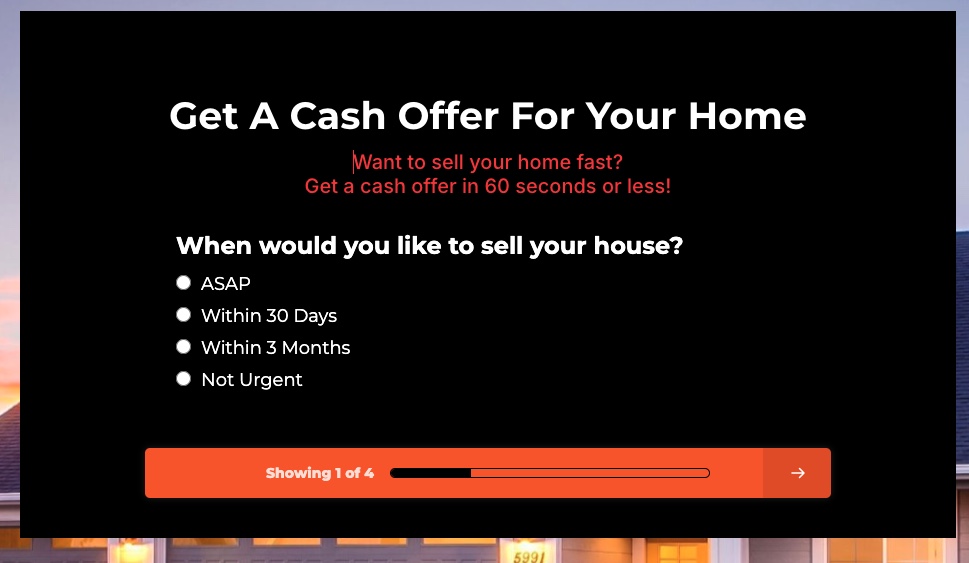
    Here is an example of how not to create a form — too many steps make people overthink and abandon the form: 

    Ask only the essentials: name, phone number/email, and property address (optional). You can gather additional details like timeline, property condition, and motivation during your phone call (or using the Autonomous Lead Manager).

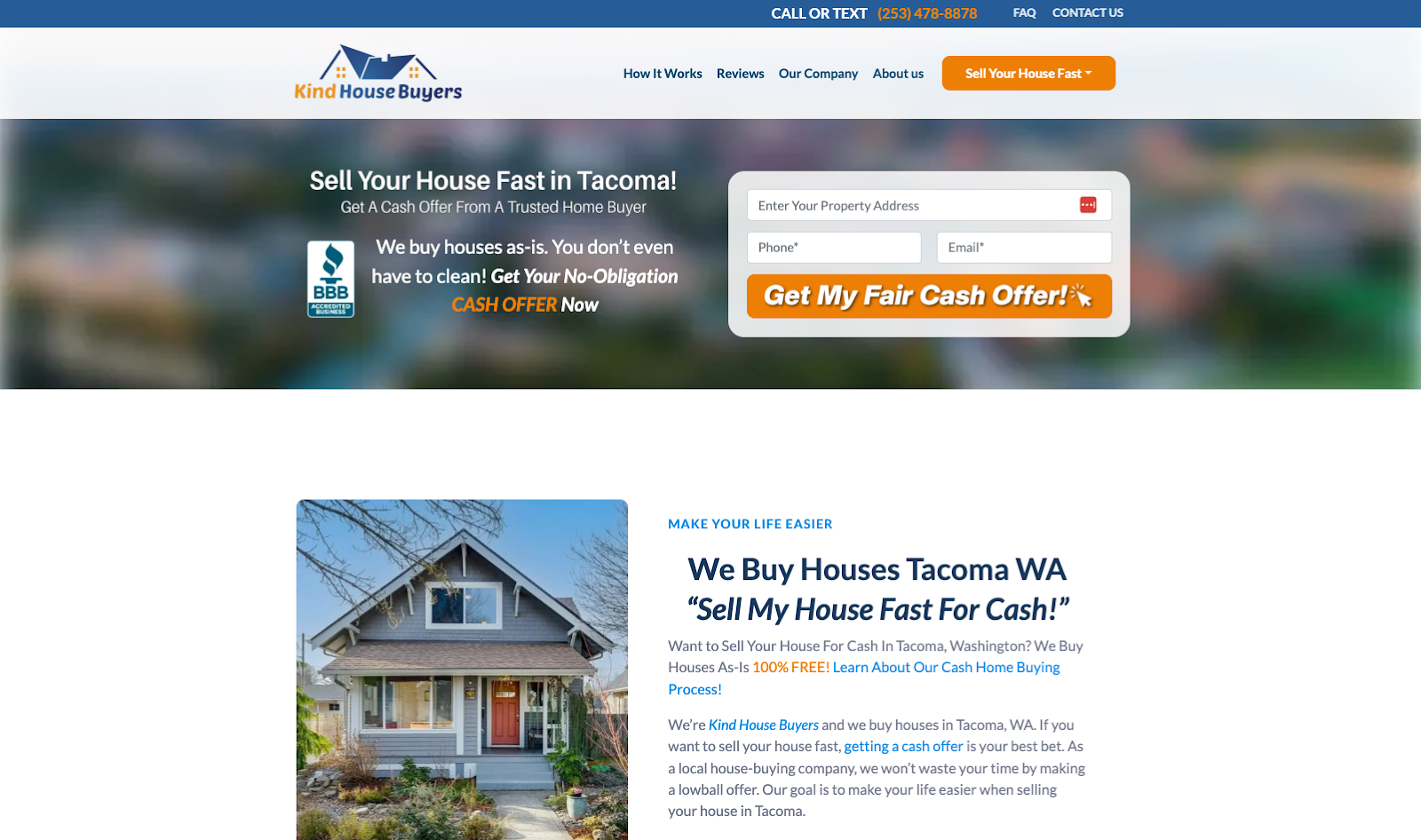
    Here’s a form on a Carrot site that converts visitors to leads at a high rate:

    Your call-to-action buttons are invisible or confusing 

    Your button should be the most prominent element on the page – use contrasting colors and specific language that tells visitors exactly what they’ll get.

    Notice the call-to-action (CTA) in the form image above. 

    • The bright orange “Get My Fair Cash Offer” button jumps off the page compared to the other colors, making it impossible to miss.
    • The copy is benefit-driven and specific – instead of generic text like “Submit,” it tells visitors exactly what they’ll get: their cash offer.

    At Carrot, we tested changing button text from “Click to Continue” to “Get My Fair Cash Offer” and saw conversions jump 49.5%. 

    Important elements are buried on your page 

    Don’t fall into the trap of making your website look beautiful at the cost of conversions. Your goal isn’t to get a “wow” when someone visits your site – it’s to get their contact information.

    This Forster Jones page looks sleek and sophisticated, but the tiny “Contact Us” link is buried in the top corner and easy to miss.

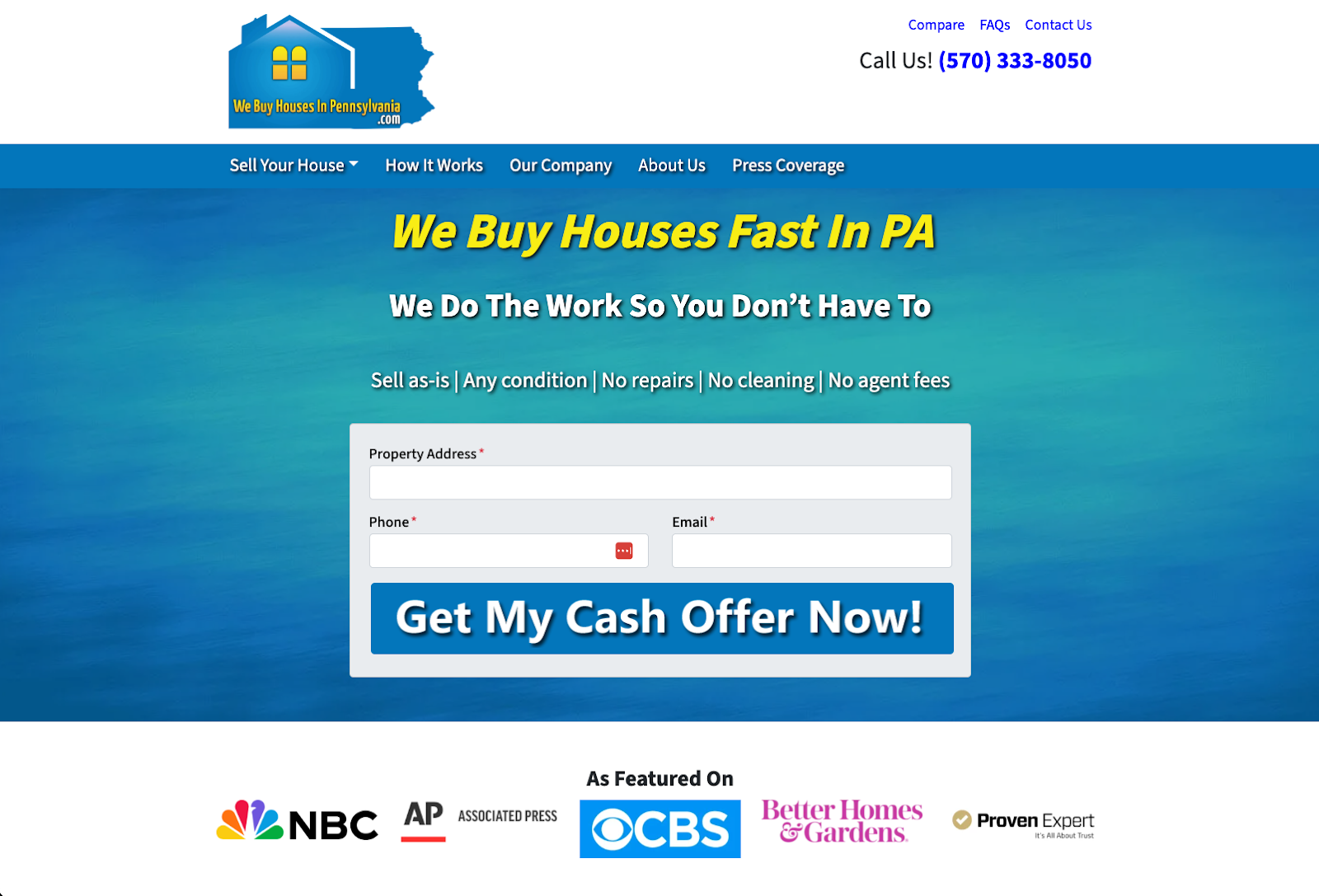
    Compare that to this investor’s homepage that prioritizes conversion over aesthetics (one of the highest converting sites in all of Carrot):

    This page has: 

    • A prominent headline that immediately tells visitors what they’ll get.
    • The contact form is clearly visible. It’s a simple 3-field form that people won’t hesitate to fill out. 
    • The blue “Get My Cash Offer Now” button dominates the page and can’t be missed.
    • Multiple contact options. The phone number is visible with “Call Us.”
    • Trust signals like recognizable publications they’ve been featured in are visible under the form.
    • Clear benefit statements — “Sell as-is | Any condition | No repairs | No cleaning | No agent fees” — address the main seller concerns upfront.

    We might suggest they test a different button color so it pops out even more. They could push their conversion rates even higher!

    3. Your Website Lacks Trust Signals That Convince Visitors You’re Legitimate

    People don’t trust businesses saying good things about themselves. 

    Instead, they look for validation from others who’ve been in their exact same shoes – past customers who needed to sell their house. When they see logos from authority websites, professional organizations, or credible third-party platforms on your site, trust builds naturally because these entities have nothing to gain by vouching for you. 

    You need trust elements on your website to show people that you can be trusted to do business with. 

    Some of the key trust signals are:

    • Real testimonials with photos: Not just “Great service! – J.K.,” but detailed stories with full names and pictures. Carrot found that sites with testimonials saw a 123% increase in leads compared to sites without them.


    Check out this video to learn how to ask specific questions that’ll get a house seller to give you a raving review that busts objections. 

    Getting Better Testimonials: Increasing Trust & Conversion for Real Estate Investor Leads


    • Your photo and company information: People want to see who they’re dealing with. A photo of you or your team and a personalized “About Us” page shows you’re real folks. 

    • Google reviews and ratings: Display your Google star rating prominently. 
    • Authority website logos and credentials: BBB accreditation, professional association memberships, industry certifications, or “As Seen On” logos from reputable news outlets all build instant credibility.

    4. Your Website has Technical Problems

    There’s nothing more frustrating than a motivated seller trying to contact you but giving up because your site doesn’t work properly.

    Does your website work properly on mobile?

    With over 93% of mobile searches happening on Google and most people searching for house buyers on their phones, a website that doesn’t work on mobile is essentially invisible. 

    Check if your site has these mobile killers:

    • You can scroll side-to-side, and the screen doesn’t adjust to phone size
    • Text becomes so small it’s unreadable on mobile
    • Buttons are too small to tap with a normal-sized thumb
    • Contact forms don’t work properly on phones or are hard to fill out

    Switch to a mobile-friendly real estate website design like Carrot to fix these issues once and for all. 

    Are your forms working correctly?

    Another common technical issue is: Broken forms. 

    A broken form doesn’t just mean it shows an error or won’t accept information. Sometimes forms appear to work perfectly but are actually failing in hidden ways:

    • The form submits, but visitors never see a “thank you” or confirmation message, so they assume it didn’t work and either try submitting again or give up entirely
    • You’re receiving the leads, but they’re going to your spam folder, so you never follow up
    • The form works on computers but crashes on mobile phones

    Forms that don’t submit properly, error messages that don’t explain what went wrong, or confirmation pages that don’t load will frustrate sellers into calling your competitors instead.

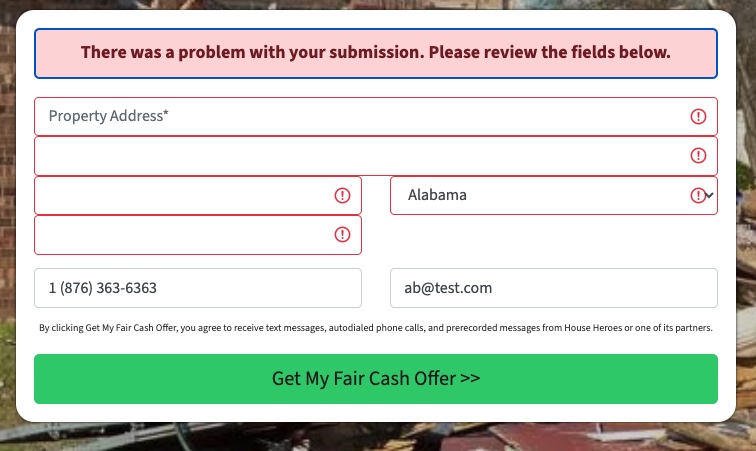
    Here’s an example of a form that shows a clear error: 

    Test your contact form monthly by submitting it yourself. Make sure you see a clear confirmation message after submitting. Connect your forms to a CRM and add SMS alerts so you know immediately when someone contacts you.

    Is your website loading as fast as possible? 

    If everything else is working correctly, check how fast your page loads. A 10-second load time might not seem like much, but when people are online searching for someone to buy their house and they have dozens of options, they won’t wait around.

    Google has found that bounce rates increase by 32% when page load time goes from 1 second to 3 seconds. For real estate investors, this means every extra second your website takes to load is literally sending motivated sellers to your competitors.

    Our websites are built specifically to load fast, rank high in search results, and convert visitors into leads.. That’s why you’ll consistently find Carrot sites loading noticeably faster than the industry standard.

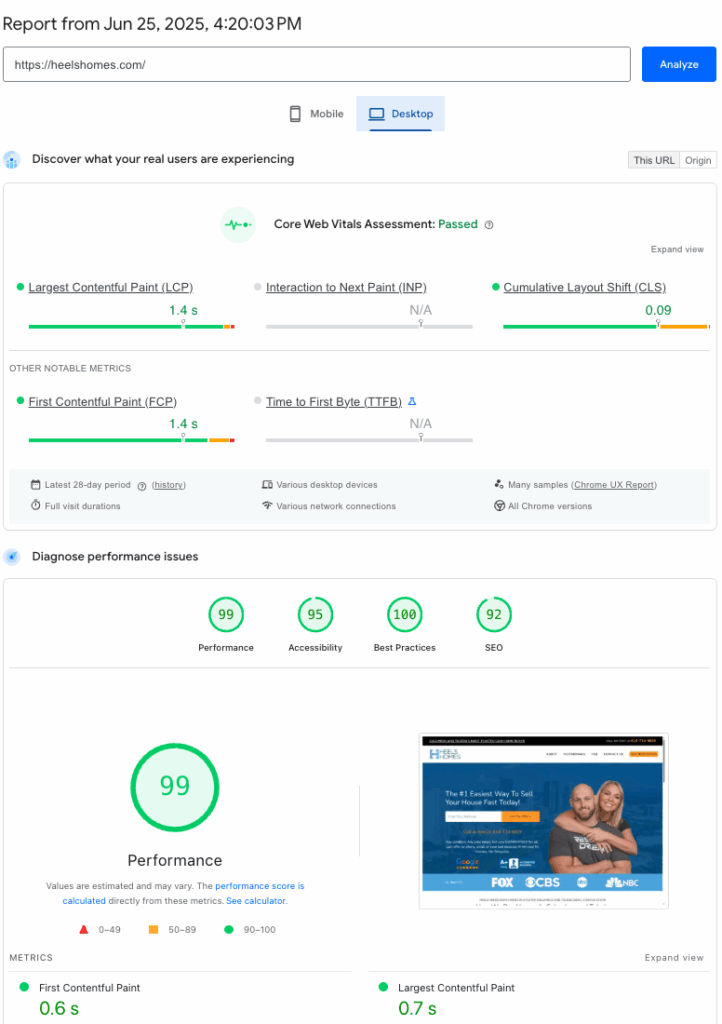
    You can test your website speed at Google PageSpeed Insights. (And check out a few more tips on page speed from our help center.)

    The test below was done on Josh & Tiffany High’s Carrot website using Google PageSpeed Insights. Check out the score!

    If your site takes longer than 3 seconds to load, make sure your website is built with clean code from the ground up, your server is fast, and your images are in the proper size and format. We have all of that baked into our Carrot real estate websites.

    What Should You Do Next?

    These four issues are costing real estate investors thousands of dollars in lost deals every month. The good news is they’re all fixable.

    You can tackle them one by one, or you can use a platform like Carrot that’s designed specifically for real estate investors.

    Every Carrot website comes with the conversion elements we’ve discussed already built in: mobile-optimized design, fast loading speeds, strategic contact forms, easy-to-add trust signals, and SEO optimization. 

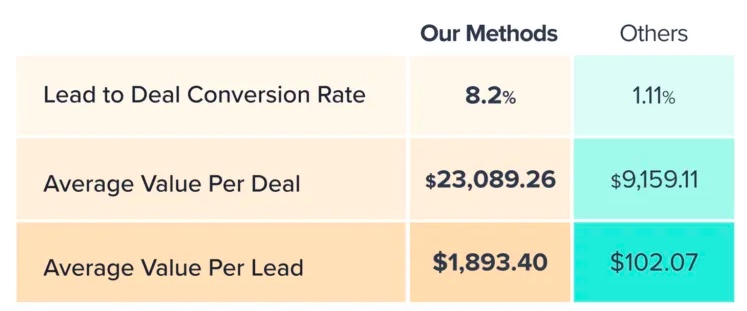
    Carrot websites generate 2.5 times higher profits per lead compared to other platforms. Members have generated over 1 million motivated seller leads, and Carrot sites hold 45% of the top search rankings in most U.S. markets.

    Check out a demo of Carrot today and see why thousands of investors choose it over building their own websites from scratch.

  • How AI is Reshaping SEO for Real Estate Investors: What You Need to Know in 2025

    How AI is Reshaping SEO for Real Estate Investors: What You Need to Know in 2025

    The search landscape has seen huge changes in recent years. If you’re a real estate investor who’s been watching your website traffic fluctuate or noticing fewer clicks from Google searches, you’re not imagining things.

    Google’s AI Overviews now appear in nearly half of all search results, and in May 2025, Google launched AI Mode for all US-based searchers. The era of traditional SEO strategies is rapidly evolving.

    For real estate investors who depend on their websites to generate motivated seller leads, these changes are business-critical developments that require immediate attention. When prospects search “cash home buyer,” “we buy houses,” or “sell my house fast,” Google increasingly provides answers directly in search results, pushing the #1 ranked website further down the page than we’re used to. So how should you adjust your SEO to make sure you still show up on top in 2025? Let’s cover some key strategies!

    KEY TAKEAWAYS (TL;DR)

    • AI Overviews are Dominating Search: Google’s AI-generated summaries now appear in nearly half of all search results, often providing “zero-click” answers, which means many searchers never leave the Google search results page.
    • Brand Authority is Key: Google’s algorithms now heavily emphasize brand recognition and mentions across the web, not just on your site. Backlinks are still important, but you’ll also want your company mentioned by name on trusted, relevant sites.
    • Unique Content is More Important Than Ever: Generic content is being de-ranked, and often even ignored by Google. Focus on providing your own unique and helpful expertise, local market insights, and real-world case studies that AI tools like ChatGPT can’t replicate.
    • Local SEO is Evolving: Optimize your Google Business Profile and target hyper-local keywords, as AI Mode prioritizes local intent.
    • Diversify Your Marketing: Reduce reliance on single marketing tactics by investing in omnichannel marketing, including social media, video content, and offline networking.

    Let’s get you up to speed on the most significant AI-driven changes impacting search in 2025 and beyond. In this guide, we’ll cover what these changes mean for your real estate investing business, and give you actionable SEO strategies to help you maintain and grow your online presence.

    Table of Contents

    1. The AI Revolution in Search: What to Know
    2. Building Brand Authority in an AI-Dominated Landscape
    3. Adapting Your Content Strategy for AI-First Search
    4. Measuring Success in the New SEO Landscape
    5. How to Stay Ahead: Real Estate Investor Marketing in the A.I. Era
    6. Your Action Plan: 15 Essential Steps to Future-Proof Your Marketing Strategy
    7. Conclusion
    8. Frequently Asked Questions
    Carrot icon
    Lead generation, at its best
    Attract, convert & close more motivated leads
    Try Carrot Today

    The AI Revolution in Search: What Real Estate Investors Need to Know

    Google’s AI Overviews Are Dominating Search Results

    The most dramatic change affecting real estate investor websites began in May 2024 when Google officially launched AI Overviews.

    By December 2024, these AI-generated summaries appeared in 47% of Google search results, and recent data shows they spiked even higher during Google’s March 2025 core update.

    Most recently at Google’s I/O annual developer conference in May 2025, they announced the rollout of AI mode to all users in the U.S.

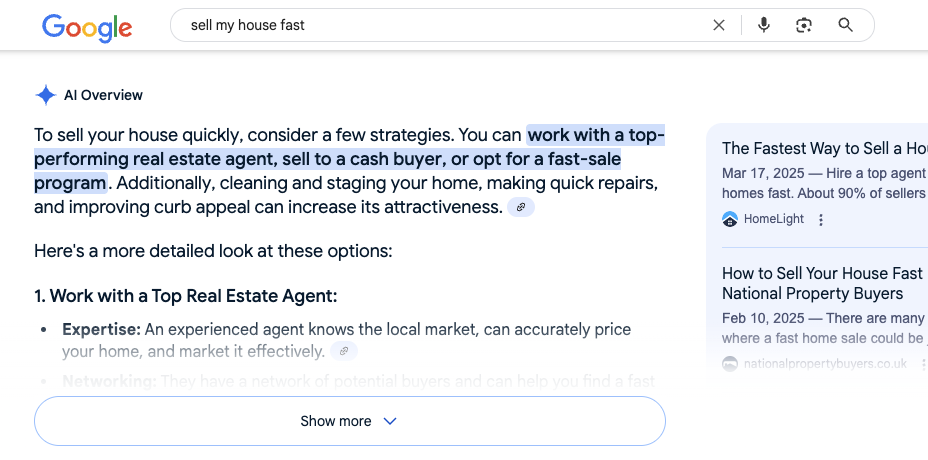
    Screenshots showing Google's AI overviews for a search of "sell my house fast".

    Here’s what’s especially challenging for real estate investors: AI Overviews show up heavily for broad, top-of-funnel queries—exactly the type of searches your potential sellers are making when they first consider selling their property. When someone searches “how to sell my house fast” or “cash home buyers near me,” they’re increasingly getting AI-generated answers without ever clicking through to your website.

    The numbers are staggering:

    • Research shows that nearly 60% of searches in 2024 resulted in “zero-click” outcomes, meaning users get their answers directly from Google without visiting any websites.
    • A study by Datos and SparkToro found that for every 1,000 searches on Google in the United States, only 360 clicks make it to non-Google-owned properties that aren’t paying for ads.

    The Rise of Forum Content and Video Results

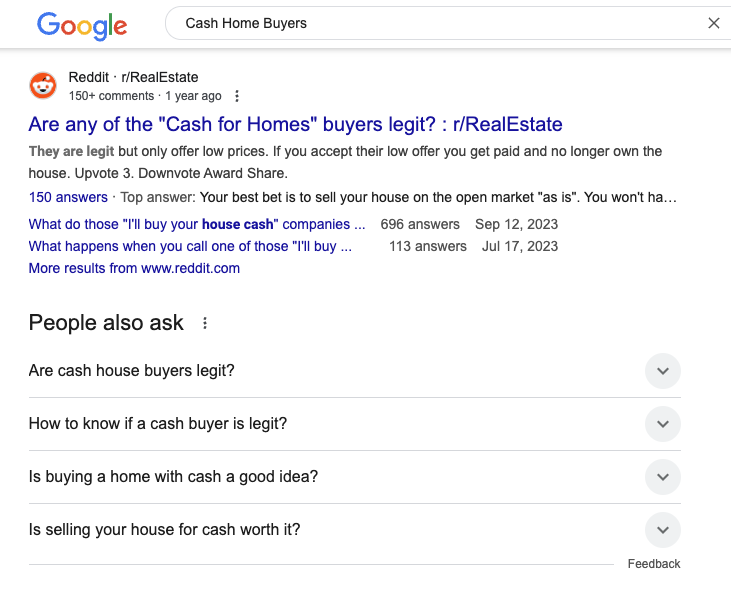
    Another significant shift impacting SEO strategies for small businesses is the increased prominence of forum content like Reddit and Quora in search results. This trend is particularly relevant for real estate investors because many forum discussions reveal the distrust and skepticism people have toward “cash home buyers” and the real estate investment industry in general.

    Screenshot showing Reddit forum answers in the Google search results.

    When potential sellers search for information about working with real estate investors, they’re increasingly finding forum discussions where people share both positive and negative experiences. This shift emphasizes the critical importance of reputation management and building authentic trust signals across multiple platforms.

    Video content is also showing up more often in search results, with both YouTube videos and short-form video content appearing more frequently. This presents opportunities for real estate investors looking to diversify their content strategy. Plus, research shows that websites with video content see 50% more engagement than those without.

    You can stay ahead of things by monitoring relevant forums and conversations in your local market area. Then develop content in both written and video formats that speaks directly to the concerns people have. Showcase the trustworthy, local people behind your company to combat the skepticism that some motivated sellers may have about cash home buyers.

    Building Brand Authority in an AI-Dominated Landscape

    The Growing Importance of Brand Mentions and Recognition

    One of the most significant revelations from the May 2024 Google algorithm leak was the emphasis on brand authority.

    In Rand Fishkin’s original analysis of the leaked Google Search API documents, his primary takeaway was that “brand matters more than anything else.” He commented:

    If there was one universal piece of advice I had for marketers seeking to broadly improve their organic search rankings and traffic, it would be: “Build a notable, popular, well-recognized brand in your space, outside of Google search.”

    For real estate investors, this means your reputation and brand recognition across multiple platforms now directly impacts your search rankings. Google measures brand mentions on YouTube transcripts, social media platforms, and across the web.

    The stronger your brand presence beyond your website, the better your chances of ranking well in traditional search results and being cited in AI Overviews. More than ever, off-page SEO isn’t just about building backlinks. It’s also about social media visibility and digital PR & publicity for your business.

    You can monitor referring domains, backlinks to your website, and your Authority Score with Carrot’s Domain Overview Tool. We also recommend adding your company’s business name to the Keyword Rank Tracker to monitor that your website ranks at the top of the search results when people search for your company by name.

    The Role of Engagement Signals in Rankings

    Google had insisted for years that they don’t use anything from Chrome for ranking, but the Google API documents leaked in May 2024 suggested that they actually do use Chrome and Android device data to understand how users interact with websites.

    Engagement signals are crucial ranking factors. Google looks at what happens after users click through from the search results to your website.

    Your website’s user experience directly impacts your search rankings. If visitors quickly return to Google after visiting your site (known as “pogo-sticking”), it signals to Google that your content didn’t satisfy their intent. However, if they spend time on your site reading content, watching a helpful video, or filling out a form, those engagement signals can play a role in how Google will rank your website in the future.

    Adapting Your Content Strategy for AI-First Search

    The Challenge of AI-Generated Content Saturation

    Google’s March 2024 core update, described as their “largest in history,” resulted in 45% less low-quality, unoriginal content in search results. The search engine giant is actively working to combat the flood of AI-generated commodity content that lacks originality and value.

    In January 2025, Google updated its Search Quality Rater guidelines to focus on spam and unoriginal content. Google expanded the definition of what it considers spam, and it called out low effort content in Section 4.6.6 of their guidelines:

    “The Lowest rating applies if all or almost all of the [Main Content] on the page (including text, images, audio, videos, etc) is copied, paraphrased, embedded, auto or AI generated, or reposted from other sources with little to no effort, little to no originality, and little to no added value for visitors to the website. Such pages should be rated Lowest, even if the page assigns credit for the content to another source.”

    Google’s quality raters are human consultants hired by Google to manually spot check the quality of Google search results and provide feedback to help Google improve their algorithms. The Search Quality Rater guidelines tell these consultants what they should look out for when evaluating the search results.

    Understanding Information Gain and Content Uniqueness

    Google’s “information gain score” patent, granted in June 2022, represents a fundamental shift in how search engines evaluate content quality. Rather than focusing solely on word count or how recently a page was updated, Google now measures how much new useful information your content provides that doesn’t exist elsewhere online.

    For real estate investors, this means that simply publishing generic content is not only unlikely to improve your rankings, it could actually hurt your search visibility. Instead, you need to consistently add your specific expertise, local market knowledge, case studies, and unique data that differentiates you from competitors.

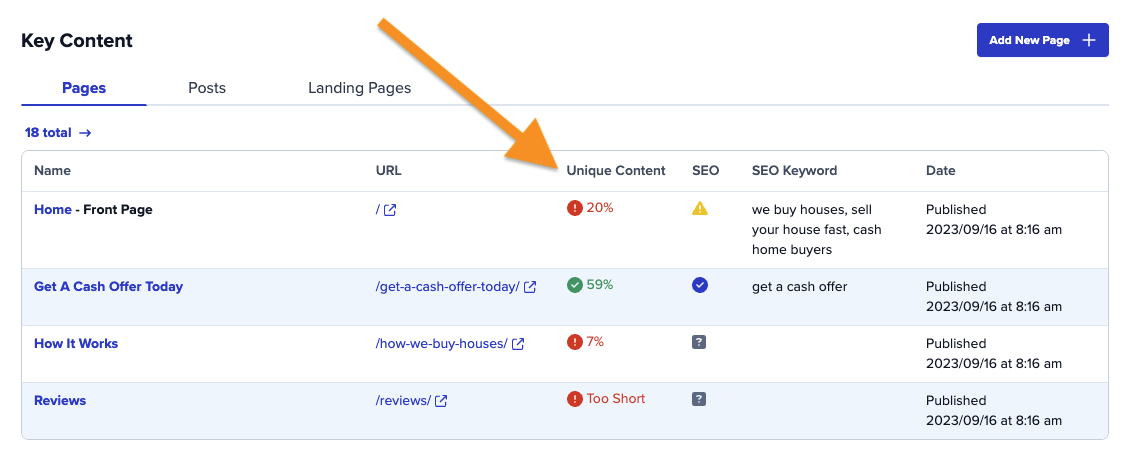
    This is why we’ve built our Unique Content Tool to help you see how different your edited content is from the original template. Plus, our updated AI Rewrite Tool makes personalizing your content easier than ever! You’ll still need to add your own insights, but our built-in tools can expedite your content creation process by making sure the AI-generated copy matches your unique brand — an excellent starting point.

    Screenshot showing Carrot's Unique Content Tool

    Creating Content That Stands Out

    The key to a successful content strategy in 2025 and beyond lies in combining AI efficiency with human knowledge and authenticity.

    Real estate investors have a unique advantage here—your direct experience with local markets, specific property challenges, and successful deal structures provides the exact type of unique information that both Google’s algorithms and your potential clients value most. You can still use AI tools to help you write, just be sure to add your own insights and flair. (Carrot’s Automated Content Library is a perfect example of this. It offers well-researched, pre-written blog posts that you can use as a starting point, then customize to your market and with additional insights and expertise you’ve honed over your career.)

    When you combine well-optimized website content with video marketing, you can build trust and credibility with local homeowners and increase your potential visibility in Google search results.

    Measuring Success in the New SEO Landscape

    Traffic Attribution and Traditional SEO KPIs are Changing

    The traditional SEO metrics that real estate investors have relied on for years—keyword rankings, organic traffic, and click-through rates—are becoming less reliable indicators of holistic marketing success. As Google’s search results pages continuously evolve with AI Overviews, video content, and forum results, these metrics don’t tell the complete story of your marketing performance.

    A critical issue affecting real estate investor websites is attribution of traffic sources. Research in 2024 showed that significant percentages of web traffic from social networks, messaging apps, and even AI chatbots are often lumped in under “Direct” traffic by Google Analytics.

    This “dark traffic” phenomenon means you might be receiving more referral traffic from social media, AI chatbots like ChatGPT, and other sources than your analytics show.

    The Rise of Brand Awareness Metrics

    In this new landscape, brand awareness metrics are becoming increasingly important. Brand mentions across the web, branded search volume, and your visibility in AI-generated responses are now crucial indicators of your market authority and future search performance.

    For real estate investors, this shift means monitoring how often your company is mentioned on social media, in local forums, and in AI chatbot responses when people ask about local home buyers. These mentions often lead to branded searches and direct traffic that may not be properly attributed in traditional analytics.

    We always recommend tracking branded terms (like your company name) in our Keyword Rank Tracker so you can make sure you are controlling the conversation around your brand.

    Aligning with Business-Critical Metrics

    More than ever, SEO success and marketing efforts need to align directly with business metrics that matter to your real estate investing operation. A decrease in organic traffic might be offset by higher-quality leads or better conversion rates from other sources.

    For real estate investors, this makes it even more important to focus on business metrics like revenue, lead quality, cost per lead and lead-to-close ratios rather than website traffic or rankings alone. (Make sure you have a strong, real estate-specific CRM to help you monitor these key metrics.)

    How to Stay Ahead: Real Estate Investor Marketing in the AI Era

    The changes we’ve seen in 2024 and early 2025 are just the beginning of AI’s impact on search and digital marketing. Google’s introduction of AI Mode with Gemini 2.0 in March 2025 shows even more sophisticated AI capabilities are coming, with particular emphasis on local intent and complex query handling.

    For real estate investors, this means the strategies that work today need to be flexible enough to adapt as AI becomes even more prominent in search results.

    The most successful real estate investors in this new landscape will be those who maintain competitive advantages that can’t be easily replicated by AI or competitors. This includes deep local market knowledge, strong personal relationships, proven track records, and authentic brand authority and content built over time.

    Your Action Plan: 15 Essential Steps for Real Estate Investors to Future-Proof Your Marketing Strategy

    Based on the major shifts happening in search and AI, here’s your comprehensive action plan to adapt and thrive:

    1. Optimize Content for AI Overview Inclusion – Structure your website content with clear, concise answers to common seller questions. Utilize dedicated FAQ block patterns, bullet points, and numbered lists to make information easily digestible for both human readers and AI algorithms. Ensure your content directly addresses user intent, making it a prime candidate for Google’s AI Overviews and featured snippets by providing direct, authoritative responses.
    2. Target Hyper-Local and Intent-Driven Keywords – Shift your keyword strategy from broad, competitive terms like “we buy houses” to highly specific, long-tail, and geographically focused phrases. Think “sell my house fast in [your specific neighborhood]” or “cash home buyer for inherited property in [your city].” Rather than old-school keyword stuffing, use entity-based SEO to provide context and meaning through synonyms and related words. This approach helps you capture niche local demand and signals to Google’s AI that your content is highly relevant to specific local queries.
    3. Prioritize Unique, Expert-Driven Content (Information Gain) – Move beyond generic advice and focus on creating unique content that provides genuine “information gain.” This means consistently adding your original expertise, local market knowledge, real-world examples, and proprietary data that can’t be easily found elsewhere or replicated by AI. Your direct experience with specific property challenges and successful deal structures is what will differentiate you from your competitors.
    4. Create Transparent Process Guides – Develop detailed, process-driven educational content that clearly outlines your actual methods for evaluating properties, calculating costs, and negotiating deals. Sharing your transparent approach builds significant trust with potential sellers, demystifies the real estate investment process, and positions you as an honest, knowledgeable authority in your local market.
    5. Cultivate a Consistent Multi-Platform Brand – Establish and maintain a strong, consistent brand presence across all relevant digital platforms. This includes not only your website but also YouTube, LinkedIn, Facebook, Instagram, and specialized real estate forums. Ensure your messaging, visual identity, and value proposition are consistent, building credibility for your brand and recognition across the web, which Google increasingly values.
    6. Engage Actively on Community Platforms – Proactively participate in online communities where homeowners discuss selling properties, such as Reddit, Quora, Nextdoor and local Facebook groups. Provide genuine value by answering questions, offering insights, and sharing helpful resources without being overly spammy or self-promotion. Focus on bringing your humanity into conversations, building trust, establishing yourself as a helpful expert, and driving referral traffic and brand mentions.
    7. Develop High-Value Video Content – Create diverse video content, including property walkthroughs, authentic seller testimonials, and educational videos explaining various aspects of selling to an investor. Optimize these videos with relevant titles, descriptions, and tags for YouTube and embed them strategically on your website. Simply upload your video and Carrot’s VideoPost will transcribe it into a blog post that’s optimized for search engines.
    8. Showcase Authentic Customer Success Stories – Document your successful deals and share them as case studies on your website, video testimonials, and social media success stories. These real-world examples provide powerful social proof, demonstrate your ability to solve problems for sellers, and build trust and credibility that generic AI-generated content simply cannot replicate.
    9. Optimize Your Google Business Profile for Local Dominance – Your Google Business Profile (GBP) is more critical than ever. It’s often the first touchpoint for local sellers and a primary data source for Google’s AI Overviews, especially for “near me” searches. Ensure your GBP is fully claimed, verified, and meticulously optimized with accurate business hours, services offered (e.g., “cash home buyer,” “fast house sale”), high-quality photos of properties and your team, and consistent updates. Actively encourage and respond to reviews, as these build trust and signal local authority to both potential sellers and Google’s algorithms. A robust GBP is foundational for appearing in local search results and being cited by AI.
    10. Proactively Monitor Brand Reputation – Set up comprehensive monitoring systems like Google Alerts and specialized social listening tools to track all online mentions of your company, key personnel, and brand. Actively manage your online reputation by responding to reviews, addressing feedback, and correcting misinformation. A strong, positive brand reputation is a crucial signal for Google’s algorithms and AI Overviews, influencing your visibility and trustworthiness.
    11. Align Marketing KPIs with Business Outcomes – Shift your focus beyond traditional SEO metrics like keyword rankings and organic traffic, which are becoming less reliable. Instead, analyze performance through the lens of core business metrics: lead quality, cost per lead, lead-to-close ratios, and revenue generated. Pay close attention to how AI Overviews impact branded versus non-branded searches, and track referral traffic from social media, forums, and AI chatbots, even if it’s initially misattributed. Make sure your marketing efforts are directly tied to tangible results for your real estate investing operation, even if traditional traffic numbers fluctuate.
    12. Focus on Brand Visibility & Public Relations – Actively seek out credible brand mentions for both your company and personal brand across various platforms. Engage in relevant forums like Reddit and Quora, and leverage PR platforms like HARO and Qwoted to secure publicity. Remember that mentions by brand name on third-party sites, including YouTube and LinkedIn, are just as crucial as backlinks for signaling authority and can significantly enhance your visibility within LLMs and AI Overviews, directly building trust and recognition in your target market.
    13. Establish Deep Local Authority (Offline & Online) – Build authentic local market authority by actively engaging with your community both online and in the real world. Attend local investor meetings, sponsor community events, and develop strong relationships with real estate professionals, contractors, and local businesses. These real-world connections increase your credibility, generate valuable word-of-mouth referrals, help you find off-market properties, and reinforce your local presence to Google’s algorithms.
    14. Embrace a Diversified Omnichannel Approach – Reduce your dependence on any single lead source by investing in a truly omnichannel marketing strategy. Diversify your efforts across search engine optimization, social media marketing, targeted direct mail campaigns (make sure your mailers include your URL or a scannable QR code!), email nurturing sequences, and in-person networking. This creates a resilient lead generation ecosystem that can withstand future shifts in search algorithms and consumer behavior.
    15. Leverage an AI-Powered CRM for Sales Efficiency – Integrate and fully utilize CRM platforms like Carrot CRM with embedded AI features to streamline your sales process and manage high-volume pipelines effectively. Carrot CRM’s newest features — Autonomous Lead Manager (ALM), AI Opportunity Summaries, and AI Lead Scoring — can automate follow-ups, prioritize leads, and provide real-time property analysis, giving your acquisition team improved clarity and speed without replacing the essential human touch.

    Conclusion

    The AI revolution in search represents both significant challenges and unprecedented opportunities for savvy real estate investors. While traditional SEO strategies are evolving, the fundamental principles of providing value, building trust, and solving real problems for homeowners remain as important as ever.

    Remember, AI is changing how people find information, but not why they need to sell their houses quickly or work with reliable investors.

    To be successful, you should adapt to changing technologies while focusing on what makes your real estate investment business unique.

    The same time-tested strategies are true both online and off:

    • Build lasting relationships and genuine brand authority with people in your local market.
    • Provide valuable solutions for motivated sellers, then share that know-how online (while providing “information gain” that sets you apart from competitors).
    • Diversify your offline and digital marketing channels, but remember that other human beings will make or break your success.

    By combining these timeless principles with modern strategies adapted for an AI-first world, you’ll be well-positioned for continued success.

    Ready to future-proof your real estate investment marketing? Analyze the competitive landscape in your local market area for free with Carrot’s Market Scout.

    Frequently Asked Questions

    Q: How do I know if AI Overviews are affecting my real estate investor website traffic?

    Monitor for declining organic click-through rates on informational queries like “how to sell my house fast” or “cash home buyers.” Review your Google Search Console Search Performance metrics to compare impressions versus clicks, and note if branded searches are increasing relative to non-branded terms. AI Overviews typically have the strongest impact on top-of-funnel and question-based searches where users might get their answers directly from AI summaries.

    Q: What’s the best way to optimize my real estate investor content for AI citations and overviews?

    Create content that directly addresses homeowner questions with clear, straightforward language. Implement FAQ sections, numbered lists, and headings that match natural search queries. Prioritize adding unique local market insights and specific methodologies that showcase your personal expertise and experience rather than generic advice that AI systems can easily synthesize and present without citing your website.

    Q: Should real estate investors still focus on traditional SEO strategies for local markets?

    Absolutely, but with strategic adjustments. Local SEO remains essential since Google’s AI prioritizes local intent, but you need to emphasize distinctive geographic content that positions you as the authoritative local expert. Combine traditional on-page SEO and local optimization with comprehensive brand development and off-page SEO across multiple channels to maximize visibility in both traditional search results and AI-generated answers. Incorporate video marketing to enhance SEO performance, strengthen brand recognition, and build credibility within your local market.

    Q: How can I track if my real estate investment marketing is working when analytics are becoming less reliable?

    Focus on connecting your marketing metrics to business KPIs such as revenue generation, lead quality assessment, cost per acquisition, and lead-to-close conversion rates, while still maintaining digital marketing performance tracking. Monitor your backlink profile and domain authority using Domain Overview, integrate Google Search Console data directly into your Carrot dashboard by connecting Search Performance, and implement campaign tracking links to accurately measure your marketing effectiveness.

    Q: What types of content should real estate investors prioritize in 2025 to compete with AI-generated information?

    Prioritize content that highlights your specialized expertise and intimate local market knowledge—comprehensive neighborhood investment analyses, detailed case studies of your actual transactions, transparent process walkthroughs with specific examples, and market insights that only an active local investor would possess. Complement this expertise-driven content with authentic video testimonials and success stories that establish trust and credibility. Learn more about creating unique content.

    People also read …

  • How AI is Reshaping SEO for Real Estate Investors: What You Need to Know

    How AI is Reshaping SEO for Real Estate Investors: What You Need to Know

    The search landscape has seen huge changes in recent years. If you’re a real estate investor who’s been watching your website traffic fluctuate or noticing fewer clicks from Google searches, you’re not imagining things.

    Google’s AI Overviews now appear in nearly half of all search results, and in May 2025, Google launched AI Mode for all US-based searchers. The era of traditional SEO strategies is rapidly evolving.

    For real estate investors who depend on their websites to generate motivated seller leads, these changes are business-critical developments that require immediate attention. When prospects search “cash home buyer,” “we buy houses,” or “sell my house fast,” Google increasingly provides answers directly in search results, pushing the #1 ranked website further down the page than we’re used to. So how should you adjust your SEO to make sure you still show up on top in 2025? Let’s cover some key strategies!

    KEY TAKEAWAYS (TL;DR)

    • AI Overviews are Dominating Search: Google’s AI-generated summaries now appear in nearly half of all search results, often providing “zero-click” answers, which means many searchers never leave the Google search results page.
    • Brand Authority is Key: Google’s algorithms now heavily emphasize brand recognition and mentions across the web, not just on your site. Backlinks are still important, but you’ll also want your company mentioned by name on trusted, relevant sites.
    • Unique Content is More Important Than Ever: Generic content is being de-ranked, and often even ignored by Google. Focus on providing your own unique and helpful expertise, local market insights, and real-world case studies that AI tools like ChatGPT can’t replicate.
    • Local SEO is Evolving: Optimize your Google Business Profile and target hyper-local keywords, as AI Mode prioritizes local intent.
    • Diversify Your Marketing: Reduce reliance on single marketing tactics by investing in omnichannel marketing, including social media, video content, and offline networking.

    Let’s get you up to speed on the most significant AI-driven changes impacting search in 2025 and beyond. In this guide, we’ll cover what these changes mean for your real estate investing business, and give you actionable SEO strategies to help you maintain and grow your online presence.

    Table of Contents

    1. The AI Revolution in Search: What to Know
    2. Building Brand Authority in an AI-Dominated Landscape
    3. Adapting Your Content Strategy for AI-First Search
    4. Measuring Success in the New SEO Landscape
    5. How to Stay Ahead: Real Estate Investor Marketing in the A.I. Era
    6. Your Action Plan: 15 Essential Steps to Future-Proof Your Marketing Strategy
    7. Conclusion
    8. Frequently Asked Questions
    Carrot icon
    Lead generation, at its best
    Attract, convert & close more motivated leads
    Try Carrot Today

    The AI Revolution in Search: What Real Estate Investors Need to Know

    Google’s AI Overviews Are Dominating Search Results

    The most dramatic change affecting real estate investor websites began in May 2024 when Google officially launched AI Overviews.

    By December 2024, these AI-generated summaries appeared in 47% of Google search results, and recent data shows they spiked even higher during Google’s March 2025 core update.

    Most recently at Google’s I/O annual developer conference in May 2025, they announced the rollout of AI mode to all users in the U.S.

    Screenshots showing Google's AI overviews for a search of "sell my house fast".

    Here’s what’s especially challenging for real estate investors: AI Overviews show up heavily for broad, top-of-funnel queries—exactly the type of searches your potential sellers are making when they first consider selling their property. When someone searches “how to sell my house fast” or “cash home buyers near me,” they’re increasingly getting AI-generated answers without ever clicking through to your website.

    The numbers are staggering:

    • Research shows that nearly 60% of searches in 2024 resulted in “zero-click” outcomes, meaning users get their answers directly from Google without visiting any websites.
    • A study by Datos and SparkToro found that for every 1,000 searches on Google in the United States, only 360 clicks make it to non-Google-owned properties that aren’t paying for ads.

    The Rise of Forum Content and Video Results

    Another significant shift impacting SEO strategies for small businesses is the increased prominence of forum content like Reddit and Quora in search results. This trend is particularly relevant for real estate investors because many forum discussions reveal the distrust and skepticism people have toward “cash home buyers” and the real estate investment industry in general.

    Screenshot showing Reddit forum answers in the Google search results.

    When potential sellers search for information about working with real estate investors, they’re increasingly finding forum discussions where people share both positive and negative experiences. This shift emphasizes the critical importance of reputation management and building authentic trust signals across multiple platforms.

    Video content is also showing up more often in search results, with both YouTube videos and short-form video content appearing more frequently. This presents opportunities for real estate investors looking to diversify their content strategy. Plus, research shows that websites with video content see 50% more engagement than those without.

    You can stay ahead of things by monitoring relevant forums and conversations in your local market area. Then develop content in both written and video formats that speaks directly to the concerns people have. Showcase the trustworthy, local people behind your company to combat the skepticism that some motivated sellers may have about cash home buyers.

    Building Brand Authority in an AI-Dominated Landscape

    The Growing Importance of Brand Mentions and Recognition

    One of the most significant revelations from the May 2024 Google algorithm leak was the emphasis on brand authority.

    In Rand Fishkin’s original analysis of the leaked Google Search API documents, his primary takeaway was that “brand matters more than anything else.” He commented:

    If there was one universal piece of advice I had for marketers seeking to broadly improve their organic search rankings and traffic, it would be: “Build a notable, popular, well-recognized brand in your space, outside of Google search.”

    For real estate investors, this means your reputation and brand recognition across multiple platforms now directly impacts your search rankings. Google measures brand mentions on YouTube transcripts, social media platforms, and across the web.

    The stronger your brand presence beyond your website, the better your chances of ranking well in traditional search results and being cited in AI Overviews. More than ever, off-page SEO isn’t just about building backlinks. It’s also about social media visibility and digital PR & publicity for your business.

    You can monitor referring domains, backlinks to your website, and your Authority Score with Carrot’s Domain Overview Tool. We also recommend adding your company’s business name to the Keyword Rank Tracker to monitor that your website ranks at the top of the search results when people search for your company by name.

    The Role of Engagement Signals in Rankings

    Google had insisted for years that they don’t use anything from Chrome for ranking, but the Google API documents leaked in May 2024 suggested that they actually do use Chrome and Android device data to understand how users interact with websites.

    Engagement signals are crucial ranking factors. Google looks at what happens after users click through from the search results to your website.

    Your website’s user experience directly impacts your search rankings. If visitors quickly return to Google after visiting your site (known as “pogo-sticking”), it signals to Google that your content didn’t satisfy their intent. However, if they spend time on your site reading content, watching a helpful video, or filling out a form, those engagement signals can play a role in how Google will rank your website in the future.

    Adapting Your Content Strategy for AI-First Search

    The Challenge of AI-Generated Content Saturation

    Google’s March 2024 core update, described as their “largest in history,” resulted in 45% less low-quality, unoriginal content in search results. The search engine giant is actively working to combat the flood of AI-generated commodity content that lacks originality and value.

    In January 2025, Google updated its Search Quality Rater guidelines to focus on spam and unoriginal content. Google expanded the definition of what it considers spam, and it called out low effort content in Section 4.6.6 of their guidelines:

    “The Lowest rating applies if all or almost all of the [Main Content] on the page (including text, images, audio, videos, etc) is copied, paraphrased, embedded, auto or AI generated, or reposted from other sources with little to no effort, little to no originality, and little to no added value for visitors to the website. Such pages should be rated Lowest, even if the page assigns credit for the content to another source.”

    Google’s quality raters are human consultants hired by Google to manually spot check the quality of Google search results and provide feedback to help Google improve their algorithms. The Search Quality Rater guidelines tell these consultants what they should look out for when evaluating the search results.

    Understanding Information Gain and Content Uniqueness

    Google’s “information gain score” patent, granted in June 2022, represents a fundamental shift in how search engines evaluate content quality. Rather than focusing solely on word count or how recently a page was updated, Google now measures how much new useful information your content provides that doesn’t exist elsewhere online.

    For real estate investors, this means that simply publishing generic content is not only unlikely to improve your rankings, it could actually hurt your search visibility. Instead, you need to consistently add your specific expertise, local market knowledge, case studies, and unique data that differentiates you from competitors.

    This is why we’ve built our Unique Content Tool to help you see how different your edited content is from the original template. Plus, our updated AI Rewrite Tool makes personalizing your content easier than ever! You’ll still need to add your own insights, but our built-in tools can expedite your content creation process by making sure the AI-generated copy matches your unique brand — an excellent starting point.

    Screenshot showing Carrot's Unique Content Tool

    Creating Content That Stands Out

    The key to a successful content strategy in 2025 and beyond lies in combining AI efficiency with human knowledge and authenticity.

    Real estate investors have a unique advantage here—your direct experience with local markets, specific property challenges, and successful deal structures provides the exact type of unique information that both Google’s algorithms and your potential clients value most. You can still use AI tools to help you write, just be sure to add your own insights and flair. (Carrot’s Automated Content Library is a perfect example of this. It offers well-researched, pre-written blog posts that you can use as a starting point, then customize to your market and with additional insights and expertise you’ve honed over your career.)

    When you combine well-optimized website content with video marketing, you can build trust and credibility with local homeowners and increase your potential visibility in Google search results.

    Measuring Success in the New SEO Landscape

    Traffic Attribution and Traditional SEO KPIs are Changing

    The traditional SEO metrics that real estate investors have relied on for years—keyword rankings, organic traffic, and click-through rates—are becoming less reliable indicators of holistic marketing success. As Google’s search results pages continuously evolve with AI Overviews, video content, and forum results, these metrics don’t tell the complete story of your marketing performance.

    A critical issue affecting real estate investor websites is attribution of traffic sources. Research in 2024 showed that significant percentages of web traffic from social networks, messaging apps, and even AI chatbots are often lumped in under “Direct” traffic by Google Analytics.

    This “dark traffic” phenomenon means you might be receiving more referral traffic from social media, AI chatbots like ChatGPT, and other sources than your analytics show.

    The Rise of Brand Awareness Metrics

    In this new landscape, brand awareness metrics are becoming increasingly important. Brand mentions across the web, branded search volume, and your visibility in AI-generated responses are now crucial indicators of your market authority and future search performance.

    For real estate investors, this shift means monitoring how often your company is mentioned on social media, in local forums, and in AI chatbot responses when people ask about local home buyers. These mentions often lead to branded searches and direct traffic that may not be properly attributed in traditional analytics.

    We always recommend tracking branded terms (like your company name) in our Keyword Rank Tracker so you can make sure you are controlling the conversation around your brand.

    Aligning with Business-Critical Metrics

    More than ever, SEO success and marketing efforts need to align directly with business metrics that matter to your real estate investing operation. A decrease in organic traffic might be offset by higher-quality leads or better conversion rates from other sources.

    For real estate investors, this makes it even more important to focus on business metrics like revenue, lead quality, cost per lead and lead-to-close ratios rather than website traffic or rankings alone. (Make sure you have a strong, real estate-specific CRM to help you monitor these key metrics.)

    How to Stay Ahead: Real Estate Investor Marketing in the AI Era

    The changes we’ve seen in 2024 and early 2025 are just the beginning of AI’s impact on search and digital marketing. Google’s introduction of AI Mode with Gemini 2.0 in March 2025 shows even more sophisticated AI capabilities are coming, with particular emphasis on local intent and complex query handling.

    For real estate investors, this means the strategies that work today need to be flexible enough to adapt as AI becomes even more prominent in search results.

    The most successful real estate investors in this new landscape will be those who maintain competitive advantages that can’t be easily replicated by AI or competitors. This includes deep local market knowledge, strong personal relationships, proven track records, and authentic brand authority and content built over time.

    Your Action Plan: 15 Essential Steps for Real Estate Investors to Future-Proof Your Marketing Strategy

    Based on the major shifts happening in search and AI, here’s your comprehensive action plan to adapt and thrive:

    1. Optimize Content for AI Overview Inclusion – Structure your website content with clear, concise answers to common seller questions. Utilize dedicated FAQ block patterns, bullet points, and numbered lists to make information easily digestible for both human readers and AI algorithms. Ensure your content directly addresses user intent, making it a prime candidate for Google’s AI Overviews and featured snippets by providing direct, authoritative responses.
    2. Target Hyper-Local and Intent-Driven Keywords – Shift your keyword strategy from broad, competitive terms like “we buy houses” to highly specific, long-tail, and geographically focused phrases. Think “sell my house fast in [your specific neighborhood]” or “cash home buyer for inherited property in [your city].” Rather than old-school keyword stuffing, use entity-based SEO to provide context and meaning through synonyms and related words. This approach helps you capture niche local demand and signals to Google’s AI that your content is highly relevant to specific local queries.
    3. Prioritize Unique, Expert-Driven Content (Information Gain) – Move beyond generic advice and focus on creating unique content that provides genuine “information gain.” This means consistently adding your original expertise, local market knowledge, real-world examples, and proprietary data that can’t be easily found elsewhere or replicated by AI. Your direct experience with specific property challenges and successful deal structures is what will differentiate you from your competitors.
    4. Create Transparent Process Guides – Develop detailed, process-driven educational content that clearly outlines your actual methods for evaluating properties, calculating costs, and negotiating deals. Sharing your transparent approach builds significant trust with potential sellers, demystifies the real estate investment process, and positions you as an honest, knowledgeable authority in your local market.
    5. Cultivate a Consistent Multi-Platform Brand – Establish and maintain a strong, consistent brand presence across all relevant digital platforms. This includes not only your website but also YouTube, LinkedIn, Facebook, Instagram, and specialized real estate forums. Ensure your messaging, visual identity, and value proposition are consistent, building credibility for your brand and recognition across the web, which Google increasingly values.
    6. Engage Actively on Community Platforms – Proactively participate in online communities where homeowners discuss selling properties, such as Reddit, Quora, Nextdoor and local Facebook groups. Provide genuine value by answering questions, offering insights, and sharing helpful resources without being overly spammy or self-promotion. Focus on bringing your humanity into conversations, building trust, establishing yourself as a helpful expert, and driving referral traffic and brand mentions.
    7. Develop High-Value Video Content – Create diverse video content, including property walkthroughs, authentic seller testimonials, and educational videos explaining various aspects of selling to an investor. Optimize these videos with relevant titles, descriptions, and tags for YouTube and embed them strategically on your website. Simply upload your video and Carrot’s VideoPost will transcribe it into a blog post that’s optimized for search engines.
    8. Showcase Authentic Customer Success Stories – Document your successful deals and share them as case studies on your website, video testimonials, and social media success stories. These real-world examples provide powerful social proof, demonstrate your ability to solve problems for sellers, and build trust and credibility that generic AI-generated content simply cannot replicate.
    9. Optimize Your Google Business Profile for Local Dominance – Your Google Business Profile (GBP) is more critical than ever. It’s often the first touchpoint for local sellers and a primary data source for Google’s AI Overviews, especially for “near me” searches. Ensure your GBP is fully claimed, verified, and meticulously optimized with accurate business hours, services offered (e.g., “cash home buyer,” “fast house sale”), high-quality photos of properties and your team, and consistent updates. Actively encourage and respond to reviews, as these build trust and signal local authority to both potential sellers and Google’s algorithms. A robust GBP is foundational for appearing in local search results and being cited by AI.
    10. Proactively Monitor Brand Reputation – Set up comprehensive monitoring systems like Google Alerts and specialized social listening tools to track all online mentions of your company, key personnel, and brand. Actively manage your online reputation by responding to reviews, addressing feedback, and correcting misinformation. A strong, positive brand reputation is a crucial signal for Google’s algorithms and AI Overviews, influencing your visibility and trustworthiness.
    11. Align Marketing KPIs with Business Outcomes – Shift your focus beyond traditional SEO metrics like keyword rankings and organic traffic, which are becoming less reliable. Instead, analyze performance through the lens of core business metrics: lead quality, cost per lead, lead-to-close ratios, and revenue generated. Pay close attention to how AI Overviews impact branded versus non-branded searches, and track referral traffic from social media, forums, and AI chatbots, even if it’s initially misattributed. Make sure your marketing efforts are directly tied to tangible results for your real estate investing operation, even if traditional traffic numbers fluctuate.
    12. Focus on Brand Visibility & Public Relations – Actively seek out credible brand mentions for both your company and personal brand across various platforms. Engage in relevant forums like Reddit and Quora, and leverage PR platforms like HARO and Qwoted to secure publicity. Remember that mentions by brand name on third-party sites, including YouTube and LinkedIn, are just as crucial as backlinks for signaling authority and can significantly enhance your visibility within LLMs and AI Overviews, directly building trust and recognition in your target market.
    13. Establish Deep Local Authority (Offline & Online) – Build authentic local market authority by actively engaging with your community both online and in the real world. Attend local investor meetings, sponsor community events, and develop strong relationships with real estate professionals, contractors, and local businesses. These real-world connections increase your credibility, generate valuable word-of-mouth referrals, help you find off-market properties, and reinforce your local presence to Google’s algorithms.
    14. Embrace a Diversified Omnichannel Approach – Reduce your dependence on any single lead source by investing in a truly omnichannel marketing strategy. Diversify your efforts across search engine optimization, social media marketing, targeted direct mail campaigns (make sure your mailers include your URL or a scannable QR code!), email nurturing sequences, and in-person networking. This creates a resilient lead generation ecosystem that can withstand future shifts in search algorithms and consumer behavior.
    15. Leverage an AI-Powered CRM for Sales Efficiency – Integrate and fully utilize CRM platforms like Carrot CRM with embedded AI features to streamline your sales process and manage high-volume pipelines effectively. Carrot CRM’s newest features — Autonomous Lead Manager (ALM), AI Opportunity Summaries, and AI Lead Scoring — can automate follow-ups, prioritize leads, and provide real-time property analysis, giving your acquisition team improved clarity and speed without replacing the essential human touch.

    Conclusion

    The AI revolution in search represents both significant challenges and unprecedented opportunities for savvy real estate investors. While traditional SEO strategies are evolving, the fundamental principles of providing value, building trust, and solving real problems for homeowners remain as important as ever.

    Remember, AI is changing how people find information, but not why they need to sell their houses quickly or work with reliable investors.

    To be successful, you should adapt to changing technologies while focusing on what makes your real estate investment business unique.

    The same time-tested strategies are true both online and off:

    • Build lasting relationships and genuine brand authority with people in your local market.
    • Provide valuable solutions for motivated sellers, then share that know-how online (while providing “information gain” that sets you apart from competitors).
    • Diversify your offline and digital marketing channels, but remember that other human beings will make or break your success.

    By combining these timeless principles with modern strategies adapted for an AI-first world, you’ll be well-positioned for continued success.

    Ready to future-proof your real estate investment marketing? Analyze the competitive landscape in your local market area for free with Carrot’s Market Scout.

    Frequently Asked Questions

    Q: How do I know if AI Overviews are affecting my real estate investor website traffic?

    Look for decreases in organic click-through rates for broad, informational keywords like “how to sell my house fast” or “cash home buyers.” Monitor your Google Search Console Search Performance data for impressions versus clicks, and check if you’re seeing more branded searches relative to non-branded terms. AI Overviews typically impact top-of-funnel, question-based queries most significantly.

    Q: What’s the best way to optimize my real estate investor content for AI citations and overviews?

    Structure your content to directly answer common homeowner questions using clear, concise language. Use FAQ sections, numbered lists, and headings that match how people naturally ask questions. Focus on adding unique local market insights and specific processes that demonstrate your own experience and knowledge rather than serving up only generic advice that AI can easily replicate.
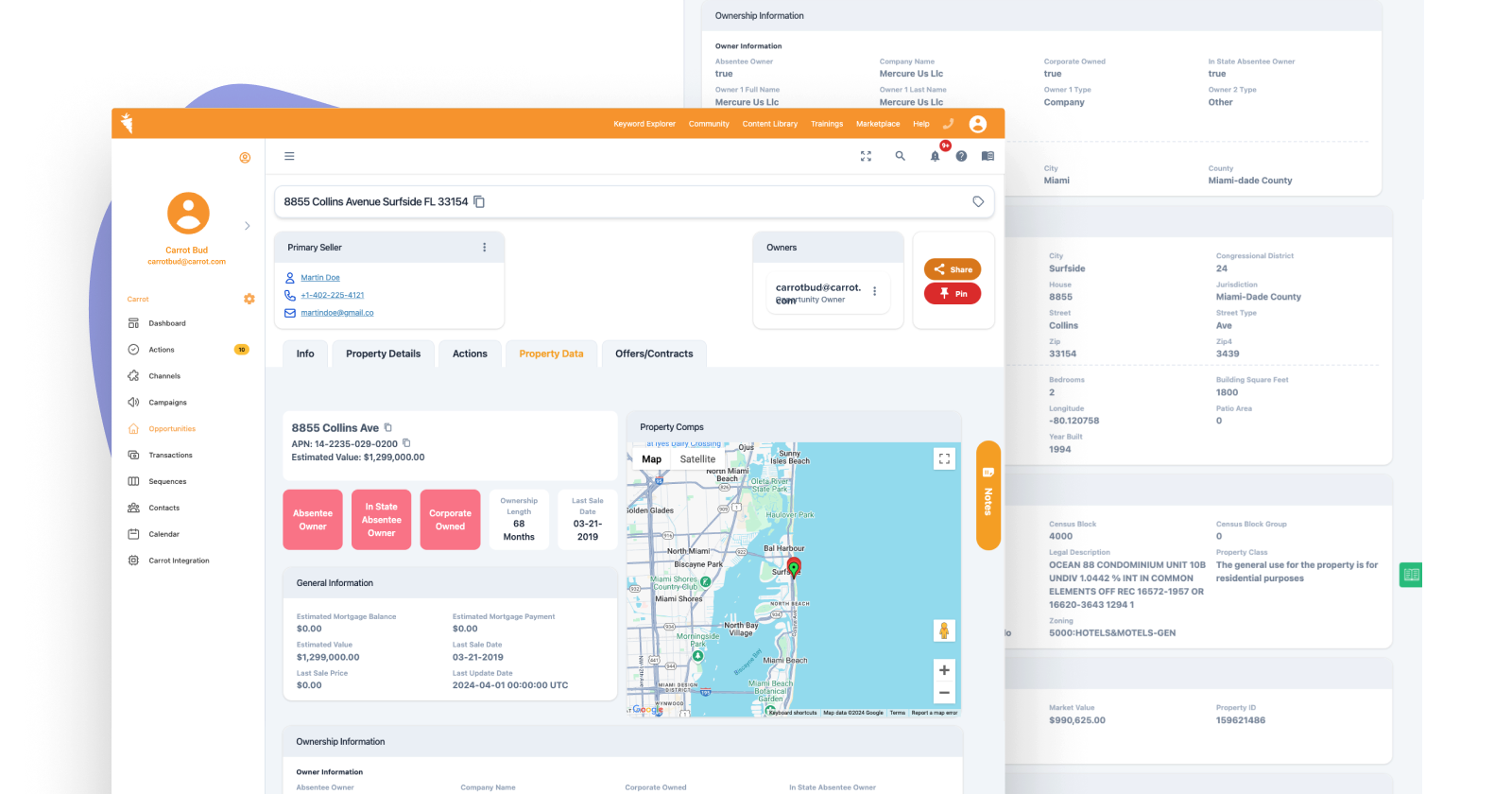
    Q: Should real estate investors still focus on traditional SEO strategies for local markets?

    Yes, but with modifications. Local SEO remains crucial since Google’s AI shows heavy local intent, but you need to emphasize unique geographic content and make it clear that you are a trusted local expert. Combine traditional on-page SEO and local SEO tactics with broader brand building and off-page SEO across multiple platforms to maximize your visibility in both traditional search results and AI-generated responses. Leverage video marketing to further boost SEO, brand visibility, and build trust with your local community.

    Q: How can I track if my real estate investment marketing is working when analytics are becoming less reliable?

    Align your marketing metrics to business KPIs like revenue, lead quality, cost per lead and lead-to-close ratios, but continue to track your digital marketing success. Track your backlinks and website authority with Domain Overview, pull Google Search Console data directly into your Carrot dashboard by connecting Search Performance, and use campaign tracking links to monitor your results.

    Q: What types of content should real estate investors prioritize in 2025 to compete with AI-generated information?

    Focus on content that showcases your unique experience and local market knowledge—detailed neighborhood investment guides, case studies of actual deals, process explanations with real examples, and market insights that only an active local investor would know. Combine this expertise-driven content with video testimonials and success stories that build trust and authenticity. Learn more about creating unique content.

    People also read …

  • 10+ Email Marketing Tips to Warm Up Cold Leads with Jay Schwedelsen

    10+ Email Marketing Tips to Warm Up Cold Leads with Jay Schwedelsen

    10+ Email Marketing Tips to Warm Up Cold Leads w/ Jay Schwedelsen

    You’ve probably heard the email advice: “Don’t use the word ‘free.’” “Keep your emails short or risk going to spam.” “Don’t use emojis in subject lines.” Turns out, a lot of that advice is outdated — and in some cases, flat-out wrong.

    Jay Schwedelsen, host of the popular marketing podcast Do This, NOT That, recently joined us on Carrot’s Evergreen Marketing podcast to share updated tips for successful email lead nurturing. Jay is undisputedly one of the top experts in the field and he shared 10+ tips and dispelled some popular myths around email. 

    If you’ve left email behind in your lead follow-up, it’s time to dust off your list. 

    “Your email list is probably the most important asset you have. Your email database is your owned asset. It is the only marketing channel for basically no money that you can communicate whatever it is you want to communicate at any given moment. There’s nothing else like that.” — Jay Schwedelsen

    Even if you are actively sending emails, you might be unknowingly making some mistakes that are hurting your engagement rate.

    Whether you’re an investor following up with cold leads, an agent sending out market updates, or just trying to figure out how to get more replies, there’s something in the episode for you. Here’s a sneak peek at three tips Jay discusses.

    Tip #1: Your emails don’t matter if they aren’t opened

    “A lot of times when we’re sending out an email, we’re worried about ‘oh what are we writing in the email?’ or ‘oh, what’s the offer?’ and that’s backward,” Jay explained. “If you don’t get the email opened, who actually cares what’s inside the email? So we have to get that email opened and the number one thing that’s going to get that email opened is the subject line.”

    When people look at their email inboxes, they scroll through quickly and decide what gets their attention. Jay contends that most people don’t read the entire subject line, instead focusing on the first few words.

    With that in mind, front-load your subject lines. Jay recommends starting a subject line with all caps or keeping it super short to make it stand out. Better yet, start your subject line with a number.

    “If you start your subject line with a number, your open rate will rise about 20%.”

    And forget about avoiding certain “spam trigger” words. It’s true that words like “free” or even dollar signs used to send your emails straight to the junk folder, but that’s not the case anymore. Feel free to write the most compelling subject line possible without avoiding important words!

    Need help with your subject lines? Check our Jay’s free subject line grader.

    Tip #2: Send more emails (yes, you read that right!)

    “You’re probably not sending out enough email. In the real estate market I see this a lot. People will get focused on their email sending for a month or two, and then they move onto something else, and they won’t send again for another 2-3 weeks or a month. The most important thing you can do to make sure you’re getting that business is to be sending enough. You need to be at least sending email weekly — at least!”

    Why? Because sending email frequently and consistently actually helps keep you out of the junk folder. It all comes down to email engagement, Jay explains.

    “If you don’t send enough email — and we see it in all the data — if you don’t send at least a weekly email to your database, you actually cannot generate enough opens and clicks to stay in that person’s inbox. It needs to be relevant stuff, it can’t be garbage. But sending out more email is step number one.”
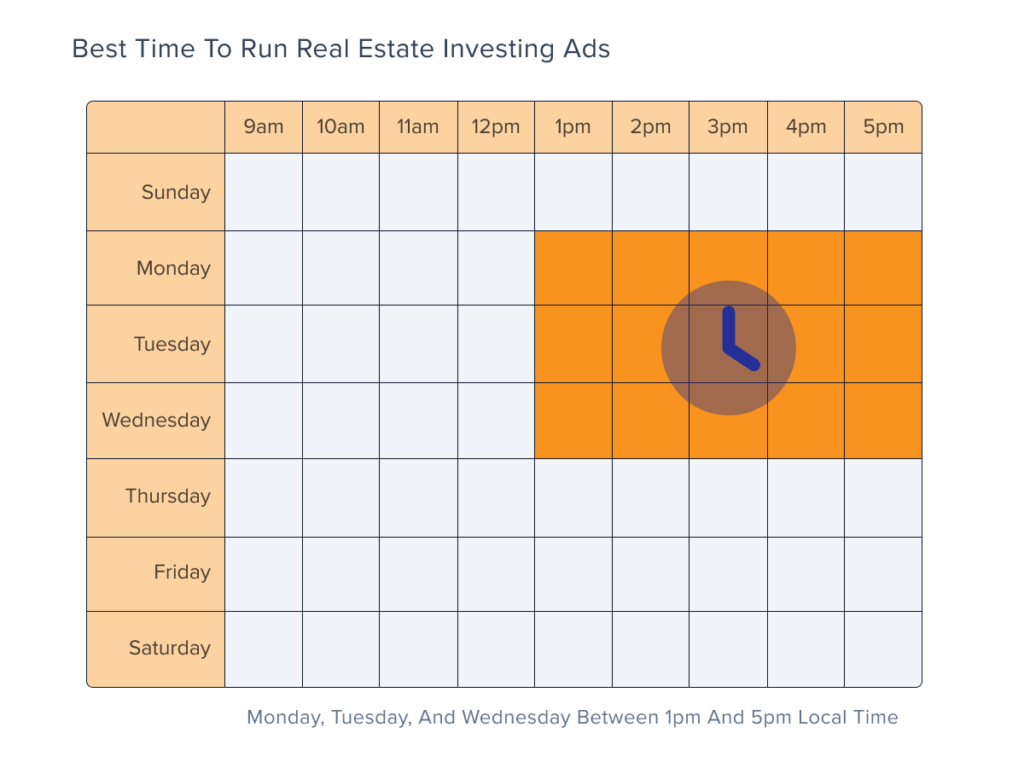
    Since email engagement is actually what matters, Jay has a few tips to make sure people actually read and interact with your email.

    • Paragraphs should never be more than four lines.
    • Start your email with something super attention-grabbing. Don’t save the “hook” for the end … some readers won’t get there.
    • Restate the main point, offer, or action you want readers to take in a PS at the end of the email (to grab the attention of people who just skim).

    “When you have a PS with a call to action, a link in the PS, your click-through rates go up on average by about 15%.”

    Tip #3: Make your emails valuable

    “Don’t push offers until you’ve established the fact that you’re not annoying.”

    Let’s be honest, no one likes being sold to. But as real estate professionals and marketers, it’s our natural default to send offers and promotions. If you’re working on a cold list — or a new one — focus your first few emails on offering value to your leads.

    “For the first 4-5 sends, don’t promote anything. Nothing you send out should be a benefit to you the sender, it should only be a benefit to the individual you’re sending to. It’s hard to do because our nature is “sell, sell, sell” but you need to show the people in that database that you’re going to give them value.”

    Jay shares some ideas of valuable information to send your leads (you’ll have to listen to get his tips), but whatever you send can’t have a form in front of it. Offering value before asking for something builds trust and gets leads used to opening your emails. When you do send something promotional, they’re more likely to pay attention because of the relationship you’ve built.

    “It’s like dating. You can’t be just like ‘Hi, nice to meet you. Do you want to get married?’ It doesn’t work, it’s weird.”

    Tips #4-10: More gems from Jay

    In less than 40 minutes, Jay shares insights on not only how to successfully use email nurturing, but creative ways to grab attention and make your emails better every time. More tips covered in the podcast include:

    • Why the inbox promotions section isn’t as bad as you think
    • The best way to benchmark your email marketing success
    • How to get people to respond to your emails
    • Going beyond basic AI to really make your emails better (including using AI to analyze your competitors’ emails for new ideas)
    • Should you use emojis and memes in your emails?

    Stop Overthinking, Start Sending

    At Carrot, we talk a lot about building a business of freedom and impact. And email — done right — is one of the most powerful, low-cost tools you have to create conversations that lead to deals.

    So whether you’re following up with motivated sellers, re-engaging old leads, or just trying to stay visible, start putting these tips into practice. Then hit send. Test. Iterate. Improve.

    And remember: It’s not about perfection. It’s about progress.

    Listen to the full 10+ Email Marketing Tips to Warm Up Cold Leads w/ Jay Schwedelsen episode to unpack what’s actually working right now in email marketing. 

    PS – You can use these tactics in your automated outreach sequences in Carrot CRM!

  • Videos Increase Website Conversion Rates Up to 56% — Here’s How to Get Started

    Videos Increase Website Conversion Rates Up to 56% — Here’s How to Get Started

    Video content is the best way to boost motivated leads without requiring any extra website traffic. This article explains why video is a game-changer for website conversion, and shares practical tips to get the right video content on your website!

    Key Takeaways

    • Website visitors who start watching a video are 24% more likely to convert to a lead and visitors who watch an entire video are 56% more likely to convert!
    • You should have five types of videos on your website to share key information that visitors are looking for.
    • You can quickly and easily create videos with free tools like VN and Canva.

    If you want to increase your website conversion rate and number of motivated leads, read on to discover how to quickly add videos to your site.

    Table of Contents

    1. The Data Behind Why Video Matters
    2. The 5 Types of Videos Your Website Needs
    3. How to Produce Videos, Easily
    4. Where to Put Videos on Your Website
    5. Conclusion: Make 2025 the Year of Video
    Carrot icon
    Lead generation, at its best
    Attract, convert & close more motivated leads
    Try Carrot Today

    The Data Behind Why Video Matters

    Online video consumption is estimated to hit four hours per day in 2025, according to Oberlo. When sellers do their research on who to work with, they don’t just like to gather information via video, they expect it! That’s why it only makes sense that your website should include videos.

    It’s not just a matter of giving web visitors information in a format they prefer. Having videos on your website can dramatically improve your lead conversation rate (how many website visitors turn into leads). Based on recent data analyzed by Carrot, when a web visitor starts watching a video, their chances of converting to a lead increase 24% (over visitors who don’t watch videos). Visitors who watch an entire video have a 56% better chance of converting!

    Adding videos to your website also helps with SEO. Google places a lot of weight on “high quality” content that it believes will help users answer their questions and find valuable information. Since today’s users like to watch videos, Google likes when videos are available to answer their search queries. Answering common questions or covering popular topics lets you capture that search traffic more easily.

    As people watch videos on your site, they’re also inherently spending more time on the page. Google also views this as a positive indicator that your content (and by extension, your website as a whole) is valuable, which can positively impact your domain authority and search rankings.

    The 5 types of videos your website needs

    Videos are a great way to answer common questions, highlight your experience, and put visitors at ease about working with you. Think of video as your chance to be “face to face” before you ever meet a lead. You likely get some of your best deals by networking, so bring that same personality and energy online with video! Here are the most important videos to make for your website.

    Note: If you’re new to video, get our free Video Marketing Playbook for R.E. Investors for ideas, scripts, and easy steps to recording!
    1. “About ” Video

    Who are you? What’s your experience? Why should people work with you? Make a short video introducing yourself and let people get to know you so they feel comfortable reaching out. 

    Here’s a video that walks you through creating an “About us” video as a real estate investor or agent:

    How to Create an “About Us” Video for Real Estate

    2. Working with [Your Company Name] Video

    A “How it Works” video can put potential leads at ease by detailing what it’s like working with you. How does the process work? What steps can they expect? What objections might they have?

    3. Customer Testimonials

    Video testimonials from happy clients talking about what it’s like working with you and how pleased they are with the results are great on websites. Website visitors may be skeptical of a written quote, but watching people talk about their experience generates a lot of trust. 

    Here’s an in-depth video on exactly what to say to get perfect testimonials every time you close a deal.

    4. FAQ Videos: Explain Complex Topics

    Odds are your leads aren’t real estate professionals. They may even be dealing with a new-to-them situation, like selling an inherited home, renting-to-own, or selling a house fast for cash. Put them at ease by answering questions they’re likely to have. Leads want to work with an expert, so show off your knowledge!

    Investor Brad Woodall is a prime example of someone who went all-in on creating videos that answer prospects questions. He doubled down on probate-related video content which he posts on YouTube and an entire video library on his Carrot website & now consistently generates high-quality probate leads because of it!

    FAQ Videos Example from Investor Brad Woodall

    5. Share Local Trends

    Talking about local trends are great videos to publish on social media channels, and they can add an engaging element to blog posts covering the same topic. If you’re discussing a particularly important trend that leads should know about, you can even add this type of video to your homepage while it’s a hot topic.

    Overall, videos build your credibility and put leads at ease, making them pre-disposed to want to work with you! 

    How to produce videos, easily

    Videos don’t have to be complicated or daunting, and you don’t need to start a YouTube channel or become a TikTok star (though you certainly can if you like making videos!). Today’s consumers are used to seeing natural, self-shot videos, so simple videos recorded on your phone or computer work just fine. There are even services that make it easy to produce animated videos if you’re uncomfortable being on camera (though showing your face will build stronger trust with potential clients).

    Don’t worry too much about the length of the video, both long and short videos have their place. Let the topic dictate the length of the video. And while you don’t have to worry about Hollywood standards, your videos should look nice and reflect your brand. Make sure the lighting is good and you have a non-distracting background. If you have shirts with your logo, consider wearing it in the video to reinforce brand recognition.

    Videos don’t need to be overly produced, but if you want to do a little editing or add your logo or contact information, we recommend finding a video editor on a website like Fiverr.com. If you’re more DIY, VN is a simple (free!) video editing software available for both Mac and PC. If you want to add music to your video, make sure you get royalty-free audio clips. You’ll also want an eye-catching “video thumbnail” (the image people see before clicking on the video). These are easy to create for free with tools like Canva, which has thousands of pre-built templates to match any style. If you’re creating several videos, choose one thumbnail style or one style per video type. This keeps your brand look consistent and professional.

    Where to put videos on your website

    You don’t want to cram all your videos onto one page, that would be overwhelming. Instead, think about where each type of vidoe makes most sense. If you were visiting a website, what type of information would you expect to encounter on each page? With that in mind, you want to make sure key videos are posted to your most high traffic pages — the home page, about us, and contact us pages for most real estate investor websites.

    Introduction videos and video testimonials in particular should be published on your homepage, about us page, and contact us pages — preferably toward the top of the page. In addition to generating the most traffic, these are also the highest converting pages, so putting videos here gets them in front of visitors at critical points in their journey. It also makes it easy for them to contact you immediately after watching the video — remember, visitors are significantly more likely to convert to a lead after watching a video!

    If you’re answering common questions, breaking down a topic, or discussing a local trend, add these videos to topical landing pages, blog posts, or niche credibility pages targeting the same topic and keywords. Publishing topical content on your website (especially around commonly searched questions or terms) will help you rank better in search results. The more valuable content you add to these pages — both written and video — the better chance they have of ranking.

    Carrot has a video post feature that makes adding this new content to your website even easier. Designed to help you get more leverage from videos explaining topics, trends, or answering questions, the VideoPost feature automatically transcribes your original videos into an SEO-optimized blog post. This is a great way to publish videos quickly.

    Here’s how easy it is to put video content on your website. This example ranked #1 for the keyword we were aiming for!

    Create Real Estate Video Content in Under 10 Minutes with Carrot's VideoPost

    Bonus video publishing tip: Post the same videos on YouTube. It’s easy to create a YouTube channel for your company on posting video to this popular platform give them an even better chance of showing up in search results. Make sure the video has a clear, accurate title with your target keywords and a good description with a link to your website. As a bonus, publishing videos on YouTube make them even easier to embed into your webpages, simply choose the Youtube block when editing the page and drop in the video URL.

    Conclusion: Make 2025 the year of video

    Video has been a popular way for Americans to consume information for years, and it’s only getting more popular. At the same time, competition in the real estate investing industry is getting stiffer, so any little tactic to give you an edge is a welcome advantage. Video could be the ticket to making you stand out, attract leads, and close more deals in 2025.

    In short, businesses that adopt video win far more often than those that don’t.

    Don’t overthink it and don’t be nervous about getting started, it’s not as hard as you think! For more on how to get started with video, check out Video Marketing for Real Estate: A Step-by-Step Guide.

    Happy filming—You’ve got this!

  • Real Estate Investors: The State of Marketing 2025

    Real Estate Investors: The State of Marketing 2025

    Real estate investing is an interesting industry…

    Some investors are all in, doing it as their full-time job. Others do a deal or two a year on the side. Some invest in marketing to generate leads, some rely solely on referrals. While there’s no right or wrong way, it’s always insightful to learn what others are doing and where they’re finding success.

    Key Takeaways

    • Most real estate investors do their own marketing, and they use an average of three strategies (mainly a website, social media, direct mail, and cold calling.
    • Real estate investors spend anywhere from $2,000 annually to more than $100,000 annually on their marketing budgets! The median budget for real estate marketing is $12,000 annually.
    • The average cost-per-click for a real estate ad was $25.20 in 2024.

    Whether you’re brand new to real estate investing or a seasoned pro, this report gives you good insights into what your peers are up to, industry standards, and how you stack up.

    Table of Contents

    1. Who are Real Estate Investors?
    2. How Much Time Do Investors Spend Marketing?
    3. Where Should Investors Focus Their Marketing?
    4. Marketing Budgets in 2025
    5. What to Expect from PPC & Paid Ads
    6. Your 2025 Playbook for More Deals

    Carrot icon
    Lead generation, at its best
    Attract, convert & close more motivated leads
    Try Carrot Today

    Who are real estate investors?

    To help shine some light on the state of real estate investment marketing, we surveyed 90 REI professionals — both Carrot members and non-Carrot members — to learn what marketing strategies they’re using, what their most effective lead generation channels are, their annual marketing budget, and how 2025 will be different from 2024. Investors of all experience levels and a variety of real estate investment specialties responded, providing valuable insights no matter where you are on your REI journey.

    Real estate investors mostly handle their own marketing

    For real estate investors, marketing is still very much a DIY endeavor. Fifty-seven percent of survey respondents report handling all marketing activities themselves, while 31% have some outside help. Only 12% of investors have agencies or freelancers handle all their marketing.

    Marketing activities make up only a fraction of a busy investor’s schedule though. More than 85% of survey respondents spend less than 10 hours per week on marketing activities, with nearly a quarter of respondents dedicating less than one hour per week. Things may change this year though, as an impressive 71% of investors plan on increasing their marketing time. Only 8% plan on decreasing the amount of time spent on marketing in 2025.

    Where should investors focus their marketing?

    With so little time dedicated to marketing, it’s important for investors to find strategies and tools that work well and fill pipelines. With a seemingly endless number of marketing solutions available, deciding which to focus on can be difficult. Most investors report using only a few solutions, with nearly 50% of investors using two to three marketing services. The most common are a CRM and website. Investing in a real estate CRM is a smart move in 2025 to keep all your leads (online and offline) organized and streamline follow-up. Investors still relying on spreadsheets for lead management risk falling behind their peers.

    Marketing tools support a range of lead generation strategies. The average investor works with three strategies to actively generate leads, but some use upwards of eight. Websites and social media are the most common, followed by direct mail, cold calling, and SEO, indicating that both online and offline lead generation tactics still work a successful investment business. The “tried and true” lead generation approaches aren’t fading, but successful investors are also expanding online to ensure they capture the maximum number of leads.

    While referrals and networking are the No. 1 source of leads for many investors, social media and direct mail are also top lead drivers. When planning your marketing strategy in 2025, a healthy mix of networking plus online and offline marketing has the best chance of driving success. Channels like direct mail & paid social media ads still work in 2025, but judging by the numbers, there’s low-hanging fruit in SEO.

    Note: The important part is to treat your website as the “hub” of your marketing — funnel your direct mail, social, PPC, etc., to your website so you can capture those leads more easily!

    To capture more leads in 2025, 65% of investors plan on adding additional marketing strategies. Only 3% intend to decrease their number of outreach channels. For those interested in increasing marketing, SEO, paid advertising, and pay-per-lead solutions are popular and effective for many successful investors. Having a high-converting website is also a key piece of the mix, as you need something to optimize for SEO and somewhere to point paid advertising. It’s also good practice to add a website to any offline outreach so potential leads can research you and verify your authenticity before deciding to reach out. When was the last time you worked with a company without checking them out online first?

    Marketing budgets vary wildly in 2025

    How much real estate investors spend on marketing annually ranges from less than $1000 for the entire year up into six figure sums. The median marketing budget amongst survey respondents is $12,000 annually, though investors who run online advertising likely have higher budgets. Eight respondents plan on spending less than $1000 on marketing this year, while 12 will spend more than $100,000. Three respondents report having a $500,000 annual marketing budget!

    And those budgets are only growing for many. Sixty percent of survey respondents are increasing their marketing budget in 2025, while 28% are keeping their budget the same. 

    How much investors spend corresponds somewhat to how long they’ve been in real estate. Newer investors naturally have a lower budget as they work to close their first few deals. Annual marketing budgets increase as investors become more seasoned, but stay relatively flat for investors with 1-9 years of experience.

    Interestingly, there isn’t a consensus on the primary lead source among the top spenders, nor on their most effective marketing strategy. While investors who spend more than $100,000 do utilize more marketing strategies (an average of five instead of three), some top spenders only rely on paid ads or cold calling. The most commonly used marketing strategies for this high-budget cohort are websites and direct mail.

    Meanwhile, those with the smallest annual budgets ($2,500 or less) rely on an average of two marketing strategies, mainly a website, social media, or cold calling. Their primary lead sources are more manual and low-cost options, such as referrals and social media.

    What to expect from PPC & paid advertising

    While only 8% of survey respondents invest in online advertising, it can be a lucrative lead source. To help investors who already run ads or those interested in expanding to PPC in 2025 understand what the investment looks like and what to expect, we asked our friends at Motivated Leads, a digital marketing agency specializing in online advertising for real estate investors, to share some insights.

    How much to spend on ads

    Last year, the median spend on Google Ads for Motivated Leads clients was $3,000 to $5,000 a month and the average cost-per-click (CPC) was $25.20. Investors running regular Google ads saw an average click-thru rate (CTR) around 5%, leading to an average cost-per-lead (CPL) of $250 or lower.

    Ads targeting Illinois, Kentucky, and Delaware had the highest conversion rates, with CPLs dancing around the national average:

    • Illinois: $207.18
    • Kentucky: $241.03
    • Delaware: $279.11

    However, things changed slightly for investors who used Google’s Performance Max advertising option. Performance Max can lower your CPC and CPL, however, it may result in less qualified leads without proper campaign optimization.

    Performance Max is harder to run and has broader targeting, leaving the algorithm to place ads. With this approach, your ads may appear on display, search, YouTube, Gmail, or other places and may appear to web surfers outside of your local area. This broader approach can impact lead quality because you have less control over who you’re targeting ads toward.

    Google’s “regular” search advertising gives you more control over who you’re targeting and where your ads appear, allowing you to specifically target searchers who are more likely to become leads. The cost per lead is higher in this case because you’re focusing on more qualified leads. Investors with smaller advertising budgets should focus on Google search ads and targeting the right keywords to get the most value from their investments. 

    The most effective advertising

    Focusing your ad budget on the right keywords and running ads at the right time can make your advertising dollars go further.

    In 2024, the highest-converting keyword themes for real estate investors were:

    • Sell my house fast
    • We buy houses
    • Home buyer

    Localizing your target markets and adding local terms to your keywords helps focus who sees your ads, improving lead quality. When adding a location name to keywords remember that your city name may not be unique. Are you trying to reach buyers/sellers in Portland, OR or Portland, ME? Make sure your ad account is properly set up to target the right area and that the landing pages your ads point to include the city AND state.

    Once your ads are set up, give them a better chance of being seen by running them at the best times. In 2024, online ads converted best on Monday, Tuesday, and Wednesday between 1pm and 5pm local time.

    Understanding online advertising trends from the past 12 months can help you plan your strategy for this year, but it’s important to remember that the world of online advertising can change quickly. Google algorithm updates and changes to the Google Ads platform can happen at any time and may impact how ads are set up and their performance.

    For example, Google Ads performance and strategy underwent notable changes between 2023 and 2024. The cost-per-click increased by 36%, while the click-through rate improved by 17%. Despite these shifts, the cost per lead remained virtually unchanged, with only a slight variation according to Motivated Leads.

    A major strategic difference lies in keyword usage. In 2023, marketers focused on phrase and exact match keywords. However, in 2024, Google’s updated keyword match type (leveraging signals and a searcher’s intent) prompted a shift toward broader but still highly relevant keyword themes.

    If you run your own ads, pay attention to any shifts or noticeable updates to make sure you maintain optimal ad performance. If you’re not comfortable running your own ads (or simply don’t want to become an online marketing expert), consider working with an advertising agency like Motivated Leads. (Need help finding a PPC service? Check out the Carrot Marketplace.)

    Your 2025 playbook for more deals & more revenue

    This survey proves there isn’t one right way to generate real estate investment leads. Find what works for you and your budget. If you’ve been avoiding certain marketing strategies, 2025 may be a good time to expand your reach and try something new. If you don’t have a website yet, this is the year to get online. A strong website serves as both a lead generation machine and a central hub for the rest of your online and offline marketing.

    Need help knowing where to focus this year? Here are some tips from Carrot CEO Trevor Mauch:

    🔥 1. Invest in Your Online Presence – Your website isn’t just a “nice-to-have.” It’s your 24/7 conversion hub. Make sure it’s optimized, fast, mobile-friendly, and ranking in Google. If you’re on Carrot, you’re already ahead of the game. If you’re not — it may be time to consider a switch.

    🔥 2. Optimize for Conversions – Most investors waste traffic. Don’t be one of them. Your website should be built to convert visitors into leads at the highest possible rate.

    🔥 3. Get Your Follow-Up Dialed In – Leads are ready to act NOW. If you’re not following up fast, you’re leaving money on the table. Carrot CRM helps you track, nurture, and close leads effortlessly.

    🔥 4. Take Action — Before Your Competition Does – 71% of investors are increasing their marketing in 2025. If you’re not doubling down, you may find yourself struggling to get the leads and deals you were used to getting last year.

    Take inspiration from these findings and double down on your marketing to make 2025 the biggest year yet!

  • How to Find Motivated Seller Leads for Real Estate Investors in 2024

    How to Find Motivated Seller Leads for Real Estate Investors in 2024

    Although there is no single most important trait, finding motivated seller leads can be one of the most critical skills in real estate investing.

    If there’s one thing that separates a struggling investor from most successful real estate investors, they have systems for generating leads. They have processes that work like clockwork day-in and day-out.

    These investors usually generate 20 or more high-quality motivated seller leads per month.

    Does that sound too good to be true? It’s not.

    In 2003, we built our first website to generate motivated seller leads. Since then, we’ve refined our marketing systems, website platforms, and overall strategy on what it takes to drive leads online.

    We’ve brought in over 1,253,267 real estate-related leads alone in the past 5 years.

    The lead generation options that we will teach you in this article have been proven. Although they can take a bit of upfront work, you can generate leads every month once the ball is rolling.

    Ready to learn how to find motivated sellers?

    Let’s do this.

    What We’ll Cover in This Post:


    When You Get Motivated Leads You Need to Close Them!

    Get the fool-proof strategies & step-by-step scripts used by real estate investing’s top closers.

    • We’re committed to your privacy. Carrot uses the information you provide to us to contact you about our relevant content, products, and services. You may unsubscribe from these communications at any time. For more information, check out our Privacy Policy.
    • This field is for validation purposes and should be left unchanged.


    What Are Motivated Sellers?

    A motivated seller is a property owner who needs to get rid of their property quickly and meets at least one of the following conditions:

    1. They are willing to sell at a 10-30% price below market value.
    2. They are ready to sell under specific terms. Including no money down and no interest.

    In an ideal situation, you’d want both conditions, but one advantage of working with motivated sellers is that they have reasons they need to sell fast. You’re there to help them solve it.

    Some common types of motivated sellers include:

    • Distressed sellers
    • Landlords
    • Facing foreclosure
    • Relocating
    • Bank in possession of REOs
    • Divorce
    • Inherited houses
    • Recent job loss

    How to Find Motivated Seller Leads

    Find Your List

    Many investors choose to buy lists of motivated seller leads. For example, you might have the option to purchase a probate list that is pulled from courthouse records. Or a list of pre-foreclosures who are likely to sell in the coming two to three months.

    Although finding this information can be time-consuming, if you don’t have the time, you can use services such as DataTree and ListSource.

    You must confirm the accuracy of the data. Some services may have data that is no longer relevant.

    Drive for Dollars

    Driving for dollars can be a great way to generate leads. You simply drive into your targeted neighborhoods looking for distressed or vacant properties.

    While driving, you can create a list of properties to contact.

    Another option is to use Google Maps Street View and apps such DealMachine. You can drive for dollars without leaving your house.

    Find Motivated Seller Leads Online

    SEO, PPC, and social media.

    Let’s start with SEO. SEO for real estate is what we consider the secret sauce of a real estate investing marketing strategy.

    Organic leads are where the majority of leads come from for our members.

    It’s not theory, here’s a real peek behind the scenes…

    Carrot member organic leads

    We focus not only on SEO but also on how it builds into Evergreen marketing.

    Evergreen marketing to generate motivated seller leads

    How Would You Like More Motivated Seller Leads (with no paid ads) Using 1 Proven, Simple Marketing Strategy?

    Watch this Free On-Demand Workshop. We Breakdown Exactly How Our Members Generated Over 450,000 House/Land Sellers & Buyers Last Year


    The definition of Evergreen marketing is: “a: retaining freshness or interest: perennial. b: universally and continually relevant: not limited in applicability to a particular event or date.”

    In marketing terms, it’s marketing you do once, and it works for years… not hours, days, or weeks. Content relevant for a long time serves your best prospects and gets in front of them where they’re searching online.

    Results grow momentum over time = Freedom

    We then amplify Evergreen with paid marketing and even hamster wheel marketing.

    Hamster wheel marketing is defined as: “any situation that seems to be endless without goal or achievement.”

    In marketing terms, any marketing that works for a short time after you do has a limited life span. Then you have to do it all over again to keep results coming in.

    Cold calling, direct mail, posting on social, open houses, etc.

    Results stop when you stop = Stress

    Growing more and more into the Evergreen is where you create your consistency, freedom, and flexibility.

    You can make a more significant impact with your business, but also, that’s where your most valuable and highest converting leads come from.

    If you build a solid lead generation engine for your real estate business, you’ll have leads for life.

    It’s a big goal, but don’t be intimated.

    Here’s some proof…

    Tyler Ford has been getting 2x more motivated seller leads with Carrot than he did with his old site. The Carrot tools and Evergreen marketing content has helped him stand out in my crowded market.

    Here’s his story… Tyler Almost Quit Real Estate After 20 Years – That is, Until He Made these 8 Changes.


    While paid advertising can bring in motivated seller leads immediately and can help your business in the short-term… SEO can build momentum and help grow your business over the long term.

    But what is SEO?

    It’s pretty simple.

    When a motivated seller wants to sell their house fast for cash, many of them go to Google and type in the phrase “Sell my house fast in [MARKET CITY]”.

    Google trends for sell my house fast

    And when they do, Google shows them different websites that it thinks can help the searcher.

    If I search for “Sell my house fast in Dallas”, for example, Google thinks that these websites can help me out.

    Google search for sell my house fast in Dallas

    Now here’s the thing: those websites are getting clicks and traffic from motivated sellers every time someone types that phrase into Google… which is more often than you’d think.

    That traffic then turns into leads (so long as the investor’s website is optimized for conversion) and the investor generates deals every month through SEO.

    You can also pay to get in those search results…

    sell my house fast in dallas paid ads

    And that is a good idea when you’re starting. But it shouldn’t replace your SEO strategy.

    More than 90% of people click on organic results before clicking on PPC results.

    So here’s the question: how do you get Google to rank your website for a high-value keyword phrase.

    Well, it can take time and some patience.

    To start, you’ll need to put the correct title on your page, have a website that loads quickly, and do a few other things. Reference this SEO guide for help.

    And at Carrot, we have TONS of tools to help you.

    We give you monthly SEO-optimized blog post content. Our websites have an SEO-friendly tech-stack. We also allow you to track your progress on target keyword phrases and alert you to optimizations that are missing on any given page.

    Carrot Keyword Ranking Tracker

    SEO for real estate investors couldn’t be any easier than with a Carrot site. :)

    PPC is another valuable asset to generate motivated leads.

    Google Ads can work so long as you have a solid strategy. Year after year, it’s one of our Carrot members’ top lead generation methods (behind organic leads).

    Our real estate investor members consistently get feedback that their Google Ads leads are closing between 1 in 10 to 1 in 15 leads per deal.

    Learn more about Google Ads for real estate investors in this ultimate guide.

    Direct Mail

    Real estate direct mail is one of the most tried and true methods for real estate investors to generate leads.

    Although, a portion of mail ends up in the trash without a second look.

    The average mailbox is packed with junk mail, bills, and other correspondence from various sources telling you about deals or offering their services. It can be easy for an envelope containing information on real estate opportunities to land within the other noise.

    Direct mail still works and offers different opportunities if done correctly.

    • It’s interactive.
    • It’s memorable.
    • It can have an extensive reach.
    • It offers a lot of ways to get creative.
    • You can pair social media and content marketing (websites) with direct mail for an enhanced customer journey.

    Learn more: Check out our Direct Mail Masterclass for Real Estate Investors

    FSBO Sites

    FSBO sites can be a great place to find motivated sellers for free. Sites such as Loopnet and Trulia are good sites to use and you can also find motivated sellers on Craigslist.

    On Craigslist look for deals that have been listed for a long time. This might be a sign of a motivated seller.

    Narrow your search by property type, price, location, and whether a broker or the owner is selling the home. You can also search for apartments, condos, and multi-family homes if it fits your niche.

    Bandit Signs

    Bandit signs are “old school” and not many new investors use them.

    They can still be a great way to find motivated sellers and cash buyers.

    One of the most significant issues with bandit signs is legality. Cities can have strict ordinances about putting them out. As a general rule, it’s a good idea to check with your city before.

    Here are some tips if you find it’s legal:

    • Don’t put your personal number on the bandit sign – rather use a Call Rail Tracking Number, A Google Voice Number, or any number that will not lead back to you if someone were to Google the number.
    • Take your sign down immediately if someone has issues with it.
    • Don’t post signs on private property.

    The Difference Between Inbound & Outbound Lead Generation

    We’ve shared a lot of different strategies on this blog for real estate lead generation: Traffic plus Conversions, and we’ve shown you a bunch of great strategies for building traffic. If you haven’t read those posts, click those links to check ’em out… I’ll try not to duplicate much here.

    Real estate investors can generate motivated leads using outbound and inbound (paid and organic) sources. Both are good ways to generate leads.

    Confused?

    Let me make it more simple.

    “Outbound” marketing are strategies such as direct mail, cold calling, and driving for dollars.

    “Inbound” marketing are Google Ads, Microsoft ads, and Facebook strategies. Also, with good content through organic search rankings or SEO.

    The Simple Motivated Seller Lead Generation Formula

    To generate more motivated seller leads for your business, you first have to understand the simple formula for lead generation.

    That is, how is a lead generated in the first place?

    Different investors will answer that question differently. Some will say that cold calling is how you generate leads, others will say direct mail, and still, others will say by personally connecting with people in the community.

    cold calling stats

    And none of those answers are wrong.

    We know most successful investors also use direct mail and/or cold calling to generate consistent leads for their businesses.

    But they also do something that very few investors don’t do.

    They systematically generate leads by using the below formula…

    TRAFFIC + CONVERSION = LEADS

    Let’s break that down.

    Traffic is when people visit your website. They might come through paid advertisements you’re running (like Facebook Ads or Google Ads) or they might come organically through a search engine (Google) or a social media site (Facebook).

    Wherever they come from, one thing is for sure… you can’t generate leads on autopilot through your website if you’re not generating traffic.

    Paid ads effectively drive immediate traffic to your website while building your organic traffic takes a little more time (but the payoff is massive) — more on organic traffic or “SEO” here shortly.

    What about conversions?

    A conversion is when, after visiting your website, the person takes the action you want them to take. Usually, that’s filling out a form that provides you with their contact information or calling your business directly.

    And voila! You have a lead.

    Those are the two vital elements to generating motivated seller leads.

    You have to drive traffic to your website consistently and consistently convert that traffic into leads for your business.

    website traffic to conversion rate

    And Carrot websites have the highest conversion rate in the industry (usually between 10% and 20%).

    Rent To Own Conversion Rate
    A conversion rate on one Carrot member’s website.

    That’s why we believe in our product so much.

    We know that if someone takes their organic traffic seriously and uses Carrot to create their website, they’ll have everything they need to build a winning business.

    The Magic of Conversion Optimization

    Remember the formula we talked about?

    Traffic + Conversion = Leads

    Well… you need both traffic and conversions.

    It’s not uncommon for us to see a real estate investor succeed at driving traffic to their website through paid ads or SEO… but to convert almost none of that traffic into leads.

    Why?

    Because their site isn’t set up to convert.

    Actually, there’s a big difference between a website that’s built to convert visitors and one that… isn’t.

    Let me show you what I mean.

    Imagine that you search in Google for the phrase “Sell my house fast in Dallas”.

    You’re probably pretty motivated — you want to sell fast for cash and you’re wondering how that’s possible.

    So you click on some results in Google.

    The first website you go to looks like this…

    motivated seller website with no form

    That’s not too bad, but there’s a lot of text to read on the first page… and you’re looking for a quick solution, so you leave the tab open but go to a different Google result.

    The next website you visit looks like this…

    High converting Carrot motivated seller website

    Now we’re talking!

    This site seems to be able to give you exactly what you want… and by just entering a few details, you can get your fair cash offer today — that’s perfect!

    See the difference?

    The first site doesn’t solve your problem immediately, but the second site does.

    Well… that’s because the second site is a Carrot site… and we’ve run hundreds of tests to determine what converts website visitors the best in the real estate industry. We’ve then taken what we’ve learned and baked conversion optimization into every one of our member’s sites.

    That way, as a Carrot member, you start out with a high-converting site.

    Most people who switch to Carrot are seeing a measly 2% or 3% conversion rate on their old site… and then get up to a 20% conversion rate on their Carrot site!

    Here’s a Carrot member with a 9% conversion rate (693 leads divided by the 7,661 visitors).

    Carrot member website motivated seller leads conversion rate

    Ultimately, you need traffic and conversions to generate consistently motivated seller leads.

    How to Negotiate with Motivated Sellers

    When it comes to negotiating with motivated sellers, there are some commonalities.

    We all know that price is not something that’s set in stone. And neither is a seller’s immediate inclination to work with or to not work with you.

    They could call you ready to sell but a few days later lose interest. Or they could call skeptical and leave the call ready to sign.

    Part of what determines these outcomes is how you negotiate. What you say, what questions you ask, and even how you talk could impact.

    So we spoke with some experienced real estate investors and asked them how they negotiate with sellers to close more deals.

    Learn more about negotiating by checking out this blog post and downloading our real estate negotiation playbook.

    Summary

    You now know what motivated sellers are and some common methods to find them.

    The process of finding motivated seller leads and negotiating with them looks doesn’t need to be complicated. Pick one or two quicker lead generation methods and start working on your Evergreen SEO.

    Be persistent with follow-up as you never know what will happen after the third, fourth, or sixtieth time around.

    Succeeding in the real estate investing industry is a matter of patience and persistence. Finding motivated seller leads and knowing how to contact them can take plenty of practice.

    Be consistent and you’ll be on your way to fulfilling your real estate investment career.