Over the past 4 years, we’ve grown Carrot from a fledgling “real estate investor website” software into the most effective tool for generating leads online for real estate investors. Bringing in more online leads than any other platform, climbing well into the millions of leads across thousands of active Carrot clients all across the U.S., Canada, the UK, and even some successful clients as far off as South Africa.
While our main clients are house flippers/wholesalers, land investors, and other investors looking for motivated sellers, cash buyers, and tenant leads… we’ve found the clients who consistently get an edge in this competitive market are the ones who are also real estate agents.
Why? Well for a few reasons.
Listing on the market is a viable solution for more sellers in up markets. Agent/Investors can turn more leads into income vs. discarding great leads that don’t perfectly fit just that one box.
Giving house sellers multiple options (list with us or sell to us) helps improve the close ratio and build trust with sellers.
Agents have access to data and tools that non-agents don’t.
In competitive markets that are cluttered with competition, you’ve got to do everything you can to avoid being caught up in the clutter of options.
Does Your Real Estate Agent Website Leave You Lost In The Clutter?
When you look at most real estate agents websites most of them tend to do the same things.
They have…
A pretty picture of you somewhere on the site
Local MLS listings
Fancy calculators and tools
… and a bunch of generic content for buyers and sellers not unique to your expertise as an agent
When buyers and sellers are looking at their options, if every agent they look at all has only the usual things on their websites (those things above) it’s the agents that build trust, authority, and credibility with content that win out in a competitive market.
Are you standing out with your website and content online or just becoming part of the clutter?
One lost listing per year from an underperforming website can cost you what? $3,000? $5,000? $20,000?
How AgentCarrot Can Help You Stand Out From The Clutter
Introducing Carrot real estate agent websites.
For years the way Carrot clients began to dominate their markets online started with a highly optimized website (for SEO and lead conversion) then amplified with our content marketing tools and training. We’ve been in the beta phase with Carrot for the past year and now we’re rolling it out of beta with a crazy exciting vision on how we’ll continue to improve how real estate agents and investors grow your business leveraging the web.
Now we’re bringing that same technology and strategy to real estate agents to dominate the online conversation in your own market. To leverage your own unique expertise to stand out from the clutter so you’re the best viable option for your ideal client in your market.
How does AgentCarrot help you do that? Let’s dive in and check out some of the ways AgentCarrot will help you save time and stand out from other agents in your market who are all doing the “same ol’ things”.
Beautiful High Converting Website Designs + Optional IDX
Nearly 60% of the 10s of thousands of leads our clients pull in each month are on mobile devices. So we’ve taken a mobile-first design approach… ensuring that your website not only looks beautiful and converts well on the desktop… but especially on mobile devices.
Beautiful Featured Property Listings
With AgentCarrot you can create Featured Property Listings to really showcase your best listings with any content you want to add. You’re never limited to what the MLS shows on a property when you create a Featured Property inside of AgentCarrot.
List MLS Properties With Our Optional IDX Add-On
Want to show local MLS listings on your site so buyers and sellers can discover what’s on the market? Excellent! Simply add-on IDX inside of your Carrot account starting at just $50/mo for most agents. All MLS listing content is housed on your website URL not on 3rd party URLs, which helps with SEO for those properties in Google.
Build Confidence In Your House Sellers
House sellers want just 3 things.
To sell for the highest possible price
With as little hassle as quickly as possible
To trust the agent they’re working with can represent them better than anyone else
The content you have on your website is key to building that expertise and trust. A robust “About” page, educational content (videos are best!), and a simple way for a seller to engage with you is critical. Just dive in and customize your content easily then leverage our content tools (below) to really stand out.
Stand Out With Content With VideoPost & Our Content Marketing System
The #1 way to stand out in a competitive market when almost every agent offers a similar core service (we can list or sell a house, here are our fees, etc.) is with content that builds your expertise and introduces your personality and core values to your clients.
If you’re struggling to win listings or buyers outside of your direct network of friends, family, and referrals it’s likely because you’re not standing out from other agents.
When your buyers and sellers are researching online you have a HUGE opportunity to get in front of them and build your expertise with content on your website optimized to rank well in Google.
Next time you’re out at a property or driving around with a client, pull out your cell phone and record a 3 to 5-minute video. Upload that to YouTube then simply paste the video URL into VideoPost in your AgentCarrot account. Then VideoPost will turn it into a written piece of content for your website.
Automate Weekly Content With Our Content Marketing System
Google LOVES robust written content and your buyers and sellers are searching online every day looking for answers to their questions before they make those big housing decisions. But writing content can take time and sometimes it’s hard to come up with ideas on what to write about.
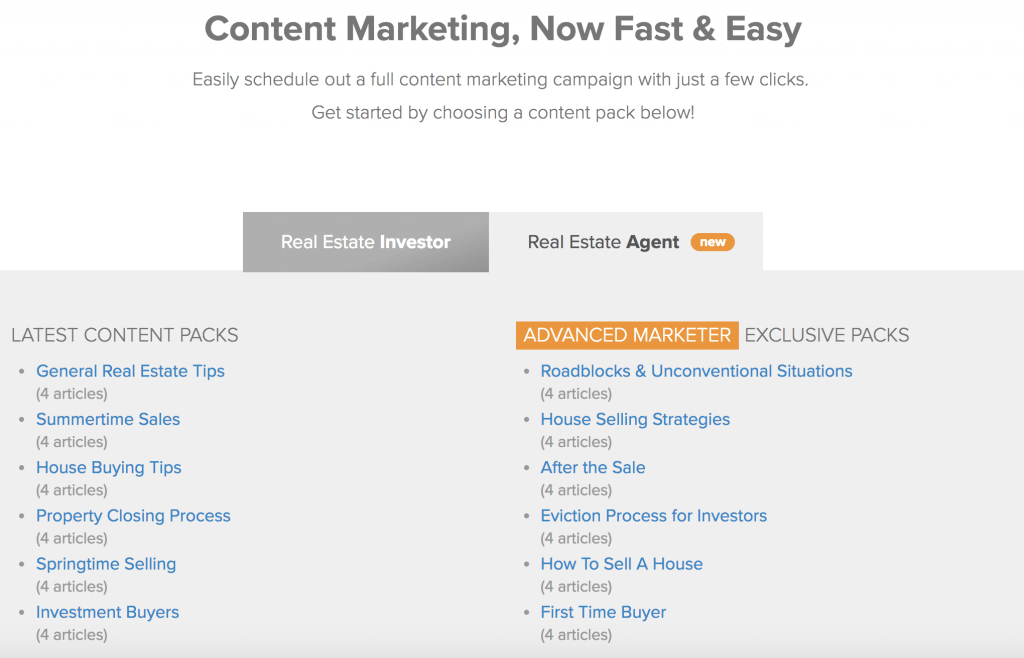
The AgentCarrot Content Marketing System was the first automated blogging feature to launch in the real estate market in early 2014 and we’ve built that out for agents as well.
Simply select from our professionally written content each month, schedule it, and publish it. Now when buyers and sellers visit your website there will always be content written to educate and convert site visitors into leads.
Manage Your Leads
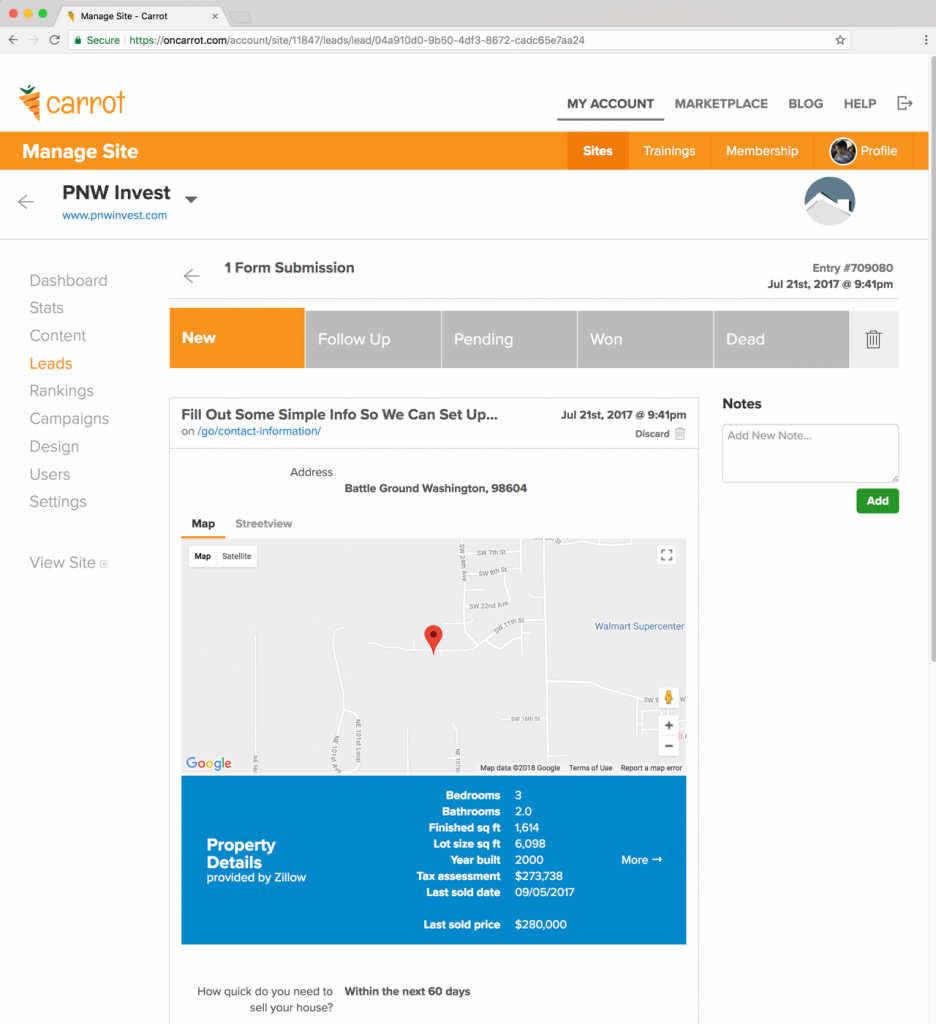
Carrot has always focused on being the best in the world at helping real estate professionals attract and convert more visitors into leads. But this past year we’ve started adding resources to help our clients better manage their leads inside of Carrot. Our simple Lead Manager will help you keep track of your leads and where they are in the process.
You can add notes, bring in your team members to collaborate, and see important property info such as where it is on Google Maps and Streetview plus the latest sale information from Zillow for quick reference.
Or integrate with dozens of systems through Zapier so AgentCarrot can help you capture more leads and you can use your current systems to manage those leads if you wish.
We have major updates we’re already working on for 2018 to make the Lead Manager more and more robust.
Track Your Progress
As you drive traffic to your website you can leverage our built-in stats or if you want to, can integrate with Google Analytics.
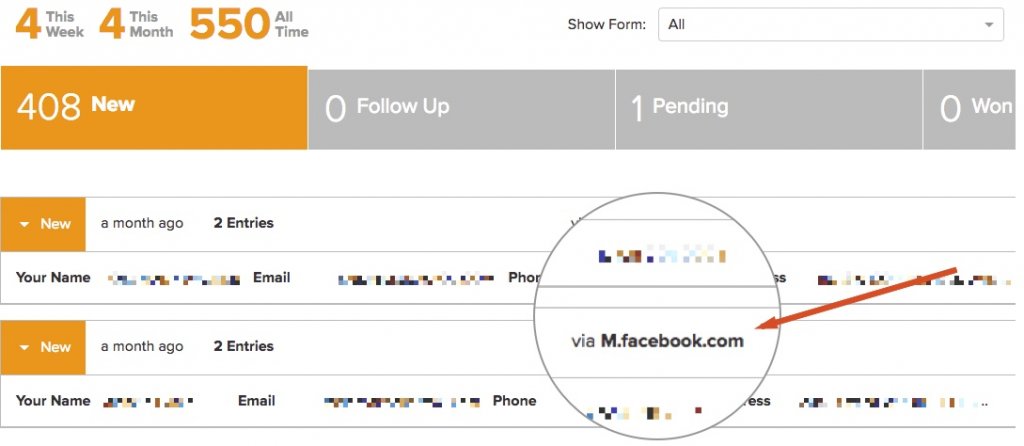
Then see where every lead came from with our LeadSource tracking. To take it even further and drill down on what’s working with your paid marketing with our Campaign Tracking Links tool.
Leverage Our Expertise
As you dive in and leverage our tools to build a beautiful real estate agent website and stand out with content, you can turn to our training and team to guide you through to success. From our weekly LIVE Coaching Calls every Tuesday (included in all AgentCarrot memberships) to our online training programs, and our amazing support team you’ll never be left hanging.
Our weekly Coaching Calls can help you stay on course and always have a plan that you or your team can execute.
What’s Next For Carrot Real Estate Agent Websites
While real estate agent websites is a new product here at Carrot, we’re not new to helping high-achieving real estate professionals cut through the online clutter and generate more leads online. Millions of seller, buyer, and tenant leads have passed through our system and we only plan for that to get even better for our InvestorCarrot and AgentCarrot clients.
But we’re excited as heck about our vision for Carrot over the coming 12-24 months.
We’re going to…
Further build out the functionality of our lead manager and follow-up systems
Innovate more content marketing tools to help you stand out from the crowd
Build out training specific for real estate agents that put you at the cutting edge of online marketing
Test and hone our designs and Lead Conversion Process for our websites
Test and innovate how you and your clients use Carrot mobile devices
… to help you save time and cut through that clutter in your market as a real estate agent.
Here at Carrot, we feel every high-achieving real estate agent should be an investor and every high-achieving investor should also be an agent (or align with one). So we’ll continue our focus on helping you earn an amazing living in real estate with less time and create a business of purpose along the way.
Last but not least, we want your feedback.
We understand we have a long way to go and are nowhere near our ultimate vision for AgentCarrot. If you see anything we can improve or a wishlist, or simply want to give us feedback… please don’t hesitate to send it our way.
Imagine this… It’s Black Friday and you’re the CEO of one of the biggest shopping centers in the world. In the middle of the day, at noon, your in-store payment processing system crashes.
For six hours, shoppers have to pay with cash or leave without buying.
Not only does it hurt your company’s revenue stream, it hurts your company’s reputation.
And similar horrors happen online — from security breaches to untimely website crashes to load-speed issues. In the digital age that we’re all living in, those scenarios can have the same impact as a downed Macy’s on Black Friday.
After all, how would you feel if your information got stolen while on a real estate agent or investor’s website? Or if you had to wait a full minute just for their website to load? Or if their website crashed while you were looking at house listings?
You get the point. These are problems… big problems.
Fortunately, you can avoid most of these revenue-killing scenarios by choosing the right real estate website host. In fact, here are four things that you should consider when selecting hosting for your real estate website.
Security
Speed
Scalability
Support
Real Estate Website Hosting Consideration #1: Security
One source reports that 86% of websites have at least one “serious” vulnerability.
And perhaps there’s no more important real estate website hosting consideration than security. If your website is open to peering eyes, then your information or your visitor’s information can get stolen.
No good.
If someone steals your visitor’s information while they’re on your website, then you can count on them never visiting your website again. And you can definitely count on them never working with you.
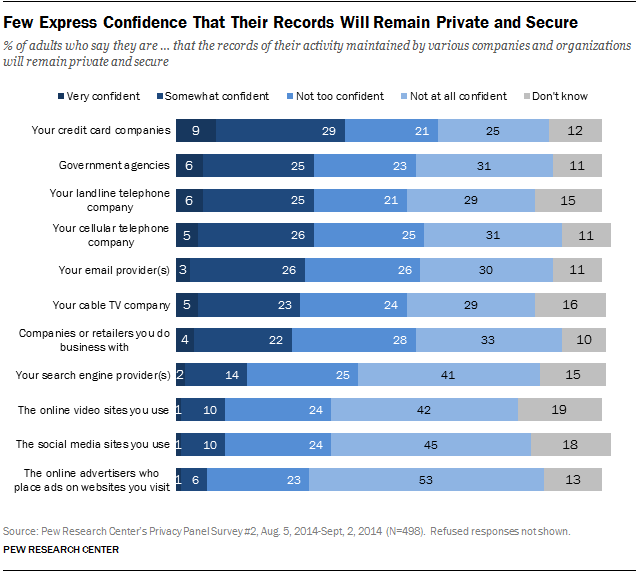
Sadly, this is such a problem that 71% of adults say that they are not confident that their information will stay private when working with a company.
For that reason, 86% of internet users have tried actively to minimize the visibility of their digital footprint while 55% have tried to hide from specific people or organizations when online.
Clearly, people care a lot about their privacy. If that privacy is violated, then, generally speaking, it’s an unforgivable sin of online business. That’s why so many businesses rely on tools for IT professionals.
And if someone steals your information… well, it’s quite difficult to manage a website when a cybercriminal is running around with your login credentials.
But real estate website hosting security isn’t just important because you want everyone’s information to stay safe. That is the most important reason, but not the only benefit.
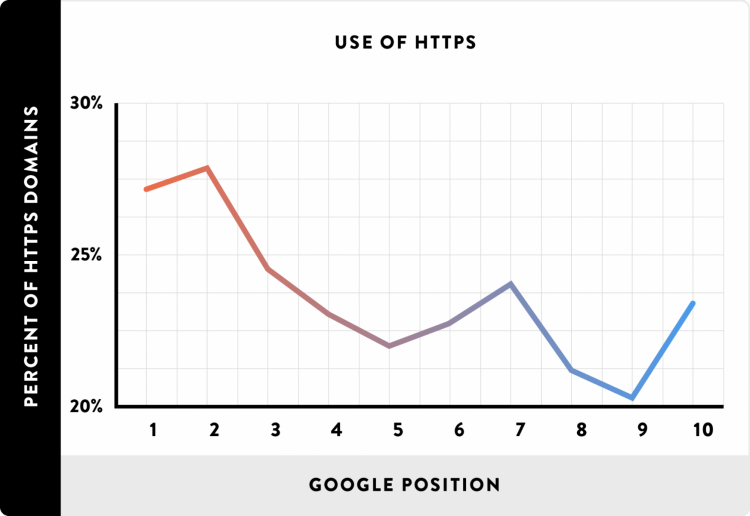
Take SSL integration, for instance. Websites that have HTTPS instead of HTTP actually tend to rank better in search engines, which means more passive traffic and better real estate lead generation.
And since 93% of online experiences begin with a search engine, that SSL integration can help unlock a wealth of revenue-generating potential.
Sure, it won’t automatically place you at the top of the rankings, but having SSL on your website is par for the course — if you don’t have it, then you’re likely to fall below the competition in search engines.
For the sake of yourprivacy, your visitor’s privacy, and even your Google rankings, you should consider real estate website hosting that has the following features.
Restore data points — You never know when your website is going to crash. In the tech world, things sometimes happen for no apparent reason. Ideally, you want a real estate website host that has a disaster recovery plan.
Network monitoring — More than likely, you don’t have the time or ability to actively monitor your own website servers. That’s okay, though. Just make sure you choose a real estate website host that will consistently monitor the network for malicious attacks, diverting each one.
Simple SSL integration — Adding SSL to your website can be a bit of a pain if you haven’t done it before. The best real estate website hosts will offer to do this for you.
Network firewalls — If your website host doesn’t have network firewalls to protect its servers, find a new website host. This is simply expected in the real estate website hosting world.
At Carrot, we offer all of these protections so that you never have to think twice about whether or not your website is secure. We even have several dev team members behind the scenes who constantly help monitor your website to respond to any problems within seconds.
We’d love to work with you — whether investor or agent :-)
Whatever real estate website host you choose, though, make sure it offers the above four things.
Real Estate Website Hosting Consideration #2: Speed
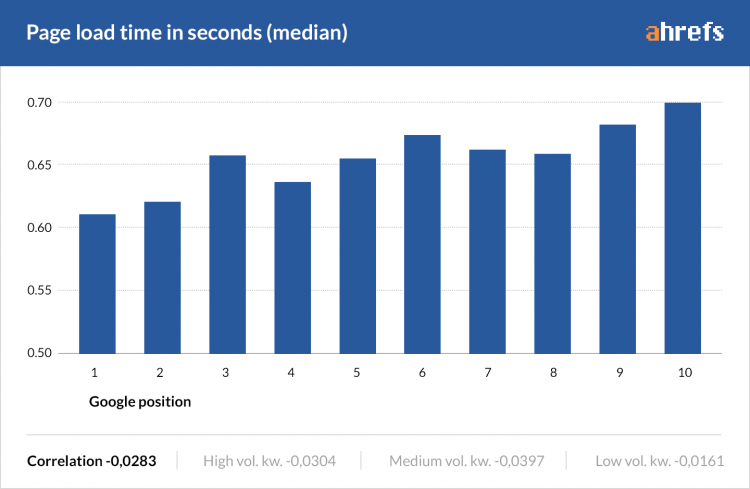
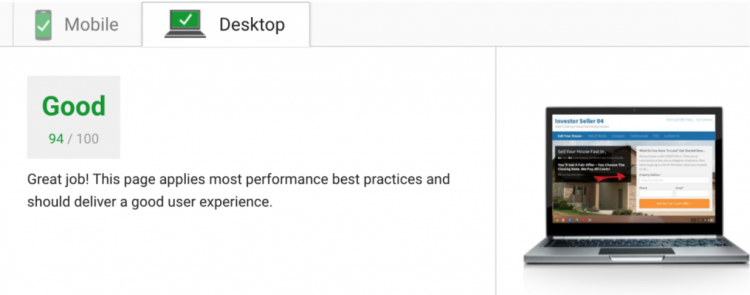
The faster your website loads, the better chance you’ll rank above the competition.
And speed becomes an even deeper consideration when you find out that users spend an average of 69% of their media time on smartphones instead of desktops or laptops.
Often times, that smartphone isn’t as good at loading massive images, videos, or other visual files.
Which means that your real estate website host should store your website’s information in the most organized and speedy fashion. You don’t want people leaving your website because they’re sick of waiting for it to load. And you definitely don’t want to lose customers because the competition’s website was faster than your own.
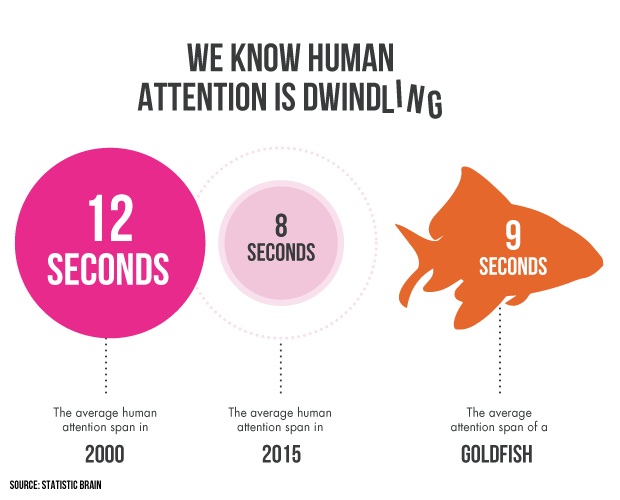
Here’s the reality: people are impatient. Some studies even compare the human attention span to that of a goldfish.
Of course, when you actually get into the nitty-gritty of that study, it becomes quite ridiculous. There’s no argument that the human attention span is far superior to that of a goldfish.
So what’s really going on?
People have more options and easier access to those options than ever before. Which means they are less patient of lengthy load times (for instance) because they can find a million — literally — other websites that will load faster and offer a similar solution.
Said another way, the primary reason that you need a fast website is because people expect it.
So then, the two reasons that website speed matters are because it helps your Google rankings and people won’t wait for a slow website.
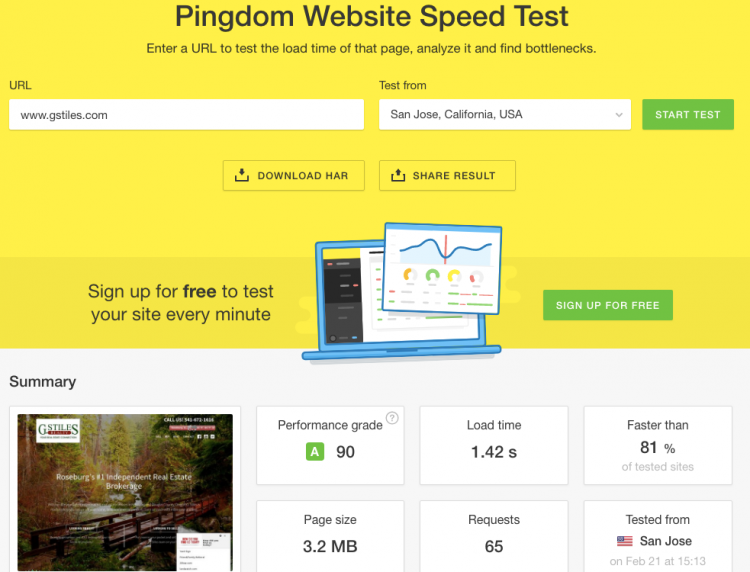
Which is why, at Carrot, we test our customer’s real estate websites regularly, to make sure we’re making them as fast as we possibly can.
In fact, here are three things we do to keep our customer’s websites fast. If you don’t choose to work with us, then you should choose another real estate website host that offers similar functions.
Powerful CPUs and abundant RAM — We use extremely powerful Central Processing Units and an abundant amount of RAM that ensures we can keep up with the demands on all of our thousands of customer websites.
Purpose-built servers —We leave our servers designated for specific operations so that there’s never a shortage of computing power for our customer’s websites.
Load-balanced server clusters — Our servers can handle an infinite amount of demands. With load-balanced server clusters, we monitor our customer website’s load speed and computing power, adding servers as the demand increases, and removing servers as the demand decreases.
Real Estate Website Hosting Consideration #3: Scalability
You don’t want your business to outgrow your website hosting.
Ideally, you want a real estate website host that will grow with you. As your website traffic and conversions increase, so too should the bandwidth of your hosting servers. Of course, with many website hosts, that’s not the case.
Some real estate website hosts neglect scalability because they want to keep costs low. Others do it because they are outright lazy. Frankly, though, the reason doesn’t much matter.
What matters is having a website that scales with your business — rather than holding it back.
Otherwise, you’ll have to change website hosts as your business scales, which usually means a few days of downtime for your website and sorting through a confusing hash of DNS records.
To ensure uninterrupted online presence and safeguard against potential cyber threats, consider opting for a DDoS protected VPS.
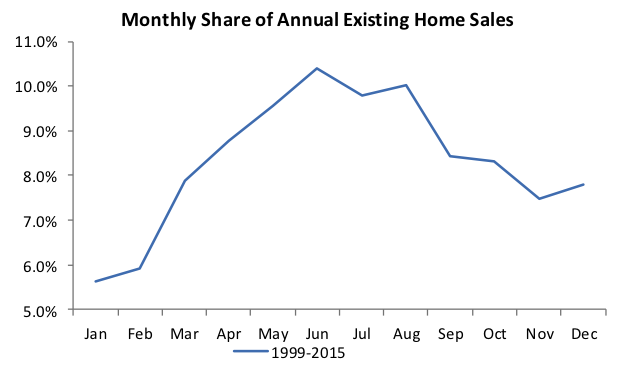
And this isn’t just important if you want to grow your real estate business into a massive corporation. It’s important for the real estate industry as a whole. Some seasons naturally expect more sales than others. More sales mean more traffic which means a larger demand on your website for bigger and stronger bandwidth.
June and July, for instance, almost double in sales from December and January.
If your website can’t handle those rising and declining trends, then you’ll miss out on massive sales potential for the year.
With a scalable host, though, you’ll never have to worry about your website slowing down or crashing because of an overabundance of demands. Within seconds as well as years, a scalable host will adapt to your online popularity rather than requiring you to adapt to it.
There are many different ways to accomplish this on the tech side. But at Carrot, here’s how Austin, one of our developer geniuses explains what we do to make our website “infinitely” scalable.
We can “infinitely” scale the number of web servers in our load-balanced cluster. Load balancing means that the requests sent to Carrot are spread out among an arbitrary amount of servers. We track the average response time and the average amount of load on the servers in our cluster and if the load becomes too high, we add more servers to our cluster. A good analogy is opening more checkout lanes at the grocery store if lines start to get too long.
Real Estate Website Hosting Consideration #4: Support
When thinking of real estate website hosting, most people don’t immediately consider support.
The reality is, though, that when your website goes down for no apparent reason, struggles to climb through the rankings, doesn’t convert like you want it to, slows down, or becomes suddenly less secure, you need someone who can help.
Regardless of how good the real estate website hosting is, it’s practically inevitable that you will either (1) have general questions about making customizations to your website or (2) experience unexpected problems which you don’t know how to fix.
When that happens, you need reliable experts just a phone call away.
Our world-class support team at Carrot is adamant about helping our customers. Just last quarter, they had over 7,000 conversations and nearly 300 one-on-one strategy calls.
If your website host doesn’t have a remarkable support team, then find one that does.
Conclusion
The real estate website host that you choose has a massive impact on four things.
Security
Speed
Scalability
Support
Before you decide which real estate website host to use, make sure that you consider these four factors. At Carrot, we keep our customer’s website fast, secure, and scalable, while also providing world-class support.
Right now, more than ever, you must have custom real estate website design. In fact, 99% of millennials (21 – 37 years old) search online when looking for a home.
I know, I know. Whoop-dee-do, no surprise.
But here’s a few stats that are surprising. 89% of older baby boomers (54 – 72 years old) also use the internet during a house search and 77% of the silent generation (76 – 93 years old) do the same.
In fact, 44% of homebuyers across all ages purchase a home that they find on the internet.
This means that despite the age of your prospect, people are looking online at some point during their house hunt — more than likely.
And since they’re looking online, you need to be online.
If you’re not, you’re losing business.
End of story… “Here, you can have my clients, savvy internet real estate competition,” type of bye, bye.
And as you already know, those clients that work with the competition will do so again in the future — you don’t just lose them right now, you lose them forever.
Of course, that’s not always the case, but it often is.
Unfortunately, just being online isn’t enough, either. You need a website that drives traffic and converts visitors. In most cases, having your face on a corporate real estate website isn’t adequate, and neither is a cruddy website that your tech-buddy designed.
I don’t have anything against your tech buddy or your real estate corporation, but I do want to help.
For that reason, here at Carrot, we asked ourselves, “What are the three most important elements for any custom real estate website design to have?”
This is what we came up with.
Custom Real Estate Website Design Must #1: Easy Navigation
When someone lands on your website, they want to do something.
But what, exactly, do they want to do?
Fortunately, in the real estate niche, that’s a relatively easy question to answer.
People either want to learn about who you are (i.e. Can they trust you? Do you have a reliable track record? Do you seem legit?) or what you do (i.e. They want to pursue your services).
Put more simply, visitors want to…
1. Learn whether they can trust you.
Or…
2. Work with you.
Pretty simple, huh?
Yeah. At least on the surface.
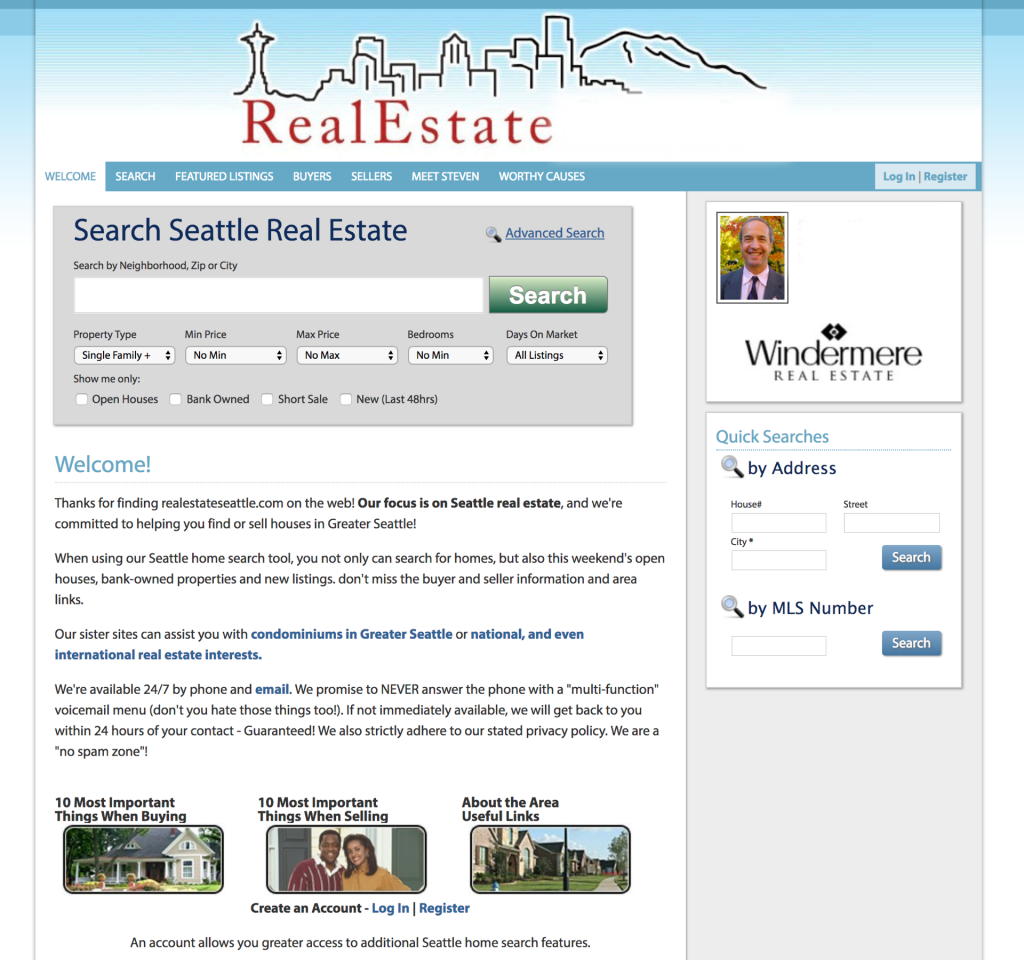
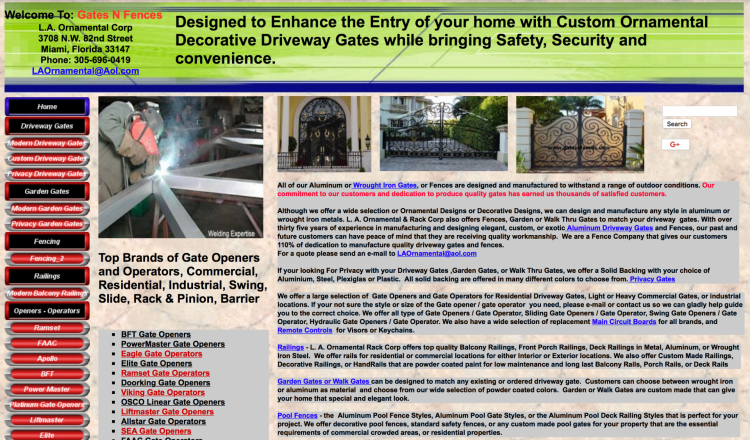
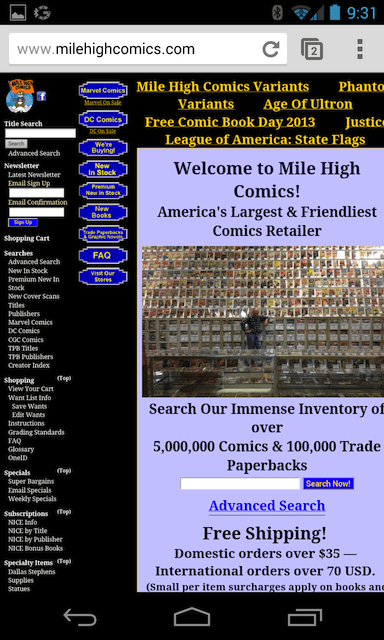
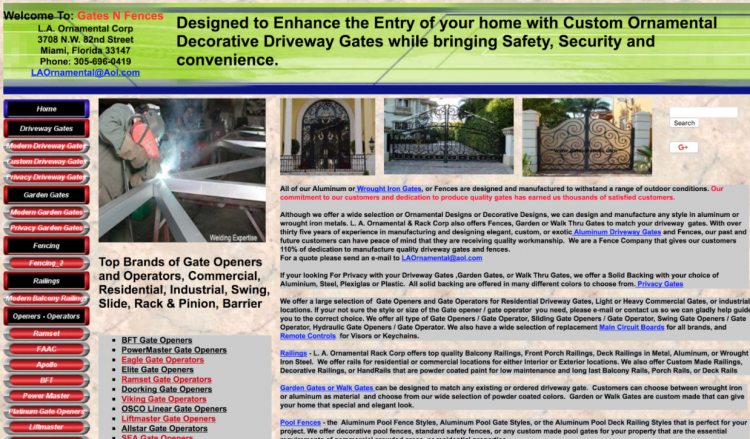
But here’s the thing: even guiding those two simple intentions requires some savvy website navigation. After all, the last thing you want is for visitors to land on a website that looks like this.
If you arrived on this website, you’d leave within the first few seconds — your visitors will do the same thing.
In fact, 38% of people will leave a website with an unattractive layout.
What, really, though, is the problem with the above website?
Because if we look beyond the hideous colors and hard-to-read text, there’s something even worse: poor navigation.
Since people don’t know where to go, they leave.
And you don’t have to take my word for it. One study found that 50% of referral-based website traffic immediately uses a website’s navigation menu to orient themselves.
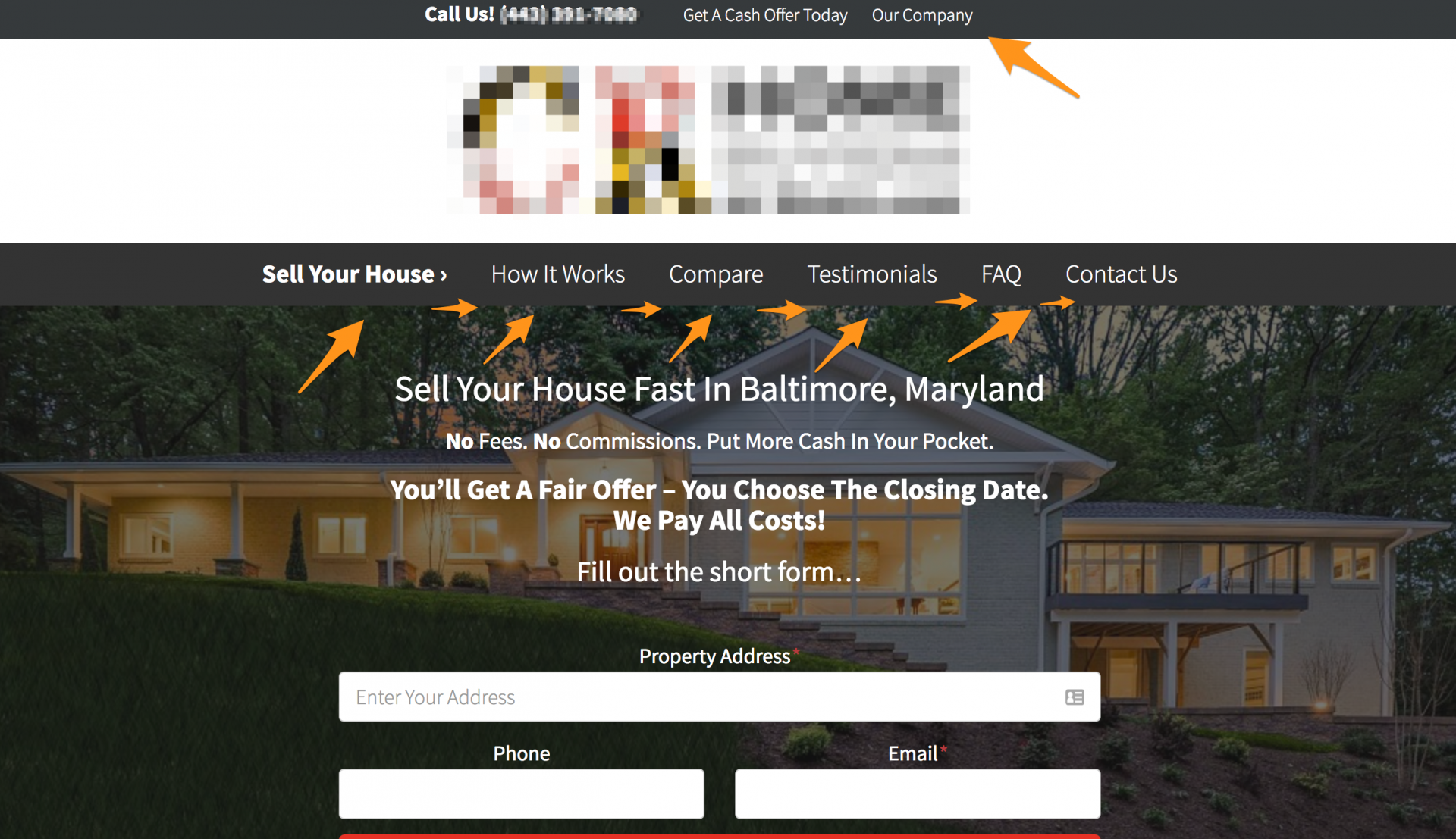
This is why, at Carrot, we include dead-simple navigation menus on our customer’s websites. For Investors…
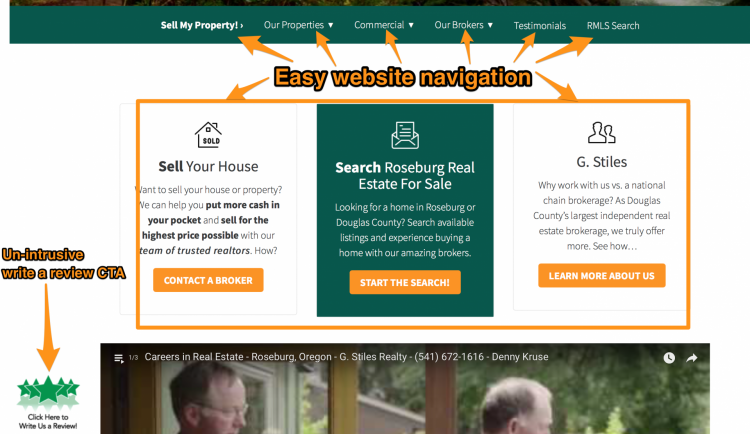
And agents…
The moment that prospects land on those websites is the same moment that prospects know exactly what to do and where to go.
Immediately, then, those websites build trust.
A website without simple navigation, on the other hand, hurts trust and increases your bounce rate — which, in turn, hurts your business and the financial independence that you so ambitiously crave.
The point is, a cluttered and hard-to-navigate website hurts everyone and helps no one.
What, though, makes the difference between an easy-to-navigate website and a navigational disaster?
Here are 4 things to keep in mind.
Does your navigation bar have seven or less options? — You don’t want too many options on your website. You need to have the necessary ones (About Us, Contact Us, Testimonials, etc), but nothing more. Ironically, the more options that people have to choose from, the less likely that they’ll make a choice at all for fear of making the wrong choice. Remove that fear with fewer options.
Is the button copy for each navigation button honest and clear? — In other words, title your blog, “Blog” and your about page, “About Us.” Don’t try to remake the wheel. You’ll only make things unclear for visitors to your website and hurt your reputation in the long run. Use terms that people are familiar with and immediately recognize.
Is the design clean and the text easy to read? — This one is getting a bit more into the opinionated territory. For that reason, I recommend showing your website to a few trusted friends and asking them for their honest opinions. What do they think of the copy, the colors, and the overall flow? Do they like it or hate it? Ask them to be honest.
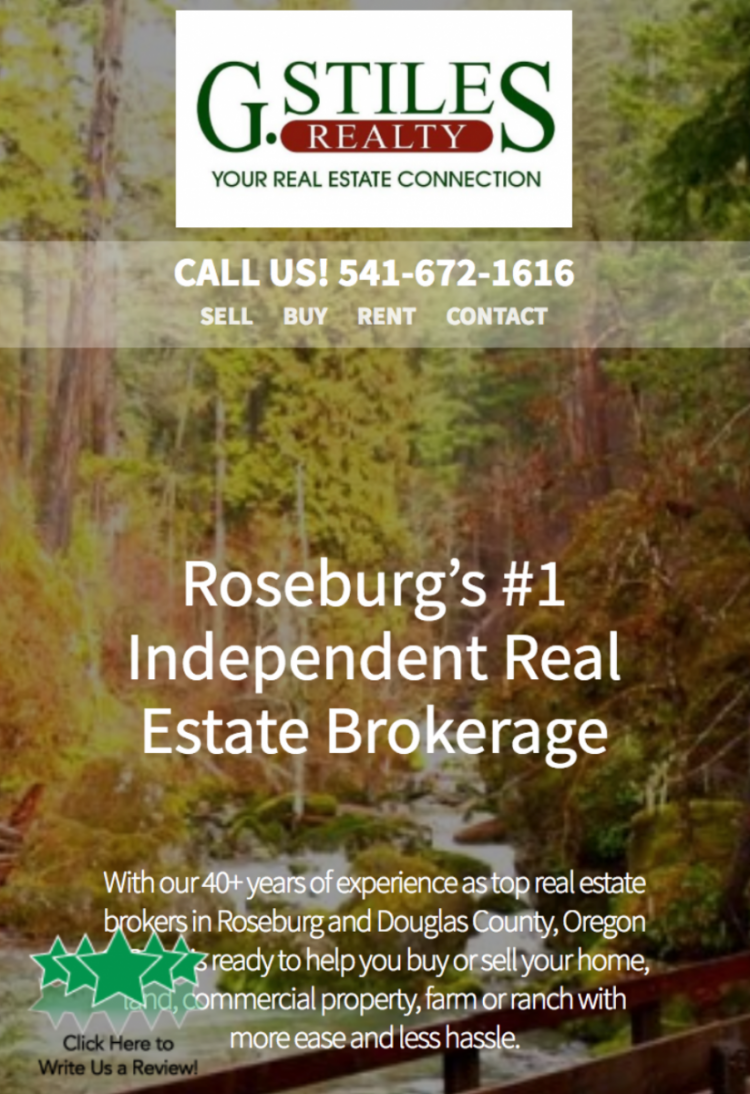
Is the website easy to navigate on mobile devices? — Today, more than half of our member leads come from mobile devices. If your website isn’t just as easy to navigate on mobile devices as it is on a desktop device, you need a new website. Consider how terrible this website looks on mobile.
In contrast, all of Carrot’s websites are mobile-friendly automatically… no extra work and no extra thinking. Boom. Donezo. Check to see if your website is mobile-friendly.
If you want us to help build you an awesome website, investors can go here and agents can go here to check out our plans. We’d love to work with you :-)
Plus, we’ll make sure you have all of the above elements dialed in.
Otherwise, take the above information and hand it to your designer. Or make sure that the real estate website builder you choose integrates this advice.
If your website isn’t easy to navigate, then it’s got no chance of competing with other online real estate websites. If it is easy to navigate, though, then people will immediately trust you — something that’s crazy valuable in the real estate world.
Custom Real Estate Website Design Must #2: Clear and Relevant CTAs
Your website might have a persuasive sales copy and a clean design, but if people don’t know where to click once they’re ready to take action, none of that matters.
After all, the whole point of your website is to generate leads for your business. Without a CTA, that’s impossible.
What, though, should your CTA be? Should you ask people to call you or sign up for your email list or enter their personal information?
Since you’re a real estate agent or investor, generally speaking, the best CTA is a phone number. Think about it. If you were looking for a real estate agent or investor, would you want to email them and wait for a response or call them and talk to them right now?
More than likely, the latter.
In fact, contact information on a website is vital to all industries. 51% of people think that “thorough contact information” is the single most important element missing from business websites. And 44% of internet users will outright leave a company website if it doesn’t have contact information or a phone number.
In the real estate industry, that truth is even more detrimental.
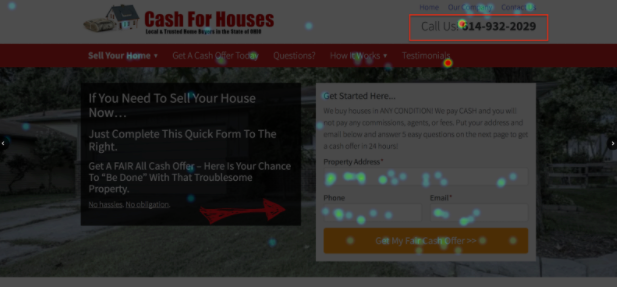
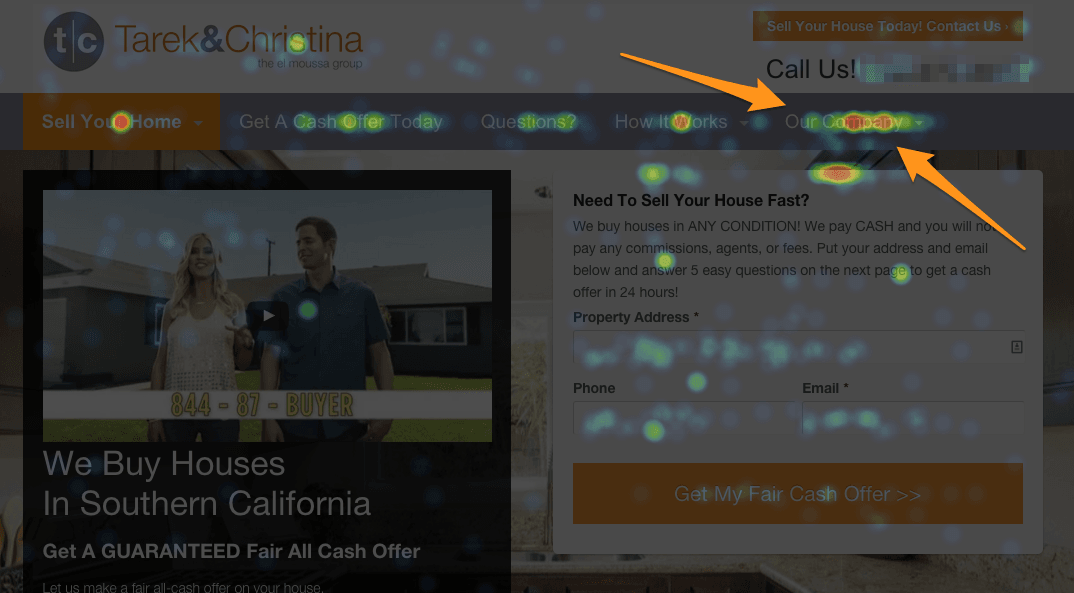
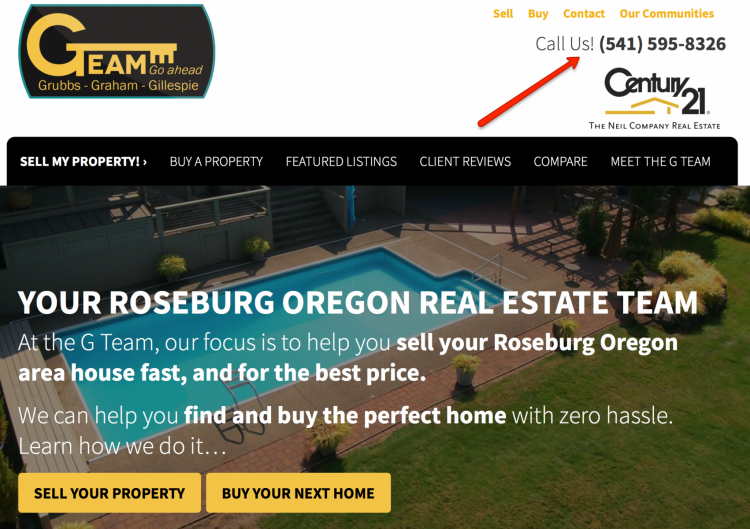
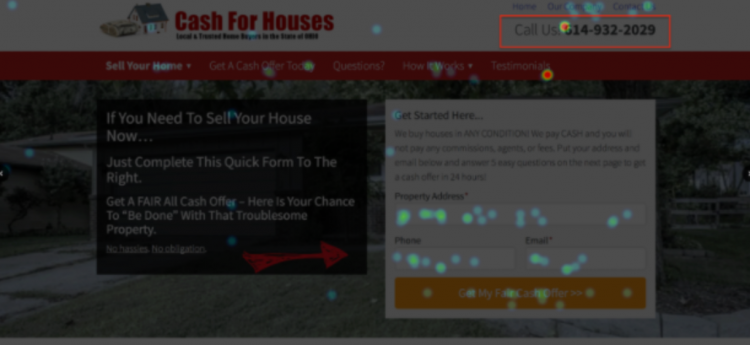
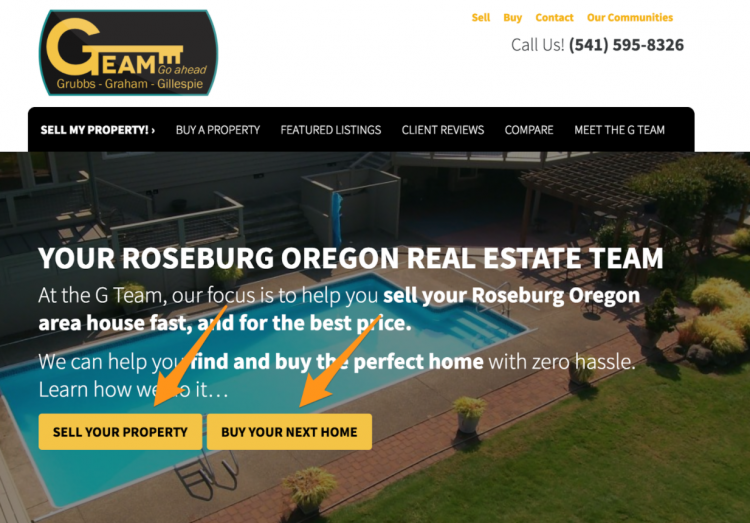
Through a heat map study at Carrot that we ran on one of our customer’s websites, we found that the “Call Us” CTA in the upper right corner was getting massive attention.
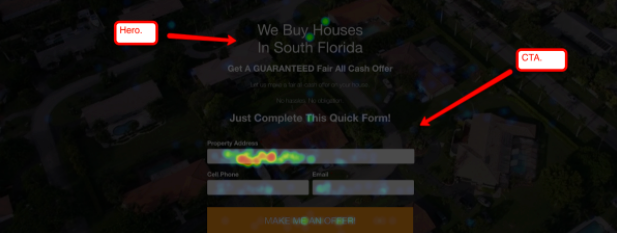
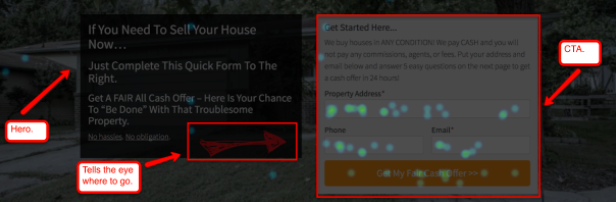
Of course, so too did straightforward CTAs like this…
And this…
Which illustrates exactly why your CTA needs to have two characteristics.
It needs to be clear (visually and linguistically)
It needs to be relevant (to the page it’s on and the business you run)
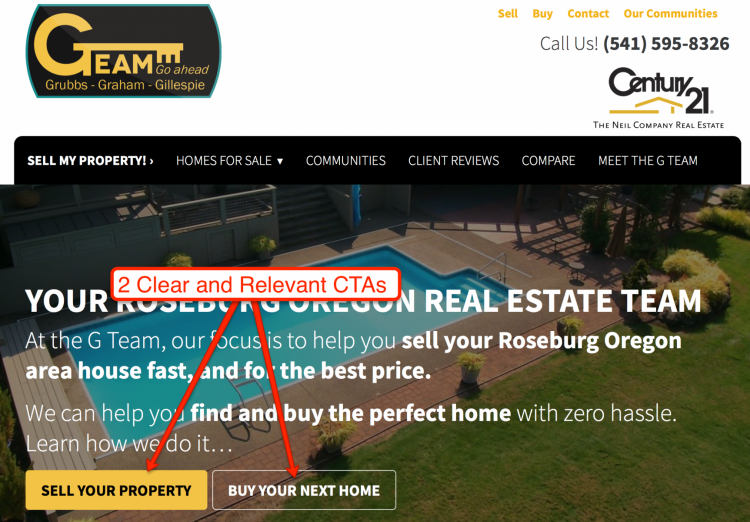
First of all, it stands out from the rest of the page. The CTA’s positioning, color, and shape make it easy to notice the moment that you land on the website.
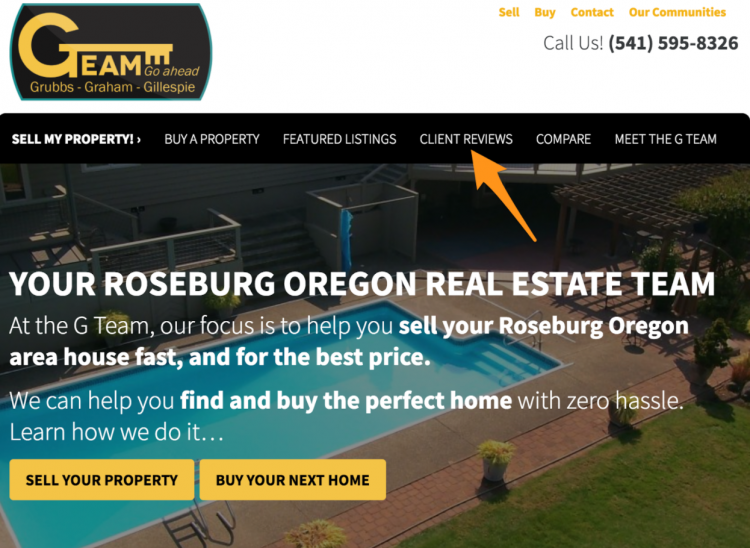
Second, the button copy is clear and represents exactly what people expect to find when they visit a real estate agent website. You can either sell your property or buy your next home.
Additionally, Orbit Media Studios offers this “Pro Tip” regarding mobile website navigation:
“ProTip! For mobile visitors, make sure that the phone number turns into a button that dials the number when tapped. It’s a simple matter of adding tel: to the href code for the phone number for the mobile version of your site. The code should look something like this:
<a href=”tel:773-348-4581″>(773)348.4581</a>”
At Carrot, we design the best real estate websites for lead generation in the industry with clear and relevant CTAs. If you want to do it yourself, though, then use this as your CTA checklist.
Is the button copy clear? Do people know exactly what’s going to happen when they click it?
Is the CTA relevant to the website or page it’s on? What are you asking people to do and is that what they expect?
Does your CTA stand out visually? Is the color unique from the rest of the elements on the page and is your eye naturally drawn to it?
Custom Real Estate Website Design Must #3: A Compelling “About” Page
Out of the three elements that we chose to mention in this blog post, this is going to be the most surprising.
Easy navigation and clear, relevant CTAs — sure. That makes sense.
But an “About” page?
Really?
Is that one of the three most important custom real estate website design elements if you boil it down to its foundation?
But you don’t have to take our word for it. Another source found that 86% of visitors want to see information about a company’s products and services on the homepage.
But how do you create an “About Us” page that builds trust and creates a relationship?
Well, let’s walk through one of my favorite real estate “About Us” pages.
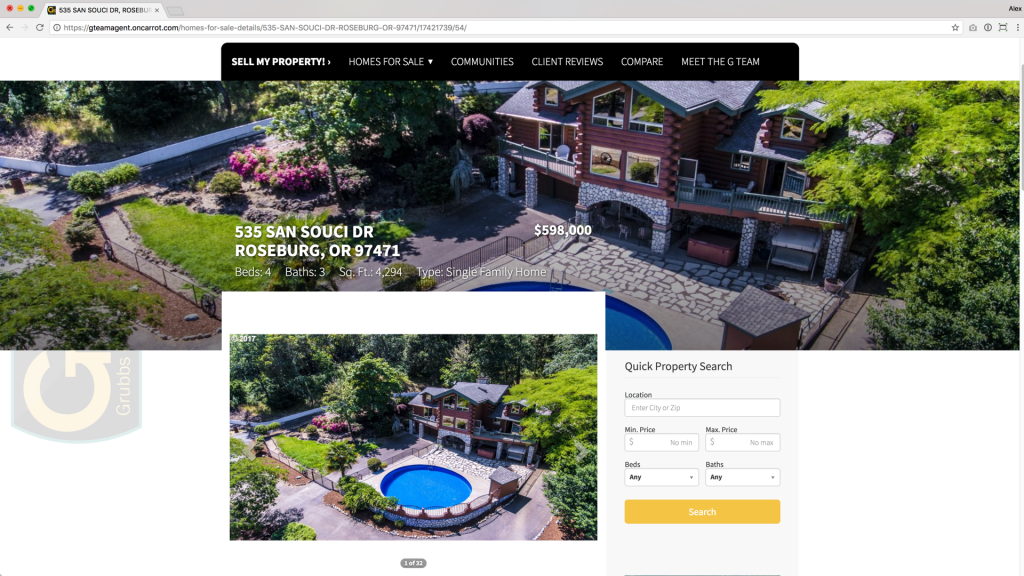
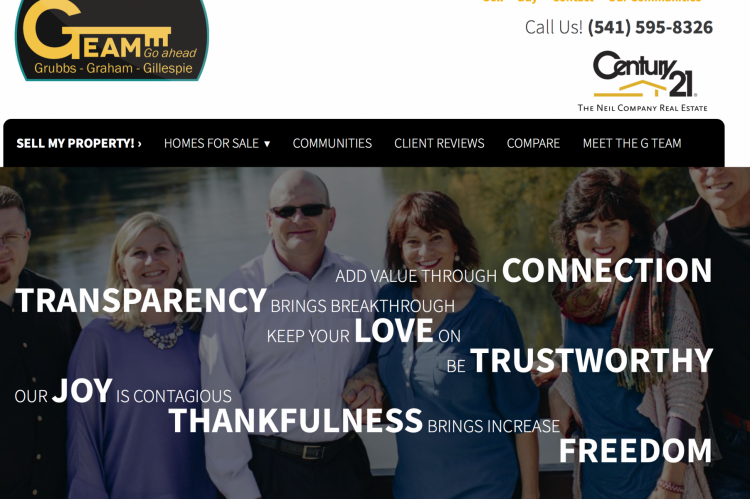
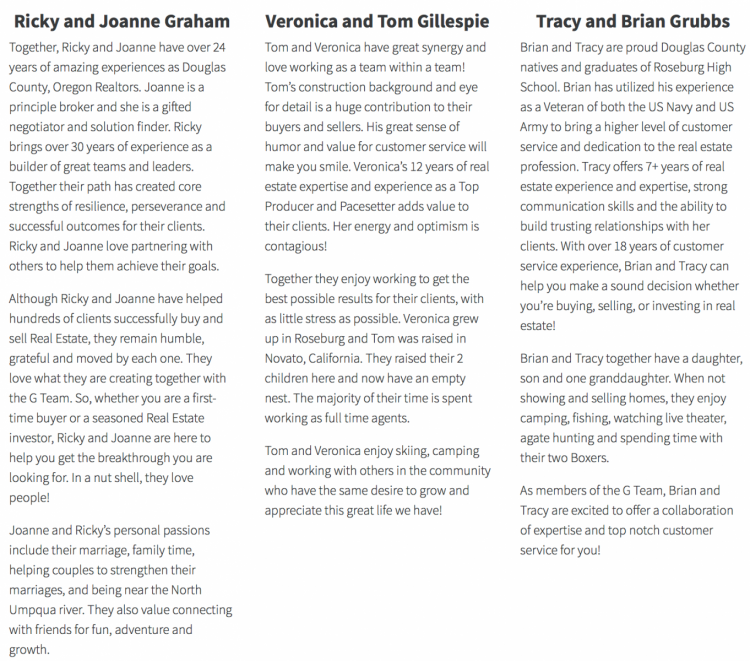
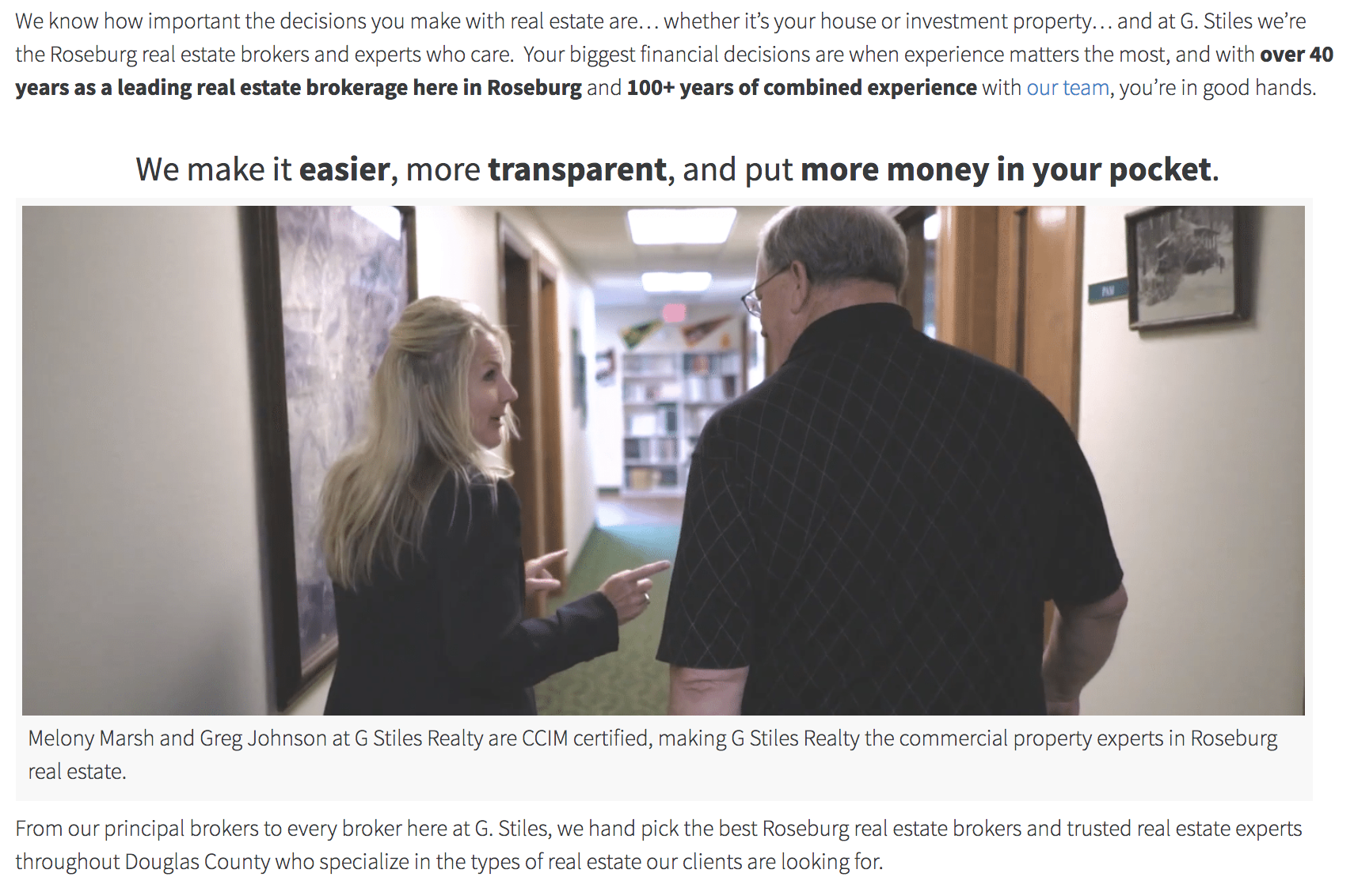
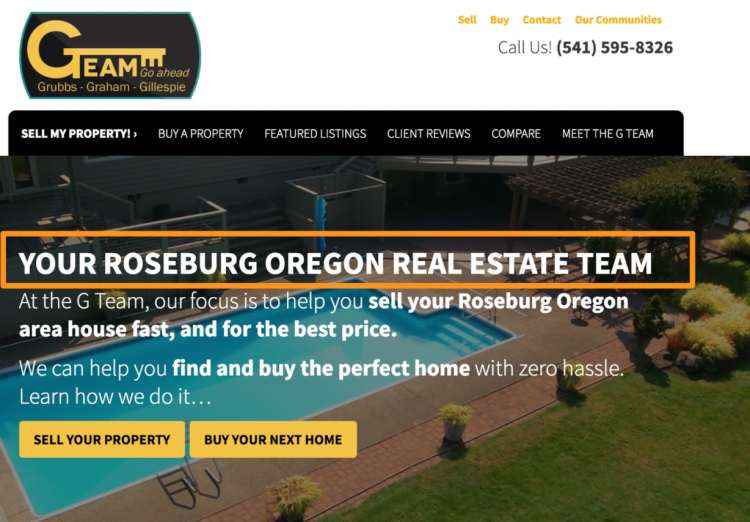
A team of real estate agents based out of Roseburg, Oregon — The G Team — starts their “Meet The G Team” Page with their core values.
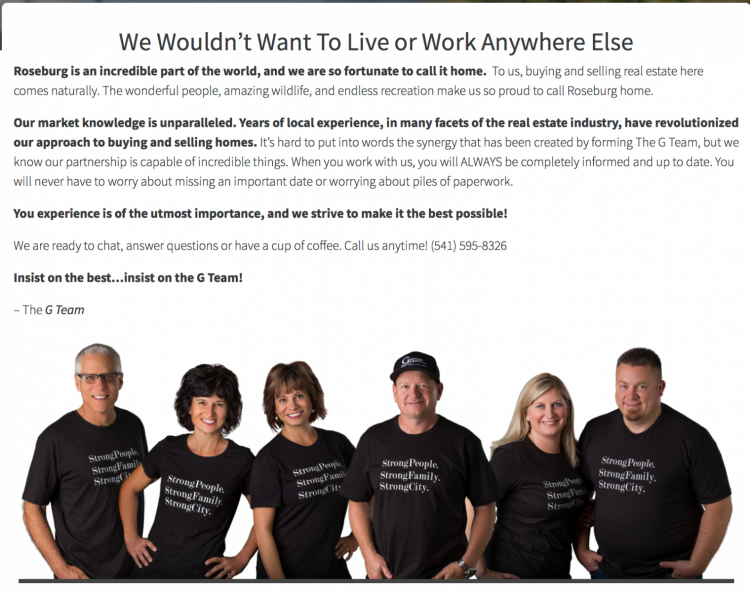
Then, they build authority in their local market by describing their passion for the area and their expertise.
Next, they have bios for people on the team.
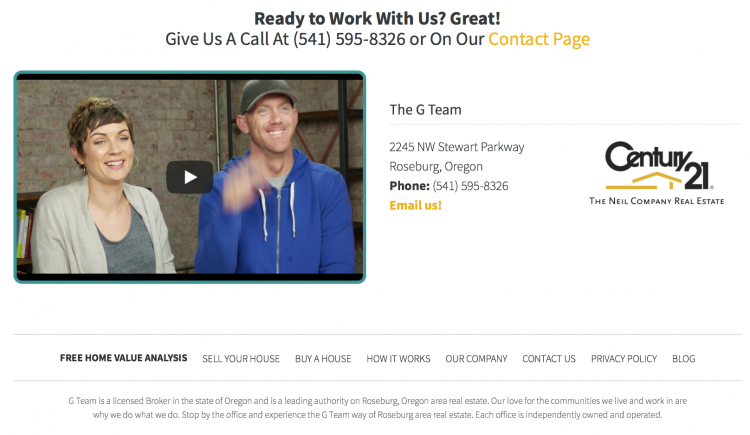
A friendly picture of the team…
And they end with a video and CTA.
The best part about this page is that they treat it like a sales page. Because believe it or not, your “About Us” page is a sales page.
Think about it this way. Why would someone visit your “About Us” page in the first place? Probably because they want to figure out if they can trust you, if you have a reliable track record if you offer the service that they’re looking for.
In other words, they visit your “About Us” page because they’re trying to determine if they want to work with you or not.
Your “About Us” page needs to help them make that decision.
Tell your story — Be brief, but include the juicy details that help people understand why you do what you do.
Include an authentic and professional picture of yourself — Don’t take a picture when you have a fake smile on. Take a picture when you’re laughing or smiling genuinely. Believe it or not, people can tell the difference. And studies show that visitors will think you are more intelligent, attractive, and friendly if you’re actually smiling. Do the same for the rest of your team if you have one.
Write the page’s content in the first person, like you’re actually… well, you — Don’t try to write in the third person like a robot describing someone else. Nobody wants to work with a robot. They want to work with a human. You’re a human, so be a human.
Include a CTA — Anyone who visits the “About” page wants to learn about you because they’re thinking about working with you. Convince them, then pitch them.
Conclusion
You need a custom real estate website design but, most importantly, you need a website that drives traffic and converts visitors.
In fact, if you have a website that doesn’t do those two things, then it’s practically the same as not having a website at all.
For that reason, at the very least, your website needs easy navigation, clear and relevant CTAs, and a compelling “About Us” page. Without those, your website will sit in cyberspace, doing nothing for your business and nothing for your dream of financial and personal independence.
At Carrot, though, we’ve generated over one million leads for our customer’s real estate websites in just three years. We’d love to help you, as well. Agents can find out more about working with us here and investors, here.
If not, that’s okay too. :-)
Either way, follow the above advice and you’ll be well on your way to having the website — and business — of your dreams.
What if I told you that, by adding one element to your real estate website, you could increase your conversion rate by 10%?
You wouldn’t have to increase traffic and you wouldn’t have to do more marketing. You’d just have to add one dead-simple thing to your homepage.
And boom. 10%.
Would you do it?
If you’re like most real estate agents (72%), you’re already dissatisfied with the number of leads that your website generates. So I’m going to safely assume that the majority of you would welcome a 10% increase in your website’s conversion rate.
Sure. 10% isn’t huge. But it’s something. And in an industry where one deal can equal tens of thousands of dollars, 10% often separates the wheat from the chaff.
Where, though, am I getting 10% from?
Well, it’s an estimate. This little trick probably won’t double your revenue or change your business completely, but it’s a simple way to increase your conversion rate in very little time.
And who knows? For you, it might make all the difference.
Interested?
Here’s what it is.
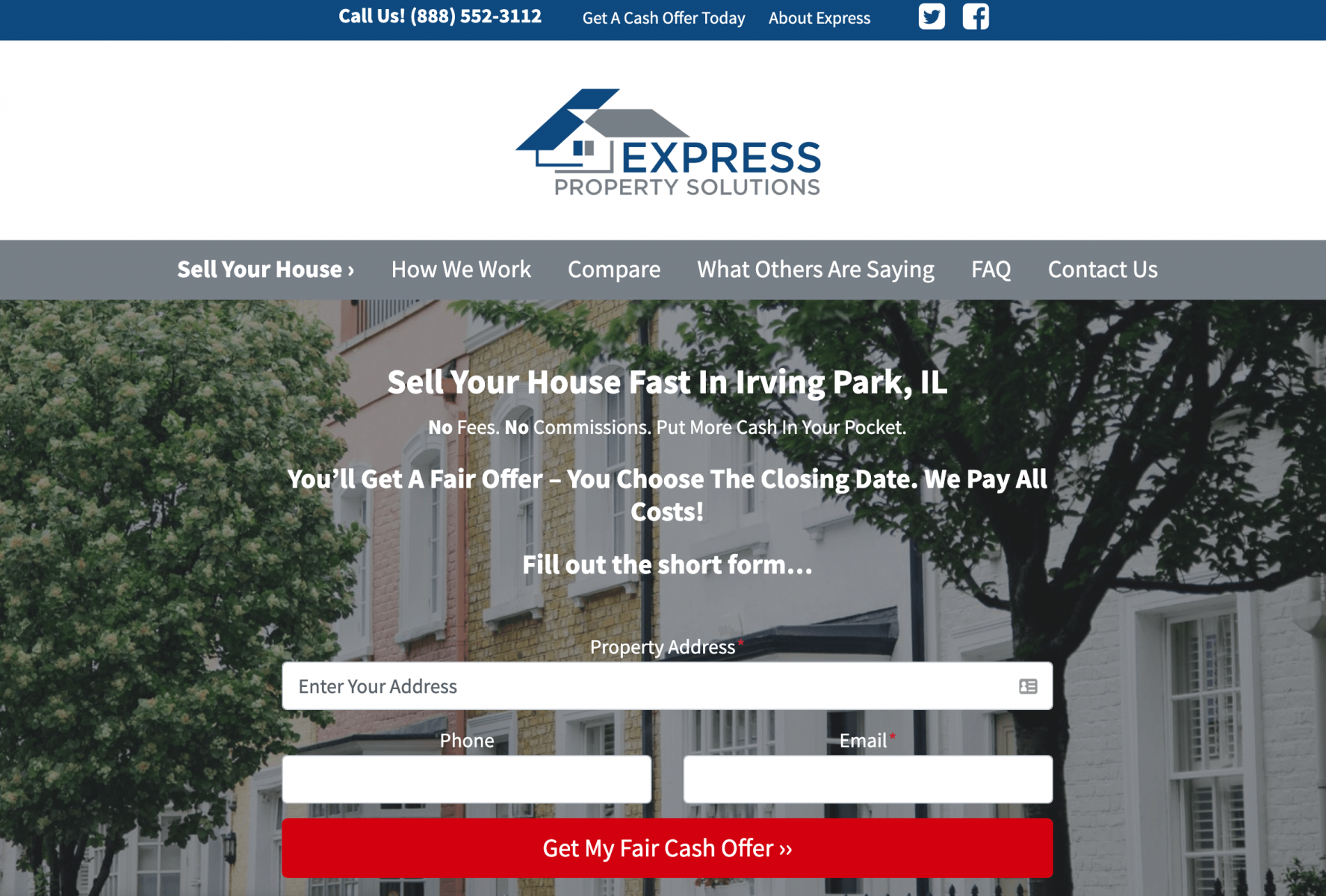
The Best Real Estate Websites For Lead Generation Have This In Common: The “Call Us!” CTA
That’s right. That “Call Us!” CTA in the upper right corner of the page drives leads and converts visitors.
If you don’t have it on your website, then there’s a good chance that you’re missing out on about 10% of your potential lead generation.
But you don’t have to take my word for it.
As they say, “the proof is in the pudding.” So let’s talk about the pudding.
Proof that the “Call Us!” CTA Works on the Best Real Estate Websites for Lead Generation
44% of website visitors will leave a company’s website if there’s no contact information or phone number. Dead. Buried. Gone.
And you and I both know that the moment they leave your website is the same moment they go to the competition’s website. When that happens, your part in their story is over. In fact, 73% of buyers say that they would use their real estate agent again in the future — they’d even recommend the agent to a friend.
Once someone’s gone, they’re gone — and so too are their recommendations.
Naturally, you can’t afford to lose website visitors (and their friends) to the competition for such a silly reason. If having this “Call Us!” CTA really makes a difference, then you damn-well better include it on your website — especially when you consider that it’s only going to take about five minutes for you to add.
But in case you don’t trust the stats I’ve already presented, maybe you’ll take better to our own (Carrot’s) data from nearly 4,000 websites across tons of different real estate niches (wholesalers, rental owners, house flippers, and agents).
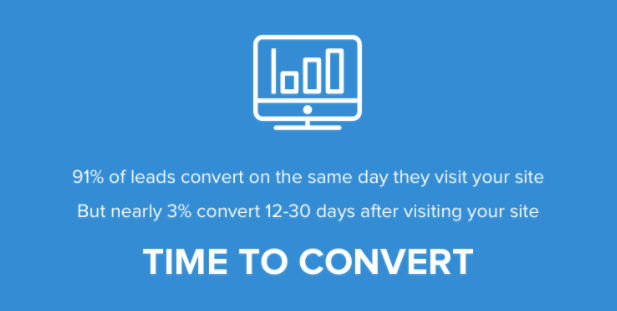
First of all, we found that 91% of people who become leads on these real estate websites convert on the same exact day of their first visit to the website.
This means that high-value people who visit your website want a solution right now. 91% of the time, ideal prospects aren’t on your website to browse around and come back tomorrow.
They’re on your website because they want a solution… and they want it right now.
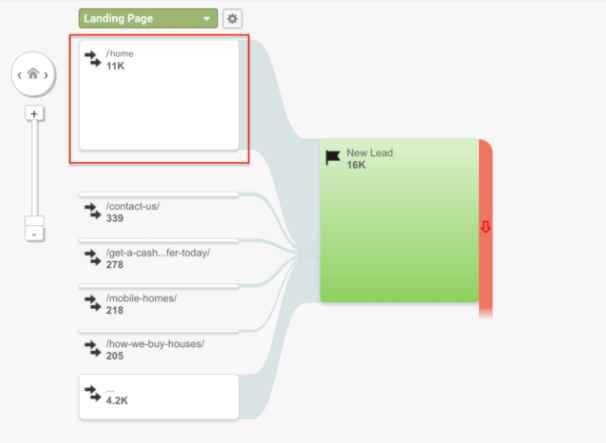
In fact, prospects are so ready to take action that the vast majority of our customer’s leads come from the home page.
Which means that they visit the website and become a lead before even clicking anywhere else. They take action.
But what does that have to do with the “Call Us!” CTA?
Well, put yourself in the prospect’s shoes. If you visit someone’s website looking for a solution to your problem or wanting to get in touch with a realtor, the last thing you want to do is dig around their website looking for contact information.
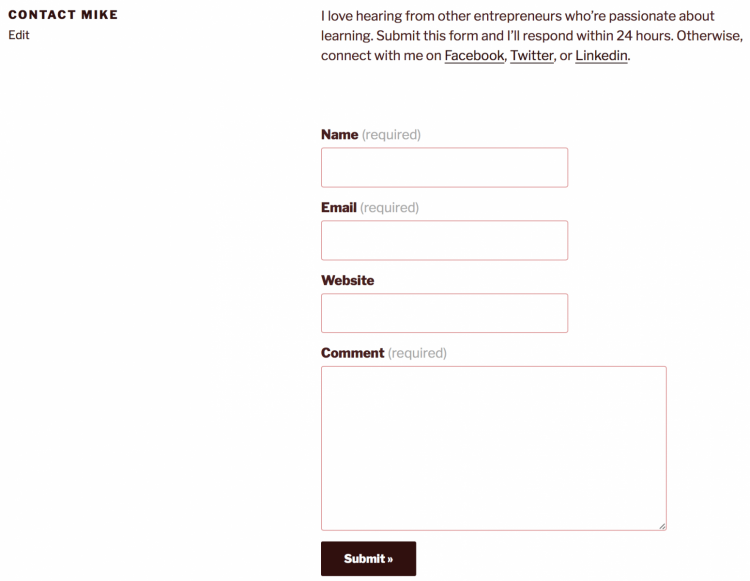
And the very last thing you want is to come across an email or a form like this.
No. You want to call someone right now and schedule a time to talk further.
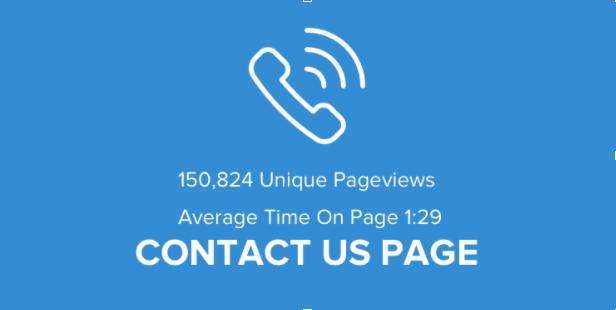
Additionally, we found that the average time-on-page for the “Contact Us” page across these real estate websites was a whopping one minute and twenty-nine seconds.
Which is pretty damn significant for a page that usually has nothing more than a phone number, email, and/or contact form.
Or consider, from this heatmap of one of our customer’s websites, how much attention the “Call Us!” CTA receives.
Plus, since 52% of home buyers use an iPhone during their home search, a lot of prospects literally have their calling device right in front of them when viewing your website.
“On many websites, the contact information is buried at least five links deep, because the company doesn’t really want to hear from you. And when you find it, it’s a form or an e-mail address.
We take the exact opposite approach.
We put our phone number (it’s 800-927-7671, in case you’d like to call) at the top of every single page of our website because we actually want to talk to our customers. And we staff our call center 24/7.”
And while you might not be the owner of a company that sells shoes online, the point is the same — business people that make it easy for prospects to contact them are far more likely to turn visitors into leads and leads into deals than those that make it difficult. Statistically, 50% of buyers work with the company that responds first.
This means you want to make it as easy as possible for prospects to contact you; the “Call Us!” CTA does exactly that.
How, though, should the rest of your website support this CTA? It’s to that question that we turn next.
How the Best Real Estate Websites for Lead Generation Set Up The Supporting Elements
In the end, your website should be phenomenal at only two things.
When someone first arrives at your website, they will want to know if they can trust you or not. They’ve never met you in person and so your website is the only thing they have to reference.
If it doesn’t convince them that you’re trustworthy, they’ll leave. If it does, they’ll contact you.
End of story.
In the digital real estate world, it’s really that simple.
For that reason, the majority of your website should be dedicated to building credibility with your visitors. You want them to know that they can trust you and you want them to know that as quickly as possible.
How, though, do you get someone to trust you when your website is the only thing between their decision and your business?
Well, there’s a nearly endless amount of elements that go into building trust with your website — “Website credibility judgments are 75% based on overall aesthetics” — but here are four of the more important ones.
Does your website load fast? If people have to wait too long, they’ll leave and go somewhere else.
What is the first thing that people notice when they land on your website? Does that element build trust for your business? If it doesn’t, then consider making this element something that does.
How clean is your real estate website design? If your website is cluttered with random information and difficult-to-decipher CTAs, then people won’t trust you and they definitely won’t stick around.
Is your website easy to navigate? Don’t overcomplicate things. Keep your navigation bar intuitive and your CTAs clear. You want people to know what’s going to happen when they click something on your website and you want them to easily navigate where they want to go. Avoid vague and unhelpful navigational terms on your website.
At Carrot, we’re relentless about doing all four of these things for our customers so that they don’t have to worry about it.
If you want to do it yourself, though — or you’re just curious — then check out how we guide website visitors from trusting the real estate expert to taking action.
Here’s how we do it on our real estate investor websites.
Since the best thing that your website visitors can do is contact you, the rest of the website should work to get them to a point where they’re ready to call you or email you.
The only hesitancy that committed prospects have about contacting you is that they don’t know who you are, they don’t know if they can trust you, and they don’t know if you can help them.
Other than the “Call Us!” CTA, every element on your website should work to convince them they can trust you and you can help them.
Then, and only then, will they dial your phone number.
Conclusion
The “Call Us!” CTA probably won’t be the most interesting part of your website’s design. It won’t be the prettiest or the most compelling. But that doesn’t mean it’s unimportant.
In fact, that little “Call Us!” addition to your website can make an estimated 10% difference in your conversion rate. Now, you know why it’s important and how to support it on your website.
Because in an industry where every sale is worth tens of thousands of dollars, 10% can make a big difference.
And in the case of the “Call Us!” CTA, about five minutes equals +10%.
What do you think is the most important element on a real estate website for generating leads and converting visitors?
A great real estate agent website design can help you form a good impression on prospective clients. It can also help you nurture your leads and get more deals.
Studies show that 90% of homebuyers use the internet during their journey to buy a home. Therefore, it is essential to provide a good user experience and help your website visitors easy access and navigate your website.
Currently, there are 1,576,668 NAR members, so we all know there are millions of agents packed into the clutter.
As The Balance points out, “20% of agents do 80% of the business.”
Of course, that isn’t surprising. When someone uses an agent once, they aren’t very likely to change. 70% of house sellers, for instance, said that they’d use the same real estate agent again in the future.
This means real estate agents that get the business first keep the business.
But how do you ensure you get to the client before the competition?
Two words: the Internet.
Why Do You Need a Real Estate Agent Website?
It’s easy to think that you don’t need a website. You might have been in business for years and have had some success.
But that doesn’t mean you should limit your marketing strategies to offline exclusively.
In particular, every real estate agent needs a website for some reasons.
Online marketing will save you time and money during the lead-generation process.
SEO leads (Search Engine Optimization) tend to be higher quality because they’re inbound leads – when your prospects come looking for you rather than looking for them.
Online and offline marketing strategies work best together. Our highest-performing members at Carrot use both in harmony rather than one in exclusion.
Build your authority and credibility. Your market has dozens of other agents, so you must stand out from the clutter. Having a high-performance, personally optimized website can get you there.
So, you know that you need a website for your real estate agent business, but you might be new to online marketing with a website.
There are so many options and low-end platforms that you’re not exactly sure what you need for your real estate agent website.
So let’s dive in!
Real Estate Agent Website Design
As mentioned above, 90% of homebuyers use the internet during their buying journey.
And that makes sense. MLS browsing options, virtual tours, and housing photography make the web the perfect place to browse for homes and even choose which agent to work with.
The best real estate agent websites build authority, load fast, are SEO optimized, and communicate with visitors. Those are just a few things you must consider when designing your website or using a real estate agent website template.
But before diving into the nitty-gritty, let’s review a few real estate agent websites: non-Carrot and Carrot.
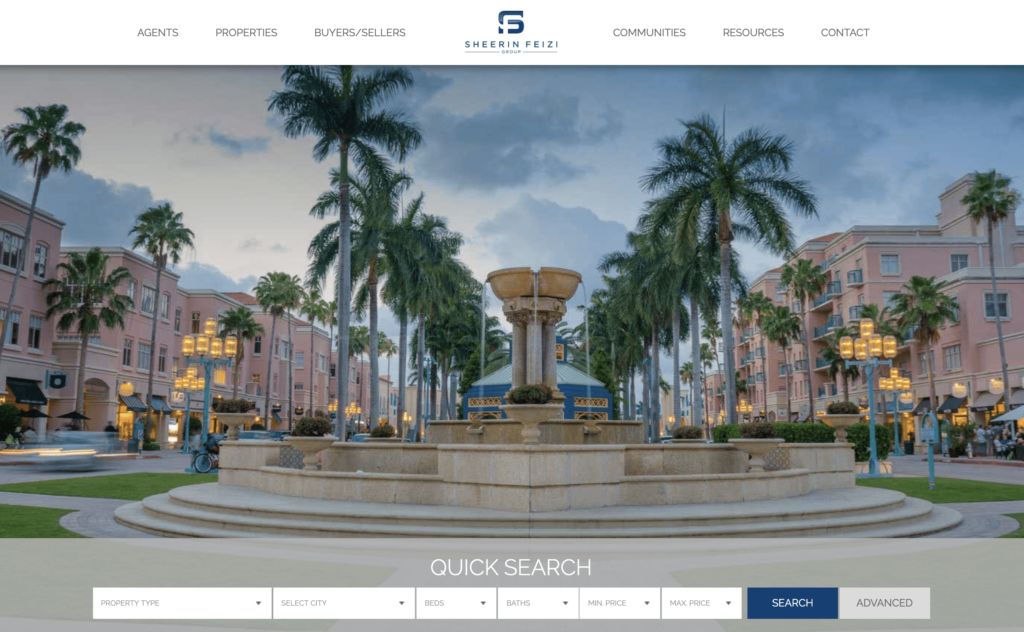
First, Sheerin Feizi.
Besides being a beautiful website, a few noteworthy things about Sheerin Feizi make it stand out.
The “Quick Search” option is most noteworthy at the top of the page.
When people visit your real estate agent website, they only want to do one of two things.
Browse listings.
Get to know you as an agent to determine whether they want to work with you.
Ideally, you want to let them do both of those things easily. And in the case of Sheerin Feizi, the “Quick Search” bar allows visitors to dive right into browsing through listings.
So too, does Sheerin Feizi’s “Featured Properties” section closer to the bottom of the page.
Scroll down a little bit further, and, as you’ll notice, Sheerin Feizi then aims to support the visitor’s second potential goal: to learn about the real estate agent.
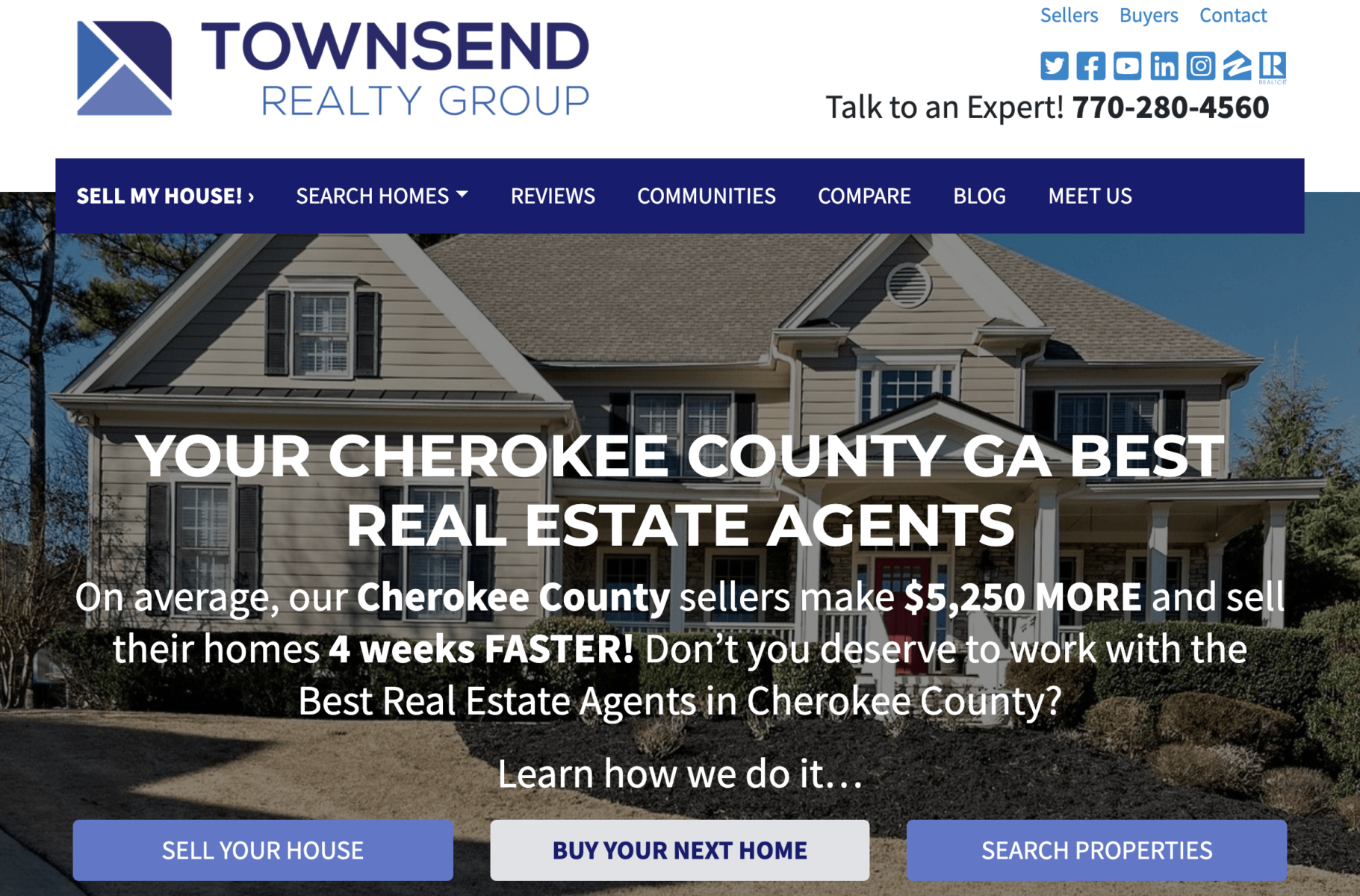
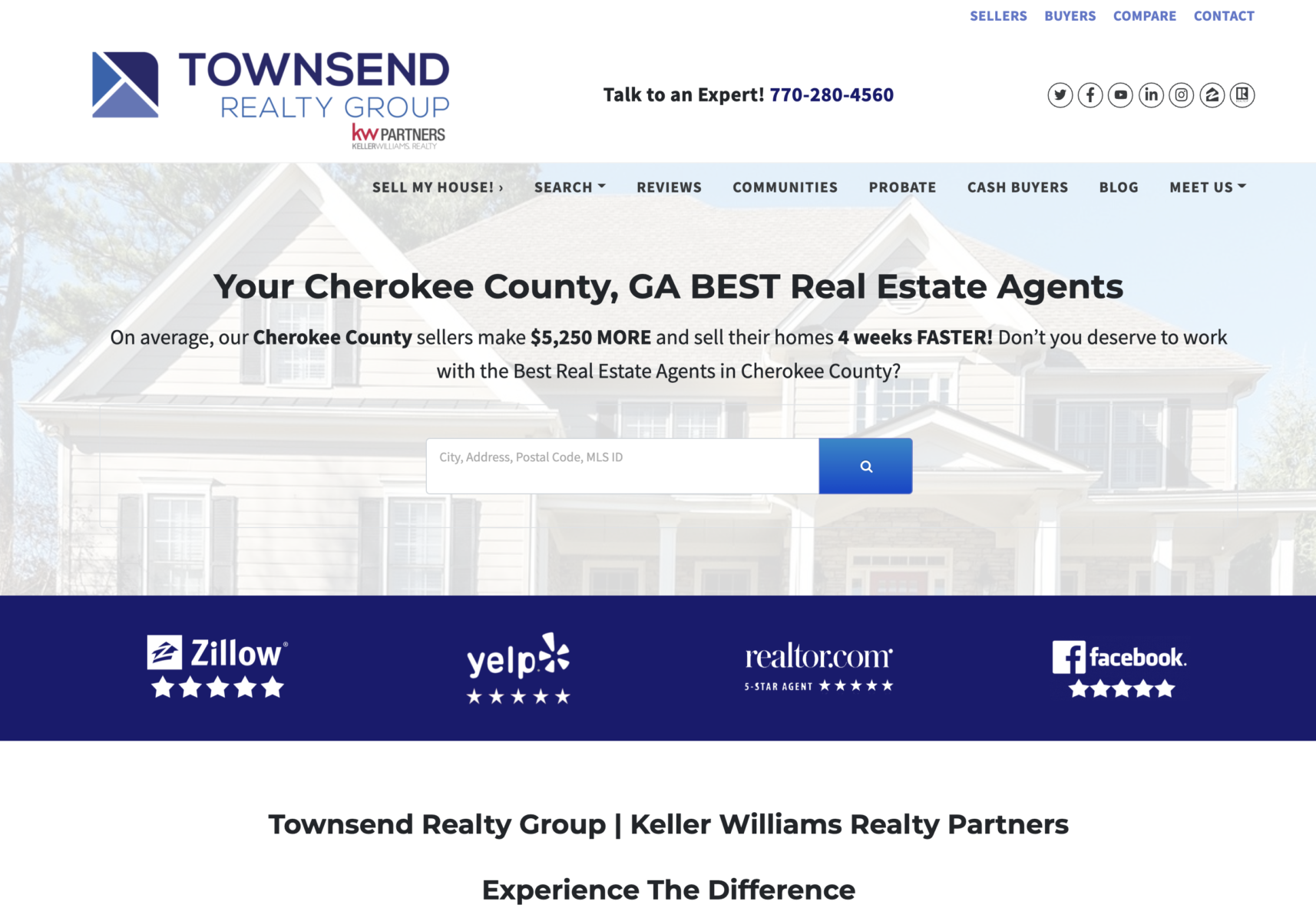
Take Townsend Realty Group as another example of a real estate agent website that caters to visitors who want to learn about the agent or browse through listings.
You’ll notice a “Meet Us” button below for visitors seeking to sell or buy a house.
Townsend Realty Group encourages listing browsers, house sellers, and agent vetters to go straight where they want.
The best thing your website can do to help visitors is… well, get out of the way.
People who visit your website usually know what they want to do. And the faster you let them do that, the better.
Like Sheerin Feizi from the previous example, Townsend also builds credibility and authority with their “Meet Us” page.
Again, the website is accomplishing just a couple of simple goals.
When people want to browse listings, let them.
When people want to learn why they should work with you, guide them.
Mostly from conversion tests we’ve run here at Carrot, but partly as inspiration from the best in the business, we create real estate agent websites that accomplish those simple goals.
The benefit is that you don’t have to pay thousands of dollars to design a website and don’t have to try to create one yourself.
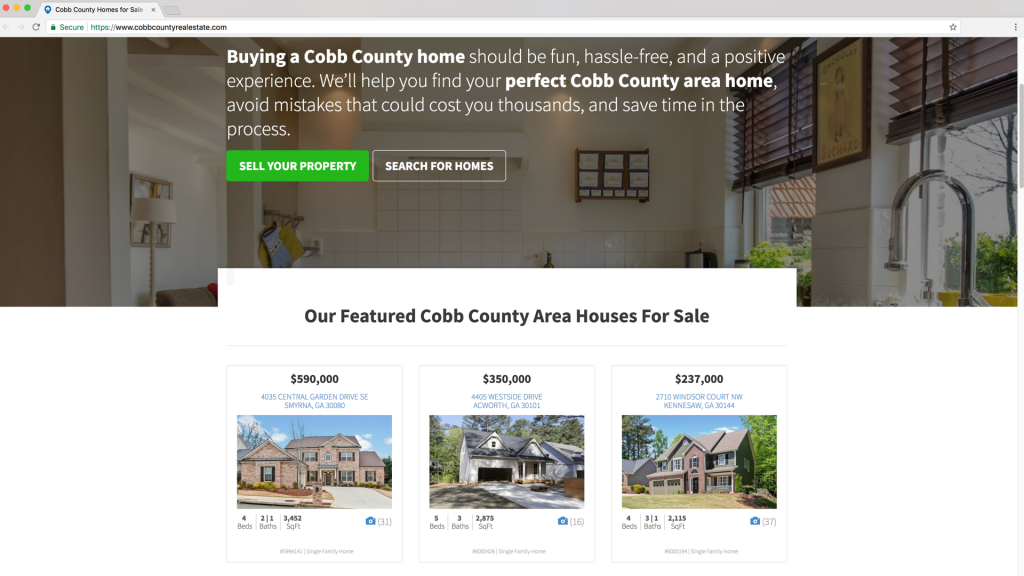
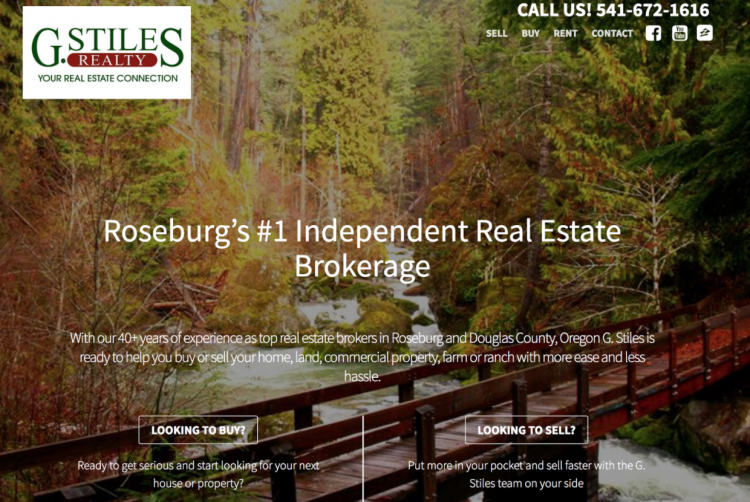
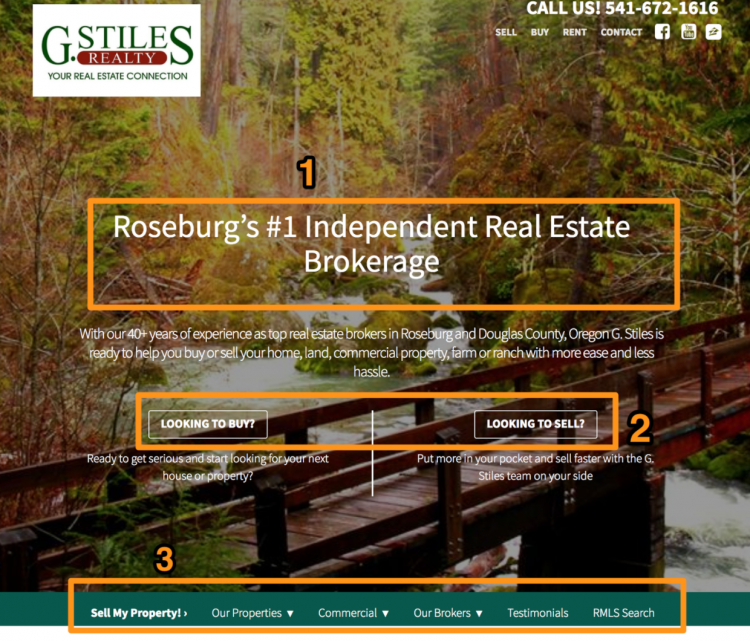
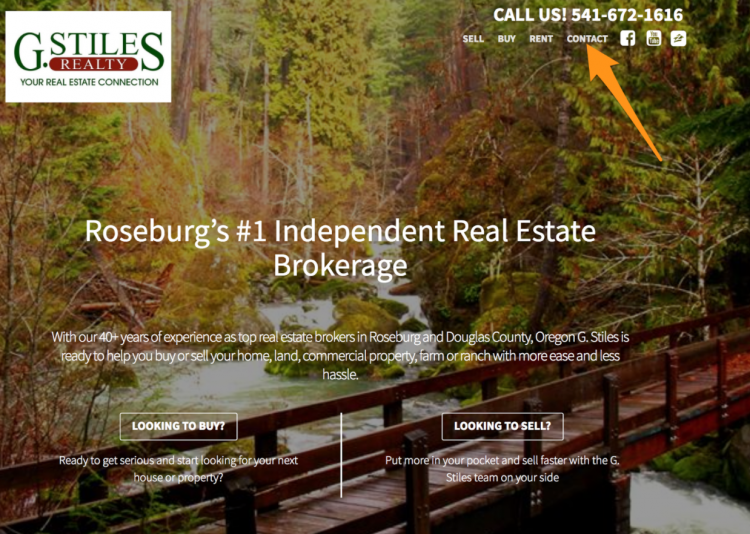
As you can see from the above image, this website follows a similar pattern to those we looked at earlier.
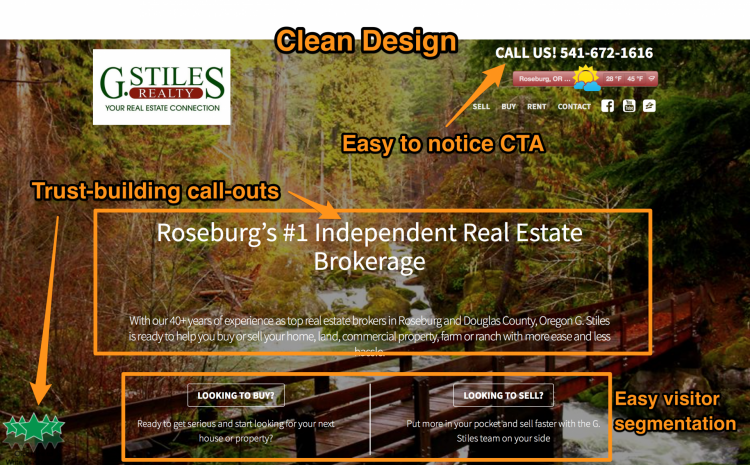
First, it builds rapport with visitors by saying, “Roseburg’s #1 Independent Real Estate Brokerage.”
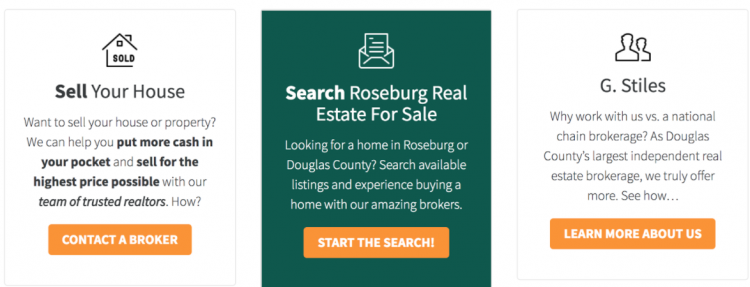
Then, it allows people to easily choose whether to buy, sell, or learn more about G.Stiles.
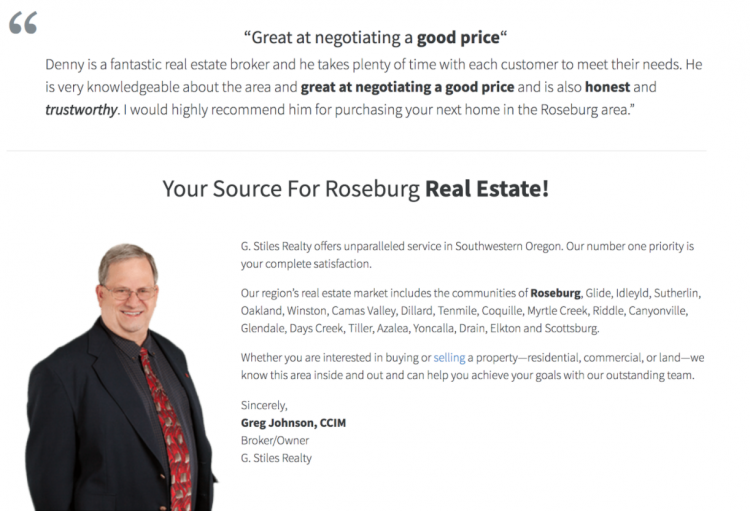
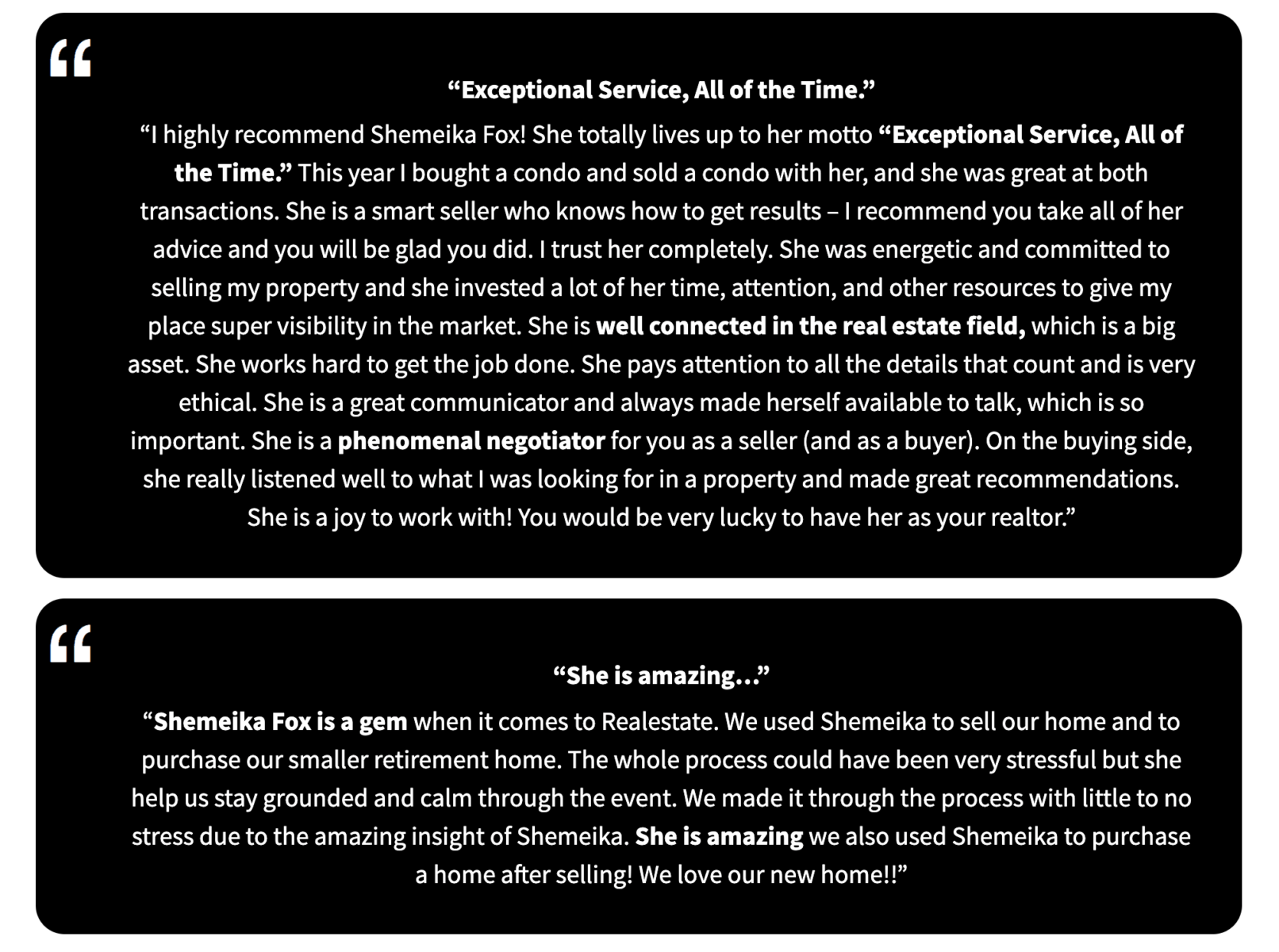
Finally, the page finishes with trust-building testimonials as proof that the visitor should work with G.Stiles and a bio that exudes professionalism and friendliness — two sought-after attributes of any real estate agent.
The point?
Your website needs to allow people to do two simple things:
Search listings.
Decide whether they trust you.
You can, of course, create your website.
Or… we can do it for you. The choice is yours, but we’d love to work with you if you think it fits.
7 Real Estate Agent Website Design Elements You Need To Dominate The Competition
Now, we’ll discuss seven things you can do — Carrot member or not — to help your website perform as you want.
1. Build Credibility The Moment Someone Lands On Your Website
Buying a house is one of the biggest decisions that people make in their life. People want to work with someone they can trust.
A study by Trulia revealed that people consider honesty and credibility among the most important factors when choosing a real estate agent to work with.
Here are three ways to immediately prove to visitors that you are trustworthy.
Video Content
Authentic Photos
Compelling Testimonials
Video Content
Nothing builds credibility quite like video.
Not only does it prove that there’s a real person behind the website, but it also is a remarkable way to engage new audiences.
Publish a video on your homepage that talks a bit about who you are and why people can trust you. Of course, don’t say, “This is why you should trust me.”
Instead, build rapport with your audience by talking about some of your accomplishments, why you love helping people, and how you got into the real estate industry in the first place.
What is your end goal? Make them feel good about choosing to work with you.
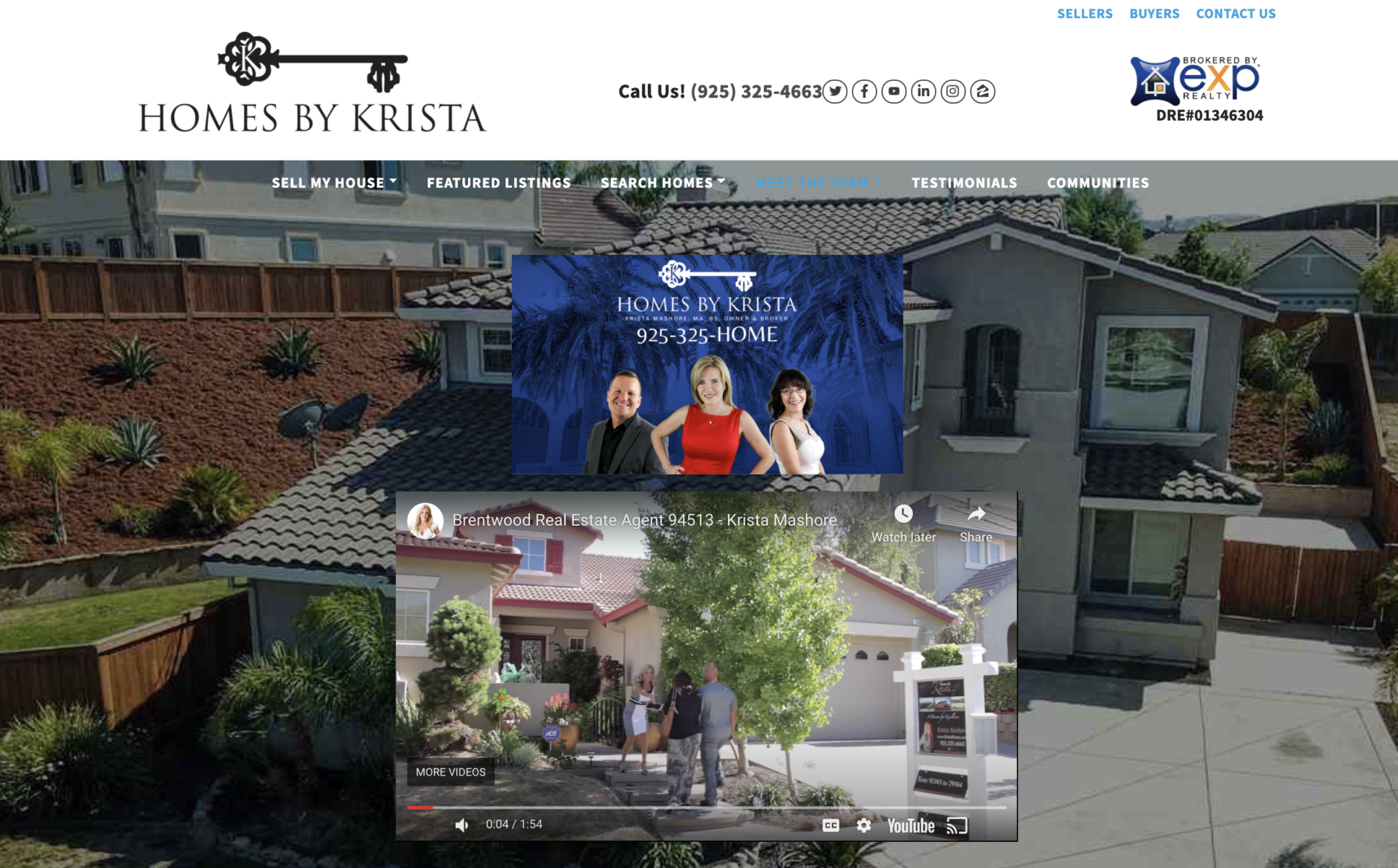
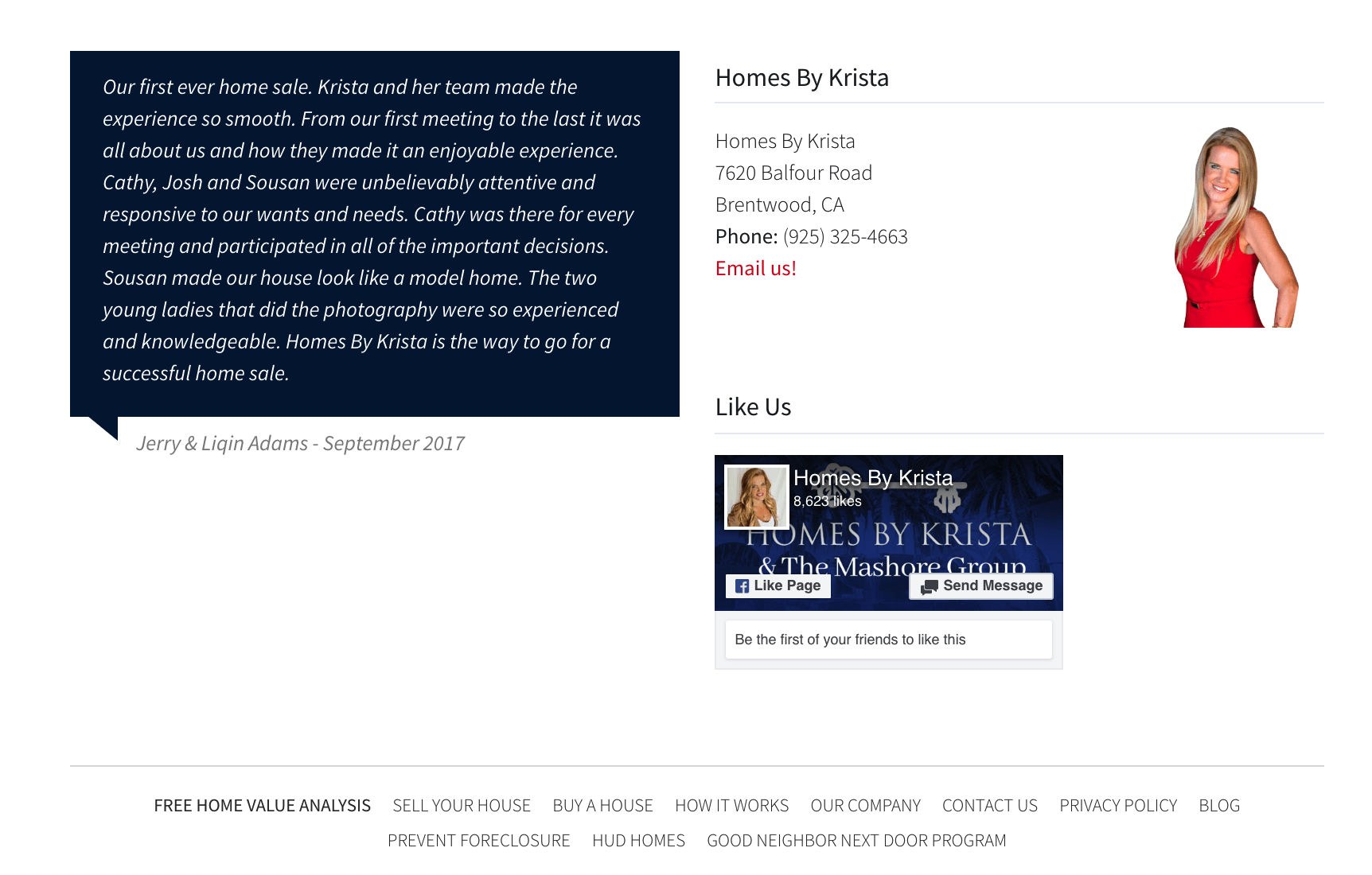
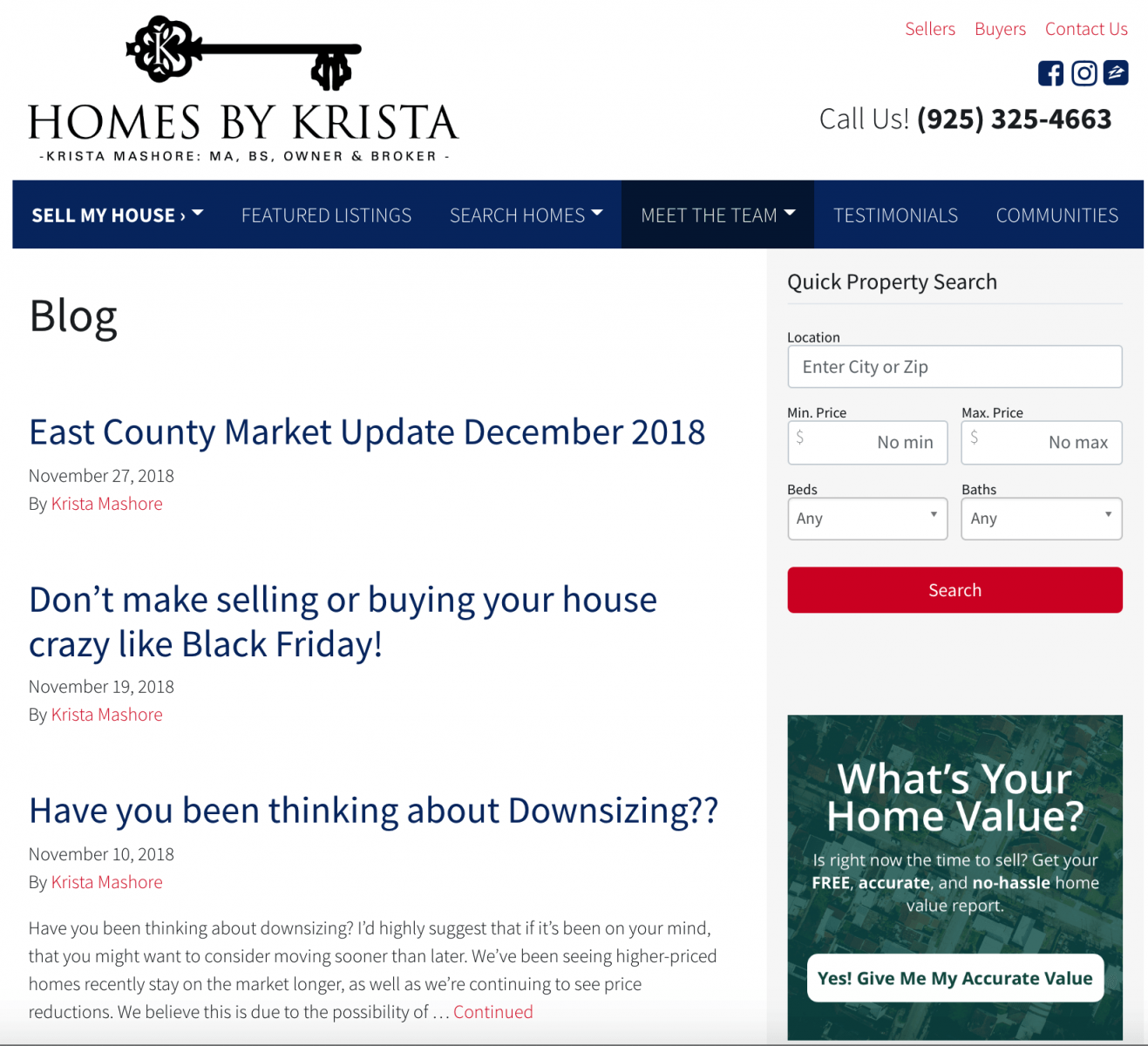
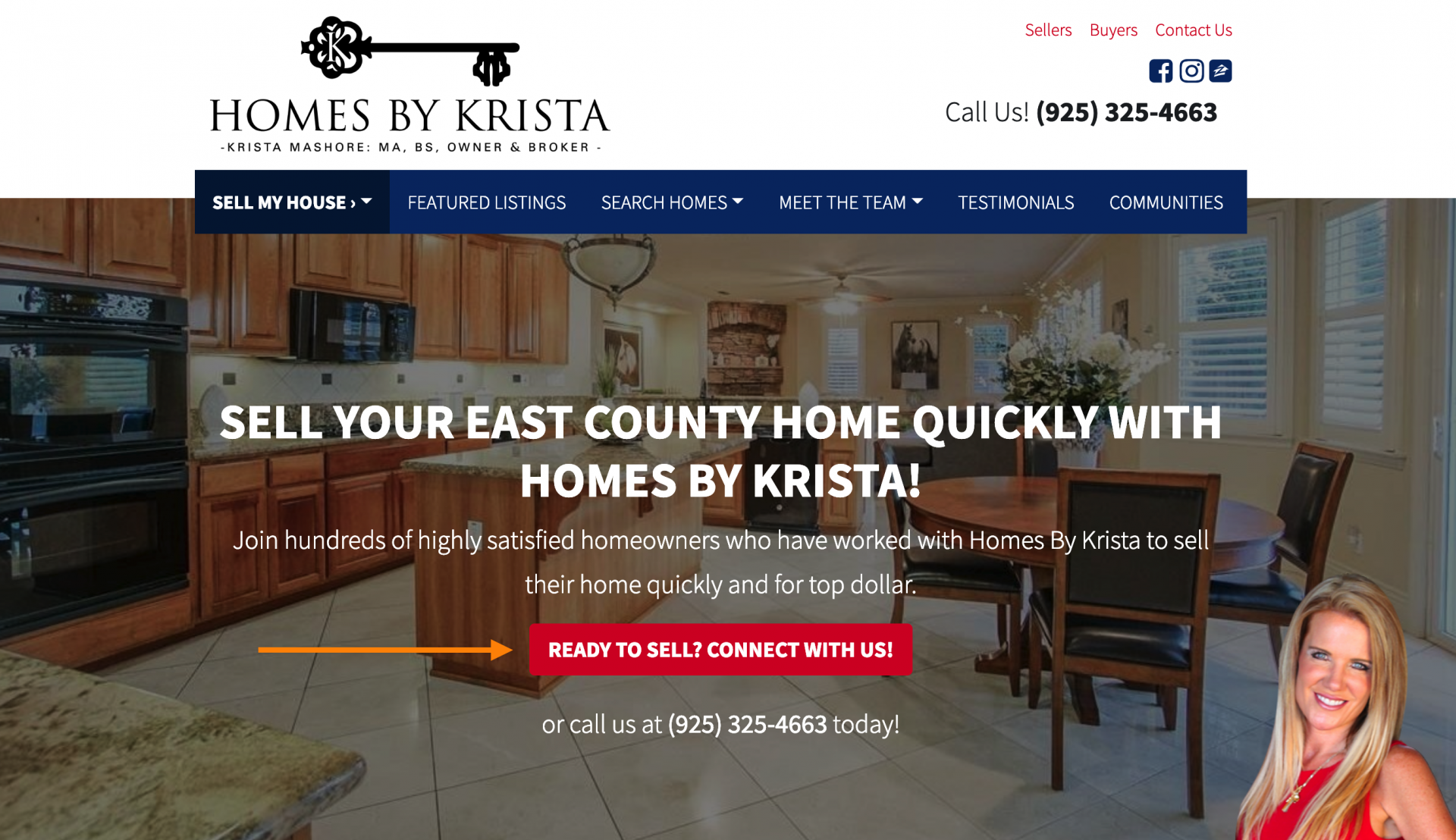
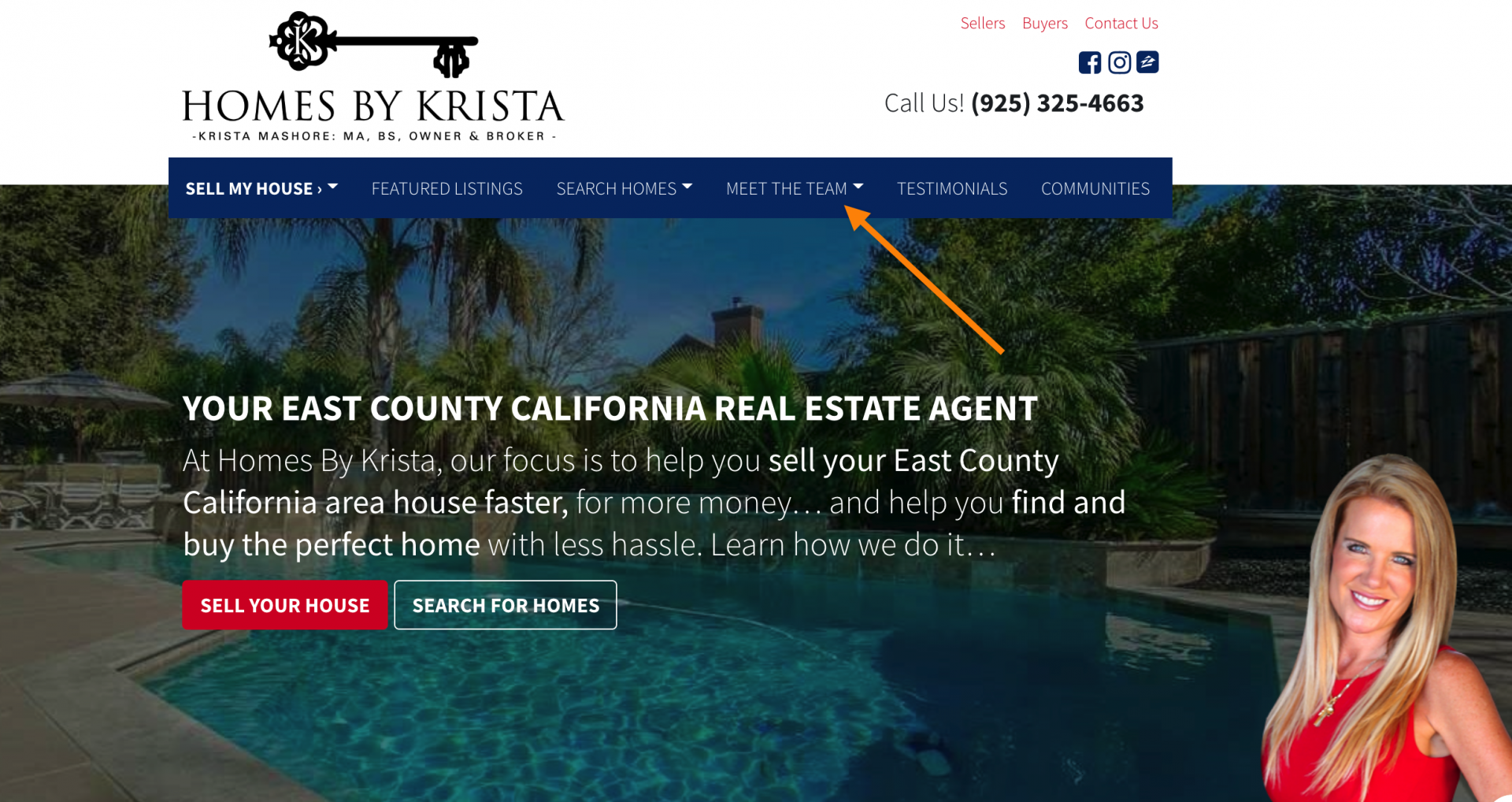
Homes By Krista — a real estate group in Brentwood, California — does this on their website.
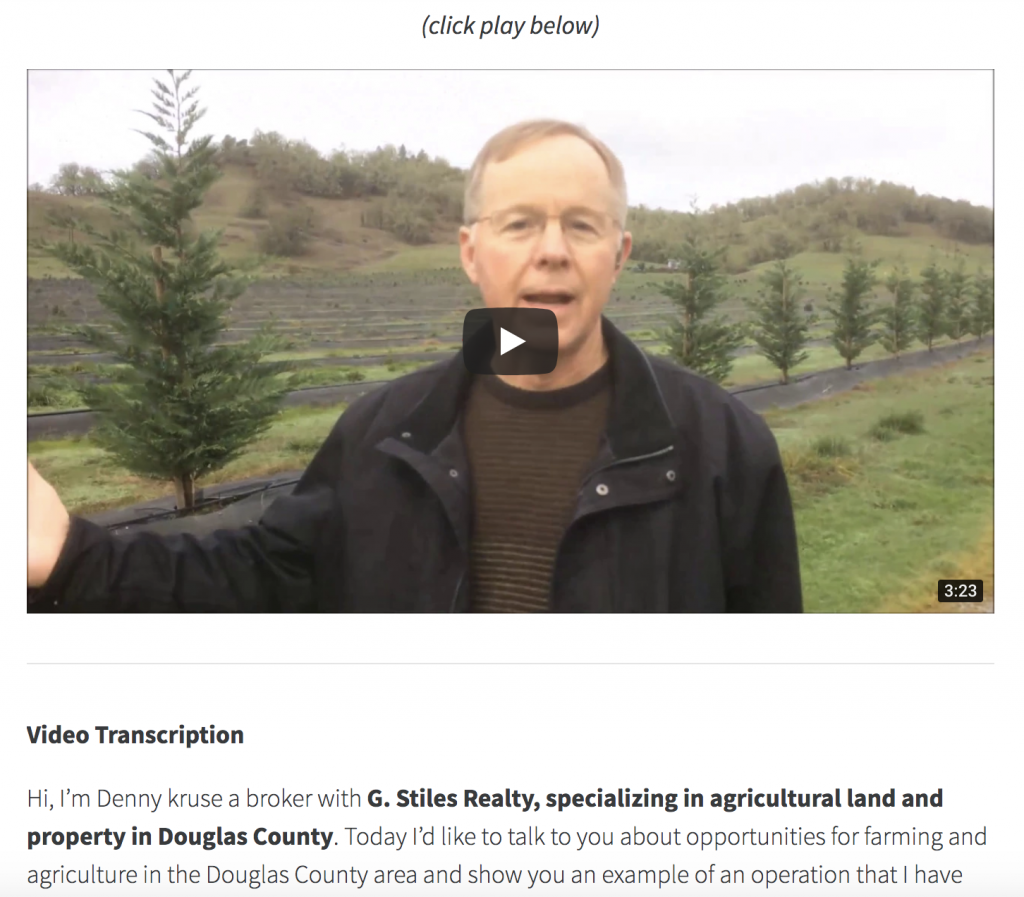
Here’s the actual video so that you can watch it for yourself.
Try to keep it under five minutes — people have terrible attention spans — and, ideally, make it as short as possible without losing quality.
You want to convince people you’re their area’s best real estate agent. But you want to do that as quickly as possible.
Authentic Photos
People don’t just love videos. They also love photos.
And, generally speaking, the more authentic the photos, the better.
What do I mean by authentic?
Well, authenticity comes in many different forms. You might, for example, publish a photo of yourself in the middle of the job. Or you might take a picture of a real customer signing real papers.
Those photos don’t just communicate that you know what you’re doing (which builds trust), but they communicate that you’re a hard worker and people like you.
Here’s an example of this from G.Stiles.
And another example. Here, G.Stiles puts their team mission over a personable photo of the people in the group.
Remember this: when taking photos, authenticity beats fakery every single time.
Of course, there’s a balance. You don’t want to freak people out with a photo of you just getting out of bed. But you do want to come across as friendly and professional. Above all, though, you want to come across as a human.
For that reason, avoid stock photos at all costs.
Compelling Testimonials
Before people work with you, they want to know that others have worked with you and been remarkably satisfied with your service.
That gives prospects the confidence they need to give you a call or opt-in to your online form.
Testimonials are the best way to give them that confidence.
As well as how Homes By Krista does it with a video testimonial…
If you’re looking for a real estate agent, you can trust to help you make one of the biggest decisions of your life; those testimonials work wonders for building credibility.
In effect, they say, “All these people love me. You will too.”
How, though, do you get great testimonials?
Well, here are six questions to ask your testimonials:
What obstacle would have prevented you from buying/selling your home?
What did you find as a result of working with you?
What specific feature did you like most about your service?
What are the three other benefits of the buying/selling process?
Would you recommend my real estate services to others? If so, why?
Is there anything you’d like to add?
Asking those questions will help you land remarkable testimonials.
However, consider including more than just the testimonial on your website.
You won’t always be able to find each of these elements, but when you can, add them.
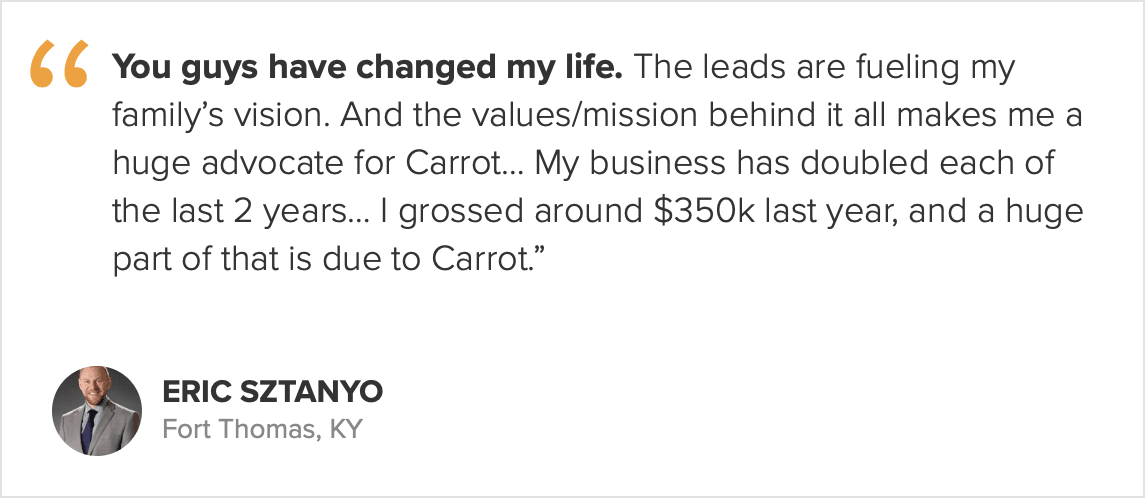
A picture of the person who gave the testimonial — Check Facebook or other social media platforms. Maybe even check your email if you conversed with the person in your inbox.
First and last name, whenever possible — Don’t do things like “Lucas J.” or “Samantha G.” if you can avoid it. And definitely, don’t just use first names.
The person’s profession — Add a quick one-line bio about who they are and what they do. Maybe even hyperlink this to their website to add another layer of realism.
For example, we have most of these elements on our website testimonials.
Now, you might be thinking to yourself,
People should just trust my testimonials without all of that extra effort.
Unfortunately, though, people are wary of trusting anything online. As you already know, there are a lot of liars in the digital space, and they ruin the game for the rest of us.
You must add extra elements (Image, bio, first and last name) to your testimonial to show people you are trustworthy.
2. Increase The Speed Of Your Website
You want to design a website that destroys the competition.
In terms of page speed, that means a couple of things.
First off, if your website is too slow, it’s easier (and faster) for visitors to exit your URL and go somewhere else.
You don’t want people to do that.
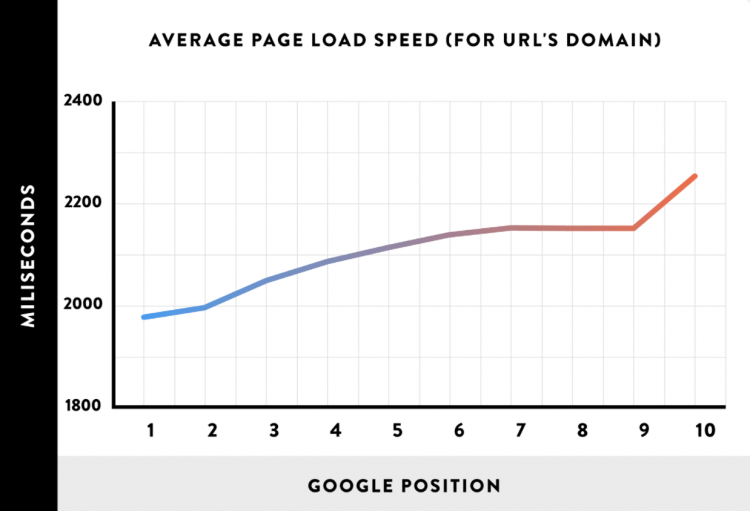
But there’s another problem with slow load speeds. It not only surges your website’s bounce rate but also hurts your Google rankings.
If you want to design your website, do these things to increase your load speed.
Optimize images.
Clean up code.
Use fewer plugins on your site.
Reduce the number of redirects you’re using.
Minimize HTTP requests.
Reduce server response time.
3. Use Real Estate Agent Website Builder With IDX
Once, prospective homebuyers had to jump around to different listings to browse through houses.
Or, they had to find a cohesive MLS website that delivered all the listings simultaneously.
However, Internet Data Exchange (IDX) is changing how homebuyers browse through listings.
Instead of jumping from website to website, visitors can view listings natively on your website with IDX. This further means that they don’t have to leave your URL to browse through houses.
The best part is that you don’t have to do anything to update these listings. With IDX, they update automatically.
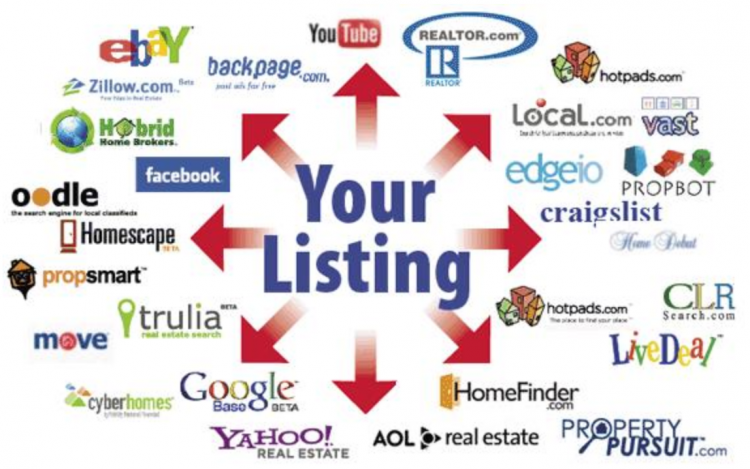
Of course, IDX integration is more of a maintenance strategy — since other real estate agent websites have it, you should too. Still, most people search for listings on Zillow or Realtor.com.
It encourages people to browse around your website’s listing options instead of going elsewhere to do so.
It gives you a way to encourage email list opt-ins. With IDX, you can offer email updates about recent listings relevant to their preferences.
It also allows you to choose properties to feature on your website easily. With a pool of automatically uploaded properties, you’re just a few clicks away from featuring ones you think will sell.
With IDX, you won’t only stay in line with the competition; you’ll get ahead by featuring remarkable properties, growing your email list, and encouraging people to browse your website instead of bouncing.
4. Leverage A Design That’s Built To Convert
When people land on your real estate website, you don’t just want them to browse, and you don’t just want them to trust you.
Here are two things you can do to build that website.
Mobile Optimization
The Buying Process
Mobile Optimization For Real Estate Agent Websites
The average American owns 3.6 internet-connected devices. And 36% of Americans have a desktop, tablet, or smartphone.
This means that people don’t just browse your website on their laptops; they do it on their phones.
Why is this important?
Because if your website doesn’t adapt to the device people use to browse, they will have difficulty navigating your website, get frustrated, and leave.
Over 60% of Carrot’s leads are monthly from mobile devices.
This is why we’re so intentional about making our member’s websites mobile-friendly.
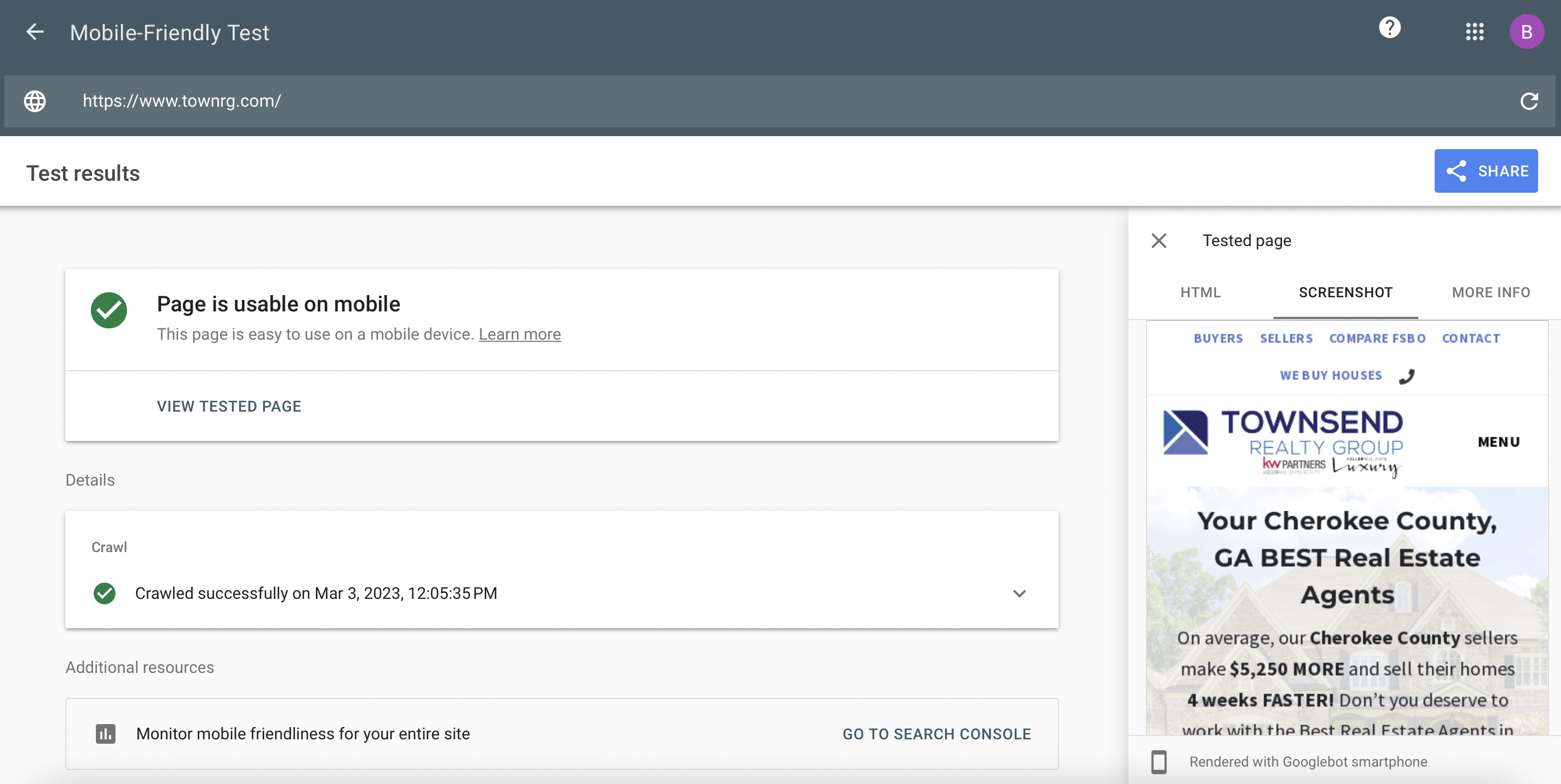
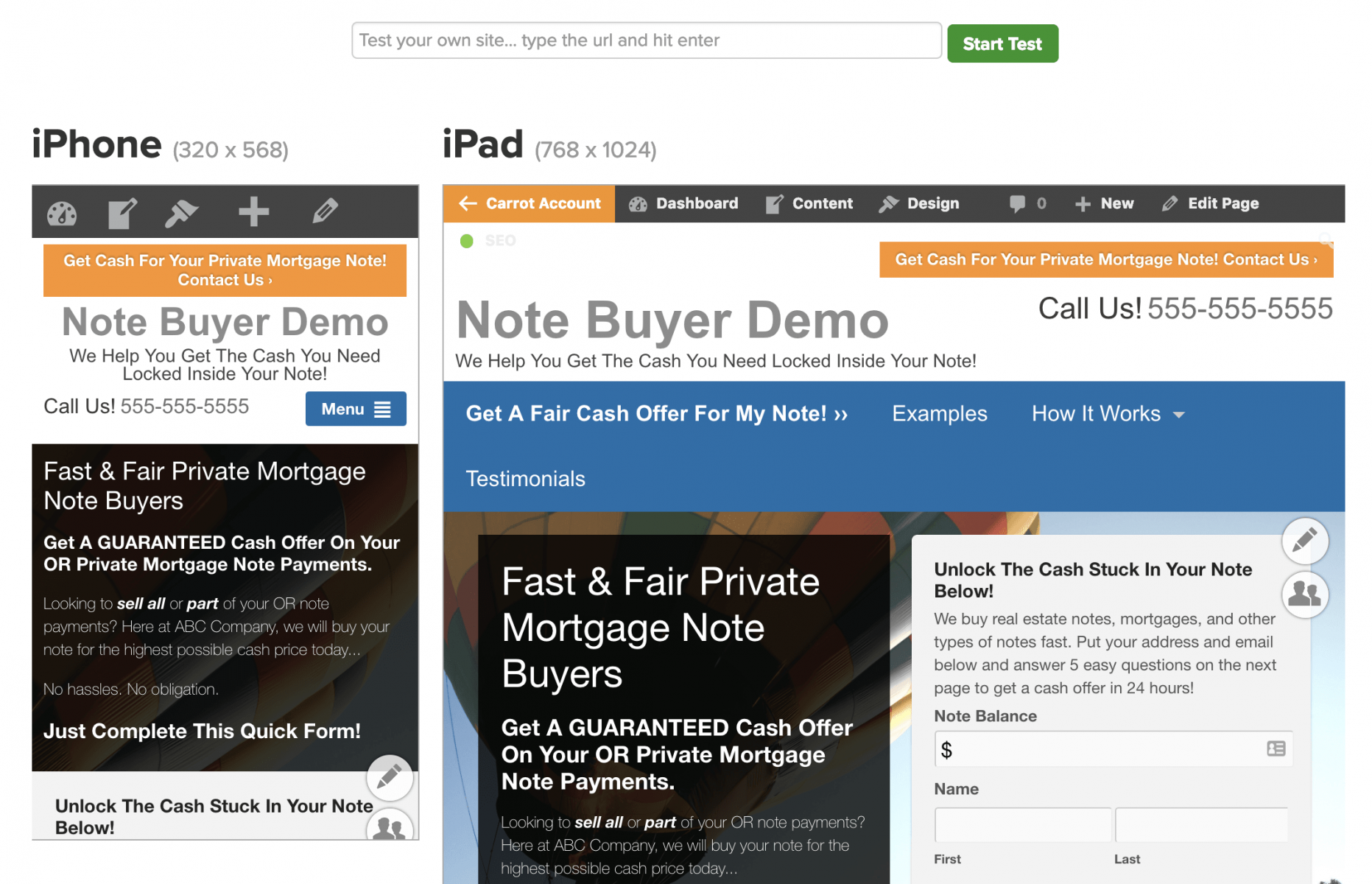
Just paste your website and click “Test URL” and you’ll see the results and mobile screenshot on the right.
If your website isn’t mobile responsive, it needs to be.
The Buying Process
When someone visits your website, where do they look first?
It’s an important question to ask and a difficult question to answer. Where people look can impact how many leads you generate and how many of those leads you convert.
Of course, everyone will look in slightly different places. But, by and large, we here at Carrot have found a system to the madness.
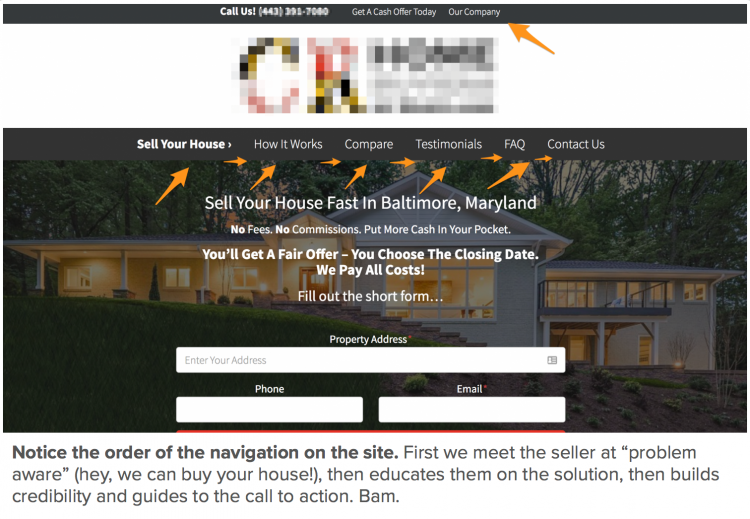
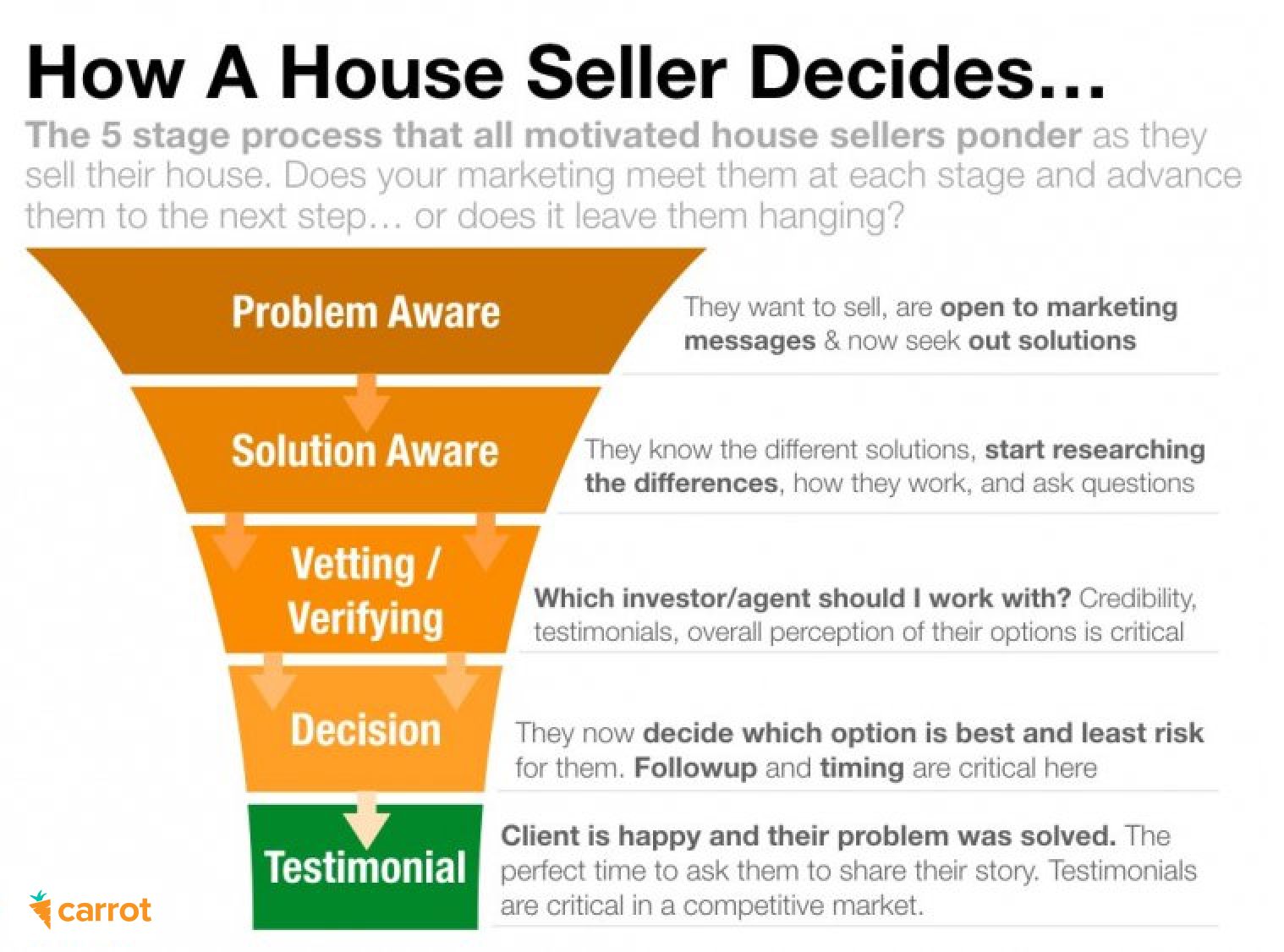
In fact, for our real estate investor websites, we found that people go through these stages.
Problem aware
Solution aware
Vetting/verifying
Decision
Testimonial
And when people visit investor websites, they either want to sell their house as fast as possible or learn about the investor before working with them.
Which is exactly in line with how we’ve designed our real estate agent websites.
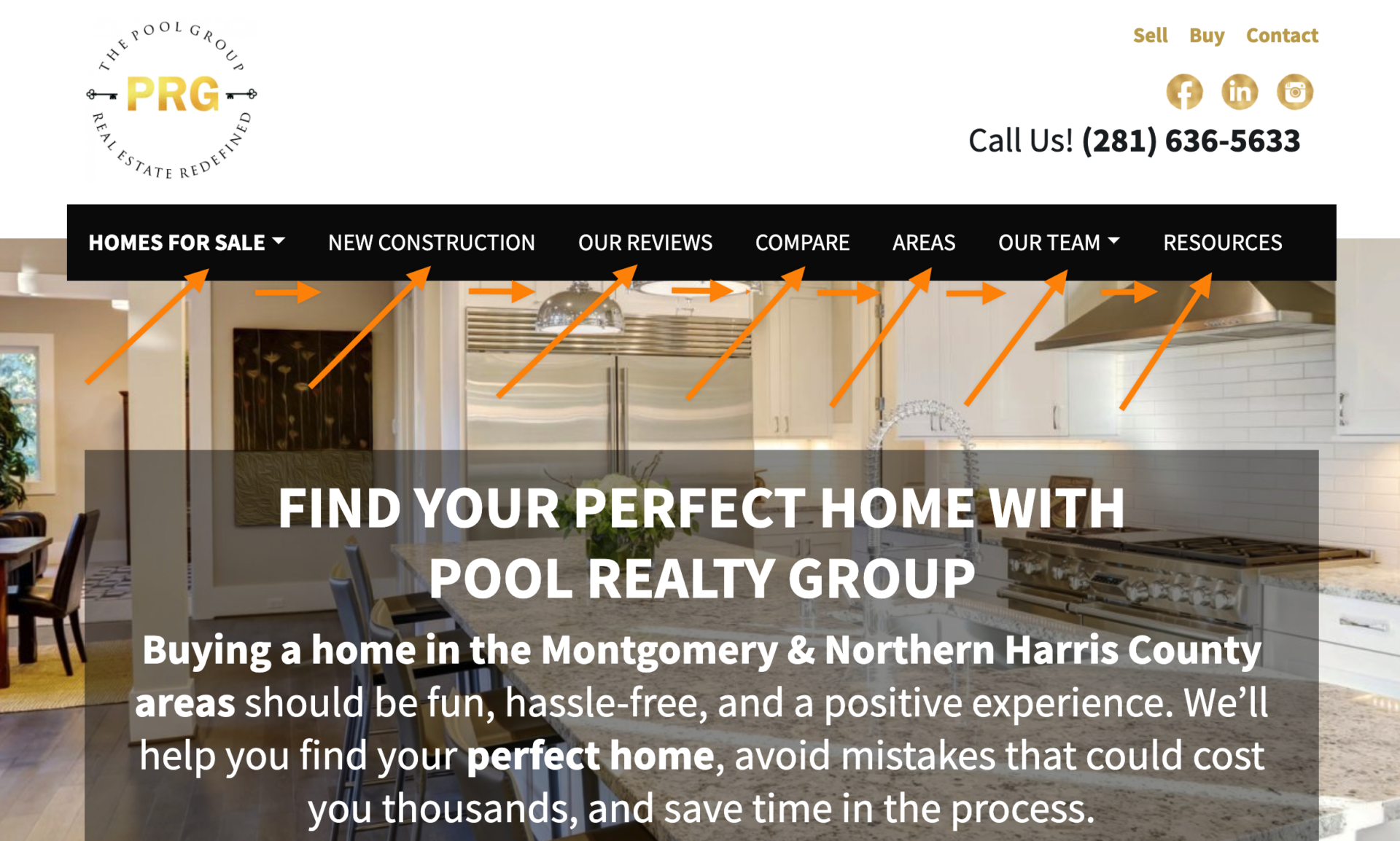
As you can see in the screenshot below, we help the eye travel from the most important CTA — “Homes For Sale” — to easy ways to learn more about the agent and what they offer — “New Construction,” “Our Reviews,” “Compare,” “Areas,” “Our Team,” and “Resources.”
And that system isn’t just hot air and mirrors. Instead, it’s based on vigorous conversion and heatmap testing at Carrot.
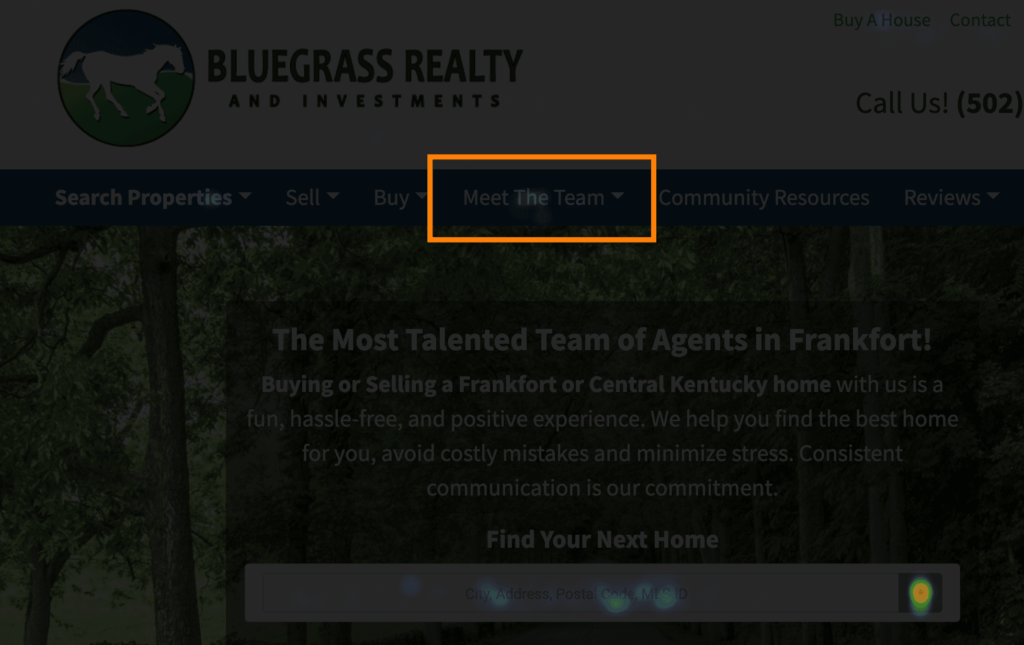
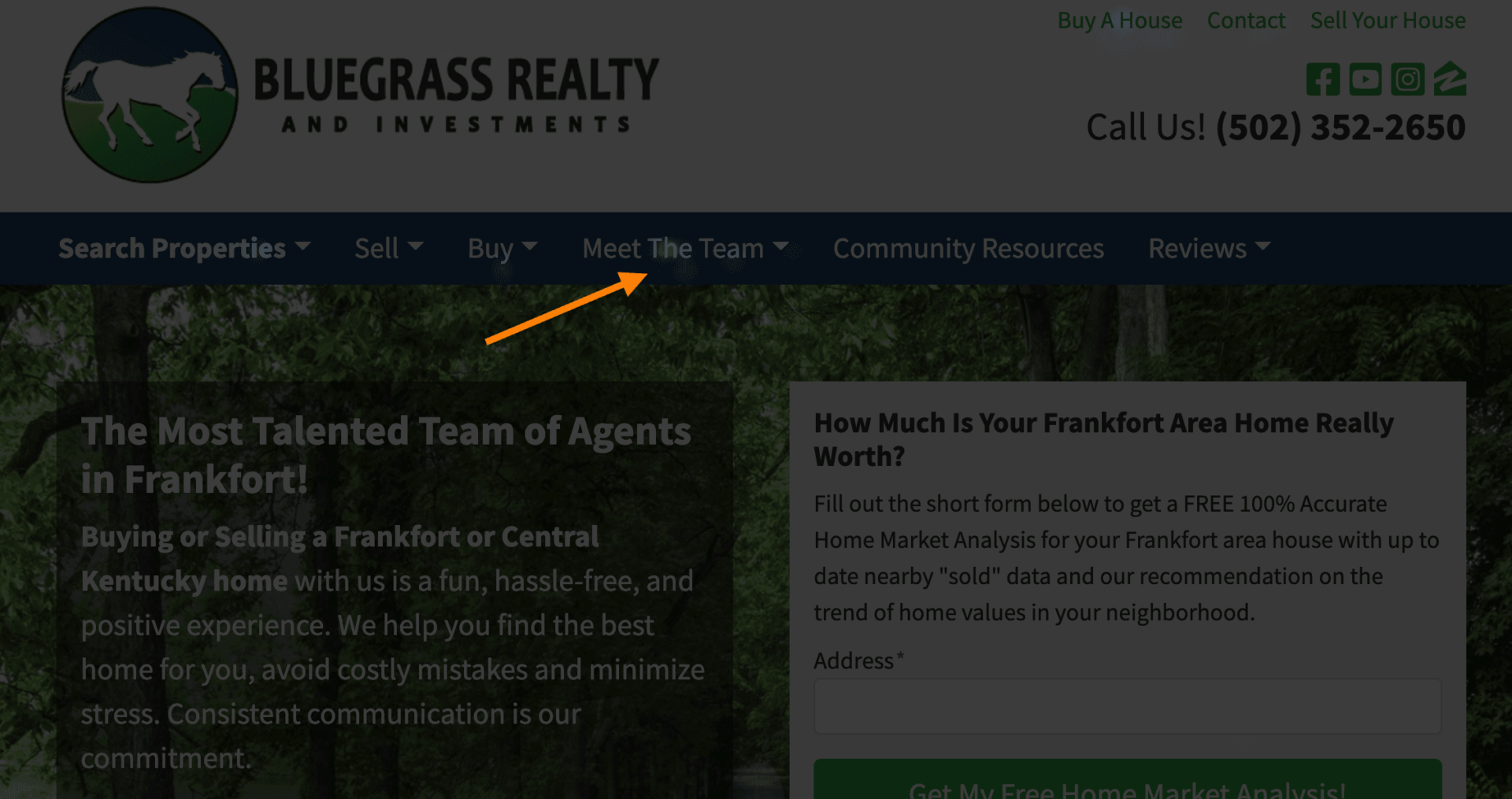
For instance, here’s proof that the “Meet the Team” section is important.
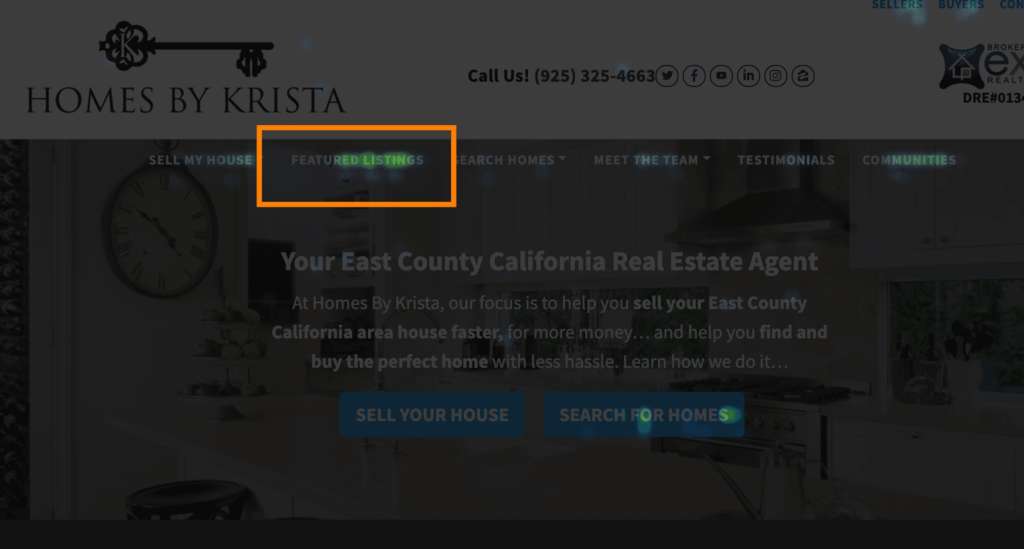
And similar proof about the “Featured Listings” tab.
Then, we cater to the immediate needs of the visitor.
And finally, we allow people to navigate where they want to go easily.
You’re welcome to use the same system on your website.
Remember, since it’s your website, it’s your job to guide the visitor. Think about it like having a guest over to your house. You wouldn’t invite someone into your house without telling them where to hang their jacket, take a seat, or get a drink of water.
Your website should follow similar rules.
When someone visits, show them where to go to do what they want. Then, more people will convert, and fewer people will bounce.
5. Consider Using This Real Estate Agent Website Template
Knowing where to start when designing your real estate agent website can be a real pain.
Often, having a tried-and-true template to work from isn’t just easier but more cost-effective. Therefore, I will walk you through how our templates at Carrot flow.
You are, of course, welcome to design your website that follows a similar flow. Otherwise, we’d love to work with you.
When someone first lands on your website, they should see a quick explanation about what you do and why you’re awesome. At the top of every real estate agent Carrot website, we encourage putting words to those two things.
Then, we give you a place for featured properties so that people who want to look at houses easily can.
From there, the rest of the homepage should work to build credibility around your real estate business. This is why our Carrot members use testimonials…
And descriptions like this…
Put more, your homepage should flow similarly to this:
Briefly tell people what you do and why you’re awesome.
Give them a simple method for taking action.
Explain in more detail why you’re awesome (testimonials).
Finish with a CTA.
6. Streamline The Real Estate Lead Generation Process
Yes. Your website needs to convert.
But your website’s management system should allow you to streamline the lead generation and follow-up process easily. Here are two ways that you can make that happen.
Use Notifications
The back end of your website needs a system to send notifications when you generate a lead.
After all, the faster you follow up with prospects, the better.
Consider that salespeople who contact a prospect within one hour of generating the lead are seven times more likely to have a meaningful conversation with the prospect.
Sadly, only 37% of companies respond within an hour. This is probably why 8% of salespeople land 80% of the deals.
Don’t be in that 63%.
With notifications, you can follow up within the hour and give yourself the best chances of turning a lead into a deal.
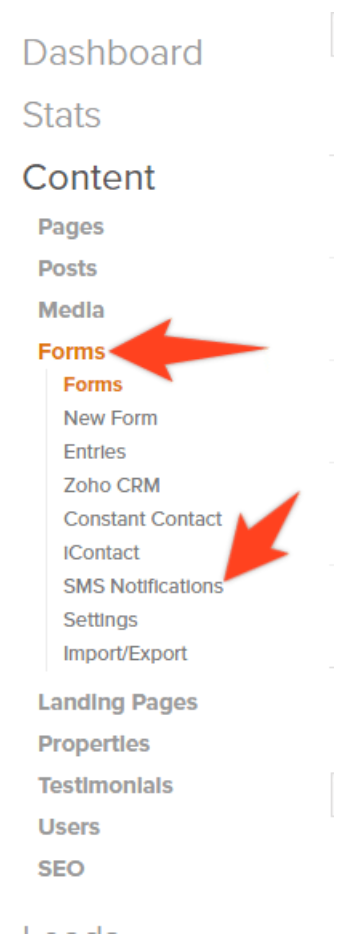
If you’re a Carrot member, you can go to your website dashboard, click “Forms” and then “SMS Notifications.”
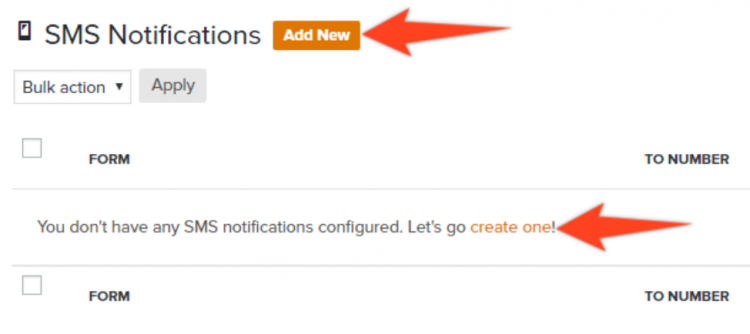
Then click “Add New.”
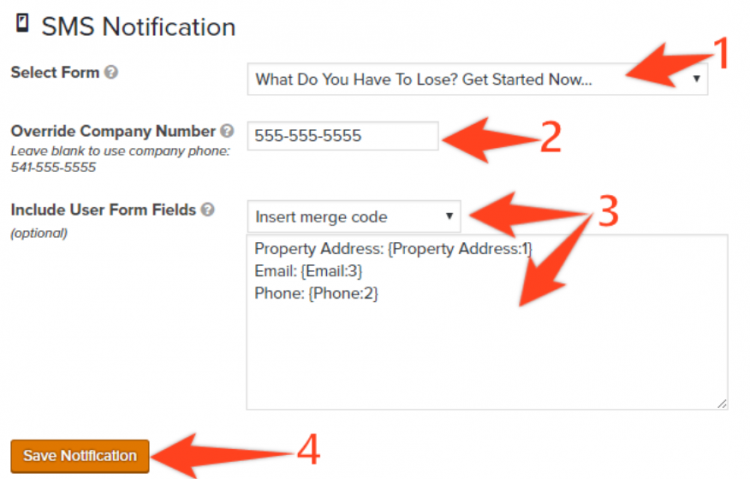
Finally, select a form, enter your phone number, and choose which information you want the notification system to send you when you receive a new lead.
You don’t have to check your website for leads constantly. Instead, the software will notify you when you generate a lead, and you can contact them immediately.
Which means you have a better chance of landing the deal.
Create Genuinely Helpful Content
In the real estate world today, many people are putting out a lot of content.
But you don’t want to be another blind content machine. Instead, you want to create content that helps people make meaningful decisions.
Why?
Because creating genuinely helpful content builds rapport with the people who visit your website. If you help them, they’ll probably want to work with you when the time is right.
Remember, you’re trying to show your audience you know your stuff. But you don’t want to say so outright. You want to build a relationship with your audience and prove they can trust you by creating content that centers around their concerns.
Consider content like this, for instance.
It might sound counterintuitive, but the more you help your audience (genuinely), the more they’ll trust you and the more willing they will work with you in the future.
Your content needs to build a trusting relationship between yourself and your prospects. With that, you’ll generate more leads than you would otherwise.
7. Design A Real Estate Landing Page For Each Location
Here’s what you don’t want to happen. You don’t want people to navigate your website and leave because they don’t think you manage deals in a specific location… when you do.
Therefore, your website needs multiple landing pages to dominate the competition if you work in multiple locations.
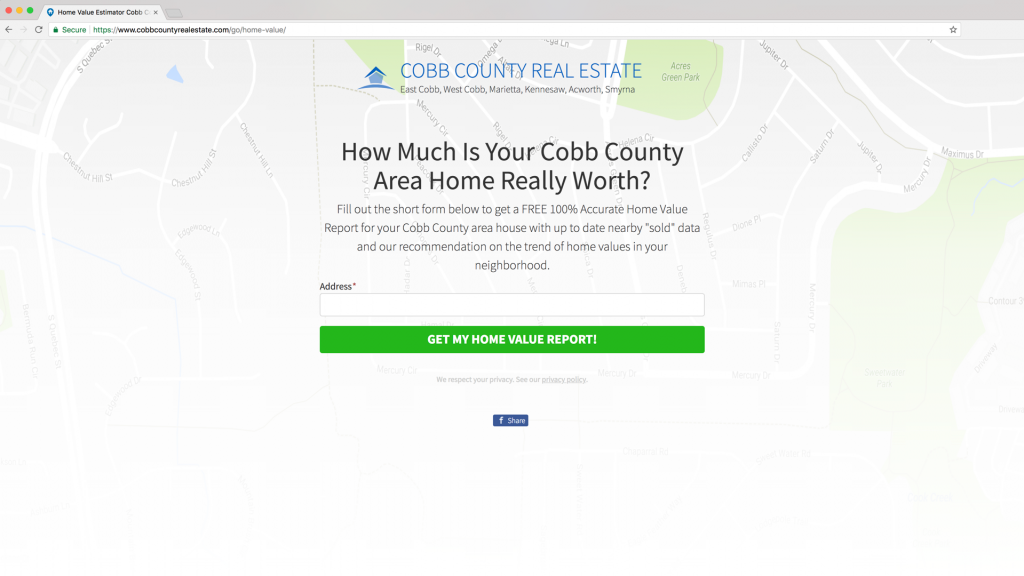
Usually, when people search for real estate agents, they search based on their location, such as buying a house in Acworth, Georgia.
And if you want to rank on that page, you need a dedicated landing page for each city you operate in.
One location page might look like this:
This will help your SEO results — making your real estate website rank for high-commitment searches. But it will also ensure that when someone searches and finds your website, they won’t leave because they’re confused about where you help buy and sell houses.
At Carrot, we offer our customers an easy location landing page feature.
We allow our customers to quickly create multiple landing pages that look identical, except for the location they advertise.
This ensures that you never miss out on a lead for such a silly reason as not marketing the correct location to each prospect.
Conclusion
In reality, 20% of real estate agents do 80% of the business.
This also means that 80% of real estate agents do just 20% of the business.
You want to land in the former category. But to do that, you will need a website that drives leads, converts visitors, outranks the competition, loads quickly with IDX integration and has location-based landing pages.
At Carrot, we help thousands of investors and agents generate leads and build their businesses monthly.
And we love it.
If you want to focus on building your business and leave website design up to us, consider working with us.
If you want to design your website, the same rules apply. Use this as your guide to creating a website that ranks in Google, drives passive traffic, and generates leads.
The best real estate websites for agents offer the ability to build lead-generating consistency, financial predictability, & growth-hacking momentum for your real estate business.
We’ve seen countless Agents use websites to boost their branding and credibility, increase website traffic, and capture qualified leads.
You might be looking for a real estate website provider, or could be a current Carrot member who’s exploring ways to use the platform, I reviewed some of the best real estate agent websites, some powered by Carrot, and found 10 noteworthy trends that can increase your online lead generation.
And keeping up with those massive changes can be difficult. In today’s real estate world, you don’t just need a website, you need one of the best websites.
Since all of your competition is online, just being online isn’t enough.
You need to stand apart from the hundreds of thousands of results that Google generates with any given search and you need to have a website that pulls leads and converts visitors.
Of course, that’s easier said than done.
Here they are…
10 Things The Best Real Estate Agent Websites Have in Common
The reason is simple. If people don’t have to leave your website to view listings, they will spend more time on your domain. This means that when they find a house they love, they’ll contact you instead of the competition (because they’re on your website already).
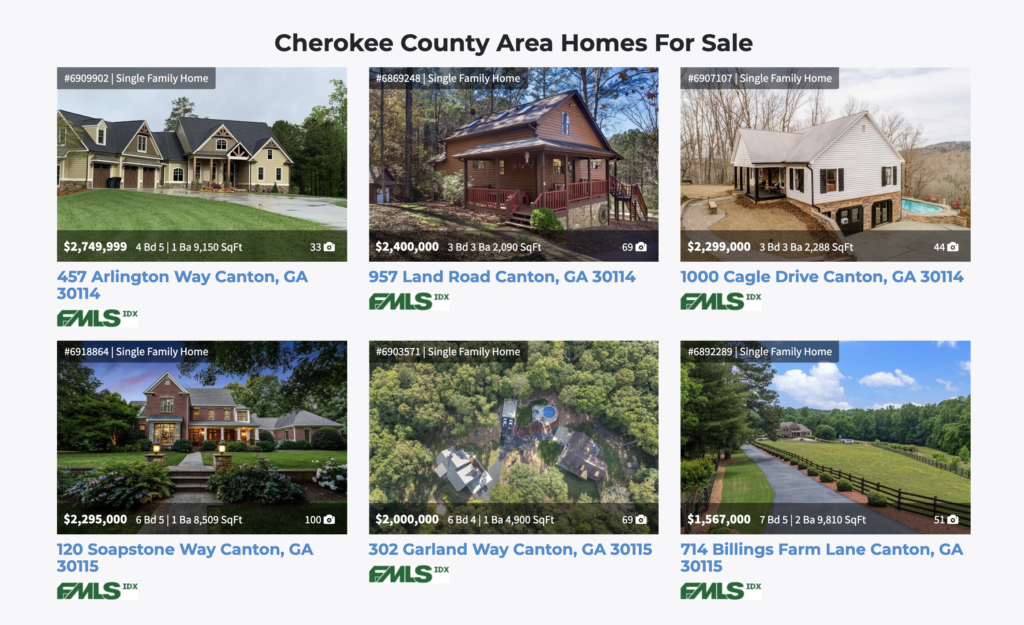
This is what IDX looks like in action on one of our Carrot members’ websites.
Simple and informative. Townsend Realty Group uses a real estate website designed by the Carrot team. Their website showcases the company’s well-designed logo, along with several engaging property images from the company’s catalog of listings via IDX.
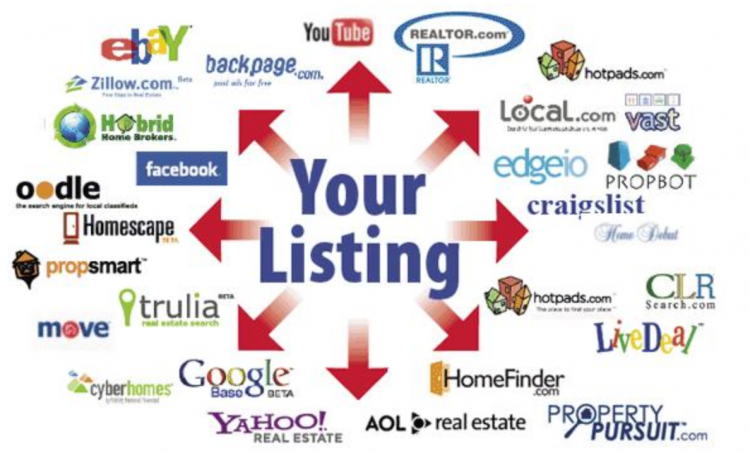
With IDX, visitors can search for houses natively on your website rather than having to leave and go to Zillow or Realtor.com.
And the more time people spend on your website, getting to know you and your business, the better they’ll remember you when they’re reading to buy a house.
However, no matter how good the IDX on your real estate website, people still go to third-party listing websites at some point.
Zillow, for example, has 160 million monthly users. 50% of visitors to Zillow are planning to buy or sell a home. And there are even two million real estate professionals listed on Zillow.
You can’t compete with that.
Still, though, IDX is worth having because some people will stay on your website to browse listings.
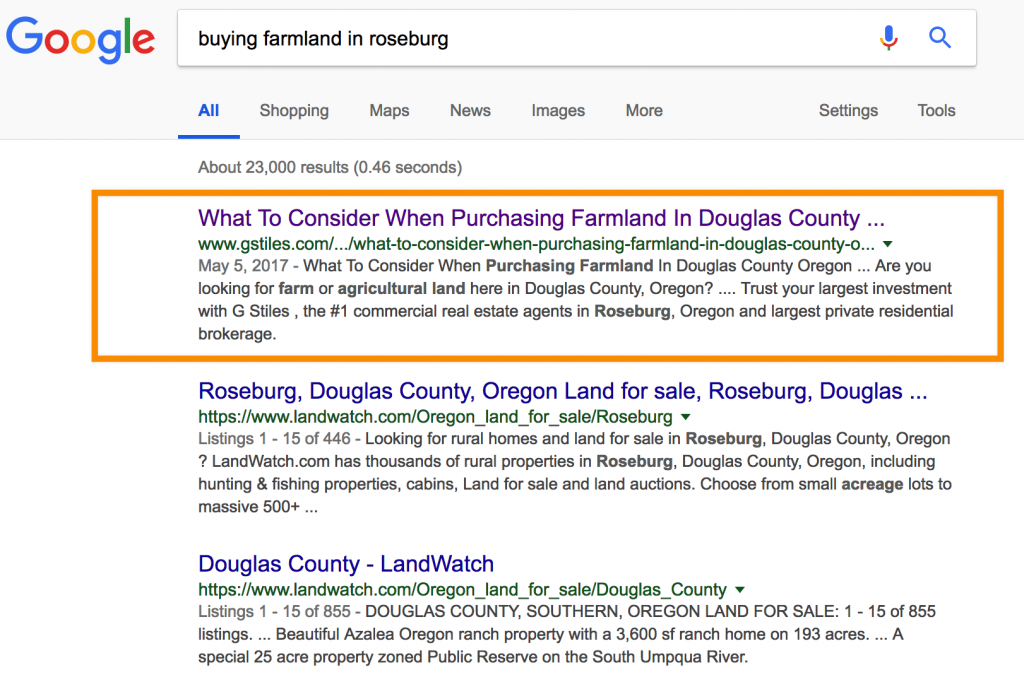
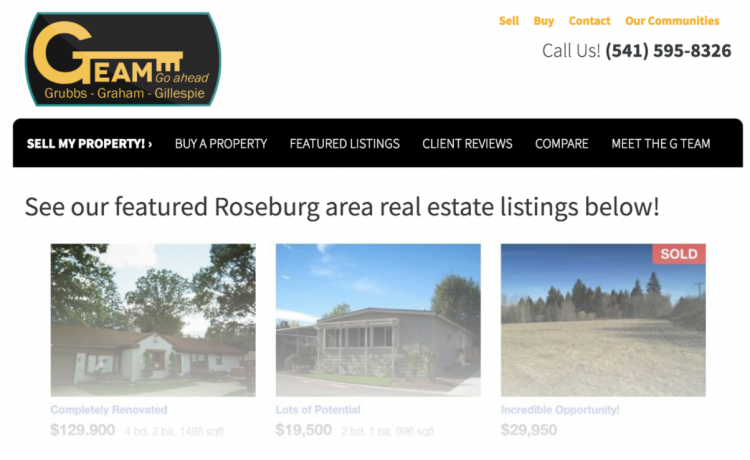
The G Team are active agents in Roseburg, Oregon. They offer innovative solutions to address their audiences. Rather than only having bulk listings and content for their properties, the G Team has created specific pages for their niche audiences.
Here is an example of how they target North Umpqua River Homes with a specific page as well as specific content.
The G Team offers another reason that you should consider using IDX.
Namely, because it allows you to easily choose featured properties for your front page.
With IDX, you don’t just give visitors the ability to search your website for homes, you create a simple system for featuring homes that you think will sell quickly and with a high profit margin.
All you have to do is go to the pool of IDX-generated listings and select the ones you want to feature.
And as you probably know, no home sells better than a featured home.
2. High-quality Pictures And Videos
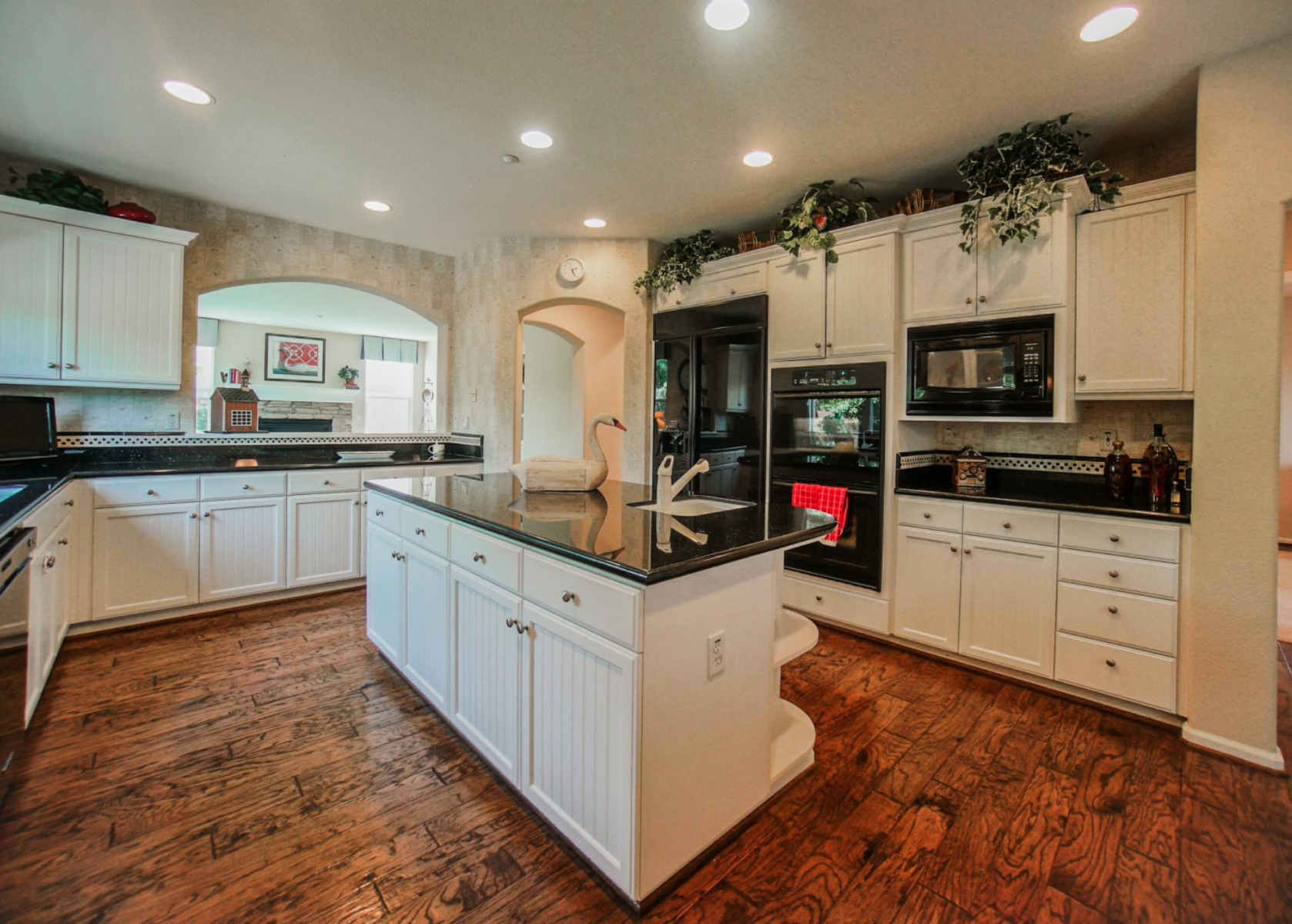
As I looked through some of the top real estate agent websites on the Internet, I couldn’t help but notice that each had stunning visuals.
As it turns out, real estate website design and professional photography are a match made in heaven.
If you want people to buy a house, then you have to make it look good.
And one of the best ways to do that is by using remarkable videos and photos for your house listings.
In fact, according to one study, listings with professional photographs saw 139% more clicks and sold for anywhere from $1,000 to $100,000 more than expected.
Really, that’s no surprise.
When a house looks beautiful, people want to buy it. Homebuyers spend 60% of their time looking at listing photos and homes with high-quality photos receive a 47% larger asking price per square foot than homes without high-quality photos.
Even if you pay a photographer $500 or $1,000 to take photos of the house, that investment is well worth it.
3. Compelling House Descriptions
Above all, you’re a salesperson.
Your job is to sell houses to people who want to buy a home in your area. And you want them to buy from you whether your relationship started offline… or online.
For that reason, the top real estate agent websites have remarkable, emotionally charged, enthralling descriptions of properties.
They don’t just put something like, “Hey. Here’s a house for sale. It’s nice. Buy it.”
Instead, they use powerful language and compelling… well, sales copy.
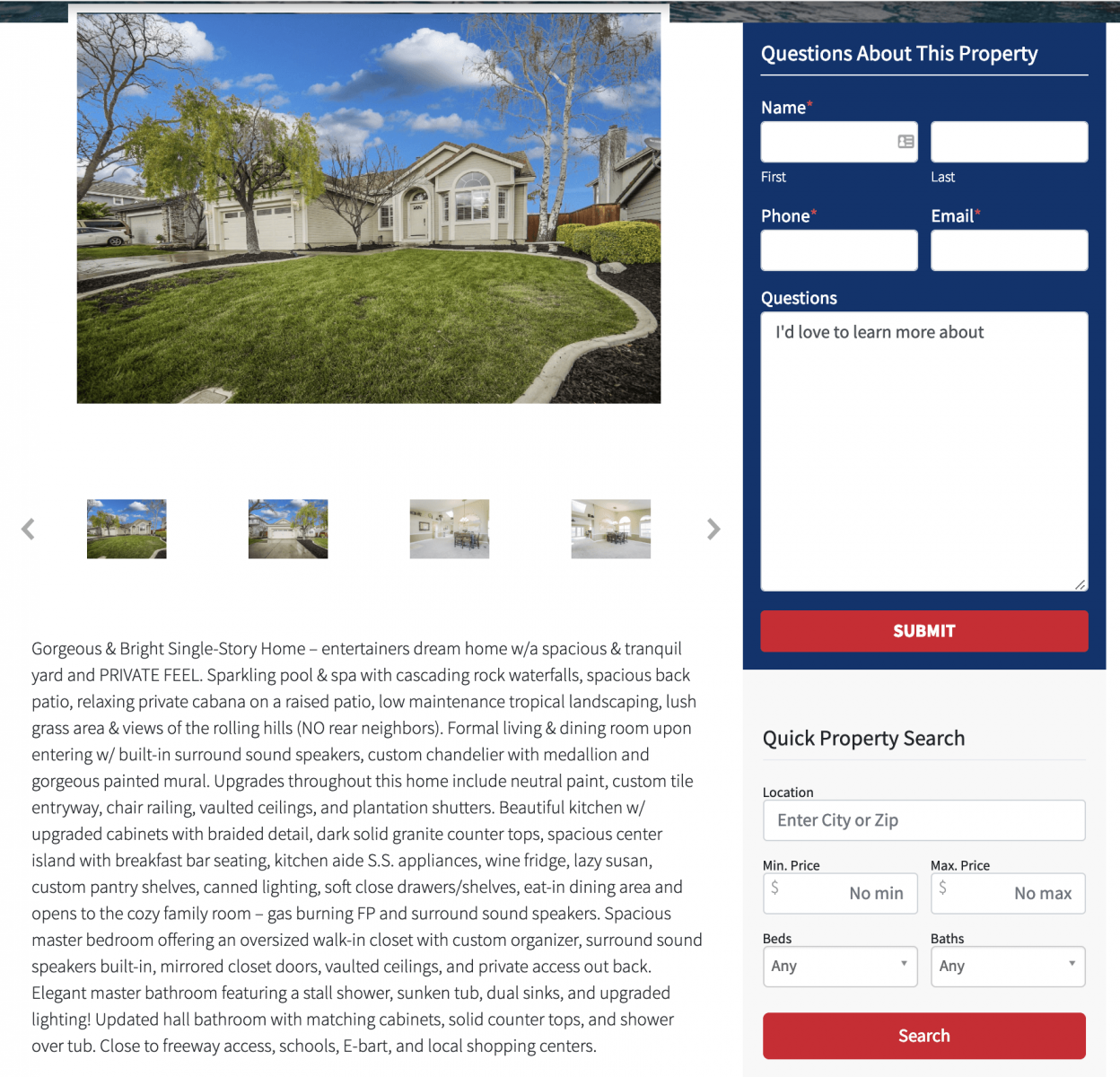
For the first example, I’ll use one of Carrot’s Concierge real estate website service websites, Krista Mashore and her team have built an authoritative website for home buyers and sellers in and around Brentwood, California. Her website is full of useful local content, including an informational blog and community pages for each of the areas in her market.
Krista uses a very detailed description of her properties…
See how the description evokes an emotional response with words and phrases like “PRIVATE FEEL,” “low maintenance tropical landscaping,” and “NO rear neighbors”?
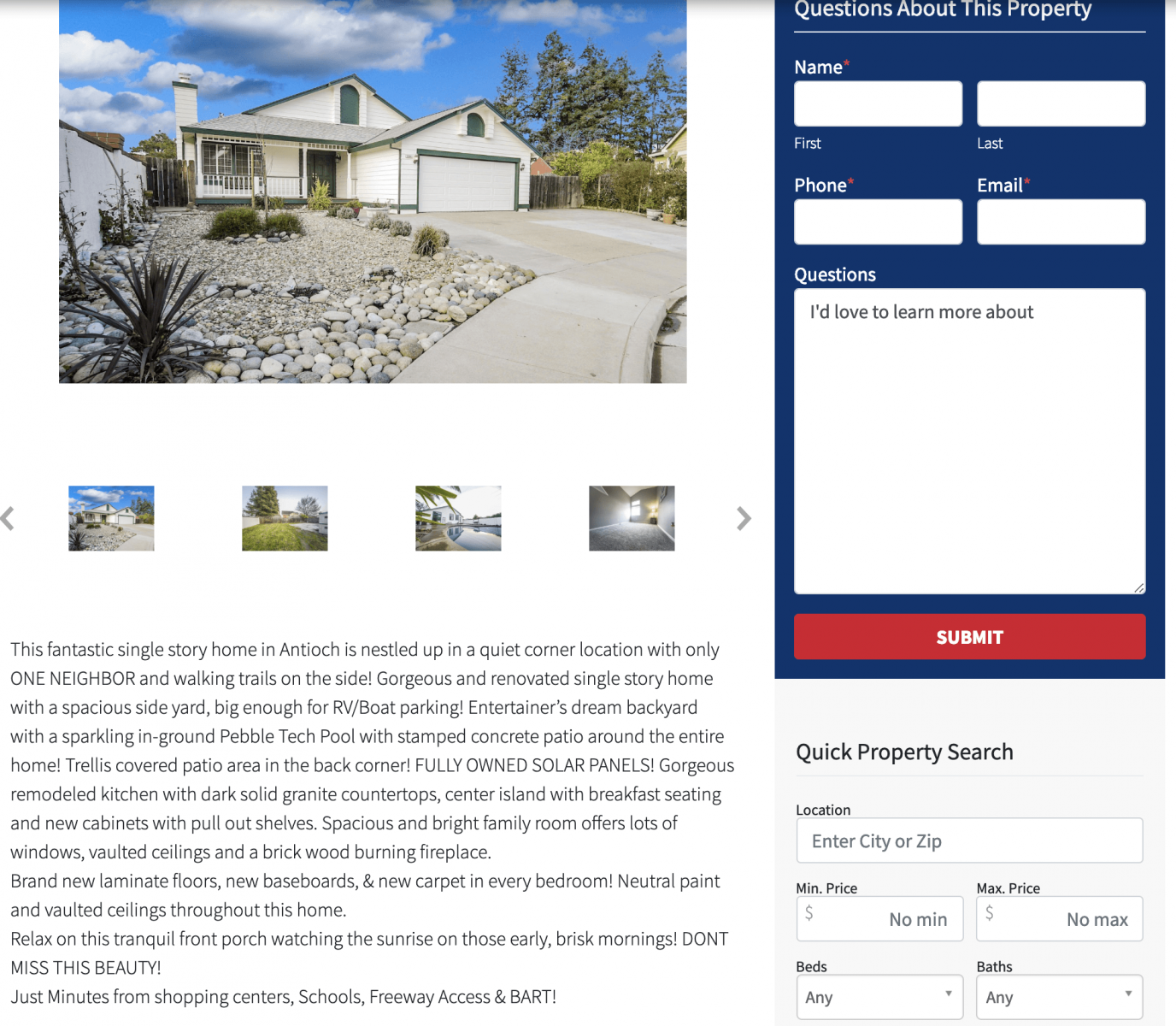
You want to do the same thing with your descriptions. Here’s another example from the same website.
This illustrates an important point. When writing the description for a home on your website, your primary goal isn’t to give all the specs or drown people in detail.
You want to flatter them. You want them to feel as though they’ve found the best house on the market and they would be silly to pass it up.
“When writing your listing description it is important to mention the qualities of the property that stands out over and above the competition. For example, if all the competing homes have a two car garage and yours has a three car, this is something you would want to emphasize.”
In other words, point out the good and don’t mention the bad — at least, not yet.
There will come a time when you have to mention problems with the house, but that time is not right now. First, you want people to fall in love with the property. Then, and only then, will they forgive its flaws.
Finally, if you really want to make your product description shine, consider this study by Zillow.
In the research, Zillow observed over 24,000 homes sold and found that these 15 words were within the descriptions of homes that sold for more than expected.
On the left is the word analyzed and on the right is the average percentage increase of what the home sold for (relative to what realtors expected it to sell for).
Luxurious — +8.2%
Captivating — +6.5%
Impeccable — +5.9%
Stainless — +5%
Basketball — +4.5%
Landscaped — +4.2%
Granite — +1% – 4%
Pergola — +4%
Remodel — + about 2%
Beautiful — +2.3%
Gentle — +2.3%
Spotless — +2%
Tile — +2%
Upgraded — +1.8%
Updated — +0.8%
When appropriate, consider tossing some of these words into your descriptions to give them a better conversion rate and a wider profit margin.
4. Easy-to-access Contact Information
It might seem like an overly simplistic element to your real estate agent website, but the trend is undeniable:
The best real estate websites for agents make it easy to contact the broker.
This element on your website is so crucial that I couldn’t avoid mentioning it.
All of the best real estate agents are doing it. Let’s take a look at the next Agent Carrot website before looking deeper into their contact call-to-action.
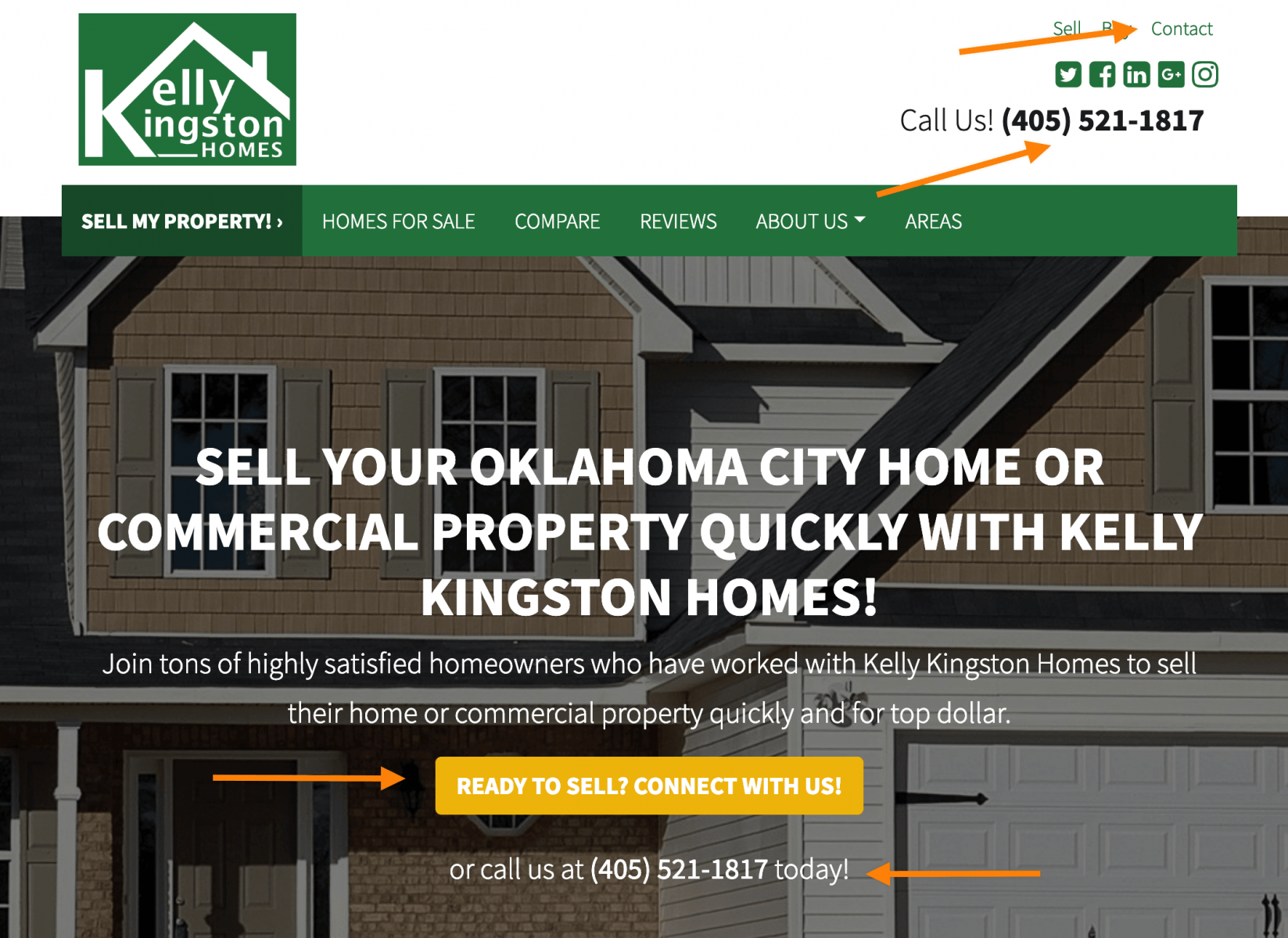
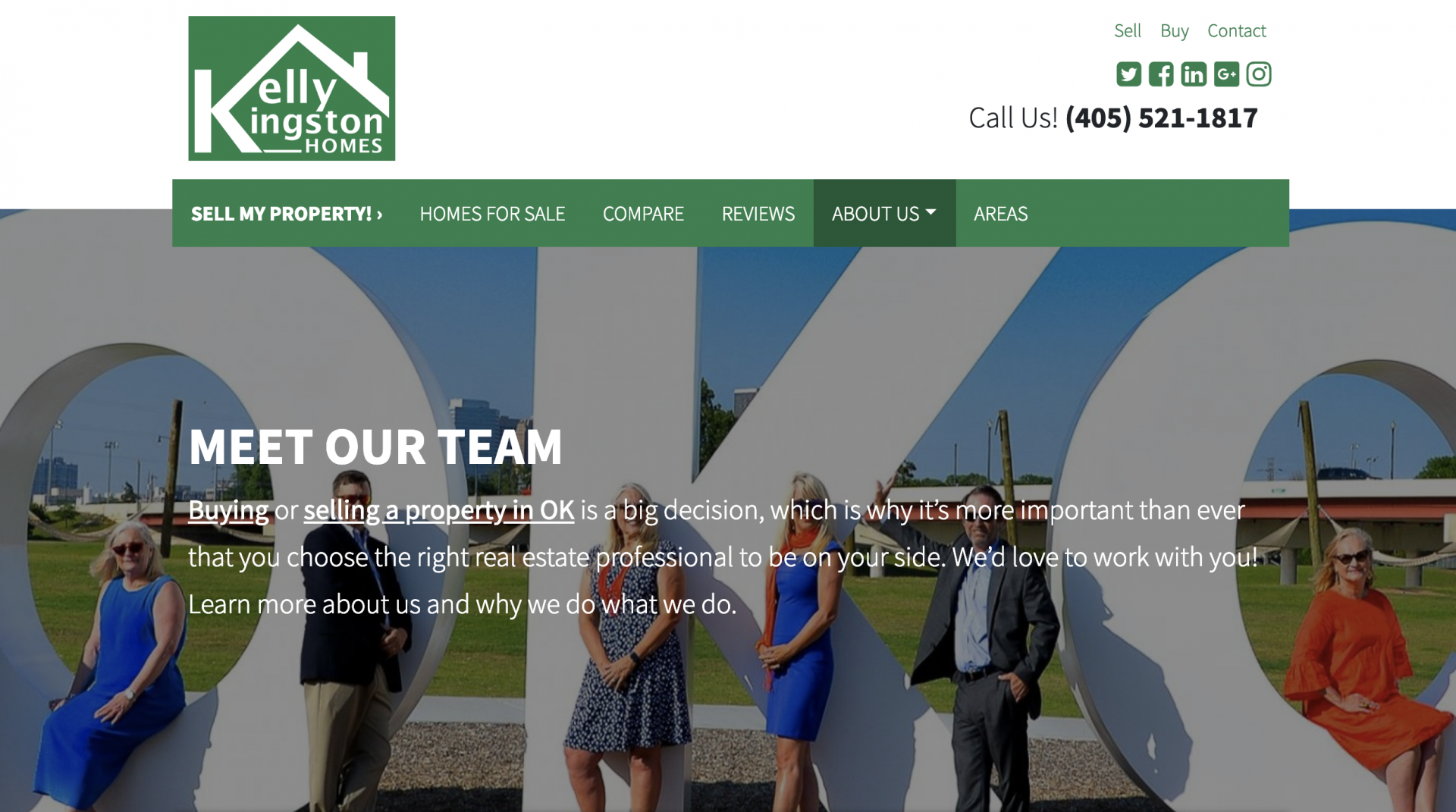
For the Kelly Kingston team, impact begins with their company logo: the K built into the roofline and chimney silhouette send a strong message about what they specialize in. Their area pages within the website’s main navigation menu expand on their theme by drilling down listings in their target areas of Oklahoma City, Midwest City, Bethany, Yukon, and Edmond.
Kelly Kingston Homes makes it easy for visitors to find different options to contact them from the homepage…
How about that 61% of internet users won’t return to a website if they had trouble accessing it on their phone — and that 40% of those frustrated visitors go to a competitor’s website instead?
If you didn’t, now you do.
Clearly, mobile browsing isn’t a thing of the future, it’s a thing of right now.
This means that your website absolutely must be mobile-flexible.
The best real estate agent website templates on the internet aren’t mobile-responsive because they’re ahead of the times; they’re mobile-responsive because they’re in line with the times.
In other words, mobile-responsive is now par for the course.
If you’re not sure whether your own website is mobile responsive or not, you can use Carrot’s mobile responsive tool to find out.
Just type in the URL of your website and click “Start Test.”
On the left side, you’ll see what your website looks like on an iPhone, and on the right side, you’ll see what your website looks like on an iPad.
If it doesn’t adapt to each device, you desperately need a new website.
All of Carrot’s real estate agent and investor websites are automatically mobile-responsive.
This is important for several reasons.
It helps your rankings in Google (because Google hates ranking un-mobile-friendly websites), makes visitors more comfortable with browsing your page on their smartphone, and even increases your conversion rate — conversion rates on mobile are 64% higher than on desktop.
If your website isn’t mobile-responsive, then you need to fix it as soon as possible.
6. Have Clear CTAs
Imagine this.
Someone visits your website and browses through a few house listings. They find one they love and they want to visit the house in person because they’re considering buying it.
But there’s a problem.
They can’t figure out where to go on your website to make that happen.
It might seem like a silly and unlikely situation — but rest assured, it happens.
When real estate agents design a website with unclear navigation, people leave before they even spend thirty seconds trying to figure out where to go next.
In fact, the average human attention span has been compared to that of a goldfish.
For that reason, the best real estate agent websites guide the visitor with clear and easy-to-find CTAs.
Buttons like this…
And this…
But, you’re probably wondering, what makes those buttons so clickable?
Two things.
Copy clarity
Visual clarity
First, let’s consider copy clarity.
What do I mean by “copy clarity”?
I mean having button text that is clear — button text that answers the question, “What happens when I click this?”
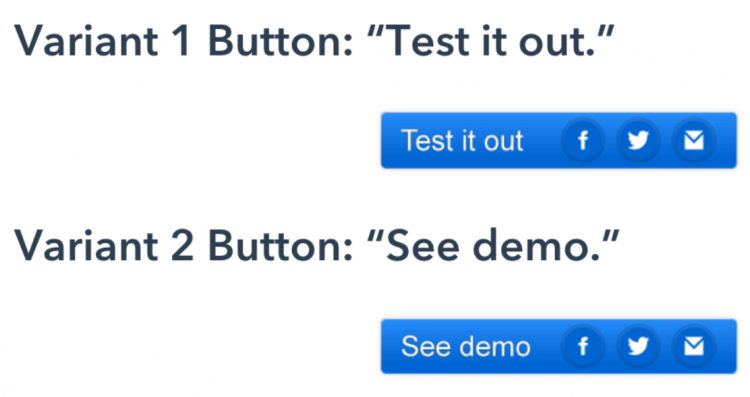
When HubSpot tested the button copy on one of their own CTAs, for instance, they found that “See demo” outperformed “Test it out” by a whopping 82% (from 2.47% conversion rate to 4.49%).
Why?
Because no one knows what “Test it out” means — so fewer people are going to click it. “See demo,” on the other hand, is clear. I know what’s going to happen when I click that button and thus I’m more willing to click it.
In other words, clarity converts.
And not just in terms of button copy, also in terms of button color (or visual clarity).
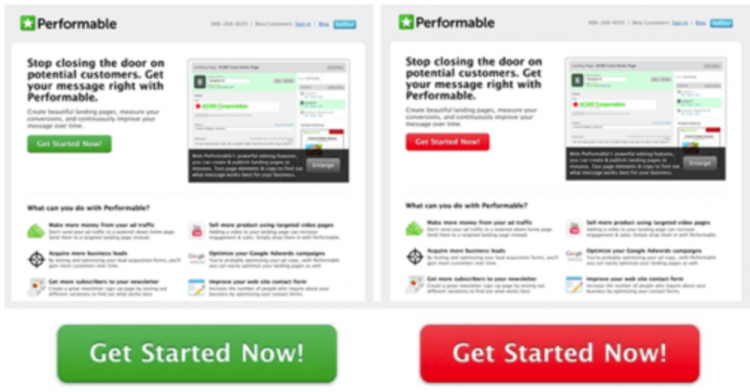
Consider, as a bad example, if you were trying to buy something from this website. Where would you click?
Yeah… I’m not sure either.
Nothing immediately stands out that I should click and there are so many different things going on that I have no idea where to start.
The point is, the best websites for real estate agents make it blatantly clear what they want visitors to do.
And button color is a great way to add visual CTA clarity to your website.
HubSpot did another study where they analyzed the color of a CTA. In this study, the red button converted visitors 21% more than the green button.
Why?
Well, take a moment to look at the green button example. How much other green stuff is on the page?
As you can see, there’s enough green on the page for the button color to blend in. Sure, you can still see where you’re supposed to click. But it doesn’t immediately pop out.
Now consider the example with the red button.
Clearly, the red button immediately demands your attention.
But not because red is better than green. In this case, the red button draws your attention better because there’s very little other red content on the page. This means that you immediately notice the big red button.
The green button, on the other hand, blends in and is less visually outstanding.
The best real estate websites for agents have clear CTAs that stand out visually. That’s a trend you should consider mimicking.
7. Write The Perfect “About” Page
It seems like a no-brainer. Still, some real estate agents forget to include an “About” page on their website.
However, as you might’ve guessed, the best in the business don’t.
Here’s one example from Kelly Kingston Homes…
And another example from Krista Mashore…
That similarity among the best real estate websites for agents is no accident.
Here’s a heatmap test we ran on an agent website, which shows just how many people are clicking the “Meet The Team” tab.
And on our website, people aren’t making one of the biggest buying decisions of their life: purchasing a home.
On your website, they are. Imagine how much more important the “About” page is when visitors are trying to make a decision of that magnitude.
Much bigger.
People want to know who they are working with — and when they’re buying a house, they really want to know.
In fact, our own research revealed that the “About” tab is the third most-clicked page on real estate websites, regardless of the type of realtor.
This means that you should take a little extra time to think through your “About” page and make sure it’s a shining illustration of your company values and industry expertise.
One Carrot client — The G Team — puts their company vision, for instance, at the very top of their “About” page.
Above all else, The G Team wants to build trust with the people who visit their website.
You want to do the same.
And since people are visiting your “About” page regularly, it’s a great place to do that.
8. Search Engine Optimization (SEO)
The best real estate agent websites are the ones that show up first in Google under a relevant search.
In fact, you could argue that Google results are the biggest indicator of a great real estate agent website.
If it ranks in Google under relevant keywords, then more people click it, visit it, and, more than likely, buy from it.
Just consider that 44% of home buyers purchase a home that they found online or that 93% of all online experiences start with a search engine.
However, Google offers a lot of competition, even for the little town of Roseburg, Oregon — 766,000 results, to be exact.
With all that online competition, it’s probably no surprise to find out that 72% of real estate agents are unsatisfied with how many leads their website generates.
If you’re in that category of discouraged real estate agents, it’s alright. At Carrot, we understand.
We help tons of our client’s websites rank in Google. In fact, it’s part of every single package we offer. If you want a website that generates passive traffic consistently and pulls in leads, give us a call — we’d love to help you out.
And if you’re unsure about whether you should work with us, consider that if you type “buying farmland in Roseburg Oregon” into Google, the top-ranking result is — you guessed it! — a Carrot customer website.
There are tons of different pieces to SEO, but one of the ways that we help our clients rank in Google is by encouraging them to put their target keywords front and center on their website.
Like this, for example.
Why is this so important?
Because Google uses the title of each page on your website to determine what the page is about. If you put the topic at the… well, top, then Google will have an easier time knowing where to rank your website.
When prospects land on your website, there’s one thing that you need to do above all else: build trust.
If the person lands on your website and doesn’t trust you or, worse, thinks you’re a spammer, there’s no way they’re going to work with you.
In fact, the most important factor when choosing a real estate agent is honesty and credibility.
And one of the best ways to build trust with your audience is by proving to them that you know what you’re talking about.
How can you prove you know what you’re talking about?
By starting a blog and posting consistently.
If you do, you’re in good company.
Here’s G.Stiles…
And Krista Mashore…
The point is, a blog on your website can work wonders to build trust and credibility. It’s an easy addition to your website that can make a massive difference. You can also consider creating real estate infographics rather than blog posts or videos if you’d prefer.
What, though, if you don’t know what your content should discuss?
No problem. Simply ask yourself this: What are the most common questions that your prospects and customers ask you?
10. Glowing Testimonials, Case Studies, And Reviews
The final thing that the best real estate websites for agents have in common is glowing testimonials, case studies, and reviews.
Remember, your number one goal is to build trust with the people who visit your website.
In many cases, that alone will determine whether people work with you or not: do they trust you?
And perhaps there’s no better way to build immediate trust than with testimonials, case studies, and reviews.
In fact, 88% of people trust online reviews just as much as personal recommendations from friends.
This is why the best in the business regularly use these elements.
Here’s one from Ellen Pool…
And Krista Mashore…
And The G Team…
Just how important are these reviews and customer-based ravings?
Well, one study found that brands that inspire highly emotional experiences — for which case studies are remarkable — see three times more word-of-mouth than their feeling-less counterparts.
People trust reviews and testimonials inspire customers to share your business with their friends.
Copyblogger recommends asking these questions of happy customers to collect remarkable testimonials:
What was the obstacle that would have prevented you from buying this product?
What did you find as a result of buying this product?
What specific feature did you like most about this product?
What are three other benefits of this product?
Would you recommend this product? If so, why?
Is there anything you’d like to add?
Conclusion
Today, it’s not enough to have a website. You need to have one of the best real estate agent websites in the digital world — or, at least, in your local area.
If you don’t have a great website, then you won’t rank in Google, people won’t trust you, and you will probably lose leads.
On the other hand, if you use a website with IDX integration, high-quality visuals, compelling listing descriptions, mobile-responsive design, clear CTAs, a thorough “About” page, SEO, a trust-building blog, and glowing testimonials, then you’ll not just drive deals through your website, you’ll be among the best in the business.
How’s the old adage go? “If you want to be the best, copy the best.”