

In this post, we’re going to be diving into a different topic than we usually cover here at Carrot. We usually cover Google organic, Google paid ads, Facebook paid ads, and our clients generate a little over 60,000 organic leads every single month.
Most of those motivated sellers. So we’re going to be tackling from the other side of it, especially since we work with a lot of real estate agents now as well.
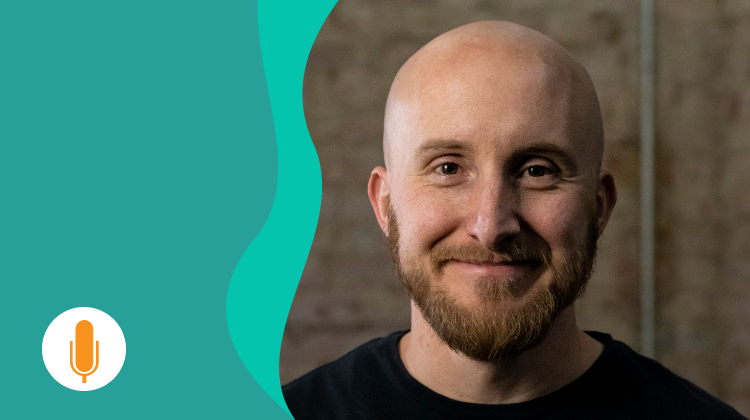
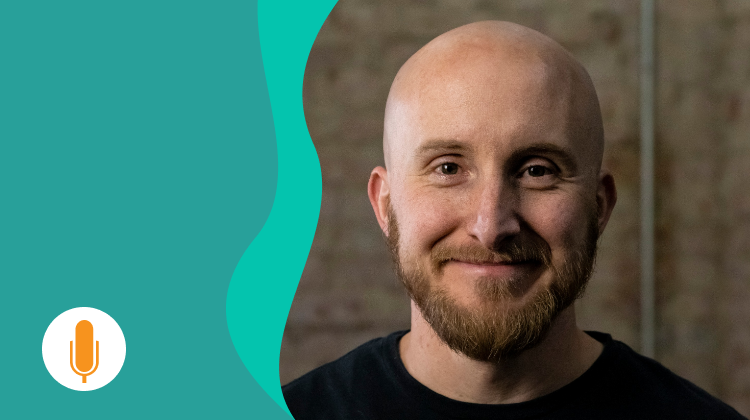
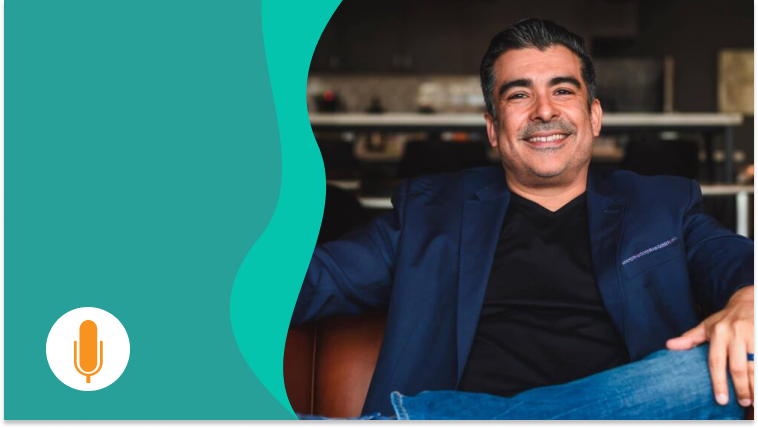
Our topic today is how can real estate agents actually use social media better? We dive in with Jason Pantana, coach, trainer, and speaker for Tom Ferry International.
Listen to the podcast
Video Transcript

Trevor:
When we started to pull back and ask ourselves, “Well, shoot, who knows social media better than anyone that we know or have seen?” There’s only one name that popped up for me. I’m like, “We’ve got to get Jason Pantana on.”
Jason works with a mutual members of ours, the Farr Group, who we’ll talk about the Farr Group in this post.
It’s been really cool seeing Aaron and Krista from two years ago even when I first had gotten contact with them. It was within their first year, they weren’t really that big on social.
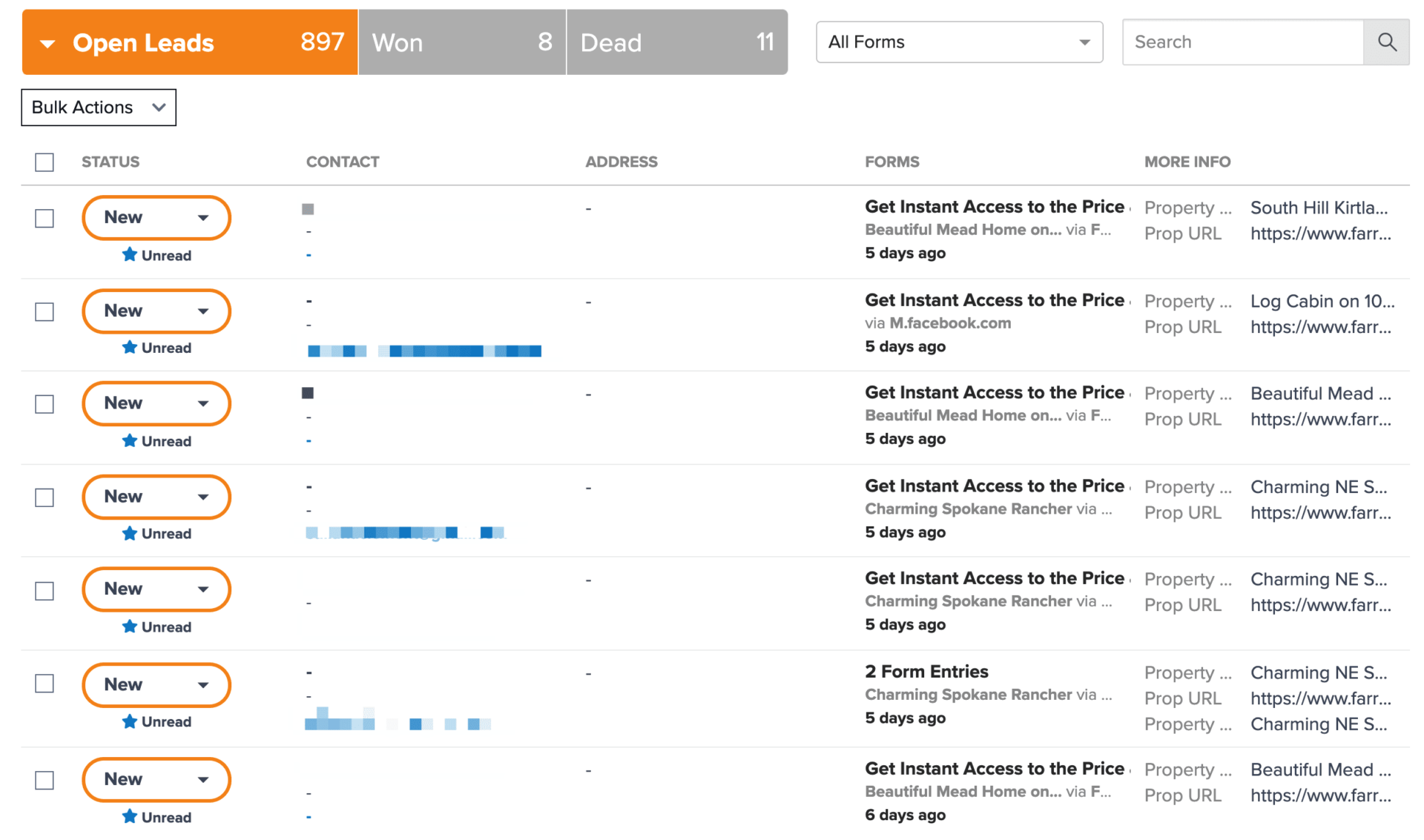
Now seeing them become one of the top 10 agents in their whole area in less than three years pretty much using social media and referrals.
And now they’re stacking on the Google organic, it’s amazing stuff.
But I’m going to officially introduce our guest today. Jason Pantana, he’s with the Tom Ferry group, but here’s one of the big things y’all. Tom Ferry has a lot of amazing coaches.
Jason is the guy that I’ve seen referred to over and over again as their social media and online marketing guy. It’s like when they need someone to go in and really talk in a deep way about the online marketing side of it for retail real estate, that’s where Jason comes in.
I’m going to toss over to you, man. For those of you who are maybe in the investor side of our business and aren’t familiar with Tom Ferry International or with you specifically, or if they’re on the agent side and they don’t really know, they’re not familiar with you, who are you, what do you do daily and how did you get into the game of educating agents on growing their social media followings and turn them into elites?

Jason Pantana:
I’ll keep this brief. One, I’m super delighted to get to be here with you. This is going to be a fun conversation I expect. Thank you for inviting me. Again, my name is Jason Pantana, I’m a business coach and marketing trainer for Tom Ferry International.
We provide coaching services predominantly in residential real estate, but just real estate profession as a whole. I’ve got thousands of clients all over the world. I personally coach every day of the week, so I have about 40 clients I coach personally. That’s typically my mornings. I just finished up my morning of coaching, and then I’m here with you guys right now.
In terms of day to day, I spend every morning just in the trenches with agents and I tend to focus my coaching specifically around marketing, all things marketing. I love hearing that you guys talk about Google organic SEO and paid traffic.
I talk about those things too. I spend an extra bit of time, I would argue, on the social media side of content, which is why we’re here today and we’re going to have a blast.
But really the thing I’m focused on, I think you’ll get a pretty quick glimpse of it. If you go check me out on Instagram, for instance, I just post content that I believe is going to help you as an agent in your business. Most of my content is focused on helping you build your sales business.
I’ll be candid about that. As you said, I work with Aaron and Krista Farr. I think you and I started working with them around similar times. It’s been about three years for me, like right when they first started.
One of my first orders of business was getting Krista licensed so she could come into the mix and start being social media amazing, which is what she is.
I love helping agents grow their businesses, by all means digital, but in particular that a lot of success with social, specifically, Instagram has been sort of a wheelhouse for a lot of my clientele.
Just generating bottom of the funnel, inbound, organic leads, which is what I will get into today. I hope that’s enough about me. Let’s talk about marketing.

Unlock Your Instagram Marketing Knowledge
Learn everything that Real Estate Agents need to know to get started with Instagram marketing.
Trevor:
If you are coming in from the Carrot world where we talked about what we call Evergreen marketing.
Evergreen marketing is how do you get off of what we call the marketing hamster wheel long-term and take a lot of that content from your social media and make it evergreen through Google and YouTube so people can find it for a long time.
What we’re going to do is we’re going to talk about how do you come up with great content topics on here with Jason.
We’re going to talk about how to get better reach with your social. Because we use social here at Carrot, even though evergreen is always our foundation, to build that momentum over the long-term with Google.
We use social media big time to build the audience, which then fuels the Evergreen and vice versa.
We’re going to talk about the content topics. We’re going to talk about mistakes agents and likely investors probably make the same mistakes in social. We’re going to talk about big opportunities on the different platforms because Jason is really tuned into all of those.
Where should a real estate agent start with social media?
Jason, let’s dive in first. Starting at the top, we’re going to teach specifically for agents right now, but investors take this and apply this over on the investor side.
Where should an agent start with social? Should they start on Facebook, Instagram? Where should they start where they’re going to get the biggest bang for their time?
Jason Pantana:
All right, so where should an agent start when they’re going to get involved on social?
I would say that the obvious place to start is where you’ve already got your account set up. There was a reason that led you to sign up for Facebook. There was a reason that you got on Instagram.
Whatever it is, I think there’s a component of just go where the crops are already growing.
But the other component I would say is where do you want to dominate? If you want to dominate on TikTok, go dominate on TikTok. Go make your heart sing. If you want to own Instagram, that’s a great spot too.
I will tell you, candidly, I’m a huge fan of Facebook and Instagram. I have clients who do both, so we typically will get into content within those.
I’m a cross-channel distributor of content, so my idea is, getting content mileage. I am not one of those people who thinks you should create content specifically for LinkedIn, specifically for TikTok, specifically for YouTube.
I think you have to take your content, build it in a lab and then optimize it for delivery across those different channels.
But I want to say from the starting point your content should be representative of your brand, your objectives in terms of what you want out of social and can go everywhere.
In terms of a platform to get started, I would personally pick Instagram. I teach my clients on Instagram the everywhere strategy.
The reason I choose Instagram is twofold.
One, it’s pretty democratic in the sense that it has a wide array of different types of posts. I can do photo posts, I can do carousels, I can do short-form vertical videos called reels. I can do long-form videos called IGTV. It has DMs, it has comments and shares and stories.
It’s got the whole types of content I might create. I like to use it as sort of my starting point and then distribute from Instagram to everywhere. I also like it because it sounds better to say Instagram to everywhere, then Facebook to everywhere. But if you want to go to Facebook first, be my guest. That’s going to work for you as well.
But I would also encourage agents to actually shift their mindset from saying, “I have to pick a platform,” and instead say, “You know what, let’s create a space where I’m optimized across all the channels I want to be on.”
Right now we don’t know where the consumer is. It could be anywhere and everywhere, and in fact, I would love for them to see me on multiple channels because that’s going to create a frequency illusion where they think they see more of me and I have more top of mind awareness.
My advice to you would be is focus, not on the platform so much as what’s the content you’re going to produce.
What are you committed to?
What makes you excited in terms of content to make?
Then just get your accounts set up and lay out the distribution path from Instagram to everywhere.
Post it natively to Facebook, to LinkedIn, to YouTube, you name it.
Trevor:
That’s perfect because, all too often, we’ll hear someone say, “Hey, this is the path.” But, like you’re saying, everyone is a little bit different.
Someone might really resonate with Facebook and how it’s used and vice versa. You’d mentioned the content side. That’s where I’m sure you see it every day, especially, with your new coaching students but we see it all the time too, is people go, “Shoot, what do I create content on?”
We’ve got a model here at Carrot that’s mainly aimed around the organic side of things. But what would you suggest for an agent or an investor in this case too, what should their first pieces of content be? What should that cadence look like? Is it mostly personal stuff, mostly business stuff, is it a mix?
Jason Pantana:
Okay, so let’s talk about the personal versus professional dichotomy first, which a lot of people have cited Gary Vaynerchuk’s Jab, Jab, Right Hook concept, which was a brilliant concept. But it was pre some algorithmic changes that occurred a couple of years ago.
What I’ve noticed is when people are still operating on the, “Okay, I’m going to do three personal posts and one professional post.” Like clockwork, it’s nothing but crickets when it comes time for the professional post.
So at the end of the day, every post is judged by the algorithm. It’s not so much about like, “Well, I got so many hearts and likes on this kindergarten graduation picture, but nobody cares about my new listing or whatever it is.”
That doesn’t work anymore, so instead what I about with people is you got to blend the story of your business and your life.
They got to be blended together.
Some of my best clients who are really like they’re cleaning up on social media, I’m thinking of Glenda Baker, for instance. She’s in Atlanta, Georgia. She’s probably close to a million followers on TikTok now. Her TikTok growth has been insane. She’s got about 50,000 on Instagram, growing like crazy.
She’s getting DMs and PMs and all kinds of pings for people who want to list their properties, buy their properties, agents making referrals.
All kinds of that inbound lead generation happening, and all she talks about is real estate. In fact, that’s the thing that I noticed most about her is I see her personality emanating through what she does for a living.
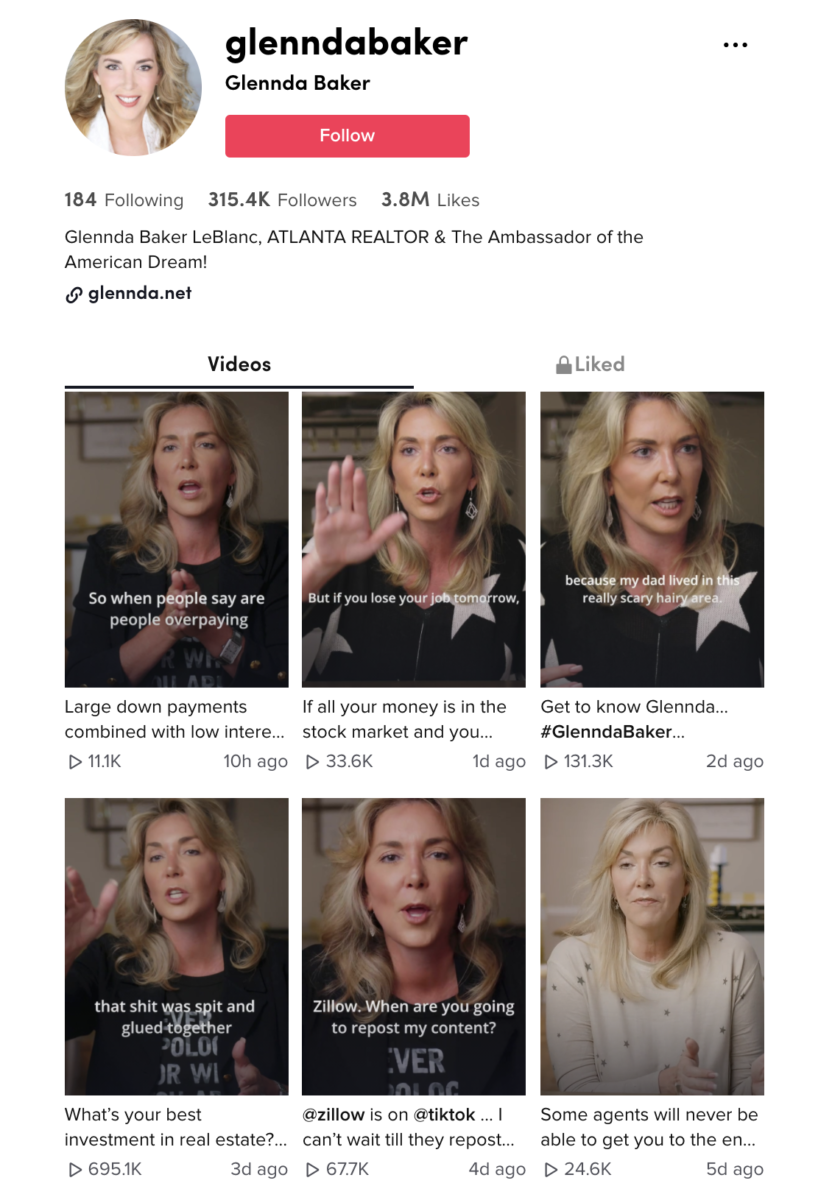
There’s no distinction, so my thoughts are, at the end of the day, your brand is your voice, your mind, your heart, your face. You’re the one that’s for sale, so I think you’ve got to put you on camera, you’ve got to be in the feed, so your audience gets a sense of your personality.
Now, I’m not saying everything has to be about trying to sell a listing or whatever, but I’m also not saying that you can never do that. I come across a lot of social media experts who are constantly trying to tell agents to not post about real estate.
I look at that and I’m like, but when I see the agents who are actually making money off of social, it’s the opposite of your advice. Like look at the Farrs’, for instance, I know we’re cleaning up on social media.
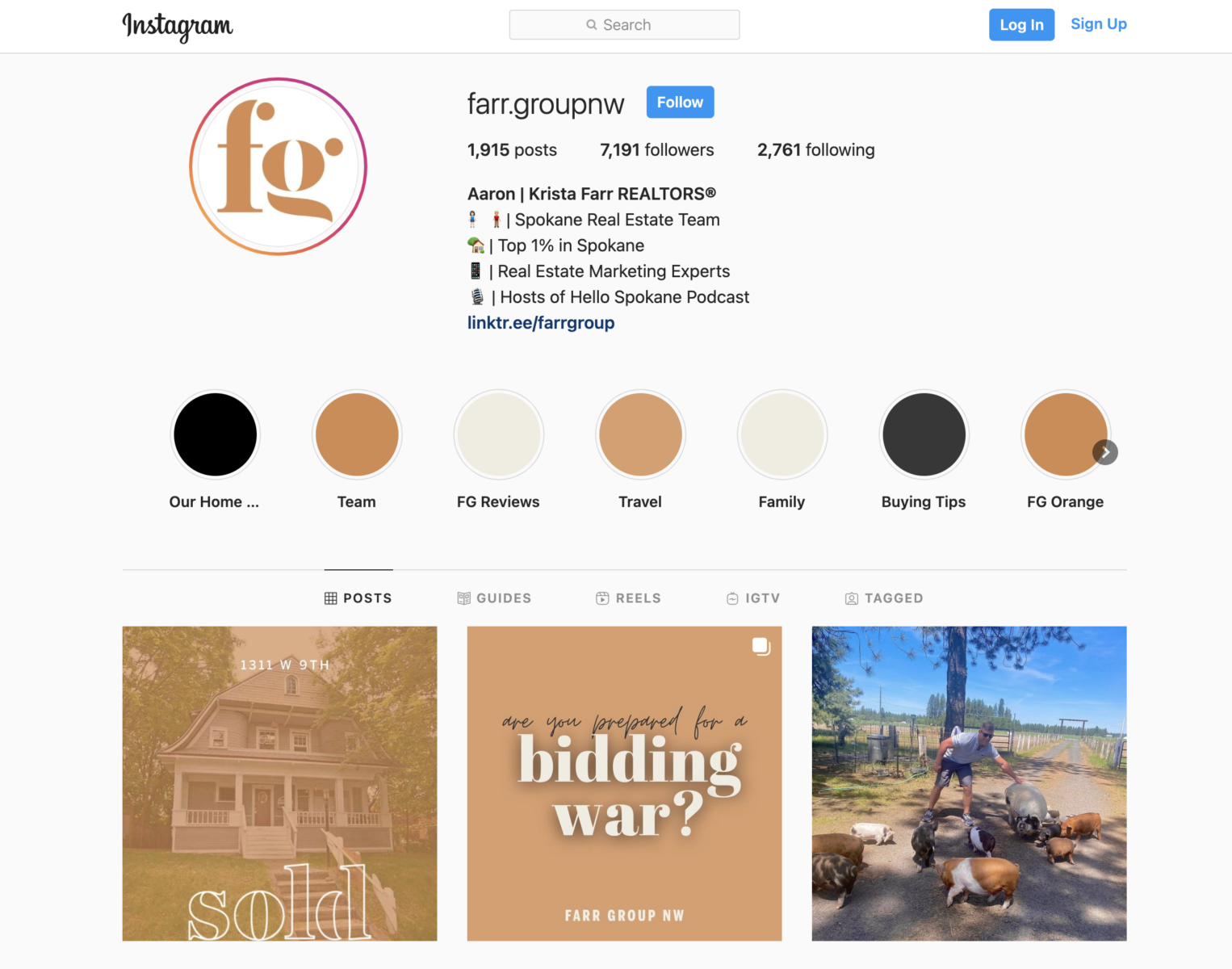
They post about their lives, but they’re never more than an arms reach away from their business, ever. There’s no shame in social proof.
Unlock Your Instagram Marketing Knowledge
Learn everything that Real Estate Agents need to know to get started with Instagram marketing.
What type of social media content should I create?
Trevor:
So let’s dive into that content topic side of it.
I think that’s really helpful what you’d said in a big way because a lot of people are taught 60/40, 60% business, 40% personal, and the personal are just personal. It’s the dog I got this week, which is fine. Versus, like you’re saying, melding it together. One really good example that I’ve seen in the investor world, so for all you investors you say social media is just for agents, which it’s not.
We have an amazing client, they came up to our event we called Carrot Camp last year, and they’re an investor. They go back there and they’re filming restaurant reviews. He calls it lunch with Lance, but it’s always him, the home buying guys. He’s going out there, he’s bringing some of his buyers and sellers that they work with.
It’s like on HGTV, everyone loves the shows that show people what people are doing for a profession. Watching people fish, watching people flip houses, watching people be real estate agents.
So it’s mostly business with some personal stuff mixed in.
Jason Pantana:
I would also just chime in on that, I love the idea of touring local restaurants, getting to know local business owners. But I would say there’s a lot of agents who they figured out they’re going to create the diners drive-ins and dives food network show because in their head I suspect a lot of them are like, “This isn’t salesy, this isn’t real estate focus. This is community focused.”
I don’t want to be that guy or that girl who’s costly about real estate. But I always ask my clients the question, “What does your mom watch more of, food network or HGTV, or is it a tie?”
The answer is usually it’s probably a tie or something like that. But my point is don’t overlook the fact that touring houses, talking about houses, people are obsessed.
SNL did a sketch recently on Zillow because people love to look at houses. There should be no shortage of ideas for content when you sell houses for a living, or when you flip houses or a wholesaler, whatever you do on the investor side of it.
Where do I find great content ideas for social posts?
Trevor:
Let’s say it’s an average week for an agent. What are some types of things that they should start to turn that brain on to be aware of to document a great content?
Jason Pantana:
I teach going back to the Instagram to everything strategy. The first thing I do is I establish a minimum cadence in terms of how much content, what’s the frequency minimum standards per week.
It’s one IGTV a week and you press the share to feed button. When you’re uploading to IGTV, there’s always the option to share to your main feed. Absolutely a must. If it’s only distributed through the IGTV feed, which you may not have known this, IGTV is its own app.
If you don’t click the share to feed preview button, you’re pretty much invisible. So it’s one of those a week and one reel a week as a minimum.
I’m almost ready to adjust my own strategy. I was looking at my Instagram insights, which you should do from time to time and I was breaking down, “Okay, what types of posts of mine reach the biggest audience of followers versus non followers?”
So they actually have charts and graphs in the insights tab assuming that you have either an Instagram business or creator profile.
They show you unbelievable analytics, including, your average IGTV gets this much reach with your followers, and this much reach with non-followers. Reels was off the charts doing about 80% non-followers.
We’re finding because reels is the new prized feature that Instagram is touting and wanting everybody to adopt.
I’m getting right now crazy reach, and I’m generating a lot of followers because they’re finding my content through the reels feed because they did build the reels feed straight into the mobile app. That should give you a kind of optics on what they’re trying to do at Instagram.
I would say, recapping, here’s a sample posting schedule:
- One IGTV a week,
- One reel a week,
- And, at least, three supporting posts a week.
They could be photos, they could be carousels. They have three supporting posts and then never don’t have a story. That’s actually my cadence. It’s one IGTV, one reel, three supporting posts, never don’t have a story.
Let’s dive into the content “what.” I typically teach to think of content like a restaurant menu. You go to a restaurant and they hand you the menu, this is their way of saying, “Order something off of the menu.
We don’t make things that aren’t on the menu. We make things on the menu. We have appetizers, we have entrees, we have desserts. Pick from the menu.”
I think a lot of agents, wake up and, they look at the look hamster wheel of social media. I’ll admit, it is totally a hamster wheel. I think you’re smart to listen to this man and try to convert that into some evergreen content. Evergreen content isgoing to help make it more worth the while, which is part of what I teach too.
But back to this hamster wheel. I think a lot of agents look at the 365-day calendar and they think, “Oh, what am I going to post today? What am I going to post tomorrow?” As if you’re having to reinvent the process every stinking day and that’s daunting. I think the hamster wheel feeling is more of a feeling that’s psychological than it is strategic.
What I teach is the menu, it’s got three parts to the menu.
- Section one, we call it shows and series,
- Section two we call it deal data,
- Section three we call it the vault.
Section one, shows and series are basically your video shows. This is your IGTV, your reels. I would create weekly video shows. It could be a pro tip series, it could be a market update series, it could be a quick answer series where people ask you questions and you do 30-second Instagram reel answers that stuff.
It could be home tours, it could be interviews with local businesses like you talked about. You should have your shows and series lined up episodically week-by-week.
Again, my minimum standards for my clients is one IGTV a week, one reel a week, which basically means we’re talking about two shows a week for all intents and purposes.
Section two is deal data. It’s just listed, just sold, listing video, under contract, offer accepted, open house. It’s those types of things.
The whole idea of deal data is it should be templated out. Let’s use the Farrs’, for example. They use Canva. If you go to their Canva, they have templates for what a just listed post looks like, what it just sold post looks like, and they literally just sub out the address and change the photo.
Rinse, repeat.
That’s what needs to happen to streamline some of the production of content with this deal data. I talked about three supporting posts per week, here we go. It’s in your deal data.
This stuff’s critical. I also think like if you look at the Farr’s feed on Instagram, just Instagram, for instance, I’m going to see the matchy-matchy nature of, “Oh, there’s another sold, another sold, another sold, another sold” because they match up with each other.
So because of that, it really creates this feeling of, “Wow, the Farrs are really selling a lot of houses,” and they are, they are selling a lot of houses but there’s also a perception component too. How do you take that into effect?
Lastly, section three is the vault. The vault is basically just things you do every now and again. You may not do them always, but I’d like you to have a word bank or a vault that you can pull from, from time to time.
Like testimonials, what does a testimonial look like when you post one? Do you do stock shots or behind the scenes shots?
Stock shots have been a popular one for a lot of my clients lately. Basically, what we’re doing is when they have a new listing, they pay their photographer a little extra to basically do some headshots at the property lifestyle photos at the top view while they’re getting the shots for it.
They just pepper those photos out from time to time with some the melodramatic caption that’s maybe related, maybe not related.
Unlock Your Instagram Marketing Knowledge
Learn everything that Real Estate Agents need to know to get started with Instagram marketing.
Trevor:
That tip right there is awesome because if you guys are already doing listing photos, or if you’re an investor going there and doing photos of properties, like Jason said, why not just have that camera person just turn the camera on you for a few shots. You’ve got the concept right there.
Jason Pantana:
Show up in the last 15 minutes, they’ll film you. Like I have a client in Little Rock, Arkansas, Ray Ellen, he does this.
He’s got probably 90 days of content already lined up.
He’s at the point now where he has to be aware of seasons. That’s how far ahead he’s getting with doing this, and so he has this spreadsheet where he writes out captions and they just play the matching game.
I’ll use this caption for this post, this one for this one, and they don’t always relate. It’s very personal blogger style where it’s a photo of you and then whatever you’re thinking about. I mean, invariably, those photos and those posts do really well. That’s a no brainer to me.
Recapping, you’ve got the shows and series, the deal data, and the the vault.
Trevor:
I want you guys to write those down. The reason this is important is because just like Jason said, oftentimes when we’re going to go with step into doing something, when we don’t have a menu, when our options are limitless, your brain explodes. You go, “Oh, shoot, what do I do?”
We start to actually get paralyzed when we have too many options. If you go into a grocery store and there are 75 types of ketchup, and there have been actual studies done like psychological studies.
Jason Pantana:
Yeah, it was Barry Schwartz did this in The Paradox of Choice. Great book.
Trevor:
If you have three choices, you’re going to be able to pick, and so I love it. By the end of this week, what I want you guys to do is write down those three things.
Then begin to carve out an hour maybe, half an hour and start to dream, “What type of deal data can I start sharing next week? What show or series can we do?”
Jason Pantana:
I’ve been encouraging my clients I love in the field videos. I love house tours, I love restaurant interviews, I love business interviews, neighborhood tours, but there are bottleneck in terms of getting them done.
If you’ve got to go in the field and plan logistics and coordinate, coordinate, coordinate, the clients of mine who are really killing it with video are the best.
They typically film one time a month and do everything in bulk, they get like a paper background like this set up, they’ve got a camera, typically, a videographer.
Some of them rent the runway to get multiple outfits picked out, and they show up ready to film for a half or full day and they knock out 20, 30 videos in a day and they’re done for the month. Move on to the next month.
That content gets packaged and released and dripped out throughout the month. That’s the way to play it.
Trevor:
The thing about doing that too is it takes you out of that daily hamster wheel thinking because then it is strategic. It takes you from tactical on the day-to-day going, “Oh shoot, I need to find something to document today.” Which you can do in the stories.
That’s where bring out those stories, document that stuff. But then everything else are used strategically to chunk it up.
Guys, listen to Jason because he’s teaching you the path here, but then he’s also teaching you the way to make it so it doesn’t own your life. Where you own the strategy, the strategy doesn’t own you.
Jason Pantana:
The best agent video creators are filming once a month to create. That should be your objective, film once a month.
How much time should you invest in social media?
Trevor:
How much time would you suggest setting aside for social? The people that are crushing it, like the Farr Group, like that other guy you mentioned, the people who are crushing it, how much time are they investing into social per month? Then the people who are doing so-so, what’s your best guess in how much time that they’re investing into it?
Jason Pantana:
Let’s use Glenda Baker as an example. She’s in Atlanta, Georgia. She’s the one who’s got like a million followers on TikTok.
She films one day a month. She comes ready to the studio. She’s got her hair and makeup, her clothes, her scripts, what she’s going to talk about. She comes in ready to roll and film. Cameras on, lights, camera action.
She’ll get 35 videos in 11 hours, so she films an 11 hour day once a month, but she knocks out 35 videos. Taya DiCarlo in Manhattan Beach, California, client of mine too.
She does the same thing, she films for a half a day and she’s knocking out about 20 videos.
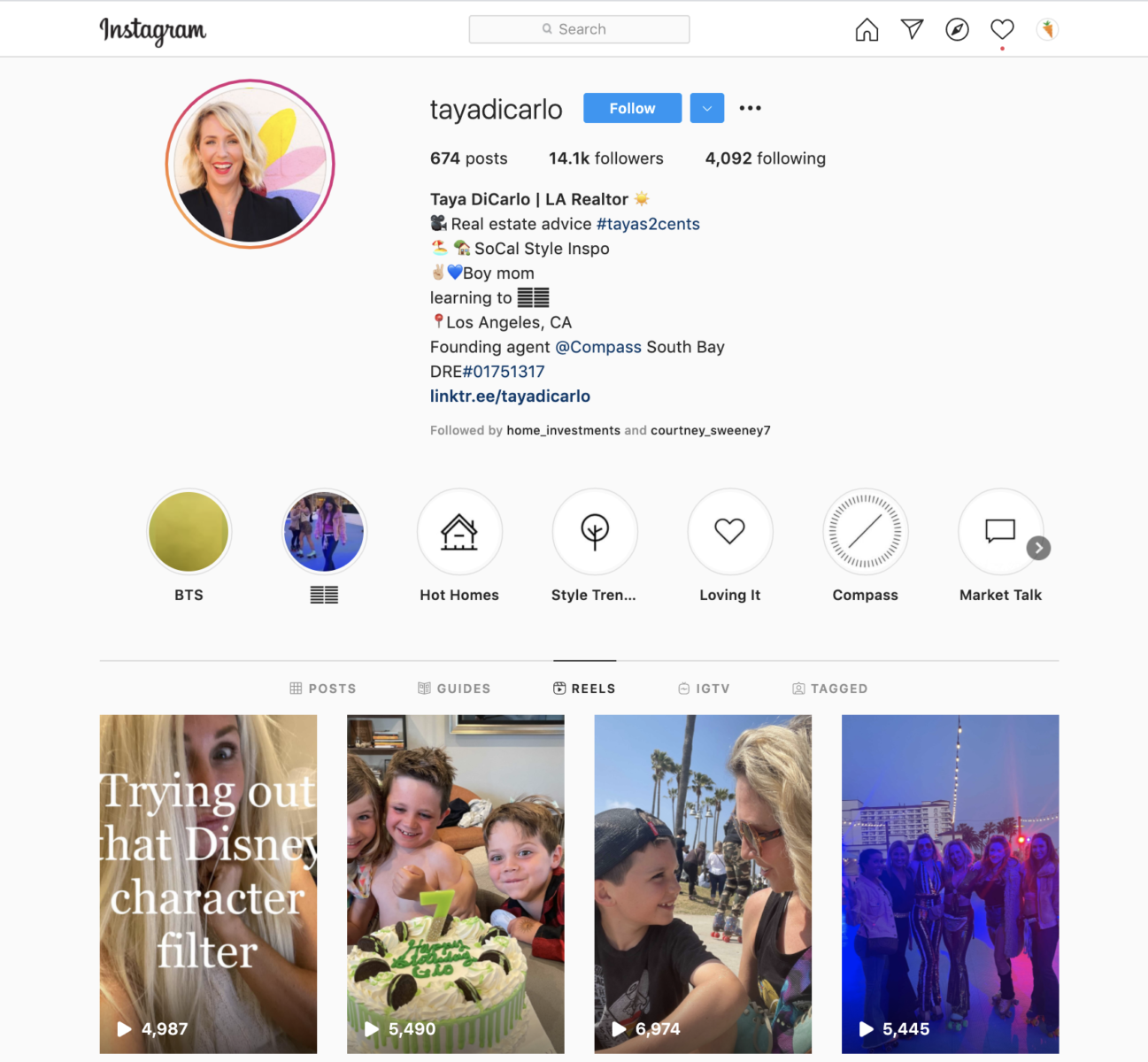
In terms of time, if you already have the big content created in advance, there’s a releasing feeling. Now, the idea of running and gunning, is to your point, you’re going to be subject to and controlled by social, which is not a good state.
Trevor:
One thing we talk about a lot here at Carrot, is our state admission at Carrot has helped to build a businesses of freedom and impact. We really want people to be free from their businesses.
That’s where the Evergreen comes in, so that they can make the impact they want to make.
What Jason’s mentioning here, let’s say you guys wanted to go on a two week vacation or a month long vacation or whatever it is, which is normally unheard of for most real estate agents right now.
If you could have that content batched, you can still record like the Farr Group. They still took pictures and did stories from their vacation, but they were still cranking through the deal data. They weren’t posting the deal data, so that stuff was batched.
Jason Pantana:
Yeah, they now have a marketing coordinator who works for them, so she’s taken on some of the load. But that’s recent.
A lot of the stuff is just scheduled and ready to roll. I think you’ve got to… don’t be a slave to your social media, that’s the goal.
Control it, not it to control you. That’s a matter of we need a plan, experts say, I don’t even know who said this, but I’ve heard it said before that for every minute you spend planning how to use your time, you’ll save seven minutes on the implementation.
I think that’s true in a lot of walks in life, especially, in social media. If you just say, “Okay, Jason said I’m going to do one IGTV, one reel, three supporting posts. Never don’t have a story. That’s my minimum cadence.”
That’s the output of content.
Now I’ve got to fill, “What are those pieces of content?” Well, I’ve got my shows and series, my deal data, the vault, fill in your little menu.
Then come up with, “Well, how am I going to film it?” I would say if you can figure out how to film once a month, if you can try to figure out through Canva or graphic designers or whomever you need to streamline the other posts, get these things as turnkey as possible.
So that really when you’re on social, you’re just posting stories and you’re engaging with other people’s content. That should be more or less what you’re doing on social.
Team or contractors? How to build a team to record videos
Trevor:
I love it. One thing that people might be thinking is like, “Oh shoot, so Jason mentioned his videographers posting for him. That other girl, she records videos once a month and probably someone posts it for him.”
But also you mentioned right there, and a lot of people probably saw it slipped by them was the Farr Group didn’t have anybody for the first year and a half, at least.
Jason Pantana:
Well, I didn’t have anybody until a month ago, so it’s me too.
Trevor:
There we go. If someone is going to have a team member and is it a full-time role? Is it just a contractor? What type of investment may people be able to get someone who can run the posting of the stuff and maybe the videos for?
Jason Pantana:
I’m going to take this two different ways. It depends on the channel you want to go after. If we’re talking about like Instagram and Facebook, that’s a little bit simpler. YouTube is a little bit more sophisticated. YouTube is more of your evergreen content, so YouTube is more of a search engine, less of a social network.
So because of that, there are some nuances to the distribution on YouTube that will make or break what you’re doing there. Sliding that off to the side, I typically have my clients usually look for an hourly part-time, either a marketing coordinator or a marketing admin, whichever title you like better.
This is somebody who’s paid somewhere between $15 and $20 an hour, generally speaking, and they’re basically following orders and instructions.
The mistake a lot of agents make is they say, “I want to hire a social media director for $35,000 a year.” I’m like, “Do you realize director titles typically are six figures. Senior executive level people in companies.”
- A, they’re not going to work for that money,
- B, if you hire a social media director and they go to Glassdoor and they plug in what they’re supposed to get paid, they’re going to assume you’re ripping them off.
But I think the biggest difference is strategy comes from the top down. If you’re going to hire somebody who’s administratively going to take action, they’re taking action on what you tell them to do.
I think like that’s what the Farrs’ did really well. Krista manages their marketing coordinator. She says, “Do this, do this, do this, do this,” and it gets done. I don’t think there’s any way around that.
Trevor:
So, if you are looking to buy back that time, get more freedom so you can make more impact, it maybe won’t start that way. You got to hustle and get the work done that first year, first 18 months to get momentum going.
But cast that vision for buying back your time, and that’s always something I want to have our community look at is whenever we start a strategy, just really dig in and make it happen.
Even search engine optimization takes work. Either you’ve got to do the work a few hours a week or hire it out, but your vision should always be to buy back the time over the long term.
Jason Pantana:
I think we can work backward too. Facebook and Instagram burn cheap gas, not the premium stuff. You need more. I’m not saying make bad content, but I am saying making more content, there is an element and I’m being somewhat cynical here, but quantity almost matters more in some cases.
I’ve had clients buy basically chess clocks, or they set little timers where you’re going to say, “I’m going to give myself 15 minutes to do this, 30 minutes to build this post”, whatever it is.
You time yourself so that you can basically predict, “Well, if I want to do one IGTV, one reel, three supporting posts, never done of a story, and I’m going to block an hour to record this video or 30 minutes for that.”
You can literally map out how much time it takes and then say, “Can I do that for a year?” Then once I’m established, then I’m going to bring somebody on to keep rowing for me while I move up to the next level, so to speak.
Trevor:
Let’s talk about make the transition from we’re building the audiences, we’re getting content out there, we’re resonating, to now we’re building authority because that’s really what we’re after here.
Getting in front of people, building that authority. What are you guys finding right now, Jason, that’s working great to turn those people watching you from afar into leads, into people that you work with?
Jason Pantana:
A couple of things I would say, one, is social media has two elements.
It’s like a two-sided coin, it’s got the side of content and the side of the conversation, so you got to do both. I think one of the mistakes I see is agents who are only doing the conversation side, which does work better on Facebook than on Instagram.
They’re DM-ing, they’re commenting, they’re engaging, they’re not creating content. They’re not being a knowledge broker. That’s a gap.
Or the flip side of it, and this is the more common is they’ve figured out how to make content or they buy the content works, but they’re just not really there. They seem unapproachable.
I think like, again, let’s use the Farrs as an example, they’re putting out a cornucopia of content. They really are, but they’re also DM-ing and messaging and engaging, and they’re active in groups on Facebook and so forth and they make themselves approachable.
I would say that there’s an element of content and conversations that really has to be a part of it. I also think this is where, like going back to the early thing, is it professional or is it personal content? It needs to be the right hybrid.
We teach that there are five themes of content that you need to be able to address. It’s not even parts. You can decide how much of this or how much of that.
But there are five ingredients or five themes your content should speak to.
We talk about real me, or if you’re a team, the real us. We talk about agent behind the scenes, these two can be married sometimes. We talk about social proof, so like just listed, just sold, under contract, offer accepted, new listing, blah, blah, blah. We talk about knowledge broker, which is big for me, and then hyper-local. Where do you do business? Are your boots on the ground?
If you have those five themes present in your mix of content, the net effect is people will come to you. I think that’s the thing I’ve noticed most about the clients I coach, and I have a good number of clients who get a lot of business off of Instagram. People are direct messaging them, they’re commenting.
In other words, they’re creating content that invites that conversation, and then it just starts going. Even me, like if you ask me, why am I creating social media content, I’m going to tell you because I really like to contribute and things like that, just like you do. But I’m also going to tell you because I’m generating organic leads for Tom Ferry every day of the week.
I was going to do a 100 webinar challenge for myself.
So I started taking a selfie of me every time I was doing a webinar, which I need to get back to doing. But I was like this is going to make social proof. This is going to make people like Trevor say, “I should get him on my podcast. I should get him to speak for me.”
Then, bam, it works. It’s that, it’s real me, hyper-Local, knowledge broker, social proof agent behind the scenes. If those things work together in some kind of a shape, you’re going to attract people to want to work with you.
Trevor:
One thing I want to pull out right now, I just came to the realization so you were mentioning the posts that I engaged in. Let’s relate this over to an agent or an investor now.
The reason I engaged in that, is number one, I’d seen Jason for probably a year because the Farr Group, one of his clients, posted about him or tagged him to it, so I started following him.
Then I see him post, before all your content’s amazing, but I’m not an agent. I’m like, “Okay, it’s great. I’m going to learn from it. But I’m not an agent.”
That one post struck out to me because I’m like, “Oh, I can help him here. Also, this might be an opportunity for us to connect and I can help my audience.” I’m like, “Let me take all this stuff that he’s been teaching.
As we’ve been growing a bigger and bigger user base on the agent side, let me take his knowledge and plug it over here to help serve people.” If you hadn’t have done that “Hey, here’s my journey I’m on. Here’s the challenge I’m on” post it might have a different outcome. Instead, I thought” I’m going to dive in, serve him, serve my community and be able to meet an amazing dude.”
Don’t be afraid to do that.
How do I get more comments and DMs?
Jason Pantana:
But I would tell you if your content is not sparking comments and DMs, you need to adjust it because that’s where the money gets made is in the inbox.
Trevor:
How can people do that? Let’s get tactical a little bit, what are some of the ways that people can do that to spark themselves?
Jason Pantana:
Well, you can ask yourselves why? Let’s go easiest, the simplest explanation or the easiest way to do it is reciprocity.
Start commenting on their stuff, start messaging them, and you’re going to actually reverse prioritize yourself where they’ll probably do it one just because it’s human nature to reciprocate.
But also because when they reply to your DM, when they reply to your comment, that’s actually a signal to Facebook and Instagram that they want to see your content too. You’re prioritizing yourself in the feed. I would say out of the gate, you need to be engaging with their content to invite them into yours.
They’ll return the favor.
The other thing is ask yourself a rhetorical question, “But, hey, when I post this, what response am I expecting to get from it? What is somebody likely to comment, or they’re going to scroll past? Will this get them to when I stop and like it, when I stop and comment, when I say it, what I share it?” And so forth.
I know that’s a surface long answer, but it’s the truth. The other thing, a lot of agents are just trying to phone it in like, “Oh, I just got to get it out there.” Yeah, you do, but what’s the point of doing that if it doesn’t actually get out there?
Because we know the way these algorithms work is they don’t serve dud content in the feeds. I would argue in the first 10 minutes to an hour, Facebook and Instagram have decided that they’re investing in your post or not. If you can’t get conversations, so like we’ll talk about this, but you should optimize your content.
Like for Instagram, out of the gate, I would do a couple of things. I would tag a location when you post, when you can. With Reels you can’t really do that.
But when you can, I would tag a location. I would use hashtag strategically. They give you up to 30, and we don’t copy and paste hashtags. They don’t like that. We vary our hashtags. We don’t spam with hashtags, we’re careful that our hashtags aren’t actually what we think are innocent, but aren’t innocent hashtags.
Because if those hashtags are blocked, you’re screwed. I tend to like hashtags that are between 100 to 500,000 other posts using them.
That’s a sweet spot where I stand a chance to populate in the explore feed. I don’t care if the hashtags are in a caption or comment, but you got to use hashtags.
I would also tag people when it’s relevant. I’ve done this two different ways. Sometimes if I have a post and I want to just give it a quick blitz into the feed, I’ll tag four or five other people like the Farrs’ because there’s a good chance they’re going to comment on it quickly because they get notified.
Now, don’t overdo this one, but every now and again, it’s enough to spark like get a little flame lit on your posts.
Then sometimes I actually private message it over to people, and that can help do it too.
Trevor:
I’m going to riff on that a little bit. Here’s a couple of thoughts that popped up on what Jason had said. Let’s say I’m a real estate agent, I’ve got a house on the river that is being listed. Maybe it’s not even my listing, maybe it’s someone else’s.
And I have four people in my database I know are looking for a house in the river. Take that picture. I’m not an attorney, I don’t know what’s going on with your guys’ local MLS, and so check this.
But you take that picture of the property, maybe the carousel or whatever it’s called, tag those four people, “Hey, this amazing property is just beautiful.” Is something something that you would do, or educate people to do, or is that something that would not be a good one?
Jason Pantana:
As far as, again, I will echo you in terms of, “Hey, make sure you understand what your real estate commission and your MLS will and won’t let you do.” But if you’re onsite at a property, even if it’s showing somebody else’s listing. Your clients don’t want it, or maybe it’s a broker preview, but you’re like I have three buyers who would love this.
You can private message it to them.
I don’t see any issue with private messaging it to them. In fact, I have a lot of my clients who are really pulling back from text messaging and they’re using more DMs because the by-product of that is actually I’m signaling Facebook and Instagram to prioritize my content organically based upon these exchanges happening in the DMs just using it as a substitute.
But as far as like taking photos of other people’s properties, obviously, follow the rules.
Trevor:
Here’s one more that I’ve seen work. It was a while back when I first saw it working, and I don’t know if it’s the same now, but this one your real estate agents would post something like, “Hey, just did a search of the MLS.
There’s 85 properties that you could buy for less than $800 a month. $800 a month. Hey, everyone down below, post your rent, and if you want the list that I came up with for properties you can buy from us at $800 a month.”
Jason Pantana:
Yep, so we’ve done those. We have the DM us your rent. That’s what we used to do. We haven’t done it in a while, so I call them calibrated stories. Basically, it’s a calibrated question, “Do you want this? Yes or no?” Based upon that, I can message them.
Another one was are you thinking about selling your home or planning to sell your home this year or next? Yes or no. Sometimes people say yes, and if they say yes, you DM them. You start talking to them, have a conversation.
I like the idea of what’s your current rent, and I’ll tell you what you could get this property for? What you could afford in terms of a purchase price? That’s one that would probably work really well right now except it’s super competitive. I would want to be careful around clear co-operation and MLS stuff, but you could theoretically. Don’t do this if this is against the rules.
You could theoretically ask the calibrated question like imagine a story poll where it’s a yes or no, or an ask me anything that can input a question. Are you searching for a home and can’t find one? Would you be interested in somebody who is looking for off-market properties for you? Yes or no?
Because that would solve, like that’s a pain point that a lot of consumers are feeling right now. Our terminology is off-market matchmaker, the terminology. You got to be very careful that you don’t violate the clear cooperation or MLS rules and stuff. Just be very careful around that.
But, to me, it’s like I have a script that some of my clients are using, this is a little bit off topic though. They get a lead from Zillow or something like that, and the person wants to go see 123 Main Street is already under contract.
The script is…
“Hey, can I be blunt for just a quick second with you?” They’re say, “Sure, would you please be? and you come back with “Listen, you know the market’s super hot right now, candidly, anything you’re looking at on these portals, for all intents and purposes, is just the floor model. It’s not the one you’re going to buy.
The one you’re going to buy is not on the market yet, which is why you need an agent like me who’s willing to circle prospect, door knock, and go find properties that meet the specifications of what you’re looking for. Would you be interested in that? Yes or no?”
Unlock Your Instagram Marketing Knowledge
Learn everything that Real Estate Agents need to know to get started with Instagram marketing.
Pairing investors and agents together
Trevor:
That’s gold right there. So all you real estate agents who are struggling with listings, that right there is an amazing mindset shift, but also it’s a great positioning. It’s an amazing positioning shift because so many people are struggling with, “Oh my gosh, I’m making 20 offers for these houses.” If you can shift towards more of the off-market, then that’s a whole other call that would be really fun to dig in with you on.
That’s what we focus on here. Carrot has been all off-market stuff, so as we’re trying to work more and more with agents and investors together, it’s like, “All right, how do we take the retail seller leads that come in for our investors and teach them to work them into their strategy by pairing up with agents.
Most of the investors are taking those and throwing them away because they’re like, “Oh, they’re tire kickers.” Or they’re not realistic with their values.
We see this an opportunity to take those and pair up with agents.
Become an off-market matchmaker. Go look in Jason’s contents on Instagram because he teaches that, and I’m sure in your guy’s YouTube channel you guys have videos in that.
Jason Pantana:
One of the posts on my Instagram will link you to my website. There’s actually an email you can send your entire database. Here is a videos designed to generate seller leads via Facebook:
Trevor:
I’ve got one question from an investor, so this will be an interesting one from Heritage Home Buyers. What about an investor wanting content for sellers and buyers, both? Do you mix it, segregate best practices?
I’ll add a little bit of color on the investor side. Since on the investor side, most of the time, the buyers and sellers aren’t the same person. It’s like it’s a highly motivated person, they’re not also looking to buy investment properties. I’ll show you guys what you guys can do on the outside.
Jason Pantana:
I assume then, just asking a question, I assume the challenge is you’re trying to find folks who want to sell their properties so that you can then resell them to a buyer and it’s a different value proposition.
Trevor:
Yeah.
Jason Pantana:
The seller wants to sell because they probably need to, or want to make it easy and painless. And the buyer is probably going to pay, they’re probably going to flip the property, which means they’re going to pay a little bit more. So you don’t want to turn people away. You don’t want your buyer content to make people not want to list and sell their home with you.
One thing I would say out of the gate is most of my clients, we just talk about the market. Because when you talk about the market, it will naturally lead you to share, “Well, here are the pros and cons for buyers and sellers. Here are the pros and cons for buyers versus sellers.”
The market is the market. I’m just the messenger of the marketplace. So I would then focus my content for sellers saying, “Look, selling your home right now is an amazing opportunity.”
Trevor:
What you had said before was really, really important because you were saying talk about the market, and that’s something I think investors in general have that disadvantage versus agents.
Because agents are so tuned into knowing what’s going on in the market. Investors know micro markets here or there.
Jason Pantana:
A couple of campaigns were running. So I have some clients who do this one, we call it the search, stay, sell campaign.
What that campaign is, is, “Hey, would you love to cash out in this unbelievable seller’s market but you’re not ready to move yet? Maybe not for a year or longer? Would you be interested in selling your property to me, and I’ll lease it back to you at a very good rate for as long as you want?”
I’ve had folks like that’s a pretty decent angle to get in and find some folks who maybe they’re about to retire or they want to move to Florida or something like that, and they’re interested in cashing out and what they think might be the height of the market, but they’re not ready to go yet.
I’d be talking to those folks and saying, “Can I provide you with a solution?” I know EasyKnock already has a program called sell and stay, so we called ours sell, stay, search because that gives you the ability to stay while you search.
It’s the same idea. I think that’s a powerful campaign to talk about, but also I’m waiting for someone to do this video. I’ve had this video in my mind for awhile, asking the question, how much were you paid to live in your house this year?
That’s the pattern into our question, “how much are you paid to live in your house this year?” People are like, “Well, what do you mean?” I was thinking about this actually came from a call with the Farrs’. We are talking about when should you be reaching out to your past clients or past buyers to see if they’ve had any thoughts of selling?
The debate was well if they’ve only been there for a year or two, it’s too soon. There was somebody who worked for the Farrs’ on their team who had bought with them within the last year. I was like, “Well, hey, how about you? Have you had any thoughts of selling?” She’s like, “Every day.”
I was like, “When did you buy the house?” She goes, “Nine months ago.” I’m going to make these numbers up. Okay, I’m going to make them up. I go, “What did you pay for it?” She’s like, “$250.” Then I asked Aaron, I’m like, “What do you think it’s worth today nine months later?” He said, “About $350.” So call it $100 grand in nine months.
Really, the truth is the number was $90,000 in nine months.
It was at that point it actually worked out too. I was like, “So, literally, you’ve made $10,000 in equity every month you’ve been living in that property.” I think there’s content around the idea, but also this one’s for your investors who want to pick up some listings.
I have this other vision of a video where there’s a table that’s empty and you walk in with a duffel bag and you unzip the bag on the table and you dump out a ton of different poker chips. Just poker chips all over the table, and you hold up the poker chips to the camera and you say, “The thing about poker chips is they’re worth nothing until you cash them out.”
If you’re thinking about the equity in your property is it’s worth only whenever the market sets it’s worth when you sell and cash out. Is this the time to cash out?
I just think helping people see like, “Okay, I have a choice to make. The market is what it is, is this the right time for me in talking about the market?”
Trevor:
I like it, and that’s a huge shift for everyone to make. There’s always something going on and that’s interesting in the market.
Talk about it from your authority point, from your advantage, or from your vantage point. The biggest thing, like Jason talked about before going back to Heritage Home Buyers is I don’t think you really have to split up your content between the wholesale buyers and sellers. You come from, “Hey, here’s our mission, our vision for our company. Here’s the impact we want to make locally. Let’s document how we’re in business together.”
People will see that you buy houses. People will see that you flip houses. Then at the end of the day, one big mindset shift that investors need to get over, and the successful ones do is the sellers who sell to you know that they’re selling at a discount.
You’re not pulling the wool over the eyes, nor should you. That’s not the game. The game is speed and convenience, and just like when we go down to a car lot, we go buy a new car retail, and then they ask you the very next question they ask us, “Hey, do you have a car to trade in?”
We know that we could sell that car for more on Craigslist, but we choose not to because of speed and convenience.
If that’s the mindset gap that you’ve got on Heritage Home Buyers that you think, “Shoot, I don’t want them to see the other content.” They should see it so they can see your business model and see that you’re a true, honest, ethical business that goes out there and service people, and just talk about the market, which is great.
Is there anything that we haven’t touched on that you’re passionate about talking about? Whether it’s related to real estate or not, but is there a topic that’s really helping agents we didn’t touch on?
Jason Pantana:
I’m scanning my list here. Yeah, so get reels going. Again, it’s a great way to grow your following.
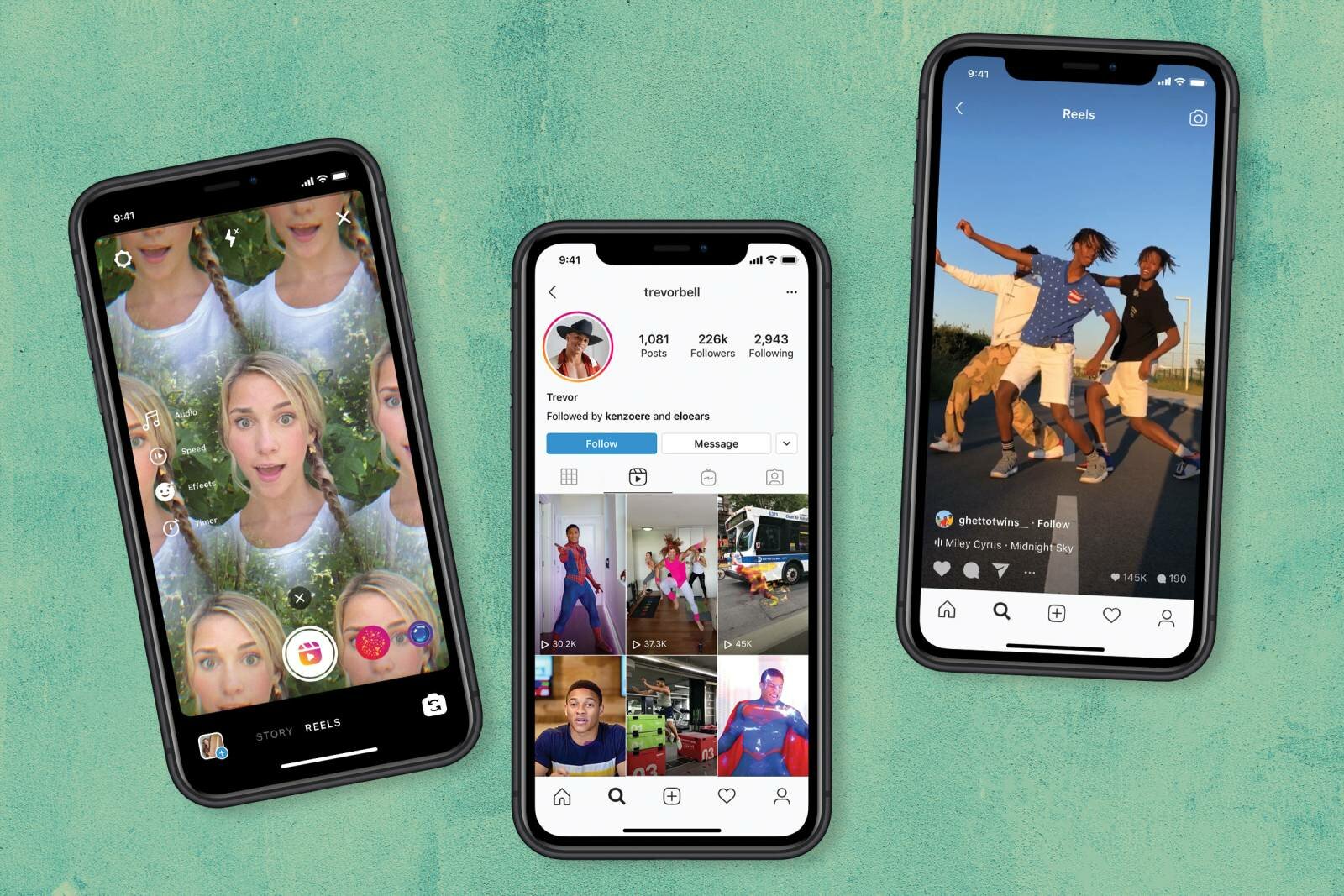
You need more content. I made a note to increase your content by an order of magnitude. Like I said before, Facebook and Instagram burn cheap gas, which means you need to start filming and creating content in batches.
That’s going to be critical. Dig into hashtags and location tagging. Start or continue story sharing reciprocity, you share their stories, they’ll share yours. That’s just an idea of reciprocity in terms of networking on social. It is a social network, comment, share their stuff and they’ll do the same for you. Lastly running Instagram promos and then boosting your Facebook posts.
Don’t be afraid to put some money behind your best content, so use the promote button on Instagram, use the boost button on Facebook.
Use the old, “This is Dennis Yu’s Dollar a Day method.” Which basically says everything you post on Facebook, just spend a dollar for seven days and see how it does basically with a low spend, and should I promote that content further?
That way what’s happening is you’re paying Facebook and Instagram to show your content to a wider audience. This means if the content is good and if their algorithm is working effectively, they’ll choose to follow you.
I have a client who she’s got like 18,000 followers. How did she do that? She promoted every post for five bucks or something.
Buy your followers, but you’re buying them in the best way possible.
Contribute to key Facebook groups. Go live on Instagram with influencers because when they go live with you, it notifies their followers, and then you get floor time with their followers.
If there’s an agent that’s got a good following, go live with them. Use your email list. You should be promoting your content through your emails. You should be paying attention to the analytics and insights on Facebook and Instagram in terms of when to post content.
You’ll get all the content there. In your stories, use the clickable stuff, the yes-no polls, the AMAs, the slider scales.
Anything interactive, use that tag your location. That’s going to help your stories go to a farther, wider audience. Stop phoning in your captions, get serious about your captions. They need to invite a conversation.
Your video thumbnails need to look good and pretty. That needs to be standardized. I would encourage if you want to get serious about content, hire a graphic designer to say, “Build me the templates that I can just rinse and repeat.”
That’s what the Farrs meant, build me the templates, put them in Canva and I’ll rinse and repeat all the live long days. Then the rest is there some other odds and ends, but I just think it’s a matter of, A, your content is the most important thing.
So don’t be stuck on the idea of I have to create content for every platform.
I’m going to create my content and I’m going to distribute it across my platforms. But if I choose to be active on a platform, then I must be active. I get less out of LinkedIn because I don’t work LinkedIn. I get more out of Instagram because I work at the most. That’s just the way the cookie crumbles.
Trevor:
One thing on that too, if that is going to be your active social channel and you’re not active on there, what happens when your prospects see it and they go, “Shoot, that person must not really be doing a lot of things or whatever it is.”
Jason Pantana:
Yeah.
Trevor:
Dude, we’re right up against the hour, and I appreciate you spending time with us. Like I said, the energy that you put out into the market, absolutely love it. One of my favorite core values here at Carrot is “Be a Beacon of Positivity & Possibility.”
You embody that, Tom embodies that, so I appreciate you guys doing what you do in the real estate space. Not just teaching tactics and strategy, which is very important, but the mindset behind it, the energy behind what agents do is not just listing and selling properties, it’s actually serving people.
You guys really serve the community well, man. So I appreciate you spending the time with us.
Jason Pantana:
Thank you for having me. It’s been a blast. I look forward to connecting with everybody else online, and we should do a follow-up part two on this at some point about the market matchmaker stuff.
Trevor:
That’d be killer. Now, I’m going to wrap with this right here. That’s a great segue is we have a lot of investors and agents, and we’ve got about 8,000 customers here at Carrot, about 7,500 or investors, about 600 or so are agents. We’re building the agent side of it, and here’s the thing, y’all.
The reason I say that is this, is I really believe we’ve been saying it for three years and now it’s accelerating. The retail side and the wholesale side are scrunching together, and you’ve got the iBuyers in the middle that have pulled it a little bit faster.
The better that you guys and girls, whether you’re an agent or an investor, can serve your sellers and your buyers, the better you can serve them. With not just building the authorities the way that we get in front of them and we build the trust, the way we build the credibility is crazy important.
But the way that we serve them is going to be really, really important moving forward. Are we truly serving them with the options that sellers, all the options that sellers have so we can compete against the iBuyer, so we can compete against the other agents that actually are making offers.
Then on the other side of it, y’all, is on the evergreen side, take everything that Jason said here and implement it, deploy it to build the authority, to build connections, to pull in people.
Because this is where you get the relationship. You don’t build a relationship from a Google or from a blog post on your website. You build authority there, you could build relationship. The relationship is right inside of this phone. It’s on your Instagram, it’s on your Facebook.
So mix the two worlds, y’all, mix your social and building authority through that. Take that content as we teach, put it onto a Google, put it onto YouTube to build evergreen, and it’s going to be an amazing, amazing match right there.
I appreciate you coming on here. Let’s connect for sure after this. Guys and girls, we’re going to post up his Instagram handle again. But just go follow him, Jason Pantana.
Go follow Tom Ferry as well. Whether you’re an investor or an agent, you guys should follow them.
Unlock Your Instagram Marketing Knowledge
Learn everything that Real Estate Agents need to know to get started with Instagram marketing.