Author: migrate

  • Real Estate Branding [5 Smart Ideas + Examples]

    Real Estate Branding [5 Smart Ideas + Examples]

    What makes your business different from any other real estate agent in your city? 

    How you answer this question and communicate what makes you unique is incredibly important. Real estate branding is vital for attracting and retaining clients.

    Your real estate branding aims to clearly and consistently communicate the experience and services you provide- visually, textually, and in person. 

    Without good real estate branding, you risk being just another agent, lost among hundreds of other agents trying to market their real estate business.

    Today, we’re highlighting a collection of the best real estate branding ideas. Check out these examples, see what these brands are doing right, and consider how your branding holds up to the competition. Ask yourself, is my business a brand?

    And remember, buyers and sellers are much more likely to choose a brand they connect with over a generic alternative.

    How Are You Branding Your Real Estate Business?

    At first, maybe that seems like a simple question. You choose some colors and some fonts, pay someone to design a logo or use a logo generator, and then build your website.

    Voila!

    But it’s not that simple…

    Every color, font, and logo communicates something about your brand. If you don’t choose those elements carefully, you might send messages you don’t want to send.

    And this guide will show you how to brand your real estate business effectively, whether you’re an investor or an agent.

    Before we dive into the five steps, though, let’s talk about why branding is vital for your real estate business.

    Why is Real Estate Branding Vital For Your Business?

    To understand why branding is important for your real estate business, you first have to understand what a brand is.

    So what is a brand?

    We like the way that Wikipedia defines it…

    “A brand is a name, term, design, symbol or any other feature that identifies one seller’s good or service as distinct from those of other sellers.”

    In other words, it’s an identity.

    Business owners create brands because it helps consumers quickly and easily identify their goods and services. It also helps its target market build a relationship with its business and identify with its mission and vision.

    Think about it — if Nike had a different logo and color palette with each of their marketing campaigns, it’d be challenging to know what advertisements and products were actually from Nike.

    This ad by Nike shows the advertising element of Headline. The ...

    Brands encourage consumers to personify businesses and attribute their human qualities and beliefs.

    For example: what feelings and thoughts come to mind when you think of these businesses?

    • Nike
    • John Deere
    • Home Depot
    • Amazon
    • Google

    Those are just names of big businesses.

    But each one creates a feeling (positive or negative, depending on the person).

    Maybe you like Amazon, Google, and Nike. That’s probably because you’re their target market, and they’ve created a brand that mimics your internal beliefs. If you don’t like those companies, then you’re probably not their target market.

    Or maybe you respect John Deere and Home Depot.

    The point is you like what you like because of the branding you’ve seen.

    It’s not an accident — it’s intentionally engineered into the company’s marketing resources and advertising campaigns to make consumers feel a certain way.

    That is the power of a brand.

    Consider some of these statistics

    • 86% of consumers say authenticity is important when deciding what brands they like and support.
    • 81% of surveyed consumers said that they need to be able to trust the brand to buy from them.
    • Using a signature color can increase brand recognition by 80%.
    • It takes about 50 milliseconds (0.05 seconds) for people to form an opinion about your website.
    • A consistent brand presentation has been seen to increase revenue by 33%.
    • 66% of consumers think transparency is one of the most attractive qualities in a brand.
    • Two-thirds (64%) of consumers worldwide said they would buy from a brand or boycott it solely because of its position on a social or political issue.
    • 73% of consumers cite customer experience as an essential factor in purchasing decisions.
    • 77% buy from brands that share the same values as they do.
    • 79% of people say that user-generated content highly impacts their purchasing decisions.

    Now let’s answer the all-important question.

    Why is it important to brand your real estate business?

    Because it builds trust, it builds authority, and it helps lead generation.

    Real Estate Branding Questions You Need To Answer Before Starting

    Evaluating your personal life and business while considering your real estate branding is essential.

    Ask yourself some questions while creating the real estate business that fits you.

    Here are some examples.

    What Are Your Goals?

    • How do you want your workday to be structured?
    • Where do you want to be in 5 years?
    • Do you want to be part of a real estate team or own your real estate business?
    • Do your personal goals fit your business goals?

    Who Are You Helping To Reach Those Goals?

    • What is the mission of your real estate business?
    • What are people saying after they do business with you?
    • How have you impacted your community?

    How Are You Helping Your Clients?

    • How can you make the buying or selling process easier?
    • What do your clients care about? How can you help to give them achieve that?
    • Are there ways to help save them time? Money?

    Now that you’ve answered some questions, it’s time to walk through the five steps to branding your real estate business.

    Step 1. Create Your Core Values, Mission, and Unique Selling Proposition

    Before you design a logo or choose colors and fonts, you must clearly understand your core values, mission, and USP.

    Remember: a brand isn’t just a random jumble of visual elements. It’s meant to express the identity of your business in a way that attracts your target market.

    So list out the following information.

    • Mission — This is the primary reason that your business exists. Ideally, this reason should be something that resonates with your target market. Maybe it’s to make the world a little bit better by passing 5% of your profits to charity. Or maybe it’s to bring honesty and transparency back to the real estate world.
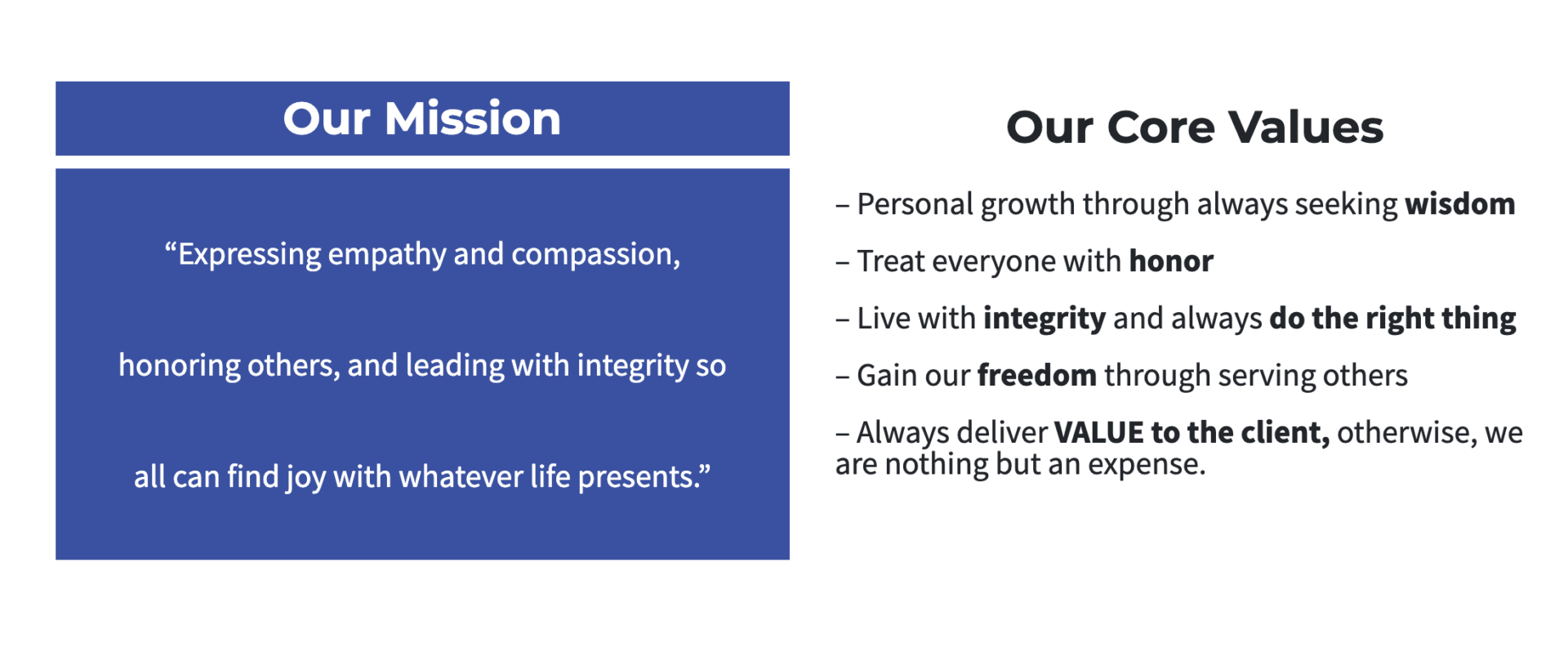
    • Core Values — These are things your business cares about more than anything. For example, maybe you want to provide exceptional service with positivity and optimism. Or maybe you want to use some of your revenue to help support a specific charity. Here’s an example from Townsend Realty Group
    Real Estate Branding - Core Values
    • Unique Selling Proposition — This is why people will choose to work with you instead of another company. This is what makes you unique. Maybe you can close faster than competitors. Maybe you’re more personable. Maybe you sell houses at a specific price point. Check out the selling proposition from the The Beckham Group below…
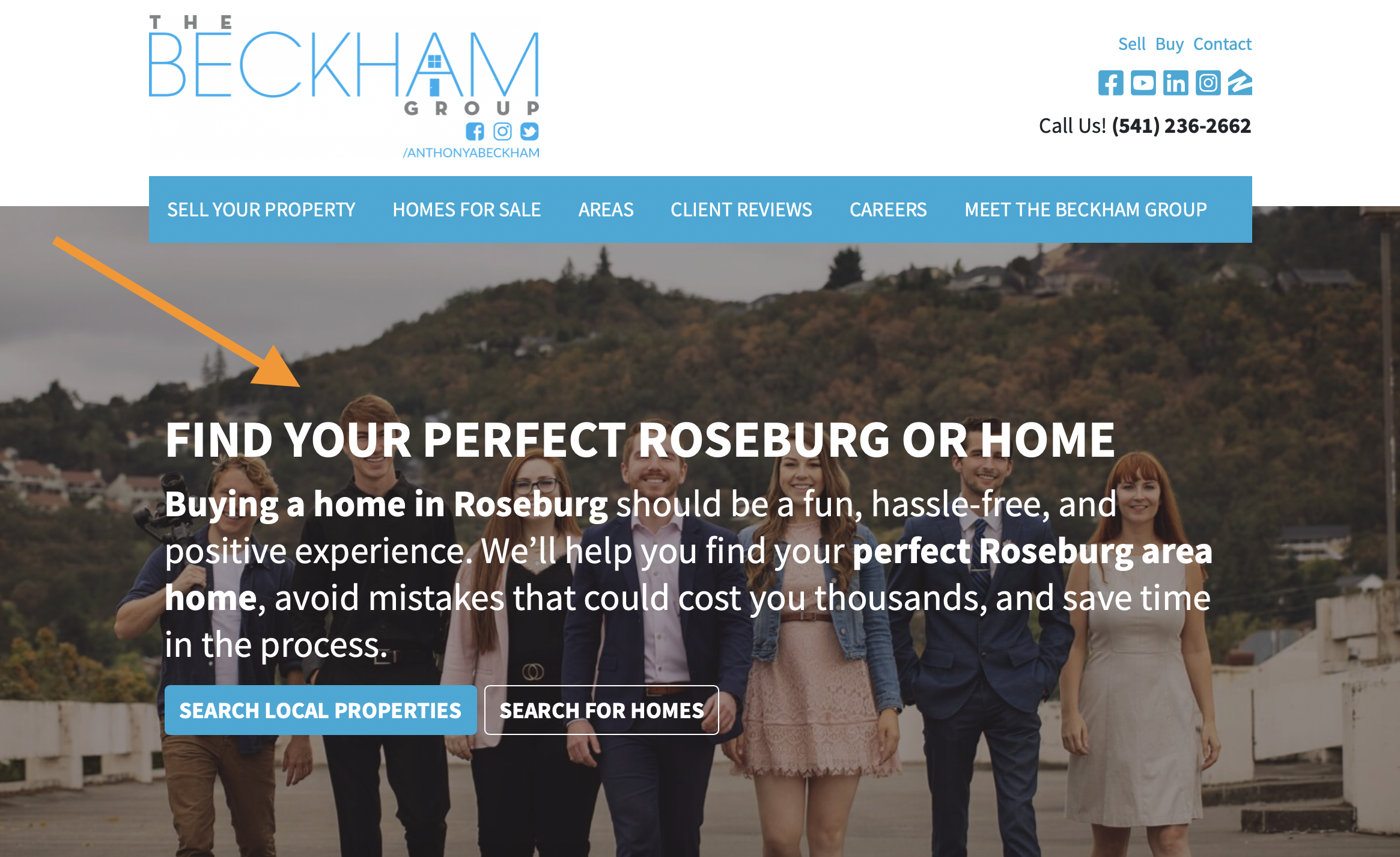
    Beckham Group real estate use

    Once you know these three things for your business, you can start creating a brand to reflect those ideas and beliefs.

    First is choosing your brand colors and fonts.

    Step 2. Choose Your Brand Colors & Fonts

    Choosing your brand colors and fonts might seem like a tall order.

    Technically, there are 10 million different colors and about 300,000 different fonts.

    So… how do you make a choice?

    Well, here are a few tips…

    • Choose Colors Carefully — The most prominent colors in real estate logos are blue, red, black, green, and orange. The brain associates these colors in different ways. Blue brings a feeling of stability and reliability. Red sends the strongest emotions. Love, passions, and power. Green is calming and settles minds with ease. Orange communicates a feeling of excitement, enthusiasm, and warmth.
    • Stick To The Same Color Tones If one or more of your colors are light, keep all of them on the lighter side. If you design dark shades, create the rest of your pattern or image in the same style. This makes for an aesthetically pleasing image. It will remind your clients of your real estate business when they see it.
    • Use These Tools — You can use Coolors to generate free color palettes for your brand. And check out this guide to choose a font that fits your business, or use Quicktools to copy and paste fonts for easy font selection.

    Step 3. Design Your Real Estate Branding Elements

    Now that you’ve chosen brand colors and fonts that reflect your vision for your business, it’s time to design your actual branding elements.

    These are the graphics that you’ll use to identify your brand.

    That includes logos, images, and other graphics you think you’ll need.

    Many businesses choose to create different versions of their logos for different platforms.

    At Carrot, for example, we have a logo that includes the word “Carrot” and a version that just includes the graphic.

    (You can see all of our branding guidelines over here… check it out for inspiration)
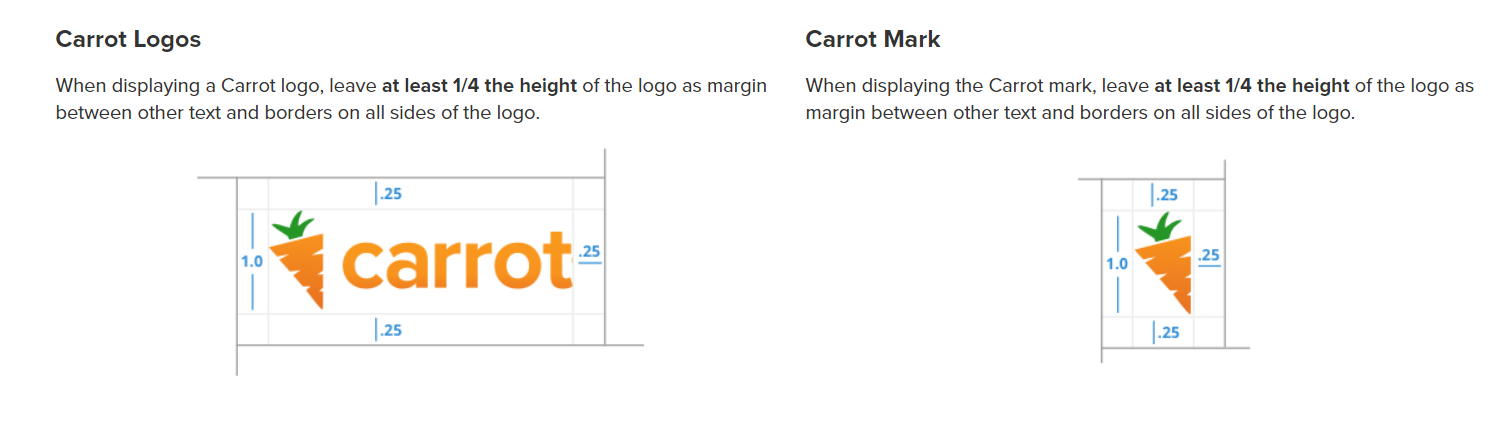
    Your logo is probably the most crucial part of your real estate branding elements.

    It should go at the top of your website, in your emails, mailers, and everywhere else you market your services.

    And to be honest, a logo is probably all you need to get started in terms of graphical elements.

    You can always create other graphics down the road.

    Oh — and make sure your logo uses brand colors and fonts.

    But how do you create your logo and other branding elements?

    Well, you have two options.

    You can do it yourself using a tool like Canva.
    Or you can hire someone else to design your logo on UpWork or run a contest on 99designs where multiple graphic artists create logo mockups, and you choose your favorite.

    When you download your logo, ensure you can get several different file types, including PNG, SVG, and PDF.

    If you need logo ideas, here are some questions to get you thinking…

    • What’s a visual metaphor for how your business is making a positive impact?
    • How can you express your mission and vision in a logo?
    • How can you express your unique selling proposition in a logo?
    • What simple but attractive logo will work for now.

    The key here is at least partly not to overthink it.

    A logo is used to identify your brand, and while creating the right logo is important… just having a logo is more important.

    And you can always change your logo down the road if needed.

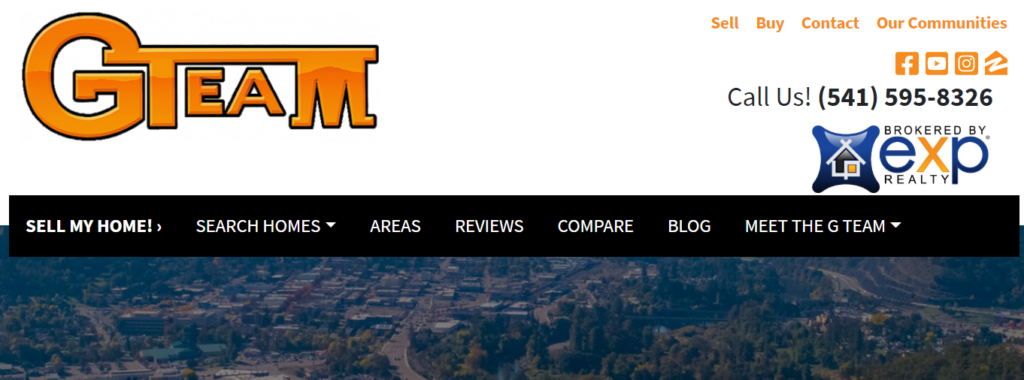
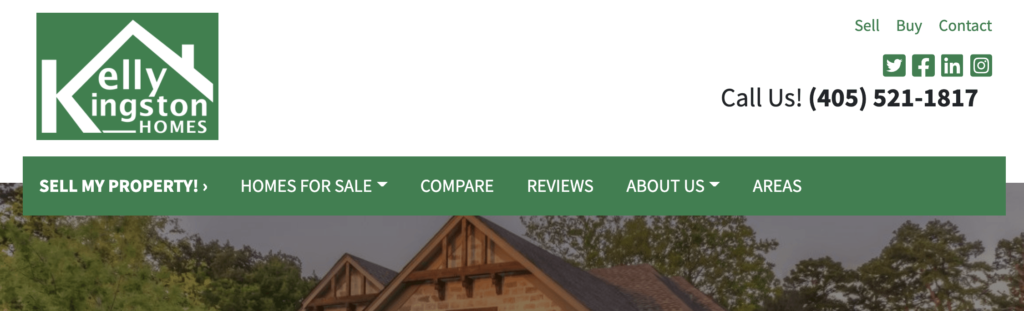
    For inspiration, here are a few of our favorite logos from our members…

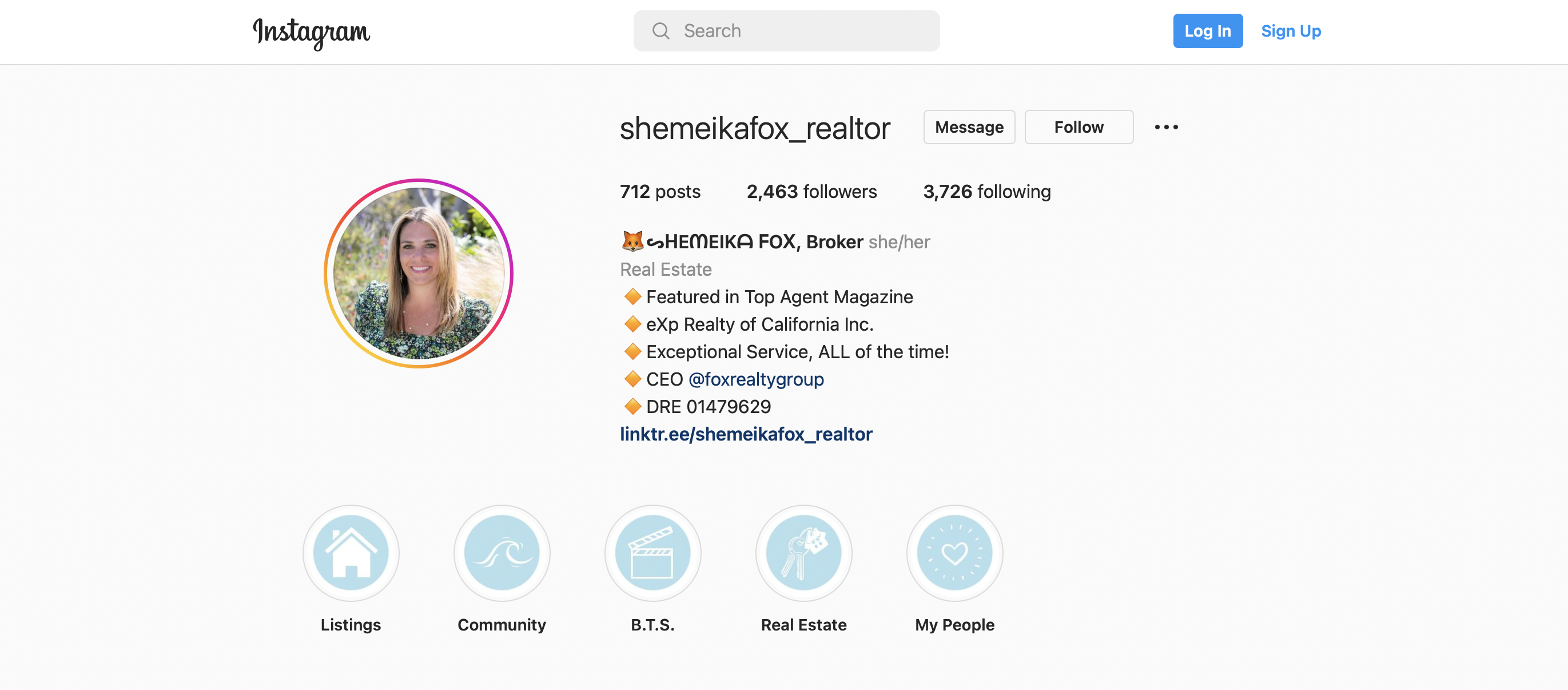
    Shemeika Fox

    The G Team

    Kelly Kingston Homes

    Step 4. Brand All Of Your Content & Profiles

    Now, it’s time to brand all of your online assets.

    The first thing to focus on, of course, is your website.

    Branding your website is super easy if you’re a Carrot member. You can quickly and easily upload your logo and update the colors and fonts on your site.
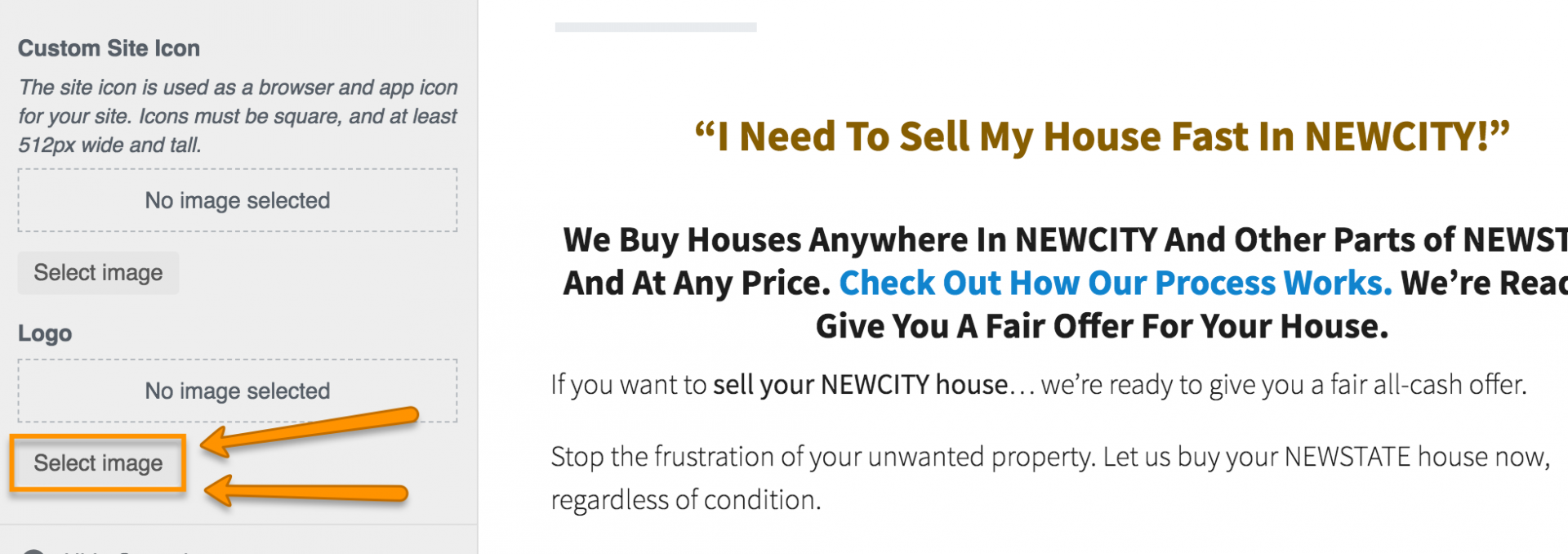
    If you’re already a Carrot member, then click here to view our full branding guide.

    (Not a Carrot member? Click here to check out our plans!)

    The next step is to add this logo to your social media profiles. You’ll want to use your logo as your primary profile picture on your business pages.

    Here’s another example…
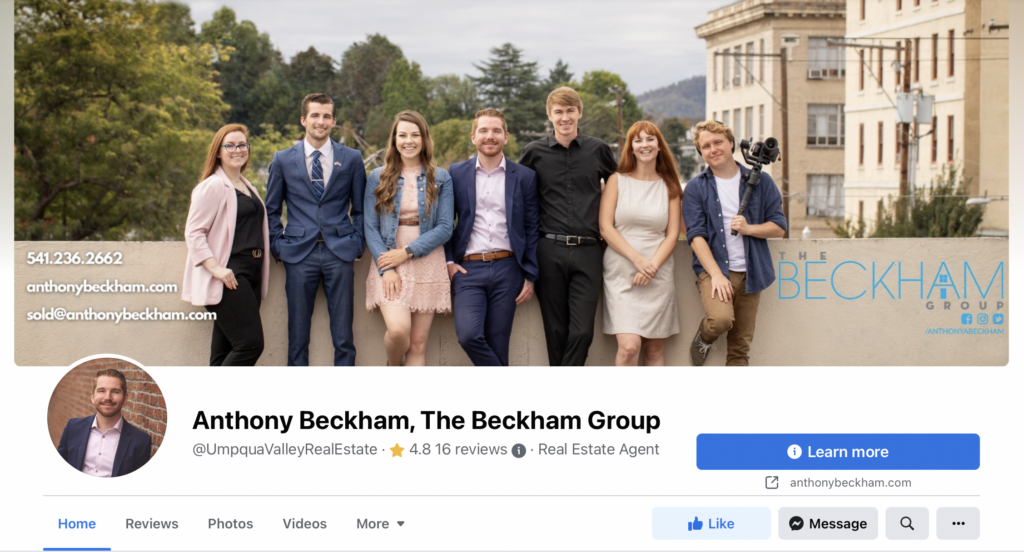
    Beckham Group Facebook Branding
    real estate branding on Instagram

    And here’s what it should look like on YouTube…
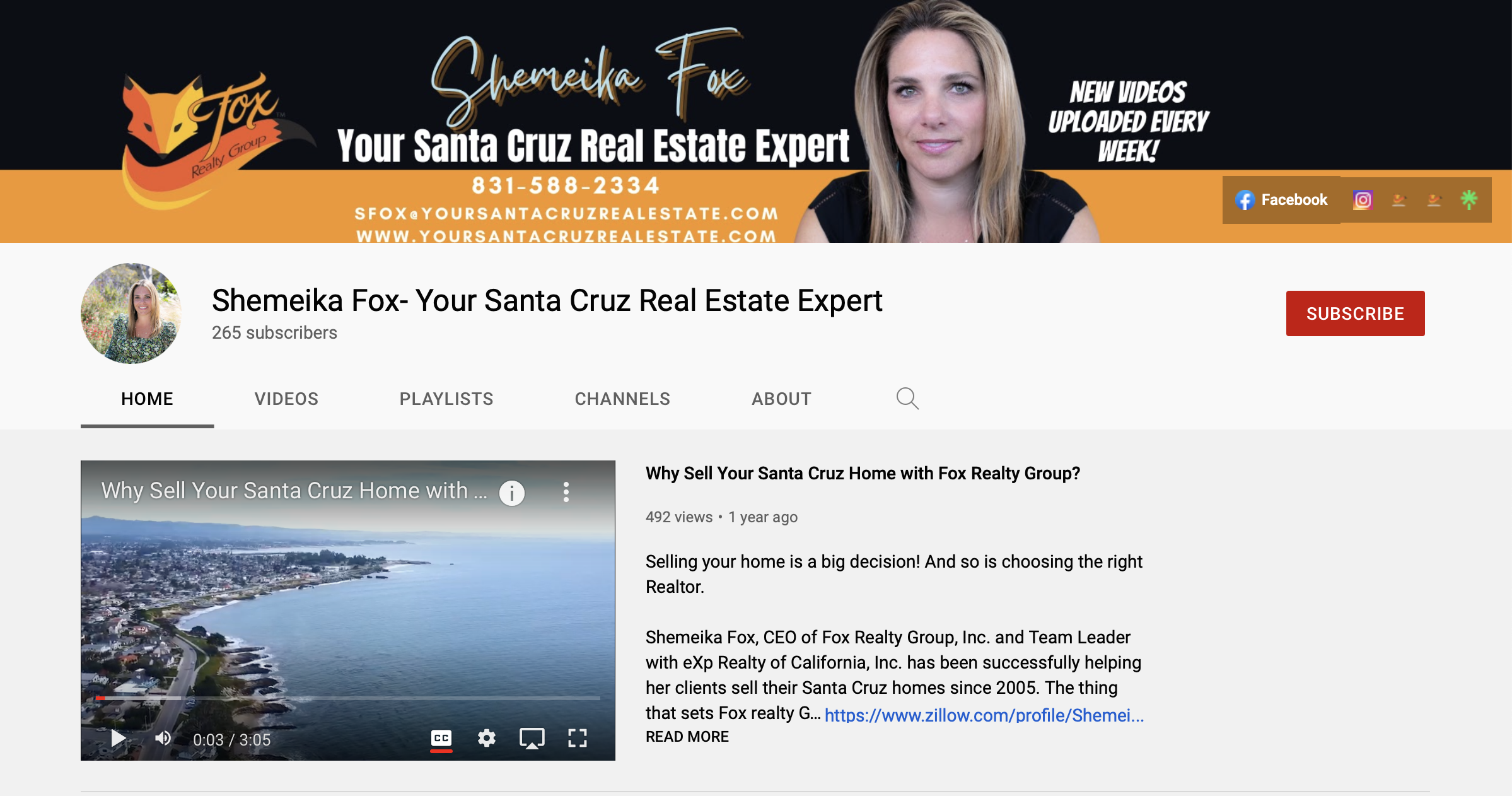
    real estate branding on YouTube

    Notice how the Fox Realty Group creates a consistent feel across all of their online platforms?

    That’s the ultimate goal.

    You want people to be able to quickly recognize your business, no matter where they see it.

    Ideally, this should also apply to your physical marketing campaigns—mailers, business cards, T-shirts, bandit signs, etc.

    Fox Realty Group also puts its logo straight into some of its content.

    For example, on their Instagram page, their logo is sitting in their “Just Sold” bubbles.
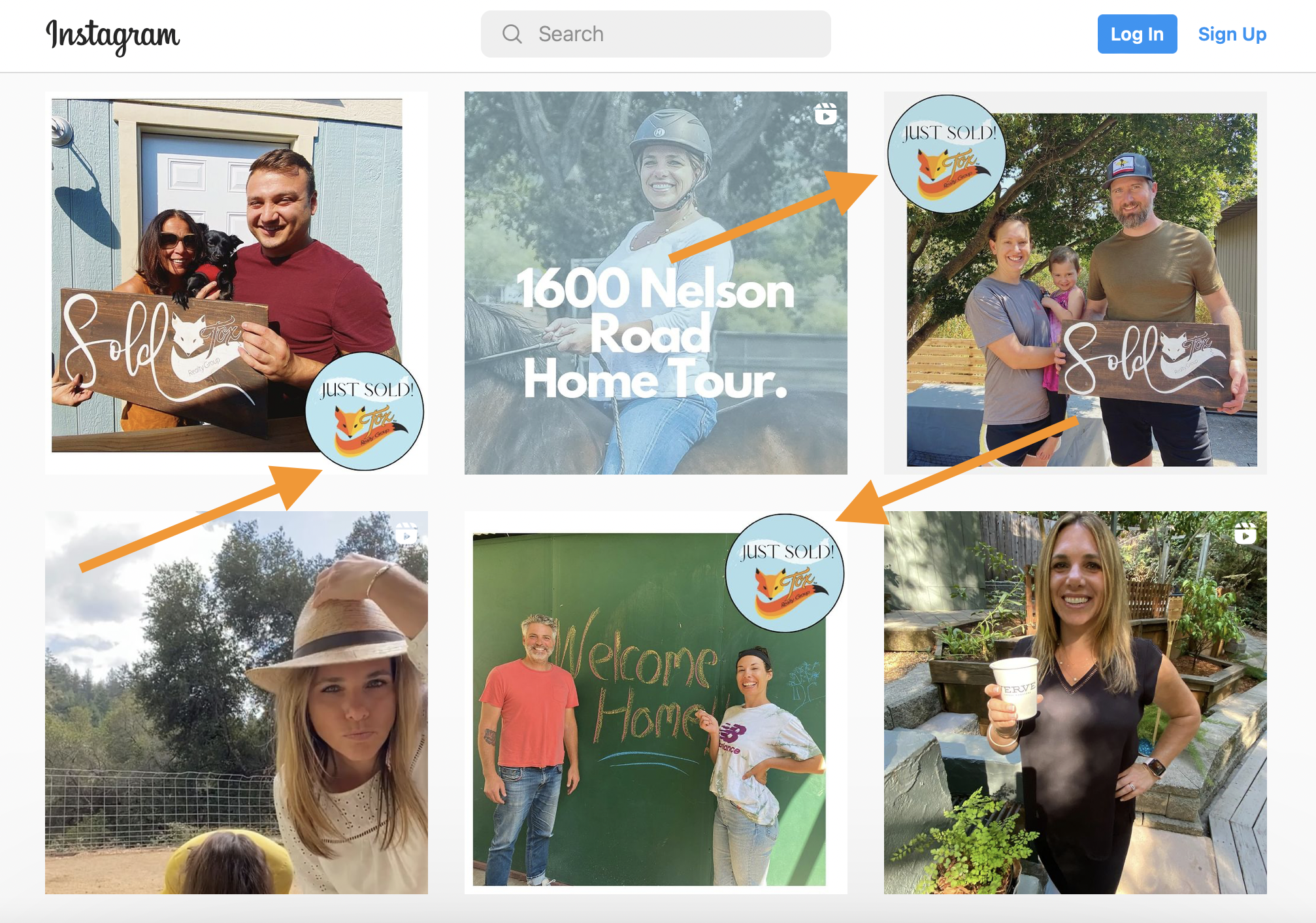
    real estate branding on social media

    You might even consider putting your logo at the top or bottom of your email marketing campaigns so that recipients can quickly identify your business.

    As a rule, there’s rarely a bad time to use your logo.

    The more people see it, the more they’ll relate it to your brand, which is exactly what you want.

    Think of some of your favorite companies… when is their logo not on their marketing materials?

    Yeah… pretty much never.

    Step 5. Create an On-Brand Sales Funnel

    What good is real estate branding or marketing materials if they don’t generate leads?

    Remember: the ultimate goal of all of this is to grow your business.

    And one of the most important parts of growing a successful real estate business is lead generation.

    You need to generate high-quality leads consistently every single month.

    Specifically, leads that turn into revenue for your business.

    So how do you do that?

    Well, running advertisements and sending mailers consistently is the first step. This will generate attention and drive your target market to your website.

    But the next question is whether your website does a good job of converting that traffic into leads or not…

    Because if it doesn’t, then your advertising budget will be wasted.

    Be sure to choose a high-converting real estate website template, customize it as you like, drive traffic, and collect leads.

    With Carrot, it’s really that simple!

    Conclusion

    You’re now ready to create a brand for your real estate business.

    But remember that the brand you choose now doesn’t need to be the one you have later.

    This is just your starting point. As your business evolves, your brand will likely evolve as well.

    And that’s okay.

    My friend once said that if you get to the point where you have to rebrand your business, you’re probably in a stronger position anyway!

    Use this guide as your starting place, get some deals or closings, and stay flexible.

    We’re excited to see where your business takes you. :)
  • [Updated Data – August 2020] How Has Lead Generation Changed During COVID-19 for Real Estate? – Exclusive Data and Action Plan

    [Updated Data – August 2020] How Has Lead Generation Changed During COVID-19 for Real Estate? – Exclusive Data and Action Plan

    How Has Lead Generation Changed During COVID-19 for Real Estate?

    The COVID-19 crisis is impacting all of us in some way, shape, or form. So what I wanted to dive into is what data we have in our system with over 10,000 real estate investor and agent websites.

    What data are we seeing right now and how the lead flow has been impacted by COVID-19 for real estate buyers and sellers?

    [Updated August 6] New Data Pointing to Conversion Rate Increases

    New Research

    There has been a clear shift towards new lead generation, and how our members are acquiring those in the past two months during the COVID-19 pandemic.

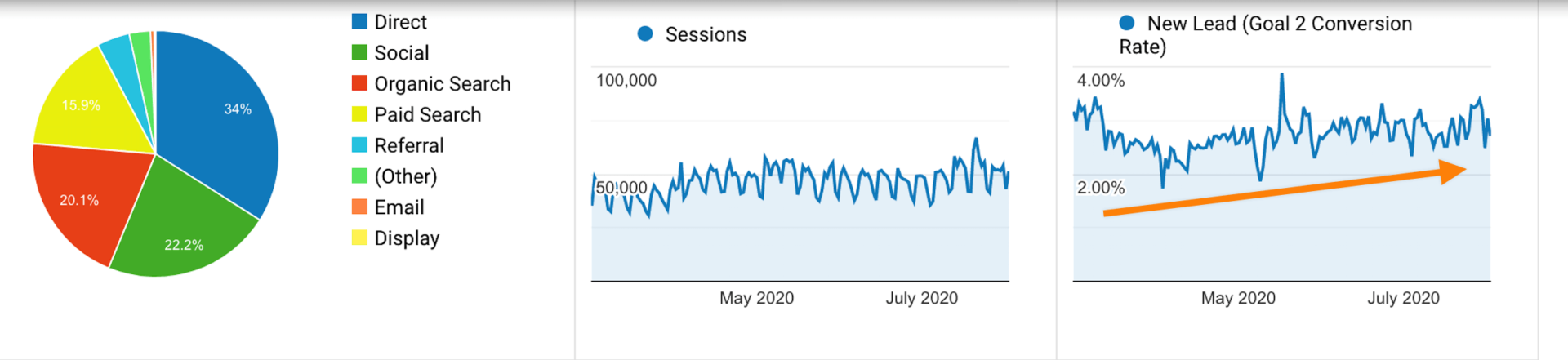
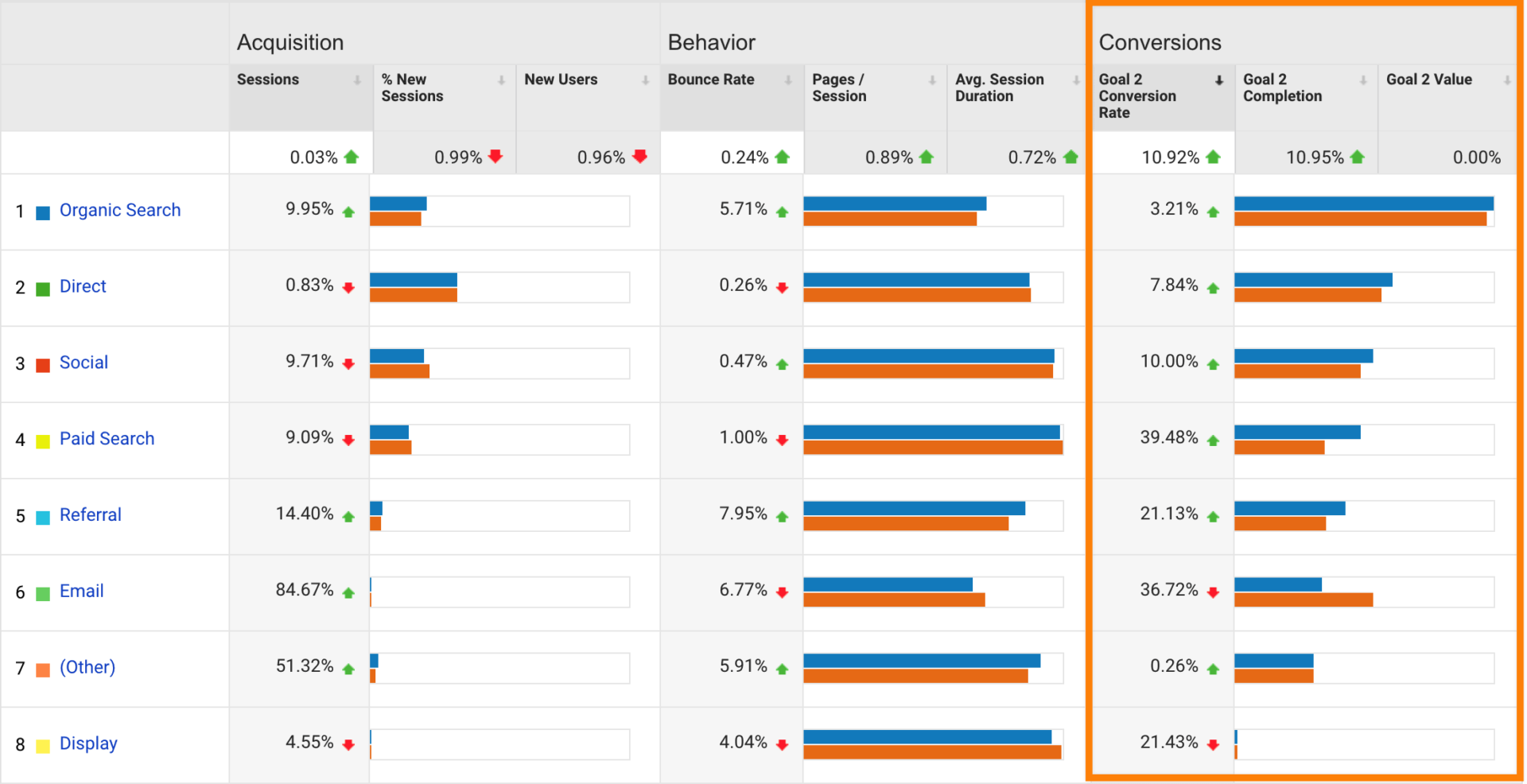
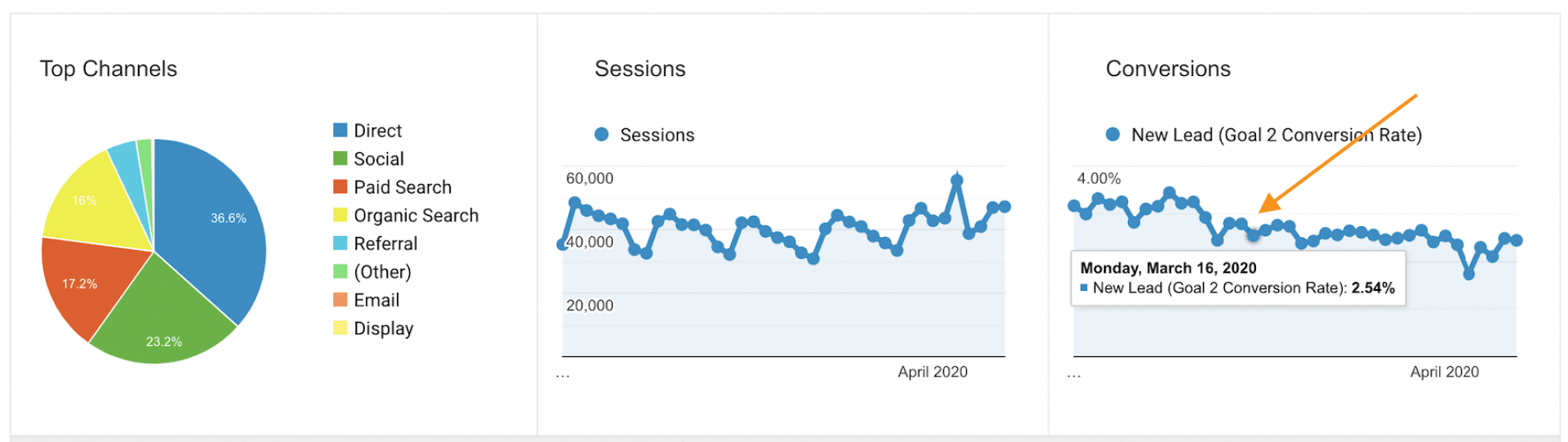
    According to our Google Analytics data, when comparing April and May to June and July, there has been a conversion rate increase of 10.92%.

    Paid Search has seen the largest shift, jumping 39.48% over the past two months. Compared to what we reported in April, it seems paid traffic has begun to normalize.

    Sessions are coming down as more people are feeling confident in the house selling process.

    Here are the numbers for the eight common channels:

    • Organic search: 3.21% increase
    • Direct: 7.84% increase
    • Social: 10% increase
    • Paid Search: 39.48% increase
    • Referral: 21.23% increase
    • Email: 36.72% decrease
    • Other: 0.26% increase
    • Display: 21.43% decrease

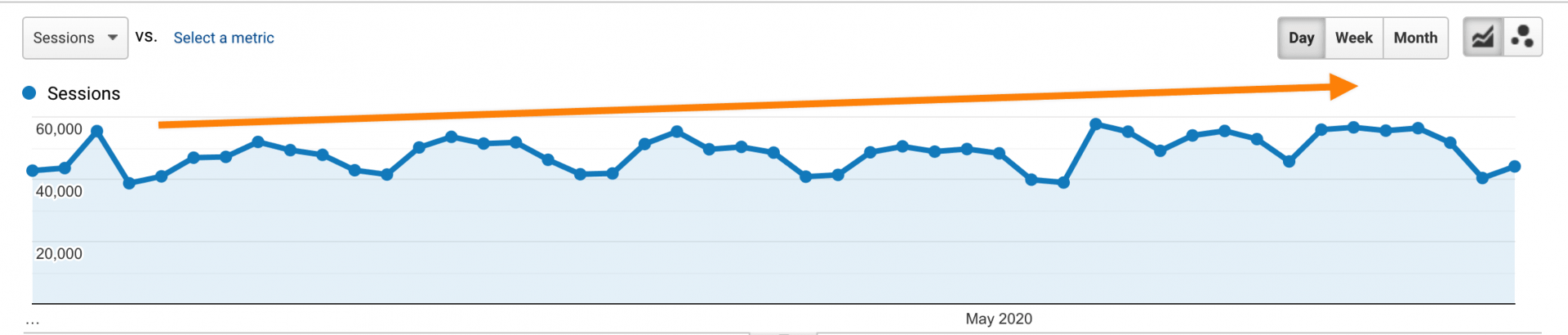
    In May, our data was showing sessions steadily increasing:

    We also saw conversion rates have begin to increase since a dip in mid-April:

    Here’s what one Carrot member said recently…


    Some of the main changes we’re seeing are:
    • Overall traffic from all sources has continued to increase week over week… meaning there is more demand right now for buyers and sellers needing solutions to their problems than before.
    • Conversion rates stayed low for a few weeks but are now on the uptick as the overall sentiment in the US is improving and people are starting to get out more.
    • Predictions: I predict once the stay at home orders lift we’ll see conversions go up above where they were for a short period then settle into normal zones.
    • Double down on why it’s important to NOT stop your marketing even if lead costs are higher from lower conversion rates… because the people are still searching… so you need to be getting content in front of them NOW while they’re researching and followup w/ them through retargeting so you’re in front of them when they’re ready. This should create a surge in demand once stay at home orders lift… but only those who stayed in front of the market will capture that demand.

    Additional COVID-19 Articles:


    I pulled up our own Google Analytics account, which is a master account for all of our member websites that are generating the top rankings in Google for motivated house sellers.

    So we have crazy, crazy cool data from every major market in the country.

    The first thing to notice is a report from March 1st through the time that I’m diving into this data, which is April 7th.

    Number one, we’ve reported this data in the past, Monday’s tend to be the hottest time when your sellers and buyers are hitting the internet to search.

    Now this includes Google searches. It does include some direct search, where people are typing your URL directly, but mostly Google search and Google pay per click. When people have that pain point the most, is your Monday or Tuesday.

    Monday and Tuesday have the highest demand for searches.

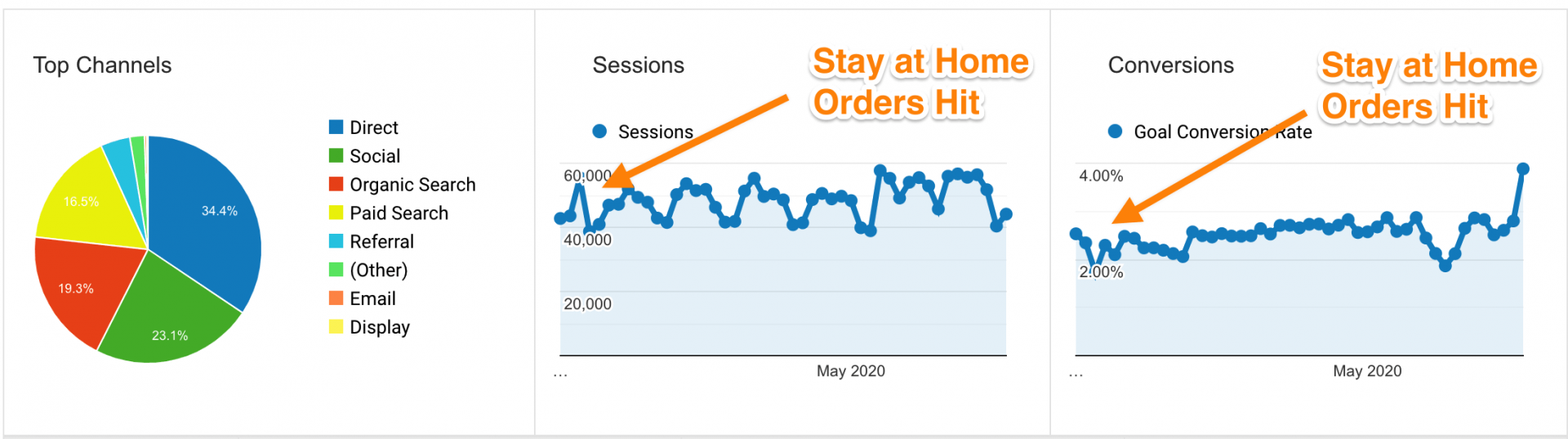
    Now here’s one thing that we saw as soon as the stay-at-home order took place in most of the cities around the country in early to mid-March.

    Image Explained:

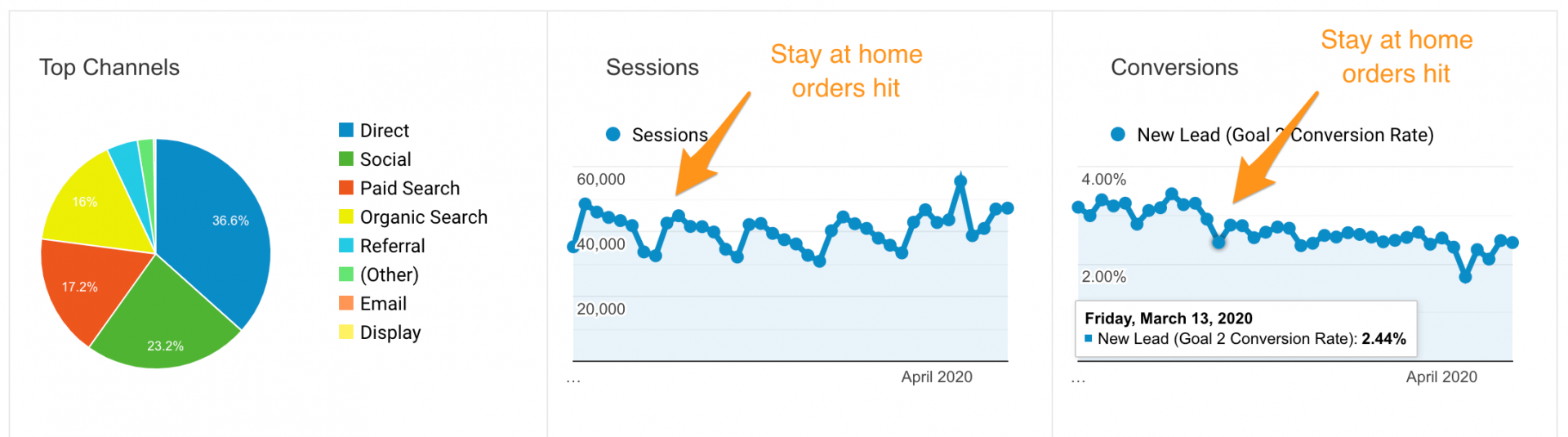
    From March 1st – April 7th. On the right, sessions are “visits to our member’s sites” from sellers and buyers. Notice only about a 10% dip for a couple of weeks then it’s climbed back to normal numbers by April 1st.

    On the left, is the conversion rate on that traffic. While the traffic remained essentially the same… buyers and sellers are STILL searching for solutions. Some of them aren’t submitting their contact info because they’re unsure how to buy or sell during the Coronavirus stay at home orders.

    This EQUALS a huge opportunity.

    While you may be seeing your conversion rate dip on your marketing, the SEARCH volume is still there. You need to create content (VideoPost, our automated content, retargeting ads, around how you can help them during COVID still, etc.) and get it in front of them on your site, update your hero section to link to one of our COVID-19 automated articles (Content Pro and Advanced Marketer) and place retargeting content on FB specific to how you can still help them during COVID.


    You can see traffic to our client’s websites, agents and investors, has not really gone down much. There was a slight blip by about 5 to 10% in traffic volume with house sellers and house buyers.

    Now you can see it started to climb back up. So right here at the start of March before the shutdown started to happen, on a normal Monday it’d be just sub-50,000, between 45,000 and 50,000 people hitting our client’s website each day. And then you can see right there, somewhere between that week, week and a half, we started to see that drop-off.

    organic search volume rising after stay at home orders it

    Image Explained:

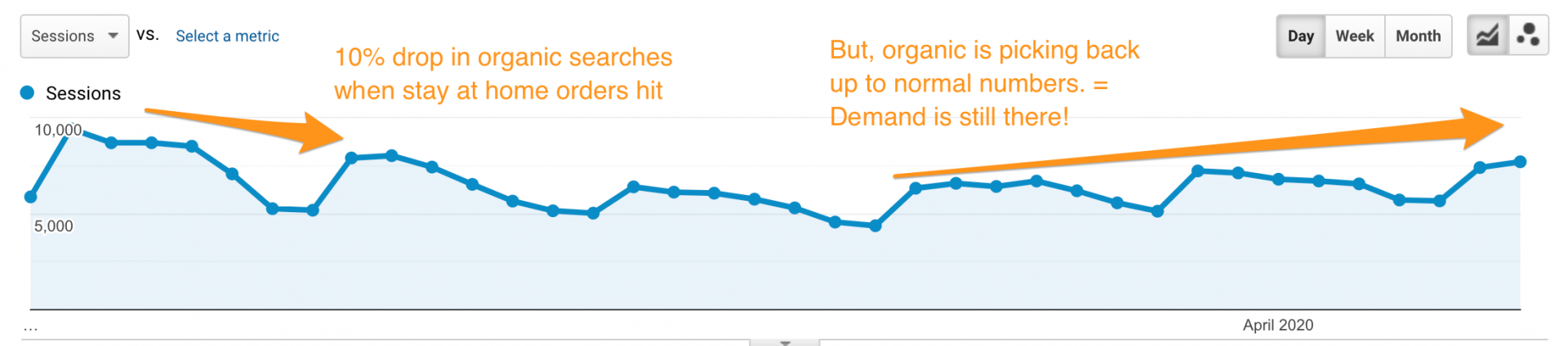
    This is organic traffic (traffic from google searches) from March 1st – April 7th. You’ll notice that initial “shock” of COVID dipped organic by 10% or so the 2 weeks after it hit.

    But, the past 2 weeks of organic traffic is increasing week over week again for motivated sellers and buyers (including land). We see this getting stronger as more sellers have more motivation the longer it goes on.


    Now towards the end of the month and even into the first part of April, we started to see traffic go back up a little bit. We think that that’s probably because that initial fear, that initial, “Hey, let’s wait and see what’s going on,” started to fade off and we came into that new normal.

    Here’s the thing that’s really, really important. That data shows that the traffic really has not gone down in a measurable way from your sellers and buyers.

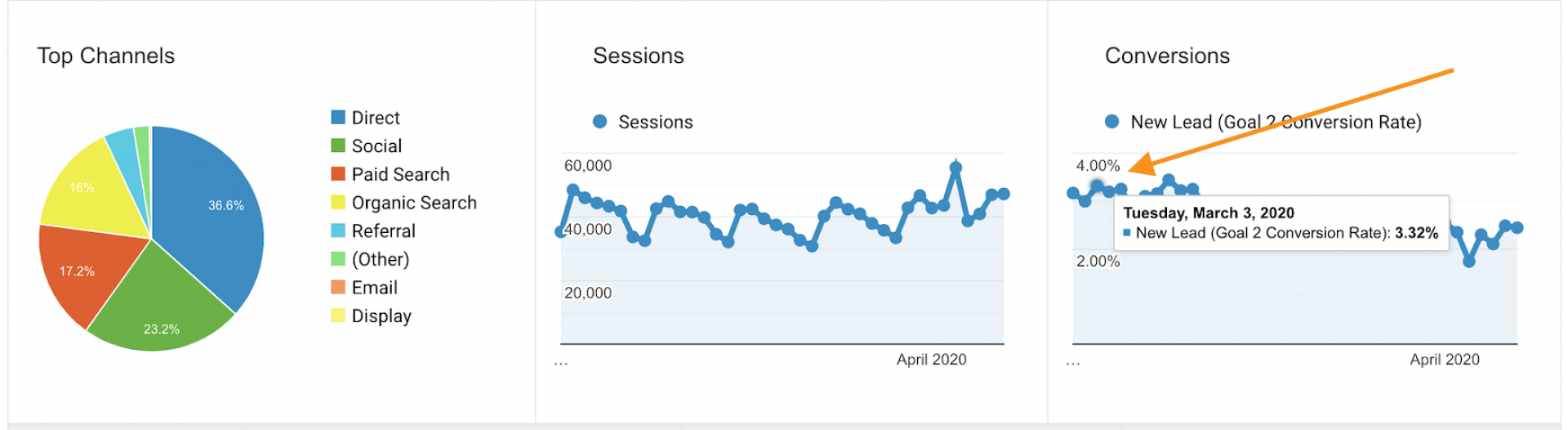
    Now, if I map back to the start of March, the conversion rate of one of our homepages which are geared for lead generation, those range usually between 5 and 25%.

    So when we’re looking at gross conversion rate, that’s all traffic, all sources, any page that they landed on, even non-conversion pages, what percentage of them became a lead?

    Covid 19 conversion rate in March

    And this is a really respectable percentage, between 2 and 4% of all traffic comes to a lead on the Carrot system.

    If you’re driving to a landing page, there might be a 20 to 30% conversion. If you’re driving to a rent-to-own page, it might be between a 30 and 40% conversion rate.

    But here’s what’s interesting.

    Right when the stay-at-home order started to hit around the middle of March, in California and Oregon and Washington and a bunch of other states, conversion dropped off by about 20 to 30%.

    lead volume dip march during stay at home orders

    So what does that mean? If the conversion rate of a website for buyers, sellers, for agents and investors, dropped off by about 20 to 30%, while the traffic of the demand from buyers and sellers didn’t really change much, what does that mean?

    Well, one thing that we’re hearing a lot of, or a good number of even experienced agents and investors say, is you might see your lead cost go up a little bit, possibly.

    Some people are seeing their lead costs down right now because competitors have pulled out of the marketing spaces. You might see your conversion rate of PPC, of SEO, of direct mail, of cold calling, of any of those, you might see that actually go down right now even though the demand is still there.

    What Should You Do Right Now?

    Here’s what I want to give you guidance on. The demand is still here, but many sellers and buyers aren’t sure what to do right now in the midst of the Coronavirus. Do they reach out to you and try to elicit your services?

    Many of them might be nervous about…

    “Well shoot, I don’t want to have someone come to my house right now. Maybe I’ll wait until this is all over.”

    Or, “How can I still sell my house if this person can’t come in?”

    Or, “Where am I going to move if we’re in a stay-at-home order in my state of California?” as examples.

    Direct Action Items

    Here are some direct action items for you right now.

    #1. The demand is still there y’all for buyers and sellers, that’s not going away.

    Actually, even more so you’re starting to see it pick up here and get back to pre-Coronavirus numbers because people are in that new normal. They’re at home on these cell phones and they still have the problem or they have the desire that they’re searching out.

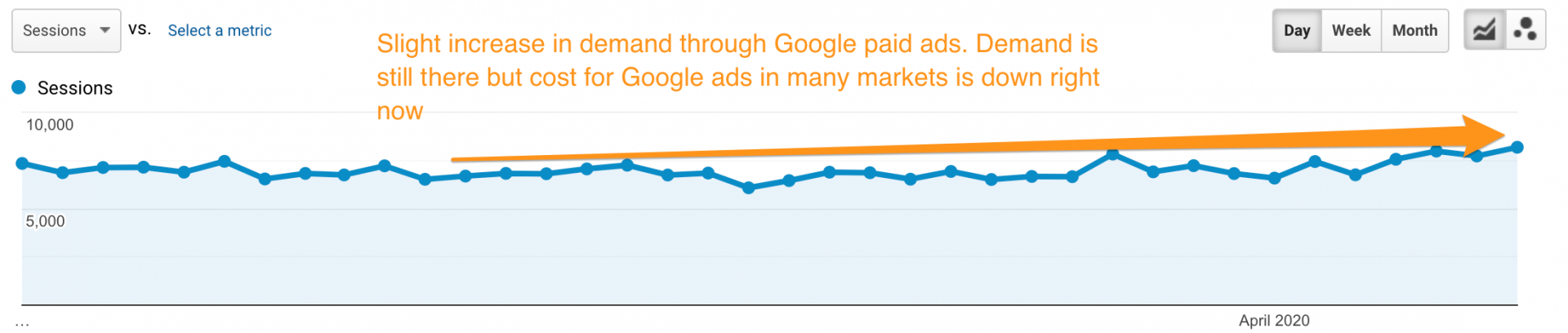
    Image Explained:

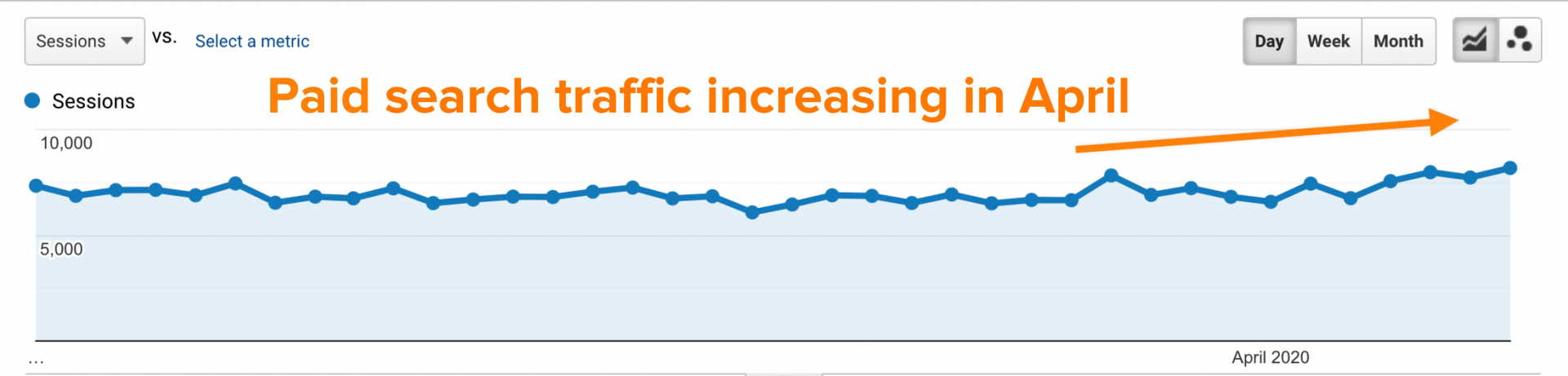
    Paid search-demand through Google Ads hasn’t changed much at all. It dipped less than 3% after the stay at home order… but now is growing to more google ads clicks than before Coronavirus.

    The opportunity here… in many markets we’re seeing paid ad costs dip as less savvy investors or agents pull back their marketing budgets (the worst thing you can do).


    Now, many motivated house sellers actually have even more of a desire and even more of an acute problem because their financial situation might be worse now.

    As an investor or as an agent, you can really step up and help them right now and show them that they can still be helped during this pandemic.

    #2. What can you do if you are seeing a softening conversion rate right now?

    Having a lower conversion is natural right now because of the “wait and see” attitude from some buyers and sellers.

    So what can you do?

    Right now you should be creating more content!

    We talk about that a lot, but you need to be creating content and local authority right now as people are still doing their searches. As soon as the Coronavirus is over and we’re back to life as semi-normal, demand is going to pop back and they’re going to be reaching out to the person or the people that they want to have help them.

    So right now, they’re doing the research. They’re digging in and saying, “Who do I want to work with?” As soon as it’s all over they’re going to be moving fast as a buyer or a seller to solve that problem.

    The way that you become the one that they’re working with is by putting out content, put out VideoPosts on your Carrot website to where it’s a short YouTube video.

    You can do it with your cell phone, talking about how they can still sell their home during the Coronavirus. Do a walkthrough in the house through Facebook, or through FaceTime or Zoom or whatever it is.

    You can still protect their safety and their health. Or if they’re a buyer, how can you start to work with them now to ensure that when they’re ready to buy or maybe they are ready to buy right now, that you can pull the trigger on it?

    If they’re a seller, they might be thinking…

    “Well, you know what, I kind of want to wait to sell.”

    What happens if they wait until everything is back to normal and then reach out to you?

    Then they’re going to be behind the eight-ball by two, four, six weeks, and there’s going to be buyers that are hungry and ready to go at that point and they might miss some of that high demand window to get the most out of their property.

    Talk with them with your content and videos. Put the content on your Carrot site using our VideoPosts feature. Put them on Facebook as retargeting sequences so they can shift they’re thinking into…

    “I’m going to start preparing right now and I can still get this taken care of during the Coronavirus pandemic, and I can work with these investors or these agents even right now and we don’t have to meet in person.”

    🔥 Diving Into More Data 🔥

    Let’s dive into a couple of other cool pieces of information.

    Social Media Traffic Data

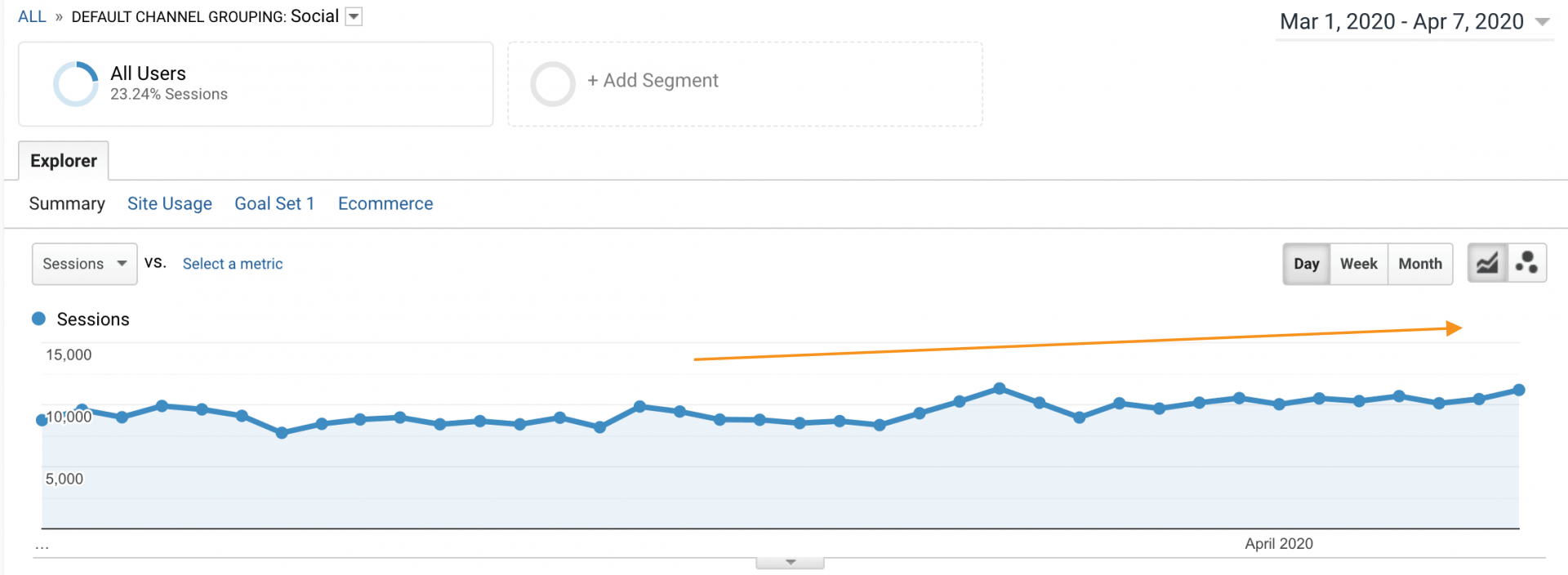
    Let’s hop over to social media. Social media is actually even picked up a little bit. There are a lot more people on your Facebook as well as other social platforms.

    Social Media Growth During COVID

    That’s where you need to be putting those videos about how you can help them during this crisis, or how you can still help them buy or sell. That content needs to be going on social media right now. We’re seeing traffic picking up on social media over the past month.


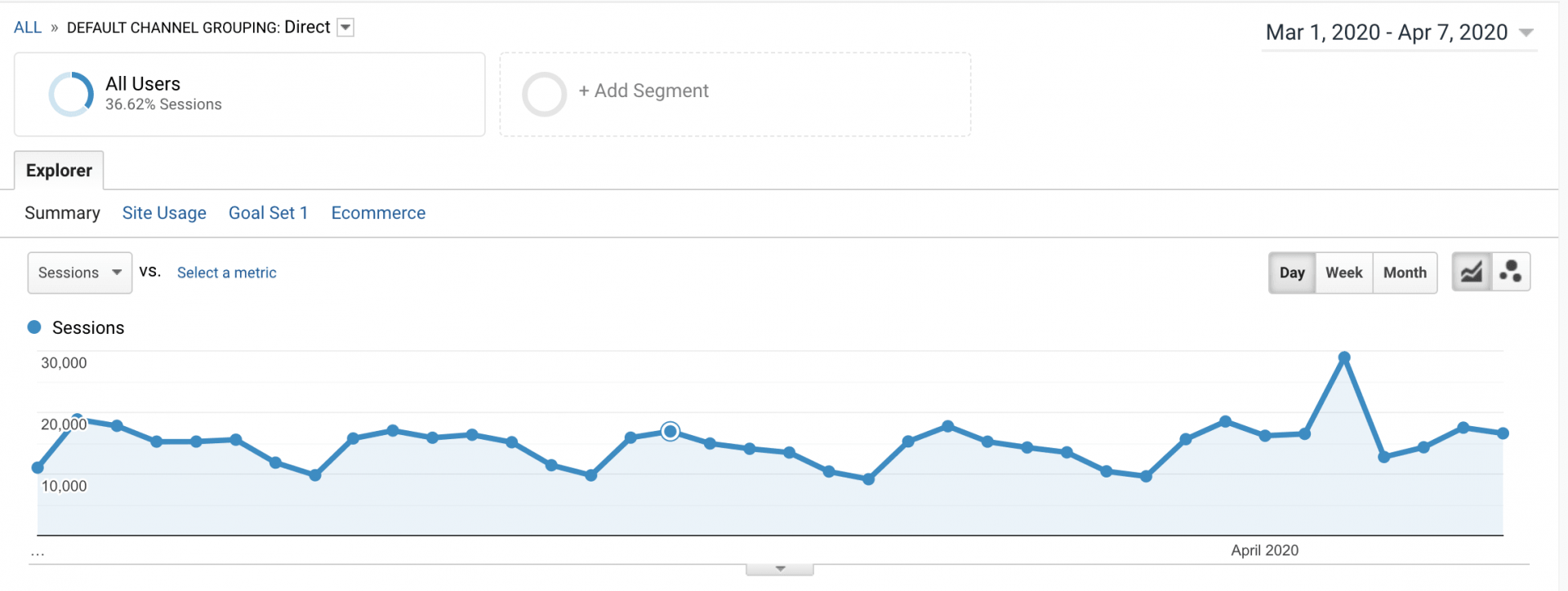
    Direct Traffic Data

    Let’s take a look at direct traffic. Now a hunk of this is actually organic search that Google lumps in, and a hunk of it is somebody actually typing in your URL. You can see the same thing. The demand for that has not really gone down at all.

    Direct Search Traffic durning COVID

    Paid Traffic Data

    Looking at paid search, that demand hasn’t really changed, either. It’s actually gone up. On Monday, April 6th, there were 7,730 sessions to our websites through Google paid traffic. A month later we’re actually seeing more traffic.

    Paid Search Traffic During COVID-19

    So while there’s a lot of agents and investors pulling back their marketing right now, what’s happening is we’re in this interesting window where oftentimes your paid traffic through Google and through Facebook is a little bit cheaper because there’s less competition.

    Some are even stopping their marketing. You should not. You should be leaning into your marketing because we’re starting to see that data come back.


    Time Lag Data

    There is a situation called “time lag”.

    Image Explained:

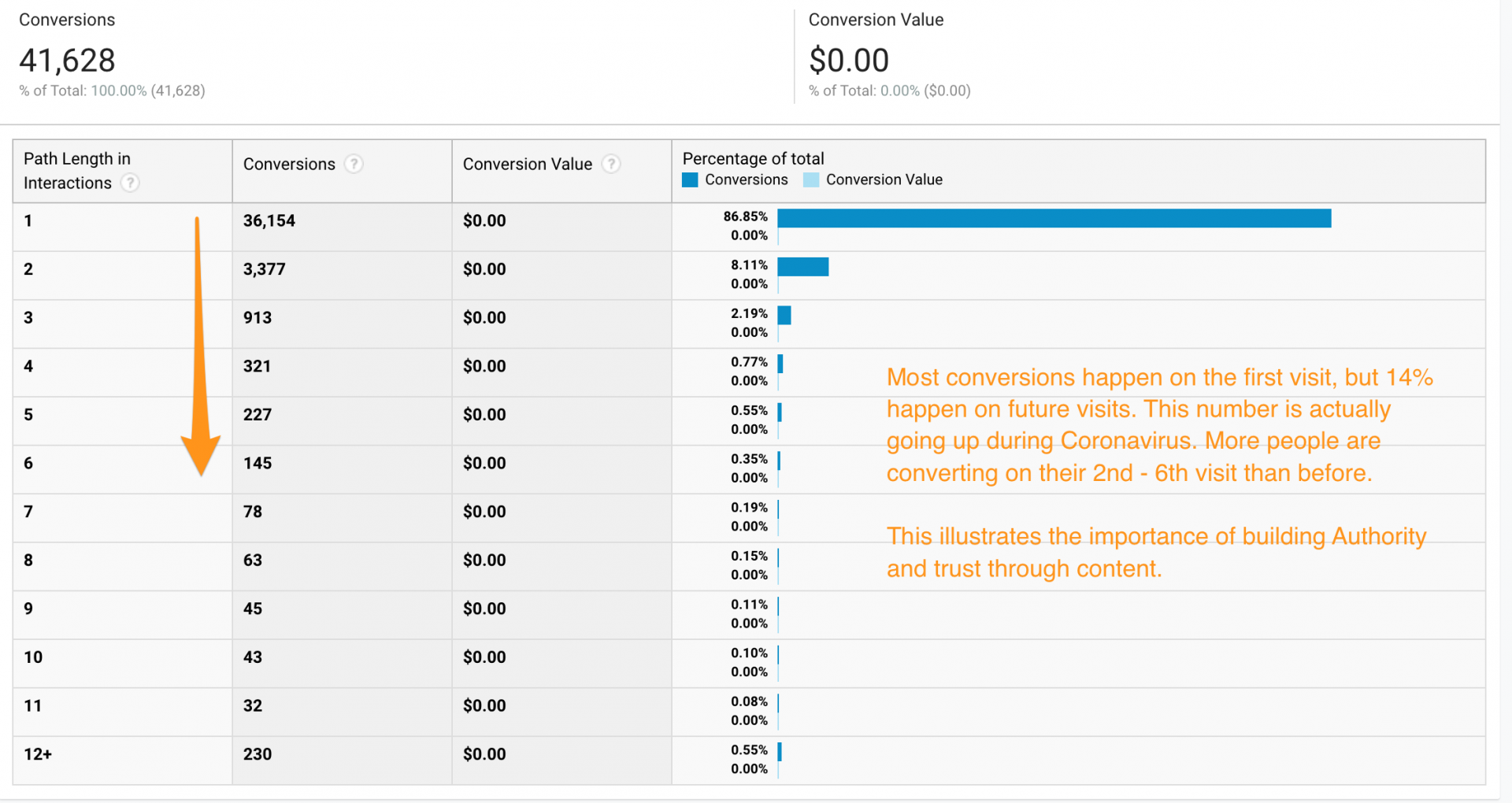
    How many visits it takes someone to turn into a lead. Why is this important, those people who are not sure about how to sell/buy during Coronavirus who are searching but not acting, they need content and YOU to be the trusted Authority.

    Create a COVID-19 update on your home page that links to our new COVID-19 articles (content pro and adv marketer upsell. Link direct to those packs in the article) and also create video posts right now, one per week on how people can sell or buy right now.


    41,628 opt-in conversion leads, not including the 40,000-plus phone call leads that came in through the same time period.

    Look how long it took some of those people to become a lead. The vast majority, become a lead on the first day.

    But then, some of them, it takes weeks if not months to become a lead for you. So this is where putting in really good retargeting campaigns is very, very important, especially right now while some people are waiting it out.

    Length of the path for visitors to actually interact and engage with you

    How many times does it take them visiting your website, especially right now during this time period, to become a lead?

    Right now that time period is lengthening versus our normal because some of those sellers and buyers are unsure how they can best be served during this Coronavirus time.

    You need to be creating content and local authority to help them come back through this time. Think about content topics such as…

    • Where they’re going to move
    • How they can get people into their house right now
    • How they can still stay safe and healthy during this process

    From the last image above, 86% of people on the very first interaction become a lead on your website, agents and investors.

    But then it takes some people over 12.

    So one half of 1%, it takes over 12 interactions. But the sweet spot is six or under.

    The vast majority of people take between one to six interactions on your website to become a lead, and that’s actually lengthening right now.

    Organic Conversion Data

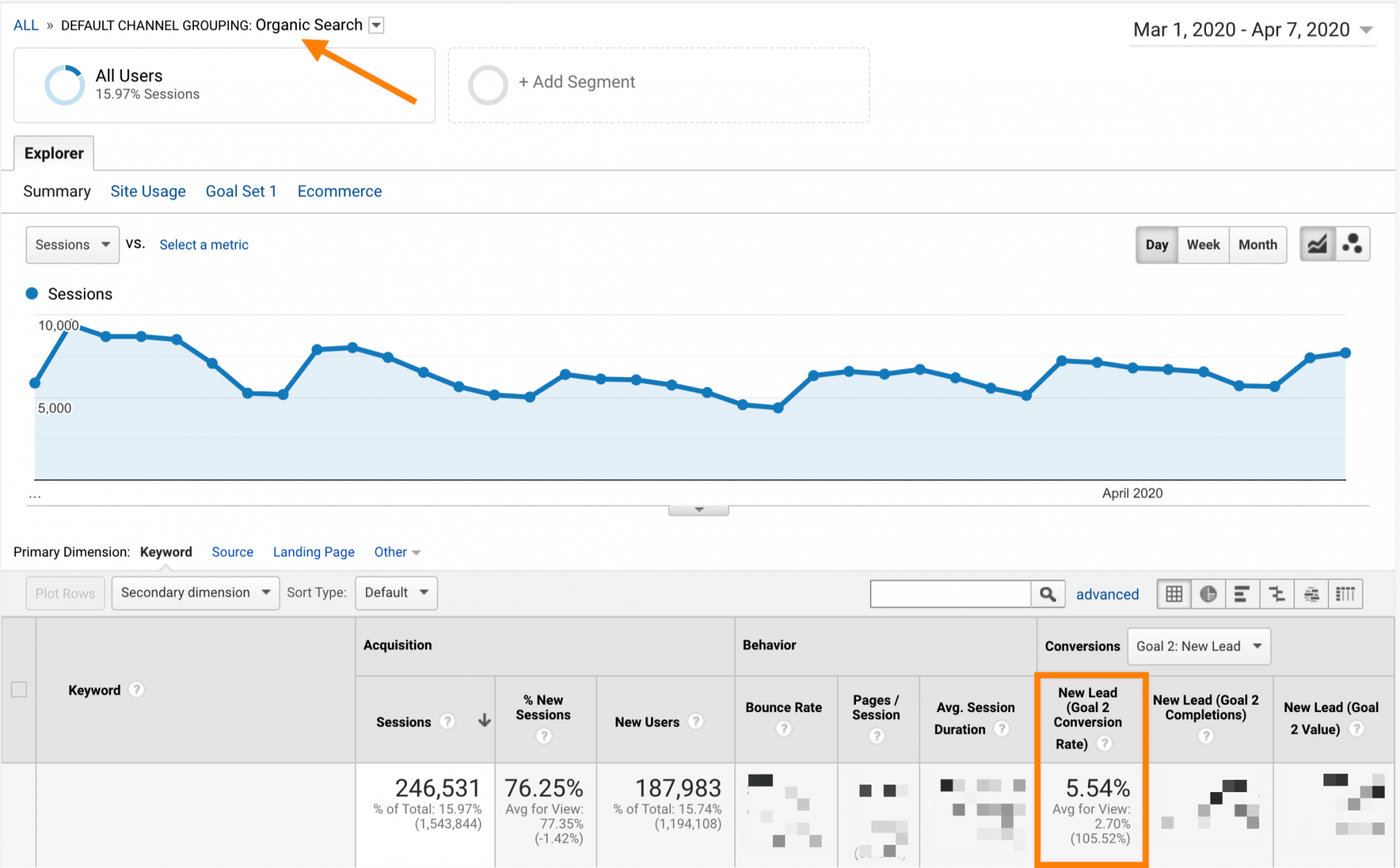
    The one single most consistent, predictable, and highest converting lead source, is organic. It’s putting content online and getting high rankings in Google, which we specialize in. It converts the highest.

    organic conversion rate during covid

    On average, no matter what page they land on, there’s a 5.54% conversion rate percentage and very, very low bounce rate on Google organic search.

    Whereas, social has the lowest conversion rate. It’s lower by almost two thirds. But it still converts well. That’s because people are seeking a solution to their problem in Google organic. Social, you’re kind of interrupting them with content but it still works. Keep that in front of them.

    Paid Conversion Data

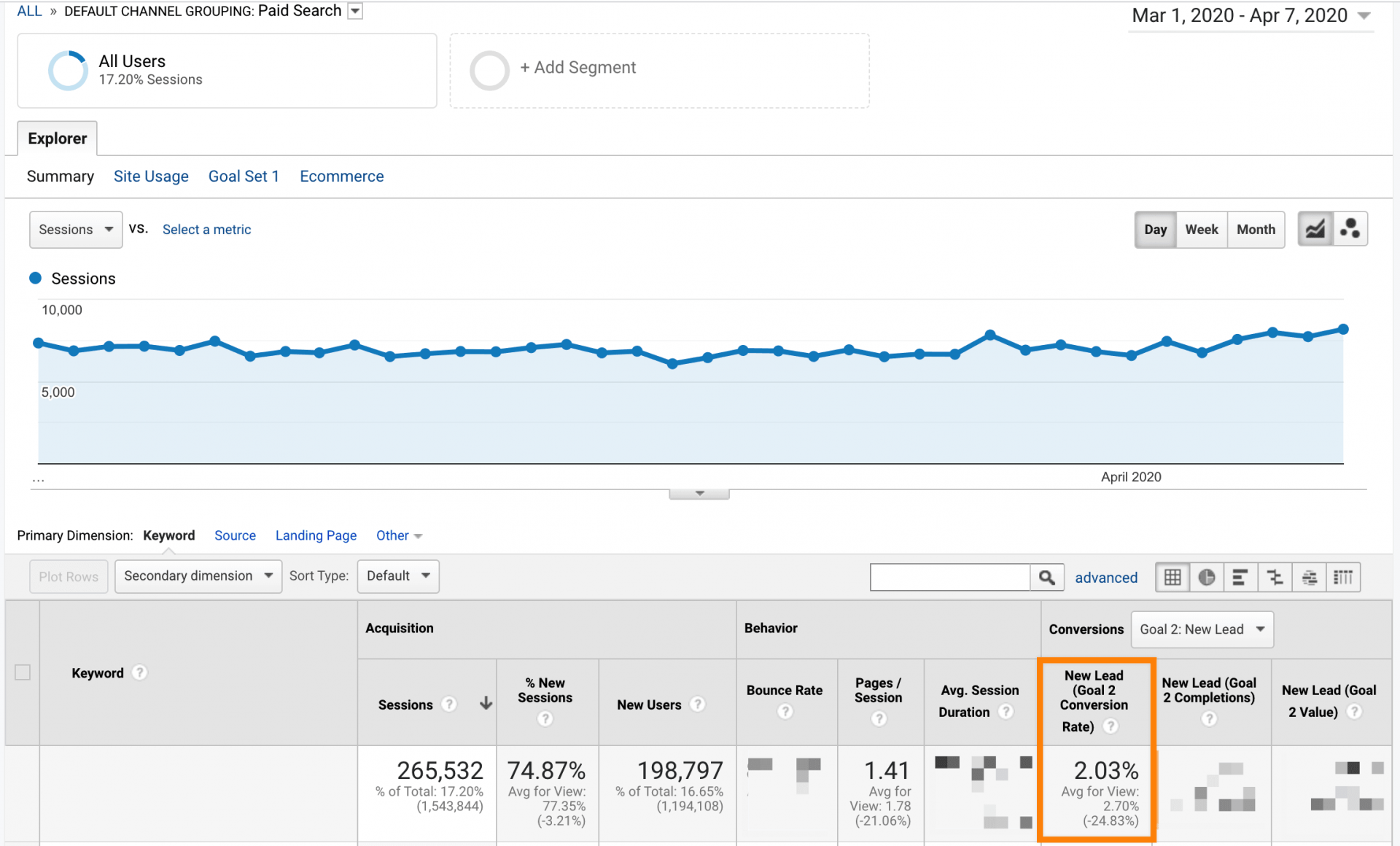
    Let’s look at paid traffic. Paid traffic on average is about a 2% conversion rate. That’s still great. You can still make an amazing, amazing ROI with that.

    Paid traffic during COVID 19

    Create evergreen content

    I want to come back to evergreen marketing because that’s what is going to be around in a year, two, three, four years from now.

    How do you do less marketing that performs better?

    How do you do marketing that is consistent, predictable, and momentum-building?

    That’s with evergreen marketing.

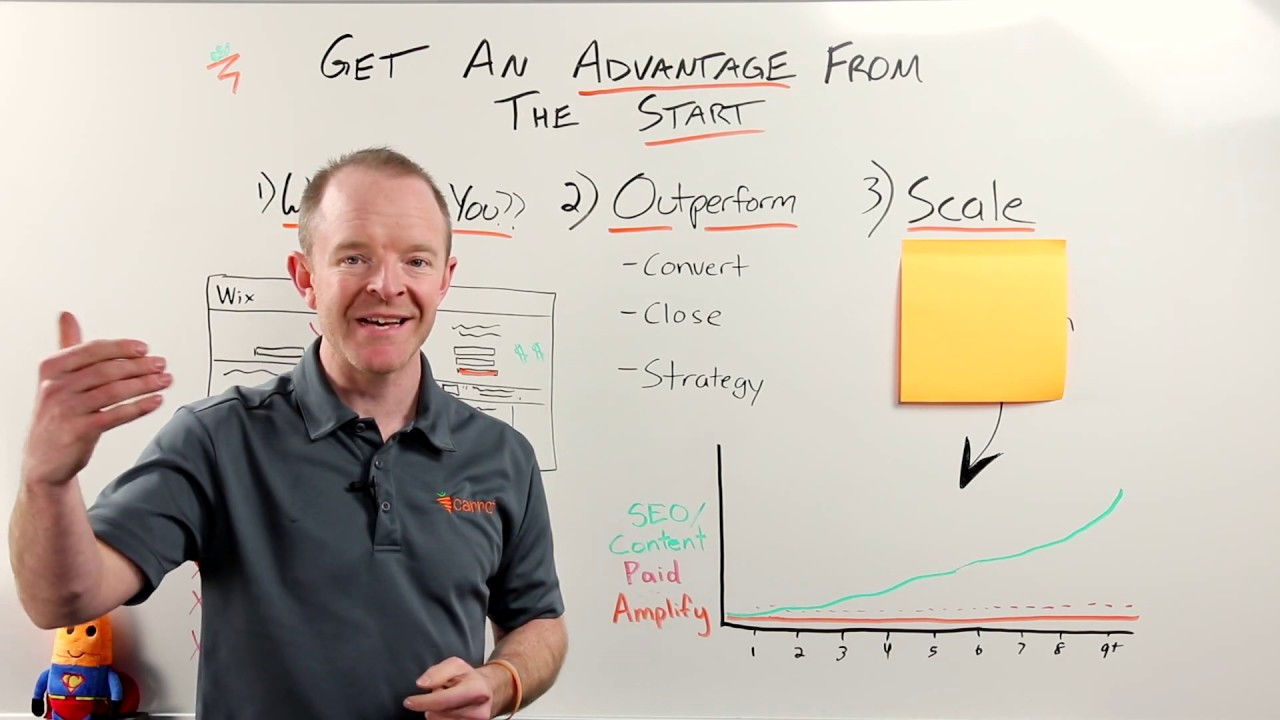
    Publishing content online that builds authority, that attracts people when they’re seeking out solutions to their problems, and then once they land on your website, it’s not just the normal broker-provided website or a custom website that looks pretty but doesn’t convert well, or a Wix site that performs terribly.

    It might look pretty but it doesn’t convert well. You need to be delivering amazing authority-building content, which we do with our content marketing tools where we have COVID-19 automated articles now.

    If you’re on the Content Pro plan or Advanced Marketer, we have COVID-19 articles written for you to publish on your website. You can go right now into your system and schedule to tell people how you can help them. Share those on social media.

    Use VideoPosts right now. Create a video every single week. I’m creating a podcast every week about COVID-19 and how you can wade your way through that. Do the same thing with your buyers and sellers.

    We’re here with you. We want to see you start to thrive and crush it in this market. We’re starting to see the traffic grow. We’re starting to see conversions start to go back up.

    The way you wade through this market is creating more and more content, becoming the authority. So when things get back to normal, you’re going to see a pop in demand when all your other competition’s waiting it out.

    Lastly, check out our Authority Building Webinar to learn more ways to stand out in this market, build authority, and build momentum.

  • How to Calculate Your Google Ads for Real Estate Budget while Avoiding Common Mistakes

    How to Calculate Your Google Ads for Real Estate Budget while Avoiding Common Mistakes

    When we speak with potential members and host our Coaching Calls about Google Ads, one of the most common questions we hear is:

    How much should my Google Ads for Real Estate budget be?

    That’s a great question and there can be a couple of answers.

    Adopting the Right Mindset for Your Google Ads for Real Estate Account

    Before we dive into calculations, we need to cover the mindset approach you’ll need to have before starting a Google Ads account.

    Understand You’ll Need Time for Testing

    It is important to realize going into an ad campaign that you’ll need to do so with a realistic time frame in mind. The time frame will depend on your budget and it also depends on your market.

    There might not be enough search volume for your target keywords to get leads data in one or two months. For example, “sell my house fast” might be searched for 30 times per month in your market and you would get 4 clicks from that particular keyword.

    Is it realistic that you would get a lead from only 4 clicks? Probably not. Of course, though, you’ll be targeting more than just one keyword.

    The goal is to make sure there is enough search volume for your target keywords to achieve your goals within your time frame.

    Mistake #1: Don’t Stop Too Soon

    Stopping too soon is one of the biggest mistakes we see, not just for real estate investors or agents, but in business in general.

    Too many of us stop way before we actually should stop. We invest a little bit of money in this marketing type and it doesn’t pan out right away and we go…

    “Oh my gosh, that must not work.”

    We throw up our arms and then we start something else and then we do that for a little bit. Then that doesn’t work like we thought it would, and we throw up our arms again…

    If you create a pattern of going and investing a little bit, dabbling, and then pulling back because you didn’t get the results you wanted, you’re probably going to be in that pattern forever until you change your thought process.

    If you fall into that pattern you’re going to be looking back in a year or two and going…

    “Oh my gosh, I ended up investing a lot of money, I lost a lot of money, I didn’t grow the business that I wanted to, and I don’t have the freedom that I wanted and thought that I would have in my business.”

    You’re going to blame it on everything but your marketing mindset. Having the right marketing mindset can save you from that.

    Give yourself enough time. For Google Ads, that’s typically gathering three months of solid data before taking a hard look at if it’s working for your budget and market.

    Google Ads Budget – How Much Should You Spend?

    If you’re just starting out, it’s smart to start with a test budget. You’ll want to hold your costs while you’re figuring out what is going to work. 

    While you’re in data-gathering mode. It’s possible that your initial campaign will be profitable, but you may break-even, or you may lose a little money. 

    We’ve created many campaigns that were profitable right out of the gate, but you shouldn’t put all of your chips in and expect this to happen. Instead, it’s helpful to shift your mindset to looking at the first month or so as investing in market research.

    With your initial campaign, you’ll:

    • Gain insights into what ad messages are resonating with your target market.
    • Learn what keywords are converting into qualified leads and customers. 
    • And, you’ll be able to test your landing pages to figure out what is working best for converting clicks into leads and customers.

    Before you get started, learn how you can get “cost per click” estimates before going live with an account using the Google Keyword Planner tool...

    How to Find Keyword Bid Estimate Using the Keyword Planner Tool

    Related Content: Google Ads Traffic Has Increased 4% During COVID-19. The Necessary Adjustments to Also Increase Your Leads


    What should your budget be? Here are a couple of ways to formulate your budget

    First, you can calculate an estimated budget by multiplying the number of keywords you want to test by the cost per click and by a minimum of 100-200 clicks. As a general rule, you’ll want to get at least 100-200 clicks to determine what is converting for you.

    For example, if you’re going to test 10 keywords with a cost per click of $10, we’ll need to plan on a test budget of $1,000 to $2,000. You’ll find that there will be a mix of winning and losing keywords, ads, and possibly landing pages from the start.

    As you see the data come in, you’ll “prune” your campaign by keeping the winning keywords, dropping the losers to bring your campaign to profitability, and ready for the next round of expansion and testing.

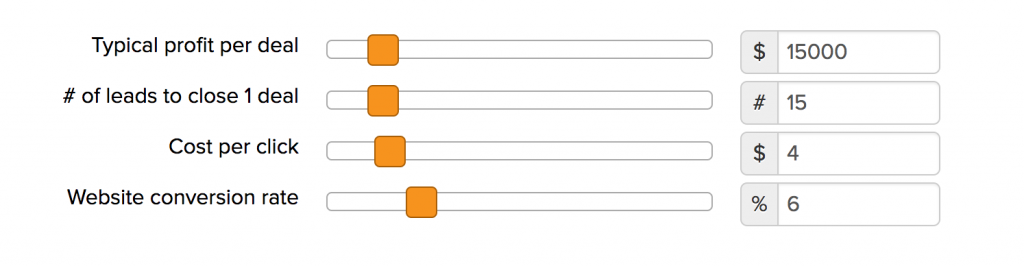
    The second calculation is how we typically estimate a monthly budget. Start by looking at how many clicks it’s going to take to get a lead. As a general rule, it takes 15-20 clicks to get a lead. Let’s say your cost per click averages $20 per click. Next, let’s say it takes 5 leads to turn into a deal.

    • 15 clicks to get a lead
    • $20 per click
    • 5 leads to get a deal

    The equation looks like this:

    Clicks x Cost Per Click x Number of Leads to Get a Deal

    15 x $20 = $300 x 5 = $1500. You’ll need to budget $1500 to get one deal.

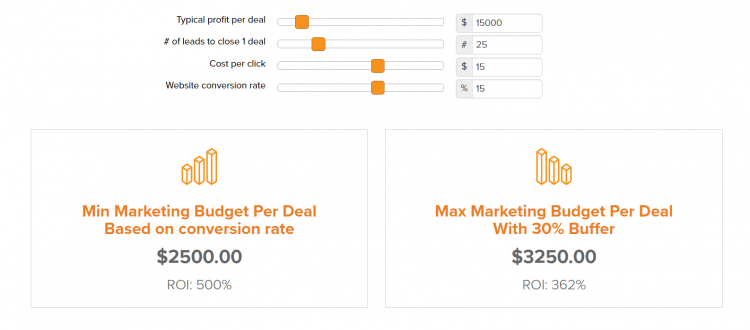
    Need a calculator? Use the Carrot ROI Calculator! You can also read this post to determine your Max Cost Per Lead.

    Mistake #2 Eventually… Focus on ROI, Not Cost

    If you want to dominate your market, you can’t just focus on “costs”, you must focus your energy on maximizing your return on investment (ROI) from Google Ads.

    We have a client who spends more than $10,000 per month with Google Ads. He’s happy to do so because he earns healthy profits on that advertising.

    The million dollar question is…

    “How do I get to that point where I’m scaling up my Google Ads and capturing more of my market share?”

    That is how you scale up your Google Ads. Know your numbers and remove emotion from it.

    1. Find your average profit per deal first.
    2. Find out how many leads it takes you to close a deal.
    3. Figure out your conversion rate on your website.
    4. Figure out how much it’s going to cost you to get those visitors to your site from Google Ads.

    Conclusion

    You can’t fully explore Google Ads for real estate without money. And, making room in your budget isn’t always easy or fun.

    At least, there are a couple of quick ways to create a Google Ads budget from scratch.

    First, start by researching how much your keywords are going to cost using the Google Keyword Planner tool. This will give you an idea of how much your keywords will cost per click.

    Once you’ve done that, you can do some simple calculations to find what you might need to start your budget at.

    If you don’t have enough to make that budget work, take a look at what you might be able to cut right now to test Google Ads. Can you cut down one of your other marketing platforms to give it a full test? You might want to keep an eye out for being limited by budget status as well.

    If so, it’s time to put that money into action.

    Lastly, you have to give it time, monitor your campaigns, and double down if they start performing well!

  • 9 Backlink Strategies to Grow Your Real Estate SEO

    9 Backlink Strategies to Grow Your Real Estate SEO

    Having good real estate backlinks can provide a huge boost in your organic rankings. However, if you do them wrong, the effect can devastate your rankings, sending them into the Google abyss. That is why educating yourself before starting a link-building strategy is critical.

    Table of Contents


    In the world of real estate websites, backlinks are like gold. They’re essentially links from other websites that point back to yours. Search engines see these backlinks as a vote of confidence in your content and expertise.

    The more high-quality backlinks you have from relevant real estate websites, news outlets, or local directories, the higher your website will rank in search results for local homebuyers and sellers. This translates to increased online visibility, attracting more qualified leads and ultimately growing your real estate business.

    Backlinks are a major piece of the SEO (search engine optimization) puzzle.

    They go together like peanut butter and jelly. You need one to make the other better.

    High-level, here are four quick reasons why it’s important to have a good backlink strategy:

    • Backlinks are how Google (and other search engines) find your pages.
    • Backlinks are a way to show Google that you have a solid reputation. Search engines will push searchers to websites they can trust.
    • Relevant backlinks can boost your authority.
    • Backlinks drive more traffic to your website.

    Here’s an example. When someone types “sell my house in [market city]” or “real estate agent in [market city]” into Google, you want your website to come up on the first page.

    top Google search rankings

    If it doesn’t, you’re missing out on a lot of website traffic, leads, and, more importantly, deals.

    Some 93% of internet experiences start with a search engine, including the real estate industry. When people — your target market — are looking for help, they go to Google.

    And if you show up on the first page, that’s good for business.

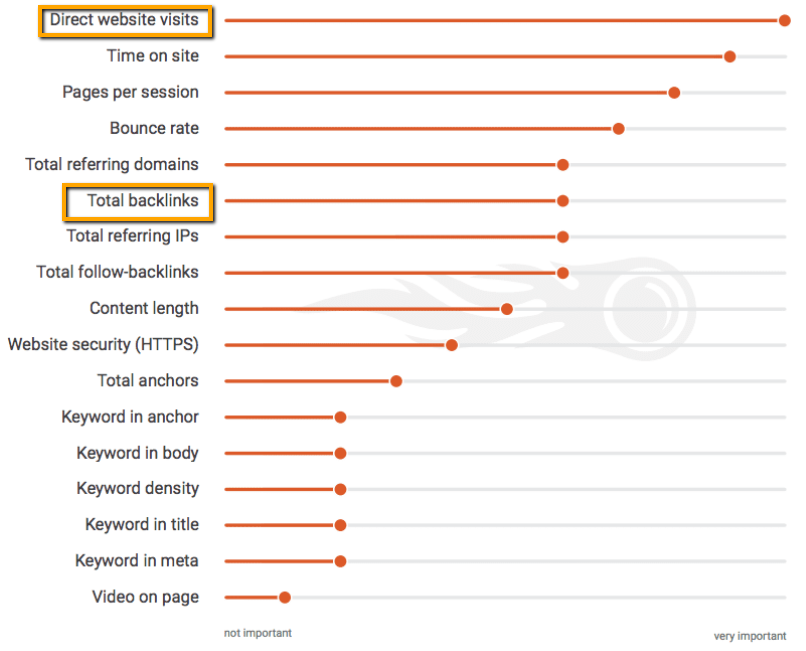
    Two of the most powerful factors for ranking in Google are website traffic and backlink portfolio.

    most powerful search rankings

    In other words, the more traffic and backlinks a page on your website receives, the better that page will rank for your target keyword phrases.

    Unfortunately, getting traffic and backlinks is one of the most difficult things. This article will give you practical tips for promoting your content and building links to your website.

    Related Content: How Many Backlinks Does it Take to Start Ranking Your Real Estate Website in Google?

    Here are nine real estate backlinks strategies to help improve a website’s authority and credibility in the eyes of search engines.

    1. Consistent Content Creation

    This is your first step on the way to building your SEO rankings. Without consistently creating blog content for your website, you might rank for a few keyword phrases on your homepage. Still, you won’t rank for any longtail keyword phrases (like “how to deal with foreclosure” or “how to sell my how during a divorce”).

    Think of every piece of content like a door to your website. The more doors you have, the more people can visit your website, and the more opportunities you have to rank in Google. A good rule of thumb, though, is to create only one piece of content for each keyword phrase you’re targeting.

    While consistently creating content can be time-consuming, our Grow plans at Carrot include done-for-you blog content. You just need to customize about 25% of each post and publish it!

    Many of our members, like Ryan Dossey, consistently get SEO leads from those done-for-you blog posts!

    real estate website traffic every month through SEO

    But maybe you want to create your own unique content—no problem! We’ve created VideoPost, which you can use to transcribe video content into a blog post with the click of a button—learn more here.

    2. Building Backlinks with Local Citations

    Getting listed in relevant directories isn’t just about backlinks, it’s about building your online presence and local SEO. Here’s why citations are crucial and how to find the best ones for your real estate website:

    What are Citations?

    Citations are online mentions of your real estate business, including your name, address, and phone number (NAP). These mentions can appear on various online platforms like:

    • Local Business Directories: Yelp, Google My Business, Bing Places for Business, Angie’s List, HomeAdvisor, etc.
    • Industry-Specific Directories: Realtor.com, Zillow, Trulia, LoopNet (commercial real estate), etc.
    • Local Government Websites: City or county government websites often list licensed real estate agents.
    • Chamber of Commerce Listings: Joining your local chamber can provide valuable directory listings.

    Benefits of Citations:

    • Improved Local Search Ranking: Search engines like Google rely on consistent NAP citations across the web to verify your business legitimacy and location. The more accurate and consistent your citations are, the higher your website will rank in local search results for relevant real estate keywords.
    • Increased Online Visibility: Citations help potential clients discover your business when searching for real estate agents online. These listings often display basic contact information, reviews, and sometimes even links to your website, directing more traffic your way.
    • Backlink Potential: Many high-quality directories provide backlinks to your website, further boosting your SEO.

    Finding the Right Directories:

    • Focus on Relevance: Don’t just submit your website to every directory you find. Prioritize directories relevant to your location, the real estate niche you serve, and those trusted by potential clients.
    • Local Directories First: Start with local business directories and industry-specific real estate platforms.
    • Use Online Tools: Several online tools like Moz Local or Yext can help you find high-quality directories and manage your citations across different platforms.

    Maintaining Accuracy:

    Once you’ve claimed your listings on relevant directories, ensure your NAP information is consistent across all platforms. Any inconsistencies can negatively impact your local SEO. Regularly monitor and update your listings as needed.

    By building a strong citation profile through local directories, you establish your real estate business online, improve your local search rankings, and potentially earn valuable backlinks to your website. This comprehensive approach strengthens your online presence and attracts more qualified leads.

    3. HARO

    HARO (for Help A Reporter Out) is a great way to build backlinks and market authority simultaneously. Journalists sign up for HARO to get quotes and contributions from market experts. You can sign up for HARO (for free) to become a source of expertise for journalists.

    Oftentimes, if they choose to quote you, they’ll also give you a backlink.

    Heck, you could even outsource this to a VA if you want. You can learn more about using HARO to build backlinks.

    4. #Journorequest

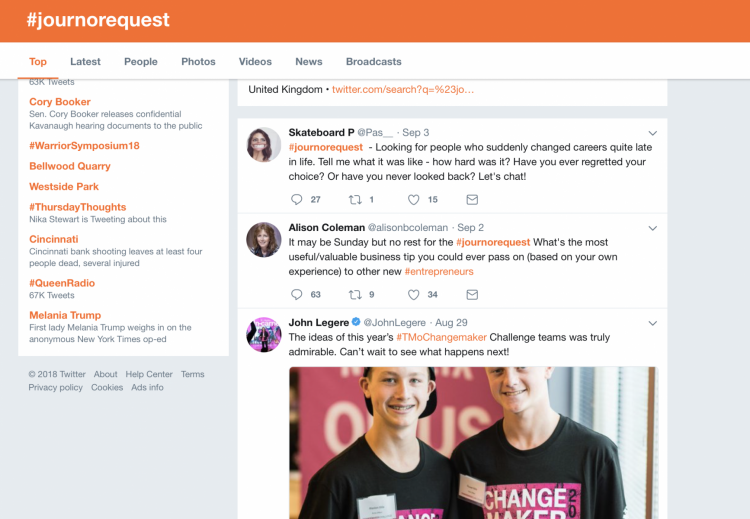
    The hashtag #JournoRequest is another direct line to journalists writing online articles and seeking expert contributions.

    By searching the hashtag on Twitter, your page will populate with many different online writers looking for specific types of contributions. They’ll have no problem providing a backlink in return most of the time.

    #Journorequest for real estate backlinking

    Again, this is so simple that you could pay a VA to scour Twitter for you and look for backlink-building contribution opportunities. You’ll have to provide them with expert quotes when they find one.

    5. Establishing Yourself as the Local Real Estate Expert: Building Trust and Backlinks

    Becoming a local resource in the real estate market isn’t just about generating leads; it’s about building trust, establishing expertise, and attracting backlinks through valuable community engagement. Here are some strategic ways to position yourself as the go-to expert:

    1. Offer Free Consultations and Resources:

    • Free Consultations: Provide potential clients with free consultations to discuss their buying or selling needs. This allows you to showcase your knowledge, build rapport, and demonstrate your commitment to their success.
    • Host Educational Seminars: Organize workshops or seminars on topics relevant to your target audience, such as “First-Time Homebuyer Tips” or “The Benefits of Selling Your Home in Today’s Market.” This establishes you as a thought leader and positions your website as a resource for valuable information.
    • Create Free Downloadable Resources: Develop downloadable guides, checklists, or market reports that provide valuable insights for buyers and sellers. Make these resources freely available on your website with clear calls to action encouraging visitors to explore your services.

    2. Participate in Local Events:

    • Industry Events: Network with other professionals at real estate conferences, workshops, or association meetings. These events provide opportunities to build relationships, exchange knowledge, and potentially collaborate on future projects.
    • Community Events: Actively participate in local community events like charity fundraisers, neighborhood clean-up initiatives, or local festivals. This demonstrates your commitment to the community and fosters positive brand recognition. Sponsor local events to gain further visibility and establish your brand as a trusted local partner.

    3. Partner with Local Businesses:

    • Strategic Collaborations: Partner with businesses that complement your real estate services, such as mortgage lenders, title companies, or home inspectors. Cross-promote each other’s services and leverage each other’s audience reach.
    • Local Publications: Connect with local newspapers, online publications, or radio stations. Offer your expertise as a guest speaker or interviewee on topics related to the real estate market. This provides valuable exposure and potential backlinks when your website is mentioned as a resource.
    • Offer Free Content to Local Websites: Contribute informative articles or blog posts to local publications or neighborhood websites. These guest posts establish you as an expert and can include backlinks to your website for further information.

    By actively engaging with your local community, offering valuable resources, and demonstrating your expertise, you build trust and brand recognition. This can lead to local publications featuring you as a resource, potentially including backlinks to your website, further boosting your local SEO and attracting organic traffic. Remember, becoming a local resource is a long-term strategy that pays off with increased brand loyalty, trust, and ultimately, more qualified leads.

    6. QuuuPromote

    QuuuPromote is a service where you can pay to get Twitter shares for your content. Here’s how it works…

    There are two sides to Quuu’s business model. The first side comprises “influencers” who want to post quality content on their Twitter feed automatically — they pay Quuu to do just that.

    The second side of Quuu’s business model is made of people (like you!) who have good content and want to get that content shared on Twitter — Quuu then posts that content on the “influencer’s” Twitter feeds.

    So yeah… from a business model perspective, Quuu is having their cake and eating it, too. But it’s relatively inexpensive and worth trying if you want more shares and clicks (inside your Quuu dashboard, you can see how many clicks your promotions get).

    7. Leveraging Social Media Promotion for Backlinks:

    Social media platforms offer a powerful tool to promote your real estate content and attract backlinks. Here’s how to maximize your efforts:

    1. Identify Your Target Audience:

    • Platforms: Not all social media platforms are created equal. Focus on platforms where your target audience spends their time (e.g., Facebook groups for local residents, LinkedIn for industry professionals).
    • Communities: Join relevant Facebook groups, online forums, and subreddits focused on real estate in your area or niche.

    2. Content Strategy for Backlinks:

    • Post Consistently: Regularly share valuable content like blog posts, local market updates, home buying tips, or visually appealing property listings.
    • Optimize for Sharing: Include clear calls to action, encouraging viewers to share your content. Use relevant hashtags and engaging visuals to increase shareability.

    3. Engage and Build Relationships:

    • Be a Valuable Contributor: Don’t just post your content and disappear. Participate in discussions, answer questions, and offer helpful advice. Establish yourself as a trusted resource within the community.
    • Collaborate with Others: Look for opportunities to collaborate with other real estate agents, lenders, or local businesses on social media campaigns. Cross-promotion can expand your reach and attract backlinks from their audience.

    8. Turn Dead Ends into Backlink Opportunities

    Broken link building is an effective strategy for acquiring backlinks by identifying and replacing outdated or non-functional links on relevant real estate websites. Here’s how to refine this tactic and maximize your chances of success:

    1. Finding Broken Links:

    • Free and Paid Tools: Utilize free tools like Check My Links or Broken Link Check. Consider premium tools like Ahrefs or SEMrush for more advanced features and website crawling capabilities.
    • Focus on Local Relevance: Prioritize websites related to real estate in your local market. Look for local news outlets, neighborhood association websites, or even competitor websites (avoid anything malicious).
    • Target Relevant Pages: Focus on pages that discuss topics relevant to your content. For example, if you have a blog post on “The Best Schools in [Your Neighborhood],” target websites with broken links on pages about local schools or family-friendly neighborhoods.

    2. Crafting Your Outreach Message:

    • Personalize Your Approach: Avoid generic templates. Research the website owner or editor and personalize your email with their name and a brief mention of their website.
    • Highlight the Issue: Concisely explain that you discovered a broken link on one of their pages (mention the specific page and URL).
    • Offer a Valuable Solution: Present your website and a relevant blog post or resource that offers valuable content as a perfect replacement for the broken link. Briefly explain why your content aligns with their website’s theme and audience needs.
    • Focus on Mutual Benefit: Frame your message as a win-win situation. You’re helping them improve their website while potentially earning a valuable backlink for your own.
    • Include Call to Action (CTA): End your email with a clear call to action, politely requesting them to consider your suggestion and replace the broken link with your content.

    3. Increase Your Success Rate:

    • Quality Over Quantity: Focus on reaching out to high-quality websites with relevant traffic and domain authority. A few backlinks from high-authority sites are more valuable than many from low-quality sources.
    • Track Your Efforts: Use a spreadsheet or CRM (Customer Relationship Management) tool to track the websites you contacted, the broken links you reported, and the responses you receive. This helps monitor your progress and identify areas for improvement.
    • Follow Up, But Don’t Be Pushy: Send a polite follow-up email a few days after your initial contact if you haven’t heard back. However, avoid being overly persistent.

    By implementing these steps, broken link building can become a valuable strategy for acquiring backlinks from relevant websites. Remember, focus on providing a genuine solution and building relationships with website owners. This approach leads to higher success rates and strengthens your online presence in the real estate market.

    9. Mastering Guest Blogging for Real Estate Backlinks: Attract New Clients and Boost SEO

    Guest blogging on relevant websites is a powerful strategy for building backlinks, establishing yourself as an expert, and attracting potential clients in a new market segment. Here’s how to maximize your guest blogging efforts for real estate:

    1. Identify High-Impact Websites:

    • Go Beyond the Obvious: While local news outlets and mortgage lenders are good starting points, delve deeper. Consider websites like:
      • Local Business Associations: Chambers of Commerce, neighborhood associations, or niche-specific business groups often have publications or blogs.
      • Community Websites: Look for websites catering to your target audience, like local parenting blogs, neighborhood guides, or relocation resources.
      • Industry Blogs: Target real estate blogs with a national reach that allow guest contributions, focusing on topics relevant to your niche (e.g., luxury properties, first-time homebuyers, investment real estate).

    2. Craft Compelling Guest Post Ideas:

    • Focus on Value, Not Sales: Your primary goal is to provide valuable information to the target audience of the host website. Research their readership and tailor your content to their needs.
    • Address Local and Regional Trends: Offer insights specific to your market. This can be anything from “The Benefits of Owning in [Your Neighborhood]” to “Local Market Update: Rising Interest Rates in [Your City].”
    • Target Buyer Personas: Craft content geared towards specific buyer personas, such as “First-Time Homebuyer Mistakes to Avoid” or “[Your City]’s Best Neighborhoods for Growing Families.”
    • Showcase Your Expertise: While offering valuable information, subtly weave in your expertise. Briefly mention relevant past experiences or successful transactions to establish your credibility.

    3. The Art of the Pitch:

    • Research the Editor: Don’t send generic emails. Identify the editor responsible for the blog section and personalize your outreach.
    • Highlight Your Value Proposition: In a concise email, explain who you are, your area of expertise, and how your guest post aligns with the website’s audience and content strategy.
    • Provide Content Samples: Include links to your best blog posts or published articles showcasing your writing style and expertise.
    • Negotiate Backlinks: While not always possible, politely negotiate the inclusion of a backlink to your website within the guest post or author bio section.

    4. Building Relationships:

    • Go Beyond the Single Post: Don’t treat guest blogging as a one-time transaction. Engage with the website after your post is published. Respond to comments, participate in discussions, and build rapport with the editor and audience.
    • Reciprocal Opportunities: If the website allows it, explore collaborative opportunities. You could offer to host a guest post from their editor on your website, further expanding your reach and promoting valuable content exchange.

    Here are a couple of cold outreach templates to get you started.

    For podcasts…

    Subject: Quick idea…

    Hey [name of person or business]!

    My name is [name] and I’m a real estate [investor/agent] in [location]. My business has [build credibility with revenue numbers, media mentions, or a testimonial from a past customer]. And I’d LOVE to be a guest on your podcast to discuss [pitch a relevant topic you’d be comfortable discussing].

    What do you think? Is that something we could set up?

    Let me know! I’d be happy to get it on the calendar. :-)

    Cheers,

    [Name]

    For blog posts…

    Subject: Quick idea…

    Hey [name of person or business]!

    My name is [name] and I’m a real estate [investor/agent] in [location]. My business has [build credibility with revenue numbers, media mentions, or a testimonial from a past customer]. And I’d LOVE to write an article for your website. Here’s my idea: [pitch a relevant topic you’d be comfortable writing about].

    What do you think?

    Let me know! I’d be happy to get started on it right away. :-)

    Cheers,

    [Name]

    By implementing these strategies, guest blogging becomes a powerful tool for building backlinks, attracting new clients, and establishing yourself as a trusted real estate expert within your local and potentially broader online communities. Remember, guest blogging is a long-term strategy focused on building relationships and providing value, ultimately leading to increased brand awareness and website traffic that converts to qualified leads.

    Regarding SEO, it’s not just important to use the right strategies. It’s also important that you don’t use the wrong strategies.

    Shady link-building tactics- often called “black-hat SEO”- can penalize your website by Google and completely destroy your rankings.

    For that reason, we recommend avoiding the following link-building tactics…

    1. PBNs

    Look, building backlinks is difficult. It’s time-consuming, expensive, and soul-crushing.

    We all know it.

    Which is exactly why PBNs are so darn tempting…

    These services promise to build backlinks to your website at a remarkably low cost and get your website ranking quickly. They won’t say much about how they will build those backlinks, but the promise of seeing your website on the first page of Google’s results is enough to persuade most of us to enter our credit card information.

    Since they won’t tell you how they build your website backlinks, I will…

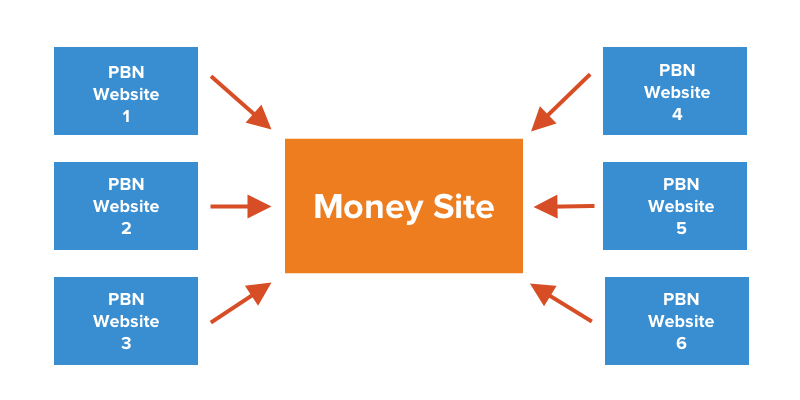
    In a nutshell, they purchase hundreds or thousands of expired/unused domains with a bit of SEO juice built from the previous owners. Then, they go to all these domains and plug a backlink to your website.

    After a bit, your website starts to rank, and you’re thinking, “Wow! These guys are awesome!”

    PBNs

    Here’s the problem: PBNs cheat the system. Google explicitly says that using a PBN won’t only get the PBN company in trouble but also penalize your website.

    It’ll all be good and fine until Google finds out. And they almost always find out.

    Once they do, your website will take a massive dive in the rankings (or get banned from indexing altogether) – and recovering from that loss will be harder than trying to get a new website ranking (because you’ve lost Google’s trust).

    SEO Private Blog Networks (PBN's): The Pros and Cons

    2. Paying for Backlinks

    Paying for backlinks can be a bad idea for a few reasons:

    It can hurt your SEO: Search engines like Google frown upon unnatural link building practices. If they catch you buying backlinks, they might penalize your website, causing it to rank lower in search results instead of higher.

    Low-quality links can be worse than no links: Not all backlinks are created equal. Buying backlinks often means getting links from irrelevant or low-quality websites. These links won’t help your SEO and might even hurt your reputation.

    Wasted money: There’s no guarantee that the backlinks you buy will improve your rankings. You might be throwing money away on ineffective strategies.

    Unsustainable: Building backlinks naturally takes time and effort, but it’s a more sustainable strategy. Paid backlinks are often temporary, requiring constant reinvestment to maintain any SEO benefit.

    Risk of getting flagged: Google has sophisticated algorithms to detect unnatural link building practices. Getting caught can lead to serious penalties, harming your website’s visibility for a long time.

    Google explicitly says it doesn’t want people paying for backlinks, but this no-no has a caveat.

    If you’re going to pay for backlinks, pay for good white-hat backlinks — ones that come from real sites with real domain authority in Google’s eyes. And be very careful about buying cheap links from sites that promise quick and fast results.

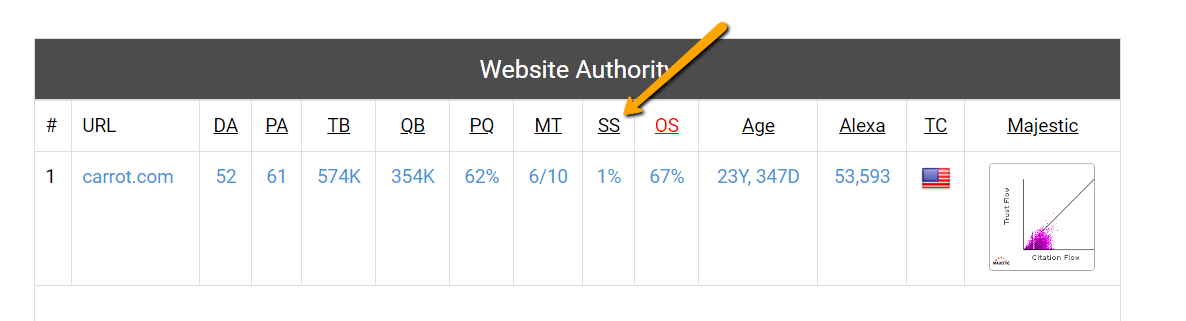
    You can check the SEO spam score of a website over here for free

    website authority score

    Ideally, your real estate backlinks should come from sites with low spam scores. Ask any SE firm you’re considering hiring how they build backlinks and where those links come from. That will tell you a lot about whether those links are high-quality.

    1. Backlink Analysis Tools:

    • Help you discover backlinks pointing to your website and competitor websites.
    • Analyze the quality and source of backlinks (authority, relevance).
    • Track the number of backlinks over time and identify any lost backlinks.

    Examples: Ahrefs, Moz Link Explorer, SEMrush Backlink Tool, Majestic

    2. Link Building Tools:

    • Help you identify link building opportunities.
    • Suggest relevant websites where you can potentially acquire backlinks.
    • May offer features like outreach management or content creation suggestions.

    Examples: Ahrefs, SEMrush Link Building Tool, BuzzSumo, BuzzStream

    3. Broken Link Building Tools:

    • Help you find broken links on relevant websites.
    • Allow you to suggest your own content as a valuable replacement for the broken link.
    • This can be a great way to acquire backlinks while helping the website owner improve their content.

    Examples: Check My Links, Broken Link Checker, Ahrefs Broken Backlinks report (part of their Backlink Analysis Tool)

    4. SEO Suite Tools:

    • Offer a comprehensive suite of SEO tools, including backlink analysis, keyword research, on-page optimization tools, and website crawling capabilities.

    Examples: SEMrush, Ahrefs, Moz Pro

    Important Note:

    • Some of these tools are free, with limited features, while others require a paid subscription.
    • The best tool for you will depend on your specific needs and budget.

    Additional Tips:

    • Focus on building high-quality, natural backlinks from relevant websites.
    • Avoid buying backlinks or participating in link schemes, as this can hurt your SEO in the long run.
    • Combine backlink building with other SEO strategies like creating high-quality content and optimizing your website for relevant keywords.

    How to Track Your Rankings (Pay Attention to These 3 KPIs!)

    You can build real estate backlinks and drive traffic to your website until you’re blue in the face, but if you don’t track your progress and the results of those actions… then, well, it’s hard to know if all that hard work has been worth it.

    So here are the primary KPIs you’ll want to pay attention to and exactly how you can track those KPIs…

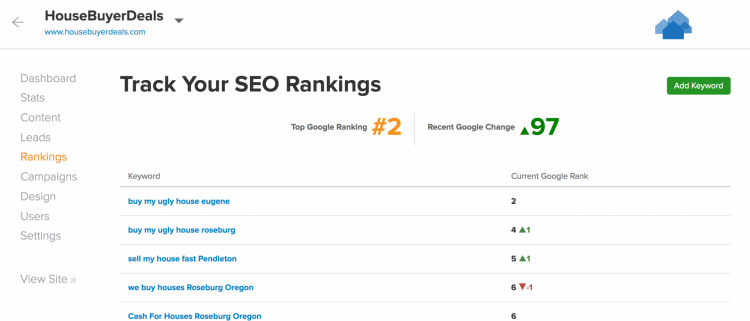
    • Target Keyword Rankings — When discussing SEO, this is the first thing you should pay attention to. Is the page you created ranking for the phrase you want it to rank for? Is it fluctuating up or down the rankings? As a Carrot member, you get access to our easy-to-use keyword ranking tracker that will alert you to any recent fluctuations in position.
    real estate keyword tracking tools
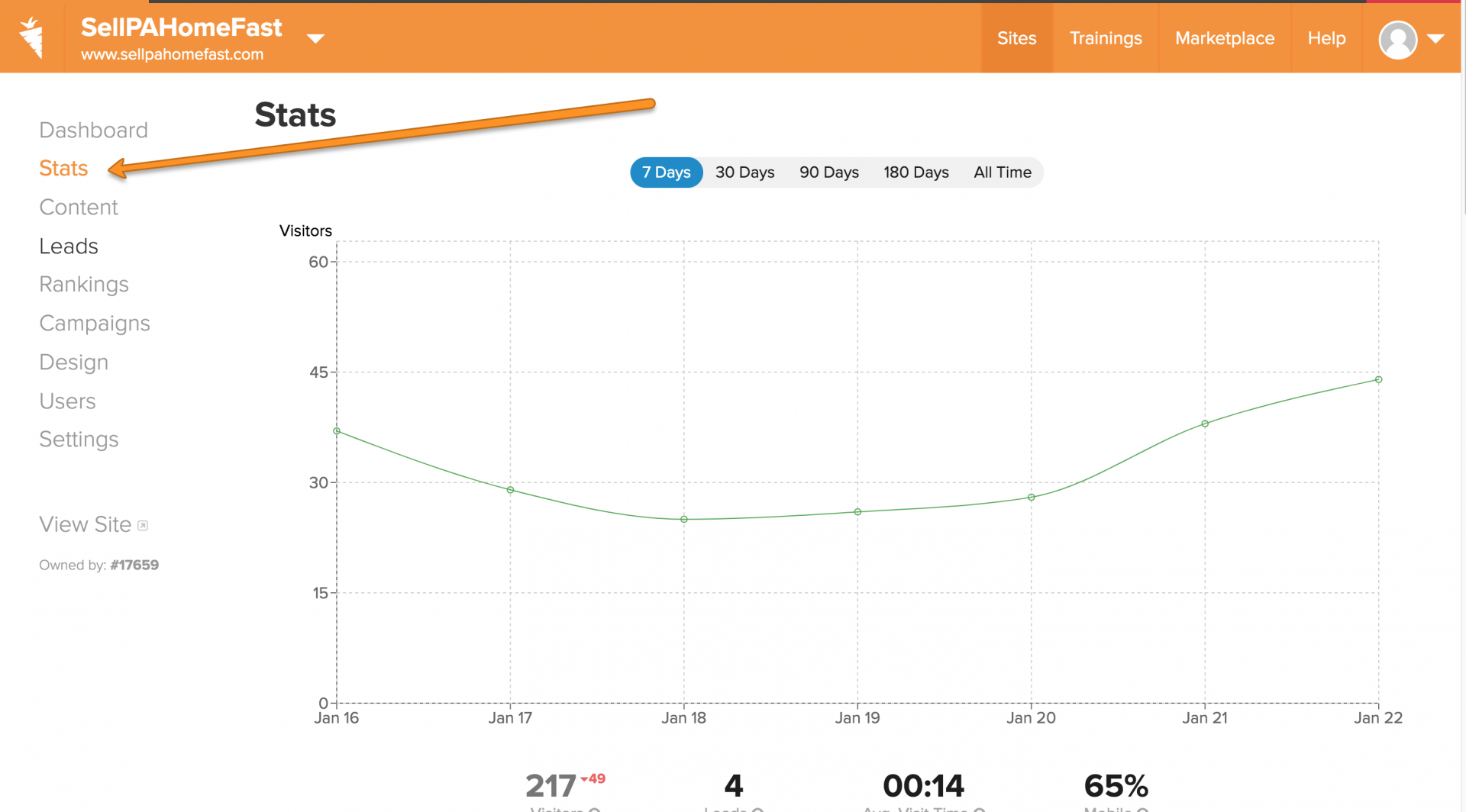
    • Page Traffic Volume — Page traffic is an important element of SEO progress because 1) more traffic typically means better rankings, and 2) well… more traffic is an excellent thing for lead generation. The easiest way to watch website traffic as a Carrot member is right inside your dashboard’s “Stats” tab…
    real estate keyword stats

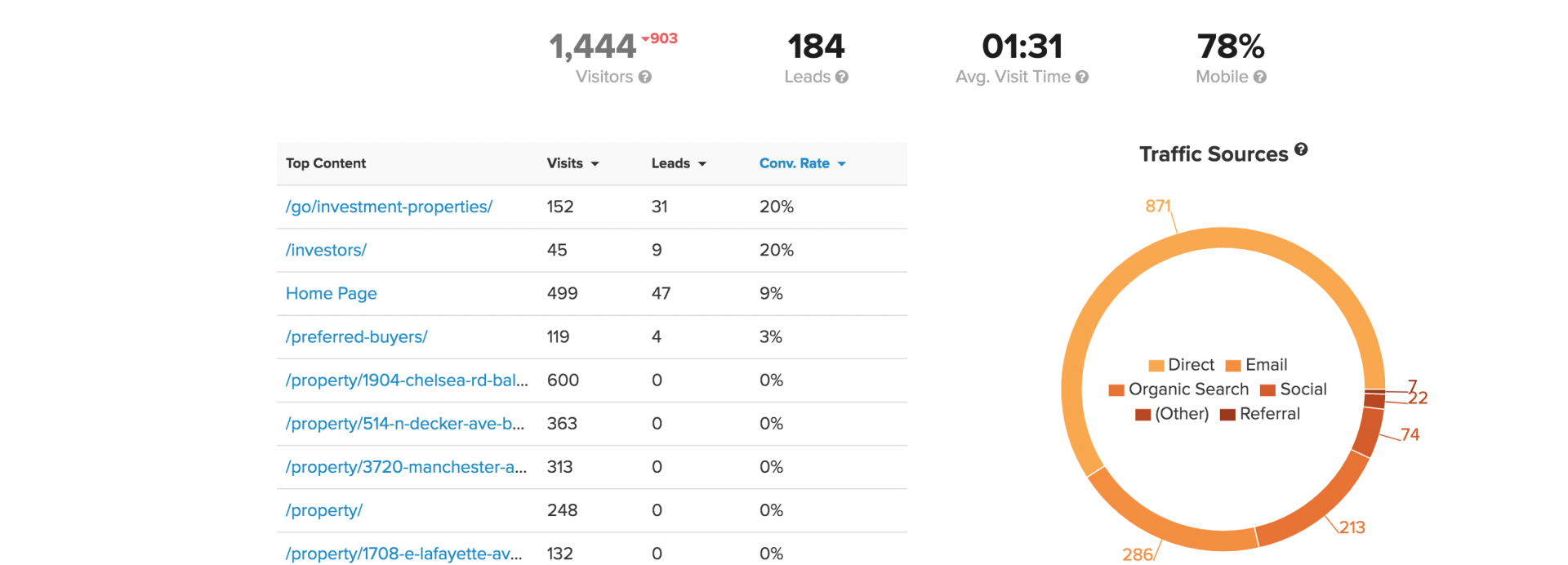
    Scroll down to see how much traffic each page of your website gets and even where all that traffic is coming from.

    real estate keyword traffic sources
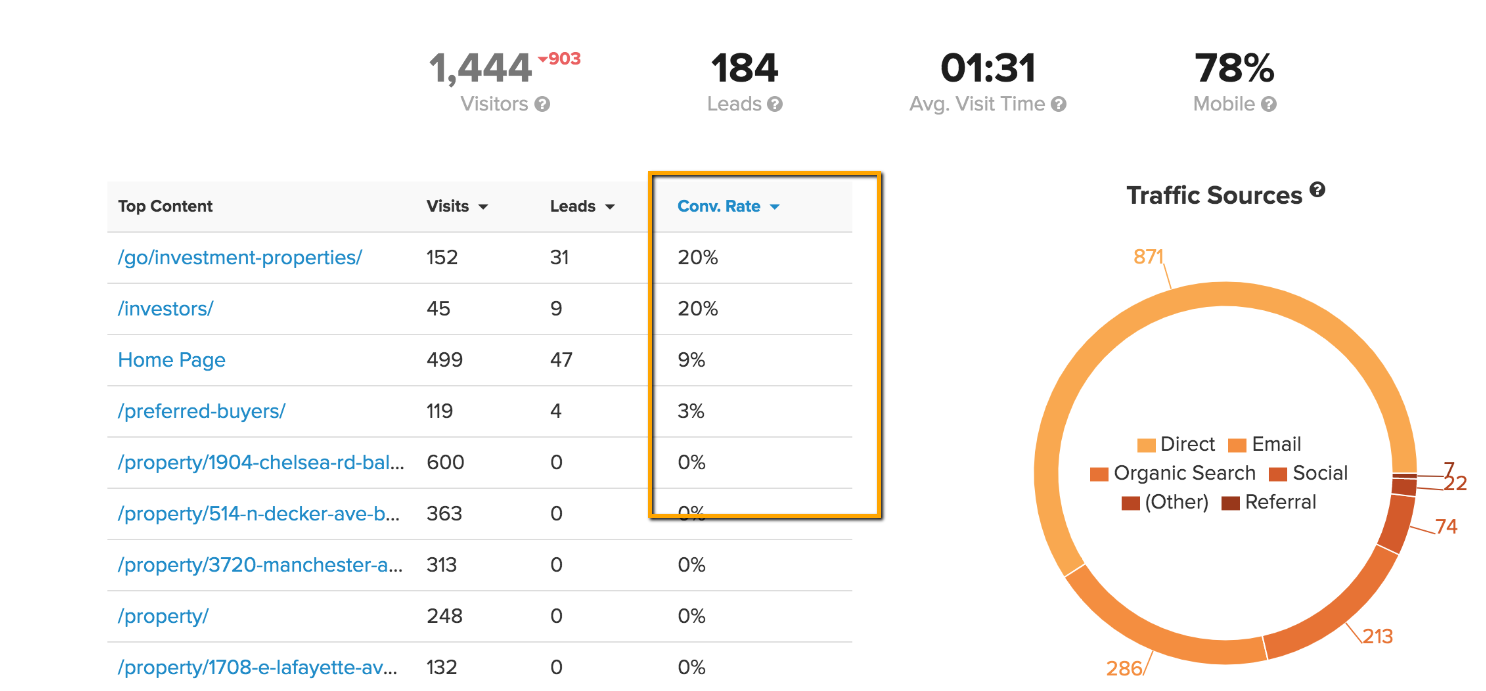
    • Page Conversion Rate — This is the end goal, right? If you build backlinks and promote content, even if you drive traffic to your website, but those visitors don’t convert into leads, what’s the point? You should expect at least a 2% conversion rate from your blog posts and 10% from your homepage. If your conversion rate is lower than that, check out this article. To check your conversion rate as a Carrot member, go to your “Stats” dashboard, scroll down, and look at the “Conv. Rate” column.
    real estate website conversion rates

    Now that you understand what KPIs to monitor for your SEO efforts let’s discuss how to promote your content and get backlinks!

    Conclusion

    There you have it!

    You should now understand how to build your SEO rankings with real estate backlinks and content promotion.

    If you have any more questions, feel free to ask them in the comments, and we’ll help you out however we can! Good luck!

  • That’s a Wrap! 2019 Carrot Year In Review

    That’s a Wrap! 2019 Carrot Year In Review

    Here’s to you Carrot members! You had an amazing year. Here’s a brief snapshot of some of the stories and things that happened in 2019.

    It was another exceptional year for our Carrot members and another year of growth for our team and company. With the intention of amplifying our members, we use our Mission… “Add humanity to business and help people regain time for the things that matter.”

    Let’s recap some of the cool stuff in this quick post!

    2019 Carrot Review

    Carrot members crushed lead generation

    We launched many NEW Features for our members

    It was another year of giving… when all said and done, Carrot will have donated close to $40,000 to different charities

    The CarrotCast Podcast continues to inspire

    Our team grew by 10 again this year as we continue to innovate and be leaders in our industry as well as in our communities.

    … and more!

    Here we go!


    Hundreds of Thousands of Leads … You’re Crushing It!

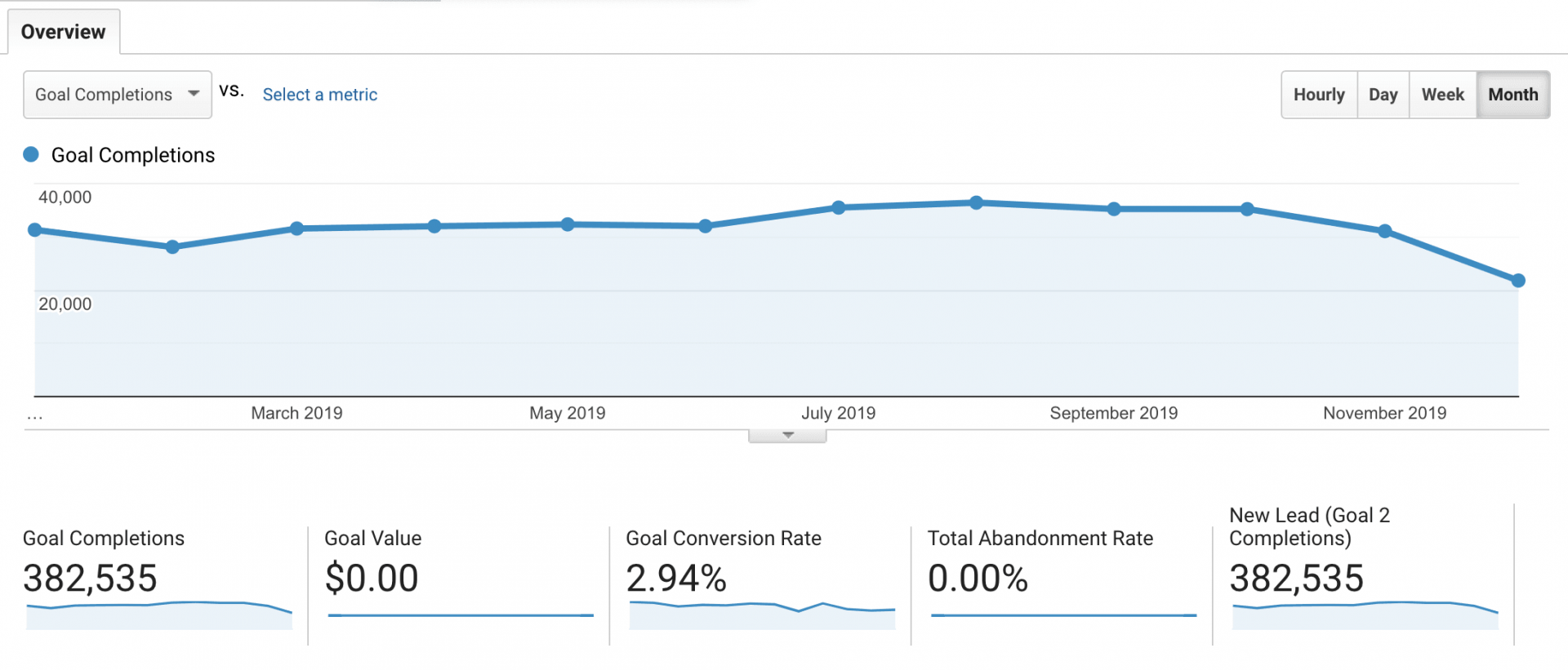
    Our member’s lead numbers increased in 2019. With over 382,000 leads (as of December 22) coming in this year. We also DON’T count phone call leads… which we can’t track in Google Analytics currently. You’re pulling in more AdWords, SEO, Facebook, and social media online leads as a collective group than any other real estate investor and agent lead generation platform… by far. Keep crushing it!

    Carrot Members Leads in 2019

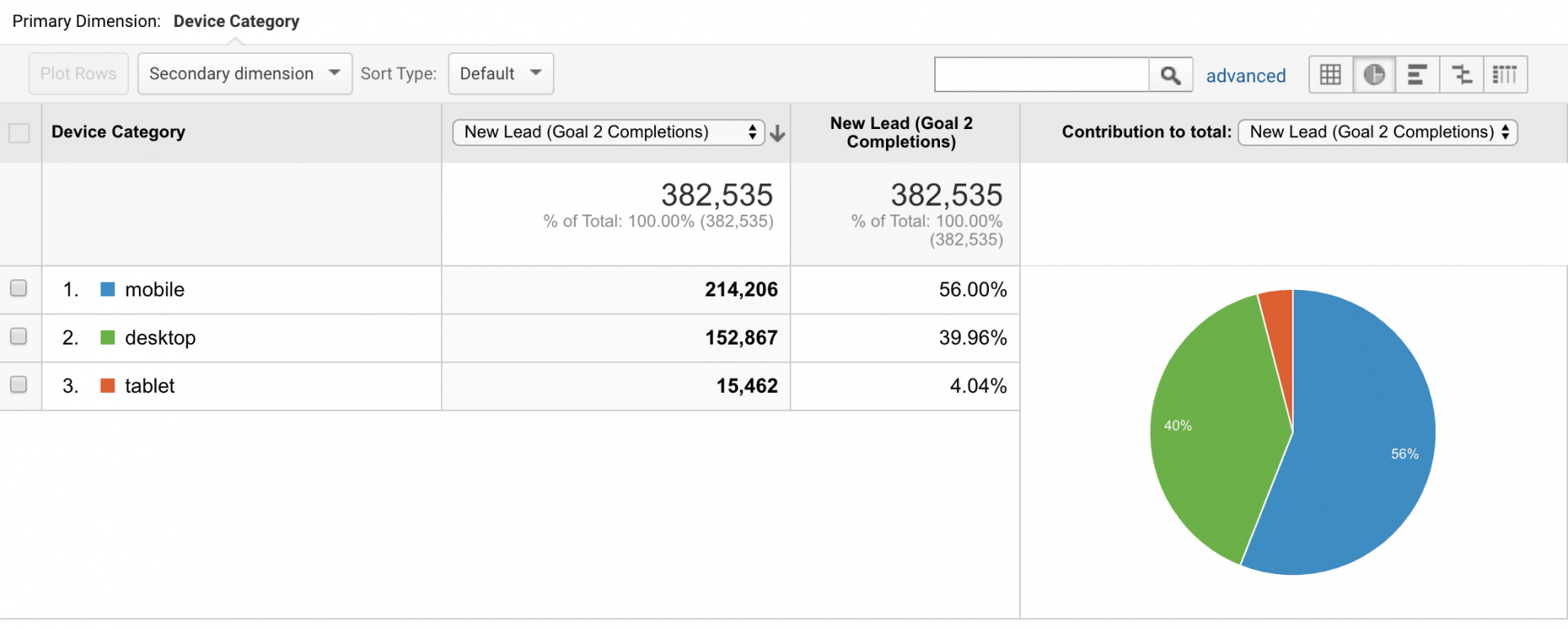
    56% of Leads Came From Mobile Devices

    56% of Carrot member leads from mobile

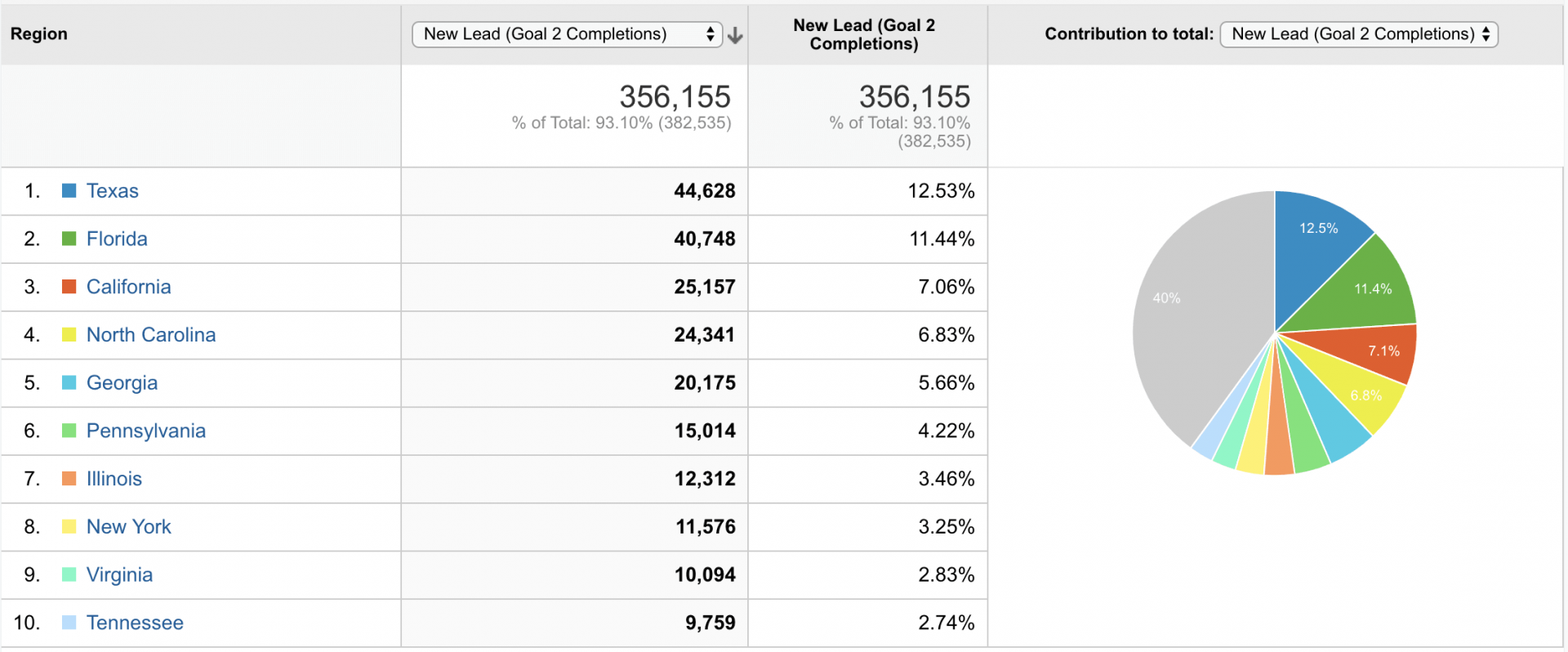
    Which States Converted the Most Leads? Well…

    2019 Carrot Member Leads By State

    Carrot Member Completions (Leads) Per State – Top 10

    Texas reigns for the third year in a row as the top lead volume state in 2019. Compared to 2018, Missouri and Michigan fell from the top 10 and were replaced by New York and Tennesee.


     Major NEW Features Launched in 2019

    Core Value of ours is “Consistent Improvement and Innovation“… and both our members and Carrot continue to push this value. In addition to the features we released in 2019, we helped our members spend more time focusing on their business.

    Here is a look back on some of the features our AMAZING team rolled out in 2019 (but not limited to)…

    All of these while keeping our member’s needs in our focus.

    Carrot visual editor

    New Visual Editor

    Carrot Aspen Design

    Coming Soon! The All-new Aspen Design


    We Knew Carrot Was Fast, But Not This Fast!

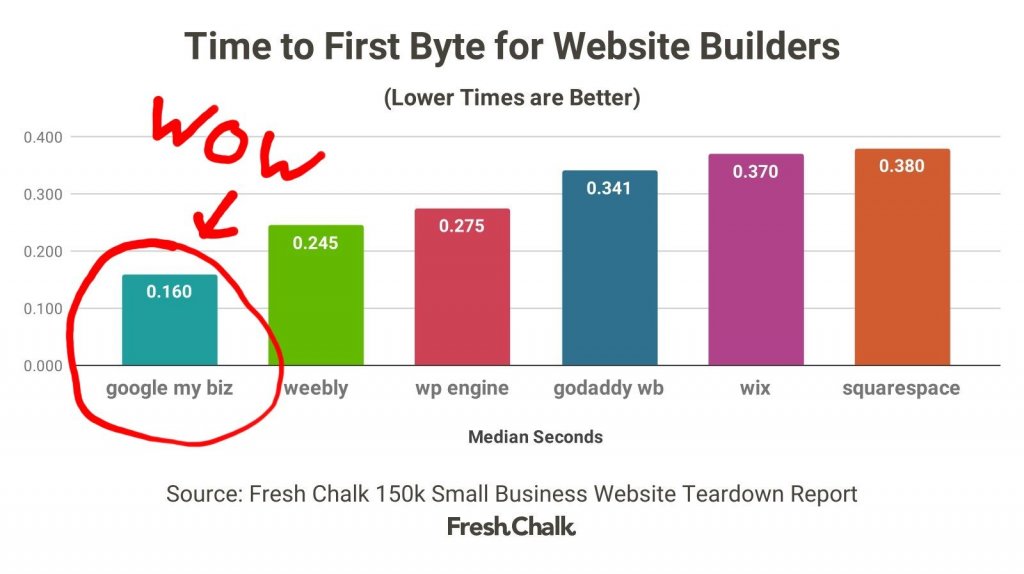
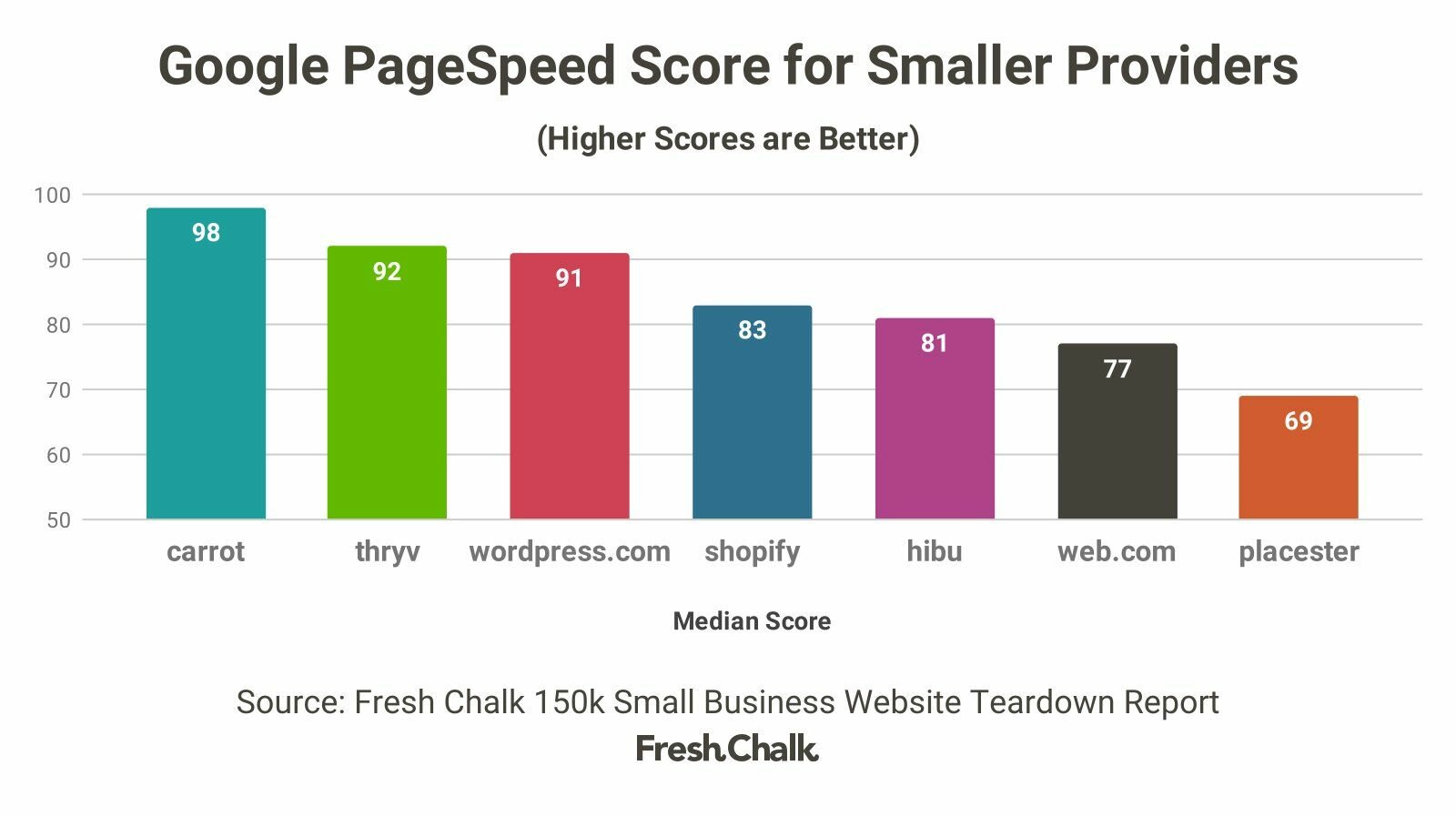
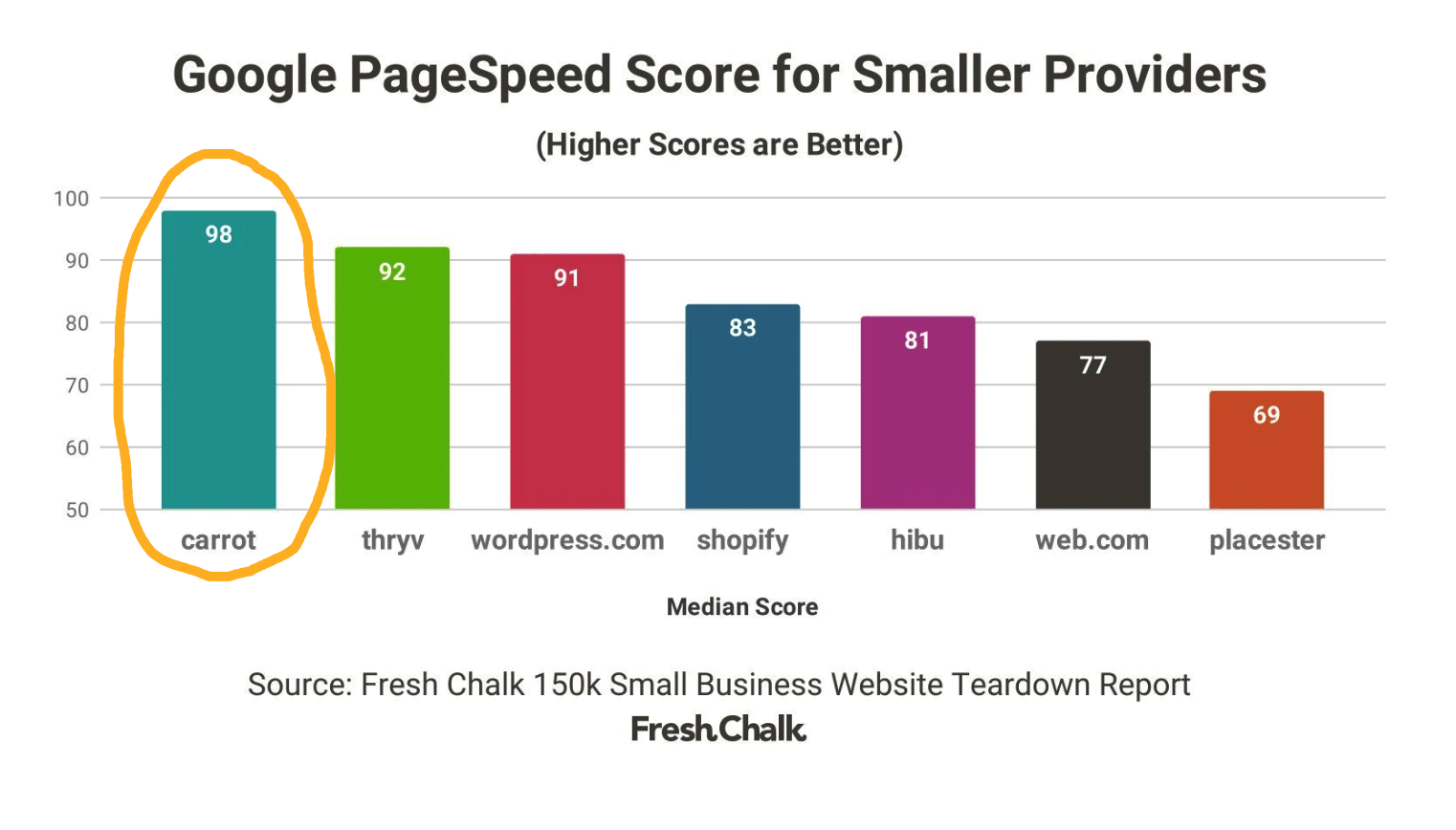
    Fresh Chalk analyzed 150,000 small business websites with the end-goal of determining which website builders offer the highest performing tech stacks.

    They analyzed business websites across dozens of industries including real estate, and Carrot outperformed ALL other website builders, (except Google’s own Google My Biz websites) including Wix, WordPress.com, Placester, Shopify, Hibu, just to name a few!

    google page speed for small providers

    We’re Honored Again – Carrot On the Inc. 5000 List for the 2nd Straight Year + MORE!

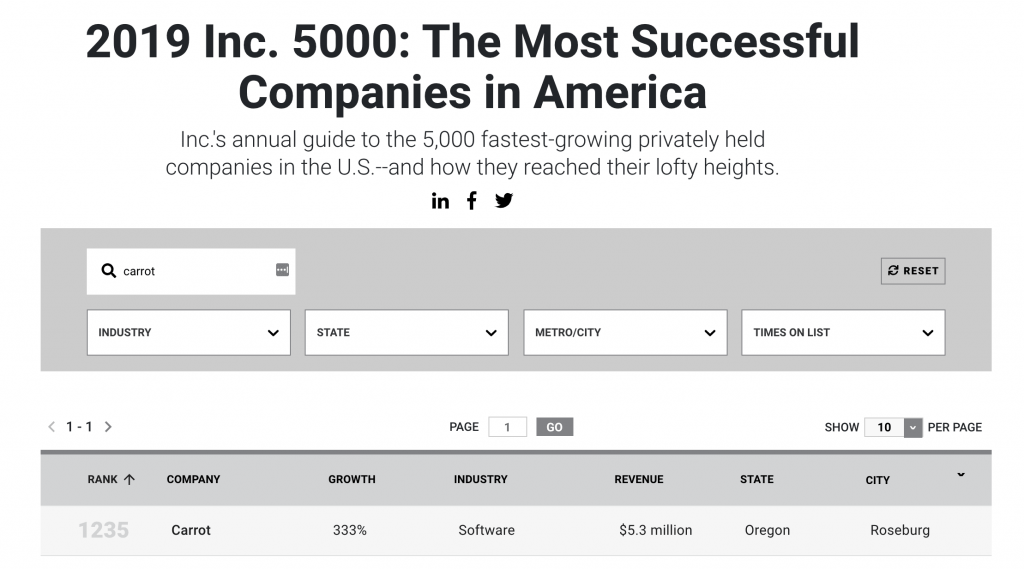
    This year we were placed at the 1235th fastest-growing company in the nation according to the Inc. 5000 list. Again, major kudos to the Carrot team and our members. We wouldn’t be here without an amazing product, team, and amazing members.

    Carrot was also featured in Outside Magazine as one of the best places to work in 2019!

    Outside Magazine best places to work 2019

    And… Carrot was recognized by the Portland Business Journal as #32 of the top 100 fastest growing companies in Oregon and southwest Washington.

    Carrot #32 on the Portland Business Journal Fastest Growing Businesses

    Top 5 CarrotCast Episodes of 2019

    The CarrotCast podcast had 307,000+ unique downloads in 2019. Here are the top five episodes of the year.


    Hundreds of “Doses Of Awesomeness” From Our Members

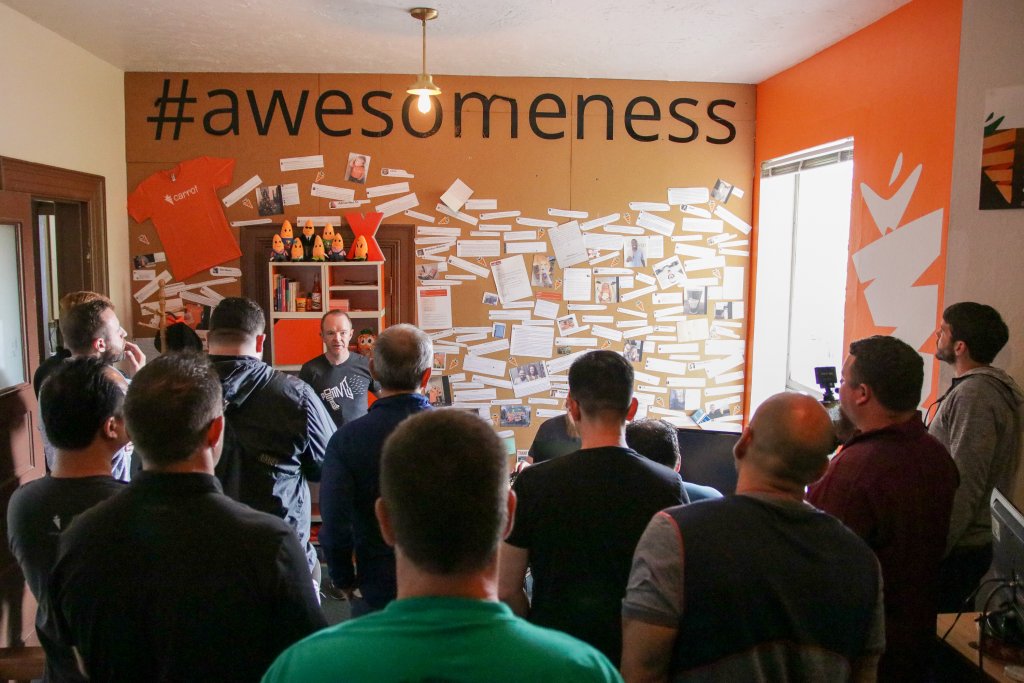
    Hearing amazing stories never gets old! We’re in business to change lives. So much that we have a dedicated #Awesomeness Slack channel.

    Here are just a few examples of notes we get each and every day… not counting the hundreds that happen that we never hear about!


    World-Class Net Promoter Score

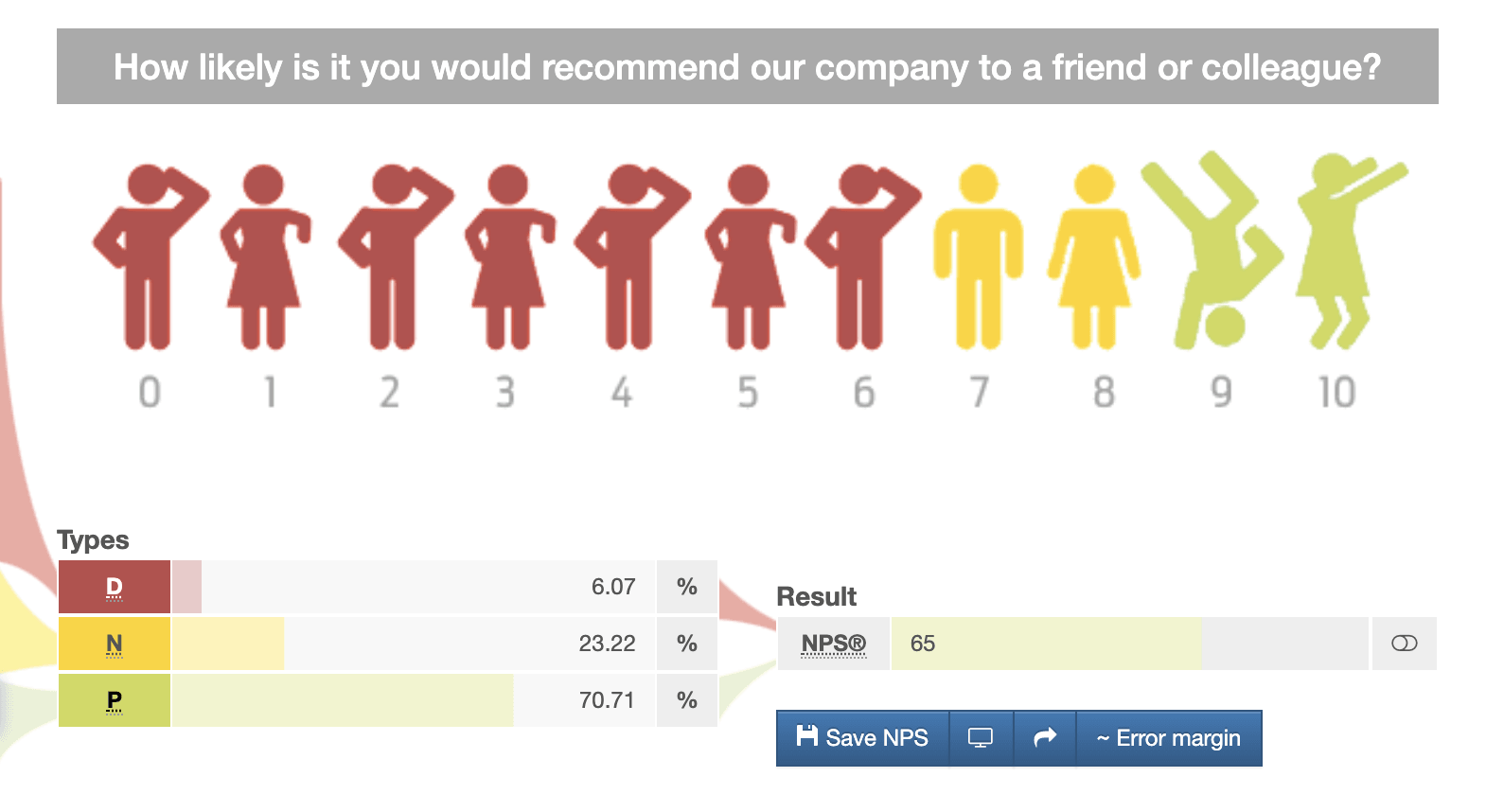
    How do you know if you’re providing value and happiness to your members? How do you know if you’re failing? By using “Net Promoter Score”. It’s basically a question that asks how likely you are to recommend Carrot to a friend or colleague.

    2019 Carrot NPS Score

    With thousands of responses in 2019, the majority scored us a 9 or 10… leaving us with an impressive NPS of 65%.

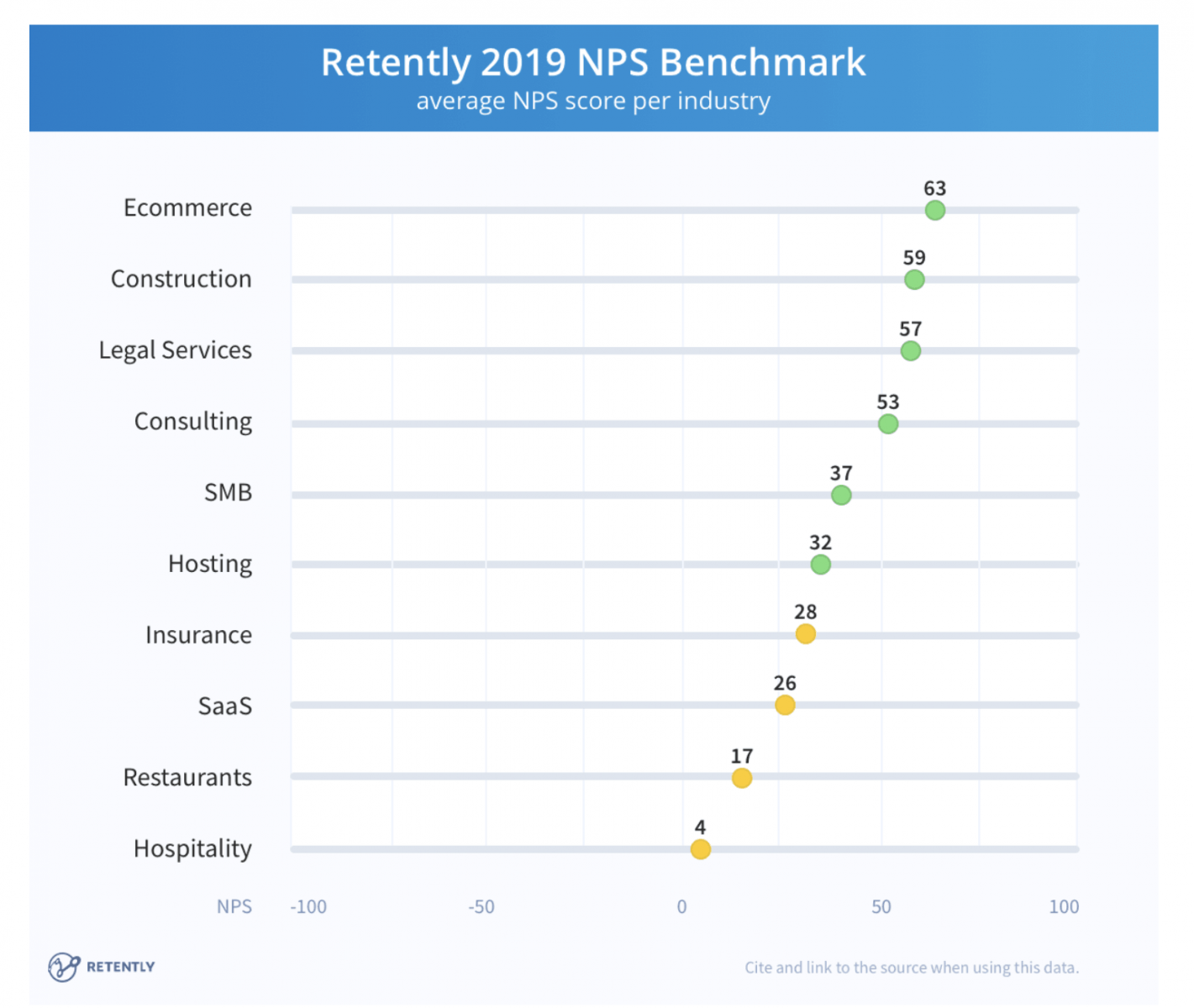
    To put that into perspective, SaaS companies account for a decent average score of 26.

    SaaS average NPS score

    Image Source: Retently

    One of our core values is to “Deliver WOW Through Great Service” we’ll continue to go all out in 2020 to make our members excited, happy, and successful, and to change the way people expect companies to serve them in the future after they experience service the “Carrot Way”.


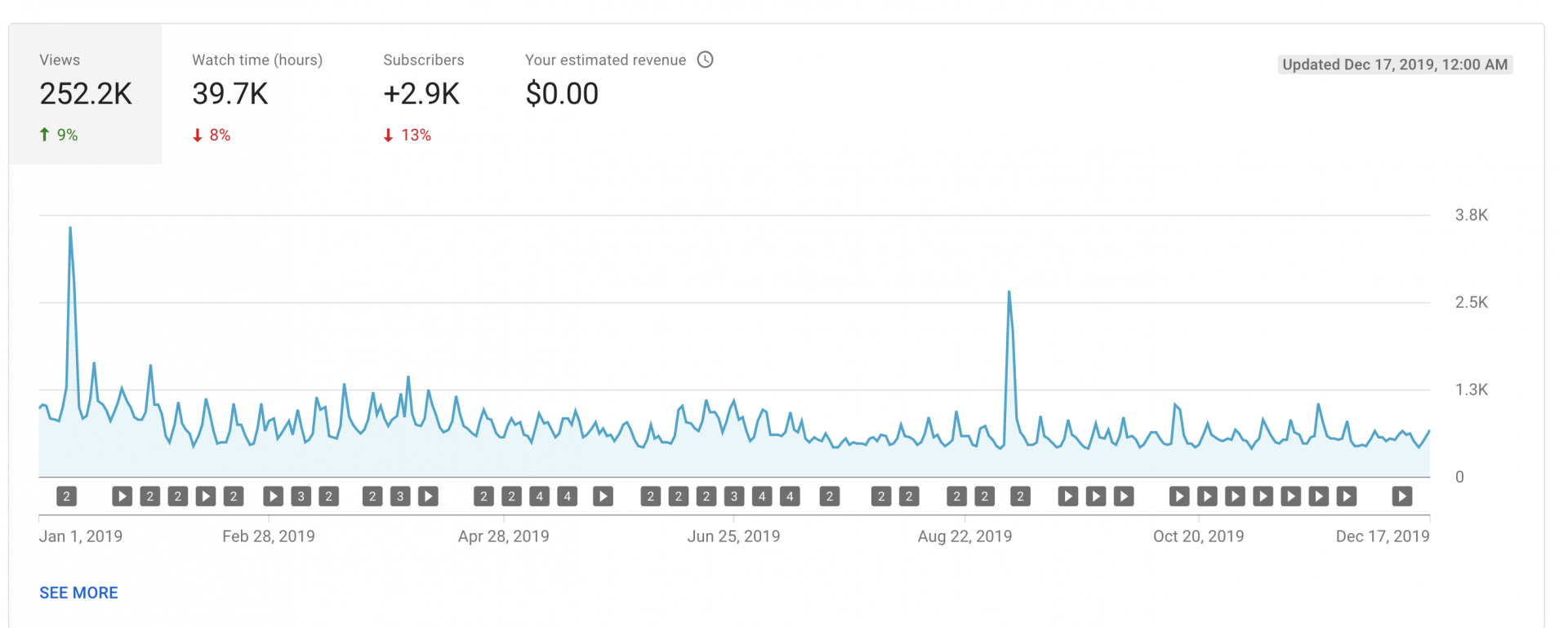
    We Added 2900 YouTube Subscribers and Accumulated Over 39.7K in Watch time hours!

    Carrot YouTube Stats from 2019

    Our favorite videos of the year…

    Create Real Estate Video Content in Under 10 Minutes with Carrot's VideoPost
    Building a $1M+ Wholesaling Business | Max Maxwell’s Keys to Success
    Journey From Day Job to $100k/year | Every Single Step To Closing 8 Deals in One Month w/Keith Sant
    What Makes An Excellent Executive Assistant? Behind The Scenes A Day In the Life...
    How New Real Estate Investors Can Get Leads Online And Close Your First Deals with Investor Carrot
    From Rock Bottom to Wholesaling Empire | How Dave Brown Makes Over Five Figures a Month with Carrot

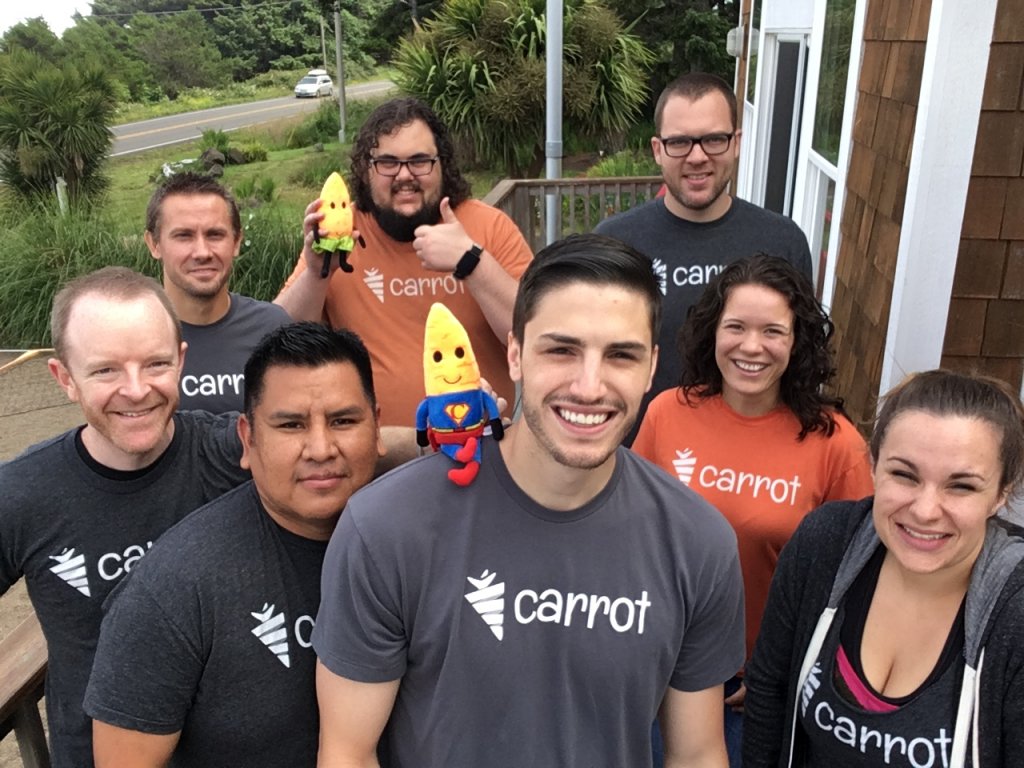
    Two Carrot Team Retreats + Growing Our Team…

    Carrot Team First Retreat 2016…

    Carrot Team Retreat 2019!

    The Carrot team grew by 10 this year as we continue to innovate and be the leader in our industry. Our winter retreat again took place in beautiful, Sunriver, Oregon. Next, hit the waves. Well not quite. For the summer retreat, we enjoyed the coastal breeze of Lincoln City, Oregon.

    Retreats are a great way to pull back, celebrate wins, and deep dive into high-level planning for the future.


    CarrotCamp (Spring and Fall 2019)

    Since it’s inception in 2017, CarrotCamp has been a success for our members. It’s not just a workshop or seminar, nor is it a retreat.

    CarrotCamp is designed to be more like an immersive experience. We deep dive into the campers’ world. We allocate time to unplug and get out of the office and into nature. It’s also time to work with the Carrot team to get massive things done to uplevel business. All the while building relationships with other high-level real estate entrepreneurs that will hopefully last a lifetime.

    Thank you again 2019 CarrotCampers!

    Be on the lookout for CarrotCamp 2020 Editions. Kicking off May 2020. Learn more about CarrotCamp.


     What An Amazing Year. And We’re Grateful To Have You On This Journey With Us.

    How Was Your Year? 

    How was your 2019? Let us know below in the comments section. The amazing, the fair, and the awful :-)

    Also… want to fire up your 2020 and get momentum building?

    These 2 resources are the most shared and commented we’ve ever made. They can change your life…

    Thank you for all you do and for inspiring us every day to do great things.

    Chat with you in 2020!

  • It’s easier, faster, and more powerful. Say hello to the Visual Editor

    It’s easier, faster, and more powerful. Say hello to the Visual Editor

    Carrot Visual Editor

    The power of Carrot + the simplicity of a drag-and-drop editor!

    Almost 6 years ago, we founded Carrot based on a single huge frustration in the market. The traditional website builders were built to launch and edit a site easy, simple, and cheap… but they all sacrificed the most important thing to you.

    Performance and results.

    That means getting more qualified people to your website, converting them into motivated leads at a higher rate, plus building trust and authority. Hence, they want to work with you over your competitors.

    Performance & Results or Easy Editing? The Choice…

    Like anything in life, there are trade-offs. The “big” low-cost website builders out there (think Wix, Squarespace, and WordPress themes) chose to go all-in on “ease of use” and sacrifice performance for their clients. You’d save a bit of time, but it could cost you tens of thousands of dollars (or more) in lost revenue from underperformance.

    At Carrot, from the beginning, we’ve gone all-in on performance and, until now… had to choose to limit your ability to have an easy, drag-and-drop editing experience on your websites.

    Over the years, our members have raved about the results Carrot has helped them get.

    1. You control MORE top Google rankings than any other system in the real estate industry for phrases your best prospects are typing every month.
    2. You’ve converted over 3 million inbound online leads from your websites.
    3. And you enjoy the fastest website platform in the industry.

    And today, we’re proud to introduce that now you can enjoy all of the performance the Carrot platform is known for with the visual editing experience of a slick drag-and-drop editor.

    Introducing… the all-new Carrot Visual Editor

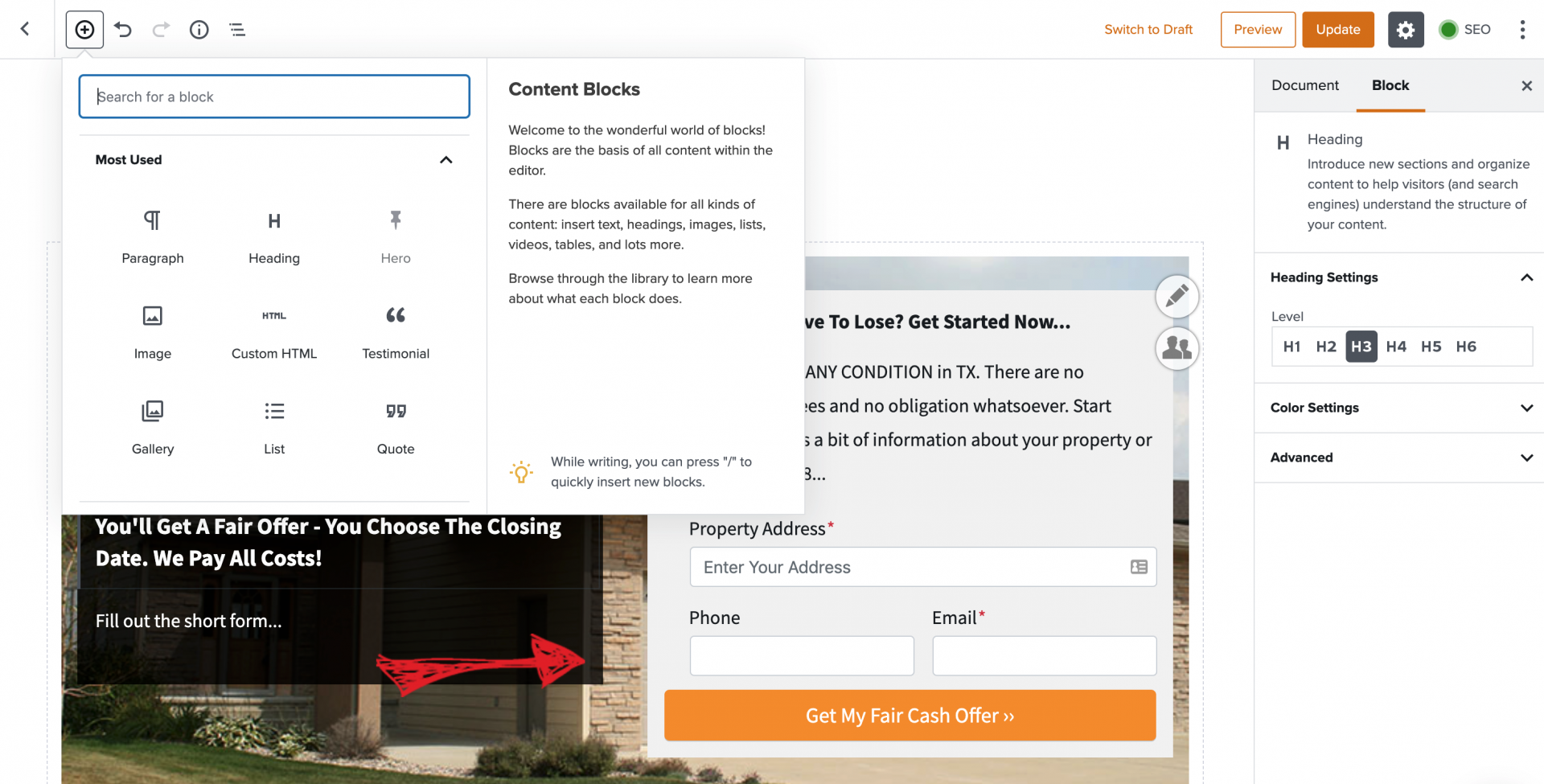
    Carrot Visual Editor Adding Credibility to Your Real Estate Website


    This is where it gets exciting! The new Visual Editor offers a simple way to create, edit and add content to your posts and pages without sacrificing the performance you expect from your Carrot site.

    Once you get the hang of it, [the Visual Editor] makes customizing the site a breeze! Saved me so much time as compared to the original format.

    – Tyrone T. (Advanced Marketer Beta user)

    What will the new Visual Editor help you do?

    I’m glad you asked :-)

    A few benefits you’ll enjoy with this powerful FREE upgraded Visual Editor include…

    • No more switching back and forth from editor to page – now see all of your edits in real-time, including your hero section, forms, and more!
    • Use Drag and Drop tools to easily create and edit pages with movable and reusable content blocks!
    • Make your website stand out visually without having to use any fancy code.
    • Enjoy the new “Full-Screen Mode” to have the most beautiful, clean, and simple editing experience possible… without the distractions (try this mode, you’ll love it!)
    • SEO Grader updates: 1) Your SEO grade for the page will update in real-time without you having to save the page, and 2) Now get SEO grades for multiple keywords for the same page! (this is huge)
    • No loss of page speed – yay!
    • … and more

    How does the Visual Editor work?

    The Visual Editor uses intuitive drag and drops content blocks to speed up the creation of pages and content within Carrot.

    You can now add blocks for headings, videos, paragraphs, images, tables, and so much more. There are also several pre-built blocks that are created specifically for your site.

    Blocks are portable, making it super easy to insert and rearrange any content. Plus, you can save your favorite blocks and use them again later.

    With the Visual Editor, you will be able to create and edit pages more quickly and see those changes in real-time right on the page! You can further customize your experience with full-screen mode – a personal favorite of mine. Give it a try when you have a chance.

    Using blocks to edit a website

    Check out the new Full-Screen Mode In Action! Clean eh?

    Bonus! Upgraded SEO Tool

    While we’ve been building you a state-of-the-art editing interface, we uncovered an opportunity to upgrade the SEO Tool – so we did that too! Our updated SEO Tool provides several nice benefits:

    • Smart auto-generated post descriptions
    • Rank better by auditing and updating your content with multiple keywords
    • New options for social sharing
    • And.. much more. If you’d like to know more about it read here!

    How do I start using the Visual Editor?

    Advanced Marketer members always get exclusive early access to new features, so the Visual Editor began rolling out to them a few weeks ago. The feedback and response have been amazing!

    “…the Visual Editor just flows so much better when making edits and new pages. I like the flexibility of the various blocks and formats which we can use to differentiate our Carrot site and cater to our personal look and feel while still keeping all the Carrot awesomeness!”

    – Shaun K. (Advanced Marketer beta user)

    Access is now in existing Carrot member accounts.

    This will be a completely new editing experience, so those comfortable with the old editor will likely experience a small learning curve. The Carrot Help Center has already been updated with tutorials and FAQs to help guide you as you make the transition.

    We are confident you are going to love this new editing experience! And we want your feedback! Members can contact our support channel for help, provide feedback, and ask questions.

    Here’s to amazing future innovations to help you stand out, build authority, and grow a business that helps you get more freedom, flexibility, and finances… so you can make a greater impact.

    – Trevor and your friends at Carrot

  • Study of 150,000 Websites Finds Carrot Outperforms Wix, Squarespace, WordPress + Many Others

    Study of 150,000 Websites Finds Carrot Outperforms Wix, Squarespace, WordPress + Many Others

    Fresh Chalk analyzed 150,000 small business websites to determine which website builders offer the highest-performing tech stacks. Spoiler alert: Carrot outperformed them all!

    Key Takeaways

    • Google looks at site speed as a great (or not-so-great) indicator to the user experience. Those experiences heavily impact where your site ranks in Google searches! (Check out the conversion rate chart below!)
    • Carrot crushed the competition in FreshChalk’s study for page loading speed, scoring 98 out of 100!
    • Some of the largest website builders create ineffective, slow websites.

    If you want to understand how page speed and other tech elements impact your website’s performance, conversion rate, and search ranking, read on!

    Table of Contents

    1. Fresh Chalk’s Study
    2. What’s a ‘tech stack’, and why should you care?
    3. Q&A with Trevor, CEO at Carrot and Adam Fresh Chalk founder
    4. The (Other) Carrot Difference

    Carrot icon
    Lead generation, at its best
    Attract, convert & close more motivated leads
    Try Carrot Today

    Fresh Chalk’s Study

    Fresh Chalk analyzed business websites across dozens of industries, including real estate, and Carrot outperformed ALL other website builders (except Google’s own Google My Biz websites) including Wix, WordPress.com, Placester, Shopify, Hibu, just to name a few.

    Carrot’s time to first byte was recorded at 0.189!!!

    (Image Source)

    What’s a ‘tech stack’, and why should you care?

    When we mention Carrot’s tech stack, we’re referring to all the technical components continuously working in the background of Carrot’s high-performance Lead Generation Hub (aka your real estate website).

    While these tech elements might seem insignificant to your daily activities, you’d be surprised to know how much weight they carry in regard to your website’s overall performance, especially in lead conversion and SEO ranking.

    Page speed, for example, has a huge impact in both of these areas (as you’ll see more of in the interview below). In fact, Google’s core web vitals for page loading speed should be anything under 2.5 seconds as of 2022. Anything over that and your website’s conversion rate will plummet drastically…

    As for SEO, Google looks at site speed as a great (or not-so-great) indicator to the user experience. Those experiences heavily impact where your site ranks in Google searches!

    conversion rate

    Carrot absolutely crushed the competition in FreshChalk’s study for page loading speed, scoring 98 out of 100!

    This comes as no surprise either when we look at Carrot’s 2022 SEO and conversion data. Carrot websites have been proven to:

    • Outclass 92.5% of competitor sites in terms of Mobile Performance Score
    • Capture >50% of the top 3 Google search results for the keyword phrase “sell my house fast.”

    Convert all website traffic at a 44% higher rate than the real estate industry standard (with additional 2X higher rates for organic traffic)

    So Yeah… we were pretty darn excited about these results. :-)

    To learn more about the research methodology behind this study, and why website page speed is so important, so we interviewed Adam Doppelt, founder of FreshChalk, who conducted the research. Here’s what he had to say.

    Q&A with Trevor, CEO at Carrot and Adam Fresh Chalk founder

    Q: What made you want to do this research project and how did you choose which 150,000 sites to use in your study?

    A: The idea emerged from a discussion with my co-founder Patrick. He crawled roughly 150,000 of the small businesses listed on Fresh Chalk to improve the contact information we display on the site.

    We were chatting about his project and came up with the idea… perhaps we should poke through the data and see if there was anything interesting lurking inside.


    Q: As you were digging into the data, you found which website builders were the most popular. Was there any correlation between popularity and performance?

    A: Market share and website performance don’t seem to be strongly correlated. Some of the largest website builders create ineffective, slow websites.

    I think this speaks to the power of marketing. I see this as a challenge and an opportunity. We need to do a better job of making our products fast and educating the world about the benefits of speed.


    Q: How important is page speed and time to the first byte when it comes to Google rankings in your study?

    A: Google has stated that page speed is a direct ranking factor in Google search results. Keep in mind that there are hundreds of factors that feed into Google rankings, so page speed is ultimately just one in a crowd.

    A terrible website won’t rank well even if it displays quickly.

    Certainly Google itself invests heavily in speed.

    There’s also a ton of evidence that improving page speed also benefits conversion rates, retention, and user happiness.


    Q: In the study, Carrot popped up on the radar, and while we host far fewer websites than WordPress or Wix, why did you include us in the report? What surprised you about the performance you saw on the Carrot sites in the study? How does Carrot stack up against the other website builders you found in the study?

    A: Carrot stood out in my results like a cheetah in a world of slugs. Carrot websites are just plain fast. I had to include them, just to show the world that it’s still possible to build great products that are still fast.

    By some measurements, Carrot sites are twice as fast as Squarespace. Consumers notice and convert better.

    By the way, I can tell you that Carrot’s median Google PageSpeed score was 98 as measured across 118 Carrot real estate websites.

    I didn’t have room for that in the report. Pretty amazing compared to the competition!


    Q: How does page speed and time to first-byte impact search results?

    A: Speed definitely has an impact. Time to the first byte isn’t itself a ranking factor, though it feeds into Google’s PageSpeed metric.

    It’s my opinion that Google uses the PageSpeed number verbatim as the ranking factor. I doubt they built two separate speed ranking systems.


    Q: Seeing how the only website builder that beat Carrot was Google’s own websites, can you place a dollar amount or value on the tech stack or speed people are getting when using Carrot?

    A: Google My Business sites are fast because they are simple and get to piggyback on all the other infrastructure that Google built for their data centers and search products.

    My guess is that it would be nearly impossible for them to speed up those sites without a huge amount of effort!

    There is also a ton of research showing that fast websites convert better than slow ones.

    For example, in 2017 Google concluded that 53% of mobile visitors leave a page that takes longer than three seconds to load.

    Can you imagine losing half your sales just because you picked Wix instead of Carrot?


    Q: For the future of small business, how important do you feel it will be to focus on performance with their website to stay competitive with others in their market?

    A: Users, in general, are intolerant of slow websites. If I remember correctly, one study a couple of years ago showed that users would exit after a few seconds spent waiting for slow websites.

    Speedy websites help users feel that the businesses behind those websites are active and in touch with consumer demands.

    It’s our responsibility to make sure that websites are fast even when running on pokey cell networks. It’s incredibly important!


    The (Other) Carrot Difference

    Pretty awesome, huh?

    At Carrot, we constantly look to improve our platform and websites to give you the best marketing tools to help you attract the right traffic to your Lead Gen Hub (aka your real estate website), convert that traffic into motivated seller and buyer leads, and close more deals than ever before.

    Additionally, since we’re smaller than Wix or WordPress, we can dedicate more time to helping our members succeed at business, which is probably why we were placed on the Inc. 5000 list and Entrepreneur 360 list in 2019 — when you care deeply about your customer’s success, awesome stuff happens. :-)

    Carrot on Entrepreneur 360 2019
    Carrot on Entrepreneur 360 List 2019

    And we believe that by helping you build a business that provides you with the entrepreneurial freedom you crave, we will build a business that gives us time for the things that matter most in life.

    Want to know what your page speed is? Check at Google PageSpeed Insights.

    If you want to see whether our results speak for themselves, you can sign up for a 30-day risk-free membership.

    You’ve got nothing to lose… and everything to gain. Join the nation’s top real estate professionals and launch your website today!

  • New! Automated Spam Control

    New! Automated Spam Control

    Did you know the very first spam email was sent back in 1978?

    And it’s been a problem ever since.

    Sometimes the culprit is an over-eager marketer, and sometimes the perpetrator is something more nefarious like a phishing scheme.

    Either way, spam is an internet-wide issue. One that every business online has to deal with. Back in August of this year, more than 250 million websites – of all kinds – were hit by a massive infestation of pesky overseas spambots.

    Some website providers experienced crippling server issues as a result! Thanks to continual innovations, the high-performance tech framework at Carrot had no problem handling the increased traffic load, but, like for those 249,999,999 other sites, our members saw an increase in spam leads.

    Sometimes, problems create opportunities, or in this case, they create great new product features!

    The first step in squashing this issue was a recommendation that members add a CAPTCHA field to the impacted web forms. This reduced spam dramatically for some folks… but it came with a challenge. Some bots were outsmarting CAPTCHA, and manually adding CAPTCHA to forms was slow and did not align with our mission.

    We knew we needed to provide excellent and automated spam filtering while giving YOU, our members, additional controls.

    A new approach to filtering and managing spam leads

    The new Automated Spam Control System is designed to automatically filter spam from your lead forms and give you the ability to view and edit your spam “inbox”.

    Here are a few quick highlights of the new feature.

    Key Features

    • All form submissions that come via a form containing a text area (for example, the “Contact Us” form) will be “scored” and the spam will be filtered out.
    • Notifications for spam leads are skipped (so they don’t clog up your inbox) and the spam is sorted into a separate view in your lead manager.
    • Your lead manager now allows you to review all spam leads and move them to your inbox if needed.

    What to do next

    If you are a Carrot member, log in and visit your leads dashboard. Do a quick check to ensure you don’t have any legitimate leads that were incorrectly filtered as spam. It’s here that you can also familiarize yourself with your new tools!

    Also, remember that CAPTCHA is best used on forms that require text fields. We do NOT recommend using CAPTCHA on your main opt-in forms (for example on your home page) because of the impact it can have on your conversion rates.

    We would also love your feedback on this new system! Have your spam leads dried up recently? Check out your new spam box and let us know if you have any feedback for us as we continue to improve this new feature.

    We are continually dedicated to making Carrot better for each and every one of our members.

    If you have questions, please contact our awesome support team!

  • How To Measure The Success Of Your Real Estate PPC Campaign

    How To Measure The Success Of Your Real Estate PPC Campaign

    “Listen… it’s not working.”

    Those are the same words that thousands (millions?) of real estate investors have said to the person running their PPC ads.

    “I’ve already spent $1,500 and I haven’t closed a single deal from those leads! If it hasn’t worked now, then it isn’t going to work.”

    It’s difficult to believe differently than that. After spending thousands of dollars on a campaign which isn’t delivering the kind of results your business needs, quitting seems like the only logical option.

    But let’s slow down for a moment.

    Just because you’ve spent several thousand dollars on your PPC efforts without closing a deal does not mean you’re doing something wrong. In fact, it might mean you’re doing something right.

    Let me explain.

    What Is The Goal Of Your Real Estate PPC Campaign?

    Is your real estate PPC campaign a success?

    To answer that question, you first need to determine the goal of running ads.

    If you’re simply trying to build brand awareness, then seeing a tangible return on your investment might be irrelevant. If you’re trying to generate leads for your email list which might turn into a closed deal down the road, then all that matters is getting new people on your email list. In those cases, use the metrics mentioned in this article to determine how successful your real estate PPC campaign is.

    If more likely, you’re running a PPC campaign to find motivated sellers and close deals, having a strict, tangible, profitable ROI matters a lot more. The first thing you’ll need to do, then — before you even launch your campaign, ideally — is set a realistic and profitable budget for your ads.

    Here’s how to do that.

    What is a Realistic Budget and ROI For Your Real Estate PPC Campaign?

    Earlier, I said, “Just because you’ve spent several thousand dollars on your PPC efforts without closing a deal does not mean you’re doing something wrong. In fact, it might mean you’re doing something right.”

    And I meant it.

    At Carrot, we know lots of real estate investors who have to spend between $1,000 and $5,000 to get a single deal. The reason for that has nothing to do with their ads being ineffective, but everything to do with thick market competition. The thicker the competition, the more investors have to spend on ads to close a single deal.

    Here’s the kicker, though: those investors are still making between $10,000 and $50,000 in profit as wholesale fees. So while spending up to $5k on an ad campaign might seem crazy, it’s still very profitable.

    Brian Rockwell is one such investor (and Carrot member!) who consistently pays several thousand dollars to close a single deal in his highly competitive market: Dallas, Texas.

    Here’s what he has to say about it:

    “Would you pay $3,000 to make $30,000? I don’t know about you, but I’d take that deal all day long.”

    Okay. Great.

    Spend money to make money. You get that.

    But how much money is too much money? How much should you expect to spend on your PPC campaign before closing a deal? At what point should you throw in the towel?

    To answer that question, check out our free-to-use ROI calculator for paid ad campaigns.

    roi calculator

    You’ll just need four pieces of information in hand:

    1. Typical profit per deal
    2. Typical # of leads to close 1 deal
    3. Cost per click
    4. Website conversion rate

    Example:

    Imagine that you can safely expect to make at least $15,000 in wholesale fees on a single deal. Let’s also imagine you’re in a competitive market and that it takes you 25 leads to close one deal. Your cost-per-click for your PPC campaign is $15 and your website conversion rate is 15% (typical for a Carrot site).

    That means you should expect to spend at least $2,500 to close a single deal and no more than $3,250.

    And while that might seem like a lot of money to spend, you’ll also notice that the ROI on your expenses will be between 362% and 500%…

    As Brian Rockwell said, “I’d take that deal all day long.”

    Formula For Calculating ROI

    Of course, ad spend is likely not your only cost for generating leads and closing deals. You might also be paying people to run your ads for you, tackle due diligence on properties, meet with buyers, or create contracts.

    Maybe you also want to include those costs in the overall ROI of your PPC campaigns…

    It’s up to you… really, it depends on what you want to find out. If you want to strictly determine how effective your PPC campaign is and if you’re staying within budget, then you might want to leave other indirect costs out of the equation. If, on the other hand, you want to determine the profitability and ROI of your entire business, then you’ll certainly need to include all other costs.

    Whatever the case, here’s the formula you can use for finding the ROI of any of your marketing efforts.

    ROI = (Revenue – Cost) / Cost

    How To Determine a PPC Campaign’s Effectiveness (The 4 Metrics That Matter Most)…

    There’s no doubt about it: ROI is the king of determining the success of any PPC campaign.

    If you’re not making more money than you’re spending — if your ads aren’t profitable for your business — then you need to press “Stop” and try something else.

    Having said that, looking only at the ROI of your PPC campaign can blindside you to other important metrics. Because even if your ads are profitable, they still might not be as profitable as they could be.

    The goal is to not only run profitable and realistic PPC campaigns but to also increase the effectiveness and profitability of those campaigns. To do that, you should keep a close eye on the below metrics, test new things, and make changes as needed.

    1. Cost-Per-Click

    You can find this metric reported directly in your Google Ad dashboard. It tells you the amount of money you’re spending for each click you receive. The more enticing and click-able your ad is to website browsers (i.e. the more people who click), the less money you’ll spend on each click. However, competitive markets will force a high cost-per-click regardless of how effective your ad is, simply because there are so many other bids.

    2. Quality Score

    The quality score of an ad campaign is a metric which attempts to show you, with a score between 1 and 10 (10 is best), how effective your ad campaign is. Using the number of clicks your ad is receiving when people see it, the quality score also influences how much Google is going to show your ad, your cost-per-click, and even your ad placement (at the top vs. at the bottom). Keep a close eye on this metric and tweak your ad if it has a low-quality score.

    3. Impression Share

    Impression share is the percentage of people who, when your ad was placed on the page they visited, actually scrolled and saw your ad. If you ad has a low-quality score and is sitting at the bottom of the results page, your impression score will be much lower than competitors with ads showing at the top. An impression score of 80% means that 80% of people saw your ad and 20% didn’t.

    4. Website Conversion Rate

    While this isn’t technically a PPC metric, the website conversion rate is absolutely vital to consider for any paid ads you’re running which drive traffic to your website. Since you’re paying to generate clicks and hopefully leads and closed deals, you need a website which consistently converts the traffic your hard-earned money is driving to it. What’s a good conversion rate? Find out over here. And if you don’t want to worry about optimizing your website for conversion, consider getting yourself a Carrot website. We’ve generated over one million leads for investors and agents all around the U.S. and we’d love to do the same for you (a typical Carrot website conversion rate is around 10%. A typical conversion rate for most other industries is around just 2%).

    Conclusion

    I understand.

    It gets discouraging, running ads which aren’t pulling results for your business. After all, if your business is to survive, you can’t be dumping money into a useless ad campaign for much longer.

    You need results.

    But keep in mind that results often take time.

    The best thing you can do, in fact, is set yourself up for success by determining a realistic budget for your PPC campaigns: how much should you expect to spend? And how much is too much?

    With those numbers, you’ll be far more confident spending the money you’re spending… knowing when you should expect a closed deal and when you’ve spent too much.

    Then, work to improve the ROI of your PPC ads by watching the 4 metrics mentioned in this article. Because even if your paid ads are profitable, you still might be able to make them more profitable. Which is always a good thing to do.

    With that, you’re ready to run successful PPC campaigns. The rest is simply doing, testing, trying, and iterating. Off ya go!