What if you lost one lead this year because your website wasn’t optimized for conversion?
No biggie, right?
Well, no biggie so long as that lead wasn’t going to turn into a deal… if it was, then that’s $10,000, $20,000, or even $30,000 straight down the drain.
And, as my real estate agent says, “It only takes one – the right one.”
Sadly, for most unoptimized websites, the truth is much more depressing than a single lost lead per year. A website that loses one lead from your target market, after all, is going to lose all similar leads.
This is why preparing your real estate website to convert its visitors is absolutely vital… before you drive traffic to it (paid and organic). How, though, do you know if your website is or isn’t optimized for conversion?
Well, at Carrot, we’ve generated millions of real estate leads for our thousands of members, and these are four tell-tale signs that your website is losing you money.
4 Signs that your website isn’t generating the online real estate leads as it should
1. Your Website Isn’t Mobile-friendly
For our thousands of Carrot members, 64% of all leads come through a mobile device. Not through a desktop or laptop, but through a thumb-clicking phone.
And that’s happening all over the online world, not just at Carrot. 52% of all global online traffic is generated from smartphones, according to Shane Barker.
This means, if you’re going to convert over half of your website visitors, you can’t create a bad mobile experience. Google is taking this so seriously that they recently rolled out mobile-first indexing – which basically means that they prioritize the performance of the mobile version of your website over the desktop version. And they’re not the only ones who take mobile website performance seriously…
So do your website visitors.
In fact, 61% of buyers form more positive opinions about brands that offer a remarkable mobile experience, according to Crazyegg.
That’s why, at Carrot, every single one of our website designs is crafted to convert visitors regardless of the device they’re using to browse.
Here are some signs that your website isn’t mobile friendly…
You can scroll side-to-side and the screen doesn’t adjust to the size of the device.
The words become so small they’re unreadable on a mobile device.
The buttons are difficult to click with a normal-sized thumb on mobile.
If any of those are true of your website, then you’re definitely losing mobile phone leads – and switching to a mobile-friendly real estate website design like Carrot could outright double your lead generation.
2. You’re Not Making It Easy For Visitors To Give You Their Information
At the top, there’s a title, then there’s a menu and heading. And there’s maybe some sort of vague CTA – in this case, the “Learn More” button.
As you scroll down, you’ll see pictures of the real estate agent (or investor), maybe some testimonials, some notes about their services, and then finally a decent CTA.
This is at the very bottom of their website.
Now, that probably doesn’t seem like a big deal…
Do people really care all that much if they have to scroll to find your CTA?
To answer that question, let’s look at a quick study done by Bryan Harris – an email list building guru. He took his “right-side up” homepage and flipped it so that the CTA was front-and-center when someone arrived on his website.
Immediately, he saw a 35% increase in his number of subscribers.
Remember, people who’re looking to buy or sell their home are looking for a solution to their problem. The faster you solve that with a relevant CTA, the more likely they are to opt-in.
But you might be wondering what an upside-down homepage actually looks like.
At Carrot, we exclusively use the high-converting upside-down homepage model – putting the contact form and phone number right at the top of your website (on mobile and desktop) to guarantee that visitors to your website aren’t lost because they have to scroll more than they’d like.
Here’s a quick testimonial from a Carrot member, Adam Mitchell, who spent $1000s on the wrong marketing and an under-performing website. He now does multiple deals per month in a competitive market.
3. The Sales Copy Isn’t Scientific
What do I mean when I say that your homepage copy should be scientific?
I mean that there should be a clear and obvious reason that each phrase and word is in its place. And if you’re wondering whether you wrote your homepage scientifically or not – with the psychology of your visitor’s in mind – then you definitely didn’t.
Because scientific sales copy has to be intentional from the very beginning.
Here’s a typical example of sales copy that misses the scientific mark.
A lot of people try to make their sales copy creative and cute…
But that isn’t what you need. What you need is sales copy that appeals to people’s problems and then promises a remarkable solution.
And the headline is the most important element, with 80% of people only reading the headline and 20% reading the rest. In other words, you need to strike the right chords in the right order, quickly.
You need to be scientific.
Here are a few examples of psychological rules in sales copy.
The word “because” with a reason after increases conversion by 60% to 94% – it doesn’t even matter what the reason is, it just matters that you have a reason for what you’re selling, how much it costs, and why you’re the one selling it.
Similarly, social proof – such as testimonials and credibility bars – can significantly increase the conversion rate of your website. For one website, social proof increased the conversion rate by 20%.
But, those are just a few examples.
For your formulaic sales copy pattern, follow these three steps, in this order:
Empathetic description of pain – First and foremost, your prospect needs to know that you know exactly what they’re going through. After all, how could you possibly help them if you don’t understand their current position?
Agitate that pain – Then, the prospects needs to be reminded of how terrible of a situation they are really in. Your goal is to empathetically remind them of how difficult their predicament is so that they’re ready to get out of it.
Promise a solution that’ll take that pain away – Finally, in swoops Super Man. Your solution. Guarantee them with all the tools you have in your arsenal that your service (whether agent or investor) is going to remove their pain, then tell them how it’s going to do that.
Consider our very own sales copy as an example of this. It’s only a few sentences, but it hits every note.
4. Your Website Has Slow Load Times
The slower your website loads, the more people who won’t stick around to see what you have to offer.
Higher bounce rate. Fewer conversions.
Period.
As Neil Patel explains on his blog, for instance, 53% of people will leave a mobile site if it takes more than three seconds to load. And 47% of online users expect a website to load in just two seconds or less.
As the nail strikes the coffin, a one-second delay in page response time often results in a 7% reduction in conversions.
If you have a slow website, how many thousands of dollars might you be losing for each second? Here’s some quick math.
Imagine that you get 2,000 visits to your website every month at a 10% conversion rate. That’s 200 conversions. Then imagine that you close 1 in 20 of those. That’s 10 deals per month.
Now let’s assume that you make $10,000 per deal.
At a 7% reduction in conversion rate for every one-second loss of load speed, just a two-second delay would lose you upwards of $10,000 or more every single month.
This is why, at Carrot, we don’t mess around with slow load speeds. In this tech-stack study of 150,000 websites, Carrot outperformed Wix, Squarespace, and WordPress. In fact, Carrot was second to Google’s own website.
Conclusion
Maybe in the 90’s, just having a website was enough. Just having a place where people could go online and learn about your business would do the lead-generation trick. But now we’re down the road…
And we know what converts visitors… and what doesn’t.
Still, many websites haven’t caught up with the times and optimized their websites for conversion. This is unfortunate, considering the significant impact that conversion optimization can have on business success.
So, a quick recap.
Avoid these four real estate website pitfalls that can kill your lead generation…
It’s not mobile-friendly.
The homepage isn’t easy asking for their information.
Hey guys and gals. This is Trevor from Carrot, and I’ve got a video coming at you that’s going to walk you through as an agent or an investor, how to embrace something that we call the hybrid real estate strategy.
Now you’ve probably been seeing in the market a lot of things happening in the last two to three years. Around 2017 here at Carrot, we were starting to talk about the hybrid strategy that will become increasingly popular, where a house seller works with a person who is both an agent and an investor.
Now, many of you watching this might be just an agent serving people through the MLS and mainly working with sellers who are motivated to sell retail and get top dollar. Many of you might be watching this video, who are wholesalers or house flippers who are used to buying properties and acquiring properties at a discount.
Now, one of the things we saw in 2015, 2016, and 2017 was that many real estate agents weren’t collaborating with investors. Many investors complained that they couldn’t find investor-friendly agents, and the times have changed.
We’ve started to see laws being enacted around the country where it makes wholesaling harder to work. We’ve started to see iBuyers and big tech giants coming in to start to disrupt parts of the market. And with that disruption, with those law changes, what’s happening is there’s a concentration in the middle.
There’s a concentration in the middle of the market where sellers are demanding an easier way to sell their house.
So for real estate agents who are only working with people who are motivated to sell retail where the houses are in show-ready condition, they don’t need any repairs, or where the person can wait multiple months in order to get top dollar…
If you’re one of those real estate agents who wonder,
“Why would someone ever want to sell a house for below what it’s worth, below what they could sell on the MLS to an investor when they can just list it on MLS and get top dollar?”
Well, I’m going to be walking you through why an increasing amount of sellers are choosing to work with a direct house buyer, an iBuyer, or a local mom-and-pop investor like we work with here at Carrot a lot.
And on the investor side of things, you might be looking at it going,
“Why would I ever want to get my real estate license?”
We hear that all the time and I’m going to walk you through why you really need to be seriously looking at either getting your real estate license or collaborating with one of the millions of real estate agents around the country to help you serve more of your sellers.
I want to drill this in right now: YES, there are massive side benefits to moving forward with a hybrid real estate strategy as an investor and an agent or an agent and an investor.
But the main reason to do hybrid isn’t just to put money in your pocket. There’s a massive upside to it as I’m going to walk you through exactly how to do it.
The main reason to do it is actually to serve your sellers better because you can imagine that if a seller reaches out to somebody, they want to sell their home.
If I were to survey 100 house sellers, 99 and a half of them would say that they would much rather sell their house quickly for cash, not have to wait for a buyer to find financing, not have to have open houses, not have to have a bunch of people go through their home for a fair price that they agree within a matter of days or weeks.
99 out of 100 would say that they would much rather do that than list it on the market and all that goes through that process.
Now, why do 85% of homes sell on the market with real estate agents through the traditional routes?
It’s because that’s the way that most people know to do. And what people do is they follow the path of what they know best.
But with iBuyers coming into the market, what we’re finding is it’s actually making iBuying or directly selling your home more mainstream to the average home seller.
If we think about Tesla. Tesla came along, before that electric cars were not popular. People didn’t want to drive electric cars, but what happened is Tesla came in and they made an amazing experience for the user.
They actually solved the problems and provided a better experience, and then they also went out there and grew the electric car market. So Tesla came along and raised the entire market, made the electric car market bigger than it ever was.
That’s what’s happening with iBuyers.
iBuyers are coming in and they’re going to be getting deals that real estate agents normally would have gotten.
They’re also going to be getting deals that real estate investors normally would have gotten.
They’re going to be growing the overall pie for people who want to sell their home directly to an end buyer or to an investor versus listing on the market.
So what does this mean for you as a real estate agent?
Well, there’s a lot of competition right now in the market. And so you need to find ways to differentiate your offering.
So if you’re showing up to every single house seller appointment, when you’re offering them one option, which is,
“I can list your home and here’s my fee, take it or leave it,”
How many of those home sellers are you likely losing because you’re not actually solving their problem the way that they want it to be solved?
If you’re a real estate investor and you show up to that house and you say,
“Hey, here’s my offer. It’s a discount offer. Take it or leave it,”
How many of them are actually perfect people who would rather list on the market and take full retail?
How many of you guys, real estate investors or real estate agents, are completely ignoring the other side of the market?
Where you’re trying to paint everything into your pretty little box of, it’s got to look this way to list on the market or you’re painting it in your pretty little box where it’s got to look this way if I’m going to buy it at a discount.
I’m challenging all of you to become a hybrid in the next real estate cycle or heavily collaborate with the other side because if you don’t, you’re going to be struggling big time.
What Is Hybrid Real Estate?
Hybrid is essentially a seller strategy, not a buyer strategy.
And that’s something a lot of people have confusion about. Do I make one website? Do I make two websites, one just for retail and one just for wholesale?
I’m going to walk through exactly what you do with your websites and exactly how to deal with that and what to do with your offers to your sellers and how you serve them best, whether you’re an agent or an investor.
Hybrid real estate is a seller option where you’re serving sellers up with multiple different offers.
It’s a cash offer. Hey, if you’re looking for speed and convenience and are willing to take a little bit of a shave in equity, here’s this.
If they want top dollar, here’s what we can list it for them in the market.
That’s all that it is.
It’s going in there and saying,
“We can help you no matter what your situation,”
Versus we can only help you if you fit in this box.
So the traditional approach like I’m showing below.
You’ve got a motivated seller right in the middle. And that seller traditionally is going to go reach out to a real estate agent because everybody knows 5, 10, 15 real estate agents, but very few people personally know a real estate investor.
But now we have these iBuyers coming in that are making that more popular.
So they’re hearing of “Opendoor”, they’re hearing of Zillow buying homes, “Offerpad”, and the mom and pop home buyers that we work with that have been around for 30 or 40 years.
iBuying is not new. It’s just a fancy phrase that the tech industry placed on their well-funded competition.
So most people would go reach out to a real estate agent.
And if they’re:
Looking to get top dollar,
Willing to wait multiple months,
Don’t mind people coming through the property; you’re having open houses or all that goes with that,
Okay with paying the fee that goes to the real estate agent,
Then they’re going to go that route.
That’s where the majority of people are going to go. Probably 80% of sellers are going to go that route.
Now, if you’re a seller and you are:
Looking for speed,
Looking for convenience,
You don’t want to list it on the market,
You don’t want to have open houses,
You don’t want to have people coming through your property,
You don’t have the time because you’re relocating,
Or, you just inherited a house from your uncle and you don’t want to deal with all the hassles of fixing up that property in a way that’s going to make it so it can be sold. Or, you don’t have the emotional investment in the property because you inherited it and you just want to get it done with because there are so many reasons why someone wouldn’t want to sell for a cash offer.
So on the traditional side of things, a real estate agent is going to put the house on the MLS. They’re going to try to get top dollar for that property. They’re usually nicer houses that are show ready.
Sometimes it will be the fixer-uppers, but usually, it’s nicer houses. About 80% of sellers are going to go this way, which means you as an agent are probably throwing away 20% of your leads which could be some of your most profitable deals of the entire year, and you’re now not serving those sellers.
You’re throwing them back out to the streets, back out to the wolves to try to find their solution when you could actually serve them.
Now, as an investor, you’re going to take it and buy it off-market, you’re going to then fix it up and sell it on the market to somebody.
So real estate agents, investors are your friends because if you work with them tightly, you’re going to then find out that when they fix up a property, they’re going to be listing on the market to sell retail.
So this process is not cutting agents out at all. It’s actually raising the values of the homes that you’re going to be able to sell and then giving you more inventory of great homes to sell on the market versus all these homes that need fixing up.
That is where the real estate investor plays a massive role in that. And a lot of agents don’t grasp that and you really need to in this next cycle.
The investor is going to offer them speed and convenience.
Let me tell you an analogy.
I’ll hear a lot of real estate agents saying,
“Why would someone ever sell at a discount when they can sell on the market and get $40,000 more, $20,000 more?”
Well, let me throw this at you.
When was the last time you went and bought a car at the car dealership and that car dealer sat in front of you and said,
“Do you have a car to trade in?”
And almost all of us always say, yes, I want to trade it in. And we know when we’re selling them that car, we’re selling it at a discount.
We know when we’re selling them that car, that we could go over to Craigslist and we could sell it for more money if we’re willing to list it on there, if we’re willing to do whatever repairs are needed so the person is going to take it and they’re not going to come back on you liability-wise, to answer the phone calls, to let people drive it, to do all the paperwork that’s involved with it.
We choose to not do that and we choose to trade the vehicle in because of speed and convenience even though we know that we could sell it for more.
So it’s the exact same thing for a house seller.
The real estate investor is going to offer them a fair price. A seller won’t agree to a price they don’t feel is fair. Now it might be below what they could get on the market, but they’re agreeing to a price that they feel is fair in exchange for the speed and convenience and the service.
20% of these are those types of sellers, which means, real estate investors, you’re throwing 80% of your leads away right now if you’re not a hybrid or if you’re not working heavily with a real estate agent.
Real estate agents, listen to that. If you want more sellers if you want more listings, one of the best sources for listings is to work with a real estate investor or become a hybrid agent investor because 80% of those motivated sellers come through your Facebook Ads, through Google search, and through Carrot.
80% of those actually want to sell retail. And so that’s one of the most underserved lead sources the agents completely ignore and you guys should be going after and we can help you.
The last part of it here is investors tend to profit two to four or two to five times higher profits per deal on those deals than a real estate agent would gain for commission.
One of our Carrot members, Anthony Beckham, we were chatting not too long ago. He’s actually here locally in Roseburg. He is a hybrid agent/investor. He always talks that his average profit per deal as an investor is around $20,000 to $30,000. His average agent commission is around the $7000 to $12,000 range.
Add those numbers up! Would you love to be able to do fewer deals, and fewer transactions, help more sellers, and actually earn greater revenue while providing an amazing community service?
Hopefully, the answer is yes.
The Hybrid Real Estate Agent First Strategy
On the other side, you have the hybrid. The hybrid is the one who is both an agent and an investor as I said. The cool thing is you’re offering your seller more options. You’re offering them a better experience. You’re solving their problem rather than throwing them back on the streets to solve their problem.
You’re going to be increasing your revenue as a hybrid 30 to 50%, sometimes more, just by taking those same leads you already have and dealing with them in a different way.
We’re not talking about getting more leads. We’re talking about using the leads you’ve already gotten, better, or adding on a lead source like Carrot to make it great: higher ROI and competitive advantage.
How do you do hybrid now using Carrot or just in general in your business?
Well, there are three different ways to do hybrid and it really depends on what your strategy is, whether you’re an agent first or an investor first.
I’m going to start with agent first.
Once again, I want to emphasize that hybrid is a motivated seller strategy.
It is not a buyer strategy.
Buyers for retail are not going to be buyers for an investment property or wholesale usually. Sometimes they will be, but not usually.
Sellers who want to sell retail do become buyers for retail, but sellers who want to sell wholesale don’t automatically become buyers who want to buy retail also.
So what we’re saying is this is straight-up a motivated seller strategy. That’s what hybrid is.
And so if you’re an agent first, and what I mean by that is you’re known as an agent in the local market. People know you as an agent, you market yourself as an agent, you have your main website that’s an agent, you are an agent, but you also invest on the side.
Now, you’re going to need to have your retail agent website. You’re going to have IDX attached to that. It’s going to be mainly for buyer leads, but you’re also going to get seller leads through that. It’s going to be for credibility.
But you’re going to want a separate website that’s just 100% geared towards a highly motivated house seller. Trying to mash the two together in one website doesn’t work well because you’re not speaking that motivated house seller’s language.
This hybrid-motivated house seller website focuses explicitly on the language that a house seller would want to hear so you can solve their problem. But the difference with the hybrid site versus our standard motivated house seller websites here at Carrot is they’re going to show multiple options to sell.
Now we have a hybrid template that you can activate in the Carrot system that shows this, or you can use this training and execute that and build it out on your website solo.
But, on the hybrid site, you’re going to show,
“Hey, we can do a cash offer or we can sell it enlisted at top dollar.”
You’re going to show them case studies, explain how you do it, and give testimonials from people who have done both.
You’re going to be driving traffic to this from SEO. It’s an amazing spot for motivated house sellers. Google Ads is actually one of the best spots for house sellers. Facebook ads also work. We usually start with Google Ads, build up credibility on that, get your reviews on there, and show that you can buy or list it for top dollar.
The Hybrid Real Estate Investor First Strategy
Now let’s say you’re an investor first, but you have your license, but you’re not an agent in the market, and you’re not looking for buyer leads per se. You’re not looking for retail buyers.
Well, you don’t need a retail website, then. You don’t need that website with the IDX. You don’t need that website that shows that you’ve got a brokerage or real estate agent, a real estate agency.
If you are known as an investor, but you just have your license so you can commission share with other agents or something like that, what you need is a hybrid motivated seller website that I talked about earlier.
Whatever other types of websites with Carrot, cash buyers, rent to own, your land, whatever the types of investing or leads you’re looking for, but you don’t need the retail site with the IDX if you’re not looking for retail buyers.
Let’s say you’re an investor first, but you work with retail buyers.
We have a member, Raul Bolufe, that we were talking to on the CarrotCast recently… he is this person. He’s an investor first. He partnered with a broker so that another person’s the broker of record in his state.
And what they do is they take their motivated seller leads and the ones that don’t want the discount cash offer, but want retail, they then partner with them and they list that through their brokerage, and then they do collect those buyer leads.
So you do, in that case, need a retail website. Their primary business is driven through their investing side, through their motivated house seller marketing. Still, their retail side is where they collect those buyers so they can sell their house flips quicker and also, so they can capture more of those commissions and add 30 to 50% extra revenue in their business with no extra marketing at all.
So you have option number one we discussed, which is selling your house for cash. That is exactly what iBuyers are doing and they’re even now starting to say that they’ll list the home and compete directly with real estate agents or sometimes they’re collaborating with agents, but that’s option one.
If that option doesn’t work for people, you as a hybrid should always suggest that the seller does exactly what’s going to help them the most.
Most of the time, you’re going to suggest to the seller,
“Hey, you should really take this offer over here. You should really list it on the market because you’re going to get X price more for that, but if you are looking for speed and convenience, they’re willing to give up a little bit of your equity in exchange for that. Here’s the cash offer that we can make for you.”
Option #2 – List for Top Dollar
Number two is listing on the market, like I said, for top dollar.
Option #3 – Fix and List
Number three is what we call the fixing list. And the fixing list is kind of a hybrid of the two.
The fixing list is saying…
“Hey, Mr. and Mrs. Seller, you have a great house. If we were to list it on the market, it probably would sell pretty quick for about $300,000, but if we were to invest about $50,000 or $25,000 into fixing up the kitchen, this bathroom, putting new carpet in, I think it’s pretty quickly going to sell for 375,000 on the market where it is. So Mr. and Mrs. seller, what if we provide our money to do the full rehab?
We’ll bring in our construction crew. I’ll show you some good examples of the great work that we’ve done. We will do the work. We’ll put in our money to do that $25,000 of fix-up, and then we’ll list it on the market for you, and then over the price of the $325,000, we split that money. I get my $25,000 back right away since I put that money in to fix it, you pay me my commission on the first $300,000 and then we split the profits right down the middle on the extra.”
So you, as an investor/agent hybrid, you will earn the commission on the $300,000. You will earn the extra $25,000 in profit because you split that $50,000 in profit. And now that your seller, rather than selling for $300,000, all the other agents are offering that they can sell it on the market, you sold it at $375,000.
You took your money back. You took your profit back, and they got an extra $25,000 in their pocket, and the end buyer has an amazing, beautiful house.
Now, if you’re a real estate agent or a hybrid investor/agent who offers that service, can you tell me that you would not be winning in your market big time because every seller would want to work with you?
The answer is you would 100% be winning.
How Much Money Are You Leaving on the Table?
So, I want to ask you this: As a real estate agent and investor, how much money are you leaving on the table right now? How many sellers are you underserving and throwing back to the market or not putting enough money in their pockets because you don’t know how to serve them well with the hybrid real estate strategy?
How many leads are you giving up as an investor or an agent because you’re trying to fit everything in that pretty little box for the MLS or the investor side? Are you completely ignoring the other side of the market that’s going to keep growing and growing and growing as the iBuyers penetrate the market more?
You have to make the shift as an agent. You have to make the shift as an investor, and we’re here to help you guys and gals do that.
We have amazing websites for real estate agents, amazing websites for real estate investors. We help you attract the most motivated house sellers and buyers, and tenants. And we help you do that through evergreen marketing with our inbound marketing system.
And we want to help you increase your ROI, leverage more of your leads into deals, grow your business without growing your activity, and serve more sellers, launch a hybrid site here on Carrot.
Post what you’re doing right now in the comments section below.
We’d love to collaborate, answer your questions, and help you increase your deal volume with the hybrid approach!
Competition in the real estate market will always be fierce. But what if you could attract a steady stream of qualified leads without the constant hustle? The answer lies in local SEO for real estate.
Real Estate SEO Bible: The Ultimate SEO Keywords Guide
Imagine this: a potential seller in your market searches for an investor specializing in fixer-upper properties. Through the power of local SEO, your website appears at the top of their search results, showcasing your expertise in local market trends and flipping potential. This is the magic of a well-optimized local SEO for real estate strategy – attracting motivated sellers and generating deals on autopilot.
This guide is designed for real estate investors like you. By following our 7 simple tips to master local SEO for real estate, you’ll be well on your way to ranking higher in local search results, attracting high-quality leads, and ultimately skyrocketing your real estate business.
The Power of Local SEO for Real Estate Investors: Attract Local Leads & Dominate Your Market
Local SEO focuses on optimizing your online presence to rank higher in search results for local searches related to real estate investing in your target market. With a strong local SEO strategy, your website could be the first they see, positioning you as the go-to expert.
The benefits of local SEO for real estate investors are undeniable:
Attract a Steady Stream of Local Leads: By ranking higher for relevant searches, you’ll naturally attract motivated sellers in your area, saving you time and resources on lead generation.
Target High-Quality Leads: Local SEO prioritizes location, ensuring you connect with sellers searching for someone to buy their house quickly.
Boost Brand Awareness and Credibility: High local search rankings project an image of authority and expertise, making you the trusted choice for local sellers.
Cost-Effective Marketing Strategy: Compared to traditional advertising, local SEO offers a long-term, sustainable approach to lead generation without breaking the bank. This is what we call Evergreen Marketing.
By mastering local SEO for real estate, you’re not just optimizing your website – you’re setting yourself up as a dominant player in your local market, attracting a constant flow of qualified leads ready to do business.
7 Simple Tips to Master Local SEO for Real Estate and Skyrocket Your Lead Generation
Now that you understand the power of local SEO for real estate let’s dive into practical steps to implement it. Here are 7 easy-to-follow tips for mastering local SEO for real estate and attracting qualified leads in your target market:
Tip 1: Claim and Optimize Your Google My Business Profile
Think of your Google My Business (GMB) profile as your online storefront for local searches. Claiming and optimizing your GMB profile is crucial for local SEO for real estate. Here’s what to do:
Claim your GMB profile: Search for “Google My Business” and follow the steps to claim your business listing.
Optimize your profile: Fill out all information accurately, including your business address, phone number, website URL, and service categories relevant to real estate investors (e.g., “cash home buyer,” “ real estate investor”).
Add high-quality photos: Showcase your professionalism with clear images of yourself, your team (if applicable), and properties you’ve invested in.
Encourage customer reviews: Positive reviews build trust and improve your local search ranking. Provide exceptional service and politely request satisfied clients to leave a review on your GMB profile.
Tip 2: Target Relevant Local Keywords
The key to attracting local leads lies in using the right SEO keywords. Conduct keyword research to identify search terms potential sellers in your area use. Here’s the trick:
Focus on local intent: Instead of just “real estate investor,” target long-tail keywords with location qualifiers, like “ cash home buyer” or “ investor for distressed properties.”
Use keyword research tools: Free and paid tools like Carrot’s SEO Keyword Bible or SEMrush can help you uncover high-volume, low-competition keywords relevant to your target market. You can use our Keyword Explorer Tool if you are a Carrot member.
Tip 3: Create High-Quality, Local Content
Content is king, and local SEO is no exception. Establish yourself as a local expert by creating informative content that caters to your target audience’s needs. Here are some ideas:
Blog posts: Create informative blog posts on topics like “ real estate market trends,” “ home buying guide for sellers,” or “[type of property] investment strategies in .” Here are 101 blog post topics to get you started.
Local case studies: Showcase your expertise by sharing success stories of past deals you’ve closed.
Local real estate guides: Create downloadable guides offering valuable insights into the local market, attracting leads, and establishing your authority.
Tip 4: Build Local Citations
Citations are essentially online mentions of your business name, address, and phone number (NAP) across various directories and websites. Building strong local citations is a key element of local SEO for real estate. Here’s how to get started:
Claim listings on local directories: Search for relevant online directories in your city/region and claim your business listings, ensuring your NAP information is consistent across all platforms.
Partner with local businesses: Network with other local businesses and explore opportunities for guest blogging or backlinks on their websites.
Industry associations: Join relevant real estate investor associations and get listed on their online directories.
Tip 5: Encourage Positive Online Reviews
Positive online reviews are gold for local SEO for real estate. They build trust with potential sellers and signal expertise to search engines. Here are some ways to encourage reviews:
Provide exceptional service: Happy clients are more likely to leave positive reviews.
Request reviews politely: After a successful transaction, ask your client to leave a review on Google My Business and other platforms. Provide direct links to make it easy for them.
Respond to all reviews: Thank happy customers for their positive feedback and address any negative reviews professionally.
Tip 6: Engage with Local Online Communities
Don’t underestimate the power of local online communities. Actively participating in relevant online forums, Facebook groups, and platforms like Nextdoor can boost brand awareness and establish you as a local expert. Here’s how:
Join local real estate investor groups: Share your knowledge, answer questions, and build relationships with other investors and potential clients in your area.
Engage in discussions: Provide valuable insights on local market trends and demonstrate your expertise in a casual setting.
Offer free consultations: Showcase your expertise by offering free consultations to potential sellers through online communities, building trust and generating leads.
Tip 7: Track Your Results and Adapt
Local SEO for real estate is an ongoing process. It’s crucial to monitor your progress and adapt your strategy accordingly. Here’s what to track:
Get Started Now To Master Local SEO On Your Real Estate Investing Website
As an investor working within today’s web environment, your best strategy to gain the attention of prospective clients in your market is to use local SEO.
The Carrot platform is built to make it crazy easy to leverage local SEO and outrank your competition. So, take a demo of Carrot and see if it’s a fit.
And every day, you wake up and check results. How many clicks are you getting? How many of those clicks turn into leads on your website? How many of those leads turn into deals? And do the results you’re getting justify the money you’re spending?
Those questions are enough to give any marketer a migraine…
But they are important questions to ask.
You’re spending hard-earned money on paid advertising; you need to know if that’s money well-spent or not. If it is, great! If it isn’t, you’d best make some adjustments (advertise somewhere else, tweak the ad you’re running, or change where you’re sending traffic — Carrot converts out-of-the-box).
To help you, we helped one of our members with their Google Ads campaign. We monitored their conversion rate and we even ran a nifty heatmap on their homepage which only tracked Google Ads traffic.
Here’s what we found.
The Case Study: Google Ads Traffic To Carrot Website Reveals The Most-Clicked Page On Your Site
The website/company that we ran Google Ads campaigns for is called Henry Home Buyers, a real estate investing company which operates out of Minneapolis, Minnesota.
Here’s what their website looks like.
From April 15th to May 15th, we drove traffic to their website via the below Google Ad campaigns. During that time, we tracked their PPC metrics, their website conversion rate, and even put a heatmap on their homepage.
Here is an example of an which ran from April 15th to May 15th.
For the month, that Google Ad campaign received 127 clicks, which took visitors to there homepage.
The conversion rate was an above-average, super healthy 16.54%, meaning that 21 of the 127 people who clicked also opted-in on Henry Home Buyers website to become a lead.
Considering that most real estate investors need 20 or 25 leads to generate one deal, this one Google Ads campaign could have theoretically amounted to $10,000 or $20,000 (depending on the width of their wholesale fee) — we weren’t able to actually track how many of those leads turned into deals, so this is conjecture. But you get the point.
A good Google Ads campaign can pay you back ten-fold.
Perhaps most revealing, though, is the heatmap we ran on their homepage during the test. Take a look.
Heatmap showing the most clicked on page… the “Our Company” or in this case “Meet Our Team” page.
It doesn’t take an eagle-eyed human to spot that there’s two places lit up like a Christmas tree on the above heatmap — two places that people clicked more than anywhere else.
And their “Meet Our Team” page (AKA, the “About” page)
Well, it’s a darn good thing they have such an awesome “About” page with a high-quality team photo, their company’s core values, and even a CTA at the bottom encouraging visitors to give em’ a call.
Which leads us into the main takeaway from this test. And it really can’t be overstated…
The Most-Clicked Page On Your Website… Do NOT Neglect Your “About” Page…
We’ve said it a million times and we’ll say it again…
Real estate transactions aren’t just expensive financially, they’re expensive emotionally and mentally. Because real estate transactions are so taxing, the average consumer must completely trust the person that they choose to work with. They must believe you can solve their problem or help fulfill their dream, and that you can do so expertly.
They also want to know that you have their best interest in mind — you might just be building your business to make money and achieve entrepreneurial freedom, but they don’t want to know that.
They want to hear about how you can help them, why they should trust you, and how easy the process is going to be.
They want to know that you understand their situation completely.
They want to know that you’ve helped other people just like them.
And they want to know that you can help them, too.
This isn’t just true on Henry Home Buyer’s website…
It’s true on this real estate website…
And this one…
And even our OWN website!
In fact, our Carrot research found that the “About” page is almost always the 2nd most-visited page on real estate websites (right after the homepage). This means that most people who visit your website browse your homepage for a few moments and then go directly to your “About” page.
The best thing you can do, then, is treating your “About” page as a natural part of your visitor’s experience. You know they’re going to click there quite fast; what can you do to make sure your “About” page serves them well? How are you going to convince them to work with you even though they’ve never met you before?
Here are a few ideas.
Include your core values & mission statement — Remember how I mentioned that your prospect only cares about themselves and how you can help them? This is where you get to list the values of the company and the mission that drives your company. That’s immensely powerful for building trust with your website visitors. For inspiration, check out Carrot’s mission statement and core values.
Use smile-y photos — If you’re looking for motivated sellers, then your prospect probably isn’t in a very good place; more than likely, they’re going through a stressful and difficult life situation. For that reason (and to increase your likeability) give a big authentic smile in your “About” page photos.
Add a few testimonials — Nothing helps build trust with website visitors quite like a testimonial. People don’t want to be the first one to work with you, they want to know that you’ve already helped other people just like them. Assure them that you have by adding one or two testimonials (video testimonials are the best, but written will do the trick) to your “About” page.
Include a CTA — Since many people will click right to your “About” page after visiting your homepage, you should craft your “About” page like it’s the most important sales page on your entire website. Put your phone number on it and include a CTA with an opt-in form at the bottom.
Where are you sending your paid traffic?
That’s an important question.
Where are you sending paid traffic?
Because where you send paid traffic determines (at least partly) how valuable that traffic is going to be for your business. If you send traffic to a low-converting WordPress website (not all WordPress websites are low-converting, but many of them are), then you’re going to lose money fast. If, on the other hand, you send paid traffic to a high-converting site (like Carrot), you’ll make a hefty profit, you’ll gain new confidence in your paid ad campaigns, and you’ll probably even dump more money into running those ads.
(If you can make $2 for every $1 you spend, why not do that all day long?)
But how do you make sure that you’re sending your audience to a high-converting website?
What even qualifies as a high-conversion rate?
Well, cross-industry, a high conversion rate is around 2% or 3%…
And while we know that’s the average for many websites in the world today, at Carrot, we say bubkus…
We are committed to higher conversion rates, to more opt-ins, to more closed deals for our members.
Which is why, for Carrot members, an average conversion rate is around 10%…
An excellent conversion rate is around 15%…
And an incredible conversion rate is 20% or higher.
To be honest, if you’re not getting at least a 5% conversion rate with your website, then it might be time to rethink where you’re sending your paid traffic. Maybe you could try to re-work and optimize your landing page… maybe you need better targeting with your paid ads… or maybe you need a Carrot website ( ;-) shameless pitch).
Whatever the case, do not settle for a low conversion rate. Work until you’re pulling as many leads as you need to run a healthy business that provides you with the predictable income and financial stability that you need.
Conclusion
The pressure is on.
When you’re running paid ads, you’re watching the ROI of your campaigns like a hawk…
You’re wondering if the amount of money you’re spending is going to pay you back like you hope it will (try using our calculator over here to set a realistic paid advertising budget).
Unfortunately, I can’t give you the answer :(
But I can (and did!) show you what other real estate investors are doing, what kind of results they’re getting, and what you should expect for your website conversion rate.
I hope it helps you build a business that you’re proud of.
Your real estate landing pages could be costing you $10,000, $20,000, $50,000. That’s only one lost deal.
Relative to other popular 21st century industries (e-commerce, info product selling, affiliate marketing, etc) real estate is unforgiving. In many of those other industries, one lost deal might amount to $10 or $1,000 lost. But in real estate, players tackle each other on the pavement…
Without knee pads…
Or helmets…
Or teeth guards…
You get the point – one lost deal hurts. And it hurts bad.
But, that also means that one gained deal has an equally massive impact. And the fewer deals you lose to savvy market competitors, the more deals you gain.
In other words, you can turn that lost-deal dilemma into massive cash flow by transforming your real estate landing pages from an underperforming duds into a visitor-converting machine.
This is exactly why I’m going to show you how to optimize your real estate landing pages for conversion.
Follow these rules in your own market.
But first, a quick note about why your website isn’t converting as you want it to (the answer is simpler than you think).
What are Real Estate Landing Pages?
A real estate landing page is a standalone page, created specifically for a marketing campaign. It’s where a buyer, seller, or partner “lands” after they click on a link in ads, emails, or possibly organic SEO rankings.
The anatomy of a real estate landing page is pretty simple. You might be thinking:
Is there a specific design that always works the best?
How can we tell if a landing page is really working well?
What do I use to build my own real estate lead pages?
First, no, there isn’t a specific design that always works the best. What works really well for your real estate business and your market may not work as well as another design (or message) on another real estate website. But, there are elements that usually work well.
A clear and concise headline at the top of the page
A short description of what they’re about to get in exchange for their email address
A few bullet points listing out benefits of what they’ll get when they “opt-in”
An opt-in (a box where people can put their information in and submit it to you)
Really, those are the only elements that are extremely important and pretty much are needed on any landing page. Yes, you can use pictures and videos. Definitely test the video versus just the text with no video because you might find the one with just the text converts works better.
Are Your Real Estate Landing Pages Missing the Mark?
Someone arrives on your website…
Let’s imagine that they’re your ideal client.
They need the service you offer, they’re motivated, and they’re just looking for the right person to work with. After all, selling or buying a home is a big decision and they don’t want to make a mistake.
So they’re browsing around your website.
One of two things will happen in the end.
They’ll leave your website and find someone else to work with.
They’ll work with you.
Those are the only two options.
Assuming that this person needs your service, they’re going to work with someone.
Only one question remains to be answered, then…
Will that someone be you?
Or will it be your competitor?
How will that person make a decision?
Well, someone who needs your service – a motivated buyer or seller – is going to ask only a single question:
“45% [of consumers] said they have found something in an online search that made them decide not to do business with the person.”
If your business never gains trust, it’ll never get off the ground. If your business gains trust and then loses it, it’ll die a swift death.
But if your business gains trust and keeps it, the competition won’t stand a chance.
Not only will word-of-mouth springboard your business into next-level revenue, but online case studies and testimonials will create the same buzzing effect online – where growth potential is multiplied many times over.
More than likely, though, you’re having a different problem.
Namely, website visitors don’t trust you. They spend time browsing around your website and decide internally, “I’m not convinced.”
The good news, though, is you’re not doomed to repeat that trust-killing mistake over and over again.
There are tried-and-proven ways to build more trust, faster on any landing page.
6 ways, to be exact…
The 6 Rules of High-converting Real Estate Landing Pages
Rule Number 1 – Write an “I Have to Read More” Headline
Copyblogger reports,
“On average, 8 out of 10 people will read headline copy, but only 2 out of 10 will read the rest.”
If you’re going to convince someone to work with you, then you have got to start with a compelling headline. It’s the first thing website visitors read and it might be the last thing they read (especially if it sucks).
But, what constitutes a “good” headline?
Well, of course, a headline that makes people read more – that makes them feel like they have to read more.
To do that, your headline needs two elements.
Ambitious problem-solving offer.
Believable enough that your offer doesn’t sound too good to be true.
Strike those qualifying chords and visitors will keep reading.
Phrases like “You choose the closing date” and “Get a guaranteed ‘AS IS’ fair cash offer today” keep the headline ambitious and problem-solving enough to maintain the visitor’s interest, while phrases like “We buy houses in New York and throughout the Tri-state area” and “Hundreds of New York Tri-state area homeowners have sold the easy way with Sell Now Homebuyers” keeps it believable enough that the person will continue reading (or opt-in immediately).
It keeps interest and avoids the too-good-to-be-true curse of many other landing pages.
We do the same thing on our website.
Ambitious problem-solving: “Stop losing leads” and “Our real estate investor websites drive more qualified leads than any other platform.”
Believability: “Our members generated 60,088 real estate leads last month”
Don’t breeze by your headline without thinking much about it.
This is the most important part of your entire landing page. So make sure you include these two critical elements: ambitious problem-solving and believability.
Rule Number 2 – An Iconic Local Video or Image
Put yourself in the shoes of your target market for a moment.
Imagine that you type into Google, “Sell my house fast in Western Oregon.”
You click the first result and browse through the landing page. But something odd catches your eye…
There are pictures of palm trees…
And you know – being from Oregon – that there aren’t many palm trees here.
Is this person even from Oregon? you think to yourself.
Trust. Dead.
Well, the same thing can happen on your website, even if it’s not as big a mistake as putting palm tree pictures on an Oregon-based real estate website.
Something as simple as pictures that are irrelevant or unfamiliar to your target market can kill trust. This is why, for every city, you operate in, set up a new landing page with market-specific sales copy, images, and videos.
This is exactly what Dave Brown does on his website…
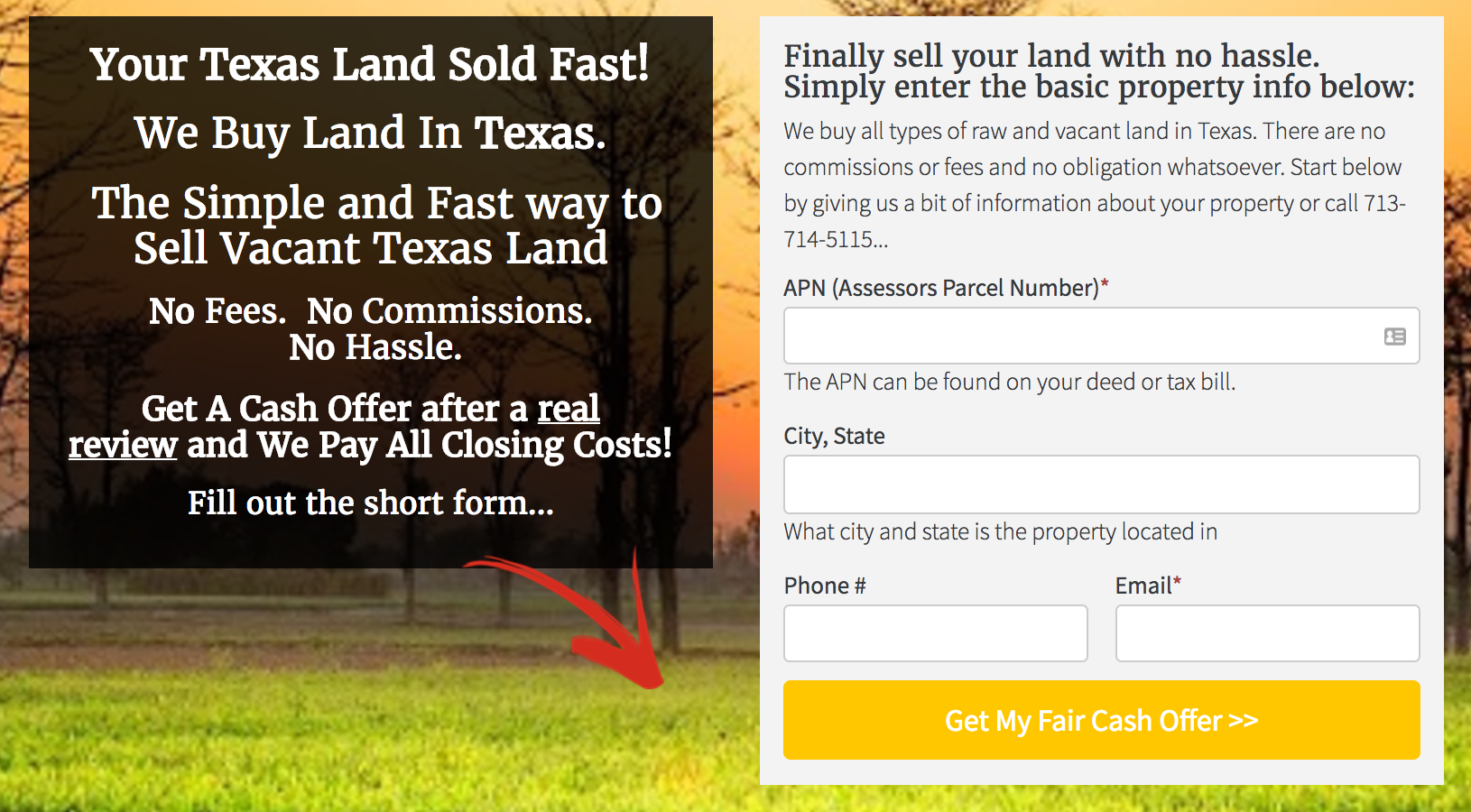
Or, here’s and real estate listing example. They use an image of the actual property as the background…
Even if you don’t live in the area, you operate in it.
And when people arrive on your website, they want to know that you’re familiar with the local market and capable of helping them in their specific situation.
City-specific images, videos, and landing page copy build far more trust than their vague or outright irrelevant counterparts.
Rule Number 3 – Sales Copy that Won’t Let the Reader Stop Reading
Your headline isn’t the only line that should make your visitor keep reading.
All of your sales copy should be like a slippery slope that people feel they have to keep sliding down. Each line leads to the next like meal cuisine at an Italian restaurant.
You just keep wanting more.
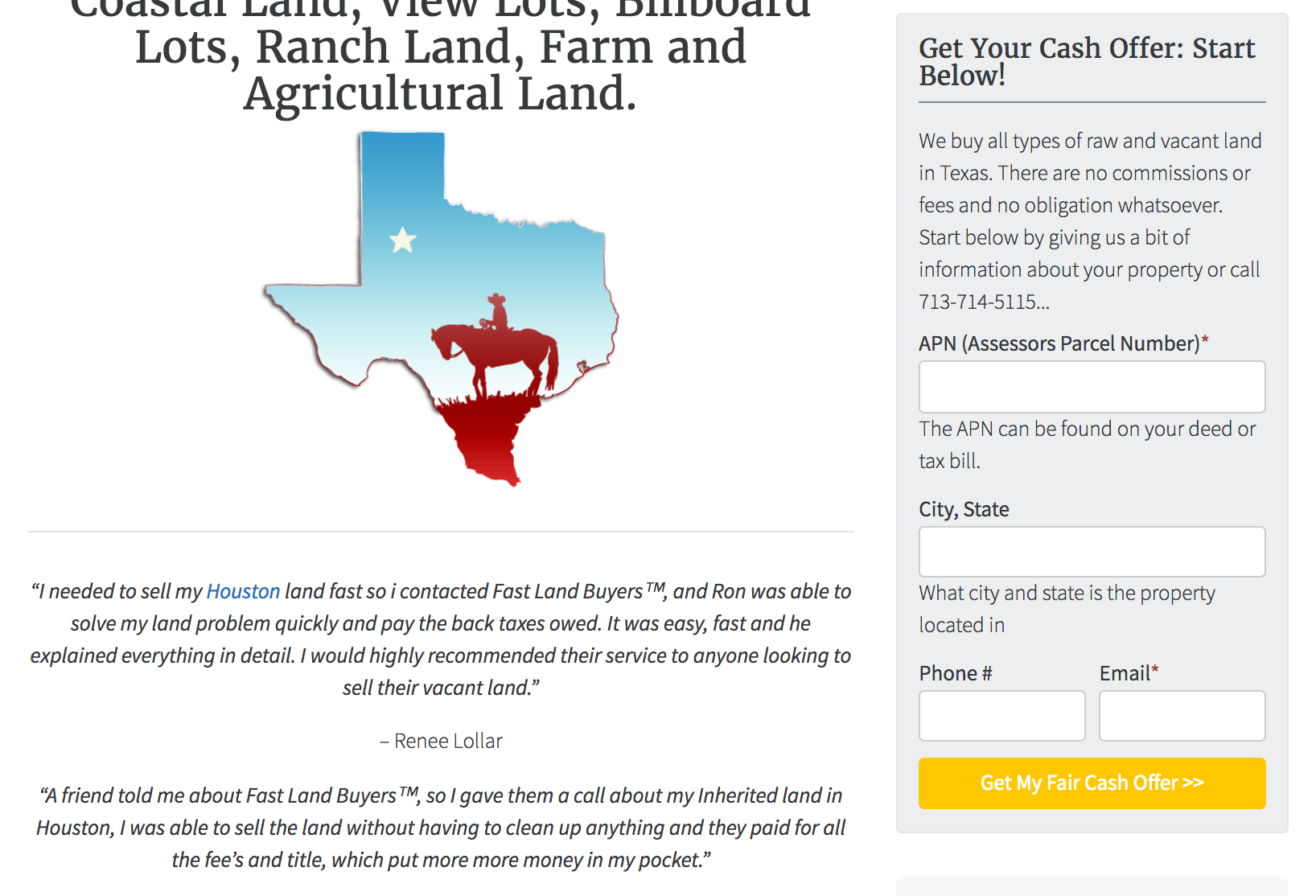
Here’s what this looks like on Home Downsizing Solution’s (another Carrot member) website:
Each phrase leaves the reader with a question… which naturally guides them into the following sentence… which then does the same thing. So on and so forth.
Before the reader knows it, they’ve read all of your sales copy and they’re convinced to work with you.
If you’re writing the words on your landing page and you start to get bored, so will your reader.
Change it up – use a surprising word or phrase, use a funny metaphor, or ask a compelling question.
Whatever you do, don’t let the website visitor lose interest.
Rule Number 4 – Big-promise Bullet Points
Everyone loves bullet points. In fact, a website’s visitors’ eyes tend to spring right to these helpful nuggets the moment they’re on screen.
Because, traditionally, bullet points tell us exactly what we’re going to get and that’s really what we all want to know when we’re going to open our wallets for something…
Okay okay… but what am I going to get?
Well, your target market is wondering the same thing.
This is why bullet points like this are so darn effective…
And this…
These easy-to-add (but crazy effective) black dots and blue checkmarks build massive credibility and make ambitious promises.
Remember, people, visit your website because they need a problem solved. And a bulleted list is one of the best ways to tell them how you’re going to solve their problem and why they should work with you.
Rule Number 5 – Proof of Concept
With a bulleted list, a compelling headline, and some unstoppable sales copy, you’ve made some big promises. Promises that – so thinks your target market – won’t be easy to keep.
Which is where proof of concept comes in.
You need to prove to your website visitors that the way you work, the promises you make, and the business you’ve created are all worthy of trust.
How do you do that?
Well, the best way is by using a past customer testimonial (video is best, but writing will do).
Consider, as an example, Dave Brown’s case study video… (WATCH)
Skip this step at your own risk.
The truth is… you can make all the ambitious promises in the world, but if you don’t back up those claims with cold, hard facts, people won’t believe you.
People are bombarded by more than 4,000 ads per day, which puts your target market’s trust for marketers at an all-time low. Everyone is making big promises and few people are keeping those promises.
Put another way, proof of concept is likely the most vital part of every single landing page you’ll ever create (in conjunction with a great headline).
Don’t skip this step.
Rule Number 6 – Include a Clear and Low-risk CTA
According to Protocol 80, Inc, 90% of people who read your headline also read your CTA (call-to-action)…
Because here’s the thing: after people know what you’re offering, they want to know what to do.
How do they take action? If they want what you have, how do they dive right in?
And a low, or no, risk CTA is exactly what they’re looking for. They don’t want to spend hundreds of dollars. They want to get started without pulling out their wallets and probably without even giving you a call…
Baby steps…
That’s why, at Carrot, we recommend a CTA that is something like this…
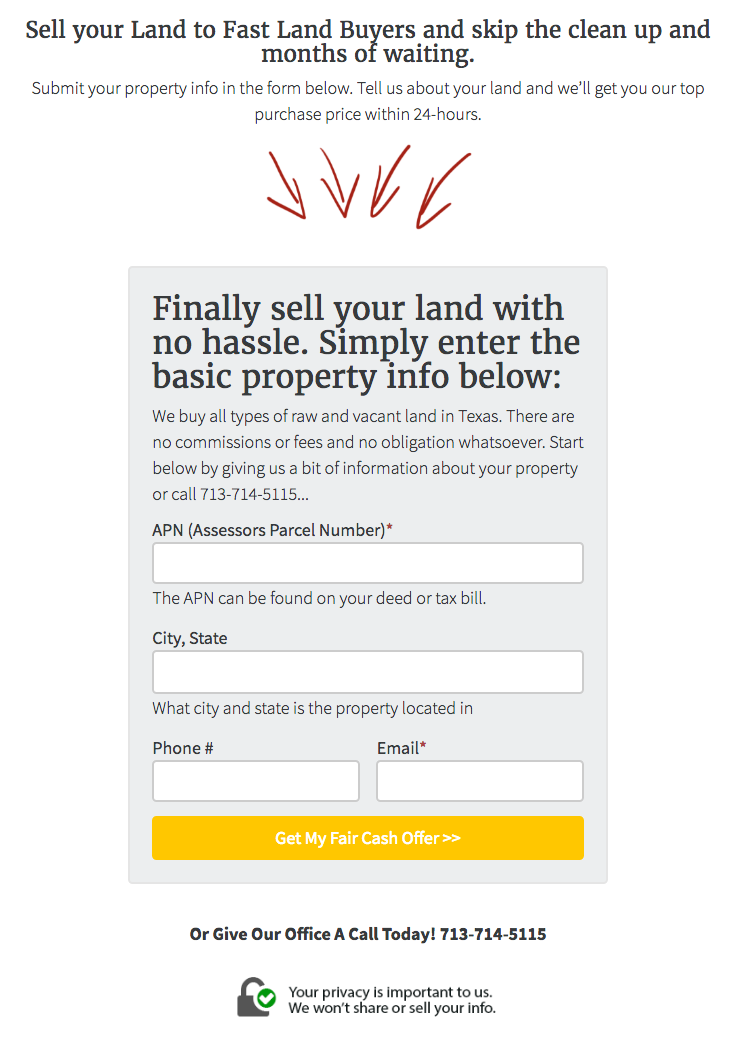
When someone fills this out, our system will send a lead notification via SMS text message straight to your phone. Then you can call the person and close the deal.
But you won’t be able to close much of anything if people land on your website, learn to trust you, and don’t opt-in because there isn’t a clear and risk-free CTA.
You can gain people’s trust all day long…
But that trust isn’t gonna make you any money until you ask those committed prospects to take action in your favor.
Conclusion
One, two, three lost deals…
It all hurts in the same way that gambling away $50,000 hurts…
Except you’re not gambling – you’re running a business.
And fortunately, running a business is far more predictable than visiting the casino. At least, it should be.
Remember, selling is science. And all you have to do to give your website a selling boost is add these 6 trust-building elements to each landing page, whether you’re a Carrot member or not…
But if you’re not…
We can get you moving in the right direction by giving you a high-converting website right now…
Imagine this… It’s Black Friday and you’re the CEO of one of the biggest shopping centers in the world. In the middle of the day, at noon, your in-store payment processing system crashes.
For six hours, shoppers have to pay with cash or leave without buying.
Not only does it hurt your company’s revenue stream, it hurts your company’s reputation.
And similar horrors happen online — from security breaches to untimely website crashes to load-speed issues. In the digital age that we’re all living in, those scenarios can have the same impact as a downed Macy’s on Black Friday.
After all, how would you feel if your information got stolen while on a real estate agent or investor’s website? Or if you had to wait a full minute just for their website to load? Or if their website crashed while you were looking at house listings?
You get the point. These are problems… big problems.
Fortunately, you can avoid most of these revenue-killing scenarios by choosing the right real estate website host. In fact, here are four things that you should consider when selecting hosting for your real estate website.
Security
Speed
Scalability
Support
Real Estate Website Hosting Consideration #1: Security
One source reports that 86% of websites have at least one “serious” vulnerability.
And perhaps there’s no more important real estate website hosting consideration than security. If your website is open to peering eyes, then your information or your visitor’s information can get stolen.
No good.
If someone steals your visitor’s information while they’re on your website, then you can count on them never visiting your website again. And you can definitely count on them never working with you.
Sadly, this is such a problem that 71% of adults say that they are not confident that their information will stay private when working with a company.
For that reason, 86% of internet users have tried actively to minimize the visibility of their digital footprint while 55% have tried to hide from specific people or organizations when online.
Clearly, people care a lot about their privacy. If that privacy is violated, then, generally speaking, it’s an unforgivable sin of online business. That’s why so many businesses rely on tools for IT professionals.
And if someone steals your information… well, it’s quite difficult to manage a website when a cybercriminal is running around with your login credentials.
But real estate website hosting security isn’t just important because you want everyone’s information to stay safe. That is the most important reason, but not the only benefit.
Take SSL integration, for instance. Websites that have HTTPS instead of HTTP actually tend to rank better in search engines, which means more passive traffic and better real estate lead generation.
And since 93% of online experiences begin with a search engine, that SSL integration can help unlock a wealth of revenue-generating potential.
Sure, it won’t automatically place you at the top of the rankings, but having SSL on your website is par for the course — if you don’t have it, then you’re likely to fall below the competition in search engines.
For the sake of yourprivacy, your visitor’s privacy, and even your Google rankings, you should consider real estate website hosting that has the following features.
Restore data points — You never know when your website is going to crash. In the tech world, things sometimes happen for no apparent reason. Ideally, you want a real estate website host that has a disaster recovery plan.
Network monitoring — More than likely, you don’t have the time or ability to actively monitor your own website servers. That’s okay, though. Just make sure you choose a real estate website host that will consistently monitor the network for malicious attacks, diverting each one.
Simple SSL integration — Adding SSL to your website can be a bit of a pain if you haven’t done it before. The best real estate website hosts will offer to do this for you.
Network firewalls — If your website host doesn’t have network firewalls to protect its servers, find a new website host. This is simply expected in the real estate website hosting world.
At Carrot, we offer all of these protections so that you never have to think twice about whether or not your website is secure. We even have several dev team members behind the scenes who constantly help monitor your website to respond to any problems within seconds.
We’d love to work with you — whether investor or agent :-)
Whatever real estate website host you choose, though, make sure it offers the above four things.
Real Estate Website Hosting Consideration #2: Speed
The faster your website loads, the better chance you’ll rank above the competition.
And speed becomes an even deeper consideration when you find out that users spend an average of 69% of their media time on smartphones instead of desktops or laptops.
Often times, that smartphone isn’t as good at loading massive images, videos, or other visual files.
Which means that your real estate website host should store your website’s information in the most organized and speedy fashion. You don’t want people leaving your website because they’re sick of waiting for it to load. And you definitely don’t want to lose customers because the competition’s website was faster than your own.
Here’s the reality: people are impatient. Some studies even compare the human attention span to that of a goldfish.
Of course, when you actually get into the nitty-gritty of that study, it becomes quite ridiculous. There’s no argument that the human attention span is far superior to that of a goldfish.
So what’s really going on?
People have more options and easier access to those options than ever before. Which means they are less patient of lengthy load times (for instance) because they can find a million — literally — other websites that will load faster and offer a similar solution.
Said another way, the primary reason that you need a fast website is because people expect it.
So then, the two reasons that website speed matters are because it helps your Google rankings and people won’t wait for a slow website.
Which is why, at Carrot, we test our customer’s real estate websites regularly, to make sure we’re making them as fast as we possibly can.
In fact, here are three things we do to keep our customer’s websites fast. If you don’t choose to work with us, then you should choose another real estate website host that offers similar functions.
Powerful CPUs and abundant RAM — We use extremely powerful Central Processing Units and an abundant amount of RAM that ensures we can keep up with the demands on all of our thousands of customer websites.
Purpose-built servers —We leave our servers designated for specific operations so that there’s never a shortage of computing power for our customer’s websites.
Load-balanced server clusters — Our servers can handle an infinite amount of demands. With load-balanced server clusters, we monitor our customer website’s load speed and computing power, adding servers as the demand increases, and removing servers as the demand decreases.
Real Estate Website Hosting Consideration #3: Scalability
You don’t want your business to outgrow your website hosting.
Ideally, you want a real estate website host that will grow with you. As your website traffic and conversions increase, so too should the bandwidth of your hosting servers. Of course, with many website hosts, that’s not the case.
Some real estate website hosts neglect scalability because they want to keep costs low. Others do it because they are outright lazy. Frankly, though, the reason doesn’t much matter.
What matters is having a website that scales with your business — rather than holding it back.
Otherwise, you’ll have to change website hosts as your business scales, which usually means a few days of downtime for your website and sorting through a confusing hash of DNS records.
To ensure uninterrupted online presence and safeguard against potential cyber threats, consider opting for a DDoS protected VPS.
And this isn’t just important if you want to grow your real estate business into a massive corporation. It’s important for the real estate industry as a whole. Some seasons naturally expect more sales than others. More sales mean more traffic which means a larger demand on your website for bigger and stronger bandwidth.
June and July, for instance, almost double in sales from December and January.
If your website can’t handle those rising and declining trends, then you’ll miss out on massive sales potential for the year.
With a scalable host, though, you’ll never have to worry about your website slowing down or crashing because of an overabundance of demands. Within seconds as well as years, a scalable host will adapt to your online popularity rather than requiring you to adapt to it.
There are many different ways to accomplish this on the tech side. But at Carrot, here’s how Austin, one of our developer geniuses explains what we do to make our website “infinitely” scalable.
We can “infinitely” scale the number of web servers in our load-balanced cluster. Load balancing means that the requests sent to Carrot are spread out among an arbitrary amount of servers. We track the average response time and the average amount of load on the servers in our cluster and if the load becomes too high, we add more servers to our cluster. A good analogy is opening more checkout lanes at the grocery store if lines start to get too long.
Real Estate Website Hosting Consideration #4: Support
When thinking of real estate website hosting, most people don’t immediately consider support.
The reality is, though, that when your website goes down for no apparent reason, struggles to climb through the rankings, doesn’t convert like you want it to, slows down, or becomes suddenly less secure, you need someone who can help.
Regardless of how good the real estate website hosting is, it’s practically inevitable that you will either (1) have general questions about making customizations to your website or (2) experience unexpected problems which you don’t know how to fix.
When that happens, you need reliable experts just a phone call away.
Our world-class support team at Carrot is adamant about helping our customers. Just last quarter, they had over 7,000 conversations and nearly 300 one-on-one strategy calls.
If your website host doesn’t have a remarkable support team, then find one that does.
Conclusion
The real estate website host that you choose has a massive impact on four things.
Security
Speed
Scalability
Support
Before you decide which real estate website host to use, make sure that you consider these four factors. At Carrot, we keep our customer’s website fast, secure, and scalable, while also providing world-class support.
Land is hot right now. I was talking with one of our Carrot members recently and they’re seeing a really great opportunity to sell land all across the country. So, we worked with them to create a Land Sellerwebsite system here at Carrot! Here’s how it works…
Introducing Our New Land Seller Websites for Motivated Seller Lead Generation
Over a few-month period, we researched and tested websites in some select markets to create our first version of a performing-based land seller website that you as our Carrot members can access and set up in your accounts.
We’ve kept these land seller websites simple… but effective. We’re actively testing the sites, for instance, and will be adding elements that help increase conversion rates each and every month.
We’ve taken our proven design with what we call the “Lead Hero” that we have by default on all of our websites (but you can turn the Lead Hero on or off with the click of a mouse if you want) and built that into the land seller websites as well. We’ve found that when we have a Lead Hero on our customer’s homepages… the homepage conversion rate increased across the board.
Plus… we’ve built in the Conversion Boosters that are baked into all of our Carrot real estate investor websites that improve opt-ins, engagement with website visitors, and credibility.
Designed For Results
When most people start building their first website, they care about one thing and one thing only: how pretty does the website look?
Over the years, though, we found that results matter more than looks. In fact, that’s all that should matter in the design of your website.
Then, once we find things that work, our design team takes the baton, creating elegant and clean formats while at the same time retaining the current conversions (or ideally increasing website conversions even more!).
The Content
Like all of our website content packs, the content is professionally written by people who know SEO, website conversion, and real estate strategy inside and out.
The mistake most people make when building their real estate website is that they underestimate the power of content. Words on pages can make or break the results of your website in search engines and how well your website performs once a visitor arrives.
Every page on this new land seller website in our system is written with four factors in mind:
Search Engine Optimization – We’ve done extensive research to find out what motivated land sellers are searching on Google to find the land buyers. Then we’ve built those keywords into this content strategically and we customize it with YOUR CITY automatically when you create your website in our system. This and our other SEO elements help your website have a better chance of ranking higher in search engines to attract more motivated land sellers.
Lead Conversions – If you’re able to get land sellers to your website but they aren’t giving you their information, your website isn’t doing its job. Content and pages are made to convert. That way we position our opt-in boxes, the words on our calls to action, the “eye direction” elements that make the visitor’s eye go to the parts of your website that matter — it’s all built into our land websites.
Customized and Customizable – While your website will be 100% ready to roll from the second you launch the website in your Carrot account — just like any of our websites within the Carrot system — you can customize anything about your content that you want to. We actually encourage our members to add some twists to their website content to make it feel personal to you and what your business does. Plus, we’ve automatically customized part of your website content with your company name, contact info, and the city you invest in. So website visitors will know they’re on a trusted, LOCAL investor website.
Credibility Boosters – Credibility is huge when generating leads in any business. The ideal way to build credibility and trust with your motivated land sellers is by making your website feel like you’re a real person. There is an “About Us” page already created for you that you can customize if you want to, plus we’ve integrated some trust symbols into your websites to help increase trust on your pages.
One of the big reasons our members LOVE Carrot so much is the quality and effectiveness of our website content and how much time they save by just leveraging our content and our writers rather than spending a painful amount of hours writing the content for their own website.
NOTE: All of our website content is Copyright Protected and for the use ONLY for active Carrot members, and may not be copied in all or part on another website. Any Copyright infringements will be taken seriously. We appreciate you being cool and playing by the rules.
The SEO
Just like our other websites, we’ve done the search engine keyword research to find out what motivated land sellers are actually typing into Google. Then, we’ve built our content and pages around those phrases that people are already looking for.
Plus, we make this even easier for SEO novices to help your content rank higher with our Carrot “SEO Assistant.” If you can read a traffic signal, you can optimize your pages for the search engines with our SEO tools.
The Lead Capture Process
One thing we’ve discovered in our years of lead generation experience (over 1,000,000 real estate industry leads and counting) is that the majority of your website visitors won’t convert (give you their information) immediately because they need a bit more information to trust you and give you their information.
Because of this, we’ve built in multiple places for your website visitors to engage in the content and convert as a lead when they’re ready.
And like all of the pages we create, they’re all based on the continual testing we’re doing to increase the effectiveness of our pages in converting website visitors into leads.
How To Launch Your Own Land Seller Websites To Attract Motivated Sellers With Carrot
If you’re a Carrot member, you can get your own Land website up and live in a few seconds.
Select the new “Land Seller” website in the “Create A Website” list.
Name your site and click “Create Your Site”.
That’s it!
Now you can log in and customize your website, attach a domain to it if you want, and get to work!
Not An Carrot Member Yet? Join Below!
If you’re not a Carrot member but want to leverage our tools, our system, our marketing knowledge, and our support to help you generate more leads to your real estate business… awesome! Simply take a demo or click the link below to get started!
When it comes to real estate investing, you must understand the power of leverage: Using a small amount of work to achieve a large payoff. Whether you get leverage from other people’s money (OPM), mortgages, virtual assistants, or automation, you know that leverage is a key part of the investing biz.
Leverage is just as important when it comes to domain names for real estate investing. Your website’s domain name may seem like a small thing but it plays a huge role in your website:
At its most basic function, a domain name are the words that people enter into their browser’s address bar to your website.
Your domain name is also a marketing tool – it’s a memorable word or phrase (functioning a lot like a sub-brand, slogan, or tagline) that you share with people so they’ll visit your site when they’re in front of their computer.
Your domain name is also a search engine optimization (SEO) tool. Search engines use the domain name as part of the algorithm that helps their automated systems understand what your website is about so they can index it properly… which allows your audience to find it when they search.
Your domain name is a sales tool, presenting the benefits of your solution to other people’s real estate problems. (Not all websites do this but many websites use this strategy. If your site’s domain name says something like “ColumbusOhioTurnkeyProfits” then you’re using your domain name as a sales tool).
7 Factors Of A Great Domain Name For Real Estate Investing: Checklist
As you think about what your website’s domain name should be, review this checklist of key factors in a great domain name and try to incorporate as many of these as you can.
And one more thing to be aware of: These are general guidelines and recommendations. You may find that you have a domain name that “breaks” some of these rules but still works for you. We’re not suggesting you change your domain name if it works.
These guidelines are meant to help you find a great domain name if you don’t have one yet.
1. What does your audience want?
Consider what your audience is looking for. Be specific. For example, motivated sellers aren’t automatically looking to SELL their property. They’re looking to solve a financial headache, or they’re tired landlords who are sick of dealing with tenants, or they’ve inherited a property that they can’t afford to keep.
There’s a similar situation on the buyer side, too: Rent-to-own tenants are looking for an affordable property without a credit check; cash buyers who are also investors might be looking for turnkey properties.
Action: Figure out what your audience wants and state those goals in a few words.
2. What are they searching for?
You’ve already thought about what your audience wants to achieve, but it’s important to know that what they want to achieve isn’t the same thing as what they search for. That’s because people are focused on their pain, and, they’re not thinking with your investor mindset. For example…
It’s less likely that someone will search for “sell my property” and rather “sell my house”. Or on the buyer side, if your buyers are investors looking for turnkey properties then their ideal outcome would be passive income that they earn while laying on the beach, but they’ll probably search for “turnkey real estate” or “cash flow investing”.
It’s also more likely that searchers will use the word “my” (“Sell My House”) rather than “a” (“Sell A House”) or “your” (“Sell Your House”). In fact, the search term “sell my house” has nearly 6 times more search volume than “sell your house”… obviously, because the searcher is thinking about their (“my”) house.
Action: Put yourself in your audience’s shoes and think about how they would search Google for information about their situation.
3. Value, Benefits, and USP
There is a reason that sellers and buyers come to you for help. You offer them some kind of beneficial value. There’s something unique about your real estate solution that makes you the preferred choice for that seller or buyer. The hard part is for you to figure out what it is.
But once you know, you can incorporate that into your domain name as well. Do you provide really fast service? Are your offers all in cash? Can you close in two days? Do you do business in a different language? There are many reasons why someone would want to do business with you and your domain name is a place to highlight some of those reasons. FastCashRealEstateOffers.com or FreedomTurnkeyInvestments.com are a couple of examples.
Action: Think about the reasons that people do deals with you instead of your competition. What unique benefits do you offer that no one else offers?
4. Brand
Your brand is another factor of your domain name. If you do business under a specific operating name, that name is part of your brand and you may want to include it in your domain name. An example might be a business called Sunrise Investments. That could work as a domain name. However, your brand is more than just your operating name – it’s the whole experience that someone has when they work with you to sell or buy a property. If you’re a veteran who does deals, your domain name might be something like “veteran buys houses”, which could also work as a domain name.
Action: Think about your brand – both the name of your business as well as the experience people have when they work with you. List those components and see how they factor in.
5. Location Specific (HIGHLY RECOMMENDED)
Your location should be incorporated into your domain name for real estate investing. You may end up searching really well for a search term like “we buy houses” but that won’t help you if you buy houses in Oakland, New Jersey and you’re getting searchers from Australia looking for houses in that country. So choose a domain name that ideally highlights the area you do business.
Most searchers will localize their search by city and state (Phoenix Arizona or they’ll often shorten it to Phoenix AZ). If you do business in a larger area than just one city, consider including only the state. (In most cases, searchers won’t search for the county they live in – usually just city or state (however, there are exceptions to this rule-of-thumb).
Action: List the areas you do business and try to narrow down the list to a few larger urban centers where you do deals.
6. Clarity and simplicity
After you’ve considered all of the factors so far, it’s good to do one final check for clarity and simplicity. It’s easy to allow your domain name to grow and grow and grow as you try to squeeze everything in. Accept the fact that you won’t likely get EVERYTHING squeezed into your domain name and just come up with a few ideas that you like. The fewer words, the better; however, you can probably expect to have at least four or five words (SellMyMemphisHome or TurnkeyInvestmentsColumbusOhio).
Aim for four or five words; avoid more than seven words.
If possible, avoid short forms (use Phoenix instead of PHX and Columbus instead of CBUS), although it’s okay to use the two-letter postal abbreviation for your state (OH for Ohio, etc.). In highly competitive markets, it might not be possible to use Phoenix. As a last resort, turn to PHX.
Remember that people will be typing these into your browser so try to keep them together as one single group rather than separated out by dashes (use TurnkeyInvestmentsColumbusOhio.com instead of turnkey-investments-columbus-ohio.com).
Action: Review your potential domain names and have other trusted people review them as well. You should also have at least one person review your domain names who is NOT a real estate investor (to give you an “outsider’s” perspective).
7. Choose a dot-com over other options
Domain names end in dot-something (like .com or .org). These are called “top-level domains” or “TLDs”. When given the choice between .com, .net, or .anything-else, choose .com. Although search engines don’t necessarily prefer one TLD over the other in terms of ranking, .com seems to be perceived by most American searchers as the most credible and legitimate TLD. The importance of building credibility stands in a study by searchmetrics.com. It found out that almost 75% of backlinks go back to .com domains.
And if someone remembers part of your domain name but not the TLD, they’ll type in .com by default. These attitudes are changing, especially as new TLDs are appearing, but .com is still preferred. If your ideal .com is unavailable, it’s probably better to seriously consider a different .com domain name instead of settling on the .net or .org TLD.
Action: Gather together the ideas you’ve come up with so far and start searching to see if those domain names are in use.
Summary
Your domain name for real estate investing is just as much a part of your business as your business name, your slogan, and your logo. It’s something you should think carefully about because, as we’ve mentioned earlier, your domain name does a lot of work for you as a marketing and sales tool. If you need to refresh,
If you need to refresh, then CLICK HERE to jump back up to the meat of this post: a step-by-step checklist of HOW to optimize your domain name for real estate.
7 factors to build a great domain name that will help grow your business for years to come.
Are you frustrated by website visitors who browse and never contact you? You’re not alone. Turning lookers into motivated sellers requires a website that works as hard as you do.
This guide isn’t your typical SEO or CRO jargon fest. We’re revisiting one of our most popular blog posts and injecting it with fresh strategies. We’ll cover data-driven tactics you can use right now to turn your website into a lead generation machine for motivated sellers.
The CRO-Optimized Homepage Blueprint
Let’s break down the essential elements of a high-converting real estate investor homepage:
Hero Section: A Benefit-Driven Powerhouse for Maximum Conversions
The hero section is your website’s prime real estate, acting as the first impression that grabs visitors and compels them to take action. Here’s a deeper dive into each element, incorporating data-backed reasoning and specific examples:
1. Headline: Craft a Compelling Hook That Speaks Their Language
Data-driven Reason: Studies by Copyblogger show that strong headlines can increase conversion rates by up to 10%.
The Secret Sauce: Focus on benefits, not features. Instead of saying, “We Buy Houses,” a better option is “Sell Your House Fast: Hassle-Free Cash Offer Today.” Speak directly to their pain points (selling a house quickly, avoiding a lengthy process) and highlight the solution you provide (fast cash offer).
Specificity is Key: Get even more specific by targeting a particular niche of motivated sellers. For example, “Need to Sell Your Inherited Property Quickly? We Can Help!”
2. Visual Appeal: Images that Matter
The Power of Local: High-quality, local imagery builds trust and establishes a connection with potential leads. Use photos reflecting your service area or showcasing successful deals you’ve closed.
Data on Visuals: According to our data, including relevant images in your content can increase views by an average of 82%.
Beyond Stock Photos: While professional stock photos can work, consider using genuine images of yourself or your team. This humanizes your brand and fosters trust.
3. Eye-Catching CTA: The Call to Conversion
Color Psychology: Utilize contrasting colors for your CTA button. Studies suggest that red, blue, orange, and green are particularly effective in driving clicks.
Action-Oriented Text: Ditch generic CTAs like “Submit.” Instead, use clear, action-oriented text like “Get Your Free Cash Offer” or “Schedule a No-Obligation Consultation.”
Button Size Matters: Don’t make them miss it! Make your CTA button prominent and large enough for easy tapping on mobile devices.
4. Mobile-First Design: Prioritize the Dominant Viewport
The Mobile Majority: Our Carrot data proves over 60% of all web traffic now comes from mobile devices.
Seamless Shrinking: Ensure your hero section shrinks and adapts seamlessly for mobile viewing. Text should be easy to read, and buttons should be large enough for easy tapping.
Phone Number Visibility: Prioritize phone number visibility in the hero section. Ideally, it should be clickable for one-tap dialing on mobile devices. This removes friction and allows motivated sellers to connect with you instantly.
Bonus Tip: A/B Testing is Your Friend
Don’t settle for assumptions! Utilize A/B testing tools to compare different versions of your hero section elements (headline variations, CTA button colors, etc.). This data-driven approach helps you identify what resonates best with your target audience and maximizes conversions.
Content that Educates and Converts: Building Trust and Inspiring Action
The content beneath your hero section serves a crucial role in nurturing leads and guiding them toward conversion. Here’s how to craft compelling content that educates, builds trust, and ultimately converts visitors into motivated seller leads:
1. Problem-Solution Focus: Speak to Their Needs, Not Just Your Services
Understand Your Audience: Conduct thorough market research and identify the specific challenges faced by motivated sellers in your area. Are they facing financial hardship, a looming relocation, or a complicated inheritance?
Data on Empathy: According to research, ads that use human emotion are 31% more effective than ads that use traditional tactics, which are only 16% effective.
Speak Their Language: Don’t just list your services. Address their pain points directly and use language they understand. For example, instead of saying, “We Offer Fast Cash Closings,” explain how a fast cash closing benefits them: “Get Cash in Your Hand Quickly and Avoid Months of Uncertainty.”
2. Benefit-Oriented Text: Highlight the Value You Deliver
Focus on Outcomes: People are primarily motivated by the benefits they’ll receive. Go beyond simply explaining what you do; showcase how it solves their problems and improves their lives.
Data on Benefits Focus: Studies by MarketingSherpa indicate that benefit-oriented content can generate up to 5x more leads than features-focused content.
Examples: Instead of saying, “We Buy Houses As-Is,” emphasize the benefits: “Avoid Expensive Repairs: We Buy Your House in Any Condition!” Another example: “Skip the Stressful Listing Process: Sell Your House Quickly and Easily with Our Cash Offer.”
3. Social Proof: Leverage the Power of Testimonials and Case Studies
Building Trust: Positive testimonials and case studies act as social proof, demonstrating the value you deliver to past clients. This builds trust with potential leads who are still considering their options.
Data on Social Proof: According to Nielsen, 92% of consumers trust recommendations from strangers more than advertising.
Showcase Success Stories: Feature success stories with quotes from satisfied clients. Briefly explain their situation, the challenges they faced, and how your services provided the solution.
Data-Driven Results: When possible, quantify the benefits you delivered. Include details like how quickly a house was sold or the amount of money saved by avoiding repairs.
Remember:
Keep it Concise: People are busy, so keep your content concise and easy to read. Bullet points, subheadings, and visuals can improve readability.
Maintain a Conversational Tone: Write in a friendly and approachable manner, fostering a connection with your audience.
Call to Action: Throughout your content, strategically include CTAs that encourage visitors to take the next step, like contacting you for a free consultation or downloading a valuable guide.
Strategic Navigation & Essential Pages: Guiding Visitors and Building Trust
A well-structured website with straightforward navigation allows visitors to find the information they need quickly and efficiently. Here’s how to create a user-friendly experience that fosters trust and guides them toward conversion:
1. Clear Navigation: A Roadmap for Your Website
User Experience (UX) Focus: A clear and intuitive navigation bar is crucial for a positive user experience. Visitors shouldn’t have to hunt for the information they need.
Data on Navigation: According to Crazy Egg, 40% of visitors will leave a website if they can’t find the information they’re looking for within the first few seconds.
Essential Links: Include a clear navigation bar at the top of every page with easy access to key pages like:
Home: This should always be the first link, allowing visitors to return to the hero section quickly.
About Us: Build trust and connect with visitors by showcasing your expertise and experience.
Services: Clearly explain the services you offer and how they benefit motivated sellers.
FAQs: Address common questions and concerns potential leads might have.
Contact: Provide multiple ways for visitors to get in touch with you, including phone number, email address, and a contact form.
Mega Menus (Optional): For websites with extensive information, consider well-organized mega menus that categorize sub-pages for easy navigation.
2. Compelling “About Us” Page: Unveiling the Human Touch
Building Trust: A well-crafted “About Us” page humanizes your brand and builds trust with potential leads. It allows visitors to connect with you personally and understand your expertise.
Content Elements: Include the following elements on your “About Us” page:
Your Story: Share the story behind your business, your motivations for helping motivated sellers, and what sets you apart.
Team Bios: Showcase your team member’s expertise and experience. Include photos and brief bios highlighting their qualifications.
Testimonials: Integrate positive testimonials from satisfied clients to build trust and social proof.
Awards & Recognition: If you’ve received any industry awards or recognition, highlight them on your “About Us” page to demonstrate credibility.
Bonus Tip: Consider incorporating video content on your “About Us” page. This allows visitors to connect with you on a more personal level and see your passion for helping motivated sellers.
SEO Optimization for Search Visibility: Attract Qualified Leads Organically
In today’s competitive online landscape, search engine optimization (SEO) is crucial for driving organic traffic to your real estate investor website. By strategically incorporating relevant keywords, you can ensure your website shows up in search results when motivated sellers in your area are looking for solutions.
1. Keyword Research: Uncovering the Language of Your Audience
Understanding Search Intent: Conduct thorough keyword research to identify the specific search terms motivated sellers in your location are using. Tools like Google Keyword Planner, Carrot’s Keyword Explorer Tool, and SEMrush can be helpful for this.
Data on Keyword Research: According to a Backlinko study, websites with strong SEO strategies can generate over 1000% more organic traffic than those without.
Target Long-Tail Keywords: Don’t just focus on broad keywords with high competition. Target long-tail keywords that are more specific and have lower competition. For example, instead of targeting “sell my house,” target “sell my inherited house fast in [your city].”
Location Matters: Integrate local SEO keywords throughout your website copy to improve local search ranking. For example, include your city and state in your page titles, meta descriptions, and headers.
2. On-Page Optimization: Weaving Keywords with Care
Strategic Keyword Placement: Once you’ve identified your target keywords, integrate them naturally throughout your website copy. This includes:
Page Titles: Every page should have a unique and keyword-rich page title that accurately reflects the content.
Meta Descriptions: Meta descriptions are short summaries displayed in search results. Optimize them with relevant keywords to entice users to click on your website.
Headers: Use H1, H2, and H3 headers throughout your content, incorporating your target keywords in a natural and informative way.
Body Copy: While keyword density is important, prioritize natural language and avoid keyword stuffing. Focus on creating valuable and informative content for your audience.
Bonus Tip: Go beyond traditional keyword research. Explore “People Also Ask” (PAA) or Frequently Asked Questions (FAQ) sections and answer box content on relevant search terms. This allows you to target specific questions motivated sellers might have and position your website as a trusted resource.
By implementing these SEO best practices, you’ll increase your website’s visibility for relevant search queries. This translates to attracting more qualified leads who are actively searching for solutions you can provide. Remember, SEO is an ongoing process. Regularly monitor your website’s performance, analyze keyword rankings, and adjust your strategy as needed.
Conclusion: Cultivating a Conversion Powerhouse
By implementing the data-driven CRO best practices and SEO strategies outlined above, you can transform your real estate investor website from a passive online presence into a powerful lead generation machine. Remember, a successful website is a living entity that requires ongoing optimization and nurturing. Here’s how to ensure your website continues to thrive:
1. Embrace A/B Testing for Continuous Improvement
The Power of Iteration: Don’t settle for assumptions! Utilize A/B testing tools to compare different versions of your website elements. This could include testing variations of your hero section headline, CTA button color, or “About Us” page layout.
Data-Driven Decisions: Track key metrics like conversion rates, bounce rates, and time on page. Analyze A/B test results to identify what resonates best with your target audience and make data-driven decisions for future website improvements.
2. Content Marketing: A Magnet for Motivated Sellers
Become a Trusted Resource: Don’t just focus on selling; establish yourself as a trusted resource in your community.
Data on Content Marketing: According to the Content Marketing Institute, content marketing generates over 3 times the leads compared to traditional advertising and costs 62% less.
Content Ideas:
Create informative blog posts that address common challenges faced by motivated sellers in your area.
Develop downloadable guides or e-books offering valuable insights on the real estate selling process.
Consider video content, hosting webinars, or creating infographics to diversify your content offerings.
3. Leverage the Power of Online Reviews
Building Trust and Credibility: Positive online reviews from satisfied clients act as social proof and build trust with potential leads.
Data on Reviews: According to BrightLocal, 84% of consumers trust online reviews as much as personal recommendations.
Encourage Reviews: Make it easy for satisfied clients to leave positive reviews on platforms like Google My Business, Yelp, and Facebook.
Respond to All Reviews: Take the time to respond to all reviews, both positive and negative. Thank satisfied clients for their feedback and address any concerns raised in negative reviews promptly and professionally.
Incorporating these ongoing strategies will cultivate a website that not only attracts motivated sellers but also fosters trust, establishes you as a valuable resource, and ultimately converts visitors into leads.
Remember, a successful website is a journey, not a destination. By consistently applying these strategies and staying informed about the latest trends, you can ensure your real estate investor website remains a powerful Evergreen lead-generation machine for years to come.


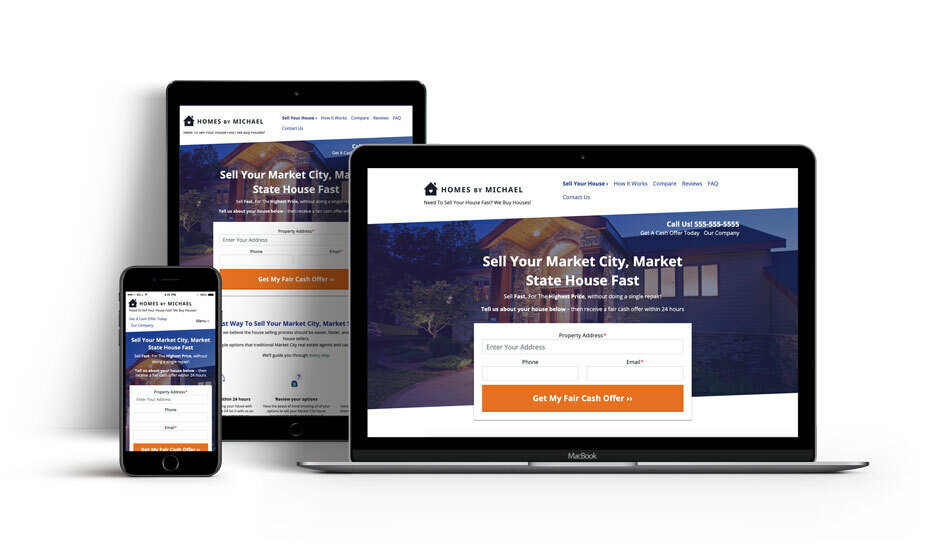
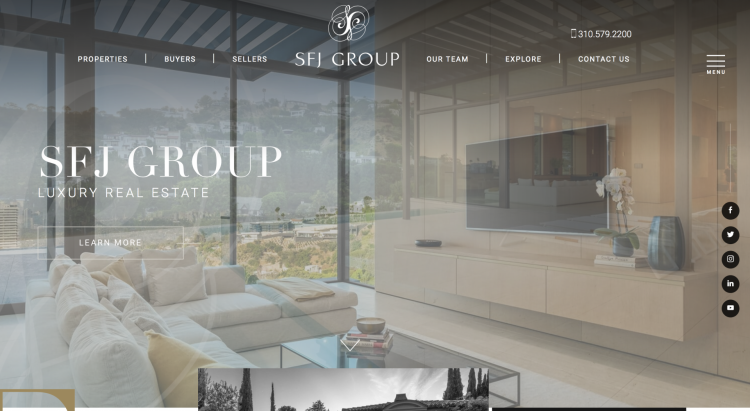

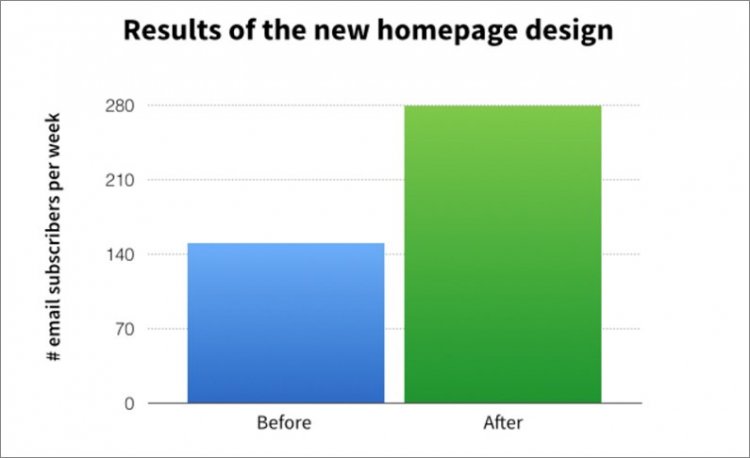
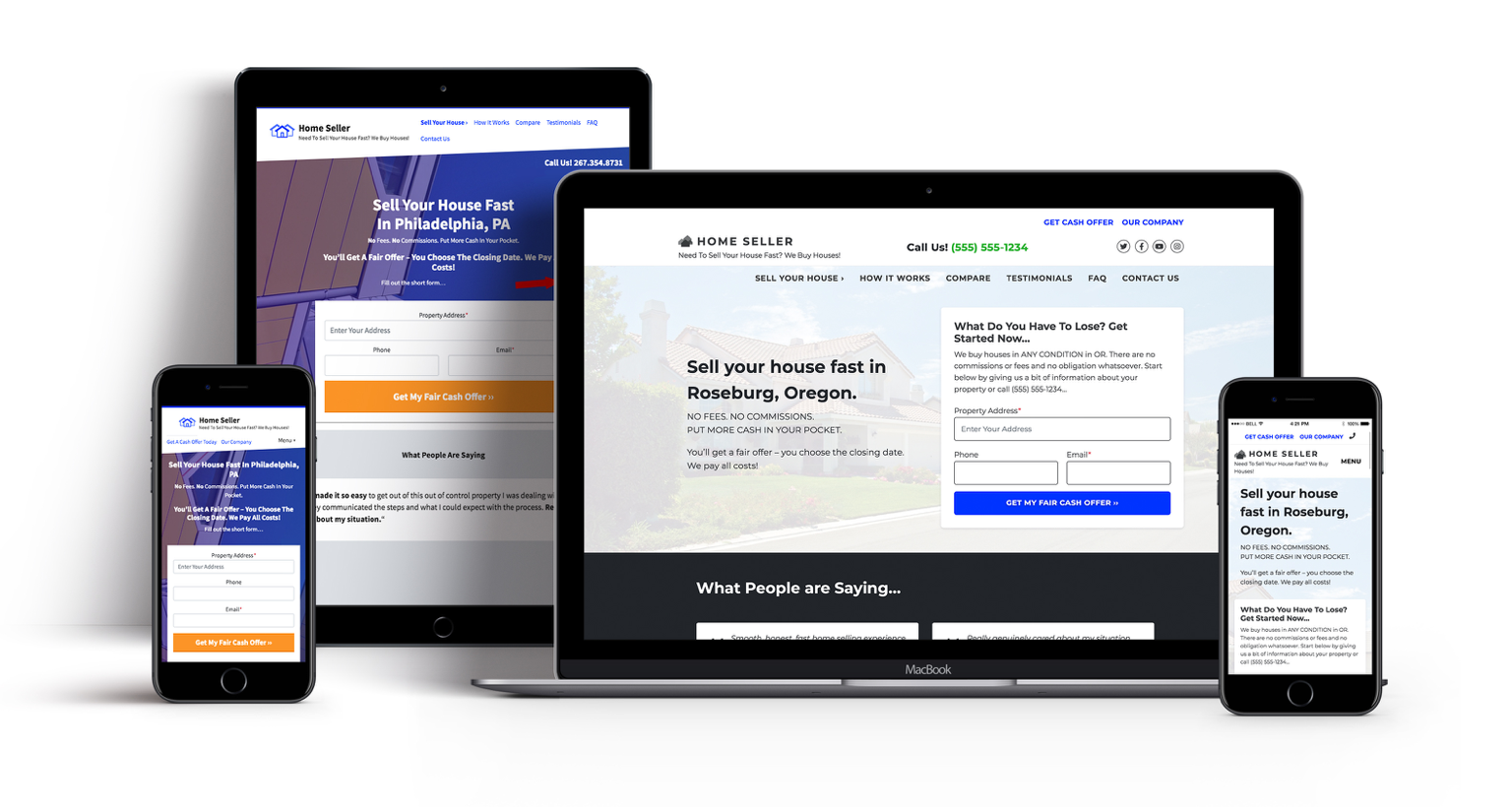


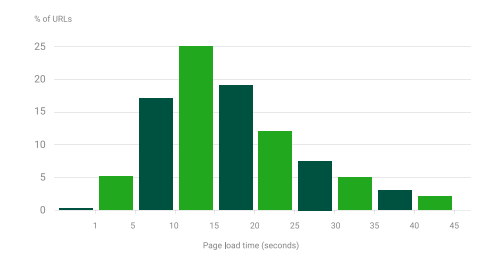
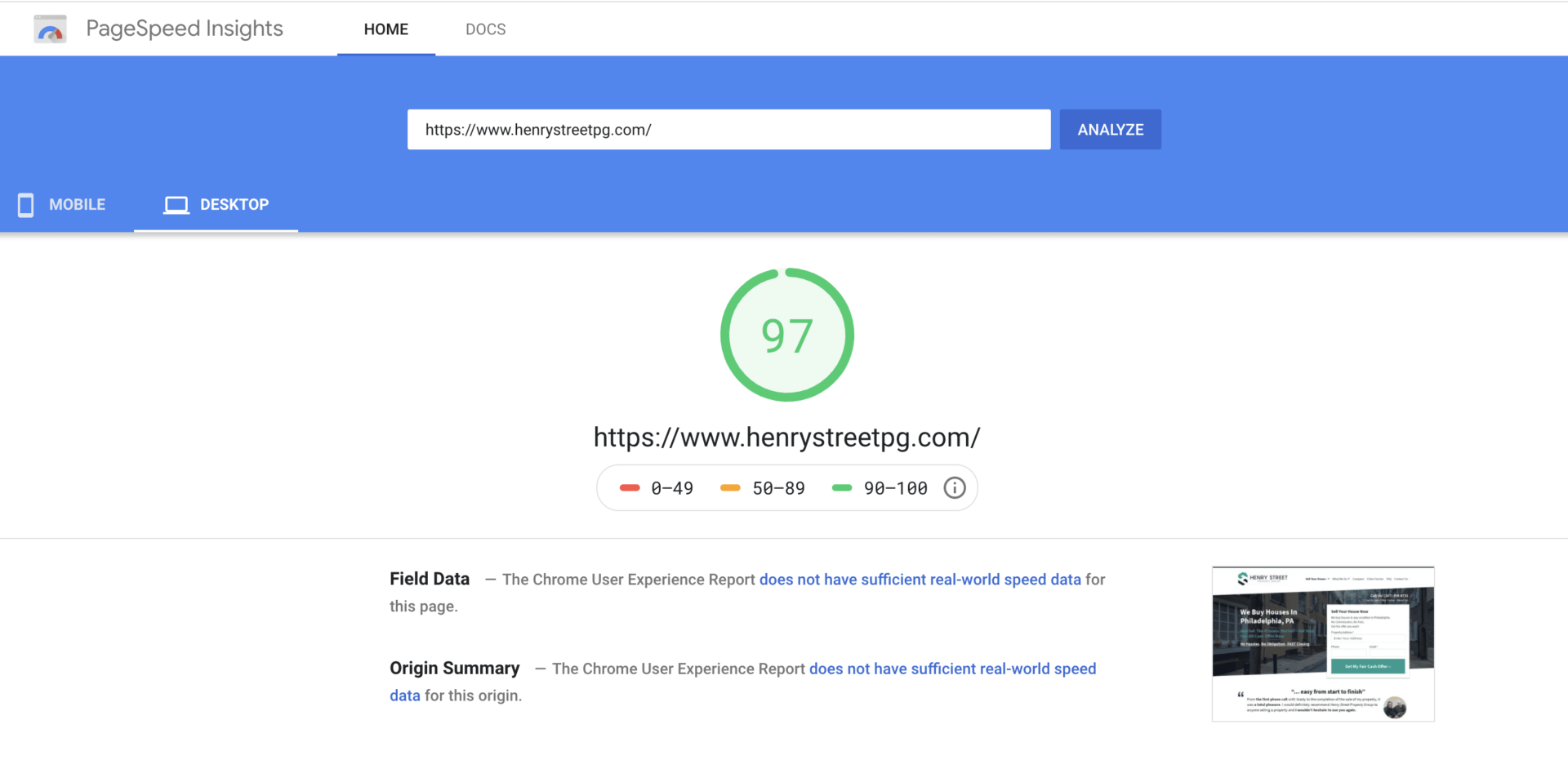
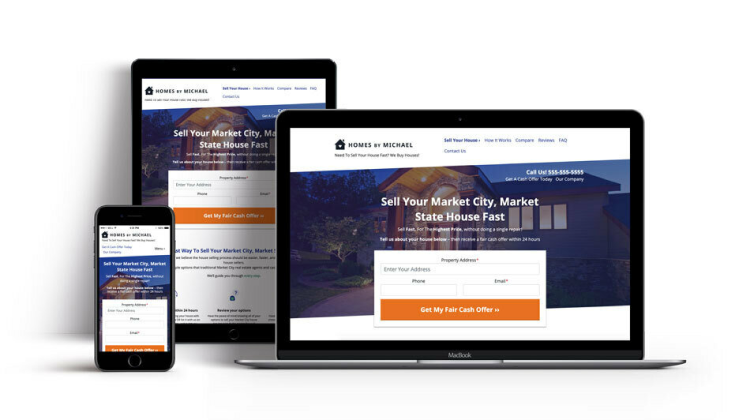

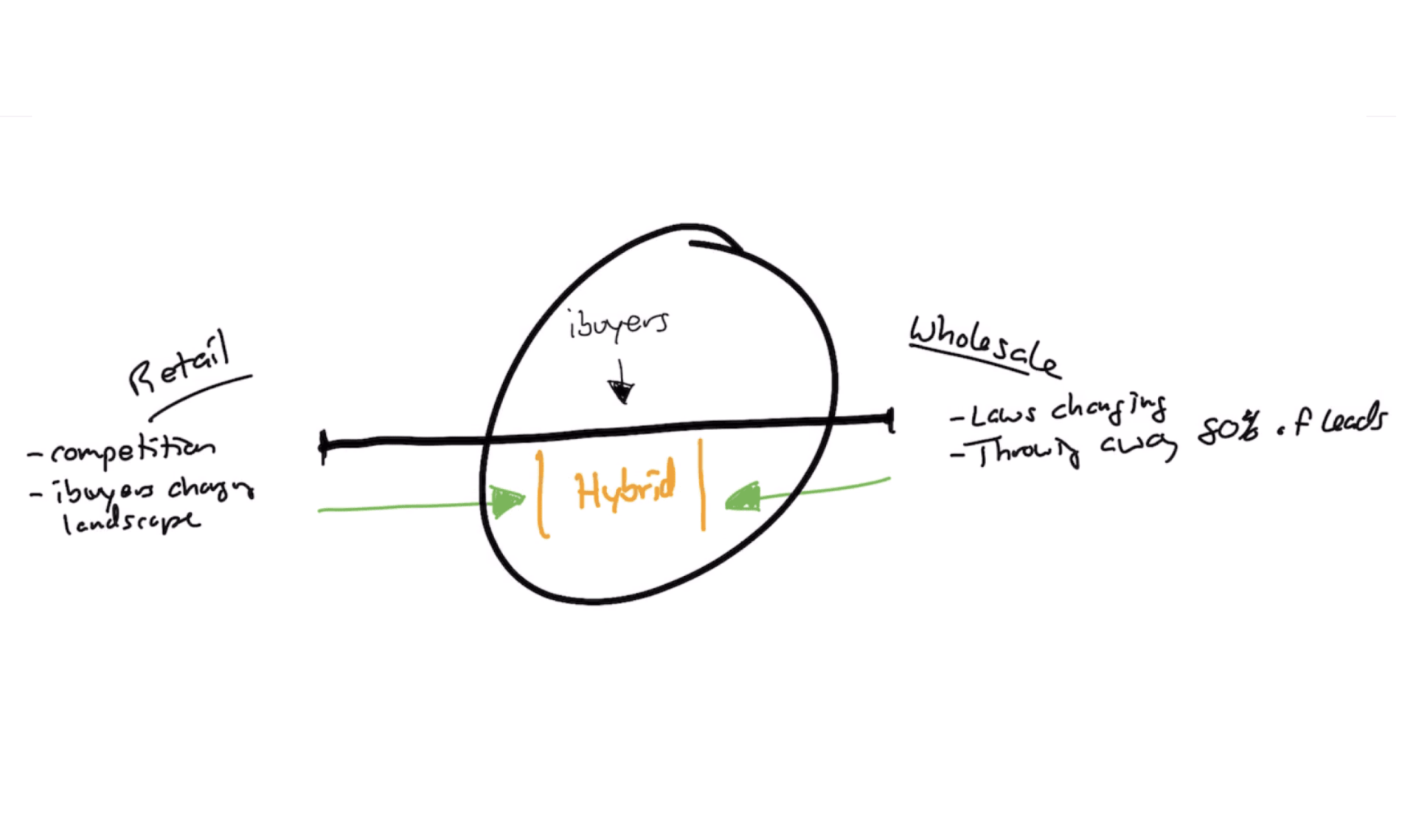
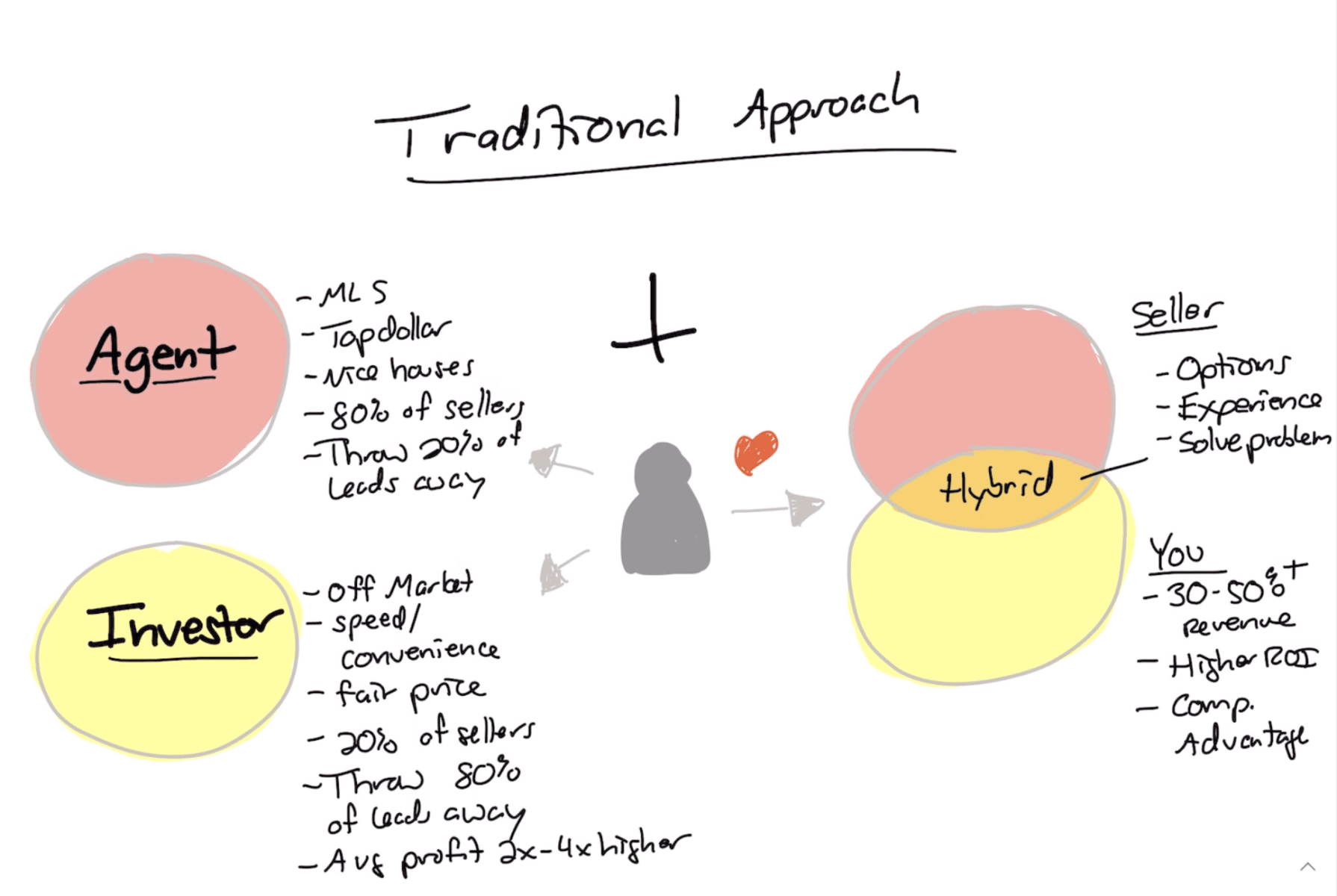

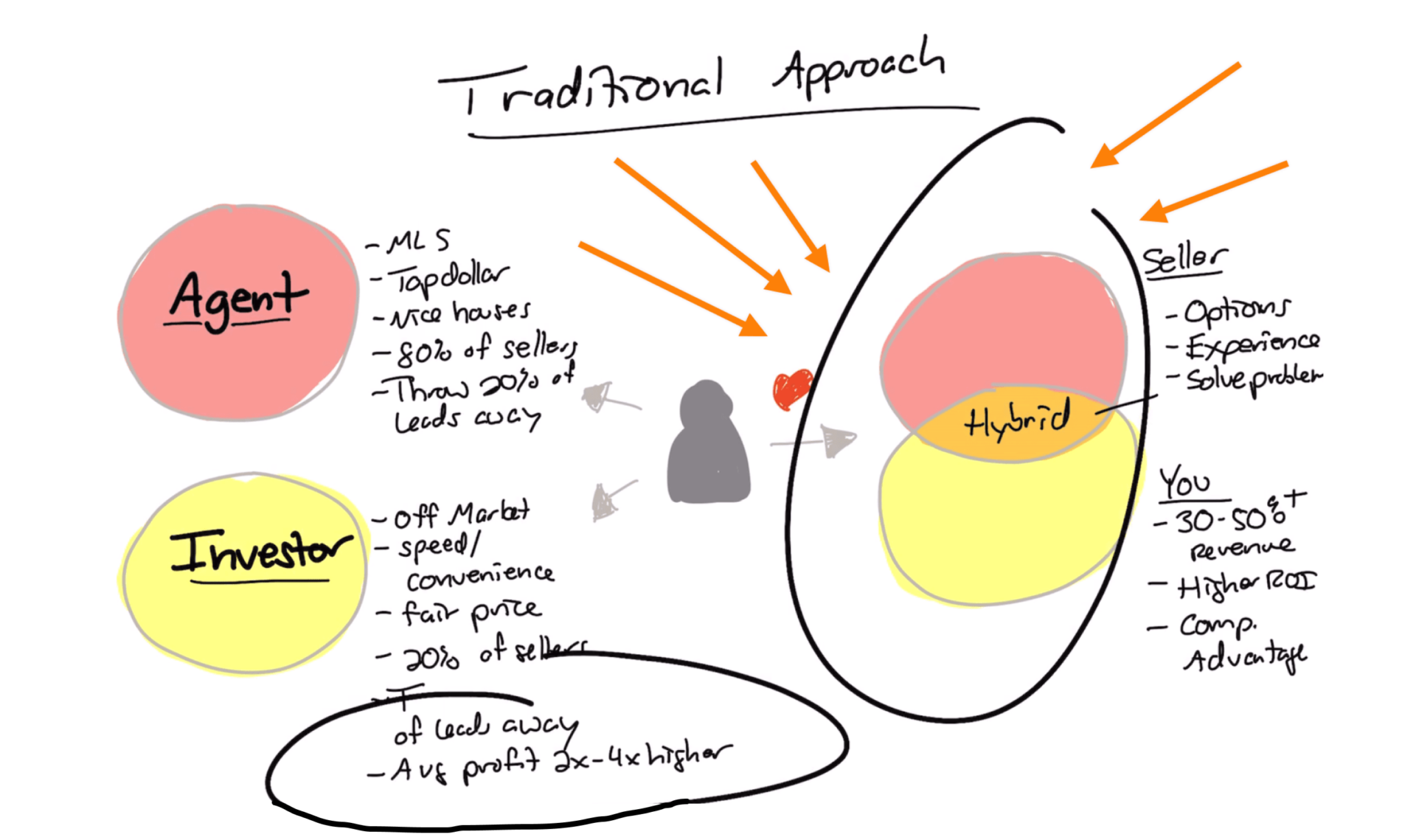
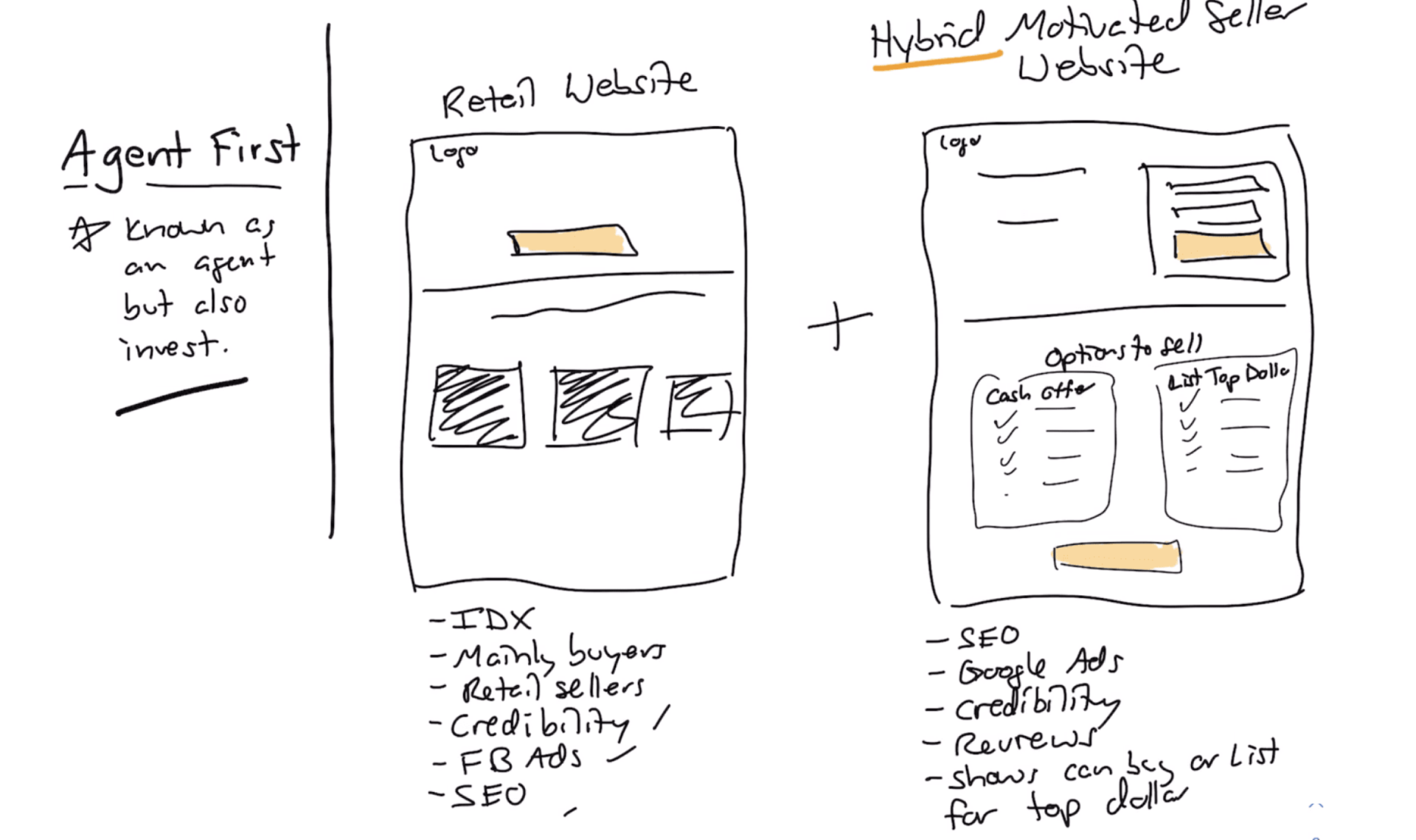
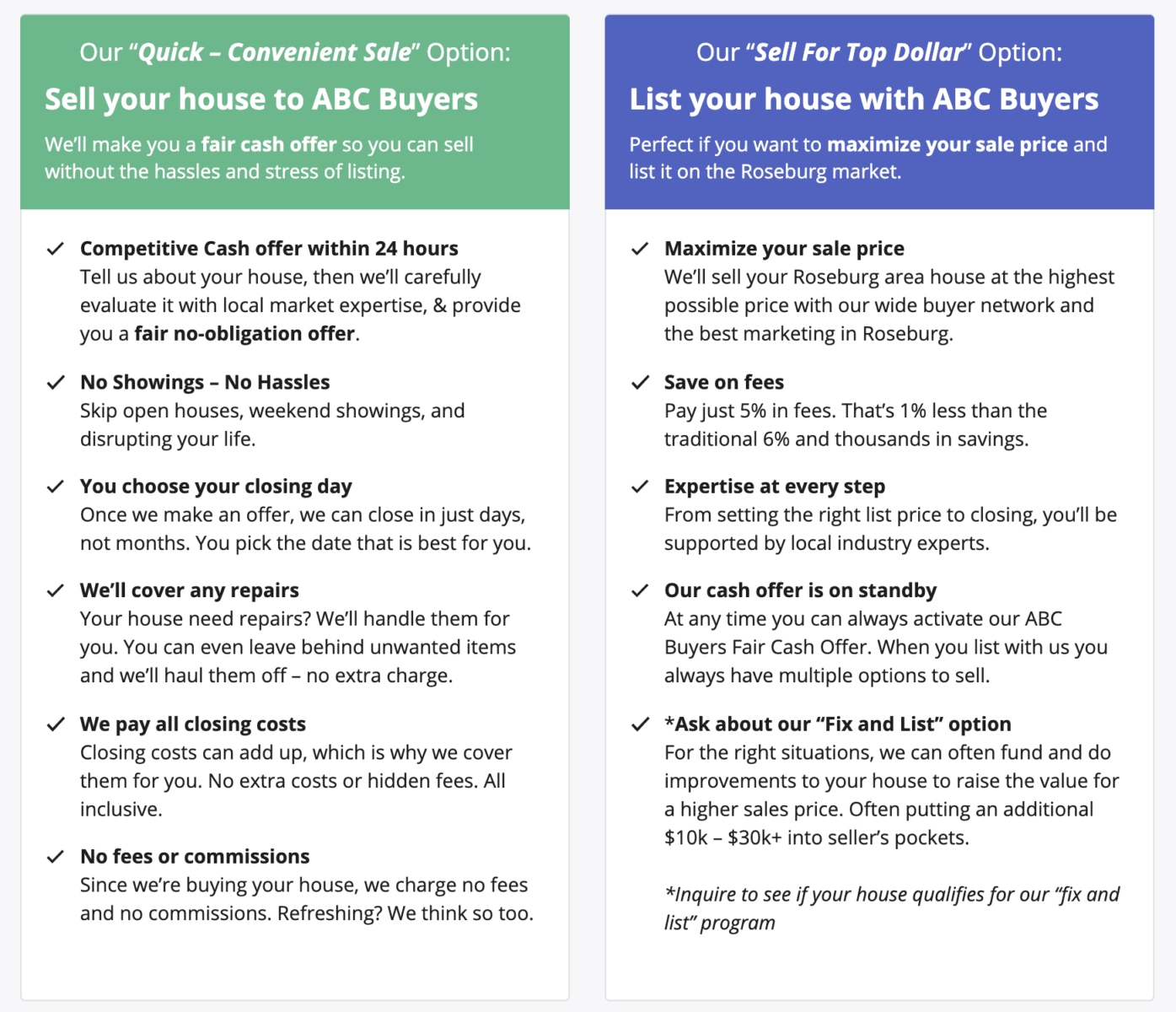
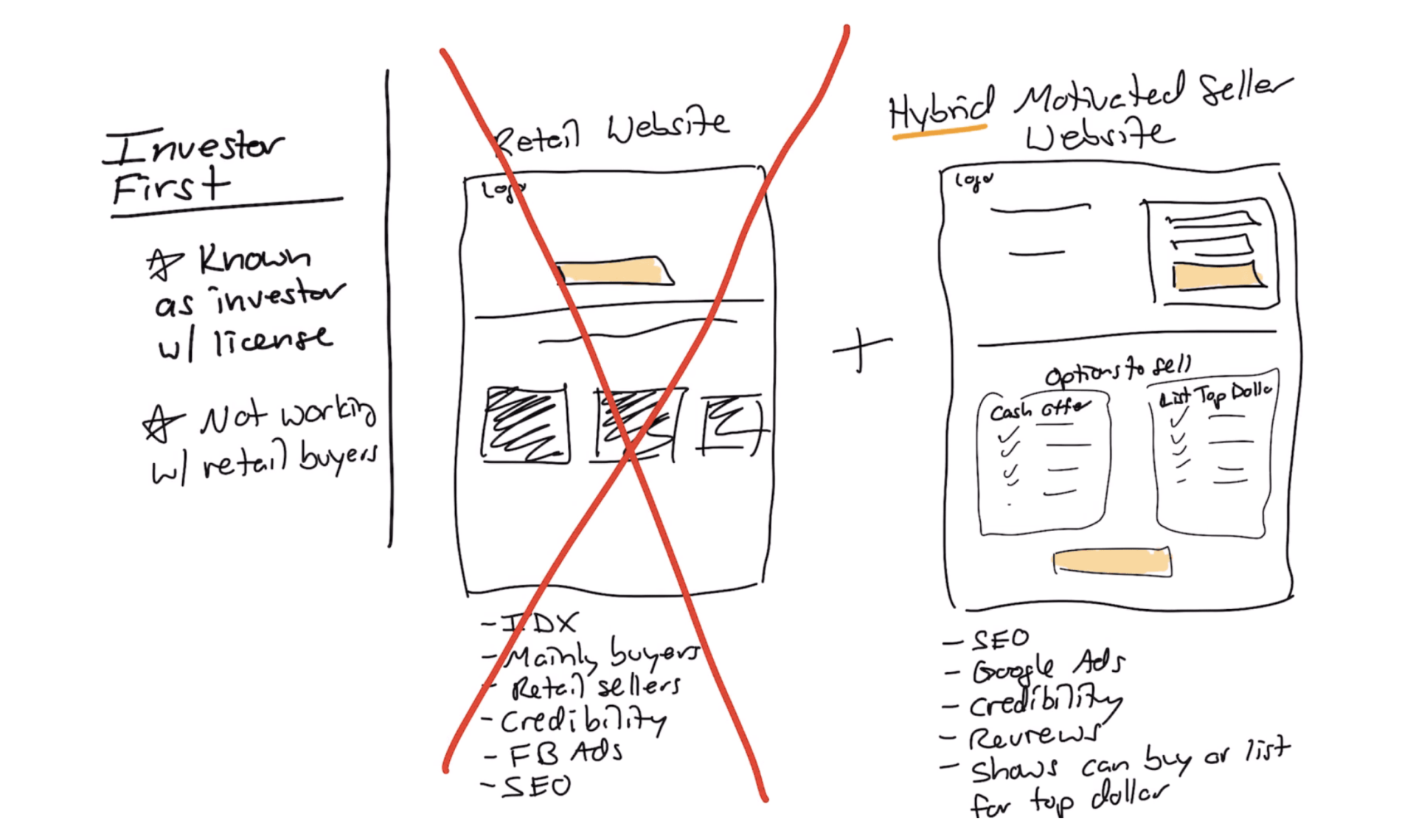


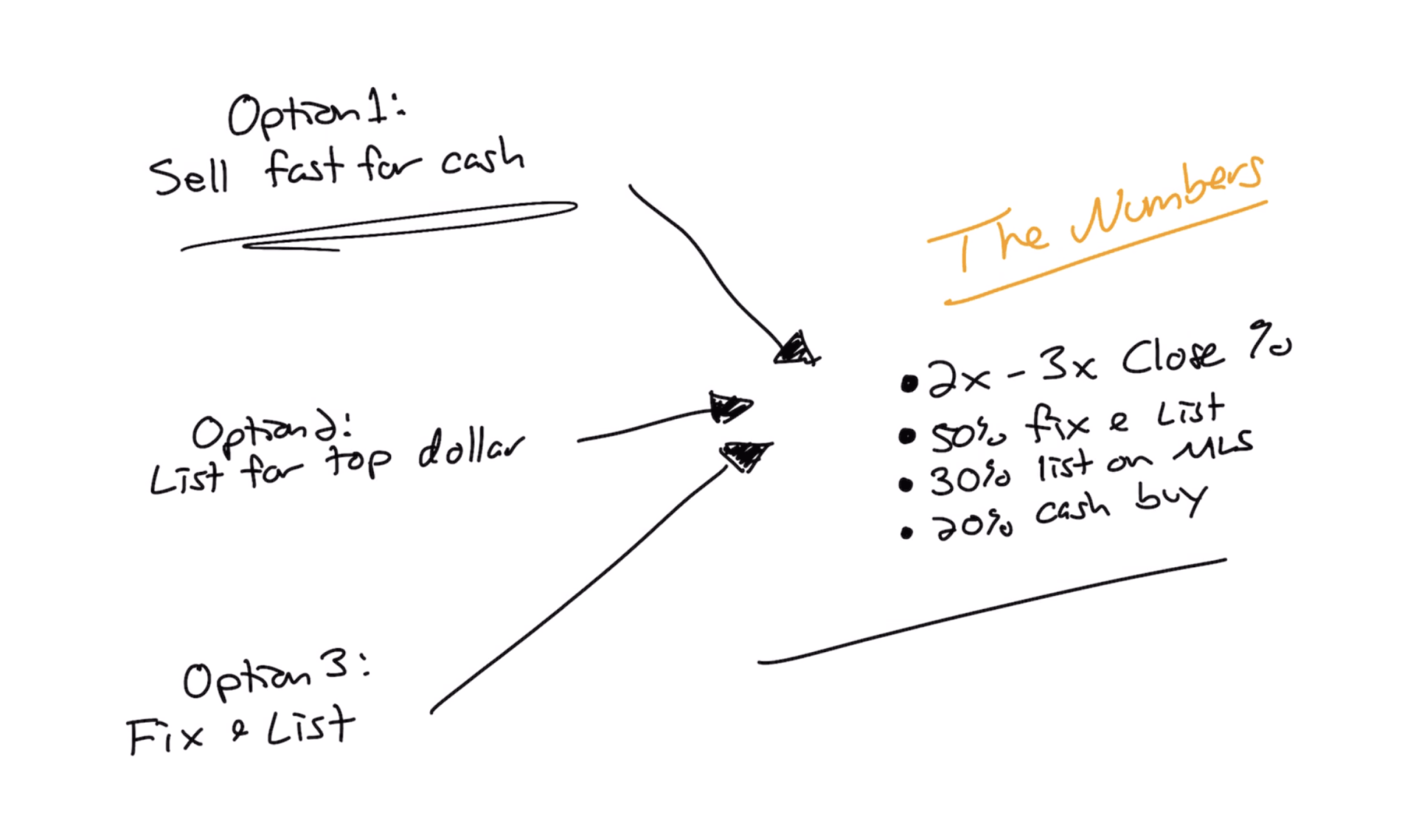



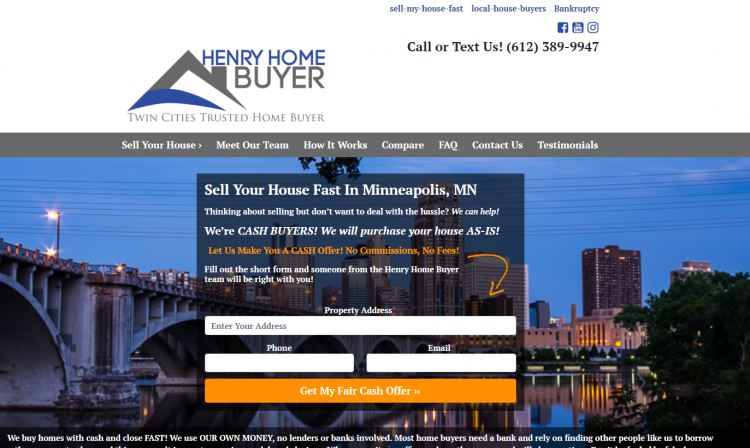
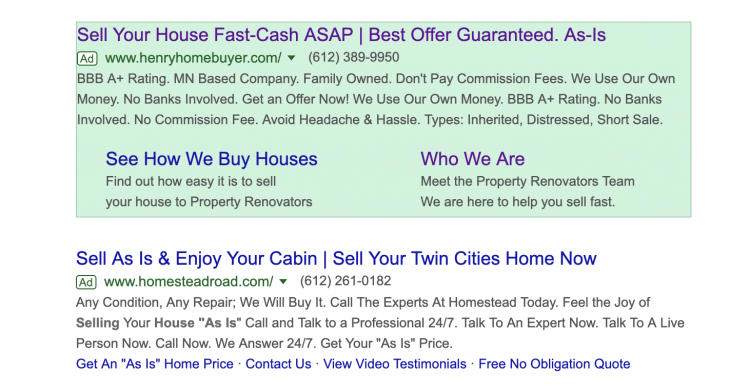

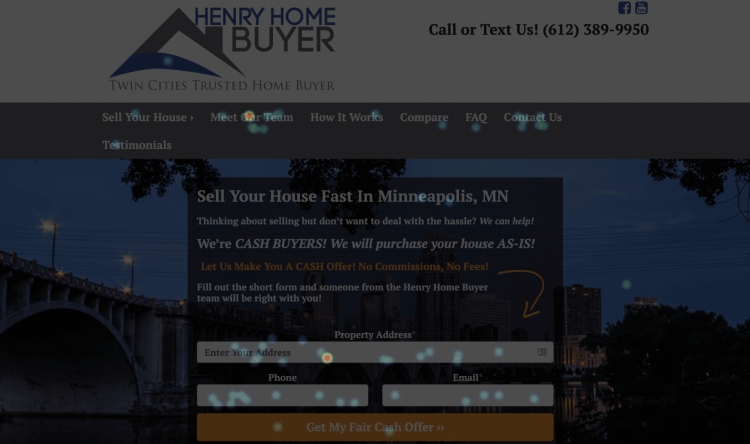
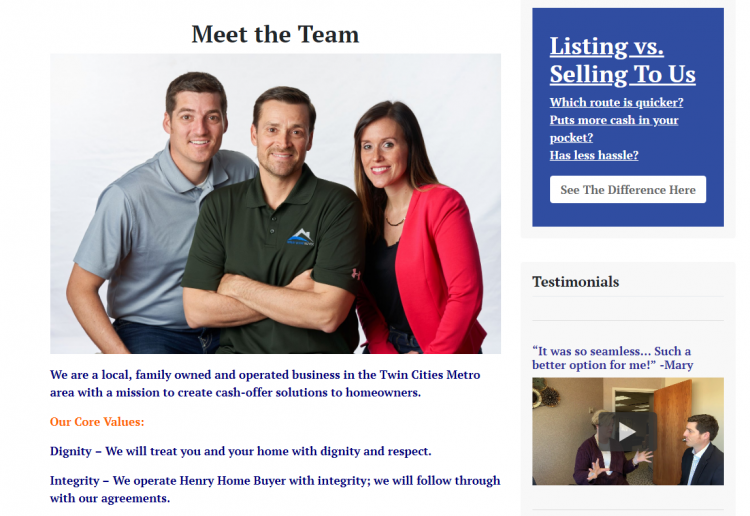
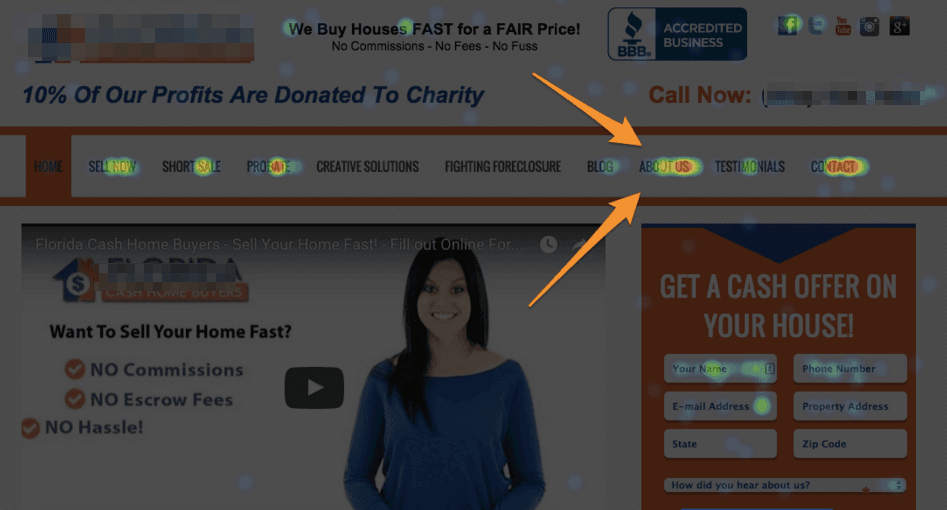
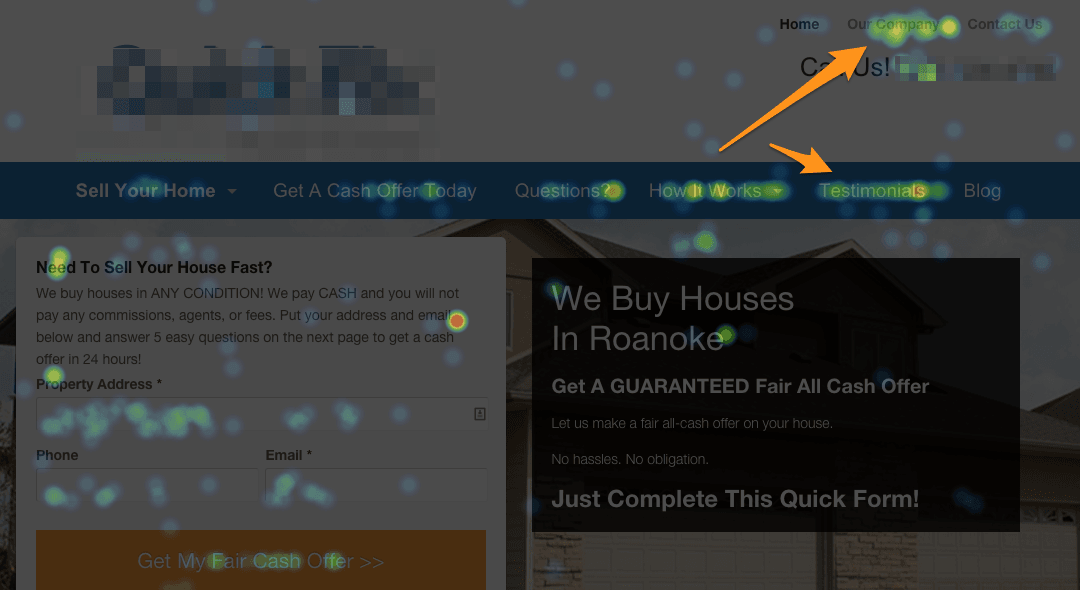
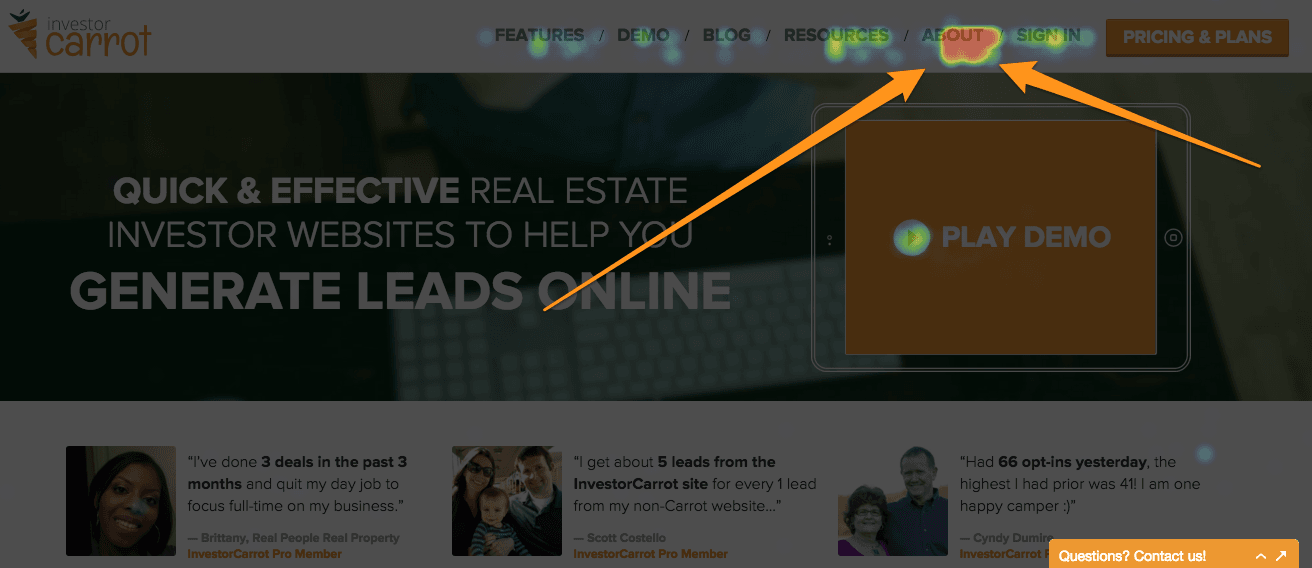
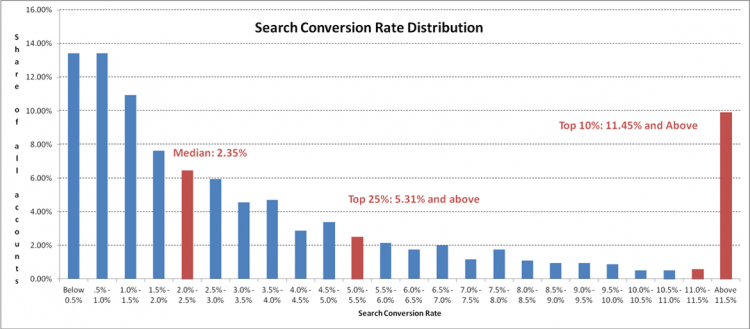
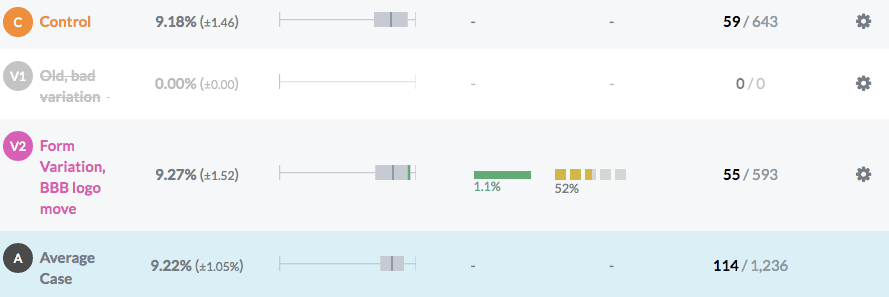
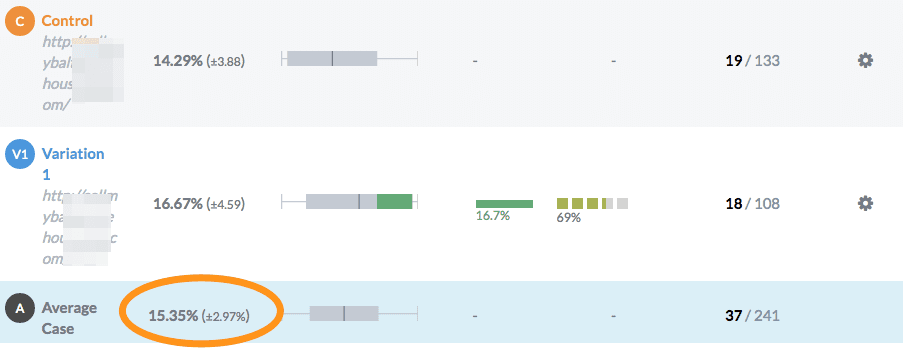
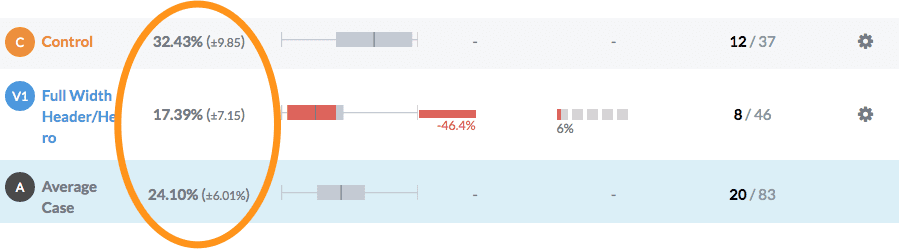

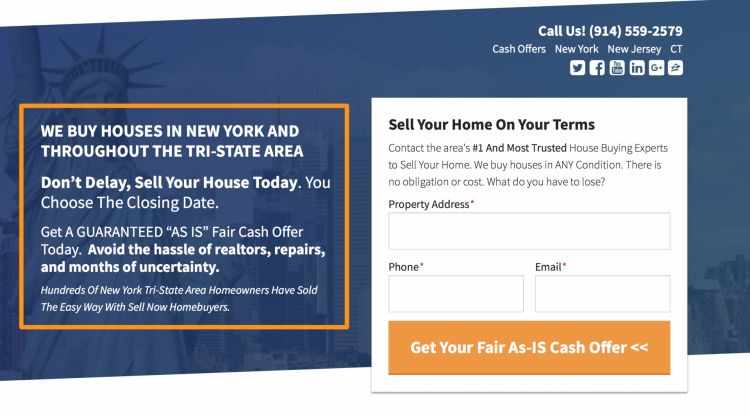
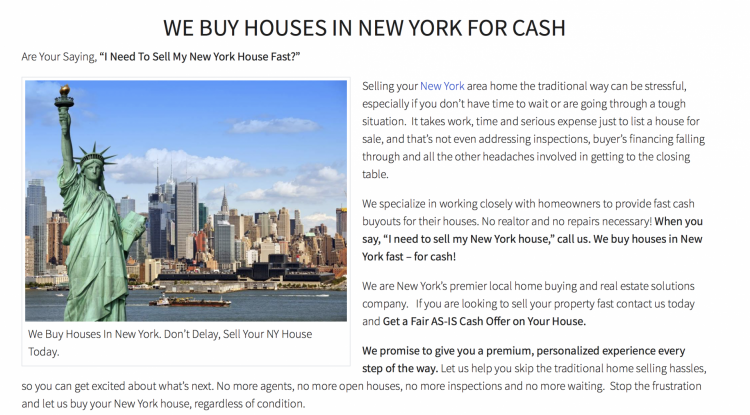
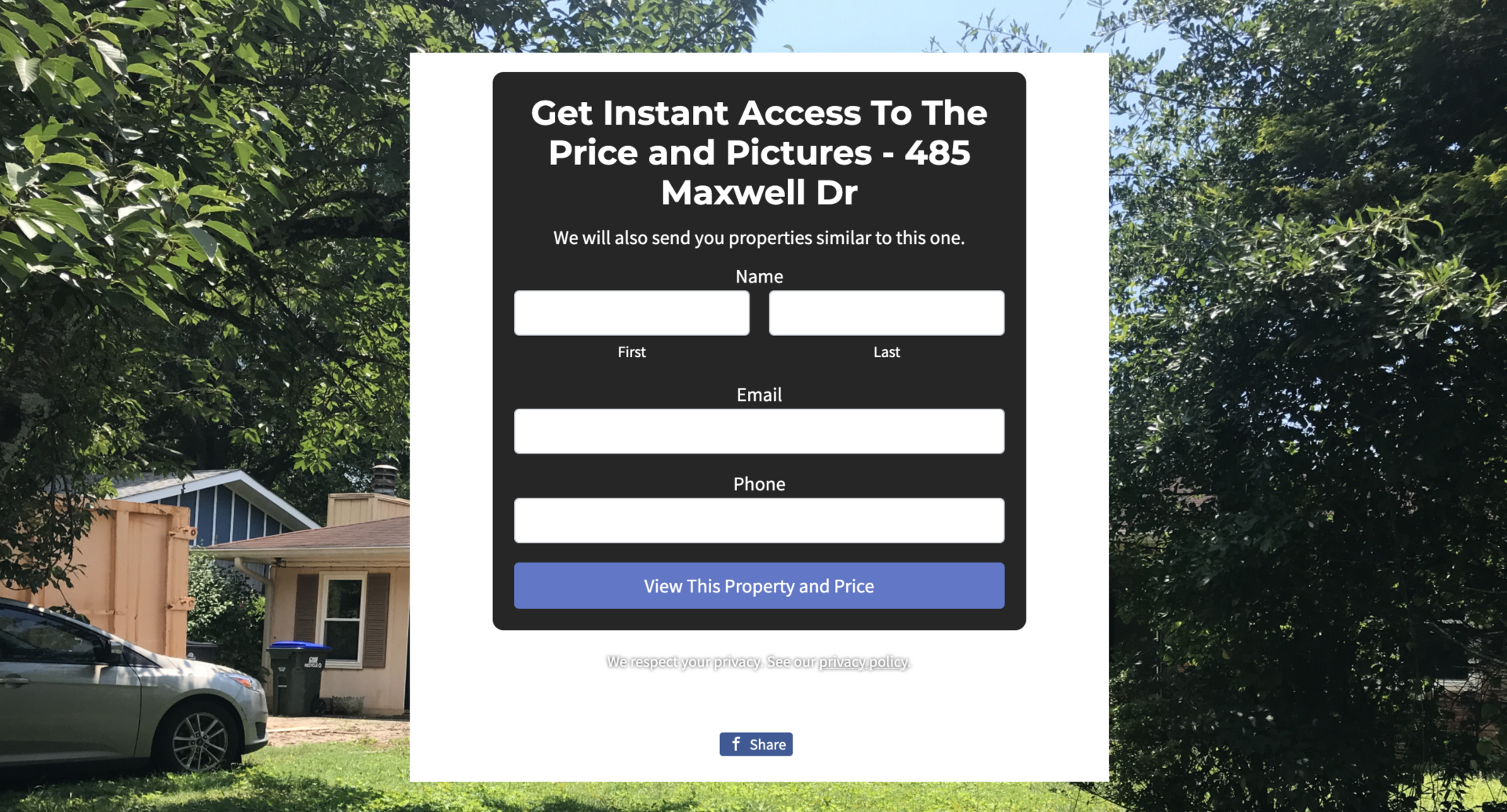
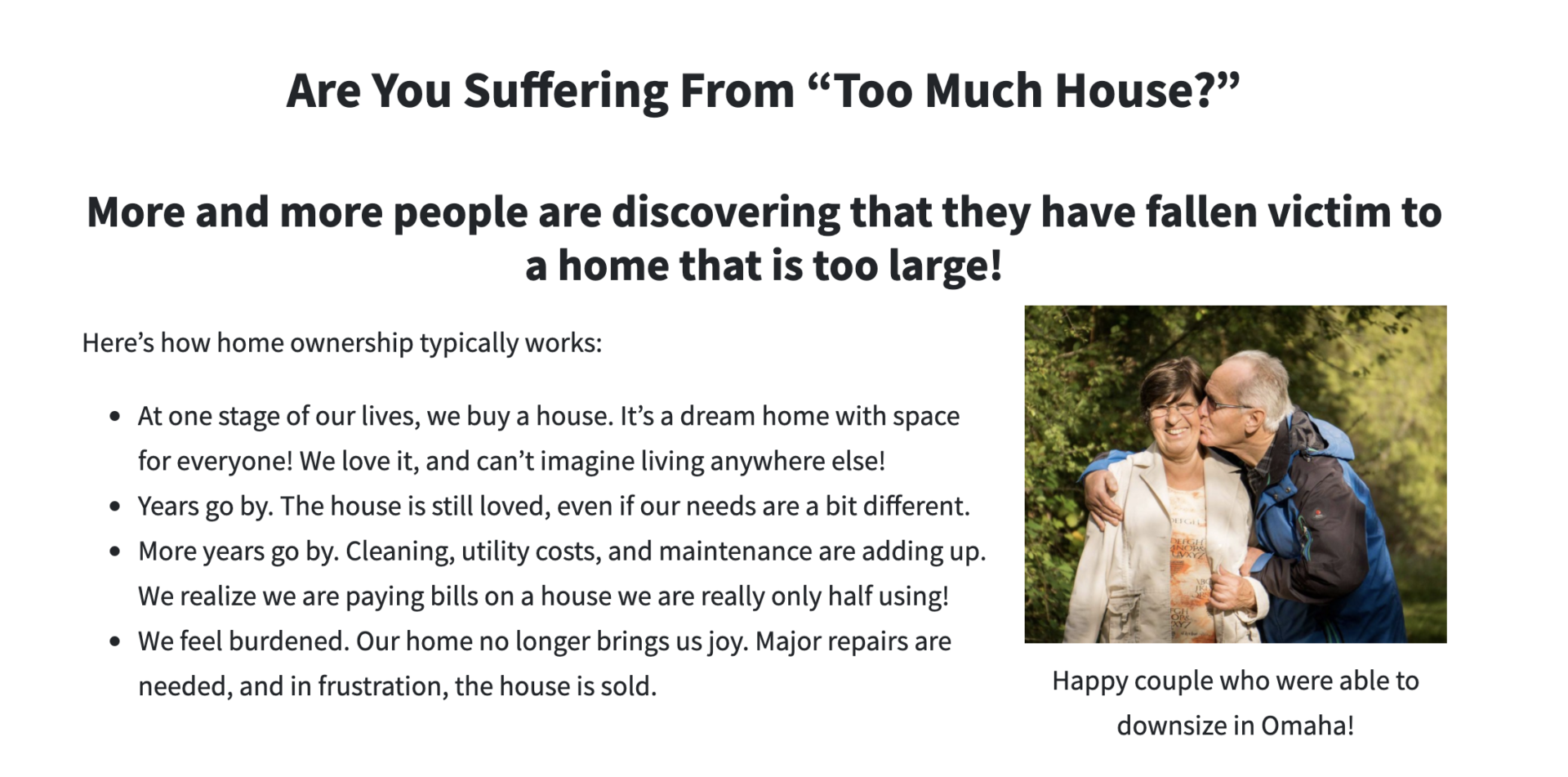
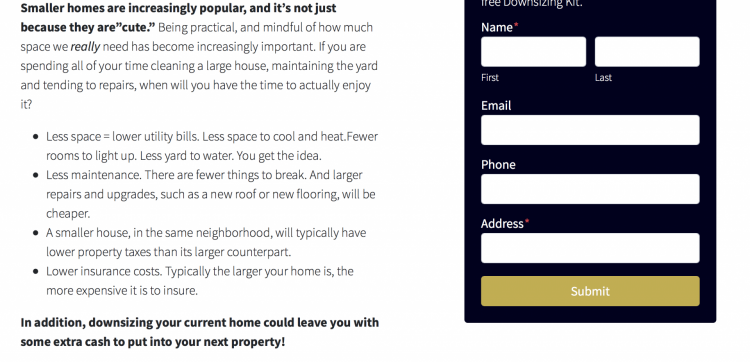
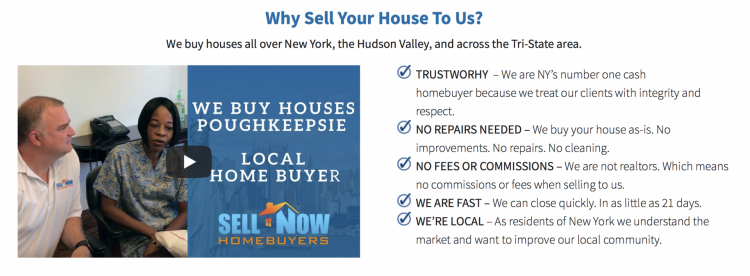



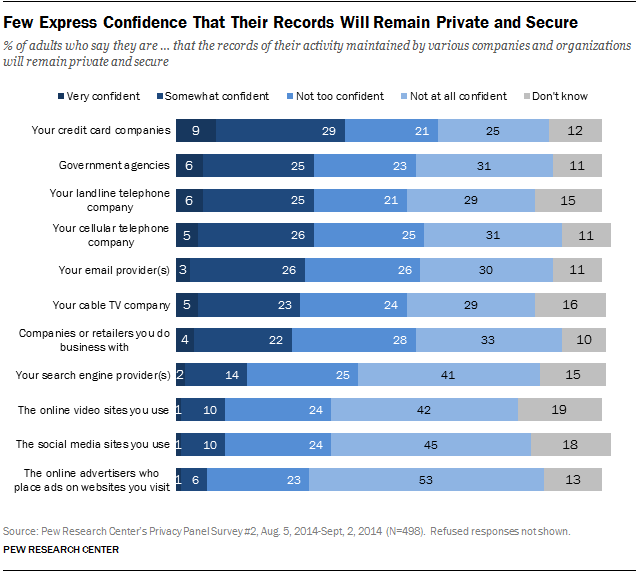
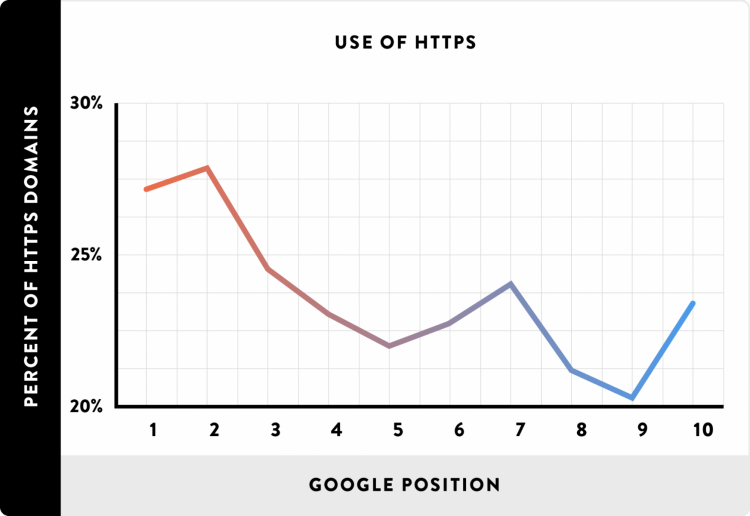
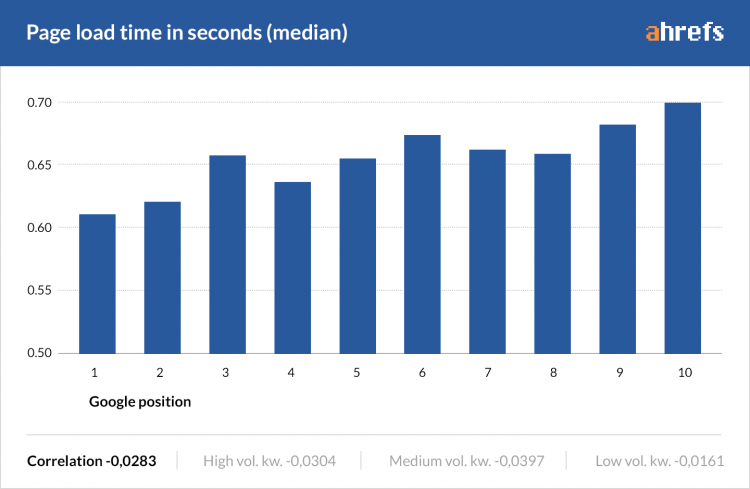

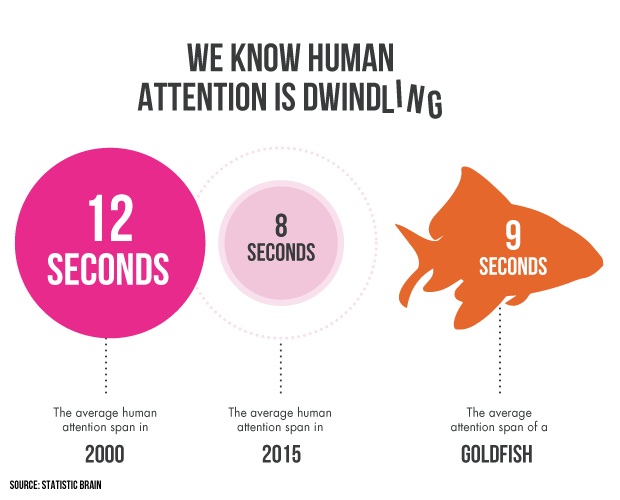
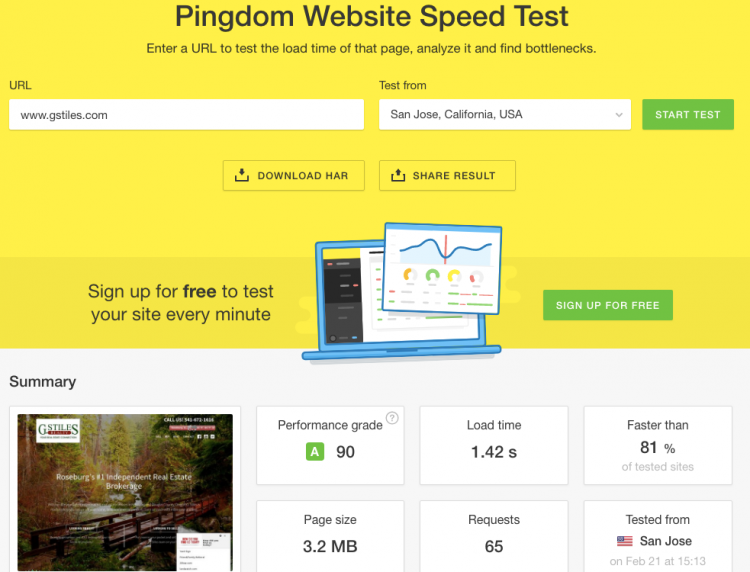
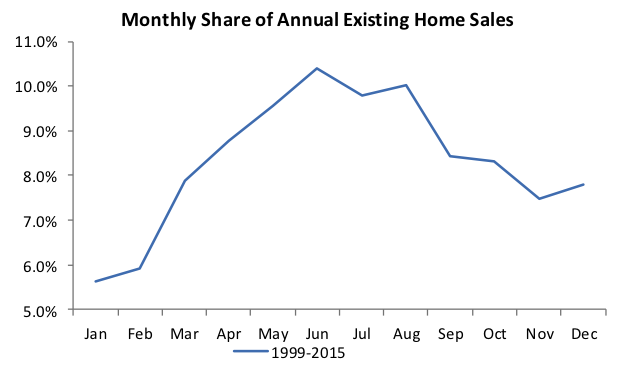
![[NEW] Motivated Land Seller Websites](https://image-cdn.carrot.com/uploads/Featured-Image-71.png)
 Land is hot right now. I was talking with one of our Carrot members recently and they’re seeing a really great opportunity to sell land all across the country. So, we worked with them to create a Land Seller website system here at Carrot! Here’s how it works…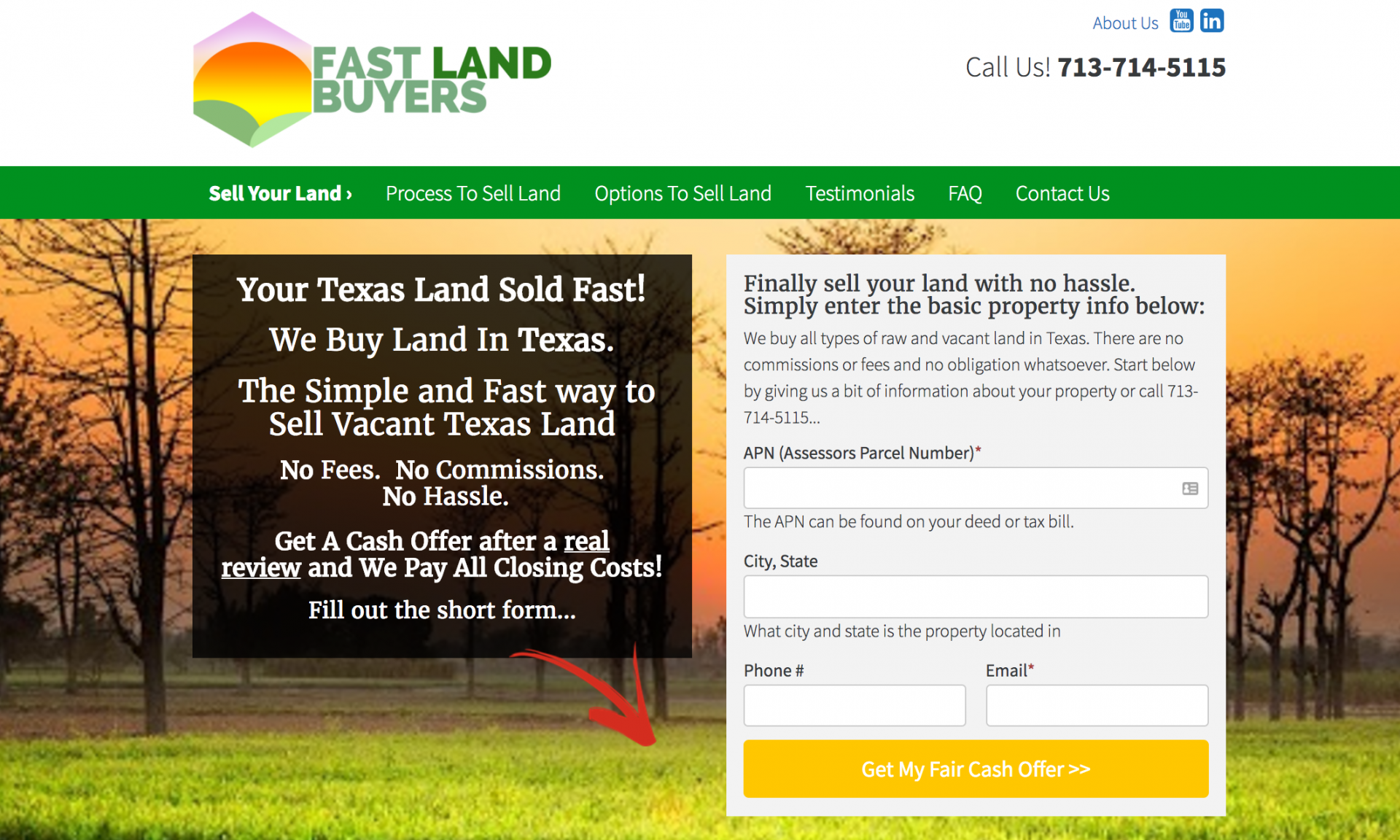
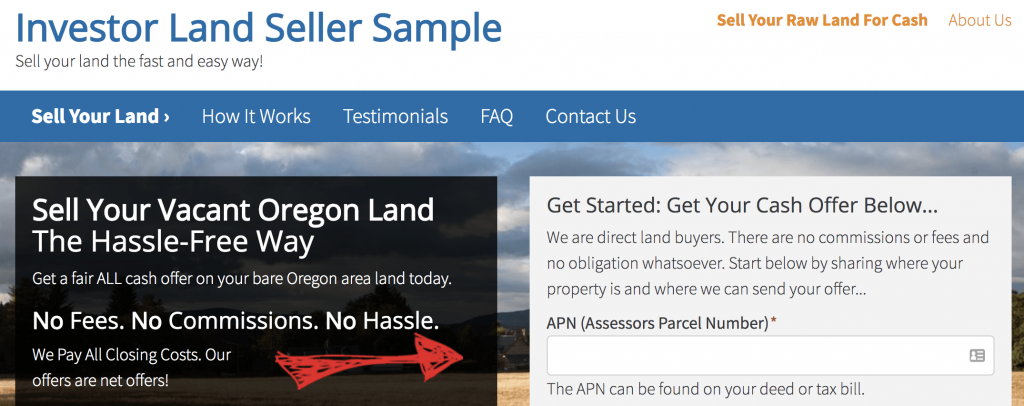
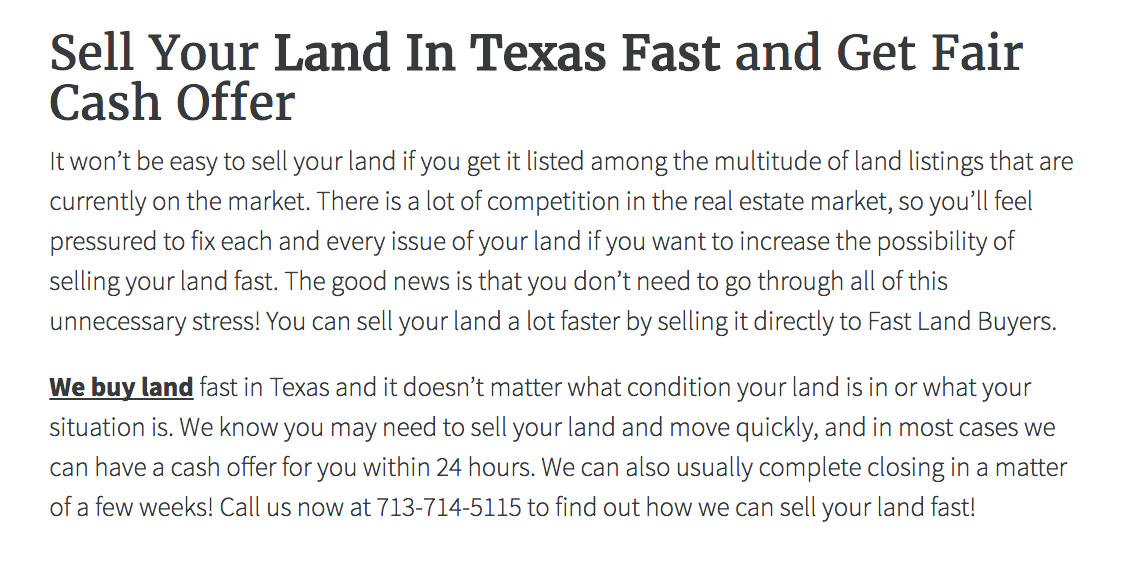
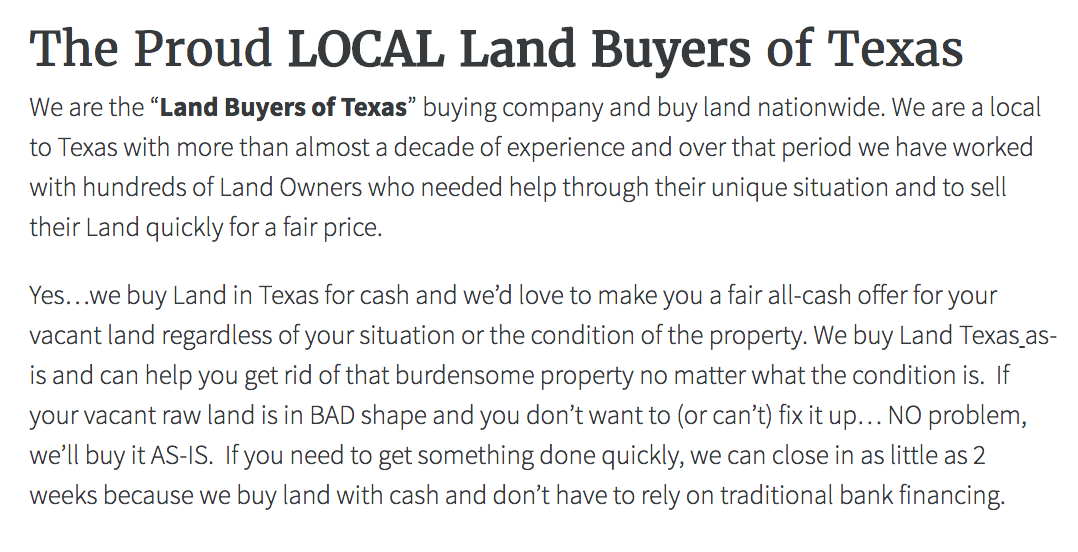
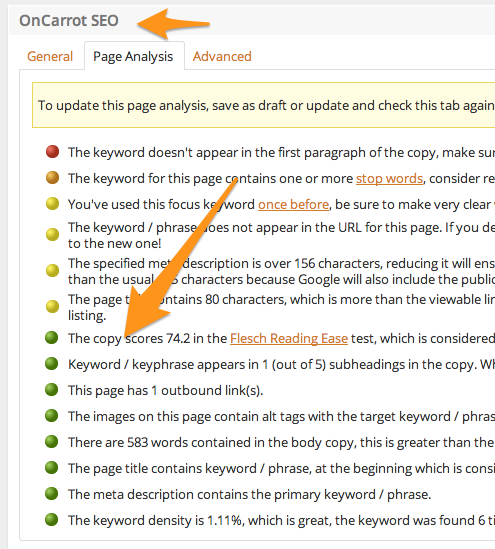 Just like our other websites, we’ve done the search engine keyword research to find out what motivated land sellers are actually typing into Google. Then, we’ve built our content and pages around those phrases that people are already looking for.