We recently had the opportunity to interview Adam Johnson and Brent Moreno on the CarrotCast, two partnered-up investors who finished their first $100k month back in March.
On the episode, Trevor asks them about how they got to their first $100k month — exactly what marketing strategies they used and what mindset philosophies made all the difference.
If you’d prefer to watch or listen, you can go here to view the full interview.
Or below, I’ve compiled 7 of the duo’s dead-simple, secret strategies that they shared on the Carrot real estate investor success story. Want to learn how they got to their first $100k month and how you can, too?
Read on.
Dead-Simple, Secret Strategy #1: Making Uber Do Your Driving-For-Dollars
Brent Moreno is likely one of the most innovative online marketers around.
While he and his partner often use tried-and-true marketing methods (PPC, Facebook Ads, Direct Mail), Moreno isn’t afraid to think outside of the box in order to get a leg up on the competition.
The way he used Uber drivers to find deals is the perfect example of this.
Before his real estate investing days, Moreno was a part-time Uber driver. He’d drop his wife off at work and go drive for a few hours to make a little extra money. During that time, he started an Uber Facebook group. When he finally took the leap into real estate investing and gave up on Uber driving, he had an “aha!” moment…
Uber drivers literally just drive around town all day… If I could get just a few of them to send me property addresses for vacant or distressed homes, they could do my driving-for-dollars for me.
So he reached out to his Uber-driving pals in his Facebook group and asked them to do him a favor. One of them took him up on it and passed him 35 seller leads, 2 of which he was able to close on.
That’s just the kind of marketing ingenuity that separates top investors from the rest. Feel free to steal his strategy and try this in your own market. Who knows? Could be a game-changer.
Dead-Simple, Secret Strategy #2: Building Your Inner Circle
In real estate, perhaps nothing is more powerful than long-term, meaningful relationships in your market of operation.
And that is a truth which Adam Johnson doesn’t take lightly:
I love to make people smile. I really do.
In fact, he’s built so many meaningful relationships in his community that when he walked into the local courthouse (a place he regularly visits, giving chocolates, kind notes, or snow cones to the workers whenever he leaves) to check the title on a foreclosure, something amazing happened.
He overheard one of the workers talking on the phone as they said something like this:
I’m sorry Ma’am, I just don’t have the authority to offer discounts or lower your payments. There’s nothing I can do.
After a moment, the worker noticed Johnson in the room, said
Uhh. Hold on, hold on. Let me get someone else on the phone
and gave Johnson the county phone to try and help this woman solve her tax problems.
That random situation turned into a closed deal for Johnson.
What’s more?
Johnson literally has his own set of keys to every courthouse in the county because of the relationships he’s built. Don’t underestimate the power of consistent kindness to build meaningful relationships in your community — you never know where your next deal will come from.
Moreno even goes so far as to claim that 50% of their success can be directly attributed to the relationships and rapport that they’ve built in their market.
Dead-Simple, Secret Strategy #3: Using A High-Converting Website
90 Day MS Home Buyers Lead Generation Stats
I won’t splice words here.
Johnson and Moreno are Carrot members, and they love their Carrot website.
Making $100k per month, these are two people who could definitely afford their own custom website. But when Trevor asked them why they haven’t ditched Carrot and built their own website, this is what they said.
Johnson explains their reasoning best:
“Because I’m in the real estate business, I’m not in the website-building business.”
And their Carrot site has been converting website visitors into leads since day one. Why change it if it’s working?
Plus, Johnson, self-proclaimed at being tech-incompetent (he didn’t even have WiFi at his house until 2017) can use the site just fine. It’s easy to use and it converts like a charm. What’s not to like?
If you’re on the fence about trying Carrot out for your own business, you can sign up with us risk-free for 30 days. Go here to find out more.
Dead-Simple, Secret Strategy #4: Steal These Facebook Ads
To be honest, I was kind of surprised that Johnson and Moreno were willing to give away their Facebook Ad copy for free. Now, with Facebook’s new ad library, anyone can view any page’s past and current ad campaigns (this is GREAT for studying your competition), but Moreno actually encourages other investors to steal his ad copy and try it in their own market: “Take it and try it out for yourself. It’s working for us.”
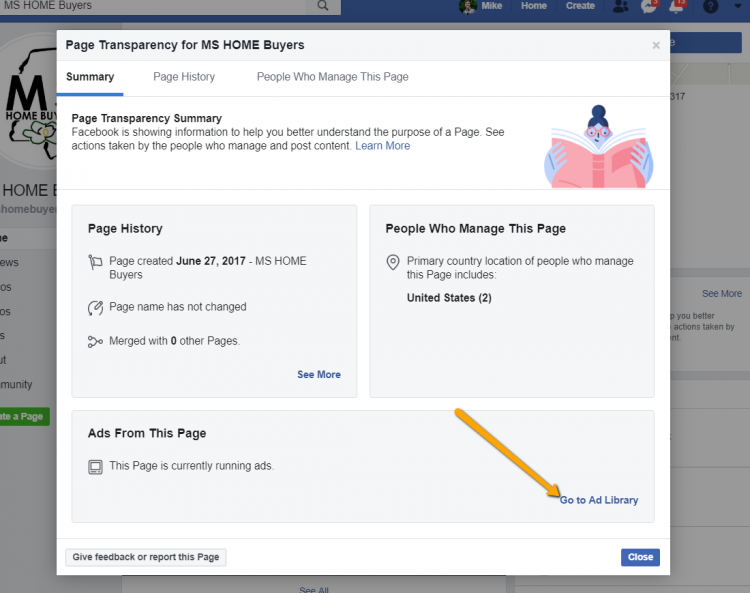
So, in the spirit of mutually agreed upon theft (:D), here’s how you can go on Facebook and look at MS HOME Buyer’s Facebook Ads.
Go to MS HOME Buyers Facebook page and click on “See More” next to “Page Transparency” on the right side.
Click on “Go to Ad Library”.
And voila! You can now look through the ads that these guys are running and they’ve given you explicit permission to copy them, so have fun!
Oh! And if you’re needing to do competitor research or want to figure out what other investors in your market are doing with their Facebook Ads, use the above strategy — knowledge is power, after all.
Dead-Simple, Secret Strategy #5: Don’t Give Yourself An Option To Not Finish The Job
When listening to this interview, one of my favorite things that Johnson said was…
Not to overplay the stereotype — being from Mississippi — but the truth is that when you grow up on a farm or in a rural area… you just gotta get the job done. There’s been plenty of times where we had to fix a fence and we didn’t have any extra fence and we just had to figure it out with what we had… I think that’s where people go wrong: they let not doing it be an option. The truth of it is, if you put yourself in a position where you don’t have a choice, then it’s a different mindset — it’s not ‘we don’t have this or we don’t have that,’ it’s just… you gotta make it work.
I think that quote speaks for itself. When you don’t give yourself an option to quit or to not finish the job, you get it done with what you have; that’s all there is to it. And more often than not, just working hard with what you have at your disposal will grow your business, regardless of the resources available to you.
Dead-Simple, Secret Strategy #6: Keep Your Business Simple, But Do The Simple Things Better Than Anyone Else
The philosophy behind Johnson and Moreno’s business is to “Keep it simple, but work extremely hard on those simple things.”
Many real estate investors (many entrepreneurs, for that matter) get caught up in the details of their business. They create over-complicated internal processes that unintentionally slow their businesses down. Or they use 10 different marketing strategies all at the same time, optimizing none of them.
But the best way to grow a business is usually to let your internal processes and marketing strategies grow with your business. Always keep it as simple as possible to build a business that’s agile, and optimize the heck out of those simple internal processes, sales tactics, and marketing strategies.
You can do 100 different things with mediocrity… or you can do a couple of things expertly well. For Johnson and Moreno, working really hard on the simple things has proven far more lucrative than trying to tackle everything at once.
Dead-Simple, Secret Strategy #7: Don’t Underestimate The Impact Of Hard Work And Compounding Results
The grind. The hustle. The day-in and day-out hard work of an entrepreneur.
Over time, it can get exhausting and discouraging. You start to wonder if all this hard work will pay you back in the end. Well, Johnson firmly believes that it will:
Don’t underestimate the legwork and then giving your efforts time to compound.
Before you can build momentum for your business, don’t forget that you must first push the boulder up the hill — only then can it start rolling down the other side.
And don’t quit before you reach the top of the hill; that’s where building a business gets fun.
Conclusion
We hope that this information has helped!
Clearly, Johnson and Moreno are crushing it with their business. I imagine they’re well over $100k per month now that we’re half-way through the year. And we’d love to see you get to that same place.
Maybe $100k per month seems so out of reach right now as to be ridiculous.
Or maybe you’re right on the cusp of breaking through that threshold.
Whatever the case, in addition to using the above tips, we’re willing to give you a risk-free trial period with our service which has generated over a million leads for real estate investors and agents.
Steve Londeau has been a Carrot member since the beginning of 2015.
Before he joined, he had a custom WordPress website that he had sunk lots of time and money into, with a “hideous” opt-in form — as he describes it — and an unsatisfying conversion rate.
For two years, from 2013 to 2015, that website generated four leads for his business, all of which fell through and didn’t close…
(not a typo)
Frustrated with that slow-moving lead-gen, he switched to Carrot and saw an “immediate difference.”
“I had four ‘deals’ that I got from my website pre-Carrot and none of em’ even closed. Since then… I instantly noticed a change when we went from my WordPress site to the Carrot content — it was like night and day, I started getting leads right away. And we started converting them, cause they were quality leads… and now we consistently close 6-figures just from our website every single year.”
Now, business is booming. Steve does between 40 and 60 deals per year at $13,000 – $14,000 profit, paying about $2,000 for each deal. And his methods aren’t complicated: he combines direct mail, retargeting Facebook ad campaigns, Google Ads, and his high-converting Carrot site into a super-smart, dead-simple marketing strategy that every real estate investor should steal. And he’s getting into something called “wholetailing” which I hadn’t even heard of before listening to his full interview with Trevor.
What are his secrets?
Let’s break it down.
Steve’s Top 6 REI Marketing Secrets
Secret #1: A high-converting Carrot website
First and foremost, Steve gives a lot of credit to his Carrot site. As someone who built a custom WordPress website and experienced sub-par performance and a staggeringly low conversion rate (just 4 leads in two years), his Carrot site was a breath of fresh air.
Here’s what his Carrot website looks like.
He didn’t sign up for Carrot right out of the gate, though. In fact, it took him 2 years, knowing about Carrot the entire time, to finally bite the bullet. And he’s glad he did.
But what took him so long to make the leap?
Well, his two concerns were the same that many people have when they’re thinking about signing up with us…
Carrot is more expensive than a WordPress website and he didn’t want to add another overhead cost to his already-long list of monthly subs for his business.
Carrot is built on different templates and he didn’t want his website to look like his competitor’s websites.
Eventually, after he signed up and saw the results that his Carrot website was pulling…
…he realized that:
(A) Carrot was paying for itself 10 times over, consistently converting high-quality leads and driving high-quality traffic — now he pays for our Advanced Marketer plan ($150 per month) to get the Aspen template, which further differentiates his site from competitors.
(B) no one has ever said that his website looks like another competitor’s website in his market, so he’s not worried about it ;-)
And as Steve is fond of saying, “If it ain’t broke, don’t fix it.”
Secret #2: SEO for Real Estate
When Steve signed up for Carrot, he put in a lot of leg work over the first year to build his rankings and drive passive traffic to his website. He did so by posting Carrot content (provided with our Content Pro and Advanced Marketer packages) and by targeting market-specific keyword phrases on his homepage.
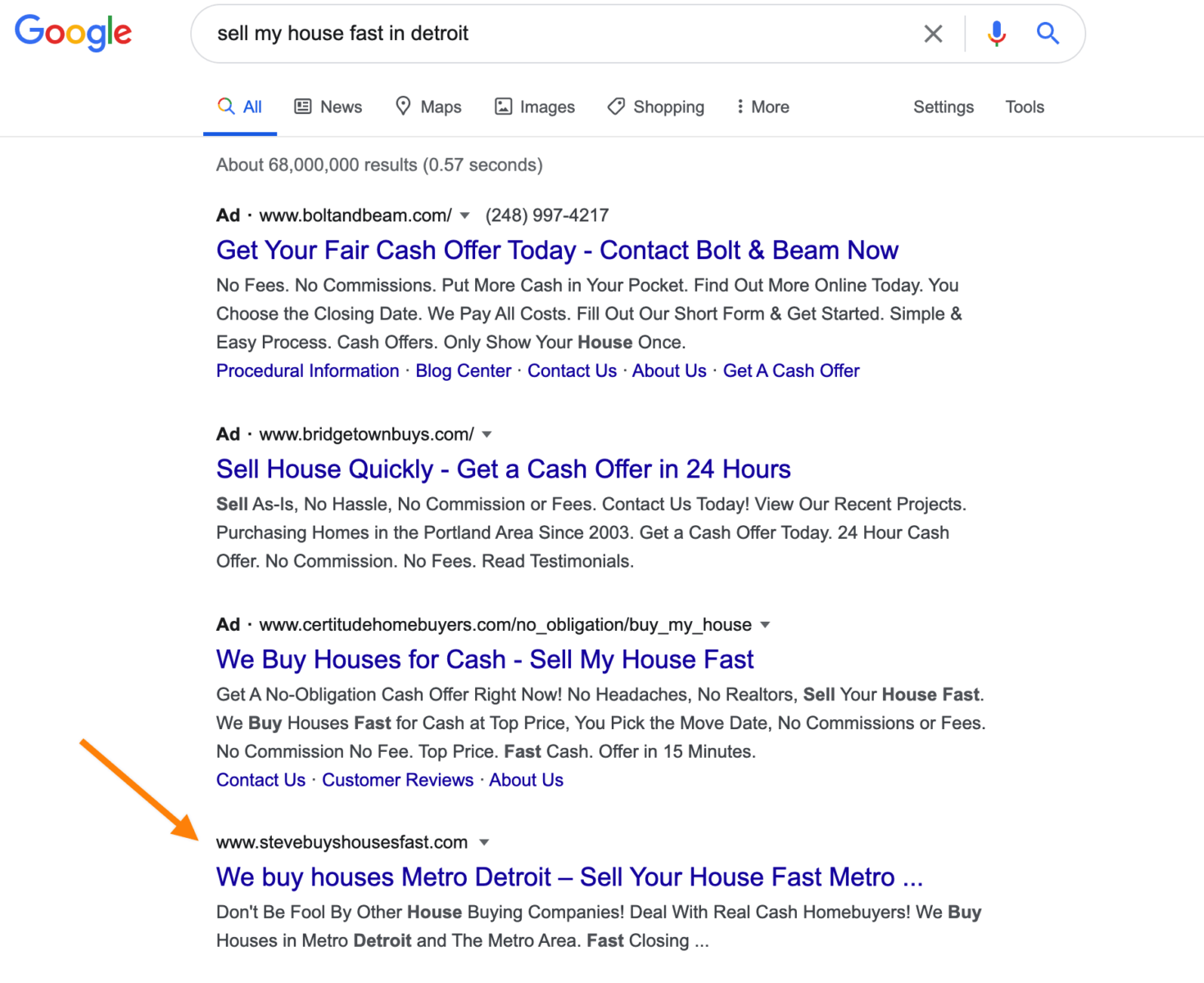
After a few months, his website ranking soared to position #1 for some high-volume keyword phrases (such as “sell my house fast in Detroit”).
This traffic spike in September a few years ago was probably associated with that boost in SEO rankings.
But like a weight-lifter who gets a 6-pack abs and then gives himself permission to stop working out because he’s already made it, Steve admits that he stopped working on SEO, thinking he’d just get to keep his #1 position and that they’ve now lost some of their rankings because of that.
And while SEO still drives some traffic for his website, it doesn’t drive as much as it could.
Note: Remember, SEO for real estate is a long-term game. While snagging position #1 and driving passive traffic to your website is amazing, it only lasts as long as you keep working to maintain your rankings by publishing new content, building backlinks, and targeting market-specific keywords.
But his website still ranks for “sell my house fast in metro Detroit.”
Secret #3: Consistent blog content
Blog content on Steve’s website has been another driver of organic traffic — meaning, a motivated seller types something into Google (like “how to sell a distressed property”), one of his blog posts show up in results, and the person clicks on it.
And that doesn’t just help brand awareness in his market, some of that traffic even turns into deals.
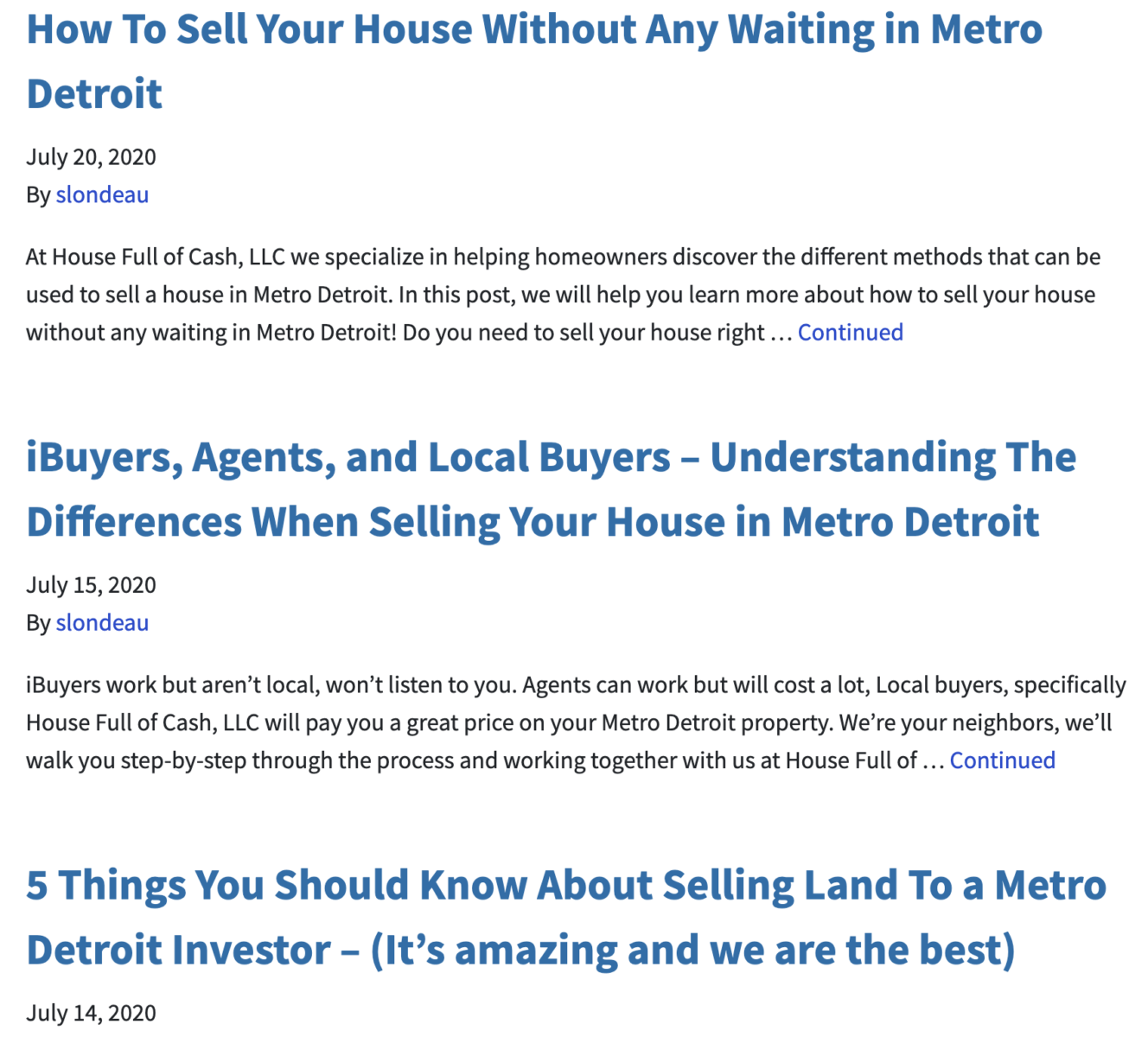
The best part, though, is that Steve, doesn’t write any of that content himself (even though it’s under his name), he just uses the SEO-ready content that comes with his Carrot Advanced Marketer plan (24 blog posts per month).
Check it out.
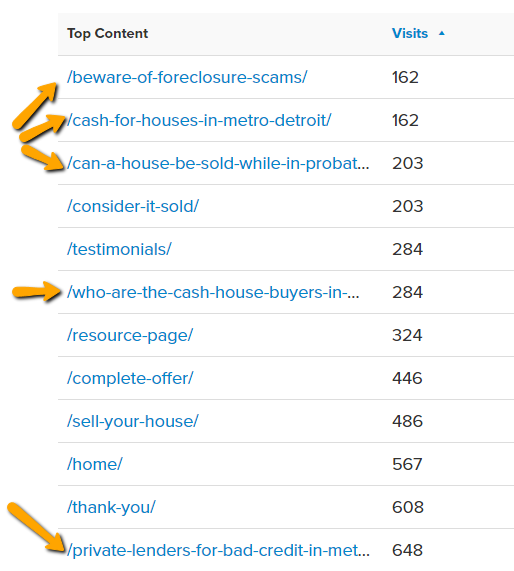
And as you can see, his blog URLs are pulling their weight for traffic and lead generation.
Plus, that consistent content publishing practice (almost one blog post per day on the Advanced Marketer plan) gives you an excuse to interact with your social media followers by sharing the content, informs Google that your website is active and trustworthy, and gives you an opportunity to rank in search engines for high-volume keyword phrases.
Which is why, at Carrot, we take content so darn seriously. :-)
Secret #4: Wholetailing
I hadn’t even heard of this before listening to Trevor’s interview with Steve, but it’s a fascinating concept and one that I think you’ll be interested in learning about (if you haven’t already).
Basically, wholetailing is a combination of wholesaling and retailing. You purchase a house that takes little to no rehab work and instead of selling it to another real estate investor, you just list it on the MLS. The advantage being, you can often sell the property for more than you could when wholesaling to your buyers list.
This means, of course, that you’d need to buy a property which is in almost MLS-worthy condition… and that’s the key: finding a property which takes little to no work to prepare for retail buyers, and then selling it at a discounted price on the MLS.
And from my research, this strategy seems to be getting more and more popular as sellers dominate the market.
One final tip that Steve has on finding buyers for properties you’re trying to wholetail: call agents who have recently sold properties in the same area and ask if they have any buyers who are still looking for a place. Then offer your property as somewhere those buyers might be interested in checking out.
Secret #5: Postcards and Facebook ad retargeting
This is one of my favorite strategies that Steve shared to generate leads and close deals.
First, he sends postcards. On each postcard, he includes his phone number and website URL. If someone calls him, great — he’ll try to close the deal over the phone. But he’s found that many people aren’t ready to call him the first time that he sends them a mailer. They first want to know if he’s legit. Which is why he includes his website URL on each postcard.
If they visit his website after receiving his postcard (which many of them do, to figure out who he is and if he’s trustworthy), they immediately get tagged with his Facebook advertising pixel. That, then, allows him to retarget those website visitors on Facebook with his ad campaigns, helping him make the most of every person that visits his website, and collect leads even when people don’t opt-in to his website form.
As you can see, “Direct” is the third biggest traffic driver to Steve’s website. That’s probably because people go straight to his site after receiving his direct mail.
Secret #6: Video testimonials
Testimonials are super powerful for converting a website visitor into leads. Here are some stats to prove it.
“90% of respondents who recalled reading online reviews claimed that positive online reviews influenced buying decisions
85% of consumers said they read up to 10 reviews before feeling they can trust a business.
Shoppers who view video are 1.81X more likely to purchase than non-viewers.”
(Check out our VideoPost tool for turning videos into blog posts!)
For that reason, Steve puts lots of video testimonials on his website.
It’s a small thing that can help convert more of the people who visit your website. After all, website visitors want to know that they can trust you, and nothing is quite as convincing as a ton of people vouching for you on recorded video.
Some final inspiration…
I hope this case study helps you build a bigger business, generate more consistent leads, and live the life that you’re working toward. Even if just in a small way. And I hope you learned something new!
And if you want to walk in Steve’s shoes, consider getting yourself a Carrot website. We have the highest-converting websites on the market for real estate investors and agents and we’d love to help you just like we’ve helped Steve.
A Carrot member recently canceled. And when someone cancels their membership with us, they have the option of including details as to why they’re canceling.
Just so happens he did include some details — here’s what he said (In this instance, Carrot did not provide the images that they chose to put on their website):
“Lawsuit for copyrighted images required me to dissolve my LLC and not sure what’s next so I am canceling my account. Please confirm I will not be billed this month my business account does not have enough funds to cover the auto draft.”
Good night.
One day you’re operating a perfectly healthy real estate business… and the next day someone is suing you for using their images on your website. Unfortunately for unsuspecting victims who made a one-time mistake like the member above, the penalty for copyright infringement is no joke. According to Copyright.gov…
“Anyone found to have infringed a copyrighted work may be liable for statutory damages up to $30,000 for each work infringed and, if willful infringement is proven by the copyright owner, that amount may be increased up to $150,000 for each work infringed. In addition, an infringer of a work may also be liable for the attorney’s fees incurred by the copyright owner to enforce his or her rights.”
It’s no surprise then, that this member wasn’t able to continue doing business. That’s a big hit to the financial well-being of any real estate business. A hit that you need not encounter.
Which is why we put this article together for you. To explain copyright law, show you the risks of breaking it, and then show you how you can safely share images and quote other people’s content.
Let’s get started.
Current Copyright Laws: What You Can and Can’t Do
I’m going to start with some copyright safety standards that should be obvious… but just to be safe.
You should never copy someone else’s content word-for-word without quotation marks, proper attribution (Who said it? When did they say it? Where did they say it?), and a link — if possible — to the place where they said it (to create a hyperlink, use Command + K on Mac or Control + K on Windows).
You should never use another website’s screenshot or image on your website without proper attribution (At the very least, a link to where you got the image — see our Carrot articles for examples of this).
You should never use another person’s image or photograph if it is exclusively copyrighted and not allowed to be used by anyone else.
Follow those three rules and you’ll be mostly safe. Emphasis on “mostly.”
“Screen captures and image use on both private and personal blog use is common practice. Since the internet offers an easy to access collective of useful images and information, the line can be blurred on what is considered fair use and what is considered copyright infringement. Courts have refused to set bright-line rules regarding what is fair use. This is mainly because the Fair Use Doctrine was codified as part of the Copyright Act (Title 17) to address potential rigid application of copyright laws that could otherwise infringe on the very creative works the law was designed to promote. Since its implementation, courts have struggled to how to apply this doctrine consistently. One federal judge has been quoted as saying that, ‘fair use is one of the most unsettling areas of the law. The doctrine has been said to be so flexible as to virtually defy definition.’”
Still, if you keep in mind that you never should use an image or quote content without proper attribution and that you should avoid exclusively copyrighted images altogether, you should be in the clear.
The trick is to ensure that you’re not profiting off of the other person’s work. In court, that’s sort of where the rubber hits the road. If they can prove that you were profiting off of their own original work (by using their image to brand your website, for instance, or by putting their sales copy on your direct mailers), then you’re sure to drive home with a big ticket.
Okay… so you know what not to do, but what can you do? Let’s imagine that you do want to use someone else’s work to enhance your own website content. Below are some examples of how you can do that ethically and without getting in legal trouble.
How to Do Proper Attribution (EASILY)
1. Using a Stock Photo
It’s common to want to include stock photos on your website, or as the header of a blog post, or within a blog post to spice things up and make the page more visually appealing. That’s great!
But stock photos are perhaps one of the most dangerous territories when it comes to copyright infringement. You have to be extremely careful about this. There are even businesses that create stock photos, promote them in Google, and then profit off of suing people who used them incorrectly — so watch your back.
Fortunately, there are easy ways to get stock photos within the public domain that you can use for free. Here are some of the places that provide free stock photos — I’ve personally used each of these before.
Just go search for what you need, use the photo, and provide the proper attribution if necessary.
2. Using a Screenshot
Generally speaking, screenshots are safe so long as you attribute and link to the website where you got that screenshot (and so long as you’re not using the screenshot to make a profit in your own business or trying to use another company’s branding to make a profit). We do this all the time in our Carrot articles. Here’s an example of what it might look like.
Ubersuggest is one of our favorite tools to use for keyword research. And in our Carrot articles, we often use screenshots to show our audience how to use the tool correctly. So long as you’re linking to the tool, that sort of screenshot and attribution isn’t a problem. Similarly, if you’re trying to show someone what another person’s website looks like, how to use an online tool, prove your point, show compelling data, or persuade your audience, include an image attribution link and you should be good. But it’s still worth looking into the website’s copyright policy before using too much of their content.
3. Using Text
Sometimes, you might want to quote another person word-for-word to prove your point or illustrate a new way of thinking about something. You should never, of course, use someone’s writing word-for-word and claim it as your own (that is plagiarism and is definitely illegal).
To properly use quotes on your website, you can look at the top of this article for examples of proper attribution. Use quotation marks, say who said it, where they said, and maybe even when they said it. Then link to the place where they said it if possible.
Here’s another example of this:
Recently, Jillian D’Onfro wrote an article at Forbes, saying, “Google wants users to trust it with more of their data than ever while promising to give them more control over how and when it’s used.”
Conclusion
Hopefully, you now understand the risks involved in improper attribution of another person’s content, whether text or images. And, more importantly, you hopefully understand how you can make proper attribution for photographs, screenshots, and website copy to avoid copyright infringements (and a $50,000 fine).
Ultimately, though, err on the side of over-attributing and avoid content which seems heavily protected by copyright laws. Better to be safe than sorry.
If you do have any more questions, feel free to throw em’ in the comments and we’ll help you however we can.
Please be aware: I am not a legal professional and my advice is purely based on my own experience and research and is no substitute for legal advice from a licensed professional. Nothing written on the Carrot blog should, or is intended to, constitute real legal advice.
For years, we’ve worked our bottoms off to provide you (our members, the people on our email list, and even those of you who’ve never worked with us) free, valuable, life-changing content.
Every week for the past several years (with maybe a couple exceptions), we’ve published a new blog post and/or CarrotCast episode meant to help you build a bigger business, live a happier life, achieve financial freedom, and escape the horribly monotonous 9-5 grind.
That is our passion: to help you regain time in your life for things that matter most — family, friends, hobbies, etc.
But there’s a problem — while we’ve consistently created content to help you build a business you can be proud of, our website hasn’t done the best job of organizing that content for you.
You can click on the “Blog” tab at the top of our website and you’ll see our latest blog posts and CarrotCast episodes, but it’d take some real work to digest our content in any sort of chronological order… until now. :)
Announcing Carrot University!
We’re launching Carrot University with our SEO 101 Courses!
Carrot University is our (the content creator’s: Brendan, Trevor, and myself) effort to organize our content so that you can easily digest the most important lessons for your business. Want to learn about SEO? Here are 10 lessons to get you started off on the right foot! Want to learn about PPC?
Here are 10 lessons to teach you everything you need to know to get started. Wondering which contracts you need for your real estate investing business? Here are some templates!
Rather than choosing random pieces of content via Google and our blog, you can now go to a single place (Carrot University) and learn about those topics in chronological order — from beginner to advanced to ultra successful.
We wanted to get Carrot University out to you as soon as possible, so we’re launching it with just one module of content: SEO 101 — basically, our beginner’s guide to understanding SEO and how it applies to your real estate website.
BUT…
There’s a lot more to come. ;)
We have plans for content modules about PPC advertising, advanced SEO lessons, personal development, and even nitty-gritty business building best practices. Ultimately, we want Carrot University to serve YOU. We want it to be a place that you go to learn, grow, and challenge yourself.
Either the campaigns that you created will give you a healthy ROI — the phone will ring, leads will flow, and deals will close. OR… crickets.
And if you’ve ever tried your luck at PPC ads for your real estate investing business before, then you’ve probably experienced just as many crickets as conversions (or maybe a few more of the crickets…).
That isn’t because PPC advertising doesn’t work for the real estate industry. For many of our members at Carrot, paid ads drive business revenue BIG time. If you do it right, then paid advertising can become a real driving force for your business — a tool you can depend upon to create quick lead generation and revenue flow.
But getting it right, of course, is sort of the issue.
Truth is, the success of your PPC campaign for finding motivated searchers (buyers or sellers) depends largely upon one thing: how you prepare before you launch.
Here are 5 pre-launch steps to give your real estate PPC campaigns the best possible chance of success
Perhaps the biggest mistake that new PPC advertisers make is launching a campaign without first doing market research.
It’s remarkably easy to assume that you know your market already. After all, you’ve probably talked with your market, done at least a few deals, and maybe even lived in your area of operation for quite some time.
Regardless, don’t skip this step. ;)
Spending a little extra time to ensure you’re targeting the right people with your PPC campaign and writing copy that resonates with their problems, pains, fears, and desires is the single most powerful thing you can do to increase your ROI and website conversion rate once launched.
In regards to PPC, keyword research is the equivalent of market research.
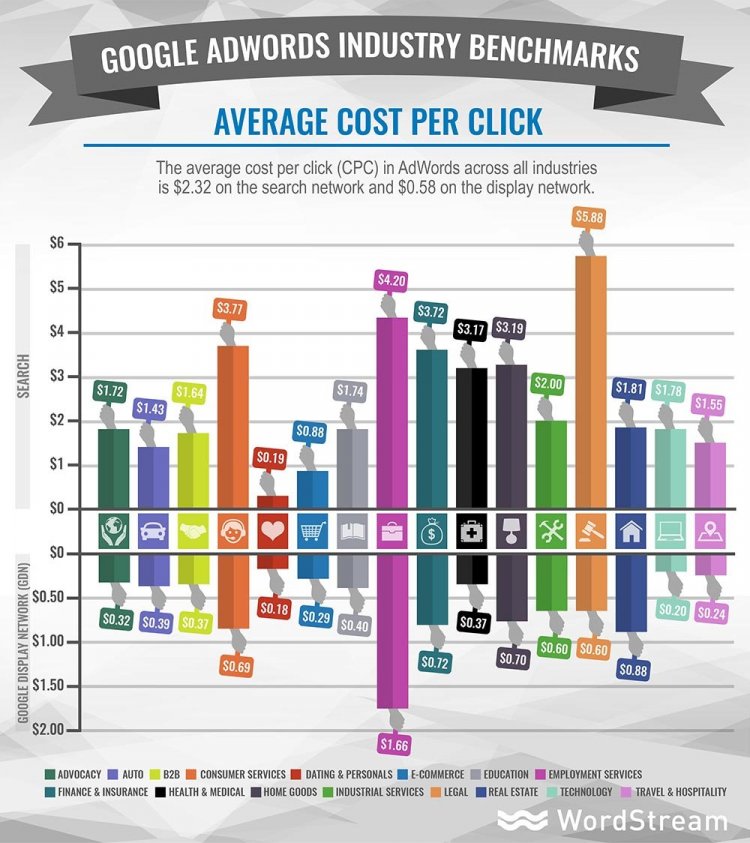
Competition — How many other people are competing for this keyword phrase? The more people you’re competing with, the higher your cost-per-click will soar. This isn’t necessarily a bad thing. So long as the keyword phrase is high value and you can afford the cost-per-click while maintaining a healthy ROI, then high competition might be an indicator of a valuable keyword phrase. If you have a smaller budget, though, then you might consider targeting something less competitive.
Suggested Bid — In Google AdWords Keyword Planner, this is the number that Google suggests you bid in order to get consistent clicks and impressions. When you see this number, keep your budget in mind and ensure that the two numbers line up for a healthy ROI.
Search Volume — This is the monthly number of people who search for a given keyword phrase every month. More search volume means more people to get your ad in front of. Low search volume means the opposite.
Intent — This is perhaps the most important part of your keyword research. What is the intent behind the keyword that you’re considering targeting with your PPC campaign? If the person is looking for a real estate agent and you’re a wholesaler, for instance, then the keyword won’t bring you many conversions. Regardless of search volume, competition, and suggested bid, the intent of the searcher, what they actually want when they type that into Google, should make the final decision about which keywords you target and which ones you throw out.
In addition to doing market research, it’s also worth spending a bit of time doing competitive analysis.
These are some of the questions you might consider asking yourself…
What keywords is my competition targeting?
What is my competition doing with their ads that I can do better?
What is my competition’s budget?
What keywords are bringing my competition the most results?
Answering these questions can help you determine which keywords will be the most valuable for you to target. If, for example, your competitor has dedicated massive funds to a certain keyword phrase and you can’t beat their budget, you might consider targeting something else. Or if you find that they’re neglecting a certain keyword phrase altogether, you might try to exploit that.
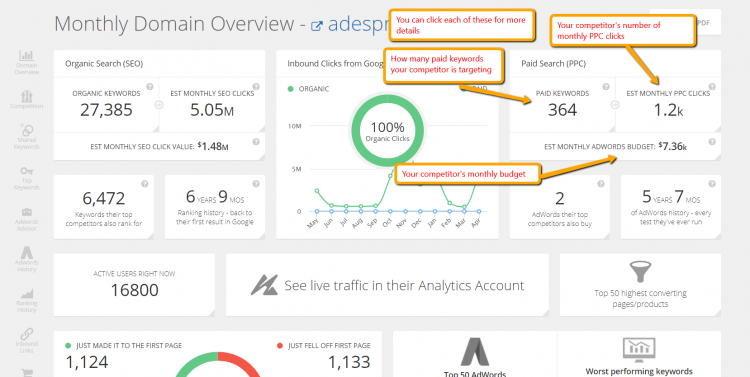
And you can answer a TON of these questions by searching your competitor’s domain in SpyFu — you get a few free searches every day (go incognito in your browser to get more searches once you run out).
Running a real estate PPC campaign is a bit like gambling. You spend money, hit a button, and hope that the magic machine pays you back.
Of course, in PPC, you have far more control over the results of that button-hitting than you do at the local casino. Still, as when you visit a casino with a spending limit of a few hundred dollars (or a few thousand for you high-rollers), you should never launch a PPC campaign without first knowing your budget and the results you expect to get (realistically) from that budget.
But how do you determine a reasonable cost-per-click and cost-per-conversion for your business in your specific market?
Well, you just play off the numbers.
And we have this awesome budget and ROI calculator to help you easily determine your minimum and maximum budget per conversion. If, for example, I expect $10,000 profit per deal, I close 1 in 25 leads, my cost-per-click is $5, and my website conversion rate is 5%, my budget would be between $2,500 and $3,250.
In other words, I could spend up to $3,250 and still have a very healthy ROI for my business (208%, to be exact). And once you know your budget, it’s simply a matter of staying within that budget to generate leads and close deals. I love the way that Brian Rockwell put it in a CarrotCast case study.
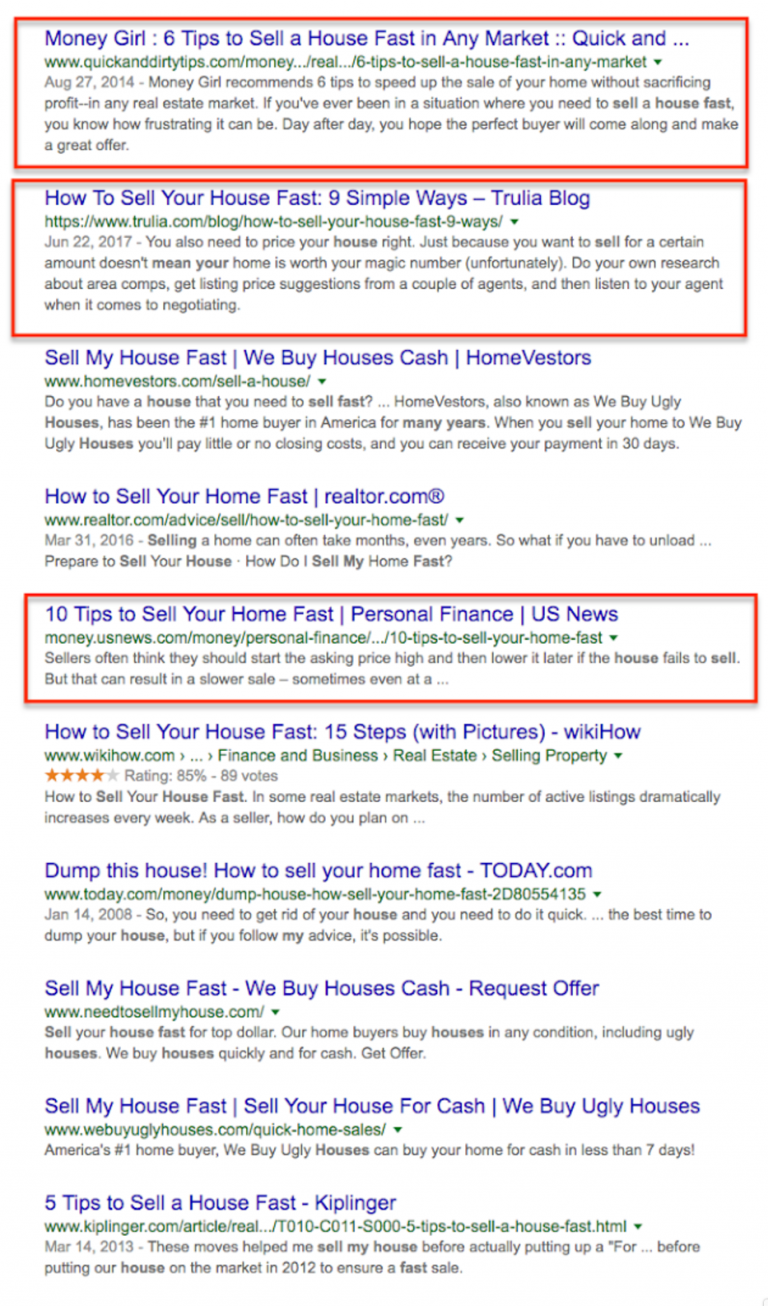
When you go searching for something in Google (whether it be how to fix a faucet or reviews of Avengers: Endgame) you quickly determine which results you’re going to click on and which ones you’re going to scroll past.
How do you determine that?
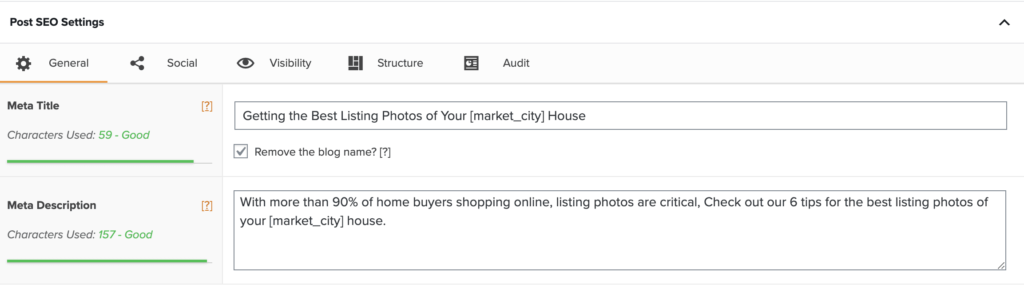
By skimming the title tag and meta description of each result.
If, for example, I was searching for “how can I sell my house fast”, these are my top three picks for what I would click on.
Why? Well, it all has to do with the title and the meta description of those results and how well I think those results will solve my problem. The same is true for your PPC ads. When someone searches for something in Google, they’re looking to solve a problem. And your ad copy (the words for the title tag and meta description) need to promise to solve that specific problem for them.
And the single most important thing you’ll write is the headline for your ad. If this doesn’t get people to click, nothing will.
So spend a little extra time on this, run it by some friends if you have to, and make sure it’s primed to get your target market clicking.
Remember, depending on what PPC marketing method you choose, AdWords, Facebook, or Bing, you’ll be limited to either the number of characters you can use within the ad or the amount of text you can use within a FB ad. Be sure to use this ad “real estate” wisely.
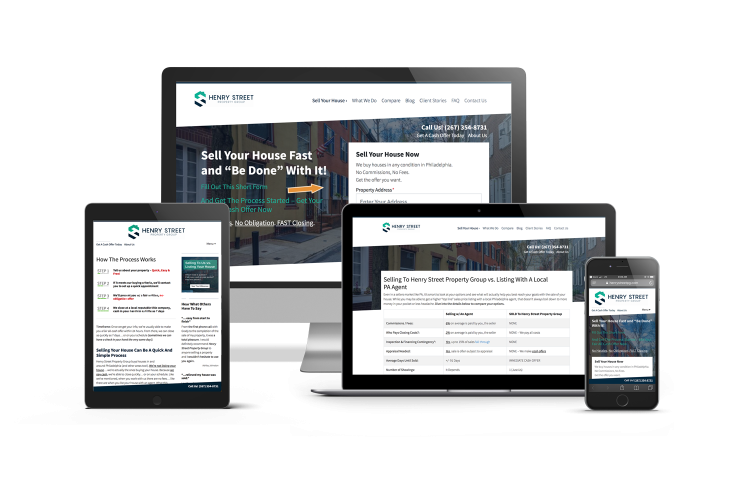
The final thing you need to do before you launch your real estate PPC campaign to give it the best chance of success is building a high-converting landing page. In the field of online marketing, the landing page is the place where people will go once they click on your ad.
The landing page needs to display content that reinforces your message contained in the ad. If your ads states you’ll give them a call in one hour, make sure your page also says one hour, not 24 hours.
The lead form on your landing pages must also reinforce the search as well as trigger the searcher to take action. “Contact Us” or “Get My Cash Offer” are a couple of examples.
If your real estate landing page isn’t optimized for conversion, then it doesn’t much matter how remarkable your targeting, your ad copy, or your budget is, no one is going to convert.
At Carrot, we’ve tested our websites hundreds of times to ensure high conversion rates for each of our members. Which means when you send the right advertising traffic to a Carrot site, you’re going to get results. You can sign up over here to try us out for yourself (risk-free, with a 30-day money back guarantee)!
Conclusion
When you finally decide to click the big red button… we want you to get results — real, tangible, business-building results. We want you to double or triple your money, we want PPC to become a revenue-generating machine for your business, and we want you to no longer fear launching a campaign.
But the only way to make that happen is to prepare before you hit the big red button.
And by following the five pre-launch steps in this article, you’ll ensure that every campaign you launch gives you a healthy ROI, takes you one step closer to dominating your market, and drives real revenue for your business.
If you have any additional questions about launching your upcoming PPC campaign, throw em’ in the comments and we’ll help you out. :)
You want to generate more organic leads but you don’t know how to track your real estate SEO performance. That’s common.
You want to pull more traffic to your website (with less money) and you want to convert that traffic into cash for your real estate agent or investing business.
That’s good — you’ve chosen the right strategy: SEO. Since people who find your website all on their own are usually more motivated than those who see your ad on Facebook, SEO doesn’t just drive traffic but works to improve the conversion rate of your website. And with high-quality traffic and leads comes less time spent dealing with tire-kickers who’ll never convert, regardless of how hard you try.
In other words, SEO benefits your business in a multitude of ways. Less time spent on the wrong leads, more time spent on the right leads, more website traffic, higher conversion rate, consistent lead generation, and even financial predictability.
But there’s a problem…
How do you know if your SEO strategy is working? How do you know that you’re SEO performance heading in the right direction?
Here are 4 mission-critical SEO metrics to keep an eye on while you’re climbing your way through the rankings.
4 Mission-Critical Real Estate SEO Performance Metrics You Need to Be Using
1. Rankings
This metric might be obvious to you…
If you’re going to drive passive traffic to your website and you’re going to convert more leads without running more paid ads, you must get to the first page of Google.
But that can take months, years even. How do you know you’re making progress?
The simplest way to check is to open an incognito web browser window and type in the search phrase that you’re trying to rank for. Then click through Google’s results and see if you can find your website.
Problem is, that’s time-consuming, especially once you’re trying to rank for 10 or 20 different keyword phrases. At that point, you don’t want to manually check all those rankings.
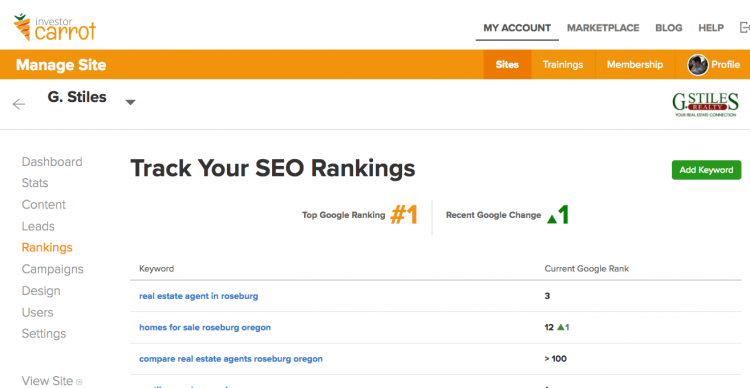
This tool tracks your rankings for specific keyword phrases in near real time. You can use it to quickly determine where your website is at for multiple keyword phrases you’re targeting. Every page in Google typically has 10 results, so 1-10 means you’re on the first page, 11-20 is second page, and so on.
2. Domain Authority
Another way to determine whether you’re making progress in the eyes of Google is to check your website’s domain authority.
What is domain authority?
It might sound complicated, but it’s actually pretty simple when you get down to it. Domain authority is the overall authority that search engines (Google, mostly) attributes to your domain. More authority is better and means that your website has a higher chance of ranking in results. Conversely, a low authority means that Google is unsure of whether you’re trustworthy or not (yet) and it’ll be more difficult for your website to get on the first page of Google’s results.
But the more content you create, the more opportunities you’ll have to rank in search engines (each page or blog post has a chance to rank). This is why we include monthly expert-written content as a part of our (Carrot’s) Content Pro and Advanced Marketer Plans.
You might, for instance, get your website ranking for “real estate investors who run 6 miles per day”, but that ranking doesn’t do you any good if people aren’t already typing that phrase into Google — and not just anything, the right people.
The reason that it’s so important to do keyword research before you start executing an SEO strategy is that you want to make sure that the phrase(s) you’re targeting isn’t a total waste of time.
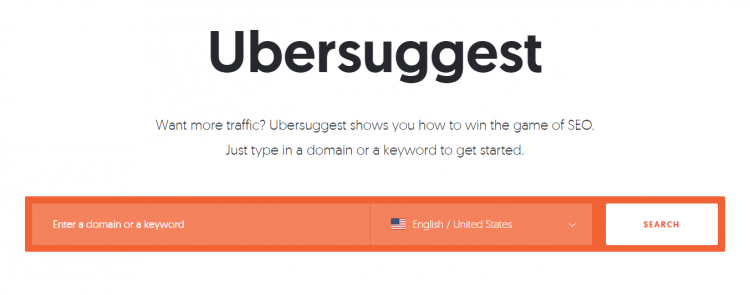
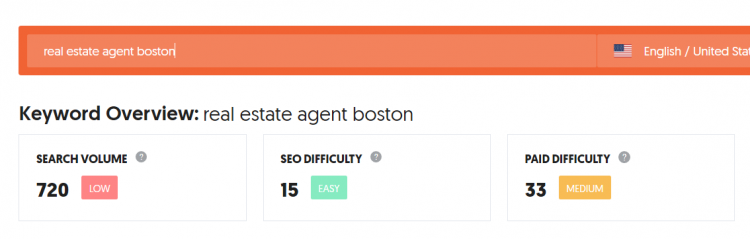
You can use Ubersuggest to check the search volume for any given keyword phrase.
Just type the phrases you’re thinking of trying to rank for into the search bar and click “Search”. This will provide you with some information about how that keyword phrase performs in Google and with other keyword phrase ideas.
[cta offer=”seobible” color=”orange”]
But, back to website traffic.
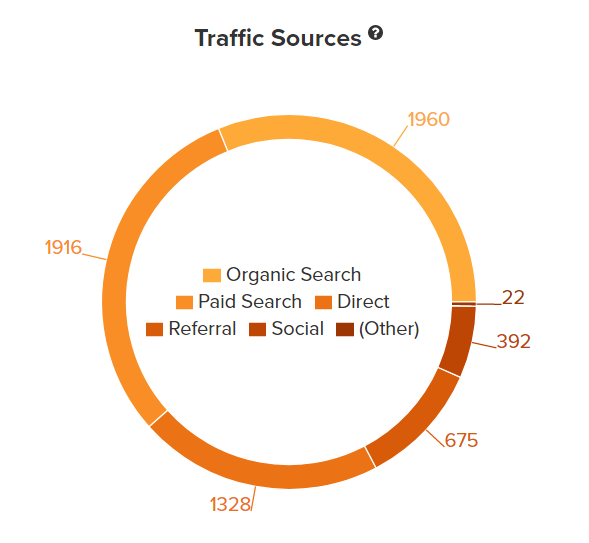
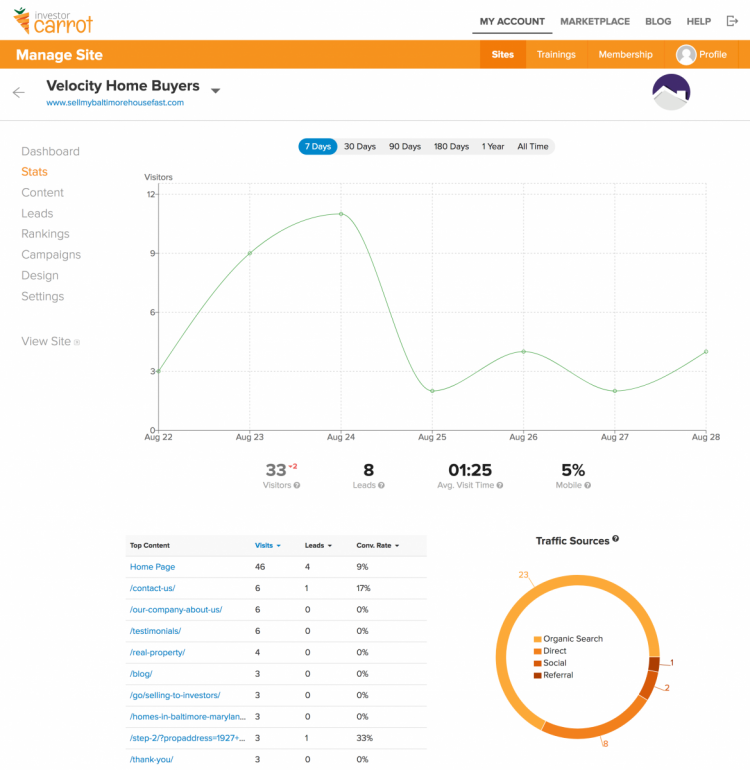
When you start ranking for your target keyword phrase(s), that’s when the rubber meets the road. Check your analytical information to see where your website traffic is coming from and if you’re actually getting more traffic from search engines.
Look at the “Traffic Sources” in the bottom right hand corner to determine where you’re website traffic is coming from and if you’re SEO efforts are paying off.
If they aren’t and you’re already on the first page for multiple keyword phrases, then you might want to target a keyword phrase with higher search volume.
4. Conversion Rate
Imagine that you’re ranking on the first page of Google for several different keyword phrases. Let’s even imagine that those keyword phrases are driving passive traffic to your website every month — maybe a few hundred visits.
When analyzing your SEO strategy, there’s only one more step in the funnel to make sure everything is working as it should: is that search engine traffic converting on your website?
Because it doesn’t matter at all how much website traffic you get if none of that traffic is turning into leads or, when you call them, they have no interest in your services.
So keep a close eye at how that SEO-based increase in traffic is affecting your overall business — are you getting more leads? Are you doing more deals?
You should be.
And if you’re not, then either something is wrong with your website (maybe it’s not building enough credibility or it loads too slowly — Carrot website’s are proven to be high-converting out of the gate) or something is wrong with the traffic you’re driving (they aren’t people with the right intention.
If you’re a real estate investor in Idaho, you might be able to get your website ranking for “The best mountain biking trails in Idaho”, but that website traffic isn’t going to do your business a whole lot of good. Something like “Sell my house fast in Idaho” would be far better.
Adapting Your SEO Strategy To Dominate Your Market…
In the SEO series we’ve been working on over the last few months, we’ve laid out lots of different strategies to help you get ranking in Google.
But here’s the thing: each market is different and different strategies will work better (or worse) in different markets. Some markets are more competitive and difficult to rank in while other markets will only require a few months of effort to see results.
In the end, you need to do whatever is best for your business.
Here are a few final thoughts that might change the way you approach SEO in your market:
Competitive Market — If you’re in a highly competitive market with lots of other investors or agents gunning for the same keywords that you’re trying to rank for, then you might be better off aiming for long-tail keywords to start. These are just long keyword phrases that tend to have a lot less competition (and are thus easier to rank for). Consider, for example, “Sell my house fast for cash easily in [location]” versus “Sell my house in [location].”
Uncompetitive Market — In an uncompetitive market, you might find that you can target more basic keyword phrases with higher search volume and still see results within a few months. In that case, take advantage of the market you’re in and create new content to rank for each phrase your possibly can.
Paid Ads VS. SEO— While we’ve talked a lot about SEO over the last few months, let’s not forget that paid advertising should be a critical part of your overall marketing game plan — especially when you’re just starting out. SEO will provide you with long-term success and financial predictability, but paid advertising works quicker and can get you leads by the end of next week. So use both as you need to to build a thriving business.
Conclusion
SEO has lots of benefits to offer your business if you put in the work to make your website rank.
It’ll take time… but stick with it and you’ll pull it off.
On your journey, you can use the above tips to track your progress and adjust your strategy based on your market.
And let us know if you have any questions along the way — we’d love to help however we can. :-)
Often, it takes at least 3 months to get a real estate website ranking on the first page of Google. And that’s if you consistently put the work in, creating content, optimizing that content, and targeting the best keywords possible for your business. Sure, it could take less than that or more than that depending on the density of competition in your market.
But the point is, you’re not going to see results overnight. You’re going to have to put in some work and exercise some patience.
(It will pay off, though, if you stick with it! Just see how SEO has completely changed Tyler Ford’s life)
And to make that process as painless as possible, saving you time and money, here are 9 tools you’ll want to use along the way.
9 SEO Tools For Improving Your Real Estate Website Rankings and Easy Tracking
At Carrot, we optimize all of our websites to rank in Google. From the gate, we make our member’s websites wicked fast, fill them with quality sales copy, and build a tech stack meant to please search engines.
But that’s not all we do. We’ve also spent hundreds of man-hours creating SEO tools to make your (our member’s) journey to page one as easy and seamless as possible.
One of those fundamental tools we’ve created is our Carrot SEO Ranking Tracker. Wondering where your website is currently ranking in Google for specific keywords? With a Content Pro or Advanced Marketer membership, you can track your SEO rankings consistently and check in to see how you’re doing.
After all, what good is an SEO strategy if you don’t know whether it’s working or not?
Another tool that we’ve created for Carrot members is our custom SEO tool. On any page or post of your Carrot website, you can go into “Edit” mode, enter the keyword phrase that you want to target, and our SEO tool will tell you everything you need to do to optimize the page to rank for that phrase.
Just go through this checklist whenever you’re editing a page or creating a new page and your SEO rankings will be in good hands. We couldn’t afford to have an SEO expert stare over your shoulder while you add content to your website, but this is the next best thing.
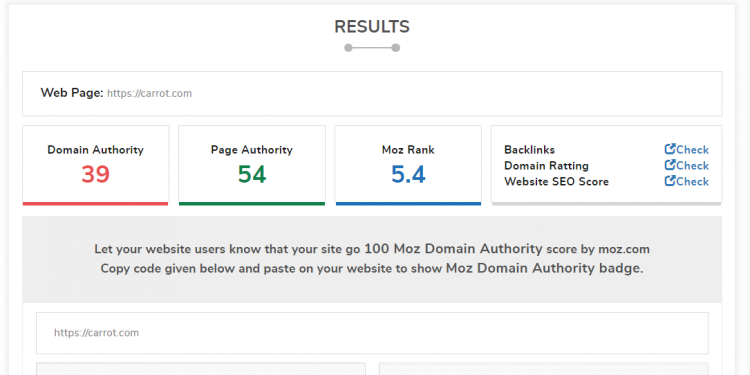
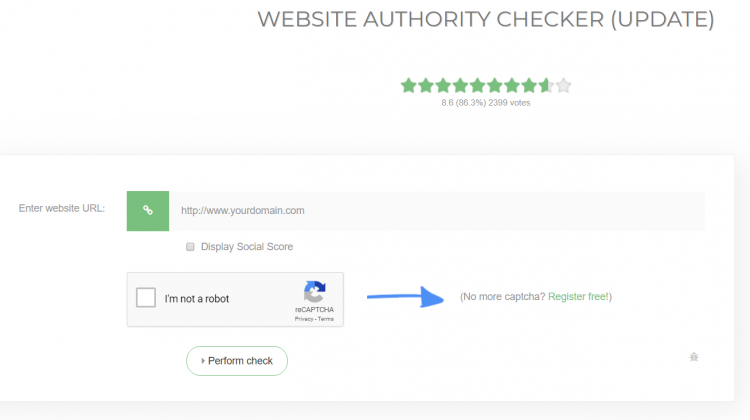
As you’re working to rank on the first page for a high-value keyword phrase, you’ll want to check in on your domain authority every now and again. This is a number (from 1 to 100) that ranks how much Google and other search engines trust your domain. The higher the number, the more authority you have in search engines (which means higher rankings).
Ideally, your domain authority will gradually increase as you put time and money into ranking your website. But this is often a slow process — and the older your website, the more that Google trusts it. This tool will also tell you how many backlinks you have to your domain, which is a nice piece of info to have at your disposal.
When you’re writing content that’s meant to rank in search engines (whether it’s a sales page or a blog post), one of the most important optimization-elements is including the right keywords on your page — that way, Google knows what your page is about and where they should rank it.
(See point #5 for a keyword research tool)
And once you know your primary target keyword phrase, it’s also a good idea to sprinkle LSI keywords throughout your content. This tool allows to quickly and easily type in your target keyword phrase and find the LSI keywords related to that phrase.
This is one of my favorite tools for keyword research (I use it all the time). It’s completely free and it’s remarkably thorough. When you’re trying to determine what keyword phrase to actually target, there are a few things you need to consider…
Competition — How competitive is the keyword phrase? How long will it take you to rank for it? The more competitive it is, the longer it will take to rank.
Search Volume — How many people actually type in the given keyword phrase per month? If no one is searching for it, then it isn’t worth your time to rank for it.
Intention — Why are people searching for the given phrase? What’s their intention? What do they want when they type that in? Can you give them what they want? If not, your time is probably better spent working toward ranking for a different keyword phrase.
Ubersuggest outright tells you competition and search volume for each keyword. For intention, you’ll need to draw some inferences based on the words within the actual search phrase. But this is a wonderful place to start your keyword research.
Or, we’ve done the leg work for you. Grab your free real estate keyword bible.
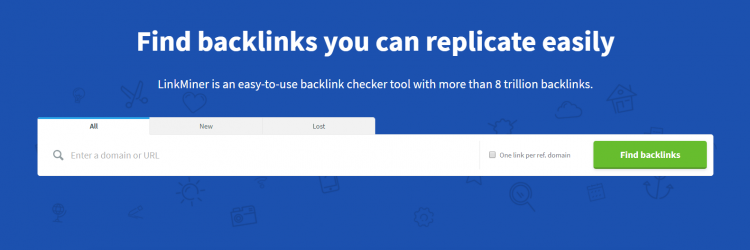
Another tool you can use to track the effectiveness of your SEO efforts is a backlink finder. The more backlinks you have to your website, the better that Google will rank you, generally speaking.
So long as those real estate backlinks come from trustworthy websites, Google will assume that you’re trustworthy and put you at the top of the rankings.
To determine how many backlinks currently go to your website — and where they’re coming from — you can use the above free tool.
Finding where your backlinks are is one thing, but finding mentions of your business without backlinks is even more important.
Why?
Because when someone mentions your business but doesn’t include a link, you can reach out and ask them to remedy that by linking to your website atop your business name. Most online websites will agree without too much back-and-forth.
Of course, this tool only really applies to you if you have a well-known enough real estate business that other websites link to your website. If that’s you, then you can use the above tool — but it is a paid tool.
Good writing tends to rank better in search engines. Which makes sense — Google doesn’t want to rank content with terrible grammar and punctuation, since that often means the writer didn’t put much time into creating the content.
(and thus the quality probably isn’t very good)
To remedy that without being a pro writer, you can use a tool like Grammarly to quickly and easily check your writing for typos or grammatical errors and fix them before you publish.
Believe it or not, the majority of Google search happens on mobile devices — not on desktop or laptops. For that reason, Google actually prioritizes the domain authority and quality of the mobile version of a website before it does the desktop version.
This means that if your website looks great on desktop but terrible on mobile, your rankings are going to suffer. In today’s SEO climate, you must have a website that’s built for mobile and desktop — not one or the other.
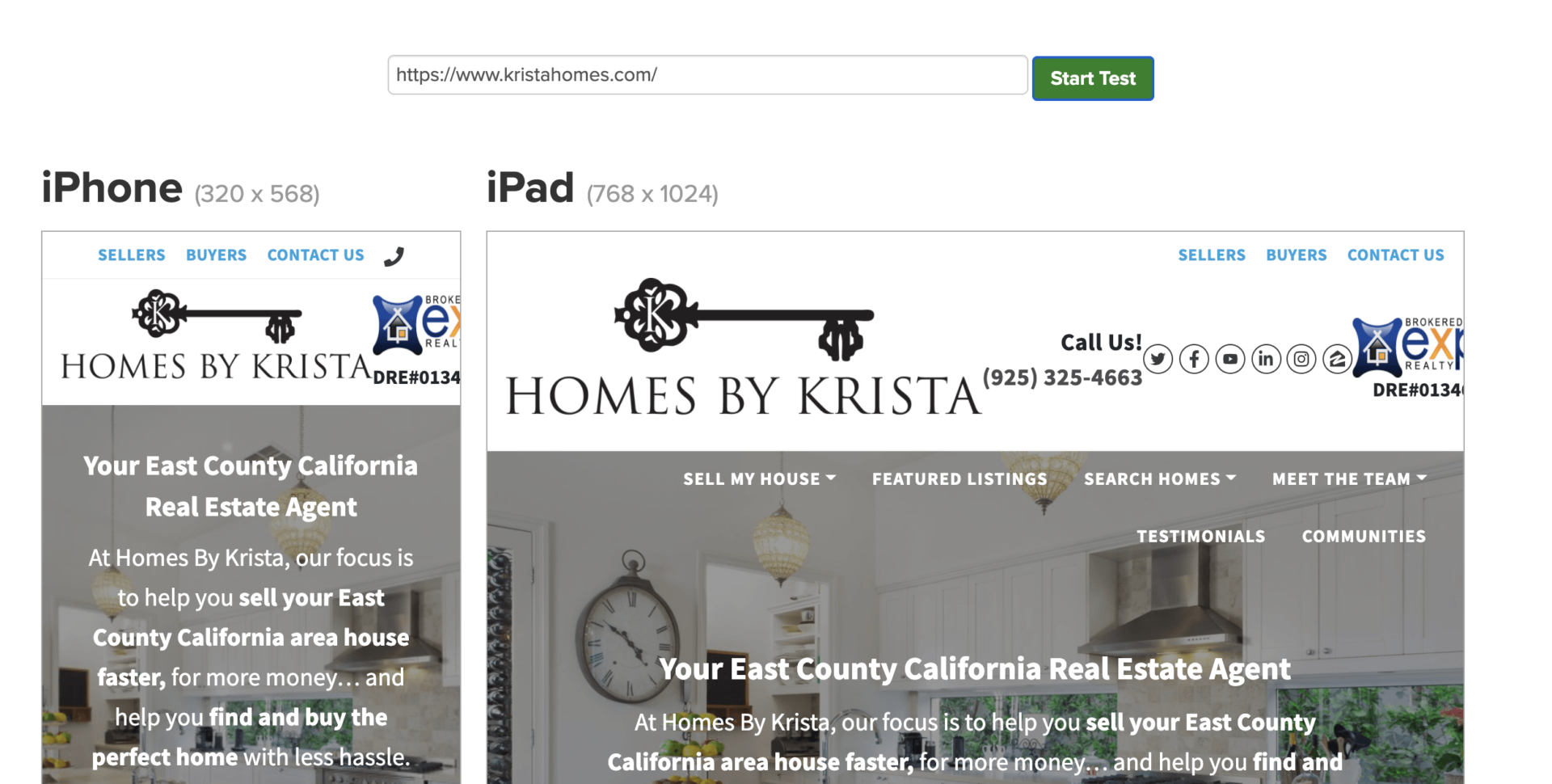
You can use this tool to check whether your website adjusts to the device visitors view it on or not. All Carrot websites are optimized for mobile and desktop and tablet.
You want to rank your real estate website on the first page of Google.
And you’re no SEO rookie — you understand that ranking on the first page for your target keyword phrase is going to take some time, it’s going to take some work, and it’s going to take some content creation.
That’s the question I intend to answer for you in this article.
But first… just how powerful is the first page of Google anyways?
The Power Of Google’s First Page…
What is the primary reason that anyone — real estate investors and agents included — want to rank their website in Google?
The answer is simple. Passive traffic. High-quality leads. And less money spent on advertising. With that, you can build a bigger business and establish yourself as the go-to real estate expert in your market. Financial predictability and businesses growth — that’s what high rankings promise your business.
But here’s the thing… ranking in Google isn’t enough.
Most online tools will consider your website as ranking if it’s within the first 100 results for your given keyword phrase. Answer me this, though: when has anyone ever clicked through 100 results after searching for something in Google?
Yeah… never.
Which is exactly why the first page of Google is the only place with significant click-through rates (1st position takes 35% of the clicks).
If your result gets to page 2, 3, 4, or 5, the click-through rate is negligible. In other words, if you want to live the passive-traffic and high lead-gen dream that SEO promises, you must be on the first page. Nothing else will get you the results you’re looking for.
Once you pull off getting your website on the first page of Google’s rankings, though, click-through rate isn’t the only benefit — the lead quality is typically much higher than those from paid advertising, meaning a high close-rate for pennies on the dollar.
Here’s what Tyler Ford (a real estate agent and investor) has to say about this.
How Long Will It Take You To Get To The First Page?
Okay — so you know how valuable the first page of Google is. You understand that the lead quality is typically much higher, the leads are much cheaper, and they take much less work to generate (over the long term, of course).
Note:This isn’t to say that you should ignore paid advertising altogether. Many Carrot members use PPC and direct mail to get leads immediately but then invest in SEO for their long-term business sustainability and financial predictability.
But how long is it going to take you to rank on the first page of Google?
Unfortunately, I can’t answer that question with a simple number of months. Generally speaking, though, you should expect to see some type of positive movement with your rankings within 3-12 months, depending on a few different factors.
Here are the 4 biggest factors I’m referring to. Taking these into consideration, your website should take between 3-12 months to get near the first page of Google for your target keyword phrase, moving up and down that spectrum depending on…
The 4 Biggest Ranking Considerations
1. Keyword Competition
The more real estate investors or agents that you have to compete with for page one of your target keyword phrase, the longer it’ll take to see the results you’re looking for.
Of course, different keyword phrases will have different levels of competition. You can use Ubersuggest to check the competitiveness of various keyword phrases. While less competitive phrases usually also mean less monthly search volume (meaning less passive traffic), it is often easier to get your website ranking on the first page for those phrases.
So, if you want a few first-page rankings under your belt faster, then try targeting some longtail keyword phrases with lower search volume and minimal competition. Over time, you should still focus attention on highly competitive phrases (such as “sell my house fast “) since those generally have a high payoff once you’ve reached the first page, but don’t be afraid to start with the lower-hanging fruit.
With more content comes more opportunities to rank in Google. Think of it this way: every page on your website get crawled by Google’s bot and has a chance to rank in search results. It logically follows, then, that with more content optimized for search engines on your website come more opportunity to rank for a variety of high-intent keywords.
Often times, the real estate agents and investors who claim the first page of Google are the same ones who consistently publish new content… on their website, blog, and social media channels.
The more stuff you create and put out there, the more that Google likes your website. And so long as the content you create is optimized for search engines, every single page is another chance for you to beat your competitors. The more content you create and the more consistently you create it, the faster you’ll reach the first page.
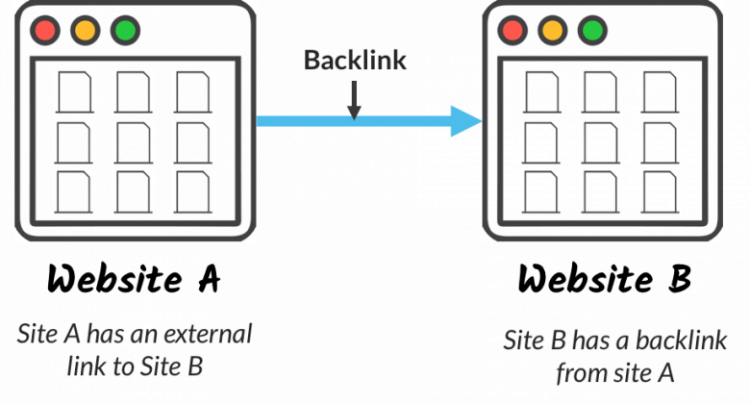
So long as the website that provided you with the backlink (Website A) is trustworthy in the eyes of Google (see the dangers of black-hat link building over here), that link will lend your rankings some additional gusto. The more quality backlinks your website has, the faster your pages will crawl their way to the top of Google’s rankings.
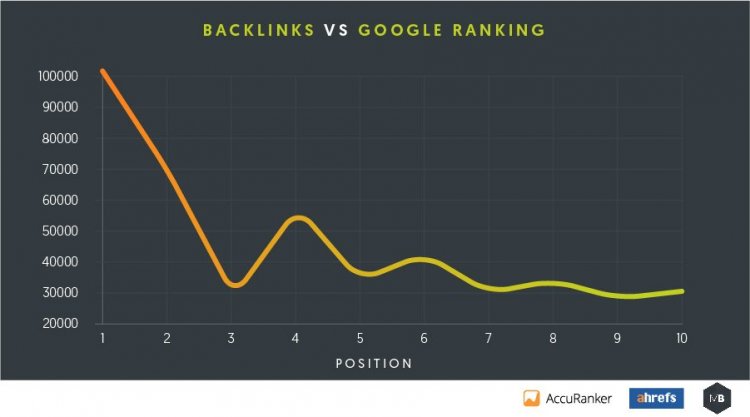
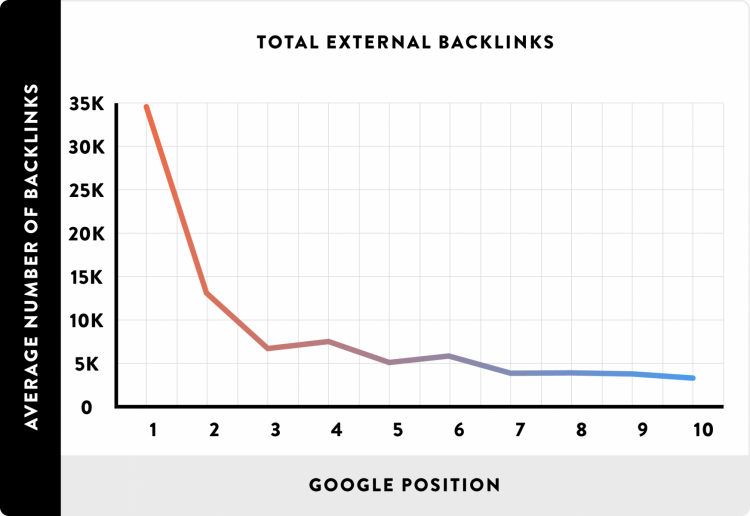
In fact, there’s a direct correlation between the number of backlinks and ranking position.
That’s not to say, though, that you need 35,000 backlinks to see significant results from your SEO efforts — trying to rank for real estate keywords in your specific market is far less competitive than the demands of most online marketers.
Sure, backlinks will increase how fast you rank your website, but they aren’t totally necessary for a beginning SEO strategy (citations are more important, actually — learn more over here).
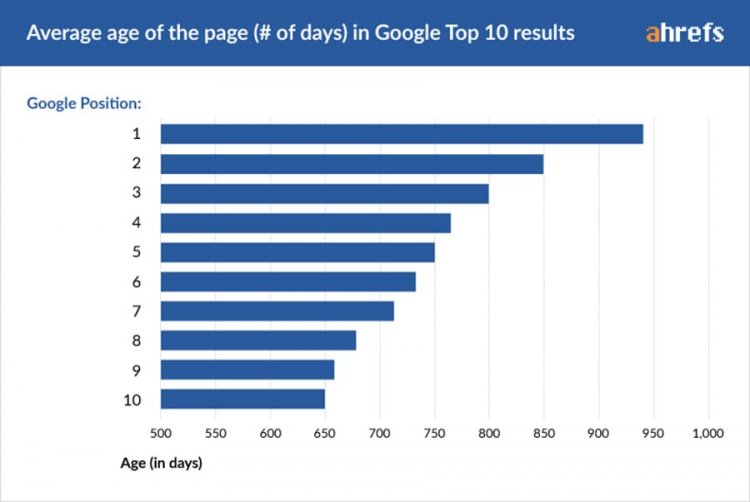
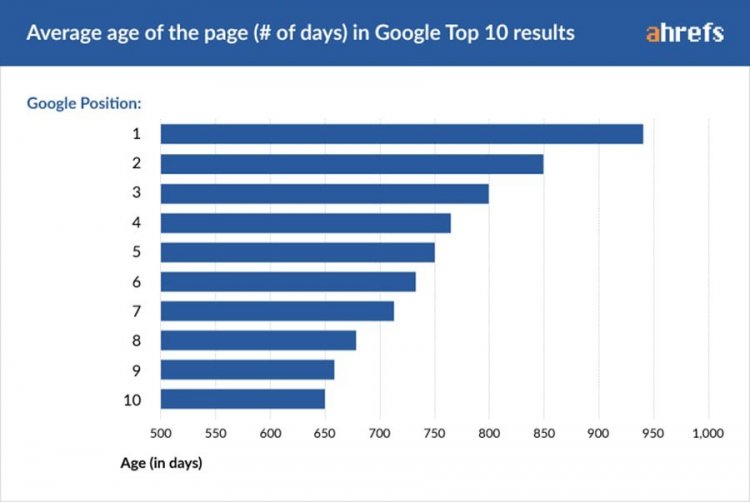
At this point, this last consideration probably goes without saying… but I’m going to say it anyways: the longer that a page exists, the more authority it gains. Period. There’s a direct correlation between how old a page is and how high it ranks in Google. The average age, for instance, of a position 1 ranking is almost 950 days.
In other words, and if you take anything else away from this article, understand that SEO takes times — there’s simply no way to get around it. When you’re trying to get a page on the first page of Google, the reality is that Google has already chosen 10 results for that first page and you have to beat those results — that takes time.
It can be done, to be certain, and you will do it if you stick with it, but it’s important to know really what you’re up against. And the 4 above considerations should help give you a better idea of how long you should expect your website to take to get to the first page of Google.
As always, though, if you have any additional questions, hit us in the comments!
But we haven’t just helped our members with their online marketing strategies but joined them in their success. For years, we’ve put ourselves in the environment of high-performing real estate professionals — interviewing them (check out our podcast), going to their conferences, becoming real estate investors ourselves, and even hosting masterminds of our own (check out CarrotCamp).
Throughout our time talking with high-performing real estate investors, we’ve noticed some trends in how they run their businesses, think, and even start their mornings.
Knowing those similarities, anyone can work backward to build habits leading to a successful real estate investing business.
But before we dive into the seven habits of highly successful investors, we want to first talk about the mind. That is the one mindset difference between top performers and everyone else.
Now we know claiming that one solitary mindset shift is what makes the difference between those who succeed in real estate and those who don’t is an ambitious claim.
Could there only be one difference between the people who win and those who lose? Probably not.
After all, there are a lot of factors that determine whether a real estate business succeeds:
Timing
Market
Knowledge
External events
Personal discipline
Many other unforeseeable events can derail your business or turn it into a thriving money-maker. When it comes down to it – if we’re being honest – a large part of building a successful business is cold, hard luck.
Did you start at the right time? Did you launch your business in the right market? Did you have someone willing to teach you?
But that’s not what you came to hear.
You came to find out how to ensure that your business will succeed despite the unpredictable and often frightening events that can destroy a growing business. You don’t want to know what you can’t control but what you can control.
However, you can’t understand what differentiates those who succeed and those who don’t unless you first accept that you can’t control much of what goes into building a business.
But here’s the dead-simple thing you can control – and if you learn to, it practically guarantees your success, despite being lucky or unlucky.
Your mind.
Clichés aside, how you think won’t only impact whether you succeed; it will completely make that decision.
Of course, telling you to think differently than you do now is about as helpful as telling you to buy a new car without describing the brand or make of the vehicle.
The only mindset difference between top performers and everyone else is the belief that you will succeed before you even start.
The business can’t be an experiment, and it can’t be a we’ll-see-if-it-works undertaking. You might not know when or how it will become successful, but you must have 100% confidence that it will.
That’s what differentiates someone who builds a successful business from someone who doesn’t.
Despite uncontrollable circumstances, someone with an if-then mindset will quit when things get hard. Maybe it’s not possible, after all, they’ll think to themselves.
Someone who fully believes the business will succeed before starting is far more likely to push through all the difficulties of growing a new business.
In other words, believe that you’ll succeed, and you will. Believe anything less, and you’ll fail. It is that simple.
Of course, you know what isn’t that simple?
Believing with your whole being that you’re going to succeed. To help with that, here are three questions you can ask to convince yourself that your business will succeed – without deceiving yourself.
Have other people done what you’re trying to do? Remember: If someone has done what you’re trying to do, there’s NO reason you can’t pull it off.
Sure, it might take some time. You might have to learn some lessons the hard way. You might have to make some tweaks to your investing strategy. But, in the end, the truth is the same: if someone else has done it, so can you — end of story.
Are you willing to do whatever it takes to make this business succeed?
If you know that the business you’re trying to build is tried and true because of other people who’ve succeeded, then you need to promise yourself something before getting started.
Repeat after me: I will not give up on this business, regardless of how difficult it gets. This is going to work, and I’m going to make it work. I don’t care how long it takes.
I don’t care what hard lessons I must learn along the way. It’s possible, and I’m going to make it happen. Right, that down, nail it to your wall, or tattoo it on your forehead (don’t do that). The point is, promise yourself that you will succeed, and nothing will stop you.
That’s the mindset of a winner.
Do you fully recognize that building a successful business will require you to change who you are at a fundamental level? It would help if you also were honest with yourself.
Building the business of your dreams will change you in massive ways – ways you never expected. You will have to change your routine. You will have to change how you communicate. You will have to become someone better than you are right now.
And that’s a necessary part of the process.
You don’t want to fight these changes if they’re for the better, but accept them as they come and be willing to change as needed. Anything worth doing will change you fundamentally as a person. But that’s the point. Accept that for what it is and dive in, prepared to adapt to your changing environment.
Ultimately, there’s only one difference between those who succeed and those who settle for less: the belief that they will succeed… or will “see what happens.” Those who don’t believe in themselves will never get where they want. For those who do, nothing will be able to stop them.
Now, on with the seven habits of highly successful investors.
7 Habits of Highly Successful Real Estate Investors
1. Consistent Lead Follow-Up
Consistent lead follow-up is a cornerstone habit for real estate investors, and here are seven compelling reasons why it is essential for their success:
Maximizing Conversions: Lead follow-up increases the chances of converting potential leads into actual clients. Many real estate transactions require multiple touchpoints and interactions before a lead is ready to decide. Consistent follow-up ensures investors stay engaged with leads during this decision-making process, increasing the likelihood of conversion.
Building Trust: Consistent follow-up helps build trust and credibility. It shows that the investor is committed to understanding the lead’s needs and providing valuable information. Over time, this trust can turn a hesitant lead into a confident and loyal client.
Staying Top of Mind: The real estate market can be highly competitive. Consistent follow-up ensures that the investor remains top of mind when leads are ready to move. When leads think of selling, they are likelier to contact the investor who has consistently maintained contact.
Qualifying Leads: Not all leads are equally valuable. Consistent follow-up allows investors to qualify leads by understanding their motivations, preferences, and readiness to buy or sell. This enables investors to focus their efforts on leads that are more likely to result in successful transactions.
Timing is Critical: Real estate transactions often hinge on timing. Consistent follow-up helps investors identify when leads are ready to take action. It ensures that investors are in the right place at the right time to seize opportunities.
Effective Communication: Effective communication is vital in real estate. Consistent follow-up ensures that communication channels remain open, questions are answered promptly, and concerns are addressed. This paves the way for smoother transactions and satisfied clients.
Repeat Business and Referrals: Consistent follow-up is about closing the current deal and nurturing relationships for future business. Satisfied clients who have experienced excellent follow-up are more likely to return for additional transactions and refer the investor to their network. This leads to a self-sustaining and expanding client base.
Consistent lead follow-up is an essential habit for real estate investors because it maximizes conversions, builds trust, keeps the investor in mind, helps qualify leads, capitalizes on timing, ensures effective communication, and leads to repeat business and referrals.
This habit contributes significantly to an investor’s success in a competitive real estate market.
2. Continuous Learning
Successful investors are committed to ongoing education. They stay informed about market trends, changes in real estate laws, financing options, and investment strategies. This dedication to learning keeps them ahead of the curve and able to adapt to shifting market conditions.
Here’s an elaboration on why it’s so vital and how it manifests in their daily lives:
Market Knowledge: Successful investors understand that the real estate market is dynamic. They stay informed about local, national, and global real estate trends. This includes monitoring property values, rental rates, mortgage interest rates, and economic indicators. They frequently analyze market data to spot opportunities and make informed investment decisions.
Legal and Regulatory Changes: Real estate laws and regulations can change frequently. Highly successful investors closely monitor these changes to ensure they remain compliant and adapt their strategies accordingly.
Staying aware of tax laws, zoning regulations, and landlord-tenant laws is crucial for avoiding legal issues.
Investment Strategies: The world of real estate investing offers a wide range of strategies, from flipping properties to long-term rentals, commercial real estate, and real estate syndications.
Successful investors always explore new strategies and assess their applicability in market conditions. They also learn from experts and mentors to refine their techniques.
Financial Wisdom: Successful investors have strong financial literacy. They understand the intricacies of real estate financing, including mortgages, refinancing, and various loan products. They stay informed about financial markets and interest rate trends, which can significantly impact their investment decisions.
Technology and Tools: The real estate industry continually introduces new technologies and tools, from property management software to online real estate marketplaces. Successful investors embrace these tools to streamline their processes, enhance efficiency, and stay competitive.
Analytical Skills: Real estate investors must be analytical in assessing potential deals. They continually hone their skills in evaluating properties, conducting market research, and performing financial analysis. This analytical ability helps them make data-driven decisions.
Books, Seminars, and Courses: Many successful investors invest in books, seminars, and courses that offer insights from experts in the field. These resources provide fresh perspectives and advanced knowledge, helping investors refine their strategies.
Mindset and Motivation: Continuous learning isn’t just about acquiring new knowledge; it’s also about maintaining a positive and motivated mindset. Successful investors often read personal development and motivation books to stay inspired and resilient, especially during challenging times.
Continuous learning in real estate investing is a commitment to staying updated, improving skills, and adapting to an ever-evolving industry. Highly successful investors make learning a daily practice, ensuring they remain at the forefront of their field and continue to achieve their financial and investment goals.
3. Goal Setting and Planning
Goal setting and planning are fundamental for highly successful real estate investors. It involves defining clear objectives and creating a structured plan to achieve those objectives. Here’s a more detailed exploration of this crucial habit:
Defining Clear Objectives: Successful real estate investors are precise about their goals. They don’t just aim to “make money” or “invest in real estate.” Instead, they establish specific, measurable, achievable, relevant, and time-bound (SMART) goals. For instance, they might set a goal to acquire five rental properties within the next two years, each generating a minimum of 10% annual return on investment.
Long-Term Vision: While they set short-term goals, successful investors maintain long-term vision. They envision what they want their real estate portfolio to look like in five, ten, or twenty years. This long-term perspective guides their decision-making and helps them focus on the big picture.
Financial Objectives: Real estate investing is often financially driven. Investors set financial targets such as a specific amount of rental income, a certain rate of return on investment, or a target net worth. These financial objectives provide a clear direction for investment strategies.
Property Acquisition Goals: Successful investors often set targets for the number of properties they wish to acquire. These goals may be based on property type (e.g., single-family homes, multi-family units, commercial properties) or geographic location (e.g., within a specific city or region).
Risk Tolerance and Diversification: Goals also encompass risk management. Investors consider their risk tolerance and may set objectives related to diversification. For instance, they might aim to invest in a mix of property types to spread risk or establish a target loan-to-value (LTV) ratio to maintain financial stability.
Portfolio Growth: Investors may have goals related to portfolio growth. This can include increasing the value of their real estate holdings or expanding into new markets or property types.
Exit Strategies: Goal setting includes planning for exit strategies. Successful investors set objectives for selling properties at specific price points or timelines, especially if they are engaged in property flipping or value-added investments.
Measuring Success: Part of goal setting is defining how success will be measured. Investors establish key performance indicators (KPIs) to track progress. KPIs could include metrics like cash flow, return on investment, property appreciation, or tenant retention rates.
Creating Action Plans: Setting goals is only the first step. Successful investors create detailed action plans outlining the steps needed to achieve each goal. These plans break down objectives into manageable tasks and provide a roadmap for execution.
Monitoring and Adaptation: Investors regularly monitor their progress and adapt their plans as needed. They review their goals, KPIs, and action plans to ensure they are on track. They adjust their goals and plans accordingly if circumstances change or new opportunities arise.
Accountability: Many investors share their goals with mentors, advisors, or accountability partners. This external accountability helps them stay focused and committed to achieving their objectives.
Goal setting and planning is a methodical and strategic approach to real estate investing. Highly successful investors are adept at setting clear, measurable goals and developing well-thought-out plans to attain them.
4. Rigorous Market Research
Highly successful investors are diligent researchers. They thoroughly analyze potential investment areas, studying factors such as property values, rental demand, job growth, and local economies. This research helps them identify lucrative opportunities and mitigate risks.
Here’s a more detailed exploration of this habit:
Local Market Analysis: Successful investors understand real estate is a hyper-local market. They meticulously research the specific geographic areas where they plan to invest. This analysis includes assessing factors such as property values, rental demand, supply and demand dynamics, neighborhood characteristics, and local economic conditions.
The location of a property also impacts successful real estate investment from a liquidity perspective. Some areas have fast-moving markets that allow for speedy transactions and the possibility for property flipping, while others are slower-paced and better suited to those looking for long term strategies. As such, thorough analysis is critical.
Property Valuation: Market research includes methods for valuing properties accurately. Investors use various valuation techniques, including comparative market analysis (CMA), income approach, and cost approach, to determine a property’s fair market value.
Rent Analysis: Comprehensive rent analysis is essential for investors focused on rental properties. They evaluate market rents, vacancy rates, and rent growth trends to determine potential rental income and make informed pricing decisions.
Demographics and Population Trends: Understanding the demographics of an area is crucial. Successful investors research population trends, demographics, and socio-economic factors to identify potential tenant profiles and assess the demand for their properties.
Job and Economic Growth: A growing job market and a healthy economy often drive real estate demand. Investors monitor employment and economic growth data to gauge the overall health of a region’s real estate market.
Market Trends: They stay updated on current market trends. This includes monitoring trends in property types (e.g., single-family homes, multi-family units, commercial real estate) and emerging real estate niches like short-term rentals or student housing.
Market Cycles: Investors understand market cycles, including phases like expansion, peak, contraction, and trough. Recognizing where a local market stands in these cycles informs their investment strategies and risk management decisions.
Competitive Analysis: Rigorous research includes assessing the competition. Investors analyze other properties on the market, assess the quality and pricing of competing rentals or listings, and identify opportunities to stand out in a crowded market.
Legislative and Zoning Changes: Real estate laws and zoning regulations can significantly impact investment opportunities. Investors track legislative changes and zoning regulations to understand how they may affect their investments.
Networking and Local Contacts: Successful investors often build relationships with local real estate professionals, including real estate agents, property managers, and local government officials. These contacts provide valuable insights into local market conditions and potential investment opportunities.
Historical Data: Examining historical data helps investors understand long-term market trends and cycles. They review historical property prices, rental rates, and economic conditions to inform their future investment decisions.
Emerging Markets: Investors are always looking for emerging markets with growth potential. They explore up-and-coming neighborhoods or regions that might offer early investment opportunities.
Risk Assessment: Rigorous market research includes risk assessment. Investors evaluate potential risks associated with the market, such as economic downturns, natural disasters, or environmental factors.
Due Diligence: Due diligence is a crucial part of market research. Investors thoroughly inspect properties, review title records, and check for any liens or encumbrances before making investment decisions.
Market research is a foundational habit of successful real estate investors. They leave no stone unturned when it comes to understanding their investment environment. This analysis informs their strategies, helps them identify lucrative opportunities, and mitigates risks, ultimately contributing to their success.
5. Risk Management
They are skilled at managing risks. Successful investors understand that real estate investing involves certain risks and take steps to minimize them. This may include diversifying their portfolio, conducting thorough due diligence, and having financial safety nets in place.
Highly successful real estate investors excel at risk management in the following ways:
Comprehensive Due Diligence: Successful investors conduct extensive due diligence before acquiring a property. They thoroughly investigate the property’s physical condition, legal status, and financial history. This includes property inspections, title searches, and a review of any liens, encumbrances, or legal issues that might affect the investment.
Market Risk Assessment: Investors evaluate the market’s overall stability and potential risks. They analyze factors like job growth, economic stability, population trends, and market cycles. Understanding where a market stands within its cycle helps investors decide when to buy, hold, or sell.
Financial Risk Mitigation: Successful investors carefully consider their financial situation and assess their ability to withstand financial setbacks. They maintain a financial buffer or reserve to cover unexpected expenses, such as property repairs, vacancies, or market downturns. This buffer helps them weather financial storms without compromising their long-term investment goals.
Property Type Diversification: Diversification is a key risk management strategy. Investors spread risk by diversifying their portfolios across different property types, such as residential, commercial, or industrial real estate. This minimizes the impact of a downturn in a single sector.
Location Diversification: Geographical diversification is another risk mitigation strategy. Investors acquire properties in different locations, reducing their exposure to the risks associated with a single market or region.
Insurance Coverage: Successful investors understand the importance of insurance. They secure appropriate insurance coverage for their properties, including property insurance, liability insurance, and, for landlords, landlord insurance. These policies protect them from unforeseen events like property damage, lawsuits, or rental income loss.
Proper Financing: Investors carefully choose financing options and terms that align with their risk tolerance. They may opt for fixed-rate mortgages to shield themselves from interest rate fluctuations or adjustable-rate mortgages to capitalize on lower initial rates. Their choice depends on their specific financial goals and risk appetite.
Property Management: Many investors hire professional property management companies to reduce the operational risks of owning and leasing real estate. A property manager can handle tenant-related issues, maintenance, and rent collection, mitigating the stress and risks of direct landlord involvement.
Legal and Regulatory Compliance: Compliance with real estate laws and regulations is crucial to risk management. Investors stay informed about changes in local, state, and federal laws that affect their investments. This includes understanding landlord-tenant laws, property maintenance requirements, and tax laws.
Emergency Fund: Investors establish an emergency fund or reserve fund to cover unexpected expenses, ensuring they have the financial means to address issues like sudden repairs or periods of vacancy without affecting their overall financial stability.
Exit Strategies: Successful investors plan for various exit strategies. Having contingency plans for selling, refinancing, or transitioning their investments helps them adapt to changing market conditions.
Risk management is a fundamental habit of highly successful real estate investors. They employ a combination of strategies to minimize potential risks, protect their investments, and ensure long-term financial success.
6. Network Building
Building a strong network is crucial. Successful investors surround themselves with a team of real estate professionals, including real estate agents, contractors, property managers, and lenders. These relationships provide valuable insights, resources, and support.
Network building is a critical element of success for real estate investors. It involves creating and maintaining relationships with diverse professionals, peers, mentors, and experts within the real estate industry. Here’s a more detailed exploration of why network building is essential and how it manifests in the lives of highly successful real estate investors:
Access to Market Knowledge: Successful investors recognize that networking is an invaluable source of market knowledge. They connect with local real estate agents, brokers, and property managers who provide insights into market trends, property values, and emerging opportunities. This information can be instrumental in making informed investment decisions.
Deal Flow: Networking allows investors to tap into a broader pool of potential investment opportunities. Through relationships with fellow investors and industry professionals, they gain access to off-market deals, distressed properties, and exclusive listings that might not be available to the general public.
Mentorship and Guidance: Many successful investors credit their mentors for their success. They seek out experienced individuals who can provide guidance, share wisdom, and offer insights into the nuances of real estate investing. Mentorship helps new investors navigate challenges and make more informed decisions.
Professional Relationships: Investors build relationships with professionals who offer complementary services, such as attorneys, accountants, appraisers, contractors, and property inspectors. These connections ensure they have a reliable team to support their investments and address various needs.
Local Expertise: Networking with individuals with in-depth knowledge of specific local markets is invaluable. These local experts can provide insights into neighborhood dynamics, zoning regulations, school districts, and other factors influencing property values and rental demand.
Access to Funding: Successful investors often have access to a network of lenders, private investors, or equity partners who can fund their projects. These relationships help secure financing on favorable terms and expand their investment capacity.
Resource Sharing: Networking is a two-way street. Investors share their insights, resources, and connections with their network. They collaborate with other investors on joint ventures, share information about trusted service providers, and offer advice to those who seek it. This reciprocity strengthens relationships and builds trust.
Market Validation: Engaging with a network of professionals and peers validates investment strategies and decisions. When multiple experienced individuals support a particular investment approach, it adds confidence to investors’ choices.
Learning and Education: Networking often involves participating in real estate investment clubs, associations, seminars, and workshops. These events offer opportunities to learn from experts, gain exposure to different investment strategies, and stay updated on industry trends.
Deal Negotiation: In real estate, negotiation skills are crucial. Investors who have a strong network often learn from the negotiation techniques and experiences of others, enabling them to secure better deals and terms.
Problem Solving: Real estate investing can present various challenges, from property management issues to legal matters. Successful investors lean on their network to find solutions. They consult with experts and mentors to address complex problems effectively.
Long-Term Relationships: Many successful investors prioritize the cultivation of long-term relationships. These relationships go beyond a single deal; they are built on trust and a commitment to mutual success over the years.
Network building is a mainstay of success for real estate investors. Highly successful investors leverage their networks to gain knowledge, access opportunities, and develop a support system that enables them to make informed decisions and thrive in the competitive industry.
7. Financial Discipline
Highly successful investors maintain financial discipline. They clearly understand their financial situation and invest within their means. This includes effective budgeting, controlling expenses, and ensuring they can access funds for unforeseen expenses.
Here’s a more detailed exploration of why financial discipline is crucial and how it manifests in the lives of successful investors:
Budgeting and Planning: Successful investors create and adhere to detailed budgets for each property or investment. They plan for ongoing operational expenses, such as property maintenance and management, and future capital expenditures. Budgets help them forecast cash flows and identify areas where they can reduce costs or increase income.
Reserve Funds: Investors establish reserve funds to cover unforeseen expenses. This fund is a financial safety net and can cover repairs, vacancies, or periods of lower rental income. It prevents them from dipping into personal funds or compromising the financial stability of their investment portfolio.
Conservative Financing: Financial discipline extends to the financing of investments. Successful investors carefully select financing options that align with their long-term financial goals and risk tolerance. Depending on their strategies, they may opt for fixed-rate mortgages to shield themselves from interest rate fluctuations or adjustable-rate mortgages to capitalize on lower initial rates.
Debt Management: Investors manage their debts carefully. They aim to maintain a healthy debt-to-equity ratio to avoid overleveraging. They monitor interest rates and refinance opportunities to ensure their financing aligns with their financial objectives.
Regular Financial Review: Successful investors regularly review their financial statements, including income statements and balance sheets. This review helps them track income and expenses, identify improvement areas, and clearly understand their financial health.
Long-Term Focus: Financial discipline involves a long-term perspective. Successful investors prioritize wealth accumulation and financial stability over the quick accumulation of assets. They understand that consistent and sustainable growth is more valuable than quick wins.
Return on Investment (ROI) Analysis: Investors analyze the ROI of each investment. They consider factors like cash flow, property appreciation, and tax benefits to evaluate the profitability of their investments. This ROI analysis informs their investment decisions and strategy adjustments.
Emergency Fund: Besides reserve funds for specific properties, many successful investors maintain personal emergency funds. This fund is separate from their real estate investments and is designed to cover personal financial emergencies, ensuring they are not forced to liquidate properties or disrupt their investment strategies in case of personal financial setbacks.
Tax Management: Successful investors optimize their investments for tax efficiency. They leverage tax strategies like 1031 exchanges, depreciation, and tax-deferred accounts to minimize their tax liability and maximize after-tax returns.
Lifestyle Management: Investors balance their lifestyles with their investment strategies. They maintain discipline in personal spending and financial decisions to ensure their investments remain financially viable.
Financial discipline is a core habit underpinning real estate investors’ long-term success. It encompasses budgeting, financial planning, risk assessment, and a commitment to maintaining financial stability, ensuring that their investments continue to provide consistent and sustainable returns.
Conclusion
Maybe you already own a real estate business. Or maybe you’re thinking about biting the bullet and starting one.
Whatever the case, you can use the above seven habits to reverse-engineer building a successful investing business. Your mindset, business model, and how you run your business will impact how quickly your business grows.
These habits aren’t growth hacks, exactly, but they are the habits of top-performing investors all around the nation who’ve built thriving real estate businesses.
They don’t guarantee your success, but they sure as heck give you a better chance.


 We recently had the opportunity to interview Adam Johnson and Brent Moreno on the CarrotCast, two partnered-up investors who finished their first $100k month back in March.