Since starting Carrot, I’ve discovered that the biggest struggle for agents & investors is marketing.
For anyone new to business, or even those that have been in it for years, focusing on just one thing can be a struggle. With so many options like Facebook Ads, PPC, SEO, networking, open houses, it can be tough to know what strategies to use and when.
Our goal at Carrot is to provide people the information and tools they need to succeed. We are constantly hearing from Carrot users that doing the marketing is too much work, that it is too expensive, or that it simply isn’t working.
The good news is that you don’t have to do it all. When you focus on what works, creating a solid foundation, your marketing will begin to work for you, allowing you to get off the hamster wheel of endless marketing tactics.
Listen in as we dive in further to help you create a marketing plan that will work for your business!
Read the Full Show Notes Below…
Your Real Estate Marketing Blueprint | How To Create A Business That Actually Sets You Free
Whether you are an agent or investor, using the right real estate marketing strategies is critical to your success. You need to get leads in the door, but with so many options, how do you know where to go all-in? We hear from clients all of the time that doing the marketing work is too much work or that it is too expensive.
When you are doing the wrong things, it can be. But when you are able to implement smart strategies and create a unique selling proposition, your business will begin to market itself. And always remember, as mentioned in one of our Truck Talks, people don’t buy your business but they are buying a better version of themselves.
Getting Off The Hamster Wheel
I use the example of hamster wheel marketing vs. building a wall quite often. Hamster wheel marketing I consider to be things like cold calling, throwing up random social media posts, and anything else that if you stopped doing, the leads would eventually disappear.
While this strategy is great when you are just starting out or when you just need to get some leads in the door, building a wall will help ensure that if you were to take a break, the leads would keep rolling in as normal. When you build a strong foundation for your business, you will be able to get off the wheel for good!
Setting A Strong Foundation
When looking at our marketing strategy, it can be easy to feel overwhelmed if you are trying to handle all of it. The trick is to focus on your unique gift, getting that message across to your potential clients.
This will help you to build authority, and if you’ve been listening for a while, you know how important creating authority is to the success of your business. Try to do this by offering your own USP, telling your own story, and doing things a bit different from your competition.
If you are an agent, don’t just tell them you’re an agent and here are some houses. If you are an investor, you need to say more than you will buy houses fast. In one of our Truck Talks, I lay out exactly how you can create a USP that will stand out from the competition!
Our Marketing Plan Generator
We’re thrilled to be very close to launching our new Marketing Plan Generatorwhich will lay out exactly what you need to do when marketing your business.
Whether you are an agent, an investor, a seasoned professional, or just starting out, we are certain that our marketing plan generator will help you take the next step in building your marketing wall. To get your custom plan, all you’ll have to do is answer a few short questions about your business. Then we will provide you with a FREE customized plan of action!
Marketing Plan Generator… Coming Soon!
Creating Your Vision
Before you do any marketing for your business, it’s important to make your vision clear. What do you want your income to look like? Do you want to travel? How do you want to spend your day?
If you don’t have a vision, it is easy to help you get caught up in those hamster wheel tactics. Bouncing from one strategy to the next, looking for that easy button.
Unfortunately, there is no easy button. Setting that initial foundation may seem difficult at first, but once you look back at all the work you have done and the success it will bring, you’ll see that all that hard work is worth it!
Listen to the full episode for specific examples as well as some great tips from our team member Brady on how you can really help your business stand apart!
When others were out drinking on a Friday night, I was putting up signs or creating Craigslist ads.
– Keith Sant
We love Keith not just because he’s an awesome guy, but because he doesn’t have anything to hide. His story proves that if you want something bad enough and you’re willing to put in the work, anything can happen.
Since closing his first wholesale deal two years ago, he’s tried everything under the sun to build a valuable investing business.
Today he shares his entire strategy & marketing mix, everything he’s doing to crush it in such a saturated market.
After this, there are no excuses. Let’s get it!
Read the Full Show Notes Below…
Journey From Day Job to $100k/year | Every Single Step To Closing 8 Deals in One Month w/ Keith Sant of Kind House Buyers
For Keith Sant, Kind House Buyers is more than just the name of his business, it is how he conducts business and his life. I first got to know Keith just a few weeks ago at our most recent CarrotCamp, and right away I was struck by his hunger, drive, and gratitude.
These are the things that have led him to create a very successful wholesaling business in the Pacific Northwest.
Keith believes in treating everyone the same. He talks to his sellers the same way he talks to investors. He grew up not having much, so his sincere gratitude for all he’s achieved shines through when you talk to him about his business.
A while back, Keith heard a podcast I did about CarrotCamp, the benefits, the highlights, and what people could expect to take away from the event. He knew it was something he needed to attend, but he wasn’t making the 100k per year that he needed to qualify… yet.
Don’t wish it were easier. Wish you were better.
Jim Rohn
Instead of feeling defeated, Keith got down to it and closed the deals he needed to. He was able to close eight deals in one month, in a very competitive market nonetheless. Needless to say, Keith made it to the next CarrotCamp, and we were thrilled to have him join us.
In The Beginning
In order to get where he needed to be, Keith knew he had to buckle down and do the work. Before real estate, Keith was working in screenprinting. He never referred to himself as an entrepreneur, but he has always known he wouldn’t be able to work with someone who didn’t value him or his contribution.
Eventually, Keith went back to school. There isn’t a degree for entrepreneurs, so he studied marketing instead. Why? Because he didn’t think he was that great at it, so he figured he should learn.
Real estate was always an interest, but the entry barrier seemed too high. He had a friend in Texas doing flips and wholesaling houses. Keith worked with him for a while, then brought his business to the Pacific Northwest. He worked hard, got his first wholesale deal, and it was on from there. This year he’s looking at doing about 25 deals, with an average profit of $15,800.
Initial Marketing
Bandit Signs
Keith started with bandit signs and a lot of them. To be effective, the signs needed a few key elements.
Keith got an easy to remember, repeating digit phone number
The phone number was HUGE so people could see it
He included his website as it was something people could remember and look-up when they got home
He was strategic in where he put the signs. He didn’t put them in downtown Seattle. He put them on the outskirts of town He put a sign in the middle of nowhere that turned into a 30k deal.
On average, Keith drops 120 signs per month. His rule is to put out 2 signs whenever he goes out.
Having a website up before making his big marketing push was important. People told him he didn’t need a site or that a basic one-page site would do. However, Keith knew that a great site would showcase his message, mission, and sincere intent to help others. His site looks great on mobile devices, catching the attention of all those people who may be interested in his offer as they drive by.
The Craigslist Strategy
Craigslist is still one of the best ways to generate cheap leads. Keith’s strategy included a few key steps.
He had two different versions of his ad. One introduced his company and services, the other was a bit more personal.
He posted in the services section under real estate services, moving services, and other places where his competition wasn’t.
He posted one ad every Friday, with each ad being up for 4 weeks. At any time, Keith would have 4 ads up in one place or another.
Keith set up a separate phone number for Craigslist, helping him to know where the leads were coming from.
Investor Carrot offers a great resource to help you kick off your Craigslist campaign to generate quality, low-cost leads.
All of Keith’s hustle worked. His first check was for $8,900.
Keith’s Marketing Mix Today
Keith’s marketing strategy today still incorporates Craigslist and bandit signs, but he’s added a few other elements to his marketing strategy. Today, Keith’s leads come from a variety of places.
Bandit Signs
Craigslist
Carrot
Ringless Voicemail
Social Media
Facebook Marketplace
Organic Traffic
Paid Ads – PPC
PPC has been instrumental for Keith. He’s been able to close 1 in 10 leads this way. Recently, PPC costs have driven people away from this method of marketing. This has opened the doors for people who want to use PPC to drive more high-quality leads to their websites.
When Keith drove down to Carrot HQ for CarrotCamp, we couldn’t help but notice a truck bed full of bandit signs. “My goal is to put up two every time I leave my house. I’m already out driving around, so why not?”
The Importance of Mindset
Throughout Keith’s journey in real estate, he’s learned that he needs to keep the right mindset. By consistently doing all of the small things each day, Keith was able to build a business that he is proud of. He went to school, he learned the business, and he got to work. He didn’t give up and that is what has led him to the life he’s leading today.
The way he operates his business is simple. He wants to work with people he likes, doing deals that really help everyone. He knows people may take advantage of his kindness, but the way he looks at it is that it’s an inexpensive way to weed out the bad people from his life.
I recently challenged our listeners to do some push-ups each day, doing one more than they had the day before. I’ve watched Keith crush this challenge, putting up his videos and numbers each day. It is this mindset that is helping him to grow his business into something bigger.
Consistency is inspiring. While the flash in the pan is eye-catching, the person who is doing the work day in and day out will ultimately be the bigger inspiration to those around them. They may not have been inspiring others on day one, but when they are doing 150 push-ups in a row, people are going to notice.
Keith giving his presentation at CarrotCamp Fall 2019
Serious investors need to know how to find cash buyers. Why? Let’s say you hustled and got a house under contract. You ran the numbers and figured you could profit $10,000 or more on this one property! You’re excited, nervous, and ready to finish the deal.
But what now?
After all, having a house under contract isn’t enough. You also need someone on the other side willing to pay you cash for that property. And you can’t just have one buyer — you need a whole list of people willing to buy the properties you put under contract if you’re to turn your side hustle into a successful, growing business.
(One buyer probably won’t want to buy all of your properties)

And while finding cash buyers is typically easier than finding motivated sellers, it still takes some work.
To help, here are some tips you can use to find buyers, build a trusting, long-term relationship with them, and get them to purchase your deals in no time.
What is a Cash Buyer?
A cash buyer is an individual or entity (such as an LLC formed by a group of real estate investors) with the money to purchase a home outright without financing.
An actual cash home buyer will check these boxes:
Have proof of funds
A track record of successfully purchasing and flipping properties
Authentic positive reviews and testimonials
Willingness and ability to provide seller and professional references
A cash buyer offer will most likely land between low and high offers in the multiple offer situation. Experienced investors typically have similar pricing calculations.
Offers may not be the highest because investors know how vital an agreement is and don’t want to make false promises or fail to deliver.
Many sellers are looking to sell to a cash home buyer because they need to sell quickly and easily.
Because remember, the cash buyers you’re looking for are probably already looking for properties to buy, and Craigslist is one place that they’re going to look. If they see your ad, they’ll likely reach out to you and you can add them to your buyer’s list.
It’s a free and easy way to grow your buyer’s list. What’s not to like?
2. Utilizing Facebook Groups
Facebook can a great place for finding local cash buyers. There are many local real estate Facebook groups that you can tap into.
Here’s an example of a local group.
Active groups are always posting their deals. Simply post within the group… “who’s dealing in [market city] area?”
Then wait to see who you can start building relationships with.
3. Call Real Estate Agents
Real estate agents usually have their fingers on the pulse of their market. They know how the housing market is doing, they are typically friendly, and they know tons of different people with different real estate interests — from first-time homebuyers to million-dollar cash buyers.
And that’s exactly why they’re such a great resource for you when you’re learning how to find cash buyers.
Make a list of 10 real estate agents in your area, call them, introduce yourself and what you’re doing, and ask them if they know anyone who might be interested in purchasing your properties.
You might be surprised at just how many names you get (heck! Some real estate agents are also investors looking for good deals, so you might even get some buyers that way).
4. Go To Property Auctions
Property auctions give real estate investors an opportunity to buy properties cheaply. But that might not be the only reason you want to attend these events — you can also use property auctions to meet cash buyers in your area.
After all, the only people who will go to the auction in the first place are people with enough cash to actually purchase a discounted property (i.e. the exact people who are perfect for your buyer’s list).
You can find the place and time of property auctions on your local government website and in the newspaper. When you attend, bring some business cards, mingle with the crowd, and allow relationships to form naturally.
When someone inevitably asks, “What do you do?” that’s the perfect segue into explaining your business and offering to add them to your buyer’s list.
5. Find The Rental Companies
One great way to find cash buyers with deep pockets in your market is to look for the big buy-and-hold companies, the companies with lots of rentals in your area.
Most of these companies are constantly looking to expand their rental portfolio and continue growing. More than likely, they would be open to you sending them deals.
The best way to find these companies is to search online for rentals, see who owns them, and look for the common denominator companies.
You can also take a drive and look for signs advertising rentals and then call those companies to see if they’d be interested in being added to your list.
6. Use SEO to Optimize Your Cash Buyers Website
At Carrot, we talk a lot about using SEO to find motivated sellers. By targeting phrases like “Sell my house fast for cash”, you can passively drive traffic to your website and convert those leads into deals.
Well, you can do the exact same thing with your buyer’s list.
You can build a landing page, optimize it for the keyword phrase you’re targeting — in this case, something like “buy investment properties in [market city]” would do the trick — and start collecting buyer leads.
You can get a Carrot site if you want to get your page ranking even faster — we optimize the tech stack for you :-)
7. Get a List Of Absentee Owners With Multiple Properties
Absentee owners are owners of properties who aren’t living in the property that they own. Sometimes this is because they aren’t doing anything with the property, waiting to sell, or because it’s a piece of junk.
But sometimes, people are absentee owners because they are landlords. And landlords are often looking to expand their rental portfolio as well. They just need access to cheap properties… which you can give them.
Usually, you can get a list of absentee owners from your local title company. Focus your attention on the absentee owners with multiple properties — those are the ambitious cash-buying real estate investors you’re looking for. The ones that, if you contact them, won’t have any problem with you adding them to your email list. If you’re just now learning how to find cash buyers, this is a great place to start!
8. Search On Google
It might seem like an obvious course of action to search on Google “How to find cash buyers.” So do it! Most cash buyers want to be found by motivated sellers, which you can use to your advantage.
By searching in Google for “Sell my house now for cash in [market city]”, you can find the cash buyers with the biggest online presence in your market — some of those results will be wholesalers like yourself, but some of them won’t.
Contact the companies and investors you find online and tell them what you’re doing. Then ask if they’d like to be added to your email list. If they’re trying to expand their investment portfolio, they have no reason to say “no.”
Note: It can be enticing to click on a Google Ad. BUT… costing the investor money per click. Don’t reach out to investors through ads. Not a good way to build a relationship.
Conclusion
If your business succeeds, you must have a list of high-quality cash buyers. You need access to people who trust you and are willing to buy your properties.
And you can use the above 8 ways to learn how to find cash buyers and create your list. We hope this helps you build a successful wholesaling business.
Zillow dominated the real estate industry through 1 primary strategy.Ranking high in Google and controlling the conversation online.
In this post, we’ll walk through real case studies that show you how to beat Zillow, Trulia, and Realtor.com in Google in your local market and scoop up traffic and leads for FREE away from the tech giants.
(Dive into the video snippet from a recent AskCarrot episode below!)
The video above was a short snippet from a live show we recently did, so we’ve typed out a high-level summary of the steps below and are providing the full video transcription below along with enhanced graphics and action items as well.
Each well-done Location Page will likely take you between 30-60 mins. But it’s well worth the time investment for the long-term momentum building results you can get.
The basic steps to beat Zillow in Google are:
1. Do things Zillow, Trulia, and Realtor.com can’t or won’t do. They can’t replicate you, they likely won’t build out as much valuable content as you could on the niches you’re an expert on, and they won’t try to be the authority on that niche like you can be. Build value, be an authority, and stand out.
2. Determine your niches that you want to dive deep into and become an authority in. I get pushback all the time from agents who say “But I don’t want to niche down. It’ll limit me!”.
But that’s exactly the opposite of what will happen.
When you choose to focus on becoming an expert and authority on a specific topic or niches, it’ll attract more people your way because you stand out as a clear expert. If you don’t niche, you’ll just be a part of the crowd.
3. CRITICAL DETAILS: Build out Location Pages in your Carrot site with our “Beat Zillow” framework (infographic below).
We deconstructed Zillows strategy, tested it and tested it until we’ve repeatedly been able to outrank Zillow in Google.
Start with your primary cities (those will be hard to outrank Zillow for since they’re so competitive) but then focus on the niches within the markets.
Example… your primary market may be “Brentwood California homes for sale”… that will be hard to outrank Zillow for.
Create a location page for that since it’s your primary city… but then focus your ranking efforts on the niches within Brentwood. Like neighborhoods, types of houses, etc.
Here are some great examples of real local searches in Google that could make great niche location pages you could create in your Carrot account, then aim to outrank Zillow with.
4. Track the SEO ranking of your new location pages. As a Carrot member, you can use our Ranking Tracker tool to track where your pages rank in Google and get smart feedback on how to improve the ranking.
Content marketing and SEO is a long-term momentum building strategy and patience is key. The page mentioned in that video took about 2-3 months to get the #1 ranking after we made the right optimization changes.
But this site has been around for years and was already starting to pop up in other rankings as well. If your website is brand new it may take a bit longer.
The more location pages you create, the more momentum you’ll build over time. This is the exact same way Zillow took over the market. It wasn’t overnight, but a strategic long-term strategy.
5. Rinse and repeat. I’d focus on creating Location Pages on your real estate agent website (we hope you use Carrot :-) every quarter.
Each quarter, target the cities or niches you want to focus on, then build out the pages or have our Carrot Services Team help you do it.
As you add more high content pages to your site, over time it’ll get easier and easier to get great Google rankings more quickly. Remember, it’s all about momentum.
Our members control more top 5 Google rankings than any other website system in the nation and it was recently rated as faster than any other website builder in a recent study.
If you want to separate yourself from other agents, stop paying Zillow for leads that you can get for FREE in Google, and add consistency and predictability to your online leads, take a Demo of AgentCarrot and learn more about how top agents all around the country are becoming their local authority by controlling the conversation online with our content marketing tools.
Either way, dive into the full details from my video below and we can’t wait to hear from you as you put this “beat Zillow” strategy to work!
How to Beat Zillow in Google [Infographic]
Full Video Transcript And More Details
So, a lot of people say, hey, how do you beat Zillow, or how do you beat the big guys? How do you beat Express Homebuyers? How do you beat We Buy Houses? How do you beat those companies at SEO?
What I did about a month and a half ago, I had people telling me that they can’t beat Zillow on SEO. Yeah, it’s gonna be really hard to beat them for some phrases, I get it.
But I’m pretty confident they can beat in SEO for phrases that matter.
A local real estate agent here in Roseburg, the G Team, one of their niches, what we always tell people to do, especially in this market environment, is you need to pick something to specialize in. It could be multiple somethings.
If you’re a real estate agent, can you specialize in a part of town? Can you specialize in a type of a seller or a buyer? First-time homebuyer? Someone’s looking at downsizing? Small families? Families that are looking to create a family home?
Whatever it is, specialize in something so you can speak to people in the language that’s gonna match them.
And so, then, their niches are North Umpqua River Homes, that’s an amazing river in town. They’ve sold probably more homes to people on the river than anyone else.
Another niche of theirs is high-level, upscale homes. It’s the same client, right? That client wants to live on the mountain, this other one wants to live by the river.
Another one is rental property owners. Again, the same client. We said, okay, let’s create a page and let’s see if we can’t go after one of the niches to get it right.
So you can see right here…Zillow’s number two, number three, number four. Realtor.com, Trulia, all these other national sites. Then you see this little old gteamgoahead.com website at number one.
How did it get this page to number one? I will deconstruct how to do it, and why I made it that way. Exactly how we were able to beat Zillow at their own game.
Basically, this website’s probably been up for five or six years. The URL has been, they switched over to Carrot about a year ago, and we said, okay, what are people looking for if they make that search, “North Umpqua River homes for sale.”
Finding Search Phrases
First of all, we went to Google and started typing up phrases to see what would actually pop up, right? So “North Umpqua River homes for sale,” that ended up being a Google-suggested search.
Then I scroll to the bottom to find other phrases that people are typing in:
“Waterfront home for sale Douglas County.” “Umpqua River property for sale.” “Riverfront property Southern Oregon.” “Homes for sale.”
So Google is telling us that these are related to the phrases I searched. Google’s telling us that these phrases are related to the phrase, “North Umpqua River homes for sale.”
So what that means, is that we want to find ways to work those phrases into our content. Google’s telling us the roadmap. Google’s telling us exactly what to put on the page.
*This particular Carrot member went through our concierge program. It’s our high-level program, where we dial the content in for you.
Reach out to us if you’re a high-level agent, a high-level investor, with a budget, that doesn’t want to do as much of the setup work, we can do the setup work and dial in your website for you.
Then we created content. When I was going through looking at these rankings, the first thing I like to do if I’m trying to get a ranking, is I click every single page on page one to see what they have on them. ‘I want to deconstruct how they’re winning so we can beat them at their own game.
So I click at the Zillow one to see what’s on this page. Number one, of course, Zillow is a massive website, it’s got a huge, huge, huge domain authority.
That’s not something we can compete with. We can’t compete against the domain authority here. So we can do as good as we can possibly do, and then have some backlinks and other pieces of the SEO strategy.
Then we ask ourselves, can we compete with site structure and content, and make the content better?
So out of the gates, they have a bunch of property listings. Scroll down the pages and we find, “Zillow helps find the newest Roseburg “real estate listings.”
That paragraph has a bunch of links to specific pages set up just in Roseburg. This is Roseburg apartments. There is bank-owned properties in Roseburg. Also Roseburg facts and some information about the Roseburg market.
This is how Zillow is winning the SEO game.
Number one, their title text is North Umpqua River. Then it says Roseburg real estate homes for sale. They also have a bunch of pages that are also in Roseburg.
Niche down pages that they’re linking to from the main page. They have some information about the market. So what I did, is I found all the written content and studied how many words are in them.
How many words are in here that’s specific to Roseburg stuff? So I took this, figured out how many words they have on the page and found it was about 300 words, including the title tagging content.
Now, if I can create a page with, probably, 500 to 800 words, make it more robust, make it more content, make it better, include some good images, make sure that my title tag is really good and drilled down to the exact phrase I’m trying to rank for.
If I’m going to beat Zillow, I’ve gotta be drilled down exactly with my title tag, and some other things in the phrase I’m looking to go for.
So you can see I titled it, “North Umpqua River homes for sale in Roseburg, Oregon.” That’s exactly what I’m trying to rank for.
Hopefully, it also ranks for other phrases related to it.
The next thing is, add a good title. “Looking for North Umpqua River homes for sale?” You can see I use it kinda similar. Then I use a bunch of different phrases that are similar. You can see a waterfront property in Roseburg?
Where did we get that? We got that from Google. Google was telling us that people are searching for “waterfront.”
The word waterfront is bolded. So I want to make sure that I’m talking about waterfront homes. It also said “river homes in Douglas County,” and the word “Douglas County” is important to Google, because it says it’s related. So I start to work those phrases in there that Google’s telling me. I put about 500 words on this page.
Put a nice image. Put the property listings there through our IDX system.
Then I did exactly what Zillow did. You see “Why use Zillow,” you see a bunch of facts about the area, and then you see some links to some other pages. So we’re like, all right, let’s just go ahead and do what they’re doing.
So I created some “Why Work with the G Team” content. I also put our keyword in there, and then I went and grabbed other common phrases, and I linked them up to their other pages. This one’s linked up to the Garden Valley page. This one’s linked up to the Hucrest page.
Then we put a call to action at the bottom that’s specific to the River homes list. This one took about two months to beat Zillow on Google.
Just creating about 700 words on here, good quality content, deconstructing what Zillow had done with their page format, but adding more content and making it better.
Making sure my title tag was really drilled in, and it beat it, and it’s getting leads right now, really, really targeted leads. That’s how you beat Zillow.
We’re gonna keep on doing it with them, and keep on putting out pieces of training to show you guys how to do it. All things equal, it’s going to be really hard for us to beat Zillow with a bad tech stack.
The tech stack is basically, what is the website built on? Ours is really fast. It’s smooth, and it’s clean, and it keeps on getting better.
We were stuck at position four for about three weeks, and then it went to position three, and one of the Zillow rankings was below us. I believe that if we had a tech stack that was slower, things like that, that it wouldn’t have bumped up there.
We talked about how to get your clickthrough rate higher. So when people click the rankings in Google, the ones at the higher click through rates is actually a factor to get it ranked better.
Using Title Tags for SEO
The last tip is the title tags.
Look at the other titles and see if you can just come up with one that still has the keywords in it, but is more compelling. So this one here, North Umpqua River dash Roseburg Real Estate dash Roseburg Homes, is kinda lifeless.
Depending on the day that you’re searching, or whatever, this actually says, on my cellphone when I do it, it actually shows it this way, the title tag is North Umpqua River homes for sale, Umpqua River property.
So I added in the words “updated daily,” because it shows, oh, this is cool, I can see an updated list. It looks different than the other ones down there.
Try to put things in there that grab their attention, that makes them wanna click the thing in the first place.
Have questions or comments? Be sure to hit us up in the comments section below or hit us up on Facebook.
What I didn’t expect after switching to Carrot, is my lead to close ratio increased 50% on my offline leads!
– Carter Steph
Carter Steph is a real estate investor since 1992 and is also a licensed real estate broker in Oklahoma City.
He’s also a practicing attorney for almost 20 years and has been the General Counsel at 1-800-2SellHomes since 2014 and co-owner since 2016. He’s no newbie to real estate. He and his team consistently generate seven figures per year in net profits, while closing on about 20% of their leads.
The growth is steady and predictable.
“You ask anybody in town and they know us,” he said in a CarrotCast interview.
Read the tips below, taken straight from Carter Steph’s 7-figure growth strategy.
The tools: Carrot features
For Carter, Carrot is the central hub that brings all of his marketing efforts together. He’s running PPC ads to drive traffic to his site while leveraging Carrot’s easy content marketing tools and strategy to build his SEO for long-term lead generation.
Since he’s driving traffic from all of his marketing efforts to his Carrot site, he can track performance across all campaigns and channels, giving him the clarity needed with his marketing strategy.
Here’s how Carter is using Carrot as the central hub to tie together the marketing efforts they were once doing on their own to become the authority in their area:
Switching from a custom website to a Get a high-converting website Before Carter Steph went on his journey to $2 million in revenue in 2018, he was doing some things with his website very differently than he is now.
In fact, with the powers of technology, I was able to dig up his several-year-old website for all of us to look at.
Believe it or not, that custom website cost Carter and his business $5,000 upfront and $700 per month for hosting fees.
That’s quite expensive.
And it’s even more expensive when you find out that it had a terrible conversion rate and almost never generated any leads for Carter’s business — the leads it did generate weren’t very good quality and Carter’s close rate was only 7%.
For that reason, they were spending $1,500 on PPC every month but $30,000 to $40,000 on TV ads.
Then they switched to Carrot.
The difference was immediate, Carter said. After just 2 days, their new Carrot site had generated its first high-quality lead. And within a few months, their close rate skyrocketed from the previous 7% to 20% because lead-quality increased.
After Trevor and Carter ran some estimations on the CarrotCast interview, they determined that Carter is saving between $20,000 and $50,000 every single month in lost lead-gen closing potential after switching from their expensive custom-made site to one of our Carrot sites.
Wow!
Now they close 20% of leads, their PPC budget is $8,000 per month (because their website is converting as it should be), and they’re growing like crazy. Sometimes, the small changes make a big difference. And at Carrot, small, iterative, conversion-optimization changes is exactly what we’re focused on. ;-)
Evergreen Marketing In marketing terms, Evergreen is marketing you do once, and it works for years… not hours, days or weeks. Content relevant for a long time, that serves your best prospects, and gets in front of them where they’re searching online.
Carter has organic leads grow over time using this exact marketing strategy.
Automated blogs Content marketing is huge for businesses trying to establish themselves as an authority in their market. In order to do this, you have to create a lot of content, and Carrot makes it easy by providing pre-written automated blog posts that require very little time on your part!
SEO Keyword Tracking By using our keyword tracking tool, Carter can readily track the search engine rankings of his web pages. We make it easy for you to quickly gain insight into which keywords are rising and falling in Google’s results pages so that you know where your web page stands relative to other sites on similar topics.
The results:
Quick Highlights
2000+
Leads
20%
Closing Rate
8
Top 3 Keyword Ranking
Carter added $20k/mo in new profits by shifting from a fancy custom website into an “Authority Hub”
“We couldn’t be happier with the site so far…What we have seen is a DRAMATIC increase in web leads. Since switching to Carrot, the leads we are getting are converting to purchases at a MUCH higher level.
Things have been moving so fast that we haven’t had the opportunity to accurately determine the lead to purchase ratio, but I would estimate it is in the 25 to 35% range, which means the leads we are getting are significantly better than our historical average.
Thanks for everything and we are now looking at expansion because of the success we have had in such a short time.”
And every day, you wake up and check results. How many clicks are you getting? How many of those clicks turn into leads on your website? How many of those leads turn into deals? And do the results you’re getting justify the money you’re spending?
Those questions are enough to give any marketer a migraine…
But they are important questions to ask.
You’re spending hard-earned money on paid advertising; you need to know if that’s money well-spent or not. If it is, great! If it isn’t, you’d best make some adjustments (advertise somewhere else, tweak the ad you’re running, or change where you’re sending traffic — Carrot converts out-of-the-box).
To help you, we helped one of our members with their Google Ads campaign. We monitored their conversion rate and we even ran a nifty heatmap on their homepage which only tracked Google Ads traffic.
Here’s what we found.
The Case Study: Google Ads Traffic To Carrot Website Reveals The Most-Clicked Page On Your Site
The website/company that we ran Google Ads campaigns for is called Henry Home Buyers, a real estate investing company which operates out of Minneapolis, Minnesota.
Here’s what their website looks like.
From April 15th to May 15th, we drove traffic to their website via the below Google Ad campaigns. During that time, we tracked their PPC metrics, their website conversion rate, and even put a heatmap on their homepage.
Here is an example of an which ran from April 15th to May 15th.
For the month, that Google Ad campaign received 127 clicks, which took visitors to there homepage.
The conversion rate was an above-average, super healthy 16.54%, meaning that 21 of the 127 people who clicked also opted-in on Henry Home Buyers website to become a lead.
Considering that most real estate investors need 20 or 25 leads to generate one deal, this one Google Ads campaign could have theoretically amounted to $10,000 or $20,000 (depending on the width of their wholesale fee) — we weren’t able to actually track how many of those leads turned into deals, so this is conjecture. But you get the point.
A good Google Ads campaign can pay you back ten-fold.
Perhaps most revealing, though, is the heatmap we ran on their homepage during the test. Take a look.
Heatmap showing the most clicked on page… the “Our Company” or in this case “Meet Our Team” page.
It doesn’t take an eagle-eyed human to spot that there’s two places lit up like a Christmas tree on the above heatmap — two places that people clicked more than anywhere else.
And their “Meet Our Team” page (AKA, the “About” page)
Well, it’s a darn good thing they have such an awesome “About” page with a high-quality team photo, their company’s core values, and even a CTA at the bottom encouraging visitors to give em’ a call.
Which leads us into the main takeaway from this test. And it really can’t be overstated…
The Most-Clicked Page On Your Website… Do NOT Neglect Your “About” Page…
We’ve said it a million times and we’ll say it again…
Real estate transactions aren’t just expensive financially, they’re expensive emotionally and mentally. Because real estate transactions are so taxing, the average consumer must completely trust the person that they choose to work with. They must believe you can solve their problem or help fulfill their dream, and that you can do so expertly.
They also want to know that you have their best interest in mind — you might just be building your business to make money and achieve entrepreneurial freedom, but they don’t want to know that.
They want to hear about how you can help them, why they should trust you, and how easy the process is going to be.
They want to know that you understand their situation completely.
They want to know that you’ve helped other people just like them.
And they want to know that you can help them, too.
This isn’t just true on Henry Home Buyer’s website…
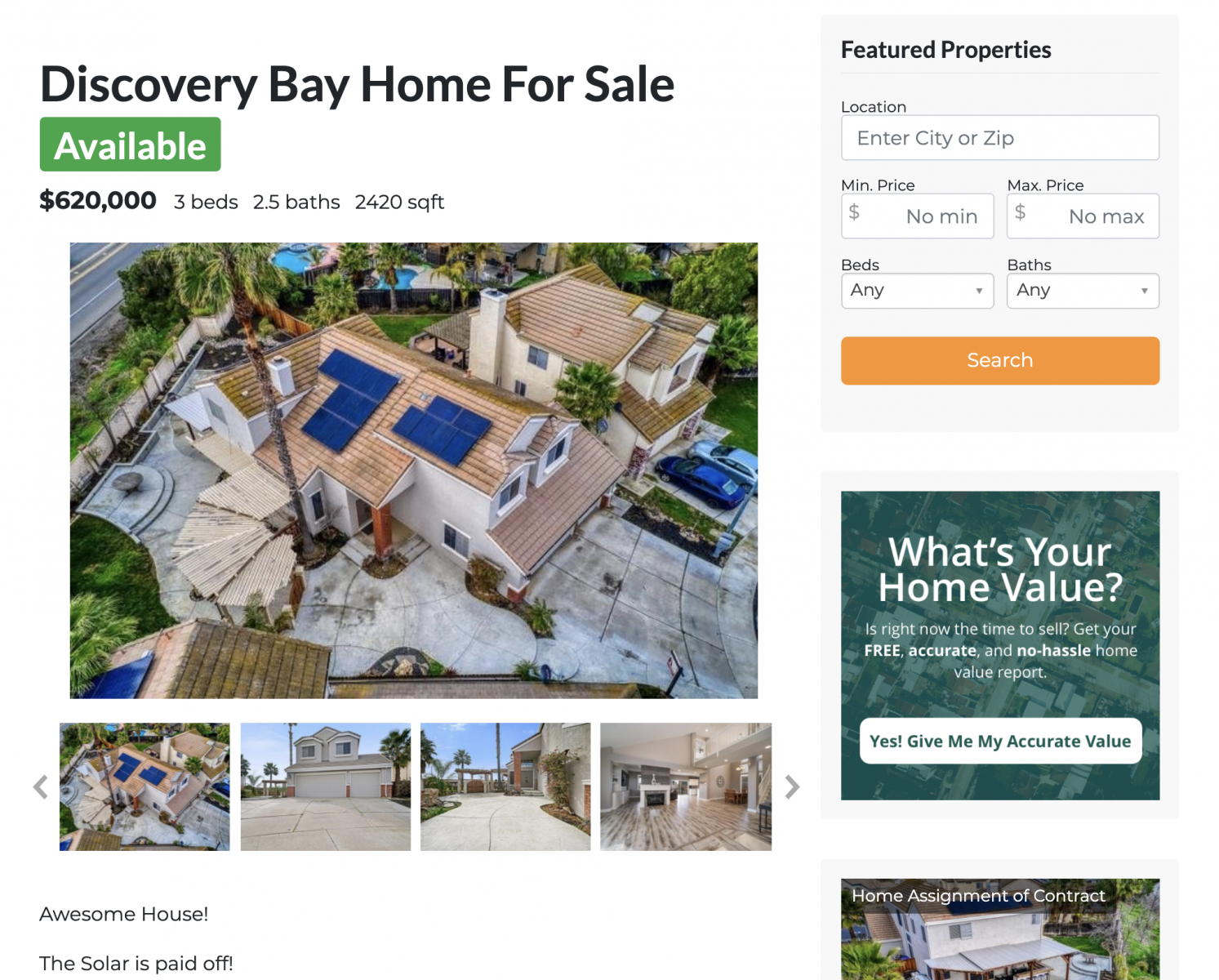
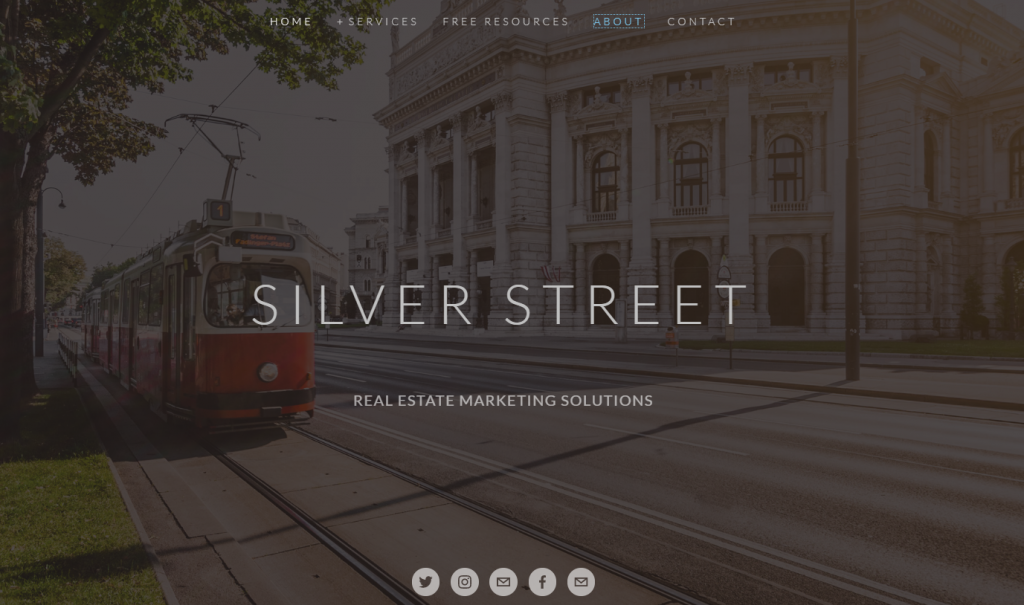
It’s true on this real estate website…
And this one…
And even our OWN website!
In fact, our Carrot research found that the “About” page is almost always the 2nd most-visited page on real estate websites (right after the homepage). This means that most people who visit your website browse your homepage for a few moments and then go directly to your “About” page.
The best thing you can do, then, is treating your “About” page as a natural part of your visitor’s experience. You know they’re going to click there quite fast; what can you do to make sure your “About” page serves them well? How are you going to convince them to work with you even though they’ve never met you before?
Here are a few ideas.
Include your core values & mission statement — Remember how I mentioned that your prospect only cares about themselves and how you can help them? This is where you get to list the values of the company and the mission that drives your company. That’s immensely powerful for building trust with your website visitors. For inspiration, check out Carrot’s mission statement and core values.
Use smile-y photos — If you’re looking for motivated sellers, then your prospect probably isn’t in a very good place; more than likely, they’re going through a stressful and difficult life situation. For that reason (and to increase your likeability) give a big authentic smile in your “About” page photos.
Add a few testimonials — Nothing helps build trust with website visitors quite like a testimonial. People don’t want to be the first one to work with you, they want to know that you’ve already helped other people just like them. Assure them that you have by adding one or two testimonials (video testimonials are the best, but written will do the trick) to your “About” page.
Include a CTA — Since many people will click right to your “About” page after visiting your homepage, you should craft your “About” page like it’s the most important sales page on your entire website. Put your phone number on it and include a CTA with an opt-in form at the bottom.
Where are you sending your paid traffic?
That’s an important question.
Where are you sending paid traffic?
Because where you send paid traffic determines (at least partly) how valuable that traffic is going to be for your business. If you send traffic to a low-converting WordPress website (not all WordPress websites are low-converting, but many of them are), then you’re going to lose money fast. If, on the other hand, you send paid traffic to a high-converting site (like Carrot), you’ll make a hefty profit, you’ll gain new confidence in your paid ad campaigns, and you’ll probably even dump more money into running those ads.
(If you can make $2 for every $1 you spend, why not do that all day long?)
But how do you make sure that you’re sending your audience to a high-converting website?
What even qualifies as a high-conversion rate?
Well, cross-industry, a high conversion rate is around 2% or 3%…
And while we know that’s the average for many websites in the world today, at Carrot, we say bubkus…
We are committed to higher conversion rates, to more opt-ins, to more closed deals for our members.
Which is why, for Carrot members, an average conversion rate is around 10%…
An excellent conversion rate is around 15%…
And an incredible conversion rate is 20% or higher.
To be honest, if you’re not getting at least a 5% conversion rate with your website, then it might be time to rethink where you’re sending your paid traffic. Maybe you could try to re-work and optimize your landing page… maybe you need better targeting with your paid ads… or maybe you need a Carrot website ( ;-) shameless pitch).
Whatever the case, do not settle for a low conversion rate. Work until you’re pulling as many leads as you need to run a healthy business that provides you with the predictable income and financial stability that you need.
Conclusion
The pressure is on.
When you’re running paid ads, you’re watching the ROI of your campaigns like a hawk…
You’re wondering if the amount of money you’re spending is going to pay you back like you hope it will (try using our calculator over here to set a realistic paid advertising budget).
Unfortunately, I can’t give you the answer :(
But I can (and did!) show you what other real estate investors are doing, what kind of results they’re getting, and what you should expect for your website conversion rate.
I hope it helps you build a business that you’re proud of.
We recently had the opportunity to interview Adam Johnson and Brent Moreno on the CarrotCast, two partnered-up investors who finished their first $100k month back in March.
On the episode, Trevor asks them about how they got to their first $100k month — exactly what marketing strategies they used and what mindset philosophies made all the difference.
If you’d prefer to watch or listen, you can go here to view the full interview.
Or below, I’ve compiled 7 of the duo’s dead-simple, secret strategies that they shared on the Carrot real estate investor success story. Want to learn how they got to their first $100k month and how you can, too?
Read on.
Dead-Simple, Secret Strategy #1: Making Uber Do Your Driving-For-Dollars
Brent Moreno is likely one of the most innovative online marketers around.
While he and his partner often use tried-and-true marketing methods (PPC, Facebook Ads, Direct Mail), Moreno isn’t afraid to think outside of the box in order to get a leg up on the competition.
The way he used Uber drivers to find deals is the perfect example of this.
Before his real estate investing days, Moreno was a part-time Uber driver. He’d drop his wife off at work and go drive for a few hours to make a little extra money. During that time, he started an Uber Facebook group. When he finally took the leap into real estate investing and gave up on Uber driving, he had an “aha!” moment…
Uber drivers literally just drive around town all day… If I could get just a few of them to send me property addresses for vacant or distressed homes, they could do my driving-for-dollars for me.
So he reached out to his Uber-driving pals in his Facebook group and asked them to do him a favor. One of them took him up on it and passed him 35 seller leads, 2 of which he was able to close on.
That’s just the kind of marketing ingenuity that separates top investors from the rest. Feel free to steal his strategy and try this in your own market. Who knows? Could be a game-changer.
Dead-Simple, Secret Strategy #2: Building Your Inner Circle
In real estate, perhaps nothing is more powerful than long-term, meaningful relationships in your market of operation.
And that is a truth which Adam Johnson doesn’t take lightly:
I love to make people smile. I really do.
In fact, he’s built so many meaningful relationships in his community that when he walked into the local courthouse (a place he regularly visits, giving chocolates, kind notes, or snow cones to the workers whenever he leaves) to check the title on a foreclosure, something amazing happened.
He overheard one of the workers talking on the phone as they said something like this:
I’m sorry Ma’am, I just don’t have the authority to offer discounts or lower your payments. There’s nothing I can do.
After a moment, the worker noticed Johnson in the room, said
Uhh. Hold on, hold on. Let me get someone else on the phone
and gave Johnson the county phone to try and help this woman solve her tax problems.
That random situation turned into a closed deal for Johnson.
What’s more?
Johnson literally has his own set of keys to every courthouse in the county because of the relationships he’s built. Don’t underestimate the power of consistent kindness to build meaningful relationships in your community — you never know where your next deal will come from.
Moreno even goes so far as to claim that 50% of their success can be directly attributed to the relationships and rapport that they’ve built in their market.
Dead-Simple, Secret Strategy #3: Using A High-Converting Website
90 Day MS Home Buyers Lead Generation Stats
I won’t splice words here.
Johnson and Moreno are Carrot members, and they love their Carrot website.
Making $100k per month, these are two people who could definitely afford their own custom website. But when Trevor asked them why they haven’t ditched Carrot and built their own website, this is what they said.
Johnson explains their reasoning best:
“Because I’m in the real estate business, I’m not in the website-building business.”
And their Carrot site has been converting website visitors into leads since day one. Why change it if it’s working?
Plus, Johnson, self-proclaimed at being tech-incompetent (he didn’t even have WiFi at his house until 2017) can use the site just fine. It’s easy to use and it converts like a charm. What’s not to like?
If you’re on the fence about trying Carrot out for your own business, you can sign up with us risk-free for 30 days. Go here to find out more.
Dead-Simple, Secret Strategy #4: Steal These Facebook Ads
To be honest, I was kind of surprised that Johnson and Moreno were willing to give away their Facebook Ad copy for free. Now, with Facebook’s new ad library, anyone can view any page’s past and current ad campaigns (this is GREAT for studying your competition), but Moreno actually encourages other investors to steal his ad copy and try it in their own market: “Take it and try it out for yourself. It’s working for us.”
So, in the spirit of mutually agreed upon theft (:D), here’s how you can go on Facebook and look at MS HOME Buyer’s Facebook Ads.
Go to MS HOME Buyers Facebook page and click on “See More” next to “Page Transparency” on the right side.
Click on “Go to Ad Library”.
And voila! You can now look through the ads that these guys are running and they’ve given you explicit permission to copy them, so have fun!
Oh! And if you’re needing to do competitor research or want to figure out what other investors in your market are doing with their Facebook Ads, use the above strategy — knowledge is power, after all.
Dead-Simple, Secret Strategy #5: Don’t Give Yourself An Option To Not Finish The Job
When listening to this interview, one of my favorite things that Johnson said was…
Not to overplay the stereotype — being from Mississippi — but the truth is that when you grow up on a farm or in a rural area… you just gotta get the job done. There’s been plenty of times where we had to fix a fence and we didn’t have any extra fence and we just had to figure it out with what we had… I think that’s where people go wrong: they let not doing it be an option. The truth of it is, if you put yourself in a position where you don’t have a choice, then it’s a different mindset — it’s not ‘we don’t have this or we don’t have that,’ it’s just… you gotta make it work.
I think that quote speaks for itself. When you don’t give yourself an option to quit or to not finish the job, you get it done with what you have; that’s all there is to it. And more often than not, just working hard with what you have at your disposal will grow your business, regardless of the resources available to you.
Dead-Simple, Secret Strategy #6: Keep Your Business Simple, But Do The Simple Things Better Than Anyone Else
The philosophy behind Johnson and Moreno’s business is to “Keep it simple, but work extremely hard on those simple things.”
Many real estate investors (many entrepreneurs, for that matter) get caught up in the details of their business. They create over-complicated internal processes that unintentionally slow their businesses down. Or they use 10 different marketing strategies all at the same time, optimizing none of them.
But the best way to grow a business is usually to let your internal processes and marketing strategies grow with your business. Always keep it as simple as possible to build a business that’s agile, and optimize the heck out of those simple internal processes, sales tactics, and marketing strategies.
You can do 100 different things with mediocrity… or you can do a couple of things expertly well. For Johnson and Moreno, working really hard on the simple things has proven far more lucrative than trying to tackle everything at once.
Dead-Simple, Secret Strategy #7: Don’t Underestimate The Impact Of Hard Work And Compounding Results
The grind. The hustle. The day-in and day-out hard work of an entrepreneur.
Over time, it can get exhausting and discouraging. You start to wonder if all this hard work will pay you back in the end. Well, Johnson firmly believes that it will:
Don’t underestimate the legwork and then giving your efforts time to compound.
Before you can build momentum for your business, don’t forget that you must first push the boulder up the hill — only then can it start rolling down the other side.
And don’t quit before you reach the top of the hill; that’s where building a business gets fun.
Conclusion
We hope that this information has helped!
Clearly, Johnson and Moreno are crushing it with their business. I imagine they’re well over $100k per month now that we’re half-way through the year. And we’d love to see you get to that same place.
Maybe $100k per month seems so out of reach right now as to be ridiculous.
Or maybe you’re right on the cusp of breaking through that threshold.
Whatever the case, in addition to using the above tips, we’re willing to give you a risk-free trial period with our service which has generated over a million leads for real estate investors and agents.
We’ve already written about why Bing ads can be crazy profitable for real estate investors and agents. But how do you set up a Bing Ads account? Well here’s how…
Demo Carrot: How many deals are you losing to your competitor’s website?
But first, we need to clear something up. In early 2019, Bing Ads was rebranded as Microsoft Advertising. In this article, we’re going to reference Bing Ads.
Real estate investors can be very busy and sometimes don’t have the necessary time to research and create marketing campaigns, especially when it comes to pay-per-click advertising.
We understand the requirement to streamline some of this process. That’s why we created this simple step-by-step guide to creating your own Bing Ads account. It’s for short-on-time investors needing to expand their online marketing.
If you have an email address you already use to sign in to Microsoft products (like Skype or Xbox LIVE), all you need to do is sign in and the transition will be complete. If you’ve never used this email to sign into a Microsoft product, you’ll be able to sign up for a new account.
Click Next
Sign into Bing Ads
Enter Bing Ads account info
Click Create Account.
After you’ve created your Bing Ads account, you can set up your campaign by importing from Google AdWords (see below) or by creating a new campaign. You can also skip this step and click Continue. Enter your billing and payment information and click Next. You can also skip this step and enter your billing and payment information later by clicking Skip.
Option 2: Create A New Email Address And Then Create An Account
A Microsoft account is an email address and password you use to sign in to Microsoft services or devices. If you use an email address and password to sign in to services like Skype, Xbox LIVE, or Outlook.com, you already have a Microsoft account.
Enter information for the new account
Click Create account
You’ll be taken to the Bing Ads Create Account page directly after creating your new Microsoft account and will already be signed in with your new account
You’ll be taken to the Bing Ads Create Account page directly after creating your new Microsoft account and will already be signed in with your new account.
After you’ve created your Bing Ads account, you can set up your campaign by importing from Google AdWords or by creating a new campaign. You can also Choose Option 3 to skip this step. Once you choose your desired option click Continue.
Enter your billing and payment information and click Next. You can also skip this step and enter your billing and payment information later by clicking Skip.
In Bing Ads, click Import Campaigns, and then click Import from Google AdWords.
If you have imported from Google AdWords in the past 90 days, you will see a table that tells you the data and AdWords account that was imported along with:
Enter your Google sign-in information, click Sign in and then Accept
Select the Google campaigns you want to import, then click Continue
Under Choose Bing Ads account & import options, do the following:
Choose the Bing Ads account you want to import to
Choose the appropriate time zone
Choose the appropriate options for “What to import”
Choose the options you want for bids and budgets
Click Import
All this PPC advertising stuff can seem complicated, but that’s what we’re here for. The initial setup of your first campaign is not nearly as important as the long-term optimization of your account. Hopefully, this piece will help you create your Bing Ads account with as little pain and suffering as possible.
The small amount of effort it requires to create a Bing Ads for real estate account is small in comparison to the long-term benefits that Bing Ads advertising can offer in addition to AdWords as part of a comprehensive, sustainable, and above all, profitable, online marketing strategy. So what are you waiting for? Create a Bing Ads account, and let’s get to work!
Create Your First Campaign
Have You Had Success With PPC Advertising?
Facebook, AdWords, Bing, Craigslist… Shoot those success stories through the comments box below. We’d love to hear!
Also… be sure to dive into our Carrot blog to get insights on attracting and converting more inbound leads for your real estate investing business.
Are you ready to take the next step in your online real estate marketing? That step is creating a Google Ads account.
Real estate investors face several challenges when it comes to generating leads. Traditional methods, such as direct mail and cold calling, can be time-consuming and yield low results. Even with a strong online presence, attracting qualified leads to your website can be tough.
This is where Google Ads comes in.
According to data, Google Ads can be a highly effective lead source for real estate investors. Without it, investors may struggle to compete in today’s crowded digital landscape. With Google Ads, investors can reach potential sellers and buyers actively searching for real estate solutions, resulting in a higher likelihood of conversion.
Furthermore, without a strong online advertising strategy, investors may miss out on valuable leads. The data shows that 97% of consumers search for businesses online before making a decision. If real estate investors are not visible in these search results, they may be losing out on potential leads to their competitors.
In addition to missing out on potential leads, not having a strong online presence can damage an investor’s credibility. With 78% of consumers saying they research a business before engaging with them, it’s crucial for investors to have a professional and user-friendly website. By using Google Ads to drive traffic to their website, investors can showcase their credibility and expertise to potential leads.
Overall, real estate investors who neglect to utilize Google Ads may miss out on valuable leads, damaging their credibility and struggling to compete in today’s digital landscape.
In preparation for creating a Google Ads account, there are a few important steps. While setting up the account itself is relatively straightforward, running effective Google Ads campaigns requires some groundwork.
Before You Create a Google Ads Account
First and foremost, ensuring that your website is relevant, user-friendly, and adds credibility is crucial. Your Google Ads account will drive traffic to your site, but once visitors arrive, it’s up to you to convince them to take action.
Your advertising efforts will likely be wasted if your landing pages are disorganized, lack relevant information, or are otherwise not conducive to conversions.
For guidance on creating effective landing pages that maximize the return on your PPC campaigns, we recommend checking out our land page best practices.
Before Starting a Google Ads Account, You Need to Consider
Your Google Ads account (formerly known as AdWords) can help you to bring qualified visitors to your real estate website. Once they’ve made it to your website, it’s YOUR duty to convince them to convert.
To make this happen, you must create pages that will compel your visitors to take action. If your pages are cluttered or lack relevant, credible information, you will have a leaky bucket and will likely be wasting money.
Take the time to focus on customizing your website a bit, especially your “Testimonials” and “Our Company” pages. Check why these two pages are so important. Also, be sure your real estate website is mobile-optimized. All Carrot websites are mobile-friendly. Therefore you’re maximizing the potential of your Google ads account.
2. Commitment. You must be willing to build Google Ads into your long-term financial and time plan.
It’s practically impossible to see the full potential of your Google Ads account from the start. It’s essential to recognize that PPC is not a short-term venture. Establishing a strong structure, expanding your keyword lists, identifying negative keywords, and testing ads and landing pages takes time.
Plus, you will likely start constantly changing keyword bids to fit your budget and keeping your ads in relevant, high-performing ad positions. Getting the first phase dialed in typically takes 1-3 months.
3. Dedication. You must be willing to spend time or outsource your account.
Your account is now up and running… you can sit back and relax. WRONG! There is still plenty of heavy lifting.
If you haven’t managed a PPC account before, I recommend taking serious time to learn. You must be comfortable with the Google Ads dashboard and educated enough to make good decisions. Making the wrong choices can cost you money and cause your account to take a step back in productive data.
Once you are comfortable to embark on the challenge, you must monitor your performance thoroughly. That hard work will well pay off in the end.
Take time developing your strategy, identifying your goals, and calculating your cost per lead/deal. You must know how much you will spend on Google ads to close a deal. As we know, all market profits aren’t created equal. An investor in New York might need to spend more to get one deal closed over someone in Memphis. You must know your market.
After you know your budget, you’ll need to have a solid keyword strategy in place. It’s a good idea, especially if you’re new to Google Ads, to start with highly targeted keywords and expand into broader terms as you get more comfortable.
Creating a New Google Ads Account for Real Estate
Step 1
Head to www.ads.google.com to set up an account. When creating an account, you can create it under your existing Gmail account or set up a new one. I like to set up a new Gmail account ahead of time, which I use specifically for Google Ads management. This way, my personal email isn’t bombarded with emails from Google Ads.
Step 2
Now that your account has been established, you must complete a few housekeeping items, such as entering your business name.
Step 3
Enter your website URL.
Step 4
Review your website visual on mobile and desktop devices.
Step 5
Choose your main goal. For most real estate professionals, the goal will be to generate more leads.
Step 6
Google offers the opportunity to connect your Google Analytics account. If you do not have a GA account, you can choose to “skip for now.”
Step 7
Time to create an ad. Choose three headlines and two descriptions, and enter your phone number.
Step 8
Google will present different keywords based on a theme. You can always adjust your keywords later.
Step 9
Next, you’ll be asked to add your target locations.
Step 10
Set your daily or monthly budget.
Step 11
Review your campaign.
Step 12
Finally, you are prompted to set up billing information.
Congratulations
You are now ready to start creating your Google Ads campaigns for real estate. We wish you the best of luck!
Be sure to hit us up with questions in the comments section below. Also, if you’re a Carrot member, join us on our weekly Coaching Calls, where we cover many PPC topics, SEO, lead generation, website design, and much more!
Not a Carrot member? What are you waiting for!? Check out our plans and get started today!