Author: Trevor Mauch

  • How to Rank Higher on Google and Generate More Leads with Carrot’s New SEO features

    How to Rank Higher on Google and Generate More Leads with Carrot’s New SEO features

    We have great news! If you’ve been looking for a better way to supercharge your SEO and outrank your competition… you’ll want to listen up to what we just rolled out.

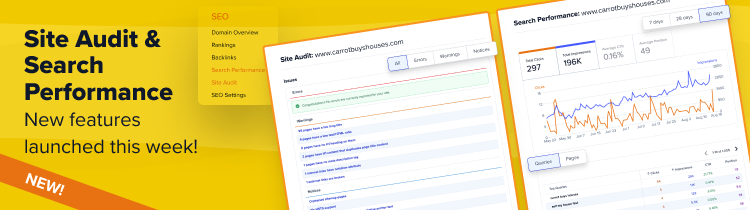
    We’ve just rolled out four exciting new features and updates to help you analyze, improve, and dominate your website’s search performance like never before.
    Outperform Your Competition

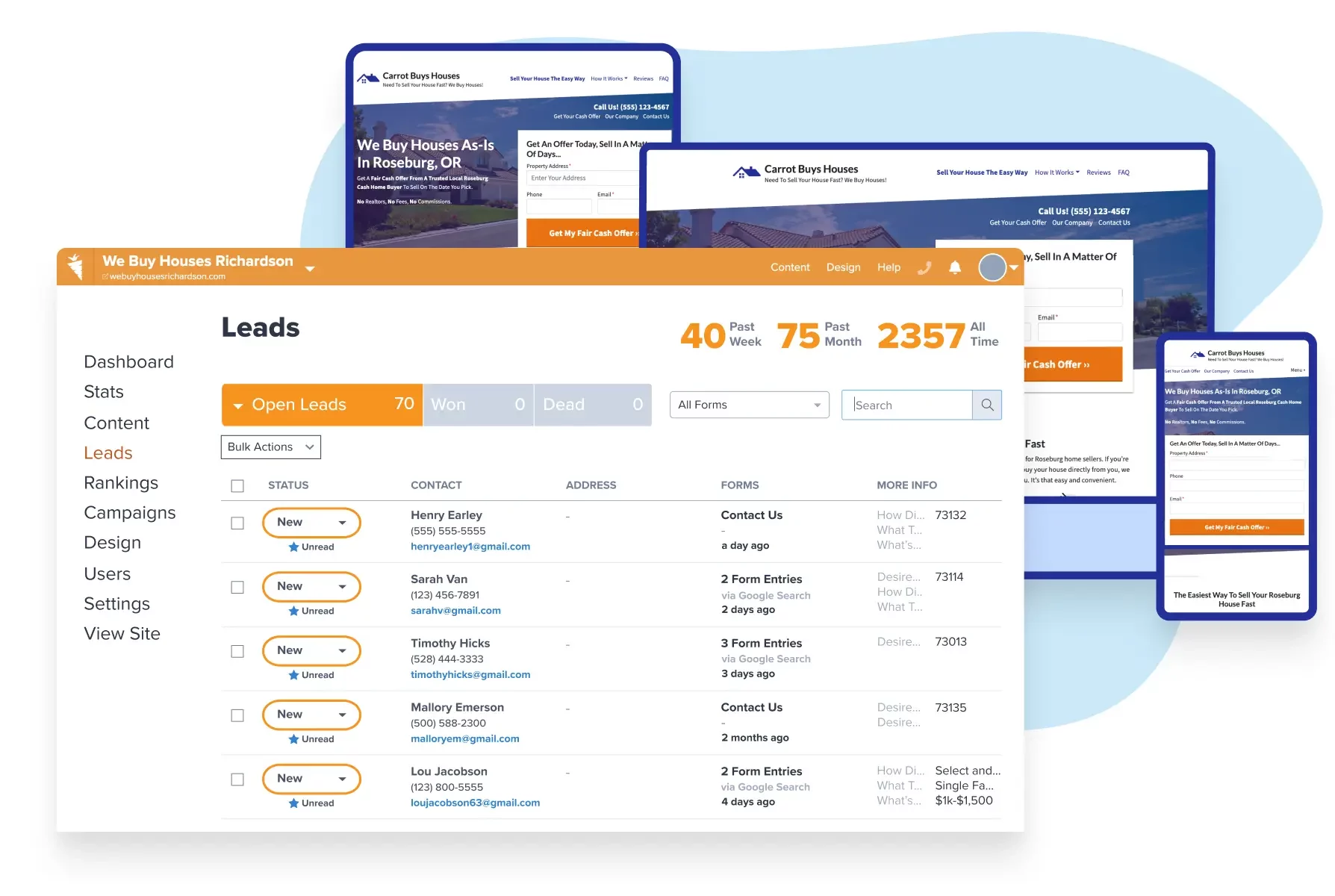
    Lead generation websites that rank high in search engines, increase conversion rates and drive 2.5x more profit per deal.
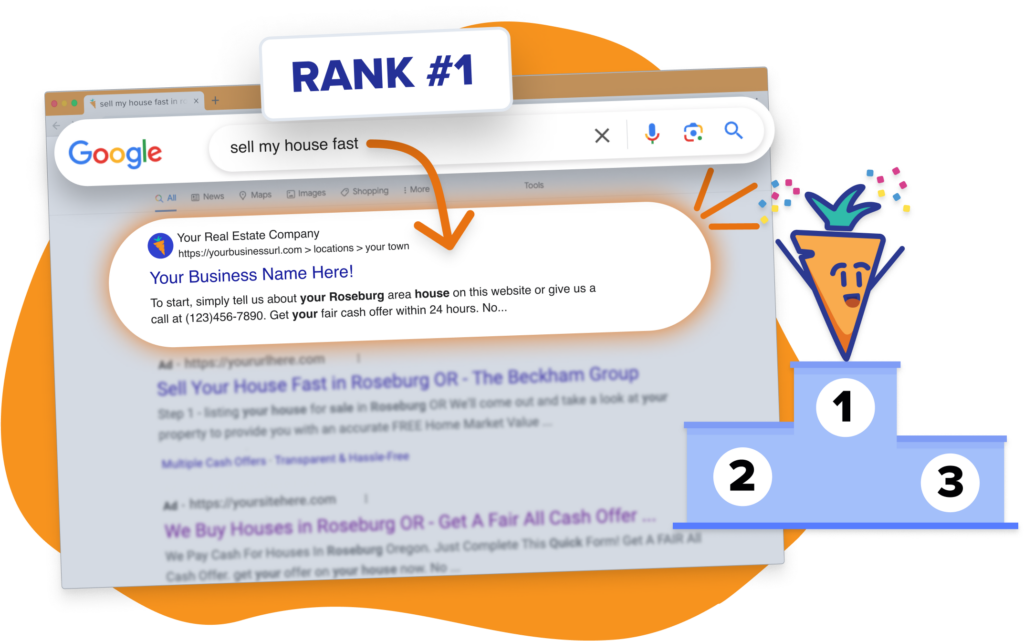
    But we’re not just dropping these tools and leaving you hanging—we’re here to guide you in using them to their fullest potential.

    Let’s dive in…

    So, what’s new at Carrot?

    Before we get into the “how-to” guide, here are a few features and updates for ya!

    Understand your website issues with the SEO Site Audit tool

    We’re taking the guesswork out of site improvements. All SEO Tools subscribers now have the ability to audit their websites, identify critical website errors, and learn how to fix them to achieve better Google rankings.

    Track 125 Keywords For Free

    We’re bumping up the number of keywords SEO Tools subscribers can track from 25 to 125. Any Carrot members with SEO Tools now have the ability to track 125 keywords inside their Carrot dashboard.

    Domain Overview

    Monitor your website’s Authority Score, backlinks, and organic keyword growth over time. Now available to all Carrot members.

    Search Performance

    Get deeper insights into your Google performance metrics—all without needing to login to Google Search Console. This service is available to all Carrot members.

    But you might wonder, how do I use all these features? How do these features work together, and how will they get me more leads?

    This and answers to all of your burning questions below…

    The Audit – Fix – Measure Framework

    These tools are really fun to look at, especially as your traffic and rankings rise. But what good are they if you don’t know how to use them together?

    The Audit – Fix – Measure Framework can be used at any time during your SEO journey. We recommend running this process every 3 months as standard maintenance. If this is the first time auditing your site in a while, you might have more upfront work, but it will get easier as you do the proper upkeep.
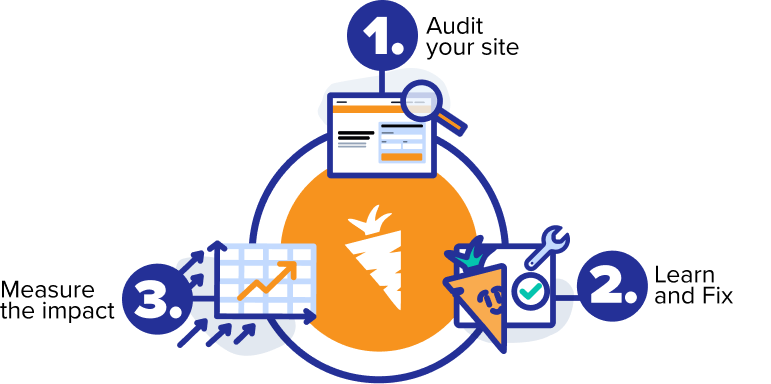
    So, what are we trying to do? To put it simply, we are finding some of the technical and content-based errors on your site (Step 1), fixing them (Step 2), and then seeing what the impact was (Step 3).

    You might be asking…

    “Carrot comes pre-loaded with an amazing technical foundation; why would I need to do this?”

    The answer is simple—yes, Carrot sites are SEO optimized right out of the box. But as you create content and build your Authority, your site will inevitably become more complicated, and that’s why errors will arise that need attention.

    Here’s an example:

    You’ve created 50 new blog posts in the past year and linked to some incredible external Authority sites, but some of those pages are bringing 404 errors (the requested page is not available).

    Google looks at this as an error and might ding your rankings.
    With the Site Audit tool, you can now easily identify these ranking-killer errors so you can be on your way back up SERPS.

    There is no need to purchase any external tools… you can now do this directly from your Carrot dashboard.

    Here’s your step-by-step guide.

    Step 1: Audit your site (like a pro)
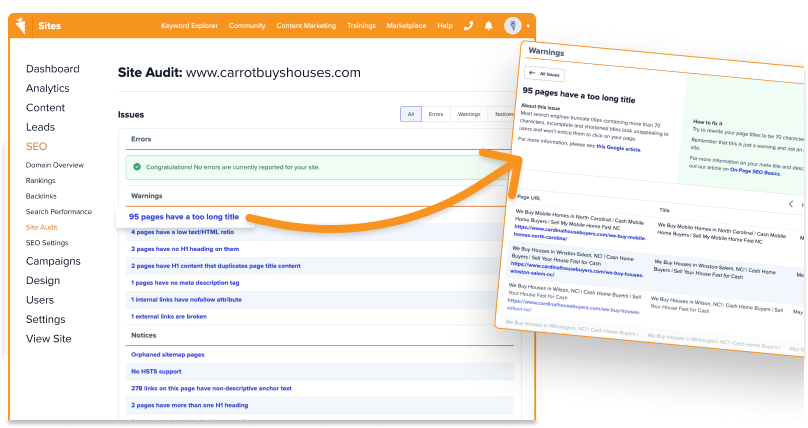
    Fire up a new Site Audit to understand your website’s health. This tool scans your site and identifies critical errors, warnings, and notices—things like broken links, missing meta descriptions, slow page speeds, and more.

    Why this matters: These issues might seem minor, but they can seriously impact your search rankings and user experience. Fixing them gives you a better shot at ranking higher on Google, which means more traffic and more leads!

    How to Get Started:

    • Log into your Carrot account and navigate to the SEO section.
    • Run a full audit of your site and review the results. Check out our Help Center article for more in-depth details.
    • Pay special attention to the ‘Errors’ tab—these are the issues that need immediate attention to prevent ranking drops.

    👉 Quick Tip: Don’t get overwhelmed by a long list! Start with the most critical errors first and work your way down.

    Step 2: Learn and fix
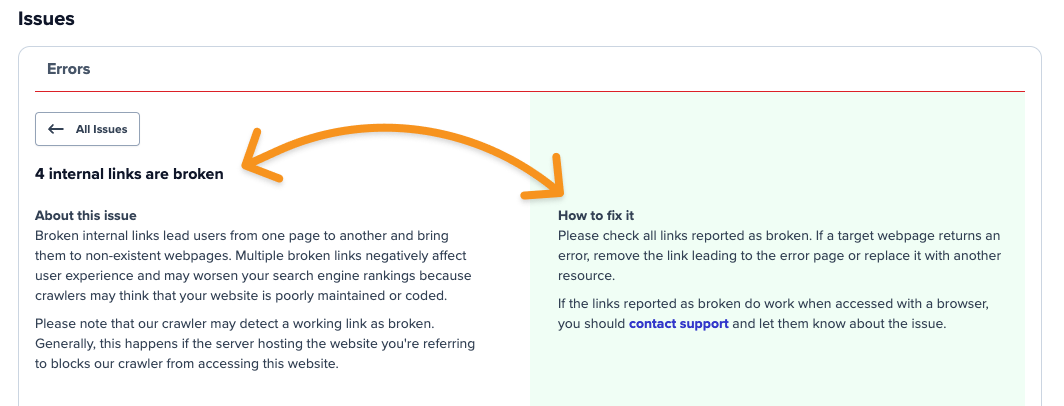
    Now that you’ve identified the issues, it’s time to tackle them head-on. We provide step-by-step guidance on how to fix each issue.

    Why this matters: We’re not just giving you a list of problems to solve; we’re giving you the exact instructions you need to solve them efficiently. Less guesswork, more action.

    How to Get Started:

    • About the issue: Click on each error, warning, or notice to learn about it and why it’s important.
    • How to fix it: Follow the guided steps, whether you’re optimizing meta descriptions, fixing broken links, or improving page load speed.

    👉 Quick Tip: If you get stuck, click the Contact Support link, and we’ll help you solve the problem and move faster through the list.

    Step 3: Measure the impact and stack your W’s

    You’ve done the hard work, and now it’s time to see the results! Use the Domain Overview and Search Performance tools to measure the impact of your changes.

    Why this matters: Tracking your progress isn’t just satisfying; it’s essential to understanding what’s working and what needs more tweaking. Keep an eye on your Authority Score, backlinks, organic keyword growth, and other performance metrics.

    How to Get Started:
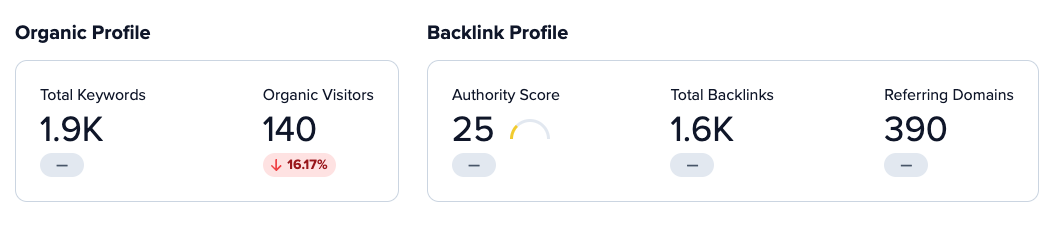
    Organic profile view of Domain Overview feature

    Check your Domain Overview first to monitor your site’s Authority Score and Referring Domains (unique backlinks). Your Authority Score is a great metric to track progress over time.

    If you’re building backlinks, ensure a good balance between referring domains and total backlinks. Note: You don’t want way more backlinks than referring domains. Doing so tells Google you’re getting a lot of backlinks from a single domain, which they consider spammy.
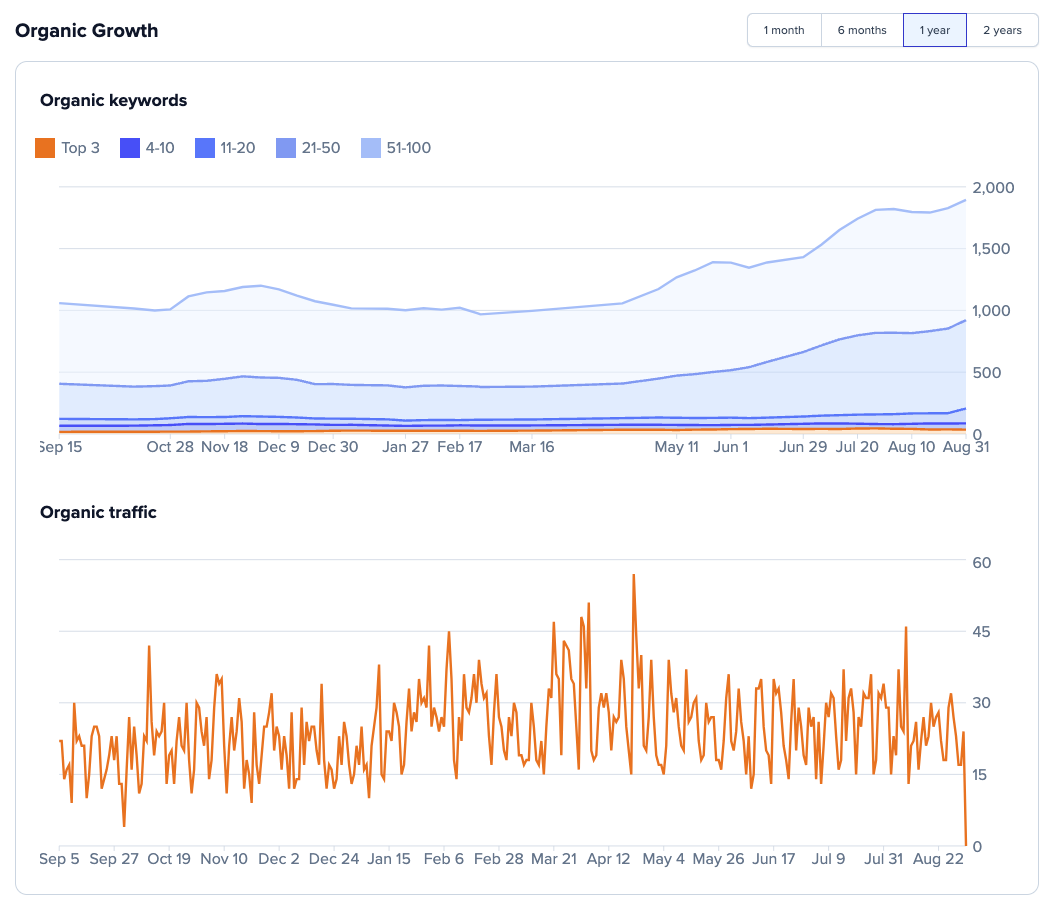
    organic keywords and traffic

    Check the number of keywords that rank for different tiers, their growth over time, and how this correlates with organic traffic changes. As you make improvements to your website (through the Site Audit or other tactics), you should see your organic rankings improve.

    Focus on getting keywords from the 2nd page to within the top 10, and then you’ll see your organic traffic begin to rise (see orange Organic Traffic graph).
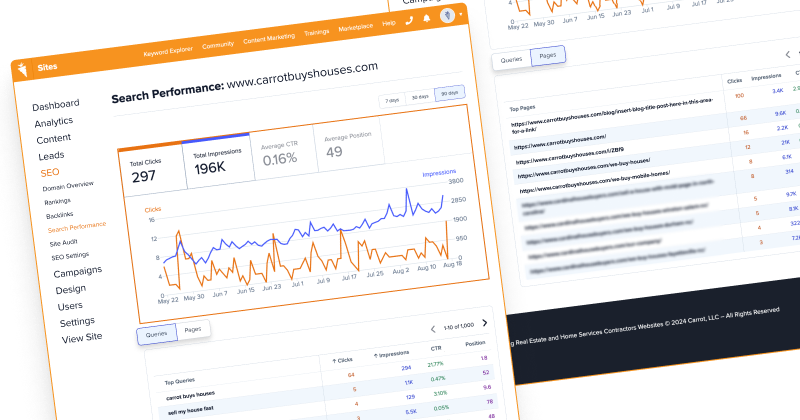
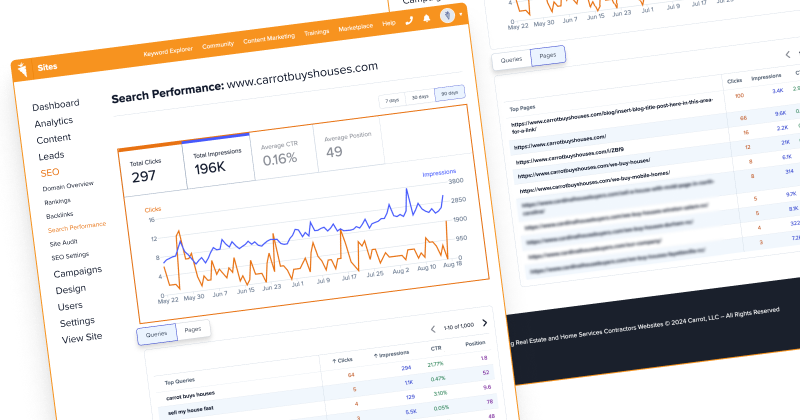
    Use Search Performance to track Google-specific metrics like impressions, clicks, and click-through rates (CTR). As you improve your site technically, you should see improvements to many of these metrics.

    You’ll also be able to see what your clicks, impressions, CTR, and organic rank position by search queries or pages:
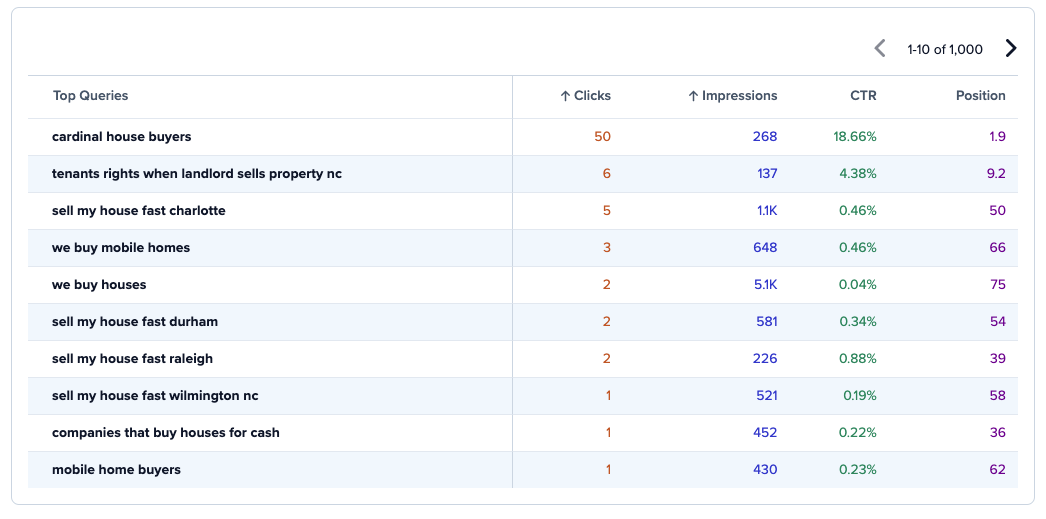
    👉 Pro Tip: Set up a monthly check-in to review your Google search performance metrics. Celebrate the small wins (like a bump in CTR or new queries being picked up) and double down on the big ones.

    Ready to take your SEO to the next level?

    With these new tools, we’ve made optimizing your site, ranking higher, and driving more leads easier than ever. The best part? You don’t need to be an SEO expert to make it happen. Start with a site audit today, fix those errors, and watch your traffic and leads grow.

  • Carrot Summit 2024! Master Your Evergreen Marketing: Next-Level Lead Generation through SEO & Content Creation

    Carrot Summit 2024! Master Your Evergreen Marketing: Next-Level Lead Generation through SEO & Content Creation

    Carrot Summit 2024

    Save the date! You’re invited to…

    Carrot Summit 2024

    Carrot Summit 2024 is the Free LIVE virtual event for the world’s top-performing real estate professionals. Sign Up To Save Your Seat.

    Date: June 12-13, 2024, starting at 8 AM Pacific

    Details: 20 Speakers. 18 Mastermind-level Sessions. 100% Free

    Master Your Evergreen Marketing: Next-Level Lead Generation Through SEO & Content Creation

    The real estate landscape is in flux. AI, tech advancements, Google algorithm updates, and evolving regulations demand a new approach. But fear not. The Carrot Summit will equip you with the tools and knowledge to thrive in this dynamic environment.

    This isn’t your average event. Over two action-packed days, you’ll gain groundbreaking insights, business-changing leadership strategies, and invaluable lead-generation tactics to reshape your business.

    Tailored Learning & Expert Guidance

    The Summit offers a unique opportunity to personalize your experience. Select your focus area and delve deep into the most relevant topics alongside industry leaders like Mallory Whitfield and Trevor Mauch.

    Carrot’s internal experts and renowned guest speakers will lead you through a series of tactical breakout sessions. Gain invaluable insights, practical strategies, and exclusive insider secrets to fuel your real estate aspirations.

    Mastering Lead Generation in 2024

    Are you feeling overwhelmed by juggling lead follow-up, closing deals, and personal time? You’re not alone. But building a successful business starts with mastering your marketing.

    Learn proven lead-generation tactics and strategies, including leveraging AI for content creation & SEO with Brent Moreno, Keith Sant, and Nathan Gotch from Gotch SEO Academy.

    Industry veterans Nick Perry and Carlos Zamora will share their expertise on maximizing inbound leads and effective follow-up.

    Building a Fulfilling Business

    Success isn’t just about the bottom line. The Summit goes beyond the transaction, helping you build a profitable and impactful business while nurturing your family, team, and community.

    Are you ready to:

    • Gain personalized insights from industry experts?
    • Master lead-generation strategies for 2024?
    • Develop the leadership skills to build a fulfilling business?
    • Network with fellow real estate professionals?

    Don’t miss this chance to transform your approach to real estate. Register now for the Annual Carrot Summit and unlock your full potential!

    Key Topics and Speakers

    Unparalleled Access to Real Estate Professionals

    The Carrot Summit brings together some of the nation’s top real estate professionals, providing access to their wisdom and expertise. From seasoned veterans to rising stars, our speakers are committed to leaving no stone unturned as they guide you toward lasting success.

    Our expert speakers, including Jamil Damji, Liz Faircloth, Ryan Dossey… and many more, are eager to share their strategies and tactics for mastering Evergreen marketing, lead generation, SEO, and more!

    Internal Experts + Industry Powerhouses for These Tactical Breakout Sessions

    Day 1 Featured Sessions

    • How to Thrive in Highly Competitive Markets

    • The Secret Lead Method That Investor is Ignoring

    • “Top Real Estate Industry Shifts for 2024 and Beyond

    Day 2 Featured Sessions

    • Build Your SEO Machine: An SEO Expert’s Proven Process to Rank #1

    • Deal Negotiation Mastery with Real Estate’s Top Closers

    • Scaling From Active to Passive Income By Building a Rockstar Team

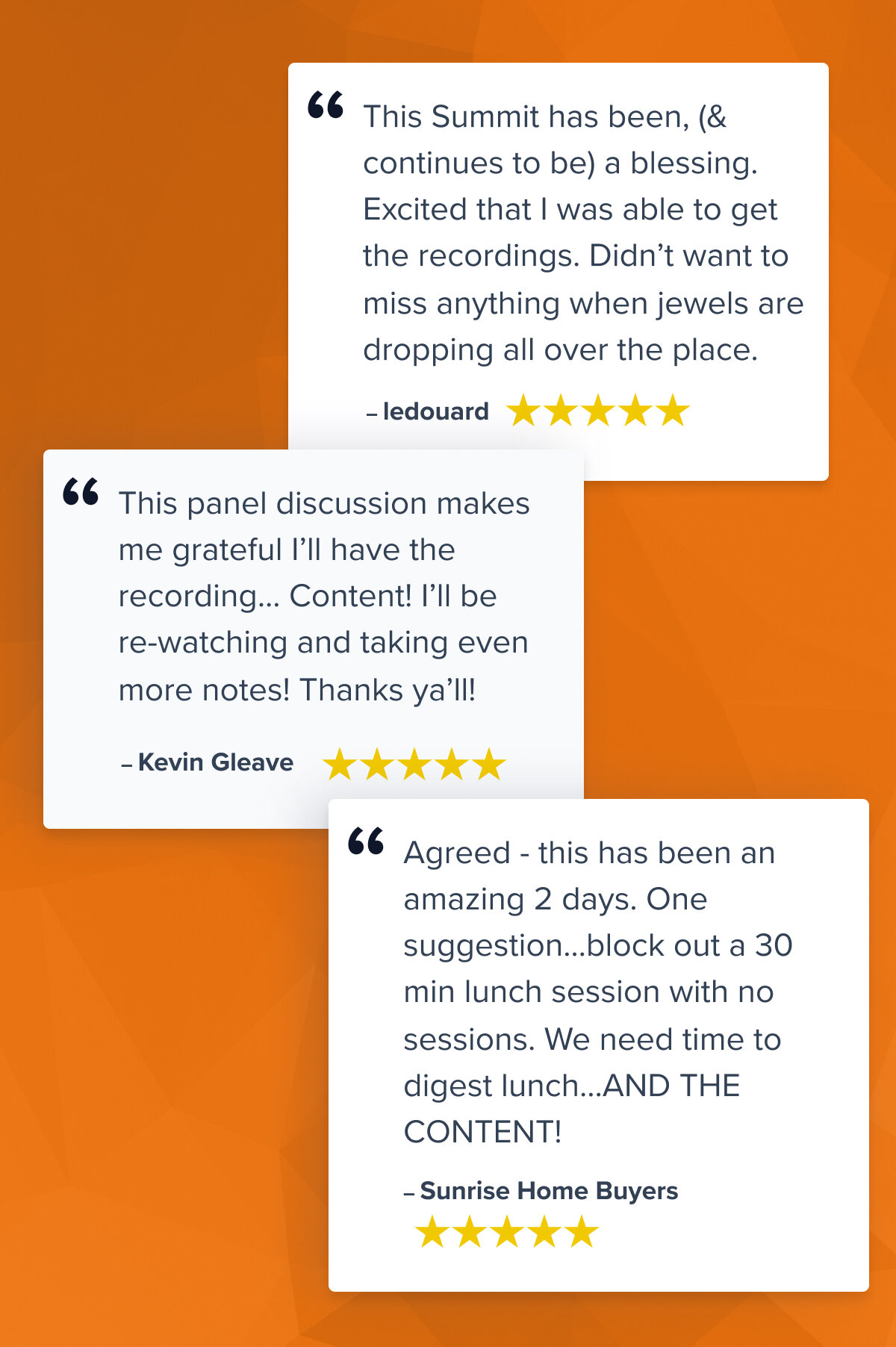
    Here’s What People Said About Other Summits…


    Make the Most of this Opportunity

    Typically, tickets to an event of this magnitude cost anywhere from $500 to $1000 or more.

    However, we have decided to make it FREE to attend. Don’t miss this opportunity to take your business to new heights.

    Secure Your Spot Today

    Join us June 12132024starting at 8 AM Pacific!

    Click the button below to register for the Carrot Summit today and secure your spot among industry leaders, forward-thinkers, and game-changers.

    Embark on a journey that will redefine your business and position you for success in the ever-changing real estate market.

  • Are These 7 Mistakes Sabotaging Your Real Estate Website Conversion?

    Are These 7 Mistakes Sabotaging Your Real Estate Website Conversion?

    Are you frustrated that your real estate website isn’t generating the expected leads? You’re not alone. Many agents and investors struggle to convert website visitors into clients.

    The good news is that a few common mistakes can be easily fixed. In this blog post, we’ll reveal the top 7 real estate website conversion killers << watch this video] sabotaging you and show you what to do instead.

    7 Real Estate Website Conversion Killers

    1. Not Optimizing Your Forms

    The Problem: Having too many form fields and unclear calls to action (CTAs) creates a conversion roadblock. Visitors get intimidated by lengthy forms, and CTAs that don’t clearly communicate the benefit leave them unsure of what they’ll get in return for their information.

    Data and Insights: Studies by HubSpot show that forms with fewer fields see significantly higher conversion rates. Unbounce research indicates that landing pages with 3 form fields convert at a rate 10.25% higher than those with 4 fields and a whopping 12.05% higher than those with 5 fields.

    The Solution: Keep your forms short and sweet, with only 3-4 absolutely necessary fields. Focus on capturing essential information like name, email address, and phone number (if relevant). Here’s the breakdown of key fields:

    • Name: Personalizes the interaction and builds rapport.
    • Phone Number: Provides an alternative contact method, especially for urgent inquiries.
    • Email Address: Primary method for following up with leads.
    • Craft Clear and Actionable CTAs: Use strong verbs and specific benefits to entice visitors to take action. Instead of generic CTAs like “Submit” or “Send Message,” try these examples:
      • For property listings: “Schedule a Showing Today,” “Get Pre-Approved Now,” or “Download Your Free Home Buyer’s Guide.”
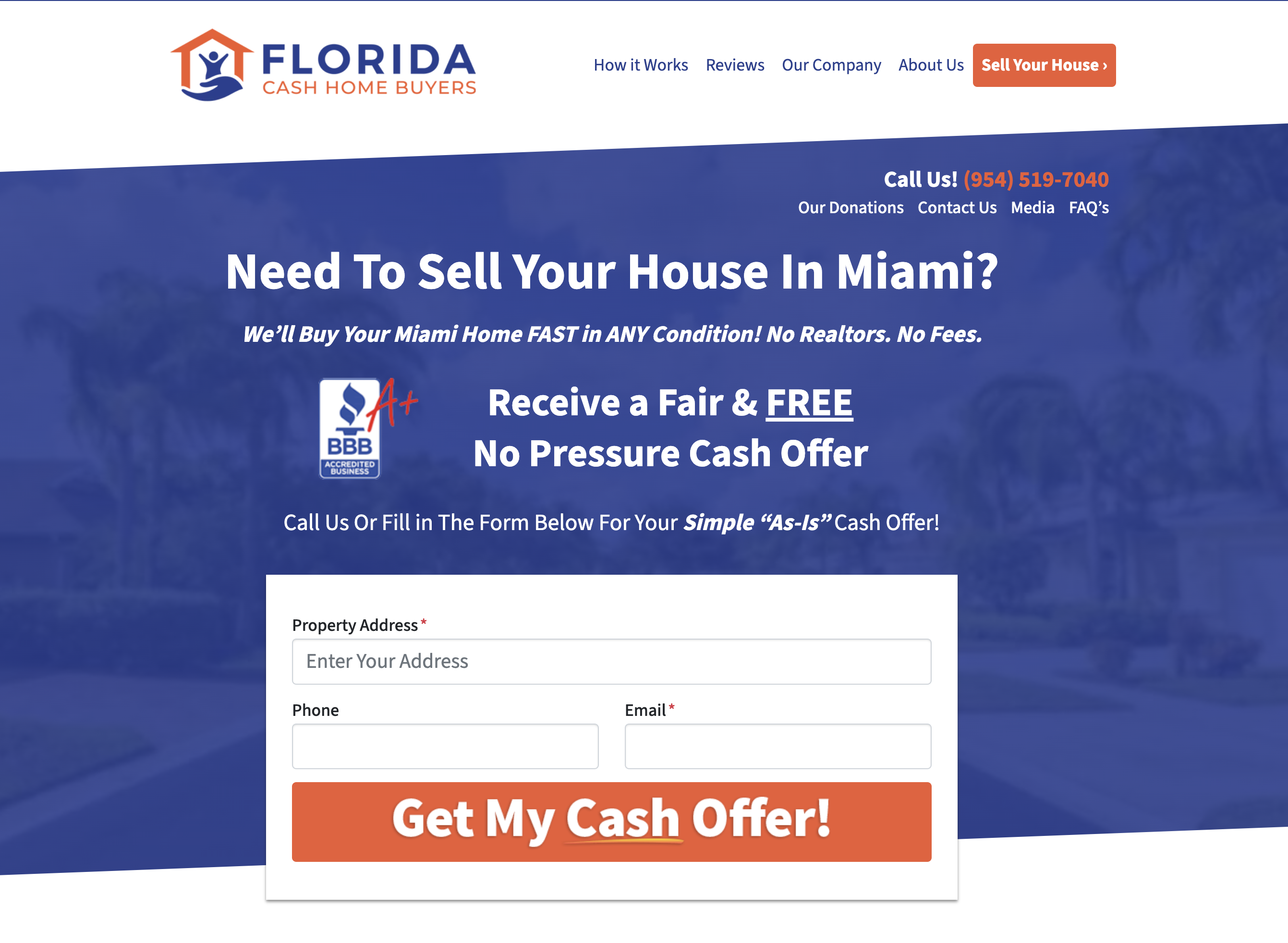
      • For general inquiries: “Get My Cash Offer,” “Connect with a Local Expert,” or “Start Your Home Selling Journey.”

    By streamlining your forms and using clear CTAs, you’ll remove friction from the conversion process and encourage more website visitors to become qualified leads.

    2. Cramming Too Much Info into Your Hero Section

    The Problem: A cluttered hero section overwhelms visitors with information overload. They won’t know where to look or what action to take, leading to a missed opportunity to capture their attention and guide them toward conversion goals.

    Clean Hero Section
    Clutter Hero Section

    Data and Insights: Studies by Crazy Egg show visitors typically spend less than 8 seconds on a webpage before deciding to stay or leave. This emphasizes the importance of a strong first impression, and the hero section is prime real estate for grabbing user attention. Unbounce research also indicates that websites with clear hero sections featuring a single, focused message see conversion rate increases of up to 93%.

    The Solution: Keep your hero section clean and focused. Here are key elements for crafting a high-performing hero section:

    • Captivating Visual: Use a high-quality image or video that instantly grabs attention and reflects your area of expertise. This could be a stunning property photo/video showcasing the type of homes you sell, a happy client receiving keys, or a local landmark highlighting your service area.
    • Clear Headline: Craft a clear and concise headline that speaks directly to your target audience’s pain points and desires. Focus on the benefits you offer, using strong verbs and avoiding jargon.
    • Benefit-Oriented Text: Include a short snippet of text that elaborates on the headline and highlights a key benefit. Keep it concise (ideally under 100 characters) and focus on what visitors can achieve by working with you.
    • Prominent CTA Button: Don’t make visitors guess what to do next. Include a clear and contrasting CTA button that stands out from the background. The button text should be action-oriented and directly relate to the message in your headline and text.

    By following these steps and prioritizing a clear, focused message in your hero section, you’ll increase engagement, improve user experience, and ultimately convert more website visitors into leads.

    3. Not Addressing Client Needs and Objections Upfront

    The Problem: Leaving website visitors feeling unsure if you can solve their problems. Many people searching for real estate investors or agents have specific concerns and anxieties. If your website doesn’t acknowledge these concerns, visitors may bounce or choose a competitor who seems to understand their situation better.

    Data and Insights: According to a National Association of Realtors (NAR) survey, 82% of buyers and sellers say it’s very or somewhat important to work with a real estate agent who understands their needs. Furthermore, a study by Zillow indicates that 44% of potential sellers hesitate to list their home because of the perceived complexity of the process.

    The Solution: Anticipate your ideal client’s worries and address them directly on your website. Here are some strategies to build trust and establish yourself as a solution provider:

    • Identify Common Pain Points: Research and understand the typical challenges faced by your target audience (buyers, sellers, investors). Consider factors like navigating the competitive market, financing complexities, or concerns about selling a house that needs repairs.
    • Speak to Their Emotions: Acknowledge their anxieties and frustrations with empathy. Let them know they’re not alone and that you’ve helped others in similar situations.
    • Showcase Expertise and Solutions: Highlight your qualifications, experience, and proven track record in overcoming these challenges. Provide specific examples of how you’ve helped past clients achieve their real estate goals.
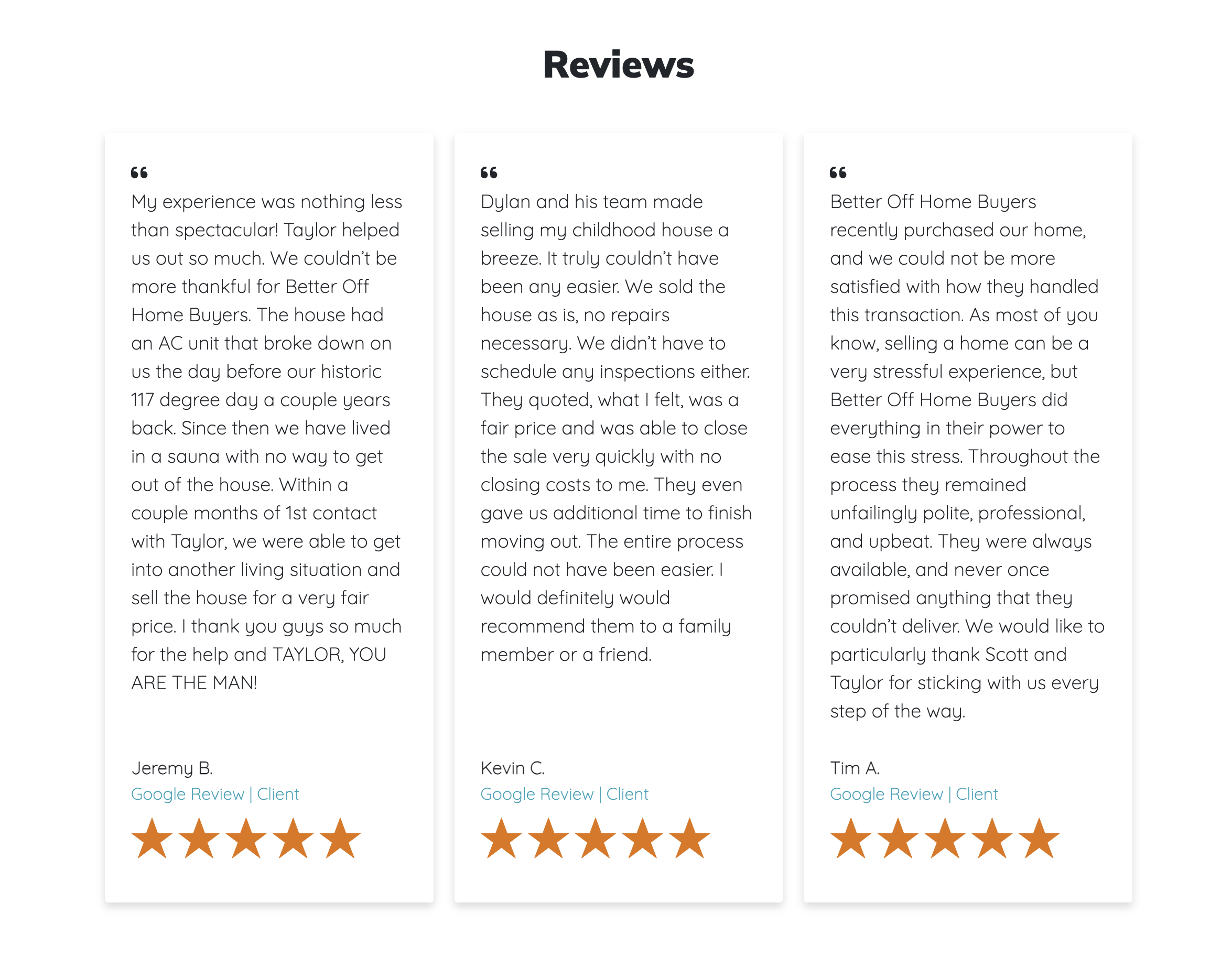
    • Use Testimonials and Social Proof: Feature positive testimonials from satisfied clients who can vouch for your expertise and ability to address their concerns.

    By proactively addressing client needs and objections upfront, you’ll build trust, alleviate anxieties, and position yourself as a valuable resource. This will lead to more qualified leads and, ultimately, more successful client relationships.

    4. Not Including Credibility and Social Proof

    The Problem: In the competitive world of real estate, building trust with website visitors is critical. Without establishing credibility and social proof, potential clients may hesitate to contact you, opting for agents who appear more established and reliable.

    Data and Insights: Studies by BrightLocal show that 84% of consumers say online reviews influence their decision to use a business. Furthermore, research by Spiegel Research Center indicates that 91% of consumers read online reviews before making a purchase (which includes high-ticket items like real estate).

    The Solution: Showcase your credibility and social proof strategically throughout your website, but especially prominently below your hero image where visitors land first. Here are some powerful trust signals to leverage:

    • Client Testimonials: Feature testimonials from satisfied clients who can speak to your expertise, responsiveness, and positive impact on their real estate journey. Testimonials with before-and-after stories or video testimonials can be even more impactful.
    • Logos and Awards: Include logos of reputable companies you’ve partnered with or industry associations you belong to. Display any awards or recognitions you’ve received to establish your credibility further.
    • Case Studies: Showcase detailed case studies that illustrate your problem-solving skills and successful outcomes for past clients.
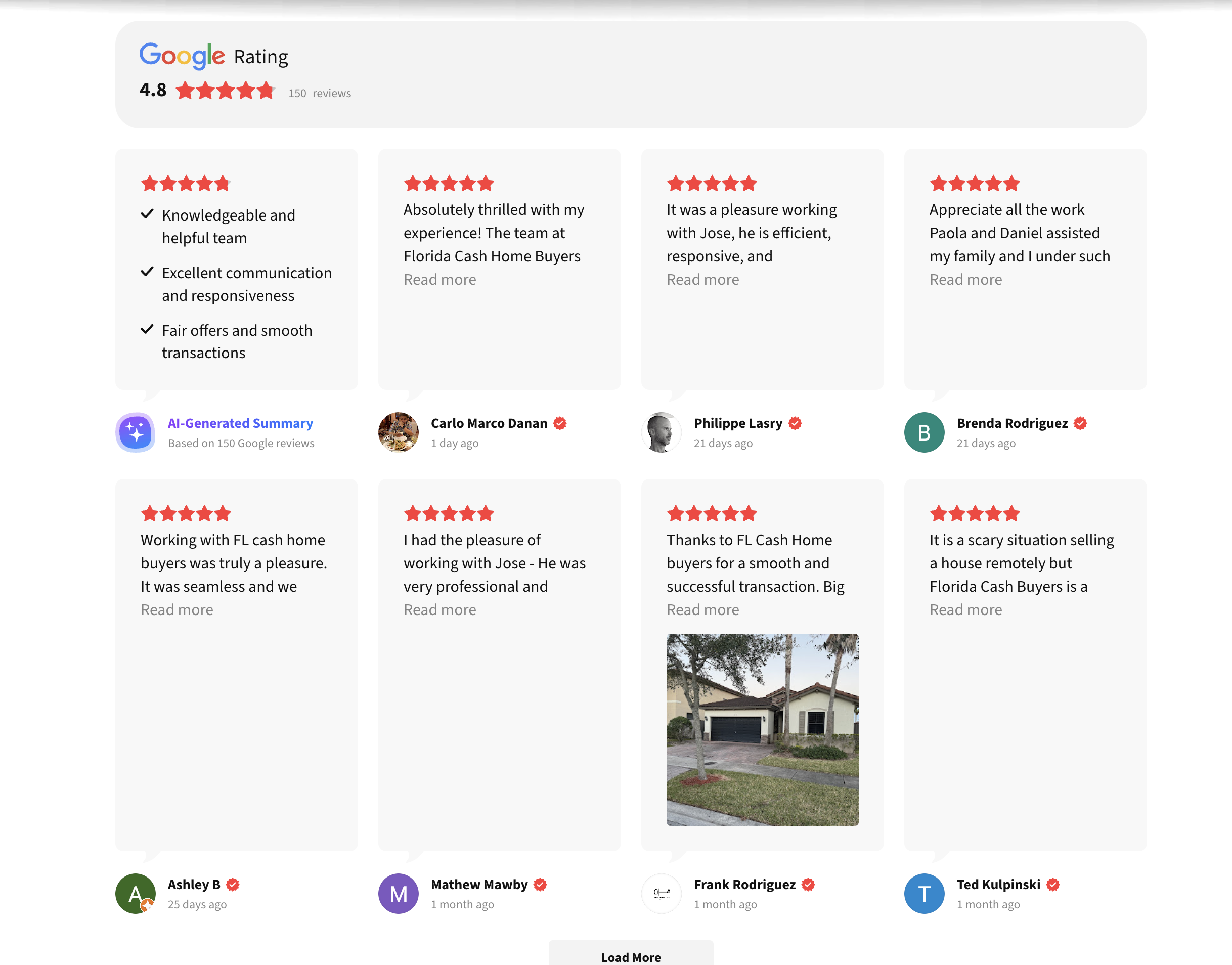
    • Ratings and Reviews: Actively encourage satisfied clients to leave reviews on platforms like Google Business Profiles, Yelp, and Zillow. Display positive review snippets or star ratings on your website.

    By strategically incorporating these trust signals, you’ll give website visitors a reason to believe in your expertise and feel confident choosing you as their real estate agent. This will significantly increase lead generation and conversion rates.

    5. Not Including Personalization and Localization

    The Problem: A generic website fails to resonate with your local market or target audience. It feels impersonal and doesn’t address their specific needs or preferences.

    The Cost:

    • Reduced Engagement: Visitors bounce off quickly if the content isn’t relevant to them. Studies by Forrester Research show that personalized experiences can increase engagement by up to 40%.
    • Lower Conversion Rates: Generic websites don’t build trust or a sense of connection with visitors. This can lead to fewer leads, sales, or signups.
    • Missed Opportunities: By not tailoring your message to local audiences, you miss out on potential customers who might have specific needs or interests.

    The Solution: Go Beyond the Basics

    Using photos of yourself and your team is a good start, but personalization and localization involve a deeper understanding of your audience.

    Here are some additional strategies:

    • Content Localization:
      • Language: Translate your website content into the languages your target markets speak.
      • Cultural Nuances: Adapt your messaging, imagery, and even humor to resonate with different cultures. For example, colors and symbols can have different meanings in various regions.
      • Local References: Use examples, statistics, or case studies relevant to your local audience.
    • Personalization Based on Data:
      • User Behavior: Track user behavior on your website to understand their interests and browsing patterns. Use this data to personalize content recommendations or product suggestions.
      • Location Targeting: Dynamically display content based on a user’s IP address or location settings. This could include highlighting local services, showcasing local client testimonials, or even displaying prices in the user’s local currency. Carrot has created a solution called Auto Location Pages for it’s members that not only makes it quick and easy to create location pages, but maintenance is a breeze.
      • User Preferences: Allow users to set preferences on your site (e.g., language, industry) to tailor their experience further.

    Personalization and localization are ongoing processes. As you gather more data and feedback, you can continually refine your website to meet the needs of your audience better and maximize its impact.

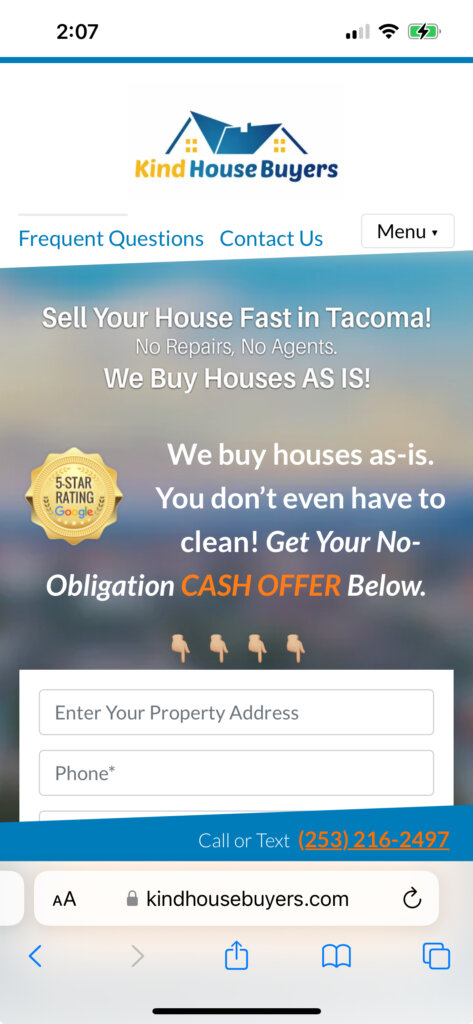
    6. Ignoring Your Mobile View

    The Problem: A website that looks great on a desktop computer but is clunky, hard to read, or even unfunctional on a mobile device.

    In today’s world, this is a major real estate website conversion killer. According to Statcounter, over half of all web traffic globally comes from mobile devices. If your website isn’t user-friendly on a phone or tablet, you’re essentially ignoring more than half of your potential audience.

    The Impact: Here’s what you risk by neglecting your mobile view:

    • High bounce rates: Frustrated users will quickly abandon your site if it’s difficult to navigate on their phone.
    • Loss of sales: If users can’t easily find what they’re looking for or complete a purchase on mobile, they’ll likely take their business elsewhere.
    • Damaged brand reputation: A negative mobile experience can reflect poorly on your brand and make you seem outdated.

    The Solution: Responsive Design is Key

    • Responsive design: This ensures your website automatically adjusts its layout and content to fit any screen size, from desktop monitors to smartphones.
    • Mobile-first approach: Many web designers now prioritize designing for mobile first, then adapting it for larger screens.

    Testing is Crucial

    • Don’t just assume your site is mobile-friendly. Test it thoroughly on a variety of devices and screen sizes.
    • Tools like Google’s Mobile-Friendly Test can help identify potential issues.

    By prioritizing your mobile view, you’ll create a website that’s accessible and user-friendly for everyone, no matter what device they’re using.

    7. Slow Loading Times on Your Site: The Enemy of Conversions

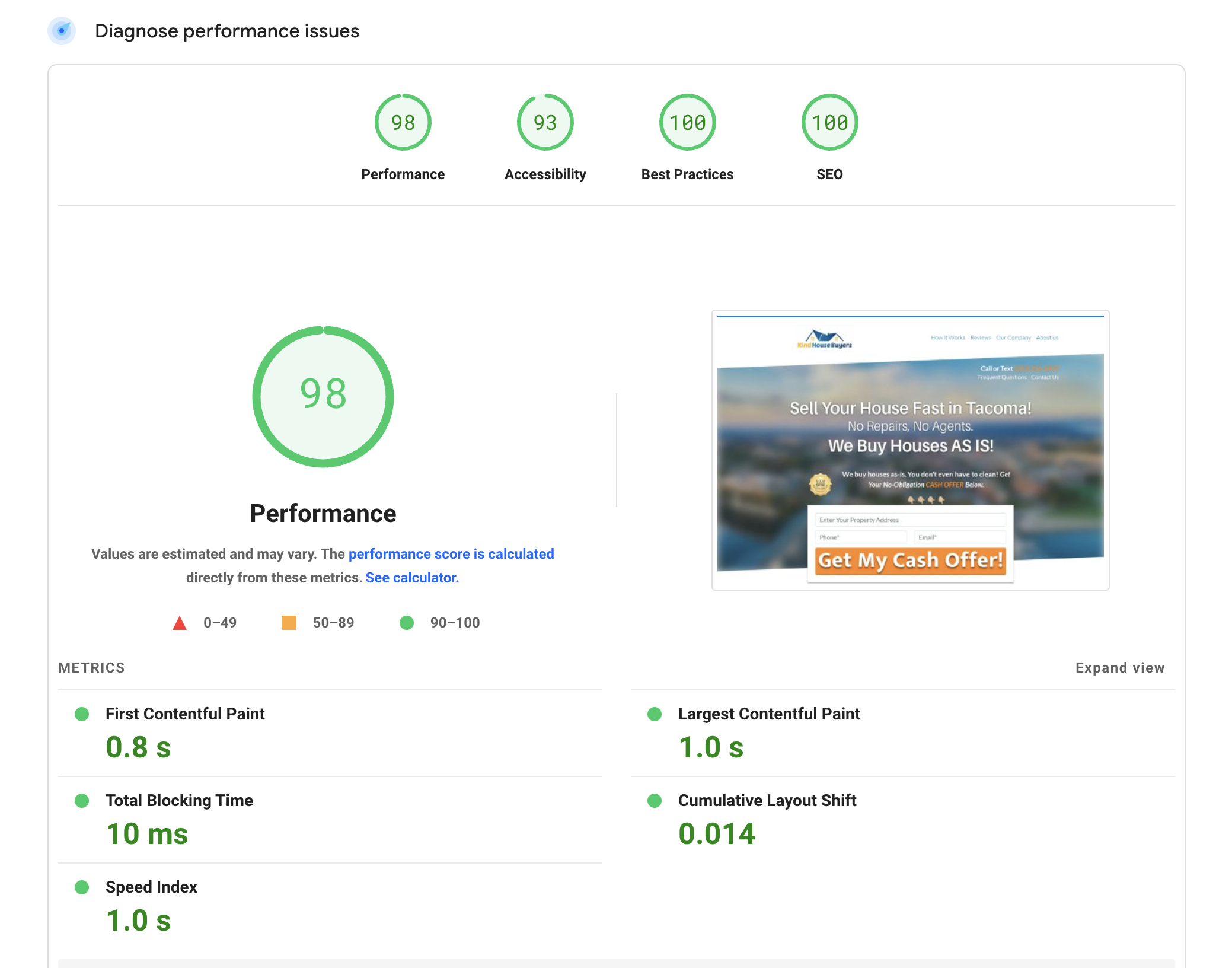
    The Problem: In our fast-paced world, patience is thin. If your website takes too long to load, visitors will bounce before they even see your content. Website speed is crucial for user experience and conversion rates.

    Here’s some data to consider:

    • Impact on Conversions: According to bidnamic.com, a 1-second delay in page load time can result in a 7% decrease in conversions. Another study by pagespeed insights found that a 3-second delay in loading time can increase the bounce rate by 32%.
    • Mobile Matters Even More: Mobile users are even less forgiving of slow loading times. Studies by Think with Google show that 53% of mobile site visits are abandoned if the page takes longer than 3 seconds to load.

    The Culprits Behind Slow Loading Times:

    • Large Images and Videos: Unoptimized images and videos are some of the biggest culprits behind slow loading times.
    • Too Many HTTP Requests: Every element on your website, from images to stylesheets, requires an HTTP request. Having too many requests can slow down loading.
    • Poor Quality Web Hosting: Budget web hosting providers often overload servers, leading to slow performance.

    The Solution: Speed Up Your Site for Success

    Here are some strategies to combat slow loading times:

    • Image Optimization: Resize and compress images without sacrificing quality. Tools like TinyPNG and Smush can help.
    • Reduce HTTP Requests: Combine multiple CSS and JavaScript files into fewer files. Consider using caching mechanisms for static content.
    • Invest in Quality Web Hosting: Choose a reputable hosting provider known for speed and reliability.
    • Content Delivery Networks (CDNs): A CDN stores your website’s static content on servers around the world, delivering it to users from the closest location for faster loading.

    By optimizing your website for speed, you’ll create a better user experience, improve conversion rates, and boost your search engine ranking (faster sites are often ranked higher).

    Conclusion

    In addition to the tips above, here are some other things to keep in mind:

    • Use high-quality photos and videos. First impressions matter, and high-quality visuals will help you make a good one.
    • Make sure your website is easy to navigate. Visitors should be able to find the information they’re looking for quickly and easily.
    • Use strong calls to action (CTAs). Tell visitors what you want them to do, such as “Contact us today” or “Get a free quote.”

    Following these tips, you can create a real estate website that converts visitors into leads and clients.

    Want help improving your website?

    If you don’t have the time to optimize your website yourself, Carrot can help. We have a Marketplace where you can find designers and other professionals to help you create a high-converting website. Watch our YouTube videos for more tips on improving your website.

    We hope this blog post has been helpful! If you have any questions, please leave a comment below.

  • The Last CarrotCast Podcast

    The Last CarrotCast Podcast


    After 500+ episodes, Trevor & Brady are announcing the BIG changes coming to the podcast. They also take a trip down memory lane to share some of the highly-applicable insights from this mega podcasting journey, in case they might help you. Listen in and cya soon!

    Mentioned in this episode:


  • 16-Y.O. Wholesaling Her First 5 Land Deals + Family Investing w/ Michelle & Sophie Bosch

    16-Y.O. Wholesaling Her First 5 Land Deals + Family Investing w/ Michelle & Sophie Bosch


    Meet Sophia. She’s 16 years old and learned how to wholesale land this summer. She happens to be the daughter of land coaches Michelle & Jack Bosche, but they’re not making it too easy for her. In our conversation Michelle & Sophia talk about her journey of closing her first land deal, how they work together as a family unit with so much going on, and what it takes to make it as a young, new investor. Listen in!

    Mentioned in this episode:

    BecomingWealthy.com
    https://www.michellebosch.com/
    https://www.landprofitgenerator.com/


  • EP 494: How to Harness Ambition without Burning Out

    EP 494: How to Harness Ambition without Burning Out


    For me and many of other ambitious entrepreneurs, less impact means less joy. That’s why this episode, I’m talking about how much ambition is enough (or too much) and more importantly how to harness it by intentionally focusing it on others. This is about burnout prevention. Listen in.


  • EP 493: Top 7 Site Conversion Killers w/ Katie Stapko & Trevor Mauch

    EP 493: Top 7 Site Conversion Killers w/ Katie Stapko & Trevor Mauch


    You’ve worked hard on your website to generate leads. That’s why today we’re playing defense – Katie & Trevor are looking at what NOT to do regarding design & conversion. Listen in to find out what you can do to make your website work even harder for your business.

    Mentioned in this episode:


  • EP 492: Loneliness as an Entrepreneur & 4 Ways to Combat It

    EP 492: Loneliness as an Entrepreneur & 4 Ways to Combat It


    For leaders, it’s too often lonely at the top. If you feel lonely in a crowded room because you struggle to relate to the people around you, I’m here to share a handful of specific ways that I have combatted this in my life. Stop doing life alone and listen in.


  • EP 423: Accountability “Do’s & Don’ts” For Leading a Team

    EP 423: Accountability “Do’s & Don’ts” For Leading a Team

    Accountability "Do's & Don'ts" For Leading a Team | Trevor Truck Talk | Leadership Podcasts & more

    About this episode:

    If you’re a part of a team and you get to the end of your week feeling drained, super busy but without progress to show for it progress, it’s could be an accountability issue. It might be that you’re not clear on your goals or the exact steps needed to hit them. This si something that many successful leaders struggle with – holding each other accountable in the right way. In this episode I’ll share some of the do’s and don’ts I’ve learned, so you can run a more accountable, more efficient team. Listen in.