“You know the mindset stuff is everything. Most people don’t have the skin or the mindset to pursue their dreams that they think they’re after. You’ve got to accept at some point you gotta jump” – Brian Evans
How Do You Build Massive Credibility With House Sellers? Find Out In This Episode…
In this CarrotCast episode, (have you Subscribed yet on iTunes??? If not, do it and rate us, we’ll love you forever!) … Trevor is joined by Brian Evans, real estate investor, and owner of The First Deal. The First Deal focuses on helping new investors close their first deal or their first 100 deals.
Brian’s real estate journey started from a spot where not many other real estate investors find themselves, working on Wall Street in the Trump building.
One day he came home to find a book from his Father waiting for him. There was a post-it note on it that read “Son, read this, take notes, let’s talk. Dad”. That book changed his life, his way of thinking, and drove him into the excitement of real estate.
From there, he practically forced two real estate investing brothers to hire him as an apprentice. WITHOUT PAY. He learned the industry and closed his first deal with them in 2004 for $42,000. He hasn’t looked back since.
Mindset shifts for new investors and why they are so important.
Tips to find motivated house sellers.
The exact words you should say to house sellers to close more deals
How new investors can build credibility.
And …so much more! Enjoy :-)
Or, Watch the Video Version
Start –9:00 – Brian’s path to real estate investing. From working in the Trump Tower on Wall Street to now running his very successful business. 9:30 – Why he chose to basically work for “free” to learn the real estate industry. 10:45 – Being an entrepreneur is hard. Follow your gut. 15:12 – The difference between the people who succeed vs. the ones who don’t. 18:20 – The #1 hardest thing for new investors to do. 19:46 – How to build credibility if you are a new investor. 23:40 – Building relationships with realtors to generate a referral pipeline. 24:08 – For a new investor, how many sellers do you need to talk to before getting your first deal closed? 30:35 – Why Brian teaches building confidence in order to hurdle any obstacle. 34:55 – What he does when something goes wacky in the middle of a transaction. And, a couple of good and bad stories. 46:25 – What legacy Brian wants to leave and how his business fuels that.
I’ve got my butterfly wings, now it’s time to fly.
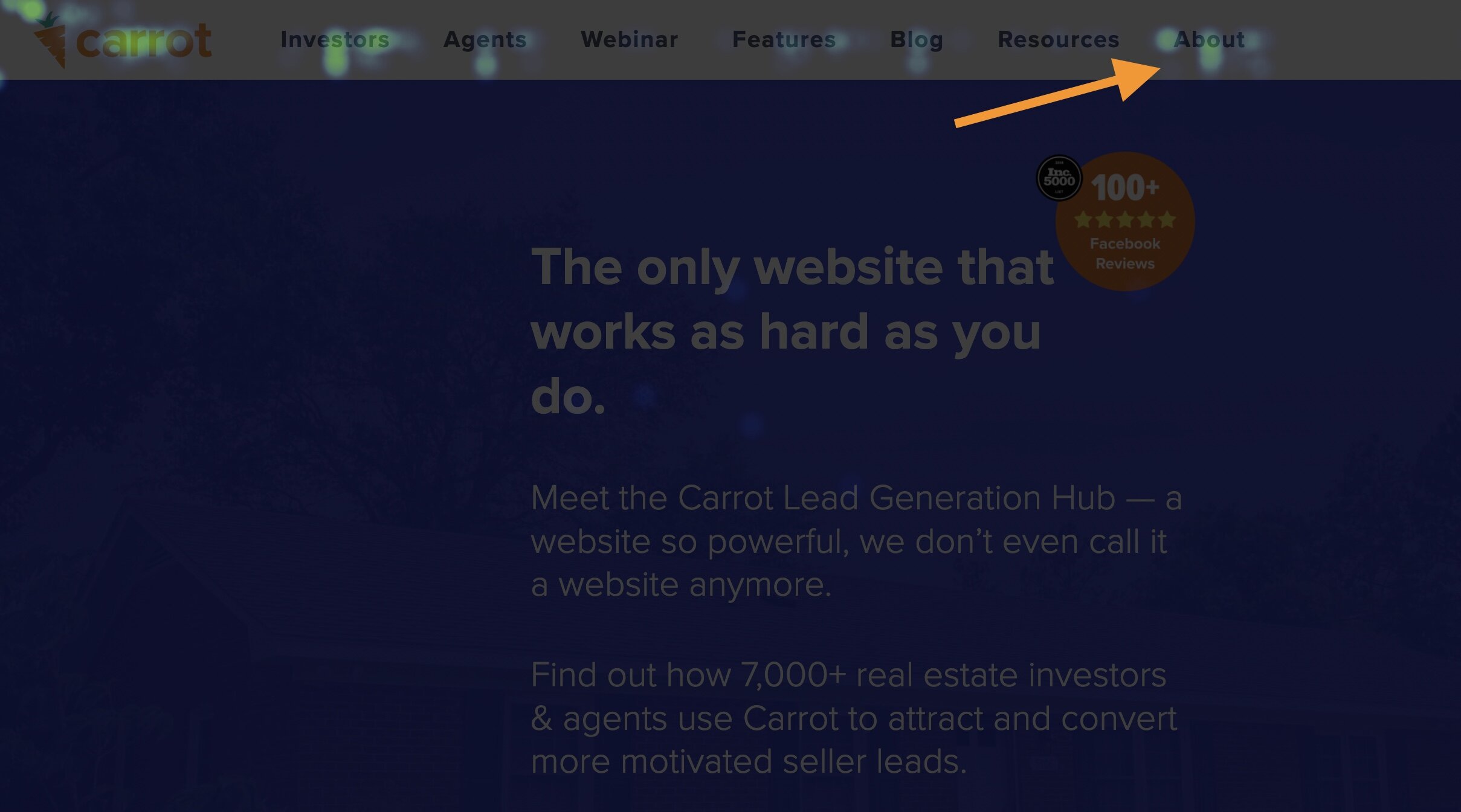
Are you frustrated by website visitors who browse and never contact you? You’re not alone. Turning lookers into motivated sellers requires a website that works as hard as you do.
This guide isn’t your typical SEO or CRO jargon fest. We’re revisiting one of our most popular blog posts and injecting it with fresh strategies. We’ll cover data-driven tactics you can use right now to turn your website into a lead generation machine for motivated sellers.
The CRO-Optimized Homepage Blueprint
Let’s break down the essential elements of a high-converting real estate investor homepage:
Hero Section: A Benefit-Driven Powerhouse for Maximum Conversions
The hero section is your website’s prime real estate, acting as the first impression that grabs visitors and compels them to take action. Here’s a deeper dive into each element, incorporating data-backed reasoning and specific examples:
1. Headline: Craft a Compelling Hook That Speaks Their Language
Data-driven Reason: Studies by Copyblogger show that strong headlines can increase conversion rates by up to 10%.
The Secret Sauce: Focus on benefits, not features. Instead of saying, “We Buy Houses,” a better option is “Sell Your House Fast: Hassle-Free Cash Offer Today.” Speak directly to their pain points (selling a house quickly, avoiding a lengthy process) and highlight the solution you provide (fast cash offer).
Specificity is Key: Get even more specific by targeting a particular niche of motivated sellers. For example, “Need to Sell Your Inherited Property Quickly? We Can Help!”
2. Visual Appeal: Images that Matter
The Power of Local: High-quality, local imagery builds trust and establishes a connection with potential leads. Use photos reflecting your service area or showcasing successful deals you’ve closed.
Data on Visuals: According to our data, including relevant images in your content can increase views by an average of 82%.
Beyond Stock Photos: While professional stock photos can work, consider using genuine images of yourself or your team. This humanizes your brand and fosters trust.
3. Eye-Catching CTA: The Call to Conversion
Color Psychology: Utilize contrasting colors for your CTA button. Studies suggest that red, blue, orange, and green are particularly effective in driving clicks.
Action-Oriented Text: Ditch generic CTAs like “Submit.” Instead, use clear, action-oriented text like “Get Your Free Cash Offer” or “Schedule a No-Obligation Consultation.”
Button Size Matters: Don’t make them miss it! Make your CTA button prominent and large enough for easy tapping on mobile devices.
4. Mobile-First Design: Prioritize the Dominant Viewport
The Mobile Majority: Our Carrot data proves over 60% of all web traffic now comes from mobile devices.
Seamless Shrinking: Ensure your hero section shrinks and adapts seamlessly for mobile viewing. Text should be easy to read, and buttons should be large enough for easy tapping.
Phone Number Visibility: Prioritize phone number visibility in the hero section. Ideally, it should be clickable for one-tap dialing on mobile devices. This removes friction and allows motivated sellers to connect with you instantly.
Bonus Tip: A/B Testing is Your Friend
Don’t settle for assumptions! Utilize A/B testing tools to compare different versions of your hero section elements (headline variations, CTA button colors, etc.). This data-driven approach helps you identify what resonates best with your target audience and maximizes conversions.
Content that Educates and Converts: Building Trust and Inspiring Action
The content beneath your hero section serves a crucial role in nurturing leads and guiding them toward conversion. Here’s how to craft compelling content that educates, builds trust, and ultimately converts visitors into motivated seller leads:
1. Problem-Solution Focus: Speak to Their Needs, Not Just Your Services
Understand Your Audience: Conduct thorough market research and identify the specific challenges faced by motivated sellers in your area. Are they facing financial hardship, a looming relocation, or a complicated inheritance?
Data on Empathy: According to research, ads that use human emotion are 31% more effective than ads that use traditional tactics, which are only 16% effective.
Speak Their Language: Don’t just list your services. Address their pain points directly and use language they understand. For example, instead of saying, “We Offer Fast Cash Closings,” explain how a fast cash closing benefits them: “Get Cash in Your Hand Quickly and Avoid Months of Uncertainty.”
2. Benefit-Oriented Text: Highlight the Value You Deliver
Focus on Outcomes: People are primarily motivated by the benefits they’ll receive. Go beyond simply explaining what you do; showcase how it solves their problems and improves their lives.
Data on Benefits Focus: Studies by MarketingSherpa indicate that benefit-oriented content can generate up to 5x more leads than features-focused content.
Examples: Instead of saying, “We Buy Houses As-Is,” emphasize the benefits: “Avoid Expensive Repairs: We Buy Your House in Any Condition!” Another example: “Skip the Stressful Listing Process: Sell Your House Quickly and Easily with Our Cash Offer.”
3. Social Proof: Leverage the Power of Testimonials and Case Studies
Building Trust: Positive testimonials and case studies act as social proof, demonstrating the value you deliver to past clients. This builds trust with potential leads who are still considering their options.
Data on Social Proof: According to Nielsen, 92% of consumers trust recommendations from strangers more than advertising.
Showcase Success Stories: Feature success stories with quotes from satisfied clients. Briefly explain their situation, the challenges they faced, and how your services provided the solution.
Data-Driven Results: When possible, quantify the benefits you delivered. Include details like how quickly a house was sold or the amount of money saved by avoiding repairs.
Remember:
Keep it Concise: People are busy, so keep your content concise and easy to read. Bullet points, subheadings, and visuals can improve readability.
Maintain a Conversational Tone: Write in a friendly and approachable manner, fostering a connection with your audience.
Call to Action: Throughout your content, strategically include CTAs that encourage visitors to take the next step, like contacting you for a free consultation or downloading a valuable guide.
Strategic Navigation & Essential Pages: Guiding Visitors and Building Trust
A well-structured website with straightforward navigation allows visitors to find the information they need quickly and efficiently. Here’s how to create a user-friendly experience that fosters trust and guides them toward conversion:
1. Clear Navigation: A Roadmap for Your Website
User Experience (UX) Focus: A clear and intuitive navigation bar is crucial for a positive user experience. Visitors shouldn’t have to hunt for the information they need.
Data on Navigation: According to Crazy Egg, 40% of visitors will leave a website if they can’t find the information they’re looking for within the first few seconds.
Essential Links: Include a clear navigation bar at the top of every page with easy access to key pages like:
Home: This should always be the first link, allowing visitors to return to the hero section quickly.
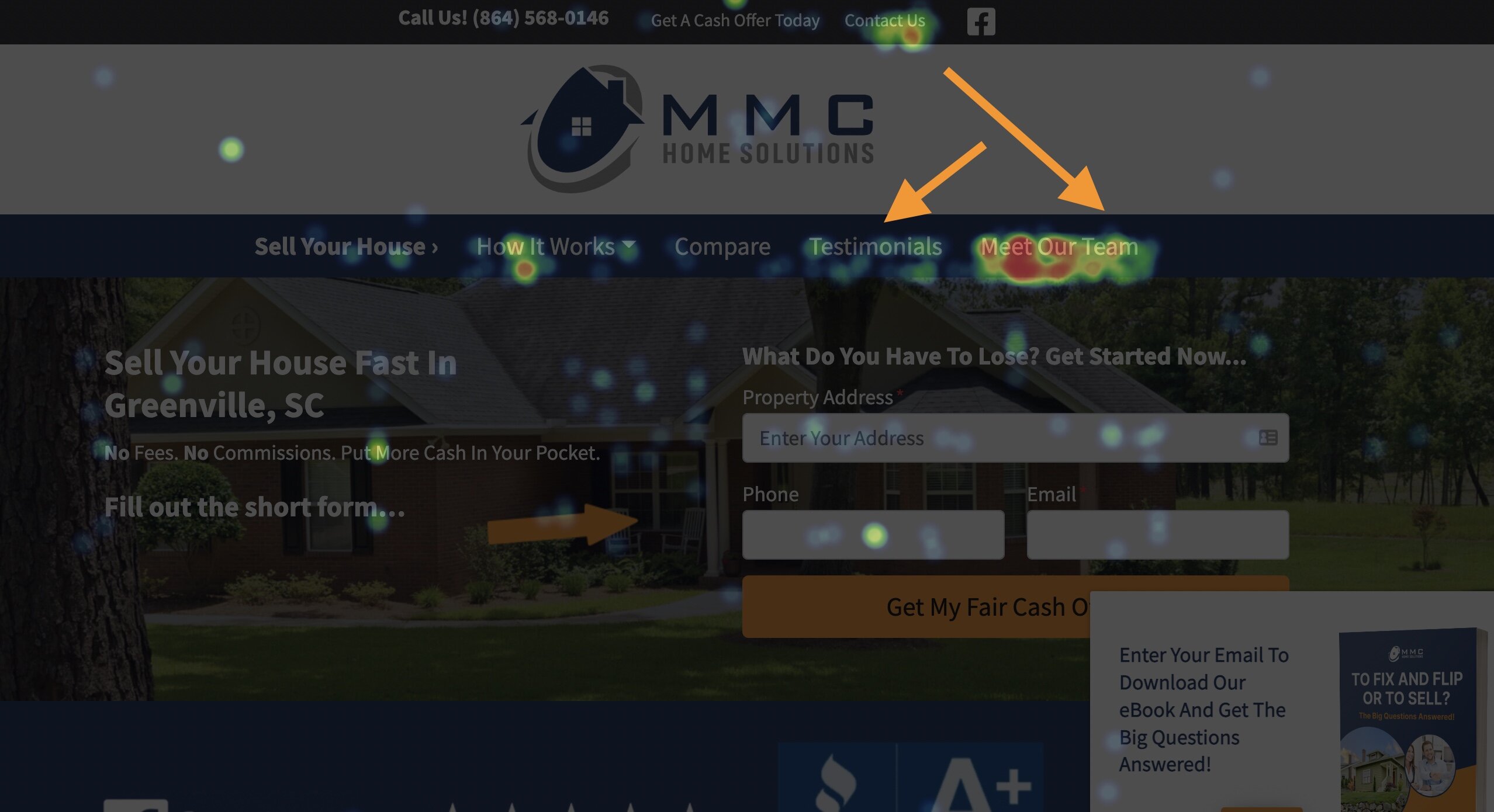
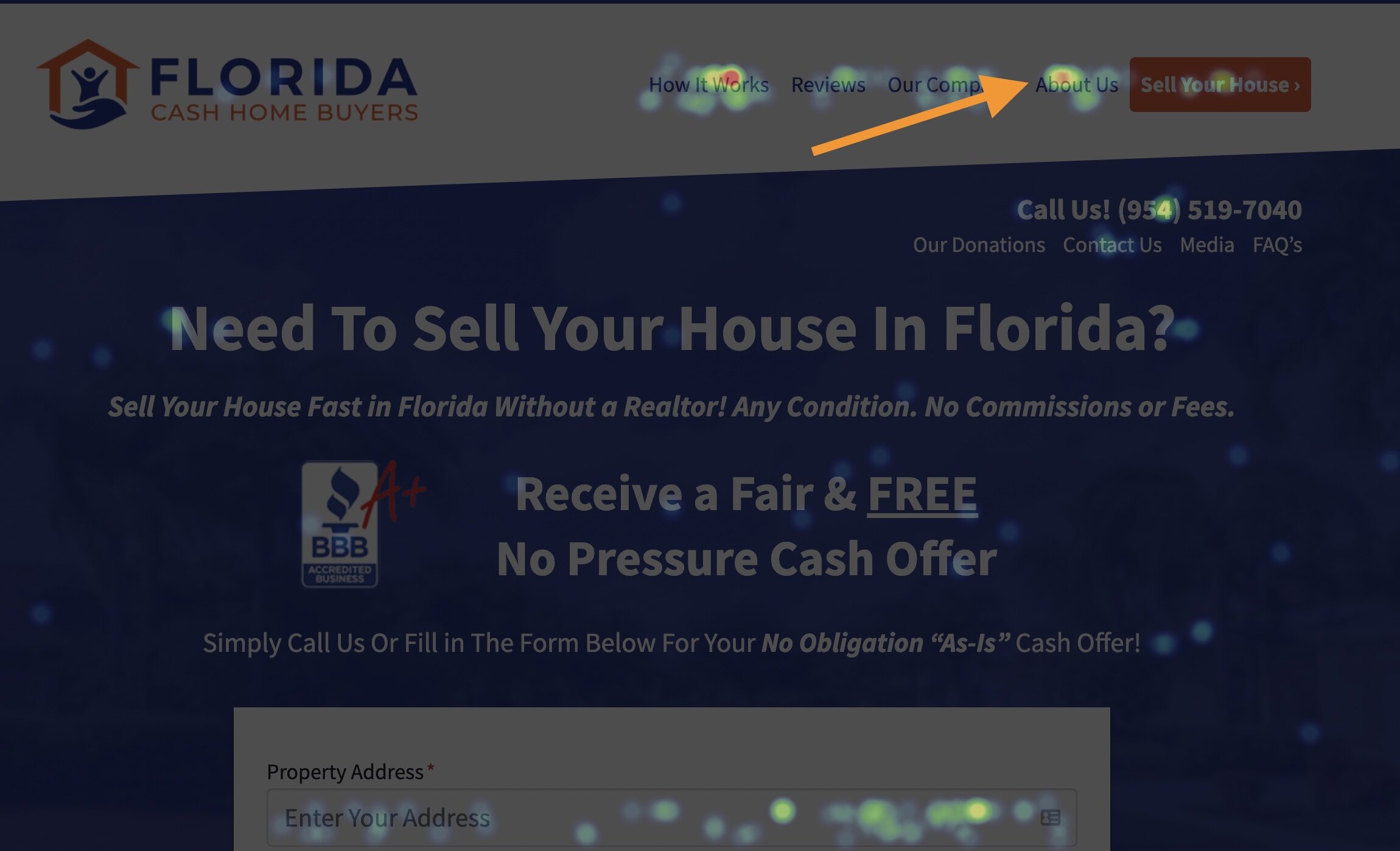
About Us: Build trust and connect with visitors by showcasing your expertise and experience.
Services: Clearly explain the services you offer and how they benefit motivated sellers.
FAQs: Address common questions and concerns potential leads might have.
Contact: Provide multiple ways for visitors to get in touch with you, including phone number, email address, and a contact form.
Mega Menus (Optional): For websites with extensive information, consider well-organized mega menus that categorize sub-pages for easy navigation.
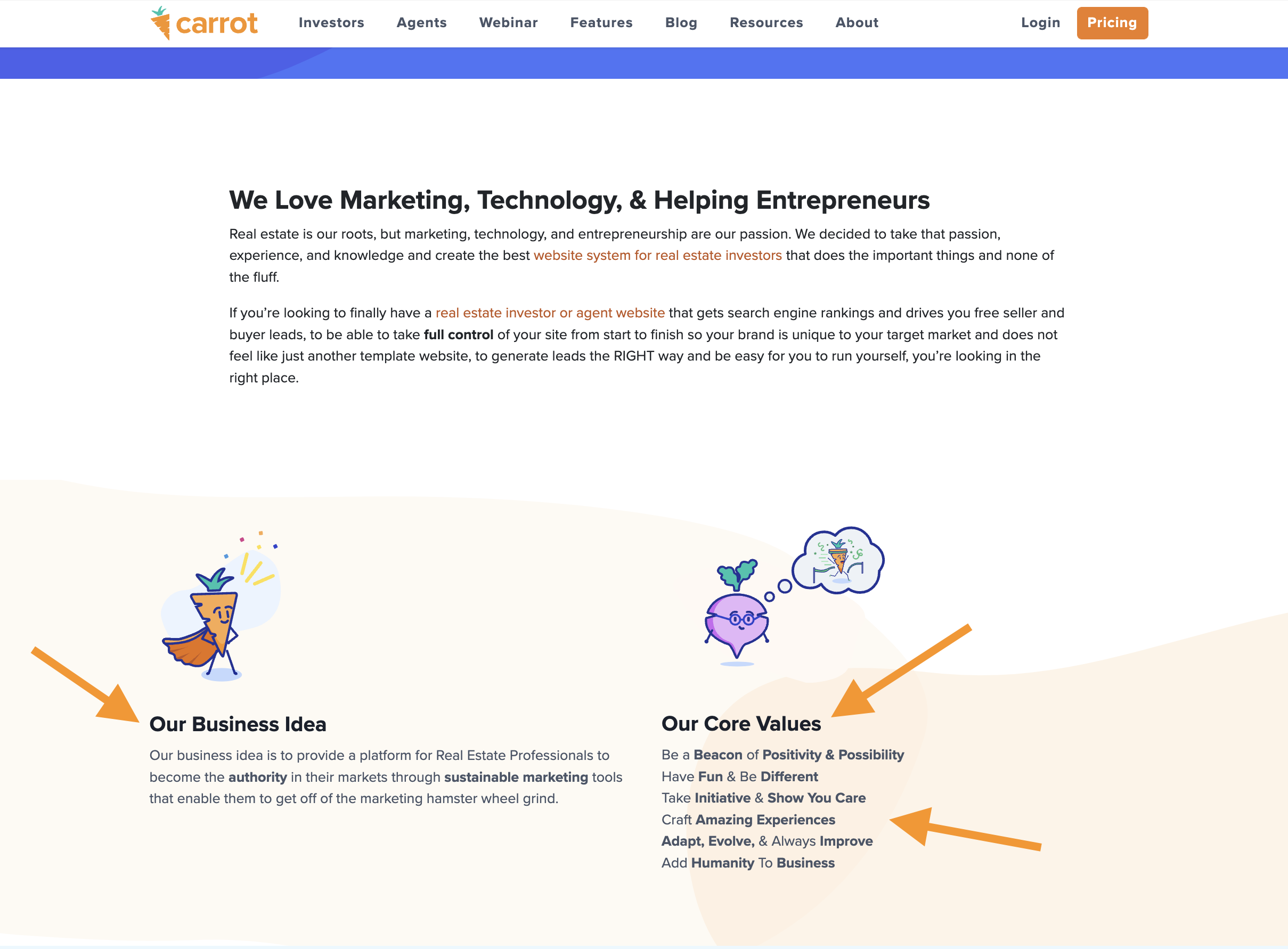
2. Compelling “About Us” Page: Unveiling the Human Touch
Building Trust: A well-crafted “About Us” page humanizes your brand and builds trust with potential leads. It allows visitors to connect with you personally and understand your expertise.
Content Elements: Include the following elements on your “About Us” page:
Your Story: Share the story behind your business, your motivations for helping motivated sellers, and what sets you apart.
Team Bios: Showcase your team member’s expertise and experience. Include photos and brief bios highlighting their qualifications.
Testimonials: Integrate positive testimonials from satisfied clients to build trust and social proof.
Awards & Recognition: If you’ve received any industry awards or recognition, highlight them on your “About Us” page to demonstrate credibility.
Bonus Tip: Consider incorporating video content on your “About Us” page. This allows visitors to connect with you on a more personal level and see your passion for helping motivated sellers.
SEO Optimization for Search Visibility: Attract Qualified Leads Organically
In today’s competitive online landscape, search engine optimization (SEO) is crucial for driving organic traffic to your real estate investor website. By strategically incorporating relevant keywords, you can ensure your website shows up in search results when motivated sellers in your area are looking for solutions.
1. Keyword Research: Uncovering the Language of Your Audience
Understanding Search Intent: Conduct thorough keyword research to identify the specific search terms motivated sellers in your location are using. Tools like Google Keyword Planner, Carrot’s Keyword Explorer Tool, and SEMrush can be helpful for this.
Data on Keyword Research: According to a Backlinko study, websites with strong SEO strategies can generate over 1000% more organic traffic than those without.
Target Long-Tail Keywords: Don’t just focus on broad keywords with high competition. Target long-tail keywords that are more specific and have lower competition. For example, instead of targeting “sell my house,” target “sell my inherited house fast in [your city].”
Location Matters: Integrate local SEO keywords throughout your website copy to improve local search ranking. For example, include your city and state in your page titles, meta descriptions, and headers.
2. On-Page Optimization: Weaving Keywords with Care
Strategic Keyword Placement: Once you’ve identified your target keywords, integrate them naturally throughout your website copy. This includes:
Page Titles: Every page should have a unique and keyword-rich page title that accurately reflects the content.
Meta Descriptions: Meta descriptions are short summaries displayed in search results. Optimize them with relevant keywords to entice users to click on your website.
Headers: Use H1, H2, and H3 headers throughout your content, incorporating your target keywords in a natural and informative way.
Body Copy: While keyword density is important, prioritize natural language and avoid keyword stuffing. Focus on creating valuable and informative content for your audience.
Bonus Tip: Go beyond traditional keyword research. Explore “People Also Ask” (PAA) or Frequently Asked Questions (FAQ) sections and answer box content on relevant search terms. This allows you to target specific questions motivated sellers might have and position your website as a trusted resource.
By implementing these SEO best practices, you’ll increase your website’s visibility for relevant search queries. This translates to attracting more qualified leads who are actively searching for solutions you can provide. Remember, SEO is an ongoing process. Regularly monitor your website’s performance, analyze keyword rankings, and adjust your strategy as needed.
Conclusion: Cultivating a Conversion Powerhouse
By implementing the data-driven CRO best practices and SEO strategies outlined above, you can transform your real estate investor website from a passive online presence into a powerful lead generation machine. Remember, a successful website is a living entity that requires ongoing optimization and nurturing. Here’s how to ensure your website continues to thrive:
1. Embrace A/B Testing for Continuous Improvement
The Power of Iteration: Don’t settle for assumptions! Utilize A/B testing tools to compare different versions of your website elements. This could include testing variations of your hero section headline, CTA button color, or “About Us” page layout.
Data-Driven Decisions: Track key metrics like conversion rates, bounce rates, and time on page. Analyze A/B test results to identify what resonates best with your target audience and make data-driven decisions for future website improvements.
2. Content Marketing: A Magnet for Motivated Sellers
Become a Trusted Resource: Don’t just focus on selling; establish yourself as a trusted resource in your community.
Data on Content Marketing: According to the Content Marketing Institute, content marketing generates over 3 times the leads compared to traditional advertising and costs 62% less.
Content Ideas:
Create informative blog posts that address common challenges faced by motivated sellers in your area.
Develop downloadable guides or e-books offering valuable insights on the real estate selling process.
Consider video content, hosting webinars, or creating infographics to diversify your content offerings.
3. Leverage the Power of Online Reviews
Building Trust and Credibility: Positive online reviews from satisfied clients act as social proof and build trust with potential leads.
Data on Reviews: According to BrightLocal, 84% of consumers trust online reviews as much as personal recommendations.
Encourage Reviews: Make it easy for satisfied clients to leave positive reviews on platforms like Google My Business, Yelp, and Facebook.
Respond to All Reviews: Take the time to respond to all reviews, both positive and negative. Thank satisfied clients for their feedback and address any concerns raised in negative reviews promptly and professionally.
Incorporating these ongoing strategies will cultivate a website that not only attracts motivated sellers but also fosters trust, establishes you as a valuable resource, and ultimately converts visitors into leads.
Remember, a successful website is a journey, not a destination. By consistently applying these strategies and staying informed about the latest trends, you can ensure your real estate investor website remains a powerful Evergreen lead-generation machine for years to come.
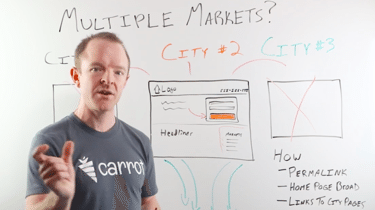
Wholesaling across multiple real estate markets doesn’t require a complex website system but rather a strategic approach where your website serves as a central hub to establish credibility, showcase local expertise, and generate leads in each target area.
Key Takeaways
Create location-specific landing pages for each market you serve with targeted keywords, local imagery, and content that demonstrates your understanding of local market conditions.
Build trust through transparency by including testimonials from each market, clear contact information, and educational resources that establish your expertise as a wholesaler.
Customize your messaging with location-specific calls to action and visual branding elements that resonate with each target market while maintaining consistent overall brand identity.
By implementing these strategic website approaches, you can transform your online presence from a static brochure into a dynamic hub that speaks directly to each market you serve, overcoming the challenges of appearing relevant and trustworthy in multiple locations.
Imagine Sarah, a young and ambitious real estate investor. Starting in her hometown, she quickly mastered the art of wholesaling – finding undervalued properties, securing them under contract, and assigning those contracts to rehab specialists at a profit. Success came quickly, but Sarah craved more. Limited by her local market, she knew she needed to expand her horizons. Undeterred, Sarah took a calculated leap, targeting several neighboring cities with similar demographics. By leveraging a strategic online presence, she built trust with sellers in these new markets, uncovered a wider pool of deals, and ultimately scaled her wholesaling business to new heights.
Wholesaling, the process of acquiring properties under contract and then assigning those contracts to a buyer for a fee, is a powerful strategy for generating profits in the real estate market. While success is certainly achievable by focusing on a single market, venturing into new territories offers several advantages. Diversification across economic climates reduces risk, and a wider pool of deals provides more opportunities to find hidden gems. However, expanding your reach comes with its own set of challenges. Building trust with new sellers and buyers, demonstrating local market knowledge, and appearing relevant in each area all require a strategic approach.
This is where your website steps in as your secret weapon. By crafting a website that speaks directly to each market you serve, you can overcome these hurdles and propel your wholesaling business to new heights. Let’s dive into the specific strategies you need to implement to transform your website from a static brochure into a dynamic hub that fuels your multi-market success.
Watch this video for deeper insights into wholesaling in multiple markets:
Challenges of Wholesaling in Multiple Markets
The potential rewards of expanding your wholesaling business to multiple markets are undeniable. Access to a wider pool of deals, diversification across economic climates, and scaling your profits are all exciting possibilities. However, venturing into new territories also presents unique challenges that require a strategic approach. Here are the key hurdles you’ll need to overcome when marketing yourself as a wholesaler across multiple locations:
Local Knowledge and Market Nuances: Every market has its own rhythm. Understanding local trends, pricing structures, and even legalities specific to each area is crucial for success. A one-size-fits-all approach won’t work. Without in-depth knowledge of, for example, average renovation costs in a particular market, you risk miscalculating your profit margins or underestimating the rehab potential of a property. This can lead to missed deals or, worse, deals that fall apart during due diligence.
Building Trust with Potential Buyers and Sellers in Different Areas: In the wholesaling game, trust is your currency. Sellers need to feel confident that you can deliver a qualified buyer quickly and at a fair price. Buyers need to know you have access to good deals and the expertise to navigate the closing process. Building this trust takes time and effort, especially when you’re new to a market. Without a proven track record and established relationships with local players, convincing sellers you’re the right partner can be an uphill battle.
Appearing Relevant and Engaged in Each Market: Wholesaling is a competitive business, and potential clients are bombarded with marketing messages. To stand out, you need to demonstrate that you’re not just a fly-by-night operator. In a new market, convincing sellers you’re genuinely interested in their area and not just here for a quick buck requires a different approach. Simply plastering your generic wholesaling website across new territories won’t cut it.
Website as Your Central Hub
The challenges of wholesaling across multiple markets might seem daunting, but fear not! Your website can be the key to overcoming these hurdles and transforming into a central hub for your multi-market wholesaling business. Here’s how:
Conquer Local Knowledge with Targeted Content:
While you can’t be an expert on every market overnight, your website can bridge the gap. Create location-specific landing pages or blog posts dedicated to each market you operate in. These pages can showcase your understanding of the area by highlighting: * Local market trends and data (average sales prices, days on market) * Success stories of past deals you’ve closed in that specific city * Testimonials from satisfied sellers in the area * Information on local resources and programs relevant to wholesalers (investor groups, lenders)
By providing valuable, localized content, you demonstrate a genuine interest in each market and establish yourself as a knowledgeable resource for potential clients.
Build Trust Through Authority and Transparency:
Your website can be a powerful tool for building trust with potential buyers and sellers. Here’s how:
Showcase Your Expertise: Dedicate sections of your website to educating visitors on the wholesaling process and the benefits you offer as a wholesaler. Include clear explanations of what you do, the types of properties you work with, and your typical timeline for closing deals. Consider incorporating videos or case studies to showcase your past successes and expertise. Testimonials and Social Proof:Positive testimonials from satisfied sellers and buyers in each market you serve are gold. Include these prominently on your website, ideally linked to the specific location pages. Social proof builds trust and demonstrates your track record of success in different territories. Transparency is Key: Be upfront about your contact information, service areas, and fees. Having a dedicated “Contact Us” page for each market allows potential clients to easily reach you and fosters a sense of accessibility and local presence.
Appear Relevant and Engaged with Tailored Messaging:
A generic wholesaling website won’t resonate with potential clients in different markets. Here’s how to use your website to appear relevant and engaged:
Location-Specific Calls to Action: Instead of a generic “Contact Us” form, create targeted calls to action on each landing page that speak directly to the needs of that market. For example, “Get Your Free Seller’s Report – ” or “Find Your Cash Buyer in ” will resonate more than a generic “Sell Your House Fast” option. Visual Branding with a Local Touch: Maintain a consistent brand identity across your website but with the flexibility to incorporate subtle visuals that resonate with each target market. This could include using local cityscapes as background images or color palettes that reflect the local aesthetic.
By implementing these strategies, your website transforms from a static brochure into a dynamic hub that speaks directly to each market you serve. This targeted approach builds trust, showcases your expertise, and positions you as a relevant and engaged player in each area you operate.
Website Strategy for Multi-Market Wholesalers
Your website is the cornerstone of your multi-market wholesaling operation. Here’s how to leverage its power to attract sellers and buyers in each of your target areas:
Content Strategy: Speak the Local Language
Location-Specific Landing Pages: Ditch the one-size-fits-all approach. Create dedicated landing pages or blog posts for each market you serve. Titles like “Wholesaling Houses in ” immediately grab attention and demonstrate your local presence.
Targeted Keywords: People searching for wholesaling services use location-specific keywords. Research and incorporate relevant keywords for each market throughout your website content. This improves your search engine ranking in each area, ensuring potential clients easily find you.
SEO Optimization: Don’t underestimate the power of SEO. Optimize each landing page for its specific location by incorporating local keywords naturally into the content, meta descriptions, and image alt tags. Consider exploring local SEO tools to further boost your visibility in each market.
Visual Branding: Consistency with a Local Flair
Maintain a consistent brand identity across your entire website. This builds recognition and trust. However, infuse your website with subtle visual elements that resonate with each target market. Think about incorporating:
Cityscapes or Local Landmarks: Use high-quality images of cityscapes or iconic landmarks in the background of your landing pages for each market. This creates a sense of local connection and demonstrates familiarity with the area.
Color Palettes: Consider using color palettes that reflect the local aesthetic. This could be a vibrant beach scene theme for a coastal market or a more muted, historical theme for a city steeped in tradition. A subtle shift in color scheme can go a long way in creating a sense of local relevance.
Calls to Action: Make it Clear What You Want
Don’t leave visitors guessing about what to do next. Implement clear and targeted calls to action (CTAs) on each landing page. These CTAs should speak directly to the needs of that specific market. For example, instead of a generic “Contact Us” button, use CTAs like:
“Get Your Free Seller’s Report – “ – This provides immediate value and positions you as a resource for motivated sellers.
“Find Your Cash Buyer in “ – This speaks directly to a seller’s pain point and clearly conveys your value proposition.
Lead Capture Forms: Segment Your Audience for Tailored Communication
Utilize separate lead capture forms on each location-specific landing page. This allows you to segment your audience by market, ensuring your communication is relevant and targeted. By capturing location data, you can personalize future emails and marketing messages, building stronger relationships with potential clients in each area.
Additional Tips & Considerations
Conquering the digital landscape is just one piece of the puzzle. Here are some additional strategies to solidify your presence as a multi-market wholesaler:
Social Media Savvy: Don’t underestimate the power of social media platforms for targeted marketing. Create separate social media profiles or pages for each market you serve. Share location-specific content, engage with local groups and influencers, and run targeted social media ad campaigns to reach motivated sellers and potential buyers in each area.
Building Local Relationships: While your website is a powerful tool, there’s no substitute for building relationships with local players. Network with real estate agents, attend local investor meetings, and connect with other wholesalers in each market. These connections can be a valuable source of referrals and provide valuable insights into the local market nuances.
Conclusion: Your Website – The Hub of Your Multi-Market Success
The challenges of wholesaling across multiple markets are real, but you can overcome them with a well-crafted website as your central hub. By implementing the strategies outlined above, you’ll create a website that speaks directly to each market you serve, showcasing your expertise, building trust, and attracting a steady stream of motivated sellers and eager buyers.
Remember, your website is a dynamic tool, not a static brochure. Continuously update it with fresh content, analyze your website traffic for each market, and refine your approach based on the data. You can turn your multi-market wholesaling dream into a thriving reality with dedication and a strategic online presence.
YouTube optimization for real estate investors has become indispensable in today’s competitive markets. With over 2 billion monthly active users, YouTube offers a vast audience for showcasing properties, sharing investment tips, and establishing your brand as a trusted expert in the industry.
Real Estate Video Marketing Playbook: 52 free scripts and ideas
Video content is incredibly powerful in the real estate sector. Leveraging YouTube optimization for real estate investors can significantly boost engagement, build trust with your audience, and ultimately drive more leads and sales.
Here’s a general overview of the trends within the real estate industry:
Growing Popularity of Video Marketing: According to the National Association of Realtors (NAR), video marketing is increasingly popular among real estate agents and investors. Video content is effective in engaging potential clients and showcasing properties, which includes attracting motivated sellers.
YouTube’s Reach and Influence: YouTube is the second largest search engine globally, with over 2 billion logged-in monthly users. This broad audience provides real estate investors with a significant opportunity to connect with motivated sellers through video content.
Success Stories: Many real estate investors and agencies leverage YouTube to build their brand, educate potential clients, and generate leads. Successful investors often use video content to share tips, conduct property tours, and discuss market trends, which can attract motivated sellers.
Industry Trends: According to a report by HubSpot, 54% of consumers prefer to see more video content from businesses they support. This trend extends to real estate, where video content is increasingly used to engage and attract sellers and buyers alike.
Survey Insights: A survey by the National Association of Realtors found that 73% of home sellers are more likely to list with a real estate agent who uses video. While this statistic specifically addresses agents, it reflects the growing importance of video marketing in attracting sellers, including motivated ones.
In this blog post, we’ll explore 10 actionable tips for YouTube optimization for real estate investors, ensuring you maximize your reach and impact. Whether you’re just starting or looking to enhance your current strategy, these tips will help you leverage YouTube to grow your real estate business.
YouTube’s Reach and Impact on Real Estate
Massive Audience: YouTube has over 2 billion logged-in monthly users, with users watching over a billion hours of video daily. This massive reach provides an unparalleled opportunity to connect with potential clients.
Engagement Rates: According to recent studies, video content on social media platforms generates 1200% more shares than text and image content combined. For real estate investors, this means higher engagement and a greater chance of your content being seen by the right people.
Consumer Behavior: A survey by the National Association of Realtors found that 73% of homeowners are more likely to list with a real estate agent who uses video. Additionally, 70% of home buyers watch video tours of properties they are interested in.
By understanding the importance of YouTube and learning from these success stories, you can see the potential impact video marketing can have on your real estate business. In the following sections, we’ll dive into specific strategies to optimize your YouTube channel and harness its full potential.
10 Real Estate Investor YouTube Channel Optimization Tips
Optimize Your Channel Name and Description
Professional Branding
Content Planning and Creation
High-Quality Video Production
Effective Calls to Action (CTAs)
Engage with Your Audience
Cross-Promotion
Utilize YouTube Analytics
Regular Content Uploads
SEO Optimization
Setting Up Your Channel
Optimize Your Channel Name and Description
Choosing the right name for your YouTube channel is crucial for YouTube optimization for real estate investors. Incorporating relevant keywords into your channel name can significantly boost your search rankings. Consider using terms like “Real Estate,” “Investing,” “Property,” or “Homes” alongside your unique brand name.
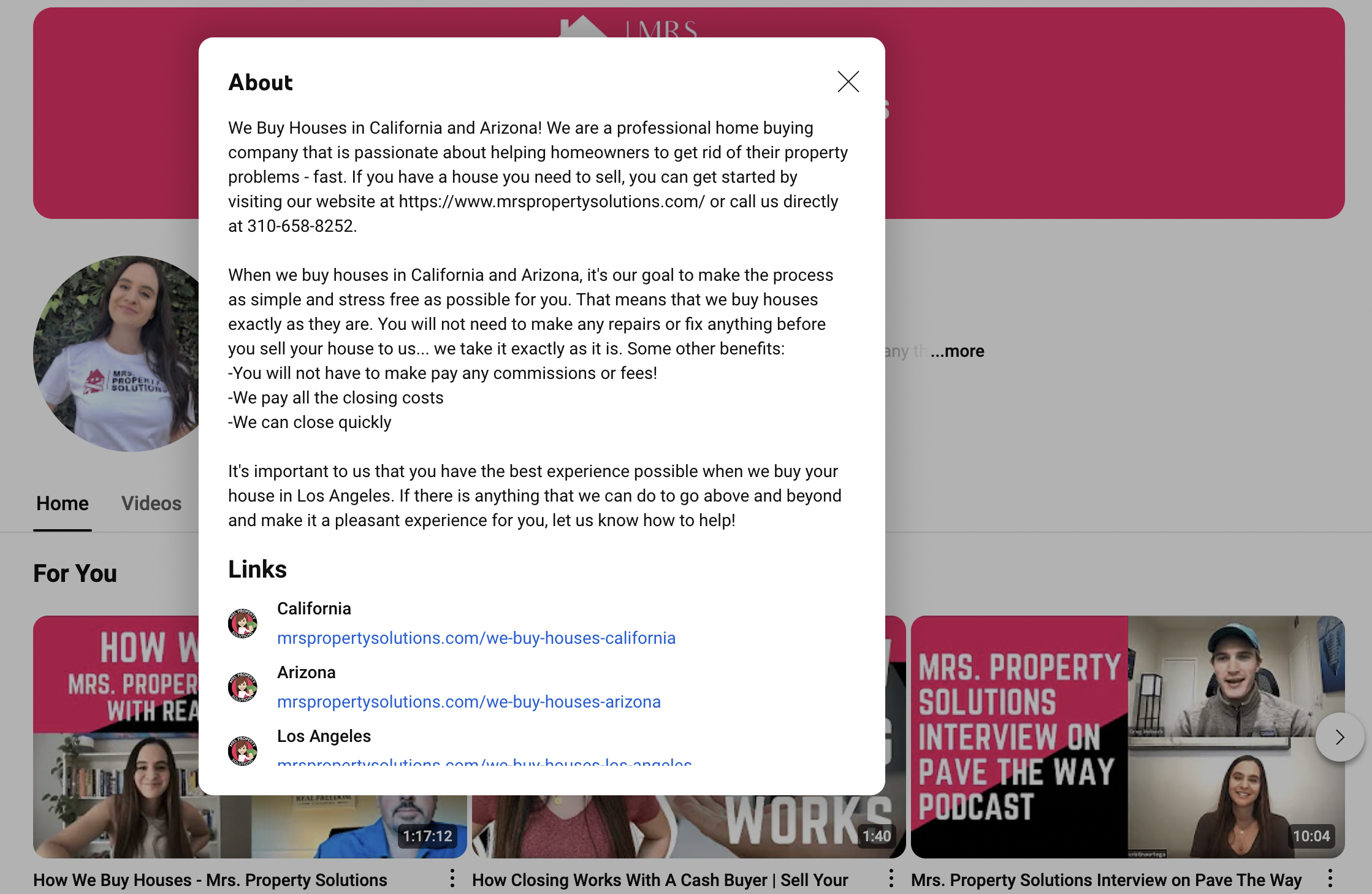
For example, “Smart Property Investments” or “Real Estate Insights by [Your Name].” This helps potential viewers immediately understand your channel’s focus and enhances discoverability when users search for related content.
Crafting a Compelling Channel Description with Relevant Keywords
Your channel description is an excellent opportunity to tell your audience who you are, what you offer, and why they should subscribe. To maximize the effectiveness of your description:
Start with a Strong Introduction: Briefly introduce yourself and your expertise in real estate investing.
Highlight Your Content: Explain the type of content you create, such as property tours, market analyses, investment tips, and success stories.
Incorporate Keywords Naturally: Use relevant keywords throughout your description to improve searchability. For instance, if you specialize in flipping houses, include phrases like “house flipping tips,” “real estate investment strategies,” and “property renovation guides.”
Call to Action: Encourage viewers to subscribe and engage with your content, emphasizing the value they’ll receive by following your channel.
Example:
“Welcome to [Your Channel Name], your go-to source for expert real estate investment advice and property insights. As a seasoned real estate investor, I share valuable tips on house flipping, market trends, and smart investment strategies. Subscribe to join our community and stay ahead in the real estate game!”
First impressions matter, and your channel’s visual branding is often the first thing viewers notice. A high-quality logo and channel art convey professionalism and help establish your brand identity. Your logo should be simple, memorable, and reflective of your brand. Meanwhile, your channel art should provide a clear, visually appealing representation of what your channel is about.
Tips for Effective Branding:
Express Homebuyers YouTube Channel Branding
Logo: Use clean lines and professional design. Avoid clutter and ensure your logo is recognizable even at smaller sizes.
Channel Art: Include your channel name, tagline, and a brief description of your content. Use high-resolution images and maintain a cohesive color scheme that aligns with your overall brand.
Consistency in Branding Across All Social Media Platforms
Consistency is key to building a strong and recognizable brand. Ensure that your branding elements (logo, colors, fonts) are consistent across all your social media platforms, including your YouTube channel, Facebook, Instagram, LinkedIn, and Twitter.
This not only enhances brand recognition but also creates a cohesive and professional image.
Steps to Maintain Consistency:
Unified Visuals: Use the same profile picture, cover photo, and color scheme across all platforms.
Consistent Messaging: Ensure your bio, descriptions, and tone of voice are aligned across all social media profiles.
Cross-Promotion: Regularly promote your YouTube content on other platforms and link your social media accounts to your YouTube channel to drive traffic and engagement.
By optimizing your channel name and description with strategic keywords and establishing a consistent, professional brand, you’ll create a solid foundation for your YouTube presence. This will help attract more viewers, build credibility, and set the stage for successful video marketing in the real estate industry.
Engagement and Community Building
Call to Action (CTA)
Effective calls to action (CTAs) are crucial for guiding your audience on what steps to take next and increasing engagement with your content, which is an essential part of YouTube optimization for real estate investors. Here are some effective CTAs to incorporate into your videos:
Subscribe to the Channel: Always remind viewers to subscribe to your channel to stay updated with your latest content. Example: “If you enjoyed this video and want to see more real estate investment tips, don’t forget to subscribe and hit the notification bell.”
Like the Video: Encourage viewers to like your video if they found it helpful or informative. Example: “Give this video a thumbs up if you found these property investment tips useful.”
Leave a Comment: Ask viewers to share their thoughts, questions, or experiences in the comments section. This not only boosts engagement but also helps build a community. Example: “What do you think about this property? Leave a comment below with your thoughts!”
Share the Video: Encourage viewers to share your video with friends or colleagues who might find it useful. Example: “Know someone who’s looking to invest in real estate? Share this video with them!”
Visit Your Website or Social Media: Direct viewers to additional resources on your website or social media pages. Example: “For more in-depth articles and resources, visit my website at [YourWebsite.com].”
Download Free Resources: If you offer free guides or checklists, invite viewers to download them. Example: “Download my free real estate investment checklist by clicking the link in the description.”
Encouraging Viewers to Like, Comment, and Subscribe
Consistently prompting viewers to like, comment, and subscribe is essential for growing your channel. Here are a few tips to encourage these actions:
Be Direct and Clear: Clearly ask viewers to like, comment, and subscribe. People are more likely to act when given specific instructions.
Incorporate CTAs Naturally: Integrate CTAs seamlessly into your video script, especially at the beginning, middle, and end of your videos.
Highlight the Benefits: Explain how liking, commenting, and subscribing will benefit viewers, such as staying informed about new content or joining a community of like-minded investors.
Engage with Your Audience
Responding to Comments and Messages
Engagement is a two-way street and an important part of YouTube optimization for real estate investors. Actively responding to comments and messages shows your audience that you value their input and are interested in building a relationship. Here’s how to effectively engage:
Timely Responses: Aim to reply to comments and messages promptly. This keeps the conversation going and demonstrates your commitment to your audience.
Personalized Replies: Address commenters by their name and provide thoughtful responses. This personal touch fosters a stronger connection.
Encourage Further Discussion: Ask follow-up questions to keep the conversation engaging. Example: “Great point, [Name]. What do you think about investing in multi-family properties?”
Creating Community Posts and Polls to Engage with Subscribers
YouTube’s community tab is a powerful tool for engaging with your audience beyond video content. Utilize community posts and polls to keep your subscribers engaged and involved:
Regular Updates: Share updates about upcoming videos, market trends, or behind-the-scenes content. This keeps your audience informed and connected.
Polls and Questions: Use polls to gather opinions or ask questions to spark discussions. Example: “What type of property tour would you like to see next? Single-family homes or condos?”
Highlight Subscriber Content: Showcase comments or video responses from your subscribers. This not only acknowledges their participation but also encourages others to engage more.
Tips for Maximizing Engagement:
Consistency: Regularly post updates and engage with your audience to maintain an active community.
Value-Driven Content: Ensure that your posts and polls provide value and are relevant to your audience’s interests and needs.
Encouragement: Thank your subscribers for their engagement and encourage them to continue participating.
You’ll foster a loyal and engaged community by incorporating effective CTAs in your videos and actively engaging with your audience through comments, messages, and community posts. This will not only boost your channel’s growth but also enhance your credibility and influence as a real estate investor.
Promotion and Analytics
Cross-Promotion
Cross-promotion is essential to maximize your YouTube optimization for real estate investors. Leveraging your presence on other social media platforms and email newsletters can drive traffic to your channel and attract a broader audience.
Social Media Platforms:
Facebook: Share your videos on your personal and business Facebook pages. Join real estate groups and communities to share your content and engage with potential viewers.
Instagram: Promote your videos using Instagram Stories, IGTV, and posts. Tease upcoming content with short clips and use relevant hashtags to reach a wider audience.
LinkedIn: Post your videos on LinkedIn to connect with professional contacts and potential investors. Share insights and market trends to establish authority.
Twitter: Tweet about your new videos and include a link to your YouTube channel. Use industry-specific hashtags to increase discoverability.
Email Newsletters:
Include Video Thumbnails: Use eye-catching thumbnails and brief descriptions of your latest videos in your email newsletters.
Call to Action: Encourage subscribers to click through to your YouTube channel to watch the full video. Example: “Check out our latest video on [topic] and gain valuable insights into [subject]. Click here to watch!”
Consistent Updates: Regularly update your subscribers about new content, upcoming videos, and exclusive insights.
Collaborating with Other Real Estate Influencers and Channels
Collaborations can significantly boost your channel’s visibility by tapping into the audiences of other influencers and channels. Here are some ways to collaborate effectively:
Guest Appearances: Invite other real estate influencers to feature on your channel and vice versa. This introduces your audience to new perspectives and brings new viewers to your channel.
Joint Webinars and Live Streams: Host live events with other real estate experts. Promote these events across both of your channels and social media platforms to maximize reach.
Co-Created Content: Partner with other influencers to create joint content, such as market analysis, property tours, or investment tips. Share the content on both channels and cross-promote it.
Benefits of Collaborations:
Increased Exposure: Reach new audiences who are already interested in real estate.
Enhanced Credibility: Association with other respected influencers can boost your credibility and authority.
Mutual Growth: Collaborations often result in a win-win situation, with both parties benefiting from increased viewership and engagement.
Utilizing YouTube Analytics
YouTube Analytics provides valuable insights into your channel’s performance, helping you understand what works and what doesn’t, which is key for YouTube optimization for real estate investors. Key metrics to monitor include:
Watch Time: The total amount of time viewers spend watching your videos. Higher watch time indicates engaging content.
Views: The number of times your videos are watched. This helps gauge your content’s popularity.
Audience Retention: The percentage of a video watched by viewers. High retention rates suggest that viewers find your content valuable and engaging.
Click-Through Rate (CTR): The percentage of people who click on your video after seeing the thumbnail. A higher CTR indicates an effective thumbnail and title.
Subscribers Gained: The number of new subscribers acquired during a specific period. Tracking subscriber growth helps measure your channel’s overall progress.
Engagement Metrics: Likes, comments, and shares. High engagement levels indicate that your content resonates with viewers.
Using Analytics to Refine Your Content Strategy
By analyzing these metrics, you can refine your content strategy to meet the needs and preferences of your audience better. Here’s how:
Identify Top-Performing Content: Analyze which videos have the highest watch time, views, and engagement. Create more content on similar topics or in similar formats.
Understand Audience Preferences: Look at audience retention graphs to see where viewers drop off. Adjust your content to maintain interest throughout the video.
Optimize Thumbnails and Titles: If your CTR is low, experiment with different thumbnail designs and titles to attract more clicks.
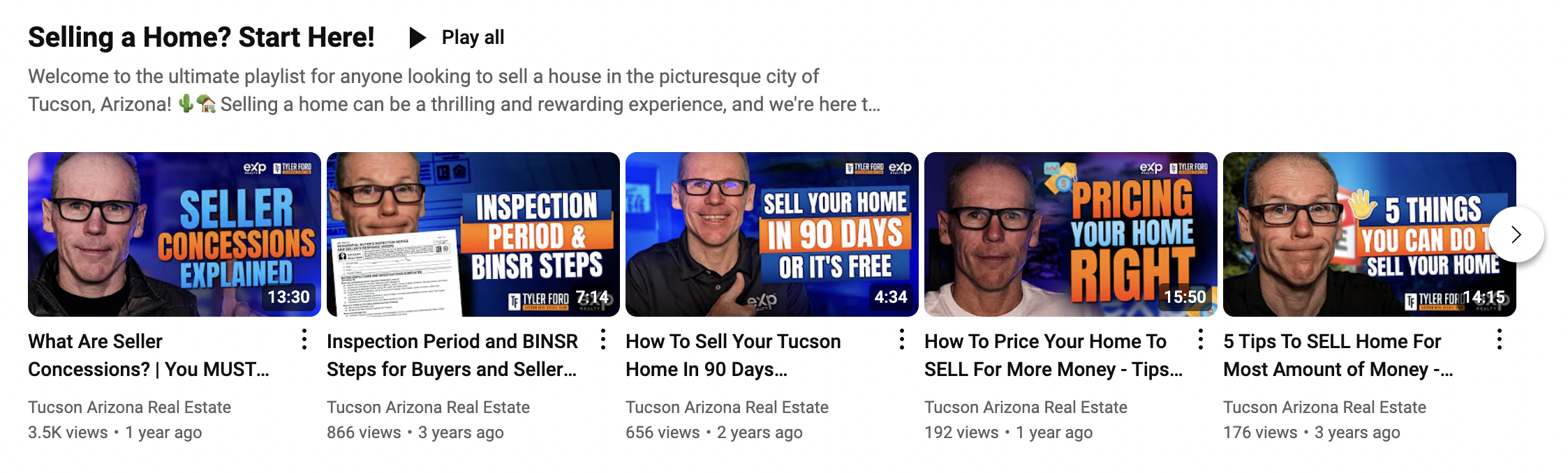
Carrot member and hybrid investor/agent, Tyler Ford achieves a well thought out YouTube channel.
Tailor Content to Demographics: Use demographic data to understand your audience’s age, gender, and location. Create content that appeals specifically to these groups.
Track Trends Over Time: Monitor how your key metrics change over time. Identify patterns and adjust your strategy to capitalize on positive trends or address any declines.
You can achieve sustained growth and success in your real estate investing journey by effectively promoting your YouTube channel through cross-promotion and collaborations and leveraging YouTube Analytics to refine your content strategy. These strategies will help you reach a wider audience, enhance engagement, and establish yourself as a trusted authority in the real estate industry.
Conclusion
Recap and Next Steps
Summarize the Key Points Discussed
In this blog post, we’ve explored several powerful strategies for YouTube optimization for real estate investors:
Setting Up Your Channel:
Optimizing your channel name and description with relevant keywords to enhance discoverability.
Establishing professional branding through high-quality logos, channel art, and consistent visuals across all social media platforms.
Content Creation:
Planning content that addresses your target audience’s needs and pain points.
Utilizing keyword research to integrate relevant terms naturally into video titles, descriptions, and tags.
Ensuring high-quality video production with affordable equipment and software.
Engagement and Community Building:
Incorporating effective CTAs to guide viewers to like, comment, and subscribe.
Actively engaging with your audience by responding to comments and creating community posts and polls.
Promotion and Analytics:
Cross-promoting your channel on other social media platforms and email newsletters.
Collaborating with other real estate influencers to reach a broader audience.
Leveraging YouTube Analytics to track key metrics and refine your content strategy based on data insights.
Encourage Readers to Implement These Strategies and Share Their Success Stories
Now that you have a comprehensive understanding of YouTube optimization for real estate investors, it’s time to put these strategies into action. Share your experiences and results in the comments section below or connect with us on social media.
We’d love to hear about your journey and success stories! Share your experiences and results in the comments section below or connect with us on social media. Your insights could inspire and motivate other real estate investors.
Mention Any Additional Resources or Tools for Further Learning
For further learning and to enhance your YouTube optimization efforts, explore these additional resources and tools:
Carrot’s Video Marketing Playbook: Attract your most motivated prospects in under 20 minutes a week, no gear or tech expertise required. Includes Free scripts & 52 ideas.
TubeBuddy: A browser extension that helps with keyword research, video SEO, and analytics.
VidIQ: Another powerful tool for optimizing your YouTube content, providing insights into video performance and keyword opportunities.
Google Keyword Planner: Essential for conducting keyword research and finding relevant terms to incorporate into your content.
Canva: A user-friendly design tool for creating professional thumbnails, channel art, and social media graphics.
Adobe Premiere Pro and Final Cut Pro: Advanced video editing software for producing high-quality videos.
Additionally, consider subscribing to industry-leading blogs and YouTube channels that focus on video marketing and real estate investing for ongoing tips and updates.
By implementing these strategies and utilizing these resources, you’ll be well on your way to building a successful and influential YouTube channel as a real estate investor.
At the risk of being obvious … as a real estate investor, your business lives and dies by two things.
Number one, your ability to generate leads. Number two, your ability to close deals.
And one way to increase the amount of online leads you get is to…
… do a lot of testing and make your website convert more visitors into qualified leads.
How a small increase in performance can put tens of thousands in “found” profits in your pocket.
An increase in “conversion rate” on a real estate investing website from 5% to 8% means an extra 3 leads per 100 visitors. If you get 100 qualified visitors per month to your site… that’s an extra 36 motivated seller leads per year (3 x 12). If you close on average a deal per every 15 qualified seller leads and net on average $10k per deal… that’s an extra 2 deals and $20k in profits per year.
Just by doing some testing and improving the performance of your website.
Pretty cool eh? That’s assuming NO extra traffic. Free money.
We spend so much time split testing and optimizing our pages here at Carrot because we know so many people go to the web first to get information about buying or selling their house.
In fact, a whopping 43% of home buyers start their purchase process online compared to the second-place first step — contacting an agent — at 15%.
In other words, if you want to meet leads where they are, fill your sales funnel, and start converting like crazy … hands down the best way to do that is online.
A New Page Design We Tested That Yielded Up To 38.54% More Leads
See how and why this page design increased lead flow on some sites up to 38% more…
This post is going to go into a lot of the methodology and “backstory” on how to create a real estate investing or agent page that performs at a high rate. One that converts more visitors into leads than your current website may (for sure your competitors) and one that squeezes out an extra margin of leads and deals without you increasing your traffic (assuming you are getting solid traffic right now).
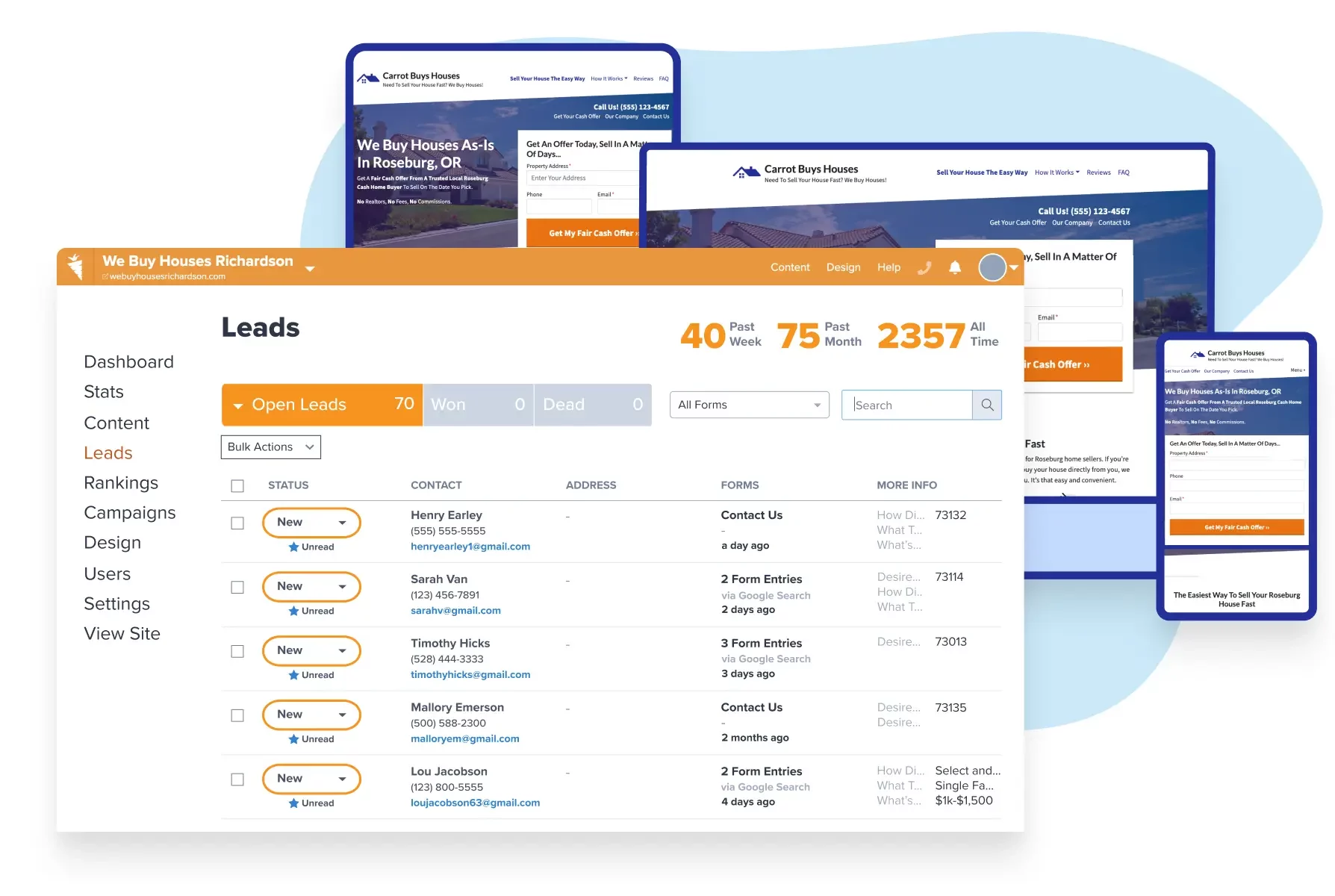
Below we’ll actually give you the “Stacked Hero” landing page and if you’re not a Carrot member you can even download the raw HTML files to upload and use yourself online. If you are a Carrot member, great! As of our last update, you now have this design available to launch NEW websites within your Carrot account in under 10 seconds with no tech hassle. We like to make your life easy :-)
To do that, I’ll share how our “Stacked Hero” design converted 38.54% more real estate leads than our best performing previous design. Even better — after guiding you through a handful of optimization principles — I’ll share how you can implement the very same template in your own business.
Let’s dive into the story of why this page design performs so well and the marketing principles that cause most real estate investor websites to perform so bad.
And if you’re NOT yet a Carrot member, download the HTML files of this landing page at the bottom of this page for FREE. Carrot members, this design is now in your account and you can launch a new site with it in under 10 seconds.
Real Estate Lead Generation Today: Thou Shall Test … or Die
This means we’re constantly testing and improving elements on our client’s websites to improve their results.
For the last year we’ve had a mission: to create a lead generating page that could beat our highest performing control.
This meant running tests across a select number of current Carrot websites throughout the country; ones that were getting a good amount of traffic and already converting leads. In fact, we ran 7 months’ worth of tests and dozens of page variations to tens of thousands of motivated house sellers and buyers.
This sort of real-world optimization gives us both a baseline to work from as well as data-driven insights most real estate agents simply can’t generate on their own.
Our testing software informs us when we have a clear winning test variation. You can see below what one of those looks like:
Our testing software lets us know when we have a winning test variation
Before jumping into the details of our tests themselves, let’s start with some of the guiding principles of online lead generation.
Online Real Estate Lead Generation Principles
To keep things as clear as possible, three principles are essential to your online lead generation: (1) your goal, (2) your content, and (3) your form.
1. Your Goal
By far, the biggest mistake you can make on a lead generating page — regardless of the industry — is complication.
Simplicity isn’t just essential to online lead generation. It should be the cornerstone of all your marketing, period.
Why?
Because as Harvard Business Review reports — after reviewing data from “multiple surveys of more than 7,000 consumers” as well as “interviews with hundreds of marketing executives and other experts around the world”:
The single biggest driver of stickiness [that is, a lead or customer’s likelihood to follow through on an intended purchase, buy the product repeatedly, and recommend it to others] was “decision simplicity.”
What consumers want from marketers is, simply, simplicity.
The first step to simplicity is knowing exactly what you want to achieve for each and every piece of customer-facing content you create.
Whether you’re working on a home page, landing page, email campaign, pay-per-click advertising, or even just a physical mailer … you have to begin and end with “a single, all-consuming question: ‘What is your goal … the one, smallest, easiest thing you want your reader to do?’”
As KlientBoost recently put it in their Landing Page Optimization Guide: Find Heaven By Saving Your Visitors From Hell:
Start with your ultimate goal and then … work backwards.
In other words, to increase conversions, your pages need to be ruthlessly free of clutter. Anything that doesn’t move a visitor closer to the one action you want them to take … must be eliminated.
Don’t feel [like] you have to fill all the empty or “white” space on your site with extra icons, or images. Avoid fancy animations and drop down menus. These are more likely to distract users from your content, rather than attracting them to it. Keep the look clean and uncluttered.
This warning comes with good reason.
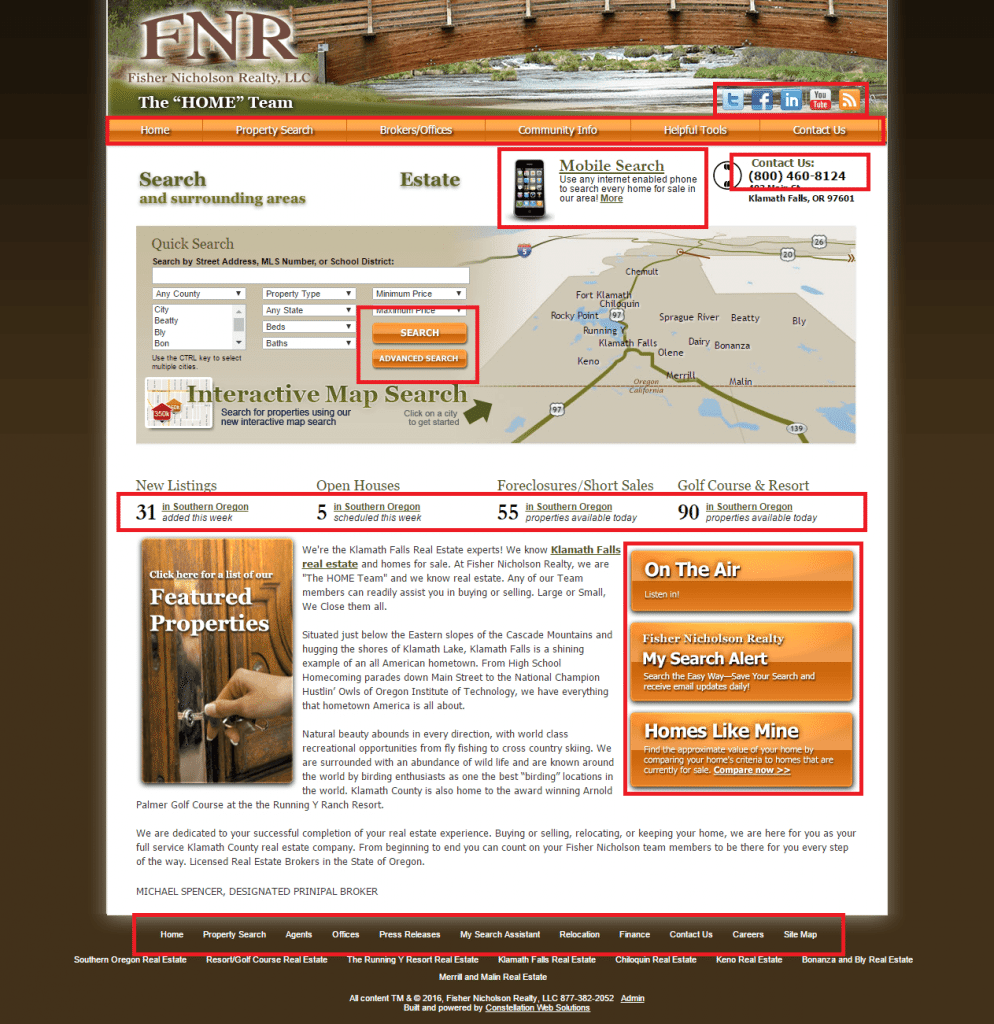
For example, take a look at the following home page for Fisher Nicholson Realty. Notice that there are no less than 22 possible actions a visitor can take (and that doesn’t even include the dropdown menus that appear if you hover over the navigational bar nor the additional 19 options in the footer):
Way Too Much Distraction And Choices At The Top Of This Site
All told, there are a whopping 68 links, buttons, navigational options, and calls-to-action on that one page alone.
Compare that quagmire with our own homepage. Excluding the header and footer, only four clickable buttons exist:
Even better, three of those four buttons send visitors directly to our Pricing and Plans page.
If you’re designing a landing page … things need to be even simpler.
The golden rule is just one call to action.
That doesn’t mean you can only have one button, but it does mean every button you have should guide visitors toward the same, singular something.
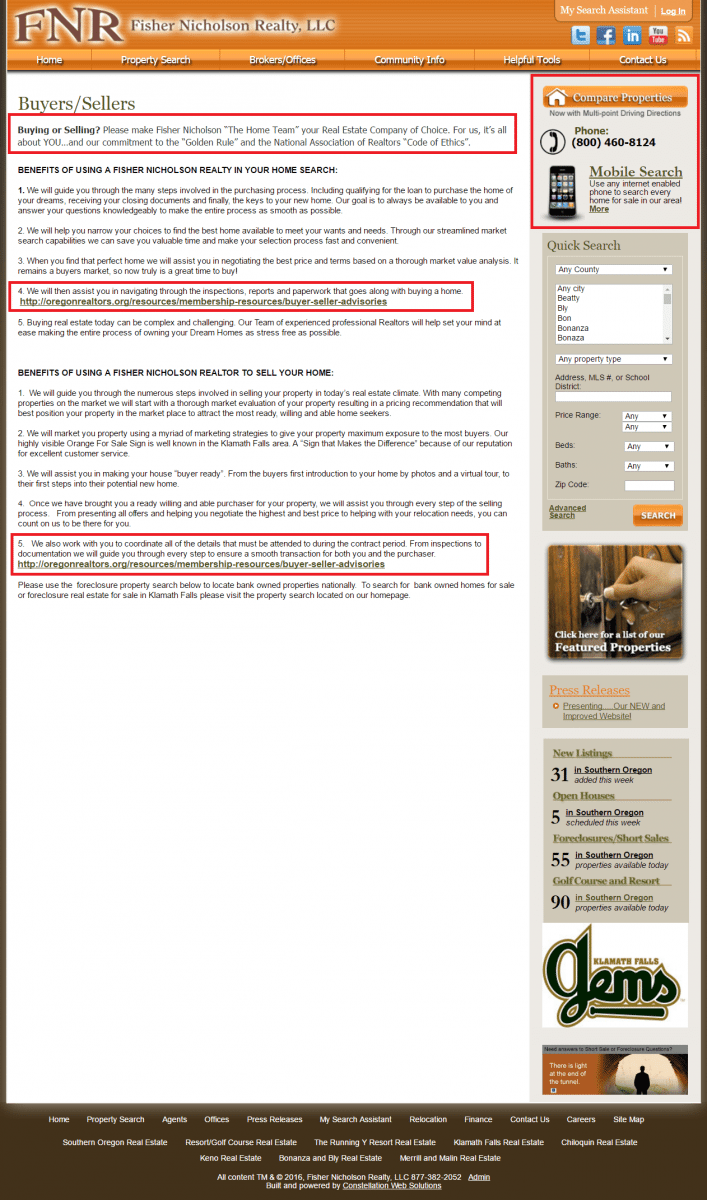
Going back to our first bad example — Fisher Nicholson Realty — clicking through to the “Buyers/Sellers” page you find this:
While the page opens with a call to action — “Buying or Selling? Please make Fisher Nicholson ‘The Home Team’ your Real Estate Company of Choice.” — the only clickable links are to non-related sites, property comparisons, search options, or featured properties.
Tragically, even if a visitor wanted to give them their contact information to “make” Fisher Nicholson their “Real Estate Company of Choice,” there’s literally no place to submit their contact information on the page itself.
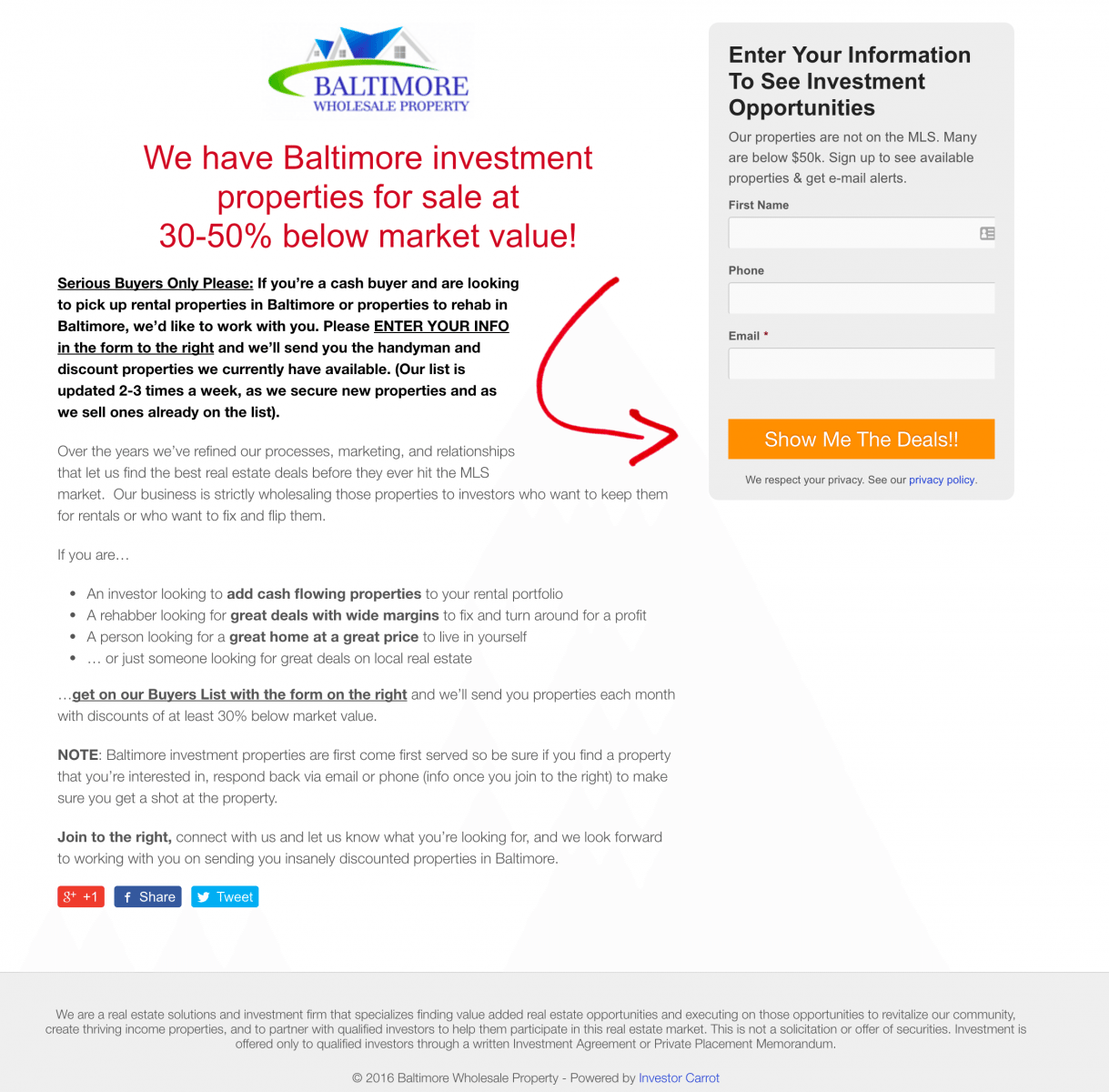
Visitors can only take one of two actions: either “Show Me The Deals!” or to call you on the phone.
Technically speaking, the website design we used for our Hero Stacked test is not a landing page; it’s a home page that plays the best of both worlds…
… landing page but engages those not quite ready to convert with great content and credibility. This “mini-site” format actually turns into more leads than squeeze pages according to our vast testing over the years.
But the focus is still on getting email signups for lead generation. So while landing pages should eliminate all distractions, a home page will still need to have navigational links and other clickable areas and all focus on ONE CORE call to action.
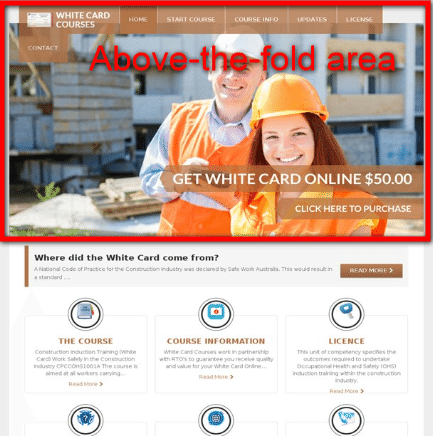
However, the same principle applies: the above-the-fold area of any home page should be uncluttered, simplified, and targeted.
Does The Main Call To Action Jump Out Or Do You Have To Hunt For It?
The most notorious place for clutter is the home page. Given the diversity of audience your home page gets, the desire to give them plenty of “what if” options is natural.
Resist that temptation.
In test after test after test, the principle of simplicity — that less truly is more — has proved itself.
2. Your Content
Naturally, given how central simplicity is to your real estate lead generation process, all the content on a page should exist to support the one goal you want your visitor to take: to sign up.
This means placing the most important information — especially your page’s copy — at the top of the page in the hero section. When a visitor lands on your website, you’ve only got a matter of seconds to capture their attention.
If you make it too difficult for your visitor to figure out how you can help them, there are plenty other websites who will be easy to understand … and compelling.
A compelling headline must hit your visitor above all with value.
Your headline can address a pain-point the visitor needs answers for or instill a positive emotional reaction … but either way, it has to touch the heart.
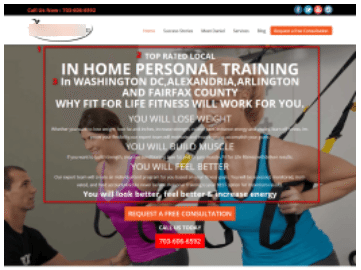
Having all said that, you don’t need to load all the benefits in the main attention-grabbing section, like this personal training website has done:
Too Many Conflicting “Benefits” Crammed Into The Top…
Limit what you want to say in this most important part of your website
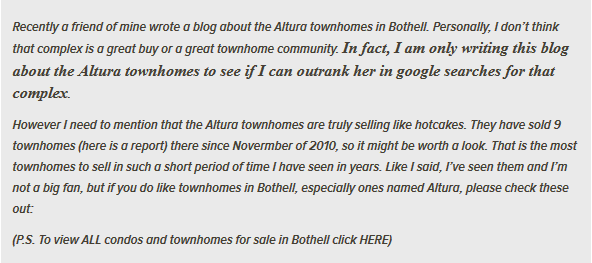
Geek Estate Blog highlights just how bad trying to pack an exhaustive list of benefits can be by using a landing page for townhomes in Bothell as a test case. This is how it reads:
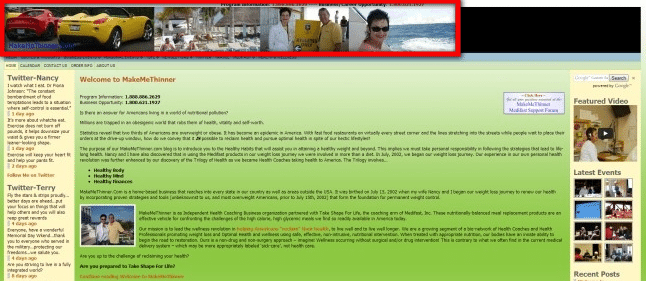
You may not be able to see it properly, but the example above is a website about weight loss. Unfortunately, all the images are useless because they don’t support the page’s goal. After all, what’s the point of a car photo on a weight loss website?
On a homepage or landing page, the chief piece of visual content is called a “hero image.”
Adding an oversized “hero” image is incredibly popular. This stems from a hero image’s ability to add appeal, relevance, and what we might even call “sexiness” to a page.
The right hero image can also have a massive impact on overall conversions.
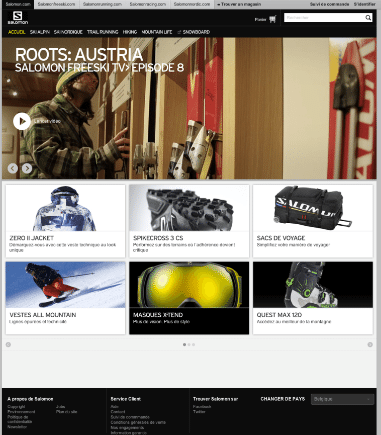
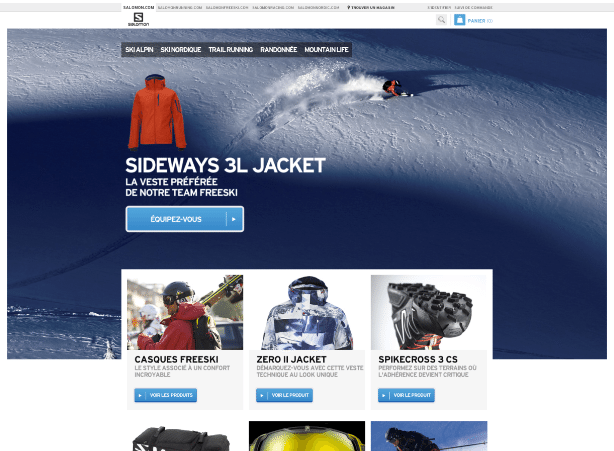
Have a look at this test from French snowboarding ecommerce site Salomon:
The original design on this landing page does not include an oversized hero image
Crazyegg reports that the version with the oversized hero image, as well as a few other tweaks, increased sales from French shoppers by 39.8% and sales by global shoppers by 29.7%, both at a 99.9% confidence rate.
If you add an oversized hero image, bear these four points in mind:
Make sure the photo is responsive so that it behaves when the page is viewed with mobile devices.
Avoid stock photos which can put people off and can lose credibility on your site. Use “real” people or high-quality original product image.
Keeping the form short ‘n sweet also makes it easier for mobile users to complete it, and this is important because there are now more mobile than desktop users on the Internet.
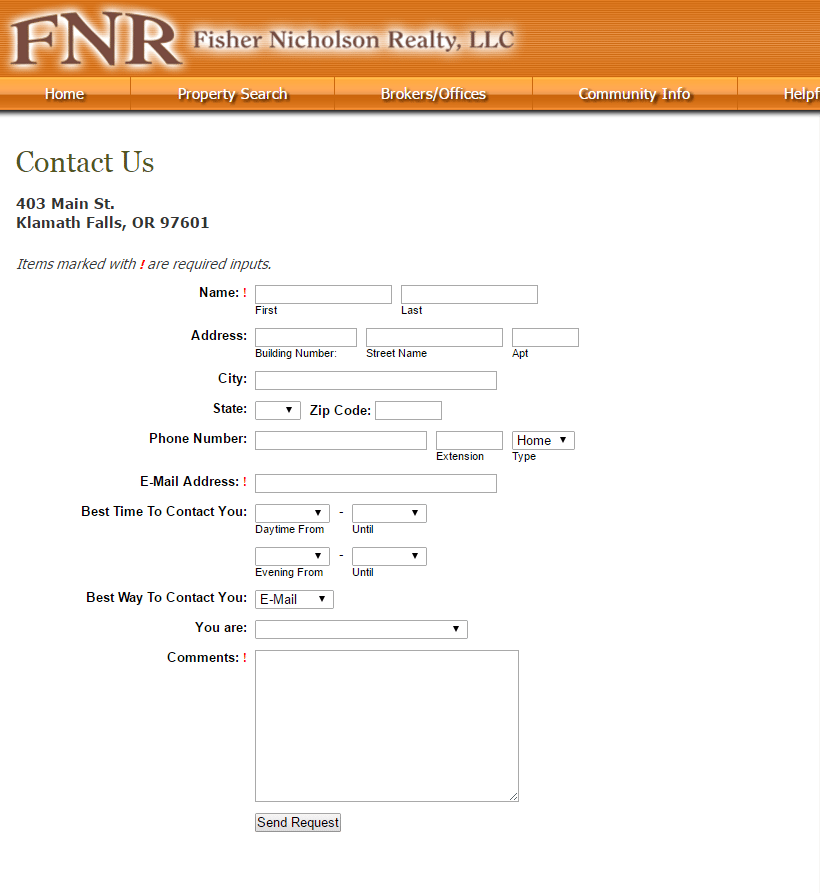
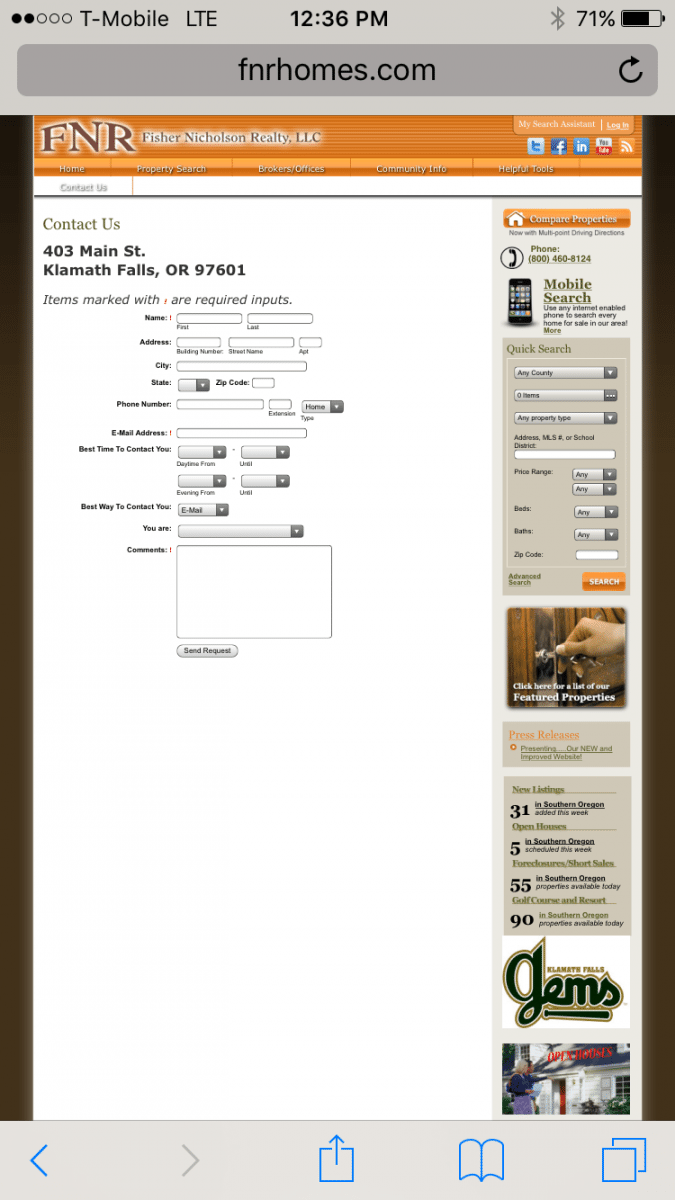
Not to kick Fisher Nicholson Realty while they’re down, but here’s what their contact form looks like on desktop:
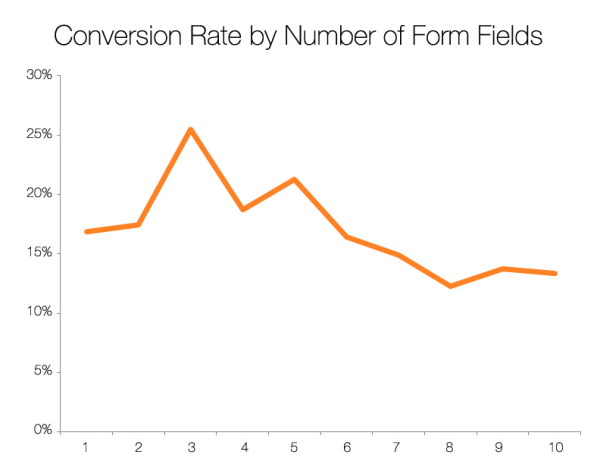
Too Many Form Fields Reduces Performance In A Big Way…
There are a total of 19 forms fields … only four of which are required.
On mobile, the form itself is virtually illegible:
Even more detrimental, there is absolutely zero incentive for a visitor to submit their contact information.
The “Send Request” button promises no pay offs, offers no benefits, and it isn’t even an enticingly worded action. Afterall, who wakes up in the morning thinking to themselves, “Gosh, I can’t wait to ‘send a request’ today”?
Be sure not to neglect this part of your form: “What will the visitor get?”
Inman provides a host of ideas for creating compelling and click-worthy real-estate lead magnets: “a lead magnet is an irresistible bribe offering a particular chunk of value to a prospect in exchange for their contact information.” The list includes:
Home sellers’ guides.
Relocation packets.
Neighborhood market reports. New listing email registrations.
Property comparative market analyses.
“How-to” e-books or videos — how to stage a home, how to increase curb appeal, how to buy foreclosures, and so on.
Reports — neighborhood, school, crime and more.
Lists — bank-owned properties, short-sale homes, 203(k)-eligible properties, etc.
Real estate-related e-books or videos — landscaping, remodeling, investment opportunities, flipping a house, and so on.
Making forms convert is a complex business, because what works for one site may not work for another. The truth is that you have to keep testing and checking the data to see what’s working for your target audience or not.
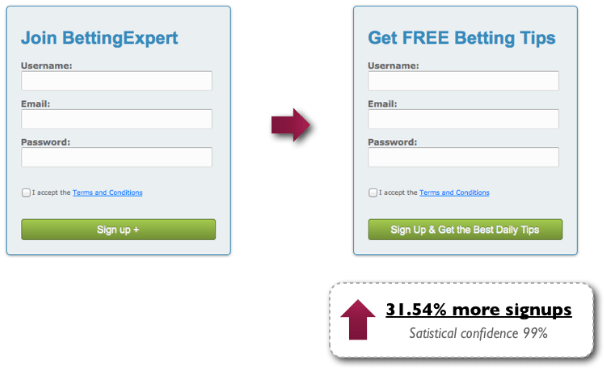
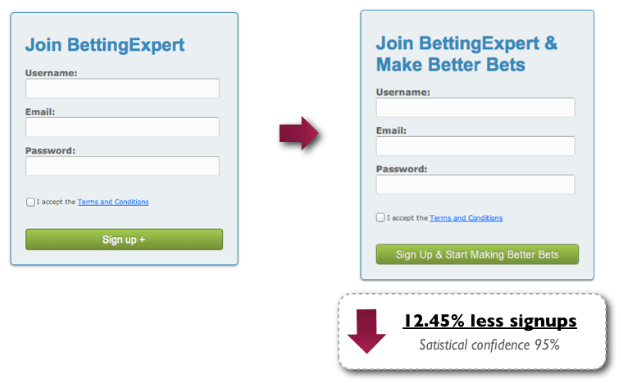
To drive this home, Michael Aagaard presents two seemingly contradictory button-copy tests on Content Verve. In the first, adding “Get the Best Daily Tips” increased conversions by 31.54%. In the second, adding “Start Making Better Deals” decreased conversion by 12.45%:
49% More Leads Because Of The Words On Your Buttons…
Knowing this is precisely why we test so relentlessly at InvestorCarrot.
Lastly, when it comes to your forms … does size matter?
Yes.
Large forms get more signups, maybe because they’re so “in-your-face.” Our own tests have shown that having a large form in the middle of the page that contrasts the surrounding elements can help improve conversions substantially.
All those form tips can be a lot to take in. So here’s a quick rundown of best practices from our own extensive testing:
Keep the form fields short
Have the call to action button take up the entire width of the form
Include value-driven language in your call to action button itself
Make the information around the form draw the reader down the page
A Template to Get 38.54% More Online Real Estate Leads …
Enough about principles and best practices.
What you really want is a proven template you can use to get more online leads.
Here’s exactly how we built one that does just that.
Test #1: Three Columns (this test failed)
We started with our high-performing lead-generation page, which already included a number of optimization wins we’d learned from previous tests.
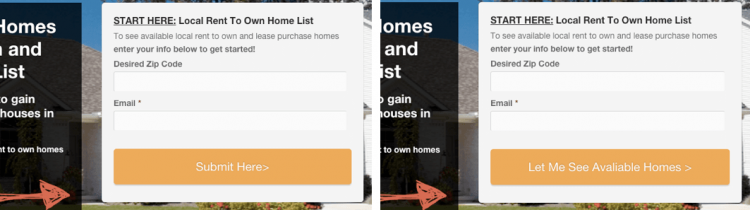
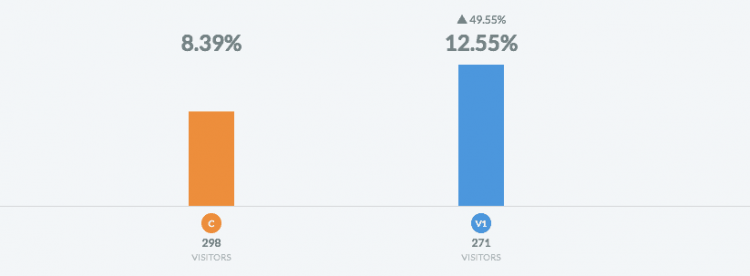
For instance, one the rules we’ve proved to our clients over and over again is that changing the words on the call to action button from a “descriptor” (“Click to Continue” or “Submit”) to a “mental commitment” increase conversions. Here’s just one example:
The Variation on the right — “Get My Fair Cash Offer” — showed an improvement in 49.5% at a 12.55% conversion rate compared to the first — “Click Here to Continue.”
To put a bit of context around that, out of every 100 visitors who land on your website, using the “mental commitment” language would produce 12.5 leads rather than 8.3.
That might not sound like a huge deal. But even if your site only gets 1,000 visitors a month, that translates into 40 additional motivated seller leads.
Even if you close 1 out of every 20 leads (which is a low percentage for many of our customers) and only net on average $7.5k (which, again, is much lower than many of our customers average):
That’s $15,000 in extra revenue every month all without having to generate any additional traffic to your website.
Still, we knew we could do better.
So, we took that page as our control and began by testing a three-column layout with no sidebar to limit the amount of links on a page. The idea was to make it simpler for a user to consume the page’s information:
Version #1 Of This Test – 3 Column Layout
Unfortunately, our first test was not a success.
The results were less than spectacular, but we learned a lot
It actually reduced the performance on the page.
As a result, we decided to get more intentional and focus on the main element a user sees when they first land on a home page: the hero section.
Test #2: The Stacked Hero (this test was a huge success)
Our first priority was to zero in on the page’s goal.
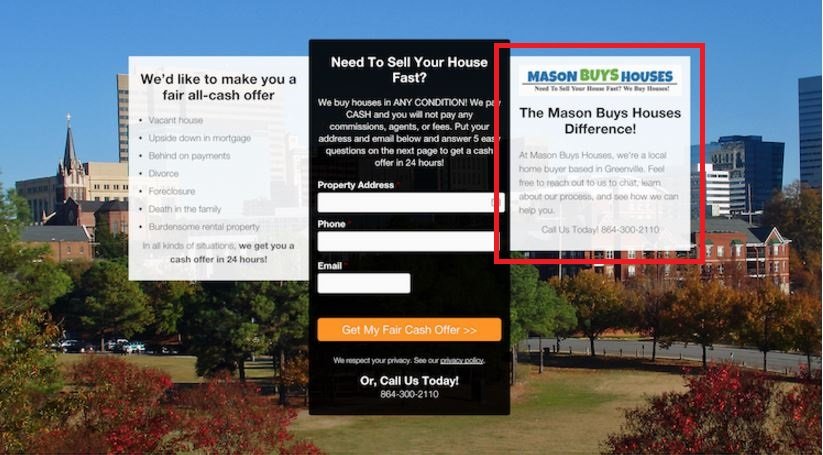
As you can see, the information in the last column on the right is unnecessary. It’s about the real estate agency themselves and adds no value to the visitor. Instead of moving them closer to signing up, it only distracts:
The 3rd column on the right is not necessary in this all important above-the-fold section
This time we predicted — i.e., our hypothesis was — that adding better imagery and a larger form focus the core message of the page.
The second test, then, was all about improving the conversion rate of the site’s home page hero section. This section is incredibly important because a lot of traffic passes through this page, and this is the first thing a lead sees.
Not only that, but research proves that the attention span of people has become so short that your website has a few seconds to grab attention before the visitor clicks away.
The following test page ran for a month across 15 InvestorCarrot websites and received over 1,600 visitors:
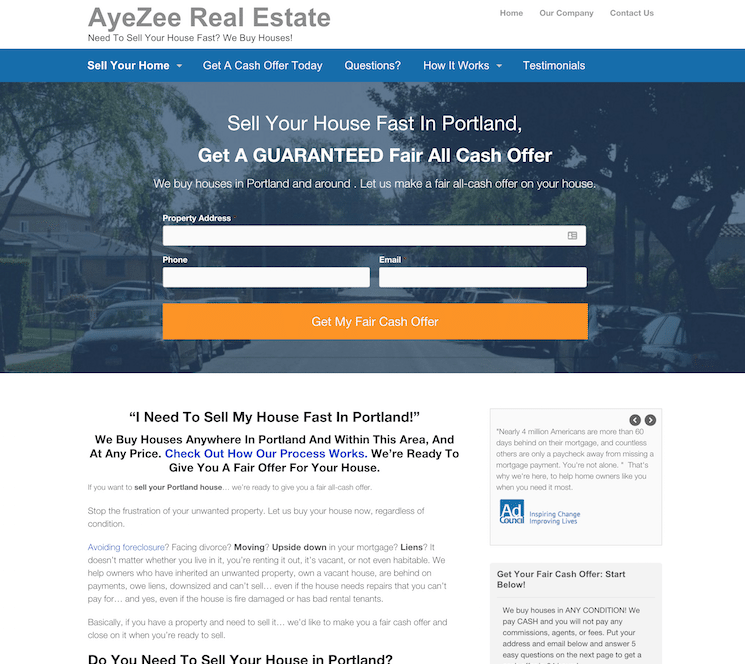
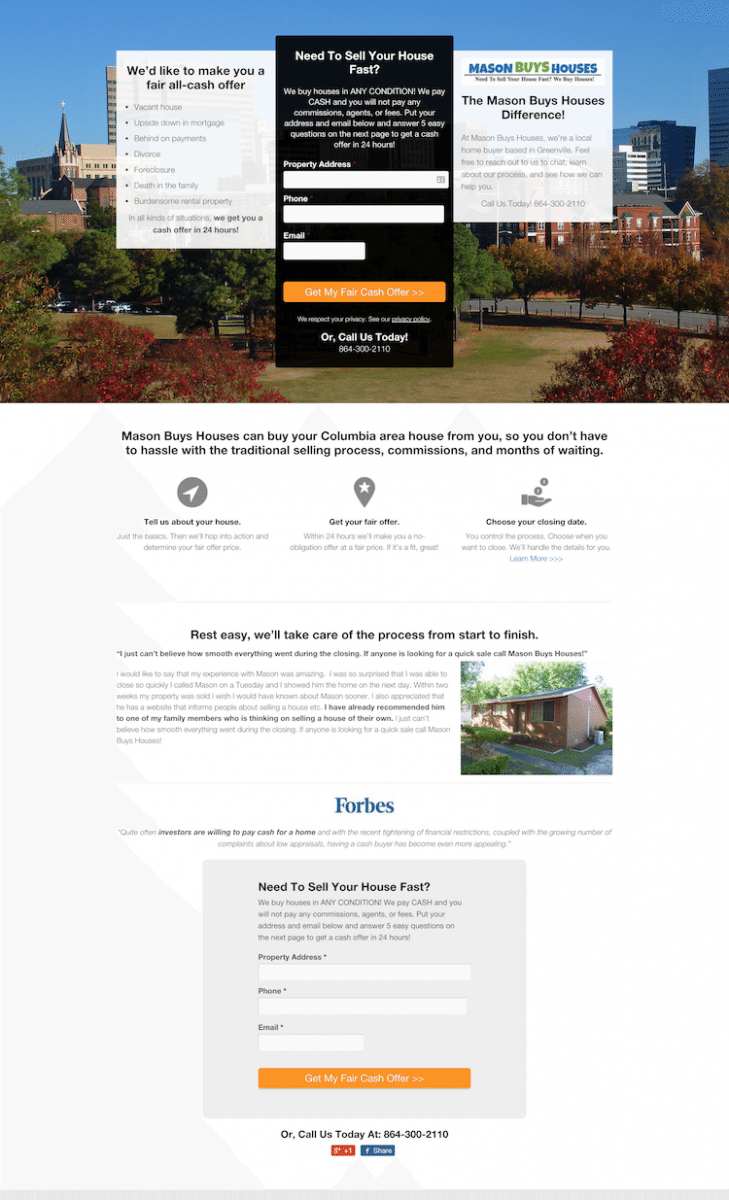
Version #2 – The “Stacked Hero” (38% more leads)
Pay special attention to the differences between the two pages:
Control
Three columns
Light Hero image
Three headlines
Narrow form fields and button
Headline:
“Need to Sell Your House Fast?”
Includes phone number
Six lines of text below
Headline:
No location in the headline
Variation
One Column
Dark hero image
One headline
Page-wide form fields and button
Headline:
“Sell Your House Fast in Portland. Get a Guaranteed Fair All-cash Offer.”
Excludes phone number
One line of text below
Headline:
Location included in the headline
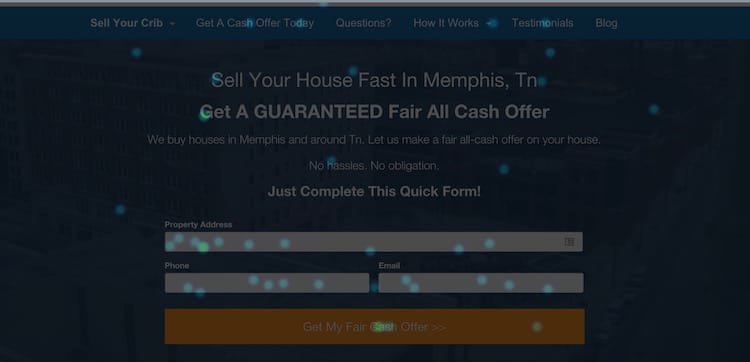
In addition, by center aligning every element, having a dark background to create contrast between both the text and the button, and filling up a good portion of the screen with the hero, visitors automatically see what’s most important to complete the call to action.
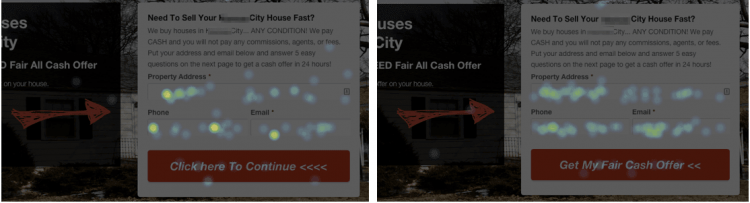
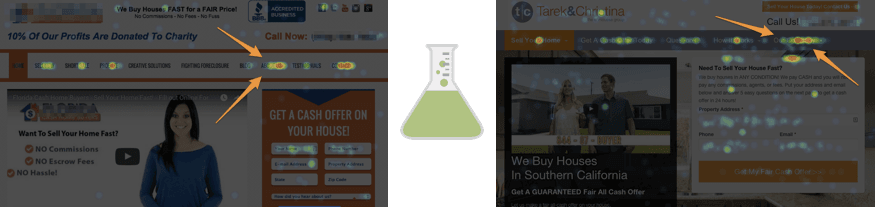
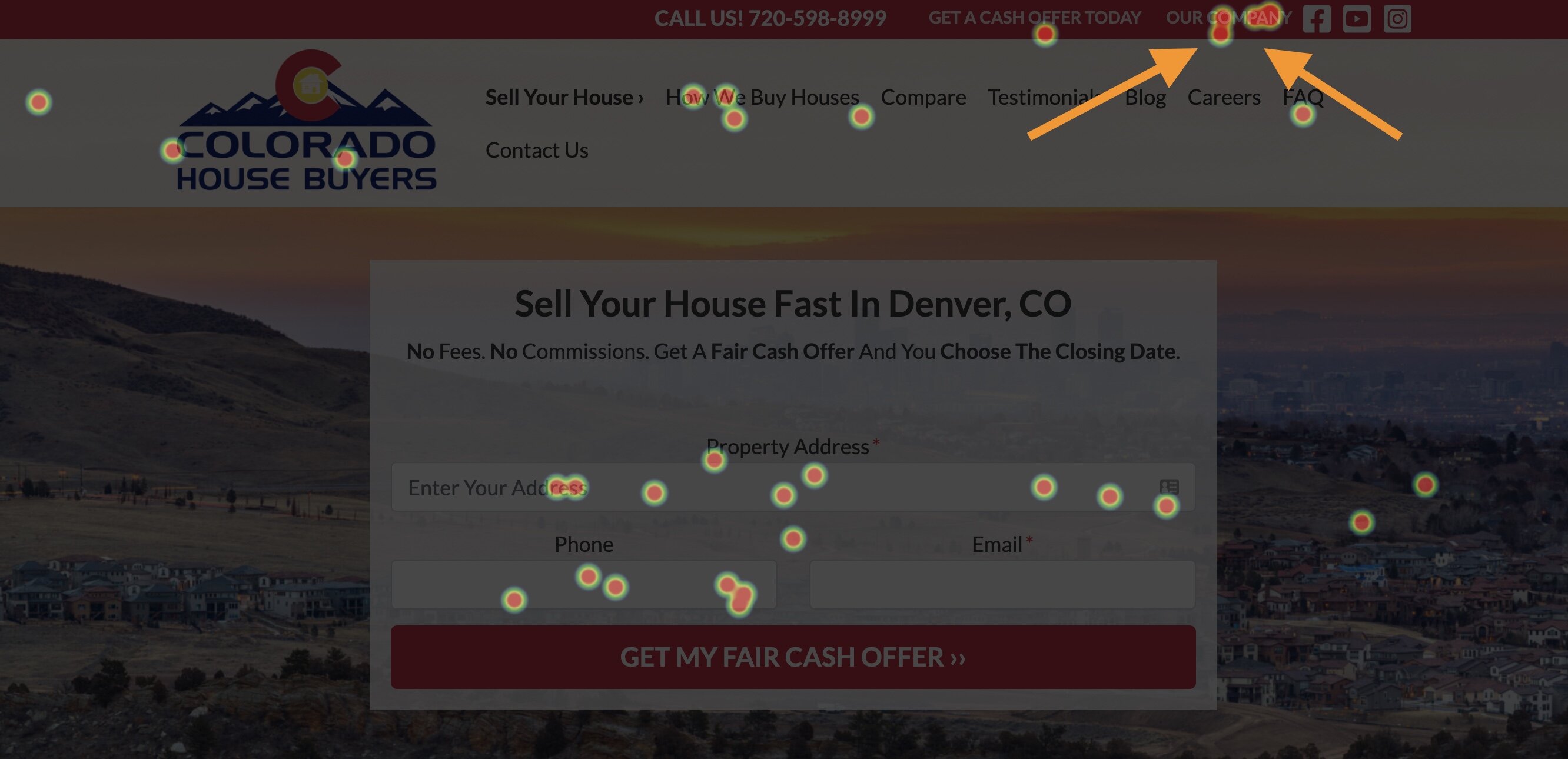
The heat map below, which measure users mouses and eye-movement, validated this belief. Notice that the majority of user engagement is happening on the headline and form fields … exactly where you want their focus to be:
This heat map shows where a user is focused when they are looking at the hero section
In other words, the hero test incorporated nearly all of the principles we covered above.
And the results?
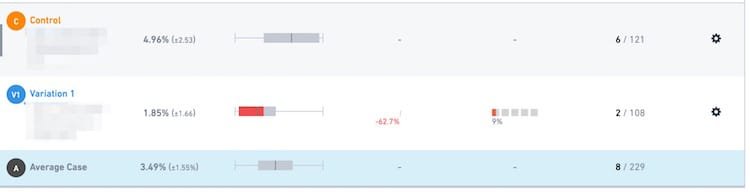
A good representation of how the test performed individually can be seen from this specific test from a member in the Alabama market.
The Test Results Speak For Themselves…
This graph represents a stacked hero test (for motivated seller leads) where the control and variation were close … until the end.
The cumulative total was what really knocked our socks off:
A 38.54% increase in online real estate lead generation across the board.
If you’re in the real estate sector, we at InvestorCarrot have a simple way of increasing your real estate leads; we’ve already done the testing for you by creating website templates like the one used in this test study.
And you can have it for free.
Carrot Members:You can dive into your account and launch a new website… then dive into the “Design” tab for the site and select the “Juniper” design to put this design to work for your business. But, you may be asking… “Is this design higher performing than the original Carrot design?” The answer is… in some cases it boosted performance up to 38.54%, in a few, it decreased performance a tad, in several, it was a wash. It did provide a performance boost in most of the 20 or so sites we tested it on but on some, it didn’t… so our advice is if you have a Carrot site up already that is pulling leads consistently to keep it how it is. Our original design is still our most consistent design. This new one just adds another option to get a different look while still retaining GREAT performance.
Non-Carrot Members: If you know HTML and have some time and want to hack through some setup stuff… You’ll need your own hosting, some programming knowledge to hook up a form, and to write your own content on the page. Or you can skip all of that and join Carrot and launch this design along with all of the other benefits Carrot customers enjoy within seconds.
(Already a Carrot member? Great! Launch this design in your account in just minutes! Log in, create a new site, and choose the “Juniper” style.
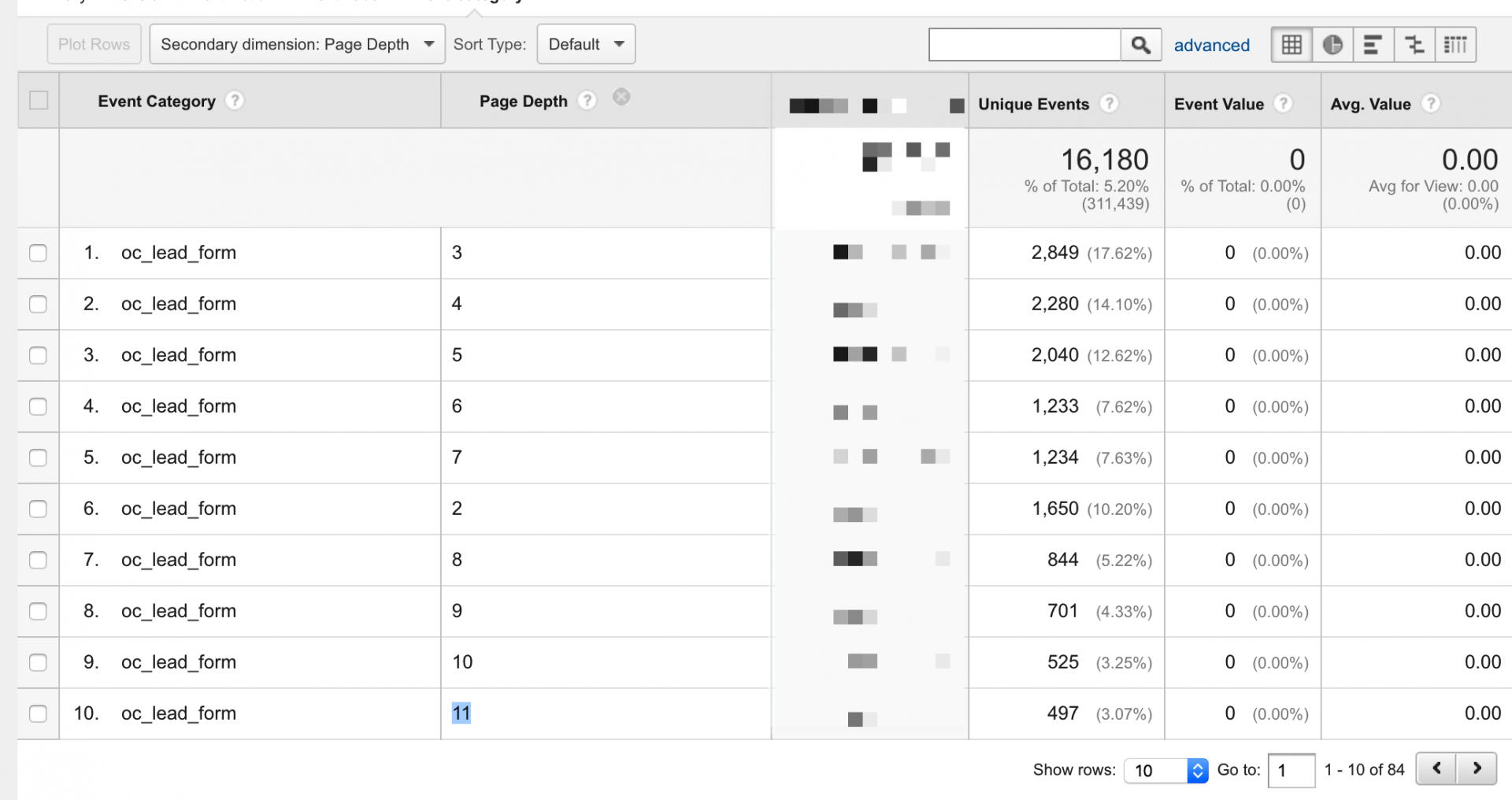
Did you know most leads viewed 3-4 pages before they opted in? What does this mean for your website? This month we will quickly break down our leads by traffic source and then get into a few more interesting reports like “Page Depth”. We will show which states are generating the most leads and how many website pages are visited before a potential lead opts-in.
A quick note, the purpose of our Carrot harvest reports is not to brag or boast. But, rather, we take pride in be transparent and sharing our data. This allow real estate investors a peek to see what is working for inbound online marketing.
In today’s report we’ll dive into…
The opt in leads (this does NOT include phone call leads which easily doubles the amount of leads in total) for the month of April
The main lead sources (where are your leads coming from?)
Mobile keeps climbing
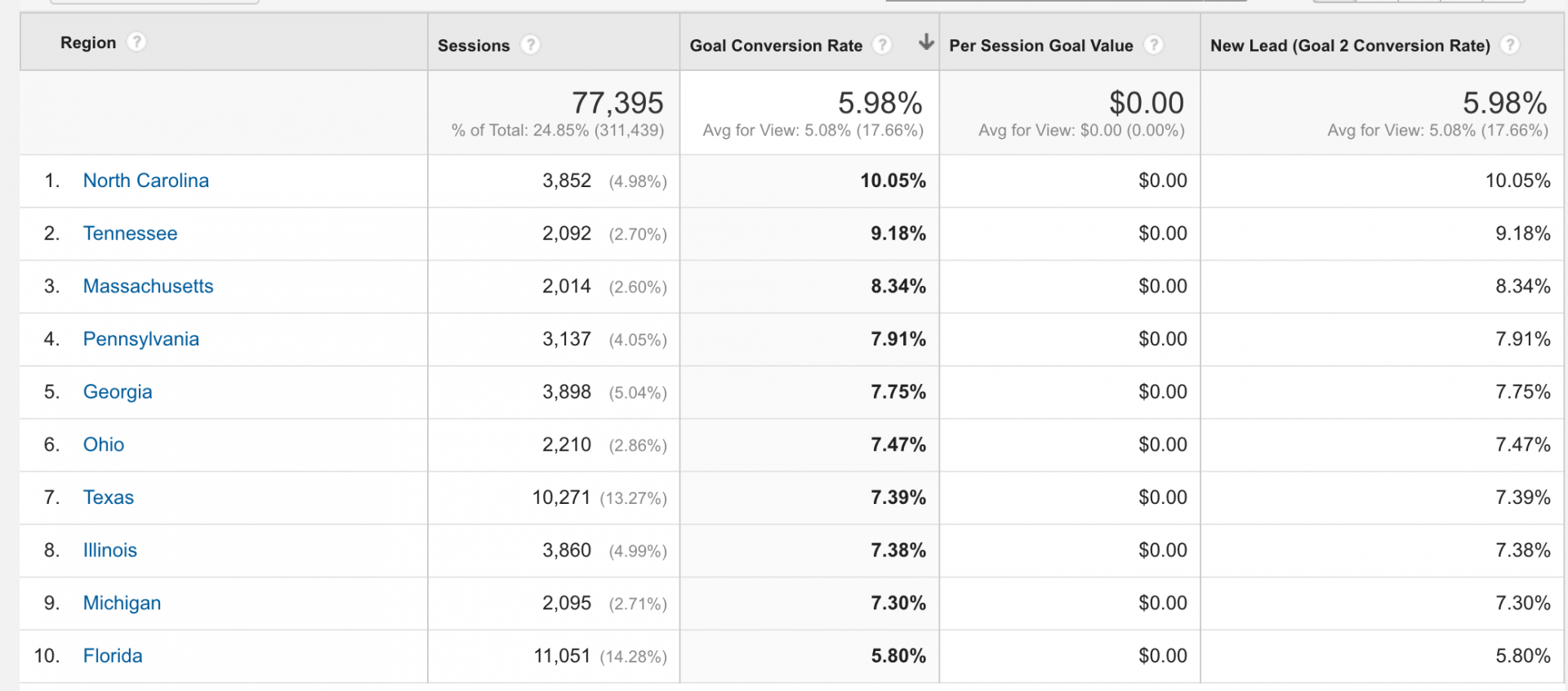
Which states have the highest conversion rates?
Why conversion rates are lower in a hot sellers market
How many pages do the majority of your leads view before they opt in (the case for websites vs. squeeze pages)
For InvestorCarrot members, we hope you use the data found in harvest reports as an inspiration to know that your hard work will pay off and that implementing the training and resources will help you generate more traffic and convert more leads.
For non-Carrot members, use this as research to find out what’s working in today’s market… and then get out there and implement these strategies on your websites!
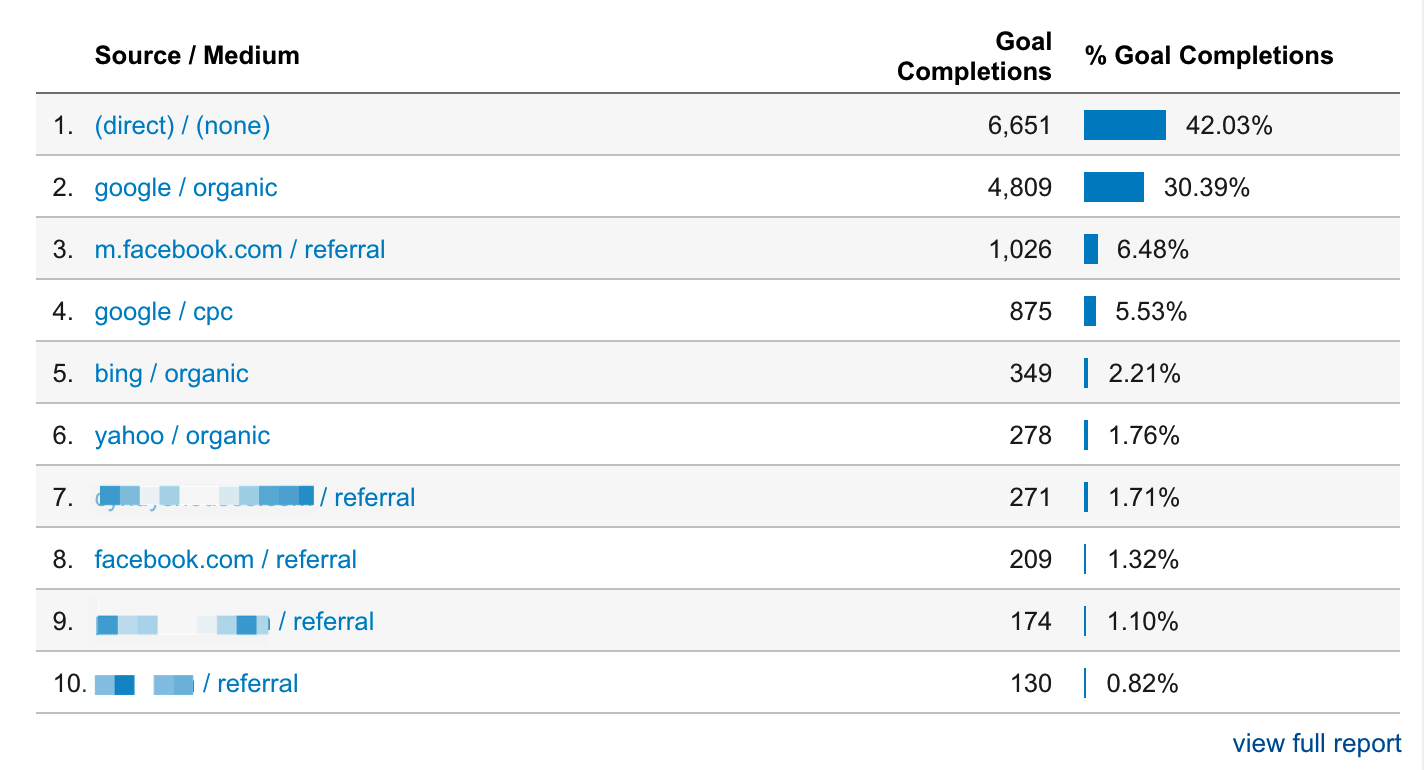
Where Did The 15,825 Real Estate Investing Motivated Property Seller, Cash Buyer, Rent To Own, And Private Lender Leads Come From April 2016?
Real Estate Investing Lead Breakdown… this snapshot shows the breakdown of leads generated in the past 30 days through InvestorCarrot.
Again, we don’t show these numbers to brag, although we are proud of our members and the numbers they’re pulling!
We have always been transparent and honest because it’s breed into our Core Values. Our goal is to present this data in hopes that it helps you with your inbound marketing and real estate investor website optimization. We’re are always ready to help.
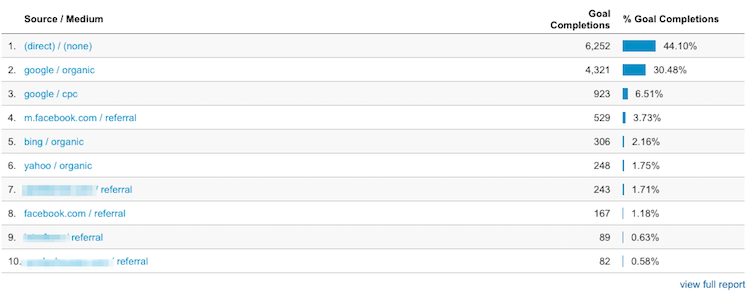
As you can see, the vast majority of the leads in the past 30 days are from organic SEO. No surprise there. SEO is still the driving force behind inbound marketing.
Google won’t give us the specifics on this direct/none data, but huge majority of those leads can be counted as SEO. While, another portion of those direct/none leads come from Craigslist ads. They show up in the “(direct)” section because Craigslist doesn’t allow live links in real estate ads any longer in the majority of cities… so people have to copy and paste the URL into the browser to go to the website… which would make it a “direct” link to the site.
Mobile Is The Now (in a big way)
We’ve talked about it many times… and will continue to do so… if your website isn’t AMAZING on mobile (NOT just “mobile friendly”) you’re losing leads.
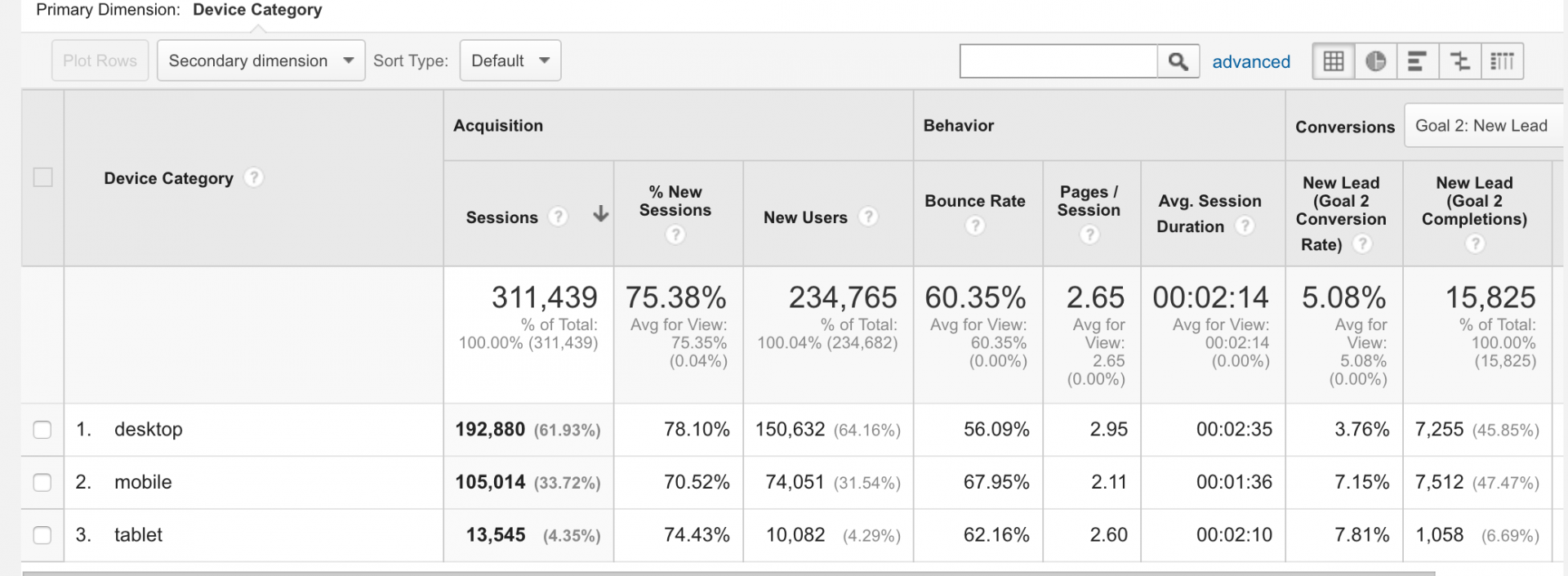
Mobile Gets Fewer Visitors But MORE Leads
Mobile Optimized Websites… extremely important opportunity for real estate investors to capture and convert leads. Carrot sites are now consistently generating 50% of your leads… this is because we’ve focused so much on crafting a high performing mobile responsive design to convert… not just to be “mobile friendly”. Does your website convert well on mobile or is it just “mobile friendly”?
Back in August we reported that mobile leads were the future. Now…mobile leads are consistently generating over 50% of leads in the device category. That shows how important it is to have a mobile responsive site ready for your potential leads.
We say this all the time, but we really do love seeing our customers have success and grow personally and professionally. The reality now is that you must have a mobile friendly website. It needs to be quick and simple to use, or visitors are going to leave. That is why continue to test and improve our websites, to ensure they give your visitors the best experience possible.
If you’re not a Carrot member and your website is not responsive and mobile friendly you must get a web developer to help you out. Or, jump on over to a mobile optimized Carrot site.
Top 10 Lead Generation Conversion Rates By State (With At Least 2000 Sessions)
We’ve published about this before, but as real estate markets heat up conversion rates for the wholesaler / flipper motivated seller website decreases a bit. If you check back on Harvest Reports from last year you’ll notice the conversion rates were a tad bit higher.
That’s all normal in a hot sellers market and if you’re doing any direct mail you’re seeing the EXACT same thing happening as well. 2-3 years ago you could send out a 1,000 piece mailing and get X amount of leads… today you have to send out a 5,000 piece mailing to get the same amount of qualified leads.
Why? It’s the market.
When sellers have more options to sell they look more, they get the confidence that they can sell it themselves, they list with an agent because houses are getting above asking price offers in many places, and we all have to cut through more clutter that sellers are seeing in their everyday lives.
Which States Have The Highest Average Conversion Rate In Today’s Market?
See The Top Spots For Real Estate Investing Leads… North Carolina, Tennessee, Massachusetts & Pennsylvania round out the top 4 states for highest converting states. One statistic that is always a fun and interesting to take a look at is the lead conversion rate breakdown by state. In April, North Carolina earned the top spot followed closely by Tennessee.
Why is that? A lot of the real estate market depends on where you are transacting your deals. These states typically perform higher than other states as far as conversion rate… but as I dive into below… very hot sellers markets tend to have lower conversion rates. So if your state isn’t on that list above, don’t sweat… it’s just a cool stat more than anything.
So what can you do?
Try and understand your leads better, what messaging do they respond to? To convert more visitors to leads, try switching up the copy in your hero section. Answer a question that they might have when they land on your site.
Instead of offering them a quote, consider offering them a consultation call, a free estimate of their houses worth, or a custom solution to their housing situation.
How Many Pages Did Visitors View Before Converting To A Lead?
The age old battle of “squeeze pages vs. websites” will continue until websites are no longer a thing… but we usually try to take the data driven approach to what works. We’ve tested squeeze pages vs. mini sites setup the way we set them up (so every page is geared to convert a visitor into a lead very strategically) and for motivated house sellers our style of “mini site” has always performed better.
But when we dive into the data even more… you see how darn important it is to your best leads to dive into the information on your website.
Most Of Your Leads Like To See 3, 4, or 5 Pages BEFORE They Opt In…
This report shows how many pages visitors landed on before opting-in as a lead.
This month we also took a look at some different stats: How many pages did a visitor visit before turning into a lead.
What should you do with this data?
First off, if you only have a 1 or 2 page website… you should probably add more content and pages to your site. Build out an amazing About Page, a great FAQ page, describe how your process works, add in some city specific pages, and more.
But make sure to structure your pages to all convert. You can use our FREE Conversion Rate Guide + Checklist here to help you make your website performs better.
This type of data allows a journey into the psyche of a user. A large majority like what they see after visiting five or less pages. But, there’s still plenty that it takes 6,7, 8…to make the decision. Notice that two page visits is in the middle. Pretty cool stuff!
It also shows the importance of optimizing all of your pages. Such as, making sure you capture and add testimonials to your site. If you need help, check out the various types of testimonials real estate investors can use to build credibility. There’s no better way to build trust with your customers.
Take the time to personalize and search engine optimize your site. That time spend = High ROI.
How Is Your Online Lead Generation Going For Your Real Estate Investing Business?
If you’re interested in leveraging our Inbound Online Marketing platform at InvestorCarrot, our training, and our support team, take a demo or checkout our plans.
Over the last several months we’ve been developing some new features to further real estate investor success. We’re proud to have announced our new robust analytics, slick dashboard, and fresh site design options. Check’em out here.
“Mark” tried to cram everything into one website. A page for motivated sellers, a section for buyers, private lenders… even rent to own. He said he was trying to “simplify” and save some money. But little did he know he was actually losing money every year by confusing his motivated house sellers on a website that was also pitching “discount properties”.
We’ll dive into that in a clear and simple way in today’s blog post and answer that question based on data with the answer to this… “Whatever makes it easier and gets your ideal prospects to their desired result as quickly and as smoothly as possible in as few steps required to make the sale.”
So, You’re Flipping Houses Or Wholesaling? What Types Of Leads Do You Need Right Now?
You might be wondering how having more than one real estate investing website would even help.
And that is a really valid question!
Because, for instance, if you own a plumbing business in your local town… one website for your company is all that you need. Right?
So, the main thing to remember with your online marketing efforts when it comes to your website strategy is this…
… the more focused you can make the message to the target prospectyou’re going after, the better the results you’ll get.
As the famous copywriter, Robert Collier once said…
If you’re not joining that conversation in your prospect’s mind immediately… and you’re cluttering the message with things on your website not related to their problem and how you can help them… your results WILL go down.
So going back to the local plumber scenario… if you did plumbing services and you were also an electrician and did electrical work… you have two totally different services that require a completely different marketing message to effectively sell them your services (and ideally two separate websites).
You wouldn’t want to have the person looking for electrical work to have to wade through tons of content on your site about plumbing (a service that they don’t need).
Make sense?
To say it again… the more focused you can make the message on the website specific to your target prospect (and what they need), the more engaged the visitor will be on your website and the more leads you’ll convert.
Why Is A Targeted Website Message Important?
Now that we understand that targeting your message on your website as much to your primary prospect as possible is important… let’s dive into why having that targeted message is important and works.
In short, we humans get distracted easily (especially online), and removing any chance of guiding your website visitor on the wrong path always improves your chances of making sure the website visitor gets your message and hopefully engages in it by becoming a lead for you.
According to a study, 55% of visitors spend 15 seconds or less on your website. The more you can engage them and speak to them and their specific problems and needs… the longer you can keep them.
But our targeted websites at InvestorCarrot show a different story…
Why is that?
Because we’re not sending a motivated seller to a website filled with content that doesn’t help them a darn bit… like stuff about your cash buyer program, or rent to own houses, or private lender program. That kind of stuff doesn’t matter to them and it just serves as a distraction to knock them off of the path of engaging them and converting them as a lead.
We’ll get into the “why” below here in a sec.
How Many Websites Do I Need If I’m A Real Estate Wholesaler Or Flipper?
The general rule once again is this: How many completely different services are you offering and completely different prospects are you going after?
If you are a local house buyer (going after motivated house sellers) and you also wholesale those properties to cash buyers… those are two completely different prospects for two completely different services you offer.
If you have lease option houses available and are looking for tenant buyers… and are also looking for private lenders… those are completely different services and different prospects.
In both of those cases, we’ve found that it’s much more effective to split those messages into separate websites.
So, if you’re a wholesaler and are looking for properties and looking for cash buyers, those websites should be separate websites.
So a minimum of two websites as a wholesaler in my opinion.
You would for sure want a website dedicated to helping motivated house sellers… then your second website could pull double duty as your cash buyer website and main company credibility website (which our “Main Company” websites in Carrot do quite well).
I know there are lots of people out there who will argue with this and will say “You can put it all on one website for sure!“.
And they’re 100% correct.
You can.
But if on every page, the prospect is 1 click away from content that has nothing to do with them… and can even throw them off from the actual message on how you can help them… why would you want to take the chance of muddying the water?
If a motivated seller saw a link that says “Investment Properties 30-50% Discounts”… what do you think will pop up in their mind?
“Wow, if they can sell properties that cheap… I can’t imagine what they’re going to offer me. Darn bottom feeders”
Haha, maybe not those exact words… but even presenting a motivated seller with that content definitely doesn’t help your sale.
The “Across The Table” Test
One simple test I always run through mentally with my marketing messages is this…
… I imagine myself sitting across the table from my ideal prospect and run through in my mind what I’d say to that prospect.
How I’d find out what their main problem is, their motivations, and what they really need help with.
And then mentally run through how I can help them reach those goals.
In the case of a motivated seller… if you use this “Across The Table” test… would you hand them a brochure that talked about buying their property on one page and on the very next page it tried to sell them a discount property?
Or would you ever in the process of talking with a seller fit in… “Oh, and by the way… if you’re looking for an investment property you can get on our cash buyers list!”.
Of course not.
Why?
Because it has nothing to do with how you can help them in their situation and the only thing doing that does is potentially throw off your actual message of how you can help them with THEIR CURRENT situation… selling their house.
If it doesn’t pass the “Across The Table” test… my rule of thumb is that I try to separate those messages in my marketing as well.
On the other hand… if I’m talking to a potential cash buyer… it is very believable that I may find a way to mention our private lender program, because they may also be interested in being an investor with us as well. So those could work very well on the same website.
Make sense?
With that said, in no way am I saying that you can’t pull in online leads with an “all-in-one” site that is for motivated sellers, cash buyers, lenders, tenants, etc.
I’m just making the case for how much more effective it can be to target your messaging to eliminate the chance that a prospect would choose to not work with you because of a muddied message.
If you lost just 1 deal over a 5 year period because your website spoke to too many different prospects at once… that would cost you a minimum $10,000.
So How Many Websites Do You Need If You Do You Need?
If you’re a real estate wholesaler or house flipper…
… we suggest 2.
One for motivated sellers and one that pulls double duty for cash buyers/main company credibility (even helps out with private lenders).
Then if you want to attract other types of leads like rent to own or note sellers… those may be great as separate sites.
The one rule of thumb is definitely don’t cram all of those “focuses” onto one site. It’ll kill your performance and confuse your motivated house sellers.
If you are a note buyer/seller…
… we suggest just 1.
A person selling a note tends to be a person experienced in the process. So sellers expect to go to a “broker” and won’t be confused by seeing notes for sale on the site.
If you’re a buy and hold investor or multi-family investor…
… one total website for all of your properties works great. Your focusing on attracting tenants. But if you want to attract private lenders as well to partner on your deals… then set up a 2nd website that is a main company credibility site.
Keep it simple. As few sites as possible without confusing the message on your important prospects.
And as always… shoot any questions our way!
See Carrot in Action
Grow Your Real Estate Website’s Traffic, Leads, & Results With Carrot’s Online Marketing Software
As we wrap up another month in 2016 we are ready to bring you InvestorCarrot’s lead data for February. Despite being the shortest month of the year, the lead volume was right on pace with December and January.
InvestorCarrot members generated 14,178 online opt in leads last month (this doesn’t include the tens of thousands of phone call leads). Which is very close to the 14,212 leads that were generated in January. Consistent lead flow is a great asset for a business. If you are driving traffic on a consistent basis it can make your marketing dollars stretch when you know which channel are your most profitable.
During the month of February, InvestorCarrot members generated 14,178 leads across all of their sites.
Thanks to everyone who took our 2016 survey last month! The survey gave us great insight and data
We ran a survey in February to get a little more information about how many deals members were closing from their leads, and to get some feedback on how we can make improve Carrot even more in 2016 (we have exciting news on the horizon).
The general consensus among our team after conducting this survey was…we need to do these more often.
We got a ton of great feedback from our members and got a lot of great questions from the form.
We read through every single submission, suggestion, and question. After talking with our team, we wanted to put together some answers and share some of the data we gathered from the survey.
Our hopes in sharing these results, is it answers a question you have, shows you where you are at in comparison to other Carrot members, and gets you excited about some of the changes we have in store for Carrot.
So let’s get started with some data and insights we found from the survey.
1. 74% of our members primary investing strategy is either Wholesaling or Fix & Flip
This isn’t a huge surprise to us, but we were curious if members were using their Carrot websites for investing strategies that were new and creative. We did find a few note buyers and commercial real estate investors.
The breakdown wholesaling came in at 43% and fix and flip was 31%.
2. 34% of our members have closed between 1-5 deals in the past 12 months
We are always curious about how many deals our members are closing from the leads they generate on their website. Tracking that data would be difficult and is often left to us reaching out to customers and hearing about their success. With this survey we were pleasantly surprised when a lot of members shared with us how many deals they have closed.
Closing 1-5 deals is a huge success and we are proud as heck that our members are turning leads into revenue. Nearly 29% of Carrot member said they have yet to close a deal from their Carrot websites. We are constantly working on ways we can improve Carrot to help bring this number down.
9% of Carrot members said they closed over 20 deals in the last 12 months.
These members tend to be leveraging a lot of different marketing strategies and are driving a large amount of traffic. If you’d like to learn about ramping up your marketing budget and leads, consider investing in an SEO firm or a PPC campaign. Talk with us today about how we can help.
3. We asked about what content you wanted us to write…the answer was overwhelmingly SEO
We were curious what types of blog posts, training’s, and featured content our members and prospects wanted to read from us. Within our company, we all had our hunches, but we asked, and you answered. The highest ranked topics were SEO, Pay Per Click, and Content Marketing.
This data excited us because those happen to be what we are great at and have a lot of data on. To better help our members with SEO we will be retooling some of our content to give more in-depth SEO advice, better PPC information, and make content marketing even better for you in 2016.
4. The most common frustrations, plus their answers
Probably the most important question we asked in the survey was “What is your current biggest frustration?”
We heard a lot of great feedback and were able to quickly resolve some of the frustrations with a simple tutorial or website tweak.
Here are a few of the top frustration Carrot members are having.
Frustration #1: Standing out in a crowded market
One of the recurring questions/concerns we saw on the survey were members saying they are seeing more and more Carrot members pop up in their market.
First of all, we view this as a huge benefit. You have the same tools and resources that others do and seeing other Carrot members appear means something is working. Even Starbucks has multiple storefronts operating on the same block. So how do you stand out in a crowd? The answer is easy. Brand yourself with your unique selling proposition, buildcredibility, delivervalue, and make your site look different.
Carrot can help with the last one. We are constantly testing website elements and will have new features that allow you to make changes to your site.
Frustration #2: Getting leads to return phone calls
This one is tricky. You can only help people who want to be helped (or so the saying goes).
But you have to put yourself in the leads shoes. There is a good chance the leads are submitting their information on a few websites. They do this to get an idea if other investors will offer more than what you can offer.
The key to getting a lead on the phone is calling them as soon as they submit a form on your site. You MUST do this because they are in the state of mind where they WANT to hear an offer, and calling them back shows you are quick, professional, and have your business running efficiently. If you don’t have SMS text notifications turned on your Carrot forms, read more about them here.
Frustration #3: Having someone write unique content
We understand that writing 100% unique content takes time. Someone on our team is writing every single day and you know what, we know it’s hard and not everything you write turns into profits.
If you are too busy to write content, but want to hire a professional copywriter that understands real estate investing, hang tight…
We are actively working on a solution that will allow you to purchase content for your Carrot site within our marketplace.
Some members are unaware, but if you are a Content Pro member you have access to our content packs. These are pre-written, SEO optimized blog posts. Each month our team writes 12 new articles that our software spins them to be localized for your area to give you a jumpstart. In literally 3 minutes you can schedule your blog content for an entire month. Learn more here.
Content marketing takes time. In fact, if you are expecting to see results from content marketing immediately, you should shift your traffic strategy something that delivers results faster (like PPC or YouTube marketing).
At the very least it can take a couple weeks (if not more) for Google to crawl your site and index the new content. So putting out 100% custom content is only half the battle. You need to find ways to get that content in front of people who are asking questions. This is where conversation marketing comes into the mix. If you have never heard of conversation marketing, drop what you are doing and go here to learn all about it.
Plus, we’re rolling out a full copywriting service in our marketplace in March where you can have our “hired gun” copywriters write custom content for your website for you! Be on the lookout.
Frustration #4: Not knowing what to do to get the highest ROI
This really is the million dollar question. If we knew the answer to this, trust us, you would know.
The thing is… it can be different for every investor depending on lots of variables.
We love sharing data with our members to help them succeed. The honest answer to this question is it depends. Do you have time to learn and implement marketing strategies? If no, then hire someone. Do you have a marketing budget to pay for someone to manage a pay per click account or your SEO? If not, you will either need to learn or close a deal to then bankroll your growth.
You might not think you have time to learn SEO or other marketing strategies, but at the very least you should understand their basic concepts. If you are looking to hire someone you should make sure to ask all the right questions and have a good idea of what they will be doing on your website.
If you are interested in learning more about SEO, Pay Per Click, YouTube, Backlinks, and a lot of other marketing strategies then consider our 3 Leads Per Day training. This training is the single best resource for real estate investors looking to market online TODAY.
Be on the lookout for great new training and massive software upgrades in 2016 based on the feedback.
Keep sending in your feedback and go out there and crush it. And when you need help… just reach out to us! We’re always here for you.
We heard a lot of great feedback like we mentioned. We took all of it to heart and will be incorporating it into the new features, training’s, and tools we roll out this year. We sent some personalized emails to members answering the questions we could quickly help them fix on their site.
If we didn’t answer a big question you have about Carrot, please don’t hesitate to reach out to us. We welcome all feedback and would love to discuss how we can make Carrot better for your business in 2016.
Did you know there’s a spot on your website that 8 out of 10 real estate investors and agents neglect that may be causing your best prospects to leave your website every day?
Demo Carrot: How many deals are you losing to your competitor’s website?
The page that is often the 2nd most visited page on your website. The page can push someone over the edge to work with you or push them away from you only to work with your competition.
What is that page that carries so darn much weight in the overall trust and credibility of your website?
It’s your “About Page.”
Yep, that page you fly through and say, “I’ll come back to and finish later,” is possibly causing people to distrust your site and your company.
And maybe… just maybe… you may have already lost a deal because of it.
How Much Does A Lost Deal Cost You? $5k? $10k? $20k+?
This blog post will show you how to make sure you stop letting deals and leads slip through your fingers and lay out why that about page is so darn important (backed by science).
Ready? Awesome, let’s go!
The Science Behind The Way We Look At Websites (YES, you do this too…)
Building a real estate website that performs is part are art and a lot of science.
Over the past 3 years, as we’ve grown Carrot, we’ve run hundreds and hundreds of split tests on real estate investing websites in markets all across the country for all types of leads to hundreds of thousands of leads for our members…
… and one thing we’ve found that is the same across every test we’ve run is this.
The about page has always been one of the top 5 most visited pages on every site…
… and it’s one of the most engaged pages on every site.
Every site. This Google Analytics screenshot proves it.
Not one. Not a few. Every site we’ve run tests on has shown us that a significant portion of the visitors flow through to the about page to learn more about that company and see if they’re a credible solution to their problem.
Below are a few heatmaps from split tests we ran on motivated seller sites from Carrot members across the country.
Plus, we’ve thrown in a heatmap from our own carrot.com website just to show you it’s not a real estate specific phenomenon.
See How It’s Baked Into Our Human Psychology
Below you’ll find these heat maps that show the click pattern of the motivated house sellers on these websites. The bigger the “hotspot” and the redder, the more engagement on that link.
The cool thing is that we chose sites where their About Pages are in different locations and say different things (some say “About Us” and others “Our Company), so you know it’s not just because of the placement of the link on the site.
“Our Company” Link In The Top Navigation On The Right
Notice the motivated sellers engaging heavily on the “About Us” page. The strong heatmap glow validates their trust or lack of trust in the company before they choose to work with them.
“Meet Our Team” Link In The Top Navigation
Similar results in a link called “Meet Our Team” at the top of the site and similar engagement on the Testimonials link. Again, this shows the visitor is working on learning more about the company behind the site to make sure they’re legit and can honestly and ethically solve their house problem.
Same Result For This Site With An “About Us” Link In The Main Navigation
Florida Cash Home Buyers have been utilizing Carrot well, and you see a similar result. People are diving deeper to learn about and build trust in the website before they decide to work with them to sell their house.
The Carrot “About” Link Is Burning A Hole In Our HeatMap
Again, even before our members decide to work with us, they seek out information about us as a company to ensure that our values match theirs and that we’re real people behind this company.
4 Keys To Creating An Amazing About Page For Your Real Estate Site
We could show you dozens and dozens more heat maps showing the same thing, but in the end… your about page is crazy important.
So now that you know that you either need to get real with building out a GREAT about page or risk losing leads and deals let’s get to making an epic about page for your real estate investing website!
Using our Carrot about page as an example, here are 4 simple but powerful website about page ideas and examples. Hence, it’s an asset for your business rather than another forgotten “throwaway” page.
People want to work with people that believe in and stand for things similar to them. Don’t be shy about sharing your core values on your about page as we do here at Carrot. I can tell you firsthand that I know for a fact that some customers have joined InvestorCarrot because of our Core Values.
Display what you stand for loud and proud on your about page. Don’t hide it.
Here’s How We Did It (and you can too):
A short list of our Carrot Core Values and what we believe in. What do you believe in?
Our mission with this business… something that excites us at our core. Why are you in business?
Make them feel important on the page… don’t just mention them in passing. Make them stand out.
2. Don’t just stick to stuff directly about real estate on your about page
I read so many real estate websites about pages that are just a bunch of real estate jargon and stuff that the investor thinks “validates” them in their prospect’s mind. Their 20 years of experience, 7 licenses, and just how much they “want to serve you ” may be true, but you’re not connecting with your prospects at a human level with that kind of speak.
Tell your story, what drives you, how you got started, and why you even care about helping them in the first place. Make it fun.
Here’s How We Did It (and you can too):
What’s your story, and how did it lead you to help the people your company best helps? It matters.
Talk about what you love about your business and how it relates to you being their best viable option.
Make it fun. Add a picture of your team and connect with people on a human level. No glamour shots here.
Introduce your team. Your team is important to the prospect because you’re the actual people behind the company. We added a picture of part of our team in a laid-back setting… then at the bottom of the site, you’ll see simple profiles of our whole team. It builds real connections, and they can picture themselves talking with these real people.
… then at the bottom of the page are our full team profiles.
3. Write conversationally, not in 3rd person like a robot
Robots are fun, but I don’t know anyone who trusts a robot. Do you?
All kidding aside, write the way you would talk to your prospects. If you are laid back and easygoing, write that way on your website. If you are analytical and fact-based, write that way on your website… but do it conversationally. I always like to imagine myself sitting across the table from my best prospects; what would I say if they asked about us? That’s how I’d write it.
Write in the first person. If you talk in the 3rd person when you’re in front of a prospect, you’d sound like a goofball… you better believe you sound the same way if you talk in the 3rd person on your about page.
Here’s How We Did It (and you can too):
Write like you talk in real life. If a 5th grader can’t read it you shouldn’t write it.
Don’t use paragraphs that are too long. Keep things short and punchy.
Use “I”, “we”, “my”, and “our” rather than 3rd person speak. (unless you talk in 3rd person in real life that is…)
4. Add a call to action on your website “about page”
Here’s another great idea we tested that boosts performance… every darn page on your website should end with a clear call to action. Never let your website visitors get to the bottom of a page without guiding them on where to go next. This is especially true on mobile devices, where we tend not to want to scroll back up to the top of the site on our cell phones after reading a page with a good amount of content.
Put a “fast offer” form at the bottom of your about page and your phone number for them to call you to work with you. This is already built into all of our Carrot websites, by the way :-)
Here’s How We Did It (and you can too):
What is the main action you want them to take? Add a button or simple link to fill out a form (or the actual form) and even a phone number at the bottom.
So What Should You Do This Week?
Real estate is a people business; often, these transactions are among your client’s most significant financial decisions. When people are making financial decisions, they tend to research them online…
That almost always leads to the about page once a prospect gets close to working with you, and they just need a bit more verification before they do.
As you’ve seen, science has shown that your about page is a hot button, and you’ve seen some website about page ideas… have you focused enough time and energy on it?
I’d challenge everyone to take the tidbits from this blog post this week and implement at least 2 of the 4 tips. Beef up that about page and attract more of your website visitors to work with you… your wallet will thank you for it.
How many of the four “About Page” keys do you already have on your real estate investing website? Let me know in the comments section below!