Are you ready to take the next step in your online real estate marketing? That step is creating a Google Ads account.
Real estate investors face several challenges when it comes to generating leads. Traditional methods, such as direct mail and cold calling, can be time-consuming and yield low results. Even with a strong online presence, attracting qualified leads to your website can be tough.
This is where Google Ads comes in.
According to data, Google Ads can be a highly effective lead source for real estate investors. Without it, investors may struggle to compete in today’s crowded digital landscape. With Google Ads, investors can reach potential sellers and buyers actively searching for real estate solutions, resulting in a higher likelihood of conversion.
Furthermore, without a strong online advertising strategy, investors may miss out on valuable leads. The data shows that 97% of consumers search for businesses online before making a decision. If real estate investors are not visible in these search results, they may be losing out on potential leads to their competitors.
In addition to missing out on potential leads, not having a strong online presence can damage an investor’s credibility. With 78% of consumers saying they research a business before engaging with them, it’s crucial for investors to have a professional and user-friendly website. By using Google Ads to drive traffic to their website, investors can showcase their credibility and expertise to potential leads.
Overall, real estate investors who neglect to utilize Google Ads may miss out on valuable leads, damaging their credibility and struggling to compete in today’s digital landscape.
In preparation for creating a Google Ads account, there are a few important steps. While setting up the account itself is relatively straightforward, running effective Google Ads campaigns requires some groundwork.
Before You Create a Google Ads Account
First and foremost, ensuring that your website is relevant, user-friendly, and adds credibility is crucial. Your Google Ads account will drive traffic to your site, but once visitors arrive, it’s up to you to convince them to take action.
Your advertising efforts will likely be wasted if your landing pages are disorganized, lack relevant information, or are otherwise not conducive to conversions.
For guidance on creating effective landing pages that maximize the return on your PPC campaigns, we recommend checking out our land page best practices.
Before Starting a Google Ads Account, You Need to Consider
Your Google Ads account (formerly known as AdWords) can help you to bring qualified visitors to your real estate website. Once they’ve made it to your website, it’s YOUR duty to convince them to convert.
To make this happen, you must create pages that will compel your visitors to take action. If your pages are cluttered or lack relevant, credible information, you will have a leaky bucket and will likely be wasting money.
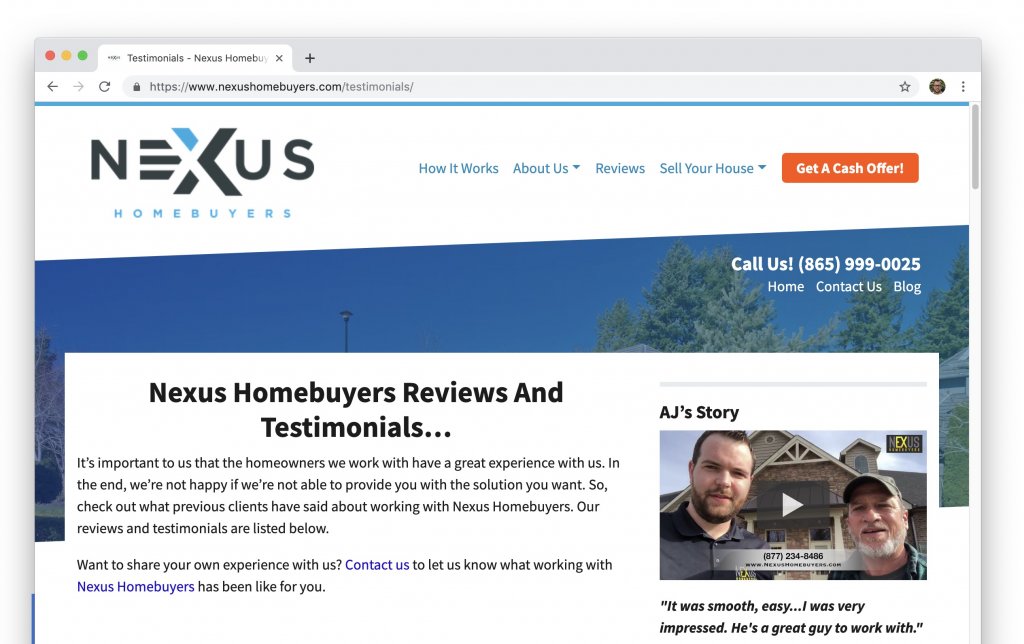
Take the time to focus on customizing your website a bit, especially your “Testimonials” and “Our Company” pages. Check why these two pages are so important. Also, be sure your real estate website is mobile-optimized. All Carrot websites are mobile-friendly. Therefore you’re maximizing the potential of your Google ads account.
2. Commitment. You must be willing to build Google Ads into your long-term financial and time plan.
It’s practically impossible to see the full potential of your Google Ads account from the start. It’s essential to recognize that PPC is not a short-term venture. Establishing a strong structure, expanding your keyword lists, identifying negative keywords, and testing ads and landing pages takes time.
Plus, you will likely start constantly changing keyword bids to fit your budget and keeping your ads in relevant, high-performing ad positions. Getting the first phase dialed in typically takes 1-3 months.
3. Dedication. You must be willing to spend time or outsource your account.
Your account is now up and running… you can sit back and relax. WRONG! There is still plenty of heavy lifting.
If you haven’t managed a PPC account before, I recommend taking serious time to learn. You must be comfortable with the Google Ads dashboard and educated enough to make good decisions. Making the wrong choices can cost you money and cause your account to take a step back in productive data.
Once you are comfortable to embark on the challenge, you must monitor your performance thoroughly. That hard work will well pay off in the end.
Take time developing your strategy, identifying your goals, and calculating your cost per lead/deal. You must know how much you will spend on Google ads to close a deal. As we know, all market profits aren’t created equal. An investor in New York might need to spend more to get one deal closed over someone in Memphis. You must know your market.
After you know your budget, you’ll need to have a solid keyword strategy in place. It’s a good idea, especially if you’re new to Google Ads, to start with highly targeted keywords and expand into broader terms as you get more comfortable.
Creating a New Google Ads Account for Real Estate
Step 1
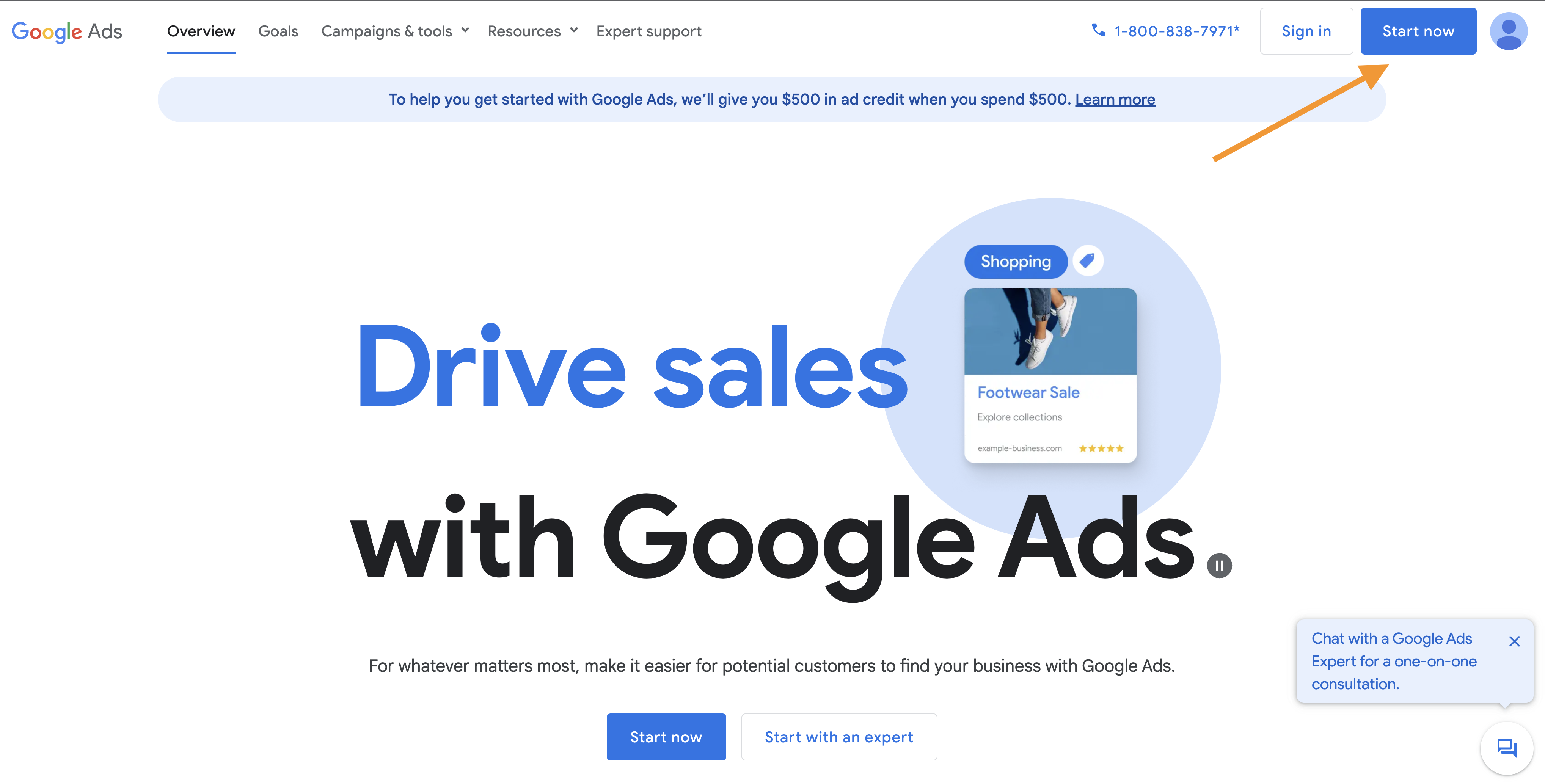
Head to www.ads.google.com to set up an account. When creating an account, you can create it under your existing Gmail account or set up a new one. I like to set up a new Gmail account ahead of time, which I use specifically for Google Ads management. This way, my personal email isn’t bombarded with emails from Google Ads.
Step 2
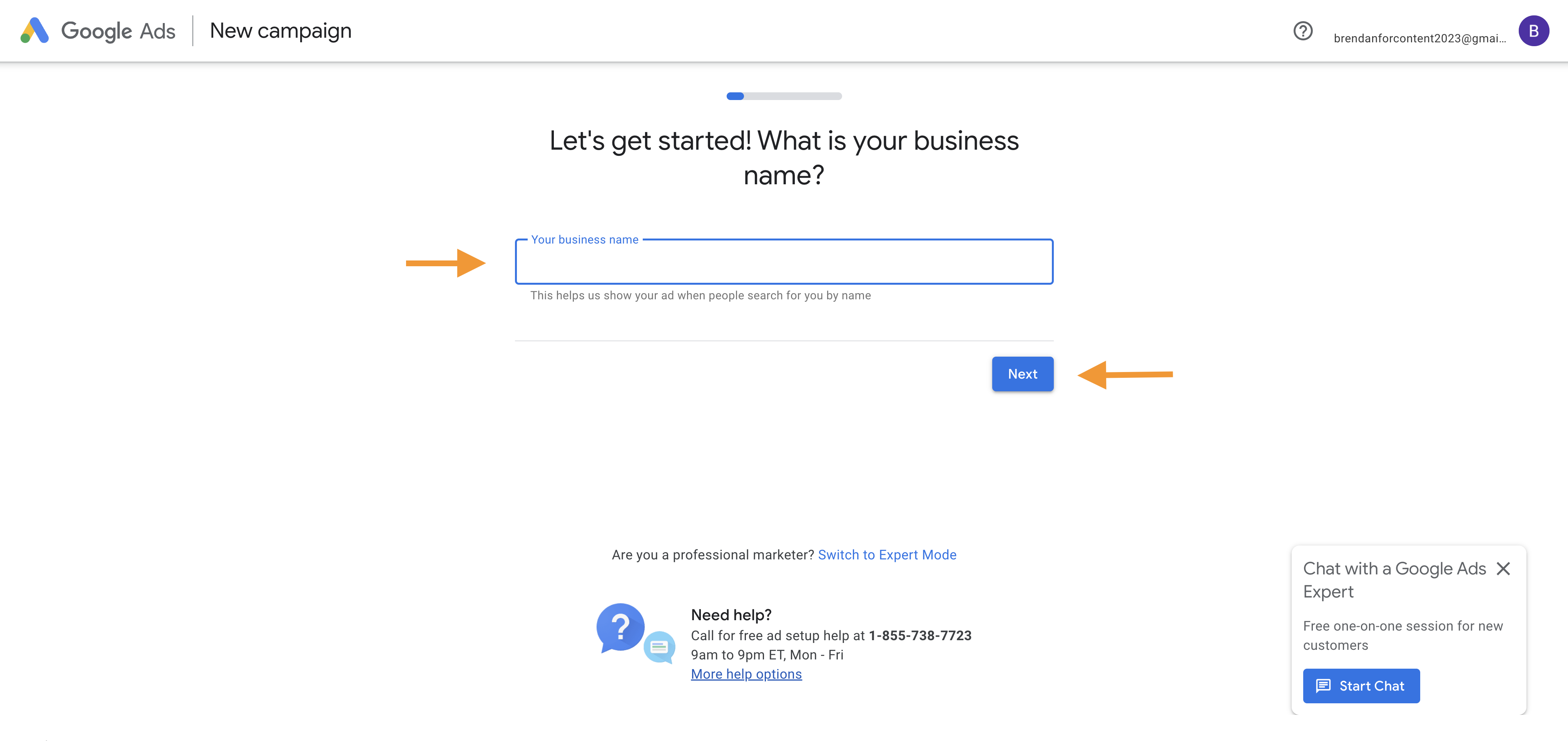
Now that your account has been established, you must complete a few housekeeping items, such as entering your business name.
Step 3
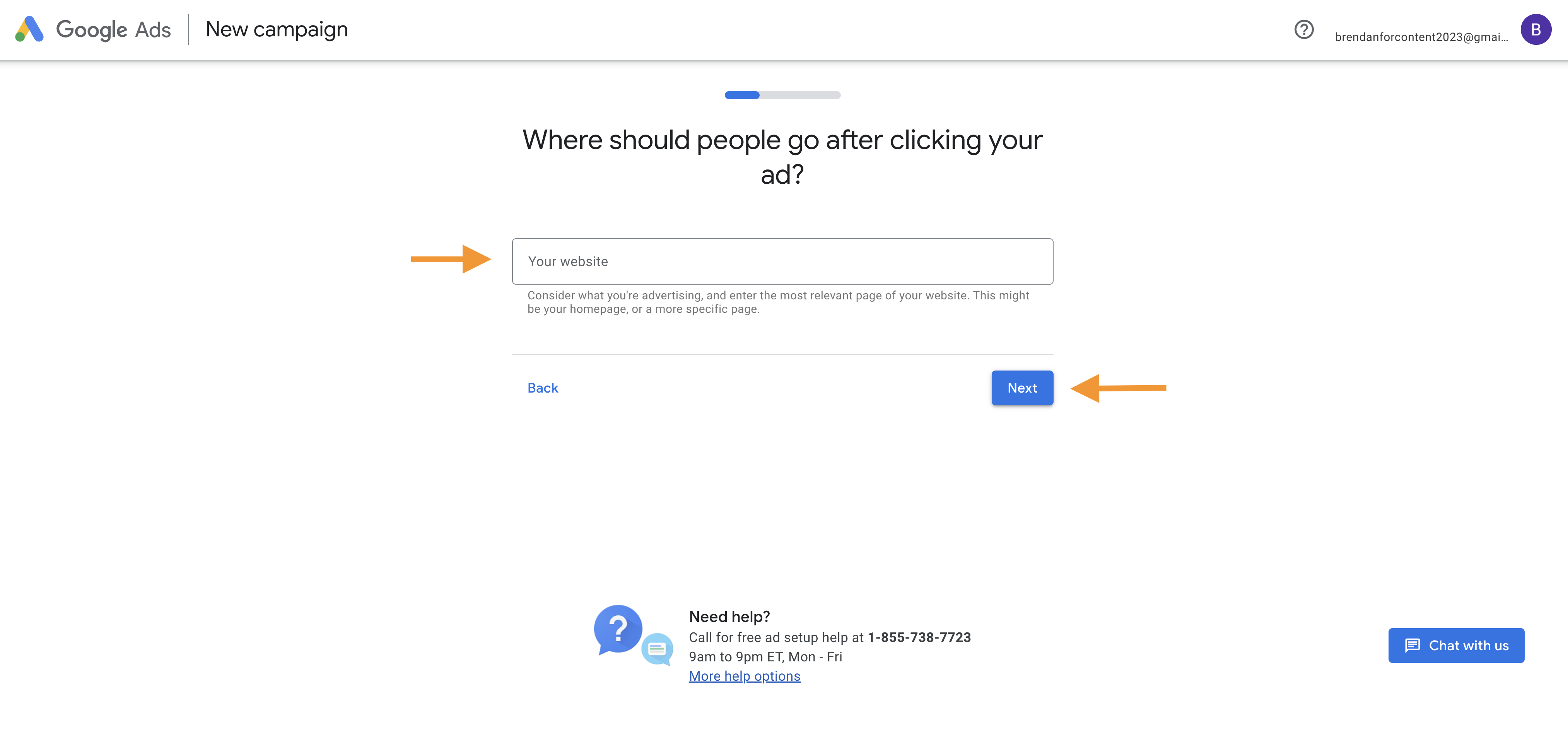
Enter your website URL.
Step 4
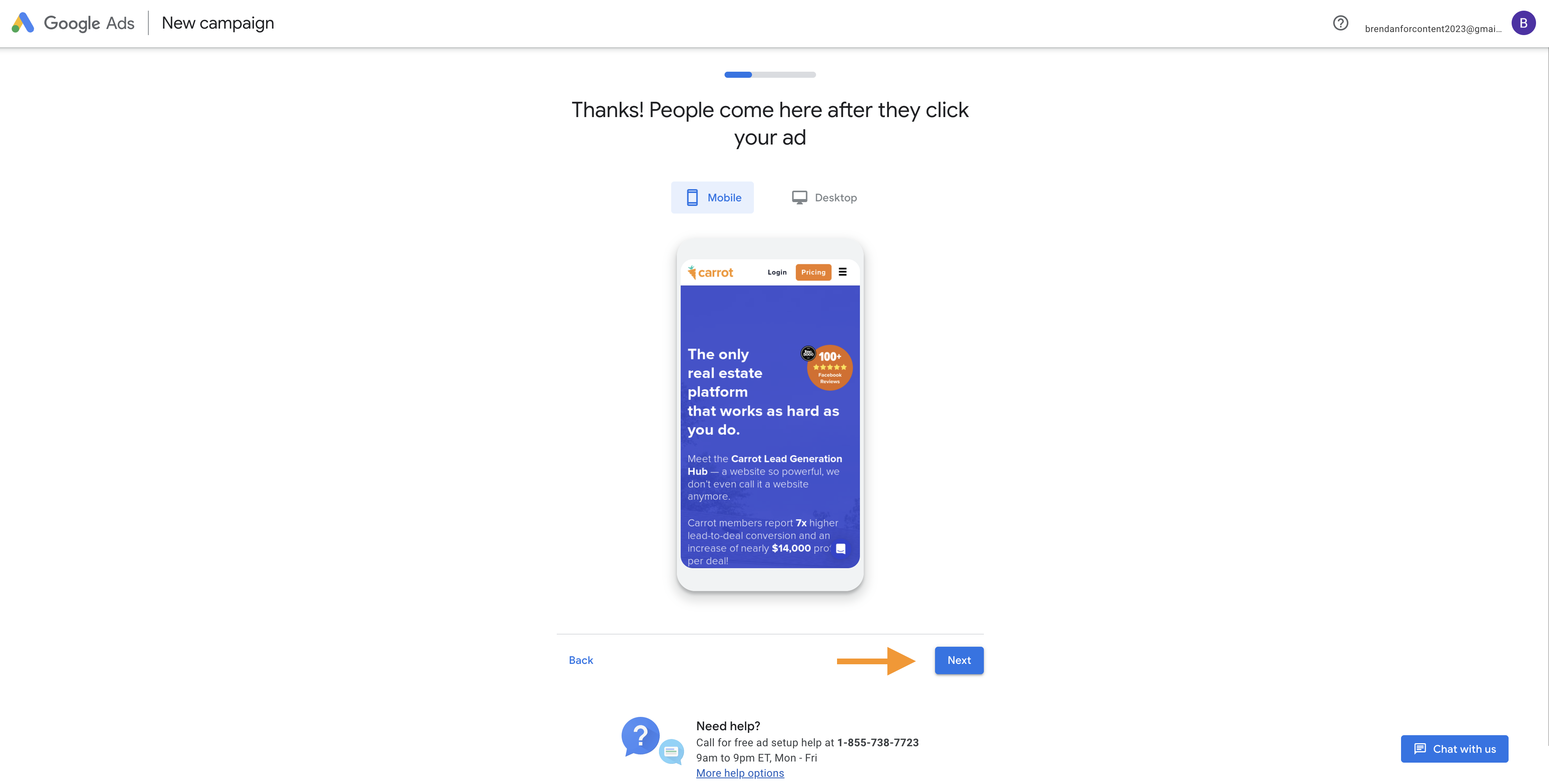
Review your website visual on mobile and desktop devices.
Step 5
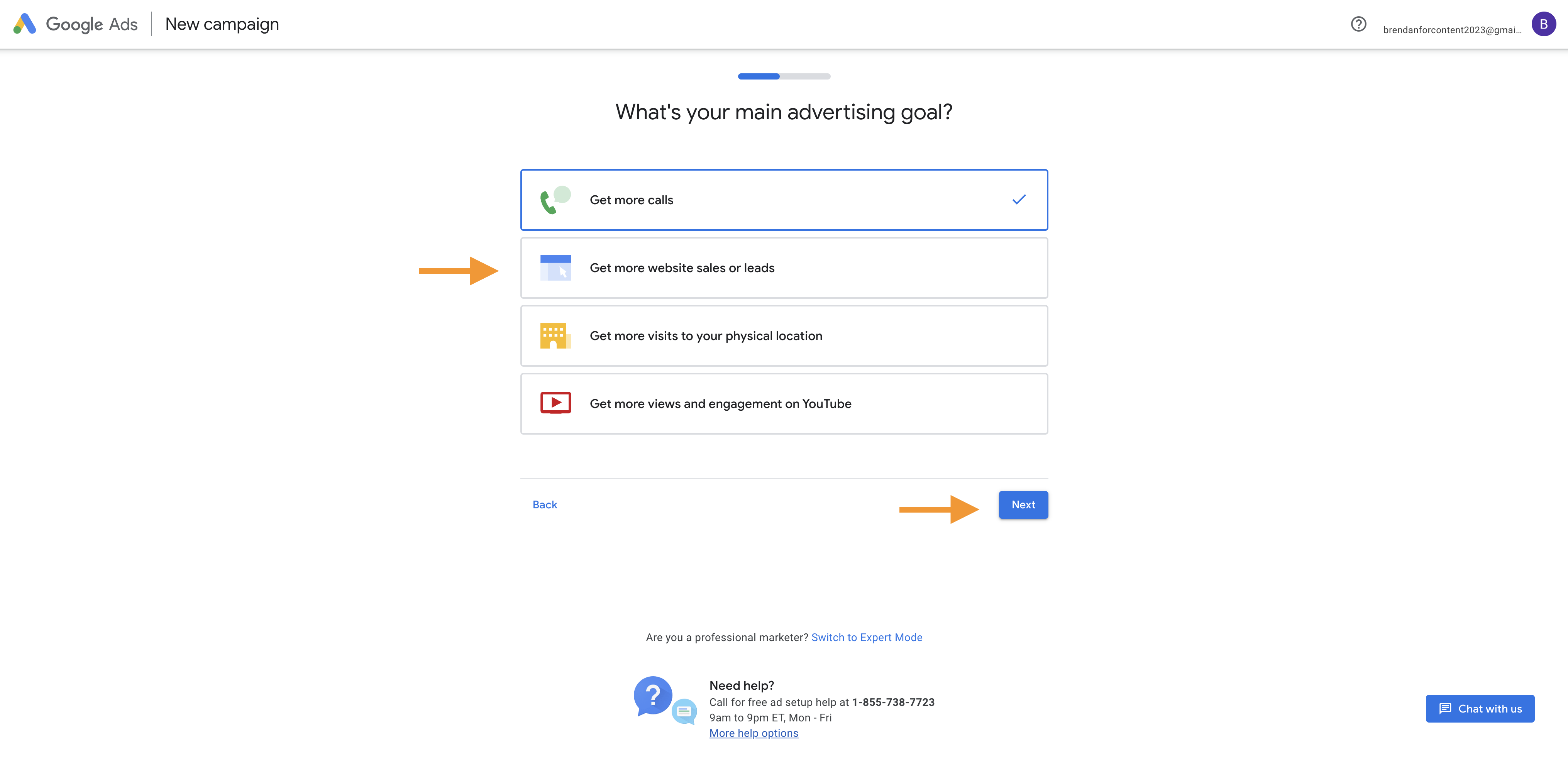
Choose your main goal. For most real estate professionals, the goal will be to generate more leads.
Step 6
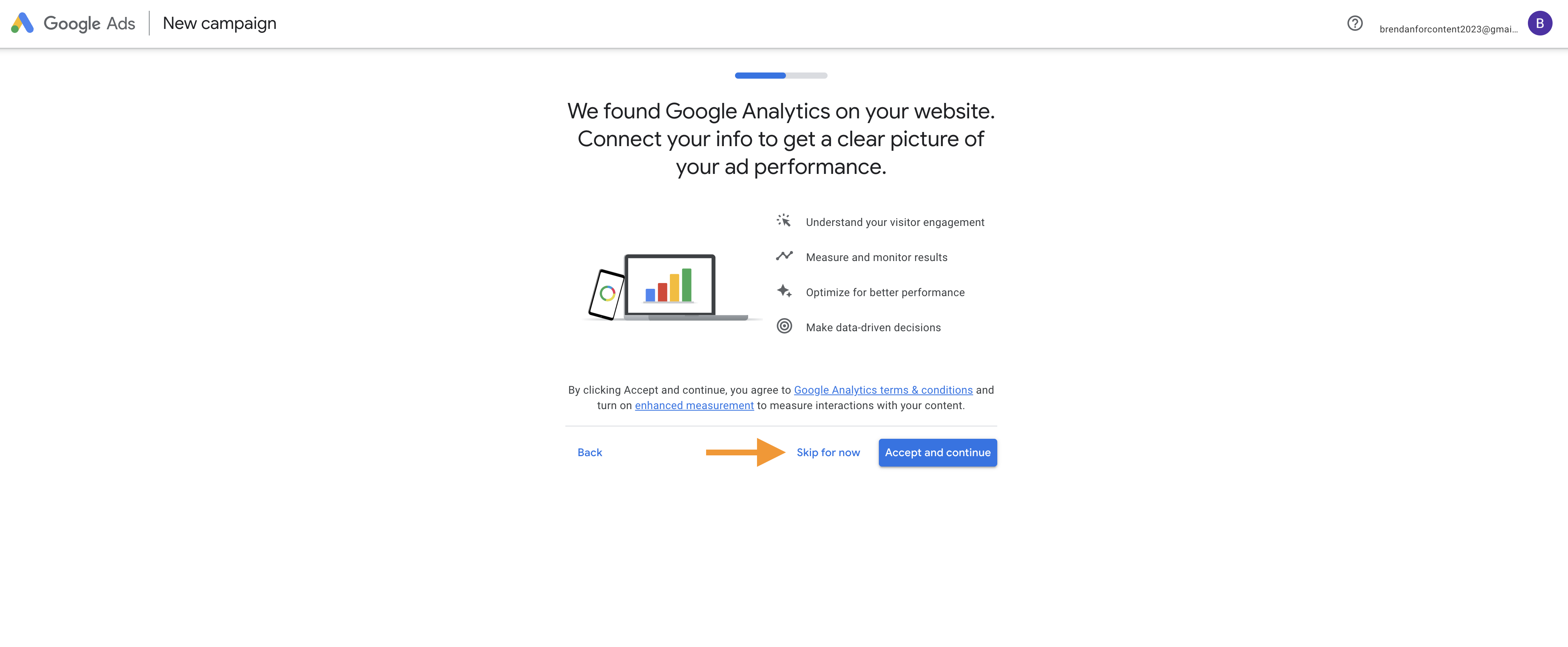
Google offers the opportunity to connect your Google Analytics account. If you do not have a GA account, you can choose to “skip for now.”
Step 7
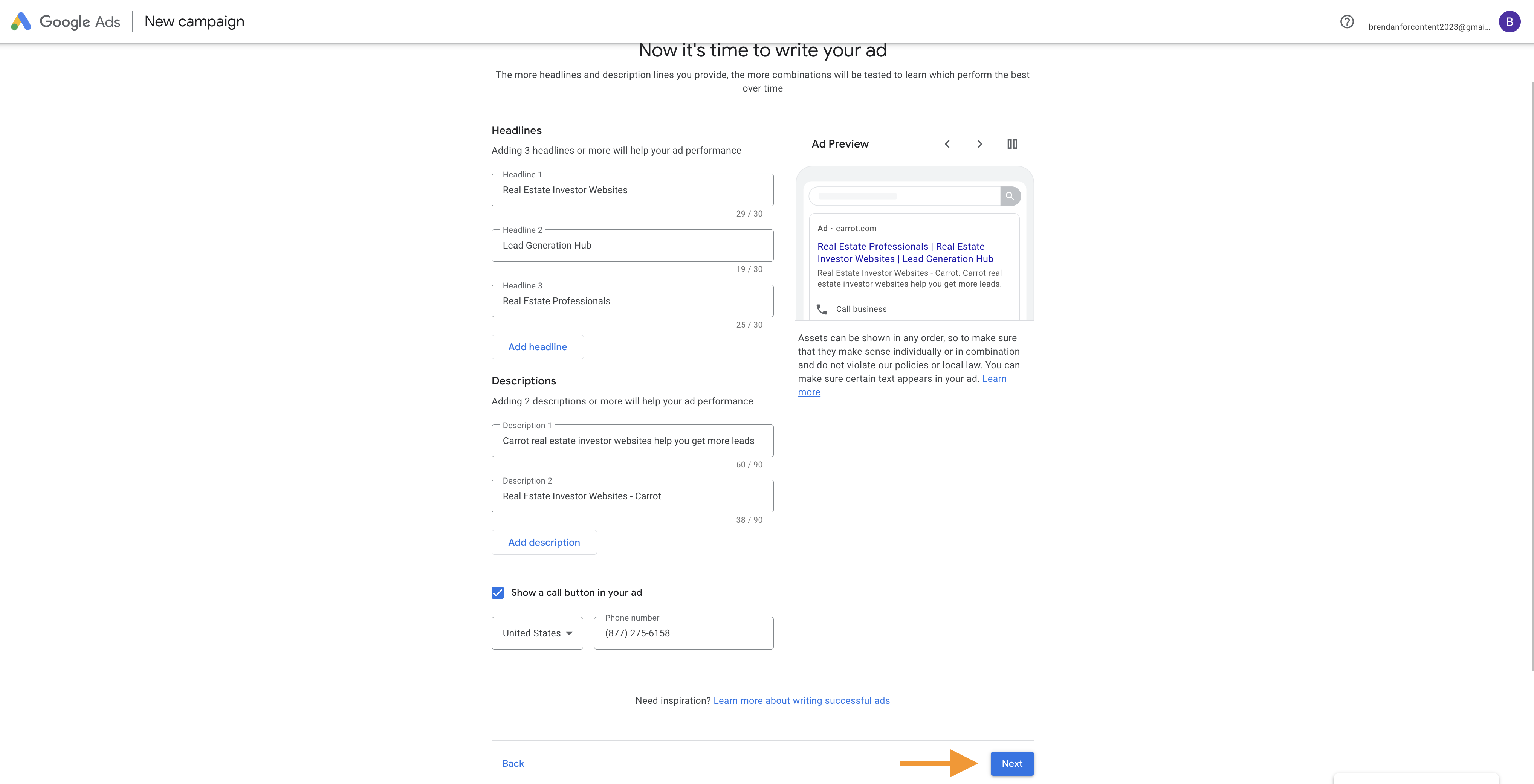
Time to create an ad. Choose three headlines and two descriptions, and enter your phone number.
Step 8
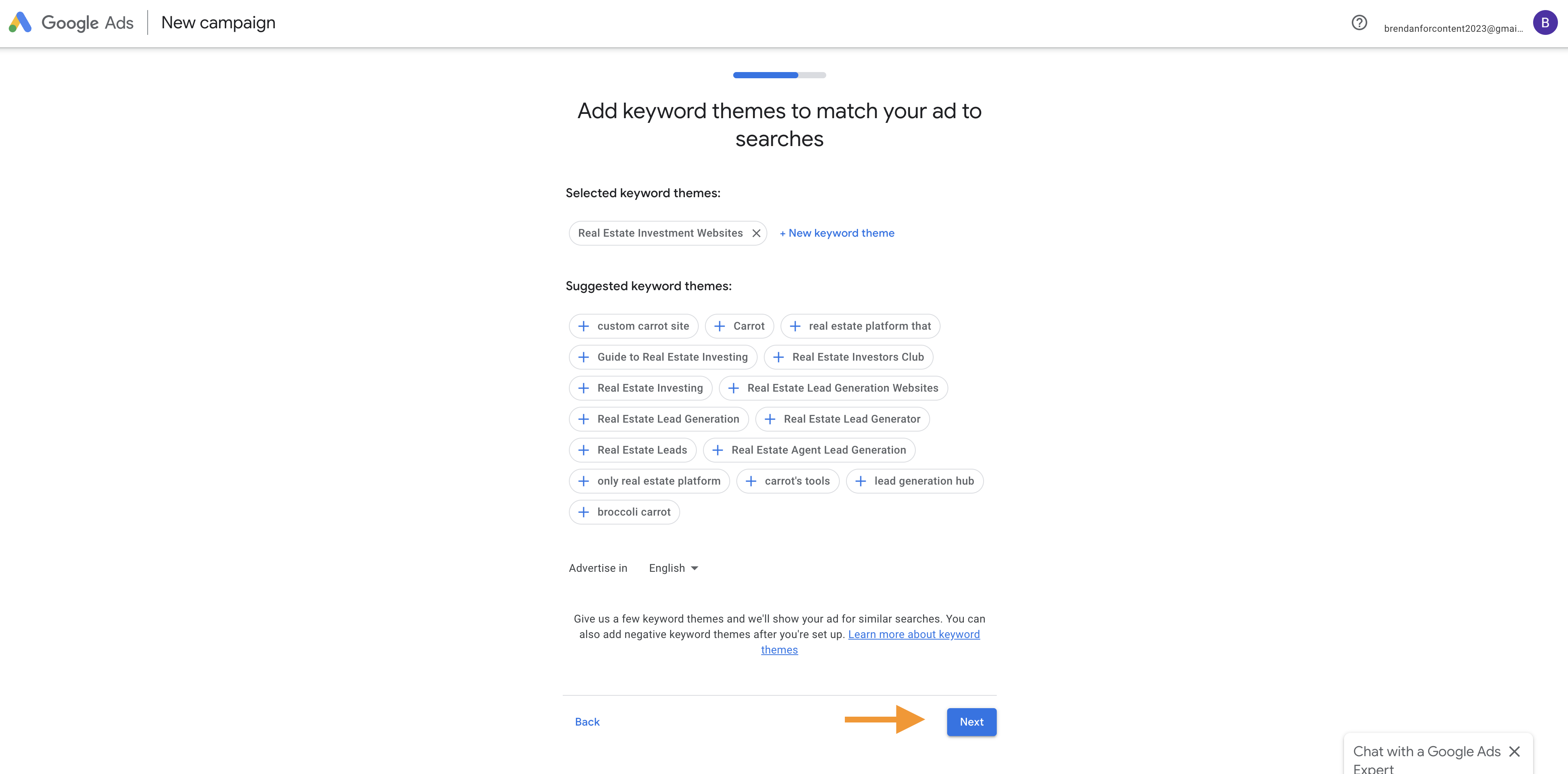
Google will present different keywords based on a theme. You can always adjust your keywords later.
Step 9
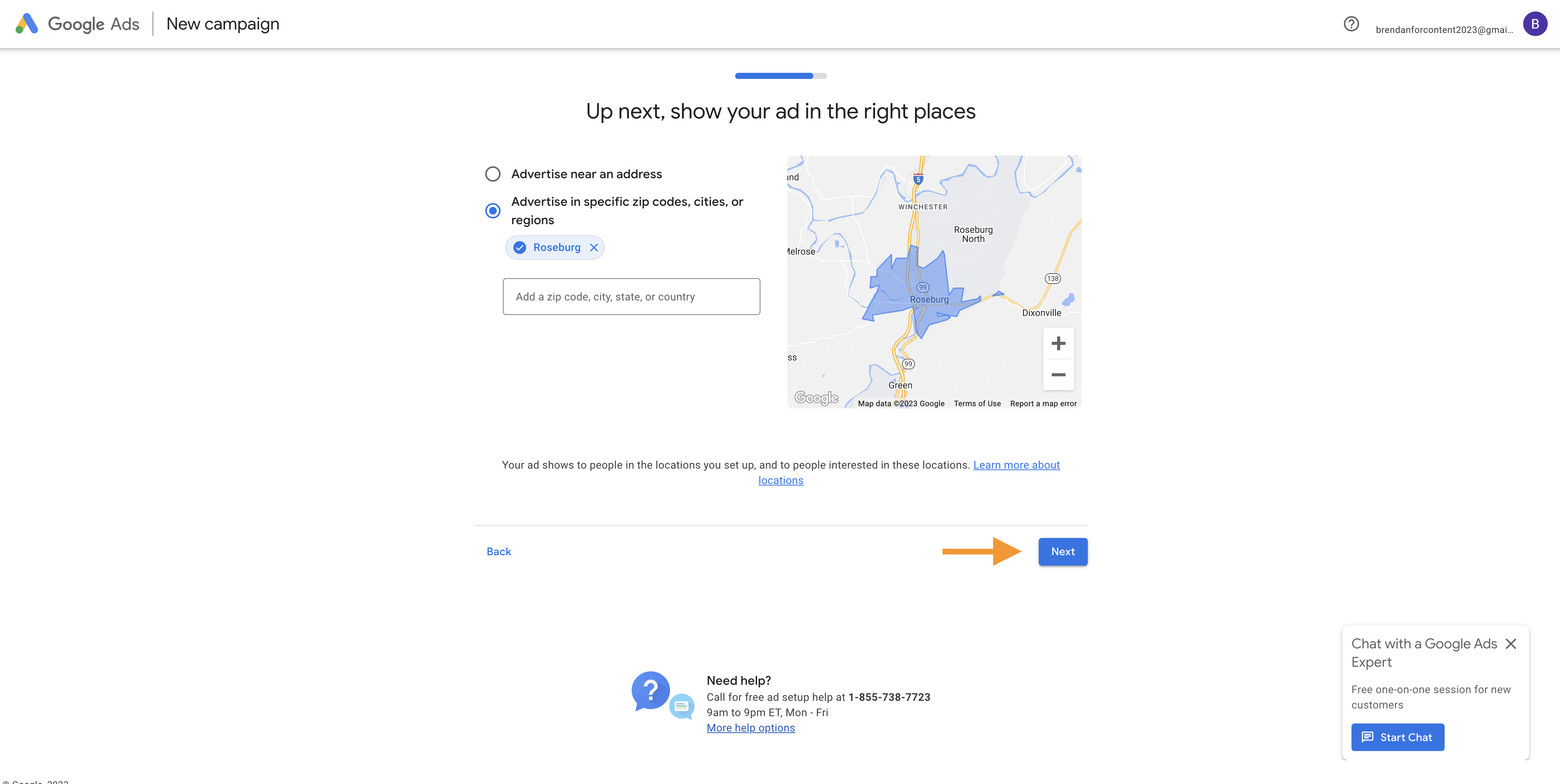
Next, you’ll be asked to add your target locations.
Step 10
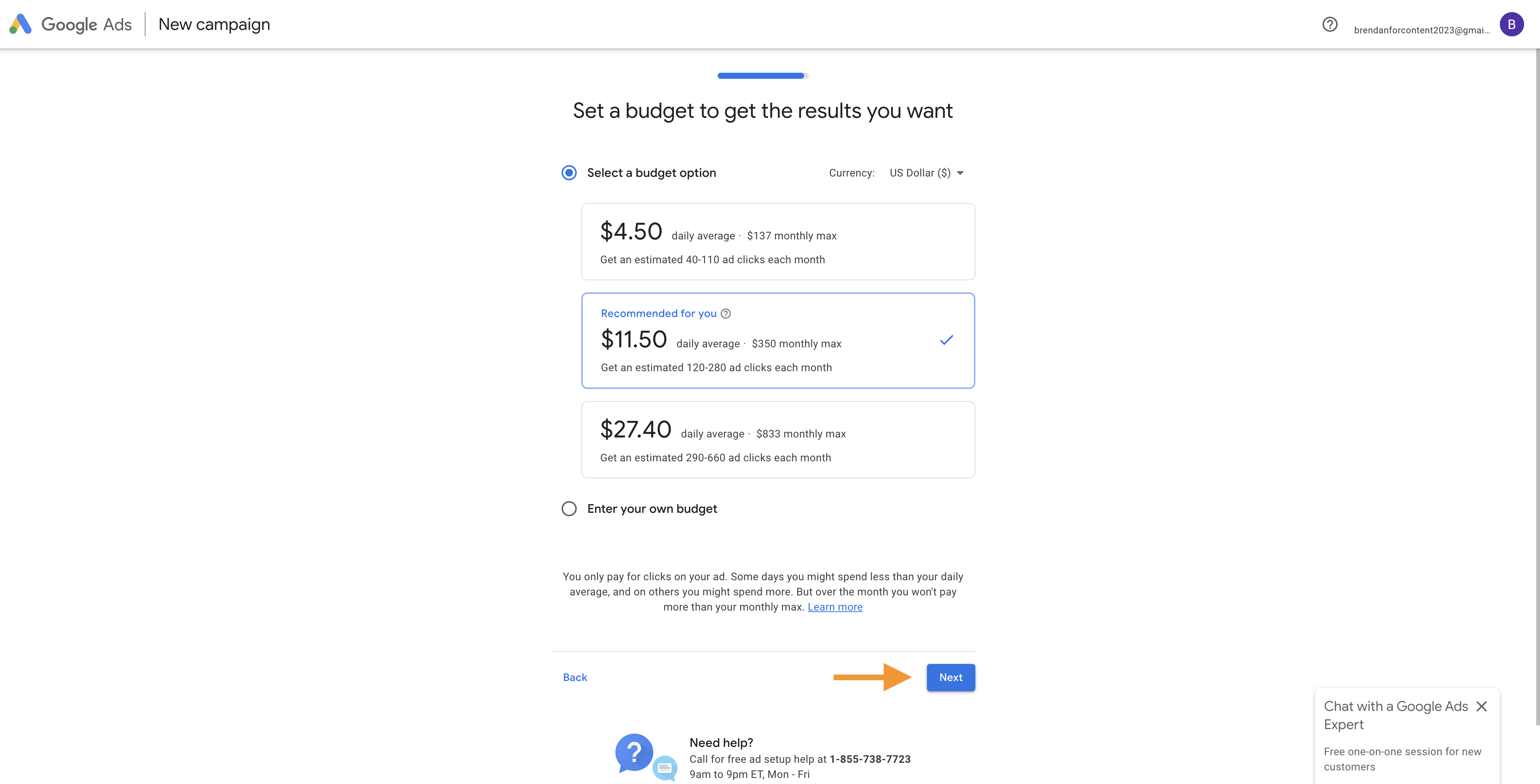
Set your daily or monthly budget.
Step 11
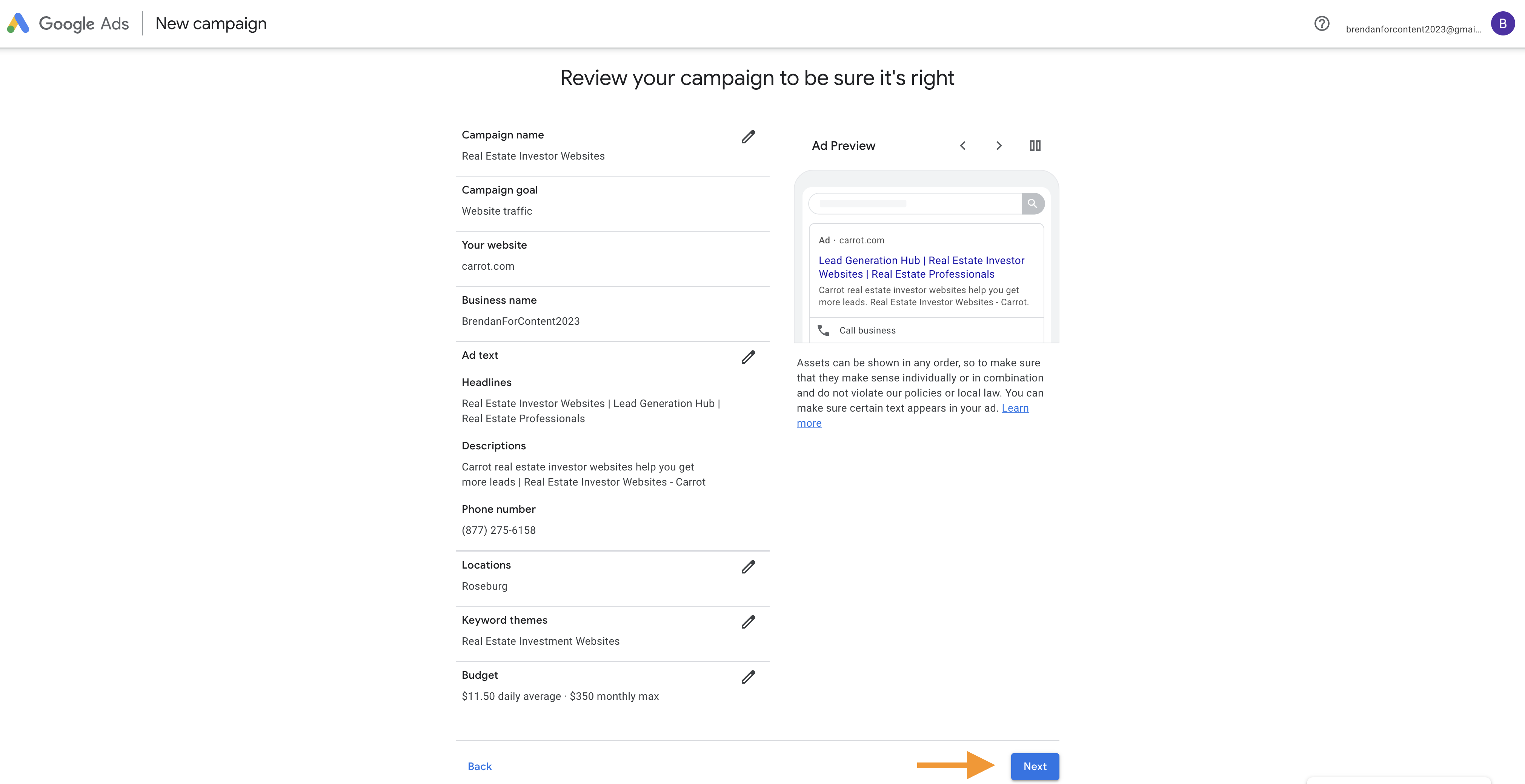
Review your campaign.
Step 12
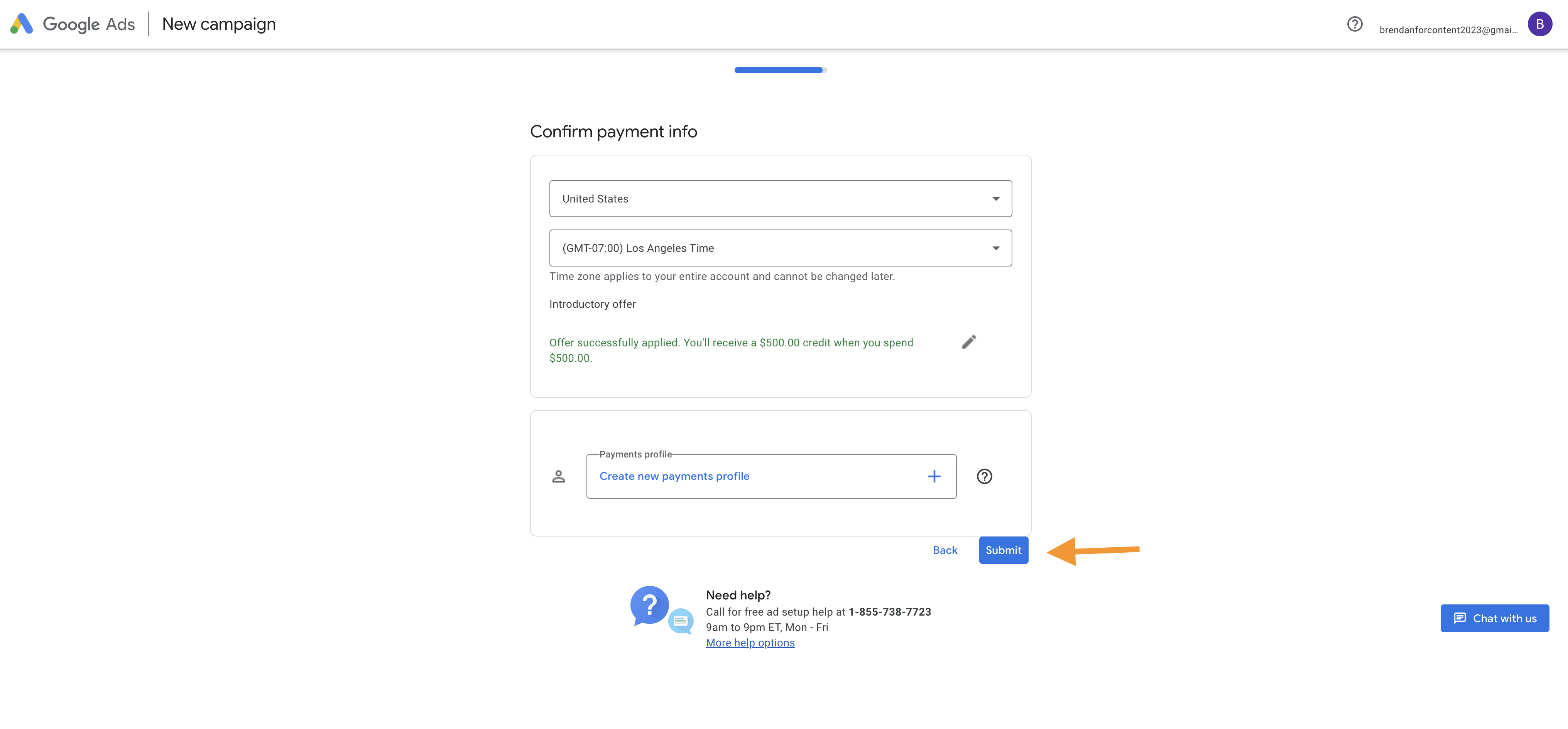
Finally, you are prompted to set up billing information.
Congratulations
You are now ready to start creating your Google Ads campaigns for real estate. We wish you the best of luck!
Be sure to hit us up with questions in the comments section below. Also, if you’re a Carrot member, join us on our weekly Coaching Calls, where we cover many PPC topics, SEO, lead generation, website design, and much more!
Not a Carrot member? What are you waiting for!? Check out our plans and get started today!
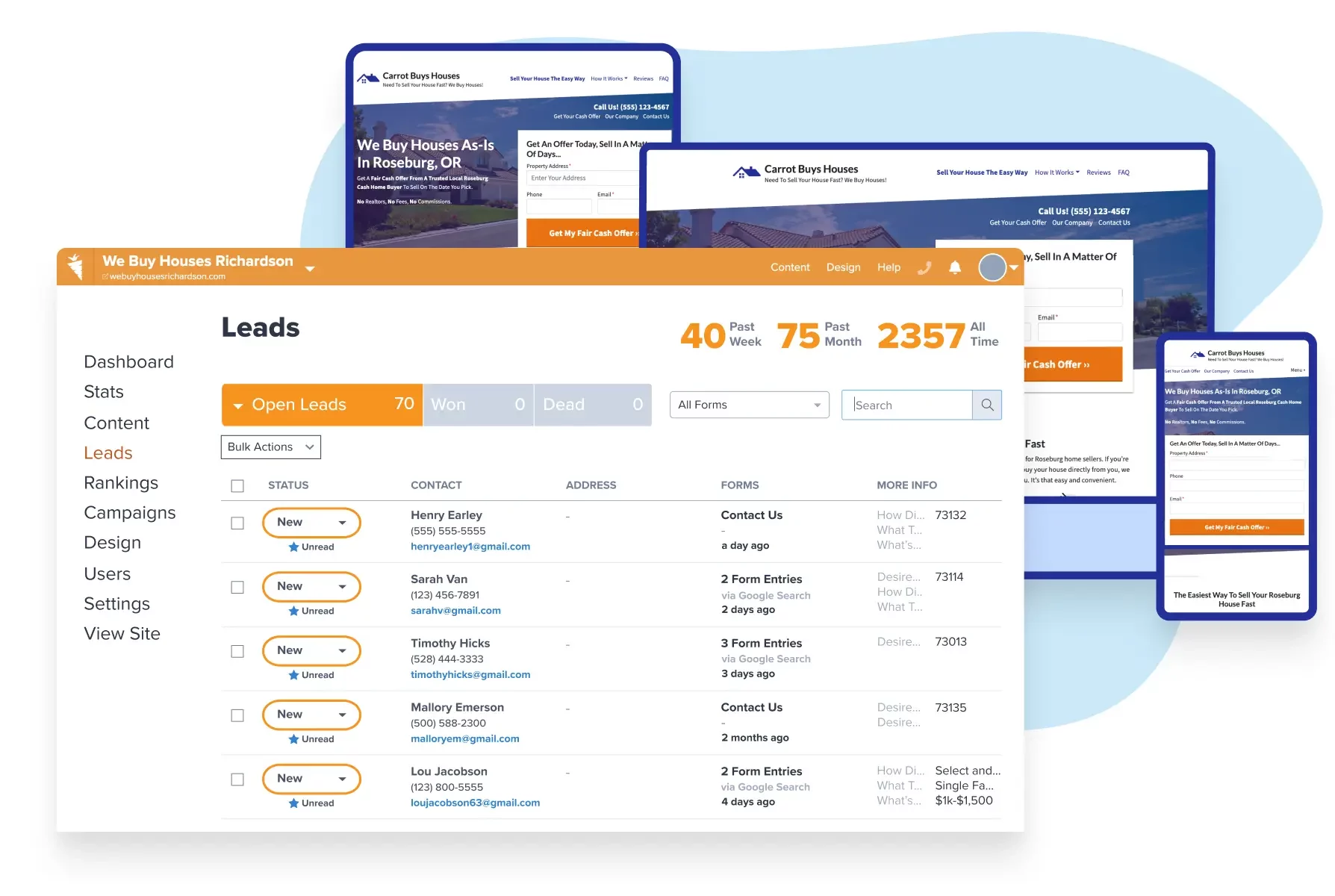
In the spirit of our Carrot core value of consistent improvement and innovation, we’re excited to share some improvements we have been making to all Carrot member sites!
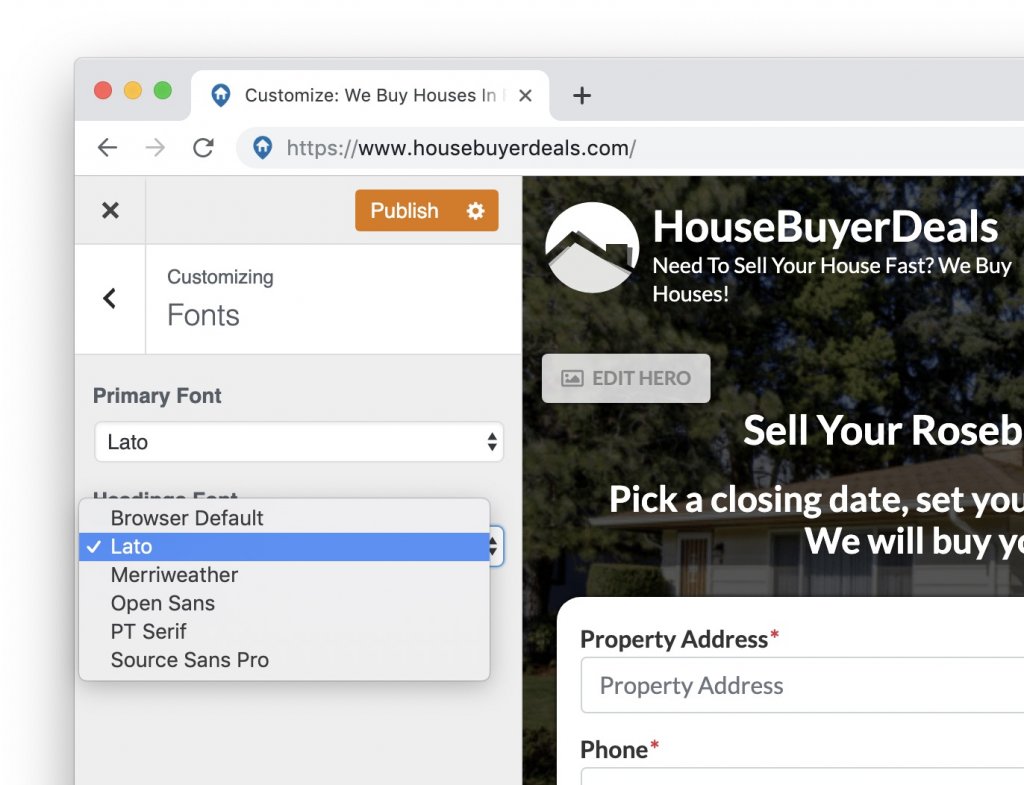
Carrot sites have beautiful custom fonts available to help differentiate your site and look great. Previously served from Google Fonts, we’ve now simplified the font loading process and moved font files to the Carrot CDN (Content Deliver Network) – reducing lookups, and optimizing delivery.
We’ve also audited all Carrot site themes and improved font weight selection to ensure your sites have great readability across more devices and rely on fewer different weights to load
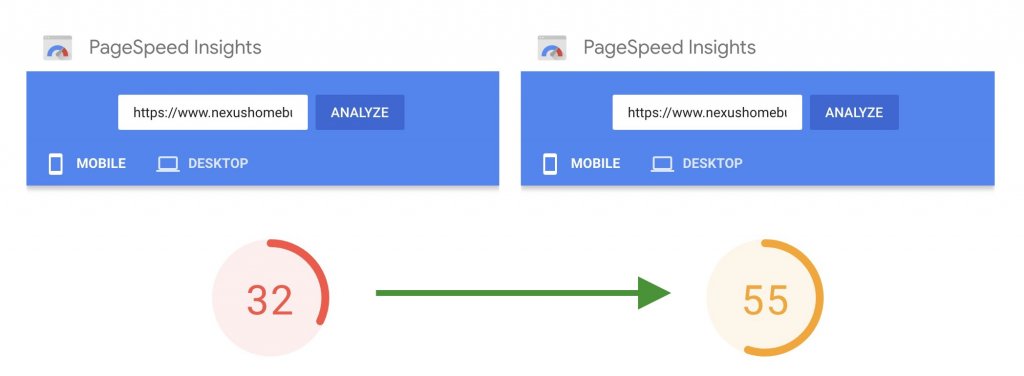
🎉 Result: An average of about 2 points increase in PageSpeed score, but more importantly, a visible speed improvement in your browser for when the site looks loaded.
Bonus: If speed is your only goal… there is now an option to forgo web fonts all together and just use the default browser fonts.
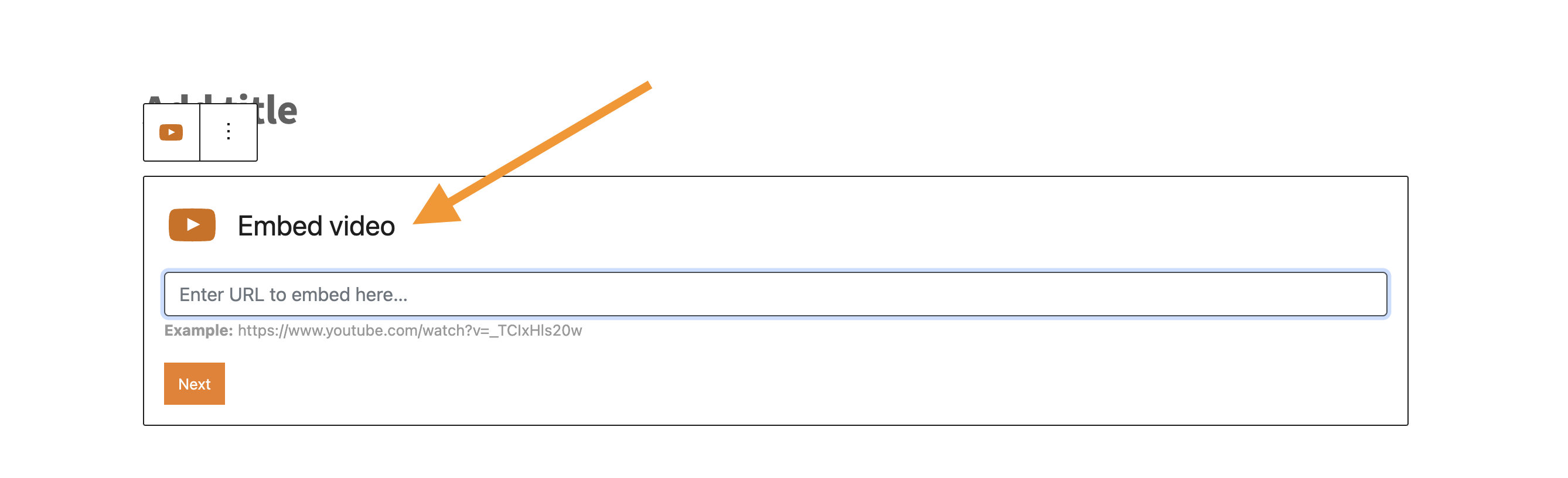
Embed YouTube Videos w/ No Slow Down!
What’s new?
Better looking YouTube Embeds
Faster page loads with YouTube Videos
No performance hits for adding multiple videos
Video is a great interactive way build credibility. Whether it is an informational video on your home page, or a series of testimonial videos. Unfortunately… loading up a YouTube video can take a lot of resources, and performance (especially on mobile devices) is worse the more videos you add to a webpage.
We’ve solved this issue by implementing deferred loading of video embeds!
Now, rather than loading all YouTube embed assets, scripts, etc. for every video on your page immediately, your Carrot site automatically shows a preview placeholder for videos until the visitor clicks the play button.
Once the play button is hit, the YouTube embed is loaded and starts playing!
🎉 Result: We have seen dramatic load time reduction, for a page with single video this can improve PageSpeed scores by 15+ points (out of 100). Adding multiple videos, this can show an improvement of multiple seconds on your page load and as much as 25 PageSpeed score points!
More Responsive Billing Feedback
We also want to take a moment to share some more behind the scenes updates – we’re hard at work improving the visibility of your billing status for your Carrot membership.
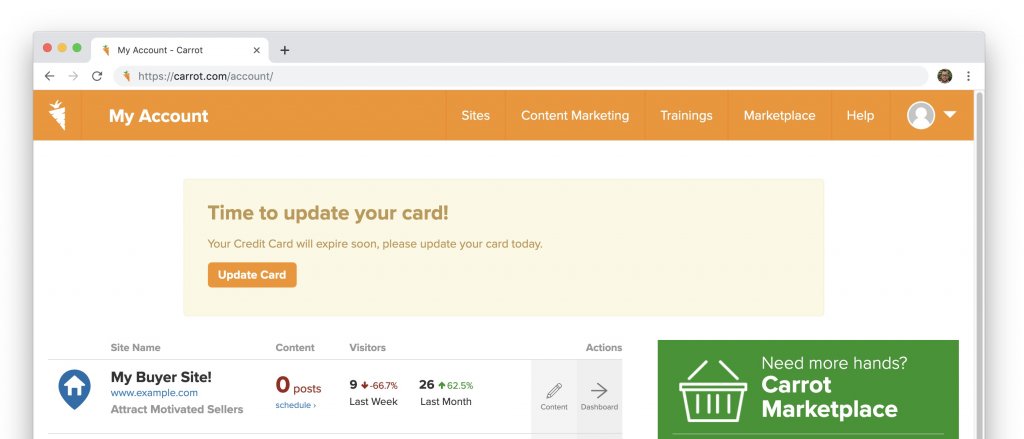
You will now get real-time updates in your account about the status of your credit card expiration or missed payments.
We are also rolling out new systems to ensure that billing related communication comes your way more reliable, should there ever be a problem with your card.
You’ll now also be prompted immediately upon sign-in if your billing has lapsed past the 10-14 days when your account will go temporarily inactive. That way you will have the quickest path to keeping your account current and your Carrot sites live!
How to activate these new updates?
You don’t! We’re already on it for you – that’s the beauty of Carrot 😄
Nothing to install, nothing to update 😎 We’re on it!
Let us know what you think!
Check out your own sites, and reach out to Carrot support if you have any questions – we love hearing from you!
In 2018, PPC was the second highest lead generation medium for our members.
Trying to rank on page one of Google can be a daunting task for some. It takes time and resources to invest in a full, all-out SEO strategy. Even then it could take months to notice.
What can you do in the meantime?
Well, many of our members make use of both PPC and SEO — using the former to generate short-term traffic and the latter to generate longterm traffic.
In this intro to PPC for Real Estate, we run down what you need to understand if you’re considering this route. Including:
What is PPC for Real Estate?
How does PPC work?
What are the benefits of using PPC advertising for Real Estate?
PPC is a broad term used for various cost-per-click platforms real estate professionals use to get in front of their target audience. These include Google Ads (AdWords), Bing Ads, Facebook Ads, and numerous retargeting options.
Overall, PPC is a digital marketing strategy in which you advertise within a search engine’s sponsored results by bidding for the keywords, ad sets, and/or retargeting list connected to your real estate niche.
Pay-per-click is exactly that… you pay each time your ad is clicked. Although, there are times you can be charged for impressions (number of times your ads are shown).
Google Ads (Adwords) still reigns as PPC king for generating motivated seller leads. Facebook ads can also be an effective way to generate motivated sellers as well as buyer leads.
Facebook cost-per-click is also considered a lesser amount compared to AdWords. It’s important that you understand where your leads are coming from and the value of your cost per lead to fully understand which platform works best for you.
How Does PPC Work?
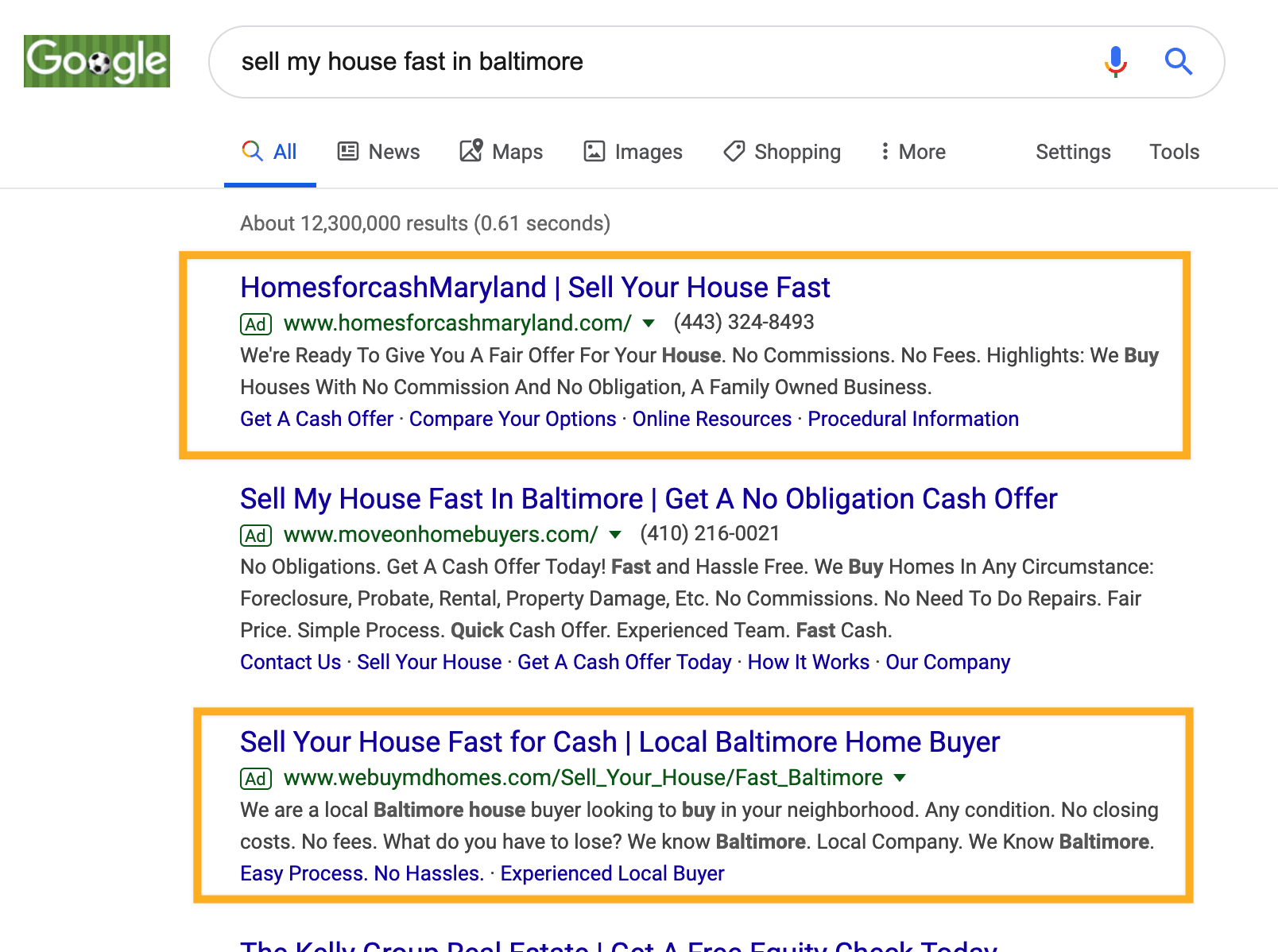
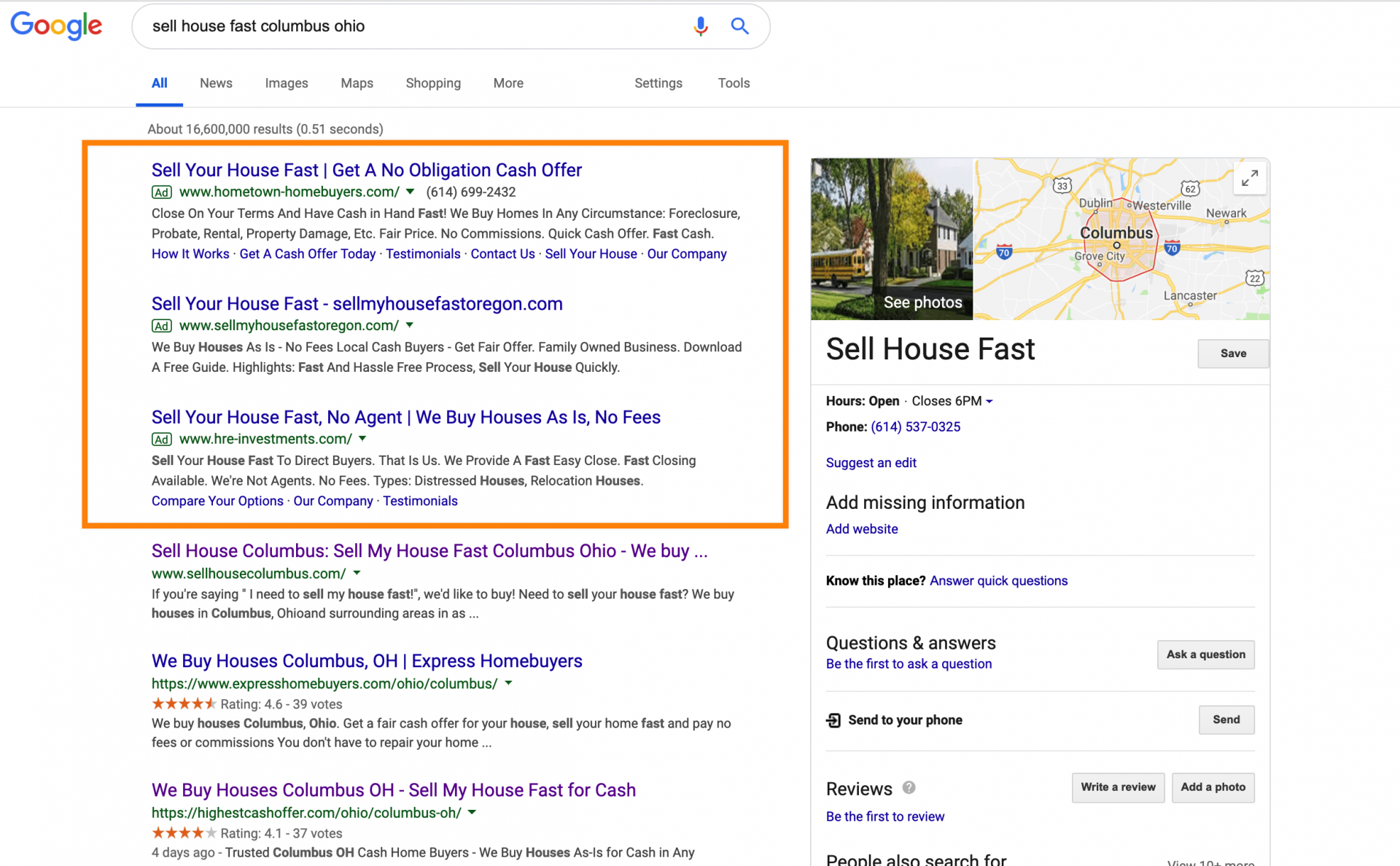
Starting with the basics. When a motivated seller types a search query into Google, the search engines provide two sets of results: pay-per-click ads (sponsored) and organic results.
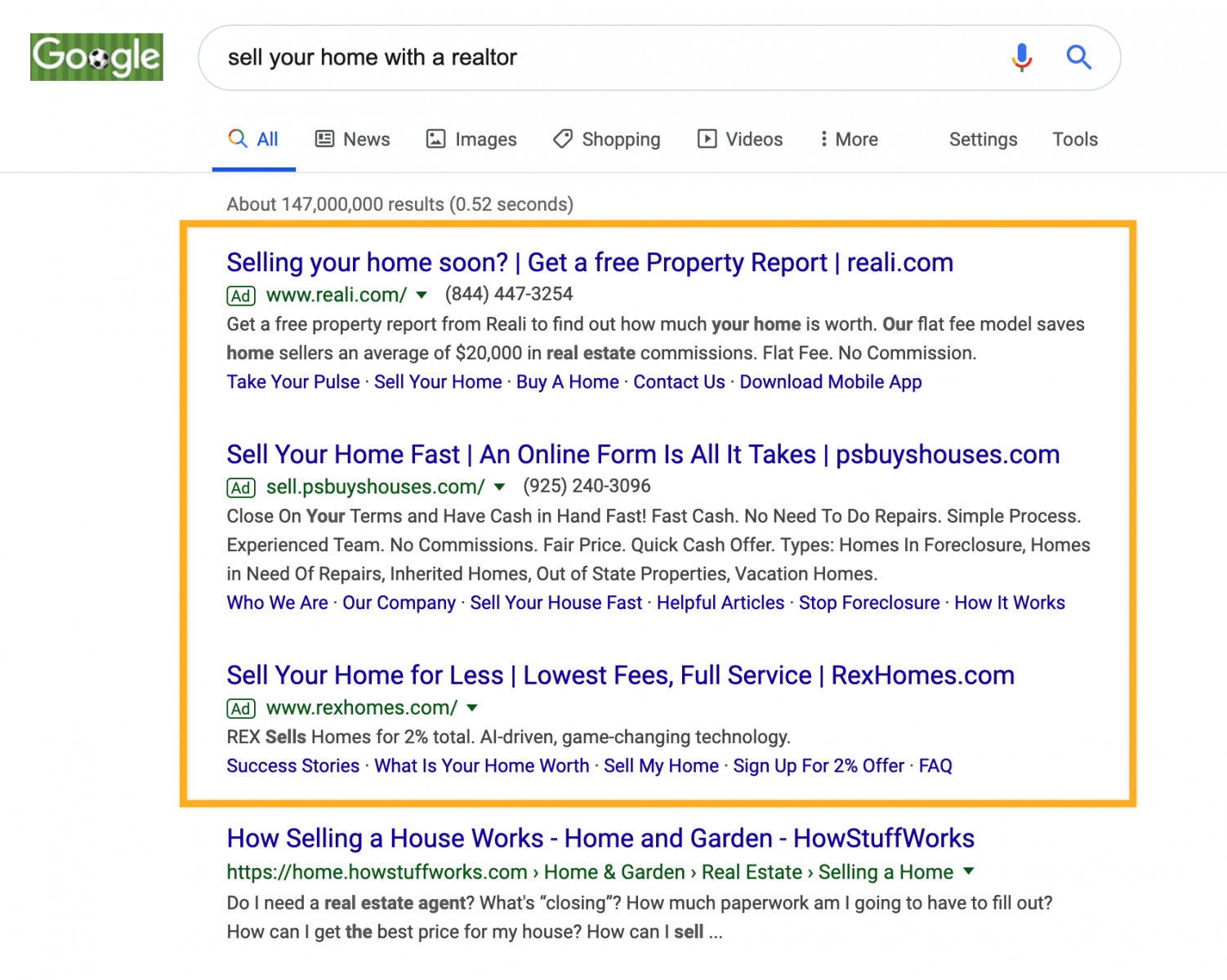
As seen in the picture below, the first three results on top are sponsored ads (indicated by the green square around the word “Ad”).
The other results below the ads are organic results. More than likely, the organic website results have climbed the rankings by executing a solid SEO strategy.
With PPC, when the searcher clicks on one of the ads, you (the advertiser) is charged for that click.
The price of that click will vary per the competition for that specific keyword as well as your target location(s).
You can use specific tools to find keyword traffic estimates as well as the competition and cost-per-click estimates. Tools such as:
Advertising with PPC ads can have many benefits. Here are some of the top reasons you should consider using PPC as part of your online marketing strategy.
1. You Have the Opportunity to Control Your Position on Page One of the Search Results
PPC advertising allows you to gain the most valuable ad space on whichever PPC platform you choose to use. If that’s Google, then you have the ability to get on top of the first-page search results without having to dedicate the time and resources for SEO.
Claiming ad space where most eyes will see them will increase your odds of getting solid lead generation and return on your investment.
2. Place Your Ads in Front of YOUR Audience
This is two-fold.
First, you can use specific keywords in your PPC ads. This will allow you to reach a specific target audience based on your location. For example, using keywords such as…
“Sell my house fast in Baltimore”
“Sell my house in Chicago”
“We buy houses fast in Boston”
This allows you to reach the local audience by choosing keywords that are targeting your audience location.
Second, you have the ability to use geo-targeting to limit who can see your ads based on locations. For example, if you are searching for motivated sellers in Baltimore, it wouldn’t be smart to allow searchers in D.C to see your ads.
You’d be would wasting your budget to allow searches from outside of your target areas to see and click on your ads.
3. Control Your Budget
Adverting with PPC ads offers you ultimate control of your money. You set your desired ad spend. If your budget runs low, platforms such as Google Ads will notify you that your budget is limited. This allows you to reassess your current PPC strategy and make the necessary adjustments to optimize your accounts.
As mentioned above, the majority of your PPC campaigns will follow the model that you only pay when someone clicks on your ad.
4. PPC is Immediate
There’s no wait time! Unlike SEO, PPC is live the moment you decide to turn your campaigns live. If increasing your buyer list for your real estate website is your goal, PPC ads allow you to get in front of your target audience NOW rather than waiting the span of time it takes for an SEO campaign.
5. Testing
PPC ads are an excellent way to split test your website, ad copy, or images that resonate with your target audience.
Using the A/B testing approach, you can test your ads and landing pages to see what form, color scheme, design… etc., are generating the best results. Once you gather enough date, you can use this information to make strategic moves to your campaigns to maximize your PPC ROI.
6. Track Your Results to Maximize ROI
Proving ROI is a major part of being a marketer today. Luckily, PPC ads allow you to track every aspect of your ad campaign to connect your efforts to your results.
You can see how each keyword is performing. You can see how each ad is performing. And, you can see exactly where and when your leads are reaching you.
You want to prove the worth of your PPC campaign. You’ll want to be sure your conversion tracking is linked to your website and for most of you, you’ll also want to be sure your lead source is relaying to your CRM.
Then you’ll be able to track from click to deal to see your profits that have come from your PPC strategy.
Plus, PPC website visitors are 50% more likely to purchase something than organic visitors (i.e. they’re more motivated).
So, who should use PPC? Those who have the ability to plan, have patience, and are willing to spend money to get results.
If you make well-informed decisions from the time you launch a PPC campaign, you will be able to increase traffic and leads to your website.
However, PPC usually isn’t best suited for those who are looking to dabble. You need to have a mindset that provides enough strategy to sustain months and sometimes years. Those who have similar “go-get-em” attitudes have fared especially well with PPC advertising.
Real estate also has a bigger advantage over other industries who utilize PPC. Profit margins can more than justify the costs associated with PPC.
If you are looking for a simplified answer of how to get started with PPC advertising, it can be summed up into a relatively easy process.
Here’s a simple look at how to plan your own PPC for real estate strategy:
1. Conduct a competitor analysis.
Identify the competitors who might be outranking you in your market. Analyze their search terms and search volumes using tools such as Google Keyword Planner and Ubersuggest as listed above.
2. Choose the real estate keywords you want to advertise for.
Conduct keyword research to learn how your target audience is searching for your real estate niche. If you’re looking for buyers for your agent website, then use such terms as, “new homes for sale” or “homes for sale in”.
3. Create ads based on thorough research.
Develop ad copy that will resonate with your target audience. Looking for motivated sellers? Use ad copy such as “We Buy House in Any Condition” or “Sell Your House As-Is Fast”.
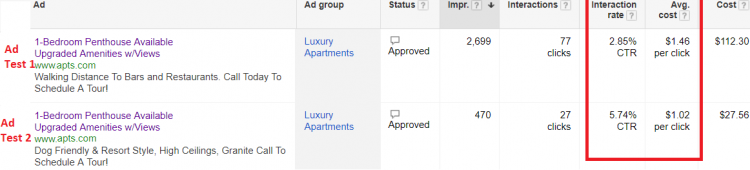
4. Split test ad copy and/or landing pages to compare how different aspects of your PPC campaigns perform.
For ad copy testing, track metrics like click-through rate and cost per click. For landing page testing, track metrics such as conversion rates to determine the success of your PPC campaign.
You’ll also need to continuously manage keyword bids based your results. This will help you get the most ROI from your efforts.
5. Optimizing beyond your ads.
Real estate PPC campaigns are created from many parts beyond keyword bids and the ad copy. It’s important to think beyond the landing page and start to think about optimizing other pages that will help build credibility and connection with the searchers.
Three important pages to consider optimizing are your “Our company”, “Testimonials”, and the “How it works” pages.
This heat map from specific PPC traffic, confirms the need to optimize these pages. PPC traffic is looking for confirmation.
Conclusion
Don’t feel overwhelmed by this PPC intro. By having a sound strategy, educating yourself and putting in some time, you’ll be off and running with a successful PPC account. Or, consider hiring a third-party to consult or manage your account.
Overall, PPC can provide immediate results and be a lucrative piece of your online real estate marketing strategy.
Be sure to hit us up with questions in the comments section below. Also, if you’re a Carrot member, join us on our weekly Coaching Calls where we cover many PPC topics as well as SEO, lead generation, website design, and much, much more!
Not a Carrot member? Whatcha waiting for! Check out our plans and get started today!
You want to generate more organic leads but you don’t know how to track your real estate SEO performance. That’s common.
You want to pull more traffic to your website (with less money) and you want to convert that traffic into cash for your real estate agent or investing business.
That’s good — you’ve chosen the right strategy: SEO. Since people who find your website all on their own are usually more motivated than those who see your ad on Facebook, SEO doesn’t just drive traffic but works to improve the conversion rate of your website. And with high-quality traffic and leads comes less time spent dealing with tire-kickers who’ll never convert, regardless of how hard you try.
In other words, SEO benefits your business in a multitude of ways. Less time spent on the wrong leads, more time spent on the right leads, more website traffic, higher conversion rate, consistent lead generation, and even financial predictability.
But there’s a problem…
How do you know if your SEO strategy is working? How do you know that you’re SEO performance heading in the right direction?
Here are 4 mission-critical SEO metrics to keep an eye on while you’re climbing your way through the rankings.
4 Mission-Critical Real Estate SEO Performance Metrics You Need to Be Using
1. Rankings
This metric might be obvious to you…
If you’re going to drive passive traffic to your website and you’re going to convert more leads without running more paid ads, you must get to the first page of Google.
But that can take months, years even. How do you know you’re making progress?
The simplest way to check is to open an incognito web browser window and type in the search phrase that you’re trying to rank for. Then click through Google’s results and see if you can find your website.
Problem is, that’s time-consuming, especially once you’re trying to rank for 10 or 20 different keyword phrases. At that point, you don’t want to manually check all those rankings.
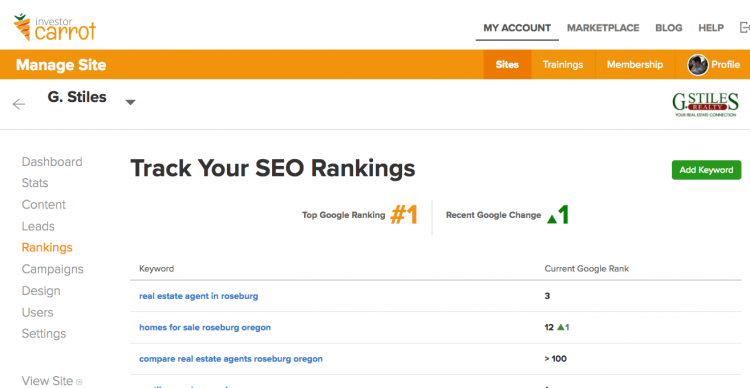
This tool tracks your rankings for specific keyword phrases in near real time. You can use it to quickly determine where your website is at for multiple keyword phrases you’re targeting. Every page in Google typically has 10 results, so 1-10 means you’re on the first page, 11-20 is second page, and so on.
2. Domain Authority
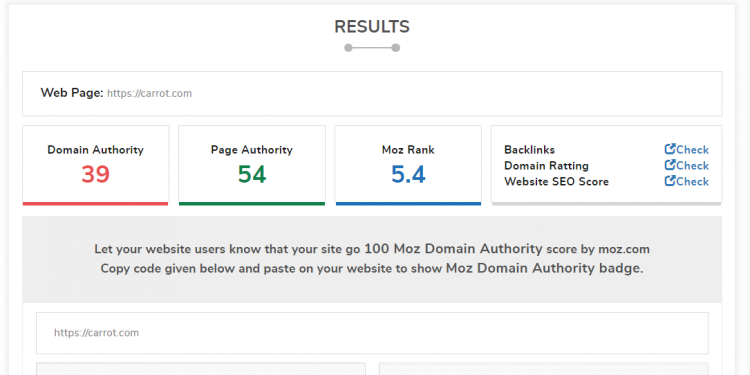
Another way to determine whether you’re making progress in the eyes of Google is to check your website’s domain authority.
What is domain authority?
It might sound complicated, but it’s actually pretty simple when you get down to it. Domain authority is the overall authority that search engines (Google, mostly) attributes to your domain. More authority is better and means that your website has a higher chance of ranking in results. Conversely, a low authority means that Google is unsure of whether you’re trustworthy or not (yet) and it’ll be more difficult for your website to get on the first page of Google’s results.
But the more content you create, the more opportunities you’ll have to rank in search engines (each page or blog post has a chance to rank). This is why we include monthly expert-written content as a part of our (Carrot’s) Content Pro and Advanced Marketer Plans.
You might, for instance, get your website ranking for “real estate investors who run 6 miles per day”, but that ranking doesn’t do you any good if people aren’t already typing that phrase into Google — and not just anything, the right people.
The reason that it’s so important to do keyword research before you start executing an SEO strategy is that you want to make sure that the phrase(s) you’re targeting isn’t a total waste of time.
You can use Ubersuggest to check the search volume for any given keyword phrase.
Just type the phrases you’re thinking of trying to rank for into the search bar and click “Search”. This will provide you with some information about how that keyword phrase performs in Google and with other keyword phrase ideas.
[cta offer=”seobible” color=”orange”]
But, back to website traffic.
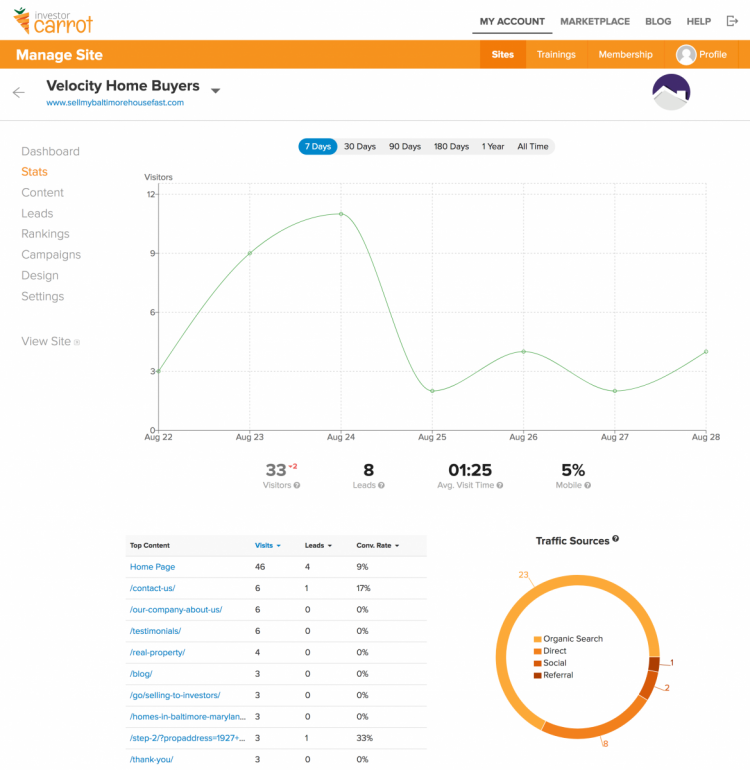
When you start ranking for your target keyword phrase(s), that’s when the rubber meets the road. Check your analytical information to see where your website traffic is coming from and if you’re actually getting more traffic from search engines.
Look at the “Traffic Sources” in the bottom right hand corner to determine where you’re website traffic is coming from and if you’re SEO efforts are paying off.
If they aren’t and you’re already on the first page for multiple keyword phrases, then you might want to target a keyword phrase with higher search volume.
4. Conversion Rate
Imagine that you’re ranking on the first page of Google for several different keyword phrases. Let’s even imagine that those keyword phrases are driving passive traffic to your website every month — maybe a few hundred visits.
When analyzing your SEO strategy, there’s only one more step in the funnel to make sure everything is working as it should: is that search engine traffic converting on your website?
Because it doesn’t matter at all how much website traffic you get if none of that traffic is turning into leads or, when you call them, they have no interest in your services.
So keep a close eye at how that SEO-based increase in traffic is affecting your overall business — are you getting more leads? Are you doing more deals?
You should be.
And if you’re not, then either something is wrong with your website (maybe it’s not building enough credibility or it loads too slowly — Carrot website’s are proven to be high-converting out of the gate) or something is wrong with the traffic you’re driving (they aren’t people with the right intention.
If you’re a real estate investor in Idaho, you might be able to get your website ranking for “The best mountain biking trails in Idaho”, but that website traffic isn’t going to do your business a whole lot of good. Something like “Sell my house fast in Idaho” would be far better.
Adapting Your SEO Strategy To Dominate Your Market…
In the SEO series we’ve been working on over the last few months, we’ve laid out lots of different strategies to help you get ranking in Google.
But here’s the thing: each market is different and different strategies will work better (or worse) in different markets. Some markets are more competitive and difficult to rank in while other markets will only require a few months of effort to see results.
In the end, you need to do whatever is best for your business.
Here are a few final thoughts that might change the way you approach SEO in your market:
Competitive Market — If you’re in a highly competitive market with lots of other investors or agents gunning for the same keywords that you’re trying to rank for, then you might be better off aiming for long-tail keywords to start. These are just long keyword phrases that tend to have a lot less competition (and are thus easier to rank for). Consider, for example, “Sell my house fast for cash easily in [location]” versus “Sell my house in [location].”
Uncompetitive Market — In an uncompetitive market, you might find that you can target more basic keyword phrases with higher search volume and still see results within a few months. In that case, take advantage of the market you’re in and create new content to rank for each phrase your possibly can.
Paid Ads VS. SEO— While we’ve talked a lot about SEO over the last few months, let’s not forget that paid advertising should be a critical part of your overall marketing game plan — especially when you’re just starting out. SEO will provide you with long-term success and financial predictability, but paid advertising works quicker and can get you leads by the end of next week. So use both as you need to to build a thriving business.
Conclusion
SEO has lots of benefits to offer your business if you put in the work to make your website rank.
It’ll take time… but stick with it and you’ll pull it off.
On your journey, you can use the above tips to track your progress and adjust your strategy based on your market.
And let us know if you have any questions along the way — we’d love to help however we can. :-)

But we haven’t just helped our members with their online marketing strategies but joined them in their success. For years, we’ve put ourselves in the environment of high-performing real estate professionals — interviewing them (check out our podcast), going to their conferences, becoming real estate investors ourselves, and even hosting masterminds of our own (check out CarrotCamp).
Throughout our time talking with high-performing real estate investors, we’ve noticed some trends in how they run their businesses, think, and even start their mornings.
Knowing those similarities, anyone can work backward to build habits leading to a successful real estate investing business.
But before we dive into the seven habits of highly successful investors, we want to first talk about the mind. That is the one mindset difference between top performers and everyone else.
Now we know claiming that one solitary mindset shift is what makes the difference between those who succeed in real estate and those who don’t is an ambitious claim.
Could there only be one difference between the people who win and those who lose? Probably not.
After all, there are a lot of factors that determine whether a real estate business succeeds:
Timing
Market
Knowledge
External events
Personal discipline
Many other unforeseeable events can derail your business or turn it into a thriving money-maker. When it comes down to it – if we’re being honest – a large part of building a successful business is cold, hard luck.
Did you start at the right time? Did you launch your business in the right market? Did you have someone willing to teach you?
But that’s not what you came to hear.
You came to find out how to ensure that your business will succeed despite the unpredictable and often frightening events that can destroy a growing business. You don’t want to know what you can’t control but what you can control.
However, you can’t understand what differentiates those who succeed and those who don’t unless you first accept that you can’t control much of what goes into building a business.
But here’s the dead-simple thing you can control – and if you learn to, it practically guarantees your success, despite being lucky or unlucky.
Your mind.
Clichés aside, how you think won’t only impact whether you succeed; it will completely make that decision.
Of course, telling you to think differently than you do now is about as helpful as telling you to buy a new car without describing the brand or make of the vehicle.
The only mindset difference between top performers and everyone else is the belief that you will succeed before you even start.
The business can’t be an experiment, and it can’t be a we’ll-see-if-it-works undertaking. You might not know when or how it will become successful, but you must have 100% confidence that it will.
That’s what differentiates someone who builds a successful business from someone who doesn’t.
Despite uncontrollable circumstances, someone with an if-then mindset will quit when things get hard. Maybe it’s not possible, after all, they’ll think to themselves.
Someone who fully believes the business will succeed before starting is far more likely to push through all the difficulties of growing a new business.
In other words, believe that you’ll succeed, and you will. Believe anything less, and you’ll fail. It is that simple.
Of course, you know what isn’t that simple?
Believing with your whole being that you’re going to succeed. To help with that, here are three questions you can ask to convince yourself that your business will succeed – without deceiving yourself.
Have other people done what you’re trying to do? Remember: If someone has done what you’re trying to do, there’s NO reason you can’t pull it off.
Sure, it might take some time. You might have to learn some lessons the hard way. You might have to make some tweaks to your investing strategy. But, in the end, the truth is the same: if someone else has done it, so can you — end of story.
Are you willing to do whatever it takes to make this business succeed?
If you know that the business you’re trying to build is tried and true because of other people who’ve succeeded, then you need to promise yourself something before getting started.
Repeat after me: I will not give up on this business, regardless of how difficult it gets. This is going to work, and I’m going to make it work. I don’t care how long it takes.
I don’t care what hard lessons I must learn along the way. It’s possible, and I’m going to make it happen. Right, that down, nail it to your wall, or tattoo it on your forehead (don’t do that). The point is, promise yourself that you will succeed, and nothing will stop you.
That’s the mindset of a winner.
Do you fully recognize that building a successful business will require you to change who you are at a fundamental level? It would help if you also were honest with yourself.
Building the business of your dreams will change you in massive ways – ways you never expected. You will have to change your routine. You will have to change how you communicate. You will have to become someone better than you are right now.
And that’s a necessary part of the process.
You don’t want to fight these changes if they’re for the better, but accept them as they come and be willing to change as needed. Anything worth doing will change you fundamentally as a person. But that’s the point. Accept that for what it is and dive in, prepared to adapt to your changing environment.
Ultimately, there’s only one difference between those who succeed and those who settle for less: the belief that they will succeed… or will “see what happens.” Those who don’t believe in themselves will never get where they want. For those who do, nothing will be able to stop them.
Now, on with the seven habits of highly successful investors.
7 Habits of Highly Successful Real Estate Investors
1. Consistent Lead Follow-Up
Consistent lead follow-up is a cornerstone habit for real estate investors, and here are seven compelling reasons why it is essential for their success:
Maximizing Conversions: Lead follow-up increases the chances of converting potential leads into actual clients. Many real estate transactions require multiple touchpoints and interactions before a lead is ready to decide. Consistent follow-up ensures investors stay engaged with leads during this decision-making process, increasing the likelihood of conversion.
Building Trust: Consistent follow-up helps build trust and credibility. It shows that the investor is committed to understanding the lead’s needs and providing valuable information. Over time, this trust can turn a hesitant lead into a confident and loyal client.
Staying Top of Mind: The real estate market can be highly competitive. Consistent follow-up ensures that the investor remains top of mind when leads are ready to move. When leads think of selling, they are likelier to contact the investor who has consistently maintained contact.
Qualifying Leads: Not all leads are equally valuable. Consistent follow-up allows investors to qualify leads by understanding their motivations, preferences, and readiness to buy or sell. This enables investors to focus their efforts on leads that are more likely to result in successful transactions.
Timing is Critical: Real estate transactions often hinge on timing. Consistent follow-up helps investors identify when leads are ready to take action. It ensures that investors are in the right place at the right time to seize opportunities.
Effective Communication: Effective communication is vital in real estate. Consistent follow-up ensures that communication channels remain open, questions are answered promptly, and concerns are addressed. This paves the way for smoother transactions and satisfied clients.
Repeat Business and Referrals: Consistent follow-up is about closing the current deal and nurturing relationships for future business. Satisfied clients who have experienced excellent follow-up are more likely to return for additional transactions and refer the investor to their network. This leads to a self-sustaining and expanding client base.
Consistent lead follow-up is an essential habit for real estate investors because it maximizes conversions, builds trust, keeps the investor in mind, helps qualify leads, capitalizes on timing, ensures effective communication, and leads to repeat business and referrals.
This habit contributes significantly to an investor’s success in a competitive real estate market.
2. Continuous Learning
Successful investors are committed to ongoing education. They stay informed about market trends, changes in real estate laws, financing options, and investment strategies. This dedication to learning keeps them ahead of the curve and able to adapt to shifting market conditions.
Here’s an elaboration on why it’s so vital and how it manifests in their daily lives:
Market Knowledge: Successful investors understand that the real estate market is dynamic. They stay informed about local, national, and global real estate trends. This includes monitoring property values, rental rates, mortgage interest rates, and economic indicators. They frequently analyze market data to spot opportunities and make informed investment decisions.
Legal and Regulatory Changes: Real estate laws and regulations can change frequently. Highly successful investors closely monitor these changes to ensure they remain compliant and adapt their strategies accordingly.
Staying aware of tax laws, zoning regulations, and landlord-tenant laws is crucial for avoiding legal issues.
Investment Strategies: The world of real estate investing offers a wide range of strategies, from flipping properties to long-term rentals, commercial real estate, and real estate syndications.
Successful investors always explore new strategies and assess their applicability in market conditions. They also learn from experts and mentors to refine their techniques.
Financial Wisdom: Successful investors have strong financial literacy. They understand the intricacies of real estate financing, including mortgages, refinancing, and various loan products. They stay informed about financial markets and interest rate trends, which can significantly impact their investment decisions.
Technology and Tools: The real estate industry continually introduces new technologies and tools, from property management software to online real estate marketplaces. Successful investors embrace these tools to streamline their processes, enhance efficiency, and stay competitive.
Analytical Skills: Real estate investors must be analytical in assessing potential deals. They continually hone their skills in evaluating properties, conducting market research, and performing financial analysis. This analytical ability helps them make data-driven decisions.
Books, Seminars, and Courses: Many successful investors invest in books, seminars, and courses that offer insights from experts in the field. These resources provide fresh perspectives and advanced knowledge, helping investors refine their strategies.
Mindset and Motivation: Continuous learning isn’t just about acquiring new knowledge; it’s also about maintaining a positive and motivated mindset. Successful investors often read personal development and motivation books to stay inspired and resilient, especially during challenging times.
Continuous learning in real estate investing is a commitment to staying updated, improving skills, and adapting to an ever-evolving industry. Highly successful investors make learning a daily practice, ensuring they remain at the forefront of their field and continue to achieve their financial and investment goals.
3. Goal Setting and Planning
Goal setting and planning are fundamental for highly successful real estate investors. It involves defining clear objectives and creating a structured plan to achieve those objectives. Here’s a more detailed exploration of this crucial habit:
Defining Clear Objectives: Successful real estate investors are precise about their goals. They don’t just aim to “make money” or “invest in real estate.” Instead, they establish specific, measurable, achievable, relevant, and time-bound (SMART) goals. For instance, they might set a goal to acquire five rental properties within the next two years, each generating a minimum of 10% annual return on investment.
Long-Term Vision: While they set short-term goals, successful investors maintain long-term vision. They envision what they want their real estate portfolio to look like in five, ten, or twenty years. This long-term perspective guides their decision-making and helps them focus on the big picture.
Financial Objectives: Real estate investing is often financially driven. Investors set financial targets such as a specific amount of rental income, a certain rate of return on investment, or a target net worth. These financial objectives provide a clear direction for investment strategies.
Property Acquisition Goals: Successful investors often set targets for the number of properties they wish to acquire. These goals may be based on property type (e.g., single-family homes, multi-family units, commercial properties) or geographic location (e.g., within a specific city or region).
Risk Tolerance and Diversification: Goals also encompass risk management. Investors consider their risk tolerance and may set objectives related to diversification. For instance, they might aim to invest in a mix of property types to spread risk or establish a target loan-to-value (LTV) ratio to maintain financial stability.
Portfolio Growth: Investors may have goals related to portfolio growth. This can include increasing the value of their real estate holdings or expanding into new markets or property types.
Exit Strategies: Goal setting includes planning for exit strategies. Successful investors set objectives for selling properties at specific price points or timelines, especially if they are engaged in property flipping or value-added investments.
Measuring Success: Part of goal setting is defining how success will be measured. Investors establish key performance indicators (KPIs) to track progress. KPIs could include metrics like cash flow, return on investment, property appreciation, or tenant retention rates.
Creating Action Plans: Setting goals is only the first step. Successful investors create detailed action plans outlining the steps needed to achieve each goal. These plans break down objectives into manageable tasks and provide a roadmap for execution.
Monitoring and Adaptation: Investors regularly monitor their progress and adapt their plans as needed. They review their goals, KPIs, and action plans to ensure they are on track. They adjust their goals and plans accordingly if circumstances change or new opportunities arise.
Accountability: Many investors share their goals with mentors, advisors, or accountability partners. This external accountability helps them stay focused and committed to achieving their objectives.
Goal setting and planning is a methodical and strategic approach to real estate investing. Highly successful investors are adept at setting clear, measurable goals and developing well-thought-out plans to attain them.
4. Rigorous Market Research
Highly successful investors are diligent researchers. They thoroughly analyze potential investment areas, studying factors such as property values, rental demand, job growth, and local economies. This research helps them identify lucrative opportunities and mitigate risks.
Here’s a more detailed exploration of this habit:
Local Market Analysis: Successful investors understand real estate is a hyper-local market. They meticulously research the specific geographic areas where they plan to invest. This analysis includes assessing factors such as property values, rental demand, supply and demand dynamics, neighborhood characteristics, and local economic conditions.
The location of a property also impacts successful real estate investment from a liquidity perspective. Some areas have fast-moving markets that allow for speedy transactions and the possibility for property flipping, while others are slower-paced and better suited to those looking for long term strategies. As such, thorough analysis is critical.
Property Valuation: Market research includes methods for valuing properties accurately. Investors use various valuation techniques, including comparative market analysis (CMA), income approach, and cost approach, to determine a property’s fair market value.
Rent Analysis: Comprehensive rent analysis is essential for investors focused on rental properties. They evaluate market rents, vacancy rates, and rent growth trends to determine potential rental income and make informed pricing decisions.
Demographics and Population Trends: Understanding the demographics of an area is crucial. Successful investors research population trends, demographics, and socio-economic factors to identify potential tenant profiles and assess the demand for their properties.
Job and Economic Growth: A growing job market and a healthy economy often drive real estate demand. Investors monitor employment and economic growth data to gauge the overall health of a region’s real estate market.
Market Trends: They stay updated on current market trends. This includes monitoring trends in property types (e.g., single-family homes, multi-family units, commercial real estate) and emerging real estate niches like short-term rentals or student housing.
Market Cycles: Investors understand market cycles, including phases like expansion, peak, contraction, and trough. Recognizing where a local market stands in these cycles informs their investment strategies and risk management decisions.
Competitive Analysis: Rigorous research includes assessing the competition. Investors analyze other properties on the market, assess the quality and pricing of competing rentals or listings, and identify opportunities to stand out in a crowded market.
Legislative and Zoning Changes: Real estate laws and zoning regulations can significantly impact investment opportunities. Investors track legislative changes and zoning regulations to understand how they may affect their investments.
Networking and Local Contacts: Successful investors often build relationships with local real estate professionals, including real estate agents, property managers, and local government officials. These contacts provide valuable insights into local market conditions and potential investment opportunities.
Historical Data: Examining historical data helps investors understand long-term market trends and cycles. They review historical property prices, rental rates, and economic conditions to inform their future investment decisions.
Emerging Markets: Investors are always looking for emerging markets with growth potential. They explore up-and-coming neighborhoods or regions that might offer early investment opportunities.
Risk Assessment: Rigorous market research includes risk assessment. Investors evaluate potential risks associated with the market, such as economic downturns, natural disasters, or environmental factors.
Due Diligence: Due diligence is a crucial part of market research. Investors thoroughly inspect properties, review title records, and check for any liens or encumbrances before making investment decisions.
Market research is a foundational habit of successful real estate investors. They leave no stone unturned when it comes to understanding their investment environment. This analysis informs their strategies, helps them identify lucrative opportunities, and mitigates risks, ultimately contributing to their success.
5. Risk Management
They are skilled at managing risks. Successful investors understand that real estate investing involves certain risks and take steps to minimize them. This may include diversifying their portfolio, conducting thorough due diligence, and having financial safety nets in place.
Highly successful real estate investors excel at risk management in the following ways:
Comprehensive Due Diligence: Successful investors conduct extensive due diligence before acquiring a property. They thoroughly investigate the property’s physical condition, legal status, and financial history. This includes property inspections, title searches, and a review of any liens, encumbrances, or legal issues that might affect the investment.
Market Risk Assessment: Investors evaluate the market’s overall stability and potential risks. They analyze factors like job growth, economic stability, population trends, and market cycles. Understanding where a market stands within its cycle helps investors decide when to buy, hold, or sell.
Financial Risk Mitigation: Successful investors carefully consider their financial situation and assess their ability to withstand financial setbacks. They maintain a financial buffer or reserve to cover unexpected expenses, such as property repairs, vacancies, or market downturns. This buffer helps them weather financial storms without compromising their long-term investment goals.
Property Type Diversification: Diversification is a key risk management strategy. Investors spread risk by diversifying their portfolios across different property types, such as residential, commercial, or industrial real estate. This minimizes the impact of a downturn in a single sector.
Location Diversification: Geographical diversification is another risk mitigation strategy. Investors acquire properties in different locations, reducing their exposure to the risks associated with a single market or region.
Insurance Coverage: Successful investors understand the importance of insurance. They secure appropriate insurance coverage for their properties, including property insurance, liability insurance, and, for landlords, landlord insurance. These policies protect them from unforeseen events like property damage, lawsuits, or rental income loss.
Proper Financing: Investors carefully choose financing options and terms that align with their risk tolerance. They may opt for fixed-rate mortgages to shield themselves from interest rate fluctuations or adjustable-rate mortgages to capitalize on lower initial rates. Their choice depends on their specific financial goals and risk appetite.
Property Management: Many investors hire professional property management companies to reduce the operational risks of owning and leasing real estate. A property manager can handle tenant-related issues, maintenance, and rent collection, mitigating the stress and risks of direct landlord involvement.
Legal and Regulatory Compliance: Compliance with real estate laws and regulations is crucial to risk management. Investors stay informed about changes in local, state, and federal laws that affect their investments. This includes understanding landlord-tenant laws, property maintenance requirements, and tax laws.
Emergency Fund: Investors establish an emergency fund or reserve fund to cover unexpected expenses, ensuring they have the financial means to address issues like sudden repairs or periods of vacancy without affecting their overall financial stability.
Exit Strategies: Successful investors plan for various exit strategies. Having contingency plans for selling, refinancing, or transitioning their investments helps them adapt to changing market conditions.
Risk management is a fundamental habit of highly successful real estate investors. They employ a combination of strategies to minimize potential risks, protect their investments, and ensure long-term financial success.
6. Network Building
Building a strong network is crucial. Successful investors surround themselves with a team of real estate professionals, including real estate agents, contractors, property managers, and lenders. These relationships provide valuable insights, resources, and support.
Network building is a critical element of success for real estate investors. It involves creating and maintaining relationships with diverse professionals, peers, mentors, and experts within the real estate industry. Here’s a more detailed exploration of why network building is essential and how it manifests in the lives of highly successful real estate investors:
Access to Market Knowledge: Successful investors recognize that networking is an invaluable source of market knowledge. They connect with local real estate agents, brokers, and property managers who provide insights into market trends, property values, and emerging opportunities. This information can be instrumental in making informed investment decisions.
Deal Flow: Networking allows investors to tap into a broader pool of potential investment opportunities. Through relationships with fellow investors and industry professionals, they gain access to off-market deals, distressed properties, and exclusive listings that might not be available to the general public.
Mentorship and Guidance: Many successful investors credit their mentors for their success. They seek out experienced individuals who can provide guidance, share wisdom, and offer insights into the nuances of real estate investing. Mentorship helps new investors navigate challenges and make more informed decisions.
Professional Relationships: Investors build relationships with professionals who offer complementary services, such as attorneys, accountants, appraisers, contractors, and property inspectors. These connections ensure they have a reliable team to support their investments and address various needs.
Local Expertise: Networking with individuals with in-depth knowledge of specific local markets is invaluable. These local experts can provide insights into neighborhood dynamics, zoning regulations, school districts, and other factors influencing property values and rental demand.
Access to Funding: Successful investors often have access to a network of lenders, private investors, or equity partners who can fund their projects. These relationships help secure financing on favorable terms and expand their investment capacity.
Resource Sharing: Networking is a two-way street. Investors share their insights, resources, and connections with their network. They collaborate with other investors on joint ventures, share information about trusted service providers, and offer advice to those who seek it. This reciprocity strengthens relationships and builds trust.
Market Validation: Engaging with a network of professionals and peers validates investment strategies and decisions. When multiple experienced individuals support a particular investment approach, it adds confidence to investors’ choices.
Learning and Education: Networking often involves participating in real estate investment clubs, associations, seminars, and workshops. These events offer opportunities to learn from experts, gain exposure to different investment strategies, and stay updated on industry trends.
Deal Negotiation: In real estate, negotiation skills are crucial. Investors who have a strong network often learn from the negotiation techniques and experiences of others, enabling them to secure better deals and terms.
Problem Solving: Real estate investing can present various challenges, from property management issues to legal matters. Successful investors lean on their network to find solutions. They consult with experts and mentors to address complex problems effectively.
Long-Term Relationships: Many successful investors prioritize the cultivation of long-term relationships. These relationships go beyond a single deal; they are built on trust and a commitment to mutual success over the years.
Network building is a mainstay of success for real estate investors. Highly successful investors leverage their networks to gain knowledge, access opportunities, and develop a support system that enables them to make informed decisions and thrive in the competitive industry.
7. Financial Discipline
Highly successful investors maintain financial discipline. They clearly understand their financial situation and invest within their means. This includes effective budgeting, controlling expenses, and ensuring they can access funds for unforeseen expenses.
Here’s a more detailed exploration of why financial discipline is crucial and how it manifests in the lives of successful investors:
Budgeting and Planning: Successful investors create and adhere to detailed budgets for each property or investment. They plan for ongoing operational expenses, such as property maintenance and management, and future capital expenditures. Budgets help them forecast cash flows and identify areas where they can reduce costs or increase income.
Reserve Funds: Investors establish reserve funds to cover unforeseen expenses. This fund is a financial safety net and can cover repairs, vacancies, or periods of lower rental income. It prevents them from dipping into personal funds or compromising the financial stability of their investment portfolio.
Conservative Financing: Financial discipline extends to the financing of investments. Successful investors carefully select financing options that align with their long-term financial goals and risk tolerance. Depending on their strategies, they may opt for fixed-rate mortgages to shield themselves from interest rate fluctuations or adjustable-rate mortgages to capitalize on lower initial rates.
Debt Management: Investors manage their debts carefully. They aim to maintain a healthy debt-to-equity ratio to avoid overleveraging. They monitor interest rates and refinance opportunities to ensure their financing aligns with their financial objectives.
Regular Financial Review: Successful investors regularly review their financial statements, including income statements and balance sheets. This review helps them track income and expenses, identify improvement areas, and clearly understand their financial health.
Long-Term Focus: Financial discipline involves a long-term perspective. Successful investors prioritize wealth accumulation and financial stability over the quick accumulation of assets. They understand that consistent and sustainable growth is more valuable than quick wins.
Return on Investment (ROI) Analysis: Investors analyze the ROI of each investment. They consider factors like cash flow, property appreciation, and tax benefits to evaluate the profitability of their investments. This ROI analysis informs their investment decisions and strategy adjustments.
Emergency Fund: Besides reserve funds for specific properties, many successful investors maintain personal emergency funds. This fund is separate from their real estate investments and is designed to cover personal financial emergencies, ensuring they are not forced to liquidate properties or disrupt their investment strategies in case of personal financial setbacks.
Tax Management: Successful investors optimize their investments for tax efficiency. They leverage tax strategies like 1031 exchanges, depreciation, and tax-deferred accounts to minimize their tax liability and maximize after-tax returns.
Lifestyle Management: Investors balance their lifestyles with their investment strategies. They maintain discipline in personal spending and financial decisions to ensure their investments remain financially viable.
Financial discipline is a core habit underpinning real estate investors’ long-term success. It encompasses budgeting, financial planning, risk assessment, and a commitment to maintaining financial stability, ensuring that their investments continue to provide consistent and sustainable returns.
Conclusion
Maybe you already own a real estate business. Or maybe you’re thinking about biting the bullet and starting one.
Whatever the case, you can use the above seven habits to reverse-engineer building a successful investing business. Your mindset, business model, and how you run your business will impact how quickly your business grows.
These habits aren’t growth hacks, exactly, but they are the habits of top-performing investors all around the nation who’ve built thriving real estate businesses.
They don’t guarantee your success, but they sure as heck give you a better chance.
SEO copywriting for real estate is niched writing that:
It contains keywords – words that target your audience to help them find the information they’re actively looking for.
It helps your content rank higher in search results.
It drives qualified traffic. Such as motivated sellers, land buyers, multi-family sellers, and more!
Real estate SEO copywriting is writing for a purpose. Your chosen keywords shouldn’t make your content hard to read or lose meaning.
At some point, you must put pen to paper (or rather keyboard to a computer, I suppose).
Now is that time. In this article, I will teach you how to write every page on your website that you’d like to rank so that it will have the best chance of ranking. This will likely apply to your homepage, consistent blog content, and about page.
Use this blog post as your guide whenever you’re trying to rank a page on your website for a specific keyword phrase.
Writing for Search Engines VS. Writing for People…
It’s an easy enough mistake to make…
You intend to write content that ranks in search engines, pulls passive traffic, and generates consistent leads for your business.
So you optimize, optimize, optimize until your fingers are bleeding.
The problem is there is such a thing as over-optimizing your content for search engines. Google itself refers to including too many exact match keyword phrases on a single page as “keyword stuffing” — a naughty word that’ll get you fewer rankings. Similarly, building backlinks with PBNs or similar shady tactics can hurt your rankings when Google finds out what you’re doing (they don’t like being manipulated).
Not just that, but writing a page purely for search engines without thinking at all about the people you’re trying to attract will naturally increase your bounce rate, decrease your click-through rate and conversion rate, and, again, hurt your rankings.
In other words, you must walk a fine line between writing for your ideal market and writing for SEO. Ideally, you’ll do both.
7 Real Estate SEO Copywriting Tips to Drive Passive Traffic and Convert Website Visitors
Tip #1: Keyword Research and Implementation: Hitting the Right Target
Keyword research forms the foundation of effective real estate SEO copywriting. By understanding the specific terms and phrases your target audience uses when searching for properties or real estate services, you can tailor your content to attract the right visitors.
Here’s a breakdown of different keyword types and their strategic placement:
Primary Keywords: These are the core phrases investors like you are likely typing, such as “motivated seller leads,” “cash for houses [your city],” or “wholesale properties [your state].” We’ll strategically place these in key areas like titles, headings, and throughout your platform content, ensuring high visibility for the right audience.
Secondary Keywords: These are more specific variations that drill down further, like “inherited property cash buyers” or “foreclosure deals [your area].” These help you attract sellers with unique situations and specific property types, increasing your chances of finding the perfect investment opportunity.
LSI Keywords: These are semantically related keywords that search engines associate with your primary topic. Think “sell my house fast for market value,” “sell my house fast reviews,” or “need to sell my house asap.” Including these helps search engines understand the broader context of your content and improves your ranking potential.
Remember, the key is to integrate these keywords naturally. We want your platform to speak directly to motivated sellers, providing clear and concise information while ensuring search engines recognize the relevant context. This way, you can attract the best deals and maximize your success as a real estate investor.
Tip #2: Headlines that Hook: Captivating Attention and Driving Clicks
Headlines are the first impression your real estate content makes. A powerful headline can make the difference between a potential lead clicking through to your website or scrolling right past it. Here’s how to craft headlines that not only grab attention but also drive motivated sellers and buyers to your content:
Clarity and Concision:
Speak directly to your target audience: Understand the specific needs and pain points of motivated sellers and buyers. Tailor your headlines to address those concerns directly.
Keep it short and sweet: Aim for headlines that are easy to read and understand. Avoid long, convoluted sentences that may lose the reader’s interest.
Keyword Integration:
Weave relevant keywords naturally: Include the keywords you’re targeting within your headlines, but make sure they flow seamlessly with the overall message. Don’t force keywords for the sake of it.
Focus on long-tail keywords: While high-volume keywords can be attractive, long-tail keywords often hold more power for attracting motivated leads. These specific keywords target users further along the buying/selling journey, increasing the chances of attracting qualified traffic.
Enticement and Urgency:
Spark curiosity: A touch of mystery can go a long way. Headlines that pique the reader’s interest and leave them wanting more are more likely to trigger clicks.
Create a sense of urgency: Highlight limited-time offers, exclusive deals, or the potential to miss out on valuable opportunities. This can encourage immediate action from motivated sellers and buyers.
Showcase specific benefits: Clearly communicate the value your content offers. Whether it’s uncovering hidden gems for investors, securing top dollar for sellers, or finding dream homes for buyers, let your headlines showcase the benefits that resonate with your target audience.
Examples:
Instead of: “Sell Your House Fast” (generic and uninspiring)
Try: “Cash Offer in 24 Hours: Sell Your House As-Is and Skip the Hassle” (targeted, urgent, and benefit-driven)
Instead of: “Top Neighborhoods for Families” (broad and unspecific)
Try: “5 Hidden Gems: Unwind in These Family-Friendly Neighborhoods with Top-Rated Schools” (specific, curiosity-driven, and benefit-oriented)
By following these tips and tailoring your headlines to the specific needs of motivated sellers and buyers, you can transform your real estate content into a magnet for qualified leads, propelling your business toward greater success.
Tip #3: Content that Converts: Building Trust and Generating Leads
In the competitive world of real estate, simply offering generic information isn’t enough. To truly attract motivated sellers and buyers, you need content that goes beyond the surface and provides real value. Here’s how to craft content that not only informs but also builds trust and generates leads:
Beyond the Basics:
Ditch the fluff: Avoid generic content that simply rehashes readily available information. Offer unique insights, data-driven analysis, and expert opinions that set your content apart.
Tailor to your audience: Understand the specific needs and concerns of motivated sellers and buyers. Address their pain points directly and offer solutions that resonate with their unique situations.
Actionable advice: Don’t just present information; provide actionable steps, tips, and strategies that potential leads can implement in their own real estate journey.
Storytelling Power:
Connect on an emotional level: People are drawn to stories. Utilize storytelling techniques to showcase real-life experiences, success stories, and case studies. This builds trust and allows potential leads to see themselves achieving their real estate goals with your help.
Highlight the human element: Don’t be afraid to inject your personality and expertise into your content. This creates a sense of authenticity and builds a stronger connection with your audience.
Readability and User Experience:
Structure for clarity: Break down your content into easily digestible sections using bullet points, subheadings, and short paragraphs. This makes it easier for readers to scan and find the information they need.
Visual appeal: Incorporate high-quality images, infographics, and videos to enhance your content. Visuals not only break up text but also provide additional information and make your content more engaging.
Mobile-friendliness: Ensure your website and content are optimized for mobile devices. A significant portion of online searches happen on smartphones, so cater to this growing audience.
By crafting content that is informative, actionable, and emotionally engaging, you can build trust with potential leads and convert them into valuable connections. Remember, your content is a powerful tool for attracting motivated sellers and buyers, so make it count!
Tip #4: Optimize for On-Page SEO: Signaling Your Value to Search Engines
On-page SEO refers to the optimization of individual web pages to improve their ranking in search engine results pages (SERPs). By strategically optimizing key elements within your website, you can signal to search engines that your content is relevant and valuable to potential leads, ultimately attracting more qualified traffic.
Here are some crucial on-page SEO elements to consider for real estate websites:
Meta Descriptions and Title Tags:
Meta Descriptions: These concise summaries appear below your website title in search results. Craft compelling meta descriptions that accurately reflect the content of each page and entice users to click. Include relevant keywords naturally within the description.
Title Tags: These act as headlines for your web pages in search results. Ensure title tags are clear, concise, and accurately represent the content of the page. Include relevant keywords near the beginning of the title tag for optimal impact.
Internal Linking:
Internal linking involves creating hyperlinks between different pages on your website. This helps search engines understand the structure and hierarchy of your website, improving its overall SEO performance.
Strategically link to relevant content within your website, using descriptive anchor text that incorporates relevant keywords. This not only improves user navigation but also helps distribute SEO value throughout your website.
Actionable On-Page Optimization Tips:
Optimize URLs: Use descriptive URLs that incorporate relevant keywords and are easy to understand (e.g., “sell-my-inherited-house-in-[your-city]”).
Image Optimization: Include alt text descriptions for all images, using relevant keywords to improve image search visibility.
Headings and Subheadings: Utilize clear and concise headings (H1, H2, etc.) throughout your content to structure the information and improve readability. Include relevant keywords within the headings naturally.
Website Speed: Ensure your website loads quickly on both desktop and mobile devices. Page speed is a crucial ranking factor for search engines.
By implementing these on-page SEO strategies and consistently optimizing your website content, you can effectively communicate your value to search engines and attract more qualified leads to your real estate business. Remember, a well-optimized website is a powerful tool for driving organic traffic and converting visitors into potential clients.
Tip #5: Call to Action (CTA): Guiding Leads Through the Sales Funnel
A compelling Call to Action (CTA) is the bridge between your informative content and lead generation. It’s the final nudge that prompts website visitors to take the next step in their real estate journey, ultimately moving them closer to becoming your clients.
Tailored CTAs for Every Stage:
Not every visitor is ready to close a deal right away. Therefore, it’s crucial to offer different CTA options depending on the content and the stage of the buyer/seller journey:
Top-of-Funnel: For visitors at the initial research stage, offer CTAs like “Download Our Free Guide,” “Subscribe to Our Newsletter,” or “Schedule a Free Consultation.”
Middle-of-Funnel: As leads become more engaged, provide CTAs like “Get a Personalized Home Offer,” “Browse Our Featured Listings,” or “Attend Our Open House.”
Bottom-of-Funnel: When leads are ready to take action, present clear CTAs like “Contact Us Today,” “Request a Cash Offer,” or “Schedule a Showing.”
Strategic CTA Placement:
Where you place your CTAs matters just as much as the message itself. Here’s how to maximize their impact:
Above the Fold: Include a prominent CTA within the first few seconds of page load, capturing attention immediately.
Throughout the Content: Strategically place CTAs within your content, reinforcing the desired action at key points.
Multiple Options: Offer multiple CTAs throughout your website to cater to different preferences and stages of the buyer/seller journey.
By incorporating clear, compelling CTAs tailored to your target audience and strategically placing them throughout your content, you can effectively guide website visitors through the sales funnel and convert them into valuable leads for your real estate business. Remember, a well-placed CTA can be the difference between a casual visitor and a potential client.
Tip #6: Local SEO Strategies: Dominating Your Neighborhood Search Results
In the competitive world of real estate, attracting motivated buyers and sellers within your specific area is crucial. Local SEO strategies play a vital role in achieving this by optimizing your online presence for local search queries. This ensures that potential clients searching for real estate agents, properties, or related services in your area discover your business first.
The Power of Local SEO:
Targeted Visibility: Local SEO helps your website rank higher in search results specific to your city, neighborhood, or zip code. This increases the chances of motivated buyers and sellers in your local market finding your services.
Increased Lead Generation: By appearing in local searches, you attract qualified leads who are actively seeking real estate solutions within your area, leading to higher conversion rates.
Building Trust and Credibility: A strong local SEO presence demonstrates your commitment to serving your community, fostering trust and credibility with potential clients.
Key Local SEO Strategies:
Google My Business Optimization: Claim and optimize your Google Business Profile. Ensure your NAP (Name, Address, Phone Number) is consistent across all platforms, add high-quality photos and videos, and encourage customer reviews to boost your local ranking.
Local Citations: Build a strong presence across relevant local directories, business listings, and industry-specific platforms. Ensure your NAP consistency across all listings to maximize the impact.
Local Keyword Integration: Incorporate local keywords throughout your location pages, including city names, neighborhood names, and specific landmarks. This helps search engines understand your local focus and improve your ranking in local search results.
Content Strategy with Local Focus: Create content specifically targeting local audiences. This could include blog posts highlighting local market trends, neighborhood guides, or showcasing successful deals you’ve closed in the area.
By implementing these local SEO strategies and consistently refining your online presence, you can effectively attract motivated buyers and sellers within your local market, propelling your real estate business toward greater success. Remember, local SEO is about establishing yourself as the go-to real estate expert in your community.
Tip #7: Track and Analyze: Data-Driven Decisions for Continuous Improvement
In the dynamic world of SEO, the work doesn’t stop after publishing content. Tracking website traffic and analyzing performance data is crucial for understanding how your content resonates with your target audience and identifying areas for improvement. This data-driven approach allows you to continuously refine your SEO for real estate copywriting strategy for maximum effectiveness.
Harnessing the Power of Analytics:
Google Analytics is a powerful tool that provides invaluable insights into website traffic and user behavior. By leveraging its features, you can:
Track Website Traffic: Monitor key metrics like page views, unique visitors, and bounce rate to understand how many people are visiting your website and how they interact with your content.
Identify Top-Performing Content: Analyze which content pieces attract the most traffic and engagement, helping you identify what resonates with your audience.
Uncover User Behavior: See how users navigate your website, what pages they visit, and where they drop off. This helps you optimize the user experience and improve content flow.
Track Keyword Performance: Analyze which keywords are driving traffic to your website and how your content ranks for those keywords. This helps you refine your keyword strategy and target relevant search queries.
Using Data to Refine Your SEO Copywriting:
By analyzing data from Google Analytics, you can make informed decisions to improve your SEO copywriting:
Identify Underperforming Content: If certain content pieces are not attracting traffic or generating leads, analyze the reasons behind it. Consider revising headlines, optimizing for different keywords, or even creating entirely new content.
Double Down on Success: Analyze the characteristics of your top-performing content and replicate those elements in future content creation. This ensures you continue providing valuable information that resonates with your audience.
Track Conversion Rates: Monitor how many website visitors convert into leads or clients. This helps you understand the effectiveness of your CTAs and overall sales funnel.
Remember, SEO is an ongoing process. By consistently tracking and analyzing data, you can continuously adapt your SEO copywriting strategy to attract more qualified leads, convert them into clients, and ultimately achieve your real estate business goals.
Bonus Tip: Leverage Internal Linking for Enhanced SEO and User Experience
Internal linking, the practice of linking from one page on your website to another, offers a powerful double benefit: improved SEO and enhanced user experience. Here’s how:
SEO Boost: Search engines crawl websites by following links. Strategic internal linking helps search engines discover and index all your website pages efficiently, potentially improving your overall website ranking.
Enhanced User Journey: Internal links guide visitors through your website, allowing them to explore related content, delve deeper into specific topics, and ultimately find the information they need. This keeps them engaged and increases the chances of them converting into leads.
Here are some tips for effective internal linking:
Contextual Relevance: Only link to content that is genuinely relevant to the current page. Avoid random or forced links that disrupt the user flow.
Descriptive Anchor Text: Use clear and descriptive anchor text for your internal links. This helps both users and search engines understand the linked content.
Link to High-Value Pages: Strategically link to important pages like your contact form, property listings, or blog posts with valuable insights. This helps distribute SEO value throughout your website.
By incorporating internal linking effectively, you can create a well-structured website that is not only SEO-friendly but also provides a seamless and engaging experience for your visitors, ultimately driving them further down the sales funnel. sharemore_vert
Conclusion
Conclusion: Attract, Engage, Convert: The Power of SEO Copywriting
Attracting motivated sellers and buyers is paramount to your success. By implementing the tips outlined in this blog post, you can leverage the power of SEO copywriting to transform your website into a magnet for qualified leads.
Remember, effective SEO copywriting for real estate goes beyond simply providing information. It’s about crafting compelling content that speaks directly to your target audience’s needs, utilizes storytelling techniques to build trust, and incorporates strategic SEO elements for optimal search engine visibility. By focusing on keyword research, crafting captivating headlines, optimizing on-page elements, and strategically placing clear CTAs, you can guide potential leads through the sales funnel and convert them into valuable clients.
Don’t forget the importance of local SEO strategies, ensuring your online presence dominates search results within your specific area. And finally, remember that SEO is an ongoing process. By consistently tracking website traffic, analyzing data, and refining your strategy based on insights, you can continuously improve your content’s effectiveness and attract more motivated sellers and buyers to your real estate business.
Implementing these SEO copywriting strategies, combined with the comprehensive tools and resources offered by Carrot’s Lead Generation Hub, can empower you to achieve your real estate goals and build a thriving business. Start putting these tips into action today and watch your website transform into a powerful lead generation machine.
People ask me what the next big thing is in marketing. If you’re already doing marketing, the next greatest thing is to build up your credibility, so you can stop losing deals.
Trevor Mauch, CEO of Carrot
Christian went from Firefighter to an employee at a house flipping business making money for his boss, to going it alone (and failing the first time)… and finally made things click and over 2 years went from $0 to $1.4M in revenue. Hear his journey, what made wholesaling finally work for him in a big way, and why he didn’t quit when he burned through his whole marketing budget with no results.
Listen to the CarrotCast Podcast:
[podcast-subscribe]
The Conversation
3:04 – A look at Christian’s business: wholesaling since 2014, recently launched a private lending arm and property management arm, and plans to launch a full-service investment firm in 2019.
5:11 – How to turn a dead lead into $14,200 of commissions.
6:33 – Growing from $330 gross revenue during his first year to $1.4 million in gross revenue in 2018.
8:12 – From firefighting to real estate: how he made the transition and who helped him on his journey.
11:09 – “My girlfriend found a Groupon deal for real estate license”.
15:31 – Making an incredible comeback from failing as a real estate agent.
16:32 – How to talk with sellers and study the various personality types.
21:01 – How being transparent in your business can get you more deals.
22:45 – Why owning your credibility and reputation will ultimately help you close more deals.
27:34 – Christian’s marketing plan for hitting $3 million in revenue this year + His current ROI and cost per deal.
34:31 – What to do when your online leads aren’t converting.
36:31 – Christians unique strategy for finding buyers.
46:35 – What’s changing with MLS?
55:03 – How to make more money on the same deals you’re already closing.
58:35 – The one thing you should be focusing on as an entrepreneur.
EP 103: Forgot To Have Fun? Lost Touch With Your Passions? This 7 Minutes Can Change It All For You: CarrotCast
EP 101: I Hung Out With 6 People Each Worth $300M+ This Month… 6 KEY Lessons I Learned: CarrotCast
EP 36: What’s Your Credibility Score? The Top 5% Of Earners Are Doing These “Simple” Things To Build More Credibility In A Cluttered Market w/ Trevor Mauch: CarrotCast
We want to hear your thoughts on the podcast! Drop them in the comments section below or hit us up on Facebook or Instagram
EP 103: Forgot To Have Fun? Lost Touch With Your Passions? This 7 Minutes Can Change It All For You: CarrotCast
EP 101: I Hung Out With 6 People Each Worth $300M+ This Month… 6 KEY Lessons I Learned: CarrotCast
EP 36: What’s Your Credibility Score? The Top 5% Of Earners Are Doing These “Simple” Things To Build More Credibility In A Cluttered Market w/ Trevor Mauch: CarrotCast
We want to hear your thoughts on the podcast! Drop them in the comments section below or hit us up on Facebook or Instagram
The real estate market thrives on movement, and in today’s digital age, that movement starts with a click. Gone are the days of relying solely on yard signs and classified ads. For real estate professionals in 2024, a strong online presence is no longer a luxury; it’s a necessity.
Real Estate SEO Bible: The Ultimate SEO Keywords Guide
Here’s the reality: over 93% of homebuyers utilize online resources while searching for a perfect property. But the online world isn’t just for buyers. Motivated sellers, eager to sell fast and streamline the process, are also turning to the web in ever-increasing numbers.
This digital landscape presents a golden opportunity for real estate investors and agents: a platform to connect with motivated sellers looking for a trustworthy investor and eager homebuyers ready to move with the right agent. However, with countless real estate investors and agents for online attention, simply having a website isn’t enough. To truly stand out and capture valuable leads, you need a strategic approach to search engine optimization (SEO).
This blog post dives into the 16 best practices for on-page SEO specifically tailored for the real estate market in 2024. By implementing these actionable strategies, you can ensure your website surfaces at the top of search results, attracting potential buyers and motivated sellers, ultimately propelling your real estate business forward in the ever-evolving digital landscape.
You know how powerful SEO can be for your real estate business. With over 15 million users on our Carrot member’s websites and over 45,000 leads per month right now (as of the update of this post), there is a huge hunk from SEO.
On-page SEO for Real Estate: 16 Steps for Optimized Websites
Understanding the Importance of On-Page SEO for Real Estate
Imagine a beautifully staged property with a “For Sale” sign hidden behind a giant, opaque billboard. That’s essentially what a real estate website without strong on-page SEO is like. Potential buyers and sellers can’t see it, can’t find it, and can’t connect with the valuable resource you offer.
On-page SEO is the art and science of optimizing the elements within your website to improve its ranking in search engine results. In the competitive world of real estate, ranking higher means more visibility. More visibility translates into more qualified leads, client conversions, and a thriving real estate business.
Here’s a breakdown of the magic on-page SEO works for real estate professionals:
Attract Housebuyers: When potential buyers search for homes in your area, optimized keywords and content ensure your website appears at the top of search results. This positions you as a trusted resource, attracting buyers actively looking for properties.
Engage Motivated Sellers: Sellers seeking to list their property also search online. By targeting relevant keywords related to selling a home, your website becomes a beacon, attracting motivated sellers seeking top-notch agents to guide them through the process.
Boost Credibility and Expertise: High-quality, informative content showcases your knowledge of the local market and establishes you as a valuable resource for both buyers and sellers. This builds trust and positions you as the go-to agent in your area.
Drive Organic Traffic: Effective on-page SEO helps your website rank organically, meaning you don’t have to rely solely on paid advertising. This translates into cost-effective lead generation, attracting potential clients who are actively searching for real estate solutions.
By investing in on-page SEO, you’re essentially investing in the foundation of your online presence. It’s the key to unlocking the full potential of your website, transforming it from a hidden gem to a lead-generating powerhouse in the ever-competitive world of real estate.
Keyword Research: Unlocking the Language of Your Audience in Real Estate
In the dynamic world of SEO, understanding user intent is the Rosetta Stone to crafting a website that resonates with your target audience. This is especially true in the real estate market, where homebuyers and motivated sellers navigate the online landscape with distinct goals.
Moving Beyond Search Volume: Traditionally, SEO focused on keyword volume – finding the most commonly searched terms. However, modern SEO delves deeper, prioritizing keywords that reflect user intent. This means understanding the “why” behind user searches and what potential buyers and sellers are truly looking for when they type their queries into search engines.
Homebuyer Focus: A Journey of Discovery
For homebuyers, the search journey often involves a mix of informational and transactional keywords:
Informational Keywords: These keywords reveal buyers in the research phase, gathering information and understanding the market. Examples include:
“Best school districts in [your city]”
“ cost of living”
“Tips for first-time homebuyers”
Transactional Keywords: These keywords signal a buyer is nearing a decision and ready to connect with an agent. Examples include:
“[Your city] homes for sale under $300,000”
“Open houses this weekend near [landmark]”
“Find a real estate agent in [your zip code]”
By targeting both informational and transactional keywords, your website caters to buyers throughout their search journey, establishing you as a valuable resource and trusted guide from start to finish.
Motivated Seller Focus: Selling Smart, Selling Fast
Motivated sellers also have distinct search intent. They might be looking for:
“How to sell my house fast in [year]” (e.g., “How to sell my house fast in 2024”)
“Free cash offer”
“Top cash house buyers in [your area]”
These keywords reveal sellers seeking guidance and expertise to navigate the selling process effectively and get their property sold as quickly as possible.
Keyword Research Tools: Your Partners in Discovery
There are numerous tools available to help you conduct real estate-specific keyword research. These tools can be your partners in uncovering valuable insights:
High-volume, Relevant Keywords: Tools like Google Keyword Planner and SEMrush can provide data on search volume and competition for various keywords.
Long-tail Keywords: Targeting long-tail keywords with lower competition can be a goldmine for attracting qualified leads, especially for local markets. Tools like Ahrefs and Moz can help you discover these long-tail gems.
Local Keyword Targeting: By incorporating local keywords like your city or neighborhood, your website becomes more visible to potential buyers and sellers in your specific area. Tools like Google Trends can be helpful for identifying local search trends and capitalizing on them.
By leveraging keyword research and understanding user intent, you can craft a website that speaks directly to homebuyers’ and motivated sellers’ needs and desires. This strategic approach will attract valuable leads, propel your real estate business forward, and position you as a trusted advisor in the online space.
Optimizing Meta Titles and Descriptions for Listings: Crafting Click-Worthy Snippets
First impressions are everything in the competitive world of real estate online searches. This is where meta titles and descriptions for your listings come into play. These crucial elements are essentially the billboards for your properties on search engine result pages (SERPs). Compelling meta titles and descriptions can distinguish between a potential buyer clicking through to your website or scrolling right past.
Here’s why optimizing these elements is essential for real estate websites:
Increased Click-Through Rates (CTR): Well-crafted meta titles and descriptions entice users to click on your listing, driving valuable traffic to your website.
Improved Search Ranking: Search engines consider metadata when ranking websites. You can improve your listing’s visibility in search results by strategically incorporating relevant keywords.
Targeted Audience Attraction: Effective meta descriptions allow you to highlight the unique selling points of your listings, attracting the right kind of buyers searching for specific features or locations.
Crafting Click-Worthy Snippets:
Keep it Concise: There’s a limited character count for titles and descriptions (typically around 60 characters for titles and 160 characters for descriptions). Focus on including the most crucial information within these limits.
Keyword Integration: Strategically incorporate relevant keywords that potential buyers are searching for. However, avoid keyword stuffing as it can appear unnatural.
Actionable Language: Use strong verbs and calls to action (CTAs) to encourage users to visit your website and learn more about the property.
Highlight Unique Selling Points: What makes your listing stand out? Is it a stunning view, a spacious backyard, or a modern renovation? Briefly mention these features in your meta descriptions to grab attention.
Location, Location, Location: For local SEO, include the city, neighborhood, or zip code in both titles and descriptions to target local searches.
Pro Tip: Leverage Structured Data Markup: To optimize your optimization further, consider implementing structured data markup for your listings. This schema markup provides search engines with even richer information about your properties, potentially enhancing your listing’s appearance in SERPs with features like star ratings or virtual tours.
By following these best practices and crafting compelling meta titles and descriptions, you can transform your real estate listings from overlooked entries to click magnets, attracting qualified buyers and generating leads for your business.
Creating High-Quality, Engaging Content for Housebuyers and Sellers: Content is King (and Queen) in Real Estate
In today’s digital age, content is no longer just an afterthought – it’s the cornerstone of a successful real estate website. High-quality, informative content catering to housebuyers and sellers is essential for attracting leads, building trust, and establishing yourself as a local market expert.
Think Beyond Listings: While showcasing properties is crucial, your website should offer more than just listings. Creating a diverse content library positions yourself as a valuable resource, attracting visitors at various stages of their real estate journey.
Content for Housebuyers:
Local Area Guides: Craft informative guides that showcase your area’s best neighborhoods, schools, and amenities. This positions you as a knowledgeable local expert and attracts buyers interested in specific communities.
Hyperlocal Virtual Tours: Go beyond static photos with engaging virtual tours that allow potential buyers to experience properties virtually. Highlight unique features and layouts to create a truly immersive experience.
First-Time Homebuyer Resources: Provide informative content specifically tailored to first-time homebuyers. This could include guides on navigating the mortgage process, understanding down payments, determining how much house you can afford based on your financial situation, and homeownership basics.
Cost-of-Living Comparisons: Help potential buyers understand the financial landscape by creating content that compares the cost of living in your area to other cities or regions.
Content for Motivated Sellers:
Free Foreclosure Guides: Empower sellers with the knowledge and options to navigate foreclosure more confidently.
Guides for Selling Fast in [Year]: Create timely content that addresses current market trends and seller concerns. For example, “Top Tips for Selling Your House Fast in 2024” can attract motivated sellers seeking a quick and efficient sale.
A Smooth Path to Selling a Probate Property: Inheriting a house presents both sentimental value and the opportunity to generate financial gain. This guide equips sellers with the knowledge to navigate the probate process and prepare the property for a successful sale.
Focus on Expertise, Authoritativeness, and Trustworthiness (E-A-T):
When crafting content, prioritize E-A-T. Showcase your real estate expertise by incorporating data-driven insights on local market trends. Leverage your experience and knowledge to provide valuable advice and resources for buyers and sellers. Building trust is key, so ensure your content is accurate, well-researched, and up-to-date.
By creating a comprehensive content library that caters to housebuyers and sellers, you’re not just attracting visitors but nurturing leads and establishing yourself as a trusted advisor in the real estate market. Remember, informative content is an investment that reaps long-term rewards for your business.
Optimizing Image Alt Text for Visual SEO: Descriptive Text Meets Search Engine Power
Images are a powerful tool in real estate websites, showcasing properties and capturing the imagination of potential buyers. But in the world of SEO, images alone aren’t enough. Optimizing image alt text is a crucial on-page SEO strategy that unlocks the full potential of your visuals and enhances accessibility for all users.
What is Alt Text?
Alt text, short for alternative text, is a hidden description attached to an image. It acts as a substitute for the image itself, displayed when the image fails to load or when using a screen reader for visually impaired users.
Why is Alt Text Important for SEO?
Search Engines See the World Differently: Search engine crawlers can’t “see” images as humans do. Alt text provides a crucial description, helping search engines understand the content of your images and their relevance to your web pages.
Boosts Image Ranking: Optimized alt text with relevant keywords can contribute to your images ranking higher in image search results. This increases the visibility of your properties and potentially drives organic traffic to your website.
Accessibility Matters: For users who rely on screen readers, alt text provides an audio description of the image, ensuring everyone has access to the full content on your website.
Crafting Effective Alt Text for Real Estate Images:
Be Descriptive, Not Decorative: Avoid generic alt text like “Image of a house.” Instead, describe the key elements of the image: “ living room with fireplace and modern furniture.”
Target Relevant Keywords: While keyword stuffing is a no-no, strategically incorporating relevant keywords can improve image searchability.
Keep it Concise: Aim for clear and concise descriptions while providing enough detail, ideally under 125 characters.
Focus on User Intent: Consider what a potential buyer might look for when viewing the image. Is it a spacious backyard perfect for entertaining? Mention that in the alt text!
Optimizing alt text is a simple yet powerful on-page SEO strategy. By providing informative descriptions for your images, you cater to search engines and users with visual impairments. This translates to a more accessible website, improved image searchability, and a stronger online presence for your real estate business.
Incorporating Location-Based Keywords Strategically: Supercharge Your Local SEO
In today’s digital age, where people increasingly search for real estate online, location is everything. Potential buyers and sellers are specifically looking for properties in their desired areas. This is where location-based keywords come into play, acting as powerful tools to attract qualified leads to your real estate website.
Understanding Location-Based Keywords:
Location-based keywords are search terms that incorporate geographic locations, like cities, neighborhoods, zip codes, or landmarks. Here are some examples of location-based keywords for real estate:
“ homes for sale”
“Best school districts in [neighborhood name]”
“Open houses this weekend near [landmark]”
“How to sell my house fast in “
Why are Location-Based Keywords Important?
Target Local Audience: By strategically using location-based keywords, you ensure your website appears in search results by people specifically interested in your area. This translates to attracting highly qualified leads – potential buyers and sellers actively searching for properties in your local market.
Boost Local SEO Ranking: Search engines prioritize local results for users with location-based queries. By incorporating these keywords throughout your website content, from meta descriptions to blog posts, you signal to search engines the local focus of your business, potentially improving your local SEO ranking.
Stand Out from the Crowd: In the competitive world of real estate, location-based keywords can help you cut through the noise. Targeting local searches allows you to compete with other agents in your specific area rather than facing nationwide competition.
Strategic Use of Location-Based Keywords:
Don’t Just Focus on City Name: While “ house” is a good starting point, delve deeper. Consider incorporating specific neighborhoods or zip codes to attract even more targeted leads.
Content is Key: Weave location-based keywords naturally throughout your website content. Create blog posts about local market trends, highlight properties in specific neighborhoods, or offer guides for navigating your area’s buying or selling process.
Local Landing Pages: Create dedicated landing pages for specific neighborhoods or property types. This lets you showcase your expertise in various local markets and target even more granular searches.
Go Beyond the Website: Incorporate location-based keywords in your online marketing efforts beyond your website. Utilize them in social media posts, online directories, and even paid advertising campaigns to maximize your local online presence.
By strategically incorporating location-based keywords, you transform your real estate website from a generic online presence to a powerful local lead generation machine. This targeted approach ensures you connect with the right audience, potential buyers, and sellers actively searching for properties in your specific market. Remember, location is key, and using location-based keywords strategically puts you on the map for real estate success.
Mobile Optimization: Ensuring Your Website Works Seamlessly on the Go
In today’s mobile-driven world, how your website appears on smartphones and tablets is no longer an afterthought; it’s a necessity. The majority of real estate searches now happen on mobile devices. Imagine a potential buyer scrolling through listings on their phone, only to be met with a clunky website, slow-loading or requiring zooming and pinching to navigate. Frustration sets in, and they move on to a competitor with a mobile-friendly website. Don’t let this be you!
Here’s why mobile optimization is crucial for real estate websites:
The Mobile-First Mindset: Statistics show that many real estate searches happen on mobile devices. A website that isn’t optimized for mobile is invisible to many potential buyers and sellers.
Enhanced User Experience: Mobile users expect a seamless experience. A website that’s easy to navigate, loads quickly, and displays beautifully on smaller screens keeps visitors engaged and fosters trust in your brand.
Improved Conversion Rates: A user-friendly mobile website makes it easier for potential clients to contact you or request a showing. This translates to higher conversion rates, ultimately leading to more business for you.
Search Engine Optimization Boost: Mobile-friendliness is now a significant ranking factor for search engines. A website that performs well on mobile devices is more likely to rank higher in search results, both on mobile and desktop searches.
Making Your Website Mobile-Friendly:
Responsive Design is Key: A responsive design ensures your website automatically adjusts its layout and content to fit any screen size, be it a desktop computer, a tablet, or a smartphone.
Prioritize Fast Loading Speeds: Mobile users are impatient. A website that takes too long to load will be abandoned. Optimize your images, minimize redirects, and consider using a content delivery network (CDN) for faster loading times.
Make Sure Everything is Tappable: Buttons, links, and CTAs (calls to action) should be large enough for easy tapping on a mobile screen. Ensure forms are also mobile-friendly and avoid requiring excessive typing.
Test, Test, Test: Don’t just assume your website is mobile-friendly. Use Google’s Mobile-Friendly Test tool and test your website on various mobile devices to identify and fix any potential issues.
By prioritizing mobile optimization, you ensure your real estate website caters to the modern, on-the-go user. A seamless mobile experience translates to happy visitors, more leads, and ultimately, a thriving real estate business in the age of mobile dominance.
Improving Page Load Speed: Keeping Your Website Speedy for Satisfied Users (and Search Engines)
In the fast-paced world of online real estate, first impressions are made in milliseconds. Website loading speed plays a crucial role in user experience – a slow website frustrates potential buyers and sellers, causing them to bounce before they see your listings. But it’s not just about user happiness; page load speed is also a significant ranking factor for search engines.
Here’s why optimizing page load speed is essential for your real estate website:
Enhanced User Experience: Nobody enjoys waiting for a website to load. A speedy website keeps visitors engaged, allowing them to browse listings, explore your services, and contact you for real estate needs.
Reduced Bounce Rate: Bounce rate refers to the percentage of visitors who leave your website after viewing only one page. A slow website leads to high bounce rates, essentially losing potential leads before they even get a chance to explore your offerings.
Improved Conversion Rates: Faster loading times translate into a smoother user experience, which can lead to higher conversion rates. When visitors can easily navigate your website and find the information they need quickly, they’re more likely to contact you or request a showing.
SEO Benefits: Search engines prioritize websites that deliver a positive user experience. Faster loading speeds signal a well-optimized website, potentially boosting your ranking in search results and increasing organic traffic.
Strategies for a Speedy Website:
Image Optimization: Images are often the biggest culprits behind slow loading times. Resize images to fit your website layout and compress them for the web without sacrificing quality. Consider using tools like TinyPNG or ShortPixel for efficient image optimization.
Minimize Code: Clean and efficient code ensures your website loads quickly. Remove unnecessary code, minify existing code (reducing its file size), and leverage browser caching to store frequently accessed elements for faster loading on future visits.
Leverage a Content Delivery Network (CDN): A CDN stores copies of your website’s static content (like images and scripts) on servers around the world. This allows content to be delivered to users from the closest server, significantly improving website loading speed, especially for visitors from different locations.
Prioritize High-Quality Hosting: The server where your website resides plays a big role in performance. Choose a reliable hosting provider with a good reputation for speed and uptime to ensure your website is always accessible and delivers content quickly.
By implementing these strategies, you can transform your real estate website from a sluggish snail to a website that loads in a blink. This translates to a positive user experience, happy visitors, and ultimately, a website that works hard to generate leads and grow your real estate business.
Creating Informative Neighborhood Pages: Becoming the Local Real Estate Authority
In today’s digital age, potential homebuyers often embark on their search journey online. This presents a golden opportunity for real estate agents: the chance to establish themselves as local market experts by creating informative neighborhood pages on their websites.
Beyond Listings: Building Trust with Local Expertise
Simply showcasing listings isn’t enough. High-quality neighborhood pages provide valuable information to potential buyers, positioning you as a trusted resource and advisor. This content goes beyond basic demographics and delves into each neighborhood’s unique character and lifestyle.
Content that Captures Local Flavor:
Area Overview: Provide a comprehensive overview of the neighborhood, including its history, architectural styles, and overall vibe (family-friendly, trendy, artistic, etc.)
Local Amenities: Highlight the neighborhood’s key attractions: parks, restaurants, cafes, schools, shopping centers, entertainment options, etc.
Transportation Options: Is the neighborhood walkable? Does it have easy access to public transportation? Outline commute times to major employment hubs.
Community Life: Showcase the neighborhood’s community spirit. Are there farmers’ markets, local festivals, or community events?
School Information: For families, school quality is a top priority. Provide information on the public and private schools within the neighborhood, including ratings and academic performance.
Cost of Living: Offer insights into the average cost of living in the neighborhood, including housing costs, groceries, utilities, etc.
Visual Appeal: Complement your informative content with high-quality photos and videos that capture the essence of the neighborhood.
Optimizing Neighborhood Pages for Local SEO:
Target Local Keywords: Integrate relevant local keywords throughout your content, including neighborhood names, nearby landmarks, and specific amenities.
Internal Linking: Link your neighborhood pages to relevant listings within that area and vice versa. This creates a user-friendly experience and helps search engines understand the connection between your neighborhoods and properties.
Promote Your Local Expertise: Showcase your knowledge of the area by offering insights and highlighting unique aspects of each neighborhood. This positions you as the go-to agent for buyers seeking expertise in specific locations.
By creating informative neighborhood pages, you achieve several key goals:
Attract Local Buyers: Targeted content attracts potential buyers actively searching for homes in specific areas.
Establish Local Expertise: High-quality content positions you as a trusted advisor with deep local market knowledge.
Drive Organic Traffic: Optimized neighborhood pages improve your website’s local SEO ranking, leading to more organic traffic from potential buyers searching for information online.
Investing time and effort in crafting informative neighborhood pages is an investment in your local online presence. It’s a strategic approach that allows you to connect with the right audience, build trust, and ultimately generate leads from qualified buyers seeking their perfect home in your local market.
Utilizing Internal Linking: Weaving a User-Friendly Web for SEO Success
Imagine a well-organized library. Books on similar topics are shelved together, and clear pathways guide you from section to section. This organization makes finding information effortless. Your website should function the same way. Internal linking, the strategic practice of linking website pages to each other, is the architect behind this user-friendly structure, and it also plays a crucial role in SEO.
Weaving User-Friendly Pathways:
Enhanced Navigation: Strategic internal linking creates a clear hierarchy and connects relevant content, making it easier for users to navigate your website and find the information they seek.
Improved User Experience: A user who can seamlessly flow through relevant content is likelier to stay engaged and explore your website further. This translates to a more positive user experience, a key ranking factor for search engines.
SEO Benefits of Internal Linking:
Distributing Link Equity: Search engines consider the quality and quantity of links pointing to a webpage when determining its ranking. By strategically linking high-authority pages (pages that already rank well) to other relevant pages on your website, you distribute “link equity” throughout your site. This can potentially boost the overall SEO of all your pages.
Signaling Relevance to Search Engines: Internal links act like breadcrumbs for search engine crawlers, helping them discover and index your website’s valuable content. How you link your pages tells search engines which content on your site is most relevant to each other, providing valuable insights for ranking purposes.
Improved Organic Traffic: When users can easily find relevant content through internal links, they will likely stay on your website and explore more pages. This leads to increased organic traffic, a key metric for website success.
Strategies for Effective Internal Linking:
Link Relevant Content: Don’t just link for the sake of linking. Focus on connecting content that is thematically relevant and provides a natural flow of information for users. For example, link a blog post about “First-Time Homebuyer Tips” to relevant neighborhood pages on your website.
Anchor Text Matters: The text you use to link to another page (anchor text) should be descriptive and relevant to the content it leads to. Avoid generic text like “click here.” Instead, use an anchor text that entices users to click, like “ Real Estate Market Trends.”
Utilize Breadcrumb Navigation: Breadcrumb navigation allows users to see their location within your website’s hierarchy, making it easier to navigate back to previous pages.
Link From High-Authority Pages: Pages that already rank well on search engines hold more “link equity.” Linking to other pages from these high-authority pages can spread that value and potentially improve their ranking as well.
By implementing a well-thought-out internal linking strategy, you create a user-friendly website that keeps visitors engaged and helps search engines understand the structure and value of your content. This translates to a more positive user experience and potentially improved search engine ranking for your real estate website. Remember, internal linking is all about creating a web of relevant connections that benefits both users and search engines.
Optimizing URL Structures for Clarity and SEO Advantage
In the competitive world of real estate online searches, first impressions matter – and that includes your website’s URLs. Beyond simply directing users to the right page, well-structured URLs offer a glimpse into the content’s purpose and can even provide a slight SEO boost.
Balancing User-Friendliness with SEO:
Clarity for Users: Strive for clear and informative URLs for human visitors. Imagine someone scanning a list of search results – a descriptive URL can entice them to click through, knowing exactly what content awaits.
SEO Considerations: While user-friendliness is key, don’t neglect SEO best practices. Incorporate relevant keywords strategically throughout the URL structure, but avoid keyword stuffing which can appear unnatural.
Crafting Effective Real Estate URLs:
Keep it Descriptive: Instead of generic URLs like “page1.html” or “propertyID=123,” opt for descriptive structures that reflect the content. For example, “[city-name]/[neighborhood-name]/[property-type]/[unique-identifier]” provides valuable information for both users and search engines.
Incorporate Keywords: Strategically include relevant keywords within the URL structure. This can be the city name, property type (house, condo, etc.), or even a specific neighborhood.
Use Hyphens for Separation: Separate words within the URL using hyphens (-) for better readability. This makes the URL structure easier to understand for both users and search engines.
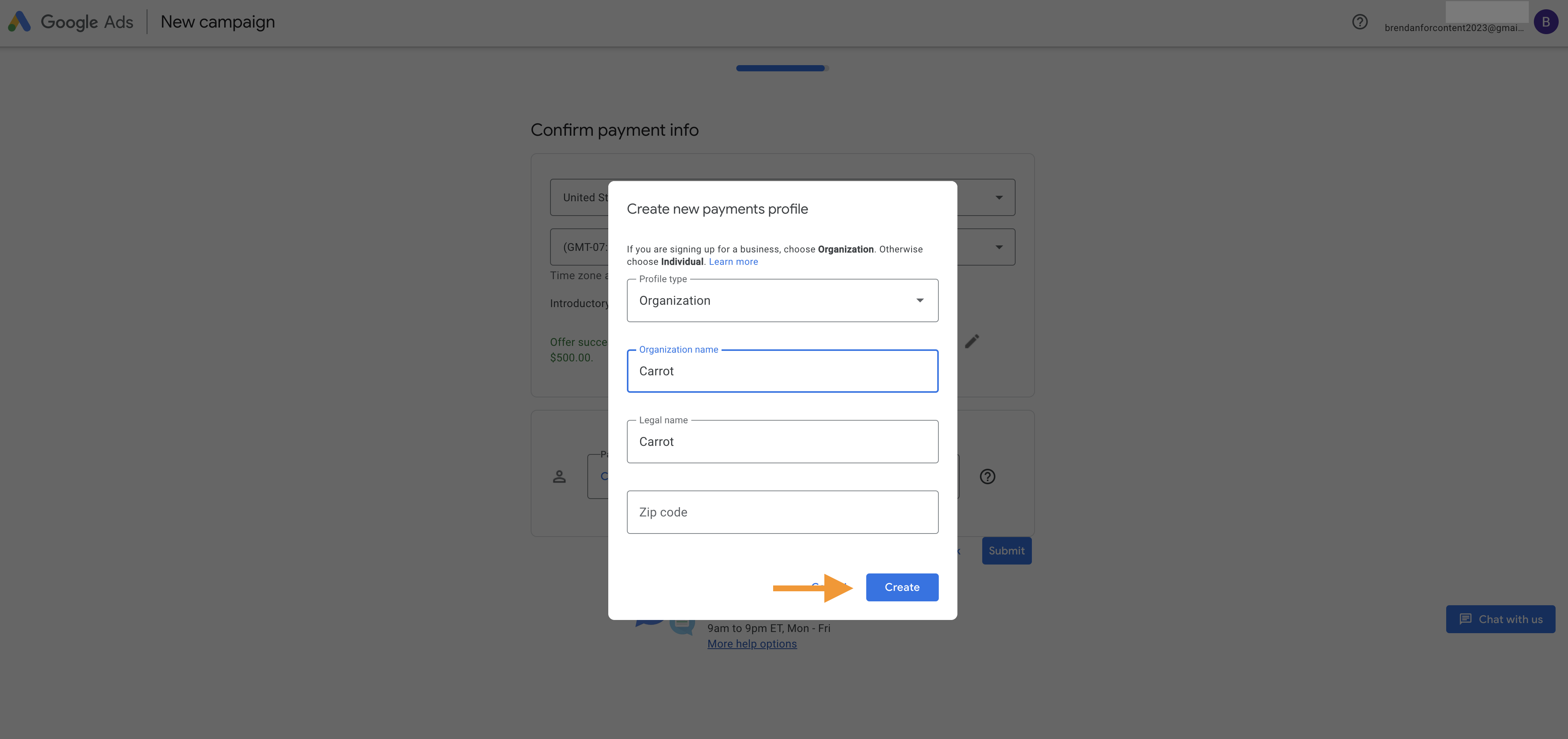
Keep it Concise: While informative, aim for relatively concise URLs. Ideally, keep them under 60 characters to ensure they display fully in search engine results pages (SERPs).
Optimizing Existing URLs:
If you already have a website, don’t despair! Consider implementing 301 redirects to update your existing URL structures. A 301 redirect signals to search engines that a page has permanently moved, ensuring your SEO value isn’t lost.
The Benefits of Clear and SEO-Friendly URLs:
Improved User Experience: Clear URLs make it easier for users to understand the content they’re about to access, leading to a more positive browsing experience.
Enhanced Click-Through Rates (CTR): Descriptive URLs in search results can entice users to click through, knowing exactly what content awaits.
Potential SEO Boost: While not a major ranking factor, well-structured URLs with relevant keywords can contribute to a positive SEO impact.
By prioritizing clear and SEO-friendly URLs, you create a website that’s not only user-friendly but also optimized for search engine visibility. This translates to a more positive user experience, potentially increased click-through rates, and a website that works hard to attract qualified leads and grow your real estate business.
Craft Compelling CTAs: Turning Website Visitors into Motivated Sellers
In today’s real estate market, a strong call to action (CTA) can be the difference between a website visitor browsing listings and a motivated seller contacting you. Effective CTAs for house sellers go beyond a simple “Contact Us.” They should be clear, concise, and speak directly to the seller’s needs and desires. Here’s how to craft CTAs that convert:

Understanding Seller Motivations:
Highlight the Benefits: People sell houses for various reasons. Focus on the benefits that resonate most with your target audience. Do they want a fast sale? Top dollar for their property? A stress-free experience? Tailor your CTAs to address these specific desires.
Examples of Compelling CTAs for House Sellers:
“Get a Free Home Valuation Now!” This CTA is clear, actionable, and speaks directly to a seller’s desire to understand their home’s market value.
“Sell Your House Fast & Hassle-Free. Get a Free Consultation Today!” This CTA focuses on two key benefits – speed and convenience – that are often priorities for sellers.
“Thinking About Selling? Learn How to Maximize Your Home’s Value!” This CTA targets sellers who may be in the early stages of considering a sale. It offers valuable information while positioning you as a knowledgeable resource.
“Ready to Cash In on Your Investment? Request a Personalized Selling Strategy!” This CTA speaks to sellers who view their home as an investment and want to maximize their profit.
Crafting Effective CTAs:
Keep it Short and Sweet: Your CTA should be clear, concise, and easy to understand. Aim for a few words that pack a punch.
Action-Oriented Language: Use strong verbs that encourage immediate action. Words like “Get,” “Request,” or “Start” motivate visitors to take the next step.
Highlight Urgency (Optional): In some cases, creating a sense of urgency can incentivize action. Consider CTAs like “Limited Spots Available: Schedule Your Free Consultation Today!”
Visually Appealing Design: Make sure your website’s CTA buttons are visually distinct and easy to find. Use contrasting colors and clear calls to action.
By crafting CTAs that are clear, benefit-driven, and action-oriented, you can transform website visitors into motivated sellers ready to connect with you and discuss their real estate needs. Remember, a strong CTA is a powerful tool for generating leads and growing your real estate business.
Addressing Concerns Upfront: The Power of FAQ Sections for Real Estate Websites
Imagine a potential buyer or seller visiting your real estate website. They’re likely brimming with questions: What’s the selling process like? What are closing costs? How do I find the right agent for me? A well-crafted FAQ section can be a goldmine, addressing these common queries and providing valuable information upfront.
Benefits of a Comprehensive FAQ Section:
Improved User Experience: An FAQ section empowers visitors to find answers to their questions quickly and easily, without needing to search through other website content or contact you directly for basic information. This translates to a more positive user experience and keeps visitors engaged on your website.
Reduced Support Inquiries: By addressing common questions upfront, you can reduce the repetitive inquiries you receive via email or phone. This frees up your valuable time to focus on consultations and client needs.
Positioning Yourself as a Resource: A comprehensive FAQ section showcases your expertise and positions you as a knowledgeable resource in the real estate industry. This builds trust with potential clients and establishes you as a go-to agent for their real estate needs.
Improved SEO Potential: While not a direct ranking factor, well-written FAQs that incorporate relevant keywords can contribute to a positive SEO impact. Search engines may favor websites that provide valuable and informative content to users.
Crafting an Effective FAQ Section:
Identify Common Questions: Consider the questions you ask most frequently by clients. Use these as a starting point for your FAQ section.
Categorize Content: Organize your FAQ content into clear categories for easy navigation. This could be by buyer vs seller queries, financing issues, or the selling process itself.
Conciseness is Key: While providing informative answers, aim for clear and concise explanations. Avoid overly technical jargon and keep your responses easy to understand for a general audience.
Link to Additional Resources: If an FAQ answer requires more in-depth explanation, consider linking to relevant blog posts or website pages on your site for further information.
Keep it Updated: As market conditions or regulations change, update your FAQ section regularly to ensure it provides the most accurate and current information.
Implementing a well-structured and informative FAQ section creates a valuable resource for website visitors. This translates to a more user-friendly website, positions you as a knowledgeable agent, and potentially reduces support inquiries, freeing up your time to focus on client needs and growing your real estate business. Remember, a well-crafted FAQ section is an investment that pays off in the long run.
Keeping Your Finger on the Pulse: Monitoring and Analyzing On-Page Metrics for Continuous Improvement
In the ever-evolving world of SEO, there’s no such thing as “set it and forget it.” Just like a well-oiled machine, your real estate website needs regular monitoring and analysis to ensure it’s performing at its peak. By tracking and analyzing on-page metrics, you gain valuable insights into user behavior, identify areas for improvement, and ultimately optimize your website for better search engine ranking and lead generation.
Essential On-Page Metrics to Monitor:
Organic Traffic: Track the organic traffic your website receives over time. This indicates how well your website ranks in search results and attracts visitors through organic search.
Bounce Rate: The bounce rate refers to the percentage of visitors who leave your website after viewing only one page. A high bounce rate might indicate issues with page content, loading speed, or user experience.
Time on Page: The average time users spend on a webpage provides insight into how engaging your content is. Low time on page might suggest visitors aren’t finding the information they need or the content isn’t compelling enough.
Conversion Rate: Track how many website visitors convert into leads, whether by contacting you, requesting a valuation, or signing up for your newsletter. Conversion rate indicates how effective your website is in generating leads and achieving your business goals.
Keyword Rankings: Monitor your website’s ranking for relevant keywords in search results. This will help you understand how well your SEO efforts are performing and identify areas for improvement.
Tools for Monitoring and Analysis:
Google Analytics: A free and powerful tool from Google, Analytics provides a wealth of data on website traffic, user behavior, and conversions.
Search Console: Another free Google tool, Search Console, offers insights into your website’s search engine visibility and helps identify potential issues hindering your ranking.
Website Heatmap Tools: Heatmap tools visually represent where users click on your website pages. This can reveal areas that might be confusing or require optimization for better user engagement.
Taking Action for Improvement:
Analyze the Data: Don’t just collect data – dig into the insights and identify trends or patterns. Are certain pages experiencing high bounce rates? Is organic traffic declining? Understanding these trends reveals areas that need your attention.
Test and Refine: Based on your analysis, implement changes to your website and track their impact on key metrics. This could involve optimizing page content, improving website speed, or refining your keyword strategy.
Continuous Monitoring: SEO is an ongoing process. Make website monitoring and analysis a regular habit. By consistently tracking key metrics and adapting your strategy, you ensure your website remains optimized for search engines and continues to attract qualified leads for your real estate business.
By dedicating time to monitor and analyze on-page metrics, you better understand how users interact with your website. This valuable data empowers you to make data-driven decisions, continuously improve your website’s performance, and ultimately achieve your real estate SEO goals. Remember, website optimization is a journey, not a destination. Embrace the process of monitoring, analyzing, and refining to keep your website at the forefront of search results and generate a steady stream of qualified leads for your real estate business.
Harnessing the Power of Structure: Utilizing Schema Markup for Real Estate Listings
Increasing your real estate website’s visibility is crucial in today’s digital age, where people rely heavily on search engines to find information. Schema markup is a powerful tool that goes beyond basic SEO and helps search engines understand the specific details of your property listings. This translates into richer search results for potential buyers and ultimately drives more qualified leads to your website.
What is Schema Markup?
Schema markup is a type of code that you add to your website’s HTML to provide search engines with richer information about your content. Think of it as adding labels to your listings, explaining what kind of property it is, its features, and other relevant details.
Benefits of Schema Markup for Real Estate:
Enhanced Search Results: By implementing schema markup for your real estate listings, search engines display richer snippets in search results. This can include details like property type (house, condo, etc.), number of bedrooms and bathrooms, square footage, and even pricing information. These richer snippets stand out from the crowd, grabbing the attention of potential buyers searching for properties online.
Improved Click-Through Rates: Schema markup can significantly increase click-through rates (CTR) from search results. The informative snippets provide users with a clear understanding of whether a listing is relevant to their needs, encouraging them to click through to your website for more details.
Targeted Audience: Schema markup lets you specify property type, price range, and location. This attracts a more targeted audience – potential buyers actively searching for properties that match their specific criteria.
Types of Schema Markup for Real Estate:
RealEstateListing: This schema type is specifically designed for real estate listings and allows you to specify details like property type, number of bedrooms and bathrooms, price range, location, and availability.
Location: Schema markup for location allows you to specify the property’s address, including city, state, and zip code. This enhances local SEO and helps potential buyers search for properties in specific neighborhoods.
ImageObject: Schema markup for images allows you to provide captions and descriptions for your property photos, improving the overall user experience and potentially boosting image search ranking.
Implementing Schema Markup:
While schema markup may seem complex, several user-friendly tools and resources are available to help you get started. Many website building platforms offer built-in schema markup options, or you can utilize Google’s Search Console to generate the code for your listings.
By incorporating schema markup for your real estate listings, you unlock a powerful SEO tool that enhances search engine understanding, creates richer search results, and ultimately attracts more qualified leads to your website. Remember, in the competitive world of online real estate, even a slight edge in search results can make a significant difference.
Staying Ahead of the Curve: SEO Trends and Algorithm Updates in 2024
The world of SEO is constantly evolving, and 2024 is no exception. Search engines like Google are becoming increasingly sophisticated, placing a higher emphasis on user experience, content quality, and relevancy. To stay ahead of the curve and ensure your real estate website thrives in search results, here are some key trends and potential algorithm updates to keep on your radar:
Focus on User Intent:
Understanding User Needs: In 2024, SEO goes beyond simply keyword stuffing. The focus shifts towards understanding the user’s intent behind a search query. Are they looking for information, browsing options, or ready to contact an agent? Tailoring your content and website structure to address these needs is crucial for ranking well.
Long-Tail Keywords: As user intent becomes a priority, long-tail keywords (more specific search phrases) will be more important. Focus on incorporating long-tail keywords that reflect the specific needs of potential buyers in your local market.
Content Reigns Supreme:
High-Quality, Informative Content: Search engines prioritize websites that offer valuable and informative content that keeps users engaged. Invest in creating high-quality content that addresses your target audience’s needs, answers their questions, and establishes you as a thought leader in the local real estate market.
Freshness Matters: Regularly update your website with fresh content. This could include blog posts on local market trends, neighborhood guides, or informative articles about the buying or selling process.
Technical SEO Remains Crucial:
Mobile-First Indexing: Google’s mobile-first indexing prioritizes websites that display and function flawlessly on mobile devices. Ensure your website is mobile-friendly, loads quickly, and offers a seamless user experience for mobile users.
Core Web Vitals: Core Web Vitals are a set of metrics that measure website speed, responsiveness, and visual stability. Optimizing your website for Core Web Vitals ensures a smooth user experience and can potentially boost your ranking.
Staying Informed:
Industry Blogs and Publications: Subscribe to reputable SEO blogs and publications to stay updated on the latest trends and algorithm changes.
Google’s Search Central: Google frequently updates its Search Central resource with information on best practices and potential algorithm updates. Monitor this resource to stay informed directly from the source.
You can proactively adapt your real estate website strategy by staying informed about these SEO trends and potential algorithm updates.
Remember, SEO is a marathon, not a sprint. By consistently creating high-quality content, optimizing your website for user experience, and keeping pace with industry changes, you ensure your real estate website remains visible in search results and continues to attract qualified leads for your business.
Conclusion: Dominate Your Market by Using the Power of On-page SEO for Real Estate
The real estate market thrives on a strong online presence. By implementing the 16 best practices explored throughout this post, you can transform your real estate website from a simple brochure into a lead generation machine. Here’s a quick recap to empower your online success:
Prioritize Page Load Speed: A speedy website keeps visitors engaged and improves SEO ranking.
Craft Informative Neighborhood Pages: Establish yourself as a local expert by creating valuable neighborhood content.
Utilize Internal Linking: Weave a user-friendly web that connects relevant content and boosts SEO.
Optimize URL Structures: Clear and SEO-friendly URLs enhance user experience and search visibility.
Write Compelling CTAs for House Sellers: Craft CTAs that resonate with seller motivations and drive conversions.
Implement FAQ Sections: Empower visitors with answers to common questions and showcase your expertise.
Monitor and Analyze On-Page Metrics: Gain valuable insights to continuously improve your website’s performance.
Harness Schema Markup: Unlock the power of structured data to create richer search results and attract targeted leads.
Embrace Mobile-First Indexing: Ensure your website offers a flawless mobile experience.
Focus on User Intent: Craft content that addresses potential buyers’ specific needs and questions.
Prioritize High-Quality Content: Informative and valuable content positions you as a thought leader and keeps users engaged.
Target Long-Tail Keywords: Attract qualified leads by incorporating long-tail keywords that reflect local searches.
Stay Updated with SEO Trends: Learn about the latest SEO best practices and algorithm updates.
Leverage Google Search Central: Stay informed directly from Google’s resource on SEO best practices.
Invest in High-Quality Images: Optimize images for faster loading times and enhance user experience.
Integrate Social Media: Expand your reach and connect with potential clients on social media platforms.
The real estate landscape is dynamic, and so should your online presence. By embracing these strategies and consistently refining your website, you can establish a dominant online presence, generate high-quality leads, and ultimately achieve your real estate business goals. So, take action today and watch your website flourish into a powerful tool that fuels your success in the exciting world of real estate!