We recently surveyed our Carrot members about their lead-to-deal conversion rate — that is, what percentage of leads become deals. We also asked them about the source of these leads (Carrot leads or Non-Carrot) to determine which efforts provide the most high-quality leads and thus the most deals.
Demo Carrot: How many deals are you losing to your competitor’s website?
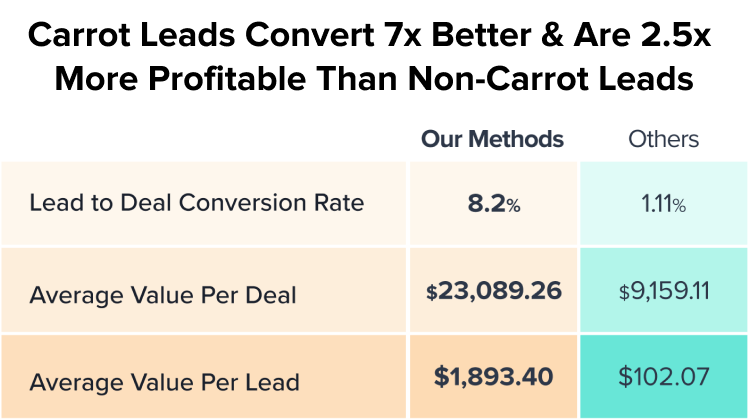
The results were exciting. They indicated that Carrot leads convert 7 times better and are 2.5 times more profitable than non-Carrot leads.
This is something we’ve known anecdotally for a long time — from all of the reviews we’ve received from our members. For example…
“Carrot literally changed my life. Trevor and his crew are the best people on the planet. Get plugged into their system and culture, and you will start generating leads!” – Brian Rockwell
“I have generated just over 200 leads in a little over 4 months using my Carrot site. I couldn’t be more thankful for the services they have provided. Thank you Carrot!” – Hank Tobler
“Closed 3 deals exclusively from SEO leads / Carrot conversions. No PPC. No attribution to any Facebook ads. Just Google search results and credibility.” – Daniel DiGiacomo
… but still, it’s refreshing to see the actual data.
Let’s take a look!
Not a Carrot member? Take a free demo…
The Survey Data & What it Means
To be clear, non-Carrot leads refer to any leads that didn’t come through an investor’s Carrot website. Maybe they called, texted, or emailed instead.
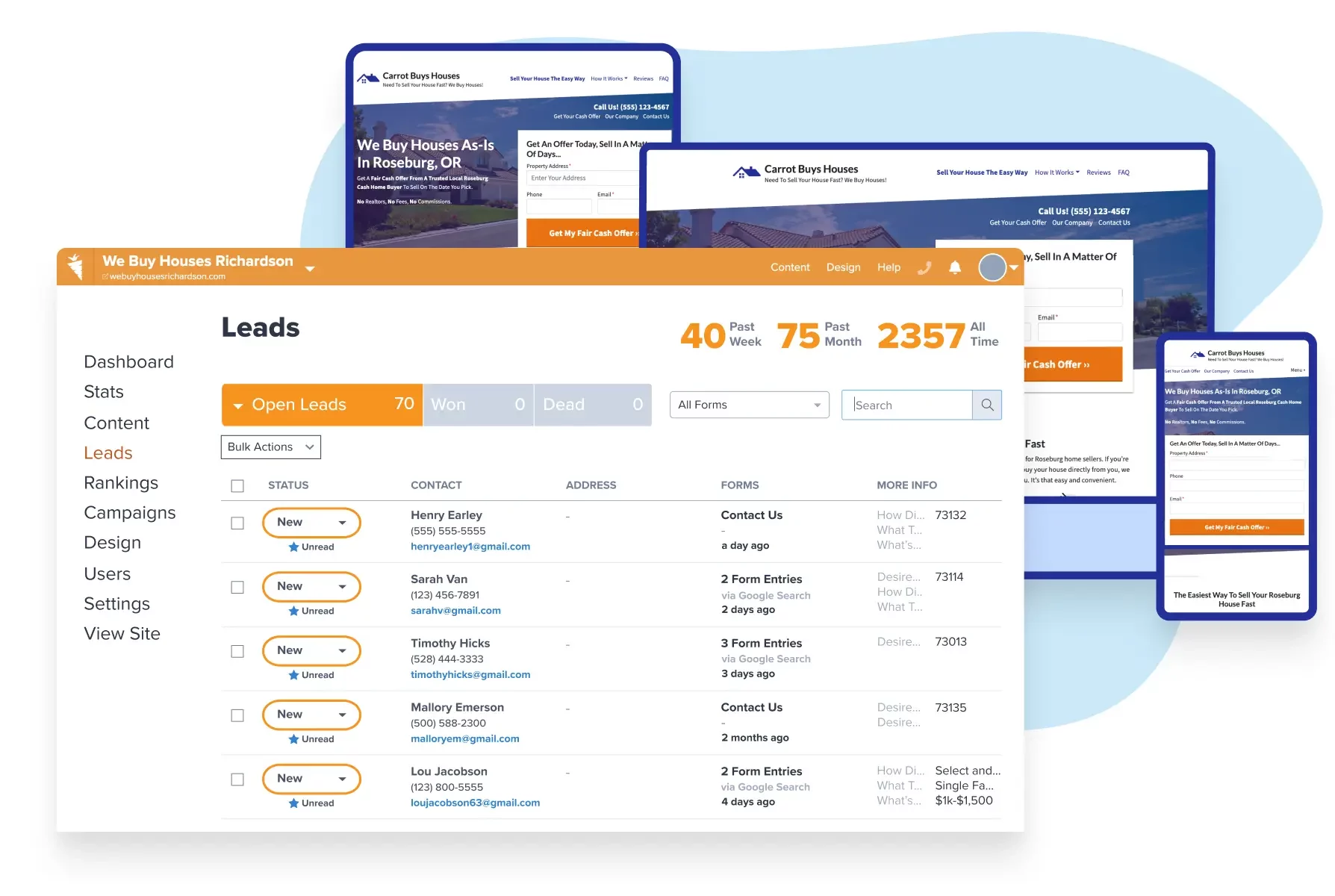
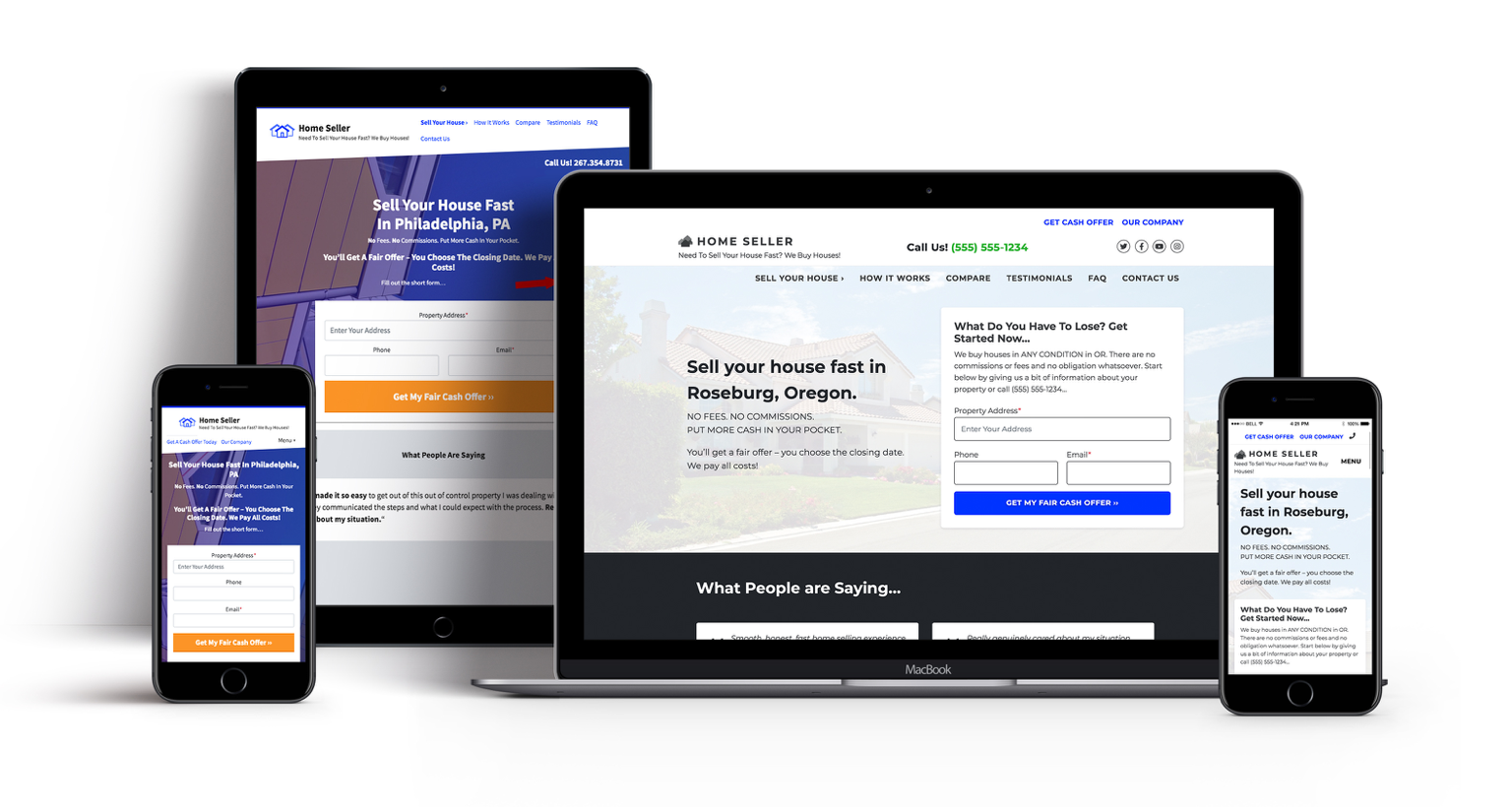
Carrot leads, naturally, refer to any leads that came through the investor’s website. They visited and opted into a CTA that looks something like this…
So, what exactly were the results?
Well, we asked Carrot members for their lead-to-deal conversion rate and their average value per deal for both Carrot and non-Carrot leads.
We then used those numbers to calculate the survey respondents’ average value per lead.
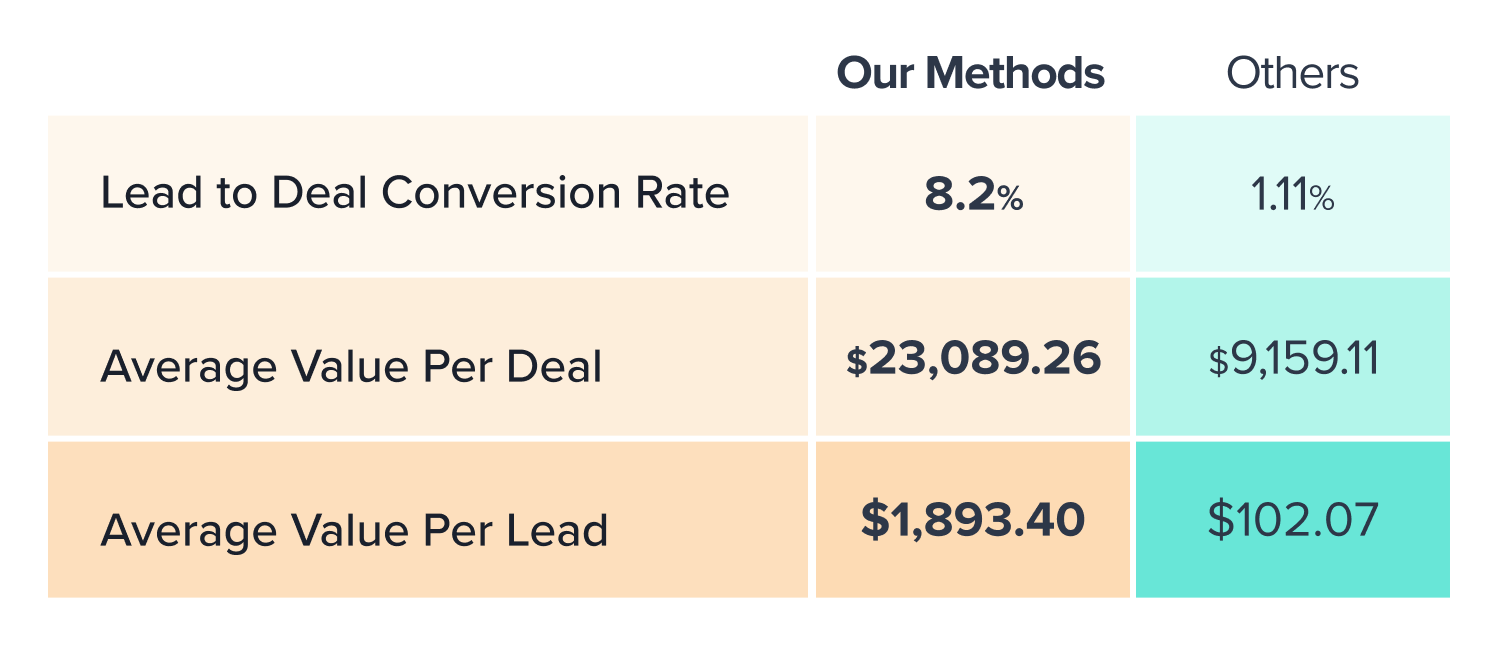
Here are the Carrot vs. Non-Carrot results:
Amazing, right?
Carrot leads had an 8.2% lead-to-deal conversion rate, while non-Carrot leads had a 1.11% conversion rate.
Even more surprisingly, Carrot leads that became deals had an average value of $23,089.26, and non-Carrot leads that became deals had an average value of $9,159.11.
That makes the average value per Carrot lead $1,893.40. That is enough to pay for an entire year of our top subscription plan, by the way! And, the average value per non-Carrot lead is $102.07.
Something is going on here, and let’s talk about that.
But before we do, understand that we’re not saying you shouldn’t generate leads one way, but you should generate them another.
Every real estate investor has to find what works for their business and their market, which usually is a mishmash of various marketing tactics.
Here, we’re just looking at some high-level trends that might be helpful for investors to consider.
Why are Carrot leads so much better than Non-Carrot leads?
There are essentially two questions we have to answer.
Why do Carrot leads become deals much more frequently than non-Carrot leads?
Why do Carrot deals have much bigger profit margins than non-Carrot deals?
And the first thing we need to examine is where these leads are coming from. After all, the source determines the quality.
Non-Carrot leads is a broad term that includes a lot of different sources: cold calls, inbound calls from direct mail campaigns and door knocking, flyers, business cards, bandit signs, and so forth.
You might not notice it at first, but all of those sources have a similarity: they all represent outbound marketing efforts.
That is, you go out and try to find people who might be interested in selling their home. You offer them a fair cash offer and a quick turnaround time. You do this by sending them mail, knocking on their door, or calling their phone.
Of the people who contact you via outbound marketing methods, it’s safe to assume that many of them are just curious. They’re not motivated to sell by any particular circumstances in their life, but your offer caught their attention, and so they call you to find out more.
That’s how most non-Carrot leads are generated.
Now let’s look at Carrot leads.
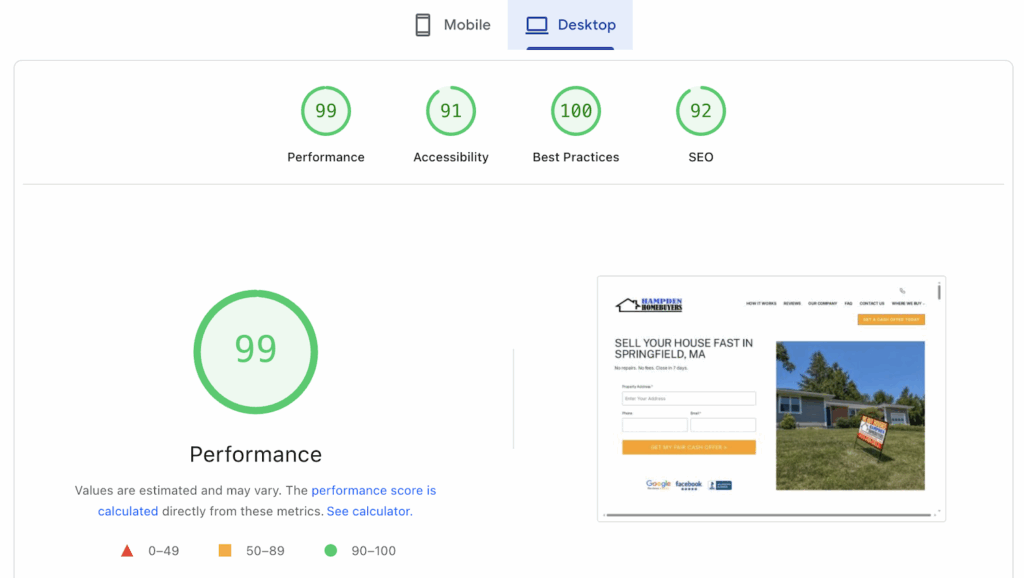
We’ve built Carrot websites with wicked-fast load speeds, mobile friendliness, and a clean tech stack.
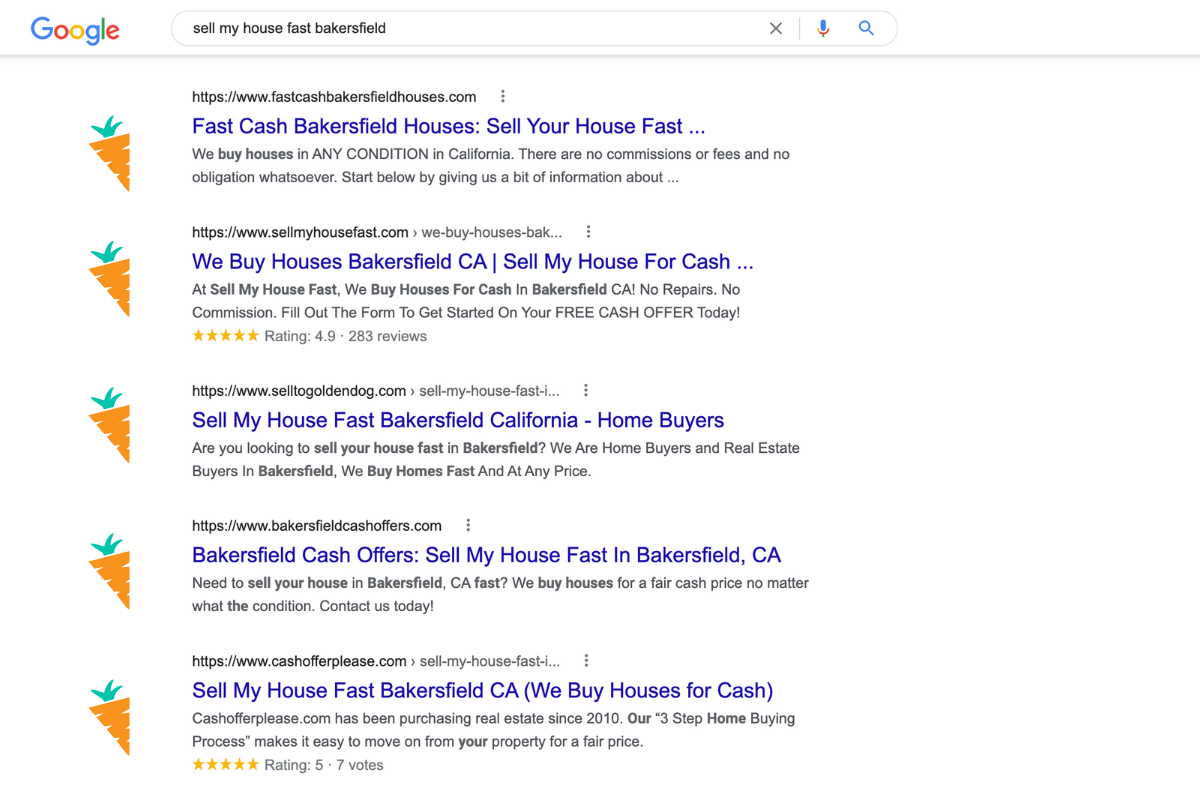
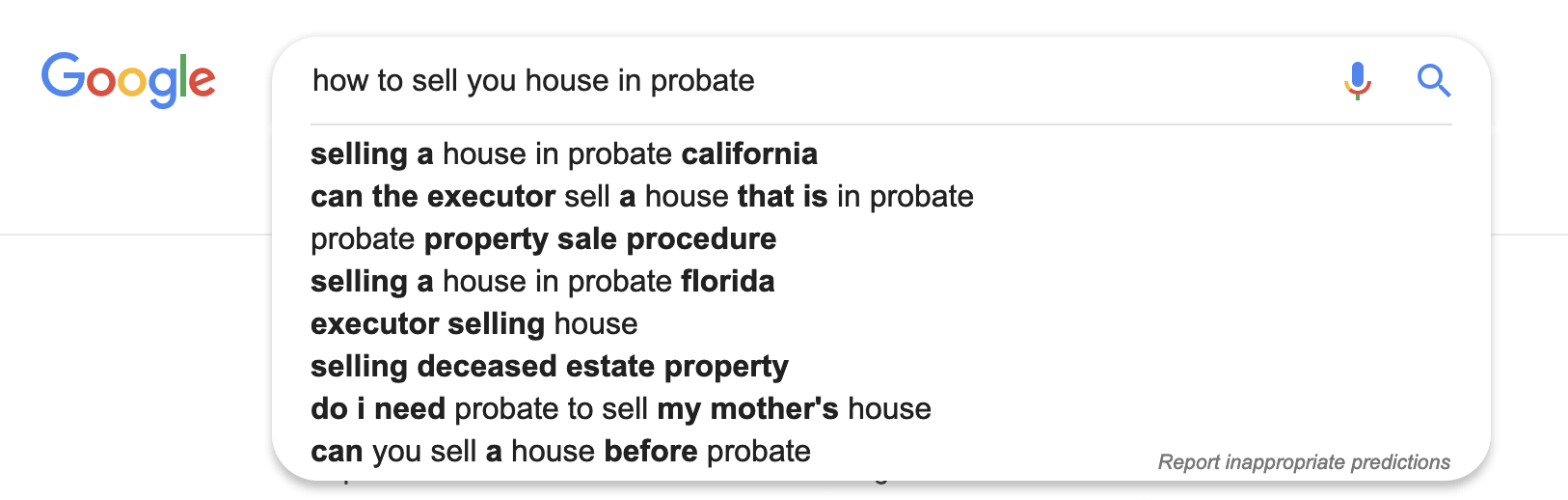
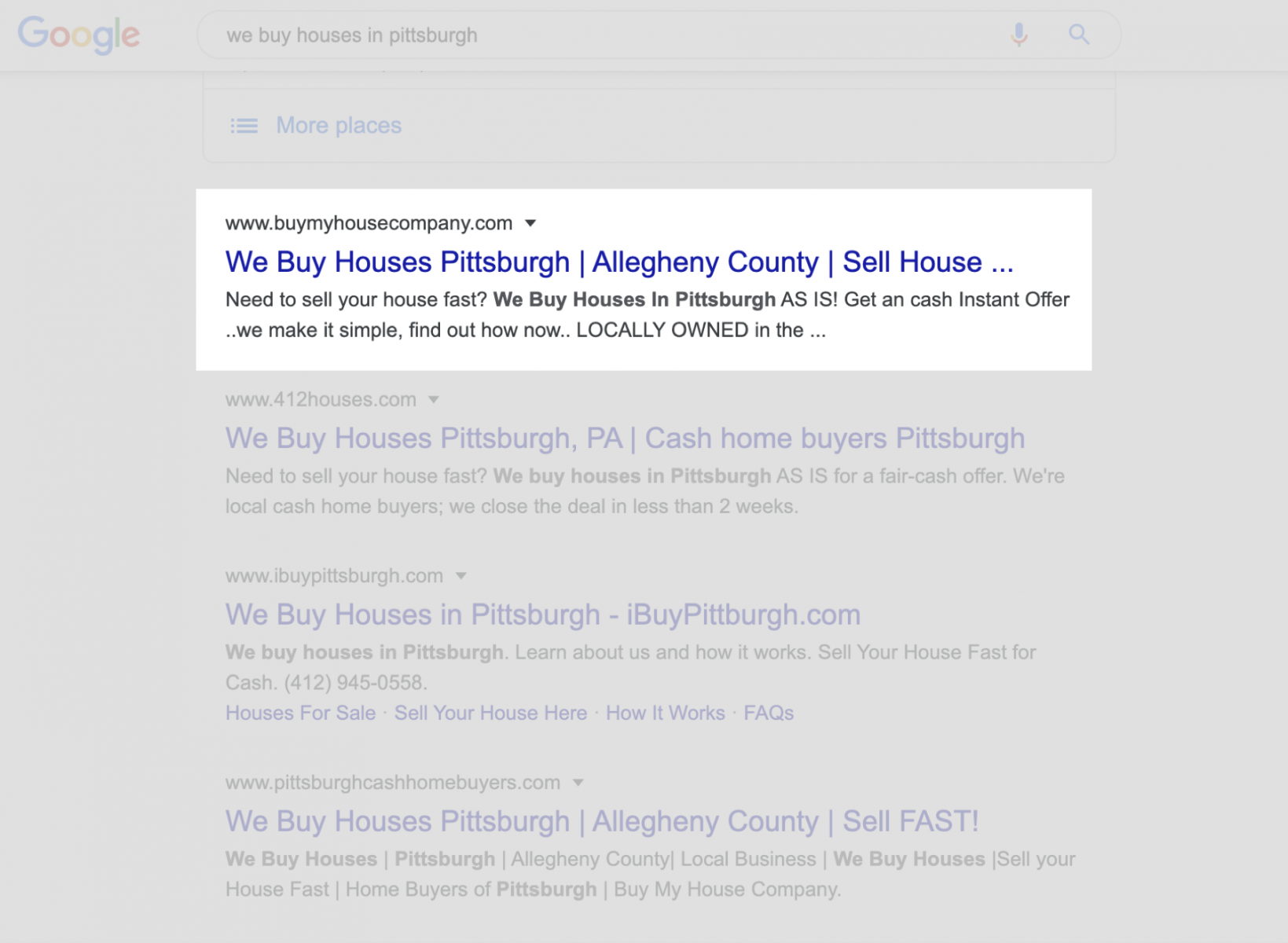
Carrot sites rank for high-value phrases in Google more than any other site builder in the industry (terms like “sell my house fast in ” or “sell my house for cash in .”
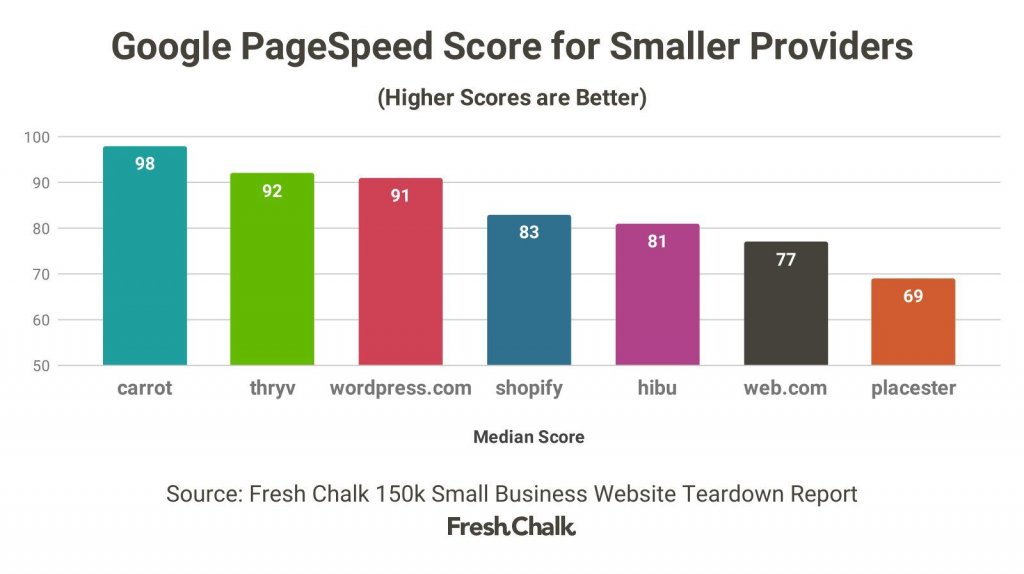
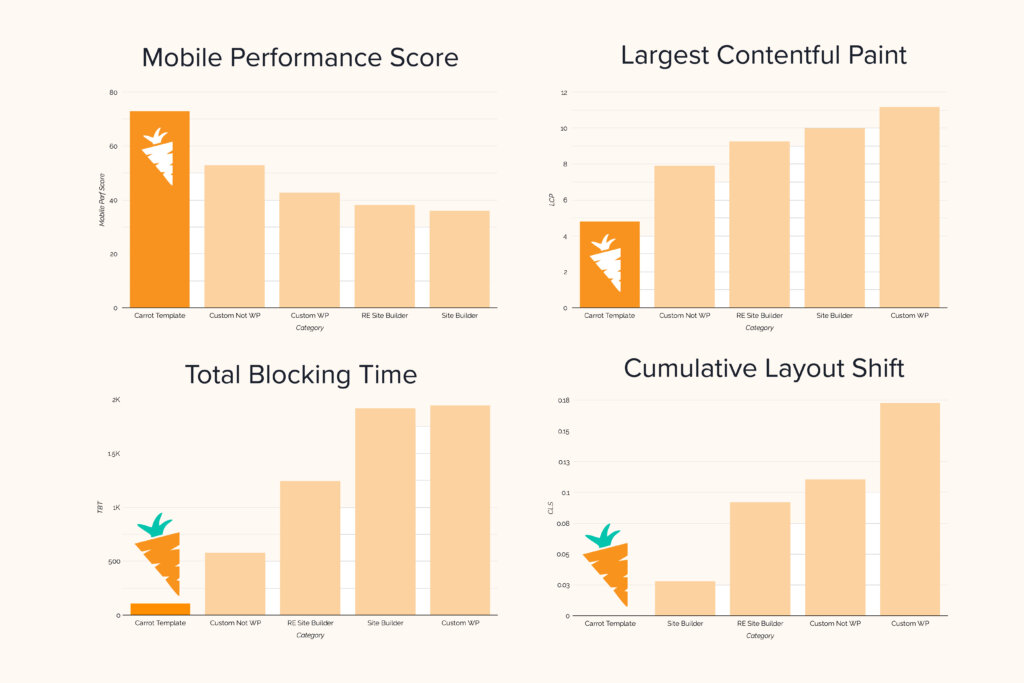
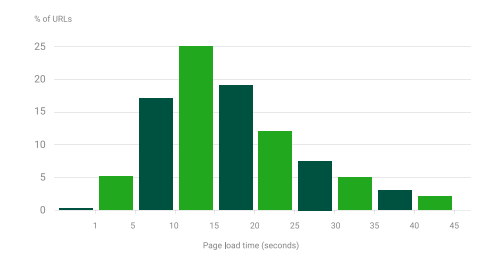
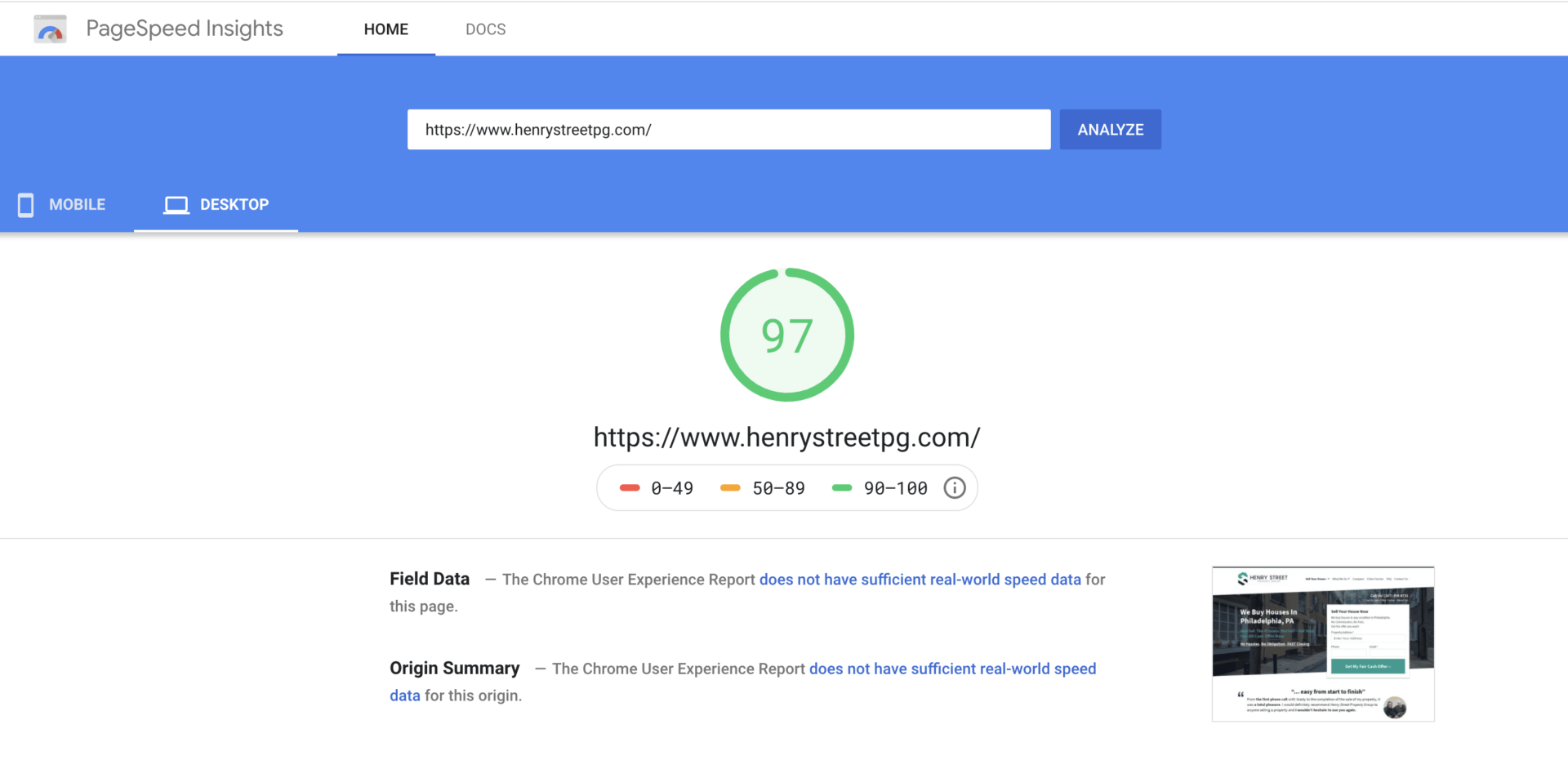
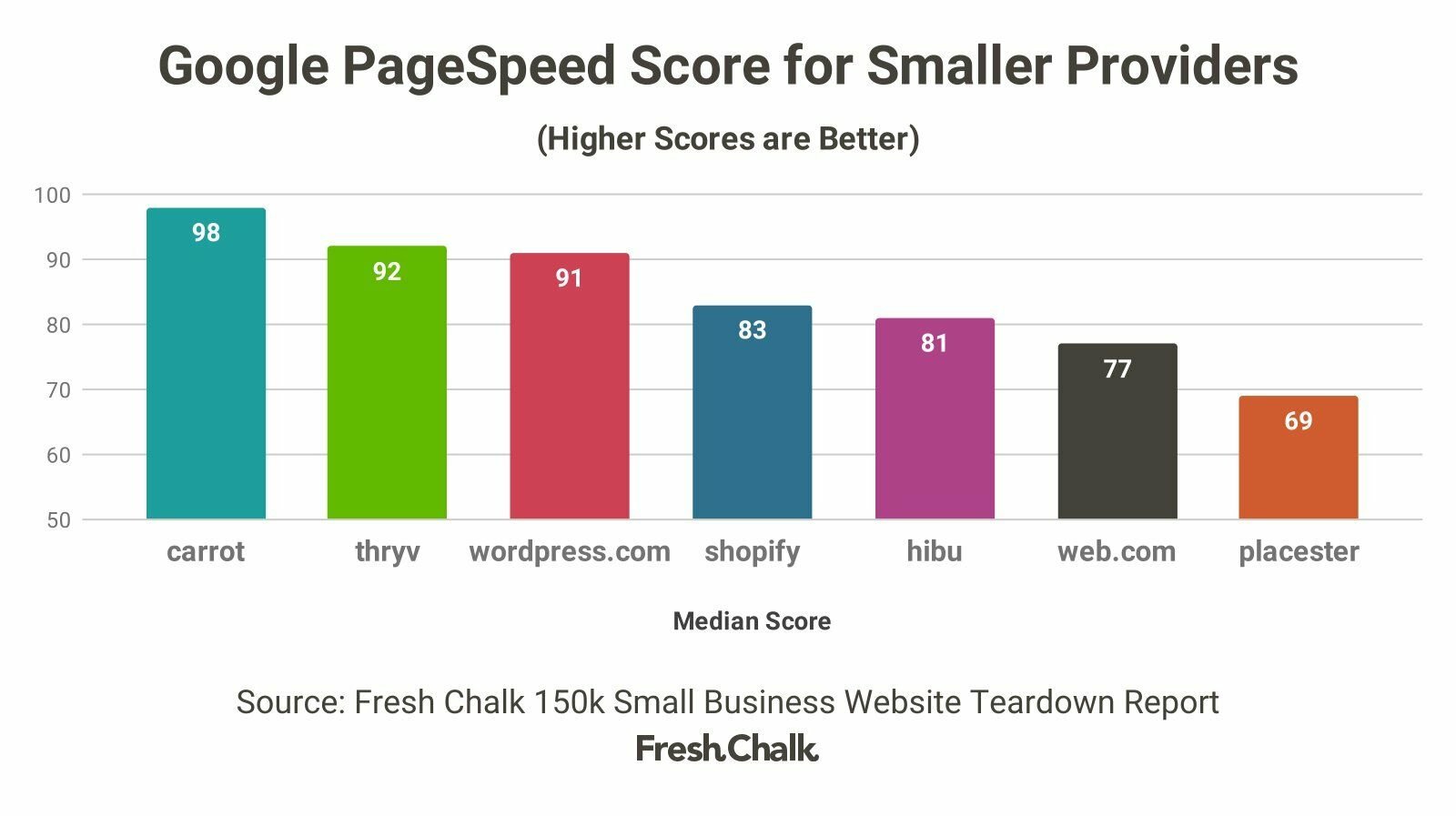
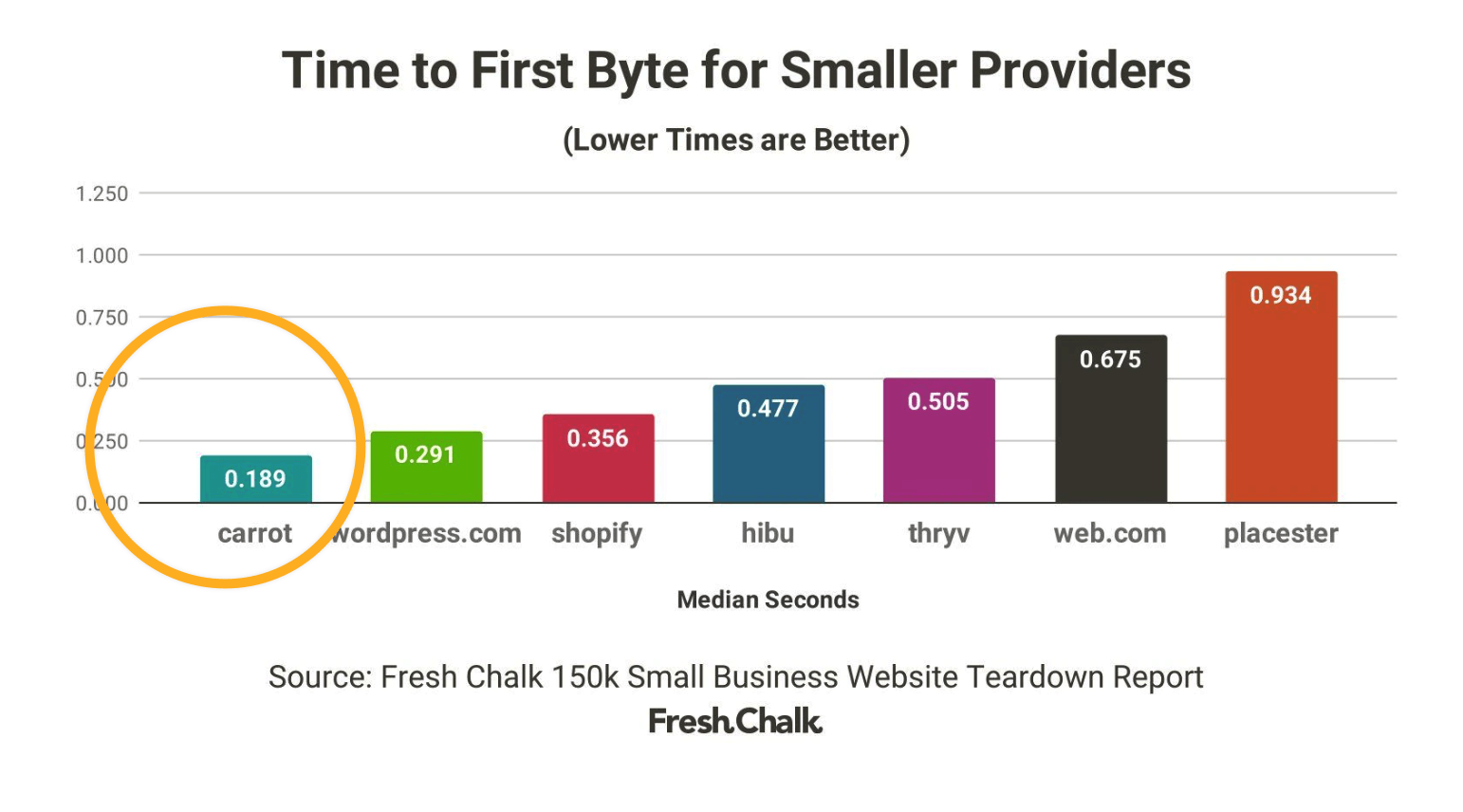
Third-party data from Fresh Chalk pointed this out. Here are page speed scores for different website builders (a huge factor for Google rankings).
The same is true for Carrot’s mobile performance (which is now a huge part of internet traffic).
This graphic represents the recent updates that Carrot developers have made to our member sites to get ahead of the latest Google Core Web Vitals update. Learn more about what this graphic means and the changes that we made here.
But that’s only one of the many reasons that Carrot sites sit at the top of the rankings.
The secret to quality lead mastery
Our members also create Evergreen content for their blogs every single month, content that’s optimized to rank in Google.
We also give our members the ability to:
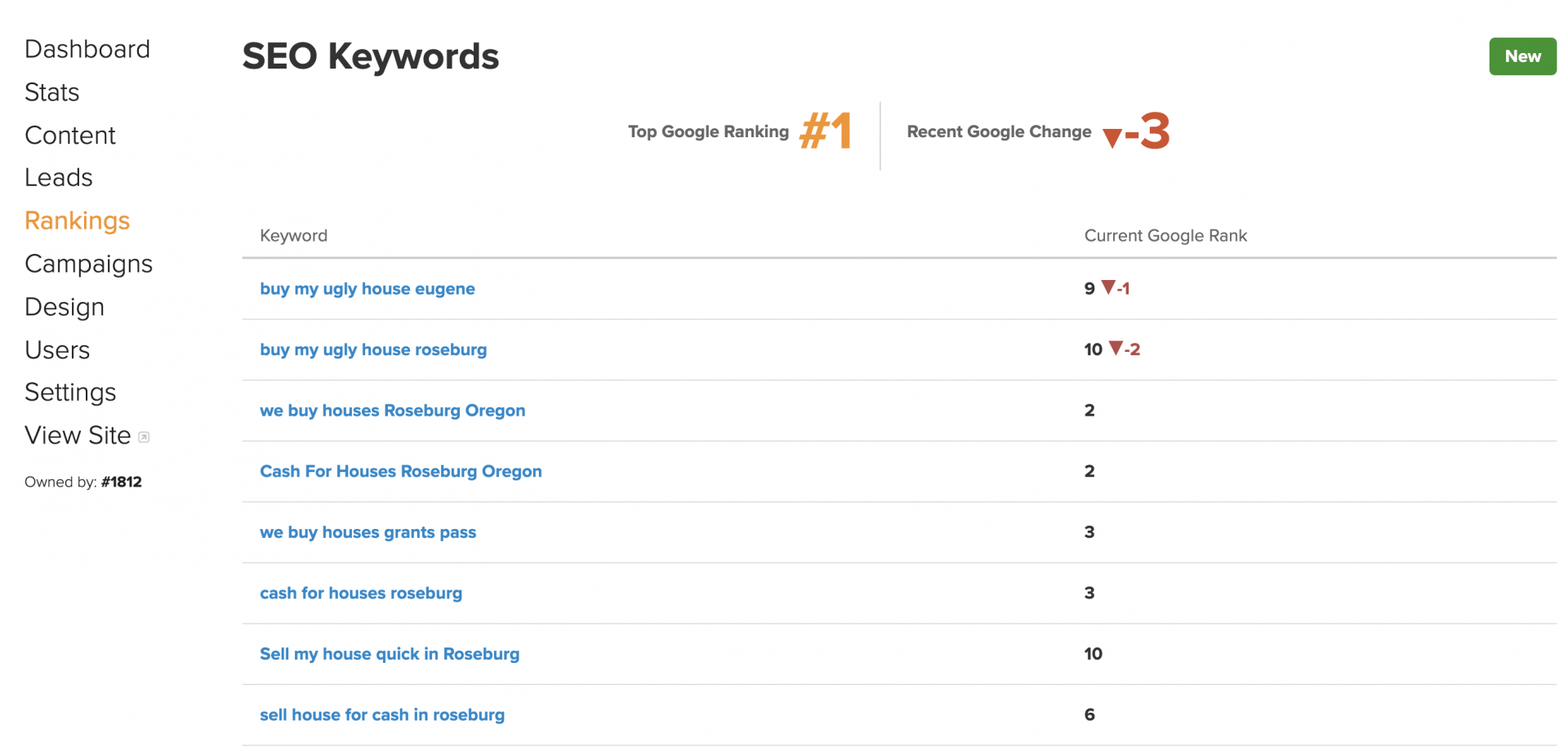
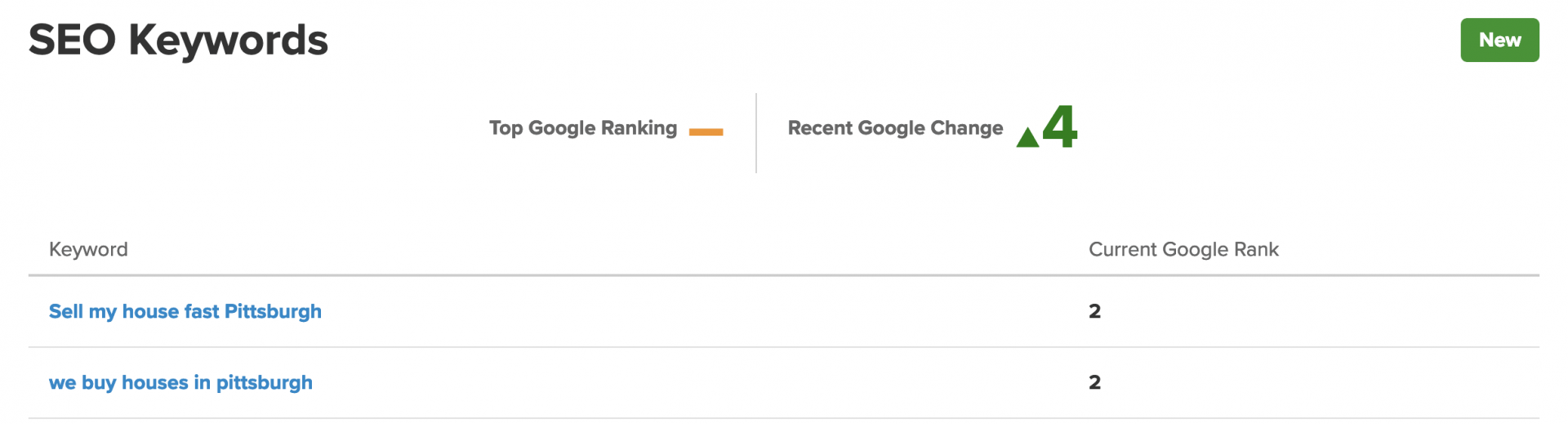
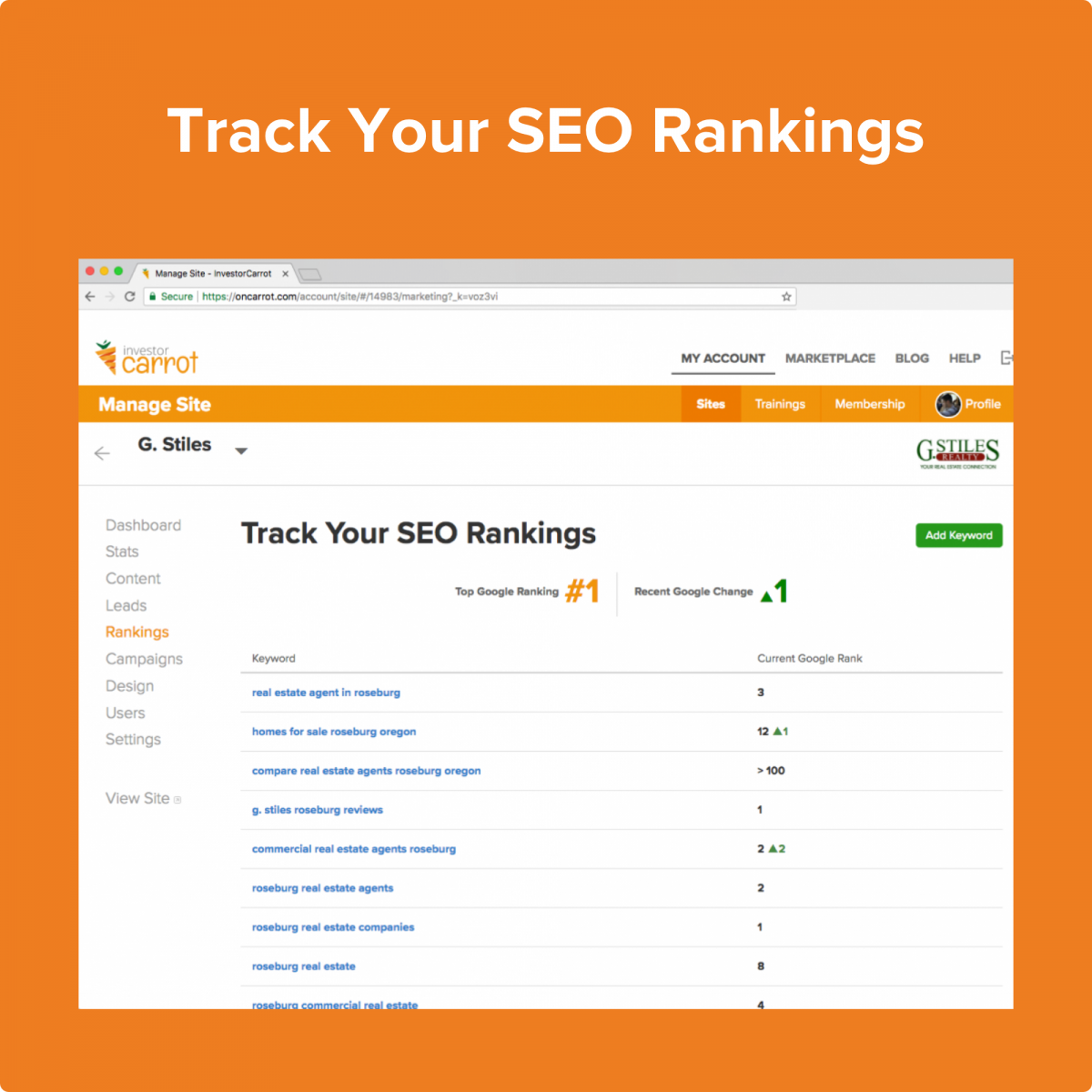
Track their rankings right inside of their account.
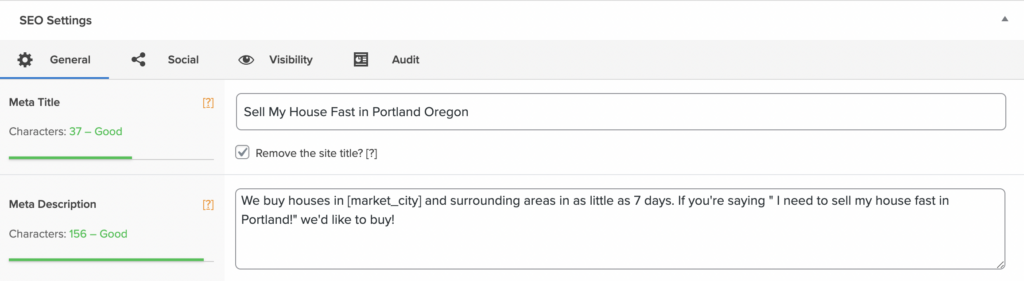
Ensure that every page and post is optimized to rank (via a simple checklist).
Create long-form evergreen content by transcribing video content with the click of a button (VideoPost).
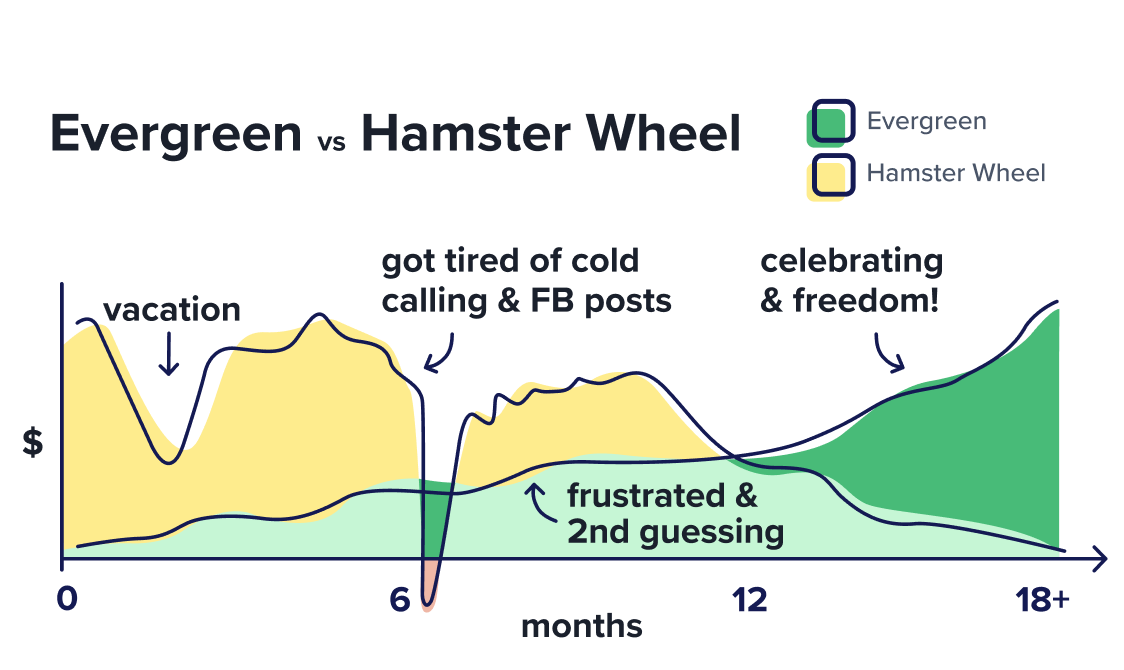
This is the difference between hamster wheel marketing…
“If you’re creating a piece of content and you just put it up on Facebook or Instagram, it’s going to be there for 24 to 48, maybe 72 hours before it gets pushed down, forcing you to get back on the hamster wheel and post again, and post again and post again, because the life span of that content is so short.
The lifespan of that content is so short that you have to be on the hamster wheel continually.
If you get off of the hamster wheel, if you stop doing those postings, if you stop doing direct mail, if you stop cold calling or doing RBMs, then your leads will eventually dwindle to a stop, and you’ve got to restart and get back on the hamster wheel.”
“Get into a routine of creating content. Another piece of content this week, another piece of content next week, a blog post next week, a video post, a video post, a location page, and eventually, you’re going to have a brick wall that does all of the work for you.
Remember, it’s going to be slow going in the first three, four, five, six months potentially.
But as long as you’re consistently stacking bricks of quality content that answers real questions from your market, you’re entertaining in your own way; you’re going to start to pick up that momentum.”
At Carrot, we focus on evergreen marketing — consistent action that produces long-term results.
Now, why all of this information about Google rankings, page speed, and tech stack?
Well, because of the way Carrot sites are built, they typically generate a good chunk of leads via evergreen marketing through search engines like Google — this means that motivated sellers find you rather than you trying to find motivated sellers.
That’s called inbound marketing.
And it almost always results in higher quality leads than outbound marketing.
So that answers our first question.
Why do Carrot leads become deals much more frequently than non-Carrot leads?
There’s a high likelihood it’s because many of them are likely coming through search engines.
When you think about it, it’s not all that surprising that outbound marketing leads tend to be lower quality than inbound marketing leads. It’s the difference between you looking for motivated sellers and motivated sellers looking for you.
We get feedback about this difference all the time from our members…
“I consistently get organic leads from my Carrot website. I have purchased my best deals to date through my websites. I highly recommend you implement training and tools available through the platform.” – Beau Eckstein
“I’m getting 2x more motivated seller leads with my custom Carrot site than my old site, and the tools and content help me stand out in my crowded market.” – Tyler Ford
“I am saving between $20,000 and $50,000 every single month in lost lead-gen closing potential after switching from my expensive custom-made site to my Carrot site.” – Carter Steph
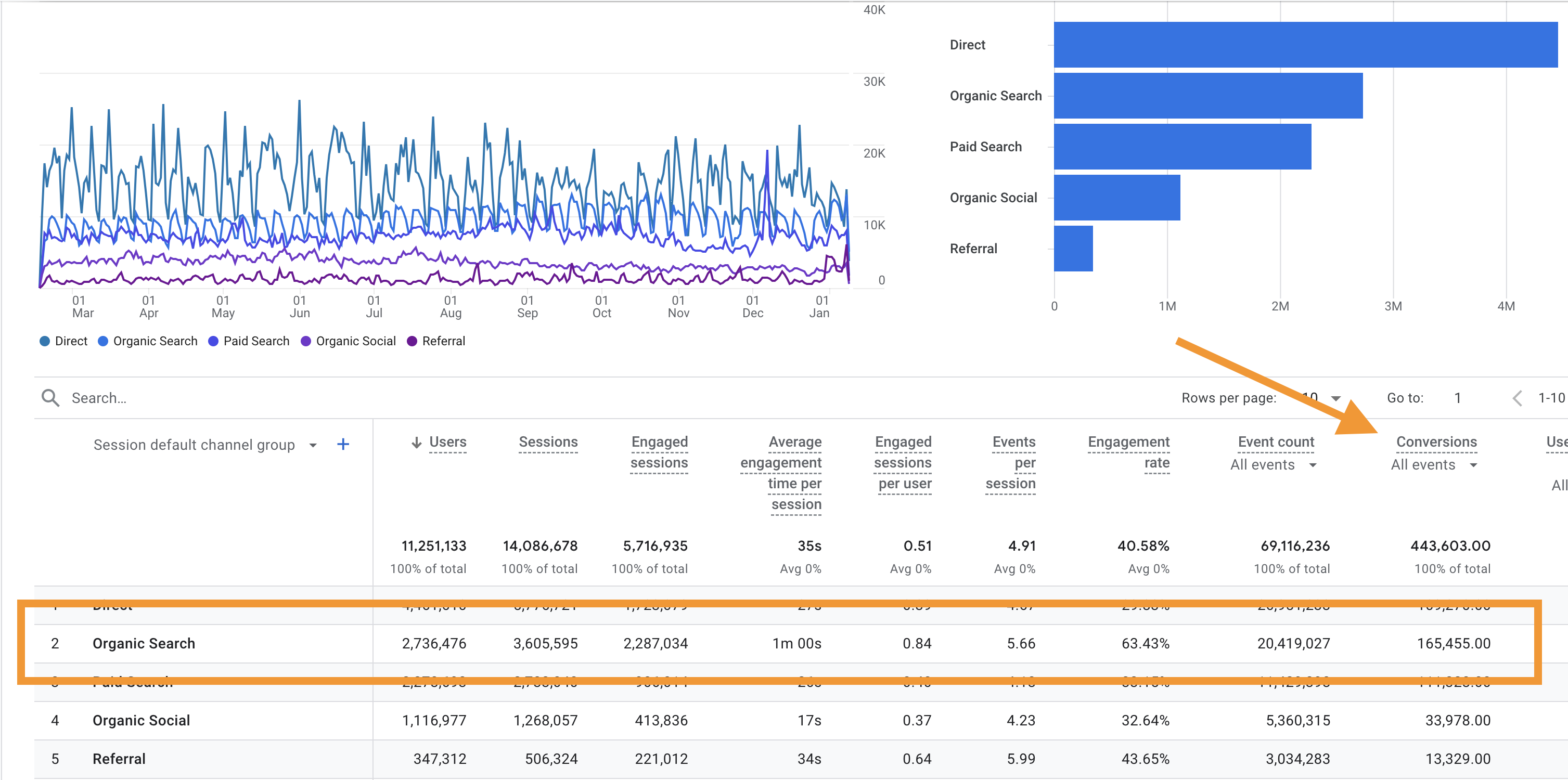
And it’s not just hearsay. When we take a peek at the source of traffic and leads for our members, we can see a good chunk coming from the organic content that Carrot helps to provide. So far, in 2021, organic traffic accounts for 25.8% of our member leads.
But what about the second question: why do Carrot deals have more significant profit margins than non-Carrot leads?
Part of the answer is likely the same as the first — since Carrot sites drive organic leads through search engines, investors don’t have to directly pay for those leads like they would have to with a direct mail campaign.
This makes a big difference in per-deal profitability. But that’s not the entire story.
Again, we have to look at where these deals come from.
If someone receives your mailer and it makes them think about selling a property that they’ve owned for a while, and so they call you, they’re probably not going to be as willing or motivated to accept a lower offer.
But if someone is actively looking for someone like you who can buy their home as-is for cash, they’re probably more motivated and thus more willing to accept a lower offer, which results in higher profit margins.
And so that answers our second question…
Why do Carrot deals have much bigger profit margins than non-Carrot deals?
It’s because inbound marketing efforts are less expensive and generate leads that are more motivated to accept lower offers.
Final Thoughts
If there’s a lesson to be learned from all this, it’s about the value of inbound marketing.
When you create an online presence that allows motivated sellers to find you, you can expect to generate much higher quality leads for less money and increase your per-deal profitability.
That’s not to say that you should stop sending direct mail, cold calling, door knocking or driving for dollars. We are huge advocates of those strategies, and they support many Carrot member businesses!
While you’re working on SEO and content, you can also run PPC ads and send direct mail to generate leads more immediately for your business.
That’s the balanced approach that has worked for thousands and thousands of real estate investors, and there’s no reason that it won’t work for you, too.
Click below if you’re ready to take the next step.
You’ll agree that sifting through endless real estate agent marketing ideas is challenging. It’s tough to determine which tactics will generate the highest volume of quality leads while keeping your sanity.
When people think of buying or selling a home, you want them to think of your name. You want them to give you a call. And you want them to work with YOU.
Of course, that’s easier said than done.
Many other real estate agents in the area are fighting for the same attention.
Fortunately, you don’t have to win all the attention to dominate your market – just most of it.
And the best part is…
You don’t even have to leave your computer to get started.
30 Real Estate Agent Marketing Ideas to Win More Deals
I will show 30 real estate agent marketing ideas for dominating your online market in this article.
Instagram is an incredible place to share your listings and get noticed! For real estate agents, Instagram provides a whole new world of opportunity.
With over one billion monthly active users on the platform, there’s no better time than now for you to join in with all these people looking at beautiful pictures daily.
Whether showcasing properties or providing helpful content like tips for staging homes, something here is suited ideally for you!
Most real estate agents become a part of the online “clutter” in their markets when they toss up a website that gets lost in the shuffle. Building a focused and optimized website will help you cut through that clutter with content marketing and adding your industry expertise.
A website will attract more of your favorite clients by using it as an Evergreen Marketing tool.
You can reduce or eliminate relying on cold calling, direct mail, Zillow, and the marketing that’s burning you out when done right.
Service as an educational tool. Add community resources, FAQ, and contact information. Educating buyers or sellers and explaining how real estate agents provide their services can build trust and rapport and earn more business.
Facebook’s LIVE video feature is useful for more than recording your kid’s birthday party. You can also use it to do a LIVE walkthrough of house listings you’re trying to get attention for.
After all, one of the most time-consuming parts of your day is house showings, so why not show a house to your entire Facebook audience with a single LIVE video?
Plus, 70% of homeowners want to list with a real estate agent who does some video marketing to sell their home. This might be your dead-simple, don’t-have-to-hire-a-professional way of integrating video marketing into your service.
Just create a healthy cadence and get in front of your social media audience more regularly.
The more people see your face online and hear you talk about their problems and your solutions, the more familiar your market will be with you.
Video is increasingly important in content marketing for social media. More people are choosing to consume information through video.
Here are some ideas for Facebook live videos to work into your real estate marketing:
Host virtual open houses.
Discuss your community market with a local specialist.
Livestream auctions.
Interview customers for success stories.
Interview a partner or someone you work with… such as an interior decorator.
According to the National Association of Realtors, social media has become a significant way to acquire clients and close deals. Here’s a snapshot of their report:
77% of realtors actively use social media for real estate in some capacity.
47% of real estate businesses say social media results in the highest quality leads vs. other sources.
99% of millennials and 90% of baby boomers begin their online home search. As opposed to in-person referrals.
It’s powerful. Perhaps there’s no better way to generate consistent word of mouth around your brand name and service than by staying in front of your audience.
5. Partner with Other Real Estate Agents in Your Area
As the market gets increasingly competitive and the economy takes a slight downturn, collaborating with other professionals in your market might separate the winners from those who starve.
Don’t be afraid to collaborate with other real estate agents and investors in your area to make the most of the market that you find yourself in.
Sometimes, the best way to dominate your market is to team up with those already dominating it.
6. Message 100 Friends on Facebook and Tell Them What You Do
If you want to generate word of mouth, send messages to your friends on Facebook and tell them about what you do. Maybe you’re offering a new service that you can announce to people, or perhaps you want to say to people that you’re currently looking for new clients.
Either way, a Facebook message can go a long way in generating word-of-mouth for your business within your target market – especially if you personalize each message.
7. Set Your Email Signature to Explain What You Do
If you’re like me, you send at least 3-5 emails daily. Believe it or not, every one of those emails is an opportunity to gently advertise what you do and who you are.
By automatically setting your email signature to populate with business-card style information, you remind people of your company every time you send an email.
Like your email signature, your social media bios are waiting to be exploited for market domination. When someone clicks on your profile to find out more about you (and trust me, they do), you want them to quickly know who you are and what your business does.
A quick bio that describes your real estate expertise ensures you don’t miss lead-gen and word-of-mouth opportunities on your social media profiles.
You might be thinking… “why would listening to a podcast help your online marketing?”
Often, becoming the most successful real estate agent in your market is simply believing you can do it and believe you are the best.
I know it sounds cheesy, but the mindset is crazy powerful for building the business of your dreams and pulling in more leads than you can handle. And a podcast is a great way to regularly test and refine your mindset.
Here are some benefits of listening to podcasts:
Your imagination kicks in.
You learn new marketing tactics.
Your multi-tasking skills will be enhanced.
Your listening skills grow.
You can learn more about people and gain empathy as an agent.
10. Optimize Keywords on Your Website for Search Engines
The most thorough way to dominate your market is to be the first result prospects see when they type “real estate agent” or “sell my home fast” into Google.
If you’re not on the page when people do that, you have a very small chance of being a significant force in your market.
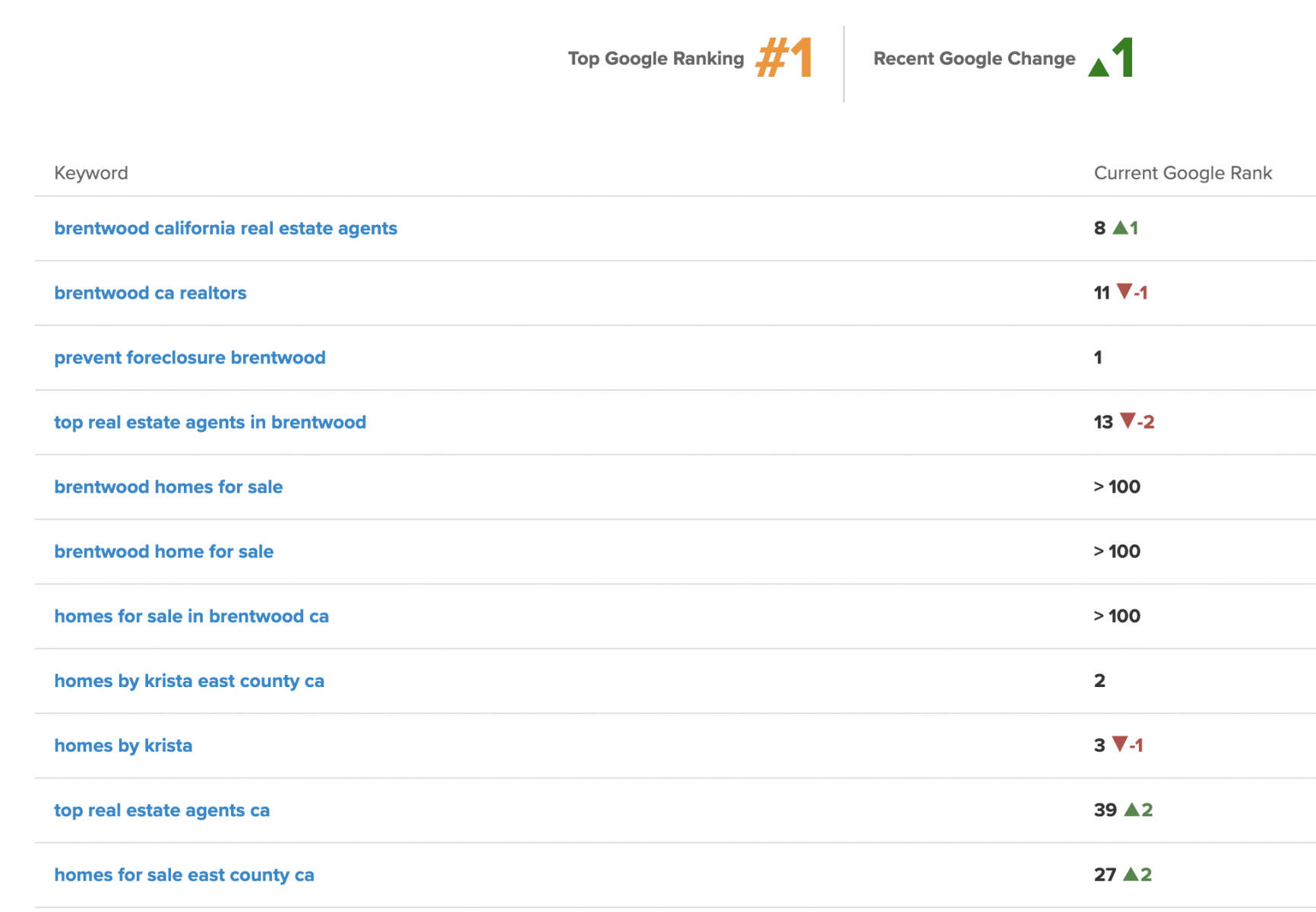
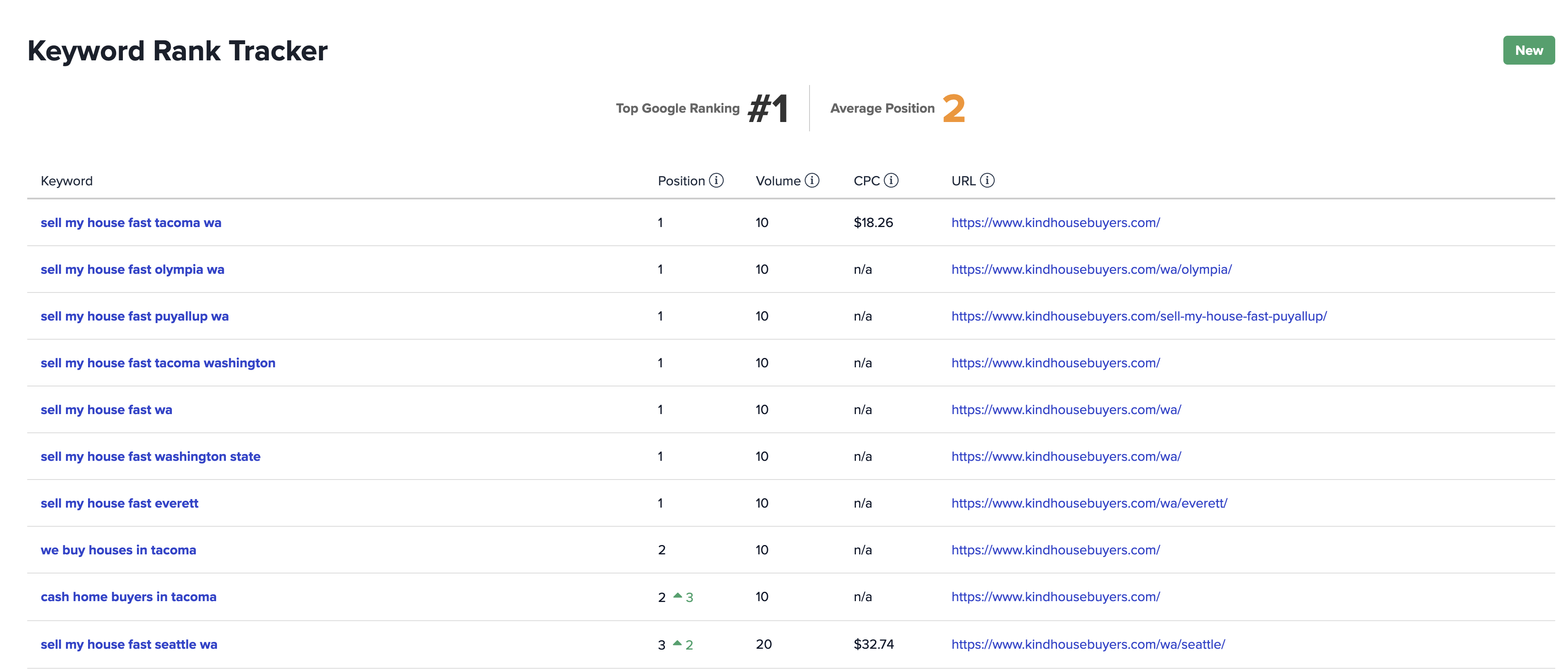
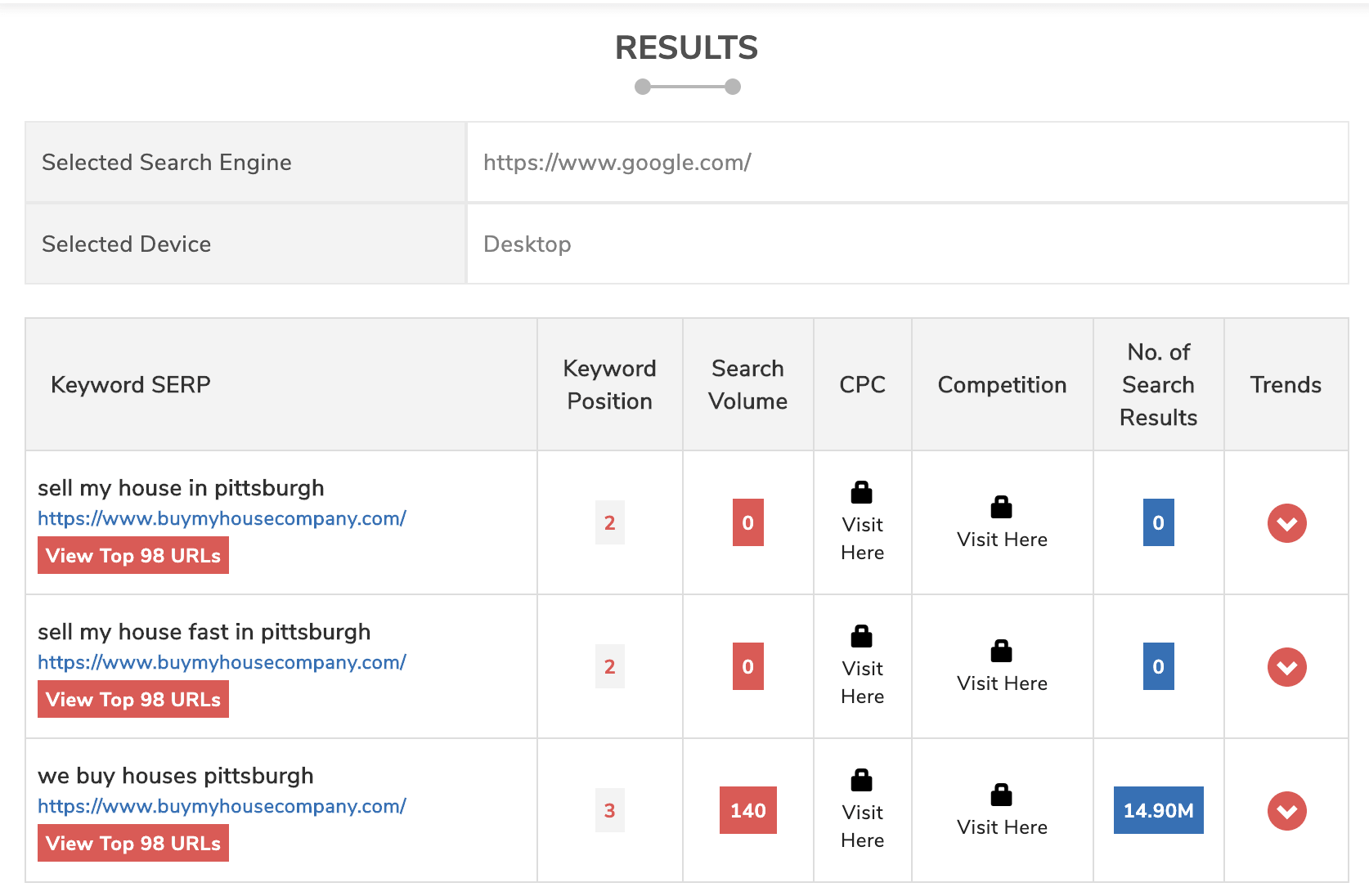
Carrot SEO Keyword Ranking Tracker
People go online to find everything, including a real estate agent to work with. You need to show up at the top of Google results. And to do that, you need to optimize your website to rank in search engines via strategic keyword placement.
If you want to increase the number of leads and deals you’re getting quickly and have some money to invest, then PPC might be a great option.
Whether you choose Facebook or Google Ads (the two most popular options), PPC can generate more leads immediately, increasing your business profitability and market authority.
Did you know that any website’s “About” page is the third most-viewed page? People don’t just want to know what you do or how you do it; they also want to know who you are.
By spending a little time on your “About” page bio – adding core values, a mission statement, and personal pictures – you’ll stand out from competitors who didn’t spend extra time on their “About” page.
Weekly (or monthly) blog posts on your website give you and your audience something to discuss. They give you something to share on your social media pages and give your audience something to discuss.
That’s good – the more interactions you have with people in your target market, the more people will view you as the real estate expert in their area.
Plus, publishing consistent blog posts can also help with your Google rankings and build trust with people who arrive on your website.
Don’t have time? Hate writing? No problem! Create a VideoPost! You could have amazing content to share in 10 minutes.
Upload a video and receive a transcription for your content. Creating content that helps you stand out from the crowd is easy.
14. Record a Case Study Video with a Past Customer
Case studies, or we like to call them, “customer success stories,” are powerful. When prospects arrive on your website, they ask themselves, “Can I trust this person to solve my problem and have my best interest in mind along the way?”
How they answer that question will greatly determine whether they decide to work with you.
The good news is that you can help them answer that question by filming and publishing case study videos of people you’ve worked with in the past and their good experiences.
15. Make Your Phone Number Easy to Find on Your Website
When someone on your website is ready to take action, the last thing they want to do is send them digging for your phone number. To avoid losing leads who want to call you on the phone, put your phone number somewhere on your website that makes it easy to find.
This alone might not dominate your entire market. But when you’re playing against big competitors, details matter.
16. Use a Low-commitment Opt-in Form on Your Website
When someone arrives on your website, you want to make it easy for them to take the first step.
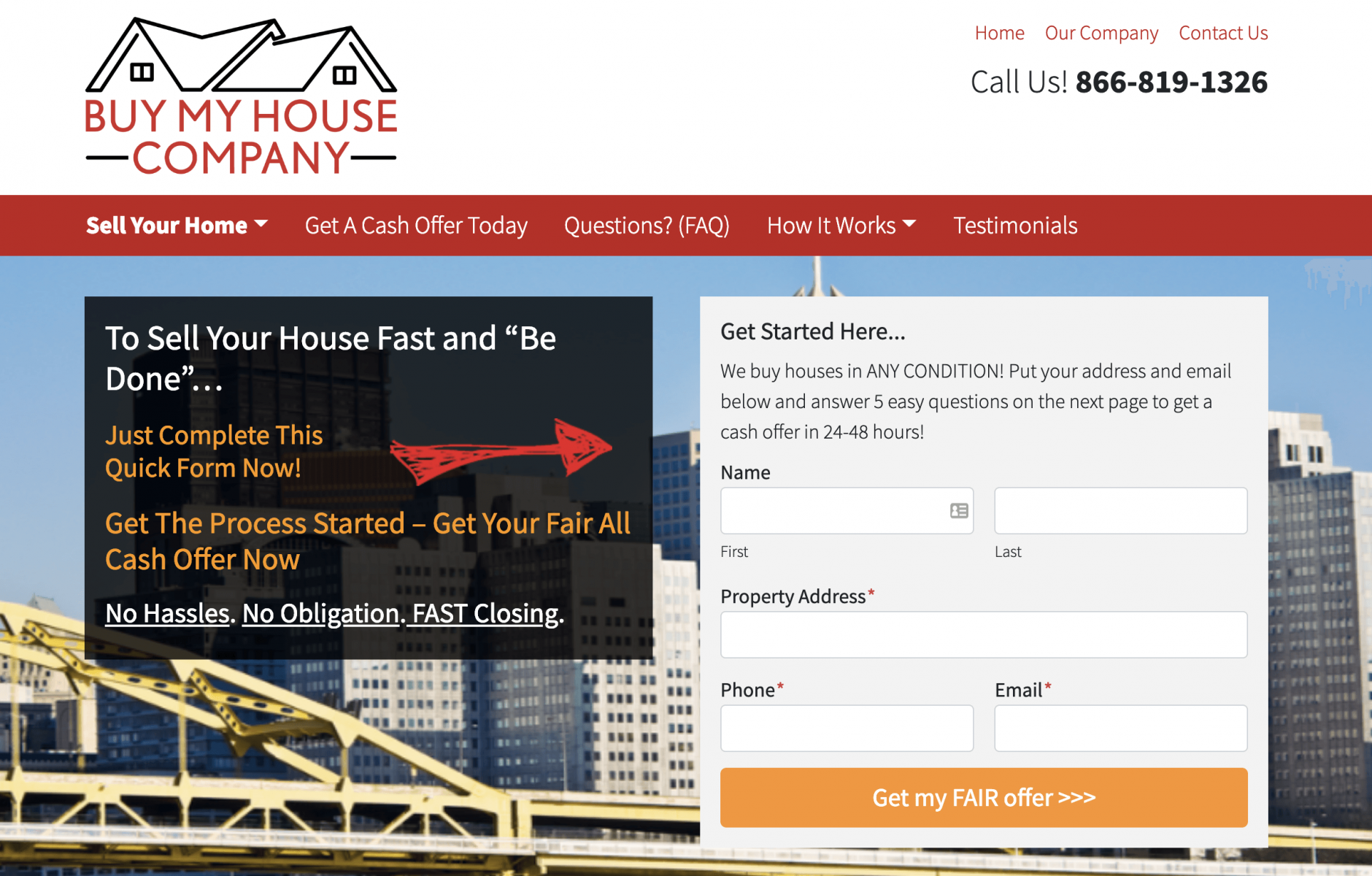
At Carrot, we’ve found that a simple form like the one above with address, phone number, and email is a great starting place. It’s enough to qualify the person (having three different fields) but not so much that it’ll stop someone seriously interested in your service.
By putting a form like this on your website, you decrease the amount of lost quality leads to your website and increase your market domination – even if just slightly.
Words matter. And perhaps nowhere do words matter more than when you’re trying to convince someone who doesn’t even know you to work with you.
Often, the real estate professional who writes the best sales copy and speaks directly to their target market will win the day. Consider spending more time on your website’s sales copy to ensure every word is compelling and persuasive.
If you’re a real estate agent, posting high-quality photos on your website, Facebook page, and house listings is critical. Several studies have shown that high-quality photos can increase how quickly a home sells and what price it sells for.
It will take more than pictures to sell a house, but this is one piece of marketing that can’t be overlooked.
Many real estate agents miss the importance of taking quality pictures. This is one simple way you can beat your competition.
20. Encourage Reviews on Your Company’s Facebook Page
People trust reviews just as much as they trust recommendations from friends. Think of your own experience: before you buy a movie, eat at a restaurant, stay at a hotel, or buy a book, you read the reviews.
And how much BIGGER of a decision is buying or selling your home? Sure – people won’t decide entirely if they will work with you based on your reviews, but your reviews (or whether you have them) will play a big part during the prospect’s early decision-making process.
Facebook is a great place to collect and advertise those reviews.
One of the best ways to convince people that you’re the best person to solve their problem amidst a whole sea of competitors is by targeting them specifically. Rather than simply having a website that targets your city, create different landing pages that target different parts of that city.
There’s probably an entire pool of prospects interested in river-side houses, houses by the golf course, wooded homes, or mountains.
By niching your market down even further with market-specific landing pages, you can speak directly to those people and increase their chances of working with you.
Craigslist is a great place to find buyers and sellers. Mainly because it’s one of the first places that many people go when they start looking for a piece of real estate to buy. Plus, the ads are free to post.
Post consistently with pictures of the homes or property you’re marketing; voila, you’re battling on one more front that your competitors are probably ignoring.
A sales script for your phone calls and email follow-up doesn’t just increase efficiency; it can also increase sales. By thinking about your prospects’ pain points and what makes them tick before getting on a call, you can avoid losing a deal because you forgot to say something important until after the call.
Phone calls are still a big part of the real estate marketing strategy, and how you handle yourself on the phone (with efficiency and salesmanship) is critical to your success.
Tom Ferry shares five proven sales scripts for every real estate agent who needs to gain confidence and win more business.
24. Delegate “Busy Work” to an Executive Assistant
If you want to build a company beyond solopreneurship, you must delegate “busy work” to someone else. “Busywork” is the stuff that has to be done, but it doesn’t need to be done by you. Someone else can take it over relatively quickly and have the same impact.
To grow your business and focus on more important things, outsource the “busy work” to a VA or in-person assistant.
The one who knows their market best dominates the market.
The truth is the agents and investors who know their market the best – who they are, what they like, how they think, how they talk, and where they hang out – are the ones who will dominate their market.
Why?
Those people will most easily sell their services to the market. They understand the market’s pain and strategically position their service to serve it.
Study your market if you’re at a loss for beating your competition. Visit forums, Facebook groups, and pages, or make phone calls and ask relevant questions.
Once you know it, establish credibility and connections by posting market snippets on social media or an email newsletter campaign.
There’s no better way to inject child-like life into your marketing strategy than purchasing a remote-controlled toy.
Drones aren’t just great for having well-deserved fun; they’re great for business. 83% of people selling their homes prefer to work with an agent that uses drones. High-volume realtors use drones 3.5 times more than their low-volume counterparts. Lastly, homes with aerial images sell 68% faster than homes with basic images.
Really, that’s no surprise when you glance at the beautiful photos these flying playthings can capture.
But which drone should you buy? There are many options, and you want to get the best bang for your buck.
Truthfully, I don’t know. I’ve never bought a drone, so I hesitate to tell you which one to buy before I’ve tried it out.
But what type of drone should you use? Here is a list to get you started. Remember that that article probably has affiliate links throughout the list, so take those recommendations with a grain of salt.
Ultimately, I’d trust Amazon reviews above all else (they’re harder for people to tamper with).
27. Create a Google Profiles Account
Most of you have probably already created a Google Profiles account.
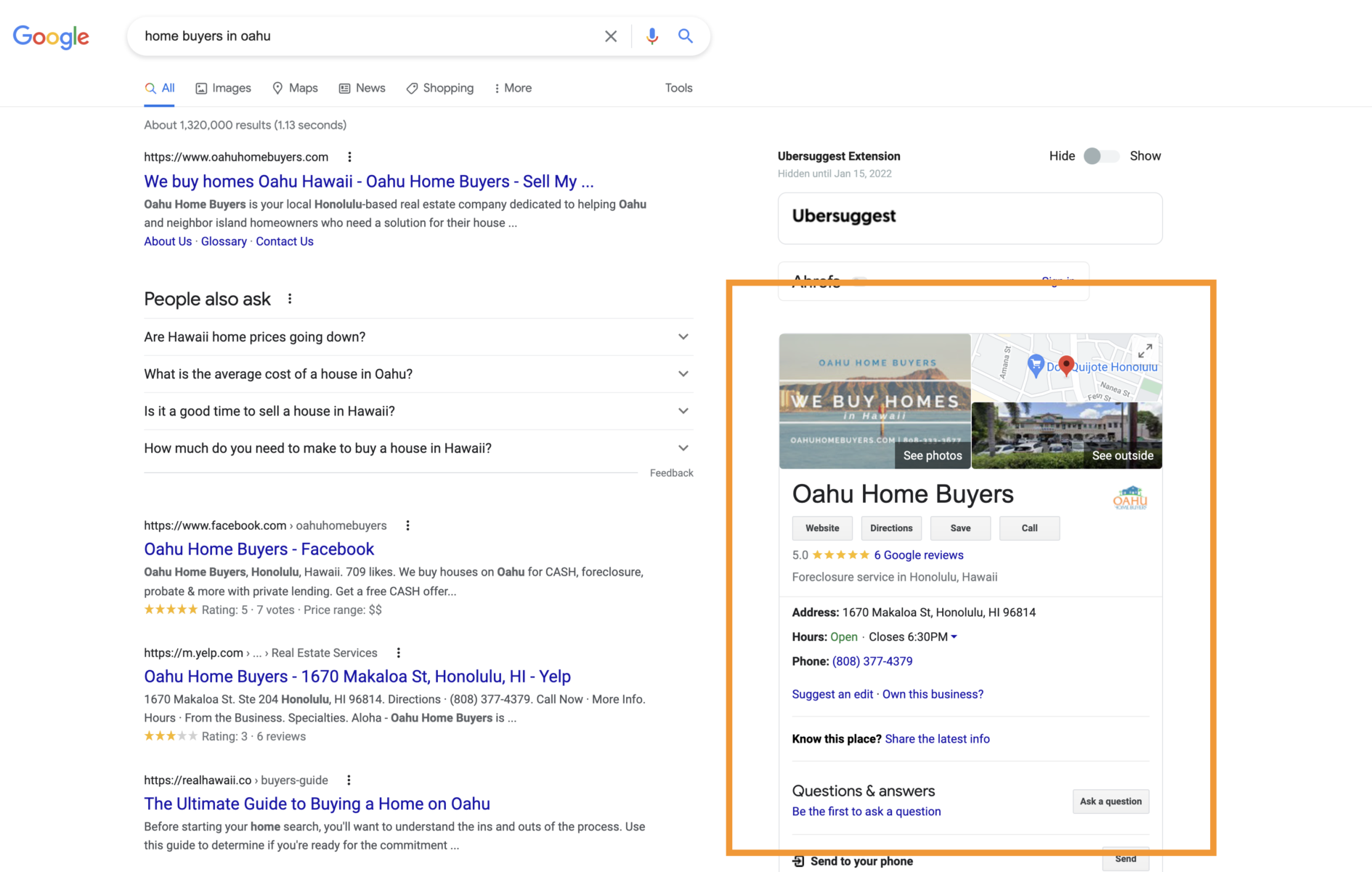
But if you haven’t, you might miss out on easy-to-capture SEO traffic. For example, these are the results that Google Profiles can generate for your website.
Perhaps the best part about these results is that they draw the eye even more than normal top-of-page Google results. It’s a great way for your business to cut to the front of the SEO competition, especially if you have more five-star reviews than anyone else.
BONUS TIP: Generating reviews for your Google Business Profiles account is another marketing strategy you might consider implementing. Contact your past customers and ask them to review you on your Google Business page.
If you don’t already have a Google Profiles account, go to the landing page and click “Manage Now” to get started.
28. Create an Infographic
More than likely, you’re not a designer.
But that doesn’t mean you can’t dip your toes in design. In fact, it can be fun to try something you’ve never done — especially when that something has as much lead-generation potential as an infographic.
Here’s an infographic describing why visual content is so powerful.
Said more simply, people love visual content. And an infographic is a more visual and easy-to-digest blog post. Here, for instance, is an infographic that some real estate agents created.
But how the heck do you develop an idea for your infographic? And how do you actually design it?
Well, it’s all easier than you think.
Once you’re done creating it, promote it on your social media channels, email list, and blog.
You might think running a webinar is just for the world’s self-proclaimed B2B coaches and gurus, but it doesn’t have to be. Running a webinar on a topic that appeals to your audience is a great way to build digital relationships and start relevant discussions about how you can help people buy or sell a home.
Accordingly, here’s a far-from-exhaustive list to get you started hosting your very first webinar.
What not to do when buying your first home
X tricks to sell your house for its highest possible value
Should you list your house with a real estate agent?
How to stage your house to sell crazy fast
Remember, though, that most people prefer to watch a webinar for only between 30 minutes and 45 minutes. So try to keep yourself to that time limit and advertise it as being that long in the first place.
In terms of technical webinar setup, this guide by SmartBlogger will show you how to do it for free (skip to the “How to Run Webinars Like a Pro (Without Spending a Dime)” part).
And before you actually do your webinar, test everything and ensure it’s all working how you want it to. There’s nothing quite as embarrassing or frustrating as technical difficulties during a webinar presentation.
Once you’ve assembled your webinar, start collecting sign-ups via Facebook ads, emails, and maybe even guest posts on other blogs.
30. Create a Zillow Profile
You can’t afford to miss out on the opportunity of Zillow. With over 245 million unique monthly users, it gives you an audience for your business that is much larger than any other solution in this space!
You need a profile because when potential clients find listings they are interested in and see that no one has listed them yet at their contact information, chances are high they’ll want to reach out with questions – which means if you’re not sharing those listings through profiles on sites like Zillow. Someone else will be getting all these new leads instead.
To dominate your market, you have to change what you’re currently doing – what you’re doing to generate leads and revenue is great for where you’re at, but it’ll never take you where you want to go.
That’s the truth about everything in life. If you want to go somewhere new, you must make some changes.
What do you think? What has been key for your real estate agent marketing? Which tools and strategies do you use? Please share your thoughts, knowledge, and questions in the comments below!
As we enter a year since the COVID-19 pandemic started, we’re still in a position where we’re not always sure what to do next.
For most of us, both our personal and business lives were impacted on a level that we’ve never experienced before.
This impact probably included your real estate marketing and advertising as businesses shifted from growth mode to survival mode.
As we’re moving out of the peak of the pandemic (let’s hope) many homeowners are still proceeding with caution.
The good news is, whether you’re starting a new account, reactivating an old one, or scaling up a current Google Ads motivated seller account, we’ve outlined exactly what you need to do to audit your account and move forward without hesitation.
What State is Your Google Ads Motivated Seller Account In Now?
Right now, you’re probably within one of these groups…
You paused everything in 2020. Now, you’re back in your account looking to start generating leads again. If this is you, then most of your work has already been done. The campaigns have been created. You just need to enable them.
Or, you may have scaled back your motivated seller campaigns and now you’re looking to rebuild into a larger account structure. This provides an advantage because you have recent data still going for you to base your moves off of.
Lastly, you might be starting out with a totally new account. This way you get to create the account with a new strategy.
COVID Google Ads Motivated Seller Account Audit
If you have or have had motivated seller campaigns, you know that it’s important to take it slow and do the right thing to your account or you’ll end up wasting budget.
Let’s take a trip through the items of your account that you should revisit so you can get back up and running properly.
1. Adjust Your Budgets
What you’re looking to spend may be different from what your budget was pre-COVID.
Take a little time to review what you spent pre-COVID, during the past year, and what your spend goals are going to be post-COVID.
How do you know what you should set your budgets to now?
First, you know your market better than anyone. If you’re coming into a hot market, then you might want to increase your budget. If you feel your market is still a little timid, then back it off a bit.
Next, you can use Google’s Budget Recommendations, or use a recommended formula based on what your monthly spend expectations are for the year and projected ROI.
Then you can break down how much you’ll have to play with for daily budgets by using Google’s calculation:
Monthly Budget divided by 30.4 which is the average number of days in the month = Overall Daily Budget
If you’re running multiple city-specific campaigns, you might need to create a shared daily budget or stick with one area as you get a back into the swing.
2. Evaluate and Set Realistic Goals
Your performance metrics might look a little different from previous years, therefore it’s valuable to evaluate where your account performance was and set realistic goals for 2021.
Focus your review on what means the most to you. For most investors, lead volume and cost per lead are the two most valuable metrics.
You can use that data to set some benchmarks to get an idea of where you should be landing in terms of future performance. Factor in market conditions and market confidence.
You could come to the conclusion that you’ll need to expect less leads at a higher cost per lead for the near future.
3. Make Sure Your Bid Strategy Aligns with Your Goals
You’ll need to ensure that your campaigns have a bidding strategy that aligns with your goals and metrics.
We’re still big on using manual bidding, but if you’re using one of Google’s automated strategies, here are some things to keep in mind.
For example, it’s not wise to use one of the conversion-based strategies such as Target CPA if you don’t have recent conversion data for Google to optimize off of.
Keep in mind that certain bidding strategies, like Target CPA, have a minimum historical data requirement in order to use them with some effectiveness.
If you’re starting out with a new account, with limited data, you should default to manual bidding or if you really want to use an automated strategy, stick with Maximize Clicks.
4. Double Check Target Locations
Where you choose to target will impact your reach as well as your spend. For example, if you were targeting all of a specific county before COVID when you had a higher budget, you might want to now scale it back to just a specific city within the county to align with a smaller monthly budget.
Overall, you can restrict your location targeting based on your 2021 goals and budgets.
5. Keyword Deep Dive – Pause or Add Keywords
Don’t be afraid to pause keywords! We’re in times where some motivated seller keywords aren’t as hot as they once were or might be in the future. If your historical data shows keywords that drove leads in the past, but have become slow now, you can always revisit them at another time.
In any market, every penny counts. No one likes to waste money but during uncertain markets, understanding your goals and how many leads are really possible, right now, will help you manage your keywords.
So, pause any underperforming keywords and keep the keywords most relevant to your updated goals. This will help keep your accounts organized as well as ensuring that you are spending your money on the keywords that have the highest confidence levels.
There could also be an opportunity to add keywords. You can use tools such as the Google Keyword Planner or as simple as Google Suggest. These two tools can be great places to check as you refresh your account so that you can keep your expectations as well as your bids working with your budget while using the top converting keywords.
6. Edit Your Ad Copy and Messaging on Your Landing Pages
Don’t forget your ad copy. In this current time, your market might present opportunities to test new ad copy. Align with your audience.
For example, if your market currently has a “virtual” feeling, test something like “100% Virtual Sale” or “We Do Not Need to See Your House in Person”.
In other words, take advantage of your market conditions and how people are thinking right now.
If you have a new site or are using a past site, use that same language on your landing page as you do in your ads.
Refreshing your ad copy and landing pages will not only bring things back up to date, but also give your audience a new look and messages that connect with them more than ever.
7. Pause Underperforming Ads, Ad Groups, or Even Campaigns
Similar to the keywords, you may want to look for opportunities to trim your account upon reactivating it. Pause any underperforming ads, ad groups, or even go as far as campaigns.
Again, markets during COVID have looked different than before.
You may experience heavy lead months followed by slow months. That’s why it’s important to use data and stay calm.
If you have a good lead month followed by a bad month, it’s not necessarily a Google Ads issue. We have found that some markets have fluctuated heavily even month-to-month.
Prioritize what aspects of your business are the absolute most important to advertise and pausing out anything that isn’t necessary.
Find what is driving up your cost-per-lead and weed through those to ultimately get to the highest performers.
8. Keep Adding Negative Keywords
Between Google’s new match type changes and the always changing searcher intent, it’s important to stay on top of your negative keywords.
Review the Google Search Terms report to see what queries you’ve shown up for and ensure you have your negative keywords added and up to date.
We’ve seen some markets shift to more “sell my house fast online” and “sell house by owner fast” queries. Even though these seem to be motivated queries, some markets are noticing clicks going up but leads are not following.
During COVID, when you see trends such as these, don’t be afraid to add a negative keyword to a good term. You can always remove it in more normal market conditions.
If you haven’t been dedicating time to your Google Ads account, then it might be a good idea to double check your conversion tracking as well.
Possibly over the course of a year, you’ve made some changes to your website that could have impacted your tracking. Or, maybe you’ve changed your phone number so you’ll need to adjust that within your Google Ads account.
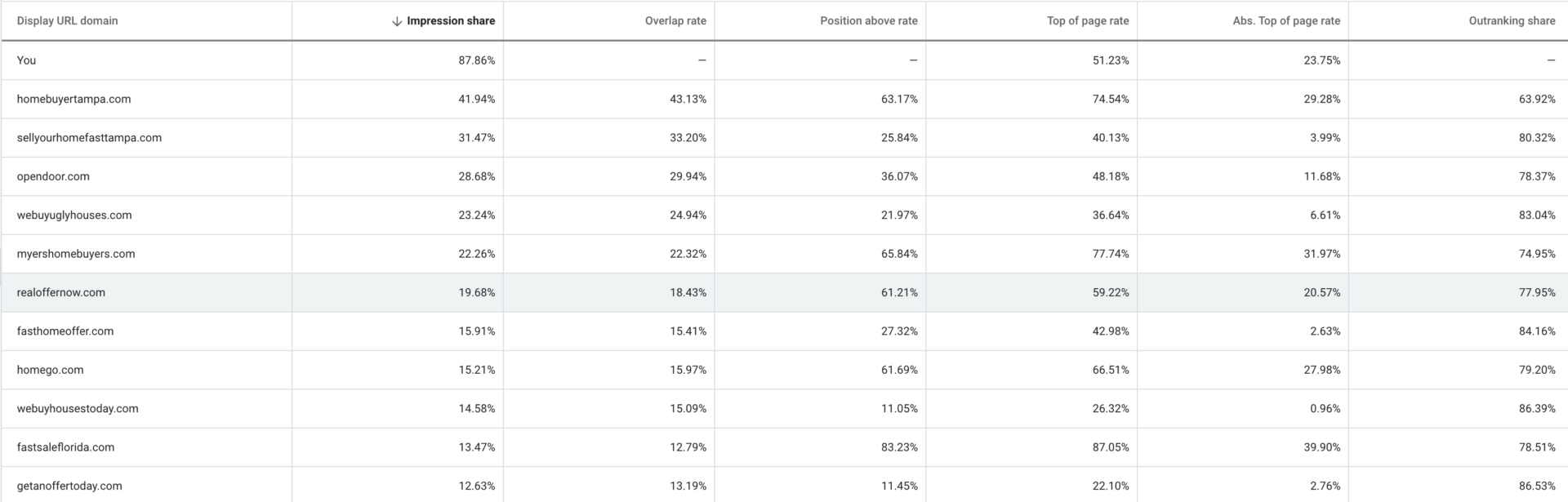
Whether your account has been paused for a while or it’s currently active, you can also leverage the Auction Insights report of Google Ads to further investigate the climate of your market.
Auction Insights breaks down who else is on the search results page most often along with you.
So, if you’re wondering if new investors have emerged into your area since COVID-19 or if you’re curious to see who is outbidding you, this is the place to start.
Auction Insights not only tells you who else’s ads are alongside yours but also where on the page they rank, above “Position Above Rate” or below you “Outranking Share.”
Audit a current Google Ads motivated seller account or reactivate your account with confidence
Whether you paused, scaled back, or are starting fresh, there are items to be evaluated with current or reactivated Google Ads motivated seller accounts during the pandemic.
Let’s review the steps covered in this post:
Adjust Your Budgets
Evaluate and Set Realistic Goals
Make Sure Your Bid Strategy Aligns with Your Goals
Double Check Target Locations
Keyword Deep Dive – Pause or Add Keywords
Edit Your Ad Copy and Messaging on Your Landing Pages
Pause Underperforming Ads, Ad groups, or Even Campaigns
It’s often said that more millionaires are made through real estate than any other type of business. But what real estate business models do they use?
Ready to Hone Your Negotiation Skills & Close More Deals? Get the fool-proof strategies & step-by-step scripts used by real estate investing’s top closers
While it’s difficult to measure the validity of that claim, one thing’s for sure: there’s a lot of money to be made in real estate.
Questions often raise about whether you should become a wholesaler, a flipper, an agent or broker, or even a hybrid agent/investor. As the real estate market changes and fluctuates (like it has in recent years), how do you make sure you choose the right investment specialty?
But one thing’s for sure: People will always buy or sell houses.
And investors who put their money into real estate — buying assets rather than liabilities — can create a lucrative future for themselves and their families.
So the question is, how should you get into real estate?
There used to be just a few different real estate business models.
If you had access to a lot of capital, you could place big bets with the fix-and-flip system and hope the market didn’t dip at the wrong time. You could also buy-and-hold real estate, steadily expanding your portfolio and net worth.
You could become a real estate agent or broker without big money, netting 3% to 6% per transaction.
Those were the options.
Now things are much more diverse.
Here are the real estate business models we will cover in this article…
The good news is… there’s a real estate business model that works with any budget. So long as you have the discipline to get started and keep going, you can win at real estate.
The Main Challenge of These Real Estate Business Models
While the business models below present a ton of opportunity for entrepreneurs — we’ve seen many agents and investors build thriving businesses in just about every market — they’re not free of challenges.
These challenges include hiring the right people, mathematically approaching every transaction, and building trust with buyers and sellers.
But one challenge stands above all the rest: consistently generating leads.
For agents and investors, having a consistent flow of leads makes your monthly income more predictable and allows you to grow your business more quickly.
How do you do that?
At Carrot, we specialize in helping investors and agents create simple, effective websites that rank in Google (and thus drive traffic) and systematically convert visitors into leads.
We’ve generated over 2.5 million leads for thousands of investors and agents nationwide. Take a Carrot demo to see how it works!
1. Real Estate Agents
When someone thinks about getting into real estate, being a real estate agent or broker is usually the first business model they consider.
Real estate agents make money by helping people buy and sell homes, usually pulling in between 3% and 6% of the sales price. A $250,000 home would net between $7,500 and $15,000.
To become a licensed realtor, you’ll need to research the requirements and processes in your local market — typically, this will include taking some courses and passing a test. You might also need to get sponsored by a real estate brokerage.
Pros
Low barrier to entry. Anyone with enough time, determination, and sales savvy can become a real estate agent.
Good profits on high-ticket homes.
Cons
Requires expertise in sales.
It takes time to build a name for yourself.
The average transaction takes about 3 months to complete.
2. Wholesaling
Wholesaling is a real estate investing business model that’s cropped up over the last decade or so.
As a wholesaler, rather than flipping real estate or buying and holding your properties, you work as a sort of “deal finder” for other cash buyers. Your job is to find good deals (motivated sellers) and get them under contract for a price you and your cash buyer can afford. When you pass the deal onto the cash buyer, you’ll typically make a $5,000 to $20,000 assignment fee.
The most significant benefit to wholesaling real estate is that you don’t need a massive amount of money to get started — just a few thousand dollars to find and secure your first deal.
Pros
May not require a license (check the state you’re wholesaling in).
Requires just a few thousand dollars in startup capital.
Wholesaling has become highly competitive in many markets.
New regulations are being introduced in many states to regulate wholesaling.
“Six wholesale deals this month if all goes through. $124k… 4 ppc, 1 organic, 1 Facebook retargeting. One has closed, the other 5 are under contract with a buyer and the last one is waiting on a buyer. Carrot system is still rockin!”
– Brian Rockwell
3. Wholetailing
The word “wholetail” is a combination of “wholesale” and “retail.” In a wholetail deal, the investor buys a house for a low-ball price, makes just enough repairs so that it’s capable of selling on the MLS, and then sells it to a traditional buyer.
It’s not unusual to make $50,000 to $100,000 on a wholetail deal, but without nearly as much work as flipping takes.
We recommend wholetailing real estate when you’ve found a house that needs very few repairs, you can get it for a price that’s significantly under market value, and you have the cash (your own money or someone else’s) to purchase the home and make small updates.
Pros
Wholetailing requires less work than a full flip, but has a big payoff.
Cons
Wholetail deals are hard to come by.
Wholetailing works better as a supplemental investing strategy than it does a primary business model.
Requires access to large amounts of cash.
4. Buy-And-Hold Investing
Buy-and-hold investing is probably the best business model for increasing long-term wealth and net worth. In the buy-and-hold strategy, the investor buys properties (ideally ones that are a good deal), fills them with tenants to create cash flow, and holds.
Buy-and-hold investing aims to collect as many properties as possible and build as big of a portfolio as possible.
The hardest part of this business model is securing the cash to purchase properties consistently. We recommend seeking out private money or hard money to fund your deals.
Pros
Great way to increase net worth.
Creates a ton of passive cash flow.
Cons
Need to manage properties and deal with tenants.
Need access to a lot of capital to maintain momentum.
5. House Flipping
House flipping is the HGTV method of real estate investing and perhaps the most popularized way to make it big.
What these TV shows don’t talk about, though, is how house flipping is also one of the riskier real estate business models. During the time between when you buy a house and when you sell it (often 6 months or so), you’re just crossing your fingers that the market doesn’t take a hit.
Still, house flipping is a great real estate business model to add to your repertoire. It has higher risk, but also a higher payoff — often upwards of $100,000 for a single deal.
Pros
Bigger cash payoff than any other investing model.
Technology has advanced so that investors can generate leads, find deals, inspect homes, purchase properties, and more… all without even being in the same state as the property they’re purchasing.
This is a great option for people who don’t want their businesses tied down to a single location.
Pros
You can operate anywhere in the U.S., accessing the most profitable markets.
Gives you more time and freedom.
Cons
It requires a lot of research before entering into a new market.
Requires you to buy properties site unseen.
You must build a business with clear-cut systems and hire trustworthy people you can depend on.
7. Listing Service For FSBO
What’s great about this business model is that once it’s set up, it can be almost entirely passive. Just hire a VA to manage some basic tasks and keep up with customer requests.
Here’s how it works: you get your real estate license, set up a website attracting for sale by owner (FSBO) sellers who want to list their house on the MLS, and offer to do it for a flat fee.
You can charge upwards of $250 per listing, for instance.
And as mentioned above, you can train a VA to do a lot of the heavy lifting. So once you’ve built the website and found ways to drive traffic (paid ads and/or SEO), this will run almost entirely on autopilot.
Pros
Easy to set up and easy to manage.
Decent money maker with very little work.
Cons
Need a real estate license.
Will be competing with other FSBO listers.
Requires a good chunk of upfront work to get everything set up.
Need to find ways to drive traffic consistently.
8. BRRRR
The BRRRR method (Buy, Rehab, Rent, Refinance, Repeat) is a modified version of the buy-and-hold business model.
BRRRR is an ongoing process by which real estate investors can purchase multiple properties with very little capital relative to the growth of their portfolios. First, the investor finds a good deal and buys the property using cash, private money, or hard money. Then they rehab the property and fill it with tenants to start the cash flow.
After a seasoning period of 12-24 months, the investor does a cash-out refinance on the home — this is where a financial institution provides a new loan on the property and returns the cash that they used to purchase the property in the first place.
Then the investor repeats that process with their original funds. If the investor plays their card right, they can purchase many properties with the same funds.
Pros
Allows for faster portfolio growth.
Cons
Requires the investor to secure upfront funding.
Requires very accurate math.
9. Hybrid Real Estate Model
The hybrid real estate model is a strategy where an agent is also an investor. As a hybrid agent/investor, you can offer sellers different options based on their need and your evaluation of the property.
For instance, you can offer:
If they’re looking to sell fast for speed and convenience and are willing to take a bit of a shave in equity, offer to buy the property yourself with a cash offer.
Or, if they want top dollar, you can be their seller’s agent and list the property for a traditional sale.
When you act as both the agent and investor, you can save yourself agent fees and avoid splitting your profits with an agent or investor partner.
“I’ve always worked with wholesalers and investors from the sales side. I decided to start generating those leads myself since I already had the network.”
Flexibility to work with different types of sellers.
Easier to adapt to market shifts.
Cons
Requires agents to be open to learning more about investing.
Carrot member, Anthony Beckham, is a hybrid agent/investor. His average profit per deal as an investor is around $20,000 to $30,000. His average agent commission is around the $7000 to $12,000 range.
More real estate investment business models (& a free planning template!)
There you have it! Nine of the most popular real estate business models.
If you don’t have much starting budget, wholesaling or becoming a real estate agent are wonderful options. If you have more capital, then you might consider flipping or BRRRR.
But they’re far from the only ones. With real estate investing, you can get as niche as you want. Other popular investment options are:
Whatever you decide, there’s plenty of opportunity in each business model. Before jumping in, be sure to research any local regulations (especially with wholesaling or short-term rentals) and the overall competition in your market so you understand what you’re up against.
When you’re ready to take the next step, snag the real estate business planning template to help you sort out your thoughts and set your business up for success.
What if you lost one lead this year because your website wasn’t optimized for conversion?
No biggie, right?
Well, no biggie so long as that lead wasn’t going to turn into a deal… if it was, then that’s $10,000, $20,000, or even $30,000 straight down the drain.
And, as my real estate agent says, “It only takes one – the right one.”
Sadly, for most unoptimized websites, the truth is much more depressing than a single lost lead per year. A website that loses one lead from your target market, after all, is going to lose all similar leads.
This is why preparing your real estate website to convert its visitors is absolutely vital… before you drive traffic to it (paid and organic). How, though, do you know if your website is or isn’t optimized for conversion?
Well, at Carrot, we’ve generated millions of real estate leads for our thousands of members, and these are four tell-tale signs that your website is losing you money.
4 Signs that your website isn’t generating the online real estate leads as it should
1. Your Website Isn’t Mobile-friendly
For our thousands of Carrot members, 64% of all leads come through a mobile device. Not through a desktop or laptop, but through a thumb-clicking phone.
And that’s happening all over the online world, not just at Carrot. 52% of all global online traffic is generated from smartphones, according to Shane Barker.
This means, if you’re going to convert over half of your website visitors, you can’t create a bad mobile experience. Google is taking this so seriously that they recently rolled out mobile-first indexing – which basically means that they prioritize the performance of the mobile version of your website over the desktop version. And they’re not the only ones who take mobile website performance seriously…
So do your website visitors.
In fact, 61% of buyers form more positive opinions about brands that offer a remarkable mobile experience, according to Crazyegg.
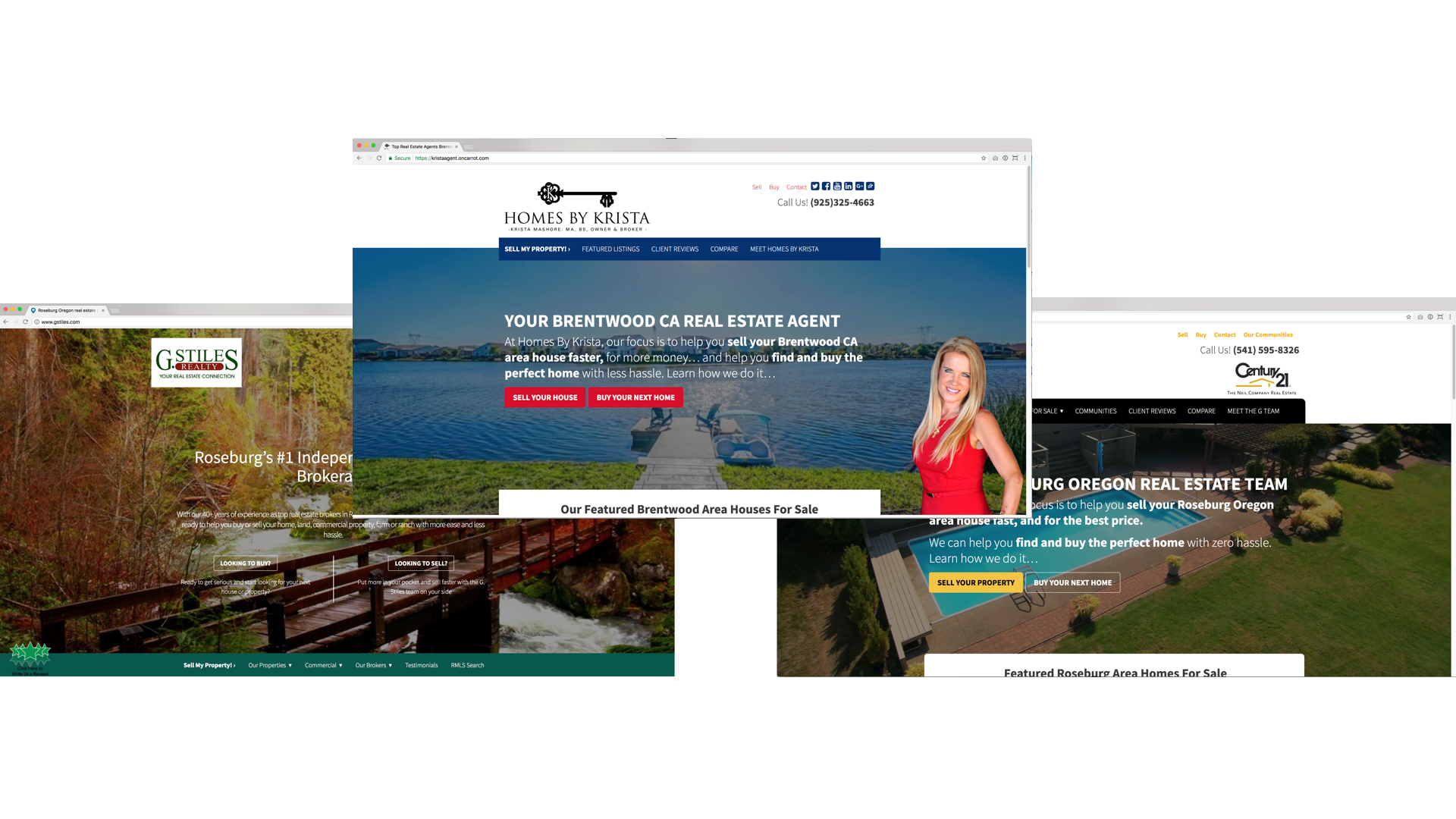
That’s why, at Carrot, every single one of our website designs is crafted to convert visitors regardless of the device they’re using to browse.
Here are some signs that your website isn’t mobile friendly…
You can scroll side-to-side and the screen doesn’t adjust to the size of the device.
The words become so small they’re unreadable on a mobile device.
The buttons are difficult to click with a normal-sized thumb on mobile.
If any of those are true of your website, then you’re definitely losing mobile phone leads – and switching to a mobile-friendly real estate website design like Carrot could outright double your lead generation.
2. You’re Not Making It Easy For Visitors To Give You Their Information
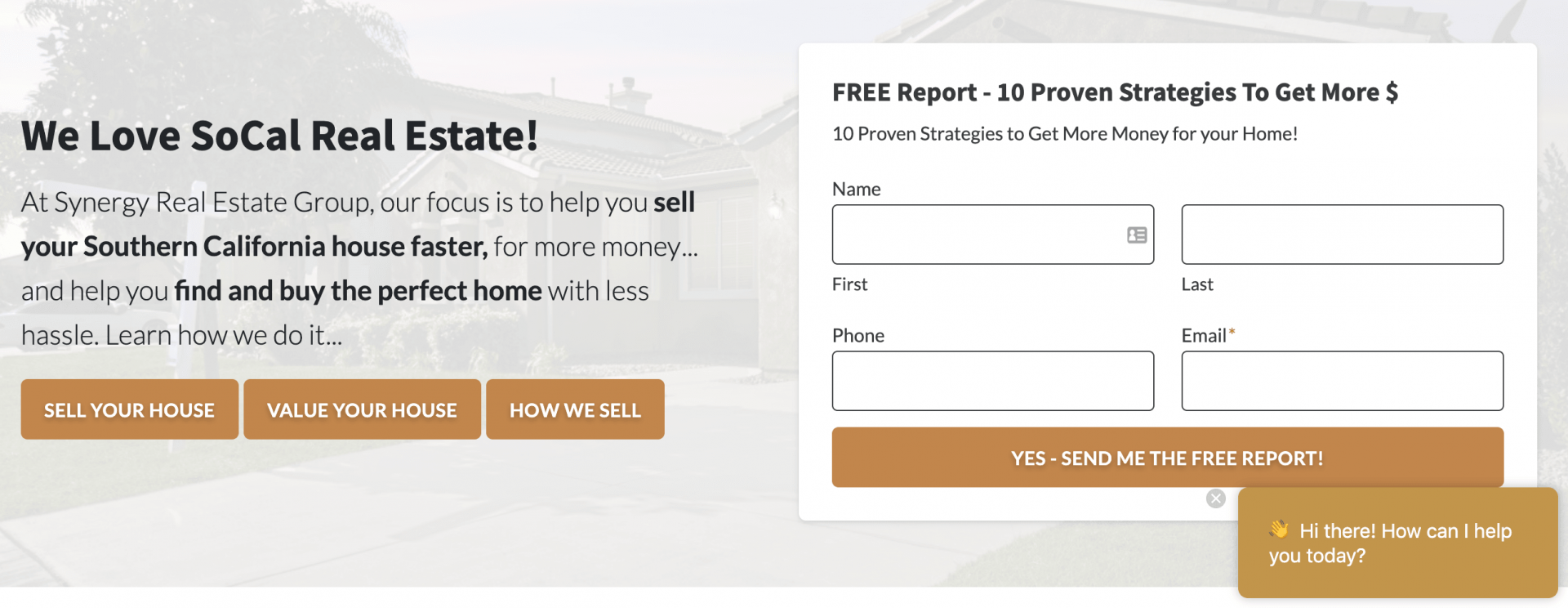
At the top, there’s a title, then there’s a menu and heading. And there’s maybe some sort of vague CTA – in this case, the “Learn More” button.
As you scroll down, you’ll see pictures of the real estate agent (or investor), maybe some testimonials, some notes about their services, and then finally a decent CTA.
This is at the very bottom of their website.
Now, that probably doesn’t seem like a big deal…
Do people really care all that much if they have to scroll to find your CTA?
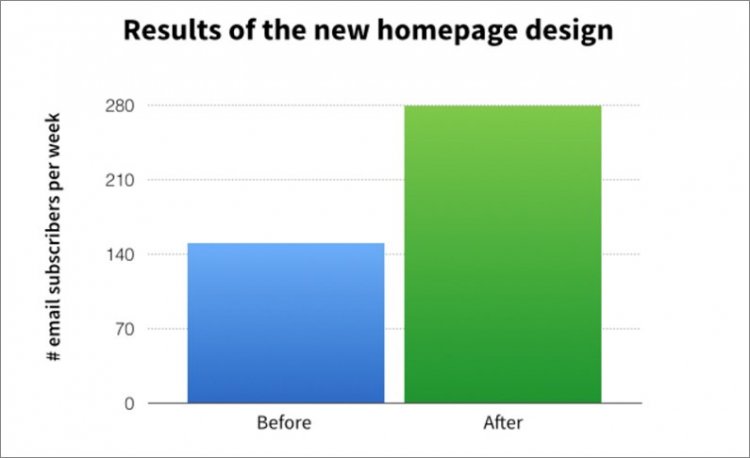
To answer that question, let’s look at a quick study done by Bryan Harris – an email list building guru. He took his “right-side up” homepage and flipped it so that the CTA was front-and-center when someone arrived on his website.
Immediately, he saw a 35% increase in his number of subscribers.
Remember, people who’re looking to buy or sell their home are looking for a solution to their problem. The faster you solve that with a relevant CTA, the more likely they are to opt-in.
But you might be wondering what an upside-down homepage actually looks like.
At Carrot, we exclusively use the high-converting upside-down homepage model – putting the contact form and phone number right at the top of your website (on mobile and desktop) to guarantee that visitors to your website aren’t lost because they have to scroll more than they’d like.
Here’s a quick testimonial from a Carrot member, Adam Mitchell, who spent $1000s on the wrong marketing and an under-performing website. He now does multiple deals per month in a competitive market.
3. The Sales Copy Isn’t Scientific
What do I mean when I say that your homepage copy should be scientific?
I mean that there should be a clear and obvious reason that each phrase and word is in its place. And if you’re wondering whether you wrote your homepage scientifically or not – with the psychology of your visitor’s in mind – then you definitely didn’t.
Because scientific sales copy has to be intentional from the very beginning.
Here’s a typical example of sales copy that misses the scientific mark.
A lot of people try to make their sales copy creative and cute…
But that isn’t what you need. What you need is sales copy that appeals to people’s problems and then promises a remarkable solution.
And the headline is the most important element, with 80% of people only reading the headline and 20% reading the rest. In other words, you need to strike the right chords in the right order, quickly.
You need to be scientific.
Here are a few examples of psychological rules in sales copy.
The word “because” with a reason after increases conversion by 60% to 94% – it doesn’t even matter what the reason is, it just matters that you have a reason for what you’re selling, how much it costs, and why you’re the one selling it.
Similarly, social proof – such as testimonials and credibility bars – can significantly increase the conversion rate of your website. For one website, social proof increased the conversion rate by 20%.
But, those are just a few examples.
For your formulaic sales copy pattern, follow these three steps, in this order:
Empathetic description of pain – First and foremost, your prospect needs to know that you know exactly what they’re going through. After all, how could you possibly help them if you don’t understand their current position?
Agitate that pain – Then, the prospects needs to be reminded of how terrible of a situation they are really in. Your goal is to empathetically remind them of how difficult their predicament is so that they’re ready to get out of it.
Promise a solution that’ll take that pain away – Finally, in swoops Super Man. Your solution. Guarantee them with all the tools you have in your arsenal that your service (whether agent or investor) is going to remove their pain, then tell them how it’s going to do that.
Consider our very own sales copy as an example of this. It’s only a few sentences, but it hits every note.
4. Your Website Has Slow Load Times
The slower your website loads, the more people who won’t stick around to see what you have to offer.
Higher bounce rate. Fewer conversions.
Period.
As Neil Patel explains on his blog, for instance, 53% of people will leave a mobile site if it takes more than three seconds to load. And 47% of online users expect a website to load in just two seconds or less.
As the nail strikes the coffin, a one-second delay in page response time often results in a 7% reduction in conversions.
If you have a slow website, how many thousands of dollars might you be losing for each second? Here’s some quick math.
Imagine that you get 2,000 visits to your website every month at a 10% conversion rate. That’s 200 conversions. Then imagine that you close 1 in 20 of those. That’s 10 deals per month.
Now let’s assume that you make $10,000 per deal.
At a 7% reduction in conversion rate for every one-second loss of load speed, just a two-second delay would lose you upwards of $10,000 or more every single month.
This is why, at Carrot, we don’t mess around with slow load speeds. In this tech-stack study of 150,000 websites, Carrot outperformed Wix, Squarespace, and WordPress. In fact, Carrot was second to Google’s own website.
Conclusion
Maybe in the 90’s, just having a website was enough. Just having a place where people could go online and learn about your business would do the lead-generation trick. But now we’re down the road…
And we know what converts visitors… and what doesn’t.
Still, many websites haven’t caught up with the times and optimized their websites for conversion. This is unfortunate, considering the significant impact that conversion optimization can have on business success.
So, a quick recap.
Avoid these four real estate website pitfalls that can kill your lead generation…
It’s not mobile-friendly.
The homepage isn’t easy asking for their information.
In 2022, Google announced that it would simplify Google Ads match types. This post explains what this means and what you’ll need to do to your Google Ads accounts.
Google recently made improvements to keyword matching technology and rules on how it selects keywords in your account.
Reduce account complexity by giving more control over traffic without managing multiple match types.
Allow you to attract more qualified and high-performing traffic using fewer keywords easily.
Here’s what Google’s announcement means.
Change: The BERT algorithm has improved keyword matching precision
BERT algorithm technology interprets language, queries, and search intent. This applies to keyword match type behavior. This makes keywords, particularly broad match type, more predictable and aligned with the search intent.
Change: Exact match type data also applies to broad and phrase match types
To understand this change, we need to refresh our memory about some big changes in early 2022. Google retired modified broad match keywords and announced it will prefer exact match keywords that are identical to the search query.
Now the same logic that applies to exact match keywords will apply to broad and phrase match. If your ad group doesn’t have an exact match keyword that is the same as the search query but has broad or phrase match keywords identical to the query, Google will prioritize the broad and phrase keywords that exactly match the search query.
Here’s an example:
If someone searches for house buyers near me and you’re targeting broad match house buyers and broad match house buyers near me, the identically matching broad match keyword house buyers near me will be preferred unless you’re targeting exact match house buyers near me, in which case the exact match will be served.
Change: If you have multiple keywords and match types that are relevant, but not identical, to the search query, Ad Rank will not be the only deciding factor
If keywords are relevant to a search query, but none are identical to it, Google will not just use Ad Rank, but Ad Rank plus other relevance signals to determine the keyword it serves. “Other relevance signals” include the meaning and intent of the search term and the meaning of your targeted keywords based on their associated landing pages.
Here’s an example:
If someone searches “fast house buyers near me” and you are targeting the phrase match fast house buyer and the broad match house buyer, Google will select the phrase match keyword because it’s more relevant, even if it has lower Ad Rank than the broad match keyword.
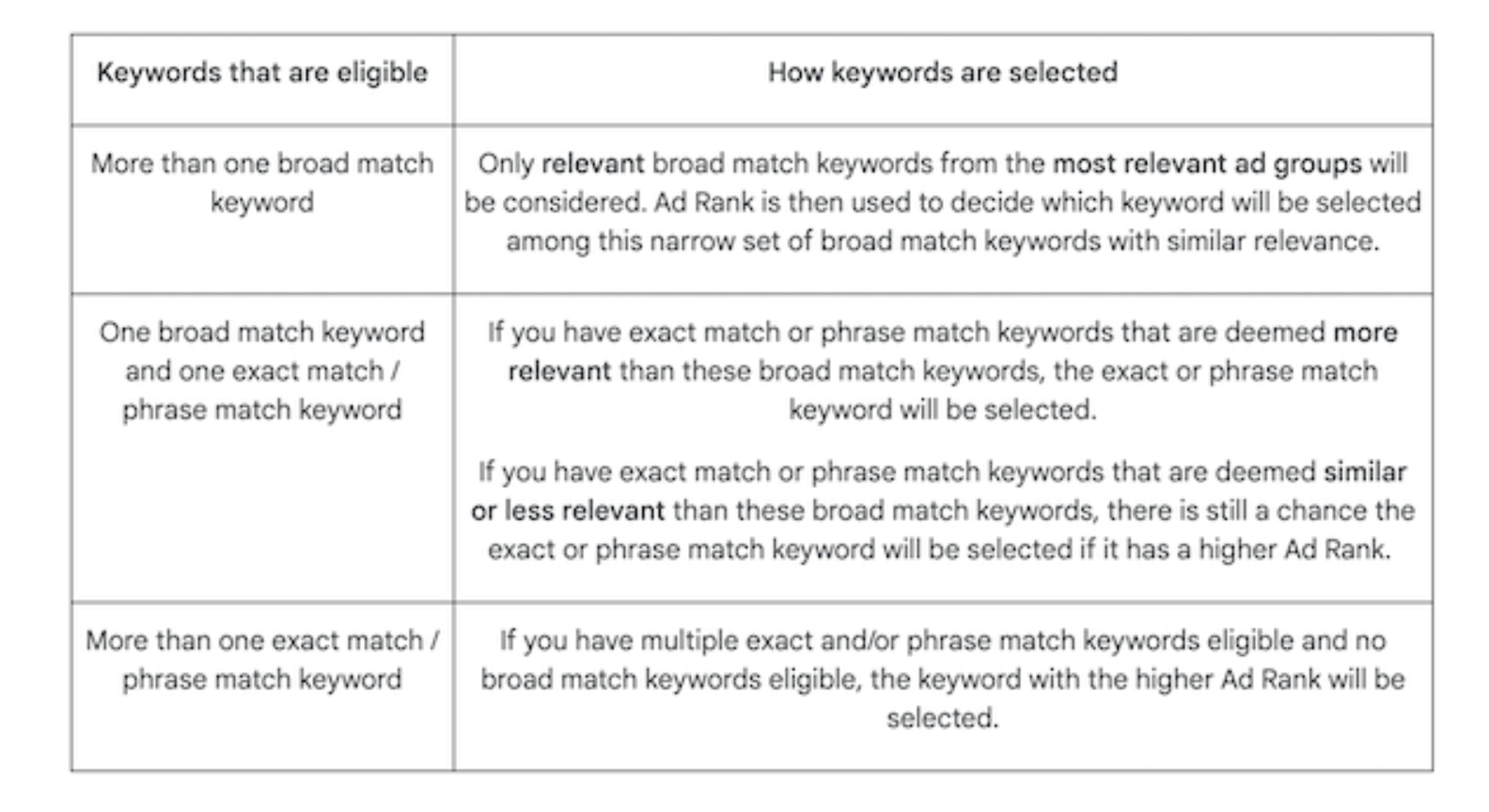
Google states, “These rules ensure that the most relevant keyword will always be prioritized, so you can more easily use broad match and still maintain control.” Google provided the chart below to illustrate this logic.
Additional Points
Previously, we’ve directed members about using the same keywords with multiple match types to identify the highest-performing keywords. Google is saying this is not necessary any longer.
You can get more “qualified” traffic using fewer keywords
This is only what Google is saying. With these improvements, it’s possible to maintain better control over which keywords match a query. This is especially true with broad match keywords. This should “reduce account complexity” and eliminate the “extra work” of using multiple match types to control where traffic goes in your account.
You should create “thematically” consistent ad groups
Google suggests to “group keywords into thematically consistent ad groups so your ads will serve from the ad group you expect them to.”
A basic example can be, if you’re an investor and inherited and cash are your most popular searches, you would create two ad groups:
One ad group with creatives for selling an inherited house.
A second ad group with creatives for selling for cash.
If you’re pairing broad match keywords with a Smart Bidding strategy, there’s no longer a benefit to using multiple match types
What this means is that since broad match keywords are now more precise and predictable, plus they now follow the same logic as an exact match, you can target the appropriate broad match keywords and get the same results as you would if you targeted the phrase and exact match version of that keywords.
Google says… “Also note that when you use broad match with Smart Bidding, there’s no benefit to using the same keywords in multiple match types. Broad match already covers the same queries and improves performance with real-time bid optimization.”
What Does This Mean for Real Estate Agents and Investors?
Test different match types. Even going as far as creating broad match experiments.
We’ve always recommended taking Google’s messaging seriously but also with caution. Historically, broad match keywords have caused more wasted spending in real estate campaigns than they have lead generation.
If what Google is promising, broad match keywords might be the future. Just monitor your account and make adjustments to keep quality searches high.
Changes to Consider Making Now
To help you get the most out of these upcoming changes, we suggest the following best practices:
Monitor performance and shift budgets where necessary: Traffic may fluctuate due to these changes, so make adjustments as needed.
Regularly check your “Recommendations”: Check the “Add new keywords” to maintain keyword coverage and “Remove redundant keywords,” which helps you consolidate duplicate keywords.
Continue to use negative keywords: Exclude matches you don’t want with negative keywords.
Moving Forward
We’ll monitor these new policies and send updates as they become available.
For now, it’s important to be aware of these changes. This at least gives you an idea of what some recent changes mean.
There are thousands of deals happening in these larger markets. It’s an abundance mentality – there’s enough for everyone. There’s more to gain by working together than working apart.
– Adam Mitchell
From a $40k loss to $500k Profit – How the Home Buying Guys Pivoted Their Strategy to Win Their Competitive Real Estate Market w/ Adam Mitchell & Lance Doty
Adam Mitchell and Lance Doty are two amazing dudes and I was super pumped to have them on our first ever LIVE edition of the Carrotcast. They are the perfect example of a business following the plan, following through, and reaping the rewards. However, this wasn’t always the case.
Just a couple of years ago, Lance and Adam lost over $40k, but they stayed the course, pivoted their strategy, and are now seeing profits well over 6 figures. This is how they did it.
Read the Full Show Notes Below…
Everyone has a different path to success. At some point along the way, you will likely hit a setback that will cost you time, money, and most likely, both. However, if you’re smart, you’ll learn something that will help you completely change your strategy.
This is exactly what Lance and Adam did when they spent the whole year working for 1 deal, only to find themselves out $40k which they had spent on marketing that didn’t work.
They paused, hit the reset button, and have come out stronger than ever before.
Finding the Ying to Your Yang
Adam isn’t new to real estate. He has been flipping homes for about 15 years but took a bit of a hiatus when he got married and started his family. A few years back, e partnered up with his best friend Lance and decided to get back in the game. Adam quickly discovered that the market had changed and the deals weren’t as easy to find. He focused on bringing in the leads, while Lance focused on closing the deals.
What’s really awesome about Adam and Lance is their partnership. They are complete opposites, who are able to complement each other in every way. Where one may have a weakness, the other shines. This incredible partnership has helped them to both grow and get out of their comfort zones.
Today, the business has become a family affair as both Adam and Lance’s wives, Rachel and Denise, have left their full-time jobs to help run the real estate business full-time.
Making the Shift
After spending all their money, borrowing from their 401k, and spinning their wheels on marketing that wasn’t working, they realized, it was all or nothing.
Instead of putting their efforts into five different kinds of hamster wheel marketing, they shifted their focus to SEO and PPC.
They launched a brand new Carrot site, changed their business name, and rebranded themselves as the nice guys in real estate… something they truly are. Instead of spending all of their time and money looking for houses to flip, they began wholesaling.
Shifting gears was a bit daunting at first but they asked themselves…
Has anyone done this before?
What are the steps to make it happen?
What are we willing to put in?
Once they realized it had been done before, they knew they would be able to do it too. They buckled down and got that first deal.
After they received that first commission check, they knew that this was a real thing, and if they were able to repeat the process, they would be successful.
Staying the Course
One thing I really admire about Lance and Adam is that they didn’t let the initial set back deter them from the vision. They kept pressing forward, following proven strategies used by many successful investors before them.
I often remind myself that if something has been done before, then it does work. Direct mail works. Cold calling works. SEO works. When you are able to master one marketing channel, you can then stack on other lead gen sources to even further increase your volume.
Not Worrying About the Competition
Adam and Lance are in a competitive real estate market. The challenge to compete with the other buyers out there seemed a bit intimidating at first. What Adam and Lance have done is learn to embrace the competition instead of casting them aside.
They have successfully built relationships with other investors, showing that they value relationships over dollar signs. This, combined with their strong SEO game, has allowed them to generate new leads every day.
Because of their great partnerships, and the ability to serve clients on the retail side as well, they are building a strong business that will be able to scale and grow in the future.
A Beginner’s Guide to SEO for Real Estate Investor Websites
If you’re a real estate agent or investor looking to work with more clients, it’s time to start investing in SEO for real estate. By optimizing your website and content for search engines, you can attract more qualified leads, improve your online visibility, and ultimately grow your business.
SEO for real estate ensures that your website ranks higher when potential clients search for homes or investment properties, giving you an edge over the competition and helping you connect with more motivated buyers and sellers.
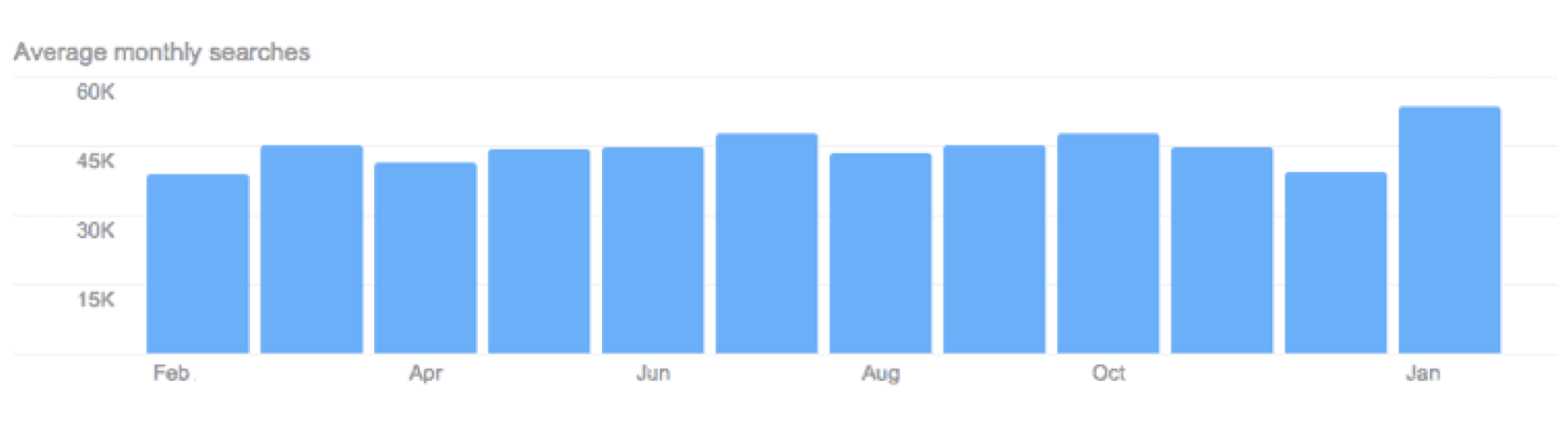
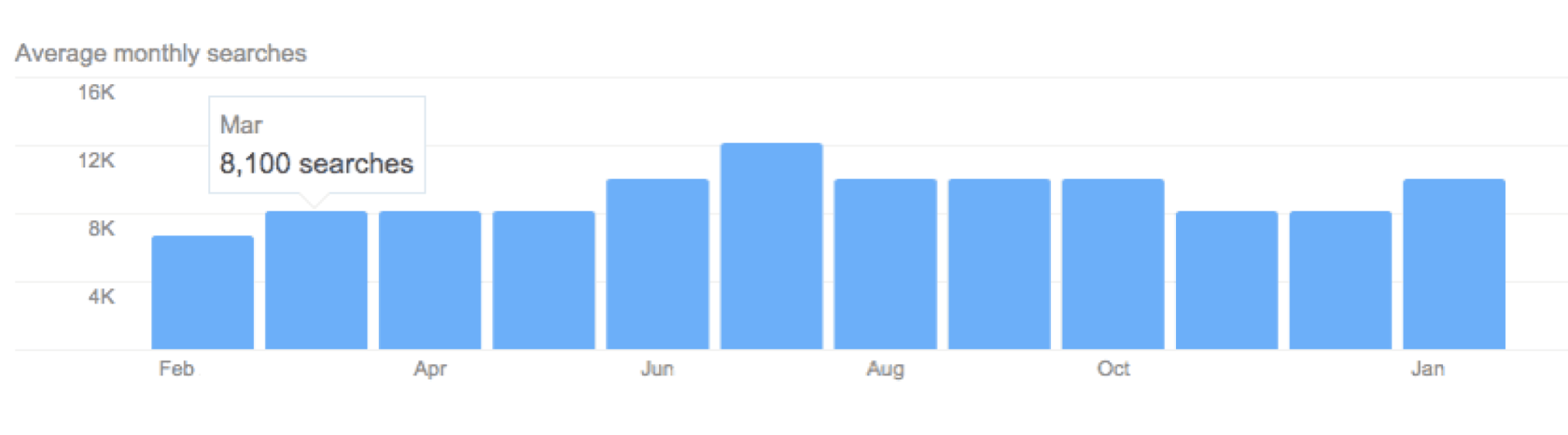
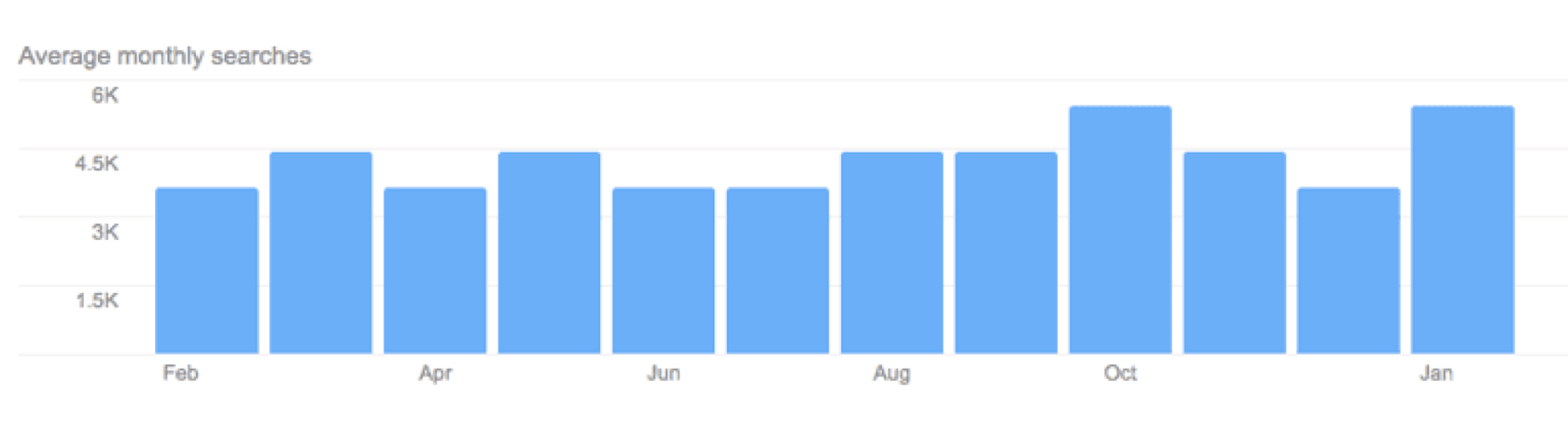
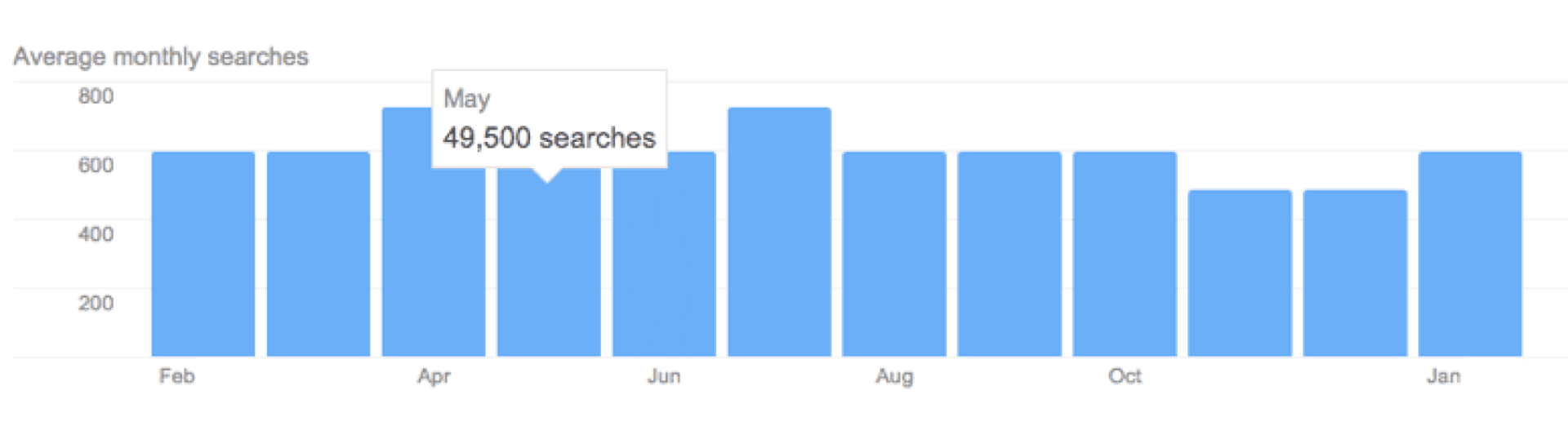
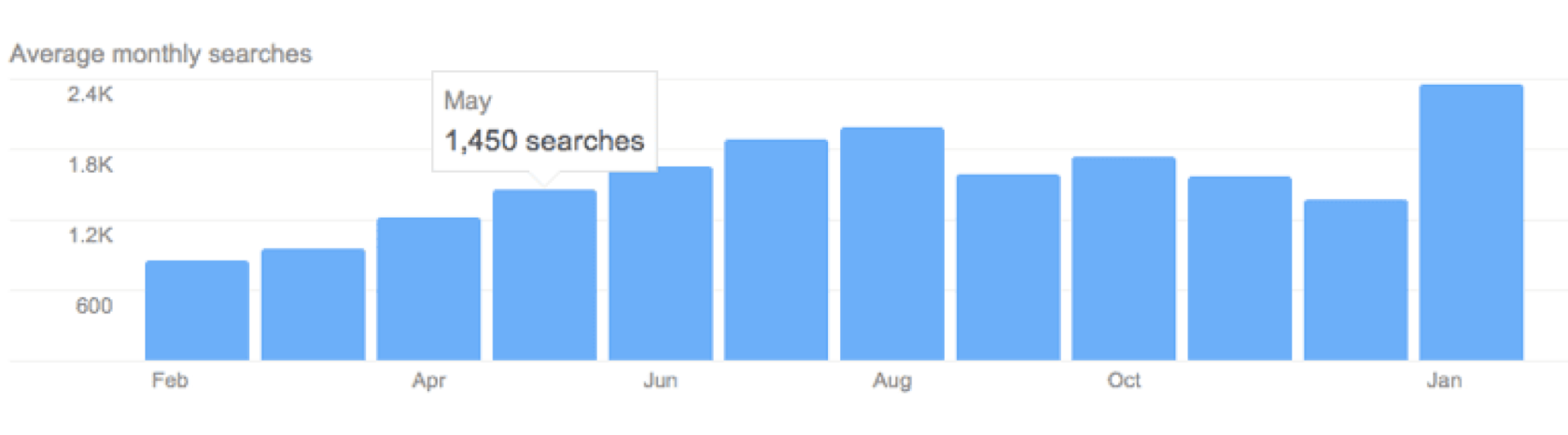
According to Google’s Keyword Planner, there were 12,000 monthly searches for “sell my house fast,” 1,900 for “realtors in my area,” and 27,100 for “how to buy a house.” That’s a lot of potential clients searching for solutions to their problems.
By spending a little time per week creating and optimizing content and using keywords wisely, real estate professionals can rank themselves highly enough without additional paid marketing efforts!
That means they’ll be able to do 2-3 deals MORE deals per month while, eventually, only doing half as much work.
How much additional revenue would that mean for your business?
If you average $5,000 to $10,000 per deal, 2-3 extra deals mean $10,000 and $30,000 monthly!
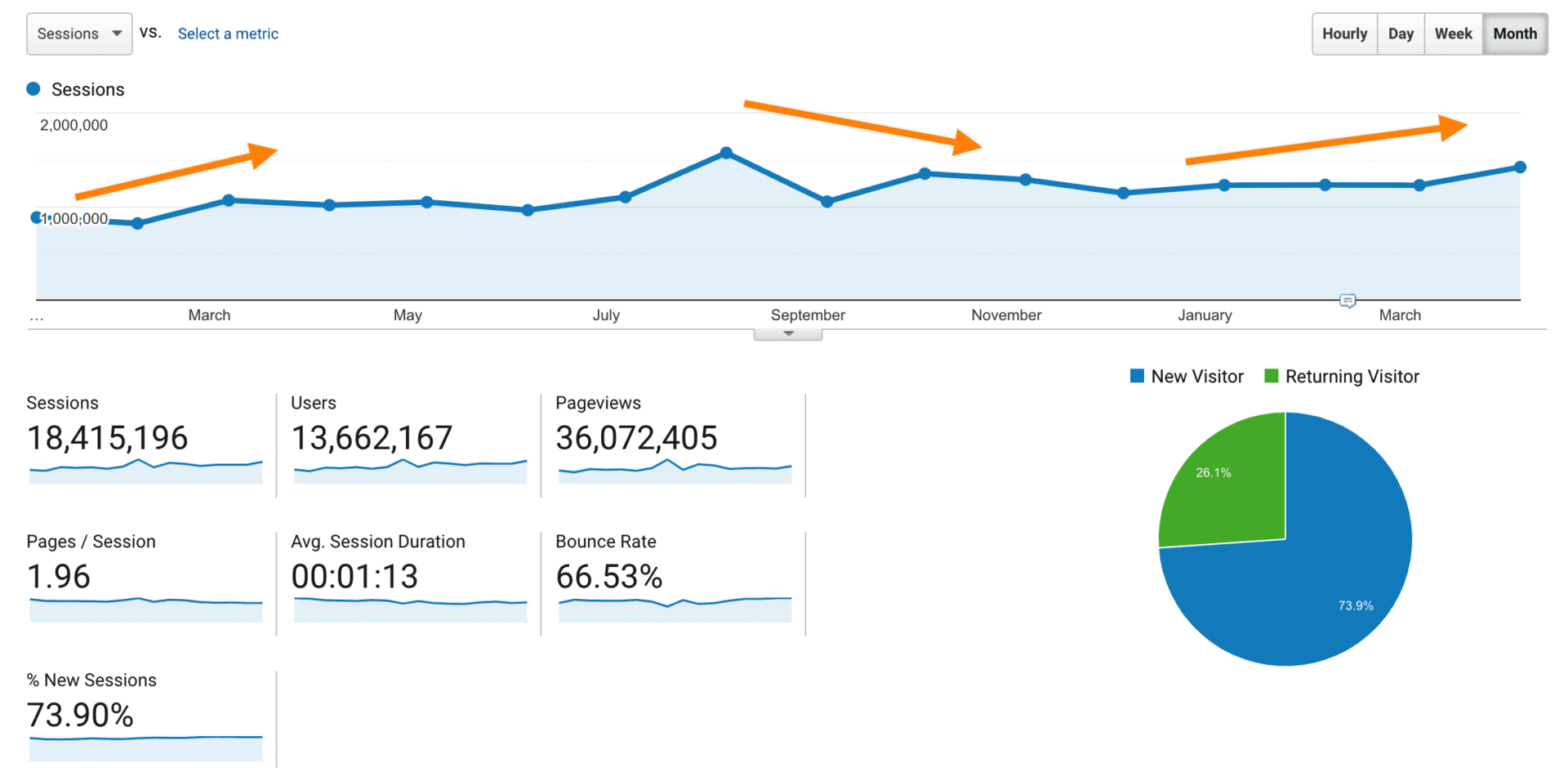
SEO has a 6% conversion rate and drives over 13,000 leads monthly…
Real estate SEO is perhaps the most powerful (and underrated) marketing strategy to drive traffic to your real estate website. Thousands of Carrot members use Search Engine Optimization to generate passive traffic to their websites (i.e., free traffic) — and not just any traffic. SEO traffic is almost always higher quality than paid traffic.
We believe every real estate website needs SEO to maximize success.
Tyler Ford — a real estate investor and agent in Tucson, Arizona — made $200,000 just four months after joining Carrot, focusing on SEO (before that, his business was $20,000 in the hole).
Talking about the quality of leads from organic search traffic, he told us:
“For the most part, they’re all motivated. 80% of the leads that come in are motivated sellers. You send out direct mail, and you’re dealing with 90% of those who are unmotivated. SEO is the exact opposite. They’re chasing you; you’re not chasing them.”
And that illustrates why SEO is so powerful for real estate. It doesn’t just drive traffic to your website consistently; it drives high-quality traffic.
What is SEO & Why is it Important for Real Estate Investors?
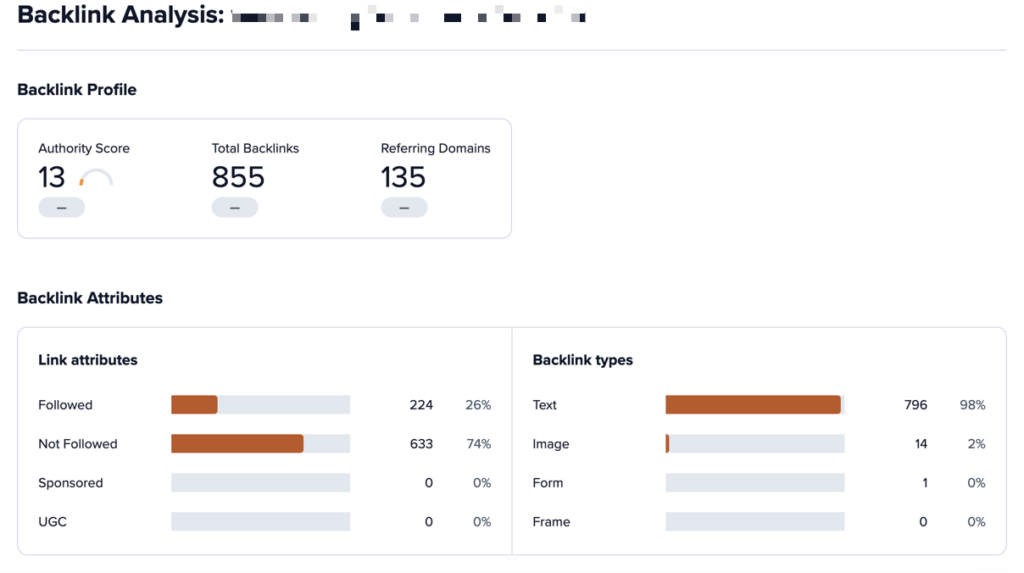
SEO for real estate investors is the process of increasing your website rankings by improving on-page and off-page factors such as keyword content, page speed, descriptive URLs, and backlinks. SEO is inbound marketing, meaning your target market finds you rather than you finding them.
How amazing would it be if YOUR TARGET LEADS consistently visit your website, give you their contact information, and ask you to contact them? All without you spending a penny on paid ads?
Amazing, huh?
That dream is a reality for real estate investors and agents who focus on building their website’s SEO — they attract motivated leads and close more deals than their competitors.
SEO is a surefire way to beat the competition, grow your business, and create predictable income and lead generation.
SEO for real estate involves earning targeted website traffic from a search engine’s organic rankings. This involves creating high-value content, optimizing content for specific keywords, and building backlinks.
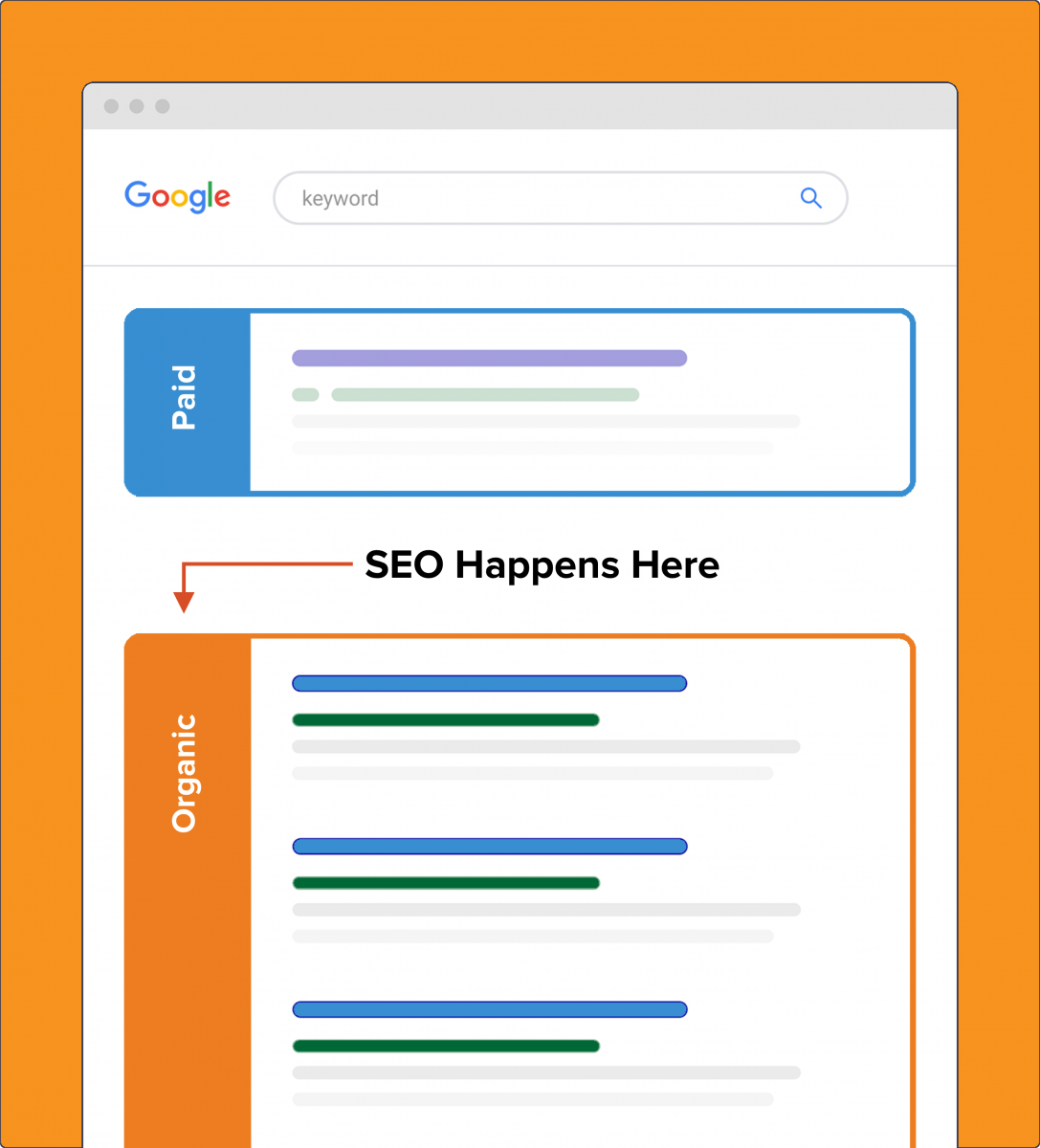
SEO is about improving your website’s rankings in the organic section of the search results.
Whether buying multi-family units or looking for traditional sellers, cash buyers, private lenders, or note sellers, you need to understand search engine optimization and how it can improve your business.
Why Is SEO Crucial for Generating Real Estate Leads?
The first 10 search engine results get the clicks. 75% of searchers never scroll past the first page!
According to recent data, 93% of home buyers use Google as their primary source of information during the home-buying process. Furthermore, a study by the National Association of Realtors (NAR) found that 44% of new home buyers begin their search online.
These statistics highlight SEO’s crucial role in generating real estate leads. By optimizing your websites for, you can increase their visibility and reach more potential buyers, leading to more successful lead generation and sales.
You lose tens of thousands of dollars if you’re not on page one.
Few people click “next page” when searching… they never even see Page 2, never mind pages 4-9.
How Search Engines Work
Search engines are like libraries. They store web pages instead of filling shelves with books.
When you type a query into a search engine, the engine looks through all the pages in its index and tries to return the most relevant results for you. To do this, they use an algorithm. Algorithms are a black box, but Google gives clues.
“These ranking systems are made up of not one, but a whole series of algorithms. To give you the most helpful information, Search algorithms look at many factors, including the words of your query, relevance, the usability of pages, sources’ expertise, and location and settings.
The weight applied to each factor varies depending on the nature of your query. For example, the freshness of the content plays a bigger role in answering queries about current news topics than it does about dictionary definitions.”
Google is the most used search engine, at least for web searches. But there are many other search engines worth pursuing, like Bing.
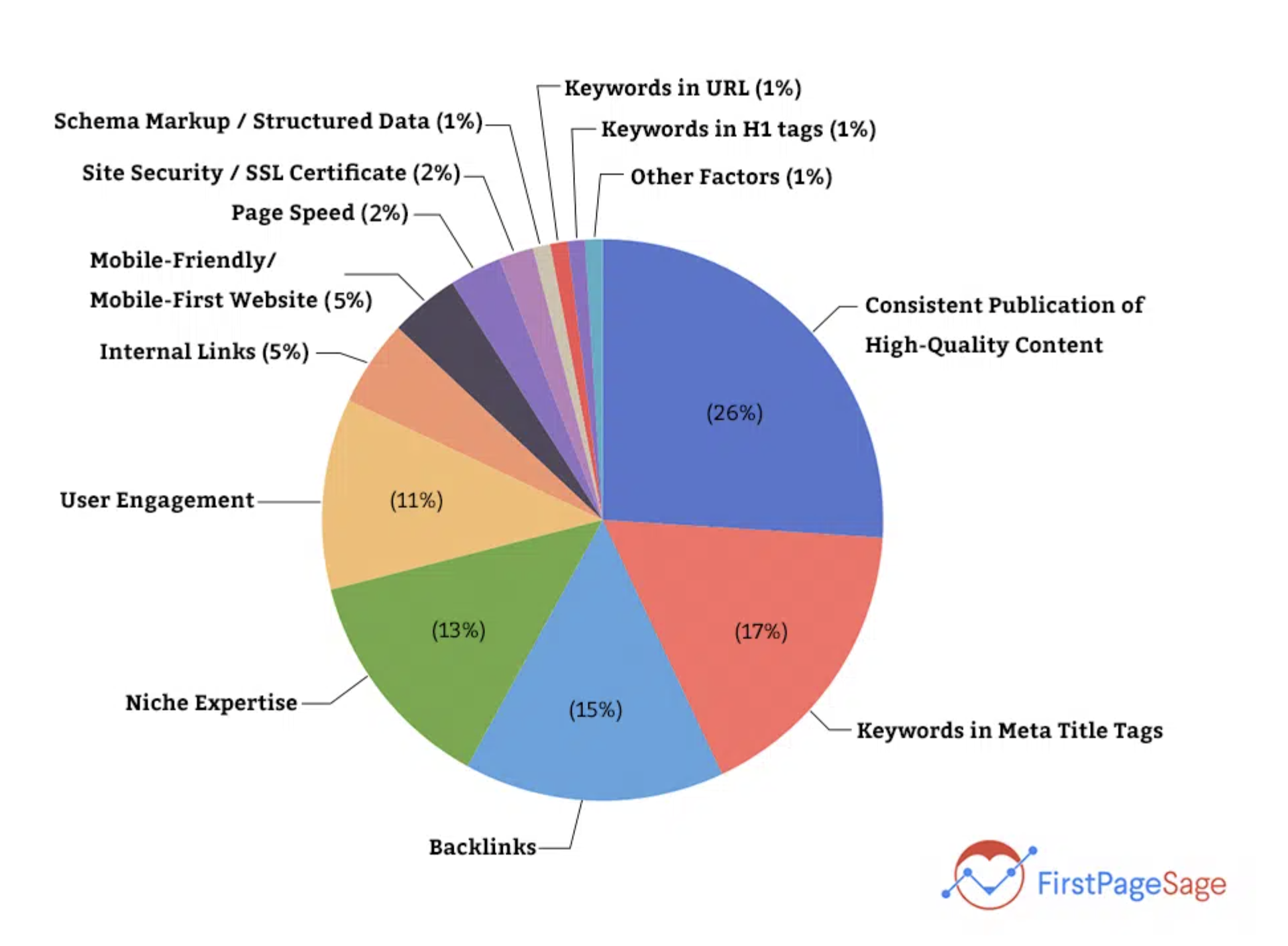
Don’t let that intimidate you. You don’t need to master all 200 plus to be successful. You’re better off learning the small ranking factors that impact most significantly. With just a little SEO knowledge, anyone can start building their rankings.
Of course, if you want to become a market leader, you’ll either need to learn how search engines work, and the factors they’re looking for when ranking content is critical when creating content that ranks for your real estate business or hire an expert with this knowledge.
Search engine algorithms change constantly, so there is no guarantee that what is important now will still be important in the future.
Factors like backlinks, mobile-friendliness, and matching search intent have been critical for many years, but E-E-A-T and technical SEO are becoming more important than ever.
If you want to maintain your rankings after earning them in the first place, staying up to date with the latest best practices is essential.
Chapter 2:
Choosing a Domain Name
Your domain name serves as your website’s digital address and a crucial first impression. While it can influence SEO to some extent, it’s not the sole factor. Here’s a breakdown of key considerations for choosing a domain name:
Personally Branded Site
Brand Identity: Prioritize a domain name that reflects your brand identity and resonates with your target audience. It should be memorable, easy to spell and pronounce, and ideally tell users something about your business or niche.
SEO Benefits: While exact-match keyword domains aren’t essential for high ranking anymore, consider incorporating relevant keywords strategically within your domain name. However, prioritize readability over keyword stuffing.
User Experience: Keep your domain name concise, ideally under 15 characters. Opt for clarity and avoid hyphens or underscores, which can be difficult to remember and type.
Local vs. Global Reach: Consider your target market. If you plan to operate solely within a specific location, using a location keyword in your domain name can be beneficial. However, a more generic domain name might be preferable if you have broader ambitions.
Availability and Extensions: Check for domain name availability across popular extensions like .com, .org, and potentially relevant industry-specific extensions (e.g., .realestate for real estate businesses).
Moving Beyond the “Yes or No” on Domain Names and SEO
When ranking websites, search engines consider various factors beyond exact-match keywords in domain names. High-quality content, strong backlink profile, and user experience all play a significant role.
Here are some additional SEO best practices to consider alongside your domain name selection:
Content Strategy: Focus on creating valuable, informative content that naturally addresses user search intent and incorporates relevant keywords.
Technical SEO: Ensure your website has a clean and mobile-friendly structure, focusing on fast loading times.
Backlinks: Build high-quality backlinks from reputable websites to your domain, which is a strong SEO signal.
Remember: The best domain name effectively balances brand identity, user experience, and SEO considerations. By following these guidelines, you can choose a domain name that serves you well in the long run.
When we talk about SEO, we’ll often mention “real estate keywords” a lot. You can’t talk about SEO without mentioning keywords.
Keywords are a fundamental part of your SEO strategy. If you don’t target a specific keyword phrase with each page you want to rank in Google, you’re probably not going to rank.
The fact is, you have to tell Google what keyword phrase you’re trying to rank for. The clearer you are about it, the better your chance of reaching page one.
But what exactly is a keyword? And why are they essential for optimizing your website for search engines, driving passive traffic, and generating high-quality leads?
Let’s talk.
What Are Keywords?
Simply put, a keyword is a word or phrase that defines the content on your page or post best. It’s the search term you want to rank for with that specific content.
In SEO, keywords are “keyword phrases” or “search queries.” It can be helpful to think of them this way because keywords are rarely a single word.
When people search for that keyword in Google (or other search engines), they should find that page on your website.
Long-tail keywords are search queries that are very specific and have a relatively low search volume. These keyword phrases usually contain 4-5 words or more.
Although fewer people are searching for long-tail keyword phrases, these keywords are often less competitive and can be easier and quicker to rank for. They tend to attract more qualified traffic that is more likely to convert into leads.
For example, an excellent keyword for real estate agents could be “best time to buy a house.”
Then, write an article with that keyword worked into the title and strategically placed spots within the content.
Why is Keyword Research Important?
Organic traffic! Keywords are essential because they are the core connection between what people are searching for and the content you provide to fill that need.
Your goal is to drive organic traffic (non-paid) to your website from the SERPs. The keywords you choose to target with your content will determine the type of traffic you get.
Keywords should be as much about your audience as your content. You might describe what you buy or sell slightly differently than a buyer or seller will ask for it. To create content that ranks high organically and drives visitors to your website, you need to understand the needs of your audience.
How do they talk? What phrases will they use, and what information will they seek? You can communicate with your customers, frequent Facebook forums, visit local community groups, and do keyword research.
How to Find Keyword Ideas for Your Real Estate Website
Keyword research is discovering words and phrases (aka “keywords”) people use in their search.
Keyword research impacts every other SEO task, including finding content topics, on-page SEO, social media, and content promotion.
That’s why keyword research is usually the first part of any SEO campaign.
Put another way, Keywords are like a compass for your SEO campaigns: they tell you where to go and whether you’re progressing.
As a bonus, researching keywords helps you better understand your target audience. That’s because keyword research gives you insight into what customers are searching for… and the exact words and phrases they use. In other words, keyword research is market research for the 21st century.
Guiding Principles
Do’s …
Look at both longtail and short keywords.
Be mindful of intent — use the same language as your leads.
Pay attention to volume and difficulty.
Be mindful of keyphrase groups.
Incorporate local keywords
Don’ts …
Simply go for the highest volume.
Spread too thin. One high-quality page for a keyphrase family is better than ten shorter pages.
Don’t go too narrow or too broad.
Mix intent – someone searching to sell for divorce is not likely looking specific to a city.
Research primary, secondary, and long-tail real estate keywords
First, you need to perform targeted keyword research. You need to look for high-intent, local keywords.
Focus on Search Intent Don’t just target keywords with high search volume. Prioritize keywords that accurately reflect the intent of your target audience. What are they searching for? What questions do they have?
Incorporate Local SEO If you have a local business, target keywords that include your location to attract nearby customers. Carrot’s Auto Location Pages makes this simple, fast and easy to maintain. You simply tell us the state, county and city pages you want to set up and we create them automagically. Each location page is connected to your home page so every time you make changes to it your location pages will reflect the same.
Don’t forget about long-tail keywords. Long-tail keywords are phrases that contain at least three words. However, we like to see four or five.
They are a great way to target your niche location rather than trying to rank for a more generic term. In other words, they are more specific and often have less competition.
Long-tail keywords will allow you to rank higher in search results for popular niche topics fairly quickly, while you might be trying to rank for harder terms, such as “we buy houses in [market city]. They tend to attract more qualified traffic that is more likely to convert into leads.
Use Google Suggest to Find Keywords
Take advantage of Google Suggestions to find quality real estate terms.
To use Google Suggest, start by typing your primary keyword into the Google search box and see what variations Google suggests:
If phrases turn up in a Google suggestion, you know it is a phrase people are searching for. Some tips might not fit your goal, but they can inspire other search terms you can use in your content.
More Tools to Find Keywords
You can use many tools to help you find the best real estate keywords for SEO. You can use these tools to gather search volume, ranking difficulty, keyword value (if you’re using the keyword for paid traffic), and competition, to name a few.
Here are some of our favorite tools to get you started.
Carrot’s Integrated Keyword Explorer lets you enter a common keyword like “sell my house fast,” then shows you related keywords, their traffic estimates, and the estimated difficulty of ranking for the keyword. This saves you time and money because it eliminates the need for multiple third-party tools.
Ubersuggest is a very easy-to-follow keyword tool. You can see suggestions, volume, estimated paid competition, and estimated competition in organic traffic.
Ahrefs is a complete platform full of keyword research, content, and SEO+PPC tools.
Google Ads Keyword Planner (you’ll need a Google Ads account) lets you gather monthly local search volumes for keywords, competition levels, and the estimated cost per click.
SEMrush provides keyword data. You can use their free tool for a trial period, but beyond, this is a paid tool with many other SEO and PPC research features.
Or, we’ve done the leg work for you. Download our free Real Estate Keyword Bibles…
On-page SEO refers to the measure taken directly within your website to improve its search engine rankings.
On-page SEO for real estate is the best starting place for a new SEO strategy. It focuses on elements you can directly control, making it faster and more effective. Optimizing on-page SEO ranking factors on your website first makes other off-page strategies worthless.
You must start by focusing on your website.
Here are the factors you should pay attention to on each page of your website that you’d like to rank in Google. This is a high-level view of each factor with some action items to wrap up each step.
Why is On-Page Important?
On-page SEO tells Google who you are and gives them the proper information to explain why you should be at the top of the SERPs when your keywords are entered.
Without on-page SEO, your website could be left out. Why leave it to chance?
Giving Google’s algorithm as much information as possible about your real estate website is critical.
However, you don’t want to focus too much on keywords, or you’ll lose some of your user experience. You must optimize your content for bots, but it must also be readable and valuable for your audience.
One way Google knows about what is on your page is by the URL of that particular page.
Guiding Principles
Do’s …
Be mindful that your page is for two audiences: Google and your site visitor. High-quality content works better than keyword stuffing.
Google is looking for the most relevant answer to the searcher’s question.
Don’ts …
Keyword stuff and not answer your site visitors’ questions.
Overlook details of meta content/image content.
Try to rank your site. Google ranks pages.
Google’s EEAT Principle For Content
You might wonder if there’s a clear-cut methodology for creating content that ranks well on Google. Well, we could give you a LOT of advice.
Here are some practical ways to improve those your EEAT qualities…
Build backlinks & citations
Keep content accurate & up-to-date
Collect reviews
Hire experts to contribute content
Share your credentials
Share your contact information
Including these components in your content means Google is more likely to rank you high because it shows authoritativeness and trustworthiness.
Having high-quality content on your site also keeps visitors around longer, which increases engagement — another high-value signal Google looks for when evaluating a site. Here’s how to create content that keeps readers (and Google) hooked:
Prioritize Quality Over Quantity: Focus on creating in-depth, informative content that provides real value to your audience.
Address User Intent: Go beyond simply including keywords. Identify your target audience’s questions and needs and craft content providing valuable answers and solutions.
Structure for Readability: Break up large blocks of text with subheadings, bullet points, and clear formatting. Use shorter paragraphs for easier skimming.
Integrate Multimedia: Strategically incorporate videos, infographics, images, and even podcasts alongside written content to cater to different learning styles and preferences.
Optimize for Mobile: Ensure your website and content render flawlessly on mobile devices, as many users access information this way.
Leverage Internal Linking: Link to relevant content within your website to keep users engaged and exploring.
Embrace Interactive Elements: Consider incorporating quizzes, polls, or interactive calculators to boost user engagement.
By implementing these tactics, you’ll create content that not only captivates readers but also sends positive signals to search engines about your website’s relevance and authority.
Remember these tips whenever you’re creating content. They’ll help you rank higher on Google and drive more traffic to your website.
Craft Compelling Title Tags for Maximum Impact
While the exact character limit can fluctuate slightly, Google generally displays around 60 characters of your title tag in search results. Here’s how to optimize your title tags for the current landscape:
Prioritize Conciseness and Clarity: Strive to keep your title tags under 60 characters while still conveying the essence of your content.
Focus on User Intent: Craft titles that accurately reflect your content’s value and entice users to click.
Include Relevant Keywords: Incorporate target keywords naturally within the title tag, but avoid keyword stuffing.
Consider Branding: Where appropriate, integrate your brand name to establish recognition.
Test and Refine: A/B testing different title tag variations can help you identify what resonates best with your audience.
We have a handy tool built into Carrot websites that helps you create your page or blog post’s title tag.
By following these guidelines, you can create compelling title tags that improve click-through rates and provide search engines with valuable context about your content.
Focus on User Intent, Not Keyword Placement
While including relevant keywords throughout your content remains important, the emphasis has shifted from strict keyword placement to user intent. Here’s what you should prioritize:
Address User Needs: The first 100 words of your content should immediately grab the reader’s attention and address their specific needs or questions.
Demonstrate Value Proposition: Communicate what your content offers and how it will benefit the reader.
Integrate Keywords Naturally: Incorporate relevant keywords within the first 100 words, but prioritize readability and avoid keyword stuffing.
By focusing on user intent and value proposition at the beginning of your content, you’ll engage readers, keep them coming back for more, and establish yourself as a credible source. Search engines will also recognize the relevance of your content to user queries.
Craft Clear and Descriptive URLs
While URL length isn’t a direct ranking factor, clear and concise URLs can enhance user experience and potentially improve SEO:
Prioritize Clarity: Strive for URLs that accurately reflect the page’s content and are easy for users to understand.
Balance Keywords and Readability: Incorporate relevant keywords naturally within the URL, but avoid keyword stuffing that can appear clunky.
Keep it Concise: Aim for shorter URLs, but prioritize clarity over extreme brevity.
Use Hyphens for Separation: Separate words within your URL using hyphens (-) to improve readability.
Remember, search engines also consider user behavior when ranking websites. Clear URLs can lead to higher click-through rates, which can indirectly signal value and relevance to search engines.
Leverage the Power of Images for SEO and Engagement
Images are no longer just visual breaks; they’re strategic SEO tools. Here’s how to optimize your website’s imagery:
Enhance User Experience: Integrate high-quality, relevant images throughout your content to improve visual appeal, break up text, and guide readers through your content.
Optimize Image File Size: Large image files can slow your website’s loading speed. Use tools to compress images without sacrificing quality.
Prioritize Image Relevance: Don’t just stuff images for the sake of it. Ensure they directly relate to your content and enhance user understanding.
Craft Compelling Captions: Include descriptive captions with relevant keywords to improve accessibility and provide context for search engines.
Alt Text Matters: Always include alt text for your images. This provides an alternative description for users with visual impairments and is crucial for search engine image indexing.
By implementing these strategies, you’ll leverage the power of images to keep users engaged and send valuable signals to search engines about your content’s relevance and value.
Anchor Text Optimization: Focus on Relevance, Not Repetition
While including relevant keywords in your anchor text can be beneficial, Google now prioritizes natural language and user intent over keyword density. Here’s what you should focus on:
Clarity and Context: Your anchor text should clearly describe the linked page’s content and entice users to click.
Natural Language: Use phrases and sentences instead of forcefully inserting keywords.
Variety: Incorporate a mix of branded anchor text (your website name), generic terms (like “click here”), and relevant keywords throughout your website.
Avoid Keyword Stuffing: Overstuffing keywords in anchor text can appear unnatural and potentially harm your SEO.
Remember, the goal is to create a user-friendly experience while providing relevant signals to search engines.
Chapter 5:
Off-Page SEO
What is Off-Page SEO?
Off-page SEO tactics are actions you can take outside your website to help you rank better in search engine results.
Although we don’t know Google’s full algorithm, off-page SEO factors like backlinks and reviews are believed to carry up to 50% of the ranking factor weight. Algorithms and ranking factors constantly change, but currently, these are significant factors.
Guiding Principles
Do’s …
Quality vs. quantity of backlinks and citations.
Create content outside of your website and link back from YouTube.
Create citations and social profiles.
Increase your brand presence.
Publish your reviews outside your website (give a link back)
Think of all media types – books, podcasts.
Test and verify efforts.
Don’ts …
Buybacklinks from unverified websites.
Spam forum or blog comment sections.
Just follow what others are doing. Make a plan and verify quality.
What Are Backlinks?
Backlinks, also known as “inbound links,” link from one website to a page on another website. Links are like votes of credibility in the digital world. Earning high-quality backlinks from reputable websites remains a cornerstone of SEO success.
Pages with high-quality backlinks tend to rank higher in organic search engine results.
Why is Backlink Building Important for Your Real Estate Website?
First, backlinks are a significant piece of the puzzle of SEO (search engine optimization).
They go together like peanut butter and jelly. You need one to make the other better.
High-level, here are four quick reasons why it’s essential to have a good backlink building strategy:
Backlinks are how Google finds your pages.
Backlinks are a way to show Google that you have a solid reputation. Trustworthy websites rank better.
Relevant backlinks can boost your authority.
Backlinks drive more traffic to your website.
Here’s an example. When someone types “sell my house in [market city]” or “real estate agent in [market city]” into Google, you want your website to come up on the first page.
If it doesn’t, you’re missing out on much website traffic, leads, and, more importantly, deals.
93% of internet experiences start with a search engine… which includes the real estate industry. When people — your target market — seek help, they go to Google.
And if you show up on the first page, that’s good for business.
Two of the most potent factors for ranking in Google are website traffic and backlink portfolio.
In other words, the more traffic and backlinks a page on your website receives, the better that page will rank for your target keyword phrases.
Here is another example of a Carrot website. This member has 272 backlinks:
Backlinks have helped it rank to #1 for the target keyword: “we buy houses in Pittsburgh.”
Unfortunately, getting traffic and backlinks are a few of the most challenging things. So here are some effective link-building strategies:
Craft High-Value Content: The foundation of any link-building strategy is creating exceptional content that people naturally want to reference and link to. Focus on in-depth, informative pieces that address your target audience’s needs and provide unique value.
Guest Blogging on Relevant Sites: Identify high-authority websites within your niche and contact their editors with guest blogging pitches. Offer to contribute valuable content that complements their existing audience.
Broken Link Building: Find broken links on relevant websites within your niche and create content that can be a better, more up-to-date replacement. Contact the website owner and suggest your content as a replacement link.
HARO (Help A Reporter Out):HARO connects journalists with sources for their stories. Sign up as a source in your area of expertise and respond to relevant queries. If your expertise is featured in an article, you’ll often earn a valuable backlink.
Testimonials and Reviews: Build relationships with businesses you use and admire. Offer to provide testimonials or reviews in exchange for a link to your website.
Unnatural Link-Building Practices? Avoid Them: Be wary of tactics like link buying or link exchanges, as search engines penalize websites that engage in manipulative link-building schemes.
We have a built-in backlinks tool that gives you detailed information about all of your backlinks, including the source of the backlink, the authority score, what type of backlink, pertinent dates, and more.
Remember: Link building is a long-term strategy. Focus on creating high-quality content, building genuine relationships within your niche, and earning backlinks organically.
Technical SEO involves optimizing your website’s technical setup to be easily crawled, indexed and understood. It’s a vital part of any SEO strategy and should be done before you start working on other aspects of SEO, such as keyword research and link building.
7 Technical SEO Optimizations To Consider
Technical SEO is vital because your other SEO efforts will be pointless without the right tech stack.
It’s the foundation.
And here are seven essential optimizations your site needs if it’s going to rank above the competition. Learn more about technical SEO for real estate websites.
1. Page Experience
Google periodically updates its page experience signals. Core Web Vitals combined with existing search signals, including mobile-friendliness, safe browsing, HTTPS security, and intrusive interstitial guidelines.
2. Load Speed
Load speed is important for SEO because if your website is slow, people will leave before they can see your content. Search engines will rank your website lower if your site loads slowly.
You can improve your website’s load speed by optimizing your images, using a caching plugin, and minifying your scripts and CSS.
3. Responsiveness
Responsiveness is important for SEO because more and more people use their mobile devices to search the web. Over 60% of all Google searches are now done on mobile devices.
You can make your website more mobile-friendly by using a responsive design, optimizing images, and suitable font size.
4. Site Security
Site security is important for SEO because it helps protect your website from hackers. If your site is hacked, it could be entirely removed from Google’s index.
The easiest ways to secure your website are getting SSL certification and using a secure web hosting service.
5. Indexability
If search engines can’t crawl your content, you won’t have any chance of ranking. If your site isn’t indexable, you cannot rank it.
You can improve your website’s indexability by using a sitemap, optimizing your robots.txt file, and using the “no index” tag where appropriate.
6. Google Search Console
Google Search Console is a free tool that allows you to see how Google sees your website. It also allows you to submit your website to Google for indexing and gives you information about any crawl errors that Google encounters when trying to index your site.
You can use Google Search Console to improve your website’s technical SEO by fixing any crawl errors and submitting your sitemap to Google.
7. Broken Links
Broken links are bad for SEO because they prevent search engines from crawling your content. If you have a lot of them on your website, it will hurt your chances of ranking.
You can fix these by deleting them or pointing them to the correct page.
How do Carrot Sites Stack Up?
That all makes sense.
But you might wonder how Carrot’s websites stack up to these requirements.
In short, it went very well.
Because we care about your site’s performance. :)
Our sites are responsive, have record-setting load speeds (see the image below), and come with SSL certification.
We’re constantly improving our website’s tech stack to give our members better results. Try us risk-free for 30 days by clicking here!
Technical SEO may seem daunting, but it’s essential for any real estate website that wants to rank well.
Chapter 7:
Video SEO – Optimizing YouTube for Real Estate
What is Video SEO?
Video SEO is… well, search engine optimization for your YouTube videos rather than written content or images.
But how do you optimize your video content, especially considering that search engine bots can’t watch your video to learn what it’s about (they can only read text)?
Why should you care about video SEO for your real estate website?
Why Should You Incorporate YouTube Videos into the Marketing Mix?
Usually, search engine optimization involves writing articles on your website’s blog that target specific keyword phrases or adjusting your homepage copy to target a specific keyword phrase.
And that illustrates the first benefit of video SEO — it takes much less time than written content.
Would you rather spend several hours trying to write the perfect blog article or record a 10-minute video on your phone? Yeah, it’s way easier.
But video SEO isn’t just more manageable. In some regards, it’s also more exciting and attractive to your target market. Consider that:
54% of consumers want more video content from the brands they love.
88% of video marketers are satisfied with their ROI on social media.
76% of marketers say that video helped them improve website traffic.
80% of marketers say that video has increased people’s time on their websites.
People love videos. It allows them to connect with your brand in a way that written content doesn’t and is easy to consume.
With video SEO, you can consistently drive traffic to your website, generate leads, do more deals, and build a more authentic relationship with your target market.
How To Optimize Your Real Estate YouTube Videos
1. Use Video Transcription
As we’ve discussed, search engine crawlers (the robots that search engines use to determine what content is about) can’t read videos.
It means that if you record and post a video without a title, description, or transcription, that video isn’t going to rank (it might not even get indexed) because there are no words for the robots to read.
That’s why transcription is an absolute must — without it, your videos have a much lower chance of ranking. With it, Google can read the words, attribute them to the video, and rank that page and/or video for your target keyword phrase.
The only problem is that you don’t want to spend several hours writing a transcription for each of your videos…
That’s why, at Carrot, we created VideoPost, which allows Carrot members to upload a video and then create a transcription with the click of a button. Here’s what that looks like…
Action Item: Add a transcription below your videos. You can do this by becoming a Carrot member and using VideoPost.
2. Create an Engaging Thumbnail
Thumbnails are one of the most important elements for getting more clicks and engagement (which, in turn, means better rankings — the more people click, the more that Google wants to show your content).
The thumbnail is the image that shows before the video is played.
When people see it, it helps them determine whether they’ll watch your video. If your thumbnail is attractive and enticing, more people will click — and when more people click, Google increases your rankings.
Here are a few examples of great video thumbnails…
Real estate expert, Max Maxwell, is particularly good at publishing eye-catching thumbnails.
Action Item: Spend a little more time on your video thumbnails. Ask yourself, “What will catch my target market’s attention and make clicking irresistible?”
3. Pay Special Attention To Your Video Title
As with all content — blog posts, podcasts, and videos — the title matters twice as much as everything else.
People might look at your thumbnail because it’s visual and exciting, but they’ll look at your title next to determine what your video is about and, more importantly, if it interests them.
So, develop a title to entice your target market to click and watch. Remember, the more engagement your video gets, the better it will rank.
Here are a few practical tips for writing enticing headlines
Be specific.
Ex: 10 Tips For Selling Your House During Probate
Focus on attracting your target market.
Ex: How to Sell Your House in Just 2 Weeks!
Don’t be afraid of a bit of controversy.
Ex:Why You Should Skip The Real Estate Agent
Create urgency.
Ex: Watch THIS Before Choosing a Real Estate Agent!
Offer a certain number of tips, tactics, or strategies.
Ex: 10 Hacks For Getting Top-Dollar On Your Home
Action Item: Create an irresistible headline using the tips above. When more people watch your video, your rankings increase.
4. Optimize Your Video’s Description
Your video description is one of the primary places that search engine bots look when determining what your video is about, so make sure to include your target keyword phrase a couple of times.
If you created a video titled “Sell My House Fast Pittsburgh PA,” you might have a video description that looks like this (notice that I include the target keyword phrase near the beginning of the description.
“Wondering “how to sell my house fast for cash?” We are local HOME BUYERS with cash in Pittsburgh.”
Action Item: Include your target keyword phrase within your video description at least once and no more than twice.
5. Optimize Alt Text On Images
When you transcribe your video into a long-form blog post, you might want to space that content with images or screenshots from your video.
We do this in a lot of our whiteboard video posts!
Action Item: Add alt text to your images and use your target keyword phrase within that alt-text when possible!
Chapter 8:
SEO Keyword Tracking Tools: Optimize Your Real Estate Website Rankings
There’s no point in producing content and hoping that it works. You need data to give you feedback and help you improve over time.
You can make more educated decisions about your SEO campaign by tracking your keywords and making strategic changes to your content based on the data you receive from keyword ranking tools.
Carrot Member Keyword Rank Tracker Dashboard
What is Rank Tracking?
Keyword trackers check the rank positions of your content in Google’s SERPs. These keywords include the following types:
Keywords that are used on your website.
Other keyword terms you haven’t optimized.
Keywords that your competition ranks for.
Keyword tracking is about analyzing the organic positions of keywords over time. It’s based on current rankings and historical data so that you can analyze your organic traffic’s progress and impact.
The Importance of Tracking Your Keyword Rankings
Keyword tracking is an essential part of the real estate SEO workflow. Tracking will give you information to take actionable steps to improve your website traffic and increase lead generation. Keyword rankings remain one of the most important KPIs in SEO.
But don’t focus only on the positions. You must understand how the keyword positions influence your overall organic traffic potential. Not all keywords have the same traffic volume. It’s a good idea to include long-tail keywords and try to rank for more competitive terms.
You can also find “low hanging fruit”:
Keywords ranking on page two
Competition keywords
Keywords ranking 4-10
Look to see if you’re ranking on page two for any keywords. Then, add some content, internal linking, and optimize the existing content to boost page one.
Also, track your competition. Keep an eye on the keywords your competition is using when you’re tracking keywords. Stay ahead of them by producing strong content that sets yours apart from theirs.
Your keyword ranking answers will lie using some of the tools mentioned below. They can make keyword tracking dead simple.
So here are four SEO keyword ranking tools you will want to use.
Tools to Check Your Keyword Rankings
1) SEMrush (Limited Free Plan. Paid for Full Service)
SEMRush calls its keyword tracking “Position Tracking.” Their tool allows you to track your website’s ranking for target keywords in Google’s top 100 organic and paid results. You can receive daily updated data showing how your optimization efforts help your keyword rankings progress over time.
You can also track your competitors’ keyword rankings using a side-by-side comparison of your rankings versus others and highlighting the keywords you need to focus on.
Ahrefs is more than just a keyword ranking tool. But, if that’s all you need, its keyword rank checker tool allows you to see your keyword rankings and any website of your competitors. They also break down desktop and mobile rankings for your target keywords.
If you’re looking for a “simple” way to track your real estate keyword rankings, SmallSEOTools rank checker might be for you. As you can see from the image above, you can check your rankings based on the keywords of your choice. You can toggle between desktop, tablet, and mobile devices and download your rankings in spreadsheet format.
Imagine that you’re writing content every week, publishing it, and optimizing it to rank for some seriously high-value keyword phrases.
Then imagine you start seeing organic traffic to your website — Woo-hoo!
But imagine that you don’t know where that traffic is coming from because you cannot track your rankings. You don’t know which pages are ranking or what phrases they’re ranking for, and because of that, you can’t replicate your results.
It would be self-defeating, huh?
That’s why we created the SEO keyword ranking tracker at Carrot. All you have to do is enter the keyword phrases you’re trying to rank for, and we’ll automatically track your results for you; check your dashboard when you’re wondering how your SEO for real estate efforts are paying off.
Keyword Tracking Best Practices
To get the most out of keyword rankings, you must understand that ranking #1 for each keyword should not be your only priority.
If you obsessively track your keyword rankings, you’ll lose time that can be invested in actually improving your positions.
Keyword tracking aims to check the overall progress of keyword positions and their impact on your organic traffic.
Sometimes, your keywords ranking in the highest positions will bring less quality organic traffic than the other five keywords for which the website ranks towards the middle of the first page. Conversely, a drop in one of your most important keywords can be more critical than a significant increase in other keywords.
To know this, you must keep records of your changes and picture the potential traffic. Using one of the tools above allows you to keep clear records. Or, create your spreadsheet and keep track of your movements.
Chapter 9:
High-Level SEO Strategy for Real Estate Websites
You’ve made it this far, so let’s recap. But before we dive in… Here’s a quick example of the results you can achieve by having a solid SEO for a real estate strategy…
This Carrot member has followed the plan.
They’ve risen through the SEO ranking and now rank #2 (at times #1) for two competitive search terms
And therefore, they have 1000’s organic leads in their Carrot dashboard
When SEO is taken seriously, you can see that you can be successful with a good plan!
1. Choose a Website Builder That’ll Get The Tech Stack Right
The first thing you need is a real estate website builder that isn’t going to sabotage your SEO efforts down the road. If you use a website builder (or website hosting, for that matter) that has slow load times, a clunky experience, or isn’t mobile-friendly, that choice can hurt your rankings.
Regardless of how hard you work to rank for keyword phrases, you need a website that supports you.
These are important for Google, which means they are important for your SEO rankings.
Our websites are fast. In a study of 150,000 websites, Carrot’s tech stack outperformed Wix, Squarespace, WordPress, plus many others. Only Google’s platform beat us.
The website builder you choose must be ready to support your SEO efforts with speed, mobile-friendliness, and a clean user experience. Otherwise, you’ll be fighting an uphill battle.
2. Optimize For Conversions
What is the point of getting people to visit your website if you don’t generate any or very few leads?
That’s why, before diving too far into optimizing your website to rank for traffic-driving keyword phrases, you should make sure that your website will convert at least 5% of visitors into leads and ideally 10% or more.
But how do you know if your website converts as many leads as possible?
The long way around is creating a website, driving paid traffic, and tracking conversions. Are you getting at least 10% of people to give you their contact information?
Or (the easier method) is to get yourself a Carrot site that’s pre-tested and proven to convert higher than any other website template in the industry.
We’ve got your back with support and free content whenever you need it, and you’re guaranteed to start with a site that converts.
3. Create a Google Business Profile
Local real estate SEO is much easier to tackle than nationwide SEO.
At Carrot, for example, we must compete for really saturated keyword phrases like “real estate website builder” or “how to build a real estate website.”
Lots of software companies around the nation are trying to rank for those keywords, which makes our job even harder.
(But that’s okay — we’re up for it)
The good news is that unless you’re managing a nationwide real estate business (which you’re probably not), you don’t have to compete for those crazy keywords.
The keywords you want to compete for will be localized to your specific city or state.
Do you know the easiest and fastest way to jump to the top of the SERP for phrases like “home buyers in ” in your market?
This is free and will allow your business to be listed and found under highly relevant search phrases.
Here’s what that looks like in action…
That’s a lot of visibility!
But how do you snag a top spot with your Google Business account like that? Here are some best practices to keep in mind.
Complete Every Section
Some sections that Google wants you to fill out when listing your business might not feel important or relevant, but filling out as many as possible is essential.
Google will treat your listing better if you’re thorough.
So make sure you fill out the following:
Name
Address
Phone
Website
Hours
Category and Attributes
Products and services
From the business
Questions and answers (Owner-generated queries)
And keep these as updated and current as possible:
Posts
Reviews
Questions and answers (Consumer-generated)
Be Consistent
To ensure your business listing is legit, Google will crawl other websites to see if your information is consistent across all sources.
So make sure your name, address, phone number, and other information are identical across all the websites where your business is listed.
Optimize the “From The Business” Section
In the “From The Business” section of your Google Business listing, take the time to talk about your business and what it does.
Sell your business to readers. Use all 750 characters, repurpose some content from your About page, and use keywords your audience will use when searching in Google.
Collect Reviews
The more positive reviews you have on Google, the higher that Google will rank you.
So collect Google reviews whenever possible from friends and family, past clients, and happy clients you’re currently working with.
4. Choose 3-5 Keyword High-Value Keywords
Once you’ve got a site with an SEO-friendly tech stack and a high conversion rate, it’s time to get to work.
But don’t overwhelm yourself — start with just 3-5 keywords or phrases that are high value. If you operate in multiple markets, you could target the phrase, “Sell my house fast in [MARKET CITY],” and create a separate page for each market where you operate.
If you operate in one market, then definitely still create a page that’s gunning for “Sell my house fast in [MARKET CITY],” but you might also try to target phrases like “How to sell my house for cash in [MARKET CITY].”
If you’re a real estate agent, then consider targeting phrases like “Best real estate agent in [MARKET CITY]” or “Real estate agents in [MARKET CITY].”
Don’t choose more than 5 keywords for now, though, because you’ll have to create content for each search phrase, and you want to start simple. This is your SEO foundation.
5. Create Optimized Content For Each Of Your Chosen Keywords
It’s time to create a separate page or content for each keyword phrase you’ve chosen.
Include your target keyword phrase within your page’s title, meta description, and URL slug. You can use the Carrot’s on-page SEO analysis tool to determine whether you’ve optimized the page.
This will be the most time-consuming part of the process, but this is where the magic happens, so make sure you check off as many of the SEO to-dos as possible.
6. Monitor the Results
Once you’ve created pages for your target keyword phrases, monitoring your results is critical.
But how do you do that?
The easiest way is to sign up for our SEO and Content Tools, which will provide you with a high-converting website and the ability to track your choice of keyword phrases (plus tons of other goodies).
Just go to your dashboard, click “Rankings” on the left side of the page, and add a new keyword. We’ll automatically provide you with any updates in your website’s rankings regarding that keyword phrase.
Easy as pie.
7. Build Links If Necessary
Unless you KNOW that the keywords you’re targeting are highly competitive and you won’t be able to rank without link-building, I will wait to see how each new page performs before spending time or money to earn backlinks.
Give your new pages at least a month before building links to see where each lands in the SERP.
Are you on Page 1 already? Great! Then there’s probably no need to build backlinks (unless you want to crawl further up the page). Are you on Pages 2, 3, or 4 after a month? Then, you might want to consider building some backlinks to the page.
8. Rinse and Repeat
There’s your high-level plan!
Ultimately, the goal is to find high-value keywords, create pages or content for each phrase, watch results, and then make changes as necessary.
But remember, time is one of the most significant factors. The more time a page exists, the better its chance of ranking in Google. So be patient and give each new page at least a month to see where it settles before spending more time and money to re-work or re-optimize it.
As you invest in SEO, you’ll learn what works, what doesn’t, and what keyword phrases are the most valuable for your business.
What To Do If You’re Not Ranking Like You Thought You Would
You do the work but still can’t reach page 1, where all the traffic happens. What gives?
Here are some questions worth asking (and the actions you should take) if you’re not getting results.
Is your tech stack optimized? Typically, this means having a site that loads within 3 seconds or less and having a website with clean code. All Carrot sites are automatically optimized to rank.
Are the keywords too competitive? If your website is brand new and you’re trying to rank for high-competition keywords, you will struggle to get results. Try to focus on long-tail keyword phrases to begin with. The less competitive, the faster you will see results.
Is your content the best it could be? Are there any questions you don’t address that other page 1 results do? Is your content longer or shorter than the page 1 results? How can you make the content more helpful and unique and make Google want to rank it higher?
What other actions could you take to rank the page? If everything else is done excellently, but you’re still not getting rankings, chances are you need to earn some backlinks.
Now you know the high-level SEO for real estate process for ranking your website from A to Z. Get your website’s technical SEO dialed, choose keywords, create content, monitor results, and adapt as needed.
Then give it time!
Want To Build a Bigger, More Sustainable Real Estate Business?
You got into the real estate business so you wouldn’t have to work for “the man,” so you could work where you want, when you want, and spend more time doing the things that matter.
Building a successful long-term business without consistent and predictable lead flow and income is almost impossible. You must know you will make monthly money to support yourself and your family. You need to count on your business, not just hope that deals or transactions come in.
Real estate SEO is your ticket to building a more significant, sustainable business.
Feeling overwhelmed? Let Carrot handle your SEO for you!
Carrot offers agency-style SEO services that set you up for success following the foundations laid out in this guide, then keeps you optimized month-to-month with additional improvements.
Just like with farming, seasons matter in business.
If you own a ski resort… seasons matter big time.
If you are a landscaper… seasons matter.
If you are a real estate investor or agent… seasons matter.
And, even though it’s December, now is the time to start thinking about Spring.
We wrote a blog post about the seasonality of real estate investor leads and the volume of online searches that motivated house sellers, cash buyers, tenants, etc. make each month during the holiday months.
In that post, we laid out the data and the stats showing the common “dip” in searches in the holiday months for people looking to sell their house… and the increase in those online motivated seller leads in the spring and summer months.
Now, this doesn’t mean that there aren’t a lot of deals to be had in the winter months.
Why Now Is The Perfect Time To Ramp Up For Spring And Online Motivated Seller Leads
So, don’t look at the data and think that you can’t do deals in the holiday months. That’s not what this is about. It’s about…
Realizing There Is “Lead Gen” Seasonality In The Real Estate Flipping / Wholesaling Business and Preparing For…
… the dips and the climbs.
Take for instance the quick chart below that we pulled up.
Motivated Seller Searches: 11 Popular Highly Motivated House Seller Searches Online… The Trend
Motivated House Seller Searches: This is the average motivated house seller online searches of just 11 common highly motivated seller searches sellers make online. Notice the data… and the slight climb to a peak in summer in searches. Then another climb in fall before the holiday dip.
Now take a look at these ones below that are a bit more drilled down on specific keyword phrases that we know motivated sellers are typing into Google each month.
(at the end of this post I’ll show you something really cool that we’re seeing… and how it’s indicating that we’re heading into another GREAT year for an increase in motivated seller searches online. So read this whole article and let me know your thoughts in the comments section)
“We buy houses” Type Searches: Spring And Summer Increase
It’s December… Are you preparing right now to capture the higher motivated seller lead search volume in the spring and summer? If you don’t have a website, right now is the time to get one up and started. If you do have a website, now’s the time to get things ramped up.
“Sell house fast” Type Phrases: Spring Bump with Late Summer Increase
Getting The Picture Now? Getting your website up and rolling and optimized… or getting a real marketing plan in place and executing it RIGHT NOW is an ideal time to get rolling so you can capture the late spring and summer increase… which likely means a higher chance of more deals.
“I buy houses” Type Phrases: Seeing A Similar Spring And Summer Bump And Fall Slump
Pretty Consistent w/ a Slight Bump In Spring / Summer
“We buy houses in [location]” Type Phrases: But For Just Portland, Atlanta, Houston, and Pittsburgh
Even More Dramatic Spring / Summer Bump: When you go hyper-local… where the motivated seller includes their city in the search (which most sellers do), the increase likely coming up in spring and summer becomes even more apparent.
Last… from our own Google Analytics account.
Spring / Summer Traffic Ramp From Our Own Google Analytics Account
Further Proof… We can look at Google’s data all day long, but how about actual Google Analytics data from our own account for our Carrot members’ real state websites.
You get the idea.
Those charts above show just a few of the dozens and dozens of SEO search phrases motivated house sellers are typing in… that real estate investors should want to get in front of.
In fact, our Carrot members are generating over 60,000 opt-in leads per month(that doesn’t count the thousands of phone call leads per month to their Carrot real estate websites as well). So we’re constantly helping our customers position themselves in front of the online traffic to increase their chances of generating more motivated seller leads and more deals.
The SEO Search Data Is Great… But Why Is NOW A Great Time To Get Things Rolling?
Over the past five years, we’ve been tracking the organic search engine rankings of many of our Carrot members’ real estate websites. This goes from motivated house seller websites to cash buyer websites, to note buyer websites, rent to own websites, agent sites, etc.
This is a mix of real estate investors and agents who are both implementing our “lead generation” training… and the ones who decided to outsource their SEO or PPC for them.
Take a look at some of these charts below that show how long it *may* take in some markets to get your SEO rankings to improve enough to generate consistent leads online.
These pictures are from actual SEO ranking increases for a few of our Carrot clients in some more competitive markets.
How Long Did Their SEO Take? 4 Months To Make A Major SEO Jump In This Competitive MD Market
4 Months And 20 Deals – This InvestorCarrot client used our 3 Lead Per Day Training to get her website ranked high in Google. She’s in a more competitive market and it took about 4 months to get onto page 1… another few months to get in the top 2 results.
And another…
How Long Did Their SEO Take? About 3-5 Months In A Competitive Alabama Market
Similar To Above – This client is in a very competitive market for motivated seller searches as well. It took 3-5 months of solid SEO work to get into a top position in Google in his market. Now he’s generating a lead per day and closing deals consistently through his online marketing.
Last one…
How Long Did Their SEO Take? About 2-3 Months In A Competitive California Market
They Had A Jumpstart – This Carrot customer was already ranking near page 1 in Google for a competitive search phrase for motivated seller leads. Within 2-3 months, his ranking improved to the top of page 1 for this search phrase and he’s closed 4+ deals from his Carrot site since.
The Average Time It May Take To Rank Well In Most Markets Is About 3-5+ Months When You’re Doing SEO
SEO for real estate typically takes time. Although, I’ve seen websites rank in the top 3 spots in Google WAY faster than that in less competitive markets (within weeks)… I’ve seen some take way longer. But what we always like to say is that if you’re implementing SEO right (the way we teach) or hire someone who knows what they’re doing… in most markets you should see a dramatic improvement within 3-5 months.
From there, it may take another few months in competitive markets to get to the top of page 1… sometimes longer.
But, all this to say… if the average is 3-5 months to see an SEO boost… and it’s the beginning of December right now… that puts you into March – May/June to improve your rankings and capture that increase in online searches from motivated sellers come Springtime.
Don’t have a website right now but want to start leveraging inbound online marketing for your real estate investing business to grow your business?
Already have a website and just haven’t seen the results or haven’t put in the right online marketing strategy to get results?
We can help you.
At Carrot we focus on results as the primary driver of everything we do.
Having a great platform that makes SEO easier for you is the first step (which our system does).
Having the right training, plan, and support is the part that makes the biggest difference.
If you’re a Carrot member and want to ramp things up, here’s what you can do:
Show up to our weekly Carrot Coaching Calls – I’ll take your website and show you exactly what changes and steps you need to take right now to improve your SEO ranking and leads. This is perhaps one of the largest reasons Carrot members love Carrot and get great results. Hands-on help.
Go through our 3 Lead Per Day Training – It’ll walk you step by step through how to improve your SEO rankings using your own website and youtube videos. Get implementing! And ask us questions when you hit any roadblocks. We’re here for ya!
With our detailed training and weekly LIVE Carrot Coaching Calls, we take our members by the hand and help you get results.
So, are you going to commit to getting things started or ramped up with your online marketing right now to catch the increase in traffic that’s heading our way in a few months?
Hit me w/ your comments below and let us know if we can help you in that journey this next year.