A real estate email follow-up strategy is integral to any real estate business. But what are enough emails? How often and when should you send them? Should emails be personalized or should you use a wholesale real estate email template?
You know how important it is to follow up with leads. Data suggests…
48% never follow up on leads
25% make a second contact and stop
12% make three contacts and stop
And, ONLY 10% make more than three contacts
But…
2% of sales are made on the first contact
3% of sales are made on the second contact
5% of sales are made on the third contact
10% of sales are made on the fourth contact
80% of sales are made on the fifth to twelfth contact
Email follow-up takes time and energy. You’re not just following up with the motivated leads; you’re following up with all the leads – the good and the bad.
The good makes you money. The bad wastes your time.
While 80% of sales are closed on the 5th to 12th contact, if you’re running a semi-successful business, you don’t have time for that much email-typing or cold-calling action.
Of course, that consistent follow-up is still vital…
The stats remain the same, and your business’s success rides on those stats.
Since you don’t have mind-reading software to divide the tire-kickers from the motivated sellers, you can’t afford to miss following up with any of your leads…
But you also don’t have the time to do it manually…
This is why you should plug these 5 (remember, 5 is the game-changing number of follow-ups) wholesale real estate email templates into your CRM and automate what you can.
How to Use a Wholesale Real Estate Email Template to Automate Motivated Seller Follow-up
1st Follow Up – 5 Minutes After Contact
Would you try to start a fire with wet wood?
Well, you might…
But it wouldn’t go very well.
You’d be better off starting the fire when the wood is dry. Similar to your follow-up strategy, you’re far more likely to have a meaningful conversation with your lead if you follow up fast – when the lead is most interested in what you have to offer.
Here’s how RJ Bates – one of Carrot’s top-performing investors – puts it.
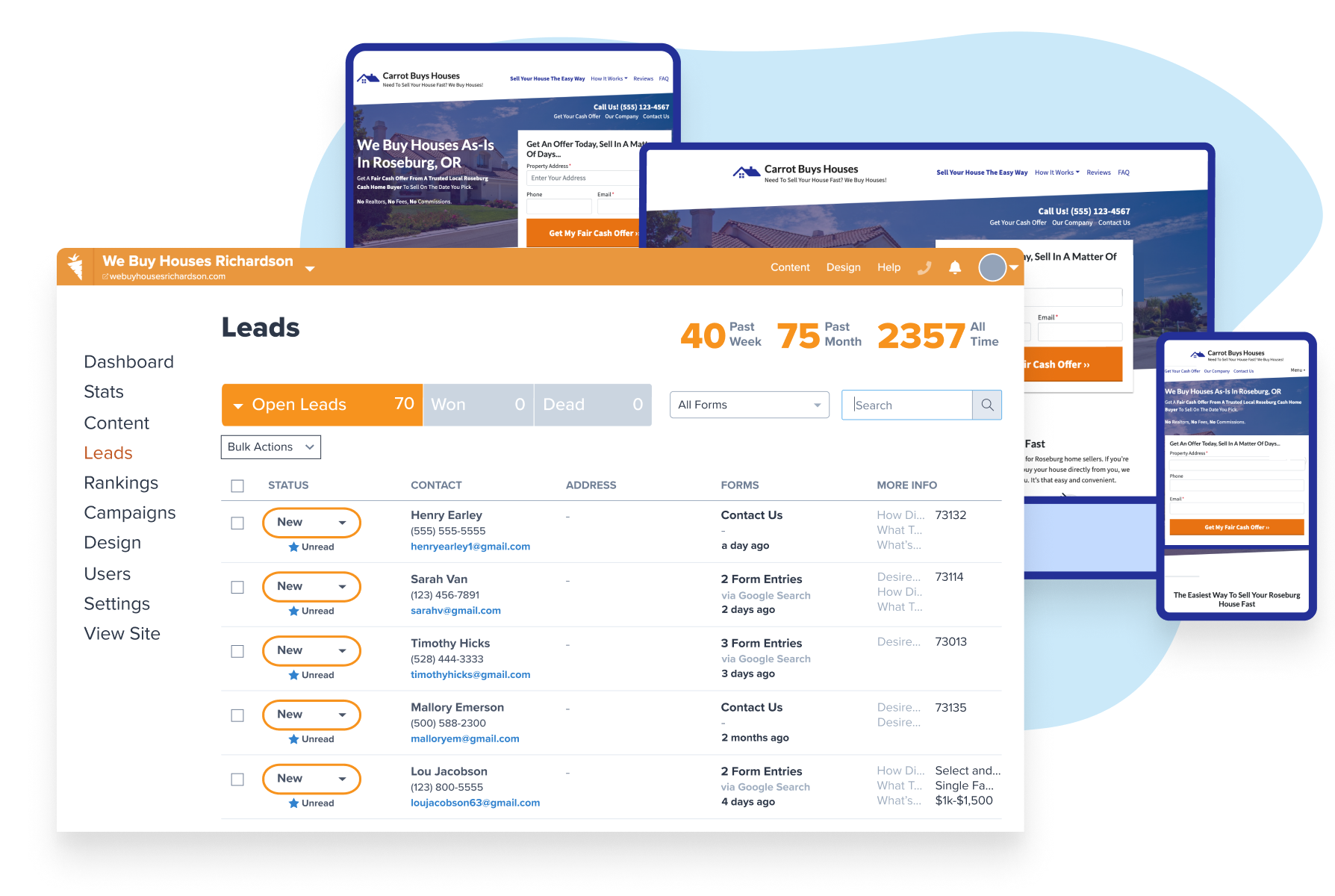
Following RJ’s advice, I recommend following up by phone for your first follow-up and email. You can automate the wholesale real estate email template (below) and steal RJ’s 5-minute rule to create a system for the phone follow-up.
Also, if you’re a Carrot member, you can use our SMS system to receive a text message notification when you receive a lead on your website.
Here’s your first motivated seller follow-up email template:
Subject: Need to sell fast?
Hey, [name]!
I’m glad you contacted us about selling your home fast. We’ve provided many people just like you with a fair cash offer on their home to help them get out of debt, ditch a distressed property, or remove the stress of trying to find a buyer.
We’d love to do the same for you.
I’ll be giving you a call to discuss this further at the phone number you provided! Looking forward to talking with you :)
Best,
[Name]
2nd Follow Up – 24 Hours After Contact
Okay – after calling your prospect and sending the first email, the rest of these emails should only be sent if 1) you couldn’t get ahold of the prospect on the phone or 2) you did get ahold of them, but they were hesitant about moving forward with you.
In other words, follow-up emails 2-5 are only for prospects that don’t take the leap, and sellers whodecide to work with you should be removed from these emails at whichever point they make that decision.
An easy way to automate this is to have a secondary form on your website where you only have people who have decided to work with you (or you can fill it out for them by asking some questions over the phone). Once submitted, that form connects to your CRM and drip sequence, pushing the seller out of this automated follow-up sequence and into another category.
For those leads that have been cold-shouldering you, though, here’s your second email.
Subject: Still need to sell your house fast?
Hey [name],
I would love to help you get out of your current stressful situation. I’ve worked with tons of home sellers in your exact position and saved them from foreclosure, crippling debt, and a giant headache of trying to find a buyer for their home.
Here’s what one person said about me:
[Testimonial]
Plus, I’m willing to buy homes in literally any condition.
Your house completely trashed?
Don’t worry – I’m here to help. Actually, that’s my specialty. :)
Anyways, if you’re still interested, you can contact me at and we can chat about this further.
Best,
[Name]
3rd Follow Up – 48 Hours After Contact
Subject: Are you busy?
I know that life gets busy…
Trying to find a buyer isn’t the only stressful part about needing to sell your house fast.
There’s the clean-up…
The mementos…
The bank…
The relationships…
Potential bankruptcy…
Foreclosure…
I get it because I’ve worked with tons of people just like you.
And while I know you’re busy with a million other things, I can usually close on houses just like yours in [number of days or weeks] – completely eliminating at least one of those stressful things in your life and putting some immediate cash in your pocket.
Interested?
I’m just a phone call away –
Best,
[Name]
4th Follow Up – 96 Hours After Contact
Subject: Maybe I should give up…
Look…
It’s possible that you want me to stop contacting you, that you no longer need to sell your house, and that you have absolutely no interest in working with me…
Heck, maybe I just can’t take a hint…
But I’d really like to help you out.
I know what it’s like to be in a high-stress situation without a clear way out – bills, banks, and relatives looming.
Fortunately, I also know how to get people just like you out of those situations.
Here’s what one of my sellers recently said about their experience with me:
[Testimonial]
Maybe you’ll be next?
You can reach me here at any time of day –
Best,
[Name]
5th Follow Up – 120 Hours After Contact
This final follow up should include a phone call since it’s your last chance at converting the prospect.
Subject: I’ll stop contacting you…
Since I haven’t received a response from you over the past week, I’m forced to assume that you have no interest in working with me.
If it’s because you already sold your house and found a way out of your proverbial escape room, then that’s amazing and I wish you the best! Please accept my most sincere regards.
If, though, you’re still in need of help to escape…
Foreclosure…
Crippling debt…
House clean-up…
Looming bankruptcy…
Then give me a call –
This is the last time I’ll contact you, but I’m always just a phone call away if you need help.
Wishing you the best,
[Name]
Conclusion
What’s more undeniable than the converting power of following up with leads?
The time and energy it takes to do so…
You don’t have the time to sit at your computer, typing and sending follow-up emails all day.
This is why you should use the above wholesale real estate email template (tweak them as needed) to automate your email follow up and snag the 80% of conversion that only happens when you contact prospects at least 5 times.
Your real estate landing pages could be costing you $10,000, $20,000, $50,000. That’s only one lost deal.
Relative to other popular 21st century industries (e-commerce, info product selling, affiliate marketing, etc) real estate is unforgiving. In many of those other industries, one lost deal might amount to $10 or $1,000 lost. But in real estate, players tackle each other on the pavement…
Without knee pads…
Or helmets…
Or teeth guards…
You get the point – one lost deal hurts. And it hurts bad.
But, that also means that one gained deal has an equally massive impact. And the fewer deals you lose to savvy market competitors, the more deals you gain.
In other words, you can turn that lost-deal dilemma into massive cash flow by transforming your real estate landing pages from an underperforming duds into a visitor-converting machine.
This is exactly why I’m going to show you how to optimize your real estate landing pages for conversion.
Follow these rules in your own market.
But first, a quick note about why your website isn’t converting as you want it to (the answer is simpler than you think).
What are Real Estate Landing Pages?
A real estate landing page is a standalone page, created specifically for a marketing campaign. It’s where a buyer, seller, or partner “lands” after they click on a link in ads, emails, or possibly organic SEO rankings.
The anatomy of a real estate landing page is pretty simple. You might be thinking:
Is there a specific design that always works the best?
How can we tell if a landing page is really working well?
What do I use to build my own real estate lead pages?
First, no, there isn’t a specific design that always works the best. What works really well for your real estate business and your market may not work as well as another design (or message) on another real estate website. But, there are elements that usually work well.
A clear and concise headline at the top of the page
A short description of what they’re about to get in exchange for their email address
A few bullet points listing out benefits of what they’ll get when they “opt-in”
An opt-in (a box where people can put their information in and submit it to you)
Really, those are the only elements that are extremely important and pretty much are needed on any landing page. Yes, you can use pictures and videos. Definitely test the video versus just the text with no video because you might find the one with just the text converts works better.
Are Your Real Estate Landing Pages Missing the Mark?
Someone arrives on your website…
Let’s imagine that they’re your ideal client.
They need the service you offer, they’re motivated, and they’re just looking for the right person to work with. After all, selling or buying a home is a big decision and they don’t want to make a mistake.
So they’re browsing around your website.
One of two things will happen in the end.
They’ll leave your website and find someone else to work with.
They’ll work with you.
Those are the only two options.
Assuming that this person needs your service, they’re going to work with someone.
Only one question remains to be answered, then…
Will that someone be you?
Or will it be your competitor?
How will that person make a decision?
Well, someone who needs your service – a motivated buyer or seller – is going to ask only a single question:
“45% [of consumers] said they have found something in an online search that made them decide not to do business with the person.”
If your business never gains trust, it’ll never get off the ground. If your business gains trust and then loses it, it’ll die a swift death.
But if your business gains trust and keeps it, the competition won’t stand a chance.
Not only will word-of-mouth springboard your business into next-level revenue, but online case studies and testimonials will create the same buzzing effect online – where growth potential is multiplied many times over.
More than likely, though, you’re having a different problem.
Namely, website visitors don’t trust you. They spend time browsing around your website and decide internally, “I’m not convinced.”
The good news, though, is you’re not doomed to repeat that trust-killing mistake over and over again.
There are tried-and-proven ways to build more trust, faster on any landing page.
6 ways, to be exact…
The 6 Rules of High-converting Real Estate Landing Pages
Rule Number 1 – Write an “I Have to Read More” Headline
Copyblogger reports,
“On average, 8 out of 10 people will read headline copy, but only 2 out of 10 will read the rest.”
If you’re going to convince someone to work with you, then you have got to start with a compelling headline. It’s the first thing website visitors read and it might be the last thing they read (especially if it sucks).
But, what constitutes a “good” headline?
Well, of course, a headline that makes people read more – that makes them feel like they have to read more.
To do that, your headline needs two elements.
Ambitious problem-solving offer.
Believable enough that your offer doesn’t sound too good to be true.
Strike those qualifying chords and visitors will keep reading.
Phrases like “You choose the closing date” and “Get a guaranteed ‘AS IS’ fair cash offer today” keep the headline ambitious and problem-solving enough to maintain the visitor’s interest, while phrases like “We buy houses in New York and throughout the Tri-state area” and “Hundreds of New York Tri-state area homeowners have sold the easy way with Sell Now Homebuyers” keeps it believable enough that the person will continue reading (or opt-in immediately).
It keeps interest and avoids the too-good-to-be-true curse of many other landing pages.
We do the same thing on our website.
Ambitious problem-solving: “Stop losing leads” and “Our real estate investor websites drive more qualified leads than any other platform.”
Believability: “Our members generated 60,088 real estate leads last month”
Don’t breeze by your headline without thinking much about it.
This is the most important part of your entire landing page. So make sure you include these two critical elements: ambitious problem-solving and believability.
Rule Number 2 – An Iconic Local Video or Image
Put yourself in the shoes of your target market for a moment.
Imagine that you type into Google, “Sell my house fast in Western Oregon.”
You click the first result and browse through the landing page. But something odd catches your eye…
There are pictures of palm trees…
And you know – being from Oregon – that there aren’t many palm trees here.
Is this person even from Oregon? you think to yourself.
Trust. Dead.
Well, the same thing can happen on your website, even if it’s not as big a mistake as putting palm tree pictures on an Oregon-based real estate website.
Something as simple as pictures that are irrelevant or unfamiliar to your target market can kill trust. This is why, for every city, you operate in, set up a new landing page with market-specific sales copy, images, and videos.
This is exactly what Dave Brown does on his website…
Or, here’s and real estate listing example. They use an image of the actual property as the background…
Even if you don’t live in the area, you operate in it.
And when people arrive on your website, they want to know that you’re familiar with the local market and capable of helping them in their specific situation.
City-specific images, videos, and landing page copy build far more trust than their vague or outright irrelevant counterparts.
Rule Number 3 – Sales Copy that Won’t Let the Reader Stop Reading
Your headline isn’t the only line that should make your visitor keep reading.
All of your sales copy should be like a slippery slope that people feel they have to keep sliding down. Each line leads to the next like meal cuisine at an Italian restaurant.
You just keep wanting more.
Here’s what this looks like on Home Downsizing Solution’s (another Carrot member) website:
Each phrase leaves the reader with a question… which naturally guides them into the following sentence… which then does the same thing. So on and so forth.
Before the reader knows it, they’ve read all of your sales copy and they’re convinced to work with you.
If you’re writing the words on your landing page and you start to get bored, so will your reader.
Change it up – use a surprising word or phrase, use a funny metaphor, or ask a compelling question.
Whatever you do, don’t let the website visitor lose interest.
Rule Number 4 – Big-promise Bullet Points
Everyone loves bullet points. In fact, a website’s visitors’ eyes tend to spring right to these helpful nuggets the moment they’re on screen.
Because, traditionally, bullet points tell us exactly what we’re going to get and that’s really what we all want to know when we’re going to open our wallets for something…
Okay okay… but what am I going to get?
Well, your target market is wondering the same thing.
This is why bullet points like this are so darn effective…
And this…
These easy-to-add (but crazy effective) black dots and blue checkmarks build massive credibility and make ambitious promises.
Remember, people, visit your website because they need a problem solved. And a bulleted list is one of the best ways to tell them how you’re going to solve their problem and why they should work with you.
Rule Number 5 – Proof of Concept
With a bulleted list, a compelling headline, and some unstoppable sales copy, you’ve made some big promises. Promises that – so thinks your target market – won’t be easy to keep.
Which is where proof of concept comes in.
You need to prove to your website visitors that the way you work, the promises you make, and the business you’ve created are all worthy of trust.
How do you do that?
Well, the best way is by using a past customer testimonial (video is best, but writing will do).
Consider, as an example, Dave Brown’s case study video… (WATCH)
Skip this step at your own risk.
The truth is… you can make all the ambitious promises in the world, but if you don’t back up those claims with cold, hard facts, people won’t believe you.
People are bombarded by more than 4,000 ads per day, which puts your target market’s trust for marketers at an all-time low. Everyone is making big promises and few people are keeping those promises.
Put another way, proof of concept is likely the most vital part of every single landing page you’ll ever create (in conjunction with a great headline).
Don’t skip this step.
Rule Number 6 – Include a Clear and Low-risk CTA
According to Protocol 80, Inc, 90% of people who read your headline also read your CTA (call-to-action)…
Because here’s the thing: after people know what you’re offering, they want to know what to do.
How do they take action? If they want what you have, how do they dive right in?
And a low, or no, risk CTA is exactly what they’re looking for. They don’t want to spend hundreds of dollars. They want to get started without pulling out their wallets and probably without even giving you a call…
Baby steps…
That’s why, at Carrot, we recommend a CTA that is something like this…
When someone fills this out, our system will send a lead notification via SMS text message straight to your phone. Then you can call the person and close the deal.
But you won’t be able to close much of anything if people land on your website, learn to trust you, and don’t opt-in because there isn’t a clear and risk-free CTA.
You can gain people’s trust all day long…
But that trust isn’t gonna make you any money until you ask those committed prospects to take action in your favor.
Conclusion
One, two, three lost deals…
It all hurts in the same way that gambling away $50,000 hurts…
Except you’re not gambling – you’re running a business.
And fortunately, running a business is far more predictable than visiting the casino. At least, it should be.
Remember, selling is science. And all you have to do to give your website a selling boost is add these 6 trust-building elements to each landing page, whether you’re a Carrot member or not…
But if you’re not…
We can get you moving in the right direction by giving you a high-converting website right now…
A ripe 18-year old, RJ Bates woke up to his mom saying, “Football season is over. It’s time for you to go find a job. And I don’t want you to come home until you have one.”
RJ shot out of bed and went searching. His first place?
Pizza Hut.
After begging the manager for a job, he was hired as a delivery person. And making about $100 a day with tips, he felt like the king of the world. He progressed to store manager, eventually buying his own restaurant at 23 years old.
Then, in 2012, RJ’s niece got diagnosed with Leukemia and his dad passed away – a month before his baby was going to be born.
And that might sound like a selfish question to ask, but it’s actually one of the most selfless questions to ask. Because then, RJ doesn’t turn down clients because they need a specific service – he is willing to help them with almost anything they need. Whether that be rehabbing, wholesaling, holding a rental, or even roofing.
If someone needs help and they have money to pay, then RJ takes advantage of the opportunity.
Not, though, because it’s all about the deals for him, but because he’s running a business and his goal is to make money. According to him, there’s a massive difference.
“Aren’t we in business to make money, not complete deals? You could bust out a thousand deals and make no money.”
All of RJ’s goals are based on profitability… not on the number of deals. And the reason is simple: focusing on the number of deals can quickly turn into a vanity metric. Profitability, on the other hand, always leads to more money and a more successful business.
Plus, by trying to increase the profitability of each deal rather than just doing lots of deals, you can actually make more money with less work.
You could, for instance, make $20,000 by doing 3 deals, or you could make that in a single deal by optimizing your sales process and increasing your per-deal profitability.
Less work. More money.
How RJ Decides Which Markets to Expand into…
RJ doesn’t just randomly pick markets to take his business into. The primary factor he uses to determine which market to move into next is if he can build a strategic partnership with someone else there.
Some wholesalers and rehabbers prefer to build a completely remote business and outsource local tasks to someone in the area, but RJ prefers to have a partner with boots on the ground.
He looks for other businesses that he can team up with and build something even better than what either person currently has. On his own, he believes he can create something good. With others, he believes he can create something great.
Once he expands into a new market, he sets realistic expectations for that area. Each place has different cost-per-lead and cost-per-deal. And different marketing strategies work better (or worse) in different markets.
Today, RJ is in lots of different markets, has a goal of $2 million in profit by the end of the year, and is consistently looking for new partnerships that can help expand his portfolio.
RJ’s Marketing Strategy
RJ starts with an ambitious goal. In his own words…
“I don’t do well if I set small achievable goals. That to me does not excite me. I need to have the large goal because, in my mind, I can see what I need to do to achieve the large goal.”
His current goal?
To make $100,000 per month in passive income. If that’s not ambitious, then I don’t know what is. But it’s exactly that kind of goal that keeps RJ motivated.
In fact, he even said that he’s less likely to complete small goals because they don’t get him fired up – making him more likely to quit when the road gets treacherous.
Once he sets an ambitious goal, it’s time to start marketing his services.
Here are his primary marketing strategies…
Direct mail – Even though this is a physical marketing strategy, RJ believes that it ties in directly with digital marketing. When someone receives a mailer, the first thing they do is try to find the website of the business that sent it. If that website isn’t optimized for conversion, then you’ve just paid money to lose leads.
If they aren’t, he pauses the ad and figures out why it isn’t generating leads. Then he fixes it and tries again. His average cost-per-deal (which varies massively depending on the market) is $3,000 to $4,000. But he has massive profit margins that can support high-cost deals like that.
Image Credit: Speak2Leads.com
Also noteworthy is RJ’s five-minute policy, where he shouts “Five minutes!” in the office whenever a lead comes through. That means the team has just five minutes to contact the lead.
RJ believes that this policy is a big reason for their success…
Because when people opt-in, they’re probably also opting-in on the competition’s website – or they will soon – and the sooner he follows-up with leads, the better chance that he’ll make the sale.
RJ has also found that most sales happen not on the first or second contact, but on the 4th or 5th.
The more that you contact people, the more that they think about you and – somewhat surprisingly – the more likely that they will eventually buy from you.
Stay top-of-mind and they’ll buy from you once they’re ready.
Which is why RJ says that “with marketing, there’s no secret sauce. It’s all about consistency.”
Consistently getting in front of your target market…
Consistently reminding people that you exist…
And consistently working to stay top-of-mind for people who are on the fence about your service.
We’re officially introducing a new design for those of you who crave a distinguished, modern (and yes, still high-converting) website.
Meet Hemlock.
Here’s what it looks like on mobile – 59% of Carrot member leads come from mobile devices. So we made your phone number front and center to increase mobile visitor conversion rate.
This website design isn’t just beautiful, it converts with the same principles as all of our other Carrot site designs – better than any other website platform in the industry.
So – the kicker question: How much are we going to charge you?
It’s included with our Advanced Marketer member’s first access to new site styles!
Since we want this design to remain a unique and distinguishable theme for high-performing investors and agents, for now it’s only available for our Advanced Marketer members.
That may sound like a bummer if you’re not yet an Advanced Marketer member. But we want to ensure that high-performing real estate professionals like yourself get exclusive access to the best that Carrot has to offer and that you get to try it out before anyone else.
And if you aren’t yet an Advanced Marketer member, you can upgrade your plan with just a few clicks…
Once you’re an Advanced Marketer, you can switch to the Hemlock design just as easily…
Plus, Hemlock isn’t the only benefit you’ll get with Advanced Marketer. You’ll also get…
Track 20 SEO keyword phrase rankings per site
12 Content Pro blog postsand 12 Premium blog posts every single month
Quarterly one-on-one strategy calls with Adrian Nez – a top real estate investor
If you’re already an Advanced Marketer member, then test Hemlock and let us know what you think! If you’re not, then go preview it on your website to see what you think.
If you like it, consider upgrading so you can have access to Hemlock and other new site styles we release that will further distinguish your website from online clutter – always with the same industry-leading conversion rate that we are known for.
If you upgrade to Advanced Marketer, you’ll immediately get access to the Hemlock theme and all the other goodies that come with an Advanced Marketer membership.
Upgrade to Advanced Marketer and you’ll also get access to an exclusive 4 Week LIVE Traffic + Leads Training Series with Trevor and his marketing team (including Carrot’s experts on Facebook ads, high-level advertising strategy, and Google Ads) at a grand total of $0.
And it gets better: this is 100% risk-free for you. If you’re not totally thrilled with the Advanced Marketer membership and the 4 Week Traffic + Leads Training Series, you can simply downgrade to your existing plan anytime inside of your account.
If you’re looking to scale up your leads and stand out from the competition, this Advanced Marketer Upgrade package and training series will help you head into the fall with momentum and clarity.
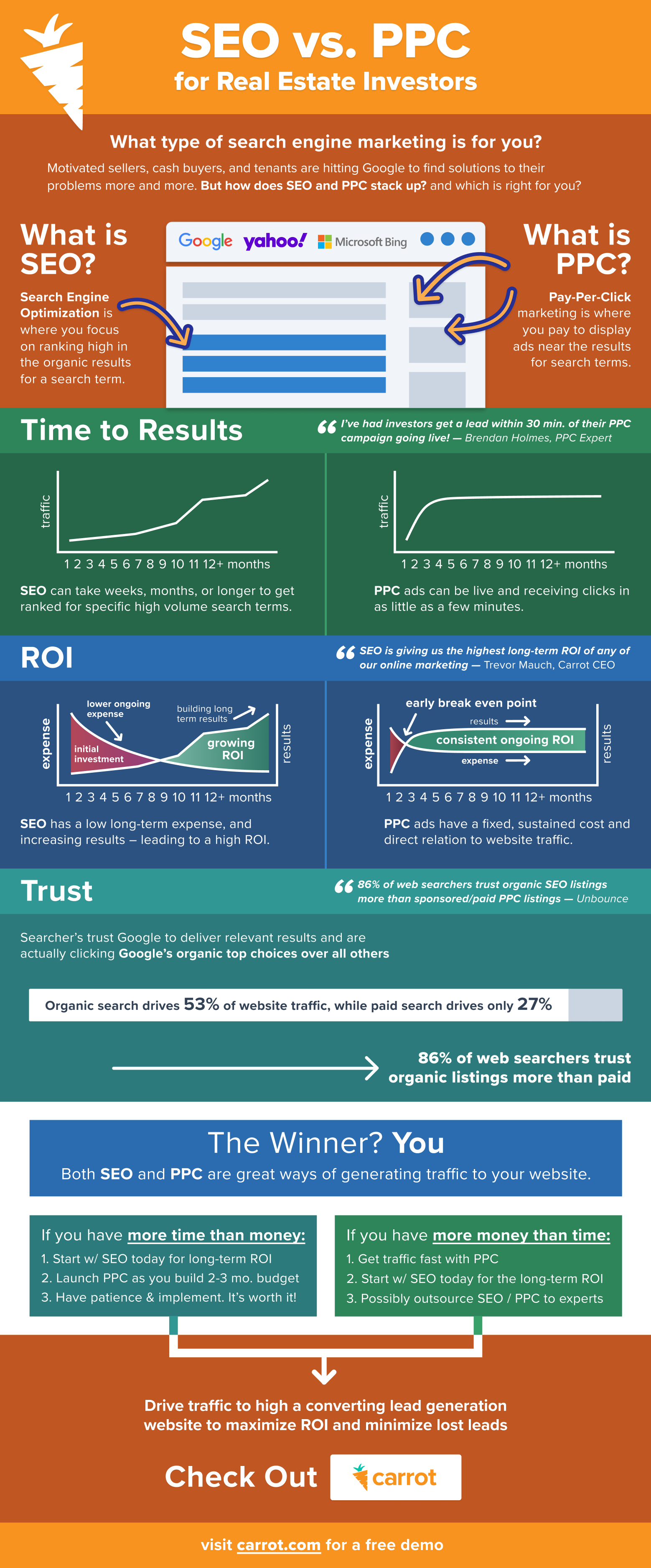
The age-old question for real estate investors and agents… SEO or PPC for real estate investing leads?
Which one do I start first, and which is right for me? Well, we whipped up a handy infographic to walk you through some of the most important things to consider when looking at SEO or PPC to help attract leads online for motivated house sellers, rent-to-own tenants, buyers, and any other type of lead.
At first glance, you may be thinking…
“But both SEO and PPC are basically going after the same people searching the same phrases… shouldn’t I just do both?”
Choosing how to drive traffic to your real estate investing website and how to ramp things up is a pretty darn important decision. Yes, both are ways to get you in front of the motivated house sellers, cash buyers, tenants, rent-to-own tenants, note sellers… yadda yadda yadda… but both are fundamentally different, and they each have massive pros and cons that you should consider.
For instance, as you’ll see below, the amount of time and money you have to invest in your online marketing will dictate whether SEO or PPC is best for you right now.
One gets leads more quickly but requires a money budget to launch. In contrast, the other one takes longer to get results but can yield the highest ROI (return on investment) of any online marketing strategy we use.
Learn more about the differences between SEO and PPC marketing as a real estate investor in the infographic below, and if you enjoy it, share it online!
SEO vs PPC For Real Estate Investors
Featured Resource: The Ultimate SEO Keywords Guide
When looking at SEO and PPC to attract real estate investing leads like motivated sellers, cash buyers, tenant-buyers, etc., here are a few things to consider.
How SEO Can Help You As A Real Estate Investor Or Agent
Any solid SEO strategy aims to get your real estate investor site to show up at the top of search engine results pages. And, even more importantly, in the top spots of Google, specifically. If you aren’t one of the sites that are on top, you won’t be getting the sort of traffic you need.
SEO can also build trust in the eyes of the potential lead. Search trends have shown that 85% of clicks go to organic SEO.
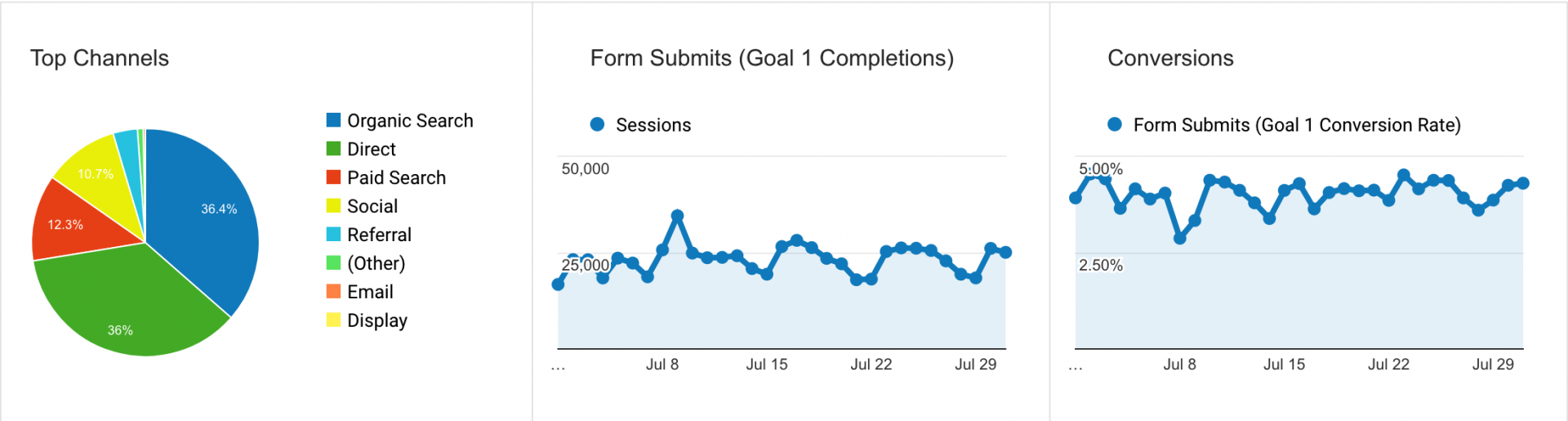
The #1 lead generation source was “Organic Search,” a month-over-month occurrence. In a snapshot, Organic leads accounted for 36.4% of all leads. For reference, PPC accounted for 12.3%.
Organic Search Leads Accounted for 10,547 leads from the 28,947 Carrot Members obtained in July 2018Organic Search Leads Accounted for 36.4% of All Carrot Member Leads in July 2018
SEO is about building authority, demonstrating relevance, and matching your site to the right search keywords. It can be a long-term process, but one that is essential to your website’s performance. Once you have the building blocks to achieve high rankings in search engines, the sky’s the limit!
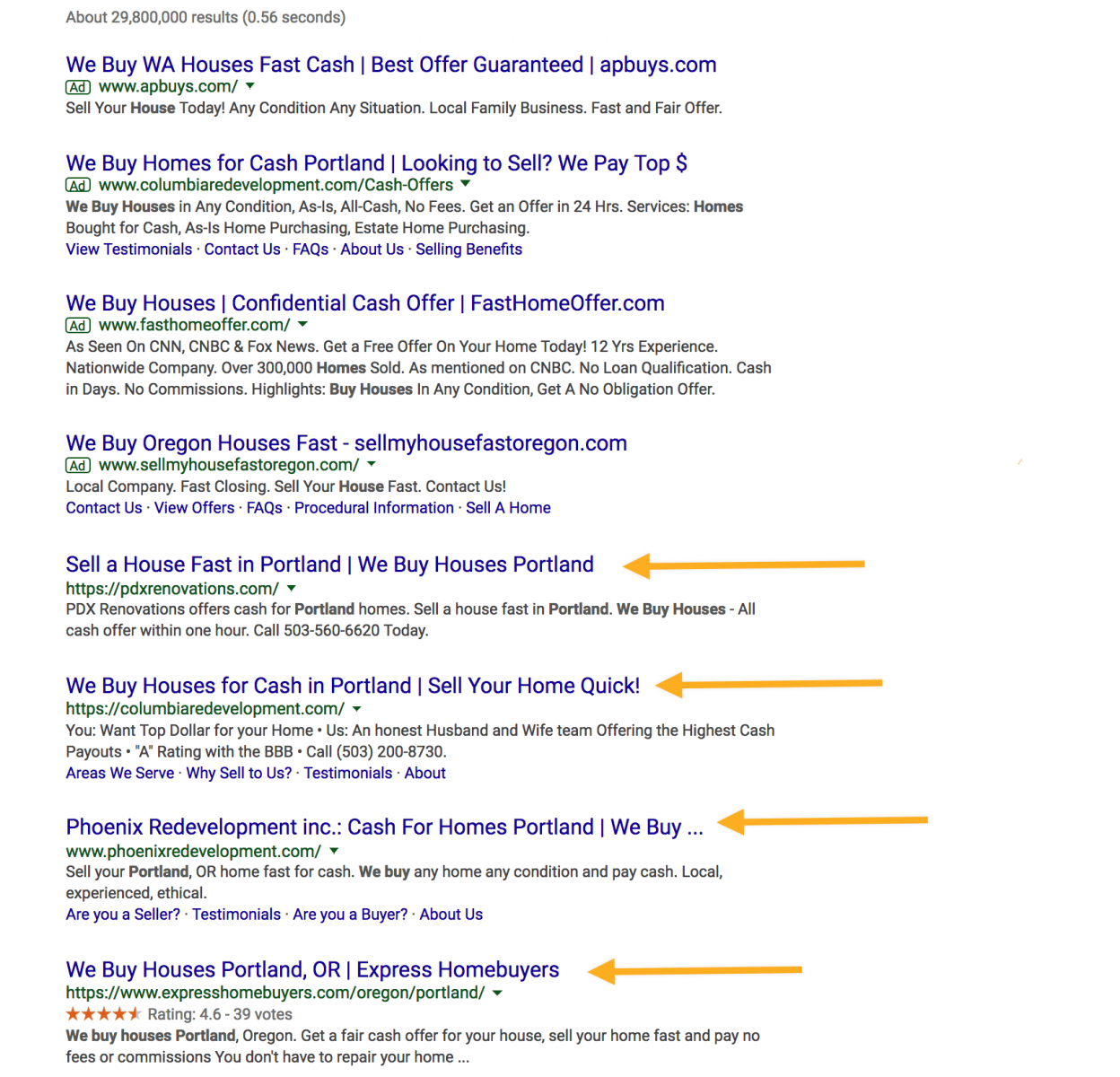
SEO (Organic) Search Engine Results
Benefits of SEO and Evergreen Marketing
1. It’s free if you do it yourself
A clear SEO benefit is that it’s free to do. Unlike PPC, you don’t have to pay for it. You just need to invest time in implementing the best practices across your site.
But with that comes a whole checklist of ‘best practices, including making sure its search engine spider is accessible, responsive, has unique content, targeted keywords, and optimized metadata – just to name a few.
2. It’s more likely to drive more consistent traffic in the long run (if you implement a solid SEO plan)
That’s because people tend to be more attracted to SEO (organic) results because they trust them much more than a paid sponsored link.
3. It will drive better ROI long-term
The great thing about SEO is that once you’ve implemented the best practices onto your site, the only way is up. Make your way to the top, your brand is automatically perceived as reputable, and your ROI will continue to rise. In the long run, your investment and work into building those rankings go down as your traffic climbs… meaning a lower cost per lead.
4. Not just for blog posts… try it on your YouTube videos for faster results
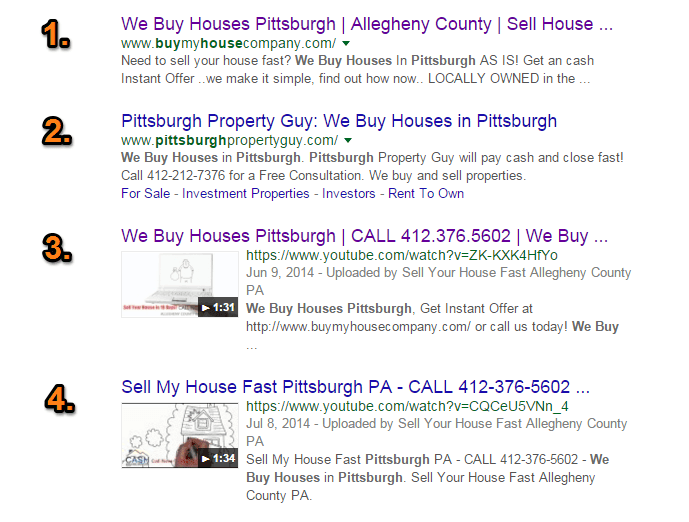
First Page of Search Engine Results for We Buy Houses Pittsburgh
How PPC Marketing Can Help You As A Real Estate Investor Or Agent
If you want the potential for immediate results or your website is in the process of ranking high but just isn’t there yet. PPC might be the way to go. If you have the budget, it’s possible to get an ad in the top four spots on the search results page reasonably quickly, but it might cost you.
But…utilizing effective PPC techniques such as long-tail keywords and location targeting, you can build highly targeted campaigns. So, you can place ads in front of the right searcher at the right time.
Overall, you must make sure you take the time to develop a strong PPC marketing strategy.
PPC Benefits
1. It offers instant results
The most significant benefit to PPC is that you don’t have to wait around for that traffic to come. Set up an Adwords campaign, and you’ll start to see the results instantly – which is particularly helpful for investors just starting up.
PPC offers the edge on conversions, with paid results more likely to convert. The great thing about PPC is that it is highly targeted to the customer, whereas organic traffic can be slightly unpredictable.
Although you need to bid on keywords, Google also uses a quality score metric to decide how relevant your ad is to that user. So, you can be sure that when a person clicks on your ad, they will genuinely be interested in what you’re selling.
3. It’s protected from the “intimidating” algorithm updates
There’s nothing more frustrating for an SEO marketer than an algorithm update. The good news is that PPC is protected from algorithm updates, so you’ll still continue to see traffic heading to your site no matter what changes are made.
Actual Stats On A Motivated Seller PPC Campaign
You Don’t Have To Decide On One Or The Other. Leverage Both SEO and PPC Together For Even Greater Results
We usually start SEO and PPC in conjunction with each other. We start a PPC campaign to get leads in the short term and SEO to build up over the long term. You can amplify your overall results by using SEO and PPC together.
Generate more exposure – An obvious benefit of combining SEO and PPC efforts is added visibility on the search engine results pages (SERPs). Dominating the SEO search results will significantly increase traffic and give the impression that you’re an established presence in the real estate investor market.
Increase intent keywords – Simultaneously running SEO and PPC campaigns allows you to double the keyword data to analyze. Determine which SEO and PPC keywords have the highest conversion rates and use that information to optimize your strategy.
Use high-performing ad copy and SEO content – If it works for PPC, it also often works for SEO. By determining which PPC ads result in the most lead conversions, you’ll know how to create title tags, meta descriptions, and page content for the real estate investor blog posts you write. The benefit is allowing you to potentially rank higher in organic search results. Using PPC, you’ll also quickly know what works and doesn’t. While completely testing titles and meta tags, strictly organic, can take a long time.
Test keywords utilizing PPC before committing to SEO content – PPC ads are a great way to improve your SEO keyword strategy. As your long-term SEO keyword strategy develops, test the conversion rate of the keywords you want to rank for with PPC ads. You’ll get immediate feedback on the effectiveness of the SEO keywords you’re after and can tailor your investment strategy.
Share This Infographic With Others And Get To Work!
The real estate marketing world changed in 2024 with increased enforcement of the Telephone Consumer Protection Act or the Application-to-Person 10-Digit Long Code (A2P 10DLC) regulations introduced to enhance transparency and reduce spam.
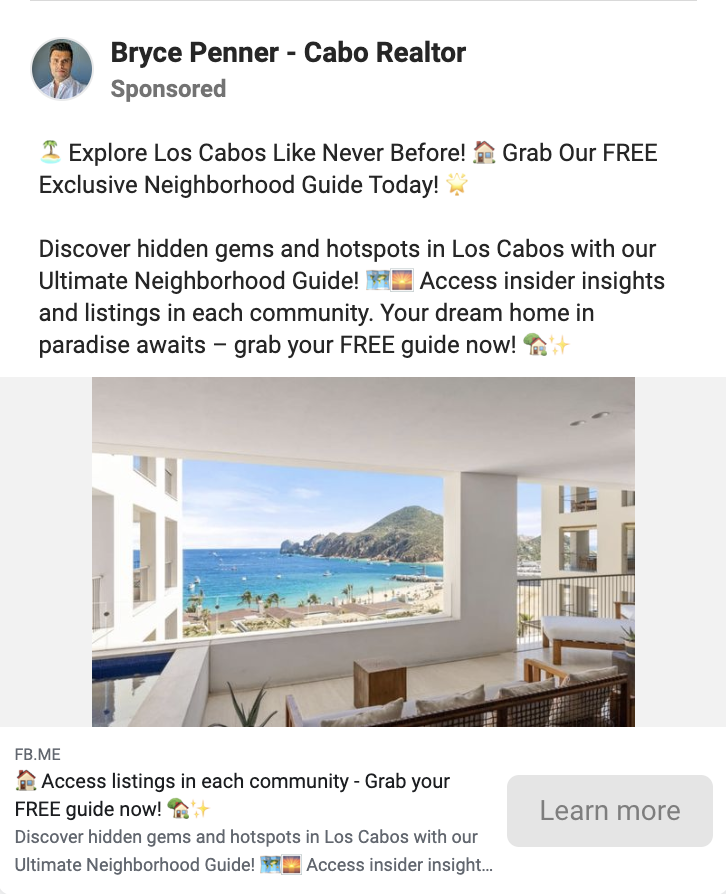
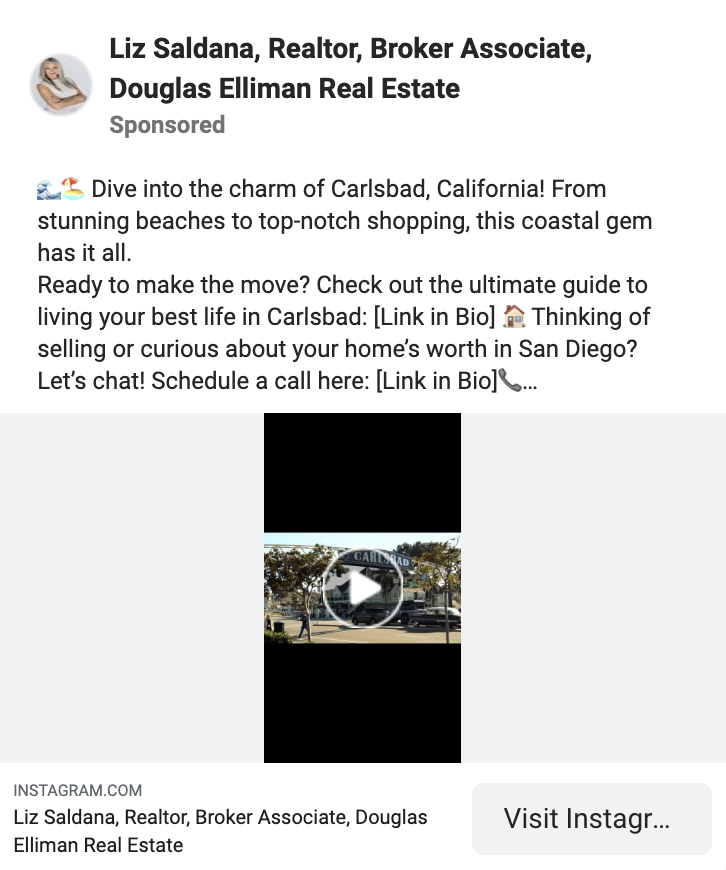
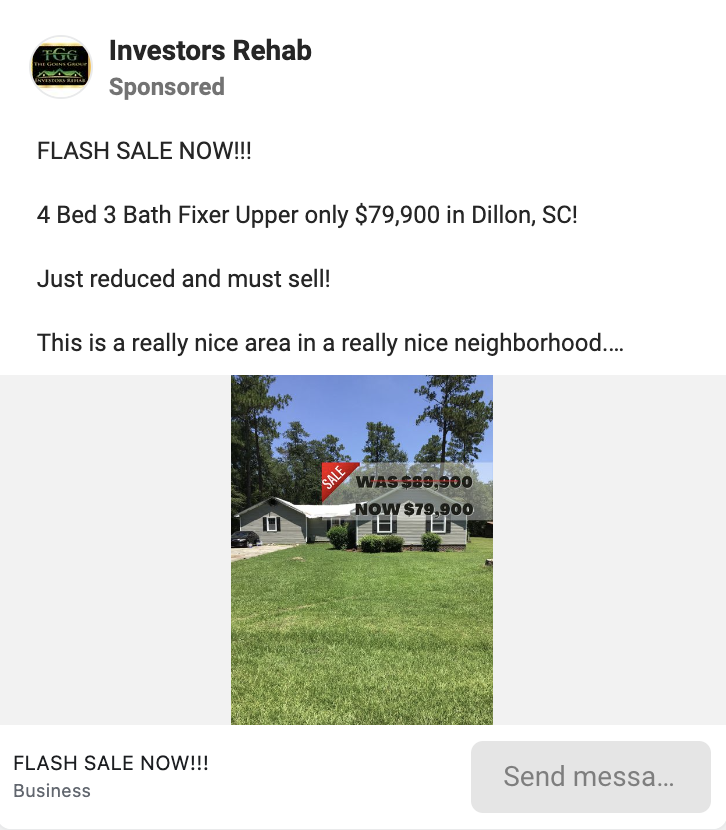
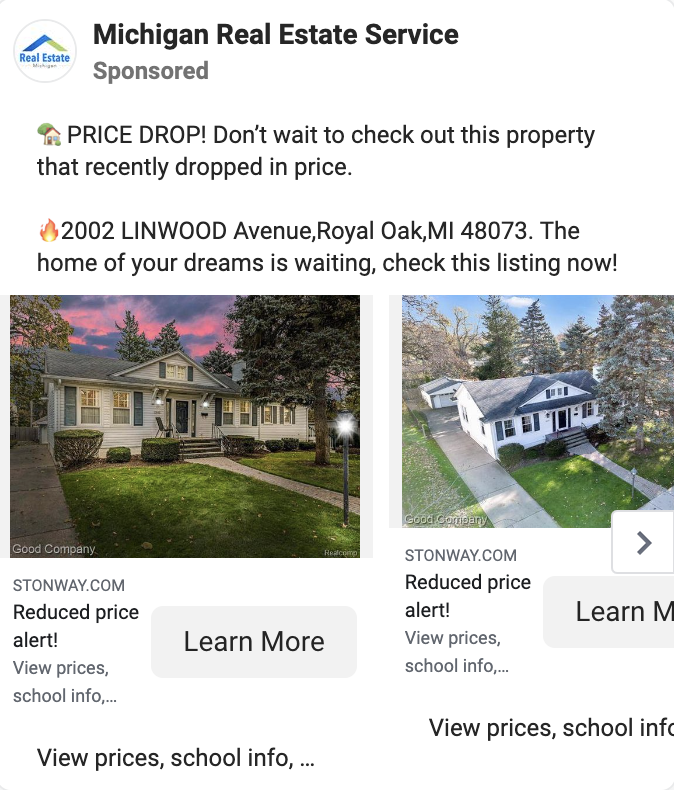
In 2025, Facebook Ads for real estate will remain a powerful tool for grabbing attention and leaving a lasting impact on potential clients.
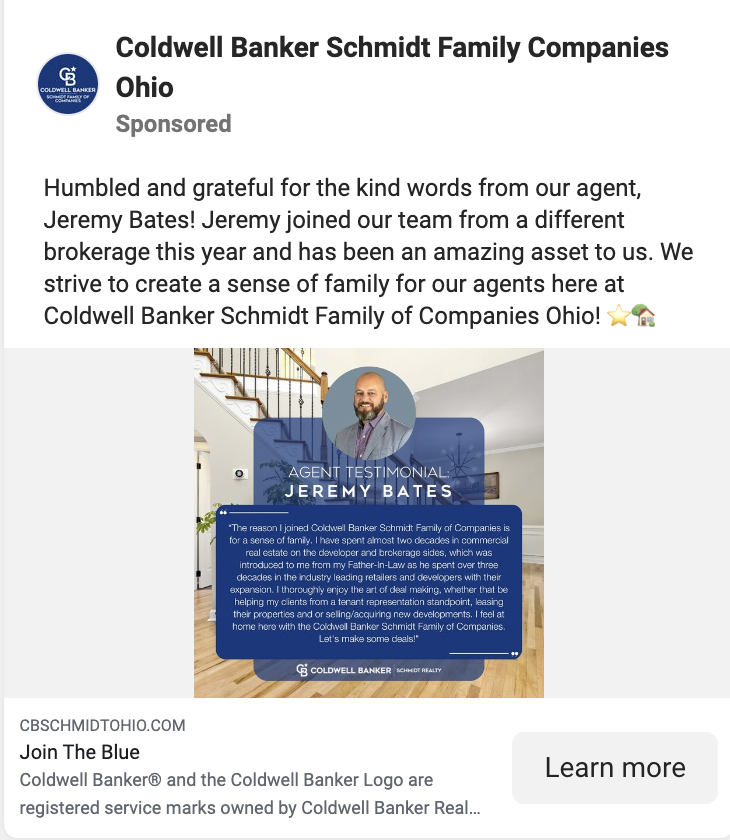
This blog post dives into 14 examples of inspiring real estate Facebook Ads examples for 2024, spotlighting the latest trends and creative approaches that confidently set the industry standard.
Demo Carrot: How many deals are you losing to your competitor’s website?
Real Estate Facebook Ads – Personalized Dynamic Ads:
The concept of Personalized Dynamic Ads goes beyond traditional static advertisements, offering a dynamic and tailored experience for potential buyers by showcasing content uniquely relevant to each individual.
Personalized Dynamic Ads leverage user data and behavior to deliver content that resonates with each viewer personally. This is achieved through real-time customization of ad elements, ensuring that the right properties are showcased to the right audience at the right time.
Dynamic Ad Components:
Property Recommendations: Tailoring the ad content to showcase properties that align with the viewer’s preferences, previous interactions, and search history.
Pricing and Offers: Displaying real-time pricing updates, special offers, or personalized discounts based on user behavior and engagement.
Location-Based Information: Incorporating local amenities, schools, and attractions specific to the viewer’s location or the location of their previous property searches.
Call-to-Action Variations: Customizing the call-to-action (CTA) based on the user’s stage in the buyer’s journey, whether scheduling a tour, requesting more information, or making an offer.
Benefits for Real Estate Agents and Investors:
Unlike static ads, personalized dynamic ads can feature a variety of dynamic components, including:
Increased Relevance and Engagement: Personalized dynamic ads significantly increase relevance by tailoring ad content to individual preferences. This, in turn, boosts user engagement as viewers are more likely to interact with content that aligns with their specific interests.
Higher Conversion Rates: The dynamic nature of these ads allows real estate professionals to showcase a variety of properties or highlight specific features based on what is most likely to resonate with each viewer. This targeted approach contributes to higher conversion rates.
Enhanced User Experience: Personalized dynamic ads create a more seamless and enjoyable user experience. Potential buyers feel that the content is curated specifically for them, enhancing their perception of the brand and increasing the likelihood of positive interactions.
Collaborate with digital marketing experts to implement dynamic ad strategies across various platforms.
A/B tests different dynamic components to fine-tune ad performance and maximize results.
Real Estate Facebook Ads – Emotive Storytelling Through Cinemagraphs:
In the world of digital storytelling, real estate marketers are turning to an enchanting visual medium: cinemagraphs. Combining the dynamism of video with the subtlety of photography, cinemagraphs are captivating and emotive, making them an increasingly popular choice for conveying the unique stories behind real estate properties.
Why Cinemagraphs Matter:
Extended Engagement: Unlike static images, cinemagraphs encourage prolonged engagement as viewers are captivated by the subtle, mesmerizing movements. This extended interaction provides more time for the property’s unique features to leave a lasting impression.
Differentiation in a Crowded Market: Standing out is essential in a saturated real estate market. Cinemagraphs offer a visually distinct and innovative way to showcase properties, differentiating your brand and listings from the competition.
Strategic Implementation:
Highlight Unique Features: Use cinemagraphs to draw attention to the distinctive features of a property. Whether it’s a cozy fireplace, panoramic views, or a tranquil backyard, cinemagraphs can emphasize these elements in a visually compelling manner.
Create Atmosphere: Cinemagraphs excel at creating a specific atmosphere or mood. Whether you want to convey a sense of luxury, relaxation, or excitement, the subtle movements in cinemagraphs can evoke the desired emotional response.
Storytelling Narratives: Craft visual narratives for your properties. Cinemagraphs allow you to tell a story, guiding viewers through different spaces and creating a cohesive narrative showcasing a home’s flow and character.
Benefits for Real Estate Agents and Investors:
Memorable Impressions: Cinemagraphs leave a lasting impression on viewers. The combination of motion and stillness creates a memorable visual experience that can influence perceptions and decisions.
Increased Social Media Engagement: On social media platforms where visual content reigns supreme, cinemagraphs stand out in crowded feeds. The engaging nature of cinemagraphs can boost social media engagement and encourage users to share your content.
Versatility Across Platforms: Cinemagraphs can be incorporated into various marketing channels, including websites, social media, email campaigns, and digital advertisements. Their versatility makes them a valuable asset in a comprehensive marketing strategy.
Implementation Tips:
Collaborate with professional photographers and videographers experienced in cinemagraph creation. Focus on subtle, natural movements that enhance the property’s ambiance without distracting from its key features. A/B test different cinemagraphs to gauge audience preferences and optimize engagement.
Real Estate Facebook Ads – AI-Powered Chatbots for Instant Engagement:
In an era where instant communication is the norm, real estate marketers increasingly turn to AI-powered chatbots to facilitate immediate engagement and enhance customer interactions. These intelligent bots are reshaping how real estate professionals connect with potential clients by providing instant responses, valuable information, and a personalized experience.
AI-powered chatbots leverage natural language processing (NLP) and machine learning algorithms to understand and respond to user queries in real time. This technology revolutionizes customer interactions in the real estate industry by offering instantaneous engagement, 24/7 availability, and valuable insights.
Key Features and Benefits:
Instant Response: One of the primary advantages of AI-powered chatbots is their ability to respond immediately to user inquiries. This ensures that potential clients receive timely information, fostering a positive user experience and reducing the risk of losing leads due to delayed responses.
24/7 Availability: Unlike human agents, chatbots don’t need breaks or sleep. They offer round-the-clock availability, catering to users’ needs in different time zones or those browsing properties outside regular business hours.
Personalized Interactions: Advanced AI algorithms enable chatbots to personalize interactions based on user data. Chatbots can offer tailored recommendations, property suggestions, and relevant information by analyzing previous interactions, browsing history, and preferences, creating a more engaging and personalized experience.
Lead Qualification: Chatbots can efficiently qualify leads by asking relevant questions and gathering essential information. This streamlines the lead qualification process and helps human agents focus on high-priority leads, ultimately improving conversion rates.
Appointment Scheduling: Some AI-powered chatbots are equipped with the capability to schedule property viewings, consultations, or virtual tours. This seamless integration simplifies the process for potential buyers, enhancing convenience and efficiency.
Strategic Implementation:
Integration with Platforms: Integrate chatbots into your website, social media platforms, and messaging apps to meet potential clients where they are most active. This omnichannel approach ensures a consistent and accessible user experience.
Natural Language Understanding: Enhance chatbot capabilities by investing in natural language understanding technology. This allows chatbots to comprehend user inquiries, even if they are phrased in various ways, improving the overall user experience.
Data Security Measures: Implement robust data security measures to protect sensitive information shared through the chatbot. Building trust with users is crucial for the success of AI-powered chatbots in real estate.
Implementation Tips:
Regularly update the chatbot’s knowledge base to keep information current and relevant.
Monitor user interactions to identify areas for improvement and refine the chatbot’s responses over time.
When more complex queries arise, provide a seamless transition from the chatbot to human agents.
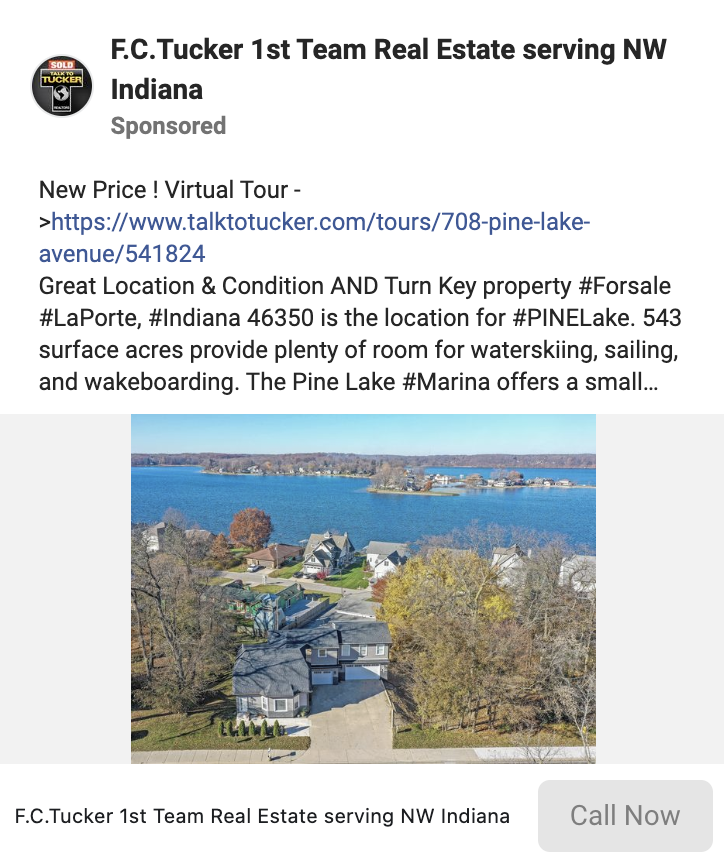
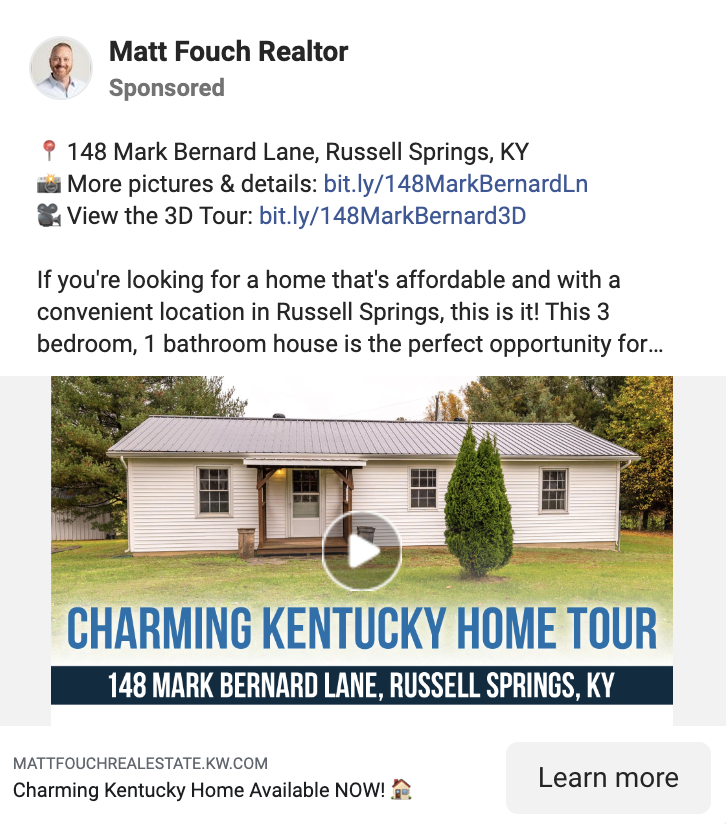
Real Estate Facebook Ads – Virtual Property Tours:
As technology advances, virtual tours have become a powerful tool in the real estate industry, revolutionizing how potential buyers explore and experience properties. Virtual property tours provide an immersive and interactive experience, allowing users to enter a property virtually, examine its features, and envision their future living space.
Key Features and Benefits:
Immersive Exploration: Virtual property tours provide an immersive experience beyond traditional images or videos. Potential buyers can virtually explore every nook and cranny of a property, gaining a realistic sense of its layout, design, and overall ambiance.
Remote Property Viewing: Virtual property tours revolutionize remote property viewing, which is especially beneficial for out-of-town buyers or those unable to attend physical showings. This innovation in a globalized market empowers individuals to explore and evaluate properties from the comfort of their current location.
Enhanced Engagement: Virtual tours provide a higher engagement level than traditional media. Users actively participate in the exploration, deciding where to go and what features to focus on, leading to a more memorable and impactful experience.
Time and Cost Savings: Virtual property tours can save time and resources for real estate professionals and potential buyers. Instead of traveling to multiple properties, users can narrow their choices through virtual tours, making the property selection process more efficient.
Strategic Implementation:
Professional Virtual Content Creation: Engage virtual content creators or agencies specializing in real estate virtual tours to ensure high-quality, immersive experiences. Professional content can significantly enhance the visual appeal and effectiveness of virtual tours.
Cross-Platform Accessibility: Ensure that your virtual tours are accessible across various platforms, including using VR headsets, smartphones, and desktops. This ensures a broader reach and accommodates users with different devices.
Integration with Online Platforms: Embed virtual tours into your website, property listings, and social media platforms to maximize exposure. Seamless integration allows potential buyers to access virtual tours effortlessly and enhances the overall online presence of your listings.
Implementation Tips:
Provide clear instructions for users on how to access and navigate virtual tours.
Regularly update virtual content to reflect any changes in the property, ensuring accuracy for potential buyers.
Real Estate Facebook Ads – Neighborhood Guide Ads:
Adapt to the evolving needs of your audience, ensuring that the information provided remains relevant and valuable.
Strategic Implementation:
Highlight Key Features: Strategically showcase the key features of each neighborhood, emphasizing factors like schools, parks, safety, and local culture.
Targeted Audience: Use real estate Facebook ads targeting features to reach potential buyers specifically interested in certain neighborhoods, ensuring your guides reach the most relevant audience.
Implementation Tips:
Interactive Elements: Incorporate interactive elements such as maps, videos, and quizzes to make your guides more engaging and memorable.
Community Involvement: Collaborate with local businesses and residents to enhance the authenticity and credibility of your neighborhood guides.
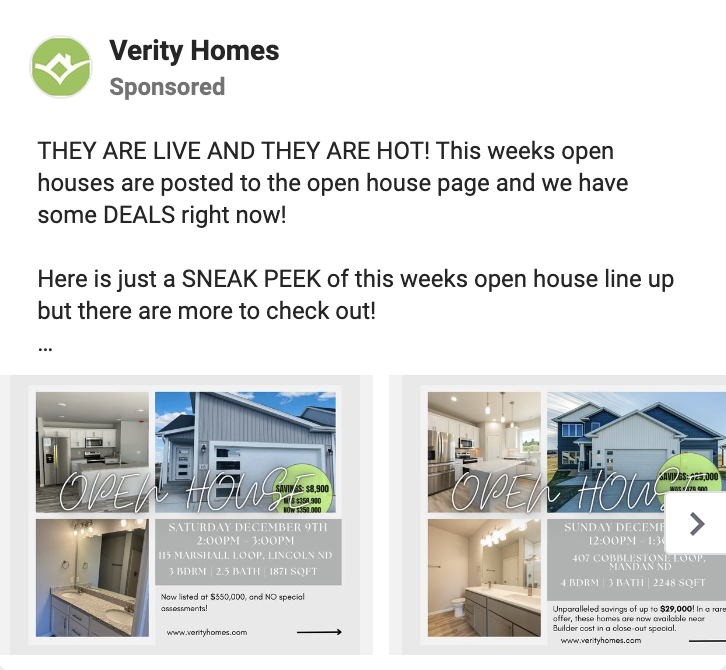
GIF-based Teasers for Property Launches:
GIF-based teasers have emerged as a creative and attention-grabbing strategy, particularly for generating excitement around property launches. This innovative approach leverages the engaging nature of GIFs to provide a sneak peek into a new property, creating anticipation and sparking interest among potential buyers.
Key Features and Benefits:
Visual Appeal and Engagement: GIFs are inherently attention-grabbing due to their dynamic nature. GIF-based teasers capitalize on this visual appeal to quickly capture the audience’s attention and keep them engaged during the brief animation.
Storytelling in Motion: GIFs enable real estate marketers to tell a concise visual story. Whether highlighting the exterior aesthetics, interior design elements, or the property’s surroundings, these short animations provide a narrative in a format that is easy to consume and share.
Creating Buzz for Property Launches: GIF-based teasers are particularly effective in building anticipation for upcoming property launches. By offering tantalizing glimpses of what’s to come, these teasers create a sense of excitement and encourage potential buyers to stay tuned for the full property reveal.
Social Media Shareability: GIFs are highly shareable on social media platforms. Their short and captivating format makes them ideal for sharing across various channels, amplifying the reach of property teasers and increasing the likelihood of virality within online communities.
Strategic Implementation:
Highlight Unique Features: Use GIF-based teasers to showcase the distinctive features of a property. This could include panoramic views, state-of-the-art amenities, or architectural details that set the property apart from others in the market.
Countdown to Launch: Incorporate GIF teasers into a countdown campaign before the property launch. Each teaser can reveal a different aspect of the property, creating a sense of anticipation and encouraging potential buyers to mark their calendars for the official unveiling.
Cross-Platform Promotion: Share GIF-based teasers across various platforms, including social media, email newsletters, and property listing websites. Consistent cross-platform promotion ensures maximum visibility and engagement.
Implementation Tips:
Keep GIFs short and snappy, focusing on key selling points.
Ensure that GIFs align with the overall branding and messaging for the property.
Monitor engagement metrics to gauge the effectiveness of GIF-based teasers.
Real Estate Facebook Ads – Time-Limited Offers:
The incorporation of Time-Limited Offers has proven to be a potent strategy for driving urgency and motivating potential buyers to take swift action. This real estate Facebook Ads approach involves presenting limited-time opportunities, incentives, or exclusive deals to create a sense of scarcity and prompt quicker decision-making among prospective property investors or homebuyers.
Key Features and Benefits:
Urgency and Scarcity: The primary benefit of time-limited offers is their ability to instill a sense of urgency and scarcity. By setting a deadline, real estate marketers create a compelling reason for potential buyers to act promptly to secure exclusive benefits or savings.
Faster Decision-Making: The time constraint associated with exclusive offers accelerates decision-making. Prospective buyers are more likely to expedite their evaluations, negotiations, and ultimately, their purchasing decisions to take advantage of the limited-time benefits.
Enhanced Perceived Value: Limited-time offers contribute to the perceived value of a property. Buyers recognize that these exclusive deals are time-sensitive and may not be available in the future, adding a layer of exclusivity and attractiveness to the investment opportunity.
Lead Generation and Conversion: The sense of urgency generated by time-limited offers can stimulate increased lead generation and higher conversion rates. Potential buyers who might have been on the fence may be more inclined to act decisively to secure the exclusive benefits.
Strategic Implementation:
Clear Communication: Communicate the terms and benefits of the time-limited offer. Transparency is key to building trust and ensuring that potential buyers fully understand the value they stand to gain within the specified timeframe.
Multi-Channel Promotion: Promote time-limited offers across various marketing channels. This includes leveraging social media, email marketing, website banners, and property listings to reach a broader audience and maximize visibility.
Align with Property Features: Ensure the exclusive offer aligns with the property’s unique features and selling points. This creates a cohesive marketing message and reinforces the value proposition for potential buyers.
Implementation Tips:
Use compelling and visually appealing graphics to highlight the exclusivity and limited duration of the offer.
Provide a clear and easily accessible call-to-action, guiding potential buyers on how to take advantage of the exclusive offer.
Monitor and analyze the performance of the time-limited offer to inform future marketing strategies.
Real Estate Facebook Ads – Testimonials:
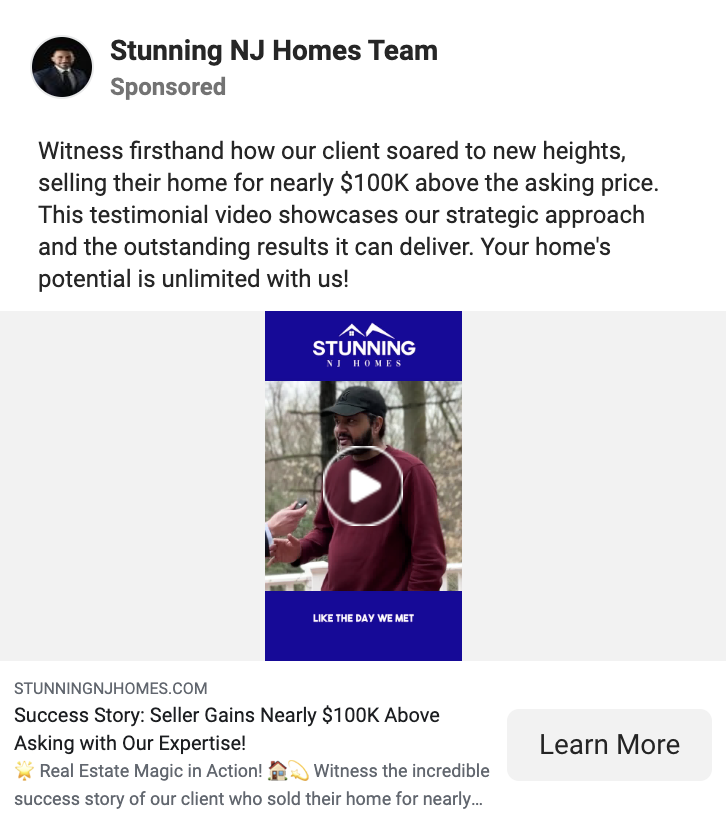
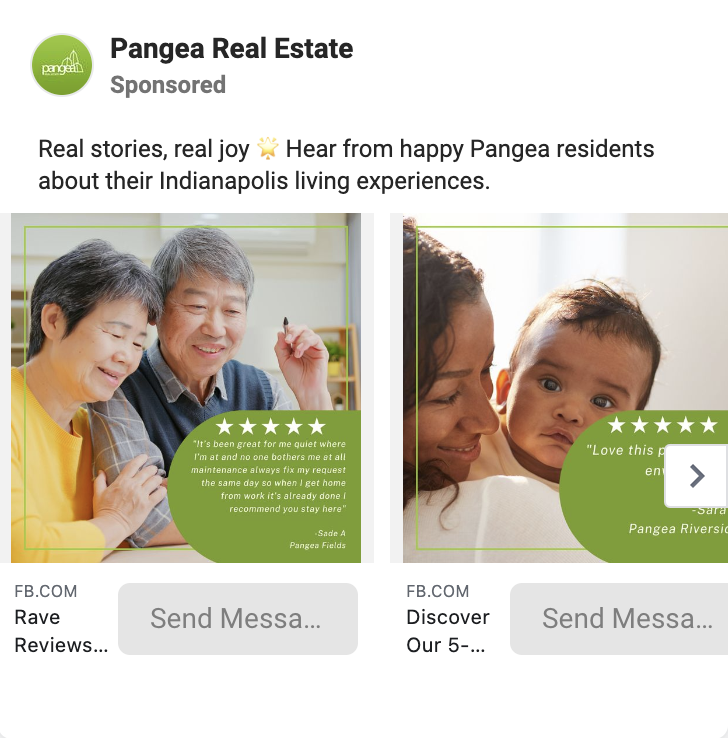
Testimonials have acted as a compelling and authentic strategy to build trust, showcase client satisfaction, and humanize the buying or selling experience. This approach captures satisfied clients’ heartfelt stories and positive experiences through written or video testimonials, providing potential buyers with genuine insights into the real estate journey.
Key Features and Benefits:
Authenticity and Trust-Building: Testimonials convey authenticity and sincerity that written testimonials may not fully capture. Seeing and hearing real clients share their positive experiences builds trust and credibility, as potential buyers can connect emotionally with the stories.
Humanizing the Experience: Testimonials humanize the real estate experience by putting a face and voice to the client’s stories. This personal touch helps potential buyers relate to the experiences of others, making the prospect of working with the showcased real estate professional more relatable and appealing.
Showcasing Diverse Experiences: A testimonial can showcase diverse client experiences. From first-time homebuyers to property investors, each testimonial can highlight different aspects of the real estate journey, resonating with a broader audience and addressing various concerns or considerations.
Differentiating Your Brand: In a competitive market, a testimonial can differentiate your brand by allowing satisfied clients to become advocates for your services. Positive client stories serve as powerful endorsements, setting your real estate agency apart and attracting potential clients who value the experiences of their peers.
Strategic Implementation:
Varied Client Profiles: Include diverse clients in your testimonial to appeal to a broad audience. This could encompass different demographics, property types, and real estate needs to demonstrate the versatility and expertise of your services.
Compelling Storytelling: Encourage clients to share their satisfaction and journey with your real estate agency. Compelling storytelling enhances the emotional impact of the videos, making them more memorable and relatable.
Professional Production: When using video, invest in professional video production to ensure high-quality visuals, clear audio, and a polished presentation. Well-produced testimonial videos reflect positively on your brand and contribute to a more impactful viewing experience.
Implementation Tips:
Obtain consent from clients before featuring their stories in testimonials.
Use snippets or highlights from the testimonial across various marketing channels for increased visibility.
Regularly update your testimonials with new client stories to keep the content fresh and relevant.
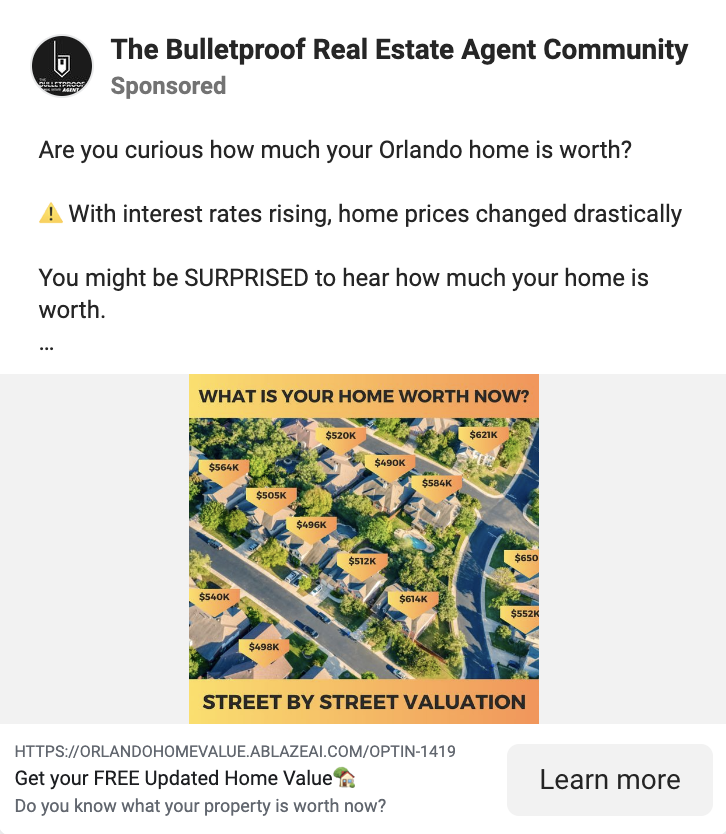
Real Estate Facebook Ads – Offering a Free Home Valuation:
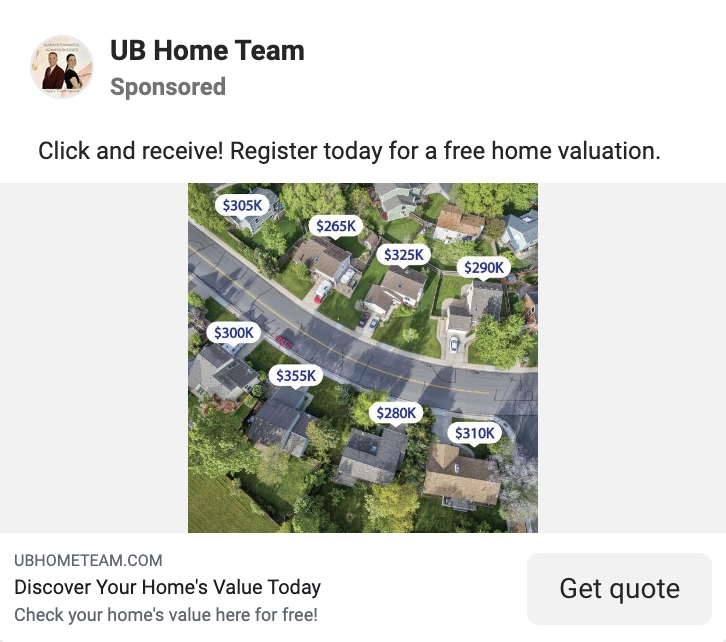
Real estate Facebook Ads are a potent tool for investors and agents. Among the myriad strategies available, one that consistently proves impactful is the “Offer a Free Home Valuation” Ads. In this segment, we explore the significance of leveraging this approach to enhance your real estate advertising efforts.
Key Features and Benefits:
Client Engagement: Initiate meaningful conversations with homeowners by offering them a valuable service – a complimentary assessment of their home’s market value.
Lead Generation: Capture leads effortlessly as interested homeowners willingly provide their details in exchange for the free home valuation.
Strategic Implementation:
Clear Call-to-Action: Ensure your Ads have a clear and compelling call-to-action, guiding homeowners on how to avail of the free home valuation and encouraging immediate interaction.
Targeted Audience: Use Facebook’s targeting features to focus on homeowners within specific demographics or geographic locations, optimizing your reach and relevance.
Implementation Tips:
Provide Transparency: Communicate the process of the free home valuation to build trust and encourage more homeowners to take advantage of the offer.
Follow-Up: Develop a follow-up strategy to nurture leads generated through these Ads, converting them into potential clients over time.
Real Estate Facebook Ads – Localized Hyper-Targeting:
Adopting Localized Hyper-Targeting allows professionals to refine their outreach efforts and connect with potential clients at a hyper-local level. This approach leverages advanced data analytics and geotargeting technologies to tailor marketing campaigns precisely, ensuring that messages resonate with specific audiences in localized areas.
Key Features and Benefits:
Precision in Audience Segmentation: Localized Hyper-Targeting allows real estate professionals to segment their target audience precisely. By considering factors such as neighborhood demographics, income levels, and property preferences, marketers can tailor messages to specific subsets of potential clients.
Personalized Content: Tailoring content to the unique characteristics of a local area ensures that marketing messages resonate with the intended audience. From highlighting nearby amenities to addressing community-specific interests, personalized content enhances engagement and establishes a more meaningful connection with potential buyers.
Enhanced Relevance and Engagement: Hyper-targeting ensures that marketing messages are relevant and timely. By addressing individuals’ specific needs and interests in a localized context, real estate professionals can significantly boost engagement and capture the attention of potential clients more effectively.
Optimized Ad Spend: Localized Hyper-Targeting optimizes advertising budgets by focusing resources on specific geographic areas with higher conversion potential. This ensures that marketing efforts are directed towards audiences more likely to be interested in the featured properties, maximizing the return on investment.
Strategic Implementation:
Utilize Geotargeting Technologies: Leverage tools to pinpoint specific locations and tailor marketing messages accordingly. This includes utilizing GPS data, IP addresses, and other location-based technologies to identify and target potential clients in real time.
Data Integration: Integrate local market data, demographics, and property information to understand the target area comprehensively. The more data available, the more precise the hyper-targeting strategy can be in addressing the unique needs of a particular locality.
Adapt Campaigns to Local Nuances: Consider the unique characteristics of each neighborhood or community when crafting marketing campaigns. Whether emphasizing school quality, nearby parks, or cultural attractions, adapting campaigns to local nuances enhances their effectiveness.
Implementation Tips:
Regularly update and refine localized targeting parameters based on changing market dynamics.
Utilize analytics tools to measure the performance of localized hyper-targeted campaigns and adjust strategies accordingly.
Stay informed about local events, developments, and trends to continuously align marketing efforts with the evolving needs of specific neighborhoods.
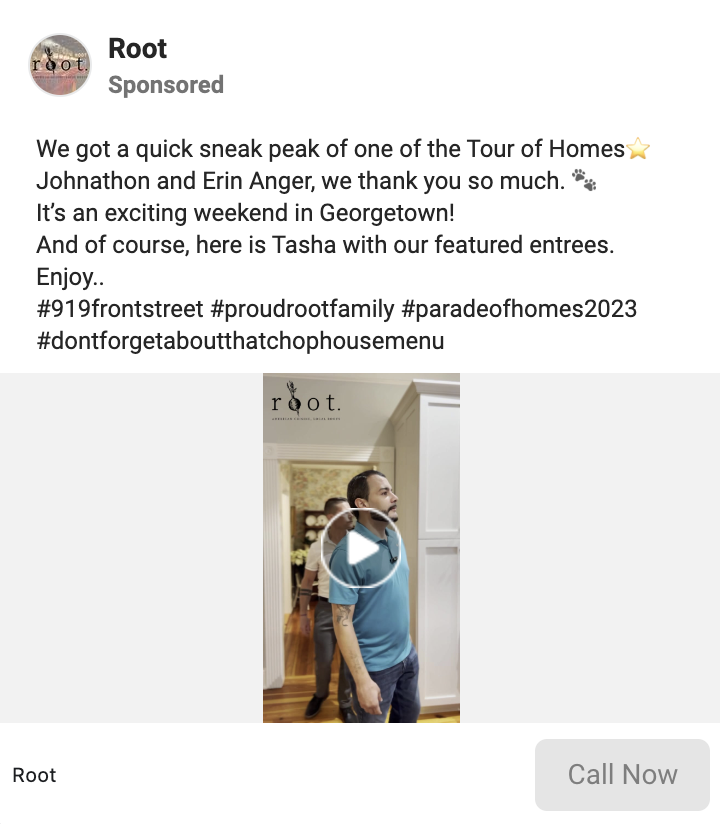
Real Estate Facebook Ads – Behind-the-Scenes Sneak Peeks:
Incorporating behind-the-scenes sneak peeks in your real estate Facebook Ads allows professionals to provide an insider’s view into the intricacies of property listings and the real estate process. This innovative approach goes beyond traditional marketing by offering potential buyers a glimpse behind the curtain, fostering transparency, and creating a more engaging and personal connection.
Key Features and Benefits:
Transparency and Authenticity: Behind-the-scenes sneak peeks foster transparency by allowing potential buyers to see the effort and care invested in presenting a property. This authenticity builds trust and credibility, which is vital to establishing positive client relationships.
Engagement Through Storytelling: Sharing behind-the-scenes content allows real estate professionals to tell compelling stories. From the initial stages of property preparation to the final touches before a listing goes live, each step becomes a narrative that engages potential buyers and piques their curiosity.
Showcasing Expertise: Behind-the-scenes sneak peeks allow real estate professionals to showcase their expertise. From discussing design choices to explaining market trends, these peeks can highlight the knowledge and skills that set a real estate professional apart.
Building Anticipation: Offering a behind-the-scenes look builds anticipation among potential buyers. It creates a sense of exclusivity and involvement, encouraging individuals to stay engaged with the property listing and follow its journey from preparation to market debut.
Strategic Implementation:
Capture Key Moments: Document critical moments in the property preparation process, from staging and photography sessions to discussions with clients or property owners. These moments humanize the experience and provide valuable insights into the investment in presenting a property.
Utilize Video Content: Video is a powerful medium for behind-the-scenes content. Visual storytelling enhances the impact of behind-the-scenes peeks, whether through short clips on social media or more extended videos on property listings.
Engage with Your Audience: Encourage interaction and engagement by inviting potential buyers to ask questions or share their thoughts during behind-the-scenes content releases. This two-way communication builds a sense of community and involvement.
Implementation Tips:
Be consistent in sharing behind-the-scenes content to maintain audience interest.
Use behind-the-scenes peeks to highlight the unique features of a property and its distinct selling points.
Monitor audience feedback and adjust behind-the-scenes content based on what resonates most with your target demographic.
Real Estate Facebook Ads – Market Insights:
Market Insights have emerged as a strategic and engaging approach, enabling professionals to gather valuable market insights while fostering interaction with their audience.
Key Features and Benefits:
Audience Engagement: Market insights involve the audience in the real estate conversation. Real estate professionals can build community by encouraging participation and interaction, keeping potential buyers and sellers engaged with their brand.
Real-Time Feedback: Unlike traditional market research methods, interactive polls provide real-time feedback. This immediacy allows real estate professionals to stay agile and responsive to changing market dynamics, adapting their strategies based on the most up-to-date insights.
Enhanced Personalization: Market insights enable real estate professionals to personalize their approach. By knowing the preferences of their audience, professionals can offer more relevant content, property suggestions, and services, enhancing the overall customer experience.
Strategic Implementation:
Define Clear Objectives: Whether gauging interest in specific property features or understanding market sentiment, having a clear goal ensures that the market insights are meaningful and actionable.
Promote Across Channels: Promote market insights across various channels, including social media, email newsletters, and your website. Utilize the reach of different platforms to maximize participation and gather insights from a diverse audience.
Implementation Tips:
Keep market insights and easy participation to encourage higher engagement.
Share insights from polls with your audience, demonstrating transparency and creating a feedback loop.
Review and update topics to align with market dynamics and audience interests.
Real Estate Facebook Ads – Ephemeral Stories for Property Highlights:
Ephemeral stories involve sharing multimedia content—such as images and videos—accessible for a limited time, typically 24 hours. When applied to real estate marketing, Ephemeral Stories provides a platform for professionals to showcase key features, behind-the-scenes footage, and other property highlights in a visually appealing and temporary format.
Key Features and Benefits:
Foster a Sense of Urgency: The temporary nature of Ephemeral Stories creates a sense of urgency among viewers. Potential buyers are motivated to engage with the content promptly, ensuring they don’t miss out on exclusive property highlights or time-sensitive information.
Visual Appeal: Ephemeral Stories capitalize on the visual appeal of images and videos to convey property highlights in a captivating way. The dynamic nature of stories allows for a more immersive and interactive experience, enhancing the overall impact of the showcased content.
Highlight Unique Features: Ephemeral Stories are ideal for spotlighting specific features of a property, whether it’s a breathtaking view, a luxurious amenity, or a unique architectural detail. The temporary nature of the content makes these features stand out, encouraging potential buyers to take notice.
Encourage Engagement: Viewers can actively engage with Ephemeral Stories through reactions, comments, and direct messages. This interactive element fosters engagement and allows real estate professionals to directly communicate with potential buyers, answering questions or providing additional information in real time.
Strategic Implementation:
Curate Compelling Visuals: Invest time in curating visually appealing images and videos that showcase a property’s most attractive and unique aspects. High-quality visuals contribute to the overall allure of Ephemeral Stories.
Create a Story Narrative: Develop a narrative for each Ephemeral Story to guide viewers through the property highlights. This could include a virtual tour, highlighting specific rooms, or providing insights into the lifestyle associated with the property.
Utilize Story Features: Leverage the features available within ephemeral story platforms, such as polls, quizzes, or swipe-up links for additional information. These features enhance interactivity and allow potential buyers to engage with the content actively.
Implementation Tips:
Promote Ephemeral Stories across multiple platforms, including social media and messaging apps, to maximize visibility.
Use captions and overlays to provide context and additional information about the property highlights.
Monitor engagement metrics to assess the effectiveness of Ephemeral Stories and refine future content accordingly.
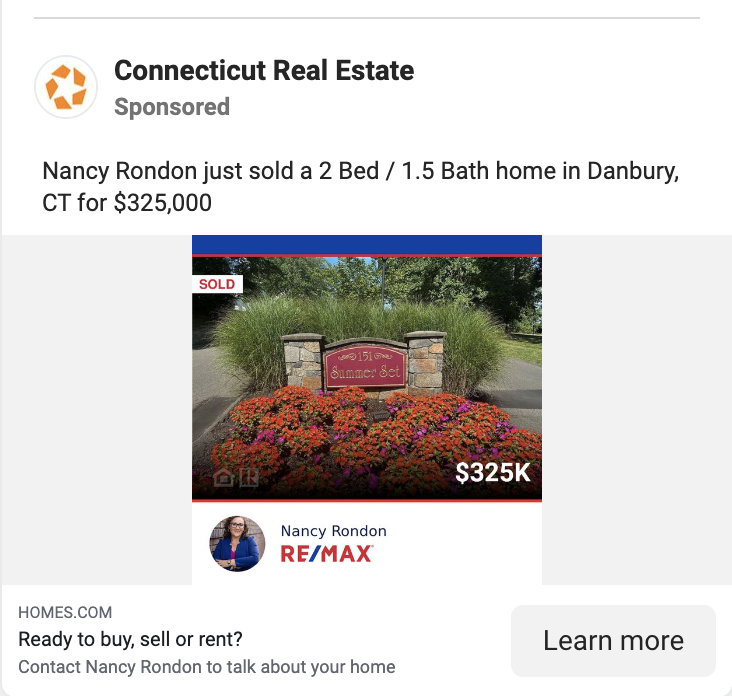
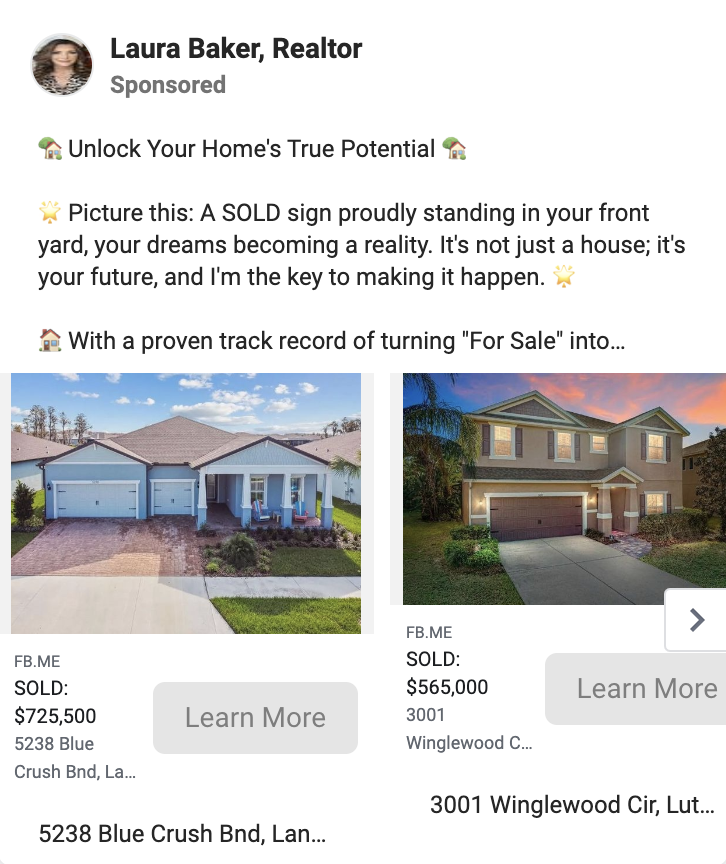
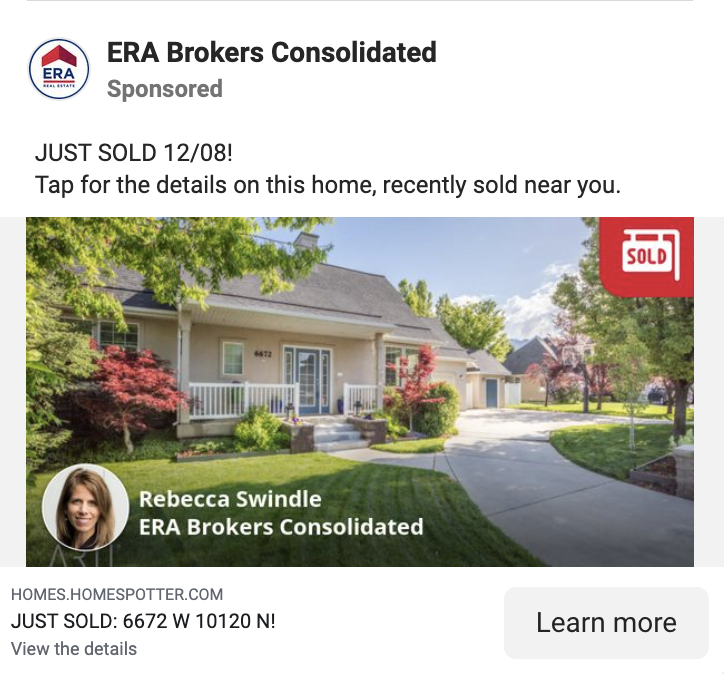
Real Estate Facebook Ads – Highlight Recently Sold Listings
One particularly impactful approach is the “Highlight recently sold listings” real estate Facebook Ads, a powerful narrative that encapsulates success and fosters trust among potential clients.
Recently sold listings Ads go beyond showcasing properties—they tell a story of triumph, illustrating the dedication and proficiency of real estate professionals. These Ads serve as a visual testament to success, showcasing recently closed deals that exemplify expertise in the industry.
Key Features and Benefits:
Visual Storytelling: Leverage the storytelling power of visuals to engage your audience emotionally and convey the diversity of your successful transactions.
Trust and Credibility: Establish trust by presenting a transparent track record of recently sold properties, reinforcing your credibility as a reliable and successful real estate professional.
Strategic Implementation:
Diversity in Showcase: Strategically showcase various properties to cater to different preferences and demographics, expanding your reach and relevance.
Targeted Placement: Place your Ads strategically on Facebook to reach the right audience. Utilize the platform’s targeting features to maximize visibility and engagement.
Implementation Tips:
Stay Current: Regularly update the recently sold listings showcased in your ads to reflect the dynamic nature of the market.
Encourage Engagement: Foster community by encouraging audience interaction through comments and inquiries, building trust and credibility.
Conclusion:
As we venture further into 2025, the real estate landscape continues to evolve, and these 14 inspiring Facebook Ad examples showcase the innovative and creative approaches defining the industry.
By incorporating the latest technologies, embracing inclusivity, and staying attuned to market trends, real estate professionals can leverage Facebook ads to engage their audience, drive conversions, and stand out in a competitive market.
Stay inspired, stay adaptive, and watch as your real estate Facebook ads significantly impact the year ahead.
Far from being a rookie, Tyler Ford, a 20-year real estate investor, and agent, speaks with simultaneous confidence and humility reserved for those who’ve been in the business long enough to be intimately familiar with their strengths and weaknesses.
And as someone once said, “With knowledge comes power.”
Another way of saying that might be…
With knowledge of reality comes the ability to change.
Or, better yet…
With realistic knowledge of your current situation comes the ability to change your current situation.
And if there’s one thing that Tyler Ford was ready to change, it was his current situation.
At the beginning of 2017, after two decades of rehabbing, listing, selling, and buying real estate, Tyler Ford was ready to quit. When he left for vacation, pre-paying his trusted friend to rehab a home he’d bought, only to return and discover an un-fixed house and a missing associate, his spirits plummeted.
If he couldn’t trust the person he’d always trusted, who could he possibly turn to?
Maybe it’s time to try something else.
Maybe it’s time to get a 9-5 job.
Maybe I wasn’t cut out for this kind of work.
These were the thoughts shoving their tentacles into Tyler’s mind. And they almost suffocated him completely – he was *this close* to quitting.
But, in the end, he didn’t.
And here’s why.
Why Tyler Didn’t Quit and Why You Shouldn’t Either
Tyler got his real estate license in college. Almost immediately, though, he plunged head-first into rehabbing homes.
After finding success in flipping homes for over 15 years, Tyler continued to buy, fix up, and sell homes for a profit. But something happened. His 9-year-old website, which had past SEO authority, started falling due to competitors entering his market. The nightmarish stress of owning a fixer-upper and counting on a healthy market for when the home sells ate his soul every night as he lay in bed. And his love for real estate – and especially rehabbing – died.
All at once, like a missile impact, Tyler Ford was finished.
But then he wasn’t.
Because he discovered wholesaling.
He discovered Carrot.
He discovered the genius behind SEO and conversion optimization.
All at once, everything changed for Tyler Ford.
At the beginning of 2017, he was $20,000 in the hole. At the beginning of this year, he netted $90,000 on just two deals.
How Tyler Ford Reinvigorated his Business and Made $90,000 on Just 2 Deals
In his words, this is Tyler’s end goal: freedom.
Wait. Actually, that deserves some visual emphasis:
FREEDOM
Isn’t that what you want?
Isn’t that why you got into real estate investing in the first place? Because you wanted to travel whenever and wherever you want? Because you don’t want to worry about the price of the ticket when you go out to eat with the family? Because you don’t want to concern yourself financially with unexpected but necessary medical bills?
Said more simply, because you want to do what you want when you want, where you want, and how you want.
If that’s you, then you’d love to meet Tyler Ford.
He’s not trying to build a massive business with hundreds of employees, and he’s not trying to build some billion-dollar corporation. He’s trying to build a business that passively supports himself and his wife.
That is his end goal.
Here’s how he’s doing it.
1. He ditched his 9-year-old website
In his own words, “I was so nervous.” He already claimed the #1 ranking for his target keyword phrase, but there was a bigger problem: his website wasn’t converting the organic traffic that his website was generating passively. And what good is website traffic if you’re not converting it? Yeah – no good.
*Shameless plug incoming* At Carrot, we’ve generated millions of leads for real estate investors and agents. Naturally, Tyler wanted a piece of that action. He didn’t know quite how massive that piece of the pie would be. When we asked him what he would recommend for other investors like yourself considering getting a Carrot website, he said very simply, “Do it. And put in the work.”
4. He spent 2 months isolated
Tyler locked himself in a room for 2 months. Okay – not literally. But he did put his head down and worked longer days for 2 months in order to brand his website, customize it, and get everything ready for some serious lead generation and search engine optimization.
5. He localized all the blog content that Carrot provided
He localized it rather than simply publishing all of the blog content that his Carrot plan provided for him. As an investor in Arizona, he removed pictures of houses in the mountains and replaced them with pictures of houses in valleys. He also localized advice, wording, and other elements so that anyone landing on his website immediately knew they were in the right place.
6. He set realistic expectations
Tyler knew he’d give up if he didn’t start with realistic expectations. That includes his SEO rankings, the amount of work he’d have to put in, and the number of deals he’d be doing.
7. He was patient
Tyler was right when he said, “The problem most people have is that they get frustrated early and quit.” Suppose there’s one reason that entrepreneurs fail to fulfill their ambitious dreams. In that case, it’s because they keep giving up too early, always starting at the beginning and never building the momentum that a healthy, living business requires.
And last but not least…
8. He kept his mission at the forefront of his mind
What is the “Why?” behind your business? Why do you want to make more money? Why do you want to build a real estate business? You don’t have to be a saint with your answer, but you do have to be honest. Maybe it’s because you want to travel more, give to charity, or own a Lamborghini. The trick is to choose a “Why?” that keeps you motivated when things get difficult. So, choose something that gets you pumped. Tyler’s “Why”? Freedom.
20 Years of Real Estate Investing in a Nutshell
Before Carrot…
Tyler Ford was stressed.
Tyler Ford was ready to quit.
Tyler Ford couldn’t sleep at night.
Tyler Ford had lost his passion for real estate.
Tyler Ford was working more and experiencing less financial and personal freedom.
After Carrot…
Tyler Ford just netted $90,000 on two deals generated with his Carrot website.
Tyler Ford has a clear path to his goals. (15 wholesale deals in his first year with Carrot with at least a $12,000 profit per deal).
Tyler Ford still has position #1 with his website, but his website converts significantly better than his old website.
Tyler Ford is finally working himself out of a job and heading toward his dream of living off of passive income.
Tyler Ford is buying 1 in 25 leads in a highly competitive market.
Tyler Ford is only spending a couple of hundred dollars per deal.
Want to know how long the shortest membership at Carrot lasted?
2 minutes.
That’s right. 2 minutes.
Why? Because, as the person claimed in our cancellation form, “I was looking around the website, and it looked too hard.”
Within 6 months of changing to Carrot, Tyler’s website ranked and pulled in leads. Within 30 days, he made his first wholesale deal through Carrot.
Still, it took patience and realistic expectations.
Always remember this:
Other people have started successful real estate businesses, and you can too. It’s not a question of IF you’ll succeed, but WHEN. Keep working at it, and you will succeed – it’s simply a matter of time.
Don’t be like the 2-minuter quitter. Determine your game plan, commit to it, and move forward relentlessly, holding nothing back.
Then, nothing will be able to stop you from succeeding.
This is what Tyler Ford did. And now, he’s having the best year of his real estate career.
I know. You might be nervous about switching it up. You might be nervous about changing your strategy, getting a different website, or marketing yourself in a way you never have before. But, at Carrot, we specialize in helping people like you.
If you’re already a member, we hope that knowing how Tyler Ford is crushing his market will help you crush your own.
If you’re not a member, become one – we promise it’ll be the best thing you ever did for your business.
Most real estate investors have a “love-hate” relationship with Craigslist.
We hear it all the time:
“Craigslist doesn’t work for the real estate industry anymore.” “Ever since they killed the ability to post HTML-enhanced ads… my leads have dried up.” “Sure it’s great for ‘for sale by owner,’ but it’s impossible to scale.” “All I ever get is spam.”
And I get it – when something isn’t working, it’s discouraging. It’s frustrating. Above all, it makes you want to quit and find a better place to invest your money.
Before you give up, though, consider the kinds of results Cyndy Dumire – a real estate investor and Craigslist ad-writing pro – gets on a regular basis. Every week, Cyndy generates around 80 buyer leads, 30 seller leads, and 10 foreclosure leads. Even more impressive, in the last six months, she’s closed no less than 30 deals from leads that all originated from Craigslist ads alone.
Effective Craigslist Ads With Cyndy Dumire
The reasons most investors give up on Craigslist is twofold.
Their ads don’t attract attention because they’re not offering their target audience a solution to a real and pressing problem (i.e., a market-driven need or desire).
Their ads don’t inspire trust.
We’ve ran hundreds of tests on our real estate websites and if there’s one thing we’ve learned, it’s that building trust with the people who arrive on your website impacts ROI and lead generation more than any other element.
And that’s not just true on your website – it’s true on Craigslist.
Of course, if you’re going to use Craigslist and actually get results like Cyndy, then you’re going to need to know more than, “Build credibility!”
And that’s exactly where this post comes in.
Today, I’m going to pull back the curtain and walk through 8 tips to find all the motivated sellers and buyers on Craigslist you want.
Craigslist Motivated Seller Tip #1: Know your ideal customer
To paraphrase the great Warren Buffett: never sell heavy-metal music lovers tickets to a jazz show.
If you’re trying to market to buyers or sellers, you’ve gotta start thinking like them.
Why do they want to sell their house? How stressful is their situation? How can you help them?
When determining your ideal customer as a real estate investor, there’re two questions you must answer:
What kind of buyer or seller they are?
What influences them in a personal capacity?
Answering the first question is pretty easy. But don’t be misled by its simplicity. One of the first mistakes most Craigslist ad marketers make is casting their net too wide. Unfortunately, targeting too broad of an audience – like “local home buyers” or “local home sellers” – won’t work.
Craigslist is too crowded for bland targets. Instead, you have to get specific about the kind of buyer or seller you’re focusing on and the needs that drive them.
For instance, your perfect customer might be…
An out-of-state investor who needs to know cash flow numbers.
A house flipper who needs a clear assessment of how much work is required to turn the property around.
A rent-to-own tenant buyer who needs to know that you’ll work with them on their unique financing situation.
In other words, be as detailed as possible when it comes to defining the kind of customer you’re aiming at.
Answering the second question – your customer’s influences – takes a bit more work.
To help, here’s a quick breakdown of the four major factors that influence home buyers specifically:
Understanding your perfect customer’s influences does not demand addressing each and every element noted above. But you also can’t create the best real estate listing without knowing what is going to sway your customer.
Again, this is all the more true on Craigslist. There are so many ads already vying for their attention, and that is why you need to make yours stand out.
How do you make your listing stand out?
Consider the following template as a starting point from our Posts 2 Profits Craigslist Marketing Course.
[cta offer=”craigslist”]
Notice how this ad communicates directly to the agent’s ideal customer and – especially through the power of questions – draws them in toward a preliminary solution. The “Free Book” offer – rather than an overt invitation to call them – is based directly on their ideal customer’s legitimate need.
Of course, in a sense, all businesses are about people. But real estate is especially personal because the commodity it deals in is emotionally charged.
After all, according to Maslow’s Hierarchy of Needs, safety is one of the most primal human needs and comes in second only to our need for food and water (i.e., “Physiological” needs).
Our homes give us safety. And – just like Maslow’s very next need identifies – they make us feel like we have a place to be “loved” and “belong.”
Even more powerful is the realization that our homes are where our memories are created. Not to be cliche, but home really is where the heart is.
So, listing a home or a property is a big deal. And trust is at a premium.
People need to trust you with what is quite honestly their biggest asset.
Keep your target audience – their needs, not yours; their dreams, not yours – at the forefront of your mind when you compile listings.
Craft personal, trustworthy ads with these tips:
Use your name in the ad, not just your company’s.
Write the way you talk and read your ad out loud to make sure it’s conversational.
Press on the pain of the person whose problem you’re trying to solve, then offer your holistic solution.
Don’t be afraid to let your personality and passion shine through.
Above all, tell a story. Paint a picture of how living in the home would feel using sensory language.
A well-written home description paints a vivid story.
Craigslist Motivated Seller Tip #3: Include a Call to Action
The entire point of any online marketing campaign – including listings on Craigslist – is to get the people who see it, to do something.
Normally, this means getting them to contact you via text, email, or phone. It could also mean getting them to visit your agency’s website.
Simply put: your Call to Action needs to get your reader to actually take action.
That’s why, in your listing, it’s essential to add a clear and enticing CTA, and to give your reader options. For example, the following CTA invites the reader to choose the next step that’s most comfortable for them and repeats the CTA no less than five times.
Action also means you need to always include a direct email link so they can respond immediately to the ad if they’re interested. Oh, and don’t be afraid to call attention to that by inviting them to email you.
Craigslist Motivated Seller Tip #4: Watch your words
We all know how essential good imagery is to real estate. In fact, we’re going to cover imagery and graphics in the very next point.
However, many investors fail because they underestimate the power of words. As Hamza Yusuf put it, “Don’t ever diminish the power of words. Words move hearts and hearts move limbs.”
On Craigslist, watching your words comes down to two elements:
Your keywords
Your headlines
The right keywords matter because it’s your keywords that will determine whether or not the right people find your ad. This is true both through Craigslist’s own search engine as well as outside search engines like Google.
“Profitable keywords imply an action. San Diego real estate implies nothing. It is just a thing. San Diego real estate for sale implies an action. People want something that is for sale, presumably so they can buy it.”
In addition, Geek Estate also adds a second keyword characteristic: laser focus.
In contrast to something like “Rancho Santa Fe homes for sale,” use “individual neighborhoods within Rancho Santa Fe”: e.g., “Fairbanks Ranch homes for sale, The Bridges homes for sale, or Rancho Santa Fe Covenant homes for sale.”
Why? Because “people that type keywords like these into the search engines know exactly what they are looking for.”
Lastly, as vital as keywords are, do not “stuff” your real estate listing with keywords for the sake of keywords. This creates an inhuman feel to your ads and violates our previous tip: “Get Personal.”
The second element to watch is your ad’s headline.
The title of your Craigslist ad is where the real attention-grabbing oomph resides, and you need to spend some time developing and testing titles that captivate. Whatever you do, don’t follow the crowd… unless of course, the ad has been proven to work, like the ones we provide in our Posts 2 Profits Craigslist Marketing Course.
The ad I already called attention to in tip one is an excellent example of a headline that stands out:
Craigslist Motivated Seller Tip #5: Be relevant with your graphics
There’s no doubt about it: not adding images to your ads is a Craigslist killer. However, the mere presence of images doesn’t automatically translate into success.
The right graphics dramatically increase the number of people who will take action and get in touch with you. So too … the wrong graphics dramatically reduce that number.
As a golden rule, be sure to use images that are eye-catching, relevant … and high quality. That’s true across the board. But how do you decide what images and graphics to include?
Go back to your ideal customer. The image you choose should be based on the type of buyer or seller you’re looking for:
Turnkey investors want to see images that show off how nice the house is, that it’s been well kept and that it’s in a neighborhood that’ll attract the type of tenant they want. That last characteristic means you should always include both pictures of the property itself as well as its surrounding area.
Cash buyers or flippers want to see a house that needs TLC in comparison to other houses in the neighborhood. With these types, you’d be smart to show the flaws of the property, exactly what kind of work will be required, but end by displaying its underlying high-points and long-term value.
If your ideal customer is a homeowner or retail buyer — if they will be living in the property themselves — then staged images that show off the house as a home are essential. Just be careful what you include in those staged photos:
If your ideal customer is an investor, then glamorous, well-staged pictures of the property itself won’t be nearly as compelling as adding numbers to those pictures. In this case, you could try using a multi-property image for investors interested in purchasing multiple properties.
Craigslist Motivated Seller Tip #6: Post often and from different “angles”
Alongside the previous pitfalls we’ve covered, I’d be willing to argue that the number one real-estate-ad-killer on Craigslist isn’t the words, the images, or even the calls to action.
It’s recency.
The way that Craigslist works is the most recent postings land at the top of the page and the past ones get pushed down. Some people search Craigslist based on the search box (so make sure to include keywords that your best clients are likely to search in your listings), but most people just scroll down the listings a few scrolls to see “what’s new”.
So with that said, to get in front of your prospects the most… make sure you have ads online and active at the times of the day that your prospects are likely looking at Craigslist.
We’ve even seen with today’s Craigslist algorithm some of the most successful accounts post between 3-15 times per day.
Here’s how…
Day 1-3: Launch a Craigslist account and start posting just 3 times per day. Once in the morning, around lunch, and evening – around 7 or 8 pm. These tend to be the times of the day people will look at Craigslist. Think about when you look at your email, Facebook, or Craigslist… it tends to be during that “slack time” during your day. Posting your ads just before these “slack times” helps put your ads near the top of the feed when your best prospects hop on to browse.
On those ads, don’t post the same ad every time. You’ll want to tackle it from different angles. If you’re looking for motivated house sellers or cash buyers, what are different reasons a house seller could want to sell? Create an ad for each. What motivations could cash buyers have? Create an ad for each.
This way you’re keeping things interesting and hitting on multiple hooks. One might grab someone better than another.
Day 4-8: Add in another ad to your mix. Now posting 2 ads 3 times per day (for a total of 6 ads that day). Again, don’t post the same ad every time and mix up your hooks. Also, mix up where you’re posting your ads – don’t put them all in the same spot.
What we’re doing here is “seasoning” the account in a natural way so you’re not launching a new account and posting 20 ads the first day. That’s a great way to get your account banned and you’ll have to start over.
Day 9-20: Keep renewing your ads every 48 hours as Craigslist lets you and bump up your ad posting frequency so you’re posting 3 ads 3 times per day (for 9 ads total per day).
Same thing, keep your ads interesting, high value, and hitting on different hooks – things that your top prospects are thinking about, worrying about, or need help with.
Day 21-20: I’d cap it at about 12 ads per day on that one account. I’ve seen some accounts get ghosted or banned at even that amount if the ads aren’t high value and really helping people. So in this phase, add on a 4th ad 3 times per day… capping it at that 12 ads per day for that Craigslist account.
Just a note: if you post more than 15 ads a day, you’ll get “Craigslist slapped” and your ads will stop showing up.
The lifespan of Craigslist ads can vary depending on the number of competing posts in different geographic locations. In large metropolitan cities, ads may only be visible for 5 days, while in smaller towns they may show up for 50 days.
Why all this focus on recency and renewing? Because generating real estate leads on Craigslist is an attention game, so the more you’re at the top of the Craigslist listing when your best prospects are searching… the more likely your ads will get seen and the prospects will come your way.
If you want to cross that gray line on the Craigslist Terms of Service to ramp it up… we’ve seen it be crazy effective having a few Craigslist accounts. Yes, this is against the Craigslist TOS so it’s your choice and you risk getting your accounts banned. However, if you’re marketing different websites with different phone numbers (i.e. – a cash buyer site and a motivated house seller site) the chances of it being seen as a duplicate account are very small.
It all boils down to value. If you’re adding value to the Craigslist ecosystem vs. just spamming it… then you’re good.
Craigslist Motivated Seller Tip #7: Create a system
By now, you might feel a bit overwhelmed. Keeping track of all those ads can be hard work.
Unfortunately, Craigslist doesn’t provide any analytics or tracking data, so it’s up to you to track each of your ads and monitor your calls as a part of your overall real estate marketing plan so you can see what’s working.
At a minimum, keep a spreadsheet of your Craigslist ads and a method to monitor them.
Not only does creating a system of tracking give you concrete proof of what’s working and what’s not, but getting organized with a system gives you more time to do other more important things.
We recommend you send traffic to a specific URL on your site.
This has a couple advantages.
You can track them using Google Analytics
You can retarget users that you know have come from Craigslist
Here are a few tips to consider when creating a special page for Craigslist traffic.
Name the URL something short and descriptive. An example http://yourdomainname.com/sell-fast-cl
Realize that this site might rank in search so you will need to look at that traffic in your Analytics account
You should have content on that page that specifically address the type of lead and ad copy that they are coming from.
If they clicked on the ad and are coming to your site, you know what questions they have, make sure the answer is easily found.
Track which pages are converting the most traffic and make changes as necessary.
At the end of the day, any data is better than no data.
So, create a page, or have your developer help you. Then just send traffic to that specific page.
I mentioned in the introduction to this post that trust is at a premium on Craigslist. In fact, trust is absolutely crucial to all your real estate marketing efforts.
I’ve touched on this theme a number of times already. But in case you missed it, trust is so vital that it deserves its very own tip.
It’s like the old joke: “It’s all about sincerity. Once you can fake that … you’ve got it made.”
In all seriousness, however, the last question you should ask yourself before you hit “Post” is, “Does this ad build trust?”
A lot of factors go into trust, so let’s just look at the two most prominent.
(1) Be Attractive
It may sound shallow, but persuasion expert Robert Cialdini’s very first step in the famous know “trust chain” is to be “attractive.”
This doesn’t mean you should feature glamor shots of yourself in your Craigslist ads.
But it does mean the images you use must be high quality. It also means providing plenty of attractive “white space” in yours ads. Short sentences and short paragraphs don’t just look good, they’re easy to scan.
Being attractive also means covering your bases when it comes to grammar and proofreading. Nothing kills trust more than an agent who can’t spell correctly.
“Make your address and phone number visible at all times. Include it in the footer (a must), but depending on your site also in the header (especially if your business depends on incoming calls) and on the sidebar, in the microcopy.”
“Make it very easy to contact you.”
How does this apply to Craigslist? Easy. Simply including your contact information once isn’t enough. Take a look at another of our proven templates and see if you can count how many contact opportunities there are:
All told, I counted nine. Even if it feels redundant … your ads should do the same.
Real estate works on Craigslist… you just have to know how to work it.
We’ve covered a lot of ground.
Eight tips on how to find all the motivated sellers and buyers on Craigslist you want:
Know your ideal customer
Get personal
Include a Call to Action
Watch your words
Be relevant with your graphics
Re-post real estate listings … often
Create a system
Build trust
Good luck out there, and let us know if we missed your own favorite tip in the comments.
If you’re not getting many motivated seller leads to your real estate investing website, it’s for one of two reasons. Here, we’ll help you diagnose your “no leads” issue…
This post is going to help YOU break down the patterns that lead to success in real estate investment — with a special focus on online lead generation.
We’ve focused on what investors are doing right, so it only seemed fair to focus on what’s going wrong.
A few times a week the same thing happens, we get emails from non-Carrot members that look something like this:
“Help! I’m not getting many motivated house seller leads from my website and I don’t know why!”
It always stinks to hear that, but the good news is that most real estate investing websites struggle to generate leads for a few basic reasons.
So let’s dive in to get to the crux of the problem.
Getting leads online really equates to only two simple things. Traffic and Conversion. But before you get started, take a few minutes and watch…
It All Comes Down To Traffic and Conversion
Traffic – Are you getting traffic to your website? (ranking well for keywords that actually get enough searches to matter?)
Conversion – Does your website convert enough of those visitors to leads?
So, when someone emails in and asks for advice to get leads… it always comes down to those two things.
Traffic and conversion.
This post is mainly about the Traffic part since we already know the Carrot system converts (Conversion Examples:Here , Here , and Here ).
So first we look at the traffic… because if there isn’t any traffic going to your website… conversion doesn’t matter.
If your website is converting motivated seller leads at 15% (15 of every 100 visitors sends you their info, which is solid)… and you’re only getting 25 people to your website each month… that’s only about 4 leads per month.
Not much to build a business off of right?
So… here’s what we do.
We start problem-solving by asking the same questions. If you’re banking on SEO is a part of your traffic generation strategy… we’ll ask you this question first:
How much search volume is happening in your market?
In simple terms… are there enough people in the areas you’re targeting searching for the keywords in Google that your pages are ranking for?
Unfortunately, most of the time we get a “huh?” in response.
Then we explain:
Even if you’re ranking at the top of a search, no one is going to click your link if no one is searching.
Then a lot of times we’ll dive in and do a little bit of research, only to discover what we already know… that there’s little to no search volume in their market for the keywords they’re ranking for.
It’s like putting a great billboard on a dark back alley street that no one sees.
But put that same awesome billboard on a busy street… then it produces GREAT results.
[cta offer=”seobible color=”blue”]
Here are Some Examples For You
For a quick illustration of what I’m talking about, let’s look at some US cities and check out the search volume (using the keyword planner tool in Google’s Adwords) for a common search term in each market, “we buy houses [insert your city]”.
This term tends to be a popular search phrase across most cities in the US so it’s usually a great barometer in any market for the volume of “highly motivated sellers” in that market:
The Good – Below are numbers for average monthly searches for those terms in Google. You can note that some cities get MANY more searches than others… showing the potential SEO demand for that keyword.
Our barometer is anything over 30 per month is worth making a page for on your website with our SEO Grader tool to help you rank for that term.
The Bad – Below are numbers in a few cities we grabbed out of thin air. One of the cities below is a city that a client of ours is ranked well for but emailed us saying he hadn’t been getting leads to his website.
Why? “we buy houses fair oaks” isn’t getting much search action. The Fair Oaks market may not be a great city to focus on for all of your online lead generation efforts.
Now, it’s important to realize a couple of things about that data:
Each of those is the average number of monthly searches over the last 12 months. It’s really common to see big spikes in search volume one month, followed by a major drop in traffic in the next if an economic event happened in that city causing more motivated sellers (a huge job layoff in the city, etc.).
Notice that the most populated city has the least amount of searches: In this example, Philly was searched 24x more often than NYC, although it has only 18% of the population.
Searches like these are often motivated by external factors
We originally wrote this post in 2014 when we did a Google search for “Philadelphia layoffs,” and at that time there were almost 4,000 teachers were laid off in June of 2013. The point is, when lots of people lose their jobs at once, it’s easy to imagine panicked sales taking place if folks can’t pay their bills.
These searches for the “we buy houses [insert your city]” and “sell my house fast [insert your city]” terms happen when people need fast answers (and you want to be in front of them when they search for those fast answers, like our client David Brown has been able to do).
They’ll often do a quick search, and if they find what they’re looking for, they’ll put in their information into a form and become a “lead”. If they don’t see what they want, they’ll keep moving until they find it.
But if SEO is your main marketing strategy, you won’t get any leads if there aren’t many searches for the specific phrases you’re ranking for.
Search Engine Optimization for Real Estate Investors Only Works When Enough People Are Searching The Phrases You’re Ranking For
Too many SEO services out there just focus on getting you rankings… because rankings are sexy right?
But those rankings don’t matter much if they’re for terms that only a handful of people are searching each month.
So what happens if you’re in one of those markets that aren’t getting many searches for the popular terms like “we buy houses [your city]” or “sell house fast [your city]”?
Does This Mean That You Should Abandon SEO When Searches Are Low?
Not at all!
In fact, it’s a really good time to build your business and get creative.
Remember, SEO is a long-term strategy. It’s not a short-term one.
And if you’re really wanting to generate consistent leads and dominate your local market online… you can still do that!
I just closed a deal from you guys, it was all because of your site and the credibility built in and all that. Going to be a really profitable deal, and I’m going to reinvest that going forward. You guys rock and I love the sites and everything you all do! – Joseph Sauter, Quick Cash Sale For You
While yes, there are some markets where there just aren’t a lot of motivated sellers searching online… but it doesn’t mean the sellers aren’t out there searching.
You just need to broaden out your keywords that you focus on your website so rather than banking all of your traffic on just the “we buy houses ” or “sell house fast ” keywords… add in others.
Not Getting SEO Leads? Here’s Your Plan Of Action…
Create some pages on your motivated seller website for “Focus Keywords” (use our SEO Grader tool to help you optimize these pages for those phrases very easily) like…
sell your house fast [insert city]
how to sell house fast in [insert city]
how can I sell my house fast [insert city]
sell my house for cash [insert city]
how to rent your house in [insert city] (many people who need to sell, just quit and settle for renting. Write an article on your blog!)
tips on selling your [insert city] house
… you get the idea.
If rather than trying to bank your lead generation on 1 term that only gets 30 searches a month… why not create some more pages on your website (InvestorCarrot makes that crazy easy) that are focused on other keywords ALSO in your market… so you have 15 pages ranking for search phrases that get 30 searches a month each.
Make sense?
If NOT, hit us with questions below and we’ll dive in and clarify for you… we’ll even get specific and help you figure it out for your own market through the comments section below.
Even if you’re in an area that doesn’t currently get a lot of search data… it’s worth it to rank well there.
When something happens in your market (like layoffs) that create a lot of demand for fast, cash buyers, you want to be first in line to capture those leads. Working on SEO now is critical to rank high when searches do pick up.
If you’re like most investors you’re deeply focused on your local market and what’s happening today. You’re only working to make deals happen soon, not years or months down the road.
That might be a mistake.
Too many investors are only thinking about short-term results… even though the best investment advice is always focused on long-term wealth-building, not scattered attempts to get rich fast.
If you’ve got the bigger picture in mind, there are a few ways you can grow your business:
Get inventory in other ways. Go old-school and start knocking on doors. Network. Partner up with companies who provide services to homeowners under financial distress. Put up signs. Advertise – good pay-per-click can be really helpful to capture the few searches that do exist. Since the leads are fewer, you’ll have to pay more to get them. That’s supply and demand.
Focus on growing a different list. If you’ve been trying to capture seller leads, shift your focus to building a list of cash buyers. Ditto on rent-to-own tenants. When inventory is tight there are lots of people looking for deals, so set up another site to grab those leads. If you hustle, you can find ways to profit from those lists, even when inventory is low.
Branch out to surrounding markets too. Too often people get stuck thinking that they need to work where they are, instead of going to find the place where they can add the most value. Start with other cities around you and see if there is more search volume in those cities. I know investors who have switched their focus away from the major metro areas and are focusing on smaller, blue-collar areas where there’s less competition from other investors. Once you’re really good at building lists, generating leads and doing deals, you don’t have to be geographically limited at all. With the right local partners, you can work anywhere.
Adjust your strategy. Too many investors and entrepreneurs get stuck on a particular path, and they lose their perspective on the big picture. They forget that they are subject to the whims of the market and that the market is entirely outside of their control. When there’s not a high rate of foreclosures, wholesaling and flipping get tougher. More competition + fewer deals = Lower profit margins.
Does that mean that wholesaling and flipping are bad strategies?
No, not at all – just that you’ve gotta pay attention to the conditions in your local market without forgetting the bigger picture.
Know Your Market And The Trends (Or we’ll help keep you up to date :-)
To illustrate, let’s do a quick Google Trends search in the US for “we buy houses” just to see how the graph moves around:
As you can see, there were a lot more folks searching for “we buy houses” back in the fall.
Overall in the US economy, we seem to be exiting a period of high fluctuation and returning to a slow, stable growth pattern.
And while trends in our market change… so do the things that sellers and cash buyers type into Google.
Just do your research (or follow us here on this blog and we’ll do it for you) and adapt on your website to focus on the keywords your market is typing into Google.
For now…
“we buy houses” and “sell house fast” (and related terms) are still some of the most popular for the ultra-motivated sellers
“investment properties in ” is a search term growing in popularity right now big time (GROW THAT BUYERS LIST!)
If your market doesn’t have many searches for those terms… consider going after other keyword terms like the ones I mentioned in this article… OR, branch out into other surrounding cities to capture search rankings in those ones too so you can do deals there too to increase your lead flow.
Sound like a plan?
Hit us with your questions about your market below… or questions about how to take this knowledge and use it on your own websites to get more traffic and leads this year.
Don’t Have Time To Focus On SEO But See The Value?
Think about this. If you’re investing in markets that get at least 30 searches a month for “we buy houses [insert your city]”… and don’t have the time or energy to focus on worrying about the SEO yourself… we can help.
If you’re interested in a long-term SEO strategy for your business, you should check out our SEO services… we’ll let you know if your local market has the search volume to make SEO worth the investment based on what we uncover.
Don’t have a website or want a system that works great to generate traffic and convert the leads?


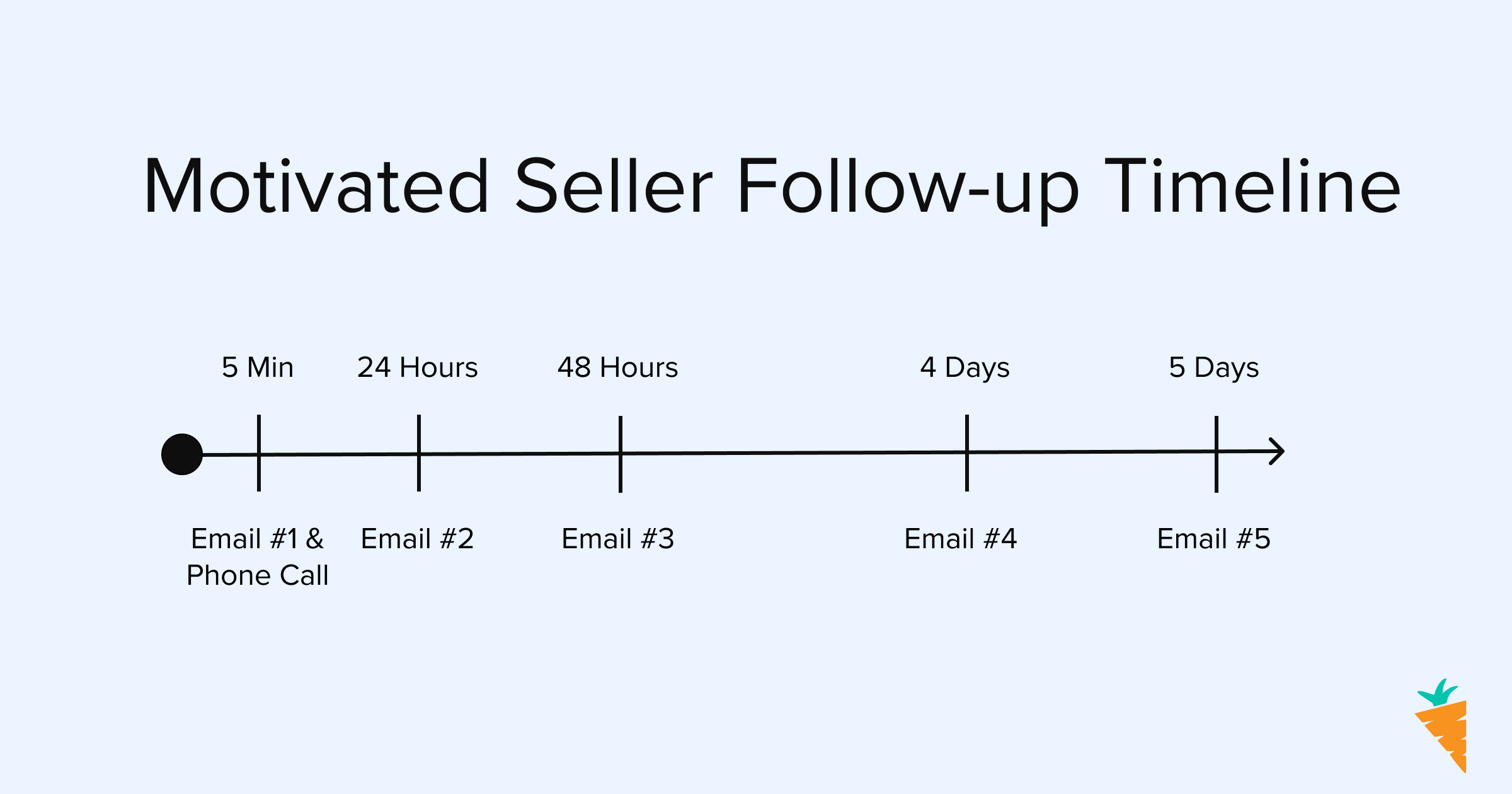


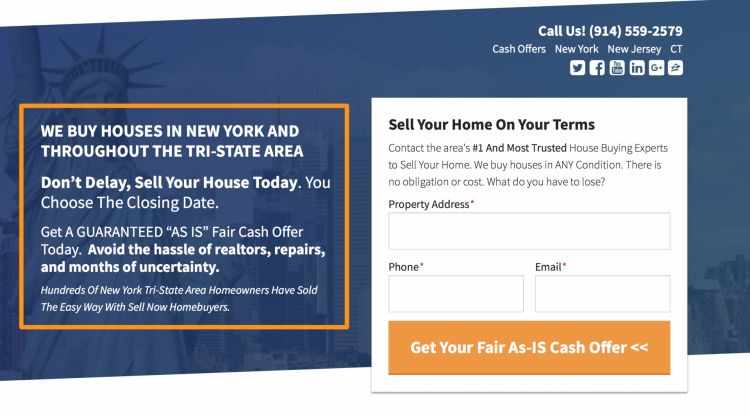
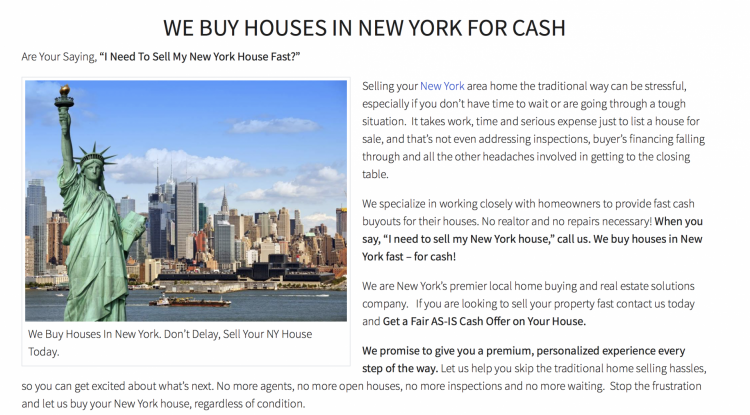
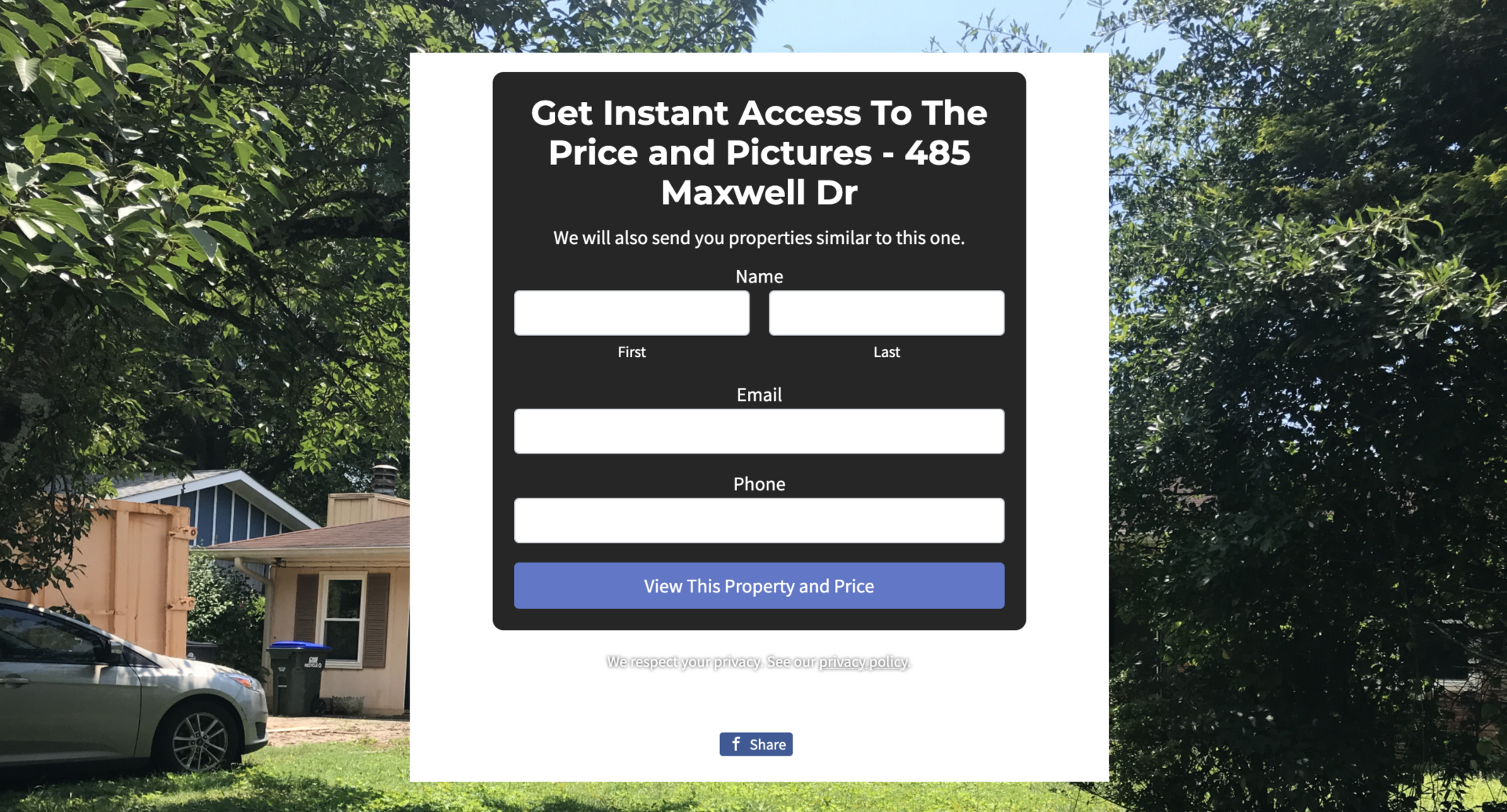

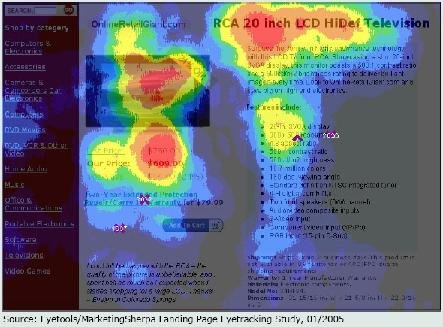
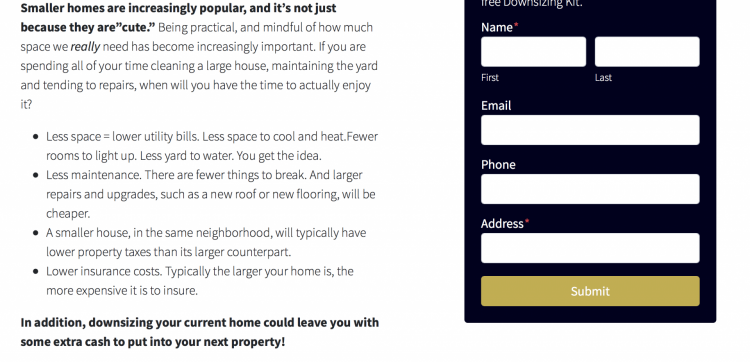
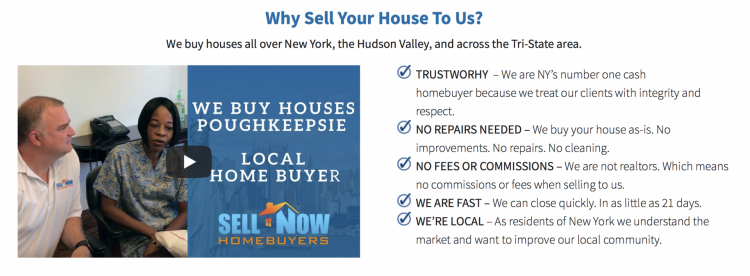




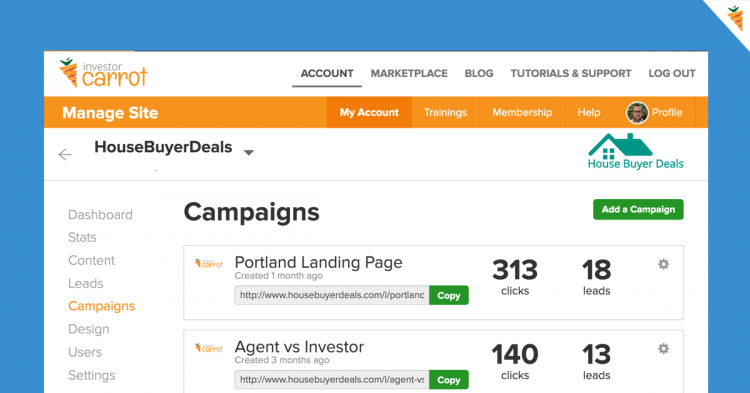
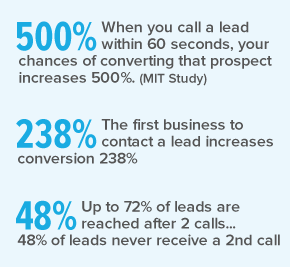
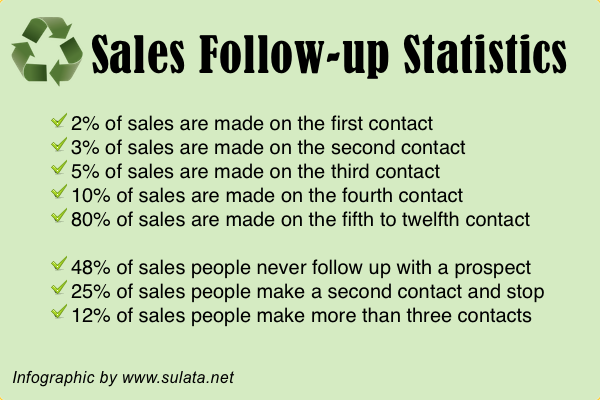
![Brand New, Distinct, Carrot Website Design [Hemlock]](https://image-cdn.carrot.com/uploads/Featured-Image-111.png)

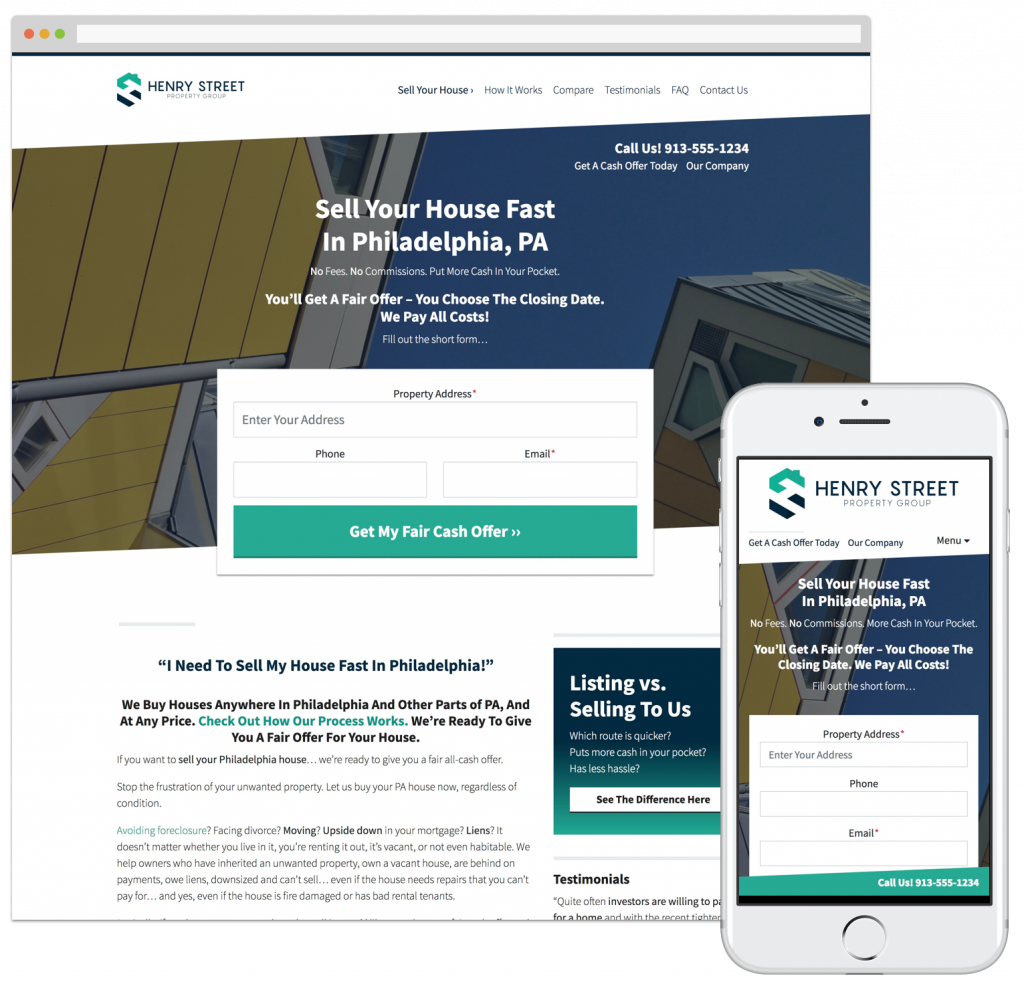
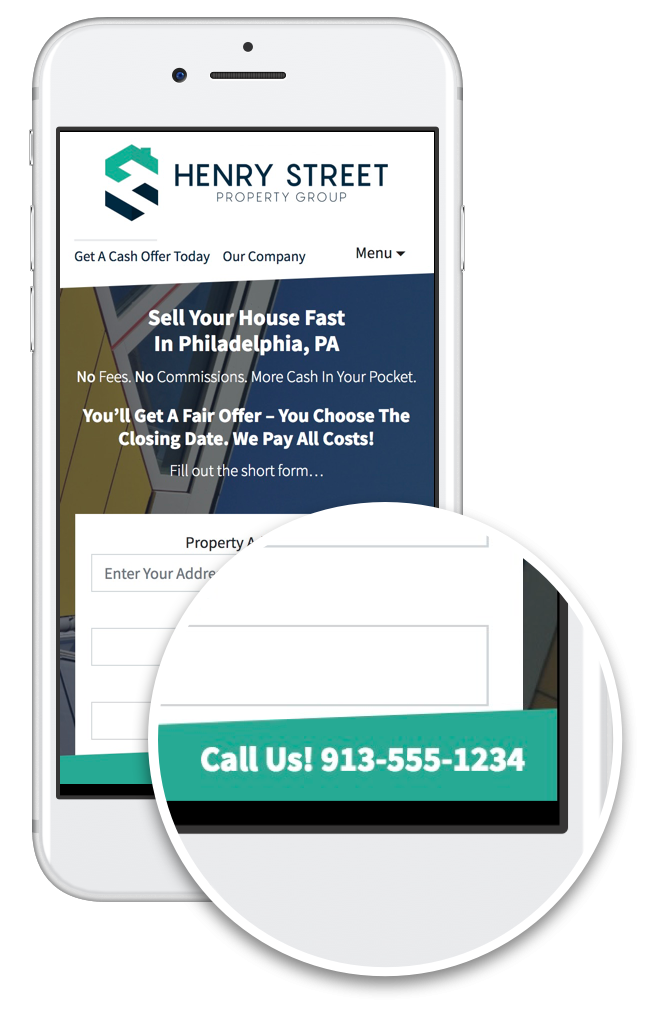
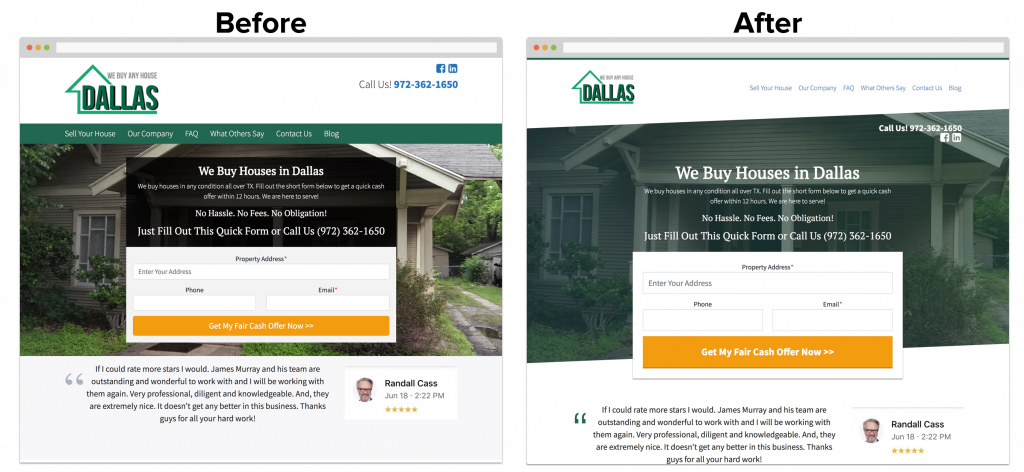
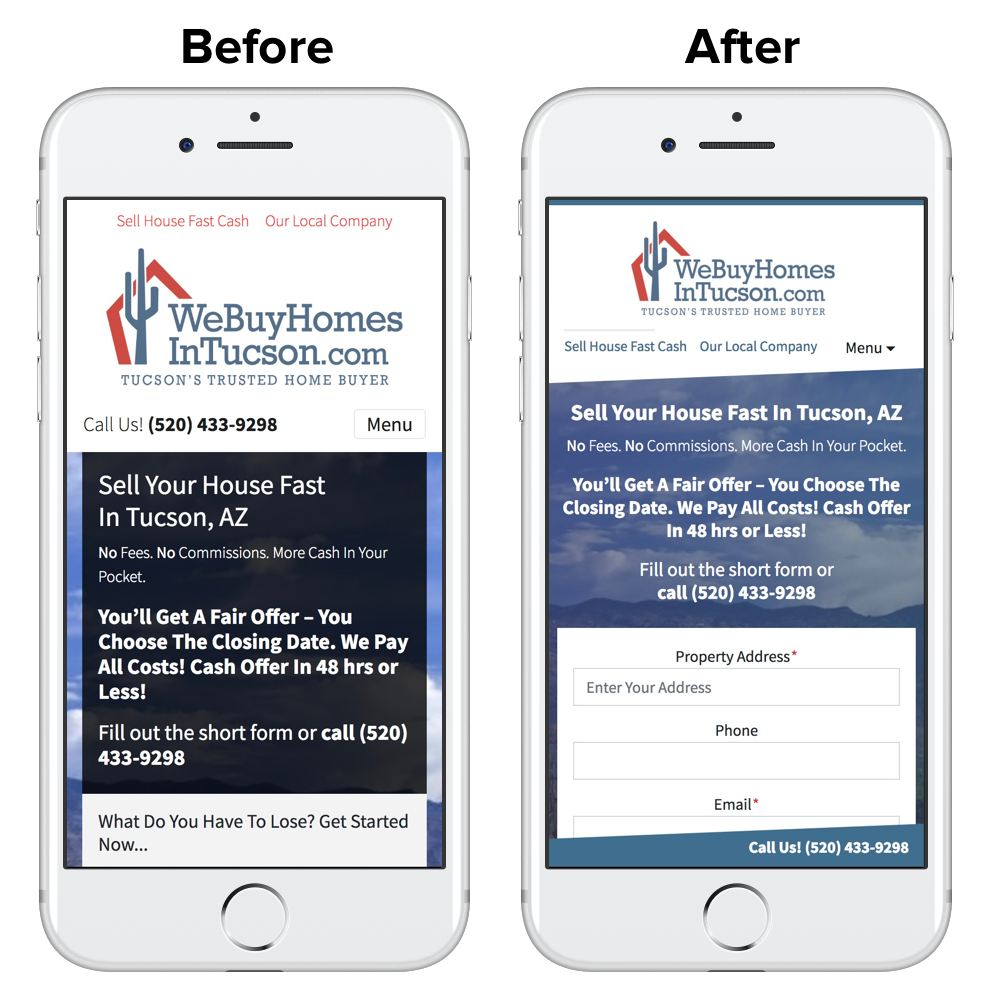

![SEO vs PPC For Real Estate Investors – Which Is Best? [Infographic]](https://image-cdn.carrot.com/uploads/2015.01.4-seo-vs-ppc-featured.png)