People will come to you for what you can bring to the table, and there’s nothing better to bring than yourself.
– Sam Starns
Elope Your Life | Why Most Entrepreneurs Overthink Purpose & Under Think Authenticity w/ Sam Starns
San Starns isn’t an agent nor is she a real estate investor. She is an elopement photographer who is creating her own niche to help people not just create the perfect wedding day but also to find the courage to go after what they want – even when society says no.
Using the lessons she’s learned both in life and business, she’s developed the confidence to become the person she was meant to be, and now she’s helping other people to do the same. No matter what industry you’re in, Sam’s tips can help you define your purpose, create your niche, and live the life you were meant to live.
Read the Full Show Notes Below…
Once a month, all of the business owners in our building get together to share, wins, struggles, goals, and anything else impacting our businesses. A goal of Carrot and of mine personally is to help people find freedom in their business, leaving jobs that make them feel trapped.
Sam Starns is a perfect example of this and her message to Elope Your Life takes things one step further.
Living YOUR Best Life
How often do you find yourself doing things that don’t bring you joy simply because society says you have to? This could be anything from picking a career others find prestigious, covering up that grey hair, or throwing a huge wedding even when your heart wasn’t in it… as was the case with Sam.
Before becoming an adventure elopement photographer, Sam thought she was going to be an attorney. However, once she realized that wasn’t her true calling, she was able to take the pain she felt on her wedding day, channel it, and use it to find her purpose.
Sam set out to not only help people elope but to help them find the things that were meaningful to them. Just because society says you need to do something a certain way, doesn’t make it true. Keeping this in mind for yourself personally and for your business, will help you stop setting goals based on what others want, and finally start living for yourself.
Niching Down, then Niching Down Again
When Sam started her business, she was concerned she would have trouble finding clients, especially in our small town of Roseburg. Finding people who were not only getting married but who also wanted to elope seemed a bit daunting until she realized there were other people all over the world who shared her pain.
Instead of making her niche simply wedding photography, as many photographers often do, she took it one step further to work with those who would rather elope.
If you are an agent, you might say your target client is anyone buying a house in your particular city. However, if you can niche down even further, you can become the big fish in a small pond, instead of the other way around. For example, you can help first-time buyers, young families, people who love the outdoors, or focus on particular neighborhoods.
Serving Others Like Yourself
When it comes to finding your purpose, you’ll often find you are drawn to serving others who have a similar background to your own. One Sam realized there were others like her who didn’t want the big fancy wedding, she knew she wanted to help others have the wedding they wanted, catapulting them into a life they designed themselves.
By utilizing Evergreen Content, Sam is bringing in leads and attracting her ideal clients. Of course, she could do some hamster wheel stuff, but her fresh content (which she is able to pull apart and use on different platforms,) is what is helping her get her name out there, bringing people to her website even when she’s on vacation. That is something hamster wheel marketing can’t do. If it stops, your business stops too.
Asking Yourself the Right Questions
When Sam was working with her business coach, they really dug in to help her find her why. When it came down to it, she did not want others to feel the same way she did on her wedding day.
She realized that elopement wasn’t about the incredible photos she could take, it was about helping people appreciate their uniqueness, see how amazing they are, and live a life that is as authentic as possible. Sam’s coach asked her several great questions which really hit home. He asked things like…
What would stop people from going to a party if they knew you were there?
On the flip side, what would make them invite you?
How would people describe you after you left?
How do you make them feel?
Answering these kinds of questions and really drilling down to why you’re doing what you’re doing will help you craft your mission statement and find your purpose.
Nobody Can Compare to You
When running a business it can be so easy to compare yourself to what others are doing. But the most important thing you can bring to the table is you. Your extremely unique background is what will make people gravitate to you.
If you’re an agent, helping people see that it isn’t just about the house itself, but rather the experience, the freedom, and the memories that will be created in your new home.
We’re crazy excited to see where the journey takes Sam next. Even if you aren’t getting married any time soon, her book is relatable to so many people in so many ways. Check out her website and be sure to see Sam speak at TedX Roseburg this coming April.
Hey guys and gals. This is Trevor from Carrot, and I’ve got a video coming at you that’s going to walk you through as an agent or an investor, how to embrace something that we call the hybrid real estate strategy.
Now you’ve probably been seeing in the market a lot of things happening in the last two to three years. Around 2017 here at Carrot, we were starting to talk about the hybrid strategy that will become increasingly popular, where a house seller works with a person who is both an agent and an investor.
Now, many of you watching this might be just an agent serving people through the MLS and mainly working with sellers who are motivated to sell retail and get top dollar. Many of you might be watching this video, who are wholesalers or house flippers who are used to buying properties and acquiring properties at a discount.
Now, one of the things we saw in 2015, 2016, and 2017 was that many real estate agents weren’t collaborating with investors. Many investors complained that they couldn’t find investor-friendly agents, and the times have changed.
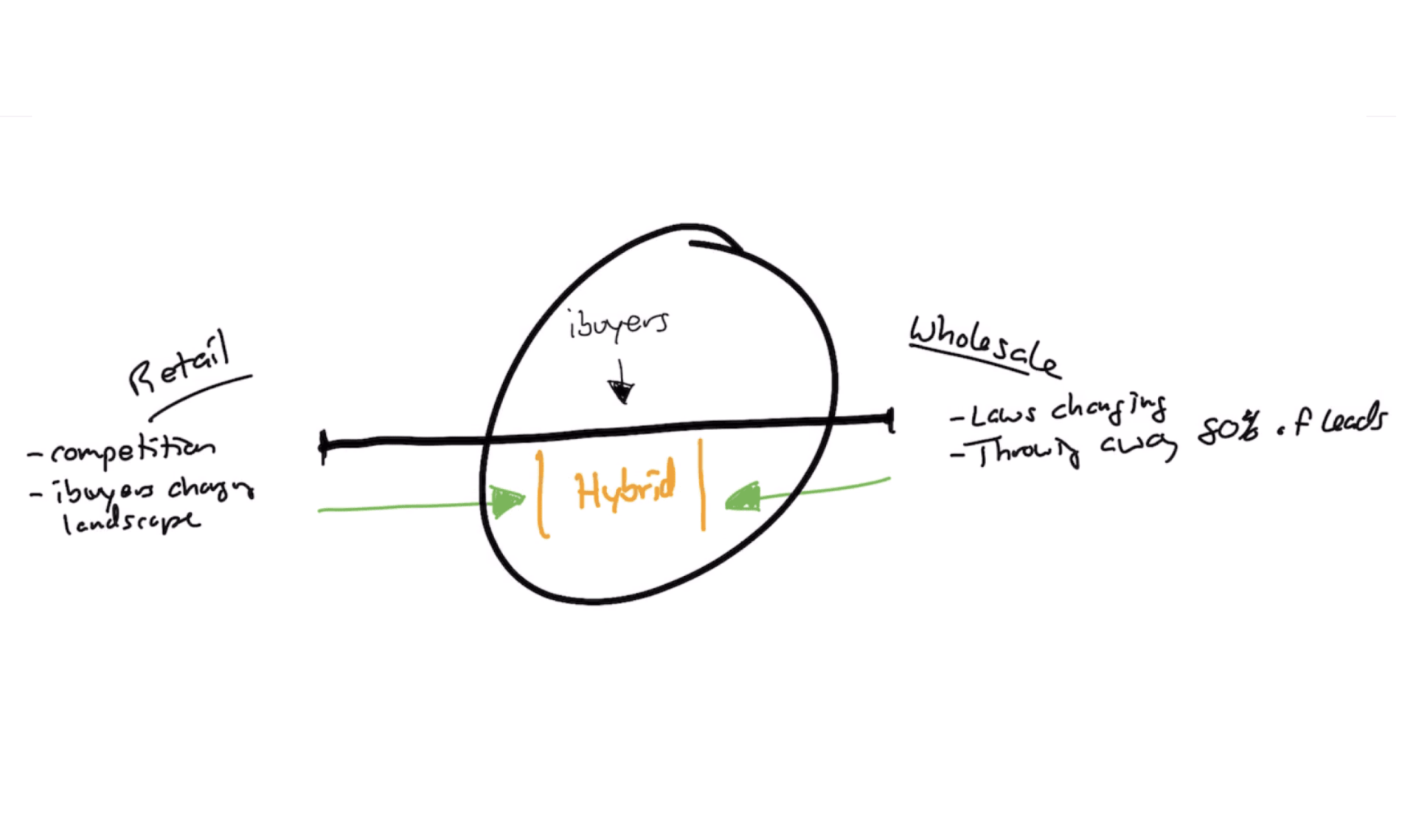
We’ve started to see laws being enacted around the country where it makes wholesaling harder to work. We’ve started to see iBuyers and big tech giants coming in to start to disrupt parts of the market. And with that disruption, with those law changes, what’s happening is there’s a concentration in the middle.
There’s a concentration in the middle of the market where sellers are demanding an easier way to sell their house.
So for real estate agents who are only working with people who are motivated to sell retail where the houses are in show-ready condition, they don’t need any repairs, or where the person can wait multiple months in order to get top dollar…
If you’re one of those real estate agents who wonder,
“Why would someone ever want to sell a house for below what it’s worth, below what they could sell on the MLS to an investor when they can just list it on MLS and get top dollar?”
Well, I’m going to be walking you through why an increasing amount of sellers are choosing to work with a direct house buyer, an iBuyer, or a local mom-and-pop investor like we work with here at Carrot a lot.
And on the investor side of things, you might be looking at it going,
“Why would I ever want to get my real estate license?”
We hear that all the time and I’m going to walk you through why you really need to be seriously looking at either getting your real estate license or collaborating with one of the millions of real estate agents around the country to help you serve more of your sellers.
I want to drill this in right now: YES, there are massive side benefits to moving forward with a hybrid real estate strategy as an investor and an agent or an agent and an investor.
But the main reason to do hybrid isn’t just to put money in your pocket. There’s a massive upside to it as I’m going to walk you through exactly how to do it.
The main reason to do it is actually to serve your sellers better because you can imagine that if a seller reaches out to somebody, they want to sell their home.
If I were to survey 100 house sellers, 99 and a half of them would say that they would much rather sell their house quickly for cash, not have to wait for a buyer to find financing, not have to have open houses, not have to have a bunch of people go through their home for a fair price that they agree within a matter of days or weeks.
99 out of 100 would say that they would much rather do that than list it on the market and all that goes through that process.
Now, why do 85% of homes sell on the market with real estate agents through the traditional routes?
It’s because that’s the way that most people know to do. And what people do is they follow the path of what they know best.
But with iBuyers coming into the market, what we’re finding is it’s actually making iBuying or directly selling your home more mainstream to the average home seller.
If we think about Tesla. Tesla came along, before that electric cars were not popular. People didn’t want to drive electric cars, but what happened is Tesla came in and they made an amazing experience for the user.
They actually solved the problems and provided a better experience, and then they also went out there and grew the electric car market. So Tesla came along and raised the entire market, made the electric car market bigger than it ever was.
That’s what’s happening with iBuyers.
iBuyers are coming in and they’re going to be getting deals that real estate agents normally would have gotten.
They’re also going to be getting deals that real estate investors normally would have gotten.
They’re going to be growing the overall pie for people who want to sell their home directly to an end buyer or to an investor versus listing on the market.
So what does this mean for you as a real estate agent?
Well, there’s a lot of competition right now in the market. And so you need to find ways to differentiate your offering.
So if you’re showing up to every single house seller appointment, when you’re offering them one option, which is,
“I can list your home and here’s my fee, take it or leave it,”
How many of those home sellers are you likely losing because you’re not actually solving their problem the way that they want it to be solved?
If you’re a real estate investor and you show up to that house and you say,
“Hey, here’s my offer. It’s a discount offer. Take it or leave it,”
How many of them are actually perfect people who would rather list on the market and take full retail?
How many of you guys, real estate investors or real estate agents, are completely ignoring the other side of the market?
Where you’re trying to paint everything into your pretty little box of, it’s got to look this way to list on the market or you’re painting it in your pretty little box where it’s got to look this way if I’m going to buy it at a discount.
I’m challenging all of you to become a hybrid in the next real estate cycle or heavily collaborate with the other side because if you don’t, you’re going to be struggling big time.
What Is Hybrid Real Estate?
Hybrid is essentially a seller strategy, not a buyer strategy.
And that’s something a lot of people have confusion about. Do I make one website? Do I make two websites, one just for retail and one just for wholesale?
I’m going to walk through exactly what you do with your websites and exactly how to deal with that and what to do with your offers to your sellers and how you serve them best, whether you’re an agent or an investor.
Hybrid real estate is a seller option where you’re serving sellers up with multiple different offers.
It’s a cash offer. Hey, if you’re looking for speed and convenience and are willing to take a little bit of a shave in equity, here’s this.
If they want top dollar, here’s what we can list it for them in the market.
That’s all that it is.
It’s going in there and saying,
“We can help you no matter what your situation,”
Versus we can only help you if you fit in this box.
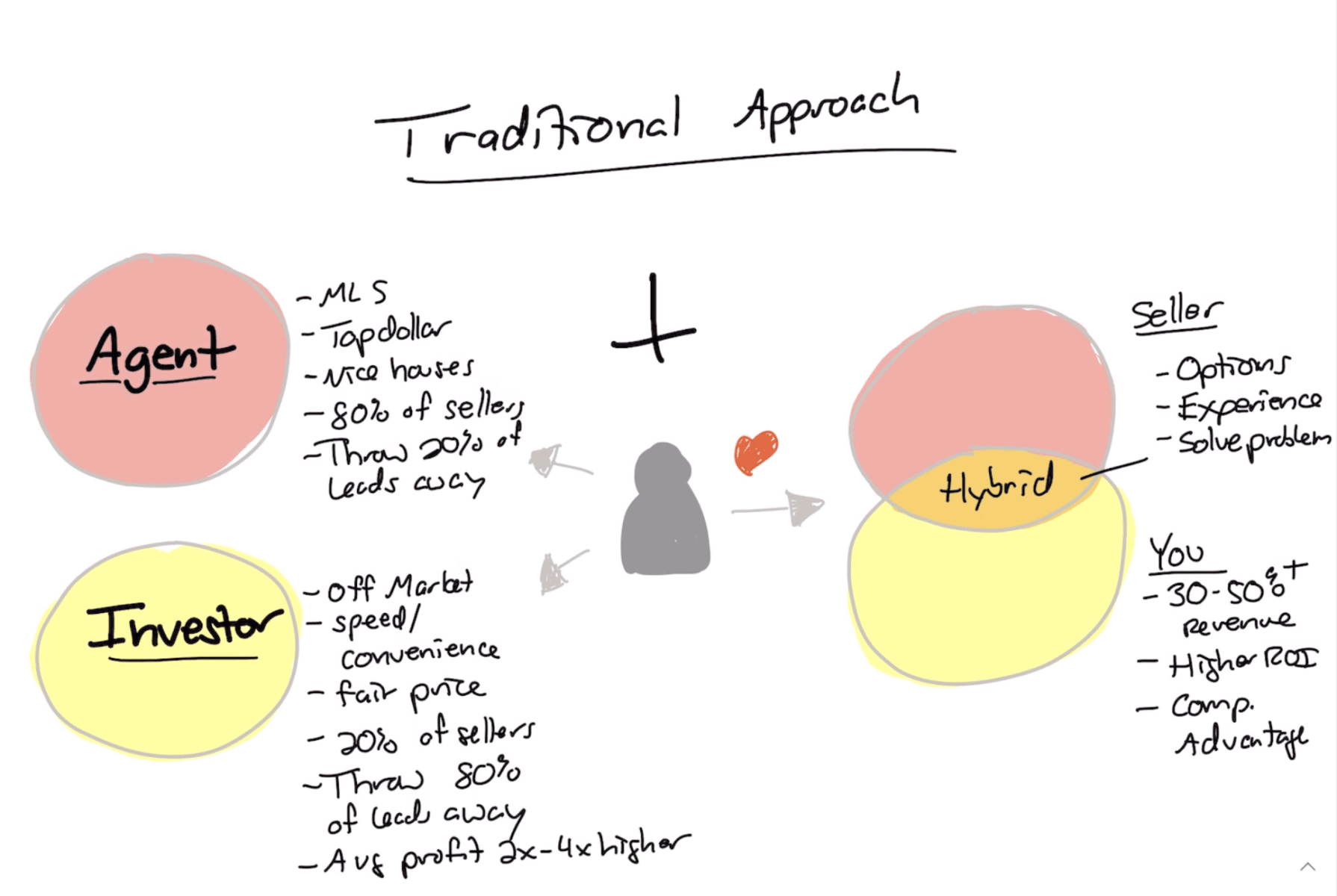
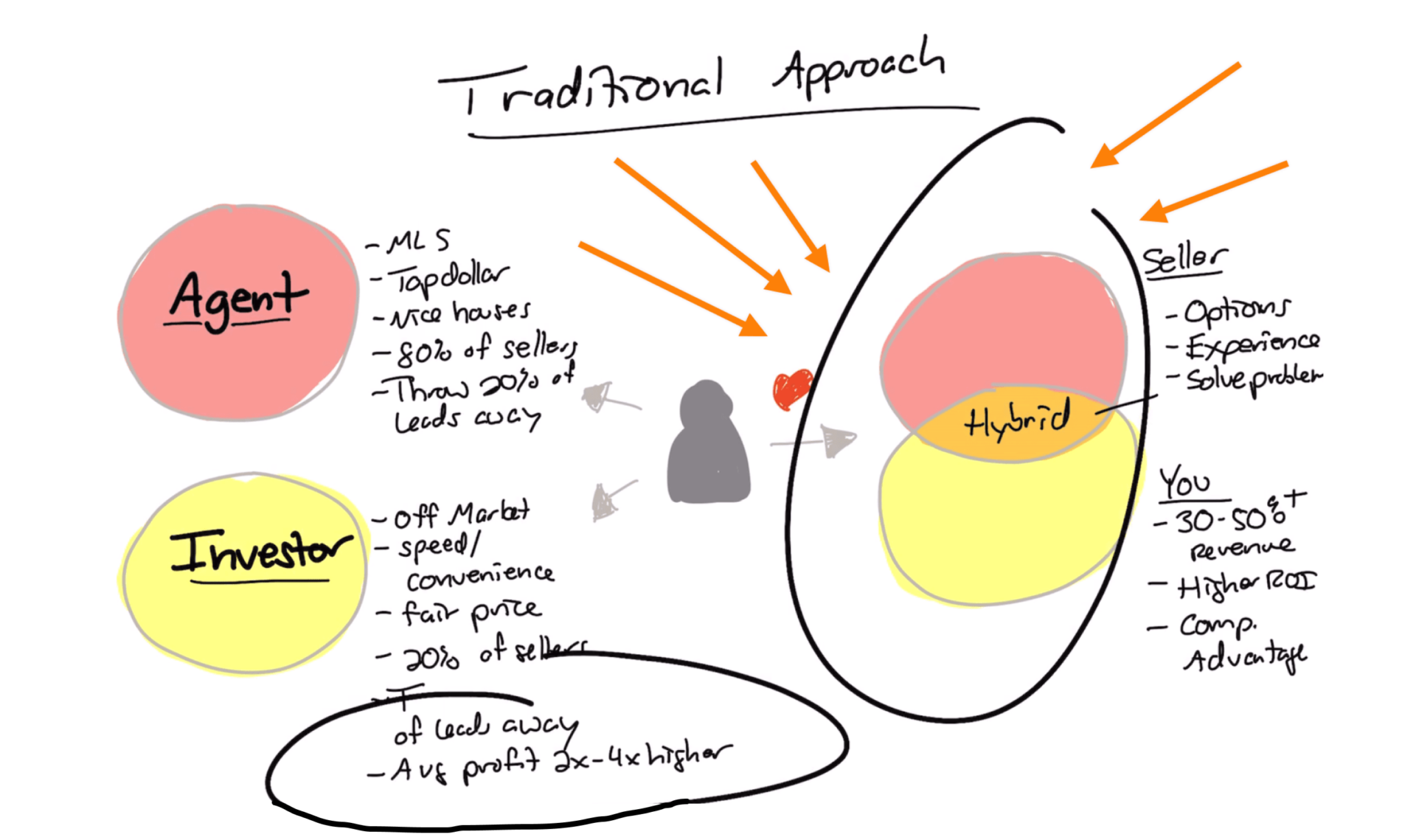
So the traditional approach like I’m showing below.
You’ve got a motivated seller right in the middle. And that seller traditionally is going to go reach out to a real estate agent because everybody knows 5, 10, 15 real estate agents, but very few people personally know a real estate investor.
But now we have these iBuyers coming in that are making that more popular.
So they’re hearing of “Opendoor”, they’re hearing of Zillow buying homes, “Offerpad”, and the mom and pop home buyers that we work with that have been around for 30 or 40 years.
iBuying is not new. It’s just a fancy phrase that the tech industry placed on their well-funded competition.
So most people would go reach out to a real estate agent.
And if they’re:
Looking to get top dollar,
Willing to wait multiple months,
Don’t mind people coming through the property; you’re having open houses or all that goes with that,
Okay with paying the fee that goes to the real estate agent,
Then they’re going to go that route.
That’s where the majority of people are going to go. Probably 80% of sellers are going to go that route.
Now, if you’re a seller and you are:
Looking for speed,
Looking for convenience,
You don’t want to list it on the market,
You don’t want to have open houses,
You don’t want to have people coming through your property,
You don’t have the time because you’re relocating,
Or, you just inherited a house from your uncle and you don’t want to deal with all the hassles of fixing up that property in a way that’s going to make it so it can be sold. Or, you don’t have the emotional investment in the property because you inherited it and you just want to get it done with because there are so many reasons why someone wouldn’t want to sell for a cash offer.
So on the traditional side of things, a real estate agent is going to put the house on the MLS. They’re going to try to get top dollar for that property. They’re usually nicer houses that are show ready.
Sometimes it will be the fixer-uppers, but usually, it’s nicer houses. About 80% of sellers are going to go this way, which means you as an agent are probably throwing away 20% of your leads which could be some of your most profitable deals of the entire year, and you’re now not serving those sellers.
You’re throwing them back out to the streets, back out to the wolves to try to find their solution when you could actually serve them.
Now, as an investor, you’re going to take it and buy it off-market, you’re going to then fix it up and sell it on the market to somebody.
So real estate agents, investors are your friends because if you work with them tightly, you’re going to then find out that when they fix up a property, they’re going to be listing on the market to sell retail.
So this process is not cutting agents out at all. It’s actually raising the values of the homes that you’re going to be able to sell and then giving you more inventory of great homes to sell on the market versus all these homes that need fixing up.
That is where the real estate investor plays a massive role in that. And a lot of agents don’t grasp that and you really need to in this next cycle.
The investor is going to offer them speed and convenience.
Let me tell you an analogy.
I’ll hear a lot of real estate agents saying,
“Why would someone ever sell at a discount when they can sell on the market and get $40,000 more, $20,000 more?”
Well, let me throw this at you.
When was the last time you went and bought a car at the car dealership and that car dealer sat in front of you and said,
“Do you have a car to trade in?”
And almost all of us always say, yes, I want to trade it in. And we know when we’re selling them that car, we’re selling it at a discount.
We know when we’re selling them that car, that we could go over to Craigslist and we could sell it for more money if we’re willing to list it on there, if we’re willing to do whatever repairs are needed so the person is going to take it and they’re not going to come back on you liability-wise, to answer the phone calls, to let people drive it, to do all the paperwork that’s involved with it.
We choose to not do that and we choose to trade the vehicle in because of speed and convenience even though we know that we could sell it for more.
So it’s the exact same thing for a house seller.
The real estate investor is going to offer them a fair price. A seller won’t agree to a price they don’t feel is fair. Now it might be below what they could get on the market, but they’re agreeing to a price that they feel is fair in exchange for the speed and convenience and the service.
20% of these are those types of sellers, which means, real estate investors, you’re throwing 80% of your leads away right now if you’re not a hybrid or if you’re not working heavily with a real estate agent.
Real estate agents, listen to that. If you want more sellers if you want more listings, one of the best sources for listings is to work with a real estate investor or become a hybrid agent investor because 80% of those motivated sellers come through your Facebook Ads, through Google search, and through Carrot.
80% of those actually want to sell retail. And so that’s one of the most underserved lead sources the agents completely ignore and you guys should be going after and we can help you.
The last part of it here is investors tend to profit two to four or two to five times higher profits per deal on those deals than a real estate agent would gain for commission.
One of our Carrot members, Anthony Beckham, we were chatting not too long ago. He’s actually here locally in Roseburg. He is a hybrid agent/investor. He always talks that his average profit per deal as an investor is around $20,000 to $30,000. His average agent commission is around the $7000 to $12,000 range.
Add those numbers up! Would you love to be able to do fewer deals, and fewer transactions, help more sellers, and actually earn greater revenue while providing an amazing community service?
Hopefully, the answer is yes.
The Hybrid Real Estate Agent First Strategy
On the other side, you have the hybrid. The hybrid is the one who is both an agent and an investor as I said. The cool thing is you’re offering your seller more options. You’re offering them a better experience. You’re solving their problem rather than throwing them back on the streets to solve their problem.
You’re going to be increasing your revenue as a hybrid 30 to 50%, sometimes more, just by taking those same leads you already have and dealing with them in a different way.
We’re not talking about getting more leads. We’re talking about using the leads you’ve already gotten, better, or adding on a lead source like Carrot to make it great: higher ROI and competitive advantage.
How do you do hybrid now using Carrot or just in general in your business?
Well, there are three different ways to do hybrid and it really depends on what your strategy is, whether you’re an agent first or an investor first.
I’m going to start with agent first.
Once again, I want to emphasize that hybrid is a motivated seller strategy.
It is not a buyer strategy.
Buyers for retail are not going to be buyers for an investment property or wholesale usually. Sometimes they will be, but not usually.
Sellers who want to sell retail do become buyers for retail, but sellers who want to sell wholesale don’t automatically become buyers who want to buy retail also.
So what we’re saying is this is straight-up a motivated seller strategy. That’s what hybrid is.
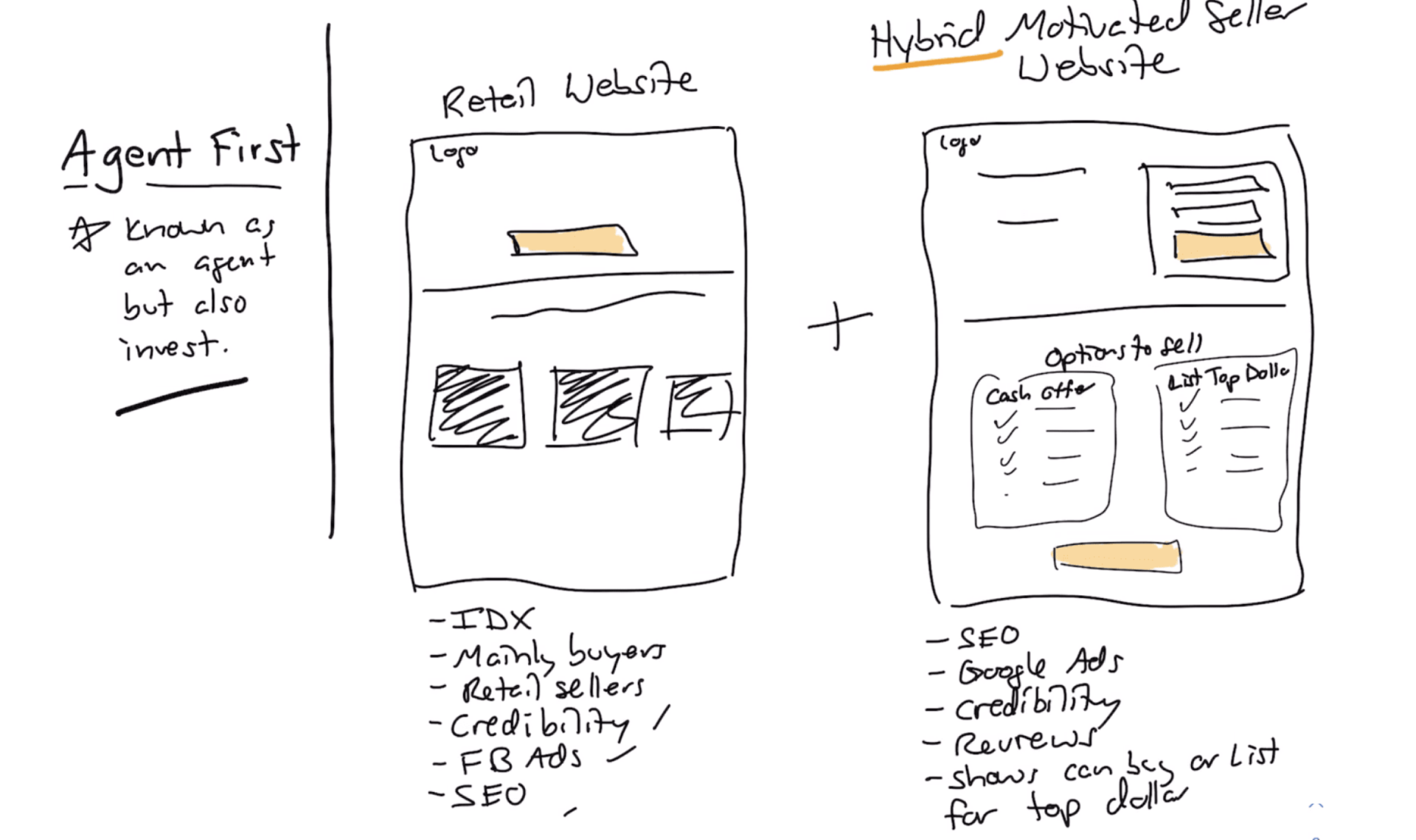
And so if you’re an agent first, and what I mean by that is you’re known as an agent in the local market. People know you as an agent, you market yourself as an agent, you have your main website that’s an agent, you are an agent, but you also invest on the side.
Now, you’re going to need to have your retail agent website. You’re going to have IDX attached to that. It’s going to be mainly for buyer leads, but you’re also going to get seller leads through that. It’s going to be for credibility.
But you’re going to want a separate website that’s just 100% geared towards a highly motivated house seller. Trying to mash the two together in one website doesn’t work well because you’re not speaking that motivated house seller’s language.
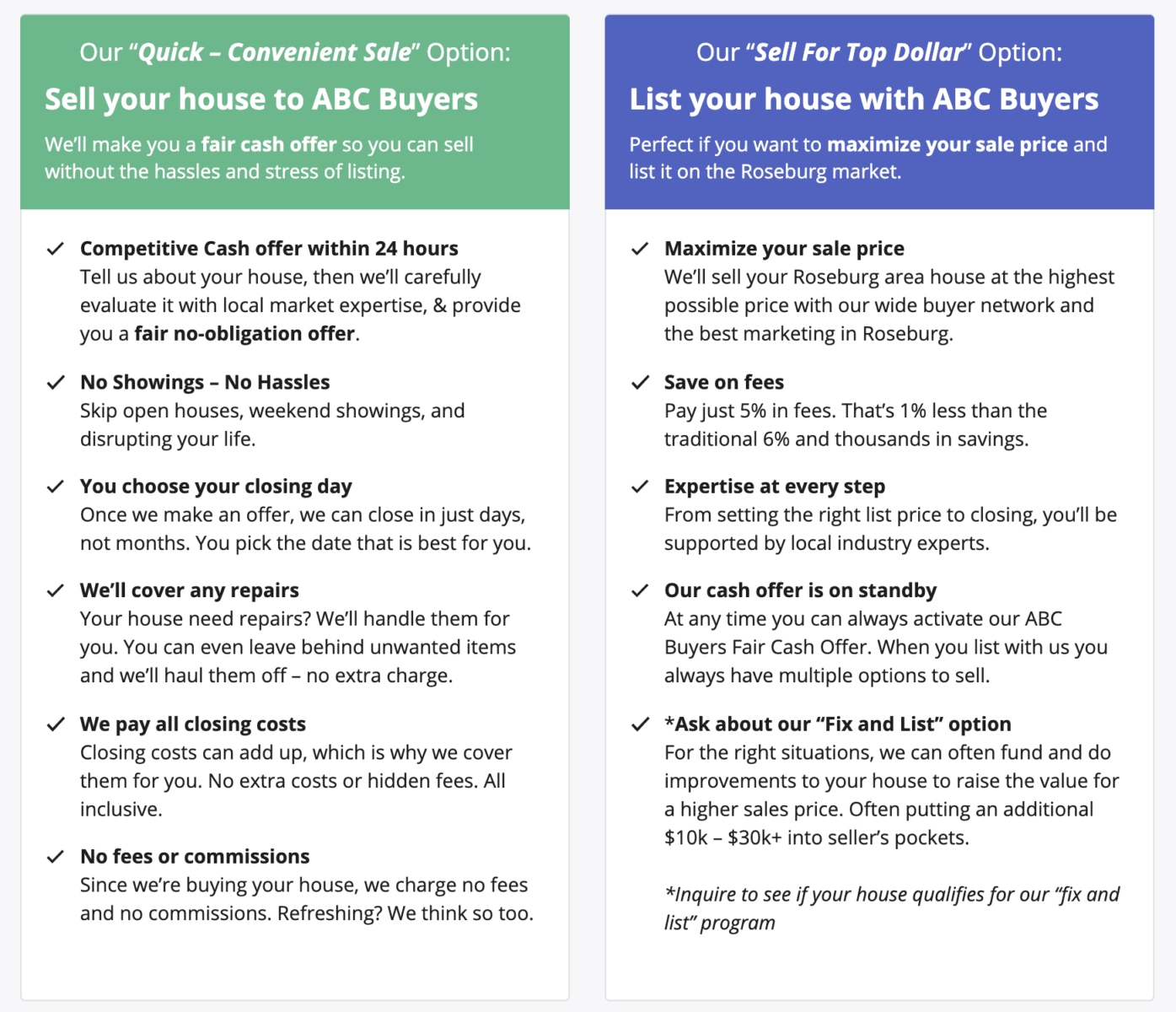
This hybrid-motivated house seller website focuses explicitly on the language that a house seller would want to hear so you can solve their problem. But the difference with the hybrid site versus our standard motivated house seller websites here at Carrot is they’re going to show multiple options to sell.
Now we have a hybrid template that you can activate in the Carrot system that shows this, or you can use this training and execute that and build it out on your website solo.
But, on the hybrid site, you’re going to show,
“Hey, we can do a cash offer or we can sell it enlisted at top dollar.”
You’re going to show them case studies, explain how you do it, and give testimonials from people who have done both.
You’re going to be driving traffic to this from SEO. It’s an amazing spot for motivated house sellers. Google Ads is actually one of the best spots for house sellers. Facebook ads also work. We usually start with Google Ads, build up credibility on that, get your reviews on there, and show that you can buy or list it for top dollar.
The Hybrid Real Estate Investor First Strategy
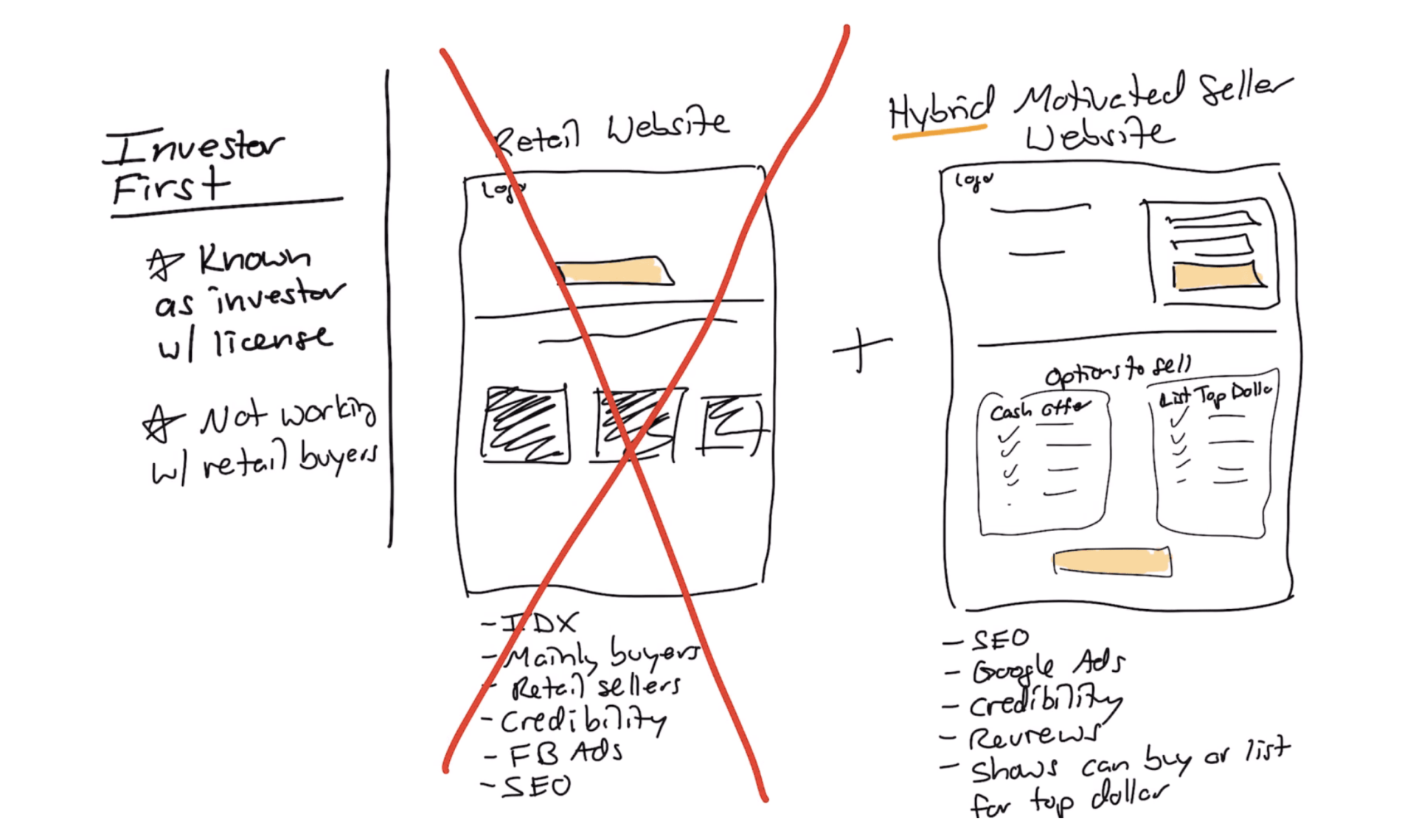
Now let’s say you’re an investor first, but you have your license, but you’re not an agent in the market, and you’re not looking for buyer leads per se. You’re not looking for retail buyers.
Well, you don’t need a retail website, then. You don’t need that website with the IDX. You don’t need that website that shows that you’ve got a brokerage or real estate agent, a real estate agency.
If you are known as an investor, but you just have your license so you can commission share with other agents or something like that, what you need is a hybrid motivated seller website that I talked about earlier.
Whatever other types of websites with Carrot, cash buyers, rent to own, your land, whatever the types of investing or leads you’re looking for, but you don’t need the retail site with the IDX if you’re not looking for retail buyers.
Let’s say you’re an investor first, but you work with retail buyers.
We have a member, Raul Bolufe, that we were talking to on the CarrotCast recently… he is this person. He’s an investor first. He partnered with a broker so that another person’s the broker of record in his state.
And what they do is they take their motivated seller leads and the ones that don’t want the discount cash offer, but want retail, they then partner with them and they list that through their brokerage, and then they do collect those buyer leads.
So you do, in that case, need a retail website. Their primary business is driven through their investing side, through their motivated house seller marketing. Still, their retail side is where they collect those buyers so they can sell their house flips quicker and also, so they can capture more of those commissions and add 30 to 50% extra revenue in their business with no extra marketing at all.
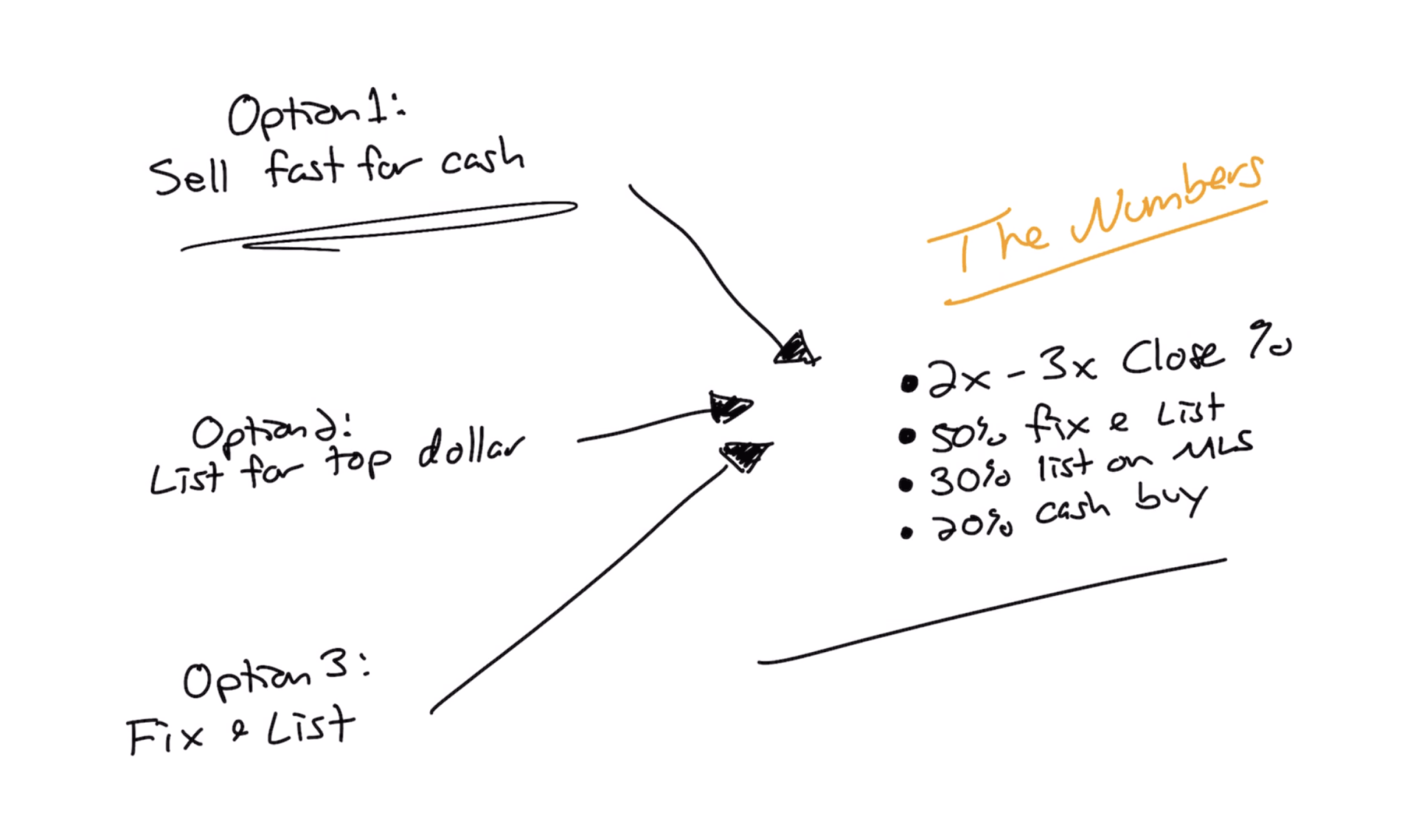
So you have option number one we discussed, which is selling your house for cash. That is exactly what iBuyers are doing and they’re even now starting to say that they’ll list the home and compete directly with real estate agents or sometimes they’re collaborating with agents, but that’s option one.
If that option doesn’t work for people, you as a hybrid should always suggest that the seller does exactly what’s going to help them the most.
Most of the time, you’re going to suggest to the seller,
“Hey, you should really take this offer over here. You should really list it on the market because you’re going to get X price more for that, but if you are looking for speed and convenience, they’re willing to give up a little bit of your equity in exchange for that. Here’s the cash offer that we can make for you.”
Option #2 – List for Top Dollar
Number two is listing on the market, like I said, for top dollar.
Option #3 – Fix and List
Number three is what we call the fixing list. And the fixing list is kind of a hybrid of the two.
The fixing list is saying…
“Hey, Mr. and Mrs. Seller, you have a great house. If we were to list it on the market, it probably would sell pretty quick for about $300,000, but if we were to invest about $50,000 or $25,000 into fixing up the kitchen, this bathroom, putting new carpet in, I think it’s pretty quickly going to sell for 375,000 on the market where it is. So Mr. and Mrs. seller, what if we provide our money to do the full rehab?
We’ll bring in our construction crew. I’ll show you some good examples of the great work that we’ve done. We will do the work. We’ll put in our money to do that $25,000 of fix-up, and then we’ll list it on the market for you, and then over the price of the $325,000, we split that money. I get my $25,000 back right away since I put that money in to fix it, you pay me my commission on the first $300,000 and then we split the profits right down the middle on the extra.”
So you, as an investor/agent hybrid, you will earn the commission on the $300,000. You will earn the extra $25,000 in profit because you split that $50,000 in profit. And now that your seller, rather than selling for $300,000, all the other agents are offering that they can sell it on the market, you sold it at $375,000.
You took your money back. You took your profit back, and they got an extra $25,000 in their pocket, and the end buyer has an amazing, beautiful house.
Now, if you’re a real estate agent or a hybrid investor/agent who offers that service, can you tell me that you would not be winning in your market big time because every seller would want to work with you?
The answer is you would 100% be winning.
How Much Money Are You Leaving on the Table?
So, I want to ask you this: As a real estate agent and investor, how much money are you leaving on the table right now? How many sellers are you underserving and throwing back to the market or not putting enough money in their pockets because you don’t know how to serve them well with the hybrid real estate strategy?
How many leads are you giving up as an investor or an agent because you’re trying to fit everything in that pretty little box for the MLS or the investor side? Are you completely ignoring the other side of the market that’s going to keep growing and growing and growing as the iBuyers penetrate the market more?
You have to make the shift as an agent. You have to make the shift as an investor, and we’re here to help you guys and gals do that.
We have amazing websites for real estate agents, amazing websites for real estate investors. We help you attract the most motivated house sellers and buyers, and tenants. And we help you do that through evergreen marketing with our inbound marketing system.
And we want to help you increase your ROI, leverage more of your leads into deals, grow your business without growing your activity, and serve more sellers, launch a hybrid site here on Carrot.
Post what you’re doing right now in the comments section below.
We’d love to collaborate, answer your questions, and help you increase your deal volume with the hybrid approach!
Treat leads how they need to be treated based on where they are, not where you need them to be.
– Greg Helbeck
Boost Your Negotiation Skills by Asking Questions, Finding Seller Motivation, and Helping Your Leads Get Clear About What They Really Want w/ Greg Helbeck
Back in 2016, I did the Energy Audit and I realized that writing long and detailed articles absolutely drained me. I am pretty good at it, but it wasn’t how I wanted to spend my time. What does fuel me is doing this podcast and talking to people who have a hunger to grow.
People who aren’t just talking but who are doing the work with a huge smile on their face.
Greg Helbeck is one of those people. Between his weekly book reviews, incredible podcast, and genuine desire to be better than he was the day before, Greg is the perfect guest for the CarrotCast and I’m not sure why he hasn’t been on sooner!
We had so much to talk about that we’ve broken this interview into two parts: negotiation skills and analytics.
Read the Full Show Notes Below…
Greg does a lot of his deals remotely. This means he can’t always build the same relationship with people over the phone that he would be able to in person. He has had to develop his negotiation skills and learn how to ask the right questions in order to gain trust, build relationships, and close deals. Now we’re going to show you how he’s done it…
Talking to His Leads Differently
In part two of our interview with Greg, we’ll dive more into how he tracks his marketing, but here we will discuss what he is actually doing to get the leads in the door in the first place.
These are the primary ways Greg is finding leads. Greg will talk to each lead differently depending on where they found him. If they got a letter, they may be interested, but not as interested as someone who searched him out and found him via SEO.
Questions for Qualifying a Lead
When a lead comes in, it’s important to qualify them. There are a few key things Greg will ask to determine how motivated they are and where they are truly at in the selling process.
When can he help them? Are they ready now? In one month? In six months? Depending on the answer, he will market and appeal to them differently.
Find out why they need to sell and ask open-ended questions to keep them talking. This is the only way to find a deal that will work for both parties – you have to find out what they need.
As quickly as possible, get a price from them. If they seem reluctant, ask them how much houses are selling for in their area so you can get a feel for where they’re at.
You can also reframe the question to ask them what they wouldn’t take, then negotiate up from there.
This last one is really clever. It starts from no and goes from there. If Greg and the seller are way off on price, he will reiterate the value his service brings. If they still aren’t finding a common-ground, he will help them by facilitating a traditional listing.
Keep It Simple…
Asking direct and straightforward questions is often appreciated by potential sellers you are working with. By understanding where they are and their motivations, you can meet them where they are to find a solution that will work.
Asking the right questions will help to get your clients clear on what they need so they can make the decision they need to make. By being as helpful as possible, you’ll be able to close more deals and truly feel good about how you are helping people.
“Where people go wrong is they let not getting the job done be an option.”Adam “Big Sip” Johnson
Adam “Big Sip” Johnson had no home internet, an AOL email address, and a Carrot site. His partner Brent just started investing in real estate 2 years ago.
Somehow they’ve managed to bring in tons of leads and close more deals using methods that are so simple, anyone can implement them.
Learn some simple investor secrets such as how to make Facebook ads convert for less money, how to use UBER as a free, money-making lead source, and how they wake up happy, find fulfillment, and have more FUN doing what most of us stress over.
EP 237: Simple Investor Secrets: Netting $100k/mo Using UBER and Facebook Ads
Just like with farming, seasons matter in business.
If you own a ski resort… seasons matter big time.
If you are a landscaper… seasons matter.
If you are a real estate investor or agent… seasons matter.
And, even though it’s December, now is the time to start thinking about Spring.
We wrote a blog post about the seasonality of real estate investor leads and the volume of online searches that motivated house sellers, cash buyers, tenants, etc. make each month during the holiday months.
In that post, we laid out the data and the stats showing the common “dip” in searches in the holiday months for people looking to sell their house… and the increase in those online motivated seller leads in the spring and summer months.
Now, this doesn’t mean that there aren’t a lot of deals to be had in the winter months.
Why Now Is The Perfect Time To Ramp Up For Spring And Online Motivated Seller Leads
So, don’t look at the data and think that you can’t do deals in the holiday months. That’s not what this is about. It’s about…
Realizing There Is “Lead Gen” Seasonality In The Real Estate Flipping / Wholesaling Business and Preparing For…
… the dips and the climbs.
Take for instance the quick chart below that we pulled up.
Motivated Seller Searches: 11 Popular Highly Motivated House Seller Searches Online… The Trend
Motivated House Seller Searches: This is the average motivated house seller online searches of just 11 common highly motivated seller searches sellers make online. Notice the data… and the slight climb to a peak in summer in searches. Then another climb in fall before the holiday dip.
Now take a look at these ones below that are a bit more drilled down on specific keyword phrases that we know motivated sellers are typing into Google each month.
(at the end of this post I’ll show you something really cool that we’re seeing… and how it’s indicating that we’re heading into another GREAT year for an increase in motivated seller searches online. So read this whole article and let me know your thoughts in the comments section)
“We buy houses” Type Searches: Spring And Summer Increase
It’s December… Are you preparing right now to capture the higher motivated seller lead search volume in the spring and summer? If you don’t have a website, right now is the time to get one up and started. If you do have a website, now’s the time to get things ramped up.
“Sell house fast” Type Phrases: Spring Bump with Late Summer Increase
Getting The Picture Now? Getting your website up and rolling and optimized… or getting a real marketing plan in place and executing it RIGHT NOW is an ideal time to get rolling so you can capture the late spring and summer increase… which likely means a higher chance of more deals.
“I buy houses” Type Phrases: Seeing A Similar Spring And Summer Bump And Fall Slump
Pretty Consistent w/ a Slight Bump In Spring / Summer
“We buy houses in [location]” Type Phrases: But For Just Portland, Atlanta, Houston, and Pittsburgh
Even More Dramatic Spring / Summer Bump: When you go hyper-local… where the motivated seller includes their city in the search (which most sellers do), the increase likely coming up in spring and summer becomes even more apparent.
Last… from our own Google Analytics account.
Spring / Summer Traffic Ramp From Our Own Google Analytics Account
Further Proof… We can look at Google’s data all day long, but how about actual Google Analytics data from our own account for our Carrot members’ real state websites.
You get the idea.
Those charts above show just a few of the dozens and dozens of SEO search phrases motivated house sellers are typing in… that real estate investors should want to get in front of.
In fact, our Carrot members are generating over 60,000 opt-in leads per month(that doesn’t count the thousands of phone call leads per month to their Carrot real estate websites as well). So we’re constantly helping our customers position themselves in front of the online traffic to increase their chances of generating more motivated seller leads and more deals.
The SEO Search Data Is Great… But Why Is NOW A Great Time To Get Things Rolling?
Over the past five years, we’ve been tracking the organic search engine rankings of many of our Carrot members’ real estate websites. This goes from motivated house seller websites to cash buyer websites, to note buyer websites, rent to own websites, agent sites, etc.
This is a mix of real estate investors and agents who are both implementing our “lead generation” training… and the ones who decided to outsource their SEO or PPC for them.
Take a look at some of these charts below that show how long it *may* take in some markets to get your SEO rankings to improve enough to generate consistent leads online.
These pictures are from actual SEO ranking increases for a few of our Carrot clients in some more competitive markets.
How Long Did Their SEO Take? 4 Months To Make A Major SEO Jump In This Competitive MD Market
4 Months And 20 Deals – This InvestorCarrot client used our 3 Lead Per Day Training to get her website ranked high in Google. She’s in a more competitive market and it took about 4 months to get onto page 1… another few months to get in the top 2 results.
And another…
How Long Did Their SEO Take? About 3-5 Months In A Competitive Alabama Market
Similar To Above – This client is in a very competitive market for motivated seller searches as well. It took 3-5 months of solid SEO work to get into a top position in Google in his market. Now he’s generating a lead per day and closing deals consistently through his online marketing.
Last one…
How Long Did Their SEO Take? About 2-3 Months In A Competitive California Market
They Had A Jumpstart – This Carrot customer was already ranking near page 1 in Google for a competitive search phrase for motivated seller leads. Within 2-3 months, his ranking improved to the top of page 1 for this search phrase and he’s closed 4+ deals from his Carrot site since.
The Average Time It May Take To Rank Well In Most Markets Is About 3-5+ Months When You’re Doing SEO
SEO for real estate typically takes time. Although, I’ve seen websites rank in the top 3 spots in Google WAY faster than that in less competitive markets (within weeks)… I’ve seen some take way longer. But what we always like to say is that if you’re implementing SEO right (the way we teach) or hire someone who knows what they’re doing… in most markets you should see a dramatic improvement within 3-5 months.
From there, it may take another few months in competitive markets to get to the top of page 1… sometimes longer.
But, all this to say… if the average is 3-5 months to see an SEO boost… and it’s the beginning of December right now… that puts you into March – May/June to improve your rankings and capture that increase in online searches from motivated sellers come Springtime.
Don’t have a website right now but want to start leveraging inbound online marketing for your real estate investing business to grow your business?
Already have a website and just haven’t seen the results or haven’t put in the right online marketing strategy to get results?
We can help you.
At Carrot we focus on results as the primary driver of everything we do.
Having a great platform that makes SEO easier for you is the first step (which our system does).
Having the right training, plan, and support is the part that makes the biggest difference.
If you’re a Carrot member and want to ramp things up, here’s what you can do:
Show up to our weekly Carrot Coaching Calls – I’ll take your website and show you exactly what changes and steps you need to take right now to improve your SEO ranking and leads. This is perhaps one of the largest reasons Carrot members love Carrot and get great results. Hands-on help.
Go through our 3 Lead Per Day Training – It’ll walk you step by step through how to improve your SEO rankings using your own website and youtube videos. Get implementing! And ask us questions when you hit any roadblocks. We’re here for ya!
With our detailed training and weekly LIVE Carrot Coaching Calls, we take our members by the hand and help you get results.
So, are you going to commit to getting things started or ramped up with your online marketing right now to catch the increase in traffic that’s heading our way in a few months?
Hit me w/ your comments below and let us know if we can help you in that journey this next year.
If other people are converting and you’re not, it’s not a question of if it is possible – it is a question of if you are willing to put in the work to get there.
– Tyler Austin
This Carrot Camper Went From a Simple Craigslist Ad to Over 7 Figures Last Year – Now His Software Company is Helping You Do The Same w/ Tyler Austin
You’ve heard me talk about evergreen marketing and not relying on the hamster wheel to find leads. Tyler Austin has taken this advice and ran with it. His crazy creative marketing strategies have helped him to nab the top spots on Google and become a trusted source for people selling a home in his market.
His focus on omni-channel marketing, helps him reach more people with his message. Now, Tyler’s company, REI Sift is helping other buyers and agents do the same.
Read the Full Show Notes Below…
CarrotCamp isn’t just about real estate. It is about growing your business but more importantly, growing as a person. Tyler Austin has been a Carrot client for the past few years and he just recently joined us at our latest CarrotCamp.
We’re all inspired by the way he has taken advice, mastered it, and made it his own. Today he is implementing incredibly innovative marketing strategies into his business and has developed software to help other agents and investors do the same.
In the Beginning…
When Tyler first started out, he had a distinct vision for the website he wanted to build. He wanted to have buyer portals, payment options, and all the bells and whistles one could imagine.
He spent his time coding this perfect site, but there was only one problem. After launching, it just sat there. It might have been pretty, but it wasn’t converting. Tyler deciding to put a pause on his website and move everything over to Carrot.
He let our Concierge team handle the original content, he added some killer testimonials, and he is working on building a library of evergreen content to keep the leads coming. Tyler had a vision of what he wanted, but when he hit a brick wall, he chose to utilize our tested, highly-converting platform.
Stacking Data, Tracking Marketing Dollars, and Omni-Channel Marketing
You’ve likely heard of people stacking data in an effort to narrow down the potentially high-value leads. Tyler and his team take things a few steps further and do everything in their power to maximize their marketing dollars.
For example, when they market to a particular list using direct mail, they will also find these people on Facebook and market to them directly. They do have retargeting in place, but by marketing to them directly on Facebook, they can reach all of the people their letter may have missed.
The goal here is to get in front of people in as many ways as possible. Some investors will only cold call, while other spend their time sending letters. But to really build yourself up as the local authority, you need to get yourself out there.
Tyler uses omni-channel marketing to make sure he gets noticed by his target audience. He diligently tracks who has been marketed to, what campaign was used, and what sort of response was received.
Cleaning Up the Data
Data can be messy. Depending on where you are getting your lists, you’ll likely find missing fields, incomplete addresses, and discrepancies in your data. Tyler realized that working with these lists was costing him time and money. Utilizing his background in software, he developed advanced algorithms to clean up the data, appending information where needed. Using this targeted marketing data, Tyler was able to focus his time on tasks that generated a greater income. Recently, he has rolled out the software he created for himself, providing it’s services to other agents and investors.
His company, REI Sift, offers next level list stacking, skip tracing, vacancy filtering, and user-friendly exporting. Instead of throwing your money away on list after list, you’ll be able to create an accurate, targeted list of potential sellers in your area.
Tyler’s Definition of Evergreen
For Tyler, one of his biggest takeaways from CarrotCamp was finding the motivation to create immediate impact in his community. Just like his goal to create evergreen content, he wanted to create an evergreen presence that people in his community can count on.
Since leaving camp, he’s decided to create an incredible office space to house his real estate business, his software company, and a place for educational events.
Like many people, Tyler had lofty goals, but always made up excuses as to why it wasn’t the right time. He wasn’t giving back to his community because his wife is on active duty and they could be sent somewhere new at a moment’s notice. CarrotCamp changed this way of thinking for Tyler.
He realized that the time to act is now. He is feeling rejuvenated, motivated, and inspired by the connections he was able to make. Tyler is figuring out his purpose. He is helping homeowners, other investors, and his local community.
My living my best life, is when I look at my calendar Sunday night and see absolutely nothing scheduled for the week ahead.
– Jonathan Carcone
Prioritizing, Delegating, and Clearing Your Calendar to Attain the Business and Life You Want w/ Jonathan Carcone
As an agent or investor, entrepreneur, or business owner, you’ve likely had those weeks where feel as if you are in constant meetings, constantly answering questions from your team, or have found yourself doing the day-to-day work that isn’t helping you to grow.
I get it.
I have often found myself in this position, and it is only through delegation, clearing my calendar, and changing my thinking that I have been able to get out of it. Today, we are diving in with Jonathan Carcone to find out how he has gone from solopreneur to having a team of 12 and what he is doing to ensure he doesn’t lose sight of why he started.
Read the Full Show Notes Below…
This episode of the podcast was inspired by a simple Facebook post from Jonathan Carcone, a long-time Carrot client. The post read: “ My living my best life week is one where I look at my calendar Sunday night and see absolutely nothing scheduled. Not. A. Single. Thing. When I was a 1 man show that was a lot easier than now with over a dozen employees. Shows how more is oftentimes just… More. Not better.
At least for people with my personality and value system.”
This really resonated with me. So often we spend so much time in the constant grind and hustle that we forget why we started. Many of us start our businesses to attain freedom, yet we find ourselves chained to our desks, working long hours we never would of considered when we had a 9-5.
Jonathan Carcone wants to use his business to fuel his lifestyle and we’re going to learn how he is doing just that.
Sometimes More is Just More
Meetings aren’t always the best use of your time. When your calendar is full of them, you’ll end up spending your time and energy on things that aren’t really getting you or your team ahead. Take a look at your calendar and determine the things that are essential vs. the things you don’t personally have to attend. You can send an assistant, send your notes with someone else who is attending the meeting, or ask for a summary once the meeting is over.
As entrepreneurs and business owners, it can be easy to get sucked into commitments that don’t necessarily fuel our grand vision. Learning to say no or making other arrangements to share information will allow you to focus on the things that are more important.
Another way we get caught up doing more is by comparing ourselves to what others are doing. You may feel proud and perfectly content with where you are and your goals for the future, but when you see someone doing more, it’s easy to feel like you need to do more too. The goals you had get larger, further away, and less realistic. While it’s good to dream big, don’t forget what it important to you and why you started.
Getting Your Priorities Straight
Knowing what you need to attend and what you don’t will help to free up time on your calendar. You should also take a look at the way you are spending your time.
For Jonathan, he was happiest when he was able to have a slow morning, work for 4-5 hours, then head home for a nice dinner. He had a couple of VA’s assisting with the postings and the paperwork, while he was able to spend his time on the big things that would generate revenue.
Putting The Right People In Place
While Jonathan loved working as a one-man show, he wanted to challenge himself to see if he could turn it into a real business. When you’re ambitious, it’s likely that you are never satisfied. I think this is good, it keeps you hungry and dedicated to what you are doing.
As you grow, you need to have the right people on your team. As a leader, you need to ask not how they can help you get ahead, but rather what you can do to help move them ahead. Jonathan has an assistant, lead manager, and salespeople on his team.
Just like I have done at Carrot, Jonathan is working to build a leadership team that will allow him to step away from the business almost entirely. That’s not to say he nor I like being involved in the business, but being able to delegate decisions to others takes off a lot of the pressure.
When you have the right people in place, you can spend more of your time growing your business, enjoying your passions, and making the impact that got you into all this in the first place.
SEO for real estate agents is the process of increasing website rankings by improving on and off-page factors such as content, keywords, page speed, URLs, and backlinks.
Choosing a good domain name
Does a domain name matter for SEO? Well, yes and no.
A better question might be how you want to brand your agent website?
You can either brand your website with a name or a location. The location will restrict your ability to market outside of your initial target market. For some investors that is not a problem.
We published more information about branding considerations here.
As for having a keyword rich domain name we also have some thoughts.
The short answer is, not all real estate agents will have the opportunity to grab a keyword-rich URL so don’t worry too much about it.
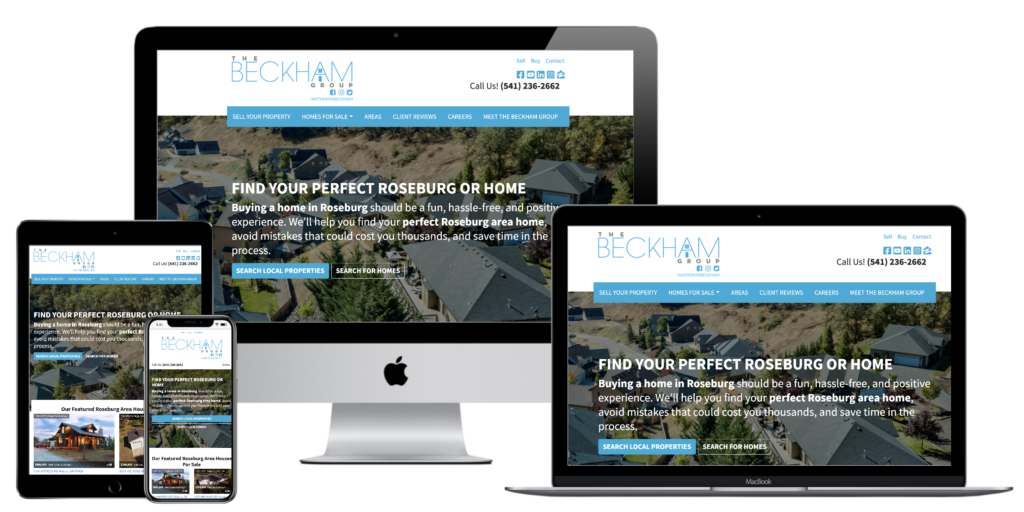
Carrot Personally Branded Real Estate Agent Site
Pick the keywords that you want to use for organic rankings
Keywords are one of the most important aspects of SEO. A keyword is what word you are placing the most importance on for Google to know what the page is generally about.
If you have never done keyword research, not to worry, it’s really easy.
If you want to know which keywords we have identified as the best keywords to target on your website, grab our SEO Bible.
Write engaging content that connects with your visitors
Google’s algorithm analyzes how engaging your content is.
It tracks this a few ways,
How long a visitor stays on your page
How many pages they view
How fast your website can load pages
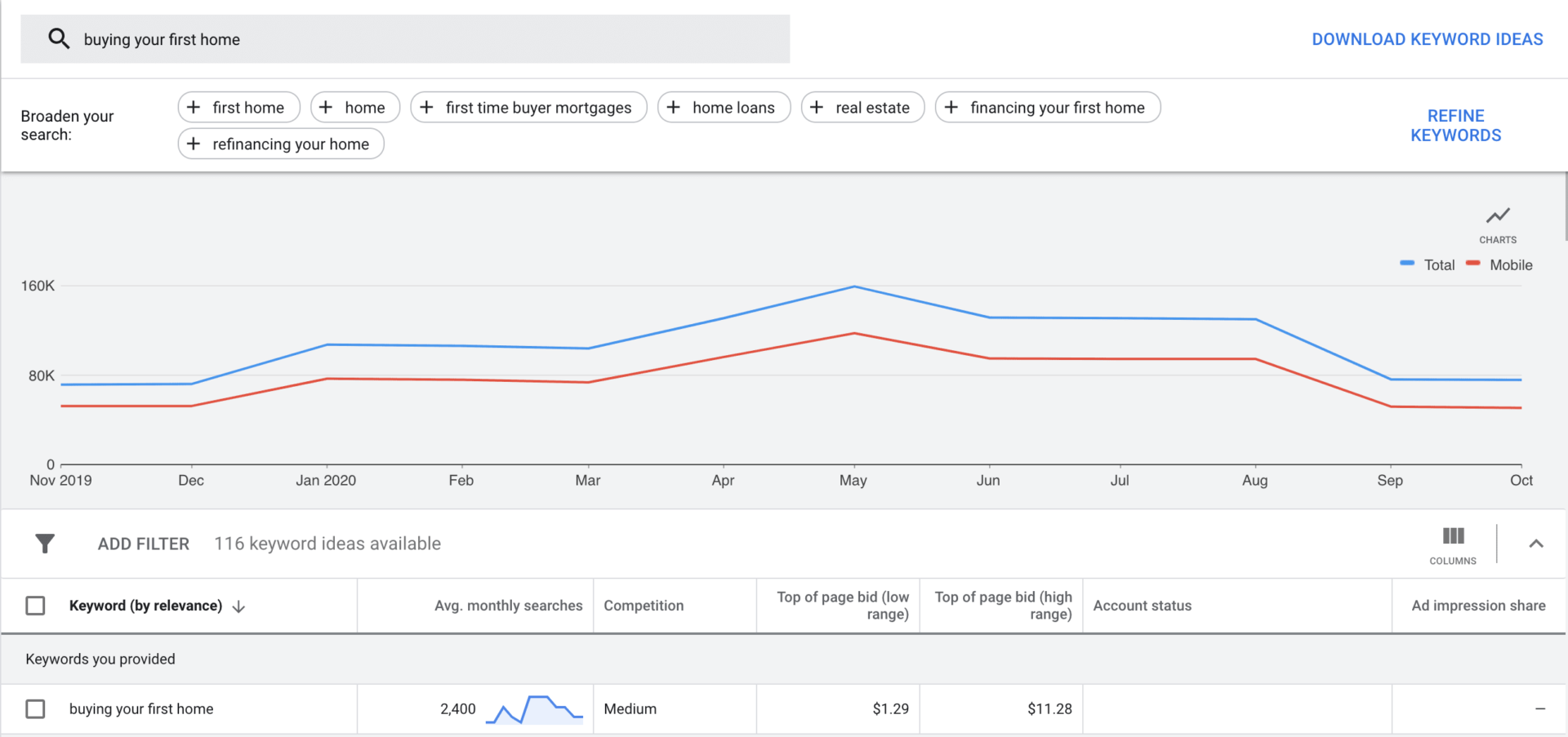
In order to engage your readers, try to answer a question you know they will have. If you’re not sure where to start, you can by typing in phrases using Google. Then use the keywords that you find have good search volume and also answer important questions. Such as, how to buy my first house.
Also, mix your content up between written words, video, and visuals when it makes sense.
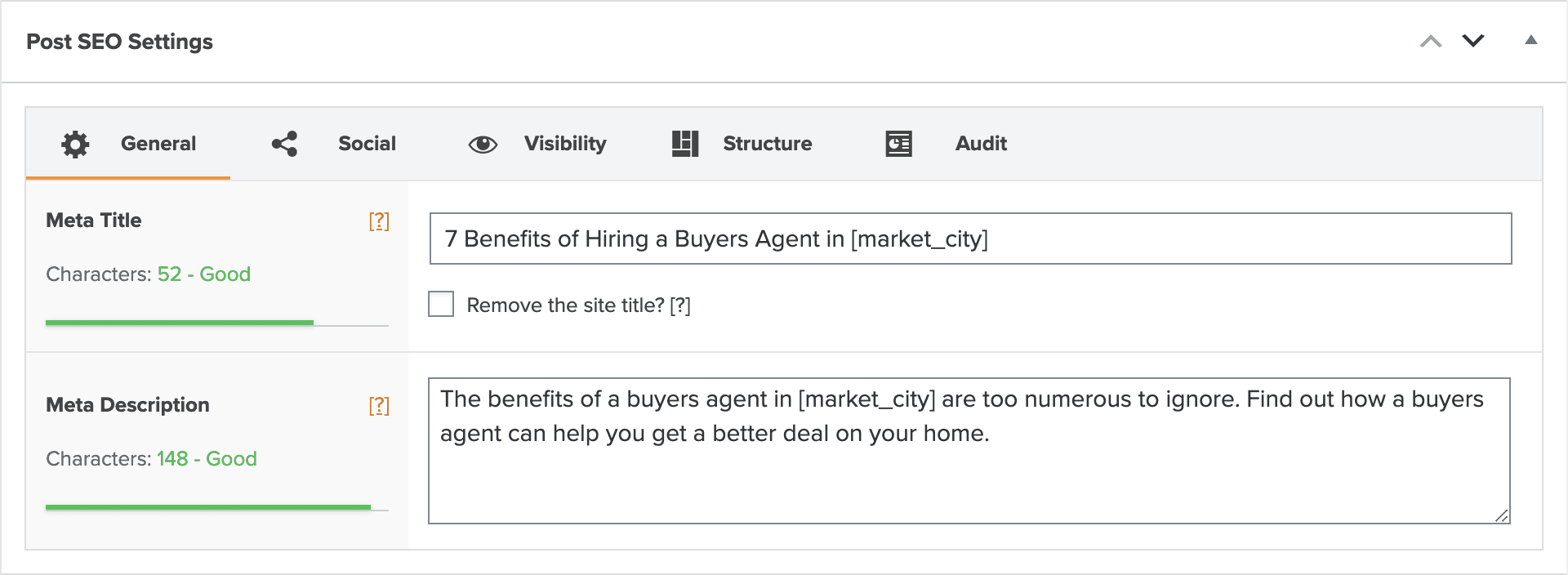
Keep your title tag under 60 characters
Years ago Google search results would limit title tag length based on the number of characters.
Now they do it a bit different. They use pixels (the current limit is 512 pixels).
No one should count pixels, we recommend you just count characters. And we’ve found that staying under 60 characters will keep you under the pixel limit most of the time.
We have a handy tool built into Carrot websites that help you create your page or blog post’s title tag
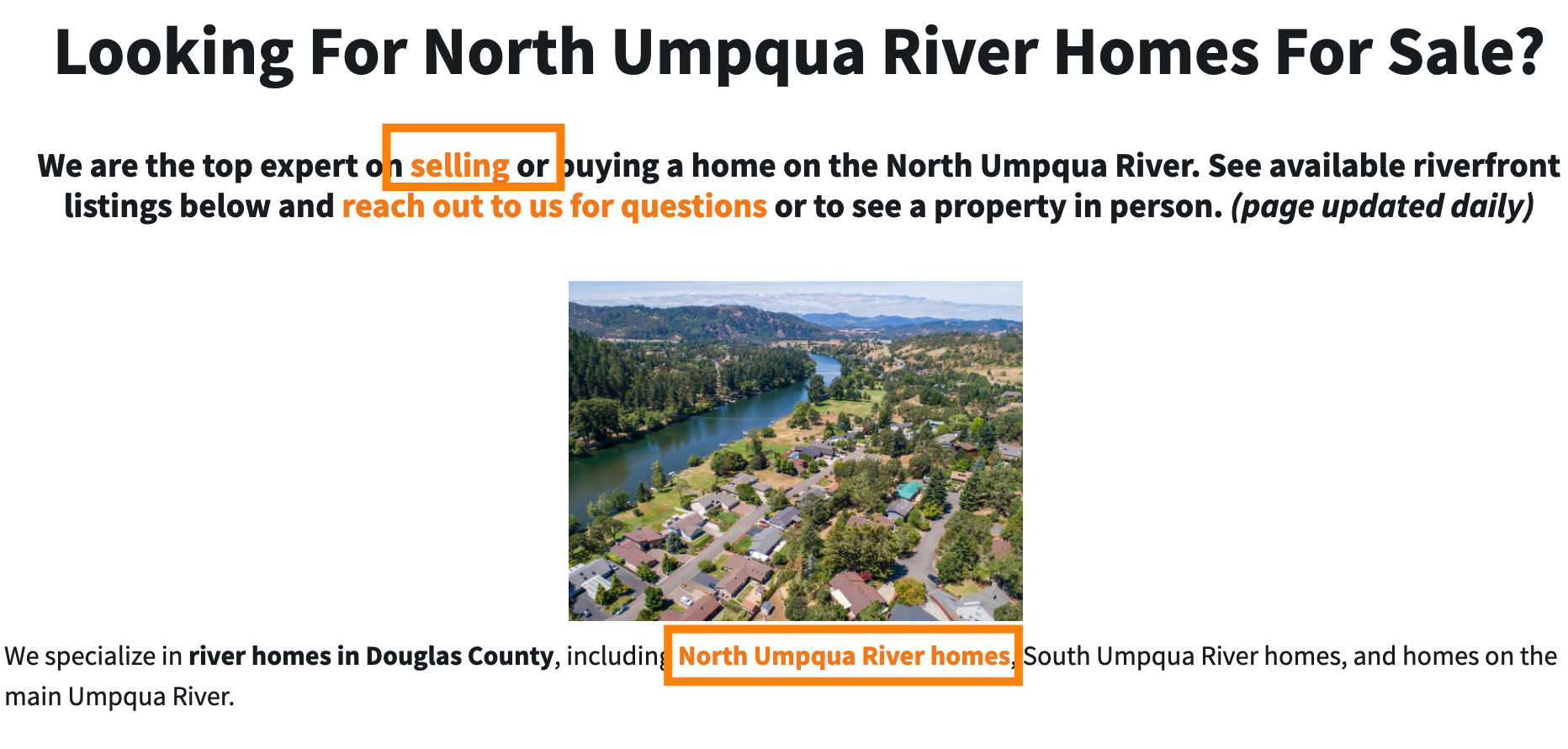
Place your keyword in the first 100 words
It’s still important and common practice to include your keyword within the first 100 words.
Having it near the top will allow visitors to connect with the topic that they have searched for. They’ll know that they are in the correct place.
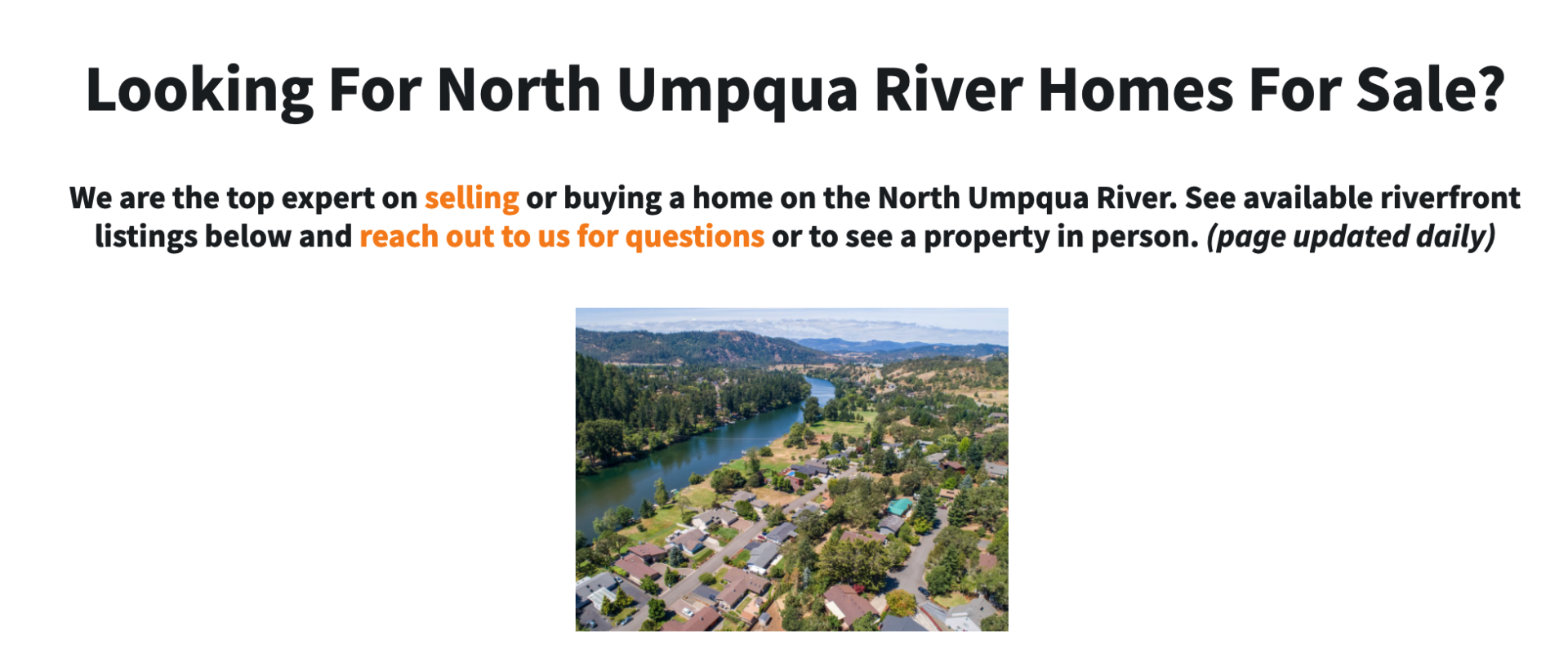
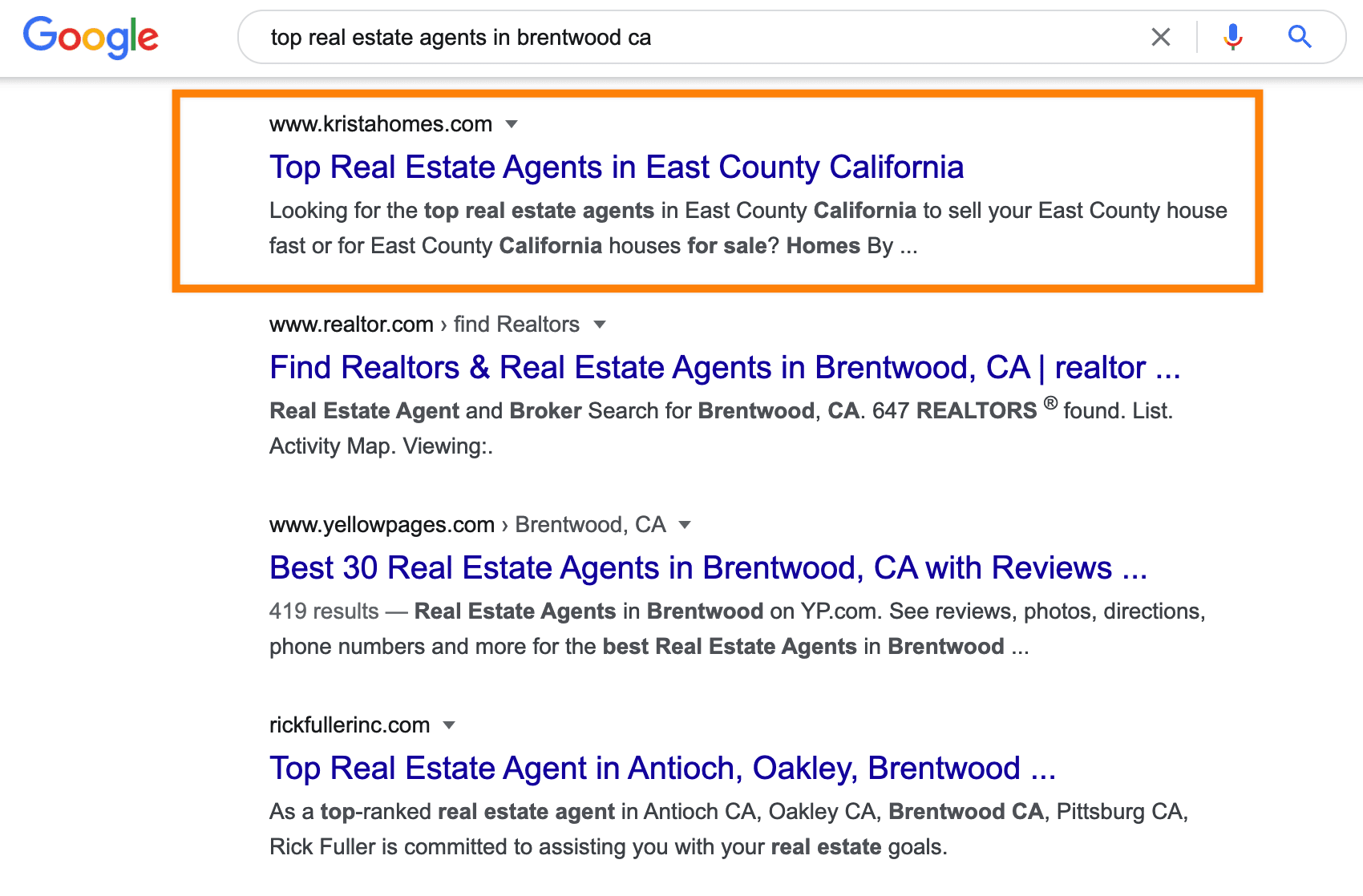
For example, this Carrot member out-ranks Zillow for long-tail keyword “North Umpqua River Homes” and you can see it with the very top of the content.
Use shorter URLs
Short URLs can help a searcher understand what the page is about before clicking on it.
It can also make it easier for them to remember if they ever need to return.
A study performed by Backlinko.com analyzed 1 million Google search results and the study revealed that shorter URLs performed better in Google than long URLs.
Although long-tail keyword URL’s most likely won’t have a significant negative impact on your SEO, from a searcher’s point of view, easily remembered URLs are the way to go.
Use images
An image can do a lot for your real estate website. It can add amazing location images to look at, break up your text, and give the search engines a better idea of what’s on the page.
Keeping your readers engaged with your content helps Google know that the content is worthwhile and to keep it ranking high for search terms.
Google pays attention to user experience signals. So, anything you can do to keep visitors on your page is a big win.
Here is an example of using images to break up text within a blog post.
Must haves: Privacy policy and terms page
Having a privacy policy and terms page most likely won’t give your real estate website a huge boost in the search ranking but don’t forget about these pages.
First, you have the opportunity to include your company name which helps, especially since it will be linked on every page of your website’s footer.
Another reason to have these pages is that it helps Google and Bing visitors see that you are a legitimate business. You have the opportunity to create content about what you do and who you are.
Carrot websites include these pages in the footer by default.
Don’t over-optimize anchor text
It’s recommended to put your keyword in your anchor tag, the text in your links, some of the time. But not all of the time.
It’s been a while but during Google’s Penguin update websites started being penalized for over optimizing anchor text with keywords.
Create link text that helps your visitors understand what they are clicking. You don’t need to worry about stuffing keywords to help rankings. Make your content flow with real terms.
New to link building? Try writing a simple resource page
A resources page can be a simple, quick, and easy way to get a bunch of links on a page that are really helpful to a website visitor.
Find a few resources that a website visitor might look for. Include them on the page and then email the person who you link to and ask them to check out the resource you included them on.
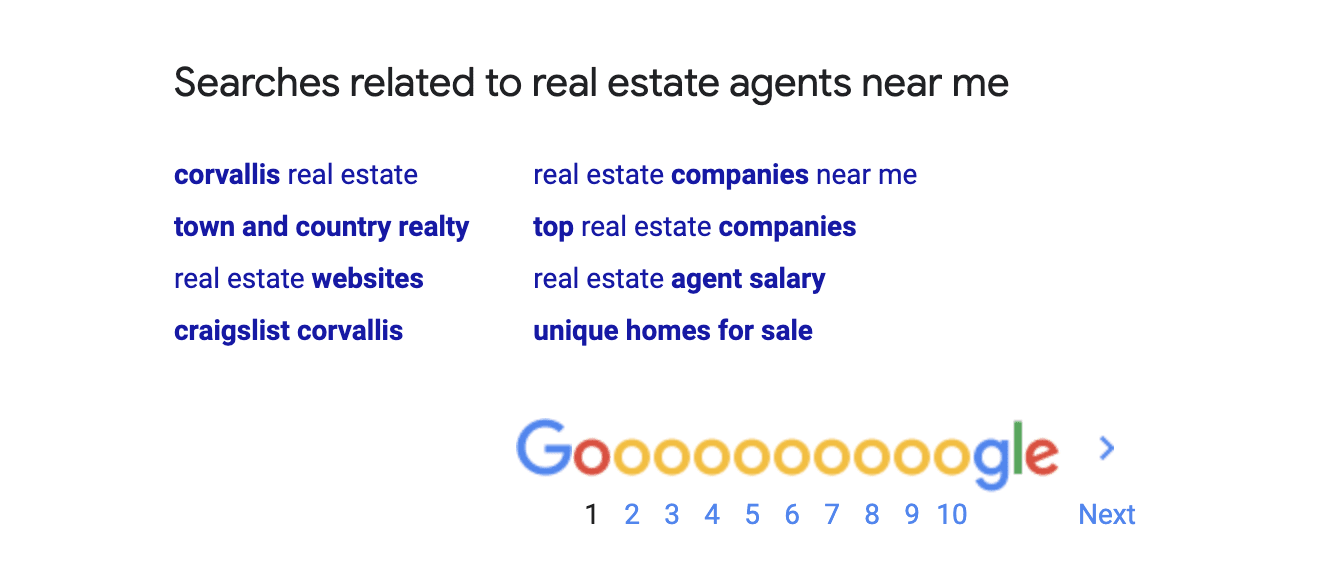
Google will give you some suggestions on what other keywords are related to your search.
Just use Google search to find some keywords you think leads are typing in and at the bottom of the search results you will see what Google is relating that search to.
Spy on competitors’ keywords with SEMRush
SEMRush is a great keyword research tool that offers a lot of features to help your real estate website’s SEO.
Maybe, what it’s best at is helping you find what keywords your competition are ranking for.
Simply add a keyword or competitor domain and see what comes up. You’ll find the keywords in their title tag and meta description. Then you can try and optimize those for yourself.
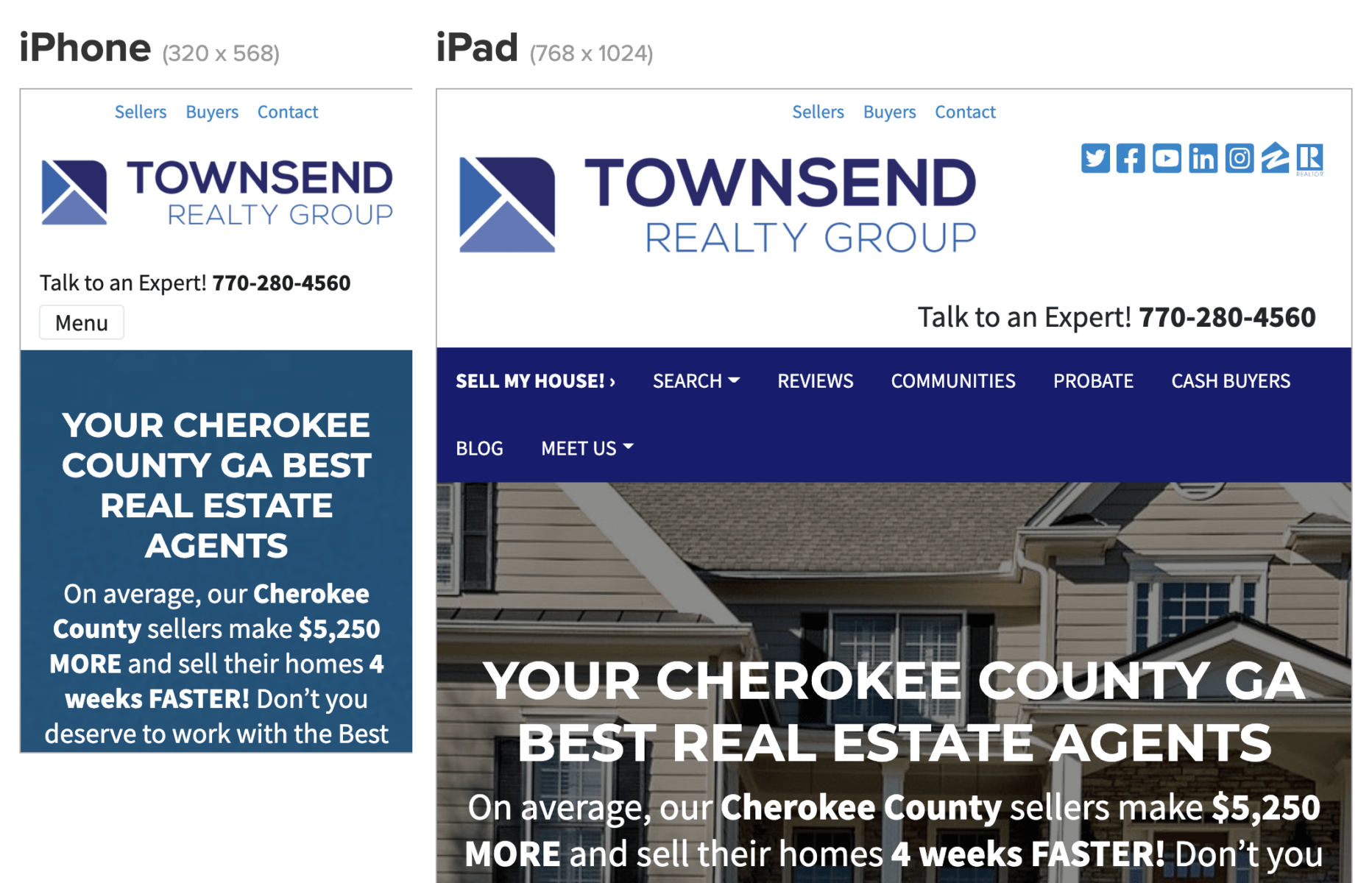
Make sure your website is mobile-friendly
Carrot members get a lot of traffic from mobile devices.
You should always make sure your website is mobile-friendly. Not sure how to do that? Use our free tool here.
Make sure your real estate agent website server is fast
Why do you want your website to load fast?
Google wants to send users to pages with quick load times because no one wants to wait to find answers.
Hosting is important and you get what you pay for. If you have some who built your website, ask them to look at your website’s speeds.
Carrot sites are built and hosted on highly secure and fast servers. And, we are constantly improving the website speed for our members.
Use video post transcriptions
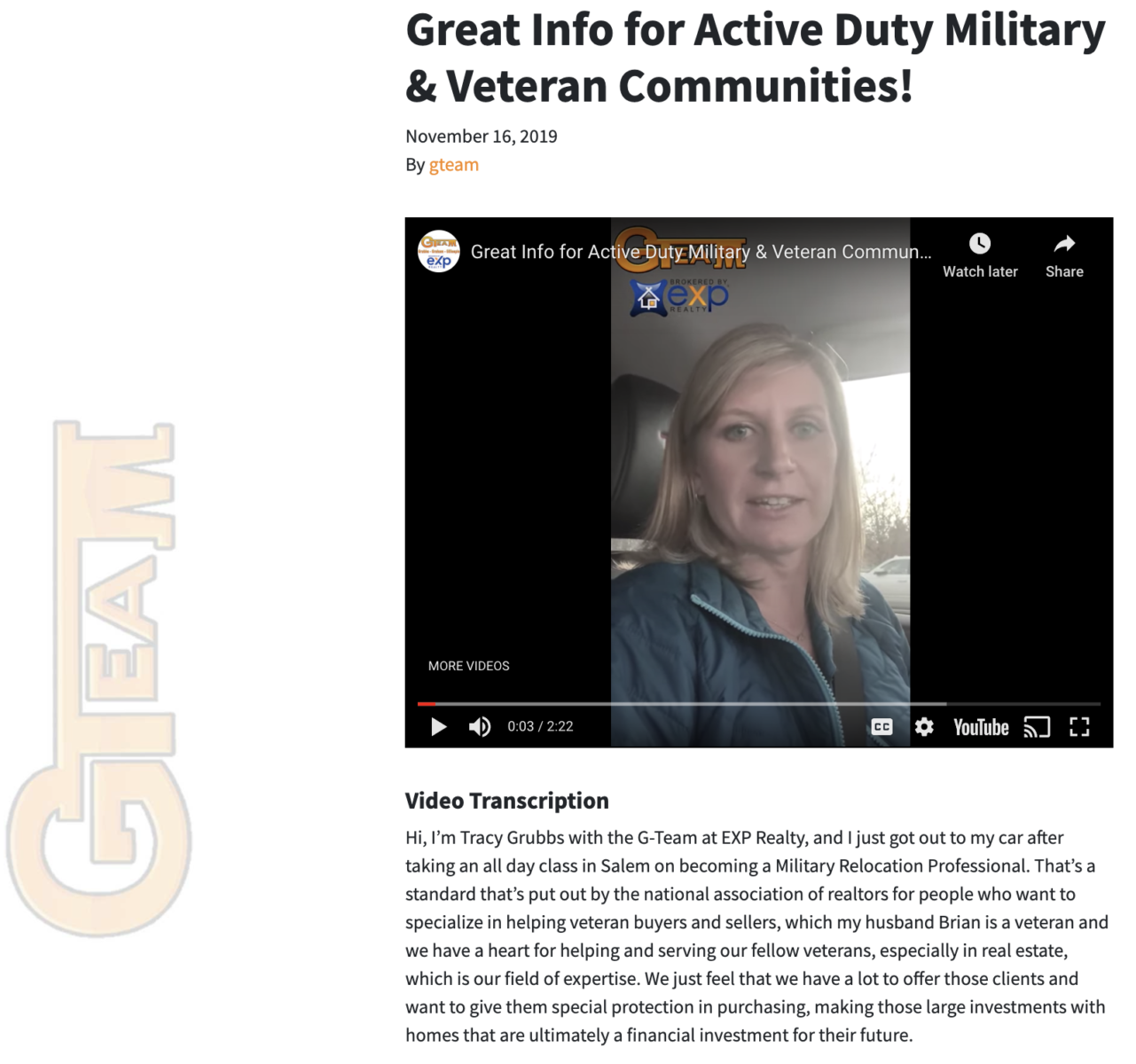
Using a video post transcription for your videos is a great idea to make your website more accessible for all visitors, especially those who use screen readers, and, having text to create more SEO opportunities.
Google can’t crawl a video. Adding a transcript gives Google the information it needs to decide what the video is about.
You can see an example of a video post one of our members did…
If the video is a YouTube video, these embeds will boost views (and therefore rankings).
Either way, embedded videos can significantly improve your bounce rate and dwell time numbers.
Here’s an example of an embedded video:
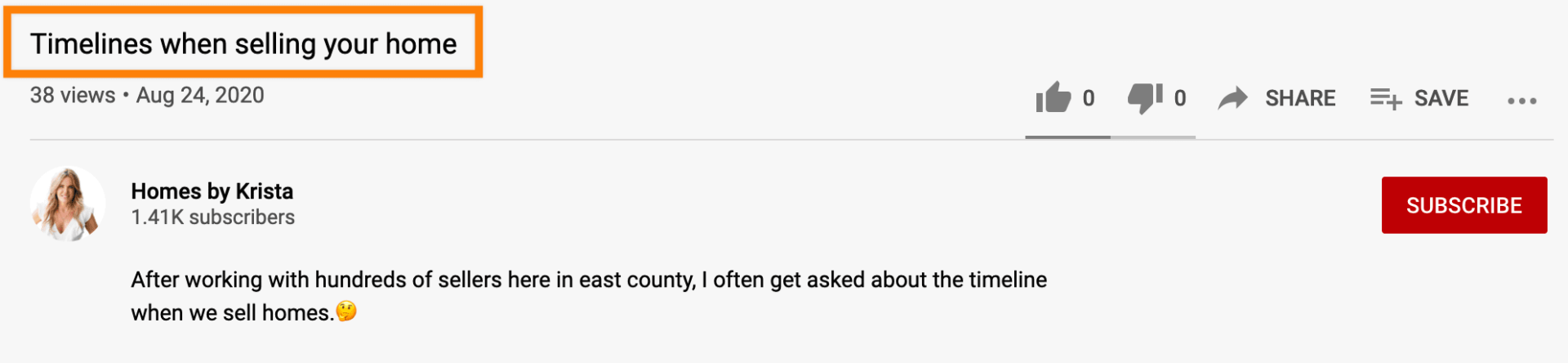
Include your keyword within your video’s filename, title and description
Google needs help in figuring out what your video is about.
Include your target keyword (at least once) in your video’s filename, title, and description. That way you’ll be helping Google and YouTube understand your video’s topic.
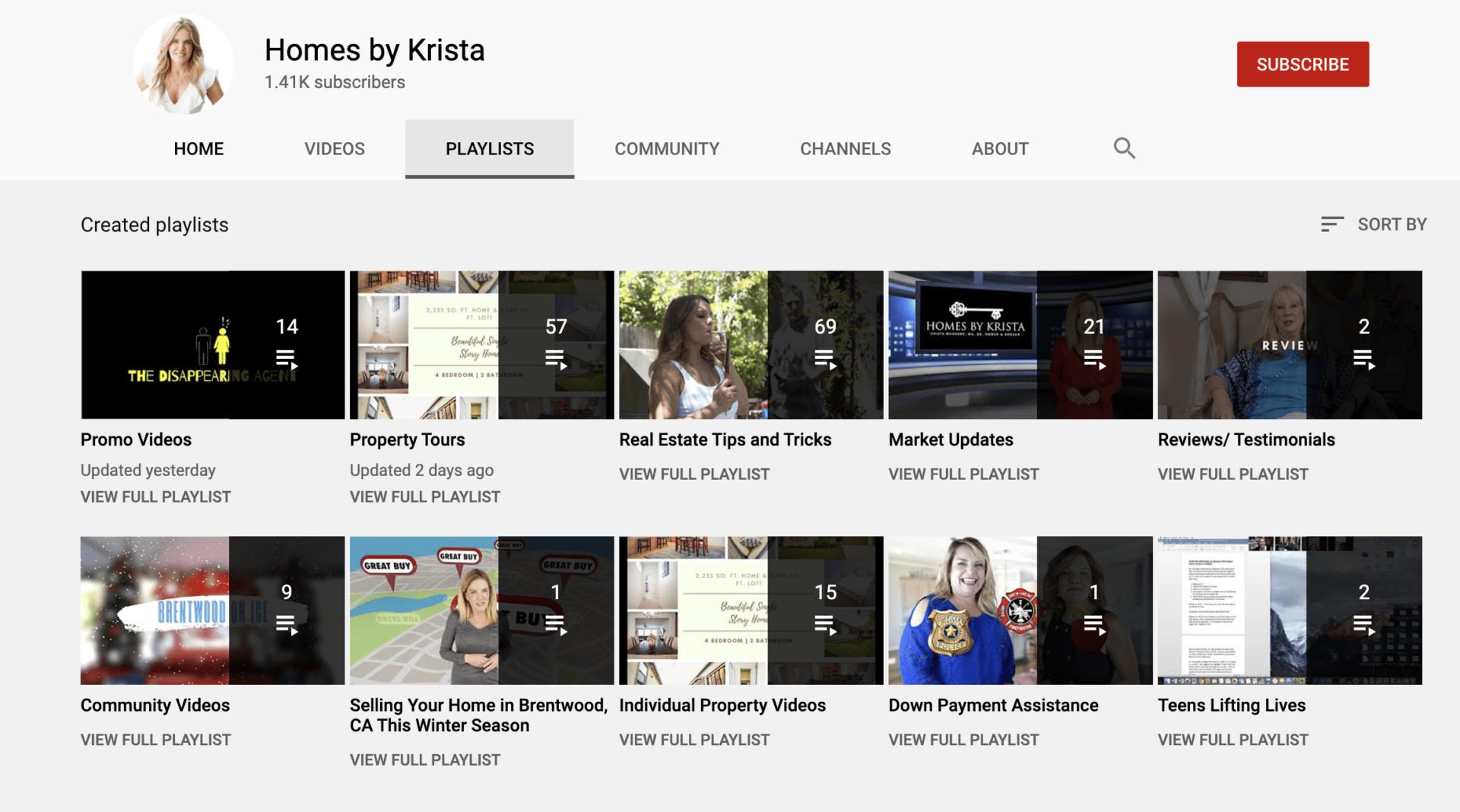
Use keywords within your YouTube playlist
Why put in the effort?
Well your playlist can actually help rank in YouTube’s search results.
Second, again, it’s helping Google and YouTube know which videos and playlists to suggest.
Keyword-rich URLs
Google still pays attention to the keywords that appear in your URL. A URL provide a strong indicator of what your page is all about.
Use keywords in subheadings and make content easy to read
Visitors will spend more time on your site when content easy to read.
Avoid a lot of paragraphs bunched together. Space your walls of text into skimmable content with bullets and subheadings:
Use brackets in your title tags
Brackets have been shown to boost CTR. Why? Brackets call attention to your idea and allow your content to stand out from the clutter.
Use your keyword in your meta description
You want to optimize your meta description to attach clicks. Write a very clear and compelling for why someone should click on your content.
Also be sure to include you keywords within your meta description.
Use keywords in H1 and H2 tags
It’s recommended that you use your exact keyword in the page’s H1 and H2 tags. But you don’t want to over-optimize or over-use your keyword, so replace the exact keyword with a synonym instead as you create more H2 tags.
So if your target keyword was “Garden Valley Homes for Sale” you could use a term like “Homes For Sale In Garden Valley” in an H2 tag.
Make social sharing buttons easy to find
If a visitor wants to share your content, don’t make it hard for them to do it. Each one of your posts and pages should have a social sharing button easily visible.
And, don’t forget to see how it looks on mobile devices.
Social shares equals in-demand content.
Optimize your homepage for both your brand and conversions
Your homepage carries the most authority.
But they can also be hard to rank. Homepages that are light on content or in highly competitive areas may have more difficulty. That’s one reason Carrot homepages oave have more content. We believe in evergreen content.
As a real estate agent, you should focus on both branding and conversions because a lot of your internal pages link to the home page and there is a good chance if someone comes to your site from a blog post or location page they will also check out your homepage.
Publish long-form content
Content studies have found a correlation between long-form content and higher search rankings. But, that doesn’t mean that simply writing longer content will push you to the top of page one. But publishing 1000+ word content helps increase your odds.
Use internal linking
Internal linking is a good way to tell Google what other pages on your website are useful and related to the topic.
Here’s how it could work. Link from a ranked page to pages you want to rank.
It’s pretty simple and it works.
Here is an example from one of our Carrot members location pages linking to other content on their website.
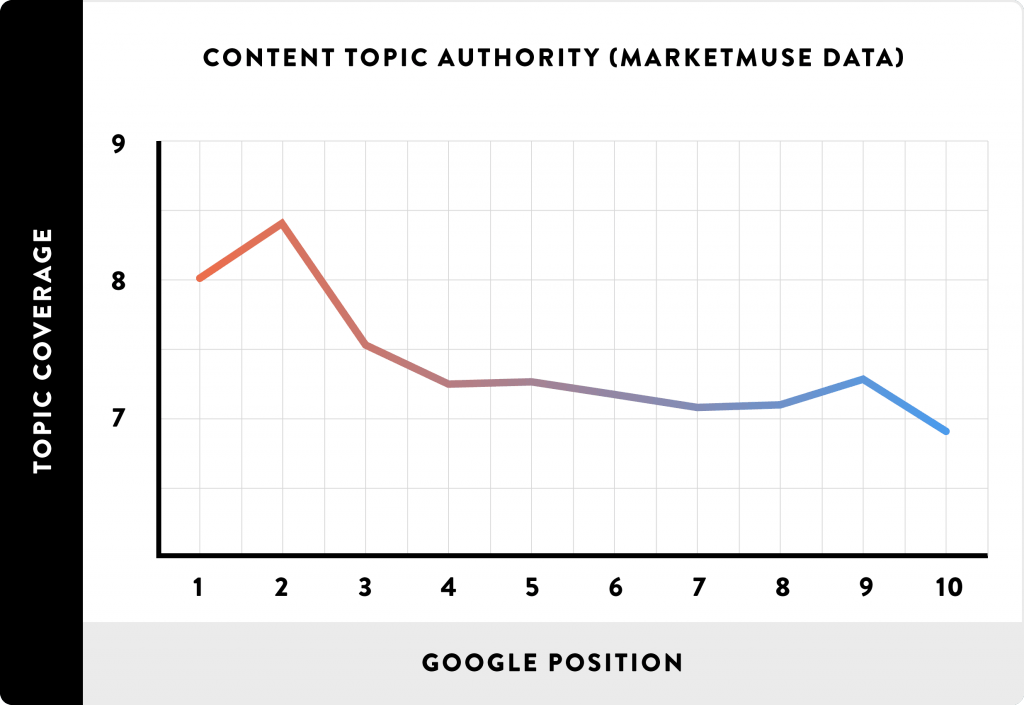
Write content that completely covers a topic
Again, Backlinko’s research shows search engine ranking factors found that highly informative content significantly outperformed shallow, low-level content.
Write image alt text
Google can’t see what’s in an image so you need to tell them. Use image metadata, like the image filename and alt text to communicate what the image is.
It’s a good idea to use a keyword in with the image when it makes sense but avoid simply stuffing keywords.
Create a checklist or glossery of terms post
Creating a checklist or terms blog post can take some time, but it can be worth the effort to provide useful information to your visitors.
Basically, create a checklist of an important topic or simply a list of industry-related terms that visitors might not know. Think about all the questions a potential lead might have and start crafting your list.
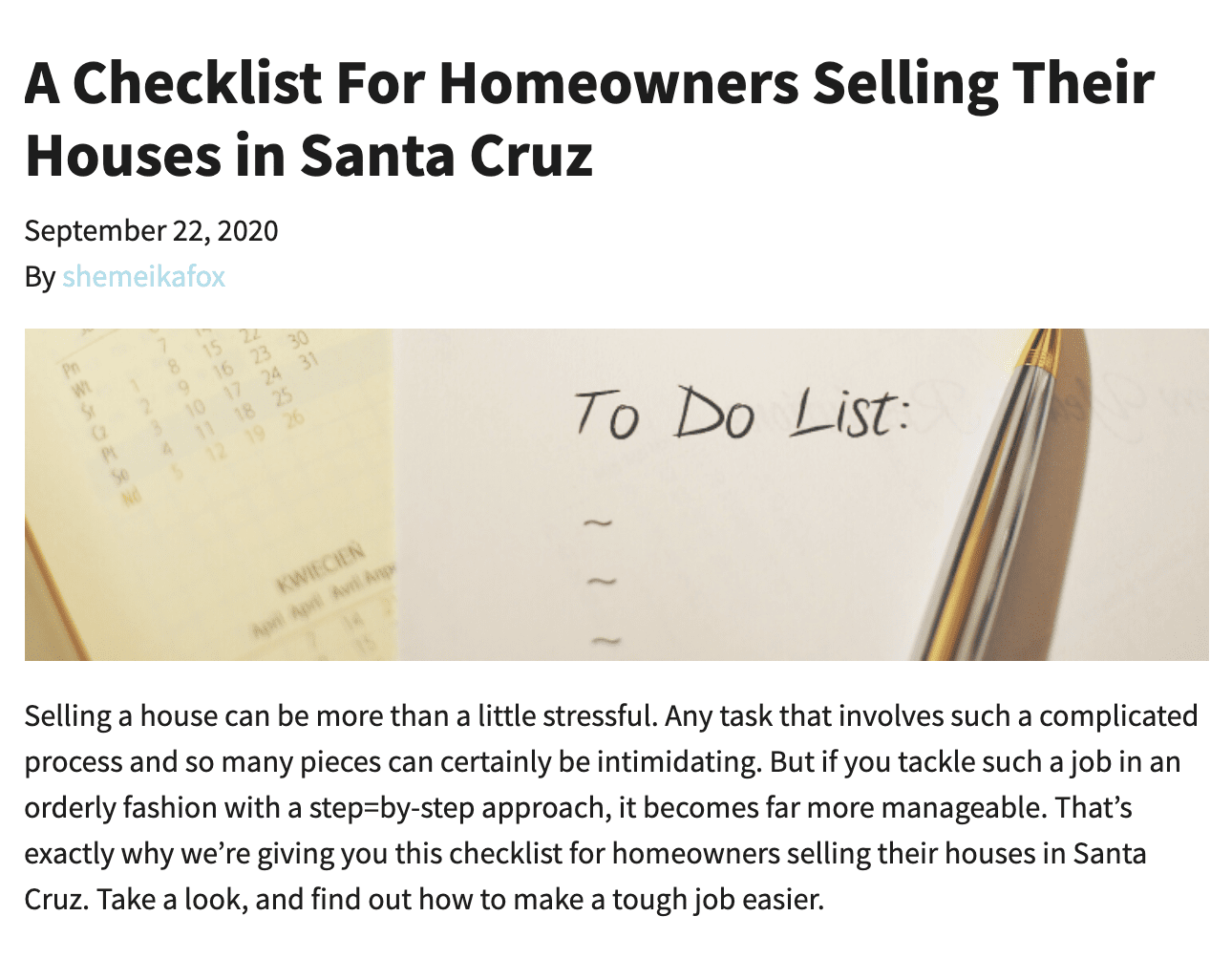
For example, a checklist homeowners can use to sell their house.
Create an XML and HTML Sitemap
Sitemaps help Google find (and index) real estate website’s pages.
Make sure to create an XML and HTML sitemap of your site and submit them to Google via the Google Search Console.
If you are a Carrot member the sitemap is already created for you. Read our site map tutorial.
Anyone can make a pretty website, but if it isn’t fast and doesn’t function then what’s the point. At the end of the day, it’s all about the leads that are coming in and that’s why I chose Carrot.
– Matt Buttner
Flat-fee Listings, Wholesaling, and Flipping – How to Build Your Business the Way You Want It w/ Matt Buttner
There are a million ways to get into real estate and Matt Buttner is proof that you don’t need to do things the same way everyone else is doing them.
While many agents and investors are missing out on leads and opportunities, Matt is maximizing his reach and his ability to help people.
He keeps his team lean, his processes simple, and has been able to grow his business while helping hundreds of people along the way.
Read the Full Show Notes Below…
Matt has been a Carrot member for several years. He has multiple sites that he has used to invest in land, in single-family homes, and now for flat-fee listings. He’s integrated these sites, giving him the ability to reach more people and build his brand.
His use of informative content is quickly getting his sites to the top of Google and making him the local authority in his field.
People get into real estate in different ways, and for Matt, he learned the business from his parents. He buys and sells homes throughout Florida, genuinely helping people who are in need of a fast solution. He is the one answering the phone, going on the appointments, and building relationships with people.
Using his Carrot site, he is creating valuable and informative content that blows away any objections he hears from homeowners.
Today, his parents are out of the business and enjoying their retirement. Matt has a part-time assistant that helps him with all of the details. By not having a room full of acquisition reps, he is able to heel things lean, personal, and efficient. In most cases, he will take the title himself as opposed to wholesaling so he can ensure the house will close on the day promised.
Flat-Fee Listings
While working on his investment business, Matt realized there was a whole market of people out there that he wasn’t serving. These are the people who want to sell, but who didn’t want to take a direct offer or deal with expensive commissions. For these people, Matt offers a flat-fee listing service.
This service gets houses on the MLS and eliminates any further costs to the seller. At the closing table, they are only responsible for the commission to the buyer’s agent, not the standard 6% sellers often pay when selling their homes with an agent.
Why He Chose Carrot
Matt had an investor site with Carrot early on. He started his flat-fee service before we launched AgentCarrot, and was using a WordPress site that he managed himself. He found that he was spending all of his time managing the site and resolving conflicts between his different plug-ins. He wasn’t able to make the site he wanted and leads were falling through the cracks.
Then AgentCarrot came along. This allowed him to quickly set up a high-ranking site, designed the way he wanted it. His site is fast and doesn’t drag the way it did when he was using a standard shared hosting plan. The best part is, that when he needs a little help to make things work, our support team is right there to walk him through it.
Today, his flat-fee listing business runs on auto-pilot as most of it is done by his assistant via email. This business alone more than pays for his marketing and his expenses as an employer.
Making this shift and offering hybrid solutions to his clients has allowed him to help a lot more people than if he would have stuck to the investing side of things. With the great video content and dedication to helping others, we have no doubt he will be successful no matter what’s in store for 2021.

























![SEO For Real Estate Agents [30+ Highly Effective Tips]](https://image-cdn.carrot.com/uploads/seo-for-real-estate-agents-featured.png)