Listen to the CarrotCast Podcast and Subscribe Below!
Sellers will call and say you know I have 10 letters on my desk. So of those 10 letters what makes you stand out? How are you personalizing that letter? And, how are you connecting with that seller like no one else is? That’s what I think about when I create my marketing. April Crossley
April Crossley has almost been with Carrot from the beginning. April shares how she has grown her business and made the leap into real estate full-time after leaving a high-paying medical career.
She also reveals how she’s now built up her portfolio of rental properties to dozens of properties. Also, find out her direct mail strategy and how she leverages her online real estate investing with Carrot to amplify her business.
Listen, enjoy, and check out more CarrotCast episodes at carrotcast.com.
Listen to the CarrotCast Podcast
[podcast-subscribe]
Listen in to learn how April combines her online real estate investing with direct mail to acquire 40 + units and 10+ flips per year.
1:15 – Who is April Crossley? Where is her real estate investing business located, and what does her team look like? 4:15 – Breaking down her whiteboard notes and schedule structure. How she stays on task. 8:15 –What was that “aha” moment when she decided to shift from a high-level healthcare career to real estate investing? 14:00 – Viewing risk differently. How April sees risks differently than most people. Also, how long it took for her to feel safe to leave her job? 18:00 – If she had kept her medical license, would she have slipped back into that career? 20:00 – Breaking down her business model. What does her mix of rentals and flips look like right now, and why does she have that strategy? 24:40 – In a competitive market, where is she finding her properties? Online and offline? 25:50 – April’s direct mail strategy. What types of messages does she put in her letters? She gets creative and puts much thought into the message and design. 33:35 – How she builds credibility with her prospects. 38:45 – What made her feel like she needed a web presence? How is having a website helping her investing business? 41:20 – Why building credibility in real estate is so important. 45:10 – What she is seeing from her online leads. Has she seen a difference in quality or closure rate between her online vs. offline leads? 46:45 – How did she get such high SEO rankings, and what was involved in that process? 49:05 – What advice would she give to a student who has decided to start investing but is very hesitant? How would she get them to push through? 51:45 – What advice would she give someone who needs to start a website for online real estate investing?
There is a lot that goes into search engine optimization, but in actuality, there’s only really a few things that will move the lever for you. The things that will be important and help you get results. That’s what we’re going to focus on in this post.
We’re trying to give you the action items and the understanding of how it works and what you need to do to actually get results.
Watch the Video or Read the Post Below
From a 10,000-foot Point of View, What’s the Most Important Part of SEO?
First of all, there are four main parts of SEO. This introduction is all about really getting your head around what SEO is, how it works if you really want to learn the craft of SEO.
SEO Ranking Factors for Real Estate #1: URL
First of all, you’ve got what’s called the URL factors. The URL is your domain name. That’s things like how long your domain name has been owned by you. How long the website’s been up online. Those are things that matter. The site structure of the website. Is the website set up correctly with your URL?
That’s something we’ve already built into Carrot. If you have a website outside of Carrot, that’s something you might be concerned about.
There’s a bunch of other things, like site structure, like I said, domain lifespan, search engine friendly URLs. All of that stuff except for domain lifespan is built into Carrot to make your life easier. As your website stays online longer, it ages, and Google likes it.
Here’s a screenshot of a website.
Klamathfallsapartments.net. That’s the URL. I have owned that domain for several years, and if I was to go up a different website that Google felt was very similar as far as optimized in content, and my URL was owned for let’s say 10 years, and this one was brand new, I would definitely get a boost and some sort of credit for having a domain that has been owned and up and online longer.
The longer that you own the domain, the more authority that Google will feel that your website potentially has.
That’s one factor to always keep in your mind. That if you just purchased a domain, and you’re just attaching it to a new website, you’re going up against other websites that have been around for longer. We can definitely accelerate the process of ranking well using what we’re going to teach you, but some part of the equation may be that your domain might just need to age a little bit to get that ranking up.
Be patient with some of the things. Make sure that you recognize that if you’re not seeing your ranking crack through and you’re doing everything else right, and your website is new, it may be domain age is part of it.
You want to keep a nice, simple URL structure. That’s a good thing. Complicated is a bad thing. This is the way that we have it built out in our Carrot websites already, so if you’re a member, you don’t have to worry about this. If you’re not a member, if you have another website platform or you built one yourself, this is something you’re going to want to pay attention to.
A simple URL structure will be something like:
yoursite.com/sell-my-atlanta-house, or
yoursite.com/how-it-works.
On the flip side, something that’s complicated that Google doesn’t like is too many forward slashes in your URL:
your-site.com/sell/sellingyourhouse/boston
That’s just not a very friendly URL.
Google doesn’t like that as much. Or having weird characters in your URL:
yoursite.com/?p25235
Google can’t determine what that’s about. In Carrot, we’ve already made it simple for you. You don’t have to do anything at all to make your URL simple.
SEO Ranking Factors for Real Estate #2: On-Page SEO for Real Estate
The second thing is on-page. On-page SEO are things on your website that you can physically see on the page. Content, pictures, things like that, and how they’re structured. In on-page, really, for your website, it’s kind of like soil for a farmer. On-page for SEO is like soil for the farmer.
If you don’t have good soil and you’re planting a crop, there’s no way that that crop is going to grow very good. On the flip side, if you don’t have the on-page optimization done on your website for SEO, it’s going to be very, very hard to rank well for any keyword phrases, no matter what you’re doing on the back end. The on-page is where it starts. It’s the fertile soil to grow a great crop.
If you don’t have fertile soil with the right nutrients and minerals, you can’t grow a good crop.
Make sure that the on-page optimization is correct. With Carrot members, once again, we give you a jump start. The content that’s already built into your website is already optimized very, very well. We suggest you go in there and tweak it, customize it to yourself, and use the SEO tool built into our system on each page to ensure it retains its SEO grade for the keyword you’re going after.
Part of on-page is content relevance. Let’s say someone is looking for a rent to own home in Birmingham, and your website doesn’t say those words anywhere on your website, but that’s what you’re looking for. How is Google going to know that your content is relevant to that search phrase?
You need to make sure that your content talks about the same things that you’re trying to optimize and rank well for.
Is it high-quality content, or are you just throwing up a few words here and there and moving on? You need to make sure that you have high-quality content on there … It’s robust content. It’s good. It’s valuable and also addresses the keywords and the things that your person, whether they’re a tenant, buyer, or seller, is typing in.
Be sure to have very relevant keywords for search phrases that you know your prospects are typing in in your market. We just suggest you dive in and tweak it up to make it more relevant to you, more relevant to your business model, to you as a person. And, build some credibility in there.
Also, to help make it more relevant in Google’s eyes, we’ve got the Carrot SEO tool. With the Carrot SEO tool, you can tell the platform and you can tell Google what to look at.
With this, if you’ve identified that you want to rank for rent to own homes in Birmingham, AL, you put it in the focus keyword section. You make sure that keyword phrase is in the SEO title, as you can see it is, and you make sure it’s in the description down there below.
What that does, that keys Google into the fact that that’s what that web page is about. It makes it very relevant in Google’s eyes that that web page is likely about rent to own homes in Birmingham, Alabama.
This is a huge factor.
We make it easier for you with Carrot, and we also give you the SEO tool to make sure that you’re following along. Whether you’re an SEO expert or not, you’re going to be able to optimize your pages very well with our built-in SEO tool.
SEO Ranking Factors for Real Estate #3: Choosing the Right Real Estate Keywords
Then next, with the SEO tool, are your keywords used right? Your pages should really have a good mix of your keyword phrases and pictures and structure so Google has the information they need to know your site is very relevant. That’s what we’re talking about here, guys.
This isn’t rocket science.
What we’re looking for is we just want to make sure that the content on the page is relevant to the search phrase that we’re trying to rank for. If we’re trying to rank for note sellers in California or note buyers in California, we want to make sure that the content on that page talks about your note buying service in California, and it has some pictures about that, and your title tag in our SEO tool and your description has those keywords in it. Very, very relevant. Use our SEO tool to help guide you along to make sure you’re staying relevant.
Then like I said, the website structure. Is the website structured right? This is something you don’t have to worry about. If you did not have Carrot, you would have to worry about this, but we worry about how fast your website loads. We worry about all the things behind the scenes in the code.
You do not have to touch it. That alone should make you rest easy at night knowing that you never have to touch this or reach out to a web person and have them do it. Get the on-page parts right, and it makes it much easier to grow a great crop. Bad on-page equals a thin crop. We all want to eat well. We all want to have a great crop.
So now off-page SEO. Off-page basically is everything … It’s kind of obvious, but everything that is away from your pages. What we’re talking about here is off-page stuff that’s kind of like water and the fertilizer for a farmer. You’ve got this soil. You’re hoping to plant something.
Now you’ve got to take something that’s outside of that environment of the soil and put it on the soil to help it grow the seed. It takes that fertile soil, and it adds the extra boost that it needs to grow.
Without watering, without fertilizing a crop, it’s going to be really hard to make it grow well.
One way that you can water and fertilize your website is with backlinks. Backlinks are basically where one website has a link on their website that’s clickable that goes over to your website. Google looks at it as a vote of confidence that your website is a good website according to that one. When other quality websites link to your website, Google really likes that.
Also, your footprint matters. What I mean by footprint is if you just have a website up there, and you’re really looking to dominate in your market, if you only have your website up there and that’s all you’re doing, Google doesn’t really have a whole lot to go off of to see if you’re a legitimate company.
One thing that they look at is your footprint. Do you have other entities, other websites or other social media profiles online, that also link to your website, that also has your company name in it?
They also have your address in it, your phone number in it? So set up a Google Business profile.
Go to YouTube and set up a YouTube profile and get a few videos in there. Go set up some business directories or citations, which we’re going to teach you how to do citations in a later module. Make sure you’re not just using a website only.
Go out there and make sure your footprint is wider and you have your business listed and profiles claimed on other websites.
SEO Ranking Factors for Real Estate #4: Social Media
The fourth part is social factors. You can see here is a screenshot of the bottom of a website where it’s got Google My Business, Facebook likes, and things like that. Google is really looking at the social factors of your website.
They look at that as votes kind of. They figure, well, if someone was on this website and they clicked the Facebook like button or engage with your Google Business content that must be a good thing.
That must be a vote that that person likes the website. We’re going to say that if a website has consistent and good “votes”, then it must be high quality and relevant. They’re going to reward you with a higher search result out of that.
Growing Your SEO
Those are the four main parts, guys. You’ve got the URL factors, which is really the ground. That’s the ground. You’ve got the on-page stuff, which is really the soil. That’s the soil. You’ve got the … The off-page stuff is your water. That’s your fertilizer. Then the social stuff is just kind of good juju. That’s just good stuff, good mojo, to help with everything else.
Next, what we’re going to dive into on the next video is the timeline to expect search engine rankings, to expect results and how to effectively guess what you can expect as far as how long it’s going to take to get results in your market, so let’s see you in the next video.
Are you operating in a really competitive market like a Houston or a Dallas or just a large market where there’s a lot of competition? Well, a lot of our clients are and every single week we do coaching calls on every Tuesday at 11 o’clock Pacific time for our care customers who are in content pro membership or above.
And one of the main questions we get on a really consistent basis is, “Man, I’m in a crazy, competitive market. There’s a lot of other investors, investing there, and there’s a lot of other care clients there. Can I crack through it and how do I do it?
The first answer is, “100% yes, you can.” That sounds like a political stump that I just did there, yes you can, yes you can do it, we have clients every single day who are going out there implementing the plan we lay out on these whiteboard strategy sketches, on our coaching calls in our training’s and in, through support and they follow these methods I’m going to show you to get that result. So I want you to know that it can be done, but you gotta follow this to a T and don’t come complaining to me if it doesn’t work if you don’t do these.
Online Real Estate Marketing in Competitive Markets
OK, so here we go. So if you’re in a competitive market I’m gonna be kind of walking you through, how do you get in that search result for search engine optimization but also just in search in general, to get those consistent stream of leads coming in to fuel your business because when you’re in a large market like that you really can go deep in that market like we’ve talked about in other whiteboard strategy sketches you can go deep, and you can focus just in that market for the first year and get 30-40-50-60 leads a month if you really hit it hard, okay? And that can fuel your entire business 2-4-5-6-10 deals a month if you do it right.
OK? So we want to get you here first of all, and we want to get you there through paid and through SEO in the competitive market. It’s going to be really hard to get really consistent, and a lot of momentum with just SEO okay? PPC is great, but you can stack on SEO to really add momentum over that year and this is kind of what we want to do.
We’ve done a whiteboard Strategy Sketch on this exact topic before go check out youtube, go to YouTube.com and then go look up InvestorCarrot, find our channel, the first thing you need to do is subscribe to our channel the second thing you need to do is go search our channel for a video I think it’s called the 90-day marketing plan or something like that where we layout in a lot more detail what you should do in the first 90 days in any market to have leads coming in and to set yourself in a really, really solid foundation, okay? But we’re gonna give an abbreviated version of that today.
So you’ve got here, and you’ve got twelve months out there and if you’re in a large market the first thing you need to do is we need to know that it’s going to take time, and we need to have a lot of patience, okay? Because with SEO, search engine optimization large market, it’s probably going to take you between 7, 8, 9, 10, 12 plus months to really get that momentum to get that ranking that’s going to get those leads to start trickling in and then start coming in more.
I was talking to one of our clients yesterday, Martin, out of Phoenix, Arizona and he’s flipping a lot of houses, okay? Ten plus houses a month and when we were talking, you know a year ago he joined Carrot a little over a year ago he was in a very competitive market, he wanted to get some more organic traffic coming in, he was turning on PPC as well, but we’re like, you know what? I think that there’s going to be a great chance for you to crack into this market from a website that had never ranked in the top three pages of the main seller search phrases to what it is today getting really consistent leads, and he’s in top one-two-three rankings in google for the most competitive search phrases in Phoenix, how did he do that? The first thing, like I said, locked, and then it’s gonna take time, and he knew it, and he knew that he was going to have to be patient okay?
Choosing Your Top Keywords
The second thing, is we need to go out there and choose the top keywords, so what are those top keywords that are likely going to give us 70% or more of that traffic? For house sellers it’s likely your cash for homes, sell my house fast, insert city, we buy houses, insert city, there are a few others, just go to carrot.com/seo-bible, and you can check it out, we have a full report there that goes through all of the top motivated house seller keyword phrases for SEO, and you can check it out. If you’re doing pay per click go to carrot.com/ppc-keywords and oncarrot.com/seo-bible, and you can find both those reports where we give you all of the keywords based on our research, so we solved that one for you.
Alright but the first thing that we always like to do in a market, in a really competitive market is we’ve got to get leads coming in right now okay? If we don’t have leads coming in right now and it’s gonna take us 6, 7, 8, 9, 10, 12 months to start to get the real traffic to get traction and get deals in that market it becomes really, really discouraging, you know none of us want to be discouraged on our journey to grow our business or start our business so get pay per click going right away, okay?
PPC Marketing
In that first month to two months and it you don’t know how to do PPC we have a lot of resources on our blog you can check it out at oncarrot.com forward slash blog, or we have guides and resources and checklists on how to do it and we also talk about it all the time in our coaching calls if you are a carrot customer, and our three lead per day training okay also during that same time period during the first month to three months, in a competitive market the biggest thing we need to focus on is, how do you stand out from your competitors, how is it that your clients are going to chose you versus the 7, 8, 9, 10, 12 25, 30 other investors that are also vying for their business?
The people that sent them that direct-mail piece, the people that have the bandit signs up in their neighborhood the people that are in the same rankings, the same paid search results that you’re competing for. Even if you get there, even if you get right here, and you don’t take care of the credibility piece then you’re not gonna win the game, the other people are going to win the game okay? So focus on that as a core strategy, what is your credibility score?
Building Credibility
We have a CarrotCast episode, which is our weekly podcast, just go to CarrotCast.com, and you can go directly to the CarrotCast to find our episode on credibility score. You can even go to Google and Google Investor Carrot credibility score or CarrotCast credibility score, you’re going to find that episode where we walk you through everything you need to do to ramp up your credibility whether you’re an experienced investor or brand new and set yourself apart. Also, we did a CarrotCast episode on USP, unique selling proposition, which in a competitive market that is a requirement, you’ve gotta have a unique selling proposition why people should choose to work with you versus someone else. Tackle those in the first three months.
Get your PPC up and going, get leads coming in in the first several weeks get your first deal in the first month or two, and then during that time you’re setting up your SEO foundation the first one, two, three, four, five, six, seven months in a competitive market you’re likely going to get no leads so prepare for that mentally, okay?
Consistency Wins the Game
But after you start implementing that plan consistently over those months you’re gonna see a bump, and you’re gonna see another bump, and you’re gonna see another bump and around that 10 to 12,10 to 14 month time period if you’re implementing SEO well you’re gonna start to see those results coming possibly even quicker, okay? We have some clients in our concierge traffic service, which is a high-end service that we do internally for clients that are closing a lot of deals that are in really competitive markets that we were able to crack through the top five in the first five to six months and now we’re working on getting through that top three, but they’re already getting SEO leads in the first five to six months, that doesn’t always happen, but it can happen okay?
So, make sure you’ve got that locked down in your mindset now if we’re going to go through on the SEO side of things in a competitive market here’s what we need to do, we need to go after the top keywords that are going to give you 70% of the traffic, go to those resources I mentioned before to find those keywords on PPC and SEO, okay then what we’re going to do next is expand locations immediately in that first one to three months at location-specific landing pages, We’ve done other whiteboard videos on this topic, and we teach in detail in our training if you’re a carrot customer in our blog we have a lot of free resources as well.
So launch about ten location-specific landing pages and what those are, if you’re in Dallas, but there’s Ft. Worth and there’s a lot of other cities around Dallas that are suburbs or surrounding cities that you would also buy house in, launch pages on your Carrot site or another site that are specific to that location for your primary keywords, okay? For your primary keywords. And get at least ten of those up because those are going to be easier to rank for thank that primary large market of Dallas or Portland that big market and those rankings are going to happen faster so as you’re working on your SEO those are going to climb faster, your primary markets gonna climb a little bit slower, and they’re gonna rise together.
Build Citations
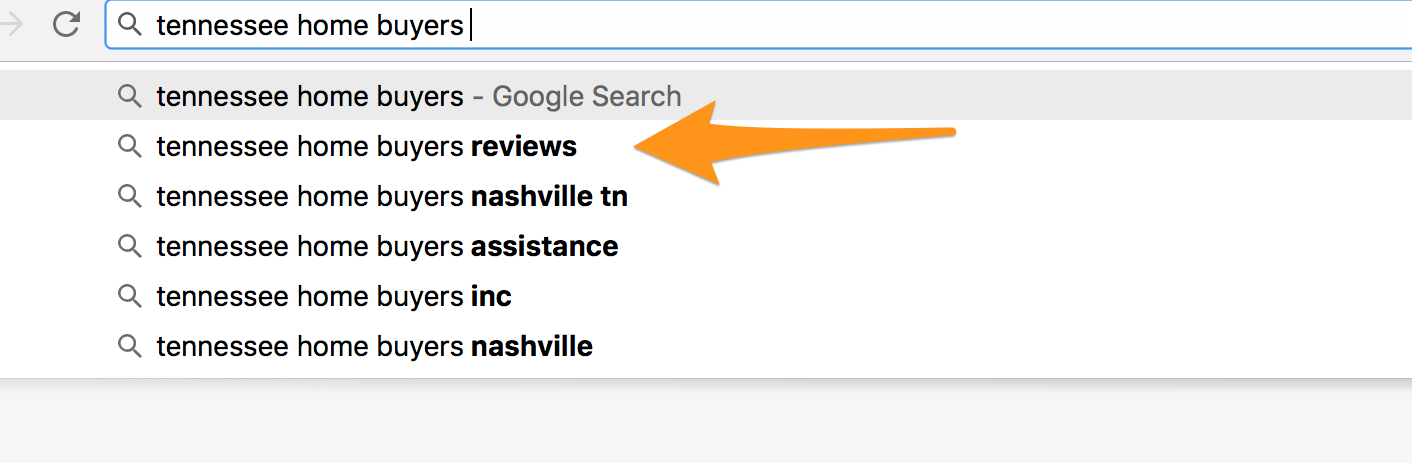
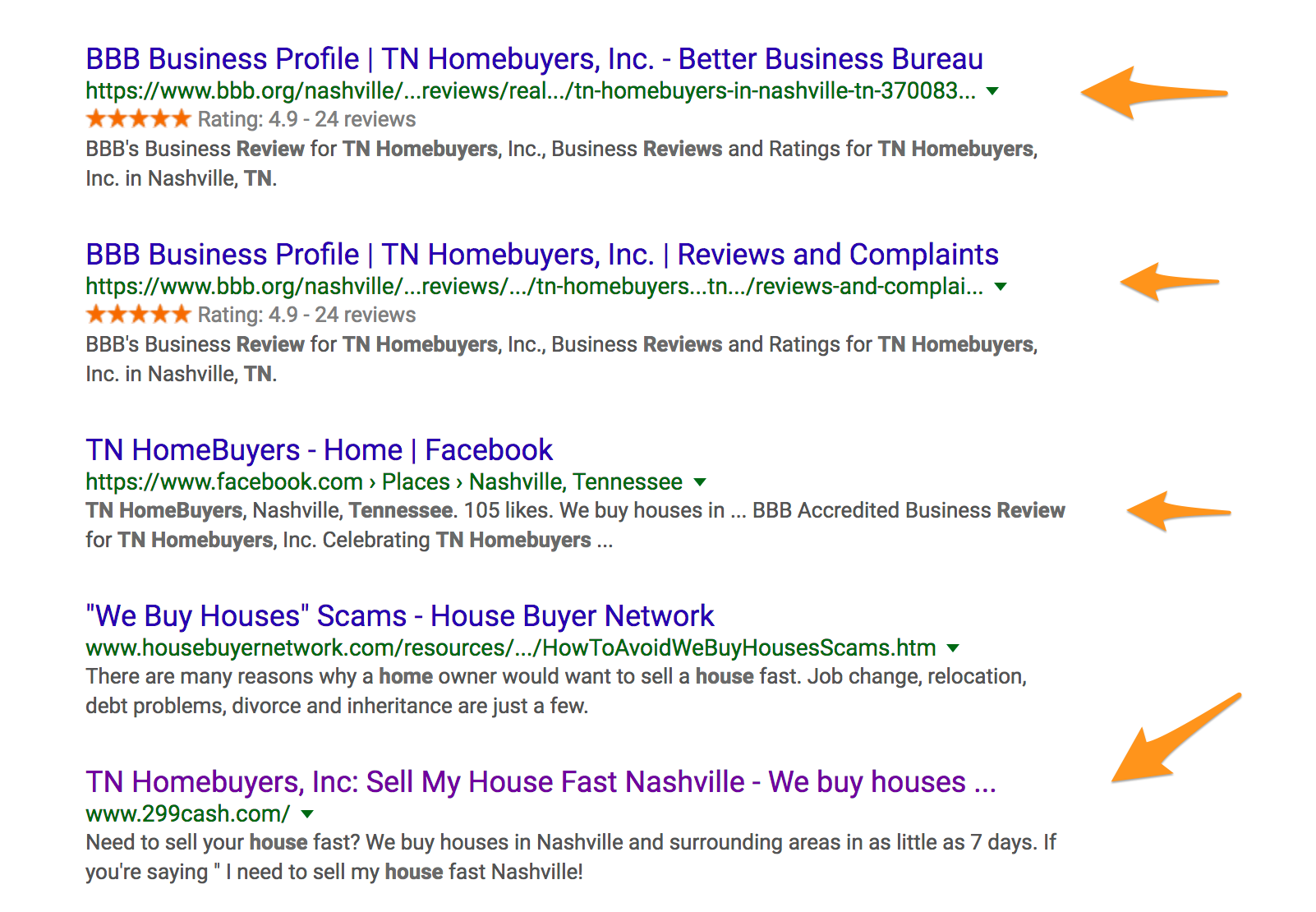
Next, do your citations, okay? Go to our blog, carrot.com/blog we talk about citations. If you’re a Carrot customer we can do your citations for you in our marketplace so check out our marketplace but this sets the foundation for credibility for your website in that local market right here, optimize for your company name plus the word reviews ‘cuz if you’re doing pay per click, or you’re getting traffic, or you’re doing direct mail we need to make sure that you rank well for your company name when people are trying to research you to see if you’re legit, and you never want to lose any deals because someone googles that and then don’t find any good things about you okay?
So optimize your about page for company, company plus your reviews then go get a Better Business Bureau Profile pay that three – four-hundred bucks, whatever it is, and then drive your clients over there to do reviews and optimize it as well for this and that going to help you close more deals.
Social Signals
Next are social signals. Get five, ten, fifteen people to google plus your homepage and Facebook like it over the first two months, backlinks if you’re going to do your own SEO just grab for three to five backlinks a month it’s not a big deal, and we teach how to do this in blog posts, we teach how to do this in our coaching calls, and our three lead per day training, if you’re a member, has it very, very detailed okay?
If you’re not a client we don’t sell that to the open public yet but we will if you’re watching this video after I publish this video just go to carrot.com/3lpd, don’t do it right now because nothing exists but if you’re doing this for several months, go to carrot.com/3lpd, you can check it out.
PPC to Guide SEO
Last, use PPC, use your pay per click data to guide you on your SEO that’s one of the biggest mistakes people make in competitive markets, is they use their pay per click and their SEO in silos, what we always like to do is launch your PPC campaigns, find out the ones that are converting into leads and turning into deals the most and then go after those keywords in your SEO so use PPC to guide you.
I’m gonna wrap this up, fast follow-up is huge in that market, if you’re in a competitive market you need to be calling your leads back within minutes or answer them live. We’ve talked to many clients that as soon as they switch to answering their calls live from pay per click and SEO they started closing more deals okay? It’s a big deal.
Answer them live and if you’re a Carrot customer turn on your text message notifications where you get a text message notification within seconds of a lead coming in, you’ll have a phone number there you can tap the phone number, call them up fast follow-up’s gonna help you cut through in that market. And then last, have an abundance mindset okay? One thing we always love to do is, there’s enough for everyone. There’s enough to go around for everyone; leads, deals, success, abundance, share that with people in your market, don’t try to hold all of your secrets in, the more you share, honestly the more comes back to you. So have that abundance mindset.
Real Estate Marketing in Competitive Markets
Alright, you’re in the competitive market, use that as a blessing, it’s a great thing for you, don’t say, “oh my gosh I’m in this crazy competitive market it’s going to be hard.” It will be work, but there are amazing, amazing things for you on the other side of it. When you have the patience and time locked in your brain you have the plan and you’re working with the right team. Alright? Go after it, tackle it, check out our other episodes of Carrotcast go to carrotcast.com and our other carrot whiteboard strategies sketches on our youtube channel just subscribe right here, here wherever the heck it is. Subscribe to our channel and you get updates as soon as they come out.
Learn more on the Carrot YouTube channel and start growing your business by leveraging the web as a real estate professional!
Local real estate citations are an important local SEO ranking factor and an integral piece for your real estate marketing framework.
Along with other factors such as backlinks, local citations are one of the leading ranking factors for search engines to decide on the relevance of your website for local search results.
Basically, a real estate business that is consistently mentioned on other trusted and relevant websites achieve higher rankings in search results than a business that is never mentioned.
Obviously, ranking high for search results means that more potential leads will find your real estate website, which will have a positive impact on both on and offline traffic, branding, and conversions.
Doing this ONE SIMPLE THING may help push you over the edge and could very well be one of the most effective SEO things you do this spring.
Get an advantage with your Carrot site and learn how to drive quality traffic to your site.
What Are Local Real Estate Citations?
First, don’t confuse citations with links.
Remember,citations are just mentions of your name, address, and phone number. Google will increase your business’s relevance and strength within your specific city or region.
Yes, some of your business listings within the citation sites include a link to your website, but very few contribute to any Page Rank or “link juice”. Basically, you are claiming your digital footprint with Citations.
Moz explains local citations as:
Citations are defined as mentions of your business name and address on other webpages—even if there is no link to your website. An example of a citation might be an online yellow pages directory where your business is listed, but not linked to. Citations can also be found on local chamber of commerce pages, or on a local business association page that includes your business information, even if they are not linking at all to your website.
Citations are a key component of the ranking algorithms in Google and Bing. Other factors being equal, businesses with a greater number of citations will probably rank higher than businesses with fewer citations.
Citations from well-established and well-indexed portals (i.e., Superpages.com) help increase the degree of certainty the search engines have about your business’s contact information and categorization. To paraphrase former Arizona Cardinals’ coach Dennis Green, citations help search engines confirm that businesses “are who we thought they were!”
Google is always looking for websites that are real. Citations are one way to show Google that you’re a legit and real company.
Why Are Local Real Estate Citations So Important For SEO?
So, why are building citations for local SEO so important?
One reason is the vastly growing mobile search factor. According to a study done by Search Engine Land, 78% of local searches on mobile and 61% of local searches on laptops resulted in offline transactions.
Mobile devices (not counting tablets) account for over 56% of our member leads. There will continue to be a steady rise in consumer and company adoption of mobile devices.
It’s not a question anymore if mobile is important for real estate. It’s here and you MUST pay attention to it.
Another reason: Citations Correlate with Search Rankings
Local citations improve your search rankings through ongoing creation of relevant and consistent NAP information (name, address, phone number) across hundreds of websites, also known as citation sources.
The more consistent, relevant and localized your citations are, the more likely your business will be at ranking for people searching for your services and products in your area. Citations are basically another source of credibility that both Google & Bing consider when your business NAP is consistent across the web.
The number one most important thing: Make sure your NAP is 100% correct every time.
DON’T GET IT WRONG
Overall, the biggest contributor is the citation. There is link value within your listings that help strengthen the association of your website with your NAP information.
So, what is NAP?
NAP stands for Name, Address, and Phone Number. It is a crucial piece for any business who is striving to rank well in the local organic search results.
Search engines like Google take your information into account when determining which companies to show for local, geo-targeted, searches.
Again, it’s extremely important that you make sure your NAP is 100% correct. That takes into account, both your NAP on your website as well as any other sites that you have your information on throughout the internet.
It’s a consensus that local SEO experts believe Google, Bing, and all of the other search engines link your NAP information across websites that contain this information as a validation that you are a real and legit business.
The more localized citations you can build up with consistent NAP information, the better your chances are of ranking higher.
You should enter your NAP information into a directory with a strong reputation. This is especially true with real estate specific directories and/or your local directories.
Before You Dive Into Building Your Local Real Estate Citations
Prepare yourself by using this little cheat sheet of the most commonly asked for pieces of information.
Your Name
Company Name – The company’s exact name
Email Address – Your email that will be connected to your business
Address – The company’s exact address
City – The company’s exact city name
State- The state the company resides
Zip – The zip code of the company
Phone Number – The local phone number of the exact business location
Company Website Landing Page – The landing page for the business
Set up a dedicated email address
Don’t use your main email address or your personal one. These business directory websites usually make money by trying to sell advertising services. So you may start to get a lot of “junk” email and some solicitation phone calls. The calls will tail off within a month or two, but the emails can really fill up an inbox. Use the email address to confirm submissions, then let it capture the sales emails so it doesn’t clog your normal inbox.
Top Real Estate Citation Sites
Here are some of the top real estate citation sources. Please note that some of these services require a paid membership.
If you decide to take on citations yourself, it takes about 3-6 hours for the building process.
To get started, go to each citation website and submit your listing.
It varies on how long it’ll take per submission, but plan on 10-15 minutes each. You’ll be required to confirm each submission in the dedicated email account you setup.
Some listing go live fast, others may take weeks, others months. But the majority of them should be live within 2-5 weeks.
In general, SEO Rankings take:
Zero Competition Market: 2-3 Months (if there’s zero competition there’s usually not much opportunity)
Small Competition Market: 6-9 Months
Medium Competition Market: 1 Year
High Competition Market: 2+ years
Typically if you’ve done them right and you’ve completed 40+ on quality sites… you can see a ranking improvement within 2-3 months. That is assuming all other elements on your site are optimized for real estate SEO.
Make Your Own Website Your Best Citation
Make it really easy for Google to identify your website with your citation profile. Most likely the best citation you can start with is your own contact page.
Be sure to have your company name, address, and phone number on there.
Bonus Tip: Add the embed of your Google Places map to help Google further tie your website to that company name and location.
Grab the Google Map “Embed Map” code and paste in into the HTML section of your website. And, this will take about 60 seconds to do it!
Real Estate Citations Frequently Asked Questions
Question #1: How fast will SEO be impacted?
Two to three months is about the time SEO could start showing an impact. Although it might not be dramatic at first. As stated above, there is a chance that highly competitive markets will take longer. Many, many months, if not years.
Question #2: Should I trickle citations out slowly or do them all at once?
Nope – you can do them all at once if you want. There is no evidence that speed of citation claiming will harm your SEO. It is not like backlink building where you can do it wrong.
Question #3: What if I use a tracking phone number for online marketing?
Overall… be sure to use the same phone number for citations that is soon your Contact Page of your website.
You can still have a tracking number in your calls to action and at the top of the site, but it’s suggested that your main company phone number is on the Contact page – therefore matching citations.
Question #4: Should I use a keyword as my business name?
Ideally… NO.
You’ll see some people ranking well with their Yelp or Facebook pages because they used a keyword as their company name.
Unless that is your company name or domain name, don’t do that.
Go with your actual company name or “Doing Business As” (DBA) name.
Question #5: What if I haven’t filed a business name yet?
If you’re serious about this business…
…you need to make that mental commitment of making it real and filing your business with your state.
If you can’t commit to that, it will be difficult to commit to the hard work it will take to succeed as a real estate entrepreneur.
So go out there and file your company name and get that done!
Verifying Your Citations For Real Estate And NAP
Not sure if you correctly submitted your citations? There are online tools that can help you find your listing all of your NAP citations.
Usually, you’ll need to enter some location data into the citation finder tool and you will get back a list of citations pertaining to the entered business and location.
Once you get the data back check the consistency of your NAP.
If there are citation websites that don’t have your correct business name, address and/or phone number then you should start reaching out to these sites or getting site access to update your citation.
Your goal is consistency.
Spelling mistakes or minor inconsistencies in your business name can have an impact on your local search rankings.
If your location is listed as Blvd on one website and as Road on another website, correcting this can have a huge impact.
Local Real Estate Citations Building Can Be a Pain, So Here’s How We Make It Easy…
In simple words, citations are important for your website’s rankings, especially in local SEO. If you want to boost your website’s rankings, focus on citations and don’t worry about the backlinks.
You will have plenty of other places to get backlinks from. Focus on citations from reputable websites with good page rank and domain authority.
Citation building is one of the simplest SEO practices for real estate agents ad investors.
How to do it if you don’t want to do the work: Checkout the Carrot marketplace. We have a real estate citations service that can do it for you.
If you’re a Carrot member (very soon we’ll be offering non-member 3LPD services), we have a whole section on citation building in our 3 Lead Per Day Training (you can buy it here) so we thought we’d share it with you as a great SEO resource to jumpstart your year. You can access the entire 3 Lead Per Day Training and all 50+ detailed videos and checklists for only $99.
When it comes to online real estate marketing, your website’s visibility on search engines like Google can make or break your lead generation efforts. But visibility alone isn’t enough—you need to convince users to actually click on your listing in the search results. This is where your SEO title and meta description come into play.
These two elements are your first—and sometimes only—opportunity to make a strong impression. In just a few words, they have to convey the value you offer, speak directly to the needs of potential sellers or buyers, and drive them to take action. For real estate investors, who often rely on capturing the attention of motivated sellers, mastering this art can lead to a consistent stream of high-quality leads.
Why Meta Tags Matter in Real Estate
Meta descriptions and SEO titles are not just placeholders for keywords. They act as the “ad copy” for your search engine results. Well-written tags can directly influence Click-Through Rate (CTR), which is the percentage of users who click on your result when it appears on the search engine results page (SERP).
How Meta Tags Influence Click-Through Rates (CTR)
First Impression: Your SEO title and meta description are often the first things a potential lead sees. They set the tone for the user’s decision-making process. A compelling title can grab attention, while a clear, concise meta description can reassure users that your page has what they’re looking for.
Keyword Relevance: Search engines like Google bold the keywords in your title and description that match the user’s search query. This increases visibility and signals relevance, making it more likely that users will click on your listing over a competitor’s.
Trust and Transparency: A well-crafted meta description lets the user know what to expect when they click through. If they’re searching for “sell my house fast in ,” and your description promises a simple process with no fees, they’re more likely to feel confident that they’ve found a solution to their problem.
For real estate investors, your leads often come from sellers in distress or urgency, whether it’s due to foreclosure, repairs, or financial issues. The more targeted and reassuring your title and description are, the higher your chances of converting that curiosity into a lead.
What You’ll Learn
In this blog, we’ll break down the steps to craft high-converting SEO titles and meta descriptions that:
Use relevant keywords without overstuffing.
Appeal directly to the pain points and needs of motivated sellers and buyers.
Include clear calls to action that drive clicks and leads.
Reflect the local nature of your real estate business to attract the right audience.
By following these tactics, you’ll be able to create optimized meta tags that not only improve your search rankings but also increase CTR, leading to a steady stream of motivated leads ready to sell or invest in real estate. Let’s dive in!
Understanding SEO Titles and Meta Descriptions
What is an SEO Title?
An SEO title is the clickable headline of your webpage that appears on search engine results pages (SERPs). It serves two major purposes:
Telling search engines what your page is about.
Enticing users to click on your listing.
SEO titles are a crucial ranking factor because they give search engines important clues about the content of your page. However, they also play a pivotal role in determining your Click-Through Rate (CTR). A well-crafted title that aligns with a user’s search intent can convince them to choose your result over others, regardless of where it ranks.
For example, a user searching for “sell my house fast in ” is more likely to click a title that addresses their exact need, such as:
“Sell Your House Fast in | No Fees, No Hassles”
This title speaks directly to their problem and offers a solution upfront.
Connection Between SEO Titles, Rankings, and CTR
SEO titles influence rankings by incorporating target keywords that search engines use to understand your page’s relevance to a search query. While rankings are important, a high ranking without a compelling title won’t generate clicks. In the real estate investing space, where competition is fierce, your title must capture the urgency and pain points of motivated sellers to stand out.
For instance, a title like:
“We Buy Houses in Fast | Get a Cash Offer Today”
not only ranks well for keyword searches like “we buy houses,” but also appeals to homeowners who need to sell quickly.
How SEO Titles Are Shown on SERPs (Example)
Let’s look at an example of a real estate-related search:
Search Query: “Sell my house fast in Dallas”
SEO Title Example: Sell Your House Fast in Dallas | No Repairs, No Fees, Cash Offers
This title uses important keywords—”Sell Your House Fast in Dallas”—while also offering solutions like “No Repairs, No Fees,” which address common seller concerns.
What is a Meta Description?
A meta description is the short snippet of text that appears under your SEO title on the SERP. While meta descriptions are not a direct ranking factor, they are incredibly important for influencing user behavior. A well-crafted meta description reassures potential leads that your page provides the solution they’re searching for, even if your ranking is lower on the page.
Meta descriptions should focus on being informative, clear, and action-driven. They can directly affect CTR, turning impressions into clicks.
Importance of a Well-Crafted Meta Description
Even if your ranking isn’t in the top spot, a compelling meta description can help you compete with higher-ranked pages. This is particularly important in real estate, where motivated sellers often choose the most convenient and promising option from the search results.
For example, consider these two meta descriptions for the same query:
Good Meta Description:
Need to sell your house fast in ? At we make cash offers and close in as little as 7 days.
This description is clear, concise, and offers a solution directly relevant to motivated sellers.
Bad Meta Description: We buy houses. Contact us today for a free consultation about your property.
The second description lacks specificity and urgency and doesn’t differentiate the service.
How Search Engines Display Your SEO Title and Meta Description
Search engines display the SEO title and meta description as the first impression a user sees. If you optimize these two elements correctly, you increase the likelihood of driving clicks.
Here’s how they look on a SERP:
SEO Title Example: Sell Your House Fast in | No Fees, Cash Offers in 24 Hours
Meta Description Example: Need to sell your home quickly? We offer no-obligation cash offers in and can close in as little as 7 days. Contact us for a quick sale.
Word Limits for SEO Titles and Meta Descriptions
SEO Titles: Should be kept between 50-60 characters. Any longer, and search engines may cut off part of your title.
Meta Descriptions: Aim for 150-160 characters. This ensures your message is displayed in full without being truncated.
For real estate investors, keeping within these limits helps convey your message clearly and completely, increasing your chances of capturing clicks from motivated sellers.
By understanding how SEO titles and meta descriptions work together, you can better optimize your real estate website to attract more motivated leads and convert them into deals. Next, we’ll dive into how to actually craft these elements to maximize your online presence.
Section 2: Crafting a High-Converting SEO Title
An SEO title serves as the first point of contact between your website and a potential motivated seller. To maximize your click-through rate (CTR), you must create a title that not only includes relevant keywords but also speaks directly to your target audience’s needs and pain points. Here’s how to do it step-by-step.
Step 1: Keyword Research
Identify the Most Relevant Real Estate Keywords for Your Title
The first step to crafting a high-converting SEO title is conducting thorough keyword research. You need to find out exactly what your potential leads are typing into search engines when they’re looking to sell their homes. The goal is to identify keywords that not only align with your services but also attract motivated sellers in your target market.
How to find the best keywords:
Google Keyword Planner: A free tool that shows search volumes and keyword competition. Use this to discover terms such as “Sell my house fast in ” or “Cash home buyers in [market city].”
Carrot’s Keyword Explorer Tool: This tool helps you find real estate-specific keywords based on what’s already driving traffic for other Carrot users. It’s especially useful for uncovering long-tail keywords like “sell my inherited house fast in [market city].”
Real estate-specific keyword examples:
Sell My House Fast in Dallas
Cash Home Buyers in Austin
Avoid Foreclosure in Minneapolis
The focus should be on finding keywords that both match search intent and address urgent needs, like selling a house quickly or getting a cash offer.
Step 2: Writing the SEO Title
Use of Primary and Secondary Keywords Without Keyword Stuffing
Once you’ve identified your primary keyword (e.g., Sell My House Fast in Dallas), you want to seamlessly incorporate it into your SEO title. However, avoid keyword stuffing—which is the practice of cramming too many keywords into one title. Search engines penalize titles that look unnatural, and they can turn off potential leads.
Example of keyword-stuffed title (what not to do): Sell My House Fast Dallas | Cash Buyers in Dallas | Sell My Home Quickly in Dallas
Instead, focus on integrating primary and secondary keywords into a readable, actionable title. Secondary keywords could be variations like “cash buyers” or “no fees.”
Example of a well-crafted title: Sell My House Fast in Dallas | Cash Buyers, No Fees, Close in 7 Days
Here, the primary keyword (Sell My House Fast in Dallas) is paired with additional value points—”cash buyers,” “no fees,” and “close in 7 days.” This not only incorporates a secondary keyword, but it also speaks directly to the concerns of motivated sellers.
Incorporate Emotional Triggers and Urgency
For real estate investors, the SEO title should inspire urgency and action. Motivated sellers often want a quick solution to their problem—whether that’s foreclosure, a looming divorce, or an inherited property they need to offload.
To drive clicks, add emotional triggers like:
Speed: “Fast,” “Quick”
Financial relief: “Cash Offer,” “No Fees”
Simplicity: “Hassle-Free,” “No Repairs Needed”
Example: We Buy Houses Fast in Dallas – Get a Cash Offer Today!
This title combines urgency (“Fast”) and simplicity (“Cash Offer Today”), pushing the lead to click through and learn more.
Balance Between Keyword Optimization and Readability
Remember, your SEO title should always prioritize readability. Titles that are too keyword-focused can look spammy and untrustworthy to users. Strike a balance between placing your keywords naturally and writing a title that reads well and addresses the user’s intent.
Step 3: Use Unique Selling Points (USPs)
Why Highlighting a Competitive Advantage Increases CTR
Unique Selling Points (USPs) set your business apart from the competition and give potential sellers a reason to choose you. In the real estate investing space, motivated sellers care about speed, convenience, and costs. Make sure your SEO title highlights your most compelling advantages.
Some common real estate-specific USPs include:
No Fees: Many motivated sellers are dealing with financial difficulties, so the idea of avoiding costly agent fees is very appealing.
Quick Closings: Sellers who are facing foreclosure or other urgent situations need reassurance that you can buy their home quickly.
No Repairs Needed: Many sellers don’t want to spend time or money fixing up their home, so offering a hassle-free sale can make a big difference.
Real estate-specific examples of USPs:
Sell Your Home Fast in Dallas – No Repairs, No Fees, Close in 7 Days
We Buy Houses in Austin – Cash Offers in 24 Hours, Close Quickly
Avoid Foreclosure in Minneapolis – Get a Cash Offer, No Commissions
Emphasize USPs Alongside Keywords
Including USPs in your SEO title can dramatically improve your CTR because they address the most pressing concerns of motivated sellers. In the example below, note how the USP (“No Fees, No Repairs”) is paired with the primary keyword (“Sell Your Home Fast”).
Example: Sell Your Home Fast in Dallas – No Fees, No Repairs, Cash Offers in 24 Hours
This title not only optimizes for search engines by including the primary keyword but also drives clicks by showcasing the unique benefits you offer.
By following these steps to craft a high-converting SEO title, you’ll optimize your page for search engines and increase your chances of attracting motivated leads. Next, we’ll move on to creating equally powerful meta descriptions that reinforce your SEO title and further compel users to click.
Section 3: Writing a Compelling Meta Description
Your meta description is the second point of contact after the SEO title that convinces a user to click on your website link. It acts as a brief, yet powerful sales pitch, summarizing why the user should choose your site. Crafting an effective meta description involves understanding user intent, including a clear call-to-action (CTA), and addressing the pain points of motivated sellers. Here’s how you can write one that converts.
Step 1: Understand User Intent
The key to writing a high-performing meta description is understanding the user’s intent—what they want when they type their search query. In real estate, users generally fall into three categories: sellers, buyers, or investors. Knowing which audience you’re targeting will change how you craft the meta description.
Example: A seller searching for “Sell my house fast in ” is motivated by speed and convenience, while an investor searching for “Best real estate investments in ” wants profit potential and market insights.
Your meta description should match that intent. For instance:
Seller-focused: “Get a cash offer for your house today. We buy houses in with no repairs or fees!”
Buyer-focused: “Find your dream home in . Browse homes for sale, schedule a viewing today!”
Investor-focused: “Discover top real estate investment opportunities in . Maximize your ROI with expert guidance.”
Tactical Tip: Before writing the meta description, consider the user’s goal and the specific action they are looking to take. This will guide your messaging to better align with their intent, which increases the likelihood of a click.
Step 2: Include a Clear Call-to-Action (CTA)
Real estate is all about action, and adding a strong call-to-action (CTA) in your meta description is essential for increasing click-through rates. The CTA prompts the user to take the next step, whether it’s getting a cash offer, scheduling a consultation, or browsing available properties. Without a clear CTA, you risk losing the user’s attention even if your description grabs their interest.
Examples of strong real estate CTAs:
“Request a Free Cash Offer”
“Call Now for a Free Consultation”
“Get a Cash Offer in 24 Hours”
CTAs work best when they’re placed near the end of your meta description. This way, users first see the benefit or solution you’re offering and are then prompted to take action.
Example of CTA placement within the character limit (150-160 characters): “Need to sell fast? We buy houses in with no fees or repairs. Get your cash offer within 24 hours—Call Now!”
This meta description tells the user:
Their pain point (speed of sale) will be solved.
There are no additional fees or repair costs.
The next step is clearly outlined with the CTA “Call Now.”
Step 3: Address Pain Points and Solutions
One of the most effective ways to increase clicks is by addressing the user’s pain points directly in your meta description. Sellers looking for quick solutions to issues like foreclosure, unwanted repairs, or relocation are motivated by how quickly you can solve their problems. When your meta description speaks to these concerns and offers a solution, users are more likely to click through to your site.
Common real estate seller pain points:
Foreclosure: Financial distress may force sellers to seek quick solutions to avoid foreclosure.
Repairs: Sellers may not have the time, money, or energy to fix up a house before selling.
Relocation: Moving quickly due to a job or personal situation often requires a fast home sale.
Example of addressing a pain point:“Need to sell fast? Avoid foreclosure and get a cash offer within 24 hours. No repairs needed—sell your house as-is!”
This meta description tackles multiple concerns:
The user is reassured they can avoid foreclosure.
They don’t need to worry about repairs.
They are offered a quick solution—cash in 24 hours.
By solving the problem in the meta description, you’re positioning yourself as the go-to solution for sellers in distress.
By following these three steps—understanding user intent, including a clear CTA, and addressing pain points—you’ll write meta descriptions that not only capture attention but also drive conversions. The ultimate goal is to get motivated sellers, buyers, or investors to click through to your site, bringing them one step closer to becoming a lead.
Section 4: A/B Testing and Analyzing Results
Once you’ve written your SEO titles and meta descriptions, it’s crucial to track their performance and make adjustments for improvement. A/B testing and performance analysis will help you discover what resonates with your target audience and leads to more clicks and conversions. In this section, we’ll walk you through monitoring your click-through rate (CTR), running A/B tests, and optimizing your meta tags based on real data.
Step 1: Monitor CTR in Google Search Console
The first step in optimizing your SEO titles and meta descriptions is to monitor your click-through rate (CTR). CTR shows how often people click your link after seeing it on a search engine results page (SERP). Monitoring this data gives you insights into how effective your titles and descriptions are at attracting clicks.
How to Track CTR:
Log into your Carrot Dashboard. Carrot members can integrate Google Search Console directly with their dashboard, making it easy to track performance.
Access the “Search Performance” Report. In Google Search Console, navigate to the “Search Performance” section. Here, you’ll find valuable data on how your website is performing, including impressions, clicks, and CTR for specific pages. You can monitor this directly from your Carrot dashboard.
CTR Benchmarks for Real Estate Websites: The CTR for real estate websites can vary, but a healthy target CTR is between 2-5%. If your CTR is lower, it may be time to revisit your SEO titles and meta descriptions to make them more engaging.
Step 2: A/B Testing Different Titles and Descriptions
A/B testing, also known as split testing, allows you to compare two variations of your SEO titles or meta descriptions to see which performs better. For real estate websites, this is a powerful strategy to fine-tune your messaging and increase your CTR and conversions.
How to Run A/B Tests:
Choose the Elements to Test. Start by selecting one variable at a time—either the SEO title or the meta description. This helps you clearly see which element is driving any changes in performance. For example, you might test adding urgency to your title:
Version A: “We Buy Houses Fast in – No Repairs Needed”
Version B: “Sell Your House for Cash in – Quick Closing!”
Use Tools for A/B Testing. Tools like Google Optimize or plugins like Yoast SEO Premium allow you to easily set up A/B tests for meta descriptions and SEO titles. These tools track how each version performs over time, so you can confidently pick the best option.
Set a Testing Timeline. Run each test for a sufficient amount of time, usually a minimum of 2 weeks or until you have a statistically significant amount of data. The longer the test runs, the more reliable your results will be.
Step 3: Optimize for Performance
After collecting data from your A/B tests, it’s time to analyze and optimize your SEO titles and meta descriptions to boost performance. Small tweaks can make a big difference, especially when you incorporate elements that address user pain points or highlight unique selling propositions.
Key Optimization Tips:
Review CTR Data. If one variation outperforms the other, consider what made it more effective. For example, did adding urgency or highlighting “cash offers” result in more clicks? Continue to revise based on what you learn.
Tweak Based on User Behavior. If you notice that certain keywords or phrases perform well, apply them to similar pages. For example, if you test “Sell Your Home As-Is” and it increases CTR, roll out this phrase to other listings targeting motivated sellers.
Take Action: Implement these A/B testing strategies to refine your SEO titles and meta descriptions. Track your CTR regularly through Google Search Console and always be ready to optimize based on performance. With the right testing and analysis, you can turn small changes into big results!
Section 5: Common Pitfalls to Avoid
While crafting SEO titles and meta descriptions can significantly improve your website’s performance, there are several common mistakes you need to avoid. Missteps like keyword stuffing, vague messaging, and neglecting local SEO can undermine your efforts, leading to poor CTR and fewer conversions. Here’s how to steer clear of these pitfalls.
Keyword Stuffing in Titles and Descriptions
Many real estate investors mistakenly believe that cramming as many keywords as possible into their SEO titles and meta descriptions will improve their rankings. However, keyword stuffing can hurt both your rankings and user experience.
Why Overusing Keywords is Harmful:
Hinders Readability. Keyword-stuffed titles and descriptions sound unnatural and may confuse or frustrate users. Remember, your meta description is often the first impression a potential lead has of your business. If it feels robotic or clunky, they are less likely to click.
Hurts SEO. Search engines like Google have become much better at recognizing and penalizing keyword stuffing. Your title or description could be flagged as spammy, which could cause your rankings to drop.
Example of Keyword Stuffing (Avoid This):
“Cash Home Buyers | Sell My House Fast in | No Realtor Fees | Cash Home Buyers in | We Buy Houses Fast in ” This example overloads the title with repetitive keywords, sacrificing clarity and professionalism.
How to Fix It:
Focus on one or two primary keywords and ensure the title flows naturally: “Sell Your House Fast for Cash in – No Repairs, No Fees!” This is clear, concise, and targets relevant keywords without sacrificing readability.
Vague or Misleading Titles/Descriptions
Another common mistake is crafting titles or descriptions that are either too vague or misleading. Setting clear, realistic expectations is crucial for building trust with motivated sellers and buyers.
Why Vague or Misleading Copy Hurts Conversions:
Decreases Trust. If a potential lead clicks on your link expecting one thing but finds something different on the page, they will likely bounce (leave the page immediately). This not only results in a lost lead but can negatively impact your SEO through higher bounce rates.
Undermines Your Authority. Real estate is a trust-driven business. Your SEO titles and meta descriptions need to reflect your services honestly and accurately, otherwise, you risk losing credibility with your audience.
Example of a Misleading Title (Avoid This):
“Sell Your House for Cash Fast – Guaranteed Offer in 24 Hours!” While this may sound appealing, guaranteeing an offer within 24 hours is not always feasible or honest for most real estate investors.
How to Fix It:
Be truthful about what you can offer: “Sell Your Home Fast for Cash – Get an Offer in 24-48 Hours!” This sets a more realistic expectation, building trust without overselling.
Ignoring Local SEO Best Practices
In real estate, local SEO is paramount. Ignoring the use of location-specific keywords in your titles and descriptions can cause you to miss out on highly targeted traffic. Motivated sellers and buyers are searching for local solutions, and your meta tags need to reflect that.
Why Location-Based Keywords Matter:
More Targeted Leads. Sellers are typically looking to offload properties in a specific location. By including location-based keywords, you ensure that your website appears for relevant searches like “sell my house fast in ” or “cash home buyers in .”
Higher CTR and Conversion Rates. Users are much more likely to click on listings that match their location. By adding local keywords, you increase the relevance of your site to the searcher, which improves both CTR and conversion rates.
Example of Ignoring Local SEO (Avoid This):
“We Buy Houses Fast – Get a Cash Offer Today” While this headline might generate some interest, it lacks a local focus, making it harder for people in your target market to find you.
How to Fix It:
Always include your city or region in the title: “We Buy Houses in – Fast Cash Offers with No Repairs!” This version includes the city name, immediately signaling to the searcher that you operate in their area.
Take Action: To improve your click-through rates and attract more motivated leads, avoid these common mistakes. Use keywords naturally, set clear expectations, and always focus on local SEO. By fine-tuning these details, you’ll see more qualified traffic and ultimately more conversions!
Conclusion
Optimizing your SEO titles and meta descriptions is one of the most effective ways to increase your click-through rates and generate motivated leads. By following the tactical steps outlined in this guide, you can craft compelling titles and descriptions that attract more clicks and convert more users into leads.
For further guidance on real estate SEO, consider signing up for Carrot’s SEO tools or schedule a demo with our team to see how we can help you optimize your website for success.
Listen to the CarrotCast Podcast and Subscribe Below!
It’s awesome because once you know the formula of how to do this, its just do it again and keep going and going and see how you can grow it.Brian Rockwell
I always get excited when I get to do these types of CarrotCasts when I bring on a client of ours who has a great, great story. And the client that I’m bringing on in this episode is Brian Rockwell. This CarrotCast is pretty compelling and hopefully, it’s going to speak to everyone about patience and swift and focused execution when you decide to make things happen.
He didn’t use the excuses of, “There’s way too much competition.” He didn’t use the excuses of, “I already see Carrot sites everywhere.” He didn’t use any excuses of “I’ve never done a deal.” He went out there, executed according to what we laid out, our plan for him. He executed it. He carved out time to study. He carved out time to implement, he carved out a budget, and he did $80,000 in wholesale fees in March.
You’re also going to be able to learn how he’s executed like mad as a newer investor, not having all the advantages that you do with experience and credibility and how he went after and executed with one marketing plan, on one way of getting clients now with building up momentum over the long term with another way of getting clients, and how he’s turning those into profits.
He eliminated emotion from his wholesaling real estate decisions by setting a solid marketing budget that is 100% based off of data and math. Magically that turned into amazing results for him.
You’re going to love his story, how he went from junior high teacher and baseball coach, and a 12-year journey on starting being a real estate investor from thinking about it to taking the action on it.
So listen to this episode of the CarrotCast and check out the other episodes at carrotcast.com.
Listen to the Podcast
[podcast-subscribe]
Listen in and hear how Brian took action and within three months he’s doing $80,000 a month in revenue from online marketing…
1:35 – Who is Brian Rockwell? 3:00 – What originally got Brian locked into real estate and his 12-year journey. 7:20 – Closing the first deal and what his business strategy looks like right now. 12:25 – Breaking down the online marketing mindset. 14:45 – Dissecting Brian’s formula for wholesaling real estate success. 18:05 – Why his About page on his Carrot site has been effective in building credibility.
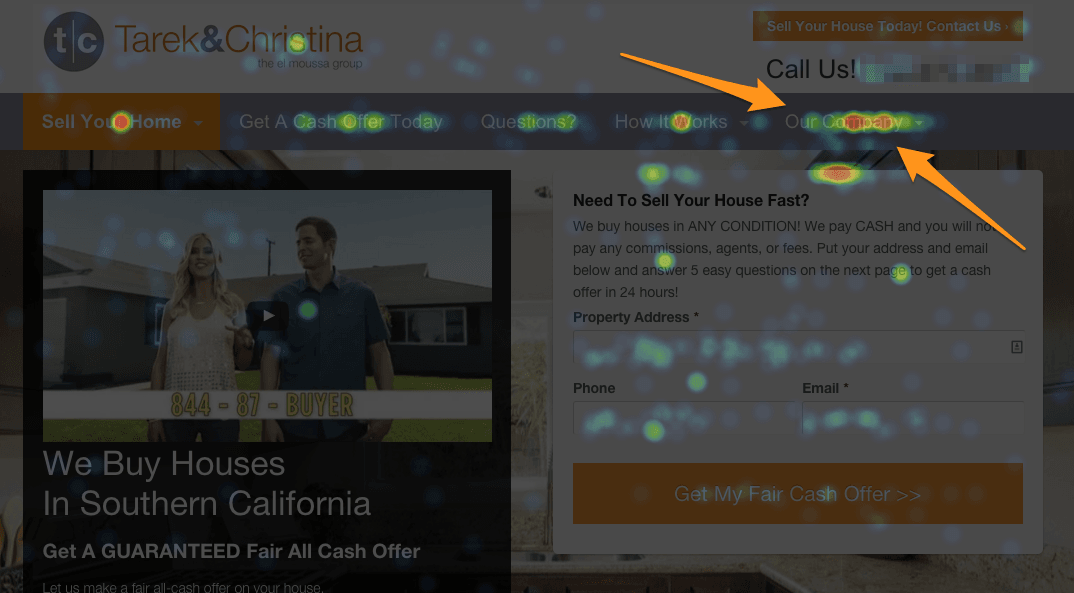
Rockwell Homes LLC Our Company Page
20:55 – The importance of integrity and customer service — building a set of strong core values.
Rockwell Homes LLC Core Values
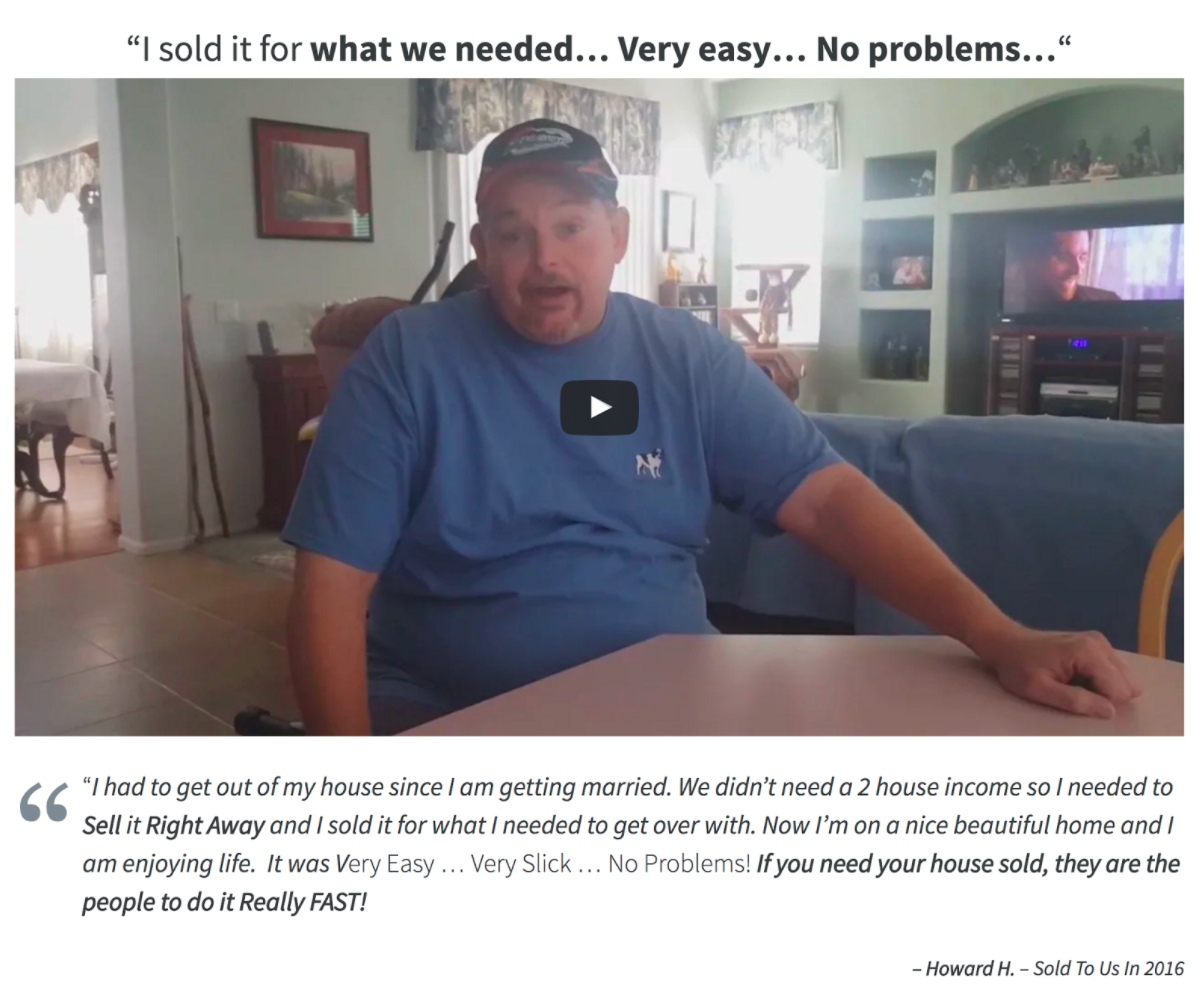
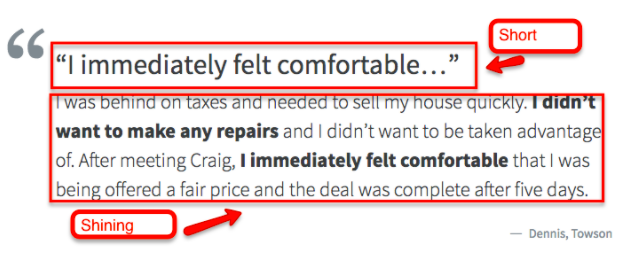
23:55 – Why it’s so darn important to utilize testimonials to build credibility. 27:00 – Going from an SEO mindset to PPC in one of the most competitive markets in the country. How long it took Brian to start closing PPC deals. 30:30 – Brian’s PPC budget and the formula he uses to expand upon that budget. 36:05 – How he found Carrot and why he decided to commit to the Carrot system. 38:25 – What is Brian’s “Why” and some of his big goals. 41:25 – “Having a greater impact on the world” – Entrepreneurship done right. 44:35 – Why sellers have chosen to work with him and how his website has factored. 45:45 – What hesitations he had with Carrot before joining. 48:30 – Brian’s final advice for someone searching for wholesaling real estate success – “Trust the Carrot System.”
Think of the companies that you admire. Think of the companies that you work with all the time. Oftentimes, the ones that you really admire and you keep on buying from over and over again — think Amazon or Apple or name the local one that you really appreciate — each and every time, they all have something called a unique selling proposition (USP).
USP: Their unique advantage that they serve in the market. It’s something that no one else can claim but them.
One thing that a lot of real estate investors and agents don’t do is they don’t come up with their own version of their USP real estate pitch.
They put out the exact same message that every single person in their market is putting out. If you’re a real estate agent, “Hey, we can sell your house. We can show you homes.”
Everyone Is Saying The Same Thing
What are you doing to separate yourself from the 400 other agents in your market?
If you’re a house buyer or house flipper, what are you doing to show the sellers or buyers or tenants that you guys are different?
The thing is you go to nine out of 10 real estate investor websites are going to be showing the exact same message.
They’re going to be saying, “Hey, we can buy houses. We can buy them fast.” You know, “Fast cash closing.” Those types of things.
If you’re saying the same thing, how is it that someone is going to choose to work with you versus working with someone else?
That’s what we’re going to be talking about today on this Whiteboard Strategy Sketch is a unique selling proposition.
Especially in the cluttered market right now. The market’s going up, which means a lot of investors want to pile in and start flipping houses or wholesaling. A lot of real estate agent prospects are piling in there, wanting to sell houses, because it’s easy today. How do you stand apart?
The Solution: Having A Unique Selling Proposition For Your Real Estate Business
The people who are doing that are the ones winning the market. The people who are not doing that are going to close some deals probably, just by the sheer mathematics of getting leads, but the ones who are actually coming with a unique selling proposition are going to be here through the market cycle.
They’re going to be here in the next cycle. They’re going to be here in a year, in two years, in five years. All right, so a unique selling proposition is the key.
What’s Your Unique Advantage?
The first thing is, what’s your unique advantage? What is it that you have that no one else can claim? This goes directly into the next one. No one can claim the same thing. Okay, so this is something where it could be your experience.
It could be a unique process that you have in your business. It could be the credibility that you have based on the experience that you have. What is it that no one in your market can claim the same?
As an example, we’re working with a local real estate brokerage here. They are the number one, the largest, privately-held brokerage in Douglas County which is sweet. No one can claim the same thing.
That’s one of their unique selling propositions. They probably have several others. One of the other unique selling propositions, they’re amazing at commercial real estate.
No one can claim the same, that they have two CCIM-accredited brokers that are specialized in commercial. That’s something that’s an advantage to them.
If you don’t pull that out and put it in your marketing, put it on your website, then you’re not using your unique process, your unique selling advantage, as an advantage.
A Few Examples
Another one, your unique selling proposition creates a massive advantage in the market. With Carrot, let’s kind of bring it home to us.
We don’t just put out websites or software, okay? If we did that, we would be one of the many others who do that, but we have a unique selling proposition. Our unique selling proposition is you get better results when you work with us.
You get a higher ROI with your ad spend. You get a higher ROI with your marketing. Okay, we’re going to help you with our software and our training and our support to get a better result, so you have less of what we call phantom expenses: fewer things where you get a lower ROI because of underperformance.
That’s one of our unique selling propositions out of many.
What is the one advantage that you have? One company that you guys have probably heard of, it’s a national company. It’s actually a Silicon Valley-funded company called Opendoor.
Many of you guys have heard of Opendoor. They’re in Phoenix. They’re in LA now, in Las Vegas I think too. If you go to their website, and people are wondering, “Why is Opendoor doing so well?” They’re doing a lot of direct mail. They’re doing a lot of online marketing. What is it about them that’s doing so well? If you go to their website, number one, they’re insanely, insanely transparent about their offer process.
There are no questions on exactly how they come about a price to offer the seller. That’s a unique advantage because all of their competitors are hiding the way that they come up with their offer.
If you’re one of the people who is just saying, “Oh, I’ll offer you money. I’ll offer to buy your house,” but you’re not uncovering the process in how you do that so they know that it’s a fair process, then you’re at a unique disadvantage to a company like Opendoor. They’ve got that unique advantage.
Another thing on their website if you check it out, they’ve been a part of over 4,000 transactions.
No one can claim the exact same number because that’s unique to them.
Put that on your website. If you’re an experienced investor and you’ve done 20 transactions or hundreds or whatever it is, use that unique advantage to your own benefit. Put on there, “Hey, helped hundreds of local home buyers, helped hundreds of local home sellers,” that’s unique to you specifically, or use the exact number, even better.
Maybe you have an insanely high rating on Zillow. You’re the number one agent on Zillow. No one else can claim that but you.
Maybe you are the number one commercial or you’re the number one North Umpqua River, that’s a river that we have here, one of the rivers here in Roseburg, you’re the number one river real estate agent in the entire area. Claim that if you can claim it.
Then challenge your other competitors to come over the top of you and claim that space.
It’s Hard To Win Without A USP
What is your unique selling proposition? If you don’t have one, the likelihood of you crushing it in this market and being here through the market cycle is probably pretty low.
If you’re a new investor, you might be going,
“Oh my gosh, I don’t have a unique selling proposition. Does that mean I should quit my business right now?”
The answer is no. There is something unique about you that you need to put out there. If you don’t have something, you really do need to work on it. You should also look at your business model. Don’t just copy the business model from your coach.
Find a way that you can make it better. What in your process can you do that’s different? What in your process can you do, in your offering process that you can do that’s different or better?
Express Homebuyers out of Baltimore, okay, they have done over 2,500 real estate transactions buying and selling homes themselves. One of their unique selling propositions is they’re going to get you an offer within like seven minutes, I think it’s something like. Don’t quote me on that, but it’s something like that. All their advertising hones in on this one USP: get an offer within seven minutes. That’s their claim to fame.
What is yours? Find your unique selling proposition.
Put it into all of your marketing so you have something that’s clearly, clearly different than your competition.
How serious are you to build your business? You have to have a unique selling proposition.
Otherwise, no one’s going to think you’re unique, and you’re a commodity, so go out there and do it today!
What if you could read the mind of the motivated seller? Meaning, what if you could send the right message to the right person at the right time?
Unfortunately, the internet provides a threat to match its opportunity. While powerful, the internet’s power can easily be strangled by its formidable size. Quickly, it becomes a source of crowded destruction instead of open possibility.
The real estate market is increasingly competitive because it’s increasingly cluttered, making the dream of reading the house seller’s mind, at the least, difficult, and at the worst, debilitating.
But here at Carrot, we hate letting dreams die.
Every year, our clients pull in over 400,000 online leads, giving us a very special position to speak to what’s happening in the real estate market.
Even though the market is more crowded than ever before, by accepting this density and optimizing your customer experience for the motivated seller, that crowded room becomes a pleasant dinner party. And you’re the host.
So, how do you cater and attract a motivated house seller?
Well, you need to know what the motivated seller thinks, wants, and does. Lucky for you, we crunched some numbers, ran some tests, and stepped into their mind… using a significant and varying sample size, specific to all seller websites we host.
And we want to share what we learned.
So, before we finish wiping off brain matter, here’s how the motivated seller makes the decision on who they’re going to work with when selling their house… based on our years of research and understanding the “decision lifecyle” of the average motivated house seller.
Let’s Get Inside The Mind Of A Motivated House Seller On Their Path To Choosing A Company That Can Solve Their House Problem
Step 1: Problem Aware
The house seller knows they have a problem… but aren’t sure how to best solve it. This is where you come in…
At this stage the motivated house seller is thinking…
“I need to get this house sold, like soon.”
This is the birth of the motivated seller.
Maybe they received a job in a new state, a family has fallen sick, foreclosure, inherited a house, going through a divorce, or just simply have a house that needs lots of repairs that they don’t want to deal with. Regardless of the reason, life circumstances spiked their curiosity in the selling process and they start exploring the possibility.
First and foremost, the seller wants to know how much they can likely sell their house for. They’ll likely visit Zillow, update their house information, and then check out their Zestimate.
But, while Zillow offers convenience, John Wake’s guess work, on Real Estate Decoded, estimates that Zestimate’s typical error is plus or minus 14,000 dollars.
And whether the motivated seller has run their own tests or not, their trust for this system is limited. It offers a curiosity-sating foundation, but not a real-time solution.
Which is good. Because you are the real-time solution they are looking for.
That takes us to the seller’s second dig: they contact someone who can answer their questions in greater depth.
Likely, this is someone the motivated seller’s acquainted with, whether it be a friend, a Facebook ad, or a Twitter feed. Whatever the case, they are looking to make phone calls and get answers.
It’s your job to (1) get them to call you, and (2) provide those answers.
Here’s how.
1. Get In Front Of Them Where They Search… Google
House sellers will hit Google to search things like “how to sell my house fast” or “selling a house in divorce in dallas” to find basic info about their options.
If you’re ranked high in Google with SEO or PPC and you deliver great content on your site that clearly shows them that you have a service that can solve their problem… you’ve just met them exactly where they are in the decision cycle.
2. Direct Mail
At this point, your prospect is also now receptive to marketing messages that look like they’ll solve their problem.
You dig through the mail. After tossing the credit card offers and ripping up the bills you’ll just pay online later, you come across a handwritten letter. Whoa! That’s unusual, you think. You quickly check your mental calendar to see if today is your birthday. Maybe your aunt has sent a card with $5 inside. Nope. What’s going on?
Maybe the letter is from the local movie theater, maybe it’s from a church, or maybe it’s from a local real estate investor.
Maybe it’s from you.
The point is that everyone gets a lot of mail, but if you make your letter stand out from the rest, people will feel that much more a part of your tribe.
Direct mail isn’t dead. In fact, since it is slower than nearly every other medium of communication, that snail-like pace has romanticized its effect. Like candlelight and bathtubs, the receiver feels like they’ve been transported back to better, more personal, times, and because of that, it has an intimate feel… if it’s done right.
12-point Direct Mail Checklist for Real Estate Investors and Agents
A checklist to ensure consistently remarkable mailers that generate leads, grow your business revenue and make your campaigns more sustainable.
3. Social Media Presence
Don’t break the bank for Facebook advertisements. But do maintain a social media presence — post on your account regularly — as a preemptive strike to the motivated seller’s subconscious.
When trying to decide who to contact with all of their questions, the seller thinks, “Hey, I remember seeing real estate investor, Joe the Pro’s [this is you], posts on Facebook. He seems like he knows what he’s doing. I’ll contact him!”
In fact, second, only to Direct traffic, Social Media wins when it comes to acquiring new sessions on your website.
Some ads that just let them know your service exists will be perfect for this phase. Like…
or…
Play with the endgame in mind. The more people who notice you on Social Media, the more people who’ll contact you when they decide to sell their house — which we all will at some point.
Marketing Tips For This Phase:
Do more broad marketing as targeted as possible
Focus on just letting them know you have a service that can solve their biggest needs (speed, convenience, no fees, no agents, etc.)
Bonus: Have your ads drag them to the next phase (Solution Aware and Vetting / Verifying) w/ testimonials in your ads
Step 2: Solution Aware
They know their basic options, agents vs. investors… they just need to research more to see what’s best for them.
At this phase the house seller is likely thinking…
Ok, cool… it looks like there’s options… but how are agents different vs. investors and which is best for me?
At this point, the motivated seller Google’s phrases such as, “Sell my house fast [insert their location],” “Agent vs. Investor,” or “Professional home buyers.” They’ve decided to sell their house, now they’re deciding the best way to go about it.
It’s critical that you get noticed.
Why?
Because our data shows that motivated sellers aren’t wasting any time. They make a decision on who to work with faster than you can paint a bedroom: 0-days fast.
You need to be prepared for this. When the motivated seller decides who to work with, if you’re not able to answer their questions, someone else is, and they’ll choose that someone else.
Here’s how to raise your hand first.
The One Mindset Difference Between Top-performing Real Estate Investors and Everyone Else
Learn the dead-simple difference between those who build thriving businesses and those who never fulfill their dreams or goals.
4. Content Structure That Pulls The Prospect To The Next Phase Effortlessly
Most websites and marketing don’t think through the order that their prospect thinks when making a decision. They don’t take into account what info the house seller needs to have before the next piece of info will be useful to them.
Take a look at this Carrot site as an example… from a client who has been a part of over 3,000 transactions.
This Content Flows The Way Sellers Make Decisions: Does Yours?
Notice the order of the navigation on the site. First we meet the seller at “problem aware” (hey, we can buy your house!), then educates them on the solution, then builds credibility and guides to the call to action. Bam.
Does your marketing skip phases and leave your prospect hanging with questions?
Or does your site only focus on making sure they know you can buy a house but not on pulling them through the next phases proactively?
5. Blogging
The sheer amount of blogs on the internet is debilitating. It seems like everyone and their pet blogs.
But, as you know, since everyone else is doing it, it’s hard to get noticed if you’re not.
The good news, though, is that even with the massive amount of online content, the motivated seller isn’t threatened. They still view blogs and spend an average duration of 1:05 looking.
Due to the increased visibility it creates, your blog is a great way to answer the motivated seller’s questions as they type them into Google, increasing traffic, forcing you to learn your stuff, and building relationships with the people who want to help you make money.
If you want to take up blogging — which you should — check out our post on how to do that, with actionable examples.
When the motivated seller searches, “Sell my house quick in Roseburg, Oregon,” you’ll be at the top. Because other real estate investors aren’t including “Roseburg, Oregon” in their content.
Unless, of course, they also work in Roseburg…
But it’s a whole lot easier to compete with a few local real estate investors than it is the whole nation. Since you’re not selling or buying properties in every state, don’t create content that competes nationwide. Create content that competes locally and you’ll be more visible to the people who matter.
7. Ads That Compare + Educate On The Options + Process
In this phase, you can’t keep on sending people ads and direct mail that just tells them that you can buy their house. They already know. So here’s where you need to retarget your prospects w/ ads that educate and compare… while at the same time adding credibility to pull them to the next phase.
Like…
… and one of our own (one of the highest performing ads we have, it drives to a blog post of ours)
Marketing Tips For This Phase:
Start to retarget your prospects on Facebook with a mix of ads that educate and compare. Comparing your USP to theirs is critical
Build your website and your marketing so it flows the way your prospects decide
Bonus: Again, if you can have a testimonial do the heavy work for you, educating your prospect for you… it automatically pulls the prospect past the next phase… building credibility for you in the process
Step 3: Vetting and Verifying
The seller recognizes their problem, they know the basics of the options… but who should they work with?
In this phase the seller knows they have a problem that they want to be solved fast, they basically know the options and how they work… but now their main question is…
Which company should I work with? Which is the most credible?
They’re asking if they want to work with you. Your job is to convince them that they do.
How?
The homepage is where the motivated seller often lands, and not just lands, but commits… or at least turns into a lead.
If they’re not ready to become a lead… they then explore the website to find answers to their questions or verify suspicions.
What Pages Do Most Most Leads Come From? [our data]
Notice that of the 16,000 seller leads in this data set over a period of time for Carrot clients, 5,000 of those leads weren’t ready to opt in on the home page. They searched for more info instead…
Since the homepage is playing such a significant role in determining your leads and, thus, your conversions, here’s a few things to think about when trying to attract motivated sellers.
Don’t just cater for those ready to opt in right now, include robust content that builds your expertise, credibility, and makes it easy for them to contact you
But how can you best build credibility and get an edge on your competition since your prospect already knows that you both can provide essentially the same service?
Let’s start here…
8. Easy Contact Options + Great About Page
The ease with which you create this page is not equal to the breadth of its importance.
Overall of the seller websites we host, the “contact us” page sports compelling numbers.
For an even faster transition from homepage to lead, provide the option to bypass the “Contact Us” page with a “Call Us: XXX-XXX-XXXX” CTA.
Notice The Interaction With The Easy Opt-In Form And Phone Number
As you can tell, a Christmas tree would have trouble competing with that red-hot dot. Consider putting your phone number on the homepage to reduce the number of clicks needed to go from viewer to lead. Fewer clicks mean more conversions.
During this beginning phase, the seller has a lot of questions. Your “Contact Us” page, or “Call Us” corner, gives them the opportunity to get in touch with you and inquire. You’ll be positioned like a pro and, more importantly, make a valuable connection.
Also, as the seller does their research… they’ll hit your about page.
A Heat Map Of A Carrot Clients Site: Our Company Is Hot
This is very common… actually we see this on almost every test we’ve ran over the past 4 years… and that’s a lot of tests. The Our Company page is where your prospects go to see who you are.
A Heat Map Of Our Site (previous version) Shows The Same
Yep, we use data for our own business just like we do to help you get better results in your business as a Carrot client :-)
Get faces on your About Page like Carrot clients CR Homes of Maryland.
Show them ads that build your credibility… seller testimonials are great for this.
On this website, our heatmap shows that testimonials are playing a critical role.
Notice the red spot over the “testimonials” link. Time and time again we see heavy engagement on testimonials on sites across our system.
Like…
Notice how this investor filmed a video of their client and put up a well formatted testimonial on their site. Turn this into a Facebook ad and you’re golden.
And make sure to use credibility badges where you can to add that 3rd party validation to your credibility profile.
And last, make sure to control your brand conversation online when people are verifying and vetting your brand through Google searches. Like…
Your Sellers Are Actively Searching For Reviews + Your Reputation… What Do They See?
Hopefully you’re controlling the conversation around your brand so your sellers don’t bail at the last moment in this phase. Control it like this…
Notice How Their BBB Profile, Facebook, And Carrot Site Control The Brand Convo
The biggest missing factor in your ads, your direct mail, and your online marketing strategy is credibility. Credibility trumps any marketing tactic out there.
If you’re offering the same service as the next guy, it’s going to come down to credibility and your offer. That’s it.
10. Clarity
Stumbling upon a cluttered website is an immediate no-go for the motivated seller. Where clarity communicates professionalism and ease of use, clutter communicates a lack thereof.
But what is clutter?
Clutter might translate into the too-much-stuff-on-one-page category, but not necessarily. Consider the apparent “clutter” of a top online store, Amazon.
What Is Clutter? It’s Not Clutter If It Get’s You What You Need…
Amazon is the world’s most optimized ecommerce website. It’s also one of the most “cluttered” according to people. Clutter is only cluttered if it doesn’t help the prospect find what they want.
As you can tell, there’s a lot going on. And this goings-on could easily be classified as clutter.
And yet, they’re winning.
Don’t think of clutter as having too much on a single web page, think of clutter as having too much that distracts from your CTA. Amazon wants you to get lost in the shopping experience, and thus it shows you a plethora of items you may or may not be interested in, much like browsing at the mall.
But you’re not trying to sell products ranging from laundry detergent to Harry Potter collectibles.
Your product is an easy and fast process for the house seller.
To sell that, you don’t want a lot of action items.
As a bad example, consider this website… for whom the brand name has been blocked out.
This website is a disaster. Most importantly, It has painfully positioned CTA’s…
With this many Call’s To Action, you can be sure that none deliver. This is clutter. Clutter means that when someone visits your website, they’re not sure what you offer, or where you want them to click.
In contrast, clean and clear as a windexed window, check out this example.
Full Of The RIGHT Information But Not Devoid Of The Info
Your Prospect Needs To Advance To The Next Phase
This homepage immediately communicates what it offers, whether or not I — the motivated seller — am in the right place, and what I should do if I am (fill out the information).
A website this clean will perform better simply because it communicates better. Get harsh on your own website and, if needed, ask for an opinion from a friend — a friend who’ll be honest.
Because having a mobile-friendly website is as important for visitors as having toilet paper for house-guests. It’s just expected.
Marketing Tips For This Phase:
After someone opts into your site, retarget them on Facebook with testimonial ads
Build a physical credibility packet and mail that to your prospects overnight, email it to them, and take it to your in-person meetings
Add at least 5-10 great testimonials formatted correctly to your site
Build reviews on 3rd party sites like the BBB, your Facebook page, and Google local.
Step 4: Making The Decision
Here, they’re ready to decide. Are you making it easy?
At this phase the motivated house seller is likely thinking…
Ok, lets get them to give me an offer… then I’ll pick the best fit.
Are you making it easy and are you reinforcing their decision to work with you EVEN AFTER THEY CALL YOU OR OPT IN?
The motivated seller has taken the first step, but still, they could abandon.
However, it is too early for you to give up.
There are two primary tools in your arsenal to make them comfortable, and they both focus on transparency: honesty about what you offer, what the seller should expect, how a price is decided, and who you are.
The two tools are (1) the How It Works page and (2) the About Us page.
12. A “How It Works” Page
The “how it works” page is clicked wildly, so don’t hesitate to make this a priority.
See This Part Of A Recent Heat Map On A Carrot Site
The “How It Works” page is very active… your sellers in the “Solution Aware” and “Verifying” phases are really looking for clarity on your process. How you make your offers, what the process looks like, etc.
But, be careful that you don’t over explain. The seller has questions, but they aren’t in regard to the nitty gritty of your job. Their questions are in regard to how you will benefit them and what they need to do to make it happen.
It can be hard to anticipate all of these questions, so here’s a list of the ones you must answer.
How long until you contact me?
What happens when you contact me?
How is a price decided?
After we agree on a price, when do I get my money?
They make it easy to understand, quick to read, and, most importantly, only answer the questions that the motivated seller is asking.
13. A Strong Hero Section
Like every great story, someone needs to save the day… or rather, something. And that something should be your product.
Your hero should sit at the top of the homepage and quickly tell the visitor that (1) they’re in the right place and (2) you’re here to solve their problems.
As you can tell on the below heatmap, the hero is viewed as often as the bat-signal is flicked.
Don’t get creative at the cost of clarity. Your hero should be similar to the above. Something regarding selling fast, since you’re marketing to the motivated seller, and location, because the motivated seller is searching for someone in their area.
Once the seller is convinced that you’re the hero they’re looking for, it’s time to swoop in and actually save the day.
14. A Clear CTA (Call To Action)
Everyone loves this part of the story. This is where the motivated seller takes the first leap, which is usually providing you with contact information.
This is your first CTA, and arguably, the most important.
If the motivated seller doesn’t give you permission to contact them, they aren’t serious about working with you.
Since your business goes nowhere without this first step, it’s important to make it simple, directly after the hero, and, ultimately, the focus of your homepage.
Consider how your eyes flow first to the hero of this snapshot, and then seamlessly to the CTA.
Also, consider this example, differing in setup, but equally effective in conversion.
Whatever the hero to CTA transition on your website, make sure it’s obvious and smooth. Since the motivated seller is in a hurry, your homepage should be too.
Heck, even put clear calls to action in your Facebooks ads at this phase, like…
15. Follow Up, Follow Up, Follow Up
Often times they’re just not ready to make a decision yet.
So make sure you’re putting your leads into an email, text, and possibly direct mail followup system.
We see clients pulling deals out 6+ months later after the lead initially came in.
The One Mindset Difference Between Top-performing Real Estate Investors and Everyone Else
Learn the dead-simple difference between those who build thriving businesses and those who never fulfill their dreams or goals.
Schedule The “8 Word Email” To Go Out In 6 Months
Don’t over complicate your follow up with a big pitch. Just ask them if they still need to sell. Your only goal is to engage them in a conversation.
Marketing Tips For This Phase:
Create a simple email sequence that goes out 6+ months. At month 4-6 hit them w/ the “8-word email”
Have Facebook ads that ask… “Still need to sell your house?”… then drive them to a testimonial on your site
Make it easy for people to get in touch with you… phone, text, opt-in online
Step 5: Turn Clients Into Testimonials Then Repeat The Above
At this point, you’ve got a client and closed deal! But the work doesn’t stop…
Right here your client is happy with the service, and this is the best time for you to ask for a testimonial or referral.
Adjust Your Marketing + Messaging To Pull Clients Through The Decision Lifecycle
Whew! That was a lot.
But this is the difference between the A Players in real estate marketing and the B or C players.
Most investors make all of their marketing focus on just one or two of the phases… and leave it open for their competitors to better connect with the prospect when the prospect needs it most.
This is just the tip of the iceberg.
So… go out and find where you can better cater your marketing toward the phase of the decision lifecyle your motivated house sellers are in.
Here’s a recap…
And what to do about it…
SEO and PPC for problem aware people looking for solutions
Canvas direct mail to those likely to be problem aware
Engage on social (broad ads)
Structure content to pull people to the next phase
Blog (show your expertise)
Local content
Ads that compare + educate
Great about page and clear contact info
Build your credibility
Clearly, relay the message of how you can help them
Focus on mobile
Great How It Works page
Strong hero section on your website
Clear call to action
Follow Up, Follow Up, Follow Up
Don’t hesitate. Don’t procrastinate.
Go crush it like the mind-reading real estate guru you are.
Listen to the CarrotCast Podcast and Subscribe Below!
Add humanity back to business and help people regain more precious time for the things that matter in life. Carrot Mission
What is our vision here at Carrot for the next 5 years? In this short CarrotCast our CEO Trevor talks about the history of Carrot, our product, where we’re going, and the Advanced Marketers Plan…
1:15 – Brief Carrot history: The Carrot business model in 2013. 4:05 – Doubling down in 2014: Creating a platform for positive change and solving the lead generation problem. What has to happen to build websites that are based on performance? 9:40 – What Carrot has cooking in the kitchen now? 11:25 – Casting a vision for 2017. How to build more online credibility and bust through with SEO when markets are cluttered and inflated. 14:30 – [New Product Feature] – SEO Keyword Ranking Tracker. What it is and why we built it.
15:10 – Rolling out The Advanced Marketer Plan – Carrot’s first new plan in 3 years. As the market shifts, you need to be able to:
The Advanced Marketer Plan will help you with these tasks and much more!
17:00 – What Carrot is crazy excited about in the coming months and years. 17:45 – Adding to the Carrot Team. 18:25 – Rolling out AgentCarrot and the vision for our product for the rest of 2017.
Have questions? Reach out to us for more information about Carrot’s new products and plans at support.carrot.com.






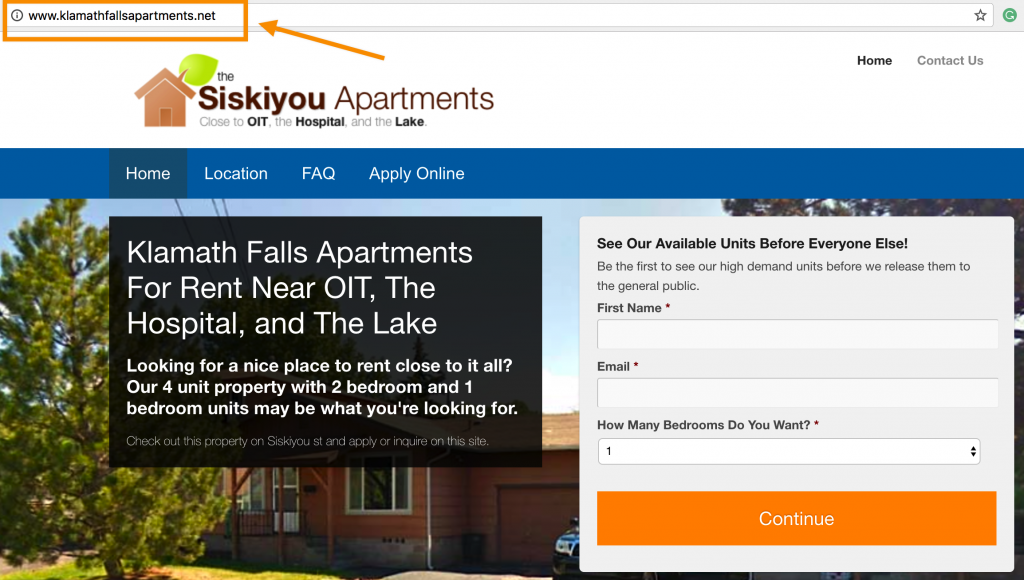
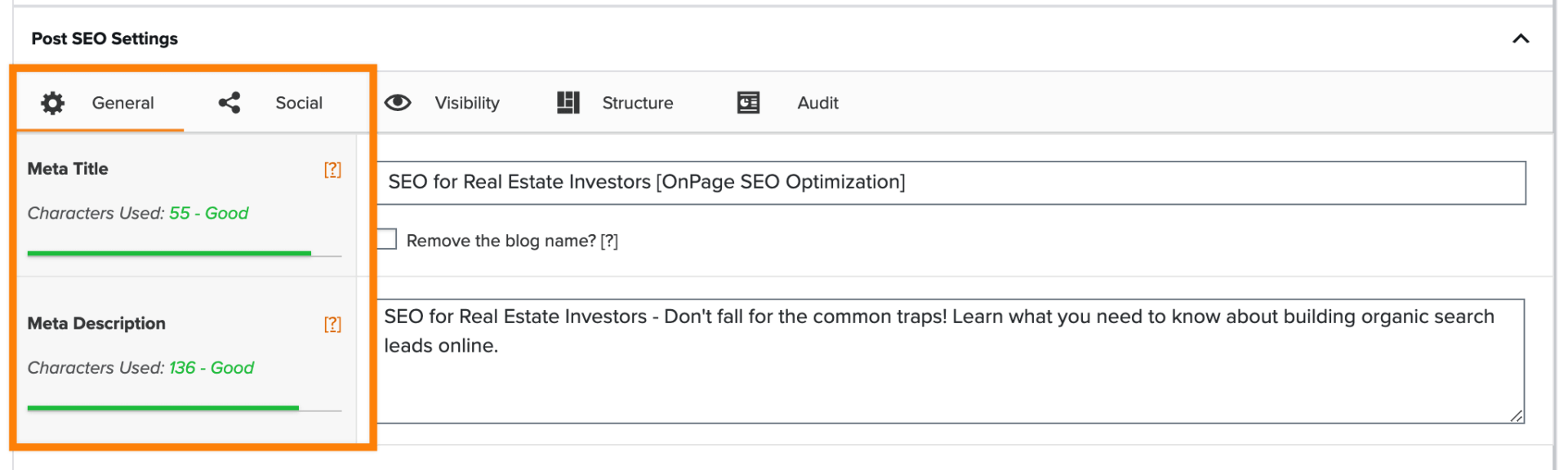
![Real Estate Marketing Online: How to Rule With SEO In Competitive Markets [Whiteboard]](https://image-cdn.carrot.com/uploads/Featured-Image-34.png)
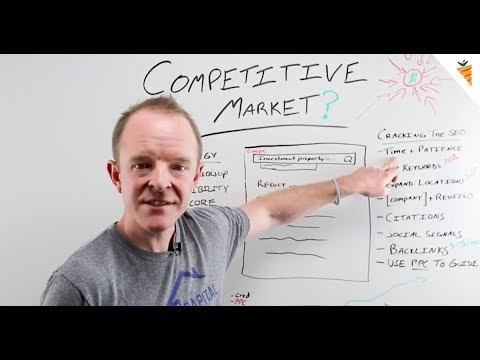
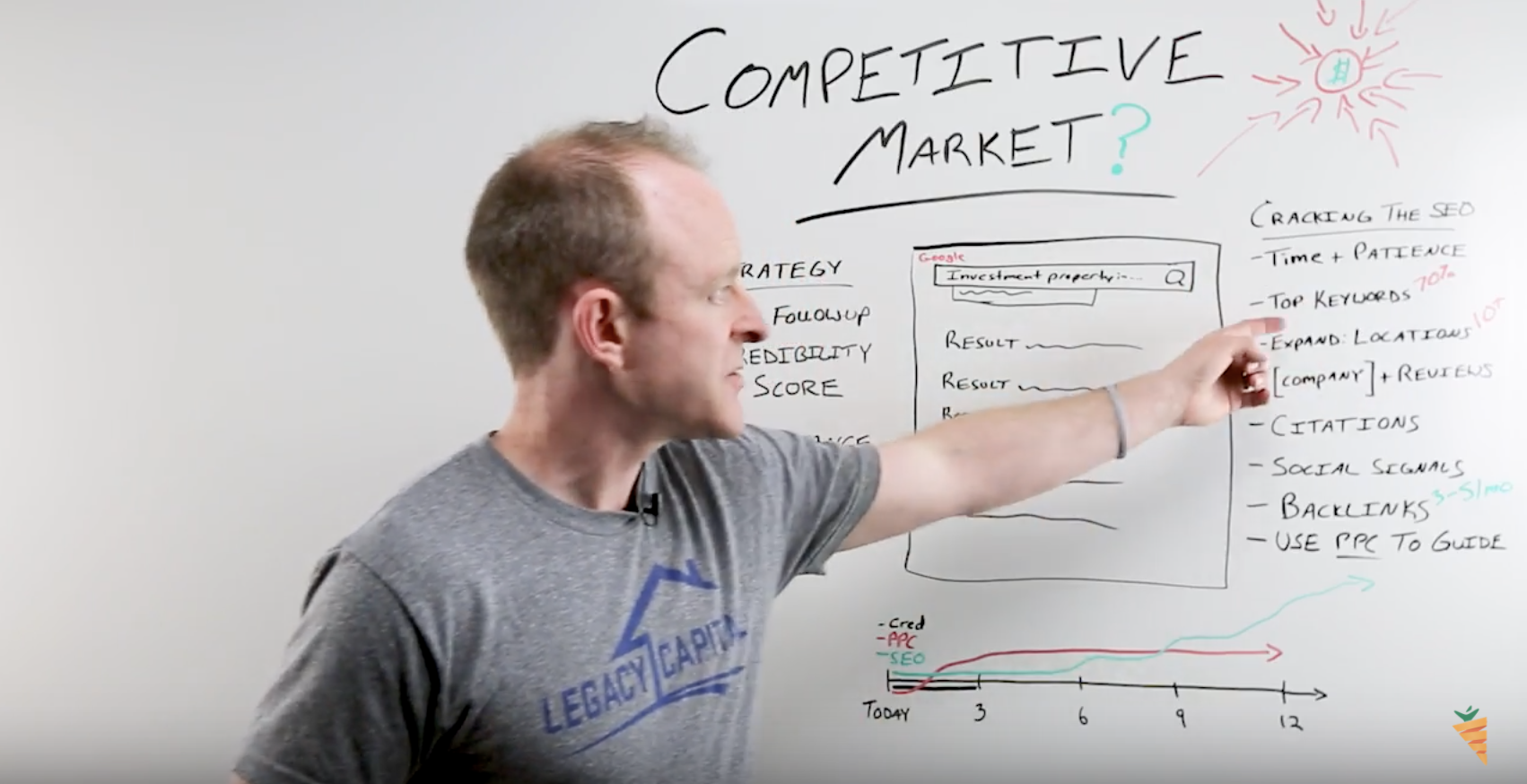
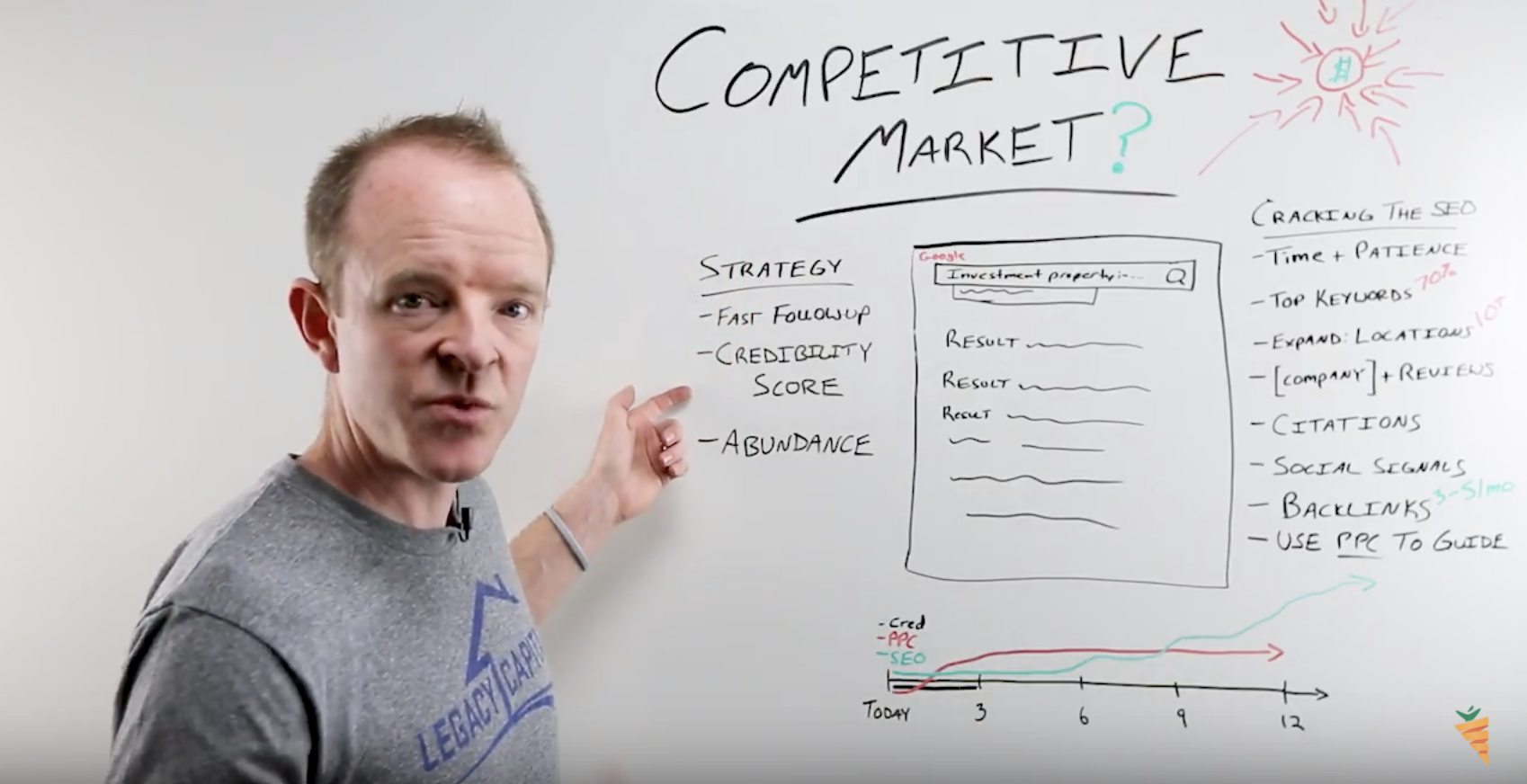
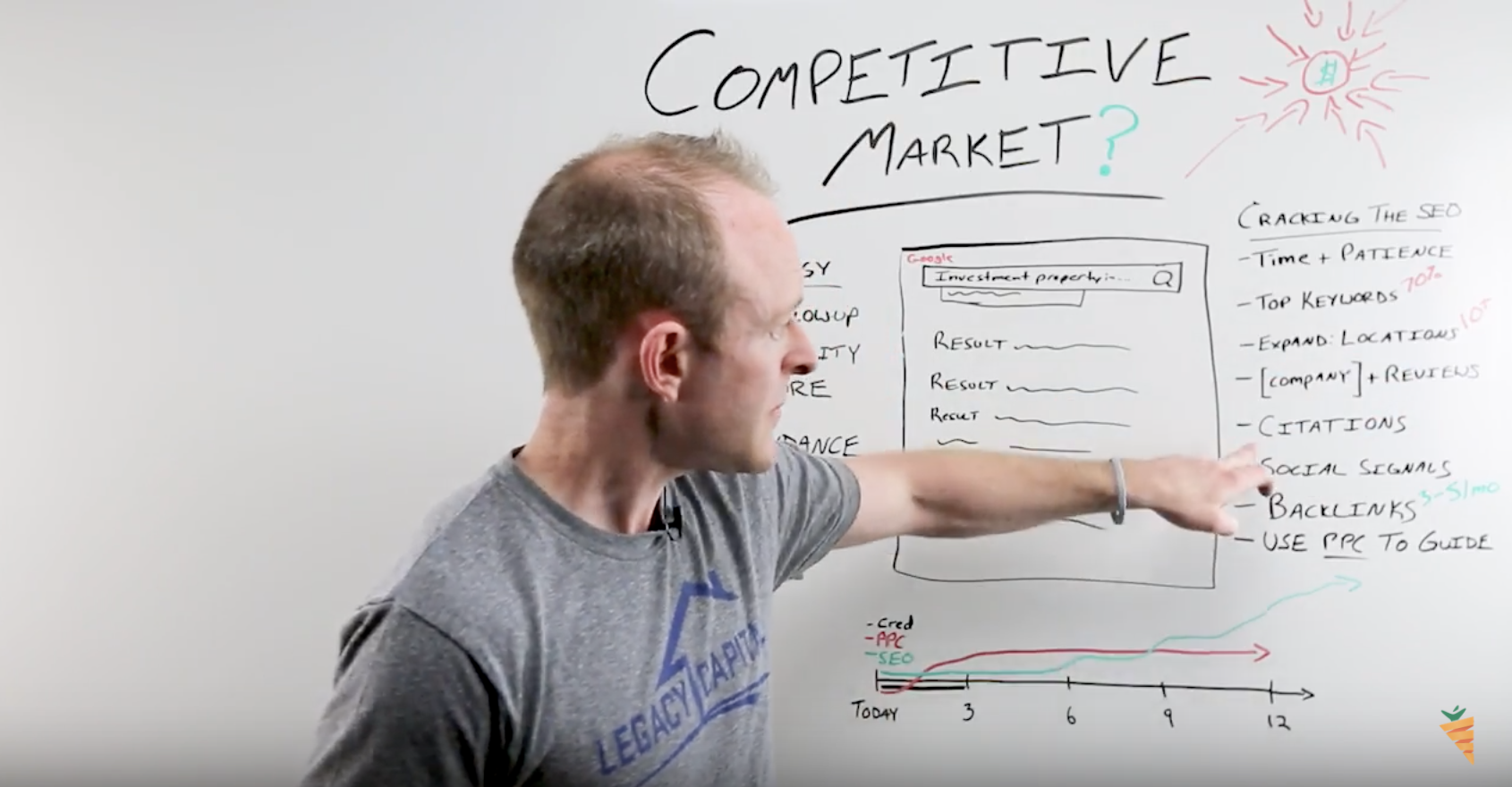




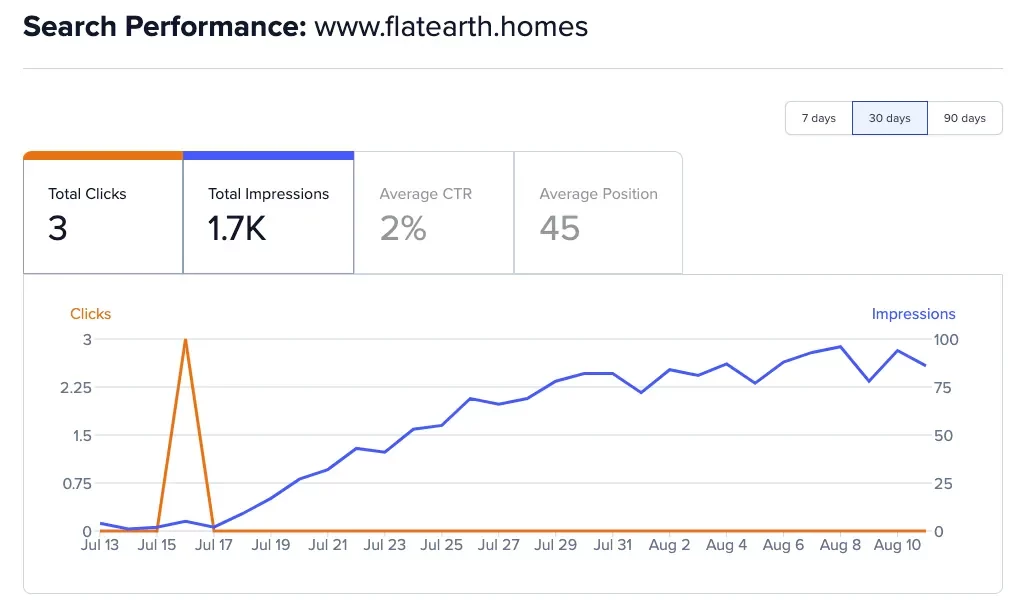
![EP 56: [Case Study] From Teacher to $80k/Month Wholesaling Real Estate in a Competitive Market With 100% Online Leads w/ Carrot Client Brian Rockwell](https://image-cdn.carrot.com/uploads/Featured-6.jpg)
![[Case Study] From Teacher to $80k/Month Wholesaling Real Estate w/ Brian Rockwell](https://i.ytimg.com/vi/sMap9jMAUtw/hqdefault.jpg)
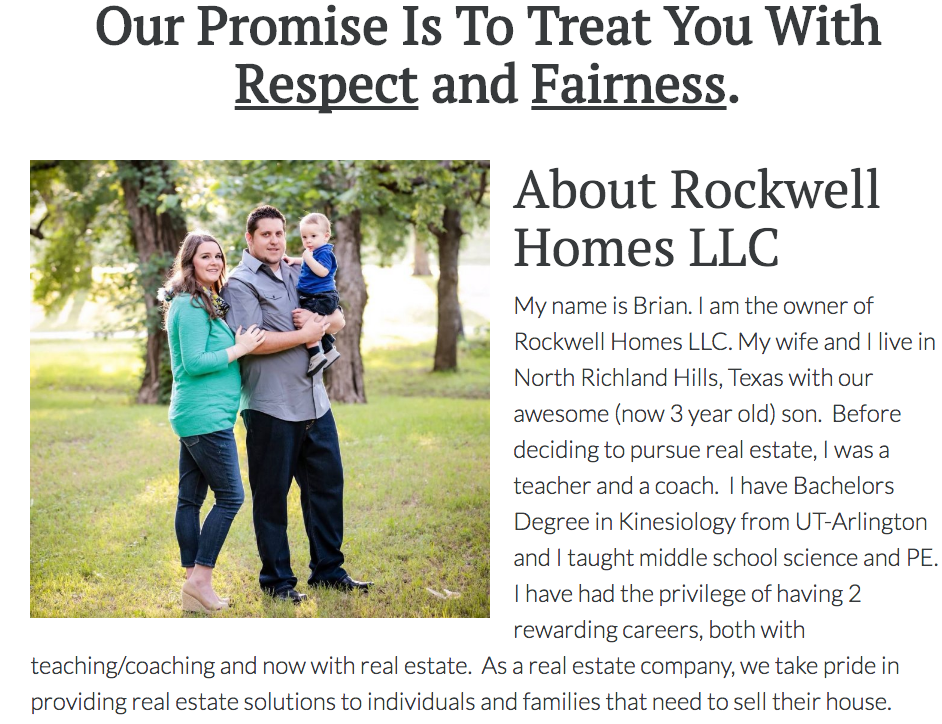
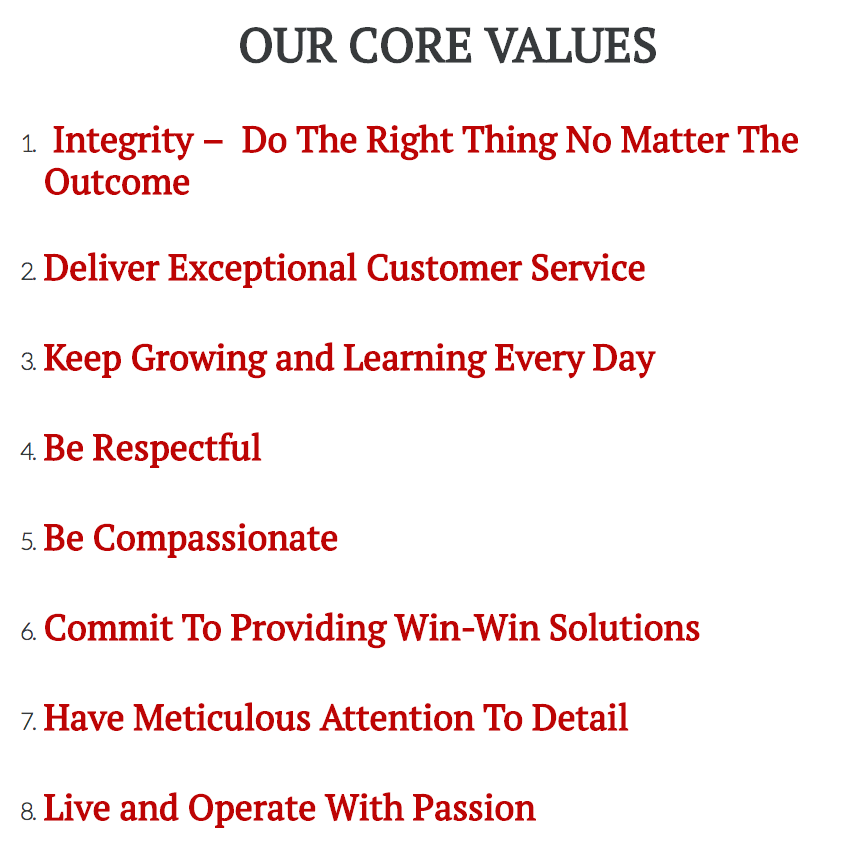
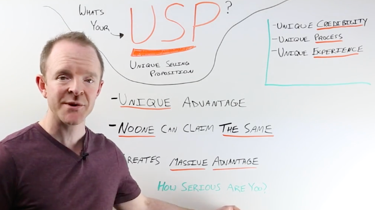

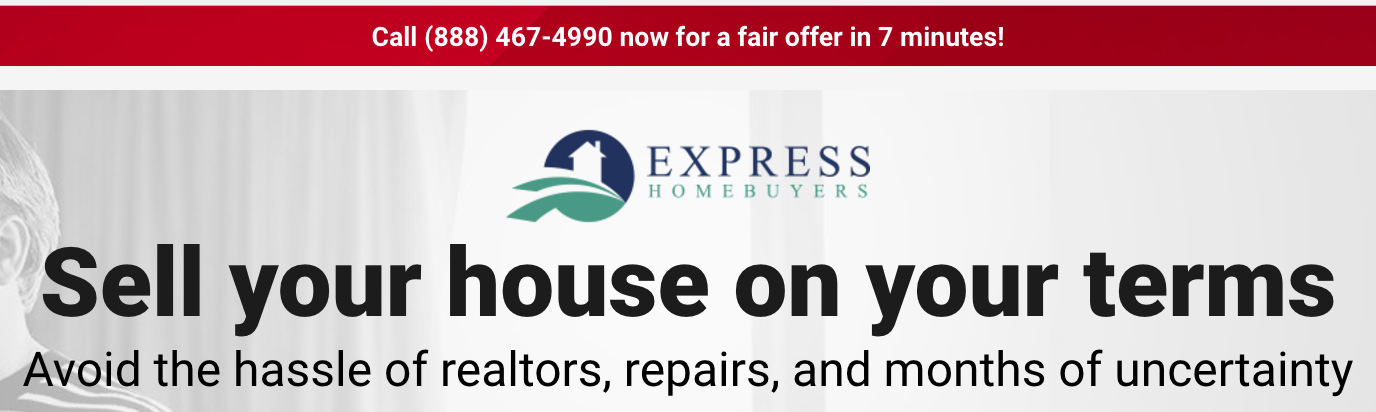
![How to Attract a Motivated House Seller Like a Mind Reader [Original Data]](https://image-cdn.carrot.com/uploads/Featured-Image-7.png)