Search results for: “credibility”

  • EP 216: How Jason Pulls 50 Organic Leads Per Day + Full Strategy Breakdown for YouTube, Facebook and IG Ads w/ Jason Wardrop

    EP 216: How Jason Pulls 50 Organic Leads Per Day + Full Strategy Breakdown for YouTube, Facebook and IG Ads w/ Jason Wardrop

    How Jason Pulls 50 Organic Leads Per Day + Full Strategy Breakdown for YouTube, Facebook and IG Ads

    I felt like I was on a hamster wheel… [what I needed was] consistent organic leads

    – Jason Wardrop

    How Jason Pulls 50 Organic Leads Per Day + Full Strategy Breakdown for YouTube, Facebook and IG Ads w/ Jason Wardrop

    Imagine pulling in over 50+ leads per day. Now imagine doing it all organically. Generating high-quality leads is more than just setting up a website or launching a campaign.

    Today, Jason is giving us a full strategy breakdown, sharing with us how he is crushing it on YouTube, Facebook, Instagram Ads, and more! He will share with us the framework and the formulas so you can get out there and crush it too!

    Read the Full Show Notes Below…


    When Jason started out, he was always a paid ads guy. He knew he was great at getting leads in the door, but after attending a Mastermind and seeing what others were doing on Youtube and other social media outlets, Jason knew he was about to go all in.

    Now, fast forward to a few years later and Jason is killing the lead game with his company Arsenal Marketing. When I am looking for ways to generate more leads, Jason is the first person I call.

    Jason’s goal is to help agents find more leads, generate email and text follow-up, and close more deals. 

    Leveraging Facebook and Instagram

    You have likely heard about the Facebook algorithm and how it is consistently changing. Staying on top of what Facebook wants can prove to be a challenge. What we know now, is that the algorithm likes larger audiences. The targeting has become more limited. Every time you add an inclusion or exclusion, it increases your CPM – or cost per 1000 impressions. 

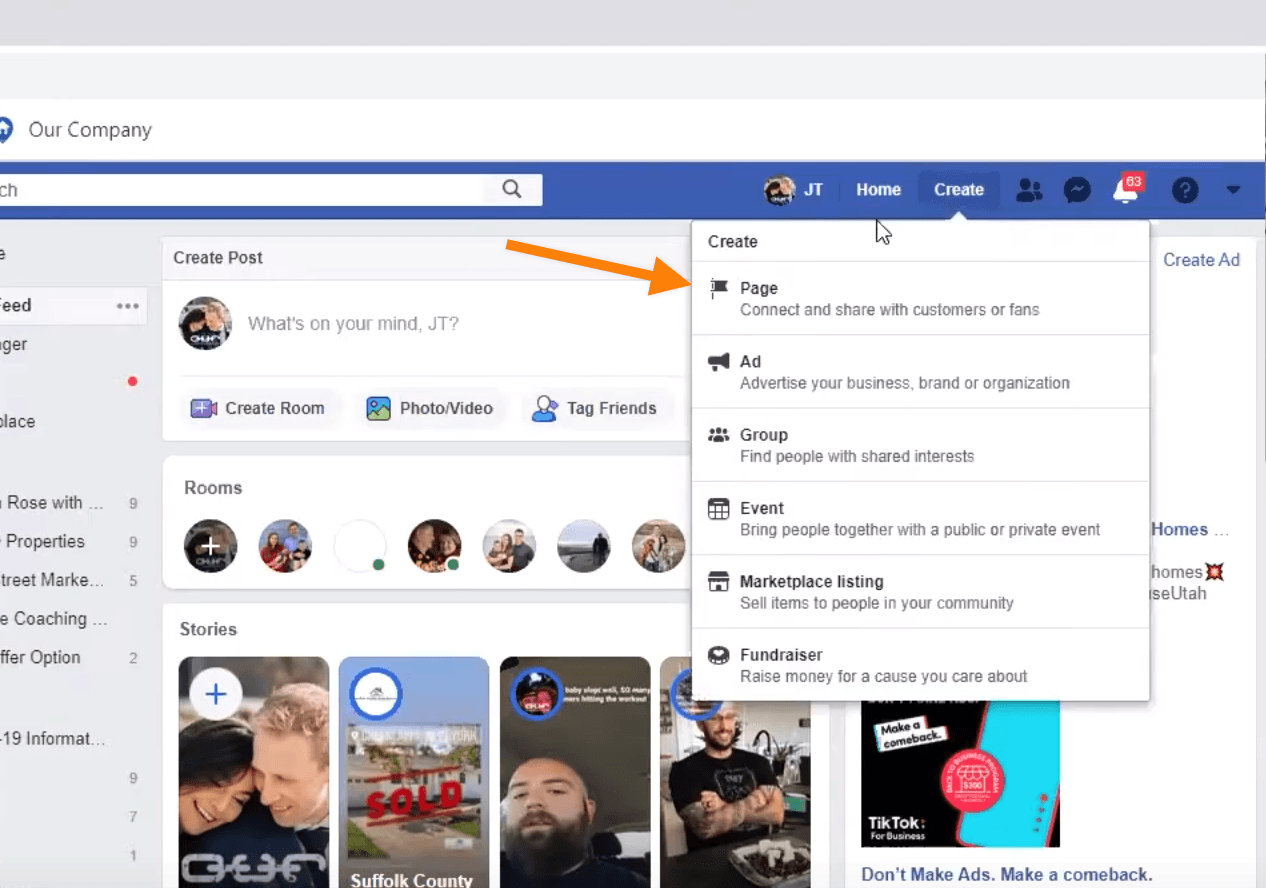
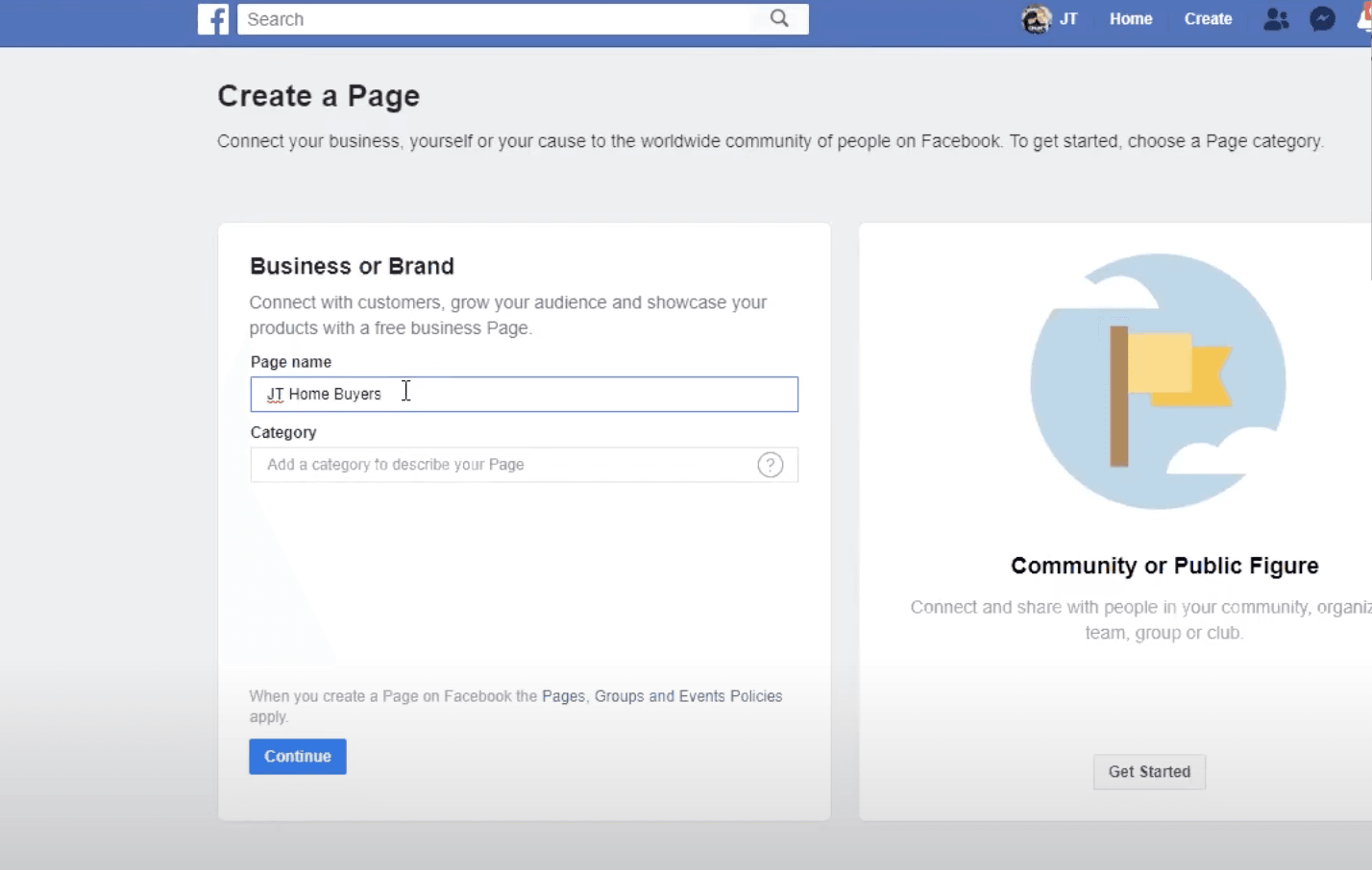
    A basic overview of Jason’s Facebook ad strategy is to begin with “housing” as the special ad category. If you are brand new, a lot of your ads will be cold. Doesn’t matter, go ahead and market through your business page. 

    Once you have built out an audience of people who have interacted with your page in some way, (liking, commenting, sharing, etc) you can begin to retarget these people with your advertising. You can create custom audiences and even upload your existing database to ensure you are sending the right message, to the right people, at the right time. 

    Which ads are working?

    Right now, Jason is seeing huge success with a basic listing template that brings in leads for less than $5 a pop. He also uses a buyer leads template, which is basically a list of available properties.

    Many ads are sent to landing pages or lead forms. The great thing about lead forms is that Facebook will auto-populate the form with the name, phone, email, etc, resulting in much less bogus data coming through. 

    Leveraging YouTube

    Jason and his team have a hyper-focus on Youtube. In fact, they believe it to be the best way to build rapport, authority, and credibility. Many agents and investors don’t utilize youtube, because they may not understand what it can do for them. 

    Two years ago, Jason found himself in the hamster wheel of having to spend money to make money. After meeting other Youtubers and seeing what was possible, he made a massive shift and is now pulling in over 50+ leads per day, with sales almost every day. 

    Jason’s Youtube Growth Formula

    Jason’s formula begins by asking what are the top 5 questions you get within your business. This could be things like determining home value, how to increase value, etc. From there, they create videos to answer the questions that are 3-5 minutes long.

    You don’t have to be super professional with this, using your phone is fine. Spend the afternoon and bust out a few videos, then schedule them out for the next few weeks. 

    • First, launch the video to your database via email. This will help you to get immediate views to your video, which Youtube likes to see. 
    • Next, you want to get the video tanked organically via Google and Youtube. Our video transcription service is ideal for this by helping you turn your video into an instant blog post. 
    • Once this is completed, you can utilize paid ads. Be sure to link back to your video in the description or in the first comment. 

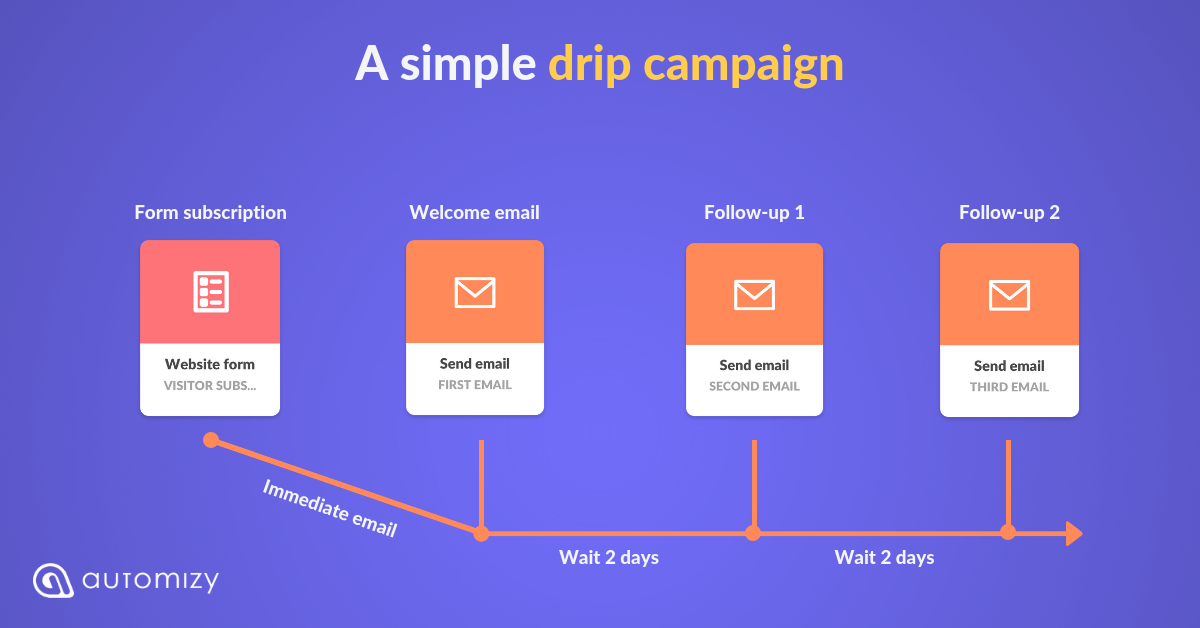
    After setting up your paid ad, landing page, or lead form, it all comes back to the follow-up. You can segment videos based on the audience, then follow-up with them via email, messenger, or text. With a properly set-up drip campaign, you can send the right videos to the right audience… you don’t have to send everything to everyone all at once. 

    Niche Down

    As your database grows, you can further niche down, creating content specific to your different audiences. Whether you want to become the local new home authority or the authority within a specific neighborhood, the right video content will get you there.

    The key is to stay consistent, create a schedule, and follow-through. 

    Follow Our Guest: 

    Mentioned in This Episode:

    We want to hear your thoughts on the podcast! Drop them in the comments section below or hit us up on Facebook or Instagram!

  • EP 215: The 2-6-1 Formula | How to Buy 1-3 Properties a Month on a Budget w/ Tyler Ford

    EP 215: The 2-6-1 Formula | How to Buy 1-3 Properties a Month on a Budget w/ Tyler Ford

    How to Buy 1-3 Properties a Month on a Budget w/ Tyler Ford - The 2-6-1 Formula

    I would rather do something well once and get paid for it over and over again than continue to run on the hamster wheel.

    – Tyler Ford

    The 2-6-1 Formula | How to Buy 1-3 Properties a Month on a Budget w/ Tyler Ford

    Just a few years ago, Tyler Ford was ready to give up on the real estate industry. Burnt out on chasing leads and tired of the competition, he needed a change. Fast forward to today, Tyler has developed a time tested formula that he uses to buy 1-3 properties a month, without spending a dime on direct mail, bandit signs, or chasing deals on the MLS.

    Find out the exact formula Tyler is using to crush it as an agent & investor in this episode.

    Read the Full Show Notes Below…


    I’m so excited to have Tyler Ford back with us. He’s the perfect example of someone who has implemented what we teach, mastered it, and in Tyler’s case, built upon it. He tested some things, found out what worked, and has been able to bring freedom and flexibility into his life.

    Tyler has been licensed for over 40 years, but by implementing some simple strategies, he has made an incredible shift that has put him on the path to true financial freedom. 

    Creating A Plan

    For years, Tyler was able to get deals in the door, but when the big players started coming to Tucson, he had to think of a way to stay competitive. He lacked the budget to stay competitive with his outbound marketing. Running a large direct mail campaign, putting up bandit signs, and spend time cold-calling isn’t what Tyler wanted to do. 

    He realized that if he created high-quality, evergreen content, that would be of value to his ideal client, the leads would come to him. People would be sold on him before an offer was even made. When competition grew in his area, he took a step back, revamped his website, and created the content to make himself the authority in his market. 

    For Tyler, success is defined by time and flexibility. It’s so easy to get caught up hearing people say they are doing 10, 15, 20 deals per month, then striving to do that yourself. This is how people burn themselves out, which will often lead to them quitting. Tyler doesn’t want to be the largest in his market.

    Tyler is more than content doing 1-3 deals a month – it is what he set out to do. He will make anywhere between $12-50k per deal, which has gotten him to his freedom number. He has been able to generate enough consistent revenue through his investment portfolio, that he is now able to have that flexibility we are all after. 

    Content Really is King

    You often hear me talk about content and credibility. This has proven to work for Tyler who has successfully gotten himself into the top rankings for the most popular search phrases in his market. 

    One way Tyler generates great content is through our automated posts. With just a few minutes of tweaking and personalization, Tyler is able to differentiate the content for his website, providing valuable information to his potential clients.

    A few things he may modify include: 

    • Adding location-specific photos so sellers don’t think he is out of town
    • He does a deep dive into the tags and categories – making them specific to his market
    • He will review for any grammatical changes, making the copy more personal where needed
    • He will add in additional hyperlinks, linking content within his site, backlinks to other Carrot sites, or linking to 3rd party sites
    • He will personalize the SEO for his market and intent

    He has an incredible cost per deal, all because he created great content once, which generates an ongoing flow of leads. In fact, his cost per deal is only $300!

    When you do the math, he might be making more money than the guy doing 10 deals per month all because he is saving thousands on direct-mail and cold calling costs. 

    Writing It All Down

    At the time of this recording, we are still dealing with the effects of COVID-19. While many people lamented the idea of staying home, Tyler wrote a book. In 45 days, he has been able to take all of the information he has been offering people through Zoom calls, written it down, and present it in a clear and concise manner. 

    A lot of people have reached out to Tyler, asking him how he does it. This led him to create the 2-6-1 Formula. The formula is more of a mindset to help people set clear expectations when creating content to generate leads.

    The first 2 months will get the process rolling. At 6 months, you should start to see some traction depending on the size of your market. And by 1 year, things should really be starting to fall into place.

    People will often get impatient and fail to build the proper foundation. In order to build your credibility through content, you need to stack bricks, and not be afraid to commit and run the course. 

    Tyler’s Book, How To Buy 1 To 3 Properties A Month, dives into what he does on the about page, how he generates leads with his location pages, and what he does to his articles to make them stand out. He also discusses how he is now leveraging multiple Carrot sites, ensuring he holds the top spots in his market! 

    I am so excited to be giving away TEN copies of Tyler’s new book! All you have to do is head over to Apple Podcasts, leave a rating and review, screenshot it, and send it over to trevor@carrot.com along with your mailing address. In the subject line, put “Tyler Ford Book Review” so we can easily spot the winners! The first 10 people to do this will get a copy of Tyler’s new book!

    Follow Our Guest: 

    Mentioned in This Episode:

    We want to hear your thoughts on the podcast! Drop them in the comments section below or hit us up on Facebook or Instagram!

  • This Real Estate Agent Doubled Her Closings + Increased Website Traffic By 227%

    This Real Estate Agent Doubled Her Closings + Increased Website Traffic By 227%

    Fox Realty Group, Increases Closings by 100%

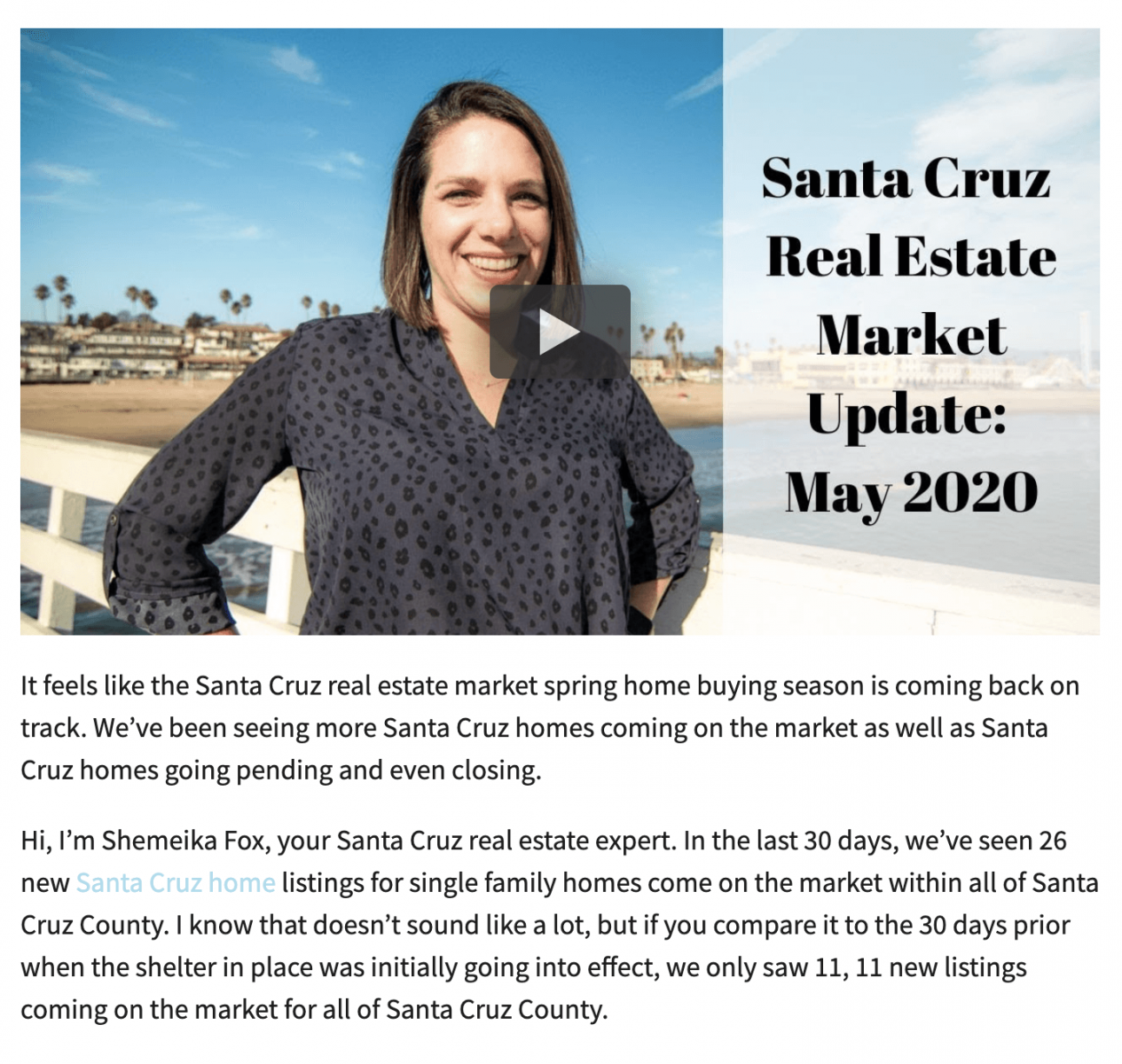
    Shemeika Fox is a real estate agent in Santa Cruz. She’s marketing her business in ways that most real estate agents never even consider, and because of that, she’s cutting through the clutter in her competitive market. Since implementing Carrot and an Inbound methodology, Shemeika’s web page views increased by 227% and their closings have increased 2x.

    Recently, she joined us on the CarrotCast to discuss her journey through our 30 Day Challenge, which has helped her take her market authority even further. She is quickly ramping herself up to be the leading real estate expert in all of Santa Cruz!


    In 2019, Shemeika Fox doubled her number of closings. But it wasn’t by sheer luck… it was by clear-cut strategy and intentional action.

    She’s marketing her business in ways that most real estate agents never even consider, and because of that, she’s cutting through the clutter in her competitive market.

    Just before that success, though, Shemeika was tired and frustrated — she was on the hamster wheel of business, sweating for every single lead.

    She knew something needed to change.

    And that’s when she made these five key shifts in her thinking and her marketing.

    1. Mindset Shift: From Hunting To Farming

    Entrepreneurs are great at getting up early and working late.

    There’s a ceasless motivation that drives entrepreneurs, and while that’s an important quality for success, it’s also not sustainable.

    Ask any ex-entrepreneur why they got a day-job and they’ll probably tell you that they worked too hard and too long for too little payback.

    That’s because most entrepreneurs hunt for their closings.

    They pay for advertisements, ask for referrals, send direct mail, follow-up, and cold call. But here’s the thing: the moment that you stop doing those things… the leads stop flowing. Which means that the only way to generate more leads or to keep generating leads at all it to keep working harder and longer… to keep hunting.

    But what about a farmer?

    A farmer is different than a hunter. They plant seeds, nurture those seeds, and then reap the benefits of their careful attention.

    less-work
    All of the lines on the left are equal to the length of the line on the right, but more progress is made when focus is put in just one mission-critical direction.

    Sure, it takes more time to see the results, but the harvest is much more plentiful and, in terms of ROI, it requires much less work per closing.

    Farming strategies include SEO, buliding brand awareness, and content marketing… all strategies that most real estate agents neglect.

    Now we’re not saying that you should stop running ads or sending direct mail, but you should be farming and hunting for your leads.

    Hunt for leads when your business needs them immediately, and farm when you can allow a bit more time for results.

    This was an important mindset shift for Shemieka to make and it’s important for all entrepreneurs.

    Harder work is not the only way to generate more leads or grow a bigger business. Like the cliche goes, work smarter, not harder.

    For Shemieka, that means consistently running ads and sending direct mail, but also spending plenty of time building her online brand image, posting content to social media, and growing her SEO presence.

    2. Simple, Effective Lead-Generation Website

    Building an effective website is one of the most difficult parts about building a real estate business.

    You need one because everyone else has one… but how do you get that website to actually be useful and generate leads?

    And in order to get the functionalities and features you need to get your website generating leads on autopilot, how do you build that without spending thousands of dollars on a custom design?

    For Shemeika (and for more than 7,000 real estate pros around the nation), Carrot was the answer.

    Before signing up with Carrot, this was Shemeika’s website.

    It might look pretty, but the problem is that it wasn’t generating leads for Shmeika’s business, no matter how much traffic she drove to the site.

    That’s why she signed up with Carrot.

    Here’s her new website.

    And guess what?

    People don’t just visit that site… they opt-in, they contact her, and those leads turn into closings.

    In fact, her website brings in so many leads that, in 2019, she doubled her number of closings.

    Why?

    Well, the genius of our Carrot methodology is in giving your website traffic exactly what they want. First, people tell you whether they want to buy a home or sell their home.

    If they want to buy, then they can immediately start browsing through your listings — if they find something they like, they just have to dial the number in the upper right corner of your Carrot site!

    If they want to sell their home, then they’ll be taken to this page which is designed to get them in contact with you as soon as possible.

    And the conversion rate on Carrot sites is higher than any other website builder in the industry, which means more leads, more often.

    This was a fundamental shift for Shameika. In her own words,

    “Carrot has impacted my business so positively! I love the property websites, landing pages, the SEO rankings, blog and over all design of the site. I also love the landing pages that i use to drive traffic from ads that I run. And my favorite is to watch the increase on Google rankings with the more relevant content we produce. Really great web host!”

    3. Focus On Blog & SEO

    One thing we’ve found that separates top-performing real estate agents from everyone else is a focus on search engine optimization.

    And that makes sense.

    Because if you rank on page one for a search phrase that is getting attention every single month, then you’re going to get a lot more website traffic and lot more leads than your competitors.

    And by focussing on SEO, you won’t just get more leads, you’ll also get higher quality leads.

    Our members have found SEO leads to be about three times higher quality than leads from paid advertisements, which means it takes about three times less leads to actually close.

    The reason for that is simple.

    With paid advertisements, you’re interrupting people who may or may not be intersted in your service.

    But with SEO, interested people come searching for you.

    So the question becomes, how can you build your SEO rankings?

    Well, we’ve designed Carrot to help you do just that… and here are some of the features we offer that you’ll definitely want to take advantage of…

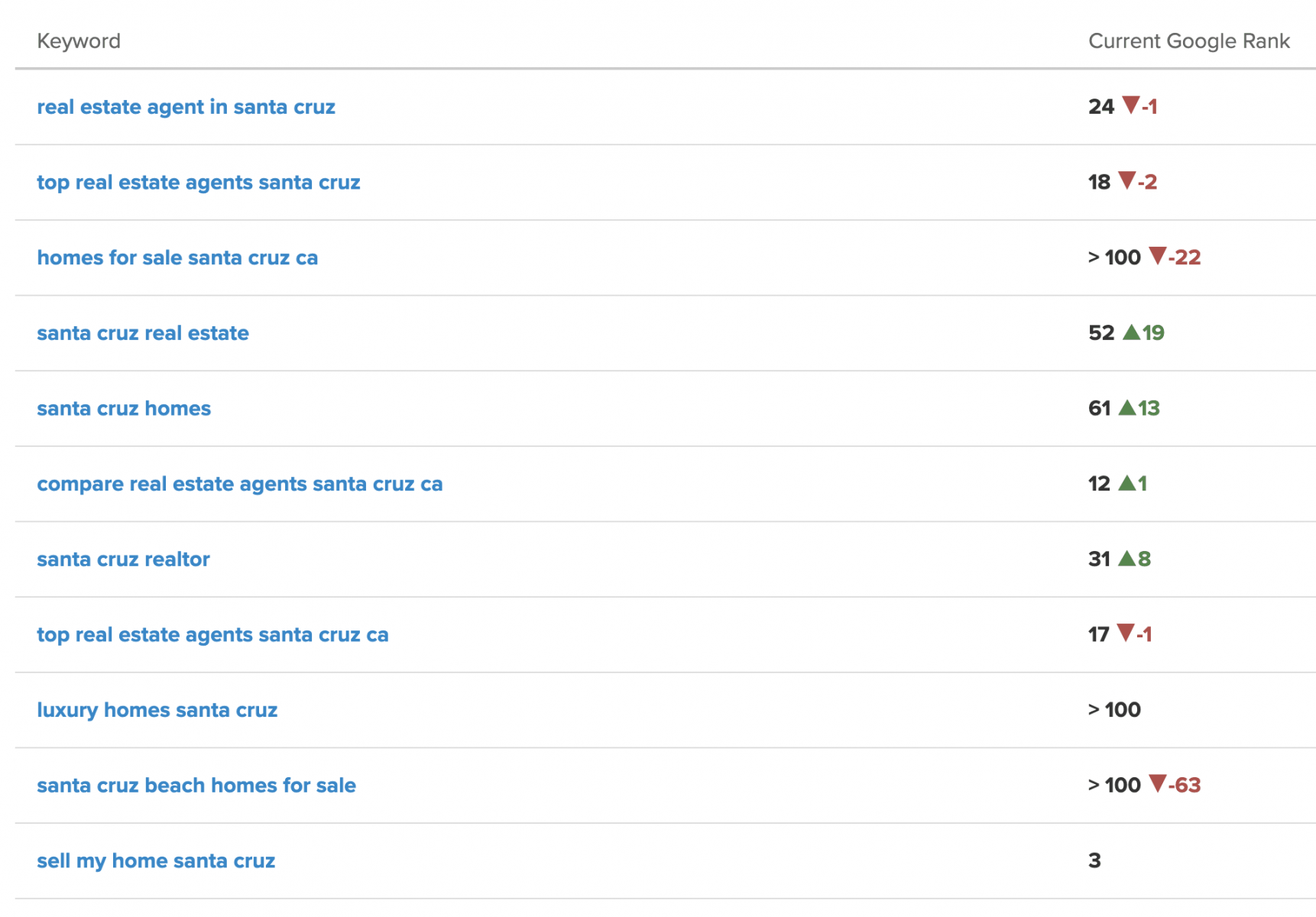
    Ranking Tracker — Our ranking tracker will keep an eye on how your website is performing for certain keywords in Google. Just enter the keywords that you’re trying to rank for and our ranking tracker will do the rest, giving your regular updates on your website’s SEO performance.

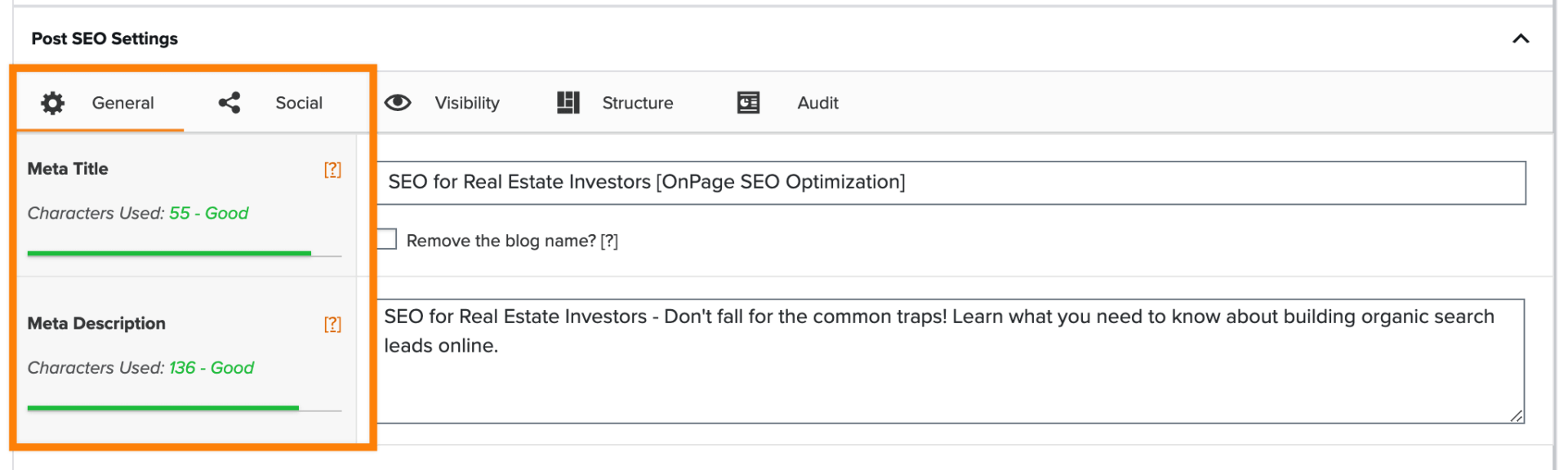
    SEO Tool — Whenever you’re designing a page of your website with Carrot, just scroll to the bottom to find our SEO Tool, which will automatically scan your page for search engine optimizations and give you a checklist of what you still need to do. Once the light is green, that means you’re good to go!

    Monthly Blog Posts — If you sign up for a Content Pro or Advanced Marketer membership, then we’ll also provide you with blog content for your website every month that is customized for your market and written to rank for a specific high-value keyword in Google. Just publish the content every month and you’ll give your website a better chance of ranking!

    VideoPost — One of Shemeika’s favorite things about her Carrot site is the ability to use a feature that we call VideoPost. This tool allows you to upload and trascribe any video into a long-form blog post for your website that can help you rank in Google. But instead of writing the article, you just upload your video and we’ll do the rest. This is a great way to quickly and easily create SEO content for your website.

    4. Advertisements & Landing Pages

    When we asked Shameika what her favorite thing about Carrot was, she mentioned that she loves being able to quickly and easily create landing pages that she can then drive paid traffic to.

    With Carrot, you can create a new landing page with just a few clicks.

    You can then customize that page however you want.

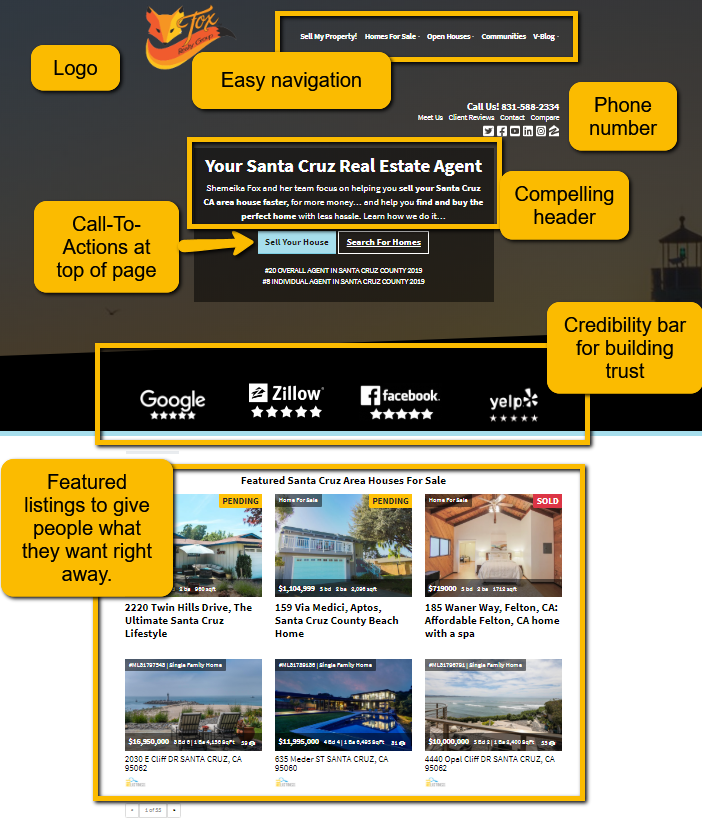
    You can turn it into a sales page with an opt-in form, testimonials, and even a credibility bar… or you can turn it into a long-form blog post.

    The choice is yours.

    But one of the best ways to make use of this feature is to create a new landing page for each specific market that you’re advertising to… and then to drive that traffic to that page.

    You might, for example, create a page for people who want to buy river-front homes, or a page for people who want to sell a home for over $500,000, or people who just want to learn more about you as a real estate agent.

    Remember, the riches are in the niches.

    And with a Carrot site, you can easily create a sales page for each niche that you operate in.

    Here’s a Facebook ad that Shameika is currently running…

    And here is the page that advertisement will take you to if you click.

    See how the advertisement seamlessly flows into the landing page?

    That’s how it should always be.

    It should feel like one cohesive experience rather than two separate experiences.

    And by leveraging the versatility of Facebook’s targeting and Carrot’s landing page builder, you can create a seamless experience for buyers and sellers in any niche or market.

    Here’s one more example…

    And here’s the landing page…

    Shameika skillfully attracts her target market with Facebook ads and then gives them what they want most on the landing page.

    In return, she gets their contact information and can then add them to her email list.

    Or maybe she’ll be able to start working with them right away. Whatever happens, this is a great strategy for generating leads.

    Create more landing pages for more niches and markets… and use advertisements to drive targeted traffic.

    5. The 30-Day Challenge

    What if you could take a system that’s proven to generate high-quality leads — a system that has made hundreds of investors and agents around the nation millions of dollars — and implement it right into your business in just 30-60 minutes per day over a 30-day period?

    Sounds too good to be true, yeah?

    Well, that’s the exact system that Shameika went through… and it helped to unlock her business’ full potential.

    We call it our 30-Day Authority Building Challenge [CLICK HERE TO JOIN].

    In it, we walk you through how to brand your real estate business, how to drive traffic, and — most importantly — how to get high-quality leads (and even how to obliterate your best month’s lead-gen record)

    At Carrot, we’ve helped countless real estate pros beat their most aggressive market competitors, generate more than one million leads, and build businesses that support themselves and their families.

    Over the last few years, we’ve learned a lot about what real estate marketing tactics work… and what doesn’t.

    And we thought to ourselves…

    “What if we created a tried-and-true, fool-proof lead-gen system for agents and investors — a system that would help our members become the go-to experts in their market, drive leads passively to their website, and build the business of their entrepreneurial dreams?”

    This challenge is helping people even more than we could have imagined…

    One of our long-standing members, Chris Wojciechowski, said he wishes we would have created this challenge 3 years ago!

    Carrot 30 day challenge success

    So…

    Are you ready to create a marketing system for your real estate business that generates leads like clockwork, that makes your business more predictable and sustainable?

    Moreover, are you ready to spend just 30-60 minutes per day over the next month to make it happen?

    Great!

    Conclusion

    What are your goals for 2020?

    Do you want to generate more leads, do more closings, and grow your revenue?

    Do you maybe even want to double the number of closings you do this year?

    Well, we can no longer count on one hand the number of Carrot members who have taken their businesses to the next level.

    There are many stories just like Shameika’s of agents and investors who have used online marketing, SEO, Carrot, and advertising to beat their competition and build the business of their entrepreneurial dreams.

    It is possible for you as well.

    You just need the right tools.

  • Google Ads Traffic Has Increased 4% During COVID-19 – Necessary Adjustments to Also Increase Your Leads

    Google Ads Traffic Has Increased 4% During COVID-19 – Necessary Adjustments to Also Increase Your Leads

    Google Ads Uncertainty During COVID-19

    Have you felt like this recently? Are you unsure if you should stop your Google Paid traffic right now?

    You’re not alone, but stay positive. We’re in this together!

    We’ve been answering these questions since March by providing data and challenging our members to shift their mindsets.

    This has led us to create this blog post. We want to show you what we’re seeing, why you need to change, and how to make those adjustments to WIN in Google Ads during COVID-19 and other events that can cause accounts to go haywire.

    We’re here to put your mind at ease.


    Additional COVID-19 Articles:


    What Our Google Ads Data is Showing During COVID-19

    Google Ads real estate investor statistics durning covid-19

    Numbers were compared from January 15-February 29 and March 1-April 15.

    • Sessions from Google Ads have increased by 4.01%.

      Sessions are defined as…

    “A session is a group of user interactions with your website that takes place within a given time frame. For example, a single session can contain multiple page views, events, social interactions, and eCommerce transactions.”

    • Leads have decreased by 13.55%.
    • Across all members accounts, cost-per-click has increased by 39.3%, and to be expected, the cost per lead has increased by 19.4%.

    What does this mean? In “normal times” a conversion issue could mean you’re lacking credibility on your website. Or, not enough website personalization and customization.

    During COVID, it’s most likely due to searchers whose comfort level with the current situation is low. This presents a major opportunity to communicate with your audience in a different, more impactful way.

    So…

    Why Are Leads Down By 13.55%?

    Our best-educated hypothesis… there is a lack of communication between your visitors and your website messaging.

    Visitors need to know, during this time, that they still have options to sell their house right now. If they’re landing on a page that still has the typical message without educating them about what they can do, they’ll likely bounce for now.

    Communication is as important as ever. You need to tell them what they can do during this time where people are uncertain. For example, communicate that they can:

    • Send photos of their house
    • Join a video call
    • Join a Facebook Live for a walk-through
    • Hop on a phone call
    • Get the selling process started without ever meeting in person

    More on this below…

    What Can You Do Right Now to Increase Leads by 33, 100, or Even 225%?!

    The members (not all, but MOST) who have made the necessary steps to communicate to their audiences are seeing an increase in lead volume during the COVID-19 pandemic.

    real estate investor google ads during covid-19

    We wanted to give you some general tips to help make your Google Ads accounts more effective until this time in history is over.

    3 Simple Things You Can Do Today to Increase the Effectiveness of Your Google Ads Accounts

    Tip #1: Communicate and Build Relationships With Your Audience

    During “normal” times, Google Ads best practices dictate that you dig deep into as much data as you can find so you can be all but certain your next campaign will succeed.

    But, we’re in unknown territory holding a lot of uncertainty. No one knows for sure what to totally expect from their accounts right now.

    The ones who will have the most success will be those who take their best, common-sensed, educated move and immediately put their campaigns into action.

    Think of it this way.

    If you don’t try and decide to wait it out, you’ll fall further behind your competitors.

    If you make educated moves but fall short, you’ll at the very least have an idea of how to adjust your approach going forward.

    You don’t have a lot of time to collect a bunch of performance data… we can help with that.

    Your goal should be to find a way to communicate with your audience.

    It can be as simple as creating a Google Ads specific landing page with a COVID-19 message. For example…

    Google Ads Covid-19 landing page message

    Or, adding more content to your website from blog posts. Carrot Content Pro members have access to blog posts such as…

    covid-19 content pro blog post for real estate

    Or, switch it up a bit and shoot a quick video, such as this Carrot member did…

    Can You Still Sell Your House During Covid-19 Lockdown? | Candid Property Solutions

    Now, take your video a step further and create a VideoPost to add to your blog. Simply upload a video and receive a transcription for your content for a blog post in minutes.

    Check this out…How to Create Real Estate Content in Under 10 Minutes with Carrot’s VideoPost

    If you need to help to generate ideas for scripts, check out…The Content Marketing Playbook During COVID-19

    Tip #2: Refine Your Ad Copy

    This goes for your Google ads and any other paid advertising you create throughout the current pandemic.

    Google Ad’s character limitations don’t allow much room to convey a deeply sensitive and empathetic message, but you can utilize space to communicate that you’re still buying as well as other key points.

    We’ve seen ads use copy such as:

    • We’re Still Buying
    • We Can Rest Your Mind
    • No Strangers to Your Home
    • No-Direct Contact Required
    • You Can Still Sell Your House
    • A Phone Call Is All It Takes
    • We Can Buy Via Video, Phone, and Email

    You want to create ads that showcase the options they have and the value your service can give them during these circumstances your audience is currently in.

    If you can get to the heart of how your services can bring peace and closure to your customers’ lives, during this crisis and other times, you’ll stand a much better chance of surviving and thriving in the future.

    Tip #3: Trim Wasted Ad Spend

    During “normal” times, it can be easy to keep average-performing ad groups or keywords live as long as they’re bringing in some leads.

    But right now a shift to pause those ad groups or keywords and add to negative keyword lists might be a smart approach.

    Of course, you can then revive these ad groups and keywords once we’re out of this pandemic.

    If you need to cut your budget, a simple strategy would be to pause ad groups and/or keywords that haven’t produced a lead in the past month or two. Or, those ad groups and/or keywords that have converted one or two times in the past month or two.

    These might be low-hanging fruit keywords. Choose to pause those for now and hang onto the ad groups and keywords that make the most impact.

    It’s also important to continue to add search terms to your list of negative keywords

    Negative keywords will prevent your ads from showing up for future searches that seem to be related to your service but have nothing to do with it.

    We’ve seen terms that seem really good but aren’t converting into leads. Such as…

    “sell my house in 55+”

    So, that term is becoming an exact match negative term for now.

    We’ve also seen an influx of game-related terms, possibly due to more kids being without things to do. Terms such as…

    “how to sell your house in Rocitizens Boblox”

    These are search terms that can’t be predicted.

    Even during times like these, the old saying “you gotta spend money to make money” holds true for paid traffic. Merely pausing your campaigns altogether just isn’t the way to go.

    But, there are just smarter ways of figuring out the most efficient way to keep your campaigns live.

    You should always be looking for the most cost-effective approach to Google ads, but right now, it’s okay to tighten the spending up without feeling like you’re missing out on leads.

    Wrapping up

    The Google Ads industry changed entirely in the last month. Much of what we considered certainties only a few short weeks ago still remain today, but there are things you need to view a little differently for now.

    Adapting during these uncertain times will help you to continue to grow.

    It’s likely that you have already come under pressure to reduce spend or, at the very extreme, you’ve paused your account. These are sensible reactions given the circumstances, but are they the only options? 

    The answers to these questions depend a lot on each individual’s situation, but in this post, we hope to educate you on how to make these positive decisions and how to best adapt Google Ads during these challenging times.

  • EP 202: These “House Heroes” Predictably Pulled in 3,551 Motivated Seller Leads in 2019 Using These Three Simple Types of Content

    EP 202: These “House Heroes” Predictably Pulled in 3,551 Motivated Seller Leads in 2019 Using These Three Simple Types of Content

    How “House Heroes” Got 3,551 Motivated House Seller Leads in 2019 With 3 Simple Types of Content

    Don’t worry so much about your content not ranking. Keep linking to it within your website. Keep sharing it on social media. High value content will bring in leads no matter where you’re ranking on Google.

    Earl White

    These “House Heroes” Predictably Pulled in 3,551 Motivated Seller Leads in 2019 Using These Three Simple Types of Content

    Times are a little crazy right now! Coronavirus is throwing a wrench in the gears of many investors and agents all over the country. You may be wondering if you should pull back on your marketing and ad spend and what you can do to keep your leads rolling in during these wild times. This is exactly why we wanted to share with you this very special episode of the CarrotCast

    Back at the end of February, we help our Market Leader Summit with some of the nation’s top real estate minds. Lucas Machado and Earl White are often referred to as “The House Heroes” and they shared with us how they are able to pull in motivated seller leads like crazy – over 3,500 last year alone!

    They will let you in on the ONE marketing channel that isn’t taking a hit with everything going on! You may hear a few things you’ll only get if you were with us at the Market Leader Summit – but none the less, this episode is pure gold. 

    Read the Full Show Notes Below…


    We had Lucas and Earl of “The House Heroes” join us for our Market Summit this year because I was blown away by the number of motivated seller leads they were getting and what they were doing with their digital marketing.

    Lucas was a former project manager in the Bay Area and Earl is a former attorney in New Jersey. With zero SEO experience, they have been creating content that ranks nationally, which brings in several leads per day, and that takes up very little time to create!

    Creating this high-value content helps the House Heroes to build trust and credibility, thus helping them to gain more leads and close more deals. 

    Three Ways To Create High-Value Content

    Lucas and Earl have three primary ways they go about creating content for their website. Depending on what they are trying to rank for, how competitive the phrases are, and who they are trying to reach, their strategy will vary. 

    Strategy #1 For Creating Content: 

    The first way Lucas and Earl create content for their website is by loading and modifying our pre-written articles. They have seen great success with one article in particular which currently holds the number one spot on Google and required only about 20 minutes of personalization.

    This one article is responsible for at least one deal, resulting in thousands of dollars in profit.  

    Strategy #2 For Creating Content: 

    The next way they go about creating content is to research the more competitive, high-value keywords, and create long-form content that is specific just to them. They will look at what the competition is doing, then do whatever it take s to make their post better.

    For one article, in particular, they noticed their competition used video. They added more robust videos to their posts and made sure their article was longer, more informative, and more engaging. 

    Strategy #3 For Creating Content: 

    The third way Earl and Lucas are creating content is by utilizing our video post feature. We recommend creating a video that is at least 3 minutes long so that your post will have enough content.

    Earl made a great video that was about 5 minutes long, had it transcribed using our video post tool, he tweaked it, and it is now an incredibly popular post for them. They made a few notes, shot the video rather quickly and got it posted without having to write an entire blog post from scratch. 

    The Other Legs of Their Marketing Stool

    While content and organic SEO is a huge part of their marketing plan, they also utilize other forms of marketing to ensure consistency and momentum. By incorporating direct mail and SMA campaigns, they have 3 marketing channels that support the business.

    As things ebb and flow, they are protected as they can always count on leads coming in the door one way or another. 3,500 leads last year alone is proof of this! 

    Marching Toward Freedom

    As the leads keep rolling in and the content keeps flowing, both Earl and Lucas are looking to step back more from the day to day operations in 2020. By creating documentation of processes, systems that can be reproduced, and a team that is just as driven as they are, I have no doubt the House Heros” will continue to crush it in 2020! 

    Lucas and Earl are always looking for ways to partner with other investors and give back! They welcome your calls and emails and are always happy to share what they have learned which is something I really admire.

    If you purchased our latest Market Leader Summit, be sure to check out more content and our library of recordings. There is some really great information in there that can help you no matter where you are in your business! 

    Follow Our Guests: 

    Mentioned in This Episode:

    We want to hear your thoughts on the podcast! Drop them in the comments section below or hit us up on Facebook or Instagram!

  • What The Coronavirus Pandemic Means for Agents & Investors & Why We’re Doubling Down

    What The Coronavirus Pandemic Means for Agents & Investors & Why We’re Doubling Down

    What The Coronavirus Epidemic  Means for Agents & Investors  & Why We’re Doubling Down

    It’s surreal right now.

    We’re in the middle of the Coronavirus COVID-19 pandemic. It’s a big deal.


    Additional COVID-19 Articles: 


    During this article, I’m going to be talking about how you cope with these major changes in the economy, real estate, and the way that we’re working and living and thriving.

    Get Quick Context About This Blog Post Before Diving In…

    COVID-19: How The Coronavirus Pandemic Will Impact Real Estate Agents & Investors (and what to do)

    Listen to the Full Podcast Episode Below

    Now everybody’s going to be impacted in some way, shape, or form. But, you don’t have to be impacted negatively.

    There are people that I know, businesses that I know, that are actually doing better than ever right now because they’re geared and they’re set up and they planned for things like this. Or, maybe they just got lucky and they have certain products, of course, that are just in high demand for these times.

    I’m going to be talking about how to better prepare for what’s to come.

    How Do You Come Out on the Other Side of This Stronger?

    real estate ups and downs

    How do you as a real estate investor or agent plan and prepare for what is going to happen?

    I’ll be the first one to admit that I didn’t treat this seriously enough early on. I thought, it’s just this, like a lot of people were saying right, it’s this cold, it’s this flu. The flu numbers kill more people than this is killing. And that was honestly just a full misunderstanding of how pandemics work, a full misunderstanding of how math actually works in these types of situations.

    Preparing for the Financial Impact

    The financial side is what I want you guys to prepare for. What happens with all the shutdowns? The shutdowns are where the devastating part is on the financial side because there’s the health side of it, which is a huge deal, but it’s going to likely be shorter-lived, months rather than years. The financial side though is where it gets really, really interesting and possibly scary for many people.

    So if you have stay-in-place orders in California and Washington (now in Oregon) and all over the place, and kids are out of school here in Oregon until the end of April now rather than just spring break…

    That leaves over a month and a half to where parents have to figure out a way that they can work at home while trying to take care of their kids still. We’ve got team members who have multiple kids at home, who are working and they’re trying to do their best work. So we’ve put policies in place to give our team members more flexibility and more leeway during these times. And we said, “We’ll take it two weeks at a time during the next two weeks.”

    But, we’re not pumping the brakes.

    This is when we actually need to hit the gas more than ever to help our customers more than ever, to help you guys wade through and win in this market.

    And that’s where I’m going to come to next because there are so many people doing amazing right now still because so many people are pulling back and I’m going to show you guys exactly how to do that, but we need to be doubling down and helping you guys win even more right now, not pulling back ourselves and going, “Hey, let’s wait and see.”

    Don’t Pump the Brakes… Give It More Gas

    I think if you have a wait and see attitude, then you’re likely going to get impacted way more negatively than you wish.

    We put in the policy, where for the next two weeks, put in the hours that you can. We don’t want you to have to make a decision between being a good father or mother and being a good worker. I would rather have you make the decision to be a good father or mother versus trying to fit in all 40 hours. So if you’re only able to get 35 hours of good work in, good focus work in, awesome. Report the full 40 during these next two weeks, and then we’ll take it two weeks at a time after that.

    So if you’re an employer, find out ways that you can really help your team members wade through this. Help your team members have confidence in the way that you’re doing things…wade through it with them.

    Next thing, if you’re an employer, you need to be doing weekly updates with your team members at the least. I did one last week, pulled up a bunch of slides and just walked through…

    “Hey, here’s what we know about the pandemic so far.”

    “Here’s how we can serve you, even more, to make working from home even better than we already have.”

    Then the next thing was…

    “Let’s go through the financial picture. Let’s go through how much cash reserves we have. How long could we run this business if some big things happen that cut our income by 10%, 20%, 30%, 40%, or 50%.”

    Now, the 10% is realistic, 20% possibly. 50%, I don’t believe that that would happen, but there are cash reserves that we have and could survive and thrive with that.

    I also covered hiring…

    “But also here are the plans that we have. Are we going to be adjusting our Q2 plans of growth in our hires? Well, we’re taking some of our hires and moving them to contractor roles until this shakes out.”

    We’re not stopping those hires because we need them. We need them to grow, we need them to help serve you guys better. But we’re moving them to contractors instead to kind of add that extra buffer in place.

    So that’s another move that you can make. If you have any hires coming up, make them contractors instead of employees the next few months to see how things shake out.

    Survive and Thrive

    thriving in tough times

    The next thing, I’m going to give you guys some really, really actionable steps. How do you wade through this, thrive, and survive?

    The first thing is you have to have reserves.

    Let’s look at the foundation level. The people that are going to be getting in trouble are the people that have been kind of running fast and loose the last three, four, five, six years.

    Thinking that whatever their situation is, it’s going to go on forever in a good way and not stocking away reserves. So the one thing I’ve always had pretty good discipline in, and then we carried it through the previous years as well, is carving out reserves.

    Every quarter we look at our profits and I always set how many months of cash reserves we want for operational expenses for the business. And some people suggest three months, six months a year. I suggest six months is what every business should have in operational cash.

    What I mean by operational cash is, what does it actually cost you to run your business? If all of your revenue disappeared, what does it cost you to run your business?

    That includes all of your employees, any of your fixed expenses, things like that. Add that up for six months. And then I think that’s what you should have in your bank account for reserves.

    As I said, the likelihood that you’re not going to bring in any cash for six months is very low, but at least it gives you breathing room.

    Now it gives you time to pivot and adjust and change course if you need to. If you only have a month or two or three months, you’re in crisis mode at that point. You can’t really get very crazy creative and have time to really pull back, think, and pivot. You won’t have the luxury of planning a little bit.

    Building Reserves Now

    building cash reserves

    What can you put in place right now to ensure that you’re building up your reserves?

    Do that now. Start to stock away cash and start to build up that six months reserve. Do the same thing on the personal side. Start to stock away more cash than you normally would right now. Build it up in reserves, six months, personal expenses, your mortgage…

    What does it cost you to live on a personal basis? Do that. The next thing is even if you don’t predict a downturn in your business, start to cut expenses.

    Start to look at things like that because we want to plan for the worst, but hope for the best. Okay, plan for the worst, hope for the best. And those of you that are not taking this seriously enough are going to be bitten in the butt in several months possibly.

    Now we hope not. But as I started to dig into this, the financial ramifications when parents are staying at home and when businesses are closing, all of a sudden unemployment’s going to go from 3% to 5%, to 20% for the next month or two and unemployment benefits rush in there.

    Then all of a sudden you have some people that aren’t able to pay their rent. So what happens to landlords during this time? Well, some landlords might struggle to pay their mortgages because some of their employees might be restaurant workers. They might be workers that are having their position shutdown and they might not be able to pay their rent.

    What if you’re landlord, that’s over-leveraged, that doesn’t have cash reserves for a while? That now can’t pay your mortgage. So now you’re going to go behind in your mortgage and then all of a sudden, let’s say a bunch of landlords start to default on their mortgages three months from now or two months from now, then you have some sort of banking issues as well.

    The Economy

    coronavirus economy

    Now is it going to be the same as what happened back in 2008? Let’s dive into some economic stuff right now.

    The likelihood that that is going to happen is extremely low. They’re just totally fundamentally different factors that are happening in the economy right now.

    Back in 2001, 9/11, what happened was that it was an event, a terrorist attack, that completely wrecked the economy for a period of months. And it wasn’t because there was something fundamentally wrong with the economy. This event wasn’t a bubble…

    But, there was the .com bust that happened several years before that. That was something fundamentally wrong with the economy. There was way too much over-investment in the tech world. No one knew what it was. Too many IPOs that were too overhyped. And there was a bubble that popped.

    9/11 an event that was a black swan event. Kind of like this pandemic where it’s outside of most people’s control. It’s not something that you could really easily plan for very well. But it does impact things vastly.

    After 9/11 people basically stopped traveling. And when people stop traveling, that sort of decimated the travel industry. Hotels, airlines, the same thing that’s happening right now, which then trickled down into everything else, unemployment rises.

    But all that didn’t last for too crazy, crazy long. Go back and look at the history books. Some of it lasted for the course of the year. The travel industry took a little while to recover, that’s for sure. Some stuff bounced back within months. But the overall economy, the stock market did take a hit, but real estate prices continued to appreciate actually.

    So real estate prices did not depreciate, they continued to appreciate. That is a little bit different though because that was coming out of the stock market crash, the tech bubble of ’98, ’99, 2000.

    Things had already started to kind of improve there a little bit. The difference here is we’re at the end, almost overdue of a bull cycle the past 12 years in the stock market and real estate market.

    All these things have been amazing for the past 12 years. And for the past couple of years, I’ve been preparing Carrot and my team for a recession. We don’t know when it’s going to happen, but arguably the current policies are helping to prop up the economy longer than I think it should have been.

    Bubble?

    housing bubble

    So is that creating a bubble? Possibly.

    There could be some things there, but this black swan event of the pandemic now started to kick it forward, started to kick it down the curb. I do believe that this will kick off some sort of a step into recession.

    Now, will this recession be like it was in 2008? I don’t believe so.

    Once again, it doesn’t have the same fundamental economic issues there that the mortgage crisis created. And also, the issue of this time has not related to real estate per se.

    The issue last time was directly related to the real estate market being overheated. Too many people buying properties that shouldn’t because it was way too easy to get loans.

    We’re not seeing that right now. I don’t predict that real estate prices will take a crash because they haven’t been overinflated as much as previously.

    Now, will we take a little bit of a dip in prices? I think so. I think toward the end of the year you might see some markets start to slow down a little bit, but I think it’d be more of a softening.

    How Real Estate Agents Have Shifted

    In the short term, I’ve been talking with lots of agents about what they’re seeing, what are they experiencing in their world.

    The experienced ones aren’t missing the beat.

    Some have turned to doing virtual showings now over Zoom or Facebook Live instead of having big open houses. They invite everyone to tune into their Zoom room during a certain time and they walk around the house and they talk about it. And then they give people a tour. They’re still showing houses.

    One agent said that there have been buyers who still want to buy but they’re going to kind of tap the brakes and wait this out a little bit. There’s also been a seller or two who didn’t want to have a bunch of people going through their house during this time, which is understandable, but they said, in general, they’re still closing the houses. They closed six houses last week alone.

    What a lot of other people are kind of using, they’re letting fear stop them from doing this. They’re assuming because all this stuff is happening, then real estate is not working. That none of this is going to continue to work.

    That’s just not the case. That’s just not the case at all.

    For more information about the coronavirus and realtors, check out this guide.

    How Real Estate Investors Have Shifted

    Talking to investors, yes, some are worried about their portfolios because they have so many renters that are lower income. That should be an issue. You should be tight. You should be getting as much cash liquidity right now as you possibly can, just to plan for the worst, hope for the best.

    But for people out there flipping houses, wholesaling houses, buying houses, things like that, we’re not really seeing much of a slowdown. Now there are some municipalities that are closed down or they’re not processing transactions.

    I talked to Cody Sperber down in Phoenix, Arizona last week. He’s coming out for a podcast issue for CarrotCast here shortly. Cody did say that he had a transaction or two canceled at escrow, but what we’re seeing is more around the financers. It’s more on funding. It’s more on the private lenders that are pulling… They’re tapping the brakes a bit.

    Let us wait and see this out. Let us dampen our risk in this process. And let’s wait for a month or two before we start to deploy cash, so that’s what you are going to see some private lenders doing that.

    Now, how do you contend with that?

    Well, number one, you need to be going to your private lenders if you’re a house buyer, and talking with them and educating them on what opportunities there are in the market and how you’re safeguarding their investments.

    Go to them right now and talk. Do a Zoom call with your investors and talk to them about the market, about what you’re seeing on the ground, about what other investors are seeing locally, about how you’re going to safeguard in their investment during this time, but also about the opportunity that there is going to be, in this time, to add more value and have them get even greater returns.

    That needs to be done. You need to be reaching out to your investors right now to continue to build that relationship, to continue to build that trust and credibility with them so they’re comfortable in these crazy times.

    The next thing, if you’re a flipper or a wholesaler is, there’s so many of you who are tapping the brakes on your marketing and you’re going, “I’m going to wait this out.”

    That is insane right now. That is the worst thing you can possibly do.

    Here’s Cody Sperber’s Game Plan During the Current Situation…

    Cody Sperber's Real Estate Game Plan With The COVID-19 Crisis

    You Have an Audience Right Now

    Right now you have some of the biggest captive audience possible out there for people to see your marketing message. Mail is still being delivered. There’s no plan, it doesn’t seem, for mail to stop being delivered. Phone calls are still being answered. Even more now so, because people are at home and possibly home from work.

    People are going online and still doing the searches.

    In some categories, they’re doing more searches than they were before. For house sellers, we saw a dip a couple of weeks ago. We’re going to look at the data and see. It’s barely, it’s like 10% or so.

    According to a recent WordStream study, search traffic in the real estate industry remains relatively stable, as well as little change to search volume, CPC, or conversion rates.

    But as we move into the next two or three weeks, some important shifts could have some important industry consequences.

    What Can You Expect?

    What I predict is people looking for investment properties might be kind of pulling back some of their demand right now.

    I predict while in that first phase of the pandemic fear to happen, I think a lot of people will pause just because they don’t know what else to do. They’ll pause out of fear, they’ll pause meaning, “I want to wait a little bit to see what happens before I sell my house.”

    But here’s the deal. If they start to have income issues, if they already had an issue with the property they’re needing to sell, and now he gets exacerbated with the economy, what’s only going to happen now is as the weeks go on…

    That pain is going to actually increase.

    So, if you’re an agent or if you’re an investor, you need to be out there solving people’s pain. This isn’t about taking advantage of people. There’s not one lick of that here.

    What we need to be doing, as a society, is finding out how can we solve people’s pain.

    How can we truly solve problems? How can we truly add value to people’s worlds right now when they need it the most and some people need it right now more than ever?

    Right now is not the time to hit the brakes, right now is not the time to pull back and say, “I’m going to wait and see it out.”

    Right now is not the time to pull your marketing back, right now is actually the time to double up on your marketing and increase your spend on marketing.

    I was talking to Christina Krause, one of the biggest direct mail marketing consultants for investors and she said her three biggest clients have made their largest purchases ever with her these past two to three weeks. That says a lot!

    So why is that? Because what they’re doing is there’s a lot of print houses, mail shops and things like that, that might be shutting down for business for a while, if there is a stay-at-home, a stay-at-place order. And a lot of those shops might be in California or some other states where they’re doing stay-at-home orders.

    Get your orders in right now… To get your mailing pieces printed off before any stay-at-home orders are done.

    Make those big orders and then pull back. The post office doesn’t seem like they’re shutting things down. Could that change? It could.

    Make those orders, get your direct mail pieces in because what happens if you try to place your order and then they’re slowing down business for two weeks, all of a sudden you’re two to three weeks behind, maybe even four weeks behind because now they have a stockpile of orders they need to process.

    You’re two to four weeks behind on getting mail out to people when they need it the most. Then those who are getting mail out consistently and often during these times are going to come out the other side winning.

    Those who are going and looking at their Google PPC costs and saying, “Hey, there’s people.” What you’re going to see right now is people diminishing or stopping their PPC, their spend.

    You’re going to see people stopping their PPC spend because, out of fear, because they’re seeing, “oh my gosh, my click cost is $45 a click or $25 a click and my leads are $300, oh my gosh.” But that’s if you’re trusting emotion, not math.

    You need to go back to the fundamentals we’ve been teaching for years…

    TRUST MATH NOT EMOTION

    trust math not emotion

    If your average profit per deal is $20,000, your for-average-commission per deal as an agent is $10,000 and as an investor, let’s say, after that $20,000 profit, it takes you 10 inbound online leads through PPC or through SEO to close the deal, which is about average, right around there, 10 to 15.

    I would just about average, the highest lead to close ratio you can get with any lead. Any lead, as an agent and an investor, so if you’re closing one in 10 and your average property is $20,000 and you’d be willing to trade $5,000 to get that $20,000 deal done in marketing, that means you can pay up to $500 per lead and win the market.

    And there are so many people cutting and killing their pay-per-click at $150 a lead, at $95 a lead at $225 a lead, because their neighbor over here is getting leads for $22 or $5 on Facebook or because they’re fearful.

    Right now is when you need to actually look at your numbers again and say…

    “I’m going to double down on this. I’m going to spend even more. I’m going to make sure I’m answering these phone calls quicker.”

    Stay in front of those sellers and help serve them even better. Make sure to give them multiple different offers.

    Eric Young Denver Property Flip

    Just like on the Carrot Summit, Eric Young, one of our members in Denver, he goes out with three offers.

    Can you imagine if, in this market right now, where there’s a lot of things happening and there are people who are wanting to sell, a guy like Eric comes in and says,

    “Hey, here are three options…

    #1…List it for the most money in your pocket.

    #2… I can pay cash, but it’s going to be a discount, but it’s immediate and you don’t have to worry about repairs or anything.

    #3… Or, I see there’s an opportunity to renovate your kitchen and your bathroom and add $60,000 in value with a $20,000 investment. I will put in the $20,000. I’ll bring in my construction crew. Then afterward, you and I will split the difference between the equity that was gained…

    …On that extra equity where it’s going to add $50,000 in extra equity, I’m going to get my $20,000 back for the renovations, which leaves $30,000 left, and we’re going to split that. You’re going to get $15,000 extra over and above what you would’ve got if you’d have just listed it as is. I’m going to get $15,000. Then I’m also going to get the listing over here for the rest of the principle. Okay?”

    Be Creative Right Now

    be creative in rough times

    Here are three things I want you guys to do right now.

    First, create reserves for personal and for business.

    Make sure you have six months reserves in the bank. Now, if you don’t have six months reserves in the bank, then should you freak out? No, but you should prepare for it. You should pull back and go, “What expenses can I trim right now where I can start to build up more reserves?”

    Stop spending on the ice cream. Stop spending on things that don’t matter. Cut the Netflix subscription for awhile. Whatever you have to do, start building up cash reserves, not just for the pandemic, but if a recession does kick in, there’s always amazing opportunity, but only for those who are prepared, only for those who actually are ready for capitalizing on this opportunity with cash or with partners who have cash.

    Second, go out there and start building relationships with private investors.

    Start to build relationships with those private lenders because those people are the people that have been piling cash for years, and they want opportunities in the market when those opportunities arise.

    Start to build relationships with people that are well-off in your area. Ask them about what their plans are, tell them about what you’re doing in real estate, and start to get them interested in it.

    Don’t ask them for money, but if you talk about what you’re doing enough, they will be interested, they will ask you, and they will say, “Hey, yeah, that sounds amazing. Let’s chat about it.” Okay? How do you make sure that you are being proactive in building those relationships right now?

    Third, grow during these times.

    I don’t want you to pull back. I talked about before how there’s going to be a lot of people who are going to be doing the, “Let’s sit and wait.”

    There’s going to be a lot of people who are doing the pullback and like, “I’ll pull back out of fear because I don’t know what’s going to happen.” Now is NOT the time to pull back, NOT the time to pull back business strategy-wise, NOT the time to pull back investment-wise and marketing.

    Right now is the time to double down. If you’re an agent, get a darn Zoom account and start talking with your customers over Zoom. If you’re a personal trainer, start to do personal training from home with Zoom. Get creative right now, guys. Don’t hit the brakes on that stuff.

    3 FREE Resources to Build Healthy Habits


    What I want you guys to do is grow personally right now.

    Understandably, there are many people who are unsure and worried right now. But, don’t treat this as a vacation. This is not the time to treat this as a vacation.

    Now is not the time to say, “Hey, this is where I can lighten up my load.” Now is the time when you need to get really diligent and grow personally. Read personal growth books.

    This is the time when you need to actually double down on your learning. This is the time when you actually needed to take courses or focus on family.

    We need to be more diligent, which means acting more decisively, which means less wasting our time, which means tackling an opportunity that’s in front of us and not doing the sit and wait.

    It means being innovative and being creative and adding more value than you’ve ever, ever added in your business ever before.

    Don’t pull back. Step in. Lean into this. Be healthy. Stay away from people if you have to, but get creative. We’re going to weather this with you. We’re insanely positive about this. Agents and investors are not stopping their transactions right now.

    They’re still meeting with sellers physically or over Zoom. They’re still meeting with a buyer physically or having open houses over Zoom. Investors are doing the same.

    Investors are doubling down on their marketing right now because they need to get that marketing out for the next three, four, five, six, seven weeks while people are really needing your services now more than ever.

    They’re not pumping the brakes.

    This is where you need credibility in your business more than ever right now. You need credibility. You need online credibility. You need performance from your Carrot system.

    I’ll give you guys another update in the next week or two on pandemic stuff and how you can really strategically go out there and market better and differently and how you can change your business to work more remotely during these times.

  • EP 199: Direct Mail Masterclass #4 | The One Missing Piece To Your Direct Mail Marketing w/ Christina Krause

    EP 199: Direct Mail Masterclass #4 | The One Missing Piece To Your Direct Mail Marketing w/ Christina Krause

    The One Missing Piece To Your Direct Mail Marketing w/ Christina Krause

    Direct mail is all amount momentum and consistency. Once you have that momentum, don’t break it, keep it going and you will see the magic begin to happen.

    Christina Krause

    Direct Mail Masterclass #4 | The One Missing Piece To Your Direct Mail Marketing w/ Christina Krause

    We’re coming at you with part 4 of our 4-part series on direct mail marketing for real estate. In the last two episodes of this series, we sat down with Todd Swaggerty of Yellow Letter HQ to get his take on direct mail marketing for real estate, what you should be mailing, and when. We talked about lists and how to hone in on your ideal clients. 

    Today, we are sitting down with Christina Krause of Postal Impact and Virtual Lead Managers.

    She’s been with us at CarrotCamp and at our Market Leader Summit. I am super excited for this episode as we sit down and dive deeper into tracking, training, metrics, and all of the insanely strategic things Christina does for her clients.

    So get out a pen, get comfortable, and get ready to learn about what your direct mail campaign may be missing: DATA. 

    Don’t Miss The Other Episodes In This Direct Mail Series!

    Read the Full Show Notes Below…


    Deleted:

    Here at Carrot, we will always advocate for a well-rounded marketing mix. Your PPC, your direct mail, and your social campaigns are all just pieces of a larger puzzle.

    When done correctly, each part of your marketing mix will amp each other up. Your offline marketing supporting your offline marketing and vice versa. This is why we are so excited about this series covering direct mail for real estate

    To close out the series, having Christina on was a perfect choice. Her data-driven lead-gen has been helping real estate investors all over the country get more leads and close more deals.

    While her company isn’t a mail house, they do oversee the campaign from start to finish. They will generate leads, oversee the mailings, and most importantly, track the data throughout the entire sales pipeline. 

    Mailing To The Right People

    For her clients, Christina will often run a direct mail campaign that is 90% postcards and 10% letters. According to the data, letters have a higher response rate but will cost more to send. As such, the letters are reserved for the highest value leads. To find the highest value leads, you’ll have to get the right lists, study the data, and track everything!

    Using Direct Mail For Real Estate? What You Should Be Tracking… 

    You see the threads on all the real estate websites. People will say to do this or don’t do that. Put this on your mailpiece. Don’t put this on your mail piece. Taking the advice of people online can help you learn a thing or two, but to know what is going to work for your business you’ll have to do some testing. You want to put your money into things that are working, not hearsay from things you read online. 

    Tracking your results is the only way to know what works. Christina recommends these three KPI’s or Key Performance Indicators. 

    1. Your Response Rate – This is anyone who called you because of your postcard. Even if they asked to be taken off of your list, your mailer got their attention and initiated a response. Be sure to remove any dupes, only counting unique callers. 
    2. Your Net Lead Rate – Now how many of those people who called actually had a house they are ready to sell? This is your net lead rate. Even if they aren’t ready to sell today, they may be ready in the future. These people need to be put into a follow-up sequence as they are a potential lead. (More on following up later…) When looking at the numbers, you should aim to have 50% of your calls be net leads. 
    3. Your Appointment Booking Rate – Of those net leads, how many are you able to schedule an appointment with? As Christina says, you should be aggressively booking appointments. Getting in front of your potential client’s faces is huge. Try to set appointments with 30% of your net leads. 
    4. Closed Deals – As a good rule of thumb, 10% of those appointments you go on should turn into deals. 

    To get even more granular with the tracking, you can use different phone numbers for your different segments. There are many companies that can get this set up for you, even using Google Voice to set up multiple numbers that ring to one place can work. 

    Tracking all this data may seem overwhelming, but if you have a CRM (And you should have a CRM), it should be able to do all of the work for you. If you are just getting started out and don’t have a CRM in place, you can just as easily take out a pen and a piece of paper to track these things yourself. 

    Creating A Mailpiece That Gets Attention

    Letters have a higher response rate than postcards. Part of this being that people simply like receiving mail. Having a first-class stamp as opposed to a bulk-rate marking is another way to add value to your mail piece.

    Another interesting thing Christina recommends is to use envelopes with a point that seal with a sticker as opposed to the straight-edged one that you moisten to secure. Pointed envelopes are easier to open, this increasing your response rate. 

    If sending a postcard, less is more. You will want to get your message across in as few words as possible. One one side, state what you can offer. The other side can offer a few more details as well as a way to contact you.

    People taking the time to read your postcard will have piqued interest and will want to dig a little deeper into who you are. Including the link to your Carrot site on your postcard will improve your credibility. 

    A great tip Christina offered is to send the mailer to yourself. When rifling through your mail, does the piece grab your attention? You may see something on your computer and think it looks great.

    But that same mail piece may give off a completely different feel when you see it in person, amongst your other pieces of mail. Before sending out a mailer, Christina will send it to herself and to her staff for feedback. 

    The Biggest Mistakes People Are Making With Their Direct Mail Marketing for Real Estate

    Christina and her team are responsible for millions of mail pieces each month. She’s worked with clients all over the country and she sees the things that help people succeed, vs. the mistakes that cause them to fail. You could have a great list and a great mail piece, but the path to conversion doesn’t stop there. 

    Untrained Sales People

    Leads are not created equally. So many salespeople have grown accustomed to dealing with leads that come in from the internet, people who have been searching for a way to sell a home.

    With direct mail marketing, the leads are a bit different. Your mailer got their attention, but they hadn’t been out there searching you out. With these leads, you are introducing a concept, which requires a bit more nurturing. You will be having a different conversation with them and cannot give up easily. 

    Lack of Momentum and Consistency

    With direct mail, it is all about momentum and consistency. It will take a little bit to get things dialed in, but as Christina says, there is magic to that fourth month of direct mail marketing. Some people will stop around this time because they aren’t able to handle all of the leads. But unless you are able to find a way to handle it and keep things going, you will have to start all over again when you decide to start another campaign. 

    Lack Of Follow-Up

    Another problem Christina sees is a lack of follow up. 60-70-% of your deals will come from follow-up. You need to get these leads into a follow-up sequence, hitting them with your message from all angles. You can call, email, and retarget via Facebook. 

    Wrapping up this series, I want to leave you with this: your offline marketing will drive your online demand. Your website is just a piece of the pie.

    You need to use direct mail to activate people who may not have been thinking about selling. Using direct mail marketing for real estate will help you to scale, grow your business, and ultimately close more deals.

    Our Direct Mail Masterclass Series

    Direct Mail Masterclass #1 | Intro: Your First Step to Successful Direct Mail | How to Amplify Your Offline Marketing w/ Trevor Mauch

    Direct Mail Masterclass #2 | Everything You Need To Start and Stand Out on Any Budget w/ Yellow Letter HQ Founder, Todd Swaggerty

    Direct Mail Masterclass #3 | The Best Direct Mail Lists and Strategies (that you’ve never heard of) For Finding Motivated Sellers w/ Todd Swaggerty of Yellow Letter HQ

    Direct Mail Masterclass #4 | The One Missing Piece To Your Direct Mail Marketing w/ Christina Krause

    Follow Our Guest:

    Mentioned In This Episode:

    We want to hear your thoughts on the podcast! Drop them in the comments section below or hit us up on Facebook or Instagram!

  • EP 196: Direct Mail Masterclass #1 | Intro: Your First Step to Successful Direct Mail | How to Amplify Your Offline Marketing  w/ Trevor Mauch

    EP 196: Direct Mail Masterclass #1 | Intro: Your First Step to Successful Direct Mail | How to Amplify Your Offline Marketing w/ Trevor Mauch

    Direct Mail Masterclass #1: First Step to Successful Direct Mail | Amplify Your Offline Marketing

    You big volume will come from your offline marketing. Your most motivated leads will come from online and SEO. When you pair the two, you create a force of marketing, that will give predictibility and freedom.

    Trevor Mauch

    Want more motivated house sellers using direct mail? We’ve got you covered. Listen to real estate’s #1 experts in direct mail teach you exactly what thousands of investors and agents are doing to bring in more high-quality leads, at a lower cost, without the headache.

    In this 4-part direct mail series, we answer all your questions on budgets, lists (including ones you never knew about), who to target, when to target, frequency, follow-up, mail pieces, testing, and more! Whew, that’s a lot! Can you even handle this??

    Let’s dive in!

    Read the Full Show Notes Below…


    Why Direct Mail?

    You might be wondering why we’re doing not just an episode about direct mail, but a whole series on the subject. The answer is simple: direct mail works. Direct mail for real estate is part of a larger marketing plan that will help you to build consistency within your business. 

    While Carrot helps you to stack bricks and generate inbound leads using SEO, direct mail and other offline marketing channels will help to activate the demand within your potential customers. In this series, we will answer all of your questions about direct mail for real estate including: 

    • How often should I send my mail pieces?
    • How much should I spend on direct mail campaigns?
    • What should be on my mail pieces?
    • What shouldn’t be on my mail pieces?
    • How to build a great list?
    • How is your team handling calls?
    • When should I retarget my campaign?

    When you are armed with the answers to these questions, you can easily close 5, 10, even 20 more deals per year! We’ll show you how just by making a few tweaks to the marketing you’re doing now, you will be able to close more deals without even trying! 

    Start With One Marketing Method

    When you are building your marketing plan, you’ll want to find one channel and go all-in. Own it. Master it. Once you do, you begin to stack more and more channels, building consistency, predictability, and momentum within your business.

    Our marketing plan generator is a completely free tool that will help you to get your marketing dialed in. All you have to do is answer a few general questions about your business, and you’ll gain some valuable insight no matter where you are in your business. 

    Add Some Legs To Your Marketing Stool

     If you have your online presence down, start your offline marketing to generate the demand. If you have the offline thing down, amplify it with your online presence. SEO will help you attract the most motivated people, collect the most revenue, and close the most deals However, direct mail for real estate is all about the volume. When you have the two channels working together for you, you’re capturing leads from all angles

    My Challenge For Your Direct Mail Marketing

    Whenever someone gets a mailpiece that sparks their interest, more often than not, the first thing they will do is Google you. The same goes for cold-calling. When a strange number pops up, the first thing people do it look the number up to find out who is calling them. In most cases, looking up the phone number will lead to one of those “who called me” websites, often listing your phone number as spam. 

    My challenge to you is to take a look at a recent mailpiece and write down anything identifiable about your company. For example, the company name, your name, the phone number listed on there, and even your tag line. If you are using a number of different tracking numbers, make sure to have all of those phone numbers written out on your contact page.

    Doing so will help your contact page start to rank for that phone number as opposed to just all of the “who called me” websites. You will be able to control the conversation when someone looks you up instead of a third-party website. By refining your marketing and amping up your online credibility, you’ll close more deals and generate more revenue.

    Our Featured Experts

    In this series, I am ecstatic to feature two of the top professionals when it comes to direct mail for real estate, Todd Swaggerty and Christina Krause. These are two people I have known and worked with for a long time, and frankly, they are both absolutely crushing it! 

    Todd Swaggerty is the CEO of Yellow Letter HQ. His company offers incredibly fast campaign turnaround through the use of personalized direct mail marketing. 

    Christina Krause is the owner of Postal Impact and through her extensive research, she has mastered direct mail for real estate and helped her clients create an awesome follow-up sequence to close more deals! 

    Guys, I am so excited for the next 3 parts of this series. We’re going to answer all of your questions about budgets, lists, and what goes into a great mail piece. Higher-quality leads and the ability to save money on your marketing? We’re in. Get your notebooks ready, the next three episodes of the podcast will change your business forever! 

    Our Direct Mail Masterclass Series

    Direct Mail Masterclass #1 | Intro: Your First Step to Successful Direct Mail | How to Amplify Your Offline Marketing w/ Trevor Mauch

    Direct Mail Masterclass #2 | Everything You Need To Start and Stand Out on Any Budget w/ Yellow Letter HQ Founder, Todd Swaggerty

    Direct Mail Masterclass #3 | The Best Direct Mail Lists and Strategies (that you’ve never heard of) For Finding Motivated Sellers w/ Todd Swaggerty of Yellow Letter HQ

    Direct Mail Masterclass #4 | The One Missing Piece To Your Direct Mail Marketing w/ Christina Krause


    Mentioned In This Episode:

    We want to hear your thoughts on the podcast! Drop them in the comments section below or hit us up on Facebook or Instagram!

  • 9 Backlink Strategies to Grow Your Real Estate SEO

    9 Backlink Strategies to Grow Your Real Estate SEO

    Having good real estate backlinks can provide a huge boost in your organic rankings. However, if you do them wrong, the effect can devastate your rankings, sending them into the Google abyss. That is why educating yourself before starting a link-building strategy is critical.

    Table of Contents


    In the world of real estate websites, backlinks are like gold. They’re essentially links from other websites that point back to yours. Search engines see these backlinks as a vote of confidence in your content and expertise.

    The more high-quality backlinks you have from relevant real estate websites, news outlets, or local directories, the higher your website will rank in search results for local homebuyers and sellers. This translates to increased online visibility, attracting more qualified leads and ultimately growing your real estate business.

    Backlinks are a major piece of the SEO (search engine optimization) puzzle.

    They go together like peanut butter and jelly. You need one to make the other better.

    High-level, here are four quick reasons why it’s important to have a good backlink strategy:

    • Backlinks are how Google (and other search engines) find your pages.
    • Backlinks are a way to show Google that you have a solid reputation. Search engines will push searchers to websites they can trust.
    • Relevant backlinks can boost your authority.
    • Backlinks drive more traffic to your website.

    Here’s an example. When someone types “sell my house in [market city]” or “real estate agent in [market city]” into Google, you want your website to come up on the first page.

    top Google search rankings

    If it doesn’t, you’re missing out on a lot of website traffic, leads, and, more importantly, deals.

    Some 93% of internet experiences start with a search engine, including the real estate industry. When people — your target market — are looking for help, they go to Google.

    And if you show up on the first page, that’s good for business.

    Two of the most powerful factors for ranking in Google are website traffic and backlink portfolio.

    most powerful search rankings

    In other words, the more traffic and backlinks a page on your website receives, the better that page will rank for your target keyword phrases.

    Unfortunately, getting traffic and backlinks is one of the most difficult things. This article will give you practical tips for promoting your content and building links to your website.

    Related Content: How Many Backlinks Does it Take to Start Ranking Your Real Estate Website in Google?

    Here are nine real estate backlinks strategies to help improve a website’s authority and credibility in the eyes of search engines.

    1. Consistent Content Creation

    This is your first step on the way to building your SEO rankings. Without consistently creating blog content for your website, you might rank for a few keyword phrases on your homepage. Still, you won’t rank for any longtail keyword phrases (like “how to deal with foreclosure” or “how to sell my how during a divorce”).

    Think of every piece of content like a door to your website. The more doors you have, the more people can visit your website, and the more opportunities you have to rank in Google. A good rule of thumb, though, is to create only one piece of content for each keyword phrase you’re targeting.

    While consistently creating content can be time-consuming, our Grow plans at Carrot include done-for-you blog content. You just need to customize about 25% of each post and publish it!

    Many of our members, like Ryan Dossey, consistently get SEO leads from those done-for-you blog posts!

    real estate website traffic every month through SEO

    But maybe you want to create your own unique content—no problem! We’ve created VideoPost, which you can use to transcribe video content into a blog post with the click of a button—learn more here.

    2. Building Backlinks with Local Citations

    Getting listed in relevant directories isn’t just about backlinks, it’s about building your online presence and local SEO. Here’s why citations are crucial and how to find the best ones for your real estate website:

    What are Citations?

    Citations are online mentions of your real estate business, including your name, address, and phone number (NAP). These mentions can appear on various online platforms like:

    • Local Business Directories: Yelp, Google My Business, Bing Places for Business, Angie’s List, HomeAdvisor, etc.
    • Industry-Specific Directories: Realtor.com, Zillow, Trulia, LoopNet (commercial real estate), etc.
    • Local Government Websites: City or county government websites often list licensed real estate agents.
    • Chamber of Commerce Listings: Joining your local chamber can provide valuable directory listings.

    Benefits of Citations:

    • Improved Local Search Ranking: Search engines like Google rely on consistent NAP citations across the web to verify your business legitimacy and location. The more accurate and consistent your citations are, the higher your website will rank in local search results for relevant real estate keywords.
    • Increased Online Visibility: Citations help potential clients discover your business when searching for real estate agents online. These listings often display basic contact information, reviews, and sometimes even links to your website, directing more traffic your way.
    • Backlink Potential: Many high-quality directories provide backlinks to your website, further boosting your SEO.

    Finding the Right Directories:

    • Focus on Relevance: Don’t just submit your website to every directory you find. Prioritize directories relevant to your location, the real estate niche you serve, and those trusted by potential clients.
    • Local Directories First: Start with local business directories and industry-specific real estate platforms.
    • Use Online Tools: Several online tools like Moz Local or Yext can help you find high-quality directories and manage your citations across different platforms.

    Maintaining Accuracy:

    Once you’ve claimed your listings on relevant directories, ensure your NAP information is consistent across all platforms. Any inconsistencies can negatively impact your local SEO. Regularly monitor and update your listings as needed.

    By building a strong citation profile through local directories, you establish your real estate business online, improve your local search rankings, and potentially earn valuable backlinks to your website. This comprehensive approach strengthens your online presence and attracts more qualified leads.

    3. HARO

    HARO (for Help A Reporter Out) is a great way to build backlinks and market authority simultaneously. Journalists sign up for HARO to get quotes and contributions from market experts. You can sign up for HARO (for free) to become a source of expertise for journalists.

    Oftentimes, if they choose to quote you, they’ll also give you a backlink.

    Heck, you could even outsource this to a VA if you want. You can learn more about using HARO to build backlinks.

    4. #Journorequest

    The hashtag #JournoRequest is another direct line to journalists writing online articles and seeking expert contributions.

    By searching the hashtag on Twitter, your page will populate with many different online writers looking for specific types of contributions. They’ll have no problem providing a backlink in return most of the time.

    #Journorequest for real estate backlinking

    Again, this is so simple that you could pay a VA to scour Twitter for you and look for backlink-building contribution opportunities. You’ll have to provide them with expert quotes when they find one.

    5. Establishing Yourself as the Local Real Estate Expert: Building Trust and Backlinks

    Becoming a local resource in the real estate market isn’t just about generating leads; it’s about building trust, establishing expertise, and attracting backlinks through valuable community engagement. Here are some strategic ways to position yourself as the go-to expert:

    1. Offer Free Consultations and Resources:

    • Free Consultations: Provide potential clients with free consultations to discuss their buying or selling needs. This allows you to showcase your knowledge, build rapport, and demonstrate your commitment to their success.
    • Host Educational Seminars: Organize workshops or seminars on topics relevant to your target audience, such as “First-Time Homebuyer Tips” or “The Benefits of Selling Your Home in Today’s Market.” This establishes you as a thought leader and positions your website as a resource for valuable information.
    • Create Free Downloadable Resources: Develop downloadable guides, checklists, or market reports that provide valuable insights for buyers and sellers. Make these resources freely available on your website with clear calls to action encouraging visitors to explore your services.

    2. Participate in Local Events:

    • Industry Events: Network with other professionals at real estate conferences, workshops, or association meetings. These events provide opportunities to build relationships, exchange knowledge, and potentially collaborate on future projects.
    • Community Events: Actively participate in local community events like charity fundraisers, neighborhood clean-up initiatives, or local festivals. This demonstrates your commitment to the community and fosters positive brand recognition. Sponsor local events to gain further visibility and establish your brand as a trusted local partner.

    3. Partner with Local Businesses:

    • Strategic Collaborations: Partner with businesses that complement your real estate services, such as mortgage lenders, title companies, or home inspectors. Cross-promote each other’s services and leverage each other’s audience reach.
    • Local Publications: Connect with local newspapers, online publications, or radio stations. Offer your expertise as a guest speaker or interviewee on topics related to the real estate market. This provides valuable exposure and potential backlinks when your website is mentioned as a resource.
    • Offer Free Content to Local Websites: Contribute informative articles or blog posts to local publications or neighborhood websites. These guest posts establish you as an expert and can include backlinks to your website for further information.

    By actively engaging with your local community, offering valuable resources, and demonstrating your expertise, you build trust and brand recognition. This can lead to local publications featuring you as a resource, potentially including backlinks to your website, further boosting your local SEO and attracting organic traffic. Remember, becoming a local resource is a long-term strategy that pays off with increased brand loyalty, trust, and ultimately, more qualified leads.

    6. QuuuPromote

    QuuuPromote is a service where you can pay to get Twitter shares for your content. Here’s how it works…

    There are two sides to Quuu’s business model. The first side comprises “influencers” who want to post quality content on their Twitter feed automatically — they pay Quuu to do just that.

    The second side of Quuu’s business model is made of people (like you!) who have good content and want to get that content shared on Twitter — Quuu then posts that content on the “influencer’s” Twitter feeds.

    So yeah… from a business model perspective, Quuu is having their cake and eating it, too. But it’s relatively inexpensive and worth trying if you want more shares and clicks (inside your Quuu dashboard, you can see how many clicks your promotions get).

    7. Leveraging Social Media Promotion for Backlinks:

    Social media platforms offer a powerful tool to promote your real estate content and attract backlinks. Here’s how to maximize your efforts:

    1. Identify Your Target Audience:

    • Platforms: Not all social media platforms are created equal. Focus on platforms where your target audience spends their time (e.g., Facebook groups for local residents, LinkedIn for industry professionals).
    • Communities: Join relevant Facebook groups, online forums, and subreddits focused on real estate in your area or niche.

    2. Content Strategy for Backlinks:

    • Post Consistently: Regularly share valuable content like blog posts, local market updates, home buying tips, or visually appealing property listings.
    • Optimize for Sharing: Include clear calls to action, encouraging viewers to share your content. Use relevant hashtags and engaging visuals to increase shareability.

    3. Engage and Build Relationships:

    • Be a Valuable Contributor: Don’t just post your content and disappear. Participate in discussions, answer questions, and offer helpful advice. Establish yourself as a trusted resource within the community.
    • Collaborate with Others: Look for opportunities to collaborate with other real estate agents, lenders, or local businesses on social media campaigns. Cross-promotion can expand your reach and attract backlinks from their audience.

    8. Turn Dead Ends into Backlink Opportunities

    Broken link building is an effective strategy for acquiring backlinks by identifying and replacing outdated or non-functional links on relevant real estate websites. Here’s how to refine this tactic and maximize your chances of success:

    1. Finding Broken Links:

    • Free and Paid Tools: Utilize free tools like Check My Links or Broken Link Check. Consider premium tools like Ahrefs or SEMrush for more advanced features and website crawling capabilities.
    • Focus on Local Relevance: Prioritize websites related to real estate in your local market. Look for local news outlets, neighborhood association websites, or even competitor websites (avoid anything malicious).
    • Target Relevant Pages: Focus on pages that discuss topics relevant to your content. For example, if you have a blog post on “The Best Schools in [Your Neighborhood],” target websites with broken links on pages about local schools or family-friendly neighborhoods.

    2. Crafting Your Outreach Message:

    • Personalize Your Approach: Avoid generic templates. Research the website owner or editor and personalize your email with their name and a brief mention of their website.
    • Highlight the Issue: Concisely explain that you discovered a broken link on one of their pages (mention the specific page and URL).
    • Offer a Valuable Solution: Present your website and a relevant blog post or resource that offers valuable content as a perfect replacement for the broken link. Briefly explain why your content aligns with their website’s theme and audience needs.
    • Focus on Mutual Benefit: Frame your message as a win-win situation. You’re helping them improve their website while potentially earning a valuable backlink for your own.
    • Include Call to Action (CTA): End your email with a clear call to action, politely requesting them to consider your suggestion and replace the broken link with your content.

    3. Increase Your Success Rate:

    • Quality Over Quantity: Focus on reaching out to high-quality websites with relevant traffic and domain authority. A few backlinks from high-authority sites are more valuable than many from low-quality sources.
    • Track Your Efforts: Use a spreadsheet or CRM (Customer Relationship Management) tool to track the websites you contacted, the broken links you reported, and the responses you receive. This helps monitor your progress and identify areas for improvement.
    • Follow Up, But Don’t Be Pushy: Send a polite follow-up email a few days after your initial contact if you haven’t heard back. However, avoid being overly persistent.

    By implementing these steps, broken link building can become a valuable strategy for acquiring backlinks from relevant websites. Remember, focus on providing a genuine solution and building relationships with website owners. This approach leads to higher success rates and strengthens your online presence in the real estate market.

    9. Mastering Guest Blogging for Real Estate Backlinks: Attract New Clients and Boost SEO

    Guest blogging on relevant websites is a powerful strategy for building backlinks, establishing yourself as an expert, and attracting potential clients in a new market segment. Here’s how to maximize your guest blogging efforts for real estate:

    1. Identify High-Impact Websites:

    • Go Beyond the Obvious: While local news outlets and mortgage lenders are good starting points, delve deeper. Consider websites like:
      • Local Business Associations: Chambers of Commerce, neighborhood associations, or niche-specific business groups often have publications or blogs.
      • Community Websites: Look for websites catering to your target audience, like local parenting blogs, neighborhood guides, or relocation resources.
      • Industry Blogs: Target real estate blogs with a national reach that allow guest contributions, focusing on topics relevant to your niche (e.g., luxury properties, first-time homebuyers, investment real estate).

    2. Craft Compelling Guest Post Ideas:

    • Focus on Value, Not Sales: Your primary goal is to provide valuable information to the target audience of the host website. Research their readership and tailor your content to their needs.
    • Address Local and Regional Trends: Offer insights specific to your market. This can be anything from “The Benefits of Owning in [Your Neighborhood]” to “Local Market Update: Rising Interest Rates in [Your City].”
    • Target Buyer Personas: Craft content geared towards specific buyer personas, such as “First-Time Homebuyer Mistakes to Avoid” or “[Your City]’s Best Neighborhoods for Growing Families.”
    • Showcase Your Expertise: While offering valuable information, subtly weave in your expertise. Briefly mention relevant past experiences or successful transactions to establish your credibility.

    3. The Art of the Pitch:

    • Research the Editor: Don’t send generic emails. Identify the editor responsible for the blog section and personalize your outreach.
    • Highlight Your Value Proposition: In a concise email, explain who you are, your area of expertise, and how your guest post aligns with the website’s audience and content strategy.
    • Provide Content Samples: Include links to your best blog posts or published articles showcasing your writing style and expertise.
    • Negotiate Backlinks: While not always possible, politely negotiate the inclusion of a backlink to your website within the guest post or author bio section.

    4. Building Relationships:

    • Go Beyond the Single Post: Don’t treat guest blogging as a one-time transaction. Engage with the website after your post is published. Respond to comments, participate in discussions, and build rapport with the editor and audience.
    • Reciprocal Opportunities: If the website allows it, explore collaborative opportunities. You could offer to host a guest post from their editor on your website, further expanding your reach and promoting valuable content exchange.

    Here are a couple of cold outreach templates to get you started.

    For podcasts…

    Subject: Quick idea…

    Hey [name of person or business]!

    My name is [name] and I’m a real estate [investor/agent] in [location]. My business has [build credibility with revenue numbers, media mentions, or a testimonial from a past customer]. And I’d LOVE to be a guest on your podcast to discuss [pitch a relevant topic you’d be comfortable discussing].

    What do you think? Is that something we could set up?

    Let me know! I’d be happy to get it on the calendar. :-)

    Cheers,

    [Name]

    For blog posts…

    Subject: Quick idea…

    Hey [name of person or business]!

    My name is [name] and I’m a real estate [investor/agent] in [location]. My business has [build credibility with revenue numbers, media mentions, or a testimonial from a past customer]. And I’d LOVE to write an article for your website. Here’s my idea: [pitch a relevant topic you’d be comfortable writing about].

    What do you think?

    Let me know! I’d be happy to get started on it right away. :-)

    Cheers,

    [Name]

    By implementing these strategies, guest blogging becomes a powerful tool for building backlinks, attracting new clients, and establishing yourself as a trusted real estate expert within your local and potentially broader online communities. Remember, guest blogging is a long-term strategy focused on building relationships and providing value, ultimately leading to increased brand awareness and website traffic that converts to qualified leads.

    Regarding SEO, it’s not just important to use the right strategies. It’s also important that you don’t use the wrong strategies.

    Shady link-building tactics- often called “black-hat SEO”- can penalize your website by Google and completely destroy your rankings.

    For that reason, we recommend avoiding the following link-building tactics…

    1. PBNs

    Look, building backlinks is difficult. It’s time-consuming, expensive, and soul-crushing.

    We all know it.

    Which is exactly why PBNs are so darn tempting…

    These services promise to build backlinks to your website at a remarkably low cost and get your website ranking quickly. They won’t say much about how they will build those backlinks, but the promise of seeing your website on the first page of Google’s results is enough to persuade most of us to enter our credit card information.

    Since they won’t tell you how they build your website backlinks, I will…

    In a nutshell, they purchase hundreds or thousands of expired/unused domains with a bit of SEO juice built from the previous owners. Then, they go to all these domains and plug a backlink to your website.

    After a bit, your website starts to rank, and you’re thinking, “Wow! These guys are awesome!”

    PBNs

    Here’s the problem: PBNs cheat the system. Google explicitly says that using a PBN won’t only get the PBN company in trouble but also penalize your website.

    It’ll all be good and fine until Google finds out. And they almost always find out.

    Once they do, your website will take a massive dive in the rankings (or get banned from indexing altogether) – and recovering from that loss will be harder than trying to get a new website ranking (because you’ve lost Google’s trust).

    SEO Private Blog Networks (PBN's): The Pros and Cons

    2. Paying for Backlinks

    Paying for backlinks can be a bad idea for a few reasons:

    It can hurt your SEO: Search engines like Google frown upon unnatural link building practices. If they catch you buying backlinks, they might penalize your website, causing it to rank lower in search results instead of higher.

    Low-quality links can be worse than no links: Not all backlinks are created equal. Buying backlinks often means getting links from irrelevant or low-quality websites. These links won’t help your SEO and might even hurt your reputation.

    Wasted money: There’s no guarantee that the backlinks you buy will improve your rankings. You might be throwing money away on ineffective strategies.

    Unsustainable: Building backlinks naturally takes time and effort, but it’s a more sustainable strategy. Paid backlinks are often temporary, requiring constant reinvestment to maintain any SEO benefit.

    Risk of getting flagged: Google has sophisticated algorithms to detect unnatural link building practices. Getting caught can lead to serious penalties, harming your website’s visibility for a long time.

    Google explicitly says it doesn’t want people paying for backlinks, but this no-no has a caveat.

    If you’re going to pay for backlinks, pay for good white-hat backlinks — ones that come from real sites with real domain authority in Google’s eyes. And be very careful about buying cheap links from sites that promise quick and fast results.

    You can check the SEO spam score of a website over here for free

    website authority score

    Ideally, your real estate backlinks should come from sites with low spam scores. Ask any SE firm you’re considering hiring how they build backlinks and where those links come from. That will tell you a lot about whether those links are high-quality.

    1. Backlink Analysis Tools:

    • Help you discover backlinks pointing to your website and competitor websites.
    • Analyze the quality and source of backlinks (authority, relevance).
    • Track the number of backlinks over time and identify any lost backlinks.

    Examples: Ahrefs, Moz Link Explorer, SEMrush Backlink Tool, Majestic

    2. Link Building Tools:

    • Help you identify link building opportunities.
    • Suggest relevant websites where you can potentially acquire backlinks.
    • May offer features like outreach management or content creation suggestions.

    Examples: Ahrefs, SEMrush Link Building Tool, BuzzSumo, BuzzStream

    3. Broken Link Building Tools:

    • Help you find broken links on relevant websites.
    • Allow you to suggest your own content as a valuable replacement for the broken link.
    • This can be a great way to acquire backlinks while helping the website owner improve their content.

    Examples: Check My Links, Broken Link Checker, Ahrefs Broken Backlinks report (part of their Backlink Analysis Tool)

    4. SEO Suite Tools:

    • Offer a comprehensive suite of SEO tools, including backlink analysis, keyword research, on-page optimization tools, and website crawling capabilities.

    Examples: SEMrush, Ahrefs, Moz Pro

    Important Note:

    • Some of these tools are free, with limited features, while others require a paid subscription.
    • The best tool for you will depend on your specific needs and budget.

    Additional Tips:

    • Focus on building high-quality, natural backlinks from relevant websites.
    • Avoid buying backlinks or participating in link schemes, as this can hurt your SEO in the long run.
    • Combine backlink building with other SEO strategies like creating high-quality content and optimizing your website for relevant keywords.

    How to Track Your Rankings (Pay Attention to These 3 KPIs!)

    You can build real estate backlinks and drive traffic to your website until you’re blue in the face, but if you don’t track your progress and the results of those actions… then, well, it’s hard to know if all that hard work has been worth it.

    So here are the primary KPIs you’ll want to pay attention to and exactly how you can track those KPIs…

    • Target Keyword Rankings — When discussing SEO, this is the first thing you should pay attention to. Is the page you created ranking for the phrase you want it to rank for? Is it fluctuating up or down the rankings? As a Carrot member, you get access to our easy-to-use keyword ranking tracker that will alert you to any recent fluctuations in position.
    real estate keyword tracking tools
    • Page Traffic Volume — Page traffic is an important element of SEO progress because 1) more traffic typically means better rankings, and 2) well… more traffic is an excellent thing for lead generation. The easiest way to watch website traffic as a Carrot member is right inside your dashboard’s “Stats” tab…
    real estate keyword stats

    Scroll down to see how much traffic each page of your website gets and even where all that traffic is coming from.

    real estate keyword traffic sources
    • Page Conversion Rate — This is the end goal, right? If you build backlinks and promote content, even if you drive traffic to your website, but those visitors don’t convert into leads, what’s the point? You should expect at least a 2% conversion rate from your blog posts and 10% from your homepage. If your conversion rate is lower than that, check out this article. To check your conversion rate as a Carrot member, go to your “Stats” dashboard, scroll down, and look at the “Conv. Rate” column.
    real estate website conversion rates

    Now that you understand what KPIs to monitor for your SEO efforts let’s discuss how to promote your content and get backlinks!

    Conclusion

    There you have it!

    You should now understand how to build your SEO rankings with real estate backlinks and content promotion.

    If you have any more questions, feel free to ask them in the comments, and we’ll help you out however we can! Good luck!