Author: Trevor Mauch

  • EP 356: The Ethics of Wholesaling Real Estate Pt 1 | A Panel Discussion

    EP 356: The Ethics of Wholesaling Real Estate Pt 1 | A Panel Discussion


    About this episode:

    Is wholesaling real estate ethical? A better question would be — what’s the most honest & ethical way to do our jobs as real estate investors?

    Wholesaling tends to get a bad rep from house sellers getting taken advantage of to lack of regulation in a heavily DIY industry.

    But does it deserve it?

    In this live panel discussion with a hand-picked selection of seasoned wholesalers, flippers & agents, we’re diving into the not-so-easy-to-debate topics like:

    • Why do wholesalers get a bad rep?
    • How much should wholesalers make?
    • How to ethically negotiate with a motivated house seller?

    And more…

    Make sure to catch part two: The Ethics of Wholesaling Real Estate: Part 2

  • Meet Mahogany – Our Latest Premium Design!

    Meet Mahogany – Our Latest Premium Design!

    Are you looking to stand out with the design of your Carrot site without losing the high-performance that Carrot is known for?

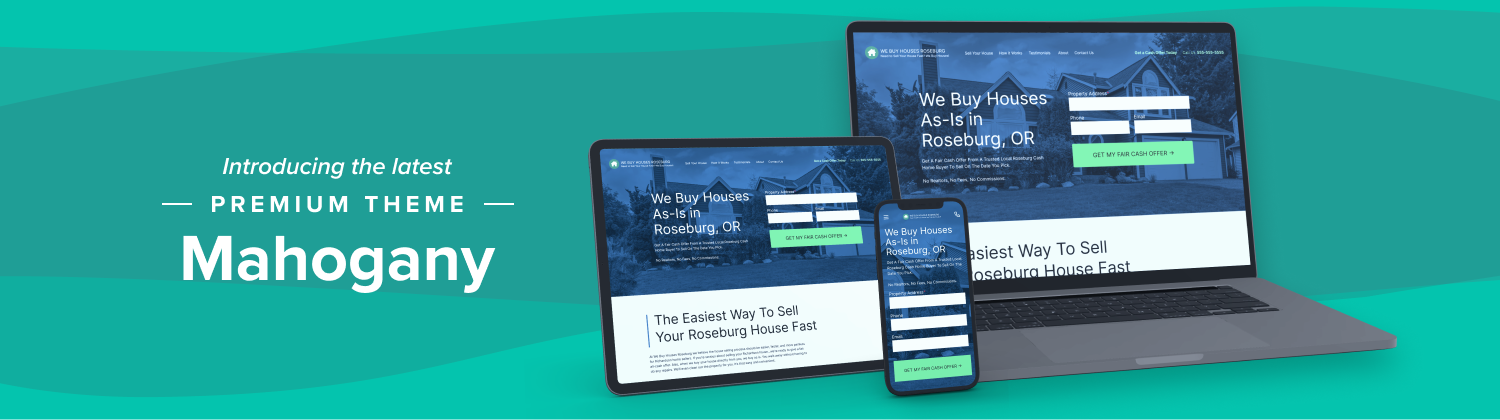
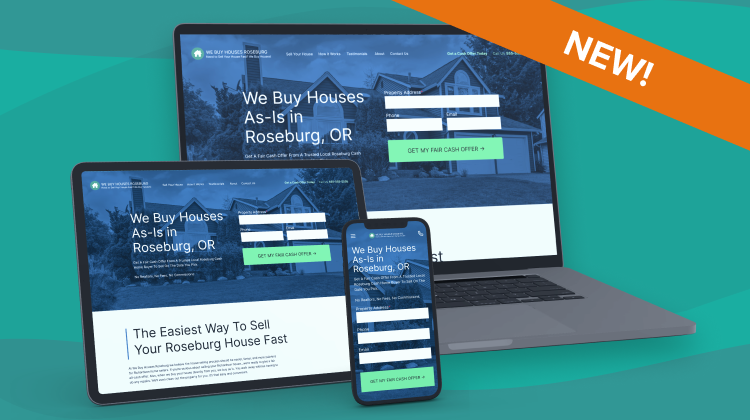
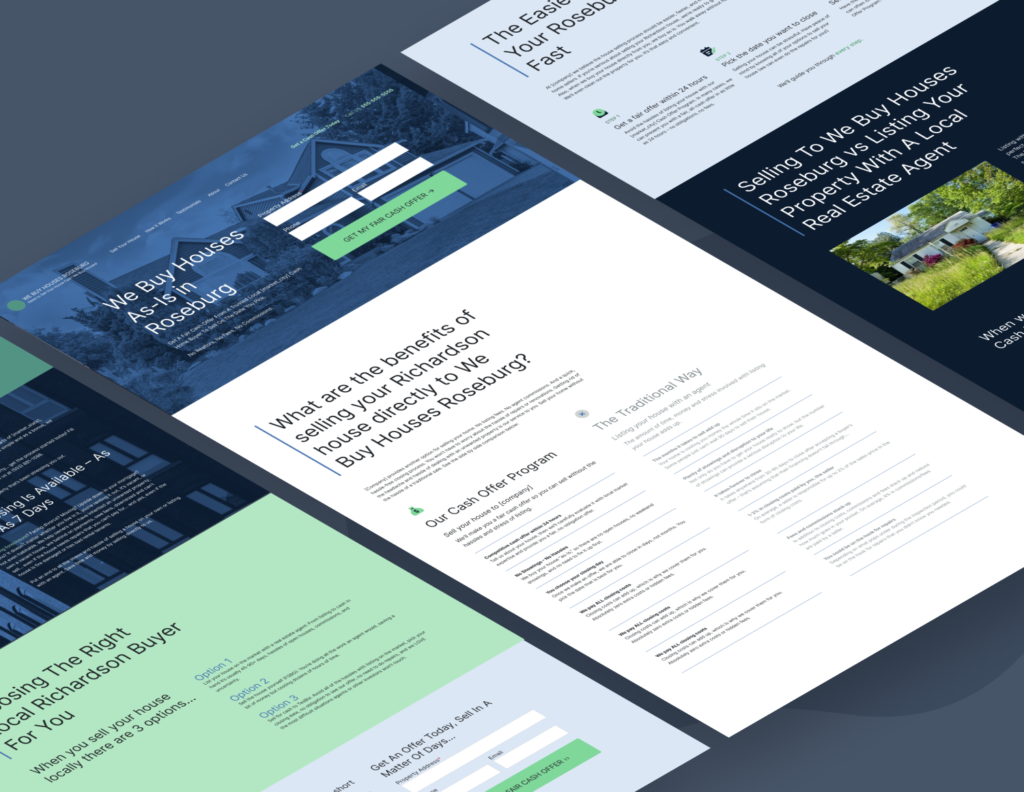
    Meet our latest Premium Design Mahogany.

    Stand out without losing the performance. Our latest Premium Design Mahogany features clean, modern lines, big, bold, easy-to-read text, and space to emphasize all of your content. Instantly separate yourself from others in your area with a few clicks.

    All Carrot Premium Designs include…

    • Our Carrot Core Conversion methodology is baked in from the ground up to ensure high conversion
    • The fastest page load times in the industry (69.8% faster than custom websites to help give you an edge in SEO and conversion)
    • The ability to personalize your Carrot site with your brand, localized content, and more to stand out
    • Instantly stand out from 90%+ of all Carrot sites not running on one of our Premium Designs

    The same innovative high-performance standards Carrot is known for with more design differentiation.

    Access Mahogany and all Premium Designs for just $29 monthly with a Carrot membership.

    This website design isn’t just beautiful. It converts with the same principles as our other Carrot site designs.
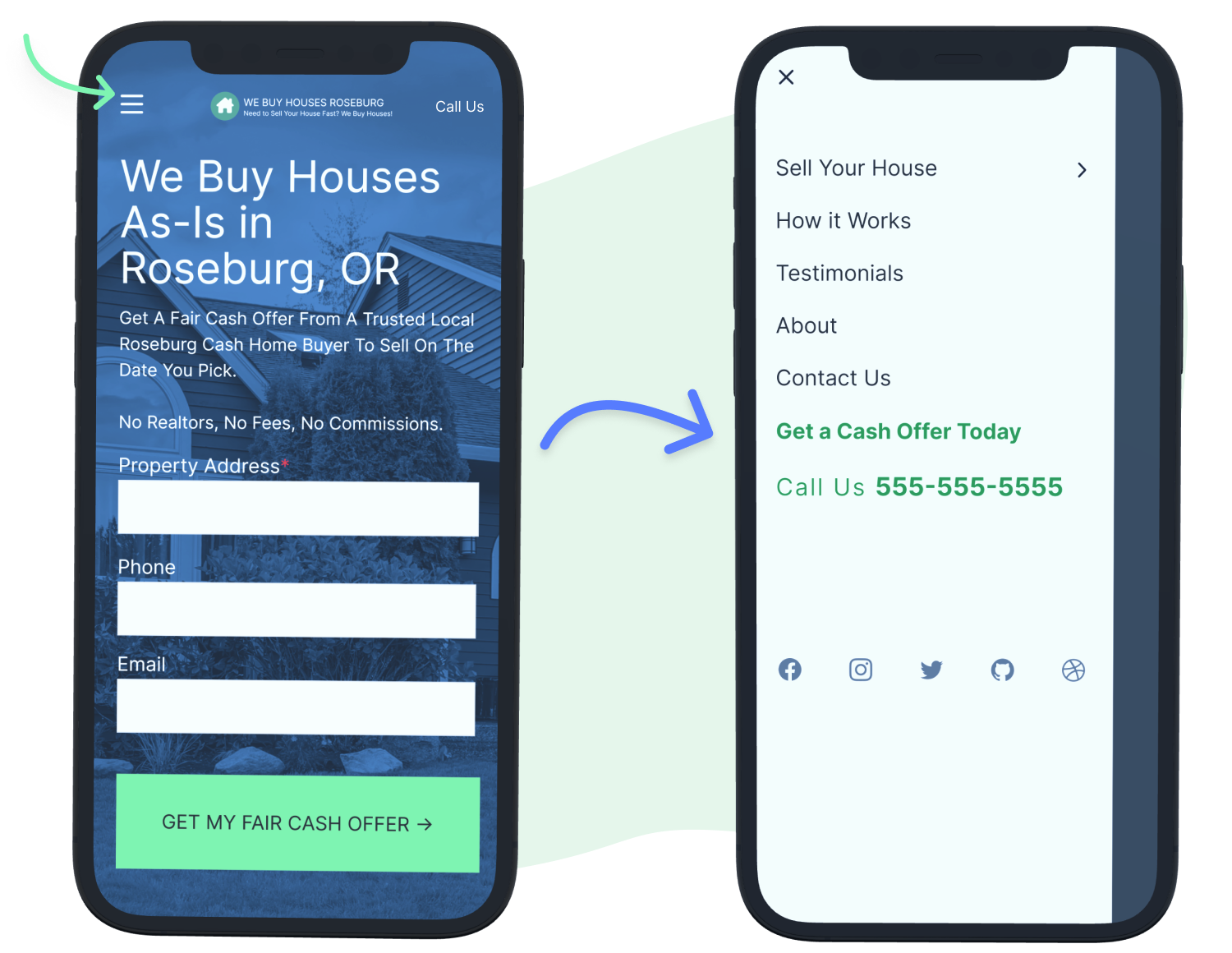
    Optimized For Mobile Leads

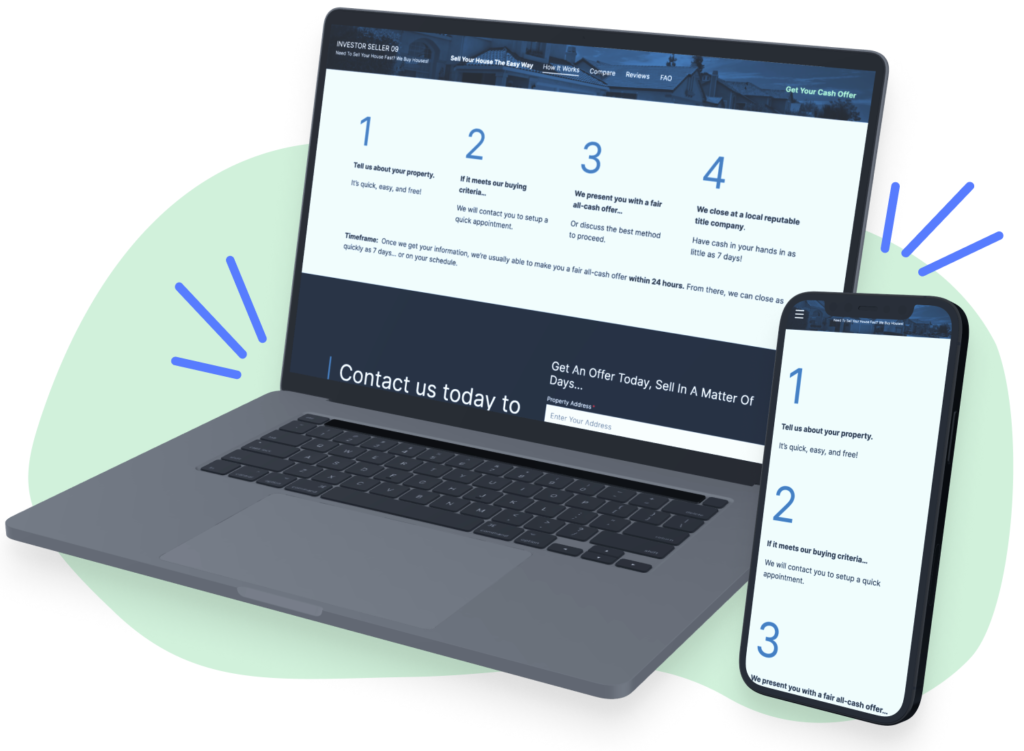
    63% of Carrot member leads come from mobile devices. So, we optimized every part of Mahogany to convert your mobile visitors into leads!
    For a design like this, Website Build Expert estimates that you’d pay $5,000 to $10,000.

    Since we want this design to remain a unique and distinguishable theme for high-performing investors and agents, it’s only available as an upgrade for members now.

    If you haven’t yet, you can upgrade your plan with just a few clicks… then you can switch to the Mahogany design just as easily.

    Not a Carrot member yet? 

    Join Carrot and Get Access to Mahogany Today!

    Why Carrot? It’s all about results, performance, and lead quality. 

    We focus on performance and results, and our members pull in more motivated house seller leads through Google searches than any other platform in the world. And if you’re looking for cash buyers, land sellers/buyers, mobile home sellers, apartment tenants, or any other type of real estate lead… we have you covered there with our top-performing lead generation websites.
  • Announcing the NEW online Carrot Community (Now Open to All Members!)

    Announcing the NEW online Carrot Community (Now Open to All Members!)

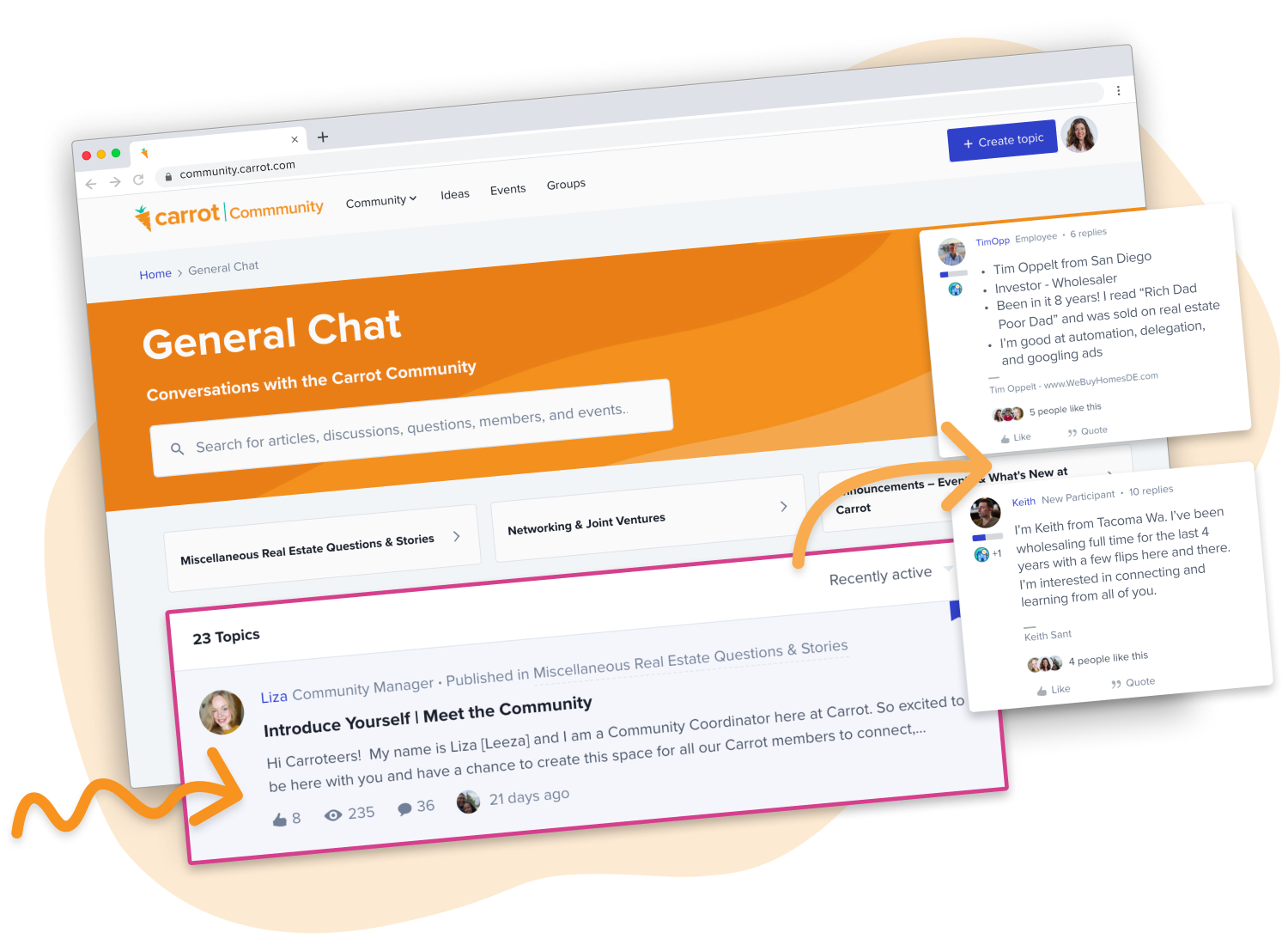
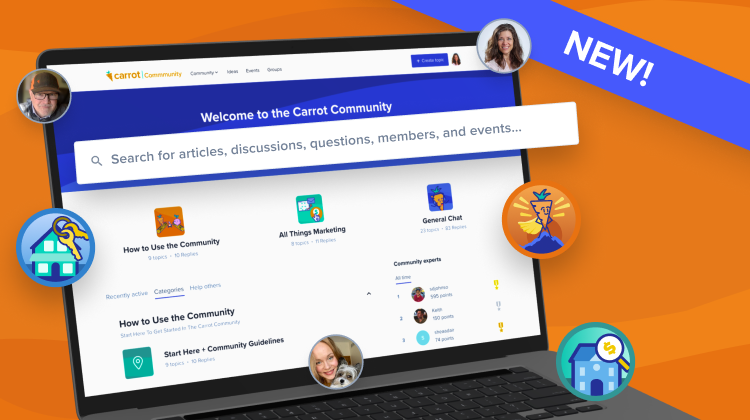
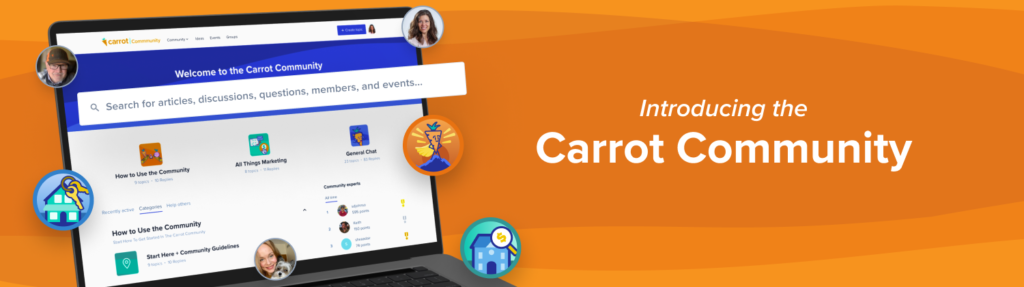
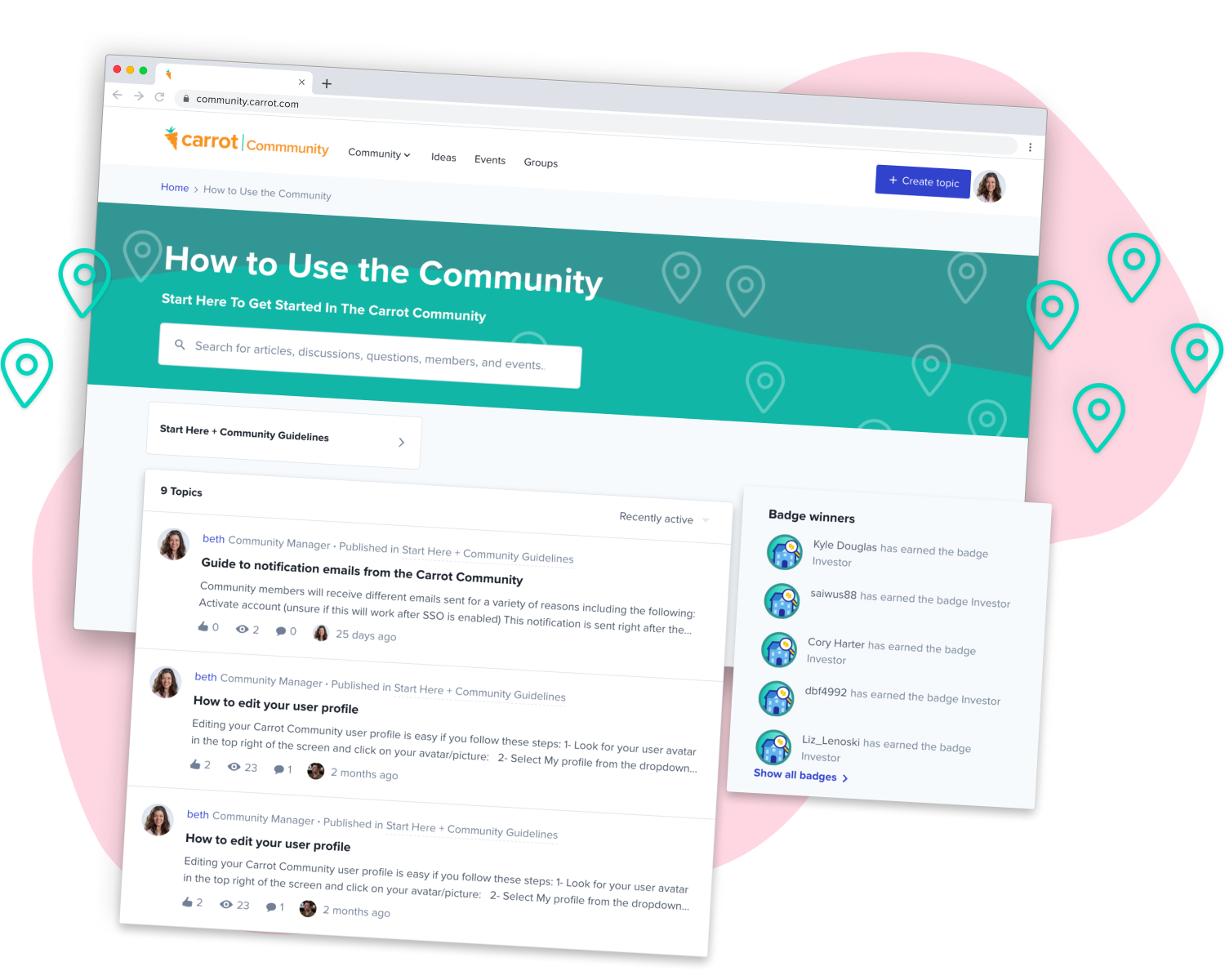
    I’m excited to announce Carrot Community is officially available to all members.

    The Carrot Community is where you can connect and collaborate with thousands of other Carrot members, share your knowledgeand learn best practices from top Carrot members and the Carrot team.

    Join the Community today!

    Over the years, our Carrot members have been helping each other close more deals, have faster success in their businesses, grow their SEO rankings more effectively, and get off the marketing hamster wheel dragging them down. It’s happened at live events around the country (“Oh I’m a Carrot member too!”), in Facebook groups, CarrotCamps, BiggerPockets, and anywhere else they could connect.

    We even work hard to connect members when they have a need in their local market.

    But heading into 2022, with the impending economic and real estate market shifts… we knew one thing would help investors and agents thrive through these changes vs. just survive.

    Community.

    When you’re connected with other like-minded people, learning together, growing together, doing business together, and sharing your wins and struggles… everyone rises together.

    With almost 8,000 active Carrot members worldwide, we aim to make the Carrot Community the #1 place investors and real estate agents can go to learn and grow their online marketing skills.

    What is the Carrot Community all about?

    The Carrot Community is meant to be a place for anything you need to help your business with Carrot:

    • Build Relationships and Network – You can network with other Carrot members, build relationships, and help each other.
    • Strategy and Coaching – You will have a community of like-minded people eager to learn from each other and share their strategies and experiences. You will also have a place for Carrot resources that will ensure you are aware of the latest strategies and are provided with the latest information and resources.
    • Technical Questions and Answers – You can post and ask questions for other members and use your expertise to answer and help others.
    • Direct access to the latest information – This will be your place for all things Carrot. The Carrot Community will have all the latest information and resource links in one place. 
    • Product Feedback – You will have a chance to provide product feedback directly to the Carrot Product Team; no middle man, no thoughts lost. 
    • Events and Webinars – A single spot to learn about upcoming webinars, coaching calls, events, and announcements.

    Carrot Community is not just another “forum” — it’s an online destination for real people. It provides recognition, support, and connection when our members need it the most.

    Other benefits include the following:
    • Carrot Community can help eliminate the need to spend hours doing a Google search on a topic that has more than likely been addressed in a community thread. Or better yet, you can receive the answer directly from a community member.
    • Carrot Community comes with a support system. This support may come from providing guidance and feedback or from other members. Either way, one can get the help they are looking for.
    • Carrot Community provides a platform where members can exchange information, giving everyone who participates a voice. Participation from our members will help foster and grow your business, and encouraging participation among the community will help your business strengthen its reputation and credibility.

    How to access the Carrot Community

    We’re inviting ALL active Carrot members into the community! There is a well-rounded mix of most of our top-performing Carrot members, newer investors or agents who want an edge, and everything in between.

    Access the Carrot Community here!

    Not a Carrot member yet?

    Join today to unlock all the benefits we offer our members at plans as low as $69/month.

    Why Carrot? It’s all about results, performance, and lead quality.

    Zillow owns retail buyer searches on Google.

    Loopnet owns commercial investment property searches in Google.

    Carrot members own motivated house sellers in Google.

    We focus on performance and results, and our members pull in more motivated house seller leads through Google searches than any other platform in the world. And if you’re looking for cash buyers, land sellers/buyers, mobile home sellers, apartment tenants, or any other type of real estate lead, we have you covered there with our top-performing lead gen websites.

    Unlock benefits such as…

    • Premium Website Designs that less than 5% of Carrot websites use (helps you stand out)
    • Premium Phone Support when you just want to hop on a call vs. live chat
    • The Carrot SEO Suite with the new Keyword Explorer, our SEO Ranking Tracker, and more
    • The Premium Automated Content library with exclusive professionally written articles each month that you can schedule on your websites
    • Unlimited Tracking Links to track what’s working with your paid and social media marketing
    • 10% Discount in our marketplace

    … and more.

    Unlock all of these benefits and more for less than 1 direct mail blast to the same old tired list everyone else is marketing to.

    See you in the community!

    The Carrot Community is where we’ll be putting our best information first, where we’ll share the most cutting-edge strategies and tactics from our testing. And where our top members will be hanging out, answering questions, sharing what’s working, and learning from each other.

    I’m excited to see you in the community!

    Let’s build businesses of freedom and impact together in the Carrot Community.

  • EP 352: $500k Our 1st Year Wholesaling as Husband & Wife w/ Adam & Amanda New

    EP 352: $500k Our 1st Year Wholesaling as Husband & Wife w/ Adam & Amanda New


    About this episode:

    Adam & Amanda have a secret weapon that has allowed them massive success in a short period of time — they’re a power couple. Fortunately for you, there are takeaways in this convo that apply whether you’re in a partnership, building a team, or have considered bringing your spouse into the business.

    Coming from a sales background, the News have a wealth of perspective & communication skills that they bring to the table. I hope you enjoy this episode as much as we did!

    Mentioned in this Episode: 

    Follow Adam & Amanda on TikTok

    Adam & Amanda’s Carrot site

    Grow Your Negotiation Skills with The Negotiation Playbook

  • EP 352: $500k Our 1st Year Wholesaling as Husband & Wife w/ Adam & Amanda New

    EP 352: $500k Our 1st Year Wholesaling as Husband & Wife w/ Adam & Amanda New


    About this episode:

    Adam & Amanda have a secret weapon that has allowed them massive success in a short period of time — they’re a power couple. Fortunately for you, there are takeaways in this convo that apply whether you’re in a partnership, building a team, or have considered bringing your spouse into the business.

    Coming from a sales background, the News have a wealth of perspective & communication skills that they bring to the table. I hope you enjoy this episode as much as we did!

    Mentioned in this Episode: 

    Follow Adam & Amanda on TikTok

    Adam & Amanda’s Carrot site

    Grow Your Negotiation Skills with The Negotiation Playbook

  • EP 350: Mobile Home Redemption Deal  –  $122K Net Profits w/ Ricky Grand

    EP 350: Mobile Home Redemption Deal – $122K Net Profits w/ Ricky Grand


    In this episode of Behind the Deal we’re covering:

    Mobile homes. You either love them or hate them.

    But we’d be willing to bet you might look twice if you see a profit of $122k.

    Ricky Grand of the Grand Bros did just that, and is diving in deep on the whole deal with Trevor Mauch.

    Join us live every other Thursday at Carrot.com/deal!

  • EP 348: Direct Mail Tips for Real Estate w/ DealMachine CEO David Lecko

    EP 348: Direct Mail Tips for Real Estate w/ DealMachine CEO David Lecko


    About this episode:

    David Lecko is a returning guest and long-time friend of Carrot. His widely-known app for real estate investors, DealMachine, is a game-changer when it comes to curating a list of proven, personalized leads.

    Today we’re diving in to talk about direct mail tips that will help you get more seller leads as a real estate investor. Let’s dive in!

    Mentioned in this Episode: 

    Get Deal Machine’s free DirectMail guide

    Take a demo of DealMachine: Dealmachine.com/carrot

    Get the direct mail masterclass podcast series at Carrot.com/mail


  • EP 346: 1 SEO Lead & 4 Months of Evicting. The “Estate Sale Hoarder House” w/ Tyler Ford | Behind The Deal

    EP 346: 1 SEO Lead & 4 Months of Evicting. The “Estate Sale Hoarder House” w/ Tyler Ford | Behind The Deal


    About this episode:

    How long are you willing to work a lead before giving up? Tyler jumped through about every hoop in the book for this one — from negotiation to the constable showing up day of eviction to estate sales. Tyler was able to navigate this deal like a true REI pro. Let’s break it down and learn how he netted over $30k, while still holding on to his sanity.

    Watch all episodes of Behind the Deal at Carrot.com/Deal

    Mentioned in this Episode: 

    Get the Video Marketing Playbook: Carrot.com/video

    Tyler’s 2-6-1 Formula: https://carrot.com/blog/buy-1-3-properties-on-a-budget-tyler-ford/

  • Technical SEO Guide: Tools & Checklist for to Analyze Your Site’s SEO

    Technical SEO Guide: Tools & Checklist for to Analyze Your Site’s SEO

    Technical SEO is the foundation upon which organic search success is built. It refers to the optimization of your website’s behind-the-scenes elements that search engines use to understand and rank your content. Think of it as the invisible architecture that allows search engine crawlers to navigate your website efficiently and effectively. Technical SEO has four core pillars:

    • Crawlability
    • Indexability
    • Mobile-friendliness
    • Site speed
    Carrot icon
    Sites built for local lead generation.
    Get found online when and where customers are searching. Turn attention into action.
    See Carrot in Action

    Unveiling the Power Beneath the Surface: Your Guide to Technical SEO

    Technical SEO is the foundation upon which organic search success is built. It refers to the optimization of your website’s behind-the-scenes elements that search engines use to understand and rank your content. Think of it as the invisible architecture that allows search engine crawlers to navigate your website efficiently and effectively.

    Here’s why conducting a technical SEO analysis is crucial for your website:

    • Increased Visibility: A technically sound website is more easily crawled and indexed by search engines, leading to higher visibility in search results.
    • Improved User Experience: Technical SEO factors like mobile-friendliness and fast loading speeds directly impact user experience, which is a key ranking factor for search engines. A happy user is more likely to stay engaged and explore your offerings.
    • Enhanced Organic Traffic: By addressing technical SEO issues, you remove barriers that prevent search engines from fully understanding your website. This translates to attracting more organic traffic, the lifeblood of any successful online presence.

    Investing time in a technical SEO analysis is an investment in your website’s long-term success. It’s the first step to ensuring your website is search engine friendly and primed to attract the qualified traffic you deserve.

    Buy First, Why SEO?

    As we’ve written about elsewhere on our blog, SEO is a form of evergreen marketing in many other places. That is when an SEO strategy is executed correctly, it has the potential to become a lead-generation powerhouse.

    Once you make the initial investment into an SEO campaign, as long as some routine maintenance is performed, you’ll likely have an asset that keeps sending leads your way for many years.

    This costs a fraction of the price compared to leads from PPC or social media advertising campaigns.

    How Does Technical SEO Fit In?

    Most people familiar with SEO seem to understand that content and backlinks are required to earn free traffic from Google. There are endless guides that focus on publishing more and more content or getting more and more backlinks.

    Few, however, delve into the foundation of SEO — how well the underlying website functions for users and search engine crawlers alike. In the industry, this is known as technical SEO.

    Technical SEO is a simple term, but it covers many topics. Ultimately, it comes down to a well-built website — how fast it loads, how clean the coding is, the internal linking structure, if any internal or external links are broken or run through complex redirect chains if images are broken, whether or not the design is responsive and loads in a user-friendly way when on a slow connection… really, the list could go on for days.

    We haven’t discussed this much because Carrot members don’t have to worry about it. All Carrot sites have a search-engine-optimized tech stack baked in.

    However, many people reading this article won’t be using this system, so I aim to help you by providing a technical SEO checklist and some pointers on the best tools to use in your analysis.

    The Pillars of Technical SEO: Building a Strong Foundation

    Technical SEO encompasses a variety of factors that work together to ensure search engines can easily access, understand, and present your website to users. Here are the four core pillars of technical SEO:

    • Crawlability: Imagine search engines like giant spiders crawling through the web, discovering and indexing websites. Crawlability refers to how easily these search engine spiders can navigate your website. This includes having a well-structured sitemap, optimized robots.txt file, and internal linking that allows the spiders to find all your important pages. Good crawlability ensures your website’s content gets seen by search engines.
    • Indexability: Once search engines crawl your website, they must understand your content to determine its relevance for search queries. Indexability refers to whether search engines can include your pages in their search results. Factors like proper use of meta tags, structured data markup, and fresh, high-quality content all contribute to good indexability. If a page isn’t properly indexed, it won’t appear in search results.
    • Mobile-friendliness: In today’s mobile-first world, a website that isn’t optimized for smartphones and tablets is a major disadvantage. Mobile-friendliness ensures your website displays correctly and provides a seamless user experience on all devices. Search engines prioritize mobile-friendly websites in search results, giving you an edge over non-optimized competitors.
    • Site Speed: Nobody likes a slow website! Site speed refers to how quickly your website loads for users. Search engines consider page load speed as a ranking factor, as slow loading times can lead to frustrated users and high bounce rates. Optimizing images, minimizing code, and using a reliable web host all contribute to a faster website, which benefits both search engine rankings and user experience.

    By focusing on these core pillars, you create a solid technical foundation for your website. Search engines will be able to efficiently crawl and index your content, and users will have a positive experience when they visit your site. This combination is a recipe for organic search success.

    Charting Your Course: The Technical SEO Analysis Checklist

    A technical SEO analysis checklist is your roadmap to a healthy and search engine friendly website. Just like any journey, it’s important to have a plan to ensure you’re covering all the important bases. Here are the key areas to evaluate during your technical SEO analysis, each playing a crucial role in search engine visibility:

    • Crawlability:
      • Robots.txt: Is your robots.txt file configured correctly to allow search engine crawlers to access your important content?
      • Sitemap: Does your website have a well-structured sitemap that clearly communicates all your pages to search engines?
      • Internal Linking: Is your website’s internal linking structure optimized to allow search engine crawlers to navigate efficiently and discover all your content?
    • Indexability:
      • Meta Tags: Are your title tags and meta descriptions optimized with relevant keywords and clear descriptions to help search engines understand your content?
      • Structured Data Markup: Have you implemented structured data markup to provide search engines with additional context about your content, potentially leading to richer search results?
      • Noindex Directives: Are there any pages on your website that you intentionally don’t want search engines to index? Are these pages properly marked with a noindex directive?
    • Mobile-Friendliness:
      • Responsive Design: Does your website display correctly and provide a user-friendly experience on all devices, especially smartphones and tablets?
      • Mobile Speed: Does your website load quickly on mobile devices? Slow loading times can significantly hurt your mobile search ranking.
    • Site Speed:
      • Page Load Time: Are your website’s pages loading fast enough for users? Tools like Google PageSpeed Insights can help you identify areas for improvement.
      • Image Optimization: Are your website’s images optimized for size and quality to ensure fast loading times without sacrificing visual appeal?
      • Caching: Is your website leveraging browser caching to improve repeat visitor experience and overall page load speed?

    By systematically working through this checklist, you’ll gain valuable insights into your website’s technical SEO health. The next step is to leverage SEO tools to delve deeper into each area and identify any specific issues that need to be addressed.

    Here’s an example of what your XML sitemap should look like:

    Example XML Sitemap

    If you’re a Carrot member, then this is handled for you. Carrot ensures your site is configured correctly and that Google can find and index all the pages on your site.

    Unveiling the Landscape: Essential Tools for Technical SEO Analysis

    While a technical SEO checklist provides a solid framework, SEO tools act like powerful magnifying glasses, allowing you to zoom in and identify specific technical issues impacting your website. A combination of free and paid tools can equip you to conduct a comprehensive technical SEO analysis.

    Here are some essential tools to consider for your technical SEO toolbox:

    Free Tools:

    • Google Search Console (GSC): This free powerhouse from Google offers a wealth of insights into your website’s search engine performance, including crawl errors, mobile usability issues, and sitemap status. It’s a must-have for any technical SEO analysis.
    • Google PageSpeed Insights: Focused specifically on website speed, this free tool analyzes your website and provides actionable recommendations for improvement. It’s a great way to identify areas where you can optimize page load times.
    • Mobile-Friendly Test: Another free offering from Google, this tool allows you to quickly test how your website displays on mobile devices. It’s a simple yet effective way to ensure your website provides a seamless mobile experience.

    Paid Tools:

    • Screaming Frog SEO Spider: This desktop application acts like a virtual SEO spider, crawling your website and identifying technical issues like broken links, missing meta tags, and crawl errors. It’s a powerful tool for uncovering a wide range of technical SEO problems.
    • SEMrush Site Audit: Part of the comprehensive SEMrush SEO suite, the Site Audit tool offers a deep dive into your website’s technical health. It provides detailed reports on crawl errors, mobile usability, and on-page SEO optimization, making it a valuable tool for identifying and prioritizing technical SEO issues.
    • Ahrefs Site Audit: Similar to SEMrush, Ahrefs offers a Site Audit tool that crawls your website and generates reports on technical SEO issues. It provides insights into broken links, internal linking structure, and mobile responsiveness, helping you identify areas for improvement.

    Remember, the best approach often involves a combination of free and paid tools. Free tools like Google Search Console and PageSpeed Insights offer a fantastic starting point, while paid tools can provide more in-depth analysis and reporting capabilities. Choose the tools that best suit your needs and budget to empower your technical SEO analysis.

    Putting it into Action: Analyzing Your Website with the Checklist & Tools

    Now that you’re armed with the technical SEO checklist and a toolbox of powerful tools, it’s time to delve into analyzing your website. Here’s a step-by-step walkthrough to guide you:

    Step 1: Gather Your Tools

    Start by having your chosen technical SEO checklist and tools readily available. This might include the free Google tools (Search Console, PageSpeed Insights, Mobile-Friendly Test), and potentially a paid SEO tool like Screaming Frog or SEMrush Site Audit.

    Step 2: Work Through the Checklist

    Use the technical SEO checklist as your roadmap. Go through each section (crawlability, indexability, mobile-friendliness, site speed) and assess your website’s health in those areas.

    Step 3: Leverage the Tools

    For each section of the checklist, utilize the relevant SEO tools to gain deeper insights. Here’s how some tools can be applied:

    • Crawlability:
      • Google Search Console: Check the “Crawl Errors” report to identify any issues preventing search engines from accessing your pages.
      • Screaming Frog: Crawl your website using Screaming Frog to identify broken links and crawl errors.
    • Indexability:
      • Google Search Console: Use the “Coverage” report to see if any important pages are blocked from indexing or have indexing issues.
    • Mobile-Friendliness:
      • Google Mobile-Friendly Test: Enter your website URL and see how it renders on mobile devices.
      • Screaming Frog: Screaming Frog can also identify mobile-friendliness issues during its crawl.
    • Site Speed:
      • Google PageSpeed Insights: Analyze your website with PageSpeed Insights to identify areas for improvement regarding loading speed.

    Step 4: Interpreting the Results

    Each tool will provide reports and data that pinpoint specific technical SEO issues. Here’s a general approach to interpreting the results:

    • Free Tools:
      • Google Search Console: The reports will highlight issues with clear explanations and often suggest solutions.
      • Google PageSpeed Insights: The tool will provide a score and specific recommendations for improvement, like optimizing images or reducing page size.
    • Paid Tools:
      • Screaming Frog: The software generates a comprehensive report detailing various technical SEO issues. You’ll need some familiarity with SEO best practices to interpret the findings.
      • SEMrush/Ahrefs Site Audit: These tools offer detailed reports with explanations and prioritization of technical SEO issues, making them easier to understand and address.

    Step 5: Take Action!

    Once you’ve identified technical SEO issues through the checklist and tools, it’s time to take action! Prioritize the most critical issues that are likely to have the biggest impact on your search engine ranking and user experience. Many SEO tools offer suggestions for fixing the identified problems.

    Remember, a technical SEO analysis is an ongoing process. As you make changes and optimize your website, it’s important to revisit the checklist and tools periodically to monitor progress and identify any new issues that may arise.

    Conquering the Challenges: Fixing Technical SEO Issues & Prioritization

    The technical SEO analysis has unearthed valuable insights, but the real magic happens when you address the identified issues. Here’s where prioritization becomes crucial.

    Not all technical SEO issues are created equal. Some can significantly hinder your search engine ranking and user experience, while others might have a lesser impact. Focusing on the most critical issues first will yield the biggest return on your investment.

    Here’s how to approach fixing technical SEO issues with prioritization in mind:

    • Severity: Start by addressing the most severe issues first. These might include crawl errors that prevent search engines from accessing your pages, missing or duplicate meta tags that confuse search engines, or critical mobile usability problems that frustrate users.
    • Impact: Consider the potential impact of each issue. For example, a large number of broken links can significantly hurt your website’s ranking, while a single missing image alt tag might have a lesser effect.

    Common Technical SEO Issues & Solutions:

    Here are some frequent technical SEO culprits and how to tackle them:

    Broken Links:

    Identify broken links using SEO tools and replace them with working links or remove them entirely.

    How to Find & Fix Broken Links

    Fixing broken links on your site is important for some key reasons:

    1. It creates a better experience for your visitors: nobody likes clicking on a link and getting an error message.
    2. It helps Google crawl your site more efficiently: you don’t make it hard for people to contact you, so why would you treat Google that way?
    3. It helps to pass link juice or link equity throughout your website: this helps your content rank better due to its extra authority.
    4. it shows Google that your site is well-maintained and of high quality: Google considers broken links an indication that your site is outdated and poorly maintained.

    Suppose you want to find and fix broken links on your site. Use any crawler to scan your site and identify all the broken links. Screaming Frog is an option here—it’s free for sites with up to 500 pages!

    Screaming Frog SEO Spider
    Screaming Frog Discovering Errors

    When scanning for these errors, replace all 4xx and 5xx error pages, and either remove or replace those links with updated, correct links, avoiding the use of redirects where possible. For more info, read this guide on how to fix broken internal links.

    Slow Loading Pages:

    Analyze your website with Google PageSpeed Insights and implement recommendations to improve page load speed. This could involve optimizing images, reducing page size, and enabling browser caching.

    How to Improve Your Site’s Load Speed

    Engagement 101 teaches if your site doesn’t load quickly, people won’t stay on it. 

    40% of visitors will leave a site that takes longer than 3 seconds to load.

    So if you want people to stick around (AND if you want to improve your SEO), you need a fast website. Test your website using Google’s PageSpeed Insights.

    PageSpeed Insights performance test

    There’s a clear correlation between sites that load fast and rank well…

    Good news for Carrot members—out of the box, their websites are 69.8% faster than custom websites.

    How do you make your site load fast if you’re not a Carrot member? Here are some tips…

    • Use a content delivery network (CDN): a globally distributed system of servers that delivers content to visitors based on their geographic location allows visitors from all over the world to load your content quickly, no matter where they are.
    • Compress your images: images are often the heaviest elements on a page, slowing down your site’s loading speed. To avoid this, compress your images before you upload them to your site. You can use a free tool like TinyPNG to do this.
    • Optimize your code: if your website’s code is bloated or inefficient, it can slow down your site’s loading speed. To avoid this, minify your HTML, CSS, and JavaScript files. You can use a free tool like Minifier to do this.

    Crawl Errors: 

    Use Google Search Console to identify crawl errors and fix any underlying issues preventing search engines from accessing your pages. This might involve fixing robots.txt configuration or resolving server-side errors.

    How to Fix Crawl Errors

    Redirects can significantly impact user experience and crawl efficiency, particularly if they are broken, form chains, or create loops.

    Similar to broken links, they deteriorate the user experience and can confuse bots. Even functioning redirects add complexity, and my guiding principle for dealing with search engine crawlers is to maintain simplicity whenever possible.

    There’s inconsistency in statements from Google’s representatives regarding how much link equity is transferred through redirects. Commonly, this involves redirecting from old to new domains, but it’s equally applicable to page-to-page redirections. Why take the chance?

    Addressing and fixing these issues, or ideally, replacing them with straightforward, final URLs, enhances both user and crawler navigation, ensuring total PageRank value is directed to your ultimate URL.

    Review Your Content:

    Ensure all important pages have unique and relevant title tags and meta descriptions to help search engines understand your content.

    How to Review Your Content

    While this isn’t a content audit discussion, content quality is still vital in technical SEO upkeep. A site audit should evaluate content quality, pinpointing issues such as:

    • Duplicate content,
    • Broken images,
    • a high number of low word count pages, and
    • Incorrect tag usage, including duplicates or absences of:
      • H1,
      • title, and
      • meta descriptions.

    Naturally, high-quality and well-organized content tends to rank better and engage users. This isn’t a straightforward “pass/fail” situation, but during a tech audit, if the content lacks quality, it’s crucial to note that a content audit should be the next step.

    It’s also worth being aware that some themes can cause issues with your content. Incorrect tag usage can often be tied to theme configuration instead of the way in which the content itself has been formatted.

    Insecure Website (Missing SSL): Ensure your website uses HTTPS encryption by installing an SSL certificate. This improves your website’s security and gives you a slight ranking boost in search results.

    How to Ensure Your Site is Secure

    Google has stated that it prefers sites that use HTTPS, the secure version of HTTP. They’ve even started giving a slight ranking boost to sites that use HTTPS.

    Website showing it is HTTPS secure

    If you’re unfamiliar with HTTPS, it’s a more secure way of transmitting data over the internet. When you visit an HTTPS site, all the data exchanged between you and the site is encrypted. That means it’s much harder for hackers to intercept and steal that data.

    This is especially important for real estate investors and agents because you often deal with sensitive information like addresses, phone numbers, and email addresses.

    To use HTTPS, you need to get your SSL certificate — a digital certificate that authenticates your website’s identity and enables encryption. You can request your SSL certificate through your website host or hire someone else to help you. 

    If you’re a Carrot member, then your site is automatically HTTPS encrypted. This will result in a safer experience for your website visitors and better rankings in Google. 

    Missing Localization Configuration:

    If you target international audiences, verify your website’s hreflang tags are correctly configured. This helps search engines understand your website’s language variations and deliver the most relevant version to users in different regions.

    How to Check Your Localization Config

    Incorrect or absent hreflang or HTML lang attributes can hinder organic search performance, particularly for websites targeting diverse regions or languages.

    In my experience, multilingual sites often start as problematic whenever I begin a technical SEO audit.

    Properly implementing these attributes ensures that search engines present the correct content to the intended audience.

    If you only run your site in English and think you can forget about this type of thing, I’d caution you to think again.

    It’s still beneficial to implement this, as it aids search engines and other tools in recognizing the primary language of your page.

    This boosts accessibility, enabling screen readers to apply the correct language pronunciation rules, and it also enhances search engines’ comprehension of your site’s content.

    With content translation becoming more routine, these straightforward steps significantly enhance content accessibility to a broader audience, and Google likes it when you consider this.

    Subpar Mobile Experience:

    Even if your website uses a responsive design, conduct a mobile-specific SEO audit. This might reveal issues like slow mobile load times or usability problems on smaller screens. Prioritize fixing these issues to ensure a smooth mobile experience.

    How to Make Your Site Mobile-Friendly

    It’s no secret that more and more people are using their phones to surf the web. Over 60% of all internet traffic now comes from mobile devices!

    If your site isn’t set up for mobile SEO, you’re missing out on a ton of traffic (and potential leads).

    It also means that Google is starting to penalize sites that aren’t mobile-friendly. In other words, if your site isn’t optimized for mobile devices, you could be pushed down in the search results…

    To avoid this, you must ensure your site is “responsive.” That means it should adjust to fit any screen size, whether a phone, tablet, or desktop computer. 

    Test your site using Google’s mobile-friendly test.

    Google's Mobile-Friendly testing tool
    Carrot member website mobile-friendly test results

    If you’re a Carrot member, then your site is automatically responsive. We build all Carrot sites using responsive design, so you don’t have to worry about this!

    Poor Page Experience:

    Page experience encompasses various factors that impact user experience, including mobile-friendliness, loading speed, and visual stability. Use Google Search Console’s “Core Web Vitals” report to identify areas for improvement in page experience. Optimizing these factors can significantly enhance user experience and potentially improve your search ranking.

    How to Improve Your Page Experience

    Google is continually updating its page experience signals. Core Web Vitals combined with existing search signals, including mobile-friendliness, safe browsing, HTTPS security, and intrusive interstitial guidelines, are all factors here.

    If you need a refresher, read this guide to Core Web Vitals.

    Core Web Vitals are comprised of five factors:

    Largest Contentful Paint (LCP)How long it takes for the largest content element on the screen to become visible. A good LCP score is 2.5 seconds or less to provide a good user experience.
    Interaction to Next Paint (INP)Measures a website’s overall responsiveness, grading the time a site takes to respond after a user interacts with the page. A good INP score is under 200 ms (milliseconds).
    Cumulative Layout Shift (CLS)monitors unexpected content jumps as a page loads to measure its visual stability. A good CLS is 0.1 or less.
    First Content Paint (FCP)Tracks how long it takes from the instant a page starts loading until any content is visible. A good FCP is less than 1.8 seconds.
    Time to First Byte (TTFB)How long it takes a browser to receive the first byte of page data from a web server. A good TTFB is under 0.8 seconds.

    These ranking factors can be measured in a report found in Google Search Console, which shows you which URLs have potential issues:

    Core Web Vitals in Google Search Console

    Finding In-Depth Solutions:

    These are just a few examples, and the solutions can vary depending on the specific issue. For more in-depth solutions and troubleshooting steps, leverage the resources available online. Many SEO tools offer detailed guides and explanations for fixing technical SEO problems. Additionally, reputable SEO websites and blogs often publish articles and tutorials on common technical SEO issues and solutions.

    Remember, tackling technical SEO is a journey, not a destination. By prioritizing issues, implementing solutions, and monitoring progress, you can create a technically sound website that thrives in search engine results and provides a seamless user experience.

    Technical SEO Best Practices

    Performing a technical SEO audit may initially appear complex, but with a methodical approach and the correct toolkit, it transforms into a critical element of your online marketing plan.

    Here are what I consider to be the best steps for conducting this in-house:

    1. Select Your Tools: Not everyone has a big budget for software. High priced tools like Ahrefs and Semrush can make the process faster, but they aren’t mandatory. Please make use of whatever you can and simply get on with it. Action matters more than software.
    2. Develop a Routine: Acknowledge that this isn’t a one-time fix, so frequency is key. Depending on your website’s size and intricacy, a schedule will help—be it monthly, quarterly, or semi-annually—to proactively manage potential issues. At Dialed Labs, we use weekly audits to maintain and monitor our client sites.
    3. Prioritize Findings: Address issues based on their potential impact on your site’s effectiveness and user experience, and remember that not all discoveries demand immediate action. Implement the highest impact fixes first.
    4. Detail Changes and Monitor: By keeping detailed logs of your fixes, you can evaluate what techniques are fruitful and discover any fixes that may not have gone to plan. We keep a detailed “Activity Log” for client projects to transparently showcase daily updates.
    5. Stay on the Cutting Edge of SEO: Winners more or less take all in SEO, so being second best is hardly the right strategy. If you want to be at the top of the SERP, staying in the loop with the most recent official and community-driven guidelines and trends is essential.
    6. Engage with External Experts: Sometimes, external insights can make a significant difference. Consider consulting with professionals for a more in-depth and comprehensive review.

    Technical SEO Checklist

    It’s easy to get lost in the weeds as you go through a process like this. Download and print out the following checklist. It will help you stay on track and not miss anything important.

    Verify Indexability

    • Check robots.txt to ensure it’s correctly configured to allow Google to crawl your website
    • Check for noindex pages. Use tools like Google Search Console (free), Screaming Frog, or Ahrefs to identify pages with a noindex attribute
    • Verify your XML sitemap is accurate and updated
    • Check Google Search Console to make sure your site is being crawled

    Identify and Fix Broken Links

    • Use a tool like Google Search Console or Screaming Frog to find 4xx and 5xx errors
    • Fix and replace broken links to ensure all links lead to valid, relevant pages

    Optimize Redirects

    • Look for broken, chained, or looping redirects that need fixing
    • Replace complex, multi-step redirects with direct, final URLs

    Enhance Site Security

    • Ensure your site is using HTTPS (instead of HTTP) for secure data transmission
    • Verify your site’s SSL certification is valid and current

    Improve Page Experience & Core Web Vitals

    • Optimize load performance by looking for elements that commonly slow down a page (like large images)
    • Run a page or site audit to find technical SEO issues impacting your CWVs

    Review & Upgrade Content Quality

    • Check for broken images
    • Check for missing image alt text
    • Evaluate page word count
    • Verify proper use of H1, title tags, and meta descriptions

    Check Localization Settings

    • Implement correct hreflang and HTML lang attributes
    • Ensure property language and regional targeting

    Enhance Site Load Speed

    • Use CDN (Content Delivery Network)
    • Compress images
    • Minify HTML, CSS, and JavaScript

    Ensure Mobile-Friendliness

    • Test your site’s responsive design for different screen sizes
    • Optimize for mobile user experience

    The Road Ahead: Maintaining Your Technical SEO Advantage

    Congratulations! By conducting a technical SEO analysis, you’ve taken a significant step toward improving your website’s search engine visibility and user experience. However, technical SEO is an ongoing process, not a one-time fix.

    Search engine algorithms and user expectations constantly evolve, so it’s crucial to revisit your technical SEO health regularly. Scheduling periodic technical SEO audits (every 3-6 months) allows you to identify and address any new issues that may arise.

    Remember, the technical SEO checklist and tools you explored earlier are valuable companions on this journey. Use them to monitor progress, stay up-to-date with technical SEO best practices, and ensure your website remains search engine-friendly over time.

    Ready to Take Your Technical SEO to the Next Level?

    If you’d like to delve deeper into technical SEO or need assistance implementing solutions, we’re here to help! We offer a variety of resources, including:

    • In-depth guides on specific technical SEO topics
    • SEO consultations tailored to your website’s needs
    • Ongoing technical SEO monitoring and maintenance services

    By investing in your website’s technical SEO health, you’re investing in its long-term success. Contact us today to explore how we can help you achieve your SEO goals!

    Carrot icon
    Lead generation, at its best
    Attract, convert & close more motivated leads
    Try Carrot Today