Author: Mike Blankenship

  • Real Estate ARV | How to Find After Repair Value of a House

    Real Estate ARV | How to Find After Repair Value of a House

    Considering diving into real estate investing? You might have encountered the term real estate ARV (after-repair value). ARV, a significant measure in the real estate realm, is employed by both real estate investors and house flippers to gauge the potential future value of a property post-renovations.

    For seasoned investors, calculating ARV is pivotal for predicting a home’s future value, aiding in securing financing for necessary repairs. However, this method isn’t exclusive to experts—it holds tremendous value for regular homeowners seeking to enhance their property’s worth through strategic changes.

    Now, let’s delve into the intricacies of ARV and explore how you can leverage this valuable metric.

    What is ARV in Real Estate?

    Real Estate ARV, which stands for After Repair Value, refers to the estimated value of a property after all necessary repairs and enhancements have been carried out.

    This metric holds significant importance for real estate investors, particularly those engaged in property flipping. It quantifies the difference between an investment property’s current “as-is” value and the projected value it will attain once the renovation is complete.

    Are you curious about how fellow real estate investors determine this crucial value? Here’s a step-by-step guide on how to calculate Real Estate ARV.

    How to Calculate Real Estate ARV

    Imagine stumbling upon a distressed piece of real estate that piques your interest for a potential flip, whether you’re a wholesaler or a seasoned house flipper. Assuming the seller is sufficiently motivated and willing to part with their property, the next crucial step is to assess whether the deal holds the promise of profitability.

    The first order of business is to calculate the ARV of the property.

    It’s crucial to note, especially if you intend to fix and flip, that understanding market conditions and the expected quality of homes is paramount. This insight prevents over-repairing, ensuring that potential profits aren’t diminished.

    For those in the house-flipping business, ARV is indispensable. It serves as the compass guiding your investment decisions, revealing the expected selling price post-renovation. This, in turn, informs your purchase price and dictates your budget for repairs.

    If you’re a wholesaler, ARV carries even more weight. It is essential for the same reasons mentioned earlier and becomes an integral factor when dealing with potential investors. Most investors you aim to flip the property to will inquire about the ARV, wanting to review the comparable properties you’ve assessed for the investment.

    So, how do you calculate ARV?

    It’s simply:

    ARV = (Property’s Purchase Price) + (Value of Renovations)

    How to Find Your Max Bidding Price

    Now you have the ARV of the home you’re considering buying.

    For the sake of simplicity, let’s assume that you set the ARV of the home at $200,000 after running comps. The first thing to consider is what real estate investors call the “70% rule.”

    It means that house fix-and-flippers try to pay about 70% of the ARV of a home minus the repairs needed. This gives them a healthy 30% profit and ensures they can afford any unexpected repairs and still make a profit.

    What Investor Will Pay for Home = (ARV x .7) – Cost of Repairs

    Assuming that the cost of repairs for the home is $20,000, here’s what that formula looks like using our $200,000 ARV example.

    $120,000 = ($200,000 x .7) – $20,000

    In this case, the 70% rule says the investor should pay about $120,000 for the home to make a 30% profit (about $60,000).

    Not every fix-and-flipper follows this guideline, but it’s a good rule of thumb to pay attention to. If you’re fixing and flipping homes, you’ll want to consider the 70% rule when purchasing a distressed property.

    You must take the math one step further if you’re wholesaling homes.

    Since you’re getting cut out of the middle for finding the deal in the first place and the investor you’re flipping the home to will likely follow something similar to the 70% rule, you need to factor in a cash cut for yourself.

    The formula will look more like this.

    What Investor Will Pay for Home = ((ARV x .7) – Cost of Repairs) – Wholesaler’s Fee

    If you wanted to make $10,000 in the middle, here is how the math works, for instance.

    $110,000 = (($200,000 x .7) – $20,000) – $10,000

    This means that the house fixer and flipper should expect to pay about $110,000 for our example home after you (the wholesaler) pay your fee.

    Generally speaking, these numbers will be important to share with your buyer (if you’re a wholesaler) so that everyone is on the same page and understands where money is going and why you’re pricing the house at what it’s at.

    You don’t always have to share these numbers (your buyer will probably run their comps anyway and apply this rule). But it’s important to have it on hand to

    1. Justify what you’re trying to sell the house for, and
    2. Ensure everyone makes a healthy profit.

    Options to Help You Find Real Estate ARV

    Option 1: Ask a Real Estate Agent to Run Comps

    The easiest way to determine the ARV of a property is to ask a real estate agent friend of yours to run comps for you. Work to build a healthy relationship with the agent and many will do it for free. Some will require a small fee.

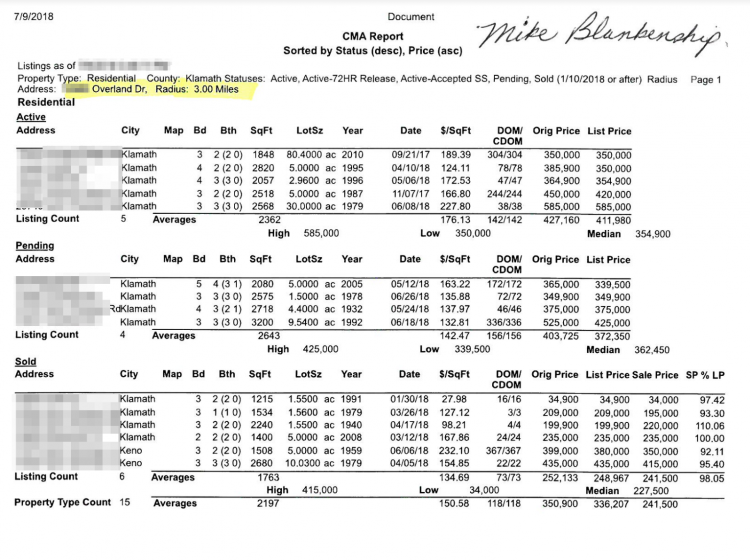
    Whatever the case, when an agent runs comps, they’ll send you a report showing homes similar to the one that you’re considering buying (similar in size, location, lot size, and the number of beds/baths) that have sold recently, are trying to be sold, or are pending sale.

    The report will have the details of the home (bed, bath, square footage, year built) and the price per square foot that the home is being sold for or did sell for (see “Orig Price” vs. “List Price” vs. “Sale Price”).

    Here are the comps I received recently from my real estate agent buddy.
    real estate arv comps

    Once you have this report in hand, you need to find the most similar homes to the one you’re considering buying, average their price per square foot, apply that number to the home you’re considering buying and make slight adjustments for discrepancies. Here are a few things to keep in mind.

    • If a home sold for very high or very low relative to the other similar homes you’ve compiled, don’t consider it in your calculations. Outliers like that will only throw off your ARV.
    • Try to find homes that have the same number of bedrooms and bathrooms.
    • Try to find homes within the same neighborhood with the same type of positioning (not next to a busy street, downslope, no neighboring houses are in distress, etc.)
    • If you have to increase the radius on the comps for lack of nearby similar properties, do so sparingly and seek expert help from an agent or appraiser if needed.

    Ultimately, you should have a healthy idea of what the house can be sold for once it’s repaired to market expectations.

    Option 2: How to Do It Yourself

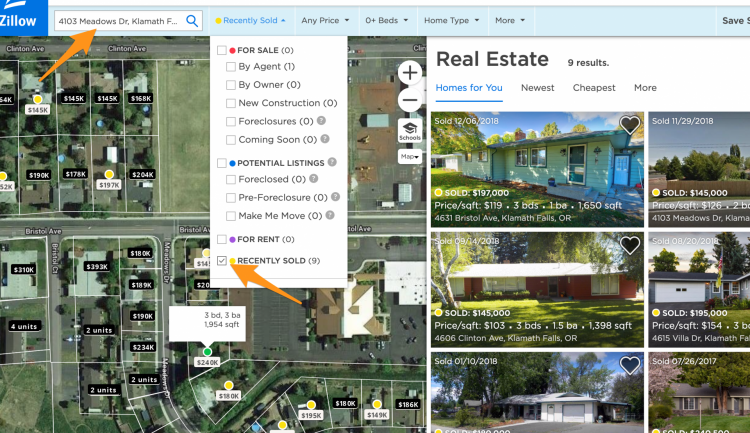
    If you’d rather run comps yourself than ask a real estate agent to help you, Zillow is the most user-friendly place to do that. Not for their Zestimates, though. If I were you, I’d pay little attention to their Zestimates – many experts question their accuracy.

    The best way to use Zillow to run comps is by typing in the address you’re considering buying into the search bar and changing the filter to “Recently Sold.”
    After Repair Value Running Comps

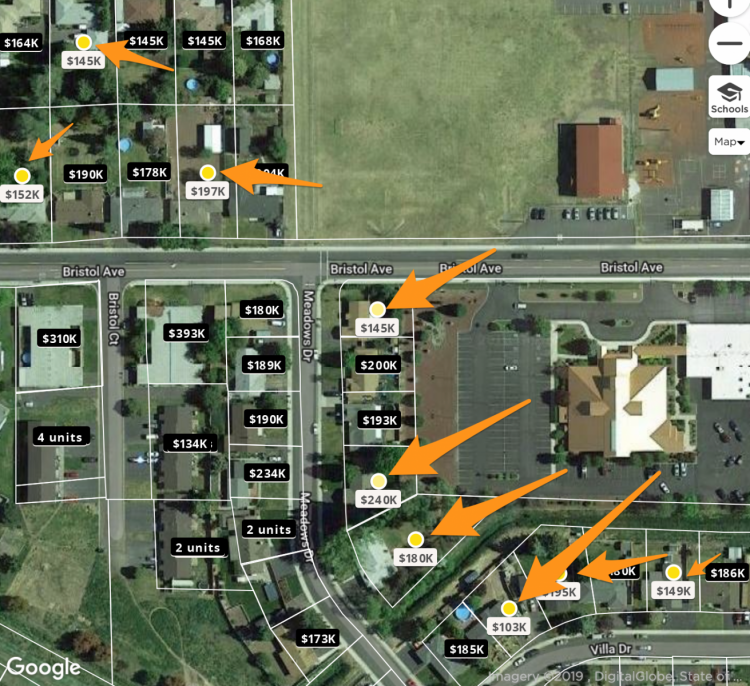
    Click the search icon. All the yellow dots on the screen indicate recently sold homes. Click on one or all of them, and Zillow will tell you exactly what they sold for, their square footage, how many beds and baths they have, and many other details.
    what houses have sold for on zillow

    Now all you have to do is find the homes that are most similar to the one you’re considering buying, put them onto a spreadsheet with the price they sold for, their price per square foot (Price Sold/square footage = Price Per Square Foot), their number of bedrooms and bathrooms, and any other pertinent details you’d like to include.

    Average out the most similar home selling price tags with the bulleted list from the “Ask a Real Estate Agent to Run Comps” section of this article in mind, and you’ll have your ARV.

    Are there Risks of Real Estate ARV?

    Investing in real estate, particularly when considering the After Repair Value (ARV), comes with risks. Let’s explore some potential challenges:

    1. Market Fluctuations:
      • Risk: Real estate markets can be unpredictable, and property values may fluctuate based on economic conditions, local demand, and other external factors.
      • Mitigation: To make more informed predictions stay informed about market trends, economic indicators, and local developments.
    2. Overestimating Renovation Costs:
      • Risk: There’s a risk of underestimating the actual cost of repairs and renovations, leading to financial strain and potentially reducing the project’s overall profitability.
      • Mitigation: Conduct thorough inspections and consult with experienced contractors to obtain accurate estimates for repair costs.
    3. Extended Renovation Timelines:
      • Risk: Delays in the renovation process can increase holding costs, impacting overall profitability.
      • Mitigation: Create a realistic timeline, account for potential delays, and have contingency plans.
    4. Financing Challenges:
      • Risk: Securing financing for a property based on its ARV may be challenging, especially if market conditions or the property’s condition pose risks to lenders.
      • Mitigation: Develop strong relationships with lenders, maintain a good credit history, and be prepared with a solid business plan.
    5. Market Saturation:
      • Risk: In competitive markets, oversaturation is risky, making it challenging to sell the property quickly or at the desired price.
      • Mitigation: Conduct thorough market research to identify potential saturation issues and differentiate your property through unique features or strategic marketing.
    6. Regulatory Changes:
      • Risk: Changes in zoning regulations, building codes, or other local ordinances can affect renovation plans and the property’s ARV.
      • Mitigation: Stay informed about local regulations and consult with professionals to ensure compliance.
    7. Unforeseen Issues:
      • Risk: Unexpected problems during the renovation process, such as structural issues or permitting challenges, can arise, affecting both timelines and budgets.
      • Mitigation: Conduct comprehensive property inspections before purchasing and prepare for unforeseen challenges.

    Real estate investors must approach ARV calculations with a clear understanding of these risks and implement mitigation strategies. Thorough due diligence, careful planning, and adaptability are key factors in navigating the potential challenges associated with ARV investments.

    Conclusion

    You now know how to determine the real estate ARV of a home. This is arguably the most vital skill you need as a real estate investor. The more you practice, the better you’ll get at it. And if you have any further questions, throw them in the comments, and we’ll help you however we can!


  • New Google Algorithm Update Plays Chutes and Ladders with High-authority Websites

    New Google Algorithm Update Plays Chutes and Ladders with High-authority Websites

    A recent update to Google’s algorithm sent many highly-respected (or so we thought) website rankings down the drain.

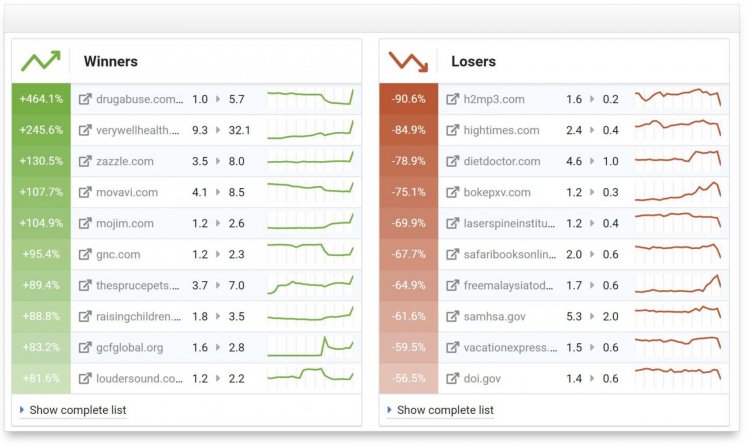
    Dr. Axe was one of the update’s victims, claiming a massive portion of his organic traffic.

    google ability to access trust

    (Image Source)

    Many other online businesses have experienced the same drop – or an equally drastic increase in traffic.

    (Image Source)

    Why the change?

    What is causing some well-fed SEO rankings to slide down the title tags? And what is causing some previously poor-ranked websites to find their place among the high-traffic drivers?

    The answer lies in a single word and, at the same time, an entire manuscript of complexity.

    That word is trust.

    Google Algorithm Update: What has changed?

    Since the days of yore, Google has worked to build an algorithm that ranks websites based on how much online consumers trust those websites. This is why small, seemingly insignificant factors, such as bounce rate, time-on-page, backlinks, and social signals have played a long-time impact on the rankings of websites in Google.

    All of those algorithm clauses are an effort on the part of Google to create a search-space for the people, by the people – one where only the helpful, the authentic, and the trustworthy survive.

    These last changes (made on September 27th and thought to be modifications to Google’s August 1st Medic Update) have only increased the fervor with which Google is empowering trustworthy websites over untrustworthy ones.

    In fact, remember our friend Dr. Axe?

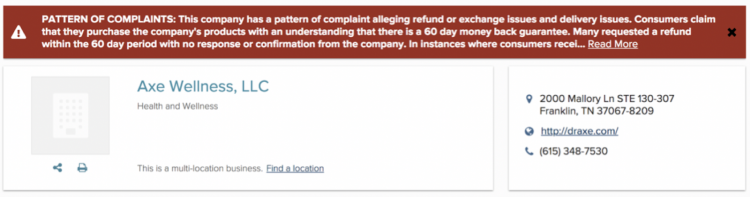
    Before his massive drop in traffic, this warning was sitting on his website…

    According to Marie Haynes – a search engine consulting company – many other websites that experienced a significant drop in organic traffic after September 27th had similar warnings.

    Okay – so Google’s cares more about how trustworthy your website and your business are than it ever has before…

    But that leaves a lot of questions…

    What is trust in Google’s eyes?

    How do you build a “trustworthy” online business?

    What might you be doing that would deem your website untrustworthy?

    Here’s what we know…

    The truth is, we don’t know much. From Google’s base, not much has been said. But the online world is running rampant with correlations and conjecture.

    We know that Google cares a lot about how much other websites and visitors to your website trust you. But, more importantly, we know that the below elements are likely contributors to whether Google trusts you or not…

    Actions that Build Trust with Google

    1. Responding to comments/reviews/conversations about your website and/or business with patience and dignity – Google seems to be giving more merit to online companies that people are talking bout with a positive tone. And they also seem to like when you – the business – engage with those comments, whether positive or negative, in a dignified and gentle manner.
    2. Being a true authority in your niche – The more that people quote you, talk about you, and mention you in their own online writing – whether comments, articles, or video transcripts, the more that Google will view you as an authority in your industry, ranking you better.
    3. Having easy-to-access contact info – Contact info that’s easy to access on your website tells Google that you’re not afraid of your customers contact you and that you’re ready to help them if they do. Don’t hide your contact information or Google might rank you lower.
    4. Having SSL on your website – SSL increases the security of your website and, thus, how much Google trusts you with its cherished users. Fortunately, all Carrot have free access to SSL on their websites.
    5. White hat backlinks to your website – Backlinks are great for your website, but only if you build them the right way. We show you how to grow your backlinks.

    Actions that hurt trust with Google

    1. Ignoring negative comments or reviews about your business on other websites – Whenever possible, respond to these comments with graciousness rather than ignoring them.
    2. Too many negative reviews – The more negative reviews you have, the more trust-issues Google will have with your website. Avoid bad reviews by answering customer questions as soon as they come in.
    3. Hiding contact info – This makes Google think you’re trying to hide something and you don’t want your customers getting in contact with you. Put your contact information front-and-center and easy to find.
    4. PBNs or other black hat links – While shady link-building strategies might benefit your website rankings in the short term, Google almost always finds out and penalizes the offender. You can learn more about the dangers of black-hat SEO.
    5. Deceiving visitors 
    6. Too many grammatical errors – A few don’t hurt, but too many can hurt trust all around.

    The point?

    Okay – so not a whole lot has changed.

    Google cares about how much online consumers trust your website. But they’ve always cared about that. Now, they just care a bit more, in a different way. Google cares about how much (and how positively or negatively) people are talking about your business online. They also seem to care about how you engage with those comments.

    All of these changes (and more will likely come in the future) are Google’s attempt at gauging how trustworthy – and worthy of being ranked – your website is.

    The ultimate lesson is, do whatever will increase trust with your website visitors and don’t try to deceive Google.

    We’ll keep you updated as more Google algorithm iterations roll out – his us with questions in the comments if you have any!

  • How to use a Wholesale Real Estate Email Template to Automate Follow-up

    How to use a Wholesale Real Estate Email Template to Automate Follow-up

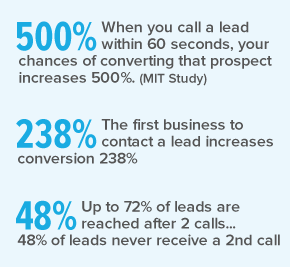
    A real estate email follow-up strategy is integral to any real estate business. But what are enough emails? How often and when should you send them? Should emails be personalized or should you use a wholesale real estate email template?

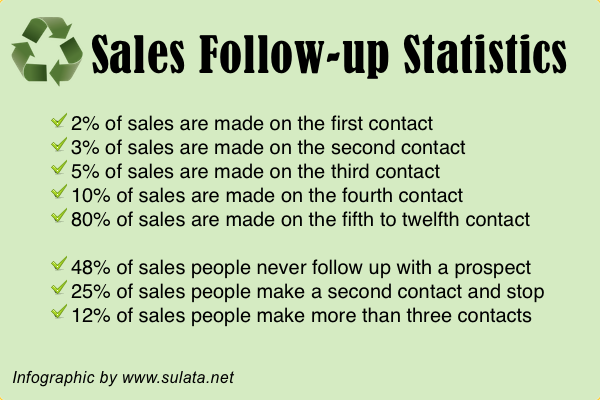
    You know how important it is to follow up with leads. Data suggests…

    48% never follow up on leads

    25% make a second contact and stop

    12% make three contacts and stop

    And, ONLY 10% make more than three contacts

    But…

    2% of sales are made on the first contact

    3% of sales are made on the second contact

    5% of sales are made on the third contact

    10% of sales are made on the fourth contact

    80% of sales are made on the fifth to twelfth contact

    Email follow-up takes time and energy. You’re not just following up with the motivated leads; you’re following up with all the leads – the good and the bad.

    The good makes you money. The bad wastes your time.

    While 80% of sales are closed on the 5th to 12th contact, if you’re running a semi-successful business, you don’t have time for that much email-typing or cold-calling action.

    Of course, that consistent follow-up is still vital…

    The stats remain the same, and your business’s success rides on those stats.

    Since you don’t have mind-reading software to divide the tire-kickers from the motivated sellers, you can’t afford to miss following up with any of your leads…

    But you also don’t have the time to do it manually…

    This is why you should plug these 5 (remember, 5 is the game-changing number of follow-ups) wholesale real estate email templates into your CRM and automate what you can.

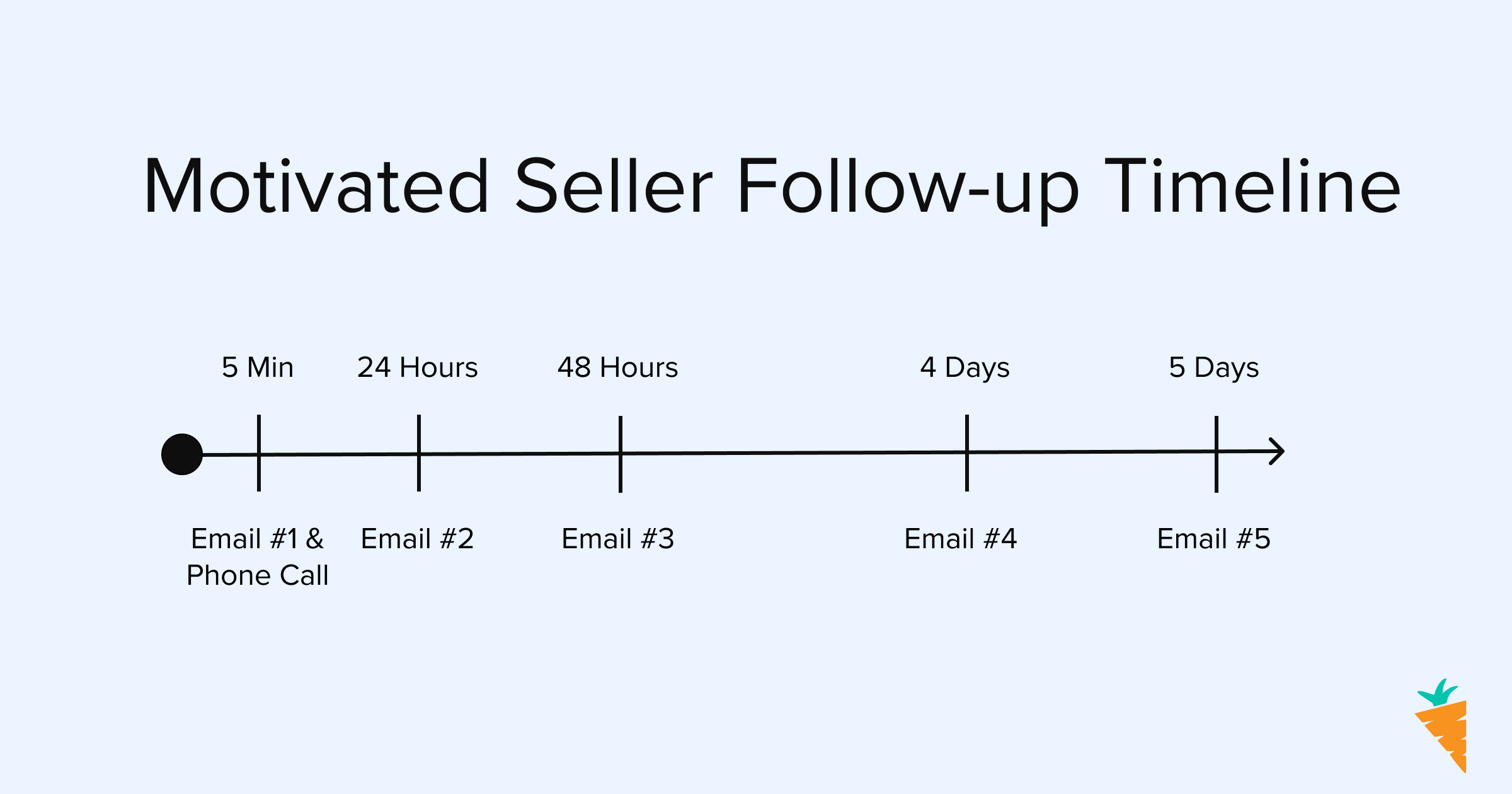
    Motivated Seller Follow-up Timeline

    CARROT PICKED RELATED CONTENT: 6 Simple (but powerful) Questions A Six Figure Per Month Wholesaler Asks Motivated House Sellers

    How to Use a Wholesale Real Estate Email Template to Automate Motivated Seller Follow-up

    1st Follow Up – 5 Minutes After Contact

    Would you try to start a fire with wet wood?

    Well, you might…

    But it wouldn’t go very well.

    You’d be better off starting the fire when the wood is dry. Similar to your follow-up strategy, you’re far more likely to have a meaningful conversation with your lead if you follow up fast – when the lead is most interested in what you have to offer.

    Here’s how RJ Bates – one of Carrot’s top-performing investors – puts it.

    Following RJ’s advice, I recommend following up by phone for your first follow-up and email. You can automate the wholesale real estate email template (below) and steal RJ’s 5-minute rule to create a system for the phone follow-up.

    Also, if you’re a Carrot member, you can use our SMS system to receive a text message notification when you receive a lead on your website.

    Here’s your first motivated seller follow-up email template:

    Subject: Need to sell fast? 

    Hey, [name]!

    I’m glad you contacted us about selling your home fast. We’ve provided many people just like you with a fair cash offer on their home to help them get out of debt, ditch a distressed property, or remove the stress of trying to find a buyer.

    We’d love to do the same for you.

    I’ll be giving you a call to discuss this further at the phone number you provided! Looking forward to talking with you :)

    Best,

    [Name]

    2nd Follow Up – 24 Hours After Contact

    Okay – after calling your prospect and sending the first email, the rest of these emails should only be sent if 1) you couldn’t get ahold of the prospect on the phone or 2) you did get ahold of them, but they were hesitant about moving forward with you.

    In other words, follow-up emails 2-5 are only for prospects that don’t take the leap, and sellers who decide to work with you should be removed from these emails at whichever point they make that decision.

    An easy way to automate this is to have a secondary form on your website where you only have people who have decided to work with you (or you can fill it out for them by asking some questions over the phone). Once submitted, that form connects to your CRM and drip sequence, pushing the seller out of this automated follow-up sequence and into another category.

    For those leads that have been cold-shouldering you, though, here’s your second email.

    Subject: Still need to sell your house fast? 

    Hey [name],

    I would love to help you get out of your current stressful situation. I’ve worked with tons of home sellers in your exact position and saved them from foreclosure, crippling debt, and a giant headache of trying to find a buyer for their home.

    Here’s what one person said about me:

    [Testimonial]

    Plus, I’m willing to buy homes in literally any condition.

    Your house completely trashed?

    Don’t worry – I’m here to help. Actually, that’s my specialty. :)

    Anyways, if you’re still interested, you can contact me at and we can chat about this further.

    Best,

    [Name]

    3rd Follow Up – 48 Hours After Contact

    Subject: Are you busy? 

    I know that life gets busy…

    Trying to find a buyer isn’t the only stressful part about needing to sell your house fast.

    There’s the clean-up…

    The mementos…

    The bank…

    The relationships…

    Potential bankruptcy…

    Foreclosure…

    I get it because I’ve worked with tons of people just like you.

    And while I know you’re busy with a million other things, I can usually close on houses just like yours in [number of days or weeks] – completely eliminating at least one of those stressful things in your life and putting some immediate cash in your pocket.

    Interested?

    I’m just a phone call away –

    Best,

    [Name]

    4th Follow Up – 96 Hours After Contact

    Subject: Maybe I should give up…

    Look…

    It’s possible that you want me to stop contacting you, that you no longer need to sell your house, and that you have absolutely no interest in working with me…

    Heck, maybe I just can’t take a hint…

    But I’d really like to help you out.

    I know what it’s like to be in a high-stress situation without a clear way out – bills, banks, and relatives looming.

    Fortunately, I also know how to get people just like you out of those situations.

    Here’s what one of my sellers recently said about their experience with me:

    [Testimonial]

    Maybe you’ll be next?

    You can reach me here at any time of day –

    Best,

    [Name]

    5th Follow Up – 120 Hours After Contact

    This final follow up should include a phone call since it’s your last chance at converting the prospect.

    Subject: I’ll stop contacting you…

    Since I haven’t received a response from you over the past week, I’m forced to assume that you have no interest in working with me.

    If it’s because you already sold your house and found a way out of your proverbial escape room, then that’s amazing and I wish you the best! Please accept my most sincere regards.

    If, though, you’re still in need of help to escape…

    Foreclosure…

    Crippling debt…

    House clean-up…

    Looming bankruptcy…

    Then give me a call –

    This is the last time I’ll contact you, but I’m always just a phone call away if you need help.

    Wishing you the best,

    [Name]

    Conclusion

    What’s more undeniable than the converting power of following up with leads?

    The time and energy it takes to do so…

    You don’t have the time to sit at your computer, typing and sending follow-up emails all day.

    This is why you should use the above wholesale real estate email template (tweak them as needed) to automate your email follow up and snag the 80% of conversion that only happens when you contact prospects at least 5 times.

  • Not Getting Leads on Carrot’s Core Plan? This is Why and How to Fix It

    Not Getting Leads on Carrot’s Core Plan? This is Why and How to Fix It

    Carrot’s $69 per month Core plan does many things right…

    It gives you a tried-and-tested high-converting Carrot website, several custom SEO gadgets, and even a taste for our campaign tracking software.

    And that collection of goodies works exceptionally well…

    In the right market.

    If you’re in a market where competition is low and you only want to do 1-2 deals every few months, then our Core plan is great for your side-hustle business.

    If, however, you’re in a competitive market and you’re trying to grow a thriving, successful 3, 4, or 5+ deal-per-month business, then the truth is…

    You’ll be disappointed by our Core plan’s performance…

    When we created our Core plan, we invented it for the starting investor in a low competition market. Unfortunately, many of you – in high-competition markets with ambitious business-growth goals – are signed up for this plan…

    And you’re not getting leads you expected…

    Why?

    Well, there are 4 reasons, in particular.

    1. Carrot’s Core plan doesn’t offer monthly blog content packs…

    I don’t need monthly blog content, you think to yourself, I already have a high-converting Carrot site… what difference will blog posts make?

    The answer is simple.

    Every piece of content that we deliver to our customers is optimized to rank for high-value keyword phrases in search engines. Which means that each piece of content gives your website a new opportunity to rank in Google and drive traffic to your website.

    According to Neil Patel, across industries, “Year-over-year growth in unique site traffic is 7.8x higher for content marketing leaders compared to followers (19.7% vs 2.5%).”

    More content = more traffic.

    But it doesn’t just mean more traffic. It also means more leads in less time and with less work. In fact, having content on your website builds trust with prospects and solidifies that you’re an expert in your market.

    (Image Source)

    And while content marketing isn’t all that important when running a side-hustle business in a low competition market, it’s absolutely paramount for ambitious business goals in competitive markets.

    Now, you could blog every week (4 blog posts per month) and assuming that each blog posts takes you about 4 hours, that’s 16 hours of your time every month for just 4 blog posts.

    Or you could hire a private writer to do it for you and pay at least $50/article. If you want to do 4 articles every month, that’ll cost you $200 for not much SEO impact.

    Orrrr you could upgrade your Carrot plan and get more bang for your buck – our Content Pro plan offers 12 blog posts every single month and our Advanced Marketer plan offers 12 Content Pro blog posts plus 12 Premium blog posts every month… and you only pay $50 or $100 more per month than you’re paying right now.


    Upgrade your Plan to Automate Content Marketing and Increase Website Traffic and Leads 

    *Not a Carrot Member? Sign up Today!*

    2. Carrot’s Core plan doesn’t offer weekly coaching calls…

    What can a coach teach you that you don’t already know?

    Do you really need a coach?

    The answer is yes.

    Regardless of where you’re at in your business, what you’re trying to do, or how ambitious your goals are, you need a coach. Everyone does.

    Why?

    Because having a coach helps you grow. If you keep doing what you’re doing and thinking the way you think, how will you ever grow?

    The answer is… you won’t.

    You’ll stay where you are right now.

    Consider, for instance, the average results of people who hire a life coach…

    (Image Source)

    Are you happy with where you’re at right now?

    If not, you need a coach.

    But, what exactly are coaches good for? Here’s just a few things…

    1. Helping you push through discouraging situations.
    2. Helping you understand complex systems and processes.
    3. Helping you hit your ambitious goals.
    4. Helping you adopt the mindset of a high-performer.
    5. Crushing fears.
    6. And a whole lot more…

    A coach is someone who’s been there, done that and knows how to help you get through the things you’re going through – one step at a time.

    Usually, a coach would cost you several thousands of dollars per month (a good one, at least). But we offer you live weekly coaching as a part of our Content Pro plan ($100/month) and Advanced Marketer plan ($199/month).

    You can join the weekly call and ask questions or just watch the recording later when it’s most convenient.

    Here’s a snippet of inspiration from one of our most recent coaching calls…


    Upgrade Now and Leverage Carrot’s LIVE Weekly Coaching Calls

    *Not a Carrot Member? Sign up Today!*

    3. Carrot’s Core plan doesn’t utilize our keyword ranking tracker…

    More than likely, you joined Carrot because you want to generate more online leads and drive more traffic to your website passively.

    If you’re on the Core plan in a competitive market, though, then you probably haven’t seen much of that happening…

    And you’re discouraged.

    Because SEO does pack a serious potential punch for your business.

    (Image Source)

    In fact, Tyler Ford (and many of our other members) claim that SEO-leads are much higher quality than outbound marketing leads…

    Problem is, in a competitive market, everyone is trying to cut their piece of the online lead generation pie. And if you’re not fighting hard enough with consistent blog content and well-optimized pages, then you’re getting the crumbs (if you’re lucky).

    You need two things:

    1. Consistent blog content that’s optimized for search engines.
    2. The ability to track your rankings and better understand how well your website is performing in search engines.

    Unfortunately, our Core plan offers neither of those things.

    Of course, you could create your own blog content and buy another piece of software to track your keyword rankings…

    But that’ll take more time and cost more money than it’s worth.

    The better option is to upgrade to either our Content Pro plan (12 blog posts per month & 3 SEO keyword rankings per site) or our Advanced Marketer plan (24 blog posts per month in total & 20 SEO keyword rankings per site) where you’ll only pay $50 or $100 more per month than you’re paying right now.


    Upgrade Now and Track your Website’s SEO Progress to Crush the Competition 

    *Not a Carrot Member? Sign up Today!*

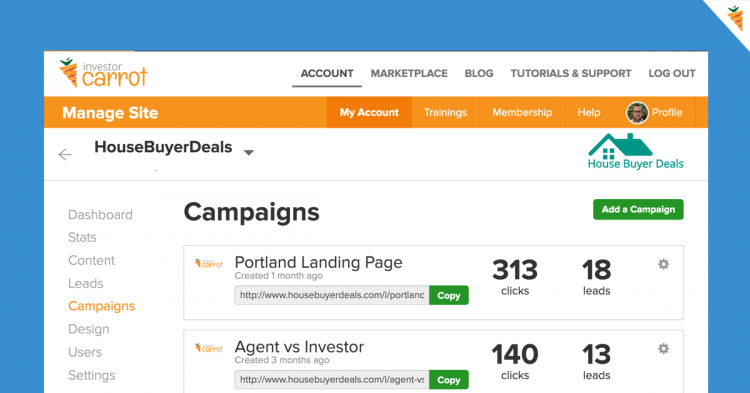
    4. Carrot’s Core plan only allows for 2 campaign tracking links…

    Many real estate investors have wasted thousands of dollars on paid advertising. It might be Facebook ads, AdWords, or Bing, but the truth is the same – money, meet trash can.

    Of course, that doesn’t have to be the case…

    But it often is.

    What makes the difference?

    Well, I could write an entire article about the difference between a successful Facebook ads campaign and an unsuccessful one, but the article would end with an all-important section: How to track your Facebook ad campaigns and adjust accordingly.

    Because the reality is, there’s no secret formula you can use to run a successful paid advertising campaign. Each market is different, each lead is different, and each business is different.

    You need an advertising campaign that works for your business. 

    And the only way to figure out what works for your business is to test your paid advertising campaigns as you run them and adjust accordingly.

    Here’s how RJ Bates explains it after making $37,000 because of Carrot’s campaign tracking links…

    And while Carrot’s Core plan let’s you get a taste with access to 2 campaign tracking links, our Content Pro plan and Advanced Marketer plan give you access to 15 campaign tracking links and an unlimited amount of campaign tracking links (respectively), helping you save money and make the most of your paid advertising efforts.


    Upgrade Now and Leverage Carrot’s Campaign Tracking Links to Stop Losing Money to Underperforming Ads

    *Not a Carrot Member? Sign up Today!*

    Conclusion

    If you’re on the Carrot Core plan and you’re discouraged about your Carrot website and your online lead generation, chances are, you need to upgrade your plan.

    On the Core plan, you’re missing out on many features that make thousands of Carrot members successful. As you saw in the case study videos above, many of them wouldn’t be successful without these features.

    And while our Core plan can work wonders for investors and agents with small-business goals in low-competition markets…

    It’s not going to work wonders for the rest of you.

    For the cost of one nice dinner more per month ($30) you can upgrade your plan to Content Pro. For the cost of two nice dinners more ($100), you can get the best that Carrot has to offer.

    We believe in your business…

    Do you?


    Upgrade Now and Build the Business you’ve Been Meaning to Build All Along

    *Not a Carrot Member? Sign up Today!*
  • The 6 Rules of High-converting Real Estate Landing Pages

    The 6 Rules of High-converting Real Estate Landing Pages

    Real Estate Landing Pages Optimization

    Your real estate landing pages could be costing you $10,000, $20,000, $50,000. That’s only one lost deal.

    Relative to other popular 21st century industries (e-commerce, info product selling, affiliate marketing, etc) real estate is unforgiving. In many of those other industries, one lost deal might amount to $10 or $1,000 lost. But in real estate, players tackle each other on the pavement…

    Without knee pads…

    Or helmets…

    Or teeth guards…

    You get the point – one lost deal hurts. And it hurts bad.

    But, that also means that one gained deal has an equally massive impact. And the fewer deals you lose to savvy market competitors, the more deals you gain.

    In other words, you can turn that lost-deal dilemma into massive cash flow by transforming your real estate landing pages from an underperforming duds into a visitor-converting machine.

    This is exactly why I’m going to show you how to optimize your real estate landing pages for conversion.

    Follow these rules in your own market.

    But first, a quick note about why your website isn’t converting as you want it to (the answer is simpler than you think).

    What are Real Estate Landing Pages?

    A real estate landing page is a standalone page, created specifically for a marketing campaign. It’s where a buyer, seller, or partner “lands” after they click on a link in ads, emails, or possibly organic SEO rankings.

    The anatomy of a real estate landing page is pretty simple.  You might be thinking:

    • Is there a specific design that always works the best?
    • How can we tell if a landing page is really working well?
    • What do I use to build my own real estate lead pages?

    First, no, there isn’t a specific design that always works the best.  What works really well for your real estate business and your market may not work as well as another design (or message) on another real estate website.  But, there are elements that usually work well.

    1. A clear and concise headline at the top of the page
    2. A short description of what they’re about to get in exchange for their email address
    3. A few bullet points listing out benefits of what they’ll get when they “opt-in”
    4. An opt-in (a box where people can put their information in and submit it to you)

    Really, those are the only elements that are extremely important and pretty much are needed on any landing page. Yes, you can use pictures and videos. Definitely test the video versus just the text with no video because you might find the one with just the text converts works better.

    Are Your Real Estate Landing Pages Missing the Mark?

    Someone arrives on your website…

    Let’s imagine that they’re your ideal client.

    They need the service you offer, they’re motivated, and they’re just looking for the right person to work with. After all, selling or buying a home is a big decision and they don’t want to make a mistake.

    So they’re browsing around your website.

    One of two things will happen in the end.

    1. They’ll leave your website and find someone else to work with.
    2. They’ll work with you.

    Those are the only two options.

    Assuming that this person needs your service, they’re going to work with someone.

    Only one question remains to be answered, then…

    Will that someone be you?

    Or will it be your competitor?

    How will that person make a decision?

    Well, someone who needs your service – a motivated buyer or seller – is going to ask only a single question:

    Why should I work with you?

    That is the same question that builds empires…

    And topples monopolies…

    For instance, as Forbes reports

    “45% [of consumers] said they have found something in an online search that made them decide not to do business with the person.”

    If your business never gains trust, it’ll never get off the ground. If your business gains trust and then loses it, it’ll die a swift death.

    But if your business gains trust and keeps it, the competition won’t stand a chance.

    Not only will word-of-mouth springboard your business into next-level revenue, but online case studies and testimonials will create the same buzzing effect online – where growth potential is multiplied many times over.

    So why aren’t people working with you?

    If you’re getting website traffic (whether paid or through SEO) and those visitors rarely convert, then this is going to hurt…

    People don’t trust you.

    Sure – there’s a small chance that you’re attracting the wrong audience – that you’re not attracting your target market. If that’s the case, then check out our article about real estate marketing and how you can drive the right traffic.

    More than likely, though, you’re having a different problem.

    Namely, website visitors don’t trust you. They spend time browsing around your website and decide internally, “I’m not convinced.”

    The good news, though, is you’re not doomed to repeat that trust-killing mistake over and over again.

    There are tried-and-proven ways to build more trust, faster on any landing page.

    6 ways, to be exact…

    The 6 Rules of High-converting Real Estate Landing Pages

    Rule Number 1 – Write an “I Have to Read More” Headline

    Copyblogger reports,

    “On average, 8 out of 10 people will read headline copy, but only 2 out of 10 will read the rest.”

    If you’re going to convince someone to work with you, then you have got to start with a compelling headline. It’s the first thing website visitors read and it might be the last thing they read (especially if it sucks).

    But, what constitutes a “good” headline?

    Well, of course, a headline that makes people read more – that makes them feel like they have to read more.

    To do that, your headline needs two elements.

    1. Ambitious problem-solving offer.
    2. Believable enough that your offer doesn’t sound too good to be true.

    Strike those qualifying chords and visitors will keep reading.

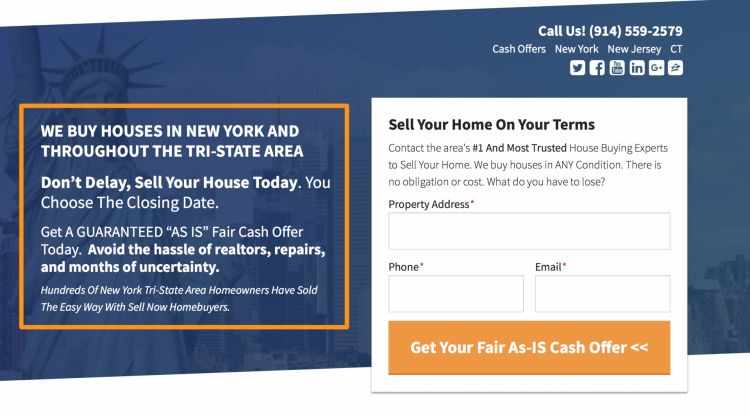
    Consider, as an example, this headline on Dave Brown’s website a top-performing Carrot member. Learn more about Dave’s Carrot success… “Getting More Motivated House Seller Leads Online – David Brown Case Study

    carrot real estate website form

    Phrases like “You choose the closing date” and “Get a guaranteed ‘AS IS’ fair cash offer today” keep the headline ambitious and problem-solving enough to maintain the visitor’s interest, while phrases like “We buy houses in New York and throughout the Tri-state area” and “Hundreds of New York Tri-state area homeowners have sold the easy way with Sell Now Homebuyers” keeps it believable enough that the person will continue reading (or opt-in immediately).

    It keeps interest and avoids the too-good-to-be-true curse of many other landing pages.

    We do the same thing on our website.

    Ambitious problem-solving: “Stop losing leads” and “Our real estate investor websites drive more qualified leads than any other platform.”

    Believability: “Our members generated 60,088 real estate leads last month”

    Don’t breeze by your headline without thinking much about it.

    This is the most important part of your entire landing page. So make sure you include these two critical elements: ambitious problem-solving and believability.

    Rule Number 2 – An Iconic Local Video or Image

    Put yourself in the shoes of your target market for a moment.

    Imagine that you type into Google, “Sell my house fast in Western Oregon.”

    You click the first result and browse through the landing page. But something odd catches your eye…

    There are pictures of palm trees…

    And you know – being from Oregon – that there aren’t many palm trees here.

    Is this person even from Oregon? you think to yourself.

    Trust. Dead.

    Well, the same thing can happen on your website, even if it’s not as big a mistake as putting palm tree pictures on an Oregon-based real estate website.

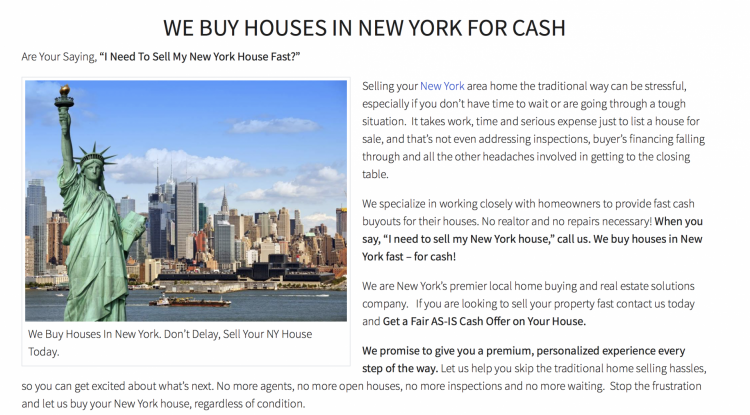
    Something as simple as pictures that are irrelevant or unfamiliar to your target market can kill trust. This is why, for every city, you operate in, set up a new landing page with market-specific sales copy, images, and videos.

    This is exactly what Dave Brown does on his website…

    real estate investor website body content

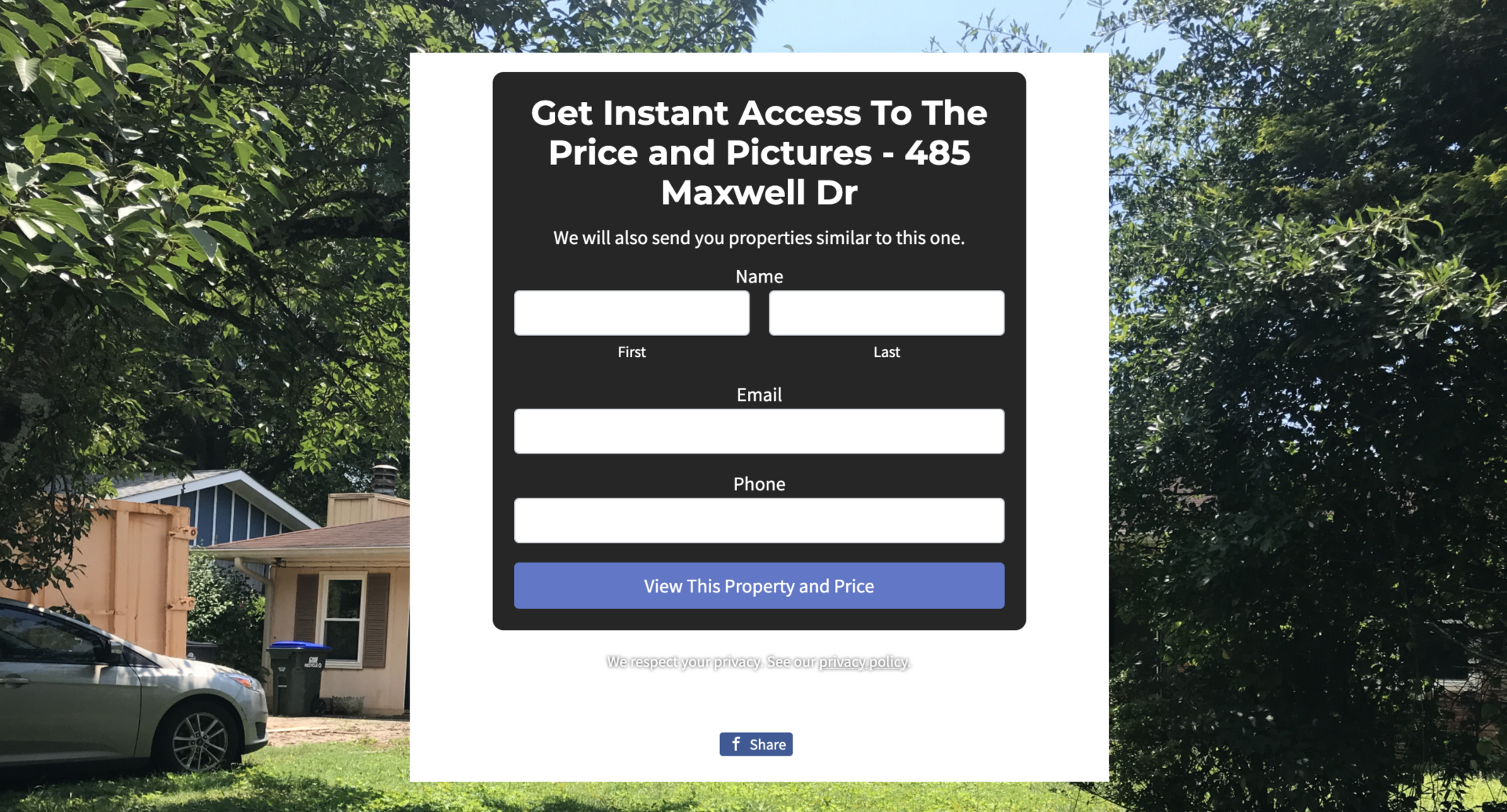
    Or, here’s and real estate listing example. They use an image of the actual property as the background…

    Even if you don’t live in the area, you operate in it.

    And when people arrive on your website, they want to know that you’re familiar with the local market and capable of helping them in their specific situation.

    City-specific images, videos, and landing page copy build far more trust than their vague or outright irrelevant counterparts.

    Rule Number 3 – Sales Copy that Won’t Let the Reader Stop Reading

    Your headline isn’t the only line that should make your visitor keep reading.

    All of your sales copy should be like a slippery slope that people feel they have to keep sliding down. Each line leads to the next like meal cuisine at an Italian restaurant.

    You just keep wanting more.

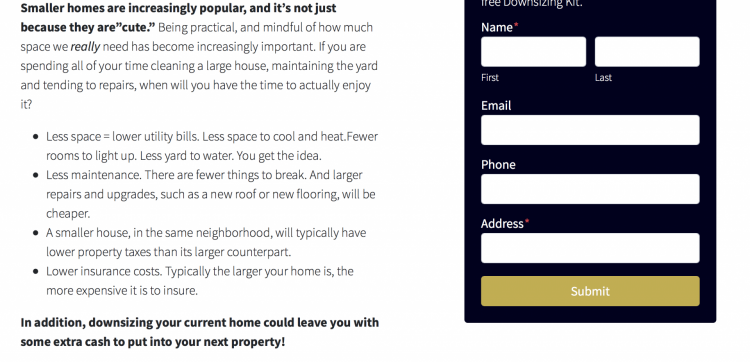
    Here’s what this looks like on Home Downsizing Solution’s (another Carrot member) website:

    Each phrase leaves the reader with a question… which naturally guides them into the following sentence… which then does the same thing. So on and so forth.

    Before the reader knows it, they’ve read all of your sales copy and they’re convinced to work with you.

    If you’re writing the words on your landing page and you start to get bored, so will your reader.

    Change it up – use a surprising word or phrase, use a funny metaphor, or ask a compelling question.

    Whatever you do, don’t let the website visitor lose interest.

    Rule Number 4 – Big-promise Bullet Points

    Everyone loves bullet points. In fact, a website’s visitors’ eyes tend to spring right to these helpful nuggets the moment they’re on screen.

    (Image Source)

    Why?

    Because, traditionally, bullet points tell us exactly what we’re going to get and that’s really what we all want to know when we’re going to open our wallets for something…

    Okay okay… but what am I going to get?

    Well, your target market is wondering the same thing.

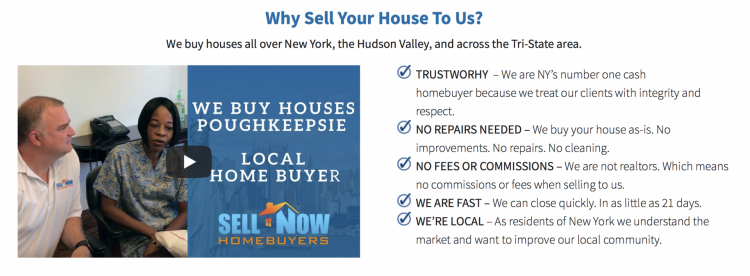
    This is why bullet points like this are so darn effective…

    And this…

    These easy-to-add (but crazy effective) black dots and blue checkmarks build massive credibility and make ambitious promises.

    Remember, people, visit your website because they need a problem solved. And a bulleted list is one of the best ways to tell them how you’re going to solve their problem and why they should work with you.

    Rule Number 5 – Proof of Concept

    With a bulleted list, a compelling headline, and some unstoppable sales copy, you’ve made some big promises. Promises that – so thinks your target market – won’t be easy to keep.

    Which is where proof of concept comes in.

    You need to prove to your website visitors that the way you work, the promises you make, and the business you’ve created are all worthy of trust.

    How do you do that?

    Well, the best way is by using a past customer testimonial (video is best, but writing will do).

    Consider, as an example, Dave Brown’s case study video… (WATCH)

    Cash Home Buyers in New York - Sell Now Homebuyers Review

    Skip this step at your own risk.

    The truth is… you can make all the ambitious promises in the world, but if you don’t back up those claims with cold, hard facts, people won’t believe you.

    People are bombarded by more than 4,000 ads per day, which puts your target market’s trust for marketers at an all-time low. Everyone is making big promises and few people are keeping those promises.

    Put another way, proof of concept is likely the most vital part of every single landing page you’ll ever create (in conjunction with a great headline).

    Don’t skip this step.

    Rule Number 6 – Include a Clear and Low-risk CTA

    According to Protocol 80, Inc, 90% of people who read your headline also read your CTA (call-to-action)…

    Because here’s the thing: after people know what you’re offering, they want to know what to do.

    How do they take action? If they want what you have, how do they dive right in?

    And a low, or no, risk CTA is exactly what they’re looking for. They don’t want to spend hundreds of dollars. They want to get started without pulling out their wallets and probably without even giving you a call…

    Baby steps…

    That’s why, at Carrot, we recommend a CTA that is something like this…

    Real Estate Landing Pages Hero Section

    When someone fills this out, our system will send a lead notification via SMS text message straight to your phone. Then you can call the person and close the deal.

    But you won’t be able to close much of anything if people land on your website, learn to trust you, and don’t opt-in because there isn’t a clear and risk-free CTA.

    You can gain people’s trust all day long…

    But that trust isn’t gonna make you any money until you ask those committed prospects to take action in your favor.

    Conclusion

    One, two, three lost deals…

    It all hurts in the same way that gambling away $50,000 hurts…

    Except you’re not gambling – you’re running a business.

    And fortunately, running a business is far more predictable than visiting the casino. At least, it should be.

    Remember, selling is science. And all you have to do to give your website a selling boost is add these 6 trust-building elements to each landing page, whether you’re a Carrot member or not…

    But if you’re not…

    We can get you moving in the right direction by giving you a high-converting website right now…

  • Are you Sabotaging your Real Estate Website’s Rankings With These 3 Black Hat SEO No-no’s?

    Are you Sabotaging your Real Estate Website’s Rankings With These 3 Black Hat SEO No-no’s?

    You’re trying to climb through the rankings…

    You’re up against market competition and you’re up against the amount of time on your calendar. Still, you’re doing what you can. In the evenings and on the weekends, you’re building backlinks, publishing new content, and creating consistent social signals.

    Thing is, you might be sabotaging your rankings…

    Without even knowing it.

    So, let’s change that.

    If you’re hurting your own rankings unintentionally, you should at least know about it. Plus, I’ll teach you how to strengthen your rankings the un-risky way.

    But first, the dark side…

    What is Black Hat SEO?

    Award-winning HubSpot blog defines black hat SEO as…

    “A practice against search engine guidelines, used to get a site ranking higher in search results. These unethical tactics don’t solve for the searcher and often end in a penalty from search engines. Black hat techniques include keyword stuffing, cloaking, and using private link networks.”

    In other words, black hat SEO is trying to climb through the rankings using tactics that Google has explicitly banned.

    Unfortunately, these black hat SEO tactics are as tempting as they are popular.

    Because they work… until, of course, Papa Google finds out.

    Thennnnn the picture gets a bit more discouraging. More on that later. First, let’s take a minute to chat about some of the most common black hat SEO practices that you might not even know are black hat.

    A Few Examples of Black Hat SEO…

    1. PBNs (Private Blog Networks)

    Look – building backlinks are difficult. It’s time-consuming, expensive, and soul-crushing.

    We all know it.

    Which is exactly why PBNs are so darn tempting…

    These services promise to build backlinks to your website at a remarkably low cost and get your website ranking in no time. They won’t say much about how they’re going to build those backlinks, but the promise of seeing your website on the first page of Google’s results is enough to persuade most of us to enter our credit card information.

    Since they won’t tell you how they build backlinks to your website, though, I will…

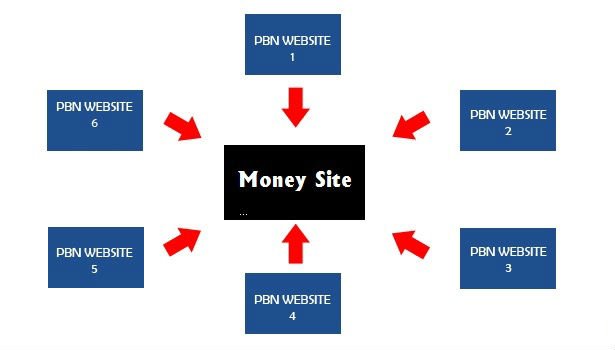
    In a nutshell, they purchase hundreds or thousands of expired/unused domains with a bit of SEO juice build from the previous owners. Then, they go to all of these domains and plug a backlink to your website on each.

    After a bit of time, your website starts to rank and you’re thinking to yourself, “Wow! These guys are awesome!”

    (Image Source)

    Here’s the problem: PBNs cheat the system. Google explicitly says that using a PBN won’t only get the PBN company in trouble, it’ll get your website penalized as well.

    It’ll all be good and fine until Google finds out. And they almost always find out.

    Once they do, your website will take a massive dive in the rankings (or get banned from indexing altogether) – and recovering from that loss will be harder than trying to get a new website ranking (because you’ve lost Google’s trust).

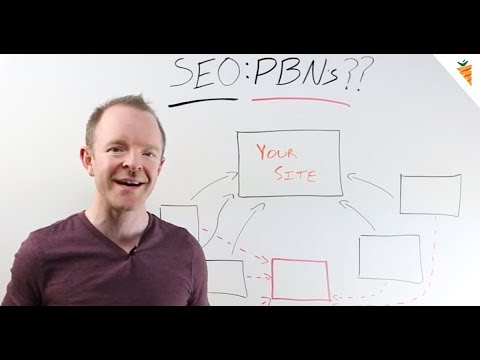
    SEO Private Blog Networks (PBN's): The Pros and Cons

    2. Content Scraping

    Content scraping might not be what you think…

    Here’s a definition from Varvy:

    “Scraping content is taking content from other places on the web and publishing it on your own site. There are many websites that only contain pieces of other websites or stolen content. Many sites will take articles from other websites and publish them as if they were their own, or will copy entire websites.”

    In high school and college, this was called plagiarism.

    Copying and pasting content to your own website as if it’s your own is a big no-no in Google’s eyes. When your website has the same exact content on a page as another website, Google will only rank one of those pages, not both. This is called duplicate content.

    Here’s Moz’s graphical representation of this…

    (Image Source)

    Plus, if you consistently copy and publish content from other websites, up goes your spam score and down go your rankings. This is why, for Carrot members, we recommend you localize and change 25% of the blog post content that we provide you with. That way, you can avoid any duplicate content penalties that Google dishes out.

    Now, though, you probably have another question…

    What if someone does this to your website?

    Will that hurt your own rankings?

    Well, depending on how aggressive they are, it could hurt your rankings. Which is exactly why Google allows you to report spam websites over here.

    3. Keyword Stuffing

    You probably know that targeting the right keywords on your website is critical to ranking in Google. And that’s 100% right – you shouldn’t stop doing that.

    But you should aim for about 2% to 5% exact keyword-phrase density (a 1,000-word article would have 20 to 50 exact matches). Not much lower and not much higher.

    You can also include some LSI keywords in your content to fill in the gaps…

    The reason you want to avoid going much higher than 5% with your exact keyword-phrase density is because doing so flags Google that you’re… well, basically trying too hard.

    And Google equates stuffing lots of exact-match keywords in your content to providing less value for your audience and trying to get some cheap rankings.

    Naturally, Google doesn’t like that and will do the opposite of ranking you well.

    Here’s the canonical truth from Papa Google

    “‘Keyword stuffing’ refers to the practice of loading a webpage with keywords or numbers in an attempt to manipulate a site’s ranking in Google search results. Often these keywords appear in a list or group, or out of context (not as natural prose). Filling pages with keywords or numbers results in a negative user experience, and can harm your site’s ranking. Focus on creating useful, information-rich content that uses keywords appropriately and in context.”

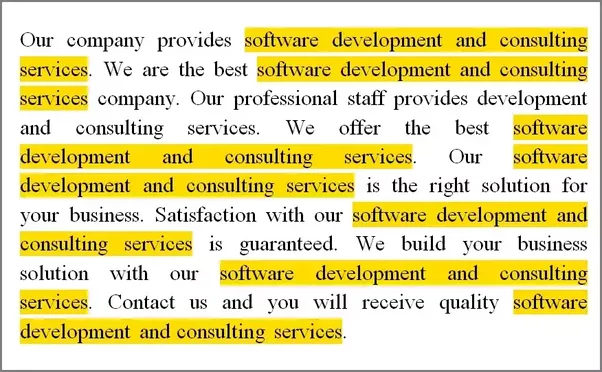
    And here’s an exaggerated example of keyword stuffing in action.

    (Image Source)


    Those are just a few of the common examples of black hat SEO practices – there are more. But you get the point. Anytimeyour try to manipulate your rankings in a way that Google explicitly forbids, you put your website in danger of getting penalized…

    What, though, are the penalties?

    That’s what we’re talking about next…

    What are the risks?

    1. Your SEO Authority Could Spontaneously Plummet

    The penalty to your website for using black hat SEO strategies varies depending on how many times you’ve been penalized and what you’re being penalized for.

    Naturally, the more serious the offense, the more serious the punishment.

    The best case scenario, though, is that your rankings spontaneously plummet.

    This usually means that you got found out and Google is taking actions to encourage you to stop.

    2. Google Could Ban your Website from Indexing Altogether

    This is the worst case scenario, but it happens – especially for repeat offenders.

    The more that you use black hat SEO practices, the more that you get caught, the worst punishment you’re going to receive. Eventually, your website and domain could get banned from Google’s indexing altogether.

    It won’t happen immediately, of course… but why take the risk?

    Especially since there’s a better way…

    Why you Should Focus on White Hat SEO Instead…

    Jokes aside, increasing your rankings with a legit SEO strategy (the opposite of black hat SEO) has absolutely no risk. Sure – it might take longer (6 to 12 months often) but you’re in this business for the long-haul, right? You’re not just here for a month or two, you’re here to stay.

    So take the time to invest in your website and your rankings the right way.

    To help, I discuss 4 time-saving, white-hat ways to build consistent backlinks to your website and increase your rankings the right way in this article

    And while you’re working to increase organic traffic and leads to your website the white-hat way, consider implementing a paid advertising strategy like we discuss in this article to fill your short-term pipeline.

    Finally, if you’re not a Carrot member, then consider signing up to start increasing your rankings today – we’ll provide you with a keyword-optimized website, SEO blog content (if you’re a Carrot Member and subscribe to the Content Tools add-on), and a whole slew of search engine optimization tools you won’t find anywhere else.

    And hit us with questions in the comments if you have any! I know this can be kind of confusing if it’s the first you’re hearing of it, so don’t be shy. :-)

  • RJ Bates Case Study – $2 Million Story and Real Estate Marketing Strategy

    RJ Bates Case Study – $2 Million Story and Real Estate Marketing Strategy

    Football season just ended.

    A ripe 18-year old, RJ Bates woke up to his mom saying, “Football season is over. It’s time for you to go find a job. And I don’t want you to come home until you have one.”

    RJ shot out of bed and went searching. His first place?

    Pizza Hut.

    After begging the manager for a job, he was hired as a delivery person. And making about $100 a day with tips, he felt like the king of the world. He progressed to store manager, eventually buying his own restaurant at 23 years old.

    Then, in 2012, RJ’s niece got diagnosed with Leukemia and his dad passed away – a month before his baby was going to be born.

    That’s when everything changed.

    Watch RJ’s Bates CarrotCast

    RJ’s Unusual Real Estate Marketing Strategy

    Some people are wholesalers…

    Some people are rehabbers…

    Some people are rental owners…

    RJ is whatever his clients need him to be.

    With every lead, he asks the question…

    “How can we make money from this lead?”

    And that might sound like a selfish question to ask, but it’s actually one of the most selfless questions to ask. Because then, RJ doesn’t turn down clients because they need a specific service – he is willing to help them with almost anything they need. Whether that be rehabbing, wholesaling, holding a rental, or even roofing.

    If someone needs help and they have money to pay, then RJ takes advantage of the opportunity.

    Not, though, because it’s all about the deals for him, but because he’s running a business and his goal is to make money. According to him, there’s a massive difference.

    “Aren’t we in business to make money, not complete deals? You could bust out a thousand deals and make no money.”

    All of RJ’s goals are based on profitability… not on the number of deals. And the reason is simple: focusing on the number of deals can quickly turn into a vanity metric. Profitability, on the other hand, always leads to more money and a more successful business.

    Plus, by trying to increase the profitability of each deal rather than just doing lots of deals, you can actually make more money with less work.

    You could, for instance, make $20,000 by doing 3 deals, or you could make that in a single deal by optimizing your sales process and increasing your per-deal profitability.

    Less work. More money.

    How RJ Decides Which Markets to Expand into…

    RJ doesn’t just randomly pick markets to take his business into. The primary factor he uses to determine which market to move into next is if he can build a strategic partnership with someone else there.

    Some wholesalers and rehabbers prefer to build a completely remote business and outsource local tasks to someone in the area, but RJ prefers to have a partner with boots on the ground.

    He looks for other businesses that he can team up with and build something even better than what either person currently has. On his own, he believes he can create something good. With others, he believes he can create something great.

    Once he expands into a new market, he sets realistic expectations for that area. Each place has different cost-per-lead and cost-per-deal. And different marketing strategies work better (or worse) in different markets.

    Today, RJ is in lots of different markets, has a goal of $2 million in profit by the end of the year, and is consistently looking for new partnerships that can help expand his portfolio.

    RJ’s Marketing Strategy

    RJ starts with an ambitious goal. In his own words…

    “I don’t do well if I set small achievable goals. That to me does not excite me. I need to have the large goal because, in my mind, I can see what I need to do to achieve the large goal.”

    His current goal?

    To make $100,000 per month in passive income. If that’s not ambitious, then I don’t know what is. But it’s exactly that kind of goal that keeps RJ motivated.

    In fact, he even said that he’s less likely to complete small goals because they don’t get him fired up – making him more likely to quit when the road gets treacherous.

    Once he sets an ambitious goal, it’s time to start marketing his services.

    Here are his primary marketing strategies…

    1. Direct mail – Even though this is a physical marketing strategy, RJ believes that it ties in directly with digital marketing. When someone receives a mailer, the first thing they do is try to find the website of the business that sent it. If that website isn’t optimized for conversion, then you’ve just paid money to lose leads.
    2. Facebook ads
    3. Instagram Ads
    4. Google Ads

    With all of the digital advertising methods, he uses Carrot’s campaign tracking link system to make sure his ads are performing as he needs them to.

    If they aren’t, he pauses the ad and figures out why it isn’t generating leads. Then he fixes it and tries again. His average cost-per-deal (which varies massively depending on the market) is $3,000 to $4,000. But he has massive profit margins that can support high-cost deals like that.

    Image Credit: Speak2Leads.com

    Also noteworthy is RJ’s five-minute policy, where he shouts “Five minutes!” in the office whenever a lead comes through. That means the team has just five minutes to contact the lead.

    RJ believes that this policy is a big reason for their success…

    Because when people opt-in, they’re probably also opting-in on the competition’s website – or they will soon – and the sooner he follows-up with leads, the better chance that he’ll make the sale.

    RJ has also found that most sales happen not on the first or second contact, but on the 4th or 5th.

    The more that you contact people, the more that they think about you and – somewhat surprisingly – the more likely that they will eventually buy from you.

    Stay top-of-mind and they’ll buy from you once they’re ready.

    Which is why RJ says that “with marketing, there’s no secret sauce. It’s all about consistency.”

    Consistently getting in front of your target market…

    Consistently reminding people that you exist…

    And consistently working to stay top-of-mind for people who are on the fence about your service.

    Over time, that consistency pays off.

    (Image Source)

    What’s your Real Estate Marketing Strategy?

    How are you building your business?

    Are you setting ambitious goals or small goals?

    Are you sticking to one market or moving into many markets?

    Do you have a website optimized for conversion to make the most of all your marketing dollars – online and offline?

    This is RJ’s story. What’s yours?

    Become a Carrot Member Today and Receive your High-converting Website

  • Brand New, Distinct, Carrot Website Design [Hemlock]

    Brand New, Distinct, Carrot Website Design [Hemlock]

    We’re officially introducing a new design for those of you who crave a distinguished, modern (and yes, still high-converting) website.

    Meet Hemlock.

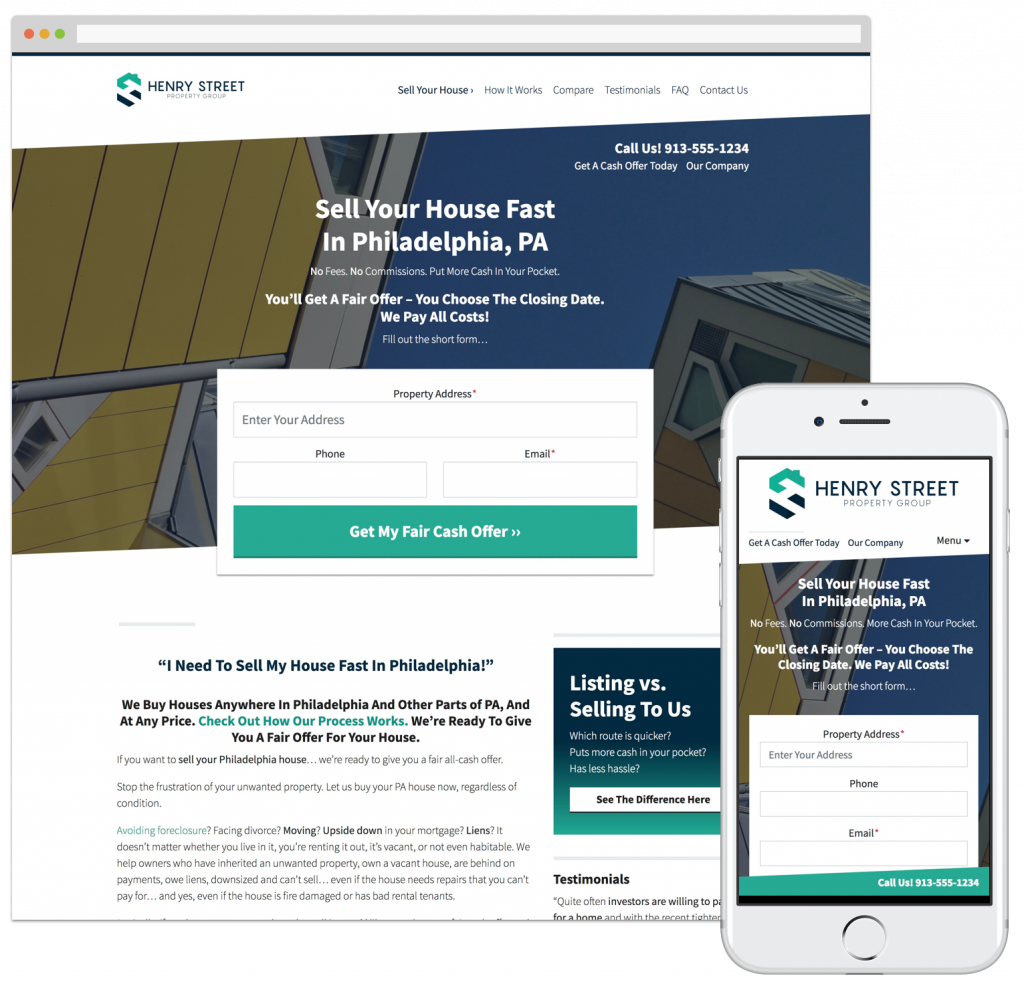
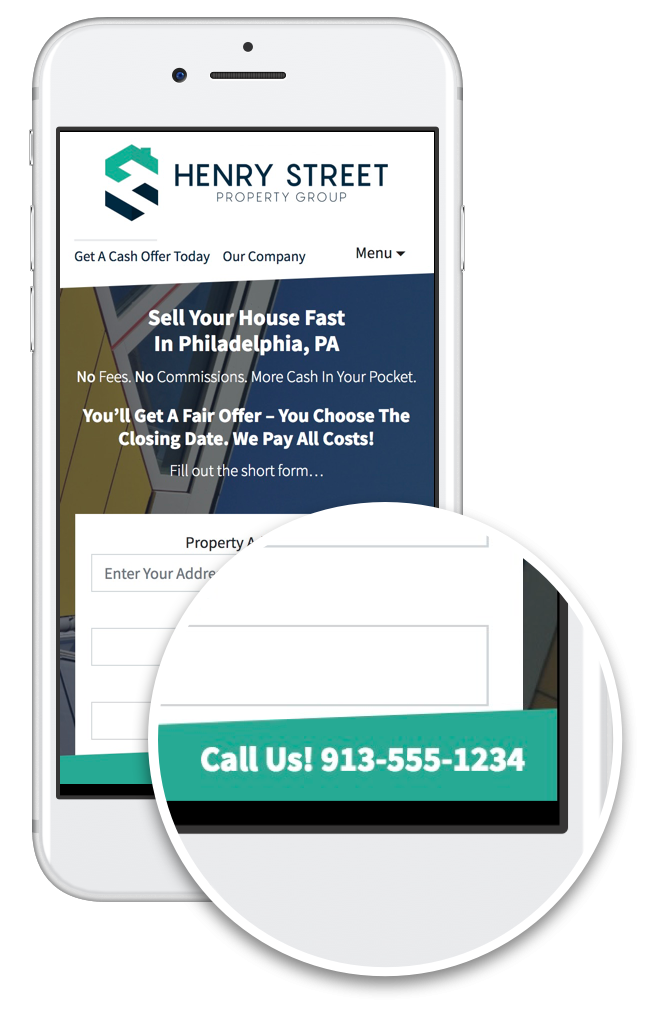
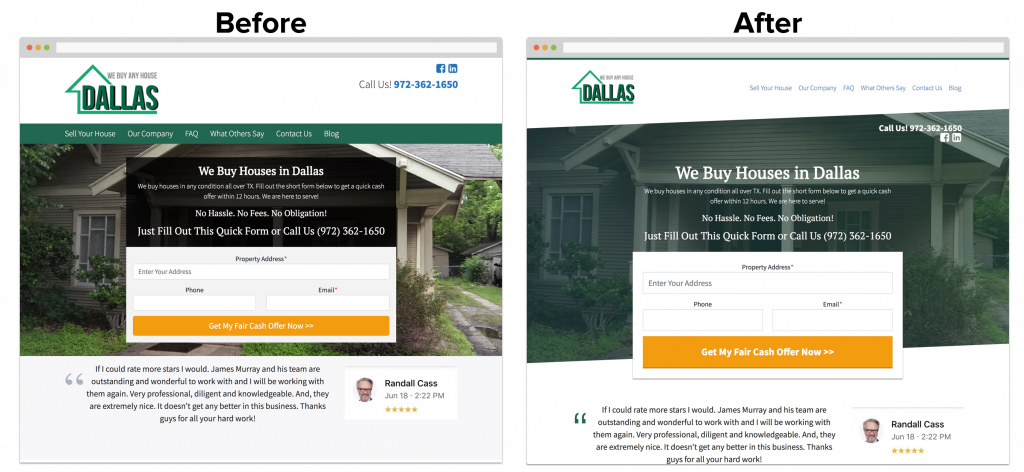
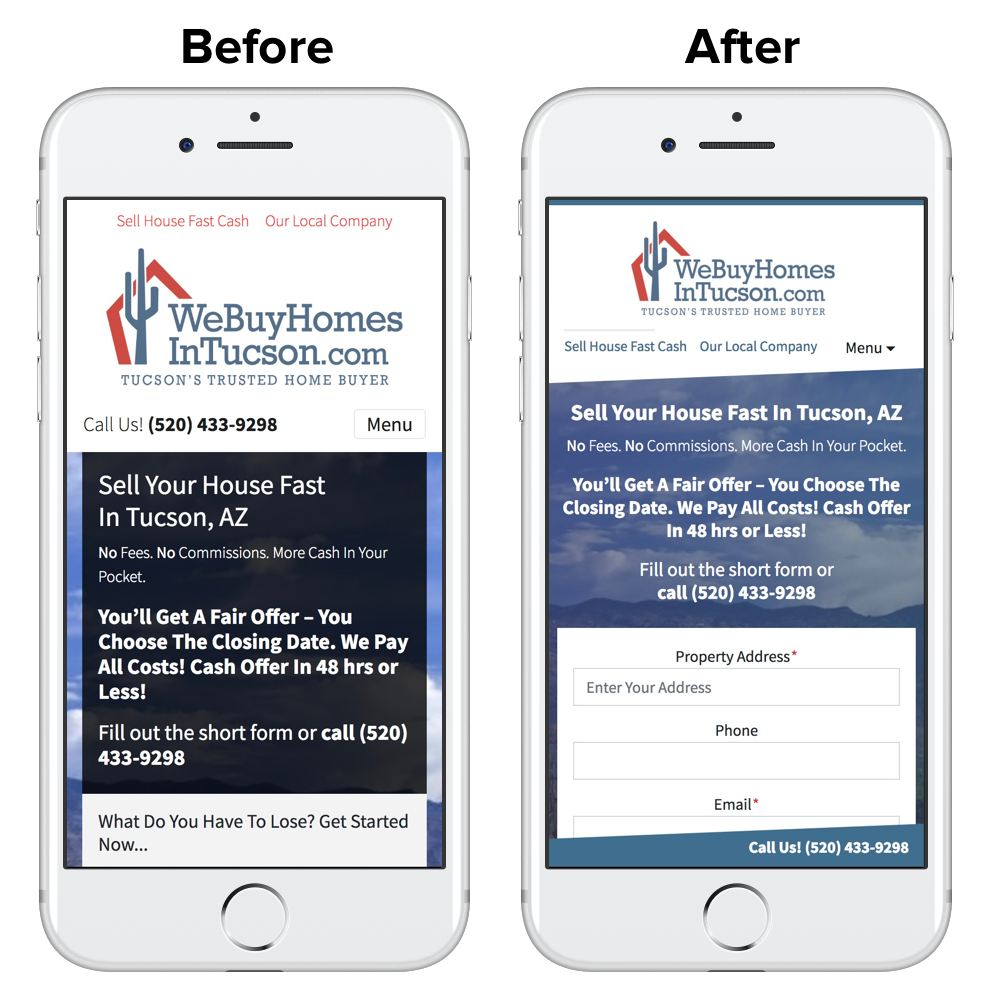
    Here’s what it looks like on mobile – 59% of Carrot member leads come from mobile devices. So we made your phone number front and center to increase mobile visitor conversion rate.

    This website design isn’t just beautiful, it converts with the same principles as all of our other Carrot site designs – better than any other website platform in the industry.

    Now, for a design like this, Website Build Expert estimates that you’d pay upward of $5,000 to $10,000.

    So – the kicker question: How much are we going to charge you?

    It’s included with our Advanced Marketer member’s first access to new site styles!

    Since we want this design to remain a unique and distinguishable theme for high-performing investors and agents, for now it’s only available for our Advanced Marketer members.

    That may sound like a bummer if you’re not yet an Advanced Marketer member. But we want to ensure that high-performing real estate professionals like yourself get exclusive access to the best that Carrot has to offer and that you get to try it out before anyone else.

    And if you aren’t yet an Advanced Marketer member, you can upgrade your plan with just a few clicks…

    Once you’re an Advanced Marketer, you can switch to the Hemlock design just as easily…

    Plus, Hemlock isn’t the only benefit you’ll get with Advanced Marketer. You’ll also get…

    • Track 20 SEO keyword phrase rankings per site
    • 12 Content Pro blog posts and 12 Premium blog posts every single month
    • Quarterly one-on-one strategy calls with Adrian Nez – a top real estate investor
    • 10% off any Carrot marketplace services that you purchase
    • Phone Support
    • And, of course, access to new site styles (like Hemlock) when we release them in the future

    Upgrade to Advanced Marketer and Claim Hemlock Today!


    If you’re already an Advanced Marketer member, then test Hemlock and let us know what you think! If you’re not, then go preview it on your website to see what you think.

    If you like it, consider upgrading so you can have access to Hemlock and other new site styles we release that will further distinguish your website from online clutter – always with the same industry-leading conversion rate that we are known for.

    If you upgrade to Advanced Marketer, you’ll immediately get access to the Hemlock theme and all the other goodies that come with an Advanced Marketer membership.

    Buuuuut, we wanna sweeten the deal for you even more…

    Upgrade to Advanced Marketer and you’ll also get access to an exclusive 4 Week LIVE Traffic + Leads Training Series with Trevor and his marketing team (including Carrot’s experts on Facebook ads, high-level advertising strategy, and Google Ads) at a grand total of $0.

    And it gets better: this is 100% risk-free for you. If you’re not totally thrilled with the Advanced Marketer membership and the 4 Week Traffic + Leads Training Series, you can simply downgrade to your existing plan anytime inside of your account.

    If you’re looking to scale up your leads and stand out from the competition, this Advanced Marketer Upgrade package and training series will help you head into the fall with momentum and clarity.

  • Where We Serve You From & Why We’re Helping You Build the Business of Your Dreams

    Where We Serve You From & Why We’re Helping You Build the Business of Your Dreams

    My name is Mike and I work for the best company in the world…


    Literally.

    We’re all over the place. I’m sitting at a coffee shop in Klamath Falls, Oregon right now.

    Yes. I had the barista take this photo for me.

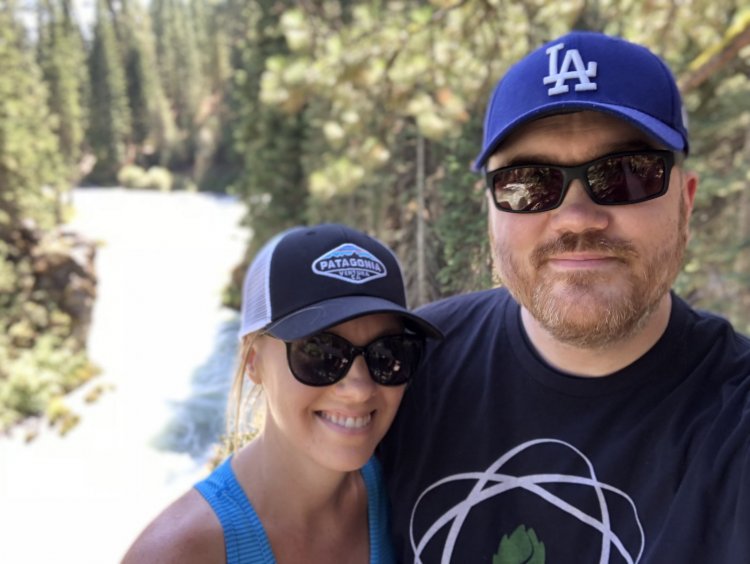
    A few weeks ago, I was cruising through Yellowstone, Montana-side with my wife and one-year old goober as we travelled through four different states in a week to visit family and enjoy new scenery. Here’s us in Parks City, Utah.

    And during the entire month of May, I sat on the beach in Cairns, Australia sipping on a flat white from a local café.

    The best part?

    I didn’t take a single day of paid-time-off during any of those travels. By coordinating time-zone changes, traveling on weekends, and using my friendly international hotspot that works in 120 different countries, I kept working closely with all my amazing Carrot team members.

    And I’m not the only one who takes advantage of our culture where we can travel and work while we’re gone…

    Alex, our tall-and-handsome marketing manager, jet-skiing on the Columbia River with his wife.

    Alex hiking through Glacier National Park with a curious ice-cream cone expression.

    And again, but the ice-cream was gone by this point. If you look really close, you can see Alex taking the selfie in the reflection of his glasses.

    And here’s Dan, a Customer Success Hero, working on his Q2 review this year on a beach in Nice, France.

    Dan again, but this time in Paris.

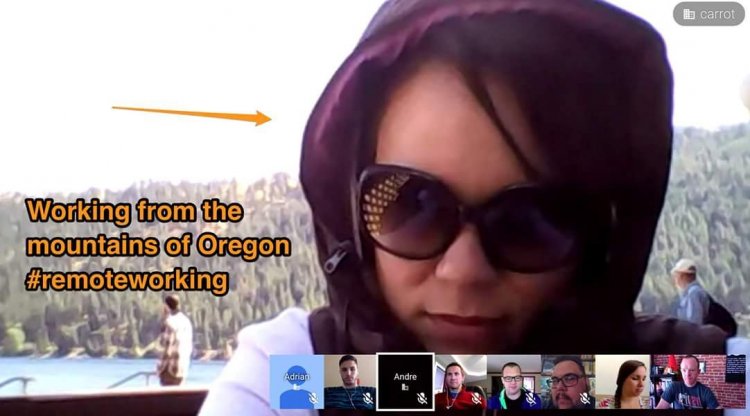
    Andre, another Customer Success Hero, trying to stay warm while on a team call in the 50 degree weather of Northern Oregon’s Wallowa Mountains


    “Flexibility of location and hours is the #1 reason I came to work for the company and I have stayed because of the growth culture. Aaron and I try to have one work-ation a year where we adjust hours for one jam-packed adventure. We have been to New York, Connecticut, Northern Oregon’s Wallowa Mountains, Costa Rica, and miscellaneous beaches of Oregon… Few people get the opportunity to experience that and we were able to experience much of the land and culture along the way.”

    – Andre, Customer Success Hero


    Chris, our General Nerdery champion, visiting train tracks in Rockway Beach, Oregon

    Danni, our Client Services Coordinator, working in Costa Rica under the sunset’s glimmer.

    Josh, our Design Integrator Extraordinaire, taking the middle of the day off to hike Benham Falls during his visit to Sunriver, Oregon.

    Levi, one of our Sales Guys, and his wife in Giant’s Causeway in Northern Ireland.

    Levi again, but this time kissing the Blarney Stone in Ireland from 15 stories in the air with a 150-pound guy who is supposed to “catch” him if he falls. According to legend, those who kiss the Blarney Stone receive the gift of smooth talking. Rumor has it that Levi married his wife shortly after kissing the Blarney Stone. But that rumor is unconfirmed because I just made it up.

    Grady, a Customer Success Hero, and his wife fishing and hiking during their travels to Wyoming.

    Shaun, our Deign Integrator Extraordinaire, on a trip to Disneyland with his family where he worked mornings and evenings.

    Brendan, our Advertising and SEO Coordinator, enjoying Disneyland with his family.


    “Luckily this with the opportunity to work will abroad, I’ve been able to not miss anything that the kids are involved in or things we want to do. Disney, SF, Portland, Eugene, Salem, Sacramento, Corvallis, Coos Bay, Crescent City, Vegas… I’ve been able to cross a couple of bucket list items off and have helped (and will help) Krissy cross a couple more off.”

    – Brendan, Advertising and SEO Coordinator


    Jen, our official Minister for Magic of Random Tasks, and a Carrot Bud enjoying a boat ride through the San Francisco Bay.

    Jen also visited Disneyland with her family recently.


    “Disney trip was a Christmas gift for my kids that I was able to make happen because of a bonus from Carrot and a flexible work schedule.”

    – Jen Delamotte, Minister for Magic of Random Tasks


    Carrot Bud trying to pull the sword from the stone in Disneyland – shocked workers had to replace the sword with a prop shortly after.

    Carrot Bud trying Guinness for the first time.

    Jake, Carrot’s Tech Support Genius, at a concert with some seriously gangsta glasses.

    And of course, our CEO, Trevor Mauch, enjoying the lake with his family.

    Again, Trevor, but this time riding a carousel and holding on to his son for support.

    Yeah. We’ve been all over the place.

    It’s exactly that freedom that makes Carrot such a great place to work – a place where each of us is dedicated to making your business dreams come true. Because when your dreams come true, our dreams come true.

    Where has Carrot allowed you to travel? If we’ve helped you build a business that gives you a similar type of freedom, then leave us a comment and let us know.

    In fact, we’ll send a swag bag to the first 10 people to leave a comment and tell us about a vacation that they were able to take because of the business that Carrot helped them build.

    Either way, cheers to your business, your financial and personal freedom, and the business that we know you’re capable of building – even if you’re not there yet.

    You’ll get there. And we’ll help

    Yes. Those are one liter each (it was Brendan’s idea).


    Become a Carrot member today and start building the business that could change your family’s life.