
Category: PPC Education

  • 5 Pre-Launch Steps to Set Your Real Estate PPC Campaign Up For Success

    5 Pre-Launch Steps to Set Your Real Estate PPC Campaign Up For Success

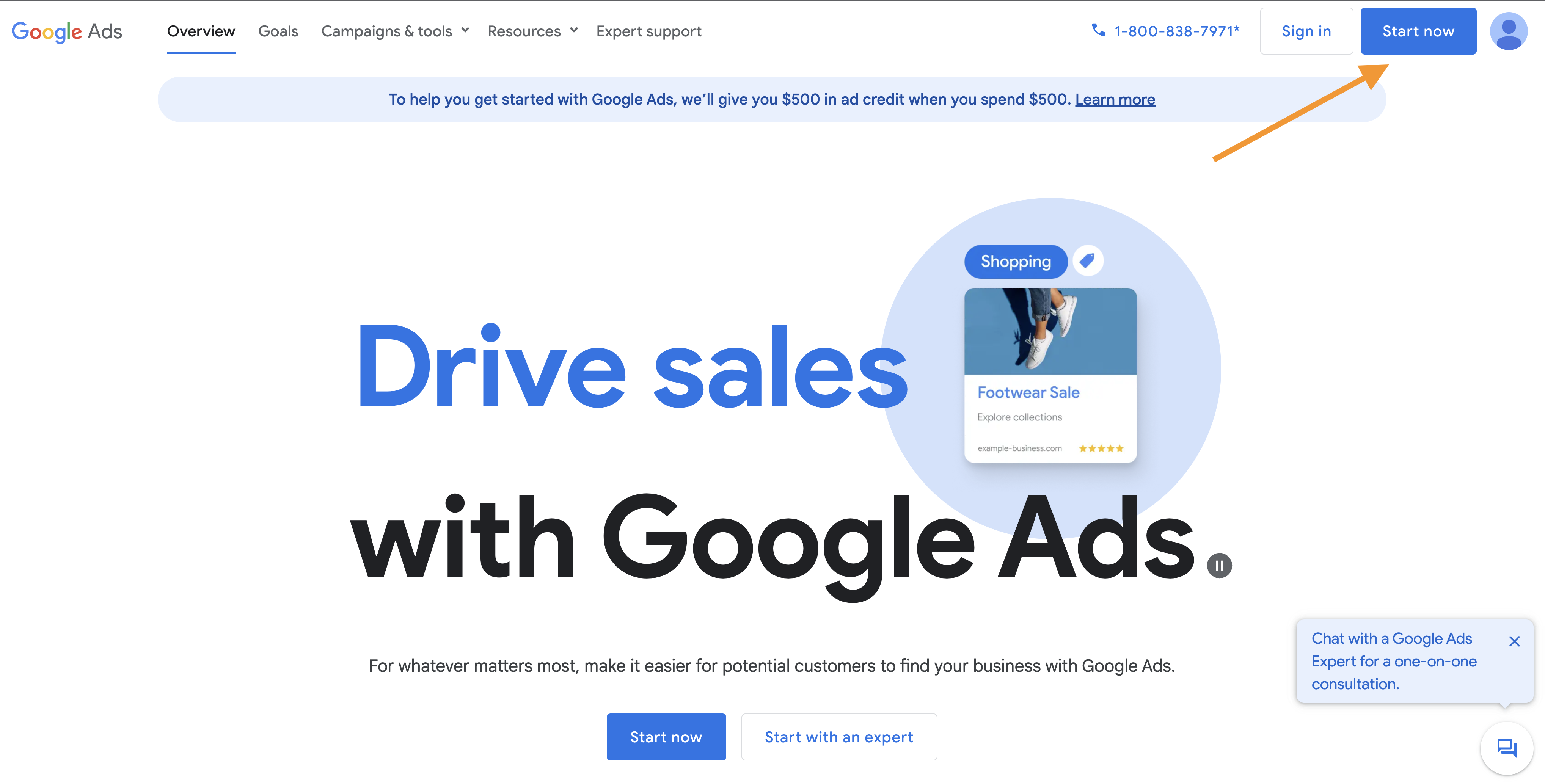
    When you click that big red launch button…

    Something’s gonna happen.

    Either the campaigns that you created will give you a healthy ROI — the phone will ring, leads will flow, and deals will close. OR… crickets.

    And if you’ve ever tried your luck at PPC ads for your real estate investing business before, then you’ve probably experienced just as many crickets as conversions (or maybe a few more of the crickets…).

    That isn’t because PPC advertising doesn’t work for the real estate industry. For many of our members at Carrot, paid ads drive business revenue BIG time. If you do it right, then paid advertising can become a real driving force for your business — a tool you can depend upon to create quick lead generation and revenue flow.

    But getting it right, of course, is sort of the issue.

    Truth is, the success of your PPC campaign for finding motivated searchers (buyers or sellers) depends largely upon one thing: how you prepare before you launch.

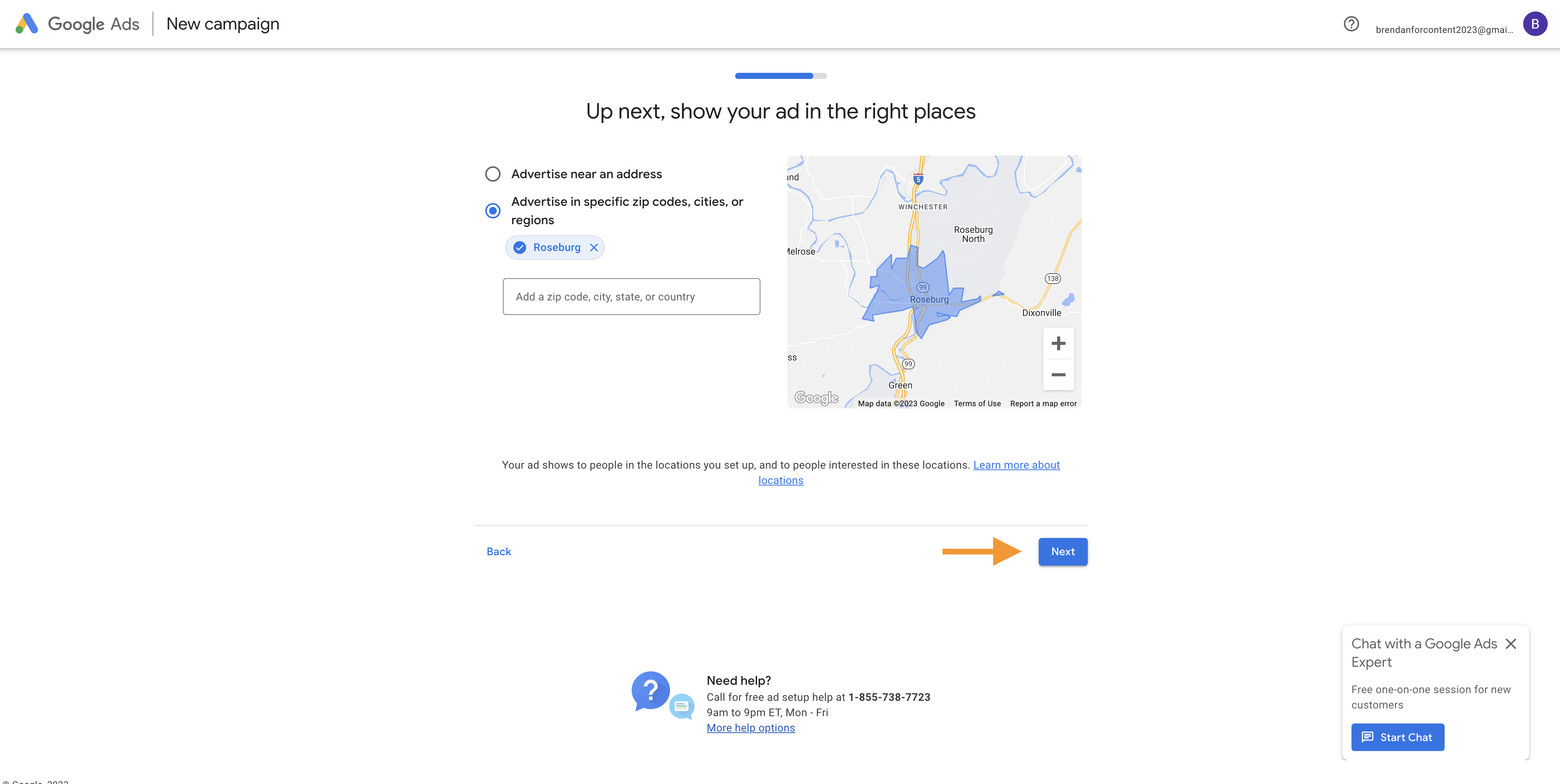
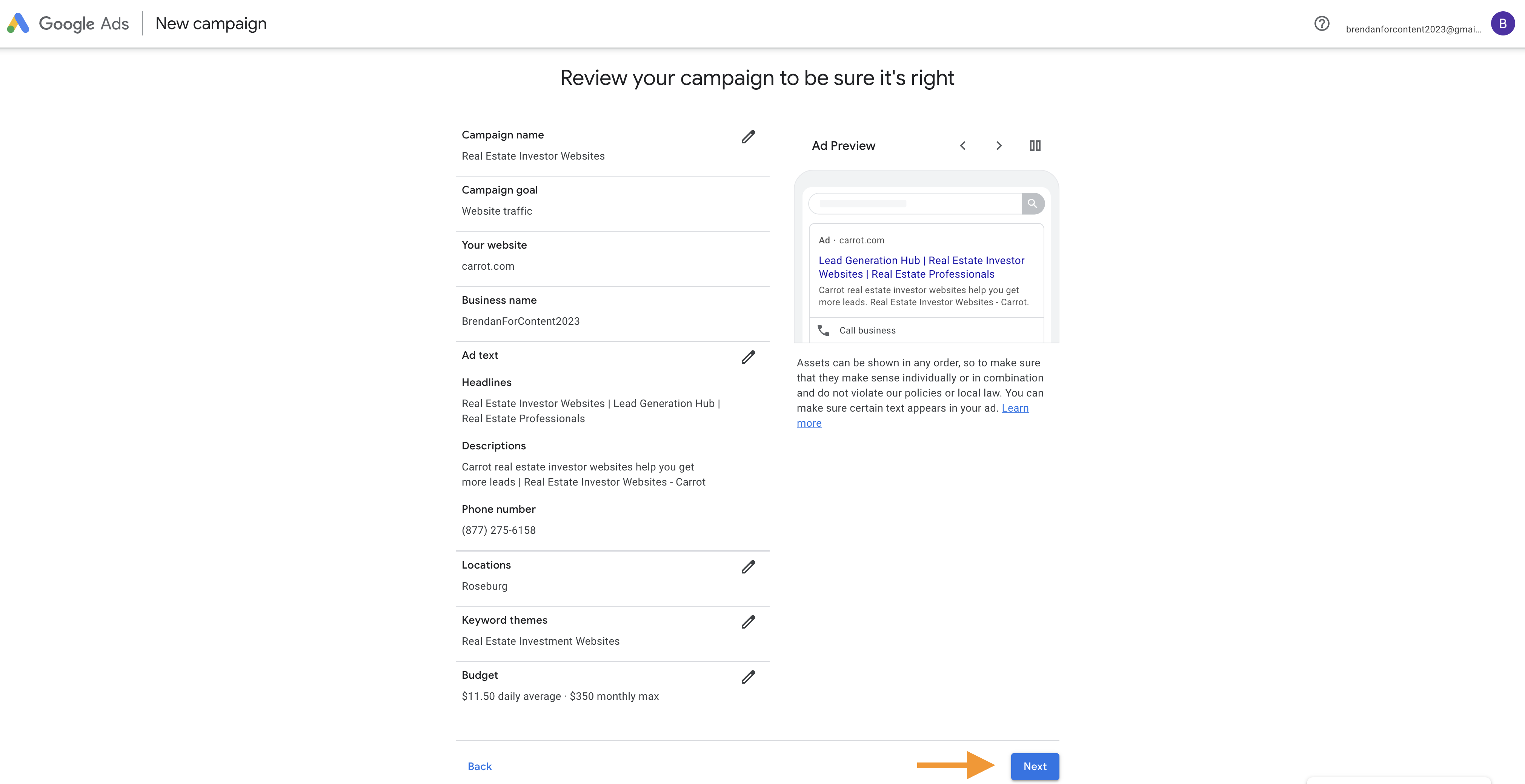
    Here are 5 pre-launch steps to give your real estate PPC campaigns the best possible chance of success

    Step #1: Do Market-Specific Keyword Research

    Perhaps the biggest mistake that new PPC advertisers make is launching a campaign without first doing market research.

    It’s remarkably easy to assume that you know your market already. After all, you’ve probably talked with your market, done at least a few deals, and maybe even lived in your area of operation for quite some time.

    Regardless, don’t skip this step. ;)

    Spending a little extra time to ensure you’re targeting the right people with your PPC campaign and writing copy that resonates with their problems, pains, fears, and desires is the single most powerful thing you can do to increase your ROI and website conversion rate once launched.

    In regards to PPC, keyword research is the equivalent of market research.

    You can use Google AdWords Keyword Planner and/or Ubersuggest to perform your research.

    Here’s what you want to pay attention to…

    • Competition — How many other people are competing for this keyword phrase? The more people you’re competing with, the higher your cost-per-click will soar. This isn’t necessarily a bad thing. So long as the keyword phrase is high value and you can afford the cost-per-click while maintaining a healthy ROI, then high competition might be an indicator of a valuable keyword phrase. If you have a smaller budget, though, then you might consider targeting something less competitive.
    • Suggested Bid — In Google AdWords Keyword Planner, this is the number that Google suggests you bid in order to get consistent clicks and impressions. When you see this number, keep your budget in mind and ensure that the two numbers line up for a healthy ROI.
    • Search Volume — This is the monthly number of people who search for a given keyword phrase every month. More search volume means more people to get your ad in front of. Low search volume means the opposite.
    • Intent — This is perhaps the most important part of your keyword research. What is the intent behind the keyword that you’re considering targeting with your PPC campaign? If the person is looking for a real estate agent and you’re a wholesaler, for instance, then the keyword won’t bring you many conversions. Regardless of search volume, competition, and suggested bid, the intent of the searcher, what they actually want when they type that into Google, should make the final decision about which keywords you target and which ones you throw out.

    Step #2: Analyze Your Competition

    In addition to doing market research, it’s also worth spending a bit of time doing competitive analysis.

    These are some of the questions you might consider asking yourself…

    1. What keywords is my competition targeting?
    2. What is my competition doing with their ads that I can do better?
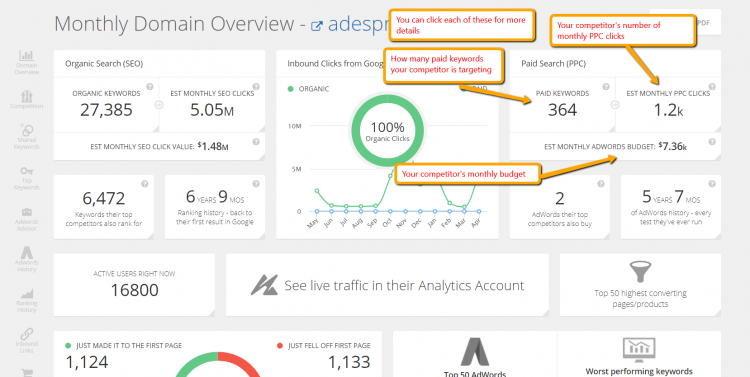
    3. What is my competition’s budget?
    4. What keywords are bringing my competition the most results?

    Answering these questions can help you determine which keywords will be the most valuable for you to target. If, for example, your competitor has dedicated massive funds to a certain keyword phrase and you can’t beat their budget, you might consider targeting something else. Or if you find that they’re neglecting a certain keyword phrase altogether, you might try to exploit that.

    And you can answer a TON of these questions by searching your competitor’s domain in SpyFu — you get a few free searches every day (go incognito in your browser to get more searches once you run out).

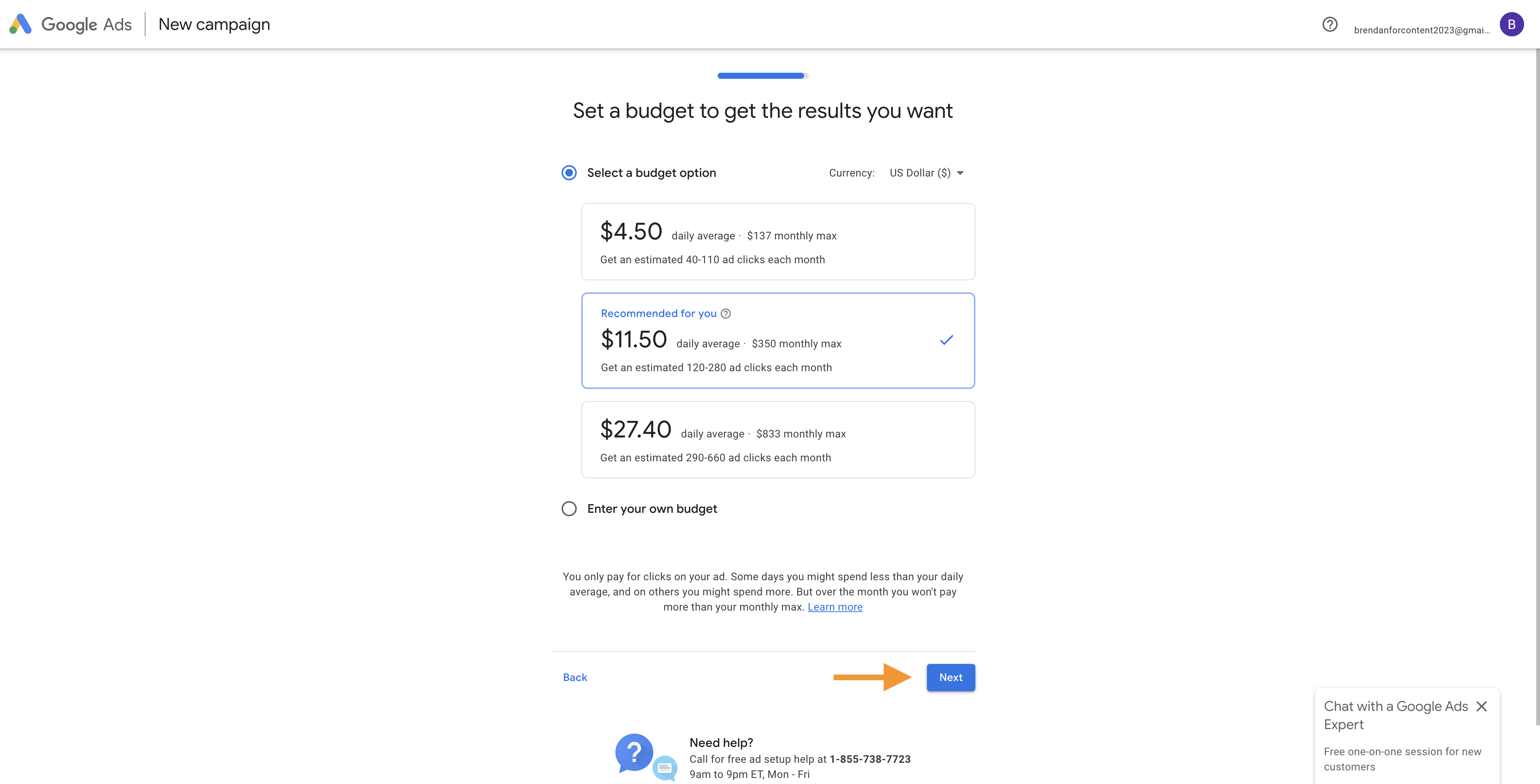
    Step #3: Set a Realistic, Results-Based Budget

    Running a real estate PPC campaign is a bit like gambling. You spend money, hit a button, and hope that the magic machine pays you back.

    Of course, in PPC, you have far more control over the results of that button-hitting than you do at the local casino. Still, as when you visit a casino with a spending limit of a few hundred dollars (or a few thousand for you high-rollers), you should never launch a PPC campaign without first knowing your budget and the results you expect to get (realistically) from that budget.

    But how do you determine a reasonable cost-per-click and cost-per-conversion for your business in your specific market?

    Well, you just play off the numbers.

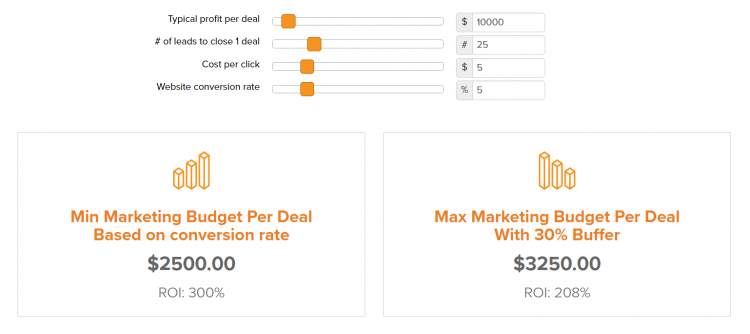
    And we have this awesome budget and ROI calculator to help you easily determine your minimum and maximum budget per conversion. If, for example, I expect $10,000 profit per deal, I close 1 in 25 leads, my cost-per-click is $5, and my website conversion rate is 5%, my budget would be between $2,500 and $3,250.

    In other words, I could spend up to $3,250 and still have a very healthy ROI for my business (208%, to be exact). And once you know your budget, it’s simply a matter of staying within that budget to generate leads and close deals. I love the way that Brian Rockwell put it in a CarrotCast case study.

    Step #4: Write Compelling Ad Copy

    When you go searching for something in Google (whether it be how to fix a faucet or reviews of Avengers: Endgame) you quickly determine which results you’re going to click on and which ones you’re going to scroll past.

    How do you determine that?

    By skimming the title tag and meta description of each result.

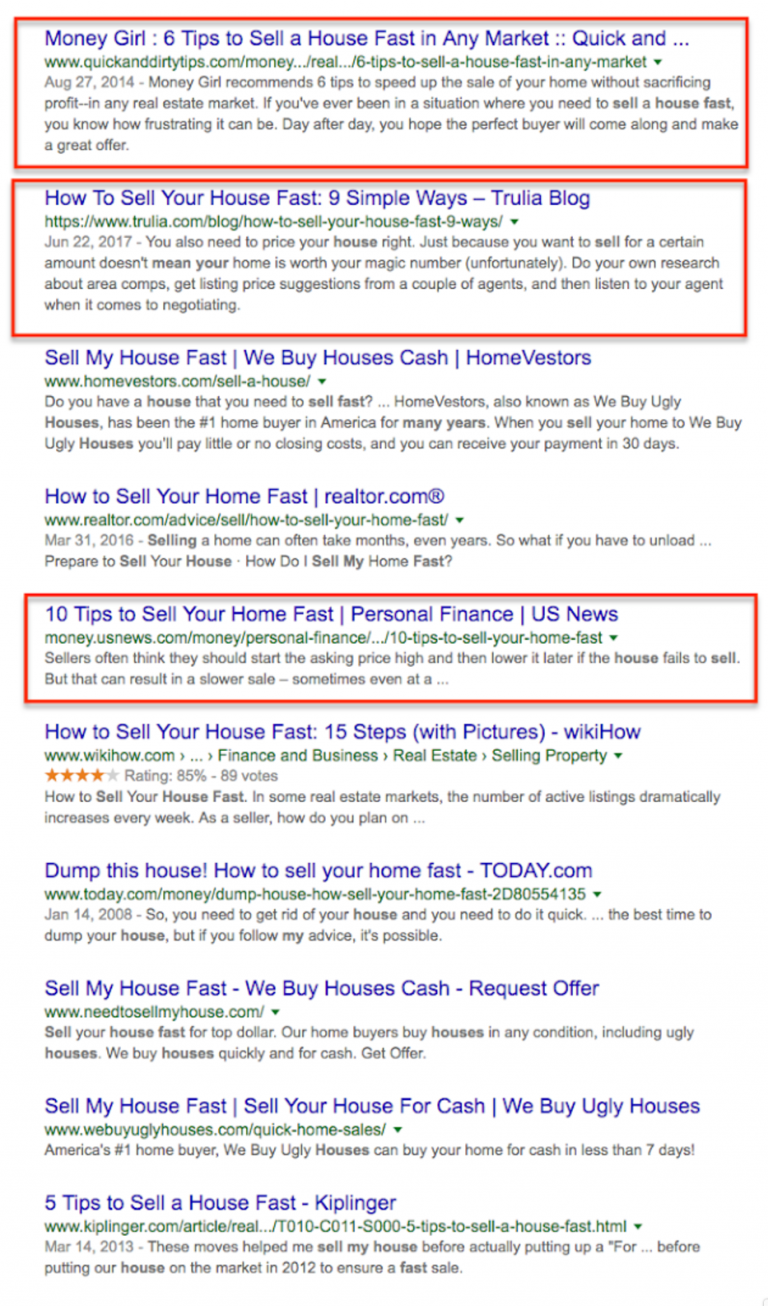
    If, for example, I was searching for “how can I sell my house fast”, these are my top three picks for what I would click on.

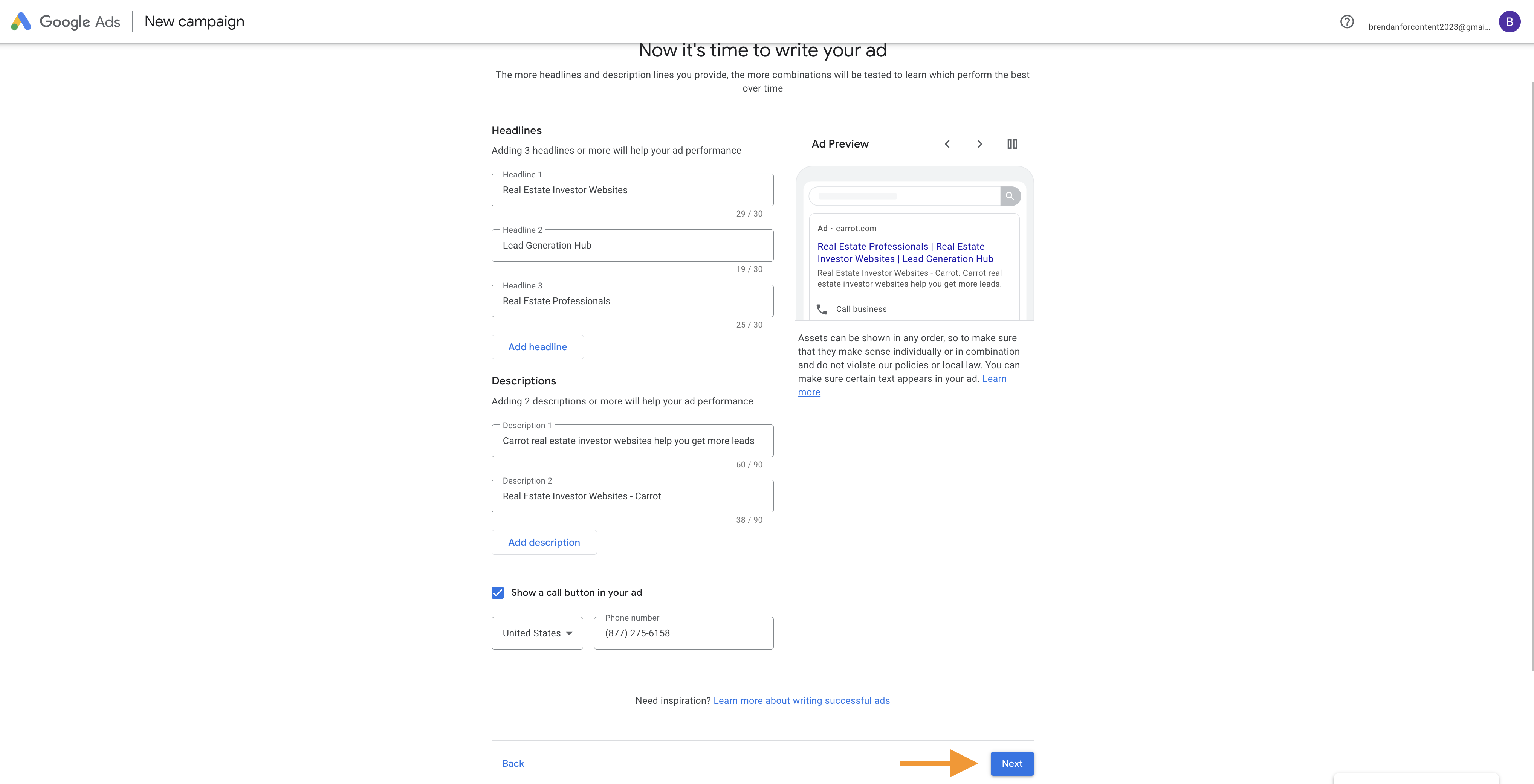
    Why? Well, it all has to do with the title and the meta description of those results and how well I think those results will solve my problem. The same is true for your PPC ads. When someone searches for something in Google, they’re looking to solve a problem. And your ad copy (the words for the title tag and meta description) need to promise to solve that specific problem for them.

    And the single most important thing you’ll write is the headline for your ad. If this doesn’t get people to click, nothing will.

    So spend a little extra time on this, run it by some friends if you have to, and make sure it’s primed to get your target market clicking.

    Remember, depending on what PPC marketing method you choose, AdWords, Facebook, or Bing, you’ll be limited to either the number of characters you can use within the ad or the amount of text you can use within a FB ad. Be sure to use this ad “real estate” wisely.

    Learn More: Real Estate Conversion Copywriting: How To Sell The “Click” With Your Meta Description And SEO Title

    Step #5: Create a High-Converting Landing Page

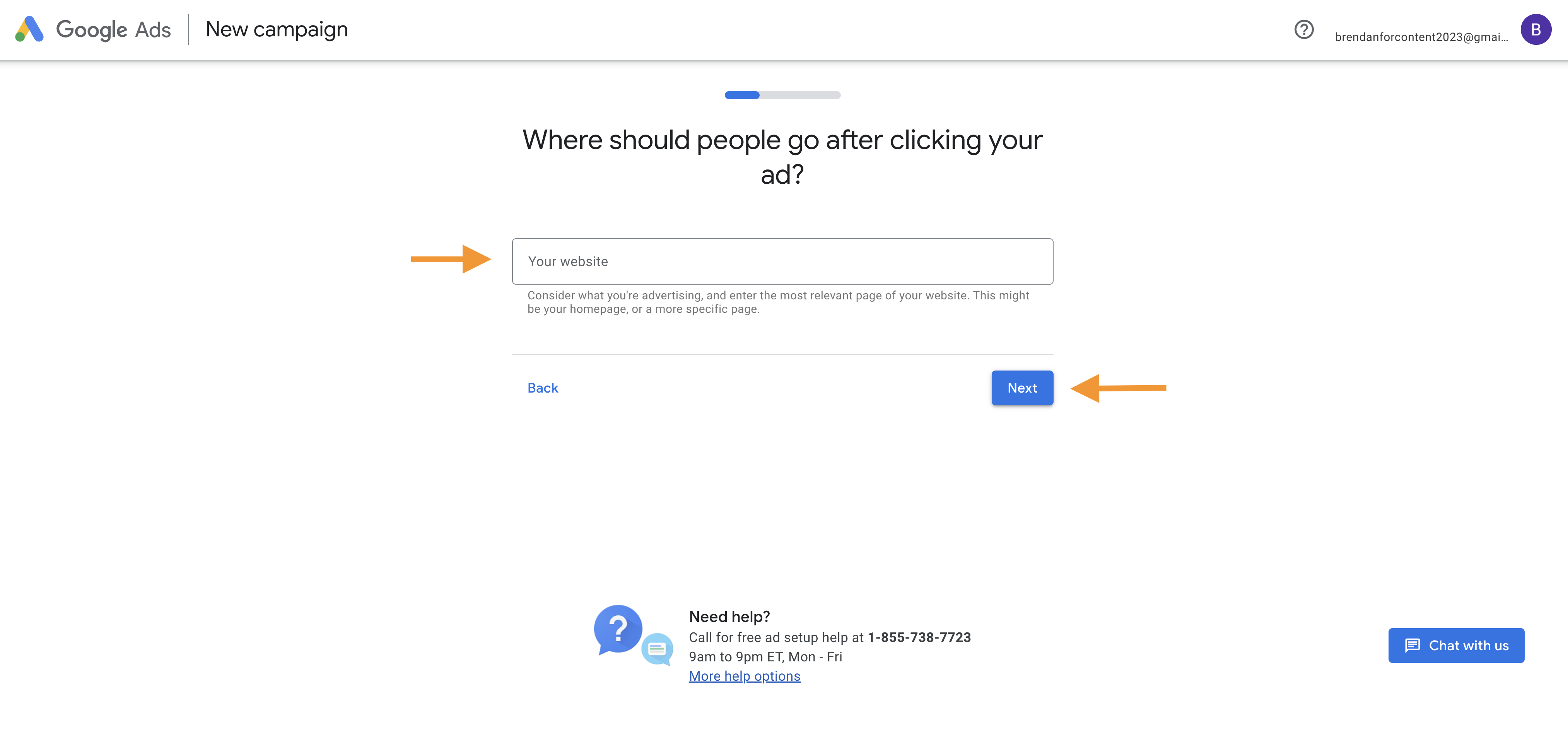
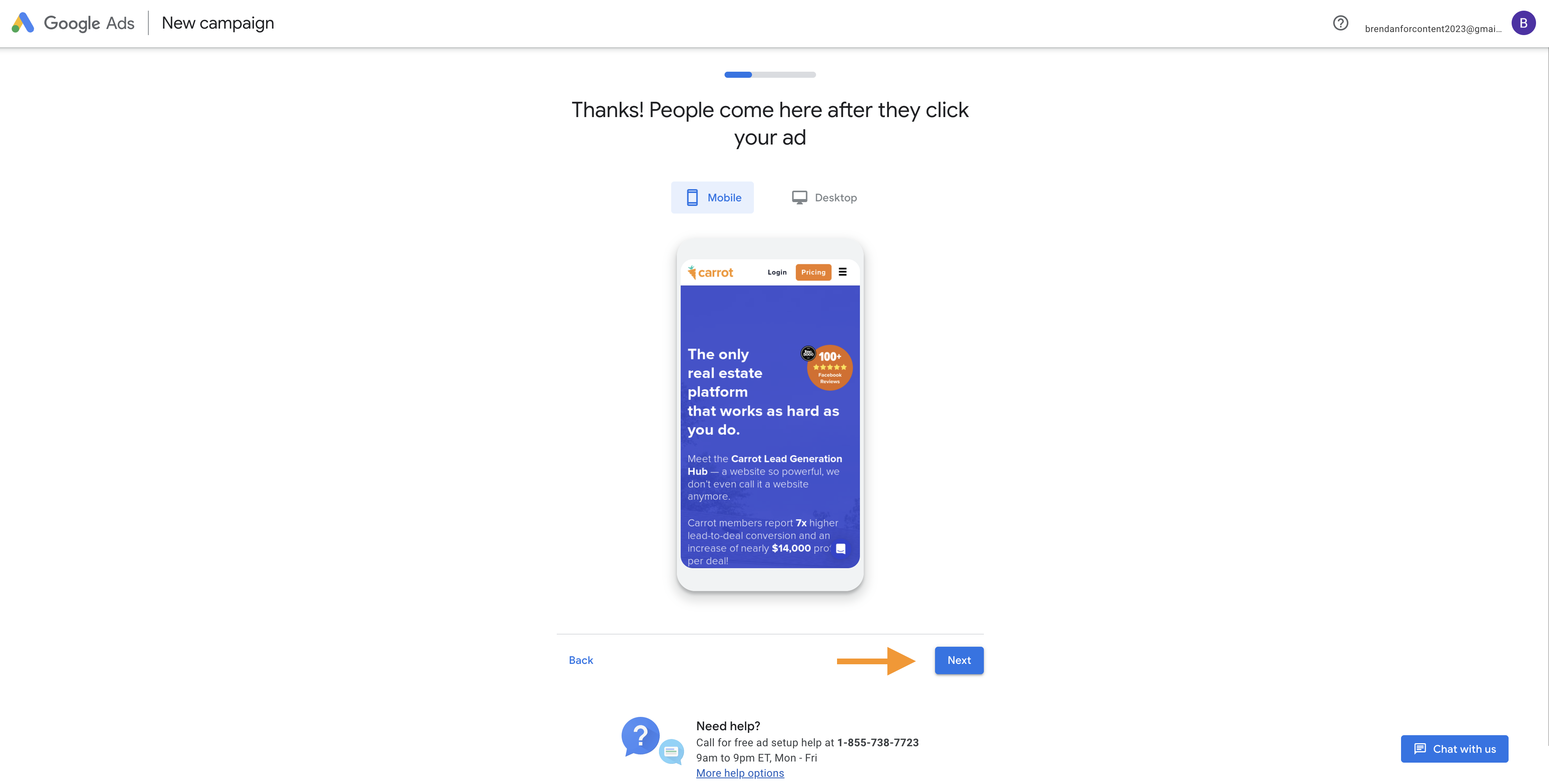
    The final thing you need to do before you launch your real estate PPC campaign to give it the best chance of success is building a high-converting landing page. In the field of online marketing, the landing page is the place where people will go once they click on your ad.

    The landing page needs to display content that reinforces your message contained in the ad. If your ads states you’ll give them a call in one hour, make sure your page also says one hour, not 24 hours.

    The lead form on your landing pages must also reinforce the search as well as trigger the searcher to take action. “Contact Us” or “Get My Cash Offer” are a couple of examples.

    Trevor explains landing pages and the importance of having an effective lead from here… Key Ingredients For Crazy High Converting Real Estate Lead Forms

    Ingredients For Crazy High Converting Real Estate Lead Forms

    If your real estate landing page isn’t optimized for conversion, then it doesn’t much matter how remarkable your targeting, your ad copy, or your budget is, no one is going to convert.

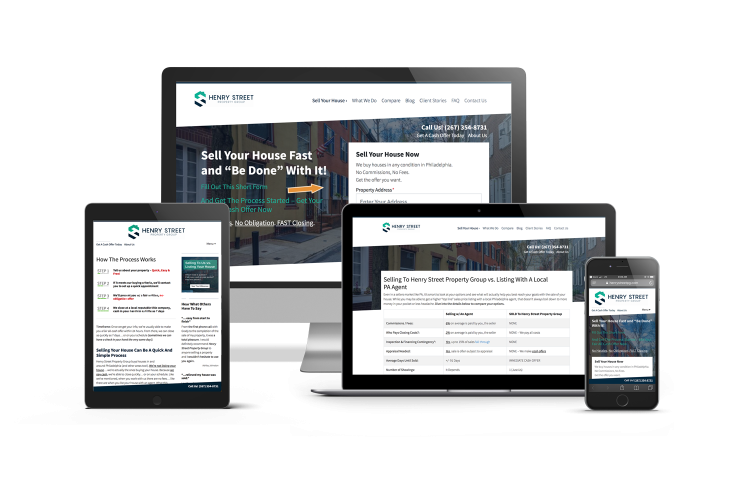
    At Carrot, we’ve tested our websites hundreds of times to ensure high conversion rates for each of our members. Which means when you send the right advertising traffic to a Carrot site, you’re going to get results. You can sign up over here to try us out for yourself (risk-free, with a 30-day money back guarantee)!

    Conclusion

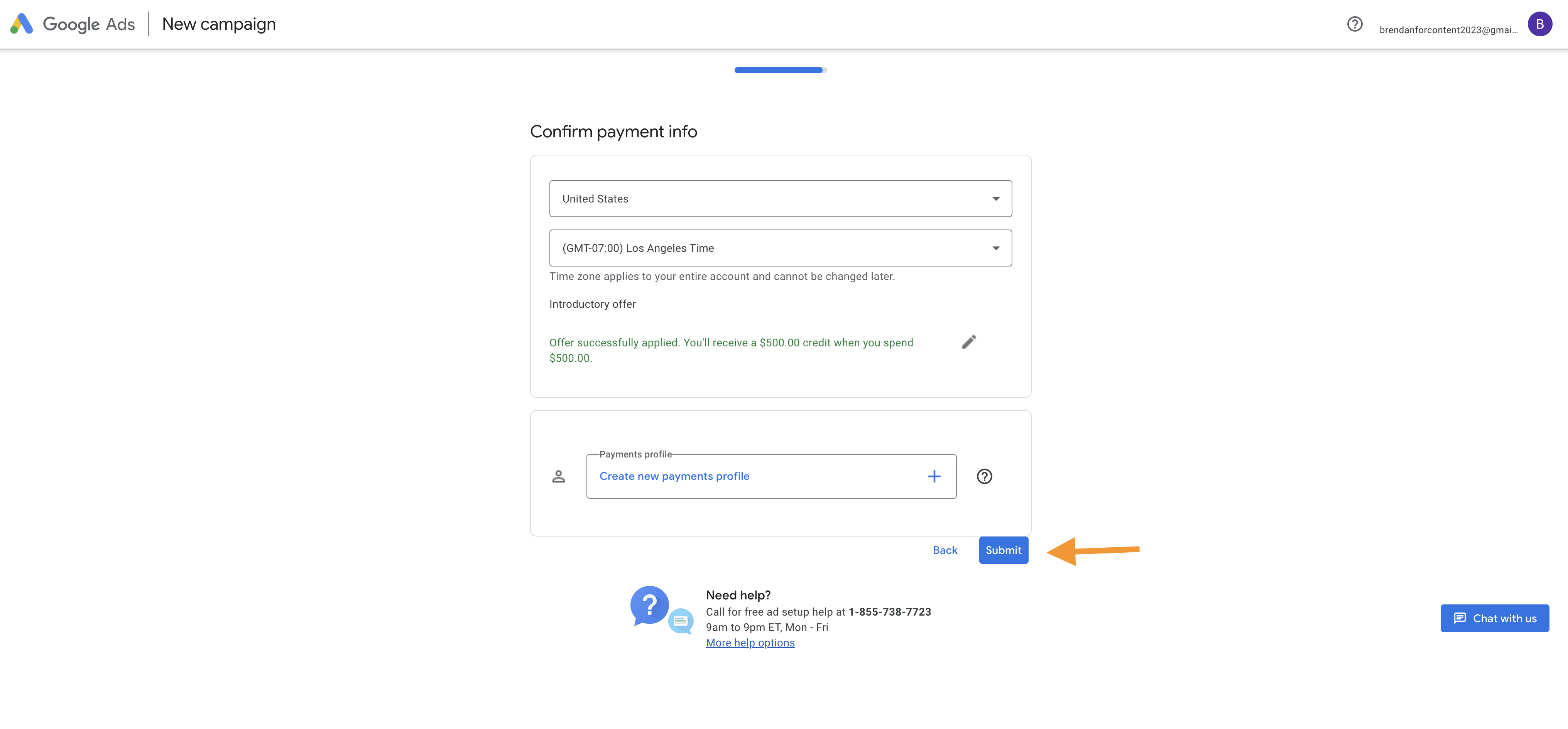
    When you finally decide to click the big red button… we want you to get results — real, tangible, business-building results. We want you to double or triple your money, we want PPC to become a revenue-generating machine for your business, and we want you to no longer fear launching a campaign.

    But the only way to make that happen is to prepare before you hit the big red button.

    And by following the five pre-launch steps in this article, you’ll ensure that every campaign you launch gives you a healthy ROI, takes you one step closer to dominating your market, and drives real revenue for your business.

    If you have any additional questions about launching your upcoming PPC campaign, throw em’ in the comments and we’ll help you out. :)

  • Introduction to Pay-Per-Click Advertising for Real Estate: A Beginner’s Guide

    Introduction to Pay-Per-Click Advertising for Real Estate: A Beginner’s Guide

     Intro to PPC for Real EstateIn 2018, PPC was the second highest lead generation medium for our members.

    Trying to rank on page one of Google can be a daunting task for some. It takes time and resources to invest in a full, all-out SEO strategy. Even then it could take months to notice.

    What can you do in the meantime?

    Well, many of our members make use of both PPC and SEO — using the former to generate short-term traffic and the latter to generate longterm traffic.

    In this intro to PPC for Real Estate, we run down what you need to understand if you’re considering this route. Including:

    • What is PPC for Real Estate?
    • How does PPC work?
    • What are the benefits of using PPC advertising for Real Estate?
    • Who should use PPC?
    • How to get started with PPC?

    Introduction To PPC For Real Estate

    What Is PPC For Real Estate?

    pay per click real estate advertising

    (Image Source)

    PPC is a broad term used for various cost-per-click platforms real estate professionals use to get in front of their target audience. These include Google Ads (AdWords), Bing Ads, Facebook Ads, and numerous retargeting options.

    Overall, PPC is a digital marketing strategy in which you advertise within a search engine’s sponsored results by bidding for the keywords, ad sets, and/or retargeting list connected to your real estate niche.

    Pay-per-click is exactly that… you pay each time your ad is clicked. Although, there are times you can be charged for impressions (number of times your ads are shown).

    Google Ads (Adwords) still reigns as PPC king for generating motivated seller leads. Facebook ads can also be an effective way to generate motivated sellers as well as buyer leads.

    Facebook cost-per-click is also considered a lesser amount compared to AdWords. It’s important that you understand where your leads are coming from and the value of your cost per lead to fully understand which platform works best for you.

    How Does PPC Work?

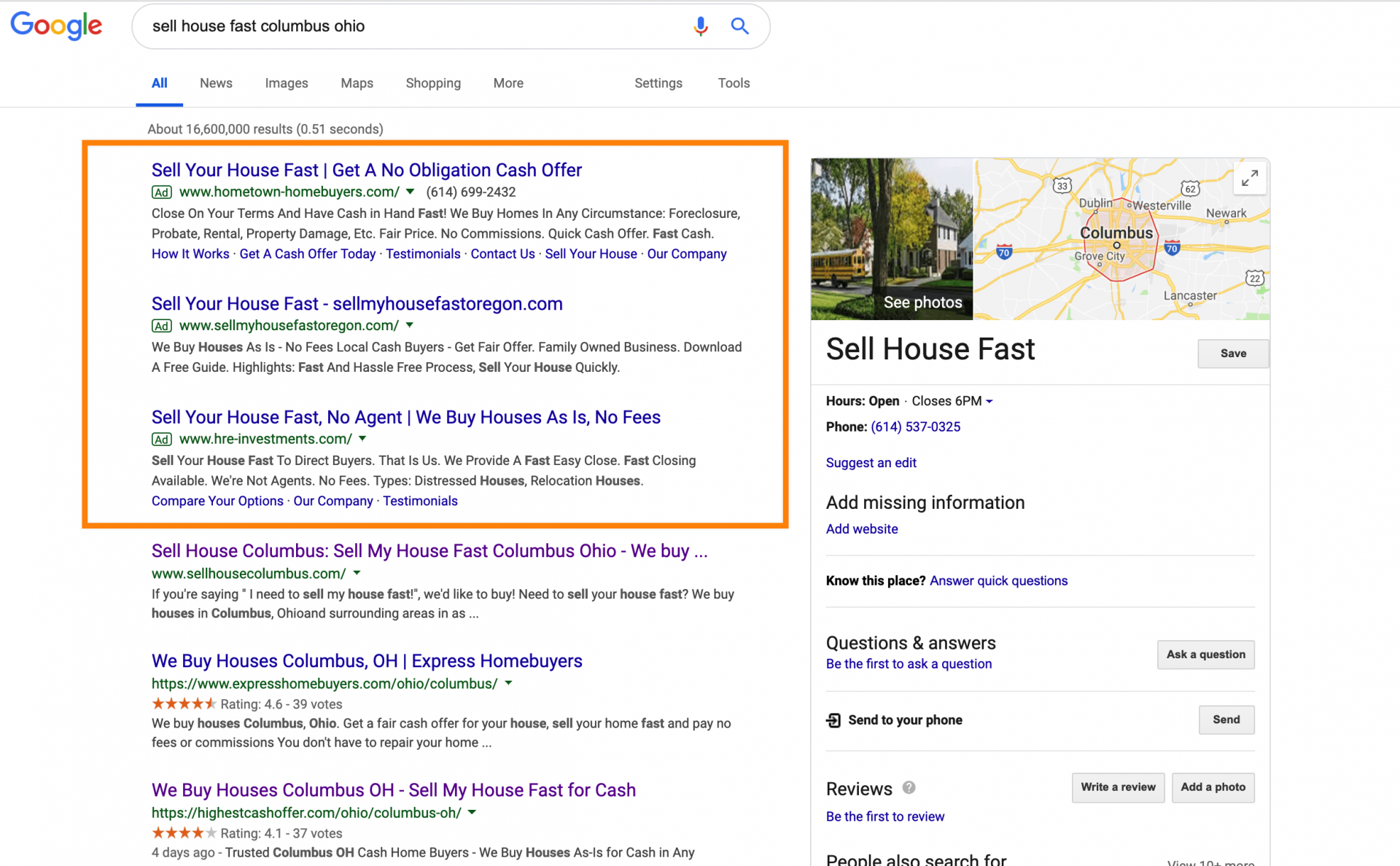
    Starting with the basics. When a motivated seller types a search query into Google, the search engines provide two sets of results: pay-per-click ads (sponsored) and organic results.

    As seen in the picture below, the first three results on top are sponsored ads (indicated by the green square around the word “Ad”).

    Google ads motivated seller search

    The other results below the ads are organic results. More than likely, the organic website results have climbed the rankings by executing a solid SEO strategy.

    With PPC, when the searcher clicks on one of the ads, you (the advertiser) is charged for that click.

    The price of that click will vary per the competition for that specific keyword as well as your target location(s).

    You can use specific tools to find keyword traffic estimates as well as the competition and cost-per-click estimates. Tools such as:

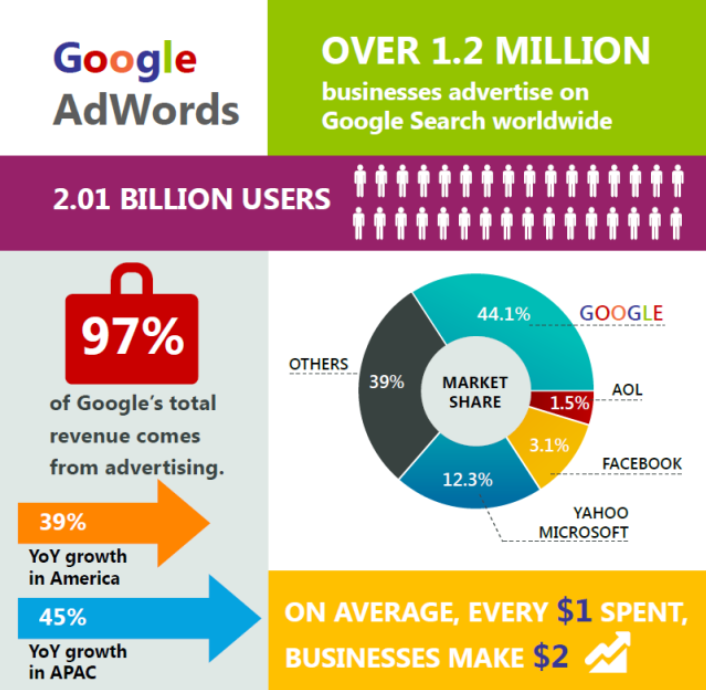
    What Are The Benefits Of Real Estate PPC?

    google adwords business infographic

    (Image Source)

    Advertising with PPC ads can have many benefits. Here are some of the top reasons you should consider using PPC as part of your online marketing strategy.

    1. You Have the Opportunity to Control Your Position on Page One of the Search Results

    PPC advertising allows you to gain the most valuable ad space on whichever PPC platform you choose to use. If that’s Google, then you have the ability to get on top of the first-page search results without having to dedicate the time and resources for SEO.

    Claiming ad space where most eyes will see them will increase your odds of getting solid lead generation and return on your investment.

    2. Place Your Ads in Front of YOUR Audience

    This is two-fold.

    First, you can use specific keywords in your PPC ads. This will allow you to reach a specific target audience based on your location. For example, using keywords such as…

    • “Sell my house fast in Baltimore”
    • “Sell my house in Chicago”
    • “We buy houses fast in Boston”

    This allows you to reach the local audience by choosing keywords that are targeting your audience location.

    Second, you have the ability to use geo-targeting to limit who can see your ads based on locations. For example, if you are searching for motivated sellers in Baltimore, it wouldn’t be smart to allow searchers in D.C to see your ads.

    You’d be would wasting your budget to allow searches from outside of your target areas to see and click on your ads.

    3. Control Your Budget

    Adverting with PPC ads offers you ultimate control of your money. You set your desired ad spend. If your budget runs low, platforms such as Google Ads will notify you that your budget is limited. This allows you to reassess your current PPC strategy and make the necessary adjustments to optimize your accounts.

    As mentioned above, the majority of your PPC campaigns will follow the model that you only pay when someone clicks on your ad.

    4. PPC is Immediate

    There’s no wait time! Unlike SEO, PPC is live the moment you decide to turn your campaigns live. If increasing your buyer list for your real estate website is your goal, PPC ads allow you to get in front of your target audience NOW rather than waiting the span of time it takes for an SEO campaign.

    5. Testing

    PPC ads are an excellent way to split test your website, ad copy, or images that resonate with your target audience.

    Using the A/B testing approach, you can test your ads and landing pages to see what form, color scheme, design… etc., are generating the best results. Once you gather enough date, you can use this information to make strategic moves to your campaigns to maximize your PPC ROI.

    6. Track Your Results to Maximize ROI

    Proving ROI is a major part of being a marketer today. Luckily, PPC ads allow you to track every aspect of your ad campaign to connect your efforts to your results.

    You can see how each keyword is performing. You can see how each ad is performing. And, you can see exactly where and when your leads are reaching you.

    You want to prove the worth of your PPC campaign. You’ll want to be sure your conversion tracking is linked to your website and for most of you, you’ll also want to be sure your lead source is relaying to your CRM.

    Then you’ll be able to track from click to deal to see your profits that have come from your PPC strategy.

    Who Should Use PPC?

    Google has more than 5 billion searches per day.

    Imagine how much traffic you’re missing out on!

    Plus, PPC website visitors are 50% more likely to purchase something than organic visitors (i.e. they’re more motivated).

    So, who should use PPC? Those who have the ability to plan, have patience, and are willing to spend money to get results.

    If you make well-informed decisions from the time you launch a PPC campaign, you will be able to increase traffic and leads to your website.

    However, PPC usually isn’t best suited for those who are looking to dabble. You need to have a mindset that provides enough strategy to sustain months and sometimes years. Those who have similar “go-get-em” attitudes have fared especially well with PPC advertising.

    Real estate also has a bigger advantage over other industries who utilize PPC. Profit margins can more than justify the costs associated with PPC.

    How To Get Started With PPC Advertising

    ppc advertising

    (Image Source)

    If you are looking for a simplified answer of how to get started with PPC advertising, it can be summed up into a relatively easy process.

    Here’s a simple look at how to plan your own PPC for real estate strategy:

    1. Conduct a competitor analysis.

    Identify the competitors who might be outranking you in your market. Analyze their search terms and search volumes using tools such as Google Keyword Planner and Ubersuggest as listed above.

    2. Choose the real estate keywords you want to advertise for.

    Conduct keyword research to learn how your target audience is searching for your real estate niche. If you’re looking for buyers for your agent website, then use such terms as, “new homes for sale” or “homes for sale in”.

    3. Create ads based on thorough research.

    Develop ad copy that will resonate with your target audience. Looking for motivated sellers? Use ad copy such as “We Buy House in Any Condition” or “Sell Your House As-Is Fast”.

    4. Split test ad copy and/or landing pages to compare how different aspects of your PPC campaigns perform.

    For ad copy testing, track metrics like click-through rate and cost per click. For landing page testing, track metrics such as conversion rates to determine the success of your PPC campaign.

    You’ll also need to continuously manage keyword bids based your results. This will help you get the most ROI from your efforts.

    5. Optimizing beyond your ads.

    Real estate PPC campaigns are created from many parts beyond keyword bids and the ad copy. It’s important to think beyond the landing page and start to think about optimizing other pages that will help build credibility and connection with the searchers.

    Three important pages to consider optimizing are your “Our company”, “Testimonials”, and the “How it works” pages.

    This heat map from specific PPC traffic, confirms the need to optimize these pages. PPC traffic is looking for confirmation.

    Conclusion

    Don’t feel overwhelmed by this PPC intro. By having a sound strategy, educating yourself and putting in some time, you’ll be off and running with a successful PPC account. Or, consider hiring a third-party to consult or manage your account.

    Overall, PPC can provide immediate results and be a lucrative piece of your online real estate marketing strategy.

    Be sure to hit us up with questions in the comments section below. Also, if you’re a Carrot member, join us on our weekly Coaching Calls where we cover many PPC topics as well as SEO, lead generation, website design, and much, much more!

    Not a Carrot member? Whatcha waiting for! Check out our plans and get started today!