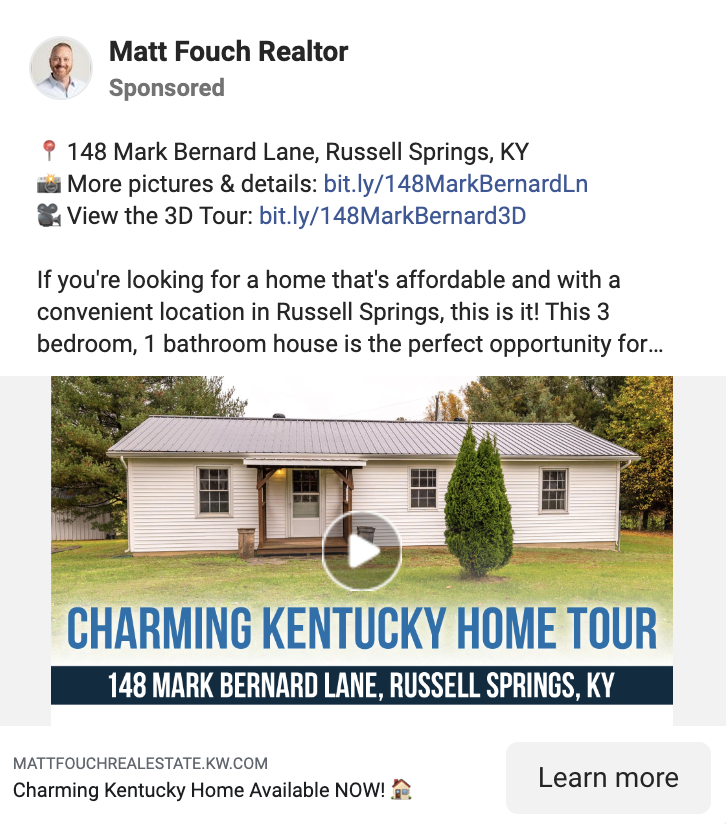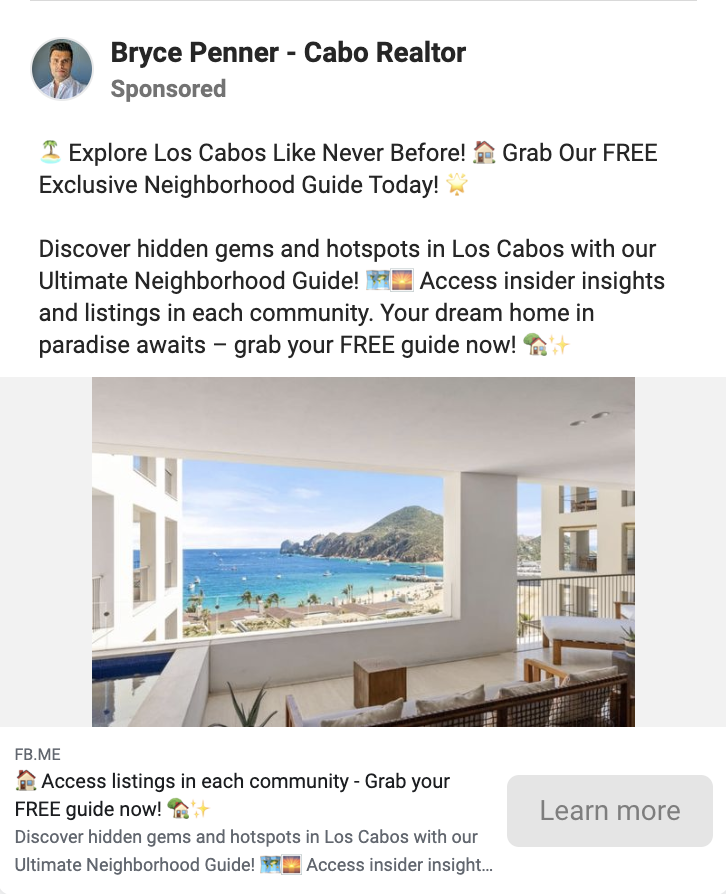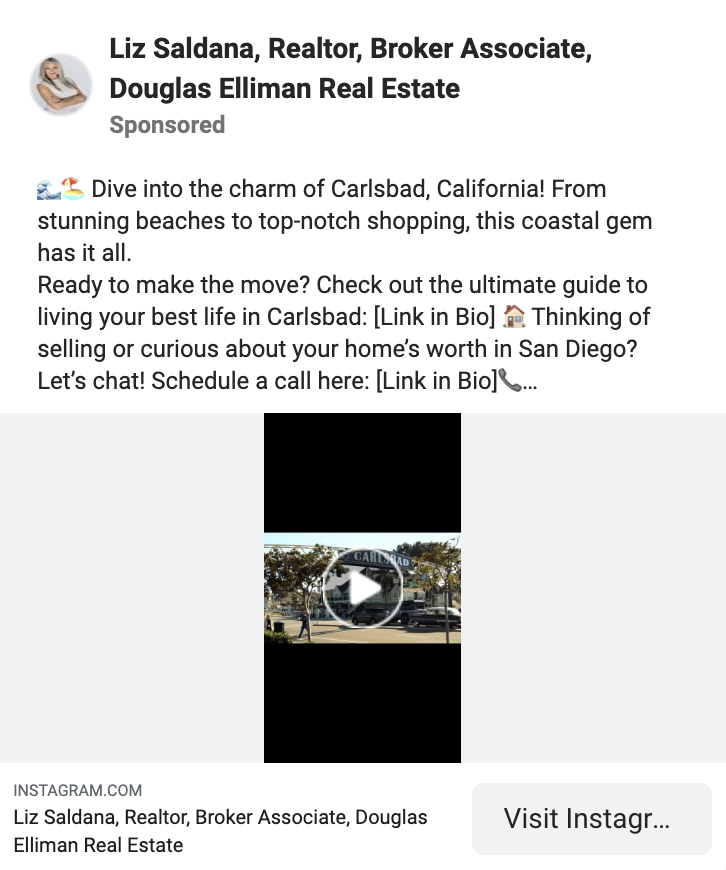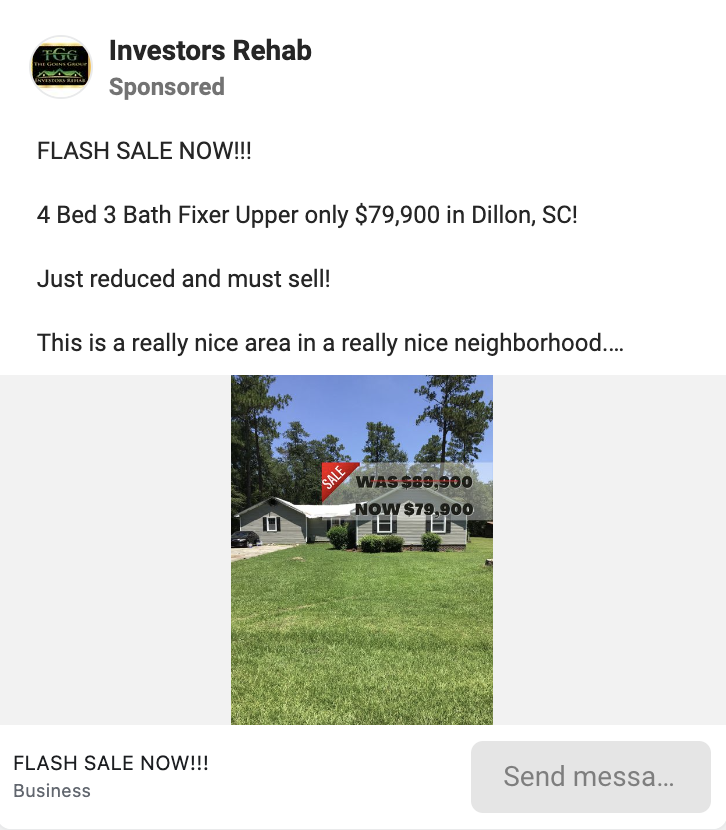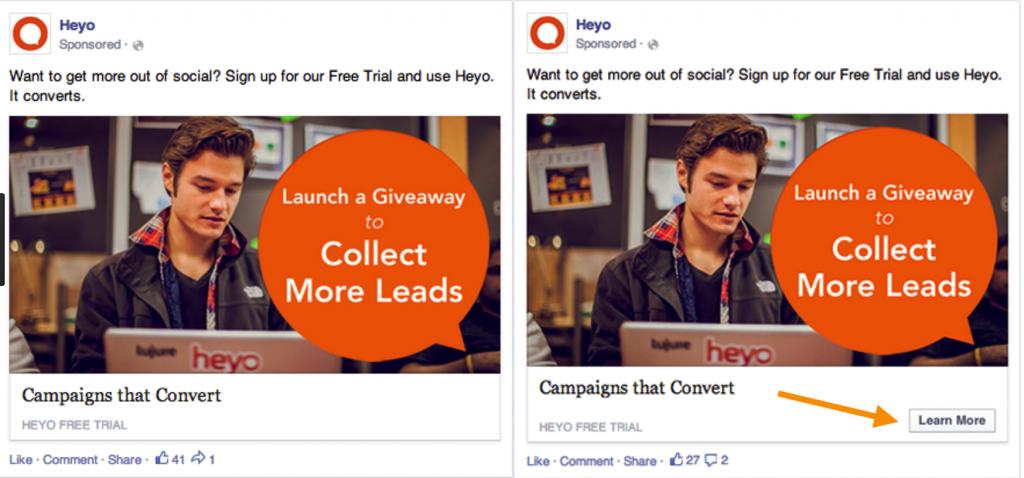


Category: Facebook Marketing

  • Facebook Ads for Real Estate Investors: Guide to Generate Motivated Leads in 2025

    Facebook Ads for Real Estate Investors: Guide to Generate Motivated Leads in 2025

    Finding motivated sellers is crucial for investors to build successful portfolios. While traditional marketing methods still have their place, Facebook Ads have emerged as a powerful and cost-effective channel for reaching this unique audience.

    With billions of active users worldwide, Facebook offers unparalleled reach and targeting capabilities, allowing real estate investors to pinpoint potential sellers facing unique situations like precisely:

    • Facing foreclosure: Individuals struggling to make mortgage payments.
    • Inheriting property: Heirs looking to liquidate inherited assets quickly.
    • Relocating for work: Those needing to sell quickly due to job relocations.
    • Going through divorce: Individuals needing to liquidate assets as part of a divorce settlement.

    This guide will equip you with the knowledge and strategies to leverage the power of Facebook Ads to generate high-quality leads from motivated sellers in 2025. We’ll delve into crafting compelling ad creatives, implementing effective targeting strategies, and optimizing your campaigns for maximum ROI. Whether you’re a seasoned investor or just starting, this guide will provide valuable insights to help you grow your real estate business.
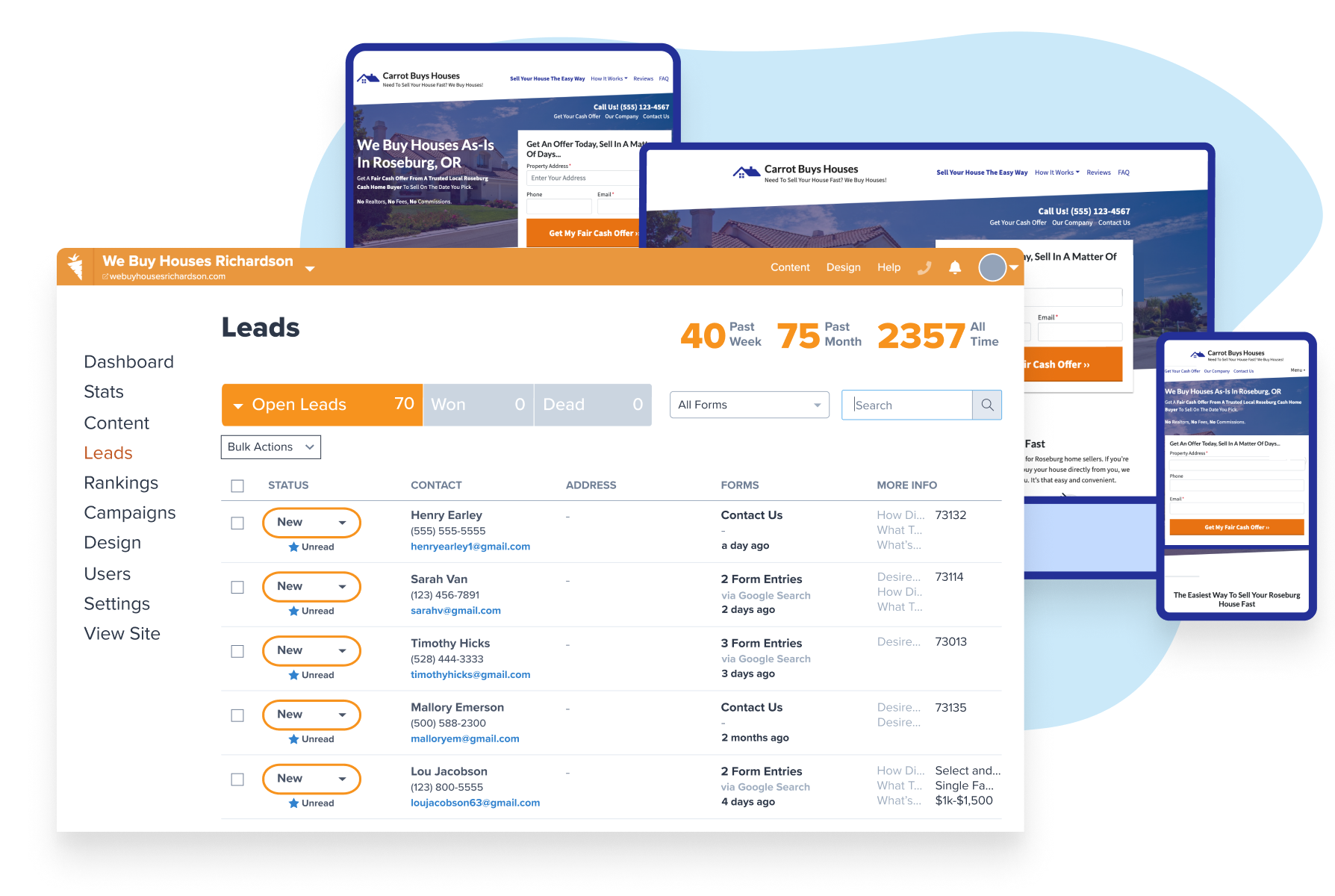
    For Carrot members, Facebook Ads for real estate investors is the third-highest source of new leads, outperforming Google Ads and organic search from both Bing and Yahoo.

    All told, Facebook generated 53,203 new leads. And that’s leads. Not traffic, visitors, followers, fans … actual leads.

    Understanding Your Audience: Motivated Sellers in 2025

    Motivated sellers are individuals who are eager to sell their property quickly, often due to pressing financial, personal, or situational circumstances. These sellers are highly valuable to real estate investors as they are likelier to accept offers below market value, making deals more profitable.

    The Evolving Landscape of Motivated Sellers in 2025

    The landscape of motivated sellers is constantly evolving. In 2025, we can expect to see several key factors influencing their motivations:

    • Economic Uncertainty: Economic downturns or periods of high inflation can create financial distress for homeowners, making them more likely to seek quick solutions like selling to investors.
    • Rising Interest Rates: Increasing interest rates can significantly impact homeowners’ ability to afford their mortgages, potentially leading to a surge in motivated sellers facing foreclosure.
    • The Impact of Remote Work: The rise of remote work has led to a shift in housing preferences. Some homeowners may be motivated to sell their current properties to relocate to more affordable areas or pursue lifestyle changes.
    • Aging Population: As the population ages, an increasing number of seniors may be motivated to sell their homes to downsize or relocate to assisted living facilities.

    Pain Points and Motivations of Today’s Motivated Sellers

    Understanding today’s motivated sellers’ pain points and motivations is crucial for crafting effective marketing messages. Common motivations include:

    • Financial Distress: Job loss, medical emergencies, mounting debt, and difficulty making mortgage payments are significant motivators for many sellers.
    • Life Transitions: Divorce, relocation for work, inheritance, and downsizing are common life events that can lead to the need to sell quickly.
    • Property Issues: Issues like property damage, code violations, or burdensome maintenance can make a property a burden and motivate owners to sell as-is.
    • Avoiding Foreclosure: Homeowners facing foreclosure are highly motivated to sell quickly to avoid further financial damage to their credit.

    Real estate investors can tailor their marketing messages and offers to address their specific needs and concerns by understanding the unique circumstances and motivations of motivated sellers.

    Note: These are general predictions, and the actual landscape of motivated sellers in 2025 may vary depending on economic conditions and other unforeseen factors.

    Crafting Compelling Facebook Ads for Real Estate Investors

    A/B Testing: The Importance of Experimentation

    A/B testing is a crucial element of any successful Facebook Ads campaign. It involves creating two or more versions of your ad with slight variations and running them simultaneously to see which version performs better.

    • Benefits of A/B Testing:
      • Improved Performance: Identify the most effective elements of your ads (headlines, images, targeting) to maximize click-through rates (CTR) and conversions.
      • Data-Driven Decisions: Make informed decisions about your ad campaigns based on real data, rather than relying on assumptions.
      • Continuous Optimization: Continuously refine your ad campaigns for better results over time.
    • Elements to A/B Test:
      • Headlines: Experiment with different headlines to see which ones grab the most attention.
        • Examples:
          • “Sell Your House Fast: We Buy Houses in Any Condition” vs. “Overwhelmed by Your Property? Get a Cash Offer Today”
      • Ad Copy: Test different ad copy variations to see which resonates best with your target audience.
        • Examples:
          • Focus on urgency: “Sell Your House in as Little as 7 Days!” vs. “Avoid Foreclosure: Get a Cash Offer Now”
          • Highlight benefits: “No Fees, No Commissions, We Cover Closing Costs” vs. “Get a Fair Cash Offer and Walk Away Without Hassle”
      • Visuals: Experiment with different images and videos to see the most engaging ones.
        • Examples:
          • Use professional-looking photos vs. amateur photos
          • Test different color schemes and visual styles
          • Use short, attention-grabbing videos vs. static images

    Attention-Grabbing Headlines & Ad Copy

    Compelling headlines and ad copy are essential for capturing the attention of your target audience and driving clicks.

    • Formulas and Templates:
      • Problem-Solution: “Tired of Dealing with [Problem]? We Have the Solution!” (e.g., “Tired of Dealing with Property Repairs? We Buy Houses As-Is.”)
      • Benefit-Driven: “Get [Benefit] When You Sell Your House to Us” (e.g., “Get Cash in Hand and Walk Away Today.”)
      • Urgency/Scarcity: “Limited Time Offer: Sell Your House Fast and Get a Top Dollar Offer”
      • Direct Question: “Facing Foreclosure? We Can Help!”
    • Real Estate Investor-Specific Ad Copy Examples:
      • “Facing Foreclosure? Get a Fair Cash Offer Before It’s Too Late. We Buy Houses in Any Condition.” (Focuses on urgency and addresses a specific pain point)
      • “Tired of Dealing with Property Repairs? Sell Your House Fast for Cash and Avoid the Hassle.” (Highlights a key benefit and addresses a common problem)
      • “Inherited a Property? We Can Help You Sell Quickly and Easily. Get a Free, No-Obligation Cash Offer Today.” (Addresses a specific life event)
    • Strong Calls to Action (CTAs):
      • “Get Your Free Cash Offer Now”
      • “Sell My House Fast”
      • “Contact Us Today for a Free Consultation”
      • “Learn More”

    Eye-Catching Visuals That Convert

    Visuals play a crucial role in capturing attention and conveying your message effectively.

    • Effective Image and Video Content Types:
      • High-Quality Photos: Professional photos of properties showcase their best features and create a positive impression.
      • Short, Engaging Videos: Short videos can showcase the property and its surroundings, or tell a brief story about how you can help motivated sellers.
      • Before-and-After Photos: (If applicable) Showcase the potential of a property by showing before-and-after photos of renovations.
    • Facebook Ad Image Specifications and Best Practices:
      • Use high-resolution images with a minimum width of 1200 pixels.
      • Ensure images are visually appealing and relevant to your target audience.
      • Avoid excessive text overlays on images.
      • Follow Facebook’s ad policies to avoid ad disapprovals.

    By carefully crafting your headlines, ad copy, and visuals, you can create compelling Facebook Ads that resonate with motivated sellers and drive significant leads for your real estate investing business.

    Note: These are just a few examples and strategies. Continuous experimentation and analysis of your ad performance are essential for maximizing your results.

    Targeting Strategies for Reaching Motivated Sellers

    The Importance of Audience Targeting

    Effective audience targeting is the cornerstone of successful Facebook Ads campaigns. By defining your ideal customer precisely, you can ensure your ads are shown to the right people, increasing the likelihood of clicks, conversions, and, ultimately, high-quality leads.

    Facebook Ads Targeting Options

    Facebook offers a wide array of targeting options to help you reach your desired audience:

    • Demographics: Target users based on age, gender, location, education, job title, and more.
    • Interests: Target users based on their interests, hobbies, pages they like, and groups they belong to.
    • Behaviors: Target users based on their online and offline behaviors, such as purchase history, device usage, and life events.

    Real Estate Investor-Specific Targeting Strategies

    • Lookalike Audiences:
      • Leverage Existing Data: Create lookalike audiences based on your existing customer lists (if you have them).
      • Find Similar Prospects: Facebook will identify users who share similar characteristics with your existing customers, expanding your reach to a wider pool of potential motivated sellers.
    • Location Targeting:
      • Target Specific Neighborhoods: Focus on neighborhoods with high property turnover rates, known for distressed properties, or experiencing economic challenges.
      • Hyperlocal Targeting: Utilize zip codes or even street addresses to target specific areas.
    • Interest Targeting:
      • Real Estate Investing: Target users interested in real estate investing, real estate forums, and related pages.
      • Financial Difficulties: Target users interested in debt relief, credit repair, or financial planning.
      • Life Transitions: Target users interested in topics like moving, downsizing, or retirement.
    • Life Event Targeting:
      • Target users experiencing life events that may trigger the need to sell their home:
        • Divorce: Target users who have recently changed their relationship status on Facebook.
        • Job Loss: Target users who have recently updated their job status.
        • Moving: Target users who have recently changed their location on Facebook.
    • Combining Targeting Options:
      • Create highly specific and effective audience segments by combining multiple targeting criteria.
        • Example: Target homeowners aged 55-75 living in a specific neighborhood who have shown interest in retirement communities and have recently changed their relationship status.

    By strategically combining these targeting options, you can create highly refined audience segments that are more likely to engage with your ads and convert them into valuable leads.

    Note: Regularly analyze your campaign performance and adjust your targeting strategies accordingly to optimize your results.

    Campaign Optimization and Beyond

    The Importance of Monitoring and Optimization

    Running a successful Facebook Ads campaign requires ongoing monitoring and optimization.

    • Data-Driven Decisions: Regularly analyzing your campaign performance data allows you to identify areas for improvement and make data-driven decisions to maximize your ROI.
    • Staying Ahead of the Curve: The Facebook Ads platform constantly evolves, so continuous optimization is crucial to stay ahead of the curve and ensure your campaigns remain effective.

    Key Metrics to Track

    • Cost Per Lead (CPL): A crucial metric for real estate investors, CPL helps you understand how much you’re spending to acquire each lead.
    • Conversion Rate: Track the percentage of website visitors who take a desired action, such as filling out a contact form or scheduling a call.
    • Click-Through Rate (CTR): Measures the percentage of people who click on your ad after seeing it.
    • Return on Ad Spend (ROAS): Calculates the revenue generated for every dollar spent on advertising.

    Optimizing Campaigns Based on Performance Data

    • Adjusting Budgets:
      • Increase budgets for high-performing ad sets and decrease budgets for underperforming ones.
      • Consider reallocating budget to campaigns with higher conversion rates.
    • Refining Targeting:
      • Expand or narrow your targeting criteria based on audience performance.
      • Exclude underperforming audience segments to improve overall campaign efficiency.
    • Improving Ad Creatives:
      • Replace underperforming ads with new creatives that have shown better results in A/B testing.
      • Continuously test new ad copy and visuals to find the most effective combinations.

    Advanced Strategies

    • Retargeting Website Visitors:
      • Show ads to users who have previously visited your website but did not take the desired action (e.g., fill out a contact form).
      • This helps to re-engage warm leads and increase the likelihood of conversions.
    • Facebook Messenger Ads:
      • Use Messenger to engage with potential leads more directly and personally.
      • Answer questions, provide instant quotes, and build stronger relationships with potential clients.

    Call to Action

    This guide provides a solid foundation for running effective Facebook Ads campaigns for your real estate investing business. To further enhance your knowledge and maximize your results:

    • Download our free guide: “10 Essential Tips for Generating Leads with Facebook Ads” (insert link here)
    • Consult with a Facebook Ads specialist: Experienced professionals can help you develop and execute highly effective campaigns tailored to your specific needs and goals.

    By implementing these strategies and continuously optimizing your campaigns, you can leverage Facebook Ads’ power to generate a steady stream of high-quality leads and grow your real estate investing business.

    Note: This section incorporates a call to action and suggests including a link to a relevant resource (a free guide in this case) to encourage further engagement with your content.

    Conclusion

    This guide has outlined key strategies for leveraging Facebook Ads to effectively connect with motivated sellers and generate high-quality leads for your real estate investing business. By understanding the evolving landscape of motivated sellers, crafting compelling ad creatives, implementing precise targeting strategies, and continuously optimizing your campaigns, you can unlock the significant potential of Facebook Ads.

    The Effectiveness of Facebook Ads for Real Estate Investing

    When executed correctly, Facebook Ads can be a highly effective lead generation channel for real estate investors. With its vast user base and advanced targeting capabilities, Facebook allows you to reach the right audience with your message, maximizing your chances of connecting with motivated sellers eager to sell their properties.

    Additional Resources

    For those who want to delve deeper into the world of Facebook Ads, here are some valuable resources:

    If you’re looking for expert guidance and support in running successful Facebook Ads campaigns for your real estate investing business, consider consulting with a qualified Facebook Ads specialist.

    By implementing the strategies outlined in this guide and utilizing the available resources, you can effectively use Facebook Ads to build a thriving real estate investment business.

  • Facebook Ads Housing Policy | Changes Investors and Agents NEED to Know

    Facebook Ads Housing Policy | Changes Investors and Agents NEED to Know

    On June 21, 2022, Meta (Facebook) announced a significant Facebook Ads Housing Policy update. The settlement with the US Department of Housing and Urban Development (HUD) will change how housing ads are delivered.

    The goal of the change is to make sure the audience that sees housing ads is closer to the eligible audience for the ads.

    Meta will be sunsetting Special Ad Audiences as part of this new agreement.

    This tool allowed advertisers to expand their audiences for ad sets related to housing.

    What’s happening:  Meta is removing the ability to create Special Ad Audiences via Ads Manager. This move began on August 25, and beginning October 12, they will pause the remaining ads containing Special Ad Audiences.

    Ad sets can be reactivated once the Special Ad Audiences are removed from the ad sets.

    How to Protect Your Account from the Impact of Facebook Ads Housing Policy Update?

    Have no fear. In this video, Kiley and JT from SilverStreet Marketing take you through the strategy you can execute to keep your Facebook Ads accounts active and how to continue to generate high-quality motivated seller leads via this marketing channel.

    They cover three important steps:

    1. Start removing special ad audiences now.
    2. You’ll need to understand that testing will be even more important than ever. Tests include finding how much to allocate to top-of-funnel and middle-of-funnel campaigns.
    3. Make frequent changes. Frequency levels (how often people see the same ad) can be critical. Test to find out what media types work and expand on those ads.

    Summary

    FB will remain a viable marketing channel, especially in a broader marketing strategy.

    Stick with sound marketing principles. Invest a little time to make the necessary changes.

    We’ll monitor how this update impacts Carrot members’ Facebook accounts and leads.

    Real estate online marketing is a constantly changing landscape. We’re committed to continuing our data-driven, expert-tested vision, strategy, and tactics to help you build a business of freedom and impact.

    Tell us if you found this video helpful, and drop us a comment with your thoughts.

    Follow the tips SilverStreet covered in this video and continue to generate motivated leads from your Facebook account.

    We’re here for you!

  • How to Generate Real Estate Buyer Leads for $2 By Advertising Your Listing On Facebook

    How to Generate Real Estate Buyer Leads for $2 By Advertising Your Listing On Facebook

    Finding Real Estate Seller & Buyer Leads By Advertising Your Listing On Facebook

    Video Transcript

    Hey, this is JT with Silver Street Marketing, and, we will be going over how to generate real estate buyer leads and seller leads from advertising your listing on Facebook. We’re going to be going through how to do that, the conversion-based strategy, and to just give you an overview.

    For today’s example, we’re going to use Carrot to set up the landing page, as well as setting up a Facebook campaign and creating the actual ad.

    Always remember there is nothing wrong with exploring your options, but the most important thing is to be consistent. The reason why I say this is because there are so many ways to advertise your listing online.

    You’re going to hear all these different strategies, and this one, in particular, is one that I’ve used to manage for my clients and I’ve seen amazing results out of.

    Just only a few days of marketing a listing at $5 a day for one of my clients and we came in with 24 leads at $2 apiece. All for one listing that they had obtained. This is what I’m going to be teaching you guys today because I think there is a lot of value in getting actual emails, phone numbers, and names of people who are looking at buying a new home.

    Now, a lot of those will have an existing home, especially depending on the price range of home that you’re advertising that they need to sell. Being focused on providing value is going to help us as we try to convert these leads.

    There’s going to be other ways to do this, obviously, but this is the way that I’ve seen success, and it’s a lead-based strategy so we can actually get some phone numbers, and emails, and names that we could be contacting and setting up follow-up processes for so that we can have people coming through our pipeline.

    Create a Strategy to Generate Real Estate Buyer Leads and Seller Leads

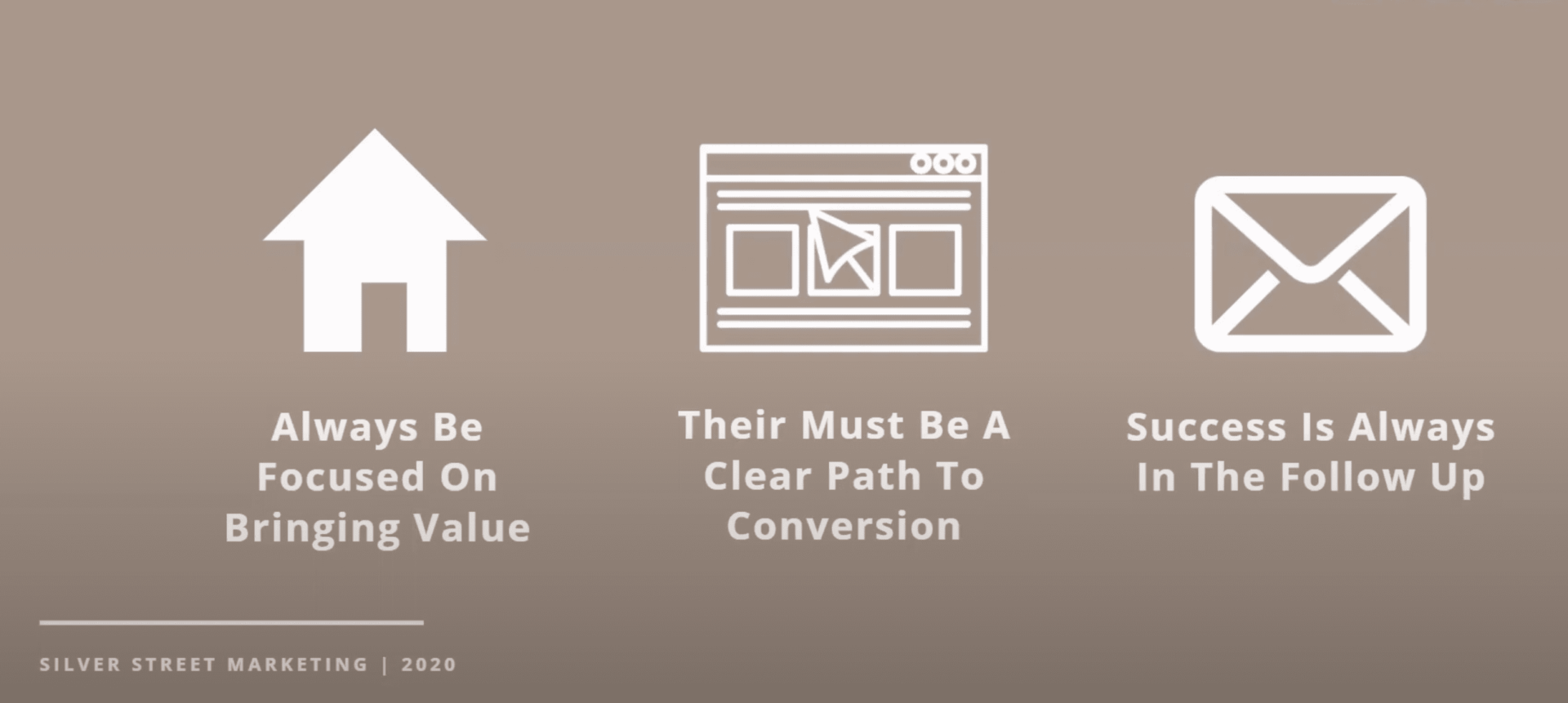
    The first thing that we need to talk about is creating our strategy. First off, to lay down the kind of base layer so we know in what way that we’re moving, is first, we always need to be focused on bringing value.

    In this case, the value that we’re bringing is information on this property.

    We’re thinking about all the things that somebody who’s looking at buying a new home or interested in selling their house and getting another one in the market because the rates are low, or for whatever reason that they’re going through at that moment.

    We need to be able to bring value to that situation, and that doesn’t only apply to our ad. This applies to every little piece of follow-up, any engagement with this person, whether it’s through our digital marketing, through our physical talking, or any other piece of follow-up that we send them, we need to bring value.

    By doing that, you’re going to be able to really become the agent that works with this person.

    Number two, there must be a clear path to conversion. We need to make sure we have a website or a lead form in place that’s very simple and easy, is a very straightforward way to collect and disperse information so that we have everything set up correctly and we make sure that we are providing that value that we’ve been talking about that we’re going to be using in our ad.

    Then lastly, success is always in the follow-up. Do not give up on these leads because they don’t respond to your first email or your first phone call.

    Most deals are not closed until between the ninth and the 12th interaction. Keep that in mind, success is always in the follow-up.

    Laying Out How to Move the Lead Through the Process

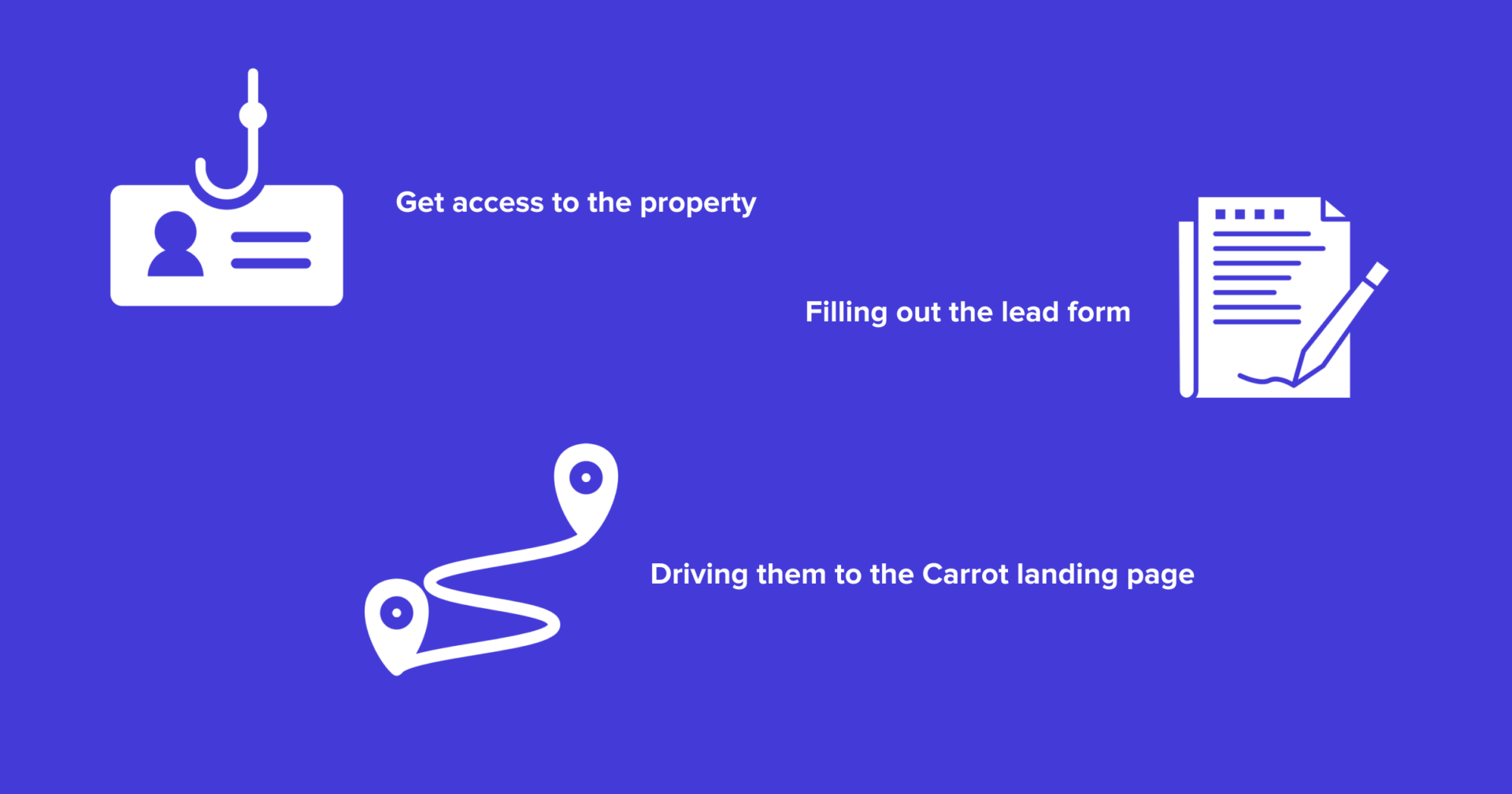
    All right. This is really where we’re going to lay out how we’re going to move this lead.

    First, we need to get access. We need to say, “Let’s get access to the property,” so we’re going to use that as our hook.

    We’re going to say, “Hey, do you want access to a specific property that’s for sale?” We’ll go into this script a little bit later, but that’s going to be our first piece. That’s going to be kind of our hook that gets somebody interested.

    Next, we need to have a clear path, and that path is going to be driving them to the landing page. Now, we’re going to be using a Carrot landing page. I’ll be showing you how to create that Carrot landing page and how to use that as a conversion tool.

    Lastly, our goal is going to be filling out the lead form. That’s kind of our path for this lead and what we’ll be doing.

    How to Create Your Landing Page to Generate Real Estate Buyer Leads and Seller Leads

    Now, that we have everything kind of a base layer set up, let’s jump in and actually build out the Carrot page.

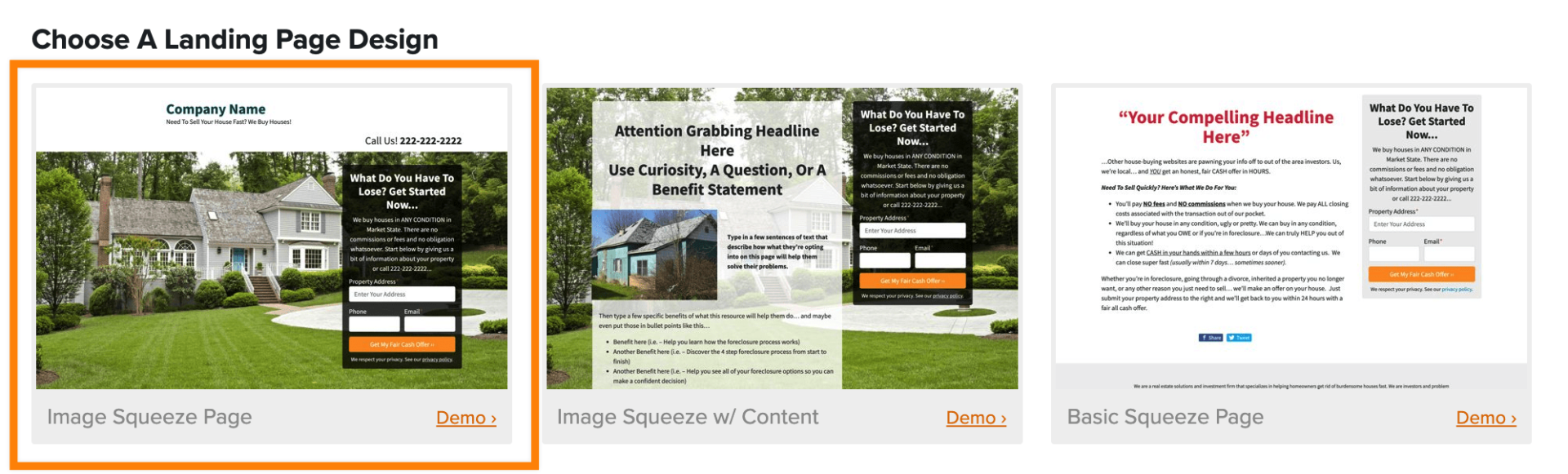
    Now, I like this first image squeeze page.

    This is the one that I usually go with. Now, I’ve tested other ones as well, but this one is a really good one to be advertising your listing. Now, we’re going to give it a quick title.

    We’re going to do a Listing Landing Page or Listing LP. Next, be sure to select an opt-in form. Now, if you haven’t created an opt-in form specifically for this landing page, then we’re going to show you how to do that.

    Usually, the easiest way for me to go through this is I just pull up one, and then I hit Edit Form, and then we go in, and we are going to go to Forms, and then we’re going to pick the one that we want to duplicate.

    Usually, what I like to do is I like to use this, “What do you have to lose? Get started now.” It’s usually the one that fits the best for this landing page, so we’re going to go ahead.

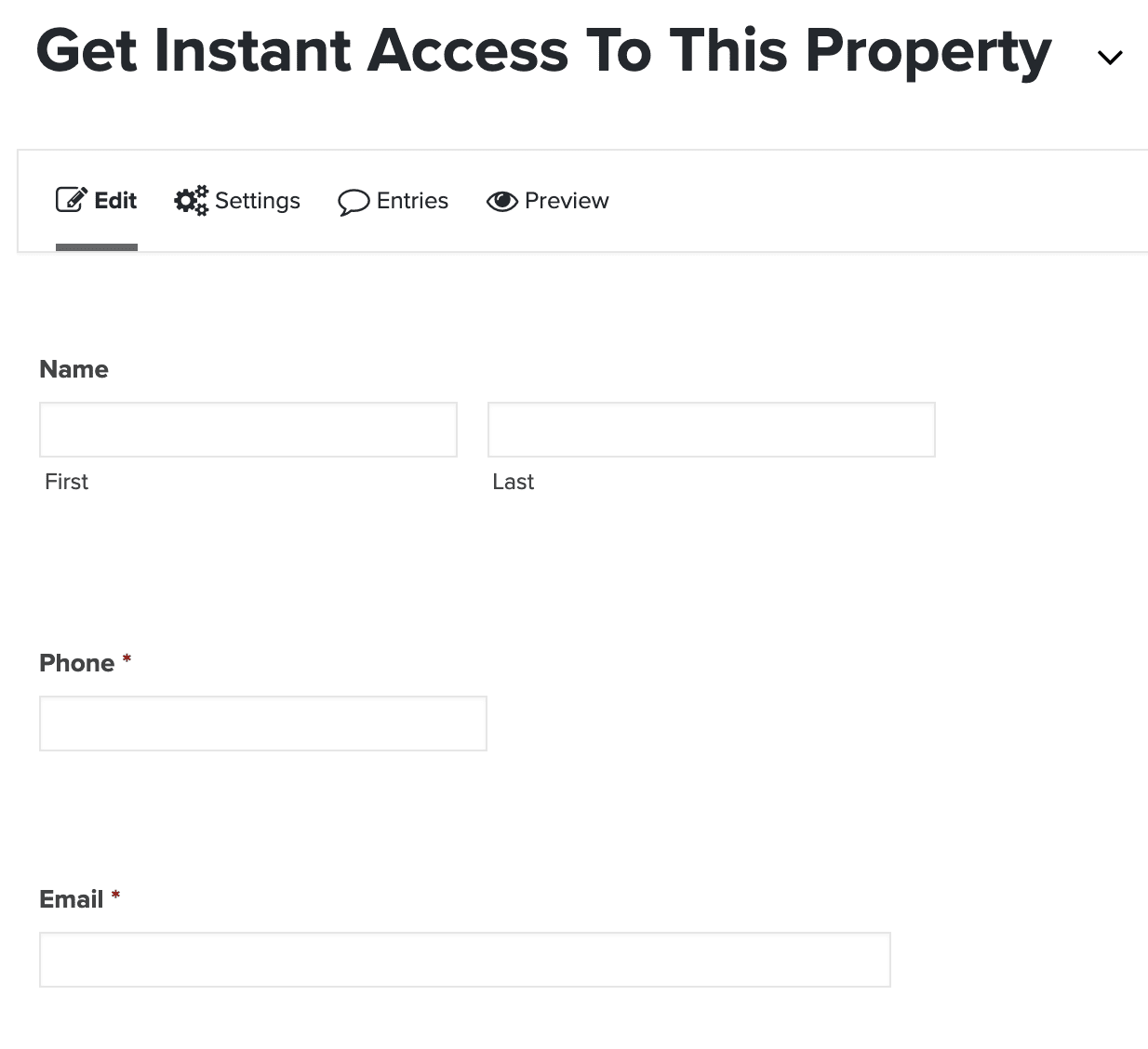
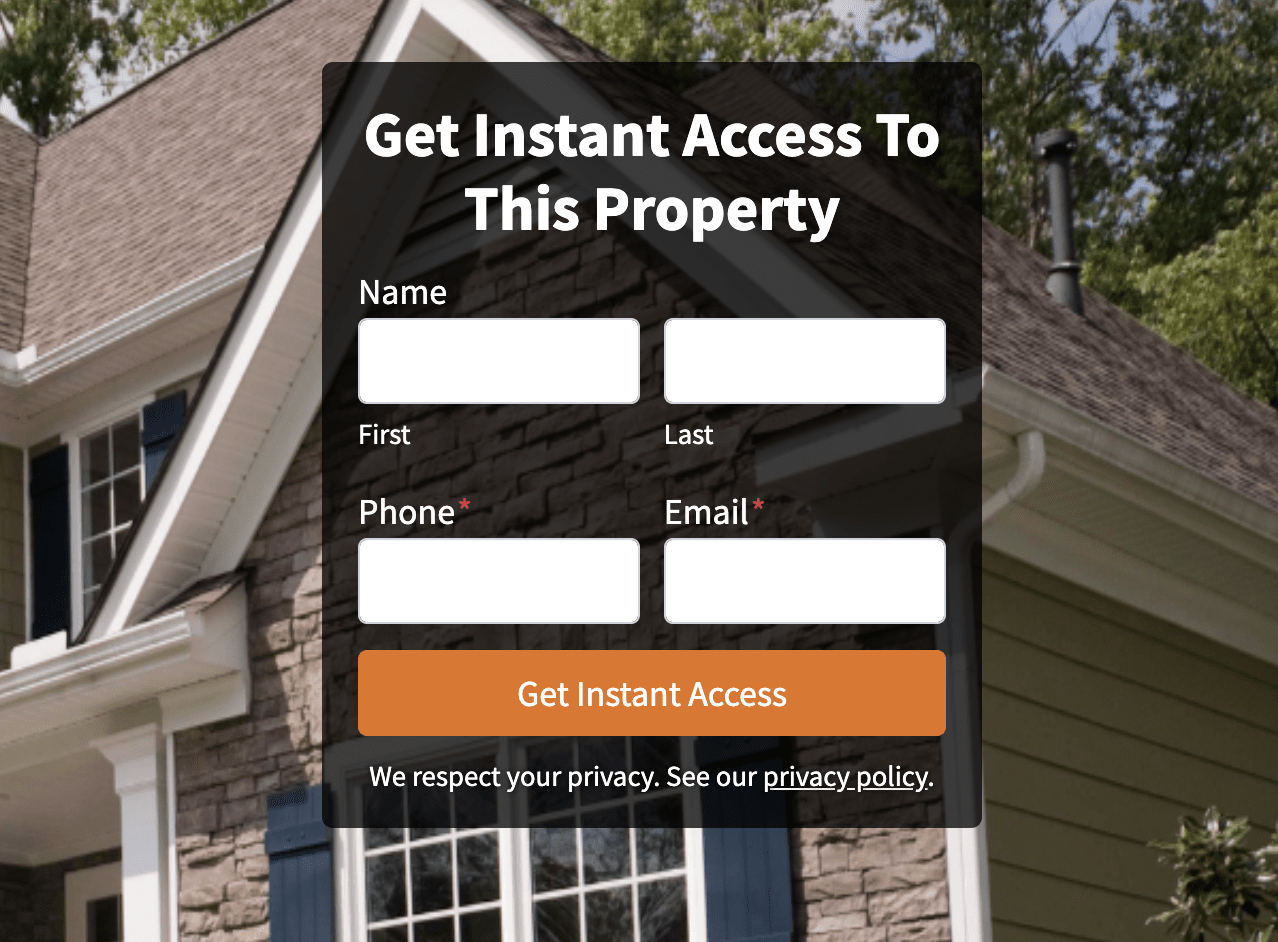
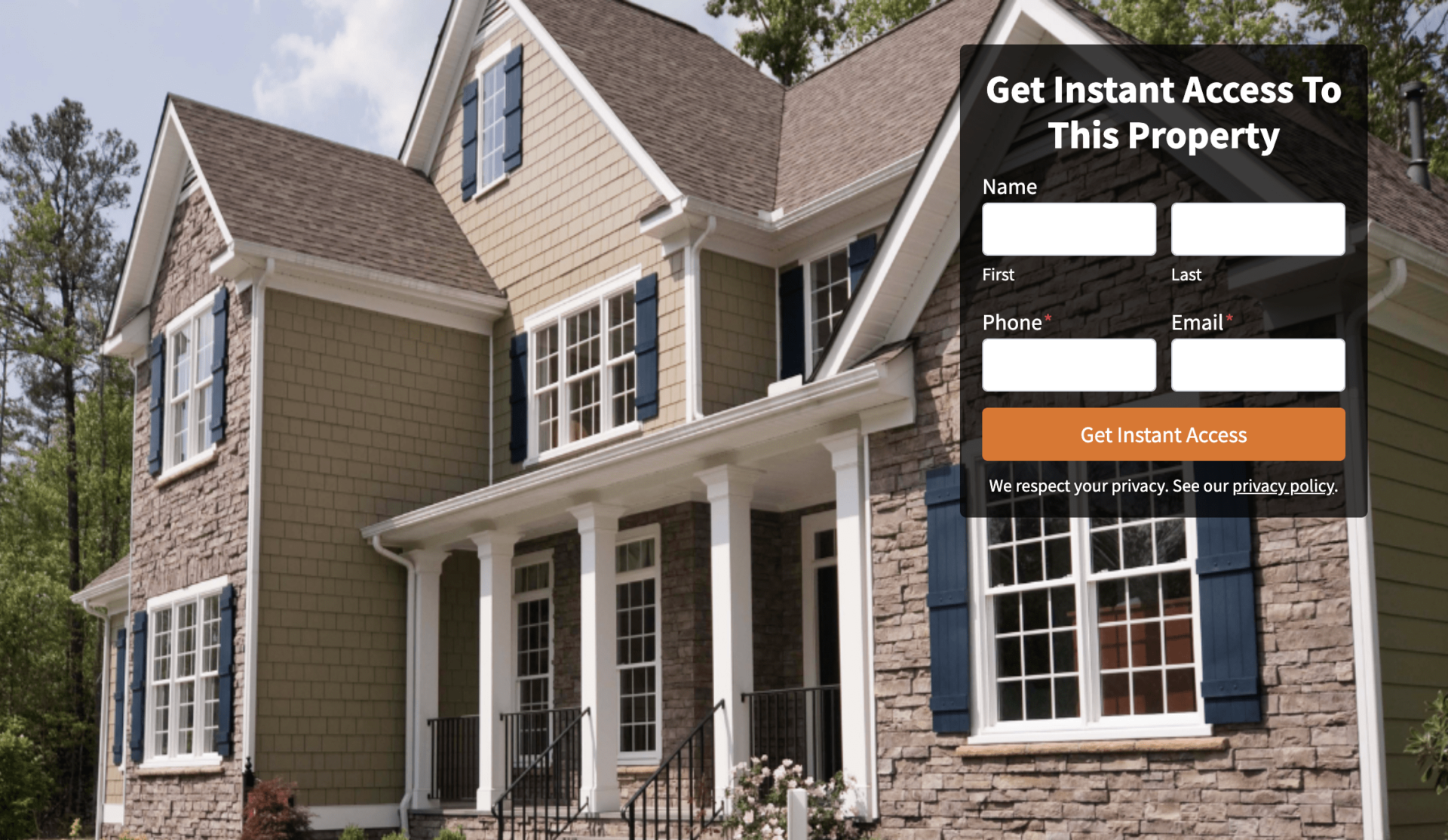
    We duplicated it, and we’re going to go ahead and edit it, and we’re going to put, “Get Instant Access To This Property,” and we’re going to hit Update, and we’re going to be asking for the name, the phone number, and the email address.

    All right. That’s perfect. Now, we’re going to go into the Form settings. You can put a little note here like, you could always if you’re going to send them more properties in the future, you can put, “We will send more properties similar to the property you’re interested in in the future,” or whatever you’d like. That’s up to you on this form, but we’re going to go ahead and we’re going to change the button to Get Instant Access.

    Okay. We’re going to update that. Now, we’re going to go back to the landing page and we’re going to refresh that real quick, so that way, we can use that form that we just selected, so, “Get Instant Access To This Property,” and we’re going to come down here and we’re going to make sure that we choose the image that we want on here.

    Now, I personally have found that the background image that usually works best for me is actually changing the size of the image, so when I upload it, I like to upload an image that has like a website template size, which is like 1,300 by 1,200 pixels. That usually works best.

    You can do that inside of Canva. If you go to canva.com, you can actually create that yourself, and it works really well. Once you have that uploaded, you’re going to go ahead and click Select. I always like to make sure to preview it beforehand. You can always publish it and change it later, but just make sure it looks nice and be able to use that.

    There are some things you want to make sure that we take note of. Before we publish, I’m going to hide the header. You can leave the header if you want. I personally don’t like it, so I am going to take that away. That way, it just seems a little bit more seamless. It just is a little bit more strictly a landing page.

    You can see we’ve got an easy, little landing page here, “Get Instant Access To This Property.” This is going to be the image of the home that we are going to be sending the listing or the traffic from, so just make sure that this is the listing picture.

    Again, you can change those dimensions in canva.com. Then, just switch it over to the website, and then download it back onto your computer, and it will look nice and it won’t be all pixelated, and it just will be a little bit more seamless. That’s what I like to do here.

    Now that we have the Carrot page ready, we just need to get the thank you page ready.

    This is the landing page.

    We’re going to come back to Carrot, and we are going to duplicate one of our thank you pages. I usually like to use either one of like our Contact Us or something similar just because it’s very simple and already has a structure set to it that we can edit, and then add all those pictures to it real fast.

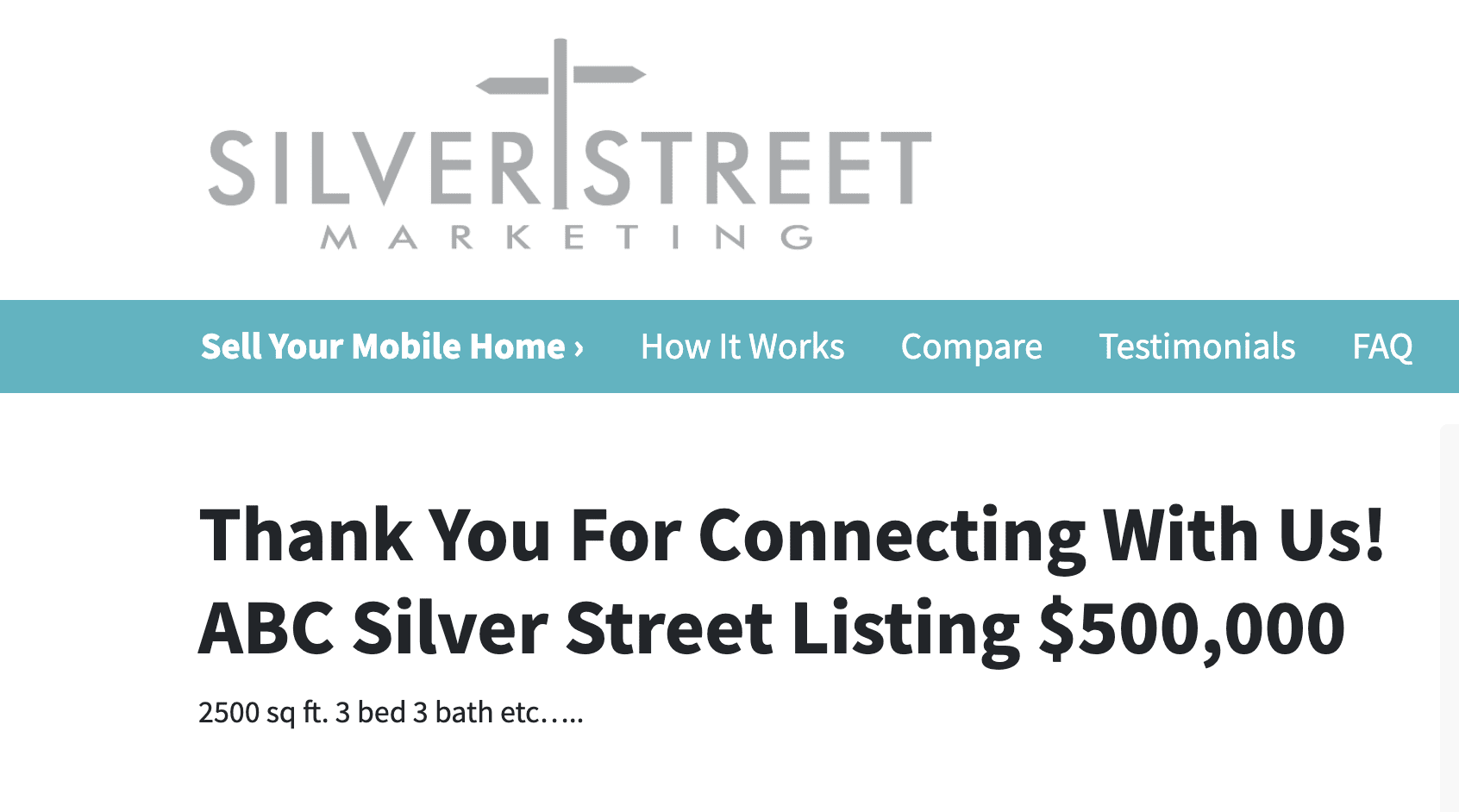
    I am going to go ahead in here, and I’m going to say, “Thank You Listing LP,” and I’m going to put, “Thank You For Connecting With Us!” I’m going to start filling out the information of the listing.

    We’re going to do, “Thank You For Connecting With Us!,” and I’m going to put the address of the listing, so ABC Silver Street Listing, and for the price, $500,000, and then we’re going to put some info on the property.

    We could do a little paragraph here, and we could do 2,500 square feet, three bed, three bath, et cetera.

    This will be up to you to fill out, and then we make sure to had our pictures. We’re going to go ahead and do gallery, and then you go ahead and upload those pictures here, and so this is going to be kind of our instant access page.

    Then, I like to have this contact info here, but I also like to switch the bottom form to “Find more info about this property.” or “Contact us to learn more about this property,” Whatever you’d like, but I always like to have a form down here just in case if somebody has questions about the property that they want to see it, or they want to reach out to us about it. That way, they can do it from this Carrot page.

    I prefer to change this form to the thank you page for the actual listing.

    How to Create Your Listing Facebook Campaign to Generate Real Estate Buyer Leads and Seller Leads

    Now that we have a Carrot landing page ready to go and we want to go in and start advertising that page to get people to start clicking through.

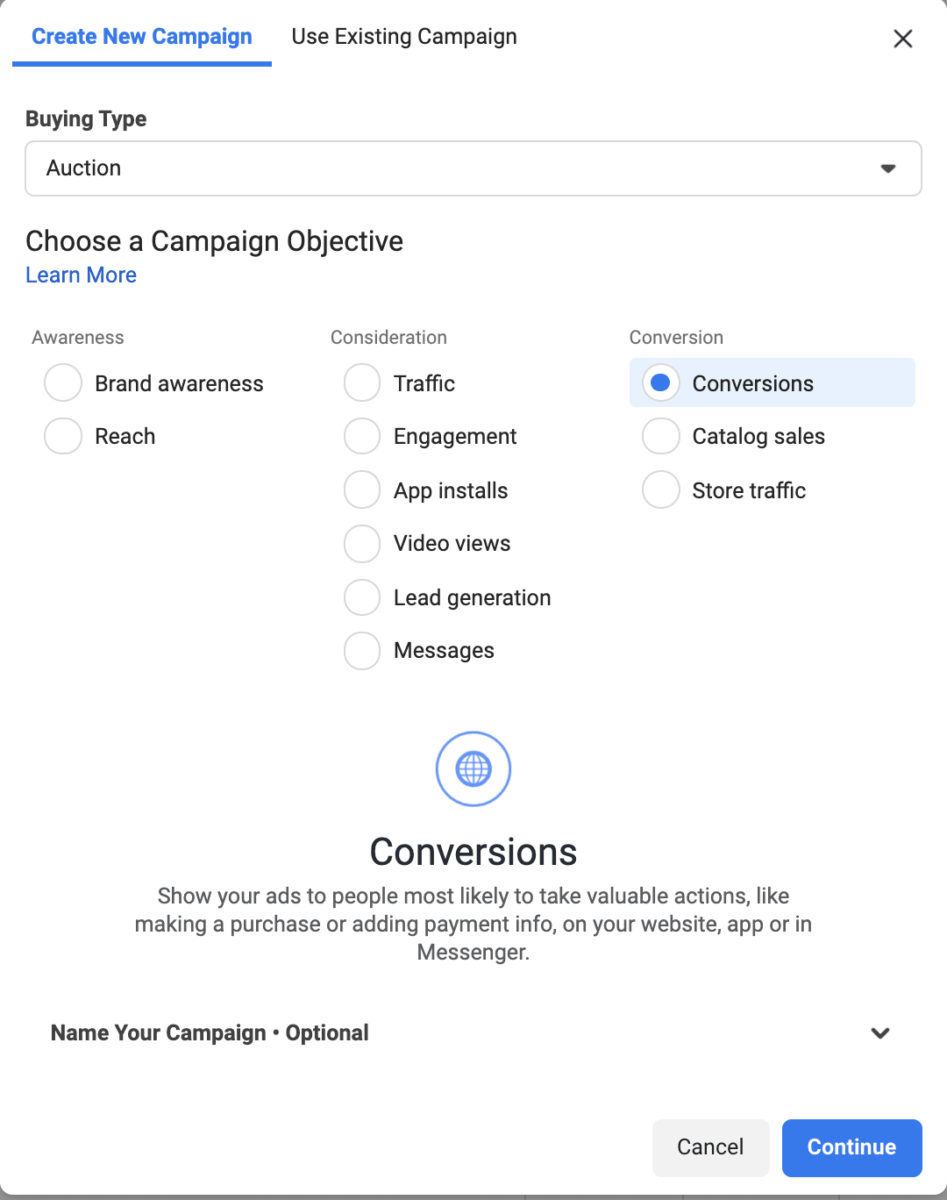
    Starting with the Facebook ads manager. This is where all the fun really begins. To create this campaign, we’ll be using a conversions campaign.

    You just have to, this little, button, and then you’ll hit Conversions, and then we’ll start making this together.

    Now, I already have my structure set up, but I’m going to walk you through it still the same.

    First thing’s first, is we have to name the campaign. I did leads from listing, and then we have to turn on the special ad category and turn on housing. If you don’t do this, your ad account will be shut down, so make sure you do it.

    Then, you’ll make sure that you’re selected on conversions, and that is it for this page.

    What conversions mean is we are driving traffic in the hopes of converting a lead on our landing page. The page that we created is what we’rere basically telling Facebook, “Hey, when we sent traffic here, we expect the person to fill out these forms and click this button.”

    Now, in order to be able to have this optimized with Facebook, you do need to have your Facebook Pixel installed, so you need to make sure that you have your normal pixel installed on the entirety of your website and your lead pixel or whatever you’re using to optimize the event, needs to be on your thank you page, so whatever thank you page you’re doing, you need to make sure that your tracking code is installed there.

    Now let’s dive into the ad set. Now, I’ve just named this Listing Landing Page, and we have to select our conversion events. Whatever event you’re optimizing for, I prefer to optimize for lead, so I’m going to go ahead and select Lead, and then I am going to come down here. I’m going to select my budget.

    For this particular … What we did for this past client is I used about $5 a day. I would suggest and arrange between five to $10 a day is a decent budget you can be used for this.

    If you expect your listing to go faster, I would say put more money towards it because then, you’ll generate more leads more quickly, and then that way, you have some leads to go off of.

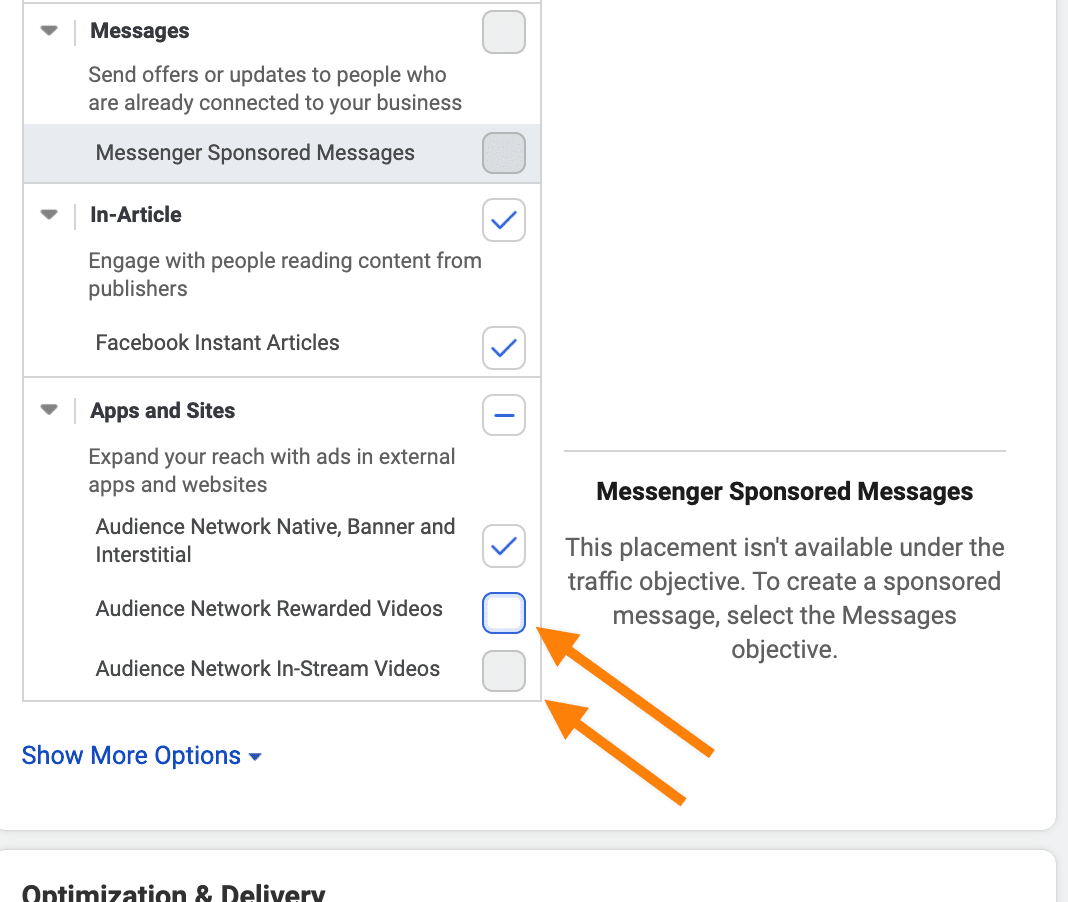
    Maybe you can dual represent, or you’re going to have leads that you’re going to be able to get back to that are interested in the property before it’s under contract to help bump up that price. Next, we’re going to select Manual Placements, and deselect these bottom two.

    We don’t want them in the rewarded videos or the in-stream videos, so we’re going to take away the in-stream, and under the Apps and Sites, the rewarded and the in-stream videos.

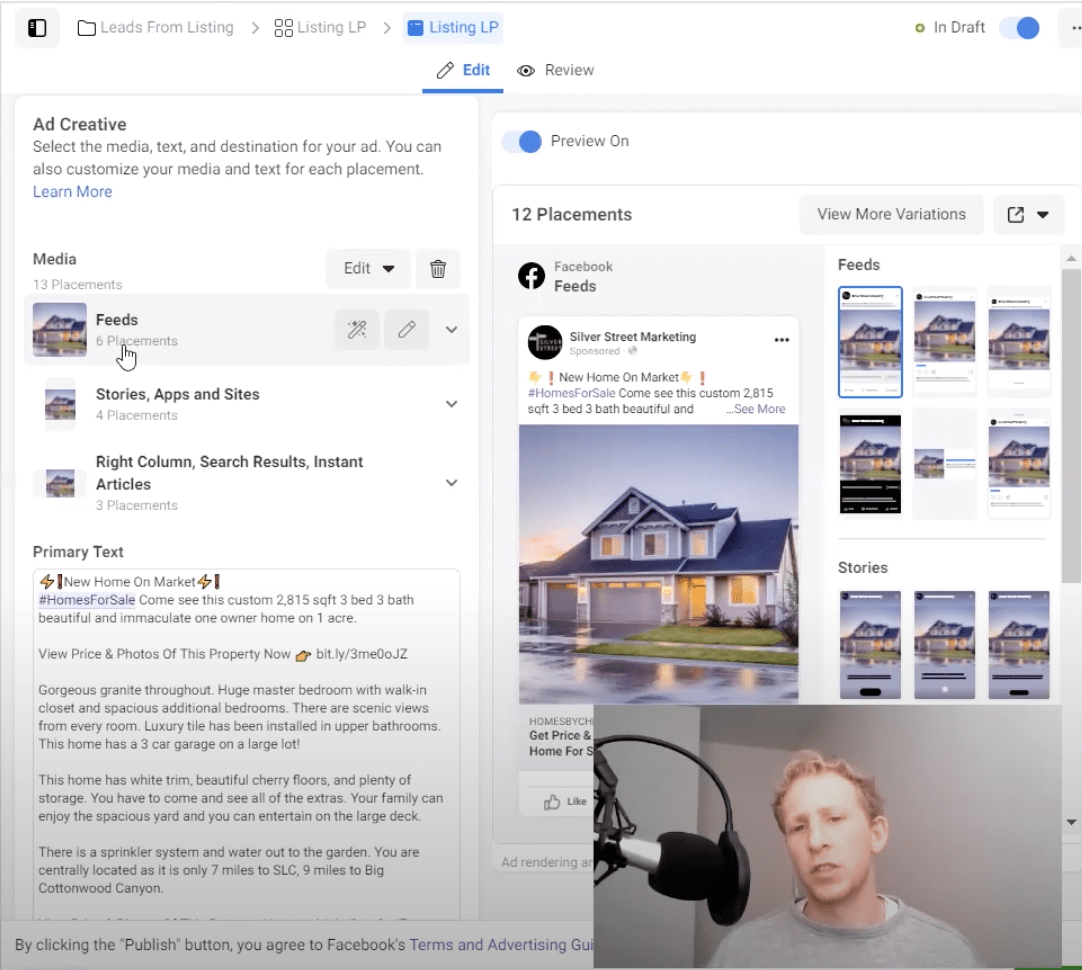
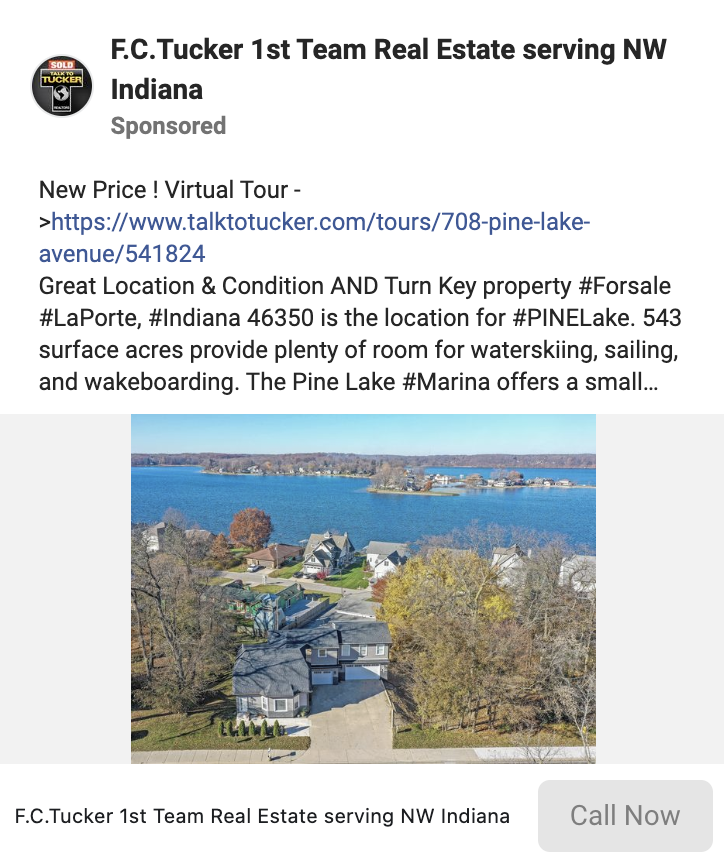
    Now into the ad, which is the fun part. Make sure you select your page, and I suggest getting a photo of the listing and putting it here. We’re just going to use a single image, and it’s going to automatically … If you place it, I would suggest using a square image for this because the square image will automatically adjust the formatting for all of the formats on Facebook, so if you have a square image like a 500 by 500 or 600 by 600, that will work best here.

    We’re going to come down to the copy. Now, if you want this copy for free, feel free to use the same structure.

    You can also just comment on the bottom, your email, and we would love to send you a little booklet of sample copy that you can use in your ads to generate motivated seller leads or buyer leads, as well as advertising listings, and kind of the template that we used to do that. Here, I like to use a couple of emojis in the beginning just to kind of capture some attention, and then I use a hashtag, and then I kind of put in just the info of the property.

    Right below that first immediate description, I put view price and photos of this property now, and I put a Bitly link. I use a direct link that goes … You can use it, either use the direct link for your website, or you can create it into a Bitly link with some custom URL parameters if you want to track where those leads are coming from, but I go ahead and I put that in a copy so people can click immediately to go straight to that listing. I do a little bit more of the description of the listing.

    Usually, I take that as my description I’m using on the MLS, and then lastly, I do another direct link there, “View Price & Photos of This Property Now.” If you remember, this was kind of our like main value and hook proposition, be able to get them on the path to going to our website for the goal to fill out the lead form.

    I’ve used a headline, “Get Price & Photos Of This Home For Sale Instantly,” and we’ve got a website, and then we’ve put in our URL. Also, make sure our Facebook Pixel is selected, and use the Learn More button.

    You can see multiple variations of this ad, so you can see them in different placements just by clicking and checking out the different placements, so you’ll be free to be able to see what it’s going to look like in different parts of Facebook.

    Now, click Publish, and your ads will start going live, and they will be driving to that landing page. Make sure you’ve got everything, your lead form, your landing page, your thank you page, all put together with the information of the listing on your thank you page, and you will be good to go.

    Now, I know that’s a lot of information. There are other ways to be able to do this, but I have found that this has driven a lot of leads for my clients. If you are interested in learning more, you can always go to our YouTube channel.

    You can always reach out to us, silverstreetmarketing.com. We do have account build-outs, where we create the account for you, or we have accounts where we will actually manage it for you and be in there every single day to make sure to bring you more leads, more deals, and more value.

  • Tired Of Digital Bandit Signs? Try Creating CTA Facebook Ads!

    Tired Of Digital Bandit Signs? Try Creating CTA Facebook Ads!

    Tired Of Digital Bandit Signs? Try Creating CTA Graphic Ads For Facebook!

    Video Transcript

    Hey, y’all, it’s JT with Silver Street Marketing. Today, we are going to be talking about how to create some graphic CTA Facebook Ads, so some graphic call to action ads that you can see on Facebook and in quite a few different places.

    This is really good for top of funnel, advertisements that are trying to get that instant, low hanging fruit to click and get over to your website or to fill out a lead form. I test this in every market, because a lot of markets respond well to it.

    I honestly prefer face-to-face videos, but this is a really good backup option, and definitely a good test option for people. We’re going to be going over how to create this professional CTA Facebook ads, so that you’re able to do this yourself and do it in your own account, and be able to see the benefits from that and capture some more leads.

    Go to canva.com. This is a free service. This is a really good one to use if you want to create some ads and you don’t necessarily have the information possible to be able to do that or the software possible to do that.

    This is a really good place to do it because it’s got a lot of preloaded designs and sets, and it’s really easy to use. It’s just really, really simple, and it can help you cut down that time it takes to create the actual media for your ad.

    Once you get into canva.com, you’ll need to create your account. We’re going to create a design.

    Now, I like to do custom dimensions. They do have preset Facebook dimensions, but for my Facebook ads, just because I know that square images tend to perform best, and then I can be in multiple different placements, I like to do a 600 x 600, just make sure that the PX is selected for pixels. We’re going to go ahead and create this new design.

    Are You Fumbling Your Way Through FB Ads? Or, Simply What to Get Started?

    Let the expertise of Silver Street do the leg work for you. They will create an account as if it was their own.

    We’re going to bump up here. I am going to go ahead and move this up here to the top. What we’re going to do here is, we are going to set this up to be kind of a graphic image.

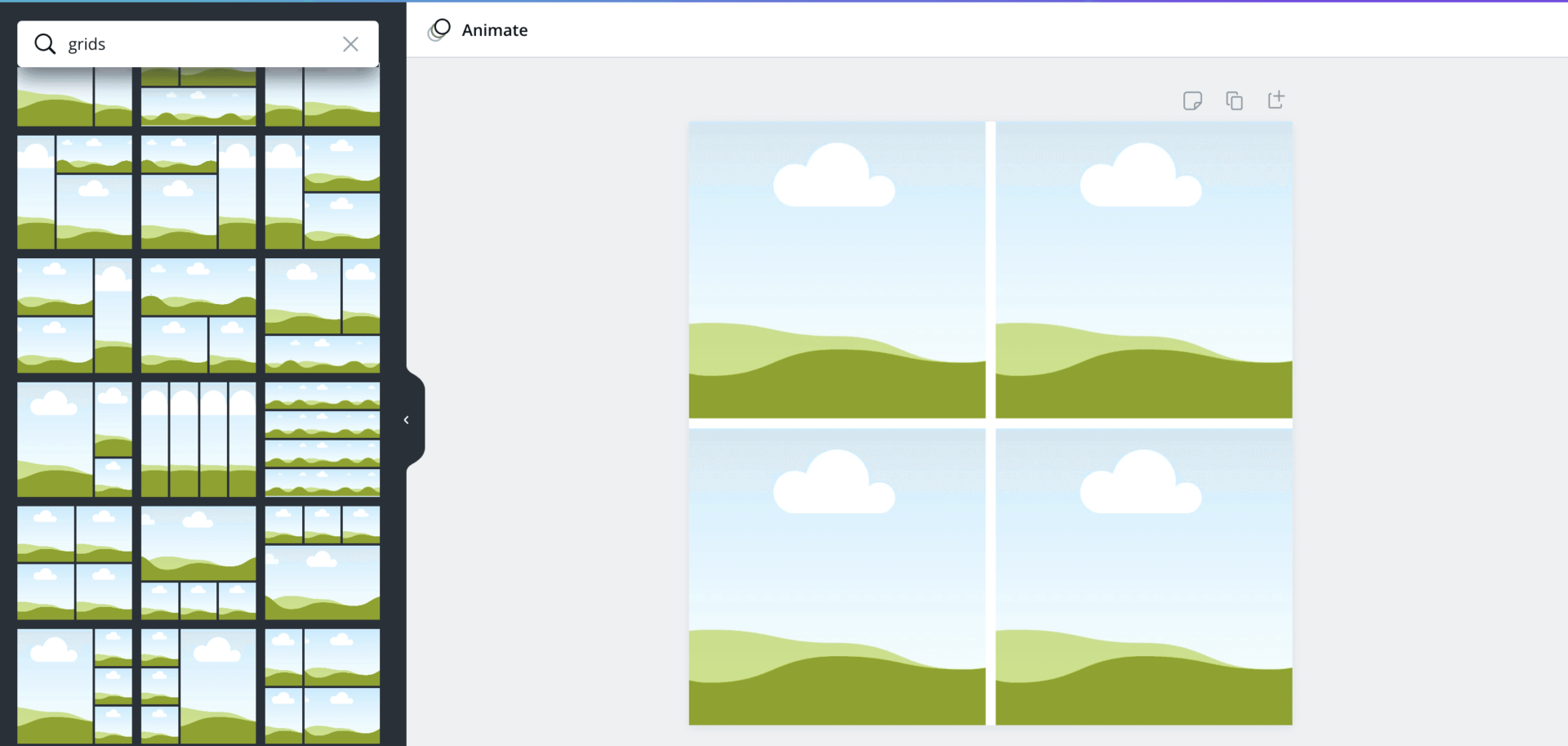
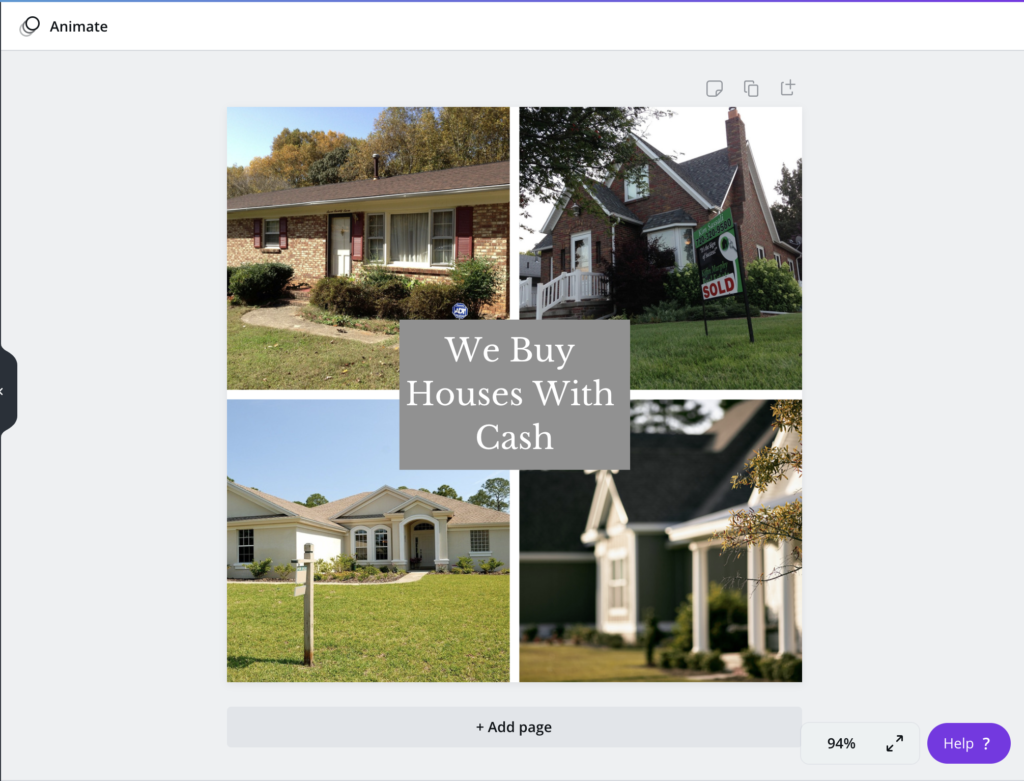
    I like to kind of set it so I’ve got multiple images, so for this one, we’re going to do multiple images. A lot of people use this instead of bandit signs, because they look a little bit better than bandit signs. You don’t have to have a fake Photoshop box in front of somebody’s house to make it look like a sign. You can do this a little bit, it looks a little bit nicer, a little bit easier.

    What I like to do is, you can either come in here to the actual element screen. What we’re going to do is, we’re going to go into grids, which you can find in the elements tab if you just scroll down a bit, and we’re going to click right here. What we’re looking for is a four picture grid, typically, is what I like to use.

    We’re going to grab this one right here, pull it up, perfect.

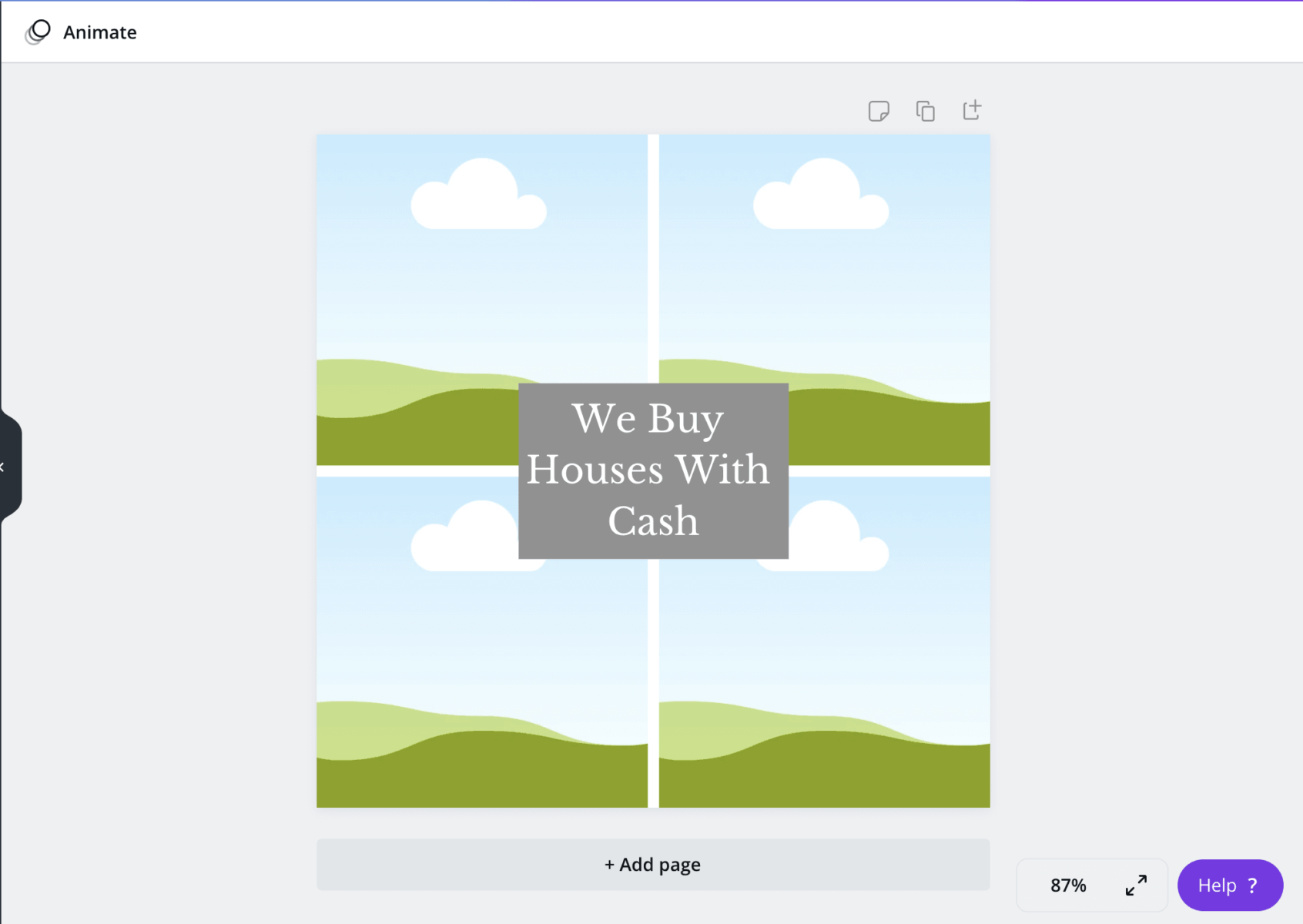
    Then what I’m going to do is, I am going to go back to the elements screen, and I’m going to just search rectangle. I’m going to pull this up. I’m going to take this down a little bit. I’m going to put this right here in the center.

    Next, we’re going to go down to the text and we’re going to add a heading. I am just going to use this as the font, and we’re going to go ahead and put “we buy houses with cash.” I’m going to shrink this down to about the same size, move this up here, and we got to make sure that it’s going to be white because it’ll stand a little bit more and give it a little bit more pop, so we got that.

    We buy houses with cash, and you can do anything on here. You can do sell your house fast, sell your house for cash. You can try different call to actions, but this is our call to action.

    That’s why this is called graphic CTA. This is our call to action here. We want that right in the center.

    Next, we’re going to upload some photos, or you can search for stock. If you’re going to search for stock, you can type in homes and you can pull up stock. I don’t like using these.

    Most of the motivated house images are more like you have to have the premium accounts to use different ones.

    If you’re doing a free account, you won’t get a lot of these. Plus, I don’t really think that they have a lot of stock images that work well.

    What I like to do is use past photos from our actual solds, the ones that we’ve worked on within the area is always a good thing to do. The other thing you can do as well is you can go to pexels.com.

    They have a lot more pictures that could fit what you’re looking for. Or you can just grab some from the area that you’re in, which I prefer. We’re going to go ahead and we’re going to grab some of these. Typically, vertical images or square images are going to work better for these, but you can do landscape as well.

    You can play around with this and decide if you like that or not.

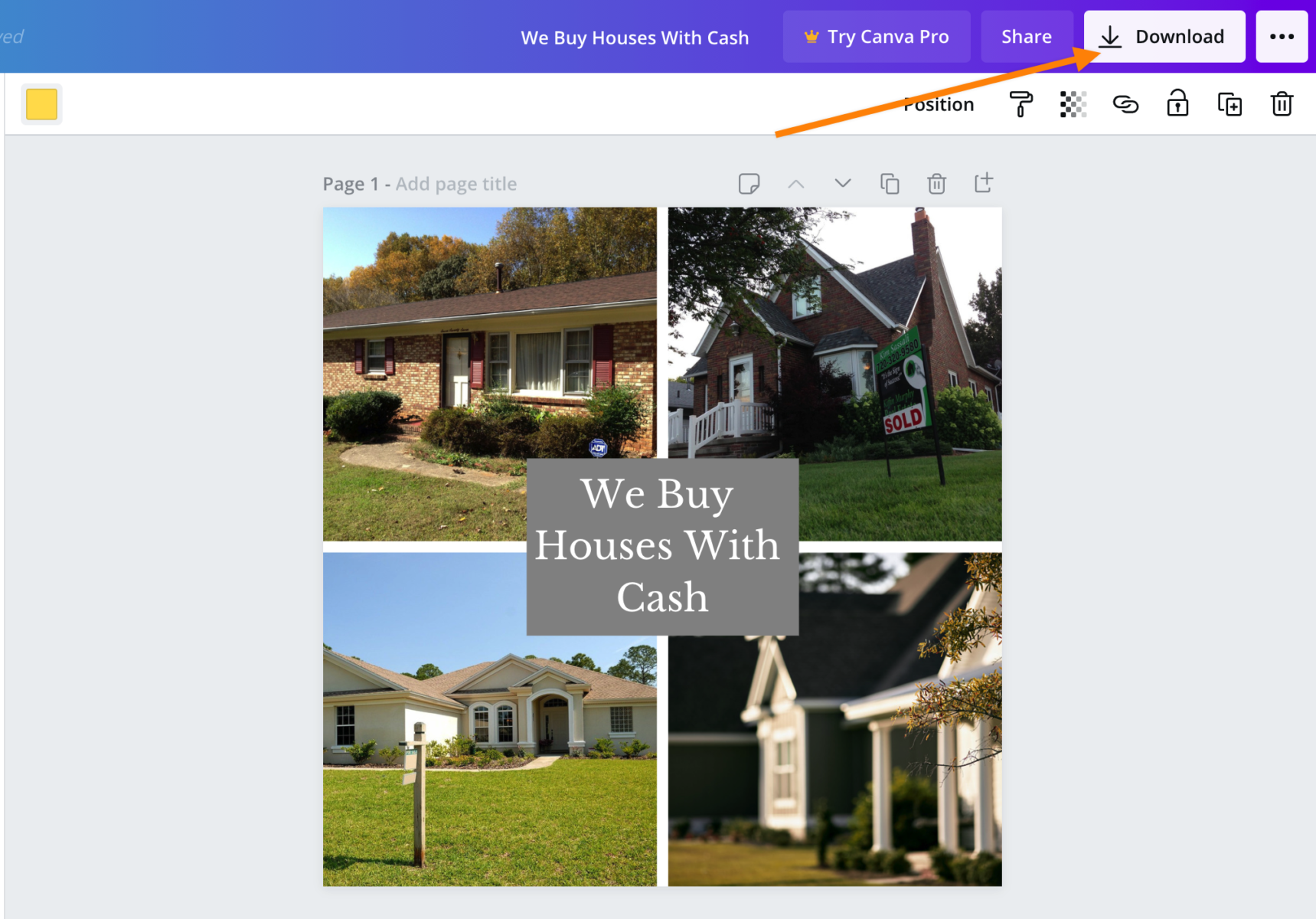
    All right, and then we take this here, and we’ve already got our template set up, and we can go ahead and download that.

    The way that you would do that is you just come up here in this box right here, hit download, and you just want to make sure it’s a PNG, and you can select the page and you are good to go.

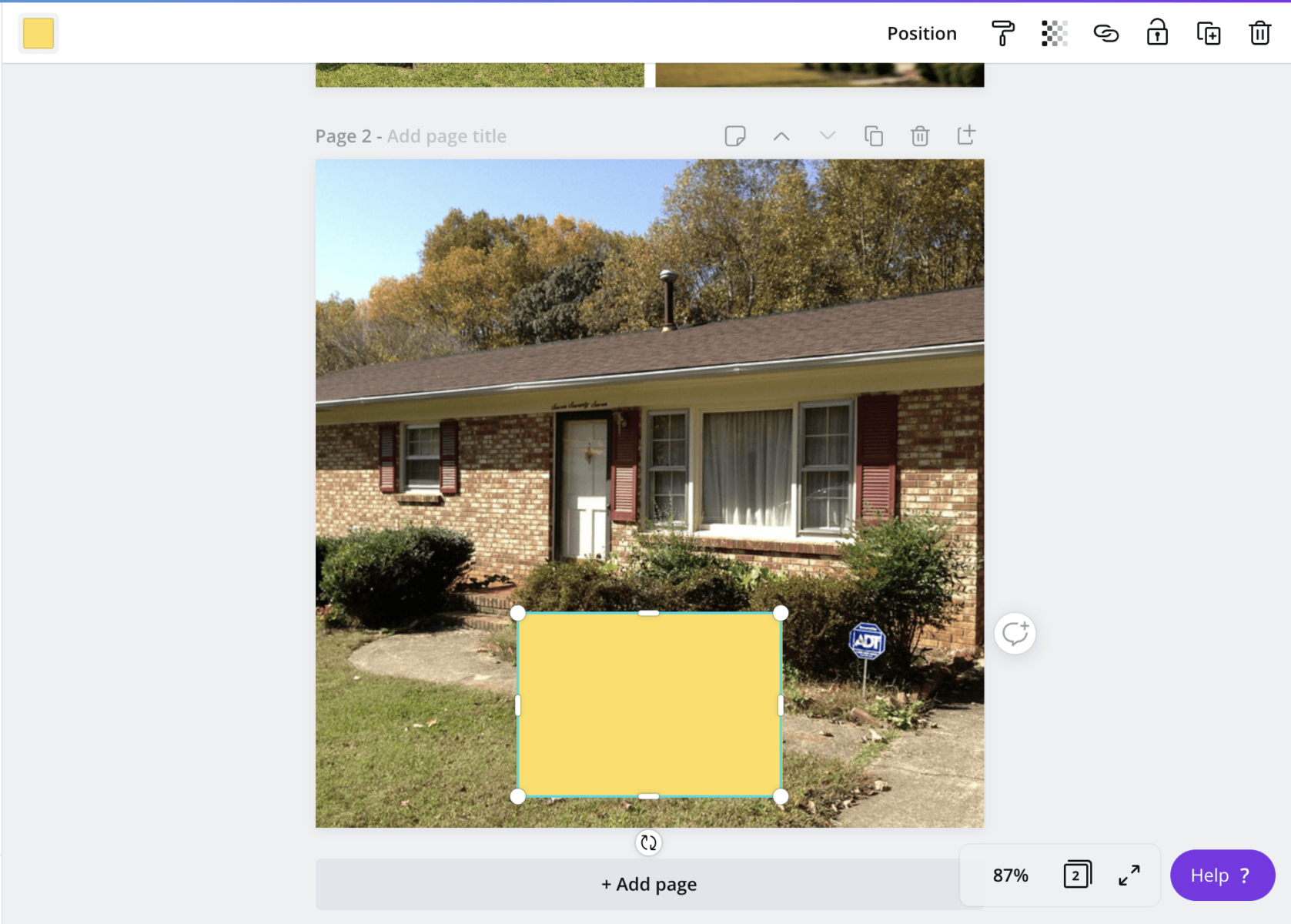
    This is how I create a lot of the ads that are with stock images or you want to have little banners on it. It’s really simple and really easy. If you wanted to do just like a bandit sign like this too, I know a lot of people do this where they go ahead and, we’ll just take this image, for example. They bring it over. They set the image as the background, and now we’ve got a square image that’s perfect for Facebook, 600 x 600. That’s great for CTA Facebook ads.

    If you need to remove the background of the image to make it more suitable for your ad design, you can use an online background remover tool to get the job done quickly and efficiently. Then, we can go back into our elements, and if you want to do a bandit sign, you can create that right here, nice and easy. Throw it down in the middle, you can change the color.

    You’d go with the yellow bandit sign method with “we buy houses in Florida with cash.”

    If you wanted to be a little bit different or add different elements to it, you would just come up into this elements section and they have all these different free things that you can throw in here; charts, images, you can get moving images, all sorts of different stuff that you could throw in that would make your ad a little bit more different.

    You can have arrows pointing, so quite a few things that you can do here that is a free tool, and you’re able to create these call to action ads within a few minutes. Feel free to check it out. Remember, it’s canva.com. Sign up for an account, and go ahead and start making some more media that you can use and test for all your areas.

    Are You Fumbling Your Way Through FB Ads? Or, Simply What to Get Started?

    Let the expertise of Silver Street do the leg work for you. They will create an account as if it was their own.

  • Why You Need a Facebook Page to Find Motivated Sellers + How to Create One

    Why You Need a Facebook Page to Find Motivated Sellers + How to Create One

    Why create a Facebook Page To Find Motivated Sellers

    Video Transcription

    Hey, JT with Silver Street Marketing here. I’m going to discuss why it’s important to have an active Facebook page to find motivated sellers.

    We’re going to be going over a couple of reasons of why that’s going to help your business, and how it’s going to be able to benefit you in finding more leads, as well as help give you a little bit more of a different, social proof aspect and kind of add to the identity of your business.
    Why You Need a Facebook Page to Find Motivated Sellers

    Reason 1: Obviously one of the first reasons that people think of why it’s important to have a Facebook page is the ability that it has to drive traffic to your website, it’s an extra point of conversion so another place that people can find you.

    The goal of digital marketing is to take up as much of the screen as possible. So if you can be on Facebook searches, when people Google search you and they can find a Facebook business profile on Google even, that’s just going to add one more, one more little key, one more little piece to taking up that entire page.

    That’s going to give you the opportunity to drive more traffic, get in front of more eyeballs and ultimately raise more impressions and get more people reaching out to you. It’s all about taking up as much digital real estate as possible.

    Facebook gives you a platform in itself that is very extensive and can be found in multiple different pieces and can help add to that idea of just taking up more digital real estate space.

    Reason 2: A second reason why it’s smart to have a Facebook page is because of social proof.

    This is a place where you can really show people who are following you, why it’s important to sell their house to you for cash, or why it works, or tell them a little bit about who you’ve worked with in the past, or how you’re able to help somebody and the solutions that you offer.

    It’s really easy to do that because it’s such a content-based platform. And because people are searching you out actively, you’re going to have people that you don’t even know, follow you or anything like that, coming back and checking your page.

    They’re checking to see what you’re doing. They are interested. And this gives them the opportunity to be able to become a conversion, to be able to become somebody that you help, somebody that is your next client.

    To be able to add that to your business is really a big deal because social proof is really the reason why people fill out a form. The reason why they give you a call is because they have found the proof by somebody else that reaching out to you is not a mistake. That it’s a good thing and that it will help them. So adding that social proof by adding a Facebook page really will help grow your business.
    Reason 3: A third reason why it’s important to have a Facebook page is the habit of getting into content creation.

    When we talk about social proof, this kind of goes hand in hand. In order to get more social proof, which you can do on multiple different platforms, having it on Facebook really helps you get into the habit of producing content.

    Producing content will help get more impressions and more eyeballs, but it’ll also help you understand your potential clients more, by giving them value and finding things that will give value to them.

    Your Facebook page can really get you in the habit of that. You’ll see reactions and you’ll see how people are reacting to what you’re posting. Maybe it’s really good reactions; maybe it’s negative reactions. How do you present that differently to make sure that it is positive or stay as positive so that you can later engage with the audience when they’re maybe a little bit more ready? Content allows you to drip on those people and stay relevant in front of them.

    Reason 4: The next reason kind of follows that same method of thinking, that content will help raise that those impressions and it’ll help give you more social proof, but what it will also do is the Facebook page will give you and your business a true identity in the space.

    People are able to connect with you on a different level, whether your business name is Rick Buys Houses, or We Sell Houses Fast Memphis, it doesn’t matter. By having all this content on your page, what you’re doing is you’re creating a brand personality and identity, and that’s what people want to connect with.

    They don’t want to just connect with companies and businesses because companies and businesses are related to making money, right?

    A person is related to service and to helping you, by producing that right brand identity and that right image through your content. This is done through your Facebook page.It’s going to give you an upper hand when it comes down to people deciding which company they want to work with.

    When there’s an identity that they can relate with, that’s where most likely they’re going to go. They relate with what your business stands for because you’ve put that into an image.

    You’ve put that into something almost tangible for them, almost a relationship for them. Creating that brand identity through your Facebook page is really important. We can do that by showing people into our own beliefs, into our way of thinking into our benefits, because we say, “We are people trying to help you. We’re not a business trying to make money.”

    That’s something that a Facebook page naturally can do as well because it’s so based on having an identity.

    Reason 5: A lot of people come forward and say, “Hey, I want to drive more traffic to my website.” Your Facebook page is necessary in order to run Facebook ads which is one of the best ways to get traffic and driving people to your website.

    It’s very important that you have a Facebook page in place before you do that because a Facebook page that’s already more established is going to perform better because it already has audiences that are engaging with it.

    The algorithm already has some data that’s in the background that it can work off of. So having a Facebook page for longer, is going to season your account and help you be more successful.

    Ultimately when it comes down to a Facebook page, you need to be consistent with it.

    You are going to see results come in all ways, shapes and forms, but definitely the way that we talked about in this post, as long as you consistently give your page some attention, commenting back to people who are commenting to you, answering any questions that are coming through the messenger, treating it as if you are a person behind that logo, because that’s what’s going to get people to keep flocking towards you and you’re going to attract more people instead of having to put so much time and effort into purely just try to find them.

    There’s a lot of things that Facebook can do for you and I hope you guys can take this and go on and make your page.

    If you need help creating your page, continue to read this post. Below, we dive into how to create your Facebook page to find more motivated sellers.

    How to Create a Facebook Business Page for a Real Estate Investor

    How To Build A Facebook Page For Your Home Buying Business

    Video Transcription

    In this section, we are going to be going over how to create a Facebook business page to cultivate more motivated sellers and give you a little bit of a hub to build some brand awareness on Facebook and get started on your Facebook journey.

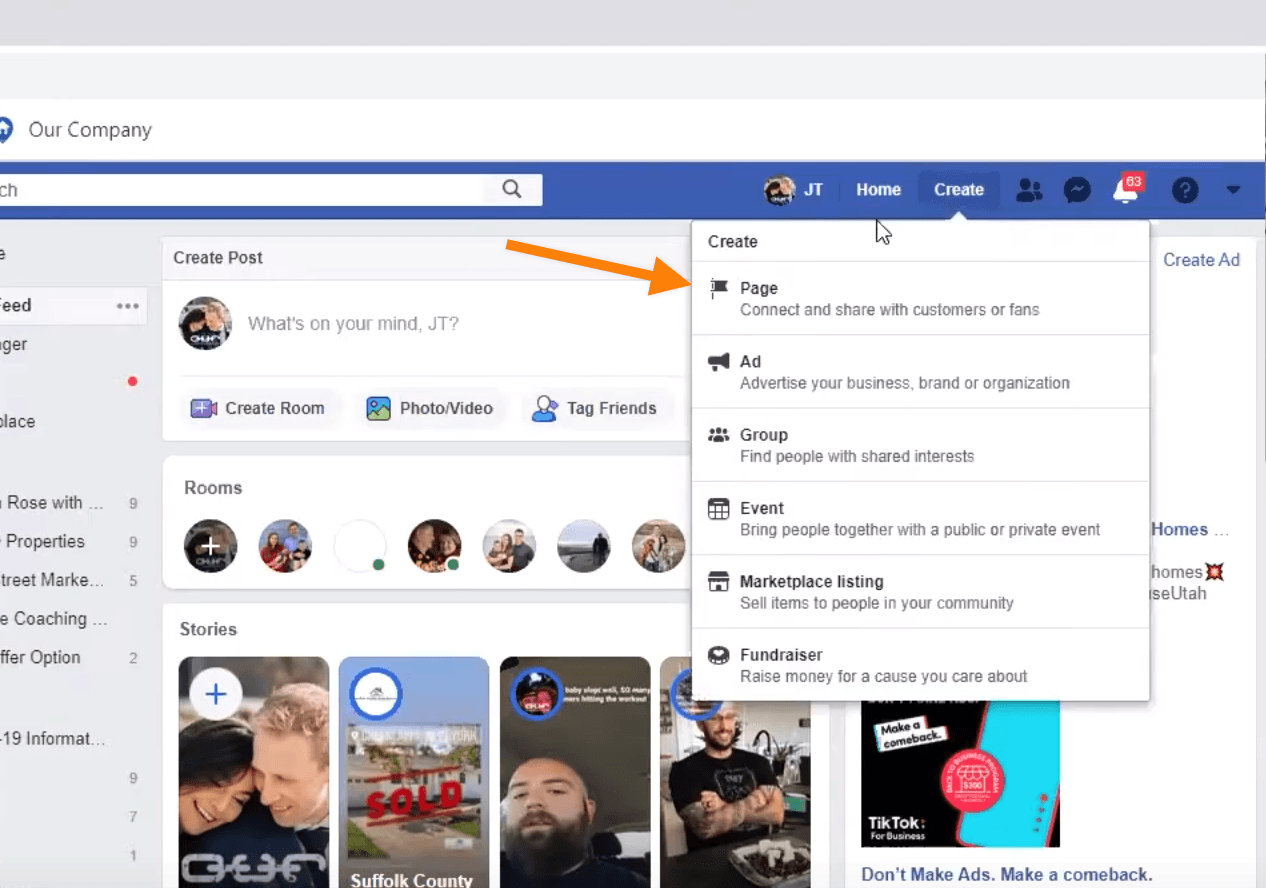
    If you have never created a Facebook page before, it’s very simple. Just log into your Facebook and you’re going to come up here to the top and you’re just going to hit, create. It’s going to pop up and a little section here that says, page.

    Facebook Page to Find Motivated Sellers

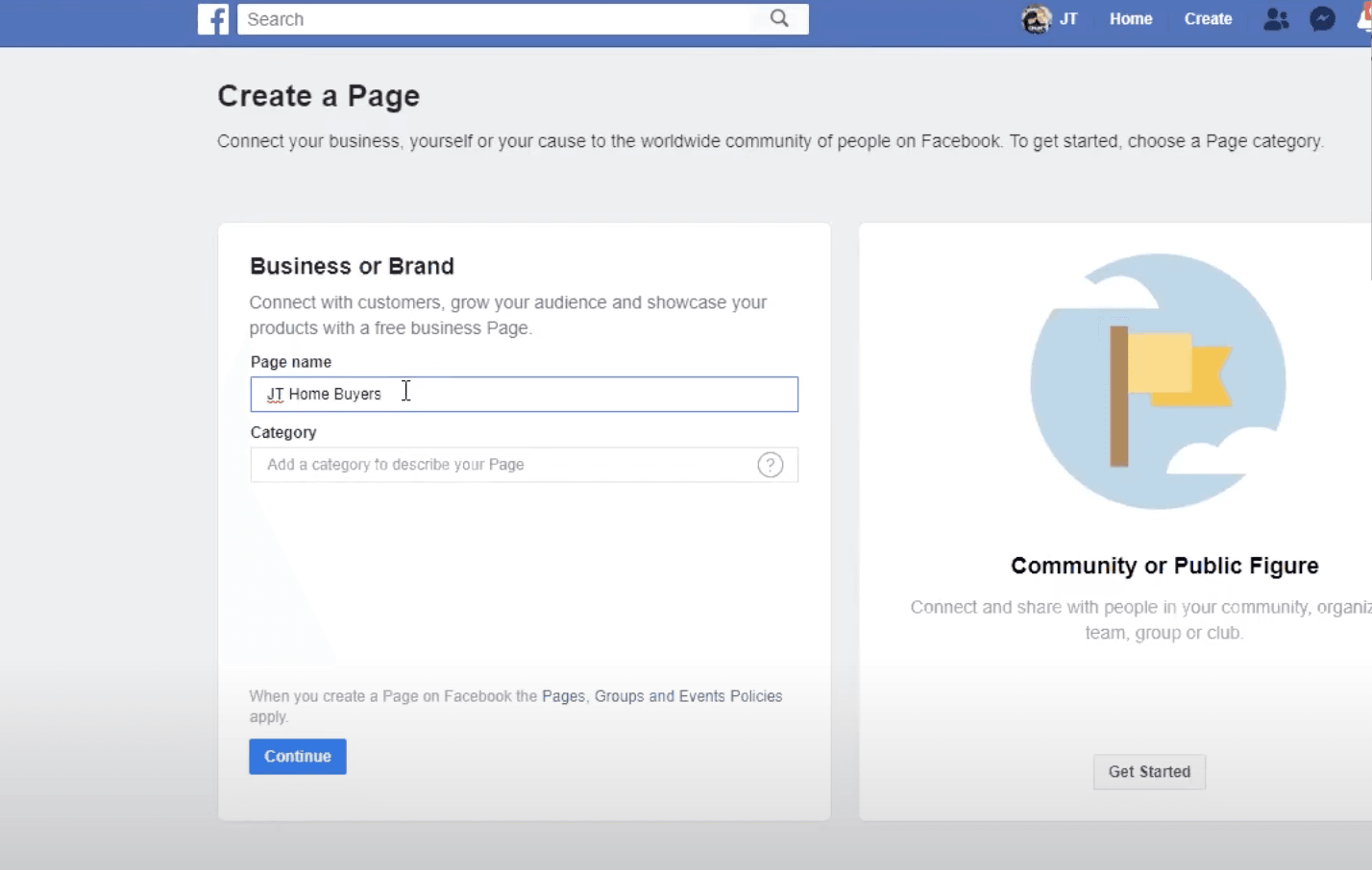
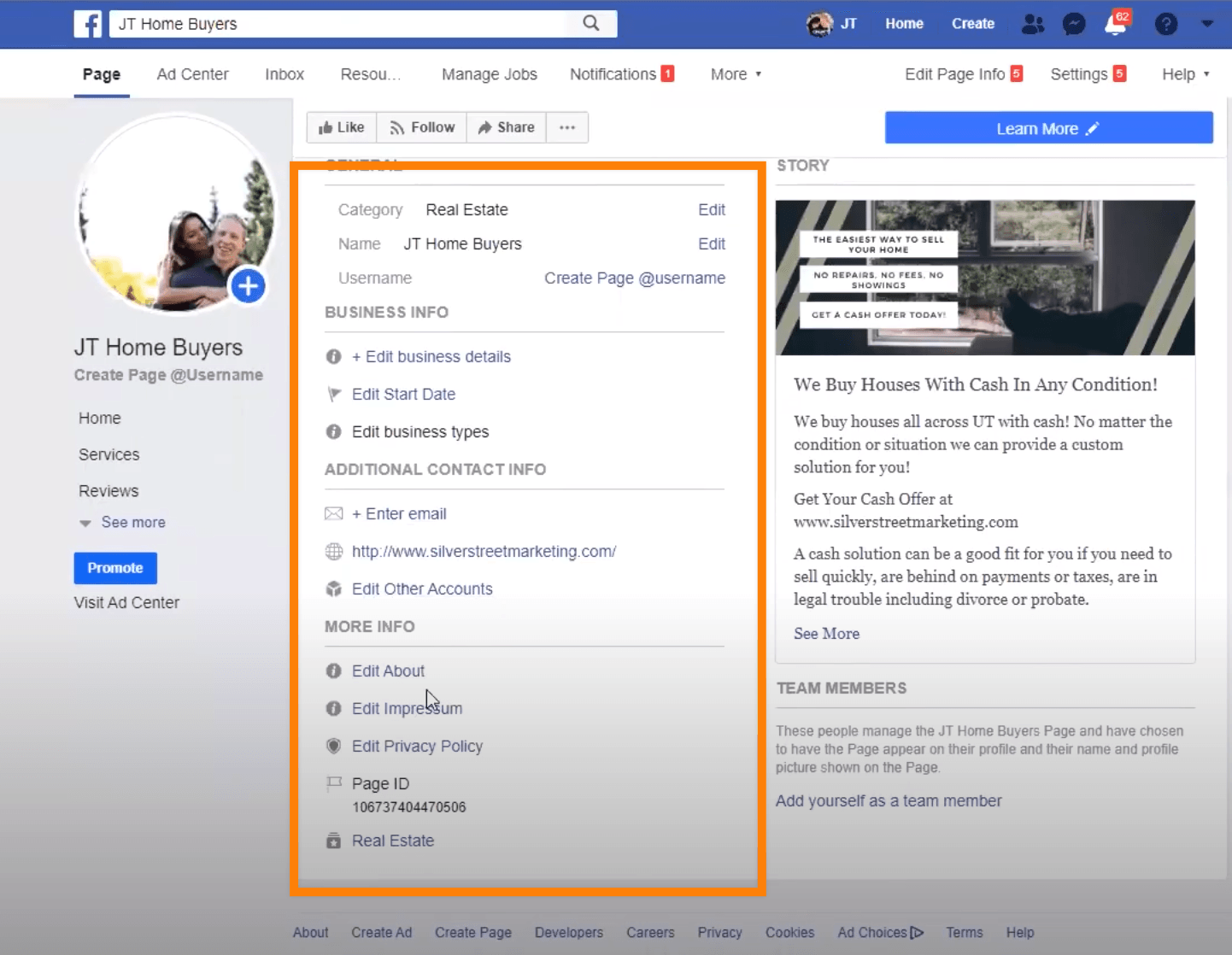
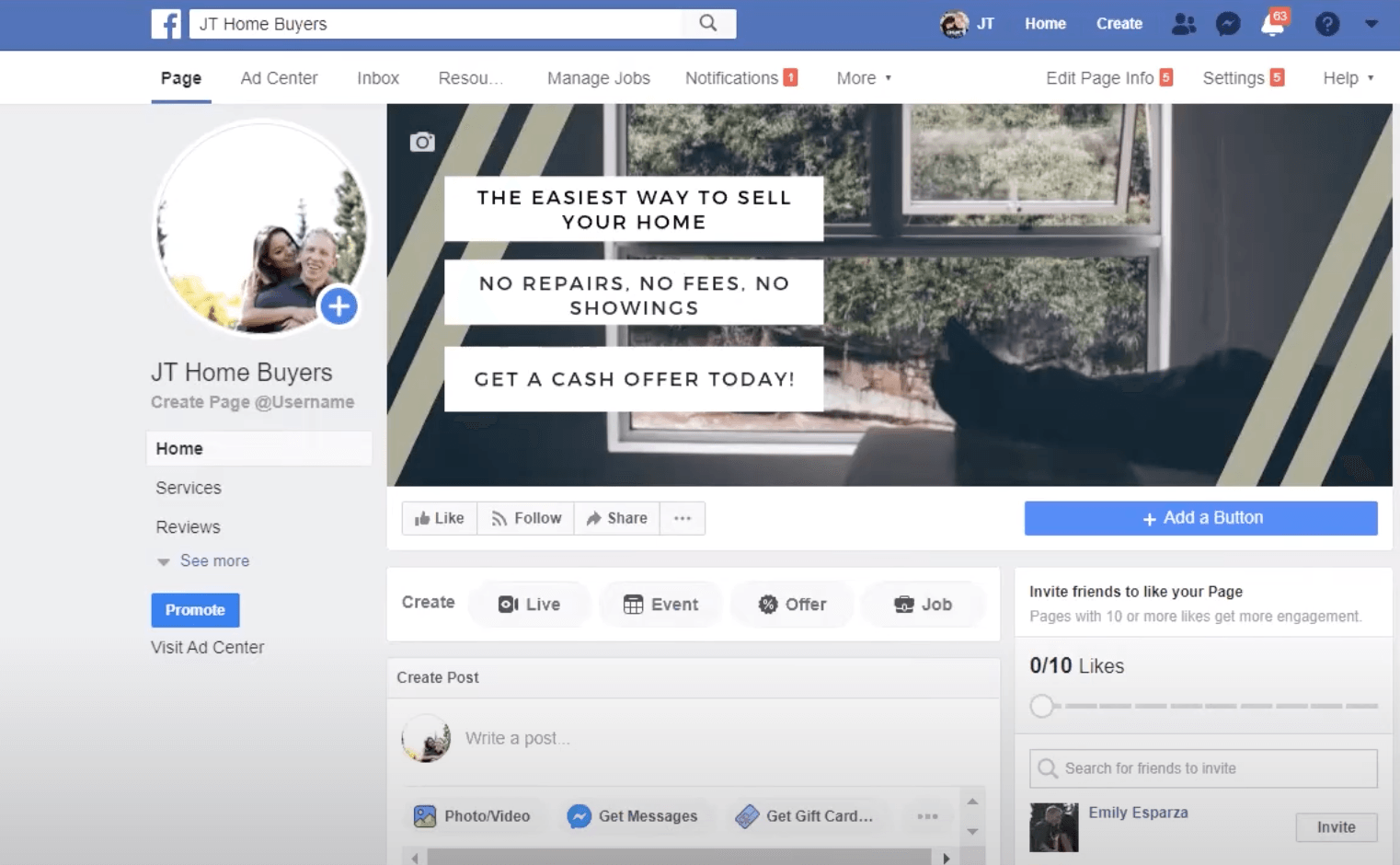
    And we can just click away. It will load up and you’re going to find under business, get started and we’re going to name our page. I’m going to name it JT Homebuyers.

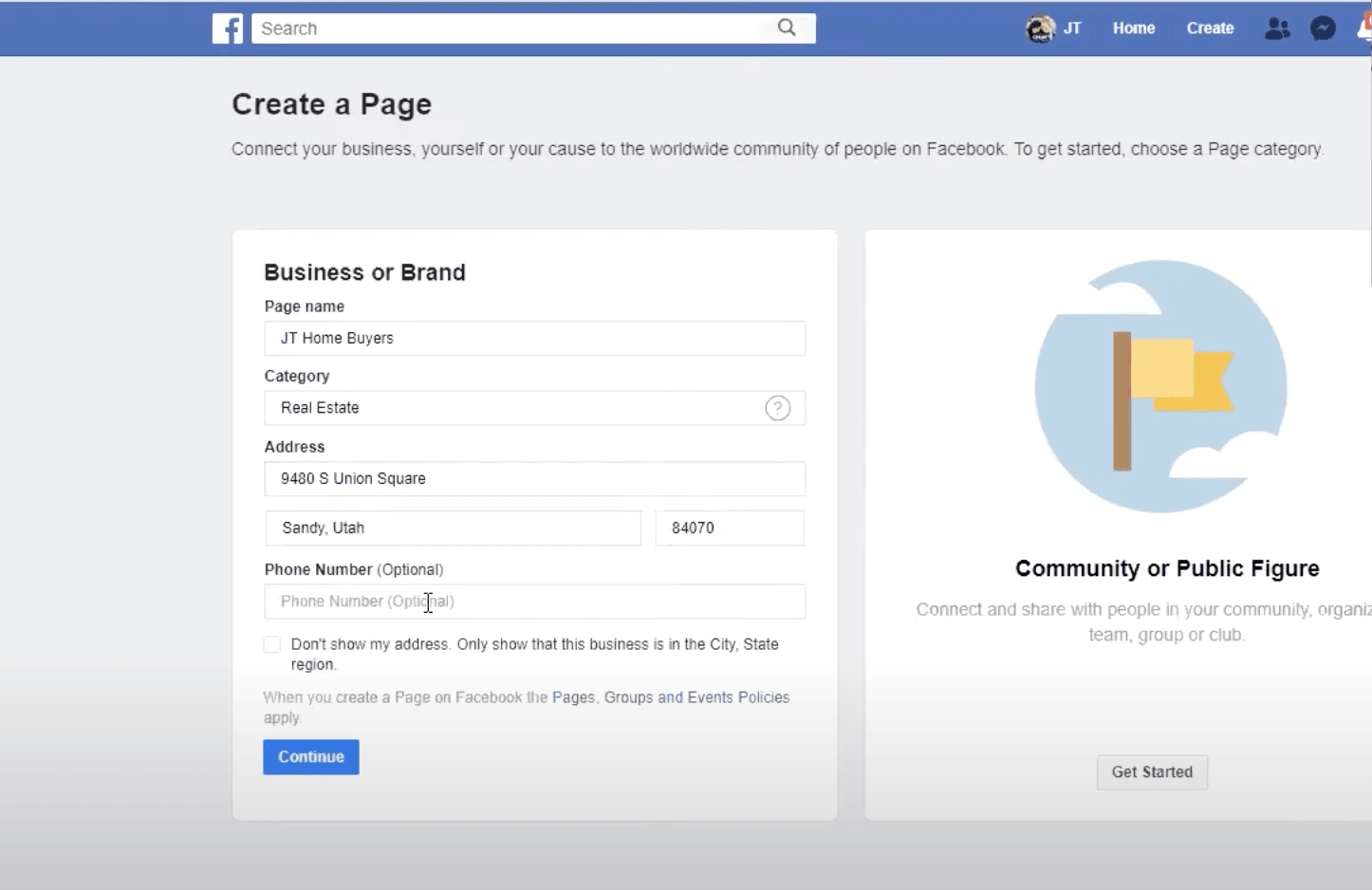
    Now, we’re going to do our category. I like to just type in real estate and just do the broad real estate right here. Obviously, there are other options you can pick from, but generally, I just do this one.

    We have the option to put in your address and a phone number, it just depends on what you want. So that is up to you.

    For this example, I’ll go ahead and add the address.

    That brings us to a page where we need to now upload a profile picture and get everything working for the new page.

    For this example, I’m going to upload a picture of myself and my wife. I recommend to either upload a picture of you, or you can upload a picture of your logo, as long as it’s going to fit in there. But people oftentimes like to respond to personal looking pages.

    So sometimes I’ll do a picture of the actual owner of the company or an acquisitions manager, or sometimes I’ll do a picture of the logo itself.

    Now we need a cover photo. I made this cover photo using Canva. I’ll show you how in a moment, but Facebook also offers a free appointment booking tool that people can book appointments through your page.

    You can take advantage of this, or you can build a Calendly scheduling link that you can put in as well. Just be sure to have those connected to your posts or your app. I’m going to go ahead and skip this just for the time being, but you can always go back to using this stuff as well.

    Back to the cover photo, I created on Canva. It’s very simple. There are general templates you can already use, but this is where you start.

    Now that we have our profile picture up and ready to edit. You can update and edit it, change it, crop, and do numerous other changes to make it look nice and pretty.

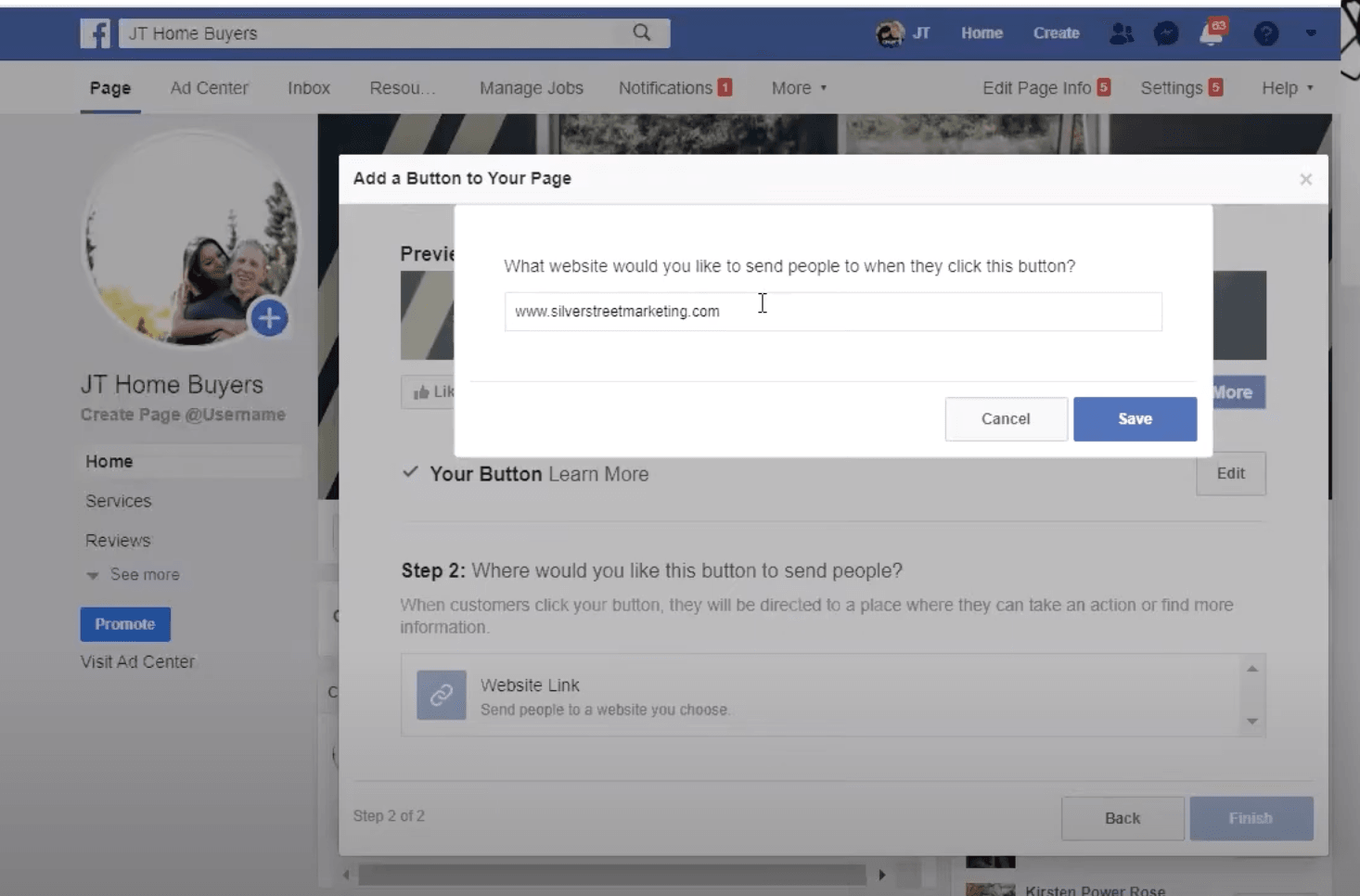
    The next thing we want to do is add a button. Generally, I will recommend to people they either do a call or a learn more button.

    If you decide to do a “contact you”, you can see more options such as, send message, or contact us, call now. I’m just going to use www.silverstreetmarketing.com, click save, and then we’re going to hit finish.

    Now somebody clicks on that button, they will be taken to my website. Or, if you did a call us, it would just call you immediately from either their cell phone or if they have some sort of service hooked up to their tablet or computer.

    Now it’s time to add more to our “about us” section. Generally for this, I’ll use the same picture as my cover photo, or I’ll create a new one entirely just for it.

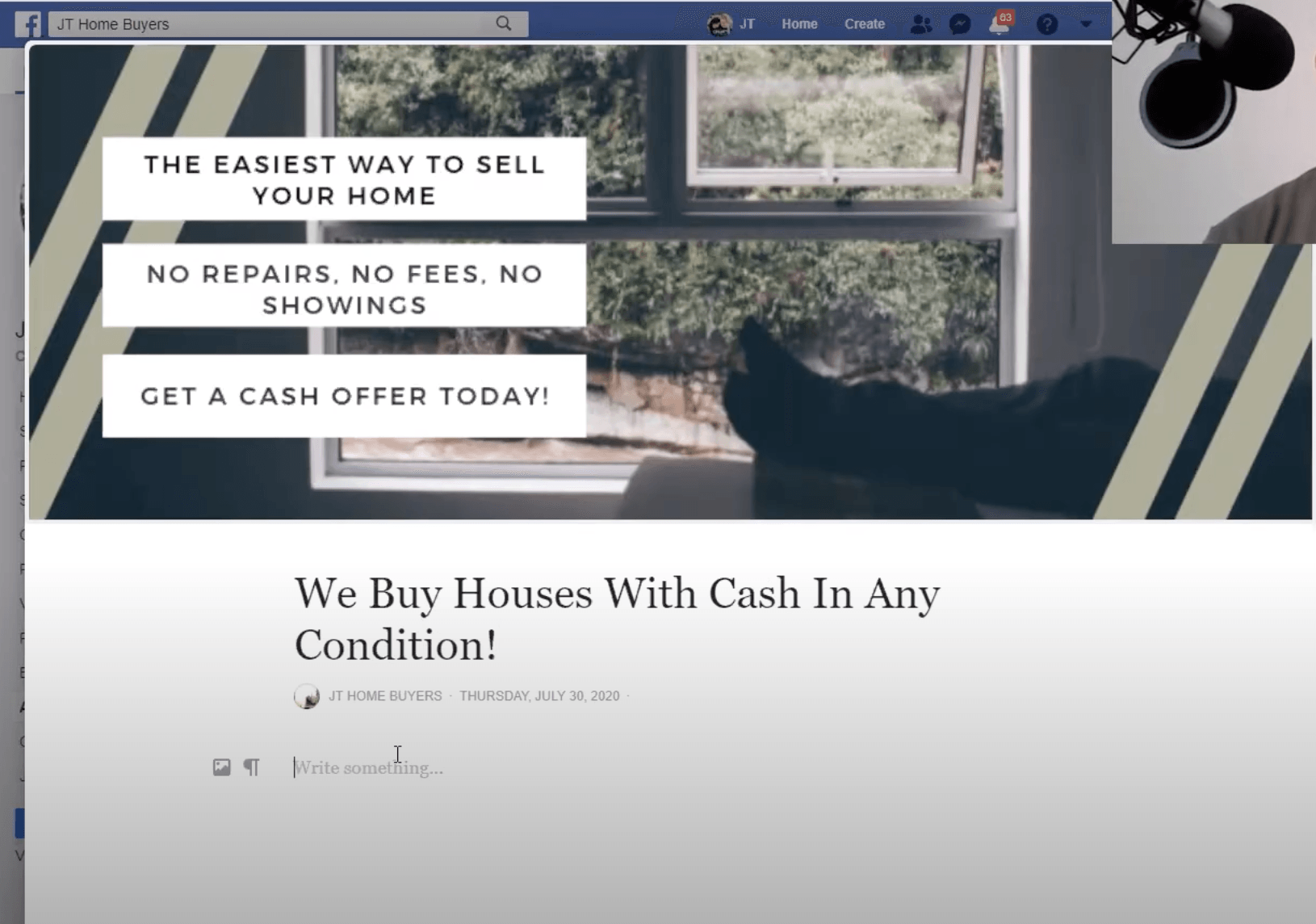
    I’m going to name it, we buy houses with cash in any condition. This is going to show in the bottom right hand corner of our actual page.

    Then we write an article.

    One thing to do is go to your website and actually copy and paste your information from there. Or, you can write this freehand, whatever you’d like. I’m just going to go ahead and write freehand for just the example.

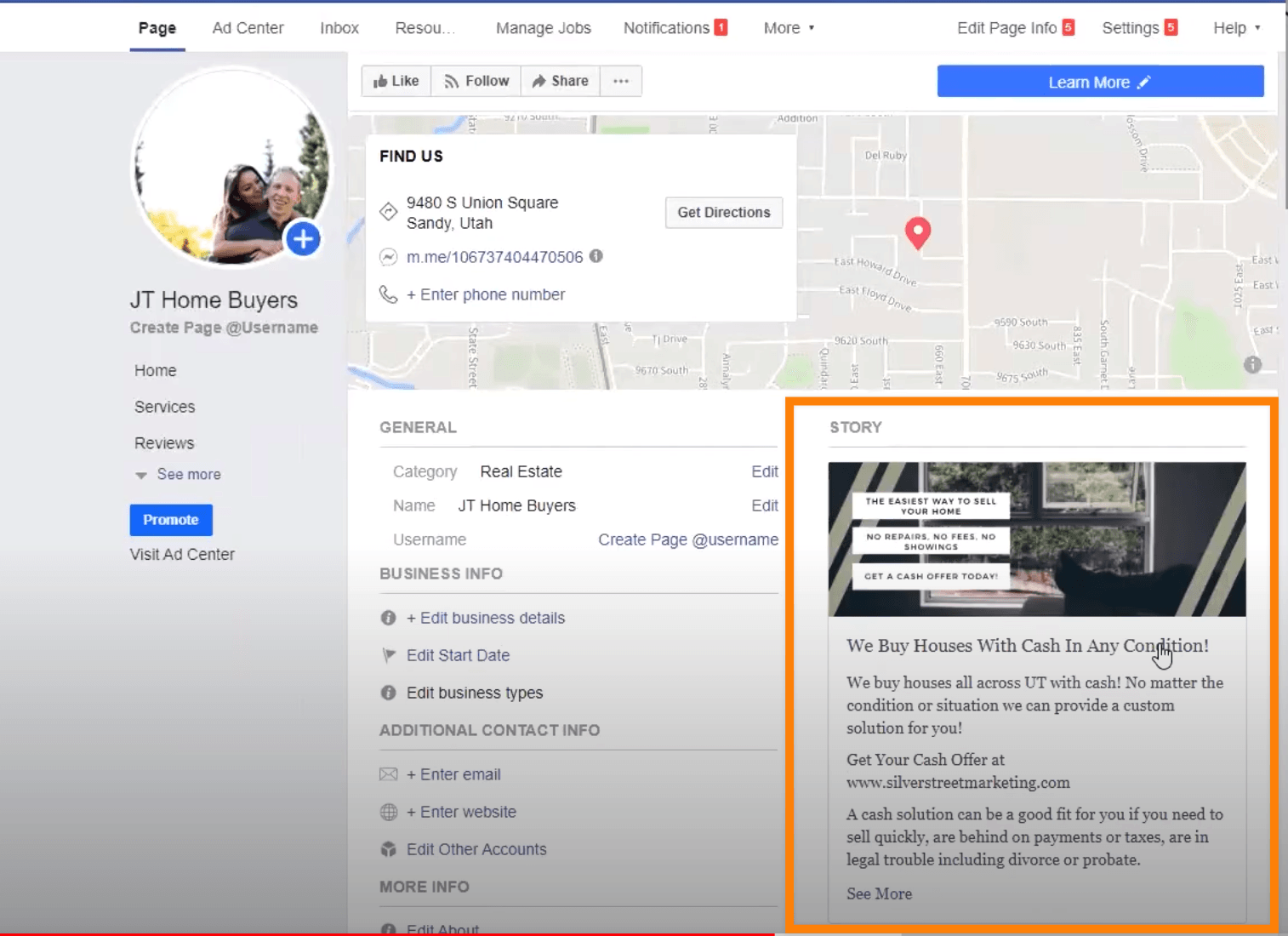
    I’ll use, “We buy houses all across Utah with cash. No matter the condition or situation, we can provide a custom solution for you.” with a quick call to action, “Get your cash offer at www.silverstreetmarketing.com.”

    Then I’m going to keep talking about what I offer. So, “Cash solution can be a good fit for you if you need to sell quickly, are behind on payments or taxes.”

    You can keep going on and talk about why your offer is a good offer for them.

    Once we finish that, we’ll just go ahead and hit publish, and we’ll show you kind of where this is going to pop up so that people will actually be able to click and read it.

    The more information that you can give on this page, the more likely you have a chance of having somebody actually reach out to you because they feel comfortable. They feel like they’ve got what they needed from understanding you and the social proof and going forward from there.

    You’ll have additional options to add too. I would definitely say, enter your website. What this does is gives multiple points of conversion. You can enter an email or, add more about us, whatever you’d like.

    Going to come back to the homepage we want to go into the page information and make sure that we’ve got everything set up correctly and have enough information in there so that when people come across our site, again, they have more information that they can get their social proof from.

    Next, we can add a description, “We buy houses with cash.” Go on and describe your business a little bit. Add your phone number and email. I always like to add operations. I don’t just do always open. I feel like people come across that and they kind of think that’s a little weird.

    So I’ll actually put times for every day, like 8:00 to 5:00 or 7:00 to 7:00, and I’ll leave Sunday off or whatever I want to do. I’ll leave the price range off. Then the privacy policy. I go to my website and grab the content from the privacy page, and add it.

    Adding People to Your Page

    Going forward, if you ever want to add somebody to your page, you can come down here into page roles. And what you can do is you actually find them on Facebook and add them to the page.

    You can type them in right here and then you can assign them to the page. I really like using a business manager. I think it’s a little bit easier to manage all this and to be able to do it and add an agency to the page without having to make them an admin.

    The way that you do that is you just go to business.facebook.com and you hit sign up and it will link through your Facebook account and link your page to your business manager, where you can share your page with other people without having to add them manually and without having to give them so much access. You can choose what they’re going to see and what they’re going to do and send them actual invites. So that’s a little bit easier.

    Automated Messaging

    Next, there is an option to set up basic automated messaging. You can add the messaging in the advanced messaging tabs, where you can actually set up different messaging parameters for when people are sending messages to you.

    This is where you would connect your ManyChat or other Facebook chat software. You can also request different features.

    Hop into the “other messaging” tab where you’re going to be able to set it some basic messages and settings for the messages. If you were to want to show a greeting, you just go ahead and turn this on, and then you can type in what it’s going to say.

    For example, the generic version is, “Hi, first name and last name. Thanks for getting in touch with us on Messenger. Please send us any questions you may have.”

    Some other things that you can do are add Messenger to your website and set up automated responses.

    You can set up little tabs that they can select that say, like, “Learn more about our business.” And they can press it, and then you’ll tell them more about your business with an automated bot.

    I would suggest if you’re going to do stuff like that, ManyChat is a really good platform to get used to and to add that it’s a little bit easier to build on their platform. Another thing that you can always do is take the link for your Messenger and share that if you have people who want to reach out to you.

    Just copy and paste it and people can click on it and message you from there without having to go to your page and then go through messaging. They can just click on that little link.

    From here on out, you’ve got your Instagram that you can connect. You can obviously connect WhatsApp. You’ve got different platforms that these can kind of go together with.

    Then, if you have any messages coming in, you can access all that up under “inbox.” You can also manage any of the posts that you’re posting just by going over here to the more and going to publishing tools.

    It will bring up past posts. You can go into the Creator Studio and make different posts as well. It’s a little bit more seamless, a little bit easier to schedule posts for the future.

    I’d suggest grabbing all of your Carrot blog posts that you’re getting or the SEO that you’re doing, and come into Creator Studio and start creating these. And say, “Hey, I want these scheduled out.”

    You can do this on the homepage too, but I just find it a little bit nicer to use the Creator Studio. It seems to flow a little bit easier. You can upload multiple videos at once, you can upload multiple pictures at once and assign those out to different posts.

    So it’s really simple.

    How to Create Posts

    Start by clicking “create posts.”

    This is where you would paste your Carrot information. Next, you can click the schedule, backdate, and saved draft. If you schedule, you’re scheduling for the future. If you backdate, you’ll backdate up until the day that you created the Facebook page. So for this example, we created it today, we can’t backdate anything.

    If you had created a Facebook page a year ago, you could backdate all your posts, so you can put a bunch of posts in the past to give you an essence that you’ve been around, been posting on the page longer. Or you have a little bit more social proof for people to go back in this scroll line with.

    Just in case, I want to show you again, if you don’t want to use this Creator Studio, you can just go back to the main page and post this right here in the beginning.

    If you’re posting on your own Facebook page, use write post. In the end, it will give you the option to schedule your post.

    If you guys have any questions about how to set this up, we’d love to help you and make sure that everything’s working well and that you’re on a great path to get success from Facebook.

    Be sure to check out our other videos about how to set up ads, what ads we’ve been using, what KPIs we use, and how we’re getting more leads for our clients by using Facebook.

  • Facebook Real Estate Video Ads Secret Weapon – 3000-4000 Reach for $3 to $4 Per Day

    Facebook Real Estate Video Ads Secret Weapon – 3000-4000 Reach for $3 to $4 Per Day

    Video Views Training 1

    Video Transcript

    Hey, this is JT with Silver Street Marketing and I have a Facebook real estate video ads training for you guys.

    This first little part, I am going to show is how to log into your Ads Manager. If you’ve ever boosted a post, ever done any sort of paid advertising on Facebook, it will be quite easy. And if you haven’t, you’ll be able to figure it out as well!

    The MAIN reason we’re doing this training is that there is such a high increase in reach volume right now that you need to be using video ads within a views campaign to maximize your accounts.

    Take Advantage of the Opportunity Facebook Ads Offers for Real Estate

    There is a huge opportunity to build up your audiences so that you can see big results heading into the end of quarter two and start of quarter three on your retargeting, as well as just getting a front of people right now, preparing lists for cold calling or direct mail, and finding new prospective sellers.

    There’s a lot of people out there right now that are on Facebook that could use your help.

    Let’s dive in!

    Follow These Steps to Create Facebook Real Estate Video Ads Using Video Views

    First, we’ll show you how to log into your ad account.

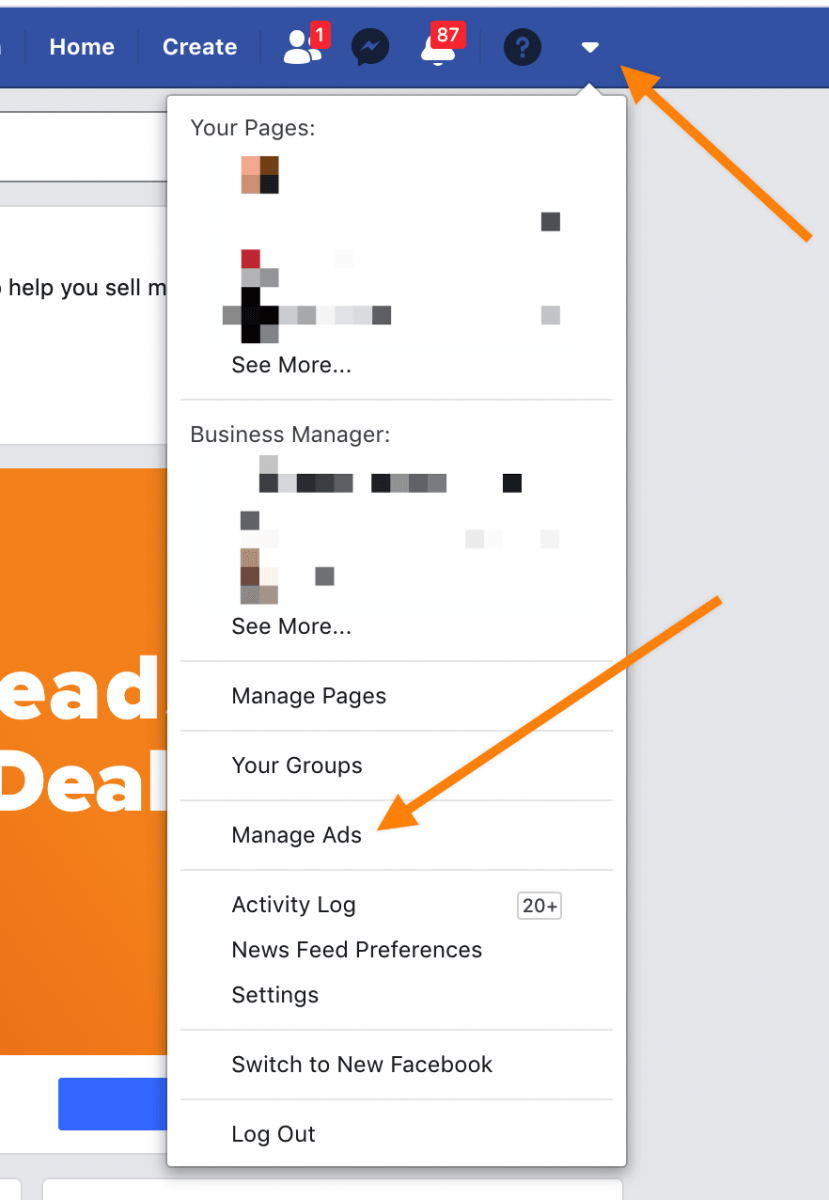
    From your Facebook page, drop down the menu and click “Manage Ads

    Facebook page manage ads

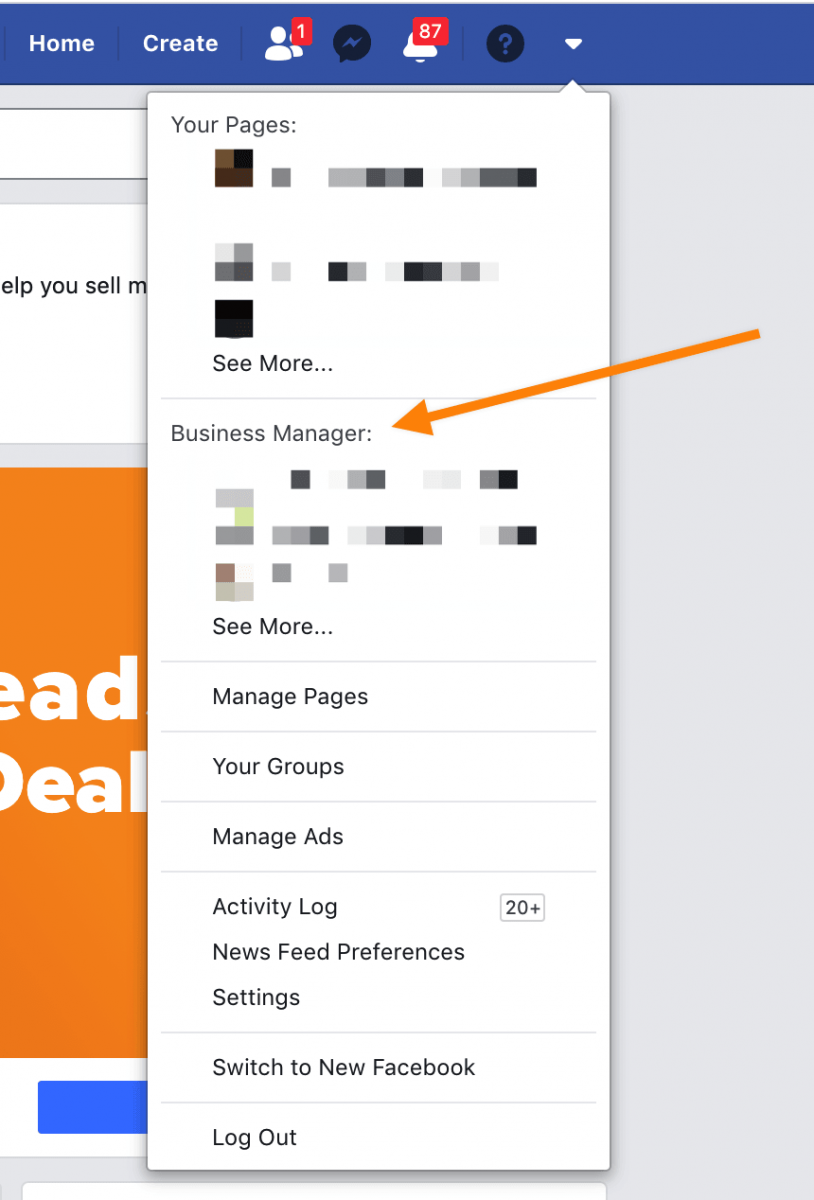
    If you’ve never opened up a Facebook Ads Manager before you can just click the account right here under “Business Manager” and you’ll get to the same page.

    Facebook page Business manager

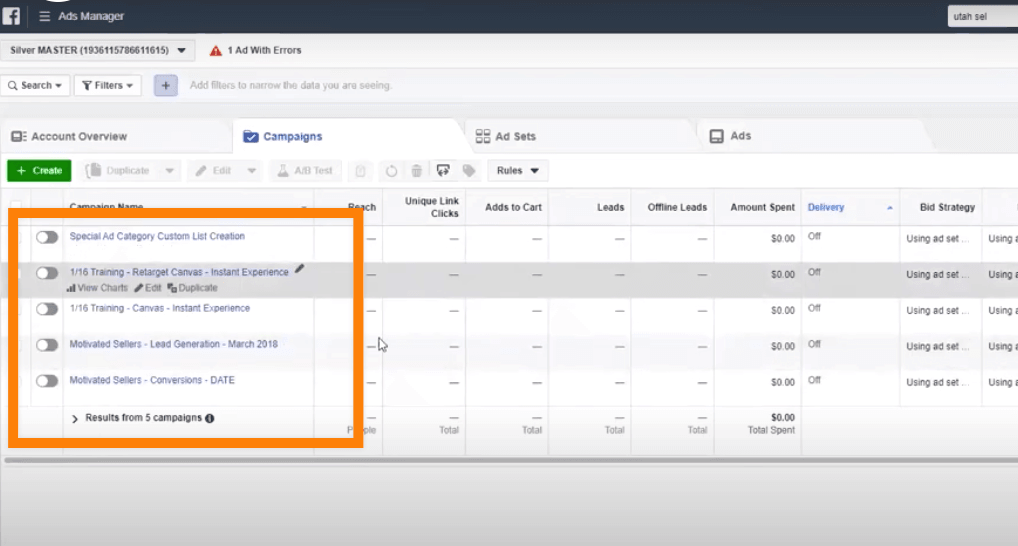
    I’m going to pull up my Ads Manager and get started creating ads.

    If you have boosted a post in the past, it will be right here…

    Facebook business manager dashboard

    Facebook automatically creates this for you. If you’ve never done it, it’ll walk you through the steps of creating your Ads Manager so you can start doing some posts and different advertising on Facebook.

    Starting Your Video Views Campaign

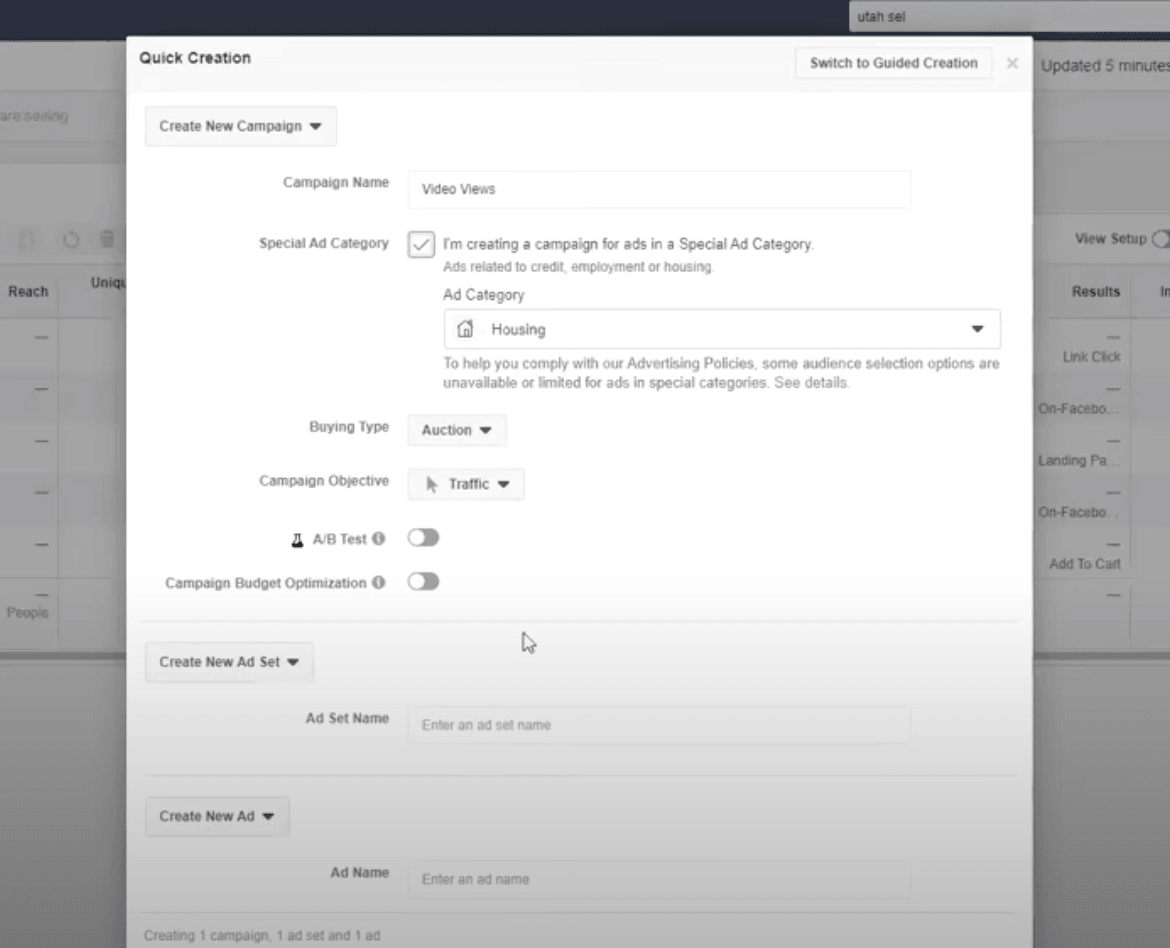
    So the campaigns that I’ve been seeing lots of results in, are video views campaigns.

    facebook real estate video ads video views campaign creation

    Start by typing in video views for the “Campaign Name” and you’ll have to make sure the “Special Ad Category” is selected for “Housing“.

    Facebook has stopped allowing people who are running any ads that relate to real estate to be outside of this category. So it’s best that you go ahead and do this to avoid any issues.

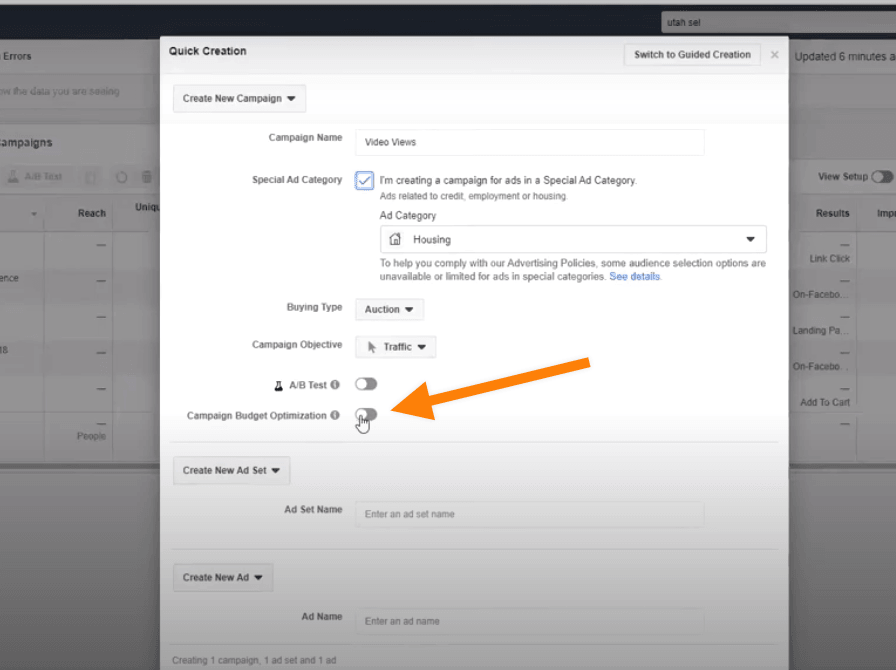
    If you’re going to build multiple ads, or ad sets inside this targeting multiple audiences, I would suggest using your campaign budget optimization.

    Facebook Budget Optimization

    Basically what this does is it allows Facebook to help you find the best budget to spend on each ad set. It also allocates the most towards the one that’s performing best. But for right now we’re just going to build one ad set, and one ad, to get us going.

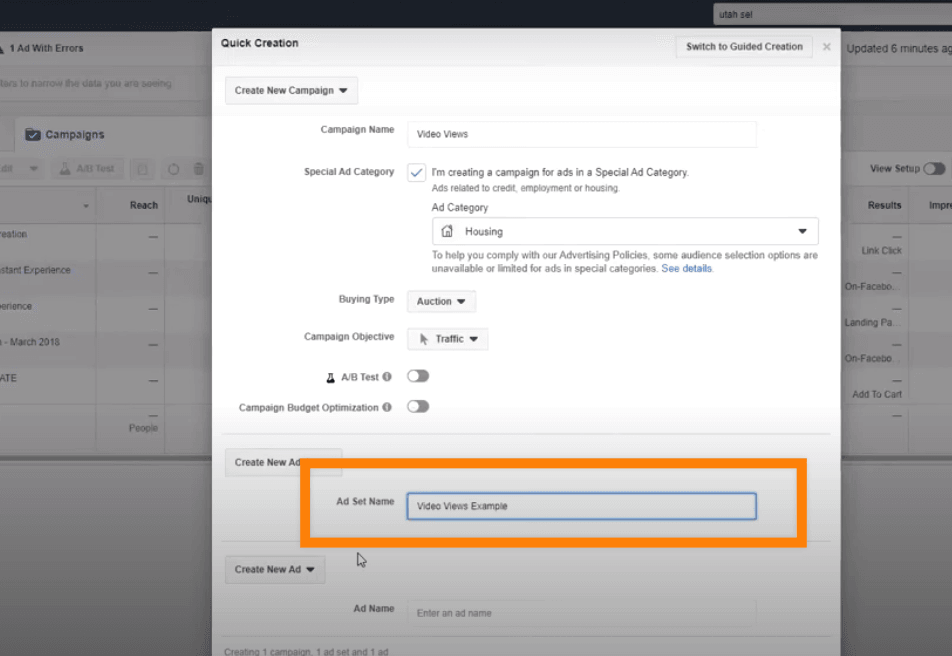
    For this example, I’m going to type in “Video Views Example” for the “Ad Set Name“.

    Facebook Ad Set Naming

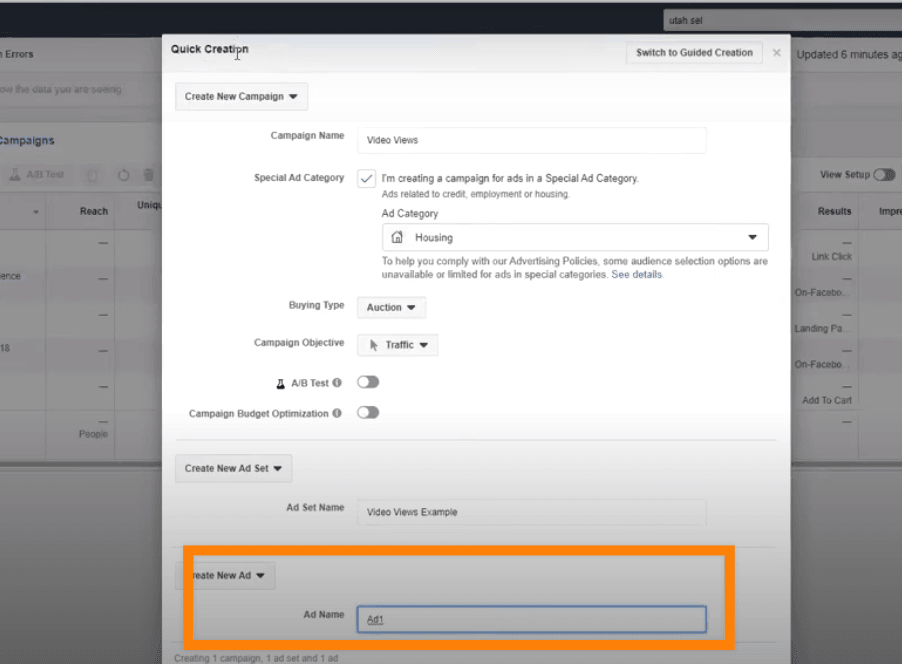
    Then, for this example, we’ll name our ad Ad1.

    Naming a Facebook Ad in Ads Manager

    We’re using the quick creation. I use the most because it’s a little bit faster, but you can also go to the guided creation. If you’re in the guided creation, there’ll be an option to switch to the quick creation.

    To finalize this part, click “Save Draft“.

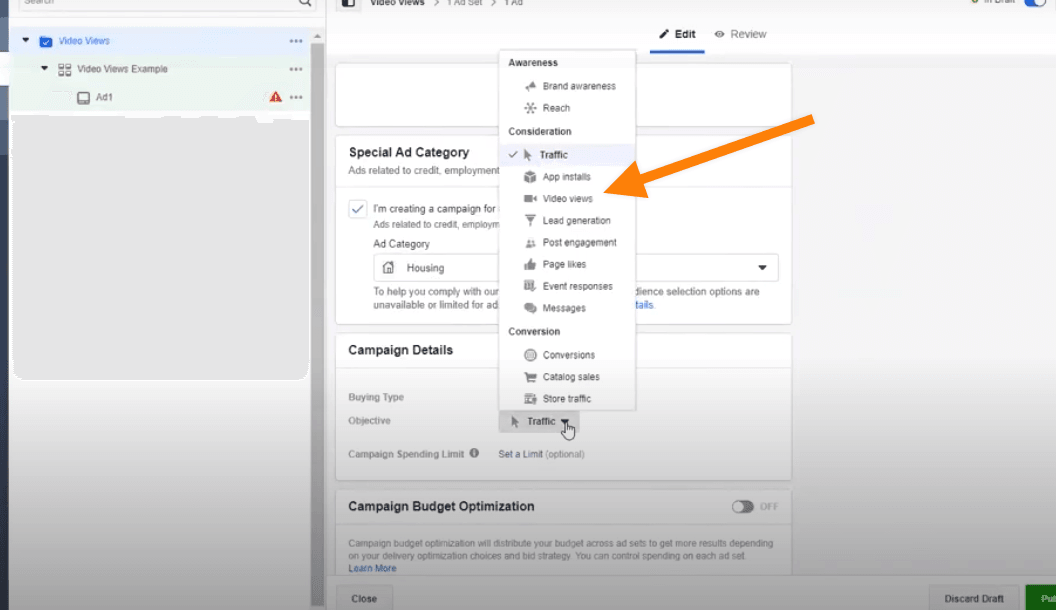
    Now, go ahead and change the traffic over to a video views campaign and click continue.

    Video Views option in Facebook Business Manager

    We’re going for video views and the reason why this is that you can opt-in for an option to only pay when someone watches a video of 10 to 15 seconds.

    Generally, Facebook charges you per impression. So you would just have a standard amount that you get charged the more people that you’re in front of. Using this method you can actually show ads to an audience that is interested because they’re watching for a longer extended period of time.

    Next, we want to go into the ad set level, where we’re going to be able to make these changes.

    You can use a budget as low as $2 to $3 a day and really see a lot of traffic. We’re talking 3,000 to 4,000 people watching at least 15 seconds of your video a month, easily off of $2 a day.

    For this example, we’re going to put it at $5 to be a little bit more aggressive on this one and have it starting today.

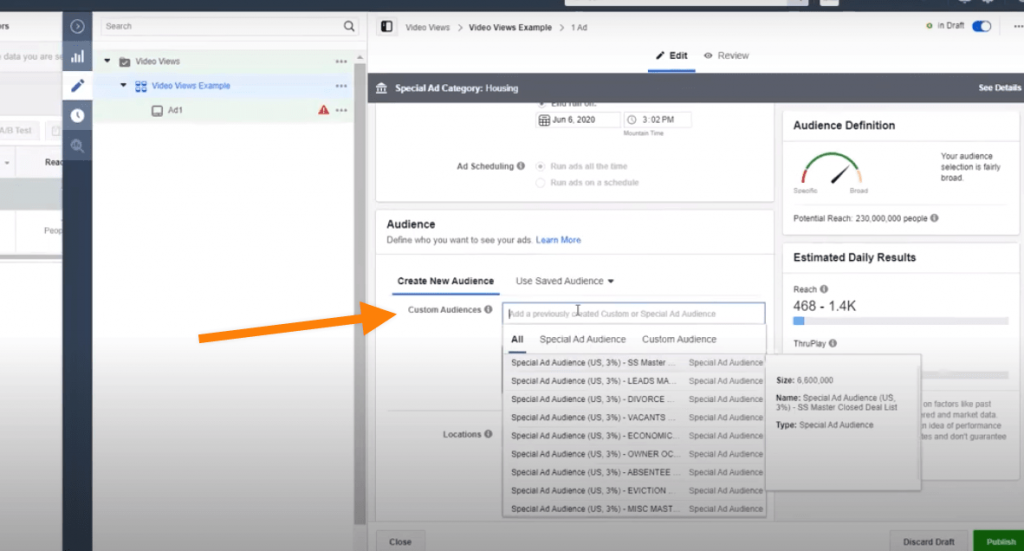
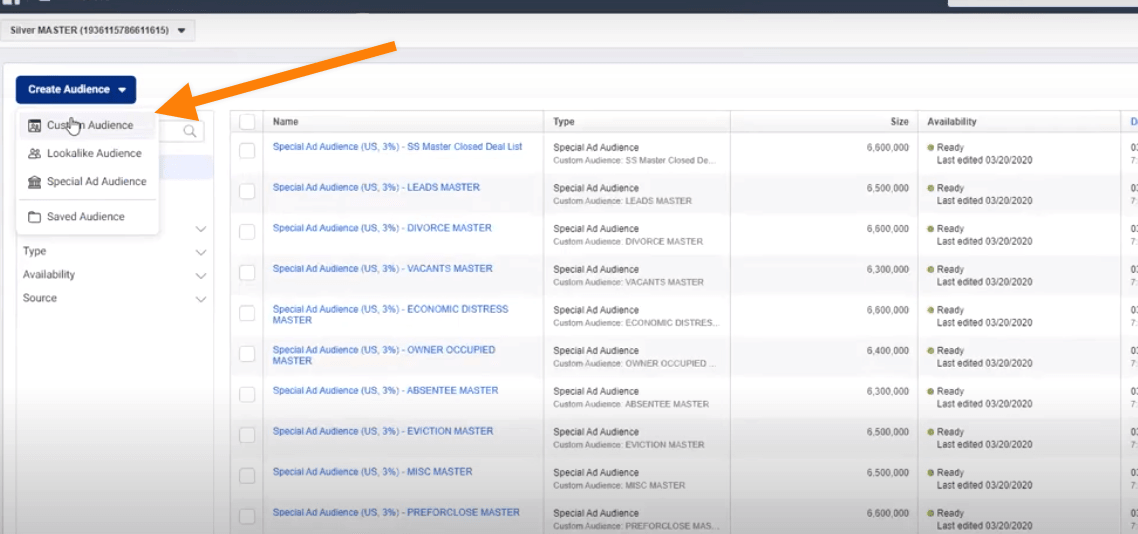
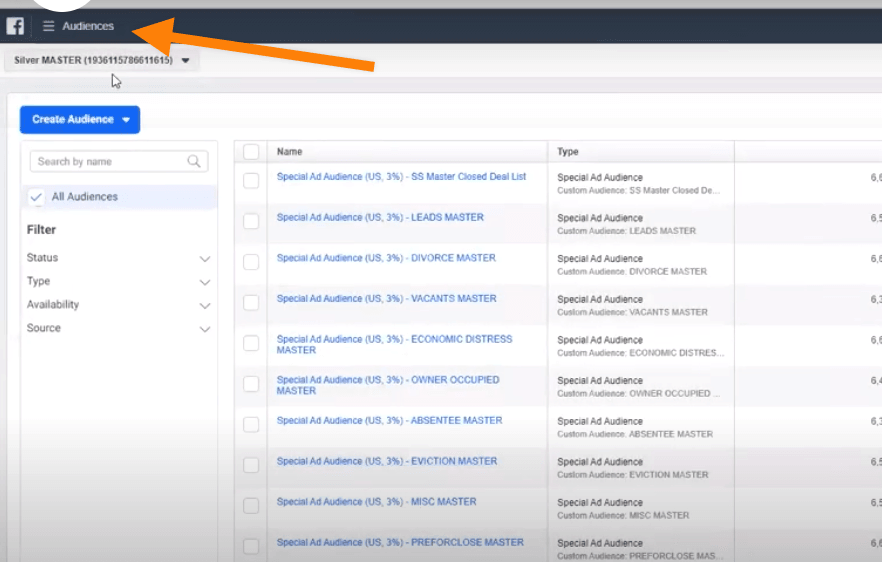
    Now, let’s select an audience. If you have never created an audience before, what you’re going to do is select your Ads Manager and click “Audiences“. You’ll be taken to a page that is going to be full of the audiences that you can create.

    How to choose a custom audience in Facebook

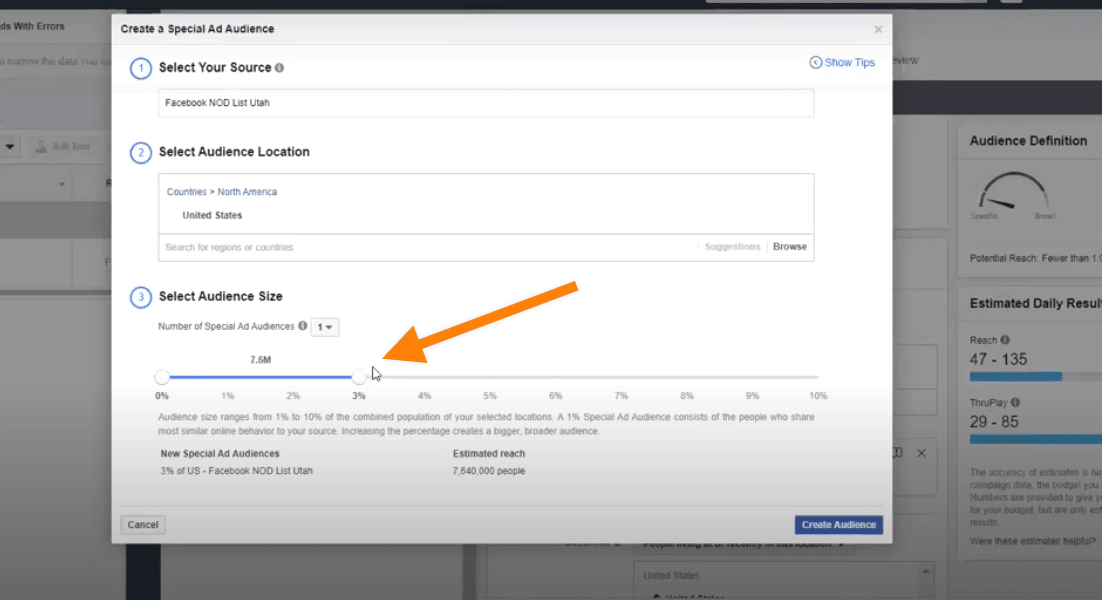
    We’re going to show you how to upload a list today. And we’re going to create a special look-alike off of that list.

    To save a little time, I’ve already created some special look-alike audiences. If you’ve done Facebook advertising before, but you weren’t doing special look-alike audiences, you will have to recreate your look-alikes.

    But first, we’re going to show you how to upload a list. I use this to prepare for cold calling or direct mail lists that are going out because the video views campaign has a high amount of reach.

    create a custom audience for real estate

    You can get in front of a lot of these people before you hop on the phone or send them a mailer, or even after, and get them to understand you more and get a little bit of that celebrity effect going.

    Overall, building yourself into an authority in your space by showing people your brand and your identity and what you do, before they have an interaction with you. It helps to prepare and educate them.

    Go into the custom audience, press “Customer List“, and next. Choose no customer value and go ahead and upload your list.

    Next, select the columns to be uploaded.

    For Facebook you need to have a minimum of:

    • First name
    • Last name
    • City
    • State
    • Zip code

    But I would definitely suggest if you have a phone number and email addresses to upload because you’ll have a higher match rate.

    How to Create a Look-alike Audience from Your List

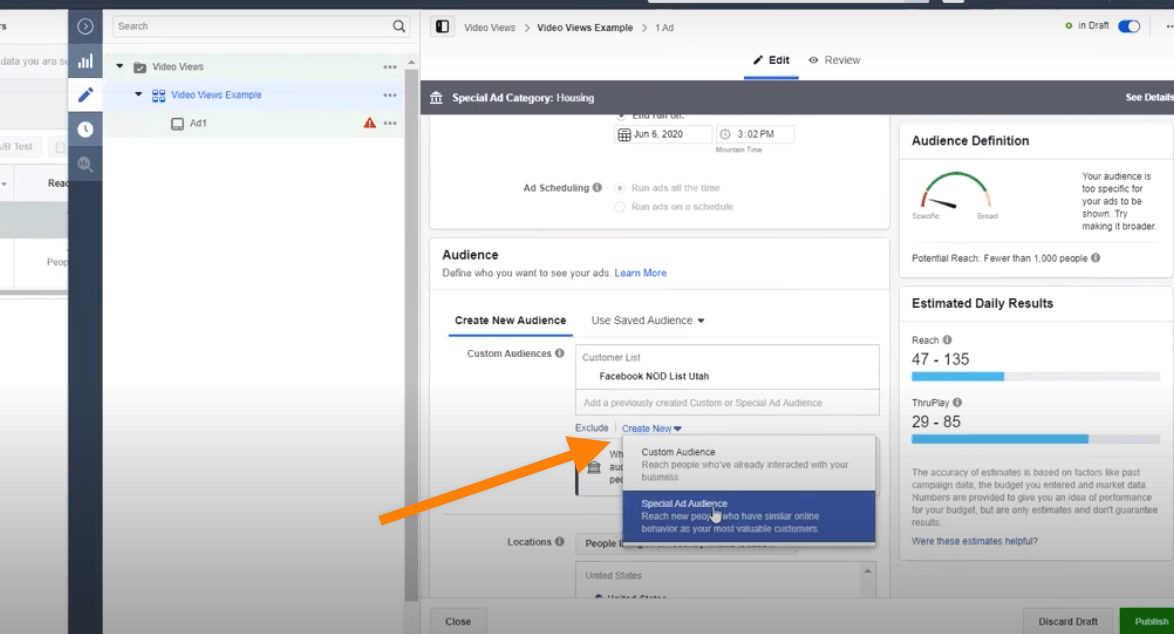
    Once the list is uploaded select that custom list. Now, to create a look-alike audience off this list, you would select create new, and you go to special ad audience.

    Create a Look-alike Audience from Your List

    The reason why you would do this is that you don’t have a large number of names on that list, or you’re looking for more people who are similar to those people on the list. What Facebook will do will analyze those people and what their interests are that are on the list, and find everyone who’s similar in your area.

    So you can go ahead and select your list. For my example, I’ll use Facebook NOD. Type in the United States.

    Then I suggest using either 1% or 3% look-alike. The 1% is going to be a little bit more narrow. But after talking to many Facebook reps, 3% has been performing really well.

    It won’t hurt you to begin with the 3% look-alike on a video views campaign. But, if you’d like to be more targeted, go with 1%. If you’re seeing a low audience size after doing this with a 1%, then simply adjust a new audience to 3%.

    Select Audience Size for your look alike audience

    You can run these audiences together, but I would suggest creating a new campaign for any lists that you’ve uploaded and run them separately. Because this audience is going to have a lot more people than what is going to be on that list.

    Facebook required a 15-mile radius. You can also drop pinpoints or look up county names and drop pinpoints around those.

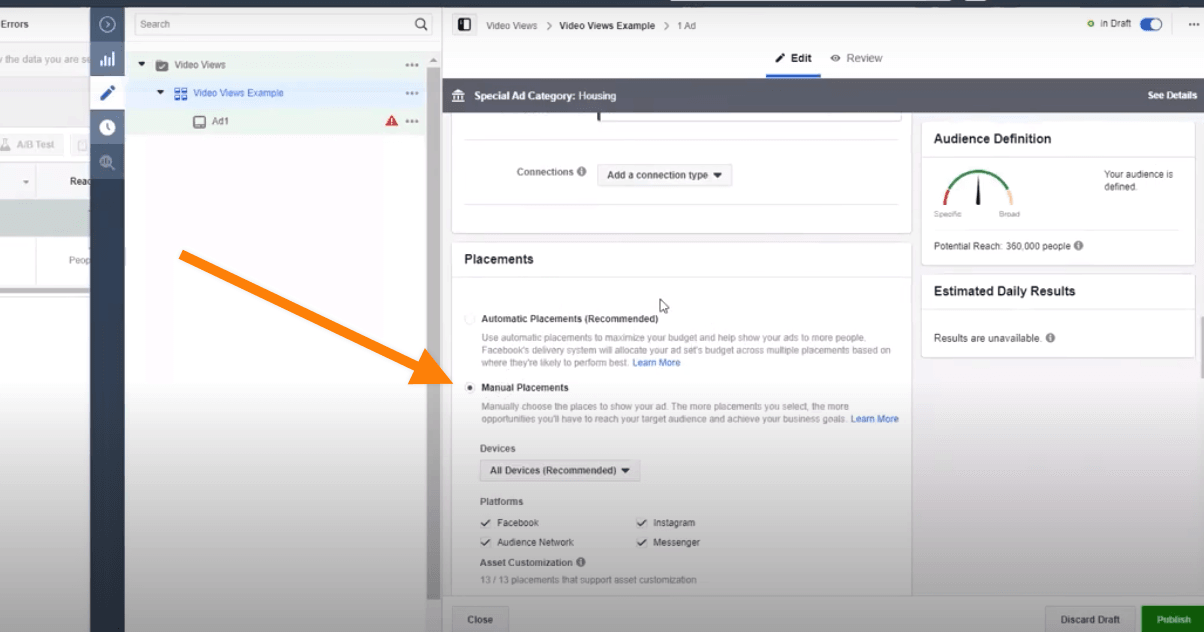
    Next select “Manual Placements“…

    Choosing manual placements

    I don’t want to advertise on the audience network, which is basically a lot of apps and websites. That is good for retargeting, but what it’s not good for is building audiences because Facebook can’t track how many people actually watched the video over in the audience network.

    Also, remove “Messenger“, because Facebook and Instagram are really what generate the most video views.

    Depending on the length of your videos, consider removing Instagram as well. If you have content that’s more geared towards Facebook, so the ratios are different and the time length is over two minutes long, then you would want to unselect Instagram, or you can create a custom ad for just Instagram.

    For our example, I’m just going to leave Facebook and Instagram on.

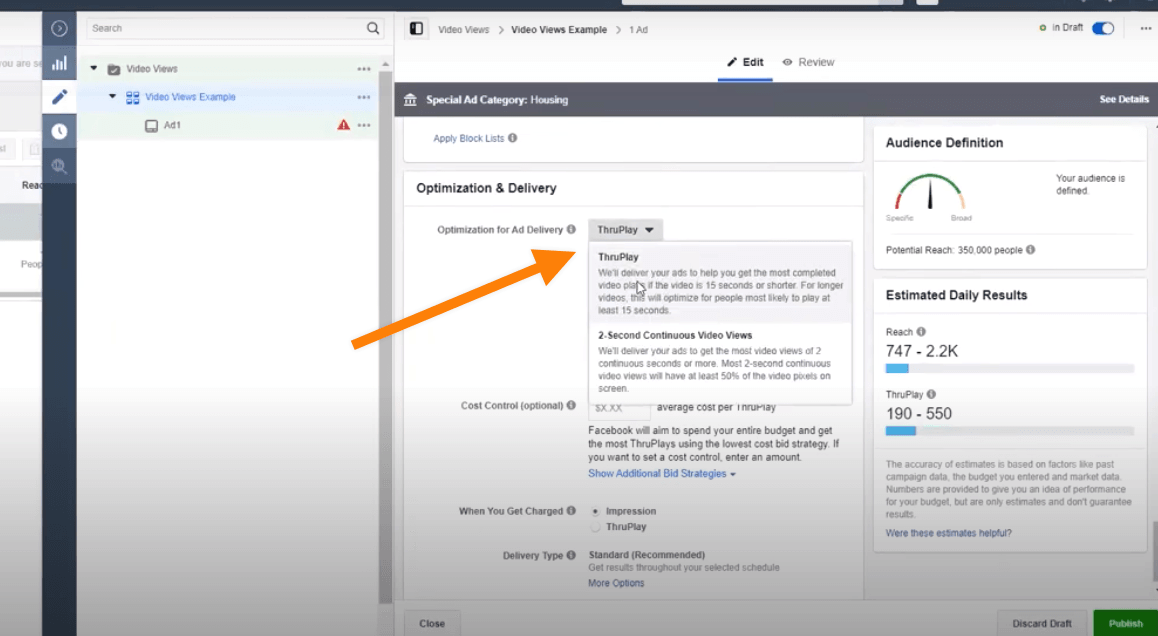
    Now, select “ThruPlay“…

    FB ThruPlay optimization

    *Note* If it’s your first time running ads, Facebook will not let you select ThruPlay, but you can come back in two weeks and change this. ThruPlay means that you’re only charged when somebody watches at least 10 to 15 seconds for our video or completes it if your video is shorter.

    Creating Your Facebook Video Ad

    We’re going to add a video. You can either upload one or use one that you’ve had up in the past. For this example, I’m going to use an old customer testimonial video.

    Once it’s uploaded, you can go and type in your copy. I would suggest going deeper into what you really provide for people to make the ad interesting for them.

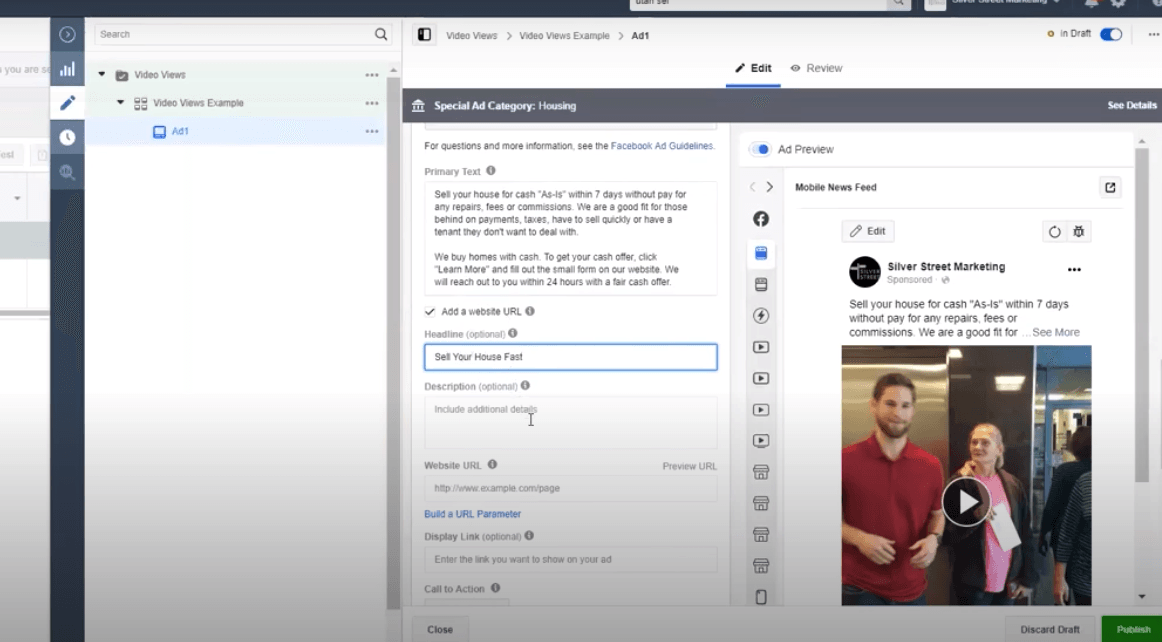
    For this ad, I’m going to use some copy to kind of fill the gaps. Such as…

    Sell your house for cash “As-Is” within seven days without paying for any repairs, fees, or commissions. We are a good fit for those behind on payments, taxes, have to sell quickly, or have a tenant they don’t want to deal with.

    We buy homes with cash. To get your cash offer, click learn more, and fill out a small form on our website. We will reach out to you within 24 hours with a fair cash offer.

    Real Estate Facebook Video Ad Example

    I also like to put a website URL, because this is going to increase the likelihood that someone’s going to go to your website. It also helps with the organic side as well.

    For the headline, we’re going to use, “Sell Your House Fast“. Using the description area if optional. Or you can go extra long on your headline so it fills up both rows, either way, works.

    Add your website to the “Website URL” section and I would suggest building a website URL parameter for better tracking. You can use a tool such as Google’s Campaign URL Builder or use Carrot’s custom campaign tracking link tool.

    Next, add the display link. This isn’t required, but we like to make sure the display URL looks a little nicer.

    Then we’re going to turn on the Facebook pixel. That should be connected to your website, and you’ll be ready to publish.

    Now, you want to come back to this audience page.

    Building FB audience based on video watch time

    The reason is we want to collect the audiences that you’re building with this campaign.

    Go into custom audience and go to video. Select video and you’ll want to select how much motivation or how long people engage with our content.

    The one I’m going to select is a 50% video view. That means anyone who watched, for example, 30 seconds of a minute-long video, is pretty motivated. These are the ones that you want to retarget and track and keep ads in front of them to make sure to stay top of mind with them.

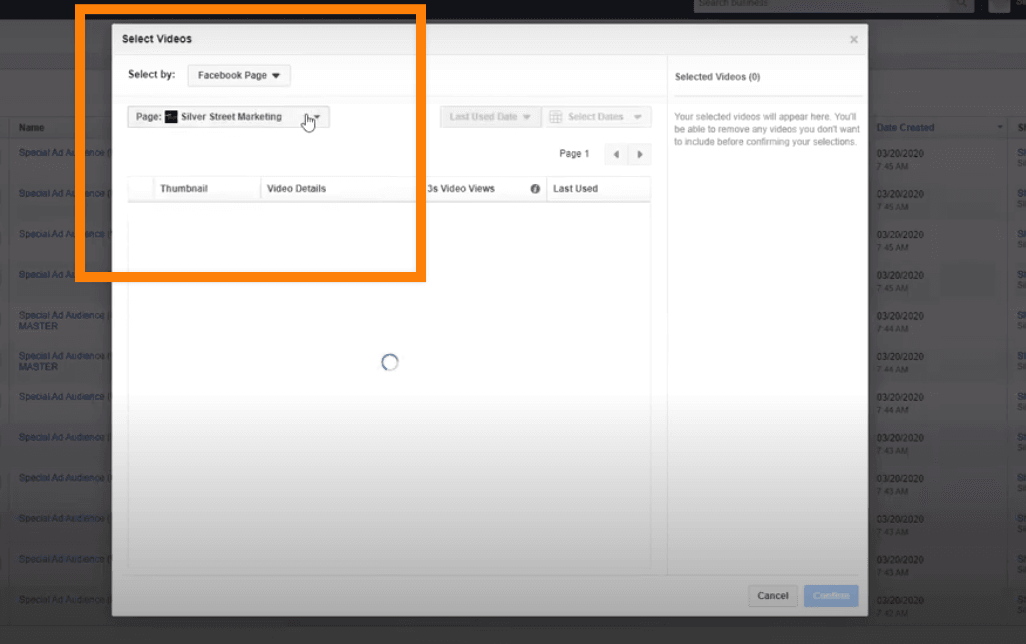
    Go to our page…

    how to select your real estate ad videos in Facebook

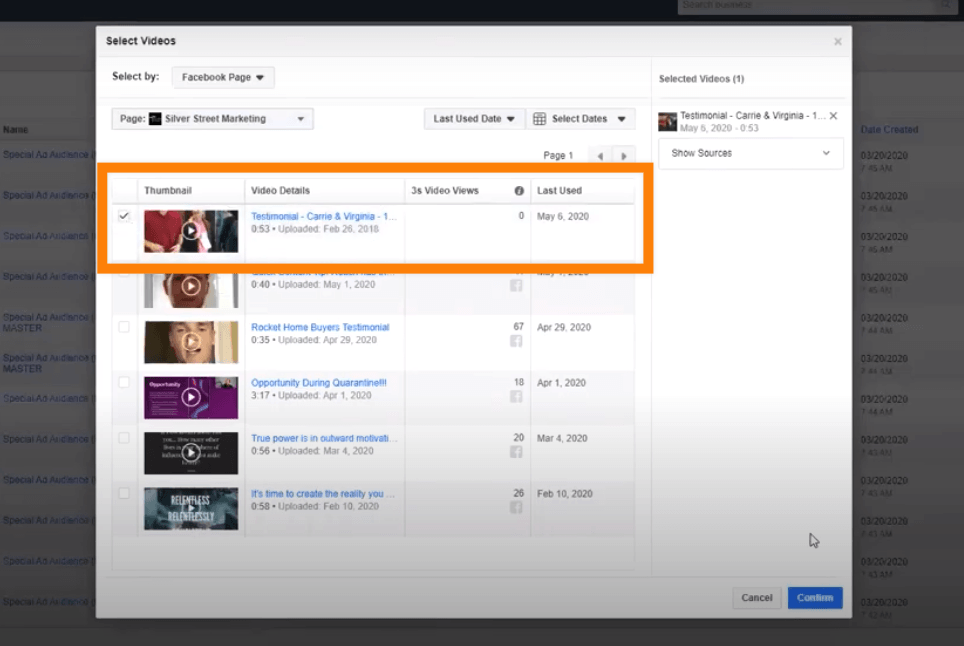
    And you’ll find your video on your page, and you’ll just select it. And so we have this testimonial video we’ll select that one and we’ll just hit confirm.

    Choosing a video for facebook ads

    What that will do is make it capable of tracking and building a whole separate campaign, over using a conversions campaign, a traffic campaign, or a reach campaign.

    Youll be able to drive people to your website, or just staying in front of people who seem most motivated, and retargeting them later.

    All right. That is it for today’s training. If you have any questions, feel free to ask in the comments section and we’ll be able to help you out with that. Good luck!

  • Unlock Success: 14 Advanced Real Estate Facebook Ads in 2025

    Unlock Success: 14 Advanced Real Estate Facebook Ads in 2025

    The real estate marketing world changed in 2024 with increased enforcement of the Telephone Consumer Protection Act or the Application-to-Person 10-Digit Long Code (A2P 10DLC) regulations introduced to enhance transparency and reduce spam.

    In 2025, Facebook Ads for real estate will remain a powerful tool for grabbing attention and leaving a lasting impact on potential clients.

    This blog post dives into 14 examples of inspiring real estate Facebook Ads examples for 2024, spotlighting the latest trends and creative approaches that confidently set the industry standard.

    Learn The TRUTH About How Any Real Estate Investor Can Find Leads Online And Avoid Wasting Thousands Of Dollars

    14 Advanced Real Estate Facebook Ads in 2025

    Jump to each ad example:

    Real Estate Facebook Ads – Personalized Dynamic Ads:

    The concept of Personalized Dynamic Ads goes beyond traditional static advertisements, offering a dynamic and tailored experience for potential buyers by showcasing content uniquely relevant to each individual.

    Personalized Dynamic Ads leverage user data and behavior to deliver content that resonates with each viewer personally. This is achieved through real-time customization of ad elements, ensuring that the right properties are showcased to the right audience at the right time.

    Dynamic Ad Components:

    • Property Recommendations: Tailoring the ad content to showcase properties that align with the viewer’s preferences, previous interactions, and search history.
    • Pricing and Offers: Displaying real-time pricing updates, special offers, or personalized discounts based on user behavior and engagement.
    • Location-Based Information: Incorporating local amenities, schools, and attractions specific to the viewer’s location or the location of their previous property searches.
    • Call-to-Action Variations: Customizing the call-to-action (CTA) based on the user’s stage in the buyer’s journey, whether scheduling a tour, requesting more information, or making an offer.

    Benefits for Real Estate Agents and Investors:

    Unlike static ads, personalized dynamic ads can feature a variety of dynamic components, including:

    • Increased Relevance and Engagement: Personalized dynamic ads significantly increase relevance by tailoring ad content to individual preferences. This, in turn, boosts user engagement as viewers are more likely to interact with content that aligns with their specific interests.
    • Higher Conversion Rates: The dynamic nature of these ads allows real estate professionals to showcase a variety of properties or highlight specific features based on what is most likely to resonate with each viewer. This targeted approach contributes to higher conversion rates.
    • Enhanced User Experience: Personalized dynamic ads create a more seamless and enjoyable user experience. Potential buyers feel that the content is curated specifically for them, enhancing their perception of the brand and increasing the likelihood of positive interactions.

    Implementation Tips:

    • Utilize advanced analytics for marketing tools to gather and analyze user data effectively.
    • Collaborate with digital marketing experts to implement dynamic ad strategies across various platforms.
    • A/B tests different dynamic components to fine-tune ad performance and maximize results.

    Real Estate Facebook Ads – Emotive Storytelling Through Cinemagraphs:

    In the world of digital storytelling, real estate marketers are turning to an enchanting visual medium: cinemagraphs. Combining the dynamism of video with the subtlety of photography, cinemagraphs are captivating and emotive, making them an increasingly popular choice for conveying the unique stories behind real estate properties.

    Why Cinemagraphs Matter:

    • Extended Engagement: Unlike static images, cinemagraphs encourage prolonged engagement as viewers are captivated by the subtle, mesmerizing movements. This extended interaction provides more time for the property’s unique features to leave a lasting impression.
    • Differentiation in a Crowded Market: Standing out is essential in a saturated real estate market. Cinemagraphs offer a visually distinct and innovative way to showcase properties, differentiating your brand and listings from the competition.

    Strategic Implementation:

    • Highlight Unique Features: Use cinemagraphs to draw attention to the distinctive features of a property. Whether it’s a cozy fireplace, panoramic views, or a tranquil backyard, cinemagraphs can emphasize these elements in a visually compelling manner.
    • Create Atmosphere: Cinemagraphs excel at creating a specific atmosphere or mood. Whether you want to convey a sense of luxury, relaxation, or excitement, the subtle movements in cinemagraphs can evoke the desired emotional response.
    • Storytelling Narratives: Craft visual narratives for your properties. Cinemagraphs allow you to tell a story, guiding viewers through different spaces and creating a cohesive narrative showcasing a home’s flow and character.

    Benefits for Real Estate Agents and Investors:

    • Memorable Impressions: Cinemagraphs leave a lasting impression on viewers. The combination of motion and stillness creates a memorable visual experience that can influence perceptions and decisions.
    • Increased Social Media Engagement: On social media platforms where visual content reigns supreme, cinemagraphs stand out in crowded feeds. The engaging nature of cinemagraphs can boost social media engagement and encourage users to share your content.
    • Versatility Across Platforms: Cinemagraphs can be incorporated into various marketing channels, including websites, social media, email campaigns, and digital advertisements. Their versatility makes them a valuable asset in a comprehensive marketing strategy.

    Implementation Tips:

    • Collaborate with professional photographers and videographers experienced in cinemagraph creation. Focus on subtle, natural movements that enhance the property’s ambiance without distracting from its key features. A/B test different cinemagraphs to gauge audience preferences and optimize engagement.

    Real Estate Facebook Ads – AI-Powered Chatbots for Instant Engagement:

    In an era where instant communication is the norm, real estate marketers increasingly turn to AI-powered chatbots to facilitate immediate engagement and enhance customer interactions. These intelligent bots are reshaping how real estate professionals connect with potential clients by providing instant responses, valuable information, and a personalized experience.

    AI-powered chatbots leverage natural language processing (NLP) and machine learning algorithms to understand and respond to user queries in real time. This technology revolutionizes customer interactions in the real estate industry by offering instantaneous engagement, 24/7 availability, and valuable insights.

    Key Features and Benefits:

    • Instant Response: One of the primary advantages of AI-powered chatbots is their ability to respond immediately to user inquiries. This ensures that potential clients receive timely information, fostering a positive user experience and reducing the risk of losing leads due to delayed responses.
    • 24/7 Availability: Unlike human agents, chatbots don’t need breaks or sleep. They offer round-the-clock availability, catering to users’ needs in different time zones or those browsing properties outside regular business hours.
    • Personalized Interactions: Advanced AI algorithms enable chatbots to personalize interactions based on user data. Chatbots can offer tailored recommendations, property suggestions, and relevant information by analyzing previous interactions, browsing history, and preferences, creating a more engaging and personalized experience.
    • Lead Qualification: Chatbots can efficiently qualify leads by asking relevant questions and gathering essential information. This streamlines the lead qualification process and helps human agents focus on high-priority leads, ultimately improving conversion rates.
    • Appointment Scheduling: Some AI-powered chatbots are equipped with the capability to schedule property viewings, consultations, or virtual tours. This seamless integration simplifies the process for potential buyers, enhancing convenience and efficiency.

    Strategic Implementation:

    • Integration with Platforms: Integrate chatbots into your website, social media platforms, and messaging apps to meet potential clients where they are most active. This omnichannel approach ensures a consistent and accessible user experience.
    • Natural Language Understanding: Enhance chatbot capabilities by investing in natural language understanding technology. This allows chatbots to comprehend user inquiries, even if they are phrased in various ways, improving the overall user experience.
    • Data Security Measures: Implement robust data security measures to protect sensitive information shared through the chatbot. Building trust with users is crucial for the success of AI-powered chatbots in real estate.

    Implementation Tips:

    • Regularly update the chatbot’s knowledge base to keep information current and relevant.
    • Monitor user interactions to identify areas for improvement and refine the chatbot’s responses over time.
    • When more complex queries arise, provide a seamless transition from the chatbot to human agents.

    Real Estate Facebook Ads – Virtual Property Tours:

    As technology advances, virtual tours have become a powerful tool in the real estate industry, revolutionizing how potential buyers explore and experience properties. Virtual property tours provide an immersive and interactive experience, allowing users to enter a property virtually, examine its features, and envision their future living space.

    Key Features and Benefits:

    • Immersive Exploration: Virtual property tours provide an immersive experience beyond traditional images or videos. Potential buyers can virtually explore every nook and cranny of a property, gaining a realistic sense of its layout, design, and overall ambiance.
    • Remote Property Viewing: Virtual property tours revolutionize remote property viewing, which is especially beneficial for out-of-town buyers or those unable to attend physical showings. This innovation in a globalized market empowers individuals to explore and evaluate properties from the comfort of their current location.
    • Enhanced Engagement: Virtual tours provide a higher engagement level than traditional media. Users actively participate in the exploration, deciding where to go and what features to focus on, leading to a more memorable and impactful experience.
    • Time and Cost Savings: Virtual property tours can save time and resources for real estate professionals and potential buyers. Instead of traveling to multiple properties, users can narrow their choices through virtual tours, making the property selection process more efficient.

    Strategic Implementation:

    • Professional Virtual Content Creation: Engage virtual content creators or agencies specializing in real estate virtual tours to ensure high-quality, immersive experiences. Professional content can significantly enhance the visual appeal and effectiveness of virtual tours.
    • Cross-Platform Accessibility: Ensure that your virtual tours are accessible across various platforms, including using VR headsets, smartphones, and desktops. This ensures a broader reach and accommodates users with different devices.
    • Integration with Online Platforms: Embed virtual tours into your website, property listings, and social media platforms to maximize exposure. Seamless integration allows potential buyers to access virtual tours effortlessly and enhances the overall online presence of your listings.

    Implementation Tips:

    • Provide clear instructions for users on how to access and navigate virtual tours.
    • Regularly update virtual content to reflect any changes in the property, ensuring accuracy for potential buyers.

    Real Estate Facebook Ads – Neighborhood Guide Ads:

    Adapt to the evolving needs of your audience, ensuring that the information provided remains relevant and valuable.

    Strategic Implementation:

    • Highlight Key Features: Strategically showcase the key features of each neighborhood, emphasizing factors like schools, parks, safety, and local culture.
    • Targeted Audience: Use real estate Facebook ads targeting features to reach potential buyers specifically interested in certain neighborhoods, ensuring your guides reach the most relevant audience.

    Implementation Tips:

    • Interactive Elements: Incorporate interactive elements such as maps, videos, and quizzes to make your guides more engaging and memorable.
    • Community Involvement: Collaborate with local businesses and residents to enhance the authenticity and credibility of your neighborhood guides.

    GIF-based Teasers for Property Launches:

    GIF-based teasers have emerged as a creative and attention-grabbing strategy, particularly for generating excitement around property launches. This innovative approach leverages the engaging nature of GIFs to provide a sneak peek into a new property, creating anticipation and sparking interest among potential buyers.

    Key Features and Benefits:

    • Visual Appeal and Engagement: GIFs are inherently attention-grabbing due to their dynamic nature. GIF-based teasers capitalize on this visual appeal to quickly capture the audience’s attention and keep them engaged during the brief animation.
    • Storytelling in Motion: GIFs enable real estate marketers to tell a concise visual story. Whether highlighting the exterior aesthetics, interior design elements, or the property’s surroundings, these short animations provide a narrative in a format that is easy to consume and share.
    • Creating Buzz for Property Launches: GIF-based teasers are particularly effective in building anticipation for upcoming property launches. By offering tantalizing glimpses of what’s to come, these teasers create a sense of excitement and encourage potential buyers to stay tuned for the full property reveal.
    • Social Media Shareability: GIFs are highly shareable on social media platforms. Their short and captivating format makes them ideal for sharing across various channels, amplifying the reach of property teasers and increasing the likelihood of virality within online communities.

    Strategic Implementation:

    • Highlight Unique Features: Use GIF-based teasers to showcase the distinctive features of a property. This could include panoramic views, state-of-the-art amenities, or architectural details that set the property apart from others in the market.
    • Countdown to Launch: Incorporate GIF teasers into a countdown campaign before the property launch. Each teaser can reveal a different aspect of the property, creating a sense of anticipation and encouraging potential buyers to mark their calendars for the official unveiling.
    • Cross-Platform Promotion: Share GIF-based teasers across various platforms, including social media, email newsletters, and property listing websites. Consistent cross-platform promotion ensures maximum visibility and engagement.

    Implementation Tips:

    • Keep GIFs short and snappy, focusing on key selling points.
    • Ensure that GIFs align with the overall branding and messaging for the property.
    • Monitor engagement metrics to gauge the effectiveness of GIF-based teasers.

    Real Estate Facebook Ads – Time-Limited Offers:

    The incorporation of Time-Limited Offers has proven to be a potent strategy for driving urgency and motivating potential buyers to take swift action. This real estate Facebook Ads approach involves presenting limited-time opportunities, incentives, or exclusive deals to create a sense of scarcity and prompt quicker decision-making among prospective property investors or homebuyers.

    Key Features and Benefits:

    • Urgency and Scarcity: The primary benefit of time-limited offers is their ability to instill a sense of urgency and scarcity. By setting a deadline, real estate marketers create a compelling reason for potential buyers to act promptly to secure exclusive benefits or savings.
    • Faster Decision-Making: The time constraint associated with exclusive offers accelerates decision-making. Prospective buyers are more likely to expedite their evaluations, negotiations, and ultimately, their purchasing decisions to take advantage of the limited-time benefits.
    • Enhanced Perceived Value: Limited-time offers contribute to the perceived value of a property. Buyers recognize that these exclusive deals are time-sensitive and may not be available in the future, adding a layer of exclusivity and attractiveness to the investment opportunity.
    • Lead Generation and Conversion: The sense of urgency generated by time-limited offers can stimulate increased lead generation and higher conversion rates. Potential buyers who might have been on the fence may be more inclined to act decisively to secure the exclusive benefits.

    Strategic Implementation:

    • Clear Communication: Communicate the terms and benefits of the time-limited offer. Transparency is key to building trust and ensuring that potential buyers fully understand the value they stand to gain within the specified timeframe.
    • Multi-Channel Promotion: Promote time-limited offers across various marketing channels. This includes leveraging social media, email marketing, website banners, and property listings to reach a broader audience and maximize visibility.
    • Align with Property Features: Ensure the exclusive offer aligns with the property’s unique features and selling points. This creates a cohesive marketing message and reinforces the value proposition for potential buyers.

    Implementation Tips:

    • Use compelling and visually appealing graphics to highlight the exclusivity and limited duration of the offer.
    • Provide a clear and easily accessible call-to-action, guiding potential buyers on how to take advantage of the exclusive offer.
    • Monitor and analyze the performance of the time-limited offer to inform future marketing strategies.

    Real Estate Facebook Ads – Testimonials:

    Testimonials have acted as a compelling and authentic strategy to build trust, showcase client satisfaction, and humanize the buying or selling experience. This approach captures satisfied clients’ heartfelt stories and positive experiences through written or video testimonials, providing potential buyers with genuine insights into the real estate journey.

    Key Features and Benefits:

    • Authenticity and Trust-Building: Testimonials convey authenticity and sincerity that written testimonials may not fully capture. Seeing and hearing real clients share their positive experiences builds trust and credibility, as potential buyers can connect emotionally with the stories.
    • Humanizing the Experience: Testimonials humanize the real estate experience by putting a face and voice to the client’s stories. This personal touch helps potential buyers relate to the experiences of others, making the prospect of working with the showcased real estate professional more relatable and appealing.
    • Showcasing Diverse Experiences: A testimonial can showcase diverse client experiences. From first-time homebuyers to property investors, each testimonial can highlight different aspects of the real estate journey, resonating with a broader audience and addressing various concerns or considerations.
    • Differentiating Your Brand: In a competitive market, a testimonial can differentiate your brand by allowing satisfied clients to become advocates for your services. Positive client stories serve as powerful endorsements, setting your real estate agency apart and attracting potential clients who value the experiences of their peers.

    Strategic Implementation:

    • Varied Client Profiles: Include diverse clients in your testimonial to appeal to a broad audience. This could encompass different demographics, property types, and real estate needs to demonstrate the versatility and expertise of your services.
    • Compelling Storytelling: Encourage clients to share their satisfaction and journey with your real estate agency. Compelling storytelling enhances the emotional impact of the videos, making them more memorable and relatable.
    • Professional Production: When using video, invest in professional video production to ensure high-quality visuals, clear audio, and a polished presentation. Well-produced testimonial videos reflect positively on your brand and contribute to a more impactful viewing experience.

    Implementation Tips:

    • Obtain consent from clients before featuring their stories in testimonials.
    • Use snippets or highlights from the testimonial across various marketing channels for increased visibility.
    • Regularly update your testimonials with new client stories to keep the content fresh and relevant.

    Real Estate Facebook Ads – Offering a Free Home Valuation:

    Real estate Facebook Ads are a potent tool for investors and agents. Among the myriad strategies available, one that consistently proves impactful is the “Offer a Free Home Valuation” Ads. In this segment, we explore the significance of leveraging this approach to enhance your real estate advertising efforts.

    facebook ads for real estate - home value report

    Key Features and Benefits:

    • Client Engagement: Initiate meaningful conversations with homeowners by offering them a valuable service – a complimentary assessment of their home’s market value.
    • Lead Generation: Capture leads effortlessly as interested homeowners willingly provide their details in exchange for the free home valuation.

    Strategic Implementation:

    • Clear Call-to-Action: Ensure your Ads have a clear and compelling call-to-action, guiding homeowners on how to avail of the free home valuation and encouraging immediate interaction.
    • Targeted Audience: Use Facebook’s targeting features to focus on homeowners within specific demographics or geographic locations, optimizing your reach and relevance.

    Implementation Tips:

    • Provide Transparency: Communicate the process of the free home valuation to build trust and encourage more homeowners to take advantage of the offer.
    • Follow-Up: Develop a follow-up strategy to nurture leads generated through these Ads, converting them into potential clients over time.

    Real Estate Facebook Ads – Localized Hyper-Targeting:

    Adopting Localized Hyper-Targeting allows professionals to refine their outreach efforts and connect with potential clients at a hyper-local level. This approach leverages advanced data analytics and geotargeting technologies to tailor marketing campaigns precisely, ensuring that messages resonate with specific audiences in localized areas.

    Key Features and Benefits:

    • Precision in Audience Segmentation: Localized Hyper-Targeting allows real estate professionals to segment their target audience precisely. By considering factors such as neighborhood demographics, income levels, and property preferences, marketers can tailor messages to specific subsets of potential clients.
    • Personalized Content: Tailoring content to the unique characteristics of a local area ensures that marketing messages resonate with the intended audience. From highlighting nearby amenities to addressing community-specific interests, personalized content enhances engagement and establishes a more meaningful connection with potential buyers.
    • Enhanced Relevance and Engagement: Hyper-targeting ensures that marketing messages are relevant and timely. By addressing individuals’ specific needs and interests in a localized context, real estate professionals can significantly boost engagement and capture the attention of potential clients more effectively.
    • Optimized Ad Spend: Localized Hyper-Targeting optimizes advertising budgets by focusing resources on specific geographic areas with higher conversion potential. This ensures that marketing efforts are directed towards audiences more likely to be interested in the featured properties, maximizing the return on investment.

    Strategic Implementation:

    • Utilize Geotargeting Technologies: Leverage tools to pinpoint specific locations and tailor marketing messages accordingly. This includes utilizing GPS data, IP addresses, and other location-based technologies to identify and target potential clients in real time.
    • Data Integration: Integrate local market data, demographics, and property information to understand the target area comprehensively. The more data available, the more precise the hyper-targeting strategy can be in addressing the unique needs of a particular locality.
    • Adapt Campaigns to Local Nuances: Consider the unique characteristics of each neighborhood or community when crafting marketing campaigns. Whether emphasizing school quality, nearby parks, or cultural attractions, adapting campaigns to local nuances enhances their effectiveness.
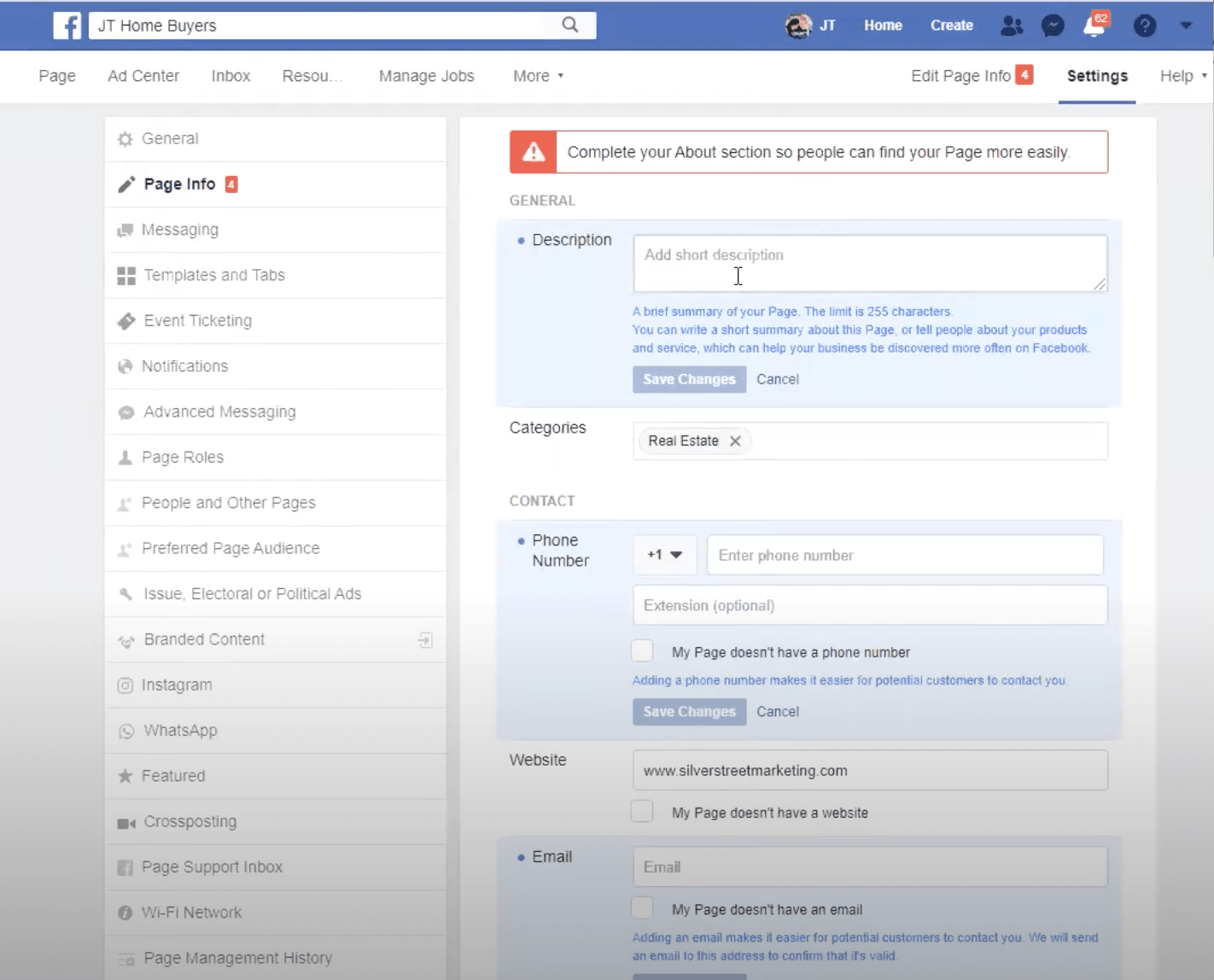
    Implementation Tips:

    • Regularly update and refine localized targeting parameters based on changing market dynamics.
    • Utilize analytics tools to measure the performance of localized hyper-targeted campaigns and adjust strategies accordingly.
    • Stay informed about local events, developments, and trends to continuously align marketing efforts with the evolving needs of specific neighborhoods.

    Real Estate Facebook Ads – Behind-the-Scenes Sneak Peeks:

    Incorporating behind-the-scenes sneak peeks in your real estate Facebook Ads allows professionals to provide an insider’s view into the intricacies of property listings and the real estate process. This innovative approach goes beyond traditional marketing by offering potential buyers a glimpse behind the curtain, fostering transparency, and creating a more engaging and personal connection.
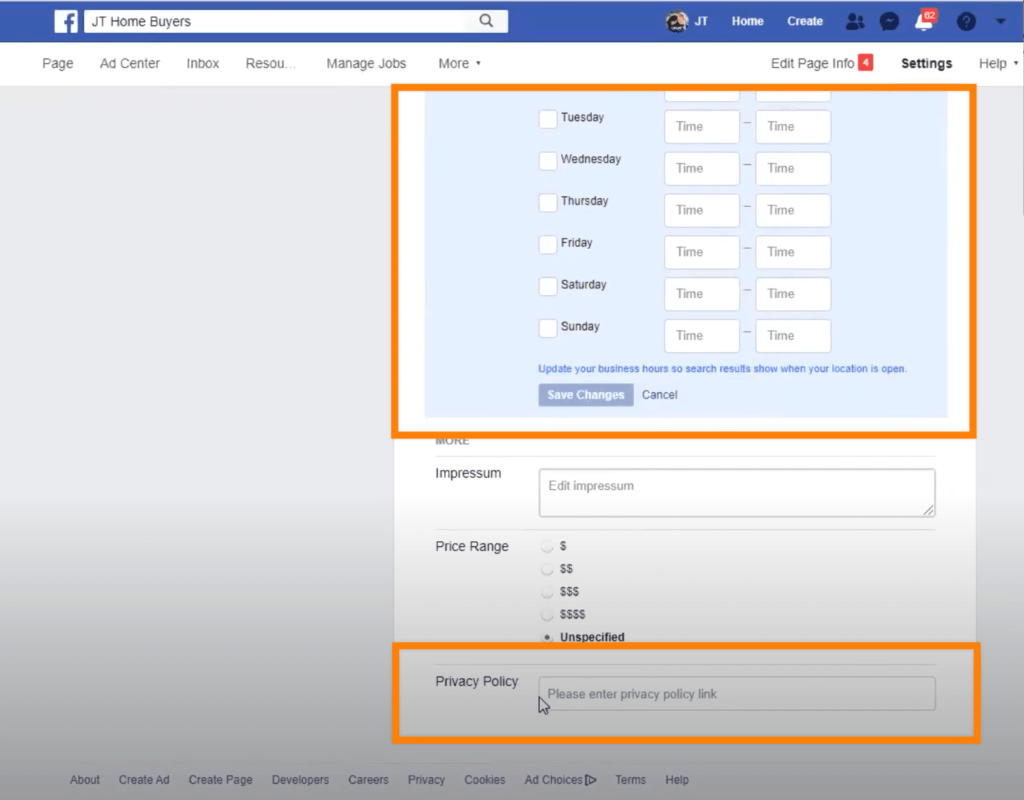
    Key Features and Benefits:

    • Transparency and Authenticity: Behind-the-scenes sneak peeks foster transparency by allowing potential buyers to see the effort and care invested in presenting a property. This authenticity builds trust and credibility, which is vital to establishing positive client relationships.
    • Engagement Through Storytelling: Sharing behind-the-scenes content allows real estate professionals to tell compelling stories. From the initial stages of property preparation to the final touches before a listing goes live, each step becomes a narrative that engages potential buyers and piques their curiosity.
    • Showcasing Expertise: Behind-the-scenes sneak peeks allow real estate professionals to showcase their expertise. From discussing design choices to explaining market trends, these peeks can highlight the knowledge and skills that set a real estate professional apart.
    • Building Anticipation: Offering a behind-the-scenes look builds anticipation among potential buyers. It creates a sense of exclusivity and involvement, encouraging individuals to stay engaged with the property listing and follow its journey from preparation to market debut.

    Strategic Implementation:

    • Capture Key Moments: Document critical moments in the property preparation process, from staging and photography sessions to discussions with clients or property owners. These moments humanize the experience and provide valuable insights into the investment in presenting a property.
    • Utilize Video Content: Video is a powerful medium for behind-the-scenes content. Visual storytelling enhances the impact of behind-the-scenes peeks, whether through short clips on social media or more extended videos on property listings.
    • Engage with Your Audience: Encourage interaction and engagement by inviting potential buyers to ask questions or share their thoughts during behind-the-scenes content releases. This two-way communication builds a sense of community and involvement.

    Implementation Tips:

    • Be consistent in sharing behind-the-scenes content to maintain audience interest.
    • Use behind-the-scenes peeks to highlight the unique features of a property and its distinct selling points.
    • Monitor audience feedback and adjust behind-the-scenes content based on what resonates most with your target demographic.

    Real Estate Facebook Ads – Market Insights:

    Market Insights have emerged as a strategic and engaging approach, enabling professionals to gather valuable market insights while fostering interaction with their audience.

    Key Features and Benefits:

    • Audience Engagement: Market insights involve the audience in the real estate conversation. Real estate professionals can build community by encouraging participation and interaction, keeping potential buyers and sellers engaged with their brand.
    • Real-Time Feedback: Unlike traditional market research methods, interactive polls provide real-time feedback. This immediacy allows real estate professionals to stay agile and responsive to changing market dynamics, adapting their strategies based on the most up-to-date insights.
    • Enhanced Personalization: Market insights enable real estate professionals to personalize their approach. By knowing the preferences of their audience, professionals can offer more relevant content, property suggestions, and services, enhancing the overall customer experience.

    Strategic Implementation:

    • Define Clear Objectives: Whether gauging interest in specific property features or understanding market sentiment, having a clear goal ensures that the market insights are meaningful and actionable.
    • Promote Across Channels: Promote market insights across various channels, including social media, email newsletters, and your website. Utilize the reach of different platforms to maximize participation and gather insights from a diverse audience.

    Implementation Tips:

    • Keep market insights and easy participation to encourage higher engagement.
    • Share insights from polls with your audience, demonstrating transparency and creating a feedback loop.
    • Review and update topics to align with market dynamics and audience interests.

    Real Estate Facebook Ads – Ephemeral Stories for Property Highlights:

    Ephemeral stories involve sharing multimedia content—such as images and videos—accessible for a limited time, typically 24 hours. When applied to real estate marketing, Ephemeral Stories provides a platform for professionals to showcase key features, behind-the-scenes footage, and other property highlights in a visually appealing and temporary format.

    Key Features and Benefits:

    • Foster a Sense of Urgency: The temporary nature of Ephemeral Stories creates a sense of urgency among viewers. Potential buyers are motivated to engage with the content promptly, ensuring they don’t miss out on exclusive property highlights or time-sensitive information.
    • Visual Appeal: Ephemeral Stories capitalize on the visual appeal of images and videos to convey property highlights in a captivating way. The dynamic nature of stories allows for a more immersive and interactive experience, enhancing the overall impact of the showcased content.
    • Highlight Unique Features: Ephemeral Stories are ideal for spotlighting specific features of a property, whether it’s a breathtaking view, a luxurious amenity, or a unique architectural detail. The temporary nature of the content makes these features stand out, encouraging potential buyers to take notice.
    • Encourage Engagement: Viewers can actively engage with Ephemeral Stories through reactions, comments, and direct messages. This interactive element fosters engagement and allows real estate professionals to directly communicate with potential buyers, answering questions or providing additional information in real time.

    Strategic Implementation:

    • Curate Compelling Visuals: Invest time in curating visually appealing images and videos that showcase a property’s most attractive and unique aspects. High-quality visuals contribute to the overall allure of Ephemeral Stories.
    • Create a Story Narrative: Develop a narrative for each Ephemeral Story to guide viewers through the property highlights. This could include a virtual tour, highlighting specific rooms, or providing insights into the lifestyle associated with the property.
    • Utilize Story Features: Leverage the features available within ephemeral story platforms, such as polls, quizzes, or swipe-up links for additional information. These features enhance interactivity and allow potential buyers to engage with the content actively.

    Implementation Tips:

    • Promote Ephemeral Stories across multiple platforms, including social media and messaging apps, to maximize visibility.
    • Use captions and overlays to provide context and additional information about the property highlights.
    • Monitor engagement metrics to assess the effectiveness of Ephemeral Stories and refine future content accordingly.

    Real Estate Facebook Ads – Highlight Recently Sold Listings

    One particularly impactful approach is the “Highlight recently sold listings” real estate Facebook Ads, a powerful narrative that encapsulates success and fosters trust among potential clients.

    Recently sold listings Ads go beyond showcasing properties—they tell a story of triumph, illustrating the dedication and proficiency of real estate professionals. These Ads serve as a visual testament to success, showcasing recently closed deals that exemplify expertise in the industry.

    Key Features and Benefits:

    • Visual Storytelling: Leverage the storytelling power of visuals to engage your audience emotionally and convey the diversity of your successful transactions.
    • Trust and Credibility: Establish trust by presenting a transparent track record of recently sold properties, reinforcing your credibility as a reliable and successful real estate professional.

    Strategic Implementation:

    • Diversity in Showcase: Strategically showcase various properties to cater to different preferences and demographics, expanding your reach and relevance.
    • Targeted Placement: Place your Ads strategically on Facebook to reach the right audience. Utilize the platform’s targeting features to maximize visibility and engagement.

    Implementation Tips:

    • Stay Current: Regularly update the recently sold listings showcased in your ads to reflect the dynamic nature of the market.
    • Encourage Engagement: Foster community by encouraging audience interaction through comments and inquiries, building trust and credibility.

    Conclusion:

    As we venture further into 2025, the real estate landscape continues to evolve, and these 14 inspiring Facebook Ad examples showcase the innovative and creative approaches defining the industry.

    By incorporating the latest technologies, embracing inclusivity, and staying attuned to market trends, real estate professionals can leverage Facebook ads to engage their audience, drive conversions, and stand out in a competitive market.

    Stay inspired, stay adaptive, and watch as your real estate Facebook ads significantly impact the year ahead.

  • Super-Charge Your Real Estate Investor Lead Generation with Facebook Ads

    Super-Charge Your Real Estate Investor Lead Generation with Facebook Ads

    Real Estate Investor Lead Generation with Facebook

    For those of you that know me, you know I’ve been a huge advocate of using Facebook ads to turbocharge your real estate investing business, especially as of late.

    There are only a few things that work really well to get deeply discounted properties (mailing, cold calling, and online ads).

    Because EVERYONE is mailing the cost per acquisition for mailers has gone through the roof.

    Cold calling works great, but it is something that most investors won’t do.

    This is where real estate investor lead generation with Facebook ads fit in: they are just as easy to scale as mailers and don’t require you to pound the phone all day. Unlike other forms of marketing, Facebook ads are extremely predictable.

    When you mail or cold call, there is a lot of variability on a month to month basis in terms of cost per lead. When it comes to Facebook, you know within a very narrow window what your cost per lead is.

    Another major benefit of Facebook ads is that they can also be turned up at a moment’s notice.

    So when you need more leads you can ramp up your campaigns, and vice versa.


    Facebook Ads for Real Estate: The Why and How of Getting (REAL) Leads


    Real Estate Investor Lead Generation with Facebook: Making Money on Facebook Leads

    Now that we know the benefits of Facebook Ads, let’s talk about the execution.

    The Targeting:

    For real estate investor lead generation it is crucial that if you are paying to show your ads, that you are showing the right people.  One of the main reasons why Facebook is such an incredible tool and why Facebook is worth so much money as a company is that Facebook knows everything about you.

    Facebook ads targeting options
    Source: Facebook Business

    They know your age, whether you are a homeowner, what you like(and don’t like), and much more. And with this information, you can put your ads in front of only the people who are most likely to want to sell to an investor.

    There are two ways to achieve this:

    Creating your Custom Audience
    Source: Facebook Business

    Already a Carrot Member? Check Out Carrot’s Facebook Leads Masterclass

    Learn how to drive leads to your site and build an audience with Facebook marketing.


    The Ad Itself:

    One important thing to understand about Facebook ads is that you are interrupting what someone is currently doing.

    They didn’t come on Facebook to see an ad.  They came to see what their friends were up to.

    So from a high level, it is critical that your ad stands out, or else it won’t even get noticed.

    There are a few important things to make sure your ad stands out.

    1. The image – this is the most important part of your ad, believe it or not. The picture is what “stops” the person from scrolling. If you can’t stop them from scrolling, they won’t read the ad and you are dead in the water.
    2. The wording – once the person “stopped” because of the image that you used, the next thing you need to master is the “copy” or the wording of your ad. Where most people make a mistake is that they write extremely “professional” ads. By professional I mean boring. Again, users aren’t going on Facebook to see ads and they will skip over them if it isn’t interesting. You need to tell a “story” more than list out the benefits of working with you. One thing to start doing immediately is to start reading the Facebook ads in your current news feed and look at how the good ones are written. Then copy the same style.
    3. Lead capture: how you capture your leads also makes a big difference. It is great for you to have a great image and great copy but if they are dropped to a website that doesn’t convert, it will all be for nothing. I’ve tried various sites and bar none carrot is the best performer. If you are spending significant money on Facebook ads, you NEED a Carrot site. The price is a drop in the bucket compared to what the ads cost and you will get more leads per dollar spent. One thing to note is that I used to have a non-carrot site that looked really pretty that did not convert. I see many people making this same mistake. Don’t repeat this mistake.

    You are probably thinking “I know that I need a great image and great copy” but how do I know what to do on Day 1?

    Can’t you just give me what is working?

    I have good news and bad news on this question.

    The good news is that anyone can figure it out fairly easily. The bad news is that it takes a little bit of work.

    The reason that I can’t just give you what is working for me is that what is working on Facebook changes over time. One of the drawbacks of Facebook ads is that you have to manage them. An ad that was working a month ago, might now work anymore.

    The reason for this is what Facebook calls the “relevance score” The relevancy score is determined by how people respond to your ad. If you are serving up content that Facebook users find annoying, they will hide it.

    facebook ad relevance score
    Facebook Relevance Score. Source: Facebook Business

    Because Facebook makes its money by users being on Facebook all day every day, they don’t want to serve ads that are annoying to the users. So, what happens is that if everyone is hiding your ad, Facebook will show it less and you will pay a lot more per lead and eventually the ad won’t work at all.

    The good news is that it is really easy to figure out what is working with just a small amount of money using a concept called “split testing”

    Split testing is the process of comparing two ads with one different variable. For example two ads with the same wording but with different pictures. Or, leaving out a call-to-action:

    Split Test Facebook Ads
    Source: heyo.com

    You would run these ads together and see which one performs better and then spend more on the winner.

    The more that you split test Facebook ads, the better your cost per lead will be. This may sound like a lot of work, but if you are going to run Facebook ads, you need to do this or someone else needs to do this for you.

    When someone tells me that Facebook ads don’t work, I know it is either because they have not gone through the process of split testing OR they don’t know how to properly monetize the leads(which is going to be my last point related to facebook ads).


    How to Get your Online Real Estate Marketing to Play Nice With your Offline Marketing Efforts


    Monetizing Leads

    If you are going to spend the time and money to run Facebook ads, you need to maximize the return on your investment. MOST people aren’t doing this. There are three components to making money on Facebook Leads: converting leads into appointments, converting appointments into deals and maximizing your ROI on Leads

    1. Converting leads into appointments: you need to follow up with these leads as soon as possible and multiple times (I recommend calling/texting and emailing every day for the first 10 days). You also need a good CRM (I use Follow Up Boss) and a really good email sequence (mine was written by a good copywriter). It is also very important to know what to say when making these calls. My team has a free weekly training on how to turn these exact leads into appointments. To get free access go to www.oceancityweeklytraining.com and sign up for the Wednesday at 11 am free class. All of these follow up systems are used just to get the appointment (which is half the battle)
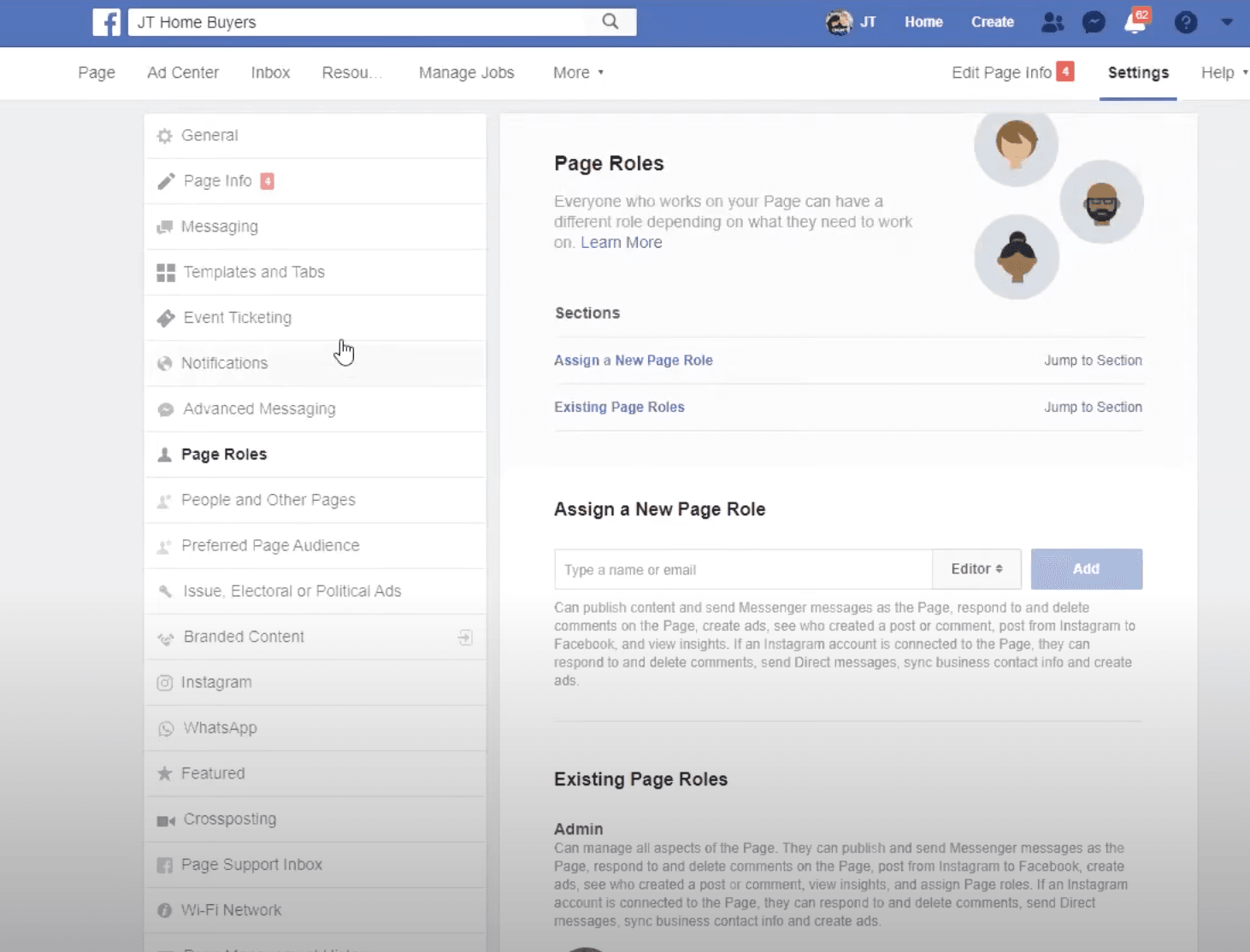
    2. Converting appointments into deals: Once you have the appointment, you need to convert it. Motivated sellers are NOT MOTIVATED BY MONEY so what you say and do on the appointments matters, big time. You need to say and do the right things when you get sellers face to face. To learn more about how to do that check out my free Tuesday at 10 am training at www.oceancityweeklytraining.com.
    3. Maximizing ROI on Leads

    Real Estate Investor Lead Generation with Facebook: You Have To Be Able To Maximize Every Lead That Comes In

    Where most people go wrong here is that they only make money 1 way on their leads and because of that they have a hard time getting a great ROI on their money. You NEED to be able to make money in multiple ways or else you will constantly battle for profitability. For comparison purposes, I get over 12x return on my money spent on Facebook.

    Examples of how to maximize every lead include:

    1. Retail leads – when the seller wants too much money for the house, you list the property or find an agent that can list it
    2. Wholesaling – for the deals that you don’t want or can’t fund
    3. Fix and flipping – for your high-profit deals
    4. Buy and hold great rental properties for long-term wealth

    If you aren’t utilizing the above 4 strategies it is going to be hard to compete with someone (like me) who can.

    Implementing all 4 of these strategies is not difficult, you just have to know how to do it.

    To learn all of my strategies on how to maximize leads go to www.realestateinvestingiseasy.com for a full training session on this exact topic.


    Already a Carrot Member? Check Out Carrot’s Facebook Leads Masterclass

  • Real Estate Facebook Ads | The Why and How of Getting Leads [Infographic]

    Real Estate Facebook Ads | The Why and How of Getting Leads [Infographic]

    Real Estate Facebook Ads

    Facebook and real estate marketing are a match made in social media heaven.

    For Carrot members, Facebook is the third highest source of new leads, outperforming Google AdWords as well as organic search from both Bing and Yahoo.

    All told, Facebook has generated over 15,000 new leads since January of this year alone. And that’s leads. Not traffic, not visitors, not followers, not fans … real leads.
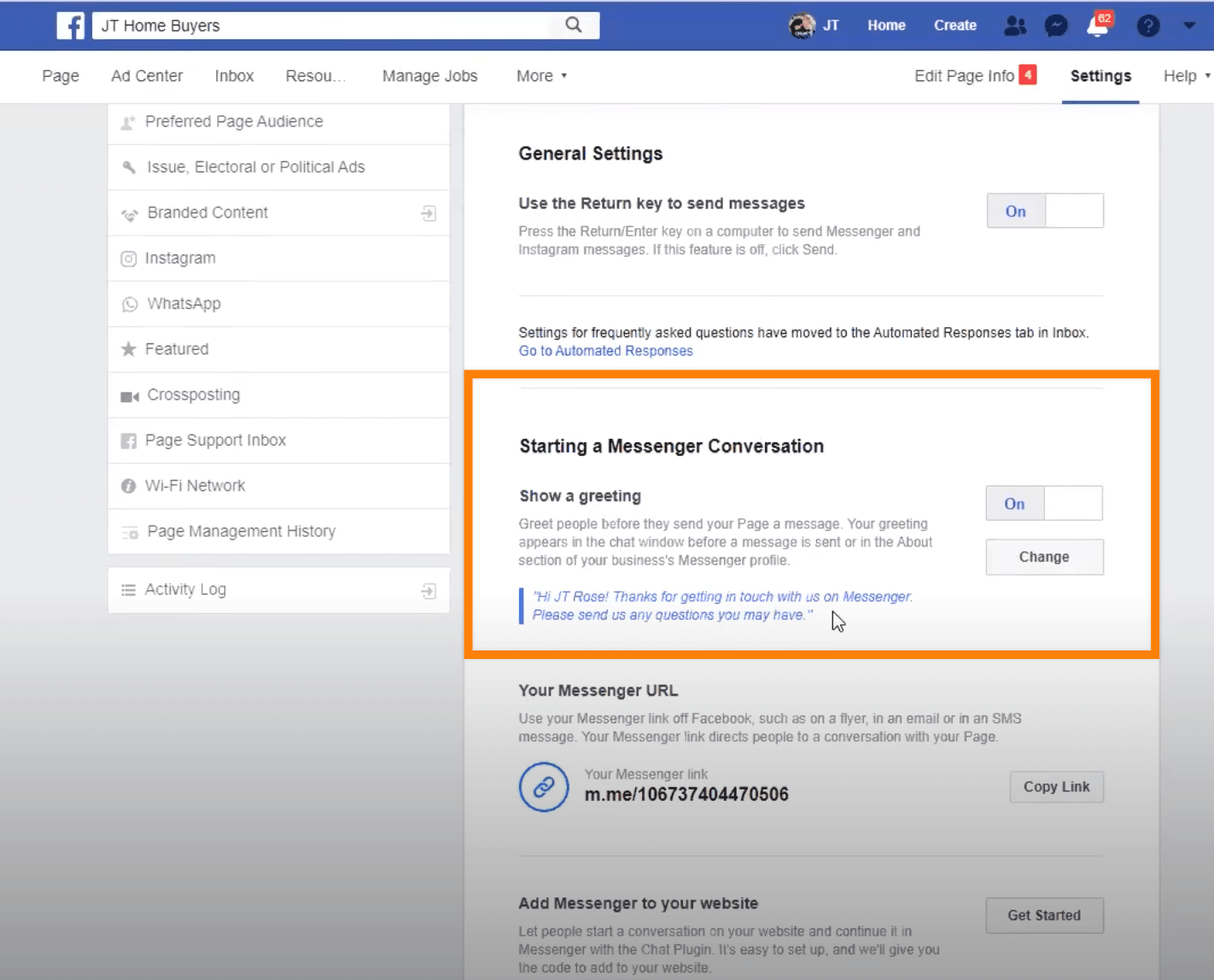
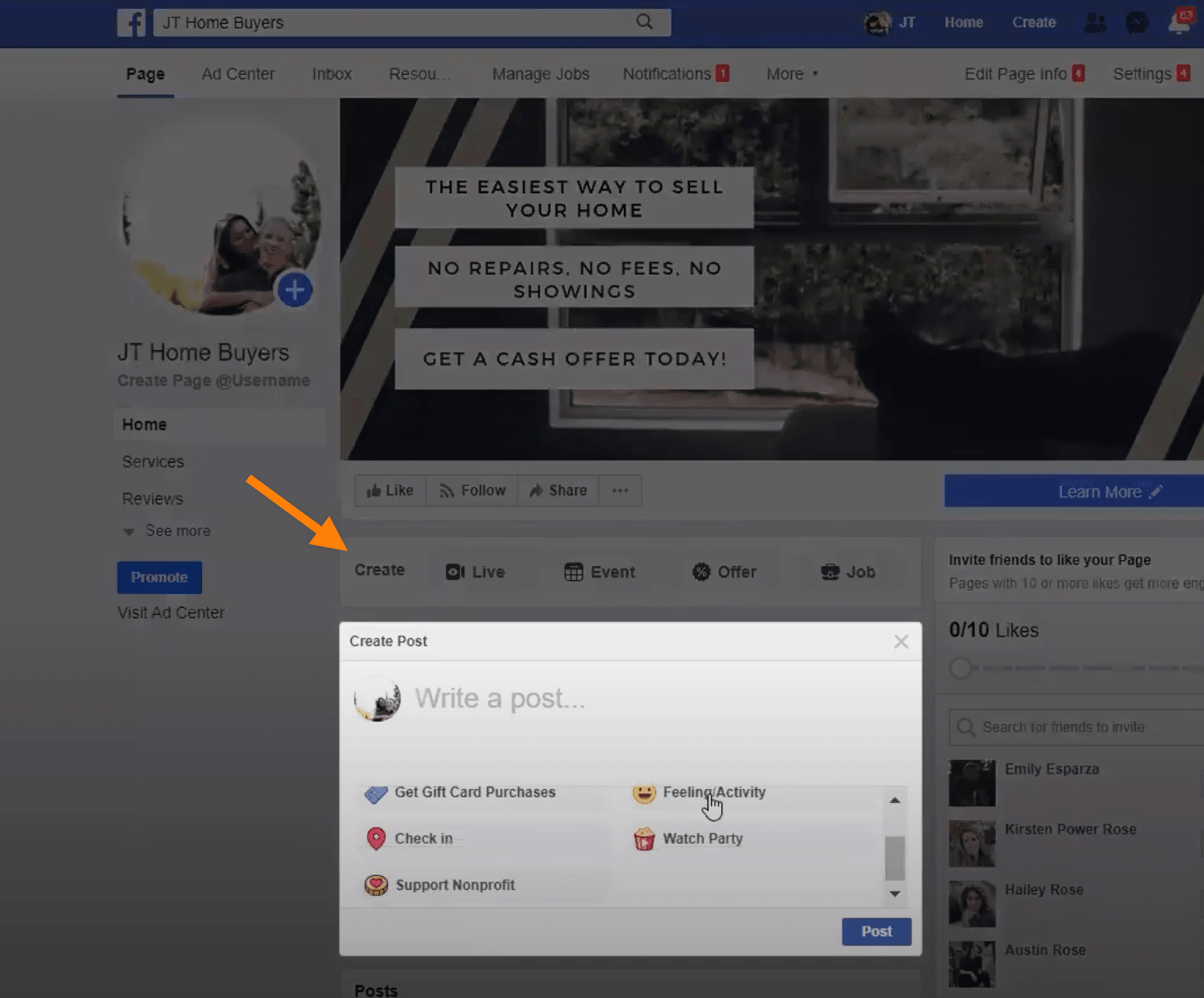
    Imagine the difference a few hundred new leads could have made in your business over the last year. Image what they could do for you in 2018.

    Simply put … that kind of lead-generating faucet is absolutely transformative.

    To illustrate how our clients do it, we collaborated with infographic making company, Venngage, to create this visual explanation.

    Real Estate Facebook Ads: The Why and How of Getting Leads [Infographic]

    [share]

    [share]