Category: Search Engine Optimization

  • 4 Step Marketing Budget Formula: Find The Magic Number You NEED To Invest To Close A Deal

    4 Step Marketing Budget Formula: Find The Magic Number You NEED To Invest To Close A Deal

    What if you could know that for every $1500 invested in online ads, you’re pulling $10,000 back? But, a lot of investors don’t take the time to calculate and understand what it takes to get a positive ROI. So, they quit too soon. Let’s fix that.

    Before we dive in, as you listen to this Strategy Sketch, you’ll need to use The Carrot ROI Calculator tool to help pencil in your own marketing budget.

    I’ve got a quick story for you, but before I start if this is your very first strategy sketch with Carrot we have a lot of other ones on our YouTube channel. Check them out after you watch this one.
    4 Paid Marketing ROI Steps Only High Real Estate Achievers Understand

    The story is of 2 different real estate investors…

    One real estate investor’s had an amazing return on their marketing.

    The other one struggled and lost all their money and ended up giving up.

    I want to make sure that you identify where in this story you fit. Which one of these are you resonating with? Which one of these are you living right now?

    The First Investor…

    The first investor had a marketing budget and he knew his numbers really well. I’m going to be walking through exactly what the first investor did to make sure he got a great ROI on his marketing.

    The Second Investor…

    The second real estate investor also had a budget. He dove in, he started spending money, he started investing money, but he did not do these 4 steps I’m going to walk you through.

    They both had the same amount of money to start, they both had the same amount of experience. One of them lost his butt on all of his marketing, the other ended up making tens of thousands of dollars.

    Now, this is not a false story. I was on one of our Coaching Calls recently here at Carrot and these 2 investors were on the exact same call. One of them ended up blowing $1500 on pay-per-click marketing. The other one ended up making almost $9,000 in the first deal because he followed these 4 steps.

    If you want to know the difference between really active and really profitable investors, these 4 things are going to be that.

    Let’s go ahead and dive in.
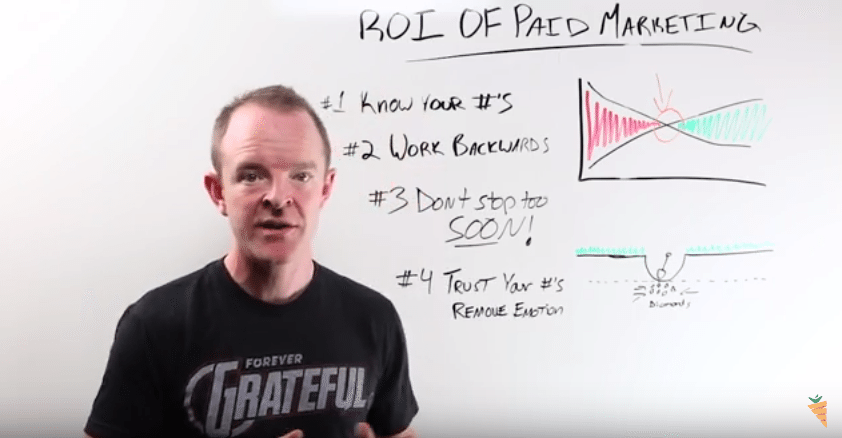
    ROI of Paid Marketing

    Step 1: Your “APD” – What Is Your Average Profit Per Deal?

    The first thing, how you get a great return on investment from your paid marketing? That’s what we’re talking about here is your paid marketing. A lot of this will translate over into the stuff where you’re just working kind of sweat equity for your marketing.

    Could be you doing your own SEO, could be you out there doing your own door knocking or whatever the heck it is, but we’re talking about marketing that you actually take your money and invest it into the marketing. It could be direct mail, pay-per-click, SEO, you name it.

    The first thing here is you’ve got to know your numbers, and I think a lot of people think that they know their numbers. They think, “I make about x amount per deal, I’ve got this much in my budget, and I’m just going to roll with that and we’ll see what happens.”

    You probably don’t know your numbers as well as you should but I’m going to walk you through in this video how you should know your numbers in a quick 30-second work your way backward formula.

    The numbers that you really need to know about your marketing: You need to know how much money you’re going to be making on each sale.

    If you’re a real estate agent, you need to know what your average profit per listing is. If you’re a real estate investor, you need to know what your average profit per deal is.

    If you’re not investing yet, go out there and investigate the market, talk to other investors in your market, and find out what their average profit per deal is. Write that down right now.

    That’s going to be a key number for you.

    Step 2: Your “LPD” and Website Conversion Rate – How Many Leads Before You Close A Deal On Average?

    The next thing that you’re going to need to know is what your conversion rate is. You’re going to need to know basically how many leads it takes to turn into a deal for you. You’re going to need to know all those types of things. We’re going to walk you through them here in a second.

    If you don’t know how many leads it takes for you to turn it into a deal, it’s going to be really hard to know your numbers and know how much you need to invest in your market.

    We’re going to work backward on some numbers and we’re going to help you identify your exact marketing budget so you know exactly what you need to invest with no guessing, take all the emotion out of it so you can just really focus on doing what you need to do. Invest in your marketing very intentionally and not stopping before you need to.

    Step 3: Don’t Stop Too Soon

    Third is exactly what I’ve led into. Don’t stop too soon. This is one of the biggest mistakes we see, not just for real estate investors or agents, in business in general. Too many of us stop way before we actually should stop. We invest a little bit of money in this marketing type and it doesn’t pan out right away and we go, “Oh my gosh, that must not work.”

    We throw up our arms and then we start something else and then we do that for a little bit. Then that doesn’t work like we thought it was. We throw up our arms and we move to something else again, and if you’re in that pattern right now.

    If you’re in the pattern of going and investing a little bit, dabbling, pulling back because you didn’t get the results you wanted, then you shift focus and you do the same thing, you’re probably going to be in that pattern forever until you change your thought process.

    If you’re in that pattern you’re going to be looking back in a year or two years or three years or even a month and going, “Oh my gosh, I ended up investing a lot of money, I lost a lot of money, I didn’t grow the business that I wanted to, I don’t have the freedom that I wanted, that I thought that I would have in my business,” and you’re going to blame it on everything but your marketing mindset.

    Having the right marketing mindset can save you from that.

    Step 4: Trust Your Numbers

    The fourth thing is you got to trust your numbers. You cannot go off of emotion in marketing. Marketing is an emotionless entity. You get emotion completely out of marketing unless you’re making your marketing materials. That’s a whole different video, a whole different strategy sketch where and how you use emotion in your marketing materials to really connect with your prospects. You can use emotion there. We don’t want to use emotion in how you analyze whether your marketing’s working or not.

    I read this book called Acres of Diamonds and this book basically is a very similar tale to the guys back in the gold rush in California, where there were many stories of these gold miners who would go in and they’d invest a ton of money in buying the equipment and people and digging and digging, and they get a little bit of gold but they did not hit the thread of gold that they thought they were going to hit.

    There was this one particular story, I don’t remember the gentleman’s name, but basically this guy built this big gold mine and he dug and dug and one day ran out of money and said, “You know what? I’m just going to quit because this must not be the spot.”

    What ended up happening was he ended up moving away, another miner came in and said, “You know what, this looks like it has promise. Let me dig a little bit further.” Within weeks this guy hit this massive payload of gold, 2-3 feet below where the other miner stopped, and the moral to the story there is you need to follow your numbers, not the emotion.

    If that first miner knew that gold was in there, he needed to make sure he knew how much budget he had, make sure he knew exactly what the ROI could be on the other end, and not stop until he hit those metrics.

    It ended up costing him millions and millions of dollars.

    How To Map Out Your Numbers

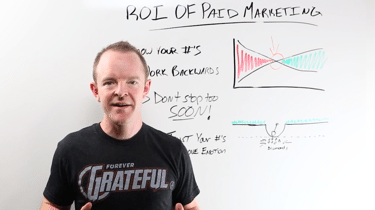
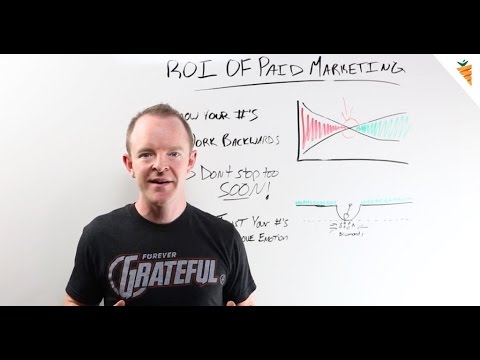
    What we’re going to do is we’re going to walk through a real example here, we’re going to map out your numbers, and we’re going to take it so your marketing turns from the red negative to the green positive. This point right here, this is what we call the inflection point in your marketing.

    Almost every time, you’re always going to have this ramp-up period. You’re going to have a period where it’s not giving you much of an ROI. With pay-per-click marketing, it’s going to take some time to get that optimized so your ROI, your return on investment, is where you want it to be.

    With search engine optimization, you’re going to be investing a lot of time and money if you’re hiring someone else to do it for 3, 4, 5, 6, 7, 8 months before you hit the inflection point and your rankings go up in Google and you start to get those leads and deals.

    We have to be long term focused. We cannot be short-term focused on our marketing, and we need to really be shooting for that inflection point, your break-even point, then from there, your profits start to really skyrocket.

    What we’re going to do is we’re going to work some numbers here. We’re going to work backward. And, we’re going to make sure you don’t stop too soon because now you’re going to know your numbers. That will help you so you trust your numbers and get emotion out of it.
    roi of paid marketing calculations

    Working The Numbers…

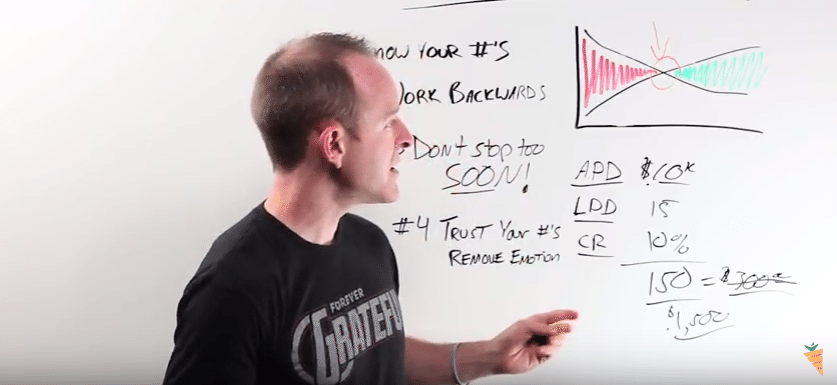
    Let’s start. If you’re a real estate investor let’s just work with wholesalers. What is your average profit per deal? Let’s assume that your average profit per deal is $10,000 in your market. So, we know that if you do a deal, you make $10,000. Now let’s work backward. How many leads does it usually take for you to close that one deal?

    The average for Carrot members, for online leads that are generated through our platform, is about 10-15 leads per deal right now.

    If you’re doing direct mail it’s about 20-40 leads per deal. If you’re doing pay-per-click it’s probably 15-30 leads per deal. We’re just going to run with 15 leads per deal for this example.

    Working backward, we know that we need to get 15 leads so we can get $10,000.

    If you’re doing pay-per-click marketing and you already have a campaign going and optimized, how much is it costing you to get a visitor to your website and how is your website converting?

    If you’re in a really hot market like a south Florida or LA or Portland, Oregon, websites, in general, are going to be converting lower than websites in a moderate market. If you’re in Birmingham or Louisville or something like that, your website for motivated sellers is going to convert higher than a hot market.

    So, don’t look at your friend in Kansas if you’re in LA and go, “Oh my gosh, my buddy’s getting a 10% conversion rate on his seller site, I’m only getting 3. What’s going on?” It’s probably your market, not your website if your website is set up the way that we teach.

    Now let’s work with a conversion rate. We’re going to do a 10% conversion rate. It takes 15 leads to close a deal, and then you’ve got your $10,000 profit. To get 15 leads, we’re going to need to get 150 visitors to our website. Your only goal now is how do I get 150 qualified people to my website? 150 people equal $10,000 to me.

    Let’s say you’re doing Google pay-per-click or something like that and you’re getting 150 visitors, costing you $2 a click. On average that’s going to be $300. Once again in this hypothetical situation, you need to having a marketing budget of at minimum $300. If you’re in a market where it’s going to be a lot more than $2 a click, say it’s $10-15 a click like a lot of markets are, you need to start adding those numbers up.

    Let’s say it’s $10 a click. Now that’s a $1,500 budget. $1,500 in order to get 15 leads, in order to get your $10,000 profit. Now the numbers are really starting to make sense, so those of you who are giving up after you put in $500 in your pay-per-click marketing, you need to be stretching all the way to your max budget. Give yourself a chance to let your numbers work for you.

    I think everyone watching this video will easily trade $1,500 for $10,000. If you won’t … please examine yourself because you need to be working the numbers like this.

    You cannot be going, “Okay, I want to invest $300 to get $20,000.” You need to be really thinking about those numbers in a big way because if you’re not, your competition is. If you’re in a market where you’re only willing to invest $400 to get a $10,000 deal but your competition is willing to invest $3,000, you’re going to get crushed every time in pay-per-click, every time in Craigslist, every time in SEO, every time in direct mail.

    You’re always going to get crushed because your competition knows their numbers. They’re going to take it up to their max budget, and they still know if they’re going to be able to profit.

    That is how you scale up your marketing. Know your numbers, remove emotion from it.

    1. Find out your average profit per deal first.

    2. Find out how many leads it takes you to close a deal,

    3. figure out your conversion rate on your website- which we can help you. If you’re an InvestorCarrot member we’ll help you with that. Just let us know and we’ll spin up a split test on your site to find out your conversion rate.

    4. Figure out how much it’s going to cost you to get those visitors to your site. Whether it’s through SEO or direct mail or pay-per-click. Figure out what that’s going to cost you to get your 150 visitors to the site using these numbers.

    Ramp Up Your Paid Marketing ROI

    Get out a piece of paper, figure out those numbers for yourself, get those calculations going, and get your return on investment ramped up for your business. Remove emotion from your marketing, go with your numbers, and work backward down the line.

    Sooner than you know it, you’re going to turn from dabbling to crushing it. And, it’s just going to keep on skyrocketing and going up.

    Thank you guys and gals for watching this strategy sketch. Make sure to check out other strategy sketches on our YouTube channel. Go over there, we have lots of great strategy sketches where we answer questions that you guys send in each and every week. Thank you guys and gals, we’ll talk soon.


  • Ep 9: My Top SEO Guy Lays Out 4 Critical SEO Tips In 2016 w/ Matt Dalbey

    Ep 9: My Top SEO Guy Lays Out 4 Critical SEO Tips In 2016 w/ Matt Dalbey

    2016.08.05-CarrotCast_Matt_Dalbey-main

    “Getting ranked for a handful of core keywords is very important and it’s the starting point. Finding and identifying those important keywords is where you need to start. But that is only a means to an end. That is literally the tip of the iceberg.” Matt Dalbey

    Who Else Has Given Up On SEO Too Soon? You Probably Know A Few. Maybe Even You…

    But…You Might Have Been Closer To Higher Rankings Than They Thought. Listen Below To Learn What Everybody Ought to Know About SEO…

    Subscribe and rate us on iTunes

    In this CarrotCast episode, we dive in with our GO-TO SEO guy, Matt Dalbey. He has an awesome data-driven approach that we think will point your SEO mindset in the right direction.

    If you want to learn how to smash through SEO barriers in order to achieve a higher ranking website in organic search results, then this call is for you. If you want to learn some behind the curtain SEO tips only the professionals use, this is for you. And lastly, if you want to feel more energy and passion today, this episode is for you.

    PS – If you enjoy this episode, give us a review on iTunes and Subscribe. It helps us get our message out there even more and impact more people with the Carrot goodness.

    Listen to the Podcast

    Subscribe and Rate The CarrotCast On iTunes


    PAST EPISODES


    Check out this educational conversation with Matt about…

    Watch the Video Version

    My Top SEO Guy Lays Out 4 Critical SEO Tips In 2016 w/ Matt Dalbey

    Start – Who is Matt Dalbey and why he’s so good at SEO.
    8:30 – Having the right “long-term” SEO mindset is extremely important. That is one of the things that sets successful SEO apart from those who fail.
    13:55 – Real SEO client testimonial. Going from 0 to 80% of their leads via SEO. Getting ranked for a handful of keywords is a great start, but it’s only the tip of the iceberg. The iceberg is long-tail keywords.
    19:30 – What are long-tail keywords?
    23:40 – Don’t be the gold miner who gave up too soon and just missed the big one. Methodology and money.
    32:55 – How to build a good SEO foundation.
    34:40 – Using natural LSI, “latent semantic indexing” keywords in your content.
    36:41 – Creating a strong long-term strategy that is more than just updating your site. Using strong data to drive changes.
    42:00 – Thinking outside the box when building a link building strategy.

    “You want to provide value when linking to their site… quality over quantity”

    [podcast-subscribe]

  • SEO for Real Estate Investors… OnPage SEO Optimization

    SEO for Real Estate Investors… OnPage SEO Optimization

    SEO for Real Estate Investors - 10 Steps to Success

    SEO for real estate investors often feels like one part uber-advanced technical “hacks” and two parts dark magic.

    Listening to the advice of SEO gurus could easily leave you feeling overwhelmed … and incredibly disheartened.

    It’s not. And you shouldn’t be.

    SEO for real estate investors comes down to optimizing around 10 on-page elements. And that’s incredibly good news.

    Why? Because traffic is the lifeblood of any online business. And for real estate investors what you need isn’t just any old traffic — not just visitors for the sake of visitors — but high-quality, lead-worthy, traffic you can count on month in and month out.

    This post will guide you in how to get more traffic to your website by teaching you what’s important to search engines (i.e., ranking factors) and what you yourself can do to get your real estate investor site to rank exactly where you need it to.

    If you’re already familiar with SEO, then CLICK HERE to jump down to the meat of this post: a step-by-step checklist of HOW to optimize your on-page SEO for real estate investors.

    SEO for Real Estate Investors SERP

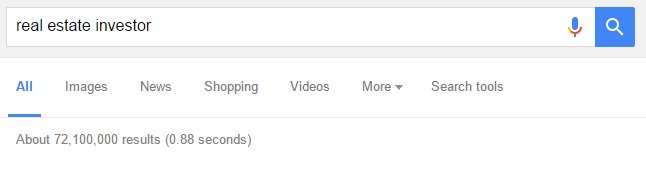
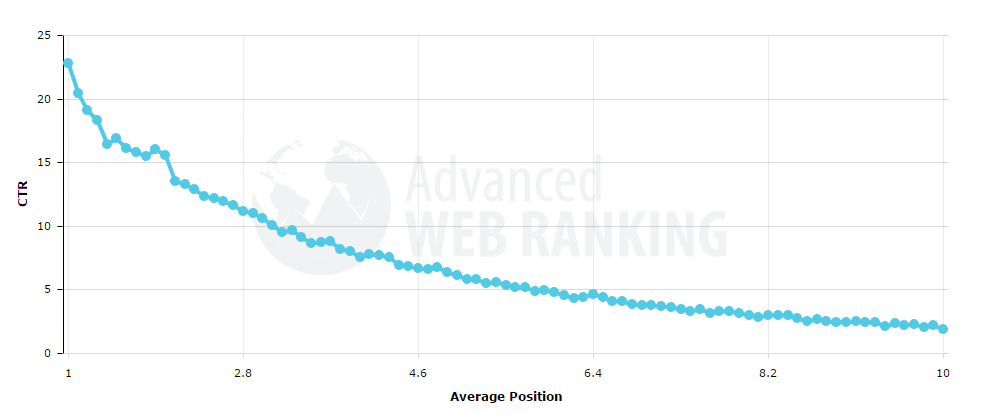
    Your position among those 72-million-plus results dramatically determines how many people visit your site. Data from May of 2016 indicates that while the average clickthrough rate (CTR) of position one websites on Google’s search engine results pages (SERPs) is 23%, position ten is 2%.

    real estate investor SEO SERP CTR

    Image Credit: Advanced Web Ranking

    And you don’t even want to know what happens to a clickthrough rate when you fall outside of positions one through ten. As the old adage goes, “The best place to hide a dead body is on page two of Google.”

    All this to say, it’s vital to understand exactly what factors Google takes into account when prioritizing their search results.

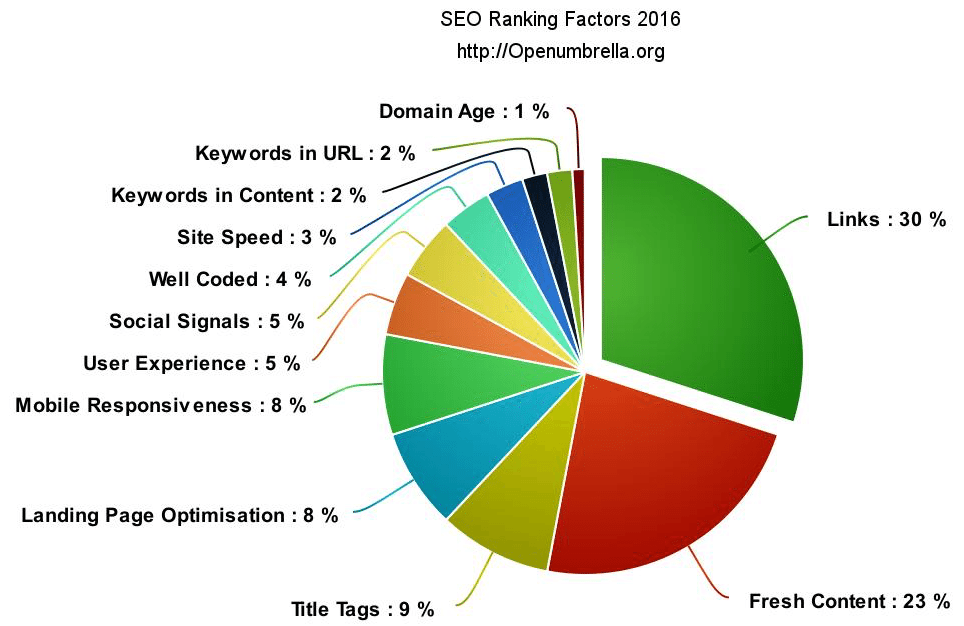
    According to Open Umbrella’s analysis of 182 websites, there are at least 12 vital factors:

    SEO for real estate investors Ranking Factors

    Image Credit: Openumbrella.org

    That can sound like a lot … but it’s nothing compared to SEO genius Brian Dean’s Google’s 200 Ranking Factors: The Complete List. (Full disclosure: the list actually contains 205 ranking factors. Geez.)

    But here’s the thing … you don’t have to become an SEO genius to get your real estate investor site to rank. And — even better — you don’t have to get to page one.

    Instead, SEO for real estate investors falls into three big buckets: (1) technical SEO, (2) off-page SEO, and (3) on-page SEO.

    [cta offer=”seobible” color=”red”]

    Technical SEO

    Naturally, technical SEO involves a host of behind the scene elements, some of which include …

    • Indexable: can Google access and catalog all your pages?
    • Speed: how fast does your website load?
    • Responsiveness: does it appear correctly on mobile, tablet and desktop devices?

    The good thing about being an Investor Carrot member is that all these factors are taken care of for you. Big sigh of relief.

    If you’re not a member, have a look at the health of your website by using a tool like HubSpot’s website grader.

    Off-Page SEO for Real Estate Investors

    Off-page SEO is really all about the links from other websites to yours.

    And when I say “all about” … I mean all about. Backlinks are the number one ranking factor all search engines use to prioritize their results.

    They’re also the side of SEO you have the least control over.

    That’s why — for now — we’re going to forego link building strategies and instead focus on the side of SEO you can control.

    On-Page SEO for Real Estate Investors

    On-page SEO for real estate investors focuses on your (1) content and your (2) keywords.

    Everybody wants to “hack” Google with the second approach. And of course, optimizing your keywords is vital. But before we go through our checklist on that process, do not ignore …

    SEO for Real Estate Investors: Content Matters

    Sadly, one of the most neglected areas in SEO, specifically by small businesses and entrepreneurs like real estate investors, is the continuous development of quality, value-add content.

    Many real estate investors who take their business online are under the false impression that adding content — any content — with the right keywords placed in the right keyword positions will do.

    That couldn’t be further from the truth.

    At the very start of our Content Marketing Roadmap, I make this claim:

    SEO is really all about content marketing.

    Why?

    Easy, because valuable, and fresh content is the only kind of content that other people will link to. And remember, other people’s links are the number one factor in SEO.

    In fact, Brian Dean’s number three and number four “key findings” from We Analyzed 1 Million Google Search Results: Here’s What We Learned About SEO highlight exactly this point:

    3. We discovered that content rated as “topically relevant” (via MarketMuse), significantly outperformed content that didn’t cover a topic in-depth. Therefore, publishing focused content that covers a single topic may help with rankings.

    4. Based on SERP data from SEMRush, we found that longer content tends to rank higher in Google’s search results. The average Google first page result contains 1,890 words.

    Do not make the mistake of putting “content quantity over content quality.”

    Instead, invest in long-form content — roughly 2,000 words — that valuable and relevant. If you’re looking for ideas, check out our 101 Blog Post Ideas For Real Estate. If you’re looking for a comprehensive crash course that covers the entire process, jump over to our Content Marketing Roadmap. Both are free resources … even if you’re not a Carrot Member.

    Real Estate Investor Content Marketing Roadmap
    Our Content Marketing Roadmap will walk you through the exact content creation process Carrot Members are using to pull in over 55,000 lead per month.

    But this isn’t a post about content marketing. This is a post about SEO … so let’s turn our attention to the real meat: keywords.

    SEO for Real Estate Investors: Keywords

    Keywords are what help search engines match the content on your website to online searches. It’s essential that you master the art of keyword research in order to maximize your results.

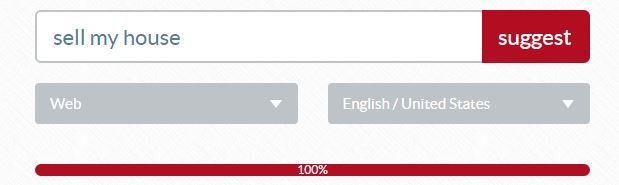
    The easiest way to find your own most popular keywords is by using a free tool called Ubersuggest. Simply type in a target phrase like “sell my house”:

    ubersuggest for real-estate SEO

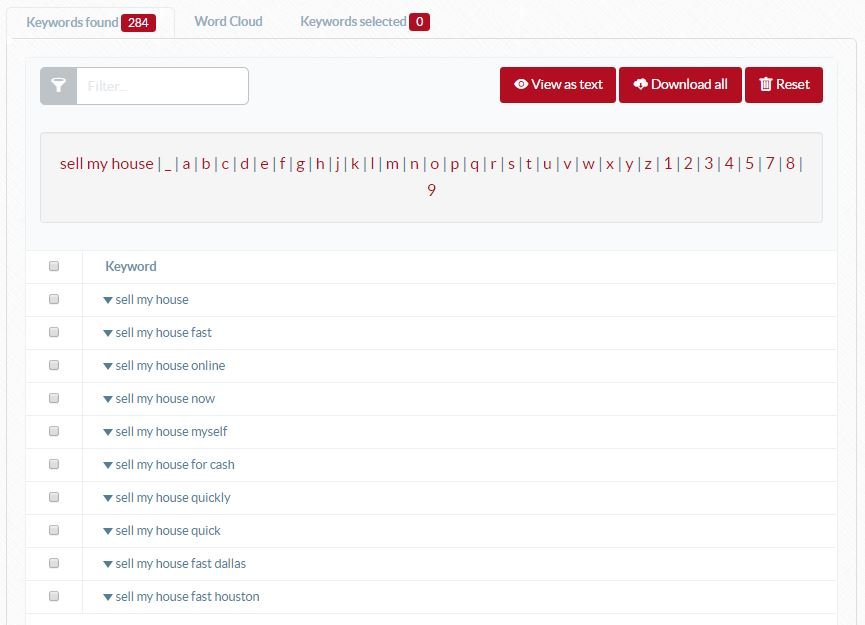
    Ubersuggest will then automatically generate a massive list of possible long-tail keyword phrases related to that general phrase.

    Ubersuggest for Real-Estate SEO Step 2

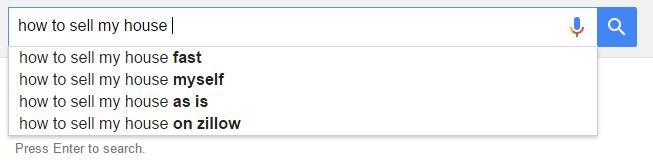
    You can also use Google’s auto-complete feature as well, especially to narrow down the most popular long-tail phrases.

    SEO for Real Estate Investors Google Autocomplete

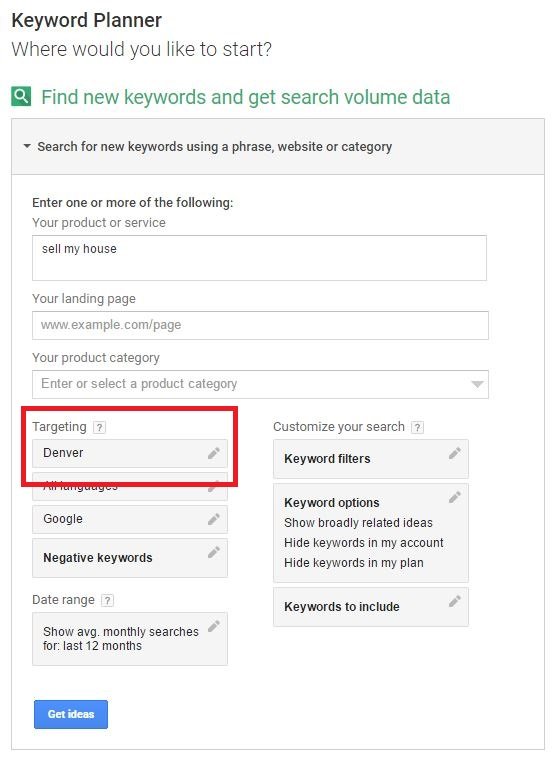
    For an even more detailed examination of the keywords you should target, Google AdWord’s free Keyword Planner tool is phenomenal. Just be sure to enter the area you want results for under “Targeting”:

    google-adwords-seo-real-estate

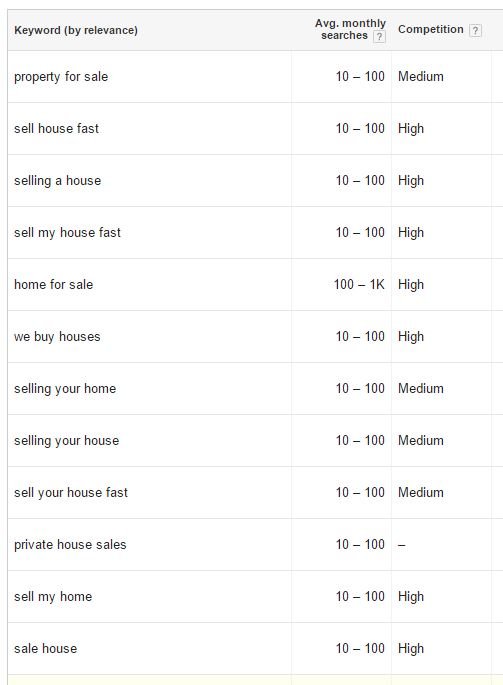
    Google will then give you a list of possible long-tail keyword phrases to choose from based on the location you selected:

    google-adwords-seo-real-estate-keywords

    Whatever tool you use, simply select the long-tail keyword most relevant to what you’re offering. In this example case “sell my house fast in Denver” is hands down the winner.

    Before we proceed to the next section, you should know that Investor Carrot websites come with guidance as to how to add on-page SEO to your content, but if you’re not a member, the next part should bring clarity.

    SEO for Real Estate Investors: On-Page Checklist

    After you’ve created your content and selected your targeted keyword, it’s time to get to work on SEO. What follows are the ten most valuable on-page elements that should include your keyword phrase.

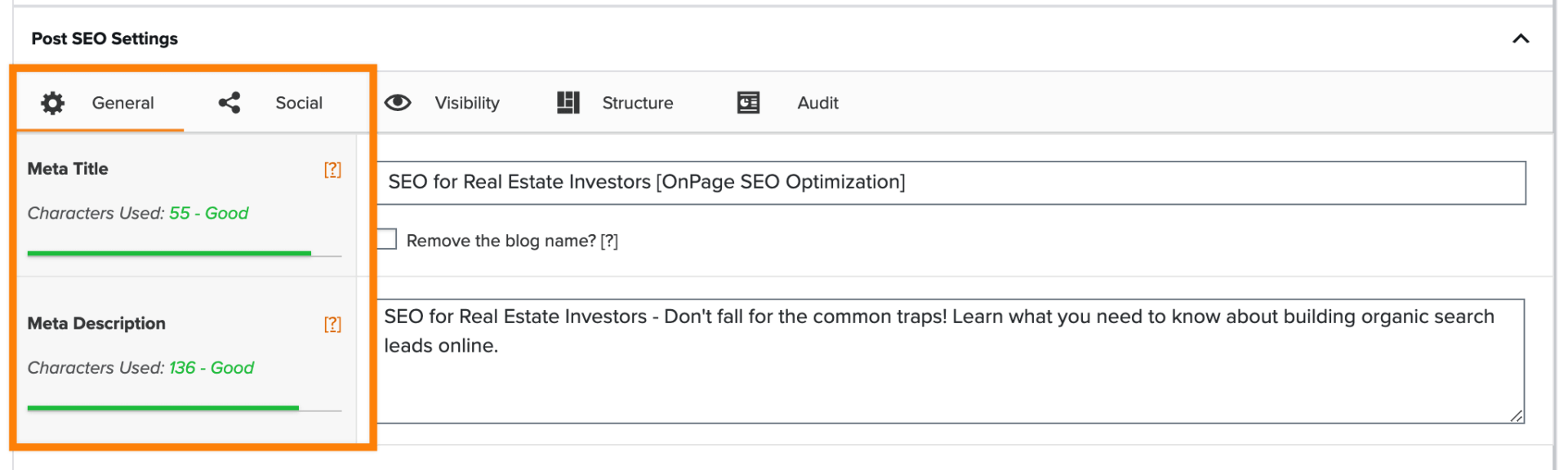
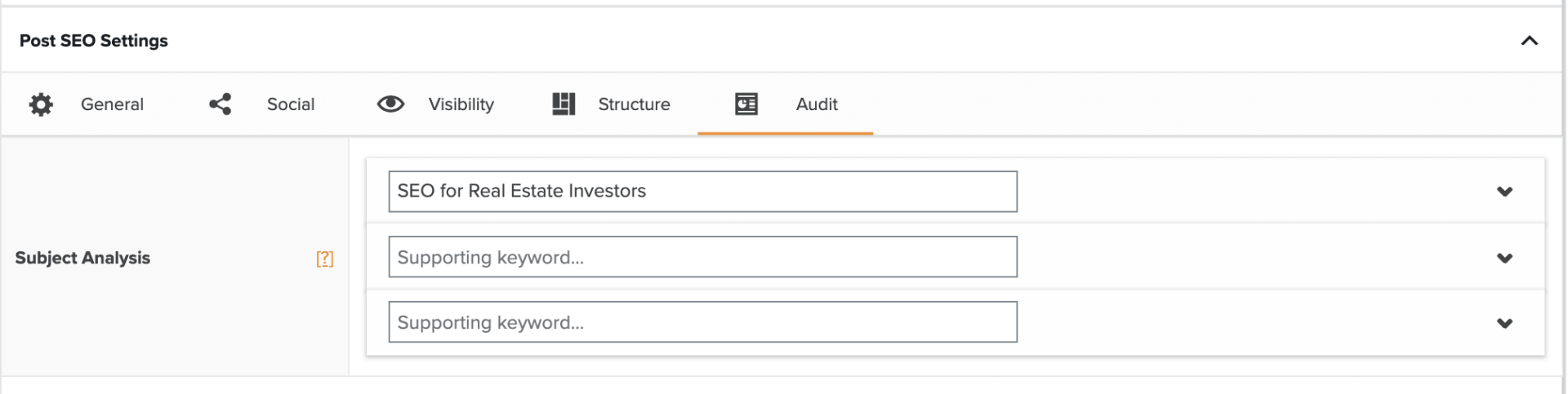
    You can easily use this as a checklist, but we’ve also built a Carrot SEO tool especially for real estate websites. Our SEO goal for this page is to rank for the phrase “SEO for real-estate investors.” So this is what the tool looks like when we plug that phrase in:

    SEO Tool for Real Estate Investors
    seo meta keywords

    Now let’s walk through the ten most important elements.

    1. Title Tags

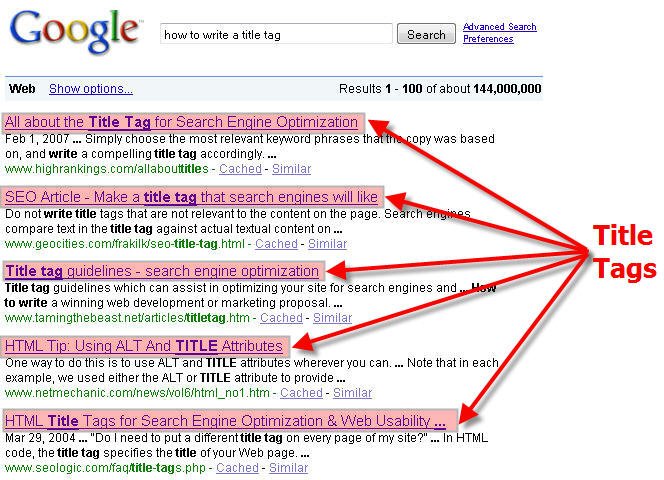
    Title tags are the headings of the pages on your website. In search results, they are the main headings.

    SEO for real estate investors Title Tag Optimization

    2. URLs

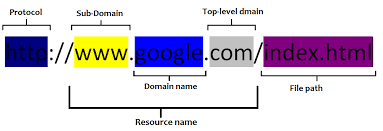
    If you’re adding keywords to titles, and your permalinks are set up correctly, the URL will automatically include the title.

    Often, however, your title will be longer than the keywords you want to rank for. That’s why you should simplify it in the URL and limit the actual web address to your targeted keywords alone.

    SEO for real estate investor URLs

    Image Credit: WebKnowHow

    As much as possible, try to avoid using numbers in your URL, whether that’s dates or even numbers associated with the title of your article. Why? Because if you ever want to go back and update your post, changing the URL will essentially void any SEO power the original pages had.

    3. Meta Descriptions

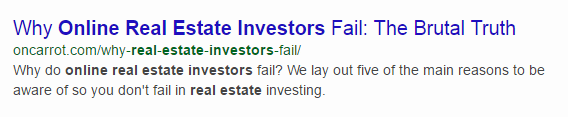
    And when you compile the meta description, make it compelling in order to attract attention. Consider it the advertisement for a page’s content. This is what the meta description looks like in searches:

    SEO for real estate investors Meta Description

    4. Headline Tags

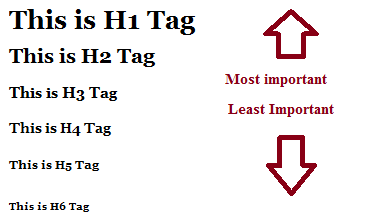
    Headlines and subheadings divide your on-page content into scannable chunks making it far easier to read.

    But at the same time, they also tell search engines what the content is about, and what’s most important.

    real estate investor SEO H Tags

    Image Credit: IBlogNet

    5. The First 100 Words Are Important

    Pretty self-explanatory, but make sure you add keywords naturally and don’t “stuff” your content with them. A good rule of thumb is to add the keyword phrase in the first 100 words — preferably in the very first sentence — as well as after every 150 or so words.

    6. Bolded Words

    Adding bolded words for SEO is debatable, but it can’t hurt if you don’t over-bolden. When you add this technique, focus on using bold text only to make a point to the reader. In other words, focus on reader experience.

    SEO for real estate Bold important Words

    Image Credit: Fonts

    7. Links

    We’ve covered off-page SEO for real estate investors and the importance of links from other websites to yours.

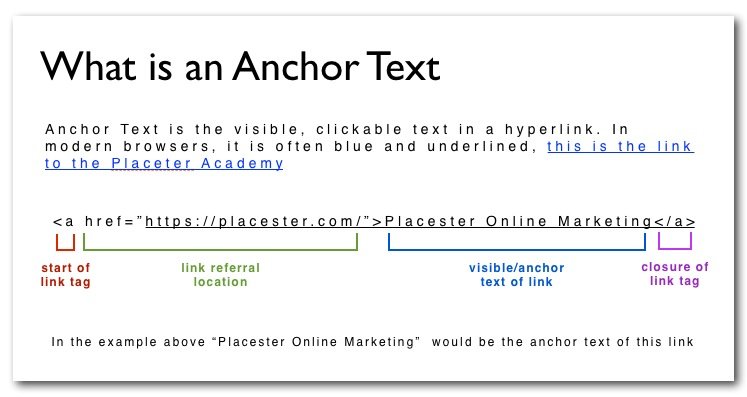
    What I mean by inserting links to keywords (otherwise known as anchor text), is that when you link to a good website from a keyword, it signals to search engines what both your content and theirs is about. But there is a certain art to it and it shouldn’t be obsessed over.

    What-is-an-Anchor-Text

    Image Credit: Placester

    The real “secret” to your own links and SEO is using internal links. As Aaron Orendorff pointed out in Little-Known SEO Ingredients That Make A Huge Difference In Google Search:

    While external links dramatically improve both types of authority [domain and page], linking between pages on your own site — namely, linking from high page authority URLs to low page authority URLs — pass the SEO value of the first page onto the second.

    Here’s the bottom line: do not include your targeted keywords in the anchor text to other sites. Do include your targeted keywords in the anchor text to your own site.

    8-9. Images

    Search engines use the images on your site to further help them decipher relevancy (how relevant your content is to user searches).

    First, before you upload images to your website, they should be compressed so that they don’t slow down your site. You can use a tool like Optimizilla for this.

    Second, for every image you add, include your keywords in two places. Let’s take this post’s header image as an example:

    (1) Image name

    Instead of using a generically titled image name, get specific. Rather than “blog-post-header-image-1.jpg” or even “seoforrealestateinvestors.jpg” … use “SEO-for-real-estate-investors.jpg”

    (2) Alt tags

    Alt tags are the default text a browser displays if images are turned off. This time, write your alt tag with your keywords, but write them to be read: “SEO for Real Estate Investors.”

    10. Local Keywords

    In no other industry does location matter quite as much as it does in the real estate investor SEO realm. Since your competitors are likely not fully up to speed with the location element in SEO, you could get way ahead of them with a little bit of additional work.

    Local search is a lot different to international search, and the intentions are often very different too.

    For example, if you wanted to order pizza for dinner tonight, Google is going to assume you want local buying options. By default, instead of serving up global results, Google will offer you local results you can actually use to order pizza.

    People searching for “real estate investors” want to know about a career as a real estate investor or find someone to sell their property too. But if they were to add an area — which most do — their intention is to find a real estate investor in that area. Big difference, right?

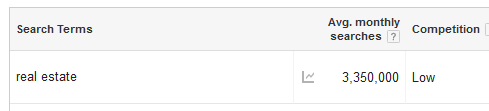
    Have a look at this: for the search term “real estate,” there are a phenomenal amount of searches every month — 3,350,000 to be exact — and there’s not much competition for the phrase.

    real estate search term

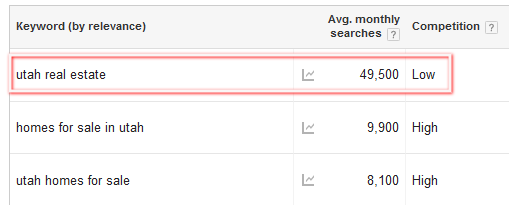
    But the term is also not relevant for real people because real people who are searching for what you provide will add an area. Now watch what happens when you add an area:

    adwords real estate search term

    The search amounts drop to 49,500 per month. Although the search amount is lower, the good news is that “Utah real estate” represents the people most interested in doing business with someone in Utah.

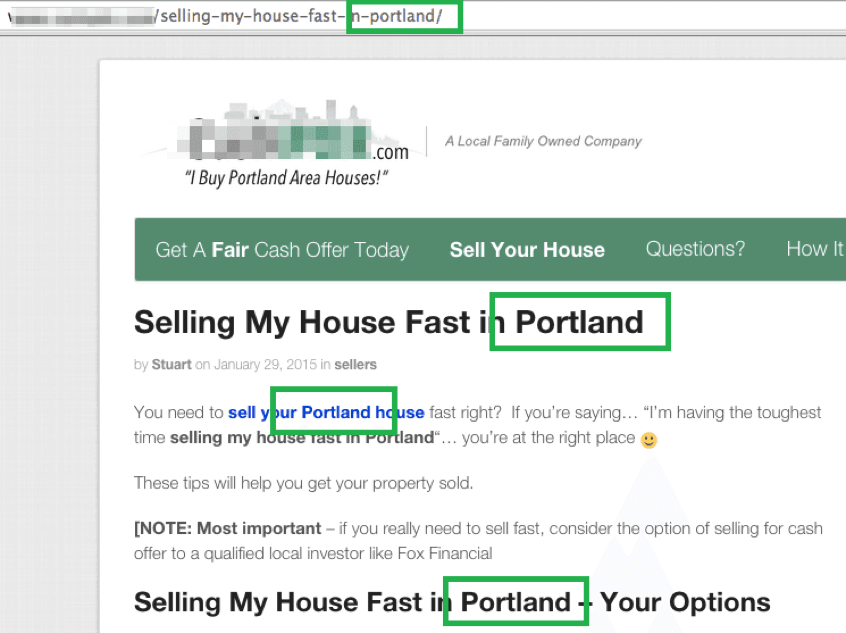
    Our own 6 Simple Tips To Master Location-Based SEO And Skyrocket To The Top of Search Engine Results goes into detail about how to use location keywords. But the important thing to notice is perfectly summarized in this visual where the location has been added to a number of the on-page SEO elements this post has already called attention to:

    Local SEO for real estate investors

    You can even get hyper-local in your SEO for real estate investors.

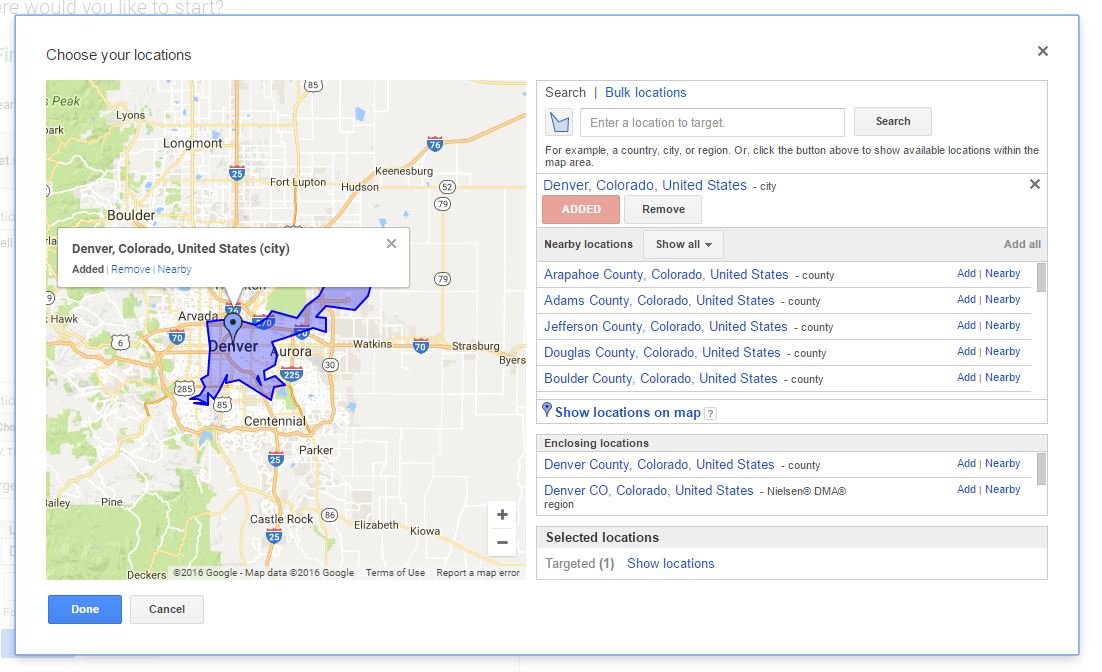
    Remember Google AdWords Keyword Planner? They have the option to add nearby locations:

    google-adwords-seo-real-estate-local

    Of course, you probably know your area even better than Google. So if you’re creating landing pages to target specific locations within your larger geography, in those specific locations as well.

    However, don’t stuff all your hyper-local keywords into one page. Instead, create 5-10 copies of your original landing page, each with the hyper-location featured in all the on-page elements mentioned above.

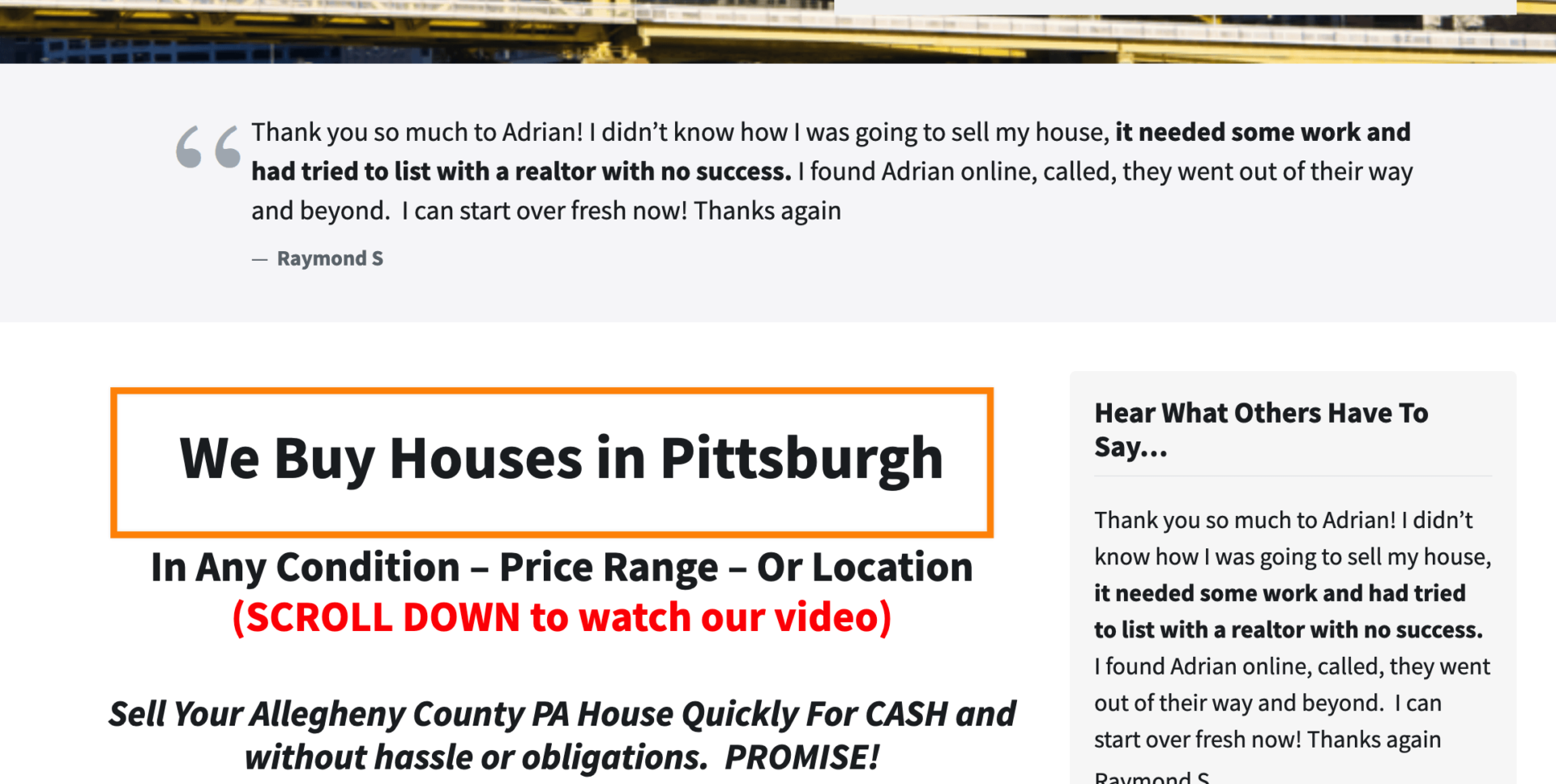
    Buy My House Company — For example, is one of many Carrot members who highlight location elements on their homepage:

    highlighting locations on your homepage

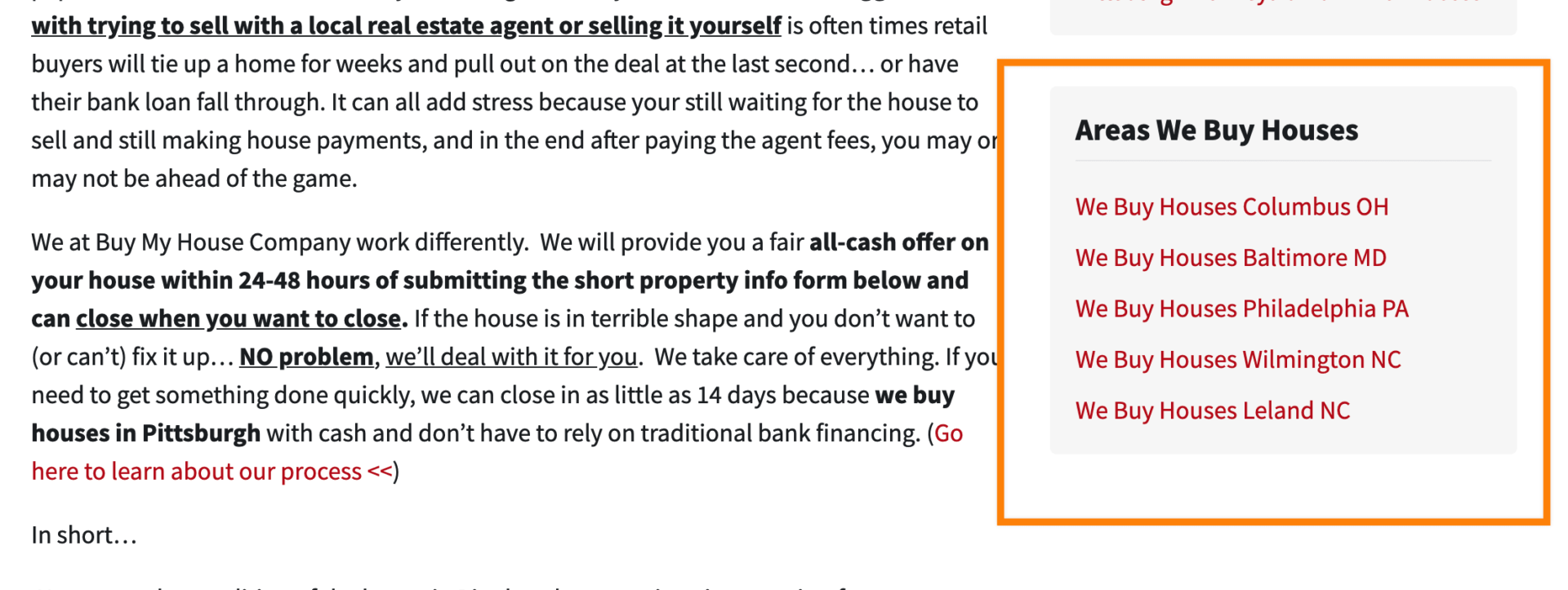
    But, if you hover over the “Sell Your Home” button in the header navigation, something of SEO-brilliance occurs:

    local-seo-example

    They’ve essentially created cloned versions of their homepage with hyper-local keywords for each of the areas they serve.

    Another local keyword area you have control over — although it’s not technically part of on-page SEO — are business listings. When your website is submitted on business listings like Google Business Pages, Yahoo’s Aabaco small business listings, Bing places for business, etc., it tells search engines that your website is valid and dramatically increases your ranking when someone searches for a keyword associated with your side.

    Moreover, search engines would rather list a website that’s registered as a local business, than one that is not. Be sure that the format of your NAP (name of the business, address, and phone number) is consistent throughout the Internet.

    [BONUS] 11. SEO for Real Estate Investors: Reviews

    Moz states that reviews account for 8.4% of search ranking factors for local businesses. Why do search engines take online reviews into account for search rank?

    seo real estate map

    Reviews give search engines “signals” as to:

    • How relevant your website content is according to what people are searching for in your niche.
    • Where the business is situated, also for the purpose of “area relevance.”
    • How prominent your business is and it’s objective reputation.

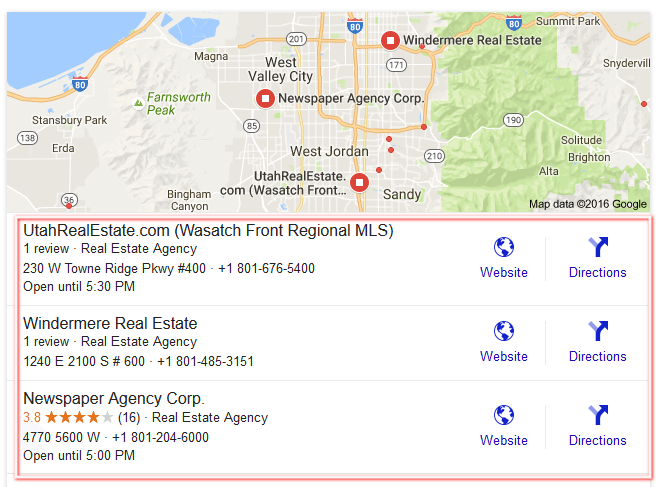
    Pushing for reviews is one substantial SEO technique to use to beat competitors in the world of real estate investment. Have a look at a Google search I did for “real estate Utah.” This is what was on the first results page, immediately under the ads, which means it gets the ultimate place of prominence:

    Can you see how every single one of these websites has reviews? None of the other results below these contained reviews.

    SEO for Real Estate Investors Isn’t Dark Magic

    We’ve covered a lot of information in this post.

    But don’t get overwhelmed.

    Instead of getting obsessed with backlinks, focus on what you can control: your on-page keywords. Select the right keywords and add them — like a human — to each of these ten areas:

    1. Title tags
    2. URLs
    3. Meta descriptions
    4. Headline tags
    5. The first 100 words
    6. Bolded words
    7. Links
    8. Image Names
    9. Image Alt Tags
    10. Local keywords

    SEO for real estate investors may seem daunting at first, but it’s what will set you apart from your competition who won’t bother learning the ropes.

    And if you want to make life a lot easier, you may want to consider becoming an Investor Carrot member, so that most of the hard work is already done for you or to get help as you go.

  • YouTube Optimization for Real Estate Investors | 10 Proven Strategies

    YouTube Optimization for Real Estate Investors | 10 Proven Strategies

    YouTube optimization for real estate investors has become indispensable in today’s competitive markets. With over 2 billion monthly active users, YouTube offers a vast audience for showcasing properties, sharing investment tips, and establishing your brand as a trusted expert in the industry.

    Video content is incredibly powerful in the real estate sector. Leveraging YouTube optimization for real estate investors can significantly boost engagement, build trust with your audience, and ultimately drive more leads and sales.

    Here’s a general overview of the trends within the real estate industry:

    1. Growing Popularity of Video Marketing: According to the National Association of Realtors (NAR), video marketing is increasingly popular among real estate agents and investors. Video content is effective in engaging potential clients and showcasing properties, which includes attracting motivated sellers.
    2. YouTube’s Reach and Influence: YouTube is the second largest search engine globally, with over 2 billion logged-in monthly users. This broad audience provides real estate investors with a significant opportunity to connect with motivated sellers through video content.
    3. Success Stories: Many real estate investors and agencies leverage YouTube to build their brand, educate potential clients, and generate leads. Successful investors often use video content to share tips, conduct property tours, and discuss market trends, which can attract motivated sellers.
    4. Industry Trends: According to a report by HubSpot, 54% of consumers prefer to see more video content from businesses they support. This trend extends to real estate, where video content is increasingly used to engage and attract sellers and buyers alike.
    5. Survey Insights: A survey by the National Association of Realtors found that 73% of home sellers are more likely to list with a real estate agent who uses video. While this statistic specifically addresses agents, it reflects the growing importance of video marketing in attracting sellers, including motivated ones.

    In this blog post, we’ll explore 10 actionable tips for YouTube optimization for real estate investors, ensuring you maximize your reach and impact. Whether you’re just starting or looking to enhance your current strategy, these tips will help you leverage YouTube to grow your real estate business.

    YouTube’s Reach and Impact on Real Estate

    • Massive Audience: YouTube has over 2 billion logged-in monthly users, with users watching over a billion hours of video daily. This massive reach provides an unparalleled opportunity to connect with potential clients.
    • Engagement Rates: According to recent studies, video content on social media platforms generates 1200% more shares than text and image content combined. For real estate investors, this means higher engagement and a greater chance of your content being seen by the right people.
    • Consumer Behavior: A survey by the National Association of Realtors found that 73% of homeowners are more likely to list with a real estate agent who uses video. Additionally, 70% of home buyers watch video tours of properties they are interested in.

    By understanding the importance of YouTube and learning from these success stories, you can see the potential impact video marketing can have on your real estate business. In the following sections, we’ll dive into specific strategies to optimize your YouTube channel and harness its full potential.

    10 Real Estate Investor YouTube Channel Optimization Tips

    1. Optimize Your Channel Name and Description
    2. Professional Branding
    3. Content Planning and Creation
    4. High-Quality Video Production
    5. Effective Calls to Action (CTAs)
    6. Engage with Your Audience
    7. Cross-Promotion
    8. Utilize YouTube Analytics
    9. Regular Content Uploads
    10. SEO Optimization

    Setting Up Your Channel

    Optimize Your Channel Name and Description

    Choosing the right name for your YouTube channel is crucial for YouTube optimization for real estate investors. Incorporating relevant keywords into your channel name can significantly boost your search rankings. Consider using terms like “Real Estate,” “Investing,” “Property,” or “Homes” alongside your unique brand name.

    For example, “Smart Property Investments” or “Real Estate Insights by [Your Name].” This helps potential viewers immediately understand your channel’s focus and enhances discoverability when users search for related content.

    Crafting a Compelling Channel Description with Relevant Keywords

    Your channel description is an excellent opportunity to tell your audience who you are, what you offer, and why they should subscribe. To maximize the effectiveness of your description:

    1. Start with a Strong Introduction: Briefly introduce yourself and your expertise in real estate investing.
    2. Highlight Your Content: Explain the type of content you create, such as property tours, market analyses, investment tips, and success stories.
    3. Incorporate Keywords Naturally: Use relevant keywords throughout your description to improve searchability. For instance, if you specialize in flipping houses, include phrases like “house flipping tips,” “real estate investment strategies,” and “property renovation guides.”
    4. Call to Action: Encourage viewers to subscribe and engage with your content, emphasizing the value they’ll receive by following your channel.

    Example:

    “Welcome to [Your Channel Name], your go-to source for expert real estate investment advice and property insights. As a seasoned real estate investor, I share valuable tips on house flipping, market trends, and smart investment strategies. Subscribe to join our community and stay ahead in the real estate game!”

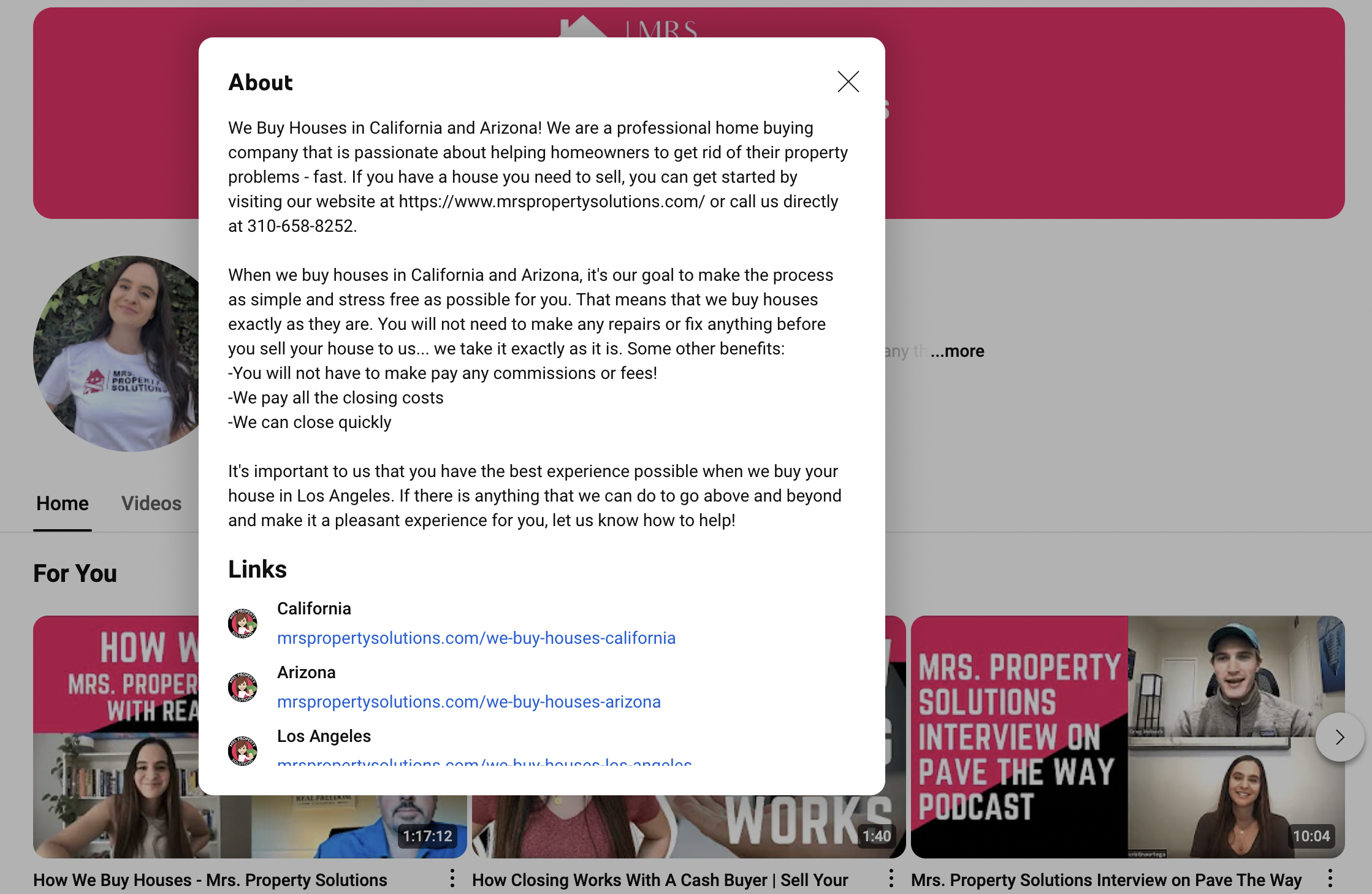
    Here’s a real example of Carrot member, Mrs. Property Solutions:

    Mrs. Property Solutions YouTube channel

    Professional Branding

    First impressions matter, and your channel’s visual branding is often the first thing viewers notice. A high-quality logo and channel art convey professionalism and help establish your brand identity. Your logo should be simple, memorable, and reflective of your brand. Meanwhile, your channel art should provide a clear, visually appealing representation of what your channel is about.

    Tips for Effective Branding:

    Express Homebuyers YouTube Channel Branding
    Express Homebuyers YouTube Channel Branding
    • Logo: Use clean lines and professional design. Avoid clutter and ensure your logo is recognizable even at smaller sizes.
    • Channel Art: Include your channel name, tagline, and a brief description of your content. Use high-resolution images and maintain a cohesive color scheme that aligns with your overall brand.

    Consistency in Branding Across All Social Media Platforms

    Consistency is key to building a strong and recognizable brand. Ensure that your branding elements (logo, colors, fonts) are consistent across all your social media platforms, including your YouTube channel, Facebook, Instagram, LinkedIn, and Twitter.

    This not only enhances brand recognition but also creates a cohesive and professional image.

    Steps to Maintain Consistency:

    • Unified Visuals: Use the same profile picture, cover photo, and color scheme across all platforms.
    • Consistent Messaging: Ensure your bio, descriptions, and tone of voice are aligned across all social media profiles.
    • Cross-Promotion: Regularly promote your YouTube content on other platforms and link your social media accounts to your YouTube channel to drive traffic and engagement.

    By optimizing your channel name and description with strategic keywords and establishing a consistent, professional brand, you’ll create a solid foundation for your YouTube presence. This will help attract more viewers, build credibility, and set the stage for successful video marketing in the real estate industry.

    Engagement and Community Building

    Call to Action (CTA)

    Effective calls to action (CTAs) are crucial for guiding your audience on what steps to take next and increasing engagement with your content, which is an essential part of YouTube optimization for real estate investors. Here are some effective CTAs to incorporate into your videos:

    1. Subscribe to the Channel: Always remind viewers to subscribe to your channel to stay updated with your latest content. Example: “If you enjoyed this video and want to see more real estate investment tips, don’t forget to subscribe and hit the notification bell.”
    2. Like the Video: Encourage viewers to like your video if they found it helpful or informative. Example: “Give this video a thumbs up if you found these property investment tips useful.”
    3. Leave a Comment: Ask viewers to share their thoughts, questions, or experiences in the comments section. This not only boosts engagement but also helps build a community. Example: “What do you think about this property? Leave a comment below with your thoughts!”
    4. Share the Video: Encourage viewers to share your video with friends or colleagues who might find it useful. Example: “Know someone who’s looking to invest in real estate? Share this video with them!”
    5. Visit Your Website or Social Media: Direct viewers to additional resources on your website or social media pages. Example: “For more in-depth articles and resources, visit my website at [YourWebsite.com].”
    6. Download Free Resources: If you offer free guides or checklists, invite viewers to download them. Example: “Download my free real estate investment checklist by clicking the link in the description.”

    Encouraging Viewers to Like, Comment, and Subscribe

    Consistently prompting viewers to like, comment, and subscribe is essential for growing your channel. Here are a few tips to encourage these actions:

    • Be Direct and Clear: Clearly ask viewers to like, comment, and subscribe. People are more likely to act when given specific instructions.
    • Incorporate CTAs Naturally: Integrate CTAs seamlessly into your video script, especially at the beginning, middle, and end of your videos.
    • Highlight the Benefits: Explain how liking, commenting, and subscribing will benefit viewers, such as staying informed about new content or joining a community of like-minded investors.

    Engage with Your Audience

    Responding to Comments and Messages

    Engagement is a two-way street and an important part of YouTube optimization for real estate investors. Actively responding to comments and messages shows your audience that you value their input and are interested in building a relationship. Here’s how to effectively engage:

    1. Timely Responses: Aim to reply to comments and messages promptly. This keeps the conversation going and demonstrates your commitment to your audience.
    2. Personalized Replies: Address commenters by their name and provide thoughtful responses. This personal touch fosters a stronger connection.
    3. Encourage Further Discussion: Ask follow-up questions to keep the conversation engaging. Example: “Great point, [Name]. What do you think about investing in multi-family properties?”

    Creating Community Posts and Polls to Engage with Subscribers

    YouTube’s community tab is a powerful tool for engaging with your audience beyond video content. Utilize community posts and polls to keep your subscribers engaged and involved:

    1. Regular Updates: Share updates about upcoming videos, market trends, or behind-the-scenes content. This keeps your audience informed and connected.
    2. Polls and Questions: Use polls to gather opinions or ask questions to spark discussions. Example: “What type of property tour would you like to see next? Single-family homes or condos?”
    3. Highlight Subscriber Content: Showcase comments or video responses from your subscribers. This not only acknowledges their participation but also encourages others to engage more.

    Tips for Maximizing Engagement:

    • Consistency: Regularly post updates and engage with your audience to maintain an active community.
    • Value-Driven Content: Ensure that your posts and polls provide value and are relevant to your audience’s interests and needs.
    • Encouragement: Thank your subscribers for their engagement and encourage them to continue participating.

    You’ll foster a loyal and engaged community by incorporating effective CTAs in your videos and actively engaging with your audience through comments, messages, and community posts. This will not only boost your channel’s growth but also enhance your credibility and influence as a real estate investor.

    Promotion and Analytics

    Cross-Promotion

    Cross-promotion is essential to maximize your YouTube optimization for real estate investors. Leveraging your presence on other social media platforms and email newsletters can drive traffic to your channel and attract a broader audience.

    1. Social Media Platforms:
      • Facebook: Share your videos on your personal and business Facebook pages. Join real estate groups and communities to share your content and engage with potential viewers.
      • Instagram: Promote your videos using Instagram Stories, IGTV, and posts. Tease upcoming content with short clips and use relevant hashtags to reach a wider audience.
      • LinkedIn: Post your videos on LinkedIn to connect with professional contacts and potential investors. Share insights and market trends to establish authority.
      • Twitter: Tweet about your new videos and include a link to your YouTube channel. Use industry-specific hashtags to increase discoverability.
    2. Email Newsletters:
      • Include Video Thumbnails: Use eye-catching thumbnails and brief descriptions of your latest videos in your email newsletters.
      • Call to Action: Encourage subscribers to click through to your YouTube channel to watch the full video. Example: “Check out our latest video on [topic] and gain valuable insights into [subject]. Click here to watch!”
      • Consistent Updates: Regularly update your subscribers about new content, upcoming videos, and exclusive insights.

    Collaborating with Other Real Estate Influencers and Channels

    Collaborations can significantly boost your channel’s visibility by tapping into the audiences of other influencers and channels. Here are some ways to collaborate effectively:

    1. Guest Appearances: Invite other real estate influencers to feature on your channel and vice versa. This introduces your audience to new perspectives and brings new viewers to your channel.
    2. Joint Webinars and Live Streams: Host live events with other real estate experts. Promote these events across both of your channels and social media platforms to maximize reach.
    3. Co-Created Content: Partner with other influencers to create joint content, such as market analysis, property tours, or investment tips. Share the content on both channels and cross-promote it.

    Benefits of Collaborations:

    • Increased Exposure: Reach new audiences who are already interested in real estate.
    • Enhanced Credibility: Association with other respected influencers can boost your credibility and authority.
    • Mutual Growth: Collaborations often result in a win-win situation, with both parties benefiting from increased viewership and engagement.

    Utilizing YouTube Analytics

    YouTube Analytics provides valuable insights into your channel’s performance, helping you understand what works and what doesn’t, which is key for YouTube optimization for real estate investors. Key metrics to monitor include:

    1. Watch Time: The total amount of time viewers spend watching your videos. Higher watch time indicates engaging content.
    2. Views: The number of times your videos are watched. This helps gauge your content’s popularity.
    3. Audience Retention: The percentage of a video watched by viewers. High retention rates suggest that viewers find your content valuable and engaging.
    4. Click-Through Rate (CTR): The percentage of people who click on your video after seeing the thumbnail. A higher CTR indicates an effective thumbnail and title.
    5. Subscribers Gained: The number of new subscribers acquired during a specific period. Tracking subscriber growth helps measure your channel’s overall progress.
    6. Engagement Metrics: Likes, comments, and shares. High engagement levels indicate that your content resonates with viewers.

    Using Analytics to Refine Your Content Strategy

    By analyzing these metrics, you can refine your content strategy to meet the needs and preferences of your audience better. Here’s how:

    • Identify Top-Performing Content: Analyze which videos have the highest watch time, views, and engagement. Create more content on similar topics or in similar formats.
    • Understand Audience Preferences: Look at audience retention graphs to see where viewers drop off. Adjust your content to maintain interest throughout the video.
    • Optimize Thumbnails and Titles: If your CTR is low, experiment with different thumbnail designs and titles to attract more clicks.
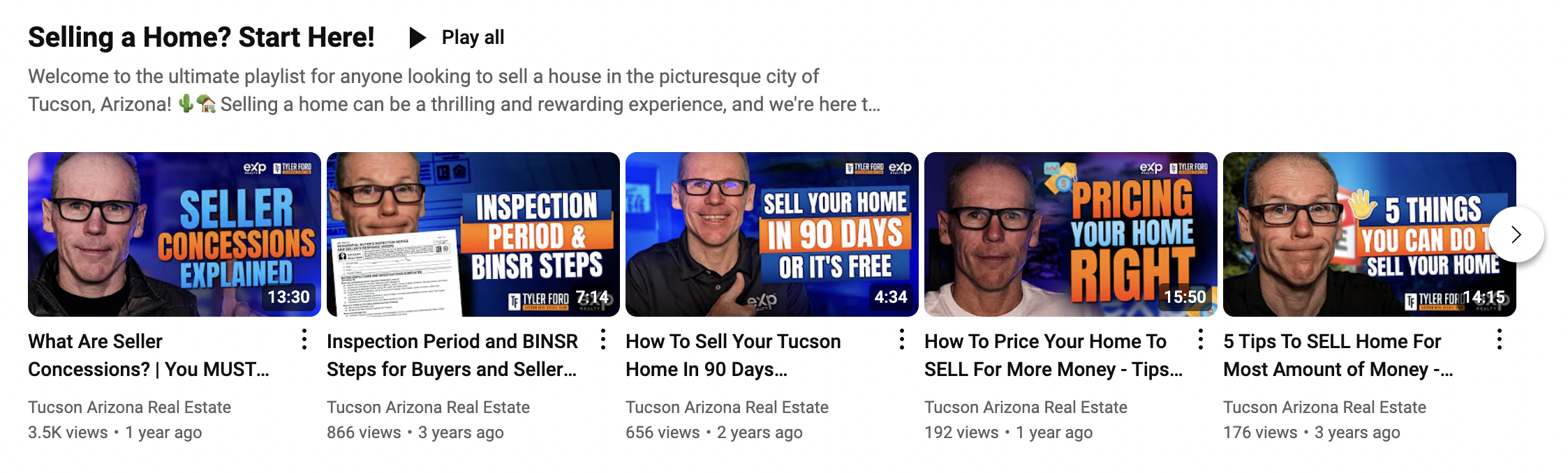
    Carrot member and hybrid investor/agent, Tyler Ford achieves a well thought out YouTube channel.
    • Tailor Content to Demographics: Use demographic data to understand your audience’s age, gender, and location. Create content that appeals specifically to these groups.
    • Track Trends Over Time: Monitor how your key metrics change over time. Identify patterns and adjust your strategy to capitalize on positive trends or address any declines.

    You can achieve sustained growth and success in your real estate investing journey by effectively promoting your YouTube channel through cross-promotion and collaborations and leveraging YouTube Analytics to refine your content strategy. These strategies will help you reach a wider audience, enhance engagement, and establish yourself as a trusted authority in the real estate industry.

    Conclusion

    Recap and Next Steps

    Summarize the Key Points Discussed

    In this blog post, we’ve explored several powerful strategies for YouTube optimization for real estate investors:

    1. Setting Up Your Channel:
      • Optimizing your channel name and description with relevant keywords to enhance discoverability.
      • Establishing professional branding through high-quality logos, channel art, and consistent visuals across all social media platforms.
    2. Content Creation:
      • Planning content that addresses your target audience’s needs and pain points.
      • Utilizing keyword research to integrate relevant terms naturally into video titles, descriptions, and tags.
      • Ensuring high-quality video production with affordable equipment and software.
    3. Engagement and Community Building:
      • Incorporating effective CTAs to guide viewers to like, comment, and subscribe.
      • Actively engaging with your audience by responding to comments and creating community posts and polls.
    4. Promotion and Analytics:
      • Cross-promoting your channel on other social media platforms and email newsletters.
      • Collaborating with other real estate influencers to reach a broader audience.
      • Leveraging YouTube Analytics to track key metrics and refine your content strategy based on data insights.

    Encourage Readers to Implement These Strategies and Share Their Success Stories

    Now that you have a comprehensive understanding of YouTube optimization for real estate investors, it’s time to put these strategies into action. Share your experiences and results in the comments section below or connect with us on social media.

    We’d love to hear about your journey and success stories! Share your experiences and results in the comments section below or connect with us on social media. Your insights could inspire and motivate other real estate investors.

    Mention Any Additional Resources or Tools for Further Learning

    For further learning and to enhance your YouTube optimization efforts, explore these additional resources and tools:

    • Carrot’s Video Marketing Playbook: Attract your most motivated prospects in under 20 minutes a week, no gear or tech expertise required. Includes Free scripts & 52 ideas.
    • TubeBuddy: A browser extension that helps with keyword research, video SEO, and analytics.
    • VidIQ: Another powerful tool for optimizing your YouTube content, providing insights into video performance and keyword opportunities.
    • Google Keyword Planner: Essential for conducting keyword research and finding relevant terms to incorporate into your content.
    • Canva: A user-friendly design tool for creating professional thumbnails, channel art, and social media graphics.
    • Adobe Premiere Pro and Final Cut Pro: Advanced video editing software for producing high-quality videos.

    Additionally, consider subscribing to industry-leading blogs and YouTube channels that focus on video marketing and real estate investing for ongoing tips and updates.

    By implementing these strategies and utilizing these resources, you’ll be well on your way to building a successful and influential YouTube channel as a real estate investor.

  • Using SEO To Close 3-5 Deals Per Month (How Jack is doing it)

    Using SEO To Close 3-5 Deals Per Month (How Jack is doing it)

    2016.04.2-jackm--mainSo you’ve heard people say you can’t generate consistent deals with SEO? Tell that to Jack of Jack Buys Houses in Orlando, FL… he closes 3-5 deals a month in Florida almost exclusively through his search engine optimization efforts. See how…


    Are those results typical? They’re not… but Jack worked his butt off and continually hounded us on our weekly coaching calls (we say that lovingly because we love it when customers do that!) for months with questions and advice that helped him crack his Carrot website from page 2, to page 1… to the top spot in his market.

    We had a chance to sit down with Jack recently and have a conversation with him about… 

    • How he got started in real estate investing
    • How he closed his first deals and why he dove into wholesaling in his market when others were heading the other direction
    • What makes his online marketing strategy so effective for him in his market

    Hear Jack’s Story + Learn How He Incrementally Grew His Google Rankings To Turn 3-5 Deals A Month

    This case study is a full-length deep dive into Jack’s story and how he’s built a very successful wholesaling and investing company over the past 2-5 years and his exact strategies on how he cuts through the clutter online in a sea of other competitors trying to find active cash buyers in his market too. Click play and dive in! 


    Not a Carrot member yet? Take a demo and see InvestorCarrot in action >>

    Things Jack Covers… 

    • Start – 4 mins talks about how he went from a Target executive to doing short sales and now 4-5 wholesale deals a month

    • 3:40 – What he learned from Warren Buffet that helped him leave his day job in 2009

    • 8:25 – Why he dove into short sales first + his business strategy that helped him crush it (personally did over 350 short sales)

    • 12:20 – How he took the leap into rehabbing and wholesaling in 2012 and why most wholesalers are doing it wrong

    • 12:45 – Currently do approx 5 wholesale deals a month (over 100 deals so far!)

    • 17:15 – What 1 DEAD SIMPLE thing gives him an edge on deals (that most wholesalers drop the ball at)

    • 21:00 – Started marketing w/ direct mail first, didn’t get solid results then decided to get a website up. Found Carrot and “Just did what you guys said to do and the rest is history. I haven’t done direct mail in a year. Every one of my leads come from Carrot”.

      “I found you guys, and I’ll be honest w/ you. All I did was this Trevor. I just did what you guys said to do. Because everything is pretty much done. You just pull it out of the box. A few things you have to do on the backend. I just did what you told me to do. And the rest was history. I’ll be honest w/ you… I haven’t done direct mail on over a year. All of my leads come from Carrot. I don’t do bandit signs, I don’t do direct mail, I don’t do postcards, I just do Carrot (closes 4-5 deals a month)”

    • 24:10 – How he generates his leads online (and more importantly, what he doesn’t do and why)

    • 28:30 – Trevor walks Jack through a couple ways to ramp up his leads even further in his market in a big way (“PPC Stacking”, City Specific Landing Pages, and swiping more Google real estate, and retargeting)

    • 35:20 – Jacks biggest surprise working w/ Carrot was the results. He assumed he’d get a certain amount of leads but he didn’t think he could build his business and do the deals they’ve done just through Carrot.

      “My biggest surprise is that I didn’t think that I could build my business and do the deals we’ve done just through carrot and not do anything else. But that’s been the biggest surprise. The amount of results our sites get. Our selling site gets hundreds of visitors a month and we sell a lot properties” – Jack

      37:15 – His “Big Why”… why he does what he does

    • 40:00 – What 2 powerful pieces of advice Jack would to give someone just getting into real estate

      42:40 – Our average wholesale profit right now is $13,700 per deal and we do 4-5 deals per month.

      43:15 – Jacks advice to wholesalers about using InvestorCarrot for your own business.

      43:36 – “The decision to use investor carrot is one of the best decisions I’ve ever made to be honest with you.. and I’m not just saying this because you’re a good guy. it’s the truth. it’s the best thing that I’ve done. you have to use carrot. there’s nothing else like it.”


    Not a Carrot member yet? Take a demo and see InvestorCarrot in action >>


    Here Are Some Related SEO Resources Here On Our Website

    Looking to ramp up your SEO for your real estate flipping / wholesaling / agent business too? Well we know a thing or two about that :-). Just dive into some of the free resources here on this website today!

    Let’s Congratulate Jack For His Successes Below!

    We call them “doses of awesomeness” in our company whenever someone does awesome things and reports back to us. So let’s throw Jack some awesomeness below to congratulate him on his successes! Pop a comment below in the comments section on your SEO questions (or what your goal is) and some encouragement for Jack on his goals!

  • Want Fast SEO Results As A Real Estate Investor? Rush It, Ruin It

    Want Fast SEO Results As A Real Estate Investor? Rush It, Ruin It

    fast seo results for real estate investors may ruin your rankings

    There’s no denying that we live in a society that thrives on immediate gratification. Whether it’s personal or work, we want quick results, no time to wait.

    So it’s not surprising when many real estate investors attach this “rush” approach to their SEO plan – it’s a disaster waiting to happen. There’s a huge difference between fast SEO results and strategic SEO results that are also aggressive.

    The rushed approach flat out doesn’t work over the long run. Good SEO can be aggressive while also being strategic… now that’s effective!

    The tendency to rush any sort of business investment is completely understandable, given the monetary expense involved. But when it concerns Search Engine Optimization (SEO), it’s time to replace the “want it now” approach with a “wait for it” mindset.

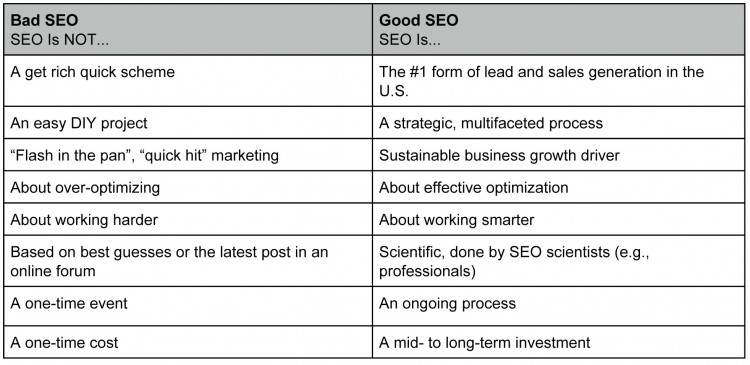
    The chart below outlines some of the differences between bad SEO vs. good SEO.

    Good SEO vs. Bad SEO

    how rushing your seo can ruin your results
    Fast SEO Results Are Not Always Better… As you see in this chart, there are stark differences between rushed SEO and good SEO.

    Organisms take time to grow, whether plants, animals, humans… and yes, even businesses. SEO is no different, it should be organic. After all, SEO is all about increasing a website’s organic rankings.

    SEO is a strategic, well-thought-out plan of action with the potential to give you a tremendous return on investment (ROI) for your real estate investment business if given the chance.

    How Fast SEO Results Can Actually Hurt Your Website And Search Engine Results

    It’s easy to jump the gun and over-optimize your website, which can prove quite costly when it’s all said and done. Mistakes are costly.

    Making a bunch of edits “just ‘cause” doesn’t work. Sure, there’s a chance you might get a “top 5” ranking right away. But, that’s only before Google flags you on your low-quality links or spammy over-optimization and hits you with a major penalty.

    Or, an unexpected Google update rolls out later down the road – that kills your rankings. In either scenario, you lose.

    This actually happened to one of our clients in Denver

    We had worked hard to get this business ranked in the “top 5” positions. But unfortunately, this customer had a tendency to rush things and did what they thought would help. Unknown to us, they purchased thousands of cheap, junk backlinks from Fiverr.  Within days of the Google Penguin update, this client watched as his home buying website dropped out of the top 100 rankings.

    The Google update I’m referring to specifically targeted “junk” backlinks. Just like that, their website was nowhere to be found.

    Thankfully, this is the only one of our clients that has ventured out on its own in an attempt to rush SEO.

    The moral?

    SEO Shortcuts Aren’t Worth It

    None of us knows for sure when Google will make updates or what the nature of those updates will be.

    So it just doesn’t pay to rush something (SEO) that’s “wired” for organic growth. When you rush your SEO, your rankings may pop up for a bit, but it’s all for naught when they drop (and they will) or disappear.

    Engaging in “spammy” SEO techniques like PBNs (private blog networks for backlinks, link exchanges, using cheap overseas automated “link building” services) may bring immediate gratification, but they rarely lead to long-term results.

    Don’t get me wrong, SEO should be aggressive, but it should also be strategic and “white hat”.

    Let’s get away from the idea of 3-week results (or even 8 week results in competitive markets), and embrace the process of 3-month (and beyond) sustainable results.

    I’m not saying that you can’t get great rankings in a month or two for many keyword phrases for buyers, sellers, or tenants.

    You can and we do all of the time!

    But those search phrases are usually “long-tail” phrases or less competitive search phrases in small markets.

    We’ve been able to rank on the page 1 in Google for “klamath falls apartments near oit” with an InvestorCarrot site within 8 days before. But that’s a phrase with not a lot of competition and I was fortunate enough to pop up on page 1 with just some solid on-page optimization (see our 16 keys to perfect on-page optimization there).

    But for more competitive phrases, I guarantee your patience will be rewarded in the end.

    Real World Results With SEO – From 0 Leads To Turning Consistent Leads And Deals With SEO

    I’ve been doing SEO since 2003 and I’ve seen the fruit of SEO done “the right way” time and time again.

    So here are 2 quick examples with real rankings graphs showing the timeline it took in these 2 competitive markets (for motivated house sellers) to go from ranking very low… to a #1 or #2 ranking and generating consistent leads each month and closing deals every month with SEO from those leads.

    Example 1: Motivated Seller Leads w/ SEO In Baltimore

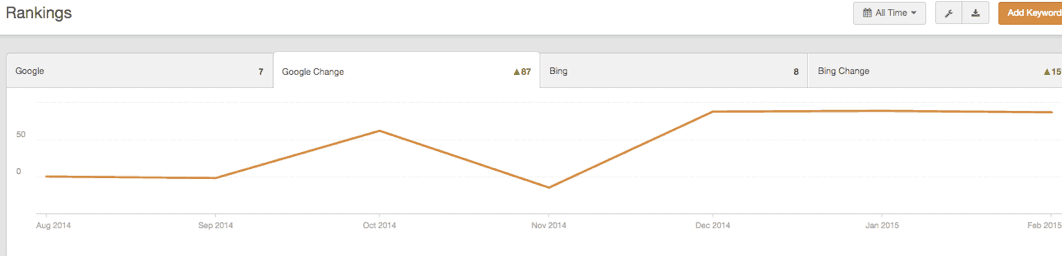
    The picture below shows a snapshot of time while this InvestorCarrot client was implementing our SEO training (the 3LeadPerDay training). She went from ranked on page 3 to #1 for many top motivated seller search phrases in that market, and has held that ranking for nearly a year.

    how long does seo take for a real estate website?
    A Common SEO Rankings Graph… YES, you can rank #1 in Google for almost any term you want to… with the right strategy and realistic timeline expectations.

    The Analysis:

    This InvestorCarrot customer in Baltimore, a highly competitive market, started her SEO in late 2013. The first few months she was really setting the foundation… then you can see her rankings climbed in the summer of 2014, bumped up, back down… then bumped up again and have stayed there ever since.

    She now generates on average 20-30 seller leads per month, she doesn’t have to share those leads with other investors, and netted over $90k in profits in 2014 alone. Her 2015 is shaping up to be an even better year.

    The Takeaway:

    This client said in a case study we did with her that she felt like quitting 3-5 months in because it seemed like things weren’t happening fast enough. We encouraged her to stick with it… and boy is she glad she did! Now SEO is her #1 lead source and has produced well into the 6 figures in profits for her real estate investing business that never would have been there.

    That’s SEO done right… not rushed.


    Example 2: Motivated Seller Leads w/ SEO In Houston

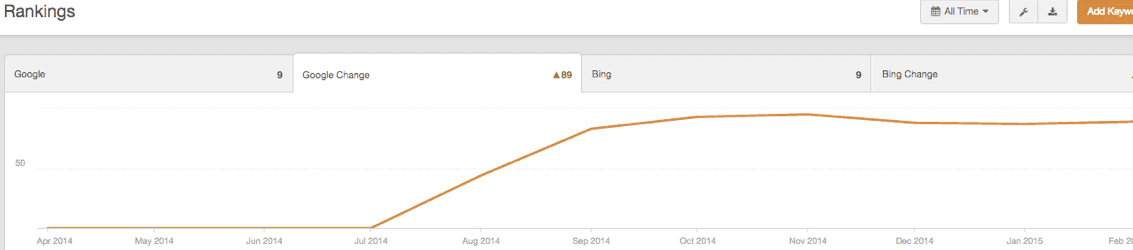
    The picture below shows a snapshot of time while we were doing the SEO (search engine optimization) for this client in one of the most competitive markets in the country for motivated house sellers.

    houston seo for real estate
    Sometimes SEO Done Right Is Discouraging… because many investors want immediate results. Time and time again we see the scenario in this chart unfold in competitive markets. The website will sit in one spot for several months, seemingly not improving at all… then all of the sudden a big jump happens. We call it the “SEO sprout”. 

    The Analysis:

    This InvestorCarrot customer in Houston, one of the top 5 most competitive markets in the U.S. for motivated sellers online according to our research, was able to climb from his page 2 ranking for several highly competitive motivated seller search phrases… to #1 for one of them and top 5 for others within 12 months.

    This graph shows only a snapshot of time during our SEO campaign… but you can see the dramatic increase on the chart.

    That increase happened about 5 months into the SEO campaign. During those 5 months, the website bounced around the search rankings but generally stayed at the top of page 2 and bottom of page 1.

    But then with aggressive but strategic SEO strategies (our SEO service is in the Carrot Marketplace for Carrot members) Google updated their rankings and rewarded this InvestorCarrot customers website. Then you can see from July 2014 to September there was a steady climb up to the top of the search rankings… which also included (and still does at the time of this writing) a #1 position for one of the most sought after motivated seller keywords in Houston. 

    The Takeaway:

    It took 8-10 months of strategic SEO to get the website into the top position in a crazy competitive market. Now that client is generating leads daily and closing multiple deals a month from his online marketing.

    Our SEO service in competitive markets isn’t cheap, but the ROI this client is seeing is one of the best return on investments he has in his business today.


    Shift Your SEO Thinking From Short-Term To Long-Term

    We can show you hundreds of examples like those above now that InvestorCarrot customers control more page 1 rankings for search phrases that matter to real estate investors than any other website platform for investors… but you get the idea.

    Growing a business is a long term proposition. Organisms don’t grow overnight. SEO is no different. And those who understand this will reap the rewards year after year.

    By taking the time to create an organic and aggressive SEO strategy, you will be setting yourself up for success. Remember that you’re in business for the long haul, so make it count. If you are patient and resist the urge to rush it, then you will hedge against ruining it.

    Still have questions about any aspect of SEO? Comment below.

    Want Better SEO Results And More Real Estate Leads with Inbound Marketing?

    If you’re not yet an InvestorCarrot member and want to know how we can help you get better results online… take our demo or reach out to us anytime. We’d be happy to hop on a strategy call with you to see if it’s a fit… or just head over and grab the plan that fits your goals the best. Most high achieving investors choose the Content Pro plan.

  • 71+ SEO Keywords For Real Estate Investors and Agents – SEO Bible 2024

    71+ SEO Keywords For Real Estate Investors and Agents – SEO Bible 2024

    It’s that time again!

    Our annually updated SEO Keyword Bible for real estate investors and agents has been downloaded by well over 8,000 agents and investors in the past 18 months.

    Many of those investors have gone on to implement not only the keyword recommendations in the SEO Keyword Bible but also the step by step SEO tips in there to get some amazing rankings in Google with their InvestorCarrot websites and other websites as well!

    “I have several keywords on page 1 look at “we buy inherited houses Chicago” and see how many spots I have on page 1. And I closed a deal because a seller pulled up a keyword for a blog post I was ranked on” Rich Cascio

    What’s The 2024 SEO Keyword Bible For Real Estate Investors and Agents?

    We’ve expanded and improved the SEO Keyword Bible this year to make it even more useful for everyone. We’ve added keyword categories, built more robust SEO and keyword research training sections in the SEO Bible, and a fresh new design full of Carrot Awesomeness (yes, that’s a real thing ;-).

    The previous version had about 52 SEO keywords for real estate investors and agents, the 2019 version has over 71+!

    A few of the things new in this year’s SEO Bible…

    • Refreshed Cash Buyer, Motivated Seller, And Private Lender Keywords: There have been a few changes in the way buyers, sellers, and lenders are searching online today vs. a year ago… but also a lot of similarities. Download the report to see the current search trends. Pg. 19-21+
    • Note Seller Keywords: Are you a note buyer looking to get in front of note sellers in your area? We’ve added some of the most popular keyword phrases our research uncovered that note sellers are typing into Google every month. Pg. 24
    • Rent To Own / Lease Purchase Keywords: If you’re looking for “rent to own / lease purchase” tenants for your properties, there are a handful of keywords that’ll get you the best results. We’ve added many of these keywords to the list this year. Pg. 22
    • Expanded Keyword Research Training: To show how we do our own keyword research for SEO in the real estate industry, we’ve expanded the training section this year to show you (with screenshots) how we do it… and how you can too. Pg. 10
    • Localizing Your SEO For Greater Results: One of the things that have gotten our InvestorCarrot members such an edge on the competition this past year in the search rankings has been our efforts to help our members localize their SEO even more easily. We show you some of the ways you can localize your website SEO too, so you can capture highly targeted rankings in the markets you work in. Pg. 34
    • The Basics Of SEO And How To Optimize Your Pages Using These Keywords: We don’t sugarcoat things… SEO isn’t easy. But it’s a heck of a lot more fun and effective when you know how and why to use your keywords in your content. Pg. 26
    • A Simple Content Guide For Your Blog Posts: We’re big on content marketing. The Content Pro plan includes SEO’d and localized articles that many of our members are using to swarm their market online and capture more qualified traffic and leads. We show you our simple format for creating and optimizing a blog post to rank well for search phrases that matter in your market. Pg. 32
    • Additional SEO and Online Marketing Resources – Pg. 37
    • … and more!

    All for the big price of… FREE.

    All That We Ask In Return Is…

    If you dive into the SEO Bible and enjoy what you’re reading. Let us know! Post a comment on this blog post or comment on our Facebook page with your feedback!

    If you think the SEO Keyword Bible can help other investors or agents you know. Let them know! Share the resource with them! The more the merrier!

    Last… 

    Share this page on Facebook, Twitter, and/or LinkedIn with the fancy share buttons at the top of this page. It helps us continue to put out great free resources like this.

    Why? For many people, they may find that working with us for your websites and online marketing is a fit to help grow their business. Our members generate well over 45,000 leads a month right now… spreading the word helps us attract more people that we can help with our software and training.

    Get The 71+ SEO Keywords For Real Estate Investors & Agents: Download The 2024 SEO Keyword Bible Below!

    To download the SEO Keyword Bible for Real Estate Investors and Agents… all 41 pages of fresh research and training… just take the 2 simple steps below:


    1. Share On Social Media

    [share]

    2. Click The Download Link Below
    After You’ve “Paid” For The Report With A Quick Share!

  • 7 YouTube SEO Optimization Tips For Real Estate Investors & Agents

    7 YouTube SEO Optimization Tips For Real Estate Investors & Agents

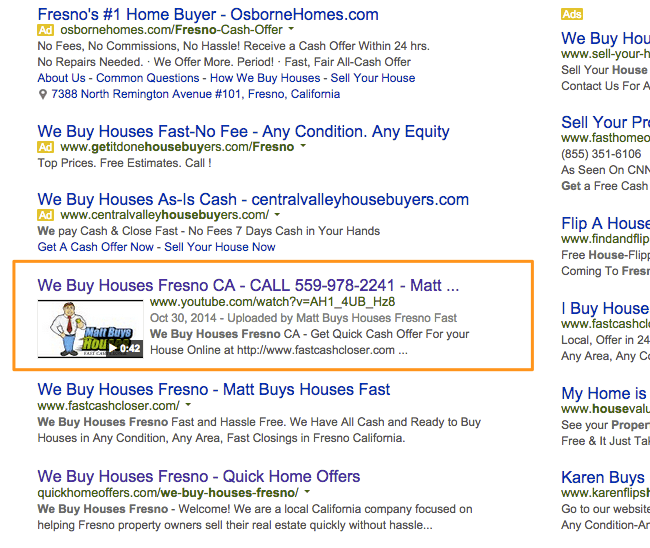
    Do you see your competition ranking their YouTube videos at the top of Google for the search terms you want to rank for?

    Like This?…

    ranking youtube videos with seo
    This is a screenshot of a popular motivated house seller search where our InvestorCarrot customers control the top 3 positions in Google. The #1 position is a YouTube video. Learn how to boost your YouTube video marketing below!

    In this post we’ll show you some YouTube SEO optimization tips that you can implement in your real estate investing or agent companies.

    In our 90 Day Inbound Online Marketing Action Plan call we did recently we teach real estate investors and agents to have a short-term online lead generation plan and a long-term online lead generation plan.

    The short-term things are actions you can take to get visitors to your website (cash buyers, motivated house sellers, tenants, private lenders, note sellers, etc.) within the first 30-60 days while your long-term SEO campaigns build.

    One of the marketing tools we love the most for both our short-term and long-term lead generation for ourselves and our high achieving investor clients is YouTube marketing. We wrote a short post about it last year, this post is a more detailed followup on optimizing those YouTube videos.

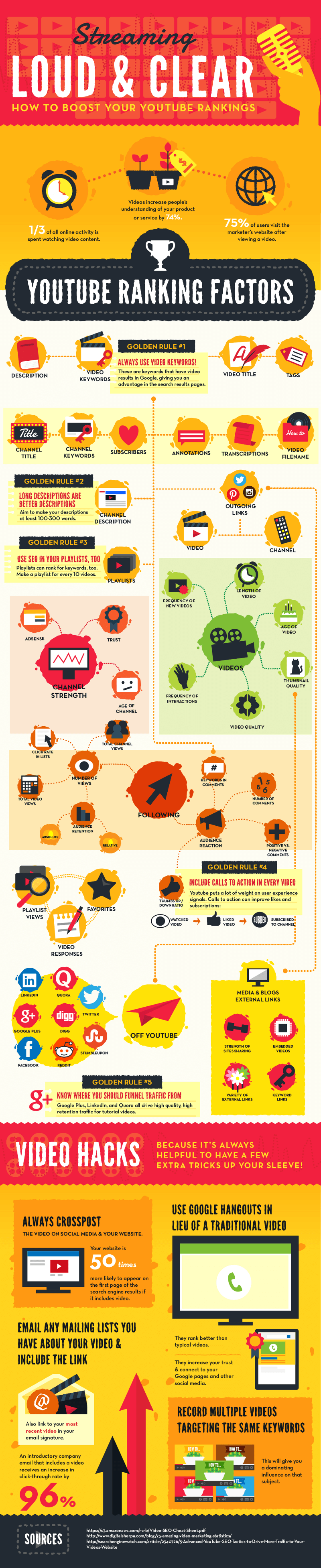
    Infographic: 7 YouTube SEO Optimization Tips To Implement On Your YouTube Videos This Week

    ranking youtube videos in google for real estate

    The Biggest YouTube Video Marketing Mistakes Real Estate Agents And Investors Are Making Every Day

    The reason YouTube videos can rank so darn fast is because of the “Domain Authority” of YouTube.com.

    In Google’s eyes, YouTube has the highest possible authority and trust that a website can get.

    This makes it so any video uploaded to YouTube automatically has a better chance of ranking quickly for search phrases that it may take you months and months to rank well for with your own website with SEO.

    The ROI of YouTube marketing as a house flipper, investor, or agent can be pretty huge for the time you’ll invest. An average wholesale deal could net you approx $5k on the low end right? Would 3-4 hours of video work and “seo boosting” be worth it for that profit potential? The same for agents… what is your average listing worth?

    But you only have a better chance if you implement what the graphic above shows and avoid these common mistakes we see investors making.

    Avoid… 

    • Not using your main keyword phrase in the video title: Most investors will throw a video on YouTube and not really think much about the title. If you want to rank well for “sell my house fast Madera CA“… your video should have those words in it toward the start of the title.
    • Not uploading enough videos to your channel: Every day we see people asking how to improve their YouTube video rankings… then we look at their YouTube channel and see only 1 or 2 videos in there. Google wants to see that a channel is active. So get at least 4-6 videos in there! Use this training video to help optimize your YouTube channel.
    • Not typing up a good long description in the description box: People forget that Google can only read what we give it to read. So use that description area to really talk about the content in the video. Include your keyword phrase and variations of it… and ideally get your keyword phrase toward the start of your description.  Treat the description box like you’d treat the content on a page on your lead generation website. Get good quality content on there and optimize the content for the phrase you’re wanting to rank for.
    • Not linking to your website from your description with the full “http://www.yoursitehere.com”: A solid way to drive people to your website and get a link back to your website is to include a clickable link in your video description! It’s a no brainer and should be one of the first things you put on your description.
    • Thinking your work is over after you upload your video: If you’re in a competitive market where lots of other real estate investors, wholesalers, flippers, agents… etc. are competing for the same search phrases… you may need to add some SEO “boosters” to get your videos to rank higher. Get people to comment on your videos, share it on social media, link to the video, and post the video on your own website too. You’d be surprised how easy ranking a YouTube video can be with a few of the right steps.

    If you’re an InvestorCarrot member, our 3 Lead Per Day Training (only available to active Carrot members) dives into YouTube video marketing really deeply and shows you how to make your videos step by step, upload them, optimize them, and “boost” them after they’re on YouTube.

    Just check our marketplace to pick up that training course if you’re an InvestorCarrot member.

    Or, if you’re not yet an InvestorCarrot member, what are you waiting for? :-) 

    Carrot Members Control More Page 1 And Top 5 Rankings In Google For Motivated Sellers and Cash Buyers (rent to own tenants too!)…

    … than any other real estate investor website platform.

    Our prices aren’t the lowest (and never will be)… but our members say the return on investment they get with their InvestorCarrot accounts is one of the best possible investments they could make with those marketing dollars vs. the alternative real estate investor website solutions.

    Our members are currently pulling in well over 10,000 opt in leads per month at the time this article is published… plus thousands more phone call leads each month.

    And a huge reason is because we focus on making your life easier as an investor or agent when it comes to online inbound marketing.

    It’s a mix of…

    • Great software that launches websites that give you a head start with SEO (and are completely ready to convert leads for you on PPC or Craigslist from day 1)
    • Epic support when you need help (email, live chat, weekly live Carrot Coaching webinars with our team members on advanced lead gen topics and Q&A)
    • Industry best online marketing training

    These combined have turned into pretty darn amazing results for our clients who trust the system, put it to action, and use the resources you have at your fingertips with Carrot.

    If you’re curious about InvestorCarrot and how it can help you grow your real estate investing, house flipping, wholesaling, note buying, or real estate agency… head on over here to take the demo

    Join the thousands of investors and agents who are getting results with InvestorCarrot that they were never able to get before.

  • The Surprising Correlation Between Google +1’s And Your Real Estate Investor Website Ranking

    The Surprising Correlation Between Google +1’s And Your Real Estate Investor Website Ranking

    google +1 matter for seo rankings for real estate investors

    Now more and more getting those high rankings in Google for top search phrases as a real estate investor (wholesaler, flipper, rental property owner, note buyer/seller, turn key investment property seller, etc.) can be a HUGE reward… but it isn’t like it used to be to get your real estate investing company’s website ranked high.

    How SEO Used To Be For Real Estate Investors

    When I started getting really good at SEO (back in 2007) ranking my own websites high in Google because I didn’t have the money to pay for ads or to pay an SEO firm… it seemed kind of like everyone was gaming the system.

    All you had to do was stuff a page with the keyword phrase you wanted to rank for (“sell my house fast Portland”, as an example)… go buy a bunch of backlinks from bogus websites pointing to your website… and get your title tag right… and you were on your way to a better ranking.

    But over the years Google has been making updates to the way they rank our websites in their search results. The most recent big update came in October… that focused on websites building “spammy” backlinks.

    What these Google updates are doing is making people… including you real estate investors… go back to the basics and really focus on putting together great websites that the visitors actually want to go to and browse around… with great content (not sites with barely any content)… solid credibility… get good quality “votes” from other websites (backlinks) and bumps from social media (Facebook “likes”, Google +1’s, etc.).

    With that said… since our members generate over 100,000 visits to their websites per month now… and many of our customers have top rankings in some crazy competitive markets using our tools and training… we’ve seen some major correlation to ranking your real estate investing website high in Google to…

    Correlation Between Google +1 – Why It Matters So Much In Your Google Search Rankings and SEO

    We first started to see this strong correlation in many of the most competitive markets in the country for highly motivated sellers during our weekly LIVE Coaching Calls with our Pro and Content Pro members (these calls are FREE to Content Pro and Pro members).

    When a member would send through their website URL during the Coaching Calls and the search phrases they were going for… I’d do a quick “competitive analysis” there on the call and come up with a quick action plan for them to rank well based on what the websites in the top 5 for those phrases tended to have.

    And more and more this year… the number of Google +1’s a website has (or even just the fact that they had some) has been showing up as a strong signal in the websites that were ranking in the first 5 results in a Google result for sellers, buyers, tenants, etc.

    As an example… here is one of the top markets for motivated sellers and the top 3 rankings on page 1 vs. the top 3 rankings on page 2 and the Google +1’s they have.

    Note that since there are hundreds of ranking factors that Google uses… no single factor is the main differentiator. So you’ll see some of the ones ranked high have lots of Google + action… some have low Google + action… but the thing in common is all of the websites in the top 3 in almost every market we’ve searched has some Google + action happening.

    Top Results Houston, Texas – “we buy houses Houston”

    #1 – 410 Google +1’s

    We_Buy_Houses_in_Houston_Fast___Inherited_or_With_Liens_Any_Condition

    #2 –  9 Google +1’s

    Sell_Your_Houston_House_Fast__We_Buy_Houses

    #3 – 16 Google +1’s

    We_Buy_Houses_Houston_-_Fast_Cash_Offers

    Collectively in this example… the top 3 ranked pages have a total of 435 Google +1’s.

    And a hat tip to Carrot member Guillermo for his #3 ranking (and climbing) in one of the most competitive search phrases in the country for motivated sellers… with his InvestorCarrot website and our SEO service help.

    Now the top 3 for the 2nd page in Google…

    #11 – 13 Google +1’s (but there are other reasons this site isn’t ranking on page 1 we can go into on another blog post)

    Houston_House_Buyers_-_Any_Condition_-_Cash_Offer_Within_24_Hours

    #12 – 0 Google +1’s 

    We_Buy_Houses_Houston___Locations___We_Buy_Ugly_Houses

    #13 – 0 Google +1’s

    123_Homes_Houston___We_buy_houses_in_Houston

    #14 – 0 Google +1’s

    Sell_my_Houston_Texas_home_or_house_today_for_fast_cash__I_buy_Houston_TX_homes

    In this example… collectively in the 11-14 positions for the same search phrase… they have 13 Google +1’s.

    I can show in many many other top rankings in other markets across the country as well that the…

     …top ranked sites on average have more Google + and Facebook activity than the sites ranking on page 2 and below. 

    This Is Just One Example, Does It Mean There Is Really A Correlation Of Google +1 Activity to Ranking Well In Google For Real Estate Investors?

    Even though we have access to probably the best data in the entire real estate investor website industry because of the 10k+ leads per month our members generate and the many many many top search rankings they have with their InvestorCarrot websites…

    … we wanted to make sure there was actually a correlation.

    Recently a report put out by a top SEO firm, showed its own data on the ranking factors that Google is showing right now in their search results. Notice how high the correlation of social media (including Google +) activity they’re finding in the top-ranked websites across the web.

    Correlation Between Google rankings seo ranking factors for real estate investors - searchmetrics
    Surprising Google +1 Correlation: As part of a well-optimized website, Google +1’s are showing up more and more in top websites according to this report by SearchMetrics. But, don’t let this blind you from the other important factors that are just as important on your website.

    You’ll also notice that just in this one graphic there are many many more things that also are showing up in websites that rank high… so don’t take this article as telling you to go out and buy 100 Google +1’s from Fiverr and your website will rank well.

    That’s not the case.

    Google +1’s Aren’t The Only Answer Though…

    Yes, one of the first things we have our members do now on their websites is share their website with their friends and family to get some Google +1’s on their websites… which we make really easy with our built-in social media buttons that you can easily turn on or turn off.

    But we do that just to cover our bases.

    Your website still has to be built to… 

    • Have great content on the whole site that is optimized well for the search phrases sellers, buyers, tenants are typing into Google (which our system makes easier for you)
    • Engage the visitor to stay on your website and click around (which Google looks at as a ranking factor)
    • Have the elements in the actual website code that Google is looking for (which Carrot sites are built to be liked by Google from the ground up)
    • Have solid backlinks pointing to your website (which we have training showing you how to do this)

    All this to say… that there’s a lot that goes into getting your website ranked well in Google for search phrases motivated sellers, cash buyers, private lenders, tenants are typing into Google to find what you offer.

    Google +1 action is just one of the latest things we’re seeing the top-ranked websites have in common versus the websites that are ranked lower.

    So, How Can You Get More Google +1’s For Your Website?

    Again, don’t look at this as a quick “SEO fix”. It’s not.

    Getting some good social media “likes” is just one part of the puzzle to outrank your competition in Google for your real estate investing business.

    But here are some quick easy ways to get some more Google +1 action on your website to give it a better chance of ranking well in your market (if your site is built and optimized with the other SEO factors in mind. If not, take a look at InvestorCarrot to save yourself time and money). 

    1. Setup Facebook and Google + sharing buttons on your website (just put them on your homepage and your blog post pages).We_Buy_Houses_Houston-social shares
      You can have your web guy do this for you… or if you’re using WordPress and you want to keep hacking your own site together… grab a plugin and configure it.  This is all built into your InvestorCarrot websites and pre-configured so you don’t have to do anything at all.
    2. Create your own Google + account and go to your website, and click the “G+1” icon and while you’re there… hit the Facebook “Like” too
    3. Share your website with your friends and family via email and Facebook with the quick message below:”Hey [name], we’re starting to really grow our real estate investing business and have been working on our website [insert your URL here]. Can you check out my website and give me feedback? It would help a ton!- [your name] PS – While you’re there… can you scroll to the bottom of the page and click the “Facebook Like” and “Google +1” buttons too?! It’ll help us out a ton. I’ll love ya forever! “Simple eh?
    4. Do the same thing with your colleagues at your local REIA, your workplace, etc. Get as many people in your network to G +1 your website

    That’s it.

    That should get you at least 10-20 likes and +1’s… and give you a great head start.

    What’s Next For You As A Real Estate Investor Trying To Rank Well In Google?

    First, keep an eye out for new changes from Google.

    It seems they come out monthly now.

    Make sure you’re subscribed to our blog for weekly updates just like this to help you get better results with your real estate investor websites… and by better results… we mean ranking better, converting higher, and getting more leads and deals.

    We send out weekly online marketing updates for real estate investors that’ll help you stay ahead of the competition.

    Last, focus on quality and focus on what you do best. 

    If you’re not a web guy, not an expert on SEO, and not an expert on conversion rate optimization… leave that up to someone else… or another system that makes it easier (or does it for you) like InvestorCarrot.

    The reason so many real estate investors are seeing such awesome success with Carrot is because we’re the experts in building websites that make it easier to attract high-quality visitors… and once the visitors get there, our websites convert higher than the average real estate investing website.

    Whatever you choose… get out there and focus on getting your website ranked higher whether it’s leveraging our tools or your own time and energy.  We have members generating dozens and dozens of leads per month and turning those into multiple deals per month… just from SEO.

    Search Engine Optimization has some of the highest return on investment around… it just takes some time and commitment to do the right things on your website to get yourself ranked higher.

    Hit me with your questions or just comments on what you’ve seen SEO wise in the comments section below. I’d love to hear from you!!!