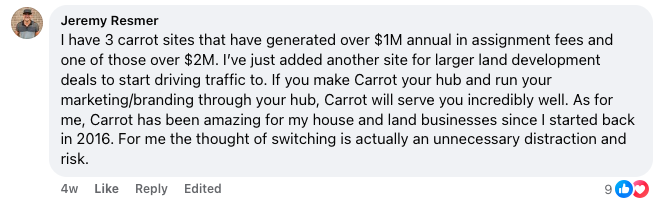
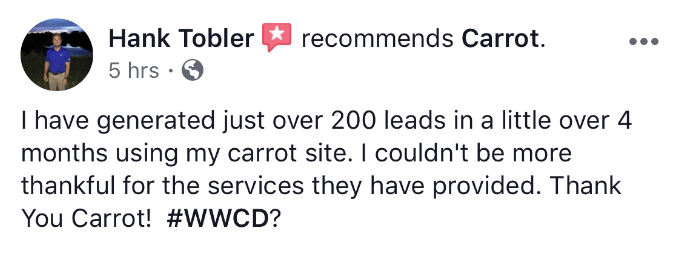
I dipped my toe into GrumpyHare. Their sites look ok, but they’re harder to work in, have no texting about leads, and the spam is out of control! I’ve been a Carrot guy since like 2017, and honestly, I’m ashamed I even tried something else.
Matthew W.
Real-World Carrot Results
More than 1 million motivated seller leads generated by Carrot websites
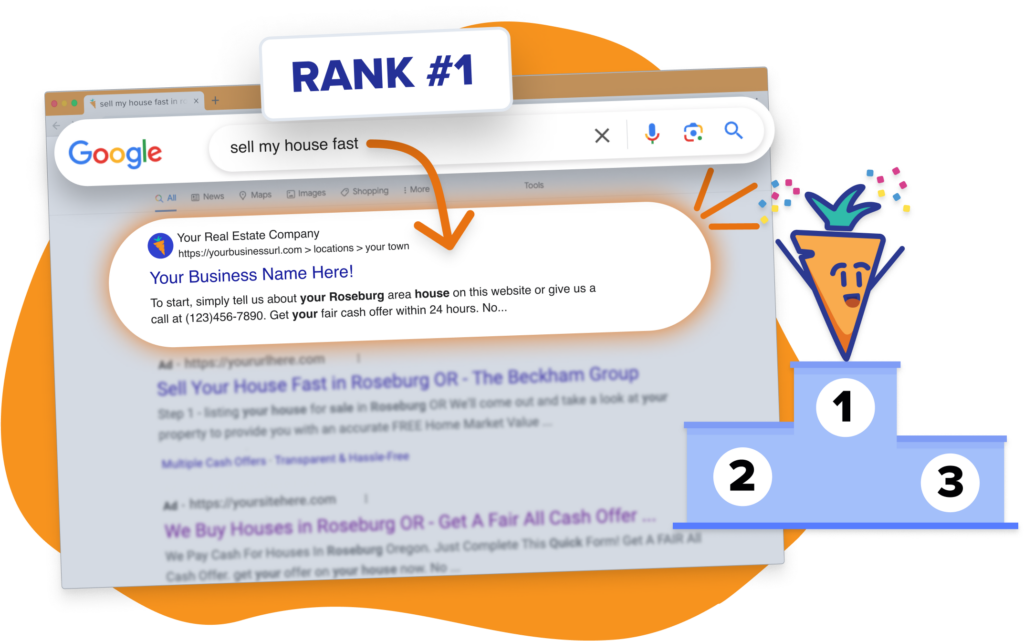
45% of the top rankings for relevant keywords are held by Carrot sites
Carrot websites are 68.9% faster than custom WordPress sites
Carrot leads generate 2.5x higher profits vs. non-Carrot leads
Feature Comparison: Carrot versus GrumpHare
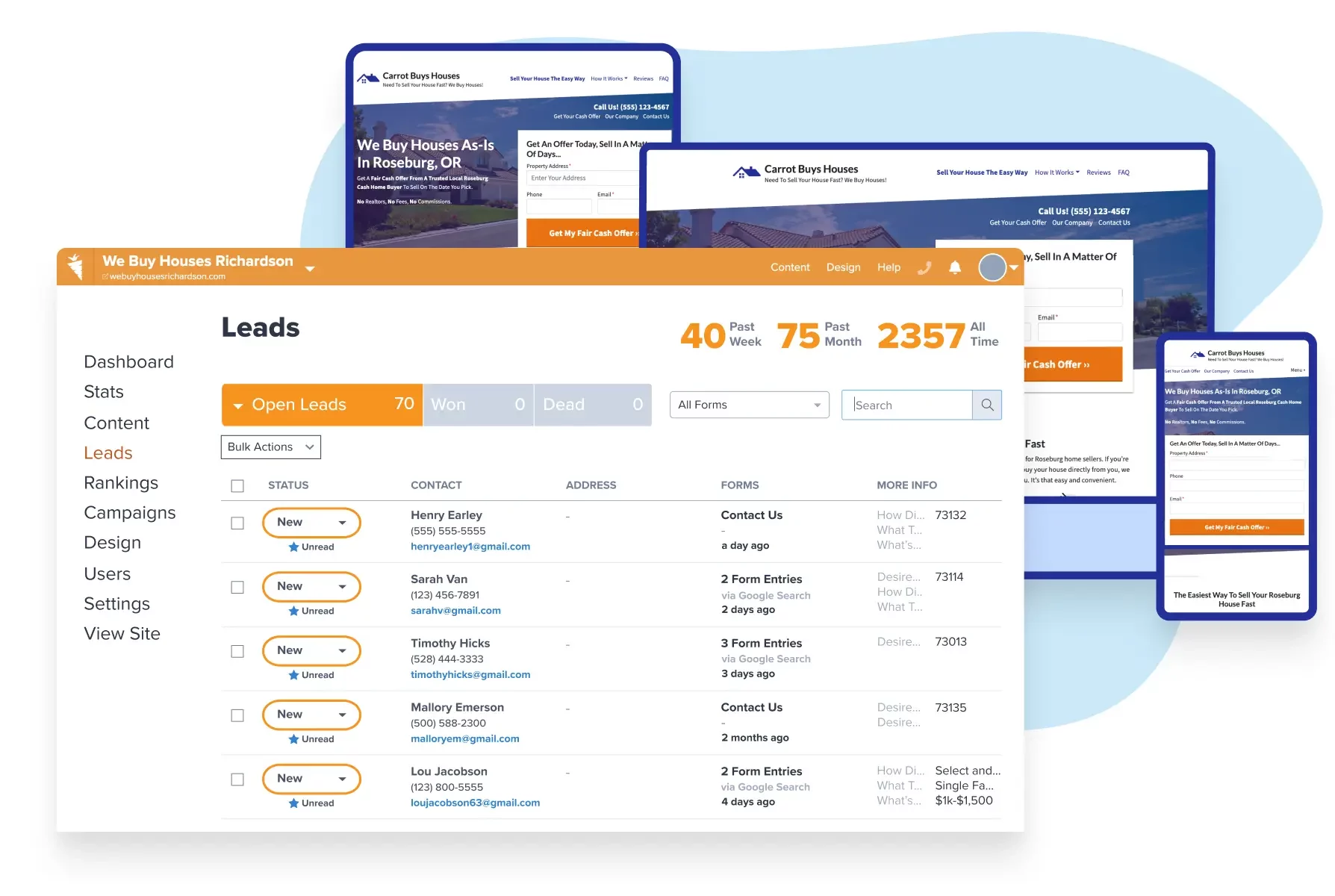
We’ve had time to build out the website, SEO, and marketing tools you need to grow your real estate business. Here’s just some of what you get with Carrot that GrumpyHare doesn’t offer.
Included and premium template options
SEO-optimized templates & tools
Drag and drop website editor for site customization with EVERY plan
Specialty website templates for 10+ real estate investment types (not just generic investor and agent templates)
Built-in website analytics & Google Search Console, showing site traffic, campaign tracking, lead source and more
10 years of proven results, with the data to back it up. You simply don’t survive as a real estate website provider for 10+ years if your customers aren’t successful. The GrumpyHare founders are experienced in their own right, but helping real estate investors set up compelling, high-performing, amazingly optimized, well-converting websites has been our #1 focus for the past decade. Over time we’ve added tools our members asked for, provided countless trainings, and driven real results that can’t be disputed. (That’s why Carrot websites account for 45% of all Top 10 rankings and 59% of #1 positions for prime real estate keywords.)
/ 02
Robust marketing & SEO tools to help you succeed. You’re a real estate pro, not (necessarily) a professional marketer. It’s not your job to understand the ins and outs of website SEO, conversion rate optimization, site performance, and content marketing. But it IS our job. We strive every day to make it easy for you by providing the tools you need to quickly and easily launch your site, start ranking in search results and, most importantly, generate leads. It’s not just about looking pretty, it’s about performing well (and every one of our templates follows proven best practices for driving more leads). At the end of the day, do you want a site that looks pretty and “unique” or one that brings you business?
/ 03
Designed for all types of real estate lead generation. You’re a real estate investor, but what exactly do you invest in? Your website needs to attract the type of leads you actually want. Carrot provides websites truly tailored to your business and ideal leads. Some of the target leads we provide sites for include:
Motivated House Sellers
Cash Buyers
Rent to Own Tenants
Note Buyers + Sellers
Land Buyers
Land Sellers
Owner Finance Buyers
Mobile Home Sellers
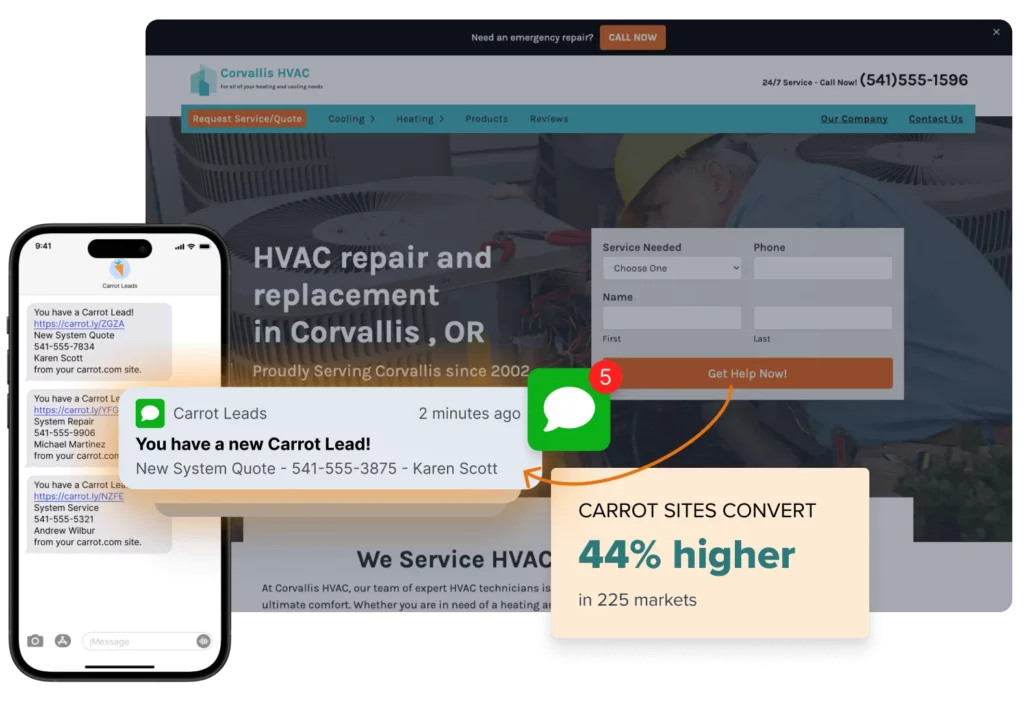
Carrot sites are also used for home service providers like HVAC, plumbers, painters, etc.
GrumpyHare limits you to generic “investor” or “agent” templates.
Why real estate investors trust Carrot
Trusted by 5000+ real estate professionals
There’s a reason the top real estate investors and agents choose Carrot vs GrumpyHare. We’ve helped thousands of them grow their real estate businesses by providing industry leading online marketing tools and support to give them a predictable lead generation pipeline that increases profit. Experience doen’t lie … and we have a lot.
From $20k in Debt to Six-Figure Profits: A Deep Dive into Tyler Ford’s Journey
Tyler Ford generates nearly six figures monthly by closing just 2-4 real estate deals and credits mastering SEO and targeted lead generation as the key tools that helped him scale his business while working smarter, not harder.
Closing 2-4 Deals Per Month
$20-$30k Profit Per Deal
Targeted Lead Gen Through SEO Mastery
Tyler Ford completed his year-long goal of generating $200,000 in just four months by switching to Carrot.
Learn how he did it – and how you can too.
What I didn’t expect after switching to Carrot, is my lead to close ratio increased 50% on my offline leads!”
The Challenge: $20,000 in Debt and Struggling to Generate Qualified Leads
Tyler Ford started his real estate career using traditional marketing strategies but quickly realized they weren’t yielding the results he needed.
“I was spending a lot of time on tactics that weren’t bringing in the right leads. I needed a smarter way to grow.”
Despite his efforts, Tyler’s website and high Google rankings weren’t converting into profitable deals. He recognized that most real estate agents were overlooking off-market opportunities and needed a more targeted approach.
“I could drive traffic to my site, but without the right leads, it wasn’t translating into sales. I had to rethink my entire strategy.”
What was missing?
Tyler realized that focusing on traditional methods wasn’t enough—he needed to attract motivated sellers specifically looking for off-market deals.
Tyler pivoted his strategy toward mastering SEO and targeted lead generation, which allowed him to scale his business and close more profitable deals.
To grow his real estate business early on, Tyler Ford relied on traditional marketing methods but struggled to see meaningful results.
“When you’re using outdated strategies, it feels like you’re working hard but not getting anywhere—one month you close a deal, but the next, the leads dry up.
And while you might have some visibility online, it’s not converting into profitable deals.
It felt like I was doing all this work, but I wasn’t seeing consistent returns, and there was little I could do to change that with my current approach.”
The Solution: Master SEO and Targeted Lead Generation
Then, Tyler came across a Carrot webinar where Carrot CEO Trevor Mauch discussed the power of SEO and online lead generation.
“I immediately thought, “This is what I’ve been missing.” I wanted to attract qualified leads directly to my business, not rely on outdated methods.
I saw how focusing on SEO could completely transform my approach, and once I understood the impact, it was an easy decision to dive in.”
Tyler got to work mastering his SEO Approach and saw immediate results in generating quality traffic that turned into a consistent pipeline of highly motivated leads.
The Strategies: Tyler’s 8 Steps for Success
1. Complete Online Presence Overhaul
Tyler realized that having a website alone wasn’t enough. Even with good Google rankings, his old website wasn’t converting qualified leads. It’s like having a storefront on a busy street with locked doors and the lights off, making it impossible for potential customers to see what you have to offer.
2. Focus on One Thing: Master SEO
Tyler knew he needed to master one aspect of marketing instead of spreading himself too thin. He chose search engine optimization (SEO) because it would have the biggest impact on his online visibility. Rather than trying to learn multiple marketing tactics at once, he became a master of laser-targeted SEO.
3. Laser-Targeted SEO
SEO wasn’t just about attracting any traffic but about specifically targeting motivated house sellers actively searching for his services. Through meticulous keyword research, Tyler uncovered the “digital fingerprints” left by his target audience, optimizing his website to appear at the top of relevant search results.
4. Hyper-Relevant Local Content
Tyler didn’t just throw any real estate content on his website. He made sure everything was hyper-relevant to his local market in Arizona. By becoming the Arizona expert, he built credibility and trust within his local community, making him the go-to agent for potential clients.
5. Building Trust Upfront
Tyler avoided being the pushy salesperson. Instead of bombarding visitors with sales pitches right off the bat, he provided valuable content upfront. This made him a trusted advisor rather than just another salesperson, allowing him to build crucial relationships before asking for the sale.
6. Leverage the Power of Video
In today’s digital age, video is key. Tyler harnessed the power of video not just to follow trends but to personally and engagingly connect with potential clients. Videos showcased his properties, explained his unique approach to real estate, and allowed his personality to shine through, making the interaction more personal and authentic.
7. Data-Driven Decisions
Tyler meticulously tracked his website traffic, identifying what content resonated with his audience and led to conversions. This analytical approach allowed him to constantly refine and optimize his strategies based on real data, essentially playing digital chess and always thinking a few moves ahead.
8. Identify Your ‘Why’
The foundation of Tyler’s success was his clear ‘why.’ For him, it was about achieving freedom and flexibility, building a business that worked for him, not the other way around. Having a strong driving force behind your goals can be the difference between giving up when things get tough or pushing through.
The Result: Closing Consistent, Highly Profitable Deals Per Month
Tyler Ford’s story highlights a larger trend: achieving extraordinary results through strategic online marketing. From being $20,000 in debt, overwhelmed, and struggling to know if he should even continue his real estate journey to closing 2-4 deals per month with $20,000-$30,000 in profit per deal. Tyler knew he wouldn’t find the success he was after through luck or being in the right place at the right time. He chose to take control and created his own opportunities using his Carrot site and getting laser focused on generating the most motivated leads.
By focusing on core strategies like SEO, leveraging video, and making data-driven decisions, you too can unlock remarkable success.
Start Your Journey to Remarkable Success Today by Following Tyler Ford’s 8-Step Process
Tyler Ford completed his year-long goal of generating $200,000 in just four months by switching to Carrot. Learn how he did it – and how you can too.
How Carter Steph Grew His Investing Business To $2 Million In Revenue
How Carter Steph’s closing rate skyrocketed from 7% to 20% within a few months after switching from a custom website to Carrot.
Snapshot:
Industry: Investor and Agent, licensed broker for 20 years
Location: Oklahoma City
Clients Served: 1000+
Year founded: Co-owner since 2016
What I didn’t expect after switching to Carrot, is my lead to close ratio increased 50% on my offline leads!”
Carter Steph is a real estate investor since 1992 and is also a licensed real estate broker in Oklahoma City.
He’s also a practicing attorney for almost 20 years and has been the General Counsel at 1-800-2SellHomes since 2014 and co-owner since 2016. He’s no newbie to real estate. He and his team consistently generate seven figures per year in net profits, while closing on about 20% of their leads.
The growth is steady and predictable.
“You ask anybody in town, and they know us,” he said.
Read the tips below, taken straight from Carter Steph’s 7-figure growth strategy.
The Tools
For Carter, Carrot is the central hub that brings all of his marketing efforts together. He’s running PPC ads to drive traffic to his site while leveraging Carrot’s easy content marketing tools and strategy to build his SEO for long-term lead generation.
Since he’s driving traffic from all of his marketing efforts to his Carrot site, he can track performance across all campaigns and channels, giving him the clarity needed with his marketing strategy.
Here’s how Carter is using Carrot as the central hub to tie together the marketing efforts they were once doing on their own to become the authority in their area:
Switching from a custom website to a high-converting website
Before Carter Steph went on his journey to $2 million in revenue in 2018, he was doing some things very differently with his website.
In fact, with the powers of technology, I was able to dig up his several-year-old website for all of us to look at.
Believe it or not, that custom website cost Carter and his business $5,000 upfront and $700 per month for hosting fees.
That’s quite expensive.
And it’s even more expensive when you find out that it had a terrible conversion rate and almost never generated any leads for Carter’s business — the leads it did generate weren’t very good quality and Carter’s close rate was only 7%.
For that reason, they were spending $1,500 on PPC every month but $30,000 to $40,000 on TV ads.
Then they switched to Carrot.
Carter said the difference was immediate. After just two days, their new Carrot site generated its first high-quality lead. Within a few months, their close rate skyrocketed from the previous 7% to 20% because lead quality increased.
After Trevor and Carter ran some estimations on the CarrotCast interview, they determined that Carter is saving between $20,000 and $50,000 every single month in lost lead-gen closing potential after switching from their expensive custom-made site to one of our Carrot sites.
Wow!
Now they close 20% of leads, their PPC budget is $8,000 per month (because their website is converting as it should be), and they’re growing like crazy. Sometimes, the small changes make a big difference. And at Carrot, small, iterative, conversion-optimization changes is exactly what we’re focused on. ;-)
Evergreen Marketing
In marketing terms, Evergreen is marketing you do once, and it works for years… not hours, days or weeks. Content relevant for a long time, that serves your best prospects, and gets in front of them where they’re searching online.
Carter has organic leads grow over time using this exact marketing strategy.
Automated blogs
Content marketing is huge for businesses trying to establish themselves as an authority in their market. In order to do this, you have to create a lot of content, and Carrot makes it easy by providing content tools that require very little time on your part!
SEO Keyword Tracking
By using our keyword tracking tool, Carter can readily track the search engine rankings of his web pages. We make it easy for you to quickly gain insight into which keywords are rising and falling in Google’s results pages so that you know where your web page stands relative to other sites on similar topics.
The Results
2000+ Leads
20% Closing Rate
8 Top 3 Keyword Ranking
Carter added $20k/mo in new profits by shifting from a fancy custom website into an “Authority Hub”
We couldn’t be happier with the site so far…What we have seen is a DRAMATIC increase in web leads. Since switching to Carrot, the leads we are getting are converting to purchases at a MUCH higher level.
Things have been moving so fast that we haven’t had the opportunity to accurately determine the lead to purchase ratio, but I would estimate it is in the 25 to 35% range, which means the leads we are getting are significantly better than our historical average.
Thanks for everything and we are now looking at expansion because of the success we have had in such a short time.”
Ready to Transform Your Business Like Carter?
Launch a website in minutes and start generating high-quality leads that convert.
$40k Profit per Deal: The Power of Inbound Marketing w/ Beau Hollis
SimplySold is a local, Louisville-based business that uses Carrot’s inbound marketing guidance and resources to gain new clients online. Here’s how they achieved a $40,000 per deal business using Carrot.
Snapshot:
Industry: Investor
Location: Louisville, Kentucky
Carrot Member Since: 2016
I had no world tech experience, and I just didn’t have an online presence. I didn’t want to have to build a website. So Carrot made that really easy for me.”
Beau Hollis is the founder of SimplySold in Louisville, Kentucky.
He’s been investing in houses for the past 7 years.
Currently, the majority of his business involves acquisitions that he does himself. He also has an acquisitions person and a full-time videographer.
It’s a low-key, small operation, but it has a high intention, and they go aggressively after deals.
“You know, I spend my time and effort and energy to do this business to provide for my family, not only money but years of my life, getting this up and going to have it, work is worth, the journey is not in vain.”
From Beau’s Carrot leads, his average profit per deal is nearly $40,000.
He’s done $400,000 in assignments in his Carrot site alone in the last six months.
Before using Carrot, he had no online presence and no experience in building websites.
“I had no world tech experience, and I just didn’t have an online presence. I didn’t want to have to build a website. So Carrot made that really easy for me.
Obviously, people cannot find you, people have no clue who you are, they can’t find your business, they don’t know if you’re in business at all, and so if they can’t find you, they can’t do business with you.
So you have no lead flow inbound from a website.”
At first, his vision was to dominate the outbound marketing space, whether it was cold calling, texting, or other things.
However, the lifespan of somebody doing outbound marketing all the time is limited.
“I have come from a background of sales, and I understand that you’re gonna do this one thing all the time, whether it’s cold calling or texting or putting out bandit signs, and there’s a lifespan to that.”
Outbound versus inbound leads are two things that are drastically different. Outbound leads are when you’re seeking out someone. A lot of work, effort, and energy is going into it before you even think about reaching out to the person.
Inbound marketing, or evergreen marketing, is a completely different mindset. You optimize your website with content: videos, blog posts, and testimonials.
Inbound offers a whole other world. People are seeking you out.
The challenge: Creating the path to the world of inbound marketing
This is a business to close deals. Serious real estate agents and investors want to make Evergreen inbound marketing a real avenue, not just a little street but a highway.
Evergreen inbound marketing takes a plan and plenty of patience. It takes a lot of video work on YouTube and on-page SEO with keywords and good content for high rankings.
My expectation was that I’m just going to turn it on, get it up and live and then it would just bring in the people just saying, please take my house, that’s why I thought it was at the beginning when I first got, I just got it up and I just had, I just had it out there, I didn’t do any kind of optimization. I did zero, absolutely zero customization to the website.
His website had been just sitting there for a long time. Years.
Then, Beau had a conversation with Trevor to get the ball rolling.
He started implementing on his website and using the tools Carrot provides our members. Keyword tracking, campaign tracking, video postings… and over time and hard work, Beau’s inbound marketing started to click.
Once he started optimizing his site, he could see a bit of movement in his rankings.
That movement proceeded forward for a year or two then it was time to dive into the PPC world of inbound marketing. The one-two punch of paid and organic traffic really exploded his business.
In 2021, Beau’s Carrot leads have had an average profit per deal of roughly $40,000.
In comparison, Beau’s outbound leads have had an average profit per deal of roughly half that.
The tools: Carrot features
Although the real estate niche can sometimes be inconsistent, Carrot brings consistency to Beau’s business. He can count on deal flow.
It’s good because when you can count consistent leads, it means that you’re not stressed all of the time.
For Beau, Carrot has become a hub that brings all his inbound marketing efforts together. Since he’s driving traffic from all inbound marketing efforts to his Carrot site, he can track performance across all campaigns and channels, giving him the clarity needed with his marketing.
Here are some of the tools Beau is using to tie together his marketing efforts:
Evergreen Training
Beau needed to get many unqualified outbound leads to close deals. More leads meant more time and expense to sift through the tire kickers.
He learned inbound online marketing with Evergreen content to attract the most qualified prospects. He’s built trust and credibility with them 24/7, 365 through his Carrot “Authority Hub.”
Automated blogs
Carrot’s content tools have allowed him to stand out in his market as an authority. This saves time and money and puts SimplySold at the forefront of its industry with expert quality content that he can customize for his needs.
Keyword Tracking
How do you know if your SEO rankings are climbing? Tracking is easy with Carrot. Simply input the keyword, and we’ll track where that particular term ranks each week, making optimizing accordingly easier!
Campaign Tracking Links
Learn how many leads you generate with your ads by following the conversions from them. Easily see which campaigns produce results and create a link to track click-throughs and leads better.
CarrotCamp
CarrotCamp is a place where people come to get inspired by other entrepreneurs, hear first-hand stories about how they built their successful businesses and strategies for success. The knowledge Beau has gained from meeting these individuals has been essential in helping him grow his own real estate investing business.
The results:
Beau has been successful in implementing an Evergreen inbound marketing plan. He went all-in and began building his SEO content, which he followed up with PPC. Now he has a team and consistently closes inbound deals to grow his business.
He also knows how to scale his business using Carrot and inbound leads.
What about you? Are you ready for consistent and predictable growth in your business?
Ready for Consistent Growth Like Beau?
Start generating high-quality inbound leads and build your authority in your market.
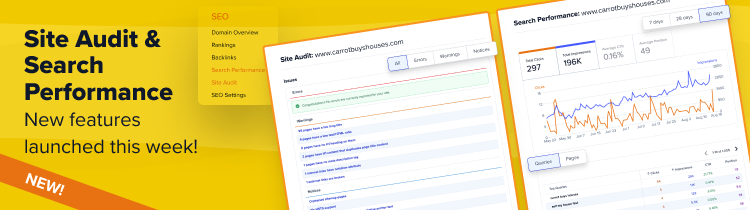
We have great news! If you’ve been looking for a better way to supercharge your SEO and outrank your competition… you’ll want to listen up to what we just rolled out.
We’ve just rolled out four exciting new features and updates to help you analyze, improve, and dominate your website’s search performance like never before.
Demo Carrot: How many deals are you losing to your competitor’s website?
But we’re not just dropping these tools and leaving you hanging—we’re here to guide you in using them to their fullest potential.
Let’s dive in…
So, what’s new at Carrot?
Before we get into the “how-to” guide, here are a few features and updates for ya!
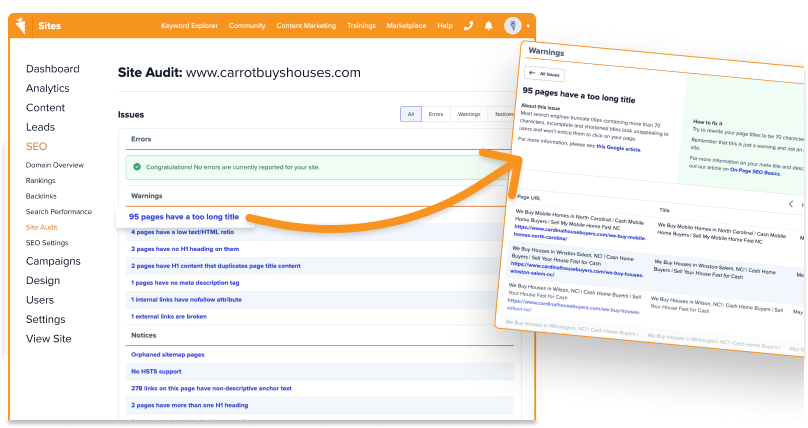
Understand your website issues with the SEO Site Audit tool
We’re taking the guesswork out of site improvements. All SEO Tools subscribers now have the ability to audit their websites, identify critical website errors, and learn how to fix them to achieve better Google rankings.
With your SEO Tools add-on, you’ll get 1 site audit per month
Track 125 Keywords For Free
We’re bumping up the number of keywords SEO Tools subscribers can track from 25 to 125. Any Carrot members with SEO Tools now have the ability to track 125 keywords inside their Carrot dashboard.
Domain Overview is now available to all Carrot members
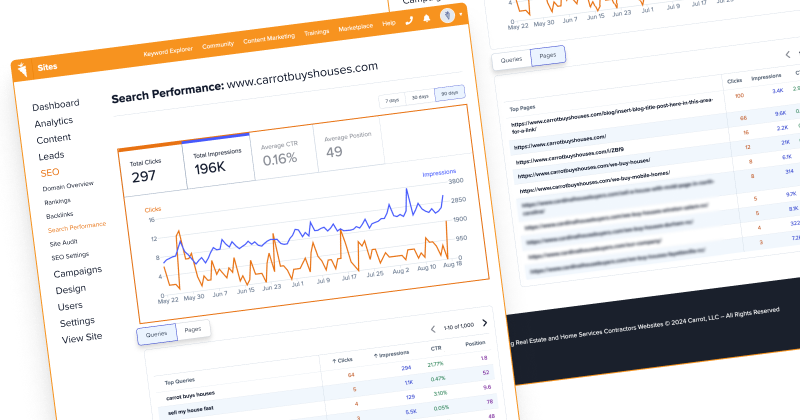
Search Performance
Get deeper insights into your Google performance metrics—all without needing to login to Google Search Console. This service is available to all Carrot members.
Search Performance is now available to all Carrot members
But you might wonder, how do I use all these features? How do these features work together, and how will they get me more leads?
This and answers to all of your burning questions below…
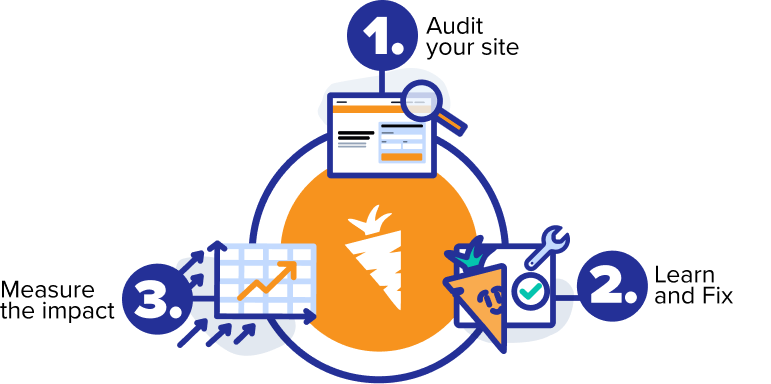
The Audit – Fix – Measure Framework
These tools are really fun to look at, especially as your traffic and rankings rise. But what good are they if you don’t know how to use them together?
The Audit – Fix – Measure Framework can be used at any time during your SEO journey. We recommend running this process every 3 months as standard maintenance. If this is the first time auditing your site in a while, you might have more upfront work, but it will get easier as you do the proper upkeep.
So, what are we trying to do? To put it simply, we are finding some of the technical and content-based errors on your site (Step 1), fixing them (Step 2), and then seeing what the impact was (Step 3).
You might be asking…
“Carrot comes pre-loaded with an amazing technical foundation; why would I need to do this?”
The answer is simple—yes, Carrot sites are SEO optimized right out of the box. But as you create content and build your Authority, your site will inevitably become more complicated, and that’s why errors will arise that need attention.
Here’s an example:
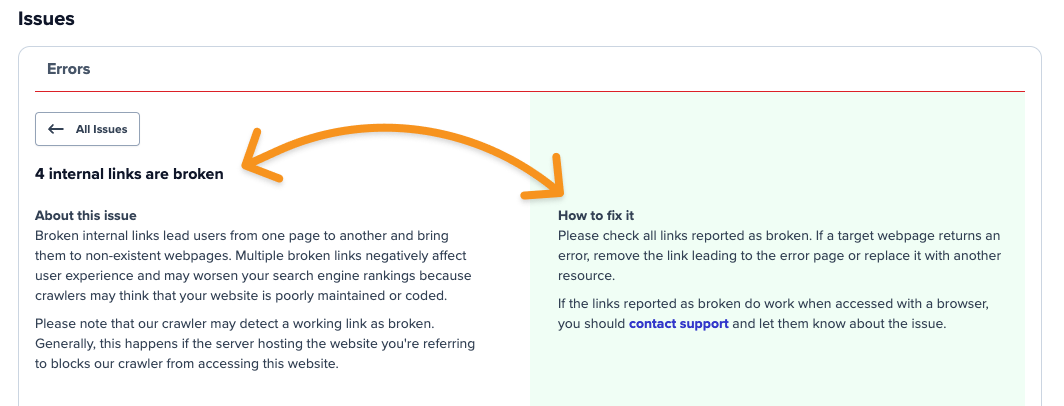
You’ve created 50 new blog posts in the past year and linked to some incredible external Authority sites, but some of those pages are bringing 404 errors (the requested page is not available).
Google looks at this as an error and might ding your rankings. With the Site Audit tool, you can now easily identify these ranking-killer errors so you can be on your way back up SERPS.
There is no need to purchase any external tools… you can now do this directly from your Carrot dashboard.
Here’s your step-by-step guide.
Step 1: Audit your site (like a pro)
Fire up a new Site Audit to understand your website’s health. This tool scans your site and identifies critical errors, warnings, and notices—things like broken links, missing meta descriptions, slow page speeds, and more.
Why this matters: These issues might seem minor, but they can seriously impact your search rankings and user experience. Fixing them gives you a better shot at ranking higher on Google, which means more traffic and more leads!
How to Get Started:
Log into your Carrot account and navigate to the SEO section.
Run a full audit of your site and review the results. Check out our Help Center article for more in-depth details.
Pay special attention to the ‘Errors’ tab—these are the issues that need immediate attention to prevent ranking drops.
👉 Quick Tip: Don’t get overwhelmed by a long list! Start with the most critical errors first and work your way down.
Step 2: Learn and fix
Now that you’ve identified the issues, it’s time to tackle them head-on. We provide step-by-step guidance on how to fix each issue.
Why this matters: We’re not just giving you a list of problems to solve; we’re giving you the exact instructions you need to solve them efficiently. Less guesswork, more action.
How to Get Started:
About the issue: Click on each error, warning, or notice to learn about it and why it’s important.
How to fix it: Follow the guided steps, whether you’re optimizing meta descriptions, fixing broken links, or improving page load speed.
👉 Quick Tip: If you get stuck, click the Contact Support link, and we’ll help you solve the problem and move faster through the list.
Step 3: Measure the impact and stack your W’s
You’ve done the hard work, and now it’s time to see the results! Use the Domain Overview and Search Performance tools to measure the impact of your changes.
Why this matters: Tracking your progress isn’t just satisfying; it’s essential to understanding what’s working and what needs more tweaking. Keep an eye on your Authority Score, backlinks, organic keyword growth, and other performance metrics.
How to Get Started:
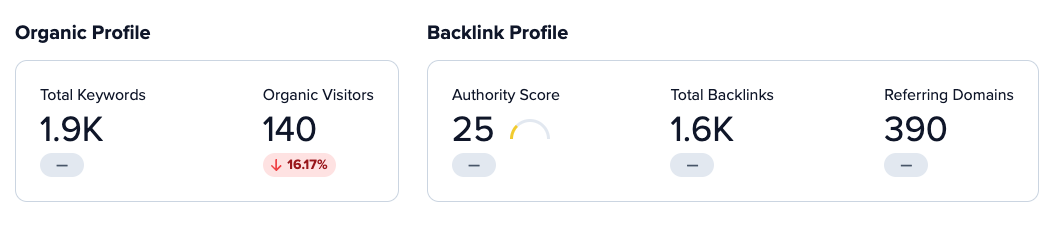
Check your Domain Overview first to monitor your site’s Authority Score and Referring Domains (unique backlinks). Your Authority Score is a great metric to track progress over time.
If you’re building backlinks, ensure a good balance between referring domains and total backlinks. Note: You don’t want way more backlinks than referring domains. Doing so tells Google you’re getting a lot of backlinks from a single domain, which they consider spammy.
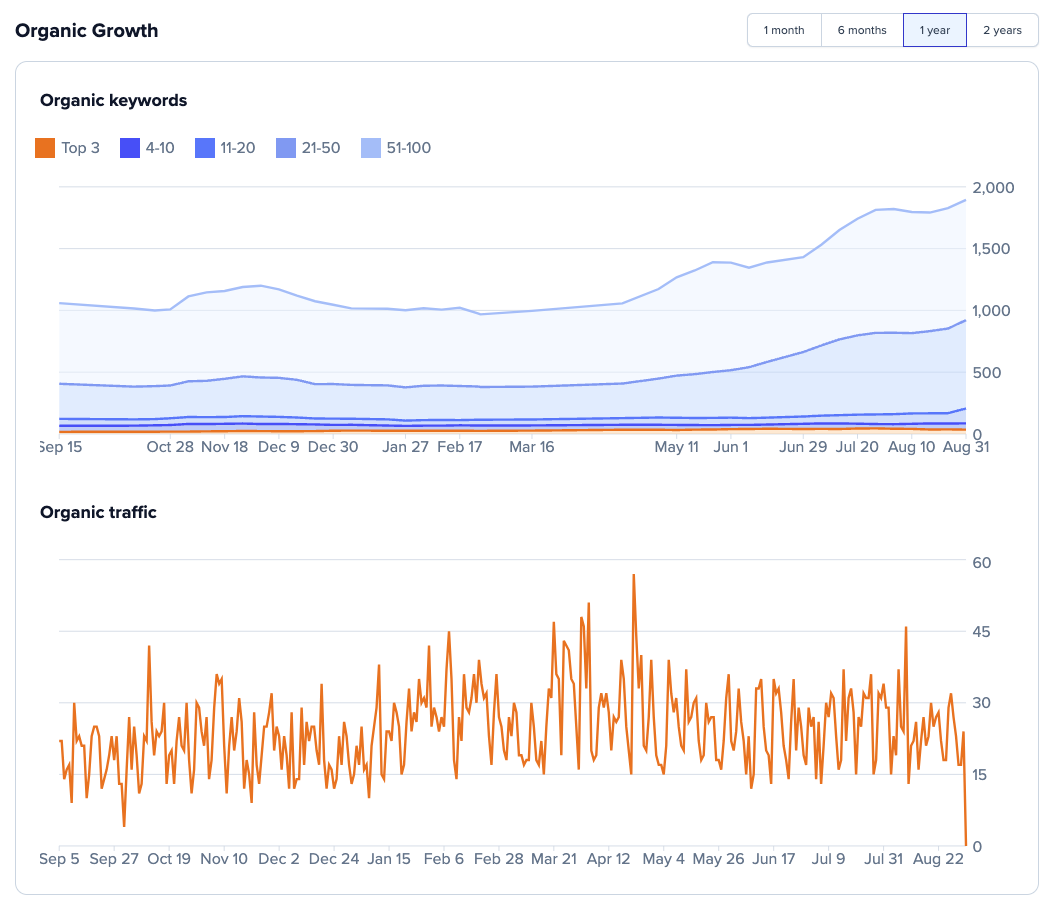
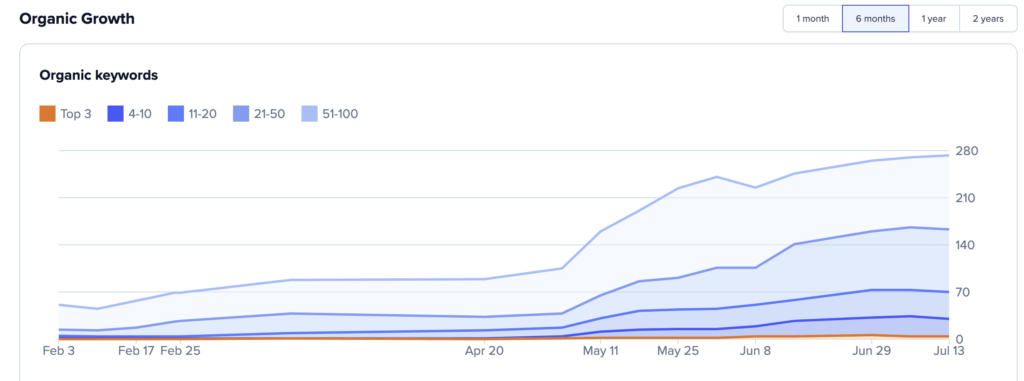
Check the number of keywords that rank for different tiers, their growth over time, and how this correlates with organic traffic changes. As you make improvements to your website (through the Site Audit or other tactics), you should see your organic rankings improve.
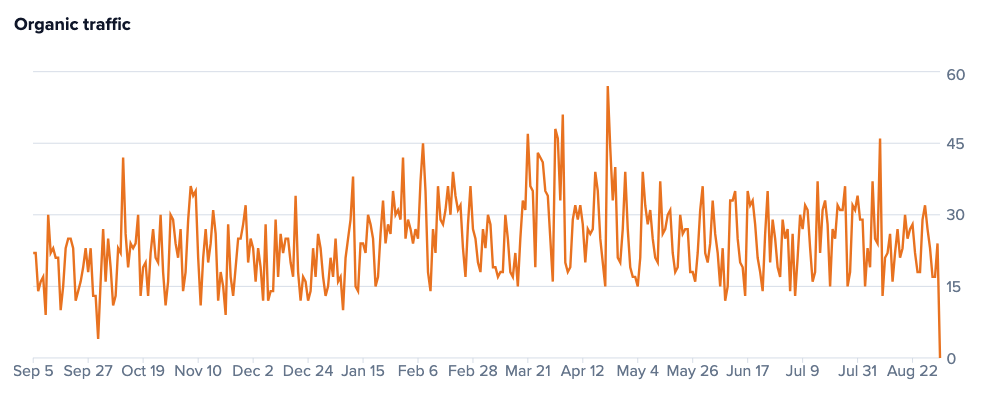
Focus on getting keywords from the 2nd page to within the top 10, and then you’ll see your organic traffic begin to rise (see orange Organic Traffic graph).
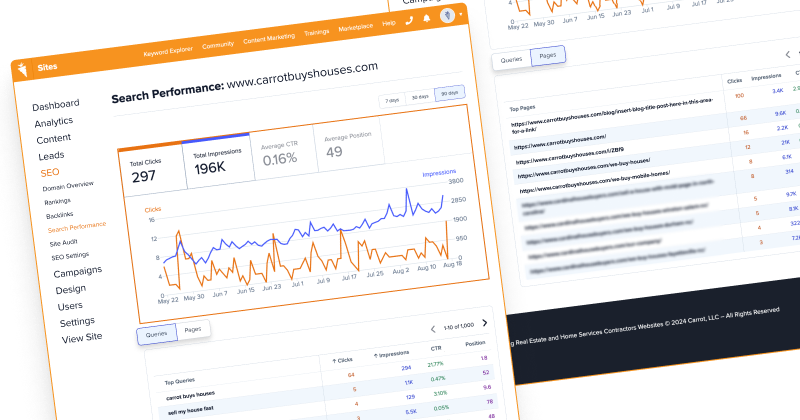
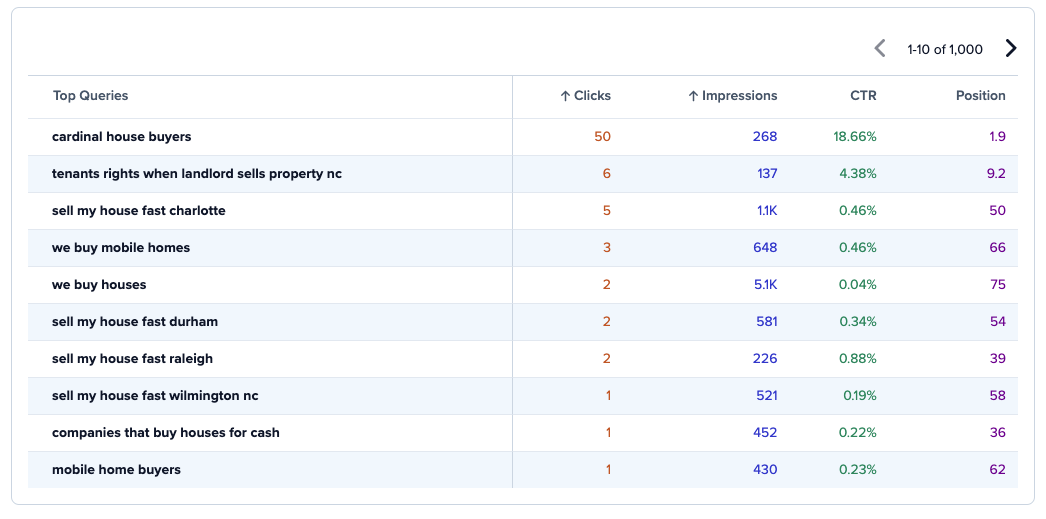
Use Search Performance to track Google-specific metrics like impressions, clicks, and click-through rates (CTR). As you improve your site technically, you should see improvements to many of these metrics.
You’ll also be able to see what your clicks, impressions, CTR, and organic rank position by search queries or pages:
👉 Pro Tip: Set up a monthly check-in to review your Google search performance metrics. Celebrate the small wins (like a bump in CTR or new queries being picked up) and double down on the big ones.
Ready to take your SEO to the next level?
With these new tools, we’ve made optimizing your site, ranking higher, and driving more leads easier than ever. The best part? You don’t need to be an SEO expert to make it happen. Start with a site audit today, fix those errors, and watch your traffic and leads grow.
Why Organic Search Rankings Matter for HVAC Companies
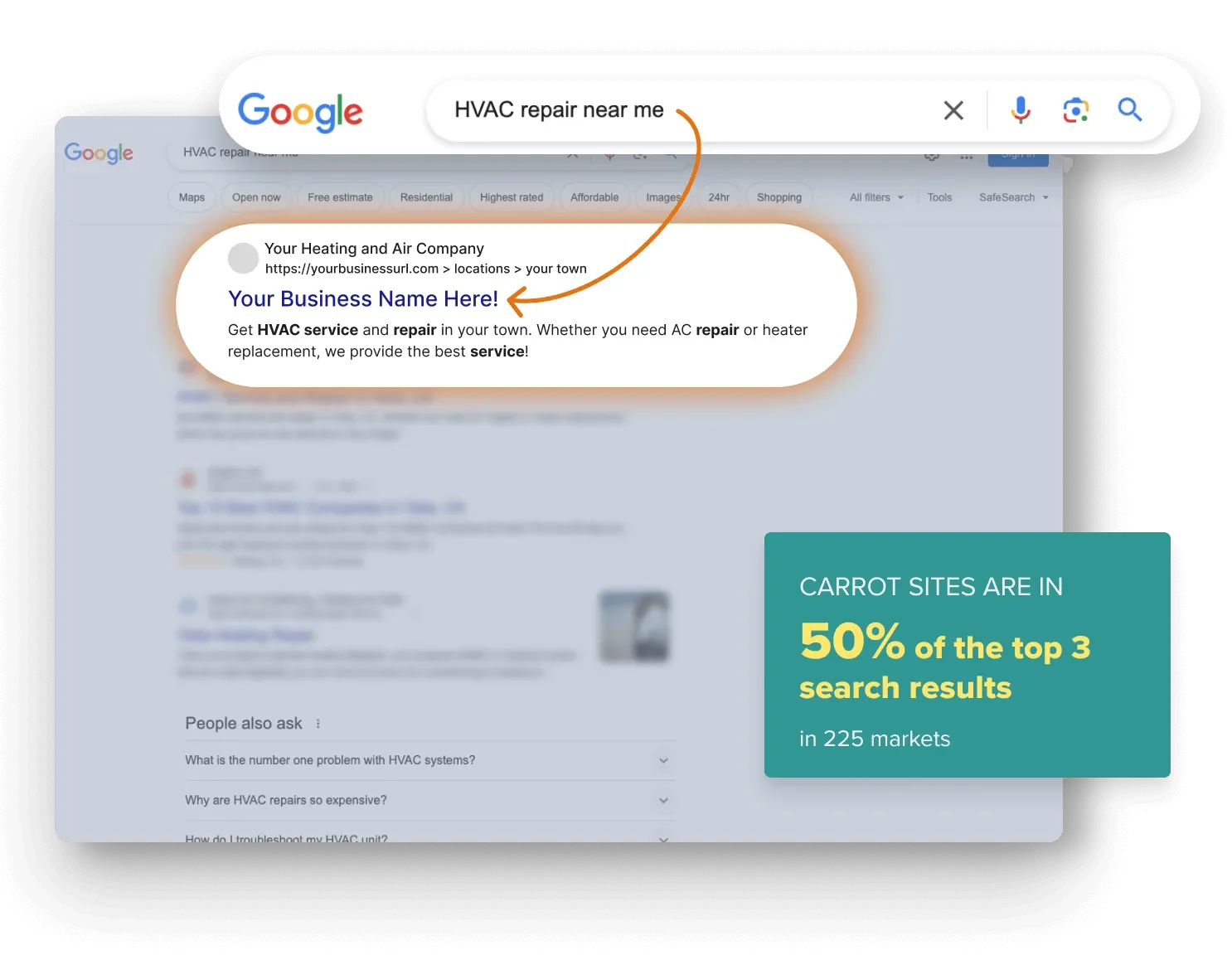
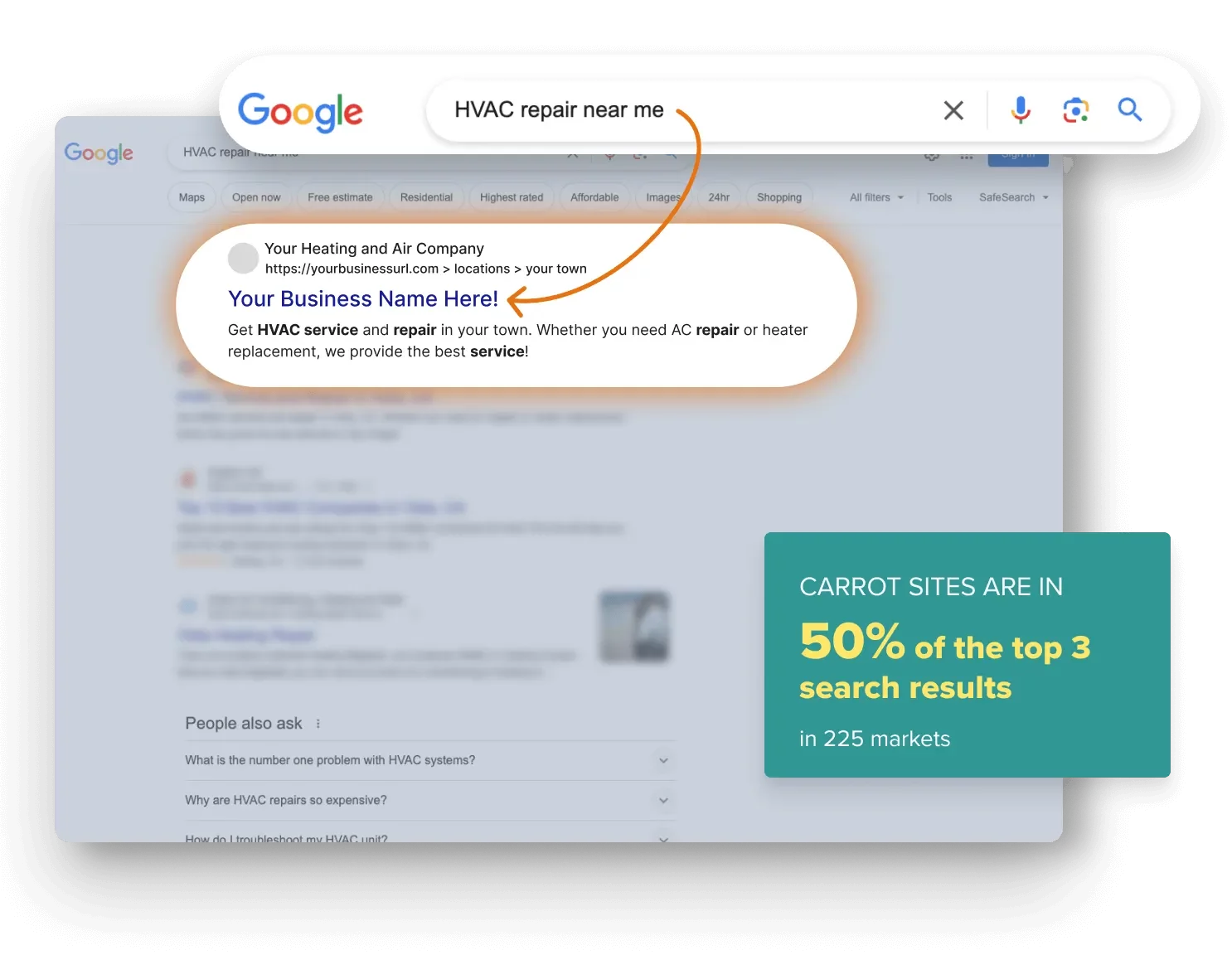
Imagine a homeowner in the middle of a sweltering summer whose air conditioning suddenly fails. What’s their first move? They likely pull out their smartphone and search for “HVAC repair near me.”
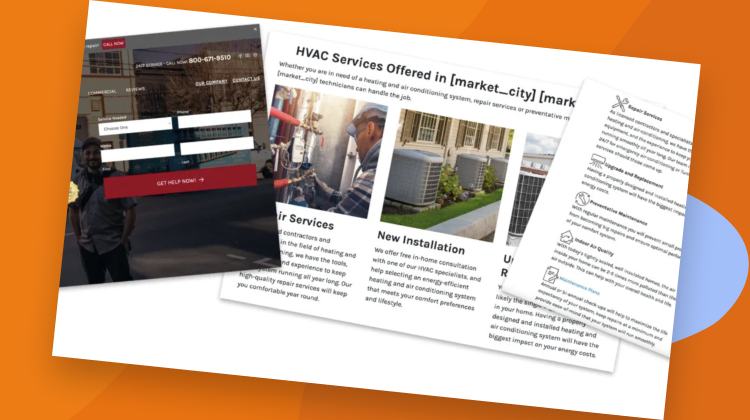
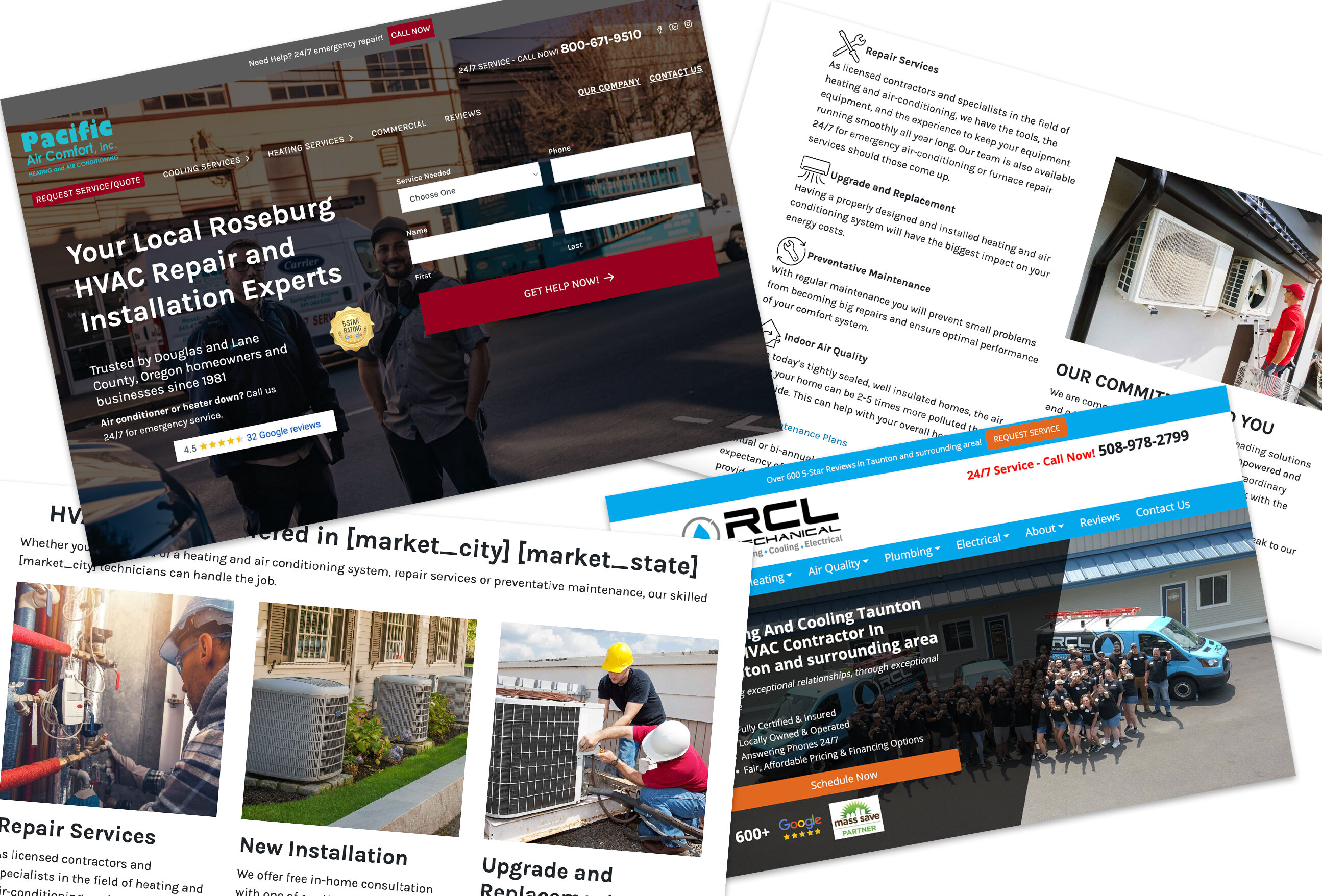
HVAC Websites: Get your HVAC website turning into more leads and clients…
The companies at the top of the search results will most likely get the call. This underscores the critical importance of high organic search rankings for HVAC contractors. If your HVAC business isn’t showing up on the first page of search results, you’re missing out on potential leads and revenue. Organic search rankings are not just about visibility; they are a powerful driver of business growth.
SEO is no longer optional for HVAC companies; it’s a necessity. With thousands of potential customers searching for HVAC services online daily, standing out in the crowded market is crucial. SEO for HVAC ensures your services are prominently displayed when customers search, leading to increased website traffic, leads, and conversion rates. This guide provides actionable strategies for HVAC contractors to enhance their SEO, helping you tap into the vast online marketplace.
In this guide, you’ll learn the ins and outs of SEO tailored specifically for HVAC companies. We will cover everything from keyword research and on-page optimization to technical SEO and link-building strategies. By the end of this post, you’ll have a clear roadmap to improve your website’s organic search rankings.
Whether new to SEO or looking to refine your strategies, this guide will equip you with the tools and knowledge to increase your online visibility and grow your HVAC business.
Does your website check these 9 critical boxes? Use our free HVAC Website Checklist to find out!
SEO, or Search Engine Optimization, is the process of enhancing your website’s visibility on search engines like Google. For HVAC businesses, SEO is essential because it directly impacts how easily potential customers can find you online. By optimizing your HVAC website for search engines, you increase the chances of appearing at the top of search results when users look for HVAC services.
This visibility translates into more traffic, leads, and, ultimately, more business. Effective SEO for HVAC companies means leveraging your digital presence to attract customers who need your services.
Key Components of SEO
To maximize your HVAC company’s online visibility, it’s crucial to understand the three main components of SEO: on-page, off-page, and technical SEO.
On-Page SEO:
Content Quality: High-quality, relevant content is king. Ensure your content addresses common customer queries and incorporates HVAC keywords naturally, such as “HVAC repair” or “AC installation.”
Keyword Optimization: Use tools like Google Keyword Planner to find and integrate keywords your potential customers are searching for.
Meta Tags: Optimize your title tags and meta descriptions to be concise and keyword-rich. For instance, your homepage might have a title tag like “Professional HVAC Services – [Your City] | Expert Repair & Installation.”
Headers and Subheaders: Utilize H1, H2, and H3 tags to organize your content. This not only improves readability but also helps search engines understand the structure of your content.
Off-Page SEO:
Backlinks: Build a network of quality backlinks from reputable websites. This could include local business directories, industry associations, or satisfied customers.
Social Media Presence: Engage with your audience on platforms like Facebook and LinkedIn. While social signals aren’t direct ranking factors, they contribute to your online visibility and brand authority.
Customer Reviews: Encourage satisfied clients to leave positive reviews on platforms like Google My Business and Yelp. Reviews enhance your credibility and influence your rankings in local search results.
Technical SEO:
Page Speed: Ensure your website loads quickly. A slow site can deter visitors and negatively impact your search engine rankings.
Mobile-Friendliness: With more searches conducted on mobile devices, a responsive design is essential. Google prioritizes mobile-friendly websites in its search results.
Secure and Accessible Website: Make sure your site is secure (HTTPS) and easy for search engines to crawl and index. Tools like Google Search Console can help you monitor and resolve any issues.
By focusing on these key SEO components, HVAC contractors can increase their online visibility, attract more qualified leads, and grow their business.
Keyword Research for HVAC Services
Identifying Keywords
Effective keyword research is the backbone of a successful SEO strategy, especially for HVAC services. The right keywords ensure your content reaches the audience most likely to need your services. Here are some tips on identifying the best keywords for your HVAC business:
Start Broad: Begin with general terms related to your services, such as “HVAC repair,” “air conditioning installation,” or “furnace maintenance.”
Consider User Intent: Consider what potential customers are searching for at each journey stage. Are they looking for information or ready to schedule a service?
Incorporate Location: Since HVAC services are localized, include region-specific terms like “HVAC repair in ” or “air conditioning installation in .” This helps target users searching for services in their area.
Tools for Keyword Research
Several powerful tools can help HVAC contractors uncover the most effective keywords to target:
Google Keyword Planner: This free tool is a great starting point for discovering new keywords and seeing their search volume and competition level.
SEMrush: A comprehensive tool that helps with keyword research and provides insights into your competitors’ keywords and strategies.
Ahrefs: Offers a robust keyword explorer that can show you keyword difficulty, related keywords, and potential traffic estimations.
By utilizing these tools, you can refine your list of keywords to focus on those most relevant to your services and likely to drive traffic to your site.
Long-Tail Keywords
Long-tail keywords are longer, more specific keyword phrases that visitors are more likely to use when they’re closer to purchasing or booking a service. Here’s why they’re important for HVAC contractors:
Higher Conversion Rates: Because they are more specific, long-tail keywords often increase conversion rates. For example, “emergency furnace repair in ” targets a specific need, likely leading to a quicker conversion.
Less Competition: Long-tail keywords tend to have less competition, making ranking higher in search results easier.
Better Targeting: These keywords help attract users looking for exactly what you offer, increasing the likelihood of turning visitors into customers.
Incorporating long-tail keywords into your SEO strategy can significantly boost your visibility for specific searches, drawing in more qualified leads ready to engage with your services.
On-Page SEO Strategies for HVAC Websites
Effective on-page SEO is crucial for HVAC websites looking to improve their search engine rankings and attract more organic traffic. Here are some key strategies for optimizing your HVAC website and enhancing its online visibility.
Title Tags and Meta Descriptions
Title tags and meta descriptions are the first elements potential customers see in search engine results, making them vital for driving clicks and engagement.
Crafting Title Tags: Your title tags should be concise and descriptive and include your primary keyword, such as “SEO for HVAC.” Keep them under 60 characters to ensure they are fully displayed in search results. For example, “Expert HVAC Services—Reliable Repair & Installation in .”
Writing Meta Descriptions: Meta descriptions should briefly summarize the page’s content and encourage users to click through. Aim for 150-160 characters, incorporating relevant keywords and a compelling call to action. For instance, “Need reliable HVAC services in ? Our experts offer fast and efficient repairs. Contact us today!”
Content Optimization
High-quality, relevant content is the cornerstone of successful SEO. It helps search engines understand your site’s relevance and engages your audience.
Keyword Integration: Naturally incorporate your primary and secondary keywords throughout the content. For example, if discussing HVAC maintenance, phrases like “cooling services” or “air conditioning repair in ” should be seamlessly included.
Readability: Break up the text with short paragraphs, bullet points, and subheadings. This makes the content easier for visitors to read and digest.
Value-Driven Content: Address common questions and concerns of your audience, providing clear, actionable advice or solutions.
Image Optimization
Images enhance your website’s visual appeal and help convey your work’s quality. Optimizing them for SEO ensures they contribute to your site’s performance.
Alt Tags: Use descriptive alt tags for all images, incorporating relevant keywords. For instance, “HVAC technician installing a new furnace in .”
File Names: Rename image files to be descriptive and keyword-rich, like “hvac-installation-.jpg” instead of “IMG1234.jpg.”
Compression: Compress images to reduce file size and ensure faster load times, which improves user experience and boosts SEO.
Internal Linking
Internal linking helps distribute page authority and assists search engines in understanding your site’s structure. It also enhances user navigation, encouraging visitors to explore more of your site.
Link to Relevant Pages: Within your content, link to other relevant service pages or blog posts. For example, when mentioning AC repair, link to your dedicated air conditioning repair service page.
Use Descriptive Anchor Text: The clickable text of your link should accurately describe the linked page’s content, making it clear to users and search engines what they can expect.
By implementing these on-page SEO strategies, HVAC contractors can improve their website’s search engine rankings, increase their visibility, and attract more potential customers.
Improve Your HVAC Website Results
3.3 million leads and counting: now for HVAC companies! Our track record speaks for itself. Get ahead with exclusive early access!
Local SEO is a critical component of any HVAC contractor’s digital strategy. It ensures your business is visible to potential customers in your geographic area. Leveraging tools like Google Business Profile and maintaining consistent local citations can significantly boost your online presence. Here’s how to optimize your local SEO for HVAC services.
Claiming and Optimizing Google Business Profile
Google Business Profile is a free tool to manage your business’s appearance on Google Search and Maps. Here’s a step-by-step guide to setting up and optimizing your GBP listing:
Claim Your Listing: Visit the Google Business Profile website and sign in with your Google account. Search for your business and claim it if it already exists. If not, create a new listing.
Provide Accurate Information: Fill out all relevant business details, including your business name, address, phone number, and website URL.
Choose Relevant Categories: Select the most appropriate categories for your business. For HVAC contractors, options might include “HVAC contractor,” “Air conditioning repair service,” or “Furnace repair service.”
Add High-Quality Photos: Upload images of your team, equipment, and completed projects. High-quality photos make your listing more appealing and trustworthy.
Encourage Customer Reviews: Ask satisfied customers to leave reviews on your GMB listing. Positive reviews improve your local search ranking and build trust with potential customers.
Regularly Update Your Listing: Update your business hours, services, and contact information. Post updates about new services, promotions, or company news.
Local Citations and Reviews
Local citations mention your business’s name, address, and phone number on other websites and directories. They play a crucial role in local SEO.
Ensure Accurate Listings: Consistent and accurate listings on local directories (like Yelp, Yellow Pages, and local chamber of commerce websites) help improve your local search rankings.
Monitor and Respond to Reviews: Monitor reviews on platforms like Google, Yelp, and Facebook. Responding to positive and negative reviews shows you value customer feedback and are committed to excellent service.
Encourage Positive Reviews: Implement strategies to encourage customer reviews, such as follow-up emails after service or incentives for leaving feedback.
NAP Consistency
NAP stands for Name, Address, and Phone number. Consistency in your NAP information across all platforms is vital for local SEO.
Audit Your Listings: Regularly check your business listings on various online directories to ensure your NAP information is consistent.
Update Incorrect Information: Correct any discrepancies in your business name, address, or phone number immediately to maintain consistency.
Use a Standard Format: Adopt a standard format for your NAP information and use it across all listings and citations.
By focusing on local SEO and effectively utilizing Google My Business, HVAC contractors can enhance their visibility in local searches, attract more qualified leads, and build a strong reputation in their community.
Technical SEO for HVAC Websites
Technical SEO is the foundation that supports all other aspects of search engine optimization. Ensuring your HVAC website is technically sound will enhance user experience and improve search engine rankings. Here’s how to optimize your HVAC website from a technical standpoint.
Website Speed and Mobile-Friendliness
In today’s fast-paced digital world, users expect websites to load quickly and display correctly on all devices. Here’s why website speed and mobile-friendliness are crucial:
Importance of Page Speed: A slow-loading website can frustrate users and increase bounce rates, negatively affecting your SEO. Use tools like Google PageSpeed Insights to assess and improve your website’s load time.
Optimization Tips: Compress images, minimize CSS and JavaScript files, and leverage browser caching to enhance your site’s speed.
Mobile Responsiveness: With most searches now conducted on mobile devices, having a mobile-responsive website is essential. Google favors mobile-friendly sites in search rankings.
Responsive Design: Ensure your website adapts seamlessly to different screen sizes and devices. Test your site’s mobile responsiveness using Google’s Mobile-Friendly Test tool.
Structured Data and Schema Markup
Structured data helps search engines understand your website’s content better, which can enhance how your listings appear in search results.
Schema Markup for HVAC Services: Implementing schema markup specific to HVAC services can provide search engines with detailed information about your services, location, and customer reviews.
How to Implement: Use schema markup for local businesses, service offerings, and customer reviews to enhance search result snippets. Tools like Google’s Structured Data Markup Helper can assist in this process.
Benefits: Proper schema markup can lead to rich snippets, which provide more information to users at a glance and can improve click-through rates.
Site Architecture
A well-structured site architecture is crucial for both user experience and SEO. It helps search engines crawl and index your site more efficiently.
Intuitive Navigation: Design your site with a clear and intuitive navigation structure. Users should be able to find what they’re looking for within a few clicks.
Navigation Tips: Organize your pages into logical categories and use descriptive labels for menu items. Implement a breadcrumb trail to help users understand their location within your site.
Crawlable Structure: Ensure your site is easily crawlable by search engine bots. A clean and straightforward URL structure and an updated XML sitemap can aid in this process.
XML Sitemaps: Create and submit an XML sitemap to search engines to help them discover your pages. Regularly update the sitemap to reflect any changes in your site’s structure.
By focusing on these technical SEO aspects, HVAC contractors can provide a seamless user experience and ensure their websites are well-positioned in search engine rankings.
Link Building Strategies for HVAC Companies
Link building is a crucial aspect of SEO, significantly influencing your website’s authority and search engine rankings. By securing quality backlinks, HVAC companies can improve their visibility and credibility online. Here’s how to build a robust link profile for your HVAC business.
Importance of Backlinks
Backlinks, or inbound links, are links from other websites that direct users to your site. They are a key factor in how search engines determine the authority and relevance of your site.
Impact on SEO:High-quality backlinks from reputable sites signal to search engines that your content is valuable and trustworthy, which can boost your rankings. Conversely, low-quality or spammy backlinks can harm your SEO efforts.
Quality Over Quantity: Focus on earning backlinks from high-authority domains within your industry. A few high-quality links are more beneficial than numerous low-quality ones.
Local Partnerships and Directories
Leveraging local business partnerships and online directories can provide valuable backlinks and enhance your local SEO.
Local Business Partnerships: Collaborate with local businesses and industry partners to exchange backlinks. For example, you could write a guest post for a local hardware store’s blog, including a link back to your site.
Online Directories: Ensure your HVAC business is listed on reputable online directories such as Yelp, Angie’s List, and the Better Business Bureau. These listings often include a link back to your site and can improve your local search visibility.
Community Involvement: Participate in local events and sponsorships, and ensure these activities are mentioned on their respective websites with a link back to your business.
Guest Blogging
Guest blogging is an effective way to build backlinks while positioning yourself as an industry expert.
Identify Opportunities: Look for industry-related websites, blogs, or online publications that accept guest contributions. Sites focused on home improvement, energy efficiency, or local business news are great places to start.
Create Valuable Content: Write informative and engaging articles that provide real value to the readers. Incorporate your expertise and include a relevant link back to your HVAC website.
Maintain Relationships: Build relationships with the site owners or editors. A good rapport can lead to more guest blogging opportunities and additional backlinks in the future.
By implementing these link-building strategies, HVAC contractors can enhance their online authority, improve their search engine rankings, and attract more customers.
Conclusion
Optimizing your HVAC business for search engines is essential to running a successful HVAC SEO campaign, increasing your online visibility, and attracting more qualified leads. Throughout this guide, we’ve covered the key aspects of SEO for HVAC businesses.
Understanding SEO Basics: Recognizing the key components of on-page, off-page, and technical SEO and their importance in improving your HVAC website’s performance.
Keyword Research: Using tools and strategies to identify relevant and high-converting keywords that resonate with your target audience, including long-tail and localized terms.
On-Page SEO Strategies: Crafting compelling title tags, optimizing content and images, and creating a robust internal linking structure.
Local SEO for HVAC and Google My Business: Enhancing your local search presence by optimizing your GMB listing, maintaining NAP consistency, and leveraging local citations and reviews.
Technical SEO: Ensuring a fast, mobile-responsive website with a clear site structure and proper schema markup.
Link Building Strategies: Building a strong backlink profile through local partnerships, directory listings, and guest blogging opportunities.
Implementing these strategies can significantly improve your HVAC business’s online presence, driving more organic traffic and potential customers to your site. Start applying these techniques today, or seek professional SEO assistance to maximize your results.
Further Resources
For more information on SEO strategies and services tailored to HVAC contractors, visit Carrot.com. Our team specializes in helping HVAC businesses thrive online through proven SEO practices and cutting-edge digital marketing solutions.
In the highly competitive HVAC industry, having a solid online presence is crucial for attracting and converting potential customers. SEO Keywords for HVAC are the cornerstone of an effective digital marketing strategy, allowing HVAC companies to reach the right audience at the right time.
With the right keywords, you can significantly improve your search engine rankings, drive more traffic to your website, and ultimately increase your conversion rates.
HVAC Websites: Get your HVAC website turning into more leads and clients…
This blog post is designed to help HVAC companies understand the importance of using specific keywords tailored to various customer journey stages. By strategically incorporating these keywords, you can ensure that your content resonates with potential customers, providing the information they need and guiding them toward choosing your services.
We will give you the best 100 HVAC keywords and categorize them based on the stages of the customer journey:
Awareness
Consideration
Decision
You’ll learn which keywords to use when customers first identify their needs, compare options, and finally make a decision. Additionally, we’ll cover the significance of long-tail keywords and offer tips for effective keyword implementation to optimize your HVAC business’s online presence.
Table of Contents
Understanding the Customer Journey – Defining the Customer Journey: Awareness, Consideration, Decision, and the Importance of Tailored Keywords at Each Stage
Awareness Stage Keywords – Identifying Needs and Looking for General Information. Includes20 Awareness HVAC Keywords
Define the Customer Journey: The customer journey is the process that potential customers go through from the moment they realize they need the point where they make a purchase. This journey is typically divided into three key stages: Awareness, Consideration, and Decision.
Awareness Stage: At this initial stage, potential customers recognize a need or problem but are unaware of specific solutions. For HVAC services, this could mean a homeowner noticing their air conditioner isn’t cooling as effectively as it used to or an office manager realizing the heating system isn’t keeping the space warm enough.
Consideration Stage: Here, the customer has clearly defined their problem or need and is actively researching and evaluating different options. In the context of HVAC services, this might involve looking into various types of HVAC systems, reading reviews, comparing service providers, and seeking information on costs and benefits.
Decision Stage: At the final stage, the customer is ready to make a purchase or hire a service. They have narrowed down their options and are deciding which HVAC company to choose or which specific system or service to invest in.
Importance of Tailored Keywords:
Different keywords are essential at each customer journey stage to effectively guide potential customers toward your services. Here’s why:
Awareness Stage Keywords: Customers seek general information and solutions to their problems during this stage. Keywords should focus on educating and informing, addressing common issues and questions. For example, keywords like “why is my AC not working” or “benefits of HVAC systems” help capture the attention of those just beginning their search.
Consideration Stage Keywords: At this point, customers are comparing different solutions and providers. Keywords should be more specific and include detailed information about services, features, and comparisons. Keywords such as “best HVAC systems 2024,” “AC repair services,” and “HVAC installation cost” are crucial for attracting customers who are evaluating their options.
Decision Stage Keywords: Customers are ready to take action, so keywords should be transactional and geared toward conversion. Keywords like “book HVAC service online,” “emergency HVAC repair near me,” and “same-day HVAC installation” are designed to capture customers who are ready to make a purchase or schedule a service.
By tailoring your keywords to each stage of the customer journey, you can ensure that your content meets the needs of potential customers at every point in their decision-making process. This strategic approach enhances your SEO efforts and increases the likelihood of converting visitors into loyal customers.
Awareness Stage Keywords
In the Awareness Stage, potential customers are just beginning to identify their needs and are seeking general information to understand and define their problems. They might not yet know the specifics of what they need, but they are starting to look for answers to basic questions and general advice. This is where your content can significantly impact by providing valuable information and establishing your HVAC company as a trusted resource.
Keyword Categories:
Informational Keywords: These keywords target users looking for general knowledge and educational content about HVAC systems. They aim to answer broad questions and provide foundational information.
“HVAC basics”: Content focusing on the fundamental aspects of HVAC systems, explaining what they are, how they work, and their components.
“What is HVAC?”: Articles and resources that define HVAC, breaking down the acronym and explaining the purpose and function of these systems.
“Benefits of HVAC systems”: Posts that highlight the advantages of having a well-functioning HVAC system, such as improved indoor air quality, energy efficiency, and comfort.
Problem Identification Keywords: These keywords help users diagnose issues they are experiencing with their HVAC systems. By addressing common problems and symptoms, your content can help them understand their needs.
“Why is my AC not working?”: Guides and troubleshooting tips that help users identify potential reasons for their air conditioning issues.
“Signs your furnace needs repair”: Articles outlining the common signs that indicate a furnace might require professional attention, such as unusual noises, inconsistent heating, or increased energy bills.
“Common HVAC problems”: Comprehensive lists and explanations of typical HVAC issues that homeowners and businesses might encounter, helping them to recognize when it’s time to seek professional help.
Local Informational Keywords: These keywords are geared toward users looking for information about HVAC services in their specific area. They help you attract local customers who are searching for nearby solutions.
“HVAC services near me”: Content that highlights your company’s proximity and availability, making it easy for local customers to find and contact you.
“Best HVAC company in ”: Posts that position your business as a top choice in the local market, including customer reviews, awards, and testimonials to build credibility.
“Local HVAC experts”: Articles and pages that emphasize your expertise and experience in providing HVAC services to the local community, showcasing your knowledge of regional climate and common issues.
By strategically incorporating these awareness stage HVAC keywords into your content, you can attract potential customers who are just starting their search. Providing them with the information they need at this early stage builds trust and positions your HVAC company as the go-to source for reliable and helpful advice. This approach sets the foundation for guiding them through the subsequent stages of their customer journey.
Awareness Stage HVAC Keywords
HVAC basics
What is HVAC?
Benefits of HVAC systems
Why is my AC not working?
Signs your furnace needs repair
Common HVAC problems
HVAC services near me
Best HVAC company in
Local HVAC experts
How HVAC systems work
Types of HVAC systems
HVAC maintenance tips
Importance of regular HVAC servicing
Energy-efficient HVAC systems
HVAC system installation guide
HVAC troubleshooting tips
How to choose an HVAC system
HVAC system lifespan
HVAC safety tips
Benefits of HVAC zoning
Improve Your HVAC Website Results
3.3 million leads and counting: now for HVAC companies! Our track record speaks for itself. Get ahead with exclusive early access!
In the Consideration Stage, potential customers have clearly identified their needs or problems and are now actively researching and comparing various HVAC solutions. They seek more detailed information about specific services, products, and providers. This is the stage where your content can help them make informed decisions by offering comprehensive insights and comparisons.
Keyword Categories:
Service-Specific Keywords: These keywords are focused on the specific HVAC services that customers might be considering. They help potential clients find detailed information about your company’s services.
“AC repair services”: Content that explains the process, benefits, and typical issues addressed by professional AC repair services, highlighting your expertise and customer satisfaction.
“Furnace installation cost”: Articles that break down the costs associated with furnace installation, including factors that affect pricing and the benefits of professional installation.
“Duct cleaning services”: Informative posts detailing the importance of duct cleaning, the process involved, and how it contributes to improved indoor air quality and system efficiency.
Comparative Keywords: These keywords cater to customers who are comparing different HVAC systems, brands, or types of services. They provide side-by-side evaluations to help customers choose the best option for their needs.
“Best HVAC systems 2024”: Guides and reviews of the top HVAC systems available in the current year, comparing features, efficiency, and customer feedback to help customers make an informed decision.
“Top-rated HVAC companies”: Articles that list and compare the highest-rated HVAC companies based on customer reviews, industry awards, and service quality.
“HVAC vs. central air”: Comparative posts that outline the differences, pros, and cons of HVAC systems versus central air conditioning, helping customers decide which is better suited for their needs.
Cost and Pricing Keywords: At this stage, customers are also keenly interested in understanding the financial aspects of their potential investment. Keywords focused on cost and pricing help them budget and plan accordingly.
“HVAC service cost”: Comprehensive guides that provide average costs for various HVAC services, explaining what factors influence pricing and offering tips on getting the best value for money.
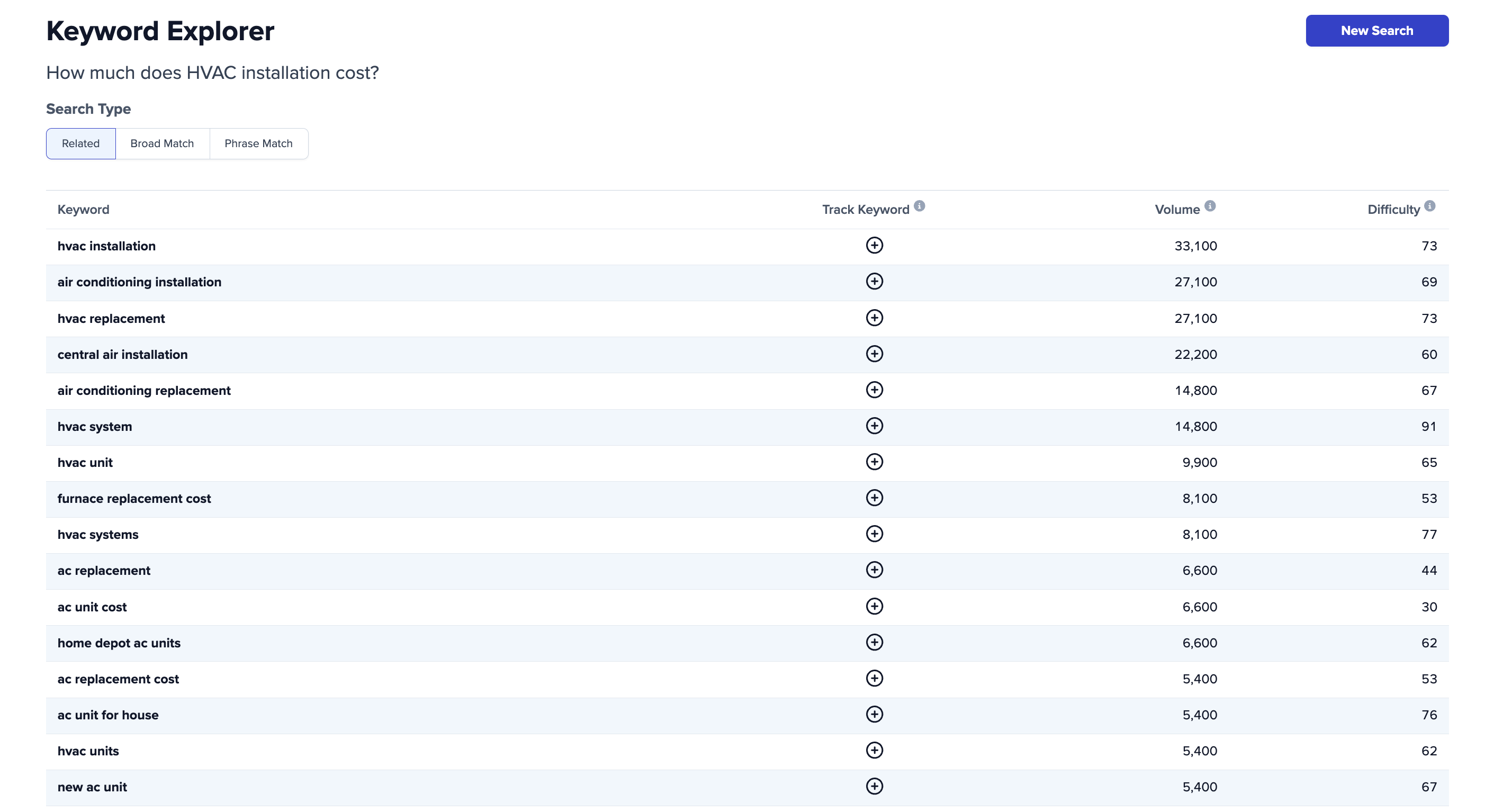
“How much does HVAC installation cost?”: Detailed breakdowns of installation costs for different types of HVAC systems, including labor, equipment, and any additional fees.
“Affordable HVAC services”: Posts that highlight budget-friendly HVAC service options, including promotions, financing plans, and tips for saving money without compromising on quality.
By integrating these consideration stage HVAC keywords into your content, you can effectively capture the interest of potential customers who are comparing their options and seeking detailed information. This approach enhances your visibility in search results and positions your HVAC company as a trusted source of valuable and comprehensive information, ultimately guiding customers closer to making a decision in your favor.
Consideration Stage HVAC Keywords
AC repair services
Furnace installation cost
Duct cleaning services
Best HVAC systems 2024
Top-rated HVAC companies
HVAC vs. central air
HVAC service cost
How much does HVAC installation cost?
Affordable HVAC services
Air conditioner maintenance
Furnace replacement options
Central air conditioning systems
HVAC financing options
HVAC brands comparison
HVAC reviews and ratings
HVAC system efficiency
Benefits of professional HVAC installation
HVAC system warranties
Smart thermostats for HVAC systems
HVAC filter replacement
Commercial HVAC services
Residential HVAC systems
Geothermal HVAC systems
Heat pump installation
AC unit replacement
Energy-efficient air conditioners
HVAC system upgrades
HVAC maintenance contracts
Best HVAC contractors
HVAC rebates and incentives
Decision Stage Keywords
In the Decision Stage, potential customers are ready to make a purchase or schedule a service. They have done their research, compared options, and now need specific information to finalize their choice. This stage is crucial for converting leads into actual clients, and using the right keywords can make all the difference. Transactional and brand-specific keywords play a significant role in ensuring your business is easily found and chosen by these ready-to-act customers.
Keyword Categories:
Transactional Keywords: These keywords target users who are ready to take action. They focus on facilitating quick and easy access to services, driving immediate engagement and conversions.
“Book HVAC service online”: Content that provides a simple and streamlined process for booking services directly through your website, highlighting the convenience and efficiency of online scheduling.
“HVAC repair near me”: Pages optimized for local searches, ensuring that your business appears prominently when customers search for nearby HVAC repair services, emphasizing your proximity and quick response times.
“Schedule AC installation”: Clear calls to action and detailed information on how to schedule AC installation services, showcasing the benefits of professional installation and the ease of booking with your company.
Brand-Specific Keywords: These keywords target customers who prefer certain HVAC brands or are looking for services related to specific brands. Highlighting your expertise with these brands can be a significant selling point.
“Trane HVAC systems”: Articles and landing pages that emphasize your experience and qualifications in installing, repairing, and maintaining Trane HVAC systems, along with customer testimonials and case studies.
“Carrier AC installation”: Content that showcases your proficiency with Carrier air conditioning systems, including the advantages of choosing Carrier and the benefits of your professional installation services.
“Lennox furnace repair”: Pages that detail your expertise in repairing Lennox furnaces, including common issues, repair processes, and customer satisfaction stories to build trust and confidence.
Local Transactional Keywords: These keywords focus on immediate, local services, targeting customers who need urgent or same-day assistance. They highlight your availability and readiness to meet customer needs quickly.
“24/7 HVAC repair ”: Content that promotes your round-the-clock availability for HVAC repairs, emphasizing your ability to respond to emergencies at any time, day or night.
“Emergency HVAC services ”: Pages dedicated to emergency services, detailing your rapid response times, the urgency of your services, and how to contact you in an emergency situation.
“Same-day HVAC installation”: Posts and landing pages that highlight your ability to provide same-day installation services, focusing on the convenience and efficiency of getting a new HVAC system installed quickly.
By strategically incorporating these decision stage HVAC keywords into your content, you can effectively capture the attention of customers who are ready to commit. This approach enhances your visibility in search results and ensures that potential clients find exactly what they need at the critical moment of decision-making. This, in turn, boosts your conversion rates and helps establish your HVAC company as the go-to choice for reliable and prompt services.
Decision Stage HVAC Keywords
Book HVAC service online
HVAC repair near me
Schedule AC installation
Trane HVAC systems
Carrier AC installation
Lennox furnace repair
24/7 HVAC repair
Emergency HVAC services
Same-day HVAC installation
HVAC tune-up
HVAC inspection services
Install HVAC system
Replace HVAC unit
HVAC duct repair
HVAC installation near me
AC tune-up services
Furnace repair services
HVAC cleaning service
HVAC repair cost
Emergency AC repair
Air conditioning installation cost
Furnace installation near me
HVAC maintenance near me
HVAC contractors near me
Best HVAC repair
Long-Tail HVAC Keywords for SEO
Long-tail keywords are highly specific, multi-word phrases that cater to niche audiences and detailed queries. While they typically have lower search volumes compared to broader keywords, they offer significant value in capturing precise user intent and improving conversion rates.
Long-tail keywords often reflect the detailed, specific questions or needs of potential customers, making them more likely to convert when they find exactly what they are looking for. By targeting these keywords, HVAC companies can attract highly motivated prospects and provide tailored content that addresses their specific needs.
Examples of Long-Tail Keywords:
“How to choose the best HVAC system for a small apartment”
Content Focus: Create detailed guides and articles that help apartment dwellers choose the most suitable HVAC system for their limited space. Discuss factors such as space efficiency, noise levels, energy consumption, and ease of installation. Include comparisons of different types of HVAC systems (e.g., ductless mini-splits, portable AC units) and provide recommendations based on apartment size and layout.
Why It Works: This keyword targets a specific audience with a particular need, leading to higher engagement and conversion rates. By addressing the unique concerns of apartment residents, you can position your company as a knowledgeable and reliable source for HVAC solutions in small living spaces.
“DIY HVAC maintenance tips”
Content Focus: Offer step-by-step guides, checklists, and video tutorials on performing basic HVAC maintenance tasks. Topics can include cleaning filters, checking thermostat settings, inspecting ductwork for leaks, and ensuring proper ventilation. Highlight the importance of regular maintenance in extending the lifespan of HVAC systems and improving energy efficiency.
Why It Works: This keyword appeals to cost-conscious customers and DIY enthusiasts who prefer to handle minor maintenance tasks themselves. Providing useful, actionable advice builds trust and positions your company as a helpful resource, increasing the likelihood that these customers will turn to you for more complex repairs or services.
“Energy-efficient HVAC systems for commercial buildings”
Content Focus: Develop comprehensive articles and case studies on the latest energy-efficient HVAC technologies for commercial properties. Discuss the benefits of energy-efficient systems, such as reduced operating costs, improved environmental impact, and potential tax incentives. Include comparisons of different energy-efficient models, as well as tips for retrofitting existing systems to enhance efficiency.
Why It Works: This keyword targets a professional audience concerned with operational costs and sustainability. By providing in-depth information on energy-efficient solutions, you can attract business owners and property managers who are looking to upgrade their HVAC systems. Demonstrating expertise in commercial HVAC solutions helps establish your company as a trusted partner for large-scale projects.
By incorporating these long-tail keywords into your content strategy, you can attract highly specific and motivated audiences. This approach improves your search engine rankings for niche queries and enhances your conversion rates by addressing potential customers’ precise needs and concerns. Providing detailed, valuable content tailored to these specific queries helps establish your HVAC company as a knowledgeable and reliable authority in the industry.
Additional HVAC Keywords
How to size an HVAC system
Best HVAC system for new construction
HVAC maintenance frequency
Benefits of programmable thermostats
HVAC system performance
How to clean HVAC coils
HVAC installation process
HVAC system replacement timeline
How to prevent HVAC breakdowns
Best HVAC system for large homes
HVAC system energy ratings
HVAC safety inspections
Benefits of regular HVAC inspections
How to choose an HVAC contractor
HVAC installation best practices
HVAC system repair tips
HVAC energy audit
HVAC system upgrade benefits
How to choose the right HVAC filter
HVAC system troubleshooting tips
How to improve indoor air quality with HVAC
HVAC system efficiency tips
Common HVAC installation mistakes
HVAC installation cost factors
HVAC repair service reviews
Improve Your HVAC Website Results
3.3 million leads and counting: now for HVAC companies! Our track record speaks for itself. Get ahead with exclusive early access!
Implementing SEO keywords effectively can significantly enhance your HVAC company’s online presence and search engine rankings. Here are some key strategies for content optimization, local SEO best practices, and useful keyword research tools.
Content Optimization:
To naturally incorporate keywords into your content, follow these best practices:
Write for Humans First, Search Engines Second: While it’s essential to include keywords, your primary goal should be creating high-quality, engaging content that provides value to your readers. Natural, readable content will also perform better in search engine rankings.
Use Keywords in Key Places: Ensure your primary keywords are included in strategic locations:
Title Tags: Incorporate the main keyword naturally into the title.
Meta Descriptions: Write a compelling meta description that includes the keyword and encourages clicks.
Headings and Subheadings: Use keywords in H1, H2, and H3 tags to structure your content.
Introduction and Conclusion: Mention the keyword early in your content and in the concluding section.
Body Content: Spread keywords naturally throughout the text, aiming for a keyword density of around 1-2%.
Use Synonyms and Related Phrases: To avoid keyword stuffing and enhance readability, use synonyms and related terms. This approach also helps your content rank for a broader range of related searches.
Create Comprehensive Content: Long-form content that covers a topic in-depth tends to rank better. Aim to provide thorough, valuable information that answers common questions and addresses the needs of your audience.
Local SEO Best Practices:
Local SEO is crucial for HVAC companies, as most customers search for nearby services. Here are some tips to optimize for local search:
Claim and Optimize Your Google My Business (GMB) Listing: Ensure your GMB listing contains accurate business information, including address, phone number, and operating hours. Add high-quality photos and encourage satisfied customers to leave reviews.
Use Local Keywords: Incorporate local keywords into your content, such as “HVAC repair in ” or “Best HVAC service in [Neighborhood].” This helps your business appear in local search results and Google’s local pack.
Create Location-Specific Pages: If your business serves multiple locations, create separate landing pages for each area. Customize the content to highlight services relevant to each location and include local keywords.
Get Listed in Local Directories: Ensure your business is listed in local online directories such as Yelp, Angie’s List, and the Better Business Bureau. Consistent listings across various platforms can boost your local SEO efforts.
Keyword Tools:
Effective keyword research is the foundation of a successful SEO strategy. Here are some recommended tools to help you find the best keywords for your HVAC business:
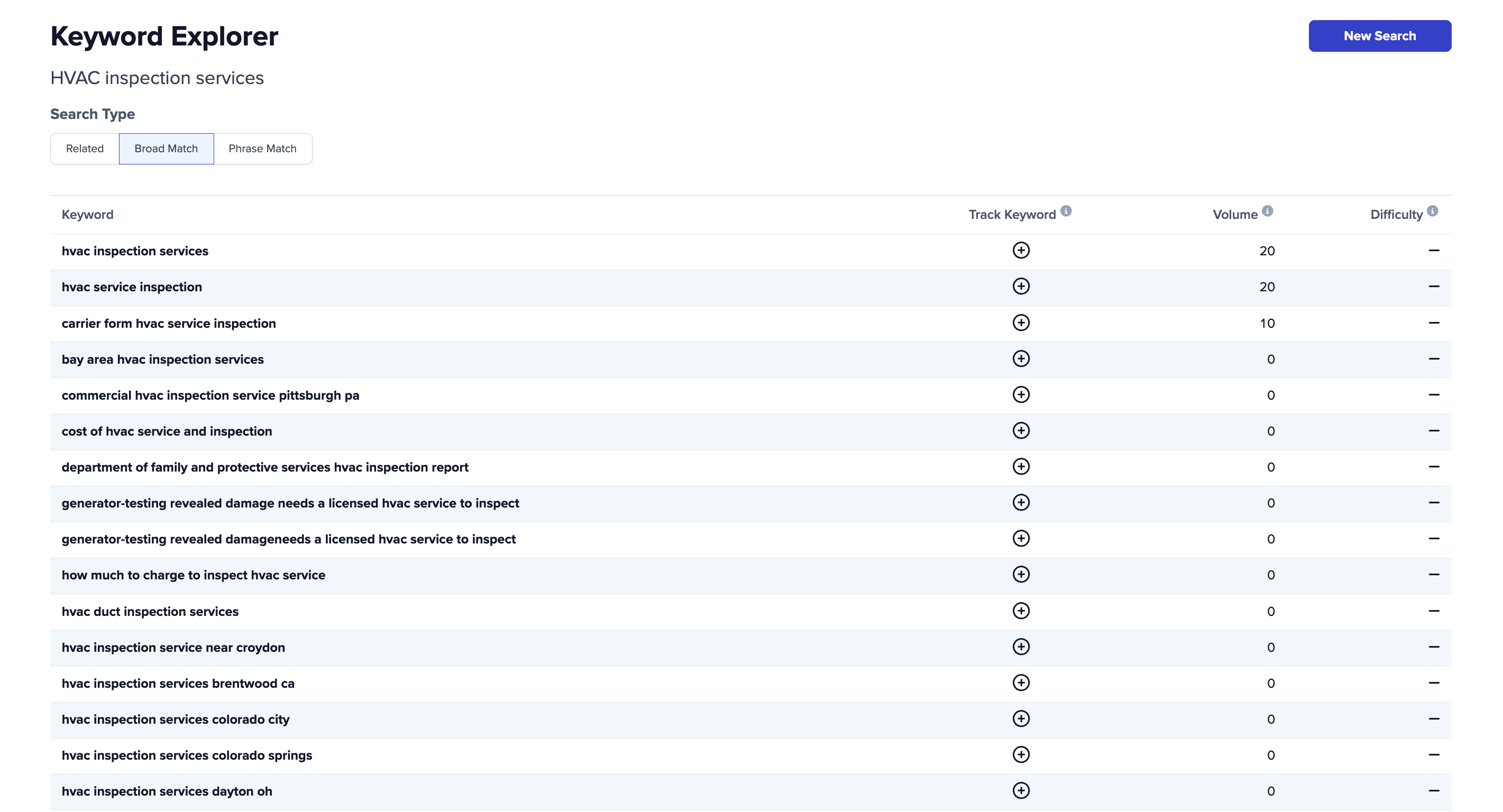
Carrot’s Keyword Explorer: This powerful tools helps you analyze your website & the competition’s website to find the right next keyword to target in your SEO strategy.
Google Keyword Planner: A free tool that provides keyword ideas and search volume data. It’s particularly useful for discovering new keywords and understanding their potential reach.
SEMrush: A comprehensive SEO tool that offers keyword research, competitive analysis, and rank tracking. SEMrush can help you identify high-performing keywords used by competitors and discover new opportunities.
Ahrefs: Another powerful SEO tool that provides in-depth keyword analysis, backlink tracking, and content research. Ahrefs can help you find keywords with high search volume and low competition.
Ubersuggest: A free tool by Neil Patel that generates keyword ideas and provides data on search volume, CPC, and competition. Ubersuggest is great for quick keyword brainstorming sessions.
Implementing these tips for effective keyword usage, optimizing for local search, and utilizing top-notch keyword research tools can significantly enhance your HVAC company’s online visibility. This approach will help you attract more targeted traffic, improve your search engine rankings, and ultimately drive more conversions for your business.
Unlock More SEO Potential with Carrot’s Keyword Explorer
While this list of the 100 best SEO keywords for HVAC companies is a great starting point, imagine having the power to uncover even more high-intent keywords tailored specifically to your business. That’s where Carrot’s Keyword Explorer comes in.
With the Carrot Keyword Explorer, you can dive deep into what people are searching for both nationally and in your specific market. This tool empowers you to discover additional keywords that can help you dominate your local SEO, outrank competitors, and attract more qualified leads.
By integrating this powerful feature directly into your Carrot website interface, you can continuously refine your evergreen SEO strategy and stay ahead in the competitive HVAC industry. Join Carrot.com today and give your business the edge it needs to stand out online.
Conclusion
In this blog post, we explored the importance of targeted SEO keywords for HVAC companies and how they can effectively attract and convert potential customers. We delved into:
Understanding the Customer Journey: We explained the stages of the customer journey—Awareness, Consideration, and Decision—and their relevance to HVAC services.
Awareness Stage Keywords: We discussed keywords that help customers identify their needs and seek general information about HVAC systems and services.
Consideration Stage Keywords: We highlighted keywords that customers use when comparing options and seeking detailed information about HVAC solutions.
Decision Stage Keywords: We covered transactional and brand-specific keywords that customers use when they are ready to make a purchase or schedule a service.
Long-Tail Keywords: We explained the value of long-tail keywords for capturing highly specific queries and improving conversion rates.
Tips for Effective Keyword Implementation: We provided strategies for content optimization, local SEO best practices, and recommended keyword research tools.
Ready to boost your HVAC company’s online presence and attract more customers? Start implementing these SEO keywords today!
We’d love to hear from you! Share your experiences with using SEO keywords for your HVAC business, or ask any questions you may have in the comments section below. Your insights and inquiries are valuable, and we’re here to help you succeed. Let’s start a conversation and build a community of HVAC professionals dedicated to optimizing their online presence.
Doubling Revenue Every 2 Years: A Website + SEO Drives Consistent, Sky-High Growth
Laurel started off knowing little about web design and content marketing. Fast forward, and she has built a fix and flip business that doubles revenue every two years and has scaled her operations to include several marketing channels and a full team.
124 Leads in 90 Days
Laurel generated over 100 leads to her website in 90 days
6% Conversion Rate
Laurel’s conversion rates means for every 100 people who find her – 6 are turning into leads
Ranking #1 in SEO Rankings
Laurel’s website ranks #1 for the top keywords in our industry (sell your house fast and we buy houses)
Carrot has been a game-changer for our business. Within the first three months, we saw a 200% increase in leads and a significant improvement in our search engine rankings. The platform is incredibly easy to use, and the support team is always there to help. We’ve been able to focus more on closing deals rather than worrying about our online presence. Carrot truly understands the needs of real estate investors.”
1. The Challenge
Laurel Buys Houses, a real estate investment firm, faced the challenge of generating consistent, high-quality leads. Traditional marketing methods, including direct mail and cold calling, were not delivering the desired results. They needed a digital solution to enhance their online visibility, streamline their lead generation process, and support their goal of doubling revenue every two years.
2. The Solution
Carrot provided Laurel Buys Houses with a suite of high-converting, mobile-optimized websites designed specifically for real estate professionals. These websites focus on SEO strategy and content marketing, helping users rank well for competitive keywords and attract organic traffic. With Carrot’s tools, Laurel Buys Houses could manage their online presence and generate leads efficiently without needing advanced technical skills.
3. The Impact
The impact of using Carrot was significant for Laurel Buys Houses.
124 Leads – in the last 90 days Laurel has generated over 100 leads to her website
6% Conversion Rate – Laurel’s conversion rates means for every 100 people who find her – 6 are turning into leads
#1 SEO Rankings – Laurel’s website ranks #1 for the top keywords in our industry (sell your house fast and we buy houses)
For Laurel Buys Houses, these improvements translated into a significant increase in leads and a boost in their search engine rankings, directly supporting their ambitious growth goals.
General Contractor Chris Tighe Closes Two Deals from Carrot His First Month
$18,000 Deal
Just four days after launch, the new site landed its first lead, an $18,000 project.
$126,000
Leads kept rolling in, including a big-ticket project worth over $126,000.
Ranking #1 in Google
Chris ranks in the top 3 spots for numerous competitive keywords in his local area.
Switching to Carrot transformed our online presence. Our website started generating quality leads almost immediately, and the SEO tools helped us rank higher in search results. It’s been a game-changer for our business.”
Chris’ Story
Imagine uprooting your life, selling everything you own, and moving across the country to start a new business. Sounds daunting, right? Well, that’s exactly what Chris Tighe did. In 2019, Chris and his wife moved from Massachusetts to Washington to start a property management company. Within 18 months, they grew from zero to managing 250 doors, primarily multifamily complexes. However, Chris soon found himself at a crossroads.
Transitioning from property management to construction
Chris’s clients started asking him to oversee their construction projects. This led to the birth of Elevation, a construction company focusing on renovating apartment complexes. But there was a problem—Chris’s website wasn’t delivering results. It looked great on HubSpot but wasn’t generating leads. Frustrated with the lack of traction and the constant need for developer assistance, Chris knew he had to make a change.
Discovering Carrot
Chris had been a long-time listener of the Evergreen Marketing Podcast and was familiar with Carrot. After reaching out to Trevor, he decided to give Carrot a shot. Over one weekend, he transferred his entire website from HubSpot to Carrot, focusing on tailoring the content to reflect his construction services.
First Lead In 4 Days – $18,000 Project
Initially, Chris used a HubSpot website for Elevation. While it looked great, it wasn’t delivering the results he needed. Frustrated with the lack of conversions and technical issues, Chris reached out to Trevor Mauch of Carrot. Trevor assured him that Carrot could work for his construction company, even though it wasn’t strictly a real estate investment business.
Chris spent a weekend transitioning his website to Carrot, rewriting content to fit his construction services. He launched the site on a Sunday night, and within four days, he received his first lead—a project worth $18,000. This quick win was a game-changer for Chris.
But it didn’t stop there…soon after, he secured another lead through a Google search, which turned into a project worth over $26,000! By creating blog posts targeting niche keywords like “kitchen remodel Cypress Texas,” he saw his rankings climb and more leads pour in.
The Power Of Carrot + A Content Marketing Strategy
How Chris Did It
Website Overhaul: Chris swapped the old HubSpot site for a shiny new Carrot site, optimized for SEO.
Content Creation: Using Carrot’s AI tools, he whipped up blogs, service pages, and location-specific content.
Keyword Magic: Chris targeted niche keywords like “kitchen remodel Cypress Texas” to attract the right crowd.
Continuous Tweaks: Regular updates and strategic tweaks kept the site climbing in search rankings.
Chris didn’t stop at just optimizing his website. He also leveraged the power of video content. Encouraged by his business coach, Chris started creating videos to build trust with potential clients. One of his videos on FHA 203k loans, a niche topic, led to a significant client who found him through the video months later.
For local businesses looking to generate leads online, Chris Tighe’s story is a testament to what’s possible with the right tools and strategies. Whether you’re managing multifamily properties or overseeing construction projects, Carrot offers a proven solution to outperform your competition and drive more profit per deal.
Chris’s journey from a military background to a successful contractor is nothing short of inspiring. By leveraging Carrot, he’s been able to transform his business and secure high-value projects. If you’re looking to elevate your own business, Carrot might just be the solution you need.
Ready to grow your business to new heights?
Launch a website in minutes and start generating high-quality leads that convert.