Category: Carrot Test Kitchen

  • [Heat Map Results] Where Are Buyers and Sellers Clicking On Your Real Estate Website

    [Heat Map Results] Where Are Buyers and Sellers Clicking On Your Real Estate Website

    Imagine you build a marketing site to pull in buyers, sellers, or investors. Is your website really amazing? Or is it coming up short when the time comes for closing deals and moving people from browsing to clicking to filling out a contact form?

    Ever heard of a heat map? We’ll show you how motivated sellers and buyers interact with your website and how to make sure that more visitors are converted into leads while they’re browsing around.

    There are two main problems that we often see on real estate websites:

    1)   The website is a ghost town…getting no visitors, and

    2)   The website’s visitors aren’t submitting their information.

    The first problem is usually solved with SEO content when:

    1)   The website doesn’t have good, user-friendly content,

    2)   The content is not optimized to reach the search terms that people in the local market are actually using, or

    3)   The site’s competitors are ranking higher in a search.

    We have many articles and resources that focus on increasing your site traffic by using SEO, social media, and paid ads. But today is all about the second main problem we see.

    What are people doing on your real estate website?

    You only get one shot to make a first impression, and your website is that opportunity. In fact, it takes about 50 milliseconds (that’s 0.05 seconds) for searchers to form an opinion about your website that determines whether they’ll stay or leave.

    Conversions are often overlooked when average people create their websites. Too often they hire designers who focus more on aesthetics than results… those folks need to quit calling themselves marketing experts because they’re artists (most art doesn’t sell).

    The following key points can help optimize conversions by positioning your services in clear view so buyers and sellers know what’s available… including credibility that builds trust with potential buyers and sellers… and the rest of the content that can help eliminate fears or uncertainty.

    Are you trying to create art or are you trying to get leads?

    When you’re setting up your real estate site, it’s not how it looks… but how productive and successful the design is.

    Listen, I get in this argument with designers a lot – so please don’t send me a bunch of angry emails about how design matters…I know it’s really important. But honestly? It doesn’t matter if something is “pretty” it doesn’t convert visitors into leads.

    One of the many tools that Carrot uses to test out its theories about web design is heat maps. Heatmaps are useful because they allow us at Carrot, and more importantly you as a business owner who has entrusted your hard-earned cash with our system, to measure how successful something on the page will be before we commit any resources towards it. We want to know for sure whether or not what works in theory also translates into reality!

    So what’s a heat map anyway, and how can agents and investors use it to generate more leads online? 

    Back to the point, thanks… in this context, a heat map is a generated picture of where visitors to the website move their mouse and where they click on the page.

    Below I’m gonna put a few examples of a heat map that we generated for a user’s site, and give you a few key points on what works so well on this design.

    Brittany (the owner of http://sellmybaltimorehousefast.com) sent us a quick email after watching one of our webinars, asking for help getting more leads… we were able to increase the conversion rate by 80+% with just a couple of simple changes.

    Check out these heat maps (the site is greyed out, with little points of light showing where people have lingered with their mouse or clicked – the “hotter” the click spot, the more often it’s clicked).

    What did you notice on that heatmap?

    See all of the bright spots? The green and blue spots are where a lot of people click… indicating things that the motivated sellers felt were really important.

    First off, 94% of clicks happen on the top of the page.  The vast majority of web visitors to any given site don’t bother to scroll down.

    Side note: That statistic is valid across websites in general – on our investment sites, we tend to get about 8 seconds per page on average – 4 times more engagement than average, but still a lightning-fast choice to stay or go. You only have microseconds to reach your target audience – just another reason that your content and design matter so much.

    There are a few great lessons to learn right away from this click map…. 

    1)   People are clicking in many spots across the homepage. The clicks aren’t just happening in one spot, and visitors to this real estate investing website are finding what they need when they click through for more information. This site is designed specifically with sellers of properties as its audience, so it’s a relief that different types of people – those looking for answers about how they can sell their home, found exactly what they’re looking for on the site!

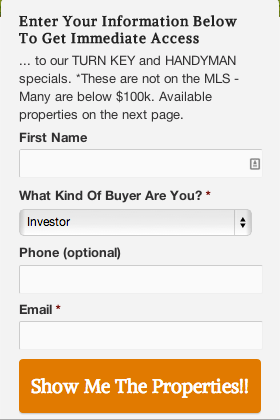
    2)   Titles matter. The title of a menu is designed to appeal directly to people who need to sell their house, and this top one has some great ones: “We Buy Houses in Louisville, KY”, “How It Works” and a contact form right on the front page that asks people to put in their address, phone, and email first thing.

    3)   Visitors want to know about your home buying process before they submit their info. Having a solid “how it works” page can be an integral part of your lead generation strategy.

    Have a truly excellent “how it works” page that includes:

    • A breakdown of your service in a series of simple bullet point steps
    • Include an informative, personal video
    • Include testimonials to build credibility and trust
    • Communicate the benefits they gain by working with you
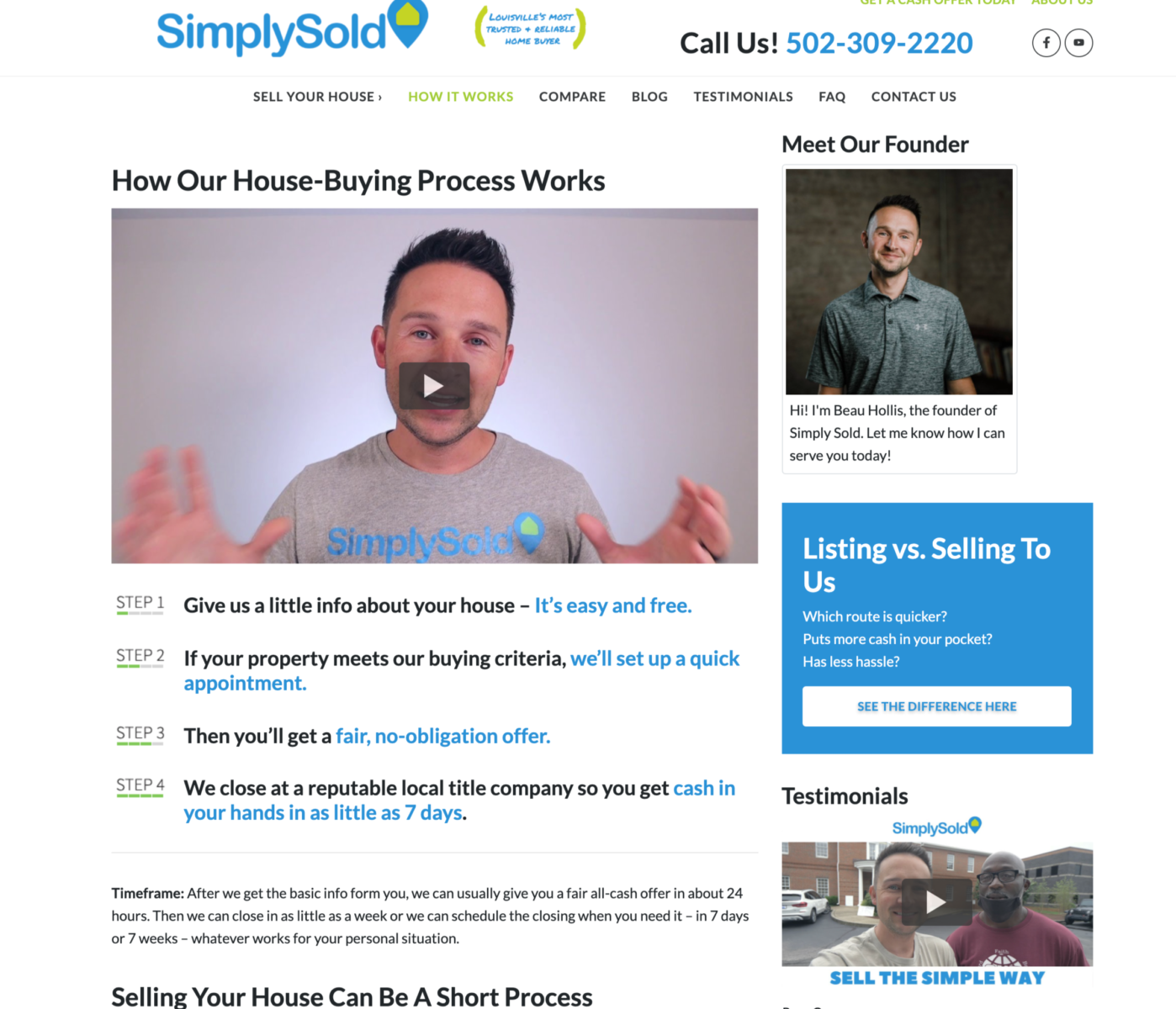
    real estate website how it works page

    Here’s an example of a well-thought-out “how it works” page

    Where is your credibility on your own real estate websites?

    It’s a really common problem that hurts a ton of great real estate agents and investors… when people get to the site they need to have a compelling reason to give over their personal information. Think about it… real estate is the largest investment most people ever make in their lives. There’s no piece of real estate more intimate than someone’s home.

    And yet…

    So many real estate sites don’t build trust or credibility.

    In fact, there are 3 key factors that I wanna mention that are critical to successfully designing a site that converts – and I’ll tell you how we’ve used them to design the Carrot sites like this example that are generating great leads.

    Credibility, Content, and Contact
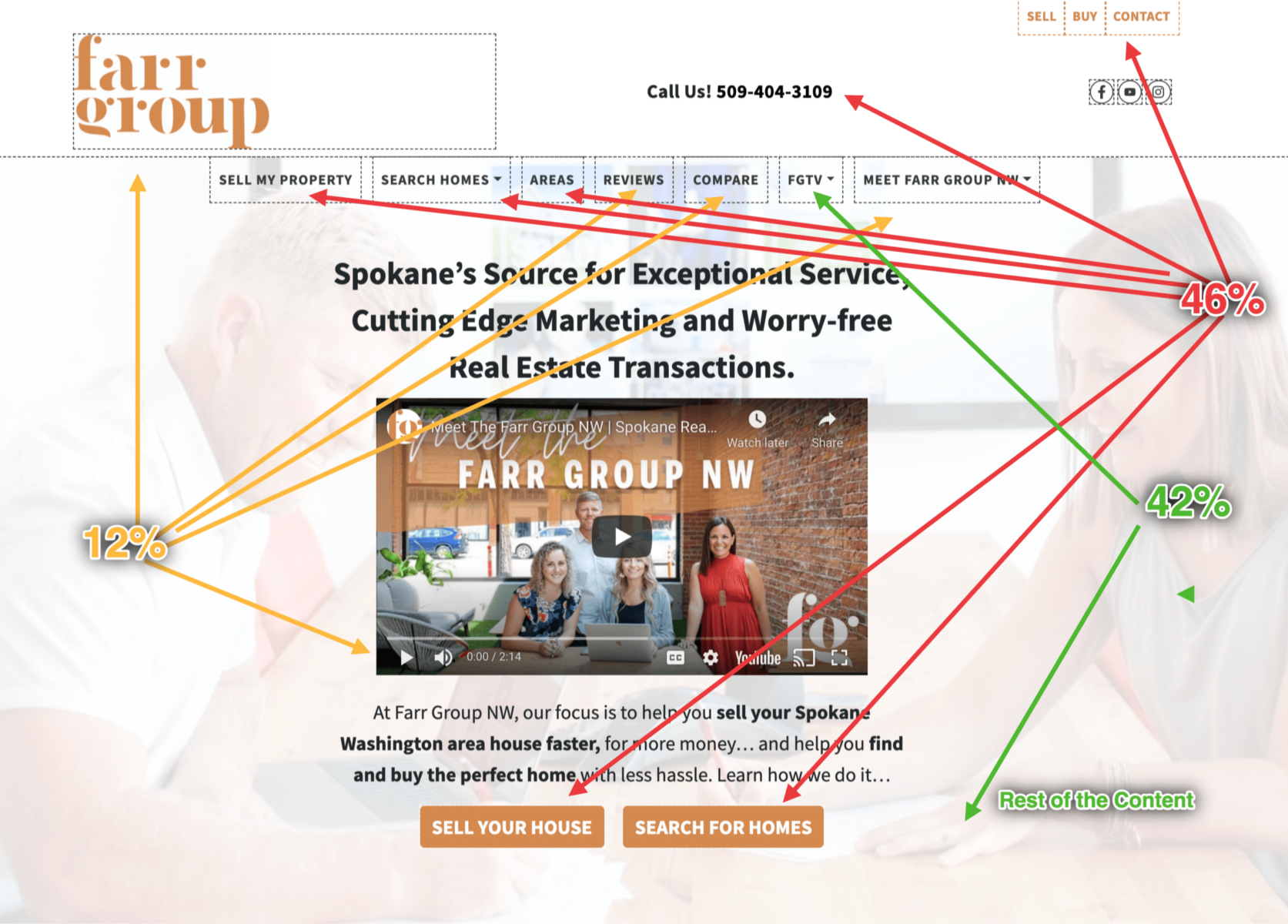
    Check out this graphic – I’ve broken down the links on the page into numbers so you can see the percentage of page visitors that clicked on each link type.

    Even more great lessons for real estate here… 

    As you can see, 12% of the clicks are for Credibility, 42% is on the Content (which is written to develop trust and credibility while reducing the fear and anxiety that most people buying or selling a home are feeling), and 46% of the clicks on the home page are actually converting – they’re contacting members using the forms.

    Keep in mind that the percentages are recording just clicks on the home page – a lot of other conversions happen on the lead pages that we’ve optimized for the local market.  That means that people are most often giving their information over to get a free report, such as a home valuation report, or another valuable tool. 46% of the clicks on the home page aren’t always the main source of leads. It just depends on how the site is being promoted, and where the majority of traffic is directed.

    The mix of these 3 factors is critical to a successful lead generation site.

    Content is a powerful tool to get your message out, but it needs credibility once people arrive or they won’t contact you.

    Content has long been seen as the lifeblood of search engine traffic and so much more for businesses looking to stand out online. However, even though content is king, you must know what happens when someone arrives at their site. What can be done after visitors land on your site in order to make them want to work with you?

    BONUS: One Tweak That Could Double Your Conversion Rate

    One more thing… this one simple tweak that we did on hero sections doubled conversions… it’s so crazy simple that we were totally surprised that it worked so well.

    We actually removed content from the hero sections to move the form up on mobile devices.

    Yup, that’s it.

    Even after doing this stuff for many years, it’s crazy to see what a big difference such a small change can make.

    That’s why we’re constantly testing different sites.

    We create websites that give your business the edge with a no-nonsense approach.

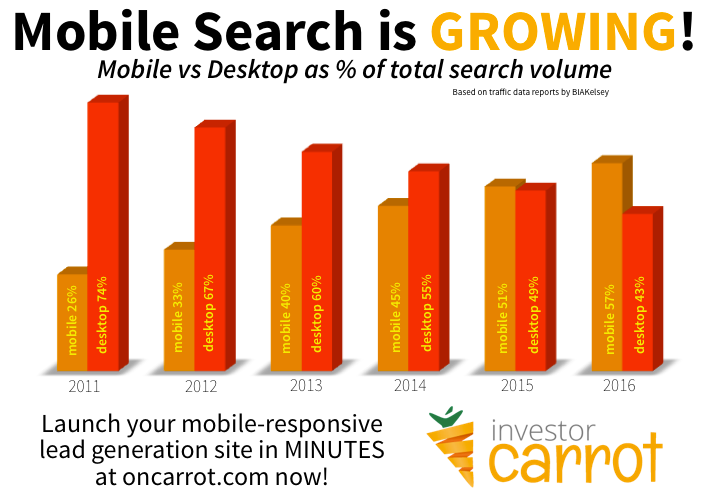
    We’re all about giving clients an advantage, so we design effective and user-friendly sites to stand out from the competition. We want our work to be as engaging for visitors on desktop or mobile devices alike; you never know what device they may use in order to find your site! In fact, over 60% of Carrot member leads come from mobile.

    This Is All Built Into Your Carrot Websites Already!

    The best thing about using Carrot is that you don’t have to worry about managing any of the technical aspects. We’re constantly running tests with our members and making tweaks in order to make sure your experience on this platform goes smoothly.

    We believe in results over anything else and are continually improving our system to help you get better results.

    We’re constantly posting tips, tricks, and techniques we use to improve SEO, conversions and get great results for Carrot members. So if you’re not already getting our weekly blog emails, make sure you sign up now! And if you want a website that truly generates leads for your business, go check out our plans to join Carrot and leverage our marketing knowledge and testing to generate more leads for your own real estate company. 

    Not An Carrot Member? Take A Tour Of Our System

  • [Behind the Data] 50% Increase in Motivated Seller Leads from One Simple Test

    [Behind the Data] 50% Increase in Motivated Seller Leads from One Simple Test

    The hero section… that all-important sliver of real estate at the very top of your website. 

    It’s a visitor’s first impression of your site and your company, but it plays a different – more important – role as well: it’s your first opportunity to convert those visitors into leads.  As more and more web traffic is taking place on mobile devices, that sliver of website real estate in the hero section is shrinking, and you have to approach it with those (often) competing needs in mind.

    How much content is too much?  Is it more important to highlight the form that’s actually generating leads?  How does this change based on whether a visitor is on desktop or mobile?

    At Carrot, our Innovation Lab is constantly pondering questions like these – AND launching tests to answer them. 

    In this post, we’ll outline a series of tests we ran on hero sections that increased conversion rates by anywhere from 25 to 55%, plus we’ll point you in the right direction when it comes to how you should approach the prime real estate (the hero section) on your own site.

    hero section test results

    Example: Hero Section Test Results

    What Did We Test?

    Our CTA Hero tests spawned from a very simple realization… the vast majority of conversions across our network of member sites occur exactly where we would expect them to: in the forms found in the hero section.  

    So we dug in to find out how our members are approaching those hero sections.  It turns out that the answer to that was quite varied.  Some members are stuffing as much content as possible.  Some are reducing the amount of content.  Others include videos, pictures, etc.

    So we designed a very simple test… one that pitted what we considered a “traditional” hero section against one that had significantly reduced amounts of content both surrounding the form and in the form itself. 

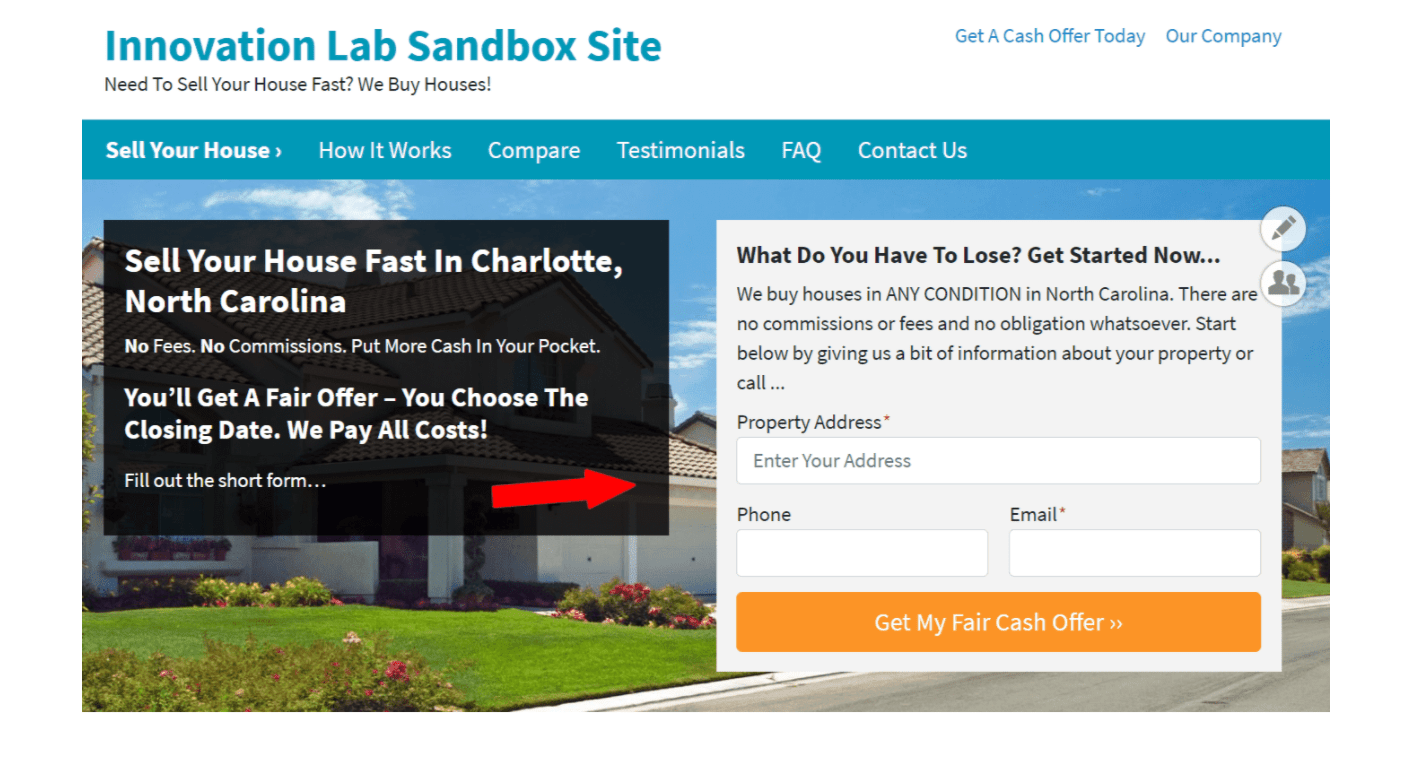
    (Traditional Hero Section with several lines of contextual content + a form description)

    Slimmed version of the hero

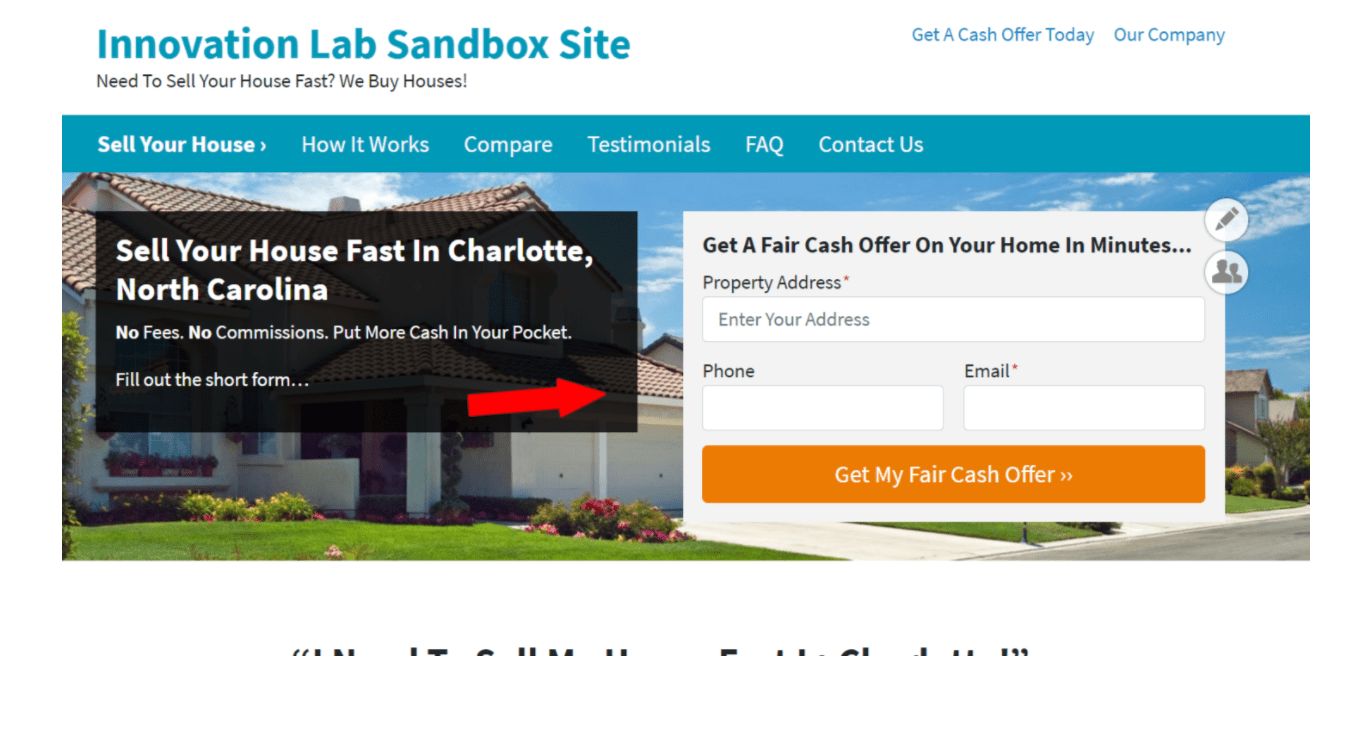
    (Slimmed version of the hero with some contextual content + the form description removed)

    A few things immediately stand out with the “slimmed down” version.

    1. The form itself appears more prominent when you remove the form description.  It guides the eye more specifically to the input fields and the final CTA button rather than the text above it.
    2. By matching the content reduction on the contextual blocks (in this case, the information to the left), it decreases the overall footprint of the hero section and begins to “raise” the content immediately below it.

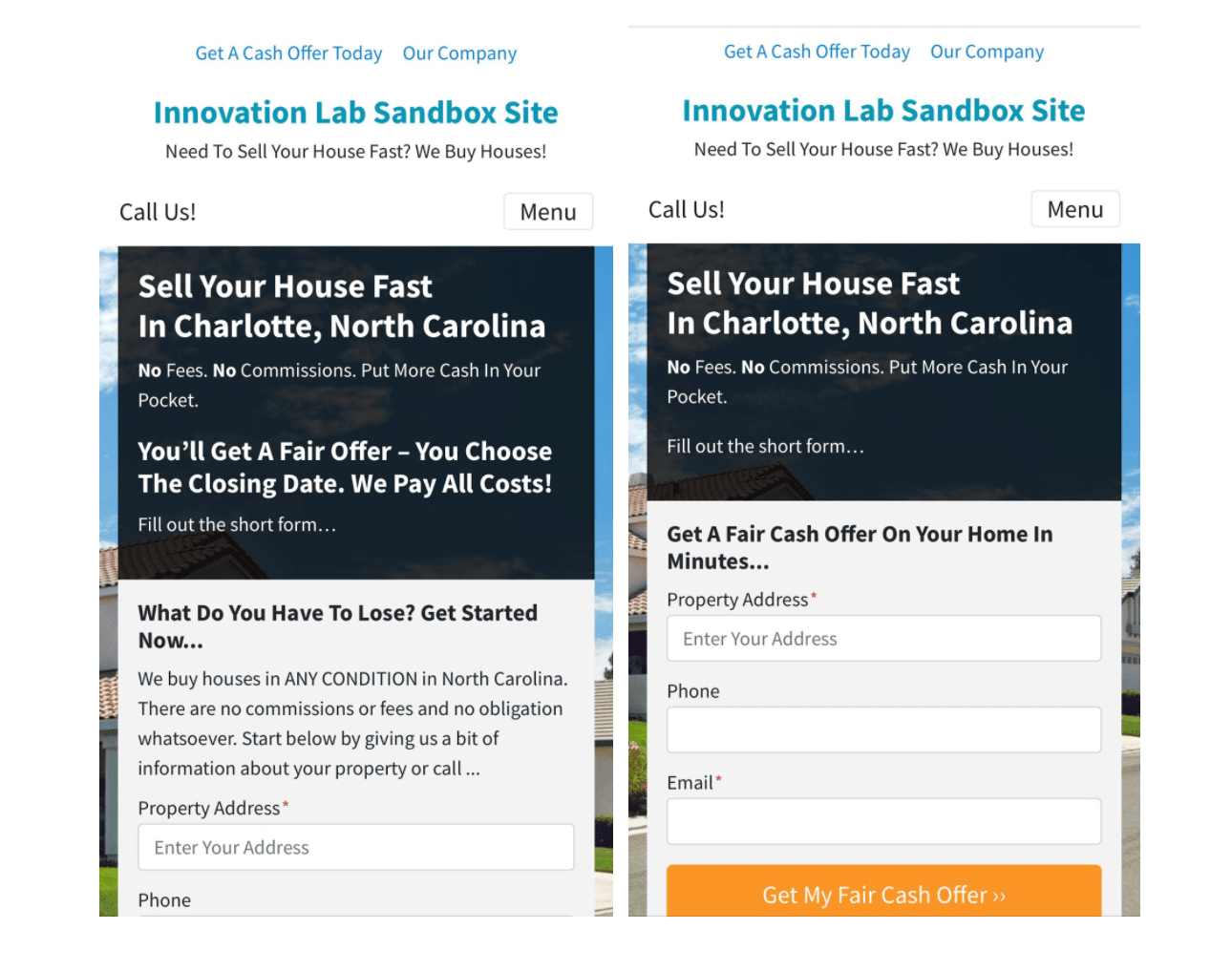
    Point #2 is especially important when considering mobile traffic.  At Carrot, we generally see that mobile visitors account for 57% of all traffic and 61% of all conversions across our network.  Our own design principles have been morphed to take a mobile-first approach accordingly, and that is where our primary hypothesis for this test originated from: that by reducing the content in the hero section, it would make the form itself more prominent and appear “above the fold” on mobile, thereby increasing user engagement and ultimately conversions.

    hero section test on mobile

    And The Results….

    We launched this test across a myriad of site types, categories, layouts and environments – and the results were quite amazing.

    On every individual site where there was enough traffic and conversions over the lifespan of the test to register a statistically significant outcome, the slimmed down version of the hero won (and by large margins!).

    • Test Site #1 – Land Seller Site
      • Conversion uplift of 45.87% – 398 conversions in the slimmed down version versus 259 in the traditional version
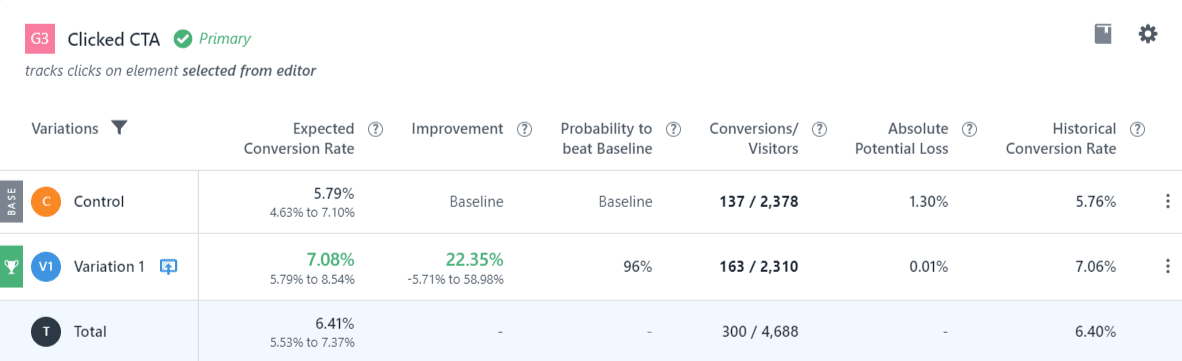
    • Test Site #2 – Motivated Seller Site
      • Conversion uplift of 22.35% – 163 conversions versus 137
    • Test Site #3 – Motivated Seller Site
      • Conversion uplift of 46.86% – 102 conversions versus 71

    Furthermore, our measurements of user engagement (which include scroll depth, time on page, bounce rate, etc) were significantly improved (by anywhere from 15-25%) on sites with the slimmed down version of the hero.

    A few other findings/caveats in our testing design…

    • We wanted to ensure that these changes in the hero section did not improve conversion for mobile versions while harming desktop versions/visitors, so we split up tests accordingly to isolate these visitors.  There were zero cases in which conversion rates increased on mobile and decreased on desktop.
    • Similarly, we wanted to ensure that these changes in the hero section did not negatively impact conversion on forms that may appear lower on the page.  There were zero cases in which lower-ordered forms experienced a drop in conversions that outweighed improvement to the hero section form, and in many cases, those lower forms improved as well (indicative of our increase in user engagement metrics).

    In total, this test was a resounding success – the slimmed down version of the hero section performed significantly better on all site types, categories, and versions.

    So what does this mean for your site?

    It means, generally speaking, that when it comes to your hero section, you should take a “less is more” approach!  Instead of packing that incredibly important part of your website with a wall of text, graphics, videos, etc, minimize it.  

    Some best practices we recommend from our testing results:

    • Focus on highlighting the form you ultimately want visitors to engage with by removing form descriptions and content surrounding it (as shown in the pictures above).
    • Load your site on your mobile device and see where that form appears.  Does it entirely fit within that initial “above the fold” view?  If not, can you reduce the amount of text that appears above it so that even 50% of the entire form appears in that view?  Our testing indicates that the more a form can appear in that initial view, the better.
    • Avoid placing graphics, images, videos or long-form content in the hero section.  There are so many better places to include that information and content lower on the page! 

    As we’ve said, that hero section is your website’s prime real estate.  It’s your opportunity to make an impression, sure, but it’s also your first opportunity to convert a visitor into a lead.  We hope that by bringing you these results from our Innovation Lab, it helps you take a closer look at this section on your site and how it could be helping (or harming) your conversion rates. 
  • Study of 150,000 Websites Finds Carrot Outperforms Wix, Squarespace, WordPress + Many Others

    Study of 150,000 Websites Finds Carrot Outperforms Wix, Squarespace, WordPress + Many Others

    Fresh Chalk analyzed 150,000 small business websites to determine which website builders offer the highest-performing tech stacks. Spoiler alert: Carrot outperformed them all!

    Key Takeaways

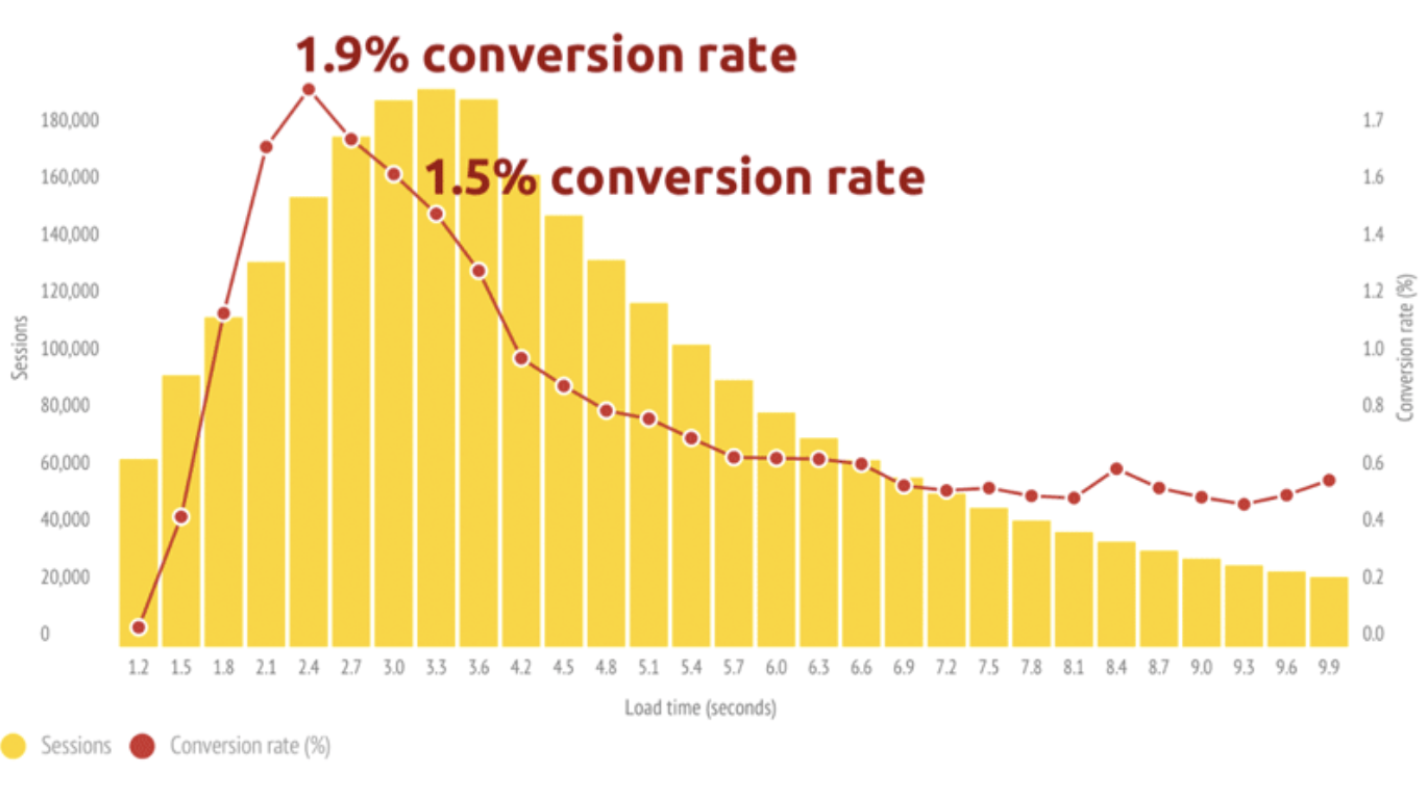
    • Google looks at site speed as a great (or not-so-great) indicator to the user experience. Those experiences heavily impact where your site ranks in Google searches! (Check out the conversion rate chart below!)
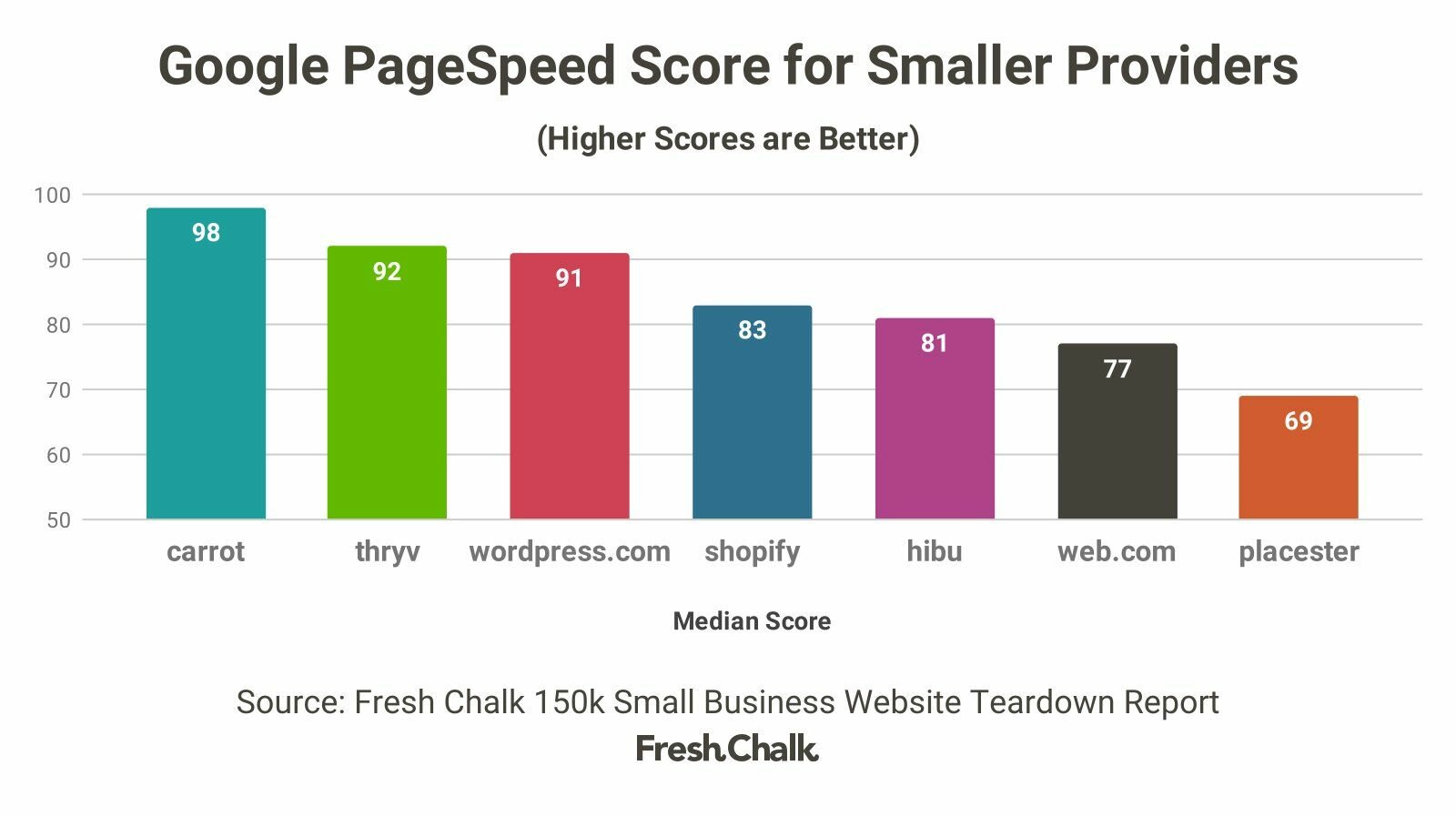
    • Carrot crushed the competition in FreshChalk’s study for page loading speed, scoring 98 out of 100!
    • Some of the largest website builders create ineffective, slow websites.

    If you want to understand how page speed and other tech elements impact your website’s performance, conversion rate, and search ranking, read on!

    Table of Contents

    1. Fresh Chalk’s Study
    2. What’s a ‘tech stack’, and why should you care?
    3. Q&A with Trevor, CEO at Carrot and Adam Fresh Chalk founder
    4. The (Other) Carrot Difference

    Carrot icon
    Lead generation, at its best
    Attract, convert & close more motivated leads
    Try Carrot Today

    Fresh Chalk’s Study

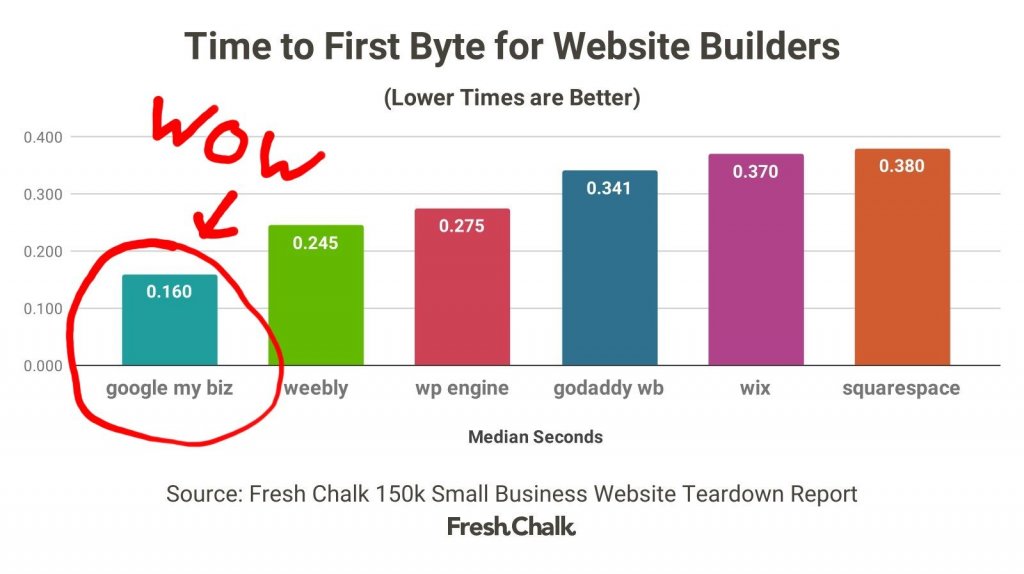
    Fresh Chalk analyzed business websites across dozens of industries, including real estate, and Carrot outperformed ALL other website builders (except Google’s own Google My Biz websites) including Wix, WordPress.com, Placester, Shopify, Hibu, just to name a few.

    Carrot’s time to first byte was recorded at 0.189!!!

    (Image Source)

    What’s a ‘tech stack’, and why should you care?

    When we mention Carrot’s tech stack, we’re referring to all the technical components continuously working in the background of Carrot’s high-performance Lead Generation Hub (aka your real estate website).

    While these tech elements might seem insignificant to your daily activities, you’d be surprised to know how much weight they carry in regard to your website’s overall performance, especially in lead conversion and SEO ranking.

    Page speed, for example, has a huge impact in both of these areas (as you’ll see more of in the interview below). In fact, Google’s core web vitals for page loading speed should be anything under 2.5 seconds as of 2022. Anything over that and your website’s conversion rate will plummet drastically…

    As for SEO, Google looks at site speed as a great (or not-so-great) indicator to the user experience. Those experiences heavily impact where your site ranks in Google searches!

    conversion rate

    Carrot absolutely crushed the competition in FreshChalk’s study for page loading speed, scoring 98 out of 100!

    This comes as no surprise either when we look at Carrot’s 2022 SEO and conversion data. Carrot websites have been proven to:

    • Outclass 92.5% of competitor sites in terms of Mobile Performance Score
    • Capture >50% of the top 3 Google search results for the keyword phrase “sell my house fast.”

    Convert all website traffic at a 44% higher rate than the real estate industry standard (with additional 2X higher rates for organic traffic)

    So Yeah… we were pretty darn excited about these results. :-)

    To learn more about the research methodology behind this study, and why website page speed is so important, so we interviewed Adam Doppelt, founder of FreshChalk, who conducted the research. Here’s what he had to say.

    Q&A with Trevor, CEO at Carrot and Adam Fresh Chalk founder

    Q: What made you want to do this research project and how did you choose which 150,000 sites to use in your study?

    A: The idea emerged from a discussion with my co-founder Patrick. He crawled roughly 150,000 of the small businesses listed on Fresh Chalk to improve the contact information we display on the site.

    We were chatting about his project and came up with the idea… perhaps we should poke through the data and see if there was anything interesting lurking inside.


    Q: As you were digging into the data, you found which website builders were the most popular. Was there any correlation between popularity and performance?

    A: Market share and website performance don’t seem to be strongly correlated. Some of the largest website builders create ineffective, slow websites.

    I think this speaks to the power of marketing. I see this as a challenge and an opportunity. We need to do a better job of making our products fast and educating the world about the benefits of speed.


    Q: How important is page speed and time to the first byte when it comes to Google rankings in your study?

    A: Google has stated that page speed is a direct ranking factor in Google search results. Keep in mind that there are hundreds of factors that feed into Google rankings, so page speed is ultimately just one in a crowd.

    A terrible website won’t rank well even if it displays quickly.

    Certainly Google itself invests heavily in speed.

    There’s also a ton of evidence that improving page speed also benefits conversion rates, retention, and user happiness.


    Q: In the study, Carrot popped up on the radar, and while we host far fewer websites than WordPress or Wix, why did you include us in the report? What surprised you about the performance you saw on the Carrot sites in the study? How does Carrot stack up against the other website builders you found in the study?

    A: Carrot stood out in my results like a cheetah in a world of slugs. Carrot websites are just plain fast. I had to include them, just to show the world that it’s still possible to build great products that are still fast.

    By some measurements, Carrot sites are twice as fast as Squarespace. Consumers notice and convert better.

    By the way, I can tell you that Carrot’s median Google PageSpeed score was 98 as measured across 118 Carrot real estate websites.

    I didn’t have room for that in the report. Pretty amazing compared to the competition!


    Q: How does page speed and time to first-byte impact search results?

    A: Speed definitely has an impact. Time to the first byte isn’t itself a ranking factor, though it feeds into Google’s PageSpeed metric.

    It’s my opinion that Google uses the PageSpeed number verbatim as the ranking factor. I doubt they built two separate speed ranking systems.


    Q: Seeing how the only website builder that beat Carrot was Google’s own websites, can you place a dollar amount or value on the tech stack or speed people are getting when using Carrot?

    A: Google My Business sites are fast because they are simple and get to piggyback on all the other infrastructure that Google built for their data centers and search products.

    My guess is that it would be nearly impossible for them to speed up those sites without a huge amount of effort!

    There is also a ton of research showing that fast websites convert better than slow ones.

    For example, in 2017 Google concluded that 53% of mobile visitors leave a page that takes longer than three seconds to load.

    Can you imagine losing half your sales just because you picked Wix instead of Carrot?


    Q: For the future of small business, how important do you feel it will be to focus on performance with their website to stay competitive with others in their market?

    A: Users, in general, are intolerant of slow websites. If I remember correctly, one study a couple of years ago showed that users would exit after a few seconds spent waiting for slow websites.

    Speedy websites help users feel that the businesses behind those websites are active and in touch with consumer demands.

    It’s our responsibility to make sure that websites are fast even when running on pokey cell networks. It’s incredibly important!


    Fastest, most up-to-date websites available. The staff is exceptionally knowledgeable, and they just keep on improving. There’s nothing static about them or the sites they create. And, as an extra bonus there is a huge amount of training available!

    The (Other) Carrot Difference

    Pretty awesome, huh?

    At Carrot, we constantly look to improve our platform and websites to give you the best marketing tools to help you attract the right traffic to your Lead Gen Hub (aka your real estate website), convert that traffic into motivated seller and buyer leads, and close more deals than ever before.

    Additionally, since we’re smaller than Wix or WordPress, we can dedicate more time to helping our members succeed at business, which is probably why we were placed on the Inc. 5000 list and Entrepreneur 360 list in 2019 — when you care deeply about your customer’s success, awesome stuff happens. :-)

    Carrot on Entrepreneur 360 2019
    Carrot on Entrepreneur 360 List 2019

    And we believe that by helping you build a business that provides you with the entrepreneurial freedom you crave, we will build a business that gives us time for the things that matter most in life.

    Want to know what your page speed is? Check at Google PageSpeed Insights.

    If you want to see whether our results speak for themselves, you can sign up for a 30-day risk-free membership.

    You’ve got nothing to lose… and everything to gain. Join the nation’s top real estate professionals and launch your website today!

  • Why You’re Not Getting Motivated Seller Leads Through Your Real Estate Investing Website and What To Do About It

    Why You’re Not Getting Motivated Seller Leads Through Your Real Estate Investing Website and What To Do About It

    If you’re not getting many motivated seller leads to your real estate investing website, it’s for one of two reasons. Here, we’ll help you diagnose your “no leads” issue…

    This post is going to help YOU break down the patterns that lead to success in real estate investment — with a special focus on online lead generation.
     

    We’ve focused on what investors are doing right, so it only seemed fair to focus on what’s going wrong.

    A few times a week the same thing happens, we get emails from non-Carrot members that look something like this:

    “Help! I’m not getting many motivated house seller leads from my website and I don’t know why!”

    It always stinks to hear that, but the good news is that most real estate investing websites struggle to generate leads for a few basic reasons.

    So let’s dive in to get to the crux of the problem.

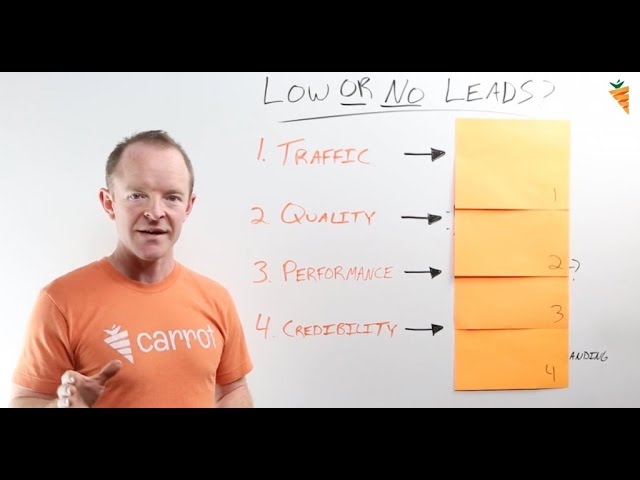
    Getting leads online really equates to only two simple things. Traffic and Conversion. But before you get started, take a few minutes and watch…

    4 Reasons Why You're Not Getting Real Estate Leads Online and How To Fix It

    It All Comes Down To Traffic and Conversion

    1. Traffic – Are you getting traffic to your website? (ranking well for keywords that actually get enough searches to matter?)
    2. Conversion – Does your website convert enough of those visitors to leads?

    So, when someone emails in and asks for advice to get leads… it always comes down to those two things.

    Traffic and conversion.

    This post is mainly about the Traffic part since we already know the Carrot system converts (Conversion Examples: Here , Here , and Here ). 

    So first we look at the traffic… because if there isn’t any traffic going to your website… conversion doesn’t matter.

    If your website is converting motivated seller leads at 15% (15 of every 100 visitors sends you their info, which is solid)… and you’re only getting 25 people to your website each month… that’s only about 4 leads per month.

    Not much to build a business off of right?

    So… here’s what we do.

    We start problem-solving by asking the same questions. If you’re banking on SEO is a part of your traffic generation strategy… we’ll ask you this question first:

    How much search volume is happening in your market?

    In simple terms… are there enough people in the areas you’re targeting searching for the keywords in Google that your pages are ranking for?

    Unfortunately, most of the time we get a “huh?” in response.

    Then we explain:

    Even if you’re ranking at the top of a search, no one is going to click your link if no one is searching.

    Then a lot of times we’ll dive in and do a little bit of research, only to discover what we already know… that there’s little to no search volume in their market for the keywords they’re ranking for.

    It’s like putting a great billboard on a dark back alley street that no one sees.

    But put that same awesome billboard on a busy street… then it produces GREAT results.

    [cta offer=”seobible color=”blue”]

    Here are Some Examples For You

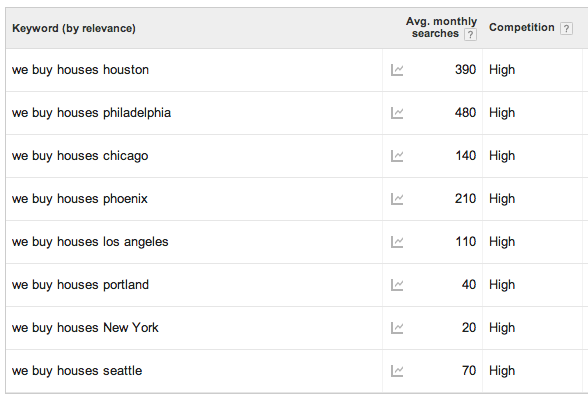
    For a quick illustration of what I’m talking about, let’s look at some US cities and check out the search volume (using the keyword planner tool in Google’s Adwords) for a common search term in each market, “we buy houses [insert your city]”.

    This term tends to be a popular search phrase across most cities in the US so it’s usually a great barometer in any market for the volume of “highly motivated sellers” in that market:


    The Good – Below are numbers for average monthly searches for those terms in Google.  You can note that some cities get MANY more searches than others… showing the potential SEO demand for that keyword.

    Our barometer is anything over 30 per month is worth making a page for on your website with our SEO Grader tool to help you rank for that term.

    we buy houses search term monthly searches

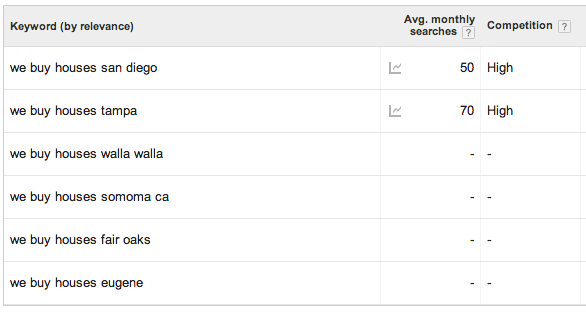
     The Bad – Below are numbers in a few cities we grabbed out of thin air. One of the cities below is a city that a client of ours is ranked well for but emailed us saying he hadn’t been getting leads to his website.

    Why? “we buy houses fair oaks” isn’t getting much search action. The Fair Oaks market may not be a great
    city to focus on for all of your online lead generation efforts.

    we buy houses search terms

    Now, it’s important to realize a couple of things about that data:

    1. Each of those is the average number of monthly searches over the last 12 months. It’s really common to see big spikes in search volume one month, followed by a major drop in traffic in the next if an economic event happened in that city causing more motivated sellers (a huge job layoff in the city, etc.).
    2. Notice that the most populated city has the least amount of searches: In this example, Philly was searched 24x more often than NYC, although it has only 18% of the population.

    Searches like these are often motivated by external factors

    We originally wrote this post in 2014 when we did a Google search for “Philadelphia layoffs,” and at that time there were almost 4,000 teachers were laid off in June of 2013. The point is, when lots of people lose their jobs at once, it’s easy to imagine panicked sales taking place if folks can’t pay their bills.

    These searches for the “we buy houses [insert your city]” and “sell my house fast [insert your city]” terms happen when people need fast answers (and you want to be in front of them when they search for those fast answers, like our client David Brown has been able to do). 

    Check out David’s “Getting More Motivated Seller Leads Online” Case Study.

    Getting Real Estate Investing Leads Online - InvestorCarrot Case Study David Brown

    They’ll often do a quick search, and if they find what they’re looking for, they’ll put in their information into a form and become a “lead”. If they don’t see what they want, they’ll keep moving until they find it.

    But if SEO is your main marketing strategy, you won’t get any leads if there aren’t many searches for the specific phrases you’re ranking for.

    Search Engine Optimization for Real Estate Investors Only Works When Enough People Are Searching The Phrases You’re Ranking For

    Too many SEO services out there just focus on getting you rankings… because rankings are sexy right?

    But those rankings don’t matter much if they’re for terms that only a handful of people are searching each month.

    So what happens if you’re in one of those markets that aren’t getting many searches for the popular terms like “we buy houses [your city]” or “sell house fast [your city]”?

    Does This Mean That You Should Abandon SEO When Searches Are Low?

    Not at all!

    In fact, it’s a really good time to build your business and get creative.

    Remember, SEO is a long-term strategy. It’s not a short-term one.

    And if you’re really wanting to generate consistent leads and dominate your local market online… you can still do that!


    I just closed a deal from you guys, it was all because of your site and the credibility built in and all that. Going to be a really profitable deal, and I’m going to reinvest that going forward. You guys rock and I love the sites and everything you all do! – Joseph Sauter, Quick Cash Sale For You


    While yes, there are some markets where there just aren’t a lot of motivated sellers searching online… but it doesn’t mean the sellers aren’t out there searching.

    You just need to broaden out your keywords that you focus on your website so rather than banking all of your traffic on just the “we buy houses ” or “sell house fast ” keywords… add in others.

    Not Getting SEO Leads? Here’s Your Plan Of Action…

    Create some pages on your motivated seller website for “Focus Keywords” (use our SEO Grader tool to help you optimize these pages for those phrases very easily) like… 

    • sell your house fast [insert city]
    • how to sell house fast in [insert city]
    • how can I sell my house fast [insert city]
    • sell my house for cash [insert city]
    • how to rent your house in [insert city]     (many people who need to sell, just quit and settle for renting. Write an article on your blog!)
    • tips on selling your [insert city] house

    … you get the idea.

    If rather than trying to bank your lead generation on 1 term that only gets 30 searches a month… why not create some more pages on your website (InvestorCarrot makes that crazy easy) that are focused on other keywords ALSO in your market… so you have 15 pages ranking for search phrases that get 30 searches a month each.

    Make sense?

    If NOT, hit us with questions below and we’ll dive in and clarify for you… we’ll even get specific and help you figure it out for your own market through the comments section below.

    Even if you’re in an area that doesn’t currently get a lot of search data… it’s worth it to rank well there.

    When something happens in your market (like layoffs) that create a lot of demand for fast, cash buyers, you want to be first in line to capture those leads. Working on SEO now is critical to rank high when searches do pick up.

    If you’re like most investors you’re deeply focused on your local market and what’s happening today. You’re only working to make deals happen soon, not years or months down the road.

    That might be a mistake.

    Too many investors are only thinking about short-term results… even though the best investment advice is always focused on long-term wealth-building, not scattered attempts to get rich fast.

    If you’ve got the bigger picture in mind, there are a few ways you can grow your business:

    1. Get inventory in other ways. Go old-school and start knocking on doors. Network. Partner up with companies who provide services to homeowners under financial distress. Put up signs. Advertise – good pay-per-click can be really helpful to capture the few searches that do exist. Since the leads are fewer, you’ll have to pay more to get them. That’s supply and demand.
    2. Focus on growing a different list. If you’ve been trying to capture seller leads, shift your focus to building a list of cash buyers. Ditto on rent-to-own tenants. When inventory is tight there are lots of people looking for deals, so set up another site to grab those leads. If you hustle, you can find ways to profit from those lists, even when inventory is low.
    3. Branch out to surrounding markets too. Too often people get stuck thinking that they need to work where they are, instead of going to find the place where they can add the most value. Start with other cities around you and see if there is more search volume in those cities.  I know investors who have switched their focus away from the major metro areas and are focusing on smaller, blue-collar areas where there’s less competition from other investors. Once you’re really good at building lists, generating leads and doing deals, you don’t have to be geographically limited at all. With the right local partners, you can work anywhere.
    4. Adjust your strategy. Too many investors and entrepreneurs get stuck on a particular path, and they lose their perspective on the big picture. They forget that they are subject to the whims of the market and that the market is entirely outside of their control. When there’s not a high rate of foreclosures, wholesaling and flipping get tougher. More competition + fewer deals = Lower profit margins.

    Does that mean that wholesaling and flipping are bad strategies?

    No, not at all – just that you’ve gotta pay attention to the conditions in your local market without forgetting the bigger picture.

    Know Your Market And The Trends (Or we’ll help keep you up to date :-)

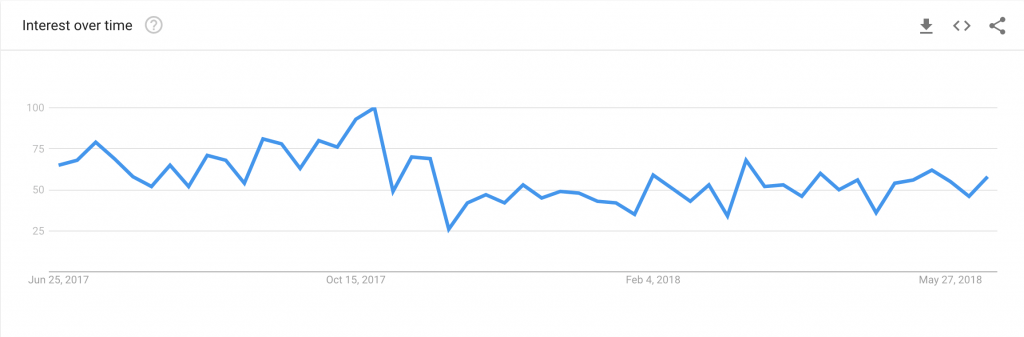
    To illustrate, let’s do a quick Google Trends search in the US for “we buy houses” just to see how the graph moves around:

    we buy houses google trends

    As you can see, there were a lot more folks searching for “we buy houses” back in the fall.

    Overall in the US economy, we seem to be exiting a period of high fluctuation and returning to a slow, stable growth pattern.

    And while trends in our market change… so do the things that sellers and cash buyers type into Google.

    Just do your research (or follow us here on this blog and we’ll do it for you) and adapt on your website to focus on the keywords your market is typing into Google.

    For now… 

    • “we buy houses” and “sell house fast” (and related terms) are still some of the most popular for the ultra-motivated sellers
    • “investment properties in ” is a search term growing in popularity right now big time (GROW THAT BUYERS LIST!)

    If your market doesn’t have many searches for those terms… consider going after other keyword terms like the ones I mentioned in this article… OR, branch out into other surrounding cities to capture search rankings in those ones too so you can do deals there too to increase your lead flow.

    Sound like a plan?

    Hit us with your questions about your market below… or questions about how to take this knowledge and use it on your own websites to get more traffic and leads this year.

    Don’t Have Time To Focus On SEO But See The Value?

    Think about this. If you’re investing in markets that get at least 30 searches a month for “we buy houses [insert your city]”… and don’t have the time or energy to focus on worrying about the SEO yourself… we can help.

    If you’re interested in a long-term SEO strategy for your business, you should check out our SEO services… we’ll let you know if your local market has the search volume to make SEO worth the investment based on what we uncover.

    Don’t have a website or want a system that works great to generate traffic and convert the leads?

    Additional SEO for Real Estate Resources

  • SEO for Real Estate Investors… OnPage SEO Optimization

    SEO for Real Estate Investors… OnPage SEO Optimization

    SEO for Real Estate Investors - 10 Steps to Success

    SEO for real estate investors often feels like one part uber-advanced technical “hacks” and two parts dark magic.

    Listening to the advice of SEO gurus could easily leave you feeling overwhelmed … and incredibly disheartened.

    It’s not. And you shouldn’t be.

    SEO for real estate investors comes down to optimizing around 10 on-page elements. And that’s incredibly good news.

    Why? Because traffic is the lifeblood of any online business. And for real estate investors what you need isn’t just any old traffic — not just visitors for the sake of visitors — but high-quality, lead-worthy, traffic you can count on month in and month out.

    This post will guide you in how to get more traffic to your website by teaching you what’s important to search engines (i.e., ranking factors) and what you yourself can do to get your real estate investor site to rank exactly where you need it to.

    If you’re already familiar with SEO, then CLICK HERE to jump down to the meat of this post: a step-by-step checklist of HOW to optimize your on-page SEO for real estate investors.

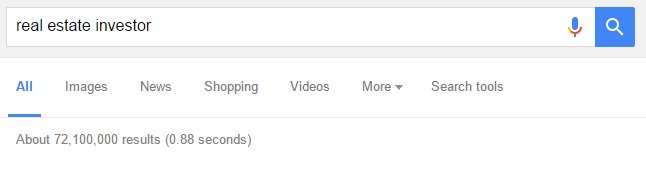
    SEO for Real Estate Investors SERP

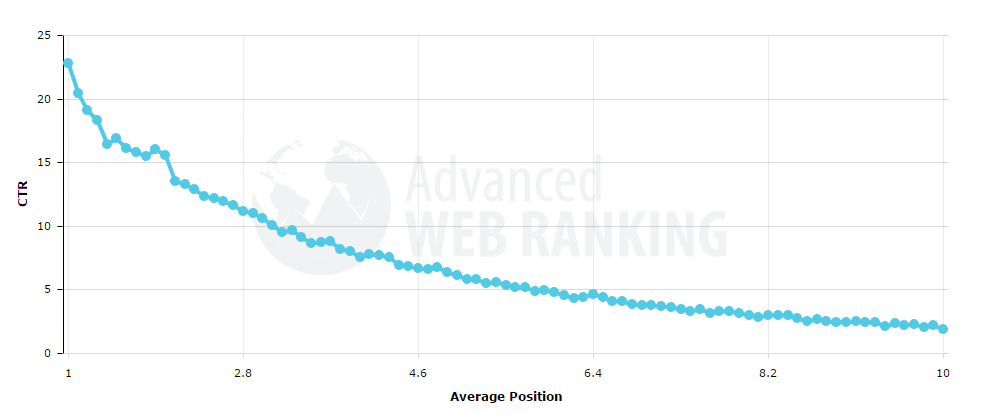
    Your position among those 72-million-plus results dramatically determines how many people visit your site. Data from May of 2016 indicates that while the average clickthrough rate (CTR) of position one websites on Google’s search engine results pages (SERPs) is 23%, position ten is 2%.

    real estate investor SEO SERP CTR

    Image Credit: Advanced Web Ranking

    And you don’t even want to know what happens to a clickthrough rate when you fall outside of positions one through ten. As the old adage goes, “The best place to hide a dead body is on page two of Google.”

    All this to say, it’s vital to understand exactly what factors Google takes into account when prioritizing their search results.

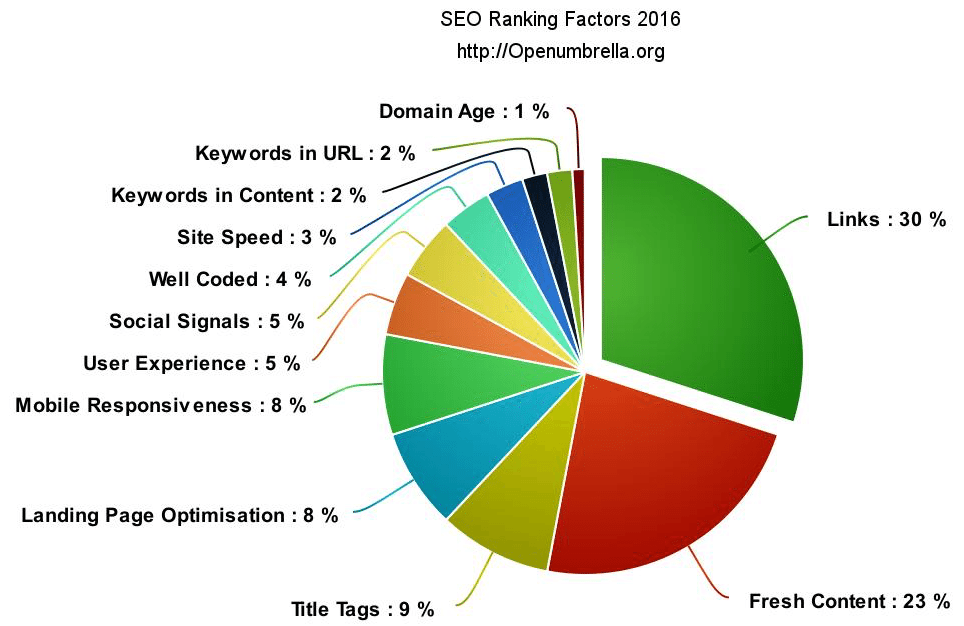
    According to Open Umbrella’s analysis of 182 websites, there are at least 12 vital factors:

    SEO for real estate investors Ranking Factors

    Image Credit: Openumbrella.org

    That can sound like a lot … but it’s nothing compared to SEO genius Brian Dean’s Google’s 200 Ranking Factors: The Complete List. (Full disclosure: the list actually contains 205 ranking factors. Geez.)

    But here’s the thing … you don’t have to become an SEO genius to get your real estate investor site to rank. And — even better — you don’t have to get to page one.

    Instead, SEO for real estate investors falls into three big buckets: (1) technical SEO, (2) off-page SEO, and (3) on-page SEO.

    [cta offer=”seobible” color=”red”]

    Technical SEO

    Naturally, technical SEO involves a host of behind the scene elements, some of which include …

    • Indexable: can Google access and catalog all your pages?
    • Speed: how fast does your website load?
    • Responsiveness: does it appear correctly on mobile, tablet and desktop devices?

    The good thing about being an Investor Carrot member is that all these factors are taken care of for you. Big sigh of relief.

    If you’re not a member, have a look at the health of your website by using a tool like HubSpot’s website grader.

    Off-Page SEO for Real Estate Investors

    Off-page SEO is really all about the links from other websites to yours.

    And when I say “all about” … I mean all about. Backlinks are the number one ranking factor all search engines use to prioritize their results.

    They’re also the side of SEO you have the least control over.

    That’s why — for now — we’re going to forego link building strategies and instead focus on the side of SEO you can control.

    On-Page SEO for Real Estate Investors

    On-page SEO for real estate investors focuses on your (1) content and your (2) keywords.

    Everybody wants to “hack” Google with the second approach. And of course, optimizing your keywords is vital. But before we go through our checklist on that process, do not ignore …

    SEO for Real Estate Investors: Content Matters

    Sadly, one of the most neglected areas in SEO, specifically by small businesses and entrepreneurs like real estate investors, is the continuous development of quality, value-add content.

    Many real estate investors who take their business online are under the false impression that adding content — any content — with the right keywords placed in the right keyword positions will do.

    That couldn’t be further from the truth.

    At the very start of our Content Marketing Roadmap, I make this claim:

    SEO is really all about content marketing.

    Why?

    Easy, because valuable, and fresh content is the only kind of content that other people will link to. And remember, other people’s links are the number one factor in SEO.

    In fact, Brian Dean’s number three and number four “key findings” from We Analyzed 1 Million Google Search Results: Here’s What We Learned About SEO highlight exactly this point:

    3. We discovered that content rated as “topically relevant” (via MarketMuse), significantly outperformed content that didn’t cover a topic in-depth. Therefore, publishing focused content that covers a single topic may help with rankings.

    4. Based on SERP data from SEMRush, we found that longer content tends to rank higher in Google’s search results. The average Google first page result contains 1,890 words.

    Do not make the mistake of putting “content quantity over content quality.”

    Instead, invest in long-form content — roughly 2,000 words — that valuable and relevant. If you’re looking for ideas, check out our 101 Blog Post Ideas For Real Estate. If you’re looking for a comprehensive crash course that covers the entire process, jump over to our Content Marketing Roadmap. Both are free resources … even if you’re not a Carrot Member.

    Real Estate Investor Content Marketing Roadmap
    Our Content Marketing Roadmap will walk you through the exact content creation process Carrot Members are using to pull in over 55,000 lead per month.

    But this isn’t a post about content marketing. This is a post about SEO … so let’s turn our attention to the real meat: keywords.

    SEO for Real Estate Investors: Keywords

    Keywords are what help search engines match the content on your website to online searches. It’s essential that you master the art of keyword research in order to maximize your results.

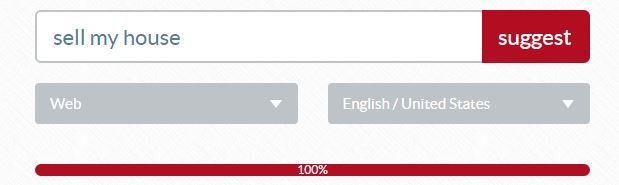
    The easiest way to find your own most popular keywords is by using a free tool called Ubersuggest. Simply type in a target phrase like “sell my house”:

    ubersuggest for real-estate SEO

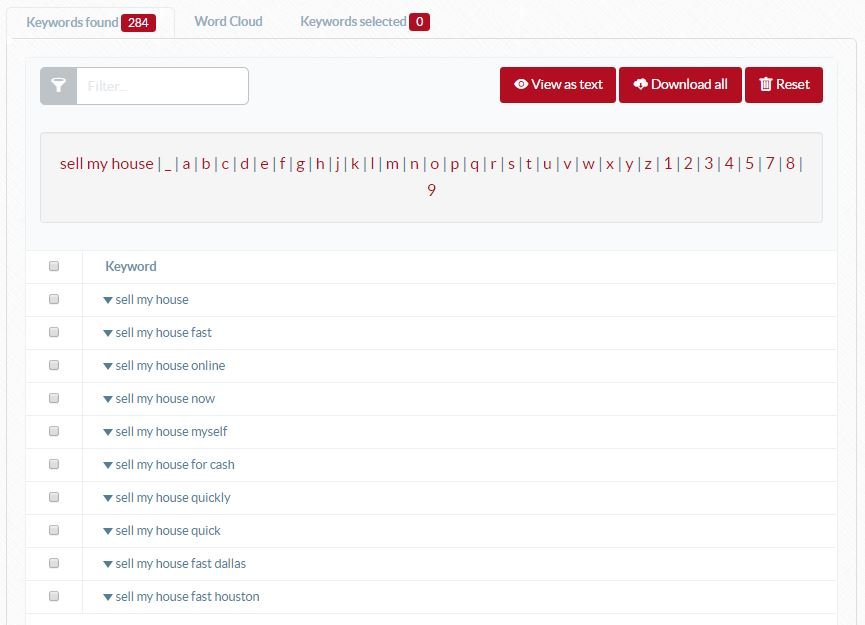
    Ubersuggest will then automatically generate a massive list of possible long-tail keyword phrases related to that general phrase.

    Ubersuggest for Real-Estate SEO Step 2

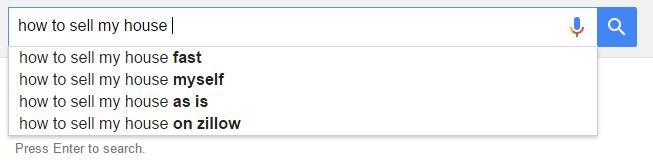
    You can also use Google’s auto-complete feature as well, especially to narrow down the most popular long-tail phrases.

    SEO for Real Estate Investors Google Autocomplete

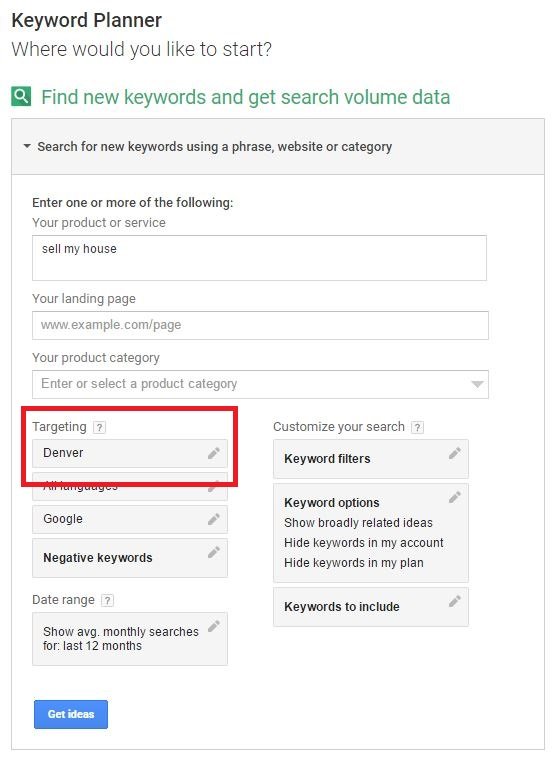
    For an even more detailed examination of the keywords you should target, Google AdWord’s free Keyword Planner tool is phenomenal. Just be sure to enter the area you want results for under “Targeting”:

    google-adwords-seo-real-estate

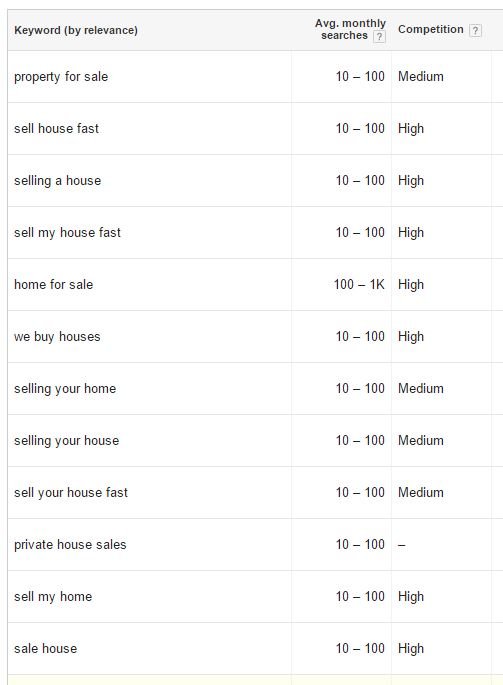
    Google will then give you a list of possible long-tail keyword phrases to choose from based on the location you selected:

    google-adwords-seo-real-estate-keywords

    Whatever tool you use, simply select the long-tail keyword most relevant to what you’re offering. In this example case “sell my house fast in Denver” is hands down the winner.

    Before we proceed to the next section, you should know that Investor Carrot websites come with guidance as to how to add on-page SEO to your content, but if you’re not a member, the next part should bring clarity.

    SEO for Real Estate Investors: On-Page Checklist

    After you’ve created your content and selected your targeted keyword, it’s time to get to work on SEO. What follows are the ten most valuable on-page elements that should include your keyword phrase.

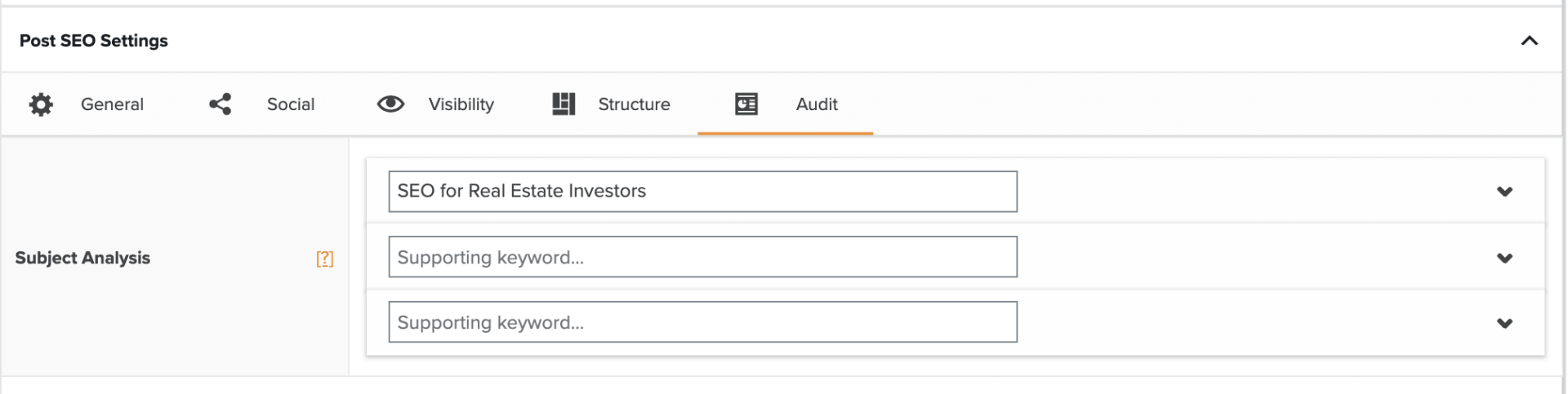
    You can easily use this as a checklist, but we’ve also built a Carrot SEO tool especially for real estate websites. Our SEO goal for this page is to rank for the phrase “SEO for real-estate investors.” So this is what the tool looks like when we plug that phrase in:

    SEO Tool for Real Estate Investors
    seo meta keywords

    Now let’s walk through the ten most important elements.

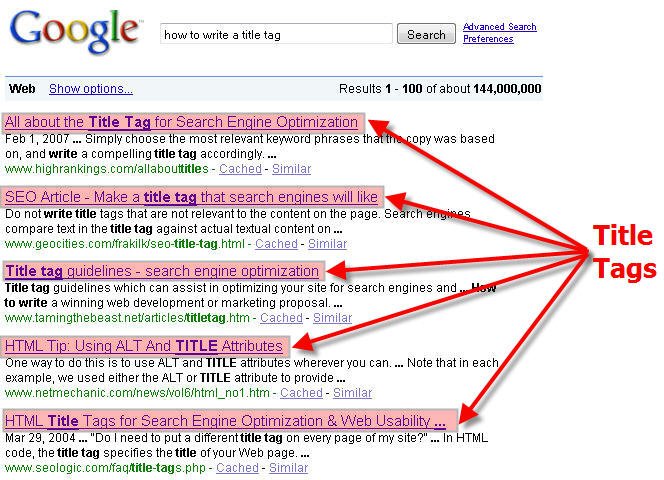
    1. Title Tags

    Title tags are the headings of the pages on your website. In search results, they are the main headings.

    SEO for real estate investors Title Tag Optimization

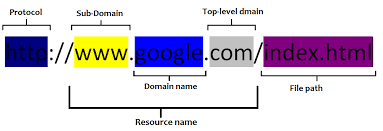
    2. URLs

    If you’re adding keywords to titles, and your permalinks are set up correctly, the URL will automatically include the title.

    Often, however, your title will be longer than the keywords you want to rank for. That’s why you should simplify it in the URL and limit the actual web address to your targeted keywords alone.

    SEO for real estate investor URLs

    Image Credit: WebKnowHow

    As much as possible, try to avoid using numbers in your URL, whether that’s dates or even numbers associated with the title of your article. Why? Because if you ever want to go back and update your post, changing the URL will essentially void any SEO power the original pages had.

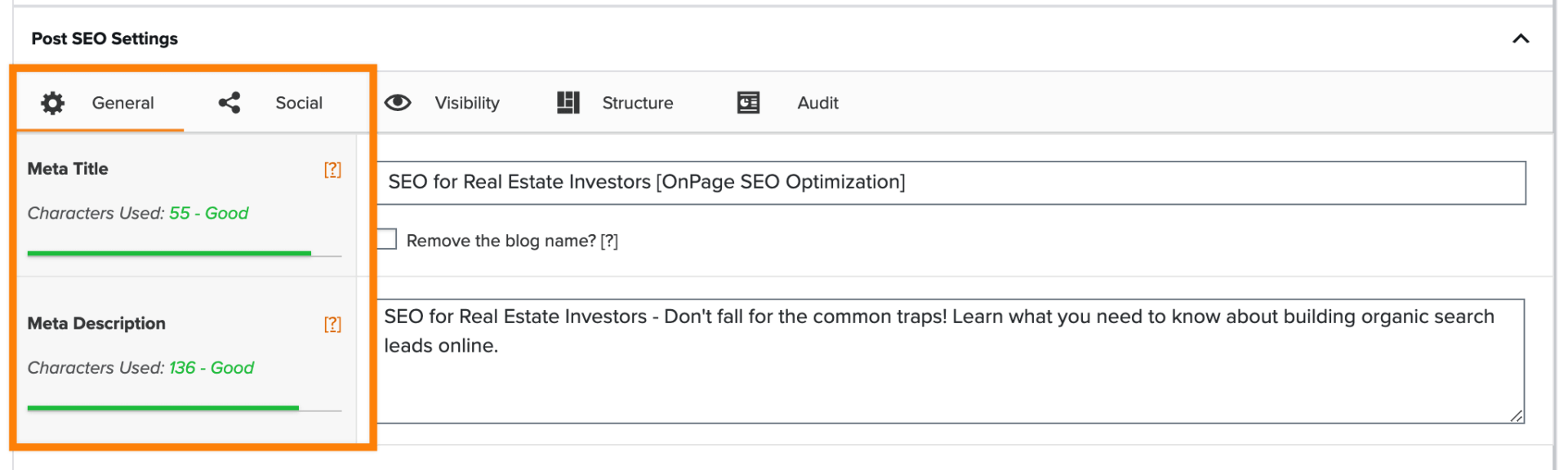
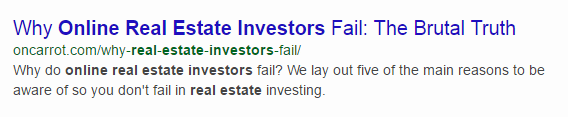
    3. Meta Descriptions

    And when you compile the meta description, make it compelling in order to attract attention. Consider it the advertisement for a page’s content. This is what the meta description looks like in searches:

    SEO for real estate investors Meta Description

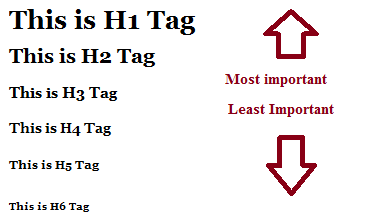
    4. Headline Tags

    Headlines and subheadings divide your on-page content into scannable chunks making it far easier to read.

    But at the same time, they also tell search engines what the content is about, and what’s most important.

    real estate investor SEO H Tags

    Image Credit: IBlogNet

    5. The First 100 Words Are Important

    Pretty self-explanatory, but make sure you add keywords naturally and don’t “stuff” your content with them. A good rule of thumb is to add the keyword phrase in the first 100 words — preferably in the very first sentence — as well as after every 150 or so words.

    6. Bolded Words

    Adding bolded words for SEO is debatable, but it can’t hurt if you don’t over-bolden. When you add this technique, focus on using bold text only to make a point to the reader. In other words, focus on reader experience.

    SEO for real estate Bold important Words

    Image Credit: Fonts

    7. Links

    We’ve covered off-page SEO for real estate investors and the importance of links from other websites to yours.

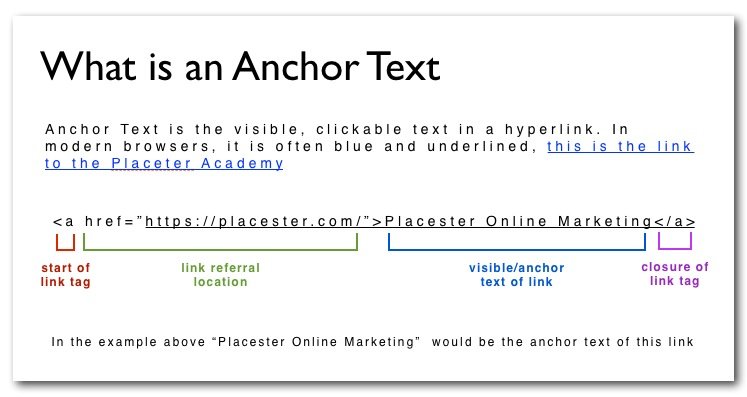
    What I mean by inserting links to keywords (otherwise known as anchor text), is that when you link to a good website from a keyword, it signals to search engines what both your content and theirs is about. But there is a certain art to it and it shouldn’t be obsessed over.

    What-is-an-Anchor-Text

    Image Credit: Placester

    The real “secret” to your own links and SEO is using internal links. As Aaron Orendorff pointed out in Little-Known SEO Ingredients That Make A Huge Difference In Google Search:

    While external links dramatically improve both types of authority [domain and page], linking between pages on your own site — namely, linking from high page authority URLs to low page authority URLs — pass the SEO value of the first page onto the second.

    Here’s the bottom line: do not include your targeted keywords in the anchor text to other sites. Do include your targeted keywords in the anchor text to your own site.

    8-9. Images

    Search engines use the images on your site to further help them decipher relevancy (how relevant your content is to user searches).

    First, before you upload images to your website, they should be compressed so that they don’t slow down your site. You can use a tool like Optimizilla for this.

    Second, for every image you add, include your keywords in two places. Let’s take this post’s header image as an example:

    (1) Image name

    Instead of using a generically titled image name, get specific. Rather than “blog-post-header-image-1.jpg” or even “seoforrealestateinvestors.jpg” … use “SEO-for-real-estate-investors.jpg”

    (2) Alt tags

    Alt tags are the default text a browser displays if images are turned off. This time, write your alt tag with your keywords, but write them to be read: “SEO for Real Estate Investors.”

    10. Local Keywords

    In no other industry does location matter quite as much as it does in the real estate investor SEO realm. Since your competitors are likely not fully up to speed with the location element in SEO, you could get way ahead of them with a little bit of additional work.

    Local search is a lot different to international search, and the intentions are often very different too.

    For example, if you wanted to order pizza for dinner tonight, Google is going to assume you want local buying options. By default, instead of serving up global results, Google will offer you local results you can actually use to order pizza.

    People searching for “real estate investors” want to know about a career as a real estate investor or find someone to sell their property too. But if they were to add an area — which most do — their intention is to find a real estate investor in that area. Big difference, right?

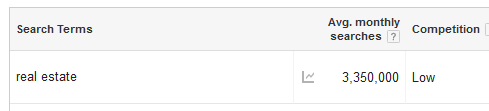
    Have a look at this: for the search term “real estate,” there are a phenomenal amount of searches every month — 3,350,000 to be exact — and there’s not much competition for the phrase.

    real estate search term

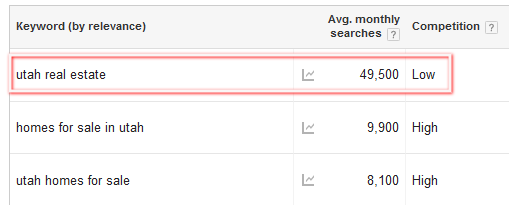
    But the term is also not relevant for real people because real people who are searching for what you provide will add an area. Now watch what happens when you add an area:

    adwords real estate search term

    The search amounts drop to 49,500 per month. Although the search amount is lower, the good news is that “Utah real estate” represents the people most interested in doing business with someone in Utah.

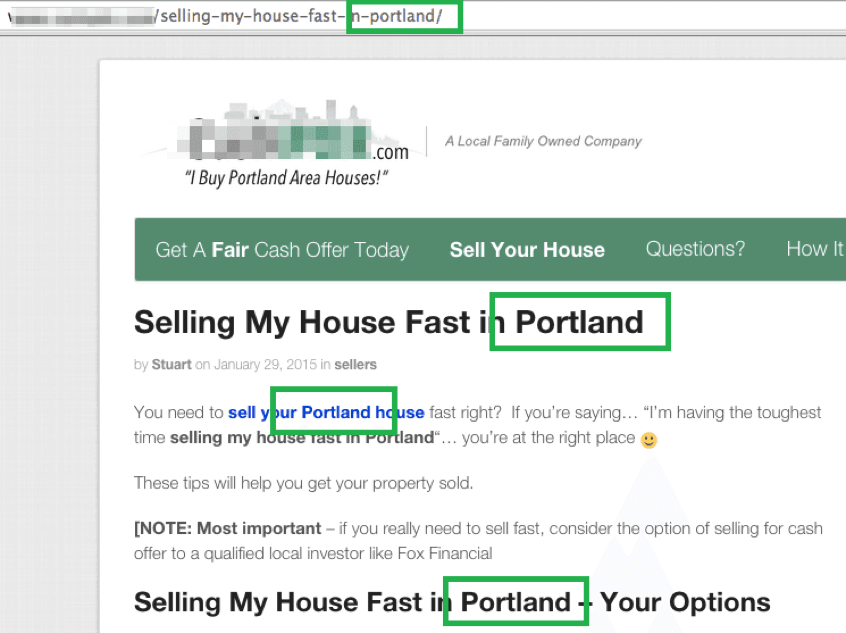
    Our own 6 Simple Tips To Master Location-Based SEO And Skyrocket To The Top of Search Engine Results goes into detail about how to use location keywords. But the important thing to notice is perfectly summarized in this visual where the location has been added to a number of the on-page SEO elements this post has already called attention to:

    Local SEO for real estate investors

    You can even get hyper-local in your SEO for real estate investors.

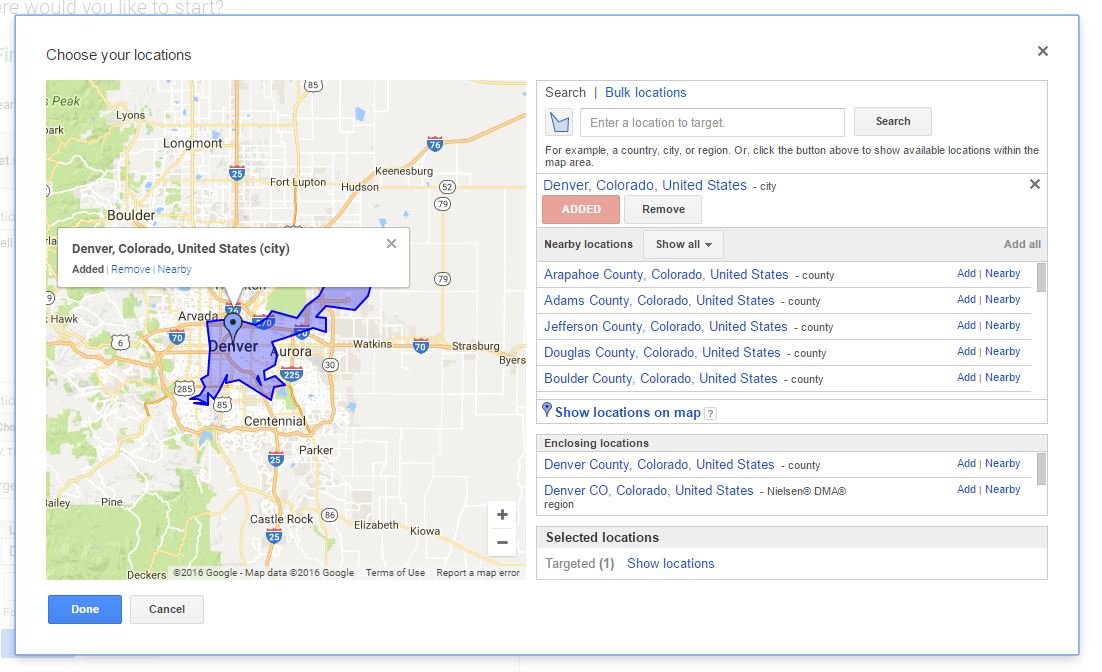
    Remember Google AdWords Keyword Planner? They have the option to add nearby locations:

    google-adwords-seo-real-estate-local

    Of course, you probably know your area even better than Google. So if you’re creating landing pages to target specific locations within your larger geography, in those specific locations as well.

    However, don’t stuff all your hyper-local keywords into one page. Instead, create 5-10 copies of your original landing page, each with the hyper-location featured in all the on-page elements mentioned above.

    Buy My House Company — For example, is one of many Carrot members who highlight location elements on their homepage:

    highlighting locations on your homepage

    But, if you hover over the “Sell Your Home” button in the header navigation, something of SEO-brilliance occurs:

    local-seo-example

    They’ve essentially created cloned versions of their homepage with hyper-local keywords for each of the areas they serve.

    Another local keyword area you have control over — although it’s not technically part of on-page SEO — are business listings. When your website is submitted on business listings like Google Business Pages, Yahoo’s Aabaco small business listings, Bing places for business, etc., it tells search engines that your website is valid and dramatically increases your ranking when someone searches for a keyword associated with your side.

    Moreover, search engines would rather list a website that’s registered as a local business, than one that is not. Be sure that the format of your NAP (name of the business, address, and phone number) is consistent throughout the Internet.

    [BONUS] 11. SEO for Real Estate Investors: Reviews

    Moz states that reviews account for 8.4% of search ranking factors for local businesses. Why do search engines take online reviews into account for search rank?

    seo real estate map

    Reviews give search engines “signals” as to:

    • How relevant your website content is according to what people are searching for in your niche.
    • Where the business is situated, also for the purpose of “area relevance.”
    • How prominent your business is and it’s objective reputation.

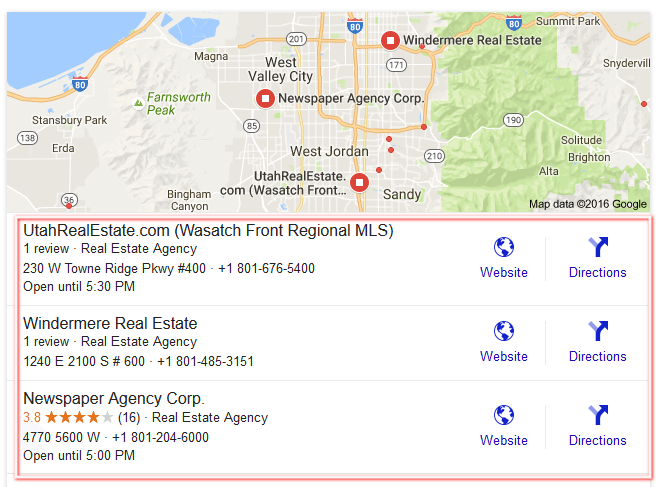
    Pushing for reviews is one substantial SEO technique to use to beat competitors in the world of real estate investment. Have a look at a Google search I did for “real estate Utah.” This is what was on the first results page, immediately under the ads, which means it gets the ultimate place of prominence:

    Can you see how every single one of these websites has reviews? None of the other results below these contained reviews.

    SEO for Real Estate Investors Isn’t Dark Magic

    We’ve covered a lot of information in this post.

    But don’t get overwhelmed.

    Instead of getting obsessed with backlinks, focus on what you can control: your on-page keywords. Select the right keywords and add them — like a human — to each of these ten areas:

    1. Title tags
    2. URLs
    3. Meta descriptions
    4. Headline tags
    5. The first 100 words
    6. Bolded words
    7. Links
    8. Image Names
    9. Image Alt Tags
    10. Local keywords

    SEO for real estate investors may seem daunting at first, but it’s what will set you apart from your competition who won’t bother learning the ropes.

    And if you want to make life a lot easier, you may want to consider becoming an Investor Carrot member, so that most of the hard work is already done for you or to get help as you go.

  • Test Results: A 49.5% Conversion Rate Improvement With One Simple Change

    Test Results: A 49.5% Conversion Rate Improvement With One Simple Change

    2015.03.19-495conversionincrease--main

    We’re fanatical testers here at Carrot.

    So much in fact that during any given week we’re setting up multiple tests on our Carrot customers’ websites based on our “data dives” that our team does into the data we’re tracking to help improve the effectiveness of our system each and every week.

    We’ve have had our heads down the last couple months getting some big projects pushed through, and frankly, have a backlog of test data that we haven’t made blog posts on yet.

    And, thanks to all of you who answered our Customer Survey a few weeks back and who said, “I want to see more test data on the blog!”… we’re going to start rolling out some results of our conversion tests here on the blog on a more consistent basis.

    One Of The Most Important Parts Of A High Converting Real Estate Investor Website Is…

    … the Call to Action area.

    call to action area on website

    The Call to Action area is the part on your website that guides the reader of your website (a motivated house seller, cash buyer, note seller, agent, etc) to take a certain action that you want them to take.

    This could be joining your Discount Property List… getting an offer on their house… or even just a free market report.

    But there are 3 core elements to a great Call to Action form…

    1. The “ask” headline:

    This is the spot that grabs their attention and hopefully spells out in a few short words the benefit they’re going to get OR simply asks them a question to get them to mentally say, “Yes, that’s me. What do I do next?”.

    2. The opt-in form:

    This is the actual form that people put their information into. We’ve tested variations of forms, numbers of form fields, size of form fields, type of information we collect on form fields… and have found a pretty darn good structure that has increased the conversion rate on our members’ websites dramatically.

    3. The action button (or “submit” button):

    This is often overlooked by people. Lots of people just assume that a person on your website is either going to click that button or not if they’re a motivated seller.

    But, that’s just not the case. We’ve tested variation after variation of different sizes, colors, positions, and words on the “submit” buttons and in many cases found dramatic differences in conversion rate.

    The Submit Button Change That Boosted Conversions 49.5%

    This isn’t the first time we’ve run this exact test… and won’t be the last.

    But this latest round of tests on the submit button on the main opt-in form on a motivated seller website had some really interesting results.

    The Hypothesis in this test:

    Will changing the words on the submit button from a “descriptor” (“Click to Continue” or “Submit”) to a “mental commitment” increase conversions?

    Every single time we’ve run this test on a real estate investor website we’ve seen an improvement in the conversion rate when we got rid of the “Submit” or “Click to Continue” buttons in place of something that said something like… “See Available Properties” or “Get My Fair Offer Today!”

    Below are a few shots of the actual tests and heat maps showing the results.

    Test #1: Motivated Seller Website – Making Button Copy More Relevant

    split test motivated house seller website
    We Added Value To The Button Copy… and made it more relevant with giving them what they want, a “fair cash offer today”… not to “continue”

    This test is actually still an active test but is currently at a 95% statistical chance to produce a winner (which is pretty darn good. We shoot for at least 97% to call it 100% conclusive.)

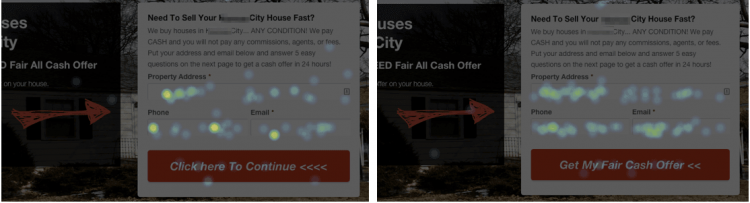
    But as you can see in the heat map image above, all we changed was the words inside that red button. All of the “hot spots” on the pictures are the places visitors to that website during the test were clicking on and interacting on.

    The Control is the button that said “Click here to Continue <<<<“… which is what we call a descriptor. It just tells you want to do.

    The Variation 1 button says “Get My Fair Cash Offer <<“… which is what we call a mental commitment. It meets the web visitor in the same mental mode that they’re in when they’re on that site… and mentally guides them toward the benefit they want (a fair cash offer on their house, today).

    The Results: Out of 569 total sellers who landed on this InvestorCarrot motivated seller website, 59 converted as a lead (a 10.37% average).

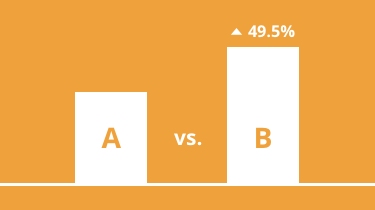
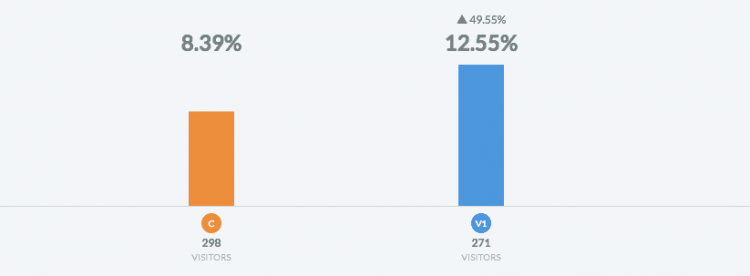
    The Variation with the mental commitment phrase… “Get My Fair Cash Offer <<” showed an improvement in 49.5% at a 12.55% conversion rate on SEO and PPC traffic… which is pretty darn solid for the home page of a website.

    What Does That Mean? Out of every 100 visitors who land on your website, you’d get 12.5 leads rather than 8.3. Doesn’t sound like a huge deal.

    But when those numbers add up it gets exciting. At 1,000 visitors to your website (assuming these numbers hold true) that would be 40 extra motivated seller leads.

    If you close 1 out of every 20 leads into a deal (which is a low percentage for many of our customers) and you net on average $7.5k (which is much lower than many of our customers net per deal)… that’s $15,000 in extra revenue without having to generate any more traffic to your website. Free money assuming your close ratio per lead stays true.

    house seller website test

    Test #2: Rent to Own Website – Making Button Copy More Relevant

    split test results real estate website
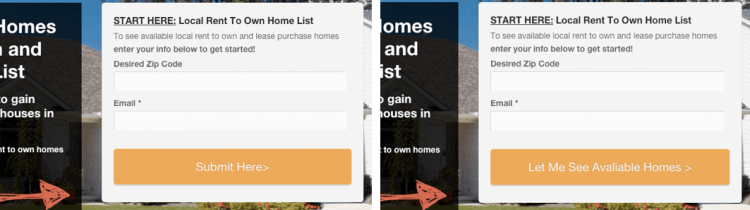
    We Added Value To The Button Copy… and made it more relevant.  It helps the person visualize what’s on the other side of the button.

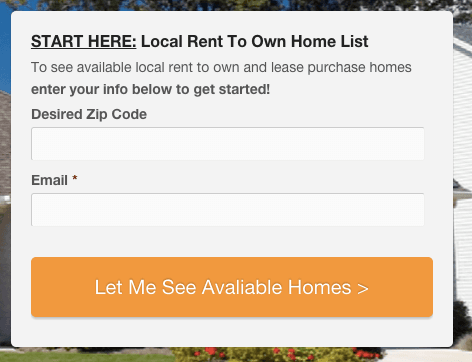
    This test was a very similar change to test #1. On this InvestorCarrot members rent to own website we simply changed the button copy from a basic descriptor, “Submit Here >” (which the customer changed the button to that text away from our default text of “Let Me See Available Homes >”… so we wanted to test it again just to prove why it was there in the first place ;-).

    A rent to own real estate investing website is going to get a much higher conversion rate than a motivated seller website is just because of the nature of the type of lead.

    But the concept still held up in this instance with a completely different type of website and type of lead.

    Why? It’s baked into us as humans to want to take the easiest path… the one with the least amount of resistance. If I landed on this website because I did a Google search to find local rent to own homes… and this button reinforces exactly what I want… to see “available homes” right now, I can’t help but follow that path and make my brain happy.

    This conversion psychology is built into all of our InvestorCarrot websites and we’re continually testing and improving every single month.

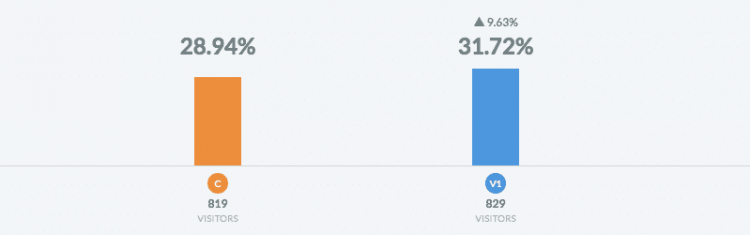
    The Results: The variation that had the button copy that was more relevant to what the website visitor was thinking performed higher by 9.63%.

    What Does This Mean? Out of every 100 visitors to your website you’d get 3 more “free” leads. Over 1,000 visitors to your website you’d get an extra 30 leads. If you were able to put just 1 out of every 30 qualified leads into a deal that made you $10k… that’s an extra $10,000 in profits per 1,000 visitors without adding any more traffic to your website. Free money.

    rent to own websites

    We’ve run this exact same test on a number of other websites (both InvestorCarrot sites and non-Carrot sites) and results have been similar.

    So make sure to update the call to action text on your submit buttons to add more value to your website visitor.


    How To Change The Submit Button Text On Carrot Websites In Under 10 Seconds

    If you’re an InvestorCarrot member reading this and have set up your website within the last 5 months, this change is already the default setting on all of your websites. Yay!  As we find things that perform better, we automatically build them into the system… and in some cases make those changes across the board for our members.

    But here’s how you can change your submit button text quickly if yours says “Continue” or “Submit”.

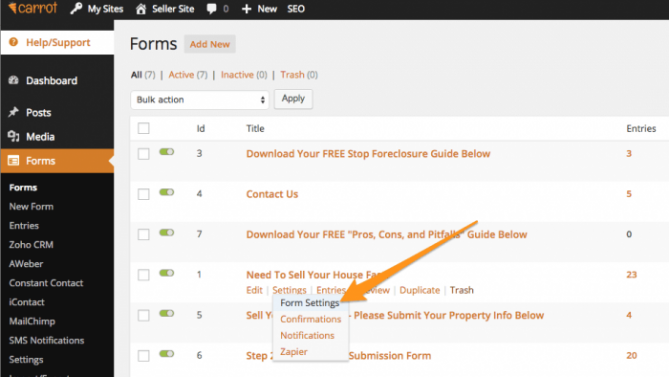
    1. Go to the “Forms” tab and click the “Settings” button on the form you want to change.

    forms-update


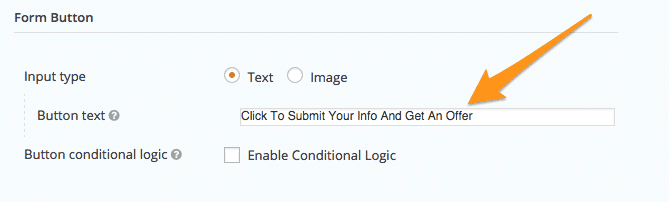
    2. Go to the “Form Button” section and update the “Button Text” box. Done!

    forms-update2

    Done!

    3 Other Call To Action Button Conversion Boosting Ideas

    This article is only walking through this one hypothesis… that changing from basic “descriptor” submit button copy to submit button copy that adds more value to the visitor and talks about the benefit they want to get, increases conversion rates and leads.

    But, we’ve tested (and are currently testing) many many other elements of the opt-in box.

    But here’s some things you may test if you want to get all geeky like us and work on improving the conversion rate of your websites (if you don’t want to fiddle with it and would rather have us do it, we include our conversion testing assistance for any InvestorCarrot customer who is generating at least 100 visitors to their website a month. Why? Simply because we’re dedicated to continually improving the effectiveness of our Inbound Online Marketing System and websites for real estate investors. We don’t just try to make pretty websites. Our members are pulling in over 13,000 leads a month because of the combination between our innovative websites and SEO benefits, our conversion optimization focus, our training, and our hands-on high-level strategy help. )

    1. Change the “possessive” noun from 2nd person to 1st person: “Get Your Fair Cash Offer!” to “Get My Fair Cash Offer!” . We’ve shown this to improve conversions in many cases and has been shown to do the same in test after test in other industries.
    2. Button Size And Position: I see too many real estate investors websites have their call to action button too small… or it blends in to the rest of the page. We’ve found choosing a button color that stands out on the page (contrasts ideally) and is as large as the form fields have improved conversion rates by a measurable amount.  We’re running a button size test right now on the website of one of the largest investors in California… and it’s showing a 200%+ improvement so far (it’s early). And it’s no accident that the call to action button on InvestorCarrot websites is wide, large, and the same width as the form fields (we’ve tested it many many times).
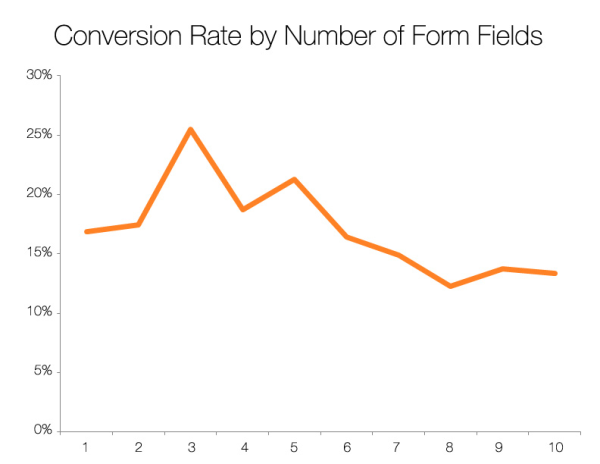
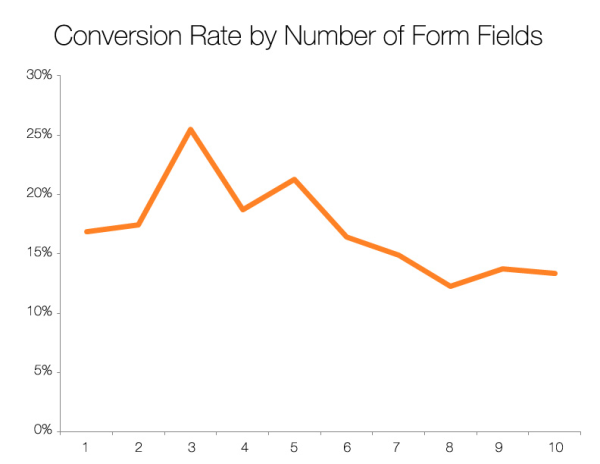
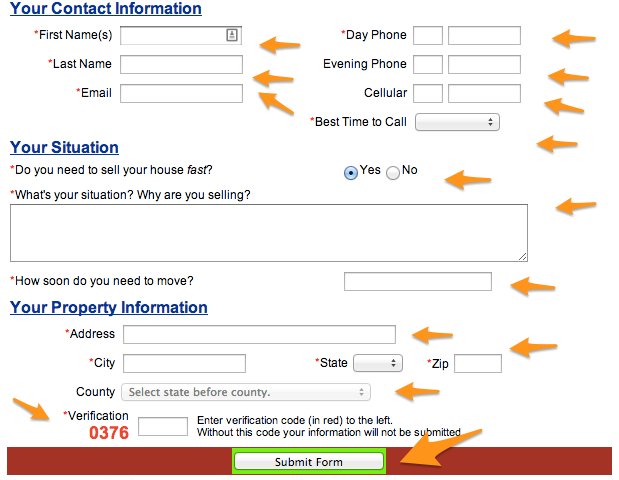
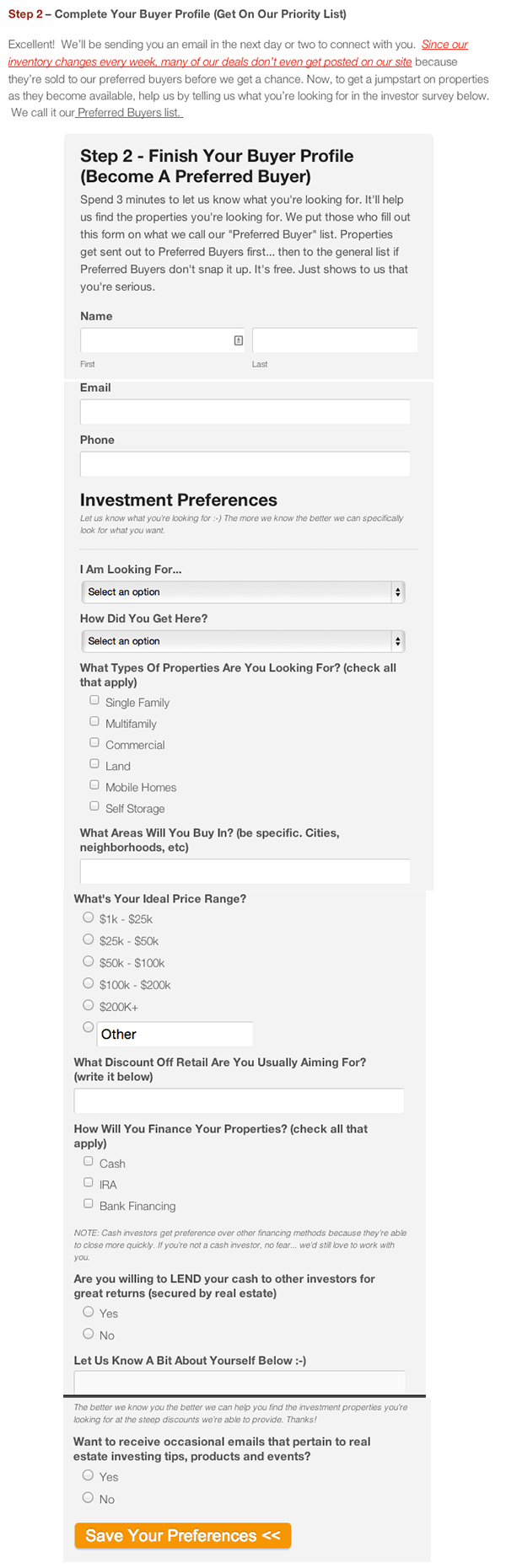
    3. Form Fields: Form fields can make one of the biggest differences in your call to action area. We’ve tested it and settled on about 3-4 form fields on your front end form (the form your visitors see first) is ideal for conversions. Then, feed them to an effective “step 2” to further qualify them (it works like gangbusters on InvestorCarrot websites). But don’t take our word for it, here, here, here, and here also tested the same thing and found the same results. It’s human psychology in action.
    Image Credit: Hubspot
    Image Credit: Hubspot

    So if you are making any of those mistakes or just want to test them on your own website, put that in your action plan this week and get to work!

    We Think About Conversion So You Don’t Have To

    carrot team 2019

    60,000 Leads Per Month (2020) And Climbing – Gotta Love That

    Here at Carrot we get emails and live chat messages every week from members who say that their Carrot website performs better than their old website.

    Not just in the search rankings (which Carrot sites hold more page 1 rankings for search phrases that matter than any other website platform for investors) but also on the conversion rate.

    Now, let us get real here for a second.

    Do we have a magic potion that makes our websites convert more visitors into leads? Nope.

    You can learn to do your own conversion testing just like we have over the past 7 years… testing millions of visitors to our pages and well over 1,000 individual tests over the years.

    Over time you get good at figuring out what works and what doesn’t.

    And when a customer emails us saying “I didn’t tweak hardly anything and my Carrot website converts 4x more visitors into leads than my other website”… that makes us giddy like a rabbit in a… well… carrot patch ;-)

    So if you just want to focus on doing more of what makes your heart sing (the stuff you love to do in your business) and less of the techie and marketing stuff you don’t like or just flat out don’t have the time for… that’s why some of the top investors around the country work with us.

    We’re not the cheapest monthly rate on the block… but like we showed in this post… we’re dedicated to making your real estate investing websites more effective to generate more real estate investing leads for motivated sellers, cash buyers, private lenders, rent to own tenant buyers, note sellers, and more.

    And if you close only 1 extra deal because of our commitment to results over all else over the lifetime of your account with us… that alone will pay for 10-15 years of InvestorCarrot service in that extra “found” revenue.

    Take a demo of Carrot today or reach out to us if you have questions in the comments section below.

    And heck, if you liked this post, hit the Facebook “Share” button and Linkedin button on this page. I’d appreciate it a ton. It keeps us motivated to keep putting out great content like this you can’t get anywhere else in the real estate investment industry.

  • Video Marketing For Real Estate Investor Websites: Good Idea or Bad?

    Video Marketing For Real Estate Investor Websites: Good Idea or Bad?

    Video marketing can generate huge traffic and great conversions, or… it can suck the life right out of your message.

    Welcome to another edition of the Carrot Test Kitchen… where we break down our recipes and show you how to create insanely great lead generation sites for your real estate business.

    Today’s post will tell you how to set up a great, low-cost video marketing campaign that (if it’s done right) can really help move your business forward.

    Fortunately, it’s really easy to add video to your InvestorCarrot site… and to get some great benefits from Google’s traffic at the same time.

    In this post I’ll show you how to add video to your InvestorCarrot sites, plus give you a great example of a video to watch right now… and tell you what *not* to do.

    First, why does video marketing matter to real estate investors?

    Video marketing is particularly important for real estate investors, because when you use it properly, it can really help to grow your business.

    Think of your video like an automated salesperson for your business… once you record that video, it can be played again and again to anyone who is looking for your services, day or night, on weekends and holidays… without the bother of an interrupting phone call, while eliminating the hassle of having to say the same thing again and again.

    A great video is more than just a commercial for your business – it builds trust for a great beginning to your relationship with a new client.

    A great YouTube marketing video sets the stage for negotiations by showing off your credibility and describing how you do business.

    A truly great marketing video helps the viewer to trust you, like you, and want to do business with you.

    On the flip side, a bad video can really turn people off.

    If you’re showing your potential clients a cheesy video that’s heavily scripted with obvious sales language, loaded with stock photography and drowning in clip art, what are they supposed to think about you and your business?

    To put it another way…

    If you never show someone your own voice and use your own face, how are they supposed to trust you?

    See, here’s where real estate investment is very different from a household product that’s advertised on the television.

    If you’re selling something like shampoo or root beer, you don’t have to convince the consumer that you’re trustworthy or credible… just that the shampoo will bring you that silky, luxurious hair you’ve been wanting, or that this root beer will deliver more delicious flavor than any root beer they’ve ever had.

    When you’re selling products, trust can really help… but it’s not essential.

    But when you’re trying to convince someone to let you buy their property or sell them an investment, trust is utterly critical. It’s everything. Without trust, you don’t have a deal.

    And yet I see so many real estate investment companies using these terrible little $5 videos they bought online, probably late at night after a few drinks… and now they’re probably wondering why no one is watching and why their business isn’t growing.

    Would you want a $5 salesperson to represent your business?

    In most big companies, the top salesperson is the second-highest-paid in the company… right after the CEO.

    Sales is the life blood of businesses. Without sales, there is no revenue, and without revenue, your company will die.

    Exactly why would you trust a $5 sales video with the life blood of your business?

    Don’t get me wrong… I don’t think you need to spend a ton of money on making a video in order for it to be effective.

    In fact, we’ve found that most real estate customers are turned off by flashy marketing loaded with gimmicks. They really are just looking for a credible, trustworthy person to help them take care of business.

    You really don’t need to do more than just talk into a webcam to make a decent sales video.

    These few things will help you to make a great video marketing piece:

    • High quality audio (i.e. a great microphone)
    • High quality video (i.e. a decent camera)
    • Good lighting
    • Nice setting
    • Clean editing

    You can find someone in most cities who already has the equipment and pay them for a few hours of help… generally under $500 can get you a handful of pretty good short videos.

    If you’ve got the budget you should definitely be hiring great people to make your videos even better.

    Want to see an example of a decent low-cost marketing video?

    Check this out:

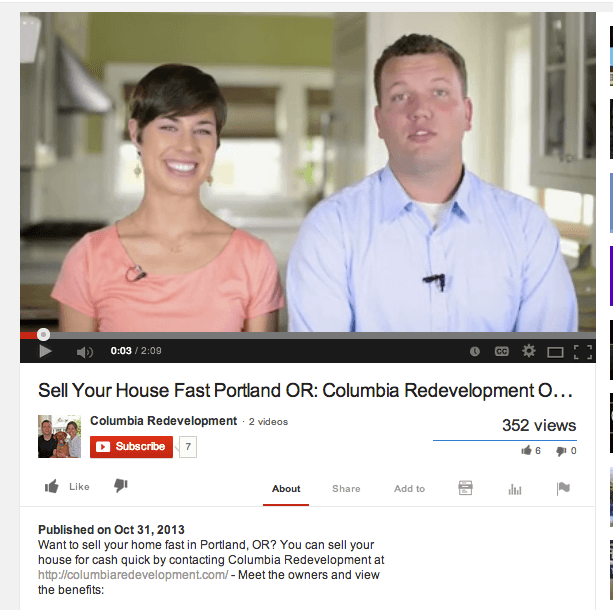
    Sell House Fast in Portland Oregon: 4 Easy Steps

    They’ve got almost 10,000 views on that video, wow!

    Their other video has a more reasonable view count – 352.

    What I like about this couple is that they’re showing off themselves – sure, they’ve dressed up to film the video and put on their best smiles, but it’s genuine and authentic.

    Side note – I checked out their site, and there are a lot of reasons their site won’t get very many conversions… it’s got good credibility, but it makes it hard for folks to sign up for the offer… those folks need to Watch the InvestorCarrot Demo and make the switch! Any of our affiliates know these folks and want to sign them up? :~)

    But they did the smart thing of actually using the description on YouTube to pull traffic over to their site by using links and a lot of the most commonly used search terms. Since Google owns YouTube, the videos will show up at the top of the search (even if their site isn’t ranked that high), so this can be a great way to get traffic to your site

    Plus, it looks like they got a few of their friends to comment and share the video (which helps to boost credibility/

    Those are all really great video marketing practices!

    Now let me show you how easy it is to add a video to your InvestorCarrot site from YouTube.

    First, get the video up on YouTube and copy the link to the video.

    In another window, open up the post or page where you want to embed the video.

    Then click the snazzy little “Embed Video” button.

    This nifty little window will pop up, and just paste the YouTube (or Vimeo) link into the form.

    That’s it! How simple was that?

    If you’ve got any questions: A full tutorial is available for Carrot Members here.

    And if you’re not already a Carrot Member, check out the reasons you should be!  Watch our Demo Video right now!

  • Why The “2-Step Opt-In Process” Increases Conversions and Lead Quality By Up To 46% On Real Estate Investor Websites

    Why The “2-Step Opt-In Process” Increases Conversions and Lead Quality By Up To 46% On Real Estate Investor Websites

    Welcome to another edition of the Carrot Test Kitchen… where we break down our recipes and show you how to create insanely great lead generation sites for your real estate business.

    Our sites get insanely high conversion rates… you just have to customize them to your business and your local market, then send traffic to them! (Don’t worry, we’ll show you how – it’s easier than you think. :)

    (Of course, this stuff is baked right into our sites, and our prices are so low that it’s impossible to do it cheaper yourself… if you’re not already a member, head over and check out our demo right now).

    Today we’re gonna show ya the exact trick that improved conversions by 46% right when we started implementing it years ago.

    It’s so simple that once you learn it, you get it… in fact, I bet you’ve seen versions of it used before. While we didn’t invent it, we’re perfecting it for real estate investors.

    It’s called the 2 Step Opt-In Process, and I’ll tell you how it works and what you need to know to make money from it.

    The first step of the opt-in process happens on the Lead Page – there are many lead pages built into every InvestorCarrot website, and you can create unlimited additional Lead Pages. It’s super cool.

    Step 1: Research Shows A Form With 4 Or Fewer Opt-In Fields Increases Opt-Ins On The Front End

    Below is an example of a lead page on a Cash Buyer site on the InvestorCarrot system. It’s a great landing page for advertisements on Craiglist, Backpage, Zillow, Google, Adroll or many other sites and converts consistently high across our member’s sites too. :

    Heatmap____Visual_Website_Optimizer

    COPYRIGHT NOTICE: All of the content on our websites are 100% Copyright protected and owned by our company. Only active paying InvestorCarrot members can use the content on our websites. If we find people copying our content off of our customer’s websites or from our images on this page, we will pursue violators for copyright infringement. 

    As you can see, there are only a few quick questions to answer – name, email, phone and type of investor.

    Lots of testing has shown that 3-4 form fields are ideal for conversions – any more or less actually drops the rate of performance. This graph from HubSpot’s research on over 70,000 forms shows why 3 is the magic number for conversions:

    fields-resized-600
    Want to Increase Your Leads? Make your first opt in form have 4 or fewer fields. – Source for Graph:  HubSpot

    We’ve tested the number of things our forms ask for on the first opt in box for both buyers and sellers… and once you start to get past 3-4 on your first form… your conversion rates go way down.

    You’ll see lots of real estate investor websites that are killing their conversions by asking for way too much information on the first chance.

    Like this one…

    real estate investor website conversions
    Too Many Fields Kills Conversion: This particular form we found on a random real estate investor motivated seller website has 13 fields. How many does yours have?

    Can you imagine being a motivated seller who really needs to sell… but just isn’t ready to give up all of your info quite yet on this first form… yet almost every field on that form is required for you to get to the next step?

    However, when a motivated seller does submit this form… you know that they’re VERY QUALIFIED.

    Long forms are terrible for conversion… but increase the quality of your leads.

    So we melded the two into…

    Step 2: The Best Of Both Worlds – High Conversions AND Qualified Leads

    A short-form upfront to increase lead conversion… and a long-form on the second step to increase your lead quality.

    To get the highest conversion and the most qualified leads (the ultimate goal), the key in the 2-step opt-in process is a short and sweet “Step 1” form… that leads to a longer more qualifying “Step 2” form.

    Once the buyer (or seller) completes the first form… the shorter form, he or she will see a more detailed Buyer Profile to fill out before seeing the properties. This Buyer Profile Form further qualifies the buyers. The same goes on our motivated seller websites… we have a short form upfront that gets the lead… then a longer form on the back that qualifies the lead further:

    second-page
    Hidden Elements: There are many “under the radar” strategies being used on this form that you probably don’t even notice that further qualify the lead and increase conversions. For instance, notice that we’ve strategically made some fields “required” and some not required. Why? We reveal this kind of deep strategy to our InvestorCarrot members on our weekly LIVE coaching calls with our CEO Trevor. Not a member? Join :-)

    COPYRIGHT NOTE: Again, please be creative and write your own content. The content above is owned and written by InvestorCarrot… and only available for use by our active paying members. We actively monitor the internet to find people infringing on our copyright and pursue action. We have to do this to protect our active members and the investment they and we have made. If you’d like to leverage our system, our content, see our pricing and plans and come aboard, we’d love to have ya! 

    Do People Actually Fill Out A Form This Long You Ask?

    We get pushback from many InvestorCarrot members who want to change this step 2 form because they think it asks for too much info and the buyers and sellers won’t fill it out.

    Our answer to that is this… we’ve tested it… and it works.

    Here’s real-life data to prove the way we’ve set up OUR Step 2 forms (every word and every line on our forms and the other words on the page that the forms sit on… which isn’t shown above… are crafted and tested to increase conversions… and your leads).

    93% Of Cash Buyers Filled Out The “Step 2” Form

    Dashboard_‹_Hot_On_Wholesale_—_WordPress-4
    93% of Buyers Filled Out The Step 2 Form: In this screenshot on an Carrot members cash buyer website 93% of every cash buyer who filled out the first form went on to also fill out the 2nd longer form. It’s no accident… the way we craft our 2 step opt-in process plain works.

    99% Of Motivated Sellers Filled Out The “Step 2” Form

    Dashboard_‹_Real_People_Real_Property_—_WordPress-3
    99% Of Motivated Sellers Filled It Out: It works even better with motivated sellers.

    Again, it’s not just the fact of having 2 steps that’ll optimize your conversions and quality of your leads… it’s what you ask for on your forms and how you frame that “Step 2” form on your page that makes it work.

    If you’re an InvestorCarrot member, rest assured… this is already built right into all of your websites (your seller websites, cash buyer, rent to own, apartment rental, main company, etc.).

    Years ago, we found that the 2-Step Opt-In Process improved conversions by 46%… with dramatically improved lead quality.

    We’ve been using 2-Step Opt-Ins on all of our sites ever since.

    If you’re trying to build a real estate investing website from scratch to capture seller and buyer leads for your real estate investment business, you’re probably missing a few other key aspects of the formula that allows us to get insanely high lead capture rates for our members.

    Want to just leverage our research and our platform and save time and money?

    Join InvestorCarrot below… all of our websites come pre-built with the “2 Step Opt-In Process”.

    Want to see what else Carrot’s sites can do? Watch the demo now!

    Are you a paying Carrot Member wanting to improve your marketing results?

    Join our Live Coaching Call <– click<<<<<<

    Each week we answer specific questions from our members to help them solve their toughest marketing challenges.

    Space is limited, so sign up now! It’s free for Carrot members.

    If you’re not already a Carrot Member, joining is easy <—– Click that now to get started!

  • REVEALED: Your Real Estate Website is NOT Responsive? You’re Losing Up To 40% Of Your Leads

    REVEALED: Your Real Estate Website is NOT Responsive? You’re Losing Up To 40% Of Your Leads

    This is a Carrot Test Kitchen post – that’s where we break down the secrets of lead generation (building traffic & converting) to help YOU grow your real estate investment business.
    UPDATED 2/24/14 with thanks to Chris Clothier from memphisinvest.com and new screenshots.

    Is your real estate investor website mobile responsive? Having a responsive real estate investor website is important because of the types of devices users now have access to. If your website is not responsive then you need to find a template that is…quick.

    In other words… Does your real estate investing website automatically adapt for the screen on the device that your customer is using to look great to the customer so they engage in your website more easily? Responsive optimized real estate investing websites are critical.

    (Try our free test to instantly see how your website looks on mobile devices <— Click here)

    mobile-search-is-growing
    Every year the % of searches online with mobile devices (cell phones, ipads, etc.) is growing… which means more and more of your website visitors are viewing your website on their phone! Is your website setup *correctly* to handle that? See how below…

    Even though a huge amount of internet use is taking place on tablets, mobiles and other devices, a frightening amount of real estate investor websites aren’t responsive for mobile users.

    Smartphone visits account for a huge share of the growth of the internet.

    People are using their mobile devices more frequently for local search – and that matters a lot for real estate investors.

    Google says that 40% of mobile searches are local in nature, which seems obvious once you think about it. People are using their phones to access information while they’re out and about. That trend is going to continue rising, and fast.

    If your real estate website is set up to convert well, it can easily capture leads from someone who is searching while stuck in their car, waiting in line, or killing a few spare minutes before a meeting.

    Plus, more and more people ditch getting a full on computer for their house and just use their cell phone to browse the internet and check their email.

    Too many real estate investor websites are losing huge amounts of conversions just by not being ready for them.

    So back to the main question…

    If you’re not, you should be checking out the InvestorCarrot demo video right now.

    But don’t worry… you’re not alone on optimizing for a responsive real estate investing websites.

    I’ll use an example from a really smart and successful investor now – just to show that even great real estate investors aren’t optimized for mobile.

    This guy has already been named to Inc’s 500 list and is one of Tennessee’s fastest growing businesses, so he’s doing a lot of things right. He’s working really hard to build an awesome business, and it shows.

    ((My thanks to Chris Clothier from memphisinvest.com – I just spoke to him about using his site as an example… and he’s right, it would have been more polite for me to ask permission first… I have never been good at asking first, but I’m trying to get better, so here’s my apologies along with my thanks to him for being a good sport.))

    His site’s template isn’t responsive… it doesn’t automatically adjust the layout to make it easier for mobile phone users, which may or may not (depending on their device) be able to play the video on his home page.

    His site’s menus will be very difficult to use on a touch screen, and chances are good that he’ll lose any mobile users who may have been interested in his products and services.

    memphis-iphone

    Just to be fair, Chris does have a nice looking website – here’s a desktop photo below.


    There’s a few things I’d change to make it convert better, make it mobile optimized (obviously) and things like adding a first-step opt-in form to capture email addresses right on the front page before going to a longer form (that’s a feature we’ve used to get huge conversion rates on our cash buyer sites, but I’ll save that for another post).

    Most important takeaway for sites like Chris’: make an offer on the front page with a short form to capture basic info. If someone only has a few moments to access your site, make it very simple and clear. Chris is primarily targeting investors, so access to investment properties or a free report would probably convert well right on that main site.


    Here’s an example of one of our mobile optimized real estate investor sites that’s converting really well with a clear call to action:


    As you can see, the call to action is clear and they’re taking some basic contact info on the main page… once a buyer opts in, that person will be taken to a second page that collects just a little more information on the buyer… that’s a opportunity to qualify accredited investors who are willing to “raise their hands” during that second step of the process.

    Now let’s see how that translates to the mobile optimized screen:

    As you can see above, the page has automatically changed its layout… because the site is mobile optimized, like all InvestorCarrot sites. There is a clear call to action at the top that is easily legible and clickable: “Join our Hot Properties List Here”, plus a “navigation” menu and the ability to keep scrolling.

    Here’s what the navigation menu looks like when clicked:

    As you can see, the choices fill the screen so it’s easy for a mobile user to click the options (instead of having to pull-zoom and click really small links, which usually ends up in a frustrated user… and frustrated users don’t opt-in, they leave.

    And if a visitor to the site scrolls down past the navigation menu, they’ll get to an easy form to get access to the properties:


    As you can see, the Call to Action at the bottom is clear and it fills up the screen, plus the form is short – only 4 choices, easy to fill out on a mobile device. This website will help convert mobile visitors into actual customers and leads… not bounce them away in frustration.

    Want to see how your site looks on mobile devices?

    Ready to take your business to the next level?

    Get a mobile responsive lead generation machine launched in just minutes:

    Sign up for InvestorCarrot ← Watch the demo now!