Given our reader’s interest in sending direct mail, we thought it would be appropriate to write a piece about what direct mail strategies are working for real estate investors.
And then we thought to ourselves, “Hey, we know a lot of real estate investors” (also known as all of our AMAZING clients).
So, we asked them what strategies they use when sending direct mail. This is a compilation of their techniques, results, and advice. Here’s what they’re doing.
Direct Mail Strategy For Real Estate Investors – A Case Study With Our Carrot Members
Frequency
Brad Chandler
Brad Chandler, real estate investor at Express HomeBuyers, sends direct mail to prospects once per month. To manage high volume, he splits their mailing list into groups and sends a batch of mail to one group each week.
This is a postcard that Brad sends to his list.
Front:
Express Homebuyers Direct Mail Postcard: Front
Back:
Express Homebuyers Postcard: Back
Daniel DiGiacomo
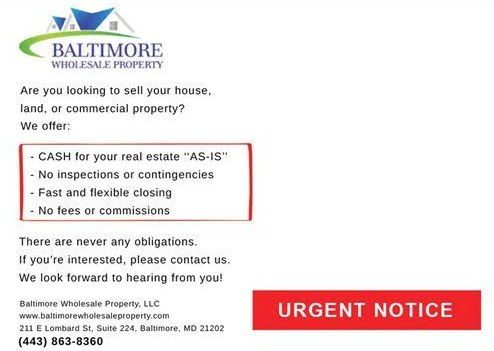
Daniel DiGiacomo, owner, and investor at Baltimore Wholesale Property, sends 10,000 pieces of direct mail every month. Additionally, he sends between 1,000 and 1,500 yellow letters each month. On the yellow letters, he has them designed to look as though they’re written by hand.
These are some pieces that Daniel sends regularly.
Baltimore Wholesale Property We Buy Houses Direct Mail Example #1
Baltimore Wholesale Property We Buy Houses Direct Mail Example #2
Baltimore Wholesale Property Direct Mail Letter Example #1
Baltimore Wholesale Property Direct Mail Letter Example #2
Response Rate
Emphasizing that direct mail is a numbers game, Brad said,
“Sending out a couple hundred postcards probably won’t get you a deal. We typically see response rates of 0.5%-1.5%. Our leads convert at around 3%.”
Those percentages aren’t uncommon in the direct mail world, with the average across all industries sitting at 4.25% for postcards.
Daniel has somehow surpassed the average response rate with his direct mail campaign. He see’s a 7%-10% response rate on his postcards and a 20% response rate on his yellow letters. Appropriately, Daniel claims that his success comes from choosing his mailing list wisely.
Build a Quality List
“List quality is the most important part of direct mail,”
says Daniel,
“I like to target absentee, out of state owners that are likely older (55 and up).”
As for Brad’s list, his data suggests that the best performers are homeowners with 70% and higher equity, out-of-state homeowners, and probate.
Also worthy of note, Brad says,
“Response rates will be highest when you first mail a list. There will be a lot of people asking to be removed from mailings. As you continue to mail the list, response rates will decrease but you will get high quality leads.”
Quality Leads
Edward Beck
As a tip, real estate investor Edward Beck, from Quick Sell Buyers explains why quality leads are more important than quantity of leads.
He says,
“The main difference I have from all the others is that my stuff is honest and not smoke and mirrors.”
He believes that honesty matters to prospects today, because, in the marketing world, they see so little of it.
“I’m not leading the seller to believe I’m going to pay full price or that they would get a better deal not having a middle man (agent). I believe this is the biggest shortcoming with other mail pieces.”
Indicating that dishonest marketing techniques bring in low-quality leads, he continues,
“Yes they will have a higher response rate but when they make an offer the sellers are in a different frame of mind… The market is flooded with [dishonesty] and I believe [prospects] can smell it.”
Test & Iterate
As with all marketing, testing is key. When it comes to direct mail, you can test the copy, the images, and the style of the postcard.
For A/B testing, Brad explains that sticking with a single postcard makes it a whole lot easier to test accurately.
“We think it is smarter to stick with one postcard. The reason is that sticking to one postcard makes it easier to A/B test new ideas.”
But it’s not just testing that counts. It’s the application of the test’s findings that really makes the difference. On this, Brad says,
“We continuously iterate our copy and design to improve the conversion rate of the winning postcard.”
Supplemental Marketing
Don’t forget to follow up your direct mail campaigns with Facebook Ads, phone calls, and whatever outreach is appropriate.
Having several marketing touch points is critical with direct mail. As Brad explains,
“When you target prospects through direct mail, you also want to target them on other marketing channels. To do this, make sure you get emails and phone numbers with your lists. Have VA’s call the prospects right after the mail is delivered. Also, upload your lists onto Facebook as custom audiences spend some money running Facebook ads to your mail lists.”
What Do You Do?
Hearing what other real estate marketers are doing with their direct mail campaign is helpful. So don’t let the conversation stop here. Brad, Daniel, and Edward made generous and transparent contributions to this piece.
Do you agree with them? Disagree?
What does your direct mail strategy look like and what kind of results are you getting?
What if you could read the mind of the motivated seller? Meaning, what if you could send the right message to the right person at the right time?
Unfortunately, the internet provides a threat to match its opportunity. While powerful, the internet’s power can easily be strangled by its formidable size. Quickly, it becomes a source of crowded destruction instead of open possibility.
The real estate market is increasingly competitive because it’s increasingly cluttered, making the dream of reading the house seller’s mind, at the least, difficult, and at the worst, debilitating.
But here at Carrot, we hate letting dreams die.
Every year, our clients pull in over 400,000 online leads, giving us a very special position to speak to what’s happening in the real estate market.
Even though the market is more crowded than ever before, by accepting this density and optimizing your customer experience for the motivated seller, that crowded room becomes a pleasant dinner party. And you’re the host.
So, how do you cater and attract a motivated house seller?
Well, you need to know what the motivated seller thinks, wants, and does. Lucky for you, we crunched some numbers, ran some tests, and stepped into their mind… using a significant and varying sample size, specific to all seller websites we host.
And we want to share what we learned.
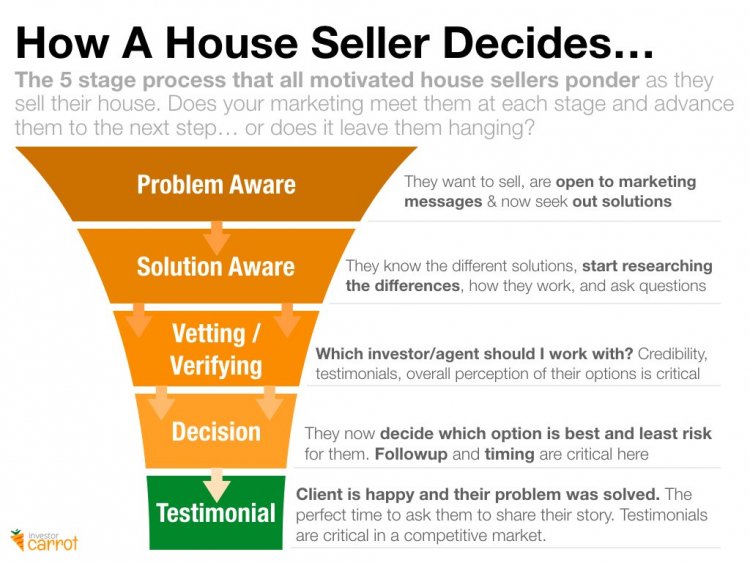
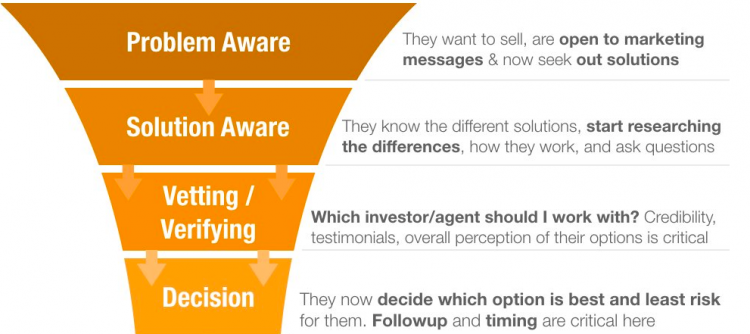
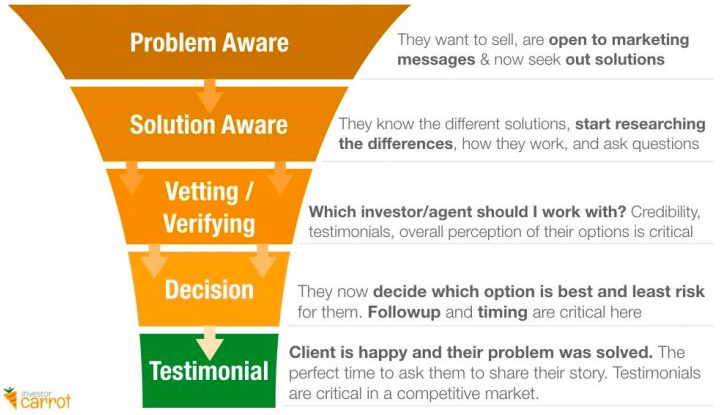
So, before we finish wiping off brain matter, here’s how the motivated seller makes the decision on who they’re going to work with when selling their house… based on our years of research and understanding the “decision lifecyle” of the average motivated house seller.
Let’s Get Inside The Mind Of A Motivated House Seller On Their Path To Choosing A Company That Can Solve Their House Problem
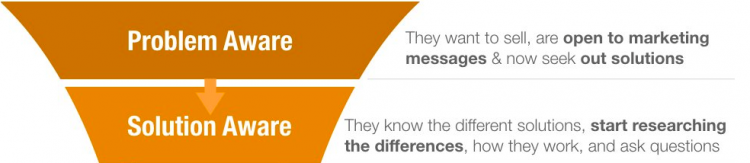
Step 1: Problem Aware
The house seller knows they have a problem… but aren’t sure how to best solve it. This is where you come in…
At this stage the motivated house seller is thinking…
“I need to get this house sold, like soon.”
This is the birth of the motivated seller.
Maybe they received a job in a new state, a family has fallen sick, foreclosure, inherited a house, going through a divorce, or just simply have a house that needs lots of repairs that they don’t want to deal with. Regardless of the reason, life circumstances spiked their curiosity in the selling process and they start exploring the possibility.
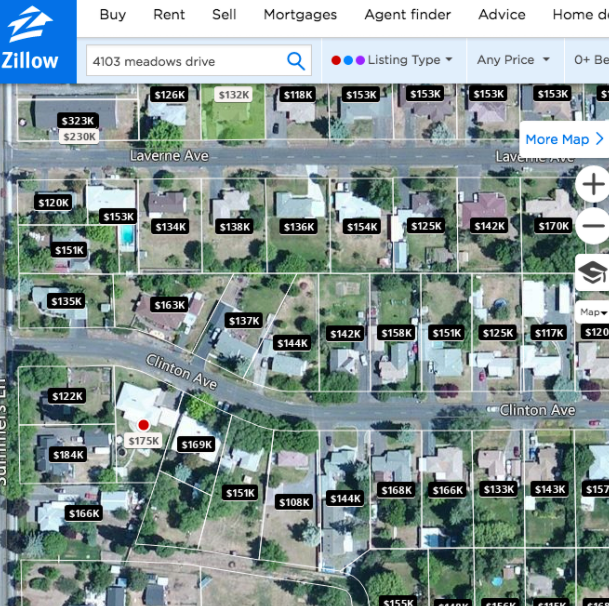
First and foremost, the seller wants to know how much they can likely sell their house for. They’ll likely visit Zillow, update their house information, and then check out their Zestimate.
But, while Zillow offers convenience, John Wake’s guess work, on Real Estate Decoded, estimates that Zestimate’s typical error is plus or minus 14,000 dollars.
And whether the motivated seller has run their own tests or not, their trust for this system is limited. It offers a curiosity-sating foundation, but not a real-time solution.
Which is good. Because you are the real-time solution they are looking for.
That takes us to the seller’s second dig: they contact someone who can answer their questions in greater depth.
Likely, this is someone the motivated seller’s acquainted with, whether it be a friend, a Facebook ad, or a Twitter feed. Whatever the case, they are looking to make phone calls and get answers.
It’s your job to (1) get them to call you, and (2) provide those answers.
Here’s how.
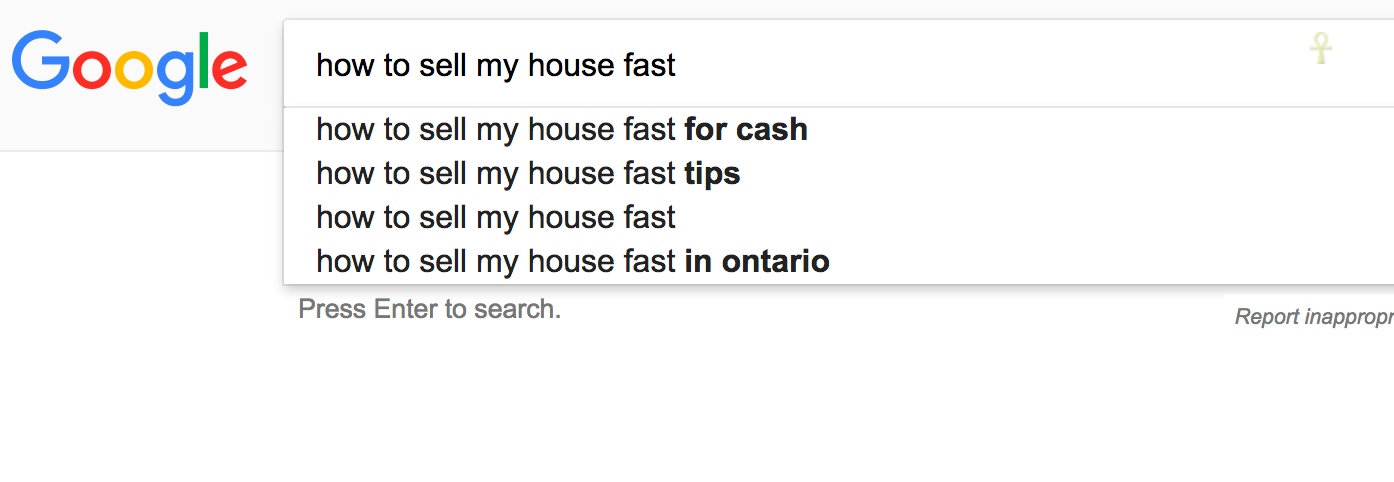
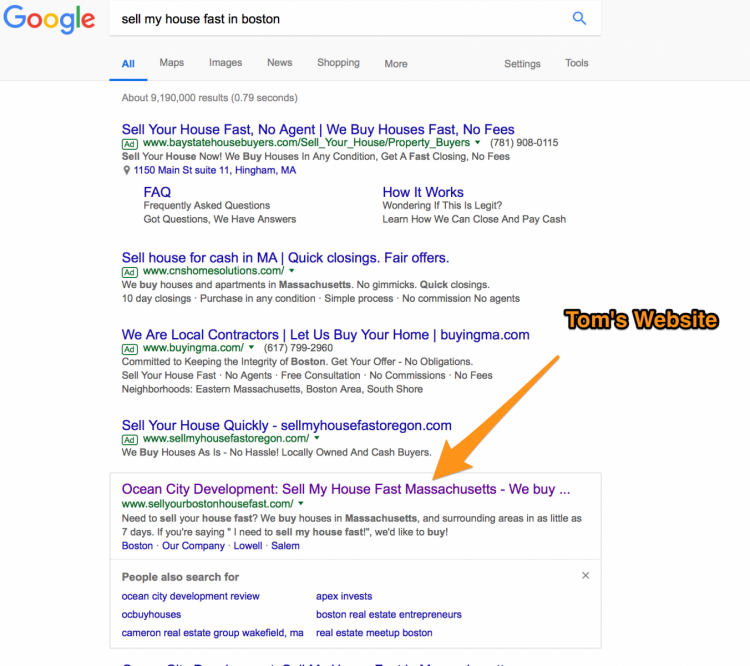
1. Get In Front Of Them Where They Search… Google
House sellers will hit Google to search things like “how to sell my house fast” or “selling a house in divorce in dallas” to find basic info about their options.
If you’re ranked high in Google with SEO or PPC and you deliver great content on your site that clearly shows them that you have a service that can solve their problem… you’ve just met them exactly where they are in the decision cycle.
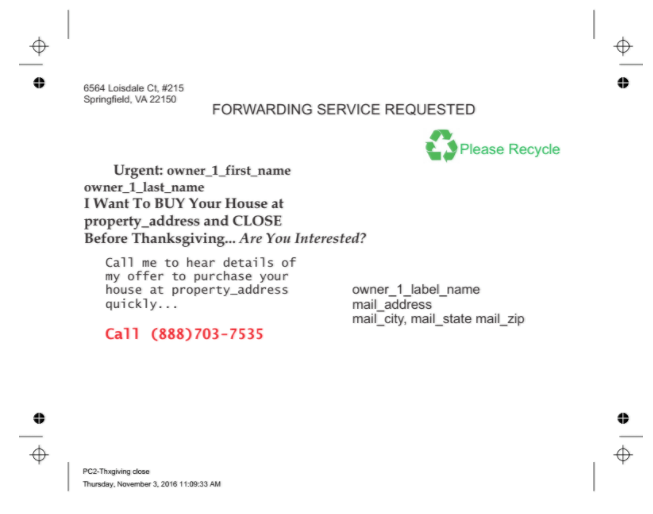
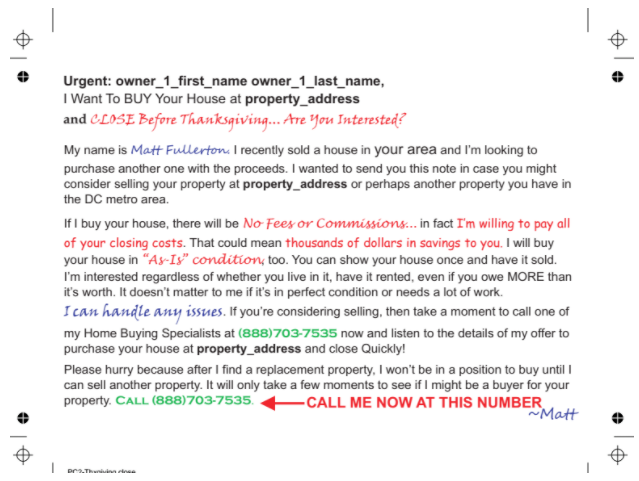
2. Direct Mail
At this point, your prospect is also now receptive to marketing messages that look like they’ll solve their problem.
You dig through the mail. After tossing the credit card offers and ripping up the bills you’ll just pay online later, you come across a handwritten letter. Whoa! That’s unusual, you think. You quickly check your mental calendar to see if today is your birthday. Maybe your aunt has sent a card with $5 inside. Nope. What’s going on?
Maybe the letter is from the local movie theater, maybe it’s from a church, or maybe it’s from a local real estate investor.
Maybe it’s from you.
The point is that everyone gets a lot of mail, but if you make your letter stand out from the rest, people will feel that much more a part of your tribe.
Direct mail isn’t dead. In fact, since it is slower than nearly every other medium of communication, that snail-like pace has romanticized its effect. Like candlelight and bathtubs, the receiver feels like they’ve been transported back to better, more personal, times, and because of that, it has an intimate feel… if it’s done right.
12-point Direct Mail Checklist for Real Estate Investors and Agents
A checklist to ensure consistently remarkable mailers that generate leads, grow your business revenue and make your campaigns more sustainable.
3. Social Media Presence
Don’t break the bank for Facebook advertisements. But do maintain a social media presence — post on your account regularly — as a preemptive strike to the motivated seller’s subconscious.
When trying to decide who to contact with all of their questions, the seller thinks, “Hey, I remember seeing real estate investor, Joe the Pro’s [this is you], posts on Facebook. He seems like he knows what he’s doing. I’ll contact him!”
In fact, second, only to Direct traffic, Social Media wins when it comes to acquiring new sessions on your website.
Some ads that just let them know your service exists will be perfect for this phase. Like…
or…
Play with the endgame in mind. The more people who notice you on Social Media, the more people who’ll contact you when they decide to sell their house — which we all will at some point.
Marketing Tips For This Phase:
Do more broad marketing as targeted as possible
Focus on just letting them know you have a service that can solve their biggest needs (speed, convenience, no fees, no agents, etc.)
Bonus: Have your ads drag them to the next phase (Solution Aware and Vetting / Verifying) w/ testimonials in your ads
Step 2: Solution Aware
They know their basic options, agents vs. investors… they just need to research more to see what’s best for them.
At this phase the house seller is likely thinking…
Ok, cool… it looks like there’s options… but how are agents different vs. investors and which is best for me?
At this point, the motivated seller Google’s phrases such as, “Sell my house fast [insert their location],” “Agent vs. Investor,” or “Professional home buyers.” They’ve decided to sell their house, now they’re deciding the best way to go about it.
It’s critical that you get noticed.
Why?
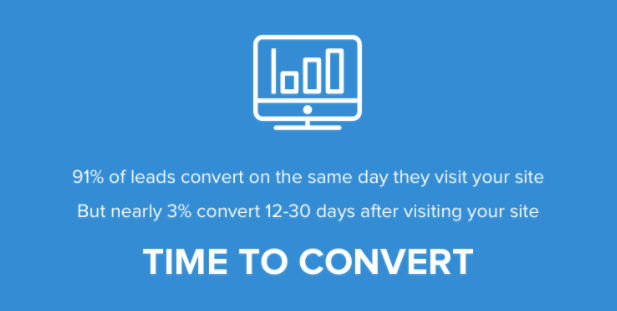
Because our data shows that motivated sellers aren’t wasting any time. They make a decision on who to work with faster than you can paint a bedroom: 0-days fast.
You need to be prepared for this. When the motivated seller decides who to work with, if you’re not able to answer their questions, someone else is, and they’ll choose that someone else.
Here’s how to raise your hand first.
The One Mindset Difference Between Top-performing Real Estate Investors and Everyone Else
Learn the dead-simple difference between those who build thriving businesses and those who never fulfill their dreams or goals.
4. Content Structure That Pulls The Prospect To The Next Phase Effortlessly
Most websites and marketing don’t think through the order that their prospect thinks when making a decision. They don’t take into account what info the house seller needs to have before the next piece of info will be useful to them.
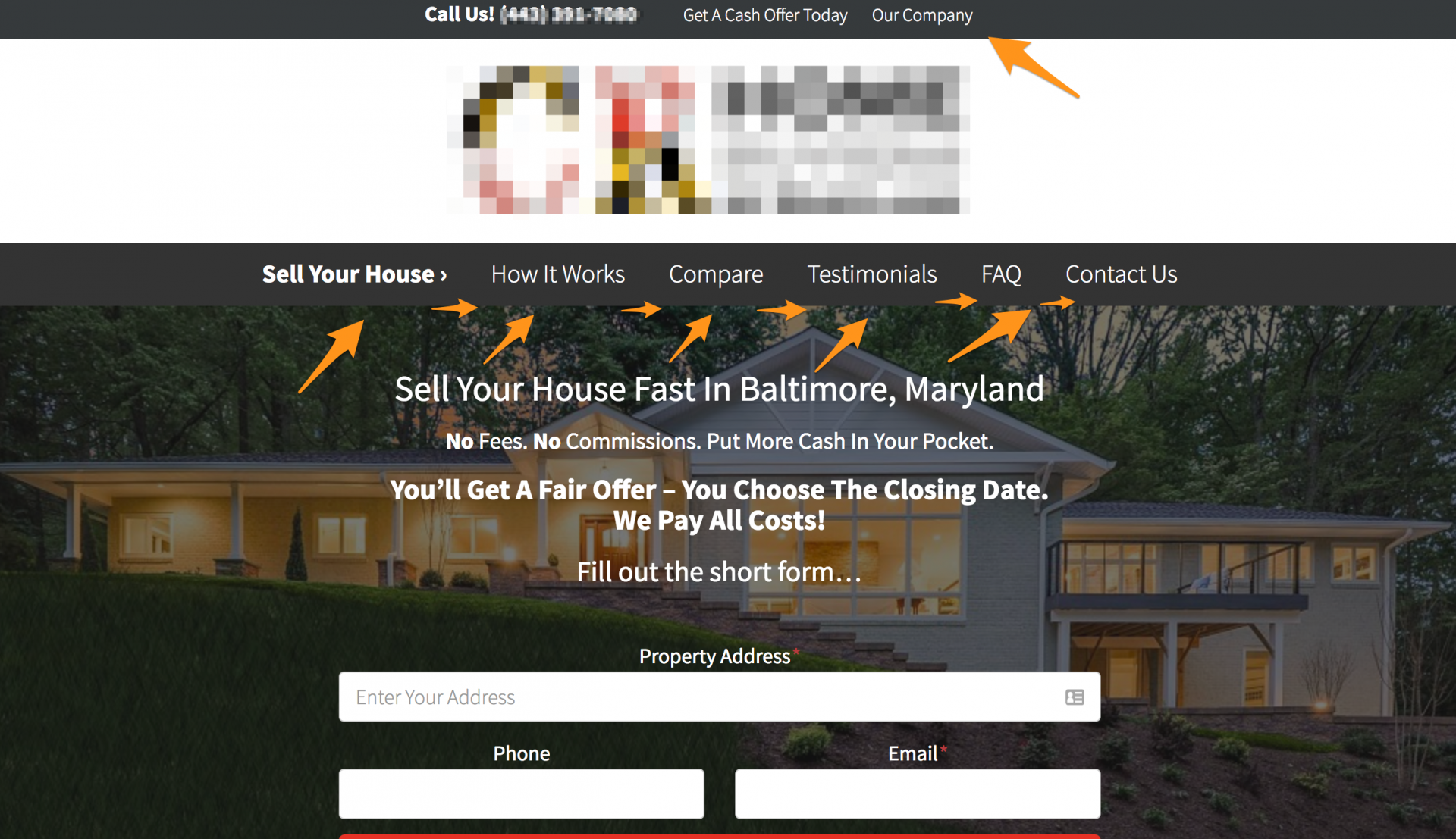
Take a look at this Carrot site as an example… from a client who has been a part of over 3,000 transactions.
This Content Flows The Way Sellers Make Decisions: Does Yours?
Notice the order of the navigation on the site. First we meet the seller at “problem aware” (hey, we can buy your house!), then educates them on the solution, then builds credibility and guides to the call to action. Bam.
Does your marketing skip phases and leave your prospect hanging with questions?
Or does your site only focus on making sure they know you can buy a house but not on pulling them through the next phases proactively?
5. Blogging
The sheer amount of blogs on the internet is debilitating. It seems like everyone and their pet blogs.
But, as you know, since everyone else is doing it, it’s hard to get noticed if you’re not.
The good news, though, is that even with the massive amount of online content, the motivated seller isn’t threatened. They still view blogs and spend an average duration of 1:05 looking.
Due to the increased visibility it creates, your blog is a great way to answer the motivated seller’s questions as they type them into Google, increasing traffic, forcing you to learn your stuff, and building relationships with the people who want to help you make money.
If you want to take up blogging — which you should — check out our post on how to do that, with actionable examples.
When the motivated seller searches, “Sell my house quick in Roseburg, Oregon,” you’ll be at the top. Because other real estate investors aren’t including “Roseburg, Oregon” in their content.
Unless, of course, they also work in Roseburg…
But it’s a whole lot easier to compete with a few local real estate investors than it is the whole nation. Since you’re not selling or buying properties in every state, don’t create content that competes nationwide. Create content that competes locally and you’ll be more visible to the people who matter.
7. Ads That Compare + Educate On The Options + Process
In this phase, you can’t keep on sending people ads and direct mail that just tells them that you can buy their house. They already know. So here’s where you need to retarget your prospects w/ ads that educate and compare… while at the same time adding credibility to pull them to the next phase.
Like…
… and one of our own (one of the highest performing ads we have, it drives to a blog post of ours)
Marketing Tips For This Phase:
Start to retarget your prospects on Facebook with a mix of ads that educate and compare. Comparing your USP to theirs is critical
Build your website and your marketing so it flows the way your prospects decide
Bonus: Again, if you can have a testimonial do the heavy work for you, educating your prospect for you… it automatically pulls the prospect past the next phase… building credibility for you in the process
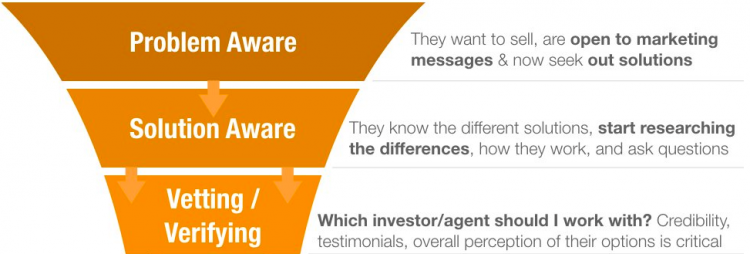
Step 3: Vetting and Verifying
The seller recognizes their problem, they know the basics of the options… but who should they work with?
In this phase the seller knows they have a problem that they want to be solved fast, they basically know the options and how they work… but now their main question is…
Which company should I work with? Which is the most credible?
They’re asking if they want to work with you. Your job is to convince them that they do.
How?
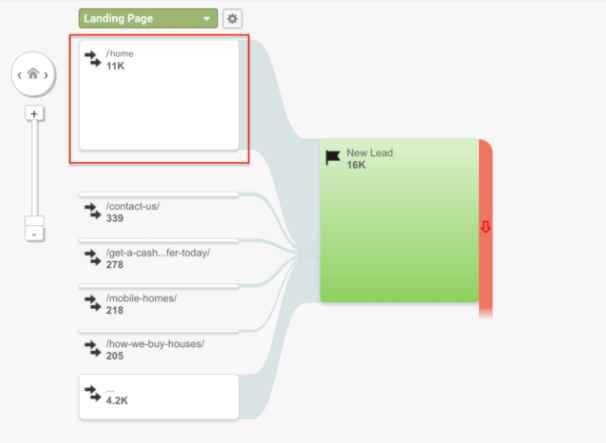
The homepage is where the motivated seller often lands, and not just lands, but commits… or at least turns into a lead.
If they’re not ready to become a lead… they then explore the website to find answers to their questions or verify suspicions.
What Pages Do Most Most Leads Come From? [our data]
Notice that of the 16,000 seller leads in this data set over a period of time for Carrot clients, 5,000 of those leads weren’t ready to opt in on the home page. They searched for more info instead…
Since the homepage is playing such a significant role in determining your leads and, thus, your conversions, here’s a few things to think about when trying to attract motivated sellers.
Don’t just cater for those ready to opt in right now, include robust content that builds your expertise, credibility, and makes it easy for them to contact you
But how can you best build credibility and get an edge on your competition since your prospect already knows that you both can provide essentially the same service?
Let’s start here…
8. Easy Contact Options + Great About Page
The ease with which you create this page is not equal to the breadth of its importance.
Overall of the seller websites we host, the “contact us” page sports compelling numbers.
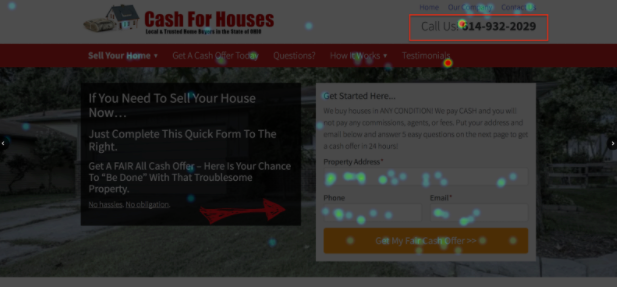
For an even faster transition from homepage to lead, provide the option to bypass the “Contact Us” page with a “Call Us: XXX-XXX-XXXX” CTA.
Notice The Interaction With The Easy Opt-In Form And Phone Number
As you can tell, a Christmas tree would have trouble competing with that red-hot dot. Consider putting your phone number on the homepage to reduce the number of clicks needed to go from viewer to lead. Fewer clicks mean more conversions.
During this beginning phase, the seller has a lot of questions. Your “Contact Us” page, or “Call Us” corner, gives them the opportunity to get in touch with you and inquire. You’ll be positioned like a pro and, more importantly, make a valuable connection.
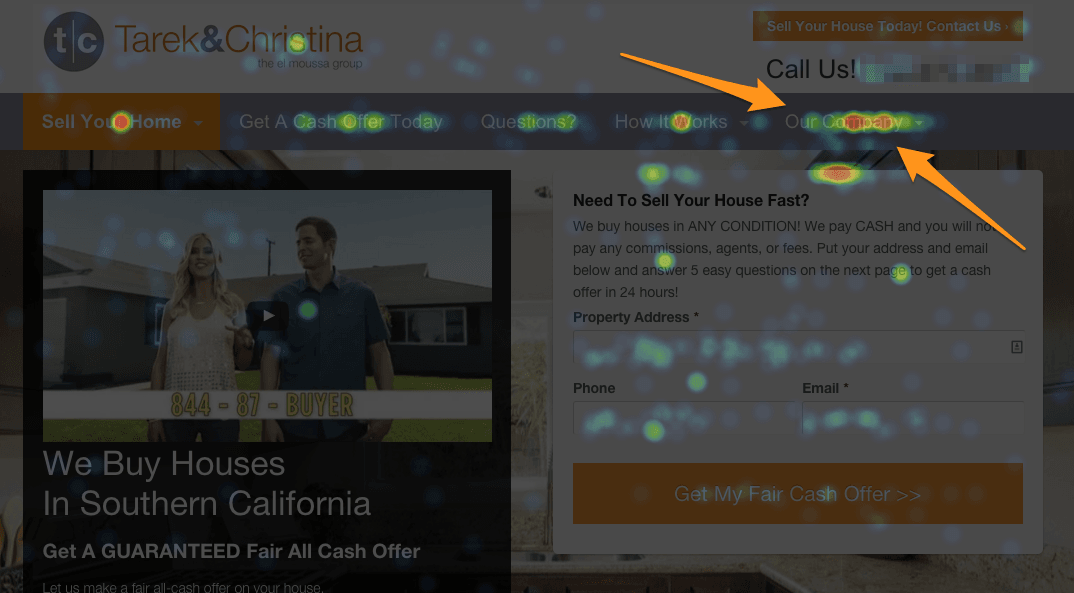
Also, as the seller does their research… they’ll hit your about page.
A Heat Map Of A Carrot Clients Site: Our Company Is Hot
This is very common… actually we see this on almost every test we’ve ran over the past 4 years… and that’s a lot of tests. The Our Company page is where your prospects go to see who you are.
A Heat Map Of Our Site (previous version) Shows The Same
Yep, we use data for our own business just like we do to help you get better results in your business as a Carrot client :-)
Get faces on your About Page like Carrot clients CR Homes of Maryland.
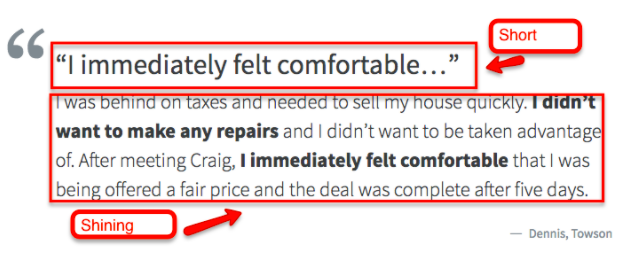
Show them ads that build your credibility… seller testimonials are great for this.
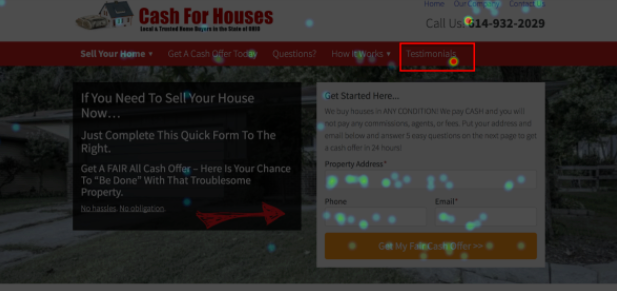
On this website, our heatmap shows that testimonials are playing a critical role.
Notice the red spot over the “testimonials” link. Time and time again we see heavy engagement on testimonials on sites across our system.
Like…
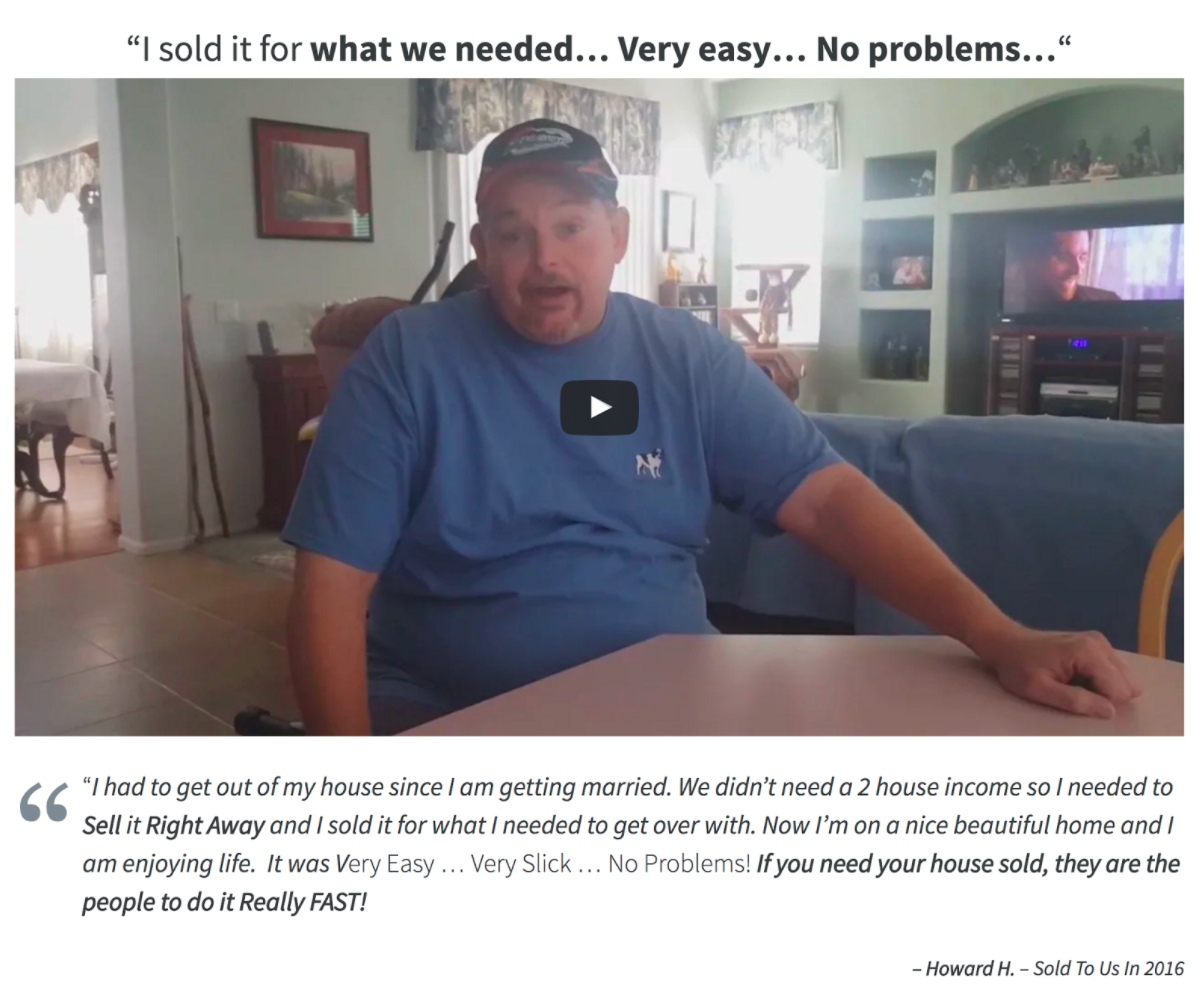
Notice how this investor filmed a video of their client and put up a well formatted testimonial on their site. Turn this into a Facebook ad and you’re golden.
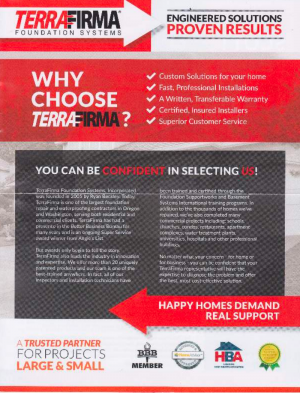
And make sure to use credibility badges where you can to add that 3rd party validation to your credibility profile.
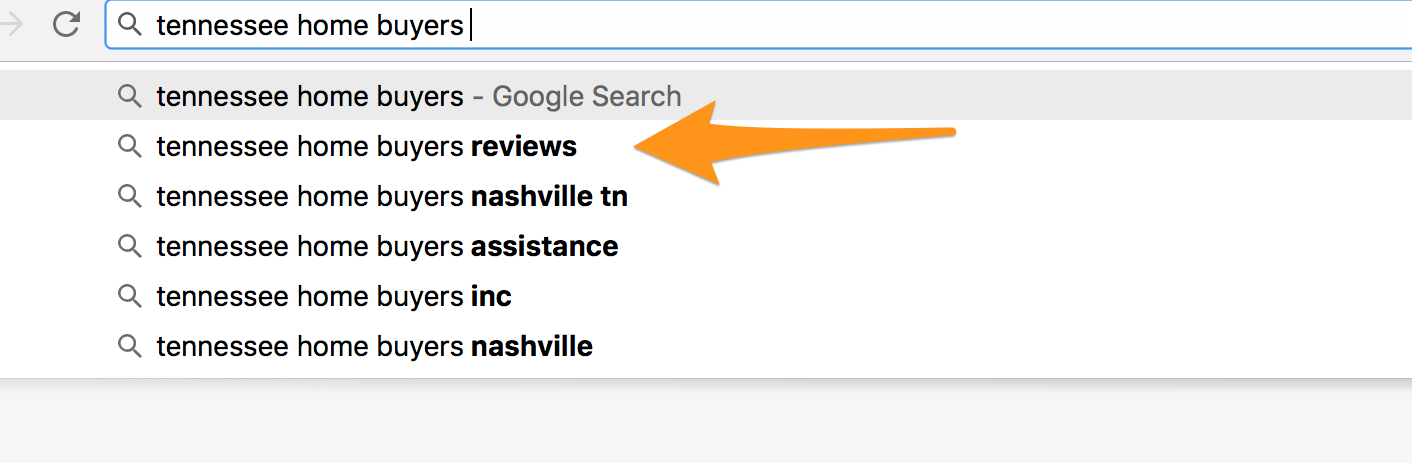
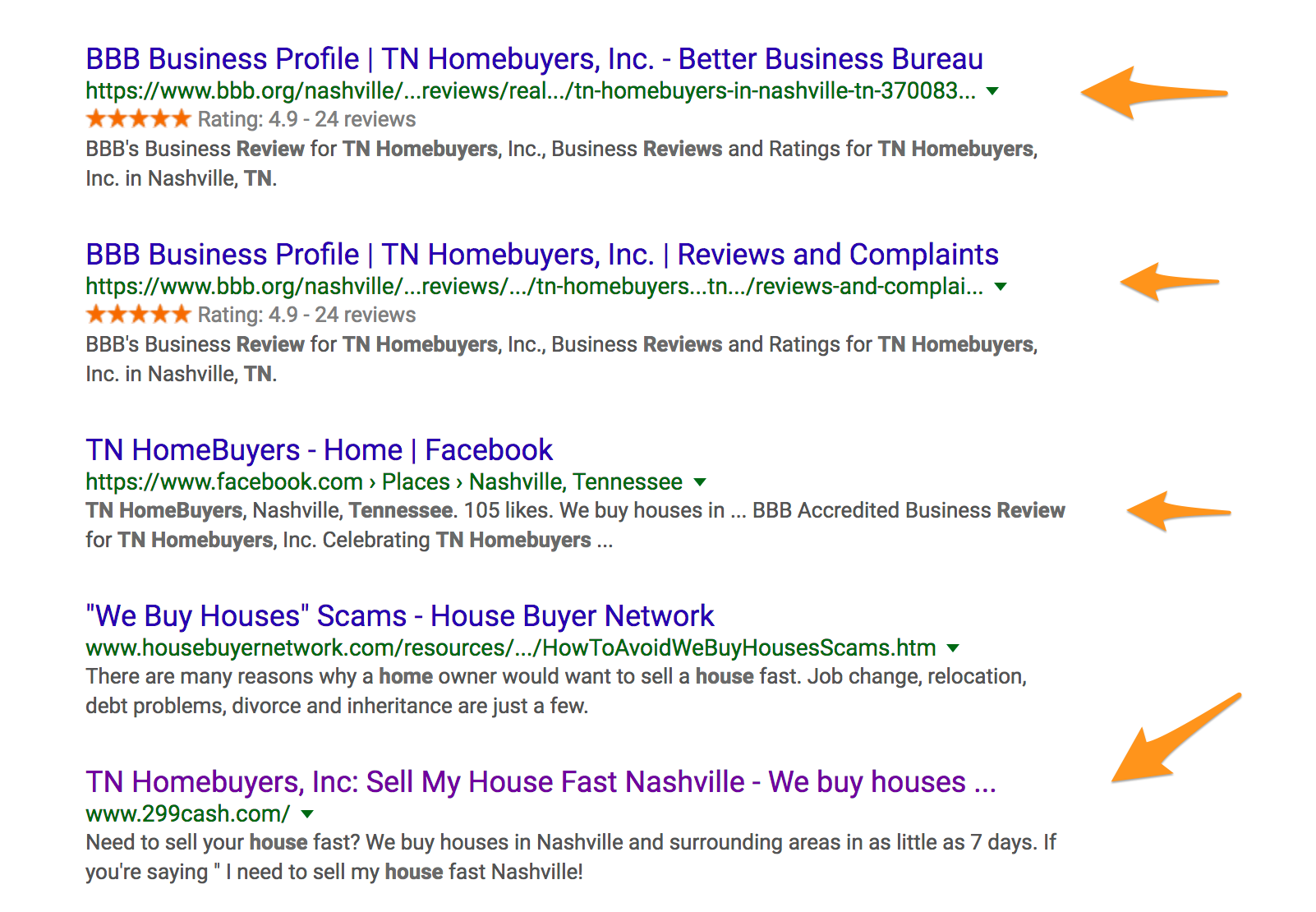
And last, make sure to control your brand conversation online when people are verifying and vetting your brand through Google searches. Like…
Your Sellers Are Actively Searching For Reviews + Your Reputation… What Do They See?
Hopefully you’re controlling the conversation around your brand so your sellers don’t bail at the last moment in this phase. Control it like this…
Notice How Their BBB Profile, Facebook, And Carrot Site Control The Brand Convo
The biggest missing factor in your ads, your direct mail, and your online marketing strategy is credibility. Credibility trumps any marketing tactic out there.
If you’re offering the same service as the next guy, it’s going to come down to credibility and your offer. That’s it.
10. Clarity
Stumbling upon a cluttered website is an immediate no-go for the motivated seller. Where clarity communicates professionalism and ease of use, clutter communicates a lack thereof.
But what is clutter?
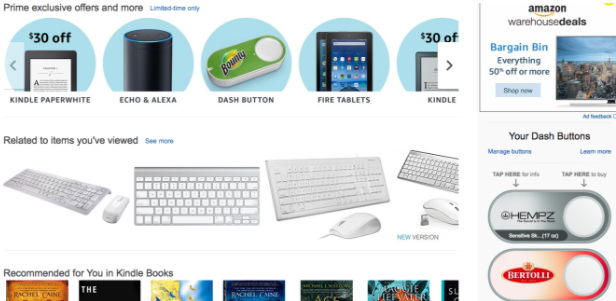
Clutter might translate into the too-much-stuff-on-one-page category, but not necessarily. Consider the apparent “clutter” of a top online store, Amazon.
What Is Clutter? It’s Not Clutter If It Get’s You What You Need…
Amazon is the world’s most optimized ecommerce website. It’s also one of the most “cluttered” according to people. Clutter is only cluttered if it doesn’t help the prospect find what they want.
As you can tell, there’s a lot going on. And this goings-on could easily be classified as clutter.
And yet, they’re winning.
Don’t think of clutter as having too much on a single web page, think of clutter as having too much that distracts from your CTA. Amazon wants you to get lost in the shopping experience, and thus it shows you a plethora of items you may or may not be interested in, much like browsing at the mall.
But you’re not trying to sell products ranging from laundry detergent to Harry Potter collectibles.
Your product is an easy and fast process for the house seller.
To sell that, you don’t want a lot of action items.
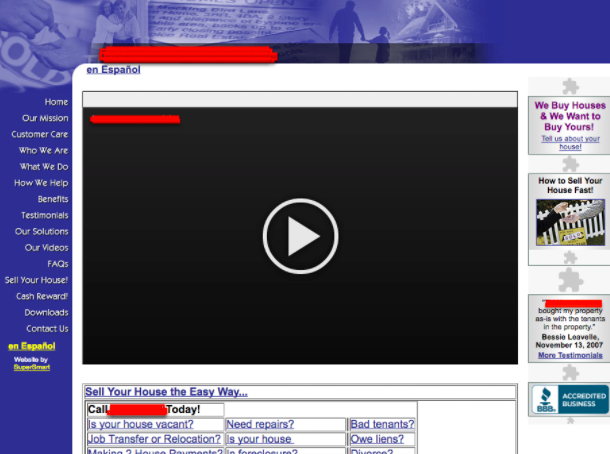
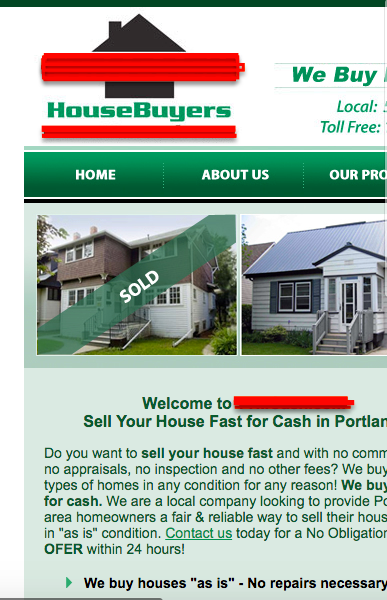
As a bad example, consider this website… for whom the brand name has been blocked out.
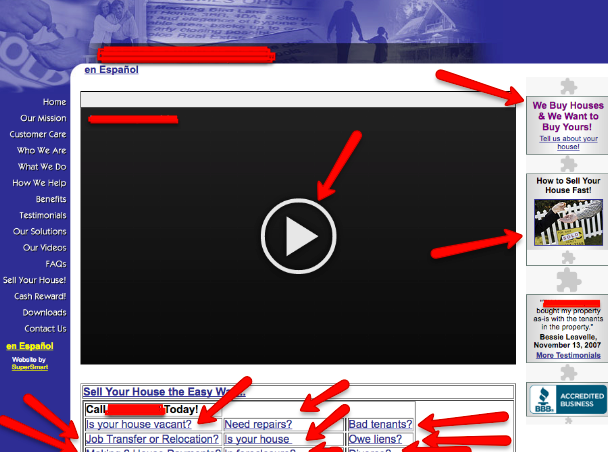
This website is a disaster. Most importantly, It has painfully positioned CTA’s…
With this many Call’s To Action, you can be sure that none deliver. This is clutter. Clutter means that when someone visits your website, they’re not sure what you offer, or where you want them to click.
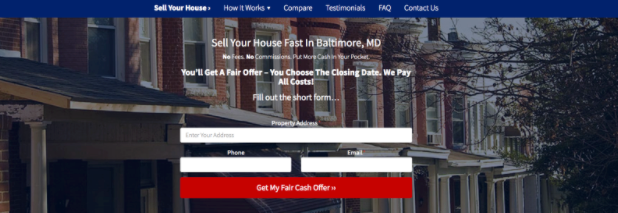
In contrast, clean and clear as a windexed window, check out this example.
Full Of The RIGHT Information But Not Devoid Of The Info
Your Prospect Needs To Advance To The Next Phase
This homepage immediately communicates what it offers, whether or not I — the motivated seller — am in the right place, and what I should do if I am (fill out the information).
A website this clean will perform better simply because it communicates better. Get harsh on your own website and, if needed, ask for an opinion from a friend — a friend who’ll be honest.
Because having a mobile-friendly website is as important for visitors as having toilet paper for house-guests. It’s just expected.
Marketing Tips For This Phase:
After someone opts into your site, retarget them on Facebook with testimonial ads
Build a physical credibility packet and mail that to your prospects overnight, email it to them, and take it to your in-person meetings
Add at least 5-10 great testimonials formatted correctly to your site
Build reviews on 3rd party sites like the BBB, your Facebook page, and Google local.
Step 4: Making The Decision
Here, they’re ready to decide. Are you making it easy?
At this phase the motivated house seller is likely thinking…
Ok, lets get them to give me an offer… then I’ll pick the best fit.
Are you making it easy and are you reinforcing their decision to work with you EVEN AFTER THEY CALL YOU OR OPT IN?
The motivated seller has taken the first step, but still, they could abandon.
However, it is too early for you to give up.
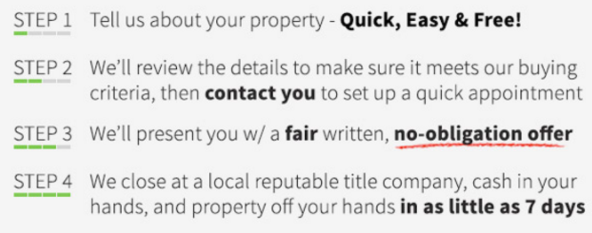
There are two primary tools in your arsenal to make them comfortable, and they both focus on transparency: honesty about what you offer, what the seller should expect, how a price is decided, and who you are.
The two tools are (1) the How It Works page and (2) the About Us page.
12. A “How It Works” Page
The “how it works” page is clicked wildly, so don’t hesitate to make this a priority.
See This Part Of A Recent Heat Map On A Carrot Site
The “How It Works” page is very active… your sellers in the “Solution Aware” and “Verifying” phases are really looking for clarity on your process. How you make your offers, what the process looks like, etc.
But, be careful that you don’t over explain. The seller has questions, but they aren’t in regard to the nitty gritty of your job. Their questions are in regard to how you will benefit them and what they need to do to make it happen.
It can be hard to anticipate all of these questions, so here’s a list of the ones you must answer.
How long until you contact me?
What happens when you contact me?
How is a price decided?
After we agree on a price, when do I get my money?
They make it easy to understand, quick to read, and, most importantly, only answer the questions that the motivated seller is asking.
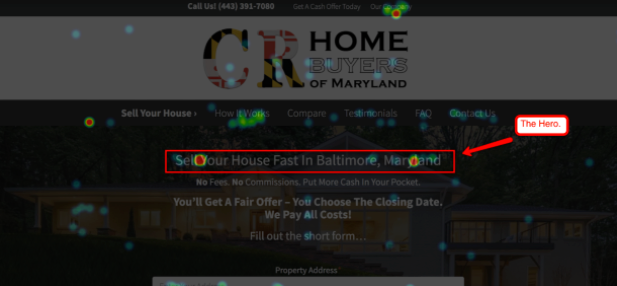
13. A Strong Hero Section
Like every great story, someone needs to save the day… or rather, something. And that something should be your product.
Your hero should sit at the top of the homepage and quickly tell the visitor that (1) they’re in the right place and (2) you’re here to solve their problems.
As you can tell on the below heatmap, the hero is viewed as often as the bat-signal is flicked.
Don’t get creative at the cost of clarity. Your hero should be similar to the above. Something regarding selling fast, since you’re marketing to the motivated seller, and location, because the motivated seller is searching for someone in their area.
Once the seller is convinced that you’re the hero they’re looking for, it’s time to swoop in and actually save the day.
14. A Clear CTA (Call To Action)
Everyone loves this part of the story. This is where the motivated seller takes the first leap, which is usually providing you with contact information.
This is your first CTA, and arguably, the most important.
If the motivated seller doesn’t give you permission to contact them, they aren’t serious about working with you.
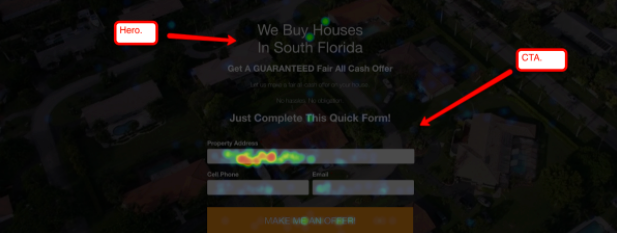
Since your business goes nowhere without this first step, it’s important to make it simple, directly after the hero, and, ultimately, the focus of your homepage.
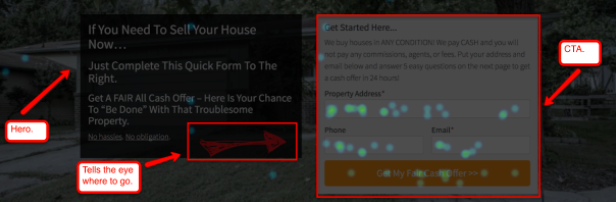
Consider how your eyes flow first to the hero of this snapshot, and then seamlessly to the CTA.
Also, consider this example, differing in setup, but equally effective in conversion.
Whatever the hero to CTA transition on your website, make sure it’s obvious and smooth. Since the motivated seller is in a hurry, your homepage should be too.
Heck, even put clear calls to action in your Facebooks ads at this phase, like…
15. Follow Up, Follow Up, Follow Up
Often times they’re just not ready to make a decision yet.
So make sure you’re putting your leads into an email, text, and possibly direct mail followup system.
We see clients pulling deals out 6+ months later after the lead initially came in.
The One Mindset Difference Between Top-performing Real Estate Investors and Everyone Else
Learn the dead-simple difference between those who build thriving businesses and those who never fulfill their dreams or goals.
Schedule The “8 Word Email” To Go Out In 6 Months
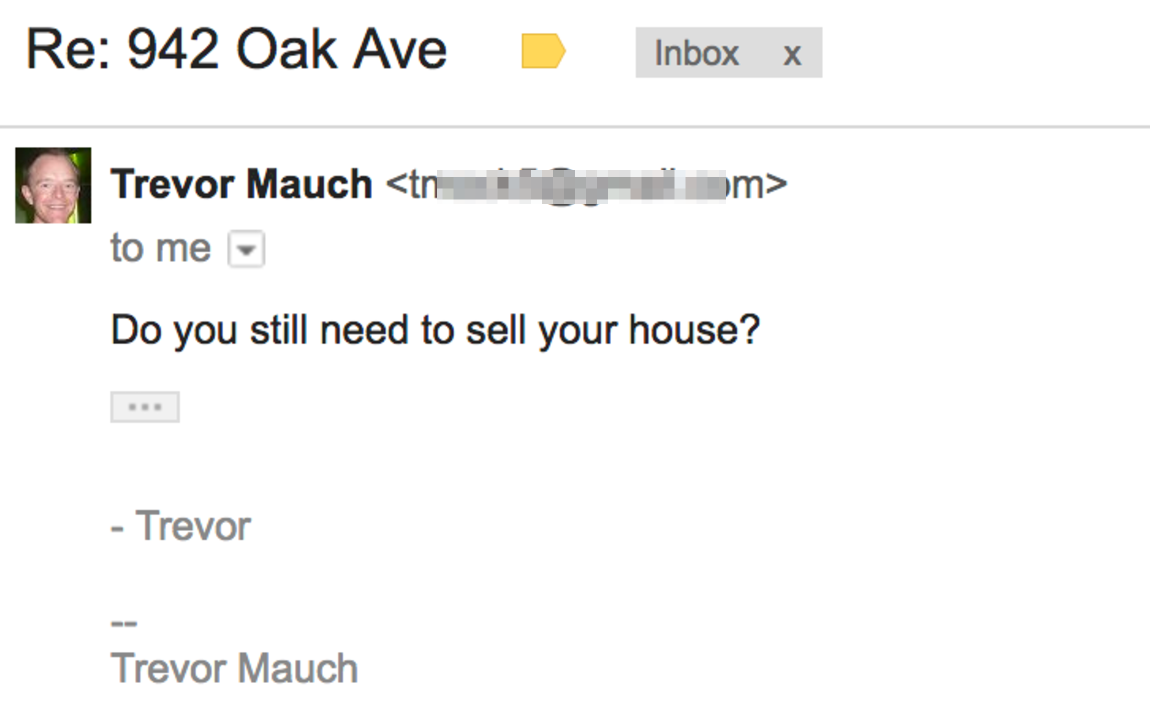
Don’t over complicate your follow up with a big pitch. Just ask them if they still need to sell. Your only goal is to engage them in a conversation.
Marketing Tips For This Phase:
Create a simple email sequence that goes out 6+ months. At month 4-6 hit them w/ the “8-word email”
Have Facebook ads that ask… “Still need to sell your house?”… then drive them to a testimonial on your site
Make it easy for people to get in touch with you… phone, text, opt-in online
Step 5: Turn Clients Into Testimonials Then Repeat The Above
At this point, you’ve got a client and closed deal! But the work doesn’t stop…
Right here your client is happy with the service, and this is the best time for you to ask for a testimonial or referral.
Adjust Your Marketing + Messaging To Pull Clients Through The Decision Lifecycle
Whew! That was a lot.
But this is the difference between the A Players in real estate marketing and the B or C players.
Most investors make all of their marketing focus on just one or two of the phases… and leave it open for their competitors to better connect with the prospect when the prospect needs it most.
This is just the tip of the iceberg.
So… go out and find where you can better cater your marketing toward the phase of the decision lifecyle your motivated house sellers are in.
Here’s a recap…
And what to do about it…
SEO and PPC for problem aware people looking for solutions
Canvas direct mail to those likely to be problem aware
Engage on social (broad ads)
Structure content to pull people to the next phase
Blog (show your expertise)
Local content
Ads that compare + educate
Great about page and clear contact info
Build your credibility
Clearly, relay the message of how you can help them
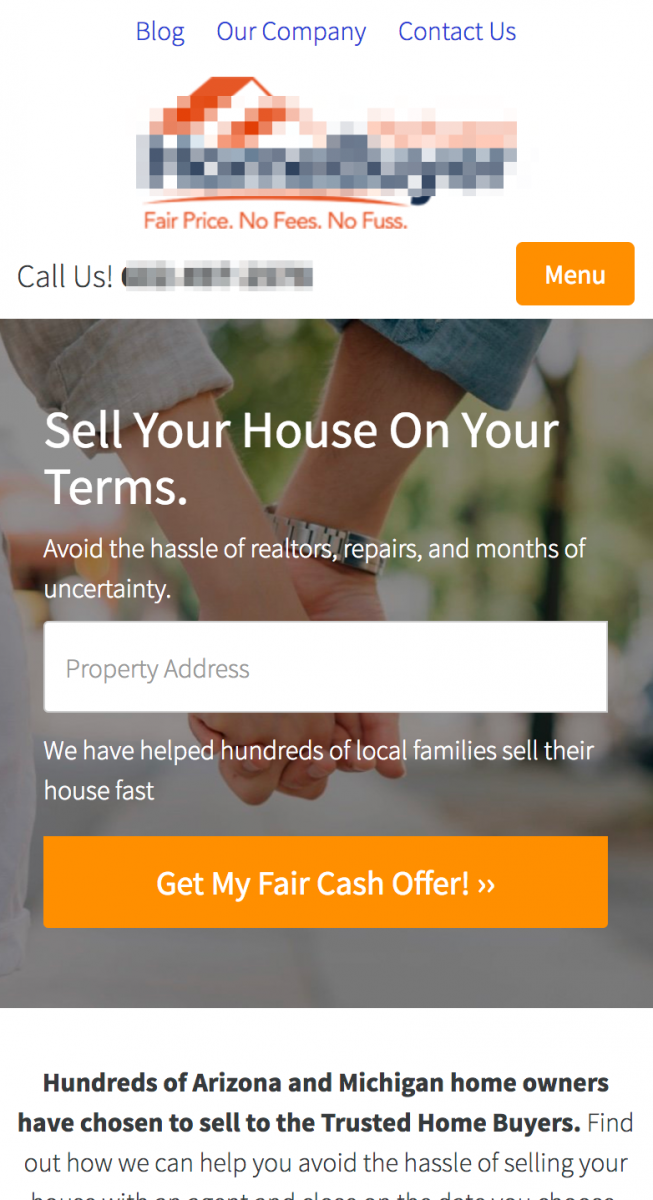
Focus on mobile
Great How It Works page
Strong hero section on your website
Clear call to action
Follow Up, Follow Up, Follow Up
Don’t hesitate. Don’t procrastinate.
Go crush it like the mind-reading real estate guru you are.
Podcasts are great. But podcasts don’t work for real estate agents or investors. And no one wants to listen to a Real Estate Agent’s podcast.
Right?
Yes… and no.
People don’t want to listen to house listings. But they might want to hear about their city. Or funny and interesting things that happen in the everyday life of an agent or investor.
Think about it, TLC and HTGV have made it their go-to strategy to create shows around people just living their life and doing business.
And…
As a real estate agent, you’re a city advocate. More than most, you know your city. You know the best places to eat, the top tourist destinations, the schools, and what to do on a Friday night.
It’s all part of the job. To sell houses, you first must sell yourself as an agent, and the city as a destination.
This insider knowledge is your ticket into podcasting heaven. A heaven where content builds relationships and those relationships create clients.
To help put your ticket in the right pocket, we’ve put together this ultimate guide for podcasting as a real estate agent that will help you generate ideas, choose the best tools, and record your very first episode.
1. Generate Ideas
As with every piece of content, the idea phase is fun. But that doesn’t mean it’s easy.
Sometimes, coming up with ideas is as easy as sitting in a chair and writing. Other times, it’s like trying to run a marathon backward: you just can’t do it.
But if you can’t come up with ideas, never be afraid to use someone else’s. Here’s what a few other real estate agents are doing that you can copy.
Anyone who lives in your city is probably interested in its history. In a podcast series, Marguerite Giguere brings on Tacoma history buff, Michael Sullivan, to provide local history lessons.
This is a great way to build relationships with the locals and increasingly establish yourself as a city advocate.
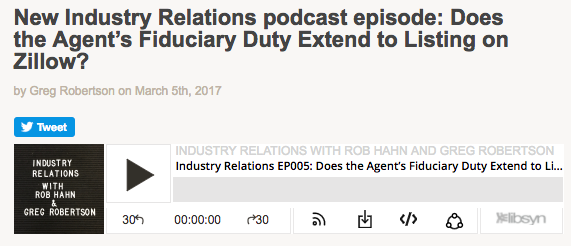
Zillow is a hot topic in the real estate world. Greg Robertson wisely chose a theme that people, real estate investor or not, would have an interest in. They discuss the accuracy of Zillow, why it’s not a threat and common complaints about it.
The takeaway?
Choose a popular topic that others will have a vested interest in. Everyone wonders how accurate and trustworthy Zillow is. Host your own debate.
This is a blog post. But the beautiful thing about blog posts is that the topics can easily be repurposed into almost any other type of content, including podcasts.
From “6 Signs a Home Might be ‘The One’,” to “5 Secret Sources of Down Payment Money,” Sarita Dua uses her blog as a platform to give numbered tips. You can do the same thing on your podcast. Check out her blog for further topic inspiration.
Content that keeps on giving. Dean Ouellette’s blog releases local weekly updates in his real estate landscape, Phoenix. You can do the same in your own city. Read the newspaper, stay in the know, and then talk about recent and interesting local happenings on your podcast. This will make you a source of knowledge in the community and an easy person for people to build a relationship with.
Dreaming is only the first step to creating a podcast that delivers insightful, helpful, and relational content. Dream, but only so that you can deliver.
Here’s how you transition between the two.
2. What’s the Type/Theme?
It’s not enough to know you want to start a podcast. You need to know what type of podcast you’re starting.
Determine the goal of your podcast. To do so, grab a piece of paper and answer these questions.
What problem are you solving?
How are you going to solve that problem?
Who’s your audience? Local or nationwide?
What are a few things you’d like to talk about?
Would you rather do interviews, solo podcasts, or a little of both?
Consider, for example, Marguerite Giguere’s podcast above. The problem she’s solving is that locals don’t know about their city’s history, but they’d like to. As a solution, she provides a place to learn about just that.
Another, Dean Ouellette’s blog. The problem he’s solving is that his local prospects want to understand their housing market. To remedy, he created a platform for people to learn about their city’s current real estate status.
After you understand the goal and theme of your podcast, come up with a fitting title.
Then, schedule your first episode.
3. Create a Schedule
Scheduling is vital.
Without deadlines, nothing gets done.
Decide how often you want to produce content — weekly, bi-weekly, monthly — and then pull out your calendar, whether that’s your phone or your physical planner, and start assigning ideas to dates.
It’s no secret that consistency is the key to producing content that builds an audience. In fact, it’s less about how much content you produce and more about how consistent you are.
Come hell, high water, or hiccups, stick to your schedule relentlessly. And before you know it, you’ll be preparing for your very first podcast.
We really like the weekly schedule because it helps you get in a cadence where something is happening all the time…
… plus the way lots of people listen to podcasts… when they find a podcast they like we tend to binge listen on a few episodes. If you’re just doing a monthly podcast… you may be losing the opportunity to have enough episodes to really have someone fully engage in your message.
4. Prepare
Before you actually get on the big screen (or big microphone), give yourself the best chance of sounding like a pro by preparing. Here are a few pre-podcast steps to make sure everything goes smoothly.
(1) Create Talking Points
Whether you’re doing an interview or a solo show, create discussion topics. Write these down and have them nearby so that when you’ve run out of ideas, you can glance at them and continue the conversation.
(2) Rehearse
Practice what you’re going to say and record yourself. Notice how you’re talking. Are you using filler words? How does your voice sound?
Deliberately train yourself to develop good speaking habits and do away with bad ones. Practice until you’re satisfied with the result.
(3) Test
This is just to make sure that when you get to the end of your amazing podcast, you don’t realize that you recorded with your computer mic instead of your external mic. Run a few preemptive tests to make sure all the tech is running smoothly and you won’t be left with great content, but poor quality.
(4) Jump on Early
If you’re doing an interview, be sure to send the interviewee the talking points well before the podcast ever happens. You want them to be just as prepared as you. This will help do away with awkward pauses and transitions.
Also, be sure to jump on early (10 minutes should be plenty) with your guest in case they have any questions. This is a great way to clear the air before going on it.
5. What Podcast Equipment Should You Use?
You also need the right technology to record, edit and publish your podcast.
For our weekly podcast the CarrotCast we’ve tried several microphones and other tools… and here’s some of our favorites. Below is a list of what you’ll need.
(1) Decent Computer
So long as it’s not from the 90’s, your computer should keep up. After deciding on the tech you’re going to use, run some tests. That should quickly confirm whether your computer has what it takes.
(2) Microphone
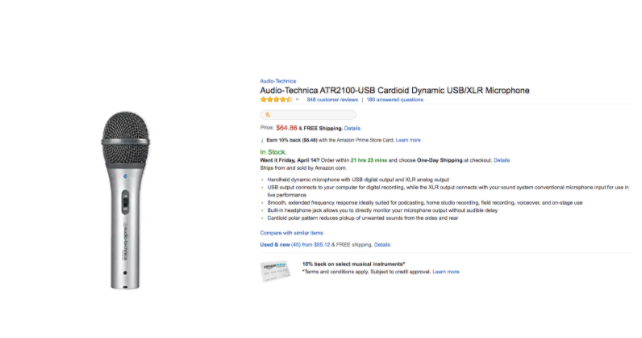
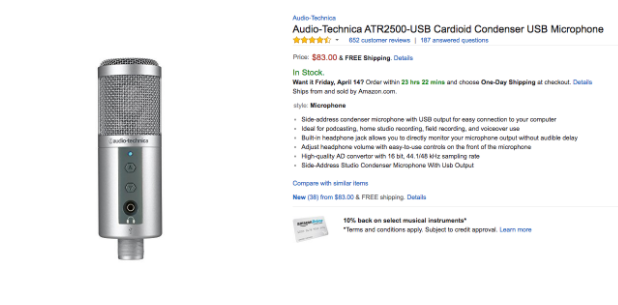
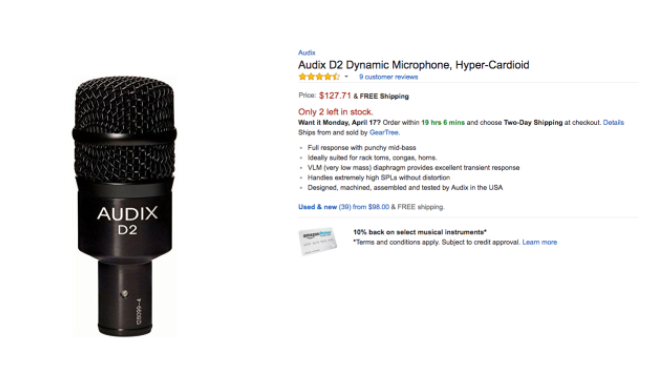
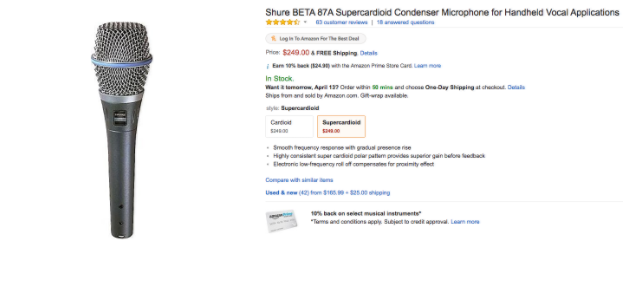
For our CarrotCast, we use the Audio-Technica ATR-2100, which we LOVE. But here’s a few other recommendations, for your consumerist peace of mind.
This is a great mic for the price (this is the one we use). We have the expensive professional podcast mics in our studio that cost $300+ each… but we tend to just use this low cost mic for ease and it’s really great quality for the price. For the best quality, speak within a few inches. The quality quickly diminishes with distance.
With a slightly higher budget, this is the mic to use. It picks up virtually zero background noise and is an all-around quality mic for the experienced podcaster.
You also need software on your computer that records/edits audio. Since our CarrotCasts are done over Skype, we use Call Recorder. For editing, we use Audacity. Here’s a list of recording/editing tools at your disposal.
If you’re recording a podcast with just your audio, this is your best bet. This is an all-in-one tool. It records audio and allows you to make edits to that audio. And it’s free. Unless you plan on turning your podcasts into videos or screen-shares, it’s going to be hard to talk you into a different tool.
If you’re using a mac, Quicktime will come built in as a default app. If you’re on a PC, there is a download for it here. Quicktime records audio and is free to use.
If you prefer to use your iPhone for recording, there’s an app for that. Recordium Highlight allows you to record audio from your iPhone, all while highlighting noteworthy sections.
If you’re doing podcast interviews on Skype, you need this plugin. Not only does it record the audio from the skype call, but it also records the video, allowing you to repurpose your podcast into a videocast later on.
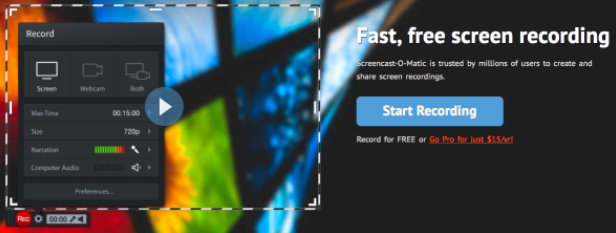
This tool records your audio and screen simultaneously. Keep it in your back pocket for when you want to repurpose a podcast into a screen-share video.
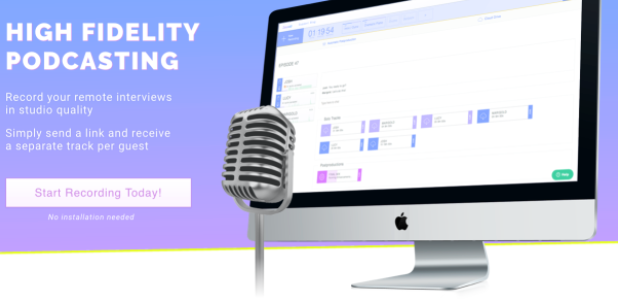
For recording podcast interviews that aren’t over skype, Zencastr is the hero. This tool allows you to record your audio and the audio of several guests. It also includes automatic audio enhancement.
All of those recordings need to be stored somewhere. Ideally, somewhere that can handle all of the data transfers that occur when someone downloads your episodes. For our CarrotCast, we use Libsyn. Here are your options.
Onsite — Free
Don’t do this. While hosting on your website is free, if you plan on growing your podcast to any significant size, all of those downloads are coming straight from your site, meaning that your bandwidth is taking a serious hit. Avoid at all costs.
What was originally intended to exist as space for amateur musicians to share their music is now becoming a haven for podcasting. A great tool if you want to advertise less on your own website and more on a separate platform.
Buzzsprout is awesome if you don’t want your website to play the part of podcast platform. It easily helps you submit your podcast to iTunes and it even creates shareable soundbites of the podcast.
Libsyn is the tool to use if you want your website as your podcasting platform (if you’re a Carrot member, it’s super easy!). You can leave the data and RSS feed in the Libsyn files — saving your bandwidth — but you can still have everything, in the eyes of the visitor, all in one place: on your website.
(5) Camera (optional)
If you are interested in recording not only audio but video, then you’ll need a camera. At Carrot, we produce an audio version of our CarrotCasts and a video version. You can do the same.
Computer Cam (what we use)
This is the easiest option. If your computer has a webcam, while it might not be high quality, it offers an easy, affordable, and simple solution to your recording endeavors. In fact, it’s what we use at Carrot.
iPhone Cam
If your computer doesn’t have a webcam, the next easiest option is to plug your iPhone into your computer and use Quicktime to record through your phone’s camera (the selfie camera is lower quality than the main camera).
External Cam
If your phone doesn’t have a camera, your computer doesn’t have a camera, or you just want higher quality, you can consider getting an external camera. The choice is yours.
(6) Headphones (optional)
The main reason you’ll need headphones is if you’re performing interview podcasts. You need to be sure that the audio is coming through your headphones so that your mic isn’t picking it up externally.
Any headphones will do. At Carrot, we use Apple’s earpods.
6. DO IT, Go For Progress NOT Perfection
It’s time to hit record.
Unfortunately, many great content ideas have been just that: ideas. It’s time to open your arms and embrace the unknown.
Who knows what you’ll find on the other side. But I’m willing to bet it’s opportunity and growth.
7. Advertise
Once you have a product you’re happy with, post that puppy on your social media, website, email list, and, most of all, iTunes.
Submit your podcast to iTunes here. It usually takes a couple weeks for them to respond. Once you’re up, they’ll let you know via email and then people everywhere can subscribe to your podcasts.
Don’t be afraid to tell other people what you’re doing. You need listeners, and they need something to listen to on their morning run. Provide that for them.
Podcasting as a Real Estate Agent is Relational. So be yourself.
Famous Podcaster, Marc Maron said,
“The medium of podcasting and the personal nature of it, the relationship you build with your listeners and the relationship they have with you – they could be just sitting there, chuckling and listening… there’s nothing like that.”
For some mysterious reason, podcasting is one of the most intimate forms of content. It makes listeners feel like they are in an honest friendship with you. Because of that, it’s important to be yourself. Don’t try to be showy or clever. Be who you are.
After all, real estate isn’t so much about selling a house or a city. It’s about selling you. And podcasting is exactly how you do that.
In fact, according to a worldwide Gallup study published in 2017, only 15% of people are engaged while at work. The other 85%? They’re either bored, robotic, or outright hate their job.
That’s an unfortunate truth. And it gets worse when you consider that life only lasts approximately 27,375 days and the average person will spend almost 6,000 of those days working (about 21%).
Naturally, you don’t want to spend over one fifth of your life miserable, especially when you don’t have to.
That’s right. You don’t have to.
If you’re not enjoying your work, then it’s time to find something else to do.
And real estate might just be that thing.
“Woah, woah… slow down. Should I really quit my job to become a real estate investor?”
Okay. Okay. Let’s be real for a minute.
You have a family to support and bills to pay. You can’t just up-and-quit your job.
But, you can start a real estate side-hustle and work yourself out of your current job within the next six months or year.
Let me ask you a question: If you had to work 10 to 20 extra hours a week for six months to build the life and freedom of your dreams, would you do it?
Sure, for that one year, you’d have to hustle, work on weekends, and spend the evening on phone calls. But, after six months to a year, you’d be completely free to do what you want. You could quit your day job and enjoy the financial and professional freedom you’ve always dreamed of.
Ultimately, that one year of time is a small sacrifice to make for your happiness.
Still, most people won’t do it.
They’ll make excuses, saying, “This is too hard. I’ll just stay at my current job,” or “This probably won’t work anyways.”
That, though, is where you’d be wrong.
At Carrot, we’ve helped literally thousands of people quit their day jobs, become an expert real estate investor, and build their very own real estate business.
Consider Tom Cafarella who quit his job as an accountant to become a real estate investor. Now, he’s a Carrot customer and is the top wholesaler in Boston — a crazy competitive area — doing more than 100 deal every single year.
I could go on forever with stories of Carrot customers who’ve quit their day job and achieved true financial freedom by becoming real estate investors.
If they can do it, you can do it too.
But how?
Well, there are three different types of real estate investing to consider that will help you quit your day job and move on to bigger, greater, and more satisfying things.
1. Wholesaling
For many people who want to get into the real estate investing world, wholesaling is the answer. At least at first.
Why?
Because wholesaling doesn’t really require any serious financial investment to get started. All you need is a website, valuable connections with other real estate investors, and a strategy for finding houses in distress.
Here’s how it works.
Once the wholesaler finds a house in distress, they sign a contract on the property — usually for just a week or so — which they then try to sell to one of their investor connections (a house flipper or rental owner, for instance) for slightly more than they bought it.
Let’s say you sign a contract to buy the distressed house in cash for $40,000. Now, you don’t have to actually pay the house seller that money unless you also sell the house to someone else within the contract’s timeline. In most cases, if you don’t sell the property before the contract’s expiration date, the contract is void and you’ve lost a deal, but your bank account isn’t any worse for wear.
Let’s imagine, though, that you find an investor who will purchase the property for $45,000 (because they’re planning to spend $10,000 to remodel and then sell it for $90,000). In a week, or often, days, you just made $5,000.
If you’re good at building connections with people and handling home sellers in difficult situations — divorce or death of a family member, for example — then this is the perfect job for you.
2. House Flipping
If you have some capital that you’re willing to spend — or you’re willing to get a loan — then house flipping can also be a great introduction to real estate investing.
However, you’ll need to do a bit more market research. You’ll need to understand, for instance,
What makes a house sell for more than it’s actually worth.
Which upgrades people prefer to see when buying a home.
The direction of the real estate market (is the market going up or down?).
How to design a strategy for marketing your house once it’s remodeled and for sale.
House flipping starts with buying a home that is in distress. Often times, you’ll find yourself buying from wholesalers. You buy the home for $60,000, let’s imagine. Then, you spend $10,000 to remodel the home. You upgrade the bathroom, the paint, and the lighting. You also fix any damage that’s been done to the home. Then, you hire a professional photographer for $500 to take pictures of the home that you can post on your website listing.
Eventually, you sell the home for $100,000, making a $30,000 profit.
Depending on how much time you have to commit and how much work needs to be done, the remodel phase can take anywhere from a few weeks to a few months to a few years. Generally speaking, though, the payout is much larger than wholesaling or even renting.
If you enjoy manual labor and you want to learn about what makes a house sell, then house flipping might be your real estate solution to quitting your job.
3. Rentals
The best part about rental properties (residential, corporate, storage, or otherwise) is that once you’ve built your empire, you generate loads of passive income.
However, there are two things that rentals require more than any other type of real estate investing.
Up front investment.
A maintenance strategy.
Rentals aren’t a one-and-done real estate money-making strategy like wholesaling or house flipping. Instead, you buy homes, storage units, or offices and rent those out to people who want to use the property. That means you get paid every month. But it also means you need money to buy those properties initially and you need a mechanism for managing wear and tears on the real estate.
Rentals can be a great way to build a consistent flow of passive income to your bank account. But it will take some time — unless you have a remarkable amount of money to invest upfront.
Still, all of that time or money will be well-worth it when you and your family are rolling in financial and professional freedom.
Conclusion
I know. Sometimes all of this stuff feels discouraging rather than uplifting. You see it, but you don’t know how to get there.
You hate your job, you believe that real estate investing holds the answer… but damn it, it just seems so risky.
Here’s what you need to keep in mind, though: your current job is also risky. In some ways, it’s riskier than starting your own real estate investing business. With your real estate investing business, you have complete control. At your current job, how much say do you have in the way things are done at a high level? Yeah. That’s what I thought.
Plus, you don’t have to quit your job right away. There’s nothing stopping you from starting a real estate investing side-hustle for the next six months to a year.
In fact, that’s exactly what I recommend. Get your business off the ground, then take the leap.
You’ll have to work a bit harder for the remainder of this year, but the rest of your life will be far more enjoyable because you did.
What do you think? Is it worth it?
Want To See The Exact System Brian Followed To Make $80k/mo?
Learn how to generate 3 leads per day to run your real estate business.

![Direct Mail Strategy For Real Estate Investors [A Case Study With Our Clients]](https://image-cdn.carrot.com/uploads/Featured-Image-20.png)







![How to Attract a Motivated House Seller Like a Mind Reader [Original Data]](https://image-cdn.carrot.com/uploads/Featured-Image-7.png)