
Author: Brendan Holmes

  • What Is Real Estate SEO? Learn the Basics of Search Engine Optimization (SEO)

    What Is Real Estate SEO? Learn the Basics of Search Engine Optimization (SEO)

    What is real estate SEO? By definition, it is “creating relevant content with keyword focus to improve website visibility in the organic search results for real estate professionals. The process includes building landing pages, updating metadata, content modifications, and analyzing keywords.”

    Whether you’re doing apartments, looking for motivated sellers, cash buyers, private lenders, or note sellers — even if you’re a real estate agent — the whole thing is you need to understand search engine optimization and how it can change your business for the better.

    What is Real Estate SEO?

    So, what is real estate SEO? To break it down simply, by giving Google and other search engines what they want, Google will reward you with higher rankings.

    You see, each search engine — Google, Yahoo, Bing, etc. — has an algorithm that crawls online web pages to determine which results to show people when they search for any given keyword phrase (i.e., the words they type into the search engine).

    By “optimizing” your real estate web page(s) for a search engine’s algorithm (usually Google since it’s the biggest), you can rank for high-value phrases and drive passive traffic to your website.

    Carrot members, for instance, often rank for market-specific phrases.
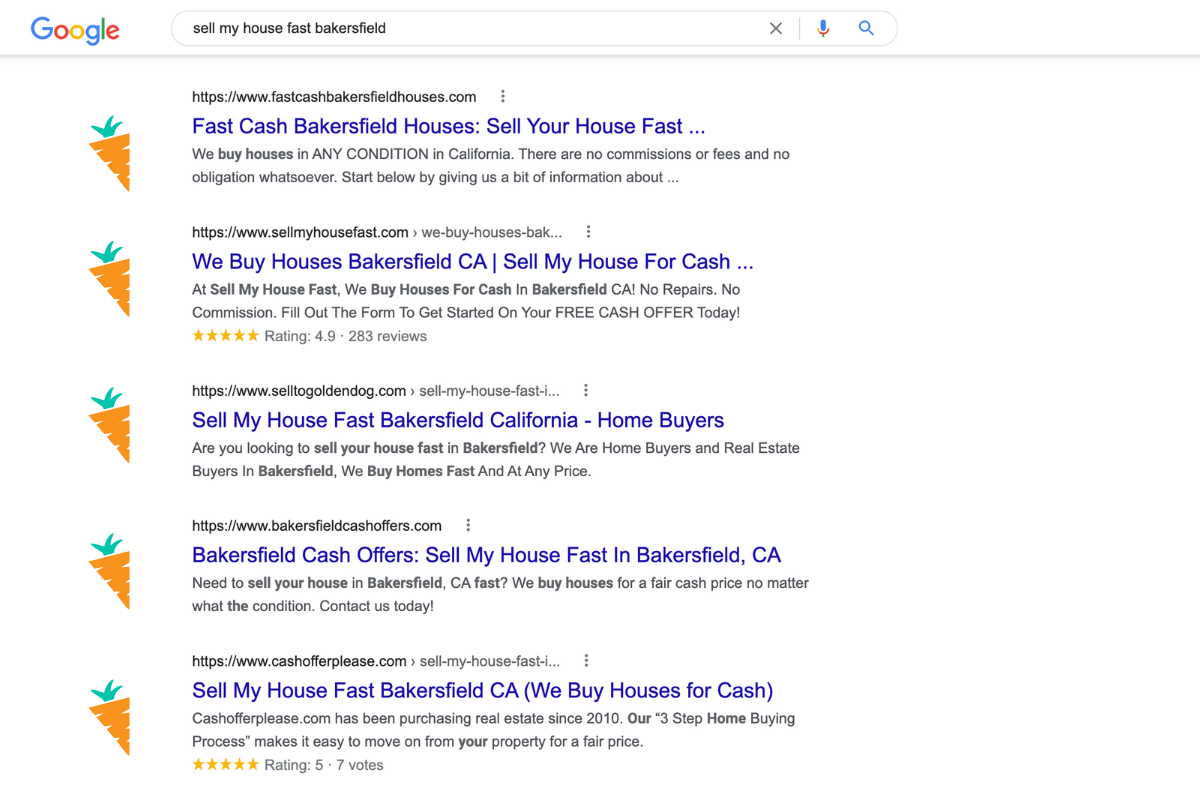
    Carrot website rankings for "sell my house fast bakersfield"

    Here’s the best part: that algorithm determines where you and every other website ranks in Google — experts already know what factors that algorithm considers.

    Partly, they know because of testing and experimentation. And partly, they know because Google consistently releases updates about how their algorithm interacts with websites and online content.

    NoteI’ve transitioned from talking about search engines in general to talking about Google specifically. This is because Google accounts for about 93% of the search engine traffic online. It’s the heaviest-hitting player in the search engine world and the one whose algorithm you should most seriously consider when crafting your SEO strategy.

    Which means you can too.

    But it’s important to note the difference between working to please the search engines… and trying to trick them.

    One will get you rankings. The other will get you banned.

    Black Hat SEO VS. White Hat SEO

    Black hat SEO and white hat SEO, are basically just search engine marketing jargon for a bad way to build rankings and a good way to build rankings.

    Black hat is gaming the system. It’s trying to trick Google’s algorithm into giving you higher rankings. While this will sometimes work over the short run, it is likely to get your website into trouble when Google finds out what you’re doing.

    You can learn more about black hat SEO no-nos over here.

    White Hat SEO Strategy – Maintaining Your Integrity.

    White hat SEO strategies, on the other hand, build rankings the way that Google wants you to.

    That’s the way that we work at Carrot. That’s how we’re going to train you, is on white hat strategies.

    With white hat SEO, there’s less risk and more opportunity.

    As an example, if you go to Google and type up phrases like “Sell my house fast Pittsburgh,” “Sell my house fast Baltimore,” or “Sell my house fast Birmingham,” or “We buy houses Bakersfield,” or hundreds of other phrases.

    Or, on the cash buyer side, “Investment properties in Baltimore, Baltimore wholesale properties.” Or maybe “real estate agent in Boston.”

    You’ll see Carrot members popping up very high on the search rankings, leveraging their training and our search engine optimization tools, and getting more leads.

    For SEO search engine optimization, we’re focusing on the section in the Google search results and Bing search results, and Yahoo search results. But mainly Google. We’re focusing on the area that’s above the orange box, you can see the parts where it says, “Ad.” Those are ads that people paid to be there.

    seo ranking factors for real estate page one rankings

    The part in the orange box is called the organic search listings. That’s where, with search engine optimization, tweaking some things, and following Carrot training, you’re going to be able to get there in your market when you follow our training and our system.

    Inbound Marketing for Real Estate – Draw Clients to You.

    One of the reasons that we love search engine optimization is inbound real estate marketing. Inbound marketing is essentially when people go online, go to Google, type up questions, or they type up problems. They’re typing up something that they want to be solved, and then they land on your website.

    They land on a website that is ranked high on Google. There was a study done by HubSpot that found that 28% of searches for something nearby (local SEO) resulted in a purchase. Also, 78% of local mobile searches result in offline purchases. So, local SEO is very powerful.

    Direct traffic is people who already know about your website. They already knew your website name. Maybe they got it through your business card; maybe they got it off of a billboard, direct mail, or something like that. Direct traffic also performs very well because they’re already familiar with you. They already know about you. Then down the line you’ve got paid search, Google Ads, they go through PPC, and it’s all still insanely effective.

    The reason we love search engine optimization so much is that with this higher lead to customer close-ratio, you have a higher quality lead. You tend to close more leads per the leads you’re getting than outbound marketing or things like that.

    For example, here are the lead volume numbers accumulated by Carrot members (not counting phone calls.) 31.71% of the leads that came into our Carrot member websites were from Google organic search traffic. This drives home the importance of good SEO.

    Why SEO for Real Estate is So Important for Lead Generation

    organic real estate leads
    101,000 Leads Coming From Organic in 2018!

    Why Real Estate SEO Matters

    If you’re closing one out of every 40 leads into a deal or a listing, from your radio ads, with SEO, you might close one out of every 10, one out of every 15. You don’t have to get as many leads to close the same amount of deals, which is why we love SEO.

    Every day people are raising their hands for help by going to Google and other search engines, and they’re searching for solutions to their problems.

    What search engine optimization and inbound online marketing do is the equivalent of a seller or a buyer or a private lender or a note seller going and knocking on your door and they’re asking you for help. Rather than the other way around, rather than you going to their door and knocking on it and saying, “Hey, do you need to sell your house,” or, “Hey, are you looking for properties?” interrupting their thought process.

    Inbound marketing joins them in their thought process. They’re coming to you.

    They’re reaching out and asking you for help, putting you in a position of power. Inbound marketing, specifically with search engine optimization, is the most remarkable form of marketing ever created because the people are coming to you, and it puts the prospect in a whole different mindset when they are the ones who reached out to you rather than the other way around.

    Does Real Estate SEO Work?

    A common question is, “Does SEO work, can it close deals, what’s the ROI of search engine optimization?”

    Of course, it does! We have so many Carrot members generating SEO leads and closing SEO deals.

    Here’s one of those stories…

    60 Leads Per Month. All from SEO & Carrot w/ Andy Kolodgie.

    Currently, Carrot members are pulling in a little over 60,000 leads per month. That doesn’t include phone call leads, people, landing on your websites, and calling on their phones.

    The system’s effective and exciting, seeing you jumping into SEO and learning what you can do to increase your rankings in any city you’re in.

    Baltimore, DC, Birmingham, Bakersfield, Houston, Oahu, Salt Lake, and even smaller cities. In smaller cities, it’s easier to rank well with SEO. But in bigger cities, we have members all across the country ranking very well, very high for SEO, with their Carrot websites, using our SEO training you’re going through right now.

    For example, for the search phrase “we buy houses in Los Angeles” Carrot members rank #1 and #3 in organic results.
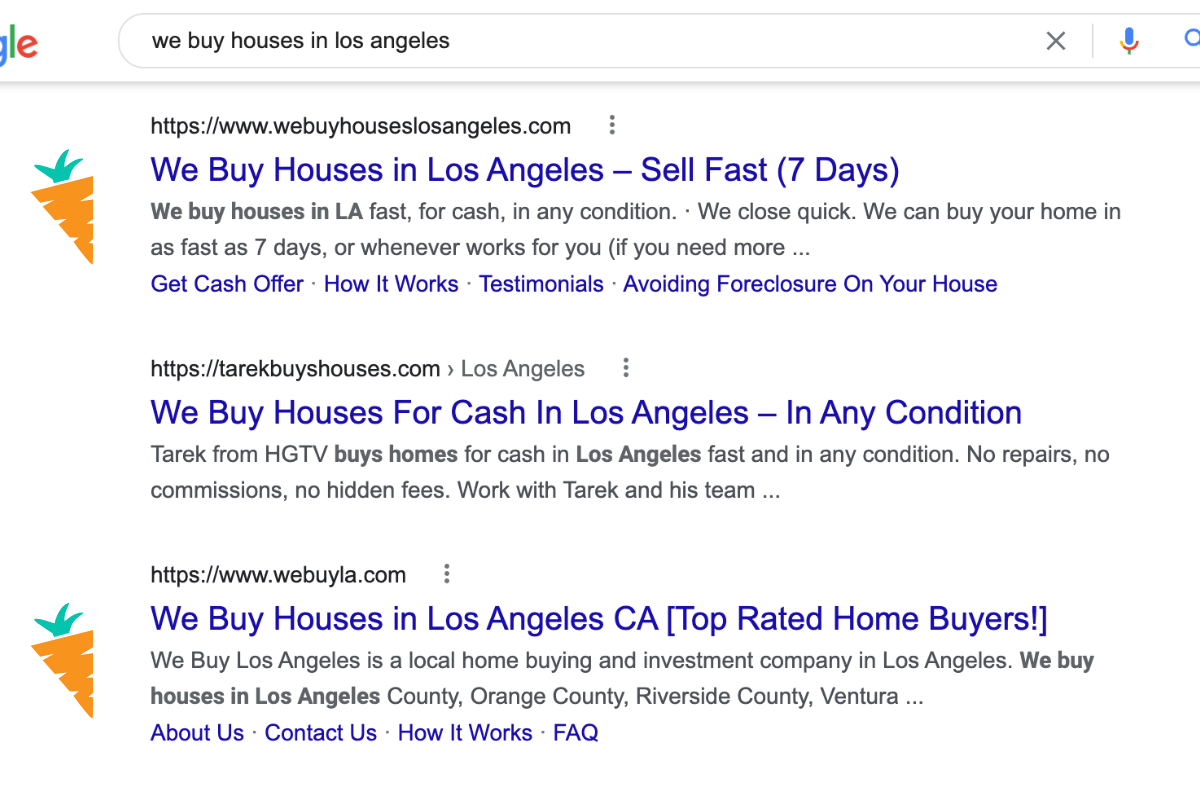
    we buy houses in Los Angeles

    If you find another member in your market who is already ranking on page one, don’t panic. We have markets where there are four or five Carrot members on page one, all getting better results than they would be without Carrot, and they’re sitting there battling it out, but they would never have even gotten those results without SEO training and our system.

    This works in any market, no matter how large or small.
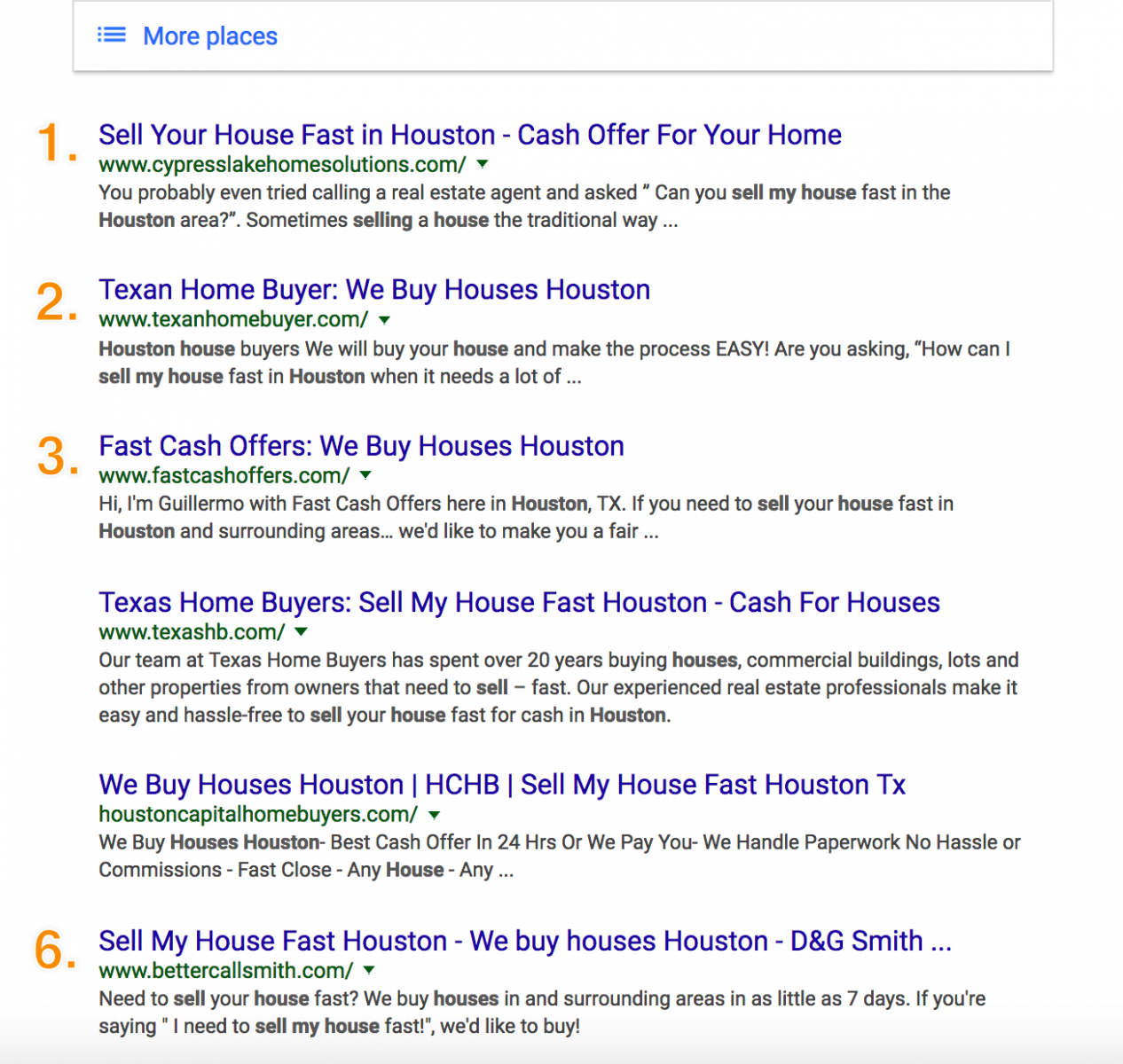
    sell my house in houston search results

    As we mentioned, Carrot members currently hold more page one rankings and top five rankings on search phrases that matter more than any other website platform for real estate.

    That’s an empowering thing for you reading the post or watching the SEO training video because it shows you that you have a powerful tool at your fingertips, and we’re here to help you get there and get the same results as other people in those markets if you implement the system and work it. Let’s get you there, too.

    We break it down and make it simple and achievable in the rest of the beginner SEO training series, the 3 Lead Per Day training for our members, and our SEO 101 course

    Whether you’re someone who’s diving into SEO for the first time or even whether you’re advanced, we have you covered.

    We’ll also give you the strategies that are making it work well for us.

    We’ll give you specific action steps, so you don’t need to be an SEO expert or a techie to get great results with search engine optimization.

    You just need to follow the steps, stick with the plan, leverage our process and reach out to us when you need help.


  • A Carrot Tradition: Holiday Giving 2018

    A Carrot Tradition: Holiday Giving 2018

    The Carrot Culture Team was back at it during the Holidays. Since our team has grown to over 20 team members, we wanted to do something to get everyone involved. So, we decided to go on individual shopping sprees for Toys for Tots.

    This year, we captured some images from the joy our team was spreading. It’s not a complete list. Some of the stories didn’t make it into our #livinglife chat, but we all contributed to others. Great work team! These are some pretty amazing, generous, and uplifting accounts.

    But… to get it started…

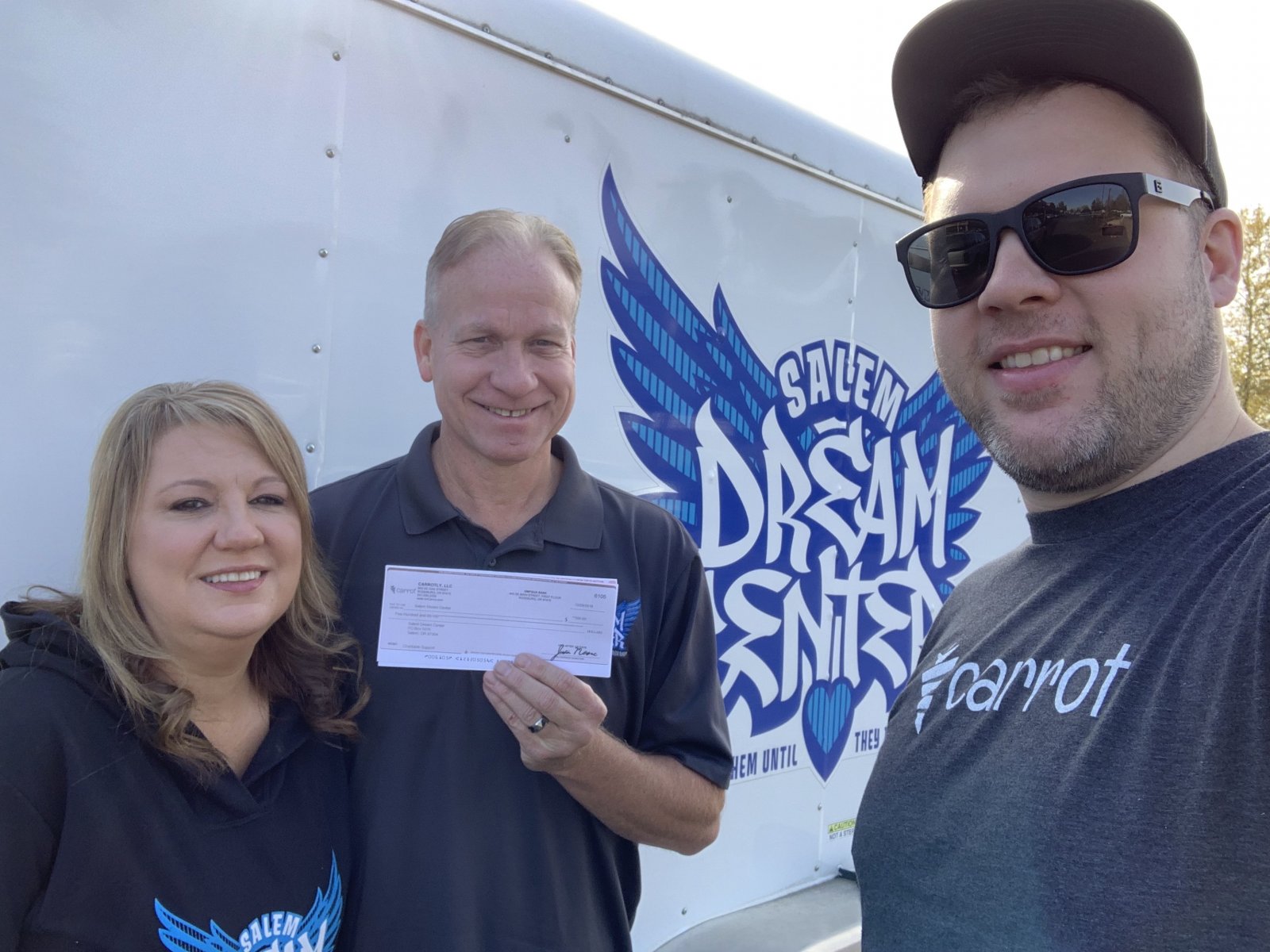
    Chris kicked off the holiday giving season with an annual Carrot charitable contribution, by dropping off a check today with Salem Dream Center.

    This is a good local organization, run by his father in law, that helps kids and families in the West Salem area. Carrot and Chris were able to cover the cost of turkeys for a whole bunch of food boxes this year.

    We’re super proud to be able to give back to these folks having once been on the receiving end of these food boxes for over a decade.


    Carrot’s Toys for Tots Giveaway

    Carrot Christmas Tree 2018

    The Carrot team and families gathered toys for another great year of giving. We were able to give over 100 toys to the Toys for Tots.


    Mason TowneI’m so grateful that I work for a company whose core values directly coincide with mine. Being able to be the best me I can, simply by doing my job, is something I could only do, working for an amazing company like Carrot.

    I’m so thankful I’m in a position where I can make an impact in other peoples lives, even if it’s something as simple as providing a toy to an underprivileged kid this Christmas.

    – Mason

    Mason’s Family Giving to Toys for Tots


    I’ve been organizing this toy drive through our local entrepreneur group here for about 4 years and now getting to expand it into the whole Carrot Community by involving our team in other states is seriously incredible.

    This year from local donations in Roseburg we are already on track to have a higher amount of toys to give than ever before and I’m overjoyed to see the impact we can all make.

    My favorite part is taking my children out to find toys for less fortunate kids – it’s really encouraging them to be more giving people.

    Jen


    Used our $20 toward – actually we went a little further and got a couple scooters :-)

    Jen and her family then joined forces with Josh’s family to generate even more cheer…

    Carrot team member, Josh picking up some last minute necessities.


    Grateful to be working for a company that truly cares about making an impact and serving others. My son had a blast getting to shop for other kids. What was really amazing is having the opportunity to make an impact on my own kid by teaching him about the cause!

    Brady

    Brady and his Family helping out and making donations at the Carrot Toys for Tots event.


    Taking these goodies to our church tomorrow for The Salvation Army’s Tree of Giving! These will be going to a 9 year old boy in our community.

    Danni

    Carrot Christmas Giving to Salvation Army


    Living in Southern Oregon, we do a lot of exploring in some amazing places. We’re also not far from where the Camp Fire destroyed a majority of Paradise, California.

    An area that we’ve explored numerous times and come to find out has a few connections to Carrot team members.

    We were fortunate enough to make some connections and send our toys to a family with small children who lost everything in the fire.

    Brendan

    Merry Christmas fun helping out our communities.


    We’ll end with amazing generosity. The Carrot team is also fortunate to have an opportunity called the “Carrot Giving Challenge” where each team member receives $100 to pay-it-forward. Pete put an exceptional touch on the Holiday season for some of the Baltimore community.

    So last year we did 10 bags for the homeless and we handed them out Christmas day. This year we set a goal to try and do 25. We had raised $590 (which would have put us just a bit short of our goal). I added in my $100 for the Carrot giving challenge, and with Jen and Trevor’s blessing used the remainder of my Carrot donation money to buy backpacks and we made it!! So here’s where my $100 went:

    Each bag contains:
    -personal care items (toothbrush, toothpaste, deoderent etc)
    -2 bottles of water
    -3 various dry snacks
    – Cough Drops
    – Hat
    – Gloves
    -2 pair heavy duty wool socks
    – Heavy Duty Fleece blanket
    – $10 cash

    We’re going out Xmas Eve, and potentially Xmas morning to hand it out.

    Pete


    We’re a pretty tight group at Carrot, so I know that I can speak for everyone when I say that we are all so grateful for having the opportunity to be part of a team that is striving to help the lives of others. Whether it’s via an online platform or in our local communities.

    Did you do something special for your community during the Holidays? Hit us up in the comments section, we’d love to hear some amazing stories!

    Merry Christmas and Happy Holidays! – The Carrot Team

  • 6 Common Mistakes of Google Ads Automated Bidding for a Motivated Seller Campaign

    6 Common Mistakes of Google Ads Automated Bidding for a Motivated Seller Campaign

    Like a gambler to the slot machine, you press “Start” on your Google Ads campaign.

    Every day, you check the dashboard. A few clicks, even fewer conversions, and one measly phone call. You’ve already gambled away several hundred dollars with nothing to say for it. Every day, you get more nervous, receive fewer clicks, and waste more money.

    Until eventually, you turn it off – Ah! This doesn’t work.

    Take heart – that’s not the story for every Google Ads campaign. I’ve personally run Google Ads campaigns that sport a life-changing $300 to $1 ROI.

    But it is the story for many Google Ads campaigns…


    There has been a push in what has been recommended (mostly by Google) in the approach to your bidding strategy. Traditionally, we’ve been sworn into a manual bidding method based on bid matrixes factoring in ad position, performance, market location, and trends.

    Despite how successful these methods have been over the past 5 years, the frequency in which we’ve seen our members embrace (at the request of the assumed “authority”) automated (robotic) bidding has increased significantly.

    For some, this openness to automation has provided incredible value for their clients. For others, the results were underwhelming. If you find yourself in the same boat as the latter, it’s possible that your motivated seller Google Ads campaign is simply not a good fit for automated strategies. And trust me, I understand there are certainly a lot of Reasons To Not Use an Automated Bid Strategy. Before admitting defeat, make sure none of the following mistakes exist in your strategic implementation.

    … Budget control is a huge component of the success of your Google Ads account. Not only from automated bid strategies but obviously, with manual strategies as well.

    3 (Google Ads) Automated Bidding Strategies for a Motivated Seller Campaign That You Need to Know

    Target CPA (Cost Per Acquisition)

    This might be the most recommended automated bidding strategy right now. Most Google Ads Strategy Specialists are pushing this one onto its members. But, this recommendation is usually without merit and data to back up the suggestion.

    So, what is Target CPA Bidding?

    Target CPA bidding optimizes your bids so you can get the most conversions, hopefully, for a target cost-per-acquisition that you set as a goal. Google explains it as…

    Using historical information about your campaign and evaluating the contextual signals present at auction-time, Target CPA bidding automatically finds an optimal CPC bid for your ad each time it’s eligible to appear. Google Ads sets these bids to achieve an average CPA equal to your target across all campaigns using this strategy.

    Some conversions may cost more than your target and some may cost less, but altogether Google Ads will try to keep your cost per conversion equal to the target CPA you set. These changes in CPA take place because your actual CPA depends on factors outside Google’s control, like changes to your website or ads or increased competition in ad auctions. Additionally, your actual conversion rate can be lower or higher than the predicted conversion rate.

    For example, if you’ve found that it takes 15 Google Ads leads to close a deal and therefore you can pay up to $3750 to acquire a deal you might be willing to set your target CPA at $250.

    Basically, you’re telling Google you’re willing to pay $250 per lead to get 15 leads. Google works to do it’s best to optimize your bids to reach that goal.

    Now, Google Ads will use historical data, along with contextual signals such as device type, time of day, physical location, remarketing lists, and browser types to find motivated sellers who are (or seem) ready to fill out your lead form. These data points help predict opportunities for you to hit that budget goal, by showing your ads for search queries and at times they are most likely to convert.

    Sounds great right?

    Not so fast. Let’s keep going.

    There are a few items that you must know.

    You must properly set up your conversion tracking. Google Ads will take note of how many conversions (lead form) your ad drove and how much revenue it has generated based on your target CPA. Once your ads start running, your total average Cost-per-Acquisition will be reported as the Effective Target CPA. So, if you don’t have conversion tracking properly installed, there is no way Google can know if a searcher filled out your form.

    Next, you’re losing your freedom. Google will now have the ability to bid above and beyond the normal click rate if it sees a keyword search fits within their data points. Within motivated seller campaigns, there is no guarantee you’ll capture a lead even if the data points to that.

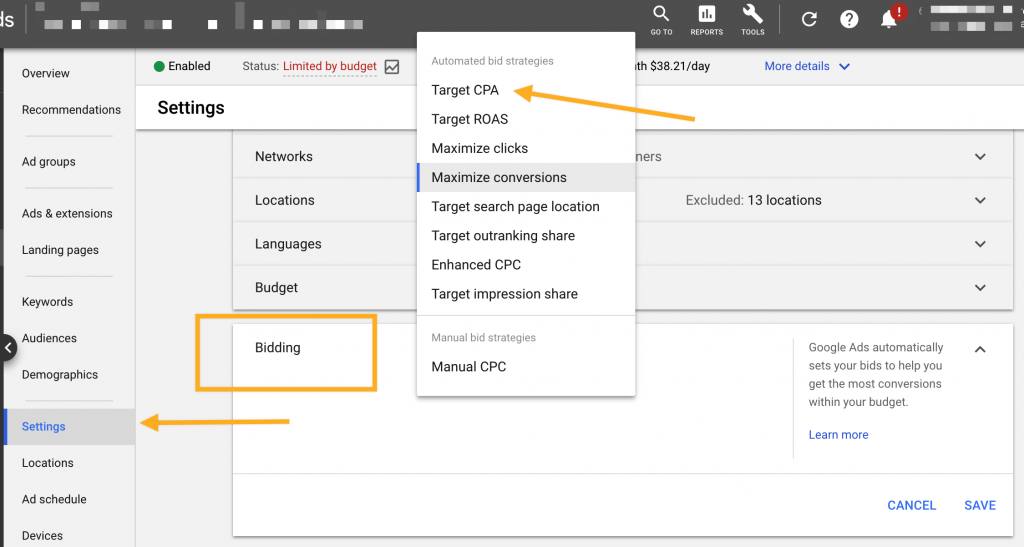
    Google Ads Target CPA Bidding Strategy
    Google Ads Target CPA Bidding Strategy

    Maximize Clicks

    The maximize clicks bidding strategy does exactly what the title suggests… It maximizes your clicks. You set your budget and Google goes to work spending it. Google explains it as…

    Google Ads focuses on increasing clicks for your campaigns while spending a target amount. If you don’t specify a target spend amount, Google Ads will attempt to use the remaining daily budget of any campaigns using this bid strategy.

    Even though this strategy might be the easiest to get clicks, it doesn’t mean it is a smart strategy.

    You might be asking “Why?” Well… because this strategy doesn’t take conversion results into account. So click volume sounds great, but not if that number isn’t related to your lead volume.

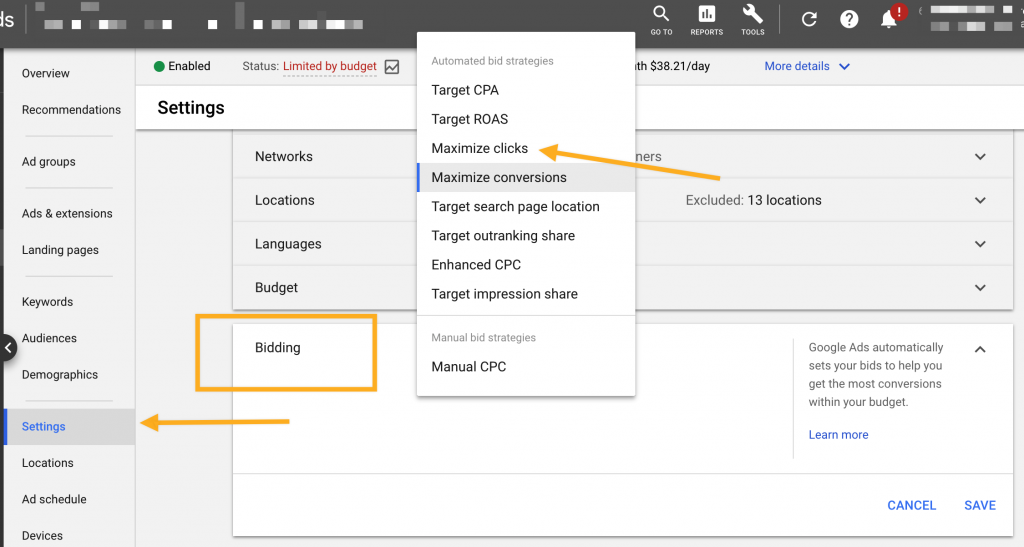
    Google Ads Maximize Clicks option
    Google Ads Maximize Clicks Bidding Strategy

    Maximize Conversions

    Just like “maximize clicks” the maximize conversions strategy is fairly straightforward. Maximize conversions will automatically set bid amounts to maximize your conversions. Google explains it as…

    Using historical information about your campaign and evaluating the contextual signals present at auction-time, Maximize conversions bidding automatically finds an optimal CPC bid for your ad each time it’s eligible to appear. Google Ads sets these bids to help get the most conversions for your campaign while spending your budget.

    Also, as with the maximize clicks strategy, the maximize conversions strategy can quickly blow through your budget. Unless you’re working with a hefty budget be sure to double check your daily campaign spend. Otherwise, you might be spending through your budget without getting leads.

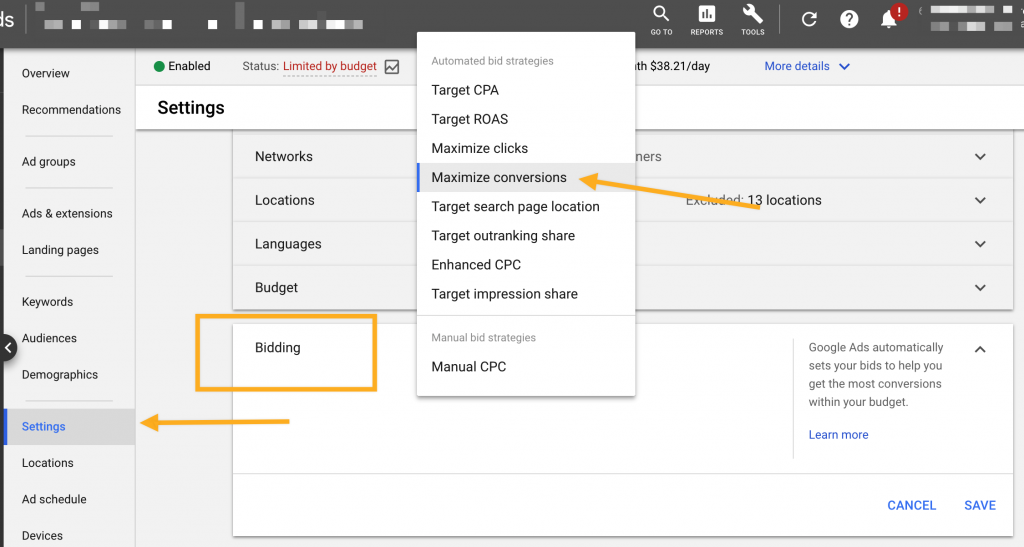
    Maximize Conversions Bid Strategy
    Google Ads Maximize Conversions Bidding Strategy

    CARROT PICKED RELATED CONTENT: Guide To Google Google Ads for Real Estate Investors


    6 Common Mistakes of Google Ads Automated Bidding

    You Don’t Know Your Numbers

    This remains one of the most important topics. Picking a strategy will dictate the KPI that Google Ads will try to hit. Often, the most important KPI for a motivated seller campaign will be your Cost Per Acquisition (CPA).

    You must know your numbers. If you have any disconnect between what you use to gauge performance and your #1 KPI the increased chances of having unsuccessful results. To ensure you have the proper number for your goals, use the Carrot ROI Calculator and make sure you understand all of the automated bidding strategies above.

    Too High of Target Cost Per Acquisition (CPA) and Budget

    Once you’ve solved your target number equation, you’re still not out of the woods. Budget command is a huge part of success when it comes to automated bid strategies.

    At the end of the day, Google will be looking to spend as much of your budget as possible while trying to achieve an “acceptable” level of return. Automated strategies are honed in by volume (search traffic) and data. Therefore, it is commonplace for automation to rapidly spend through your budget caps during the “learning” phase.

    In essence, too high of a target CPA and budget can lead to inflated cost per click, and therefore, decreased efficiency. If you choose to use automated bidding, consider starting with budgets roughly 20% below your 30-day total average spend.  That way, at the very least, you can see how automated bidding will play out while not killing your normal budget.

    Your Budgets Are Too Low

    I just mentioned starting with roughly 20% below your 30-day total average spend. But… you also don’t want to start with too low of a budget. Campaigns with budgets that are too low, will need more time for the learning phase of the bid strategy. Also, a budget that is too low can lead to inconsistent performance.

    When Target CPA isn’t hitting your bullseye, the campaign with not enough to spend is ultimately the reason why it’s failing to provide enough conversions at volume.

    No Cost Per Click (CPC) Caps

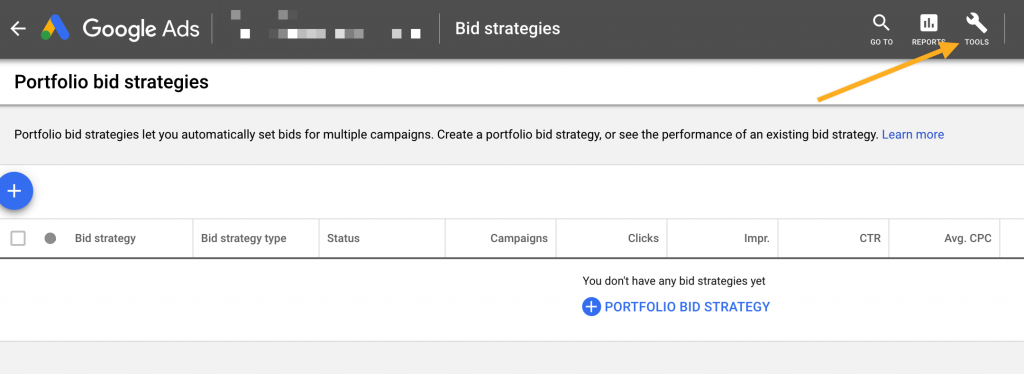
    With most campaigns, Google will recommend removing all CPC caps on the automated bid strategies.  At some point, CPC caps will become unnecessary if budgets and goals are set to the proper level. But, when in some markets that are very competitive and therefore expense, it can be hard to trust Google robots to take over the reins. Keeping CPC limits in the beginning and slowly releasing them is at least an option to build trust in the automated system. You can find this option for shared bidding strategies under the Portfolio Bid Strategies in Tools.

    google ads portfolio bidding strategies

    Not Enough Conversion Data

    Again, in order to have a  successful automated bid campaign, you and Google will rely on consistent and significant data. If your account and campaigns are too low in volume, you increase the chances of having poor results. Google Ads suggests that you need at least 15 conversions per month for your campaign.

    But 15 can be too low of a number. Anything below the 30-day data threshold will lead to incomplete optimizations and therefore a failure in the system.

    You Don’t Give It Enough Time

    This one is tough. Once you turn on a new automated bid strategy, the algorithm begins to learn, but, that takes time. Most of the time months. Some Google Ad Strategist even suggest 6-8 months worth of data. Within that learning period, you could very well see costs go up but leads go down.

    Also, any times when the account or campaign(s) are paused or you make major changes in the budget and bid KPIs will reset the process.

    So, if you can be patient and trust the automating bidding strategy that you’ve chosen, be sure to make incremental changes or you could be starting all over.


    CARROT PICKED RELATED CONTENT: Exciting Google Ads Update: Google Is Expanding Search Ads Again! What You Need to Know


    Conclusion

    Automated bidding will always be around. While many will remain to utilize successful manual bidding methods, the reality is that you need to know more about automated bidding before testing it out. By avoiding certain mistakes, you might be able to increase your chances of success when testing these bid strategies.

    Overall, when you switch to a Google Ads automated bidding strategy you will have less control over your bidding as well as having less credible data to make educated changes.

    For example, if the automated bidding strategy started to tank, you won’t be able to analyze data as well as you would if you were using a manual strategy.

    So, for those of you who like having complete control over your accounts, this strategy might not be your favorite.

  • Exciting Google Ads Update: Google Is Expanding Search Ads Again! What You Need to Know

    Exciting Google Ads Update: Google Is Expanding Search Ads Again! What You Need to Know

    It’s already been two years (2016) since Google first released Expanded Text Ads. Ads expanded by 50% and the possibilities for new ad copy generated excitement.


    But, as with most things, the newness has subsided. As well as search patterns and the devices we use to search with. More people are using mobile devices with larger displays. A trend that will continue into 2021.

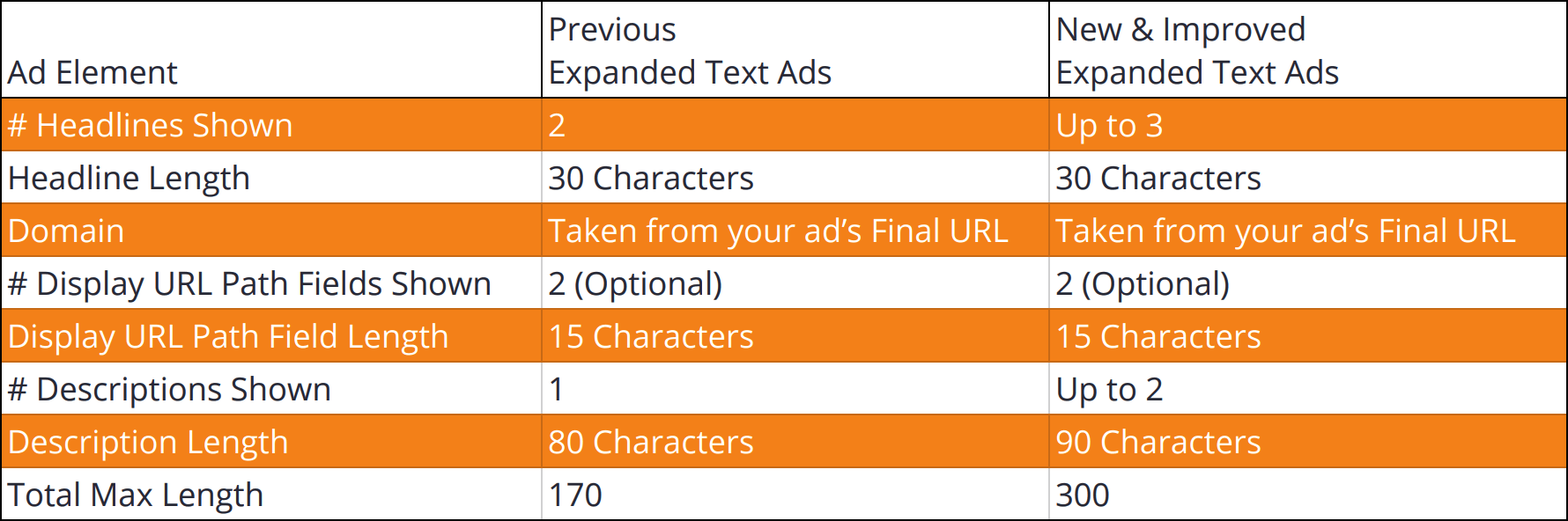
    That is why Google Ads (previously Google AdWords) is once again improving your expanded text ads by giving you the opportunity to add more ad copy. You now have an option of an extra headline and an extra description (of 90 characters now) to all your expanded text ads! Here is what you need to know for your real estate campaigns.

    What Options are Now Available in Your Ads

    The improvements to your expanded text ads give you more character space and, importantly, the OPPORTUNITY to cut through the clutter and stand out from your competition. You now can have three 30-character headlines. Compared to two headlines previously.

    Also! Google is adding a second description line and increasing BOTH descriptions to contain 90 characters! Compared to just one 80 character description. Ads now give you the opportunity to be nearly twice as large, giving you up to 300 total characters.

    You Might Be Thinking “Are My Old Ads Going to Go Away?”

    No. At least not in the immediate future. The ads you are running today will not go away or stop showing.

    But! As more of the competition starts to adopt the new ad format, the old, smaller, ad formats could be holding you back. So now is the time to start updating your ads.

    What Does This Really Mean to You

    1. We can safely assume that Google has found these larger ads to attract more clicks than the previous ad formats. I don’t think Google would release a feature if it wasn’t in the interest of higher click-through rates.
    2. The migration to the new ad format can be time-consuming. Yes, the new additions are great, but they also might not flow with your current ad copy. So, there might be a need to create a fresh batch of ads. Even if this is not the case, adding in an extra headline and description will take time. You can save some by using the Google Ads Editor.
    3. You need to text. Just because there is extra space, doesn’t necessarily mean your real estate ads are going to perform better. Start by testing out batches of “old” vs. “new” ad copy in select ad groups and move on from there.

    You Might Also Be Thinking “Will My New Expanded Text Ads Always Show All 3 Headlines and 2 Descriptions?”

    Nope. There is not enough space for a 300-character ad on small screens, so your ad may not show the third headline or second description area. But, your ad will shot the first and second headlines and first description just like they do now.

    IMPORTANT: With that in mind, be sure to craft your ads with two compelling headlines and one compelling description. Create the mindset that you can now use the third headline and second description to reinforce your messaging.

    Wondering What These New Ads Might Look Like?

    You’ll receive more ad copy on mobile. Check out the example highlighted in ORANGE.

    Example of a real estate investing Google Ads ad on a mobile device using the latest expanded text ad format.

    On desktop devices, you’ll be at the mercy of how Google Ads will display your ad.

    Example of a real estate investing Google Ads ad on a desktop device using the latest expanded text ad format.


    This news might be an exciting opportunity, it also may be a daunting task to some. Have fun with this opportunity to create different offers and call-to-actions. Just be sure to will always follow general ad best practices.

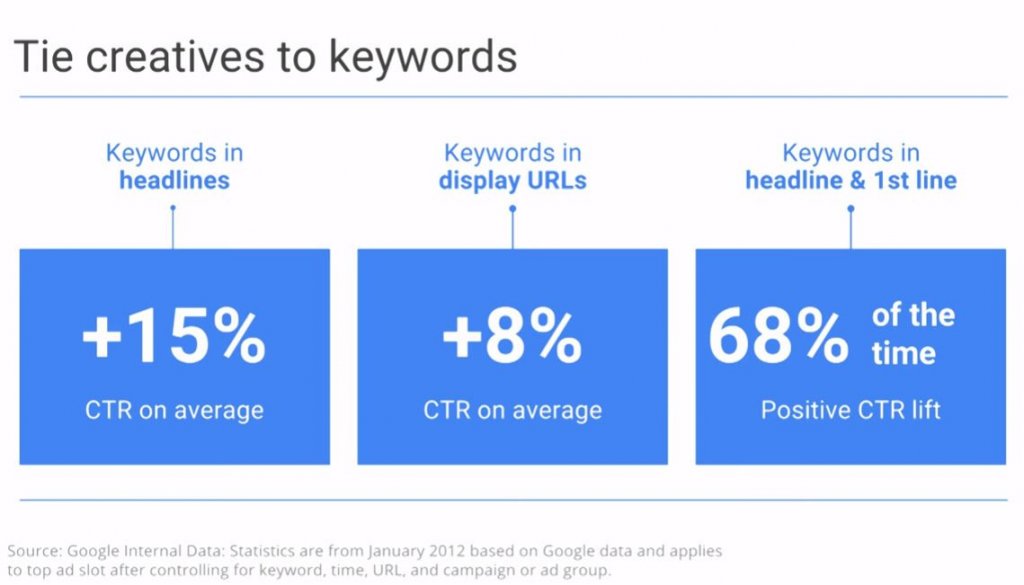
    With expanded test ads remember to include your keyword in your ad text. According to Google, including your keyword in a headline increases CTR by 15%.

    Also, continue to take advantage of ad extensions with your new ads. If you are not using extensions, you need to start. Expanded text ads take up more space on the search engine page. You can stake a claim to even more real estate using the combination of ad extensions and the extra copy.

    Expanded text ads offer a great opportunity for more visibility and increased click-through-rate. But, they don’t guarantee an improvement. So, keep testing and tweaking your ads and take a cautious approach with the new features.

    [cta offer=”ppcreport” color=”dark”]

  • How to Tell If My Real Estate Google Ads Campaign Is Working – Setting Up Conversion Tracking

    How to Tell If My Real Estate Google Ads Campaign Is Working – Setting Up Conversion Tracking

    2015.01.2-ppc-working-main

    A client of ours reached out and had dropped $5,000 in Google Ads costs over a few months on a campaign he was managing himself, but it wasn’t performing as he hoped, and he had no clue what parts of his PPC marketing were working and what factors were costing him money.

    In this post, we’ll walk you through the simple action we had him take that turned things around from $5k in losses to over $30k in profits… and the #1 mistake most newbie PPC marketers make that prevents you from knowing if your PPC marketing is working for your real estate investing business.

    I get asked this question all of the time…

    How do I know which keywords and ads are generating leads?

    Here’s my answer: if you don’t have the proper recording sources and/or analytic tools, you won’t know.  Google Ads campaigns will become a frustrating guessing game that may drain your budget.

    I also hear that Google Ads is an expensive waste of time and won’t generate leads.  That may be true… if campaigns are not created using an optimized campaign structure. If your PPC campaign is optimized, chances are you’ll be in the right position to be successful.

    PPC management can test the skills and patience of even the most experienced ad managers.  You may be thinking, “My campaign is doing OK right now,”

    But if you take a deeper look…

    • Is it as effective as it can be?
    • Is it efficient and structured in a way that isn’t confusing?
    • Are you continuously enhancing your return on ad spend?
    • Are you data-tracking keywords and ads?

    Without proper data tracking, knowing if your PPC campaign is working won’t be easy.

    Unlocking Profitability: 3 Powerful Tactics to Determine the Success and Failure of Your PPC Marketing Ads and Keywords

    Is PPC Good For My Real Estate Investor Business?

    How do you know? Here are a few ways to track your conversions so you know that your money is being invested wisely and not just thrown down into a black hole.

    PPC Tracking Tactic #1: Google Ads (Conversion Tag) 

    The BEST WAY.  

    A no-brainer is to set up your campaign using the Google Ads conversion tag.  Without implementing this tag on your site, you’re measuring keyword and ad effectiveness with a gut feeling.

    You or your account manager must know how a searcher landed on your site and what happened after they clicked on your ad. Did they fill in your lead form? Which keyword, ad, and/or ad group triggered the conversion?  Those questions will help you build and maintain a quality Google Ads campaign.

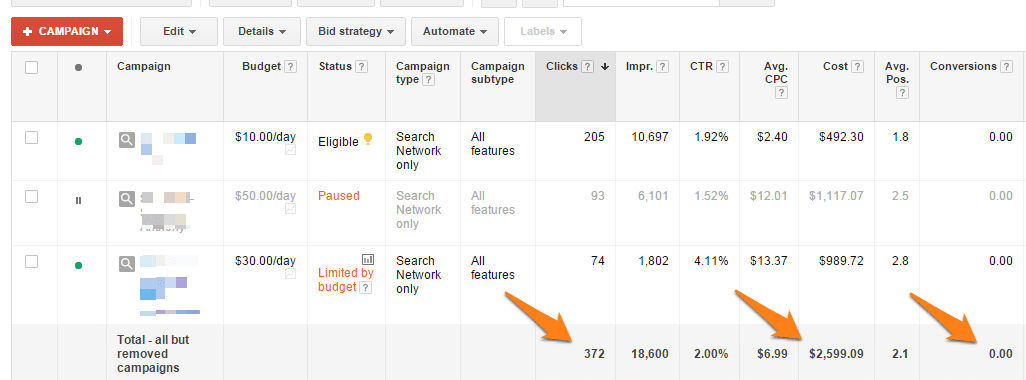
    Here’s an example of a Google Ads campaign that does not use the Google Ads conversion tracking tag.  It’s not that the Investor chooses not to because they choose to use a different company to host their website.  This “other” web service prevents them from placing a conversion tag on their site. Carrot real estate investor websites are built with the high-achieving investor in mind, making it crazy easy to add your conversion tracking tags.

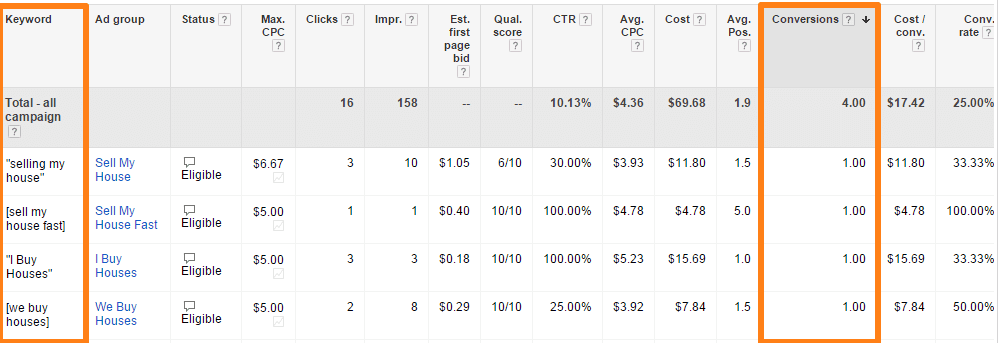
    You can see there has been $2599 spent on 372 clicks and 0 conversions.

    But… that’s not true. There have been 48 conversions (this Investor keeps track of conversions using their system)… $54 per motivated house seller lead! Not too shabby.  But an account manager would have no idea which keywords have to lead to those 48 leads.  We’re blindly leading the ship.

    A Google PPC Campaign Without Conversion Tracking = Throwing Darts Blindfolded

    Google AdWords conversion tracking

    This is what a campaign’s keywords should look like when the Google Ads conversion tag is properly implemented.  An account manager knows exactly what keywords need to be adjusted and tested.

    A Google PPC Campaign Using Conversion Tracking = Strategic ROI-Based Marketing

    google adwords real estate investor keywords

    The benefits of recording data — you will know which ads, placements, and keywords lead to conversions and are worth bidding on.  You’ll also know the reverse, which ad, placements, and keywords to pause.

    Pros and Cons Of This Tracking Method:

    • Pro: Helps you find exactly which ads, keywords, and ad groups are performing the best and worst so you can make smart decisions to drive up your return on investment
    • Con: Nothing… really. This method is highly recommended as long as your tag is installed correctly on your website and you record unique leads.

    Be sure to create a conversion tracking tag for your PPC leads.

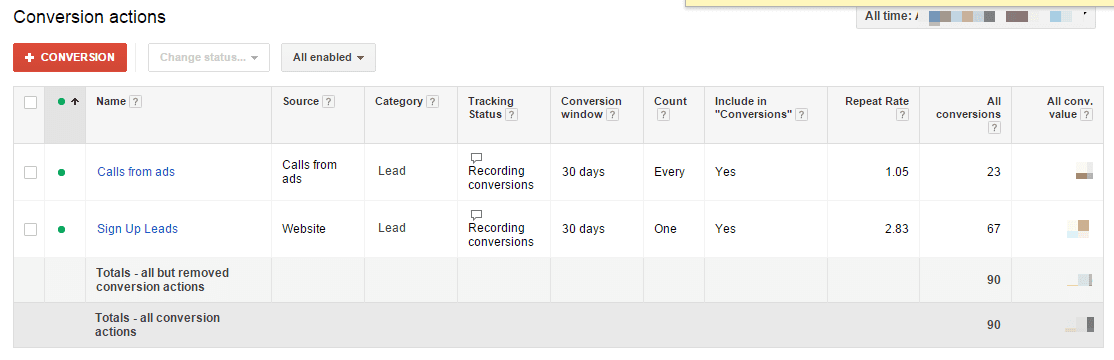
    For Carrot members, you can place a conversion tracking tag on your “step-2” page to ensure tracking on all potential clients who have filled out one of your website forms.  Tags allow you to definitively know when traffic has come from your PPC campaign rather than from SEO, direct mail, etc… it also helps you drill down on exactly which keywords are producing profitable leads and which aren’t.

    You can use the Google Tag Assistant to double check the tag is reading your step-2 page.


    HOW CARROT MEMBERS CAN PLACE AN ADWORDS CONVERSION TAG ON THEIR CARROT SITE

    How to Create a Google Ad |  Carrots Weekly Live Coaching Calls for Real Estate Professionals

    Adwords conversion for real estate investing

    PPC Tracking Tactic #2: Google Analytics

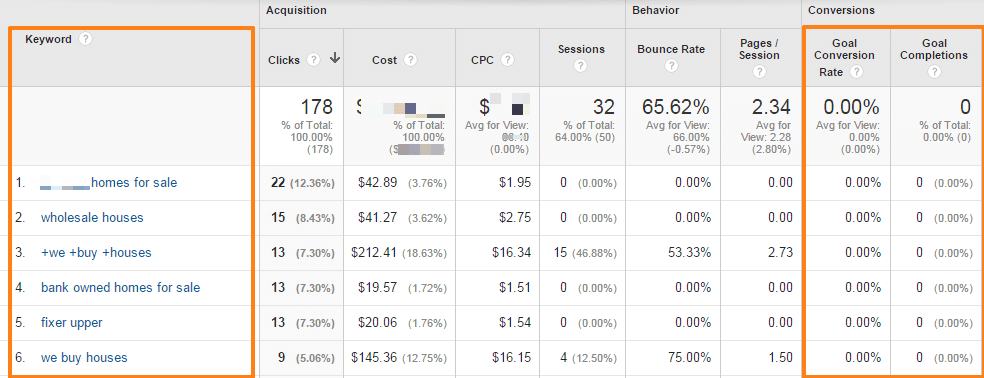
    First… you’ll need to link your Google Ads account to your Google Analytics.  While you will be able to track conversions in Analytics, you won’t be able to know for sure which keyword or ad generated the click. This isn’t the best way to monitor the performance of your PPC campaign but it can be used to track overall lead volume.

    google analytics for real estate

    Pros and Cons Of This Tracking Method:

    • Pro: Gives you great aggregate data on the performance of your Adwords campaigns
    • Con: It doesn’t let you drill down too far into specific ads or, in some cases, specific keywords either, and doesn’t tell you exactly which leads came from where.

    PPC Tracking Tactic #3: The Carrot Lead Source Feature

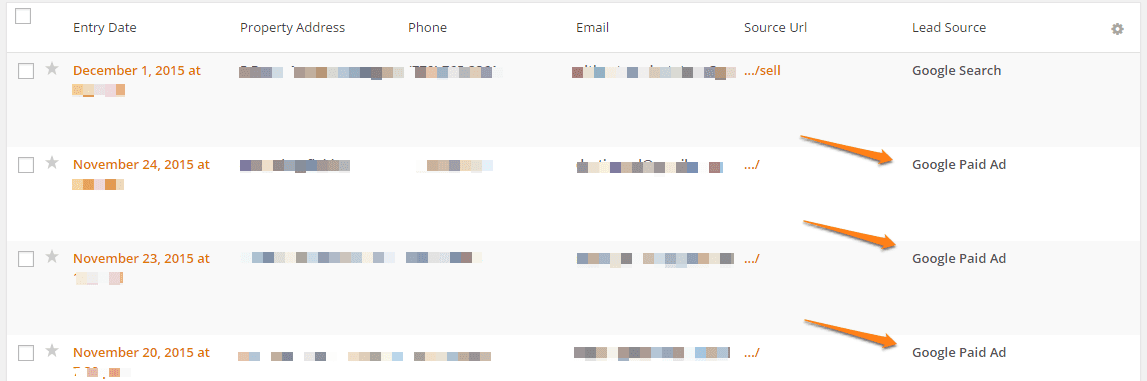
    Like the information in Analytics, Carrot members can see which traffic source generated the lead, but again not a specific ad or keyword.

    The Lead Source Tracking is automatically tracked for every single lead that comes into an InvestorCarrot site You don’t have to do anything to turn it on. Just head to view your leads, and it’s right there.

    To find this info, log in to your Carrot site and view your leads. We’re currently working on a massive upgrade that will give more power and functionality to Campaign Tracking within your InvestorCarrot site. Keep an eye out for that release this spring!

    Carrot Lead Source Tracking Built Right Into All Of Our Websites

    Carrot Lead Form AdWords Lead Generation

    Pros and Cons Of This Tracking Method:

    • Pro: This Lets you see exactly where each lead came from so you can track the true profitability of your marketing. This, combined with the Google Ads Conversion Tracking tag, is the ideal setup to give you the whole picture.
    • Con: This tracking doesn’t give you any data about the ad that drove the lead.

    Key Strategies for Running a High-Quality Campaign and Positioning Your Ads for Maximum Impact

    To measure the effectiveness of your advertising campaign, you should monitor your investor transactions, whether buyer or seller, and keep track of new customers, requests for information leads, phone inquiries, and even organic website traffic.

    Here are some ideas that will help you not only determine the effectiveness of your ads but will also give you some new marketing ideas.

    Additional PPC Marketing Optimization Tips

    1. Compare your sales before, during, and after your ad campaign.

    Keep in mind that internet advertising often has a delayed affect and can then grow steadily.

    Transactions that result from your ads may not take place immediately. So be patient.

    2. Use a dedicated phone number to track inquiries.  

    Create a phone call conversion tag for AdWords or other internet marketing options.  Tags make it easy to identify and track phone leads positively.

    3. Here are several more that will help squeeze out that extra profit and return on investment… 

    • Set a PPC goal.  This could be the number of leads per week, month, or even a cost-per-lead target amount.  Whatever it is, though, write it down and constantly measure it.
    • Keep your campaign organized.  A messy campaign can cause confusion, waste spending, and ultimately leave you unmotivated.
    • Target the right keywords and limit the number of keywords. Yes, you can have too many.  The sound of 4,000 keywords might sound appealing. However, having too many keywords can lead to confusion and harm your campaign. Unless you are willing to create ad groups and ad text based around each keyword, AdWords potentially won’t give you a high enough quality score for ads to show in the highly regarded top three ad spots (41% of clicks come from the top 3 spots). You can also waste spending due to higher click costs and possible clicks from unrelated searchers.
    • Creating compelling ad copy.  Make a searcher want to click your ad. Read our blog post here, where we write about that.
    • Testing…testing.  Create numerous ads and be sure to test them to figure out which ones are more attractive.  Even minor changes, such as removing or adding a word in the ad headline, can make all the difference.
    • Use quality landing pages. Landing page experience refers to the relevant, helpful, and original content. Read this post to learn how city-specific landing pages help you get more traffic.
      Landing pages must offer trustworthiness and be easy for customers to navigate.  It also requires a quick loading page time and encourages customers to spend time on your site.
    • Make sure your call to action is clear. Tell the searcher what to do.  Don’t make them guess.
    • Put the focus on your potential motivated seller or buyer lead. Let them know why you’re better than the competition.
    • Always implement a conversion tracking tag. Yes, you might be able to track lead sources, but if you look at your Google Ads account, you won’t know which keywords and ads generate ROI. It will become a guessing game as to which keywords to pause potentially and which to be more aggressive with.

    Reasons Why You Should Start Conversion Tracking Today

    You must start to gain insight into what’s working within your campaign. Without that knowledge, your Google Ads campaign won’t be completely optimized. This will limit you from being able to make the necessary changes to attract more leads.

    You’ll also be able to improve your ROI.

    Clicks are not valuable unless they are converting into leads that turn into profitable deals over time.

    Tracking will reduce wasted ad spend, gain quality clicks, and improve ROI.

    With the data gathered from tracking, you can perform a better test on your campaigns and grow them to get even more conversions.

    Don’t Spend Another Dime On PPC If You Don’t Have Layers Of Conversion Tracking In Place

    Once our client turned on conversion tracking, he could quickly see which ads and keywords were a complete waste of money and which were bringing him solid leads. He trimmed off the stuff that wasn’t effective and ramped up the stuff that was. Within four months, he closed several deals that have brought in over $30,000.

    He possibly would have closed those deals without the tracking in place, but his profit would be far less because of the wasted marketing dollars he was spending before he had tracking in place.

    Tracking is essential… not just a “luxury.”

    Implement the Google Conversion Tag + make sure you’re using a website system that helps track your leads and tell you where each lead came from. That information alone could save you tens of thousands of dollars per year.

    There are a lot of factors, including time of the year, the state of the economy, and geographic location, which can make it difficult to accurately measure the success of your ads if you don’t use the proper tracking techniques.

    Compare the before and after advertising traffic from your Carrot website. Also, your PPC manager should be able to provide you with weekly and/or monthly PPC reports.

    You can also be proactive.  When talking with your leads, don’t forget to ask them the obvious question.

    How did they find your website?

    PPC might not be a cost-effective alternative in very competitive markets unless you can ensure a large enough marketing budget or be willing to limit your traffic if you’re using Bing… but either way… putting in place what you learned in this blog post is essential in competitive markets. Let your PPC be a great compliment to your SEO campaign.

    PPC data tracking is one of the most important parts of your PPC campaign.

    Interested in switching to Carrot so you can take hold of your online marketing once and for all and ramp up your ROI? Awesome! Take a demo and reach out if you have any questions!

    Question: If you’re doing paid marketing, are you using conversion tracking? Let me know below in the comments section!

  • 10 Game-Changing Business Leadership Statistics

    10 Game-Changing Business Leadership Statistics

    10 Game-Changing Business Leadership Statistics

    The way you lead the people you work for has a massive impact on your company’s success.

    In many instances, a business’s leadership will determine whether the company stays where it is or moves to the next level of revenue. Sometimes, though, this is unintentional — the leader hasn’t put much thought into how their building their business and so they continue, accidentally creating something that’s toxic, unsustainable, or outright immoral.

    In the end, how you build something is just as important as what you built.

    Not just because you want to run an ethical business, either, but because you want to run a successful business.

    And often, the difference between the two is the way that the leadership operates.

    After some research, here are 10 surprising business leadership statistics that might change the way you’re doing business.

    Business Leadership Statistics

    1. 84% of companies expect a leadership shortfall in the next five years. (Source)

    2. 71% of companies do not think their current leaders are capable of driving them into the future. (Source)

    3. A mere 19% of businesses claim to be “very effective” at developing leaders. (Source)

    4. 63% of millennials don’t believe that they’re skills are being full nurtured by their boss. (Source)

    5. 77% of companies have some sort of leadership gap. (Source)

    6. 43% of American employees spend at least some time working remotely.

    7. From 2016 to 2017, the number of people who quit a job due to lack of flexibility almost doubled — from 17% to 32%. (Source)

    8. 82% of telecommuters are less stressed from work (Source)

    9. In flexible work environments, millennials are more likely to stick around for over two years. (Source)

    10. Two-thirds of managers said that employees who work remotely are more productive. (Source)

    Main Takeaways

    1. Be available to your employees — The truth is, most of your employees want to learn, want to be nurtured, and want you to help them get to next level of their career. Naturally, though, spending the time to develop your employees doesn’t just benefit them, it benefits your business. The better your employees are, the bigger your business will grow.
    2. Fill necessary gaps — I know. It’s scary to hire new people to lead different sectors of your business. Not only does it require you to hire incredible people, it requires you to pay those people a fair wage for their skills and trust them to operate a big portion of your business. At first, it’s scary. But if you hire the right people, you’ll wonder why you didn’t do this years ago.
    3. Allow for flexible workspace — Humans want to work like they are free people (not slaves). Too many work environments require people to sit at one desk, in one room, looking at one screen. And frankly, it’s dull and unappealing. Mix it up. Offer new spaces and new ways of working to keep your employees interested in the place that they commit 8 hours a day to.
  • Real Estate Investor Virtual Assistant: 3 Key Mindset Changes You Need to Make Before Hiring

    Real Estate Investor Virtual Assistant: 3 Key Mindset Changes You Need to Make Before Hiring

    Real Estate Virtual Assistant: 3 Key Mindset Changes You Need to Make Before Hiring

    Watch the Full Carrot Coaching Call with Max Maxwell. Learn More About His Real Estate Investor Virtual Assistant Process

    Naturally, you want a VA that’s going to become a vital part of your business — not some email-sending, spreadsheet-creating robot.

    Of course, that doesn’t have to be the case. Brian Miles at Entrepreneur writes that “a virtual assistant is one of the fastest tickets to growth in 2017 and beyond.”

    How, though, do you make sure that you hire the right person?

    Well, you need to take the virtual assistant hiring role seriously — build systems, create solid training, and hire someone who can become a part of your business’ bigger picture. Ultimately, hire someone that fits your business.

    Three Mindset Shifts To Make Before Hiring a Real Estate Investor Virtual Assistant

    Many people have the wrong mindset when hiring a virtual assistant — or anyone, for that matter. Think to themselves, “I need to hire someone to work X amount of hours every week and get this job done. Other than that, it doesn’t really matter.”

    Of course, you’re smart enough to know that’s a lie.

    Every single person you hire will change the culture of your business because those people are the culture. Which means that you need to think long and hard about who you’re going to hire rather than speed-hiring out of blind necessity.

    Recently, we had special guest Max Maxwell on a Carrot Coaching Call to talk about his highs and low and eventually how he built a solid strategy for hiring virtual assistants.

    Finding success with a virtual assistant isn’t easy. As with hiring anyone, you must give them the skills to be successful. Sure, you want to hire talented people — but that doesn’t mean you can ignore the training phase of their onboarding altogether.

    Here are three key takeaways from Max’s strategy.

    Build a car so all you’re in charge of doing is putting gas in. – Max Maxwell

    1. Be Sure You’re Ready to Hire a Virtual Assistant

    One thing that Max realized after taking a shot with a VA (like many other Investors who hire VAs) is that if you’re not prepared, it can be more trouble than it’s worth. And you’re not hiring a VA to make things more complicated. You’re hiring a VA to make things less complicated.

    Still, for many unprepared employers, hiring a VA ends up hurting their business rather than helping it.

    Max learned that lesson through first-hand experience. Instead of asking himself the right questions — What is it that the virtual assistant will really be doing? What do I really need help with? — he hired before he was totally prepared.

    And the last thing you want is for your virtual assistant to start off feeling lost because you didn’t prepare.

    Before hiring your first virtual assistant, document a very clear picture of your needs and what tasks they will be covering for you. Keep a running list for a few months, documenting every time you feel like a VA would have helped in that situation.

    Also, consider how much you can pay. Virtual assistants are typically a bargain, but if you have a little more to pay them, it’s possible that you can retain them for the long-term if they work out. When you do retain them, it makes for an easier transition for your HR and payroll team, especially if they use software like GustoHR.

    2. You Need Systems and Processes

    Max found success when he created a system, mastered the system himself, created a training process for that system, and then handed it off to his VA. But, he didn’t get that right the first time. It was a learning process for him.

    For example, Max has created a specific CalRail number just to use for a mock phone call. When considering a VA, he’ll call them to hear how they interact over the phone. If they speak well and have good people skills, they can move on to the next step of his hiring process.

    He’s trained himself to know exactly what he’s looking for when considering someone to manage outbound calls.

    Too many employers hire their VA because they need something done and they need it done now. They don’t take the time to consider how valuable that VA can be if they actually create systems and processes to empower the VA to do the best work that they can.

    Take time to create a hiring process. Create job descriptions. List the key responsibilities and areas the VA will be working in. Utilize applicant tracking software to streamline the hiring process. If you don’t want to create a written version, simply shoot a quick video that lays out the role you’re looking to hire for.

    3. Treat Your Real Estate Investor Virtual Assistant Like an Actual Employee

    If you take the time to get to know your virtual assistant, the less likely the situation is going to be a bad one. Take the time to treat them as if they were in the office right next to you. Treat them like the human that they are. You wouldn’t hire an office manager and then never get to know what their dreams and goals are. So, why would you treat a virtual assistant any different?

    Exactly.

    Their job is just as important (if not more important) as any and they should be treated that way.

    Treat your virtual assistant’s role as any other within your business. You’ll build loyalty and a stronger worker from that meaningful relationship.

    Get to know their culture, their goals, the dreams.

    Conclusion

    Before looking for a virtual assistant, build your systems, create your training strategy and set the right expectations. You need to set them up for success rather than blame them for failures. Remember, you must be an expert first. Then, and only then, will you be able to successfully hire and train your first virtual assistant.

  • [NEW] Motivated Land Seller Websites

    [NEW] Motivated Land Seller Websites

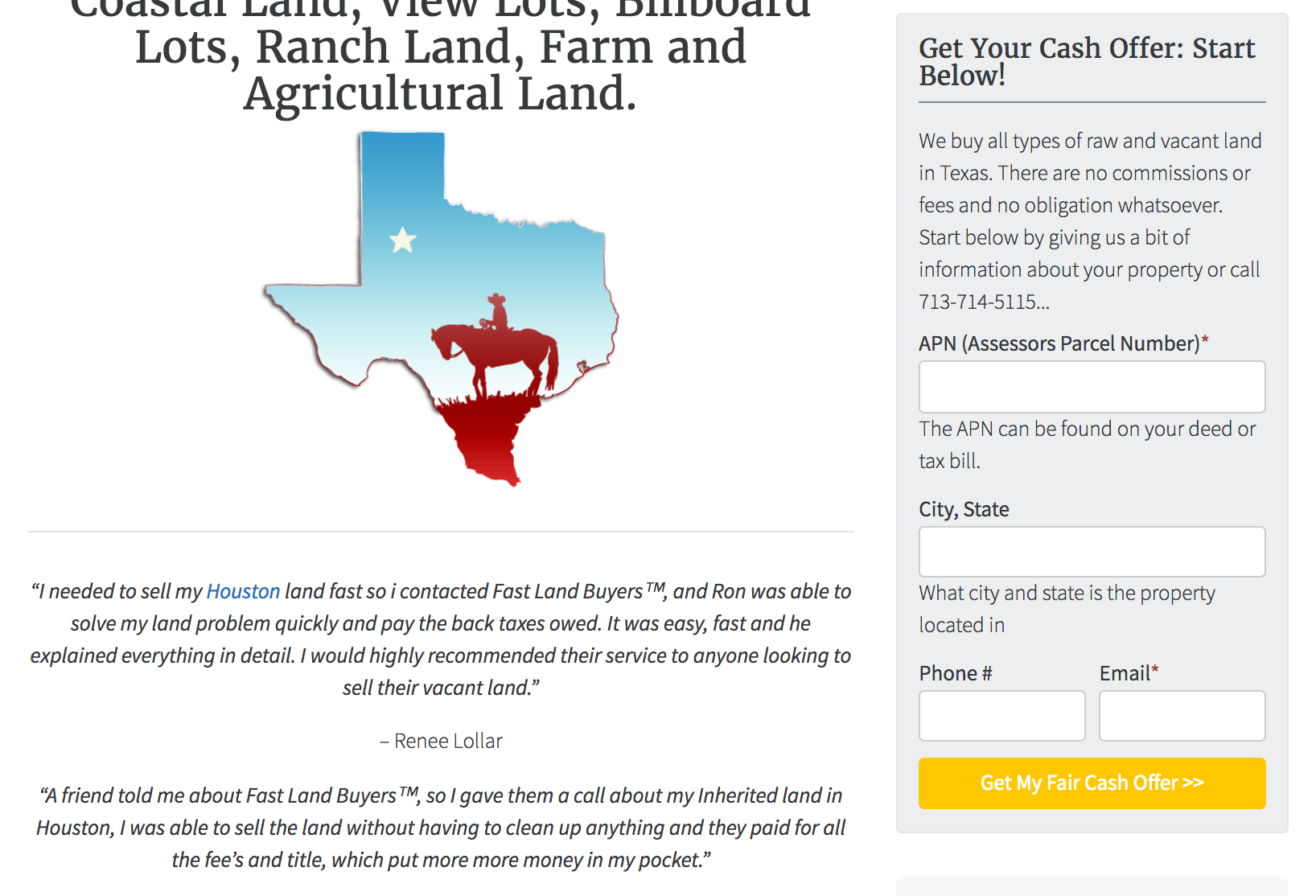
    Land Buyer Websites Post HeaderLand is hot right now. I was talking with one of our Carrot members recently and they’re seeing a really great opportunity to sell land all across the country. So, we worked with them to create a Land Seller website system here at Carrot! Here’s how it works…


    Introducing Our New Land Seller Websites for Motivated Seller Lead Generation

    Over a few-month period, we researched and tested websites in some select markets to create our first version of a performing-based land seller website that you as our Carrot members can access and set up in your accounts.

    land seller websites

    We’ve kept these land seller websites simple… but effective. We’re actively testing the sites, for instance, and will be adding elements that help increase conversion rates each and every month.

    See for yourself … Investor Land Seller Website Sample

    Carrot land seller websites

    The Design

    We’ve taken our proven design with what we call the “Lead Hero” that we have by default on all of our websites (but you can turn the Lead Hero on or off with the click of a mouse if you want) and built that into the land seller websites as well.  We’ve found that when we have a Lead Hero on our customer’s homepages… the homepage conversion rate increased across the board.

    Plus… we’ve built in the Conversion Boosters that are baked into all of our Carrot real estate investor websites that improve opt-ins, engagement with website visitors, and credibility.

    Land Seller Websites Template


    Land Seller Website Content

    Designed For Results

    When most people start building their first website, they care about one thing and one thing only: how pretty does the website look?

    Over the years, though, we found that results matter more than looks. In fact, that’s all that should matter in the design of your website.

    Our Carrot real estate websites are built from the ground up based on research and test data to produce great results. PLUS, we’re continually testing elements on our websites to find out what works the best and how website visitors interact on your website (buyers, sellers, private lenders, tenants, etc.).

    Then, once we find things that work, our design team takes the baton, creating elegant and clean formats while at the same time retaining the current conversions (or ideally increasing website conversions even more!).

    The Content

    Like all of our website content packs, the content is professionally written by people who know SEO, website conversion, and real estate strategy inside and out.

    The mistake most people make when building their real estate website is that they underestimate the power of content. Words on pages can make or break the results of your website in search engines and how well your website performs once a visitor arrives.

    Every page on this new land seller website in our system is written with four factors in mind:

    1. Search Engine Optimization – We’ve done extensive research to find out what motivated land sellers are searching on Google to find the land buyers. Then we’ve built those keywords into this content strategically and we customize it with YOUR CITY automatically when you create your website in our system. This and our other SEO elements help your website have a better chance of ranking higher in search engines to attract more motivated land sellers.
    2. Lead Conversions – If you’re able to get land sellers to your website but they aren’t giving you their information, your website isn’t doing its job.  Content and pages are made to convert. That way we position our opt-in boxes, the words on our calls to action, the “eye direction” elements that make the visitor’s eye go to the parts of your website that matter — it’s all built into our land websites.
    3. Customized and Customizable – While your website will be 100% ready to roll from the second you launch the website in your Carrot account — just like any of our websites within the Carrot system — you can customize anything about your content that you want to. We actually encourage our members to add some twists to their website content to make it feel personal to you and what your business does.  Plus, we’ve automatically customized part of your website content with your company name, contact info, and the city you invest in. So website visitors will know they’re on a trusted, LOCAL investor website.
    4. Credibility Boosters – Credibility is huge when generating leads in any business. The ideal way to build credibility and trust with your motivated land sellers is by making your website feel like you’re a real person. There is an “About Us” page already created for you that you can customize if you want to, plus we’ve integrated some trust symbols into your websites to help increase trust on your pages.

    One of the big reasons our members LOVE Carrot so much is the quality and effectiveness of our website content and how much time they save by just leveraging our content and our writers rather than spending a painful amount of hours writing the content for their own website.

    NOTE: All of our website content is Copyright Protected and for the use ONLY for active Carrot members, and may not be copied in all or part on another website. Any Copyright infringements will be taken seriously. We appreciate you being cool and playing by the rules.  

    The SEO

    real estate investing seoJust like our other websites, we’ve done the search engine keyword research to find out what motivated land sellers are actually typing into Google. Then, we’ve built our content and pages around those phrases that people are already looking for.

    Plus, we make this even easier for SEO novices to help your content rank higher with our Carrot “SEO Assistant.” If you can read a traffic signal, you can optimize your pages for the search engines with our SEO tools.

    The Lead Capture Process

    One thing we’ve discovered in our years of lead generation experience (over 1,000,000 real estate industry leads and counting) is that the majority of your website visitors won’t convert (give you their information) immediately because they need a bit more information to trust you and give you their information.

    Because of this, we’ve built in multiple places for your website visitors to engage in the content and convert as a lead when they’re ready.

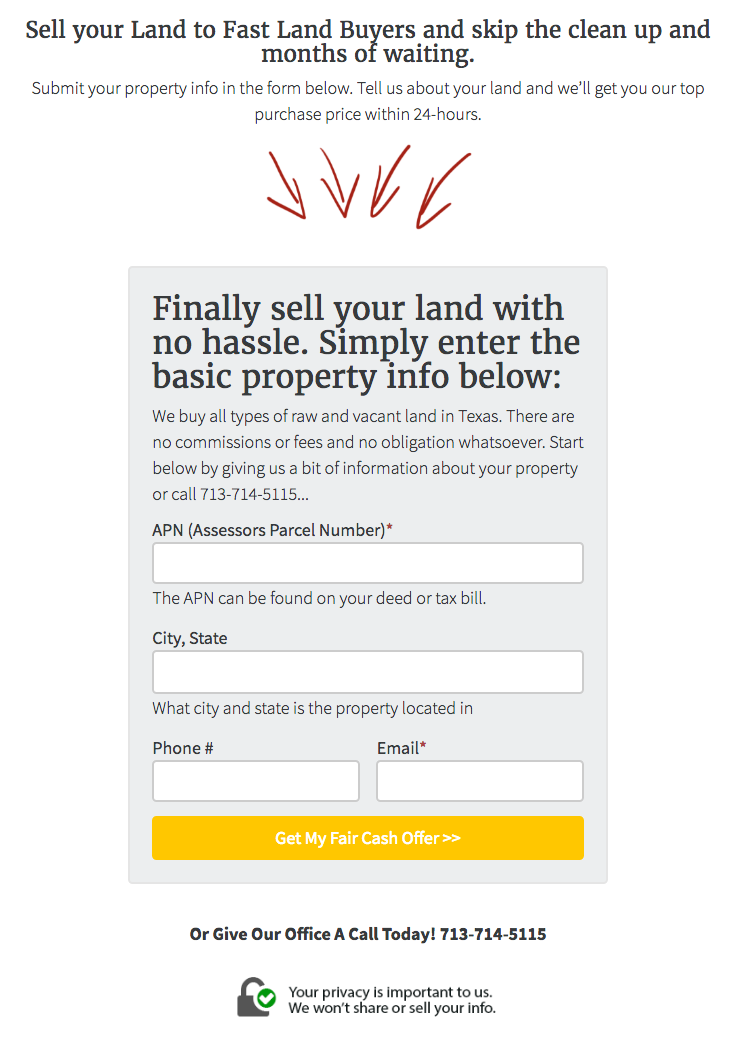
    Land Seller Website Template lead form


    Motivated Land Seller Website Lead Form


    Land Seller Website APN Lead Form

    And like all of the pages we create, they’re all based on the continual testing we’re doing to increase the effectiveness of our pages in converting website visitors into leads.

    How To Launch Your Own Land Seller Websites To Attract Motivated Sellers With Carrot

    If you’re a Carrot member, you can get your own Land website up and live in a few seconds.

    1. Log into your account.
    2. Select the new “Land Seller” website in the “Create A Website” list.
    3. Name your site and click “Create Your Site”.
    4. That’s it!

    Now you can log in and customize your website, attach a domain to it if you want, and get to work!

    Not An Carrot Member Yet?  Join Below!

    If you’re not a Carrot member but want to leverage our tools, our system, our marketing knowledge, and our support to help you generate more leads to your real estate business… awesome! Simply take a demo or click the link below to get started!

    See Plans And Join Carrot >>

  • What Would You Do With An Extra $100? How Carrot Spread Some Holiday Cheer

    What Would You Do With An Extra $100? How Carrot Spread Some Holiday Cheer

    What would you do with $100? Now change that idea … What would you with $100 if you had to spend it on a stranger?

    Each Christmas, Carrot does this. Each employee is given $100 to spread some holiday cheer!

    This year, we captured some our stories It’s not a complete list. Some of the stories didn’t make it into our LivingLife chat, but we all contributed to others. Great work team! These are some pretty amazing, generous, and uplifting accounts.


    “We have been looking for a church that we both get a lot out of for a while. We have attended Summit View in Vancouver the last month and a half and are blown away by the people, message, worship, and everything they do for the community.

    Last week at church they did a special offering for a few of the charities they support and we donated our $100 to that. We learned that $75 can provide enough resources for a foreign minister to survive for 1 month. So we put our money towards that. – Alex


    “A person I once worked with lost her job a little while ago and has 4 young kids. I anonymously mailed her the money in a Christmas card today. I’m very sure she can use it and if felt good to drop it in the mail!” – We’ll keep this one anonymous


    “Ok so phase 1 of our $100 giving – we are going caroling tonight to some folks from our church and we stopped and bought each person a poinsettia for the kids to give them.

    Phase 2  – we left our waitress a $50 tip at lunch today.

    We wrapped up phase 3 last night – Ben really wanted to give the rest to a homeless lady last night. We were planning to buy someone dinner but he felt like that was where it should go instead. She was so surprised and very grateful. Love this motivation for us all to do a little more each year. Thanks Trevor – and Carrot for helping us all do better.” – Jen


    “Meg and I decided that this year we wanted to match our $100 from Carrot, and donate to homeless in the area. So we are putting together some backpacks for the homeless. We got a bunch of supplies and we’re going to be handing out to the homeless on X-Mas eve.. Socks, blankets, some food items that area easy to pack and travel with, bookbag, personal care products, kleenex, chapstick and some other things.. We’ll take some pictures of us handing it all out.. hats and stuff too.


    Set our this morning to hand out our bags to the homeless. what a truly amazing experience. To do something that seems so simple to me, and how much it mattered to the people we were helping was inspiring. 10 bags, 10 lives made better on Christmas. Each bag contained:

    -Peanut butter crackers
    -Beef jerky
    -Hats and gloves
    -A fleece blanket
    -2 pair of socks
    -2 bottles of water
    -Chapstick and hand lotion
    -Band-Aids, aspirin
    -Deoderent, comb, toothbrush, and toothpaste
    -Cough drops
    -Plastic utensils
    -Clementines
    -$10 gift certificate to McDonald’s

    To see some of the smiles and hear some of the stories was both heartbreaking and inspiring at the same time. We tried to engage in conversation with the person we gave a bag to.. we didn’t just want to hand them a bag and move on, we really wanted them to feel like someone cared and just to have a friendly 5-10 minute convo with someone. It was really amazing.

    Thank you Carrot and Trevor for giving us the challenge.” – Pete


    “I was at Safeway getting some holiday baking ingredients and behind me in line was a young mom with two young kids who had a pretty large cart full of groceries. I just kept that $100 bucks in my wallet waiting for the “right time”. So i told the cashier to use the $100 dollars until it was gone on the people in line.” – Levi


    “With the $100 we were given, I took a page out of @Levi’s book and paid for all the people behind me at Fred Meyer on Christmas Eve. In the moment, I had wayyyy too many layers on and could feel that my face closely resembled a tomato, so I kinda bolted out of the store, but it felt really cool to be able to bless some people.” – Danni


    “For my $100 from Carrot, I combined it with matching it from my personal and REI. I went around town paying for people’s stuff. I personally would pray and just ask God to help me chose with my heart, not my emotions. It was a great experience, a few memorable moments for sure.” – Adrian


    “2017 was a tough year. Our family experienced more deaths and illnesses than anyone should experience in a short time. One of those was my girl’s buddy. It was their idea to help out pets in need. So, first, we donated to our vet, who donates to a different organization than the humane society. Then, our next stop was to our local humane society. They get donations all of the time but were very grateful and happy that we were there. Our vet didn’t know what to say, he was speechless… he must not get direct donations too often.

    We also made a match and spent an evening shopping for Toys for Tots. We couldn’t leave out children whom’s Christmas morning might have been a little bit more fun.” – Brendan


    “We matched and donated our Carrot cash to the county food bank. While we did not have a chance to personally get out in our community with our health issues over the holiday, this was a simple way to get some literal carrots into our community.” – Chris


    “What to do with $100?

    I’m not a local here, so no familiarity with organizations or anything. I asked around and nothing really struck me. Then I tapped my VFW buddies.

    They turned me on to Vic. He is a Veteran and father of six kiddos. No idea whether the wife/mother is in the picture.

    Several months back they’d tried doing a benefit ride for him with nominal success. Apparently, after returning stateside, he battled with a significant leg wound (work induced?) which ultimately resulted in amputation.

    Now this story came to my attention several weeks ago (when I got the money) and I’ve been trying like heck to get it to this guy.

    After talking with Marty, who told me to talk to Bill, who told me he’d connect me with his sister (didn’t happen)… I was going to go down to the VFW Post this weekend when I finally got a response.

    I finally put the money in an envelope, gave it to Johnna who will give it to Bill tomorrow that will pass it on to Victor and his family.

    There is one family out there right now that will be able to buy some groceries, pay a utility bill, or whatever. They have a rainbow in their cloud and I am selfish because I’m stupid thankful y’all gave me a chance to help make that happen. Thank you.” – Janel


    “What I did w/ my $100 smackaroos.

    Well… first off we continued our tradition of the last 3 years of doing “Flowers for Other Grandmas”. I took a bunch of Instagrams of the day but didn’t save them. shoot! But all 3 kids went w/ me and we delivered about 40 bouquets of flowers to the gals at the old folks home. We got lots of hugs and one grandma chased us around and got 2 rounds of hugs… then chased me across the parking lot in her walker w/ her dog to tell me my rear light was out and how much she and the other gals appreciated and were blessed by us being there. that was awesome!

    Then for the $100… I taught my kids about being generous and giving. I kinda pressured myself a bit this year and didn’t do amazing things like you all did (@pete you took it over the top man!) but I had the kids find people doing things that day that were exceptional and give them big tips and tell them thank you and Merry Christmas.

    We gave the pizza delivery gal a $40 tip… she delivered pizza at 6:30 on Christmas eve in a beat up car and that $40 made her night. she almost cried.

    A trio of people were at Fred Meyer playing violins (Christmas music) inside the store and it added such an amazing ambiance to the store I loved it and the kids did too. So McKinely went up and gave them a $20 and told them thank you for playing such great music. And we did the same a few other places. it was fun seeing the kids do that. when I gave her $20 to give to them she said… “Dad, this is a $20… are you sure you want me to give this to them?” and we talked about how much joy they were brining to people and it was well worth the $20.” – Trevor


    We really wanted to give the money to a family who is undergoing a couple of medical emergencies this year. – Andre


    I know that I can speak for everyone at Carrot when I say that we are all so grateful for having the opportunity to be part of a team that is striving to help the lives of others. Whether it’s via an online platform or in our local communities.

    Thanks, Trevor and Team!

    What would you do with an extra $100? Hit us up in the comments section, we’d love to hear some amazing stories!