Listen to the CarrotCast Podcast and Subscribe Below!
… Agents, if you’re out there listening, people need to like and trust you. I mean you’re going to have a much easier time of gaining clients if they know, like, and trust you. They get to know and trust you by seeing you. By you showing up everywhere. Why are you giving them value by you helping them and I’ll you value, value, value. Krista Mashore
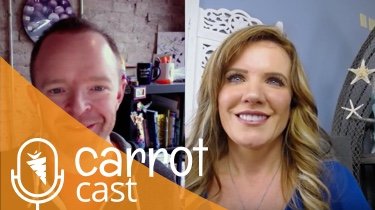
I was in Boise, Idaho, about three or four months back at a mastermind and met amazing, amazing people. Some people literally have businesses doing 50, 100 plus million a year. And people from different types of industries, a little of everything was in there. And there was this lady there that she and I connected, hit it off and said, “We need to hop on and do a podcast.” And she’s in the real estate market. She’s the number one real estate agent in Brentwood, California and sold 144 homes last year.
She started like a lot of us start, where your back is against the wall and you really need to go out there and make something of yourself or create a business or create the income. She was the same way. She went through a really, really terrible divorce and some other things and she walks you through that time in her life and how she went on to them build this business.
And she also breaks down her marketing strategies. Exactly what she’s doing to grow that business. It’s very similar to the way we teach. It’s using content and it’s going after being consistent. But she does it in a very specific way. So we invited her on the podcast, under the CarrotCast, and she is a Carrot customer, by the way, an AgentCarrot customer as we’re in BETA, with her and lots of other agents. We’re really building out the AgentCarrot platform.
Just go to agentcarrot.com, to get on that. Or if you’re listening to this one, AgentCarrot is rolled out, you can go to agentcarrot.com and join if you’re a real estate agent. But we’re going to break apart her story, the mindset tricks that she uses that work insanely well for her, to get her mindset orientated and also, what is her Realtor marketing strategy mix, that does 150 plus houses a year, as Brentwood California’s number one real estate agent.
We’re going to break all that down in this episode of the CarrotCast. And I think you’re going to insanely, insanely enjoy it. All right, without further ado, welcome on Krista Mashore.
Find more episodes of the CarrotCast and be sure to let us know how we’re doing. We appreciated your feedback!
Listen to the CarrotCast Podcast
[podcast-subscribe]
Listen in with Trevor and Krista as they discuss here Realtor marketing strategy, improving life, changing stressful mindsets, and much more!
2:15 – Why Krista has here work environment decorated the way she does for mindset and how using EMDR helps her handle stressful situations and environments better. 5:00 – Why she made the change from school teacher to real estate. 8:35 – She’s now the largest broker in Brentwood, California. What her rise to this achievement has looked like. 10:40 – How much of her success is from specializing in one area. “Focus on doing one thing.” 13:00 – Maximizing her listing exposure and why it doubles her deals in comparison to her nearest competitor. 14:00 – What she is doing now in the digital category that she wasn’t doing at the start of her career. 18:10 – How much of her business comes from fresh leads vs. ones that have been in her system. And, the difference in costs between getting a new client rather than dealing with an old one. 21:40 –Content marketing for realtors: what her mindset is about the volume of content she puts out and how she feels about putting out too much. 23:00 – Realtor marketing strategies: What types of content Krista are putting out right now, how often, and where is finding excellent content topics. 26:20 – What her network and community of follows look like. How she targets areas. 30:45 – Find out more about Krista and her realtor marketing strategy here and her new book:
34:35 – What habit she’s adopted over the last 5 years that has improved her life the most. 38:35 – What Krista does to eliminate or deal with negative thoughts. 41:30 – Why surrounding yourself with the right people is so important to sharpen your skills.
This blog post took us 80% LESS time to create than a normal blog post… because we did it with the assistance of Carrot’s new VideoPost tool. See what VideoPost is, and how it can be a game-changer for your content marketing in 2017.
We’re insanely excited to announce a brand new feature. We’ve actually been using this process to cut our content marketing time down by 80%, increase our traffic, and help our clients do the same.
I’m going to walk you through this new feature that we call VideoPost, what it helps you do, and how we came up with this content marketing method to automate and make your life simpler.
Introducing Carrot’s Automatic Video Transcription… VideoPost’s
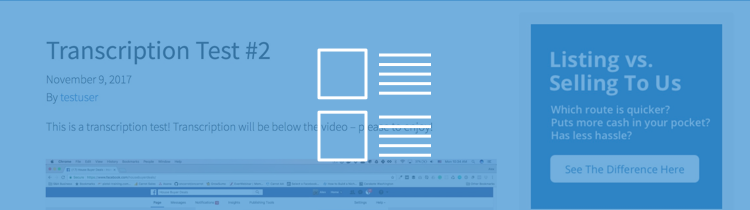
VideoPost helps you turn simple videos into powerful written content that Google loves in just minutes vs. hours. 3/4 of this blog post was created with our VideoPost feature, saving us over 60 minutes vs. writing manually. Let’s dive in to see how you can start using VideoPost today.
(click to play video, OR read the article below)
VideoPost came about by us trying to solve our own problem a year and a half ago.
As you know, it takes time to sit down and craft content or it takes money to hire it out to have someone else do it. Content and SEO are our number one source of leads here at Carrot, but it’s also the number one source of leads for our Carrot clients.
We know that content marketing is effective in the real estate market, but can we put out great content with less time and energy?
So we asked the question…
How do we make it so it’s so simple and easy that you want to do content every single week?”
Especially when you’re in competitive markets, one of the best ways to crack through that clutter and to gain an advantage is to build credibility and your expertise.
And the best way to do that is through content, except most people don’t have the time to do written content.
VideoPost Simplifies All Of That For You – An Example: G. Stiles Realty
G. Stiles is the largest independent broker in Douglas County, Oregon… and an AgentCarrot client. See how they used VideoPost to streamline their content marketing…
Let’s say you’re in a small town like Roseburg, Oregon. This is actually one of our AgentCarrot client’s G. Stiles, and they were having a tough time with their content marketing strategy as well.
We went to them and we said…
“Hey, go out on site and film a short 3-8 minute video walking people through some information that’s going to help them and be useful for them in that scenario.”
One of their specialties is in farmland and in some other agricultural-type properties, so they went there, filmed the video, and then uploaded it to YouTube.
We then had the video transcribed word for word and made a blog post for them (this was before our VideoPost feature, so it took a bit longer).
Here’s Denny’s Three And A Half Minute “On The Job Content” Video
We Then Turned The Video Into A Content Rich Article That Google Loves
This particular example was long before we created VideoPost to automate the process.
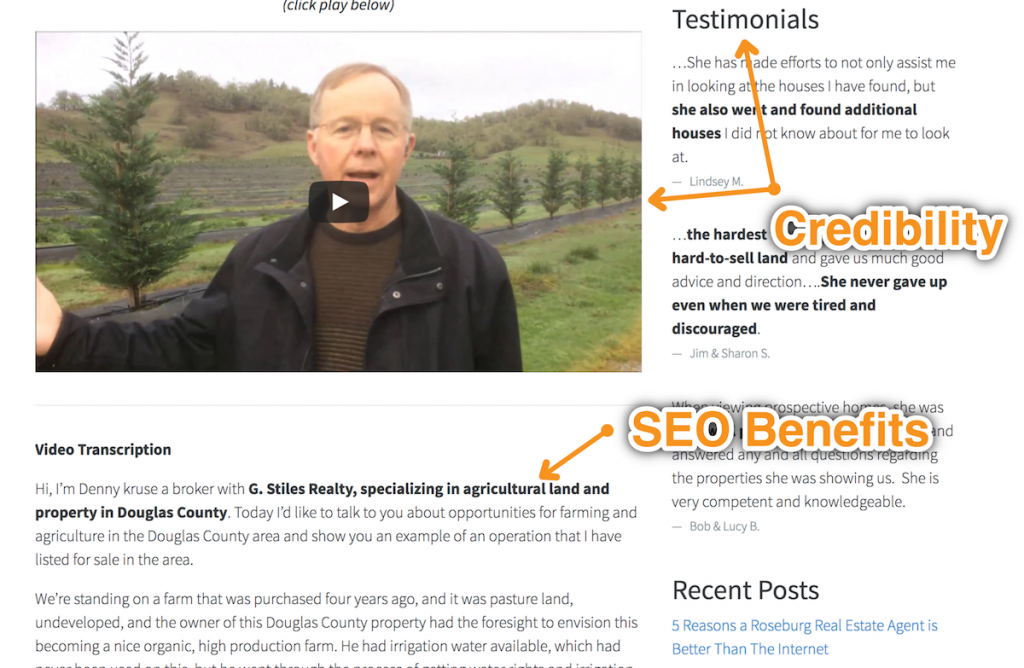
We then manually submitted it to a transcription service, brought it back, copied and pasted it into their blog, bolded a couple of things for readability, separated some of the paragraphs, put a link in there, and then we put a clear call to action at the end of it.
Less than five minutes of editing in total. About 30-45 minutes to submit the video for transcription, pay for it, get it back in a Word document, bring it to their Carrot site, and manually remove the weird formatting that can come from copying and pasting content from Word documents. (again, today, VideoPost automates most of this and brings the process down to less than 5 minutes).
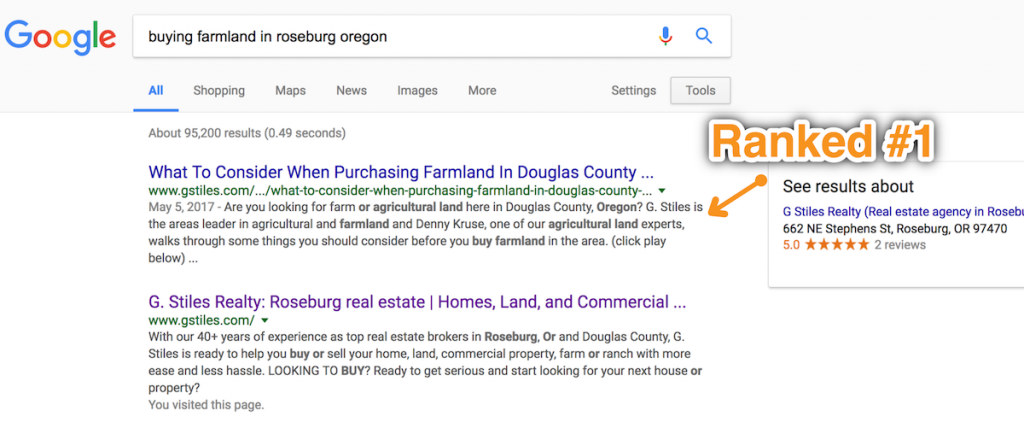
Then we used our SEO tools here in Carrot to make sure it was optimized for search engines for the phrase “buying farmland in Roseburg, Oregon” and all related phrases in the area.
The Results?
Within weeks, this blog post started to climb in the rankings.
As of the time I recorded this video, their blog post from this process is ranking over big websites like LandWatch, and Land and Farm, and Zillow, and LoopNet, and Realtor.com, all from a little piece of short video content.
Now, is this particular search getting tons and tons of searches per month? The answer is of course not, but as a part of a cohesive strategy to really go in there and swarm and dominate your market, you want to be going after the most competitive search phrases of course, but also you want to cast a wider net with these more niched down search phrases.
If you do just one video post per week, over the course of a year that’s going to be 52 new pages on your website to potentially rank in front of your best prospects.
You will cast a wider net out there to grab more searches, build more expertise in your market, become the leading expert in that market to where everyone knows, likes, and trusts because they see your information everywhere they go.
How Do We Automate This And Make It Simpler With VideoPost?
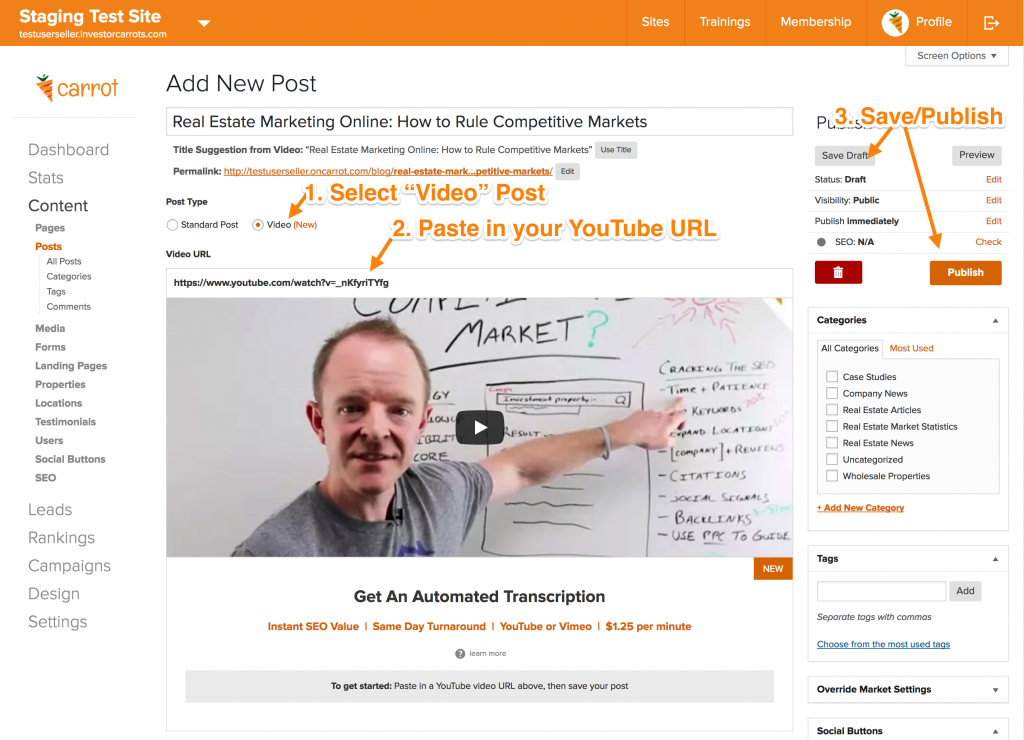
It takes under 3 minutes to create a VideoPost in your Carrot account, then edit it as much or as little as you want (we suggest basic edits to make it visually more easy to read with sub heads, that’s it!). If you’re a Carrot member already simply…
1. Log in to your Carrot website and click “New Post”, then VideoPost…
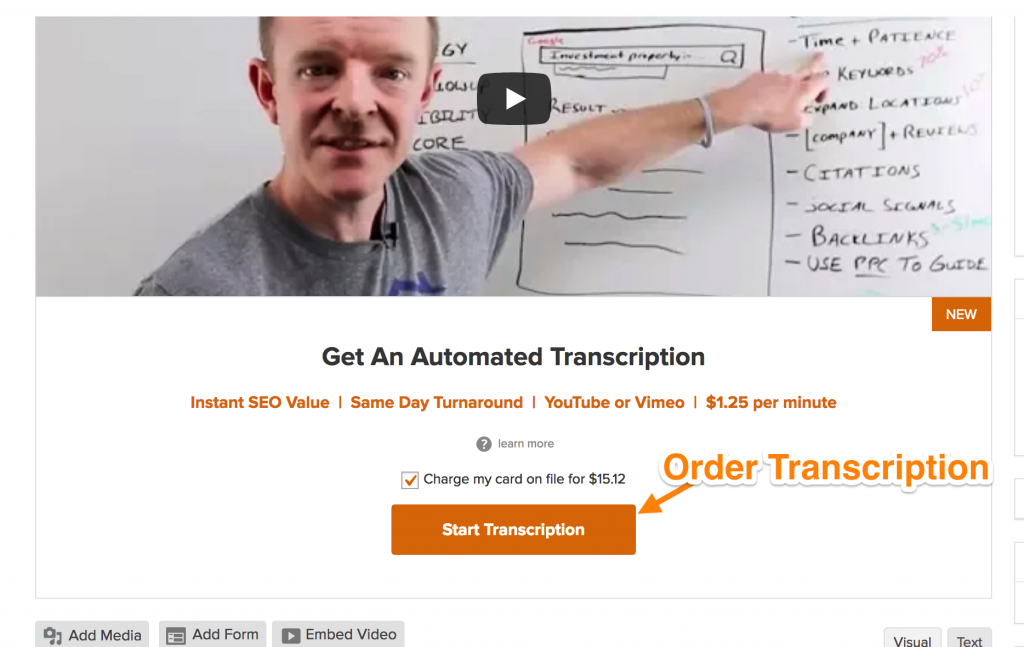
2. Confirm the transcription purchase and click Start Transcription!
By automating your transcriptions into our VideoPost format, it saves you 15-45 minutes vs. having to manually use transcription services. If you value your time at just $100/hr… that time savings alone is worth $25 – $50 to you. If you value your time higher, your savings are even larger.
The average VideoPost should be 3 – 8 minutes long, meaning a cost of only $3.75 – $10 per content piece. Compare that to $30 – $75 to outsource to a writer, VideoPosts are a huge time savings and direct money savings every time you use it.
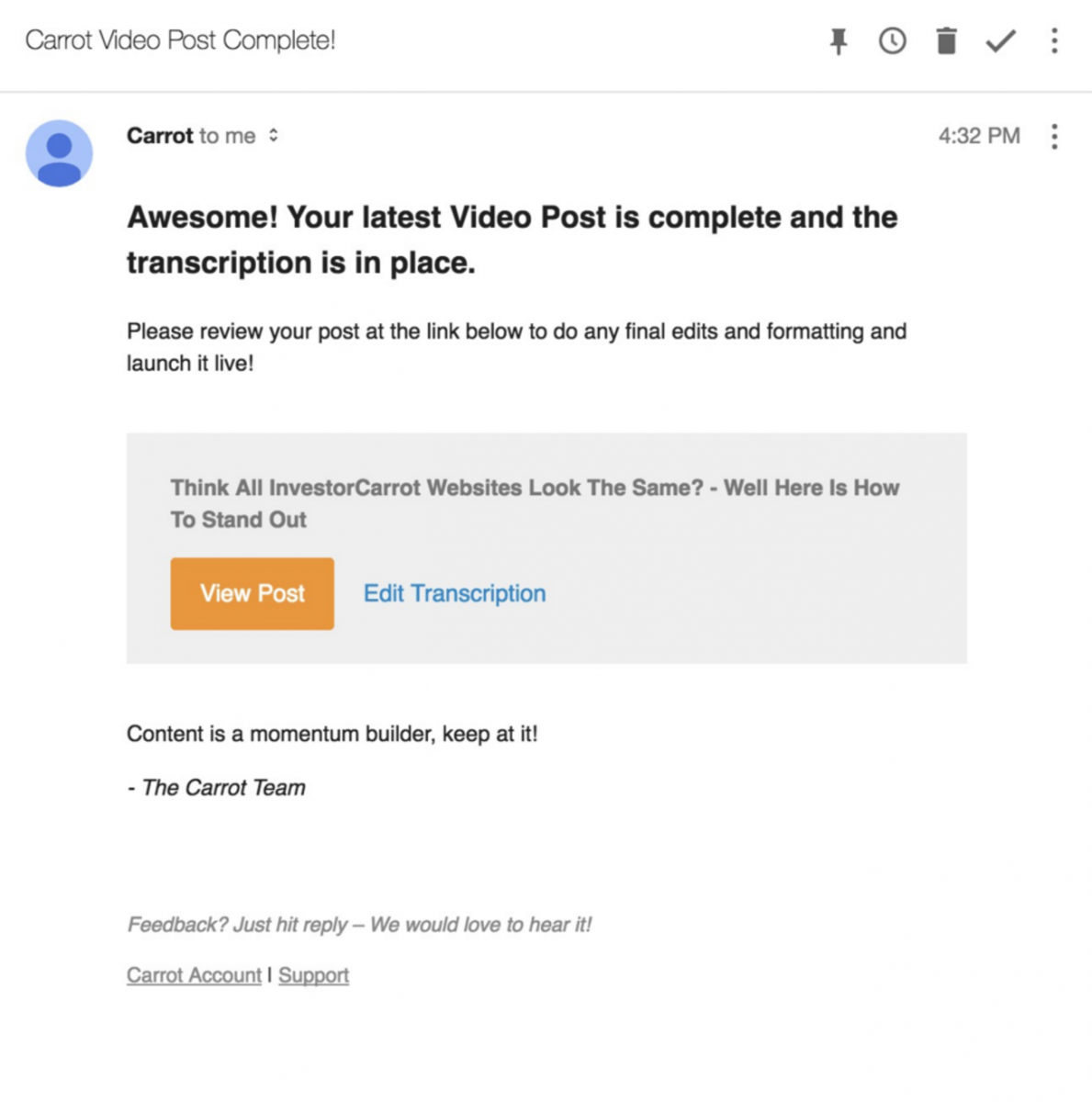
3. Within 24 hours (usually within several hours) your VideoPost is complete and ready to publish
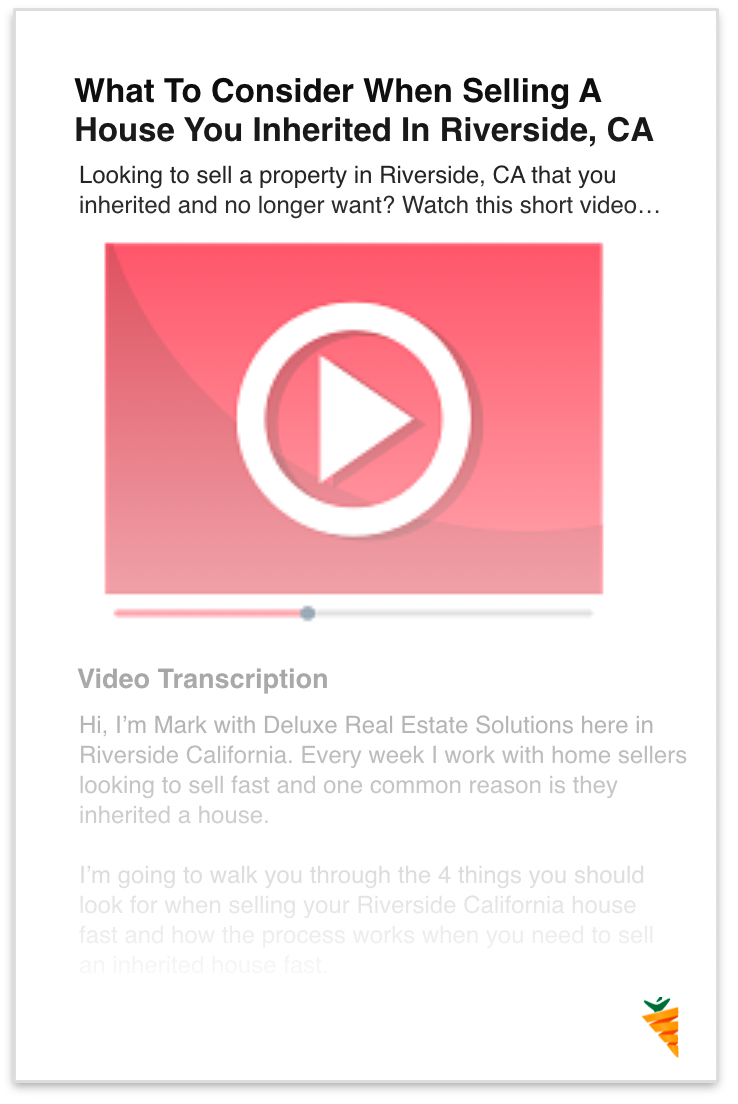
Once your VideoPost is complete, with your transcription added, your post created in our VideoPost format (title, intro paragraph, video, transcription, and call to action)… we’ll email you your new post for review and you can then make any edits to the post you want. No more logging into transcription services and copying & pasting transcriptions… that’s a waste of time. VideoPost does it all for you.
How To Get Extra SEO Juice From Your VideoPost
How well Google ranks your VideoPost depends greatly on the content in the video and the small quick tweaks you can make inside of each VideoPost.
To make sure to squeeze all the on-page SEO juice out of this VideoPost here are a few things you can do…
Make sure when you’re recording your video, you know which types of searches you want to go after in Google… then use those words in the video. If you’re going after “Portland Oregon river homes”… you’ll want to make sure to say those words. You have to remember to say the things that you’re showing in your video.
Go through and format the post so it’s nice and easy for a user to read (this will help with bounce rate). No one wants to read a wall of text.
Find some key areas to add <h2> and <h3> tags.
Can you link to other content you have done on your site?
Make sure to include a call to action at the end (how do they contact you if they have questions or want an offer?)
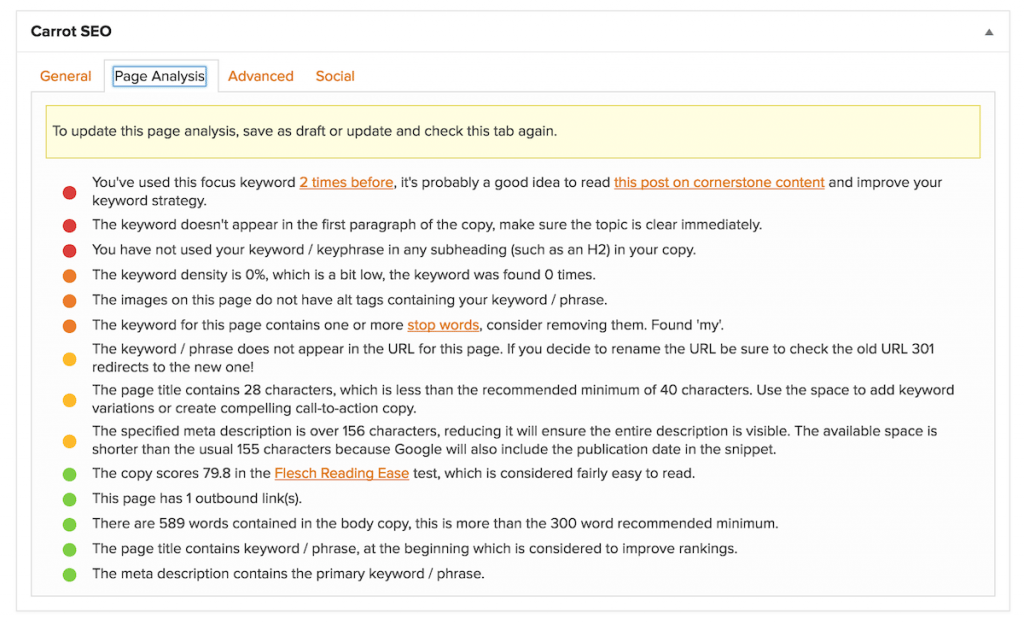
And last… make sure to use our Carrot SEO Tool to dial in the content for a specific search phrase.
Dial in the SEO on your VideoPosts with the Carrot SEO Tool whether you’re an SEO expert or not.
VideoPost vs. Manually Using Transcription Services
When we were doing this process the manual way… we submitted it to a service called Rev.com, then we had to manually do every other step to get the content from Rev.com into our blog editor. This still took us 30-45 minutes to do. Yes, better than 1-2 hours to write an article, but still too long for most people to fit in on a weekly basis.
Now, with the VideoPost feature, this is only going to take you as much time as it does to film your video, log into your Carrot account, paste in a URL, and click a button – we do the rest.
We go out and get the transcription and then notify you when the transcription’s inside of your account ready and formatted in our special “VideoPost” format.
VideoPost Automatically Structures Your Content Flow Properly
Once our system gets the transcription of your video back, we automatically build it into our VideoPost format for you. First, your SEO optimized blog post title, then a short summary of the video, next your video, the transcription, then a simple call to action. All automatic.
This step alone will save you 10-15 minutes. What will you do with that extra time? Get a workout in? Call a prospect and land a deal? Meditate on the day and get clarity? You can do whatever the heck you want while VideoPost does that part of your content creation for you.
How Much Will You Save With VideoPost? And What Can You ADD To Your Marketing Efforts?
VideoPost will enable you to do more content, do more robust content, get your brand, your face, your content in front of your prospects so you build up that expertise with your market.
It’s going to save you hundreds of dollars per month when you just do one blog post per week.
If you do one video post per week, that’s 52 new pages on your website over this next year.
That’s 52 new chances to cast a wider net to get in front of your prospects. Every single time your prospects search different things in your real estate market… like “buying farmland in Roseburg, Oregon”, they’re going to see you over and over again. It’s going to add up in their mind that…
“Man, this person, this company is a really reputable company, they’re an expert.”
Not Sure What To Make Videos About?
That’s the easy part. You’re already creating hours of content every single day… you’re just not documenting it so others can get value from it. But here are some ideas…
On The Job Content – next time you’re out in the field, whip out your cell phone and document the situations you’re in, and answer your prospects questions
Testimonials – ask a recent seller or buyer to allow you to film them and ask them about the process
Case Study– this is similar to a testimonial but maybe you just talk through the process
Market Trends & Updates – find a report online and share your expertise or opinion about it on video
About Us – make a video about how your company was started and who you want to work with
At the end of the day, just be useful and valuable for the people that you can best help. Answer their common questions in videos, educate them on things they’re searching for, and have fun with it!
Now it’s time for you to dig in and launch your first VideoPost!
Already a Carrot client? Sweet! The VideoPost feature is ready to use… just hop into your Carrot account and put it to use!
As you dive in and use VideoPost, please send us feedback on ways we can make it even better. There are things on our roadmap already for adding more power and simplicity to VideoPost, so we’re excited to make this one of the most useful tools in your content marketing arsenal in this next year.
Given our reader’s interest in sending direct mail, we thought it would be appropriate to write a piece about what direct mail strategies are working for real estate investors.
And then we thought to ourselves, “Hey, we know a lot of real estate investors” (also known as all of our AMAZING clients).
So, we asked them what strategies they use when sending direct mail. This is a compilation of their techniques, results, and advice. Here’s what they’re doing.
Direct Mail Strategy For Real Estate Investors – A Case Study With Our Carrot Members
Frequency
Brad Chandler
Brad Chandler, real estate investor at Express HomeBuyers, sends direct mail to prospects once per month. To manage high volume, he splits their mailing list into groups and sends a batch of mail to one group each week.
This is a postcard that Brad sends to his list.
Front:
Express Homebuyers Direct Mail Postcard: Front
Back:
Express Homebuyers Postcard: Back
Daniel DiGiacomo
Daniel DiGiacomo, owner, and investor at Baltimore Wholesale Property, sends 10,000 pieces of direct mail every month. Additionally, he sends between 1,000 and 1,500 yellow letters each month. On the yellow letters, he has them designed to look as though they’re written by hand.
These are some pieces that Daniel sends regularly.
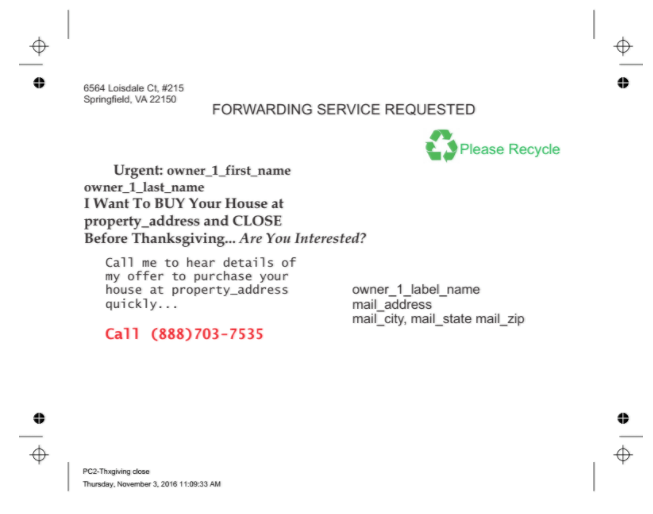
Baltimore Wholesale Property We Buy Houses Direct Mail Example #1
Baltimore Wholesale Property We Buy Houses Direct Mail Example #2
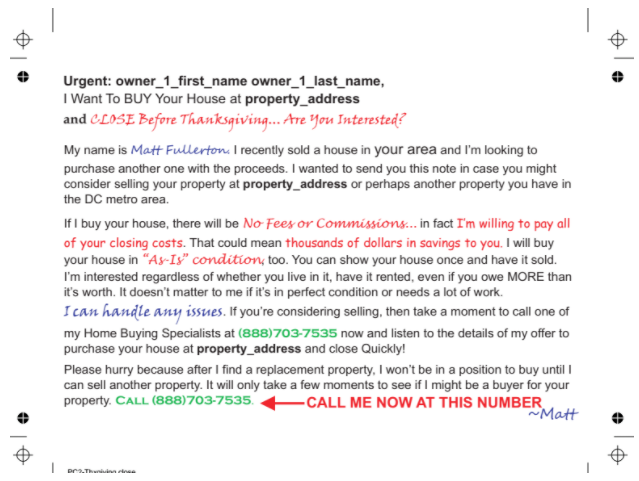
Baltimore Wholesale Property Direct Mail Letter Example #1
Baltimore Wholesale Property Direct Mail Letter Example #2
Response Rate
Emphasizing that direct mail is a numbers game, Brad said,
“Sending out a couple hundred postcards probably won’t get you a deal. We typically see response rates of 0.5%-1.5%. Our leads convert at around 3%.”
Those percentages aren’t uncommon in the direct mail world, with the average across all industries sitting at 4.25% for postcards.
Daniel has somehow surpassed the average response rate with his direct mail campaign. He see’s a 7%-10% response rate on his postcards and a 20% response rate on his yellow letters. Appropriately, Daniel claims that his success comes from choosing his mailing list wisely.
Build a Quality List
“List quality is the most important part of direct mail,”
says Daniel,
“I like to target absentee, out of state owners that are likely older (55 and up).”
As for Brad’s list, his data suggests that the best performers are homeowners with 70% and higher equity, out-of-state homeowners, and probate.
Also worthy of note, Brad says,
“Response rates will be highest when you first mail a list. There will be a lot of people asking to be removed from mailings. As you continue to mail the list, response rates will decrease but you will get high quality leads.”
Quality Leads
Edward Beck
As a tip, real estate investor Edward Beck, from Quick Sell Buyers explains why quality leads are more important than quantity of leads.
He says,
“The main difference I have from all the others is that my stuff is honest and not smoke and mirrors.”
He believes that honesty matters to prospects today, because, in the marketing world, they see so little of it.
“I’m not leading the seller to believe I’m going to pay full price or that they would get a better deal not having a middle man (agent). I believe this is the biggest shortcoming with other mail pieces.”
Indicating that dishonest marketing techniques bring in low-quality leads, he continues,
“Yes they will have a higher response rate but when they make an offer the sellers are in a different frame of mind… The market is flooded with [dishonesty] and I believe [prospects] can smell it.”
Test & Iterate
As with all marketing, testing is key. When it comes to direct mail, you can test the copy, the images, and the style of the postcard.
For A/B testing, Brad explains that sticking with a single postcard makes it a whole lot easier to test accurately.
“We think it is smarter to stick with one postcard. The reason is that sticking to one postcard makes it easier to A/B test new ideas.”
But it’s not just testing that counts. It’s the application of the test’s findings that really makes the difference. On this, Brad says,
“We continuously iterate our copy and design to improve the conversion rate of the winning postcard.”
Supplemental Marketing
Don’t forget to follow up your direct mail campaigns with Facebook Ads, phone calls, and whatever outreach is appropriate.
Having several marketing touch points is critical with direct mail. As Brad explains,
“When you target prospects through direct mail, you also want to target them on other marketing channels. To do this, make sure you get emails and phone numbers with your lists. Have VA’s call the prospects right after the mail is delivered. Also, upload your lists onto Facebook as custom audiences spend some money running Facebook ads to your mail lists.”
What Do You Do?
Hearing what other real estate marketers are doing with their direct mail campaign is helpful. So don’t let the conversation stop here. Brad, Daniel, and Edward made generous and transparent contributions to this piece.
Do you agree with them? Disagree?
What does your direct mail strategy look like and what kind of results are you getting?
Podcasts are great. But podcasts don’t work for real estate agents or investors. And no one wants to listen to a Real Estate Agent’s podcast.
Right?
Yes… and no.
People don’t want to listen to house listings. But they might want to hear about their city. Or funny and interesting things that happen in the everyday life of an agent or investor.
Think about it, TLC and HTGV have made it their go-to strategy to create shows around people just living their life and doing business.
And…
As a real estate agent, you’re a city advocate. More than most, you know your city. You know the best places to eat, the top tourist destinations, the schools, and what to do on a Friday night.
It’s all part of the job. To sell houses, you first must sell yourself as an agent, and the city as a destination.
This insider knowledge is your ticket into podcasting heaven. A heaven where content builds relationships and those relationships create clients.
To help put your ticket in the right pocket, we’ve put together this ultimate guide for podcasting as a real estate agent that will help you generate ideas, choose the best tools, and record your very first episode.
1. Generate Ideas
As with every piece of content, the idea phase is fun. But that doesn’t mean it’s easy.
Sometimes, coming up with ideas is as easy as sitting in a chair and writing. Other times, it’s like trying to run a marathon backward: you just can’t do it.
But if you can’t come up with ideas, never be afraid to use someone else’s. Here’s what a few other real estate agents are doing that you can copy.
Anyone who lives in your city is probably interested in its history. In a podcast series, Marguerite Giguere brings on Tacoma history buff, Michael Sullivan, to provide local history lessons.
This is a great way to build relationships with the locals and increasingly establish yourself as a city advocate.
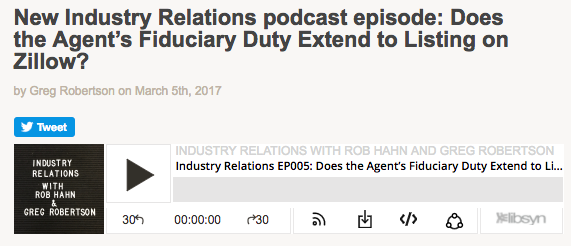
Zillow is a hot topic in the real estate world. Greg Robertson wisely chose a theme that people, real estate investor or not, would have an interest in. They discuss the accuracy of Zillow, why it’s not a threat and common complaints about it.
The takeaway?
Choose a popular topic that others will have a vested interest in. Everyone wonders how accurate and trustworthy Zillow is. Host your own debate.
This is a blog post. But the beautiful thing about blog posts is that the topics can easily be repurposed into almost any other type of content, including podcasts.
From “6 Signs a Home Might be ‘The One’,” to “5 Secret Sources of Down Payment Money,” Sarita Dua uses her blog as a platform to give numbered tips. You can do the same thing on your podcast. Check out her blog for further topic inspiration.
Content that keeps on giving. Dean Ouellette’s blog releases local weekly updates in his real estate landscape, Phoenix. You can do the same in your own city. Read the newspaper, stay in the know, and then talk about recent and interesting local happenings on your podcast. This will make you a source of knowledge in the community and an easy person for people to build a relationship with.
Dreaming is only the first step to creating a podcast that delivers insightful, helpful, and relational content. Dream, but only so that you can deliver.
Here’s how you transition between the two.
2. What’s the Type/Theme?
It’s not enough to know you want to start a podcast. You need to know what type of podcast you’re starting.
Determine the goal of your podcast. To do so, grab a piece of paper and answer these questions.
What problem are you solving?
How are you going to solve that problem?
Who’s your audience? Local or nationwide?
What are a few things you’d like to talk about?
Would you rather do interviews, solo podcasts, or a little of both?
Consider, for example, Marguerite Giguere’s podcast above. The problem she’s solving is that locals don’t know about their city’s history, but they’d like to. As a solution, she provides a place to learn about just that.
Another, Dean Ouellette’s blog. The problem he’s solving is that his local prospects want to understand their housing market. To remedy, he created a platform for people to learn about their city’s current real estate status.
After you understand the goal and theme of your podcast, come up with a fitting title.
Then, schedule your first episode.
3. Create a Schedule
Scheduling is vital.
Without deadlines, nothing gets done.
Decide how often you want to produce content — weekly, bi-weekly, monthly — and then pull out your calendar, whether that’s your phone or your physical planner, and start assigning ideas to dates.
It’s no secret that consistency is the key to producing content that builds an audience. In fact, it’s less about how much content you produce and more about how consistent you are.
Come hell, high water, or hiccups, stick to your schedule relentlessly. And before you know it, you’ll be preparing for your very first podcast.
We really like the weekly schedule because it helps you get in a cadence where something is happening all the time…
… plus the way lots of people listen to podcasts… when they find a podcast they like we tend to binge listen on a few episodes. If you’re just doing a monthly podcast… you may be losing the opportunity to have enough episodes to really have someone fully engage in your message.
4. Prepare
Before you actually get on the big screen (or big microphone), give yourself the best chance of sounding like a pro by preparing. Here are a few pre-podcast steps to make sure everything goes smoothly.
(1) Create Talking Points
Whether you’re doing an interview or a solo show, create discussion topics. Write these down and have them nearby so that when you’ve run out of ideas, you can glance at them and continue the conversation.
(2) Rehearse
Practice what you’re going to say and record yourself. Notice how you’re talking. Are you using filler words? How does your voice sound?
Deliberately train yourself to develop good speaking habits and do away with bad ones. Practice until you’re satisfied with the result.
(3) Test
This is just to make sure that when you get to the end of your amazing podcast, you don’t realize that you recorded with your computer mic instead of your external mic. Run a few preemptive tests to make sure all the tech is running smoothly and you won’t be left with great content, but poor quality.
(4) Jump on Early
If you’re doing an interview, be sure to send the interviewee the talking points well before the podcast ever happens. You want them to be just as prepared as you. This will help do away with awkward pauses and transitions.
Also, be sure to jump on early (10 minutes should be plenty) with your guest in case they have any questions. This is a great way to clear the air before going on it.
5. What Podcast Equipment Should You Use?
You also need the right technology to record, edit and publish your podcast.
For our weekly podcast the CarrotCast we’ve tried several microphones and other tools… and here’s some of our favorites. Below is a list of what you’ll need.
(1) Decent Computer
So long as it’s not from the 90’s, your computer should keep up. After deciding on the tech you’re going to use, run some tests. That should quickly confirm whether your computer has what it takes.
(2) Microphone
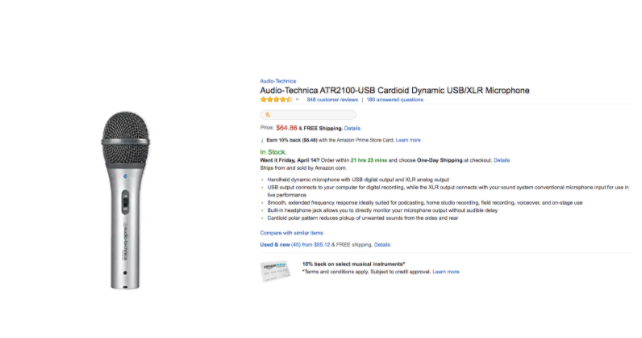
For our CarrotCast, we use the Audio-Technica ATR-2100, which we LOVE. But here’s a few other recommendations, for your consumerist peace of mind.
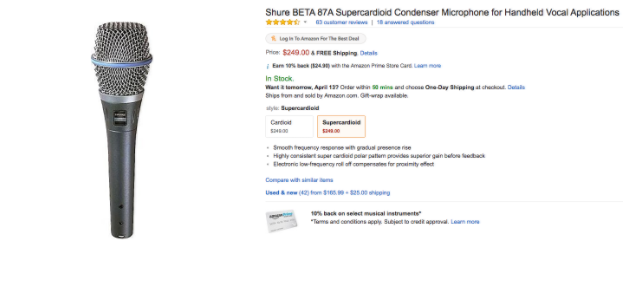
This is a great mic for the price (this is the one we use). We have the expensive professional podcast mics in our studio that cost $300+ each… but we tend to just use this low cost mic for ease and it’s really great quality for the price. For the best quality, speak within a few inches. The quality quickly diminishes with distance.
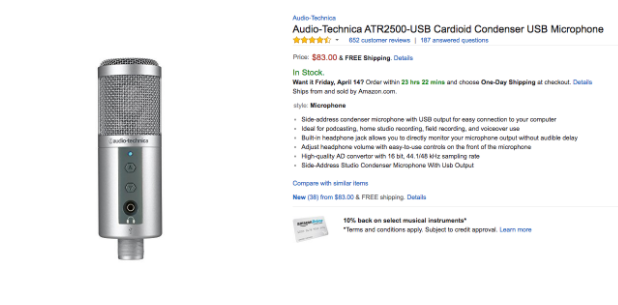
With a slightly higher budget, this is the mic to use. It picks up virtually zero background noise and is an all-around quality mic for the experienced podcaster.
You also need software on your computer that records/edits audio. Since our CarrotCasts are done over Skype, we use Call Recorder. For editing, we use Audacity. Here’s a list of recording/editing tools at your disposal.
If you’re recording a podcast with just your audio, this is your best bet. This is an all-in-one tool. It records audio and allows you to make edits to that audio. And it’s free. Unless you plan on turning your podcasts into videos or screen-shares, it’s going to be hard to talk you into a different tool.
If you’re using a mac, Quicktime will come built in as a default app. If you’re on a PC, there is a download for it here. Quicktime records audio and is free to use.
If you prefer to use your iPhone for recording, there’s an app for that. Recordium Highlight allows you to record audio from your iPhone, all while highlighting noteworthy sections.
If you’re doing podcast interviews on Skype, you need this plugin. Not only does it record the audio from the skype call, but it also records the video, allowing you to repurpose your podcast into a videocast later on.
This tool records your audio and screen simultaneously. Keep it in your back pocket for when you want to repurpose a podcast into a screen-share video.
For recording podcast interviews that aren’t over skype, Zencastr is the hero. This tool allows you to record your audio and the audio of several guests. It also includes automatic audio enhancement.
All of those recordings need to be stored somewhere. Ideally, somewhere that can handle all of the data transfers that occur when someone downloads your episodes. For our CarrotCast, we use Libsyn. Here are your options.
Onsite — Free
Don’t do this. While hosting on your website is free, if you plan on growing your podcast to any significant size, all of those downloads are coming straight from your site, meaning that your bandwidth is taking a serious hit. Avoid at all costs.
What was originally intended to exist as space for amateur musicians to share their music is now becoming a haven for podcasting. A great tool if you want to advertise less on your own website and more on a separate platform.
Buzzsprout is awesome if you don’t want your website to play the part of podcast platform. It easily helps you submit your podcast to iTunes and it even creates shareable soundbites of the podcast.
Libsyn is the tool to use if you want your website as your podcasting platform (if you’re a Carrot member, it’s super easy!). You can leave the data and RSS feed in the Libsyn files — saving your bandwidth — but you can still have everything, in the eyes of the visitor, all in one place: on your website.
(5) Camera (optional)
If you are interested in recording not only audio but video, then you’ll need a camera. At Carrot, we produce an audio version of our CarrotCasts and a video version. You can do the same.
Computer Cam (what we use)
This is the easiest option. If your computer has a webcam, while it might not be high quality, it offers an easy, affordable, and simple solution to your recording endeavors. In fact, it’s what we use at Carrot.
iPhone Cam
If your computer doesn’t have a webcam, the next easiest option is to plug your iPhone into your computer and use Quicktime to record through your phone’s camera (the selfie camera is lower quality than the main camera).
External Cam
If your phone doesn’t have a camera, your computer doesn’t have a camera, or you just want higher quality, you can consider getting an external camera. The choice is yours.
(6) Headphones (optional)
The main reason you’ll need headphones is if you’re performing interview podcasts. You need to be sure that the audio is coming through your headphones so that your mic isn’t picking it up externally.
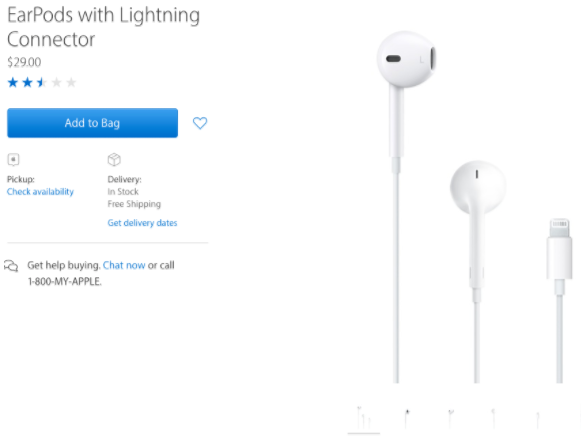
Any headphones will do. At Carrot, we use Apple’s earpods.
6. DO IT, Go For Progress NOT Perfection
It’s time to hit record.
Unfortunately, many great content ideas have been just that: ideas. It’s time to open your arms and embrace the unknown.
Who knows what you’ll find on the other side. But I’m willing to bet it’s opportunity and growth.
7. Advertise
Once you have a product you’re happy with, post that puppy on your social media, website, email list, and, most of all, iTunes.
Submit your podcast to iTunes here. It usually takes a couple weeks for them to respond. Once you’re up, they’ll let you know via email and then people everywhere can subscribe to your podcasts.
Don’t be afraid to tell other people what you’re doing. You need listeners, and they need something to listen to on their morning run. Provide that for them.
Podcasting as a Real Estate Agent is Relational. So be yourself.
Famous Podcaster, Marc Maron said,
“The medium of podcasting and the personal nature of it, the relationship you build with your listeners and the relationship they have with you – they could be just sitting there, chuckling and listening… there’s nothing like that.”
For some mysterious reason, podcasting is one of the most intimate forms of content. It makes listeners feel like they are in an honest friendship with you. Because of that, it’s important to be yourself. Don’t try to be showy or clever. Be who you are.
After all, real estate isn’t so much about selling a house or a city. It’s about selling you. And podcasting is exactly how you do that.




![Direct Mail Strategy For Real Estate Investors [A Case Study With Our Clients]](https://image-cdn.carrot.com/uploads/Featured-Image-20.png)