You know all of those sellers, buyers, and tenants who land on your real estate website but never fill out a form or give you call? (i.e. – most of your visitors) They bail from your site to never return. What if you could “fetchback” a healthy percentage of them and turn them into a lead and deal after they leave? Well, you can (and we have been) do it with retargeting… especially Facebook Retargeting.
Follow along with us as we walk through the steps to create a simple Facebook campaign to fetch back your lost leads.
So put on your big boy (or girl) pants and roll up your sleeves for this really really detailed guide on getting your first Facebook retargeting ad launched today. It’s a doozy so hold on tight :-)
So, What Exactly Is Retargeting / Remarketing Anyway And Who Should Use It?
Raise your hand if you’ve ever visited a website (looking at shoes or even our site) and then magically you see ads on Facebook and other websites you’re on for that exact company or product?
Ya, I think we all have.
And retargeting ads return the best ROI that we see in any of our own marketing.
Retargeting basically drives potential leads back to your website by targeting the users who have previously visited your website with ads on other websites… like Facebook… but didn’t opt-in or take a specific action.
Once the visitor leaves your website they can be displayed customized ads as they move around the Internet. These ads bring your brand back in front of them, often generating the highest click-through and conversion rates of any type of online advertising.
How Retargeting Works In Simple Terms
Retargeting can be one of the highest return on investment paid advertising channels real estate investors and agents can use today.
As far as what types of real estate investors or agents should be using retargeting / remarketing on Facebook in your business, if you’re doing any of these types of marketing actively below you NEED to be using retargeting.
Are you actively marketing and driving traffic to your website right now using any of these?
- Direct mail – If you include your website or if people search on Google and land on your site, retargeting is a must.
- PPC Marketing – If you’re driving people with paid clicks through PPC, retargeting is a must.
- SEO – Working your butt off on that high ranking that’s generating traffic? Retargeting is a must.
- Craigslist – Yes, Craigslist is free, but may as well fetch people back who visit your site but don’t convert right away.
- TV / Radio – People are likely hitting Google to research your company name or phone number and landing on your site. Retargeting is a must for you too.
- Buying Leads – After you call a lead you bought, they’re hitting the web and researching you. If they land on your site, keep your name in front of them with Facebook retargeting
If you’re doing any of those actively and investing money and time into them, retargeting will help you fetch back more of them who visit your website and turn them into more leads over time.
If you convert just 1 more deal every year because of retargeting isn’t it worth it? I’d say so.
Why Use Facebook Retargeting Specifically As A Real Estate Investor Or Agent?
First off, marketing 101 is to deliver a targeted message to your best prospects where they already hang out.
That’s why bandit signs can be so effective… because you’re putting your message in front of your prospects where they’re already driving.
With retargeting on Facebook, according to a study, over 20% of all time spent online around the entire world is spent on Facebook. The average American spends on average 20 minutes per day on Facebook. So after your house sellers, buyers, tenants, lenders, etc. visit your website from your other marketing…
… odds are they’ll likely be visiting Facebook sometime in the next 48 hours. This makes Facebook a great place to get in front of your best prospects where they are already hanging out.
Like this…
On Mobile And Desktop Retargeting (or remarketing), Ads On Facebook Get YOU In Front Of The Website Visitors Who Left Your Site.
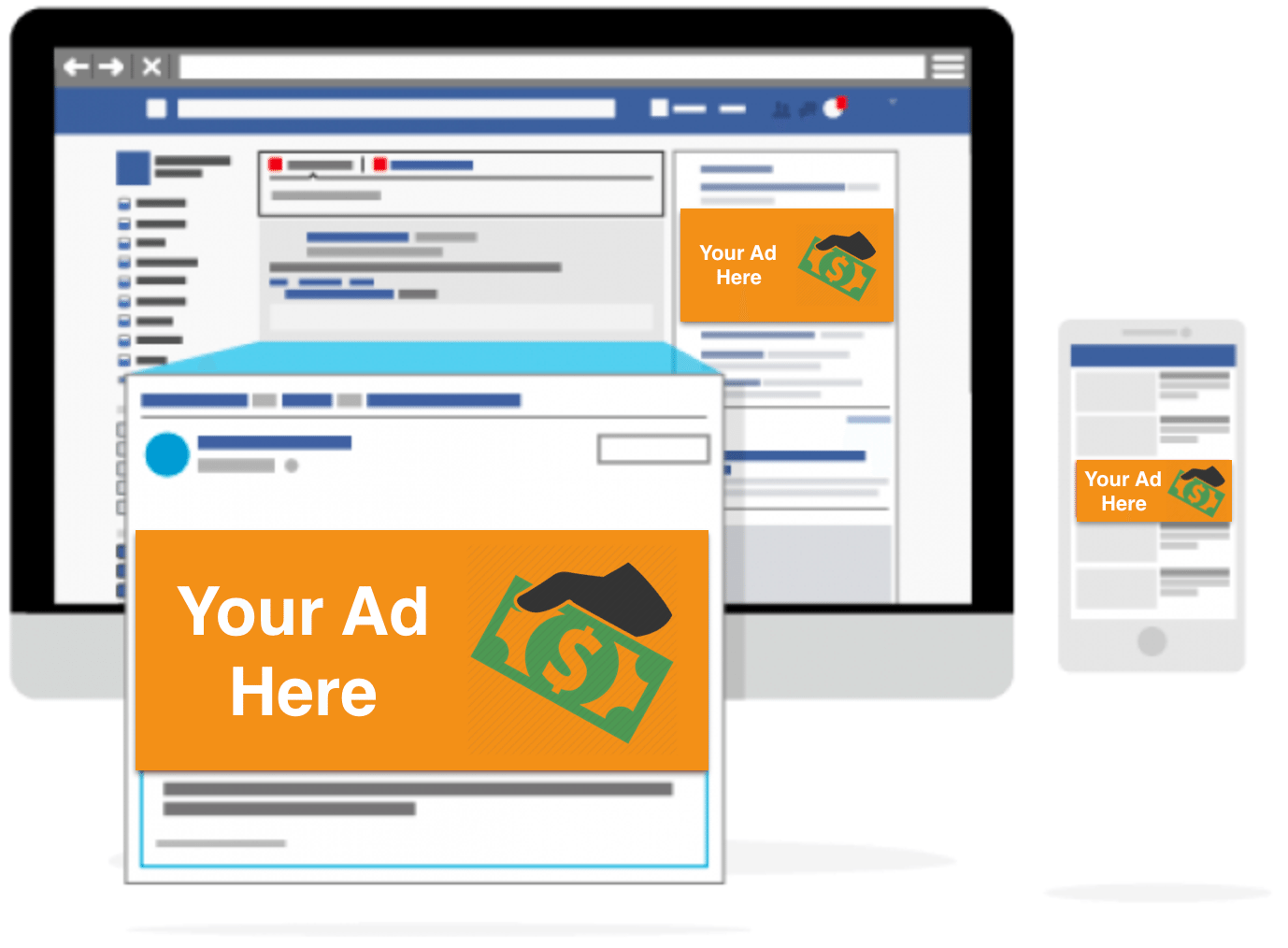
By using Facebook retargeting ads, you get another chance to turn that visitor into a lead. Plus, because you already attracted them once to your site, you know what they are interested in and can more easily create ads that speak to their needs. This creates more engagement, more likes, and higher conversion rates.
Let’s Get Your First Facebook “Retargeting” Ad Launched Today
Retargeting can be very powerful for entrepreneurs and their businesses.
But, most real estate investors and agents we talk to:
- Launch a few Facebook campaign on their own and don’t see success, so they quit.
- Attempt to set up a campaign, but get too confused by Facebook’s ad platform.
- Don’t have time to educate themselves on how to do Facebook ads correctly and even try.
- Don’t keep it simple stupid and over-think the process. Remember Facebook must make it simple enough for the everyday Joe to figure out.
So if you’re ready to dive into it and get your hands dirty, by the end of this step-by-step guide you will be running your first retargeting campaign and turning all of those one-time site visitors into converted leads and closed deals.
You’re going to have to roll up your sleeves and get a bit “geeky” with us. Cool?
Setting up Facebook retargeting means you are going to have to handle a little bit of code, but not to worry, you don’t have to be a programmer to set this up yourself.
So, what is this code you’re going to have to use?
Facebook calls the code they require you to use “pixels”.
How the New(est) Facebook Pixel Works
There is one pixel per account.
The pixel tracks website visits from your site back to Facebook so you can advertise to them (the whole point of retargeting).
Then you can create a number of conversion events, “Custom Conversions” so you can track when a goal is reached.
An example of a goal could be a lead opt-in or for someone who signed up to your real estate investing newsletter. You can create multiple conversions. That gets kind of advanced so let’s get the easy part out of the way first.
IMPORTANT: You need to not only install the pixel but also set up what counts as a conversion. The following guide may look scary but it is actually pretty straightforward. Just take your time moving through the steps.
Step 1: Get Your Facebook Pixel On Your Website
The pixel is a very important piece to any retargeting campaign. This is because Facebook can only track your visitors when the pixel is on your site, so every day it isn’t installed means you will have fewer people to advertise to when your ads go live.
The pixel should be placed between the <head> tags on every page you want to be tracked (usually, this means every page, as you can always get specific later). If you don’t have access to a programmer, you should be able to place the pixel yourself!
If you’re already an InvestorCarrot member, it’s crazy easy to do yourself (takes about 20 seconds) OR you can just reach out to us and we’ll help you paste the code in and be done with it.
Let’s get that Facebook Pixel.
Go to your Power Editor in Facebook (or business.facebook.com for your business Facebook account) and click on “tools” and on “pixels”
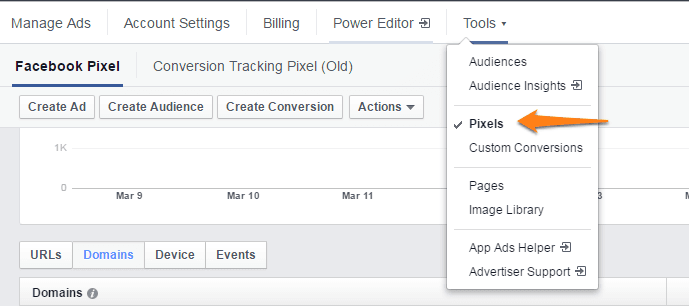
If you have already installed the pixel in the past, Facebook will automatically show the new pixel. Otherwise, Facebook will ask you to create a pixel and you can simply follow the brief instructions that show up.
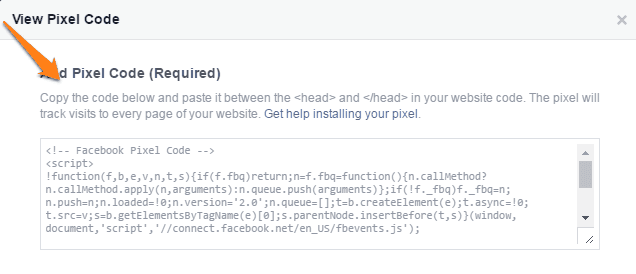
Next, let’s put it on your website.
If you have a non-InvestorCarrot website reach out to your web guy or dig around in the website code to find the <head> section of your code and put that pixel code on any page you want to retarget visitors from. We suggest putting the Facebook pixel on every page on your website.
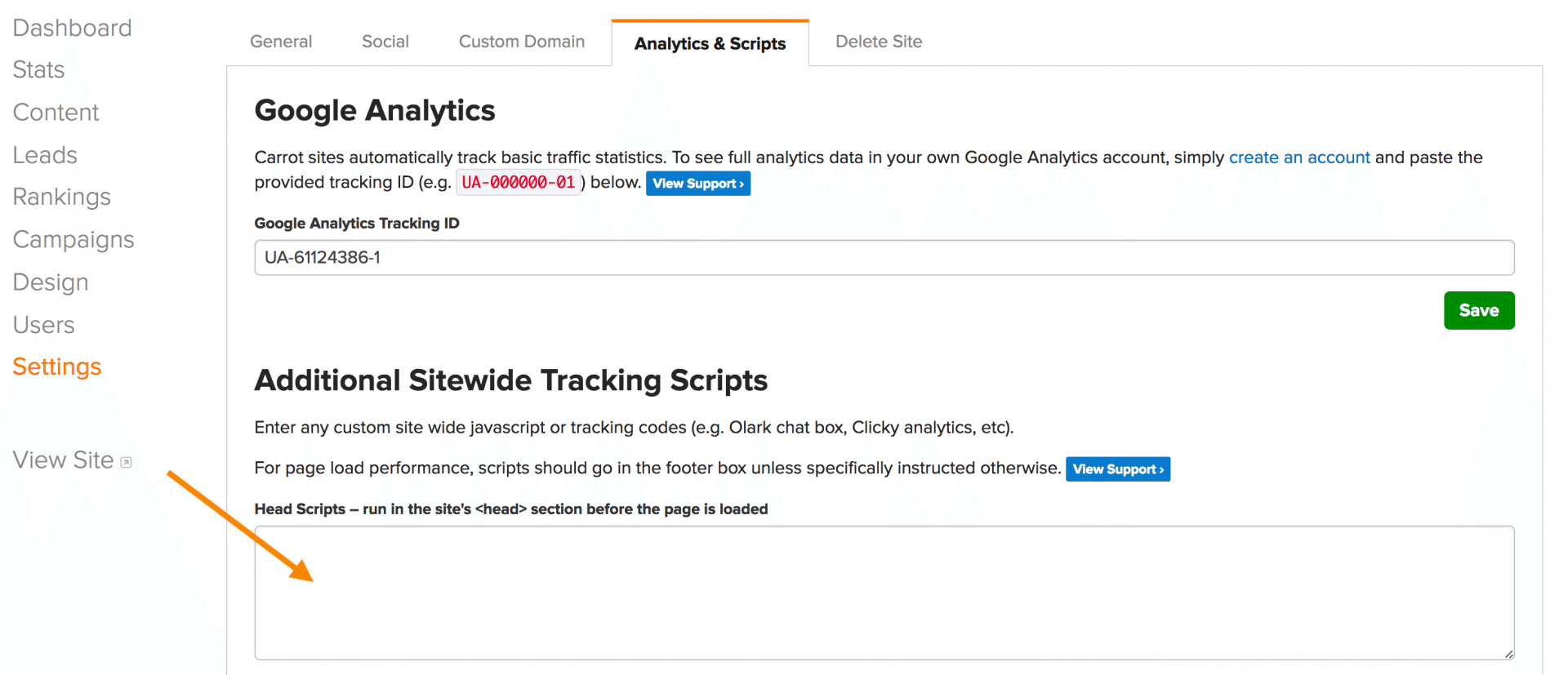
If you’re a Carrot member, to add the pixel code to your site simply go to your Carrot “Manage Site” dashboard and go to Settings then Analytics & Scripts. Then paste that code in the big “Additional Sitewide Tracking Scripts” box (shown below). Hit Save and you’re done!
Great!
Step 2: Create A Custom Audience
Now we need to tell Facebook who to serve up the ads to and to do that we need to create what they call a “Custom Audience” for those people who visit your website.
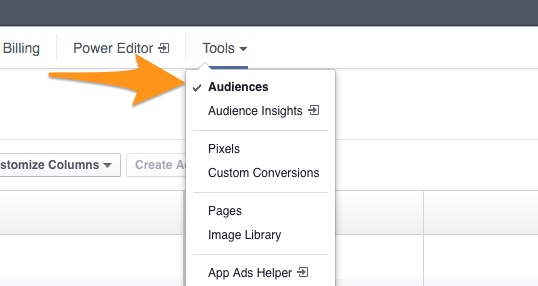
To do that head back up to “Tools” and click “Audiences“.
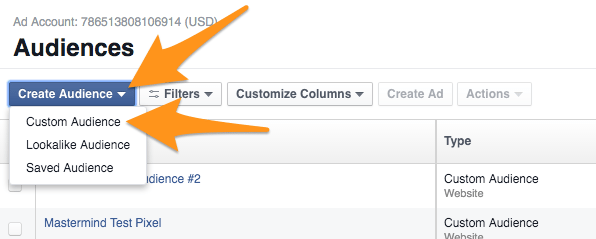
Then click “Create Audience” and choose “Custom Audience“.
Next, choose “Website Traffic“…
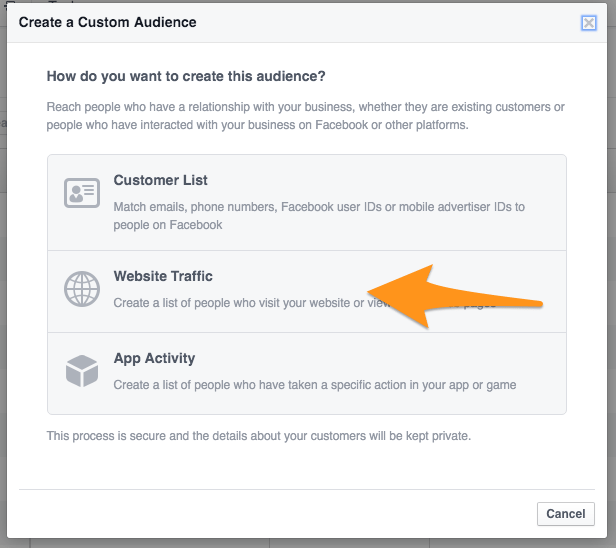
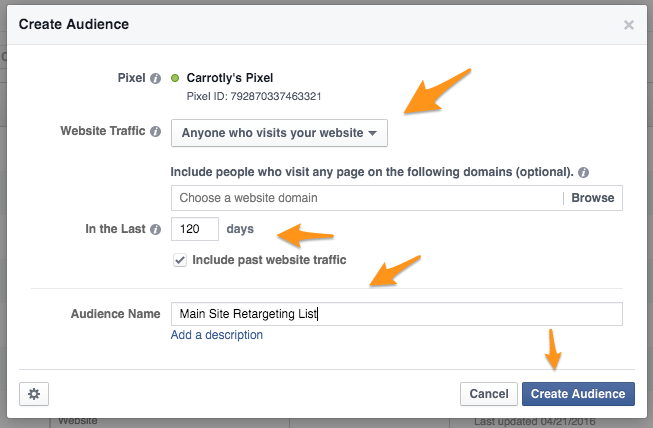
Next, we’re guiding you on the simplest way to launch a campaign so choose “Anyone who visits your website” then set the “In the last” for 120 days… meaning you’ll show ads to anyone for 120 days. The reason we do that is because it enables you to stay in front of them for several months in hopes that the timing will be right for them sometime during those 3 months to work with you.
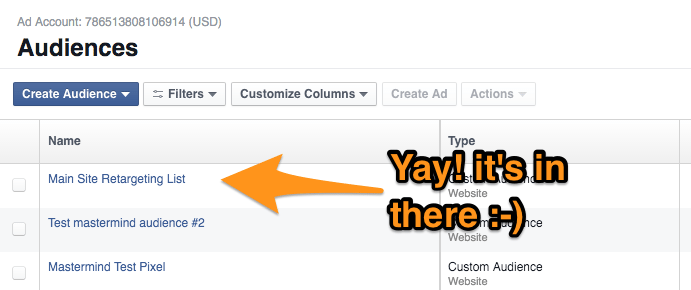
Great! Your custom audience of your website visitors is setup and you should see it in the list. Now click that and let’s launch some ads.
Now it’s time to start creating your ads!
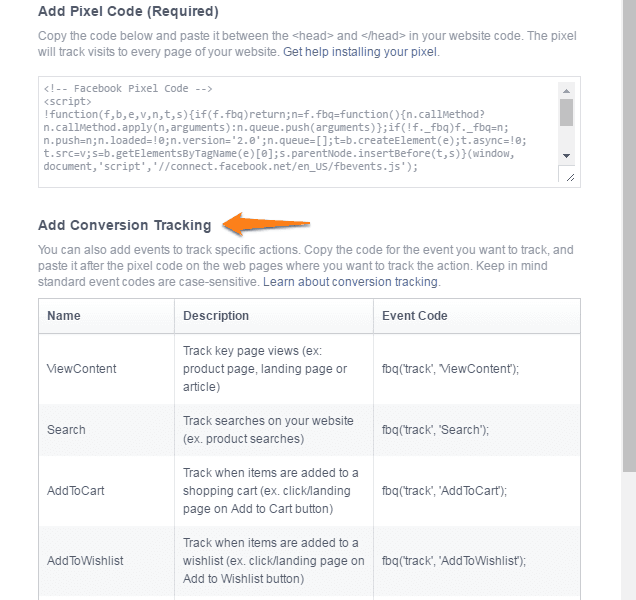
Advanced Tracking: Creating Custom Conversions So Facebook Can Tell You If Someone Turns Into A Lead
If you’re using ads to drive people to your motivated seller page or other lead capture page, then you’ll need to use Custom Conversions.
Create A Custom Conversion Using The Power Editor
Click Tools from the top menu
Click Custom Conversions
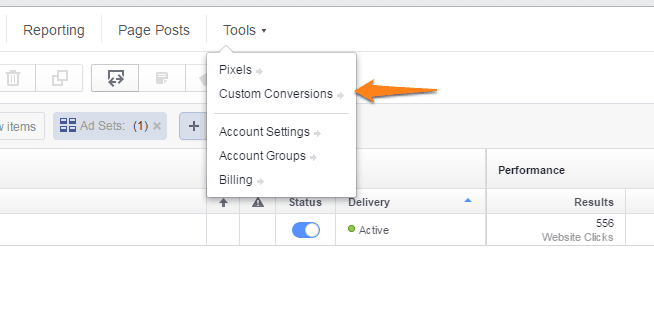
Click the “Create Custom Conversion” button at the top left and you’ll see something like this…
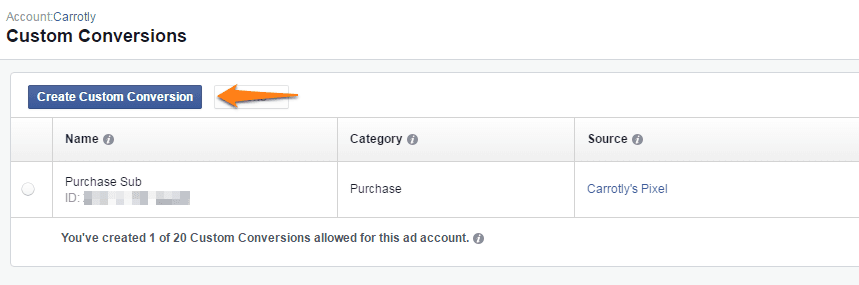
We are trying to help Facebook determine if a user who visited our website ended up converting.
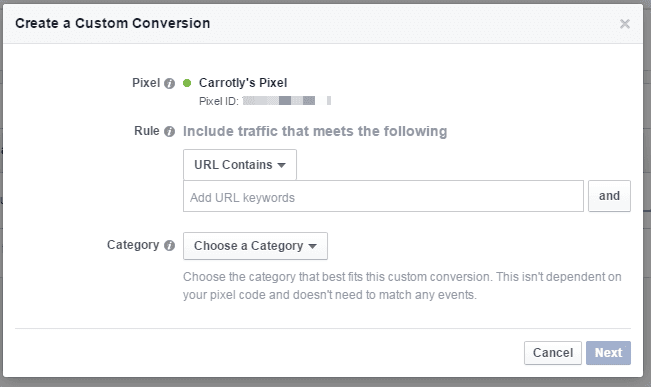
Under the rule, you’ll have three options…
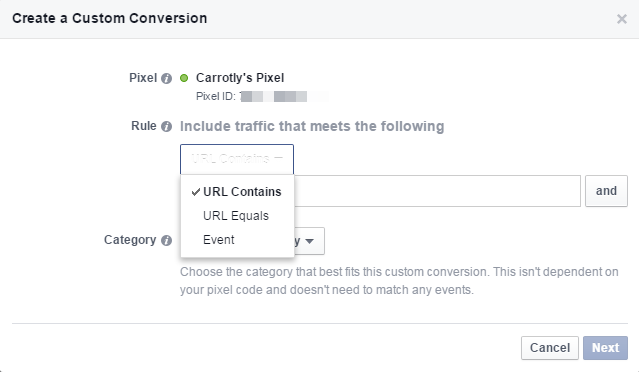
If you’ve created Website Custom Audiences before, you’ve seen “URL Contains” and “URL Equals” before. You can create a rule, for example, to help Facebook determine who filled out your Carrot step-2 form
- URL Contains: step-2/ OR
- URL Equals: www.buymyhousecompany.com/step-2/ (it’s not required to use http:// or https://)
You won’t need to include both contains and equals.
Next, select the conversion your category. For real estate investors, “Lead” is the most common category.
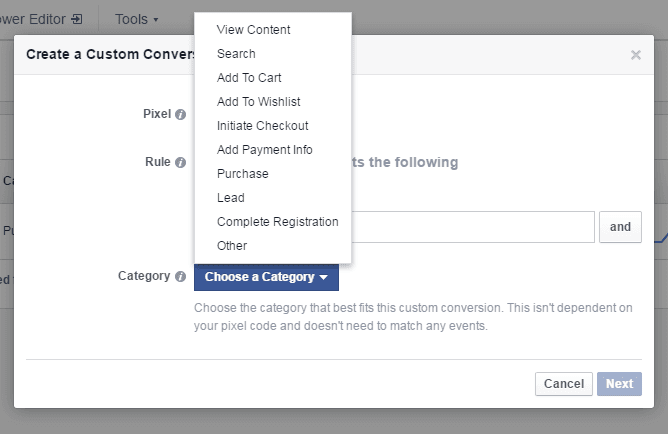
Options include:
- View content
- Search
- Add to cart
- Add to wishlist
- Initiate checkout
- Add payment info
- Purchase
- Lead
- Complete registration
- Other
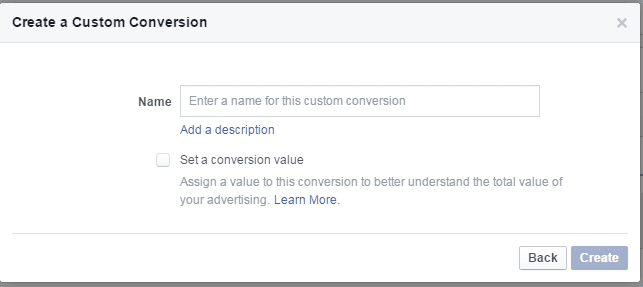
Now you can name, add a description, and set a conversion value for your custom conversion. Once set, click create.
Using Custom Conversions is a whole lot easier than using the old tracking pixel that was placed on all of your success pages. In the past, you had to manually copy and paste a unique code to the header of each page.
Now, you don’t need to do any of that. Your code is already on the site. Simply tell Facebook what a conversion is and create it. It’s now that easy!
BE AWARE: You can’t edit or delete a Custom Conversion once it’s been created. You can edit the name, but that’s it. If you have duplicate Custom Conversions, it might throw off your reporting.
How do you know the conversion pixel is working?
Facebook makes it easy by placing a little green dot with the word “verified” next to your pixels when they are up and working. In order for them to register as verified, all you have to do is visit a page where they are placed and then check again on Facebook. As long as someone has visited a page where your pixels are placed within the last 24 hours, they will show as verified when you’re in the pixel section (audience or conversion) of Facebook.
Want to double check your pixel? Use this simple FB Pixel Helper Chrome plug-in.
Step 4: Let’s Setup Some Simple Ads
This is where the rubber meets the road. Getting ads created and live.
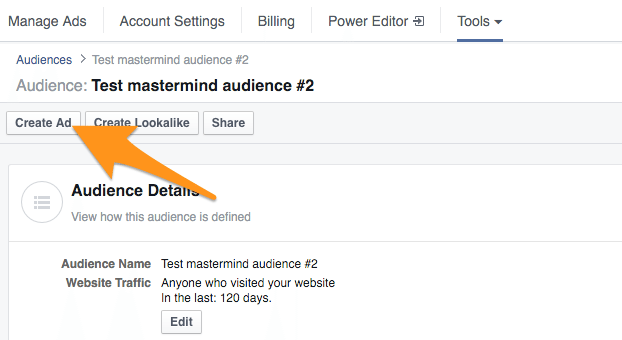
To do this you’ll go back to that audience you just created and click “Create Ad“.
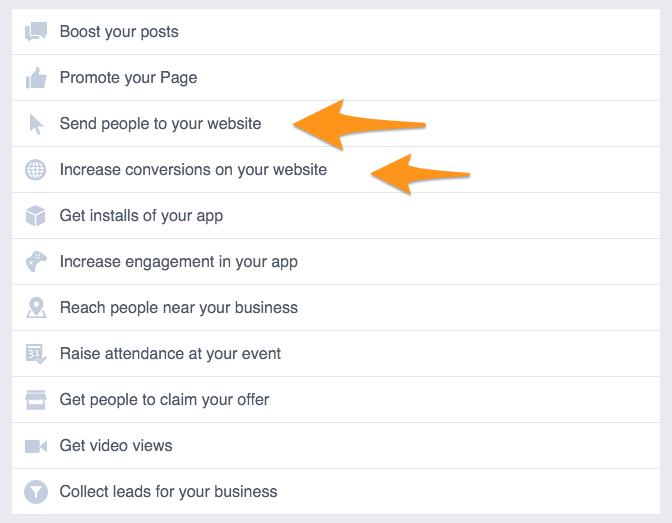
Now let’s select the objective of the ad. We like to choose “Send People to Your Website” or “Increase Conversions To Your Website“.
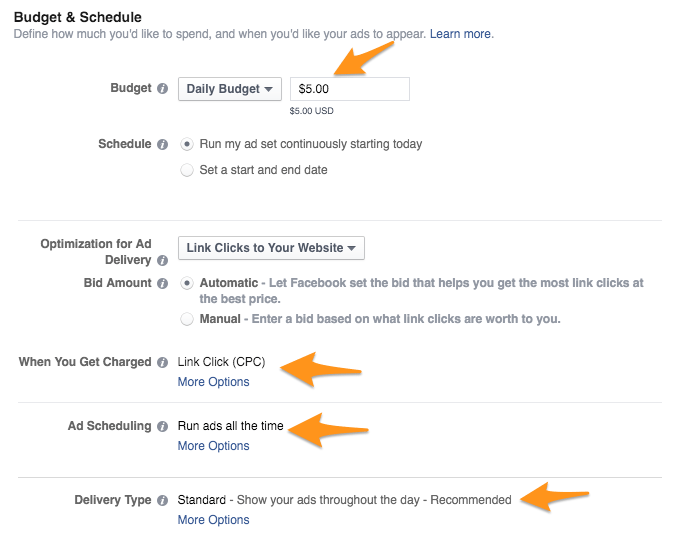
Now let’s set your basic ad delivery settings and your budget.
We suggest you start with $5 per day and check your results every day for the first week or to and adjust your budget accordingly. Also, select the settings as we have them below.
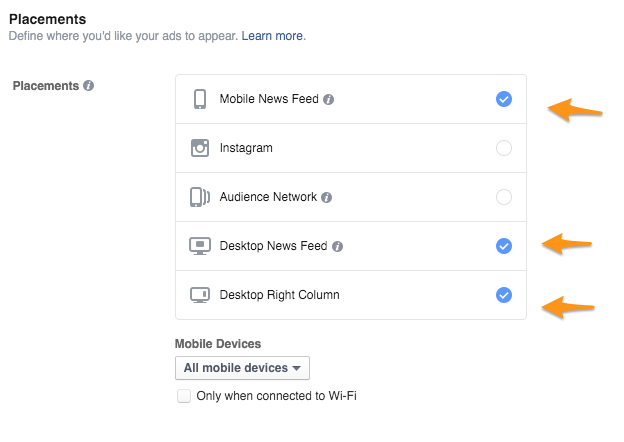
Last, we need to tell Facebook where we should serve up ads. Since they own Instagram that’s now an option. We usually exclude Instagram and the Audience Network as they haven’t been as effective for us. But for sure INCLUDE mobile as 80%+ of the traffic you’ll get from Facebook will be from mobile devices (which is why it’s important as heck to have a high performing mobile responsive real estate investing website).
Scroll down and click “Choose Ad Creative” and let’s make some ads!
There Are Two Main Parts To Each Ad
The copy (text) and the image.
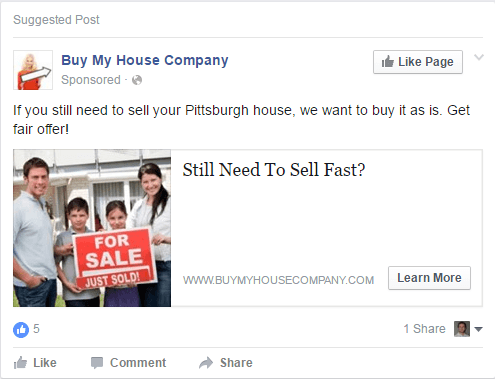
Notice the big image + the text of a Facebook ad.

We like to focus on 3 types of ads:
- Social proof – Testimonial ads or things showing “others have been there before” and worked w/ you successfully
- Straight to the point – Like the ad above, we’re going straight to how we can help them or their problem. We’ll use these the most
- Attention grabbing – So people don’t get blind to your ads over time, we like to make some that are quirky and attention grabbing
In this blog post, we’re going to just focus on getting an ad up and we’ll focus on the straight to the point ad.
Writing Facebook Ad Copy
With your ad copy, being clever is much less important than keeping things simple, intriguing, and to the point.
Even if you don’t have experience with creating ads, you should know exactly what speaks to your market audience.
You know what fears they have, what their biggest problems are, and what some solutions to those problems might be.
You should know all of this because this is you seller or buyer personas. With this information, you have what you need to get started creating ads.
This post going to focus specifically on news feed ads since they look just like regular Facebook posts and are the simplest place to start.
There are 3 elements to the copy in a news feed ad:
- The main text that appears above the image
- The headline that appears directly below the image and in larger font
- The tagline that appears under the headline in smaller font
For the main text, try starting with a question that eliminates anybody who wouldn’t convert anyways. This way you eliminate as many clicks that don’t convert as possible since you will possibly be paying for clicks.
Examples:
- “Are you struggling to find a way to sell your house?”
- “Do you get stressed out by being behind on house payments?”
- “Do you always hear about how effective selling to a Real Estate Investor can be
- “Is it time to sell your house?”
A Simple Example
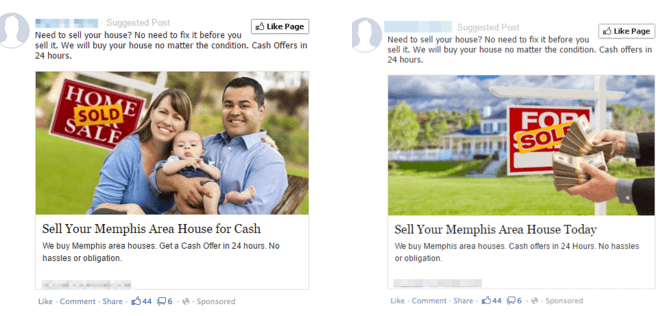
And Another. Notice The Simple But To The Point Copy

Your goal that if anyone answers the question with a no, they immediately move on and don’t click your ad.
This reduces unnecessary traffic and makes everyone who does click much more targeted… which reduces your cost. Everyone wins.
Additionally, try testing different message lengths in your ads. Have some be short and to the point, with just one main point or benefit mentioned. Try others that are much longer to point out more benefits. You won’t be sure what your audience responds best to until you test both.
For the headline, make the benefits people will receive if they click on your link rather simple. Are you looking to buy their house fast? Spell it out with the headline so it’s impossible to ignore.
The tagline portion of the ad is less important than the main text or the headline, but try driving a little more detail about what people are getting and tease them with some additional info. This way they feel the urge to at least click the link to learn more about the offer.
Creating Ad Images
While being an awesome ad designer can help, if you focus on creating images that stand out, you will still be way ahead of the game. Instead of trying to create an image from scratch using lots of graphics, use an interesting photo of yourself in action with bold text overlaid. Or even just an interesting real estate deal image. Images that look appealing will go a long way towards grabbing your audience’s attention.
Notice This Simple But Eye-Catching Image
You don’t need to get fancy with your images, in fact, the simpler the fewer the words the more effective usually.
Here are three sources to help you find images. Both free and paid.
Stocksnap.io – Free
Unsplash – Free
Canva – Free and Paid
Just be sure when using text on your images that you follow Facebook’s guidelines of not having more than 20% of the image contain text. You can use Facebook’s free grid tool to see how your ad measures.
Make Multiple Variations Of Your Ad To Test
Just so you can see which ad is working better, make a few variations of your ad to run on the same campaign at the same time. We’ll usually just swap out the picture and come up with a second variation of the text. Again, start simple with 2 versions of the main text and 2 images. This will create 4 total ads.
Now you have a simple A/B test to start your campaign.
A good rule of thumb is to let your ads run long enough to get a decent traffic before you make any decisions.
Try to get at least 500 impressions, but even better if you can wait until 1,000 impressions before pausing the ad that isn’t performing. We’ll go in more detail how to optimize a Facebook retargeting ad campaign in another future post.
Once you find a high performing ad, having both good click-through and conversion rates, start to create different versions of that ad. Test them all again to improve upon the best result.
Then, just keep repeating this process and ads should continue to improve over time.
Your total time each week to maintain your ad campaign will be literally less than 10 minutes once you get it launched.
Step 5: Make Sure You Have Great “LeadSource” Tracking In Place On Your Website
With InvestorCarrot we have built in “LeadSource” tracking on every Carrot website so you can tell where all of your leads came from.
With InvestorCarrot We’ll Show You Where Your Leads Came From. Cool Eh?
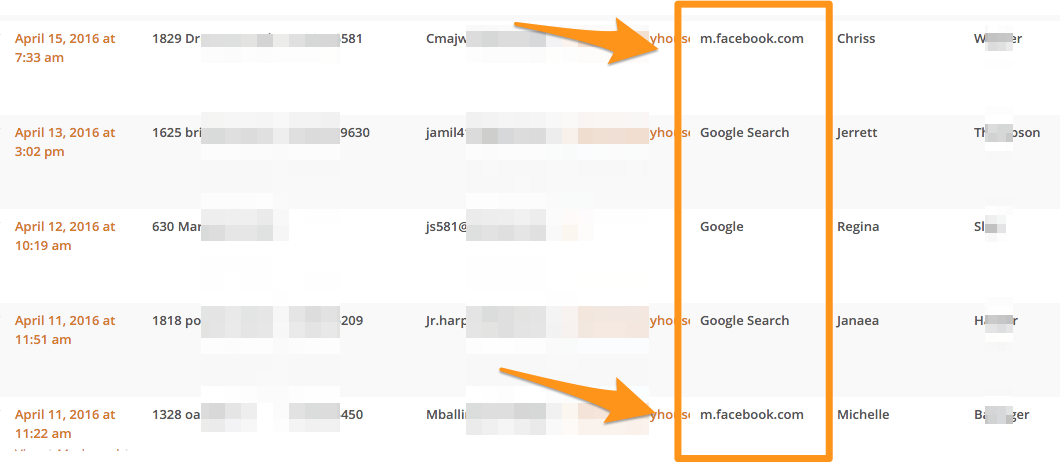
But if you’re not an InvestorCarrot member, chat with your web guy or setup lead source tracking in your Google Analytics account. It’s not all that easy but you can totally get it done.
Tracking where your leads came from is crazy important so you know which marketing is working well and what isn’t working well. As you can see in the image above, just in that one week period this Carrot client got 2 leads from his Facebook retargeting campaign… so he can tell it’s working and track it all the way down to exactly which leads came from Facebook.
Not a Carrot member? Check out our plans or demo Carrot today.
Is Your Ad Performing Well? Here are A Few Benchmarks
Benchmark number will depend on the real estate market in your location. So, there are no 100% benchmarks to follow. You’ll gain a personal benchmark number over the time of your campaign.
But, you can get general targets to help you set some goals in order to tell if the campaign is working.
Click-through-rate for desktop news feed = 1%
Click-through-rate for mobile = 2%
Click-through-rate for sidebar = 0.1-0.2 %
Cost per opt-in: $1-$3 (although if you have done the math on how well your lead funnel converts, you should know exactly what a lead is worth to you)
Cost per lead: Start by aiming for a 2X ROI. For example, this means if you make a profit of $3000 on a deal, you should be looking to spend no more than $1500 in getting leads.
Get Your First Facebook Retargeting Ad Rolling Today!
Now you have the “why” you should start a Facebook retargeting campaign and how to get started with your first one.
- You’ve already attracted motivated sellers once to your site, so you know what content and images will attract them again.
- They are much more likely to click on your ads and to convert into a lead, compared to first-time visitors.
- A retargeting campaign is a perfect addition to your current marketing campaigns. It basically, enhances the work that you’ve already done.
For easy access and to recap, below is a checklist of the exact steps you need to take in order to get everything running. Use this checklist when creating your campaign and start turning those visitors that leave your site after one visit into long-term customers.
Download this Simple Facebook Retargeting Checklist
[Free Download] Use this checklist as a guide when creating your Facebook retargeting campaign.
Need More Online Leads For Your Wholesaling / House Flipping Business?
Generate More Real Estate Investing Leads and Cut Through The Marketing Clutter In Your Market. Download out FREE Marketing Toolkit: Get Access To This Content Marketing Toolkit + Training For Real Estate Investors here!
And take a Demo of InvestorCarrot today to leverage the same system 1000’s of other investors use to generate his online leads and deals each and every month.